
by Steve Laug
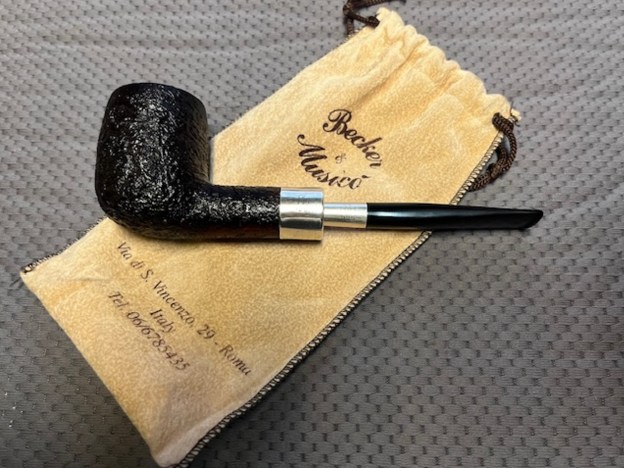
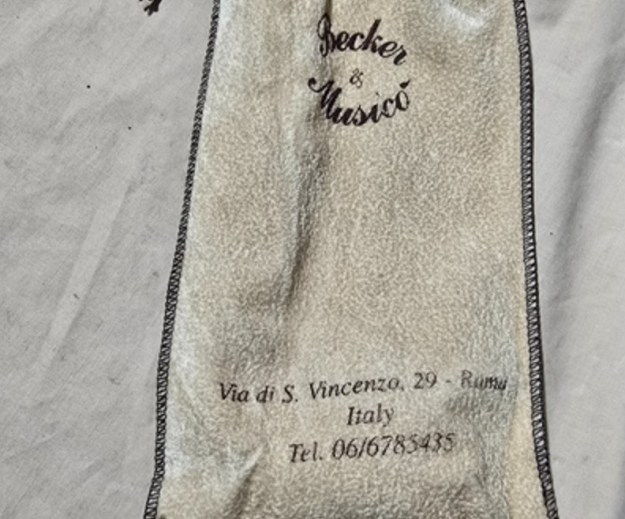
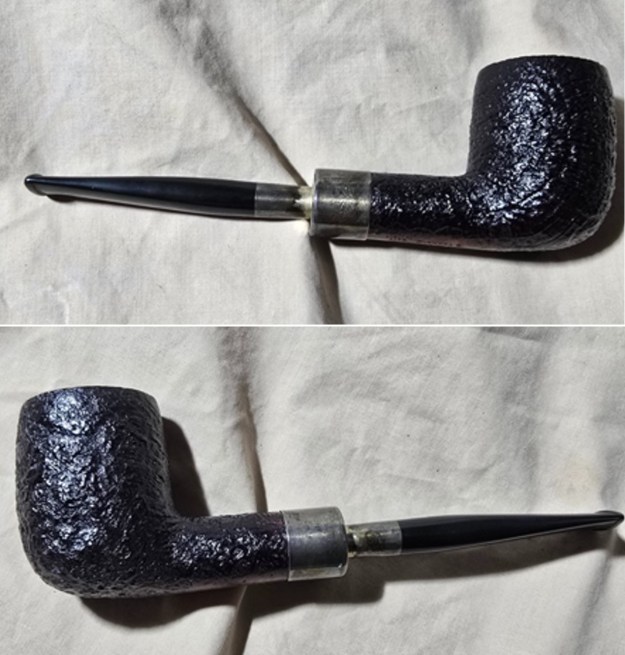
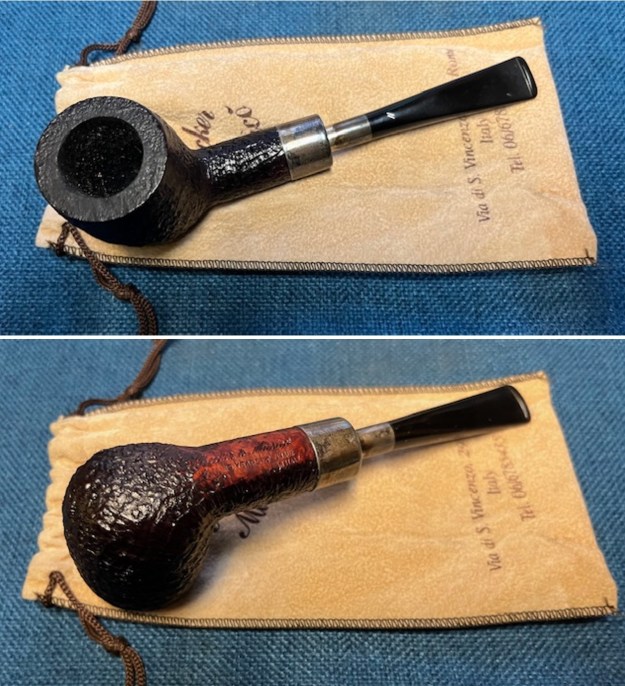
I have just a few pipes on my wish list of pipes I am wanting to add to my personal collection and one of them was the pipe I received a notification about on Facebook when I woke up. It was a Becker-Musico dark sandblast pipe with the original pipe sock. The shape was a classic Billiard (exactly what I was looking for) and the shank had a Sterling Silver Ferrule and a Sterling stem cone on the military bit stem. Both were tarnished and the pipe was dirty but in good condition. The bowl had a moderate cake and some tobacco debris still in it. The rim top and rest of the sandblast finish were dusty but in good condition. The stem was lightly oxidized on the button end and there were light tooth marks and chatter. I sent the seller a message and asked about the pipe. I almost expected that it would be gone as I have often gotten my hopes up and missed the pipe in question. This time I was fortunate and she immediately answered. It did not take too long for us to agree on a price and shipping. I transferred the payment and she sent me the tracking information. I asked her about the provenance of the pipe and it turns out to have come from her late uncle’s collection. I have included the photos that she included on the Facebook Marketplace listing. 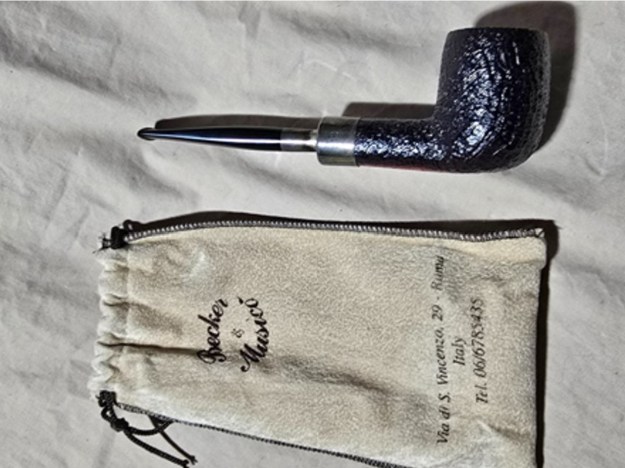
 Over my years of smoking a pipe I have looked for Becker-Musico pipes as there was always something about them that caught my attention. This is the second one that I found and worked on in my 30+ years of working on pipes. So, in many ways this another interesting one for me to work on and certainly a pipe I have been seeking. I have wanted to work on a Billiard and I have wanted to fire one up to smoke! I have enjoyed my other Becker-Musico, a Canadian but this was the shape I wanted. But before I started my work, I decided to research the brand to confirm what I thought I remembered. I turned first to Pipephil’s site (http://www.pipephil.eu/logos/en/logo-b3.html). There was an entry there that I have captured and included below. I have also included the information below the screen capture that was in the sidebar of the entry. To me this is always a great starting point for developing a sense of background on a particular pipe that I am working on.
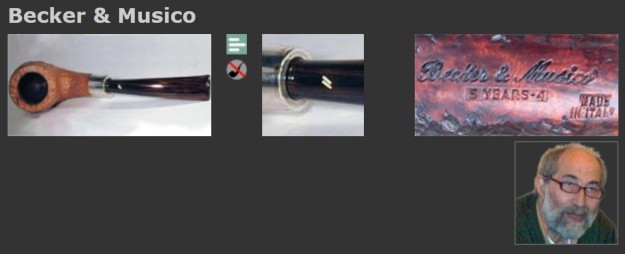 This brand comes from the partnership of Fritz & Paolo Becker and Giorgio Musicò ending up in the Becker & Musicò shop in 1989. When Fritz Becker passed, his son Paolo Becker didn’t continue the collaboration. Massimo Musicò (son of Giorgio) established a new brand: Foundation
I liked the idea that it was a collaborative work between the two Becker (father and son) and Giorgio Musico of Rome. I wanted more information to feed my curiousity so I turned to Pipedia to see what I could find (https://pipedia.org/wiki/Becker_%26_Music%C3%B2). The information is more definitive and helpful. I quote from the article below:
Paolo Becker, son of famed pipemaker Fritz Becker and Massimo Musicò, son of Giorgio Musicò, former manager of the famous Carmignani pipe shop in Rome, joined together in a pipe shop in 1990, and in 1995 began to make pipes together. The pipes were turned by Paolo on the lathe and finished by hand, and Massimo fit the mouthpieces and crafted spigots and silver bands to go with the pipes. Most were sandblasted, and approximately 2,000 pipes a year were made. The blasted pipes were stamped with “Five Years” denoting pipes made in 1995, and an additional number was added for each year, so that 5 years – 3 for example would refer to 1998. Smooth pipes were stamped with the years since 1990, so that a “6 years” pipe would have been made in 1996. The pipes were imported to the United States by R.D. Field, until 2002 when Becker returned to full time pipemaking under his own name. From 2002 on Becker & Musicò pipes were only sold in their shop, if at all.
Sadly, Paolo Becker died in 2014. Massimo Musicò continued to make pipes after the partnership ended under the Foundation name.
I also found a thread on Pipesmagazine forums discussing the brand. A fellow asked about the history of the brand as he purchased two of the pipes. The answer given by “disinformatique” give us an interesting piece of information that came originally from SmokingPipes.com (https://pipesmagazine.com/forums/threads/two-new-pipes-i-acquired.56159/). I quote it below.
Here is some history on Musico pipes. Courtesy SmokingPipes.com
“If you know Becker pipes, well, chances seem slim you wouldn’t also know the name Musico. It was Giorgio Musico who, as an enthusiastic supporter of their work and as the manager of the Carmignani shop in Rome, bought up every pipe Fritz and Paolo Becker could bring him, from the time he first discovered the Beckers in 1979. Later would come both the Becker & Musico pipe shop (a hidden gem still found today on Via di San Vincenzo in Rome) and the Becker & Musico pipe. The latter was a result of collaboration between the son of Giorgio, Massimo Musico, and Paolo Becker, encouraged by Giorgio Musico’s love of classic shapes. These were made in the back workshop of the Becker & Musico shop itself, which Massimo and Paolo also ran together.
In 2002, however, Paolo turned his focus to the creation and development of Becker pipes full-time, while Massimo continued to both run the Becker & Musico shop and create Becker & Musico briars. Without Paolo, production was much more limited; a solution came, however, with Foundation, the name stamped on the Musico pipes you’ll find here. This again was created as a collaboration, but a broader one: Massimo, Giorgio, and a team of hand-picked Italian artisans (Gian Maria Gamboni was one you will surely recognize). That was the beginning of Foundation by Musico.”
Cheers, Chris :puffpipe:
Combining the information above I knew that the classic shaped Canadian by Becker-Musico was a collaboration of Paolo Becker and Massimo Musico. It was made in their shop in Rome. The stamp is 5 Years – 3 and tells us that the sandblast pipes which started in 1995 (5 Years) and added 3 years to that for a date of 1998.
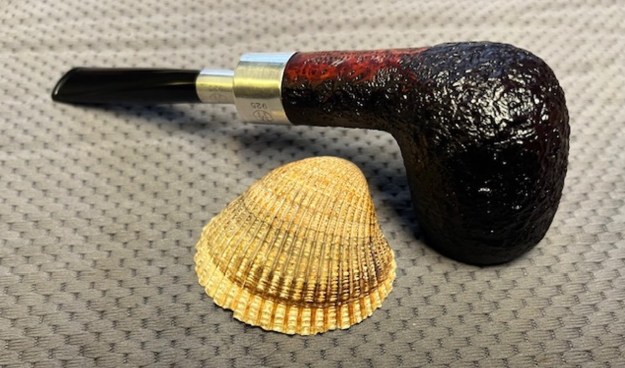
Now it was my turn to work on the pipe. It arrived in Vancouver this morning. I took photos of the pipe before I started working on it. It is a beauty. You can see the condition is as I described it above – dirty but lovely at the same time. Have a look at the beauty that caught my eye with this one.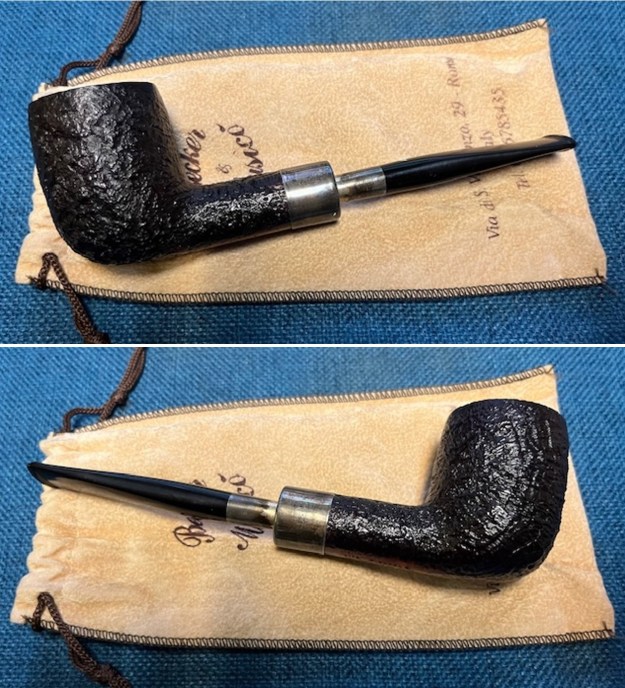
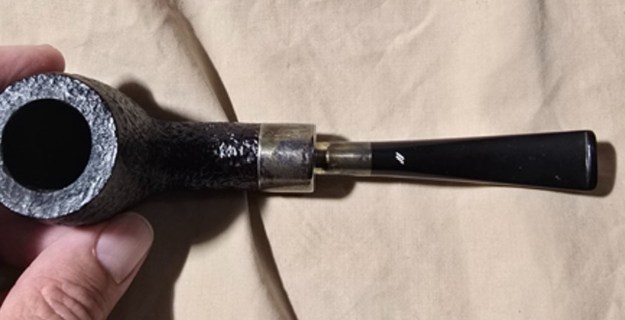
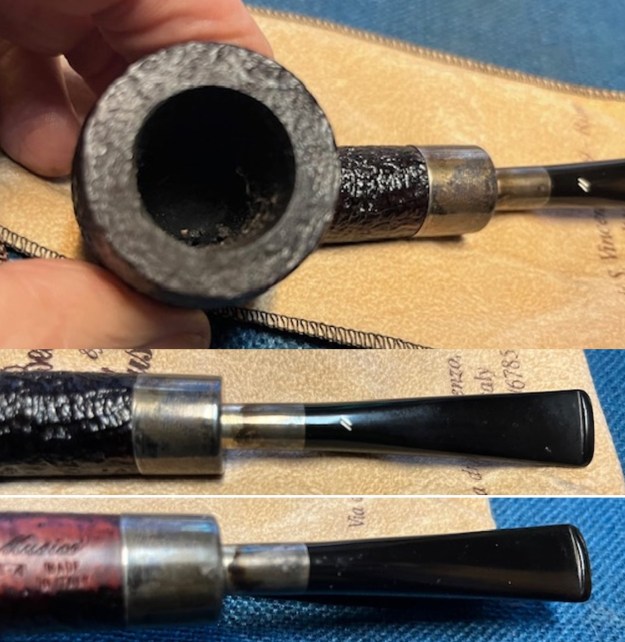
 I took photos of the rim top and the stem to show the condition. You can see the cake in the bowl and the dusting of lava on the rim top. The photos also capture the oxidation of the silver on the ferrule and the stem end. The photos of the stem show the light chatter on the top and the underside of the stem. The Becker & Musico logo is clearly visible on the top of the stem.
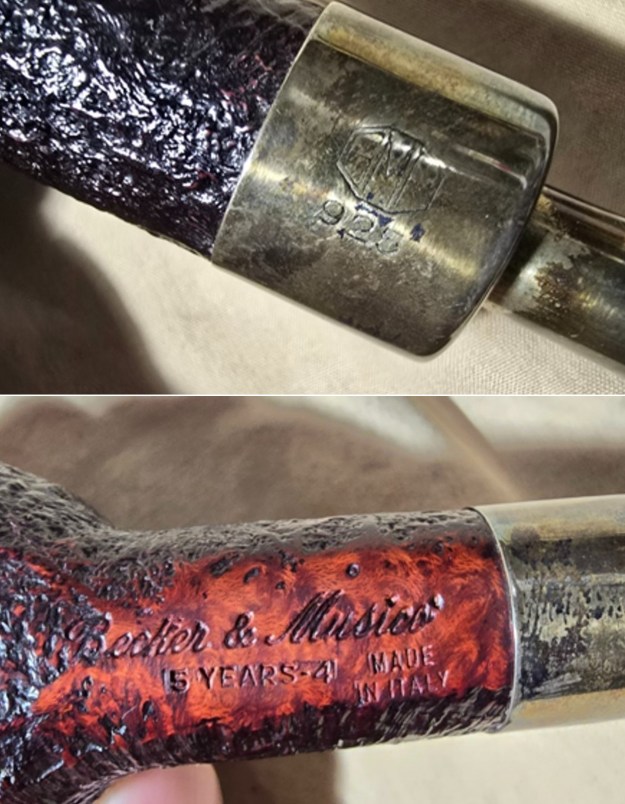
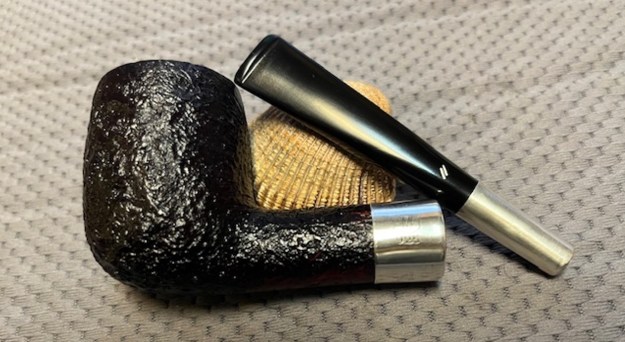
 I took a photo of the stamping on the underside of the shank to capture it. It read as follows: Becker & Musico [over] 5 Years – 4 [over] Made in Italy (in two lines). The 5 Years – 4 identifies the date of the pipe. The blasted pipes were stamped with “Five Years” denoting pipes made in 1995, and an additional number was added for each year, so that 5 years – 4 for example would refer to 1999. The pipe is a pipe made in 1999. The silver ferrule was stamped with an octagon with the letters BMP on the inside. Underneath it is stamped 925. The stem has a silver cap that is also stamped with the octagon and BMP over 925. I removed the stem and took a photo of the parts to give a sense of the look of the pipe.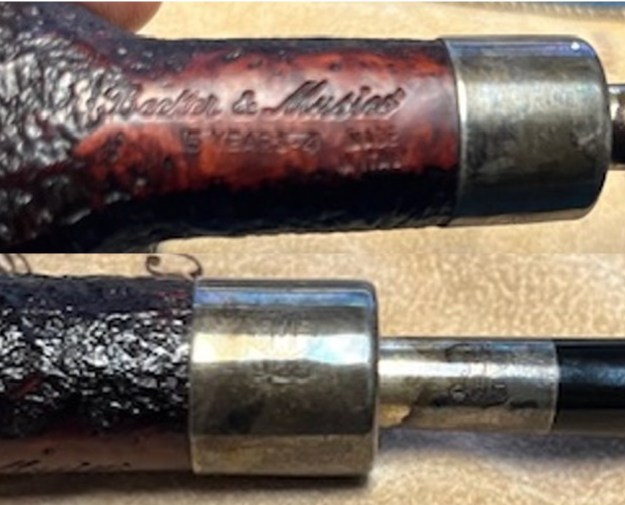
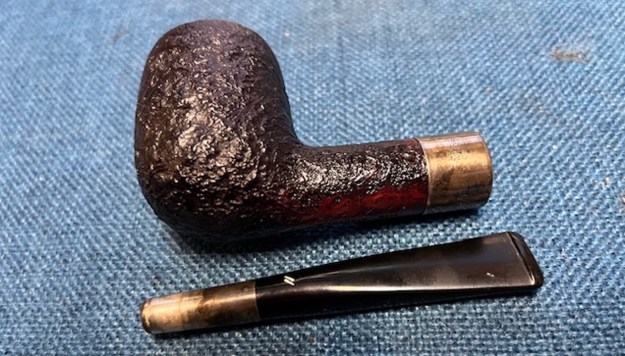 The ferrule was loose on the shank end as the glue had long since dried out. I cleaned up the inside of the Sterling Silver ferrule with a cloth and knife and gave it a coating of all-purpose white glue. I pressed the ferrule back on the shank and line up the stamping to match the stamping on the stem end. I set it aside and let the glue cure.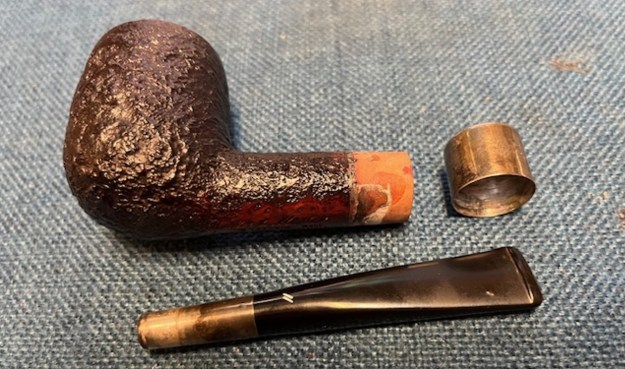
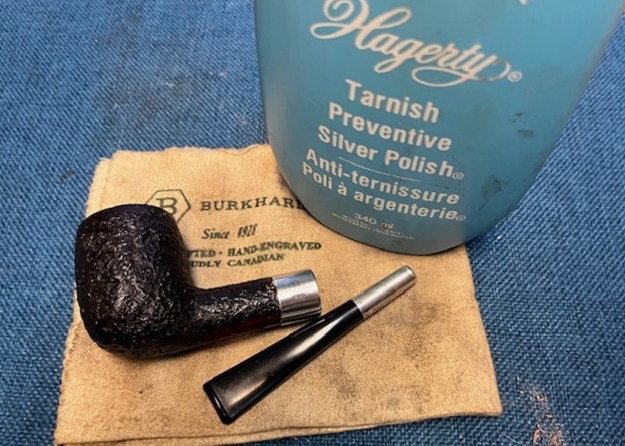
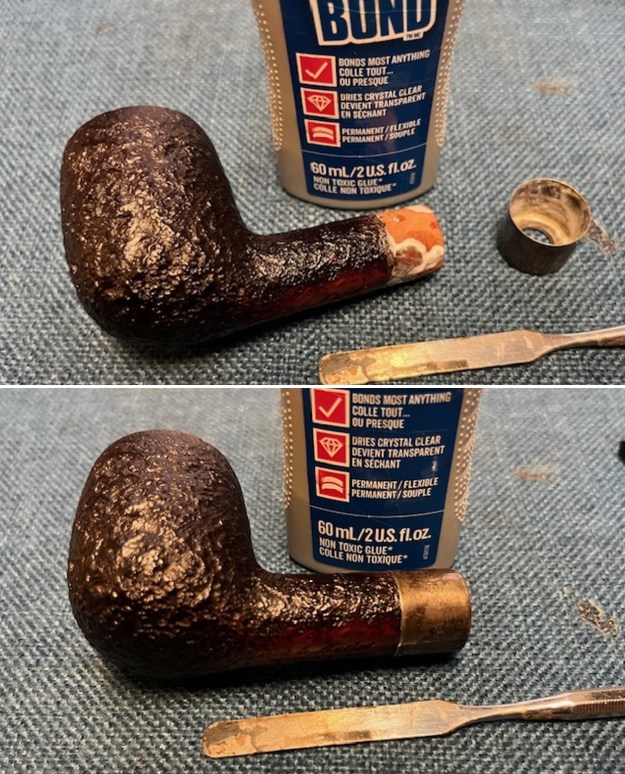 I polished the silver band and stem end silver with Hagerty Silver Polish and a jeweller’s cloth to clean up and prevent further oxidation in the future. The contrast between the silver and the dark sandblast is very nice.
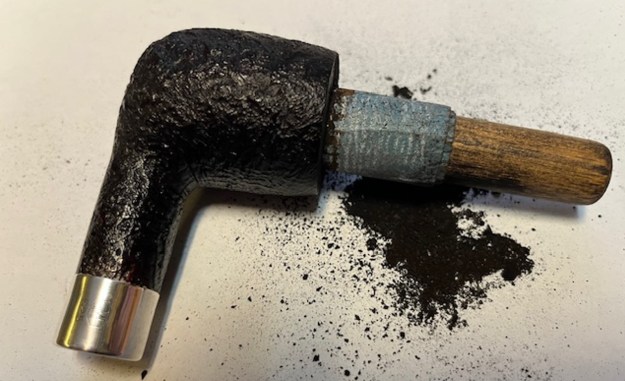
 I reamed the bowl with a PipNet reamer. I used the second and third cutting heads and took the cake back to bare briar. I cleaned up the reaming with a Savinelli Fitsall Pipe Knife and removed all the remnants of the cake. I sanded the walls of the bowl with a piece of dowel wrapped in 220 grit sandpaper. The walls look very good at his point in the process. I used a brass bristle wire brush on the sandblasted rim top to clean off the residual debris.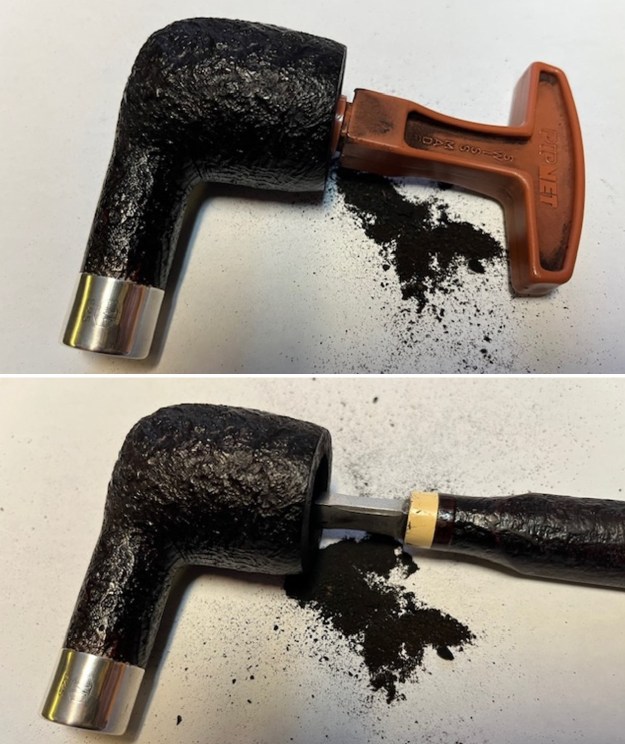
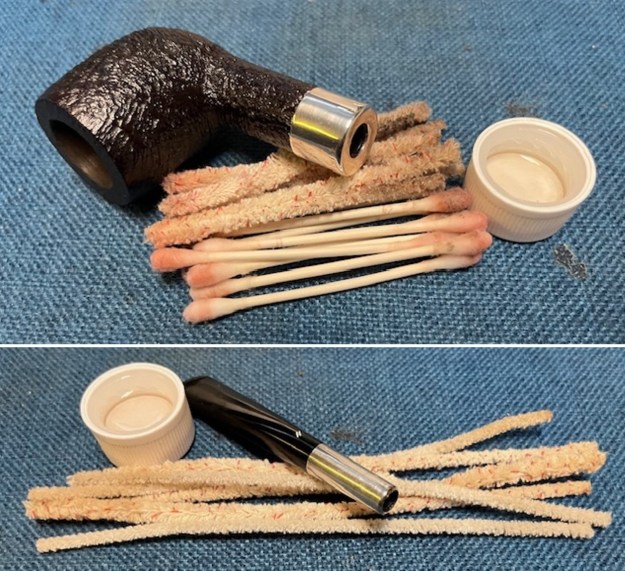
 I cleaned out the airway in the shank and the stem with alcohol, cotton swabs, hard bristle and soft bristle pipe cleaners. It was a very pipe which just meant that it had really been enjoyed by the previous pipe man.
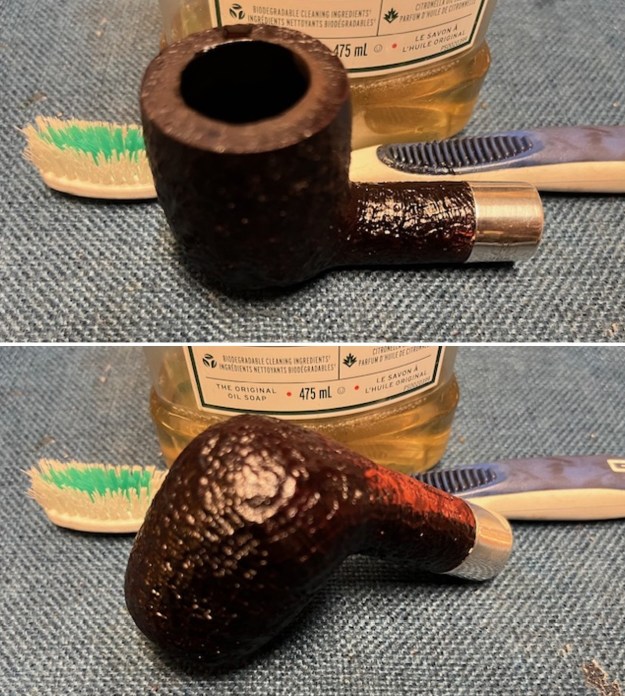
 I scrubbed the exterior of the bowl and shank with a tooth brush and undiluted Murphy’s Oil Soap. I scrubbed the lava on the rim top and overflow on the outside of the bowl with the soap. I rinsed the briar with warm water to remove the grime and debris of the scrubbing. It looked significantly better after the scrubbing. Once I cleaned the bowl with the soap it looked much better.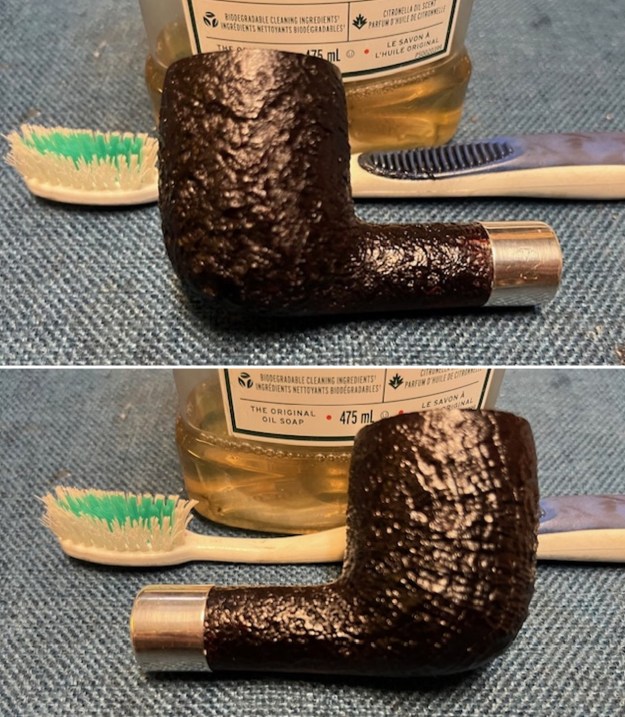
 I rubbed the briar down with Before & After Restoration Balm. I worked it into the sandblast surface with my fingertips and a shoebrush. The product works to clean, enliven and preserve the briar. I let it sit for 10 minutes then I buffed it with a cotton cloth to deepen the shine. The briar really comes alive with the balm.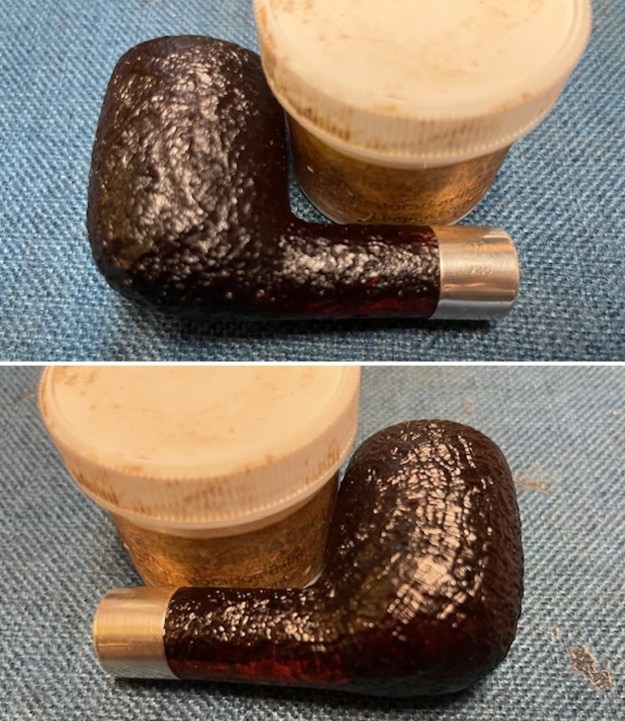
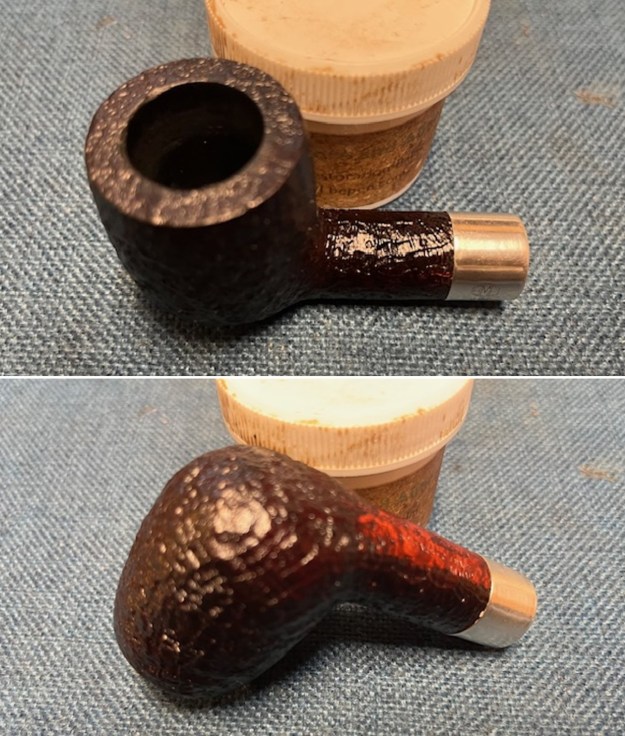
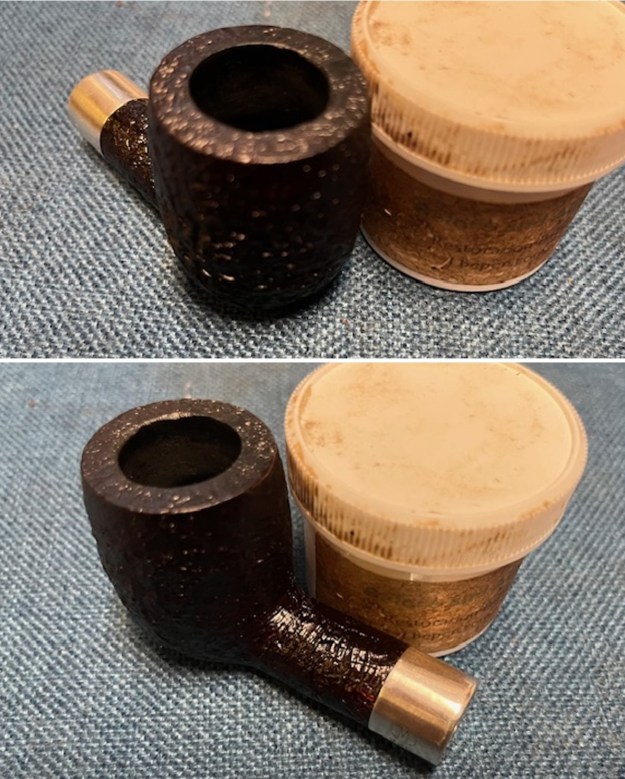 I set the bowl aside and sanded out the light tooth damage on the vulcanite stem with 320-3500 grit 2×2 inch sanding pads. I wiped the stem down after each pad with Obsidian Oil. I was able to remove the damage and the stem looked better.
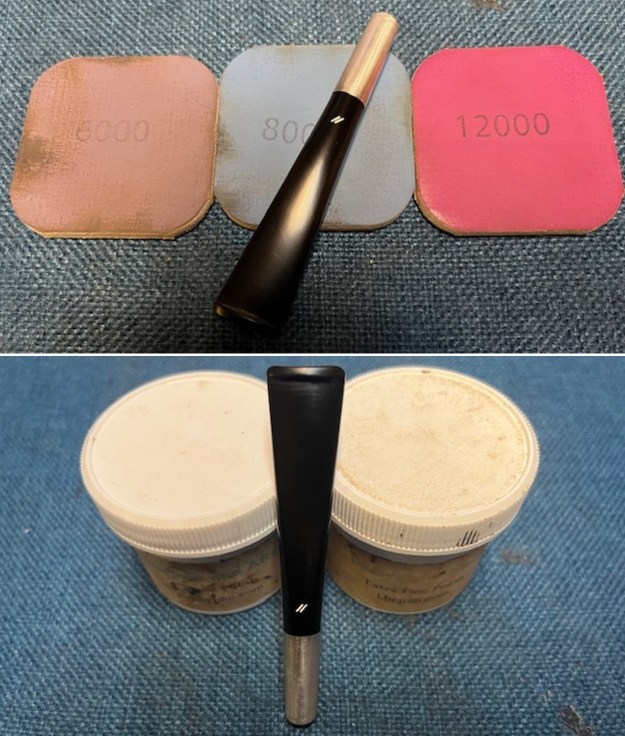
 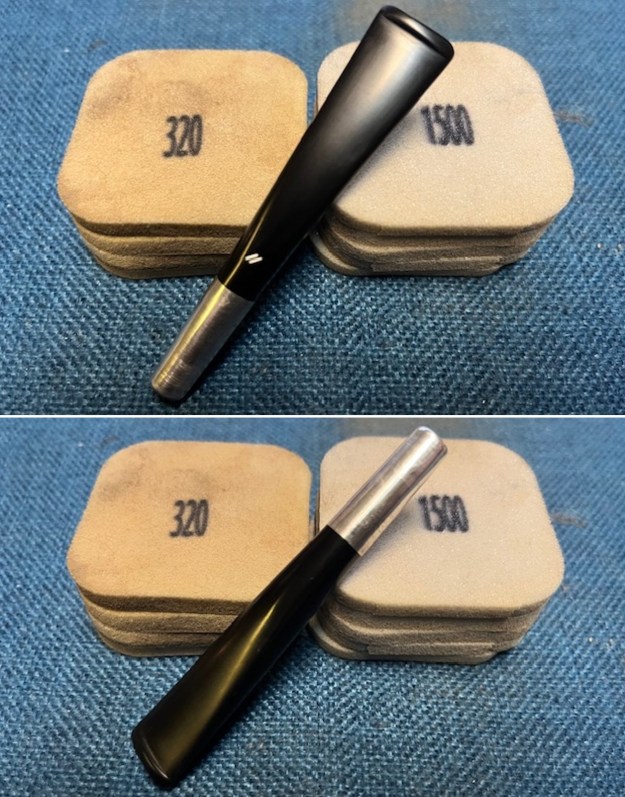 I polished the stem with micromesh sanding pads – dry sanding with 1500-12000 grit pads. I wiped the stem down after each sanding pad with Obsidian Oil. I gave the stem a final polish with Before & After Pipe Stem Polish both Fine and Extra Fine. I rubbed the stem with them and then gave them a final coat of Obsidian Oil. I set it aside to dry.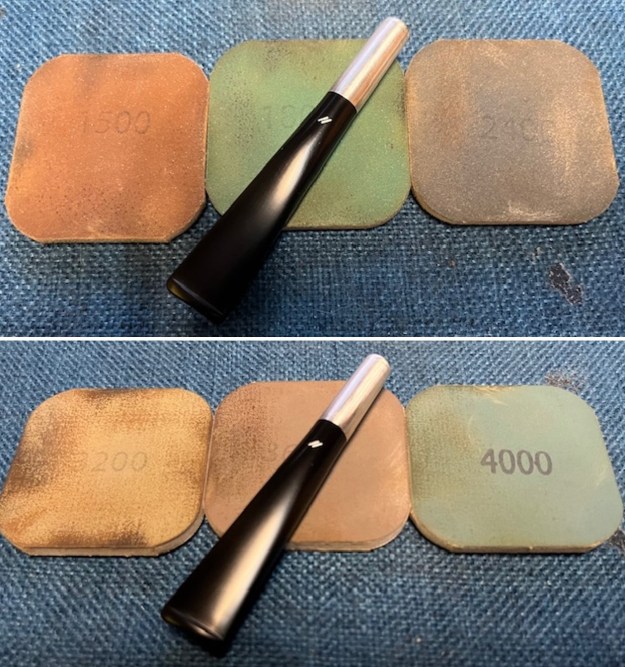
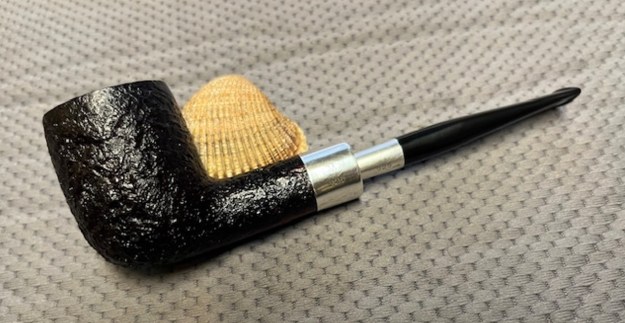
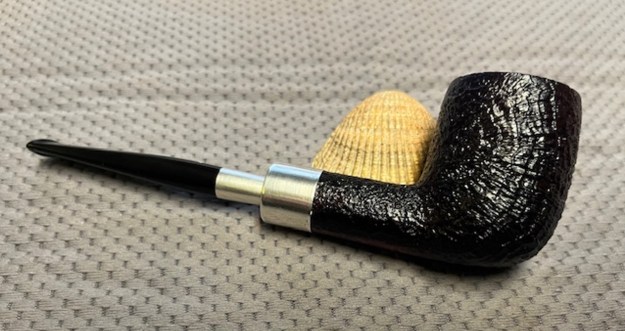
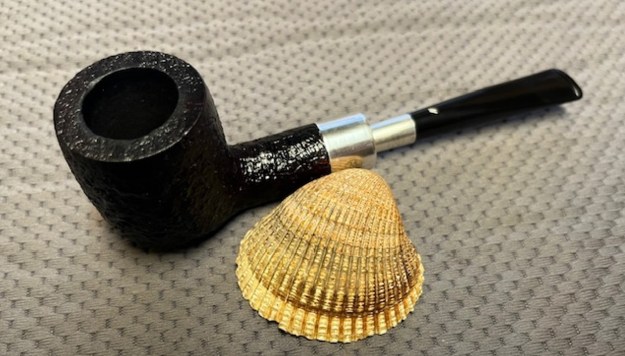
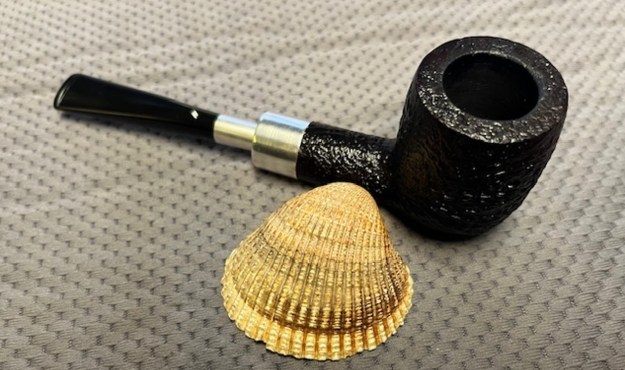
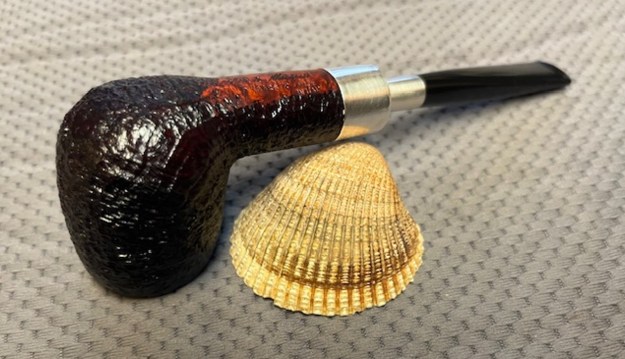
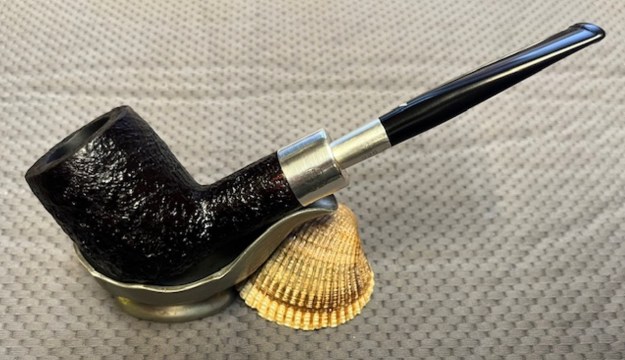
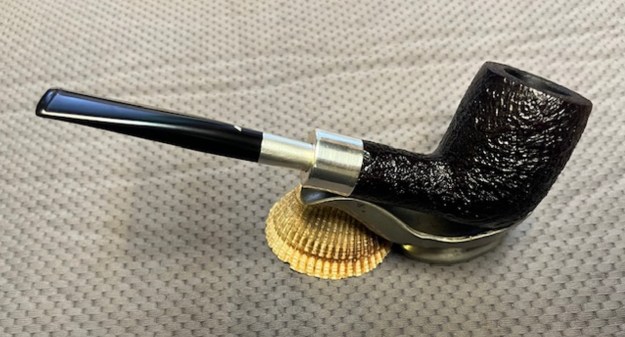
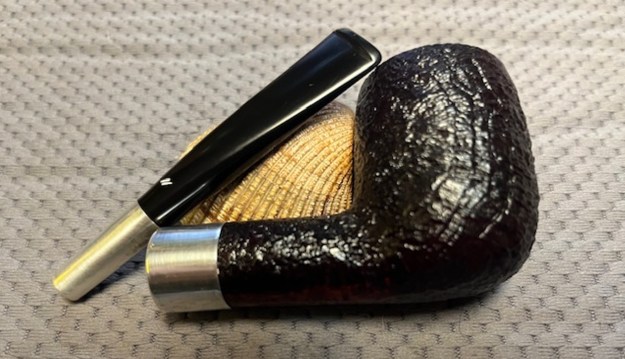
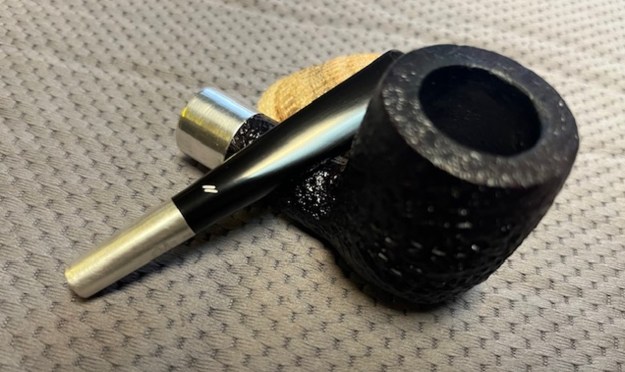
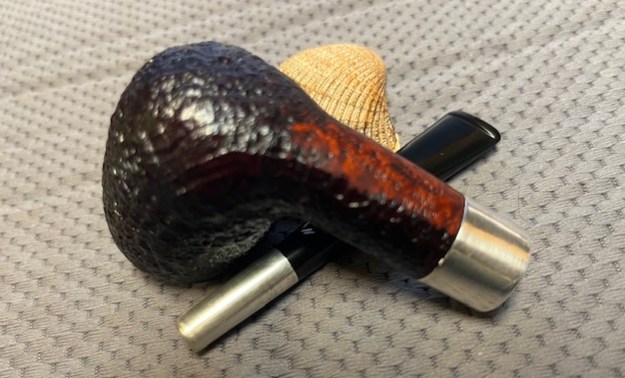
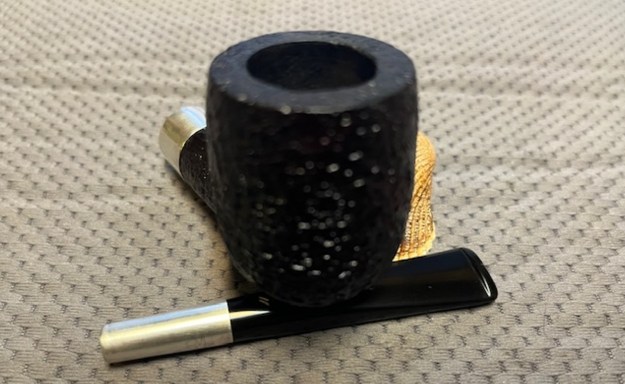
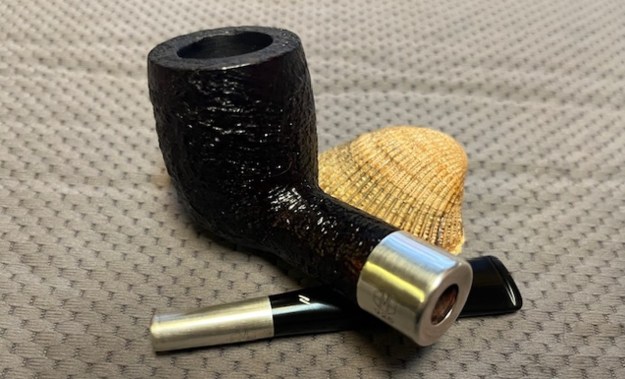
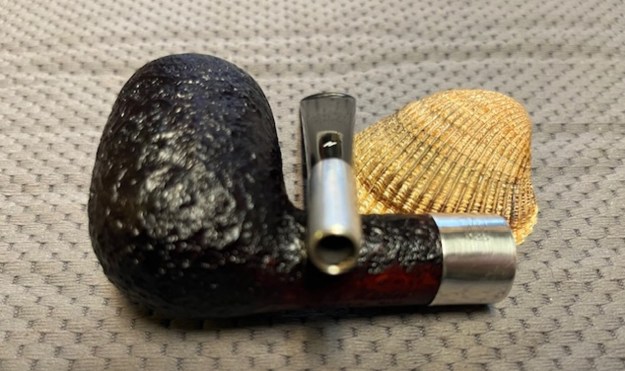
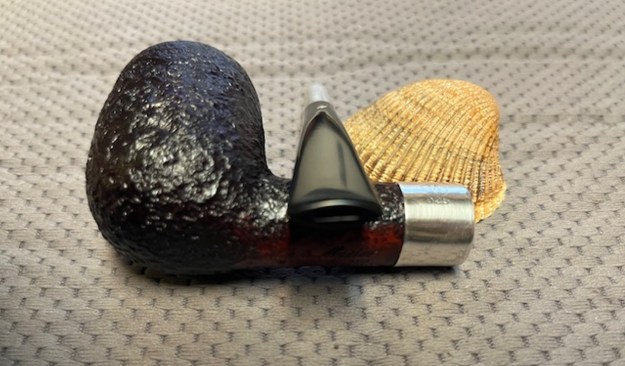
 This Becker-Musico 5 years – 4 Sandblast Military Bit Billiard has a beautiful, dark, reddish brown finish on the sandblast bowl and rim. The sandblast is well done and really highlights some beautiful grain. The polished Sterling Silver Ferrule and the Cone Fitting on the tenon end of the polished vulcanite stem add to the mix. I put the stem back on the bowl and buffed the pipe with Blue Diamond on the buffing wheel being careful to not buff the stamping. I gave the bowl multiple coats of Conservator’s Wax and the stem multiple coats of carnauba wax on the buffing wheel and followed that by buffing it with a clean buffing pad. I hand buffed the pipe with a microfiber cloth to deepen the shine. The finished Becker-Musico Sandblast Military Bit Billiard is quite stunning and feels great in my hand. Give the finished pipe a look in the photos below. The dimensions of the pipe are Length: 6 inches, Height: 1 ¾ inches, Outside diameter of the bowl: 1 ¼ inches, Chamber diameter: ¾ of an inch. The weight of the pipe is 1.62 ounces/46 grams. Thanks for walking through the restoration with me as I worked over another beautiful pipe. I am going to keep this one around for awhile to try it out as I have wanted one for a long time. Thanks for your time.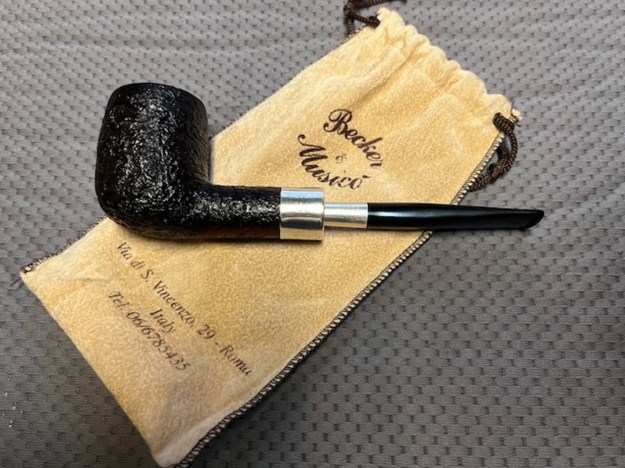
 rebornpipes