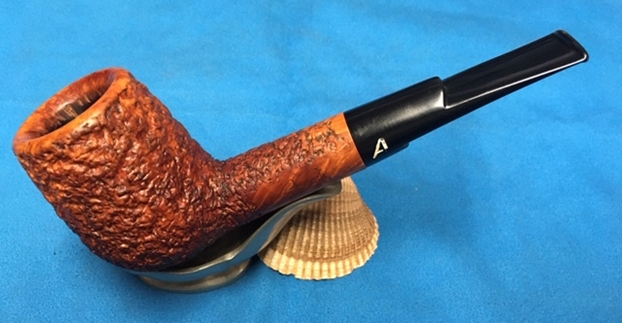
Tag Archives: Ascorti pipes made by Roberto Ascorti

Cleaning up an Ascorti Oak Sandblast Apple


by Steve Laug

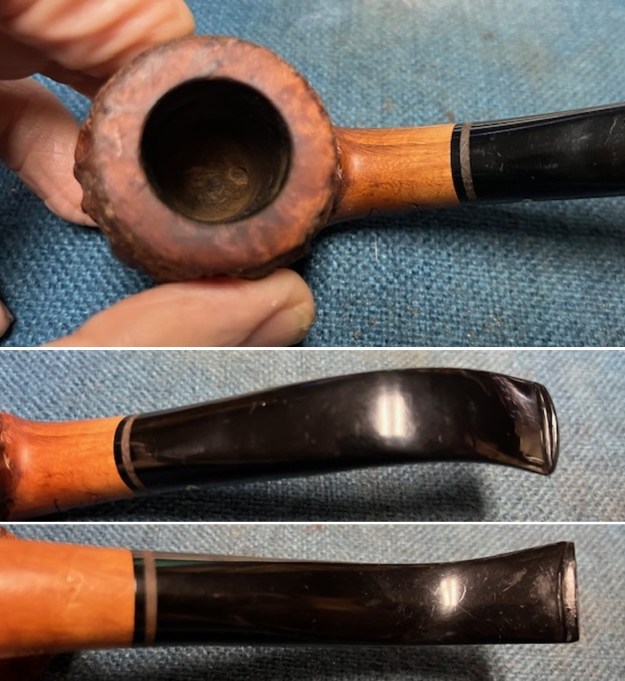
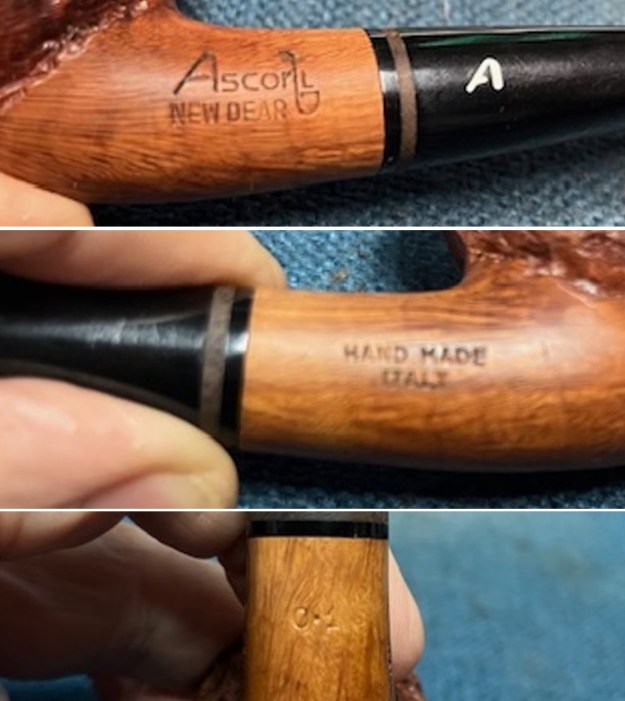
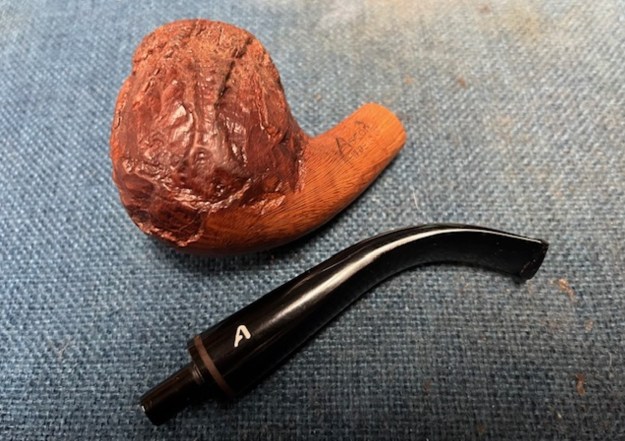
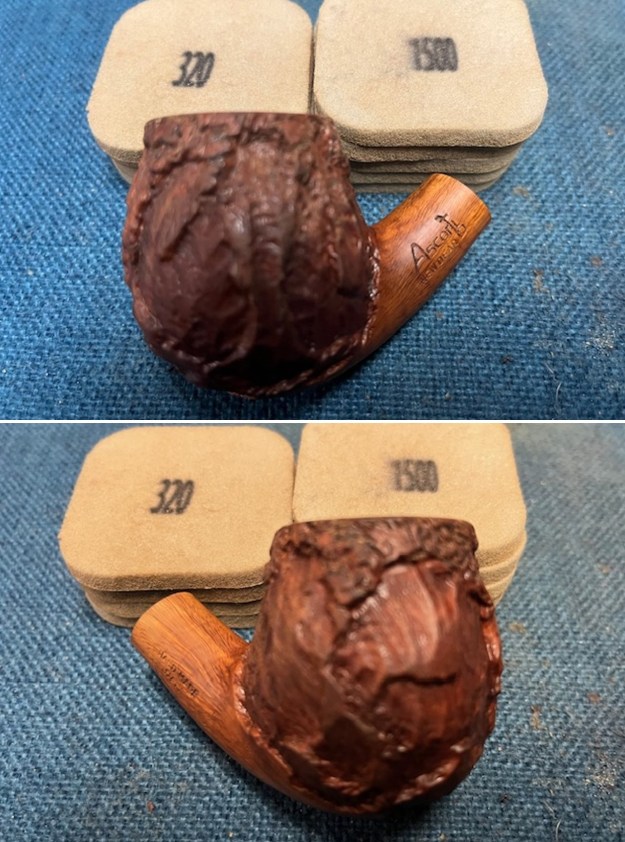
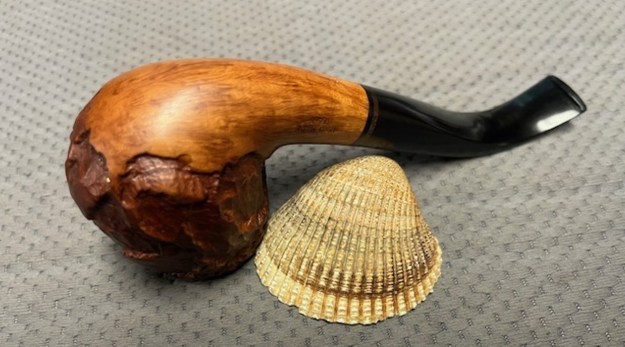
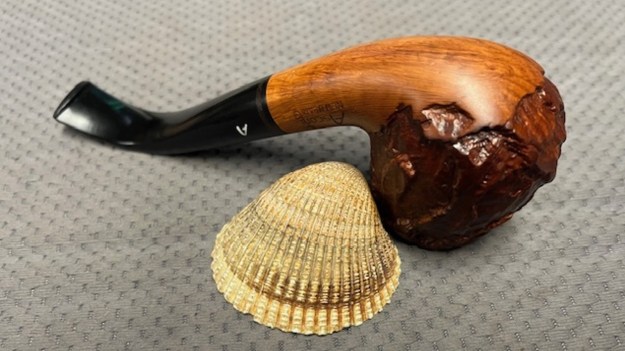
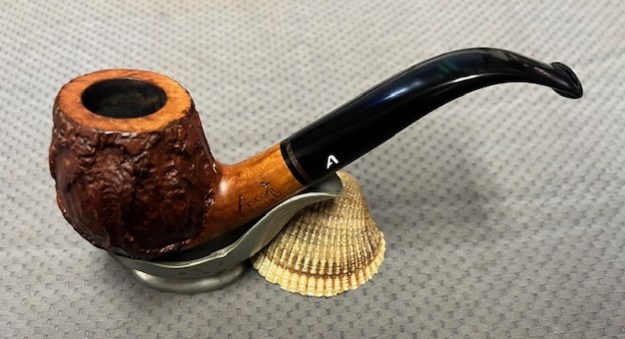
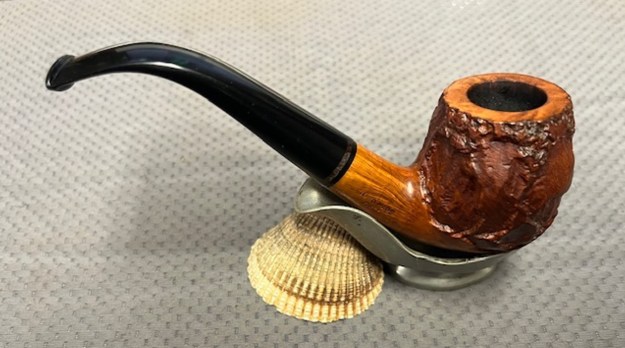
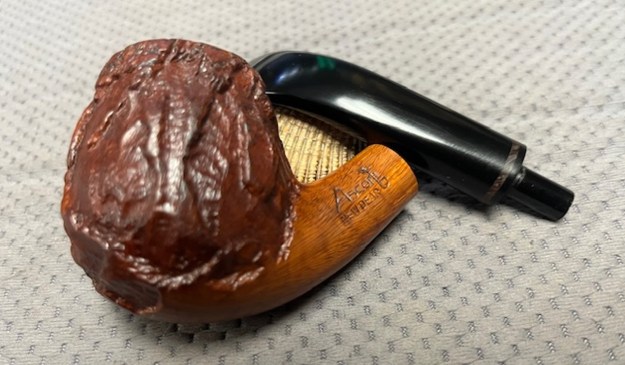
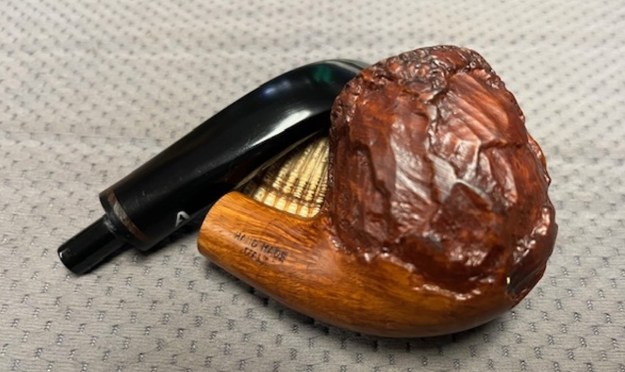
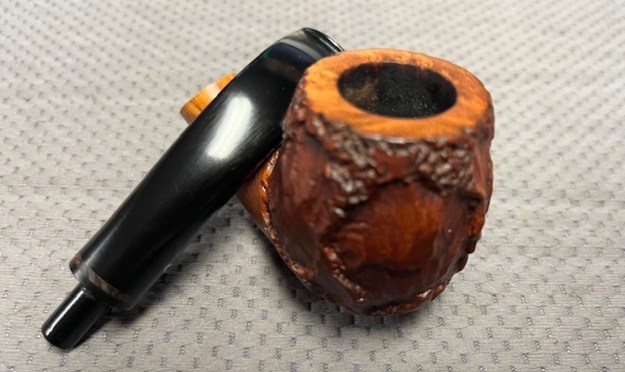
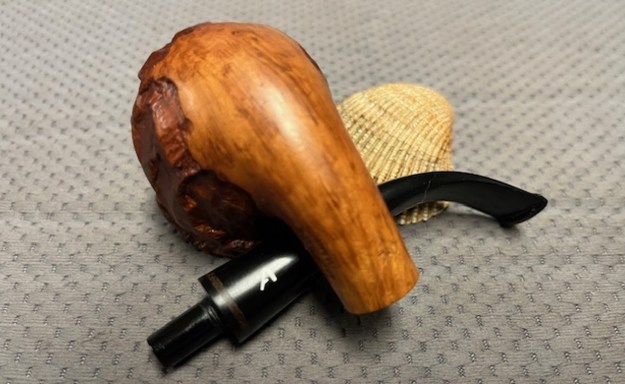
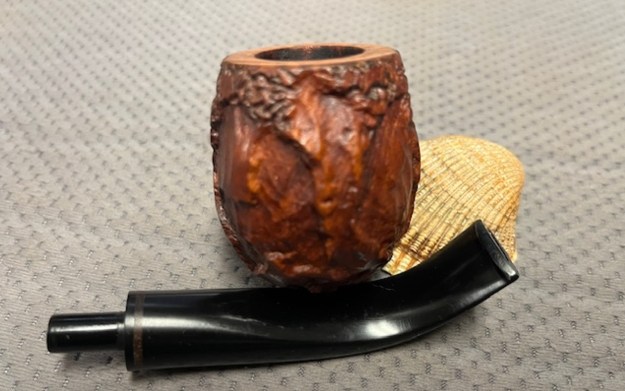
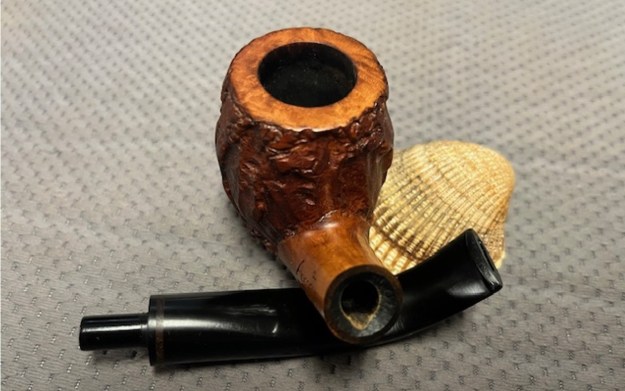
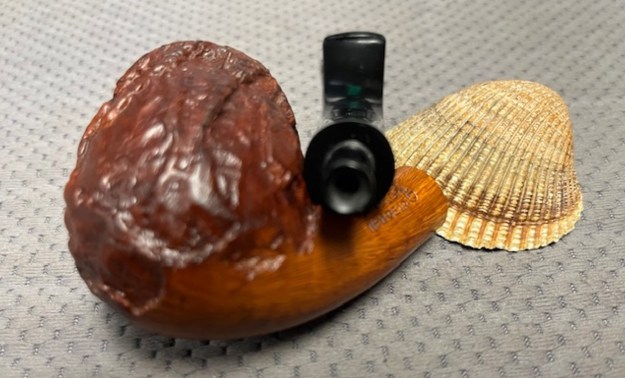
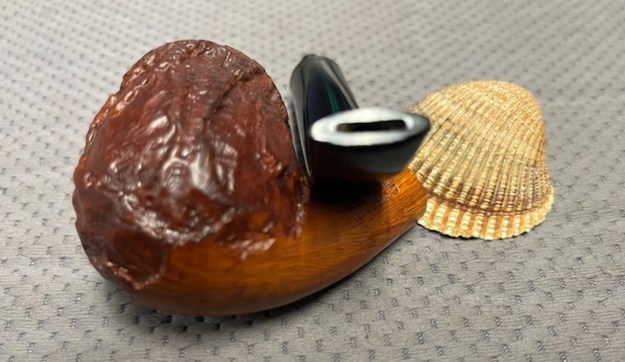
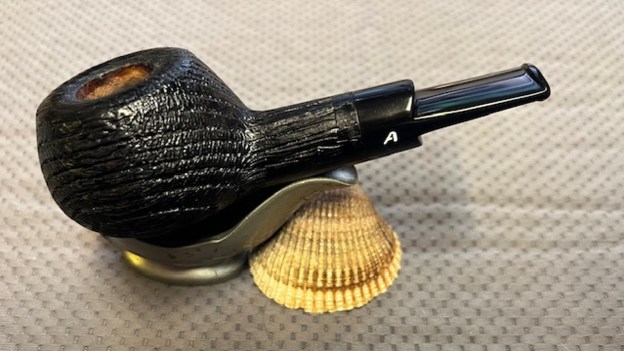
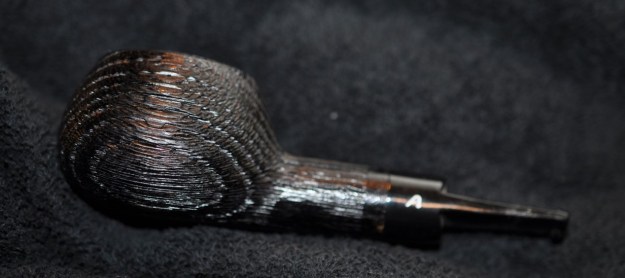
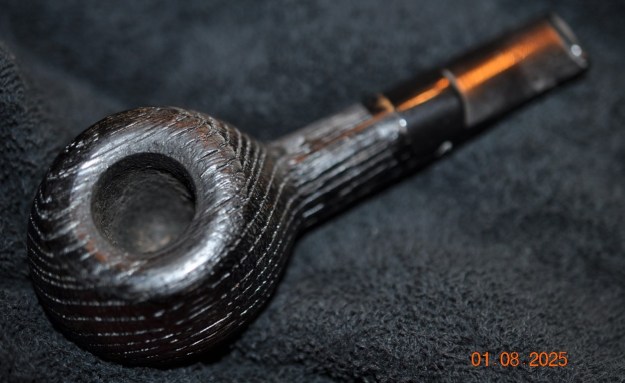
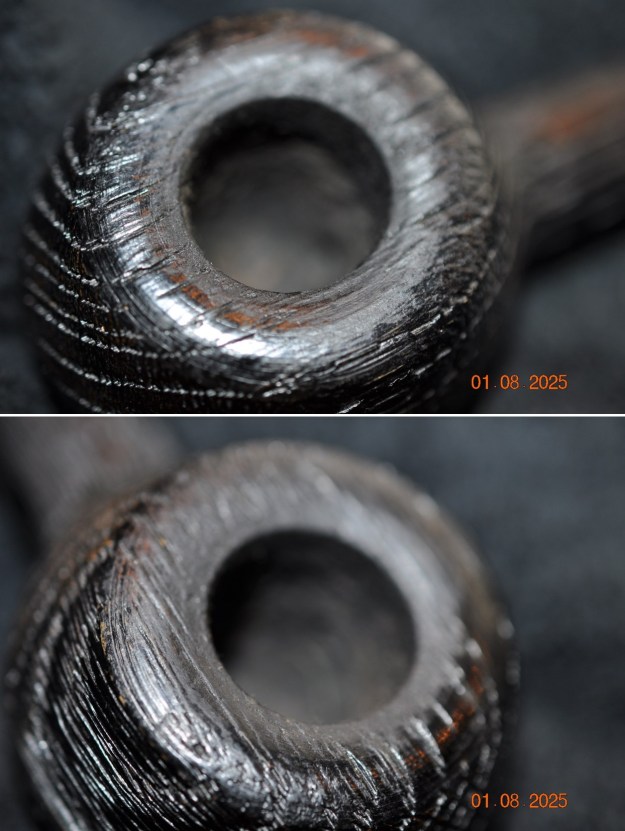
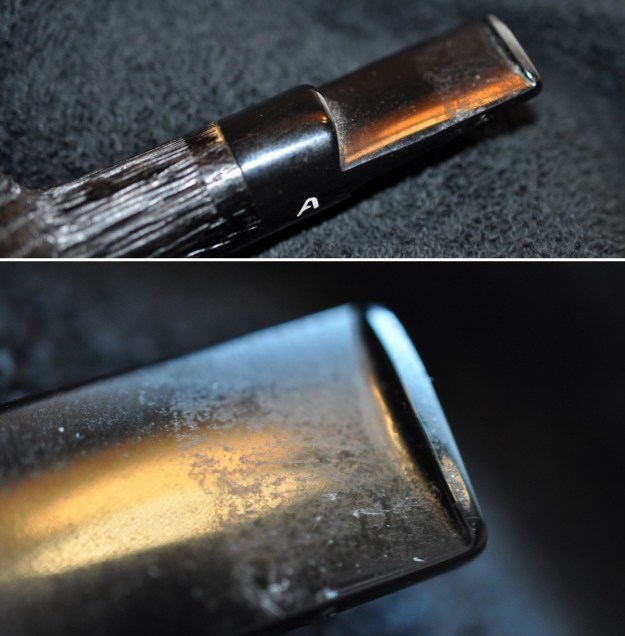
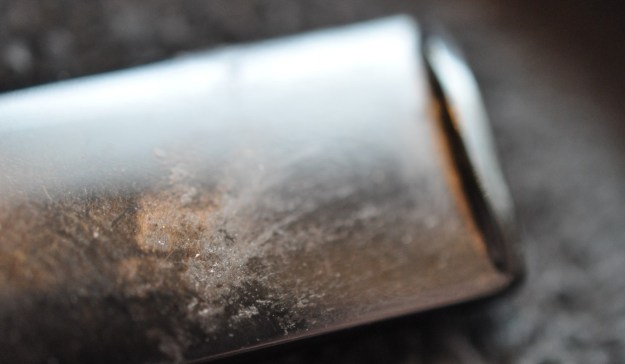
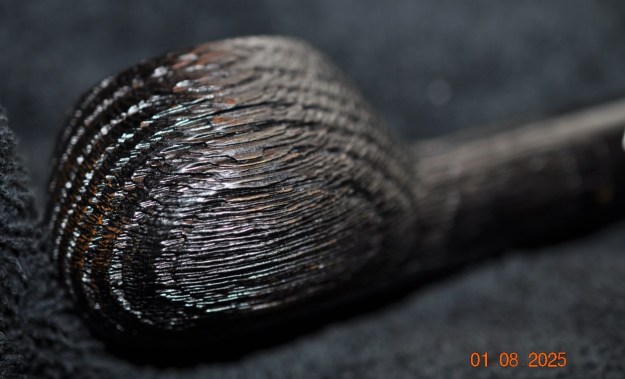
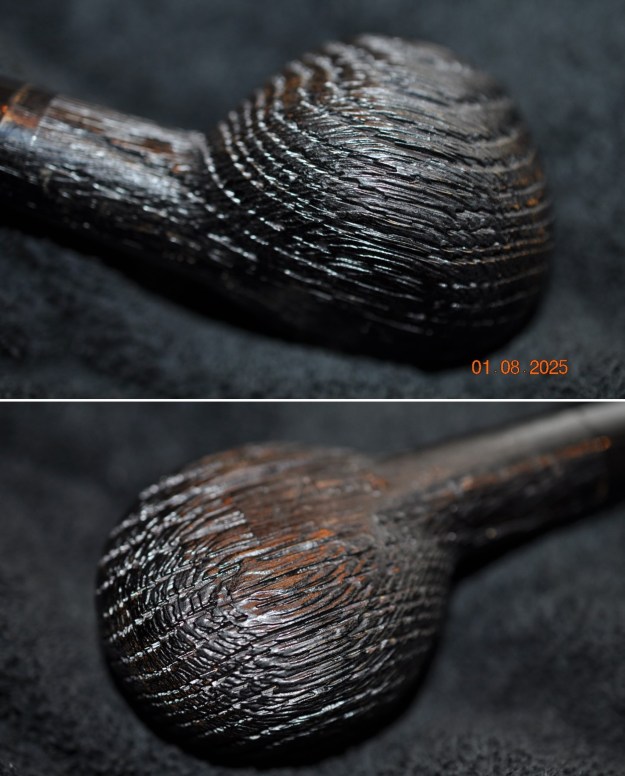
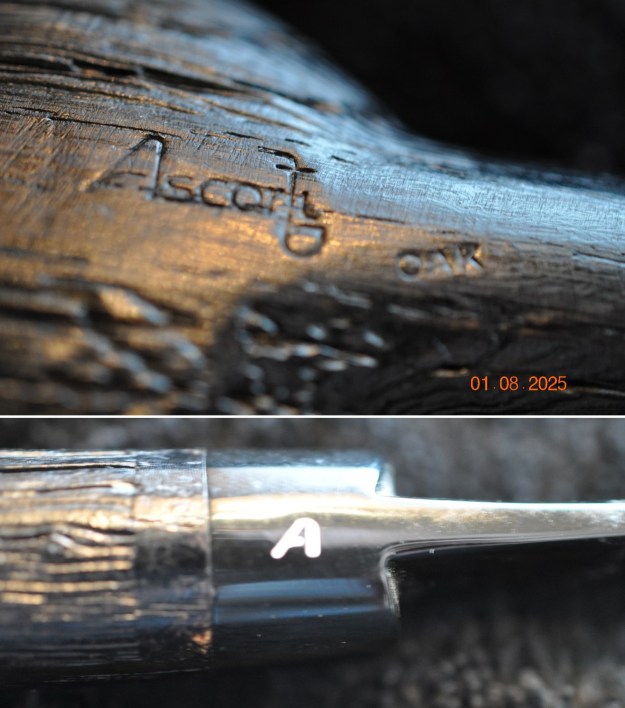
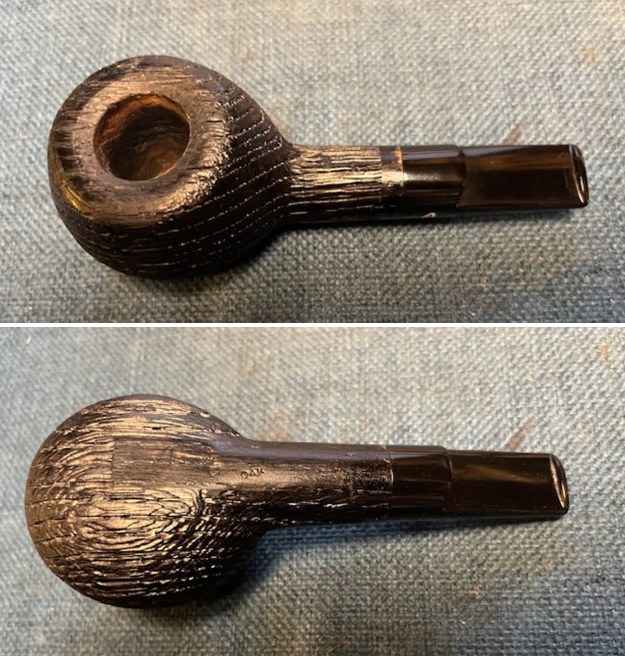
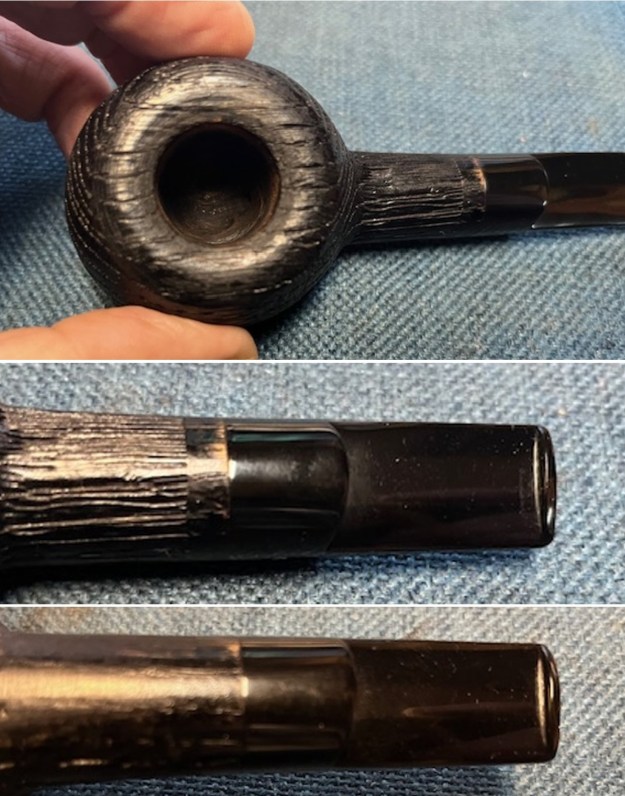
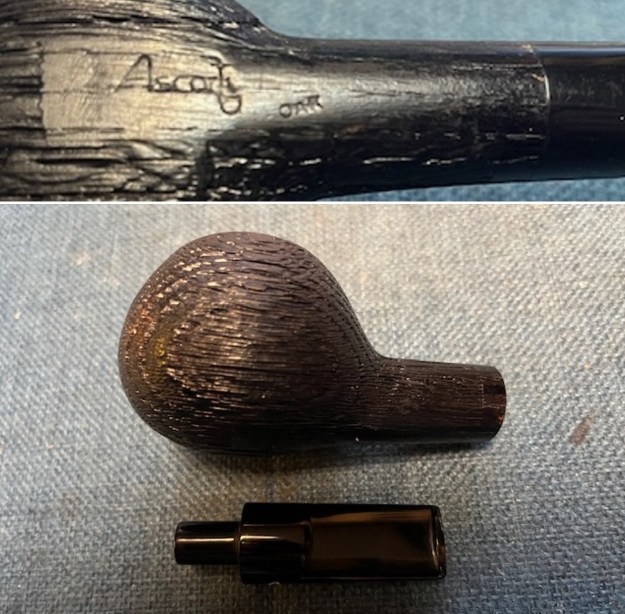
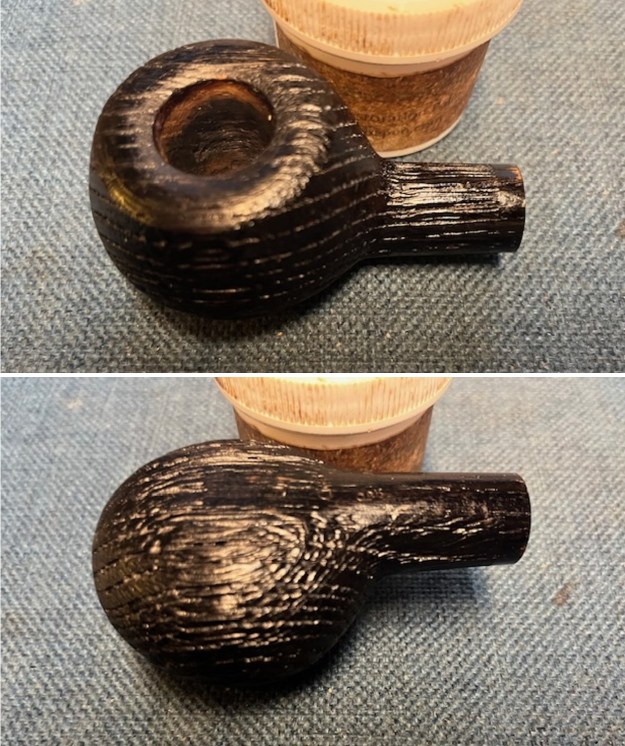
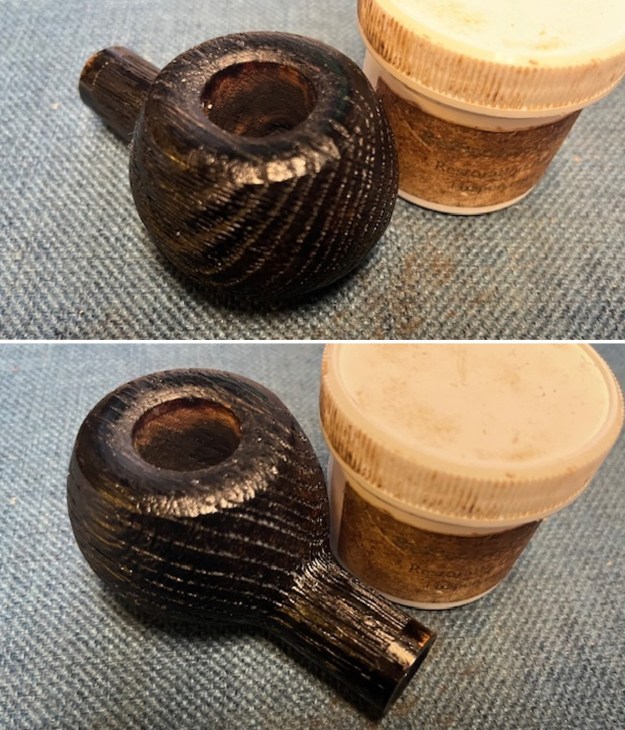
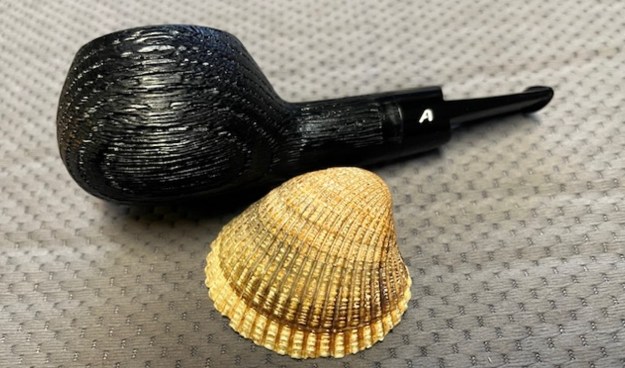
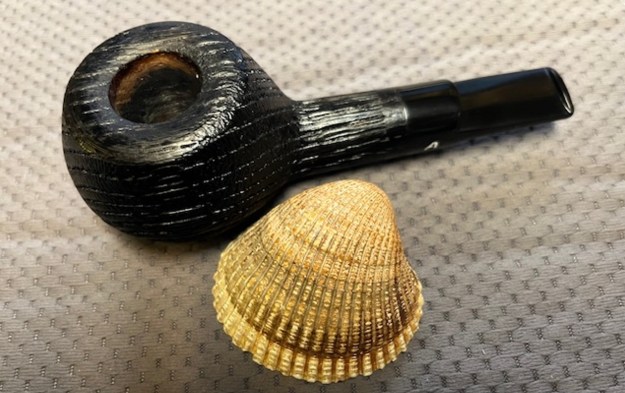
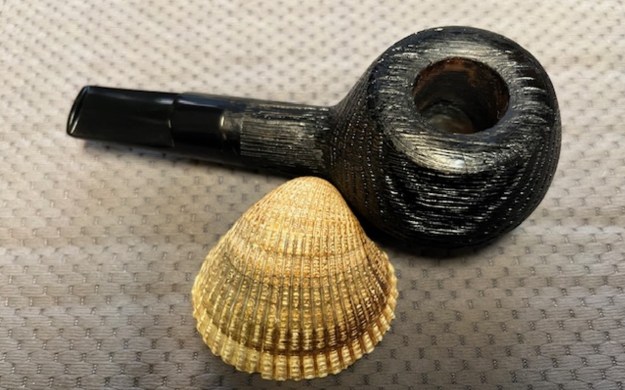
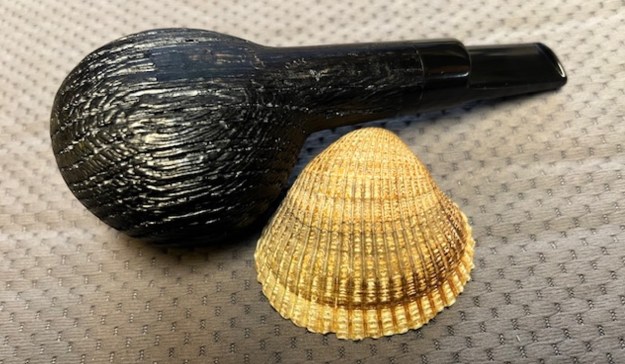
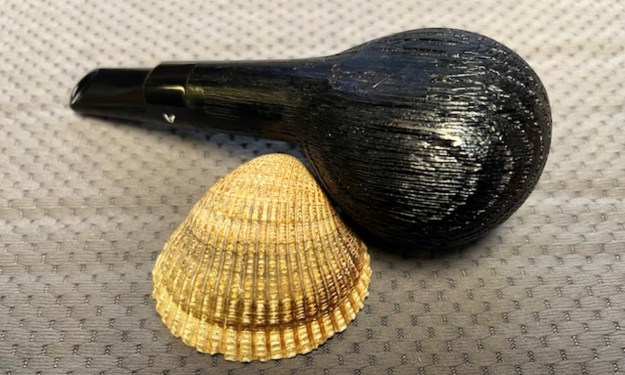
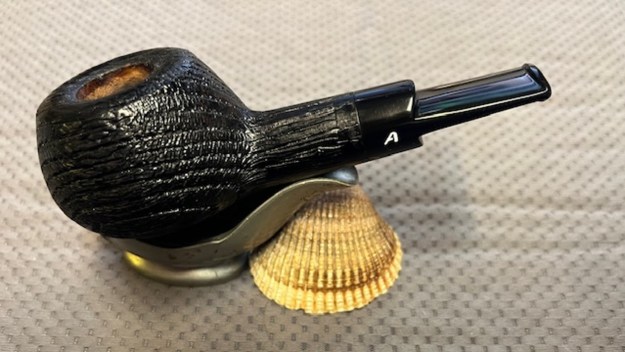
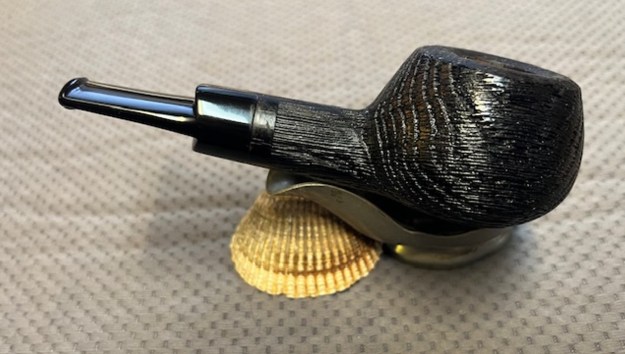
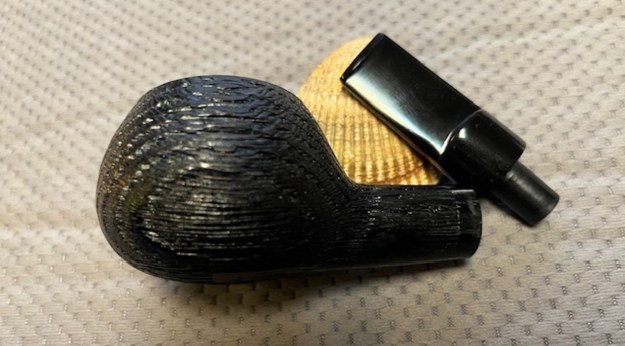
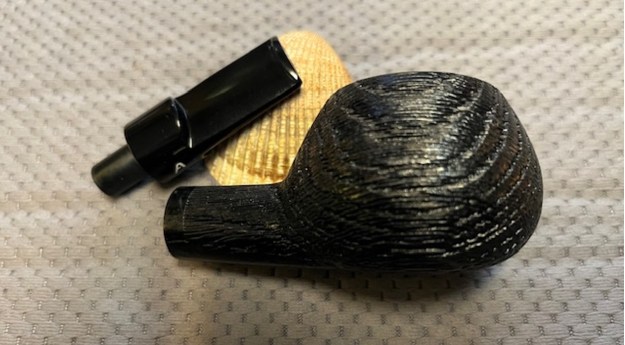
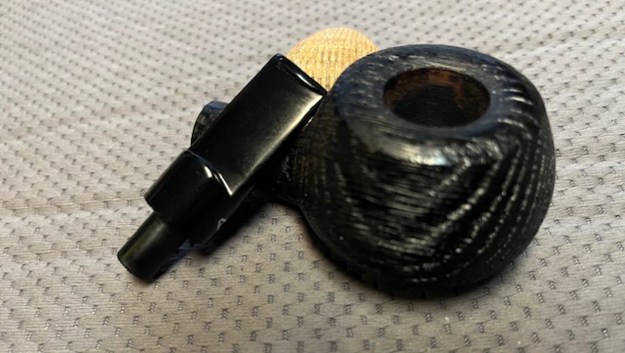
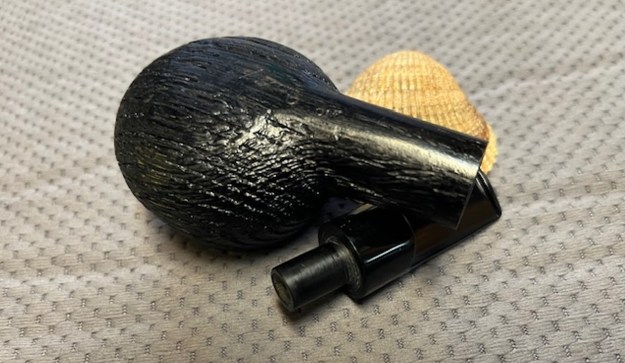
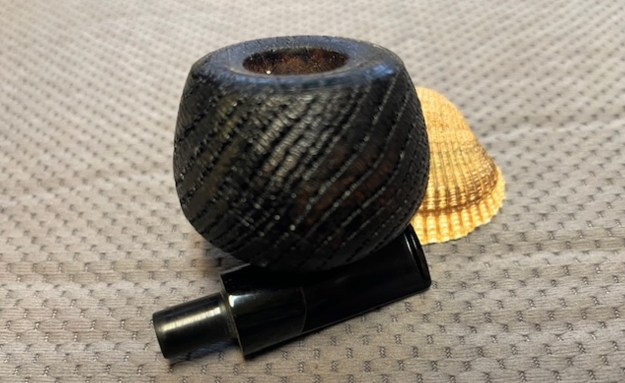
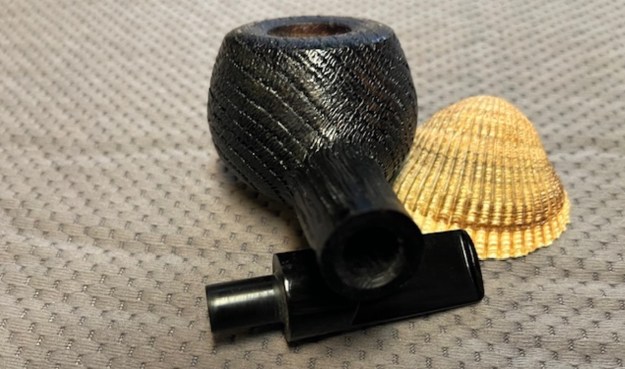
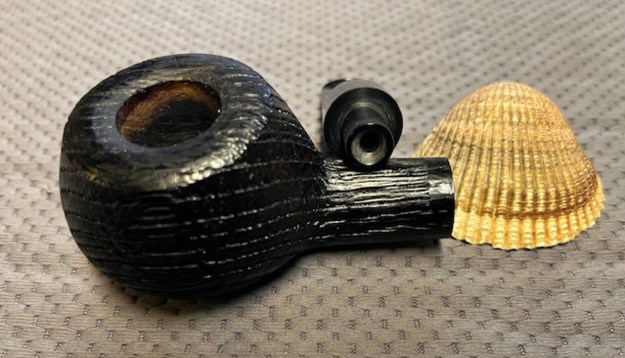
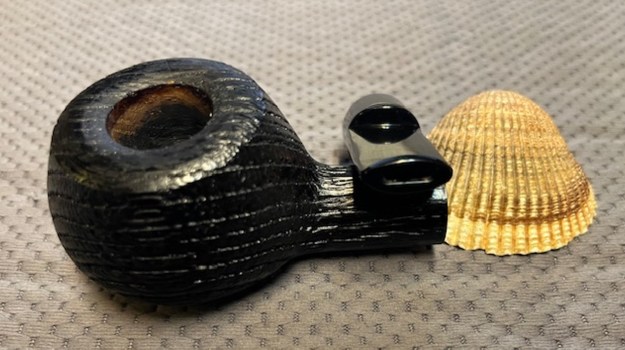
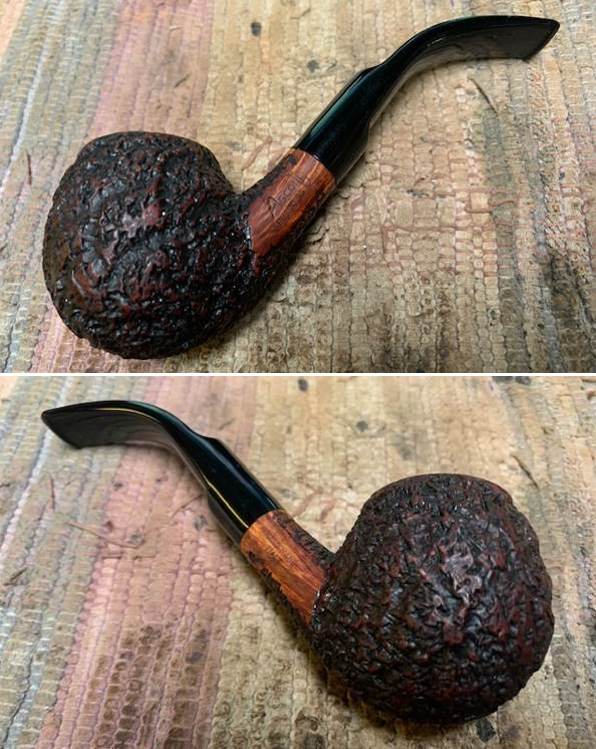
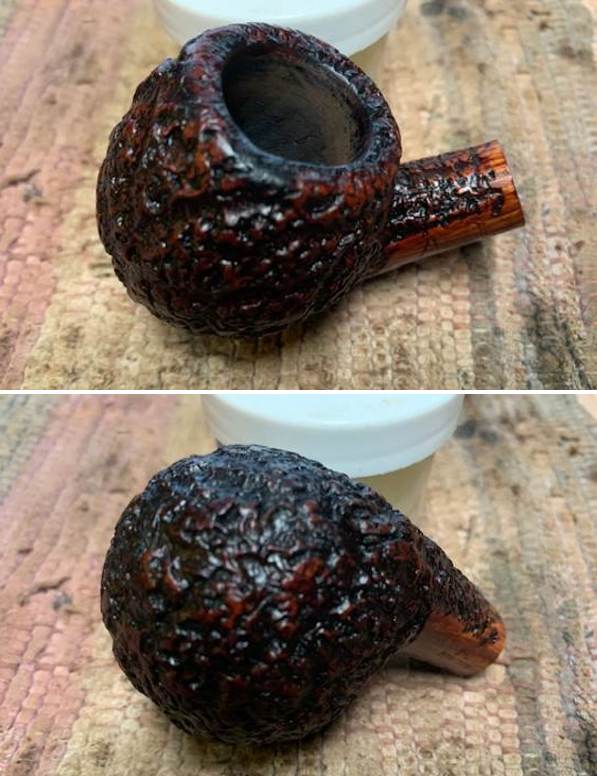
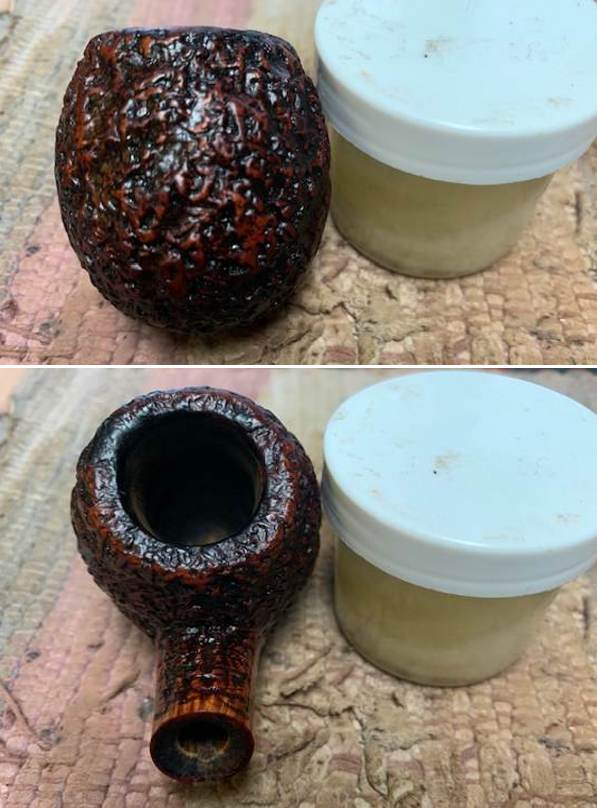
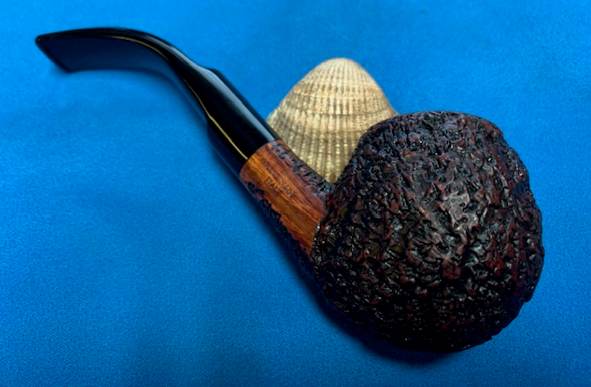
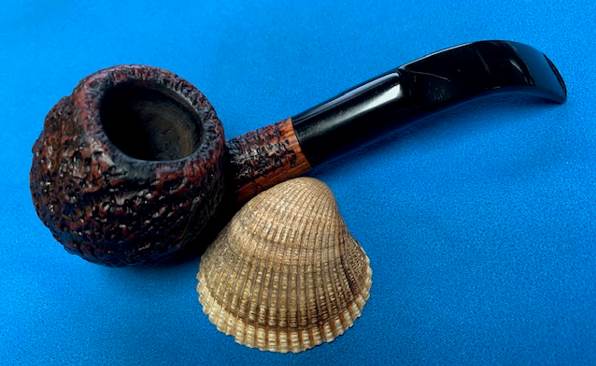
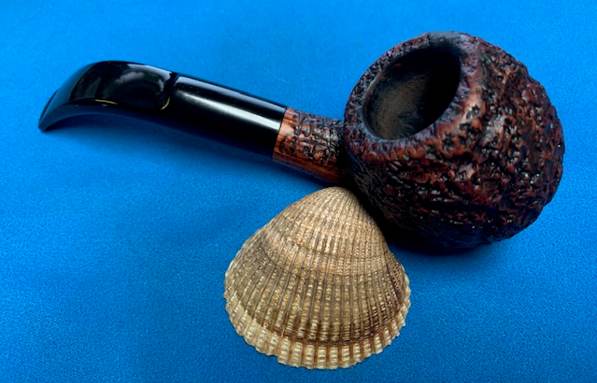
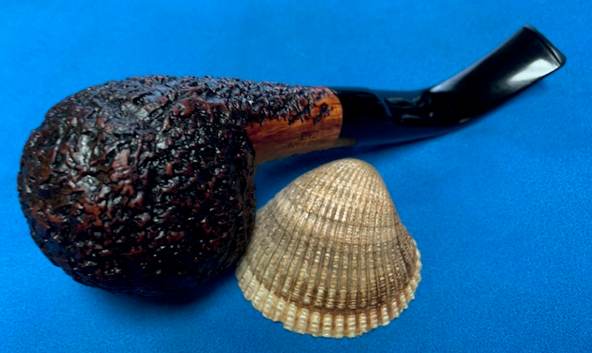
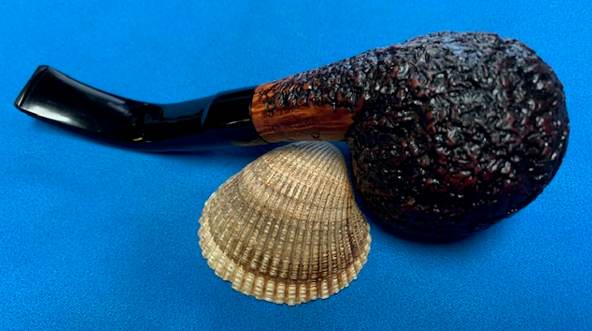
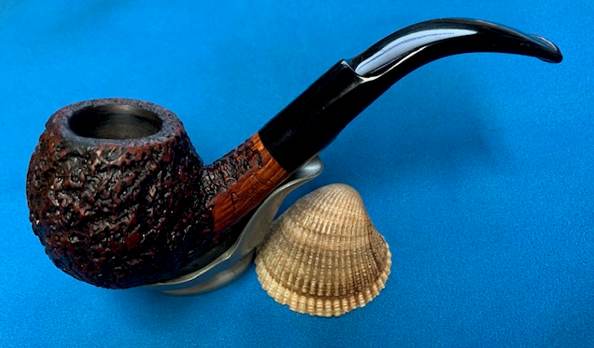
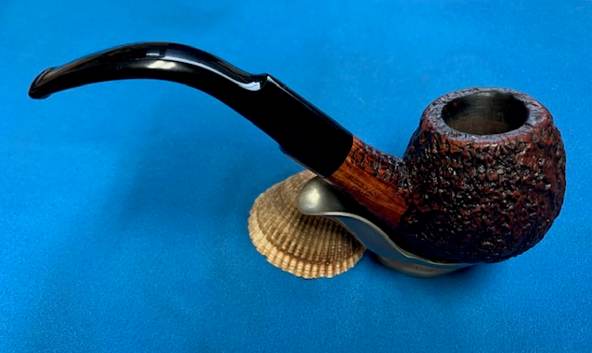
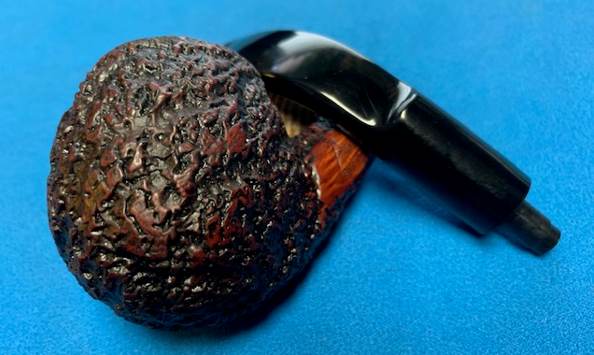
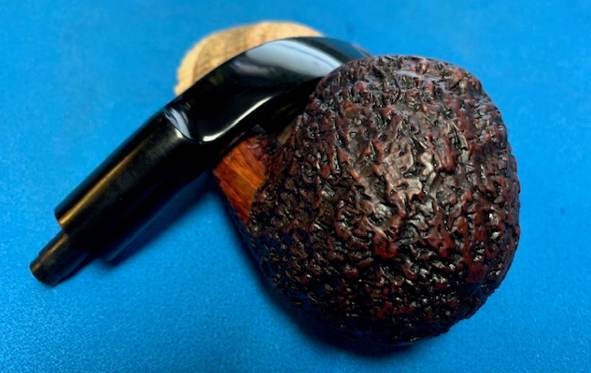
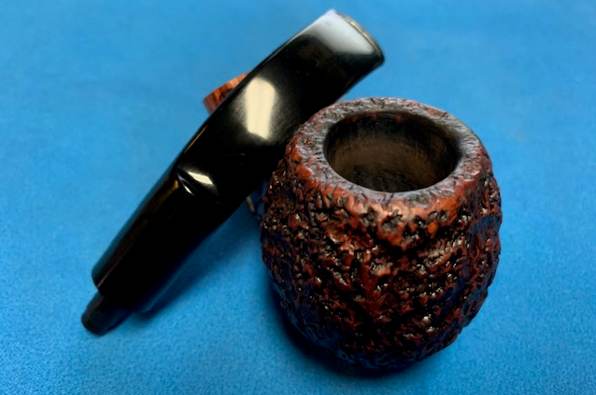
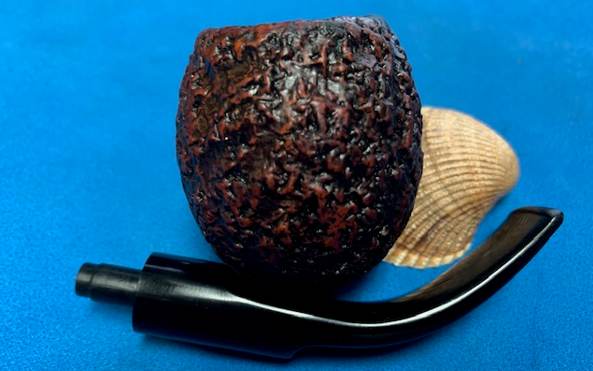
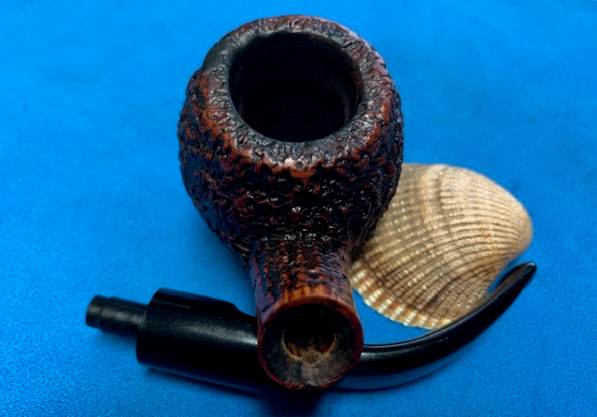
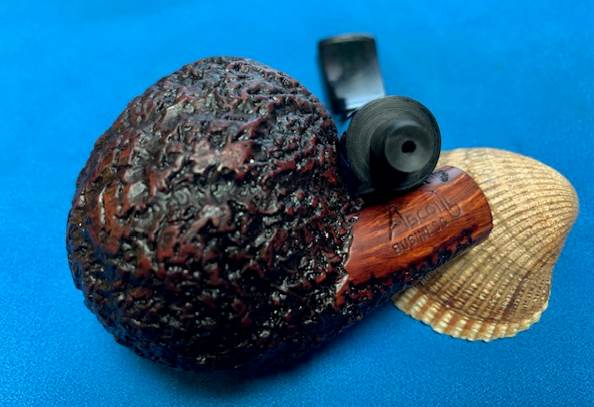
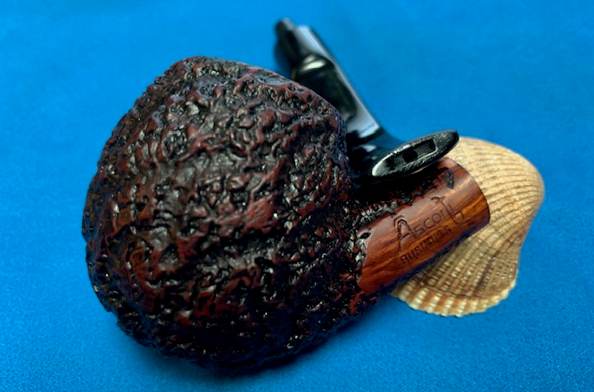
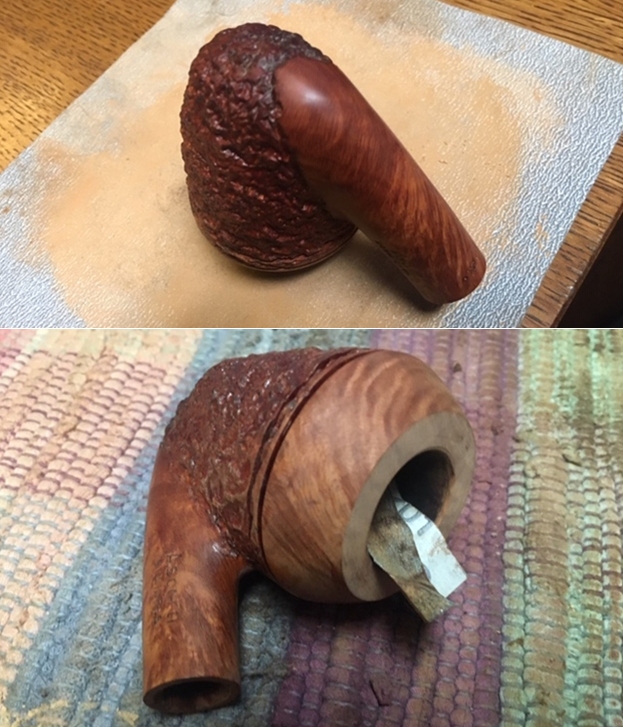
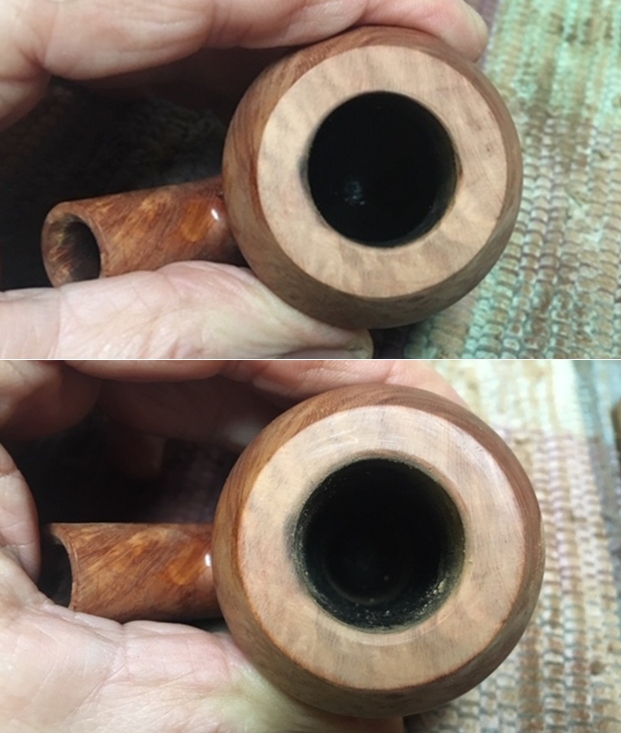
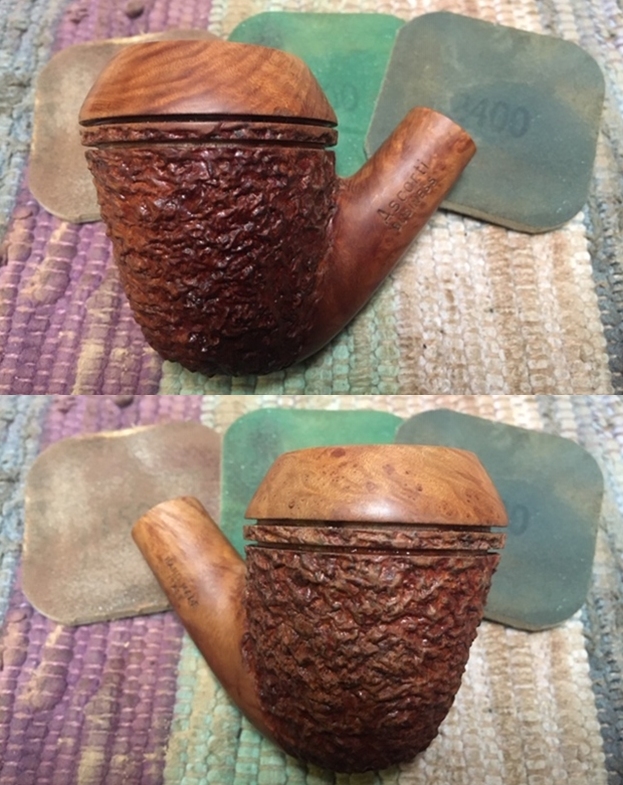
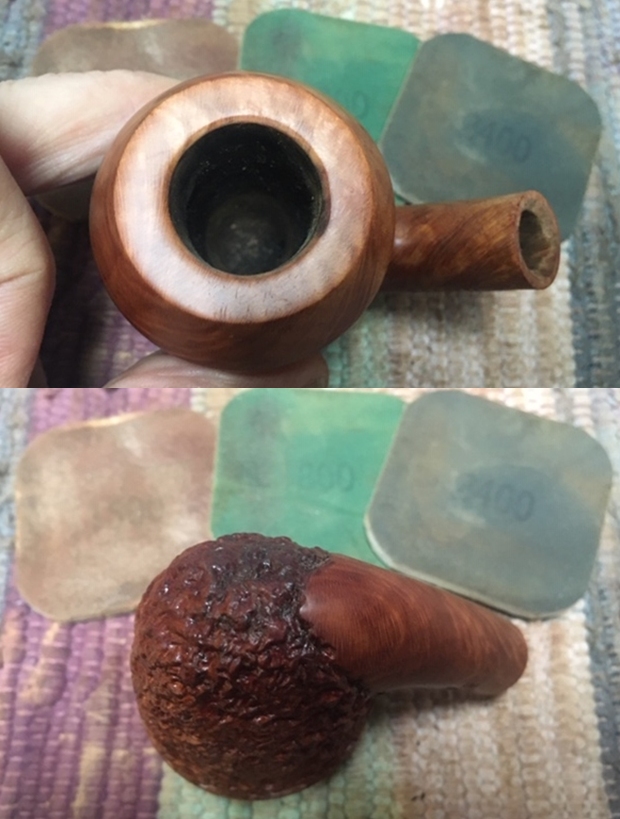
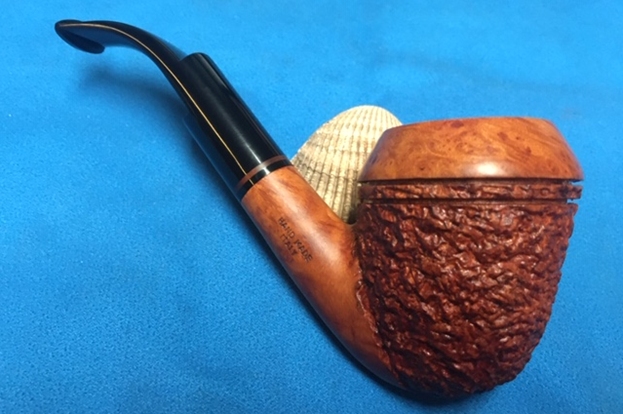
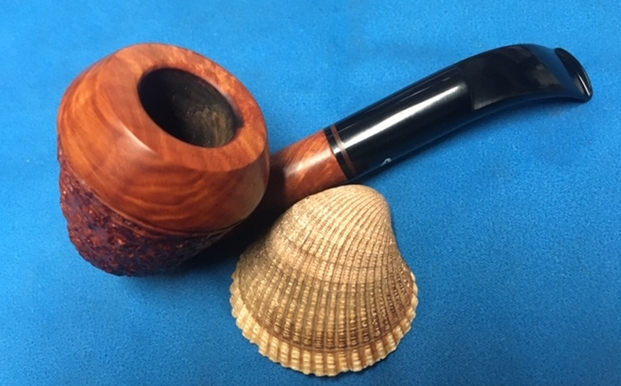
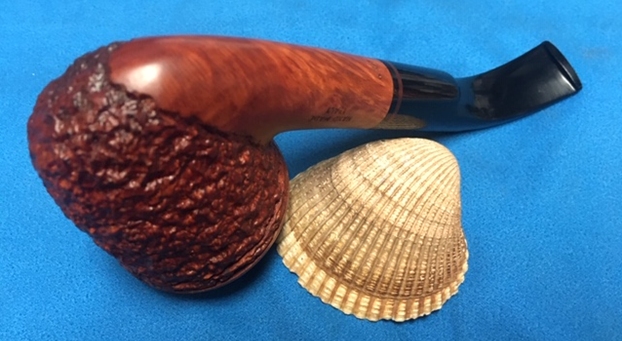
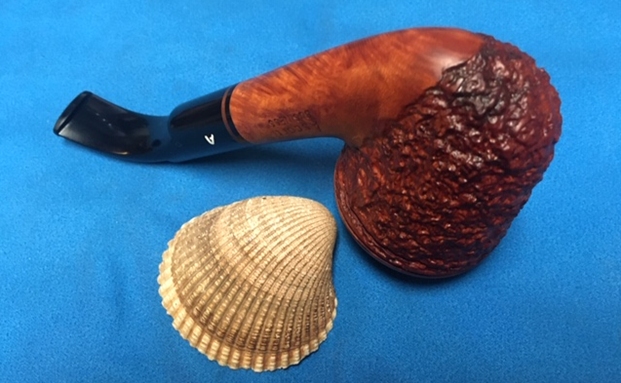
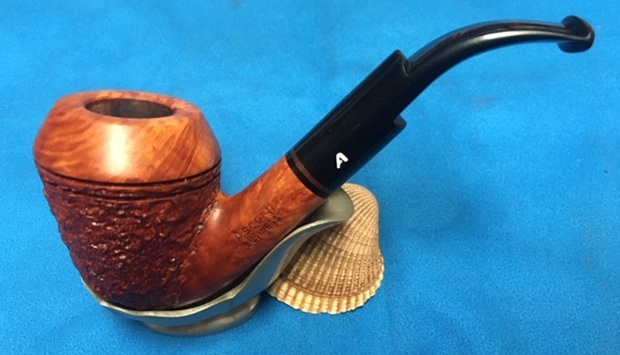
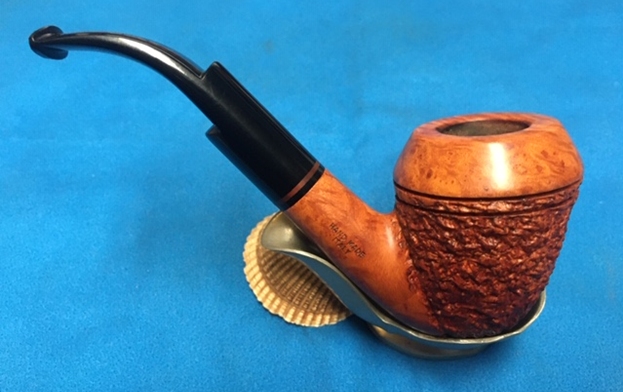
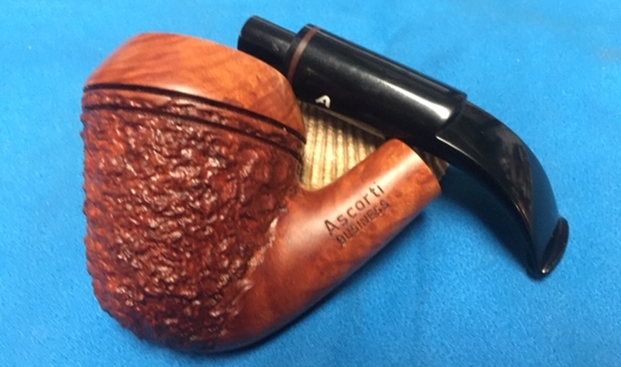
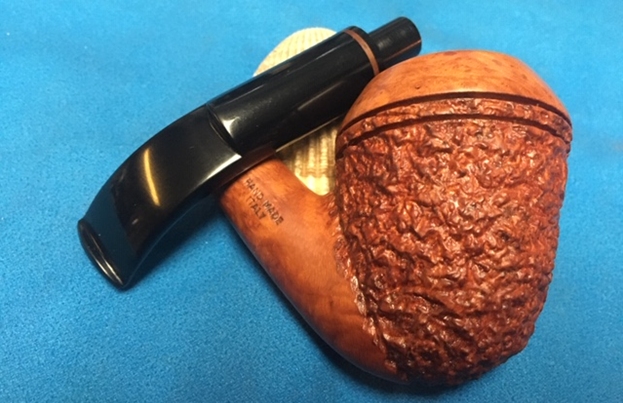
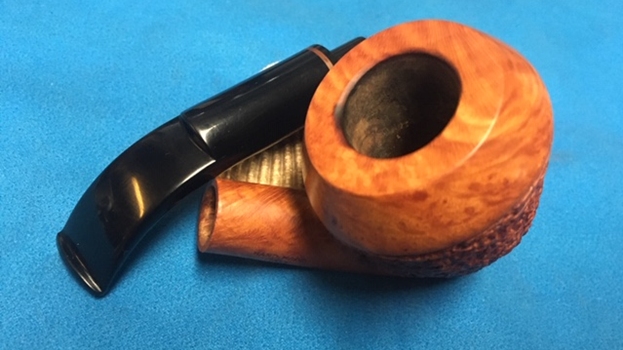
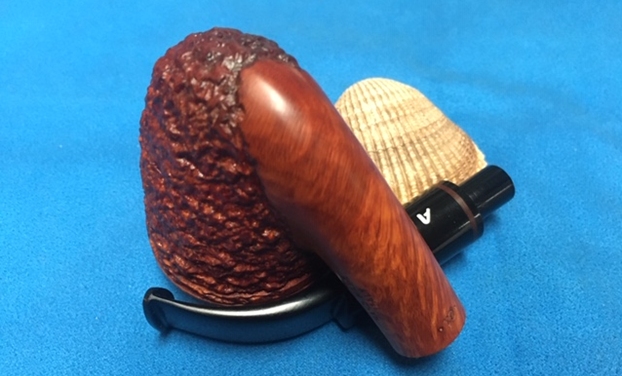
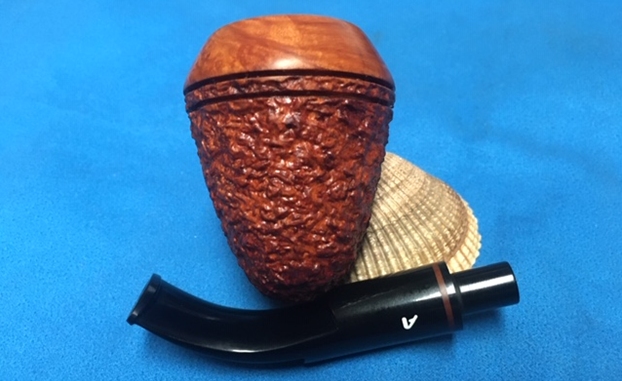
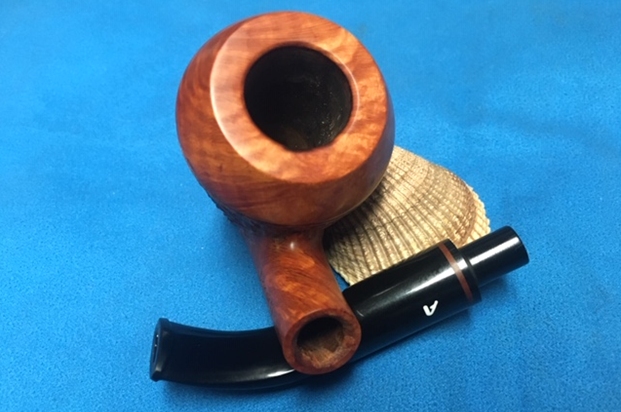
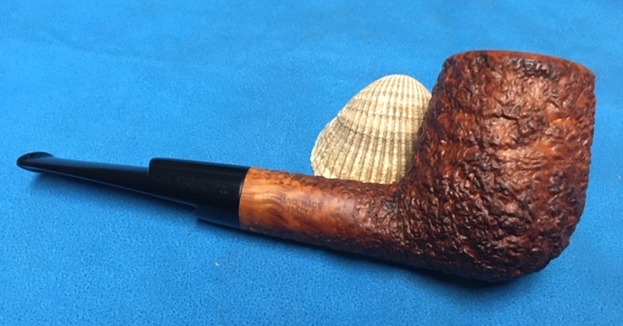
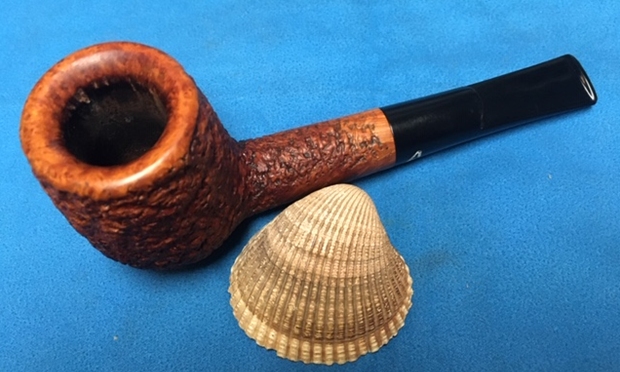
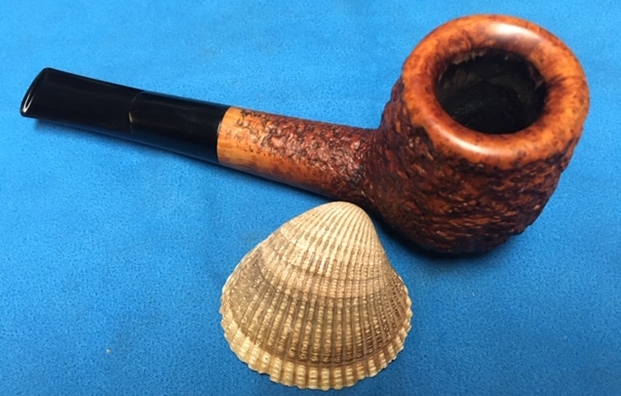
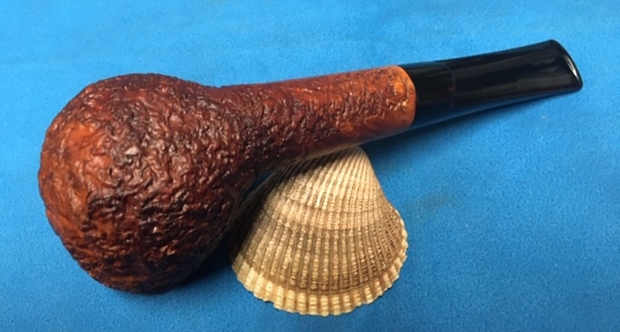
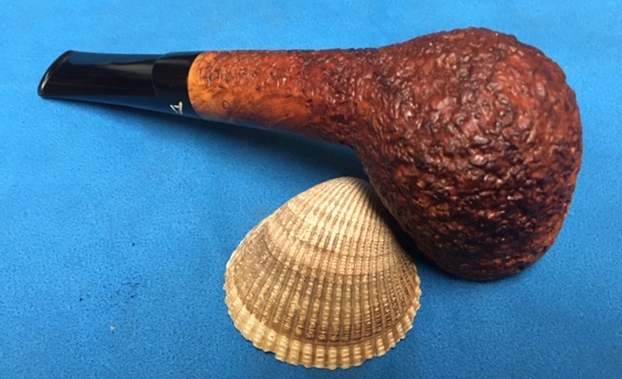
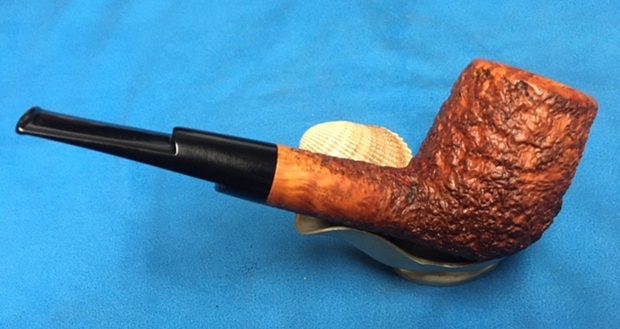
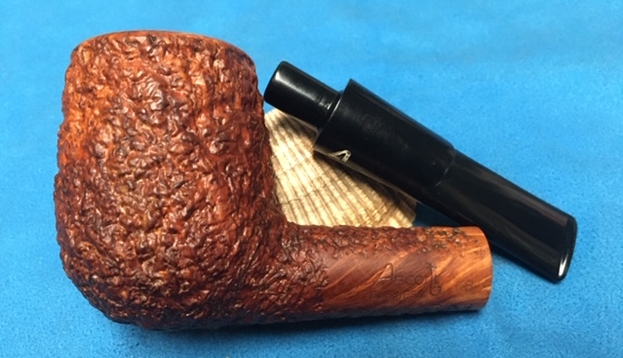
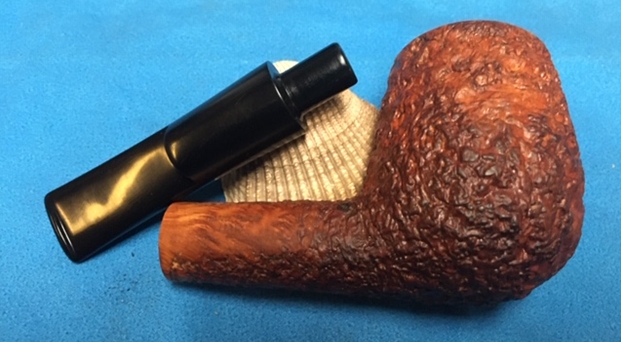
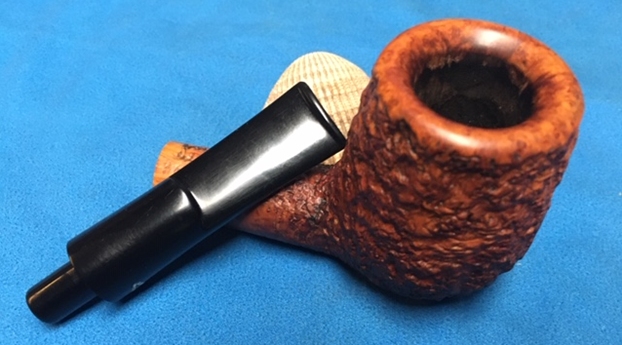
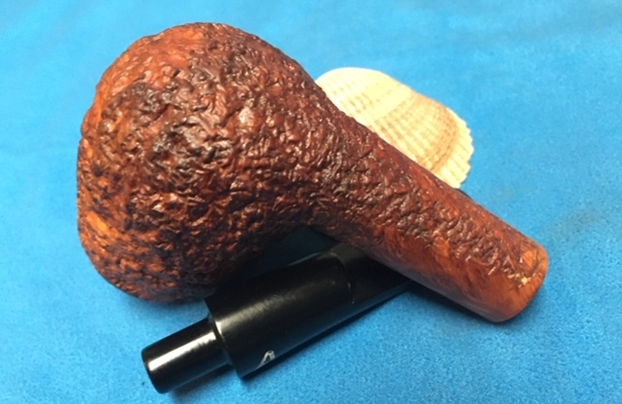
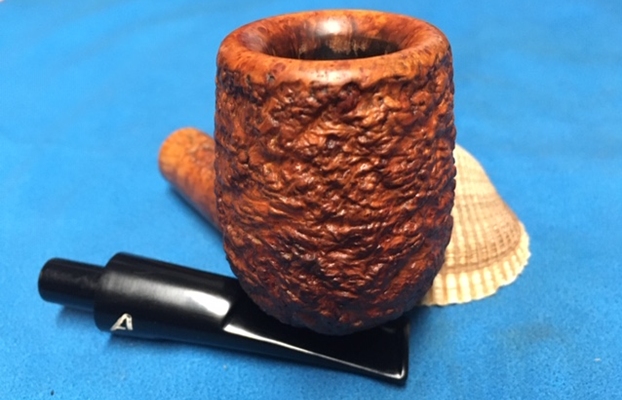
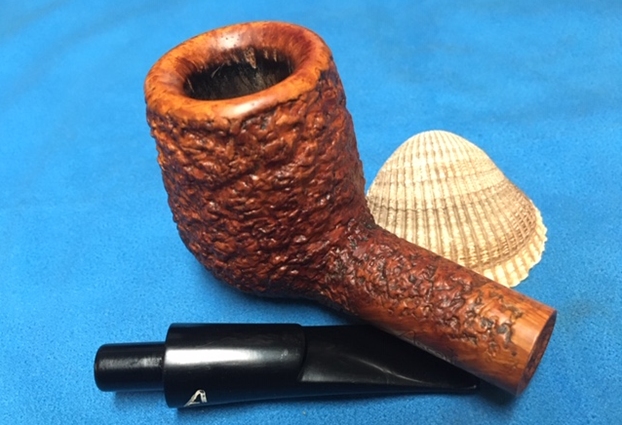
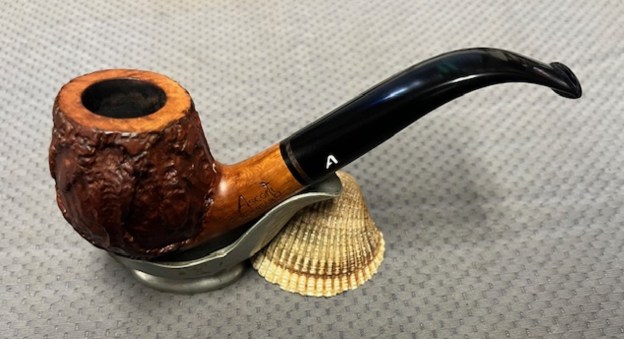
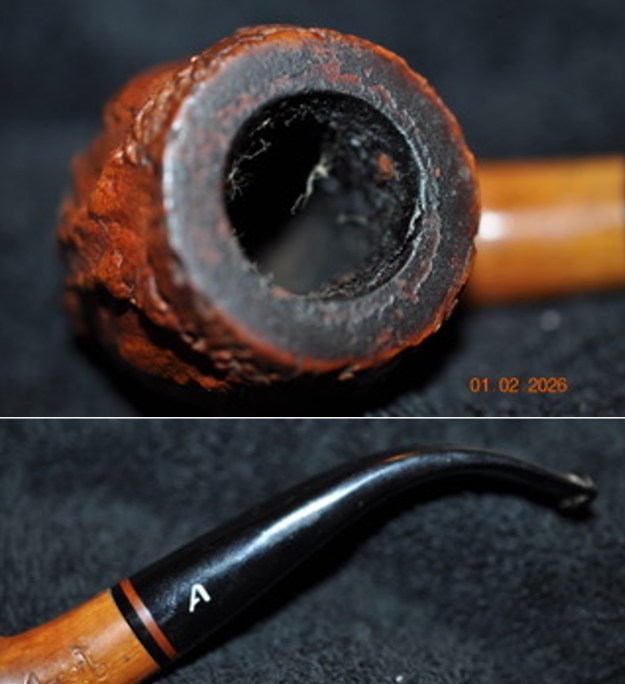
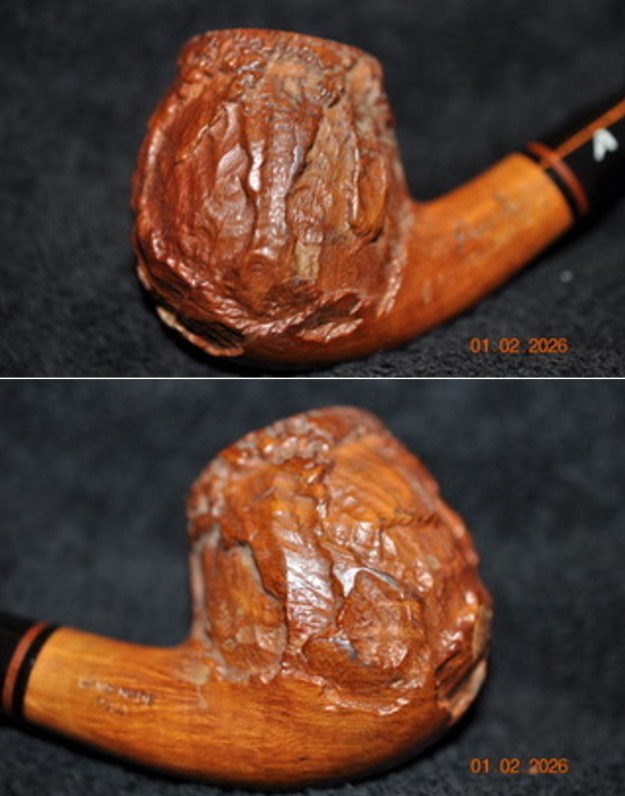
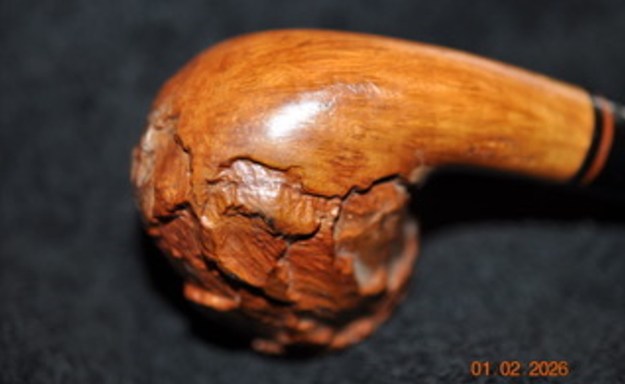
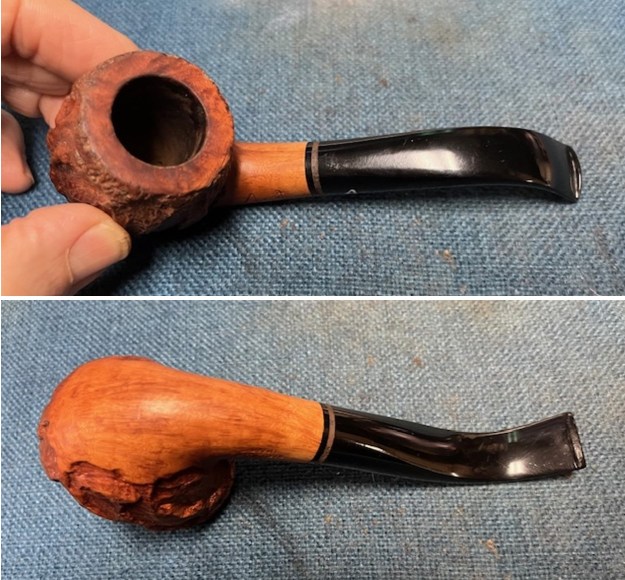
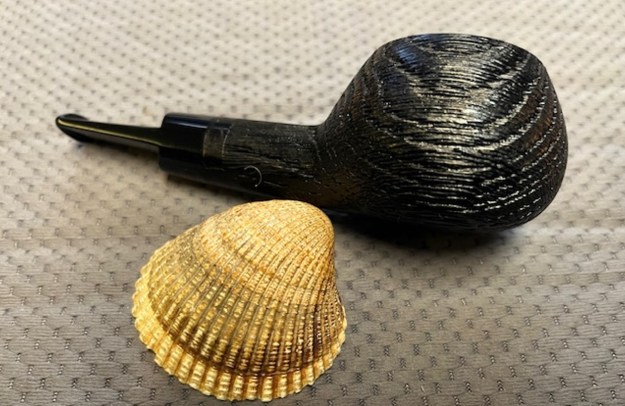
I have always been intrigued by Morta pipes – the look, the weight and the sense of age that each one carries as a block of bog oak. In a conversation with a seller in Ogden, Utah, USA via zoom Jeff and I were able to see this beauty and make a deal. The date we picked it up was 12/12/2024. It is a short compact apple with a full-sized bowl. It is stamped Ascorti followed by Oak on the heel of the bowl and the shank. There is also an inlaid Ascorti “A” logo on the left side of the saddle stem. The finish was a nicely grained sandblast apple with an acrylic saddle stem. The pipe had been smoked and there was a moderate cake in the bowl and some lava on the inward bevel of the rim top. The stem was dirty with what looked like grime from a softee bit on the stem. You can see the line where the bit had ended. The beauty was that there were not any tooth marks or chatter on the stem surface. Jeff took photos of the pipe before he started his cleanup work on it. I have included them below. Jeff took photos of the rim top and stem to show the general condition of the pipe. The bowl is moderately caked and there is a light lava overflow on the rim top. The stem looked surprisingly good under the dirt and grime on the surface of the acrylic. It should cleanup very well. Jeff took photos of the bowl sides and heel to show the sandblast grain that was around this bowl. You can see the grime but the grain showing through the sandblast bowl is beautiful. He took a photo of the heel of the bowl to show the stamping. The stamping is clear and readable in the photos below as noted above. He also captured the “A” logo on the left side of the saddle. It in excellent condition.I did a Google search on the Ascorti Oak line and came up with very little. They seemed to sell between $285 – $375 new though I found only one currently for sale at Mars Cigars and Pipes (https://www.marscigars.com/ascorti-oak.aspx). Further searching came up with a single line in the search on the Ascorti Oak came up with a simple sentence that gave information concerning the “Oak”. I quote: The former is a variety of oak, felled and fossilized over thousands of years in peat bogs (hence its other common name, bog oak).

All of that is helpful information. There were not many Ascorti Oak pipes readily available. The pipes were made of a variety of “felled and fossilized oak over 1000s of years in a peat bog” which accounts for the name bog oak.

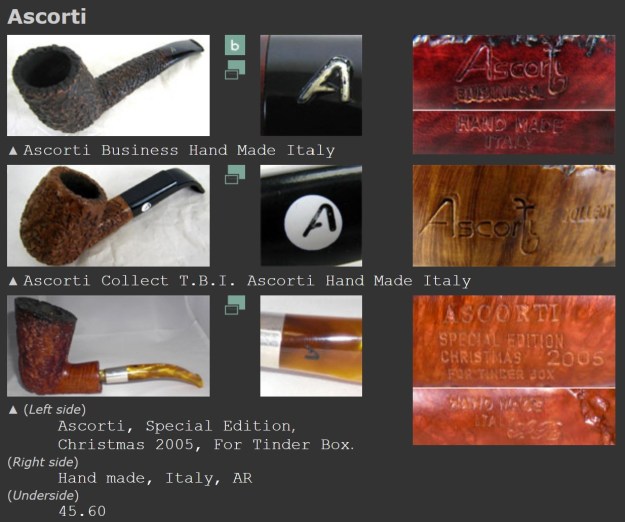
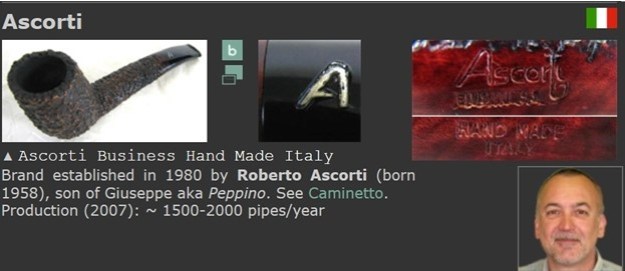
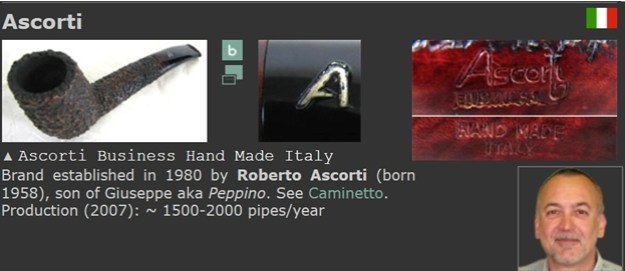
From there I turned to the Ascorti section on Pipephil’s site to see if there was any information on the Oak line (http://www.pipephil.eu/logos/en/logo-a8.html). There was nothing shown on that in section on Ascorti but the information on the brand and short summary of history was helpful. I have included a screen capture of the section and the side bar information below.Brand established in 1980 by Roberto Ascorti (born 1958), son of Giuseppe aka Peppino. See Caminetto. Production (2007): ~ 1500-2000 pipes/year

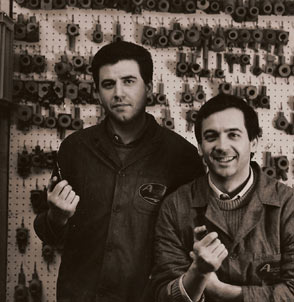
I turned from there to Pipedia for more information (https://pipedia.org/wiki/Ascorti). I have included pertinent sections of the article as well as a photo of the Ascorti brothers. It is interesting and helpful.

Roberto Ascorti, now 49, son of Giuseppe Ascorti, best known as “Peppino”, “met” the pipe when he was 10 years old, back in 1968, when his father started the new adventure as pipemaker.

He attended the Art Institute, but he continued with his passion for the pipe and decided to assist his father more and more. In 1980, when he was 22, Roberto decided to devote himself completely to creating pipes, but there was no room in his father’s factory; so he started by himself with his own name, ASCORTI, supported and helped by his father, his brother Pierangelo and by his girlfriend, Silvana. Then, when the historic Caminetto factory closed, its artisans entered the newborn Ascorti which had all the tradition, the experience, the power and quality that Peppino Ascorti had built in several years, but with innovations in the model making and in the technical solutions, brought by the young Roberto.

During those years Roberto suffered the early passing of his father and his brother. But with the help of his wife, Silvana, always by his side, he continued with love and experience to compete with a market which is extremely variable and ruled by accelerations(?) of the changes. Roberto is able to change the style of his design by revising old shapes, personally checking the progress and working side by side with his precious artisans.

Briar is personally selected by Roberto who controls the quality, dimensions, weight and the first seasoning, which is very important and done in the area where it is collected and cut. After the first scrupulous control, the briar is then aged for two years, to reach the seasoning that he thinks is perfect to create a pipe. Each pipe is designed by Roberto and it is initially crafted with small machines, made by hand by his father Peppino, with the help of his son, back in the 70’s. They are perfect to allow different processes as the artisanal tradition requires.

After the drilling of the bowl and shank, the pipe passes through an interminable series of handmade steps done only by Roberto and the irreplaceable Cesare (already aside of Peppino in 1968).

The mouthpiece, made in methacrylate (acrylic) is also completely handmade, obtained in sheets which are cut into bars, then drilled and shaped with files and sandpaper. There are 90 steps to the procedure, small or large, but everyone important, that Roberto requires before he considers his creations finished and ready to be shown to the customer.

I think that the love that Roberto flows into his pipes, absorbed by the workers and relatives, is perfectly understood by smokers all around the world, who never fail to give us satisfaction with praise and public or private lauds.

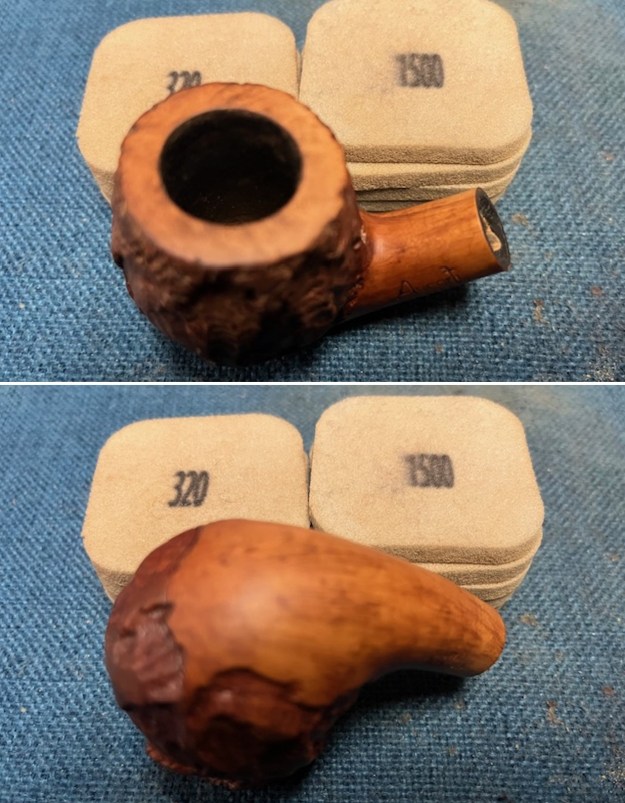
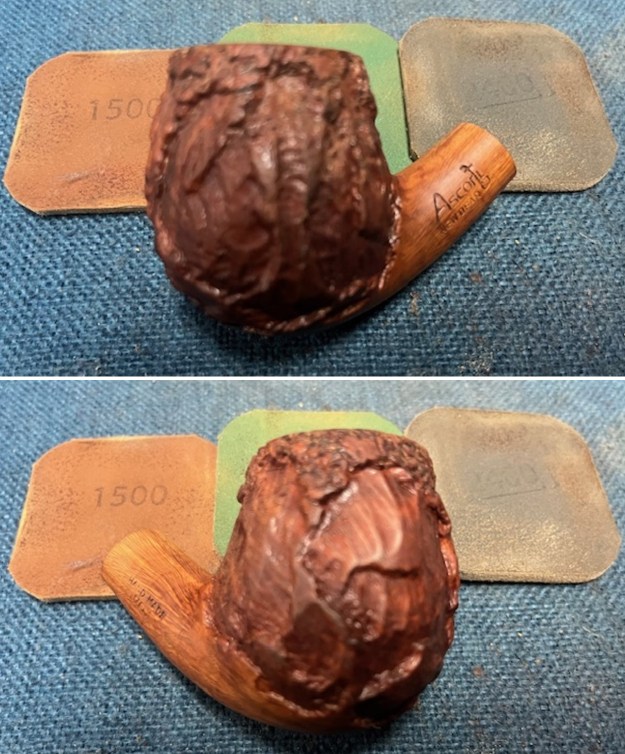
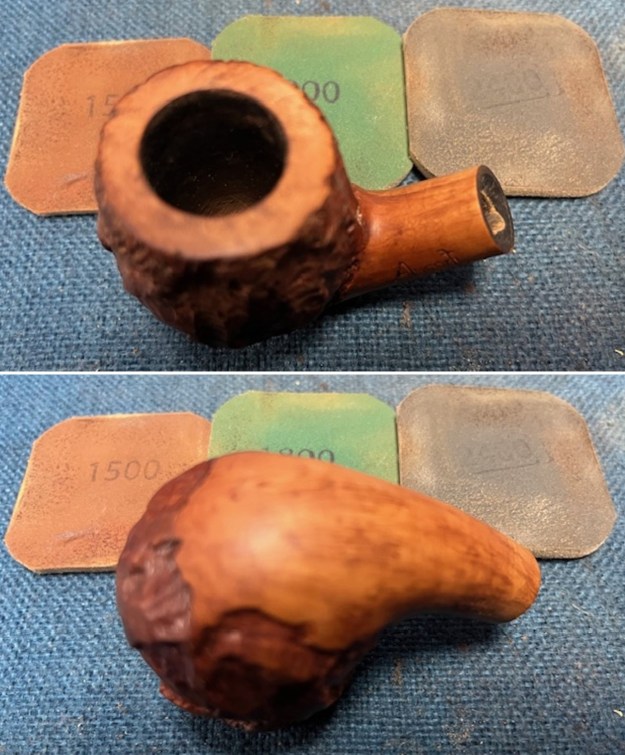
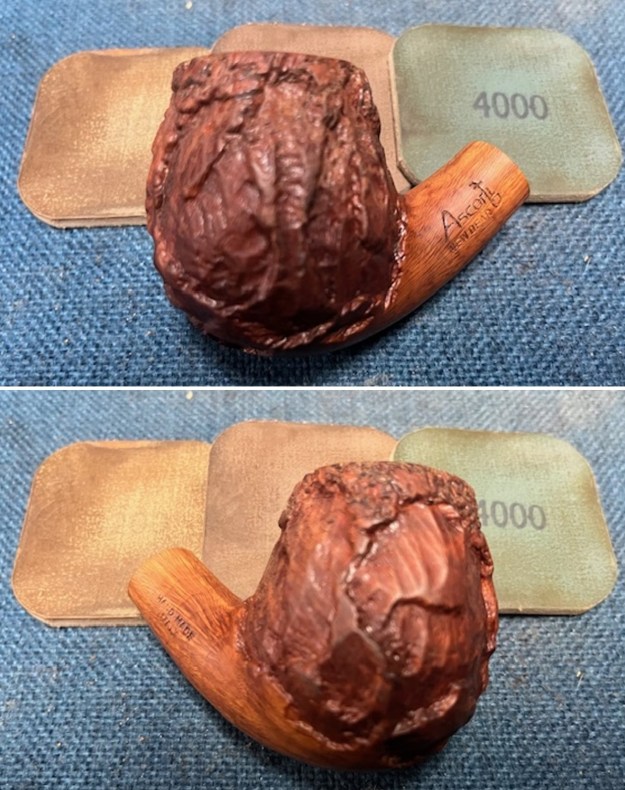
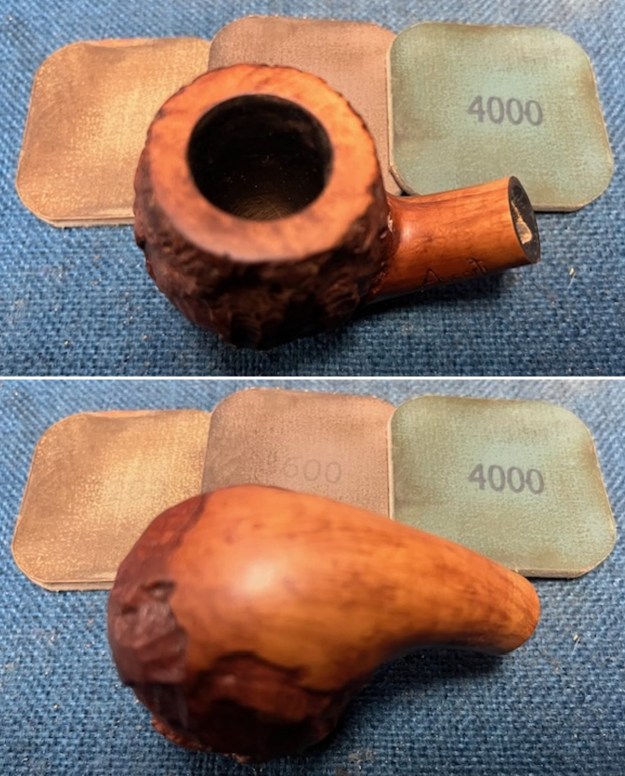
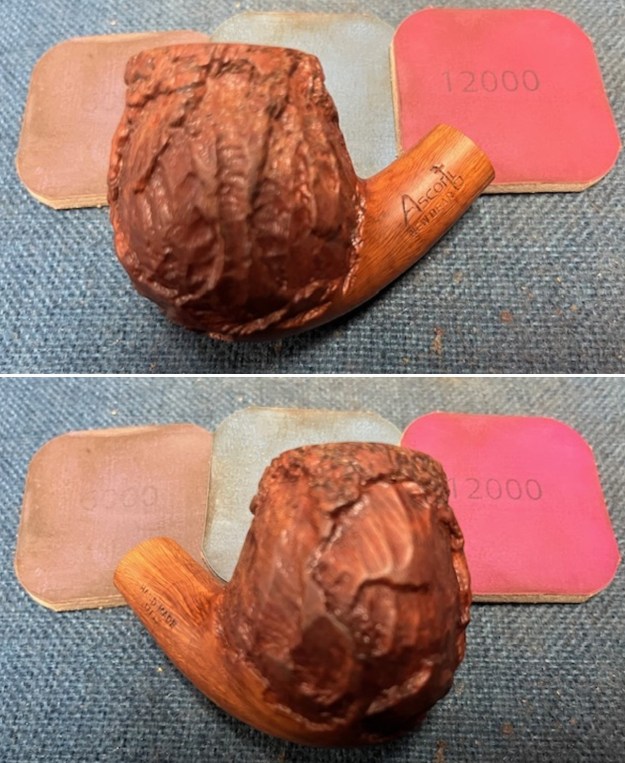
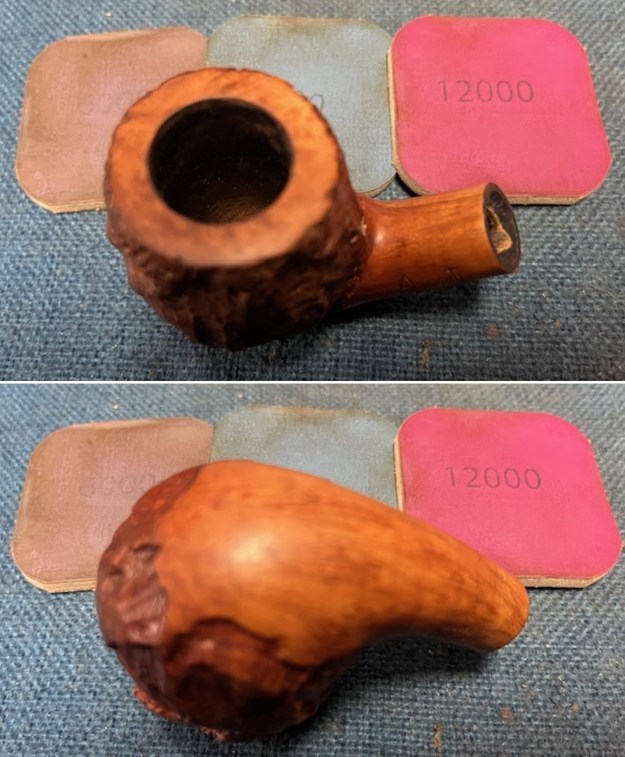
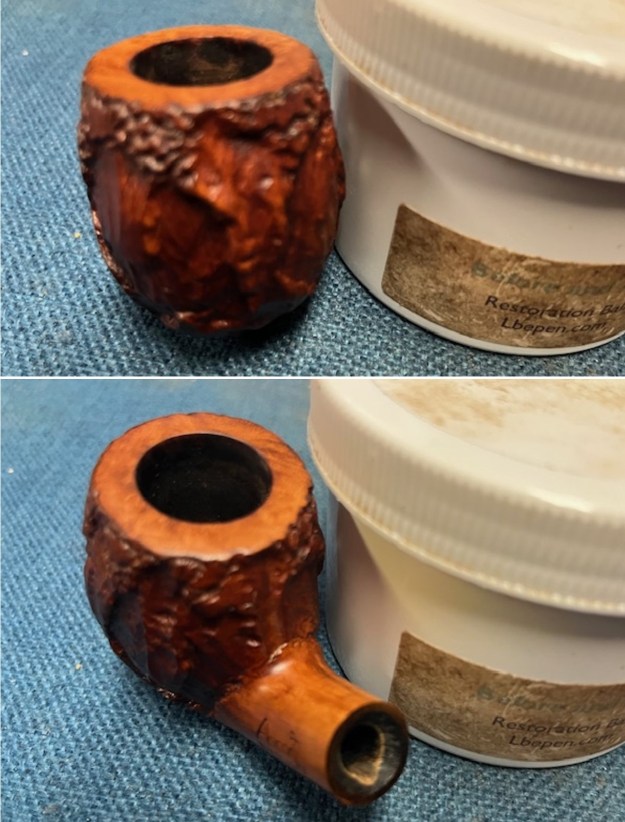
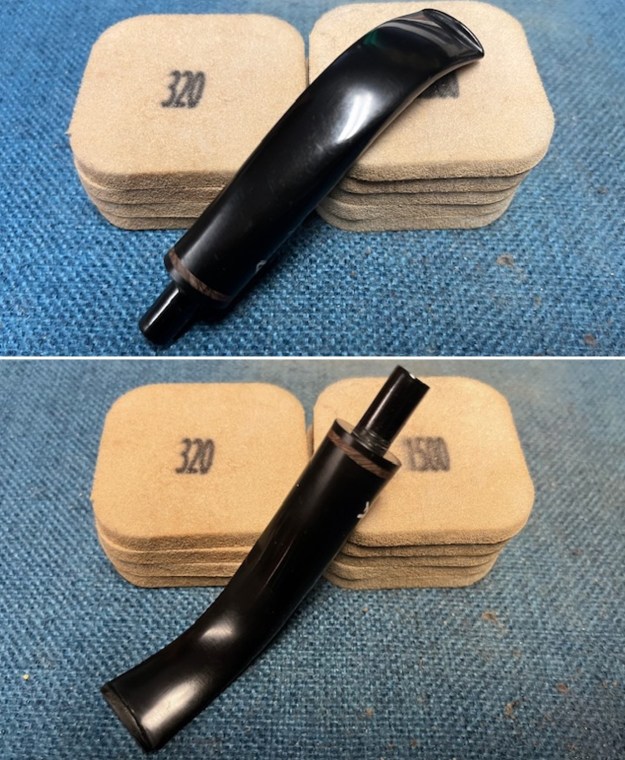
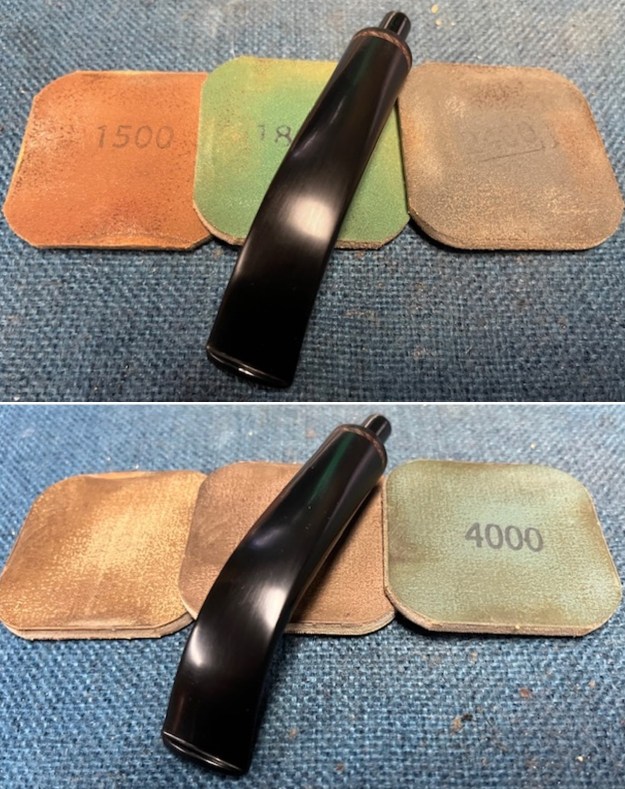
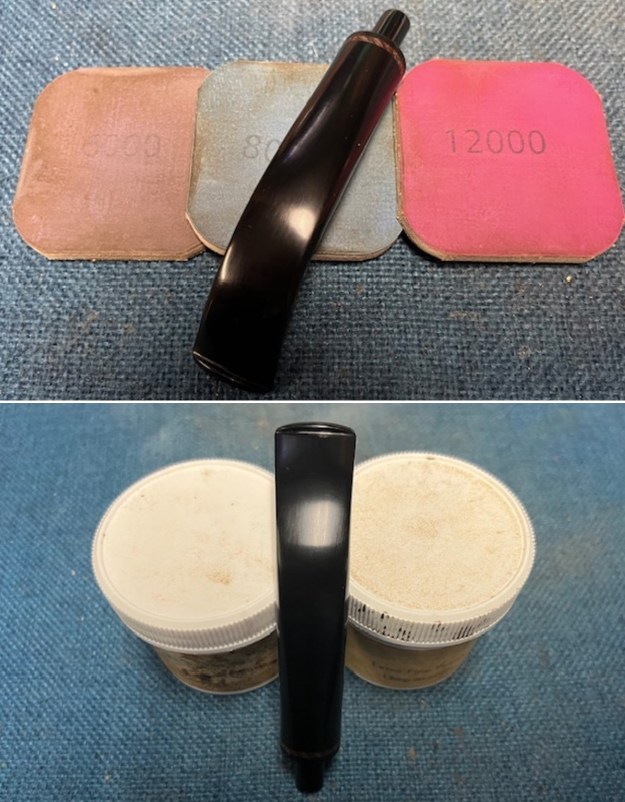
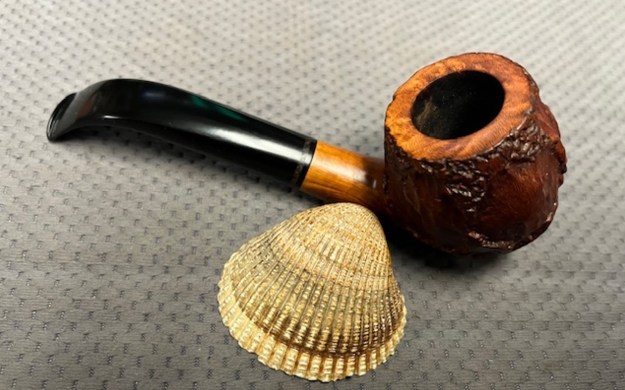
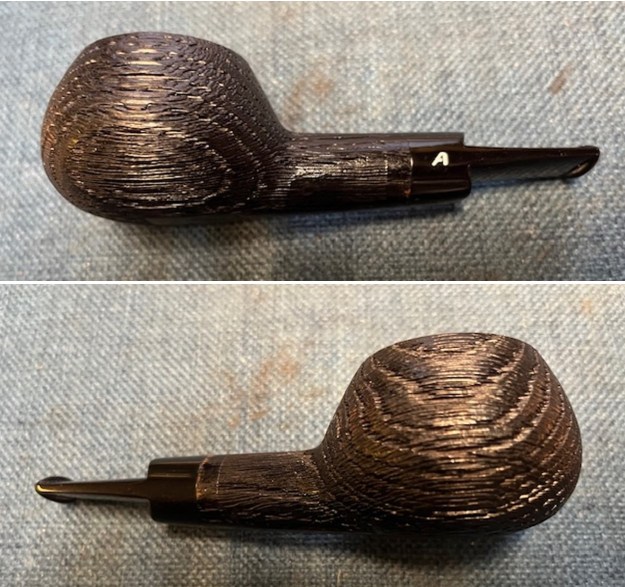
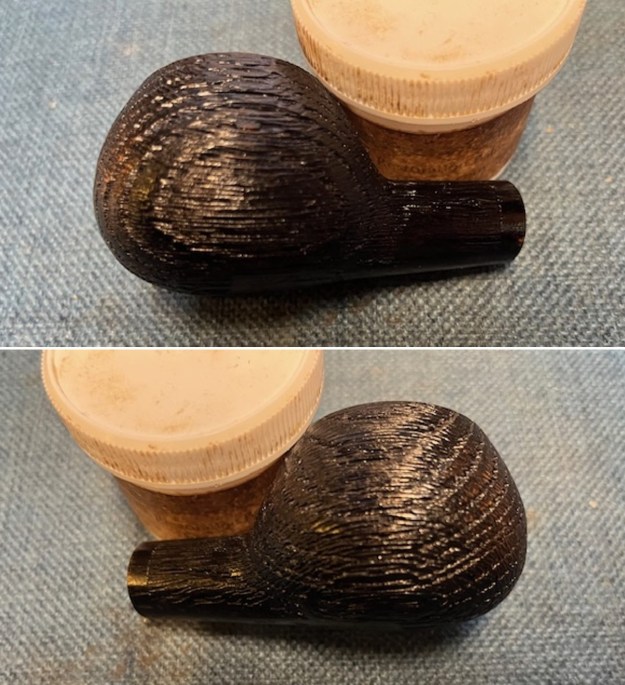
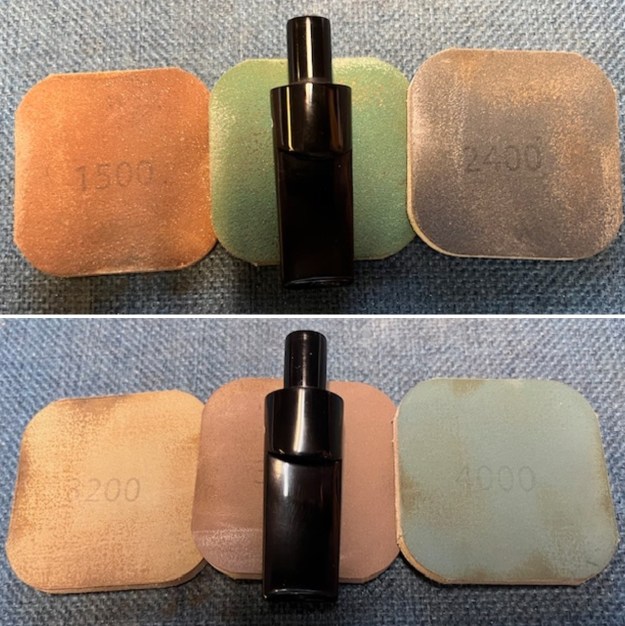
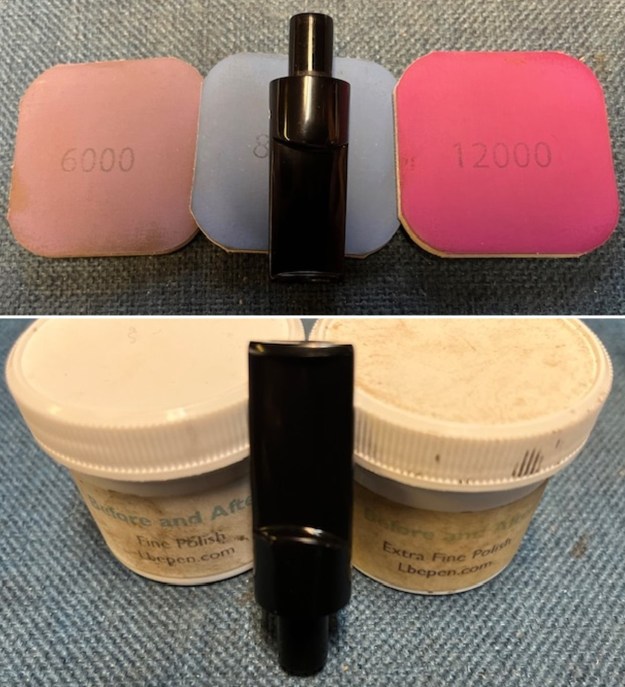
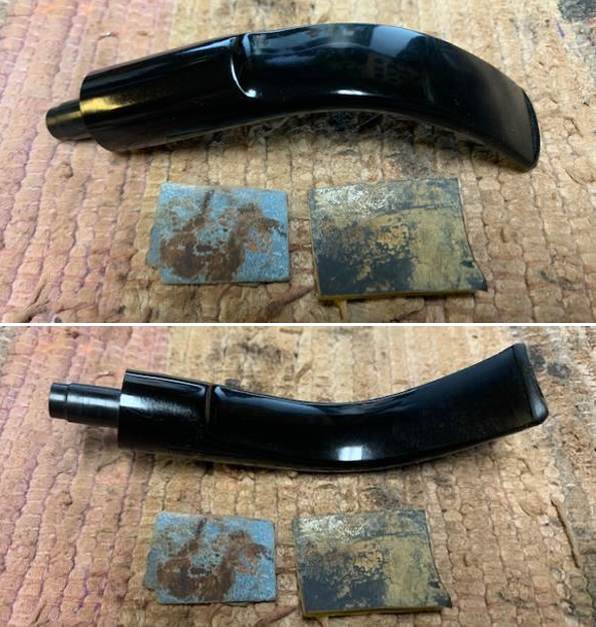
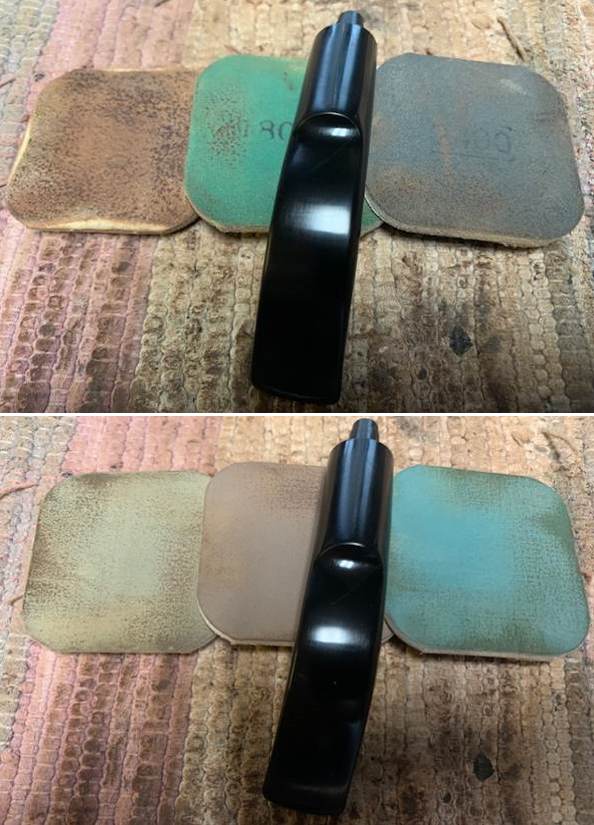
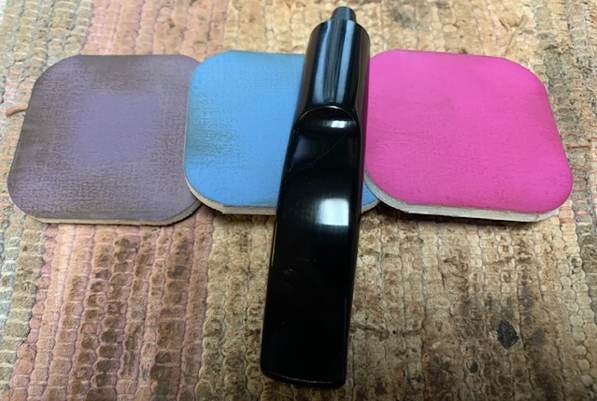
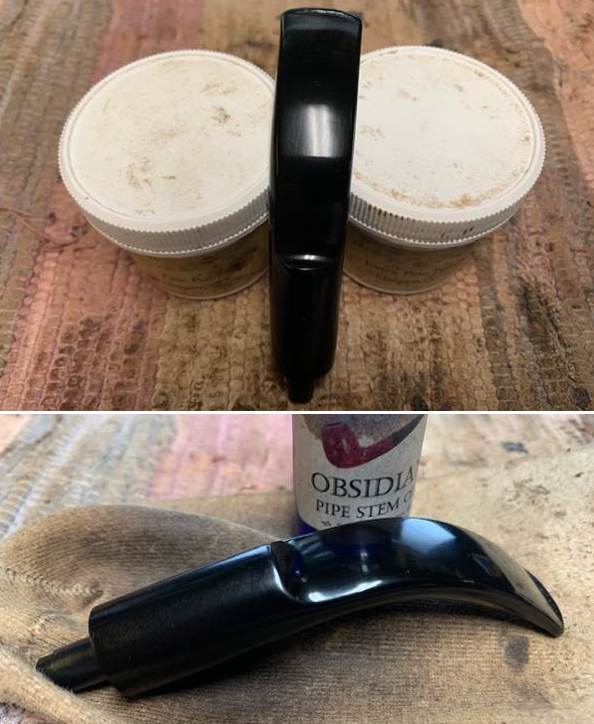
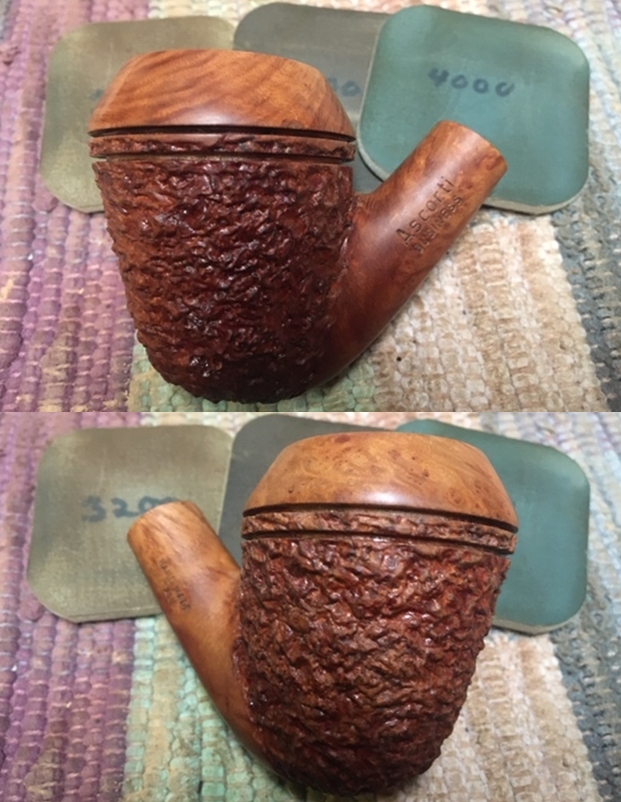
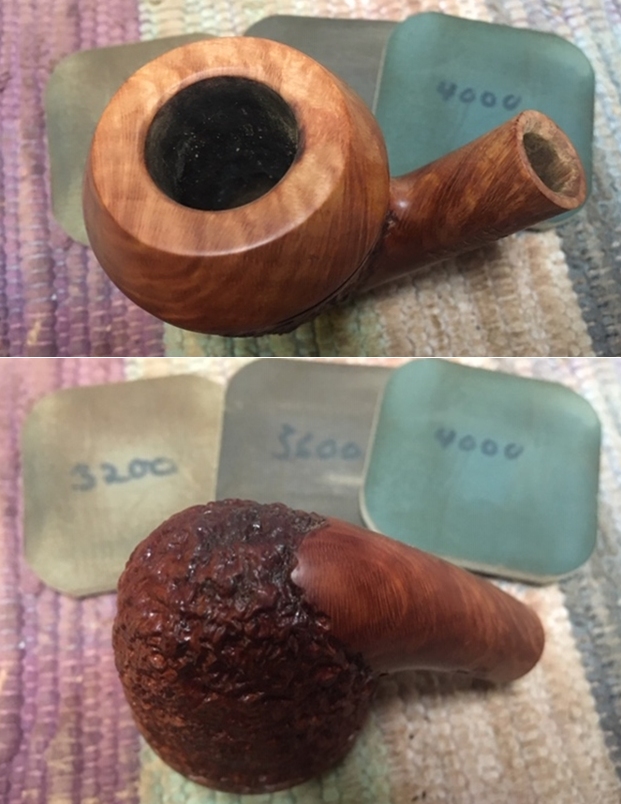
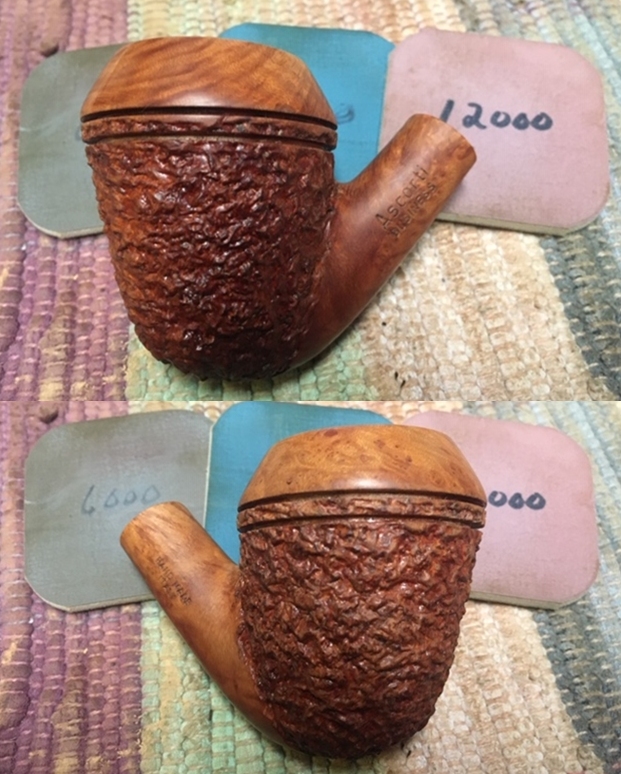
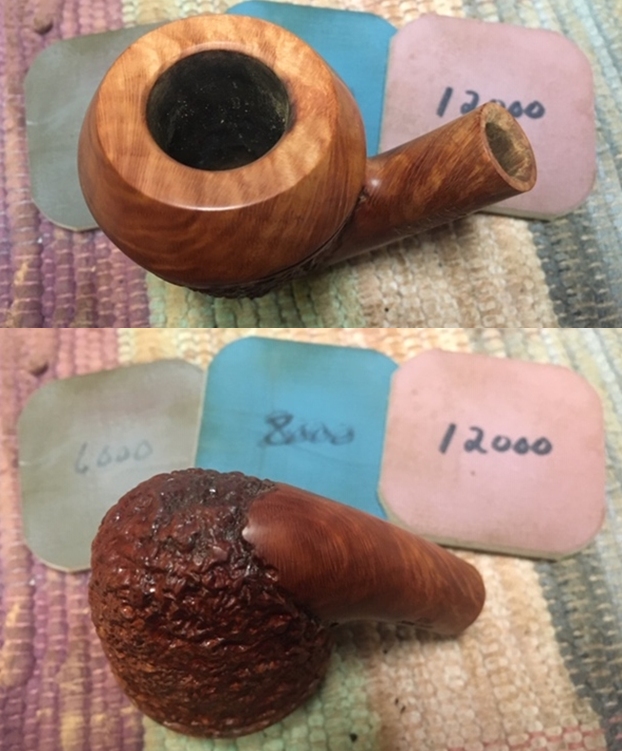
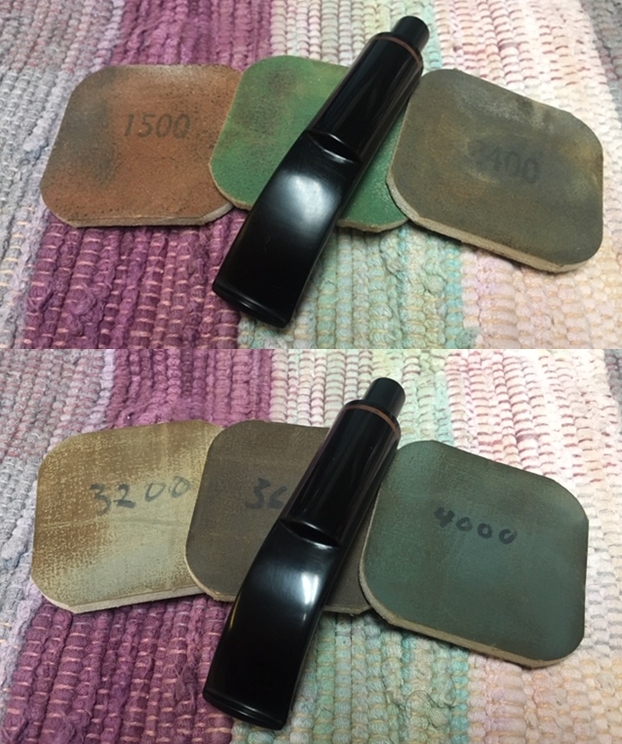
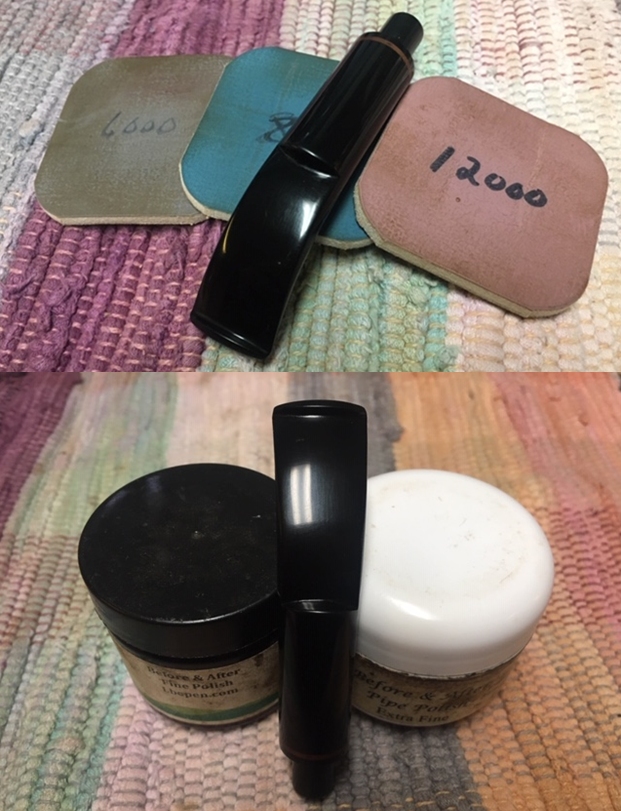
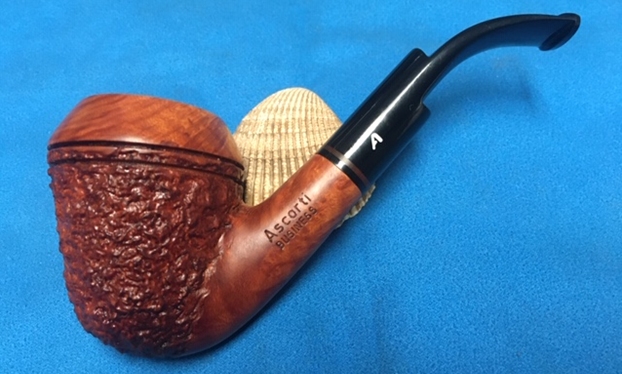
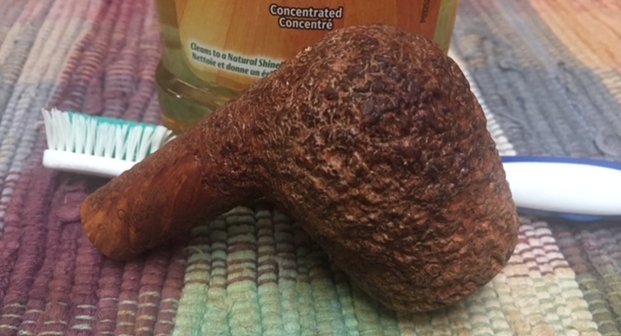
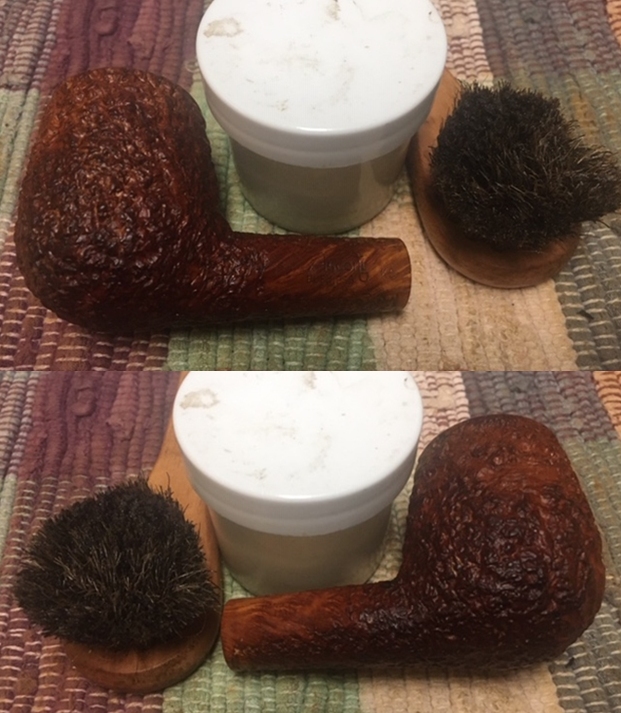
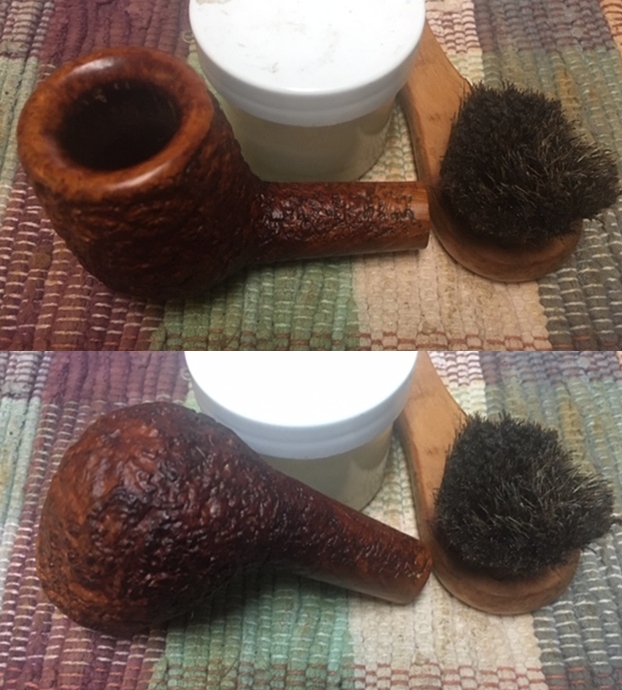
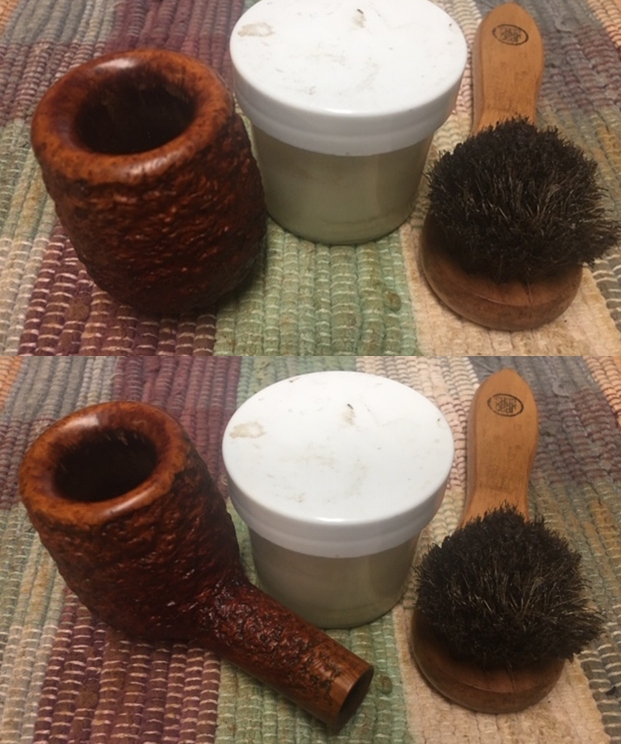
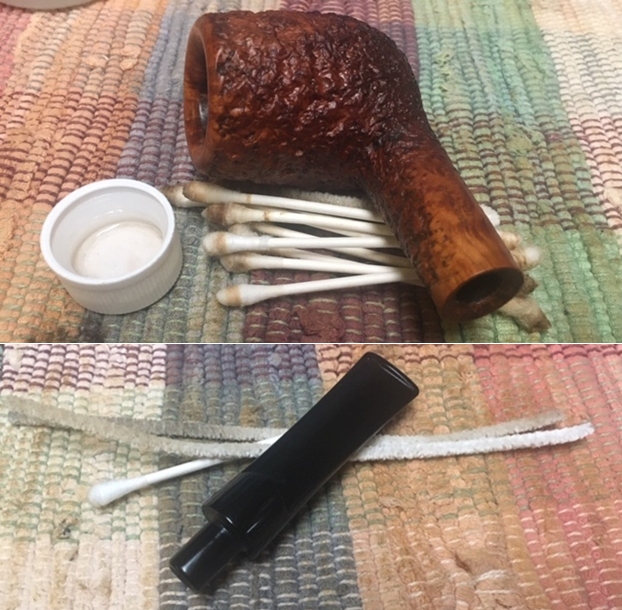
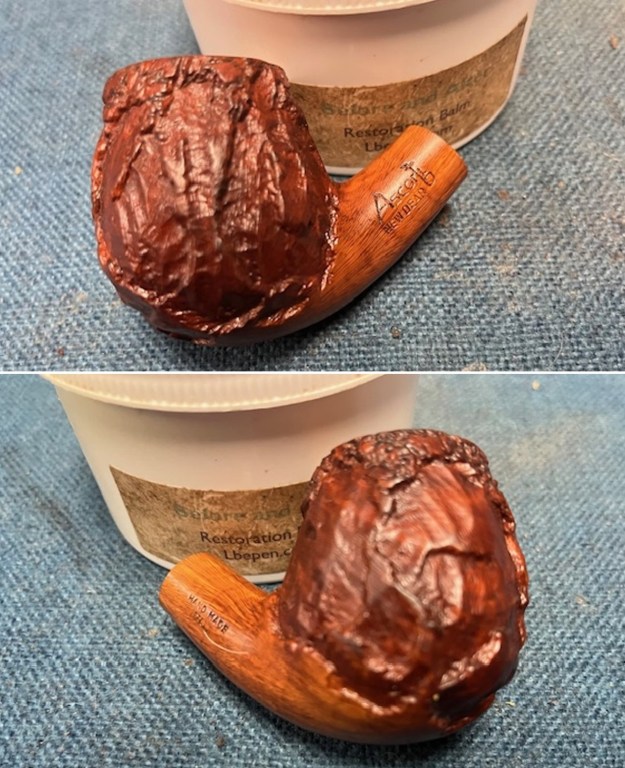
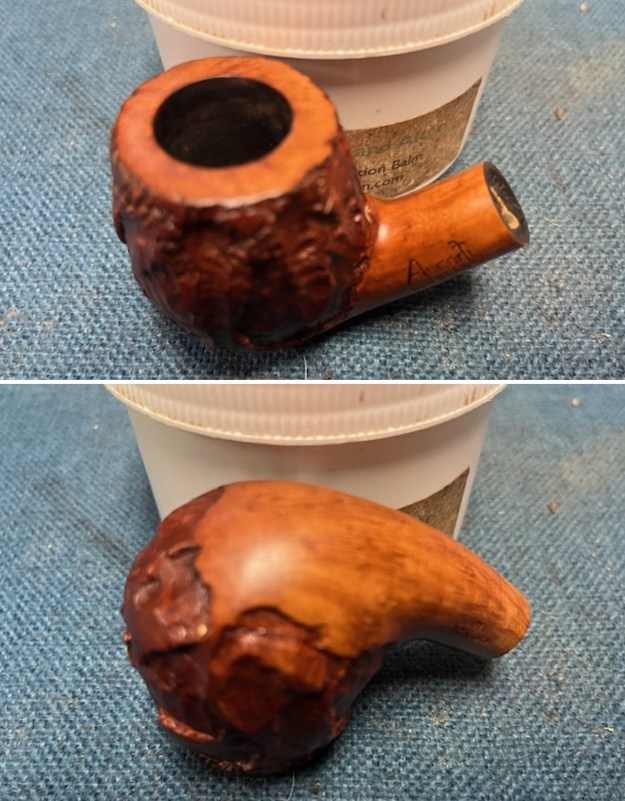
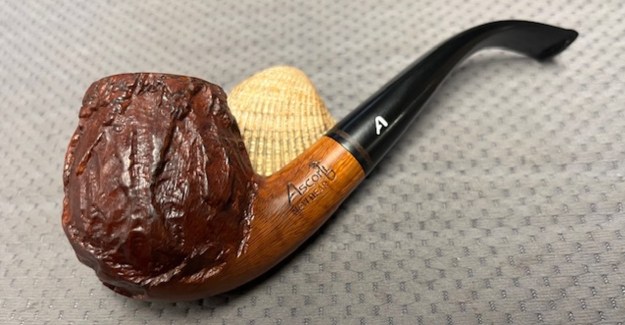
Jeff had done a great job cleaning up the pipe as usual. He reamed the pipe with a PipNet reamer and cut back the cake back to the bare briar. He cleaned up the walls with a Savinelli Fitsall Pipe Knife. Surprisingly the walls looked unscathed from the heavy cake. He scrubbed the interior of the bowl and shank with pipe cleaners, cotton swabs and alcohol to remove the tars and oils. He scrubbed the exterior of the pipe with Murphy’s Oil Soap and a tooth brush to remove the grime from the finish. He scrubbed the inside of the stem with alcohol and pipe cleaners. He scrubbed the exterior of the stem with Soft Scrub and then soaked it in Briarville’s Deoxidizer. He washed it off with warm water to remove the Deoxidizer. When I examined the stem, it looked very good. The pipe looked far better when it arrived. I took some close up photos of the rim top and edges to show how well it had cleaned up and the edges around the bowl. I also took close up photos of the stem to show the light tooth chatter on the surface ahead of the button on both sides.I took a photo of the stamping on the heel of the bowl. It is clear and readable as noted above. I removed the stem and took a photo of the pipe to have a look at the parts and overall look.I worked some Before & After Restoration Balm into the surface of the briar with my fingertips to clean, enliven and protect the bog oak. I let the balm sit for 15 minutes and then buffed with a cotton cloth to raise the shine. The photos show the bowl at this point in the restoration process. I polished the stem with micromesh sanding pads – dry sanding with 1500-12000 grit sanding pads. I wiped it down after each sanding pad with a cloth containing some Obsidian Oil. I finished polishing it with Before & After Pipe Stem Polish – both Fine and Extra Fine and buffed it off with a cotton cloth. This Ascorti Oak Sandblast Straight Apple was a pipe I was looking forward to seeing what it looked like when I put it back together. The pipe was a beauty and the grain of the bog oak and the sandblast depths just pop at this point. I put the stem back on the bowl and buffed the pipe with Blue Diamond on the buffing wheel. I carefully avoided the stamping on the shank and stem during the process. I gave the bowl and the stem multiple coats of carnauba wax on the buffing wheel and followed that by buffing it with a clean buffing pad on the buffer. I hand buffed the pipe with a microfiber cloth to deepen the shine. The finished pipe is quite beautiful and is a lovely large bowl straight apple shaped pipe. The dark colour of the Morta/Bog Oak and the sandblast give it depth. It is very well done. Give the finished pipe a look in the photos below. I can only tell you that it is much prettier in person than the photos capture. The dimensions of the pipe are Length: 5 inches, Height: 1 ½ inches, Outside diameter of the bowl: 1 ½ inches, Chamber diameter: ¾ of an inch. The weight of the pipe is 63 grams/2.22 ounces. I really like the way that Ascorti follows the grain in the bog oak with the sandblast. This is a great looking pipe in great condition. Thanks for walking through the restoration with me as I worked over another beautiful pipe. I will be adding it to the rebornpipes store in the Italian Pipe Makers Section soon. If you want to add it to your collection send me an email or a message! Thanks for your time.

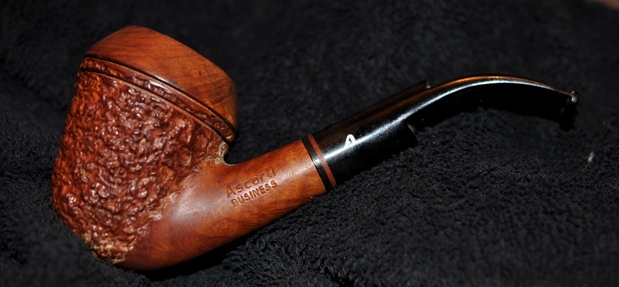
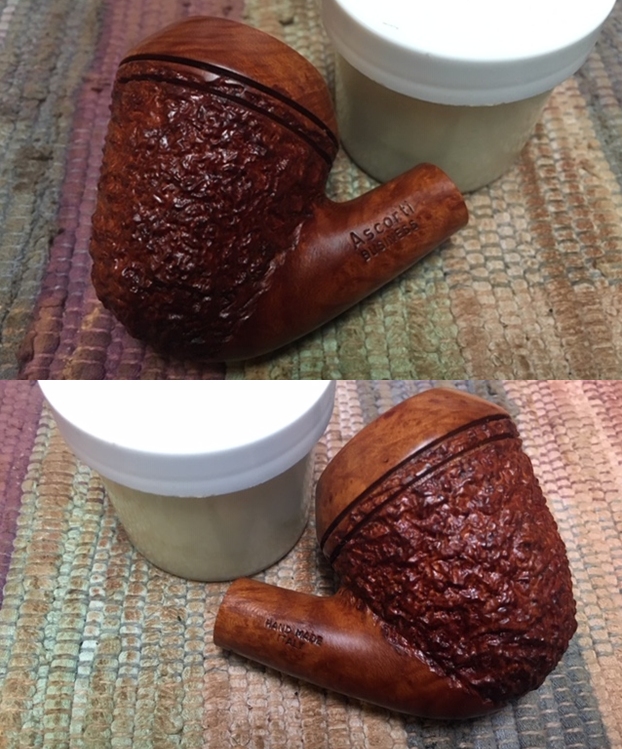
Cleaning and Restoring a Hand Made Ascorti Business Rusticated Bent Apple


Blog by Steve Laug

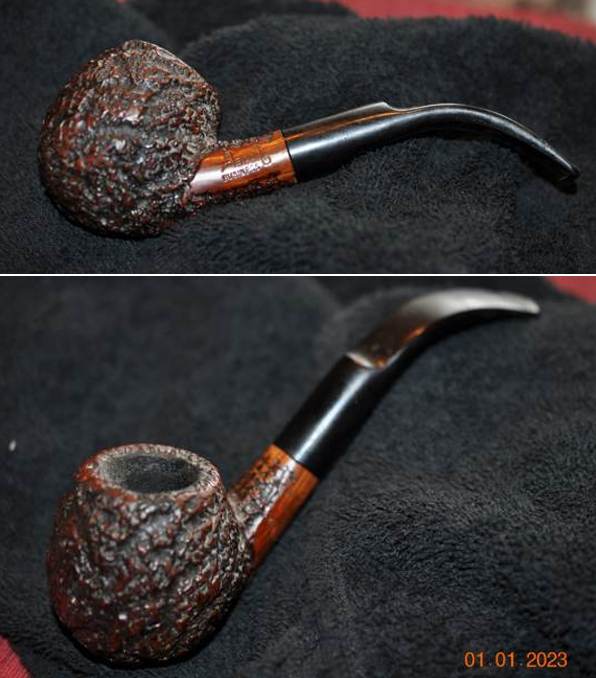
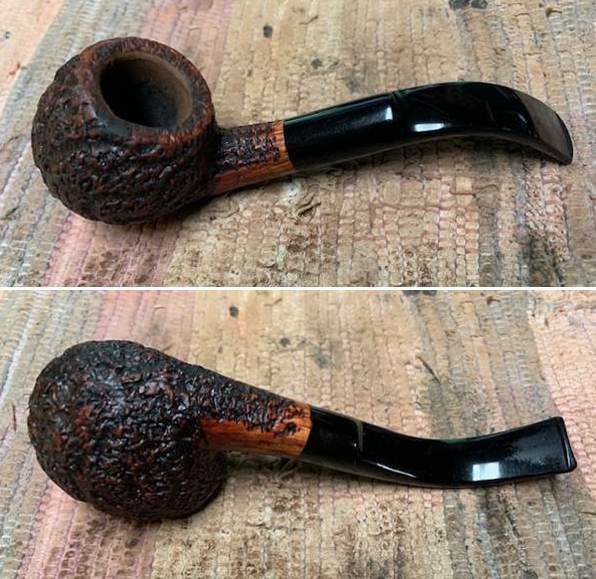
Once again I want to take you through my process of working on each pipe that we purchase. Jeff has set up a spread sheet to track where the pipe came from, the date of purchase and what we paid for it so that we know what we have invested in the pipe before we even work on it. This takes a lot of the guess work out of the process. This particular pipe was purchased on 10/20/2022 from an Antique Store in Vancouver, Washington, USA. I also want you to understand why we take the photos we do. If you have followed for a while then you will see the familiar pattern of the photos in the before and midstream process of working on a pipe. It is not accidental as the photos have been taken to help me make an assessment of the pipe Jeff sees before he starts his clean up work. We do this to record the condition that the pipe when received it and assess the work needed to be done. When I look at these photos this is what I see.

  1. I have worked on enough Ascorti pipes to be able to say this one has a classic Ascorti finish and look to it. It has the rugged rustication that I have come to expect on their Business line of pipes.
  2. The finish is dirty and there is dust, grime and grit in the deeply rusticated finish on the bowl and shank.
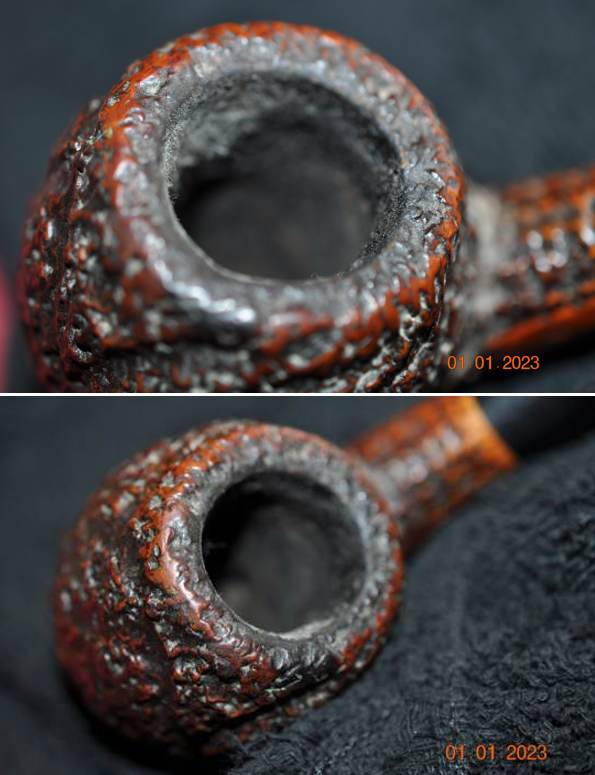
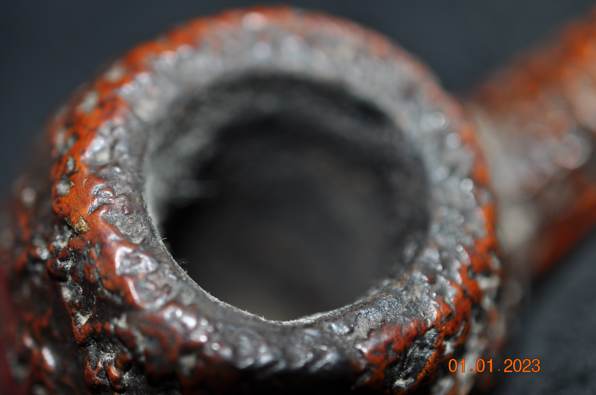
  3. The rim top has lava and debris in the rustication on the top and edges. It does not appear that there is any damage to the top or the edges.
  4. The bowl has a thick cake on the walls that hides the condition of the interior walls and edges. There are no obvious burn marks on the bowl exterior or the rim top.
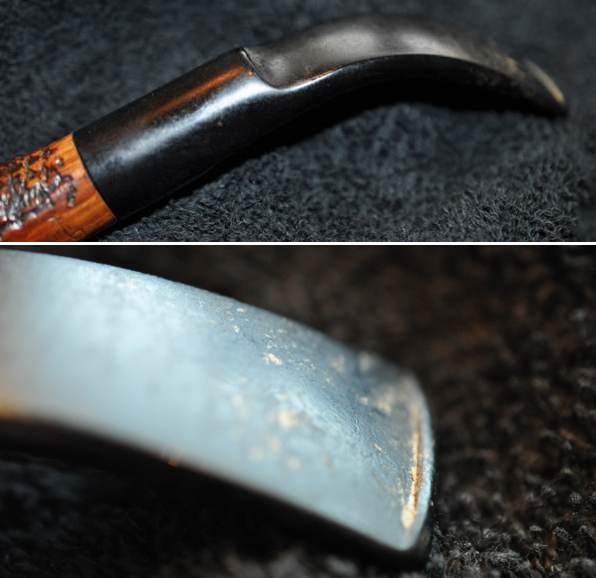
  5. The acrylic stem is in excellent condition – dirty and has light tooth chatter and marks on both sides ahead of button. The shape is definitely an Ascorti staggered saddle stem but there is no A logo on the stem side or top.

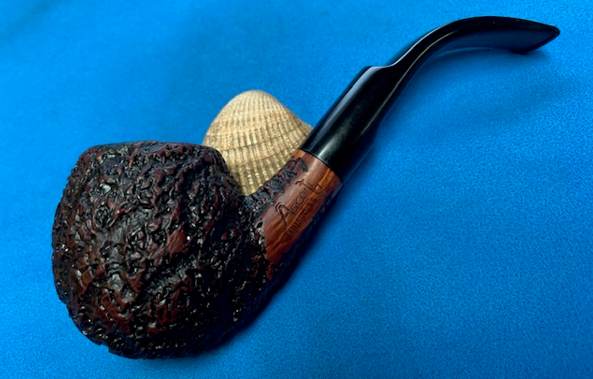
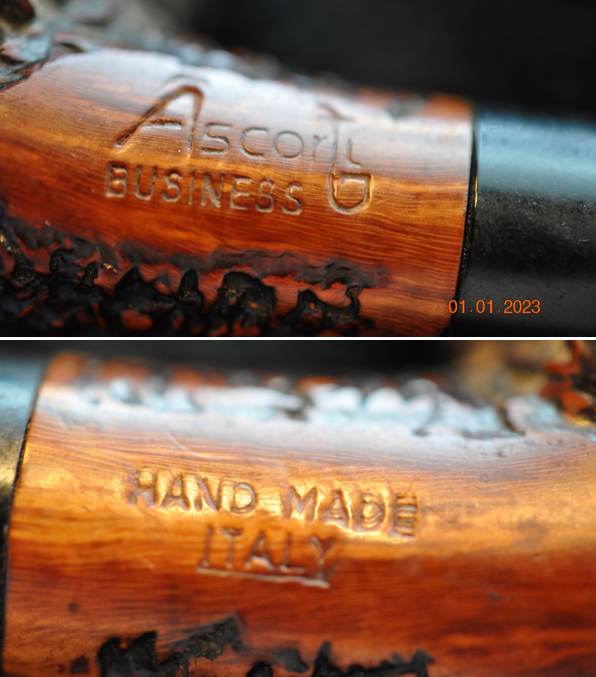
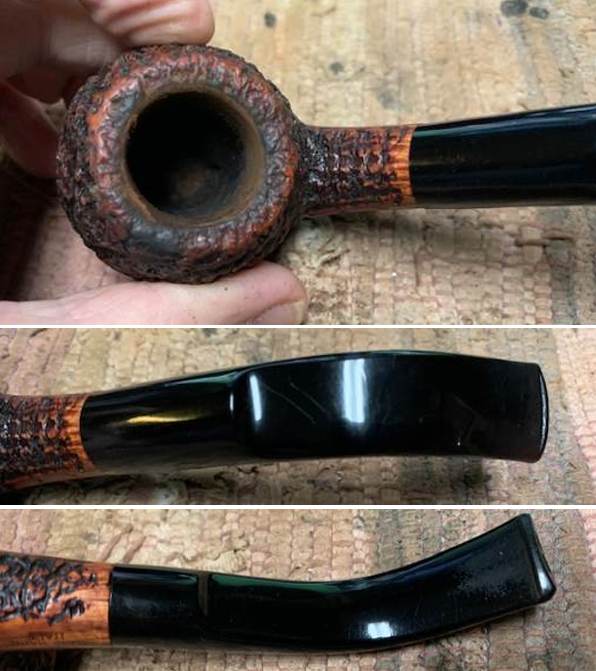
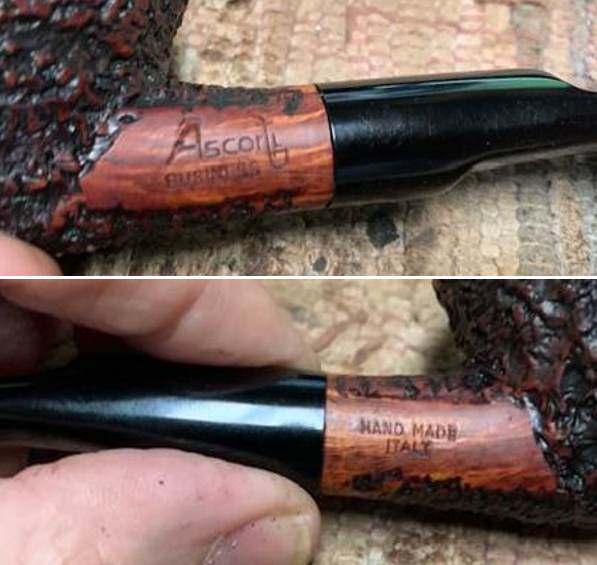
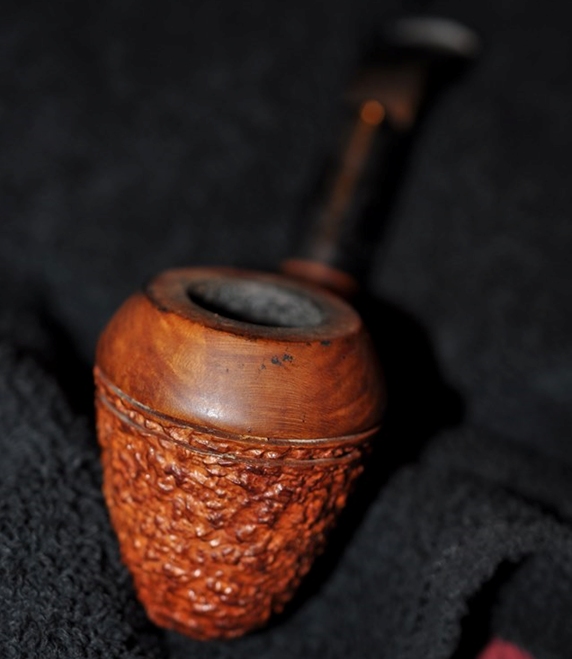
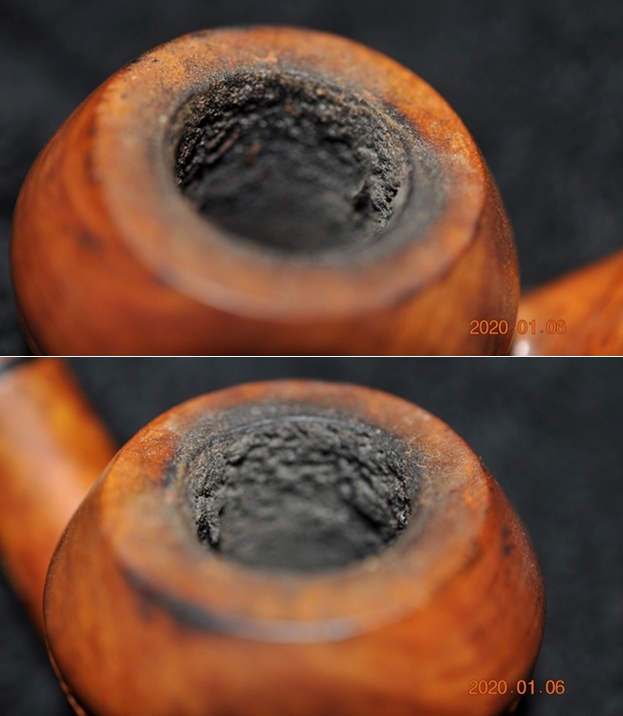
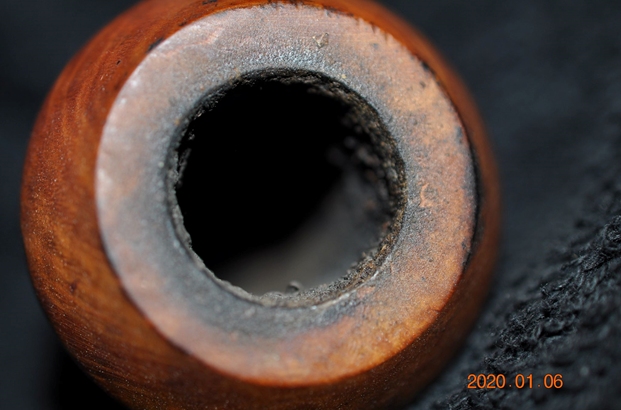
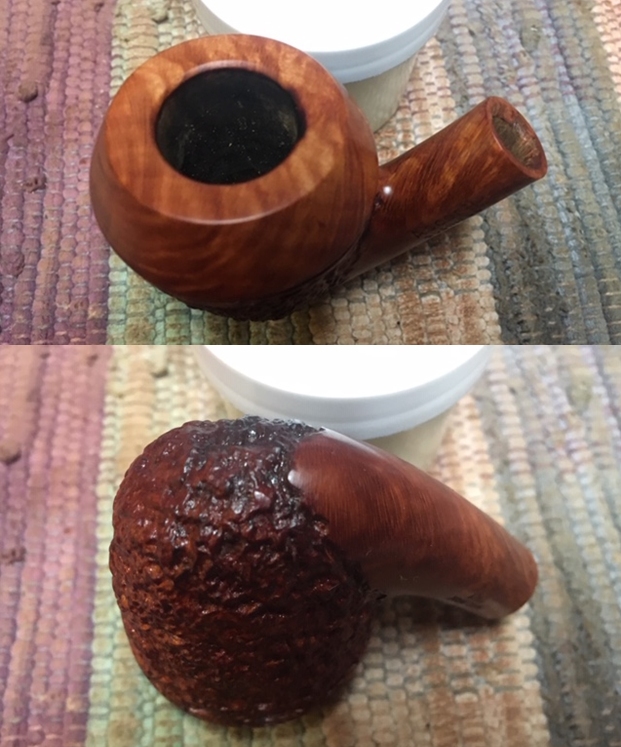
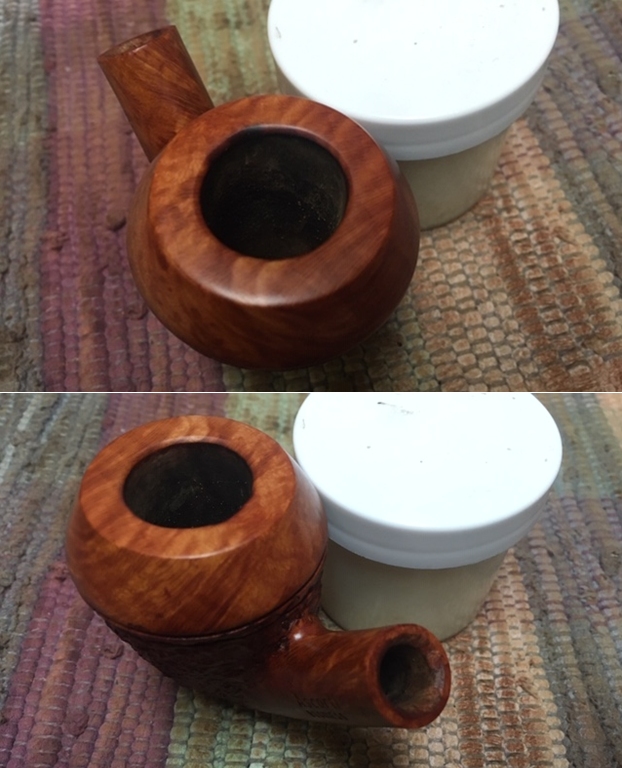
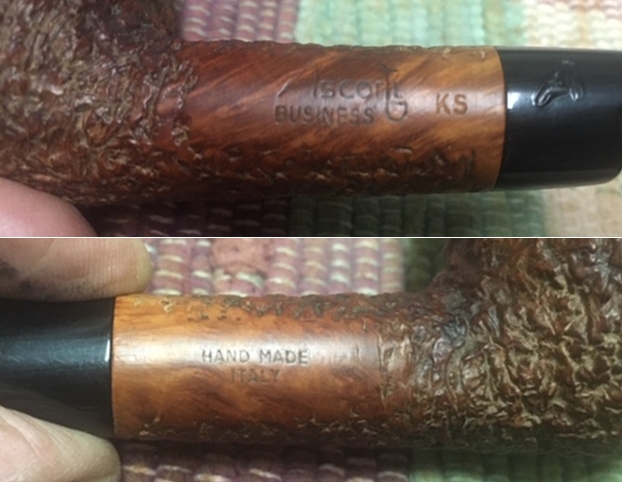
Overall my impressions of this pipe is that it is a great looking Bent Apple with a mix of a rusticated bowl and a mixed finish shank with panels on the sides for the stamping and a band of smooth briar around the shank end. I think that once it is cleaned up it will be another pretty pipe.Jeff took close up photos so that I could have a clearer picture of the condition of the bowl, rim edges and top. The rim top photos confirm my assessment above. The cake in the bowl is thick. The rim top has thick lava, grime and debris covering it – heavier toward the front left and right. The edges are hard to assess well at this time but still look to be in good condition. This is what I look for when assessing a pipe. It is unclear if there is any burn damage at this point. I look forward to viewing it in person after the clean up work. The photos of the acrylic stem surface from various angles confirm my assessment of its condition. You can see the grime on the stem in the first photo below. The stem is quite dirty but the fit of the stem to the shank is good. There is no logo on the stem so it makes me wonder if the stem is a replacement. But if it is the style of the step down saddle and the fit to the shank is extremely well done. Instead of telling you what I see in the next photos of the sides of the bowl and the heel I want to hear from you. Tell me what you see? What does the finish look like to you? Are there any visible problems or issues that stand out to you? Are the cracks or scratches in the valleys of the rustication or the high spots? Are there visible flaws or fissures in the briar? How random does the deep rustication look? Is there a pattern to it? Any visible issues on the heel of the bowl? These questions should help you to see what I am looking for when I see these photos. He took photos of the stamping on the sides of the shank. On the left side it is stamped Ascorti with “t” forming a long stemmed pipe. Under that it is stamped Business. On the right side it is stamped Hand Made [over] Italy. The acrylic stem does not have the standard Ascorti A logo on side of the saddle stem. What stands out for you in the photos of the stamping? What do you look for in the stamping? It is dirty but what do you see underneath the grime on the surface of the briar? I have worked on quite a few Ascorti Business pipes including several straight billiards so I turned to a blog on one of them to refresh the background information before I started my part of the work (https://rebornpipes.com/2020/03/18/repairing-banding-and-restoring-a-damaged-hand-made-ascorti-business-billiard/). I quote from the information that is contained in that blog:

Before I started my part of the repair and restoration I wanted to have a clear picture of what the stem logo looked like on the Ascorti Business pipe. I turned to Pipephil as he often has some photos that give me the information that I am looking for (http://www.pipephil.eu/logos/en/logo-a8.html). Sure enough he had a photo showing the rough stamped A on the stem. It is white and it is rough which is exactly how this one looks. I did a screen capture of the picture on the site and include it below.  With that information in hand I knew what I was dealing with in terms of the stamping and the age of this pipe. I knew from the information from the section above that the pipe came out after 1980 when the company started. I could not get the date more focused so it was time to work on the pipe.

I am sure many of you will shake your head and ask maybe even out loud, “Why is he including this again?” However, please remember that the point of these blogs is not to wow your with the work or make you shake your heads but I want you to know the details of the work we do so you can do your own. Back in 2020 Jeff wrote a blog about his cleaning process. I am including a link to that now so you can see what I mean about his process. Do not skip it! Give it a read (https://rebornpipes.com/2020/01/20/got-a-filthy-estate-pipe-that-you-need-to-clean/). Here is the introduction to that blog and it is very true even to this day.

Several have asked about Jeff’s cleaning regimen as I generally summarize it in the blogs that I post rather than give a detailed procedure. I have had the question asked enough that I asked Jeff to put together this blog so that you can get a clear picture of the process he uses. Like everything else in our hobby, people have different methods they swear by. Some may question the method and that is fine. But it works very well for us and has for many years. Some of his steps may surprise you but I know that when I get the pipes from him for my part of the restoration they are impeccably clean and sanitized. I have come to appreciate the thoroughness of the process he has developed because I really like working on clean pipe!

For the benefit of some of you who may be unfamiliar with some of the products he uses I have included photos of three of the items that Jeff mentions in his list. This will make it easier for recognition. These three are definitely North American Products so you will need to find suitable replacements or order these directly on Amazon. The makeup pads are fairly universal as we were able to pick some up in India when we were with Paresh and his family.

In the blog itself he breaks his process down into two parts – cleaning the stem and cleaning the bowl. Each one has a large number of steps that he methodically does every time. I know because I have watched him do the work and I have seen the pipes after his work on them. He followed this process step by step and when the pipe got to me it was spotlessly clean and ready for my work. The inside of the stem, shank and bowl were clean and to me that is an amazing gift as it means that my work on this end is with a clean pipe! I cannot tell you how much difference that makes for my work.

  1. I have worked on enough Ascorti pipes to be able to say this one has a classic Ascorti finish and look to it. It has the rugged rustication that I have come to expect on their Business line of pipes.
  2. The finish is clean and the grime and grit have been removed from the finish on the bowl. The rugged, tactile rustication pattern looks very good as well.
  3. The thick lava, grime and dust on the rim top has been removed and it has revealed that the inner edge is clean and burn free. The outer edge of the bowl is also in good condition.
  4. With the cake reamed out the walls of the bowl are clean and they look very good with no checking or burn damage to the walls.
  5. The acrylic stem is in excellent condition – it is clean and has light tooth chatter and marks on both sides ahead of button. The fit of the stem to the shank looks good. The shape is definitely an Ascorti staggered saddle stem but there is no A logo on the stem side or top.

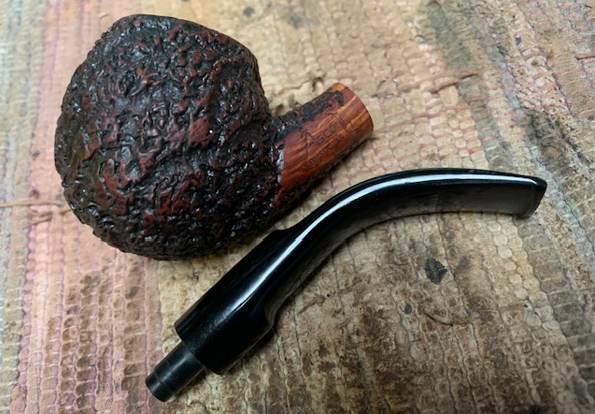
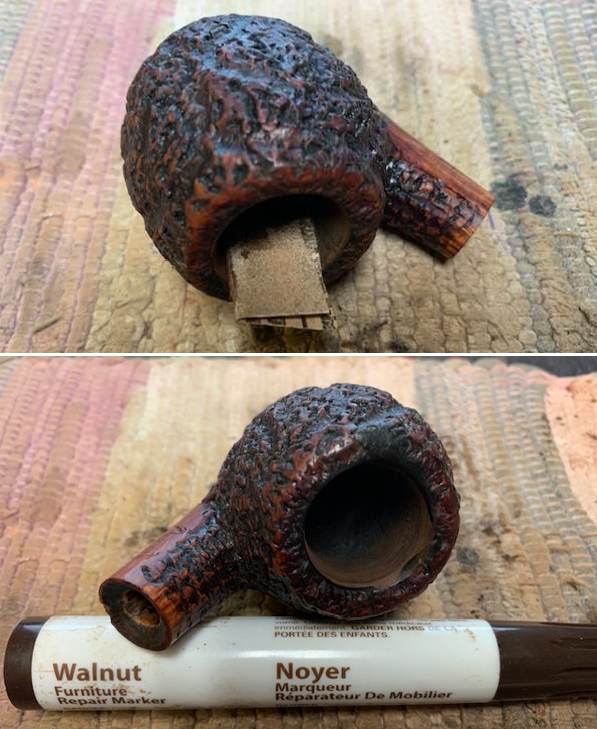
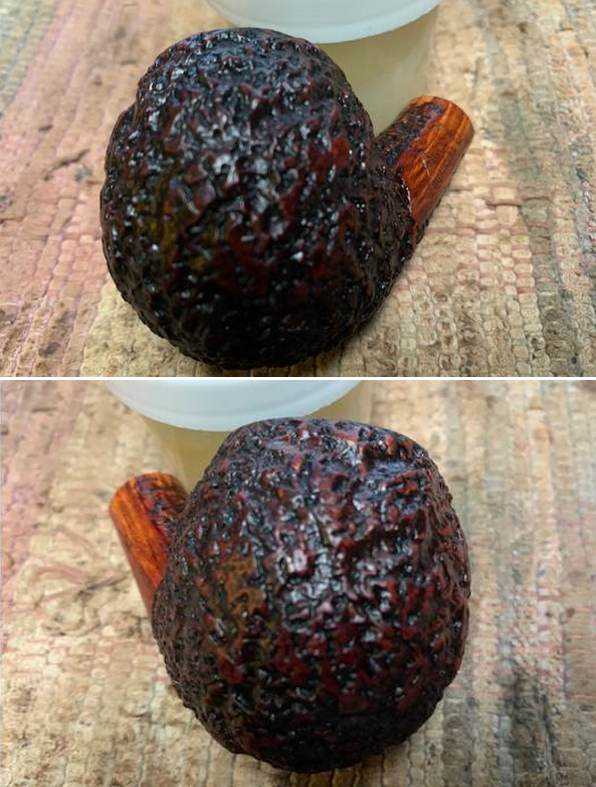
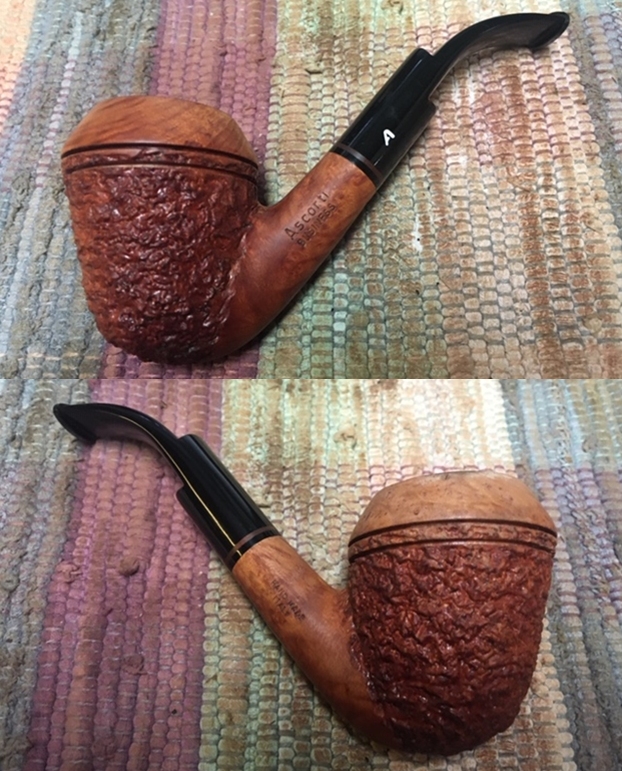
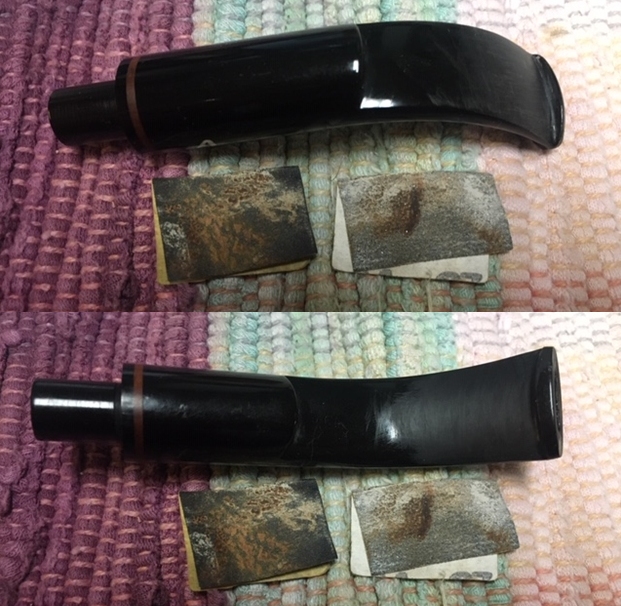
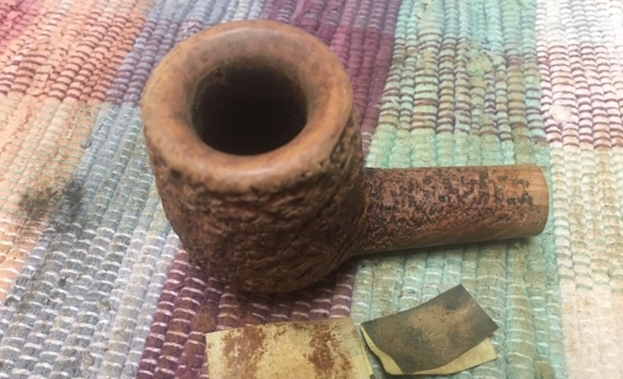
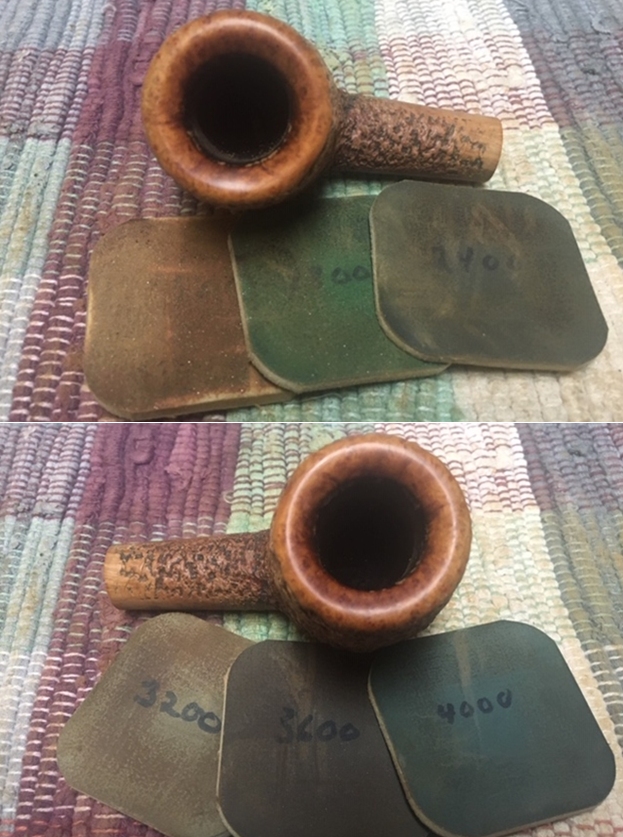
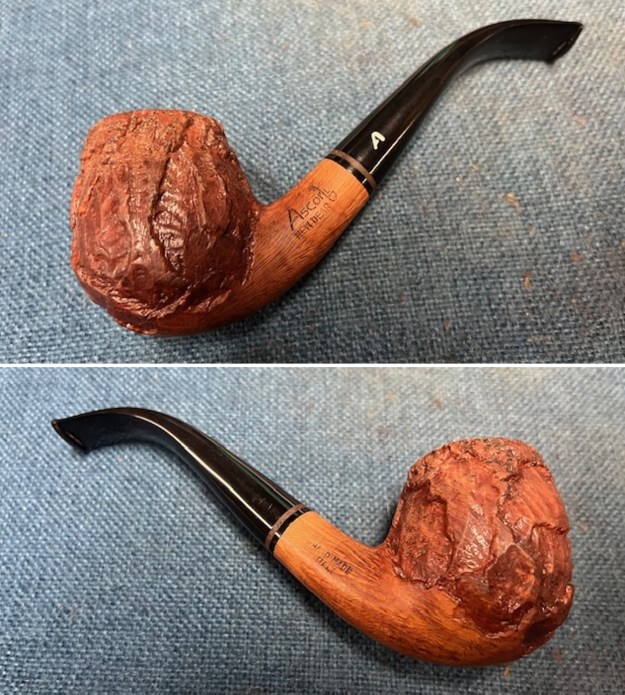
Hopefully the steps above show you both what I look for when I go over the pipe when I bring it to the work table and also what I see when I look at the pipe in my hands. They also clearly spell out a restoration plan in short form. My work is clear and addressing it will be the next steps. I took photos of the whole pipe to give you a picture of what I see when I have it on the table. This is important to me in that it also shows that there was no damage done during the clean up work or the transit of the pipe from Idaho to here in Vancouver. I carefully went over the bowl and rim top to get a sense of what is happening there. In this case once the rim top and edges were cleaned the rim cap and edges showed no damage. There was also no damage to the rustication or the inner edge of the bowl. I also go over the stem carefully. The fit to the shank is snug and the transitions are smooth. There were some light tooth marks and chatter on the surface of the stem and the button. I took photos of the rim top and stem sides to show as best as I can what I see when I look at them. I always check to make sure that the clean up work did not damage the stamping on the shank sides in any way. It is in excellent condition and is very clear and readable. I love just looking at the lay of the pipe and the proportion of the hand made pipes. I like to remove the stem from the shank to get a sense of what was in the mind of the pipe maker when he crafted the pipe. The photo shows its beauty in flow and shape. Now it was time to start working on the pipe. I cleaned up the inner edge as there was a little burn damage on the left front inner edge. I used a folded piece of 220 grit sandpaper to smooth it out and to bring it back to round. I stained it with a Walnut Stain Pen to match the rest of the topcoat on the finish. I rubbed down the bowl and shank with Before & After Restoration Balm. It is a paste/balm that is rubbed into the surface of the briar. The product works to deep clean the nooks and crannies of finish, enliven and protect the briar. I worked it into the briar with my finger tips and a horse hair shoe brush. I let it sit for 10 minutes then wiped it off with a soft cloth then buffed it with a cotton cloth. The briar really began to have a deep shine in the briar and the rustication showed depth. The photos I took of the bowl at this point mark the progress in the restoration. It is a gorgeous pipe.   I set the bowl aside and turned my attention to the acrylic stem. I smoothed out the chatter and marks on the stem surface and button on both sides with 220 grit sandpaper. I started the polishing process with 600 grit wet dry sandpaper. It is taking on a shine. I set the bowl aside and turn to work on the stem. I polished the stem with micromesh sanding pads – 1500-12000 grit sanding pads and water to wet sand the stem. I wiped it down after each sanding pad with Obsidian Oil on a cotton rag after each sanding pads. I know that many say Obsidian Oil does nothing for acrylic stems, but I find it does two things – first it gives some protection to the stem from buildup and second it give the sanding pads bite in the polishing process. After finishing with the micromesh pads I rub the stem down with Before & After Fine and Extra Fine stem polish as it seems to really remove the fine scratches in the vulcanite. I rub the Fine Polish on the stem and wipe it off with a paper towel and then repeat the process with the Extra Fine polish. I finish the polishing of the stem down with a final coat of Obsidian Oil and set the stem aside to let the oil absorb. This process gives the stem a shine and also a bit of protection. The final steps in my process involve using the buffer. I buffed the stem with Blue Diamond to polish out the light scratches in the acrylic. I gave the bowl multiple coats of Conservator’s Wax and the stem multiple coats of carnauba wax. I have found that I can get a deeper shine if I follow up the wax buff with a buff with a clean buffing pad. It works to raise the shine and then I hand buff with a microfiber cloth to deepen the shine. It is always fun for me to see what the polished bowl looks like with the polished stem. It really is a nice pipe. The mix of smooth and rusticated finishes around the bowl sides and shank looks great with the rich black and brown stains. The Ascorti Business Rusticated Apple feels great in my hand. It is a well balanced pipe. Have a look at it with the photos below. The dimensions are Length: 6 inches, Height: 2 inches, Outside diameter of the bowl: 1 ½ inches, Chamber diameter: 7/8 of an inch. The weight of the pipe is 2.65 ounces/75 grams. It is a beautiful pipe that I will soon be adding to the rebornpipes store in the Italian Pipemakers section. If you would like to add it to your collection let me know. It should be a great smoking pipe.

Hopefully the style of writing of this blog is helpful to you in some way. In it I wanted to show both what I am looking for and how I move forward in addressing what I see when work on a pipe. Let me know if it is helpful to you. It is probably the most straightforward detailed description of my work process that I have done. As always I encourage your questions and comments as you read the blog. Thanks to each of you who are reading this blog. Remember we are not pipe owners; we are pipe men and women who hold our pipes in trust until they pass on into the trust of those who follow us.

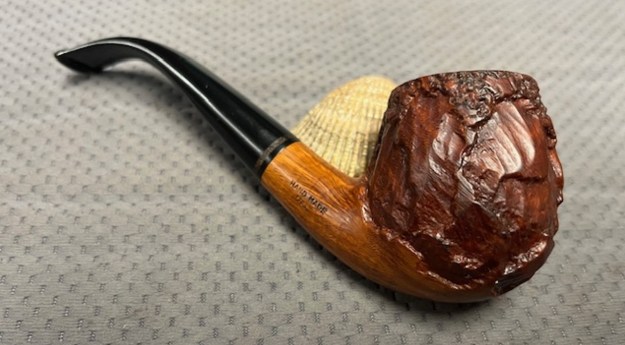
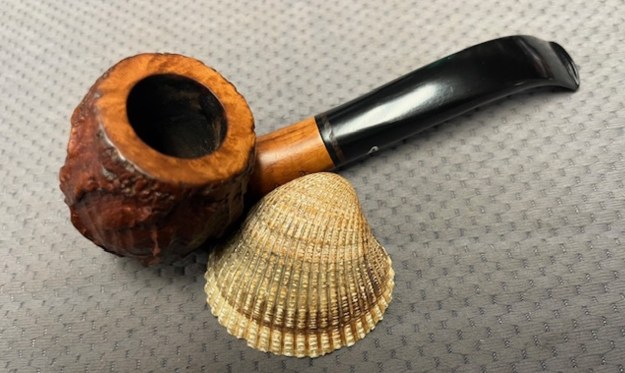
This Ascorti 01 Business Hand Made Must Be a Great Smoking Pipe


Blog by Steve Laug

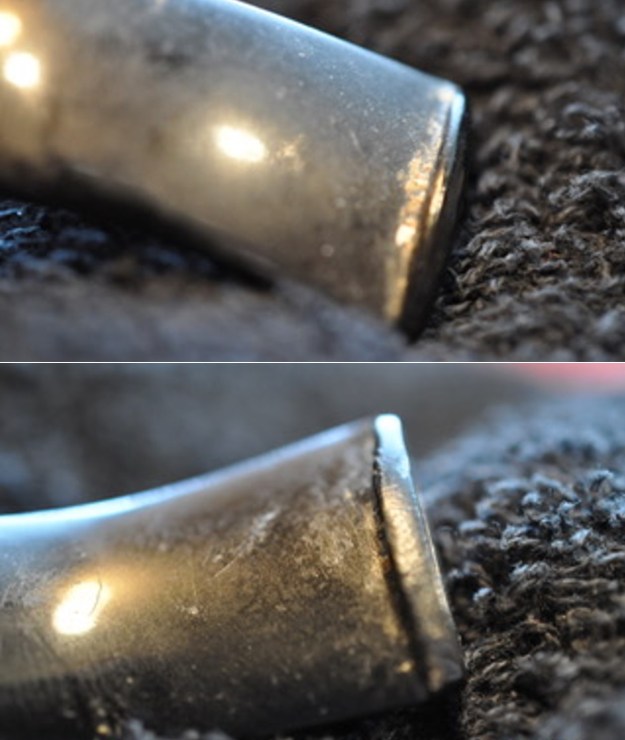
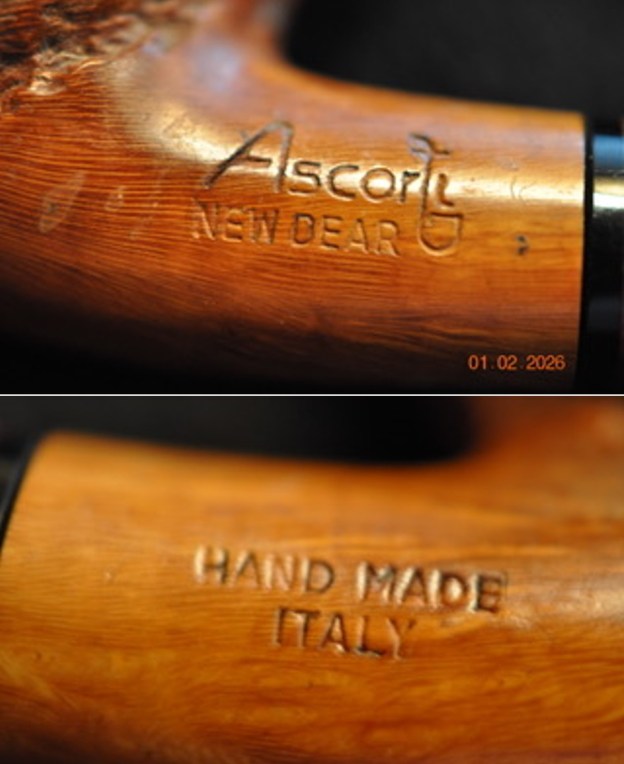
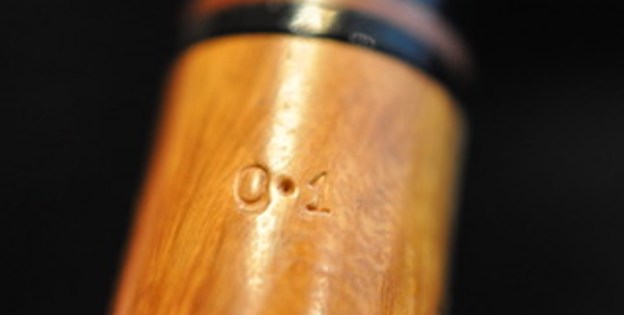
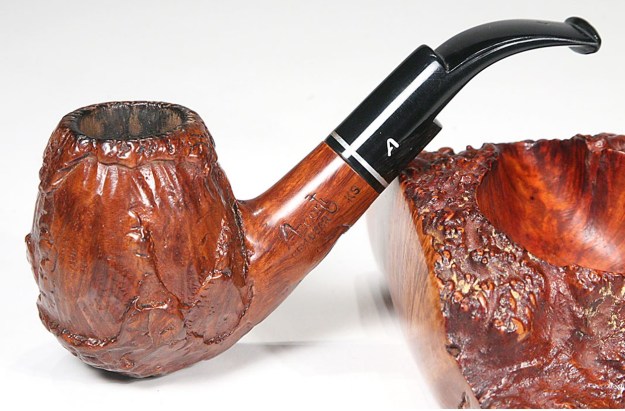
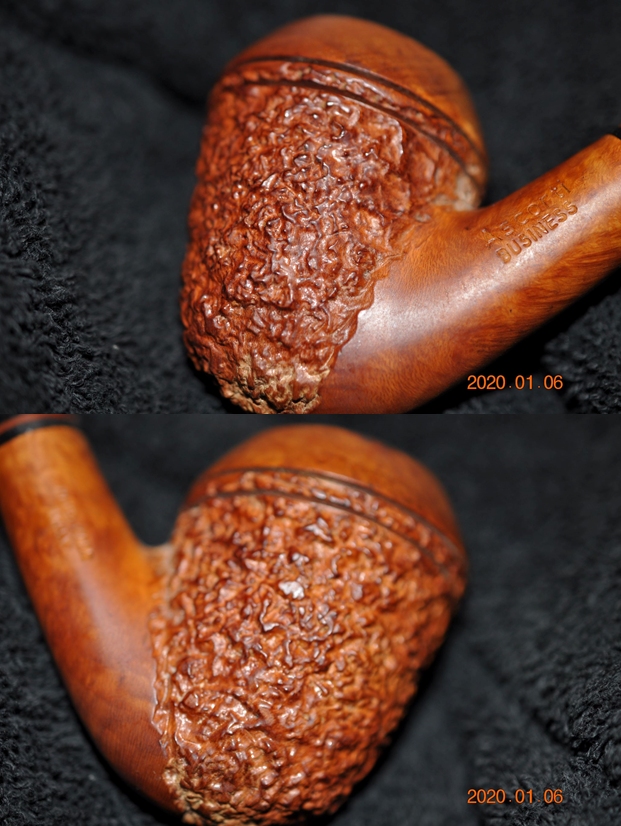
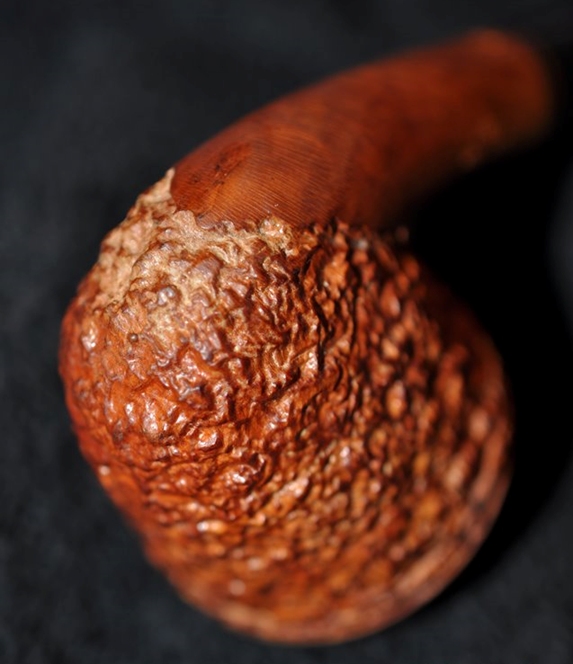
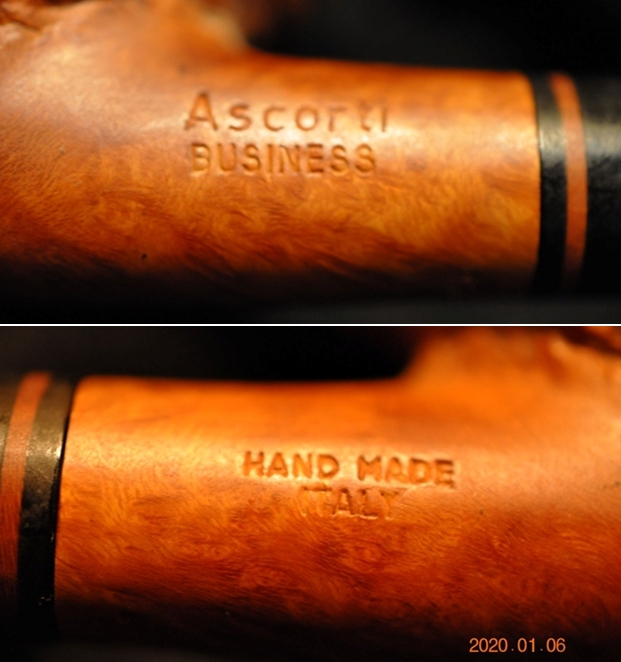
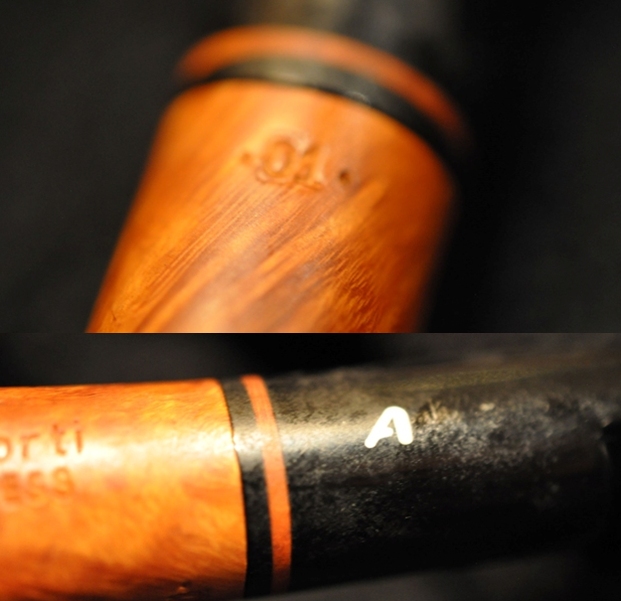
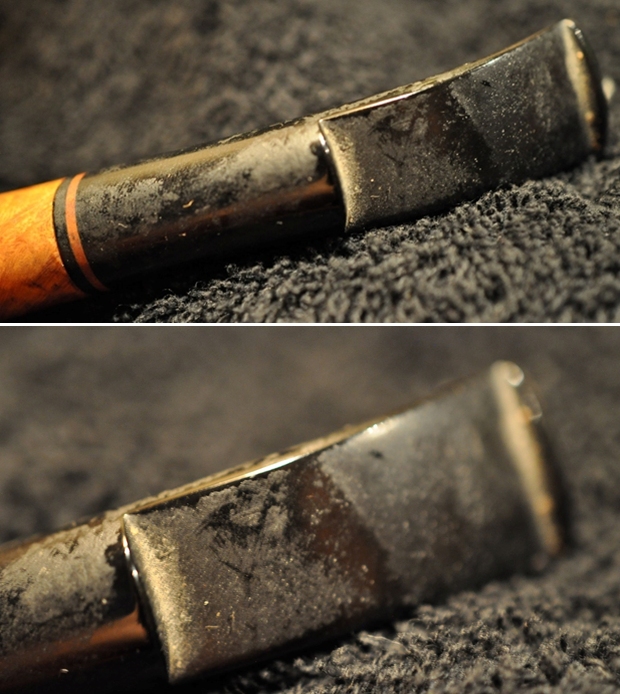
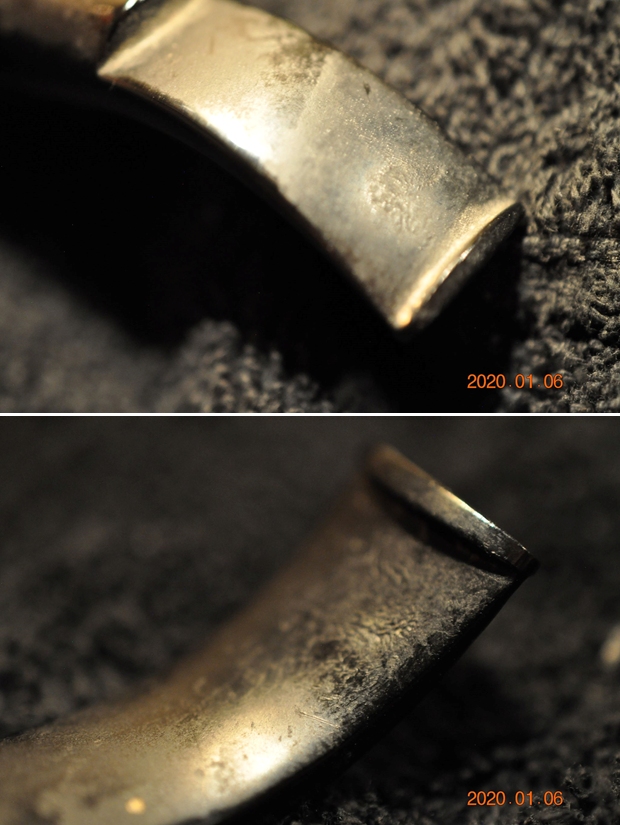
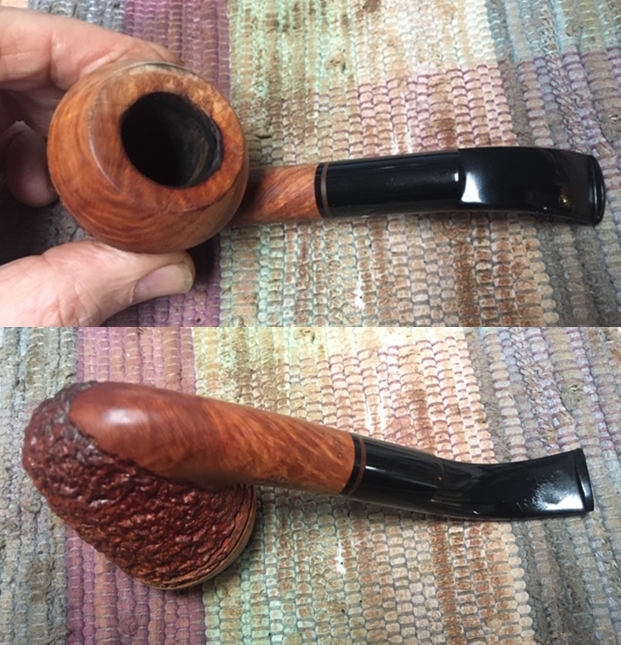
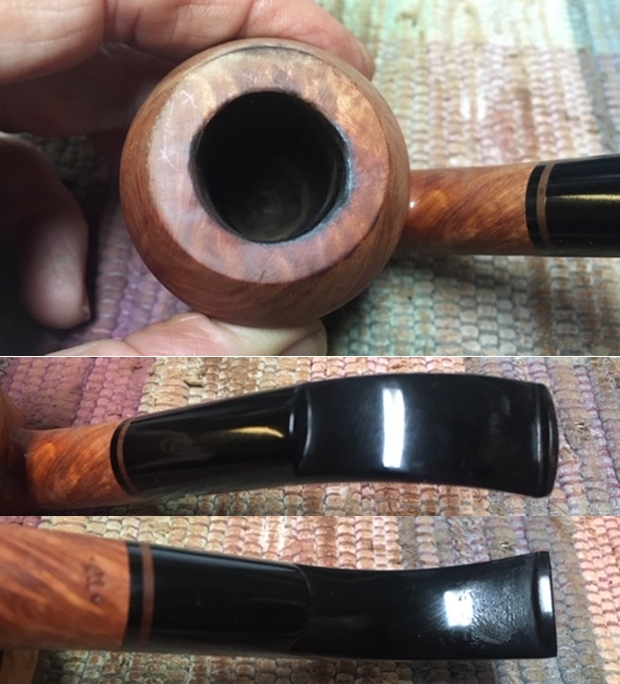
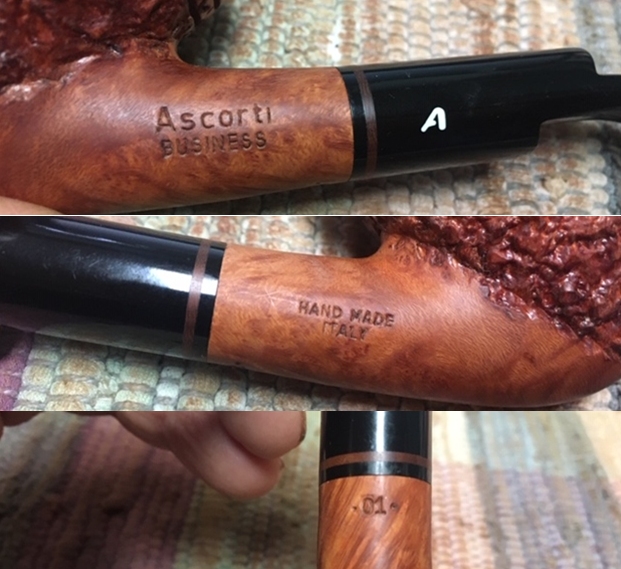
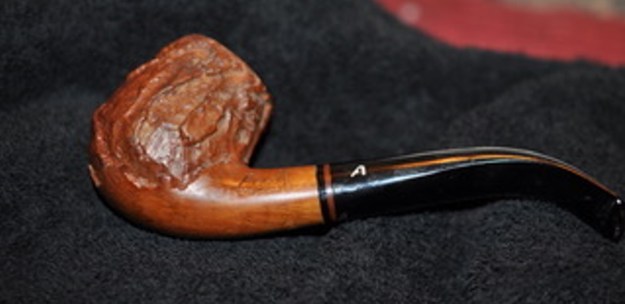
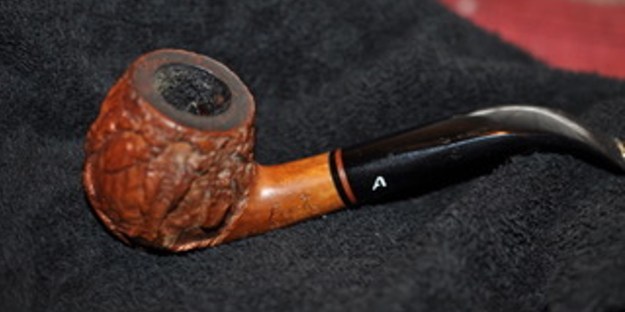
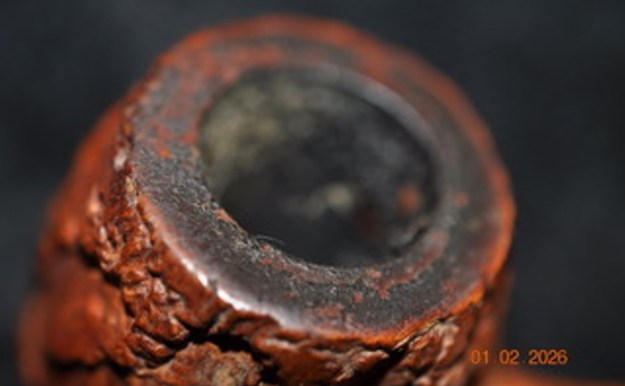
The next pipe on the work table is an interesting Ascorti Business Bent Bulldog. I had passed over this one a few times in the past weeks but this morning I decided it would join the days queue. It is a great looking and obviously well-loved pipe from the previous pipeman. It was a really filthy and had some damage on the rim top and edges when we received it. The bowl had a thick cake and the lava overflow on the rim made it impossible to see in the inner edge of the bowl. The outer edge had damage and burns on the right side of the rim cap. The bowl was rusticated in the typical Ascorti Business rustication but the camp and shank were smooth. The finish had a lot of dust and debris in the deep pockets of the finish and some stains as well on the surface. The twin rings around base of the cap were also filled in with debris and dust. The smooth portions had some nice grain on them under the grime and the finish appeared to be in good condition. A lot would be revealed once Jeff had worked his magic on it. The stem was very dirty and had heavy tooth chatter and marks on both sides ahead of the button. The button surface appeared to be unharmed. Jeff took photos of the pipe before he started his cleanup work. Jeff tried to capture the condition of the bowl and rim top with the next series of photos. You can see the work that is ahead of us in the photos. It was obviously a well-loved and oft enjoyed pipe! Jeff took some great photos of the sides of the bowl and heel showing what is underneath the grime and debris of time and use. He captured the stamping on the sides of the shank and the left side of the tapered stem. They are clear and readable. The left side reads Ascorti over Business. On the right side it reads Hand Made over Italy. On the underside of the shank it is stamped 01 next to the shank/stem junction. The last photo below shows the Ascorti logo “A” on the left side of the saddle stem. The photos of the stem show the thick grime on the stem surface as well as the tooth marks and chatter on both sides ahead of the button. It was probably one of the filthiest stems I have seen in a very long time. I have worked on a few Ascorti Business pipes in the recent months – two straight billiards so I turned to a blog on one of them to refresh the background information before I started my part of the work (https://rebornpipes.com/2020/03/18/repairing-banding-and-restoring-a-damaged-hand-made-ascorti-business-billiard/). I quote from that blog:
Before I started my part of the repair and restoration I wanted to have a clear picture of what the stem logo looked like on the Ascorti Business pipe. I turned to Pipephil as he often has some photos that give me the information that I am looking for (http://www.pipephil.eu/logos/en/logo-a8.html). Sure enough he had a photo showing the rough stamped A on the stem. It is white and it is rough which is exactly how this one looks. Hopefully in the restoration process I can get it back a bit. I did a screen capture of the picture on the site and include it below.With that information in hand I knew what I was dealing with in terms of the stamping and the age of this pipe. I knew from the information from the section above that the pipe came out after 1980 when the company started. I could not get the date more focused so it was time to work on the pipe.

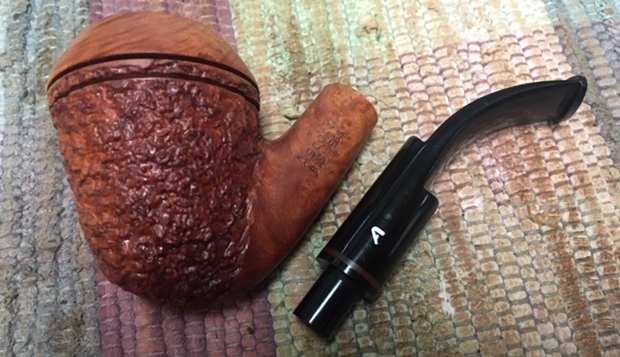
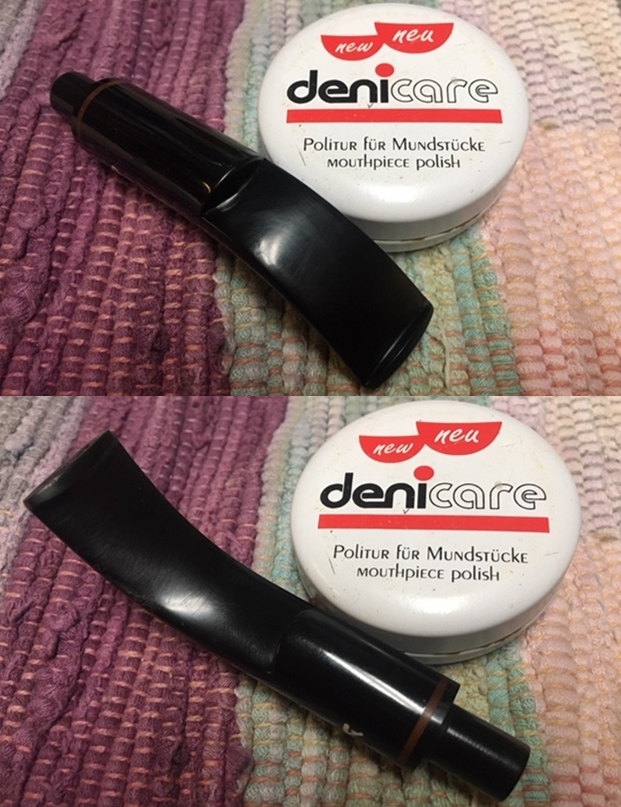
I was seriously wondering how this beast would clean up as it was such a mess. I was not sure Jeff would be able to get all of the grime out of the rustication and the rings. It really was in bad shape. But I should not have even worried about it. Jeff cleaned the pipe with his usual penchant for thoroughness. When I took it out of the box I was amazed at how good it looked it really looked like a different pipe. He reamed it with a PipNet pipe reamer and cleaned up the reaming with a Savinelli Fitsall Pipe Knife. He scrubbed out the internals with alcohol, pipe cleaners and cotton swabs until the pipe was clean. He scrubbed the exterior of the bowl with Murphy’s Oil Soap and a tooth brush to remove the grime and grit on the briar and the lava on the rim top. The finish looks far better than I expected and the rim top/cap damage was less than I thought it would be. Jeff scrubbed the stem with Soft Scrub to remove the grime and it came out looking far better. There was definitely tooth damage to address but nothing otherwise. When the pipe arrived here in Vancouver for the second stop of its restoration tour it looked very good. I took photos before I started my part of the work. I took some photos of the rim top and stem. The inner edge shows some damage on the back right side and on the outer edge and top on the right side. The close up photos of the stem shows that is it very clean but you can see the tooth chatter and marks in the acrylic.I took photos of the stamping because they also cleaned up very well.I took the stem off the shank and took a picture of the pipe. It really is a nice looking pipe with great lines.The major issue with this pipe was the burn damage on the rim top and the inner and outer edges of the bowl. I started my restoration work on the pipe by addressing that damage. I topped the bowl to remove the burn damage on the top of the cap and to try and minimize the damage to the inner edge. I then used a folded piece of 220 grit sandpaper to smooth out the inner edge and bring the bowl back to round. I gave the inner edge of the rim a slight bevel to further mask the damage. The rim top looks much better and will polish out pretty well with the micromesh. I polished the smooth briar of the rim cap and the shank with micromesh sanding pads – dry sanding with 1500-12000 grit pads. I wiped the bowl down after each pad with a damp cloth. The grain really began to stand out and the finish took on a shine by the last sanding pad. The photos tell the story! I worked some Before & After Restoration Balm into the surface of the smooth and rusticated briar with my fingertips and a horsehair shoe brush. The product works to clean, enliven and protect the briar. I let the balm sit for about twenty minutes and then buffed with a cotton cloth to raise the shine. The photos show the bowl at this point in the restoration process. I laid the bowl aside and turned to deal with the stem. I sanded the tooth marks and chatter on the stem with a folded piece of 220 grit sandpaper to blend them into the surface of the stem and started polishing with 400 grit wet dry sandpaper.   I polished the stem with some Denicare Mouthpiece polish – a red gritty paste that feels a lot like the texture of red Tripoli. It works well to polish out some of the scratches. I find that it does a great job preparing the stem for polishing with micromesh sanding pads.I polished the stem with micromesh sanding pads – dry sanding with 1500-12000 grit sanding pads. I wiped it down after each sanding pad with a cloth containing some Obsidian Oil. I finished polishing it with Before & After Pipe Stem Polish – both Fine and Extra Fine and buffed it off with a cotton cloth. This Ascorti Business Bulldog was a pipe I was looking forward to seeing what it looked like when I put it back together. The change in condition and appearance of the pipe was remarkable. With the grime and debris gone from the finish and the bowl it was a beauty and the grain and rustication just pop at this point. I put the stem back on the bowl and buffed the pipe with Blue Diamond on the buffing wheel. I carefully avoided the stamping on the shank and stem during the process. I gave the bowl multiple coats of Conservator’s Wax and the stem multiple coats of carnauba wax on the buffing wheel and followed that by buffing it with a clean buffing pad on the buffer. I hand buffed the pipe with a microfiber cloth to deepen the shine. The finished pipe is quite beautiful and is a lovely bent Bulldog shaped pipe. The variegated finish on the bowl combines various stains to give it depth. It is very well done. Give the finished pipe a look in the photos below. I can only tell you that it is much prettier in person than the photos capture. The dimensions of the pipe are Length: 5 ½ inches, Height: 2 ½ inches, Outside diameter of the bowl: 1 ½ inches, Chamber diameter: ¾ of an inch. I really like the way that Ascorti combines the rusticated finish with the smooth shank and rim cap. This is a great looking pipe in great condition. Thanks for walking through the restoration with me as I worked over another beautiful pipe. I will be adding it to the rebornpipes store soon. If you want to add it to your collection send me an email or a message! Thanks for your time.
The 1st Restoration of 2020 – An Ascorti Business KS Hand Made Billiard


Blog by Steve Laug

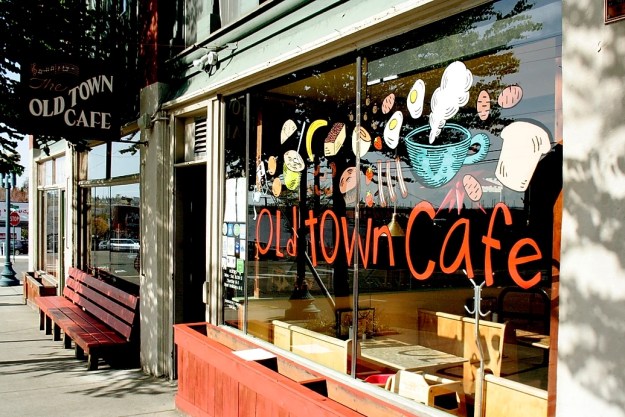
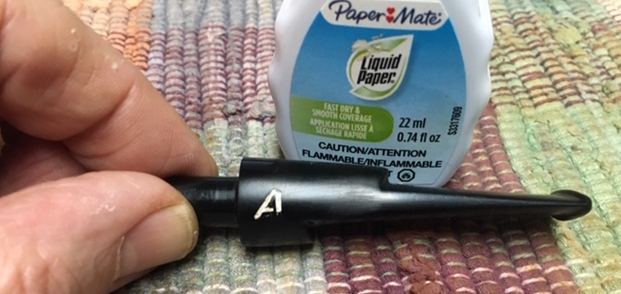
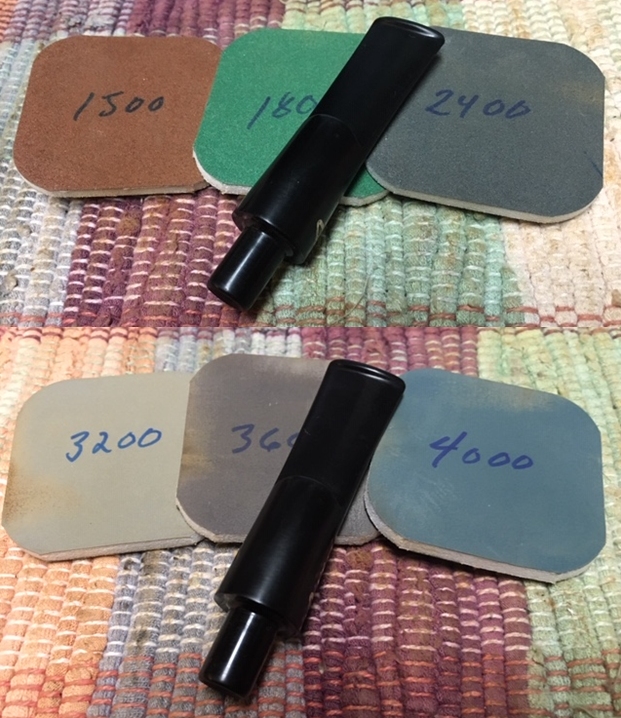
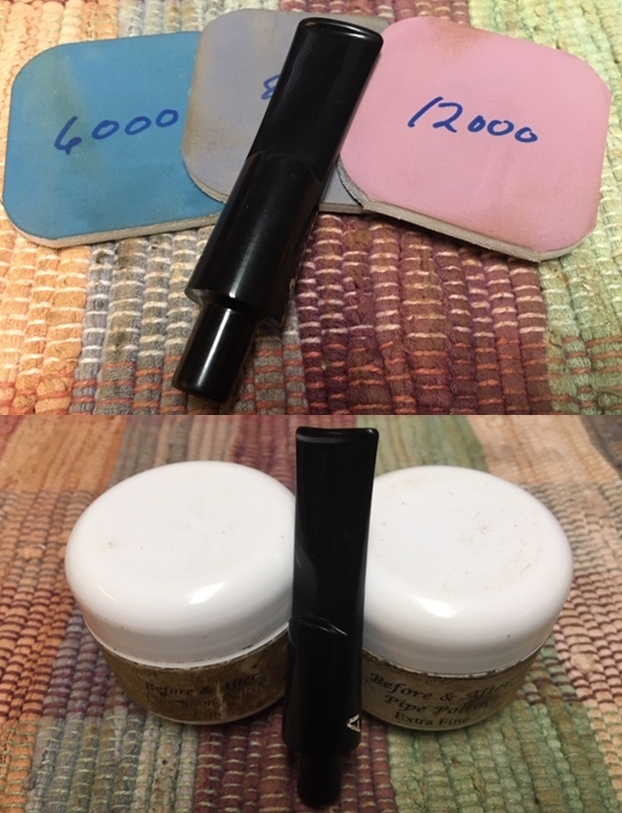
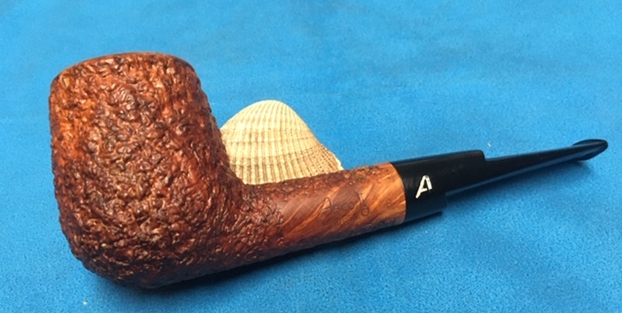
On December 30th my family and I went to Bellingham – ostensibly to do a bit of Christmas shopping at the mall there, visit Trader Joe’s and a few other stops. I also wanted to get in one last pipe hunt for 2019. We ate breakfast at the Old Town Café on Holly Street in Old Bellingham. They have great food and a great atmosphere. Check it out.After breakfast the girls and I visited a few of my favourite antique malls in the area. One was closed but two were open and we were early customers. I went through the first one with care covering every shelf, display cabinet and nook and cranny and no pipes were to be found. That happens sometimes and I was wondering if the pipe hunt would end up being a bust. I rarely come away empty handed but there is always one of those days. We entered the second shop and after going through three aisles of display cases and coming up empty handed I entered the last aisle. There is a display case in that aisle that generally has a few pipes in it and potentially one of two of interest to me. It is the last part of the store I stop at and this day was no different. I came to the case and looked through the glass case at the lighters, knives, cheap meerschaums and corn cobs. I was beginning to wonder if it was going to be a bust. Then low and behold, underneath the stems of a cob and meerschaum I saw what looked like a briar.
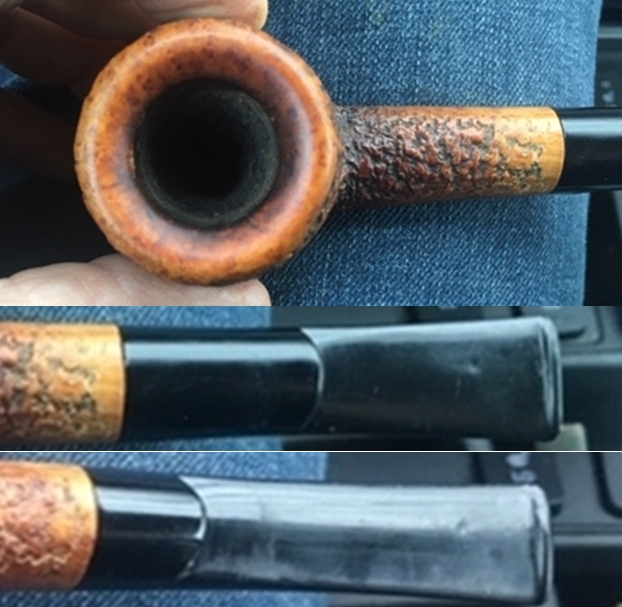
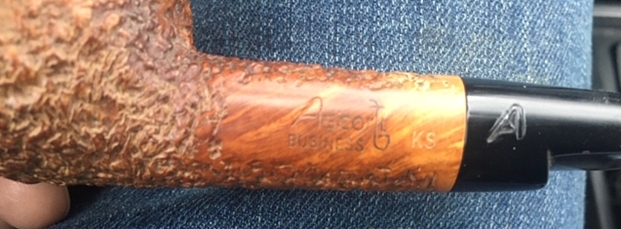
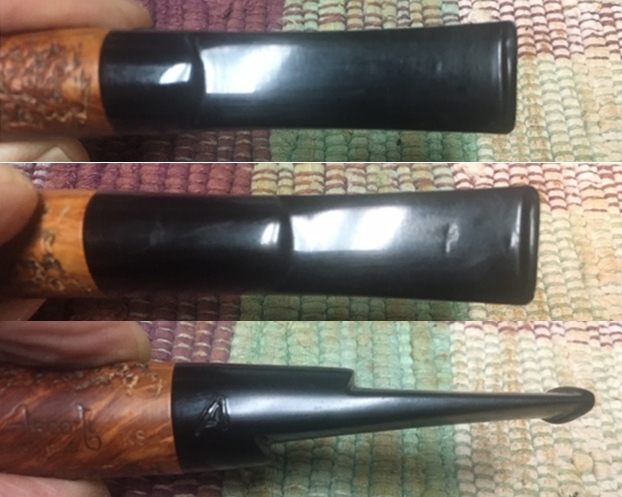
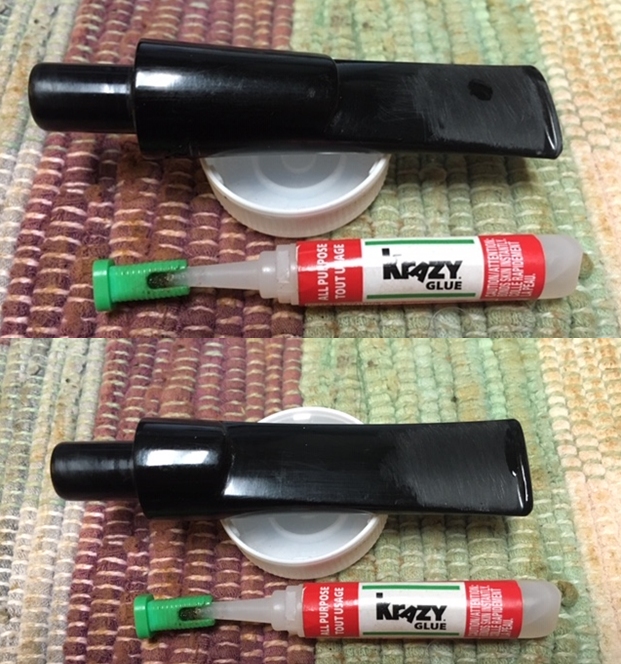
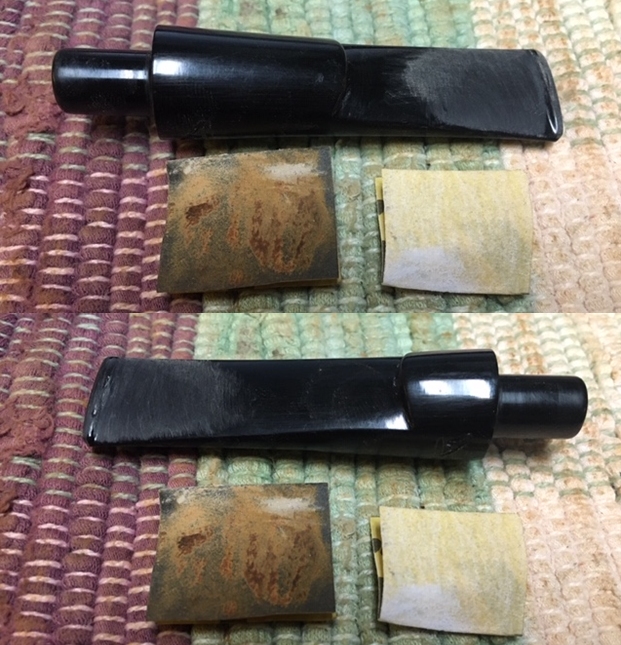
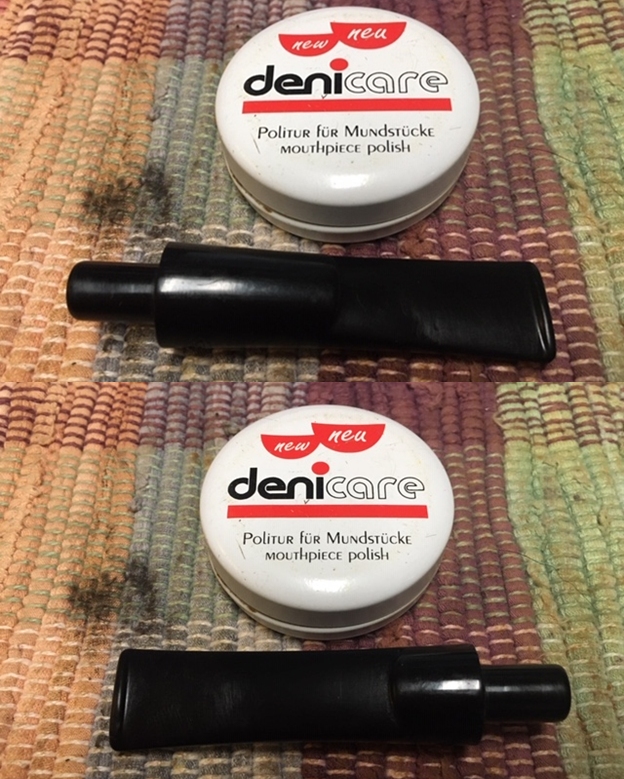
I went to the counter to get the clerk to open the case for me so I could have a better look at the hidden pipe that I had seen. She left me to my hunting and I carefully moved the pipes that had been hiding the briar. It was a larger billiard with a rusticated finish and a smooth rim. I lifted it out of the case and turned it over in my hands. The pipe was dirty with a thick cake in the bowl and some darkening on the smooth rim top. But on the smooth panels on the shank I saw the stamping the were readable. The left side read Ascorti Business KS and the right side read Hand Made Italy. The stem had the characteristic Ascorti A logo and their unique saddle cut. I did not even look at the price. I closed the case and carried my find up to the counter to seal the deal. We negotiated the price and when we came to an agreement the bill was paid and the pipe was mine! When I got to the car I took some photos o fthe pipe as it looked when I picked it up. I sent a copy of the photos to Jeff to show him my find. I took a close up photo of the rim top so Jeff could see its condition. There was a thick cake in the bowl – thicker from mid bowl to the bottom. The top of the bowl seems to have been reamed with a knife. There is some darkening and light lava on the smooth rim top. The acrylic stem photos show the tooth marks on both sides. Overall the tooth marks are light and should be able to be sanded smooth. There is one on the top side that is a little deeper and may need to be repaired. There is also some damage on the edge of the button that will need to be addressed.I took a photo of the stamping on the left side of the shank and the saddle portion of the stem. The stamping is clear and reads Ascorti with the tail of the T forming a pipe. Underneath it is stamped Business followed by KS. The stamp on the stem is a classic Ascorti “A”. Most of the white that would have filled it in is worn off.Once I finished the last of Bob Kerr’s Dunhill pipes last evening I set this pipe aside as the pipe I would work on New Year’s Day. This morning I started by reaming the pipe. It had a rock had cake. I had to start the reaming with the smallest cutting head on the PipNet reamer and worked my way through three of the four cutting heads. That reamer usually does the job with a light cleanup from a pipe knife. But not this time! I used a KleenReem to take more of the cake back from the walls of the bowl and smooth out the hard spots. This was a tough cake. I finished with that and turned to the Savinelli Fitsall Pipe Knife to clean up the remaining ridges and bumps in the walls around the airway at the bottom of the bowl. I sanded the walls of the bowl with a piece of dowel wrapped in 220 grit sandpaper. Finally I was able to remove the cake from the walls and leave them smooth. I took a photo of the reamed bowl and you can see how much cake was removed. It is a large bowl. You can also see the darkening and light lava coat on the inner edge and bevel of the bowl.I scrubbed the bowl and rim with Murphy’s Oil Soap and a tooth brush. I was able to remove much of the grime from the rim top and the grooves and valleys of the sandblast finish. I rinsed it under warm running water to flush away the grime and dust in the soap. The following photos show the cleaned rim and bowl sides. I worked on the remaining debris and darkening on the rim top with 220 and 400 grit sandpaper. I was able to remove all of it and leave behind a clean rim top.I polished the rim top with micromesh sanding pads to bring out the shine in the smooth briar. I wet sanded it with 1500-12000 grit pads and wiped off the dust after each pad. I paused and took a photo of each side of the shank to show the stamping. The first photo shows the left side and the second shows the right side.I rubbed the bowl and rim down with Before & After Restoration Balm. I worked it into the surface of the rim top and rusticated briar with my fingertips and with a horsehair shoebrush to clean, enliven and protect it. I let the balm sit for a little while and then buffed the pipe with a cotton cloth to raise the shine. I really like watching the Balm do its magic and bring the briar alive.  I was in a rush to see what the rim and the finish looked like and almost overlooked cleaning out the inside of the pipe. Never to late to go back though! I cleaned out the mortise and airway in the shank and stem with cotton swabs, pipe cleaners and alcohol.With the bowl done it was time to address the stem. The dents in the top and underside were not too deep. I would be able to sand out most of them and whatever remained give a light fill. I would also need to repaint the A logo on the left side of the saddle. I could not heat the stem with a lighter as acrylic does not have the “memory” of vulcanite so It does not work. I took photos of the stem as a reminder.I sanded the stem surface with a folded piece of 220 grit sandpaper and was able to remove the majority of the dents in the stem surface. There was a deeper pit on the top side ahead of the button and on the right side of the button edge. I wiped down the areas that I was going to fill with a cotton swab and alcohol to remove the dust and debris. I filled them in with clear Krazy glue. I built up the damaged edge of the button on the underside as well.Once the repair had cured I sanded the surface of the stem and the button edges with 220 grit sandpaper to blend in the repairs. I started my polishing of the stem with 400 grit wet dry sand paper.  I rubbed the stem down with Denicare Mouthpiece Polish. I have found it is a great pre-polish for my use as it shows me areas that I need to work on with the micromesh sanding pads. I decided to touch up the A on the left side of the stem before polishing the stem further. I used Paper Mate Liquid Paper and fill it into the deep grooves of the stamping with a tooth pick. Once it has dried I scrape off the excess with the tooth pick and polish it with micromesh sanding pads.I polished the stem with micromesh sanding pads – wet sanding with 1500-12000 grit sanding pads. I wiped it down after each pad with a damp cloth to remove the sanding dust. I polished it further with Before & After Pipe Polish – both Fine and Extra Fine. I buffed it with a soft cloth to raise a shine. I put the bowl and stem back together again and buffed it lightly with Blue Diamond on the buffing wheel to raise the shine on the briar and the acrylic stem. The buffing also removes minute scratches in the two materials and adds depth to the shine. I gave the stem several coats of carnauba wax and the bowl multiple coats of Conservator’s Wax. I buffed the pipe with a clean buffing wheel and then by hand with a microfibre cloth to deepen the shine. The pipe was alive now and look great to me. It has a great feel in the hand that is very tactile and should really pop when smoked. The bowl will also develop a deeper colour with smoking. The finished pipe is shown in the photos below. The dimensions of the pipe are Length: 6 inches, Height: 2 ¼ inches, Outside diameter of the bowl: 1 ½ inches, Chamber diameter: 7/8 of an inch. This rusticated Ascorti Business KS Italian Hand Made is a beauty should make someone a great pipe. It is one that will be on the rebornpipes store very soon. If you are interested let me know. Thanks for reading this blog and my reflections on the pipe while I worked on it. This was an interesting pipe hunt find to bring back to life. Here’s to a year ahead of pipe restoration!