
Blog by Steve Laug
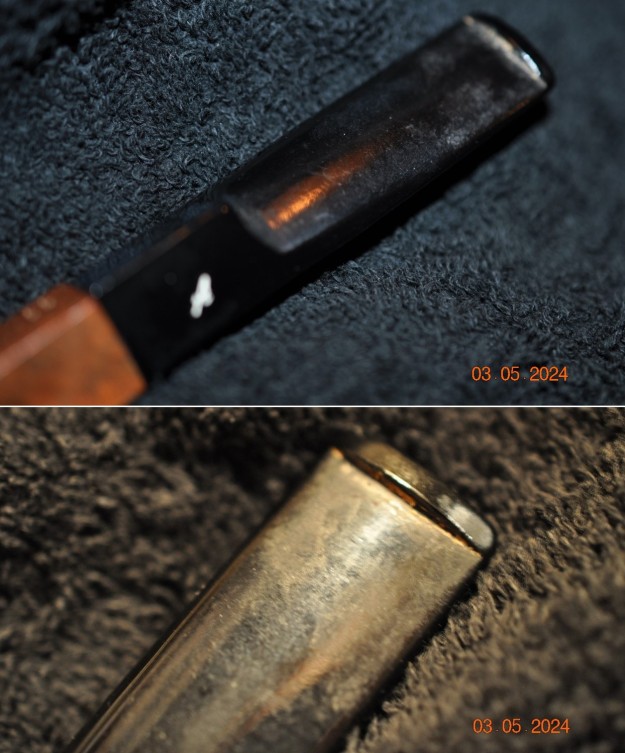
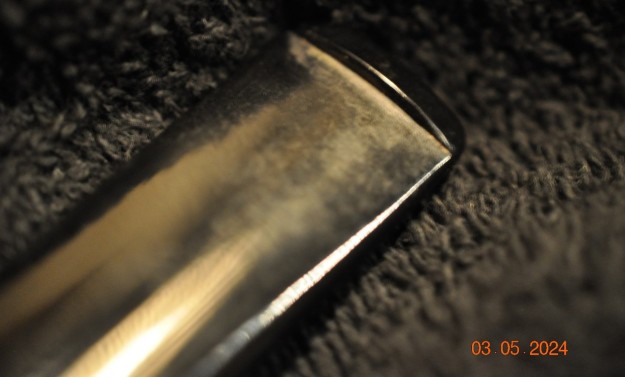
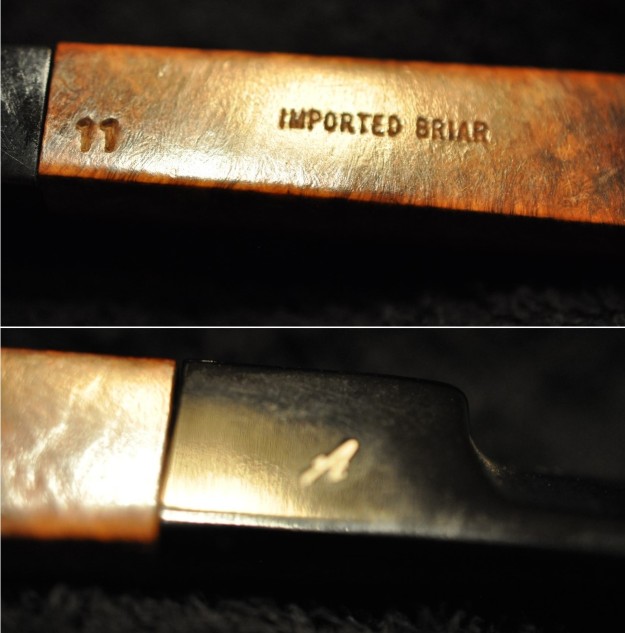
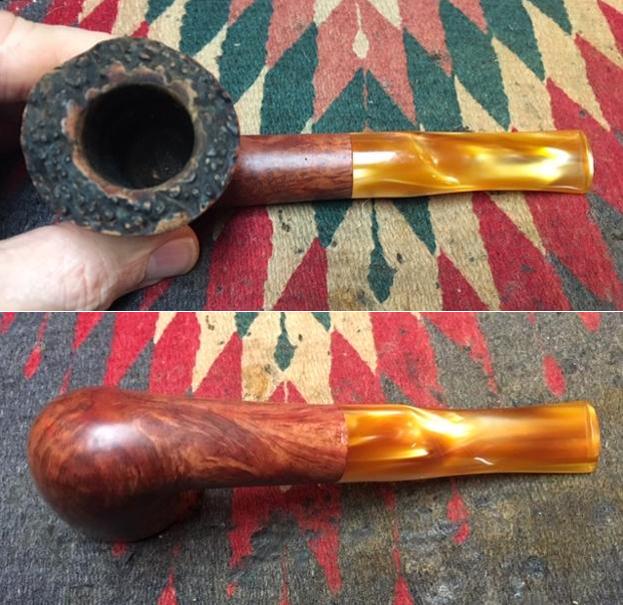
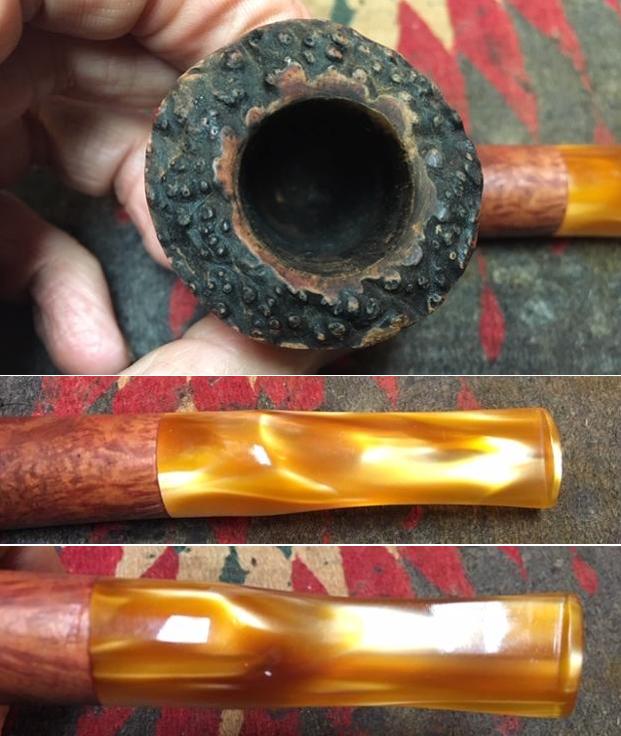
The next pipe on the table is a smooth finished long shank Bulldog with an acrylic stem. We purchased it from a seller on eBay from Jordan, Minnesota, USA on 01/22/2024. The pipe is stamped on the left side of the shank and reads Alpha [over] Kappa. On the right side of the shank it is stamped Imported Briar followed by the shape number 11. The rim was in good condition other than a lot of lava overflowing from the thick cake in the bowl onto the smooth rim top. There were oils and grime ground into the bowl sides gives the finish a flat look. The shank is a modified diamond shank. On the top it is shaped like a diamond. The underside of the shank is rounded. The shape of the saddle stem also matches the shank shape. It is a dirty stem with grime and grit on the surface. There were also light tooth marks on both the top and underside of the stem just ahead of the button. Jeff took photos of the pipe before he started his clean up work. I have included them below.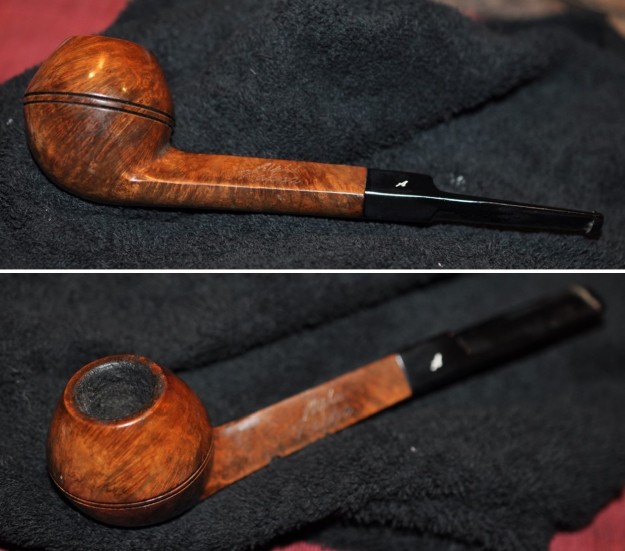 He took photos of the pipe’s bowl and rim top to show the cake in the bowl and the lava coat overflowing onto the top. It is another dirty pipe. He also took photos to capture the light tooth marks on the top and underside of the stem near the button.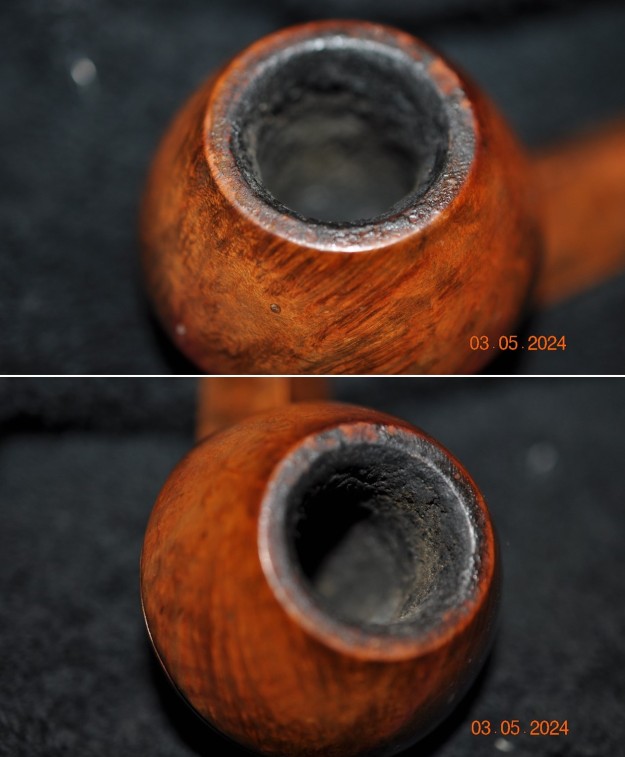
 He took photos of the sides and heel of the bowl to show the grain around the bowl and the amount of grime ground into the surface of the briar.
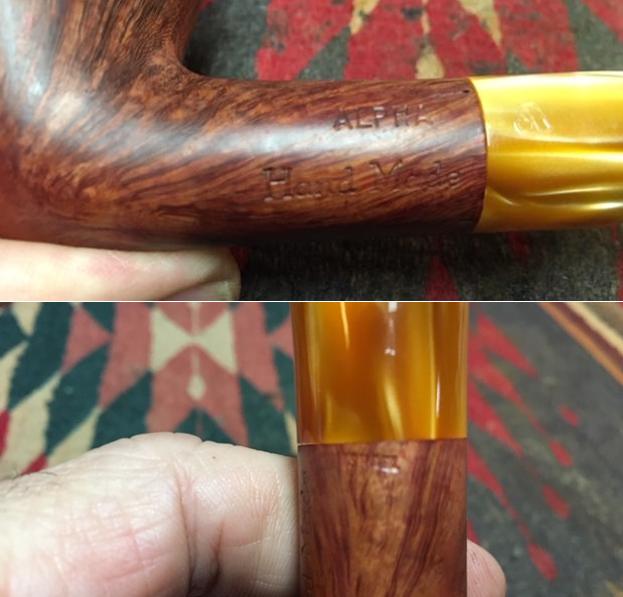
 He took photos of the stamping on the sides of the shank. It is clear and quite readable. The inserted A logo for Alpha on the upper left side of the diamond stem looks very good.
 I turned first to Pipephil’s site (http://www.pipephil.eu/logos/en/logo-a4.html) to see what I could learn. I skipped over the section on the Israeli made Alphas as the stamping on the stem and the briar is very different. I turned instead to the Alpha Kappa Omega section and did a screen capture of the section. I have included it below as well as the side bar information following the capture.
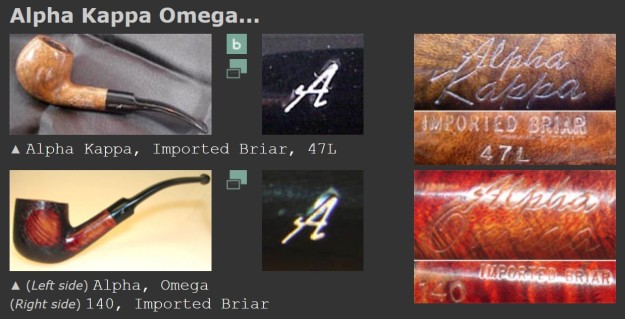 Alpha pipes with a cursive A on the stem and a Greek letter name are made at the Dr. Grabow/Lane Ltd. factory in North Carolina (USA).
- Kappa: a smooth light brown finish
- Beta: dark reddish brown
- Epsilon: black sandblast with reddish highlights
- Sigma: smooth finish, medium brown
From that information I saw the connection between Grabow/Lane Ltd and the Israeli company. I also learned that the Kappa pipe was finished in a smooth light brown finish.
With that information in hand, I turned to Pipedia (https://pipedia.org/wiki/Alpha) specifically to the page on the brand. I quote what was written there in full. It is quite interesting to read.
Alpha was originally a brand of the Shalom Pipe Factory in Israel, owned by Bernard Hochstein, former CEO of Mastercraft.
The Alpha line was made exclusively for export to the United States. They were made in Israel from the 1970s into the 1980s, at which point the name was sold to Mastercraft, and later to Lane, Ltd., who produced very few Lane Alpha pipes at the end of the 1990’s. Lane Alphas were sold in five finishes, each denoted with a Greek letter. After Lane, Mastercraft again marketed the Alpha, under the name Alpha USA, with finishes named Sierra, Delta, Mark V, Blue Ridge, Sabre, and Big Boy, some of which were not stamped with the Alpha name. Among others, the Israeli made Alpha pipes were available in a line marketed as “Citation”.
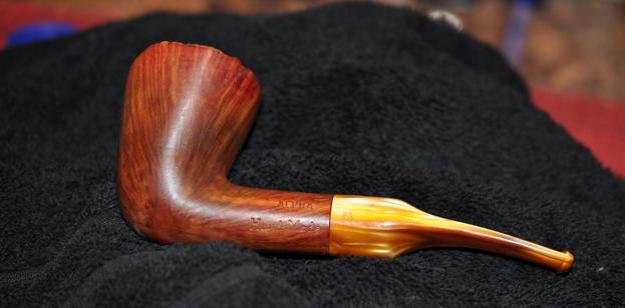
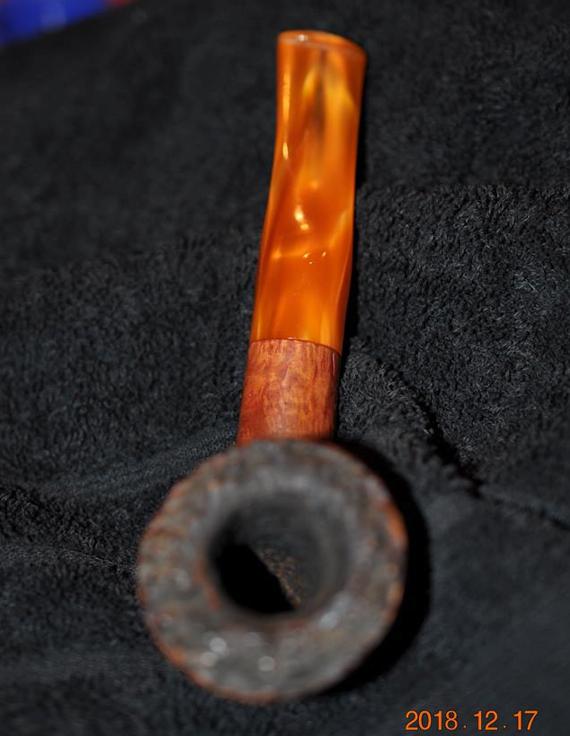
The item of interest to me is highlighted in red above. It made it clear to me that the pipe was one of the Lane Alpha pipes at the end of the 1990s. Lane Alphas were sold in five finishes each denoted with a Greek letter. In this case the pipe that I am working on is a KAPPA. I am including a photo of the Alpha Kappa and photos of the nomenclature on the left and right side of the shank and stem that was on Pipedia.
Alpha, Lane Ltd. Late 1990s, Kappa Finish (one of 5 designated by a Greek letter)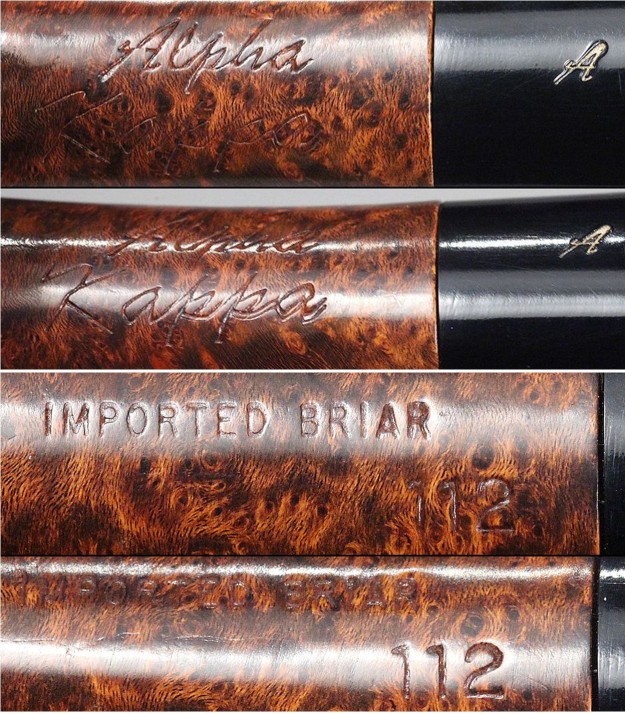 Now I knew that pipe I was working on was one made by Lane Ltd for sale in the US as part of a series of pipes with five finishes. I also leared that the pipes were made at the end of the 1990s and that the Alpha KAPPA pipe was finished in a smooth light brown finish. That matched the pipe I had perfectly.
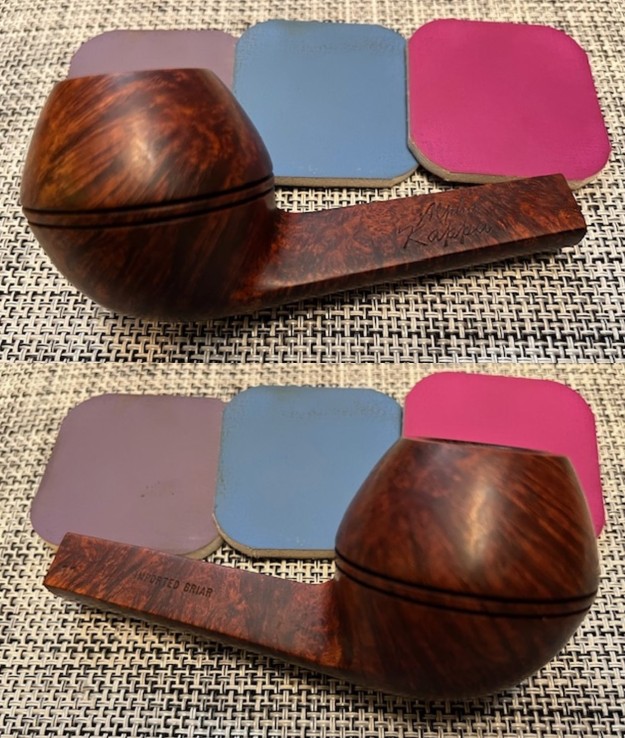
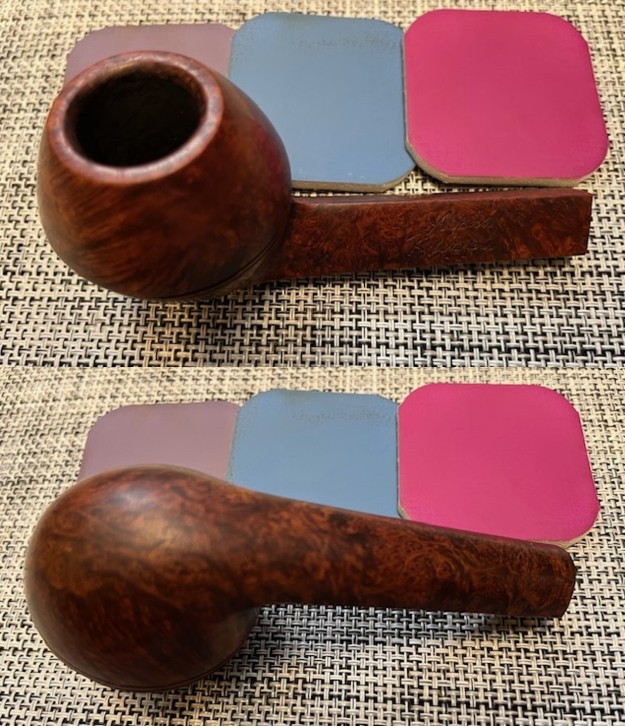
Armed with that information I turned to work on the pipe itself. Jeff had done a great job cleaning up the pipe as usual. He cleaned up the inside of the bowl with a PipNet reamer and a Savinelli Fitsall Pipe Knife. The bowl walls looked very good. He scrubbed the interior of the bowl and shank with pipe cleaners, cotton swabs and alcohol to remove the tars and oils. He scrubbed the exterior of the pipe with Murphy’s Oil Soap and a tooth brush to remove the grime from the finish. He worked on the rim top lava and darkening with the soap and tooth brush. He scrubbed the inside of the stem with alcohol and pipe cleaners. He scrubbed the exterior with Soft Scrub and then soaked it in Briarville’s Pipe Stem Deoxidizer. He washed it off with warm water to remove the deoxidizer. The pipe looked far better. I took photos of the pipe when I received it before I started working on it. 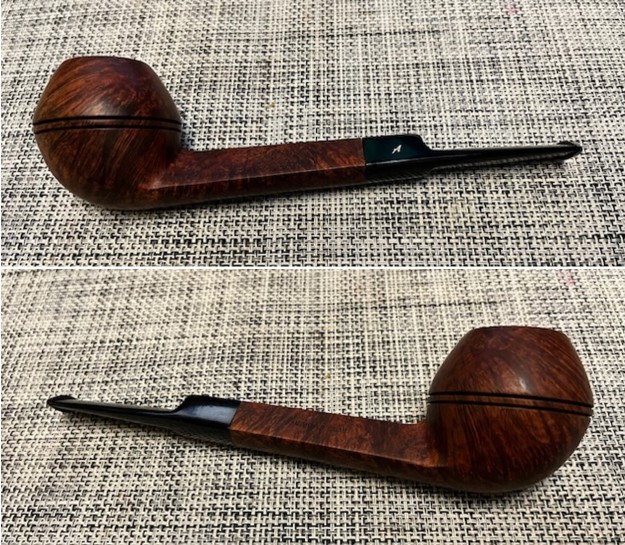
 I took photos of the bowl and rim top to show how clean it was. The top and the bevelled inner edge of the rim show some nicks and scratches. The stem looks clean of debris and grime. There are light tooth marks and chatter on both sides.
 I took photos of the stamping on the left and right sides of the shank. The stamping is clear and readable. I took a photo of the pipe with the stem removed to show the overall look of stem, tenon and profile of the pipe.
 The briar was in great condition so I started working on the bowl by polishing the briar bowl and shank with micromesh sanding pads – dry sanding with 1500-12000 grit sanding pads. I wiped it down with a damp cloth after each pad to remove the debris. The bowl took on a rich glow.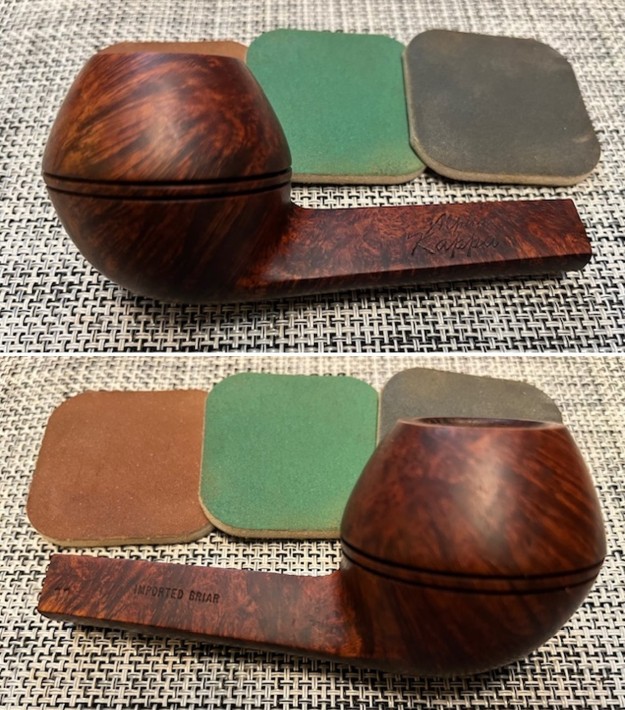
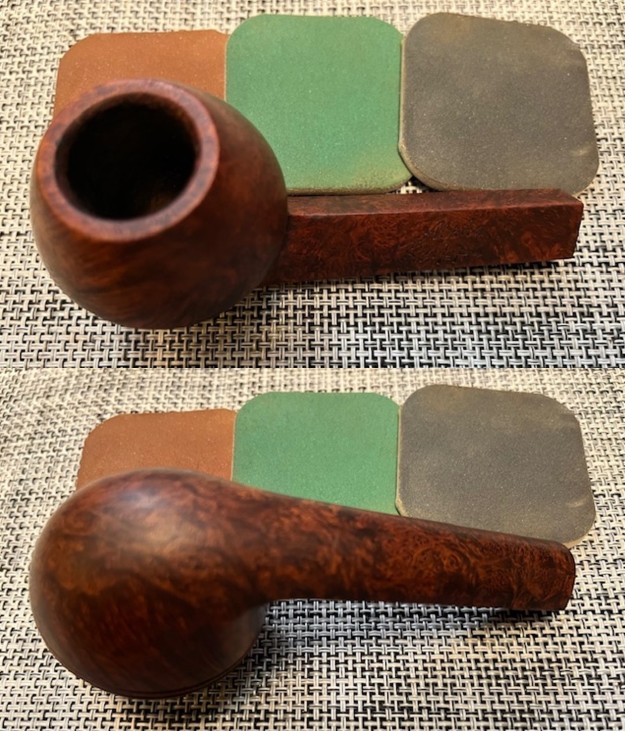

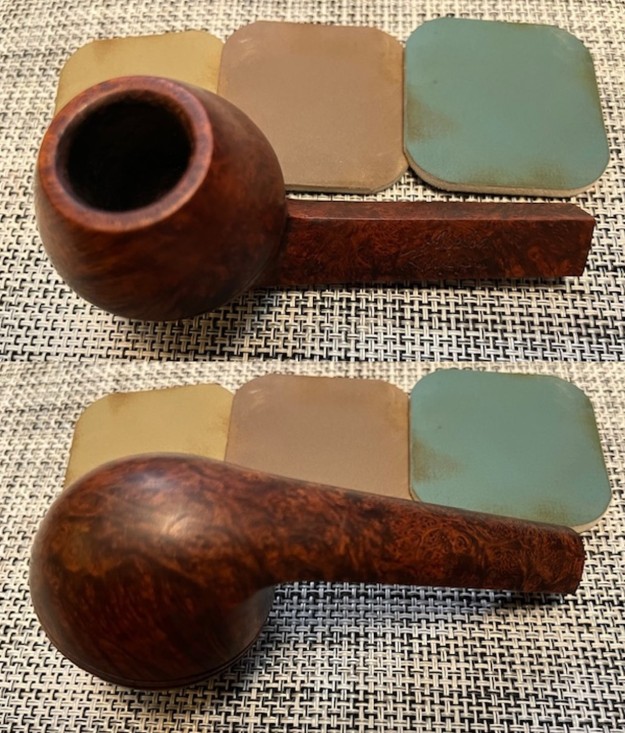
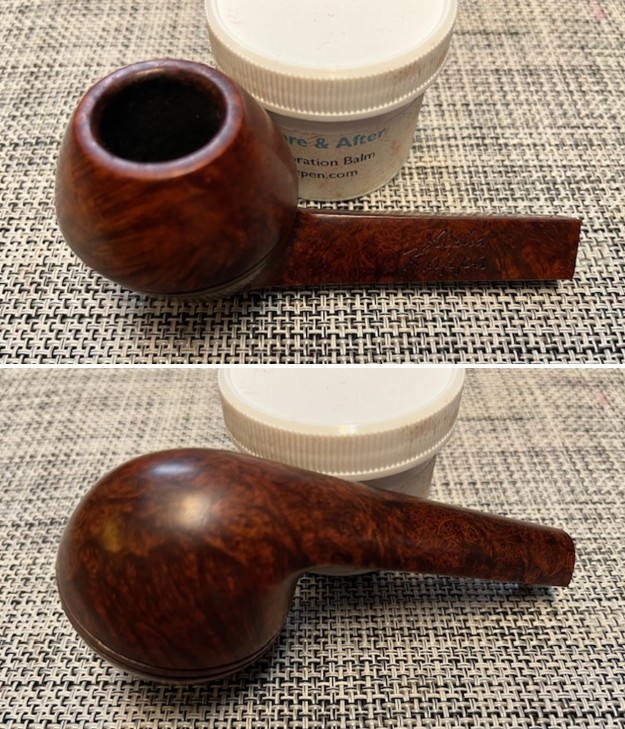
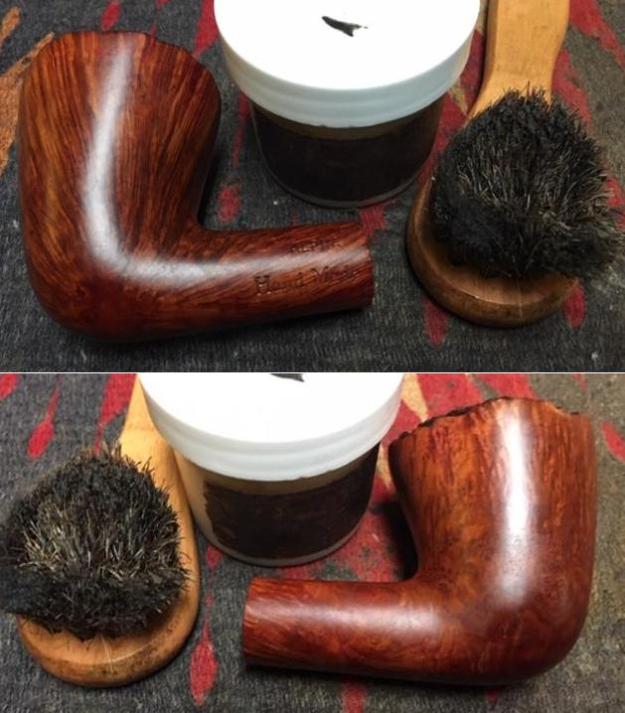
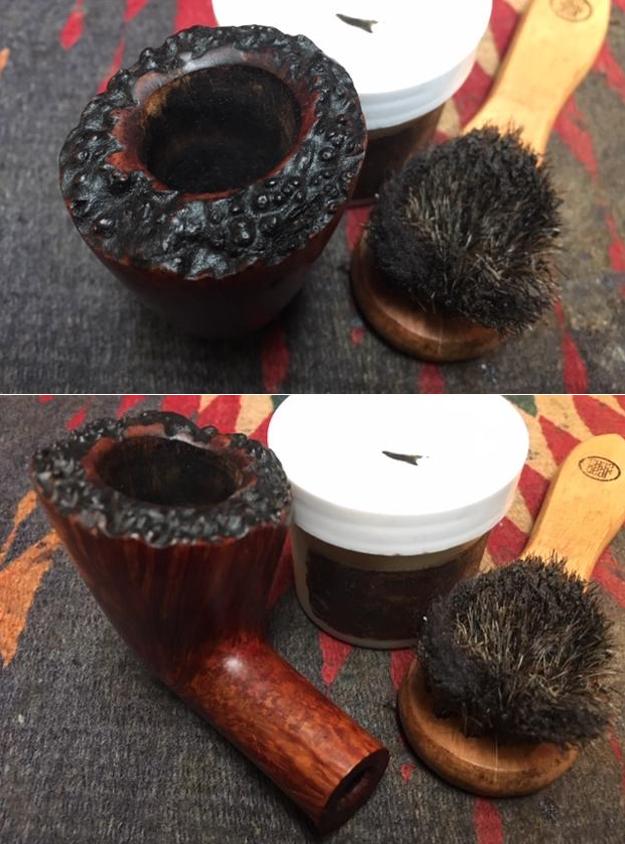
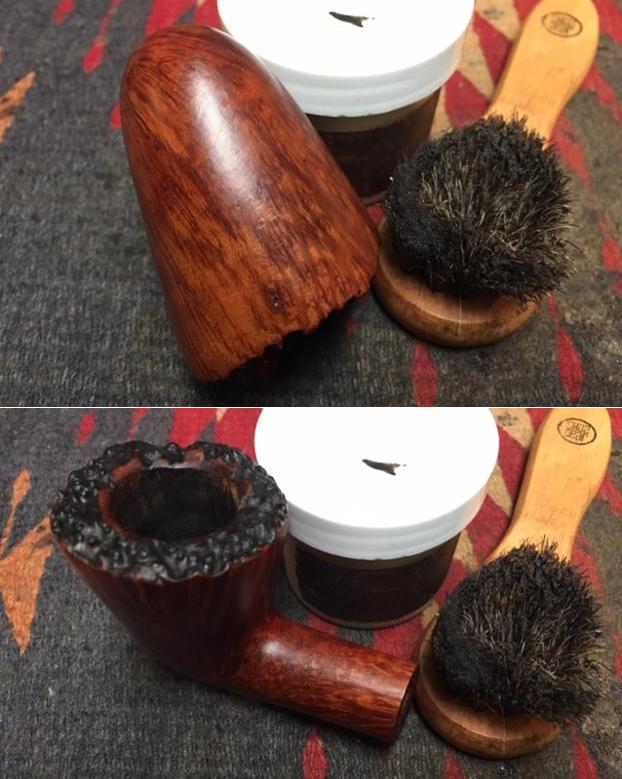
 I rubbed the bowl down with Before & After Restoration Balm. I worked it into the surface of the briar with my fingertips and a horsehair shoe brush to clean, enliven and protect it. I let the balm sit for 10 minutes and then buffed with a cotton cloth and shoe brush to raise the shine. Mark Hoover’s Balm is a product that I have come to appreciate and one I use on every pipe I have been working on.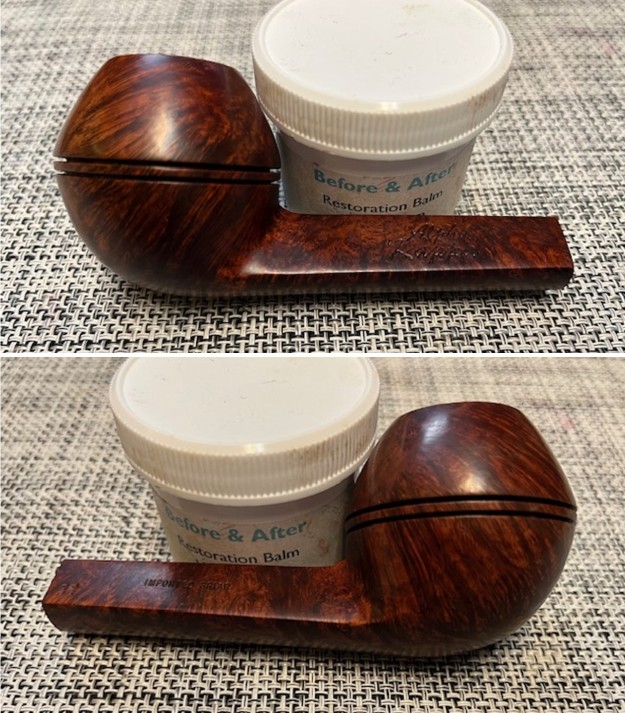
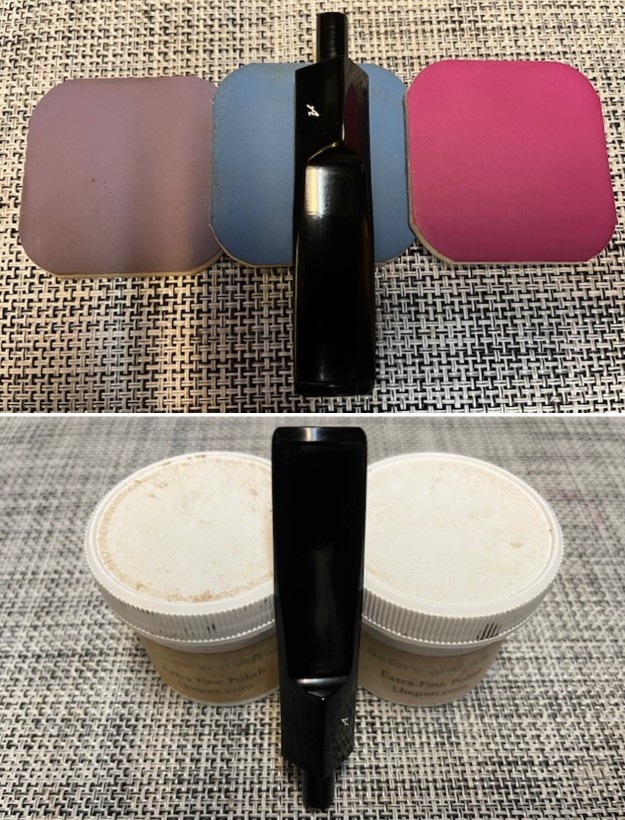
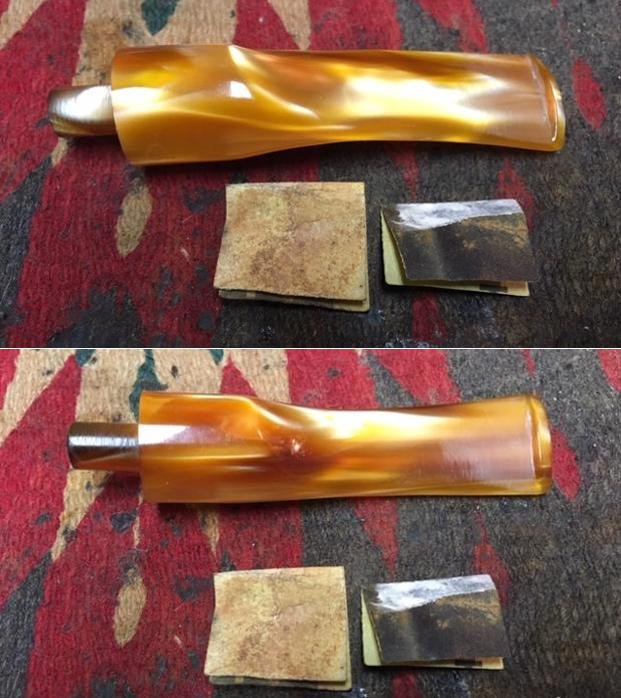
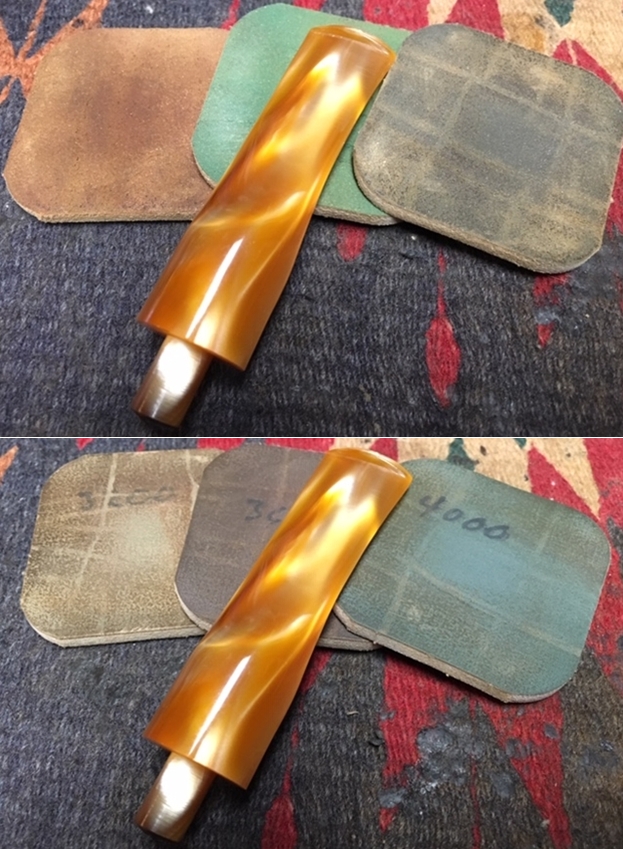
 I set the bowl aside and polished the vulcanite with micromesh sanding pads – 1500-12000 grit pads. I wiped it down with a damp cloth after each sanding pad. I used Before & After Pipe Polish – both Fine and Extra Fine to further polish the stem.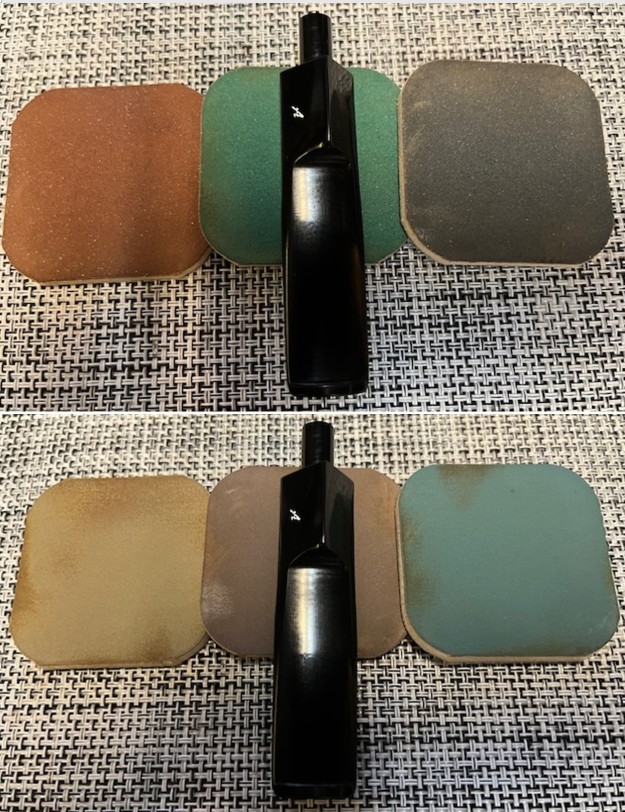
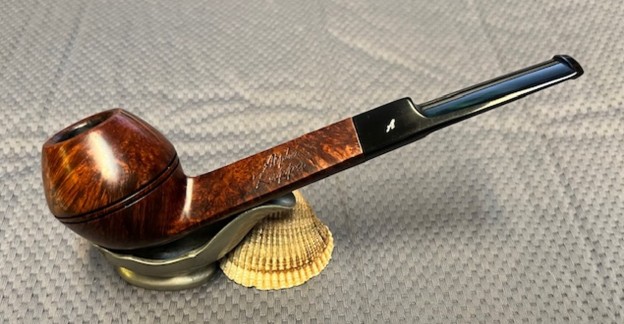
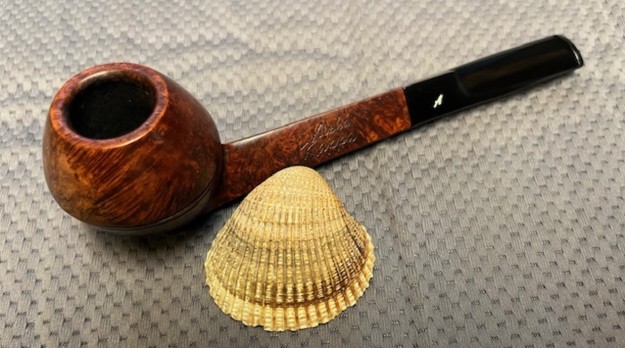
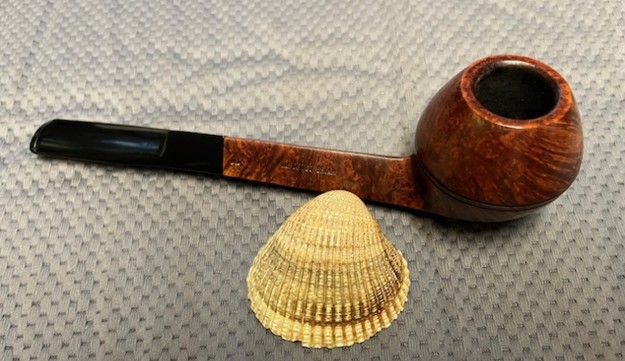
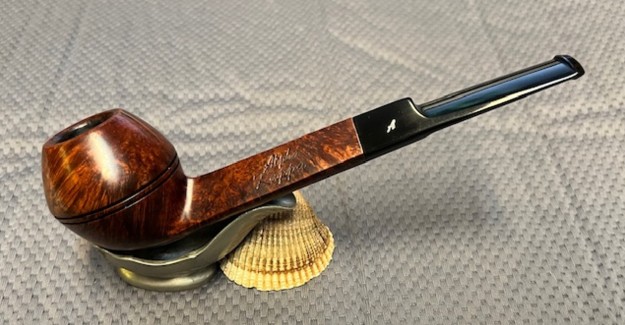
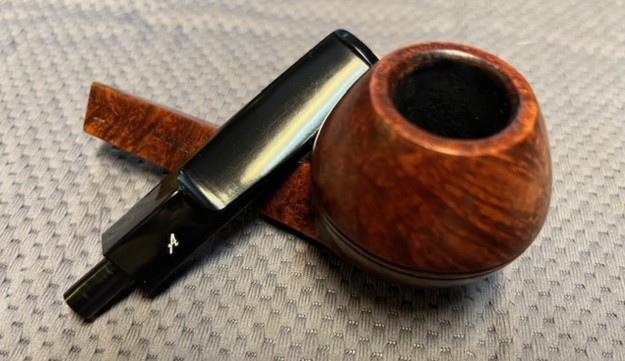
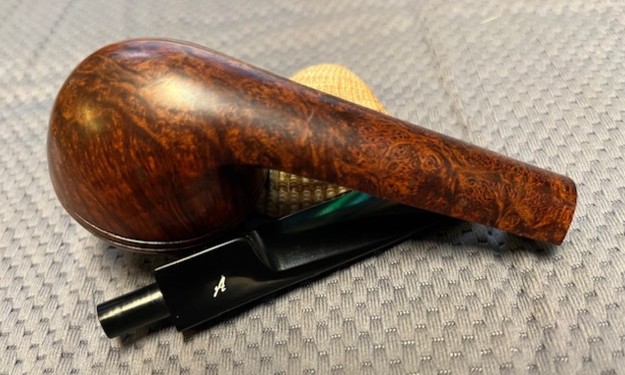
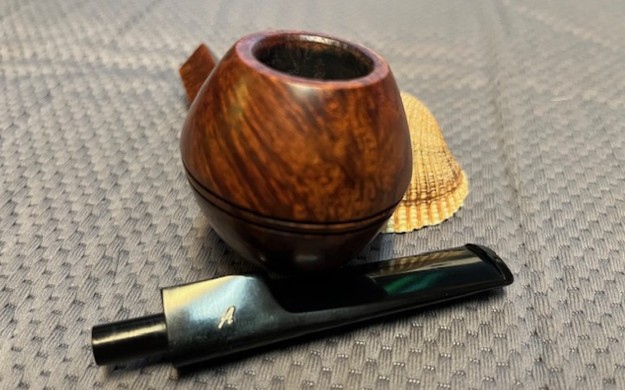
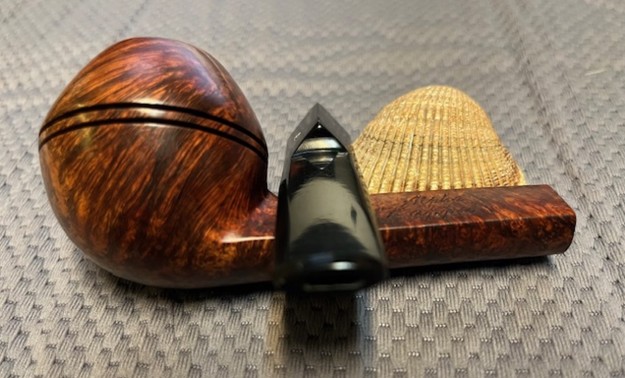
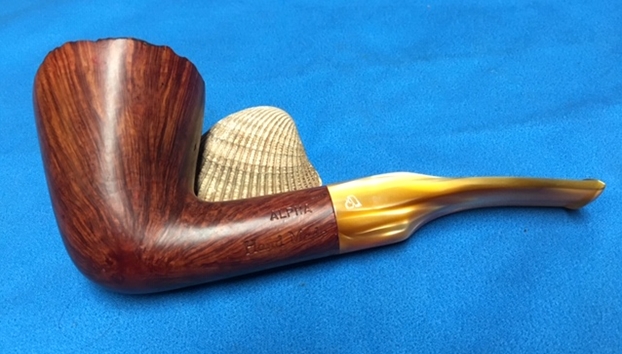
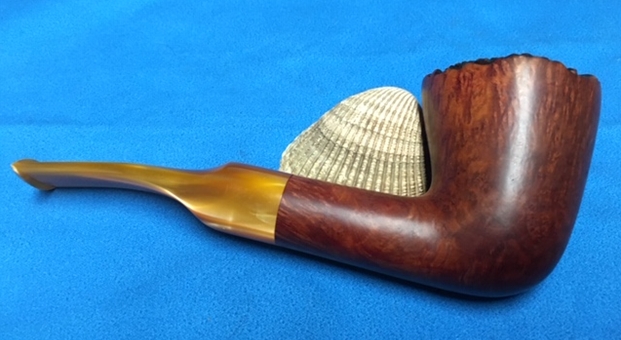
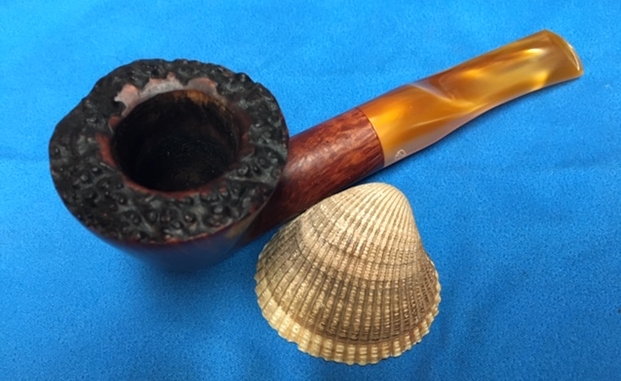
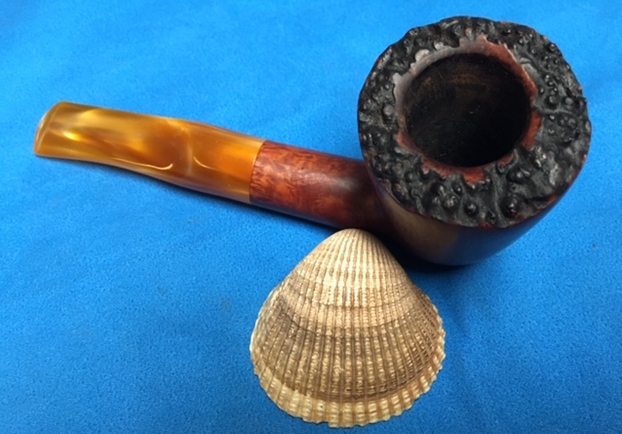
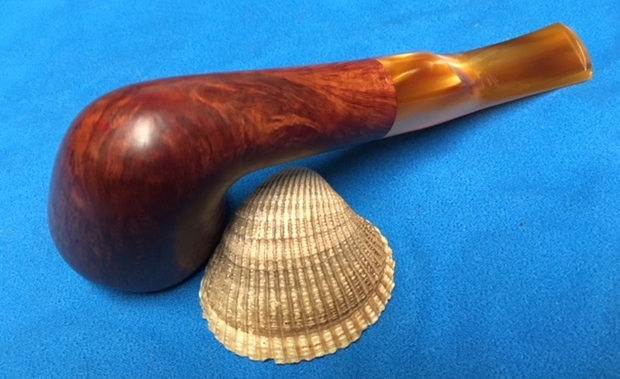
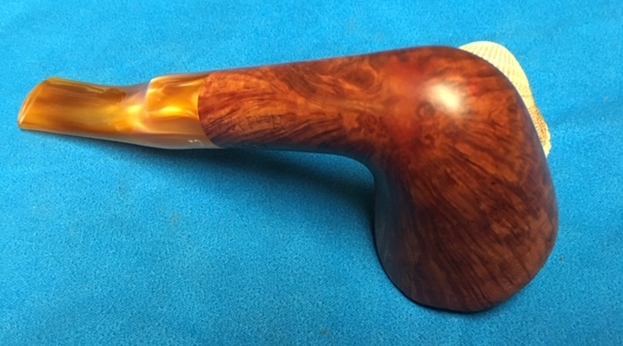
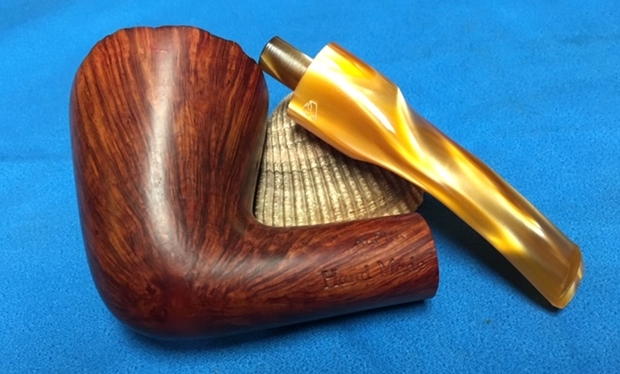
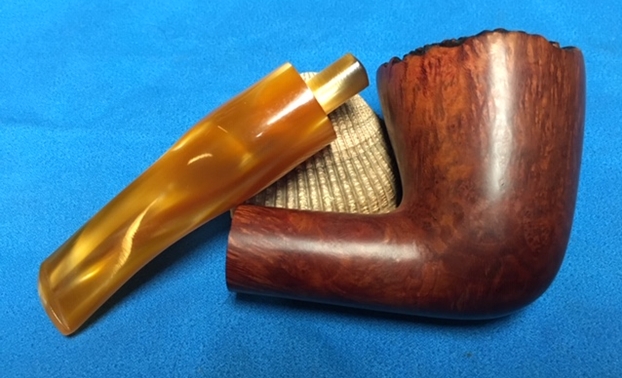
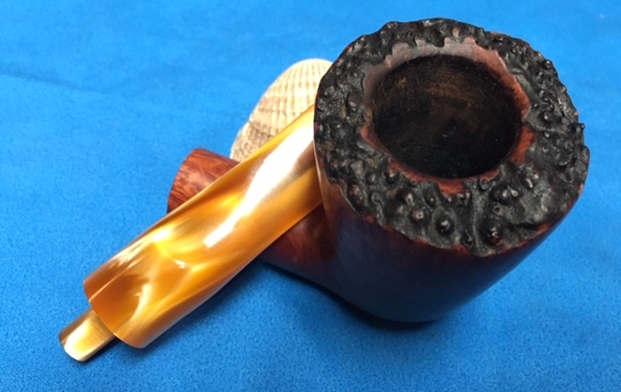
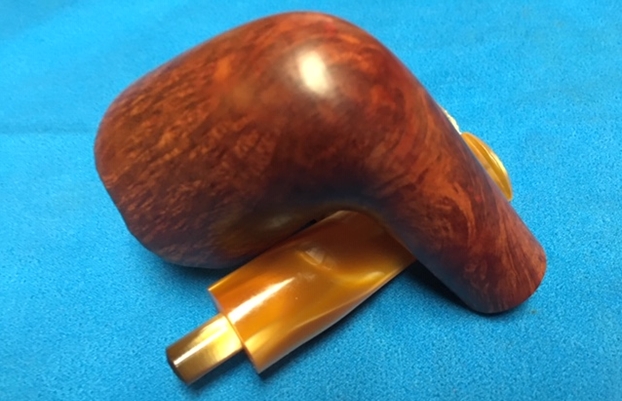
 I put the stem back on the Alpha Kappa Imported Briar Long Shank 11 Bulldog and took it to the buffer. I worked it over with Blue Diamond to polish out the remaining small scratches. I gave the bowl and the stem several coats of carnauba wax and buffed the pipe with a clean buffing pad to raise the shine. I hand buffed it with a microfiber cloth to deepen the shine. The pipe polished up really well and the beveled rim top looked good. I was happy with the look of the finished pipe. The photos below show what the pipe looks like after the restoration. The long shank Bulldog is a beautiful and unique take on a classic shape. It was a bit of a blast from the past for me to pick up an Alpha again and work on it – taking me back to one of my first pipes a little Alpha author. The polished Black Acrylic stem looks really good with the browns of the briar. The dimensions of the Alpha Kappa 11 Bulldog are Length: 7 inches, Height: 2 inches, Outside diameter of the bowl: 1 ¼ inches, Chamber diameter: 7/8 of an inch. The weight of the pipe is 2.05 ounces/58 grams. This is another pipe that I will be putting it on the rebornpipes store in the American Pipe Makers Section shortly, if you are interested in adding it to your collection. The long shank and tall bowl look and feel great in the hand. This one should be a great smoker. Thanks for walking through the restoration with me on this beauty!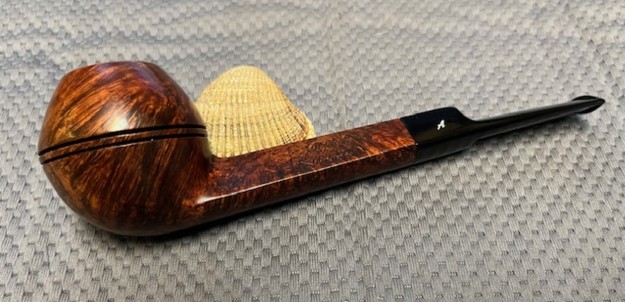











 rebornpipes