Tag Archives: Al Jones Article

A Rare Peterson 504 Bulldog Restoration


By Al Jones

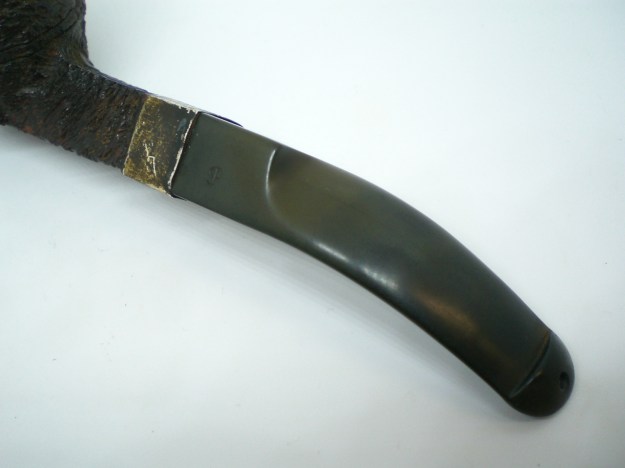
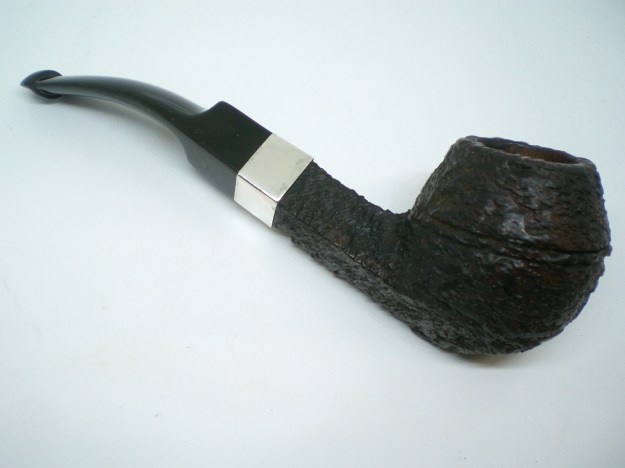
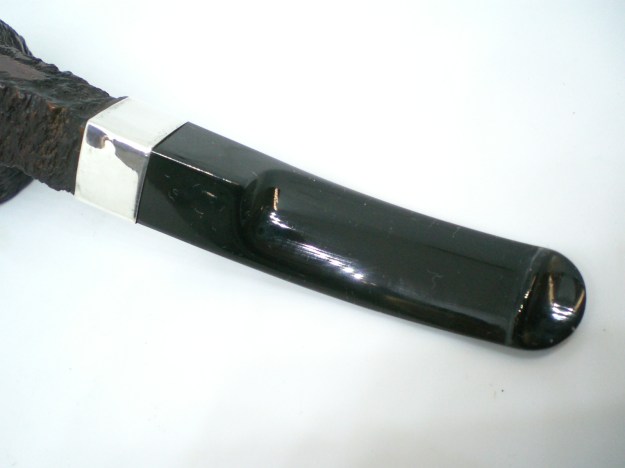
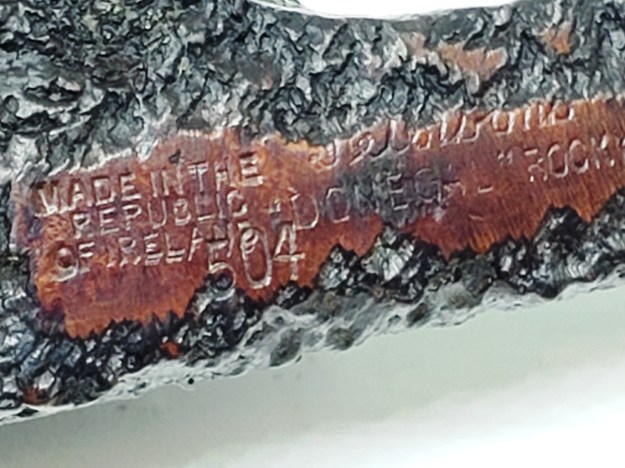
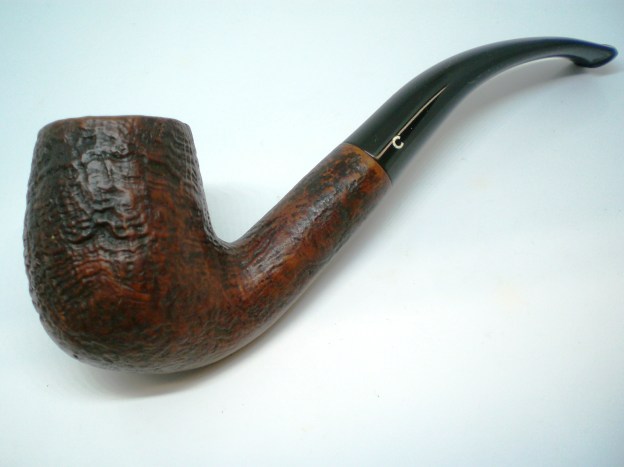
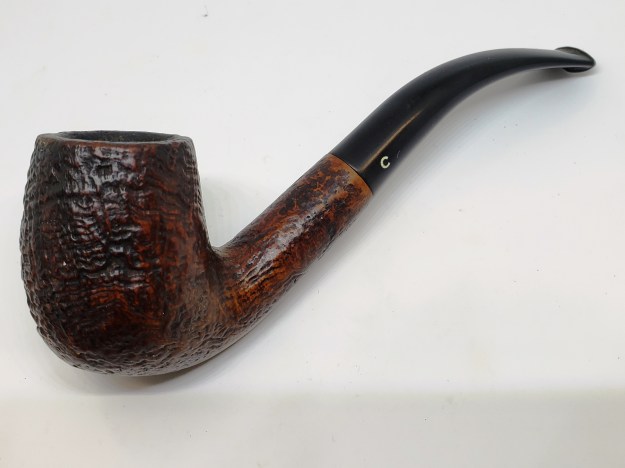
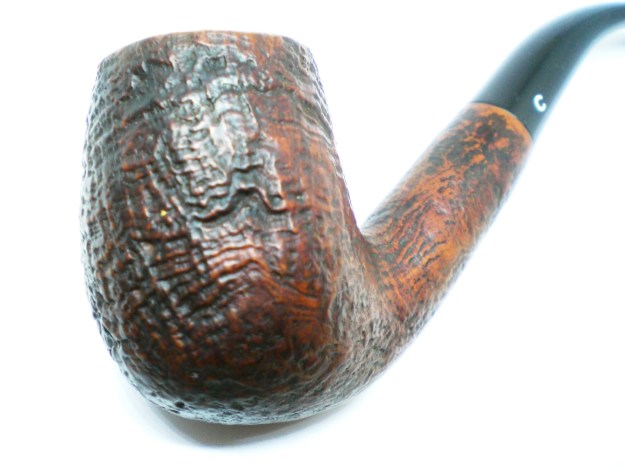
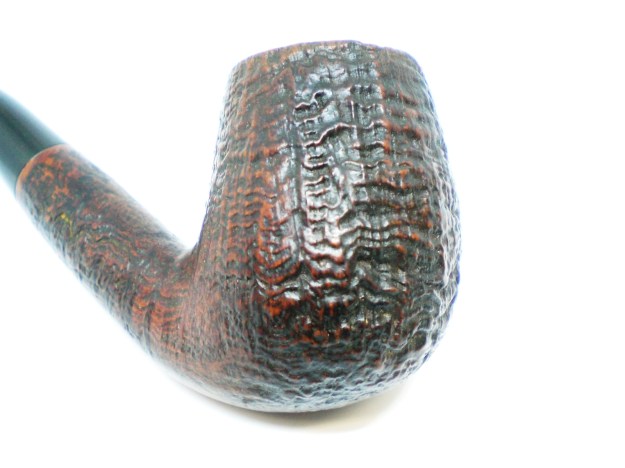
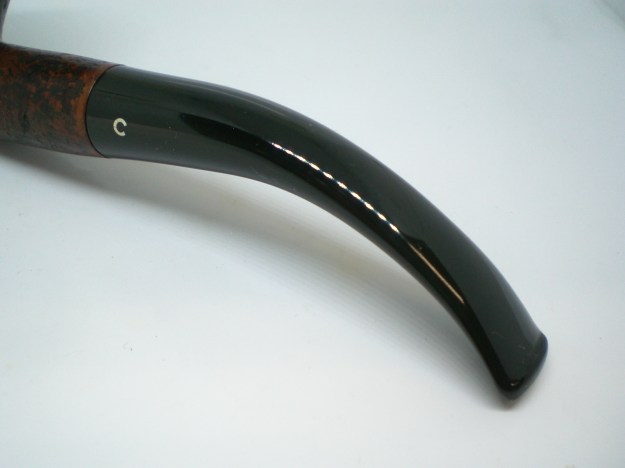
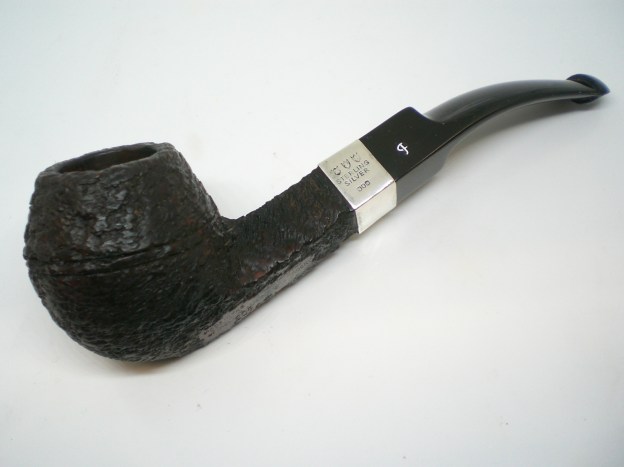
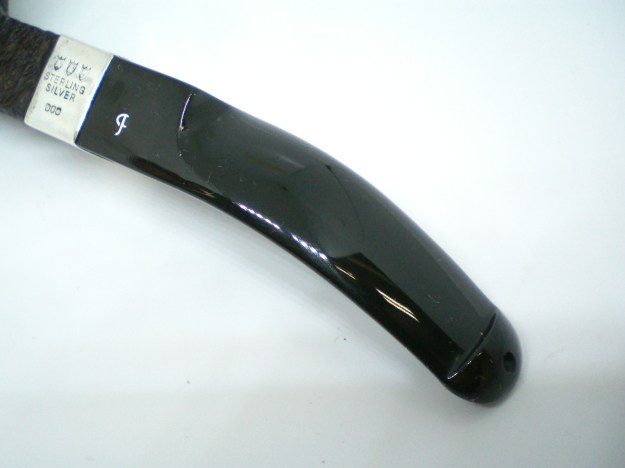
This unique Peterson caught my eye for several reasons.  I’m definitely a fan of the rustication style used by Peterson for the “Donegal” Rocky line in the mid 1970’s thru the early 1980’s and find it more appealing than the other eras.  I love bulldog pipes, and thought I knew the Peterson offerings of that shape.  However the 504 shape was definitely not one that was familiar to me.    The pipe looked in solid condition, but Sterling Silver band appeared to be oriented incorrectly. 

The “Donegal” Rocky series was introduced by Peterson in 1945 and continues to this day.  Mark Irwin has a blog entry in his Peterson Pipes Notes blog, which details the history “Donegal” line and the evolution of the rustic style.

148. The “Rocky” History of the Donegal Line

I was also pleased to find that Mark also had a blog entry on the Peterson 500 series, which explains why I was not familiar with this shape!  The 500 shapes are a bit of a Peterson mystery and Marks blog tells us that they are not documented in any Peterson ephemera.  From pictures on Mark’s blog, I was sure that the band on this pipe needed to be re-oriented.

49. Peterson’s “500” Shapes and New / Old Stock

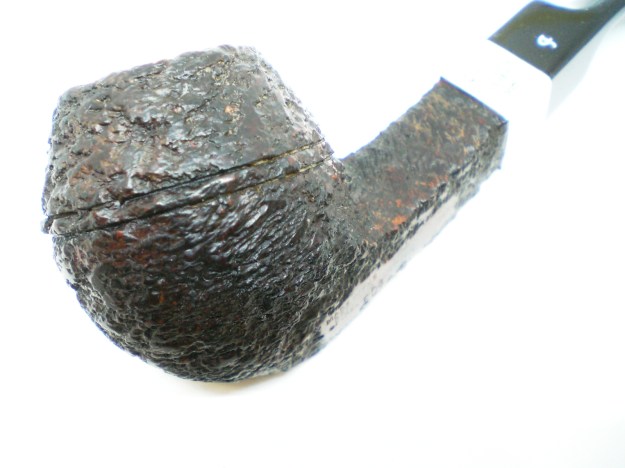
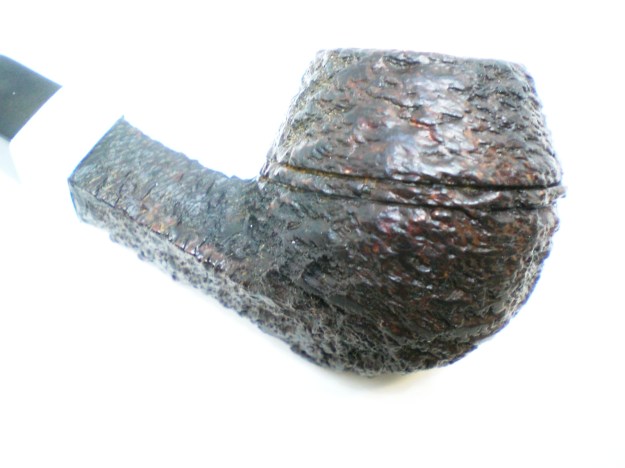
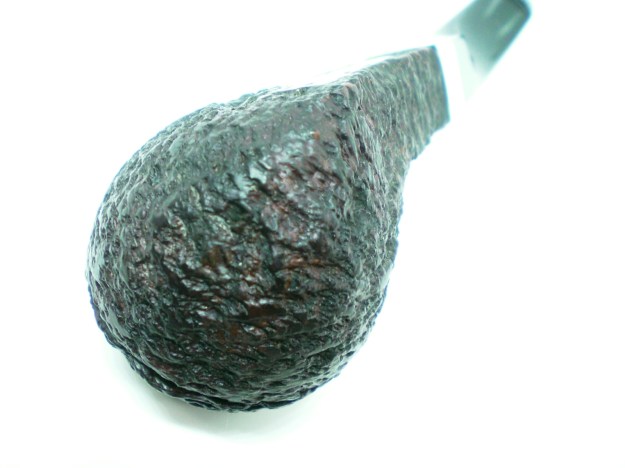
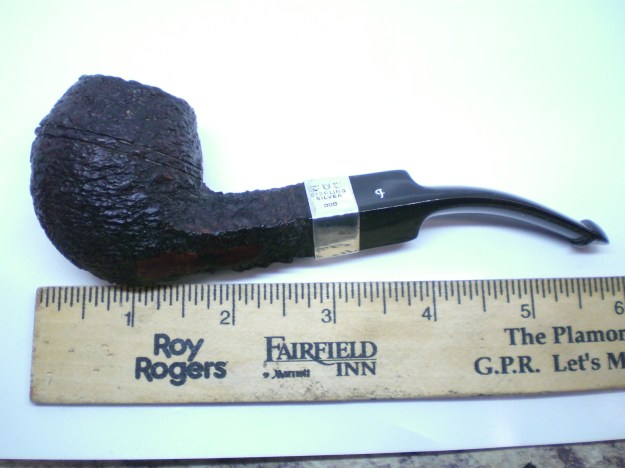
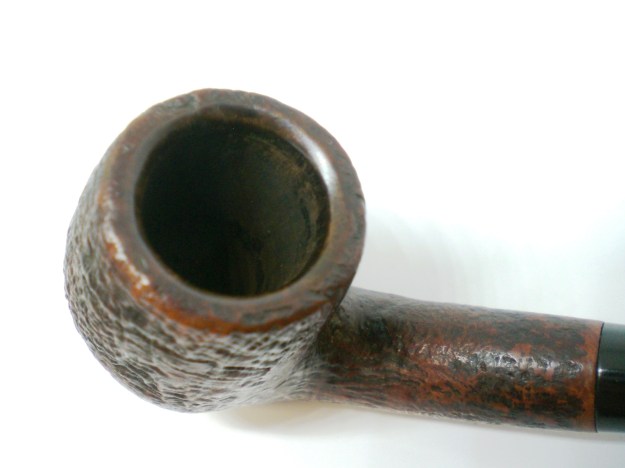
On delivery, I my observations on the ad pictures were confirmed, the pipe was very solid.  The stem was mildy oxidized, with no teeth marks.  The bowl had a mild cake and some build-up but it also was in very good condition. 

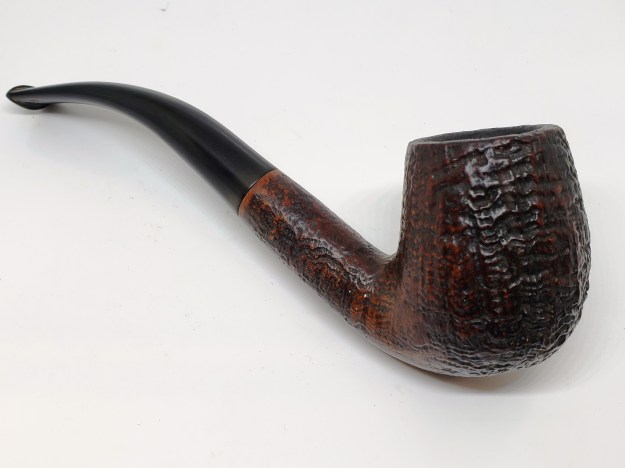
Below is the pipe as it was received.
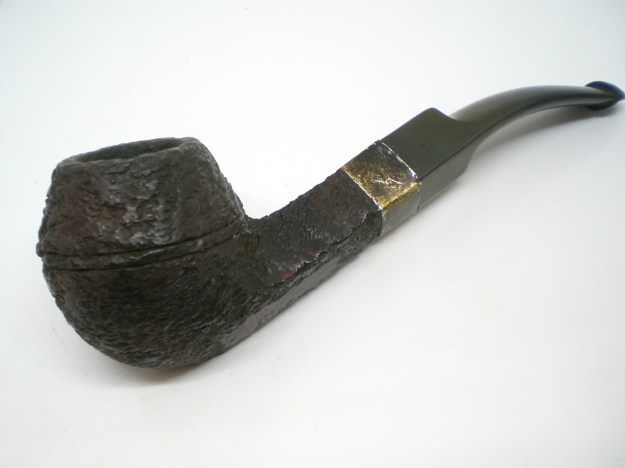
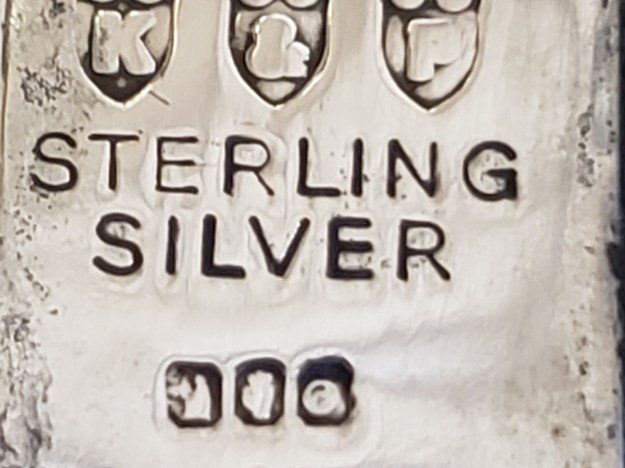
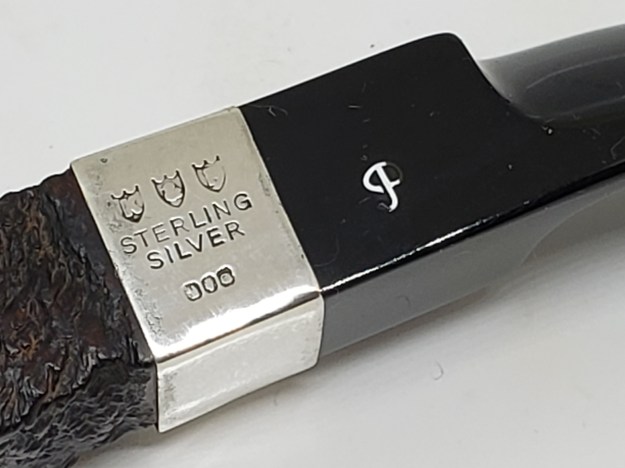
I used some mild silver polish to remove the tarnish from the band.  Now, I had to match the year symbol from the Peterson hallmark chart. It appeared to be an O.

Whenever I have a Peterson question, I reach out to Mark Irwin, the author of award winning book, “The Peterson Pipe. The Story of Kapp & Peterson” and the Peterson Pipe Notes blog.  If you are a fan of Peterson pipes, you definitely want to purchase this book and subscribe to the blog!  I asked Mark and Steve Laug to verify that the O date symbol was for the year 1980.  They both agreed that it was a 1980 symbol. 

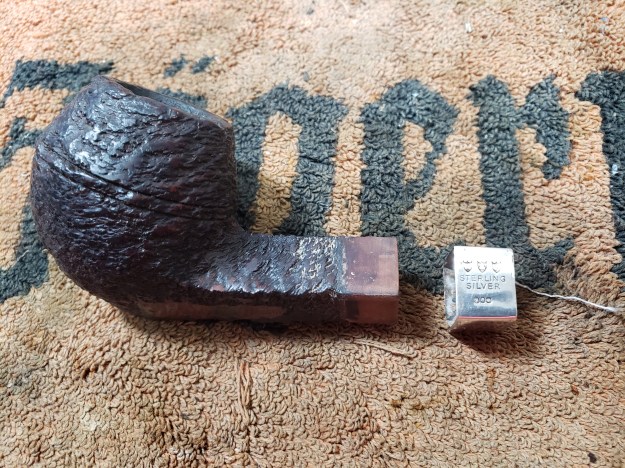
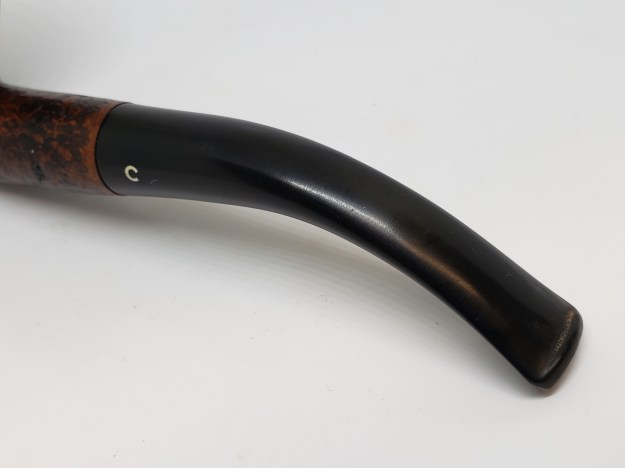
The band did appear to have been removed, and reinstalled on the wrong side of the stem.  Typically the silver stamping is on the left side of the stem.  (but Mark said you can’t rule out any outcome!)  The edges of the band didn’t appear to line up correctly with the shank profile. I used a hobby heat gun to carefully heat the silver band, which eventually loosened the glue and the band slipped off.  I removed the glue residue from the shank and carefully stored the fragile silver band.  It would later be re=glued in the proper orientation.

I used a piece of worn scotchbrite to remove the slight build-up on the bowl top.  The pipe was then reamed to remove the mild cake. I filled the bowl and shank with sea salt, and added alcohol to soak overnight. Following the soak, the salt and alcohol was removed and shank cleaned.  The shank was very clean.  “Donegal” Rocky pipes typically came with a removable steel tube “stinger”.  When used with the stinger, I find the shanks of those pipes to be very clean (a dirty shank definitely contributes to causing a pipe to be “ghosted”). 

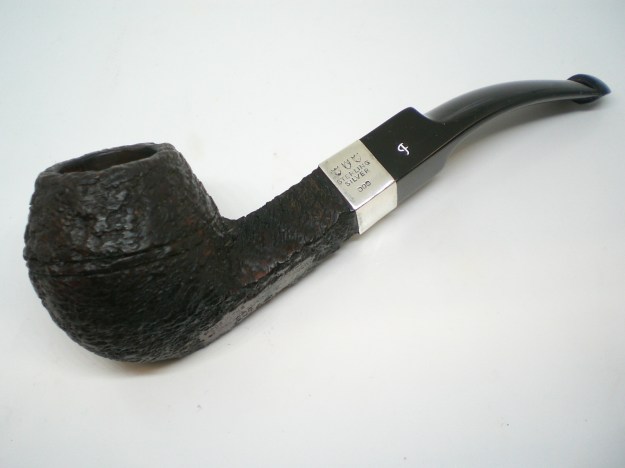
The stem was mounted and the oxidation removed with 800, 1,000, 1,500 and 2,000 grade wet sandpaper, followed by 8,000 and 12,000 micromesh. I stayed away from the light P stem stamp.  I’ve been using acrylic nail polish to fill in stem stamps and find the material to be pretty durable.  I let the paint dry and removed the excess with micromesh.  I covered the stamp with a tiny piece of masking tape and buffed the stem with White Diamond and Meguiars Plastic Polish. 

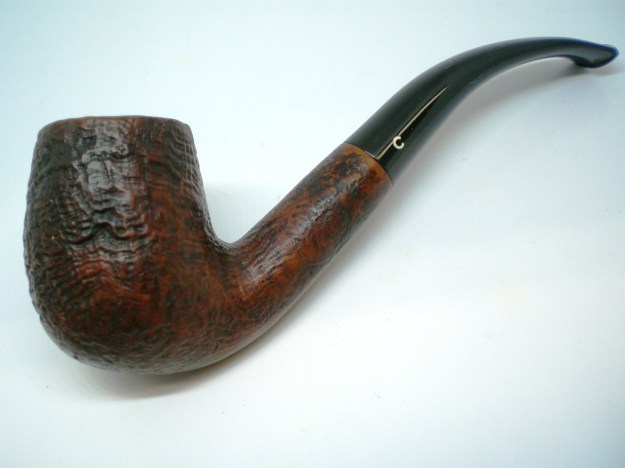
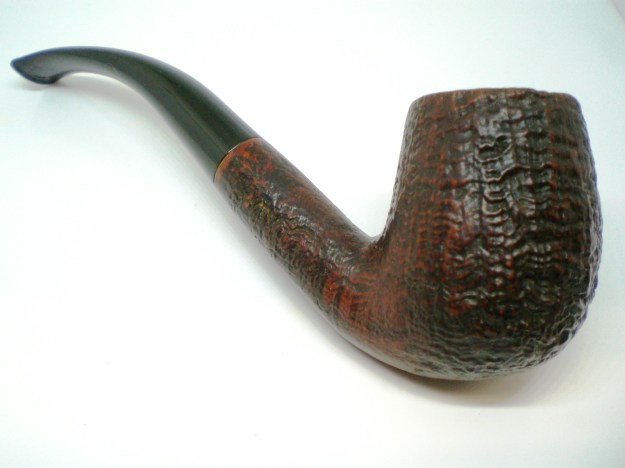
I hand waxed the bowl using Halycon II wax.  Below is the finished pipe.


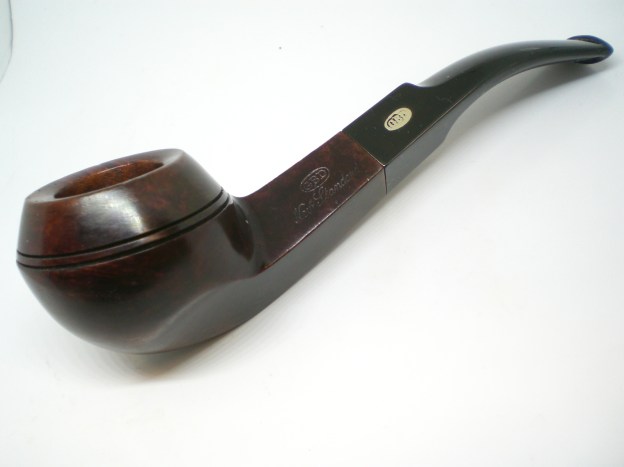
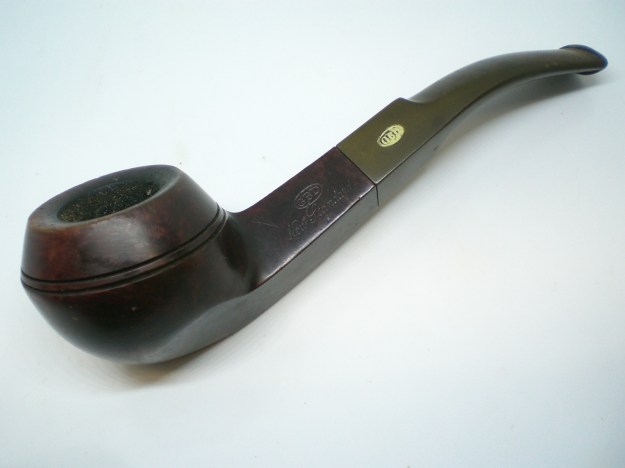
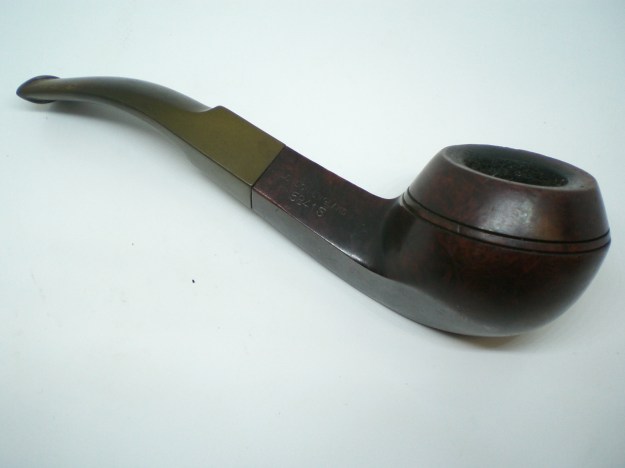
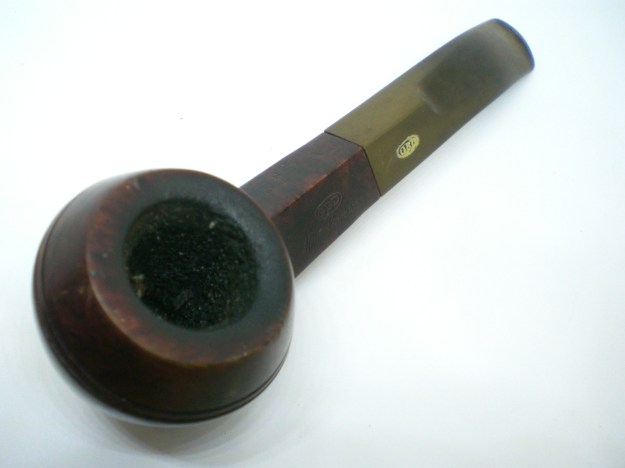
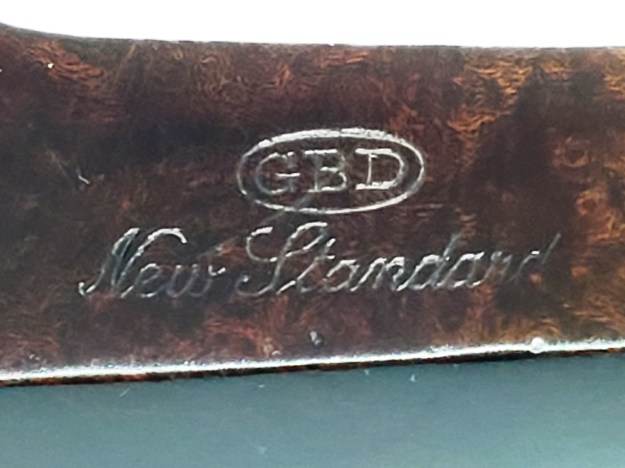
GBD 5841S Bulldog Restoration


By Al Jones

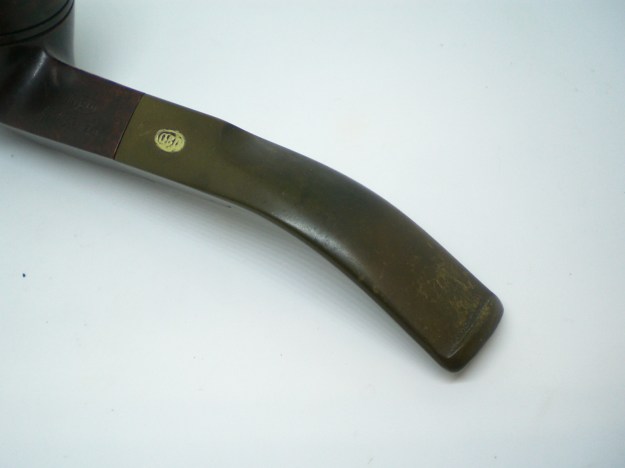
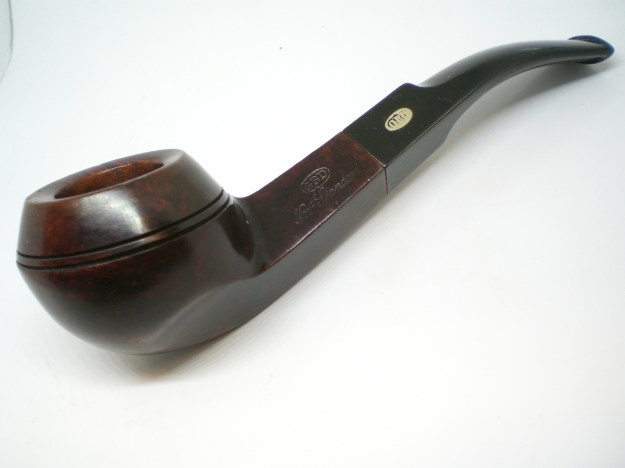
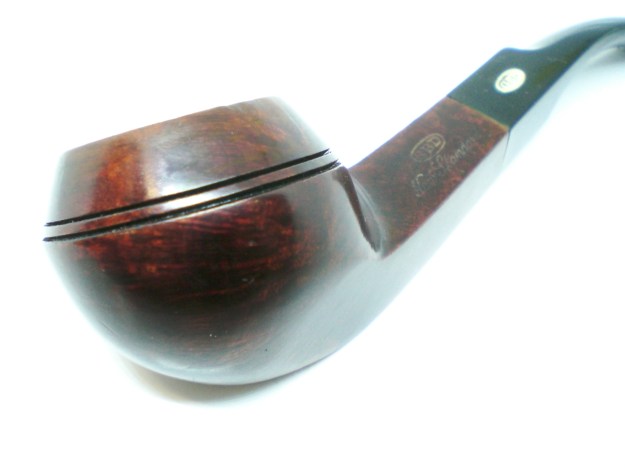
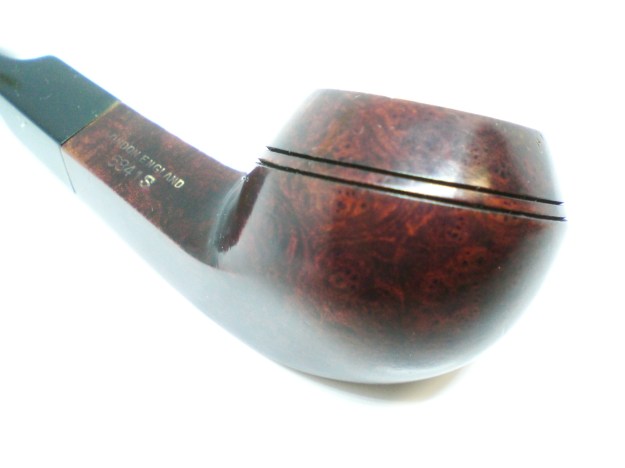
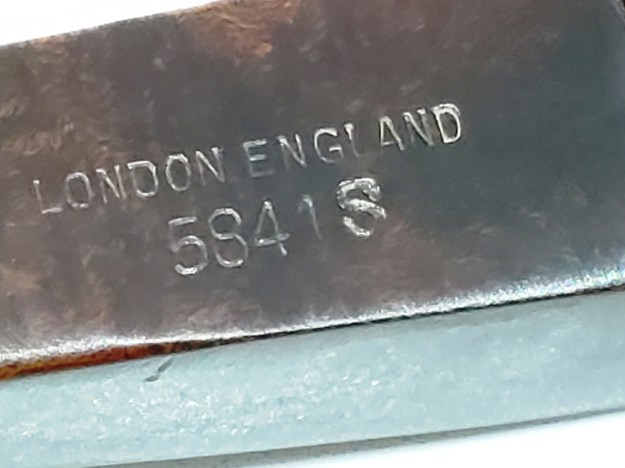
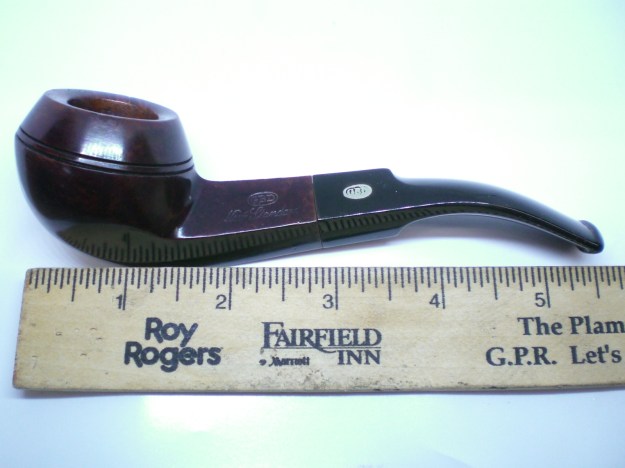
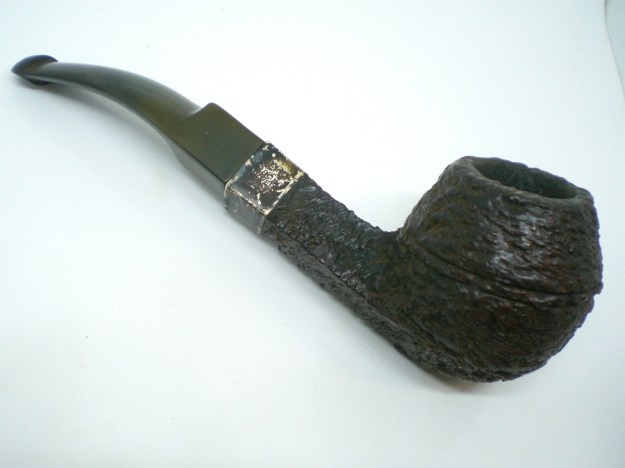
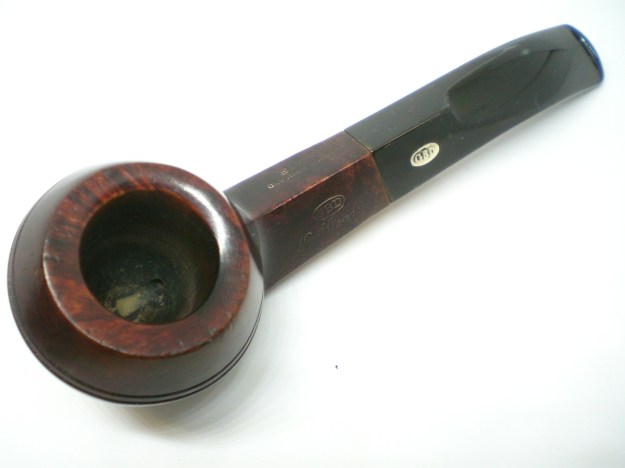
It has been a while since I’ve had a GBD on my work bench.  Here’s yet another oddball GBD shape, one I’ve not yet encountered.  The typical GBD bent bulldog shape is the 549.  I’ve seen and restored a 584S, but this one is oddly stamped 5841S.    I have not seen this shape in any of my saved GBD catalogs. This one has the brass rondell and “London, England” stamping used on pre-Cadogan era pipes (made before 1981).

The pipe had an oxidized stem and a heavy cake in the bowl, including some tobacco left from the last time it was smoked.   The beveled bowl top also has some build up on the rim. Below is the pipe as it was received.
I used a worn piece of scotchbrite on the bowl top followed by 8,000 grit micromesh sheet. I reamed the cake and found the bowl interior to be in great shape. The bowl was soaked with alcohol and sea salt.

Following the soak, the stem was mounted and the oxidation removed with 800, 1,500 and 2,000 grade wet sandpaper, followed by 8,000 and 12,000 grade micromesh. The stem was then buffed with White Diamond and Meguiars Plastic polish. The bowl was buffed with White Diamond rouge, followed by several coasts of Carnuba wax.

Below is the finished pipe.

Comoy’s Regent Prince Restoration


By Al Jones

The 337 is one of several Prince shapes in the Comoy’s catalog.  I was unable to determine when the shape was first seen.   This pipe is a “Regent” and the first I’ve seen on my bench fro that line.  This one didn’t require much work, there was mild oxidation on the stem, a few light teeth indentions, a mild cake and some build-up on the bowl top.  Below is the shape from a 1970’s Comoy’s catalog, and the pipe as it was received.

I used a lighter to lift the two light teeth indentions. The build-up on the bowl top was removed with 2,000 grade wet paper and a 8,000 grade micromesh sheet. I reamed the slight cake and the bowl was soaked with alcohol and sea salt. Following the soak, the stem was mounted and oxidation removed with 800, 1,500 and 2,000 grade wet sandpaper. This was followed by 8,000 and 12,000 grade micromesh sheets. The stem was then buffed with White Diamond and Meguiars Plastic Polish. The bowl was buffed with White Diamond and several coats of Carnuba wax.

Below is the finished pipe.

Comoy’s Shape 42 Sandblast Restoration


By Al Jones

It’s been over two months since I’ve had a pipe on my work bench, life, work and the pandemic have made life somewhat hectic.

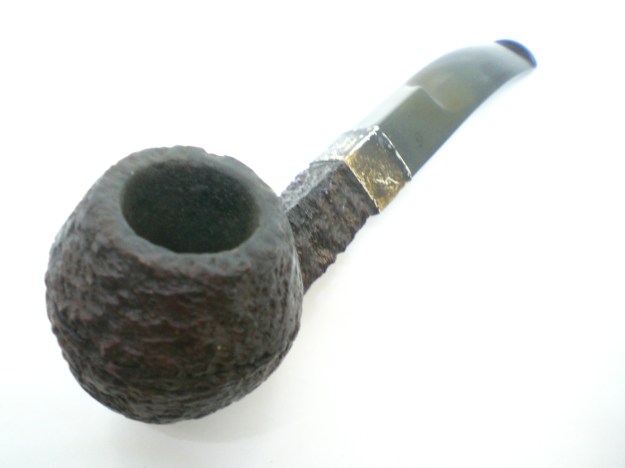
The shape 42, is the classic Comoy’s medium size bent billiard.  This one had the 3 piece stem stem logo, denoting a pipe made before the merger in 1981.  The pipe only made mild oxidation on the stem, some build-up on the bowl top and a few minor teeth indentions.

Below is the pipe as it was received.
I used a heat gun to work out the teeth indentions.   A worn piece of Scotch-brite was used to remove the build-up on the bowl top.  I used a piece of 2000 grit wet paper to revive the polished, beveled bowl edge.  The pipe was reamed of the modest cake and soaked with sea-salt and alcohol.

Following the soak, the shank was thoroughly cleaned with alcohol on a small bristle brush and twisted up paper towels, till they came out clean.  A bristle pipe cleaner was used to clean the inside of the stem.

The stem was mounted and oxidation removed with 800, 1,500 and 2,000 grade wet paper.  This was followed by 8,000 and 12,000 micromesh sheets.  The stem was then polished with White Diamond and Meguiars Plastic Polish.

The bowl was hand polished with Halycon wax.

Below is the finished pipe.
 

Royal Oak Briars “Huntsman” Review


Blog by Al Jones

I completed my first pipe commission this week with, working with  James Aydlott, who makes “Royal Oak Briars”.  James has been showing his creations on the Bulldog Lovers Facebook page for several months.  I was very impressed with his shaping and stems, particularly with the classic shapes.   Initially I didn’t realize his pipes were branded “Royal Oak Briars”, which I had seen advertised on Micheal Lindners site, “The Pipe Rack”.  Micheal Lindners pipes are very highly regard and I met him last year in at the NYC show.  James has been working in Micheal’s shop, and in the past two years started his own line.    The connection to Micheal Lindner gave him was definitely a factor in the project, as to that point, I had not yet seen a Royal Oak pipe in person.  Thru Facebook and several pipe forums, I was able to communicate with folks who owned Royal Oak Briars and all were quite pleased and encouraged me to proceed.  James was very upfront with me and he was clear that if I didn’t care for the final product, I was under no obligation to complete the purchase.  As you will read, I was completely thrilled with the finished pipe.
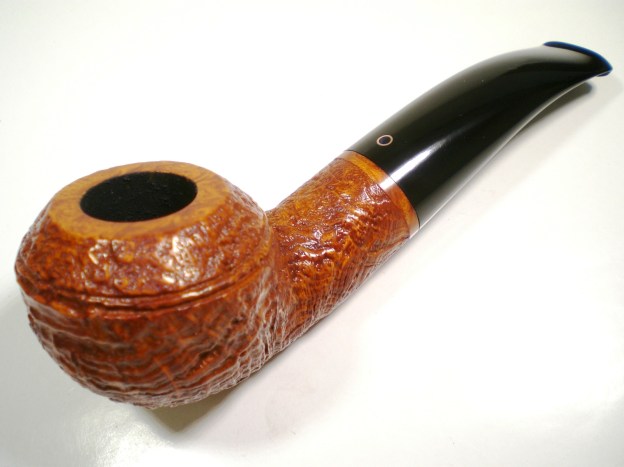
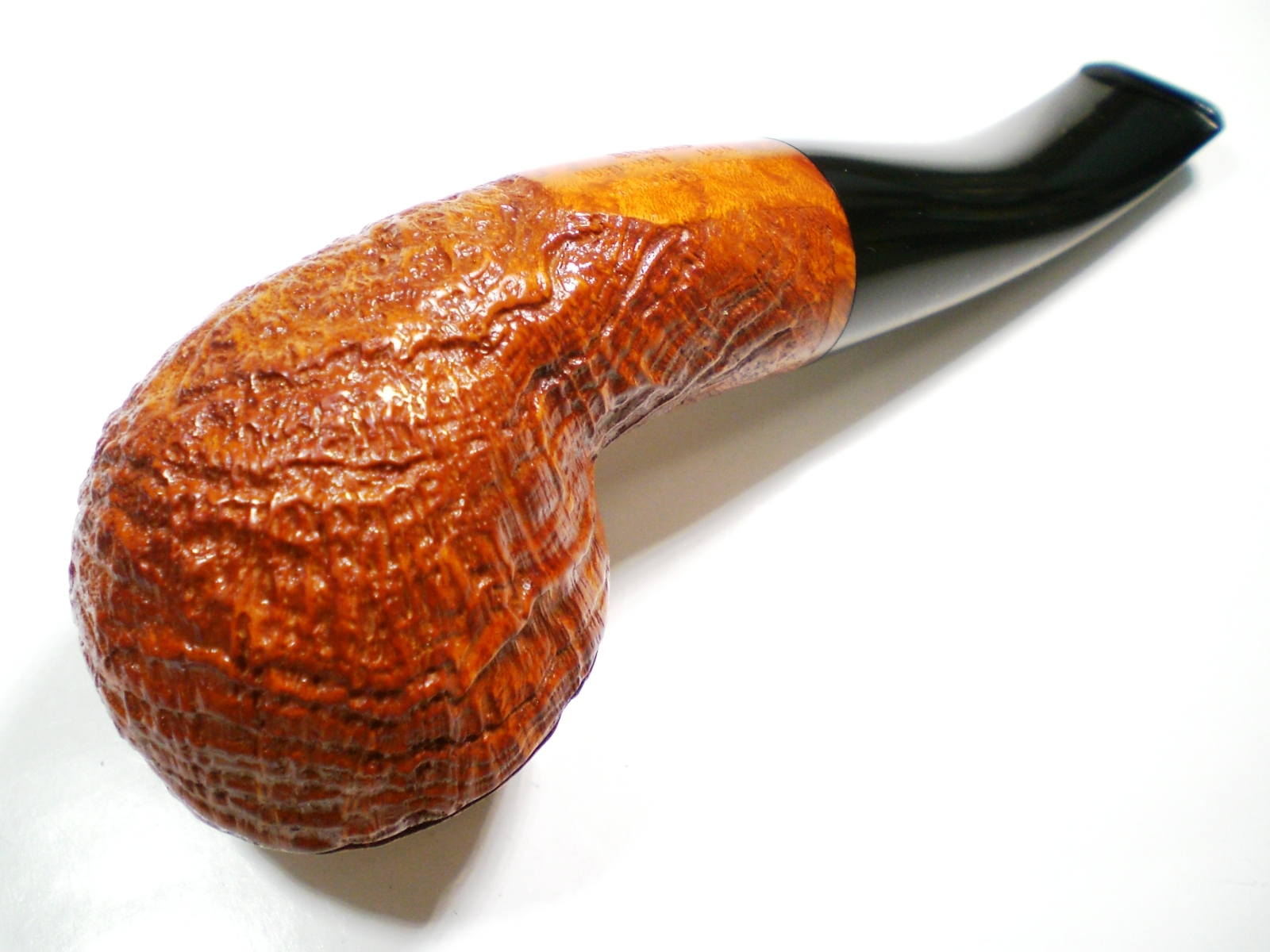
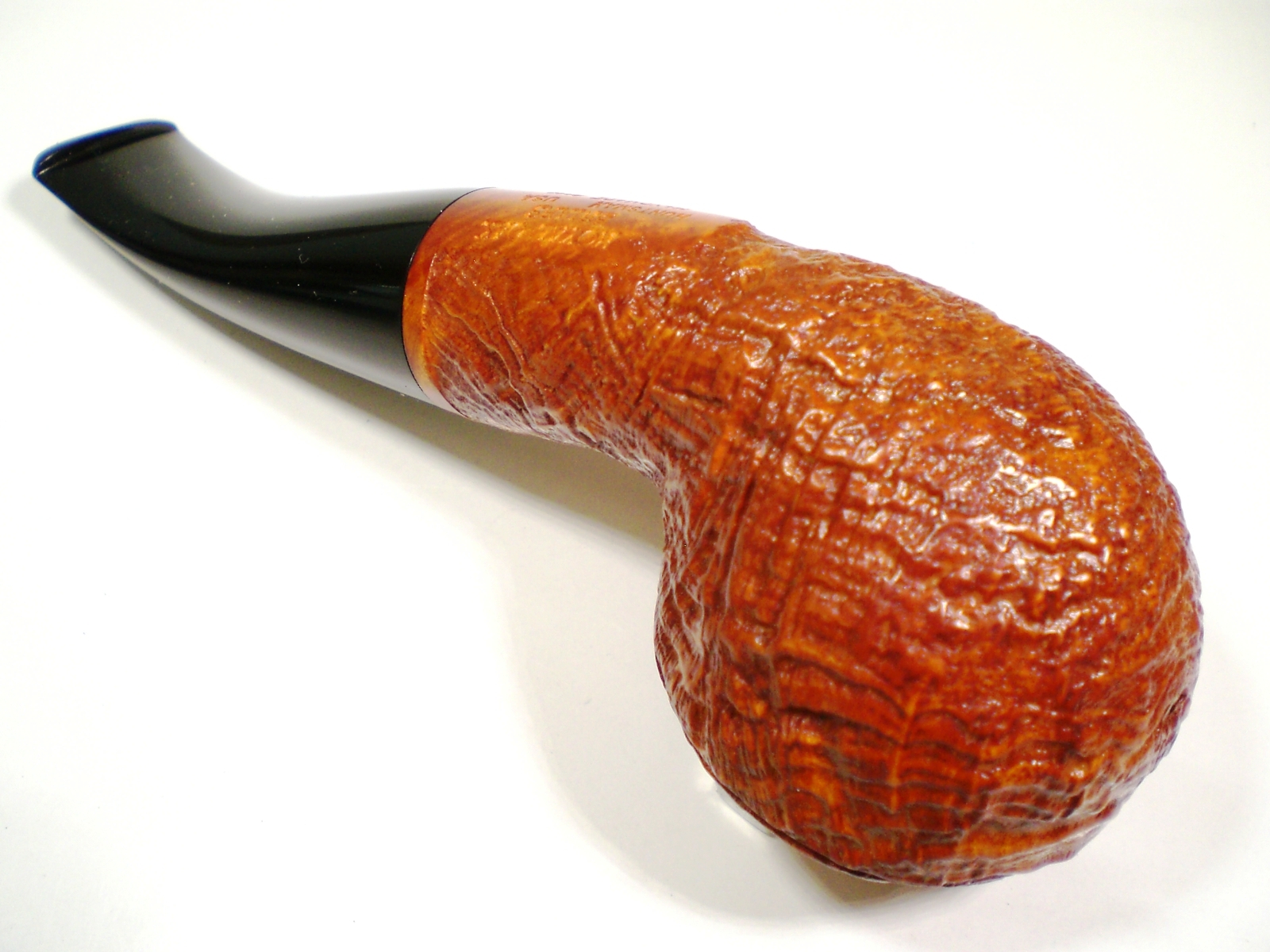
James had made and shown a Comoys 498 Extraordinaire recreation (straight Chubby Rhodesian) that was sold thru The PIpe Rack.  I complimented James on his shaping and thru subsequent messages, I learned he was starting on a pipe that would be an homage to the Comoys 499 Extraordinaire.  Since I am fortunate to own that model Comoys, that immediately piqued my interest.  I let James know that I was interested and I was able to see the pipe unfold and offer some personalization along the way.   The pipe would be blasted and I requested a polished bowl top.  The last decision was the golden tan stain, which I thought turned out magnificently.

One very important detail to me on any pipe purchase is the weight of the pipe.  My 499 Extraordinaire weighs 68 grams.  I asked James if he could create the shape under 60 grams.  James nailed that request and the pipe weighs 59 grams, which coincidentally is exactly what most of my GBD 9438’s weigh, one of my benchmark shapes.

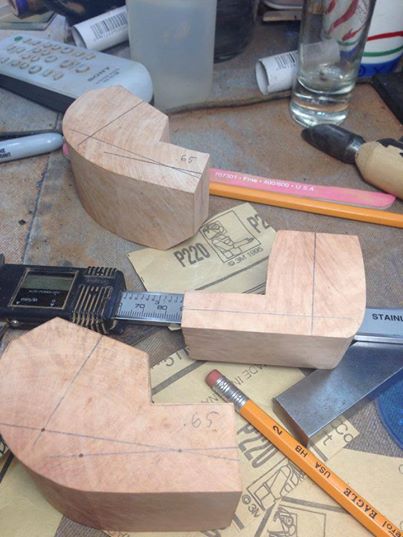
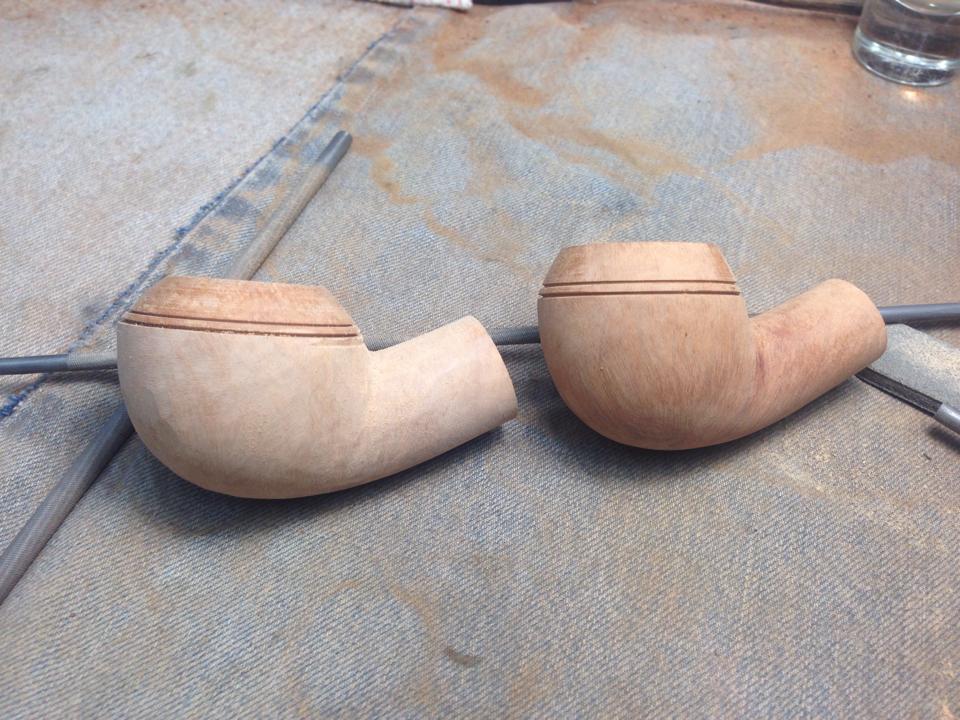
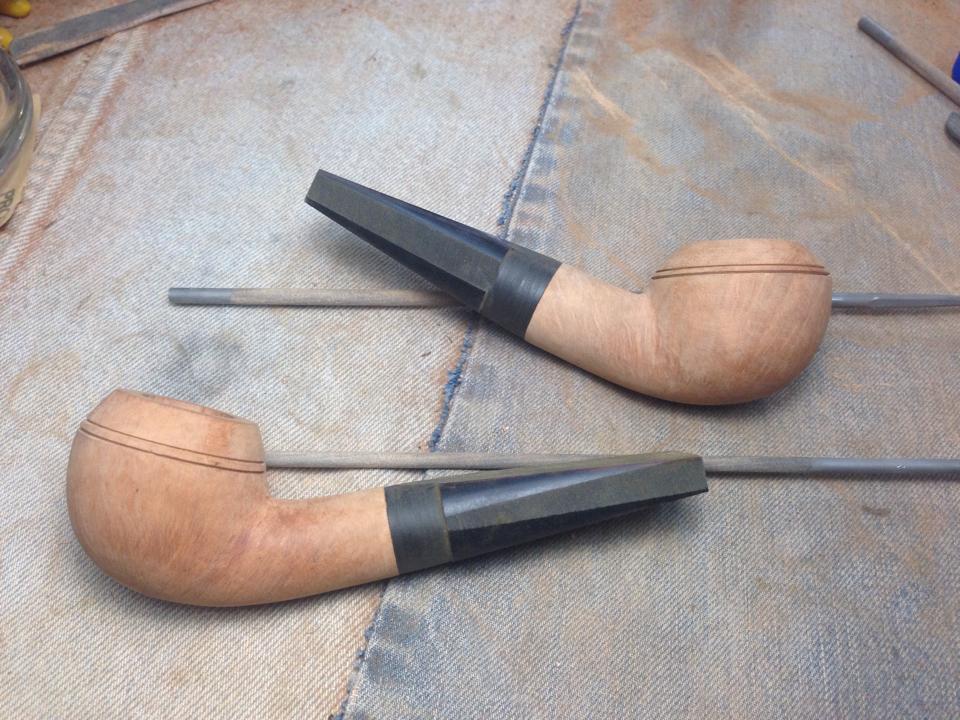
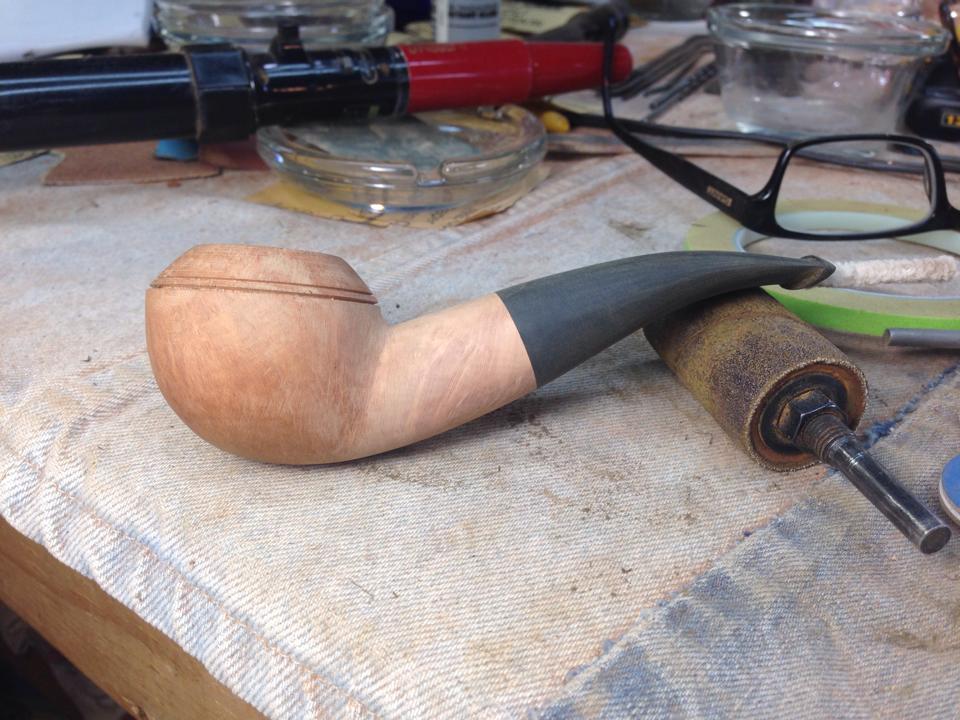
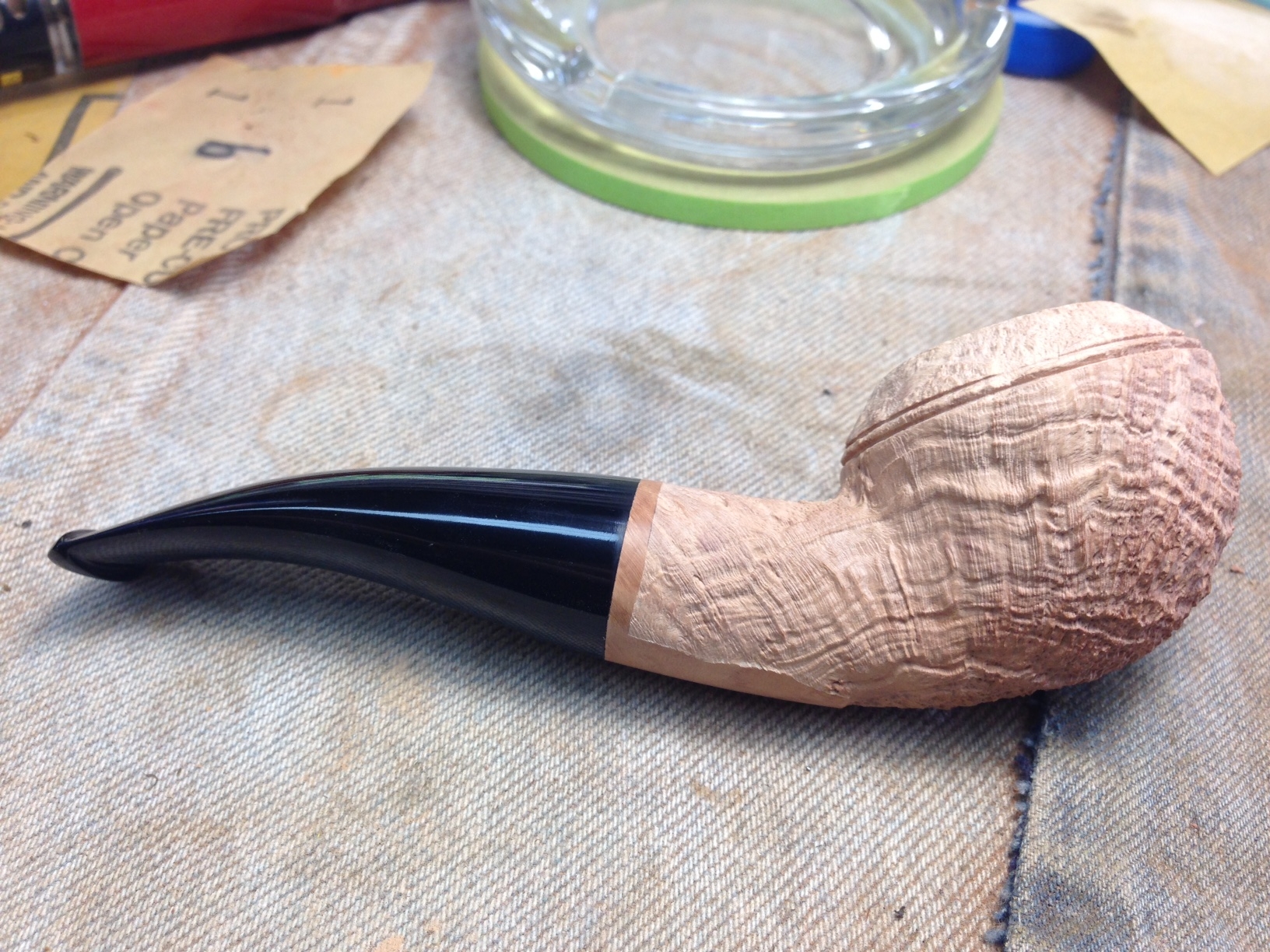
Below are some pictures of the pipe in the early and latter stages.

Royal_Oak_Briars_Rhodiesian-1 Royal_Oak_Briars_Rhodiesian-2 Royal_Oak_Briars_Rhodiesian-3 Royal_Oak_Briars_Rhodiesian - 4 Royal_Oak_Briars_Rhodesian-5

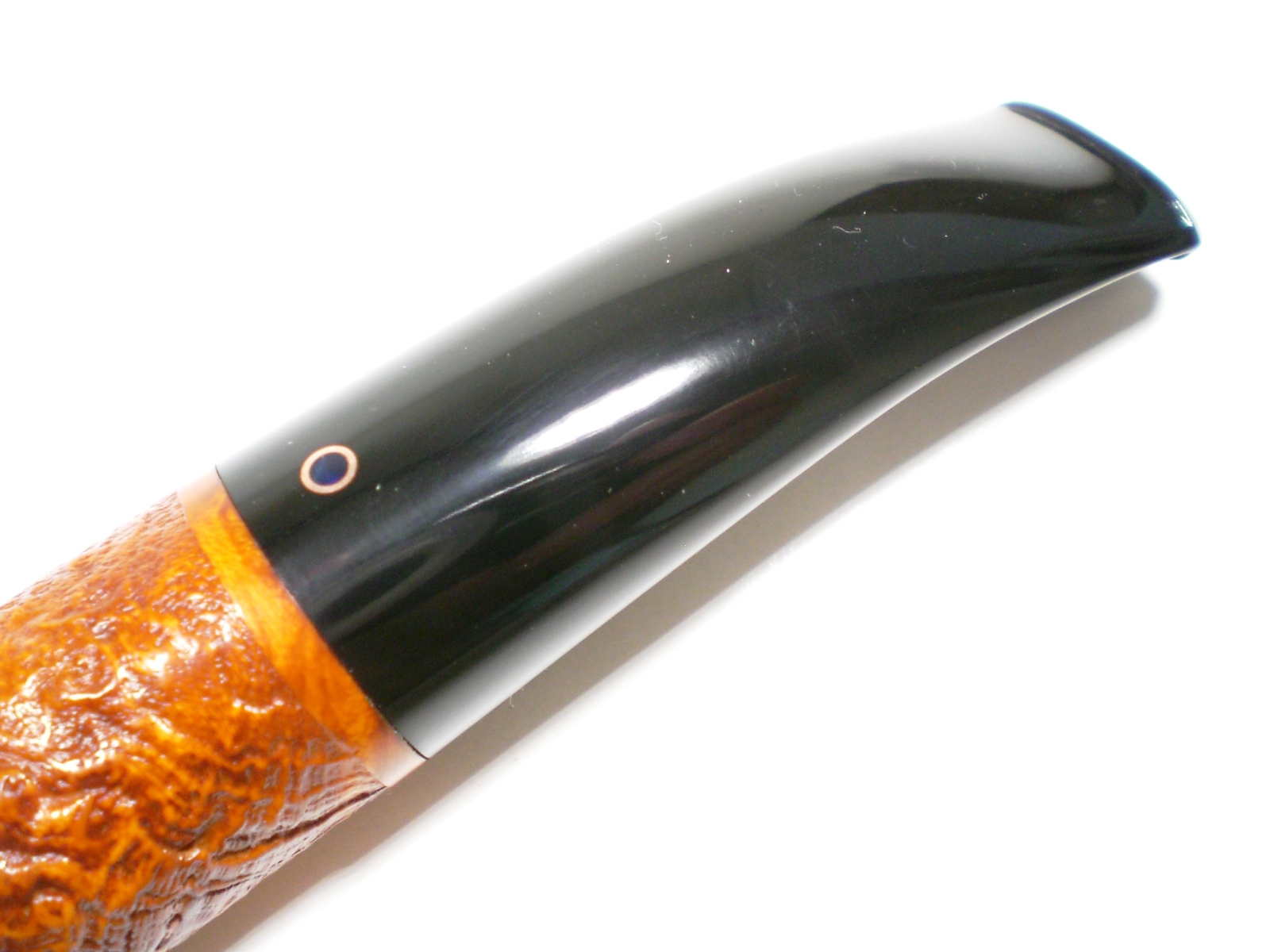
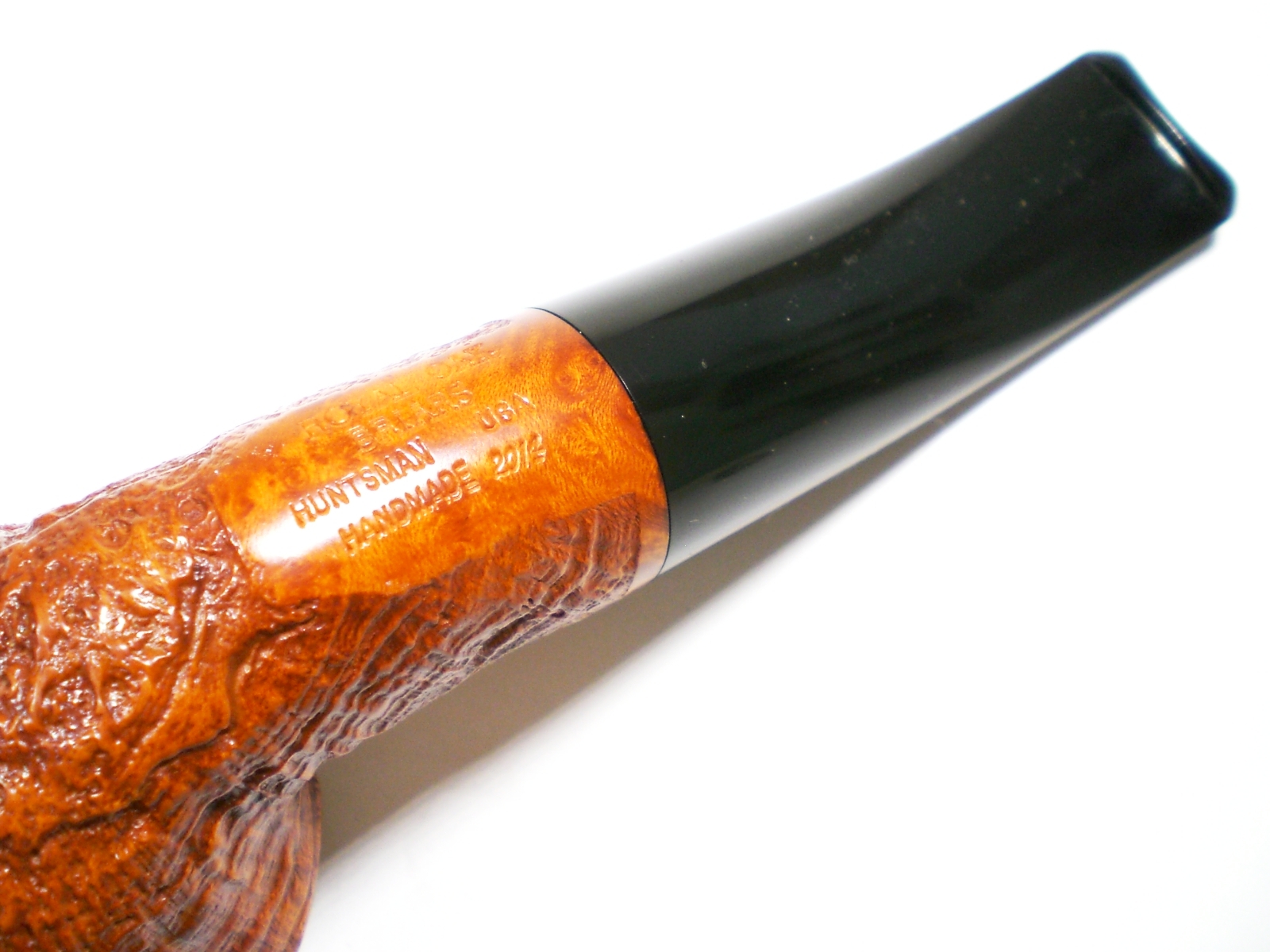
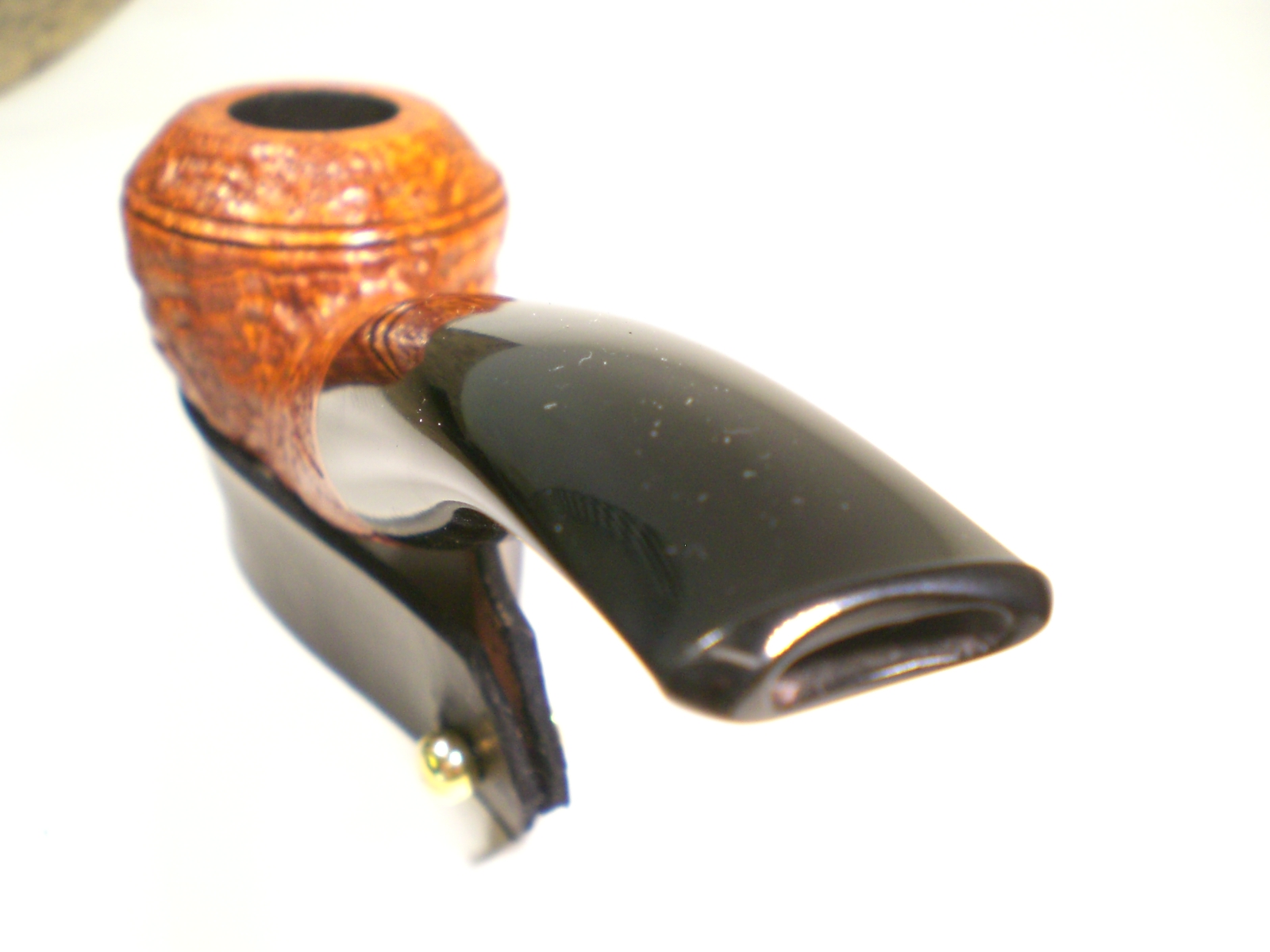
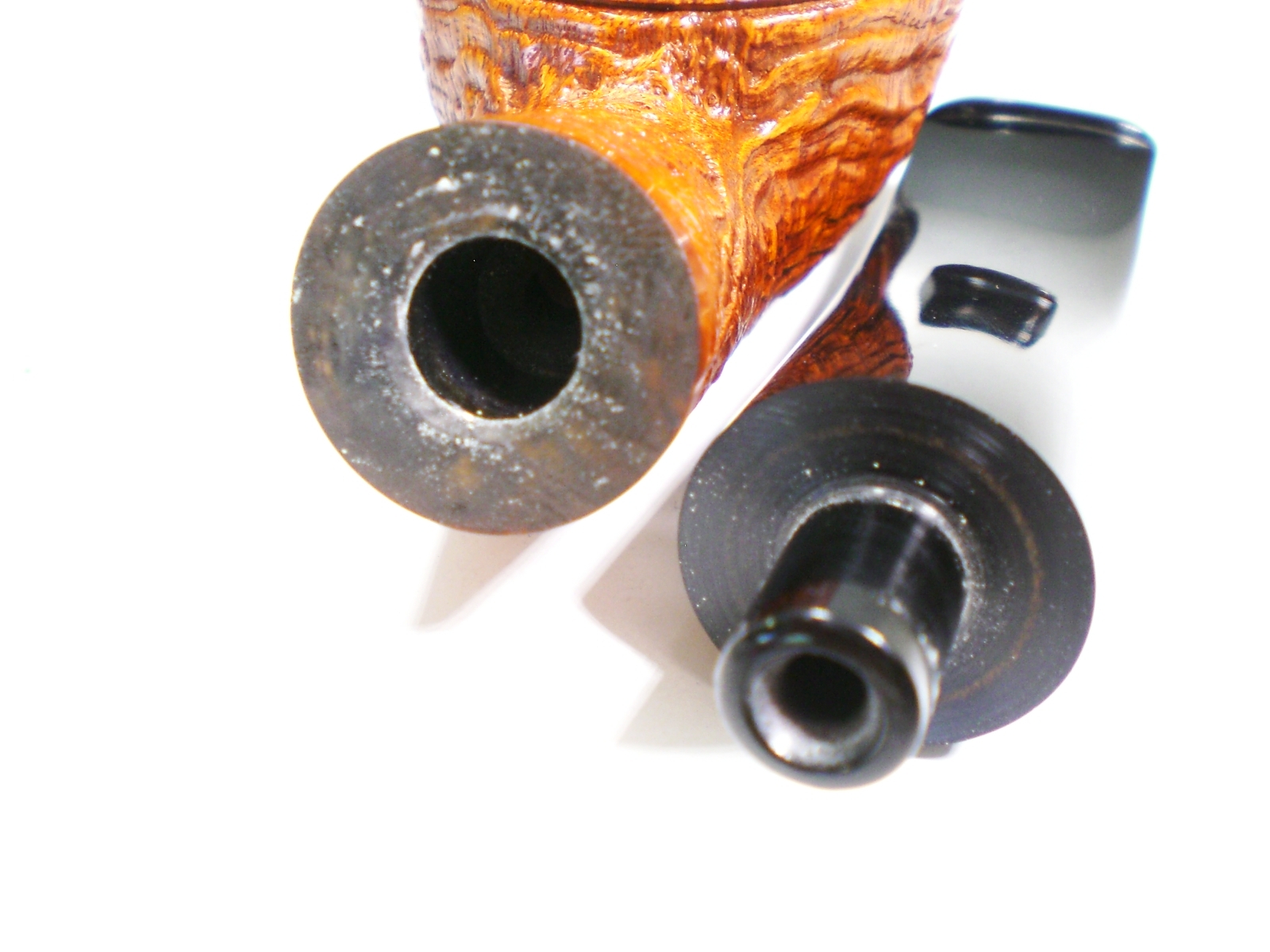
The pipe is drilled perfectly with an open draw. James tells me that the draft hole is drilled with a 5/32″ bit and tapering to 1/8″ in the stem.  The pipe smokes wonderfully, with an excellent draft and no moisture.  It also packs easily, not something I always find with a pipe with an open draw.  I am very impressed with the stem work, it seems James has learned his lessons well from Micheal Lindner. The button end is beautifully funneled and the tenon also has a concave detail that I like.  James feels the funneling on the tenon helps minimize moisture buildup in the pipe.  On the button end, the height is just right for holding without being uncomfortable.  I also like how the button has a concave feature.   James uses briar from a variety of sources.  For this pipe he used briar from Mimmo that had been aged for four years.  James feels this briar made it possible for him to achieve my weight goal.  The blast is nice and craggy, which is also my preference.  We mulled over several stain choices before deciding on the golden tan.  I think it gives the pipe a wonderful glow.

James uses a bowl-coat on his pipes, made from a gelatin/activated charcoal substance.  As someone who primarily purchases estate pipes, I hate breaking in new pipes. This is my second pipe with a bowl coating of this nature, and I’m now a big fan of this process. James assured me the product was neutral and in use, I agree completely.  Smoking the new pipe, it felt like an old friend from the get-go.

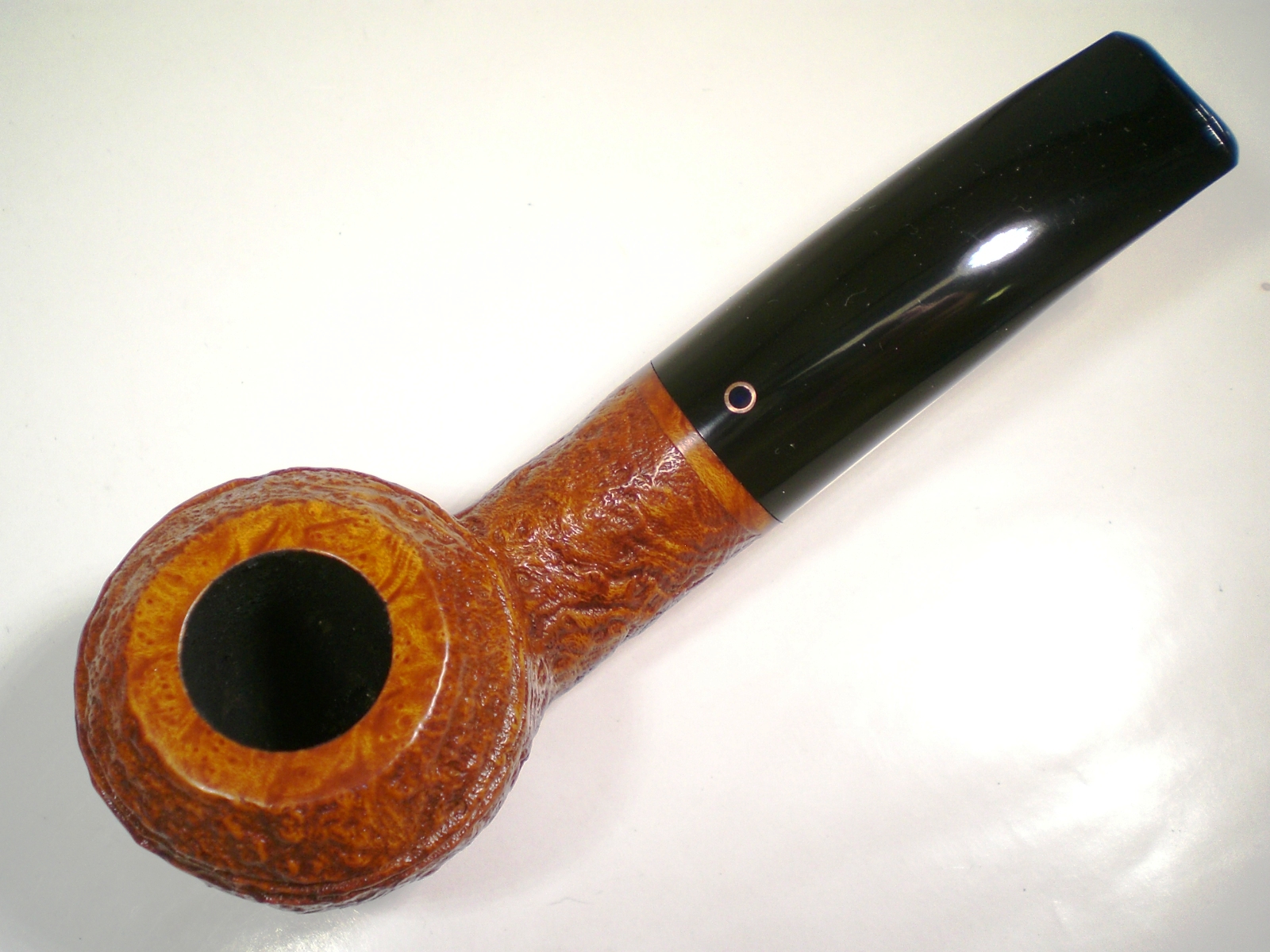
Another unique aspect of a Royal Oak Briar is the stem logo, which is a blue acrylic dot in a copper ring. As an Ashton fan, I love that detail. Many artisan pipes lack a stem logo.  To me, that was another appealing aspect of the Royal Oaks Briars line.  A member of the PipesMagazine forum commented on the stem logo that “it was like the cherry on top of a sundae”.

James work combines classic shaping, solid mechanicals along with quality briar and ebonite materials.  He was easy to communicate and work with and I enjoyed our conversations.  Hopefully, we’ll meet some day at a pipe show.  I’m looking forward to having this one in a solid rotation and I can highly recommend Royal Oak Briars.

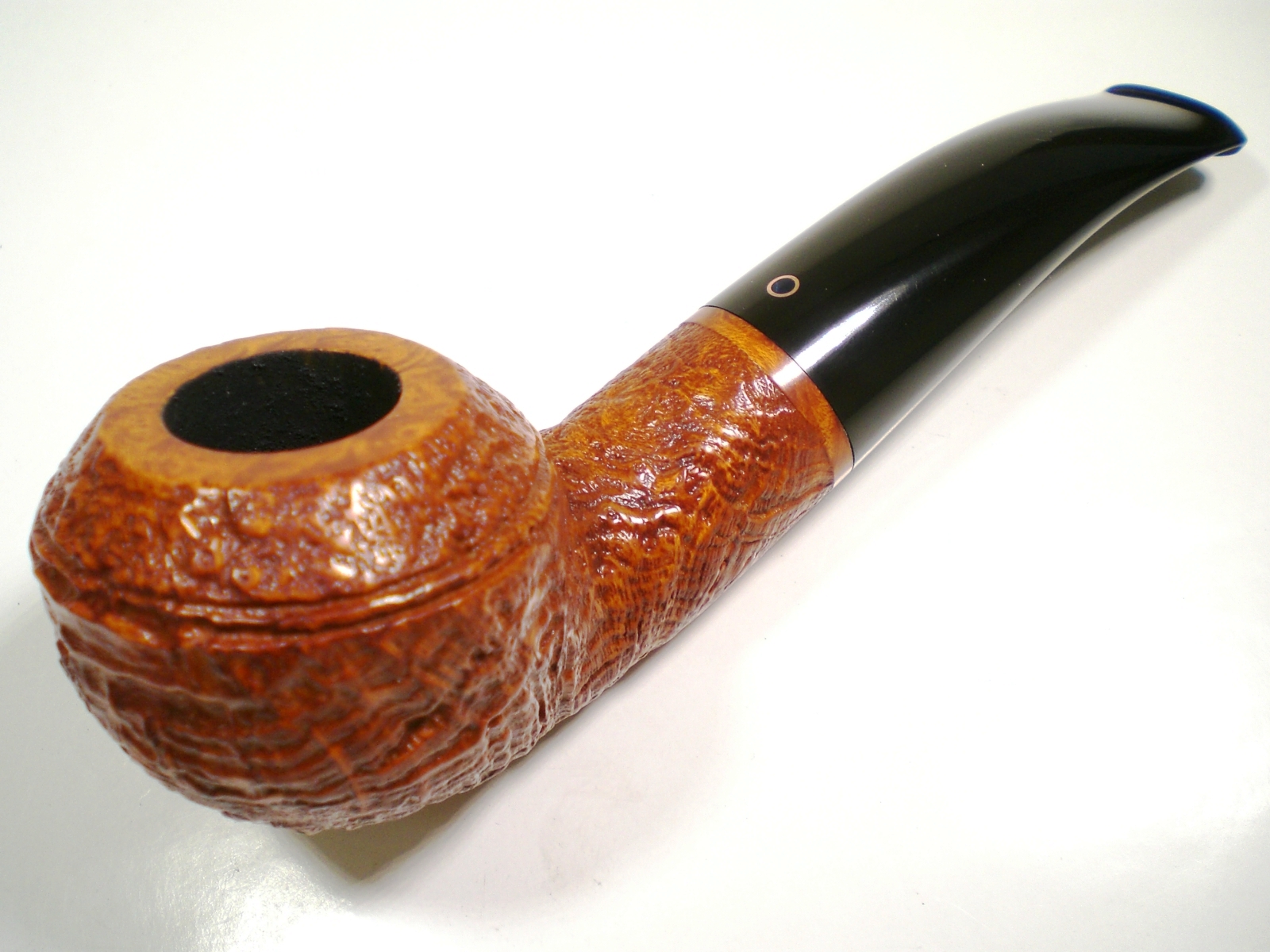
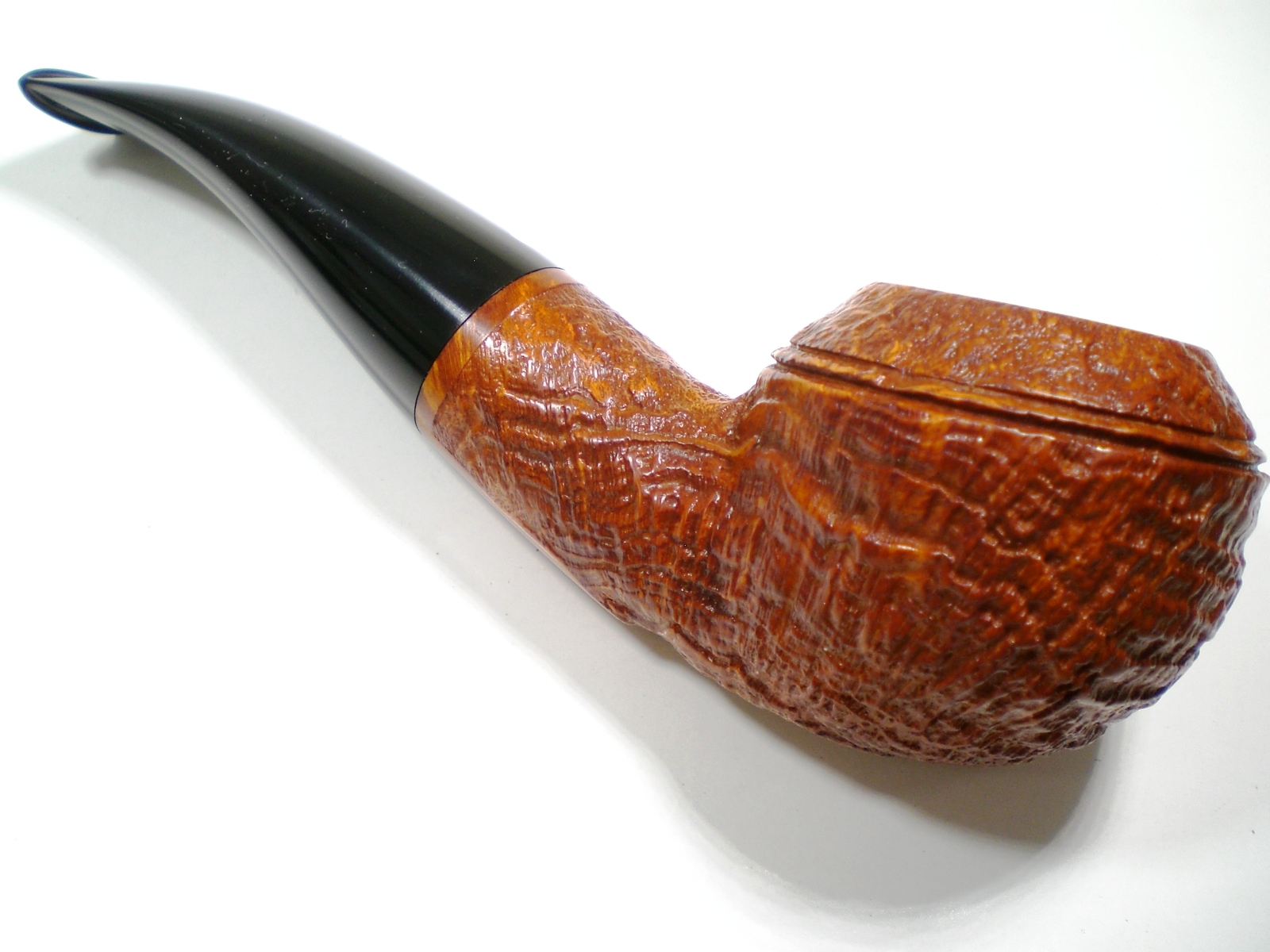
Royal_Oak_Briars_Huntsman_Gallery Royal_Oak_Briars_Huntsman_2014 (2) Royal_Oak_Briars_Huntsman_2014 (1) Royal_Oak_Briars_Huntsman_2014 (3) Royal_Oak_Briars_Huntsman_2014 (4) Royal_Oak_Briars_Huntsman_2014 (5) Royal_Oak_Briars_Huntsman_2014 (6) Royal_Oak_Briars_Huntsman_2014 (7)

Royal_Oak_Briars_Huntsman_2014 (8)

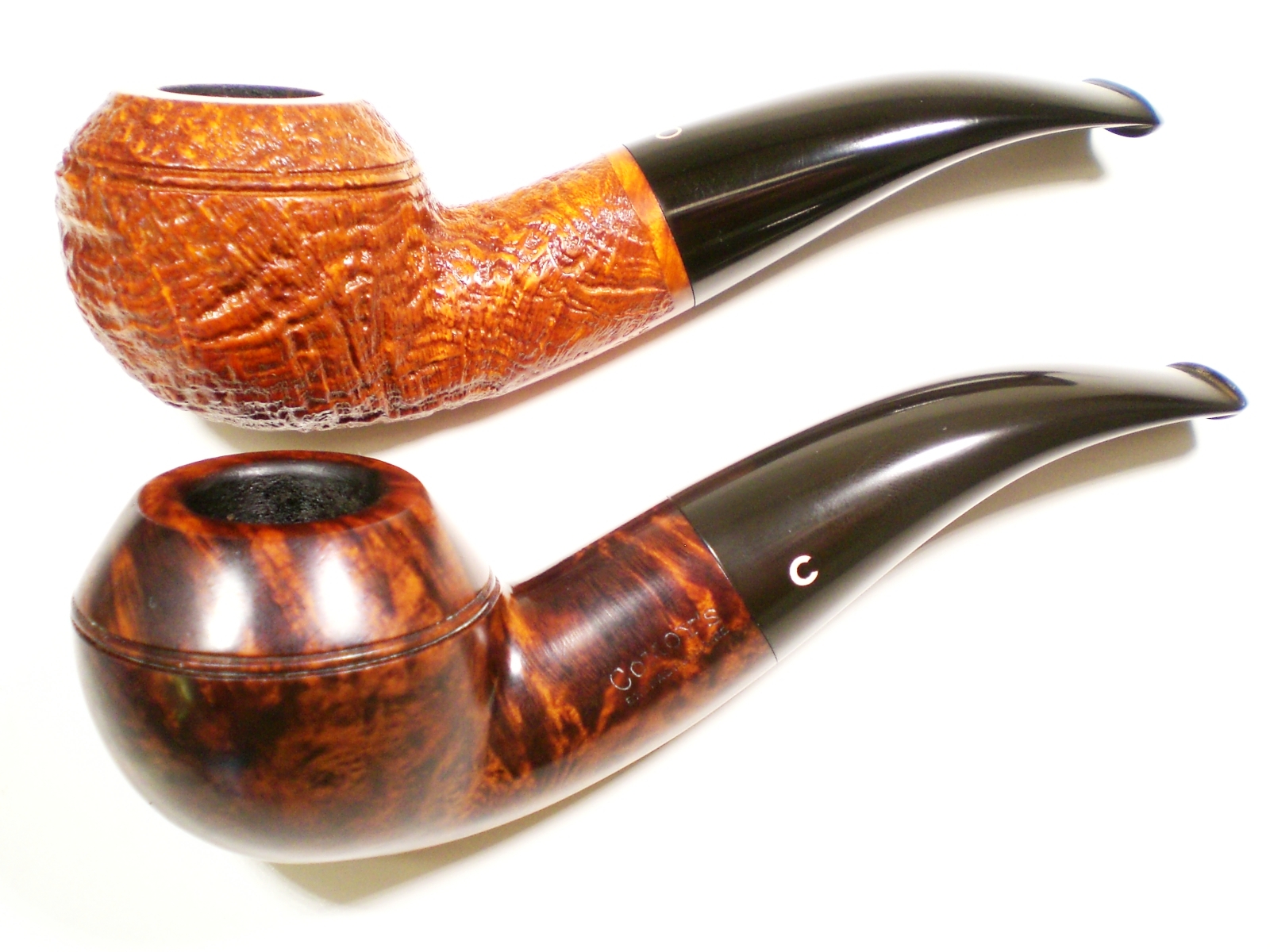
Below is a comparison picture with my 1930’s Comoys 499 Extraordinaire, the inspiration for this pipe.

Royal_Oak_Briars_Huntsman_2014 (9)