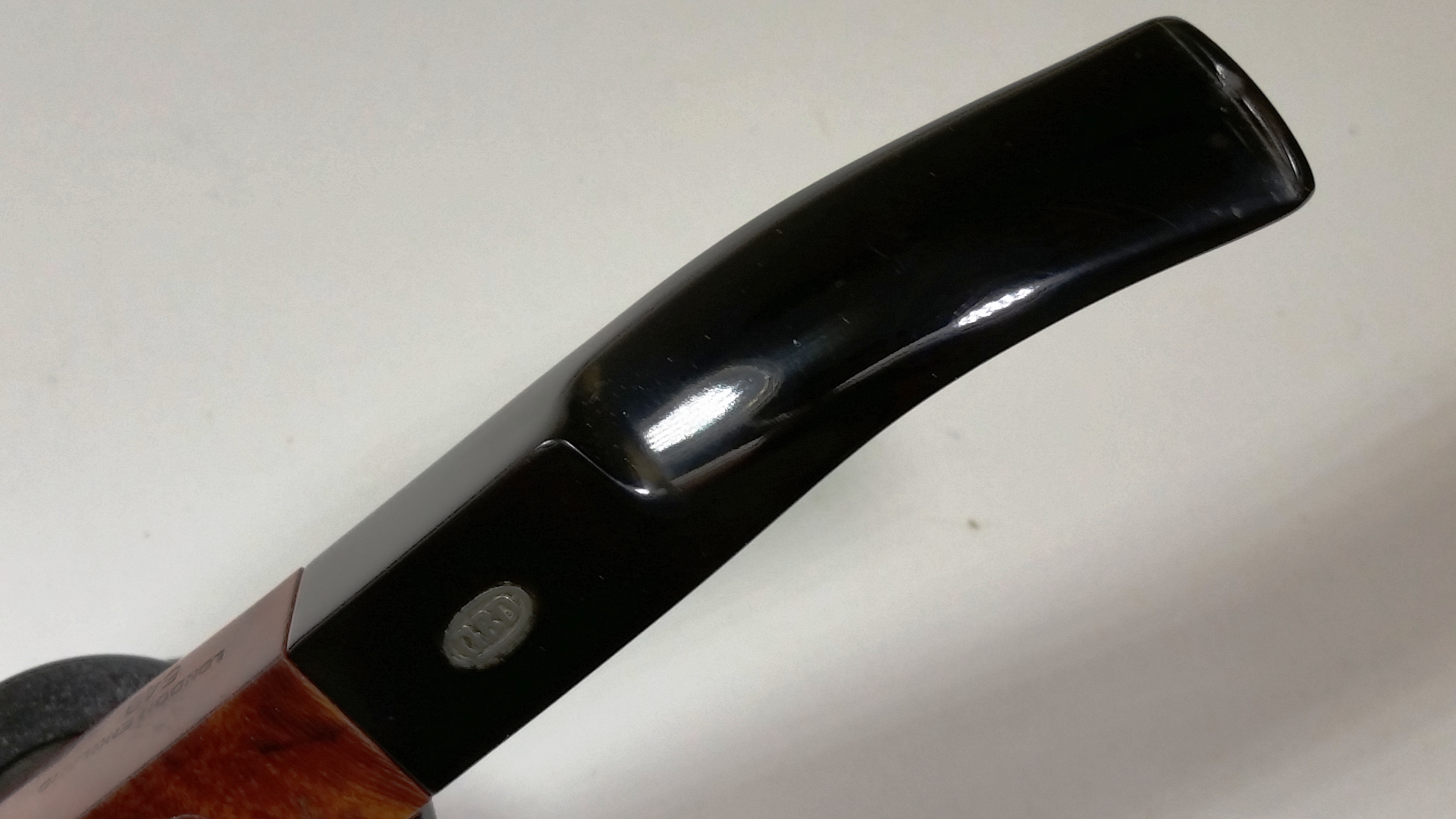
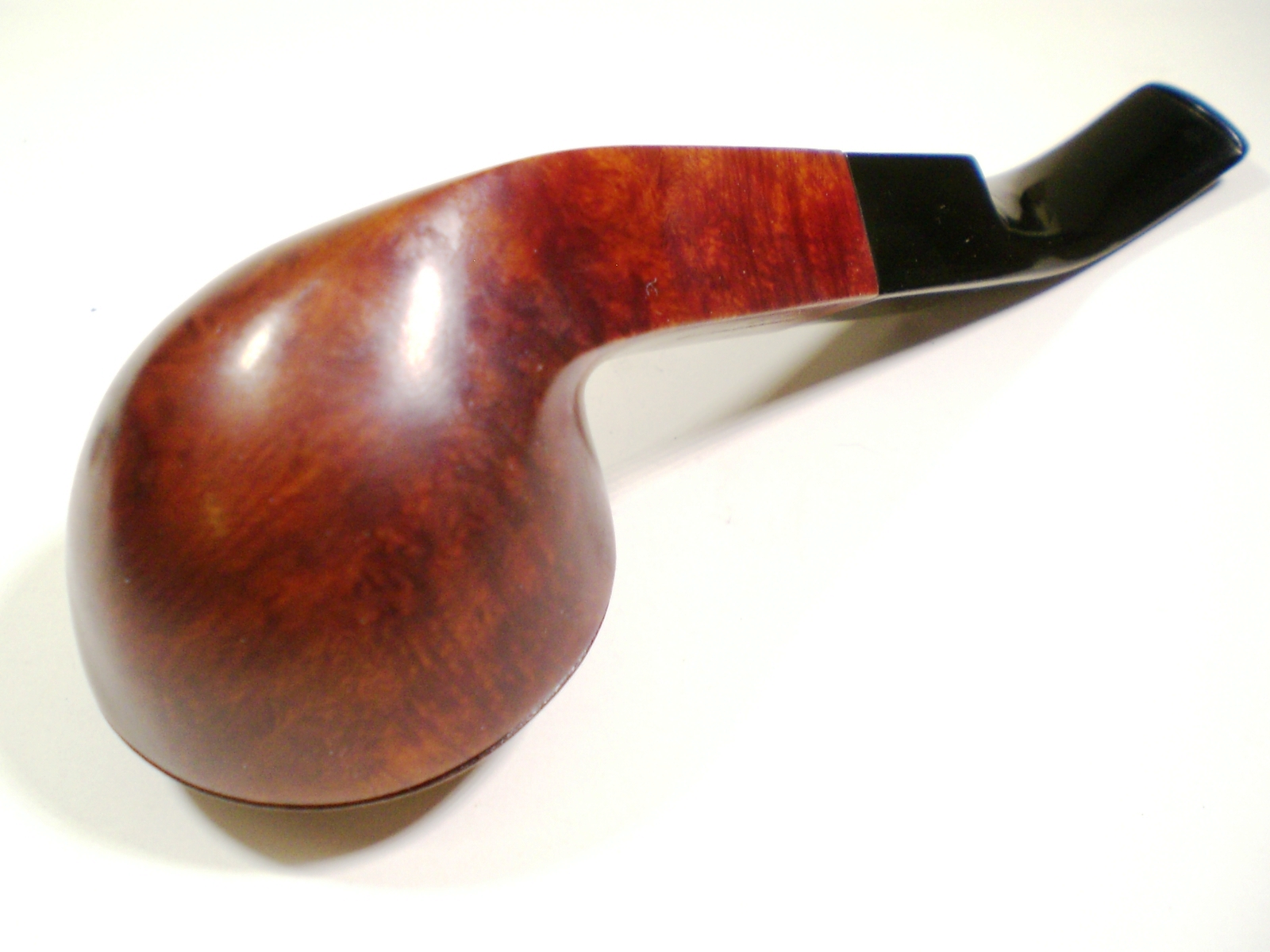
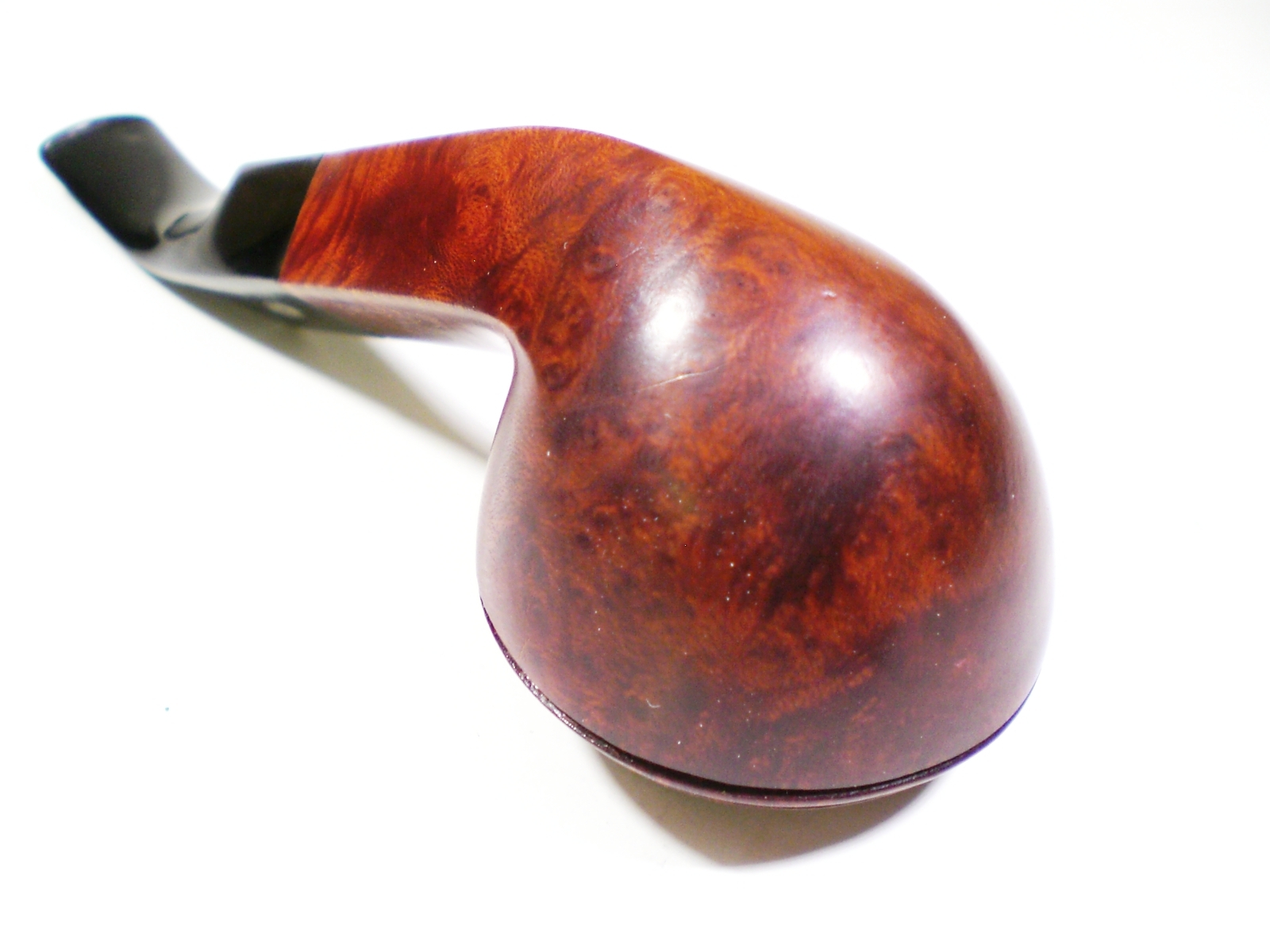
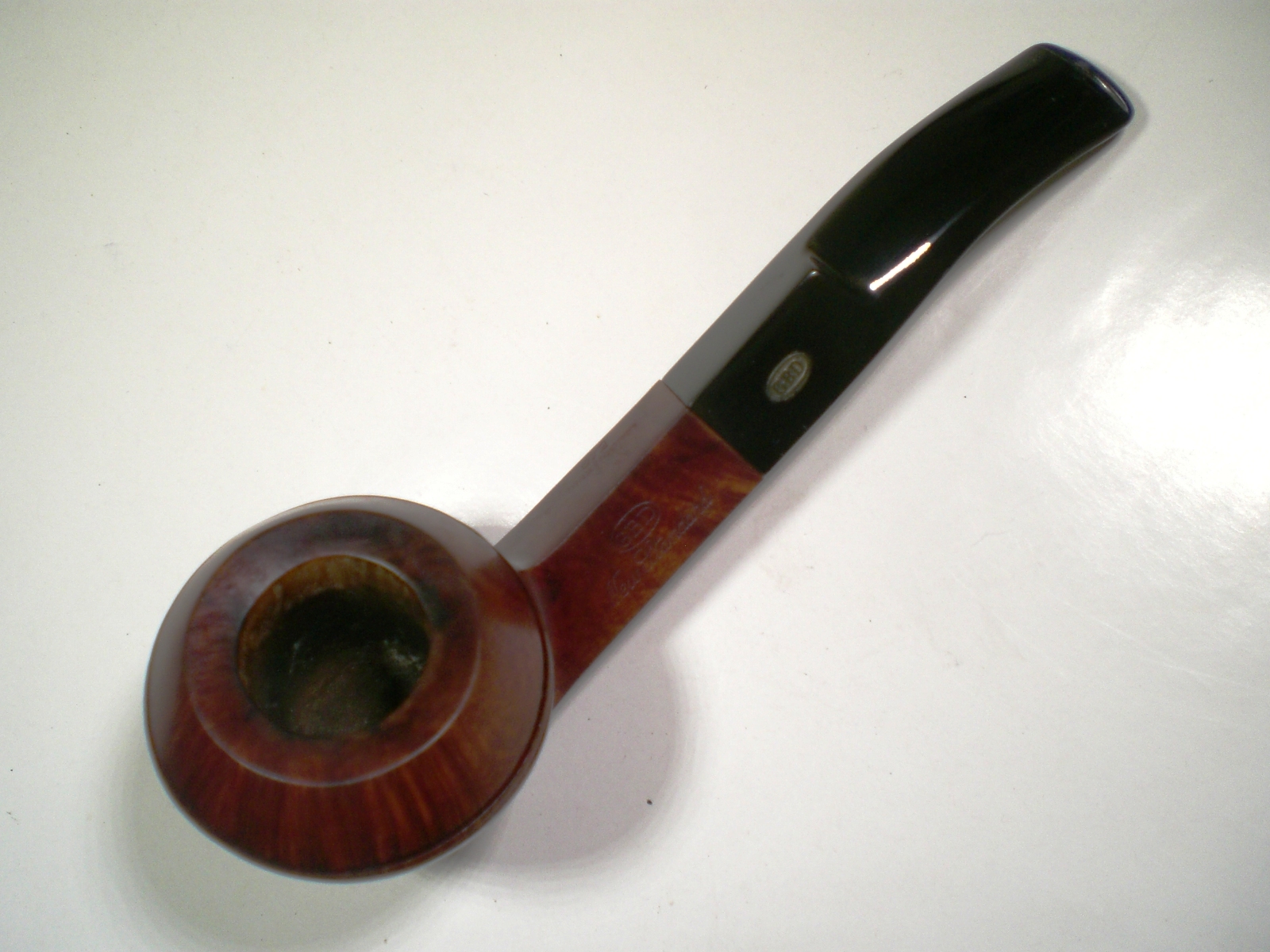
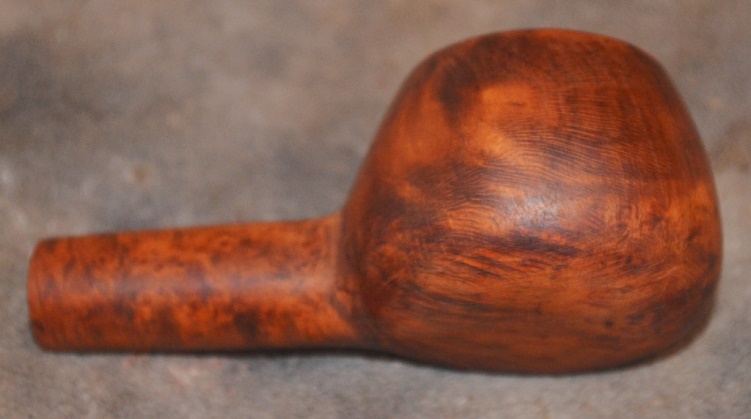
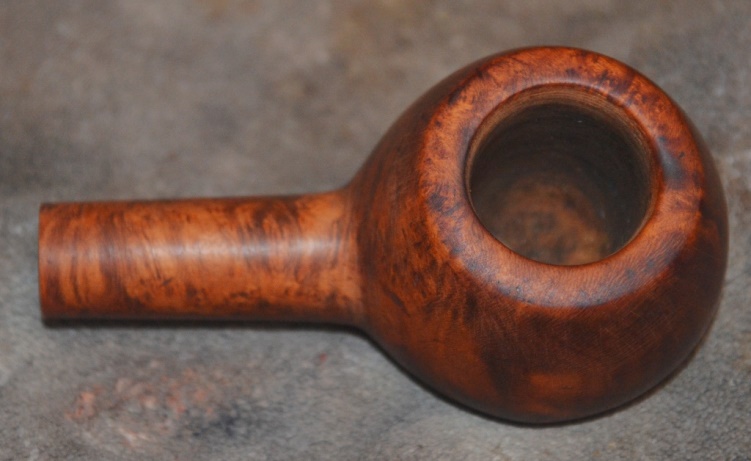
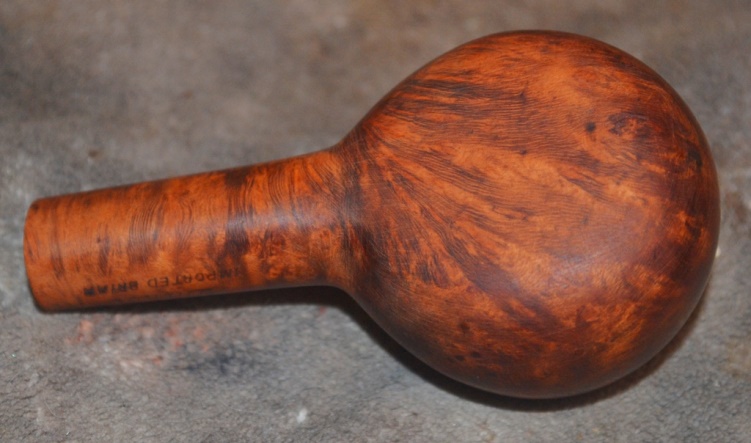
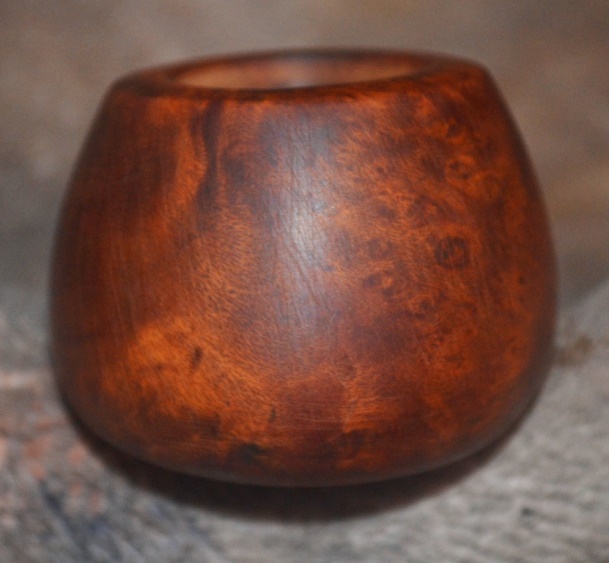
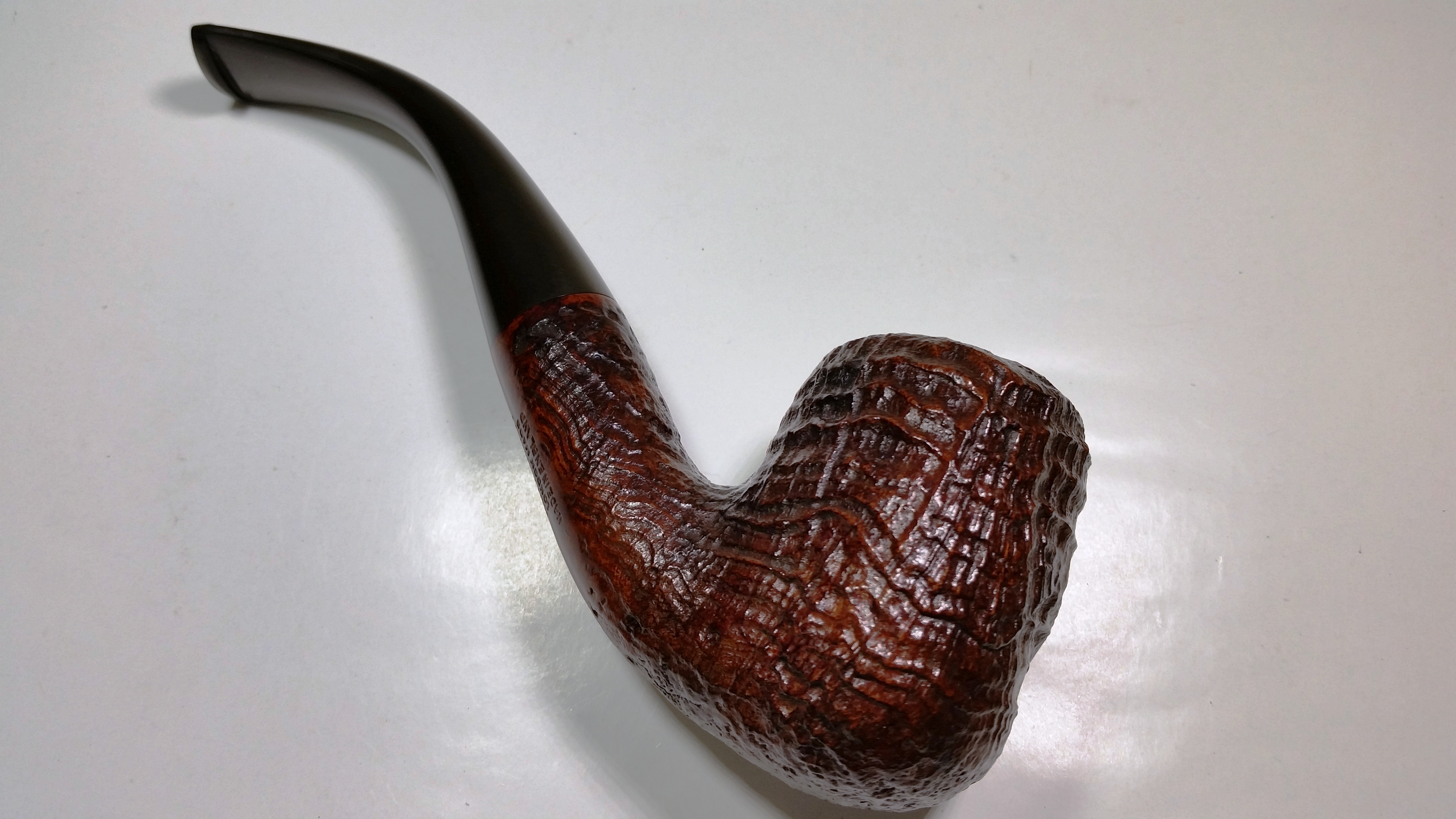
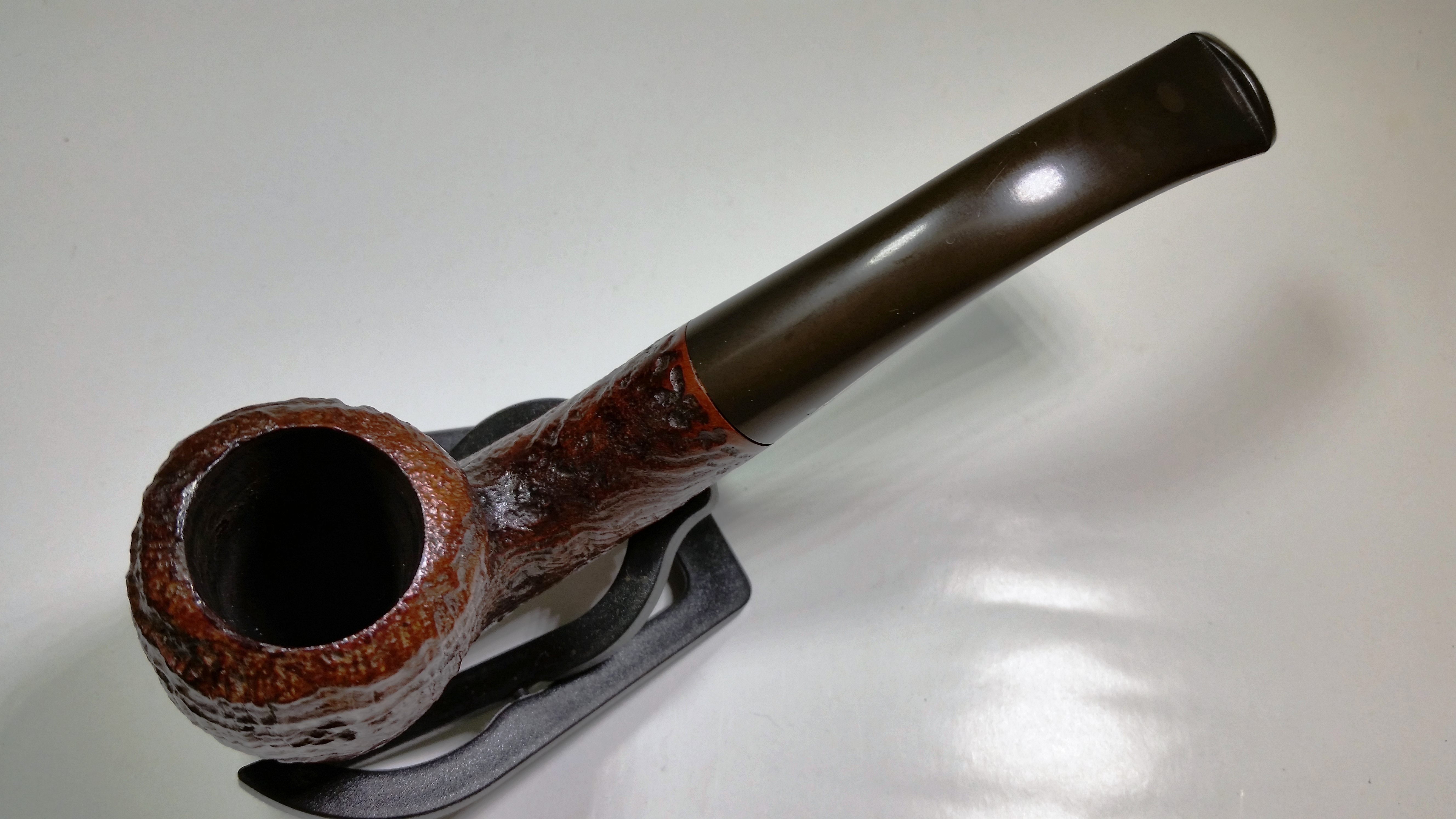
The Screwy Nature of the Jenkins Truly Dry System Billiard – Robert M. Boughton


Guest Blog by Robert M. Boughton
Member, North American Society of Pipe Collectors
http://www.roadrunnerpipes.com
http://about.me/boughtonrobert
Photos © the Author

“Life is really simple, but we insist on making it complicated.”
— Confucius (551-479 BC), Chinese philosopher, teacher, editor and politician

INTRODUCTION
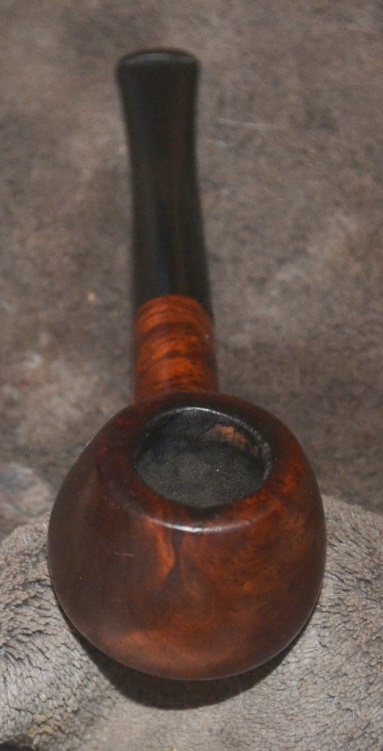
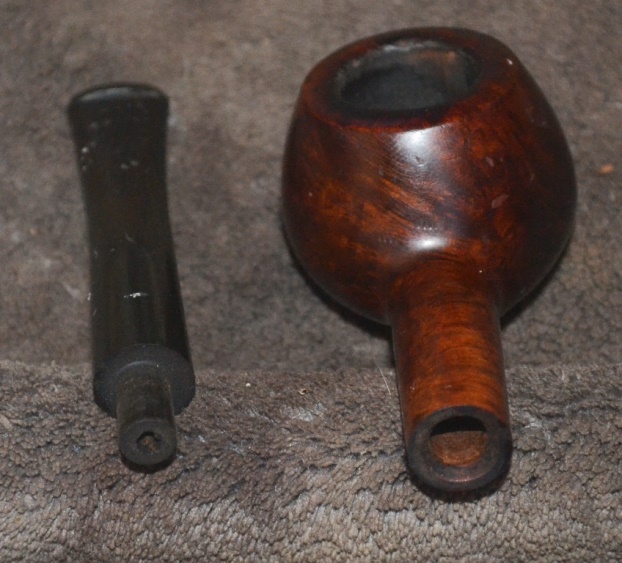
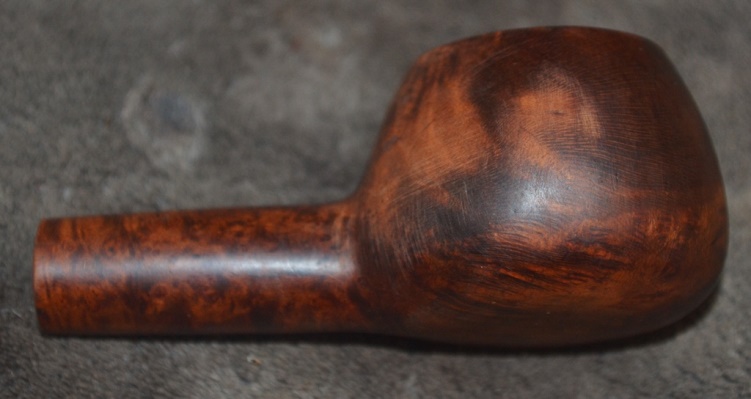
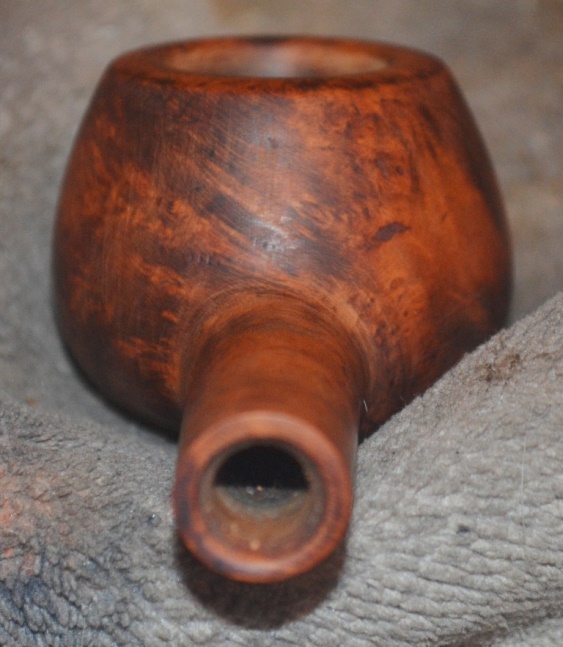
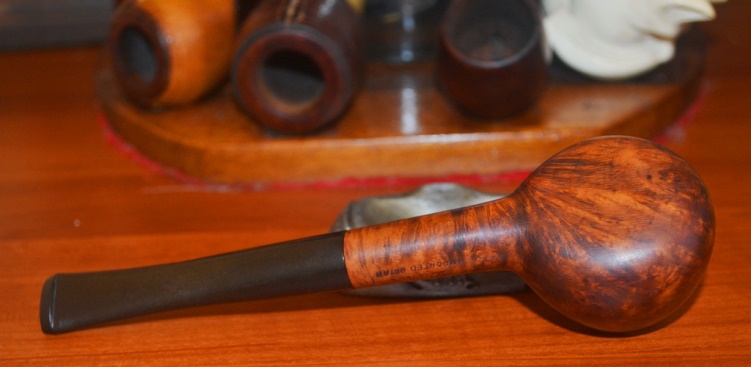
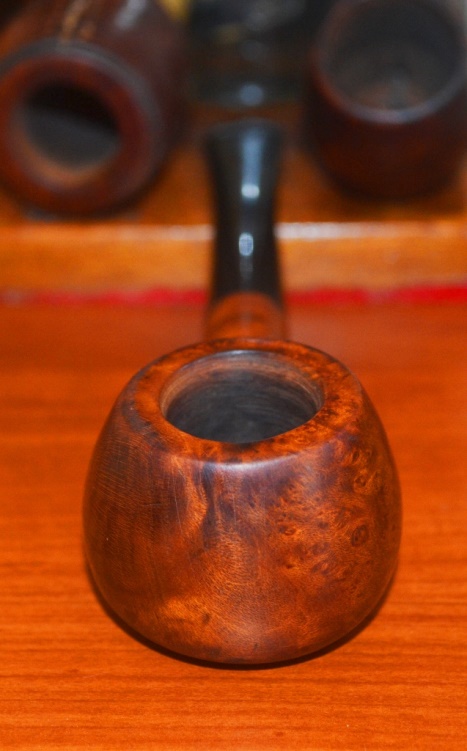
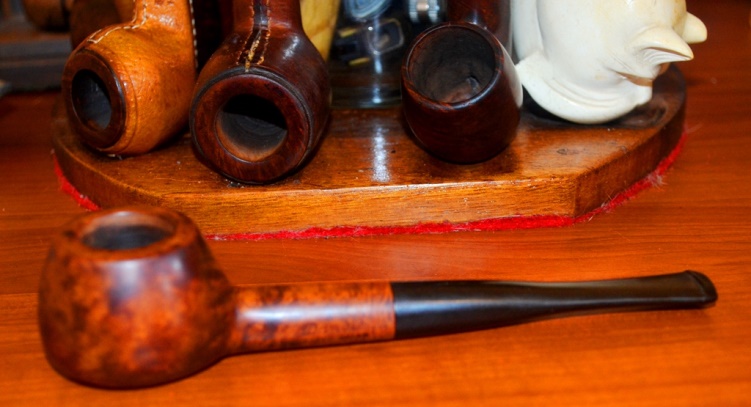
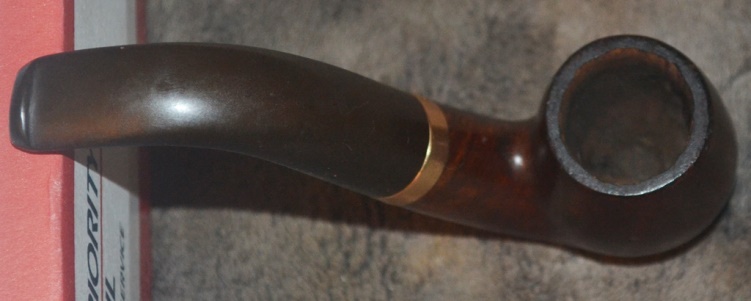
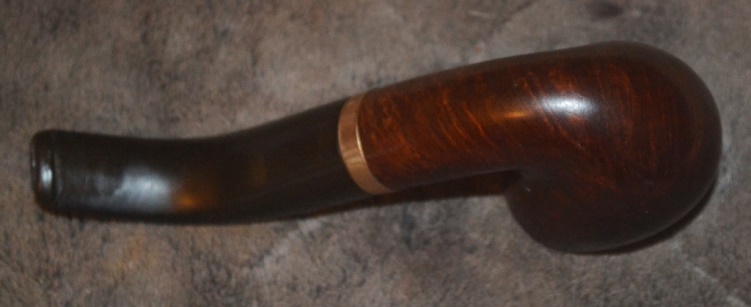
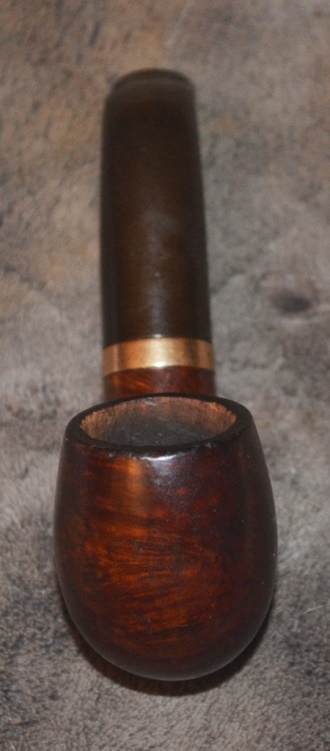
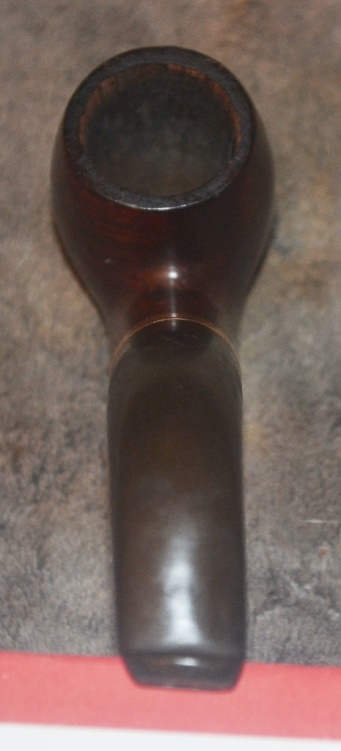
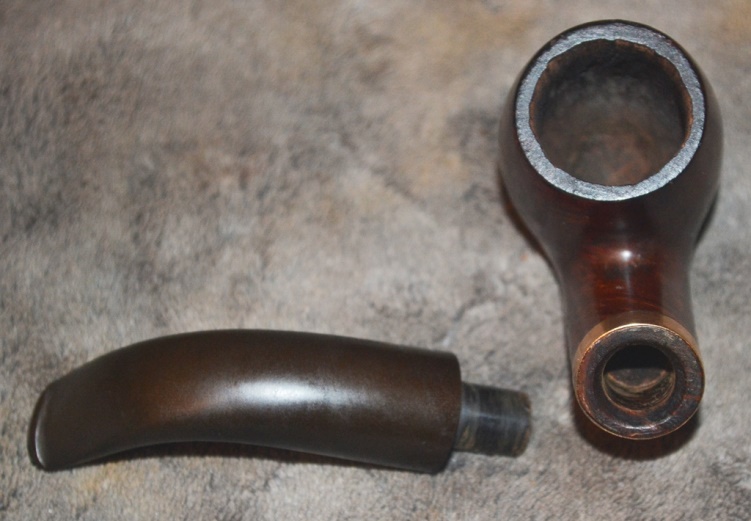
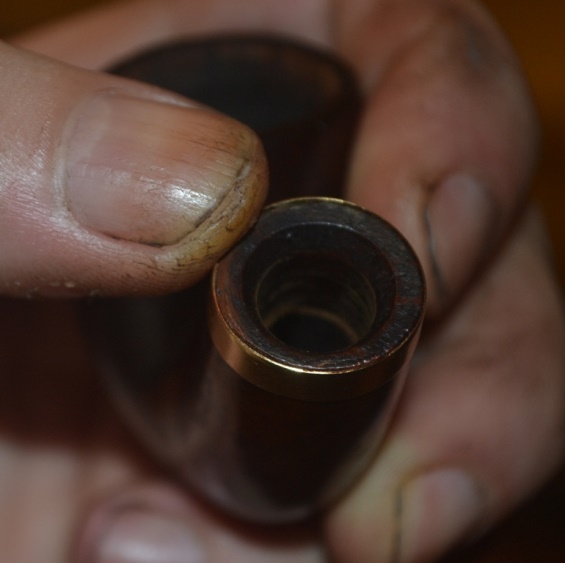
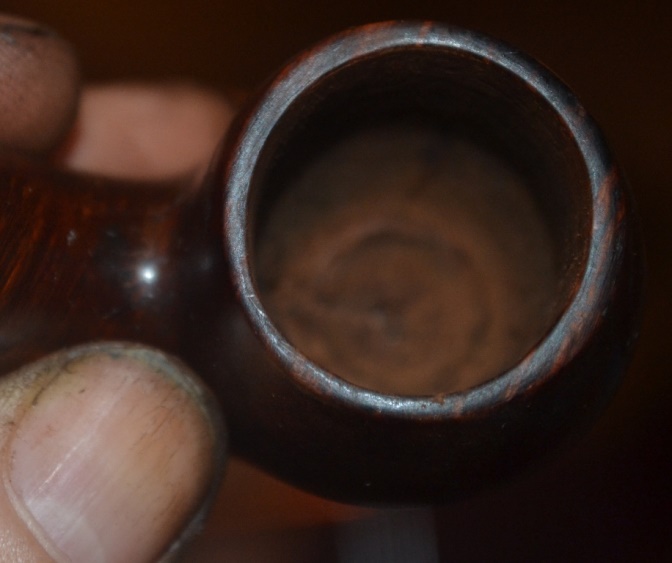
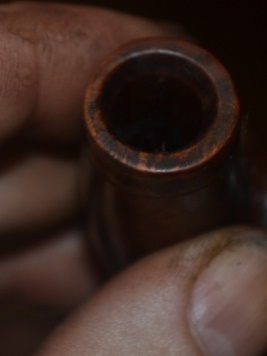
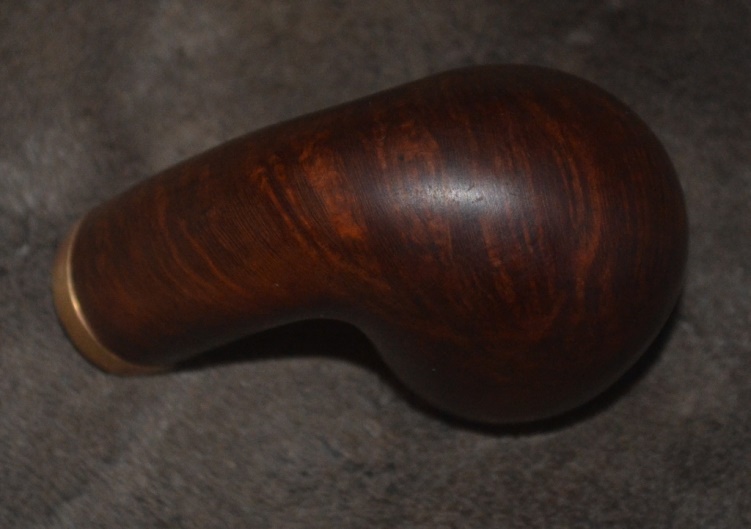
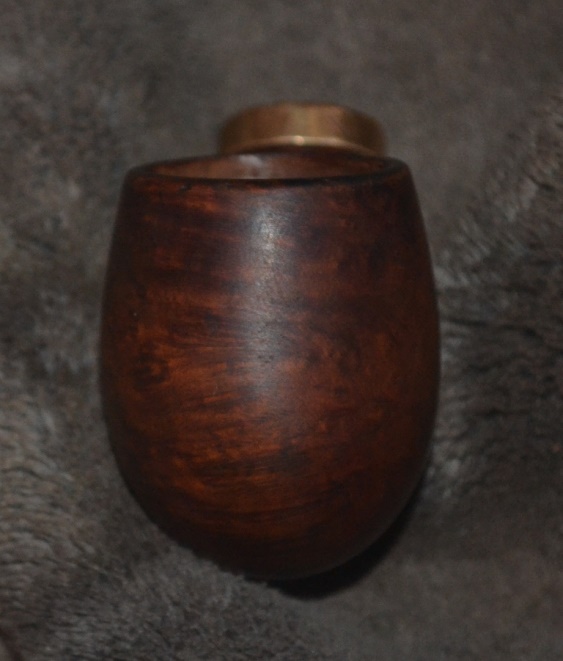
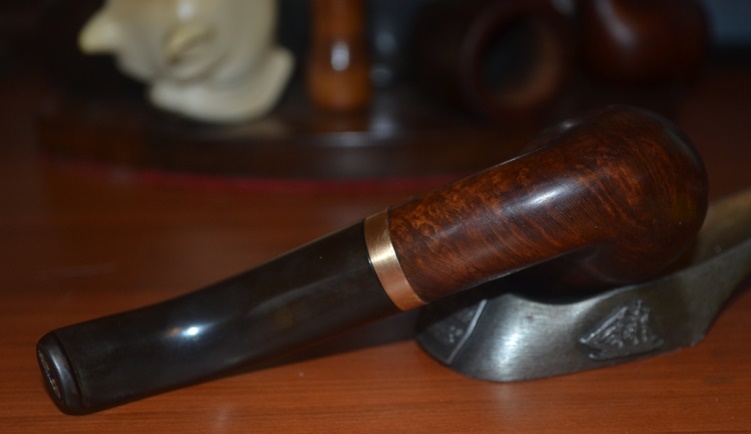
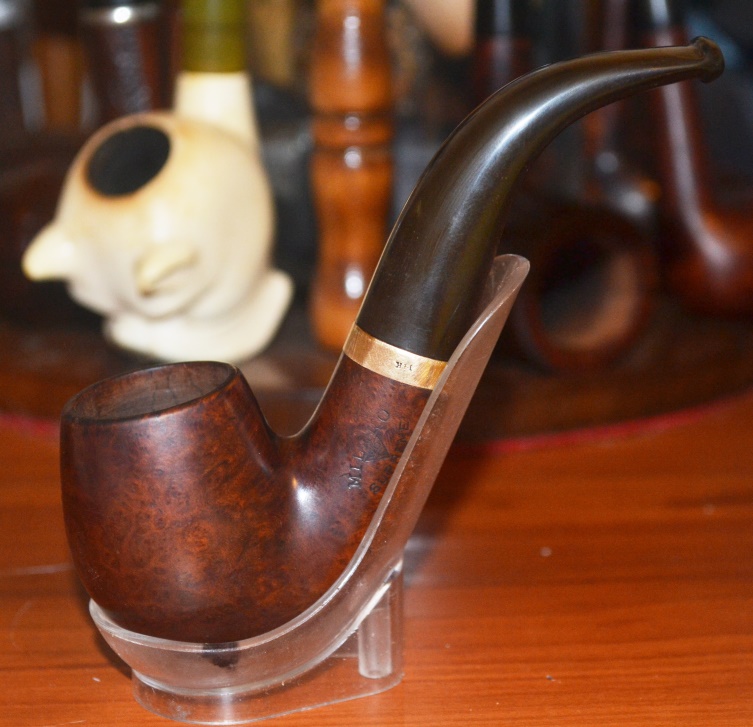
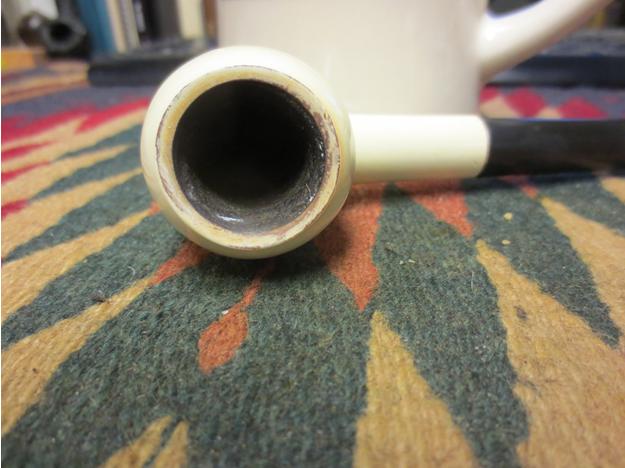
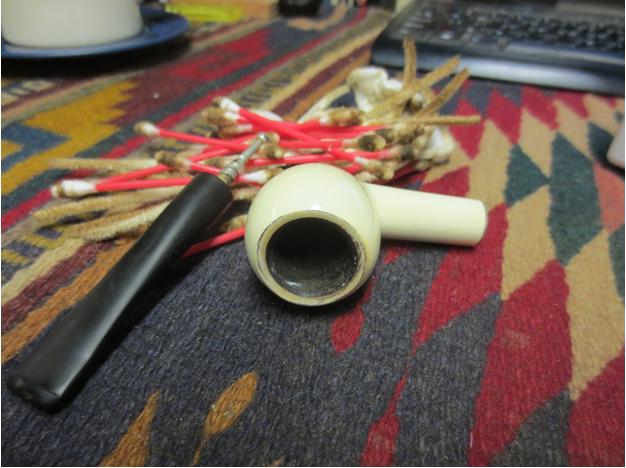
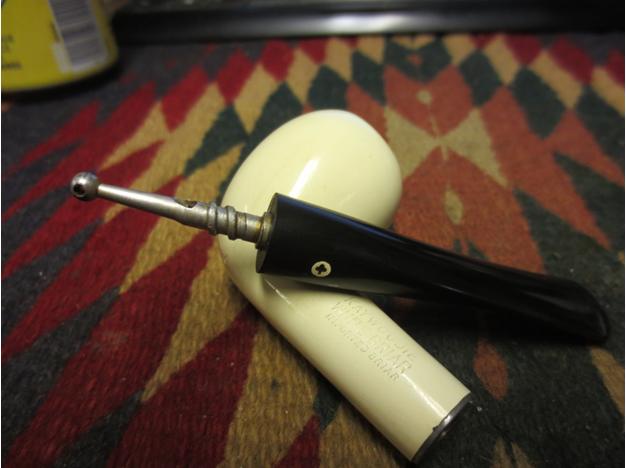
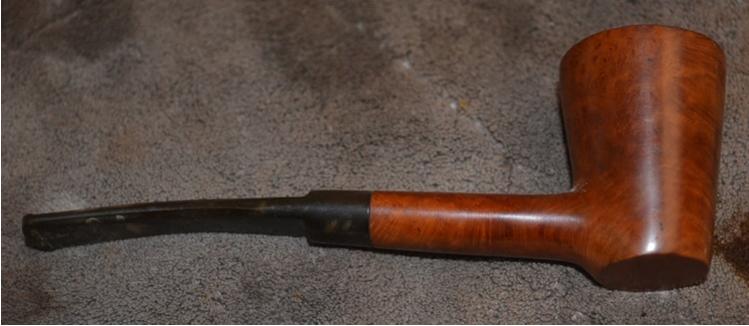
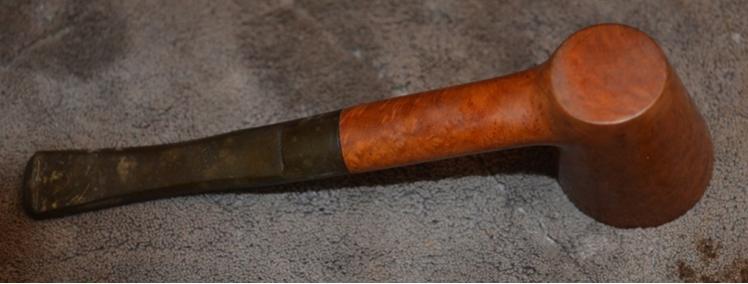
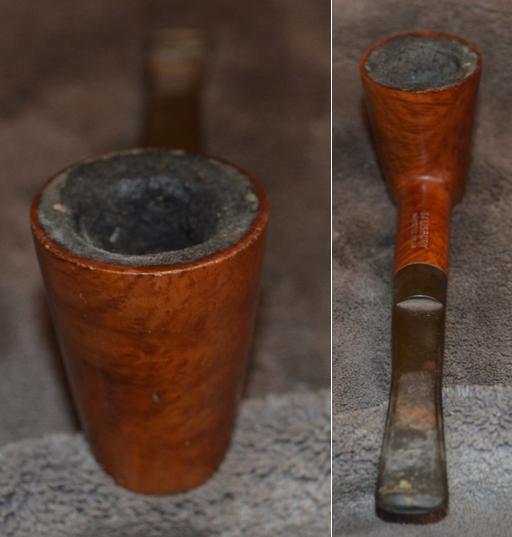
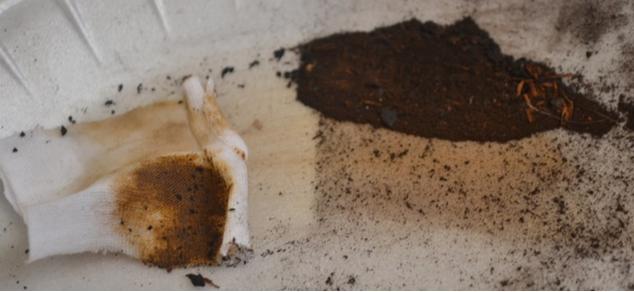
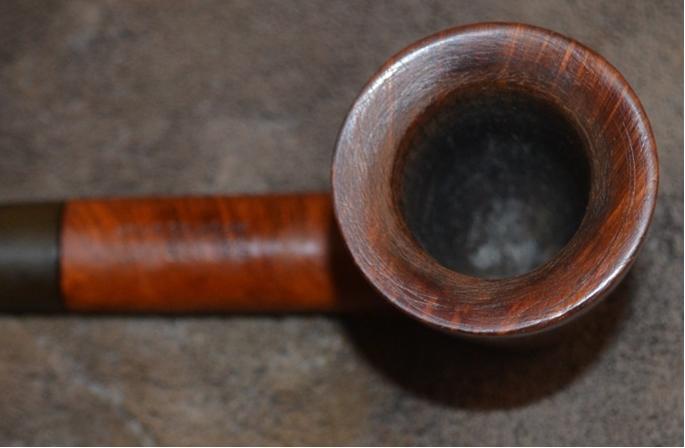
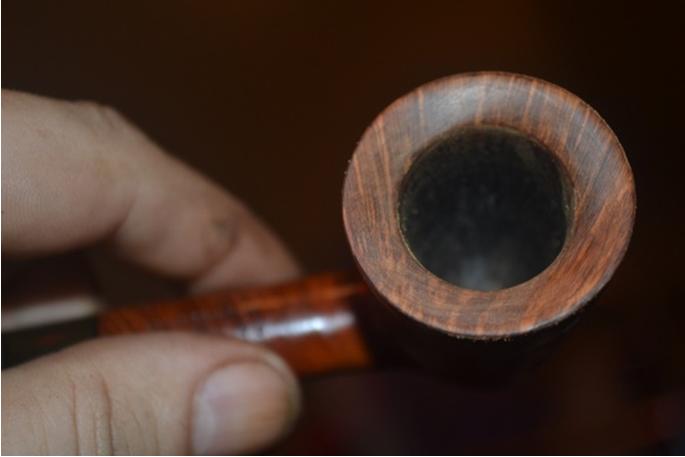
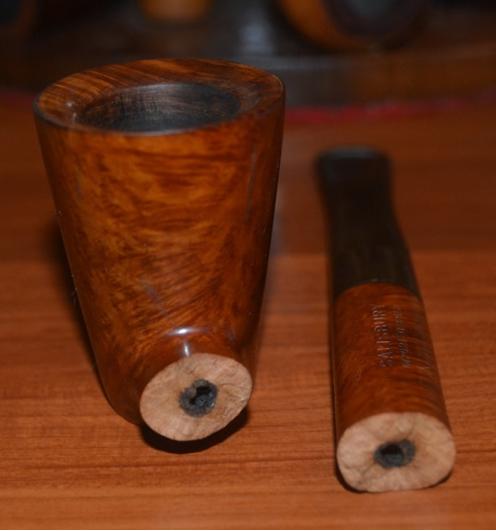
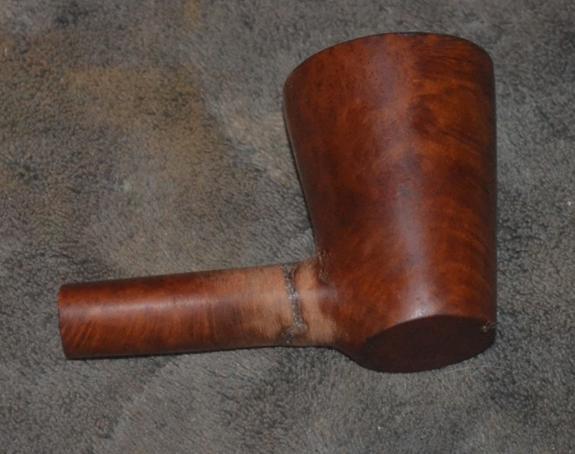
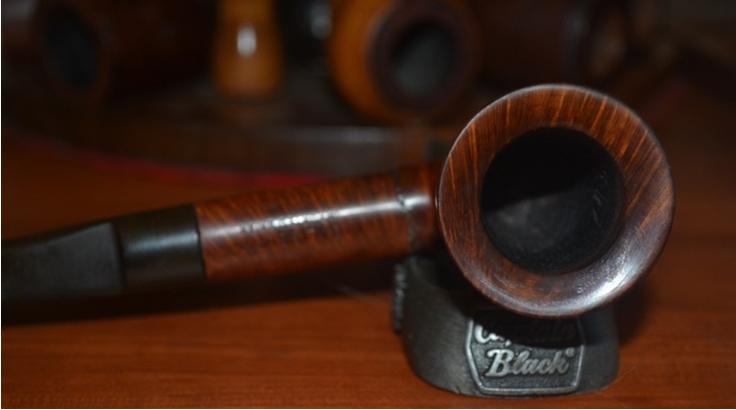
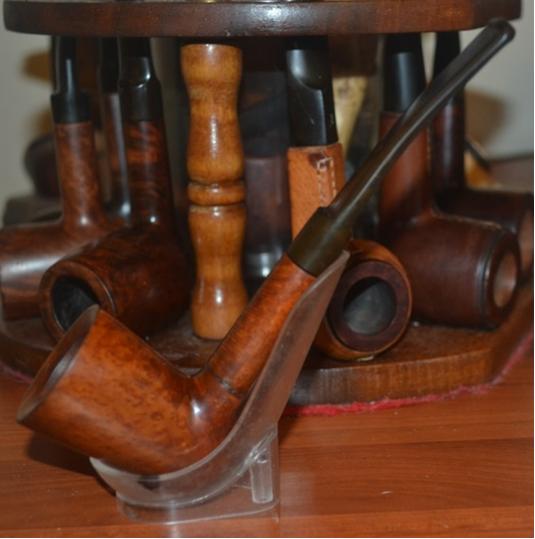
I had two main concerns when another pipe lot arrived in the mail and I turned one of the diverse examples in my hands: the head of a screw tightened flush with the draught end of the bottom of the shank, just before the chamber, and my serious doubts that whatever purpose a screw might serve could be legitimate. In other words, I was afraid to remove the thing for fear the pipe, which otherwise had potential for elegance, would fall to pieces if I did so.Rob1 Before attempting to remove the ominous screw, I tried blowing through the open end of the shank, only to become red in the face and breathless with failure. Then I turned to running an alcohol-soaked pipe cleaner through the shank and found that it, also, was blocked, although the cleaner came out with only a light rusty color, a fact I told myself was promising. For the first time in my restoration experience, I had a structural problem with which to deal. I was elated.

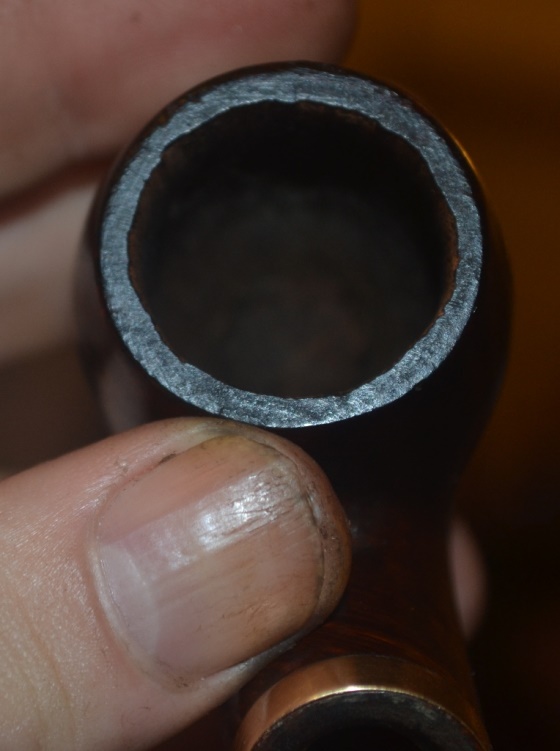
Now, don’t go and think I’m some sort of nut who gets his jollies working on broken things. For the most part I satisfy myself making old, abused or “well-used” pipes beautiful again. From upcoming photos, the need for this treatment on the bizarre Jenkins billiard this blog is about will be obvious. It’s just that until this pipe, the only kind of restoration I had done was of the basic variety. At last, I had an opportunity to tinker around and make adjustments to a pipe’s infrastructure, if you will. Hence, I felt the butterfly effect in my stomach.

Before touching whatever was screwed into the bottom of the pipe – I only describe the device this way now, as at the time I had no reason to suspect it might be anything but an average screw – I thought it advisable to see if I could find a Jenkins Pipe Co. or the like anywhere online. I started with pipephil.eu, my favorite first stop, but found no mention of the brand. And so I resorted to pipedia.com, which, as a user-generated source of information, can be more dubious in its reliability. Still I found no mention of the maker, despite the crisp, clear nomenclature including an elaborate brand stamp.Rob2 Having spent two days using more than every word combination in Heaven and Earth than are dreamt of in my philosophy to track down the pipe’s origin, with both Google and Yahoo search engines, and finding everything but a plausible reference to the Jenkins who made this beautiful if weird pipe, my patience, wits and research skills (short of doing something crazy like going to the library) were exhausted. I must now hope for knowledgeable feedback from readers of this blog, or maybe our host.

The closest I came was a patent issued to one Eric G. Jenkins in 1959 for a wild but unique spring contraption to be used for tamping the spent ashes of pipe tobacco from the chamber into a suitable receptacle, without risking damage to the pipe or staining of the fingers, to which I gather pipe enjoyers back in the day had no other way to avoid. [See first hyperlink at the end of the blog. Thinking about it, the idea occurs to me that this is just the sort of Jenkins who could design the device used in the Ever Dry.

Remember, this was before the now ubiquitous three-piece pocket pipe tool was patented in the early 1970s.

RESTORATION
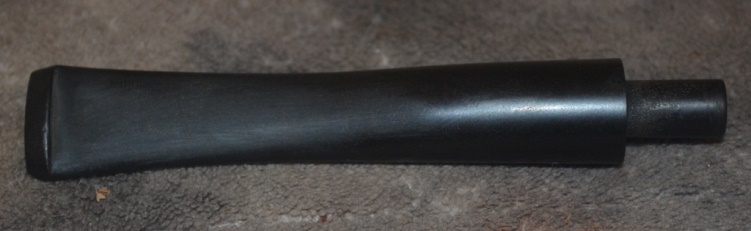
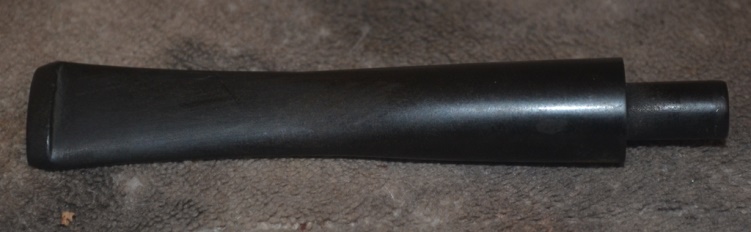
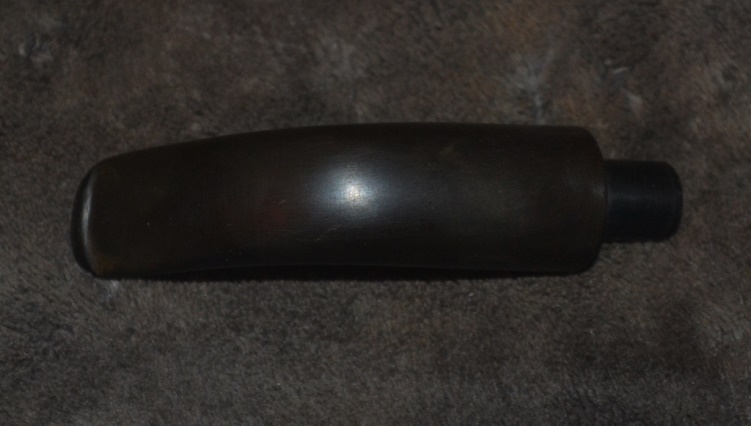
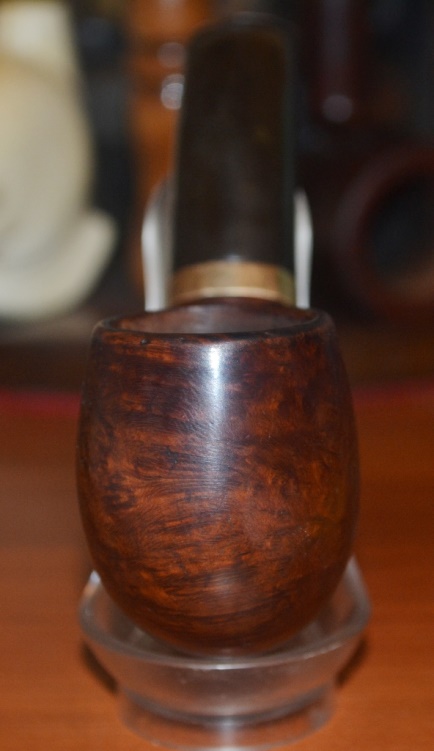
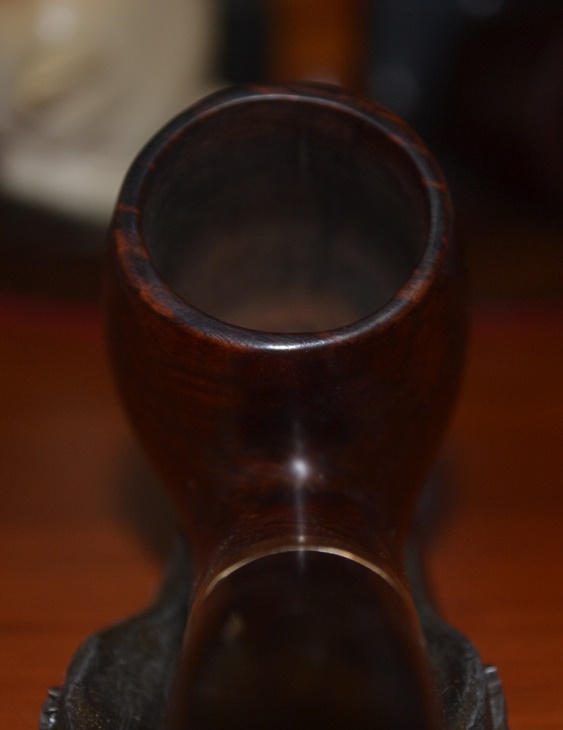
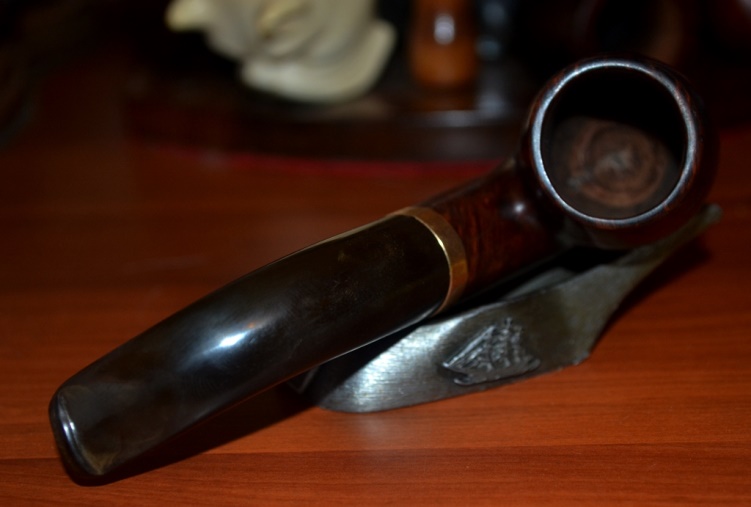
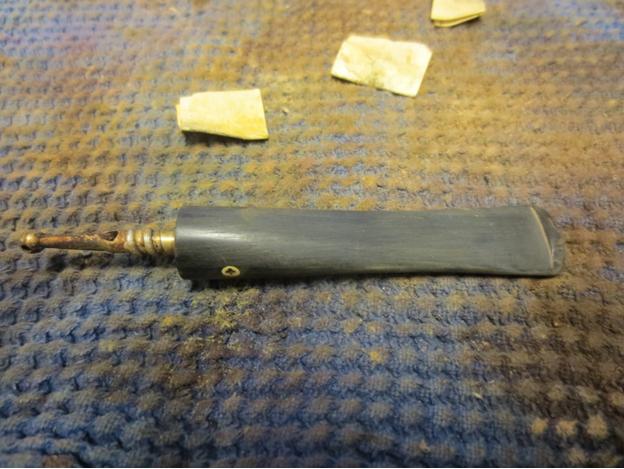
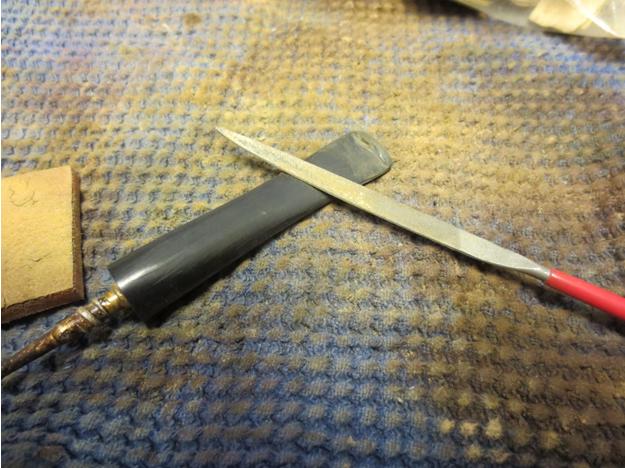
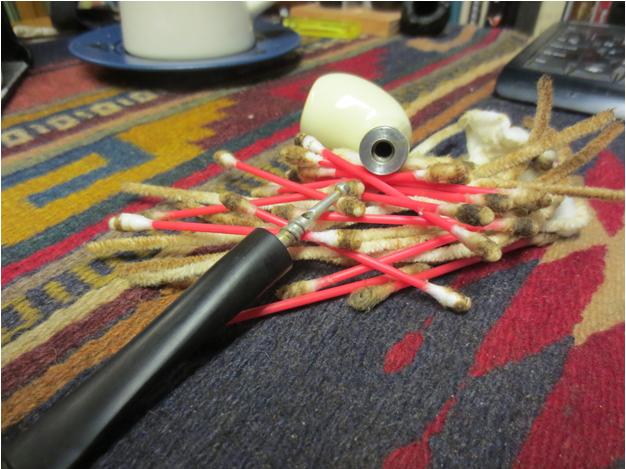
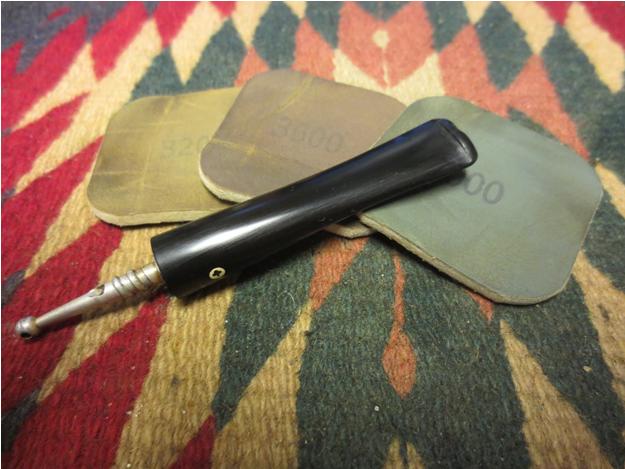
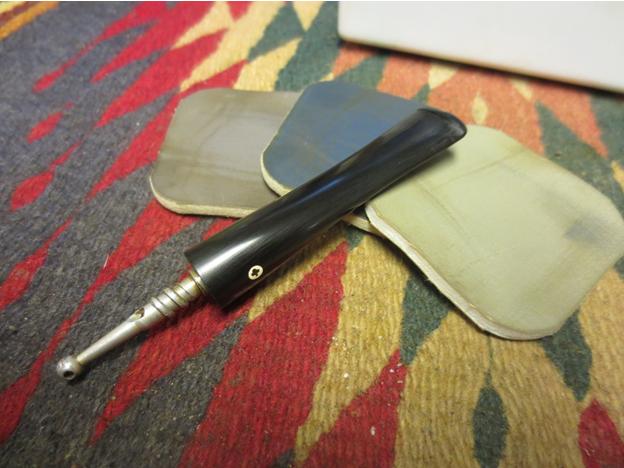
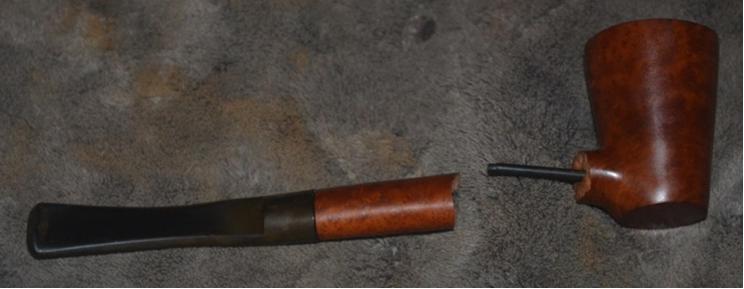
My routine in these blogs has been to take a linear path showing, with words and photos, what it was like, what happened, and what it is like now. But this restore was far more indirect, and so to guide me in my description of it I organized my photos to prompt my memory of just what it was I did, and when, to fix this Jenkins TrulyDry system pipe. That noted I will nevertheless begin with what it was like: Rob3 Rob4 Rob5 Rob6 Rob7 Rob8 As some may have noticed in a few of the photos above, the stem and shank were uneven. In fact, I had to place the entire pipe in the refrigerator for close to an hour before I could even make the stem budge much less remove it. That feat came with more time in the cooler. The problem with the alignment, I soon learned, was remedied without trouble by cleaning off the buildup of some substance, with which I am not familiar, from the tenon.Rob9 Confident enough to continue with the removal of the screwy, old-fashioned tenon attachment-like gizmo that was over-tightened into the bottom of the shank, I did so with extreme care and slowness, listening all the while for something like a nut to come undone inside. But there was no such sound.Rob10 Right away, it was apparent that the object removed from the shank was not a regular screw employed in an ad lib repair but something designed for a purpose, however inexplicable. Able to blow through the shank, at least, I decided it was time to clean the pipe after reaming and sanding the chamber and using super fine steel wool on the rim to remove the blackness there.

Without much hope that the pipe would have any draw on it when I replaced the screw, I was, therefore, not disappointed to find I was correct. But an idea came to me, and I loosened the screw just one full turn, allowing me to blow and inhale through the intact pipe. I removed the ventilator again and set it aside for the remaining work on the wood.

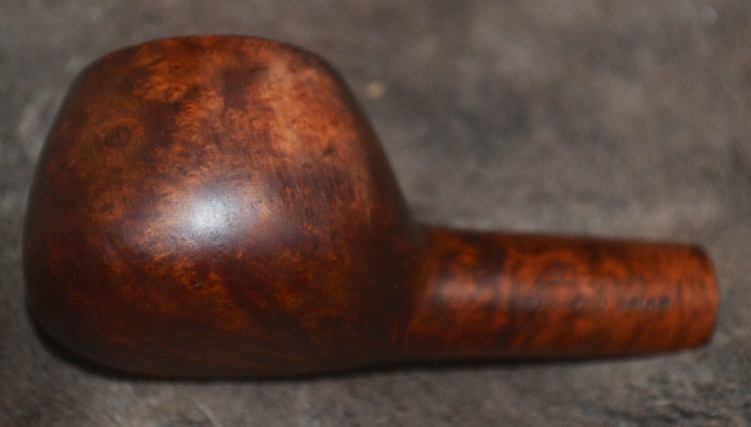
I cleaned up most of the scattered scratches either with 1500 micromesh or 400-grit paper and then rubbed the entire area of wood with the 1500 followed by 3600. The result was, as one reader of another recent blog commented, baby smooth. I also only had to re-stain a few small patches of the wood, not counting the rim.Rob11The stem required heavy sanding with 400-grit paper to fix all of the scratches, teeth chatter and uneven bit, followed by 1500 and then 3600 micromesh.

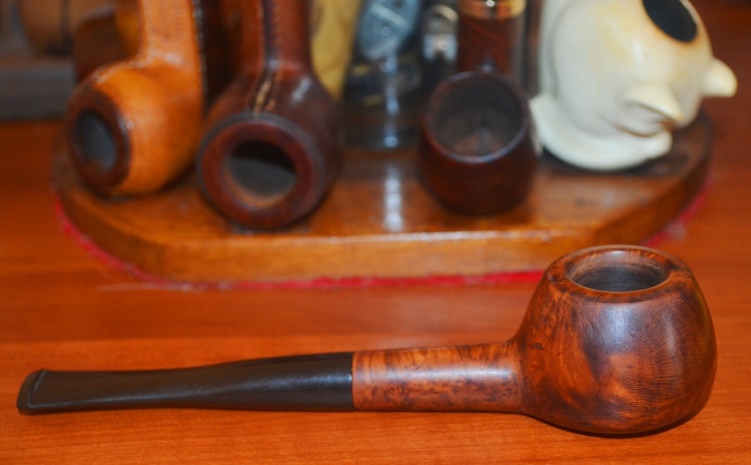
When I had prepped the pieces better than I had ever done before, the buffing brought out a brilliant, dark reddish luster. Rob12 - Copy Rob13 Rob15 Rob16 Rob17 Rob18 CONCLUSION
I emailed my blog-in-progress to a retired engineer friend of mine, who looked over the text and photos and called me to arrange a meeting at McDonald’s the next morning. Armed with my laptop, an iced coffee and two printouts of the ash removal system patent that even I could see did not match the device used in the Ever Dry, I was relieved when I saw my friend walk through the door.

Confirming my conclusion concerning what the valve was not, my friend determined by the design and placement of the device that it was some sort of ventilator, however obtuse in planning and execution, that was intended to release heat and maybe even to collect moisture and small pieces of tobacco with the valve extended almost all the way. The engineer’s analysis made sense, and, happy to have an explanation of the atypical screw valve to present in this blog space, I embraced it.

At that time, I experienced another one of my moments of clarity. Seeing the intentional groove cut into the wood, I suggested that it would accommodate storage of the device with the valve retracted at times when the pipe was not being enjoyed. The engineer concurred.

Still later, while making the extensive but necessary revisions to my original version that had been debunked by the good engineer, I recalled an enlightening and lengthy online article concerning and titled “The Revolution of the System Pipe,” by Don Duco. The general knowledge and research behind the study of the evolution of system pipes around the globe is exhaustive.

I flashed on a description of the original Kirsten metal pipes with screw-on briar bowls and their inclusion of a closure system between the bowl and the shank that accomplished the same result of the screw valve on the Jenkins, and realized the design of the mechanism in the Jenkins pipe was nothing more than an adaptation of the early Kirsten, despite the newer, cruder method.

Still, whoever owned the Jenkins pipe brand must have been a frustrated engineer, if only by the aesthetic evidence, for being inspired by the notion of screwing something that, when the pipe is being enjoyed, dangles downward with an obvious and alarming attraction of attention. Besides, anyone, whether or not a connoisseur of pipes but not familiar with the Jenkins system, seeing one with the head of a screw in the bottom of it, would think it some sort of jury-rigged attempt to hold the pipe together.

As my father often pointed out, it takes all kinds.

WEBSITES TO VISIT

http://www.google.com/patents/US2886044 (Click on View as PDF for official USPTO document.)

http://www.pijpenkabinet.nl/Artikelen/Systeempijp/art-E-systeempijp.html
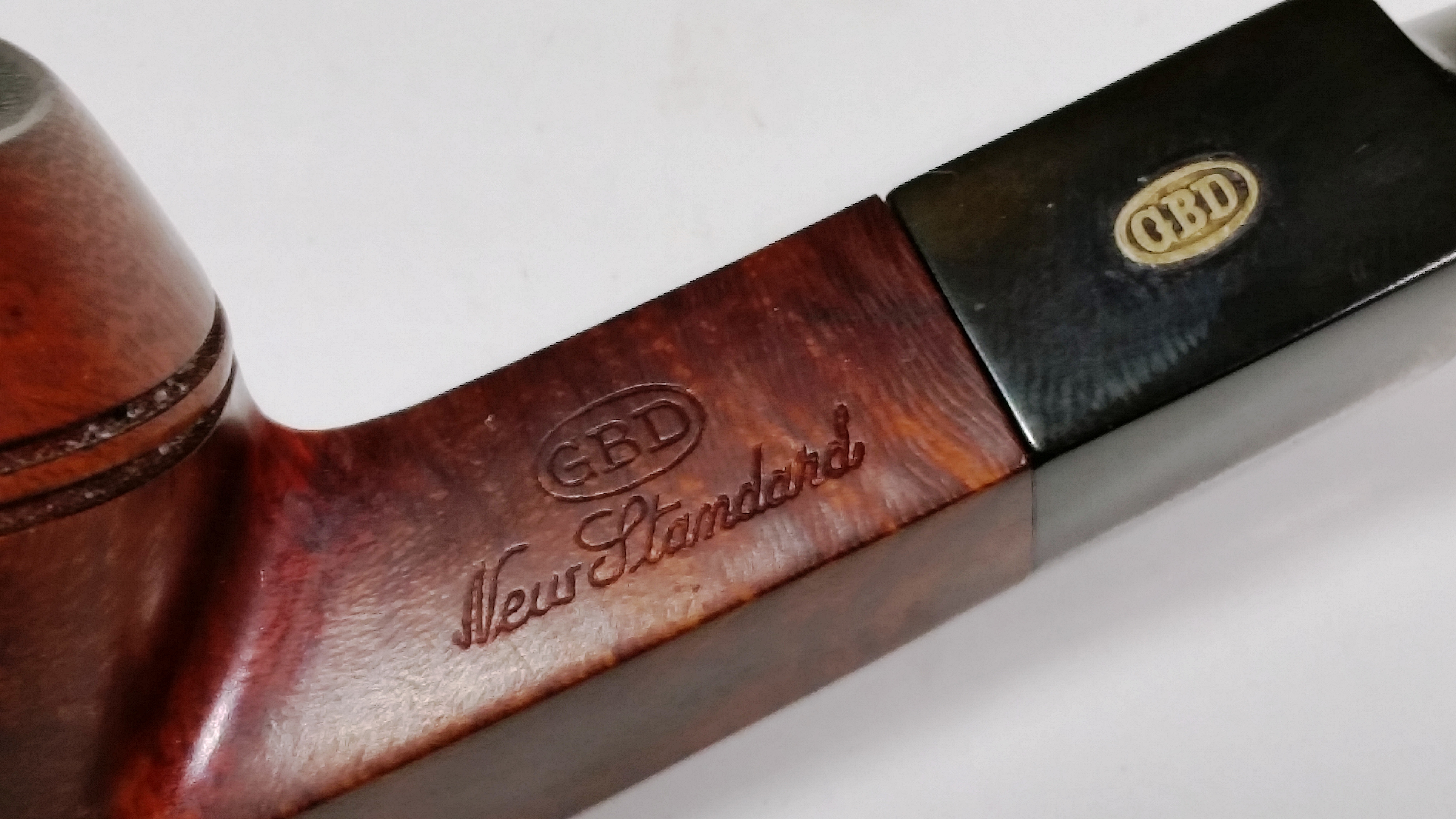
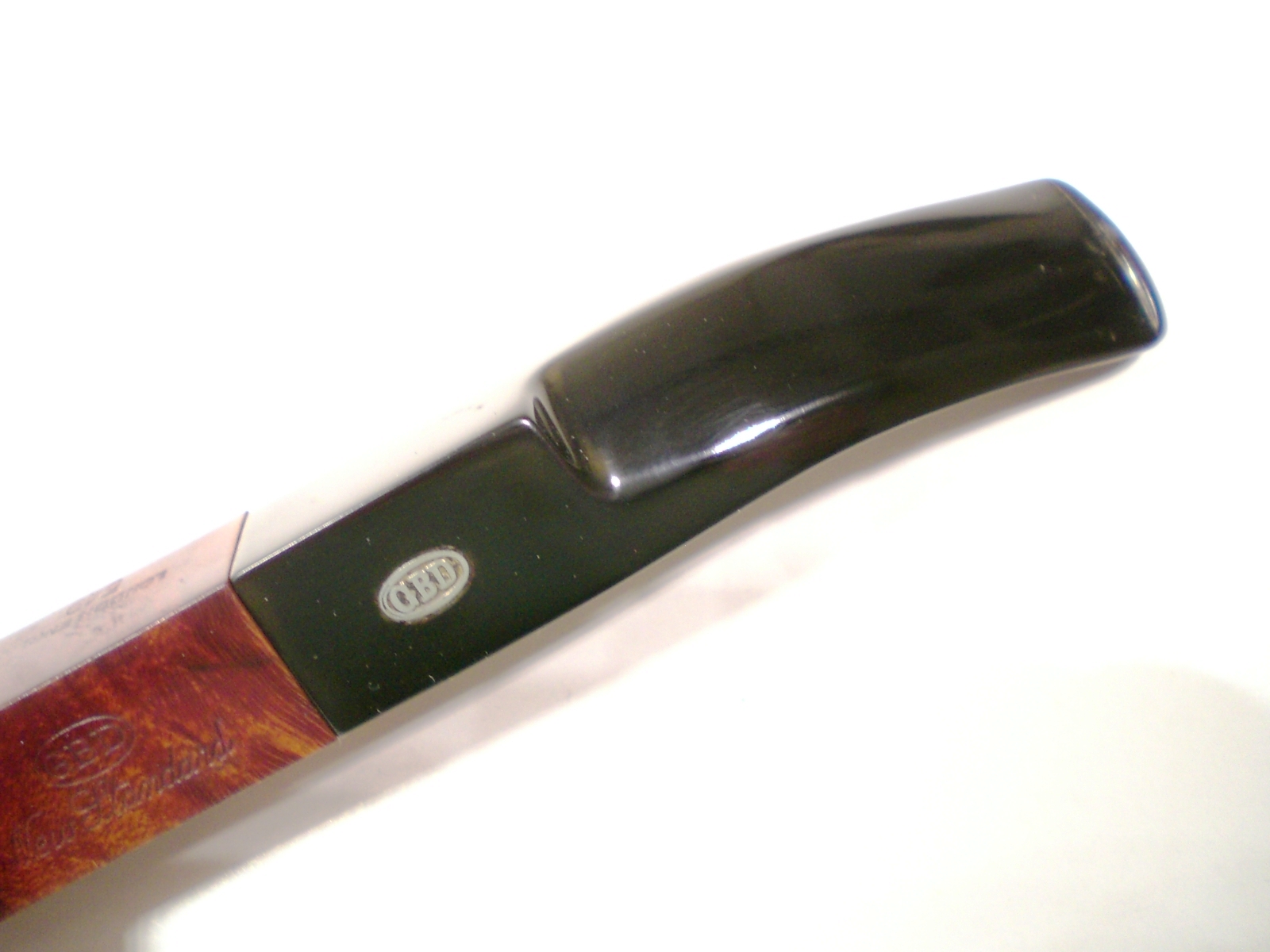
GBD 549 New Standard Restoration


Blog by Al Jones
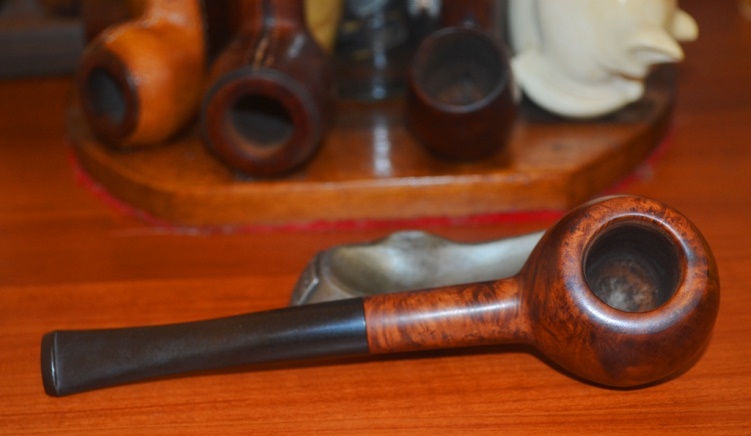
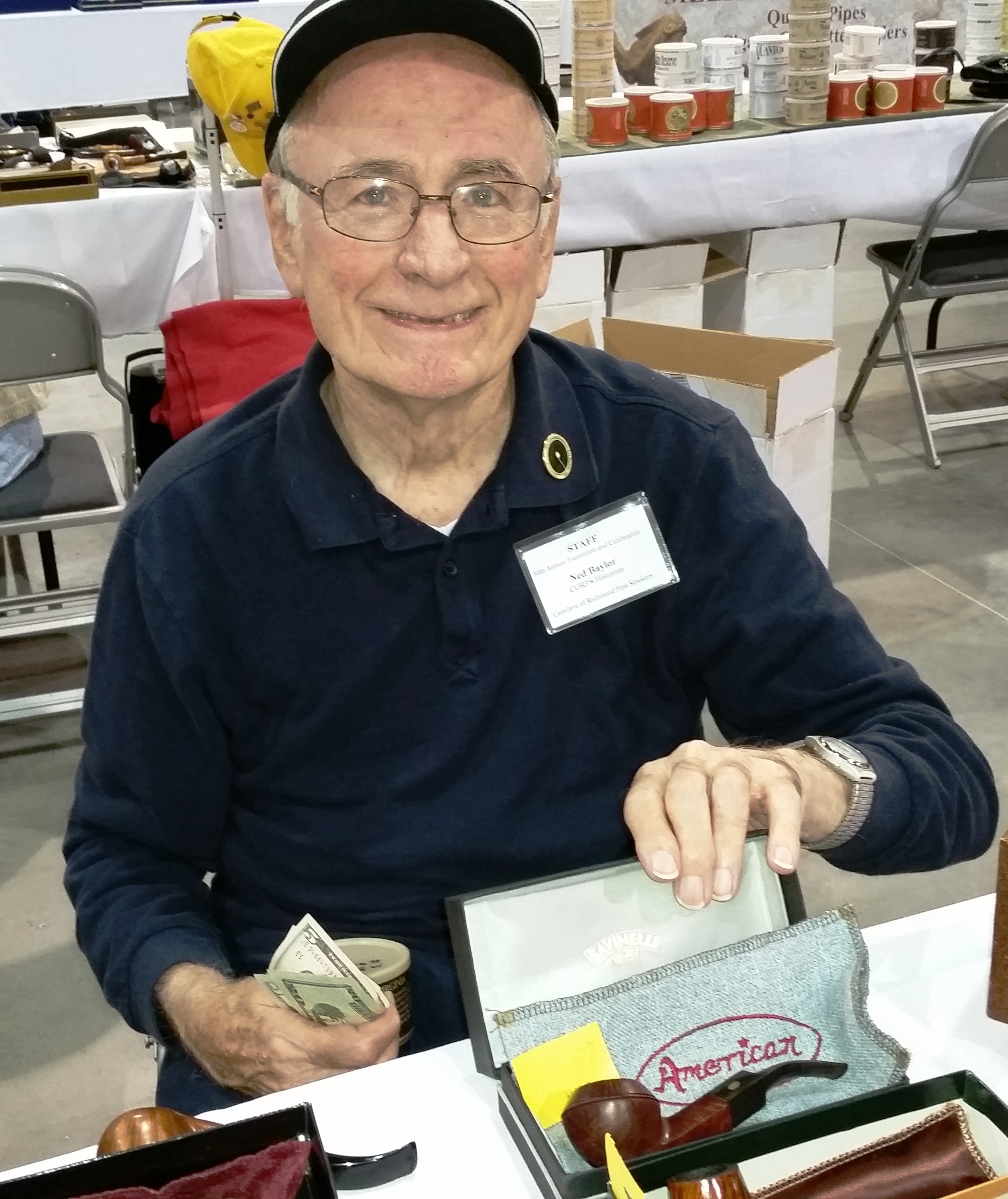
This pipe came from the table at the recent Richmond CORPS show.  The seller, Ned Baylor, is a member of the club.  I always try and make at least one purchase from a club members table.  Ned’s daughter was helping him at the show and he was pretty enthusiastic about making his first sale.  He included a Savinelli box and a nice Mark Tinsky sock, which I needed.  One of the Christopher Morley club members grabbed the box for a Savinelli he purchased.  I already had this GBD shape but thought the pipe would make a fun restoration project.

CORPS_2014_Ned_Baylor

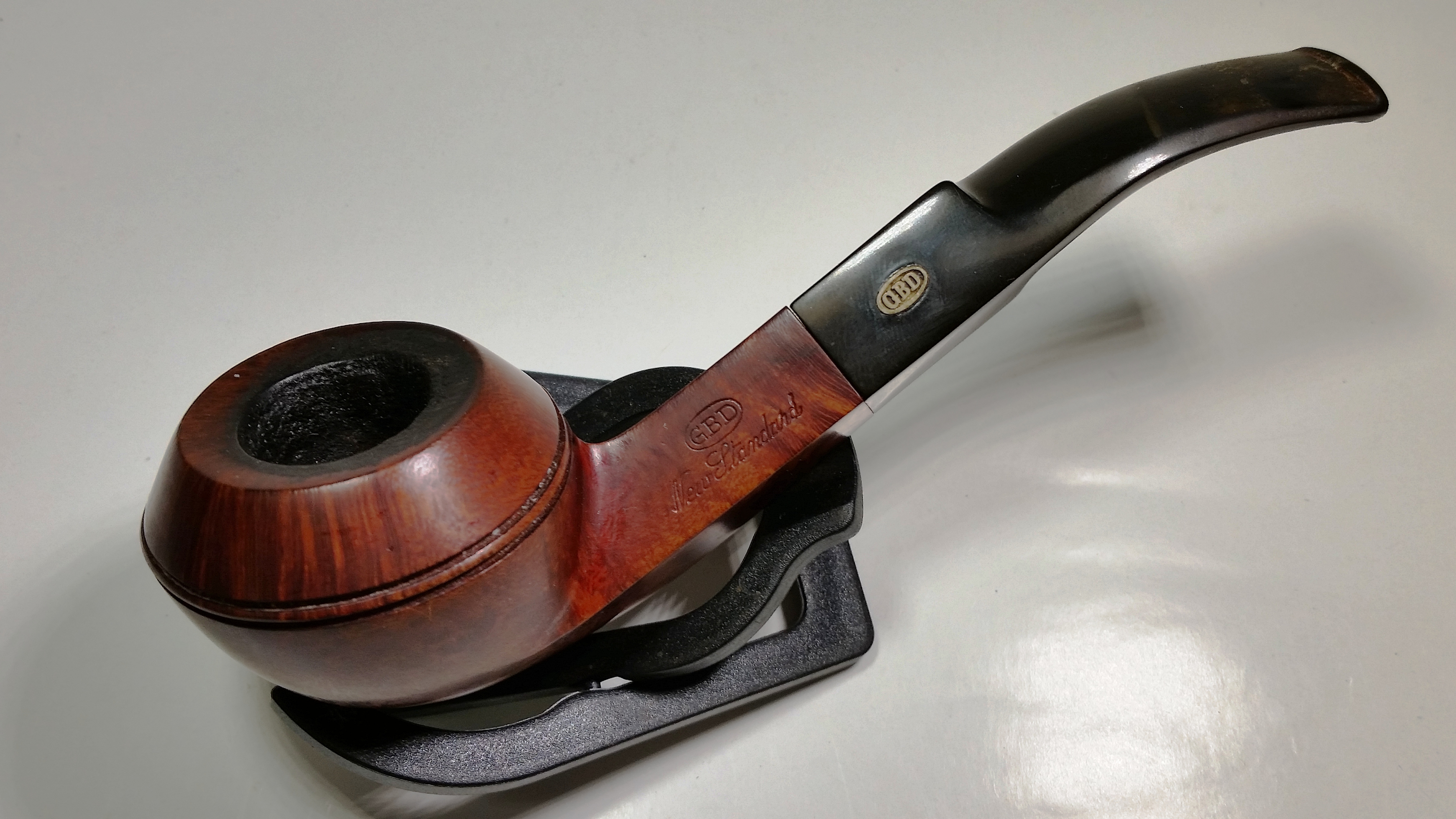
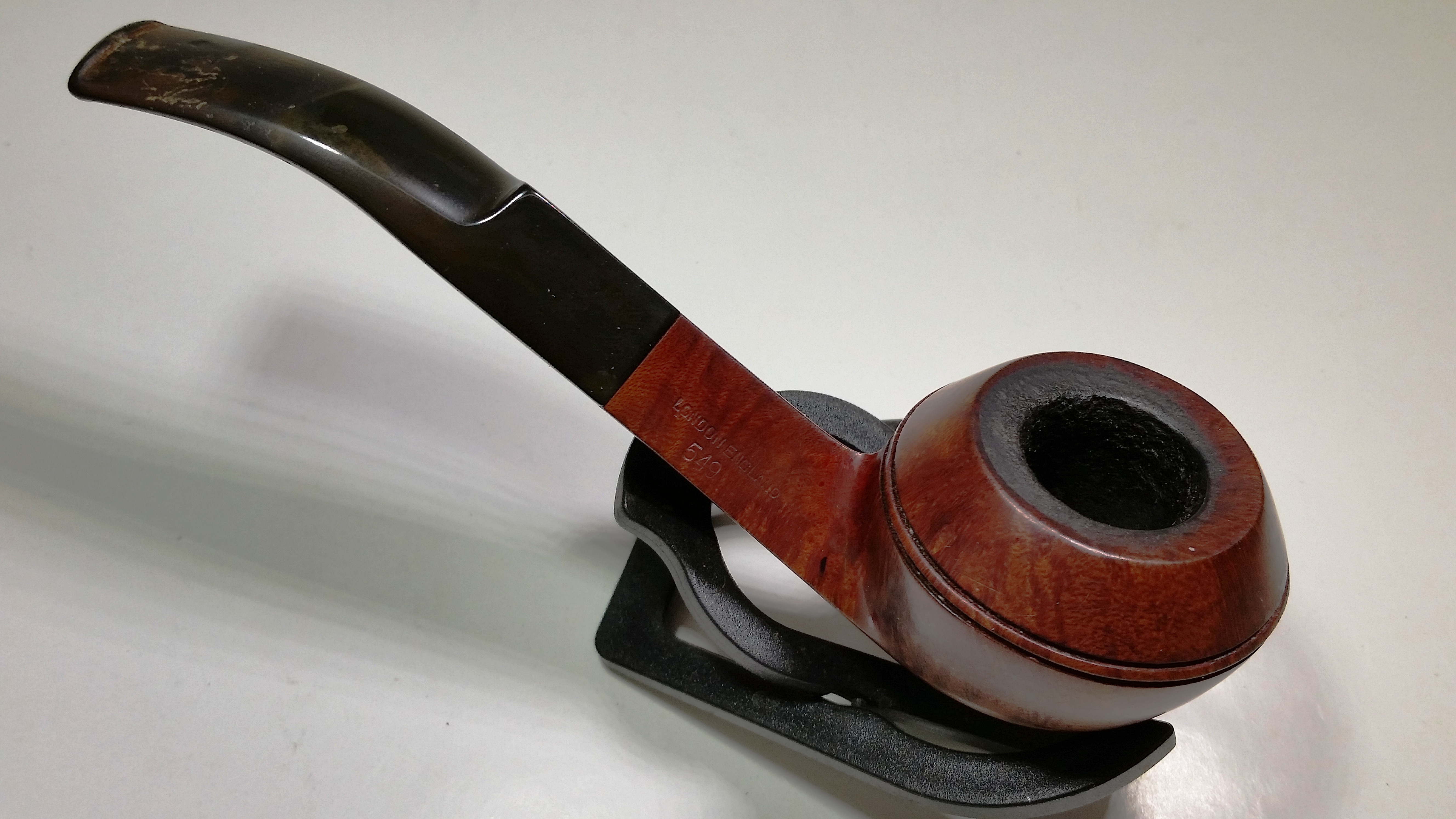
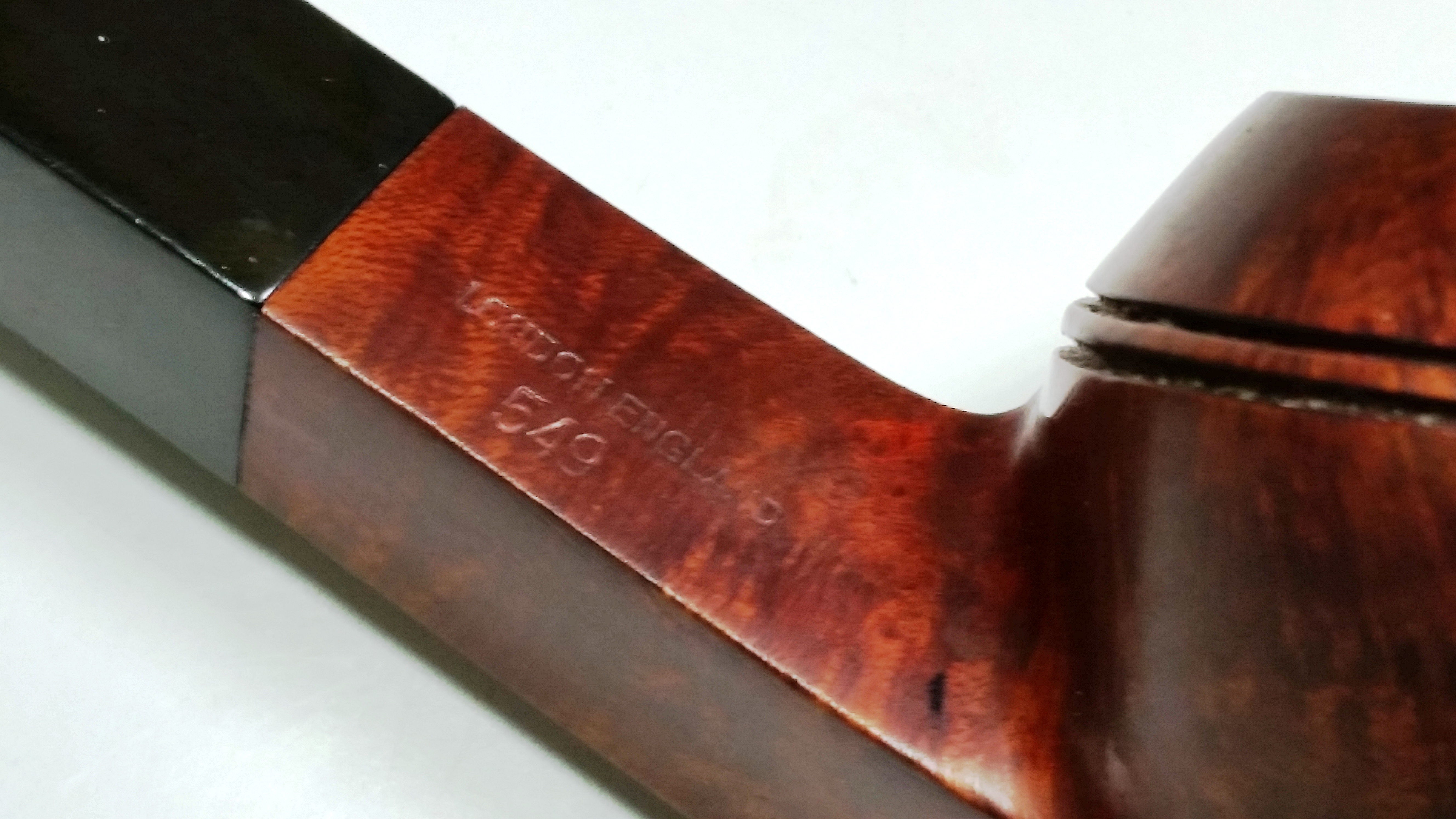
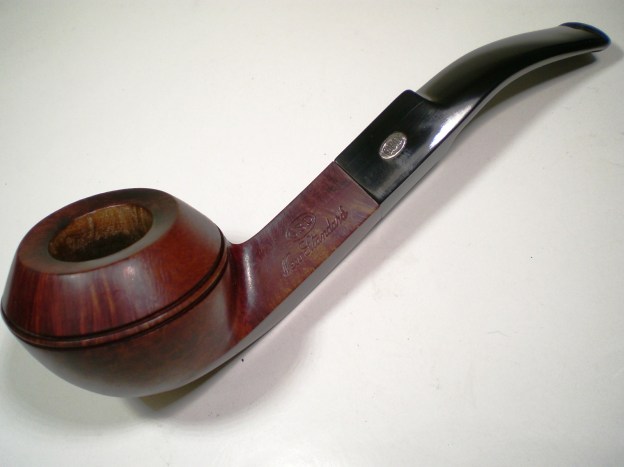
As I mentioned the pipe was in pretty decent overall condition and this was not a challenging restoration, but with pleasing results.  The nomenclature was in very good shape as well.  The brass rondell and straight line “London,England” stamping indicate that the pipe was made before the merger in approximately 1981.
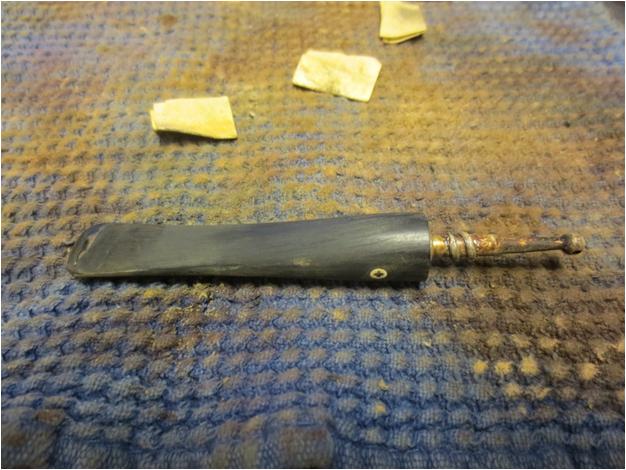
GBD_549_New_Standard_Before GBD_549_New_Standard_Before (6) GBD_549_New_Standard_Before (1) GBD_549_New_Standard_Before (2) GBD_549_New_Standard_Before (4)

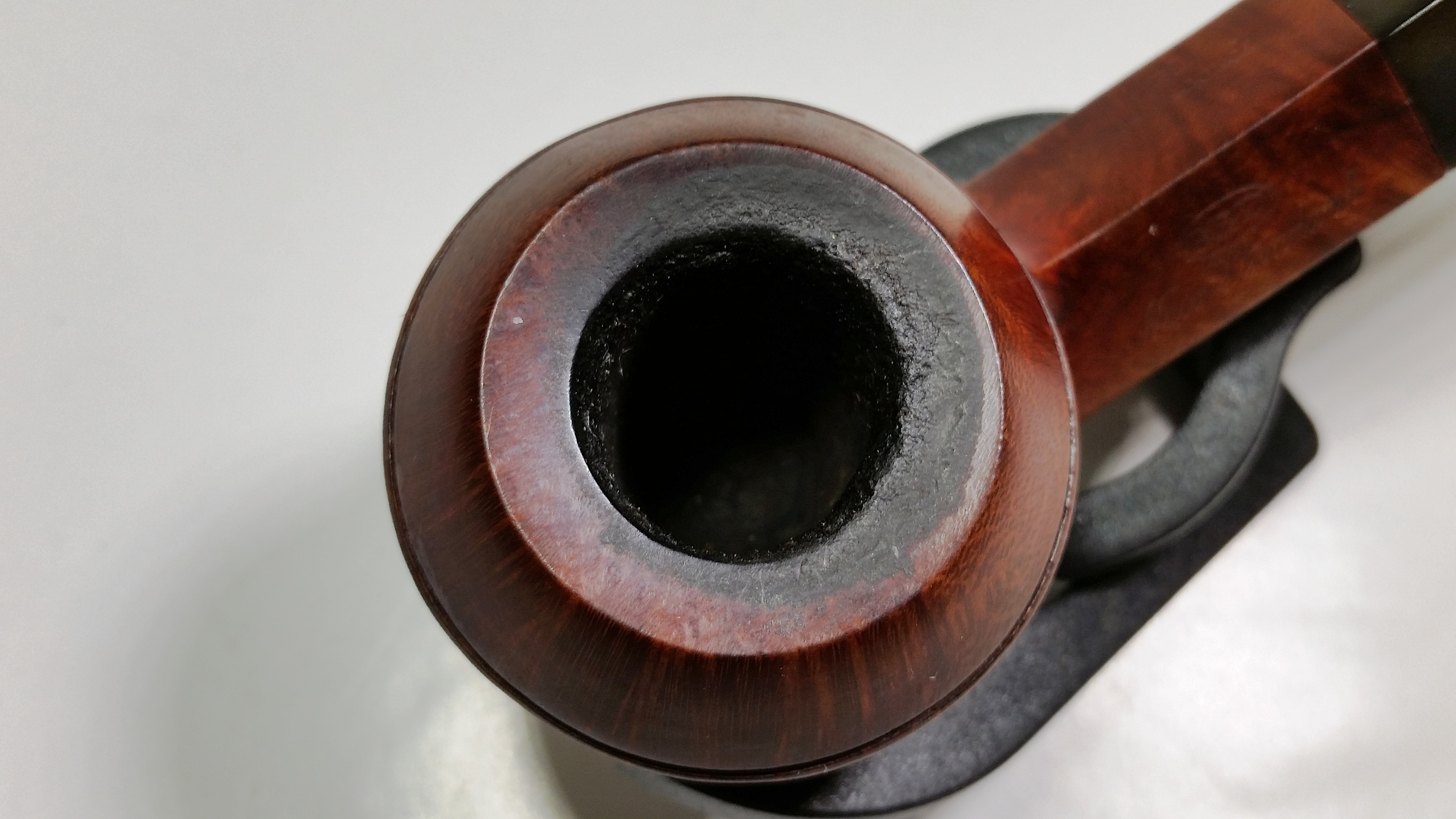
The pipe was in pretty good condition, with a little tar build-up in the bowl and a few teeth marks on the stem.  The stem was only mildly oxidized.

I removed the cake from the bowl with my Castleford reamer and found the bowl to be in very good condition.  The bowl was soaked with alcohol and sea salt.

GBD_549_New_Era_Before (3)

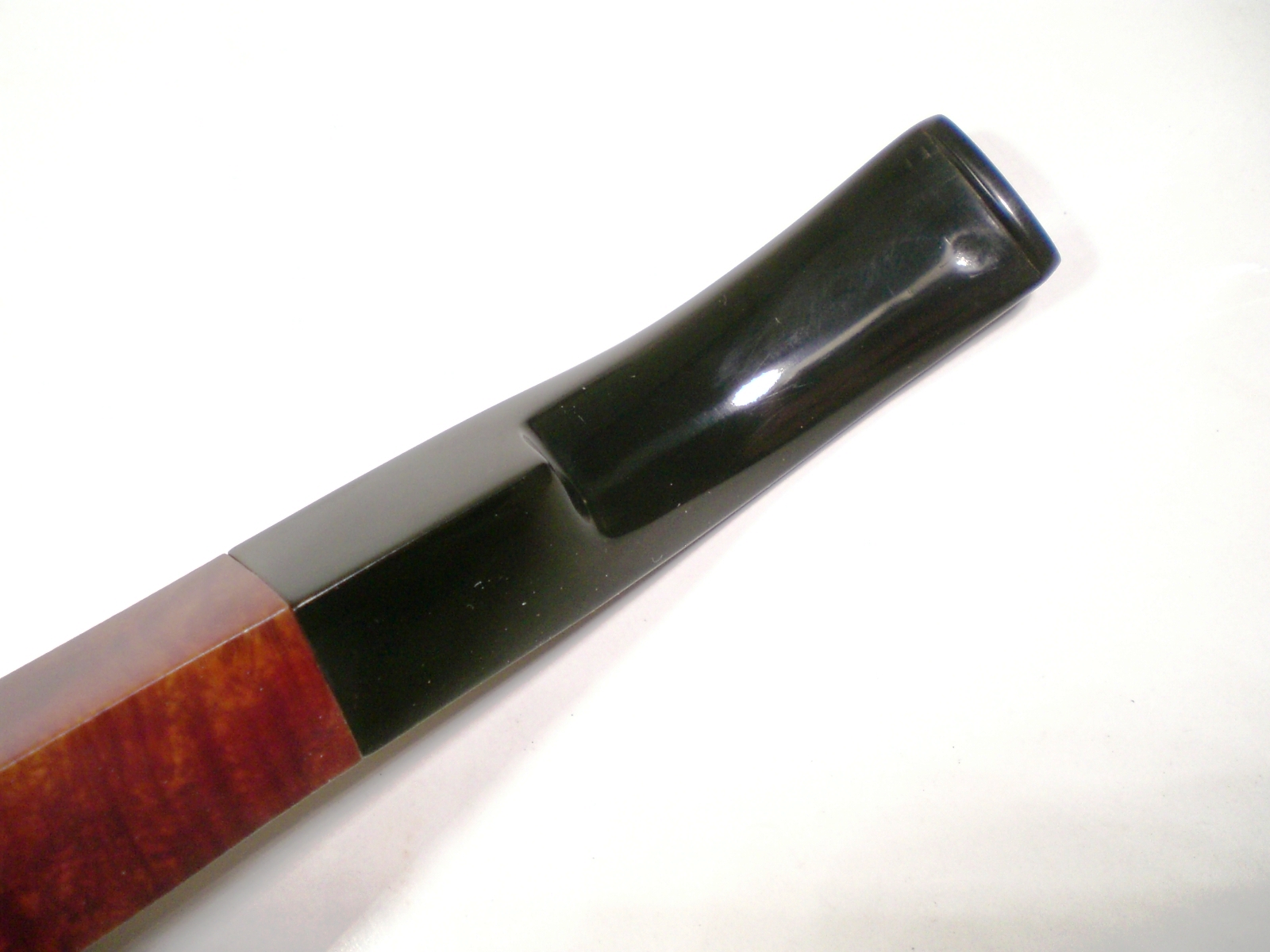
I put a dab of grease on the brass rondell and soaked it in a mild Oxy-Clean solution for several hours to loosen the oxidation.  I started with 800 grit wet sandpaper, progressing to 1000>1500 and 2000 grades.  I then used the 8000 and 12000 grade Micromesh papers to finish polishing the stem.  There were a few teeth marks on the top and bottom of the stem.  A little heat almost removed the one on the top of  the stem and minimized the dent on the bottom.  The stem was then buffed lightly with white diamond rouge, with the stem mounted in the briar.  The stem was a little loose so I put some distilled water in the shank, which made the briar swell a bit and tighten up the stem.  I felt after smoking that the stem would tighten nicely.

I removed the tars on top of the bowl with some distilled water and a cotton cloth.  The a worn piece of 8000 grit Micromesh was used to minimize the rim darkening without lifting the stain.  The stem was already getting snug due to the water used in the shank.  It was just a little bit loose and I smoked one bowl of My Mixture 965 in the pipe during which time it snugged up nicely.  I had bought this one to restore and sell, but it smoked so nice, I almost changed my mind.  It did end up going to a member of the Allentown and Philly pipe clubs who is also on the PipesMagazine.com forums.  I hope he enjoys it for many years.

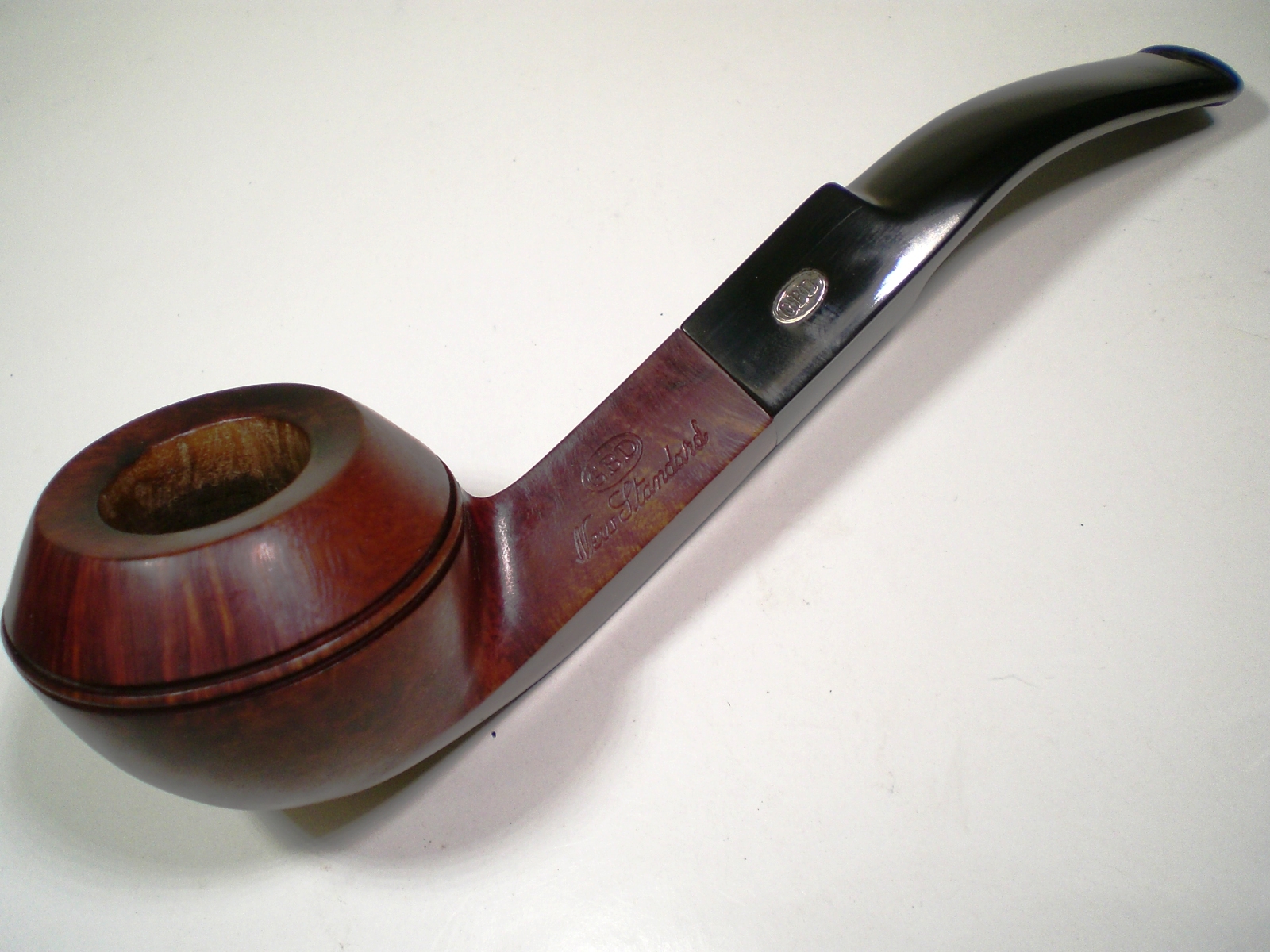
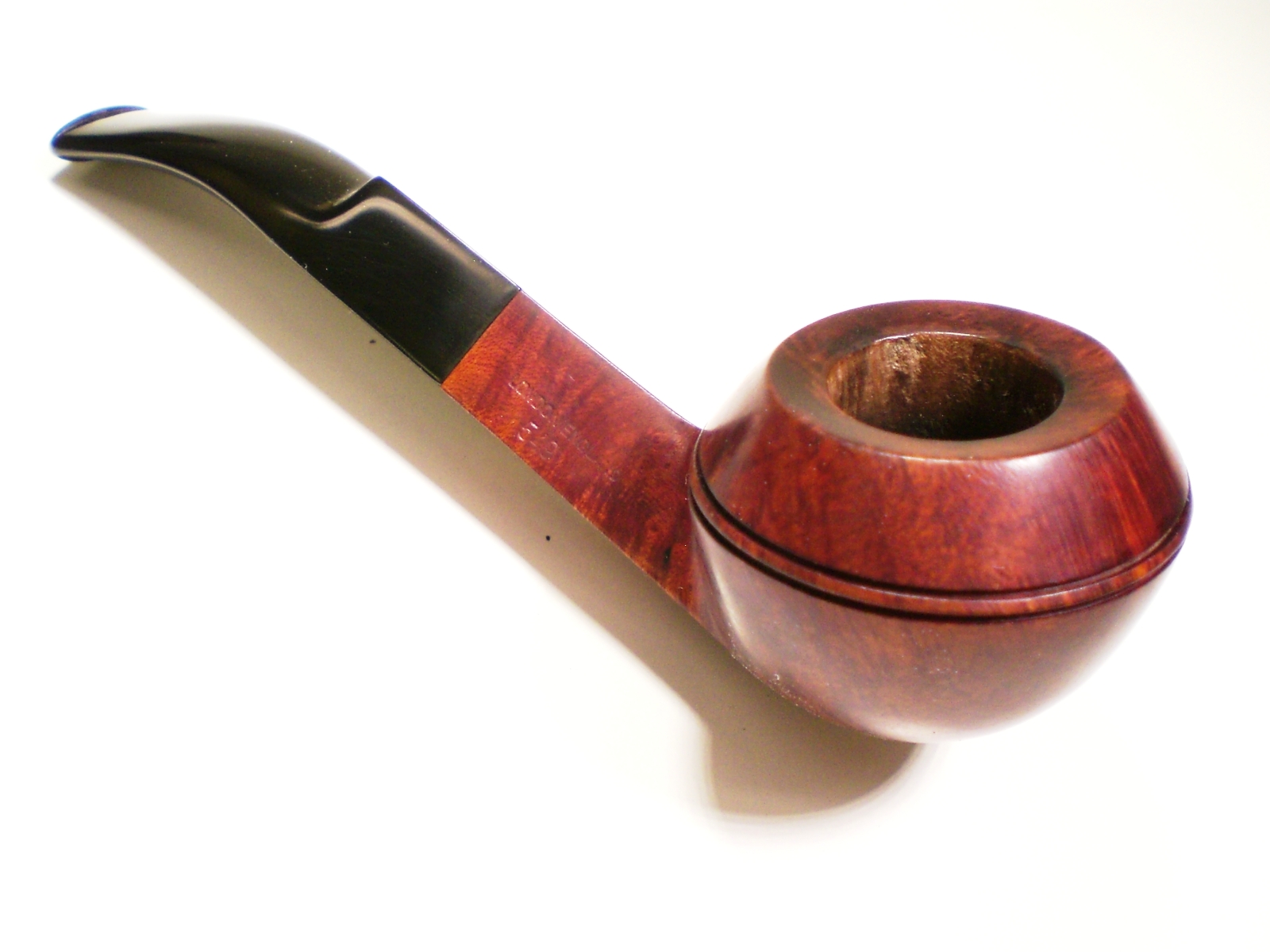
Below is the finished pipe.

GBD_549_New_Standard_Finished GBD_549_New_Standard_Finished (3) GBD_549_New_Standard_Finished (8) GBD_549_New_Standard_Finished (5) GBD_549_New_Standard_Finished (6) GBD_549_New_Standard_Finished (1) GBD_549_New_Standard_Finished (2) GBD_549_New_Standard_Finished (4)


The Case of the Danco Squat Diplomat Sitter – Robert M. Boughton


Guest Blog by Robert M. Boughton
Member, North American Society of Pipe Collectors
http://www.roadrunnerpipes.com
http://about.me/boughtonrobert
Photos © the Author

“Simple can be harder than complex: You have to work hard to get your thinking clean to make it simple. But it’s worth it in the end because once you get there, you can move mountains.”
— Steve Jobs (1955-2011), U.S. inventor, entrepreneur and marketer and co-founder, chairman and CEO of Apple, Inc.

INTRODUCTION
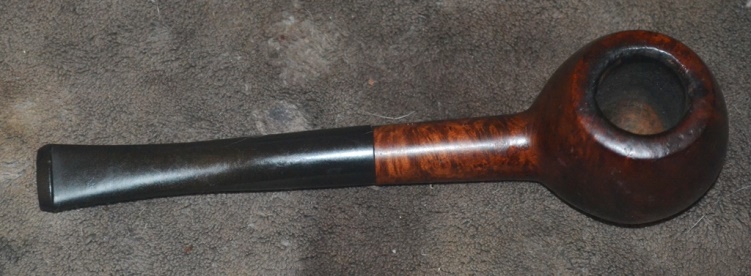
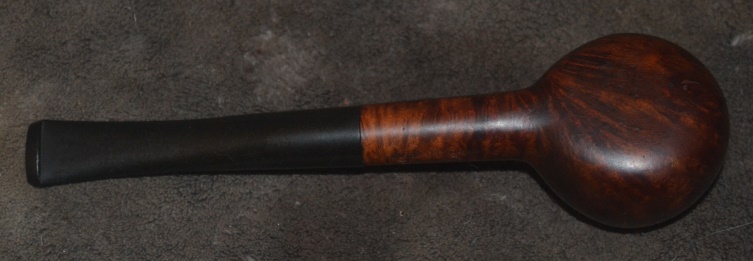
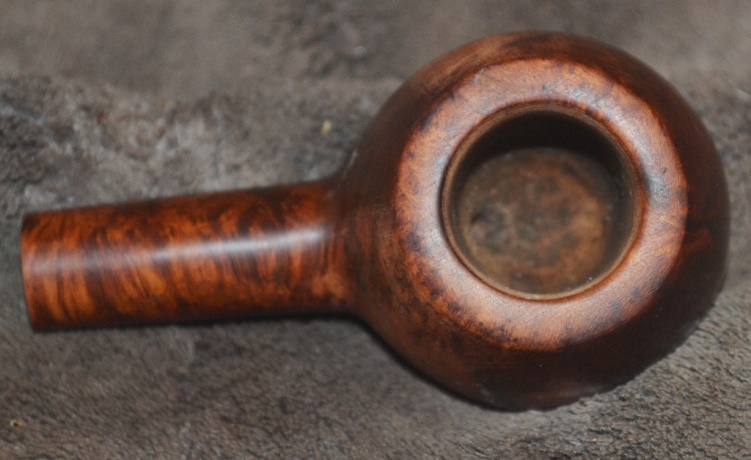
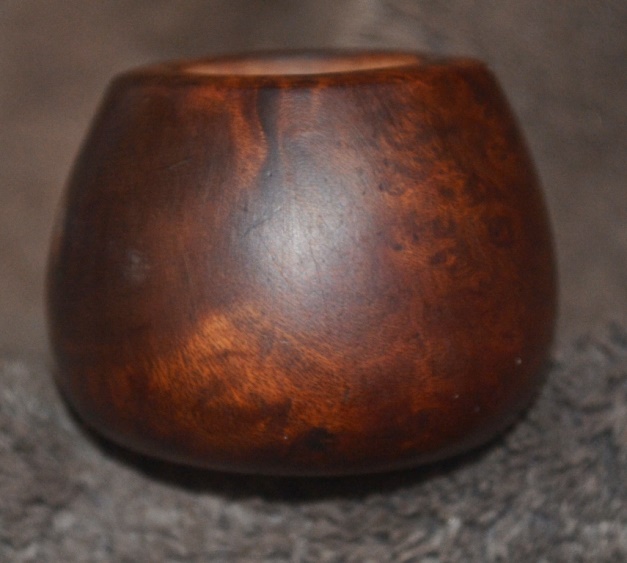
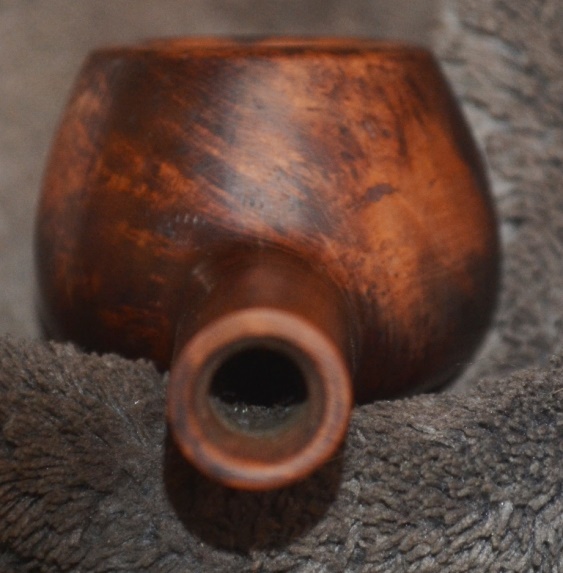
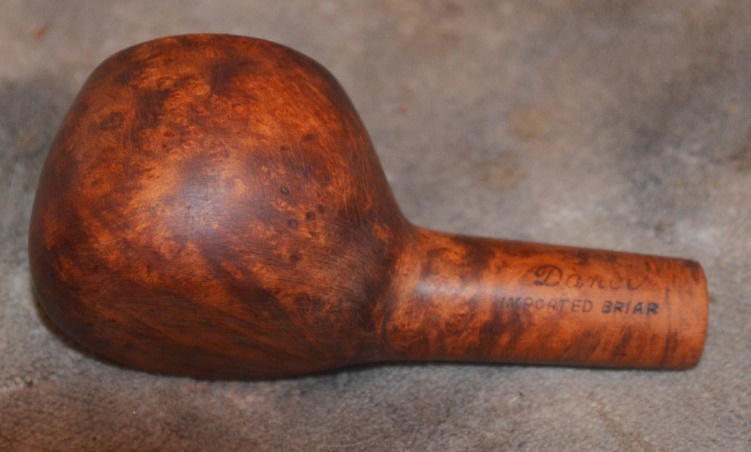
Once again I found myself with an estate pipe that looked, without close inspection, ready to clean and sanitize and offer for sale. The squat Danco brand Diplomat sitter, which looks like the offspring of an apple that mated with a tomato (in terms of pipe shapes), had dark brown stain I suspected might hide fills or other flaws, and so, in particular given the shine and apparent smoothness of the finish, I saw no reason to mess with that. The stem was in the best condition I have ever encountered, and the bowl, at least, was already partly cleaned.

Then I put my dollar store 3x glasses on and took a closer look. I observed clear, deep lines all around the rim that I supposed were caused by uncouth tamping of smoked tobacco from the chamber and also found small but numerous scratches and dings all over the bowl and shank that would in all likelihood require more than micromesh to remove. Therefore, re-staining in patches might be necessary.

Information online about the Danco brand was sparse, but I did learn that the pipes were manufactured in Belgium, Italy and the U.S. Those stamped “Imported Briar,” as is this squat Diplomat sitter, are believed to have been made and distributed in the U.S. Also, the brand dates at least to 1946:

Courtesy of the Web

Courtesy of the Web

For more information on and examples of Danco pipes, see the hyperlinks at the end of this blog.

RESTORATION
While the necessity of taking a restoration a step at a time is obvious, choosing the order is the trick.Rob2 Rob3 rob4 rob5 rob6 rob7 rob8This time, as I did with my WDC Full Bent Billiard, I decided to begin with the rim, which seemed to require little attention. The lack of blackening made it easier, but the crags called for sanding that would leave it even.

320-grit followed by 1500 micromesh made a fast, clean job of it. Venturing into the chamber, I switched to 150-grit to break through what I found to be more carbon than had at first appeared to be the case and was very rough to the touch. When the sandpaper proved to be insufficient for the job, I turned to my reamer and all but finished with the chamber in short order. The last step was to do an alcohol flush, which I let sit for about a half-hour.
While the chamber was clean down to faint briar showing through somewhat all the way down, the shank was still filthy. I used up about 10 bristly cleaners soaked in alcohol before the last one came out white.

Next, with a small piece of super fine steel wool, I rubbed clean the small round opening of the shank where the stem fits and put on my dollar glasses again for close scrutiny to plan a course of action for mending the bowl and shank.

Hoping against hope to avoid even a spotty re-stain, I started with 1500 micromesh, which in fact removed one or two shallow scratches, then 1000 and even 800, all of them with the effect of wet toilet paper.

I decided to notch it up (or down) to the limit I trusted would get out all but a few of the scratches and pits – 400-grit. I was not surprised that the coarser paper worked as I expected but that the resulting lighter color was more pleasing to the eye and also uncovered no blemishes. I buffed the wood with 1500 micromesh to eliminate the sanding marks and give it some shine.Rob9 rob10 rob11 rob12 rob13And so, taking a chance I knew I could correct if necessary, I removed the rest of the original waxes and stain to the same degree. Astonished to find not a single fill or other blemish that needed repair, but even more so at the apparent sloppy over-application of stain in some areas where it was so thick the wood looked black, I forthwith took off all of the offensive misuse of stain with more 400-grit and buffed the entire surface with 1500 micromesh.rob14 rob15 rob16 rob17 rob18 rob19I mentioned earlier that the stem was almost perfect as I received it, and so the minor sanding of the lip and micro-meshing of the rest was easy.Rob20 Rob21And then, the moment had come to put the prepped vulcanite and briar to the electric buffers. As usual, I used red Tripoli and White Diamond on the stem, and white Tripoli, White Diamond and carnauba on the wood.Rob22 Rob23 Rob24 Rob25 Rob26CONCLUSION
At the risk of repeating myself, I took on this project thinking it would be fast and easy. I will either give it to a pipe club friend who has a penchant for apples and whom I think might also like this shape, or donate it to the club’s raffle, one of which contingencies will happen this coming Thursday. Several times, I have restored three or even four pipes from start to finish in a single evening, but this was not one of those occasions. I ended up spending more time on this one “simple” pipe.

I have often heard that there is no such thing as common sense, which requires complex cognitive abilities beyond some humans. By the same token, to paraphrase Steve Jobs, simple ideas often, if not always, require hard work to formulate.

WEBSITES TO VISIT

Here are some of the sources of information I gleaned on the Danco brand:

http://pipedia.org/wiki/Danco

https://www.etsy.com/listing/167017038/vintage-danco-hollow-bowl-tobacco-pipe?ref=shop_home_active&favorite_listing_id=167017038&show_panel=true Scroll down
http://www.smokingpipes.com/pipes/estate/united-states/moreinfo.cfm?product_id=35071

Sasieni Stratford Ruff Root Restoration


Blog by Al Jones

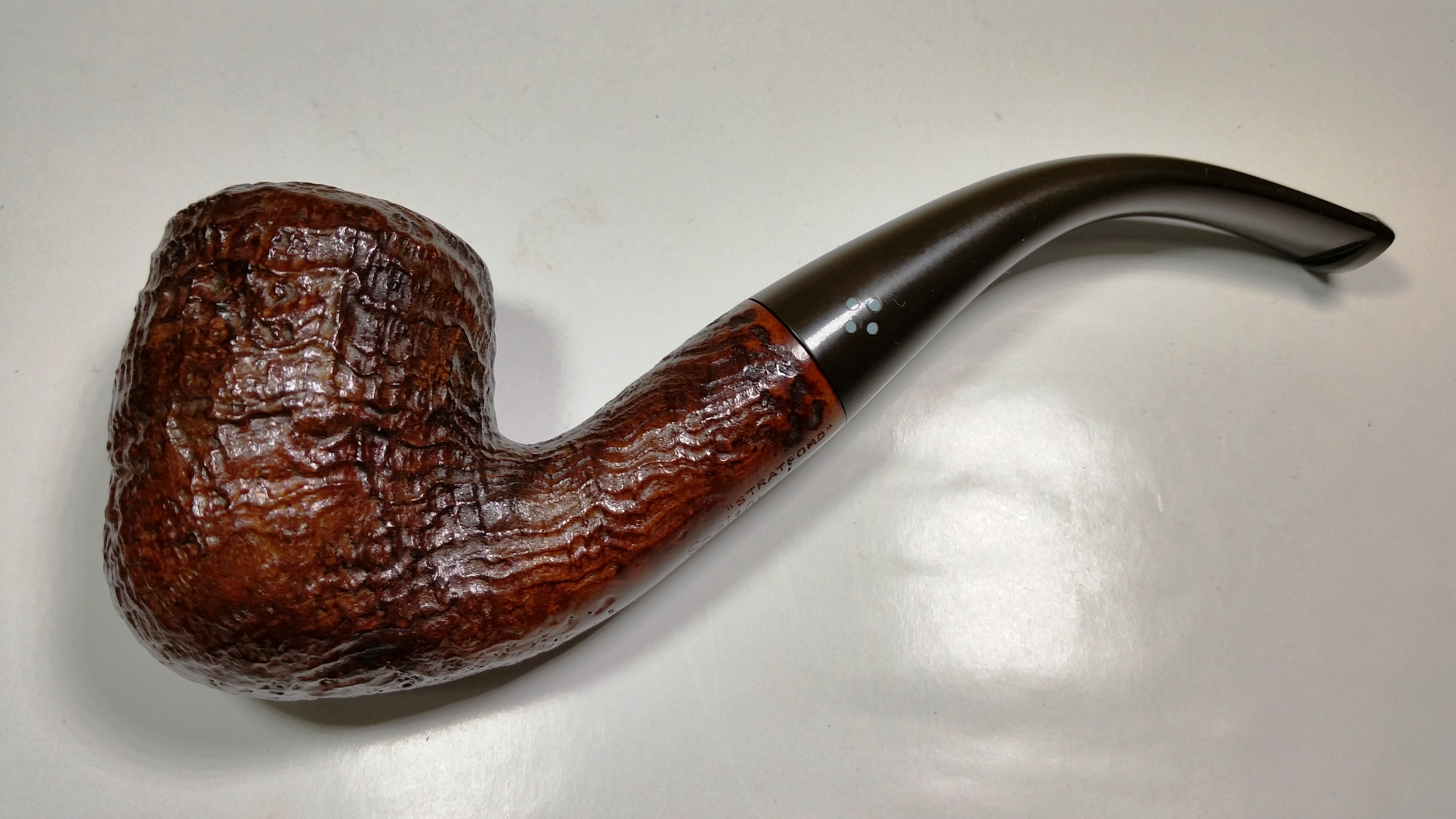
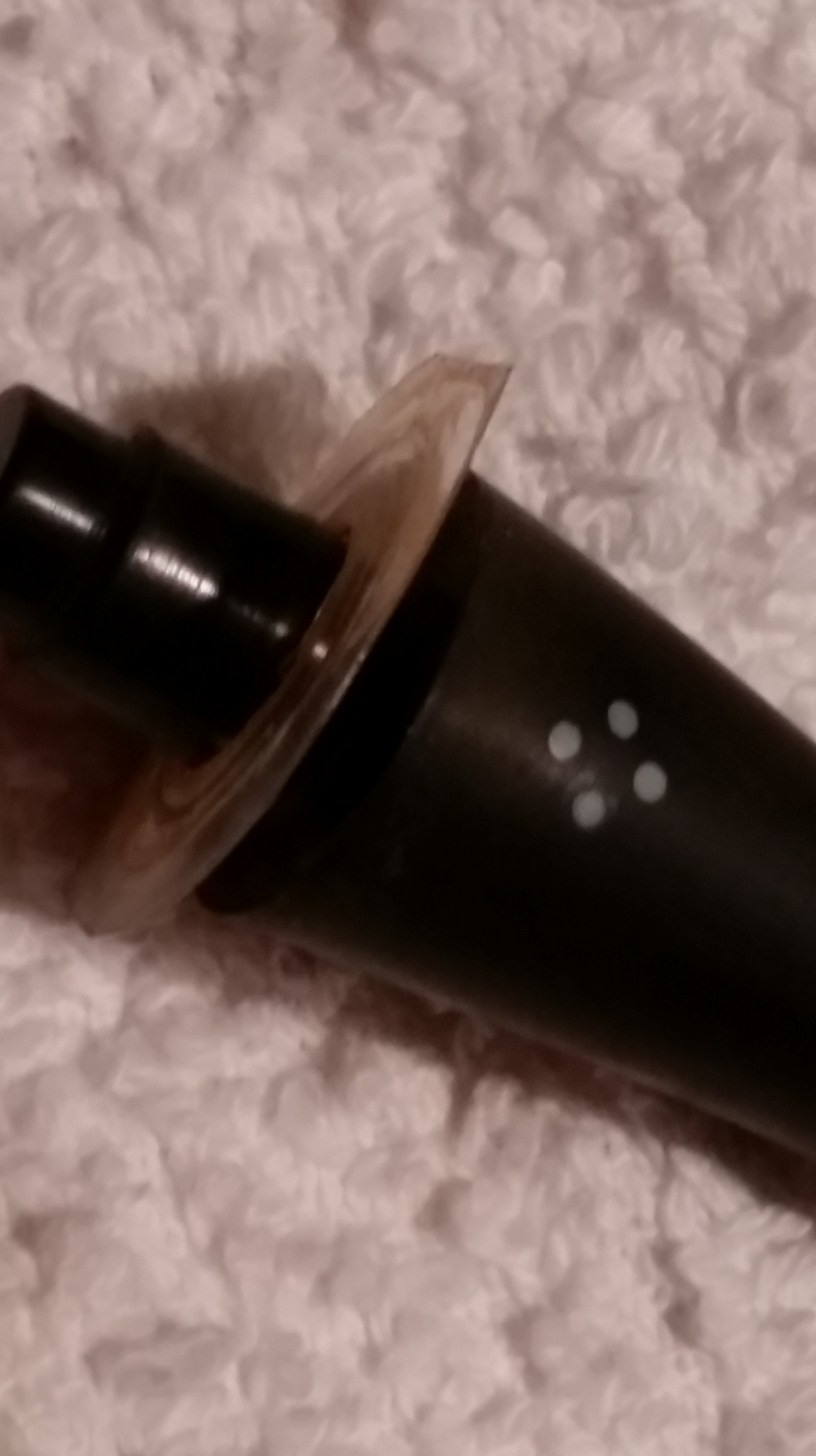
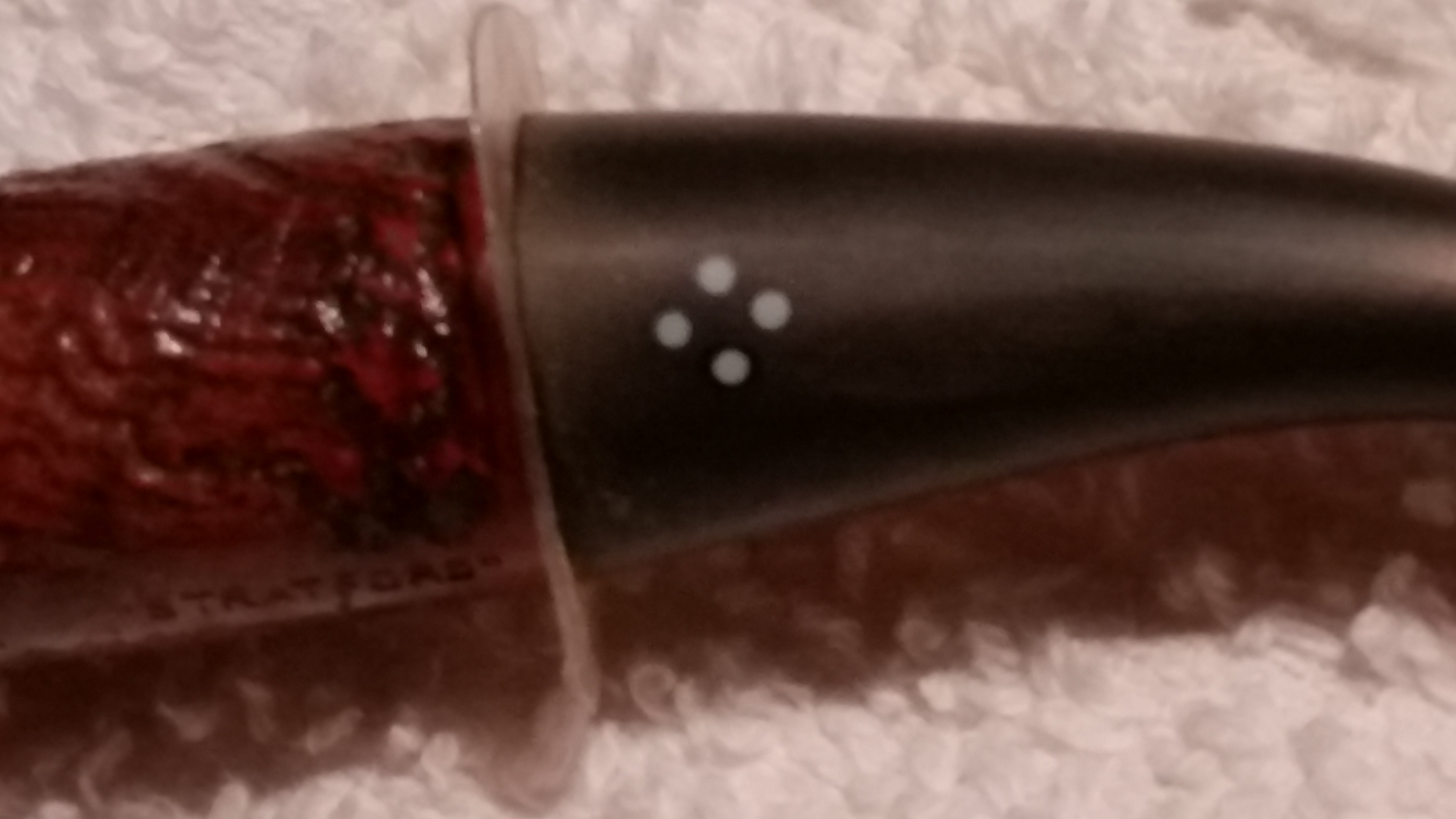
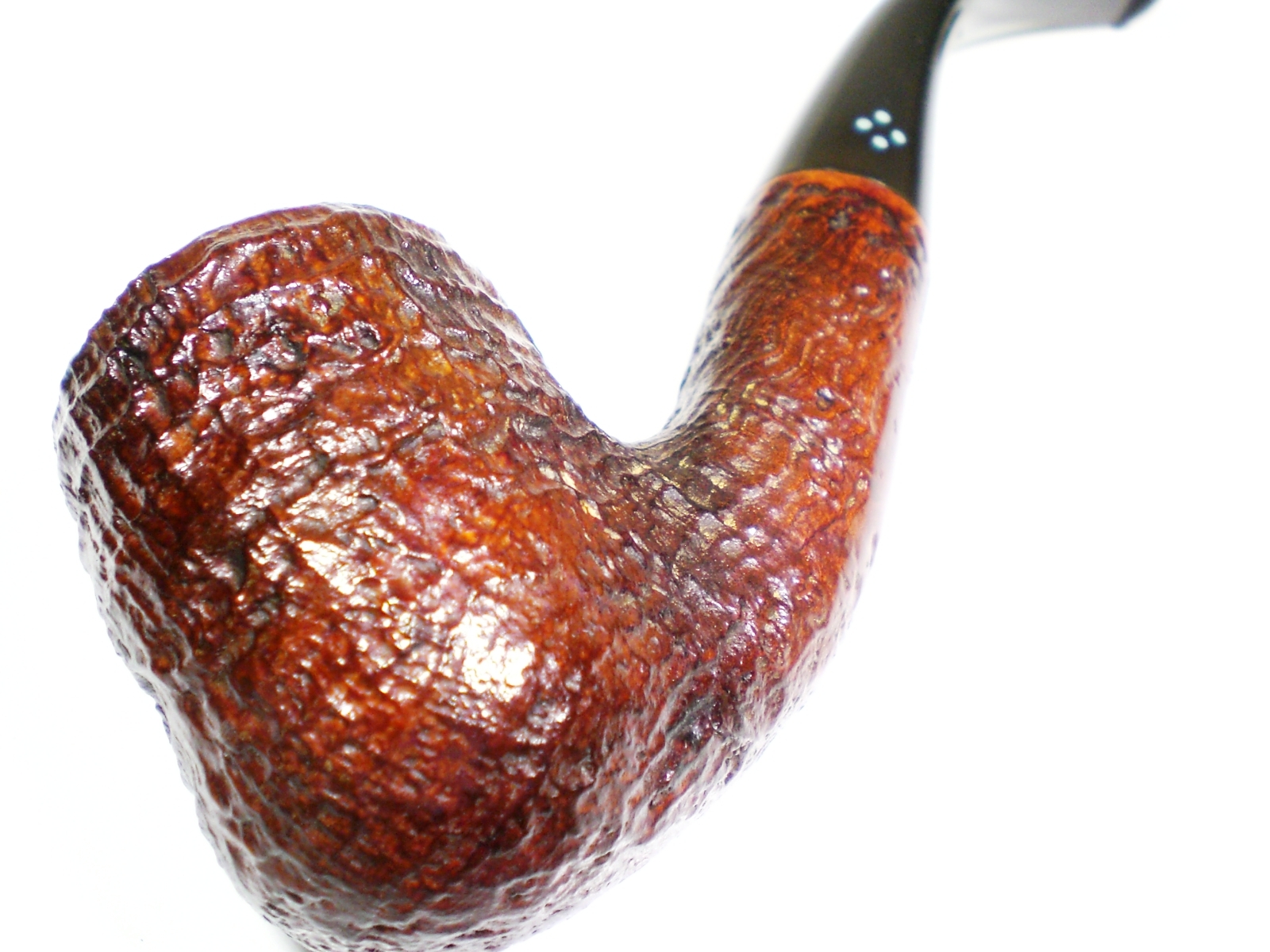
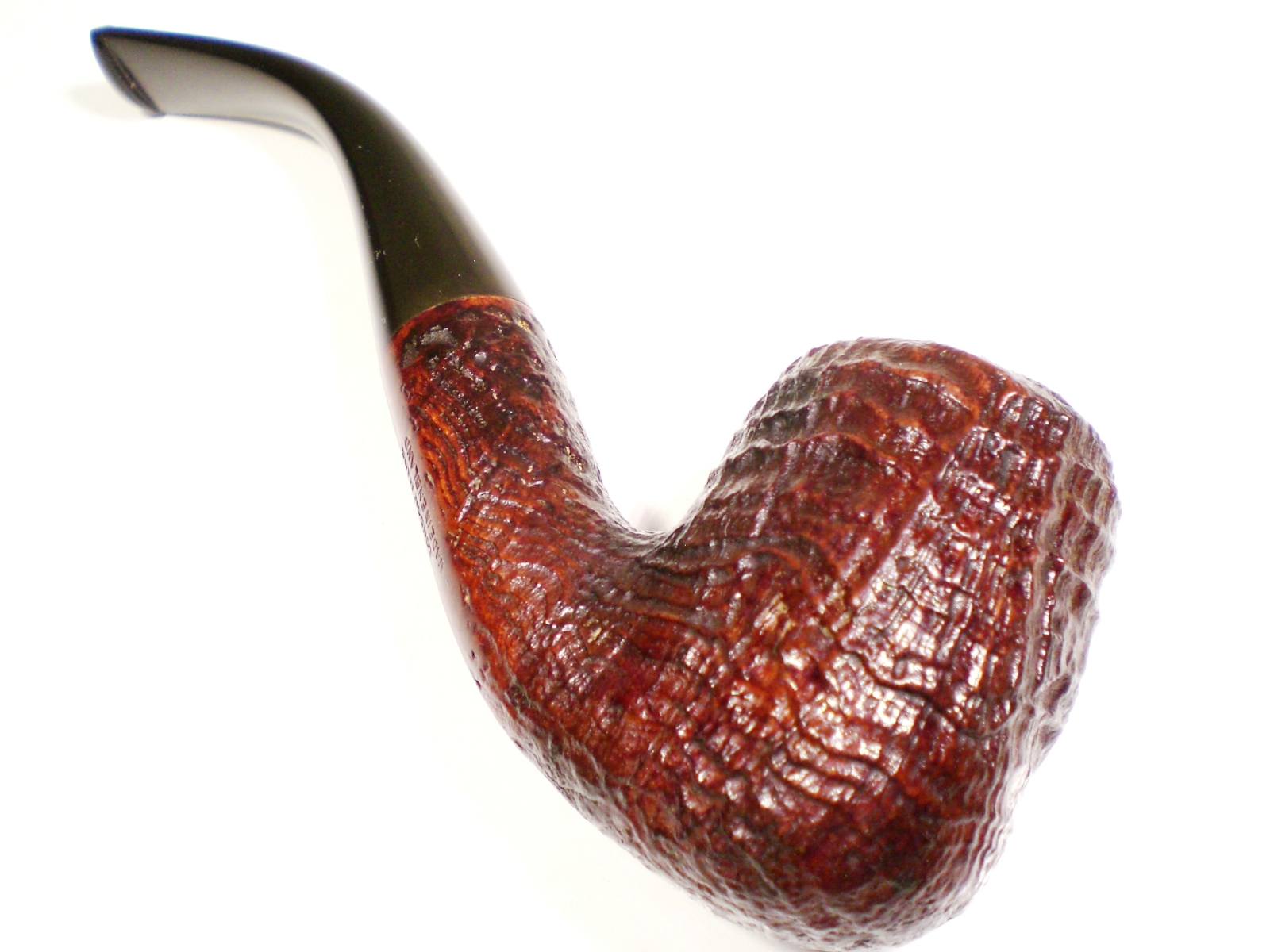
This pipe was an acquisition from the recent CORPS Show in Richmond, VA.  The gentleman who sold it to me is a fellow member of the SmokersForums.uk.  I really wasn’t looking to add any more pipes at the show, but I can’t resist Sasieni pipes from the Family Era, which were made prior to 1979.  I think they offer a great value in an English estate and my others smoke wonderfully.  The stem and button work I feel is slightly better than Comoys pipes of that era.  “Ruff Root” pipes in particular are quite light, even in a large pipe such as this “Stratford” model.  While not as graceful in appearance as my Viscount Lascelles, it’s angular jaw has a sort of rugged appeal that grew on me as work progressed.   The oval bowl top is also a unique feature.

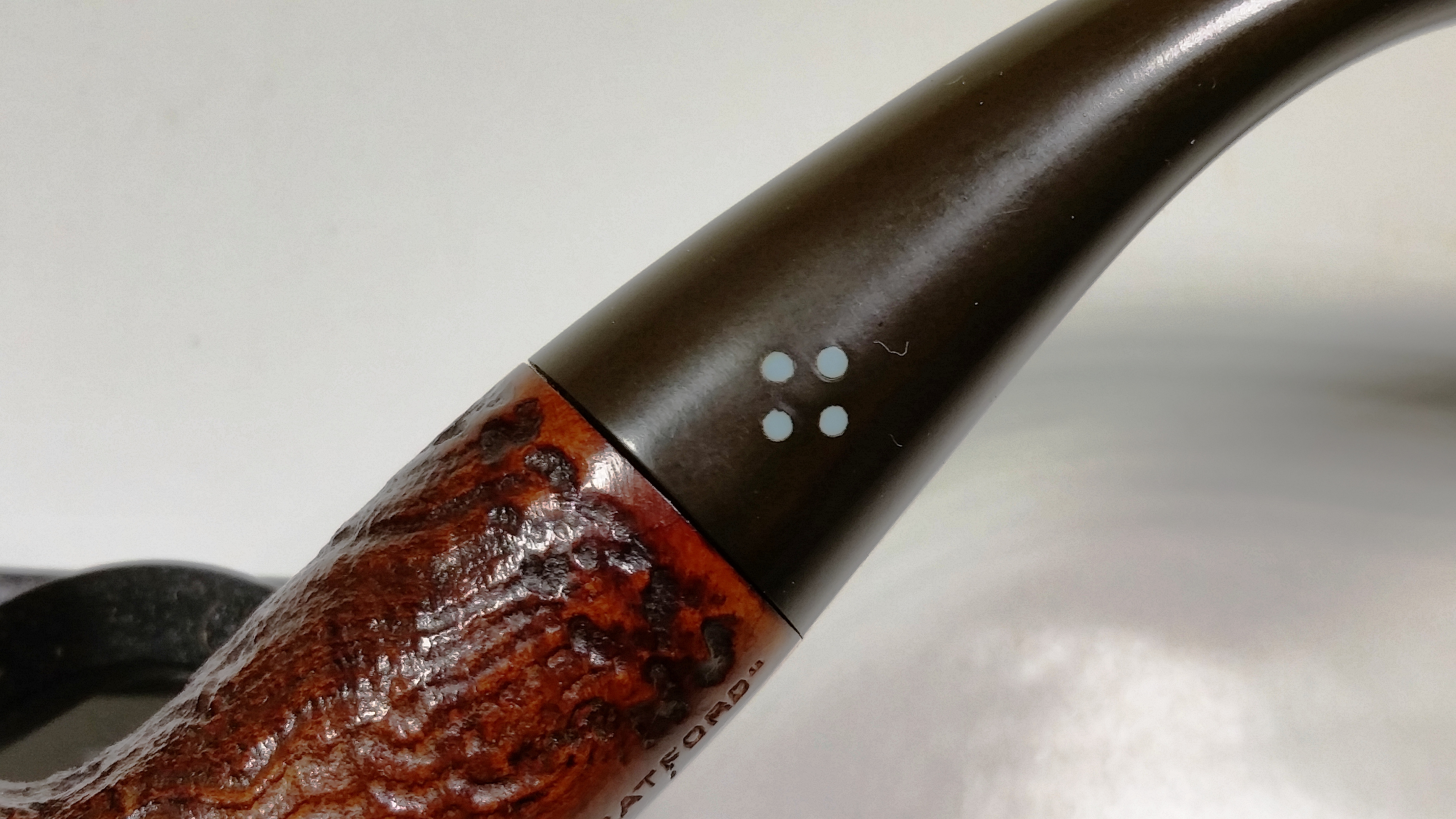
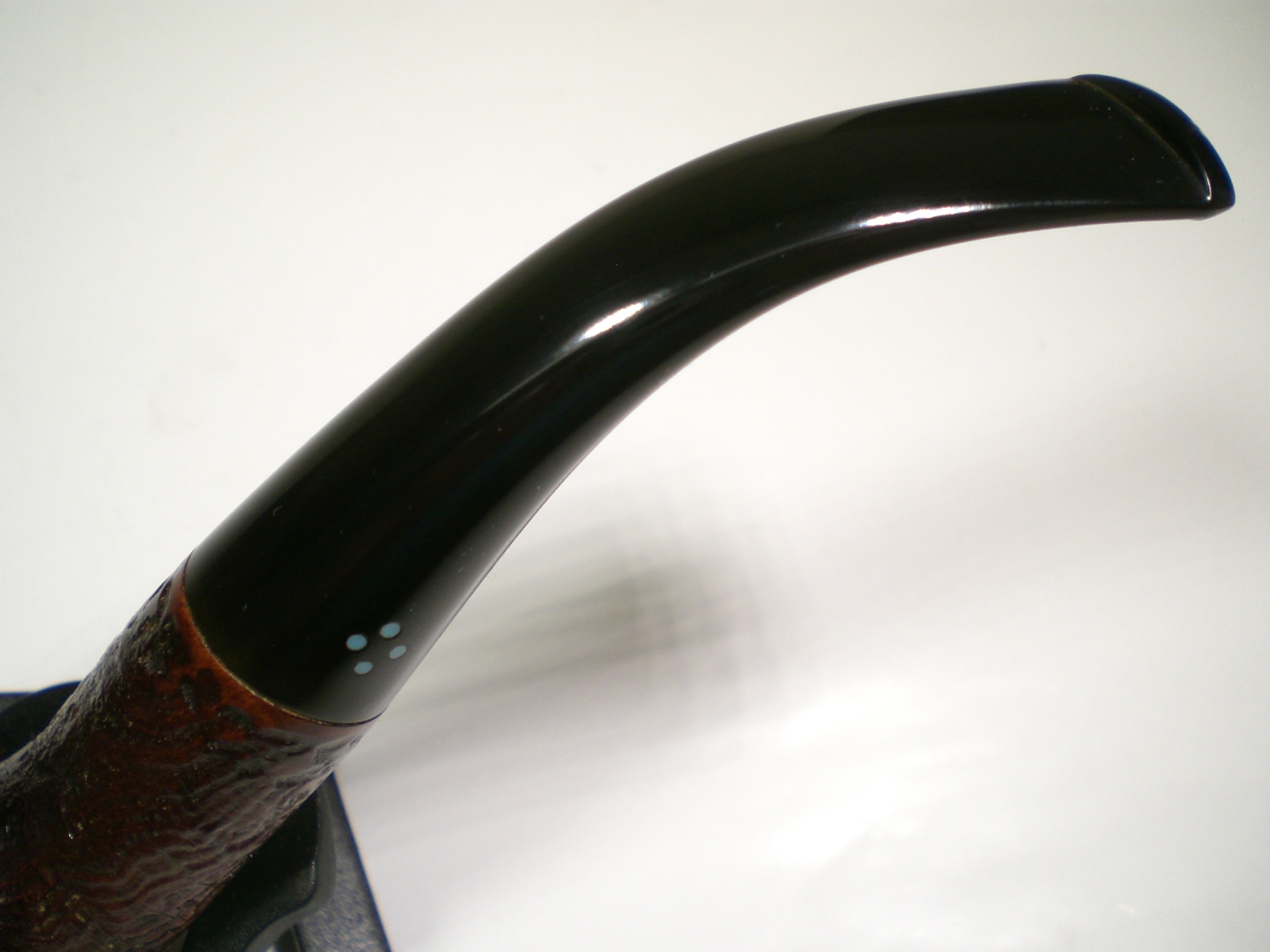
The pipe was in excellent condition and I knew it would only require a minor clean-up effort.   To my eye, the robins-egg blue four dot stem logo is one of the most appealing of any British maker.  Some dots fade over time but the one on this stem were perfect, as is the button.

Sasieni_Stratford_Ruff-Root_Before Sasieni_Stratford_Ruff-Root_Before (1) Sasieni_Stratford_Ruff-Root_Before (2) Sasieni_Stratford_Ruff-Root_Before (3)

There was a very slight cake in the pipe, which I carefully removed.  The bowl was soaked with Sea Salt and alcohol.  While the bowl was soaking, I dabbed some grease on the stem logo and soaked it in a mildy Oxyclean solution.  Nestled with the Sasieni is a GBD New Standard 549 that was also a CORPS show purchase.

GBD_549_New_Era_Before (3)

After soaking in the Oxyclean solution, I removed the oxidation from the stem starting with 800 grit wet paper, then progressing thru 1000, 1500 and 2000 grades.  I followed those with 8000 and 12000 grades of Micromesh paper.  The stem was free of any bite marks.

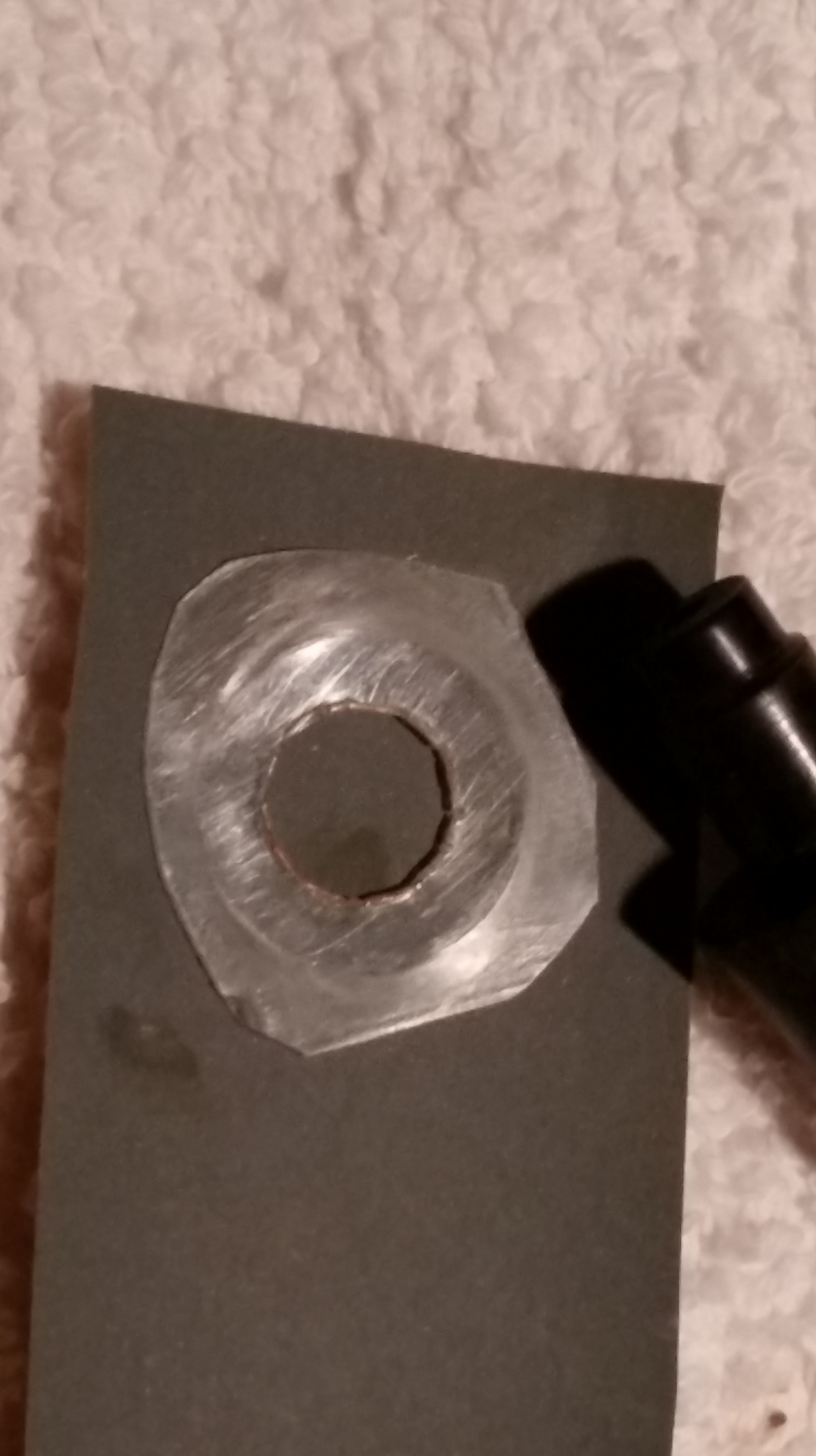
I make a collar to use between the briar and vulcanite stem out of light grade plastic.  Small boxes that hold auto fasteners or product blister packs work well. I cut out small circles then punch a hole for tenon using an office punch.  The collar allows me to remove the oxidation near the stem and briar junction without taking the edge off the stem.

20141012_221609 20141012_221526 20141012_221452

The stem was buffed lightly with White Diamond.  The briar only required hand polishing with Halycon II wax.  The nomenclature was in outstanding condition.

Below is the completed pipe.  Ruff Root pipes are light for their size and this one only weighs 51 grams.

Sasieni_Stratford_RR_Gallery Sasieni_Stratford_RR_Finished (2) Sasieni_Stratford_RR_Finished (1) Sasieni_Stratford_RR_Finished (5) Sasieni_Stratford_RR_Finished (3) Sasieni_Stratford_RR_Finished (4)


The Wily Nature of a WDC 14K Full Bent Billiard Restore – Robert M. Boughton


Guest Blog by Robert M. Boughton
Member, North American Society of Pipe Collectors
http://www.roadrunnerpipes.com
http://about.me/boughtonrobert
Photos © the Author

O, what a tangled web we weave,
When first we practise to deceive!

— Sir Walter Scott, Scottish historical novelist, playwright and poet, in “Marmion” (1808), Canto VI, stanza xvii.

INTRODUCTION
I mention poet last among the great Scot’s endeavors because, if any of them were much good, the poetry was most lacking. However, there are forever those two lines that people remember, even if they often misattribute it to Shakespeare, who would have made a much better and shorter sonnet of the one theme had he thought of it. Scott’s epic in length tragic poem (in more senses than intended) – with its jumbled use of rhymed couplets in iambic tetrameter, alternating rhyme in iambic pentameter and alternating or nested rhyme in hymn meter – just tends to bore. I admit that my writing skills do not include poetry, which I consider the highest form of the literary art form, but I also do not pretend to have the mind for it.

Many of the quotes I include before my blogs are no doubt somewhat enigmatic, but this one hits the mark much closer. A quick look at the WDC Full Bent Billiard with 14K gold band reveals much ado about nothing as far as the need for serious restoration is concerned.Robert1In fact, when it came in the mail with six others I bought in a pipe lot, I was happy to see they were nowhere near as thrashed as many others I received before. Most, in particular the WDC, seemed at a glance to need only a simple refurbishing. Only upon close examination did I see the problems that appeared little but might indeed create bigger problems when the actual work began. Still I chose this one both because of its seeming almost pristine condition but because I might have a buyer lined up already.

As a note, WDC is short for the William Demuth Co., a U.S. crafter of fine pipes from 1862-c. 1973, after the venture had changed hands several times and was at last liquidated. The Full Bent Billiard described in this blog appears to be quite old, perhaps dating to the 1930s or ’40s, based on a WDC Master List by Kaywoodie [http://kaywoodie.myfreeforum.org/viewtopic.php?t=191&start=0].

Photo © WDC Master List

Photo © WDC Master List

RESTORATION
The problems I encountered, despite being almost invisible in the following photos, by the hidden nature of their presence convinced me to take on this supposed easy project. As a result, I was led, step by step, into a web of blemishes, some of which were simple to fix and others proving more difficult.Robert3 Robert4 Robert5 Robert6 Robert7In general, I start with the chamber, which in my recent blogs has involved the removal of massive cake buildup. Here it is apparent that is not a problem, but that fact ends up concealing a more significant flaw, which I will get to in short order. This time, I chose to begin with the rim and shank opening Even in the photo above, the blackening, scratches and jagged inner rim show. Closer photos display the rim and shank hole better.Robert8 Robert9Steel wool was perfect for the shank opening. But 1500 and even 800 micromesh proved ineffective on the rim. I jumped to 400 micromesh, which removed the blackening. As I intended only to sand the bowl this time instead of using my reamer that has been mandatory with so many other recent restores, I switched to 150-grit paper for the chamber, starting with the rim to eliminate the craggy inside.

After continuing with multiple turns of the paper until I reached the bottom, I tapped and blew out most of the accumulated carbon dust and used a small piece of cotton cloth to wipe off enough of the residue to insert a finger and feel the sides. They were smooth, but what I found at the bottom was troubling: a big hole with another ridge of cake around it.

And so I decided to go with the reamer after all. Besides, I thought, I like to leave the chamber wall as close as possible to the wood, and the reamer would accomplish that and even out the hole in the bottom – I thought.

However, while I indeed removed more carbon from the sides and bottom, the latter proved much more stubborn. Returning to the 150-grit paper, I took the walls down to where the wood almost showed all the way. With awkward, slow turns of the paper, during which I heard an awful scraping wail rising from the base of the chamber, I succeeded in sanding the hole as far as it would go. In the end, a small hole remained. For the first time, I understood that I needed some sort of tool I do not yet possess, but the result was satisfactory.

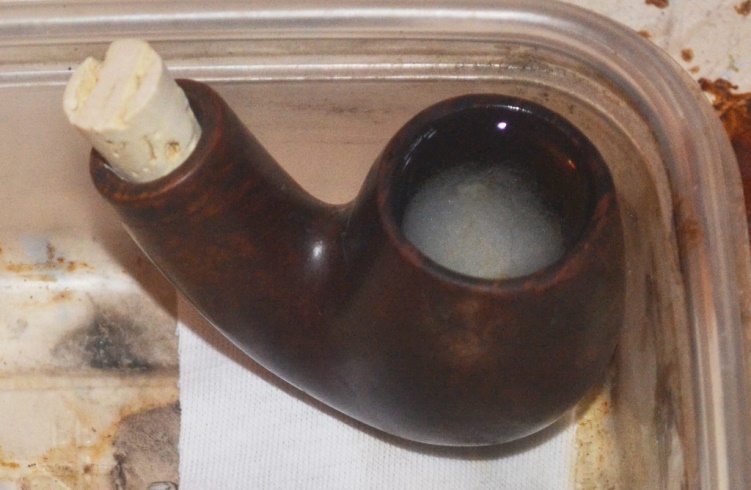
Meanwhile, I used a record 15 bristly pipe cleaners to remove the long-accreted mess of tar and other fantastic buildup of nastiness from the shank. I concluded a serious alcohol flush was in order. I stuck a piece of cotton in the bottom and for the first time plugged the shank with some cork I had on hand.robert10About a half-hour later, seeing the cotton was dark, I removed it with a cheap tobacco pick and pulled the cork, letting the brown alcohol drain through the shank. I had given the outer wood a good bath with purified water, which removed considerable filth, but being quick to wipe up the overflow of alcohol, I used it to wipe away more tenacious hangers-on, so to speak.Robert11 robert12The next strands of the web were the many tiny scratches and pits on the bowl and shank, all of which were so small I was (I have to admit) tempted to let them slide. That being a sin of restoration I have yet to commit with malice aforethought, my senses returned. I considered how to accomplish their elimination.

The 1500 micromesh worked on a few superficial scratches. Given that I could see them myself, I used the 320 micromesh for the deeper flaws that were small but still clear to serious scrutiny. That was the magic number but left the treated areas lightened. One of my goals with this restore was to avoid re-staining anywhere, and I had succeeded so far so I was determined not to resort to the last measure at the point. I tried the 1500 again on these spots and found it shined up the wood almost as it had been.

Then I had a thought. I know, the phenomenon doesn’t occur every day, but this was like one of James Joyce’s little epiphanies. Taking a risk, I used the 1500 micromesh on the entire bowl and shank, smoothing the entire surface to a nice glow.Robert13 Robert14 Robert15 Robert16 Robert17The only part of the web before I was clear of it was the stem. Now, I have had stems discolored and bitten almost to the point of being irreparable and made them shine like new. This stem, on the other hand, which showed nothing but the slightest use by a long-time, caring pipe tobacco enjoyer, eluded several efforts to remove the minor scratches. To my surprise, the chatter came off with ease, but the scratches would disappear with micro-meshing and then new scratches and even white blotches popped up when I wiped the stem down with my cotton cloth.

Nothing was going to stop me. And so, with a barrage of micromesh grades starting with 1500 and then 800 followed by 3200 and 320 and at last 1500 again, I could find no scratches, chatter or blotches.Robert18 Robert19All that remained was the buffing. I finished the stem with red Tripoli and White Diamond. The briar I used everything at my disposal, starting with white and red Tripoli, then White Diamond and at last carnauba.Robert20 Robert21 Robert22 Robert23 robert24 robert25CONCLUSION
I had a good time restoring this excellent old pipe, despite the unexpected difficulties I seemed to encounter at every turn. In fact, I suspect the new problems added to the pleasure. I’ve always enjoyed a challenge, and while mine in this process may seem tame compared to those some of my more experienced readers have dealt with – and believe me, I’ve read enough of Steve’s and heard about plenty of my friend’s and mentor’s to know there is far worse – they nevertheless represent new obstacles I overcame. That, I understand, is what the job is all about.

I suppose I was born with the type of personality that finds it impossible to overlook even the slightest flaws I notice in any project I undertake. People – for the most part those who are satisfied with mediocre conclusions – have always called me a perfectionist, but I never use the word to describe myself because I know I am far from it. Only on rare occasions have I completed a project (whether it be a short story, screenplay, novel, blog, pipe restoration or anything else) to which I did not return later and see how I could write, edit or do it better.

By way of example, when I was writing my last blog, on The Guildhall London Pipe, I started to insert photos and noticed the stem was not up to my present snuff, so to speak. And so, although it was somewhat of a hassle to stop my blog, get the pipe, remove the stem and not just rebuff it using the White Diamond wax I recently added to my wheels but re-sand it to remove the horrible discoloration I had missed before, I could not bring myself to publish photos knowing they would show my incompetence. I think the final result was worth the extra effort.

I am beginning to realize an important part of the restoration learning process is simple rising self-expectations. By good fortune, I have several dozen estate pipes in many shapes and degrees of duress on which to practice in the near future…and I am chomping on the bit!

The Guildhall London Pipe Large Pot: An Account of Extreme Abuse – Robert M. Boughton


Guest Blog by Robert M. Boughton
Member, North American Society of Pipe Collectors
http://www.roadrunnerpipes.com
http://about.me/boughtonrobert
Photos © the Author

“Beauty is whatever gives joy.”

— Edna St. Vincent Millay (1892-1950), U.S. poet

“Beauty of whatever kind, in its most supreme development, invariably excites the sensitive soul to tears.”
— Edgar Allan Poe (1809-1849), U.S. author, poet, editor and literary critic

WARNING: Some of the images that follow are graphic and shocking and may be upsetting to pipe smokers with sensitive souls.

INTRODUCTION
This is with certainty the most abused pipe I have ever restored, although, no thanks to the original owner, the damages sustained were reversible. In the event that the smoker of this Comoy’s second ever had children, I suspect their emotional baggage is far greater, but for the sole reason of their sentience, and I pity them.

I can only add that I was fortunate enough to aid in the vintage pipe’s liberation, through an intermediary agent online, by purchasing a group with similar wounds, if not inflicted with such evil spirit.

RESTORATION
Here is the condition of the pipe, which I in fact restored some weeks ago but failed to publish the details until now, when I received it:Robert1 Robert2 Robert3 Robert4 Robert5 Robert6In my haste to restore the pipe as close to its original beauty as possible, I also did not take photos of the project’s progress, which I will of course describe in detail, as well as showing the results. Needless to say, except for a quick inspection to ensure the lack of more serious harm to the interior, I began with the chamber. I was successful in removing all of the massive and repugnant cake buildup.Robert7There must somehow, despite the overwhelming unlikelihood of the possibility, be a dozen bowls’ worth of carbon that I reamed and sanded out of the chamber before that part of the Guildhall London Pipe large pot was smooth again, and down to the briar around the top and almost as far the rest of the way. The rim also came clean with caring and determined use of 400-grit paper followed by 2400 micromesh.

The bowl, shank and stem I gave a bath with four small patches of cotton soaked in purified water. Again I wish I had a record of the grime from the dirt, sweat, body oil and other unknown unpleasantness that the wet cloth cleaned away to reveal scratches, pits and various attendant blemishes, although I think the reader of this might still not believe what he saw with his own eyes.

I used 1500 micromesh wherever possible but had to resort to 400-grit paper again in many areas. When I finished sanding, I re-stained the places on the rim, bowl and shank that needed it with a burgundy boot stain, flamed those areas and rubbed every inch of the wood with 3200 micromesh to remove the char and leave the body a nice, uniform, deep reddish color.

For the stem, I was forced to choose 220-grit paper, so horrible were the scratches, pocks and discoloration. Whoever smoked this pipe had succeeded in removing the upper ridge of the lip altogether, leaving serious teeth chatter and bite marks. Four of the bites are still present, awaiting an order of Black Super Glue to fill them.

When, an hour after all of this work described so far, I finished cleaning out the filthy stem and shank, I threw into the trash about 12 bristly cleaners, for the most part in utter black ruin and then lightening by degree to pure whiteness.

In the end, I polished the stem with red Tripoli and White Diamond waxes and the wood with the same but added white Tripoli and carnauba, to this effect:Robert8 Robert9 Robert10 Robert11 Robert12CONCLUSION
One of the recent major themes of my blogs has been abuse because I love all of the many pipes in my collection and would never, with intent, do harm to any of them.

That is the main reason I have taken up pipe restoration and am sure I will never give up that endeavor. The other is that I enjoy working with my hands on various man-made, and sometimes neglected objects of beauty.

Reclaiming a Kaywoodie White Briar Medium Pear 09B


Blog by Steve Laug

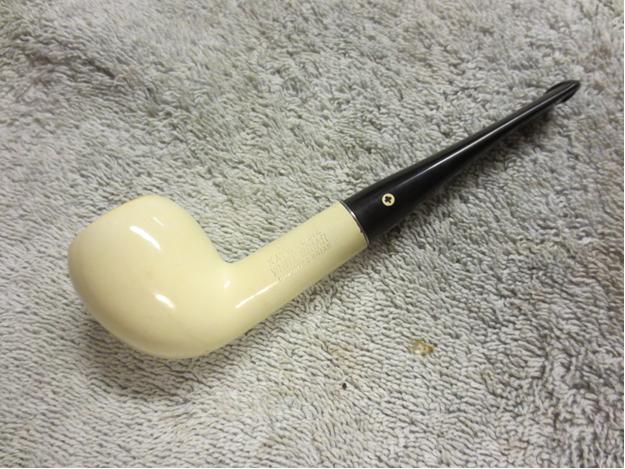
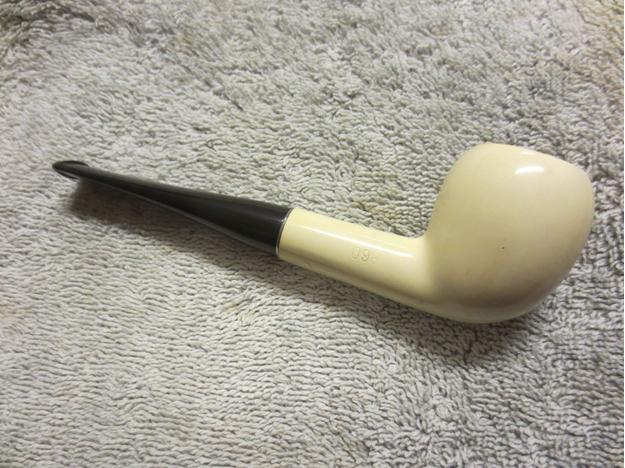
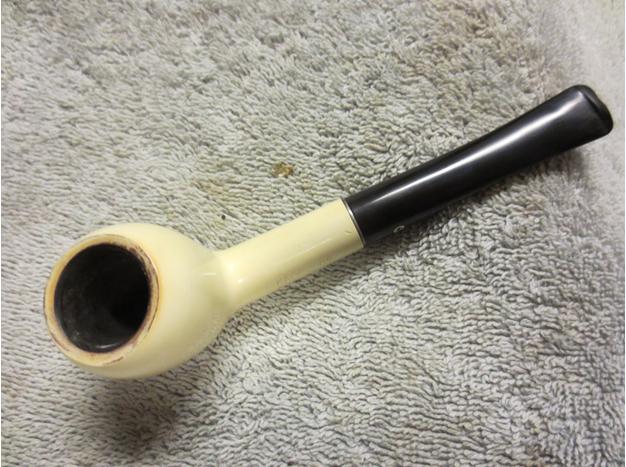
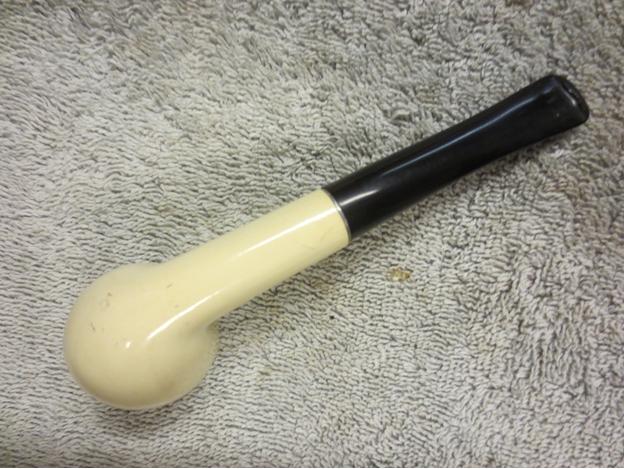
The last pipe in my box is now finished! It is a Kaywoodie White Briar pipe. Among the many White Briar pipes I have found this one has the distinction of actually being in pretty decent shape. All of the others I have found had many chips in the paint and the paint itself was dull and worn through. Not this one. The finish was in pretty decent shape with only a few nicks on the bottom of the bowl and some that might show up under the thick tars on the rim. It is stamped Kaywoodie over White Briar over Imported Briar on the left side of the shank and 09B on the right side. Looking up the shape number I found that the shape is known as a medium pear which was available on the market from 1936-1972. I have no idea when this one was made as the stem that is shown below came from my can of stems. It fits perfectly and it is an old four hole stinger stem. It was worn and oxidized by the fit was correct. It has some calcification that would need to be cleaned and it was clogged. The bowl had a thick cake that I reamed out with a PipNet reamer. The shank was dirty and the aluminum face plate on the end of the shank was oxidized.IMG_2512 IMG_2513 IMG_2514 IMG_2515I scrubbed the rim with spit and cotton pads and then used Meguiar’s Scratch X2.0 on cotton pads to remove the tars and oils on the top of the rim. The worn spots shown in the photo below are actually spots where the tars still remain. More scrubbing removed most of them.IMG_2516I sanded the stem with 220 grit sandpaper to remove the oxidation, calcification, and tooth chatter that was near the button on the top and bottom of the stem.IMG_2517 IMG_2518I used a needle file to sharpen the crease of the button and then sanded the repair with 220 grit sandpaper to remove the file marks. I sanded the stem with medium and fine grit sanding sponges to minimize the scratching left behind by the sandpaper.IMG_2519I cleaned out the shank and the stem with alcohol and cotton swabs and pipe cleaners until they came out clean. I used cotton pads and alcohol and a brass bristle brush to clean up the stinger apparatus and polish it. I gave the aluminum shank end a quick sand with a 1500 grit micromesh sanding pad to polish it up. I scrubbed the surface of the bowl with Scratch X2.0 on cotton pads to remove the grime and polish the painted surface of the bowl.IMG_2520 IMG_2521I sanded the stem with micromesh sanding pads – wet sanding with 1500-2400 grit pads and dry sanding with 3200-12,000 grit pads. As has become my habit, I rubbed down the stem with Obsidian Oil between each set of three sanding pads and then gave it a light buff with White Diamond before rubbing on a final coat of oil.IMG_2522 IMG_2523 IMG_2524The photo below shows the cleaned up internals of the pipe and stinger. The aluminum took on a shine once it was clean.IMG_2529The finished pipe is shown in the photos below. It is cleaned and ready to smoke. The White Briar KWs were never favourites of mine but this one turned out very well. I am sure that it will make a great rack mate to someone who collects KW pipes and wants to add a shape 09B. Feel free to contact me if you would like to have this one. We can certainly work something out. I am sure it will smoke great and last for many more years to come.IMG_2525 IMG_2526 IMG_2527 IMG_2528

The One That Got Away – Robert M. Boughton


Guest Blog by Robert M. Boughton
Member, North American Society of Pipe Collectors
http://www.roadrunnerpipes.com
http://about.me/boughtonrobert
Photos © the Author

“Love bravely, live bravely, be courageous, there’s really nothing to lose.”
— Jewel (Jewel Kilcher), singer-songwriter, guitarist, actress, author and poet

INTRODUCTION
Indeed, I endeavor to live life to the fullest and take calculated risks. But be advised, the good lady, Jewel, is not altogether correct. This, therefore, is a cautionary account of a wonderful Gilpin, being the product of a maker called Salisbury.

Because of its humble background that defies my concerted attempts to trace the brand even to a country of origin, the 5-1/2″ long pipe (from the front of the small, flat, rounded base to the lip of the stem) with a 1-7/8″ bowl height, though an uneven mix of birds-eye and erratic lines, is nevertheless a fine example of engineering, briar quality and the ultimate smoking pleasure that results. I believe Salisbury is or was a small, independent pipe shop, or perhaps just the name of the town where a modest craftsman who created the Gilpin lived.

RESTORATION
For anyone who has read my other recent blogs, the beginning of this part will come as a given. More for the benefit of others, I have to say this unfortunate pipe, which came as part of a lot I purchased online because I could see through the beast to the beauty inside, was not treated well by its former owner. Exercising the utmost restraint, I will forego any judgment calls as to the personality of that ignorant individual and just get to proof of where I started. The only redeeming factor is that there was nothing wrong with the interior structural character of the Gilpin.Robert1 Robert2 Robert3 Robert4Needless to say, the pipe was as thrashed as the others in its lot, to my benefit since, taken as a whole, the collection did not appear to be worth my overbid that succeeded in scaring off the other contenders, and I won for next to nothing.

When I finished with my reamer and 150-grit paper on the chamber, I had removed enough cake both to fill three bowls and to rest my softened case against the previous individual who had possession of this pipe.
Robert5For the rim I started with 220-grit paper and then, as the wood began to peek through, finished the removal of the serious burning with 1500 micromesh.Robert6The uniform scratches all around the rim indicated a need for slow work with 400-grit paper and 2400 micromesh to achieve smoothness.Robert7I re-stained the rim a light brown and hand-buffed it with 2400 micromesh.

The stem on the Gilpin was so roughed-up and discolored that it proved to be the most difficult part of the restoration. Beginning with vigorous sanding using more 220-grit paper, I spent close to a half-hour removing the blemishes that must have contributed to the collectors who also bid on this lot giving up after my one max offer of $40. I paid $22.50 for the four pipes. I finished my labor on the stem with 1500 micromesh, then 3200.

THE FATAL CRISIS
After cleaning and sanitizing the near-finished Gilpin, I had only to polish the stem and wood on my twin fixed-speed buffers. I know, I know! I can’t count the times my friend and mentor, Chuck Richards, and other restorers more experienced than I have admonished me to have a firm grip on the material being buffed when using this type of inexpensive tool. And I swear to all that is holy to me that I did just that. Read on, and I shall tell you the tale.

Starting with the stem, using red Tripoli and White Diamond, the result was perfect. I moved on to the bowl and shank, buffing them to a beautiful sheen with white Tripoli, White Diamond and the last touch of carnauba. I was, in fact, in the act of removing the beautiful briar from the carnauba wheel.

And that was when…

Well, that was when the unthinkable happened. You know by now where this is going. The precious piece of wood got away from me and, thanks to my not having set up a soft net for such contingencies, flew at warp speed straight into the wall a mere few inches behind the buffer.

I actually heard the sound of the snap, although I could not see where the consequence of my mistake came to rest. As a nauseating, heartbroken sickness spread from my stomach to the rest of my body and mind in one breathless heartbeat, I switched off the second buffer and leaned over the edge of the stand and spotted the bowl on the carpet – with a jagged break in the shank near the draught hole.

Of all the accursed luck! Right before the frigging draught hole! (That, for your information, was not the adjective I in fact shouted out loud in a maelstrom of horror and self-flagellation.) Even through the mental fog that swirled inside my addled head and made my sight blur, I had a good idea of the significance of that location, more or less the hottest place on a pipe, as opposed to the stem end, where I might have had a fighting chance to Super Glue it back together and band the sorry, mortally wounded Gilpin.

But where was the other piece? I grew frantic in a way I had not experienced in years. Standing there where I had frozen, without moving my feet, I searched everywhere around the stand until at last, turning only my head, I found the missing piece of the shank. It was behind me by a box near the middle of the room.Robert8And so it came to pass, the next day at my tobacconist, that I took the all but ruined pipe, in its three clean and sparkling pieces that seemed to mock me, and at least having calmed down enough to smile for Chuck as I handed him the violated parts said:

“The one that got away.”

“What’s this?” Chuck said with his grin of curious amusement.

“The one that got away,” I said again. “You know how often you’ve told me to be extra careful holding pipes on the buffers I have. Well, one finally got away.”

Recounting my story to him, I saw his big, warm smile emerge and felt so much better, even though I knew in my heart that he would confirm that the hapless Gilpin was beyond repair for purposes of selling.

Chuck and Chad

Chuck and Chad

As luck would have it, though, if such a phrase could even be conceived to apply to this calamity, the fractured pipe was not beyond repair for what Chuck called a shop pipe, or one to be enjoyed by myself while restoring others. All I needed to do was find some sort of short rod to anchor the two parts of the shank in place and Super Glue them together without letting any of the glue seep inside.

I can do that, I thought, and a local hardware store where I could find such a thing came to mind. The next day I visited the store and searched through the limited possibilities. I spotted a 315-piece box of assorted sizes of spring steel, black oxidized roll pins, and after much thought decided what the heck. One of the two smallest pins, I concluded, would fit the bill.Robert10Choosing the smallest, which was 1/16×3/16″ in size, I inserted one end of the roll pin into the bowl end of the shank, as is obvious in the photo above. With great care, I applied Super Glue around the exposed wood of the same end and fitted the other piece of the shank, without the stem, over the pin and into place, lined up in a perfect match.Robert11The next step I chose, after letting the glue set, was to use 400-grit paper to smooth the dried scab of glue as well as I could. In the process, of course, some of the finish came with it, but that was easy to fix with a small amount of brown boot stain around the lighter area.

I flamed it and used 2400 micromesh to remove the char. At that point, the dreaded time to return to the buffers had arrived, and so there I went. Taking a deep breath and telling myself whatever happened was okay, I felt a calmness come over me. I turned on the two buffers and re-did the entire bowl and shank with red and white Tripoli, White Diamond and carnaubaRobert12 Robert13 Robert14Only the knowledge that I would be smoking the finished pipe alone in my little shop and thinking of this black experience every time consoled me.

CONCLUSION
I have been smoking a bowl of Cornell & Diehl Sunday Picnic in my new shop pipe as I finish up this most excellent example of how not to restore a pipe. The Gilpin is every bit as good as I expected, but of course I remain unhappy with the end. I would much rather have concluded on a happy note with the Salisbury whole and rejuvenated and ready to sell, but life sometimes takes cruel turns.

Then again, maybe the beautiful, aptly named Jewel had it right.