Author Archives: upshallfan

Unknown's avatar

About upshallfan

Moderator on the PipesMagazine forum since 2011. Guest contributor on the Reborn Pipes Blog by Steve Laug.

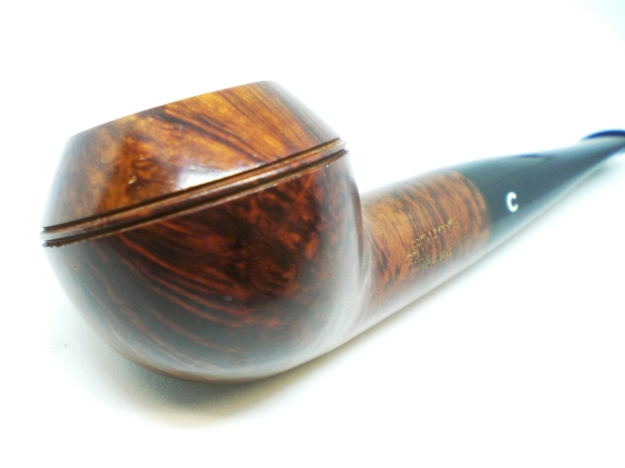
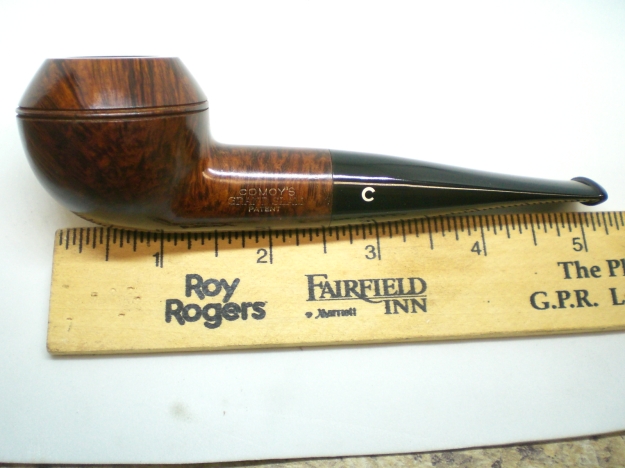
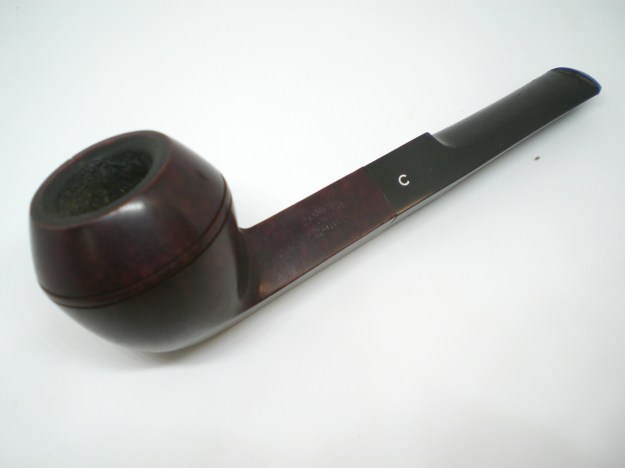
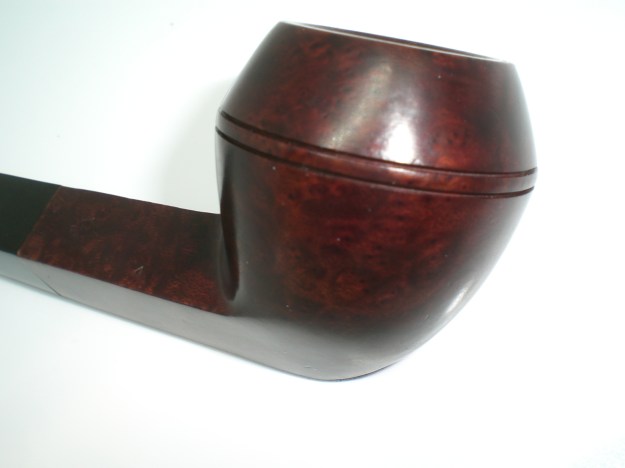
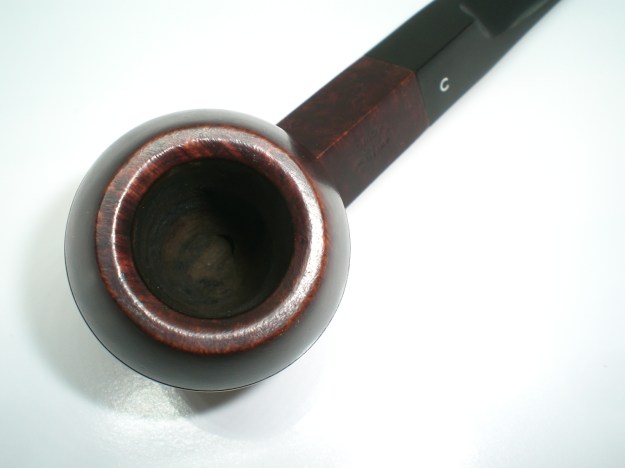
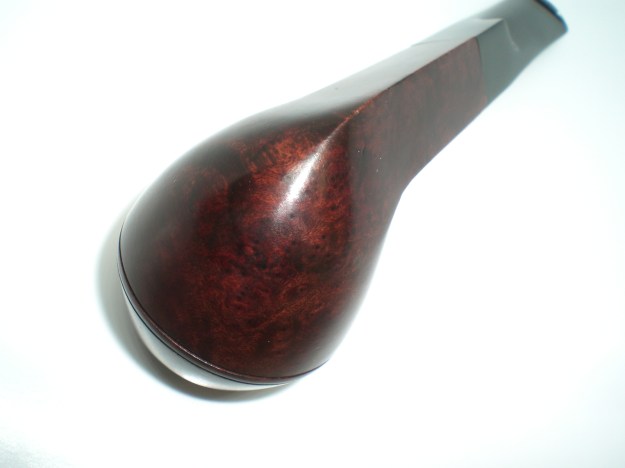
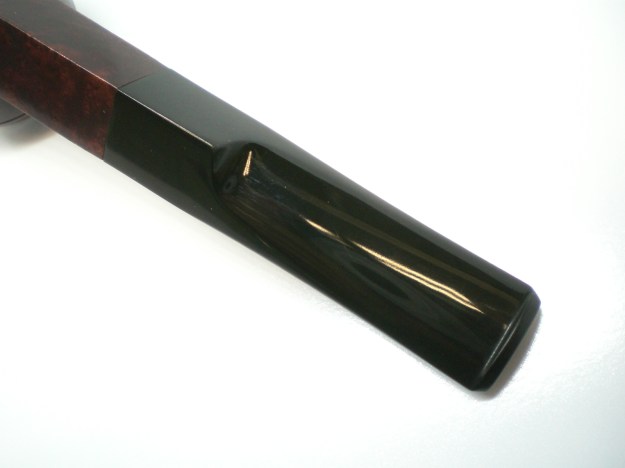
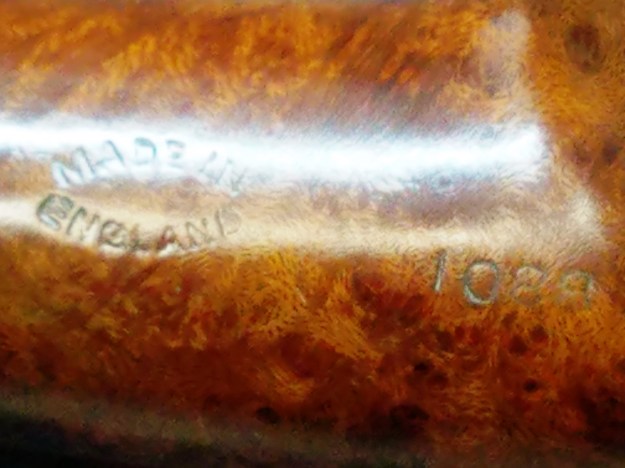
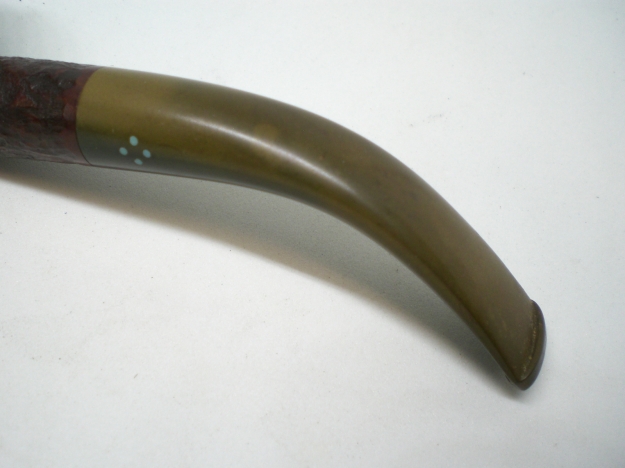
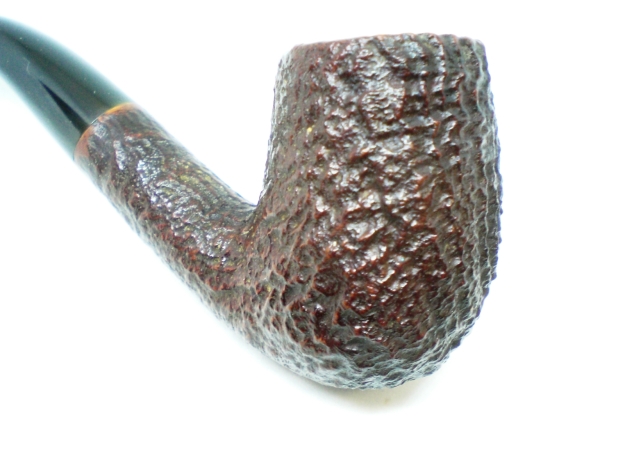
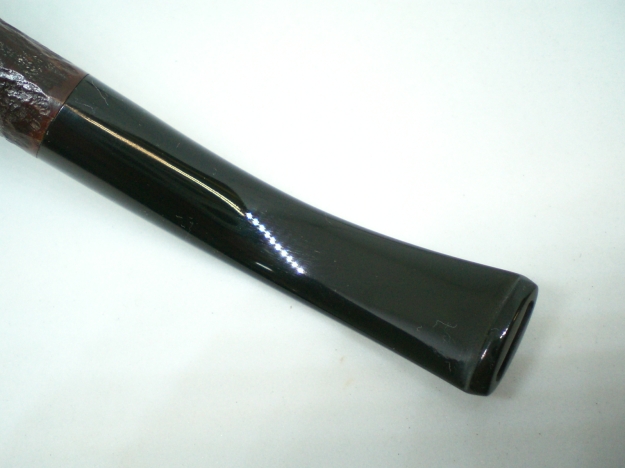
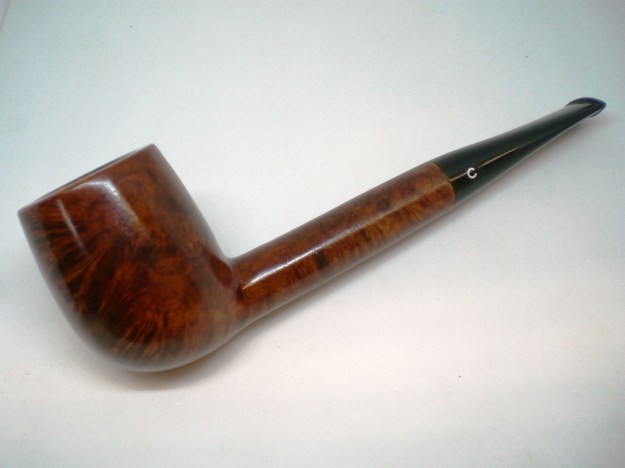
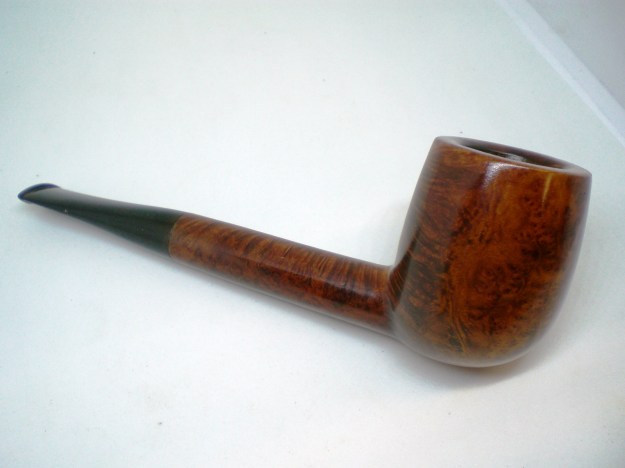
Comoy’s Old Bruyere Bulldog Restoration


By Al Jones

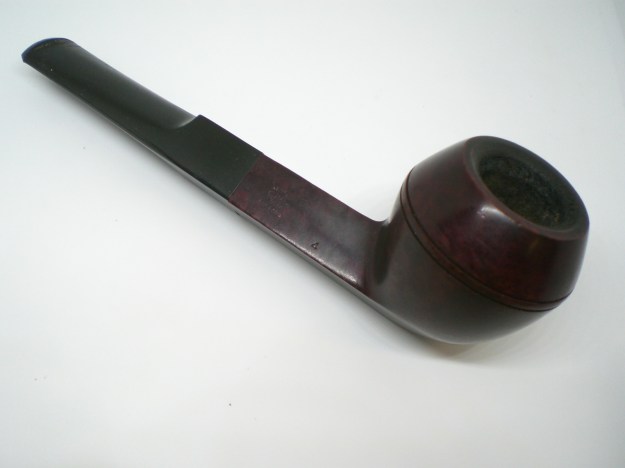
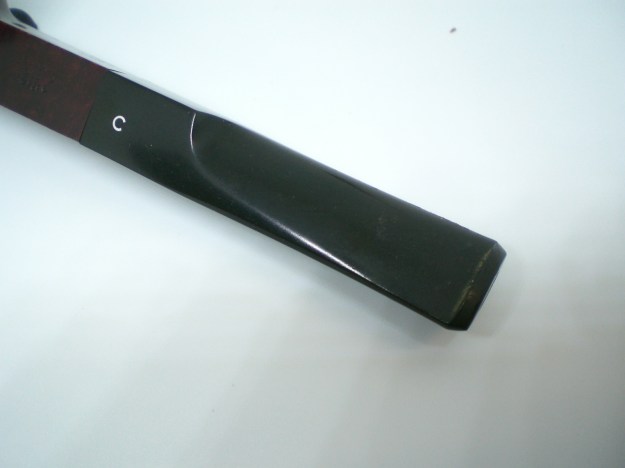
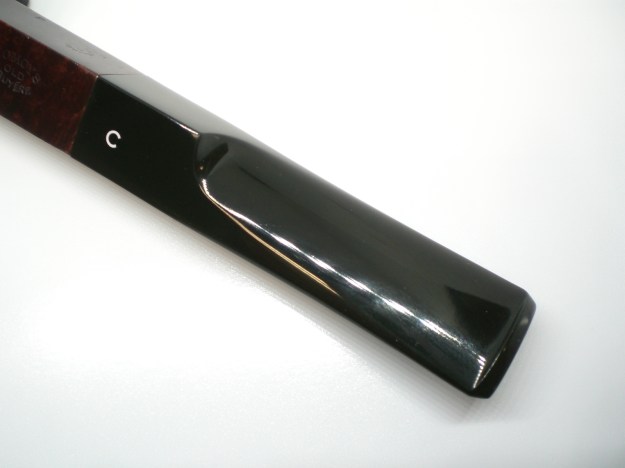
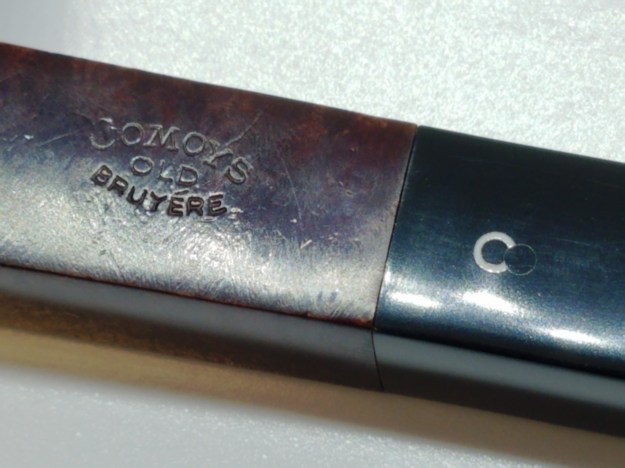
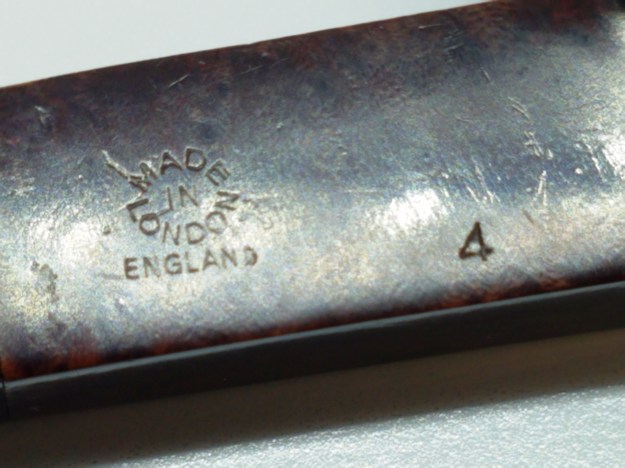
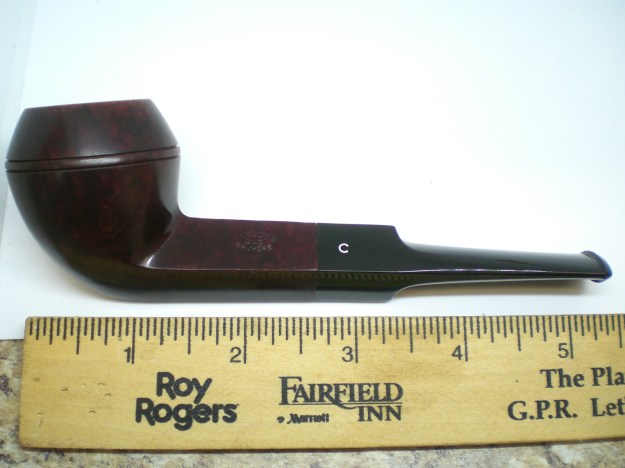
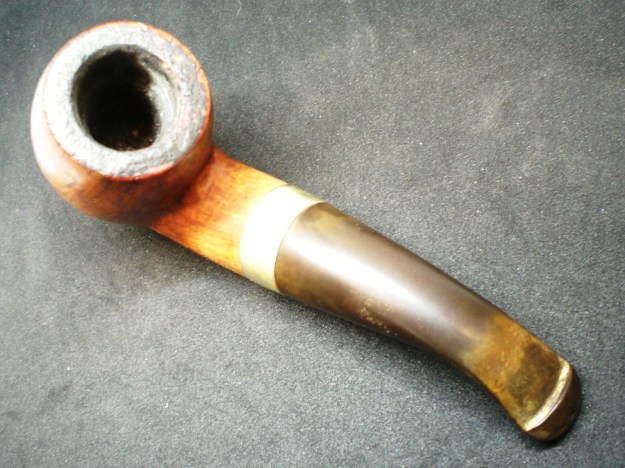
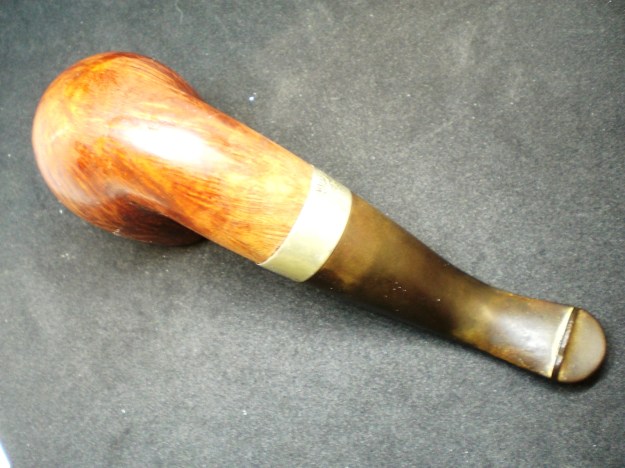
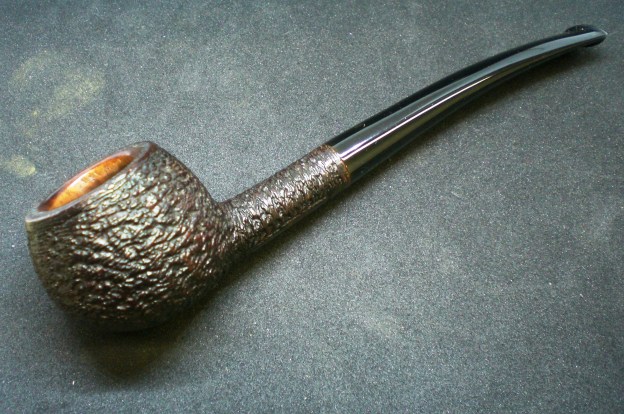
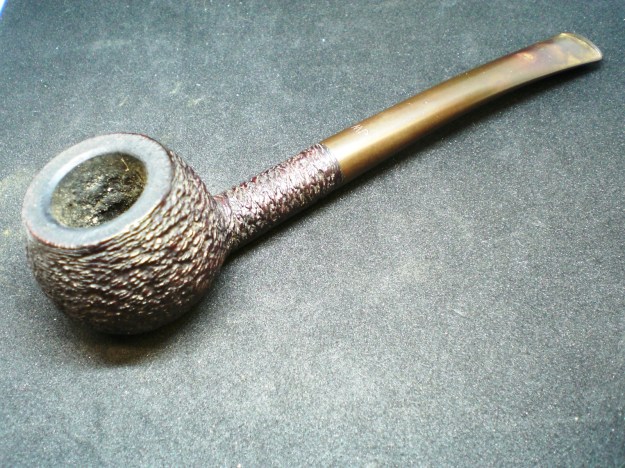
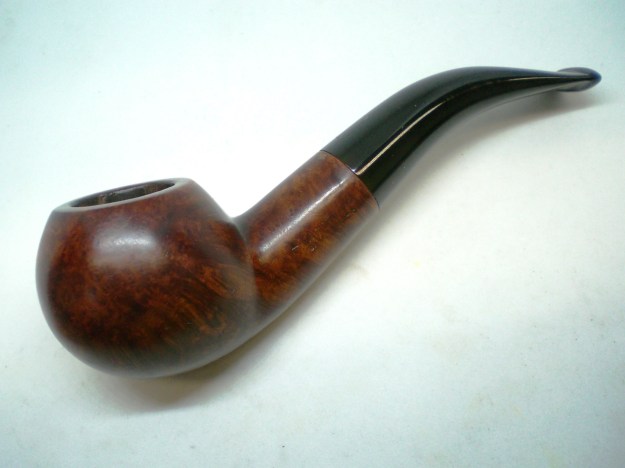
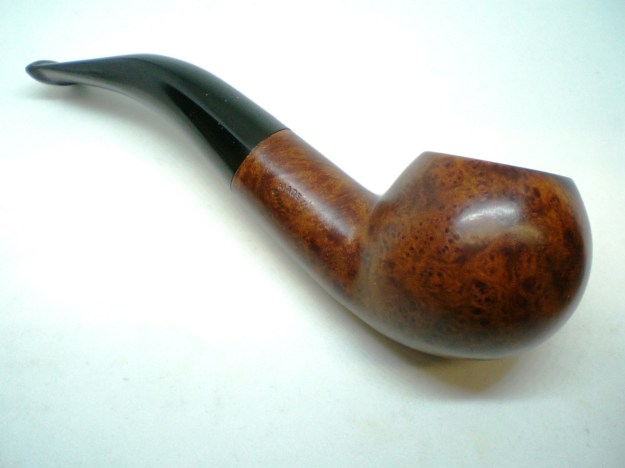
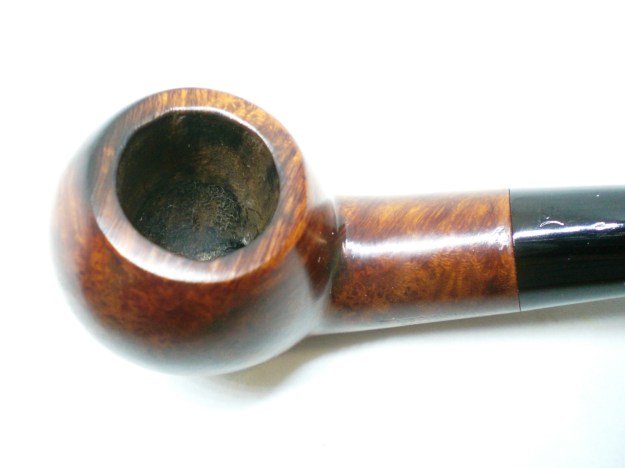
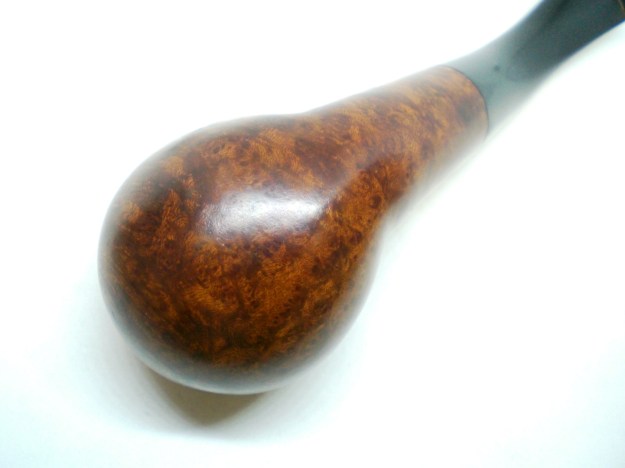
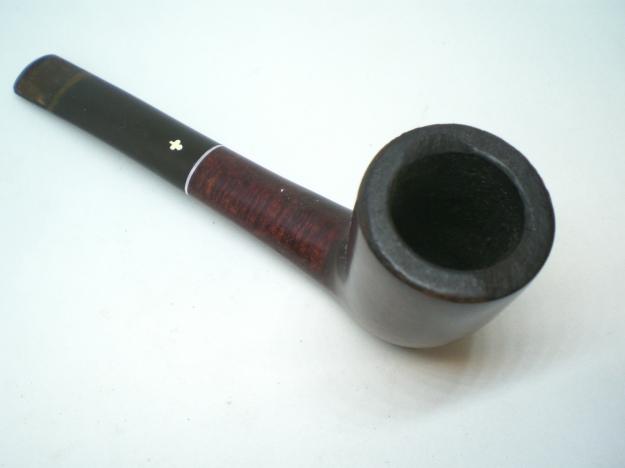
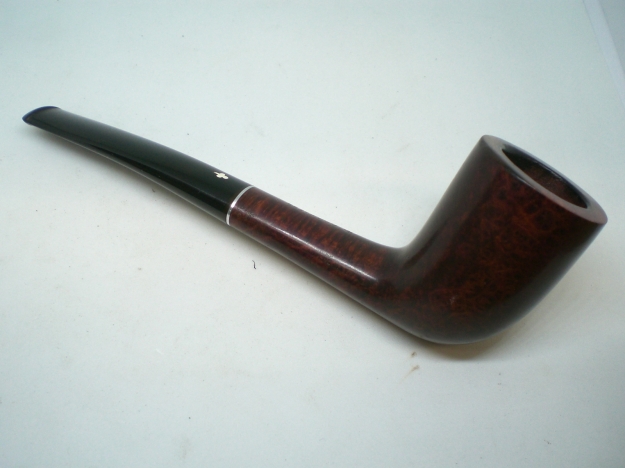
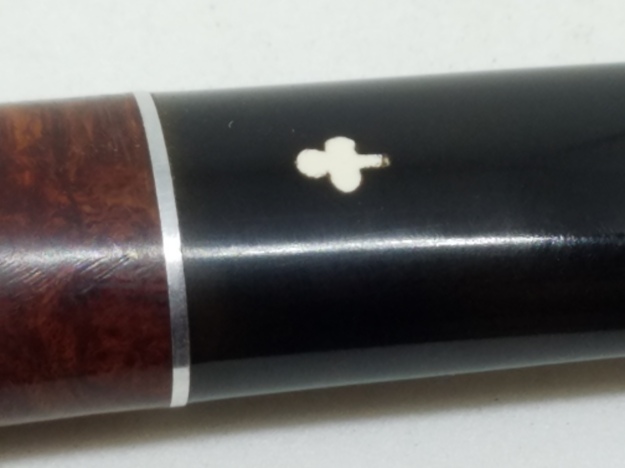
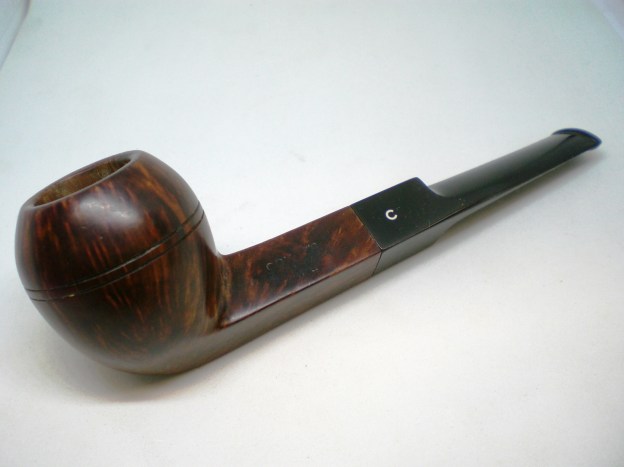
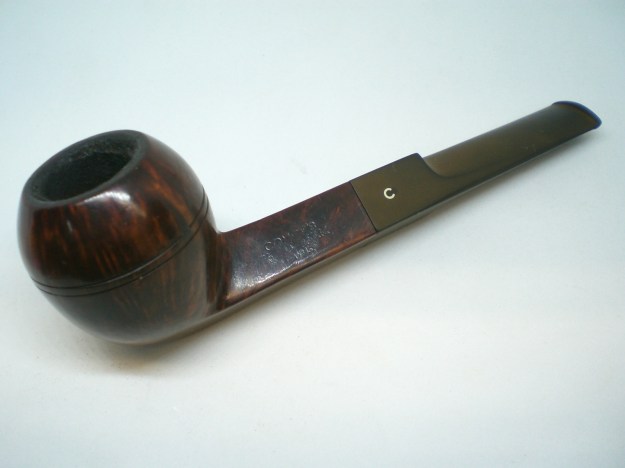
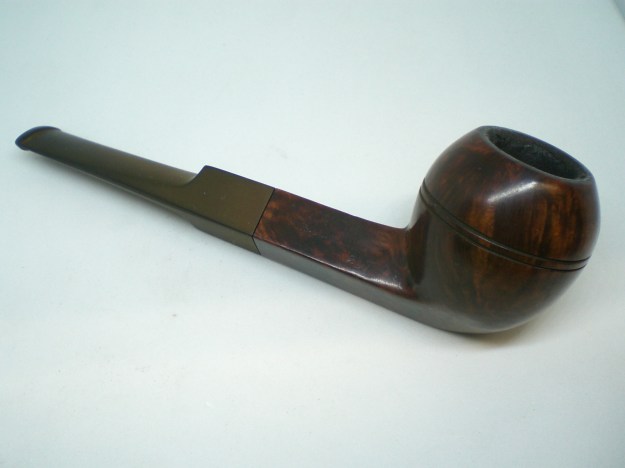
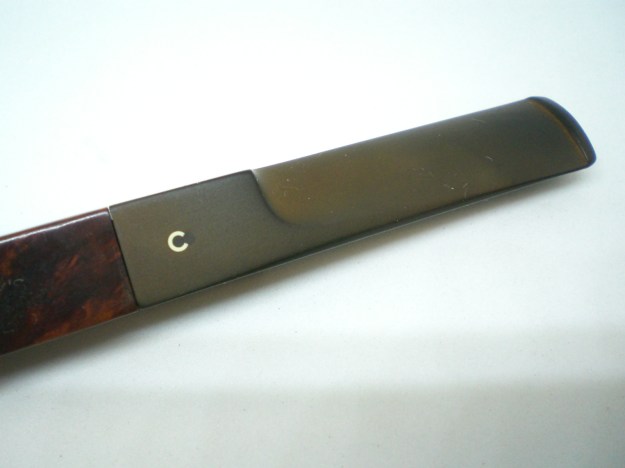
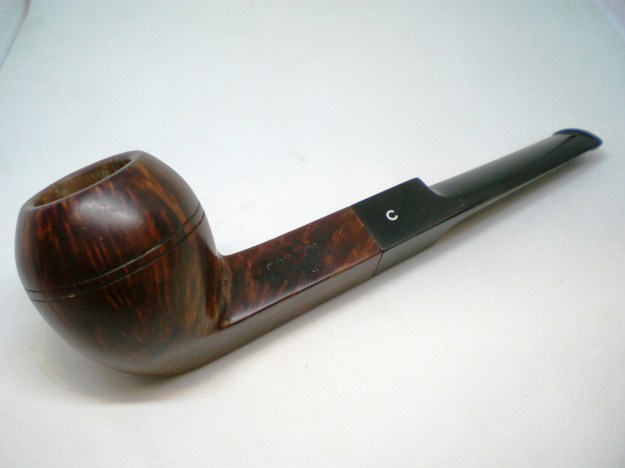
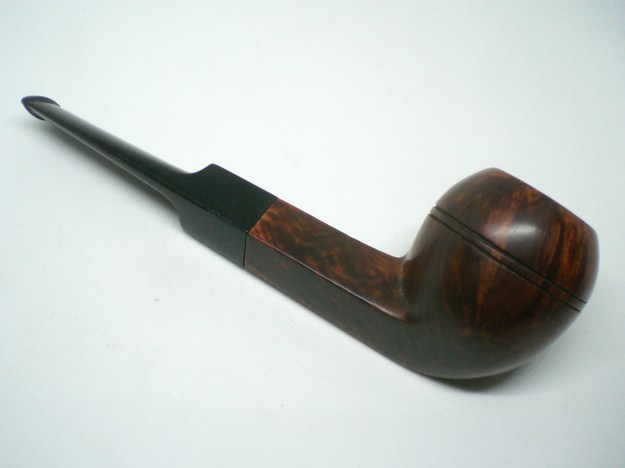
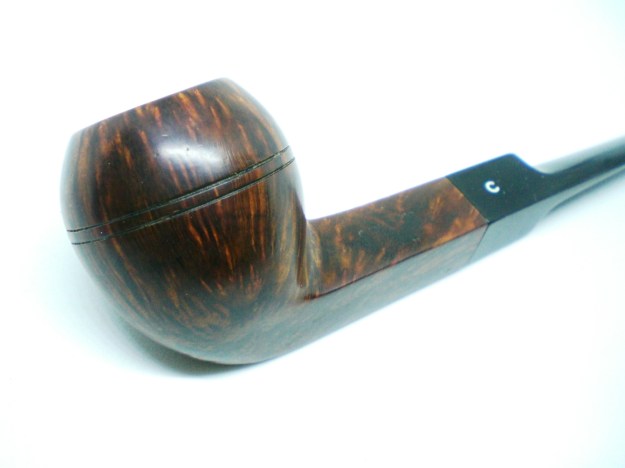
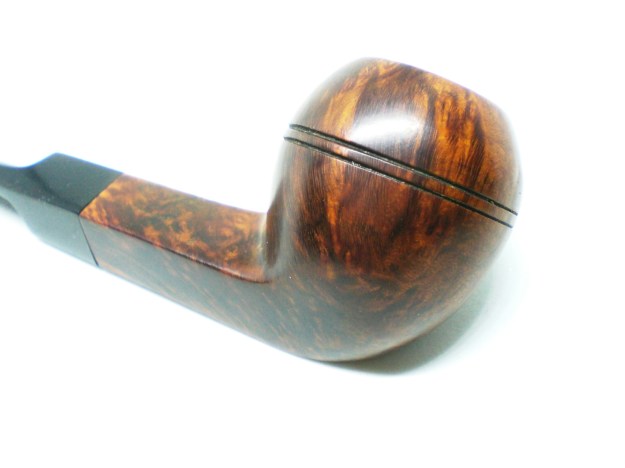
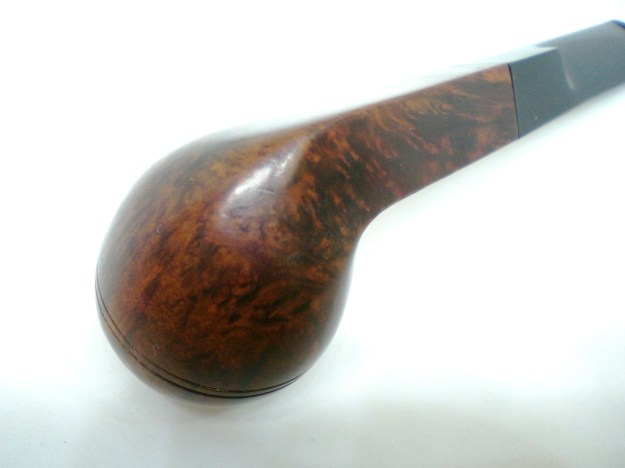
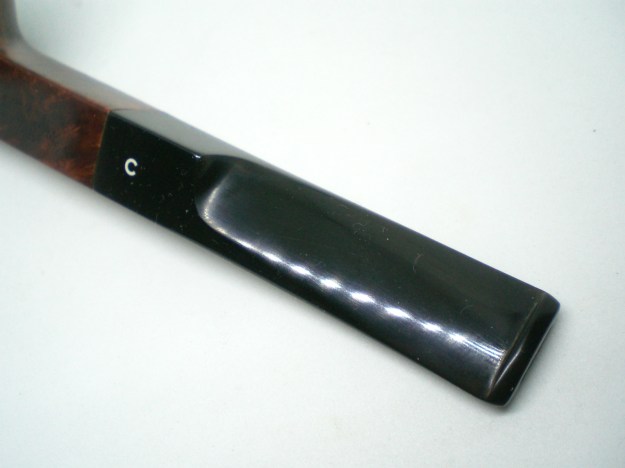
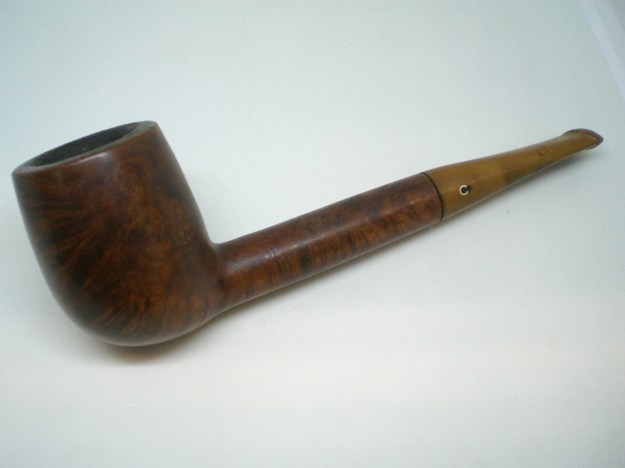
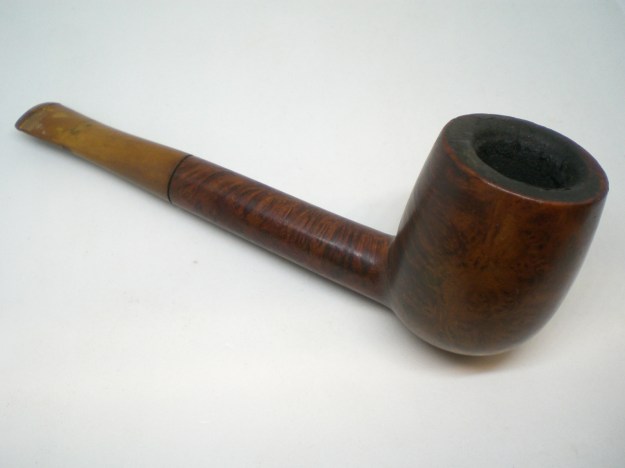
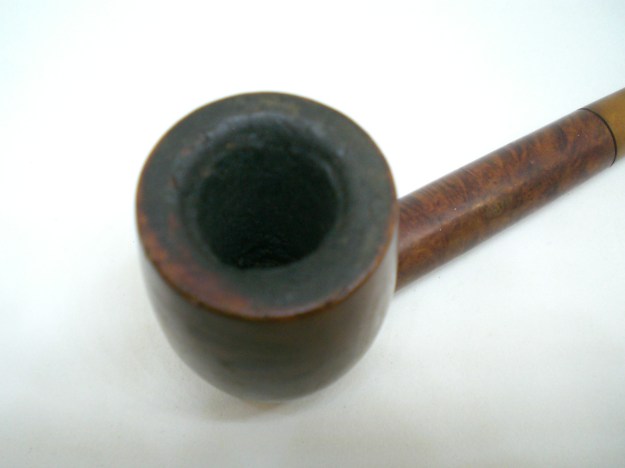
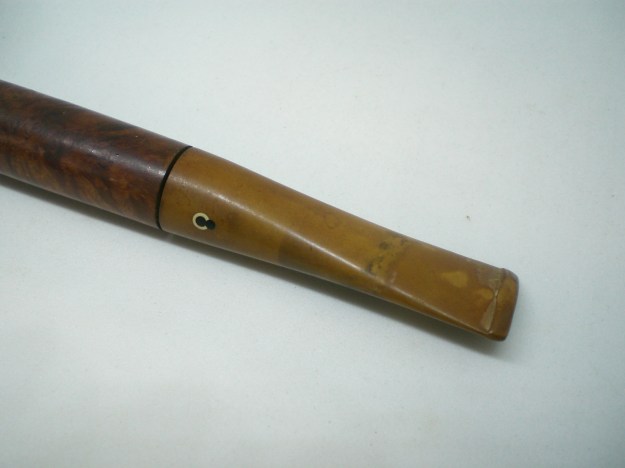
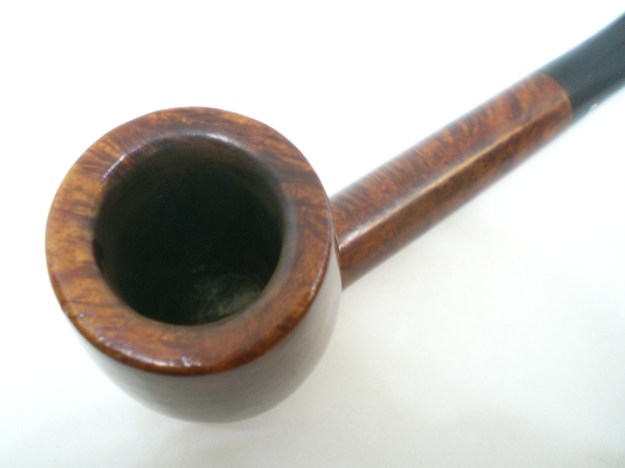
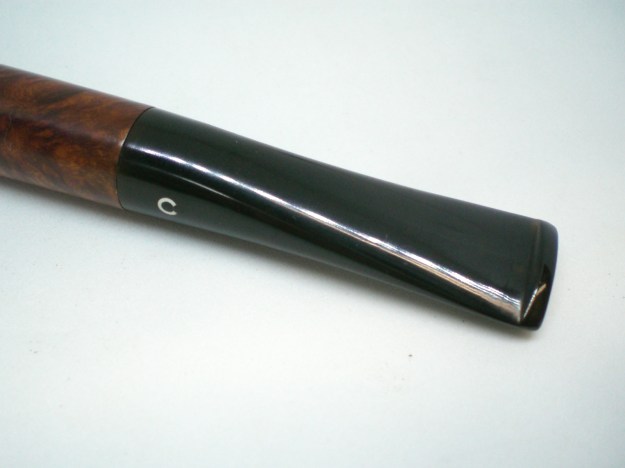
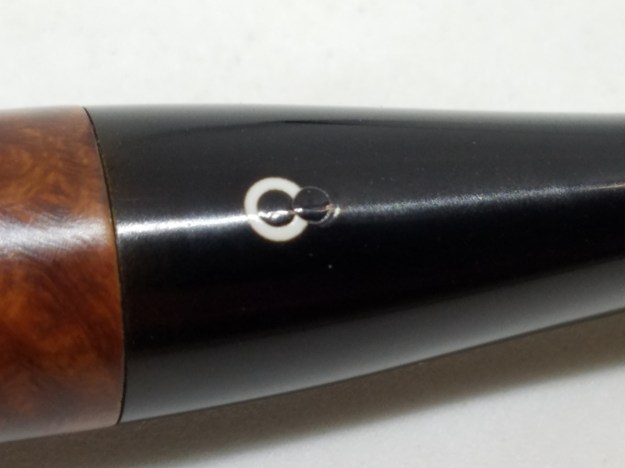
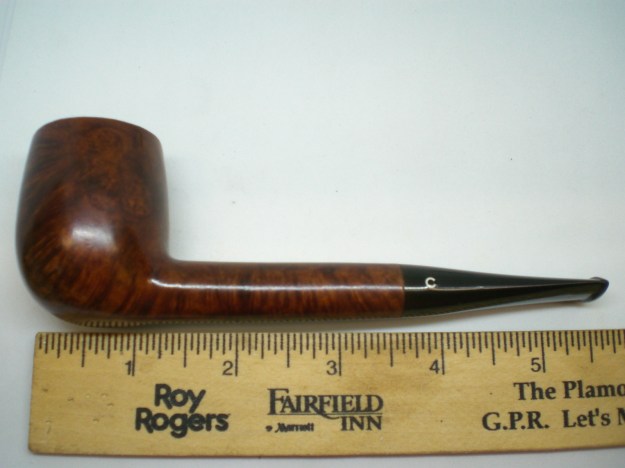
This Shape 4 straight bulldog in Old Bruyere finish was on my work bench at the same time as a Shape 5, which also was stamped Old Bruyere. This one had the smooth finish , which I thought was typical for that grade. The pipe has the drilled “C” stem logo. The pipe was really in excellent overall finish, and the stem in particular looked very lightly used. It had a very dark, almost purple stain. The Shape 4 is slightly smaller than the Shape 5. There was a slight build-up on the bowl top. Below is the pipe as it was received.

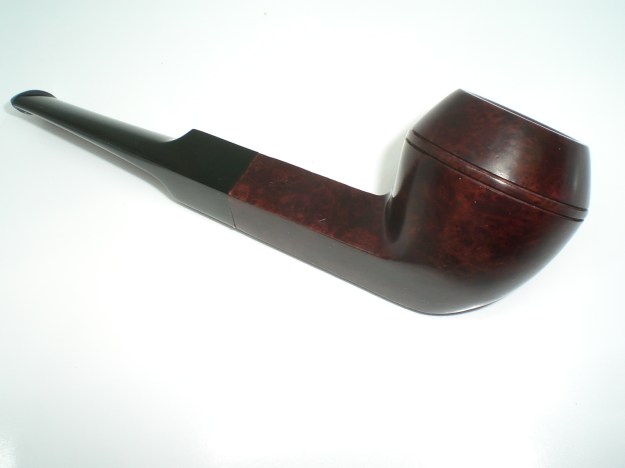
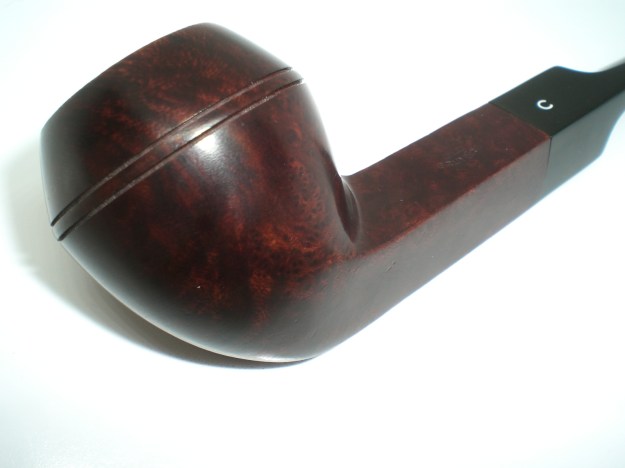
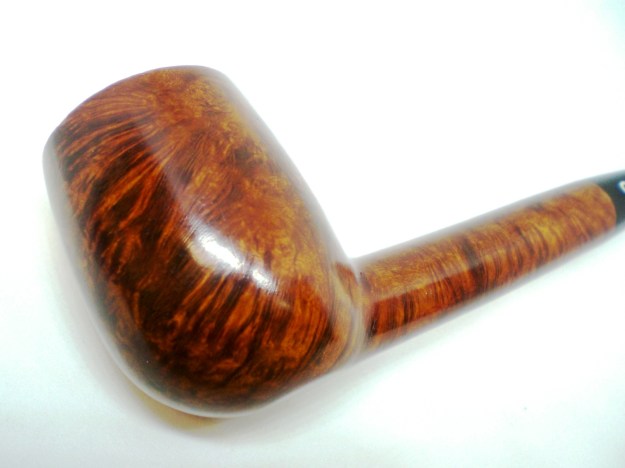
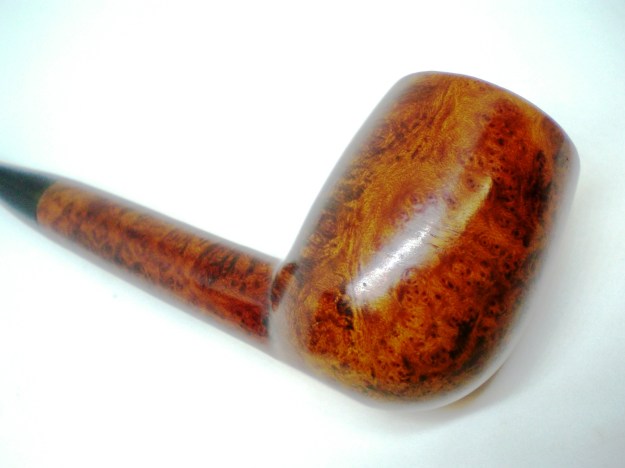
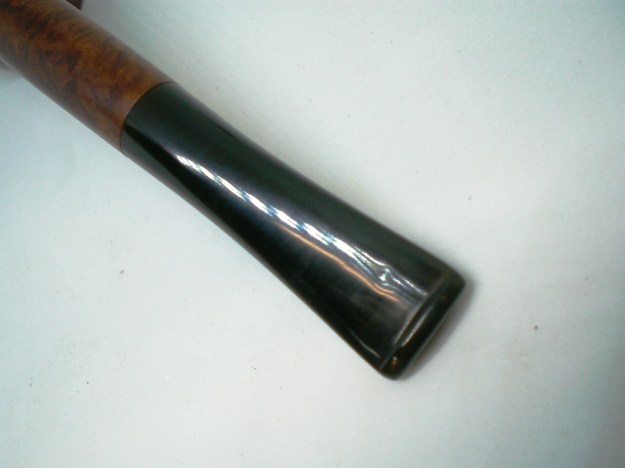
I reamed the slight cake out of the bowl, and which was in excellent condition. I used some worn Scotchbrite to remove the bowl-top buildup. The bowl still had the beveled edge and the beadlines were perfect. The pipe was soaked in sea salt and alcohol. After the bowl soak, the stem was mounted and I used 800, 1500, and 2000 grade wet paper to bring back the shine. Next up was 8000 and 12000 grade micromesh sheets. The stem was then polished by machine with White Diamond and Meguiars Plastic Polish. The bowl was buffed lightly with White Diamond and Carnuba wax.

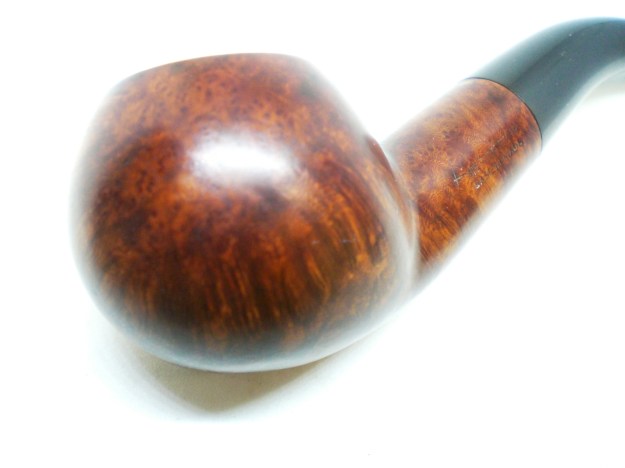
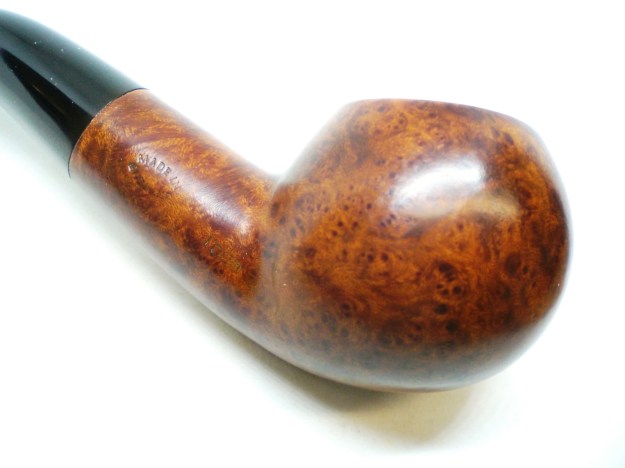
Below is the finished pipe.

Shamrock 9BC Restoration


By Al Jones

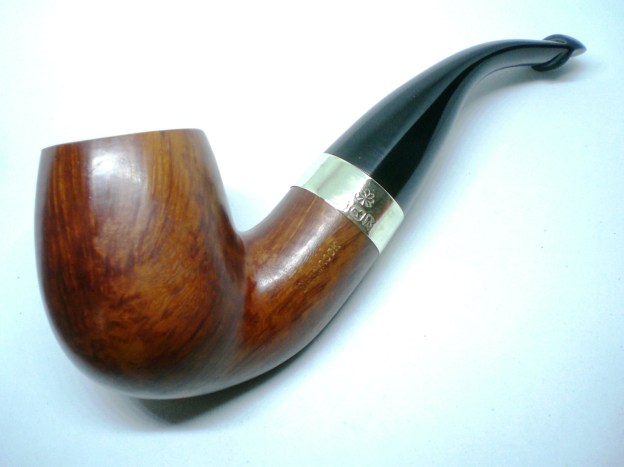
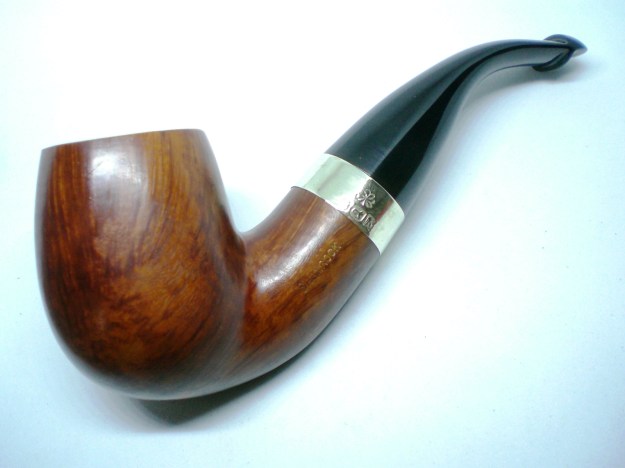
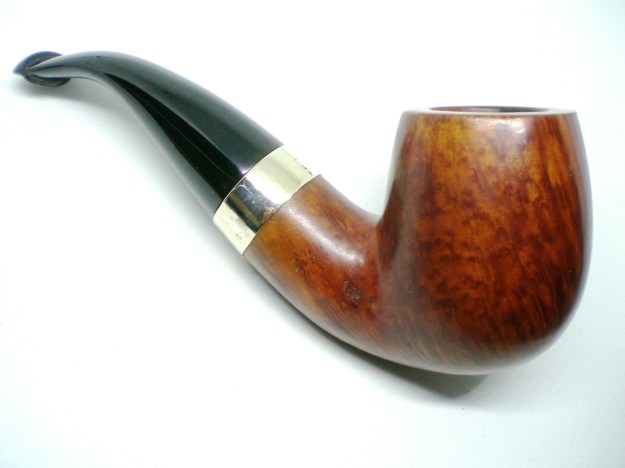
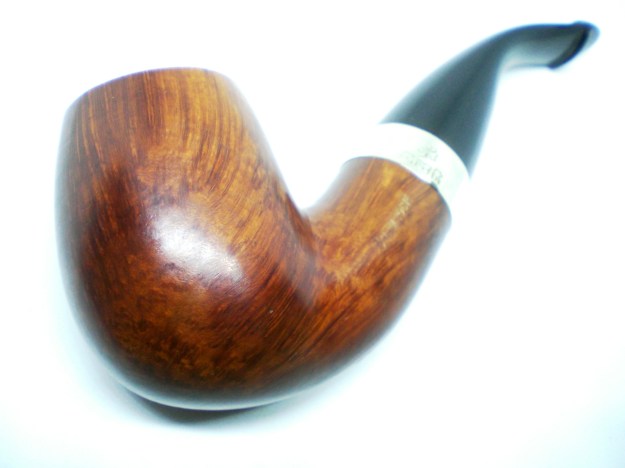
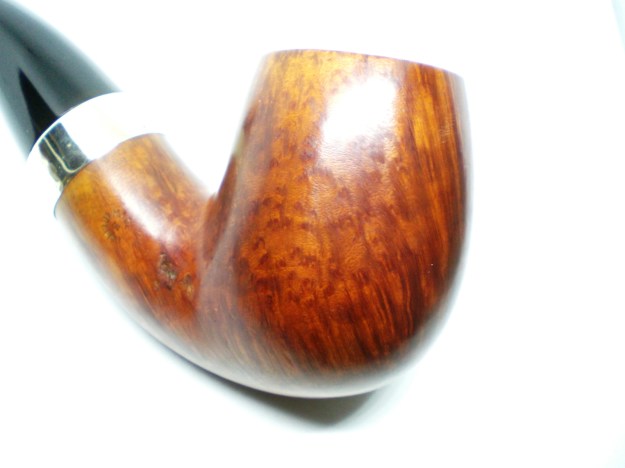
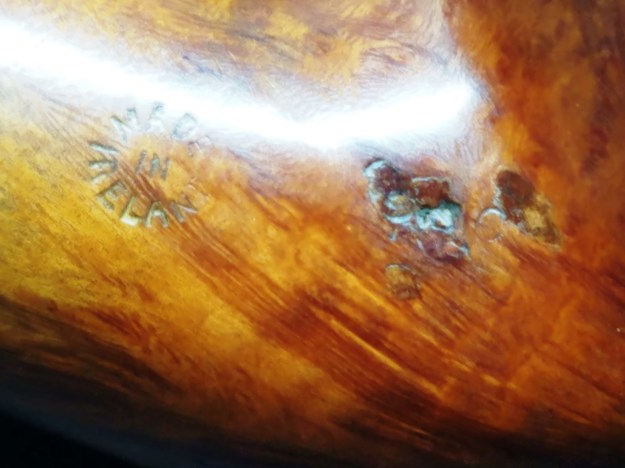
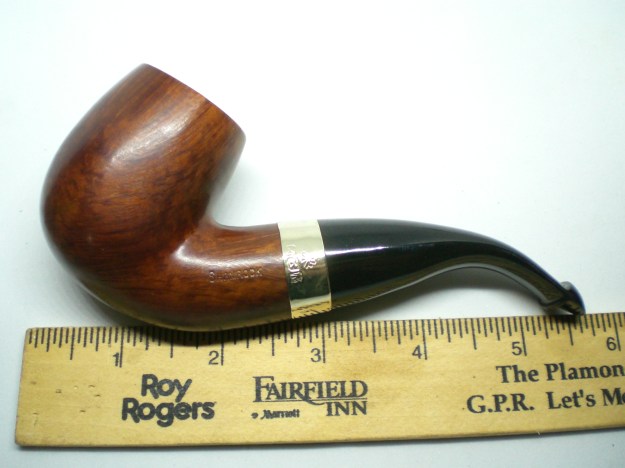
The Peterson 9BC shape might just be my favorite pipe shape. It fits the hand wonderfully and it is completely unique in a world full of bent billiards. This one is a lowly Shamrock, but the briar is surprisingly nice with no visible signs of any fills. This one spots the round COM of “Made in Ireland” which was used around 1945-1947 (end of the Pre-Republic era). However, Mark Irwin has noted that he finds no evidence of the 9BC before the early 1950’s and then, only in Rogers catalogs. So, this pipe would have to be an early Republic era piece. The 9BC shape later became the XL90 in the 1980’s and that shape continues to be offered today.

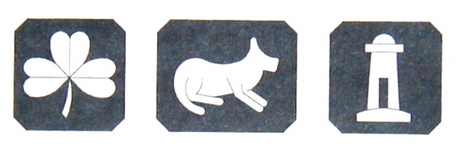
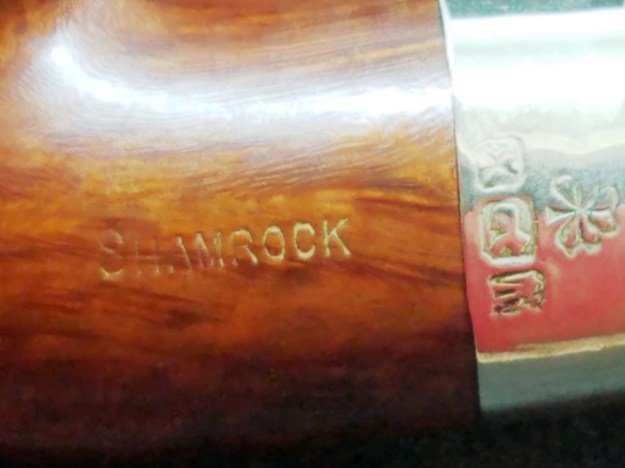
There is a ding right on the 9BC stamp, but you can just see the “C”. Shamrock pipes sport the nickel band with the three “faux hallmarks” of:

A Shamrock for the many shamrocks found in Ireland
A Prone Fox representing the famous fox hunts in Ireland’s history, and
A Stone Tower for the many hundreds of stone towers spotted throughout Ireland

Again these are not genuine silver hallmarks.

The Shamrock pipe box had one one side “Lucky Is The Man Who Smokes a Shamrock”, which always makes me smile (sadly, no box with this one).

(Faux-Hallmark info and picture courtesy of Pipepedia}

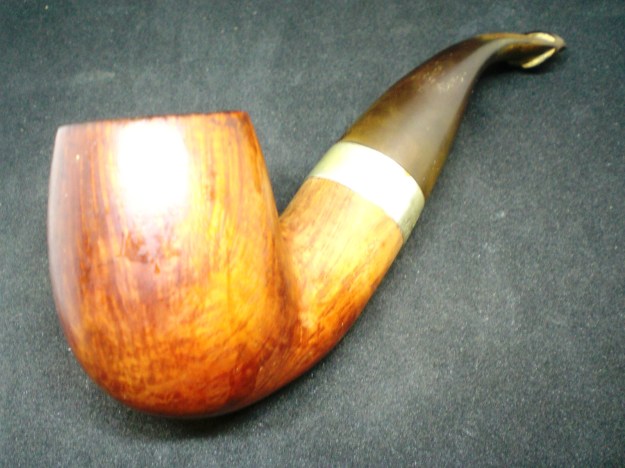
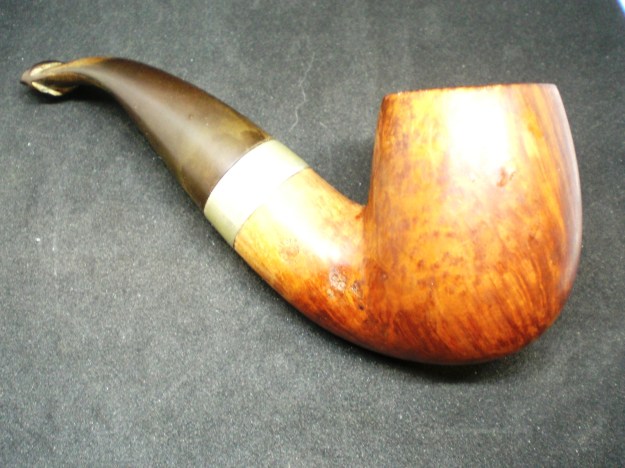
The pipe look a little rough from the sellers pictures, but showed a lot of potential. The stem was heavily oxidized, but didn’t appear to have been abused. There was heavy build-up on the bowl top. The bowl had a very thick cake, which is usually a good thing.

I reamed the bowl with my Pipenet kit, and finished it with some 320 grit paper. The bowl was then soaked in sea salt and alcohol. The stem was soaked in a mild Oxy-Clean solution. I cleaned the nickel band with Mothers metal polish, it has a few dings, which adds to the character. I removed the bowl top build-up with a worn piece of scotch brite and found it did indeed protect the bowl top. There was some very minor rim darkening on the 12 o’clock position.

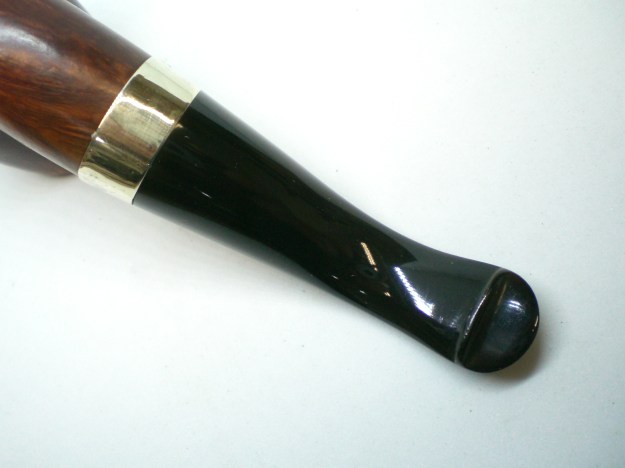
The oxidation was removed with 800, 1000, 1500 and 2000 grit wet paper. There was no teeth marks at all on the stem! Next up was 8000 and 12000 micromesh, followed by a machine buff with White Diamond and Meguiars Plastic Polish. The bowl was buffed with White Diamond and several coats of Carnuba wax.

Below is the finished pipe, which I’m enjoying as I type up this blog entry.

?

?

JW No 1 Broad Street Sasieni Bowler Restoration.


By Al Jones

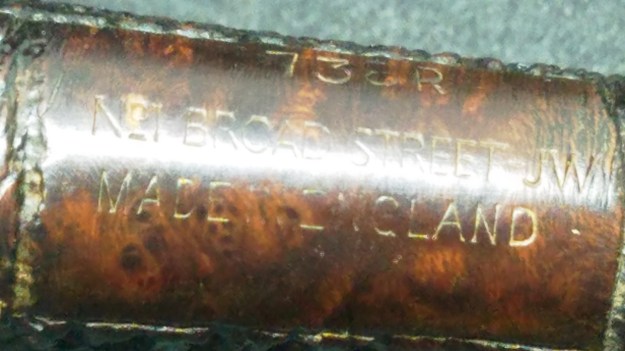
This one was sold as a Comoy’s, but I knew from the shape, finish and nomenclature panel, that it was made by Sasieni. Below is the pipe as it was received.

“JW” pipes are named for J.W. Wanamker, founder of the Wanamaker’s Department store that originated in Philadelphia. Like many department stores of that era, they had their own tobacco sales area and had pipes made for them by Comoys, Sasieni and possibly others.

https://en.wikipedia.org/wiki/Wanamaker%27s

Wanamakers had the NO.1 BROAD STREET symbol trademarked as tobacco products.
https://trademark.trademarkia.com/no-1-broad-street-71336921.html

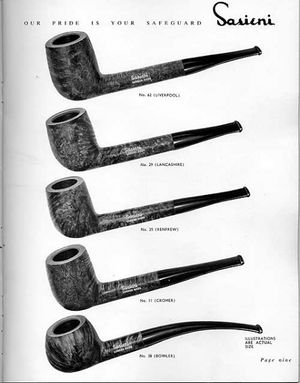
The Sasieni Shape 38 is more commonly known as “The Bowler” a wonderfully light Prince shape.

The pipe had an oxidized, but otherwise, unmarked stem. The bowl had a mild cake and some residue on the bowl top. After removing the cake, the bowl was soaked with sea salt and alcohol.

I used a piece of worn Scotch-Brite to remove the buildup on the bowl top, which revealed a beautiful polished inner rim. The bowl was in excellent shape. I wiped on some Fieblings Dark Brown stain to the bowl top and briar to freshen it up.

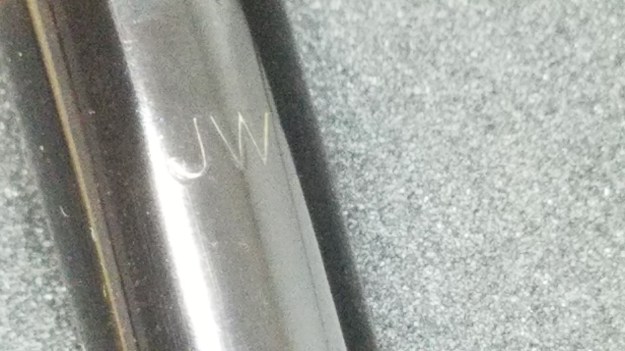
The oxidation was removed with 800, 1000, 1500 and 2000 grit wet paper, followed by 8000 and 12000 grade micromesh sheets. I used a Magic Eraser pad around the very shallowly stamped “JW” mark. The stem was then buffed with White Diamond and Meguiars Plastic Polish.

Below is the finished pipe.

?

Mr. Pickwick “Ashford” Restoration


By Al Jones

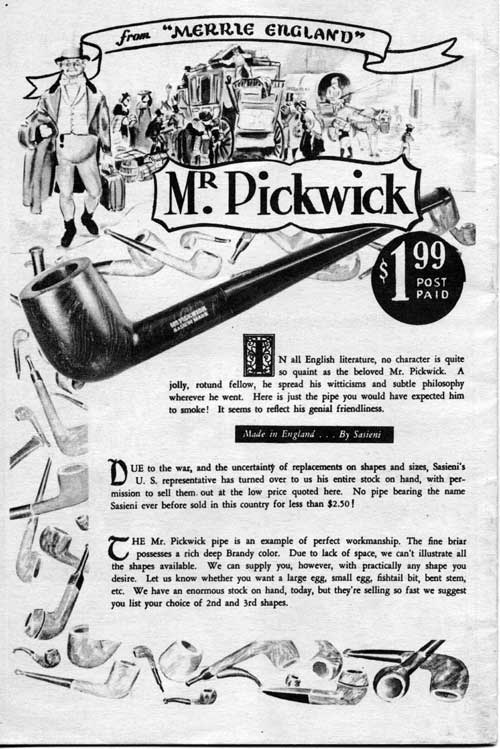
This pipe showed up on a thread on a pipe forum that I frequent and the forum member said it came from the grandfathers estate of a friend. He asked if it was worth restoring. As a Sasieni fan, I immediately recognized it as the iconic “Ashford” shape, which is the shape 88 in the Four Dot family and on this seconds line as a shape 1088. It had the football shaped “Made In England” COM that was used in the family era from 1946 to 1979. I’ve had numerous Sasieni 2nd’s lines come across my work bench, but not a “Mr. Pickwick”. I couldn’t find anything specific about this line, but in the Stephen P. Smith article on Pipepedia, he writes:

“Through the post war years, Sasieni added shapes and lines. While the Four Dot remained their most famous product, the company also sold lines of “seconds” under various names, such as Mayfair, Fantail, Olde English, and Friar. These were pipes made of good wood, but possessed of some flaw, usually filled with putty.” Shortly after posting this blog entry, a member of the PipesMagazine.com forum sent me this 1939 catalog page for Mr Pickwick pipes.

I made a few comments about the pipe and volunteered to restore it for the owner (who was seeking a restoration). I don’t do many pipes besides my own these days, but some pipes are just a joy to work with and I knew that I’d like to have this one on my work bench.

The owner sent me the pipe and it arrived in great condition. It had the typical oxidized stem and a heavy cake in the bowl. The stem fitment was excellent and it had no serious issues. But I could see it held promise. Here’s the pipe as it was delivered:

I used a worn piece of scotchbrite to remove the build-up on the bowl top and it was then reamed with my Castleford set. The bowl had been carved a bit with a knife, but very solid. The nomenclature was strong. I soaked the bowl with sea salt and alcohol. The stem was soaked in a mild Oxy-clean solution

Following the alcohol soak and Oxy-clean soak, I mounted the stem and removed the oxidation with 400, 800, 1000, 1500 and 2000 grade wet paper. The P stem logo was faint, but ultimately, I was able to remove the oxidation and retain a faint semblance of the P. The stem was then buffed with White Diamond and Meguiars Plastic Polish. The briar had a few dings, most notably near the shape number. I used a wet cloth and an electric iron to steam out those dents and marks. There was some scorch marks on one edge of the bowl. I elected to diminish them with micromesh sheets and the bowl was buffed with White Diamond and Carnuba wax. I could have restained the bowl and possibly removed some of the dark spots, but I would have never been able to replicate the patina of age the bowl had earned. The owner agreed and we settled on that level of restoration.

Below is the finished pipe.

?

?

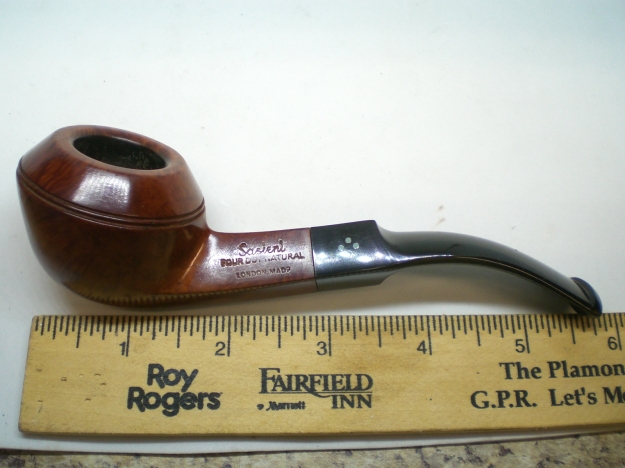
Sasieni “Regent” Four Dot Restoration


By Al Jones

It appears that I’m on a Sasieni roll to start out the new year! My second Sasieni restoration for the day, this one a Regent shape in the Ruff-Root finish. I was delighted to unpack this one, as I had never seen a Regent shape first hand. The seller didn’t include any size references and I assumed it would be of the larger variety, like the the Stratford, Viscount Lascelles, etc. As someone who enjoys a smaller sized bent billiard, this one is perfect at 35 grams. The pipe was inaccurately listed as a “4 Dot” but thankfully a good nomenclature picture was included. Others may have noticed as there was a flurry of bids at the end of the auction. I was fortunate to prevail by a few dollars under my maximum bid.

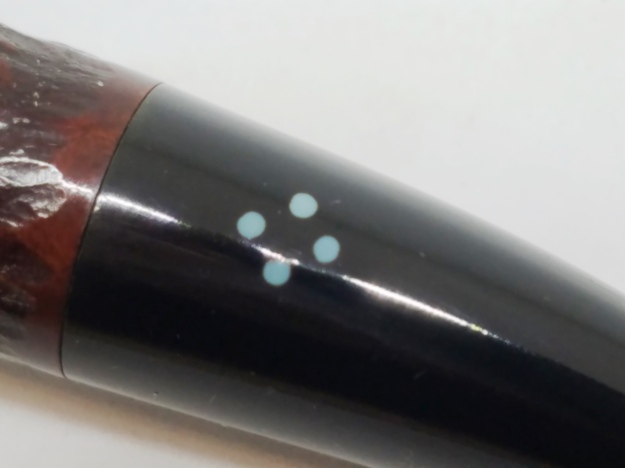
The pipe was as pictured below, in excellent condition. A good snug stem, no bite marks or any other issues. There was some build-up on the bowl top, a heavy cake and an oxidized stem. Even on the oxidized stem, the blue dots were brilliant and it was one of the nicest Sasieni stems that I’ve seen in quite a while. This pipe was made between 1946 and 1979 (the Family era).

I reamed the cake and soaked the bowl in sea salt and alcohol. Following the soak, I removed the build-up on the bowl top with a piece of Scotch-Brite. I hand buffed the briar with Halycon wax. The stem was mounted and oxidation removed with 800, 1000, 1500 and 2000 grit wet sandpaper. I then used 8,000 and 12,000 micromesh sheets. The stem was polished with White Diamond and Meguiars Plastic Polish.

Below is the finished pipe.

?

Kaywoodie Drinkless Yacht Restoration


By Al Jones

Al_Pipes_@SMALL

This wonderful Kaywoodie Drinkless belongs to a friend who lives in Louisiana.  While visiting my daughter for Christmas, he showed me the pipe, found in a local flea market.  I volunteered to restore it for him.

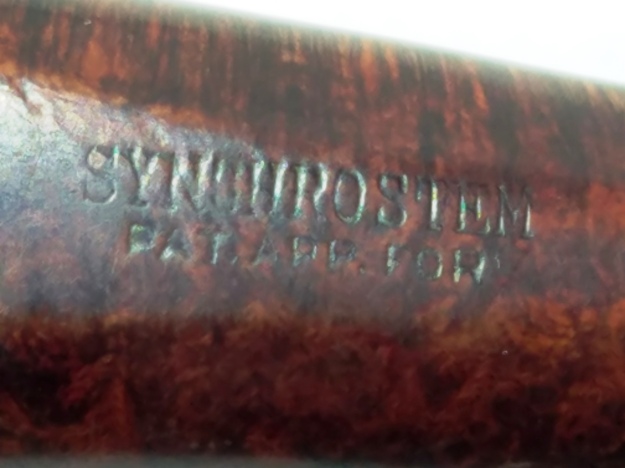
I had not restored a Kaywoodie in several years and struggled a bit to date the pipe.  The old Kaywoodie forum is no longer available, which was a great resource.  I did find that there is a Kaywoodie Pipe Smokers Facebook page and I requested to join it.  Looking back thru some old PipesMagazine.com forum posts, I was finally able to date the pipe as to have been made between 1929 and 1932.    These details led me to that conclusion:

Clover Stem logo – on top of the stem (most I found on line are on the side)
Four Hole Stinger – with Reg. No 213698 and Drinkless
Syncrostem “”PAT. APP. FOR” (Patent was granted in 1933)
KBB logo – in the cloverleaf

The pipe was in great shape, with some rim damage and a lightly oxidized stem.  the Four Hole stinger was intact and the stem was in great shape.  The nomenclature was very good, but unfortunately the shape number was not visible.  Below is the pipe as it was received.

Kaywoodie_Yacht_Before (1)Kaywoodie_Yacht_Before (2)Kaywoodie_Yacht_Before (3)Kaywoodie_Yacht_Before (4)

I used a worn piece of Scotch-Brite to remove the build-up on the bowl top. There were several indentions on the bowl top, I presume heat damage from a lighter or match.  I decided to top the bowl slightly and did so with 320 grain paper on my flat bench, followed by 800 grit wet paper.  This was a bit of a compromise, as I wanted to remove the damage, but not alter the bowl height significantly.  The bowl top was then re-stained with Fieblings Medium Brown stain.  The bowl was reamed and then soaked with alcohol and sea salt.   The bowl was in excellent condition.

I cleaned the stinger with fine steel wool and Mothers Mag & Aluminum polish.  The stem was polished with 800, 1,000, 1,500 and 2,000 grade wet paper, followed by 8,000 and 12,000 grade Micromesh sheets.  It was then polished with White Diamond and Meguiars Plastic polish.

The bowl was buffed with White Diamond and several coats of Carnuba wax.

Below is the finished pipe, ready to head back home to Louisiana.

Kaywoodie_Yacht_Finish_01Kaywoodie_Yacht_Finish_02Kaywoodie_Yacht_Finish_03Kaywoodie_Yacht_Finish_04Kaywoodie_Yacht_Finish_05Kaywoodie_Yacht_Finish_06Kaywoodie_Yacht_Finish_07Kaywoodie_Yacht_Finish_08Kaywoodie_Yacht_Finish_09Kaywoodie_Yacht_Finish_10Kaywoodie_Yacht_Finish_11Kaywoodie_Yacht_Finish_12

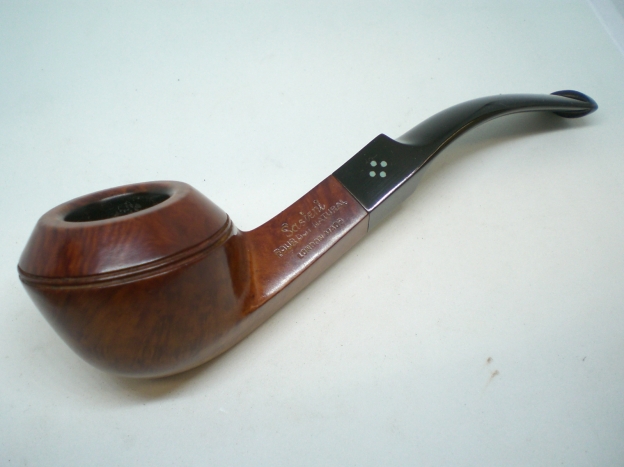
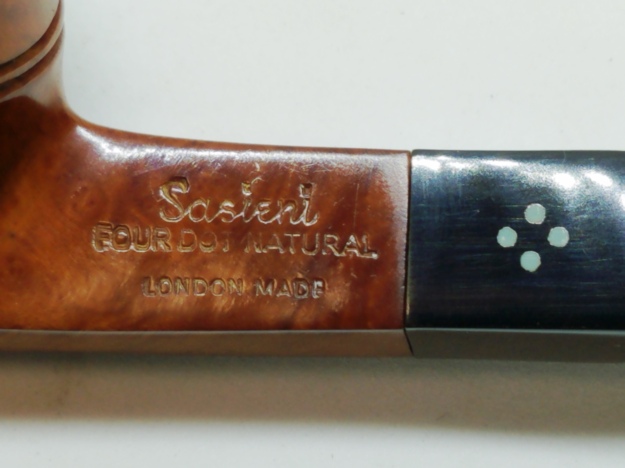
Sasieni Danzey Natural Restoration


By Al Jones

As a collector of Sasieni Bulldog and Rhodesian shapes, the Danzey was a shape that has so far eluded me. My buddy Dave has a Danzey,also with the SXS stamp and in Rustic finish. I restored that pipe for him in 2017.

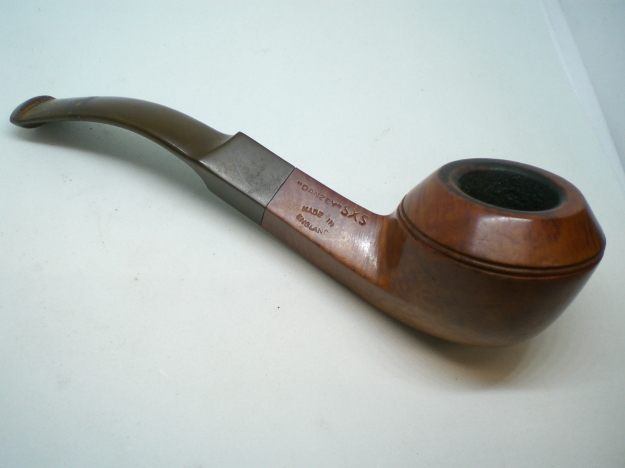
This one is a Natural finish grade and it is a wonderful piece of briar. The nomenclature was also in excellent condition. The SXS stands for:
S – saddle stem
XS – Sasieni used this stamp for premium priced pipe (according to Pipepedia)

I would date this pipe to have been made between 1946 and 1979.

The pipe was in fine condition, with some build-up on the rim top and an oxidized stem. It appeared to be an easy restoration, see the before pictures below.

I reamed the slight cake from the bowl and indeed, it was in great shape. The bowl was soaked with Sea Salt and alcohol. After the bowl soak, I removed the build-up on the bowl top with a worn piece of Scotch-Brite. The stem was then mounted and oxidation removed with 800, 1000, 1500 and 2000 grit wet sandpaper. I then used 8,000 and 12,000 micromesh sheets. The stem was polished with White Diamond and Meguiars Plastic Polish. The briar was polished with White Diamond and several coats of carnuba wax.

Below is the finished pipe.

?

Comoy’s 283 Grand Slam Restoration


By Al Jones

The 283 is an iconic Rhodesian shape for Comoy’s and one of my favorites. Later in the Comoy’s catalog, this shape number switched to the 440, but no explanation is provided for that change. This one popped up on Ebay and I was able to strike a deal with the seller. The ad had only a small number of fuzzy pictures but to my eye, it showed promise. This one was a Grand Slam, but with some nomenclature details I’d not seen on previous models that I had restored.

Having recently worked on a Comoy’s Grand Slam, I noticed that there was some significant differences on the nomenclature. Below is the stamping on the 283. I posted a thread on the PipesMagazine.com forum asking for some help on dating this particular pipe. Member “doctorbob”, a frequent contributor in the British section offered the following comments, which helps date the pipe to an early post-WWII period. The round, “Made In London” England was used from the mid 40’s to the late 1970’s (up to the transition point).

The second pipe is most likely a very early post-war pipe. The difference in patent numbers was not era based, instead Comoy’s used the appropriate stamp for the recipient market (2001612 was the US patent). The second pipe was intended to be sold in the UK. The time overlap between that particular COM and the patent stamping was apparently quite short.

To further add, the US patent for the ‘Grand Slam’ apparatus was approved in 1935 and expired in June of 1953. US market pipes after that would not have born the patent stamp. The UK patent was roughly contemporary.

It is not known with ANY certainty when the Made in London England stamp started, but it is commonly accepted to have begun being used in the 1945-1950 time frame

?

?
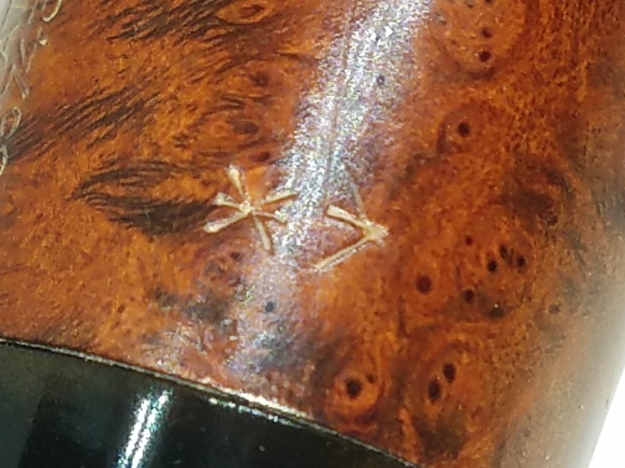
The pipe was in very good condition as received. The stem was oxidized, but with no serious teeth marks. There were several dings around the bowl. There was some rim darkening, but the beveled edge was largely intact. There was very little cake build up in the bowl.

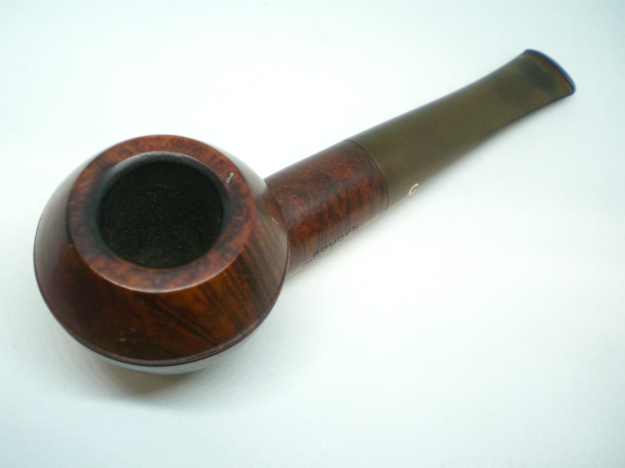
I reamed the cake and soaked it with alcohol and cotton balls. While the bowl was soaking, the stem was soaked in a mild solution of Oxy-Clean, with a dab of grease on the C.

Following the soak, I used a piece of 2,000 grade sandpaper to lighten the rim darkening, followed by 8,000 grade micromesh. I used an electric iron and a wet cloth to steam out some of the dents in the briar.

The stem was mounted and oxidation removed with 800, 1,000, 1,500 and 2,000 grade sandpaper, followed by 8,000 and 12,000 grade micromesh. It was then buffed with White Diamond and Meguiars Plastic Polish. The bowl was buffed with White Diamond and several coats of Carnuba wax, showing great care around the nomenclature.

Below is the finished pipe.

Comoy’s 237 Grand Slam Restoration


By Al Jones

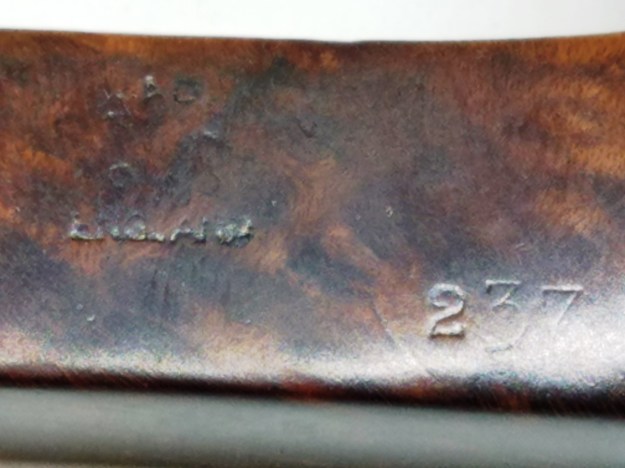
This pipe was a couple of firsts for me. I’ve restored a number of Comoy’s bulldog shapes, but this is the first shape 237 that I’ve encountered. I’ve also had several “Grand Slam” pipes, but this was the first one that still had the patented filter apparatus.

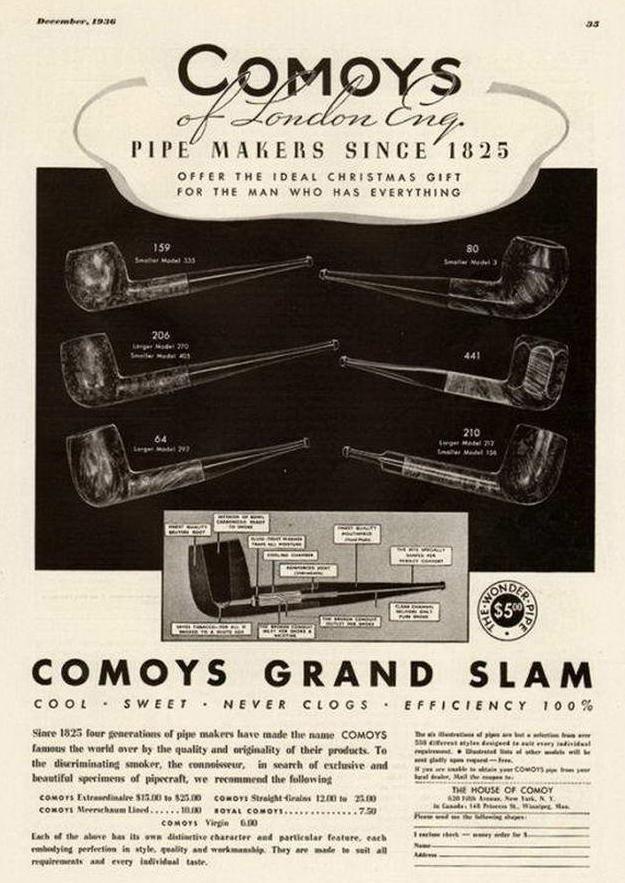
The Grand Slam was introduced in 1933, and was in the Comoy’s catalog until the 1970’s. This one has the COM stamp of the latter years, from 1946-1981. Below is a catalog page for Grand Slam pipes from 1936.

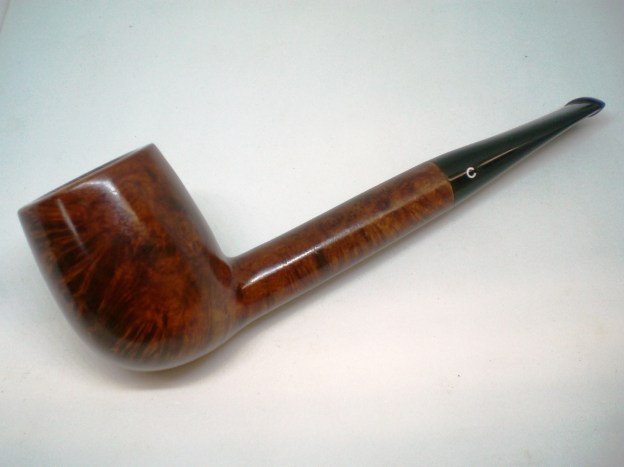
The pipe appeared to have been heavily smoked, with a thick cake. Surprisingly, the stem had zero teeth marks and only a heavy layer of oxidation. The bowl had numerous dings and dents that would need to be removed. Below is the pipe as it was received.

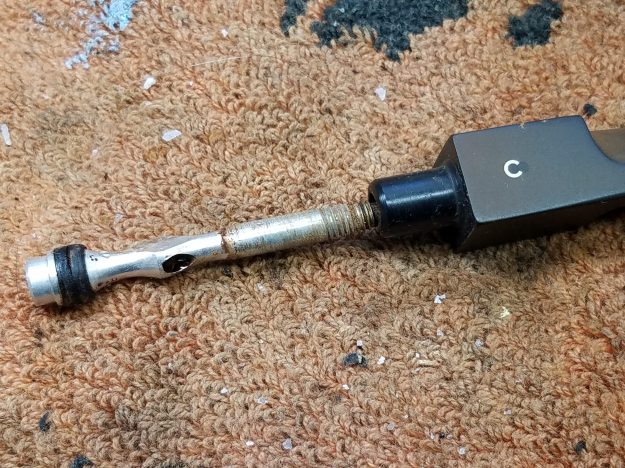
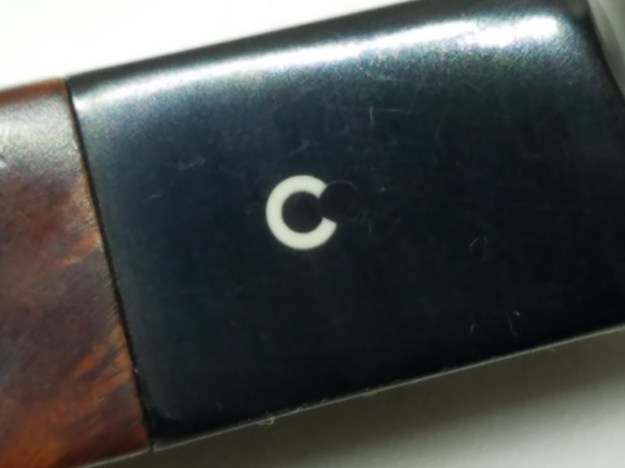
After removing the stem, I discovered the original stinger apparatus which still included two leather washers. This pipe is stamped *7 and replacement washers were available in that size. The stinger was stuck fast in the tenon. I soaked it in a shot glass of alcohol, but that wasn’t enough to get it unscrewed. I was able to run some alcohol bristle cleaners down through the stem and that did finally allow the stinger to be unscrewed. Once the stinger was removed, the stem was soaked in a mild Oxy-Clean solution, with a dab of grease over the drilled C stem logo.

The build-up on the top of the bowl was removed with a worn piece of scotch-brite. I steamed out most of the dents around the bowl with an electric iron and a wet cloth. The bowl was then polished with White Diamond rouge and several coats of carnuba wax.

The stem was mounted and the initial layer of oxidation removed with 400 grit wet paper, followed by 800, 1,000, 1,500 and 2,000 grades. Next up was micromesh sheets in 8,000 and 12,000 grades. The stem was then buffed with White Diamond followed by Meguiars Plastic Polish.

Below is the finished pipe.
?

?

Comoy’s 434 Liverpool Restoration


By Al Jones

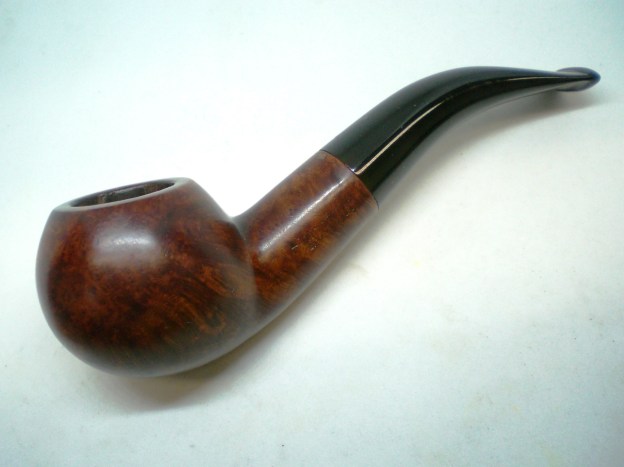
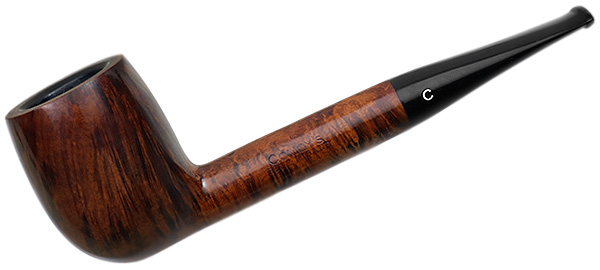
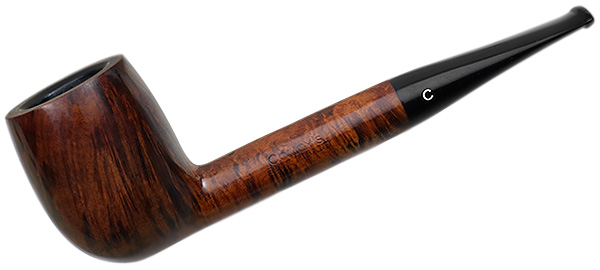
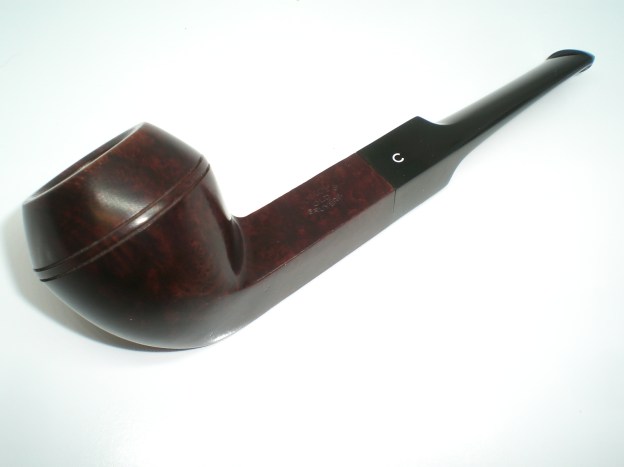
The second Comoy’s on my bench this weekend was a little bit of a mystery. This one also didn’t require a lot of work, but the nomenclature was all but invisible. With a magnifying loupe, I think it is a three digit shape, starting with a 4. I found a shape 434, at SmokingPipes, which is a round shape Liverpool. So, I believe this pipe is also a shape 434, but the finish is undetermined (probably a tradition). The pipe has the three-piece C stem logo, so it was made before 1981. Below we see the shape example from SmokingPipes (this one a Blue Riband!)
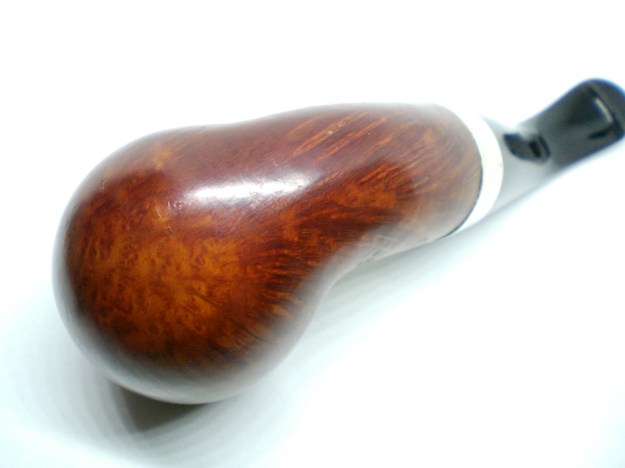
Below is the pipe as received. There was a heavy layer of oxidation on the stem, with a few teeth indentions. A heavy layer of build-up was on the bowl-top and it had a very thick cake in the bowl. Tobacco buildup in the shank prevented the stem from being inserted flush.

I used a lighter to lift the teeth indentions on both sides of the stem. A worn scotchbrite was used to remove the build-up on the bowl top. The bowl was reamed, then soaked with alcohol and sea salt. While the bowl was soaking, the stem was soaked in a mild oxy-clean solution. I put a dab of grease on the C stem logo.

Following the soak, the shank was cleaned and stem inserted. Now that the shank was clean, the stem was able to be inserted flush and it had a nice, snug fit. I removed the oxidation with 400, 800, 1,000, 1,500 and 2,000 grade wet paper, followed by 8,000 micromesh. The stem was then polished with White Diamond and Meguiars plastic polish.

The bowl was buffed with White Diamond and several coats of Carnuba wax. Below is the finished pipe.