Author Archives: upshallfan

Unknown's avatar

About upshallfan

Moderator on the PipesMagazine forum since 2011. Guest contributor on the Reborn Pipes Blog by Steve Laug.

Orlik “Sterling” Restoration


Blog entry by Al Jones

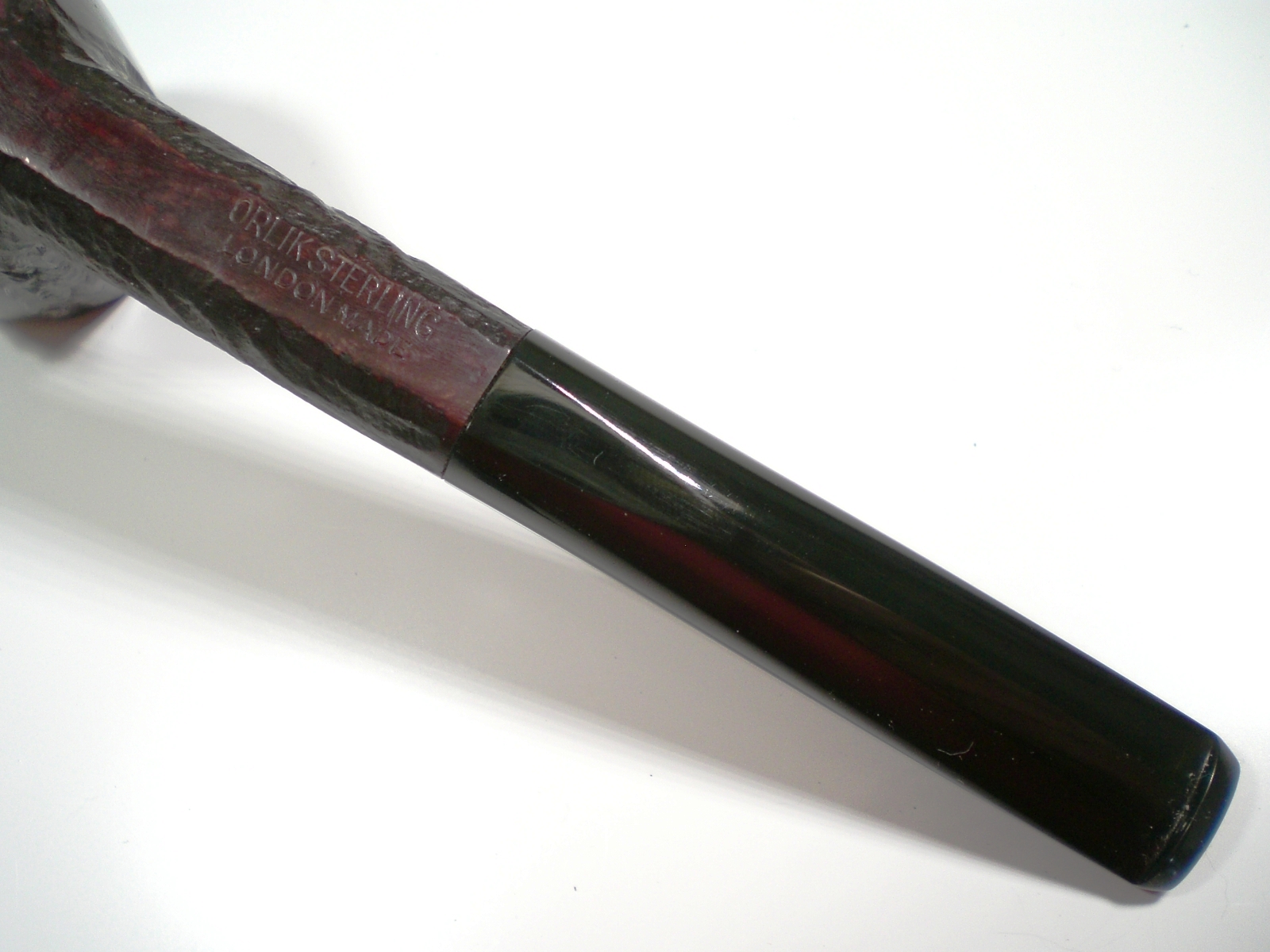
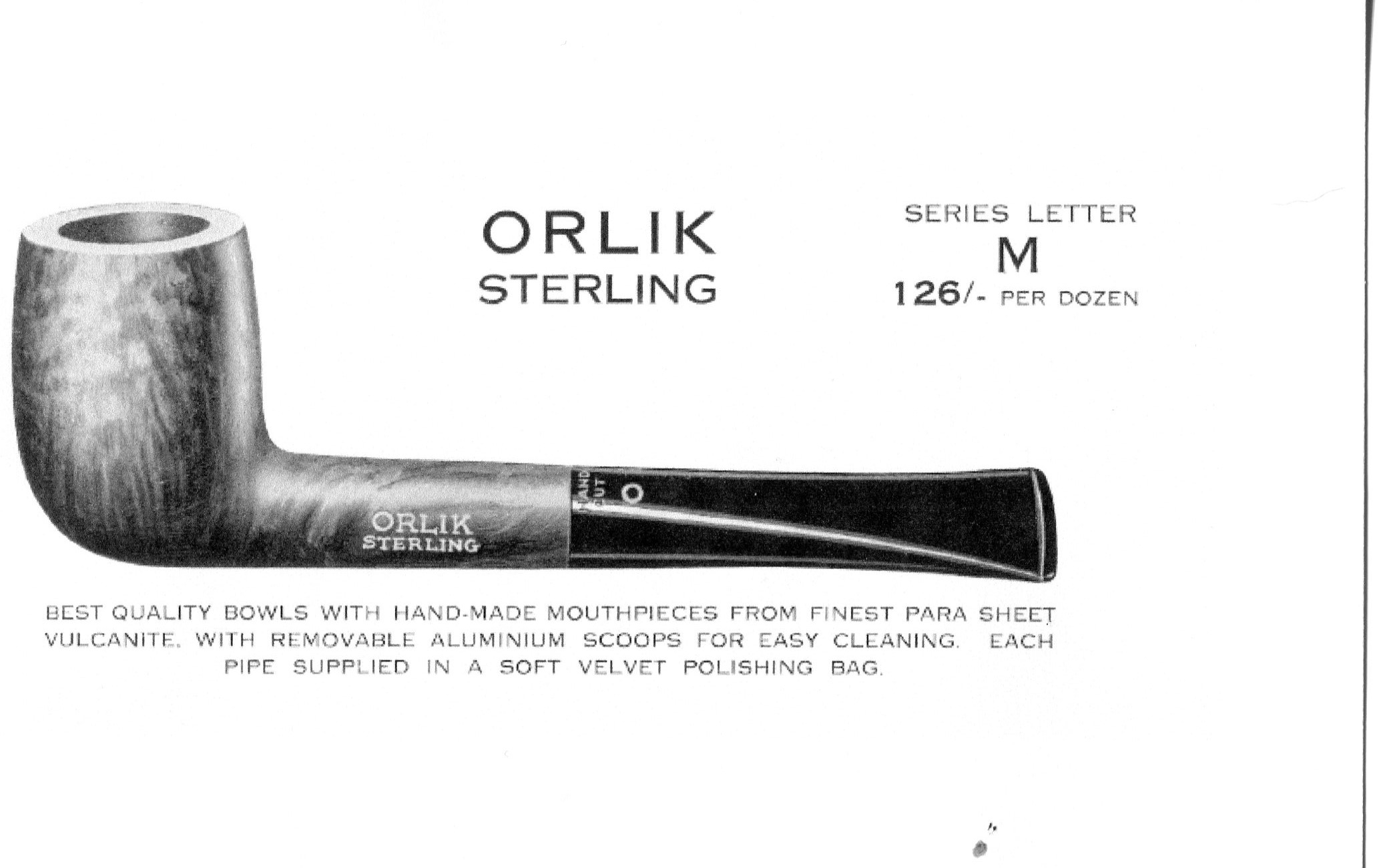
This is the last pipe in the group sent to me by Jon Guss.  This Orlik is stamped “Sterling”, which is known to be a high grade Orlik.  Jon supplied this information and catalog picture.

Sterling: Introduced about 1933; second highest in price after the Bruyere Antique and Dugout; in production through about 1941
Sterling_Catalog

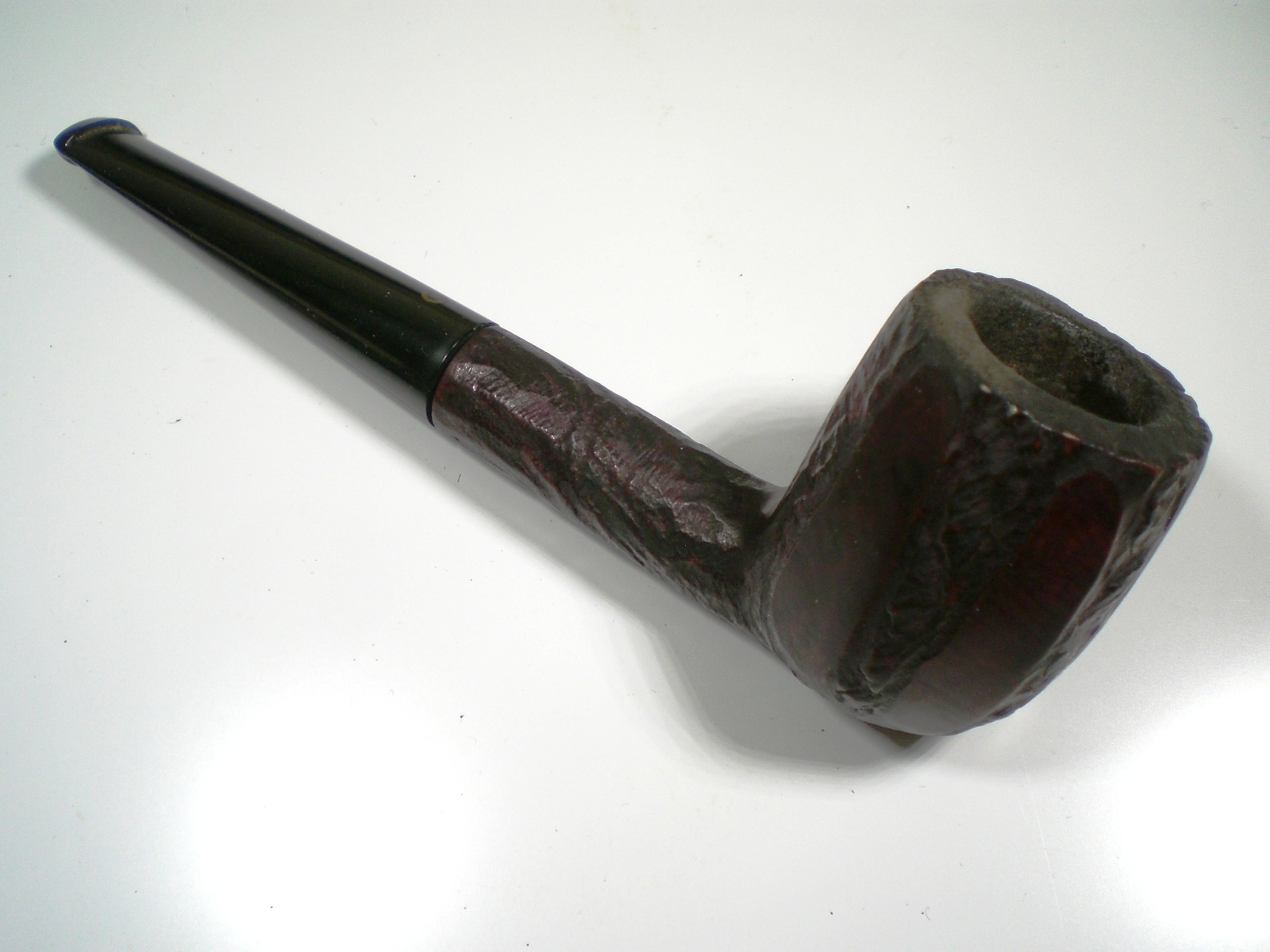
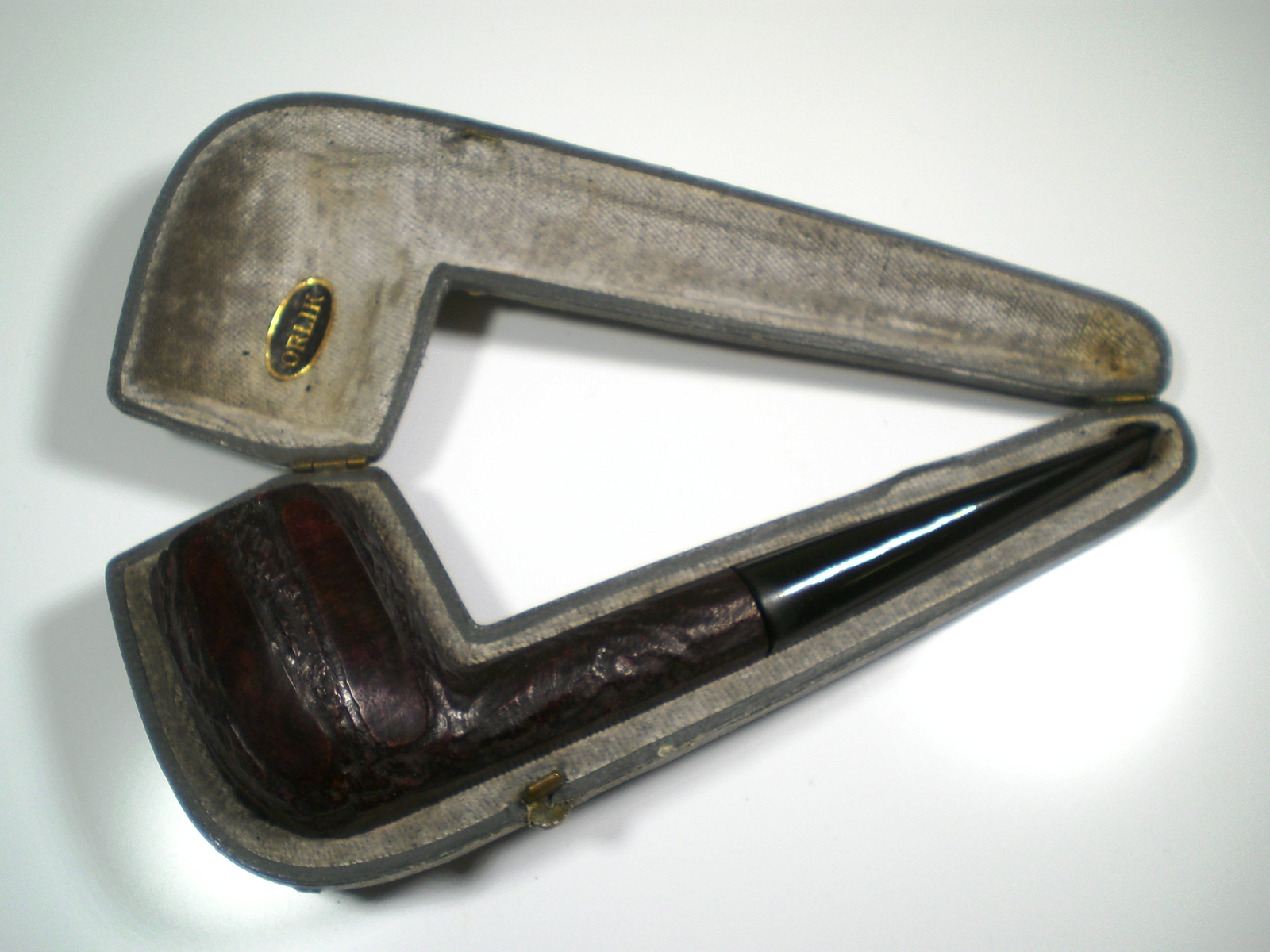
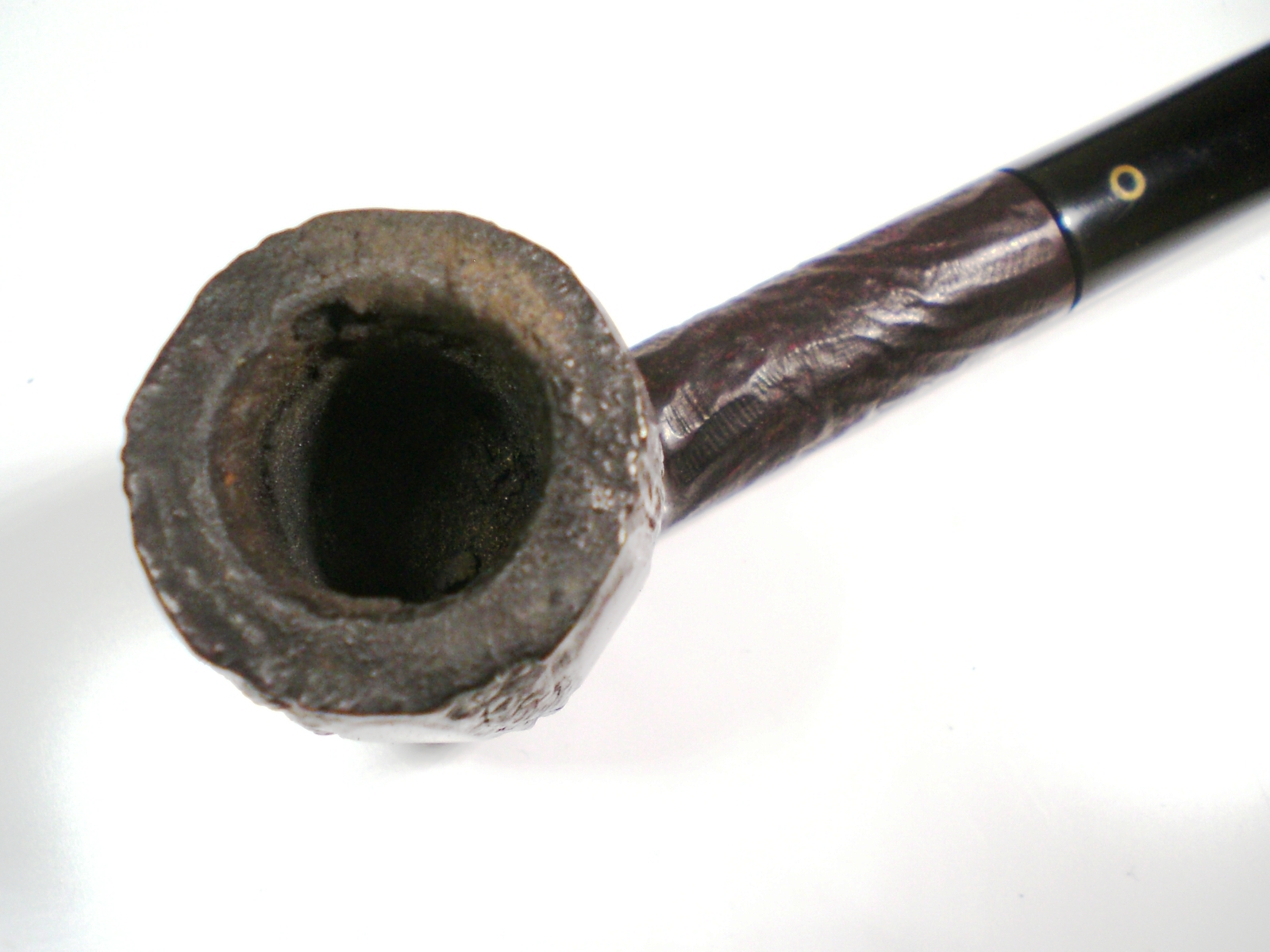
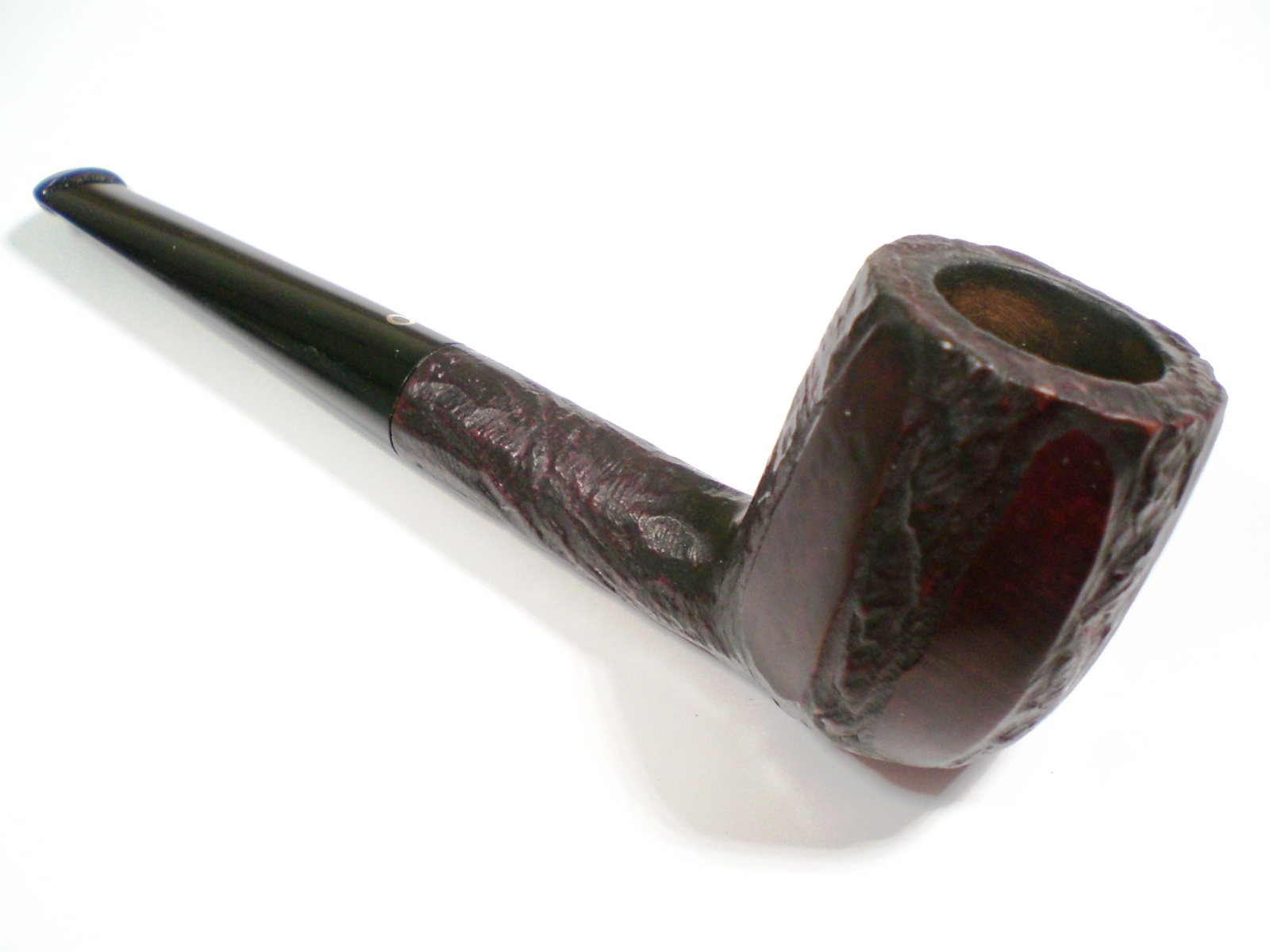
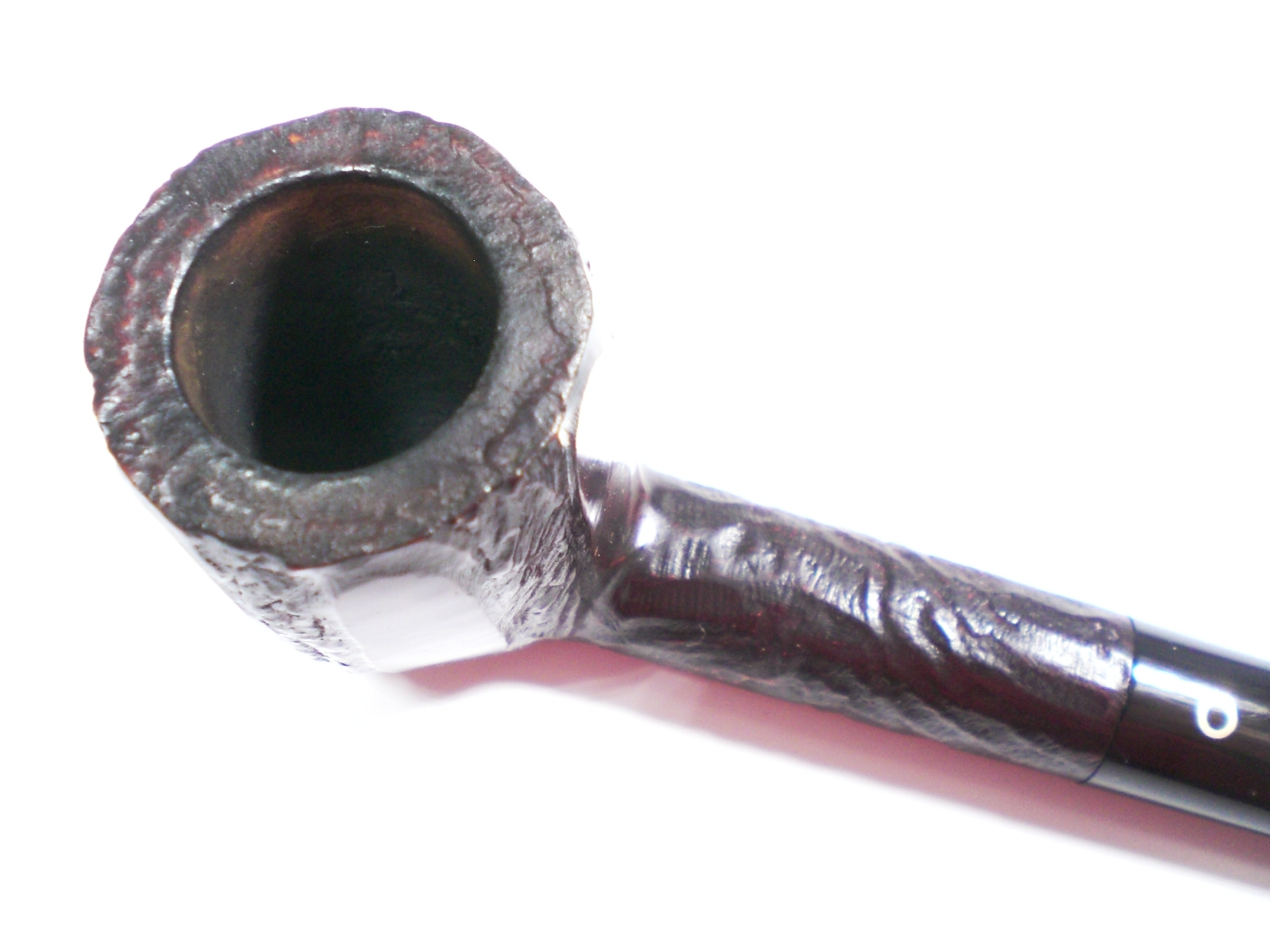
This pipe also came with a beautiful fitted case.  The pipe was in very good condition, particularly the stem, which only had some minor teeth marks.  The briar had a very heavy cake and significant build-up on the bowl top.   The pipe is blasted with polished panel inserts.
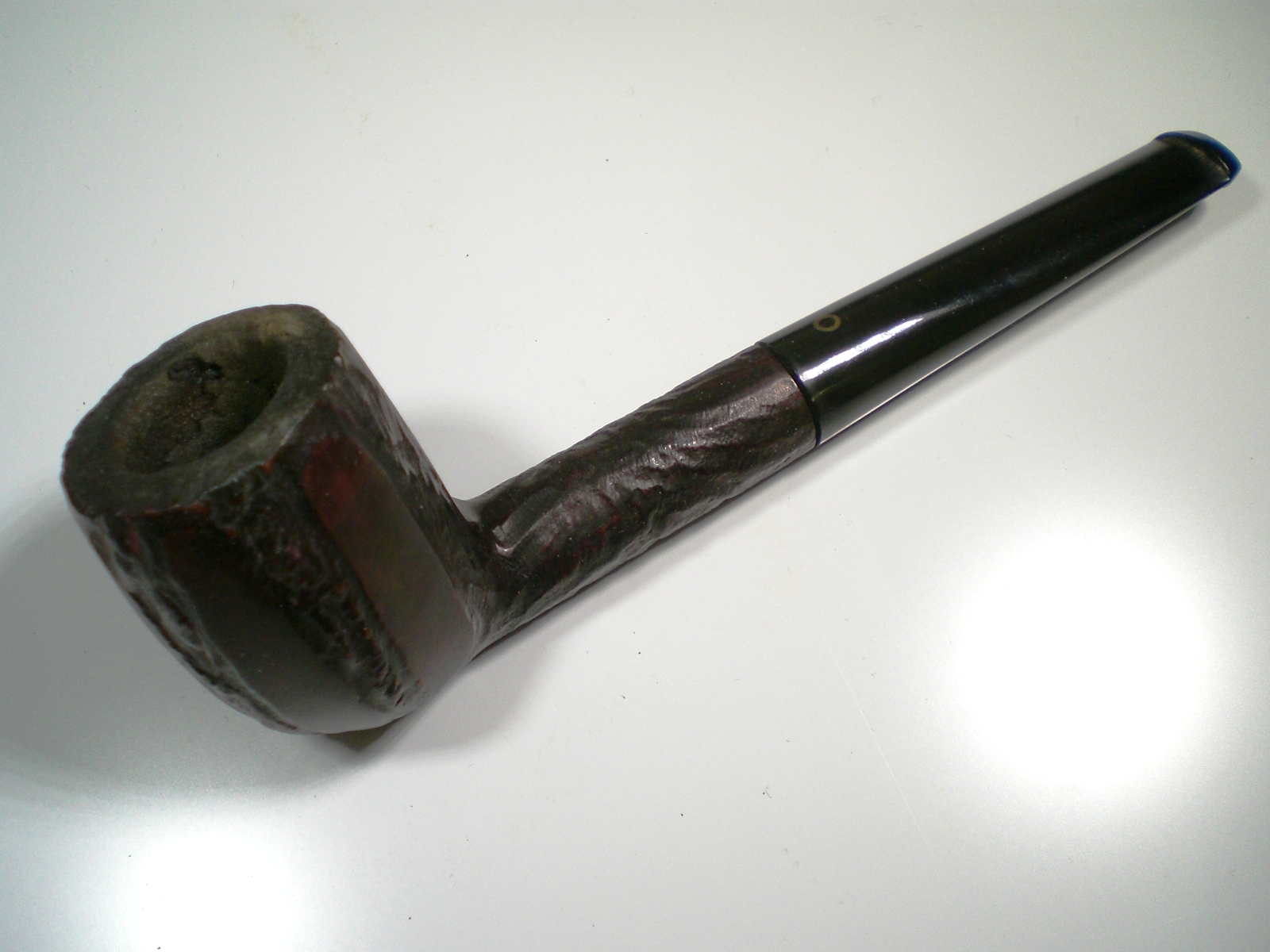
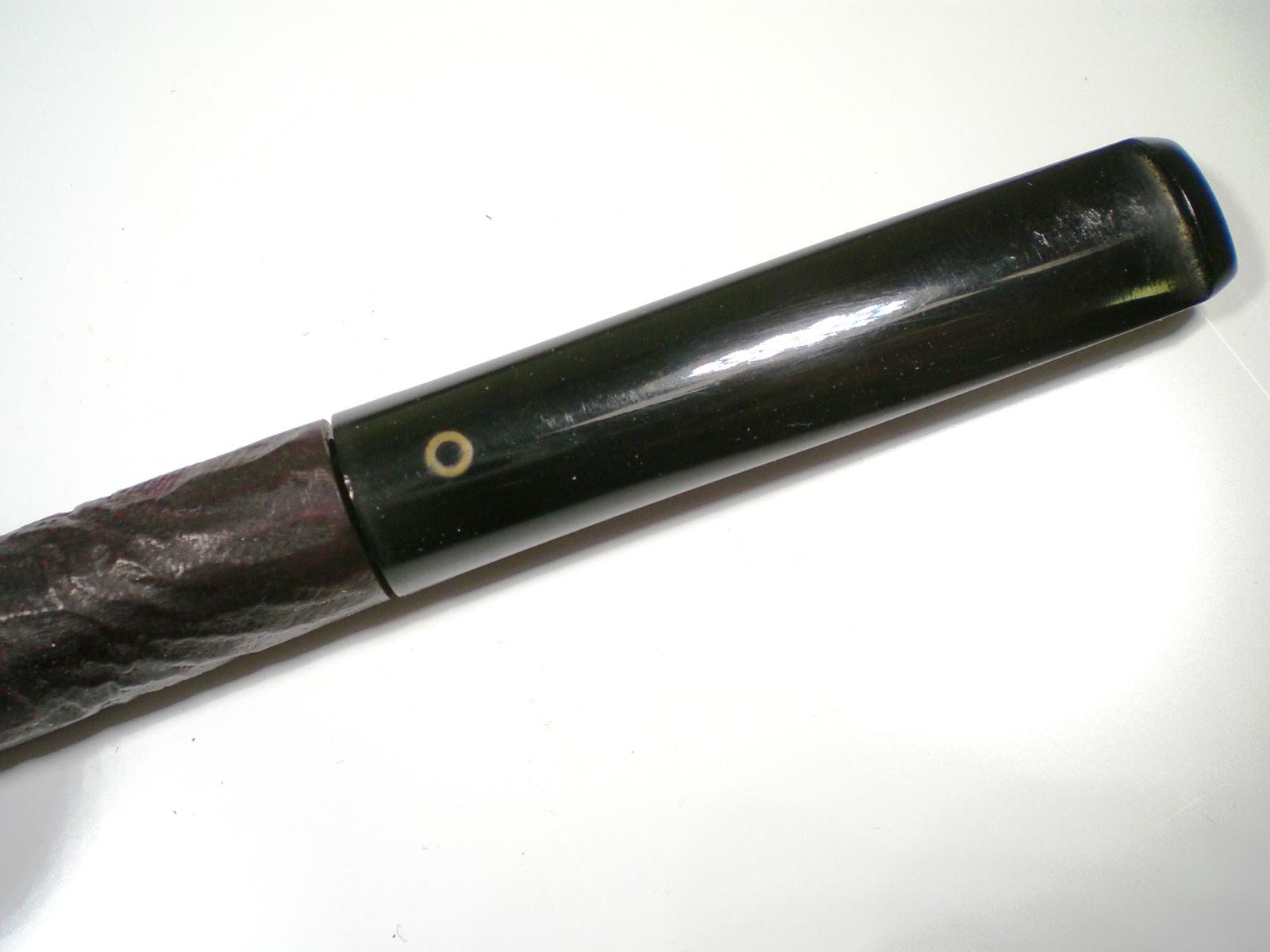
Orlik_Sterling_Before (1) Orlik_Sterling_Before (4) Orlik_Sterling_Before Orlik_Sterling_Before (2) Orlik_Sterling_Before (3)

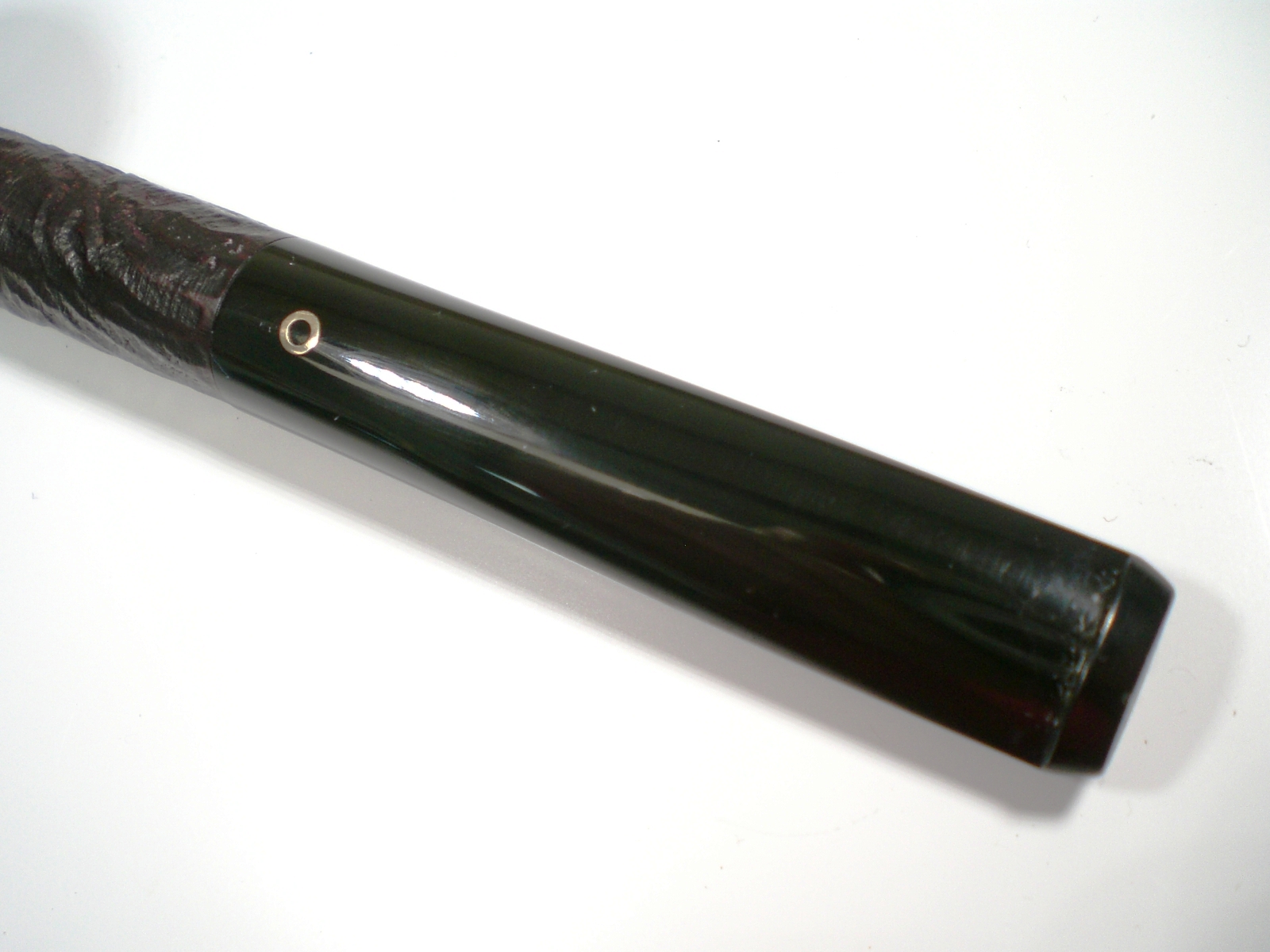
The stem fitment was not flush and I wasn’t certain if that was due to build-up of tars in the shank or the metal stinger apparatus.  Jon send me the patent information on the metal apparatus, which was patented by Orlik.  In the Patent document, it is referred to as a “scraper”.  Jon  told me that Orlik collectors also refer to the piece as a “scoop”.  The insert is engraved “Orlik London”.  From the Patent information:

195,291. Orlik, L. May 4, 1922. Tobacco pipes. – In tobacco pipes of the kind having a scraper connected to the mouthpiece, the scraper 7 is of part-circular section and has a tubular end slipjointed into a flanged metal spigot 3 screwed into the mouthpiece. The metal spigot is prevented from rotating by a pin 10 driven into the mouthpiece and engaging a recess in the flange 8. The Provisional Specification states that a tube receiving an absorbent cartridge may be provided instead of the scraper.
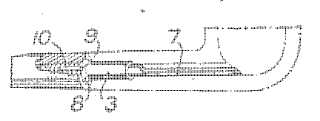
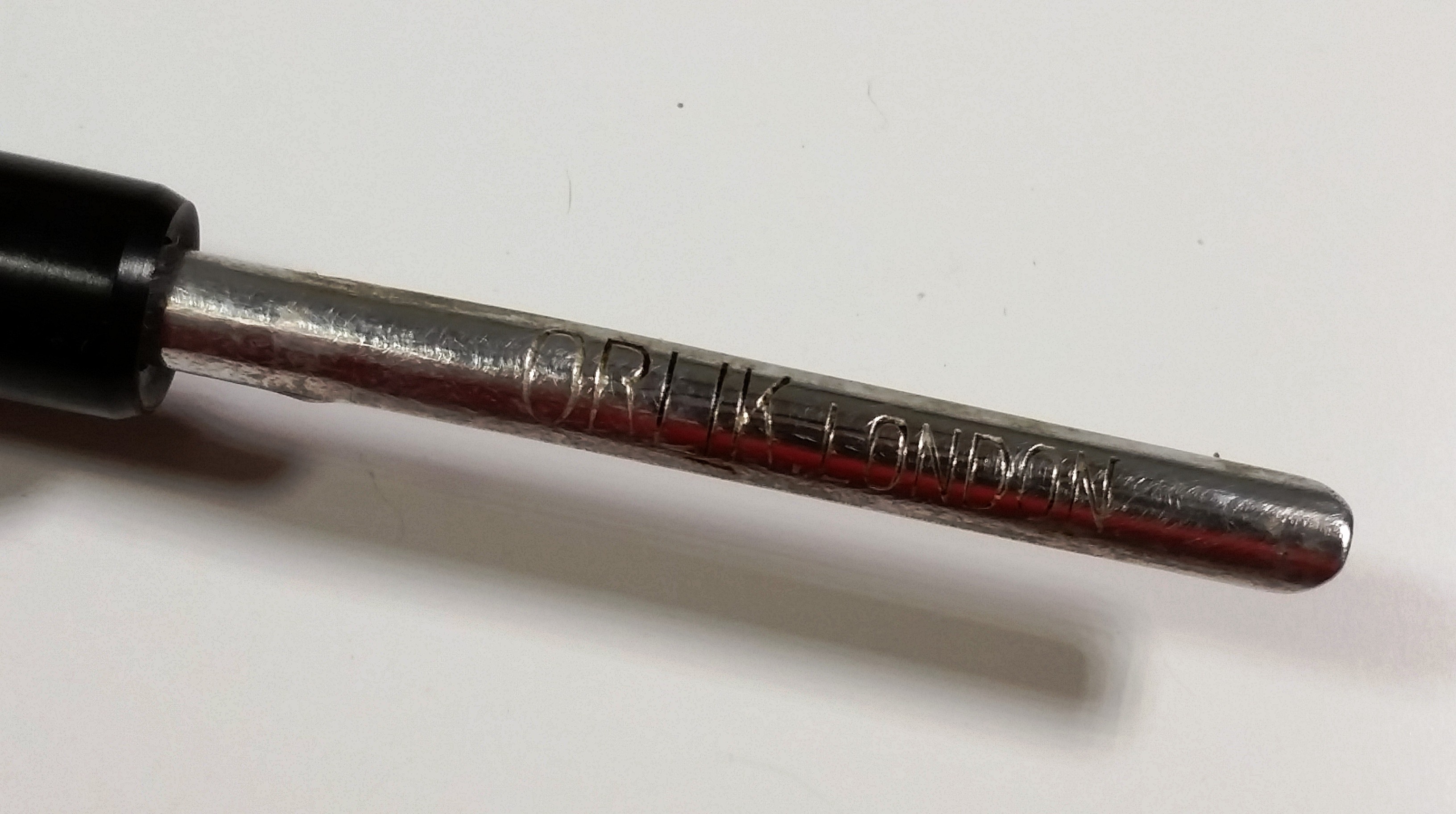
Orlik_Scoop_Patent Info Orlik_Sterling_Finished (7)

I heated the scraper and it was easily removed from the stem.  I reamed the bowl and soaked it with alcohol and sea salt.  The shank was cleaned with a soft bristle brush and alcohol.  After this step, and the scraper removed, the stem fit properly into the shank.

The stem was in such good shape I started with 1500 grade wet sandpaper, then moved to 2000.  This was followed with 8000 and 12000 grade Micromesh paper.  The stem was lightly buffed with White Diamond and Meguiars Plastic polish.

The bowl top was cleaned with a soft cloth and a mild Oxy-clean and water solution.  I polished the briar by hand using Halycon wax.

Below is the finished pipe.
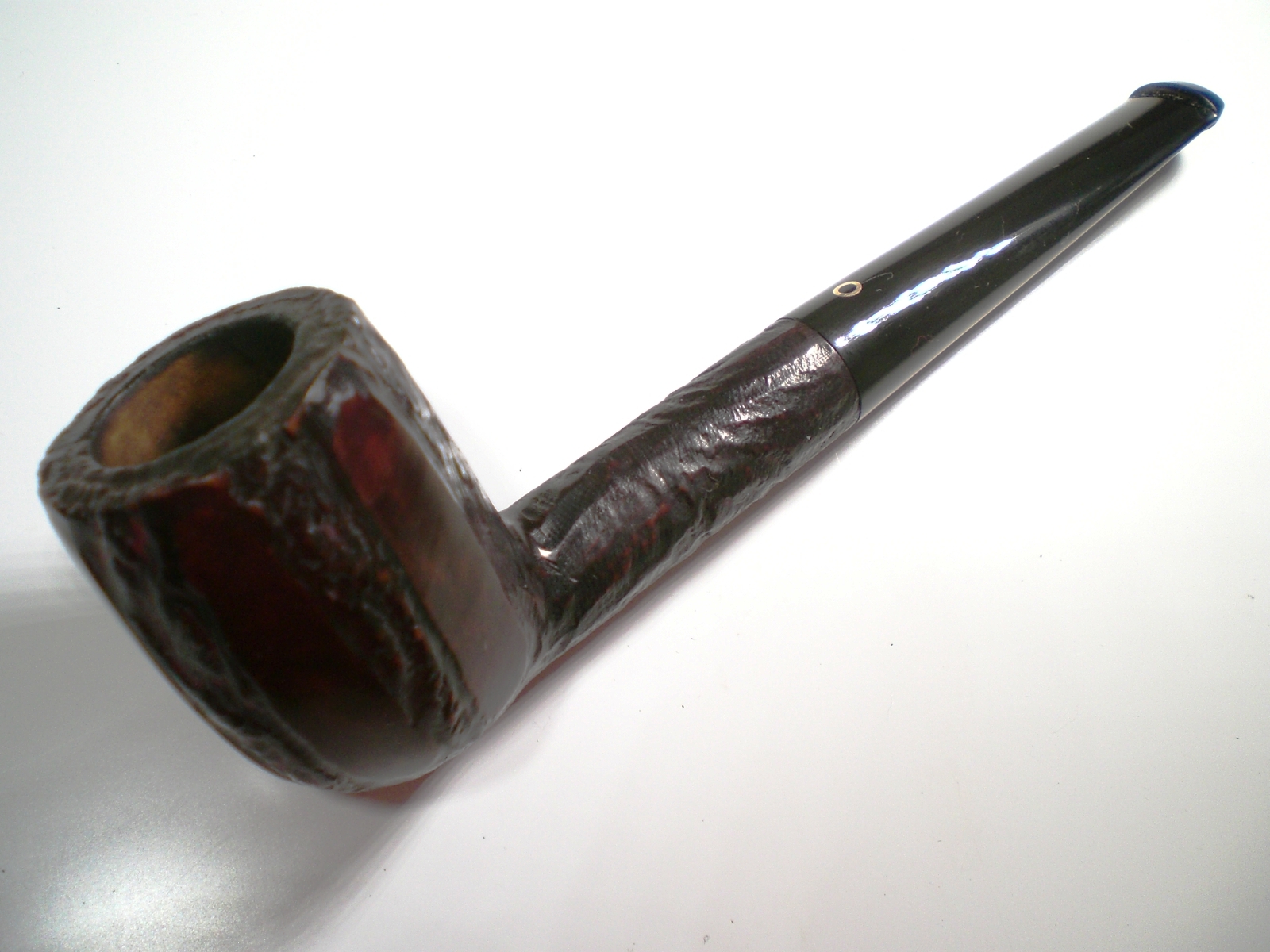
Orlik_Sterling_Finished Orlik_Sterling_Finished (4) Orlik_Sterling_Finished (6) Orlik_Sterling_Finished (3) Orlik_Sterling_Finished (2) Orlik_Sterling_Finished (1) Orlik_Sterling_Finished (5) Orlik_Sterling_Nomenclature

Hardcastle “Straight Grain” Restoration


Blog entry by Al Jones

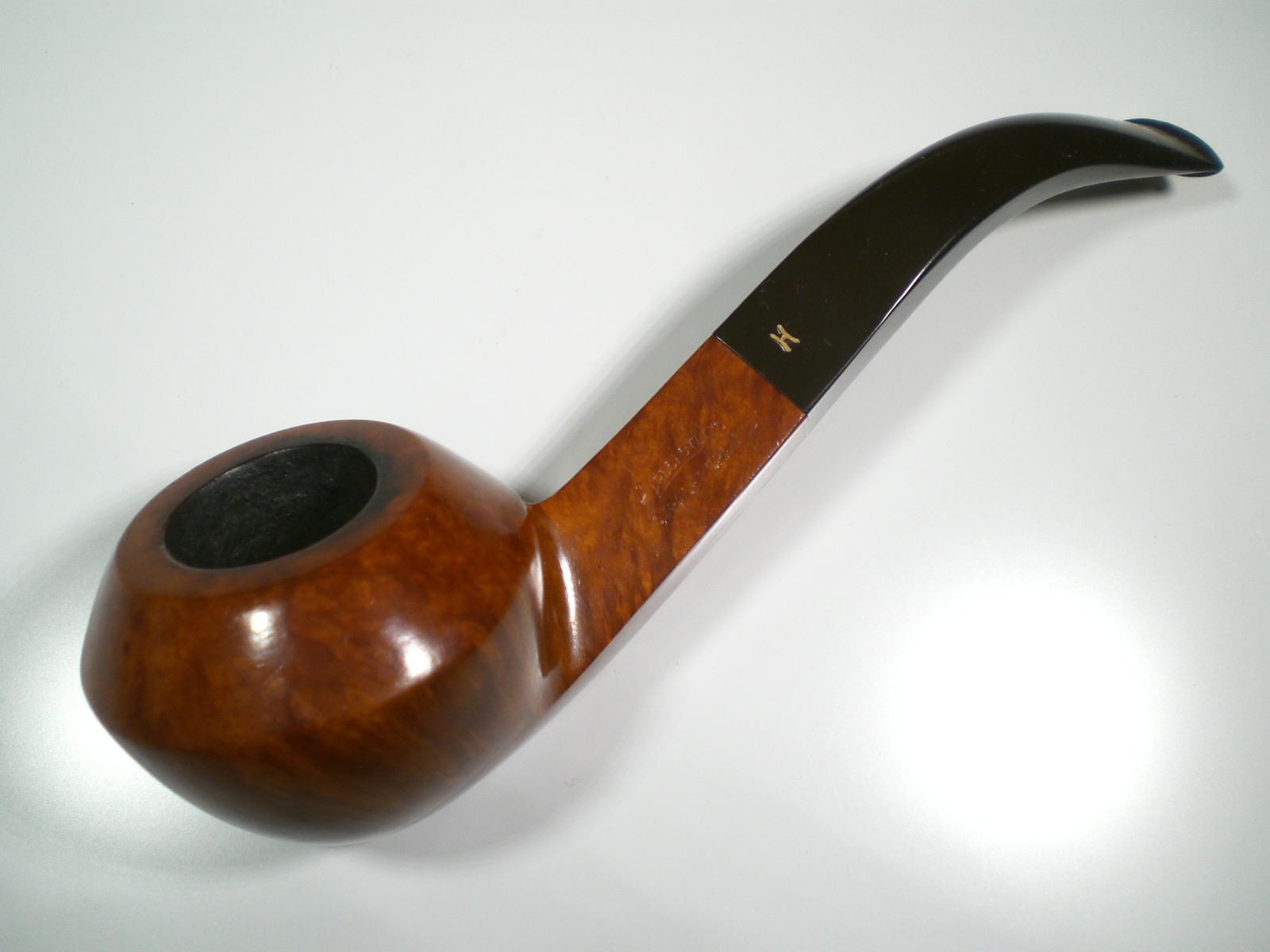
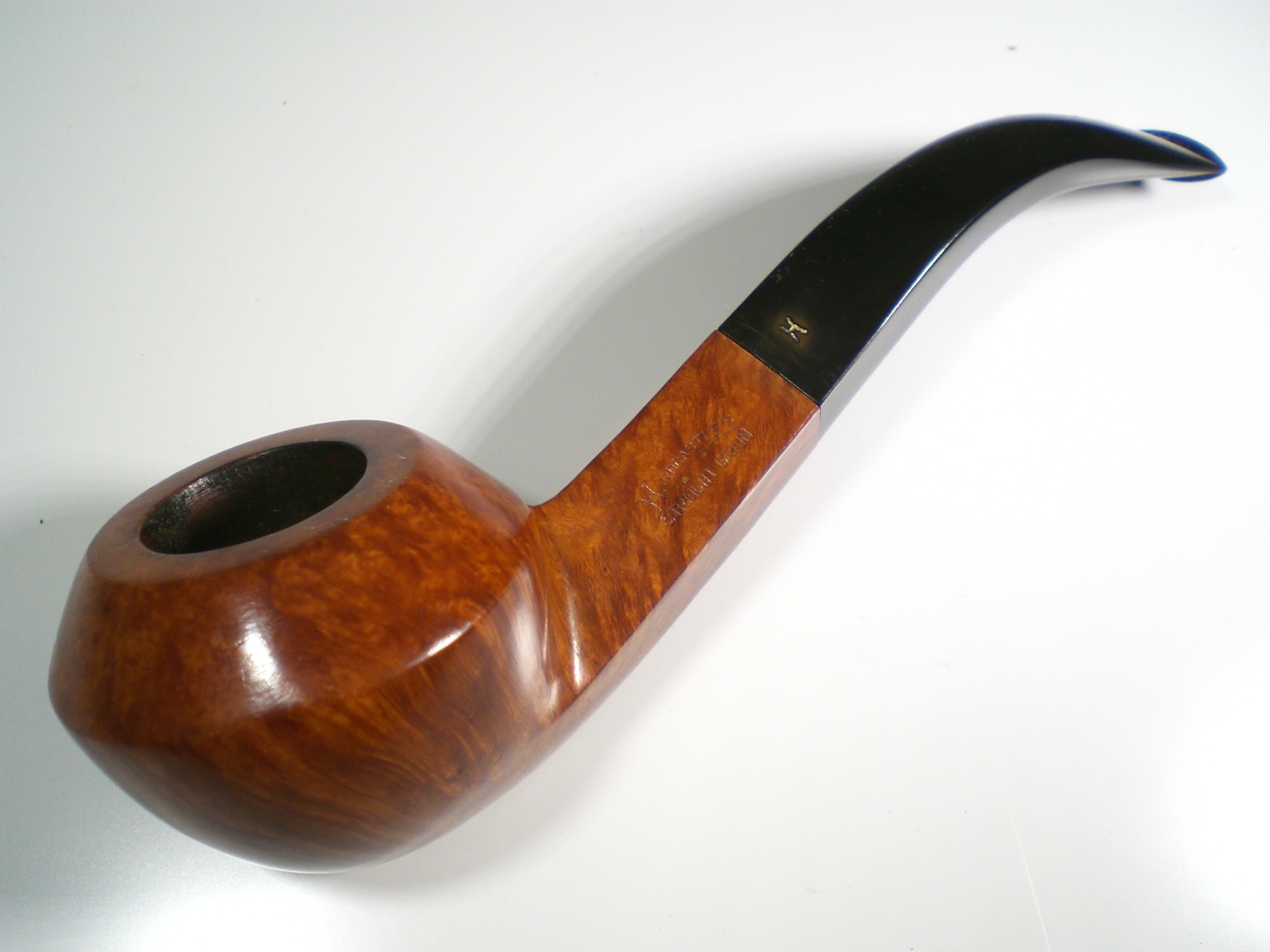
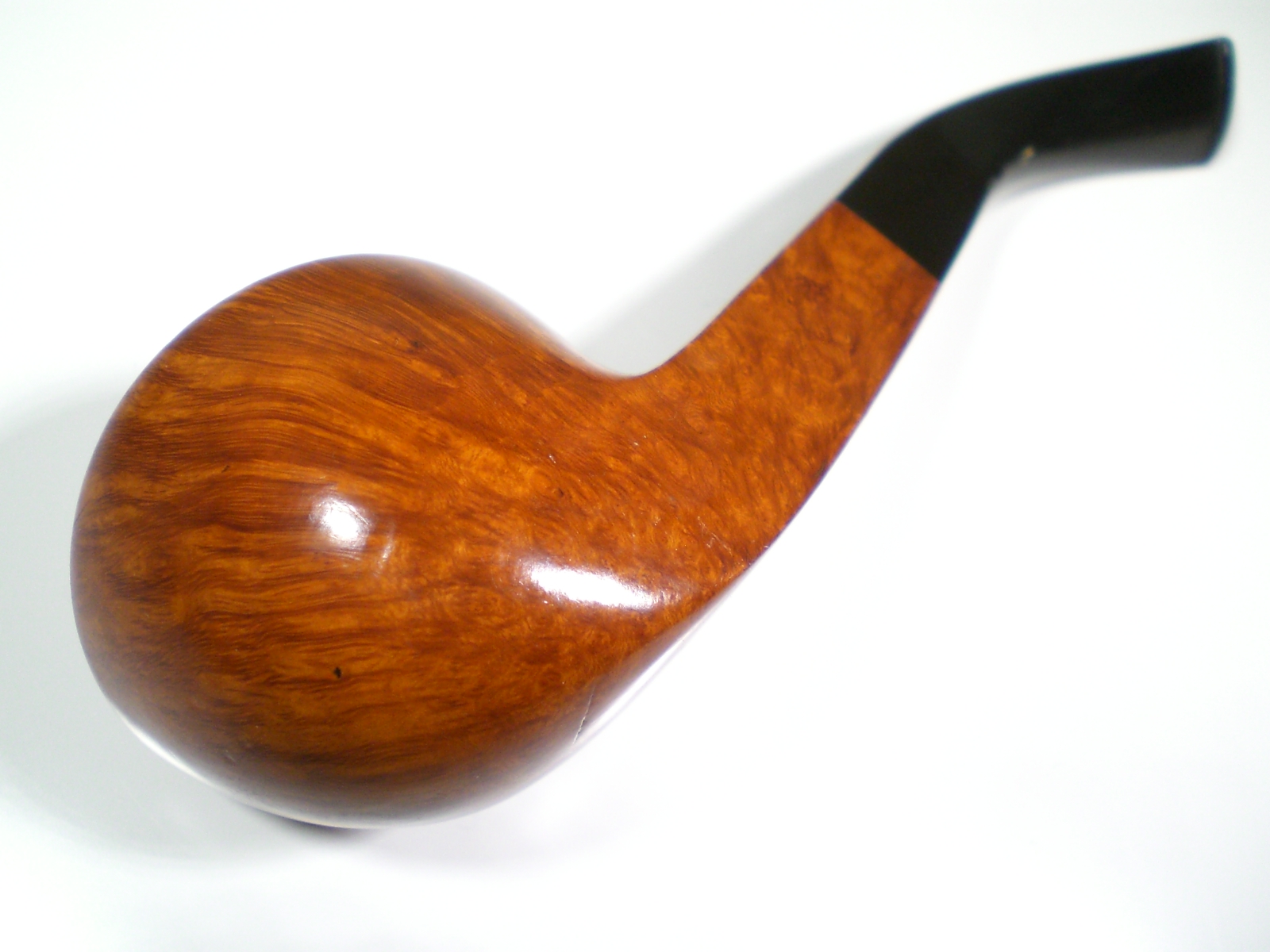
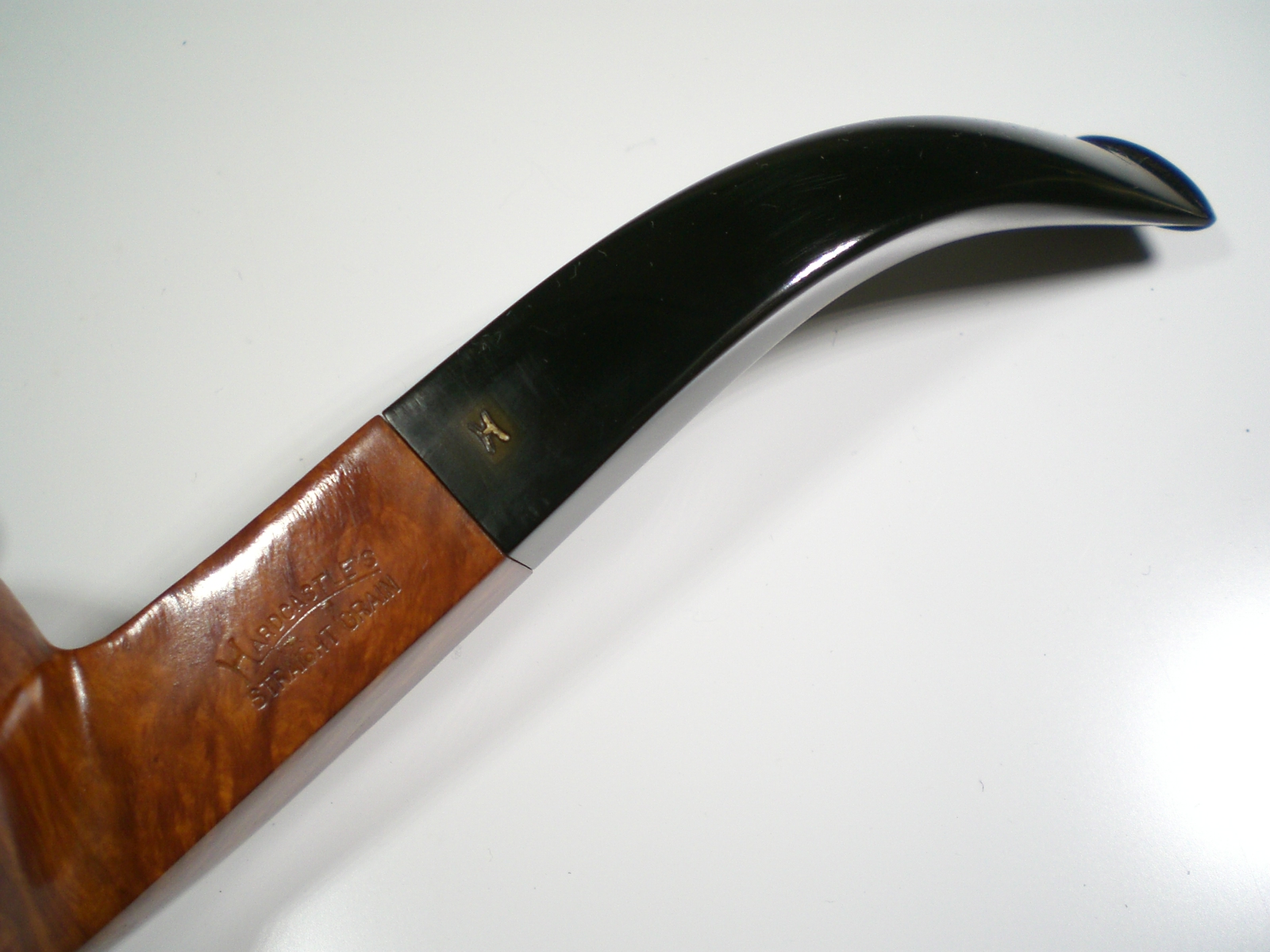
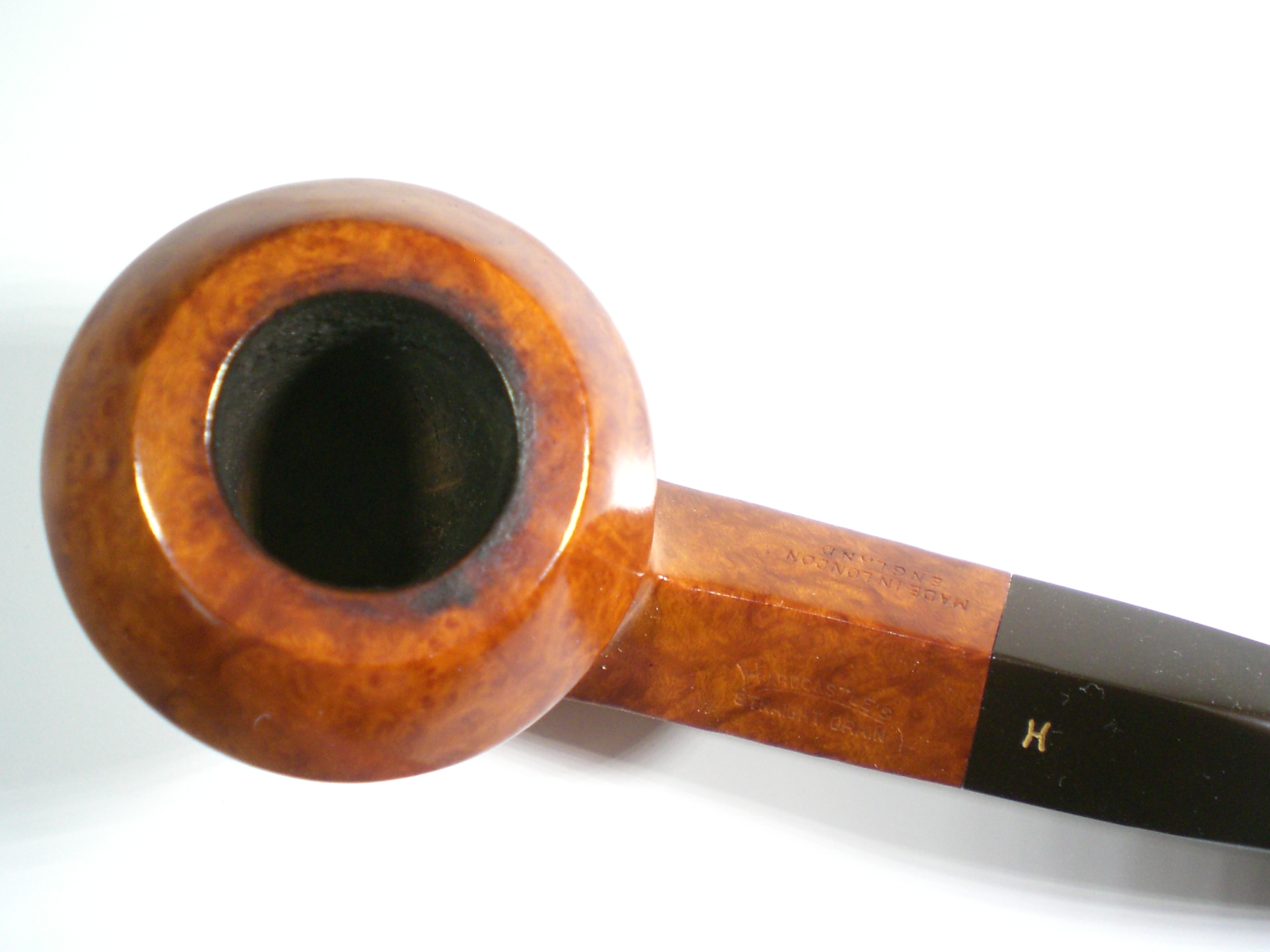
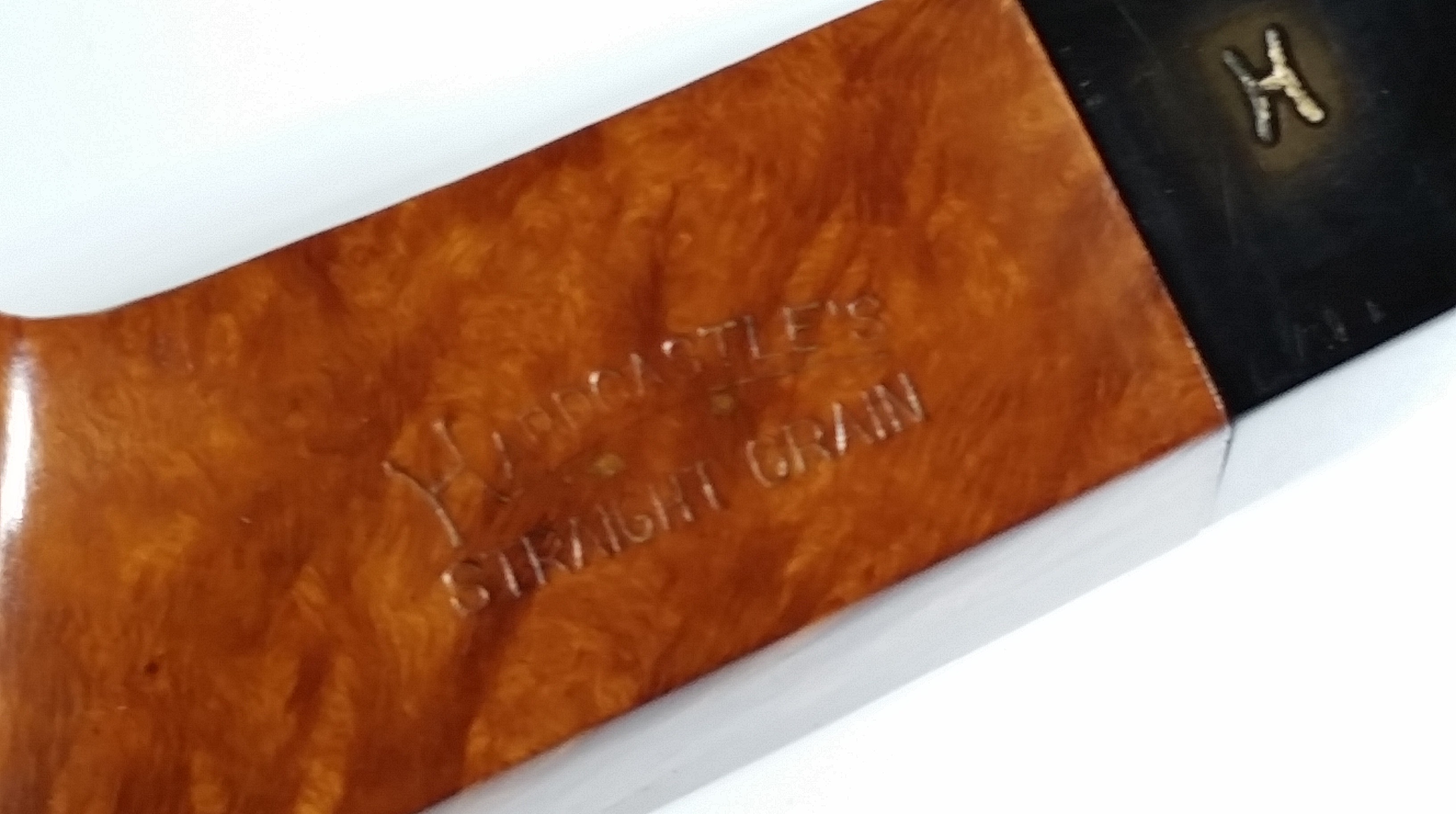
This is the second of four pipes belonging to Jon Guss.  This one is a Hardcastle marked “Straight Grain”.  The pipe was in overall excellent condition with just some slight scorching of the rim and some light oxidation and teeth marks on the stem.

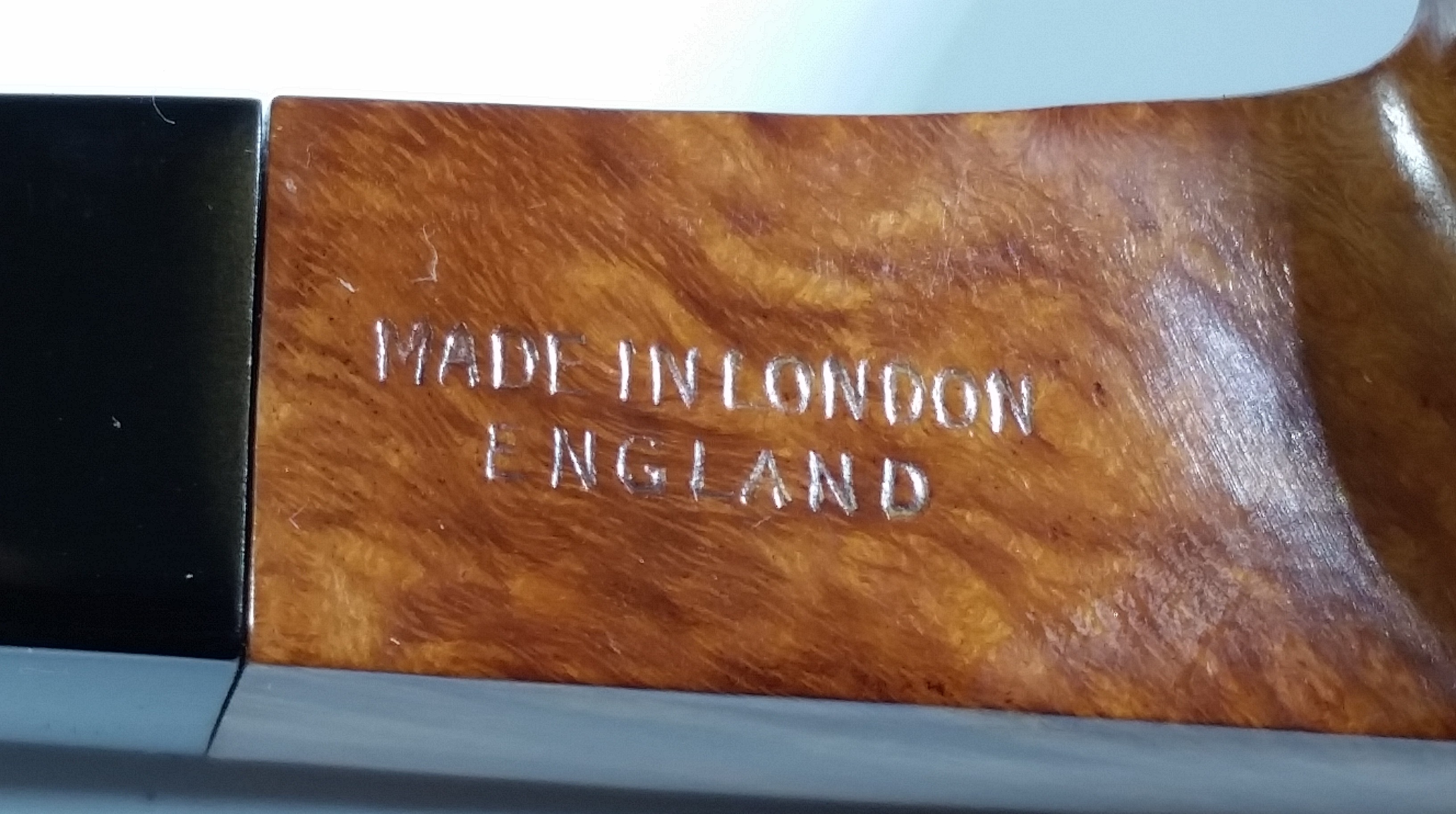
This is the first Hardcastle that I’ve had on my workbench and I found little online about this maker.  According to John Loring, Hardcastle was an independent brand begun in 1908, and was bought by Dunhill’s in 1946. In 1967, Hardcastle was merged with Parker, to become Parker-Hardcastle, Ltd.  Loring suspects that after 1967, Dunhill and Parker “seconds” were marketed with the Hardcastle brand.  Loring states that, in the absence of sales receipts, or other items of provenance, Hardcastles cannot be accurately dated.  From the Pipepedia page, the “Straight Grain” model is listed being from the Family Era.

Jon was able to supply me with this additional information about his Hardcastle Straight Grain pipe:

I believe it was produced by the company starting about 1935 (when the business was still called “Lewis & Hardcastle”; that stopped the next year), and continued to appear in price lists through 1950. Based on the details of the listings, however, I suspect it was actually only produced until early in WWII. For the first two years of production (1935-1936) the Straight Grain, along with the Leward model, were Hardcastle’s top of the line; after that they both were superseded by the Supergrain.

Below are pictures of the unrestored pipe.

Hardcastle_Straight_Grain_Before Hardcastle_Straight_Grain_Before (2) Hardcastle_Straight_Grain_Before (1)

I reamed the pipe and soaked the bowl with alcohol and sea salt.   I used a worn piece of 8000 grit Micromesh paper to remove the scorch marks on the bowl top, without lifting the stain.  The bowl was then buffed lightly with White Diamond and several coats of carnuba wax

I used 800 grit wet sandpaper on the stem to remove the oxidation and teeth marks.  I worked around the “H” stem logo.   That was followed with 1500 and 2000 grit wet paper, then the 8000 and 12000 grade Micromesh sheets.  The stem was then buffed lightly with White Diamond and Meguiars plastic polish.

Below is the finished pipe.
Hardcastle_Straightgrain_Finished Hardcastle_Straightgrain_Finished (4) Hardcastle_Straightgrain_Finished (2) Hardcastle_Straightgrain_Finished (6) Hardcastle_Straightgrain_Finished (3) Hardcastle_Straightgrain_Finished (5) Hardcastle_Straightgrain_Nomenclature Hardcastle_Straightgrain_Nomenclature (1)


Surbrug’s Special Restoration


Blog entry by Al Jones

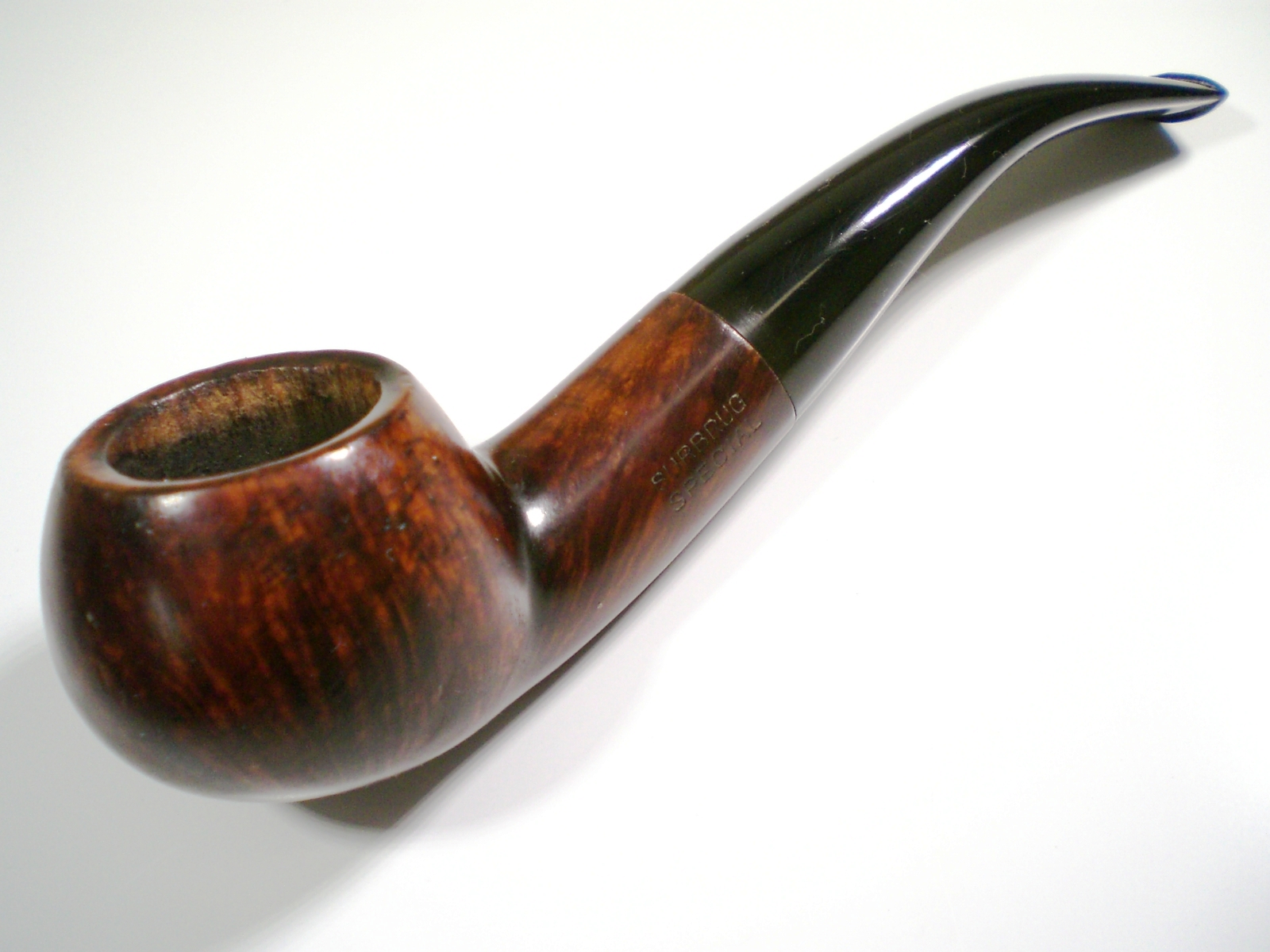
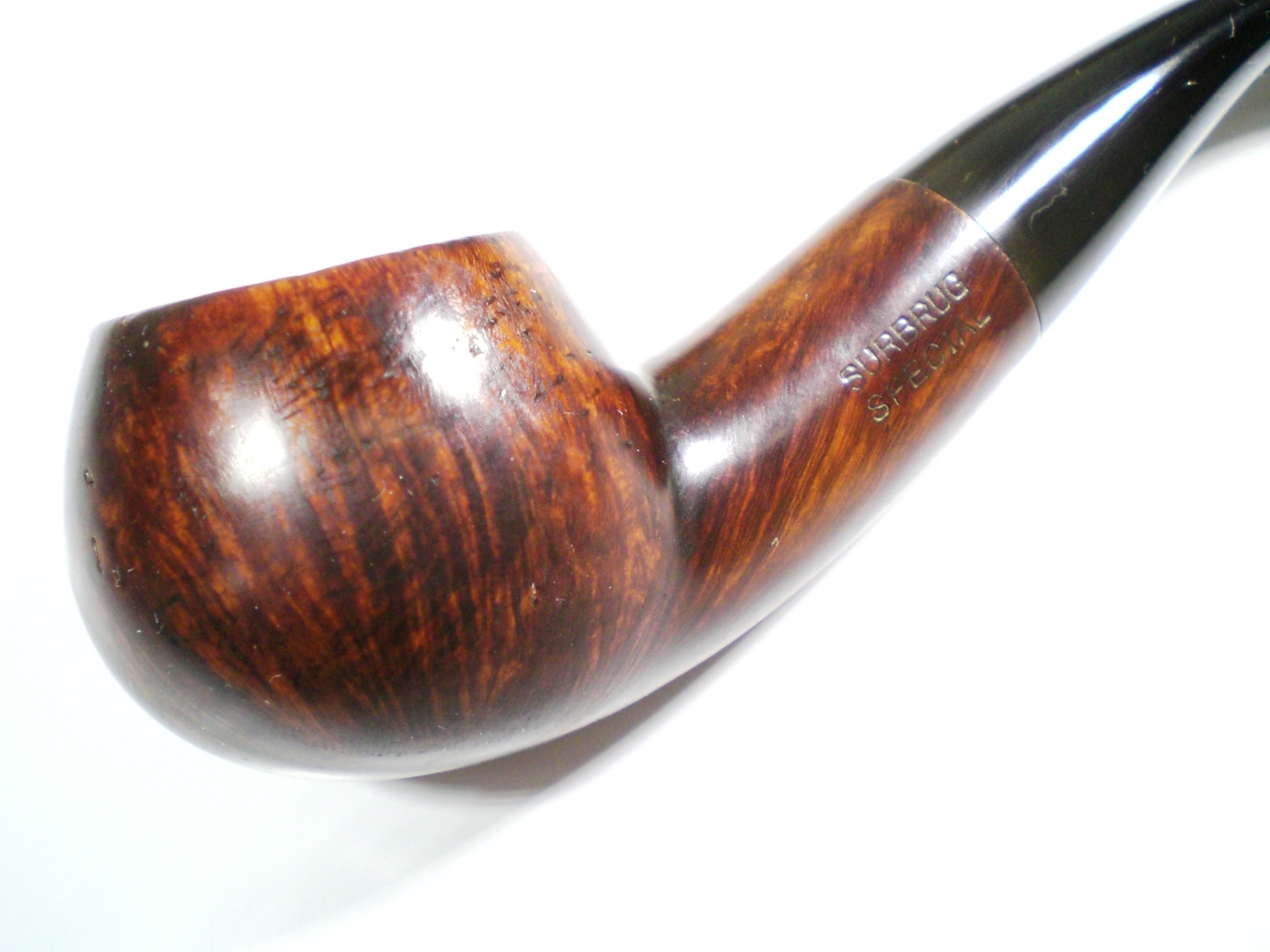
This Surburg’s Special came from a group of four pipes sent to me to from Jon Guss.  You may be familiar with Jon’s work in the “Barlings” section of Pipepedia or in the Vintage portion of Neill Archers Roan’s “A Passion for PIpes” blog.    Jon always has a lot of historical information to contribute to threads on the PIpesMagazine.com forum, so I was honored to work on his personal pipes.  Jon found this pipe at the recent NYC PIpe show.  It was in a bin of pipes from famed Delware collector, Bob Herbert.

I only knew that Surbrug’s was a New York City tobacco shop and I’ve seen their shop pipes pop up occasionally.  Jon sent me this about the shop:

John R Surbrug, born in Switzerland of a Swiss father and Ohio mother, had a small tobacco shop in New York City. After his death in the 1880s, his young son John Willard Surbrug (born in NYC in 1859) took over the store. Incorporating the business in 1895, John W. expanded into the cigarette market and prospered greatly. After buying a cigarette competitor name Khedivial, Surbrug’s business in turn was acquired by the Tobacco Products Company (TBC) in 1912. TBC was what we would now call a roll-up play, created by George and William Butler as a vehicle to compete with the American Tobacco Company. Surbrug’s business was acquired for stock, which meant John was left with an active role in the combined business. The later part of his career (and his son’s career), though interesting, is irrelevant here; what matters is that the Surbrug Company, while primarily engaged in the manufacture and sale of cigarettes, continued to be true to its roots offering well known tobacco blends and pipes. In regard to the former, the company was especially famous for its Golden Sceptre, Best Make, and Arcadia Mixture tobaccos. In regard to the latter, it appears that Surbrug was not a manufacturer, but rather a reseller of pipes that were stamped with their name by a variety of third party suppliers. Some at least of these were major players in the world famous London pipe industry. Surviving early hallmarked examples make it clear that BBB/Frankau, Barling, and Delacour Brothers were three of Surbrug’s vendors.

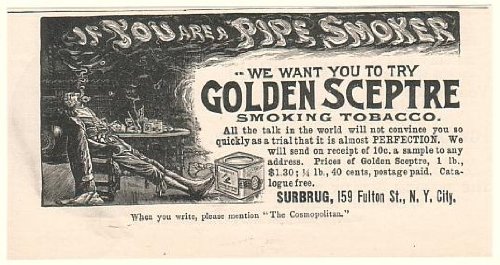
Here is an old advertisement for one of their famed tobacco blends.

Surbrug_Tobacco_Ad

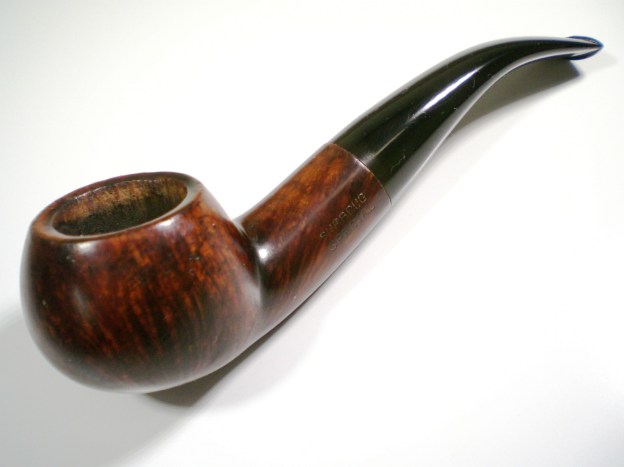
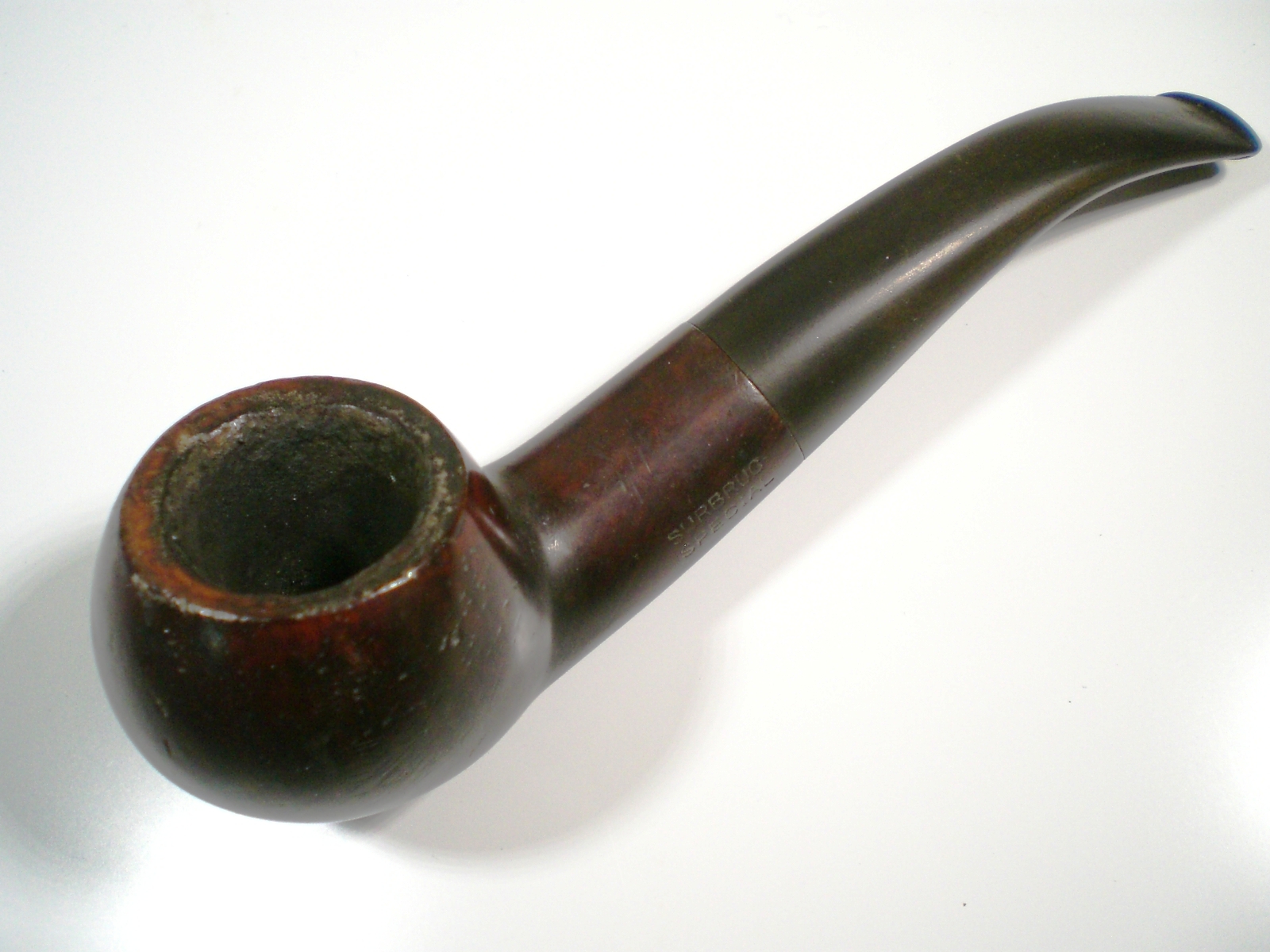
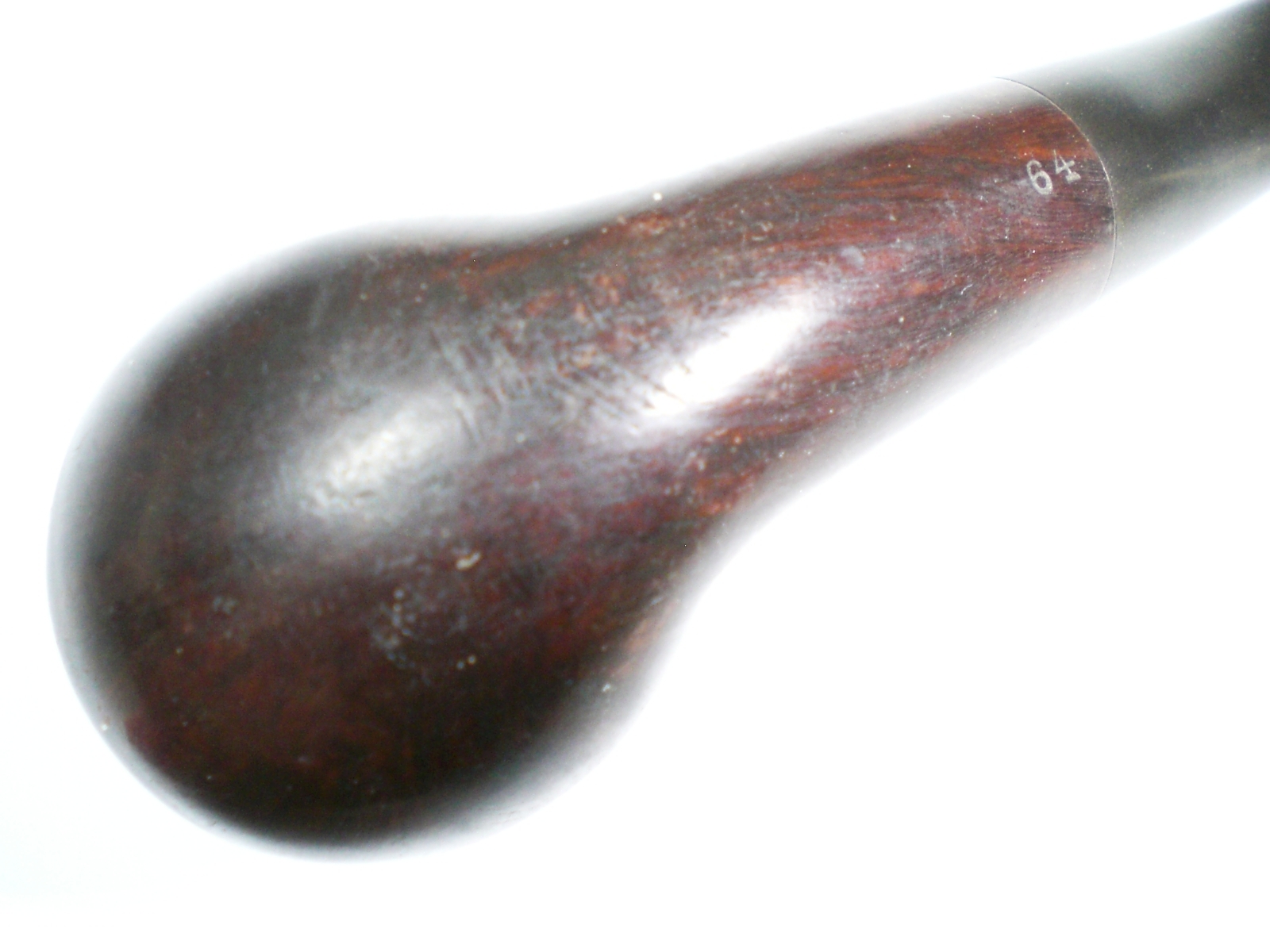
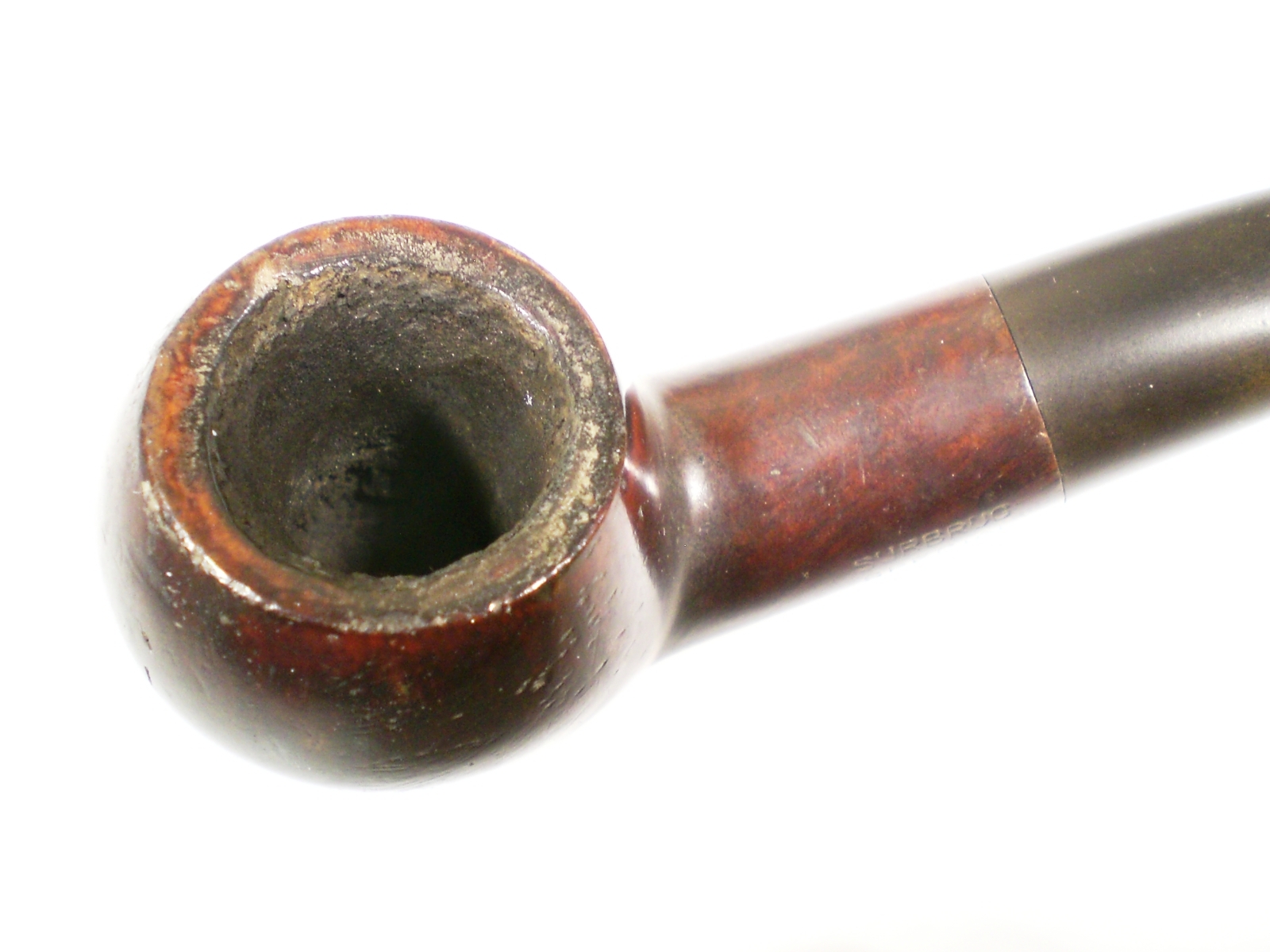
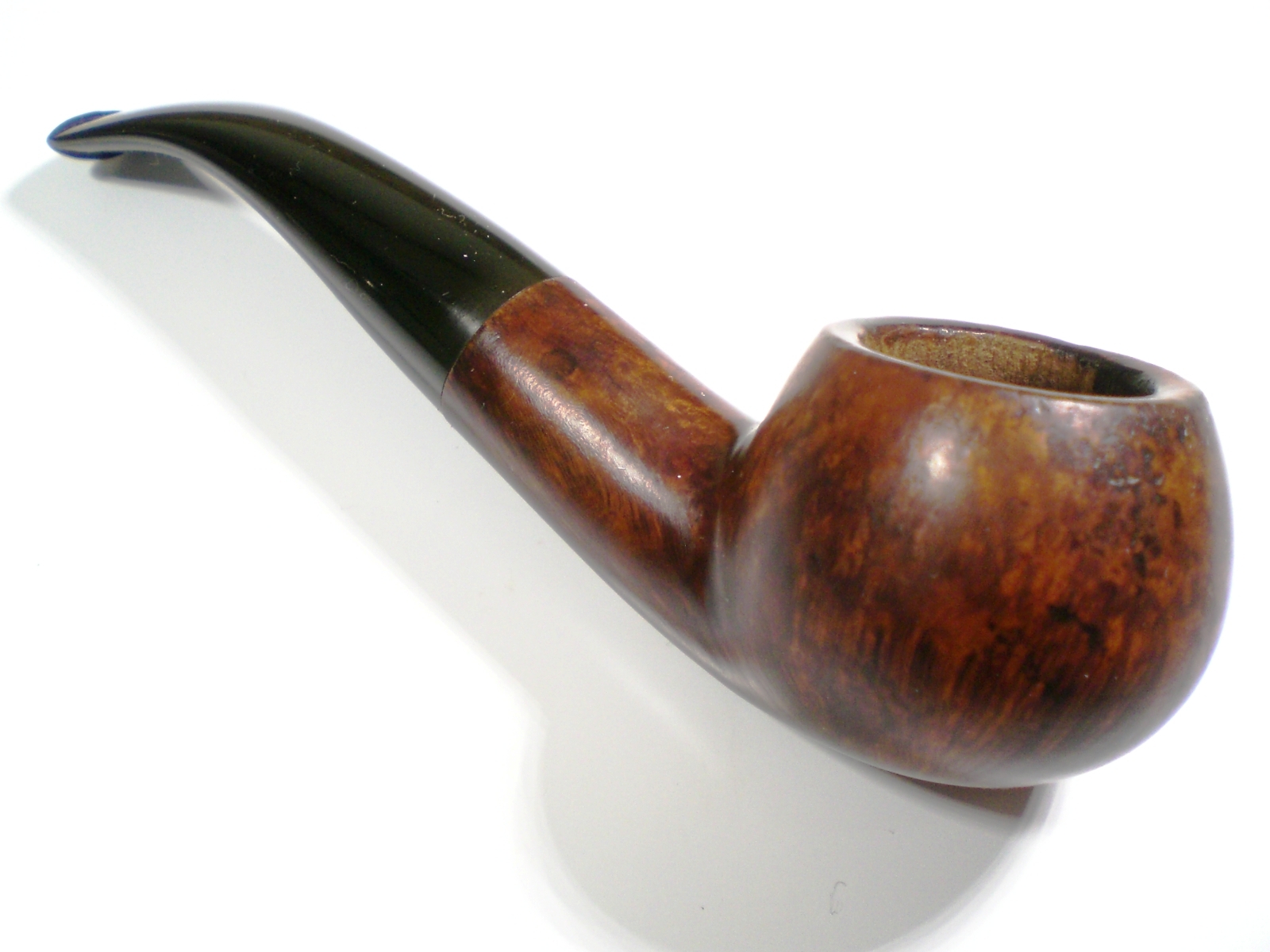
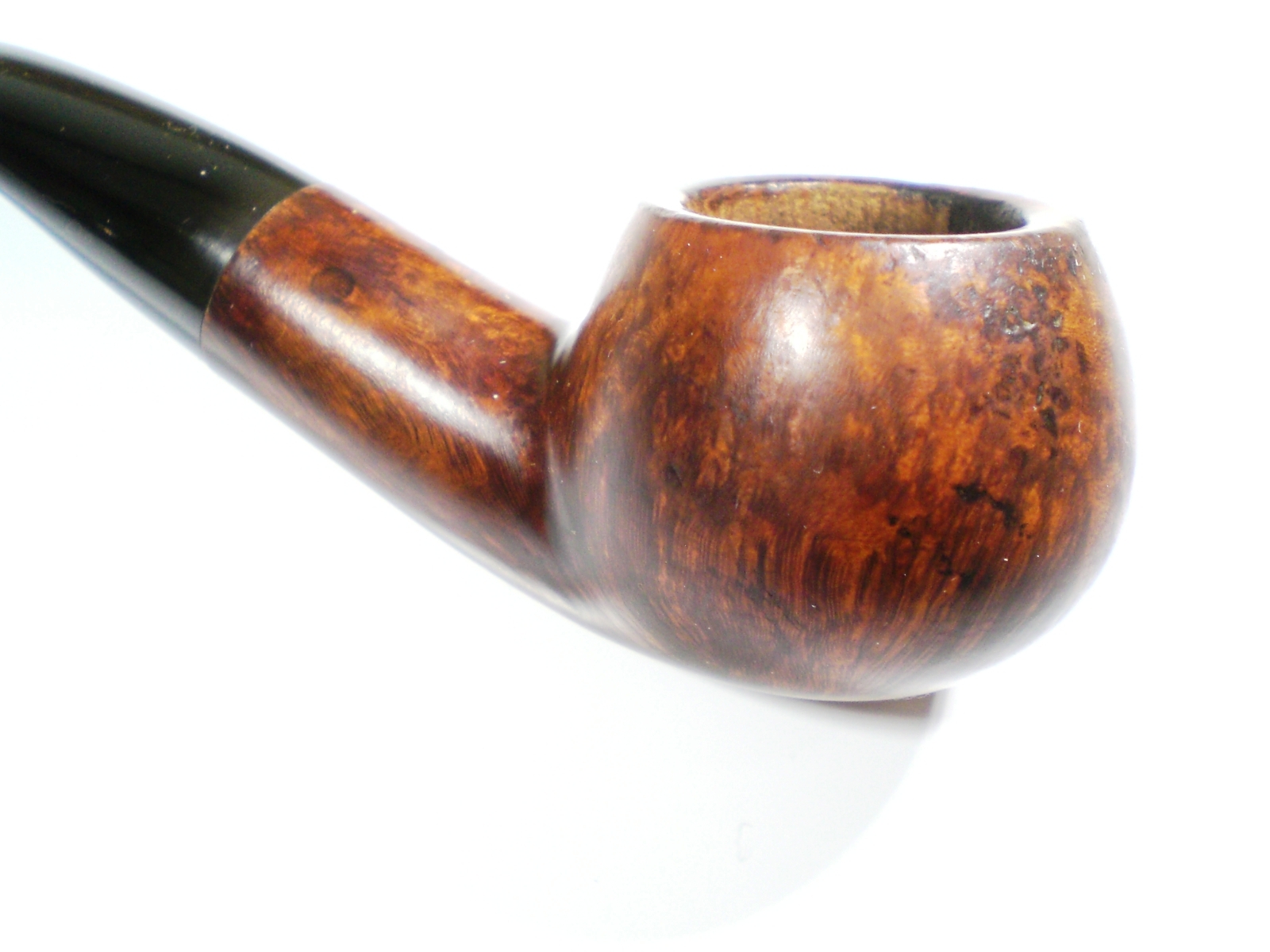
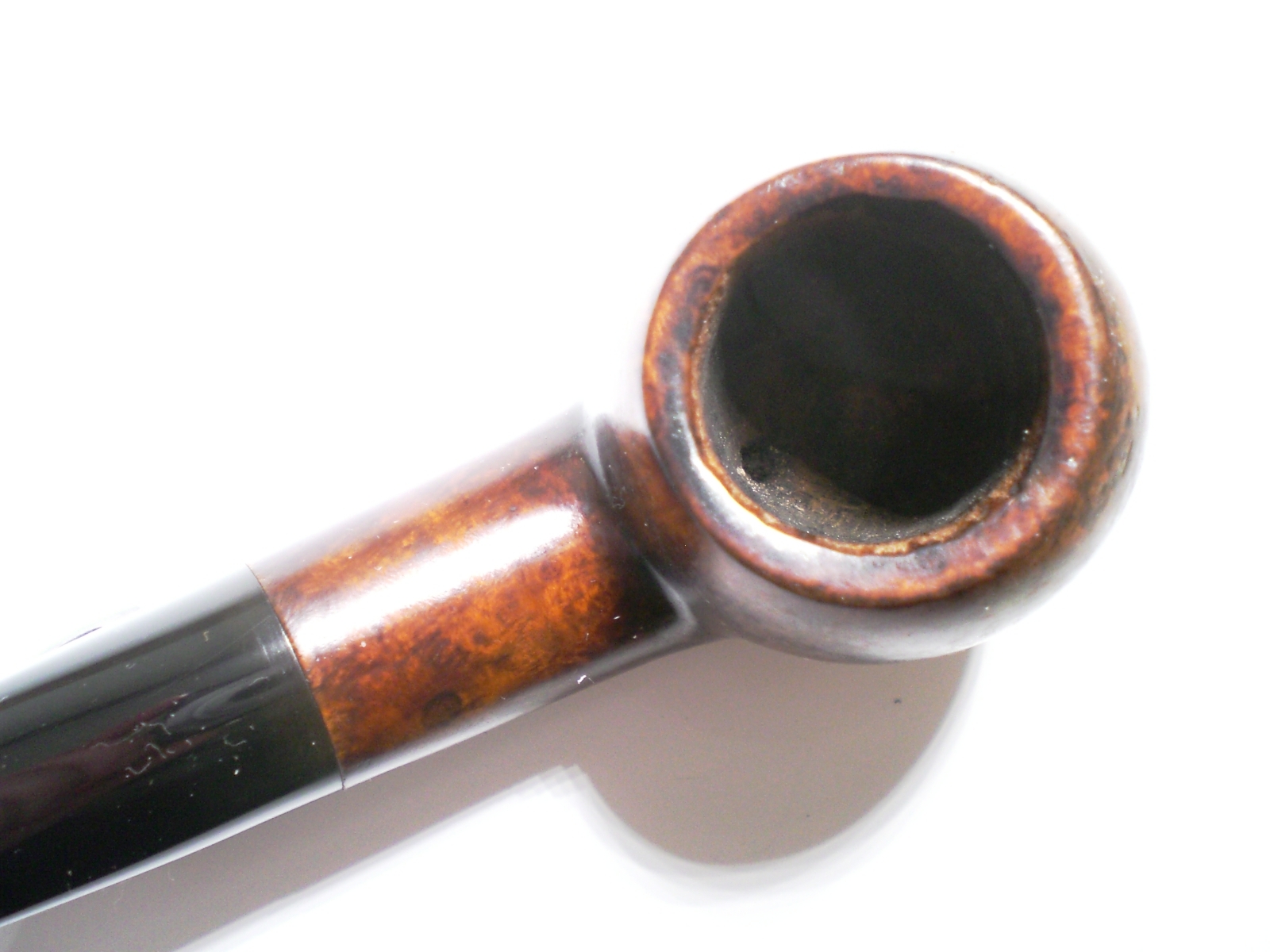
The pipe had seen some hard use and was in general very grimy.

Surbrug_Special_Before Surbrug_Special_Before (6) Surbrug_Special_Before (1) Surbrug_Special_Before (2)

The bowl was reamed and soaked with alcohol and sea salt.  I cleaned the shank with alcohol and a soft bristle brush.

The rim had a build up of carbon. I used a worn piece of 8000 grit Micromesh paper to remove most of it.  The rim has some nicks and bruises, but Jon and I agreed that the patina was part of the pipes charm.  The rest of the briar was stained with grime from use.  Again, the 8000 grit micromesh paper revealed some interesting grain.  That also removed some of the scratch marks seen in the earlier photo.  I then buffed the pipe lightly with white diamond rouge and several coats of carnuba wax.

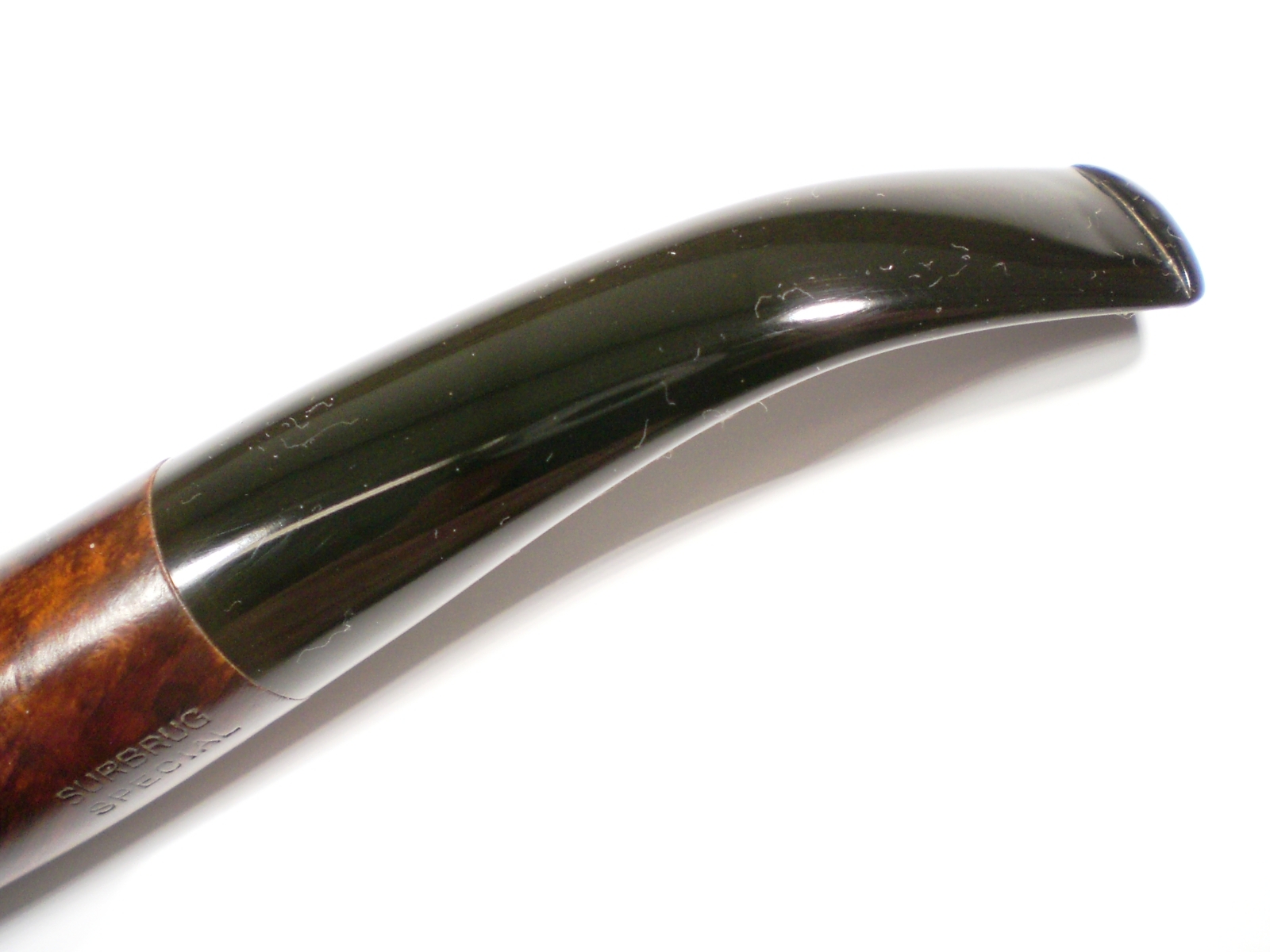
The stem had some mild oxidation but was in pretty good shape.  I soaked the stem in a mild Oxy-Clean solution and started using 800 grit wet paper.  This was followed by 1500 and 2000 grit paper.  Next the 8000 and 12000 grade micromesh sheets were used.  The stem was then buffed on the pipe with White Diamond and Meguiars Plastic Polish.

Surbrug_Special_Finished Surbrug_Special_Finished (3) Surbrug_Special_Finished (4) Surbrug_Special_Finished (1) Surbrug_Special_Finished (5) Surbrug_Special_Finished (2)


Final 9438? – New Era


Blog by Al Jones

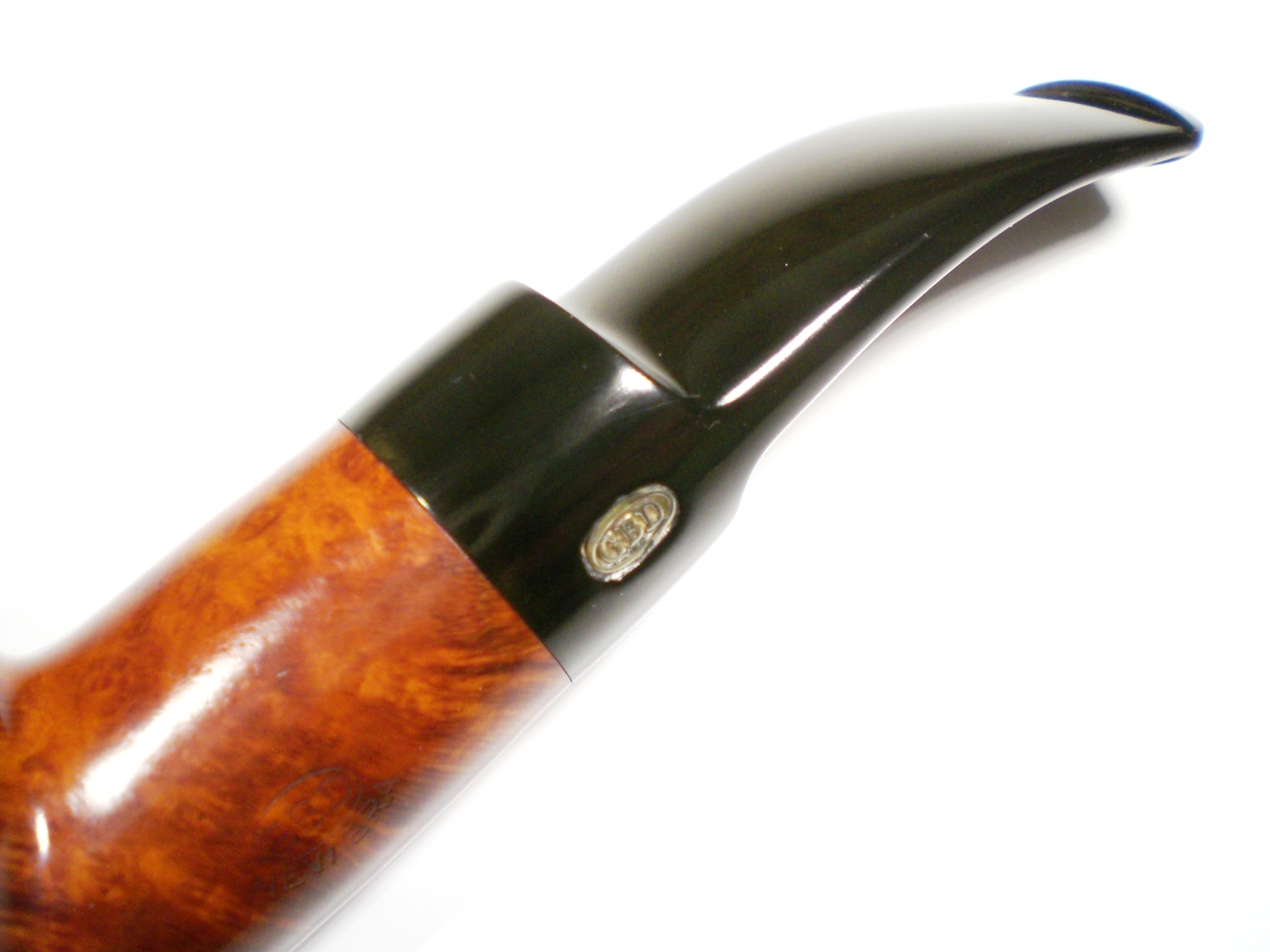
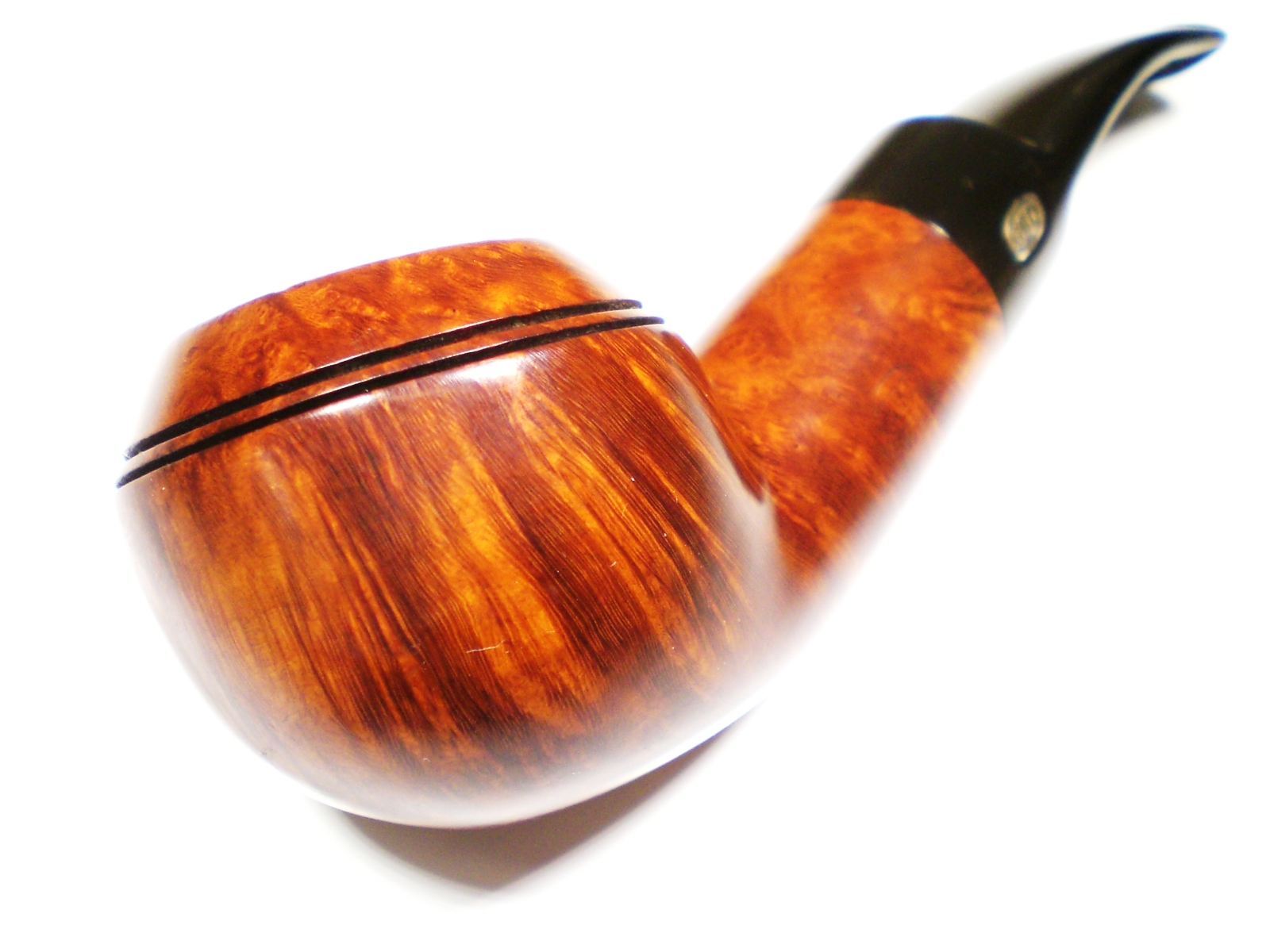
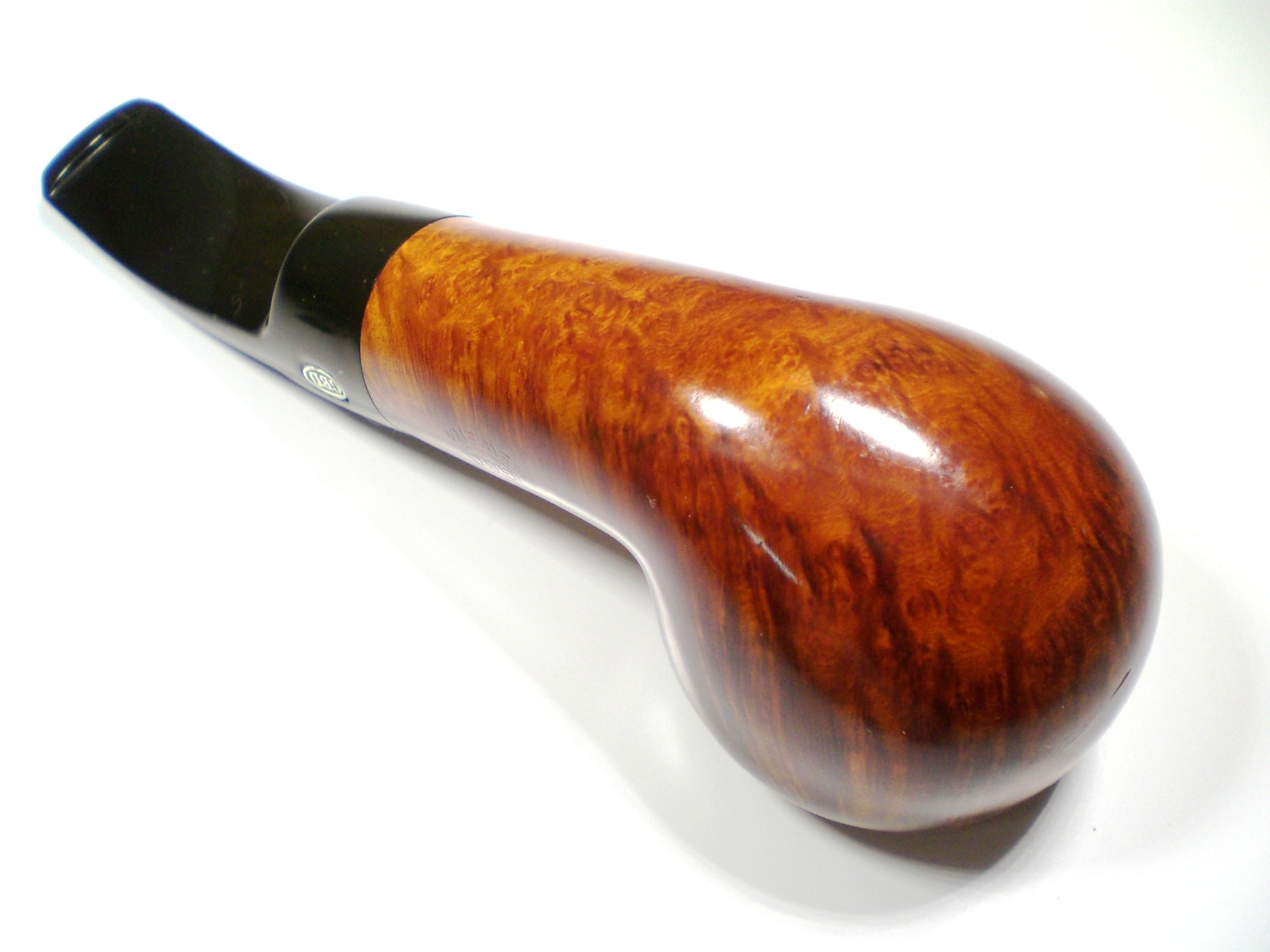
The GBD 9438 is my favorite pipe shape.  I’ve been fortunate to find most of the seven other 9438’s in different grades.  However, to this point, a “New Standard” has eluded me.  I attended the recent NYC Pipe Show but left the show without a pipe purchase.  On the drive home from New York to Maryland, I remembered a 9438 New Era Ebay auction was ending.  The pipe was offered by estate seller extraordinaire, Steve Fallon, aka “Pipestud”.  Using my Ebay phone app, I pulled off the highway and put in a bid.  I was delighted to win my second GBD from Steve.

The “New Era” grade slots somewhere between the Virgin and New Standard grades.  It is described in a 1973 GBD catalog as:

New Era: “The beauty of this pipe’s perfect briar is accentuated by the richness of the ‘take-off’ dual finish.”

The pipe was so clean, I can’t say this is a “restoration” and I didn’t feel compelled to take any before pictures.  The stem had a little oxidation on it, but was in overall very good condition.  The briar had a few dings and some darkening around the rim.

I was able to remove much of the rim darkening with a worn piece of 8000 grit micromesh sheet, which doesn’t pull any stain.  I used a damp cloth and a hot iron to lift out most of the dings around the bowl and a few underneath.  One small score mark remains.

I removed the oxidation around the saddle section of the stem with 800 grit paper followed by 1500 and 2000 grades.  Next 8000 and 12000 grade micromesh sheets were used.  The stem was buffed lightly with White Diamond rouge followed by Meguiars Plastic Polish.

The interior of the bowl is in excellent condition and the pipe is drilled perfectly.  I’m pleased to add this final 9438 to my collection of that shape.

GBD_9438_New_Era_Gallery GBD_9438_NE (2) GBD_9438_NE (1) GBD_9438_NE (3) GBD_9438_NE (5) GBD_9438_NE (4)


KBB Yello Bole Restoration


Blog by Al Jones (aka upshallfan)

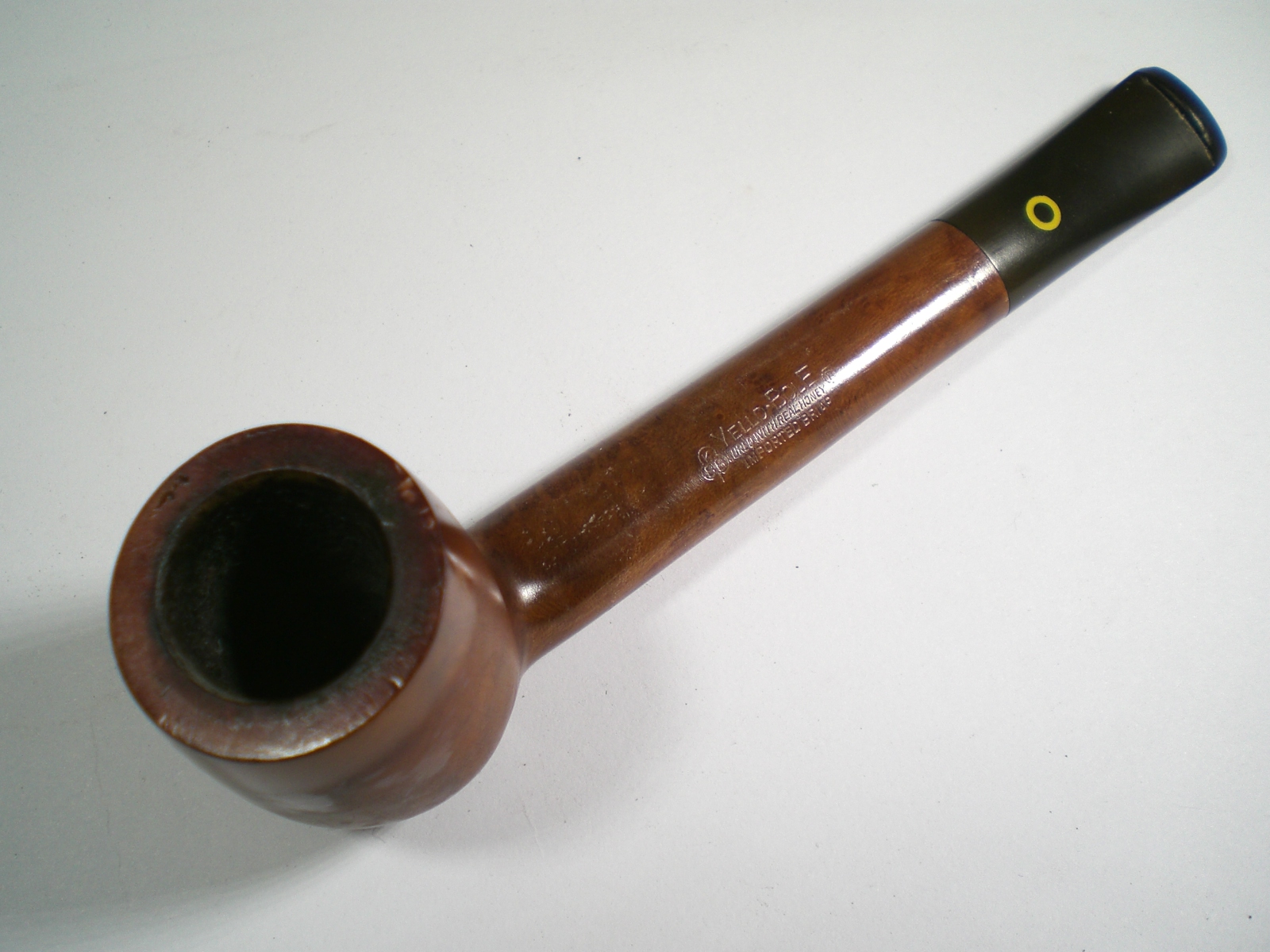
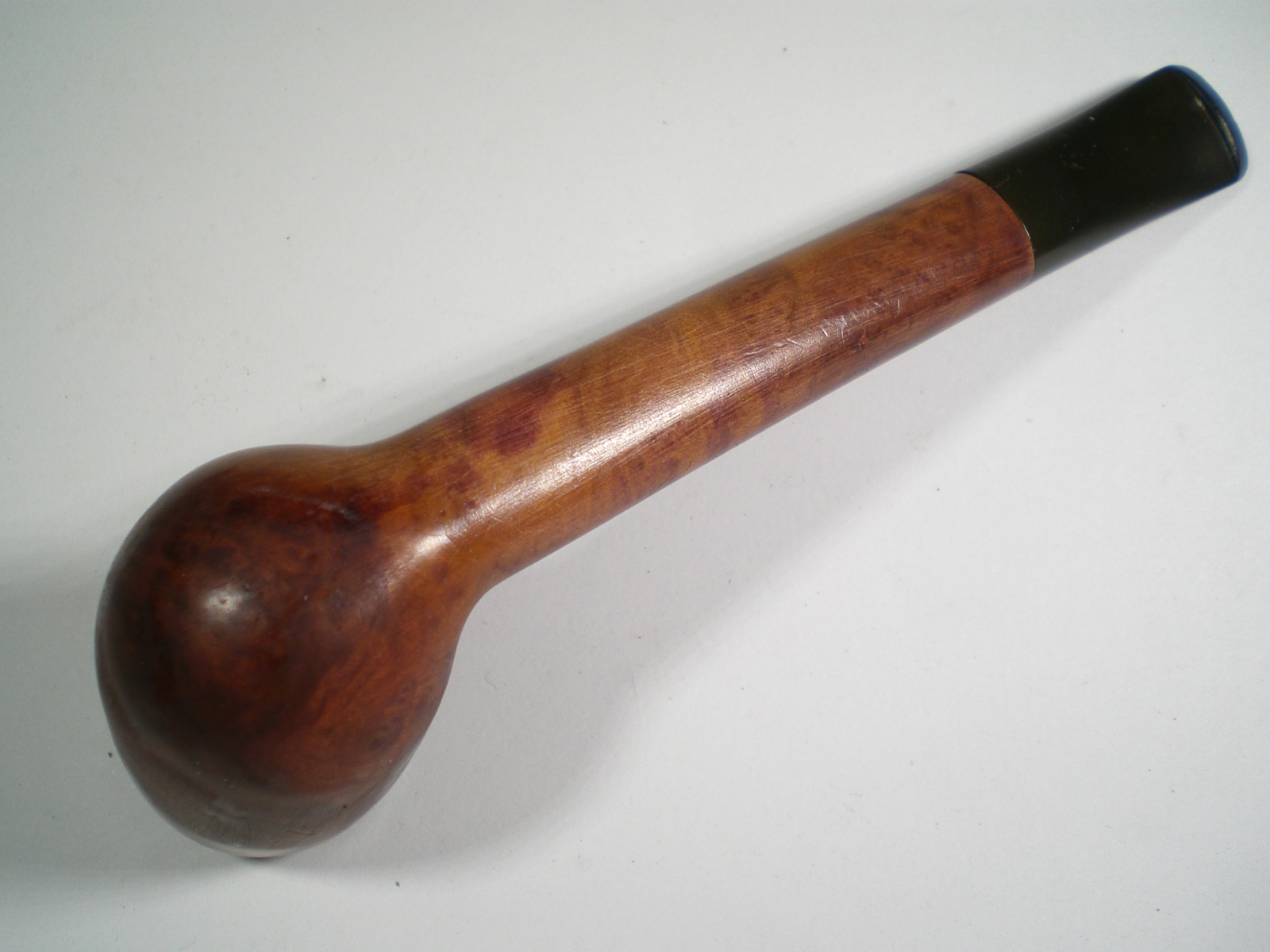
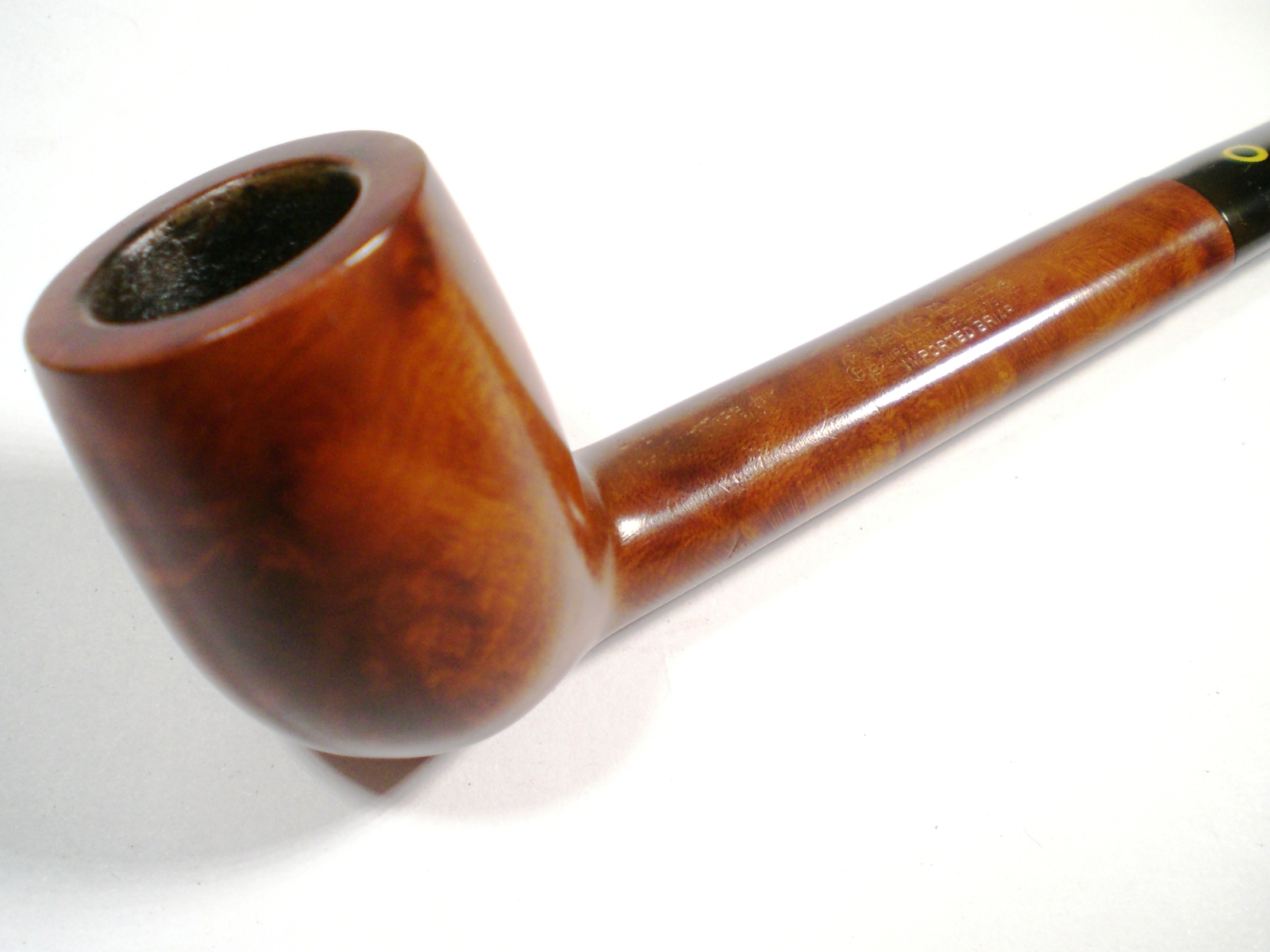
This Yello Bole belongs to a pipe forum friend, Walt, who lives in Florida.  It is the first of that make to land on my work bench.

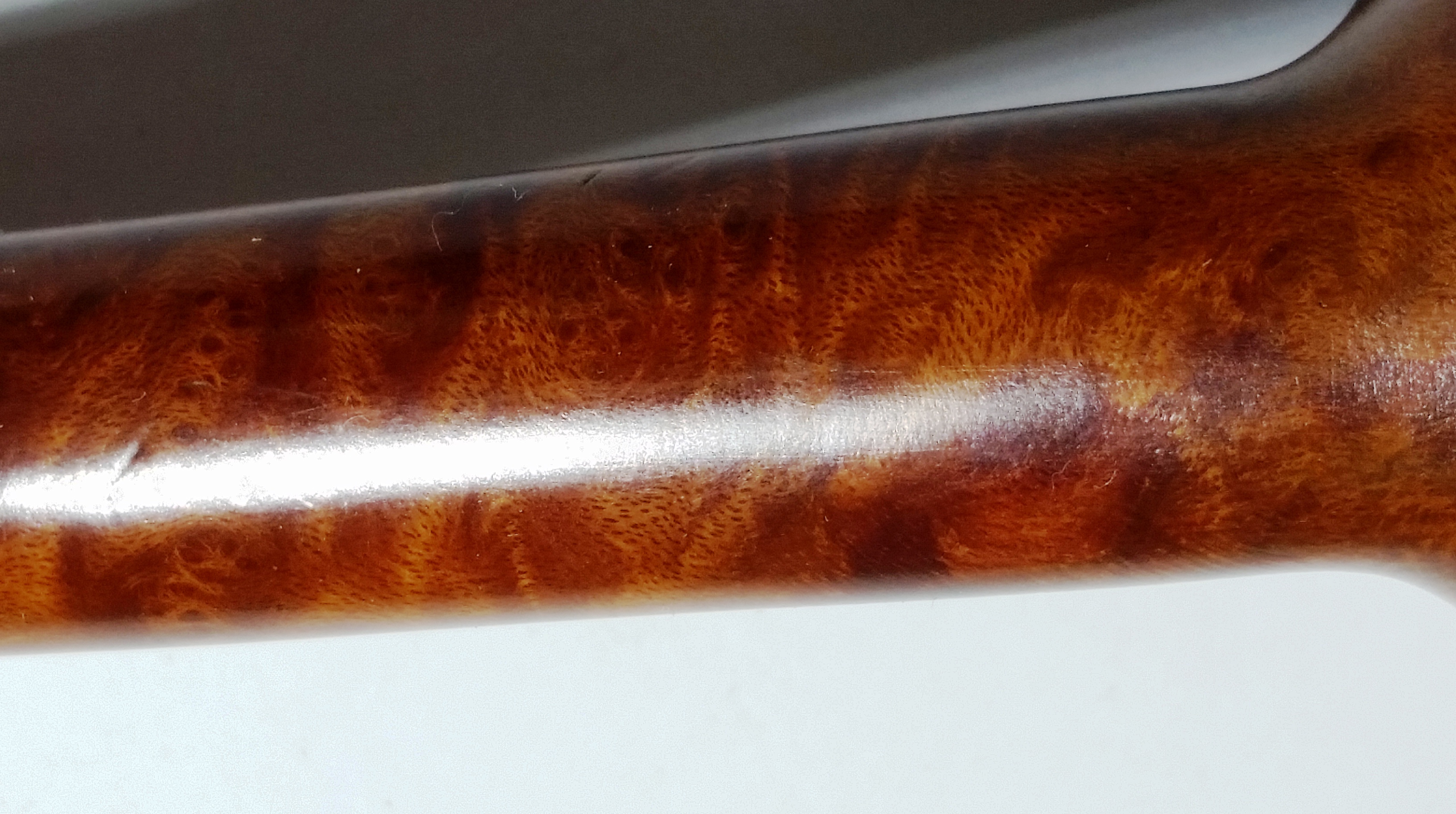
On examination of the pipe, it had some issues that took some thought and a little experimentation on how to resolve them.  Somehow in the pipe’s journey, the bottom and side of the pipe had been scuffed and scratched.  It was if someone had used some rough grade sandpaper or steel wool on the finish.  The top of the bowl top had some scorching and the stem had only a slight layer of oxidation.  Otherwise it was in excellent shape

Yellow-Bole_Before (1) Yellow-Bole_Before (3) Yellow-Bole_Before Yellow-Bole_Before (2)

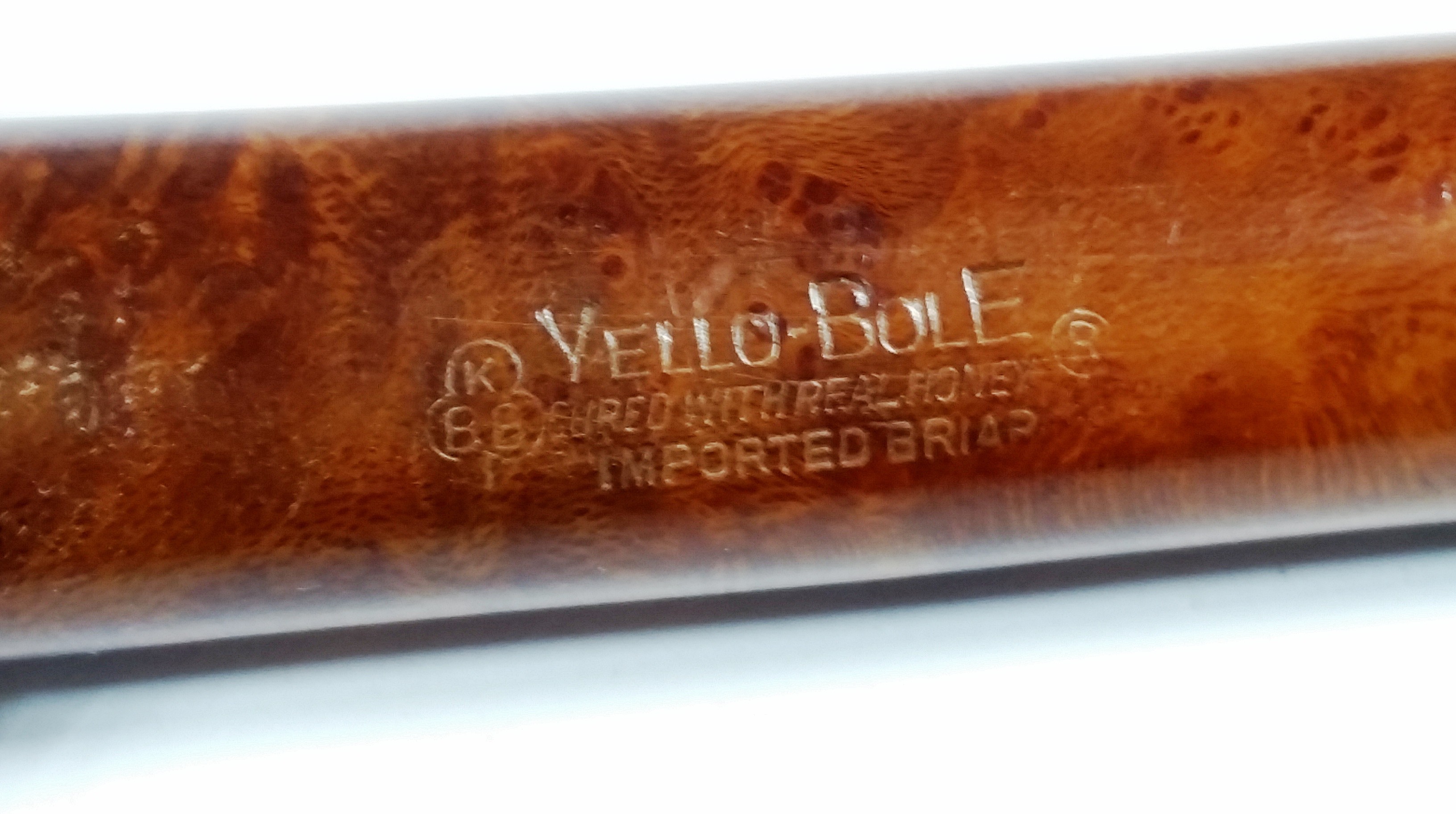
At first, I thought the bowl would need to be stripped and restained.  I was preparing to soak the bowl in alcohol but wondered what effect buffing the pipe with Tripoli compound would do to the light surface scratching.  Tripoli is not a rouge that I use very often on pipes as it is too aggressive and sometimes can cause more damage than good.  (it is an important step when buffing metal).  At that point, I thought the Tripoli couldn’t make the issue any worse, as long as I stayed away from the nomenclature which was in great shape.  To my surprise, the Tripoli completely removed the scratching, without damaging the rest of the finish.

I used some worn 8000 grit paper on the bowl top to remove the scorching.  This method is also the least damaging to the finish.    There were a few dents and dings on the briar.  I used an iron and a wet cloth to minimize those marks but they would not raise completely.

There was  a slight discoloration in the briar where it was buffed with the Tripoli and micromesh.  I put on a coat of diluted “Medium Brown” Fieblings stain and let it dry.  That was then buffed to a shine with White Diamond and then several coats of Carnuba wax.  This gave the briar a nice luster without completely removing the patina (or exposing any fills as a restain might have done).

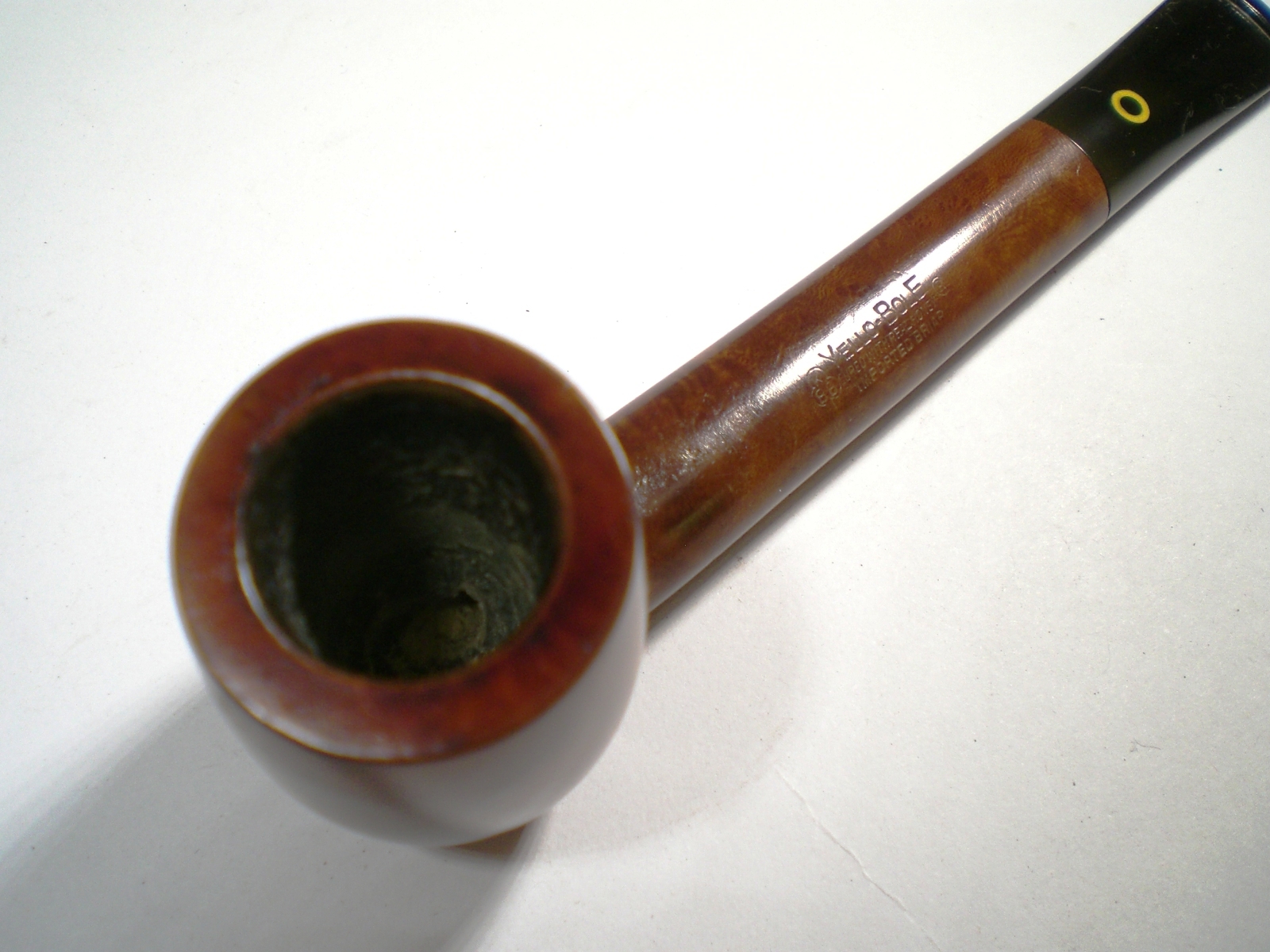
I removed the oxidation of the stem with some 800 grit paper, moving to 1500 and 2000 grades and finally 8000 and 12000 grade micromesh sheets.  The stem was then buffed with White Diamond and Meguiars plastic polish.  As I had not worked with a Yello Bole previously, I was pleased to find the inset stem logo to be quite durable, perhaps even more so than the Kaywoodie logo.

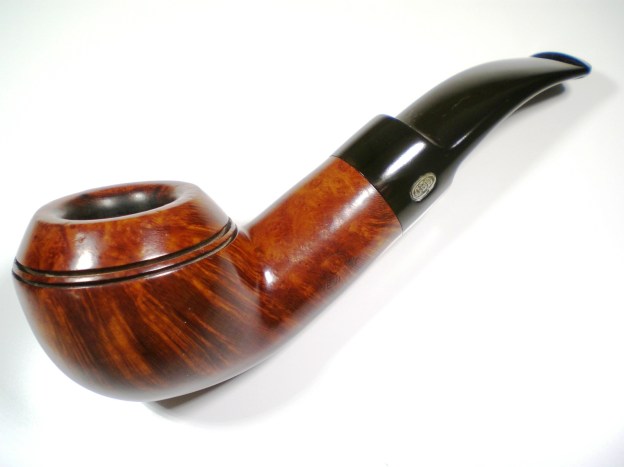
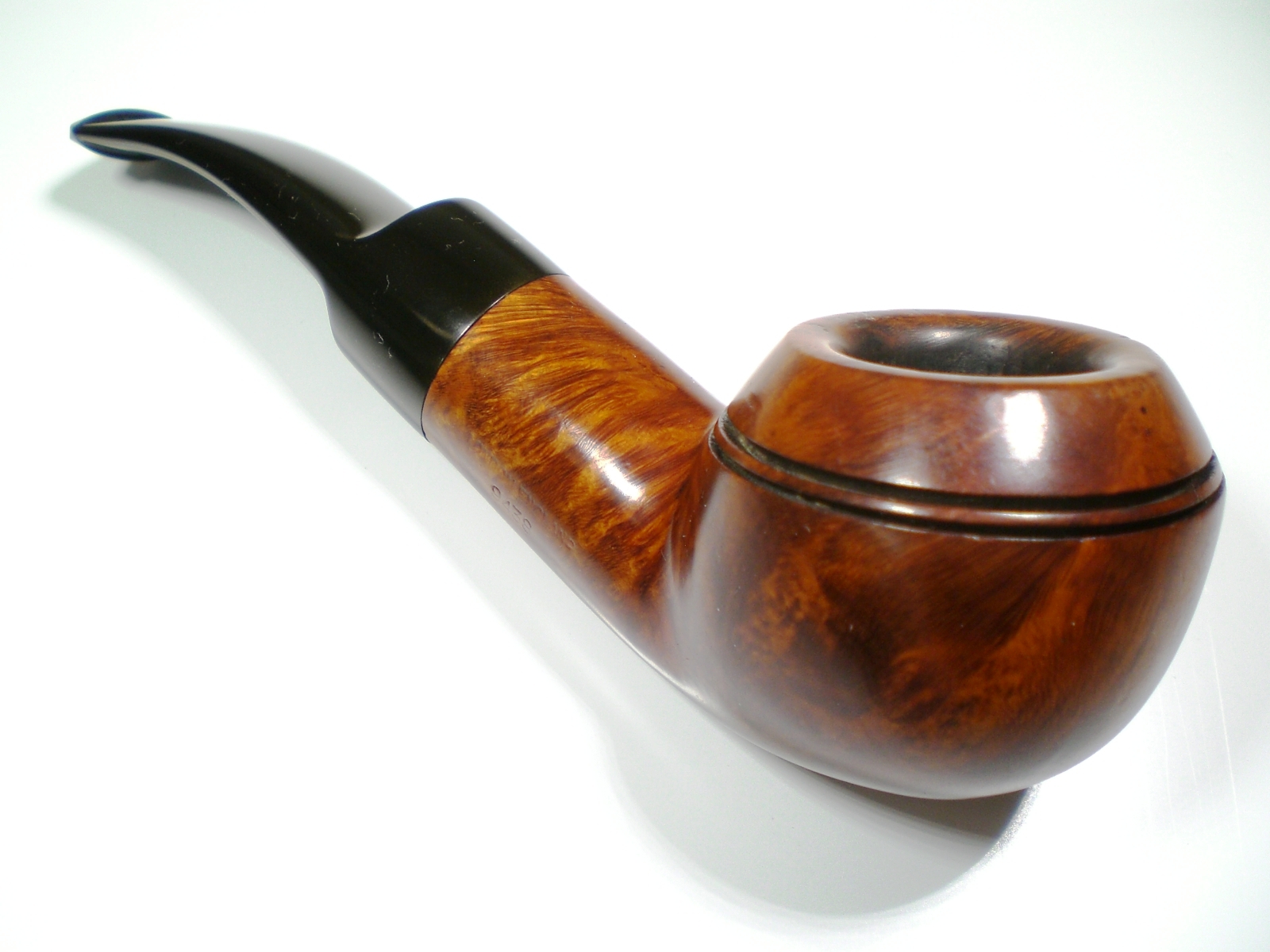
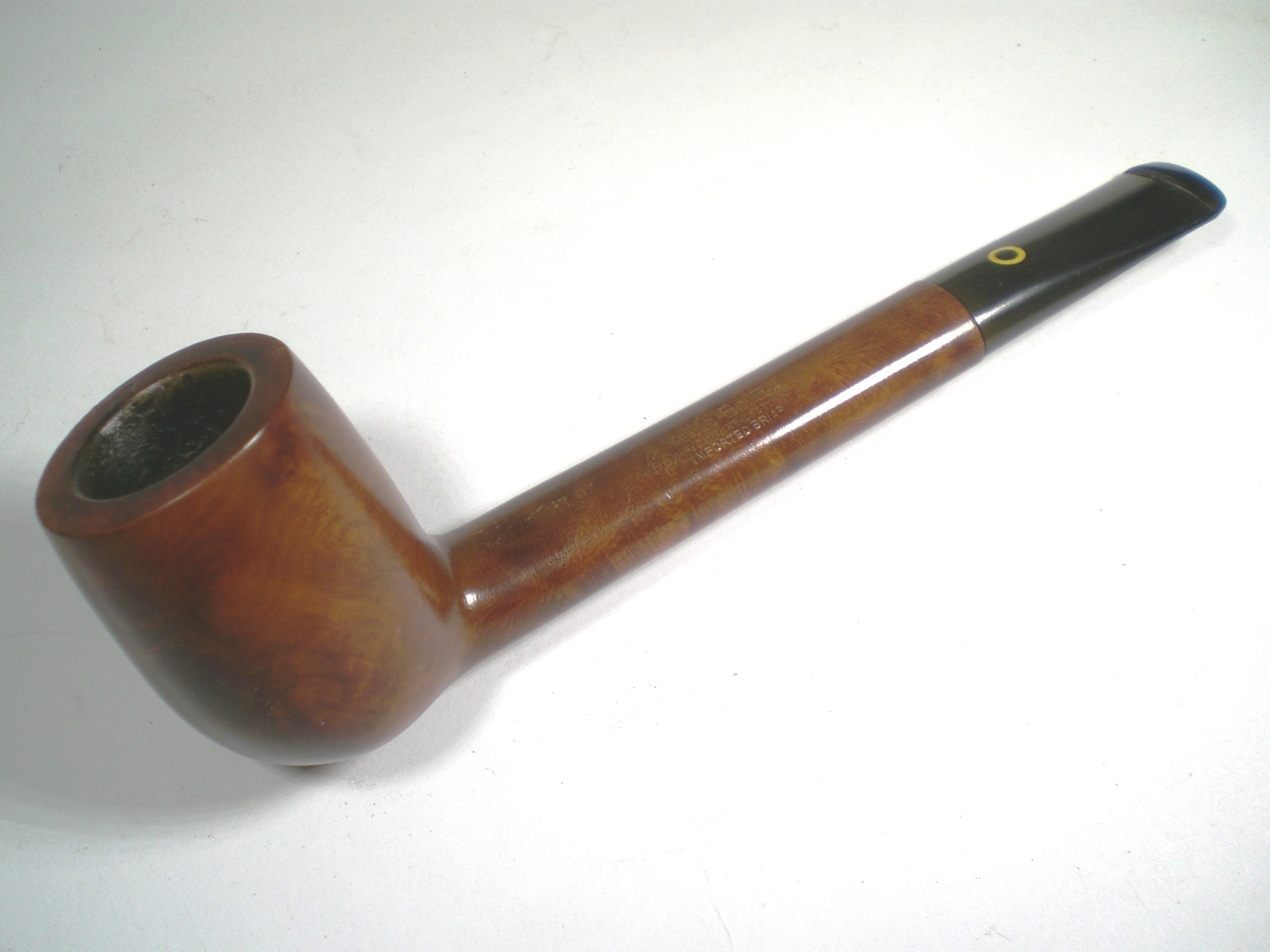
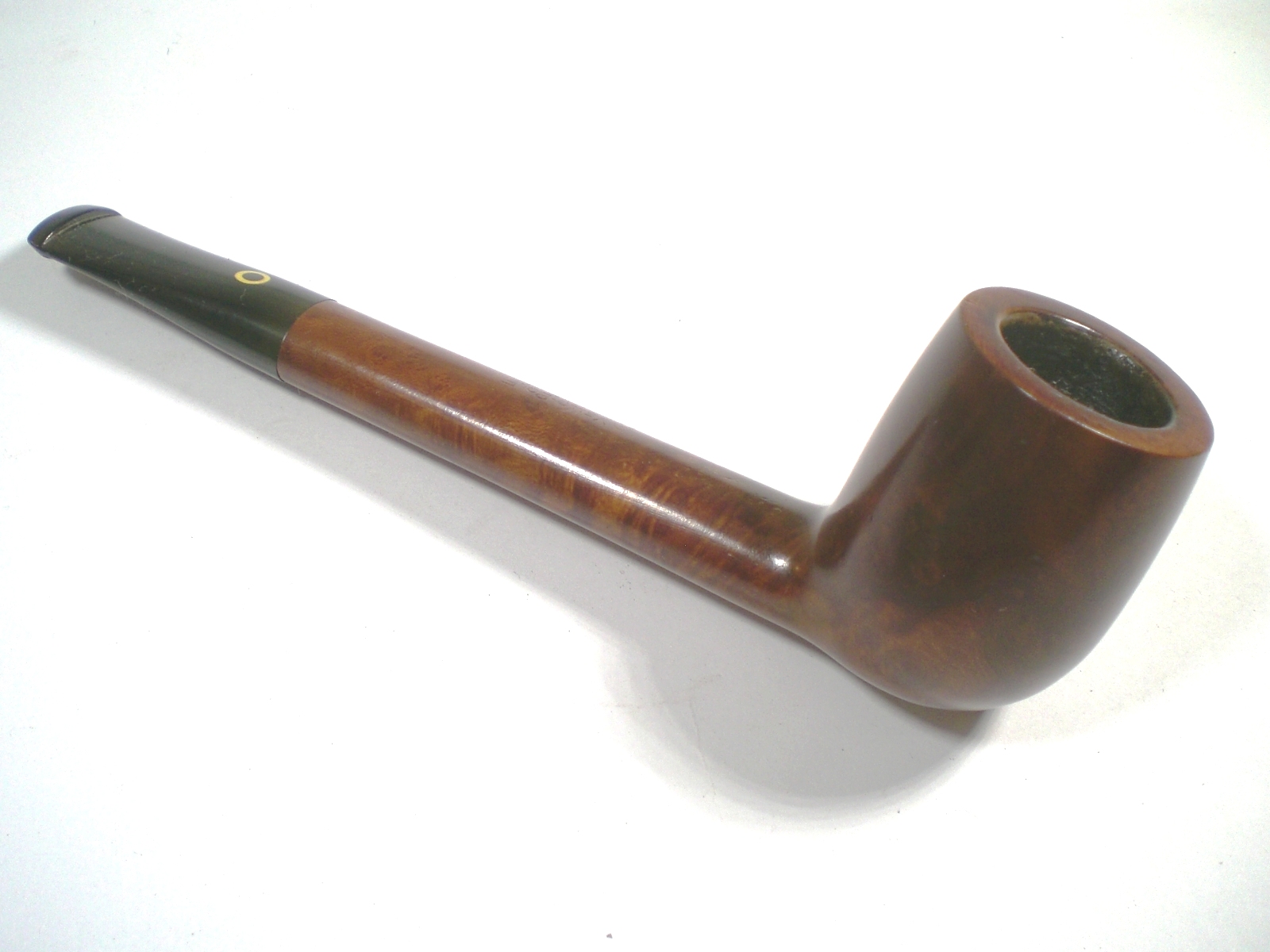
Here is the finished pipe.   Walt has received it in Florida and was also pleased with the results.

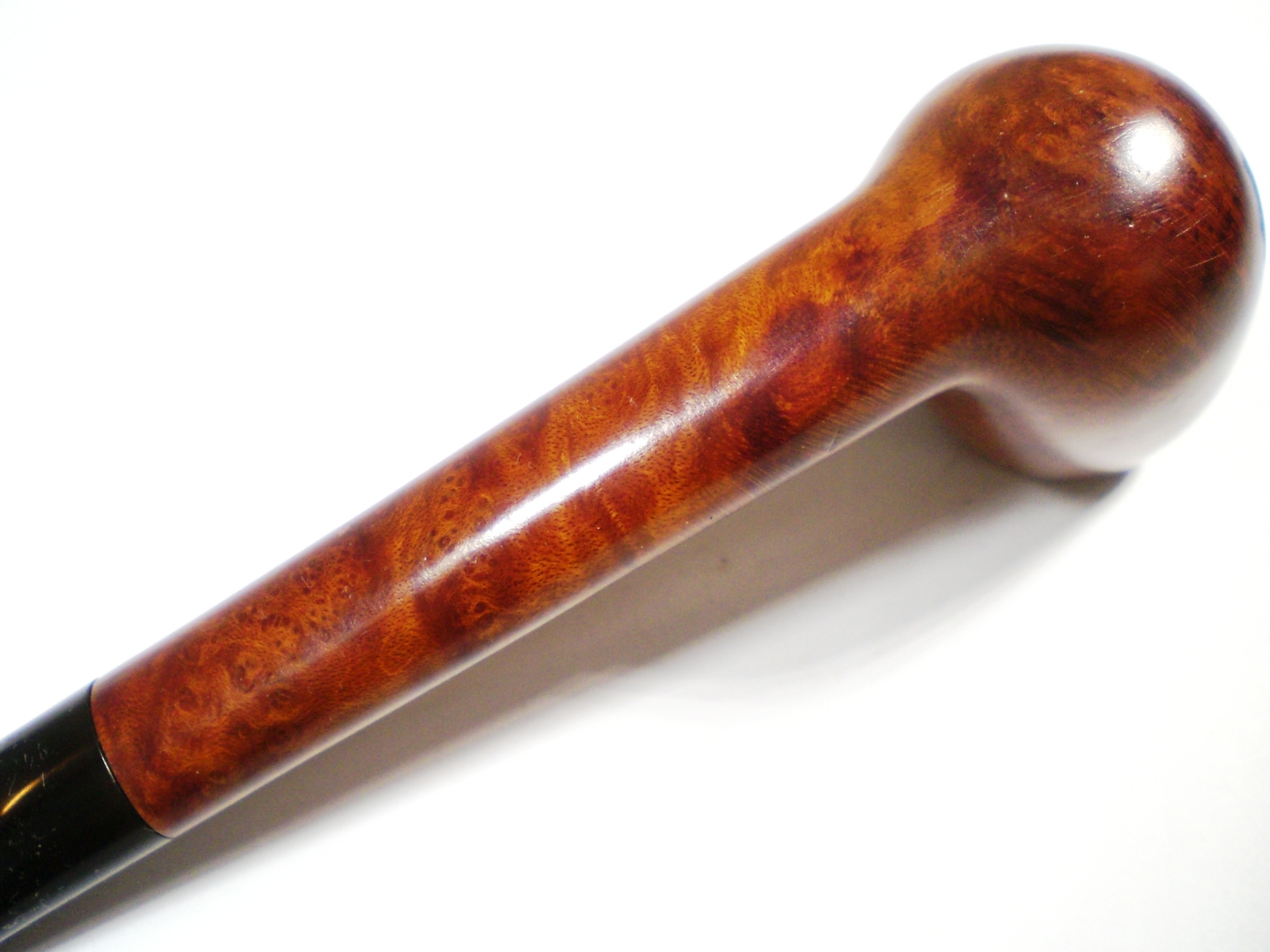
Yellow-Bole_After Yellow-Bole_After (3) Yellow-Bole_After (2) Yellow-Bole_After (5) Yello_Bole_After (6) Yello_Bole_After (7) Yellow-Bole_After (1) Yellow-Bole_After (4)


Sasieni Moorgate Rustic Restored


Blog entry by Al Jones

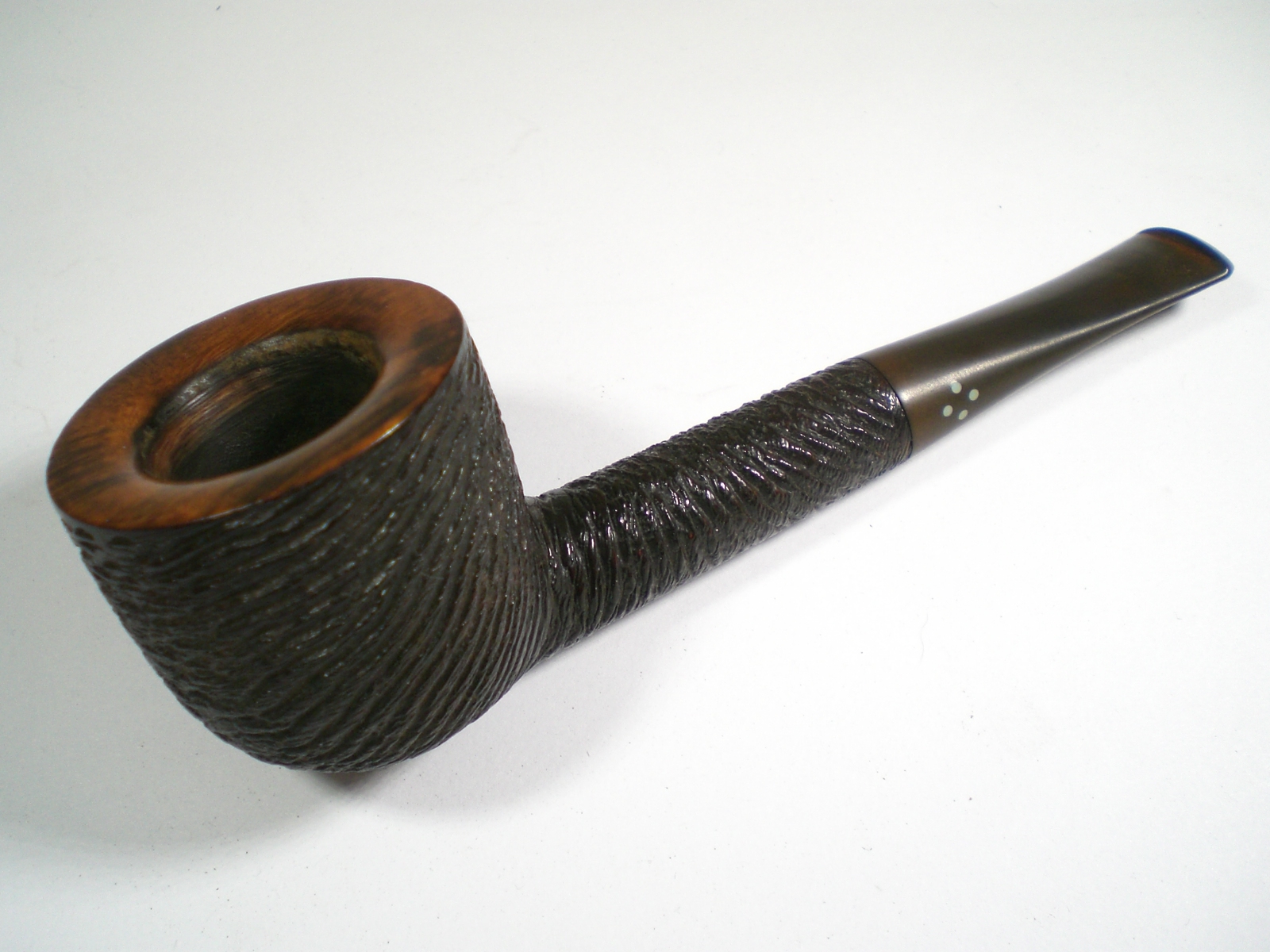
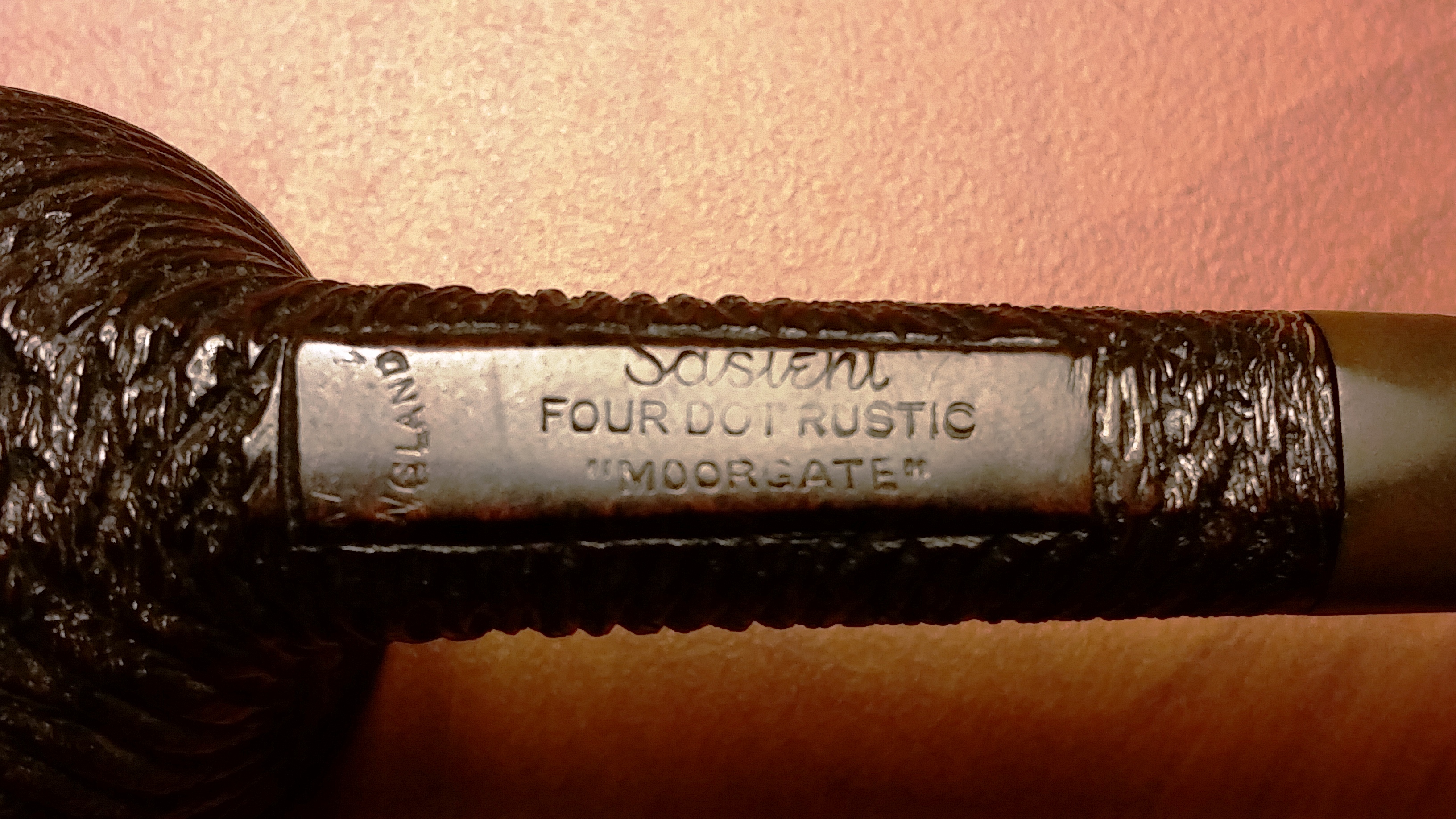
This Sasieni “Moorgate” shape in Rustic finish is the second pipe from the shop in Albany and part of the General Electric executives estate.  The nomenclature shows that the pipe is from the “Family Era” and made between 1946 and 1979.

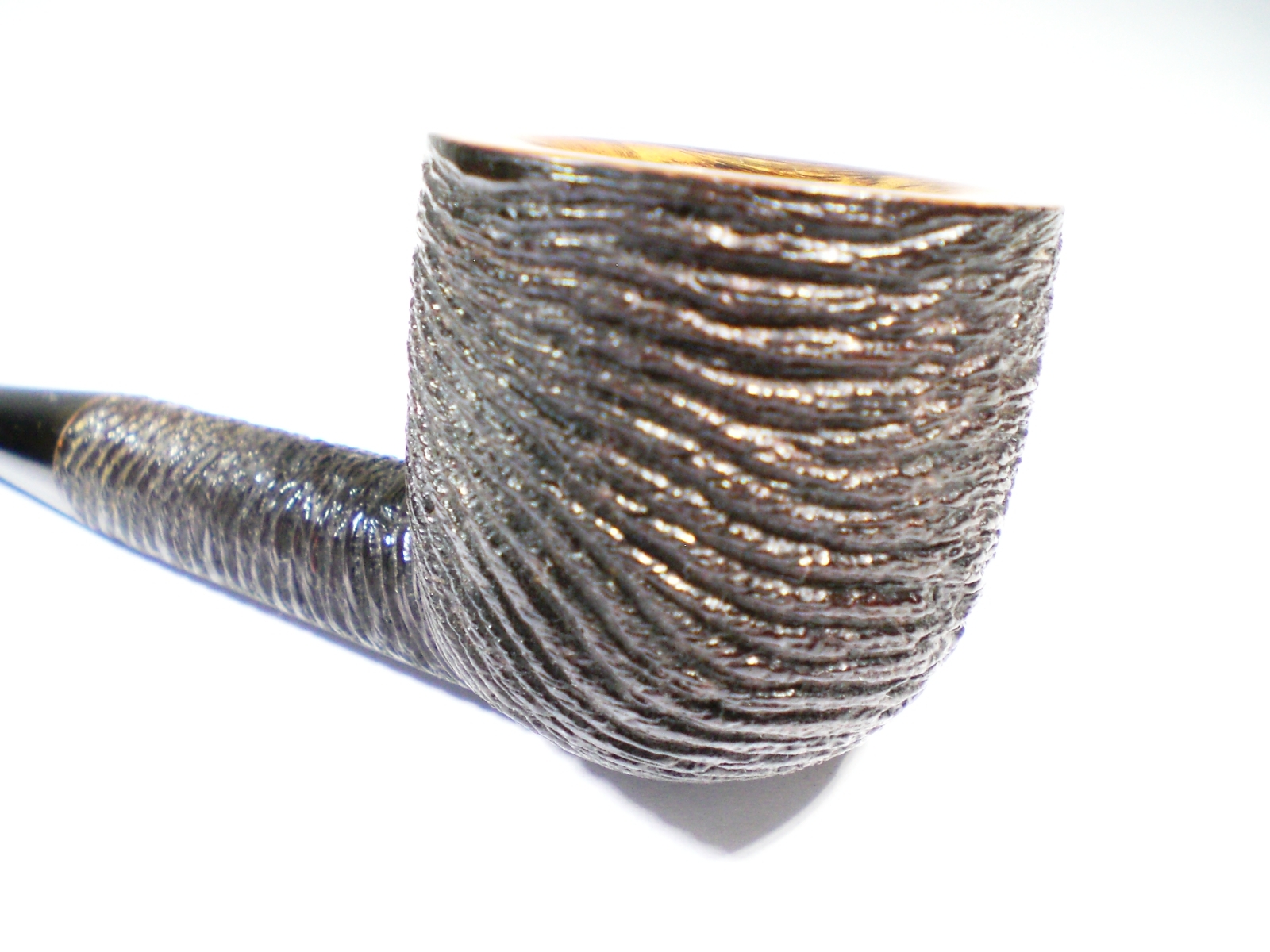
The “Rustic” finish is a hand carved, rusticated finish done completely by hand.  This work must have been painstakingly slow with the carving following the briar grain lines.

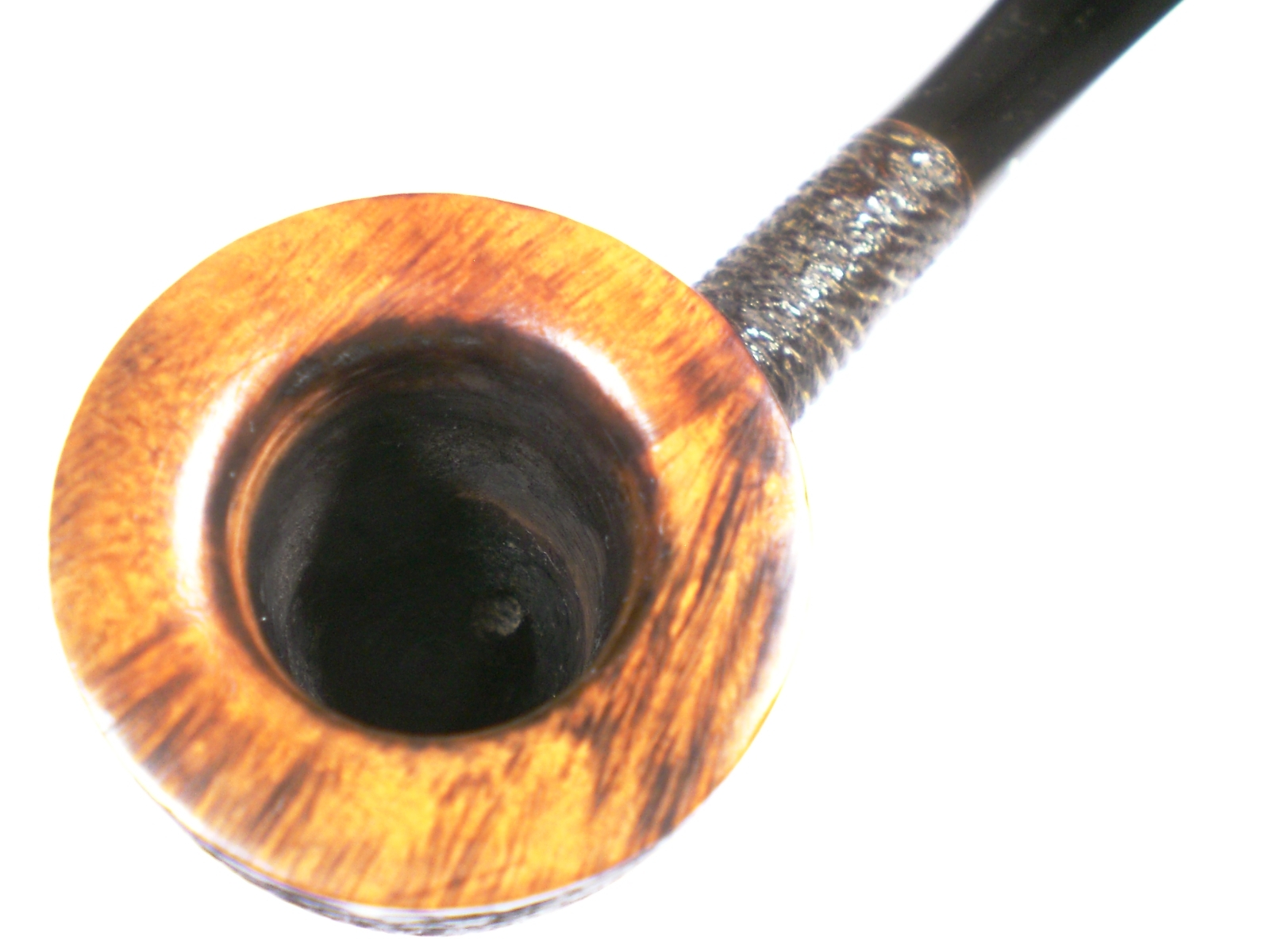
The Moorgate shape is most typically seen with a saddle stem which adds an “S” designation after the shape name.  I also don’t usually see “Rustic” pipes with a polish bowl top, but that is a feature of every Moorgate shape I found in a Google search.

The pipe was smoked in the past, but there was still uncaked wood visible in the bowl.  The stem was nearly mint, with only some mild oxidation.

Sasieni_Moorgate_Rustic_Before Sasieni_Moorgate_Rustic_Before (1) 20150223_205814

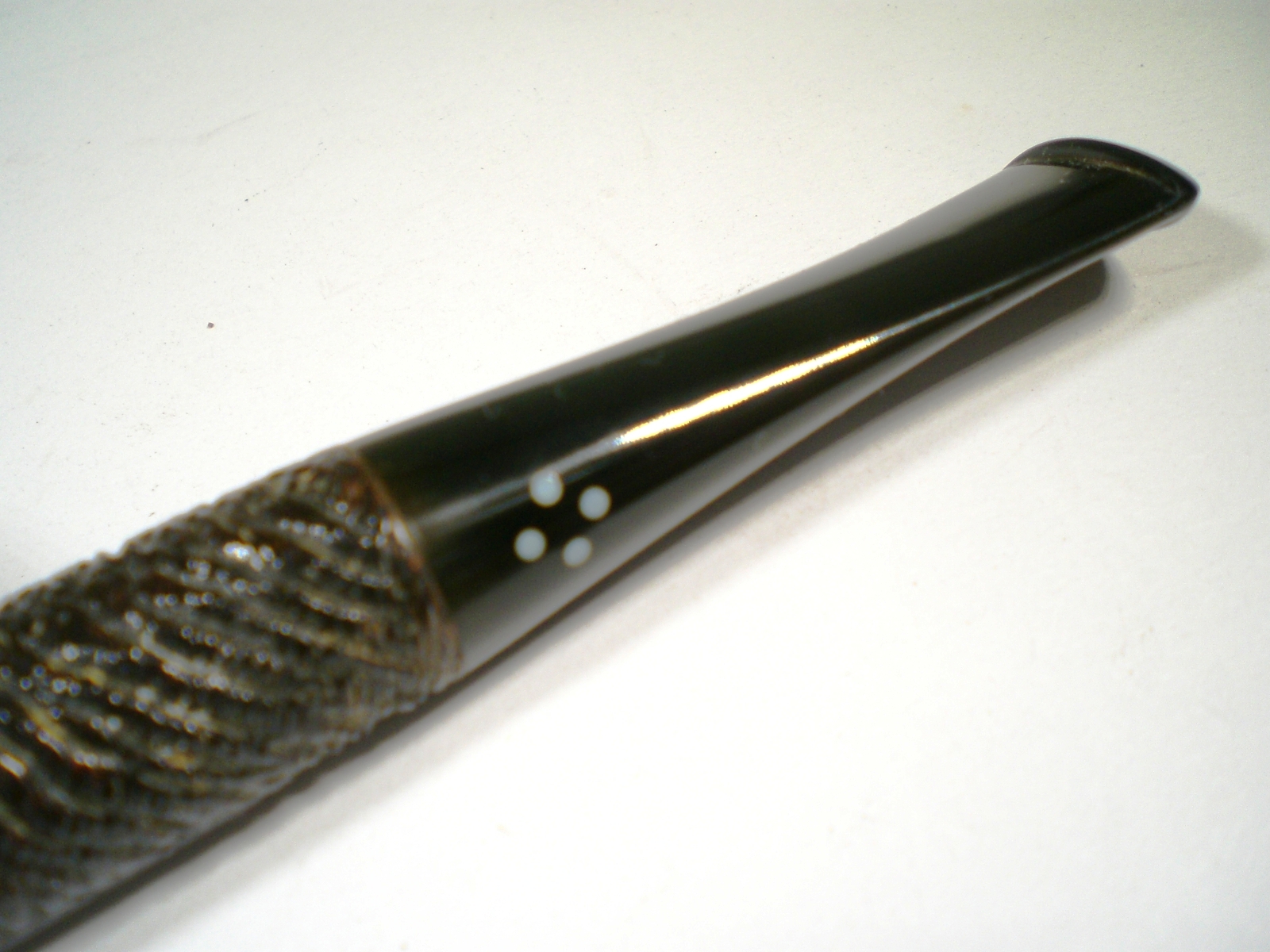
I put a dab of grease on the dots and soaked the stem in a mild solution of Oxy-Clean.  I used 800 grit paper to remove the oxidation from the stem, which was more stubborn than it initially appeared.  I then used the 1500 and 2000 grade wet papers.  The next step was to finish with 8000 and 12000 grade micromesh sheets.  The stem was then buffed lightly with White Diamond rouge and Meguiars plastic polish.  The Four Dots have a beautiful light blue sheen.   The bowl only required a hand polish with Halycon wax.

As I’m a fan of straight pipes or the Pot shape, I listed this one on Ebay and sold within 24 hours to a gentleman from Asia.  I suspect he will be very pleased with this Sasieni.

Sasieni_Moorgate_Rustic_Finished Sasieni_Moorgate_Rustic_Finished (3) Sasieni_Moorgate_Rustic_Finished (2) Sasieni_Moorgate_Rustic_Finished (4) Sasieni_Moorgate_Rustic_Finished (5) Sasieni_Moorgate_Rustic_Finished (1) Sasieni_Moorgate_Rustic_Finished (8)


First Barling’s – “Special” 225 L


Blog entry by Al Jones

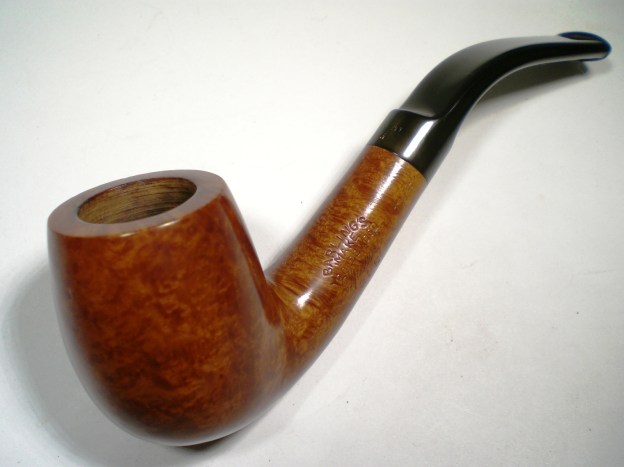
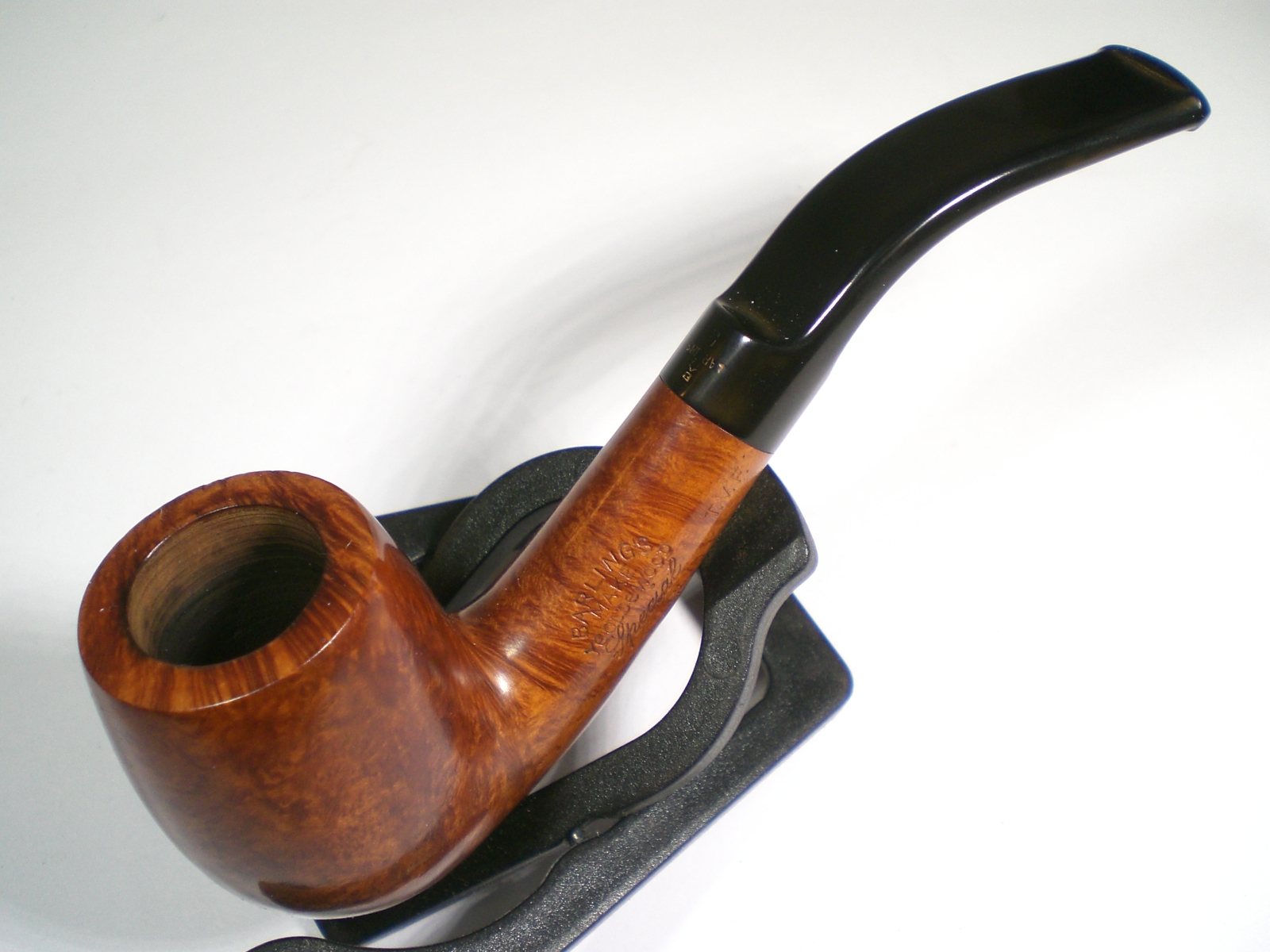
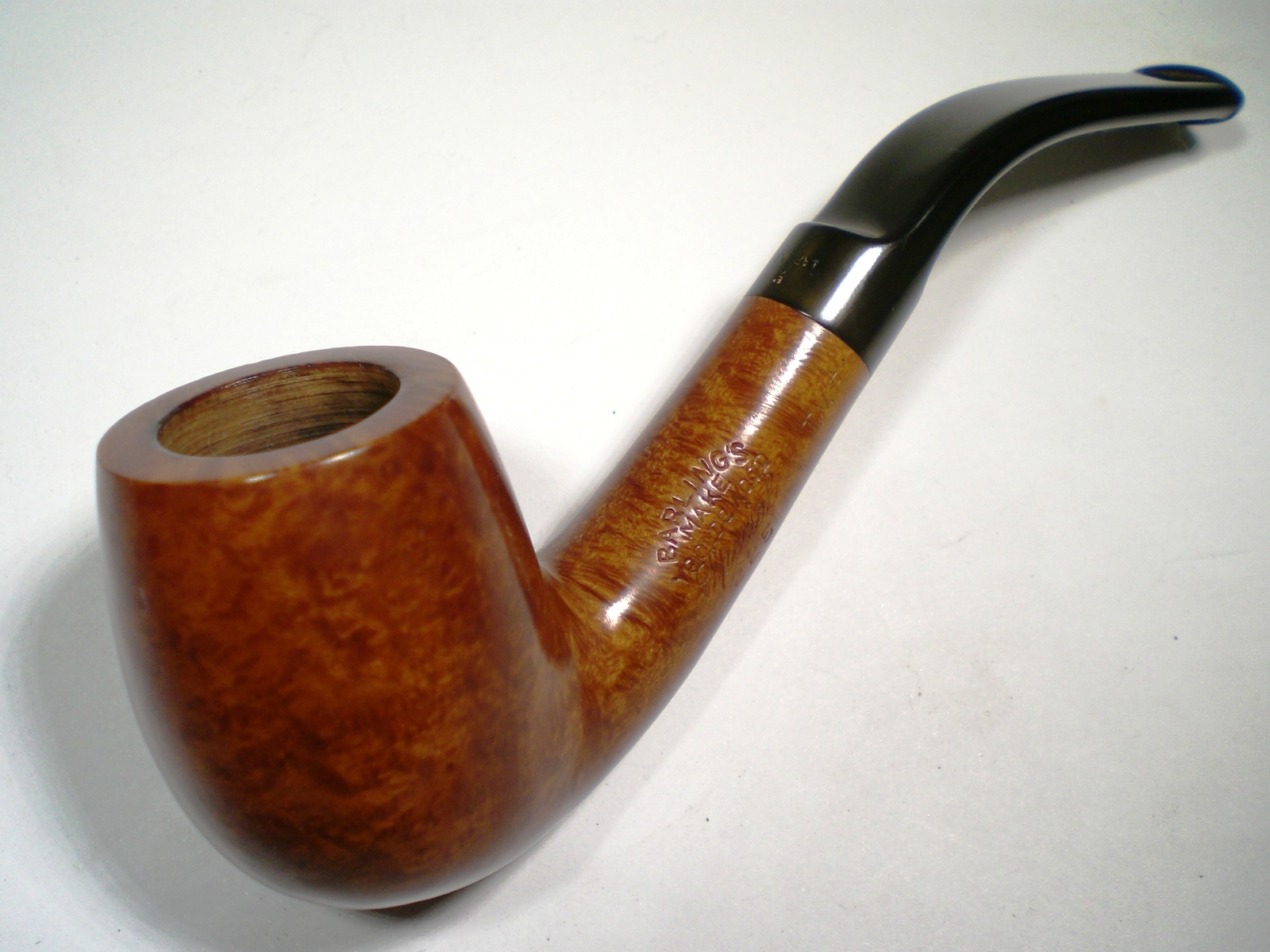
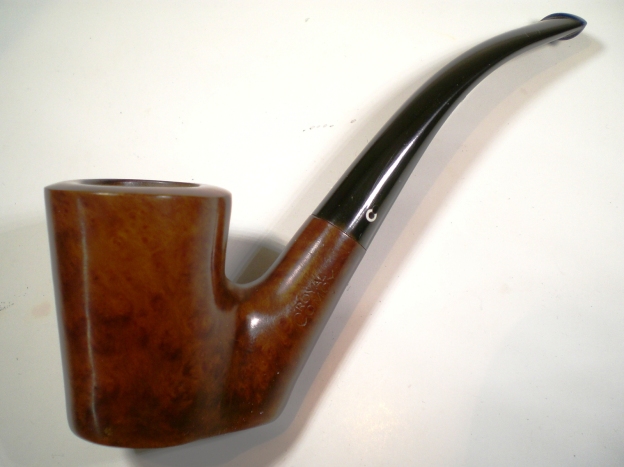
I struck British pipe gold at a shop in Albany NY a few nights ago.  They always have some decent estates and I try to stop by when I am working in the area.  On this visit, two pipes immediately caught my attention, this Barling’s and a Sasieni.  This is a “Special” grade,  Shape 225 in size “L” and my first Barling’s brand pipe.

One of the current authorities on Barling’s pipes is Jesse Silver.  Jesse co-authored the update to the Barling’s page on Pipepedia and participates on several pipe forums I frequent.  A few years ago, I learned to read everything he wrote about British pipes and saved quite a few of his threads for reference.  As soon as I saw the nomenclature, I knew this one was a winner.   I only occasionally encounter Barling’s pipes, but I’ve learned that bent pipes are rare.

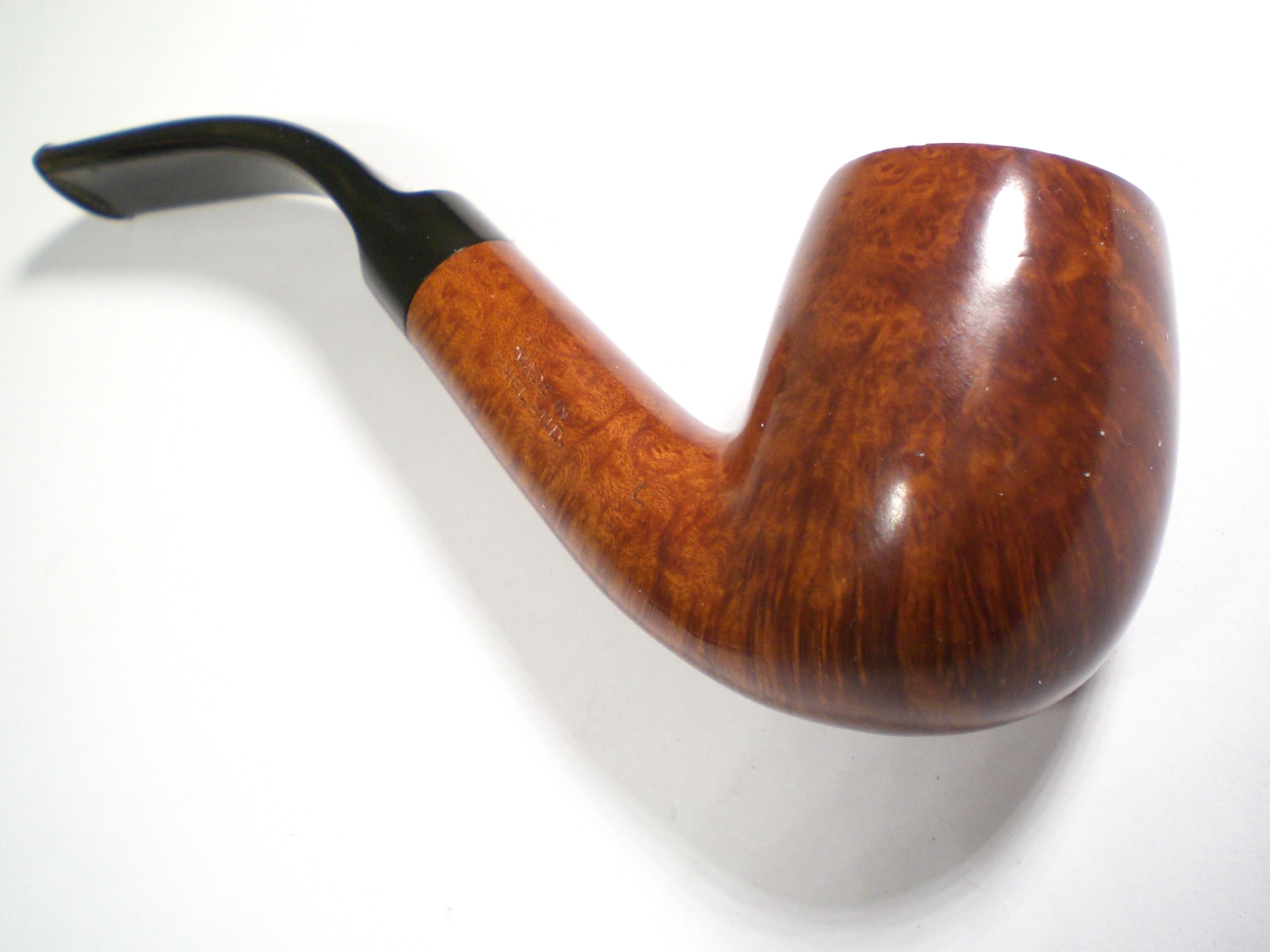
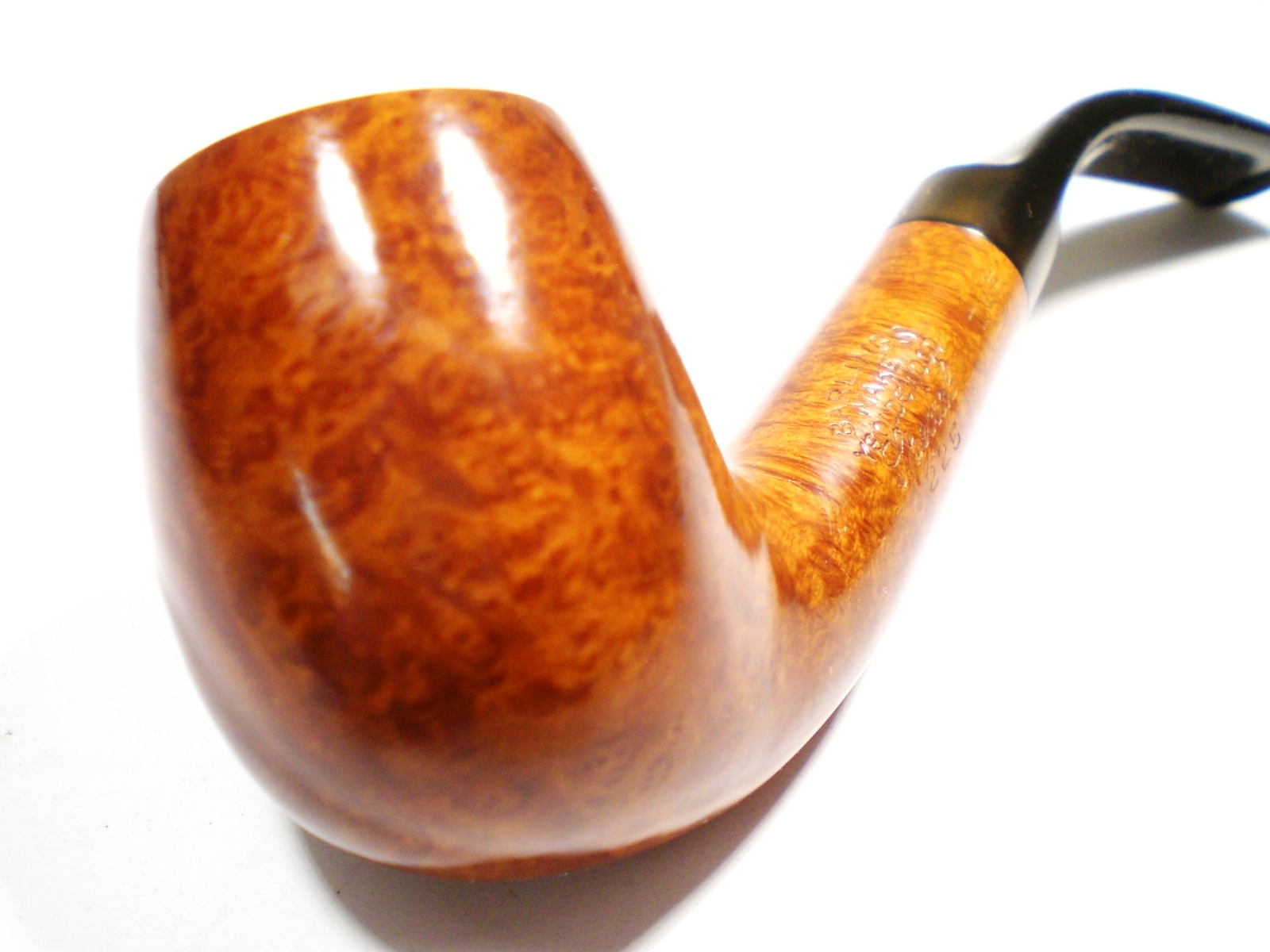
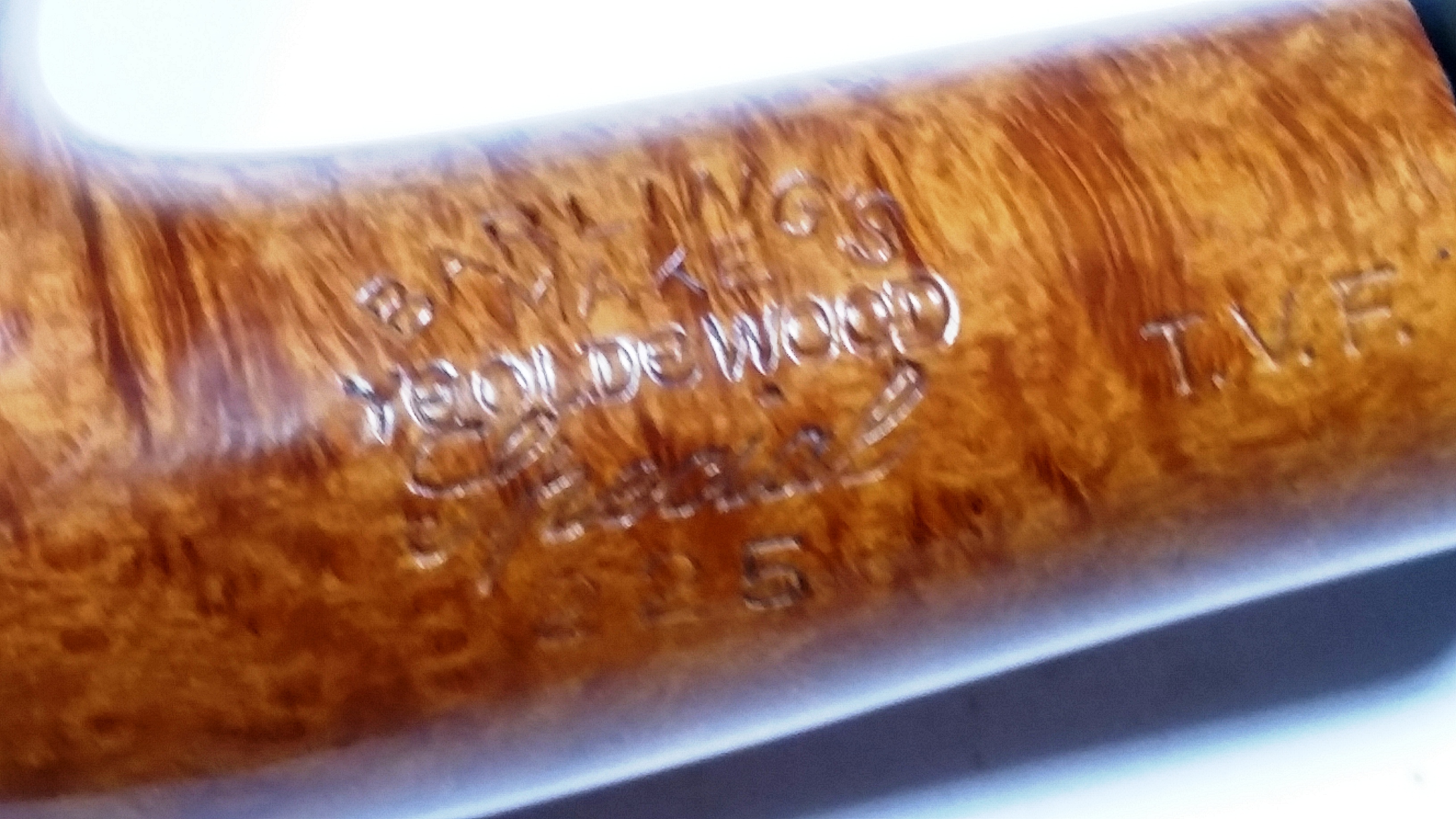
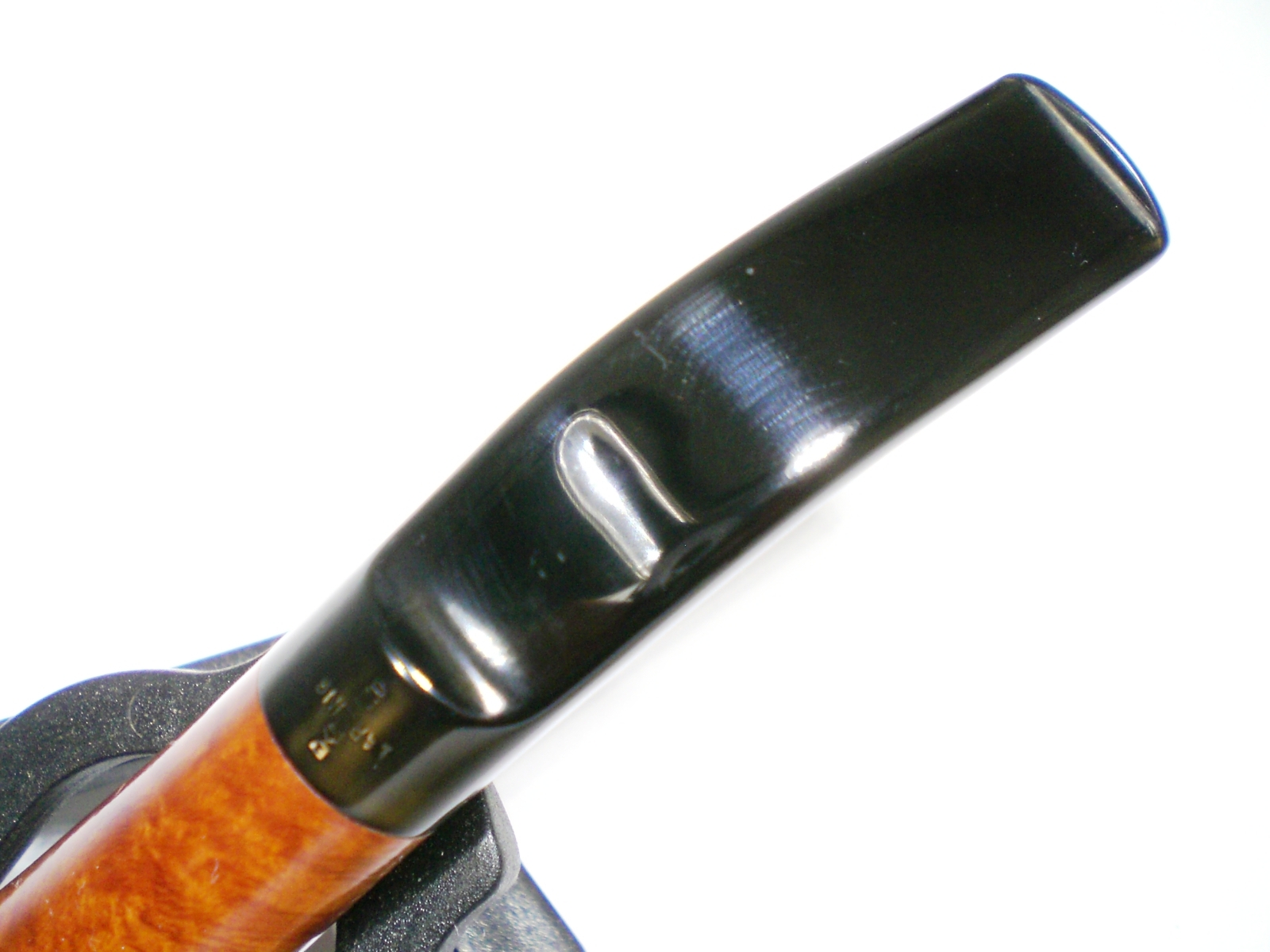
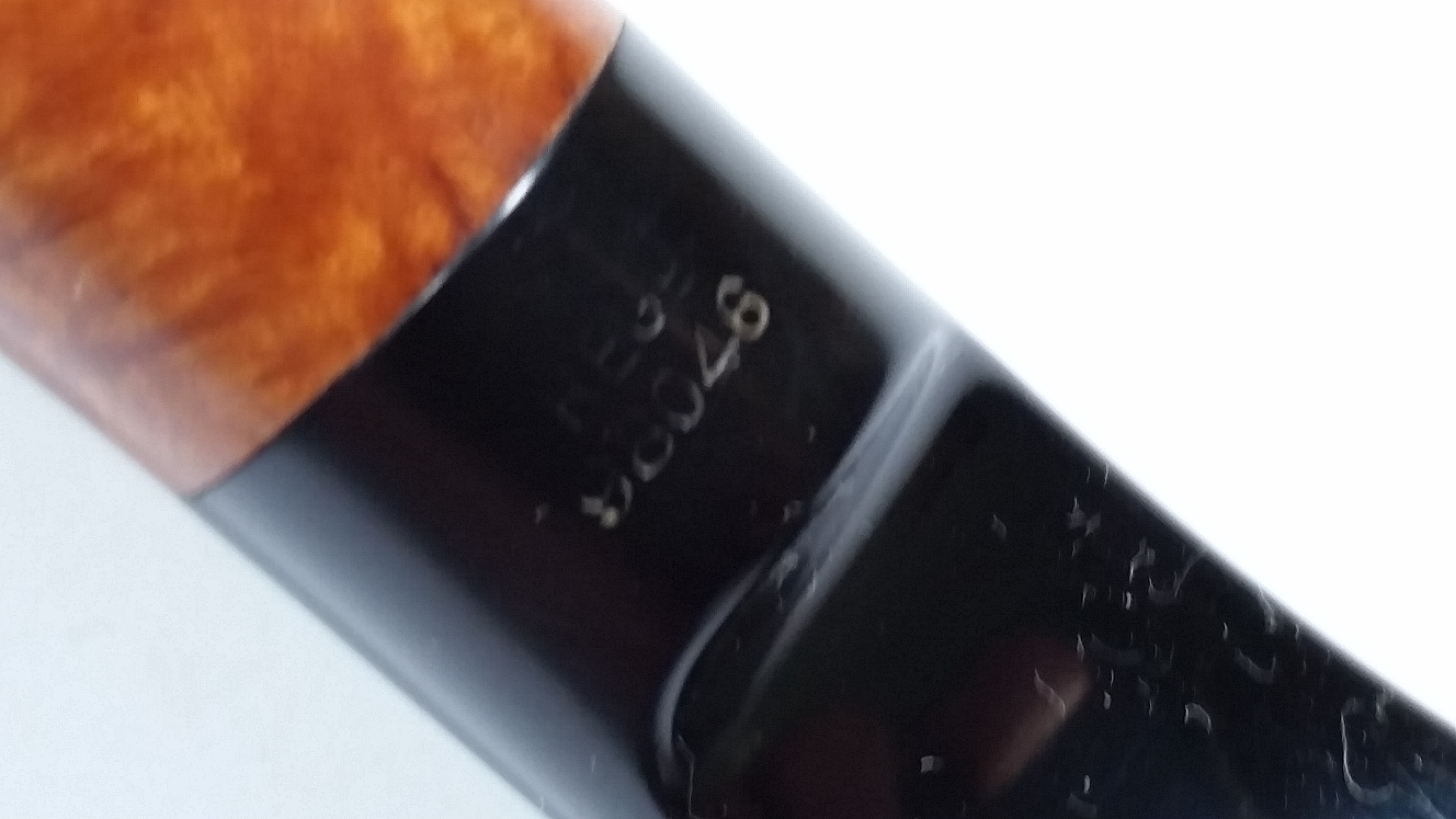
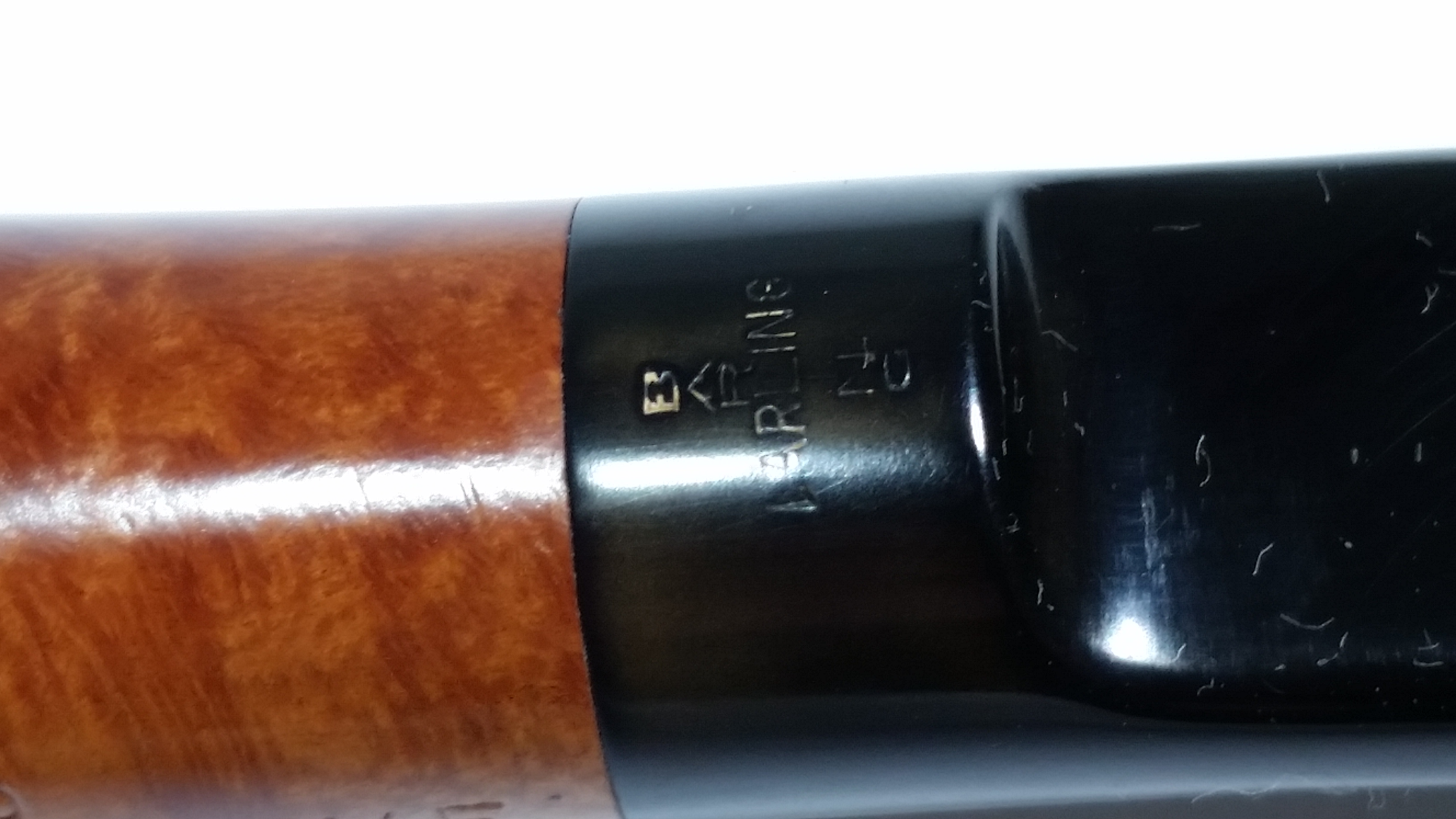
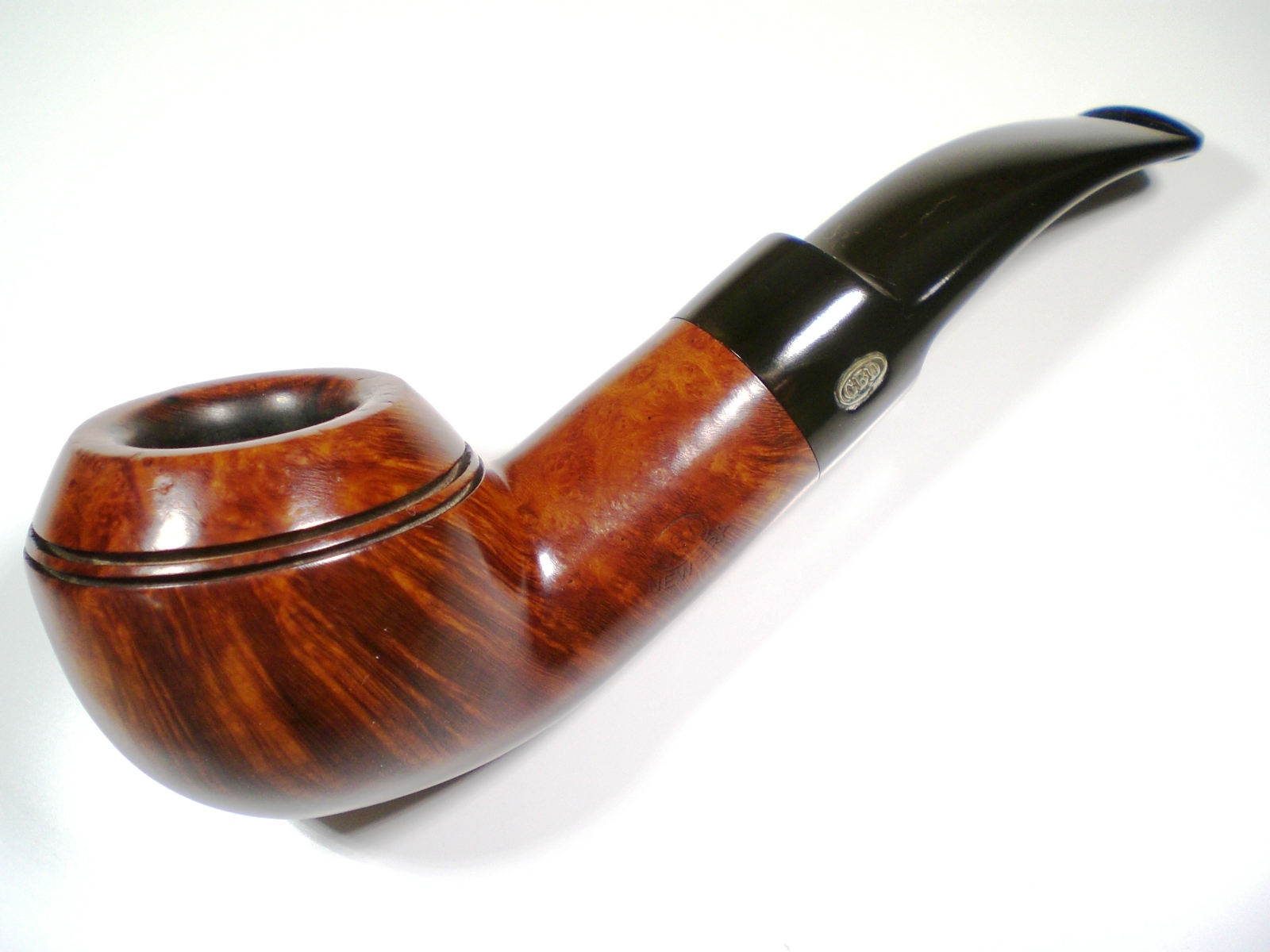
The nomenclature reflects that this pipe is from the pre-Transition era.  It includes the “REGd 98046” stamp on the stem, which was used from 1936 to 1949.    The “L” stamp indicates a Large sized pipe.  This one is about a Dunhill Group 3 and weights a svelte 29 grams.   The three digit shape stamp indicates the pipe was made for the US Market.

The shop owner told me that these pipes came from the estate of an executive at the nearby General Electric plant in Schenectady, NY.

Pipepedia referes to the “Special” grade as:


  • Ye Olde Wood Special (“Special” in script) – pipes with a nicer grain figure, often pipes with a combination of cross-graining and birdseye grain, and which were generally left natural or lightly stained, rather than stained dark.

The pipe was in terrific shape.  The stem had a slight layer of oxidation, but was free from any teeth marks.  Most importantly, the Barling’s cross was still visible in addition to the REDd number.  The nomenclature was mint.

Barling's_225_Special_Before Barling's_225_Special_Before (2) Barling's_225_Special_Before (3)


I soaked the bowl with sea salt and alcohol, but the pipe was so clean, I don’t think it was really necessary.

The stem was shined with 1500 and 2000 grit wet papers, than the 8000 and 1200 grade of micromesh sheets.  I was careful to stay away from the logo, which meant a slight bit of oxidation had to remain.   The flat section was buffed with White Diamond and Meguiars Plastic polish.

The bowl was polished lightly with White Diamond rouge, again staying clear of the nomenclature.  Then, several coats of carnuba wax were applied.  I thought the bowl looked pretty good, but was surprised as to the depth of shine the White Diamond brought out.

Here is the finished pipe.
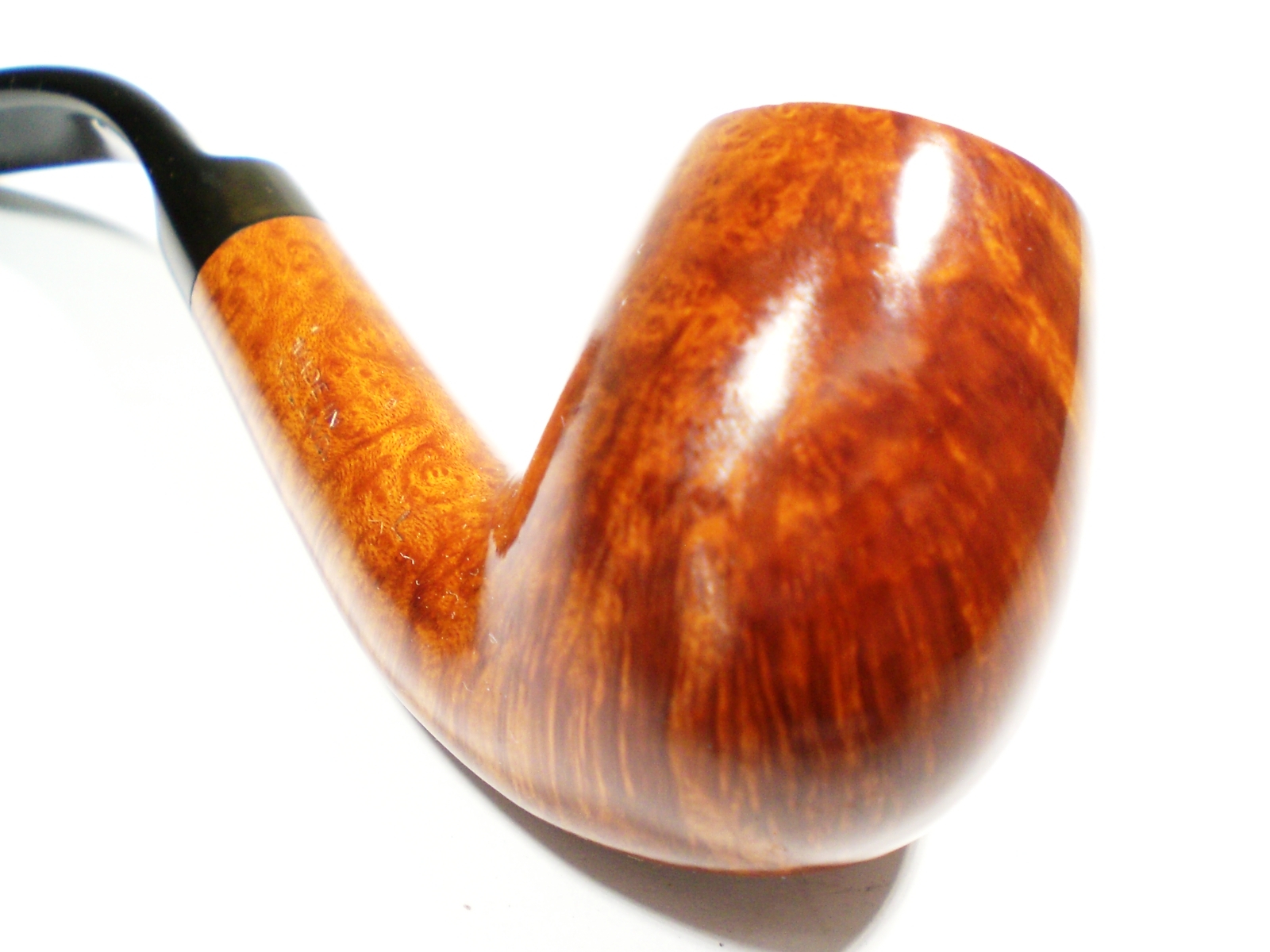
Barling's_225_Special_Finished Barling's_225_Special_Finished (3) Barling's_225_Special_Finished (4) Barling's_225_Special_Finished (9) Barling's_225_Special_Finished (6) Barling's_225_Special_Finished (5) Barling's_225_Special_Finished (7) Barling's_225_Special_Finished (8)


Royal Comoy 603


Blog by Al Jones

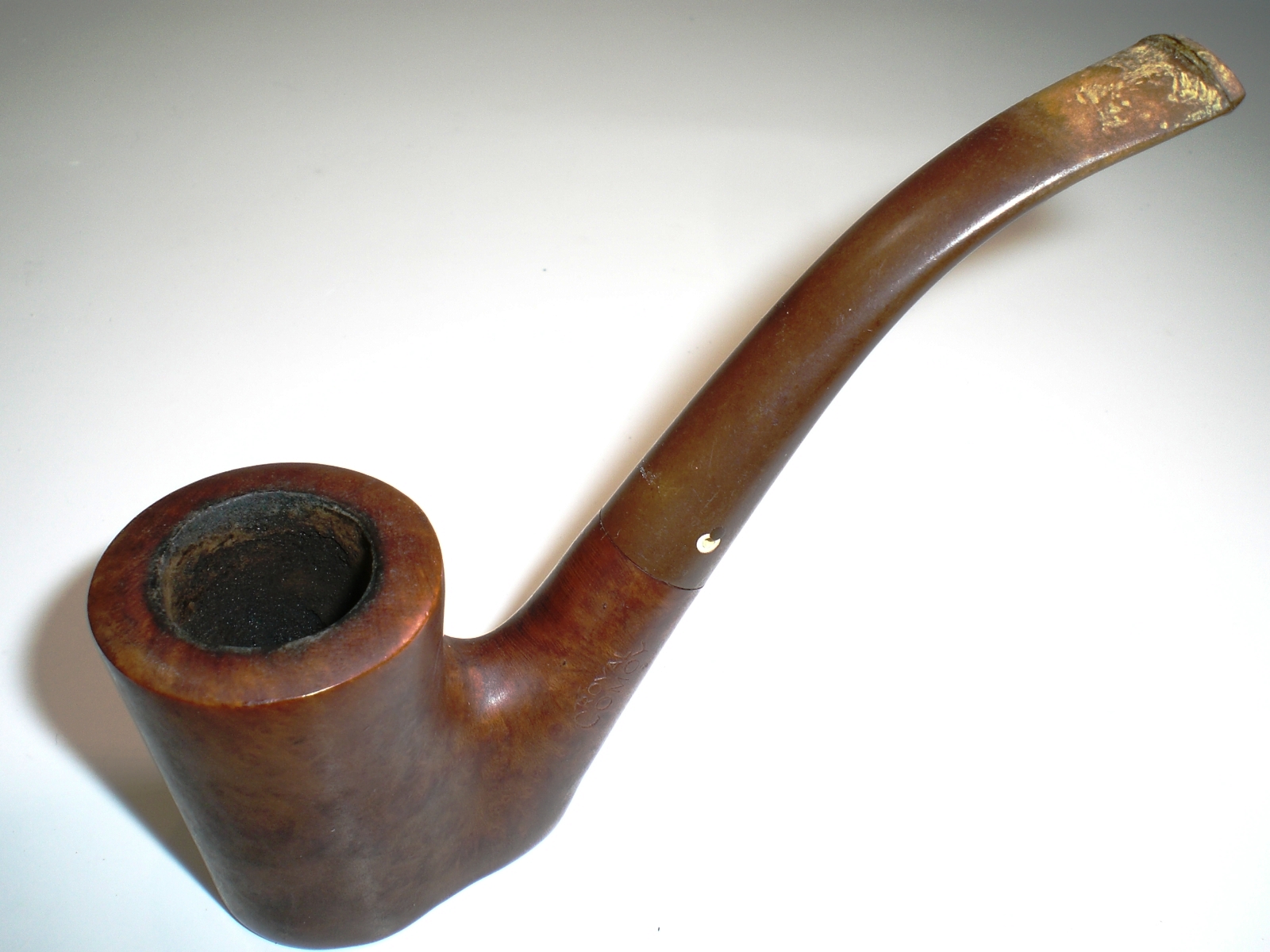
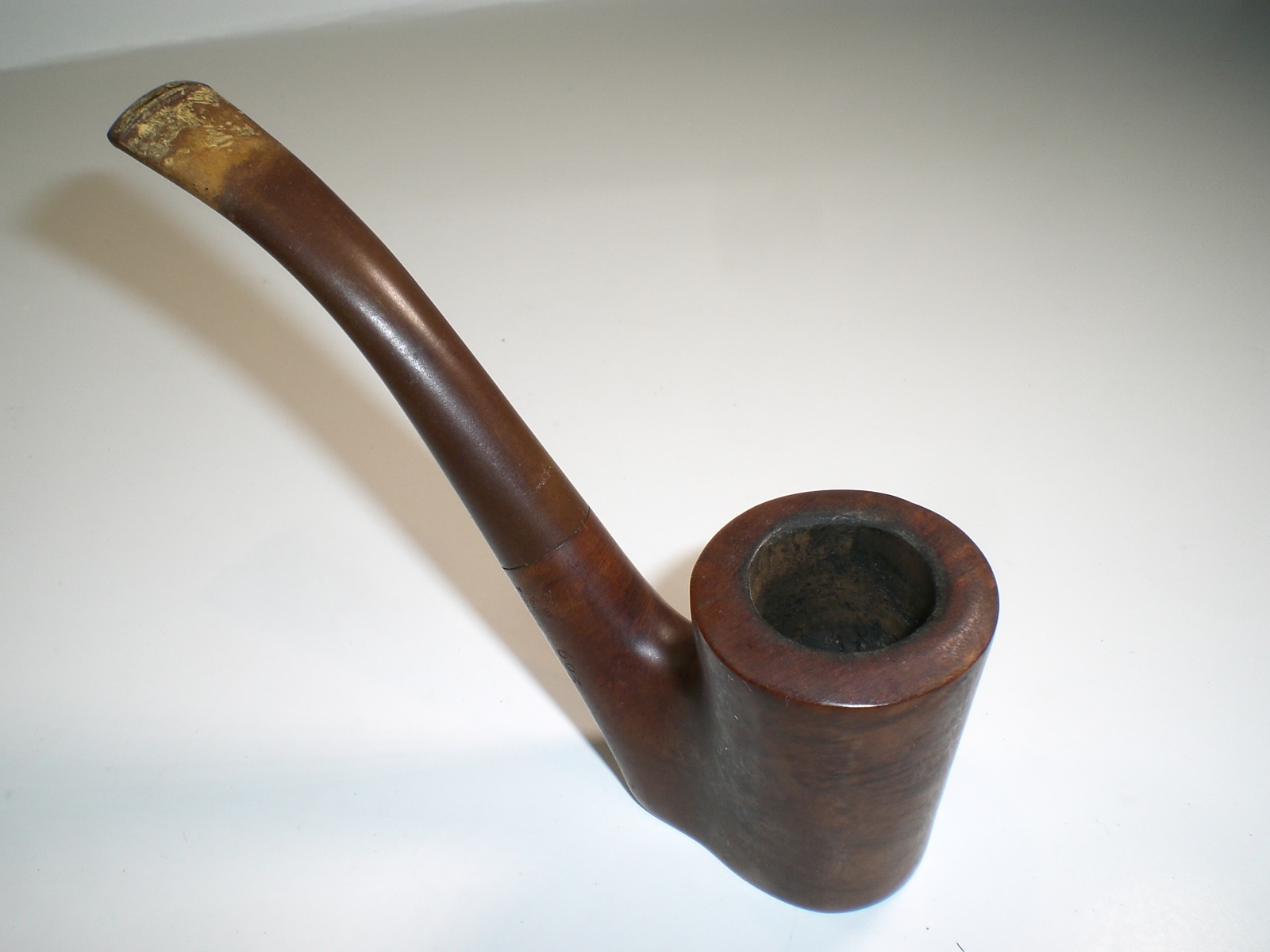
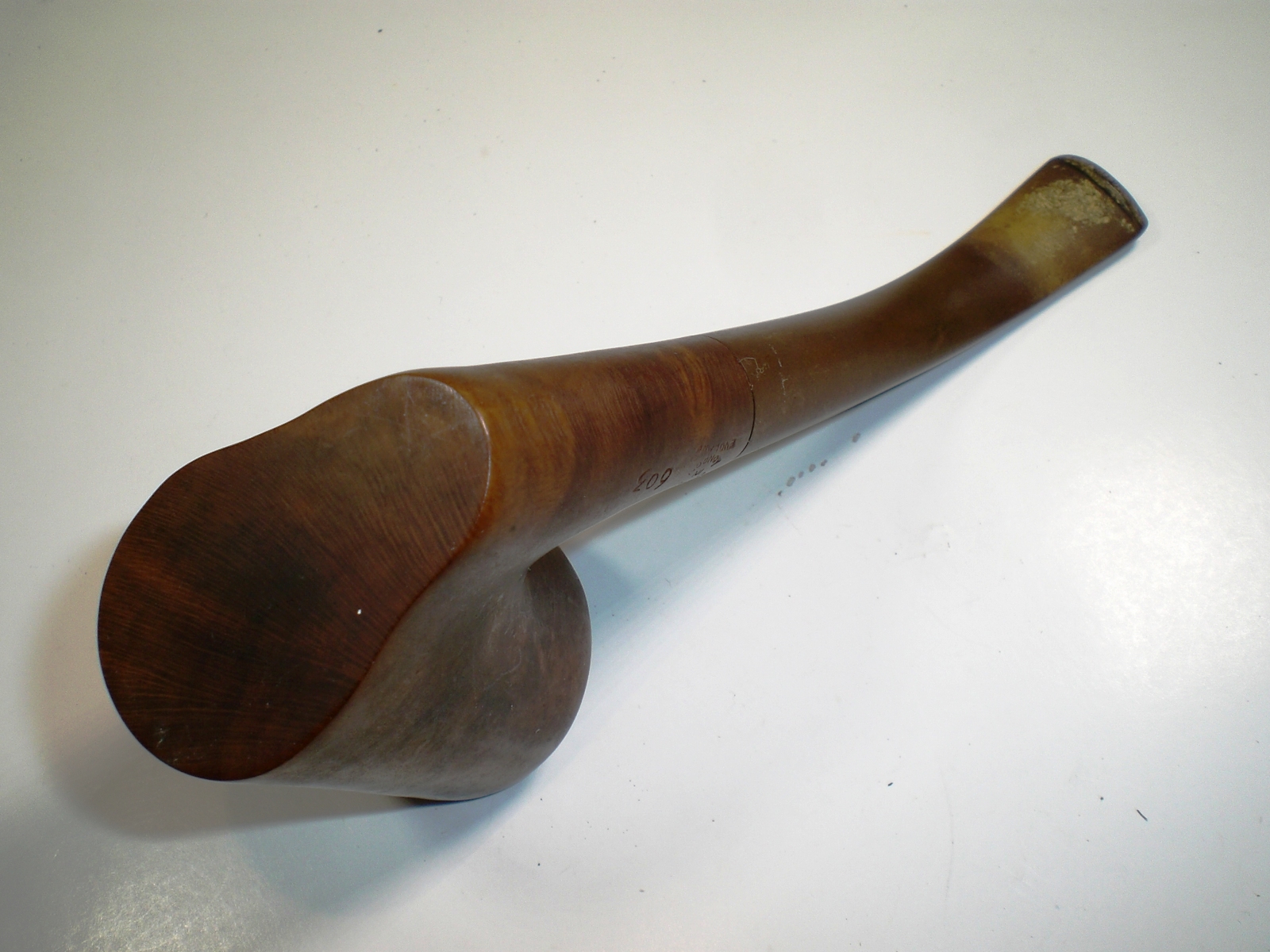
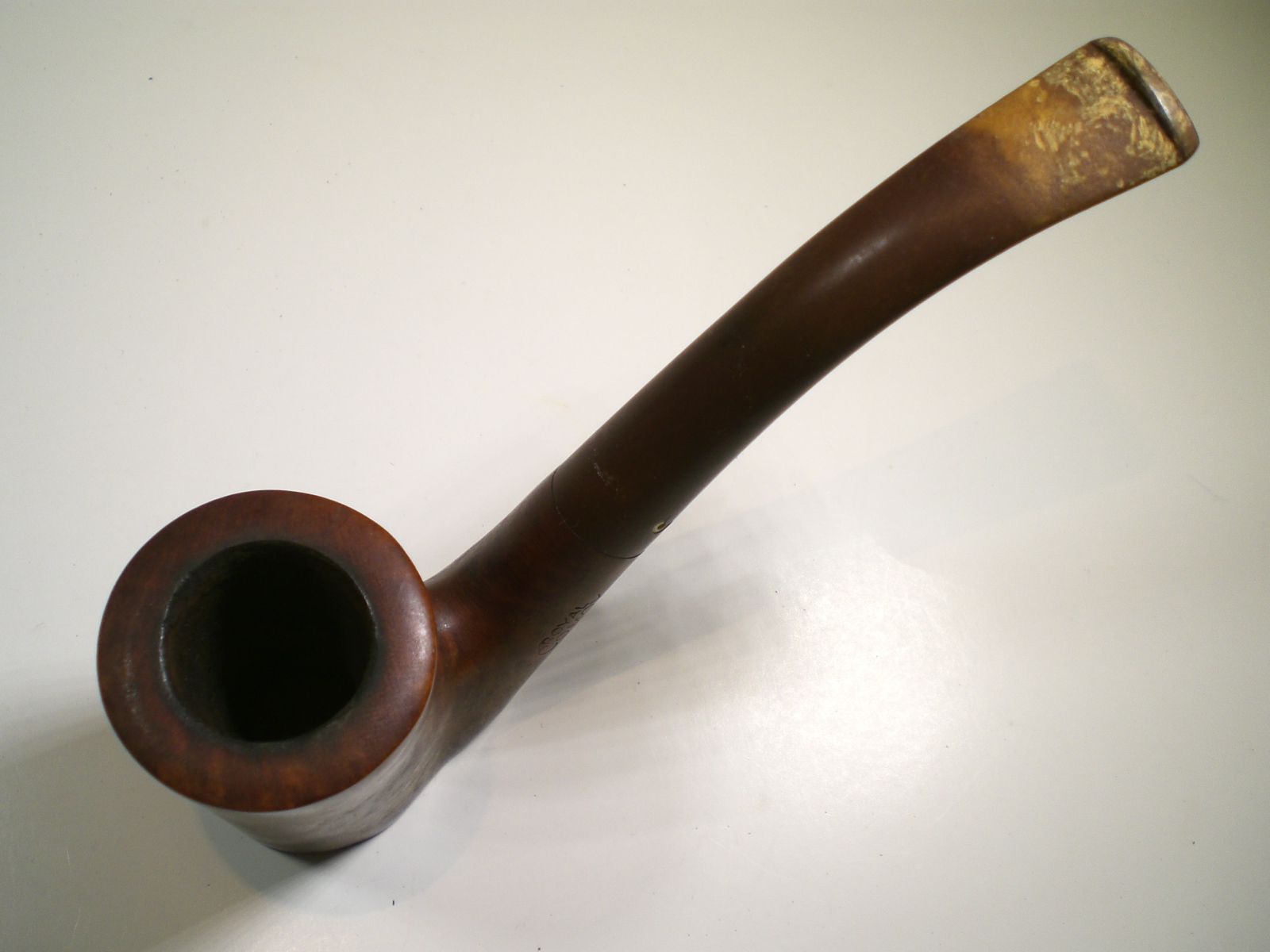
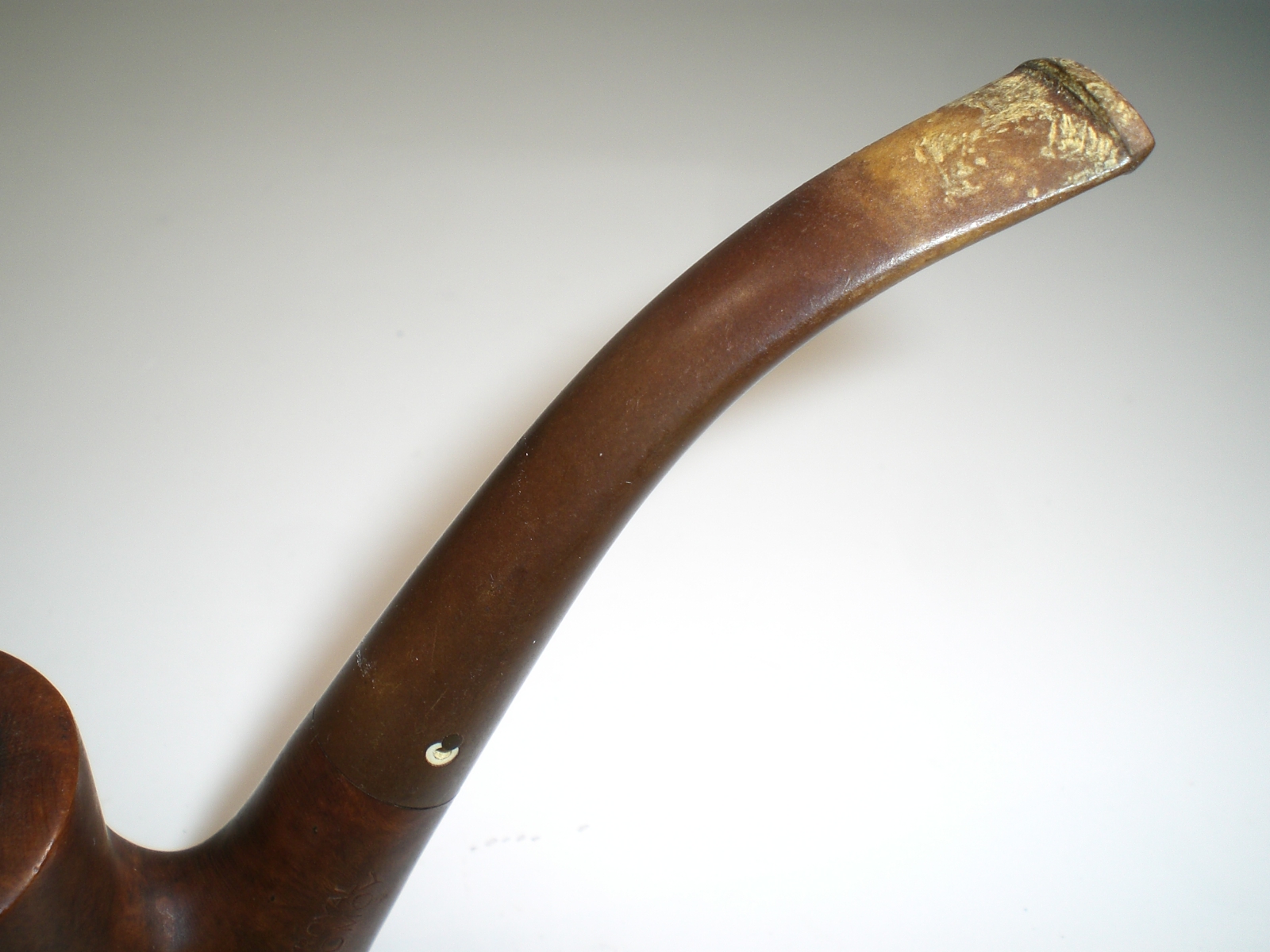
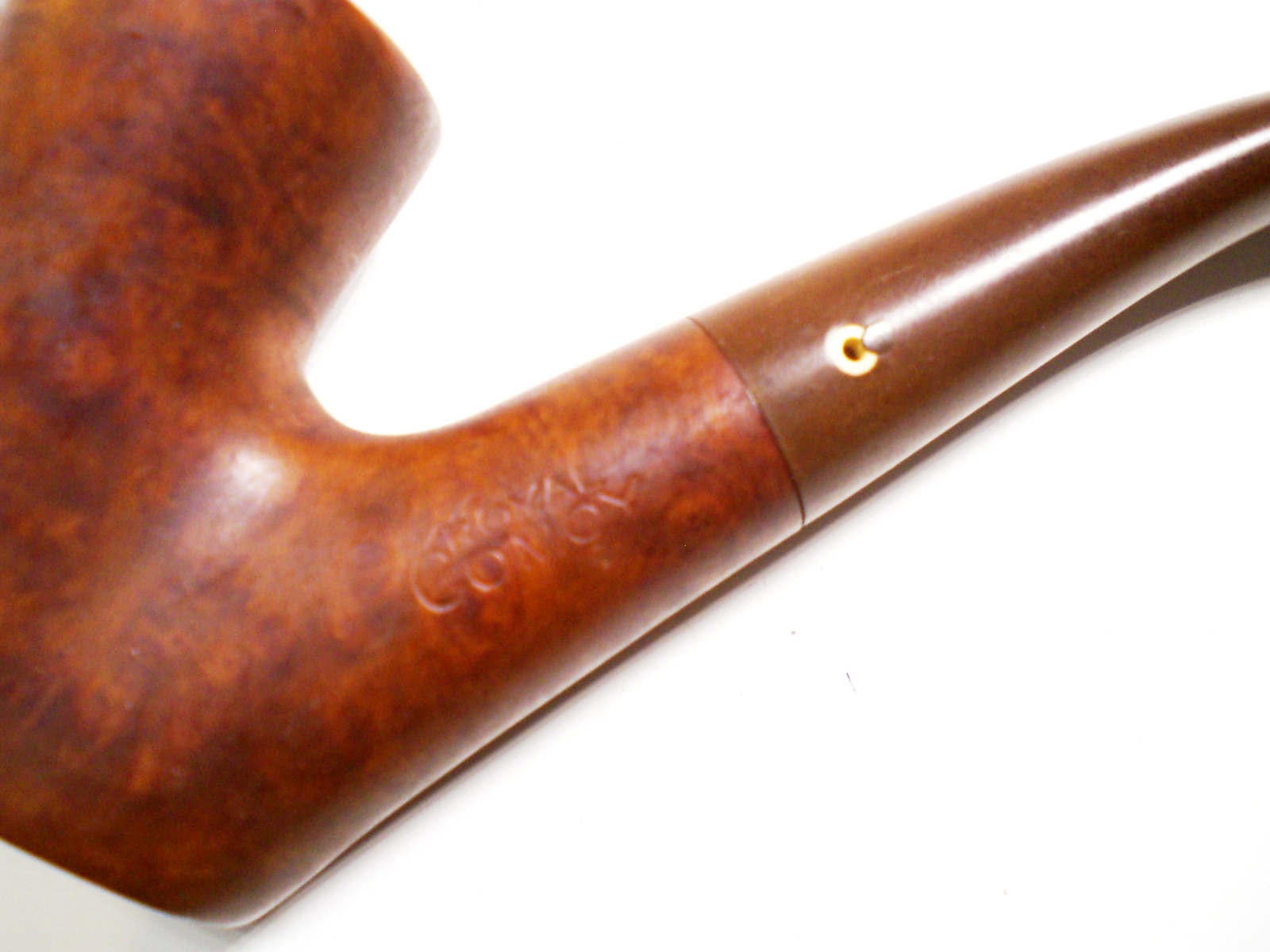
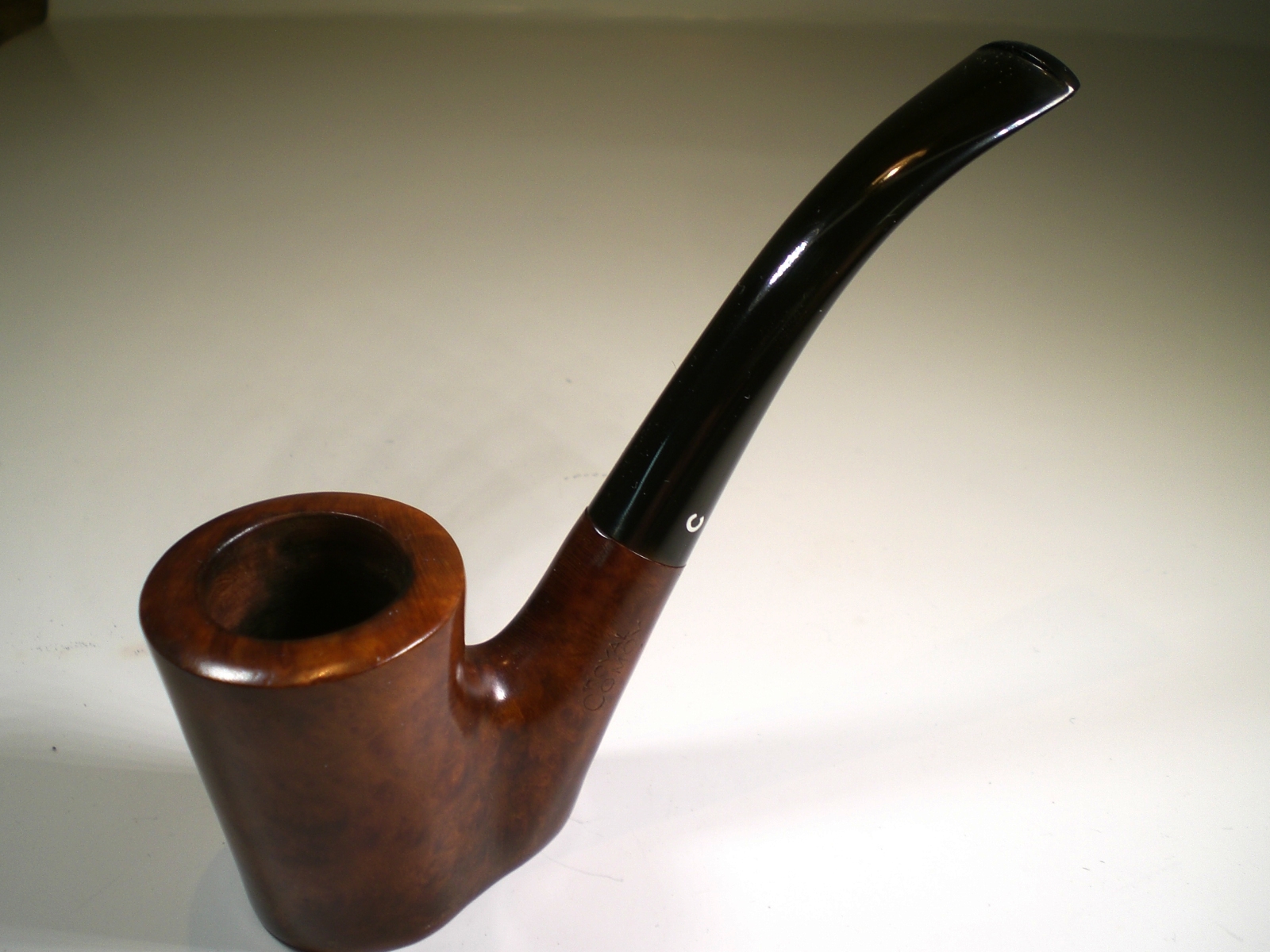
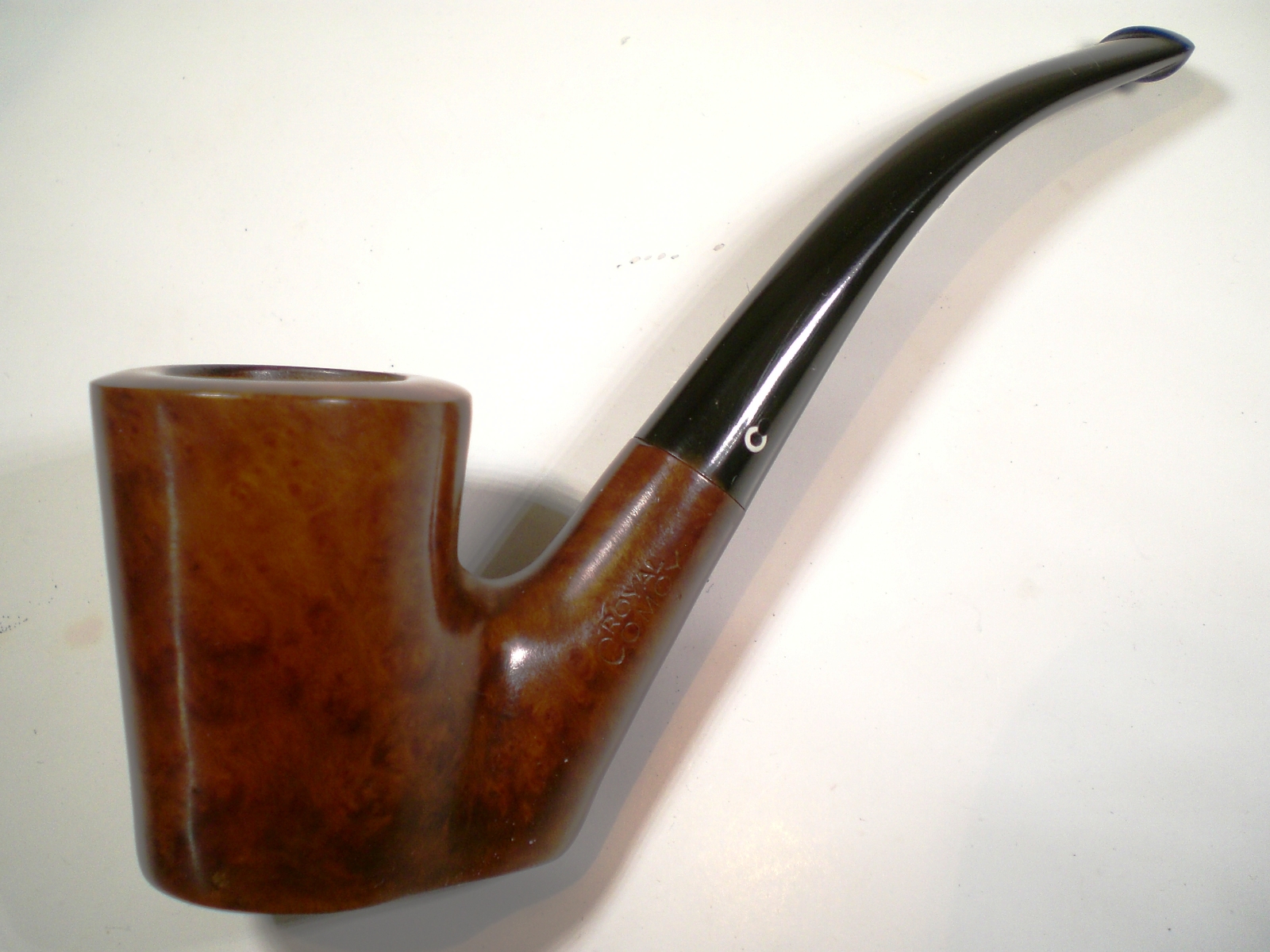
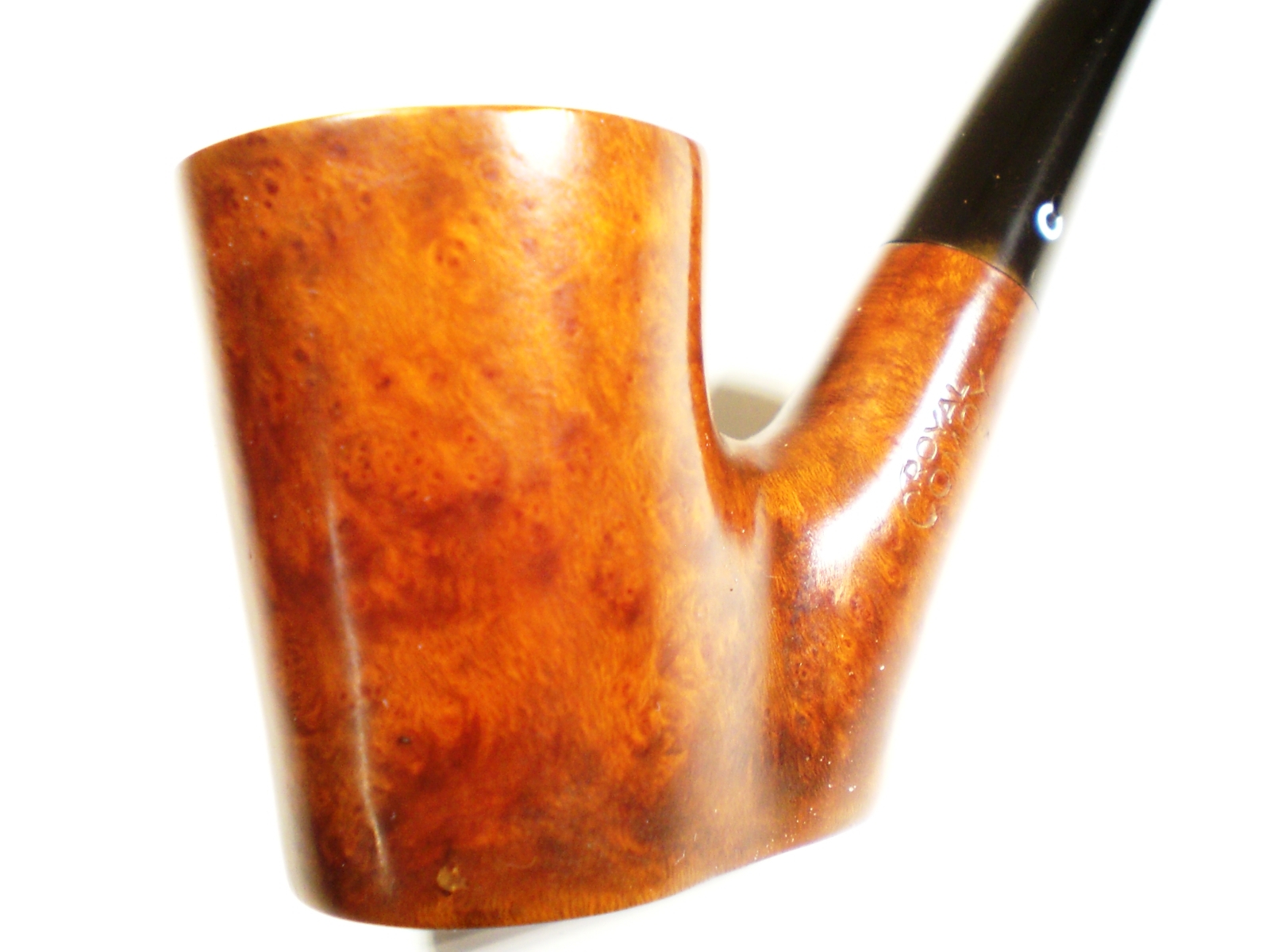
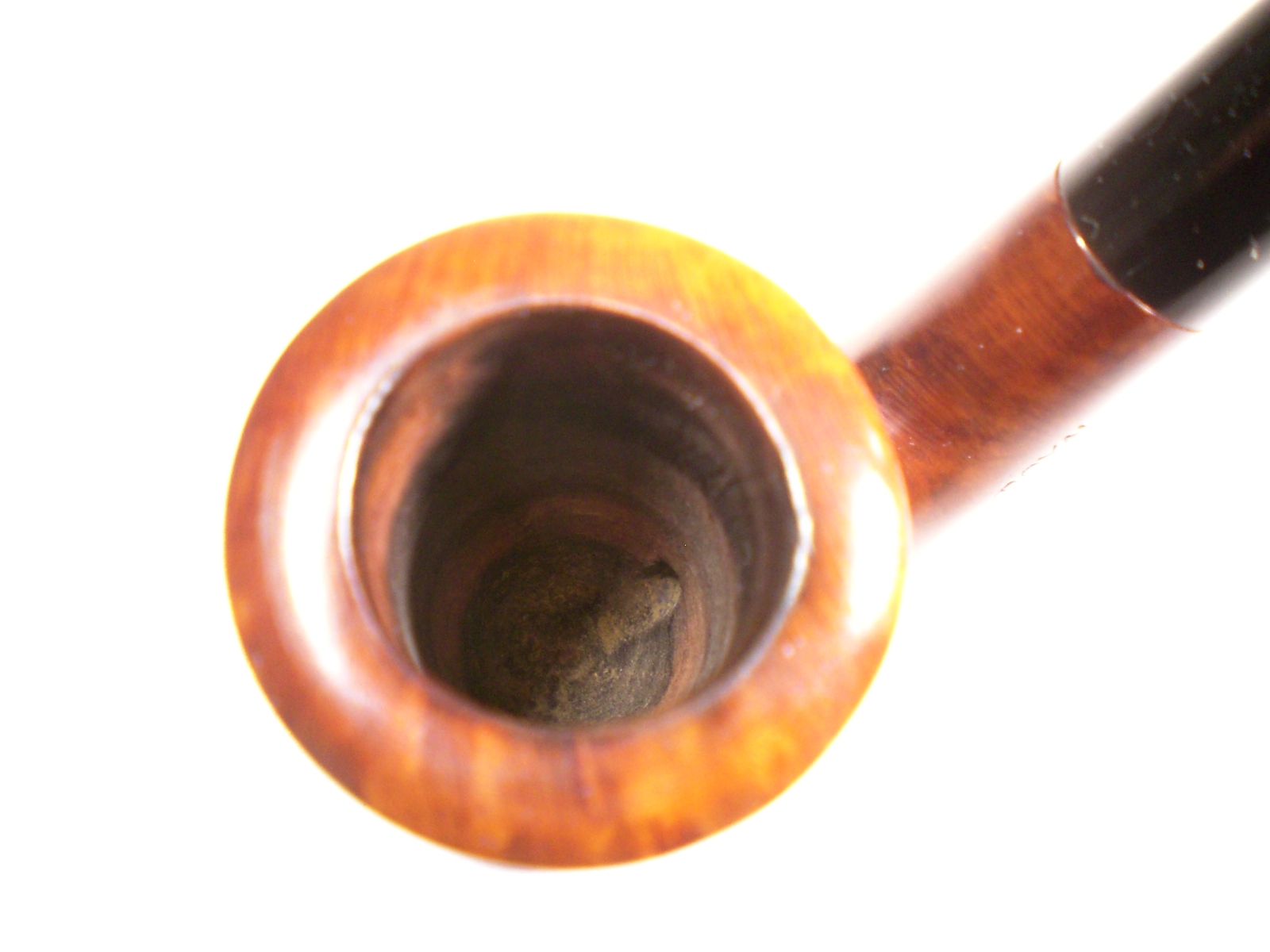
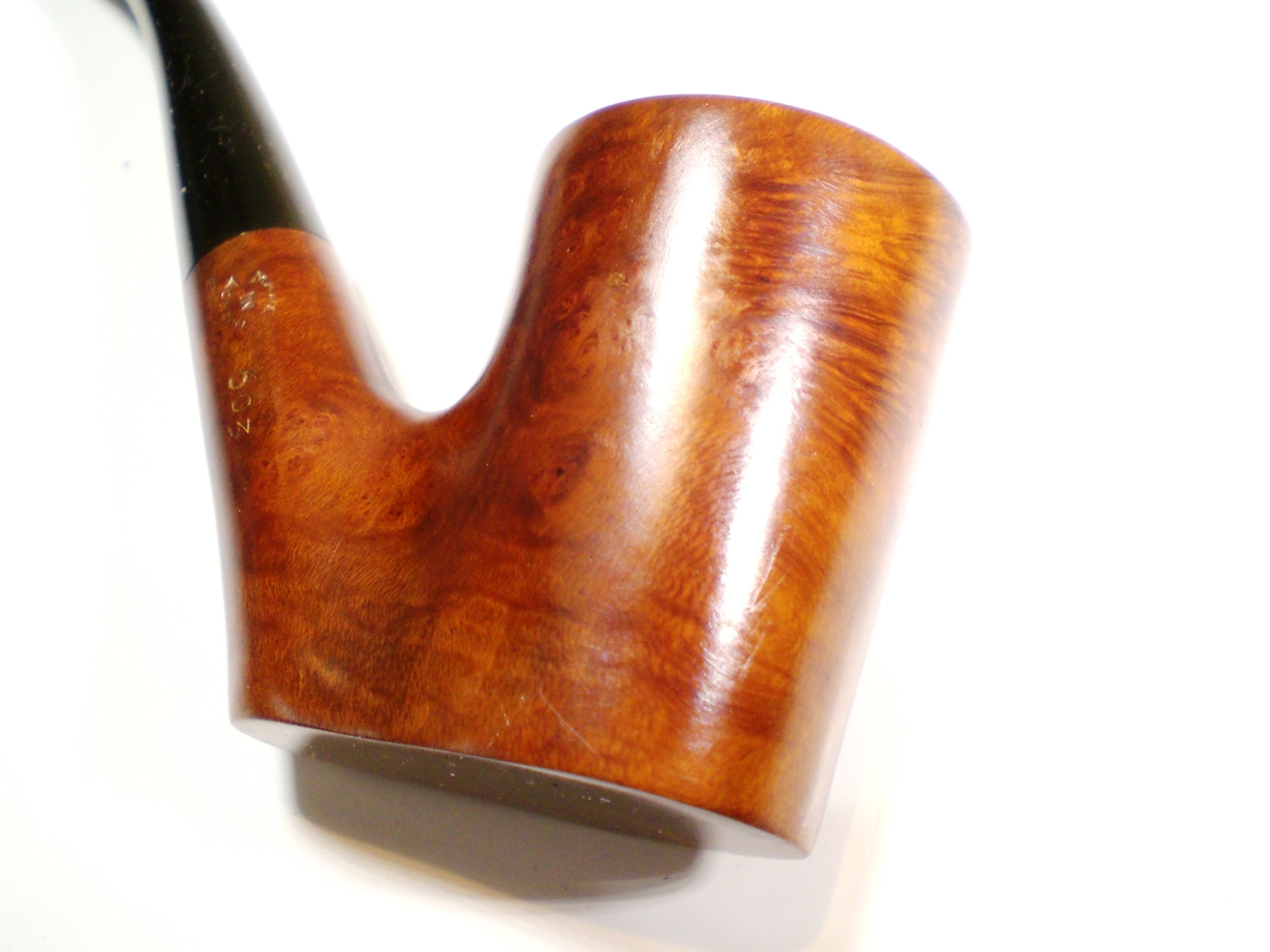
I found this Royal Comoy 603 “sitter” in the estate drawer at my local shop, JB Hayes in Winchester Virginia.  The pipe looked in pretty good shape with oxidation on the stem and some darkening around the rim.

Royal_Comoy_603_Before Royal_Comoy_603_Before (1) Royal_Comoy_603_Before (2) Royal_Comoy_603_Before (7) Royal_Comoy_603_Before (8)

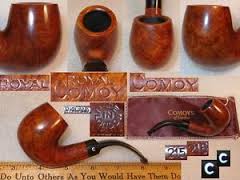
I couldn’t find much about the Royal grade and this one was particularly unusual in that it was only stamped “Comoy” versus “Comoys”.  The only reference point I could find was an old Ebay ad from Tony Soderman see below and the accompanying picture.  He describes the grade as below.  I find very few use of the singular “Comoy” stamping.  This pipe doesn’t feel like a Blue Riband quality grade and my selling price definitely didn’t reflect that either.  Tony uses “Comoy” and “Comoys” in his ad titles which makes the designation a little less clear.  At any rate, it is a Comoy not often seen.

Old timers know that the ROYAL COMOY was the predecessor to the fabled “Blue Riband”!!! The name is from the “old” Comoy’s Nomenclature (like “Prima,” “Grand Slam,” “Old Bruyere,” “Lions Head” and so on). Those pre-date the more familiar modern grading (like “Selected Straight Grain,” “Blue Riband,” “Specimen Straight Grain” and so forth). While the Blue Riband was NEVER Comoy’s highest grade, the ROYAL COMOY originally appeared as the absolute top-of-the-line Comoy in the late 1930’s! (ALL pre-World War II Royal Comoy’s were top-of-the-line pipes!) The Royal was “downgraded” only though the addition of higher grades (much like Charatan did indirectly downgrading their top-of-the-line “Supreme” through the addition of higher grades)! Shortly before World War II, Comoy replaced the ROYAL COMOY with the Blue Riband (at the same time as they introduced the Specimen Straight Grain). The ROYAL COMOY reappeared after World War II and was always a HIGH GRADE Comoy – – – either at or near the TOP-OF-THE-LINE!!!

Royal_Comoy_Tony_S_Info

The stem had some mild teeth chatter that I knew would be an easy fix.  The famous three-piece drilled “C” stem logo was missing the black, center rod.

Royal_Comoy_603_Before (4)

I reamed the bowl and gave it a soak with alcohol and sea salt.  While the bowl was soaking, I soaked the stem in a mild mixture of Oxyclean and water.  I put a dab of grease over the stem logo to protect if from any further damage.

After soaking, I used a worn piece of 8000 grid to remove a majority of the darkening around the rim.    Later, with the bowl was polished with White Diamond rouge and a few coats of carnuba wax.

I added several layers of black superglue with a needle to fill the empty center drilling.  After it was slightly overlapping the hole, I sanded it smooth with some 2000 grit wet paper.  I was very pleased with the result.

The stem was mounted and I removed the oxidation with 800, 1500 and 2000 grit wet paper.   Next, I used the 8000 and 12000 grades of micromesh.  The stem was then buffed with White Diamond and Meguiars plastic polish.

The pipe was purchased by a gentleman in Japan, who has told me he reads this blog.  I hope he enjoys this neat little Comoy.

Royal_Comoy_603_Finished (6) Royal_Comoy_603_Finished Royal_Comoy_603_Finished (1) Royal_Comoy_603_Finished (2) Royal_Comoy_603_Finished (5) Royal_Comoy_603_Finished (3) Royal_Comoy_603_Finished (4) Royal_Comoy_603_C_logo_Detail_Finished

A Trio of Peterson Stems


Blog by Al Jones

These three Peterson’s belong to a fellow member of the Frederick Pipe Club (Maryland).  He asked me if I could remove the oxidation on the stems.   I tackled all three this afternoon and they are ready to deliver on the next club meeting.

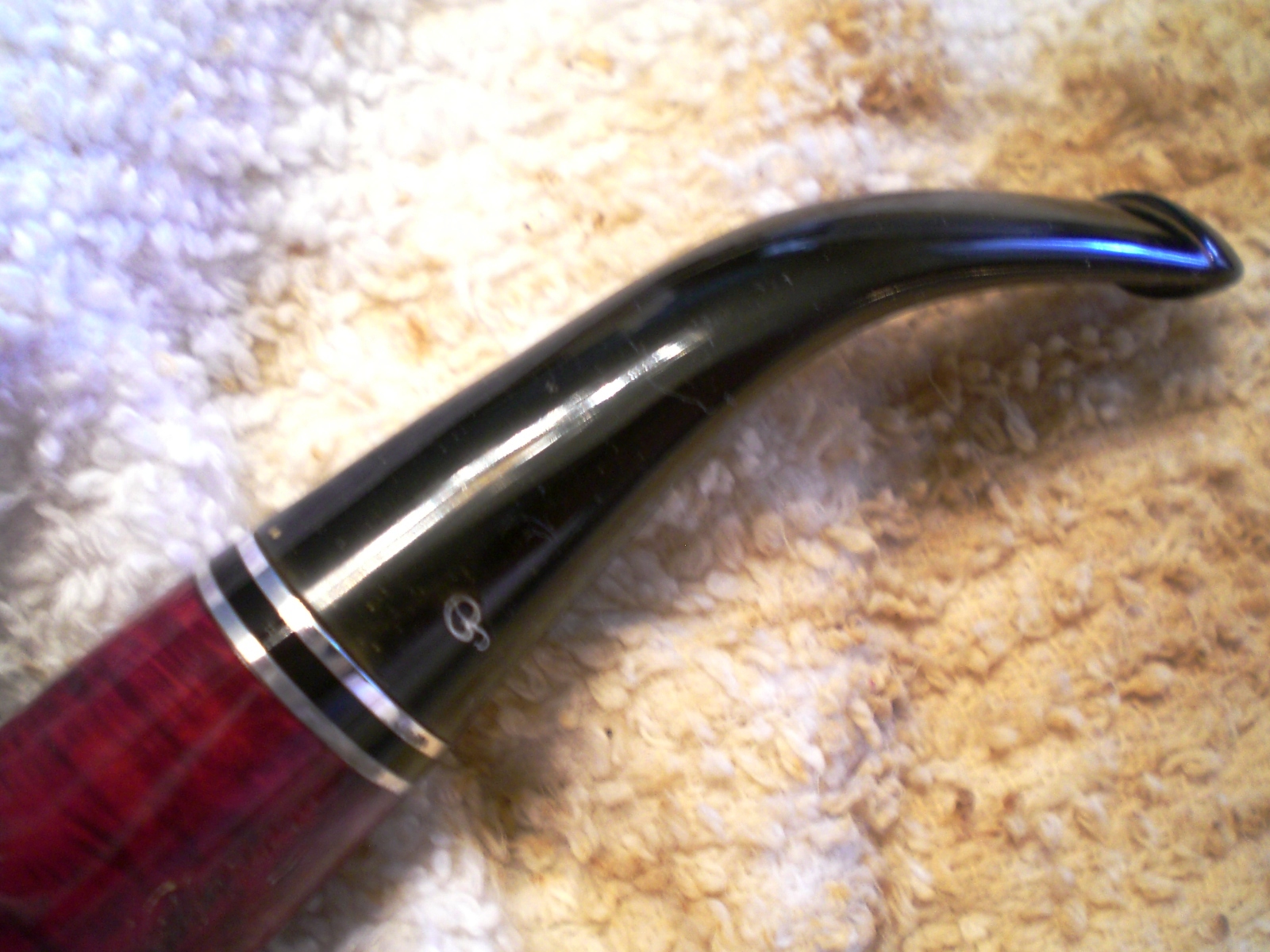
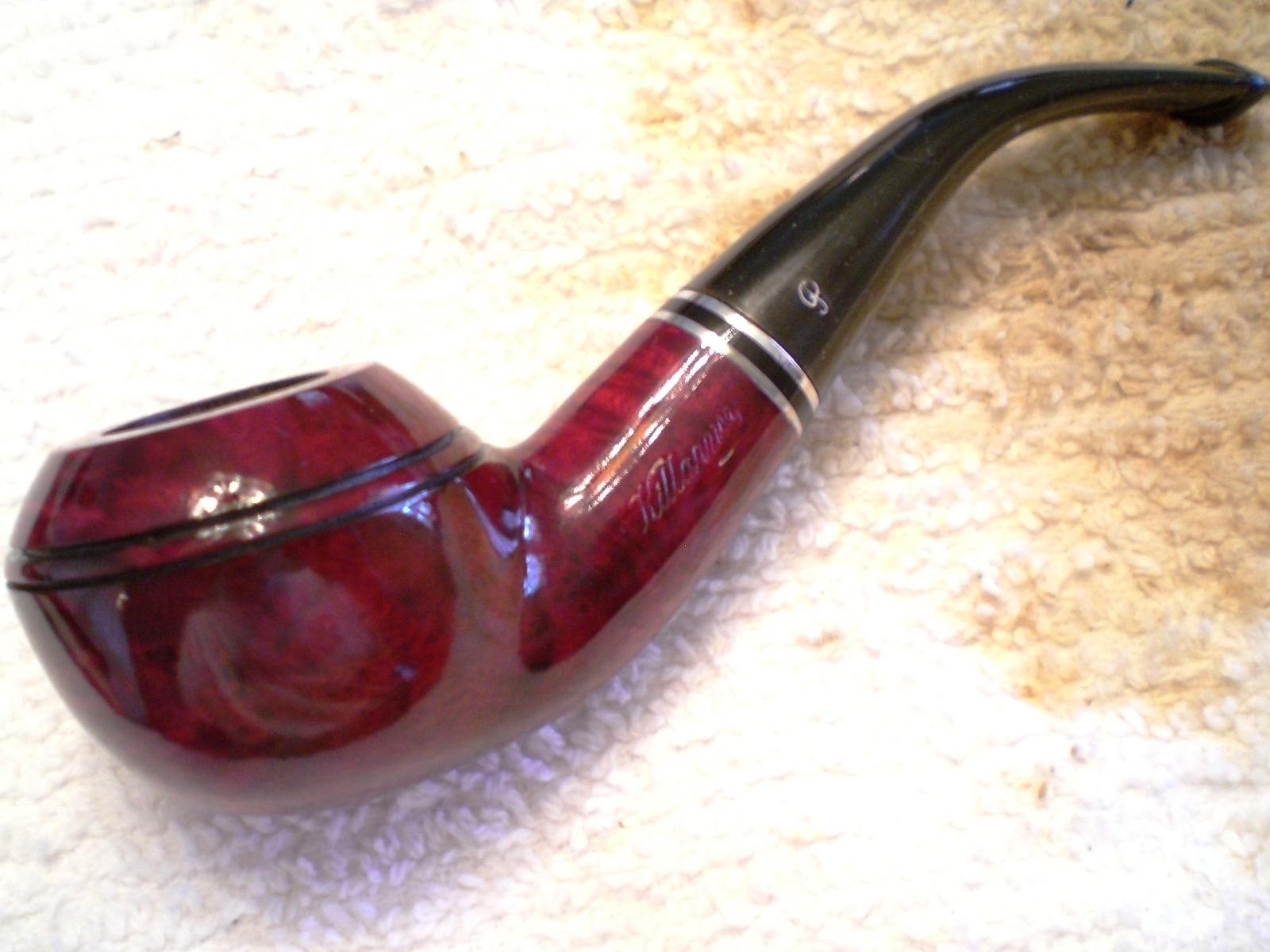
First up was this Shape 999 Killarney

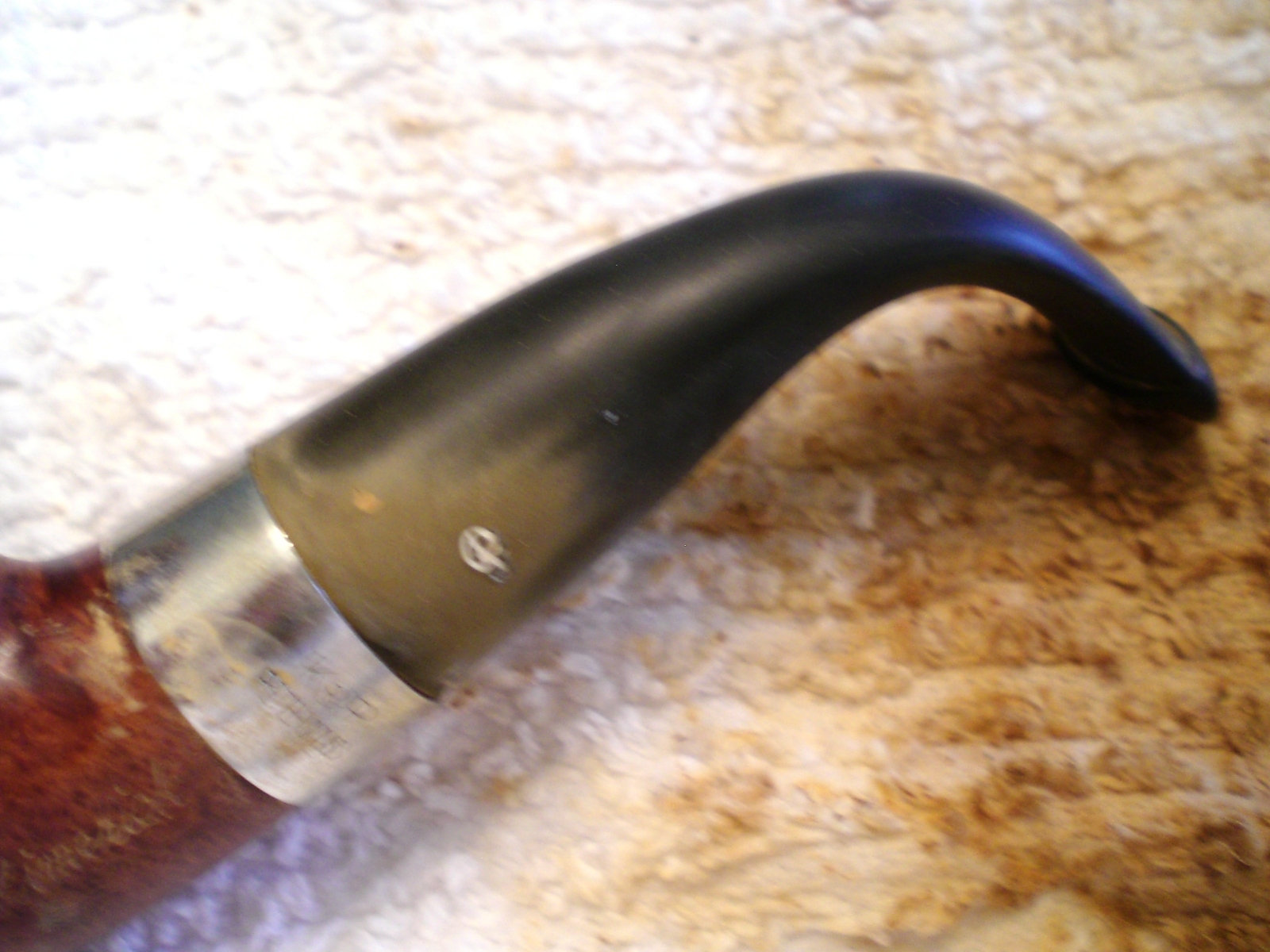
Before

GS_Pete_999 (1)

After

GS_Pete_999 (2) GS_Pete_999

I used  my typical routine of 800 grit wet paper, followed by 1500 and 2000 grades.  Next up was 8000 and 12000 grade micromesh.  I followed this by polishing on my buffer White Diamond and then Meguiars Polish.  The brair was in good shape so I only gave it a buff with Carnuba wax.

I followed the same stem regimen for the other two pipes.

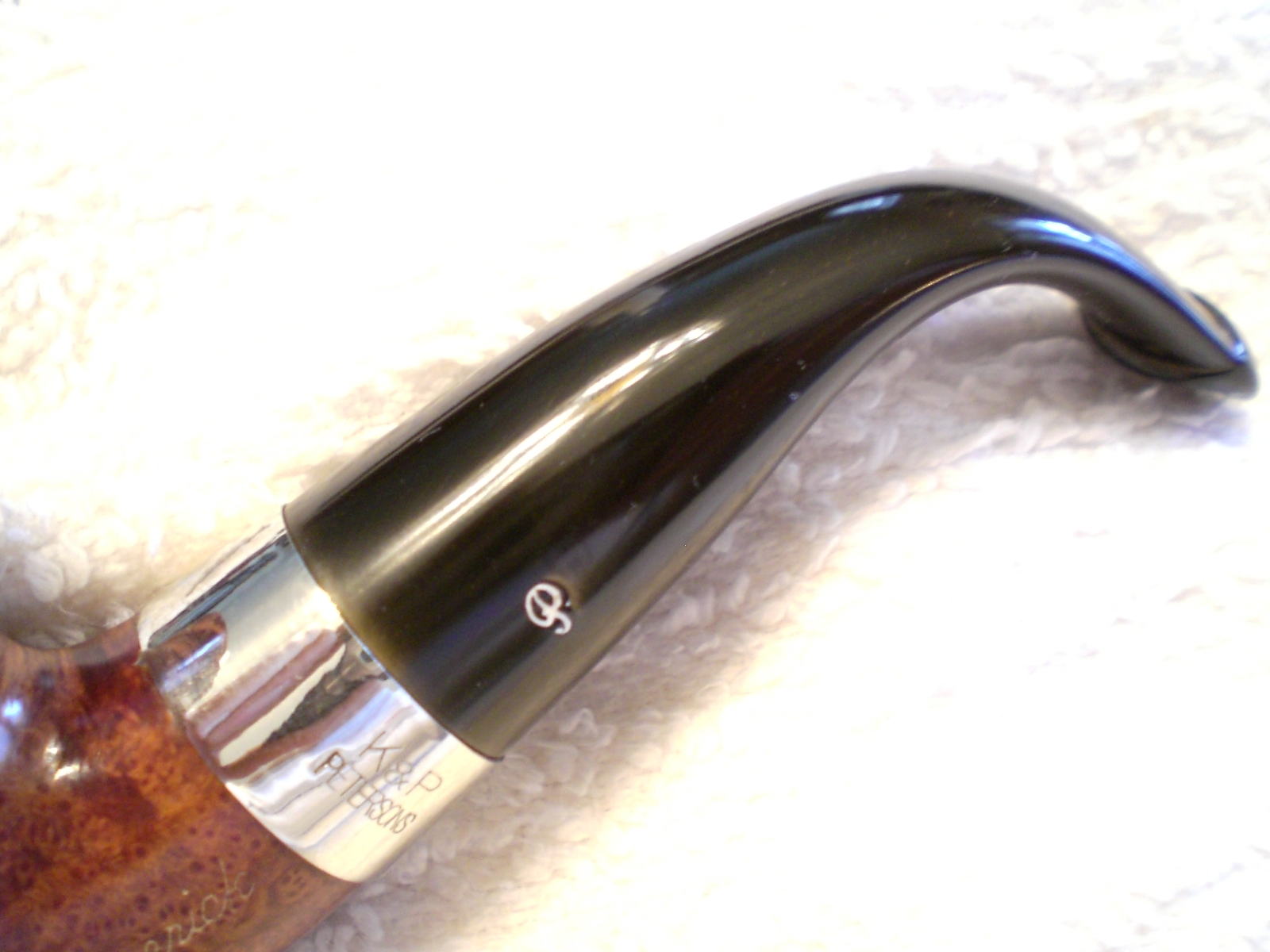
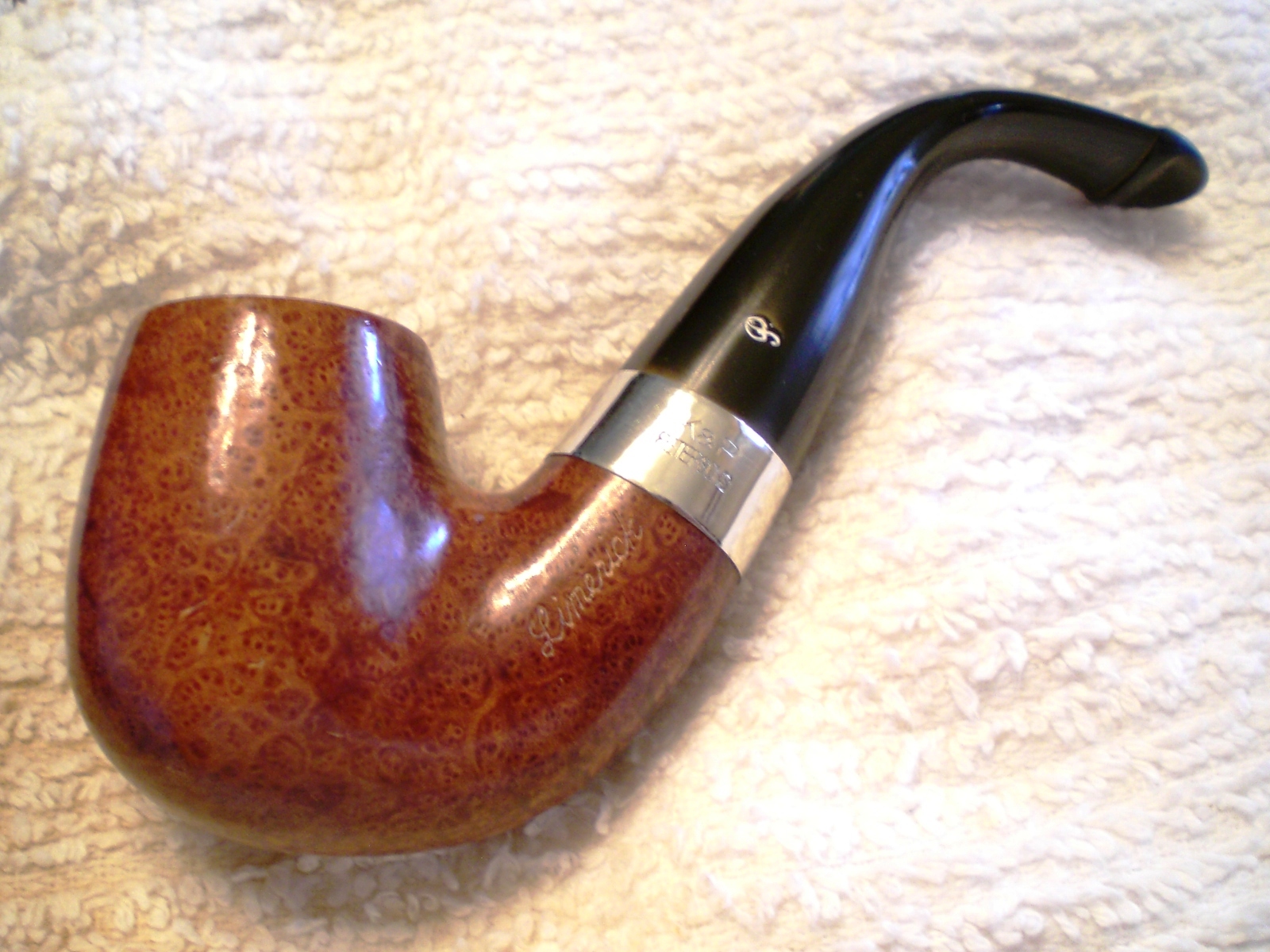
Next up this Peterson Limerick.  I forgot to take a “Before” picture until I was almost done with the 800 grade paper.  This one has the most heavy coat of oxidation.  The nickle band was polished with some Blue Magic metal polish.   I gave the briar a light buff with White Diamond and then several coats of Carnuba wax.   This one has some very nice cross grain and birds-eye.

GS_Pete_Limerick (1) GS_Pete_Limerick (2) GS_Pete_Limerick

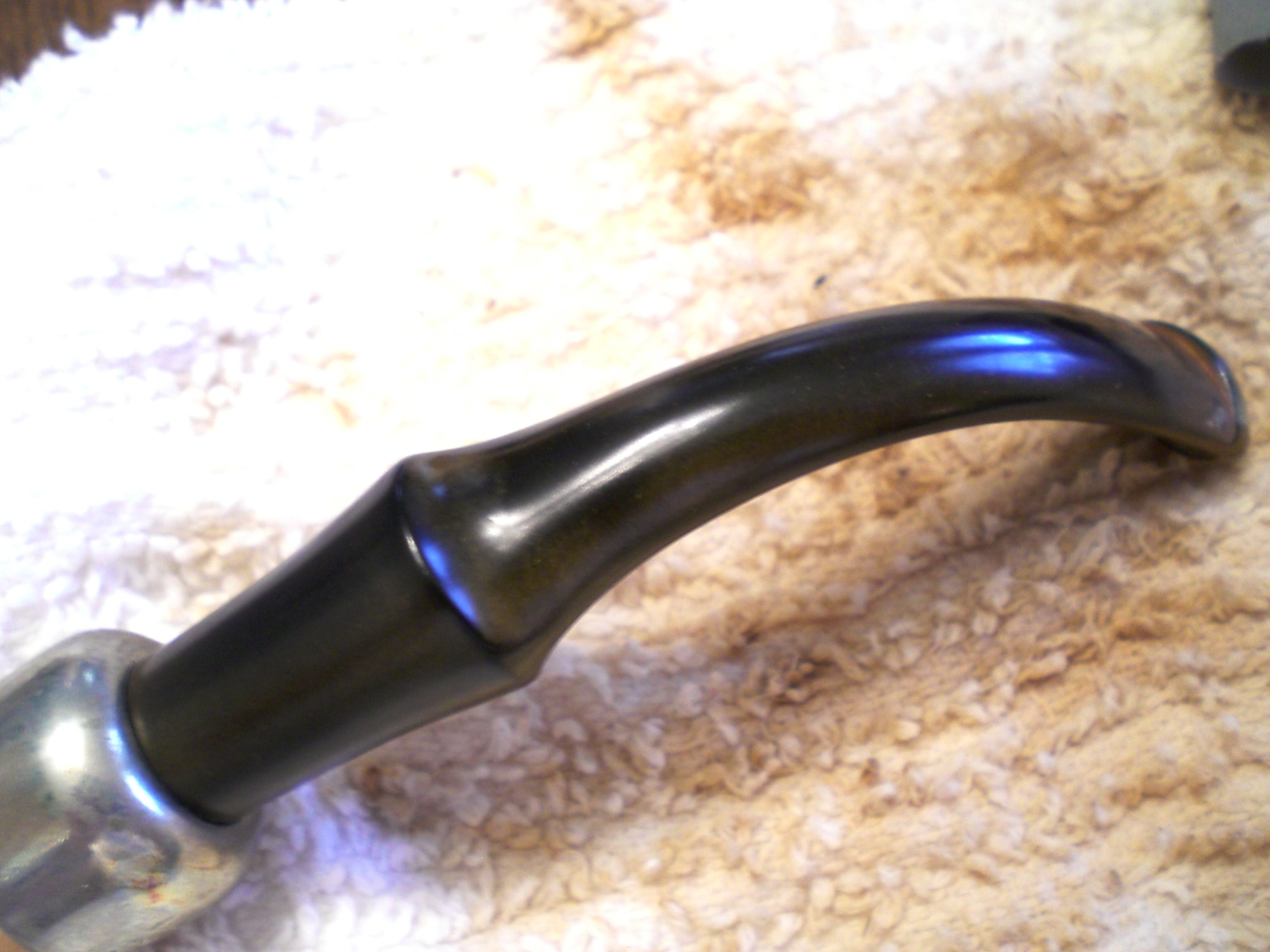
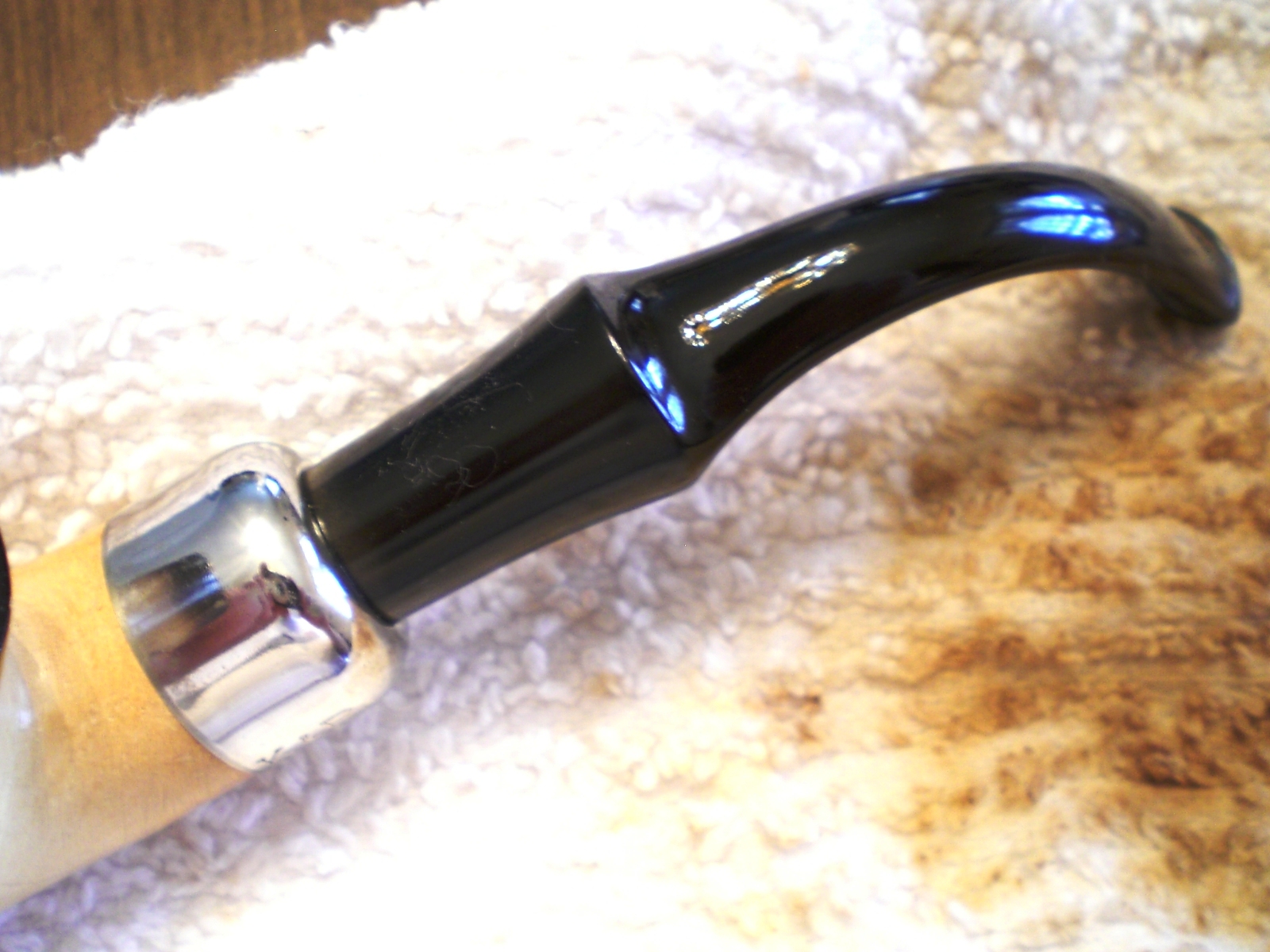
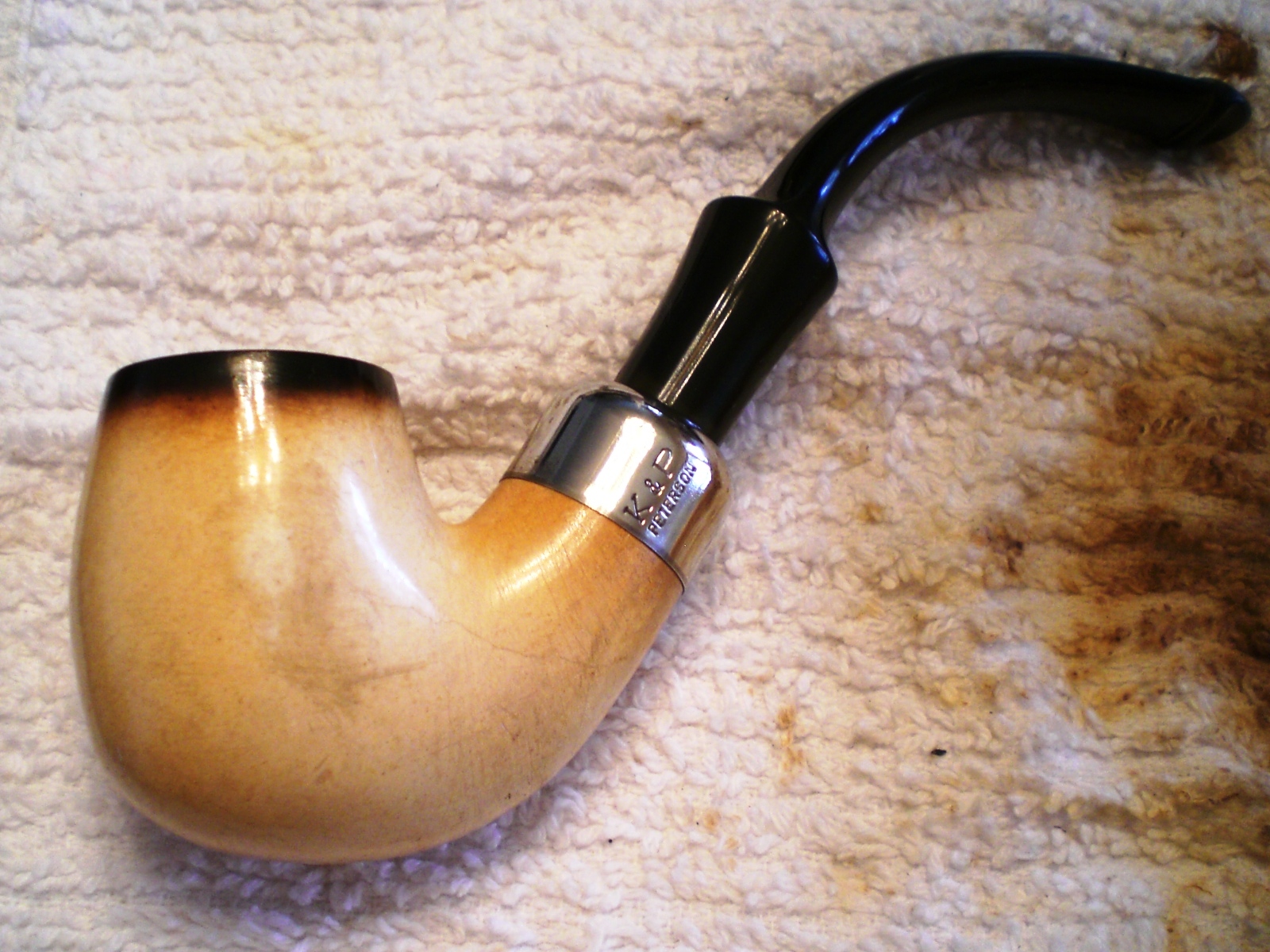
Last up was this Meerschaum pipe with a Sterling Silver military style stem fitment.  The oxidation on this one was stubborn, particularly around the P-lip button creases.  To remove the oxidation in this area, I wrap each grade of paper around a very thin knife.

GS_Pete_Meer (1) GS_Pete_Meer (2) GS_Pete_Meer

Kaywoodie 73 Supergrain Restoration


Blog by Al Jones

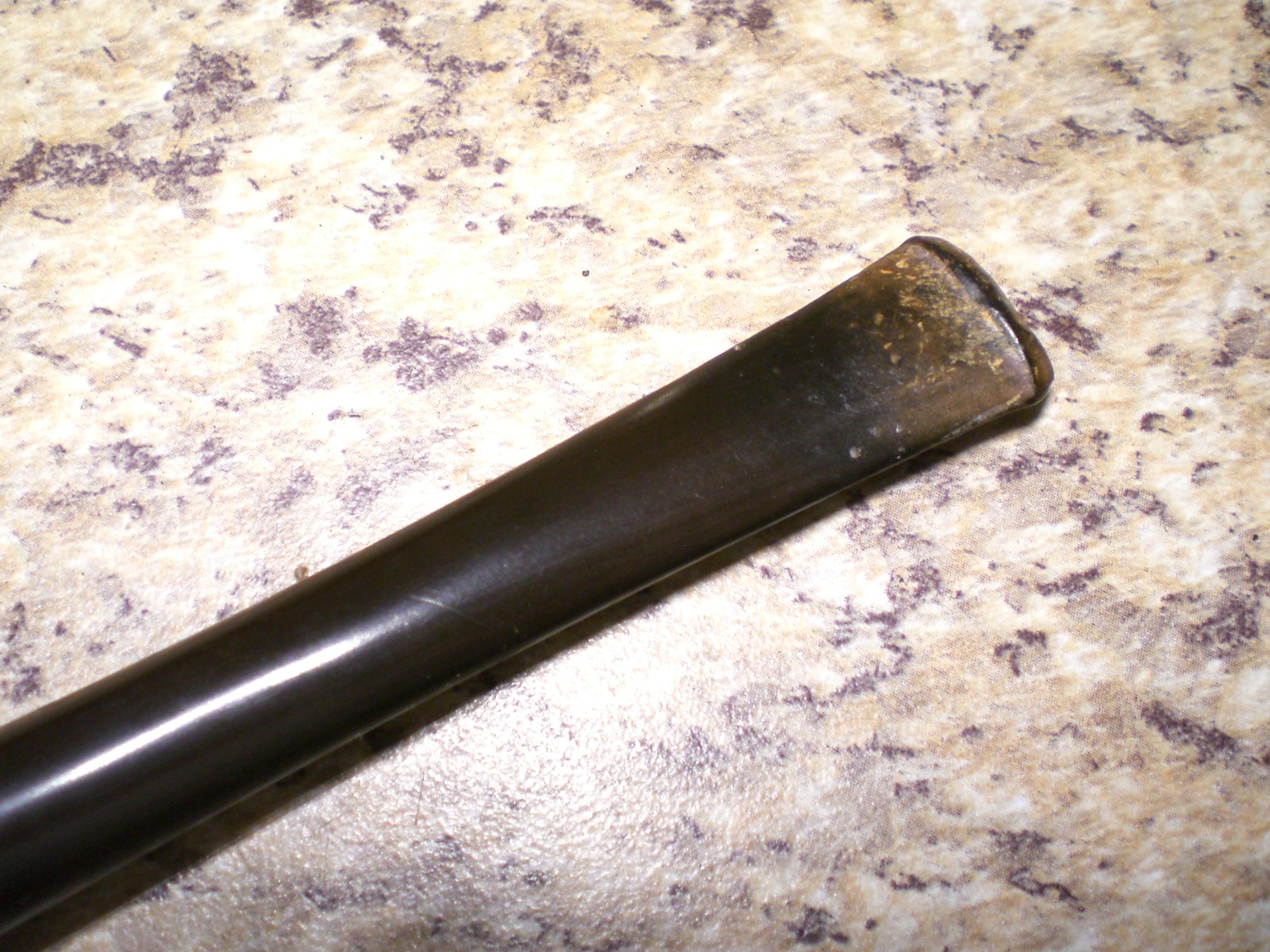
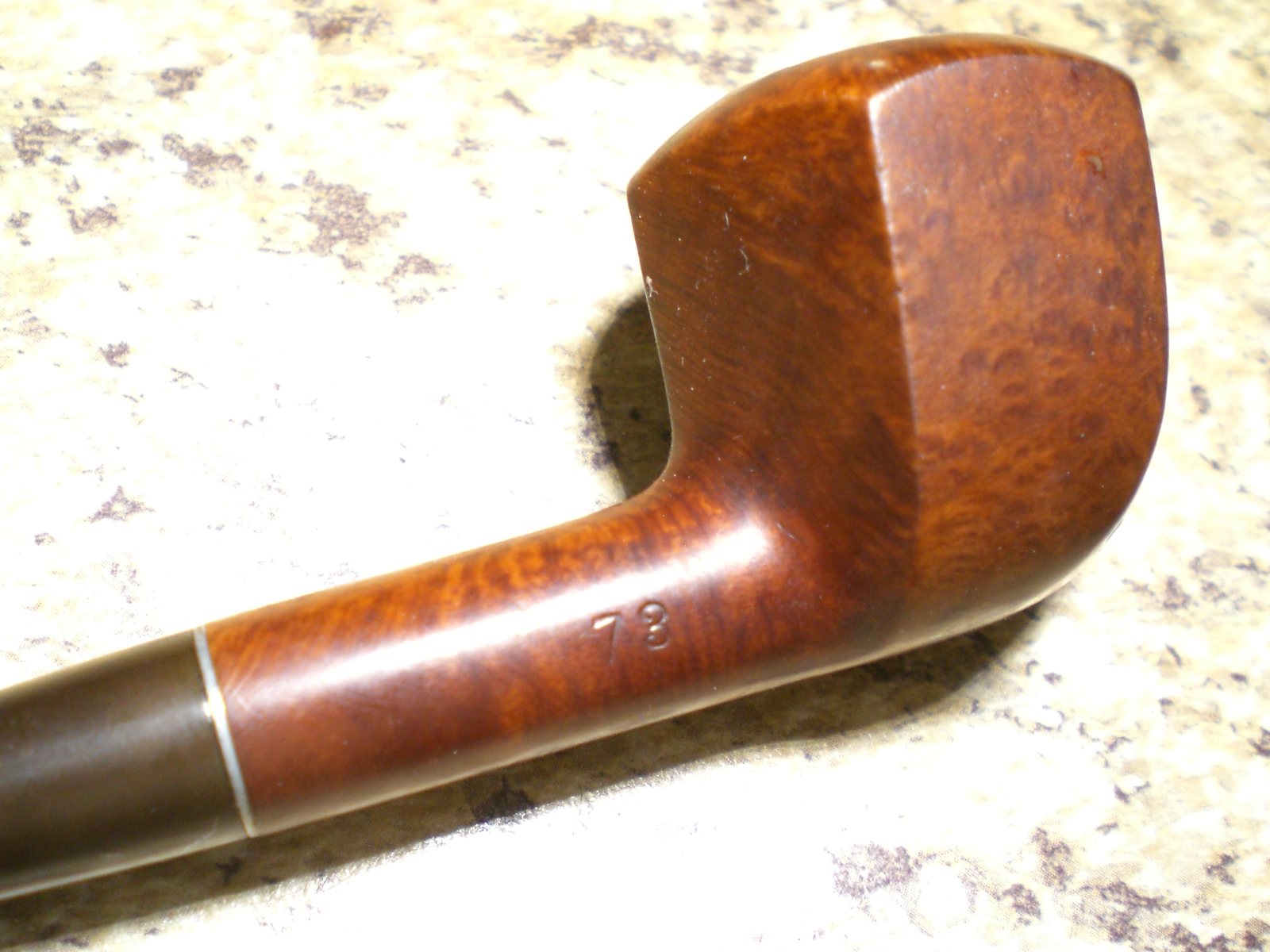
This Kaywoodie Supergrain belongs to a Brian, a friend of mine in my local pipe club, based located in Frederick, MD.  I had some brought some restored Kaywoodies to a previous meeting so he asked if I could could tackle this one.  The pipe wasn’t in bad shape.  It had light oxidation and teeth chatter on the stem and some scorching on the rim.    The pipe is a two-digit shape number, but has a “Drinkless” stamped, 4-hole stinger.  I estimate it was made in the early 1950’s as the 4-hole stinger was no longer used after the mid-50’s.

Kaywoodie_73_Supergrain_Before Kaywoodie_73_Supergrain_Before (2) Kaywoodie_73_Supergrain_Before (5) Kaywoodie_73_Supergrain_Before (1) Kaywoodie_73_Supergrain_Before (4)

I used some worn, 8000 grade micromesh to remove the scorching from the top of the bowl.  The briar was then polished with White Diamond and several coats of Carnuba wax.

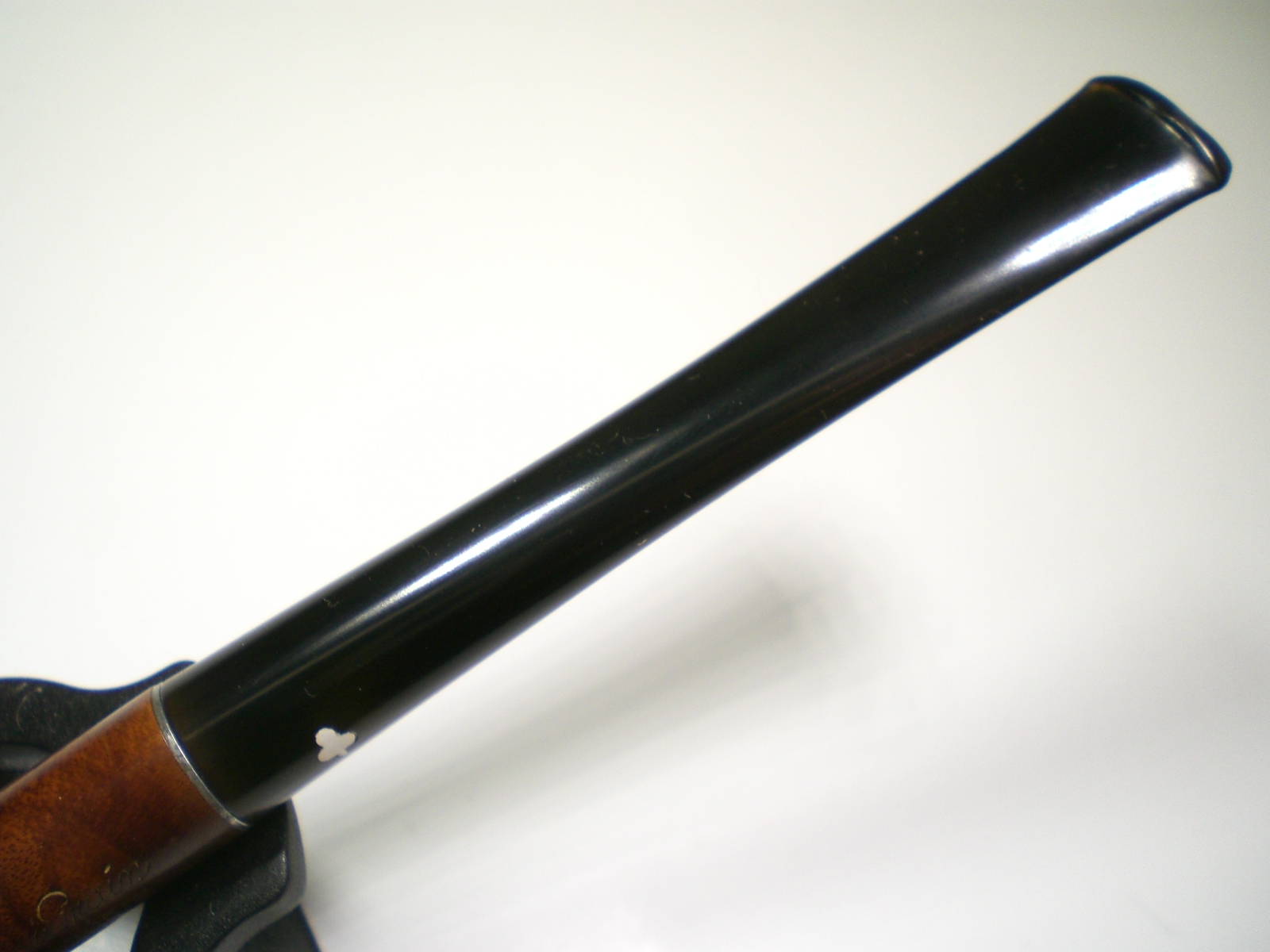
I polished the stem starting with 800 grit wet paper, moving thru the 1500 and 2000 grades.  Next was 8000 and 12000 grade micromesh sheets followed by a polish with White Diamond on the buffer.

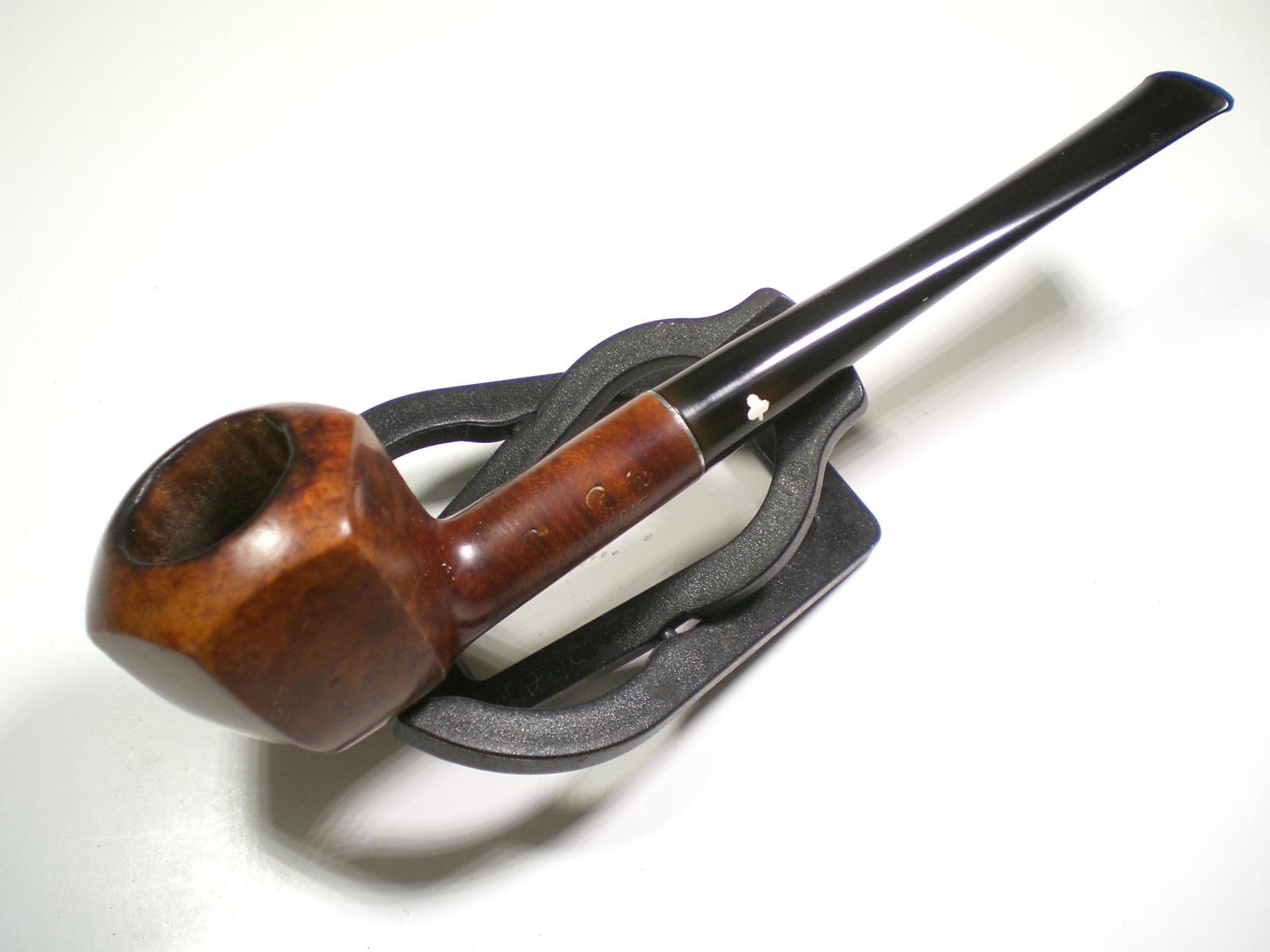
Our pipe club meeting is this week, so Brian will get his Supergrain back.  An relatively easy restoration on an elegant little pipe.
Kaywoodie_73_Supergrain_Finished Kaywoodie_73_Supergrain_Finished (1) Kaywoodie_73_Supergrain_Finished (3) Kaywoodie_73_Supergrain_Finished (4) Kaywoodie_73_Supergrain_Finished (5) Kaywoodie_73_Supergrain_Finished (6)