
by Steve Laug
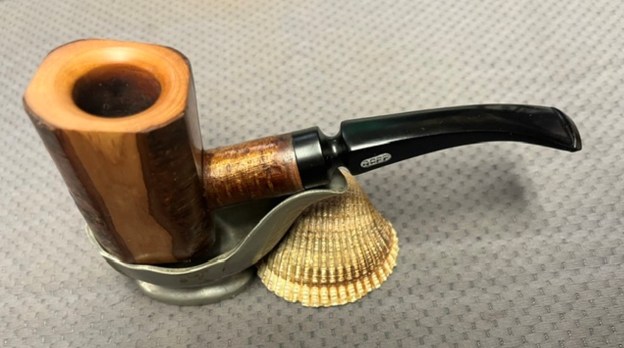
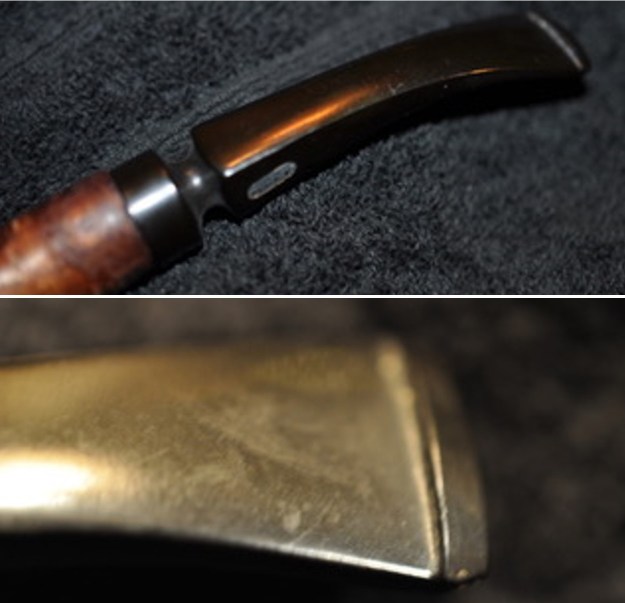
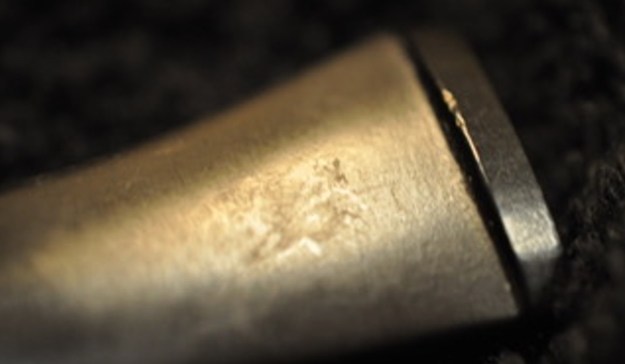
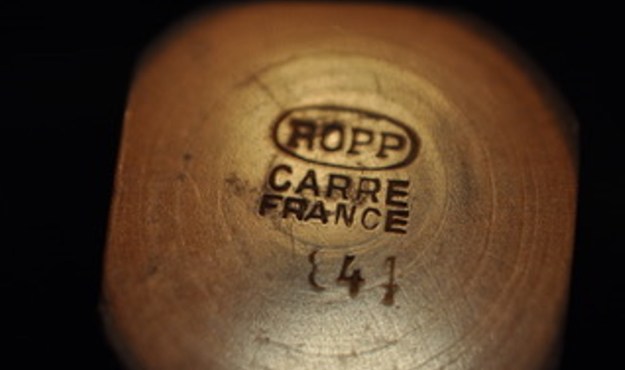
This rusticated Bent Cherrywood with a fancy saddle stem and square bit is quite lovely and lightly smoked. It was one of a lot purchased on 01/20/2026 from a Facebook seller in Quaker Town, Pennsylvania, USA. It is a smooth Bent Cherrywood with octagonal panels on the of the bowl. The saddle stem is vulcanite and has the Ropp logo on the left side of the stem. The bowl is four smooth panels on the front, back and two sides. The remaining panels of the octagon and the shank still have the Cherry back. It is stamped on the smooth panel on the underside of the bowl and reads Ropp in an oval [over] Carre [over] France [over] the shape number 841. The bowl had a thick cake on the lower half of the bowl while the top half was clean. The rim top and the bevelled inner edge were quite clean. There was grime ground into the finish which left the bowl and shank dirty and dull. The vulcanite saddle stem has light tooth marks and chatter on both sides of the stem ahead of the button. Jeff took photos of the pipe before he started his work on it. 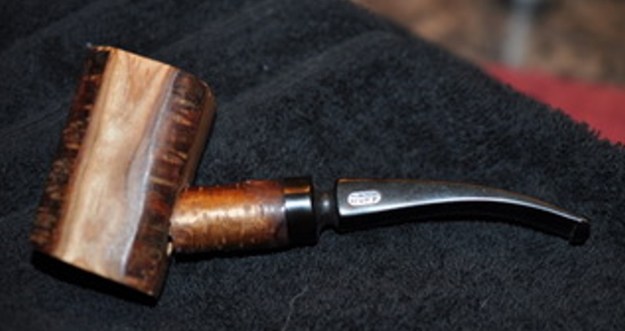
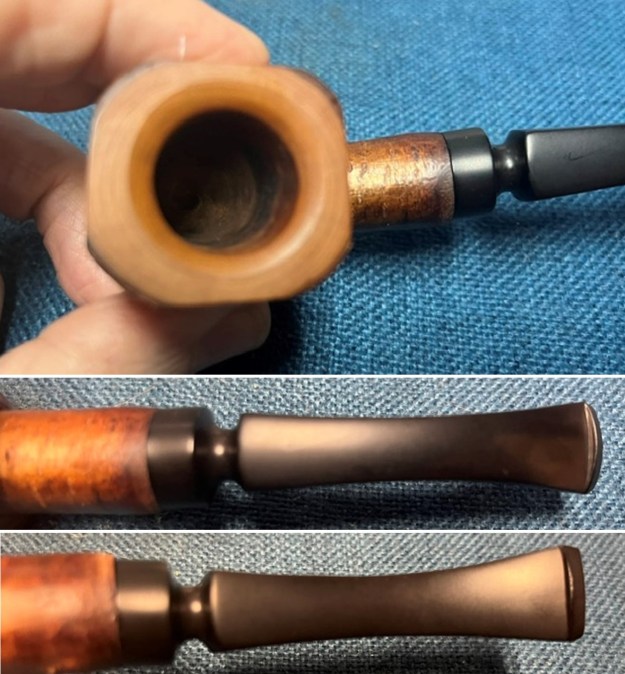
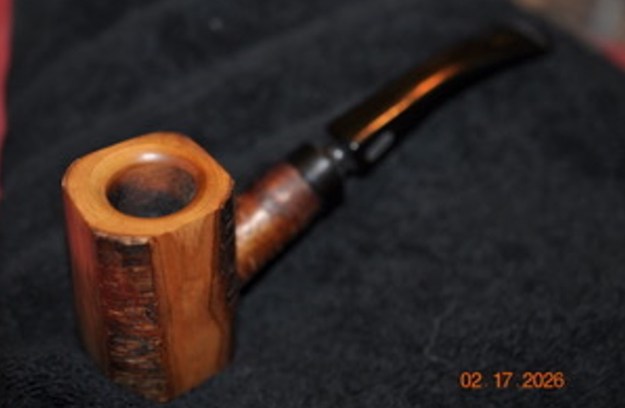 Jeff took photos of the rim edges and top to show the condition of the bowl and rim. It was surprising how clean it was. He took photos of the stem surface as well to show the condition as noted above.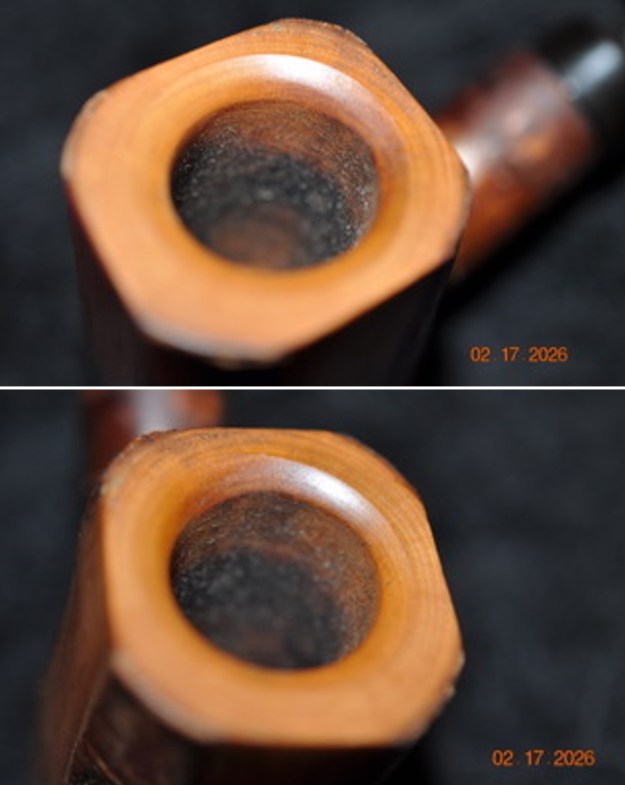
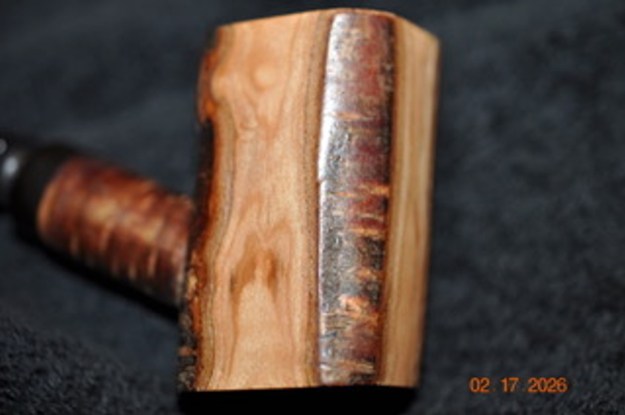
 Jeff took photos of the bowl sides, heel and front of the bowl and the shank to give a sense of the condition of the bark around the sides of the pipe. It is a unique one.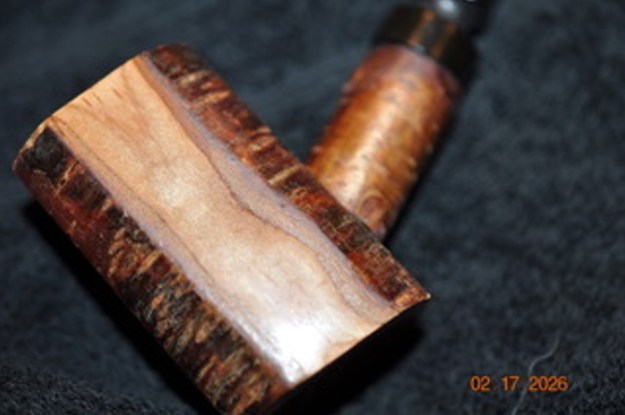
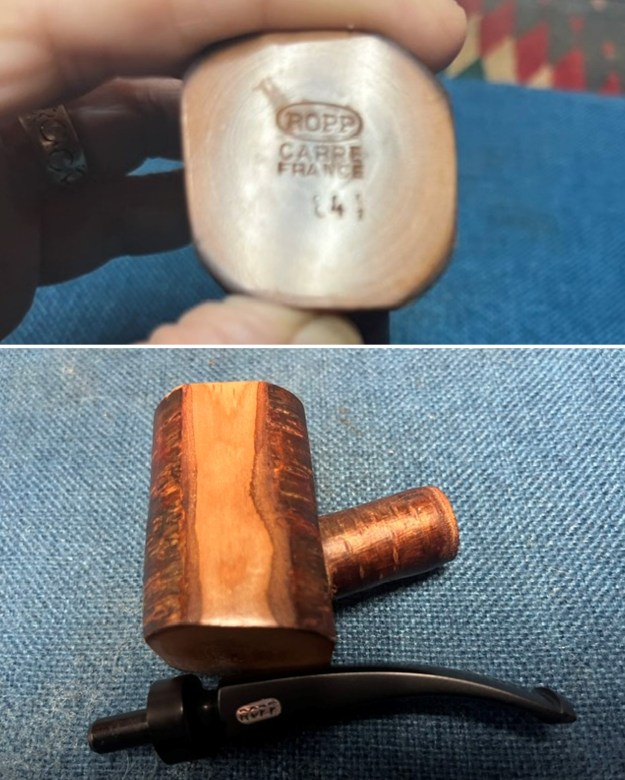
 He took a photo of the stamping on the heel of the bowl and the inset Ropp oval logo on the left side of the stem. Both are readable and clear as noted above.
  I turned to Pipephil (http://pipephil.eu/logos/en/logo-ropp.html) to get a bit more background on the brand before I did my work on the pipe. No matter how many I have worked on I seem to forget the history of the cherrywood pipes. I quote:
Brand created by Eugène-Léon Ropp (1830 – 1907) and continued throughout 3 generations. “GBA Synergie” run by Bernard Amiel (†2008) bought back Ropp in 1988 and owned it until 1991. The company was taken over by Cuty-Fort Entreprises (Chacom, Vuillard, Jean Lacroix…) in 1994.
I have also included a screen capture of a Cherry wood pipe. The one I am working on is significantly different that this but it has he bark left on the pipe as noted below. Below the photo is the side bar information. The stamp on the stem on this one is different it is a silver oval with the name ROPP stamped in it.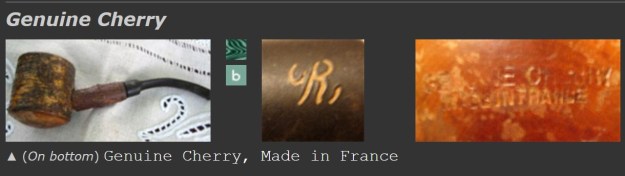 Cherry wood pipe with bark. Ropp stamped a cursive R on the stems of some of their export pipes.
I turned to Pipedia for a bit more detailed history of the brand (https://pipedia.org/wiki/Ropp). I quote below.
Eugène-Léon Ropp (1830 – 1907) had acquired a patent for a cherrywood pipe (wild cherry, lat.: Prunus avium) in 1869. In 1870 he established a workshop to manufacture such pipes in Büssingen (Bussang, Vosges mountains). Around 1893 the business moved into the former mill of Sicard (part of the community of Baume-les-Dames – Département Doubs, Upper Burgundy – from 1895 on).
The pipes were a big success in the export as well. Shortly before 1914 Ropp designated A. Frankau & Co. (BBB) in to be the exclusive distributor in the UK and it’s colonies.
Probably in 1917 a workshop in Saint-Claude in the Rue du Plan du Moulin 8 was acquired to start the fabrication of briar pipes. In 1923 a small building in the environment of Saint-Claude, serving as a workshop for polishing, was added.
Even though cherrywood pipes were the mainstay of Ropp until the company finally closed down in September 1991. The company was taken over by Cuty-Fort Entreprises (Chacom, Jeantet, Vuillard, Jean Lacroix…) in 1994.
Reminded about the background on the Ropp Family and their Cherrywood pipe it was now time to turn to the pipe itself and do my part of the work.
As usual Jeff had done a thorough cleanup on the pipe. He reamed the bowl with a PipNet pipe reamer and followed up with a Savinelli Fitsall pipe knife to remove the cake. He scrubbed out the mortise and the airway in the shank and the stem with alcohol, cotton swabs, shank brushes and pipe cleaners. He scrubbed the exterior of the bowl, rim, shank and stem with a tooth brush and Murphy’s Oil Soap to remove the oils and tars on the rim and the grime on the finish of the bowl. He rinsed it under running water. He dried it off with a soft cloth. He scrubbed the exterior of the stem with Soft Scrub and a cotton pad. Once finished he soaked the stem in Briarville’s Pipe Stem Deoxidizer and rinsed it off with warm water and cleaned out the airway in the stem with alcohol. Other than the damaged rim top the pipe looked good. 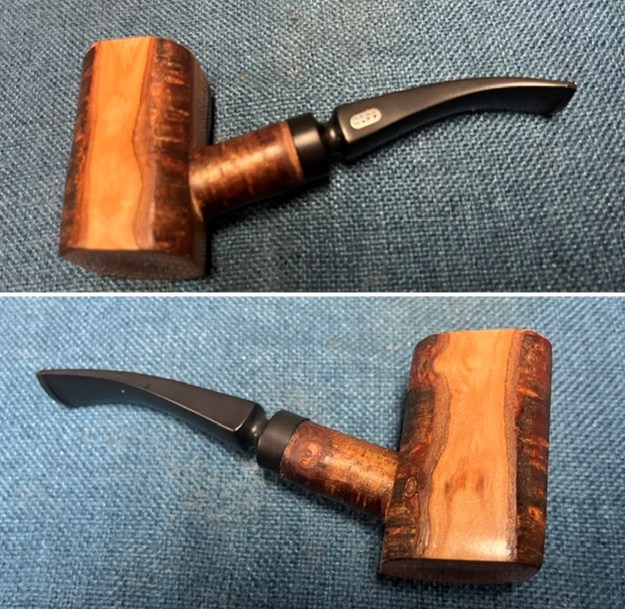
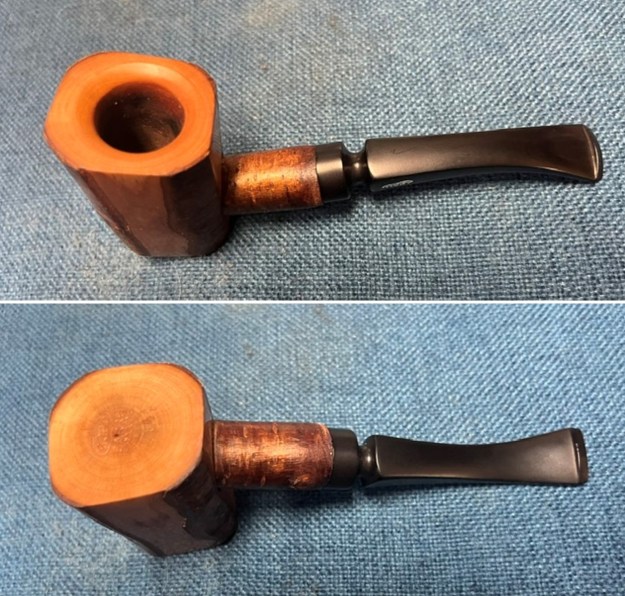 I took a photo of the rim top and stem to show the condition. The rim top and the inner edge of the bowl had some damage and darkening on the front and the back of the bowl. The vulcanite saddle stem had light tooth chatter and marks on both sides ahead of the button.
 The stamping on the heel of the bowl is clear and readable as noted above. I removed the stem from the shank and took a photo of the pipe to give a sense of the whole. It is a nice looking octagonal panel with a slight bend in great condition.
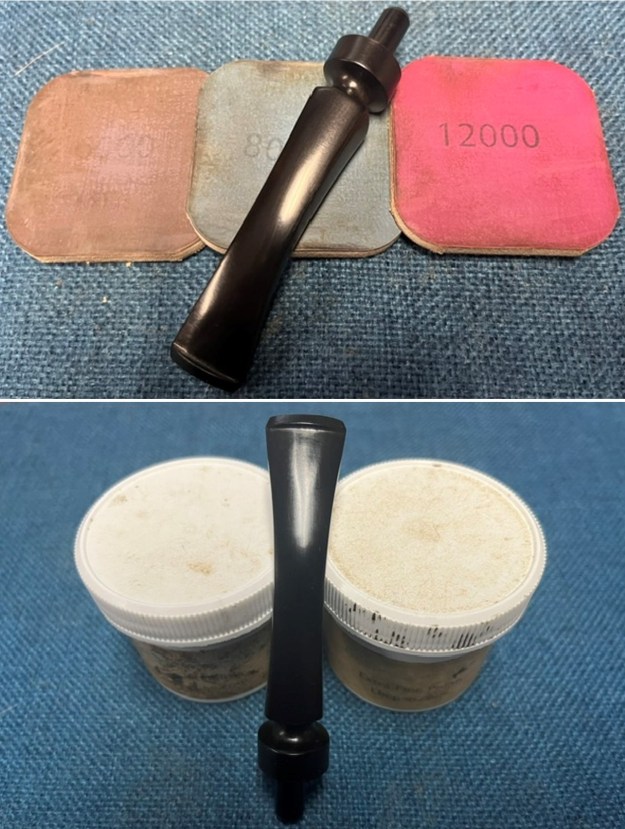
 I polished the bark and clean cherrywood with micromesh sanding pads, dry sanding with 1500-12000 grit sanding pads and wiping it down with a damp cloth after each sanding pad.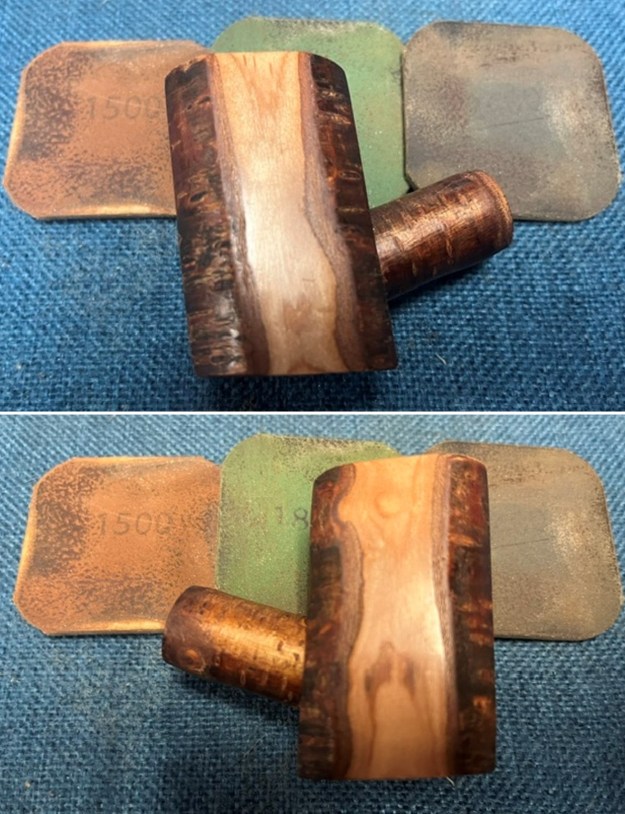
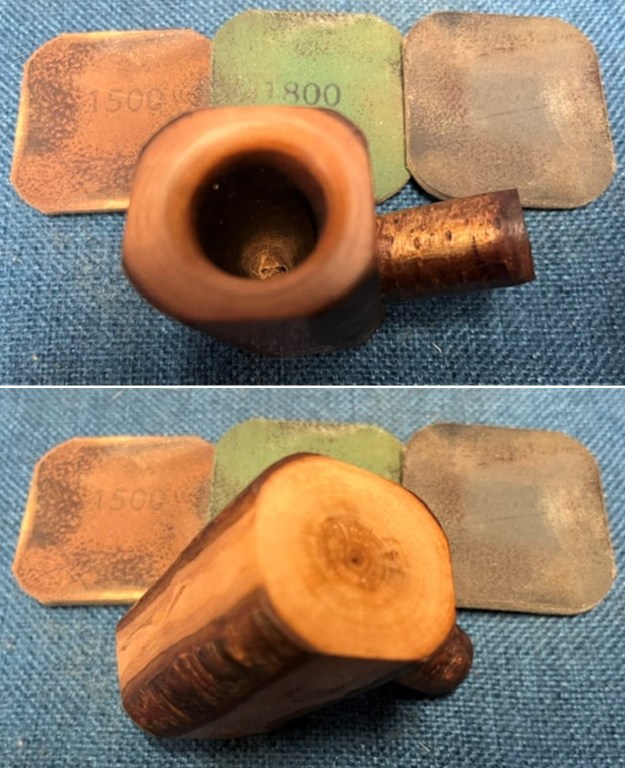
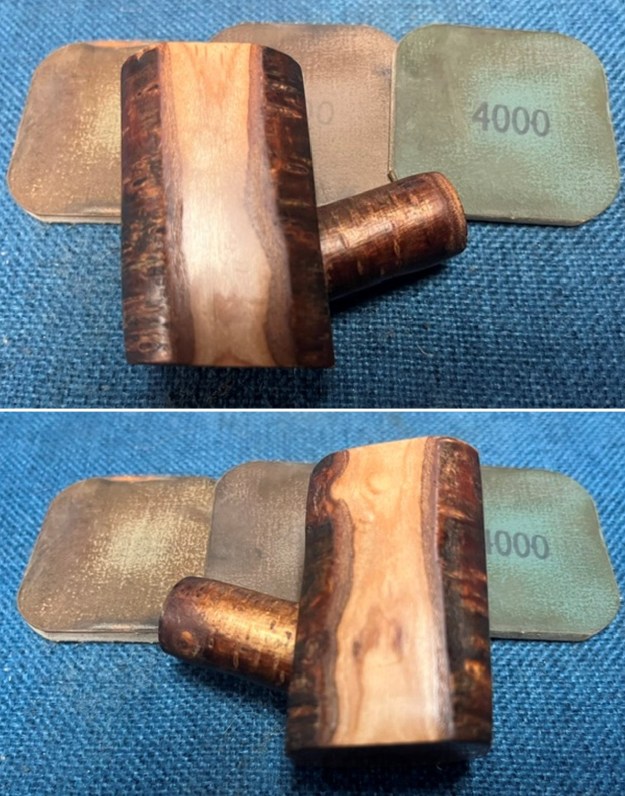
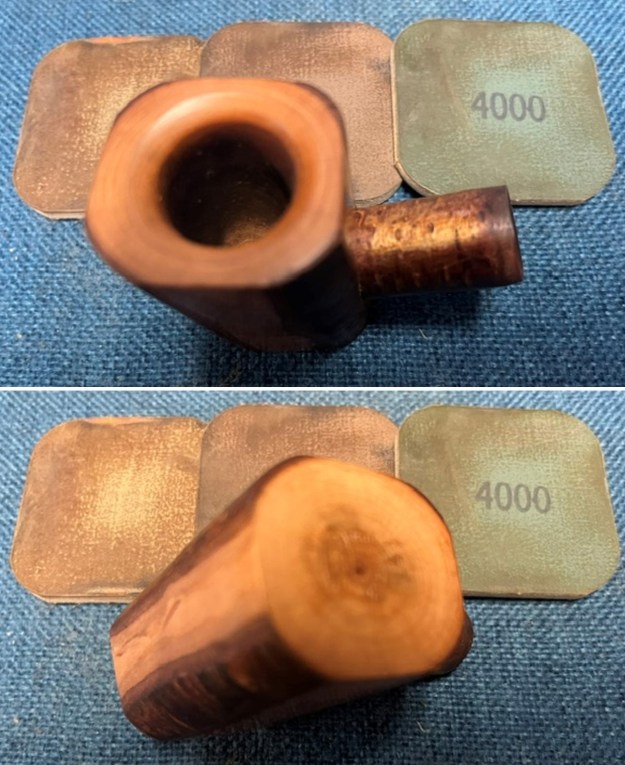
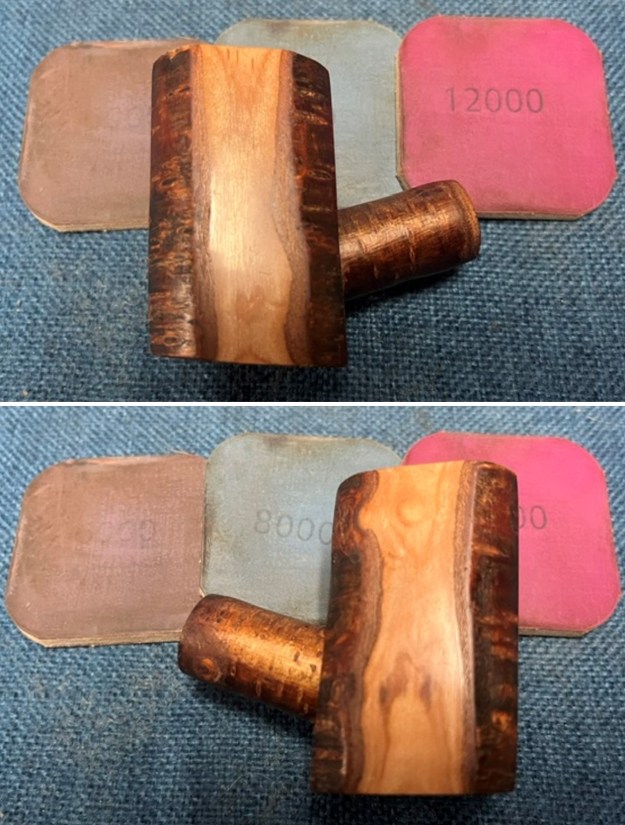
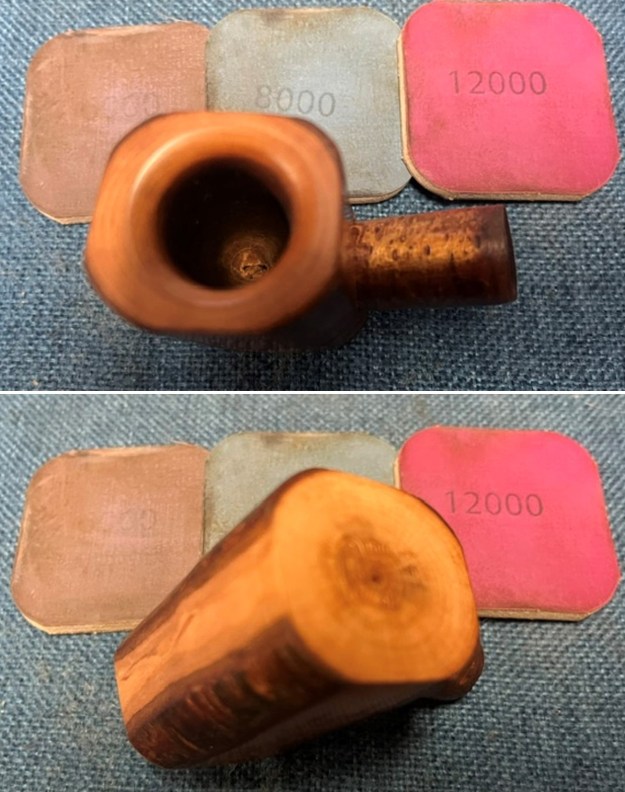 I rubbed the bowl and shank down with Before & After Restoration Balm. I worked it into the surface of the bowl sides and shank both (smooth and bark covered) with my fingertips to clean, enliven and protect the briar. I let the balm sit for about 10 minutes then buffed it with a cotton cloth to raise the shine. The Balm did its magic and the grain stood out.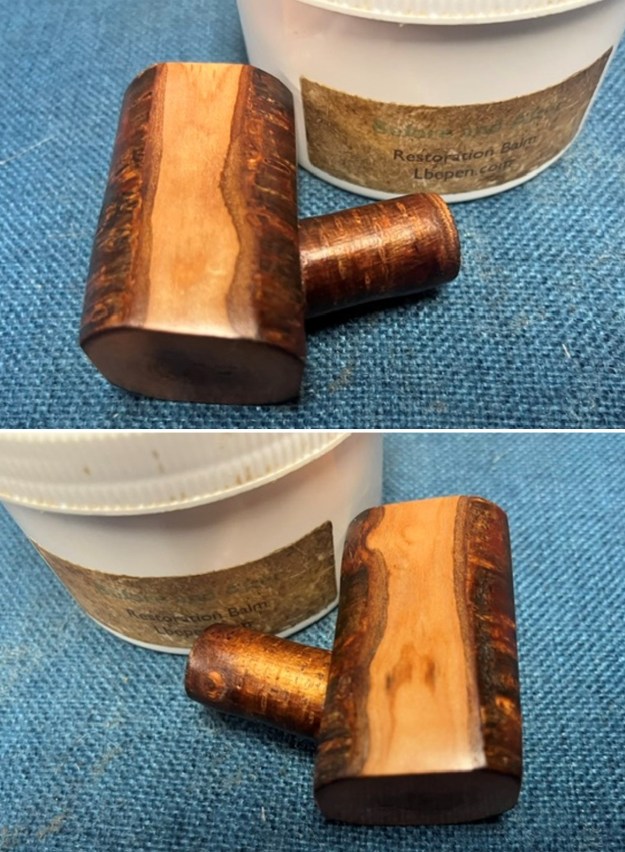
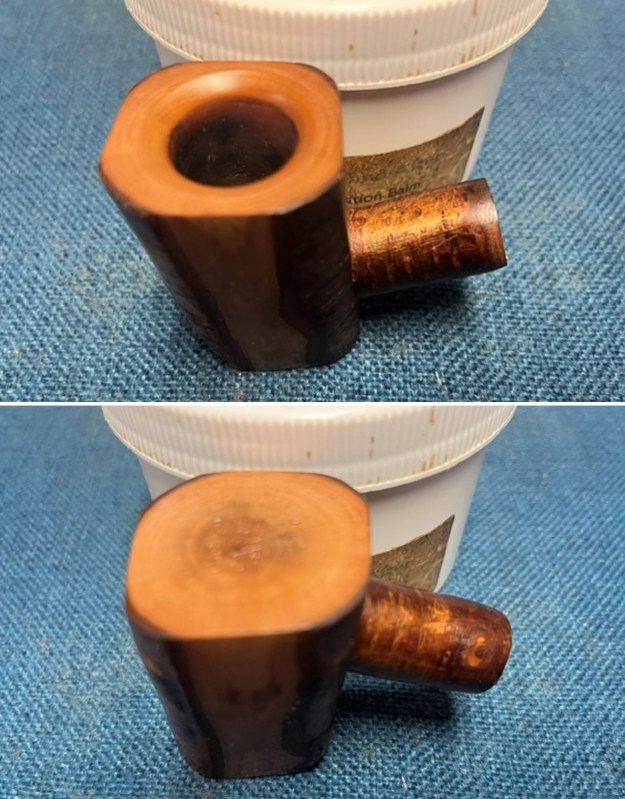
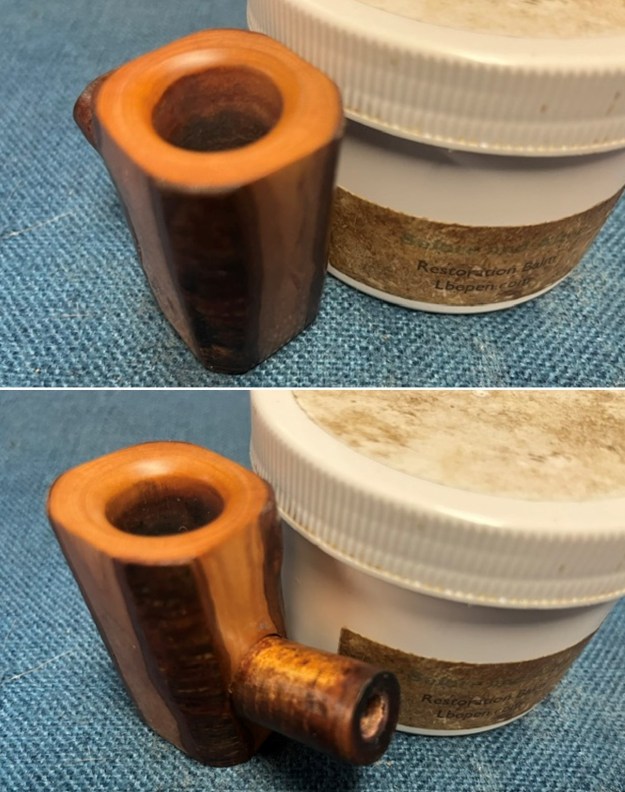 I polished the vulcanite stem with micromesh sanding pads – 1500-12000 grit pads. I wiped it down with Obsidian Oil after each sanding pad. I used Before & After Pipe Polish – both Fine and Extra Fine to further polish the stem. The photo below shows the polished stem.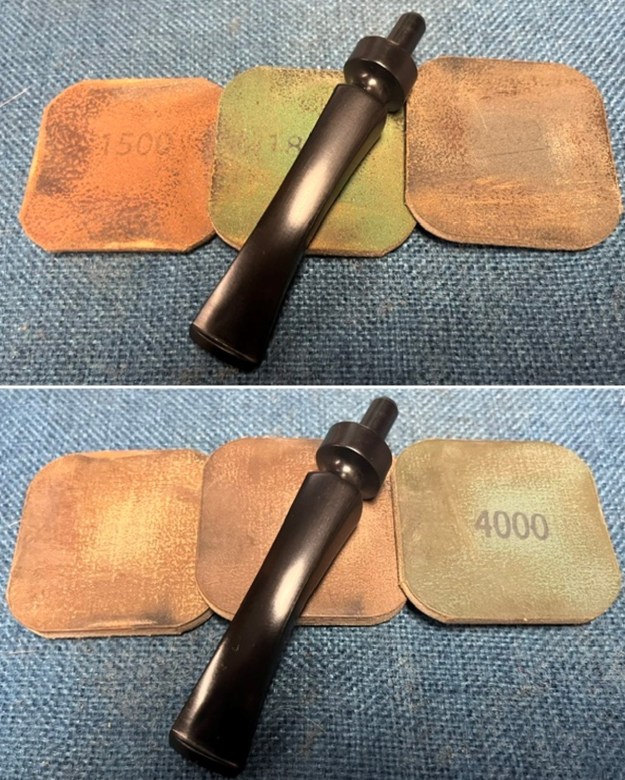
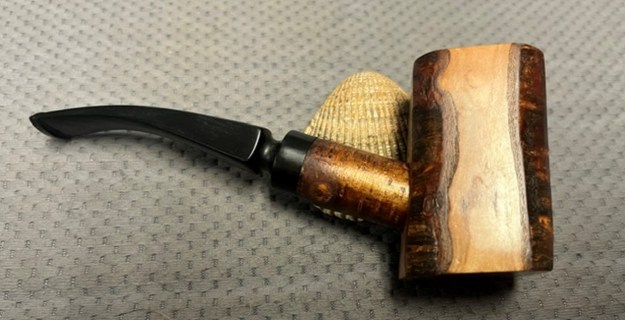
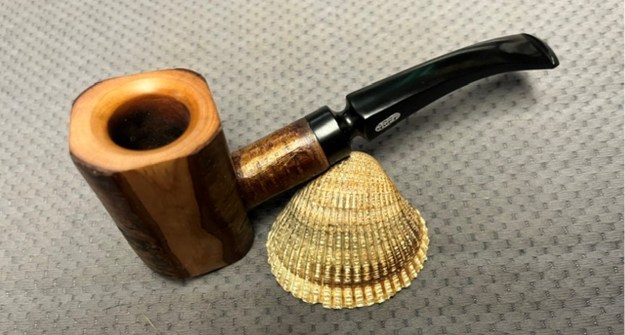
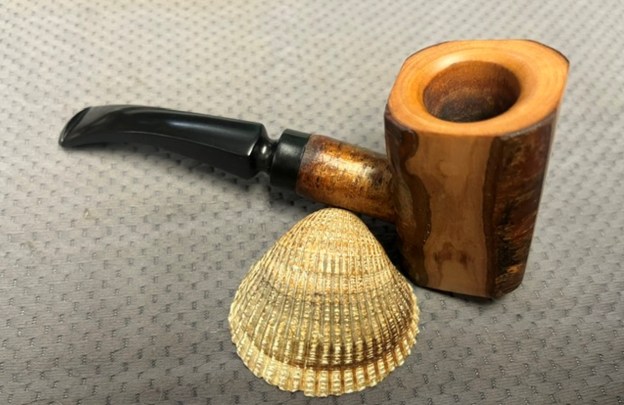
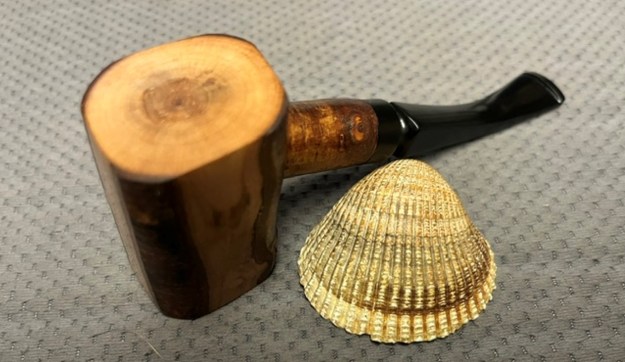
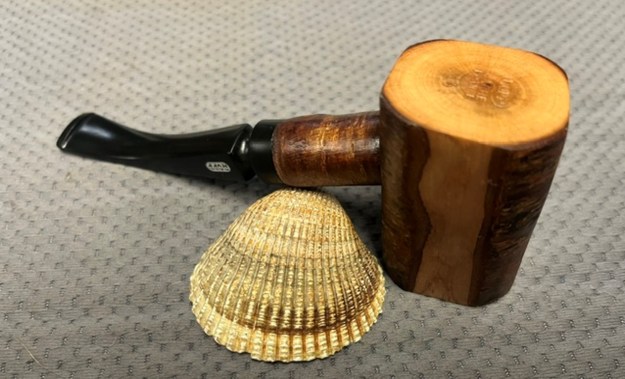
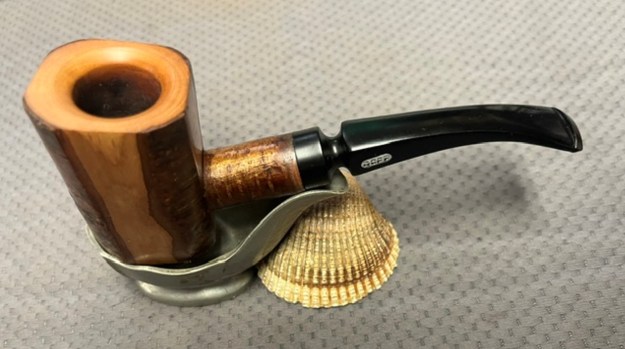
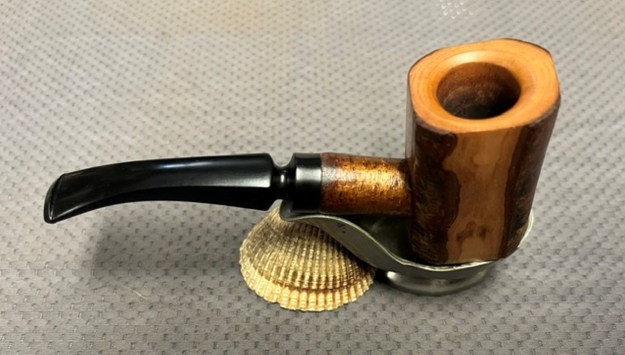
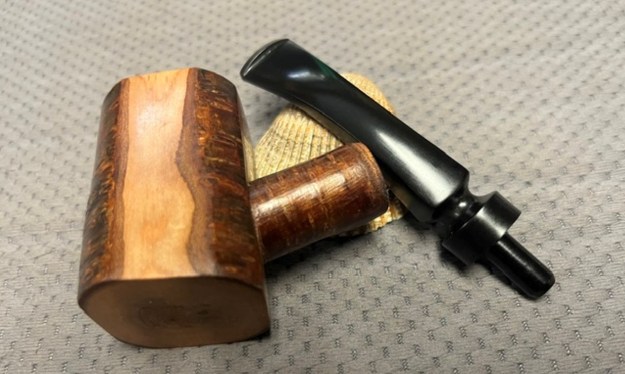
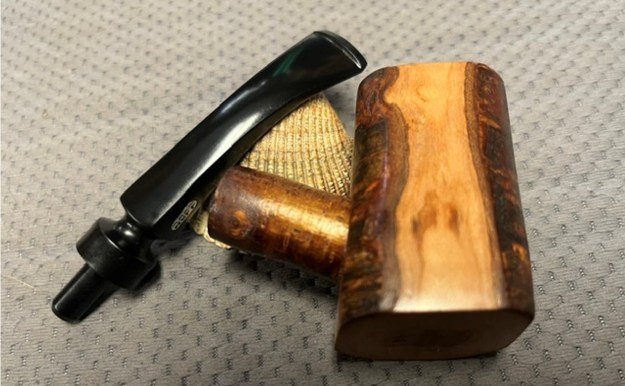
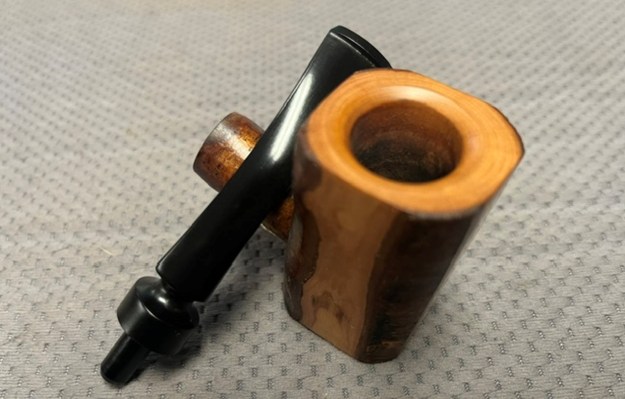
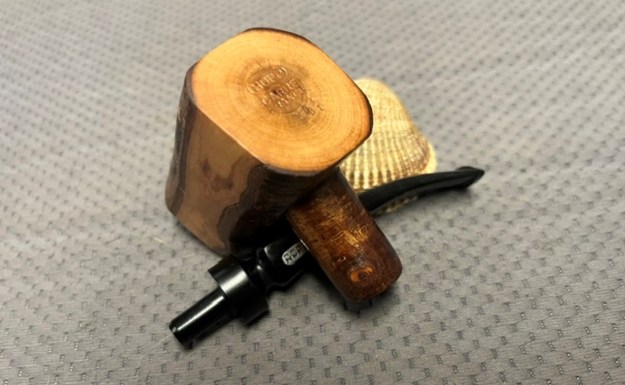
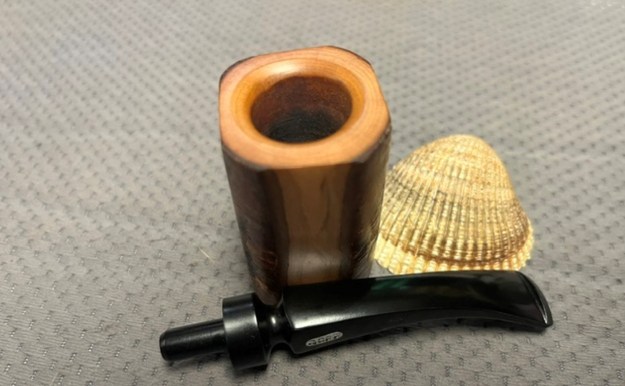
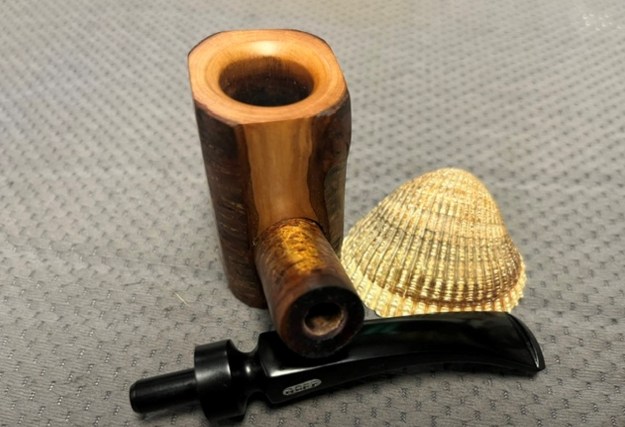
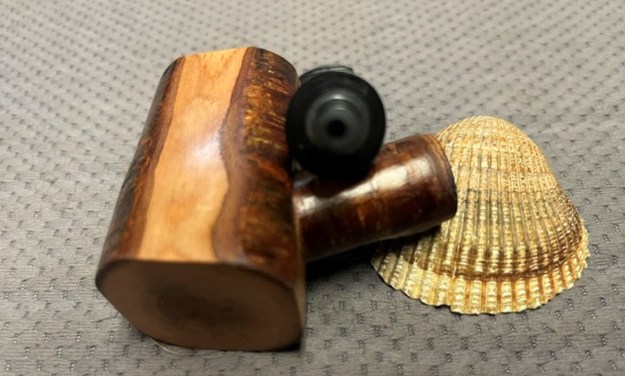
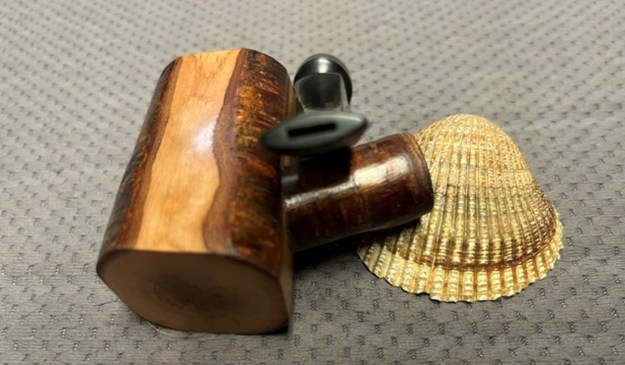
 This nice Cherrywood finished ROPP Carre France 841 Octagonal Panel with a black vulcanite saddle stem is a great looking pipe. The rugged bark finish on four of the octagonal sides and the smooth panels on the other four highlight the grain on the cherrywood bowl front, back and sides. The black saddle stem works really well with the pipe as a whole. The wood is clean and really came alive. The rich medium brown of the wood gave the grain a sense of depth with the polishing and waxing. The grain really popped. I put the stem back on the bowl and carefully buffed the pipe with Blue Diamond on the buffing wheel using a light touch on the briar. I gave the bowl and the stem multiple coats of carnauba wax on the buffing wheel. I buffed the pipe with a clean buffing pad to raise the shine. I hand buffed the pipe with a microfiber cloth to deepen the shine. The finished ROPP Carre 841 Cherrywood is a beauty and feels great in the hand and looks very good. Give the finished pipe a look in the photos below. The dimensions of the pipe are Length: 5 ½ inches, Height: 2 ¼ inches, Outside diameter of the bowl: 1 ¼ inches, Chamber diameter: ¾ of an inch. The weight of the pipe is 2.05 ounces/58 grams. Thanks for reading this blog and my reflections on the pipe while I worked on it. There are many more to come!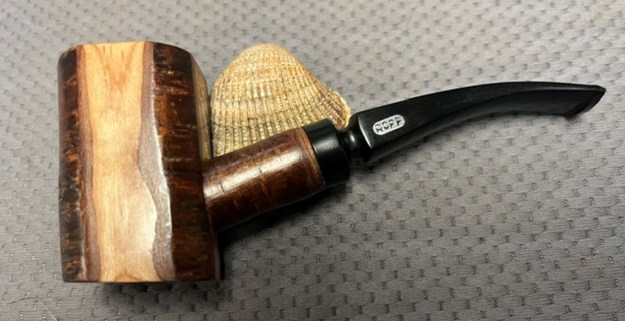
 rebornpipes