
by Steve Laug
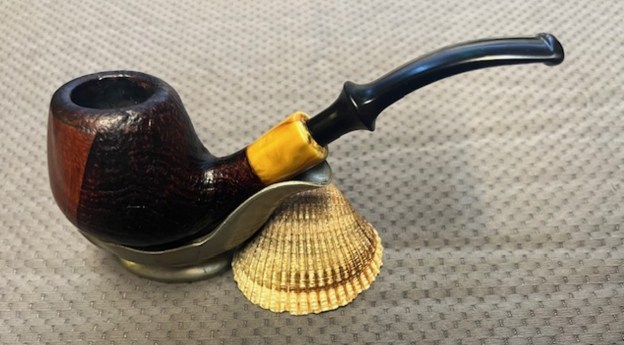
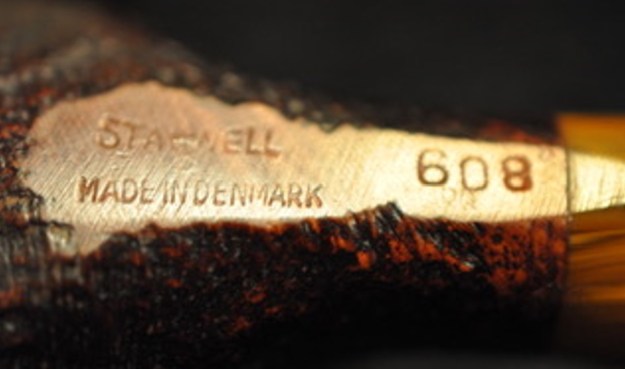
The next pipe I have chosen is a Classic Stanwell Vario style pipe. The pipe has a mixed finish of sandblast and smooth finishes. There is a shank extension that is faux horn and golden. We purchased it from the seller on 09/04/2020 in Gonzales, Louisiana, USA. The contrast of the brown stains on this pipe makes the smooth grain and depths of the sandblast stand out. The sandblast rim top matches the sandblast on the sides of the bowl and worked well with the stain on the sides. The pipe is stamped underside of the shank and reads Stanwell [over] Made in Denmark followed by the shape number 608. The bowl was heavily caked and there was lava on the sandblast rim top and inner edge. The condition of the rim and top looks good. The acrylic shank extension is chipped and has a small hairline crack on the end and topside. The black vulcanite saddle stem was in poor condition and had straightened out. It had deep tooth marks on the top and underside ahead of the button. There is a slight bite through in the underside of the button and a crack in the button edge. There was a faint Stanwell Crown S logo on the topside of the stem. Jeff took photos of the pipe before his cleanup work. They tell the story and give a glimpse of the pipe.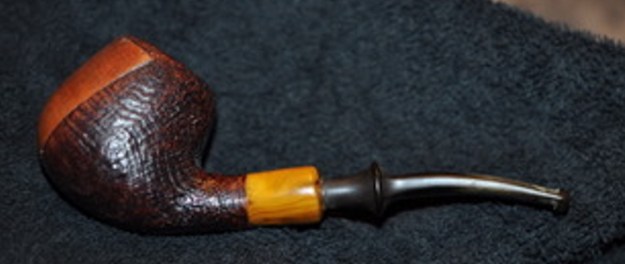
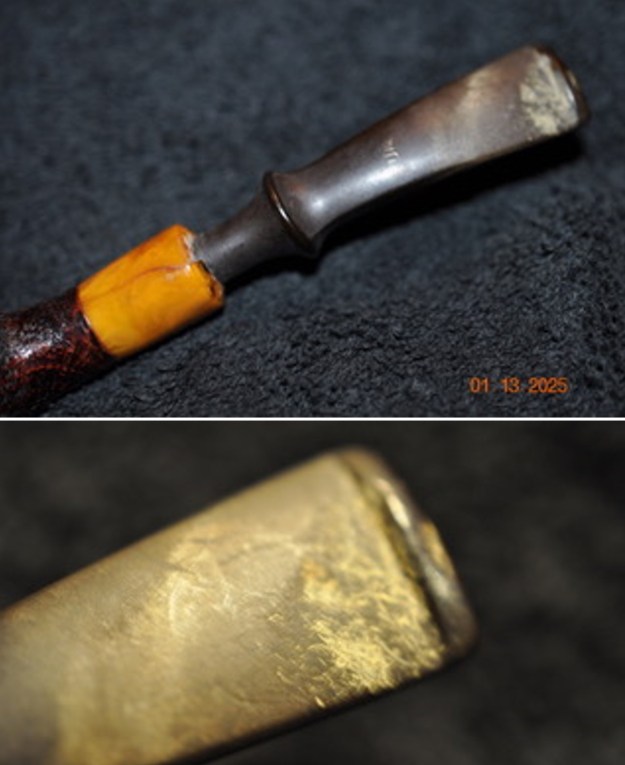
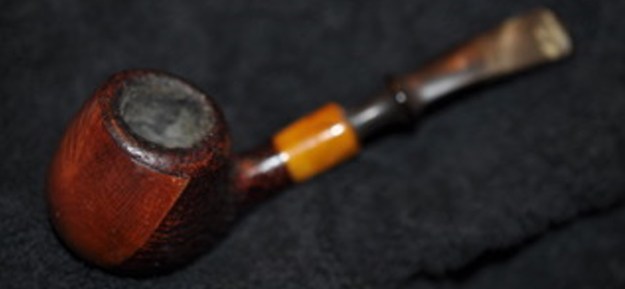 Jeff took close up photos of the bowl and rim to capture the condition of the pipe before he started his cleanup work. The heavy cake in the bowl and the lava on the edges and the sandblast rim top are visible. The next photos show the stem surface. There is oxidation, calcification and light tooth marks and chatter on both sides near the button and wear on the button surface and edges. There is also some damage to the button on the underside (it was cracked and chipped) and there were deep tooth marks on both sides. The mark on the underside had a pin hole all the way through the surface. You can also see the crack in the acrylic faux horn shank extension. Upon closer examination it would also have chips on the shank end.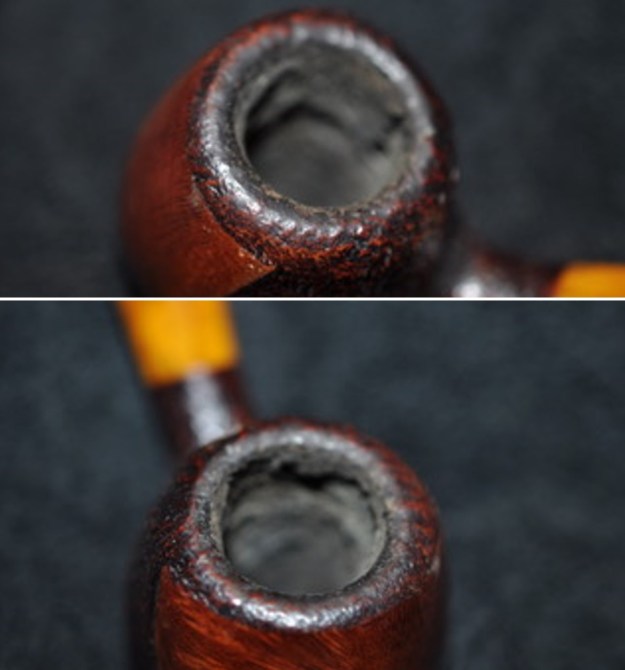
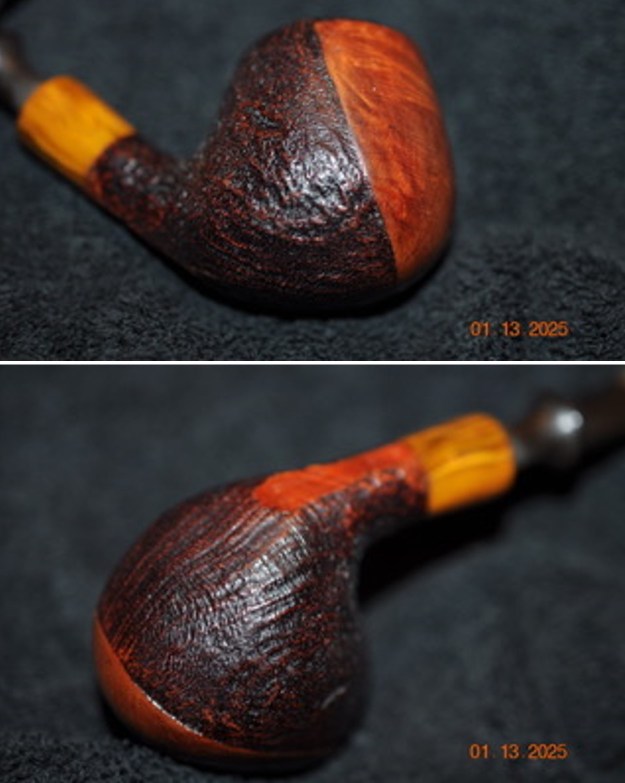
 He also took a photo of the bottom of the bowl and shank to show the beautiful grain on the front and the nice sandblast around the rest of the bowl and shank. It is very dirty but this is another beautiful pipe.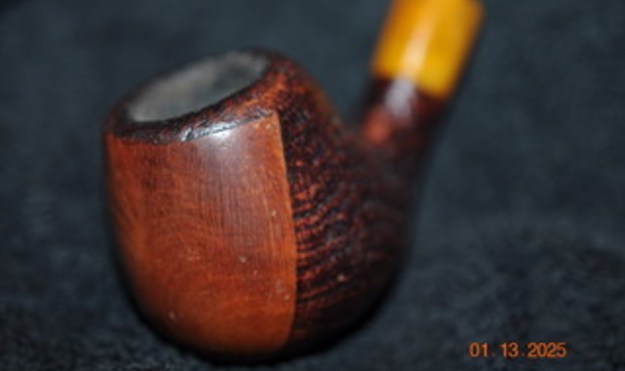
 He took a photo of the stamping on the underside of the shank. It is clear and readable as noted above.
 I can find no information on the shape number or the configuration of the pipe and shank extension. It is similar to a Buffalo but not quite the same. This one shall remain a mystery.
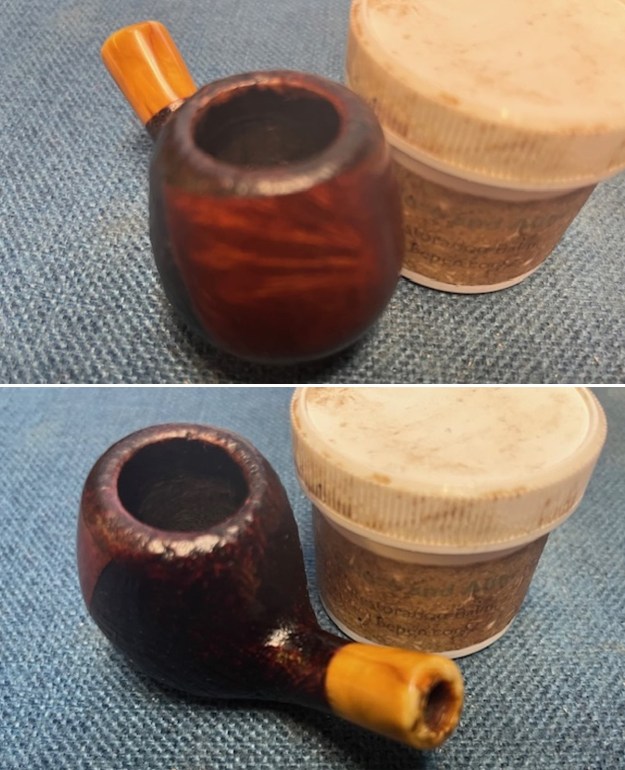
I turned to address the pipe itself. Jeff cleaned up the pipe for me. He reamed the bowl with a PipNet pipe reamer and cleaned it up with a Savinelli Fitsall Pipe Knife. He scrubbed the exterior with Murphy’s Oil Soap and a tooth brush to clean off the grime off the finish and the heavy overflow of lava on the rim top. He cleaned up the internals of the shank, mortise and stem with pipe cleaners, cotton swabs and alcohol to remove all of the oils and tars in the pipe. He soaked the stem in Briarville’s Pipe Stem Deoxidizer and was able to remove much of the oxidation. When it arrived here in Vancouver it was a clean pipe and I knew what I had to work with. I took photos of it before I started my part of the restoration.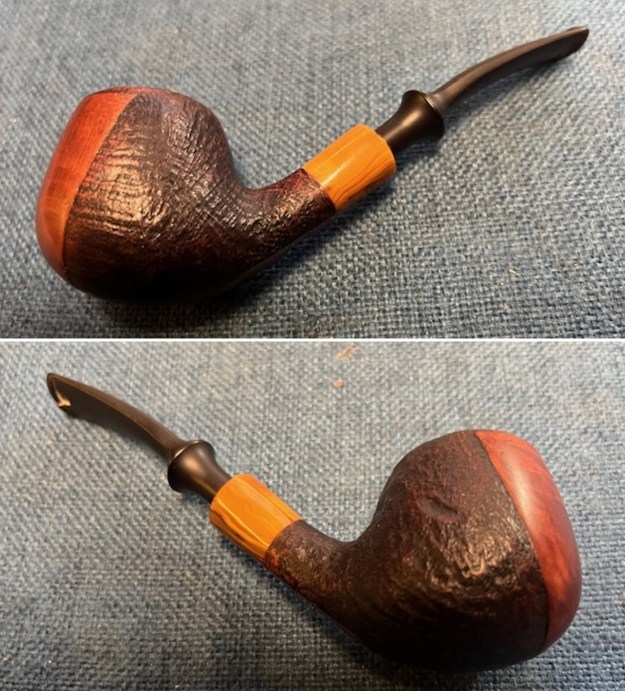
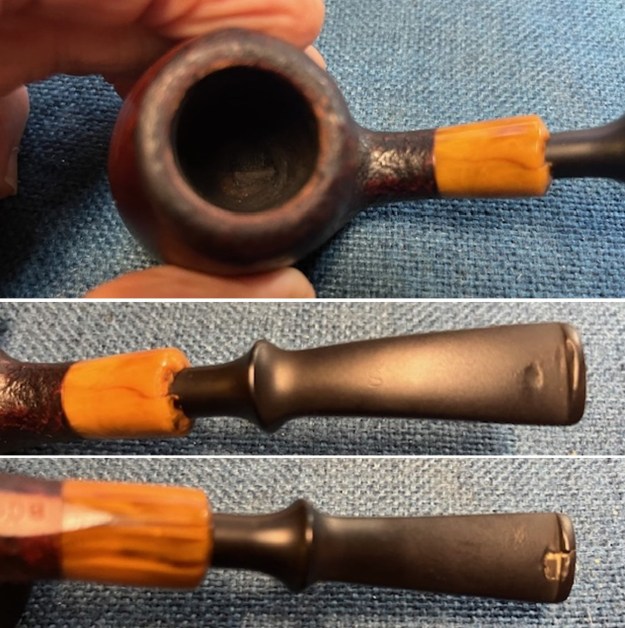
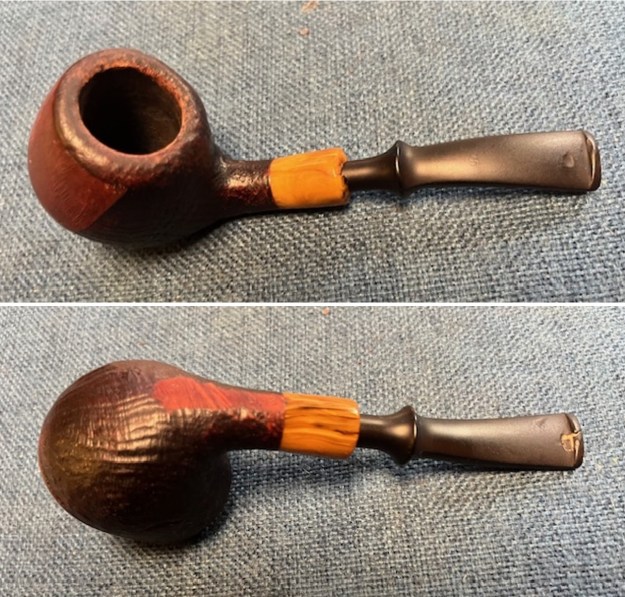 I took photos of the rim top and the stem to show their condition once it arrived in Canada. Jeff was able to clean up the incredibly thick cake and lava overflow that was shown in the rim and bowl photos above. He was also able to get rid of the grime and grit in the surface of the briar. The rim top and edges looked very good. The acrylic shank extension was chipped and had a small hairline crack. The stem was a real problem/ There were several deep tooth marks on the topside. The underside had a small bite through and there was a crack in the top of the button into the slot. There were also a few deep tooth marks as well cleaning cleanser in the crack.
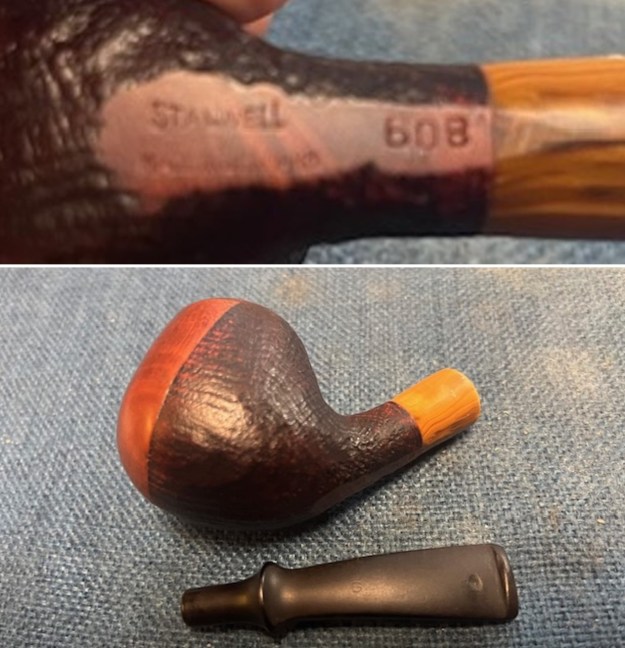
 I took a photo to try and capture the stamping on the underside of the shank side. It was faint in spots but very readable. I removed the stem and took a photo of the pipe sans stem to show the proportions of this unique beauty.
  I decided to start with examining the shank extension and seeing the nature of the chips and hairline crack. It was not as bad as I was expecting. There were chips on the top right side of the end of the extension and a very thin crack from the chips on the top that did not extend far into the extension. I rebuilt the chipped end of the extension and the thin cracks with CA glue carefully applied with a tooth pick. When it cured I flattened it with a small flat file to smooth it out. I followed that by sanding with 220 grit sandpaper.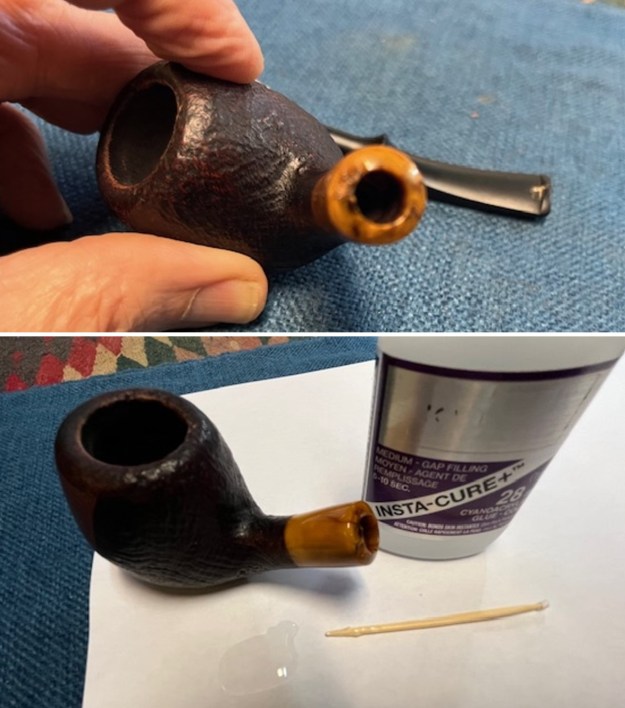
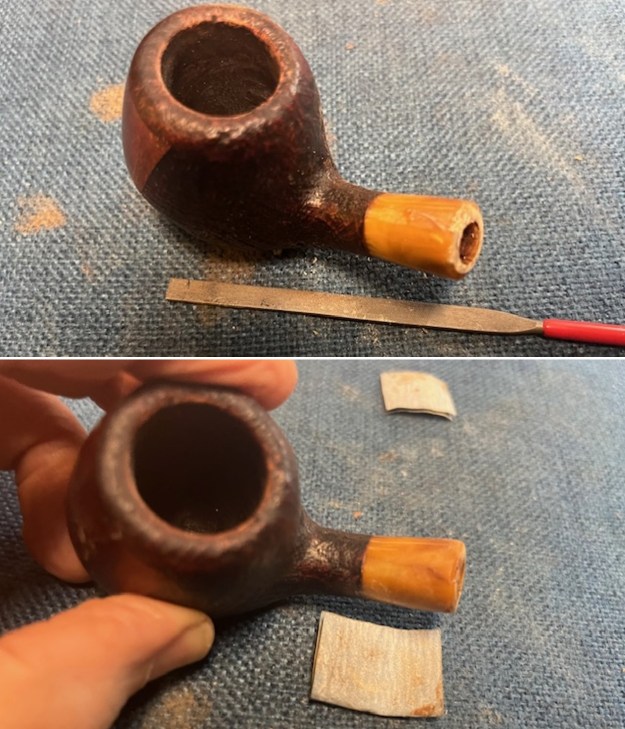
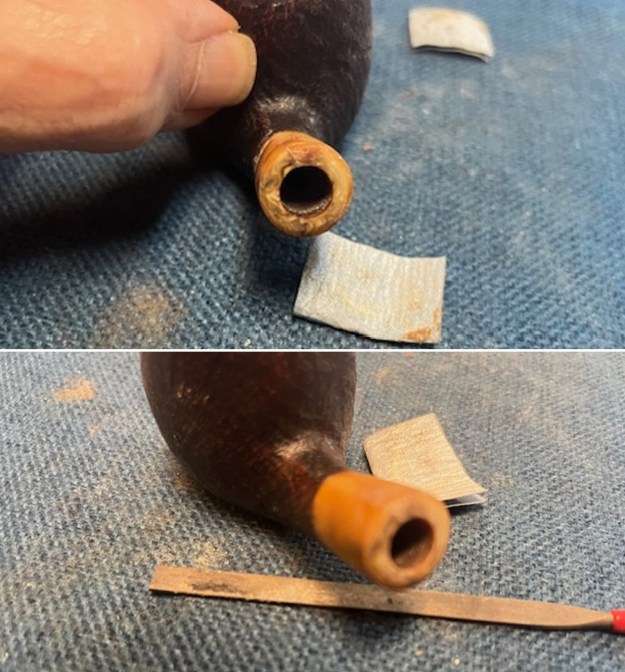
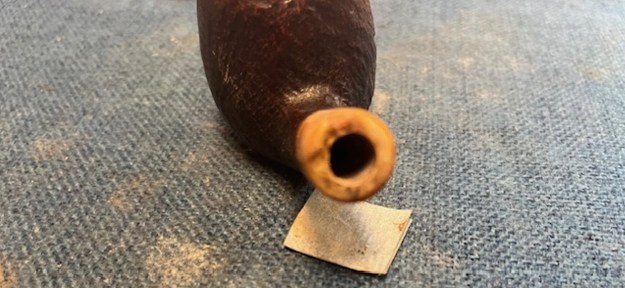 I sanded the repaired extension with 320-3500 grit 2 x 2 inch sanding pads. I wiped it down with a damp cloth after each sanding pad. It began to look very good.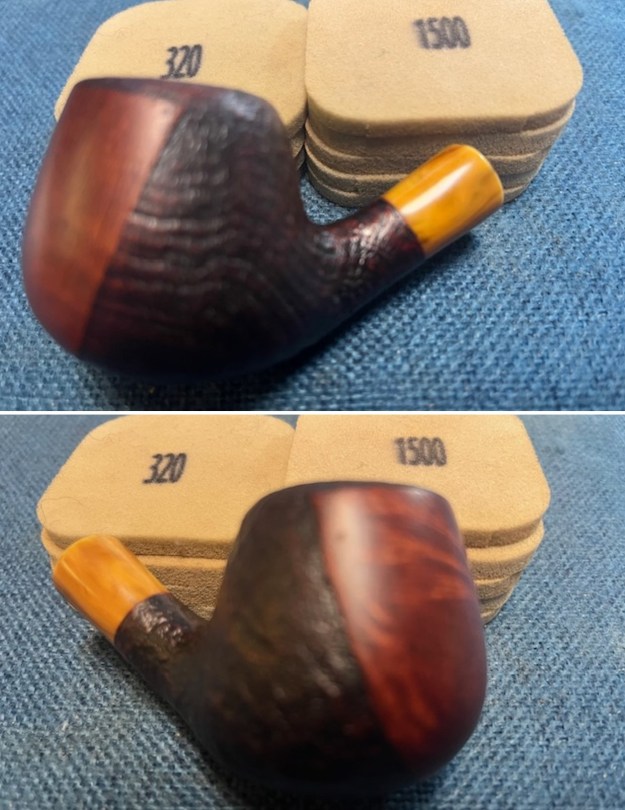
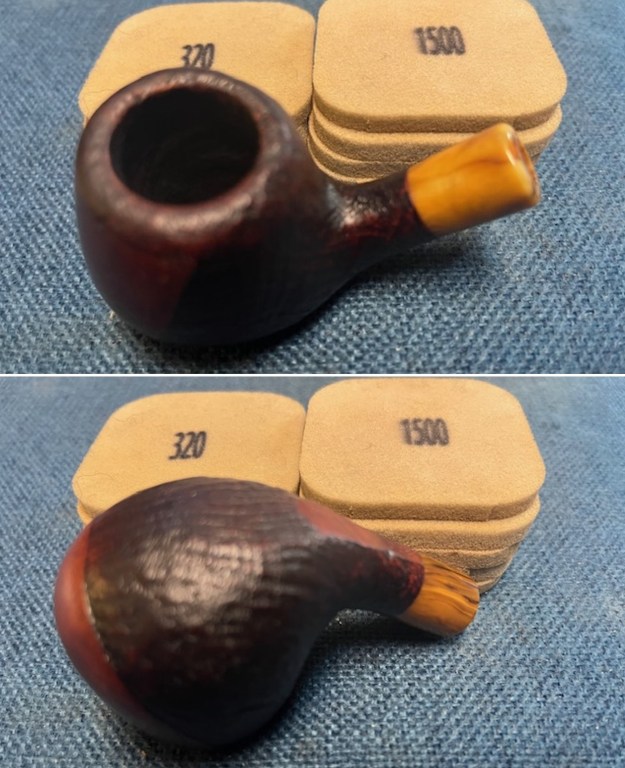 I polished the shank extension with micromesh sanding pads. I dry sanded it with 1500-12000 grit pads. I wiped the bowl down after each pad with a damp cloth. The bowl began to take on a rich shine and grain was beginning to stand out.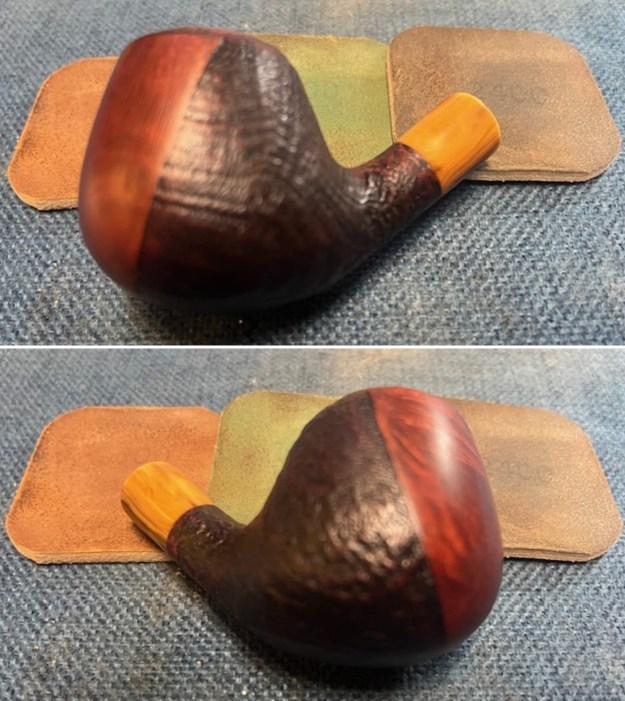
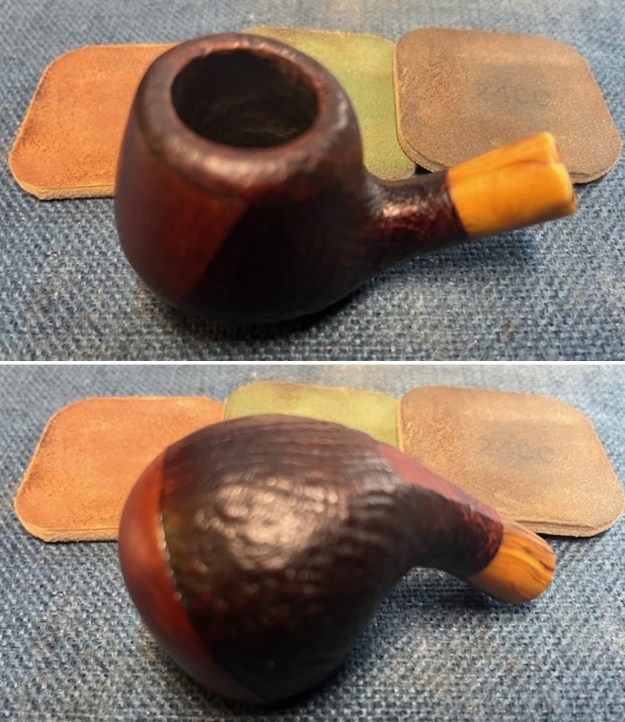
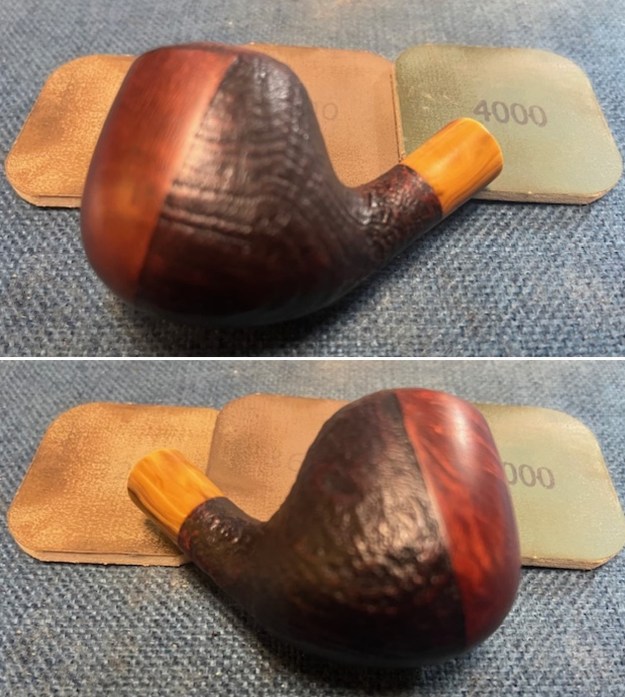
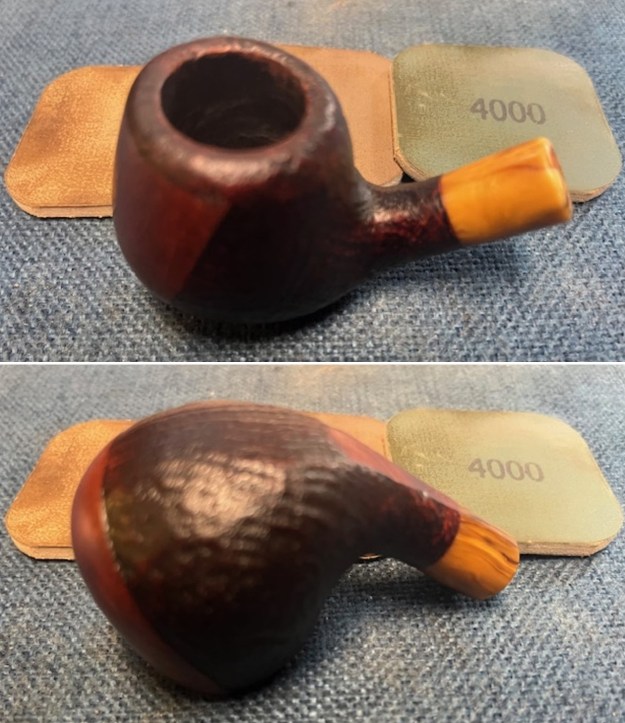
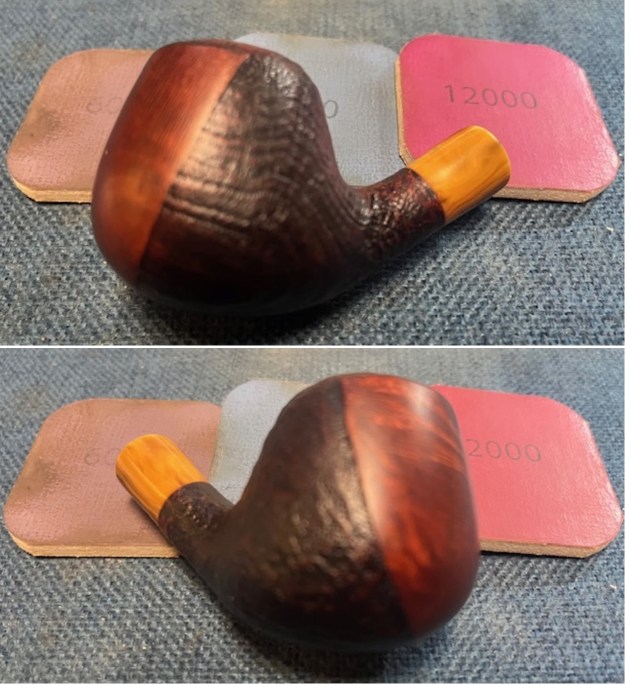
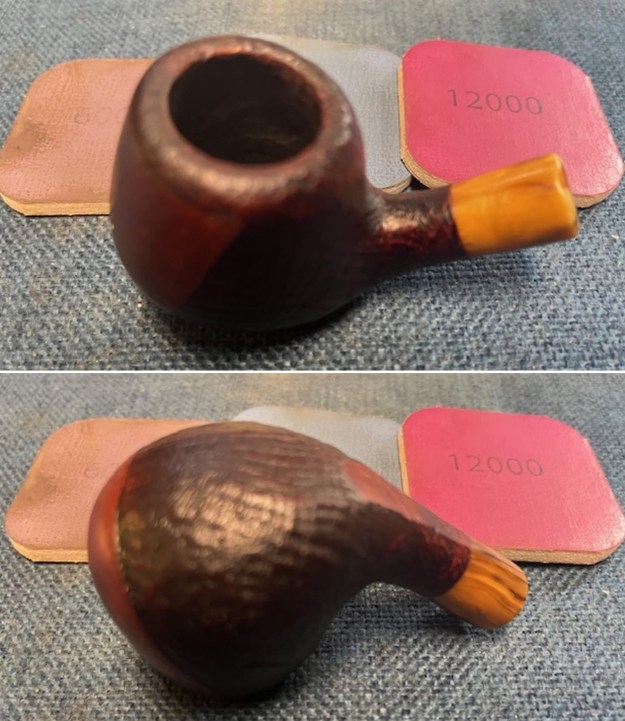 I used 1500-12000 grit micromesh sanding pads to dry sand the smooth front of the bowl. Each progressive sanding pad brought a richer shine. I wiped the bowl down after each sanding pad with a damp cloth to remove the sanding grime. It began to look very good.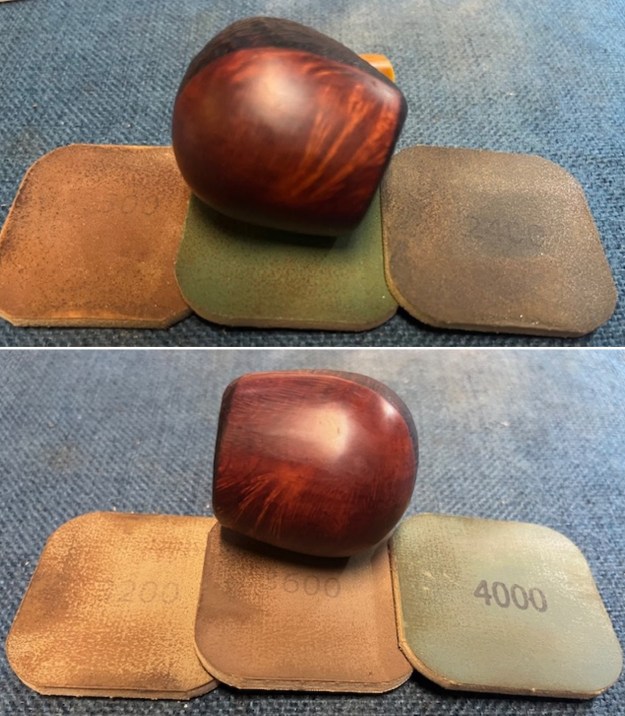
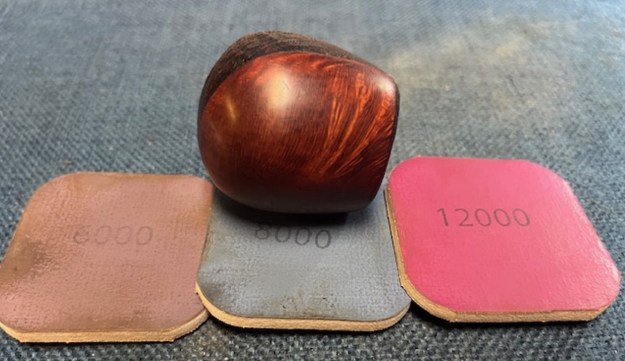 I rubbed the bowl and shank down with Before & After Restoration Balm to deep clean the finish on the bowl and shank. The product works to clean, enliven and protect the briar. I worked it into the smooth part of the finish with my fingers to get it into the briar. I used a horsehair shoe brush to work it into the sandblast part of the finish. After it sat for a little while I wiped it off and buffed it with a soft cloth. The briar really began to have a rich shine. I took some photos of the bowl at this point to mark the progress in the restoration.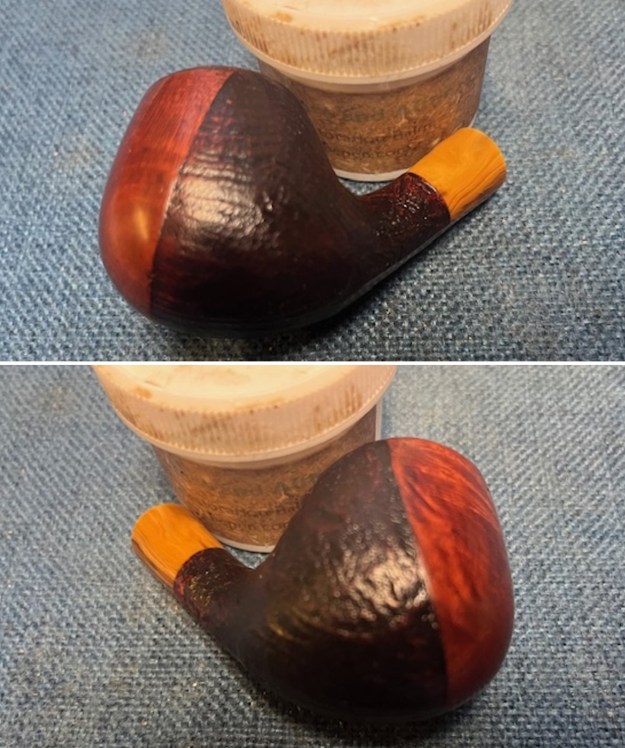
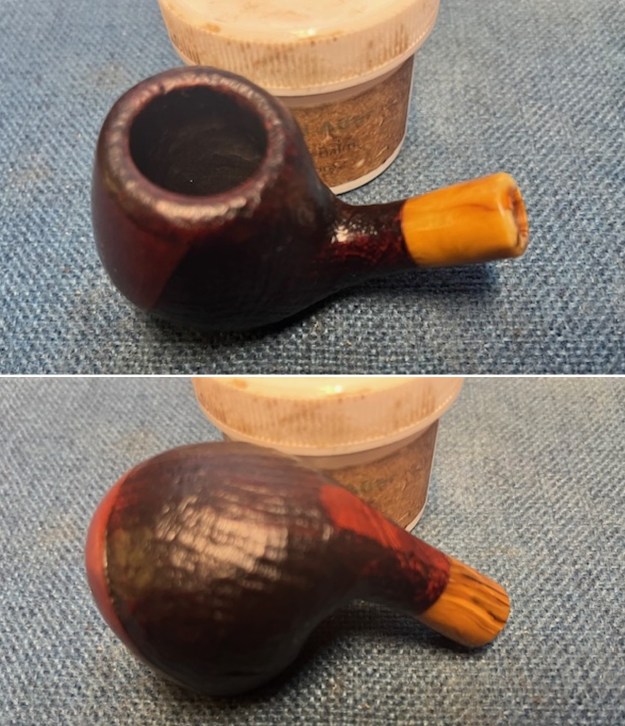
 I set the bowl aside and worked on the stem at this point in the process. The deep tooth marks on both sides were too deep for heat to work on. The underside of the stem had a small bite through and the button had a crack that went through to the slot. I cleaned the areas around both damaged areas and slipped a Vaseline greased pipe cleaner in the airway to keep the glue from going in to the airway. I filled them in with some clear Black rubberized CA glue. Once it cured I used the file to flatten the repair and sanded it with a piece of 220 grit sandpaper.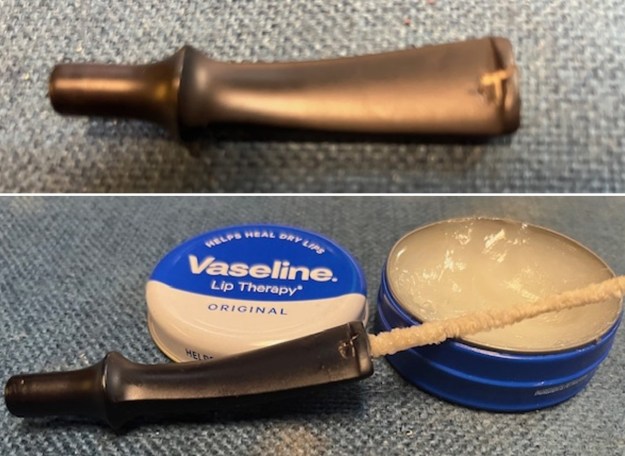
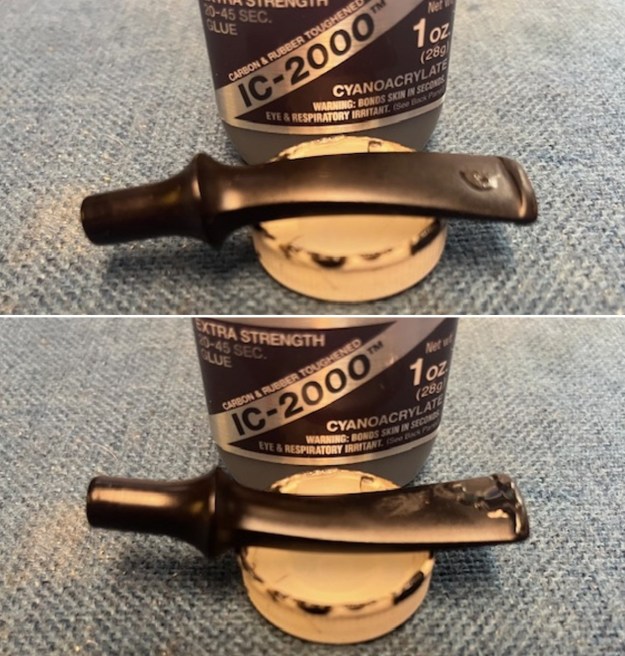
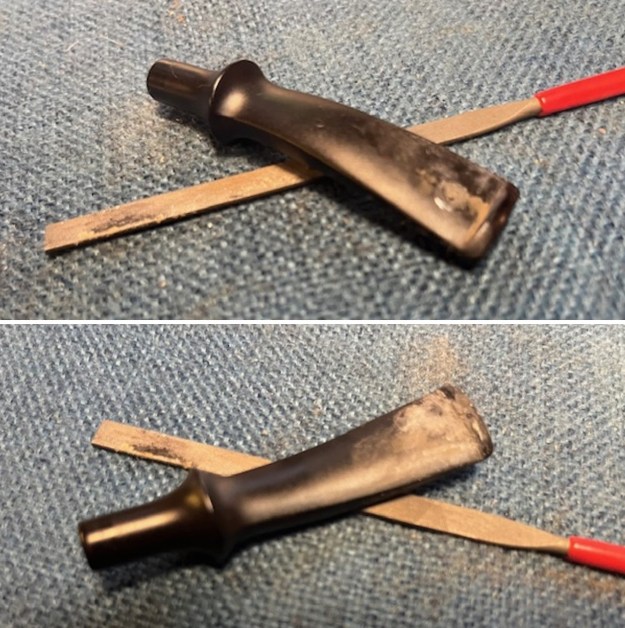
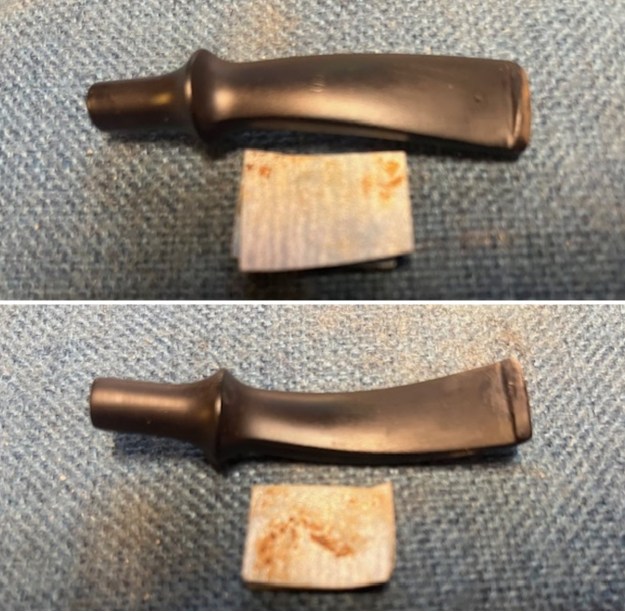 I sanded the stem further with 320-3500 grit 2 x 2 inch sanding pads. I wiped the stem down after each pad with some Obsidian Oil. It began to take on a rich look.
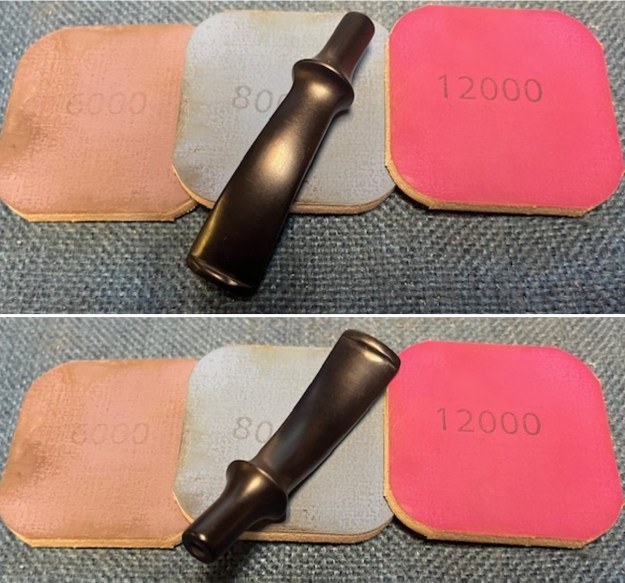
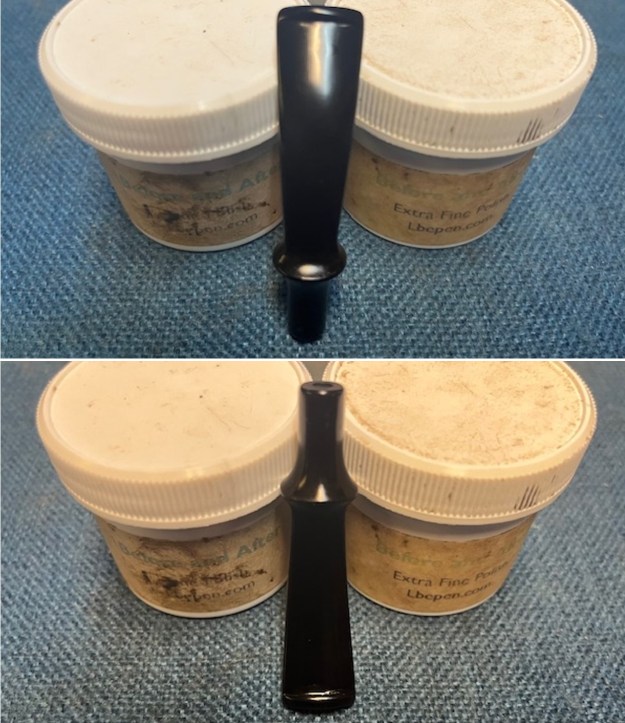
 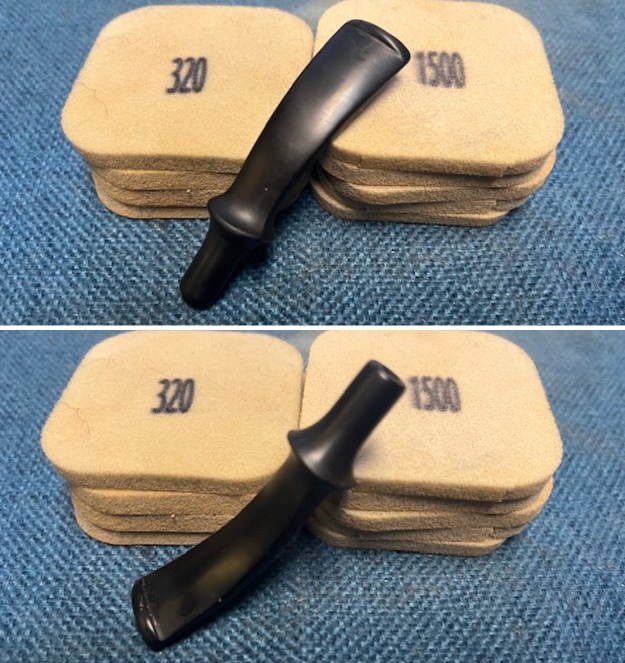 I polished the stem with micromesh sanding pads – dry sanding with 1500-12000 grit pads. I wiped the stem down after each pad with a damp cloth to remove the sanding dust. I used the Before & After Pipe Polish to remove the small minute scratches left in the vulcanite even after the micromesh regimen. I finished by wiping the stem down with a final coat of Obsidian Oil and set it aside to dry.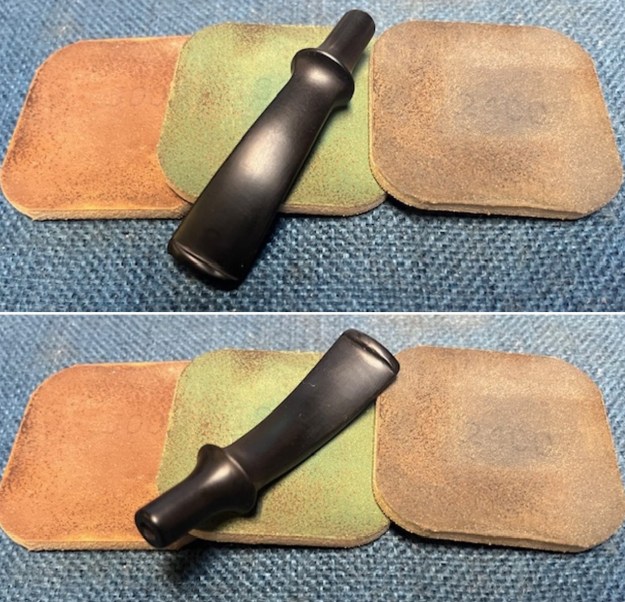
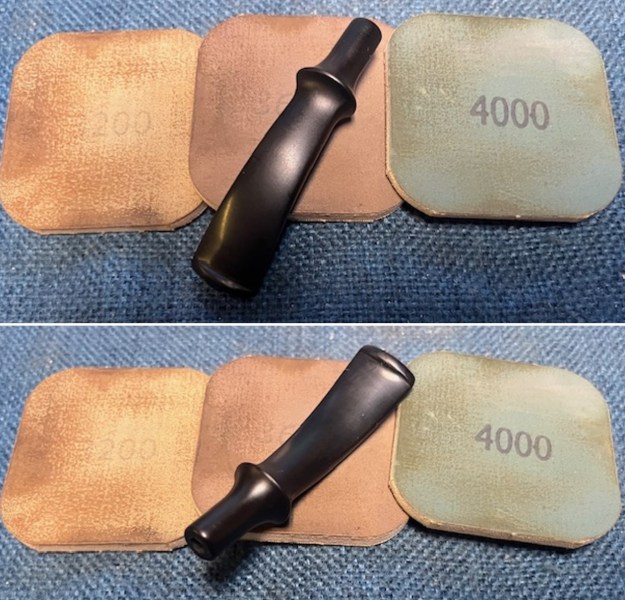
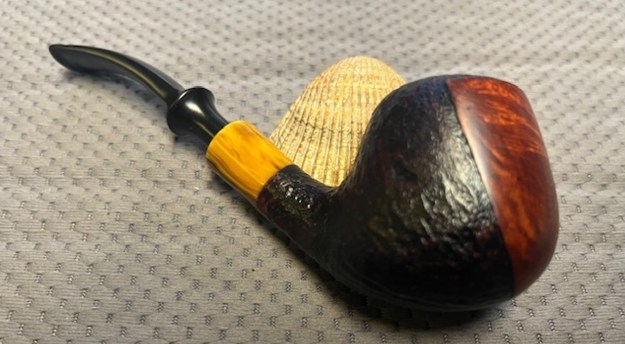
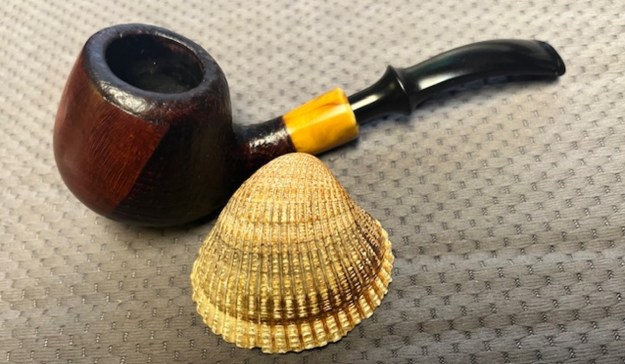
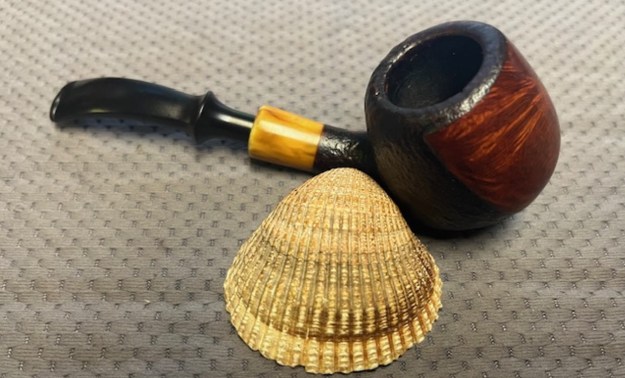
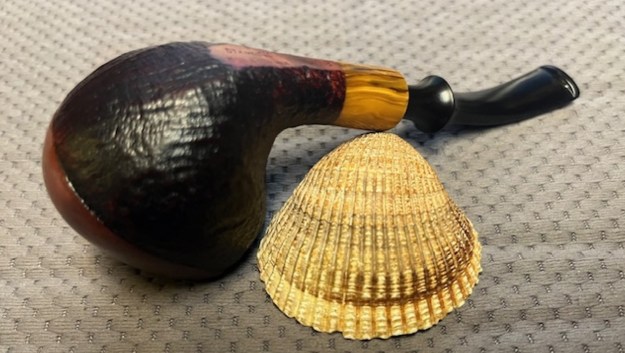
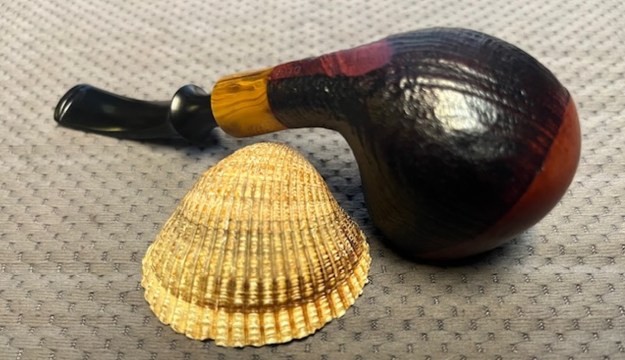
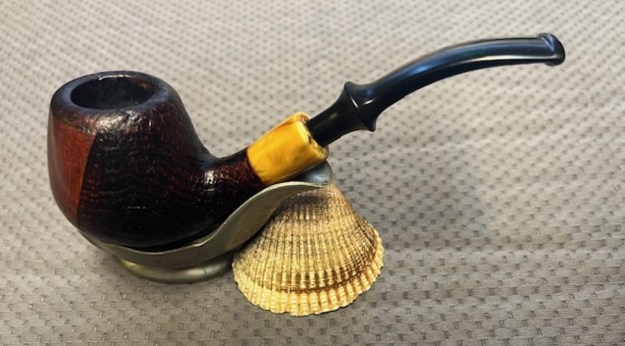
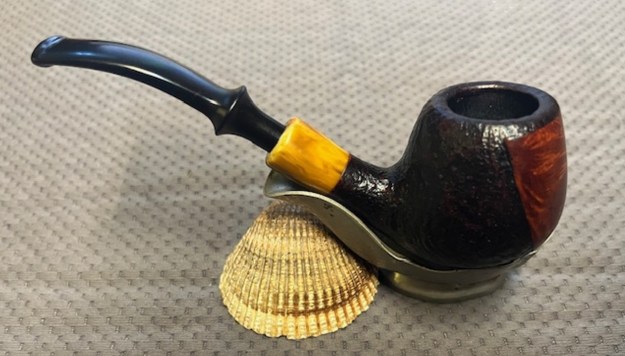
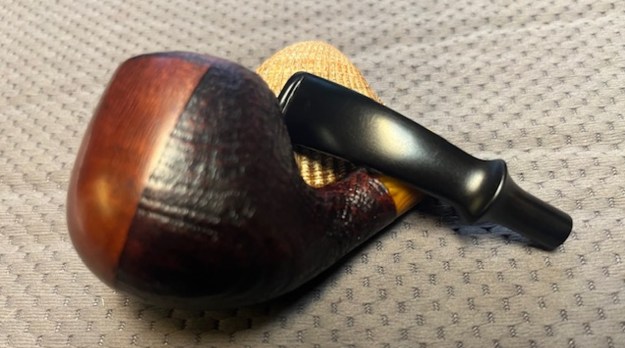
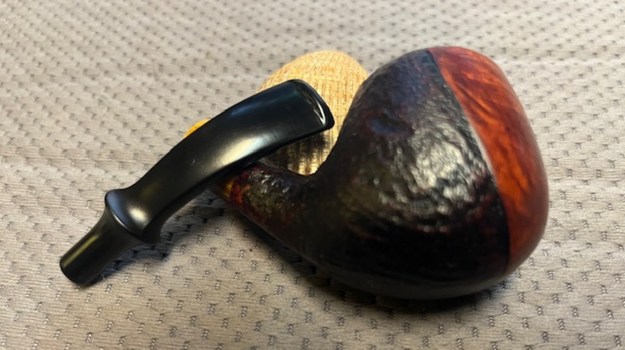
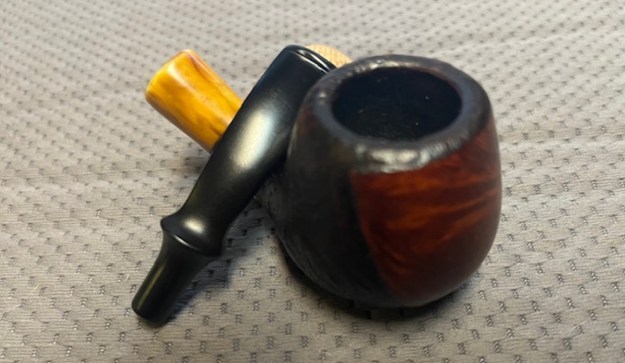
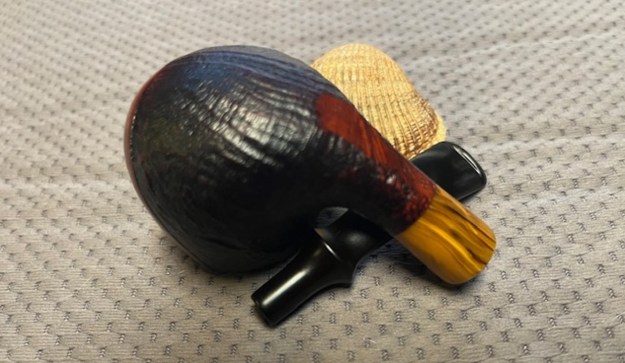
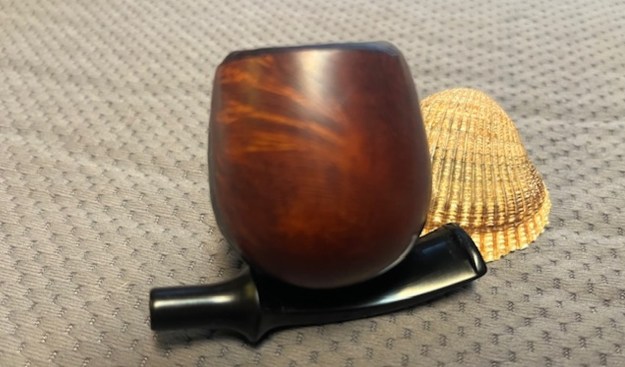
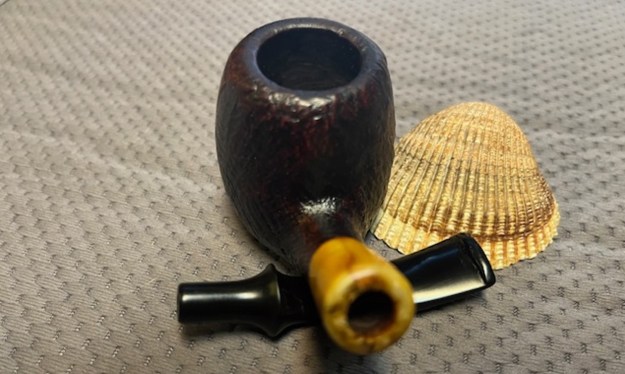
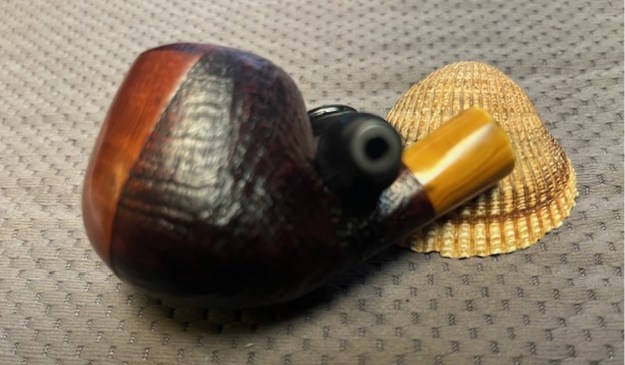
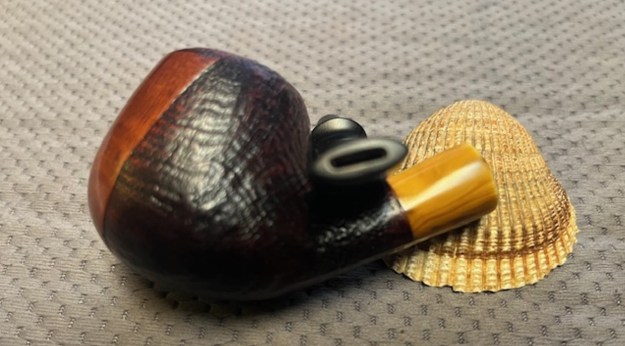
 I put the stem back on the Stanwell 608 Bent Apple and took the pipe to the buffer. I carefully buffed the bowl and stem with Blue Diamond to polish the briar and the vulcanite. Blue Diamond does a great job on the smaller scratches that remain in both. I gave the bowl and the stem several coats of carnauba wax and buffed the pipe with a clean buffing pad to raise the shine. I hand buffed it with a microfiber cloth to deepen the shine. The pipe polished up really nicely with a great contrasting stain look to the briar. The finished pipe is shown in the photos below. This is a unique Stanwell 608 Bent Apple – the turned saddle stem gives the pipe a great look. The polished and repaired black vulcanite stem looks really good with the reds and browns of the finish. The dimensions of the pipe are Length: 5 inches, Height: 1 ½ inches, Outside diameter of the bowl: 2 ¼ inches, Chamber diameter: ¾ of an inch. The weight of the pipe is 1.48 ounces/42 grams. This is another pipe that I will be putting it on the rebornpipes online store in the Danish Pipe Makers Section shortly, if you are interested in adding it to your collection. Thanks for walking through the restoration with me on this beauty!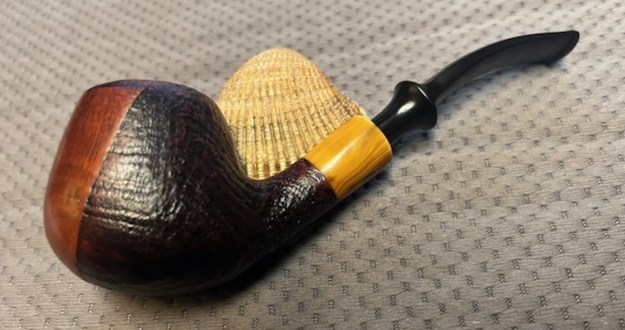
 rebornpipes