
by Steve Laug
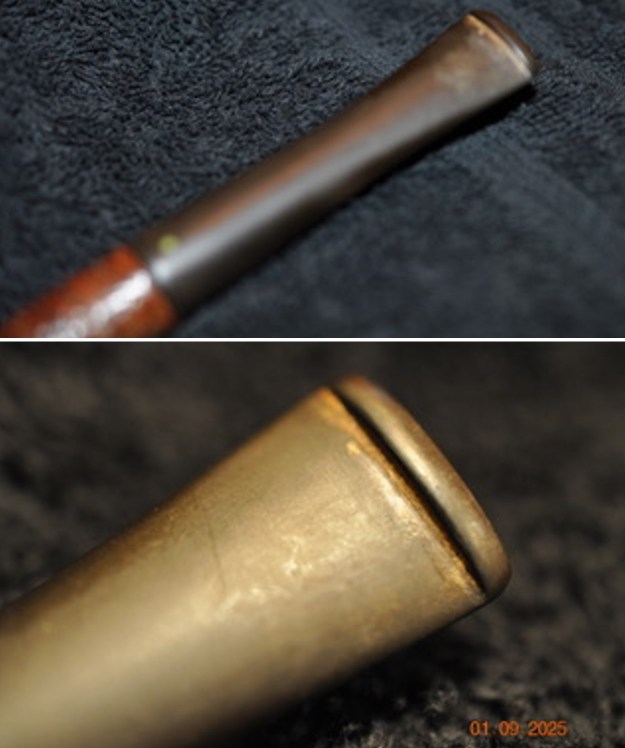
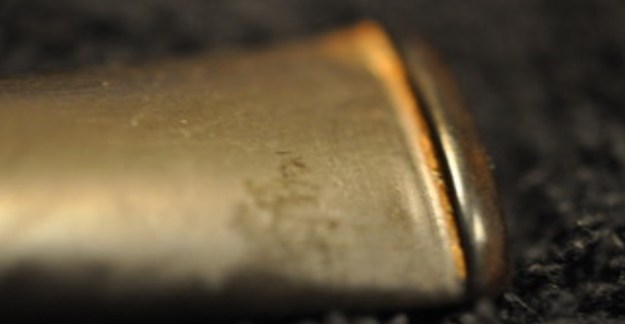
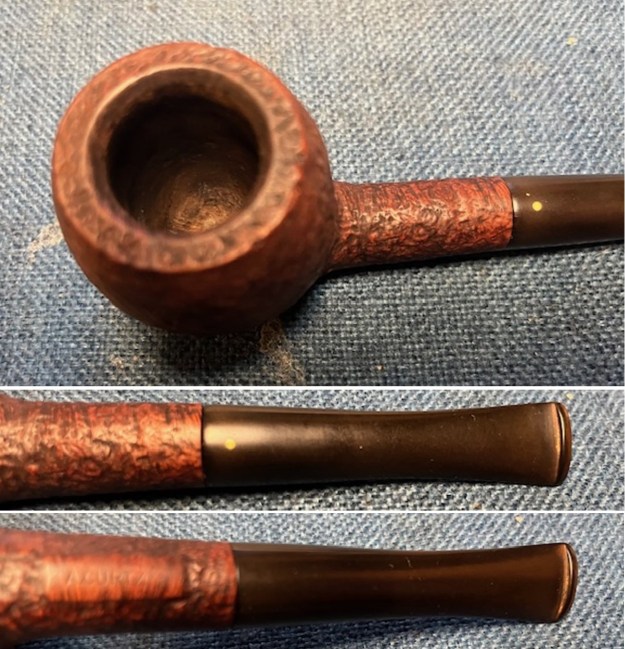
The next pipe on the work table is an Apple shaped pipe with a vulcanite taper stem. We picked the pipe up from a seller in Ogden, Utah, USA on 12/12/2024. It is stamped on the underside of the shank and reads A. Curtz. I knew the name in connection with Jeanie’s Smoke Shop in Salt Lake City when I worked on the brand in the past. The finish looks sand blasted but the more I look at it the more I think it is a rustication made to look like a blast. It has some great grain showing through the finish. It was quite dirty but still had a charm about it. The bowl was caked and there was a light lava coat and spots on the top and the inner edge of the rim. The stem was vulcanite and was a tapered. There were light tooth marks and chatter on both sides of the stem. There was a mother of pearl inlaid on the topside of the taper that showed the reflective nature of the material. Jeff took some photos of the pipe to show the general condition of the pipe before he started his clean up.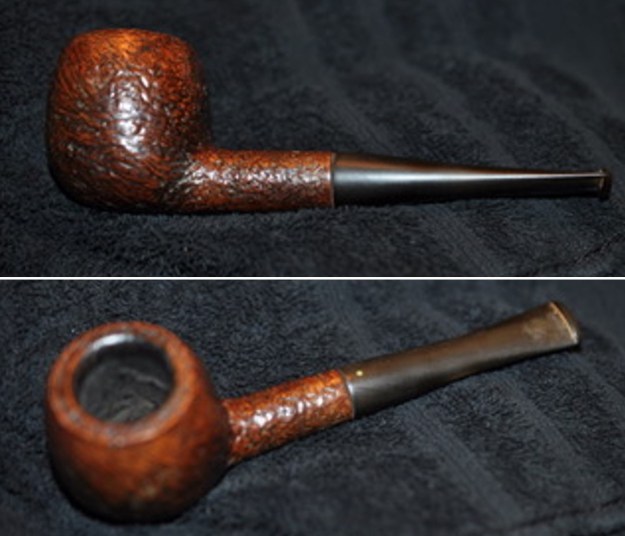 He took some photos of the rim top and bowl from various angles to give me a clear picture of the condition of the rim top and bowl. You can see the cake in the bowl and the darkening and lava coat in the rustication on the rim top. It is hard to tell if there was any damage to the inner edge at this point. The next photos show the top and underside of the stem. It is dirty and has oxidation and calcification on both sides at the button. There is also some tooth chatter and some light tooth marks.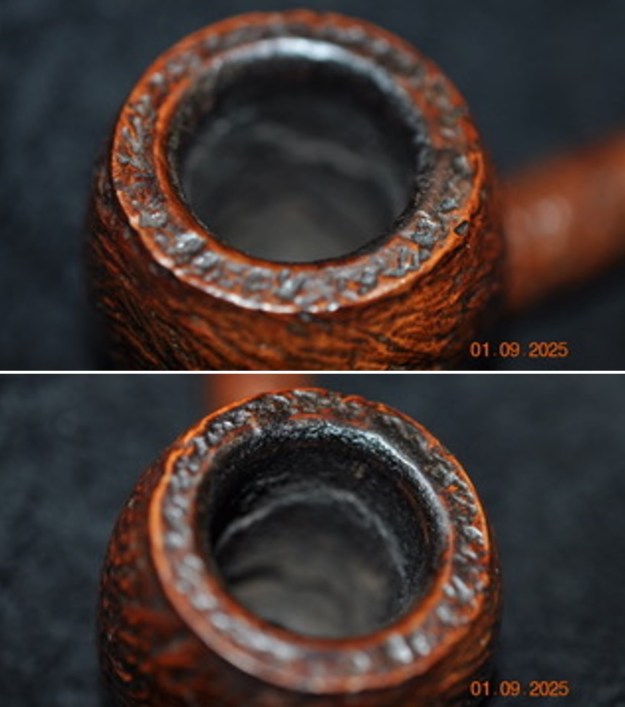
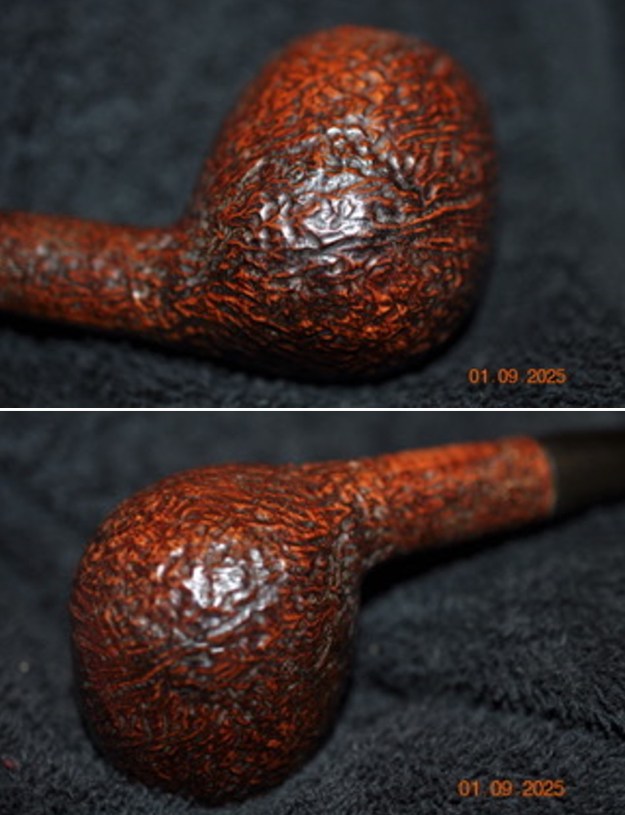
 Jeff took some photos of the sides of the bowl to show the condition of the finish on the pipe. The photos showed what to me looked like a unique rustication mimicking a sandblast around the bowl sides. Under the oils and grime, it was a nice looking bowl.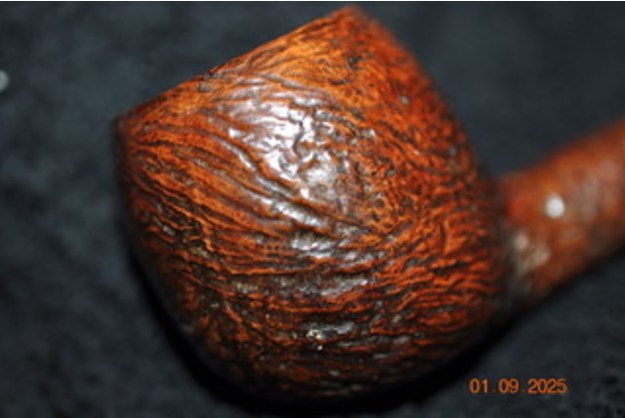
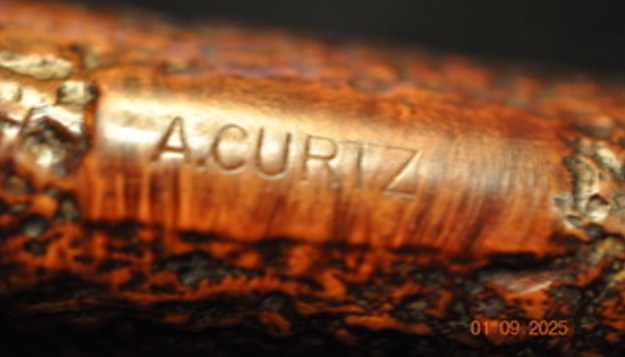
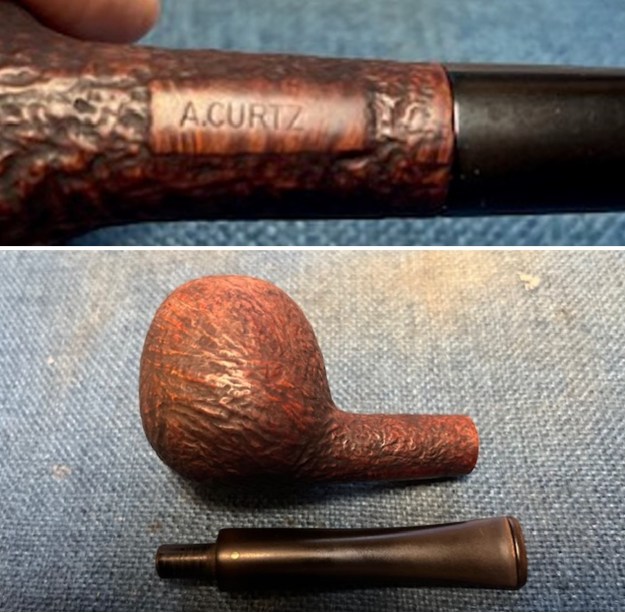
 He took a photo of the stamping on the underside of the shank. The stamping was on a smooth panel and it was clear and readable.
 To learn a bit more about the brand I turned to Pipephil to see what I could find out (http://www.pipephil.eu/logos/en/logo-c8.html). It turns out the pipe was made by an artisan named Arley Curtz who was from Utah. I did a screen capture of the photo and have included that below. I also included the side bar information below the photo.
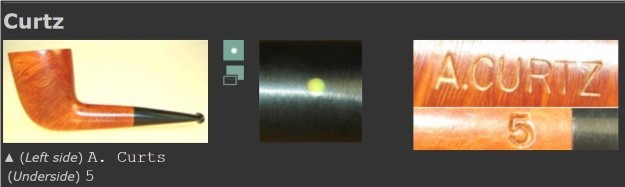 Artisan: “Arley” Curtz, Utah (USA). The stems of the A. Curtz pipes are also marked with 2 dots (a red and a white).
I then turned to Pipedia to find out some more details (https://pipedia.org/wiki/Curtz). The information was brief but helpful. I have included that article below.
Arley G. Curtz retired the director of the Bountiful Davis Art Center (Bountiful, Utah) and is now a pipe repairman and pipe maker. He was formerly the pipe repairman at Jeanie’s Smoke Shop, and has been making pipes ever since.
He makes about 70 pipes a year using Greek and Italian briar. His pipes are available at Edward’s Pipe & Tobacco Shop in Denver, CO, at the Tinderbox in Salt Lake City, on the web at The Pipe and Pint, and at Curtz Handmade Pipes and Pipe Repair in Salt Lake City, Utah.
I did a bit more searching to learn more about the repairman/pipe maker. I came across a 2018 article on a site called Utahstories (https://utahstories.com/2018/05/arley-curtz-pipe-making-and-memory-collecting/). The article included a photo of Arley Curtz that I have inserted below. I am also including a short section of the article that makes me want to meet this gentleman.
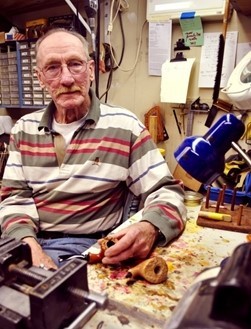 For Arley Curtz, a pipe is more than just a way to smoke tobacco. It summons up a time when pipe smoking was both acceptable and part of a gentler civility in our culture.
Curtz is a pipe maker and collector of smoking pipes. He has over 300, ranging from simple corn cobs to handmade antiques. Each one has a story. As the smoke from a pipe curls upwards, it allows Curtz a time to pause and reflect. “A pipe,” he says, “is a keeper of memories.”
Just as a pipe cannot be smoked in haste, a handmade pipe requires patience to craft. Curtz forms his pipes from briarwood, which grows in countries bordering the Mediterranean Sea.
I only wish I had found this earlier before I met my brother in Salt Lake City and visited Jeanie’s Smoke Shop. I would have certainly made a point to visit Arley at his own shop and gotten to meet him. Until my next trip to Idaho to visit my Dad and brother I will leave this on my wish list. Now to get on with working on his pipe.
Jeff did his usual thorough job cleaning the pipe which I really appreciate because of the freedom it gives me in dealing with pipes. He reamed it with a PipNet pipe reamer and got rid of the cake. He cleaned up the reaming with a Savinelli Fitsall Pipe Knife so that we could see the walls of the bowl and assess for damage. He cleaned the internals of the shank and stem with alcohol, pipe cleaners and alcohol. He scrubbed the exterior with undiluted Murphy’s Oil Soap and a tooth brush. He rinsed the pipe under warm water. He dried it off with a cloth and then let it air dry. The stem was scrubbed with Soft Scrub and had a soak in Briarville Pipe Stem Deoxidizer to remove the oxidation. Once it was rinsed off, it came out looking very good. The finish on the bowl and the rim top cleaned up nicely. I took pictures of the pipe to show how it looked when I unpacked it.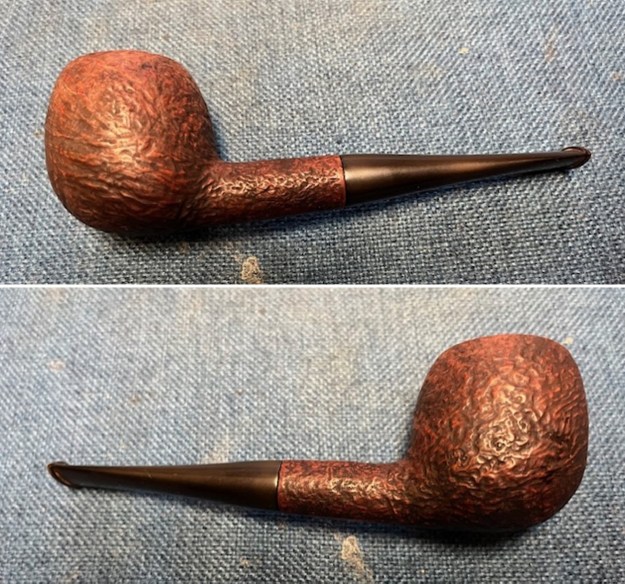
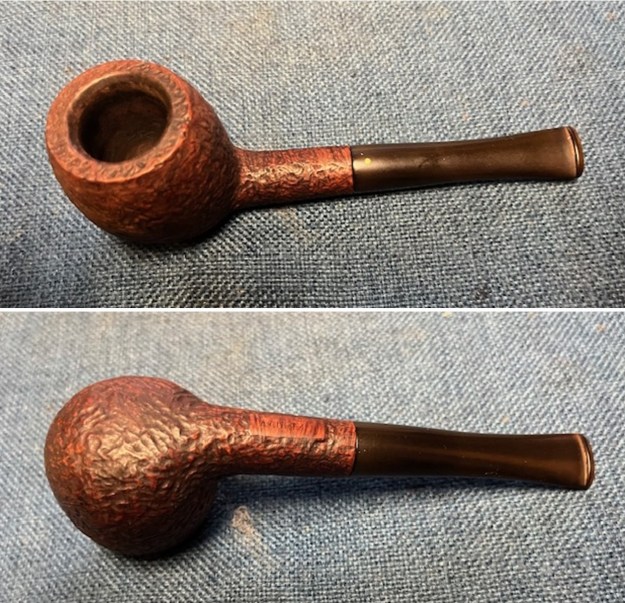 I took a close up photo of the rim top to show how clean it was. The bevelled inner edge looked very good. The stem looked good just some light tooth chatter and marks near the button. Overall the pipe is a beautiful looking piece.
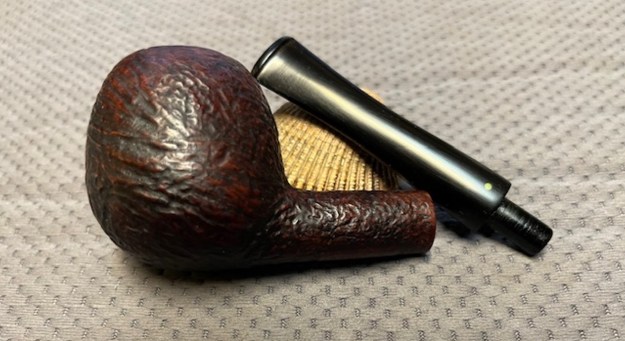
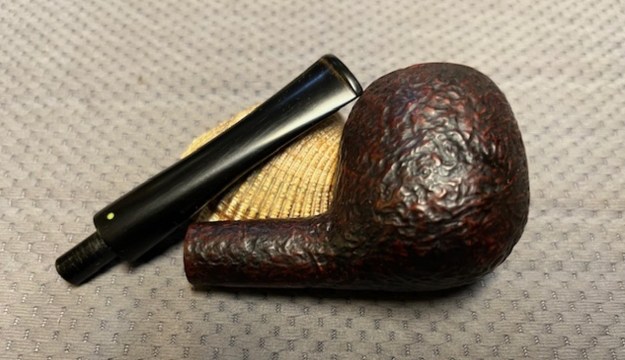
 I took a photo of the stamping on the underside of the shank. It read as noted above. It is very clear and readable. I took a photo of the bowl with the stem removed to give a sense of the sized of the pipe.
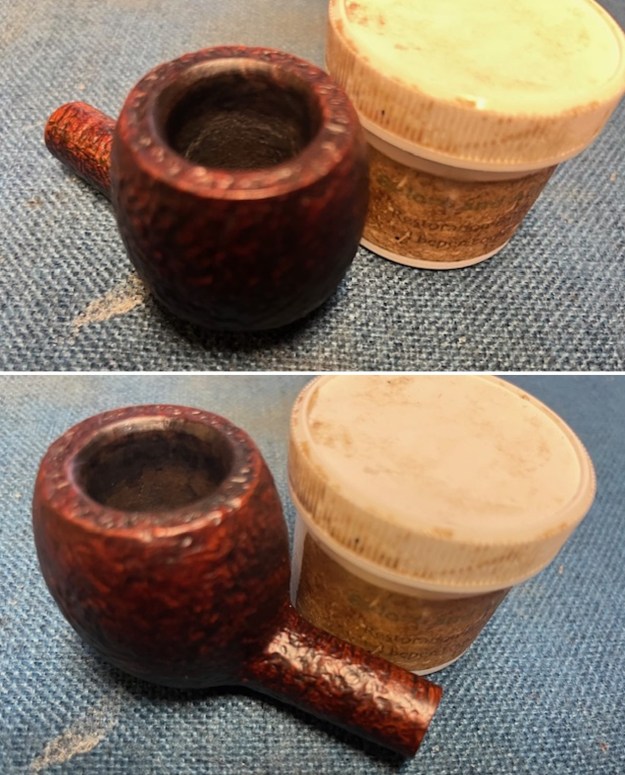
 The finish on the bowl was very clean and looked good. I worked some Before & After Restoration Balm into the briar with my finger tips and a horsehair shoe brush. I let it sit on the bowl for 10 minutes and then buffed it off with a paper towel and soft cloth. The product is a great addition to the restoration work. It enlivens, enriches and protects the briar while giving it a deep glow. It is a product I use on every pipe I restore.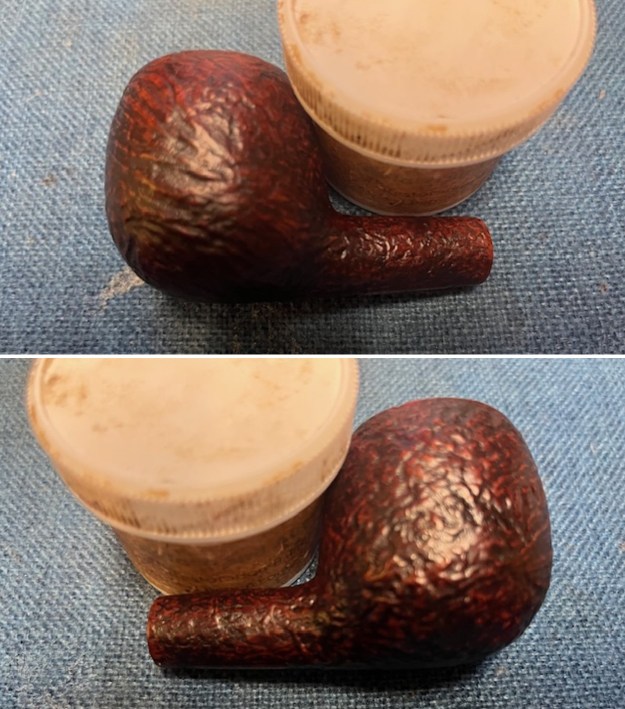
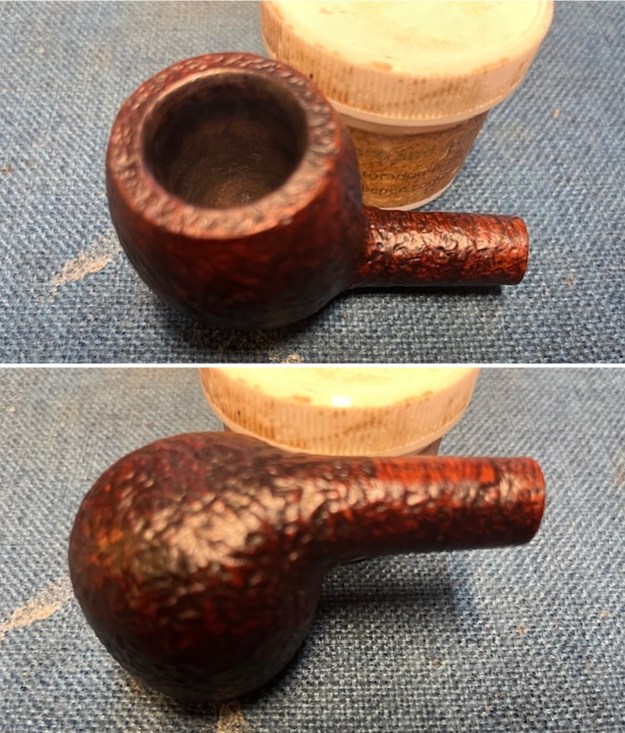
 I set the bowl aside and worked on the stem. The shank end of the stem had rounded shoulders that interrupted the flow of the straight line of the stem and shank junction. I sanded the stem surface with 220 grit sandpaper to flatten the edge. Once finished it looked flatter and the rounded shoulders were gone on all but the top side and it was lessened.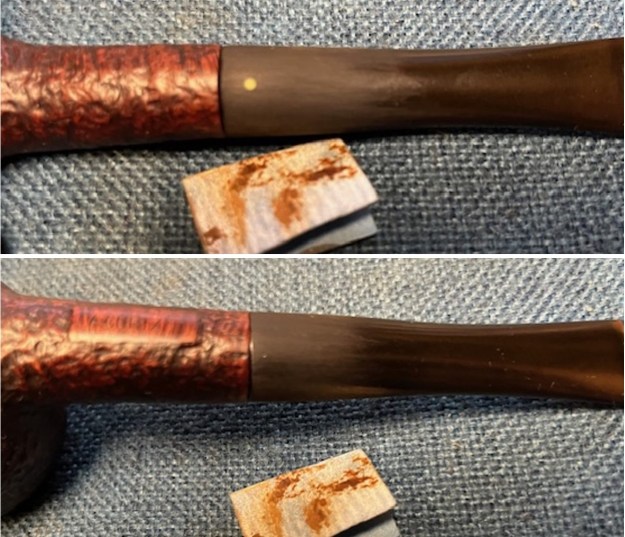
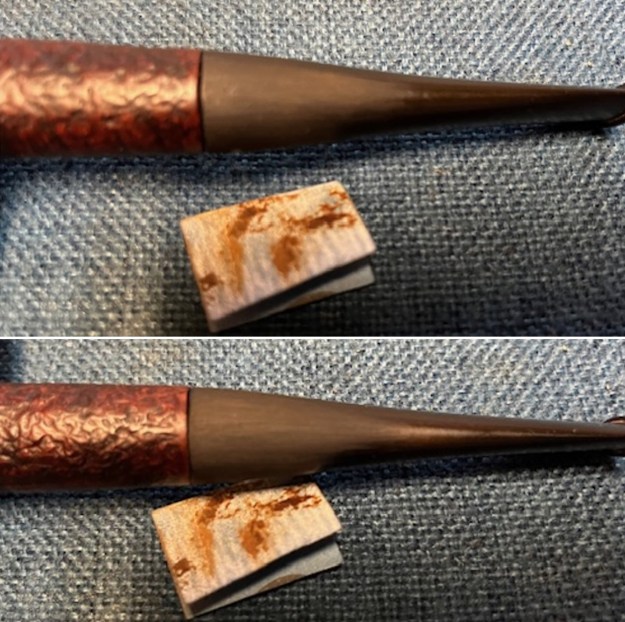 I sanded out the sanding on the shank end and the light tooth marks and chatter toward the button with 320-3500 grit sanding pads. I wiped the stem down with an Obsidian Oil cloth after each sanding pad. The stem looked better at this point.
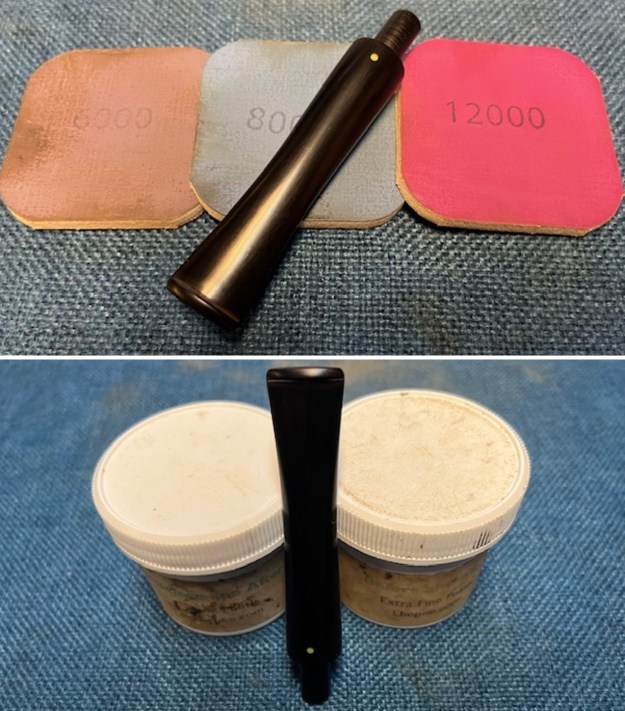
 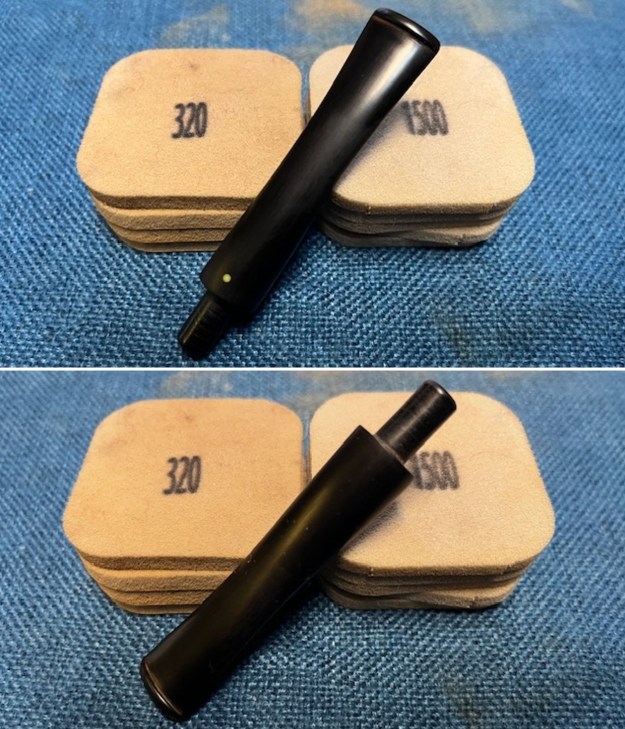 I polished the stem with micromesh sanding pads – wet sanding with 1500-12000 grit sanding pads. I wiped it down after each sanding pad with Obsidian Oil. I polished it with Before & After Pipe Stem Polish – both Fine and Extra Fine. I buffed the stem with a soft cloth to raise the shine. I gave it a final wipe down with Obsidian Oil to protect the stem from UV and slow down future oxidation.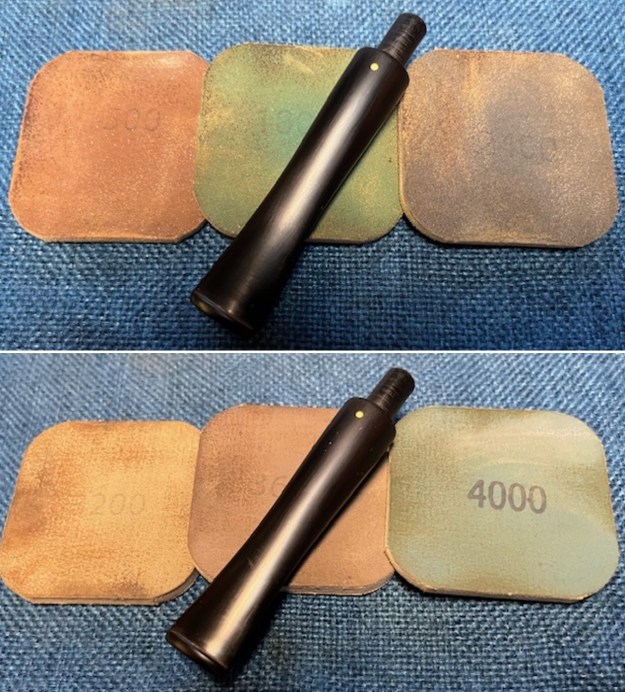
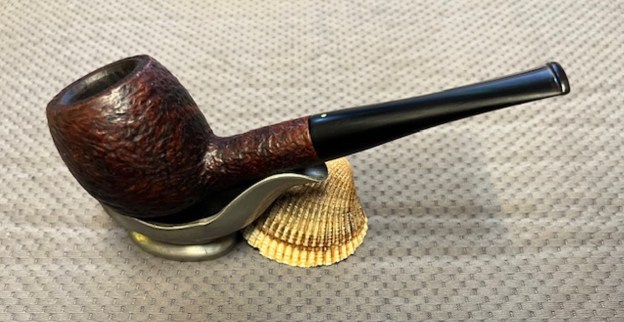
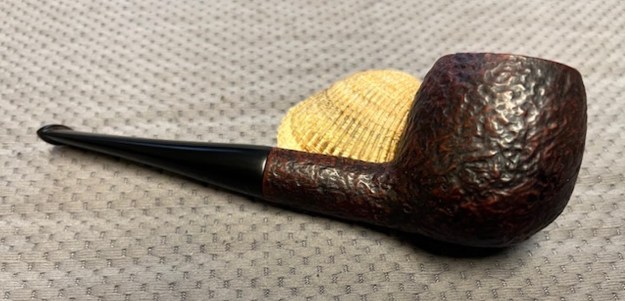
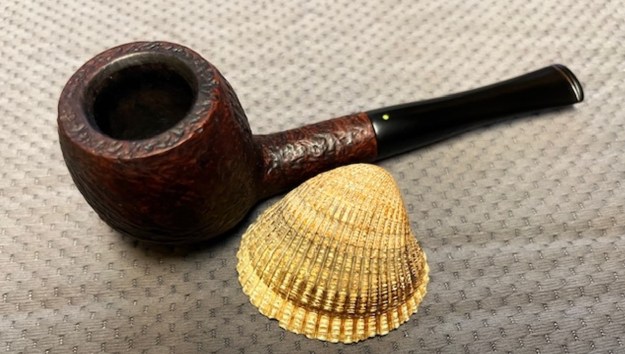
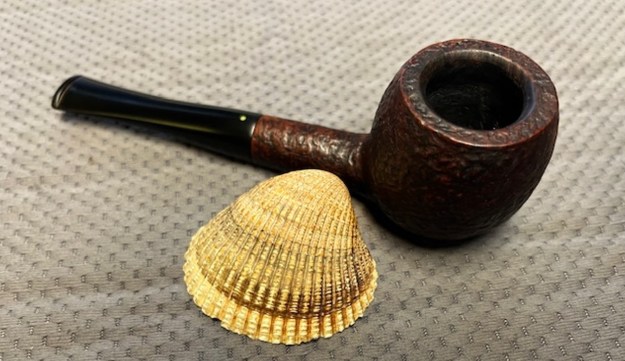
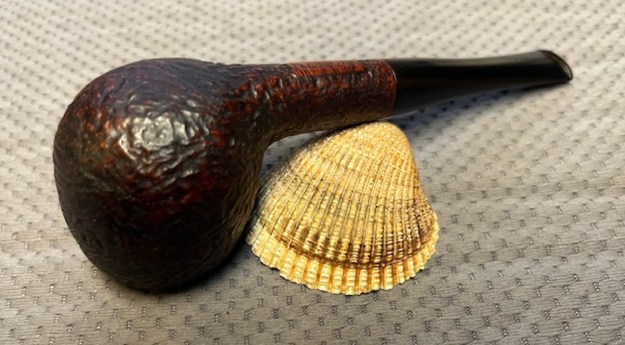
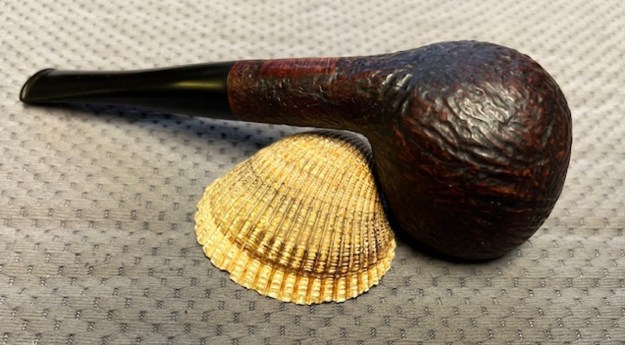
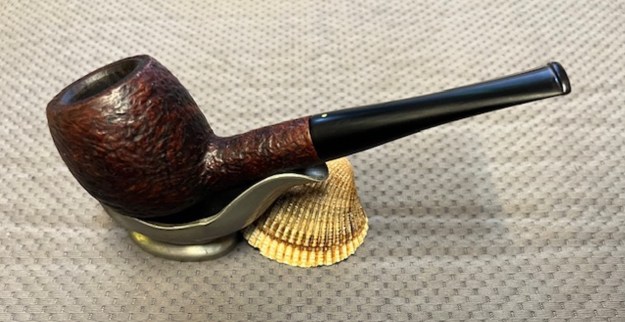
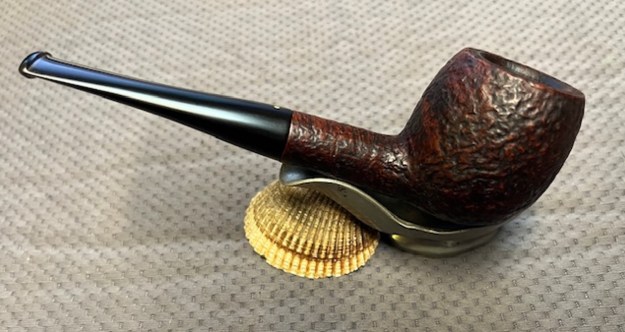
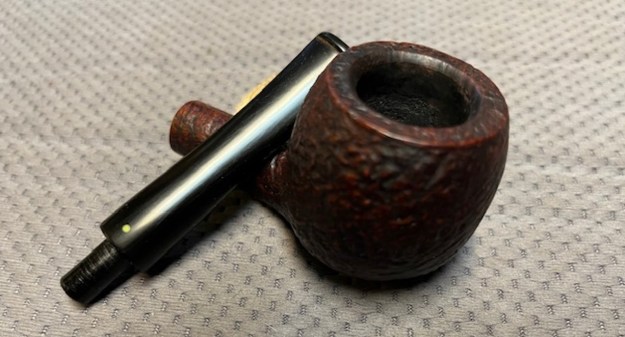
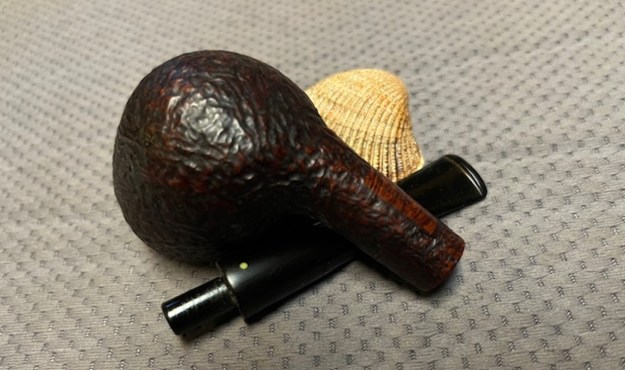
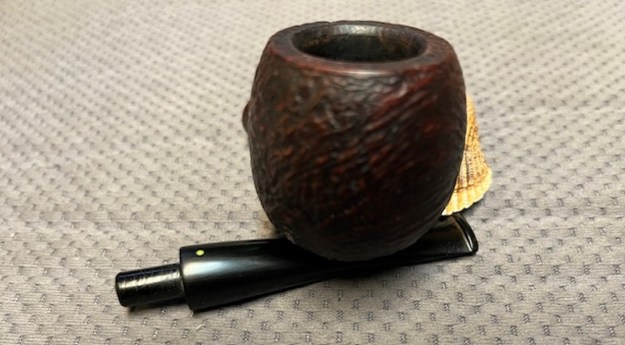
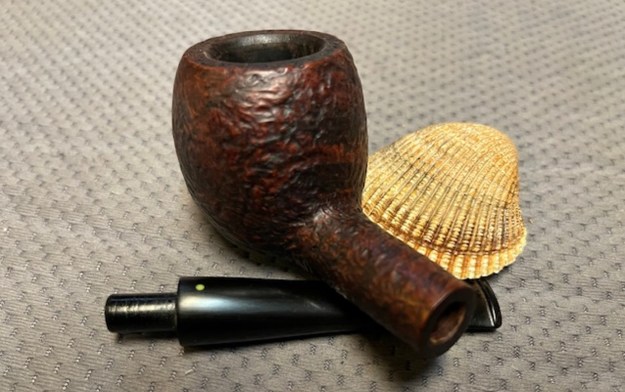
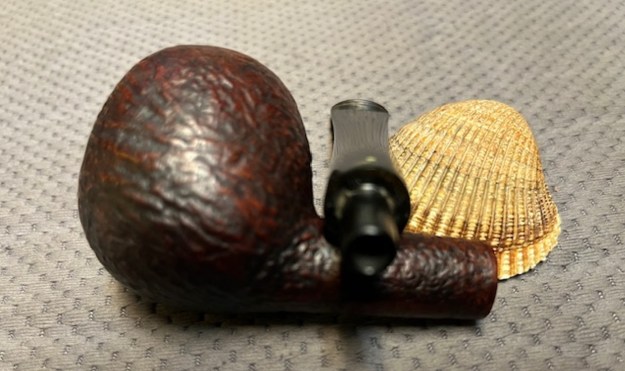
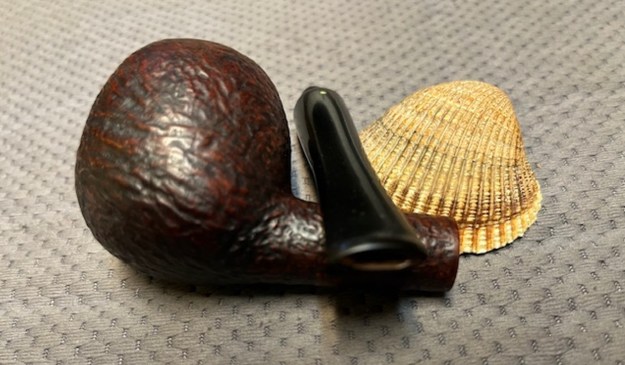
 I don’t know what it is about finishing a restoration but I have to tell you that it is a favourite part of the process. It is the moment when everything that I have worked on comes together. I can compare the pipe to where I started and there is always satisfaction that it does indeed look better than when we picked it up. I put the A. Curtz Rusticated Apple back together and buffed it with Blue Diamond on the buffing wheel. I gave the bowl multiple coats of Conservator’s Wax and the stem multiple coats of carnauba wax. I buffed the pipe with a clean buffing pad and hand buffed it to raise the shine. It is fun to see what the polished bowl looks like along with the polished vulcanite taper stem. This Arley Curtz Rusticated Apple is a great looking pipe and I am sure that it will be comfortable in hand when smoking as it is light and well balanced. Have a look at it with the photos below. The dimensions are Length: 5 ½ inches, Height: 1 ¾ inches, Outside diameter of the bowl: 1 ½ inches, Chamber diameter: 7/8 of an inch. The weight of the pipe is 1.76 ounces/51 grams. It will be on the rebornpipes store in the American Pipe Makers Section. If you are interested in adding it to your collection let me know. Thanks for walking through the restoration with me as I worked over this pipe.
As always, I encourage your questions and comments as you read the blog. Thanks to each of you who are reading this blog. Remember we are not pipe owners; we are pipe men and women who hold our pipes in trust until they pass on into the trust of those who follow us.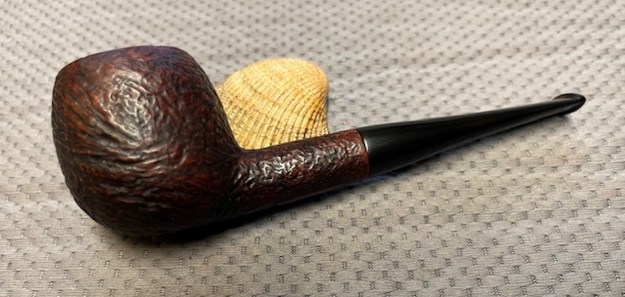
 rebornpipes