
by Steve Laug
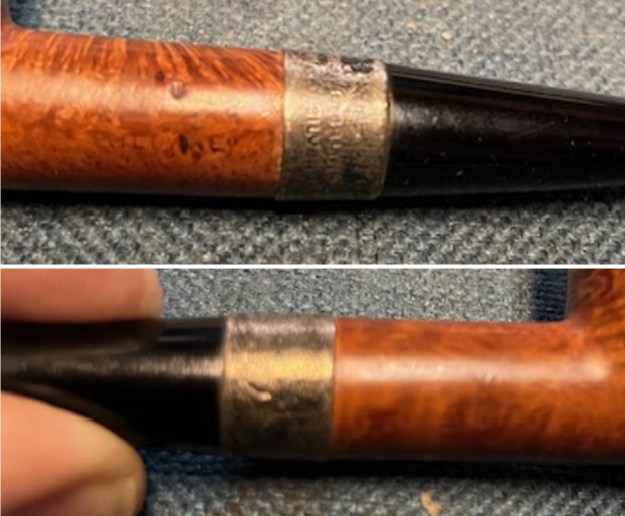
The next pipe I have chosen is smooth finished Peterson’s Billiard pipe. This one is a smooth Billiard that has a rich coloured finish around the bowl sides and shank. Neither Jeff or I have any idea where we picked up this pipe. It could have been a trade or a purchase in a shop but we do not remember. The contrast of the brown stains makes the grain really pop. It was faintly stamped on the left side of the shank and read Peterson’s [over] “Kildare”. It was very faintly stamped to the right side of the shank and reads Made in the Republic of Ireland (3 lines) with the shape number X105 next to the bowl. It came to us quite clean, just some dust and debris and little bit of oxidation on the stem and on the silver band. On the oxidized, fancy silver band on the shank end it is stamped on the top and reads Peterson [over] Dublin. On the right side it is stamped Sterling [over] Silver. Next to that are three hallmarks – a seated woman (Hibernia), a Crowned Harp (quality of the silver used) and the letter m (the date letter) which dates it to 1978. The bowl had been cleaned recently with just a little debris in the bottom. The rim top and the inner edge of the bowl looked good. The mortise had some tars and oils darkening it. The stem was lightly oxidized but there were not any tooth marks or chatter on the top and underside on and near the button. I took photos of the pipe before I started my cleanup work. They tell the story and give a glimpse of the promise that we see in this pipe. 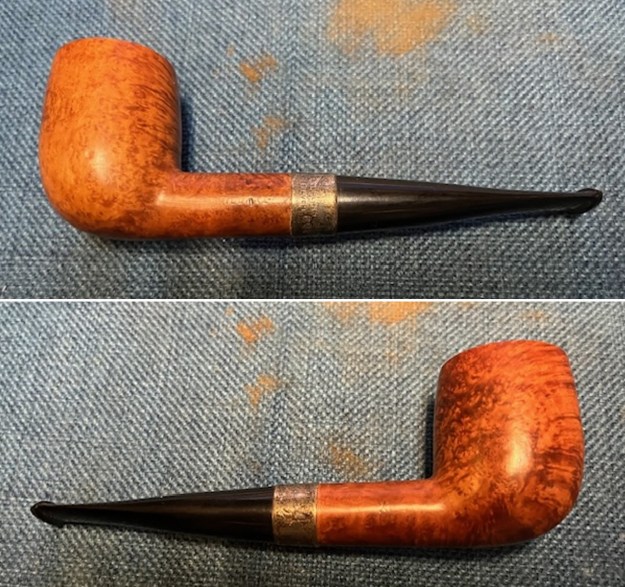
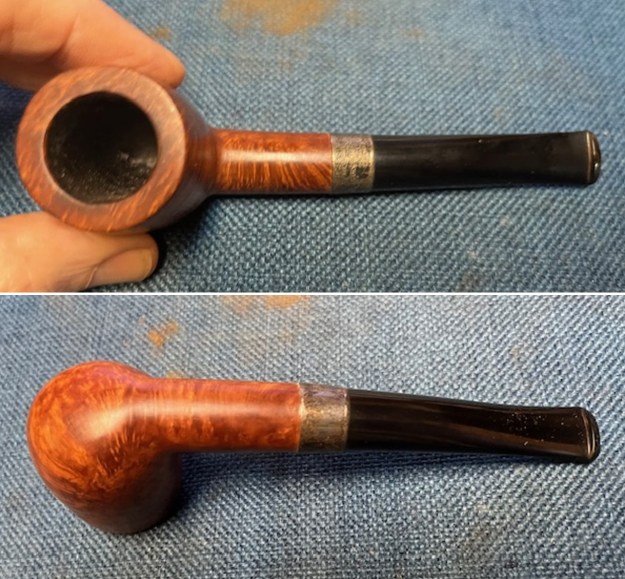 I took photos of the rim top and stem to show the general condition of the pipe. The bowl is very clean other than dust and debris in the bottom. The rim top and edges look good. The silver band is heavily oxidized but otherwise appears to be in good condition. The stem is lightly oxidized but there are no tooth marks on the surface or the button.
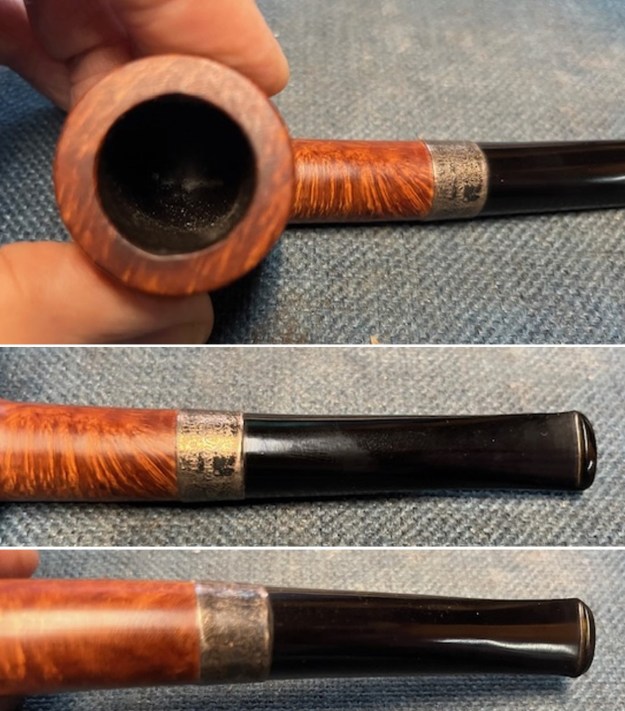 I tried to capture photos of the sides of the shank to show the stamping. The stamping is very faint and is hard to see in the photos. However, with a bright light and lens you can discern what is stamped and it reads as noted above.
 I am including the link to the Pipedia’s article on Peterson pipes. It is a great read in terms of the history of the brand (https://pipedia.org/wiki/Peterson).
I turned to “The Peterson Pipe” by Mark Irwin and Gary Malmberg to get some background on the Peterson’s System Line. On page 314 it had the following information.
Kildare (1965-) First issue of line with matte-finish in Classic Range shapes, P-Lip and fishtail mouthpiece. Second issue C.1979 as Kildare Patch, with rusticated patches on pipe surface. Third issue 2010, matte-brown, P-Lip or fishtail mouthpiece, no band. Fourth issue 2011-, burgundy sandblast finish, nickel army mount, fishtail mouthpiece, exclusive to Smokingpipes.com.
Judging from the description above I believe that I am working on a First Issue of the line in the time period of 1965-1979. It is a late Republic Era Classic Shaped pipe with a matte-finish and a fish tail stem. Now it was time to work on the pipe.
I started my work on the pipe by scraping out the debris in the bowl with a Savinelli Fitsall Pipe Knife. There was no cake on the walls but there was dust and tobacco debris on the bottom and lower sides of the bowl. It came out very easily.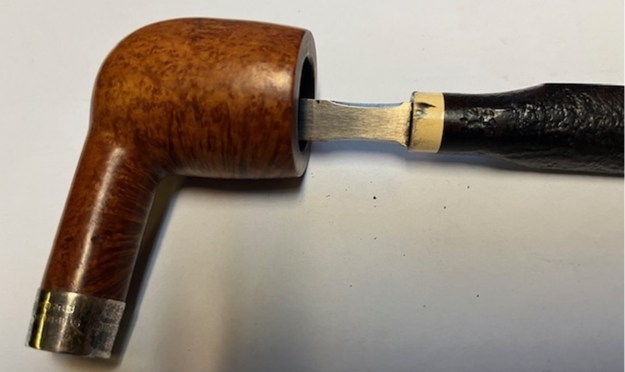 I cleaned up the oxidized Sterling Silver Band with a jeweller’s cloth. I used a lot of elbow grease but was able to remove all of the oxidation. The stamping is quite readable as noted above.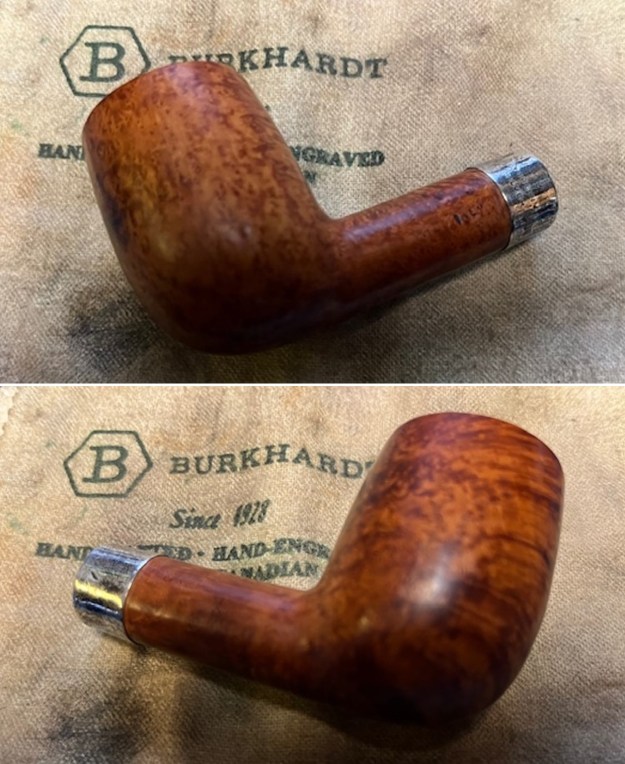
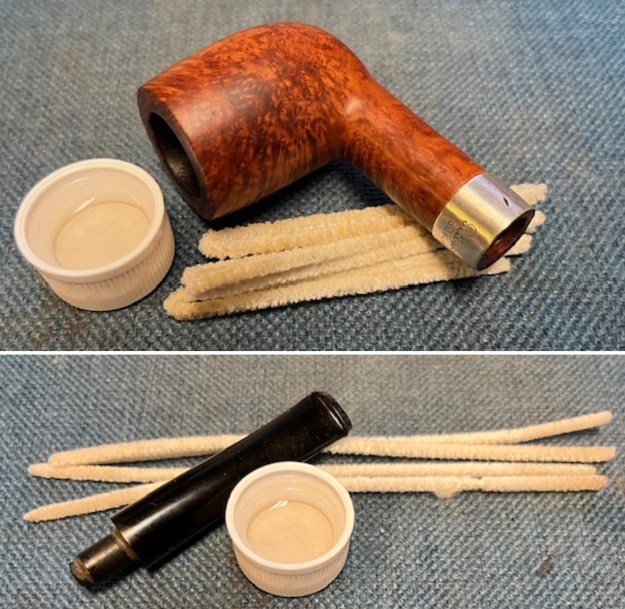
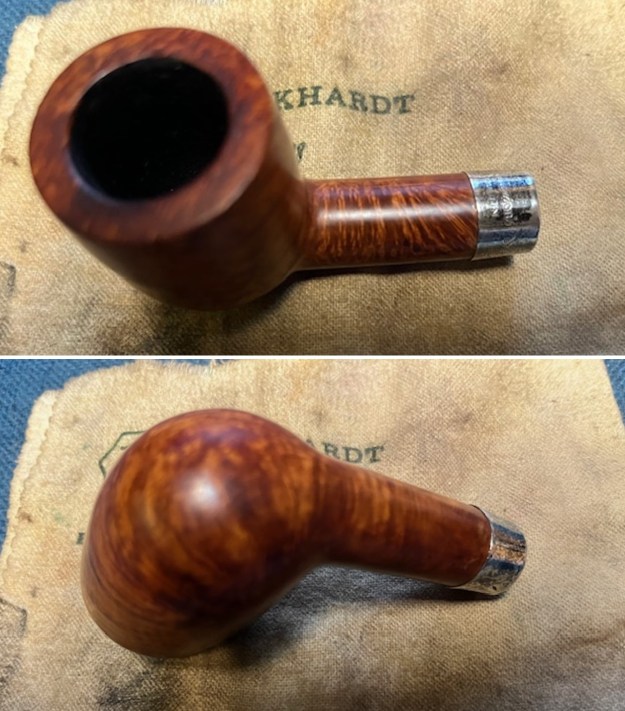 I scrubbed internals with pipe cleaners, cotton swabs and isopropyl alcohol to remove the debris and dust in the internals in both the shank and the stem. It was surprisingly clean and cleaned up quickly.
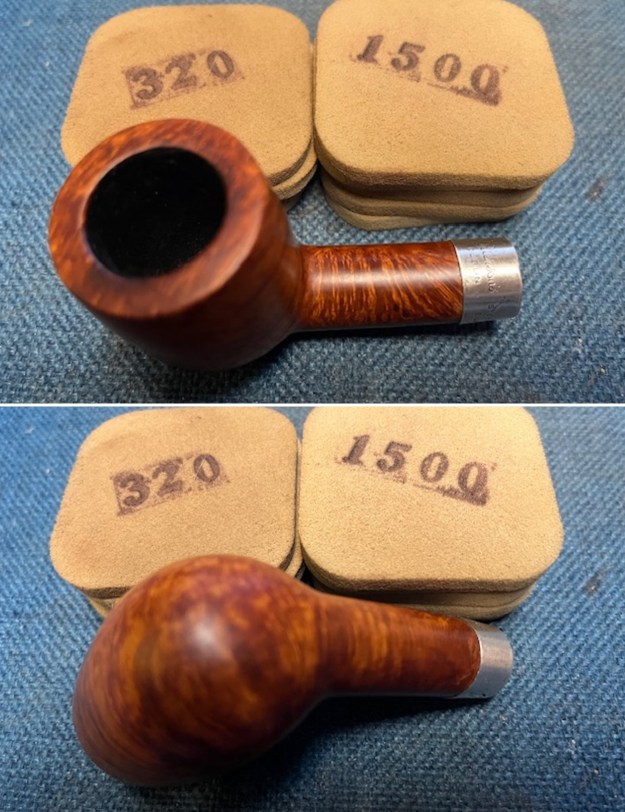
 I decided to address the darkening on the front inner edge of the bowl first. I used a folded piece of 220 grit sandpaper to give the inner edge of the bowl a slight bevel to minimize the darkening and blend it into the surrounding briar. It looked much better at this point.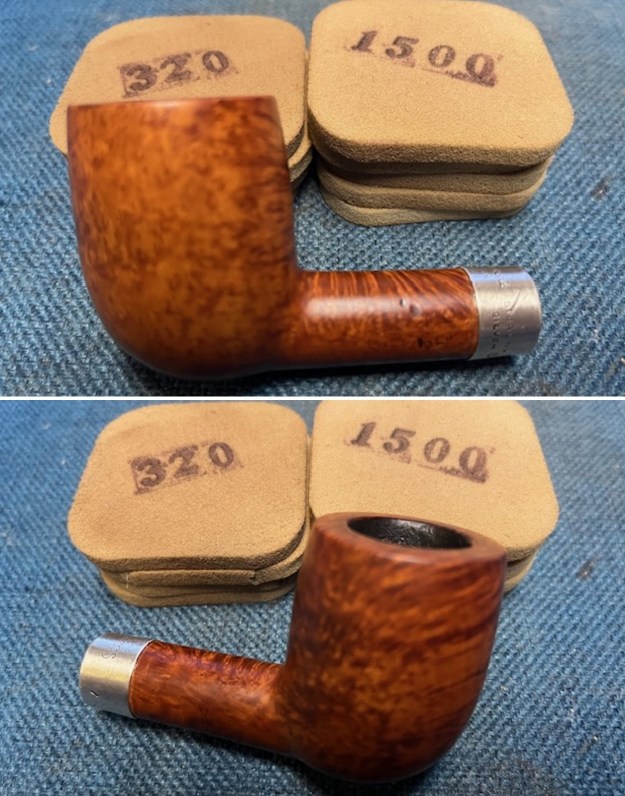
 I polished the briar with micromesh sanding pads to remove the scratches in the briar – dry sanding with 1500-12000 grit sanding pads. I wiped the bowl down with a damp cloth after each sanding pad.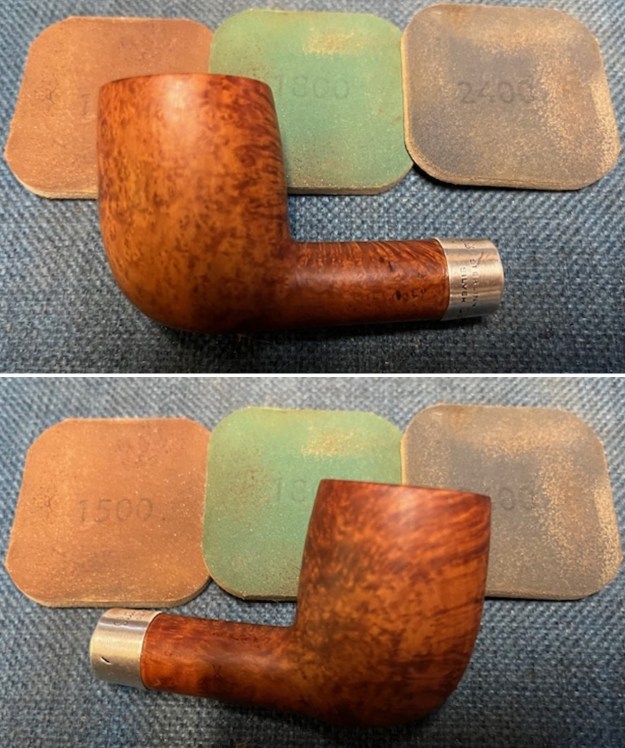
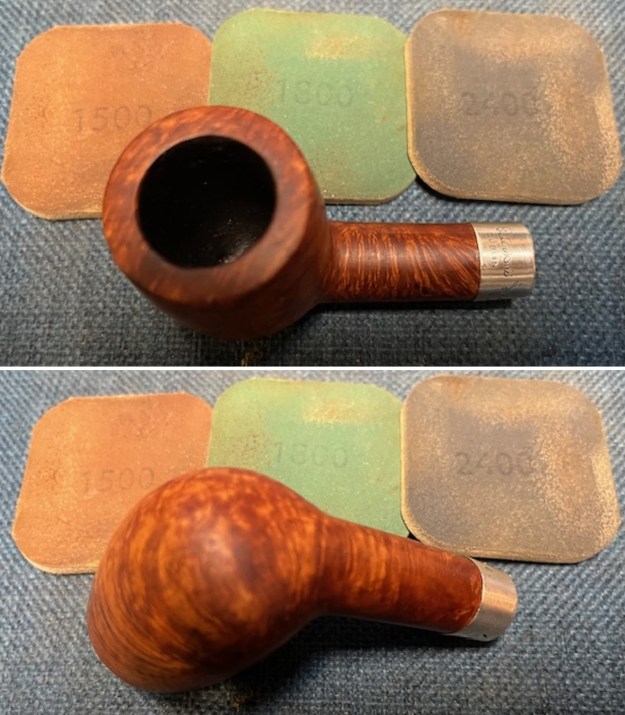
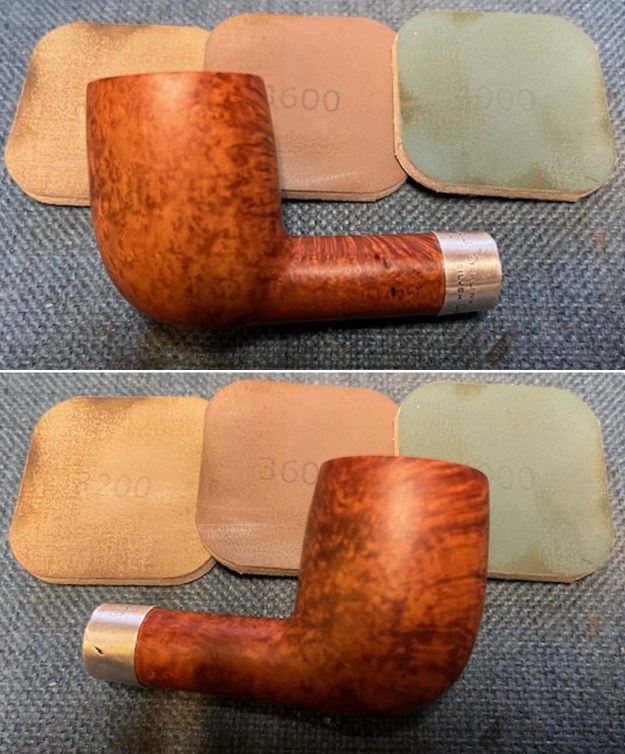
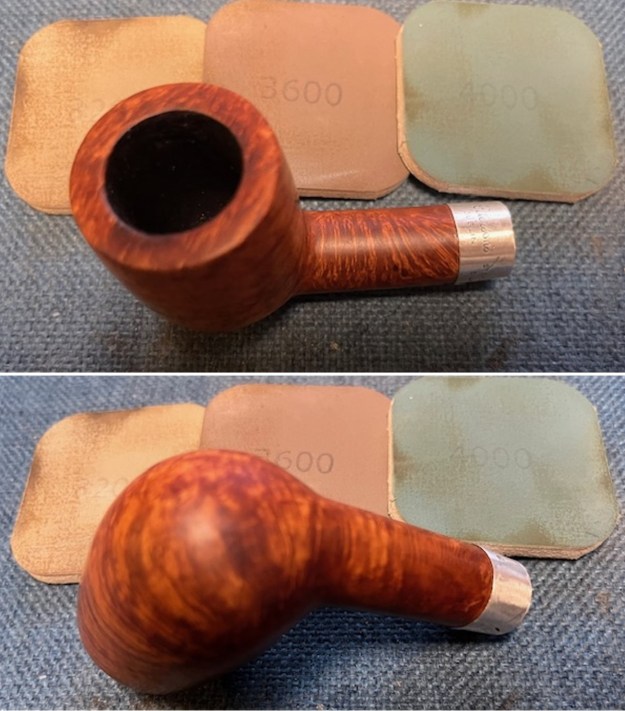
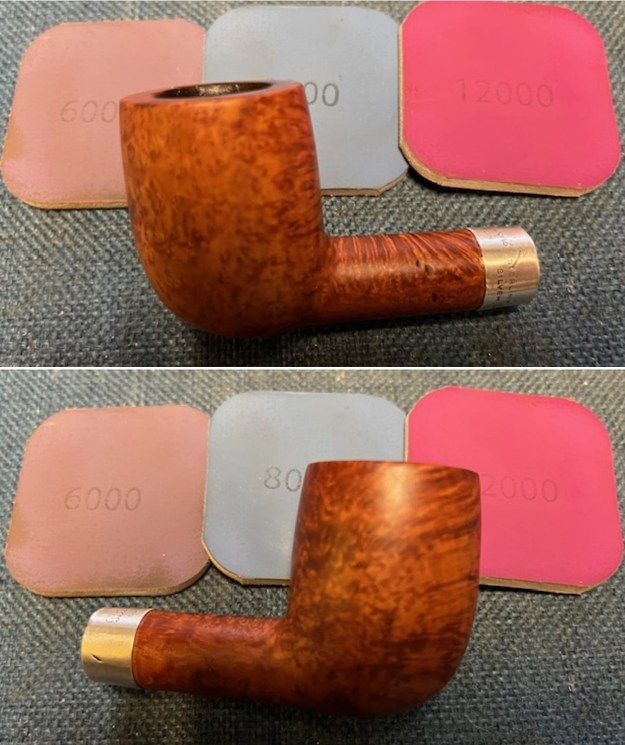
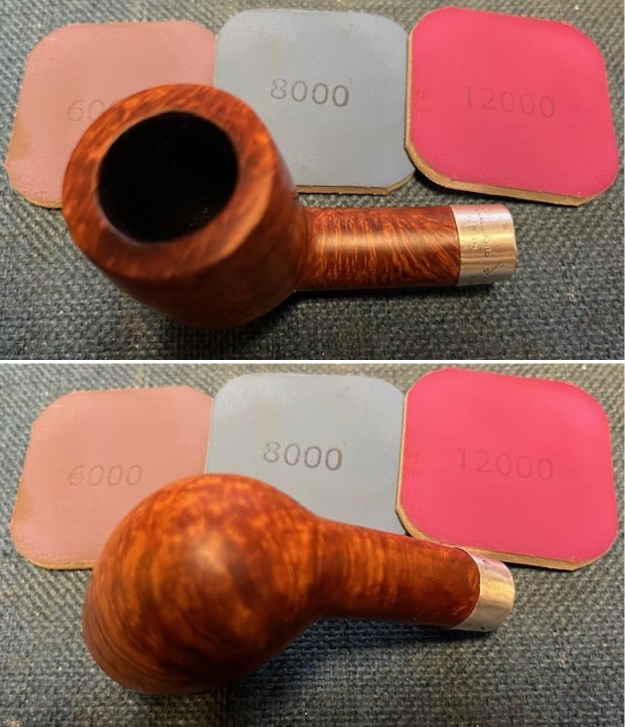 I worked some Before & After Restoration Balm into the surface of the briar with my fingertips to clean, enliven and protect the briar. I let the balm sit for 15 minutes and then buffed with a cotton cloth to raise the shine. The photos show the bowl at this point in the restoration process.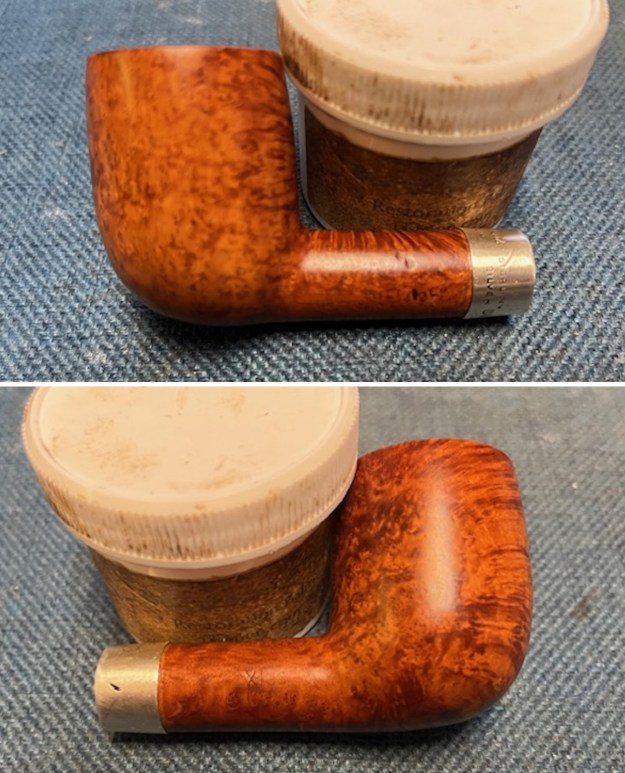
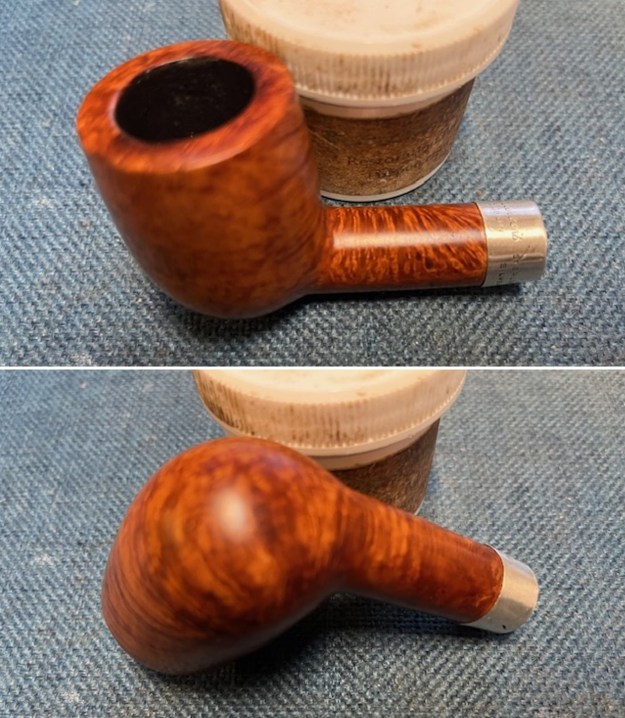
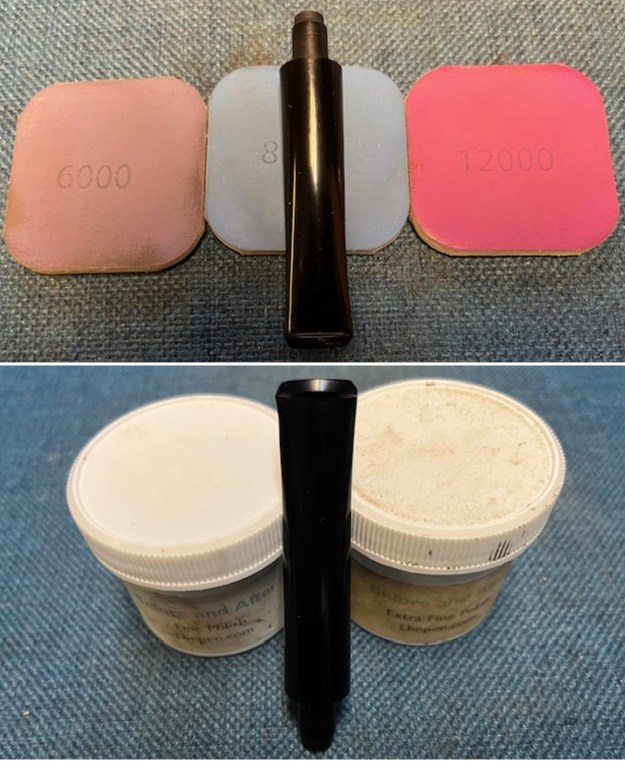
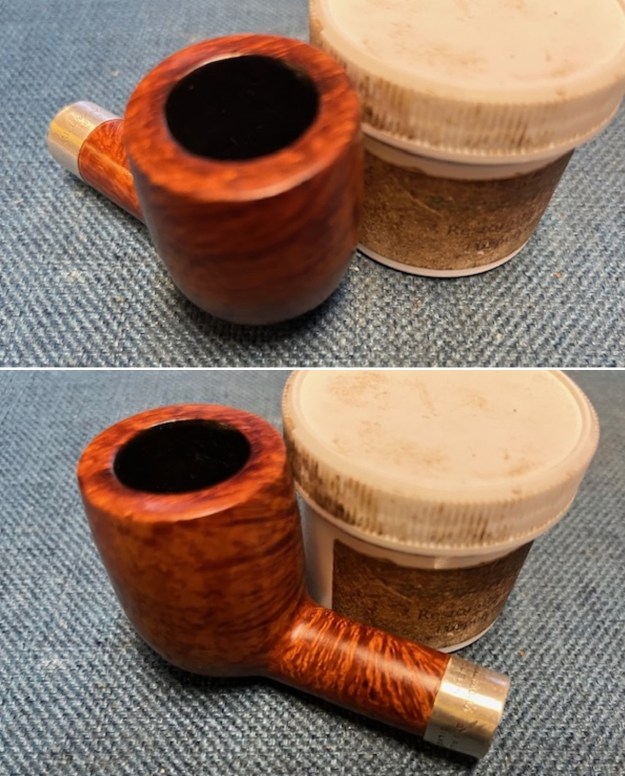 I set the bowl aside and turned my attention to the stem. I polished the stem with micromesh sanding pads – wet sanding with 1500-12000 grit sanding pads. I wiped it down after each sanding pad with Obsidian Oil. I polished it with Before & After Pipe Stem Polish – both Fine and Extra Fine. I wiped it down with another coat of Obsidian Oil and set it aside to cure.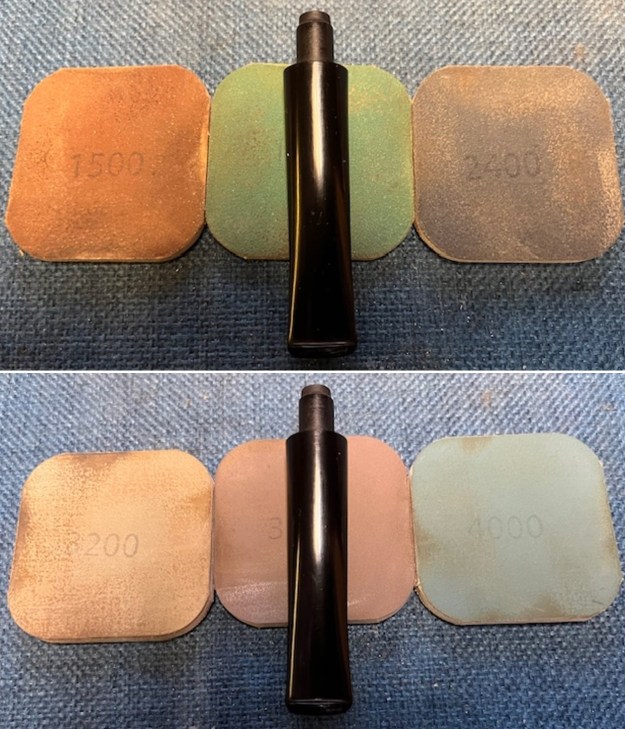
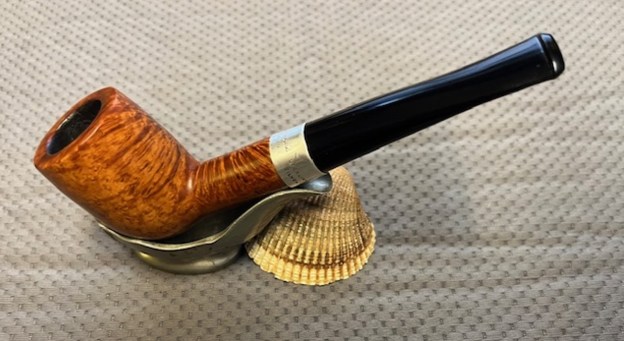
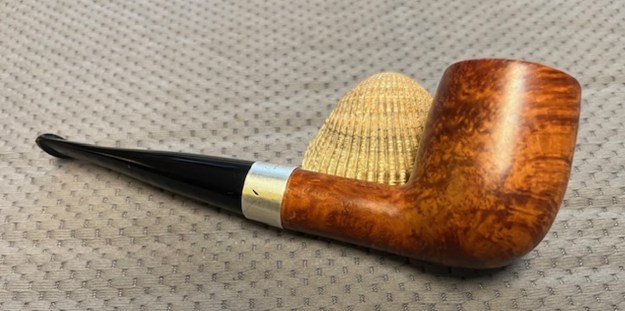
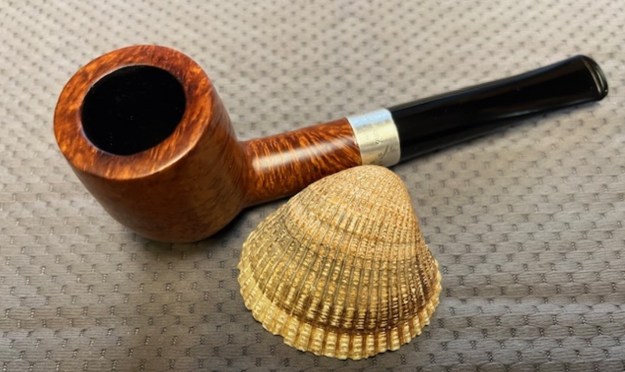
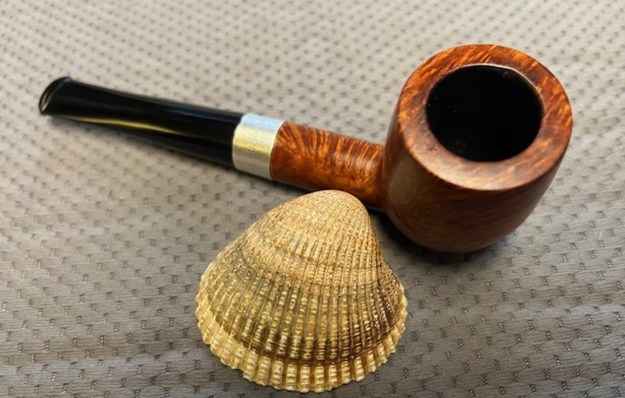
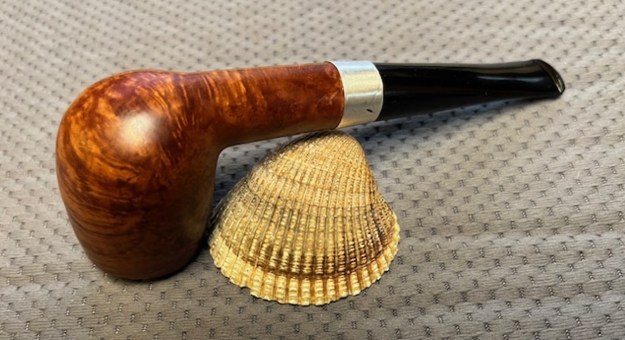
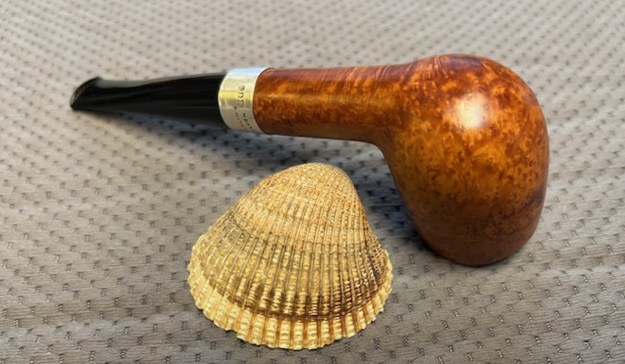
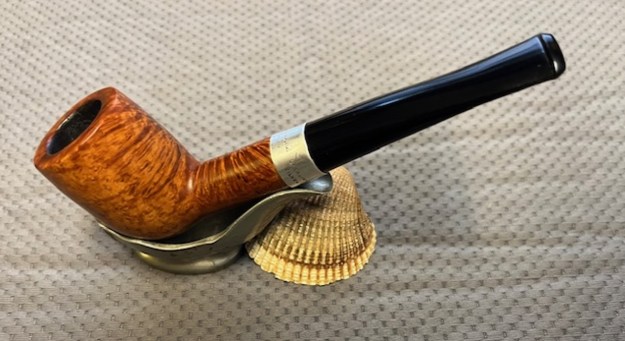
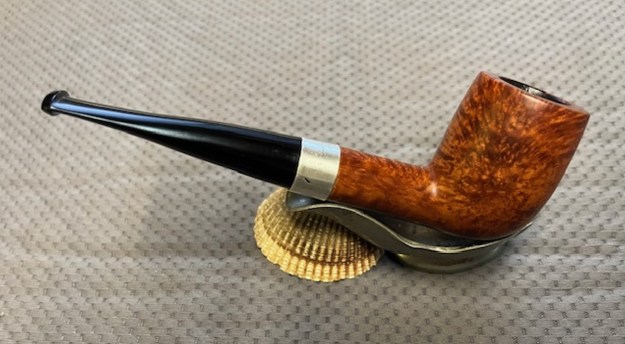
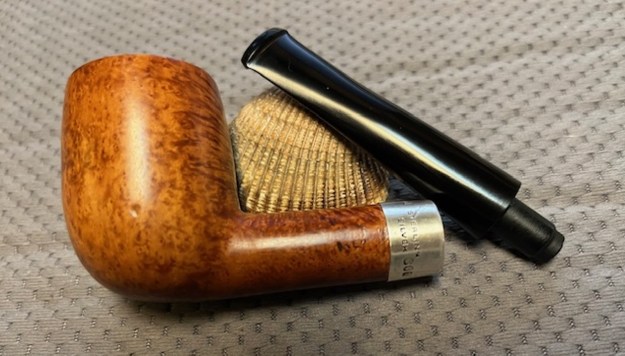
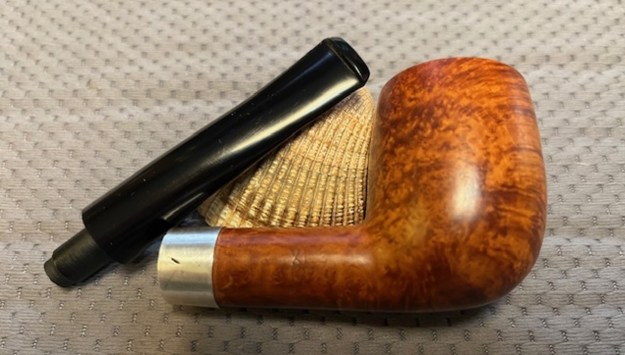
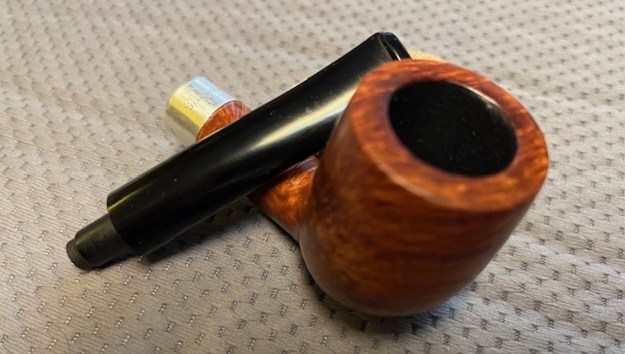
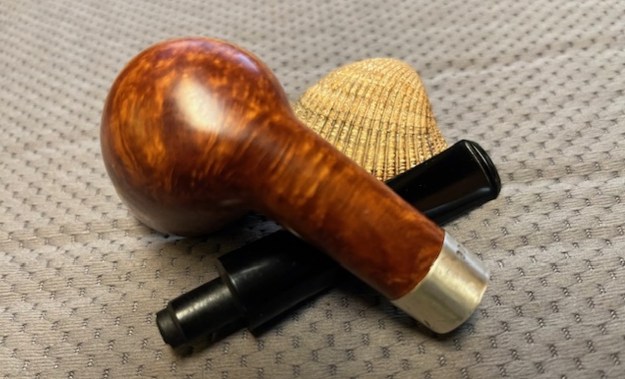
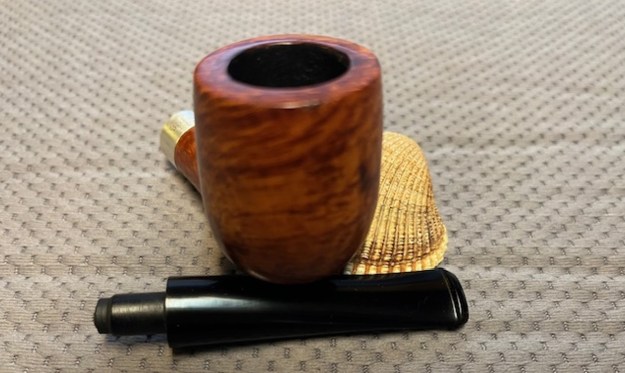
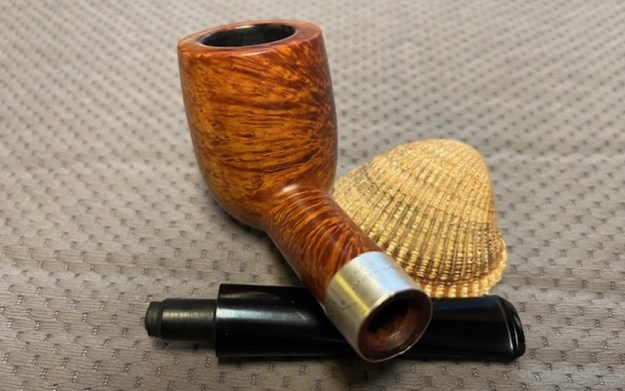
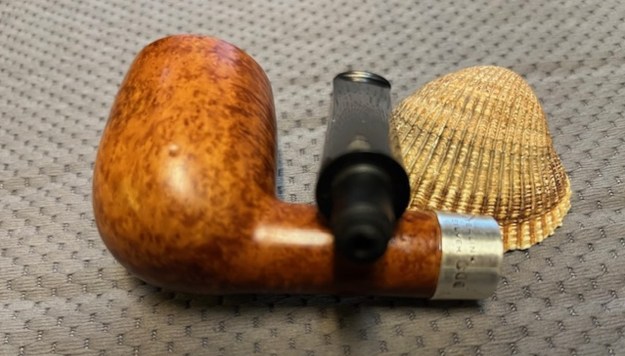
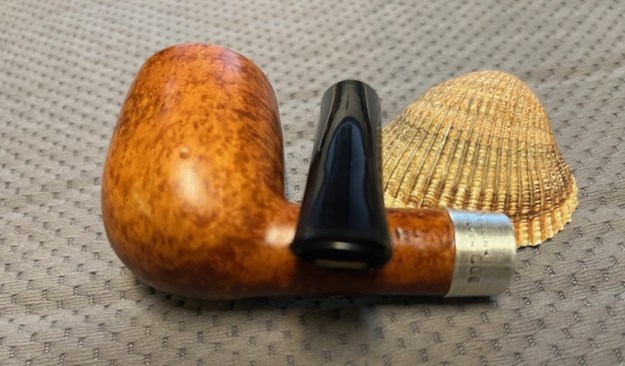
 I am excited to finish this 1978 Peterson’s “Kildare” X105 Silver Banded Straight Billiard with taper vulcanite stem. I put the pipe back together and buffed it with Blue Diamond on the buffing wheel. I gave the bowl and the stem multiple coats of carnauba wax. I hand buffed the pipe with a clean buffing pad to raise the shine. It is fun to see what the polished bowl looks like with beautiful flame grain all around it. Added to that the polished Sterling Silver band and the black vulcanite stem was beautiful. This smooth Classic Peterson’s “Kildare” X105 Silver Banded Billiard is great looking and the pipe feels great in my hand. It is light and well balanced. Have a look at it with the photos below. The dimensions are Length: 5 ½ inches, Height: 1 ¾ inches, Outside diameter of the bowl: 1 ¼ inches, Chamber diameter: ¾ of an inch. The weight of the pipe is 43 grams/1.52 ounces. It is a beautiful pipe and one that I will be putting on the rebornpipes store in the Irish Pipe Makers Section. If you want to add it to your collection you can send me a message or an email to slaug@uniserve.com. Thanks for walking through the restoration with me as I worked over this pipe. Thanks to each of you who are reading this blog.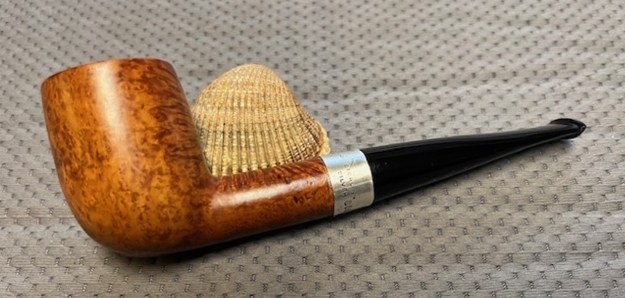
 rebornpipes