
by Steve Laug
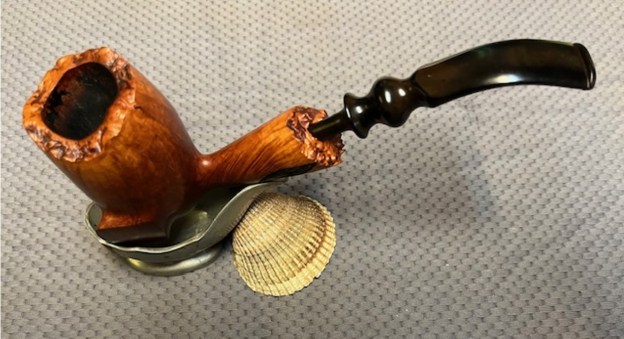
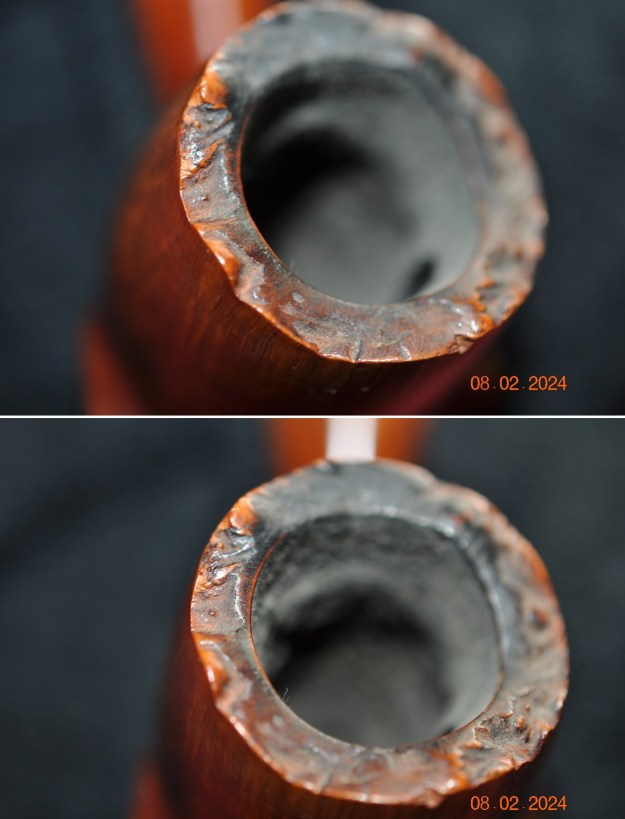
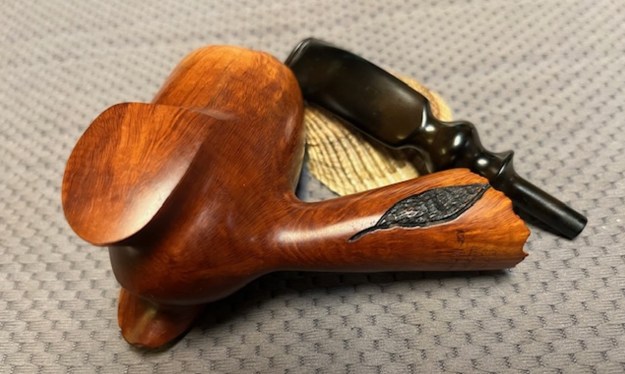
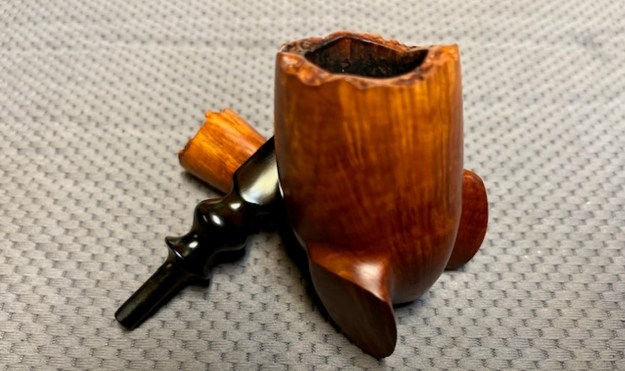
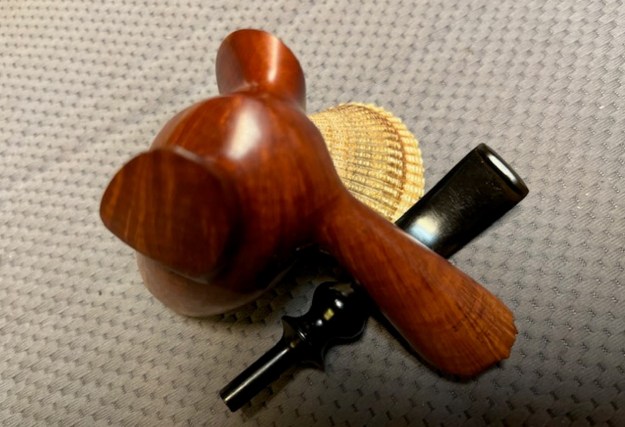
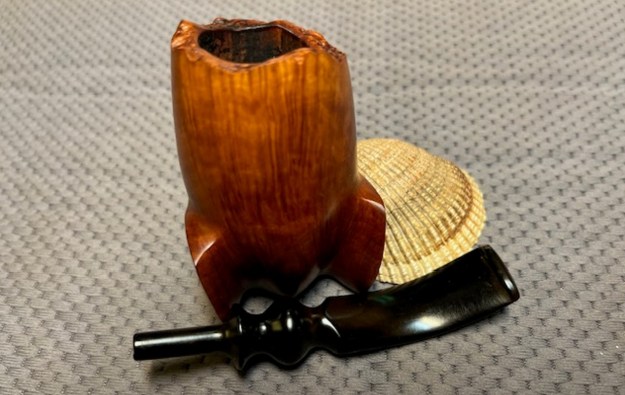
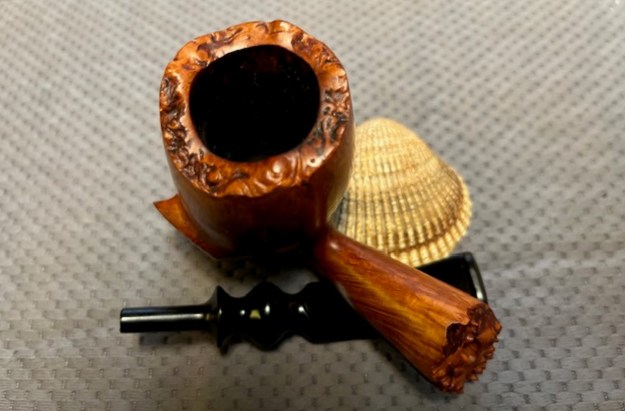
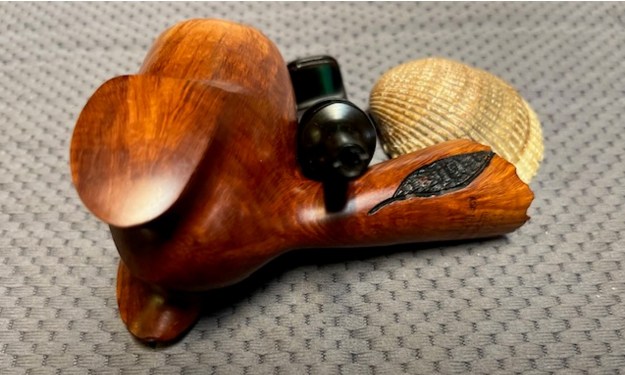
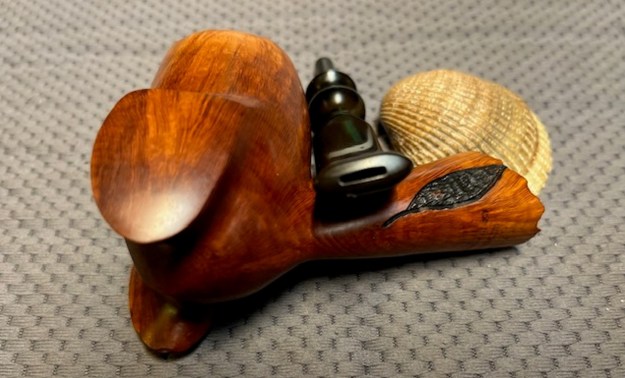
This particular Freehand pipe was purchased as part of a lot from seller in Santa Cruz, California, USA on 05/28/24. It really is an odd Freehand pipe that combines a plateau rim top and shank end with feet like the fins of a rocket on the bottom making it a sitter. There is also a rusticated leaf on the left side of the shank toward the stem end. It is stamped on a smooth panel on underside of the shank and reads Soren [over] Hand-Carved [over] Made in Denmark. The finish is dirty but does not hide the beautiful grain around the bowl and shank. The pipe had a thick cake in the bowl and lava overflow on the rim top and inner edge of the bowl filling in some of the plateau. It is heavier toward the back half of the bowl. There was grime ground into the smooth finish and dust and debris in the plateau valleys on the shank end. The fancy vulcanite saddle was oxidized and had light tooth marks and chatter on both sides near the button. The pipe must have been a great smoker judging from the condition it came it. Jeff took photos of the pipe before he started his work on it.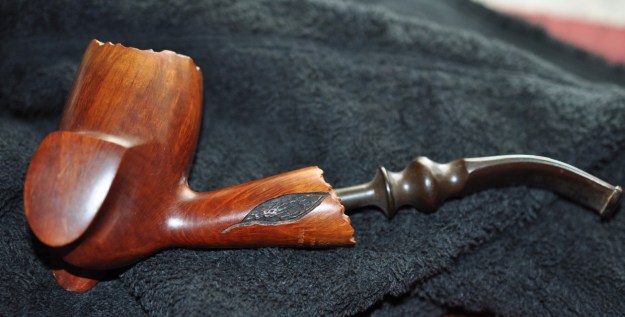
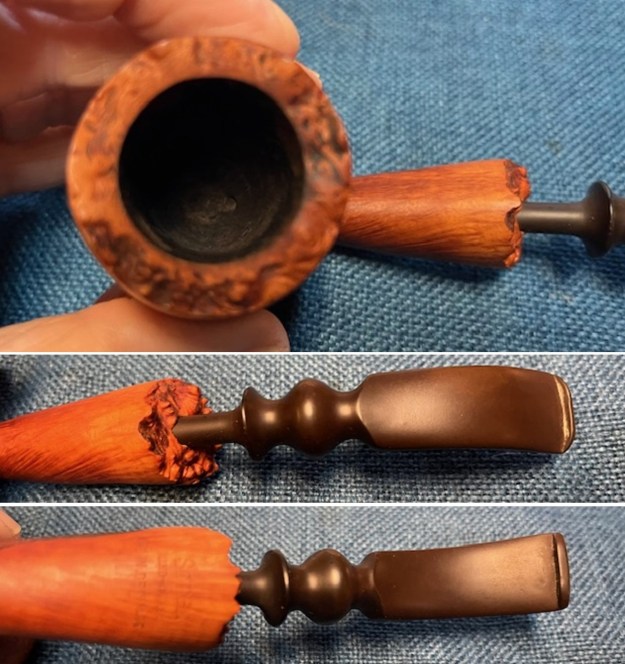
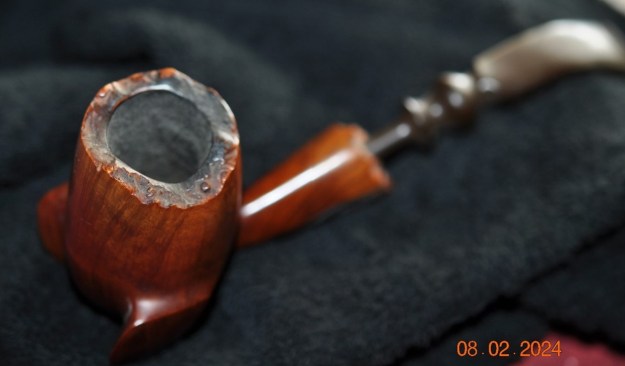 Jeff took photos of the rim top and the stem to show the condition of the pipe when we received it. You can see the cake in the bowl and the lava on the plateau rim top and inner edge of the bowl. The turned vulcanite stem was dirty and had light chatter and tooth marks on both sides near the button.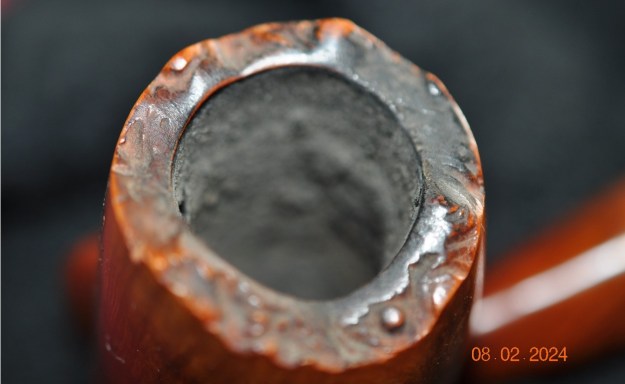
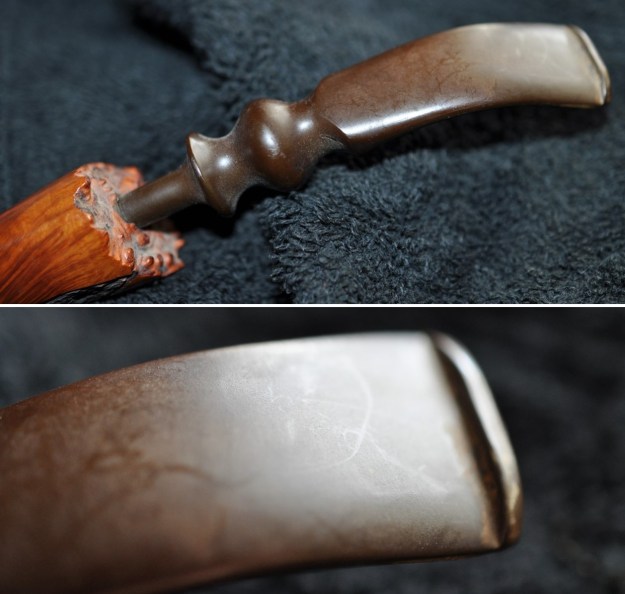
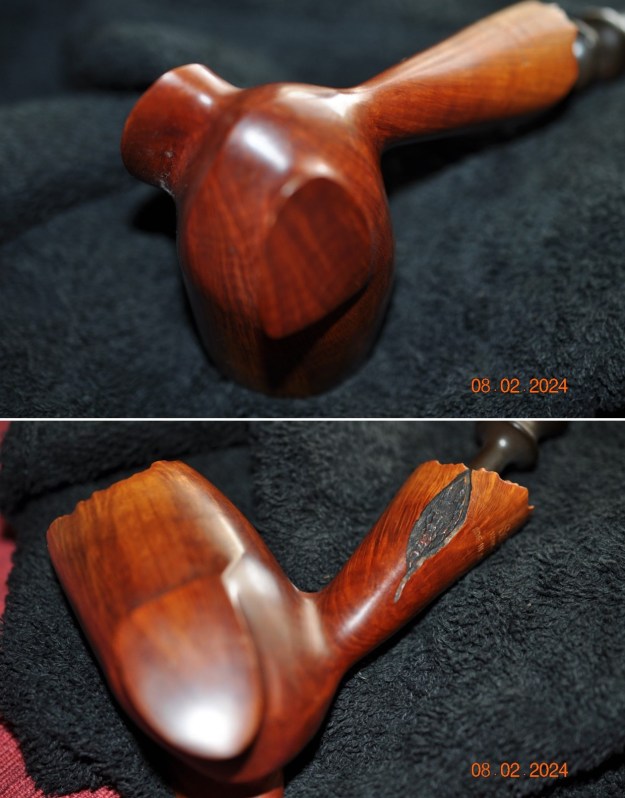
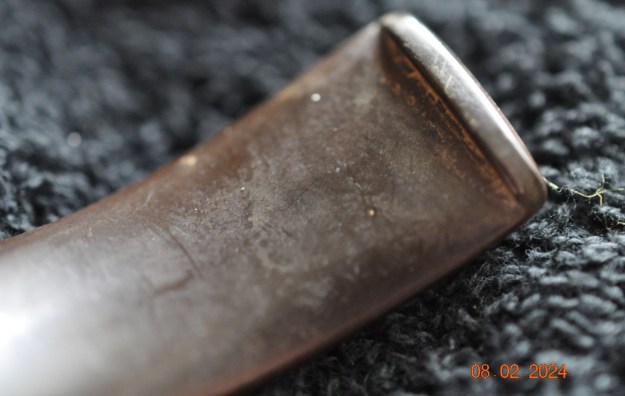 He took photos of the sides and the heel to give an idea of the shape and the condition of the briar around the bowl. It really is a uniquely shaped pipe with the feet or fins on the bottom half of the bowl and the rusticated leaf on the left side of the shank.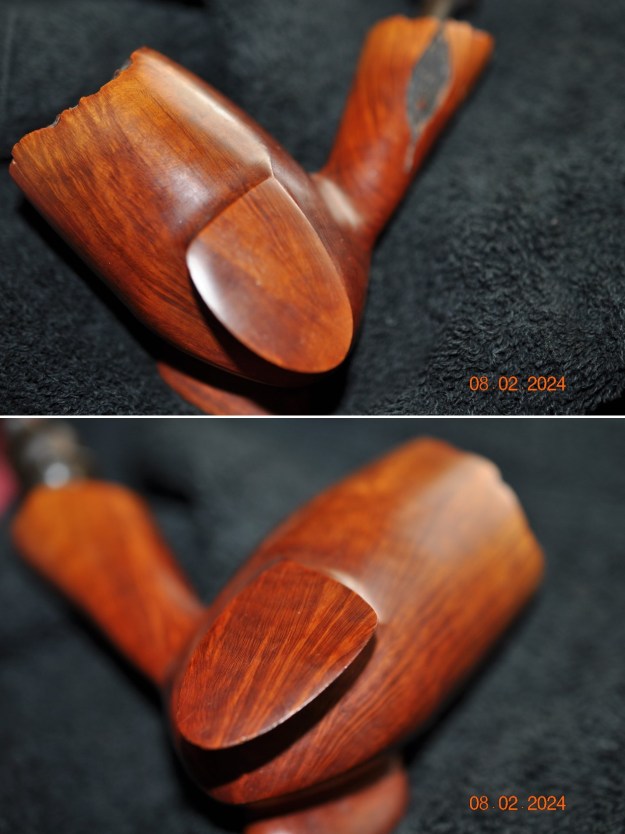
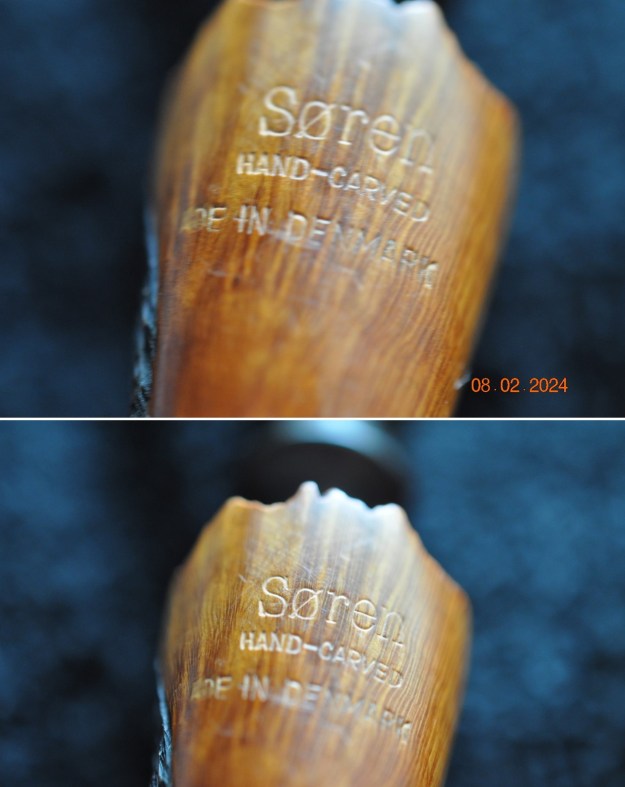
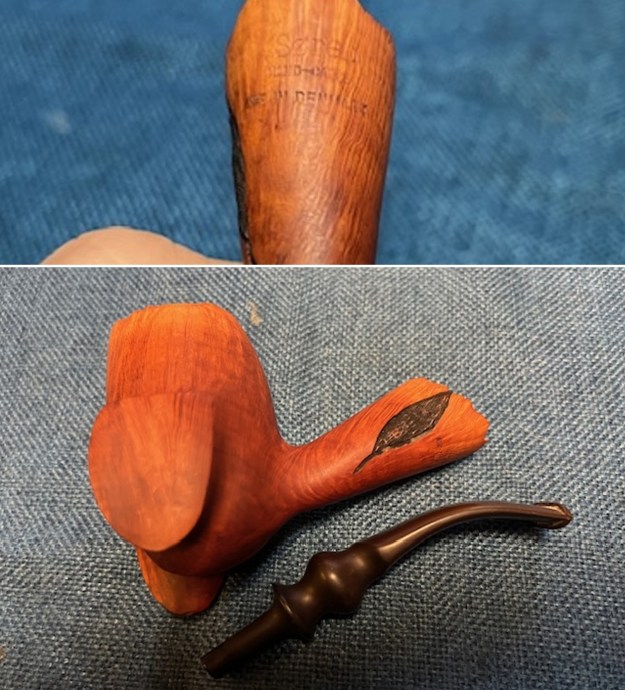
 The next photos Jeff took shows the stamping on the underside of the shank. It is clear but faint and read as noted above.
  I needed to refresh my memory on the history and background of the Soren pipes so I went to a previous blog and reread what I had written. https://rebornpipes.com/2016/09/12/repairing-and-rejuvenating-a-soren-danish-freehand/. I quote from that blog post: I looked up the brand on Pipephil (http://www.pipephil.eu/logos/en/logo-s10.html) and found that the brand was carved by Søren Refbjerg Rasmussen. Pipes that he made for the European market were mostly stamped “Refbjerg” while those made for the US market were stamped “Soren”. Thus, I knew that one I was working on was imported into the US market.
I was once again working on a pipe made by Soren Refbjerg Rasmussen for the US market as it was stamped Soren. I continued to do reading on another of my go to websites, Pipedia. Here is the link for the article there. https://pipedia.org/wiki/Refbjerg. I quote some of the more pertinent information.
Søren Refbjerg Rasmussen founded a company in 1969, which employed an average of 8 – 12 craftsmen in the 1970’s. The semi-freehands they produced were traded under his prename Søren. Rasmussen himself finished only the very best pipes. So his way of pipemaking closely resembled the ways of Preben Holm, Karl Erik Ottendahl or Erik Nørding. Altogether more than 1,000,000 pipes were sold.
From that I knew that the pipe in my hands came from the 1970s. It bears the Soren signature stamp which also says that it was made for sale in the American pipe market. Armed with that information I turned my attention to restoring the pipe.
Jeff had cleaned up the pipe following his normal cleaning process. In short, he cleaned up the reaming with a Savinelli Fitsall Pipe Knife. He scrubbed the bowl with undiluted Murphy’s Oil Soap with a tooth brush. He worked over the lava and debris on the plateau rim top and shank end and was able to remove it. He rinsed it under running warm water to remove the soap and grime. He cleaned out the inside of the shank and the airway in the stem with alcohol, cotton swabs, shank brushes and pipe cleaners. He scrubbed the stem with Soft Scrub and cotton pads to remove the debris and oils on the stem. He soaked it in Briarville’s Pipe Stem Deoxidizer. He rinsed it with warm water and dried it off. I took photos of the pipe once I received it. It really looked good.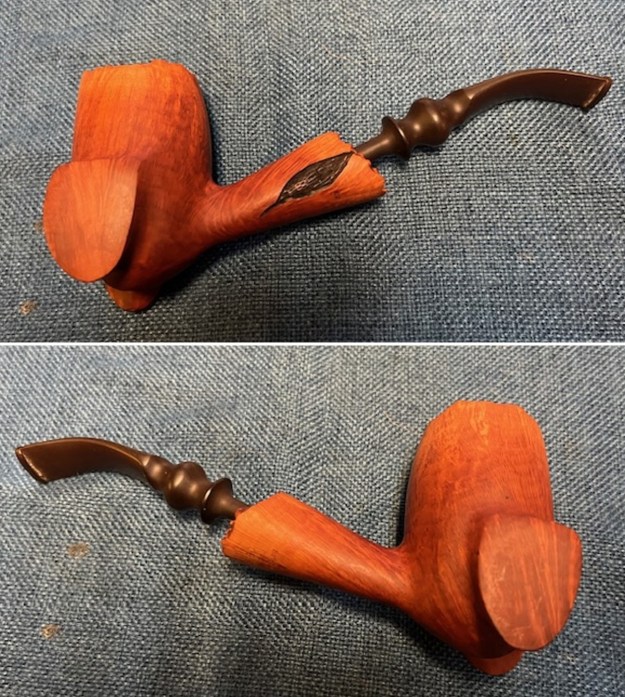
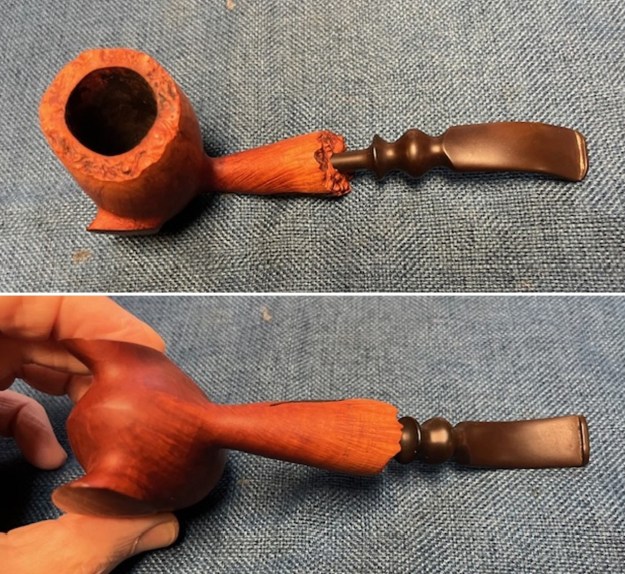 I took close up photos of the stem and the rim top to show both how clean they were and what needed to be addressed with both. The rim top and bowl still had some minor darkening on the plateau top and edges edge. The stem looked better and the tooth marks and chatter were still present. I would need to remove those to bring the stem back.
 I took a photo of the stamping on the underside of the shank. You can see from the photo that it is faint but readable. It is clearer on the top half of the stamp than the lower but it is still readable. I removed the stem from the bowl and took a photo of the parts to give a sense of the beauty of the pipe.
 I started my work on the pipe by polishing the briar with micromesh sanding pads – 1500-12000 grit pads. I wiped the bowl down between pads to remove the sanding debris. By the final pad it was looking very good.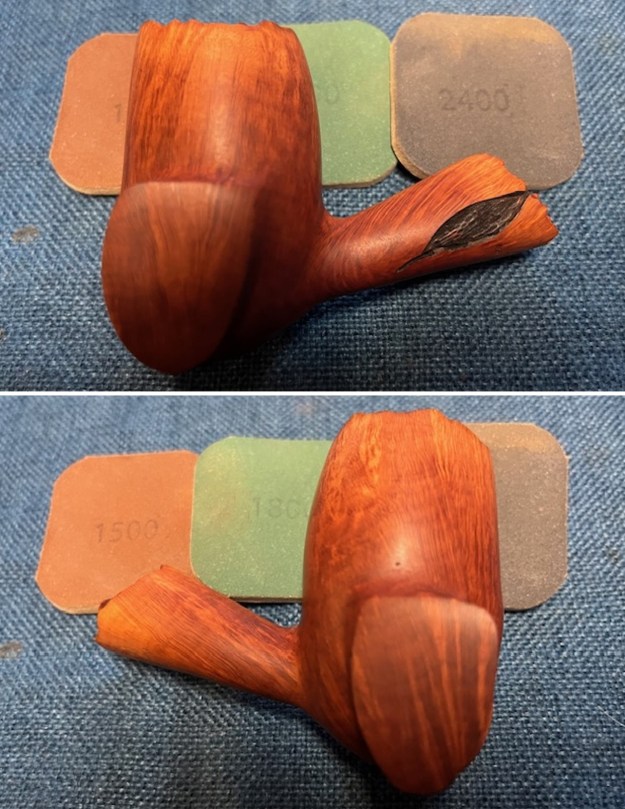
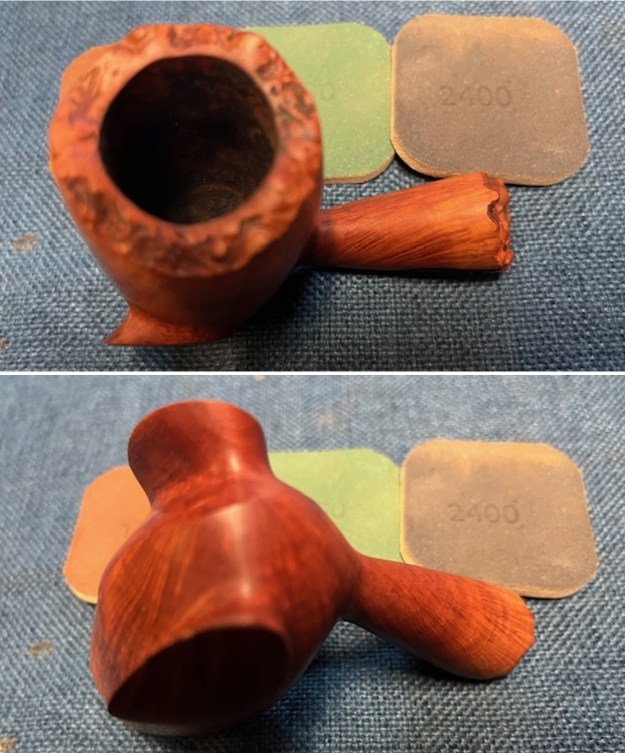
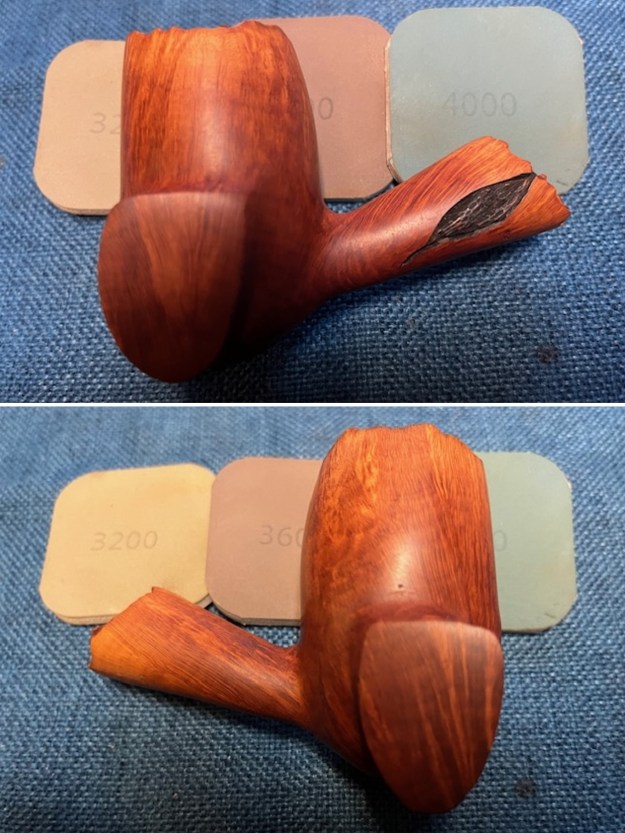
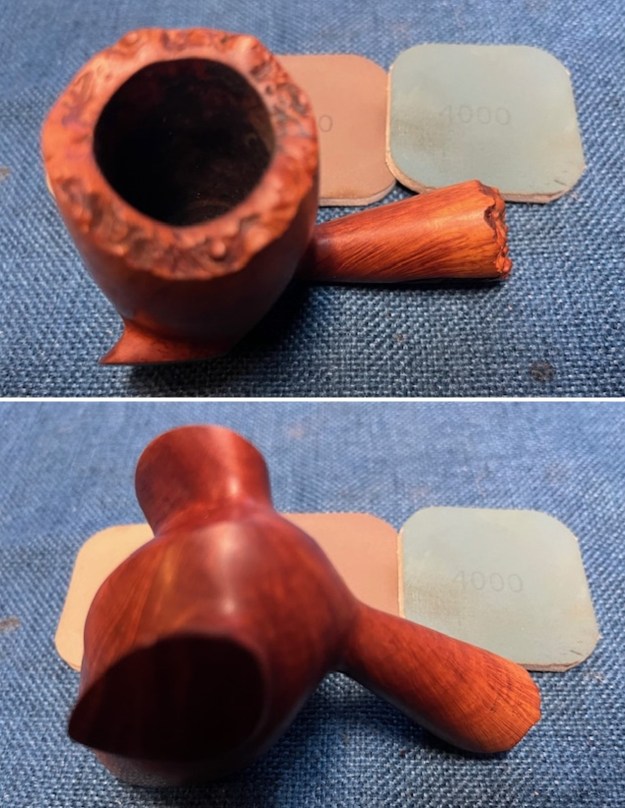
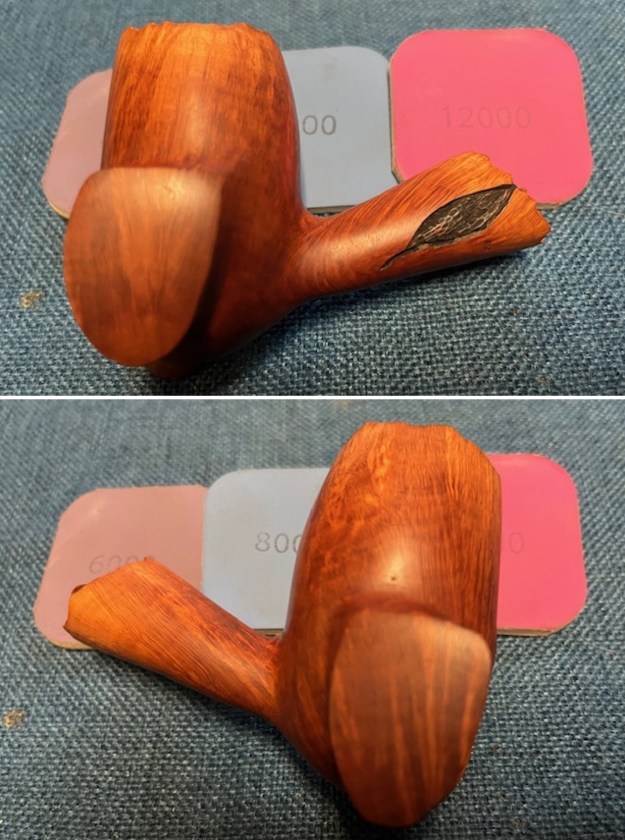
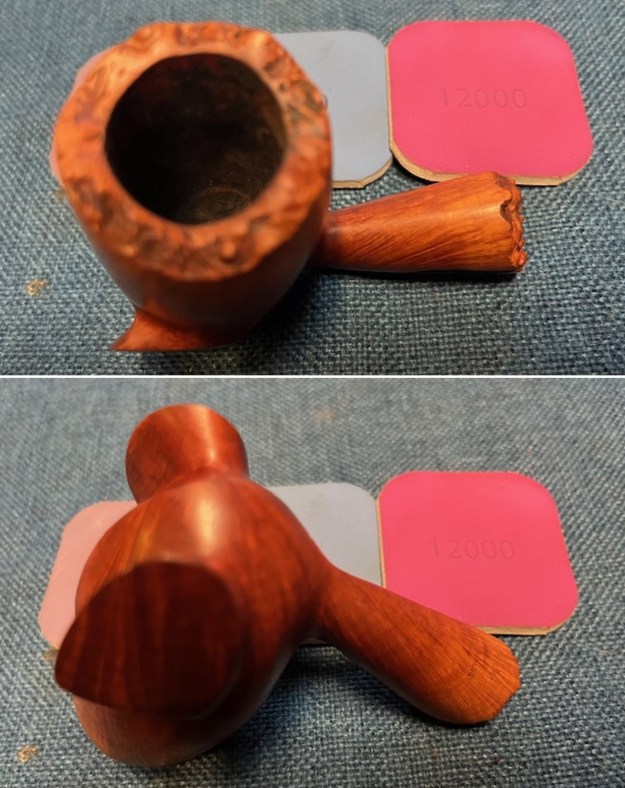 The bowl was in such good condition after the clean up that I worked some Before & After Restoration Balm into the surface of the briar with my finger tips and a horse hair shoe brush to get into the crevices of the plateau and sandblast portions. The product is incredible and the way it brings the grain to the fore is unique. It works to clean, protect and invigorate the wood.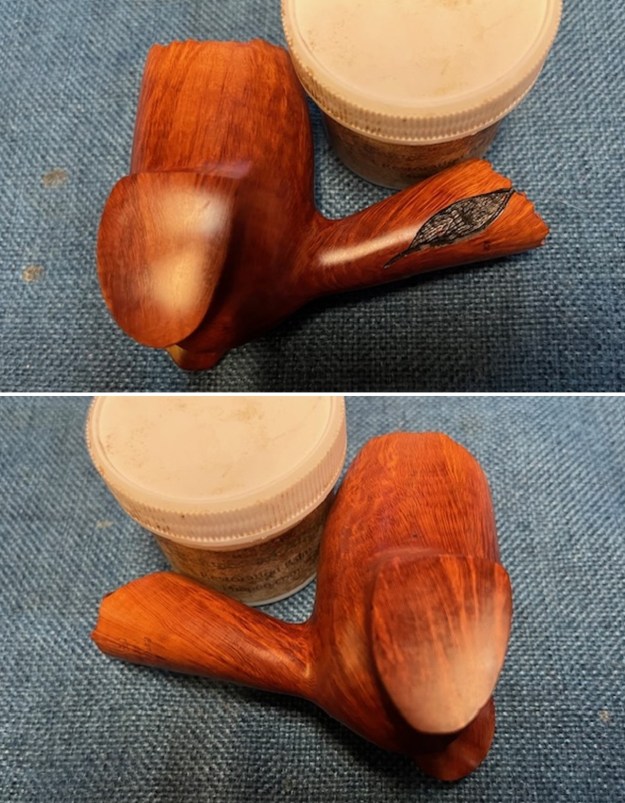
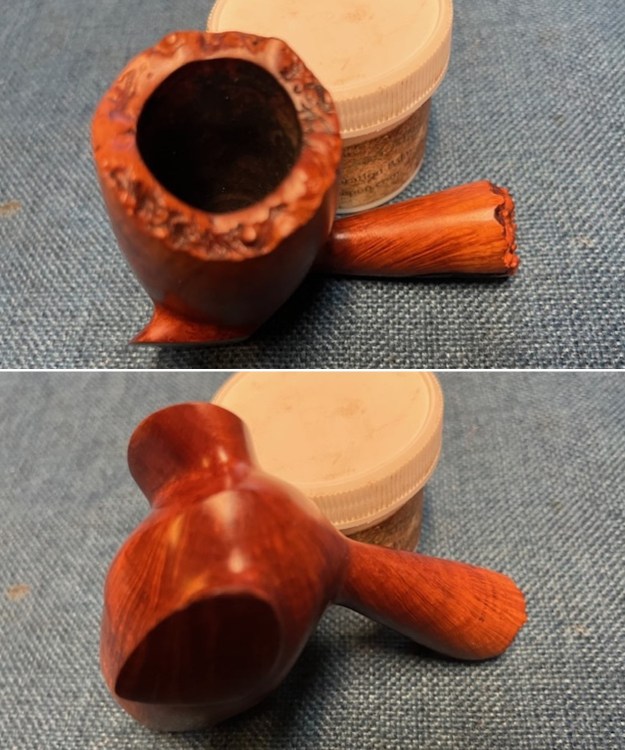
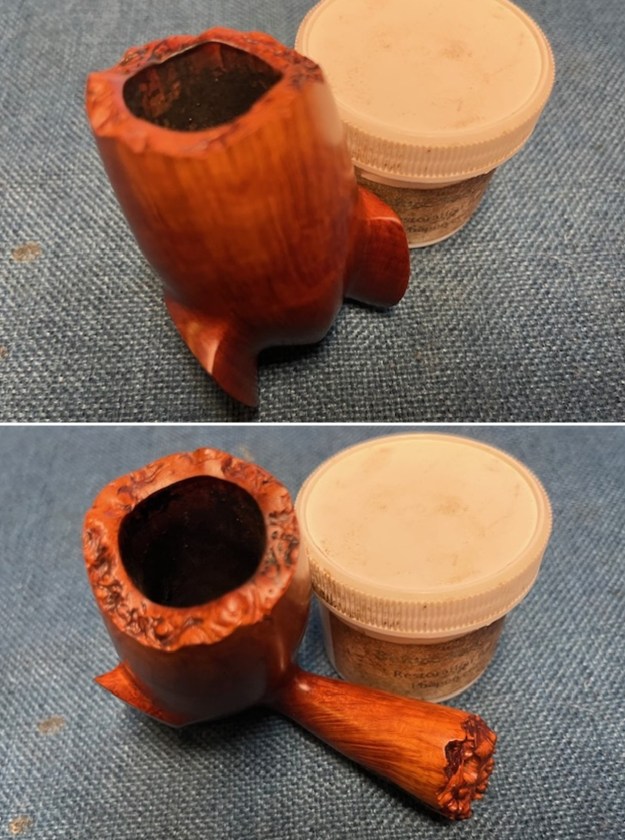 I set the bowl aside and turned my attention to the stem. I sanded the stem with 320-3500 grit sanding pads to further smooth out the repairs. I wiped it down after each pad with an Obsidian Oil cloth. It was looking much better.
 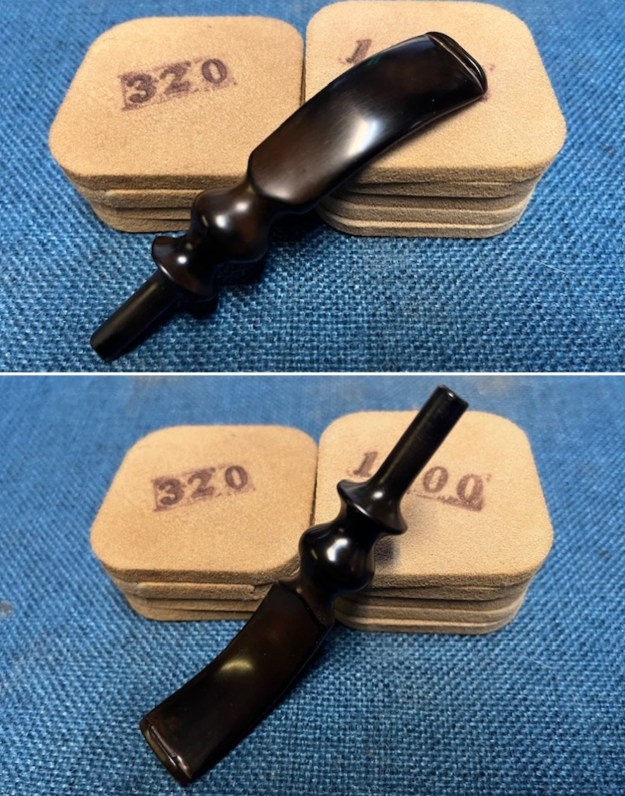 I polished the stem with micromesh sanding pads – wet sanding it 1500-12000 pads. I wiped it down with a damp cloth after each pad to remove the dust and polishing debris. I polished it with Before & After Pipe Polish – both Fine and Extra Fine. I wiped it down with Obsidian Oil and let it sit and absorb.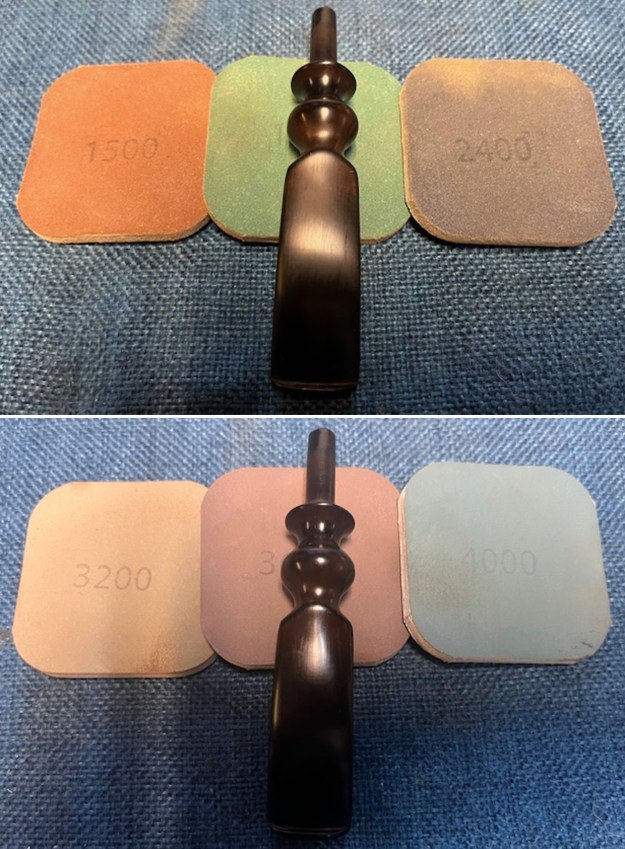
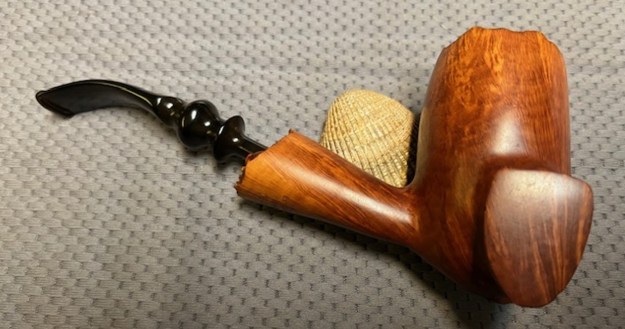
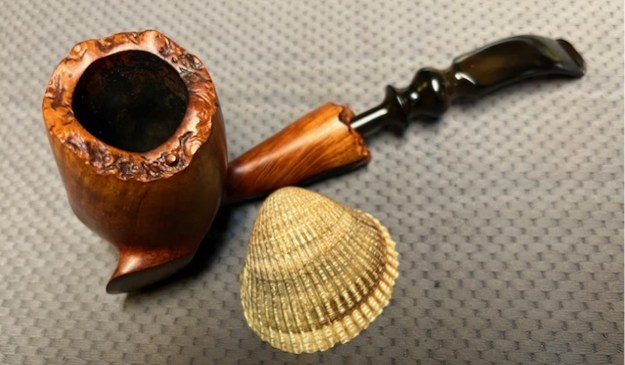
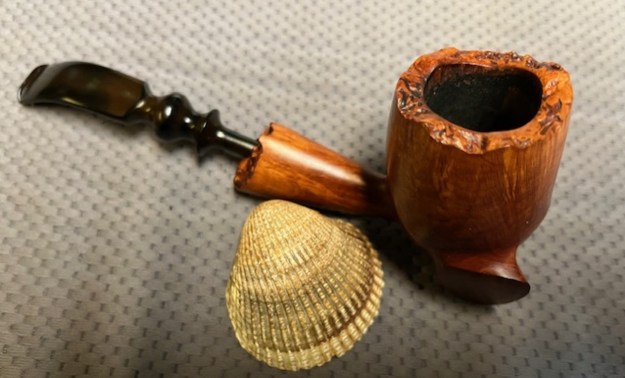
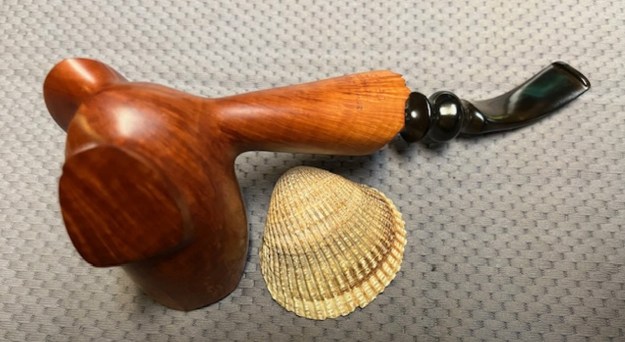
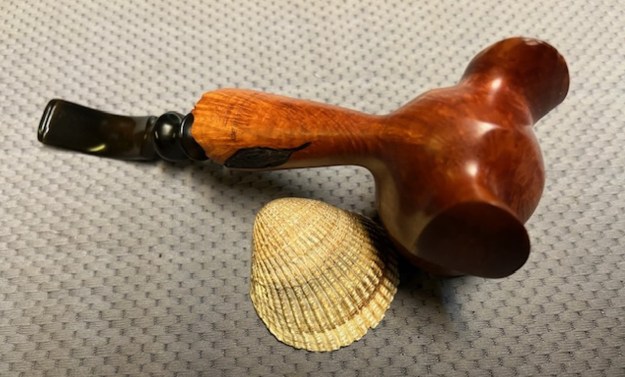
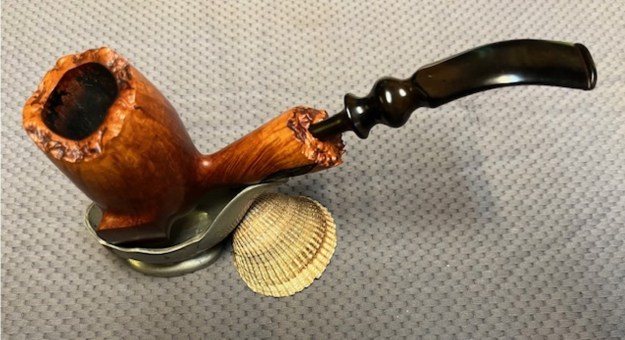
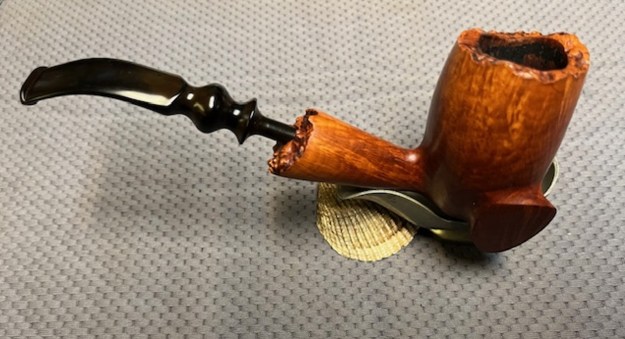
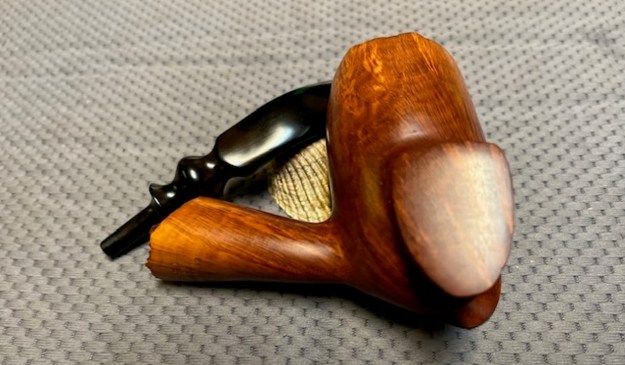
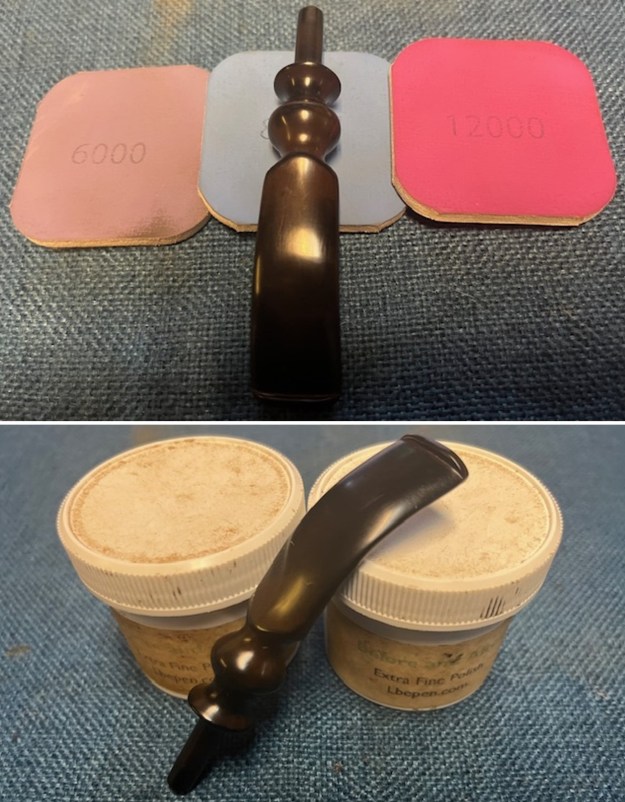 I polished stem and bowl with Blue Diamond to polish out the remaining small scratches. I gave the bowl and the stem multiple coats of carnauba wax and buffed the pipe with a clean buffing pad to raise the shine. I hand buffed it with a microfiber cloth to deepen the shine. The pipe polished up pretty nicely. The plateau on the rim top and shank end and the smooth Dark and Medium brown contrast finish work very well with the black vulcanite stem. The finished pipe is shown in the photos below. I have worked on several Soren pipes by Soren Refbjerg Rasmussen and several Refbjerg pipes over the years and I have always been impressed by his craftsmanship and ability to work a pipe to follow the grain of the briar. He does great work and is quite innovative in terms of shapes, flow and finishes on his pipes. The dimensions of this one are quite large but delicate at the same time. The Length: 7 inches, Height: 3 inches, Outside diameter of the bowl: 1 ½ inches wide and 2 inches long, Chamber diameter: 7/8 inches. The weight of the pipe is 79 grams/2.79 ounces. This one will be going on the Danish Pipemakers Section on the rebornpipes store. If you wish to add it to your collection let me know. It is a beauty! Thanks for walking through the restoration with me as I worked over this Soren Freehand.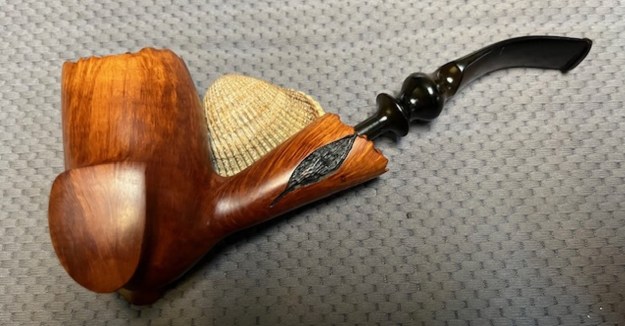
 rebornpipes
Great work as always. Very unique pipe!
LikeLiked by 1 person
Thank you… it is an odd one but I kind of like the feet or fins or maybe even ears. Great sitter
LikeLike