
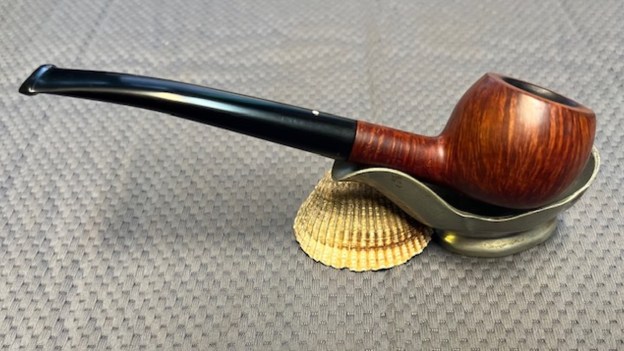
By Steve Laug
I took a break from the queue of pipes I have to work on to work on a pipe in my own box. Paul in Illinois who loves Dunhill Prince shapes and he regularly texts and asks if I have any. When I was in Idaho I picked up one that we had purchased from a friend in Denmark on May 22, 2024. It is a lovely Dunhill Bruyere Prince. The stamping on the left side of the shank read FET (the designation for a prince) [over] F/T next to the bowl. That is followed by Dunhill [over] Bruyere. On the right side it read Made in [over] England followed by a number 7 to the right of the D in England that will help me date the pipe. The bowl had been reamed not long ago. There was some lava on the rim top on the back of the rim and the inner edge had darkening and was rough to the touch. The outer edge looked very good. The finish was dirty but it could not hide the lovely grain around the bowl and shank. The stem was clean though a bit pitted. The bend in the stem common on Prince pipes had straightened over time. There were tooth marks on the top and underside ahead of the button. The classic Dunhill White Spot was missing on top of the stem but a clean small hole remained where it had been. I took a few photos of the pipe before I started my work on it. I sent the photos to Paul and he is excited about it.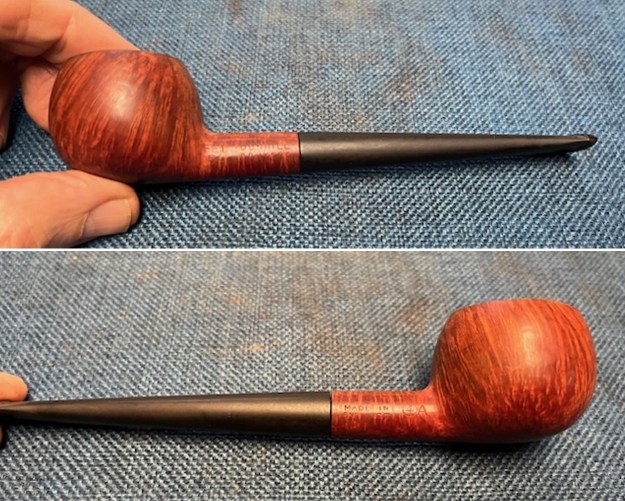
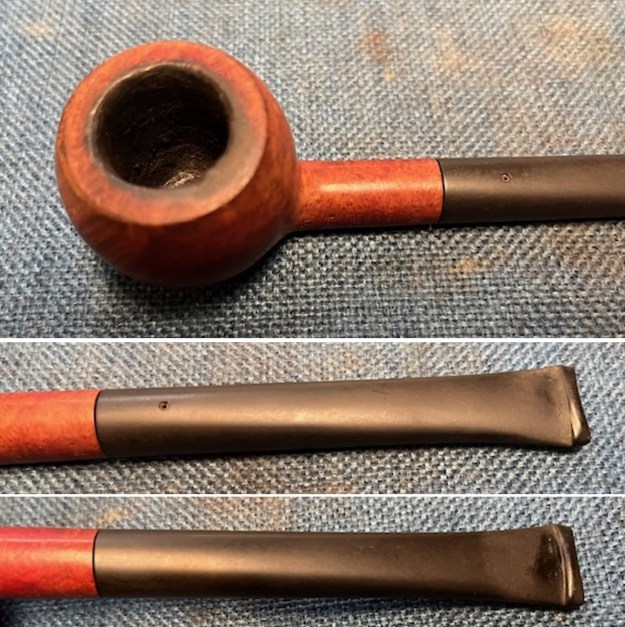
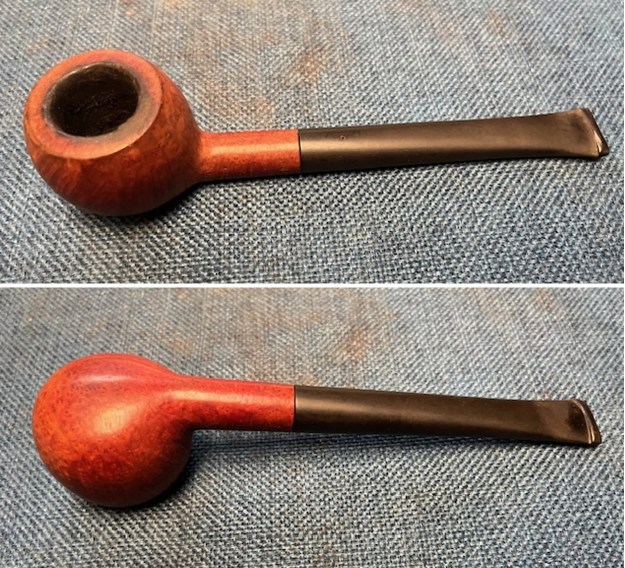 I took a photo of the rim top and bowl to show the condition of both of them. The bowl itself had been recently reamed. The rim top showed a coat of lava and some darkening around the edge. The inner edge looked rough but a cleaning would make that clear. The outer edge looked very good. The photos of the stem show light oxidation, the missing white spot on the top and tooth marks/chatter on both sides ahead of the button.
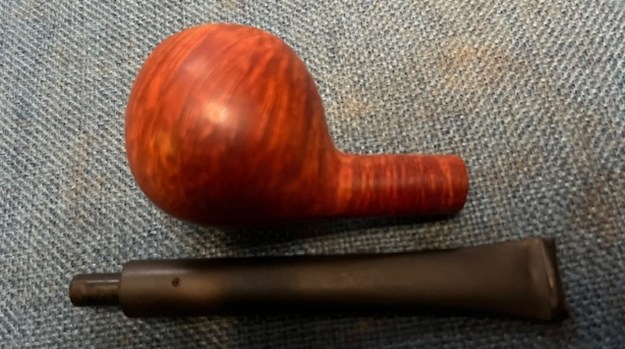
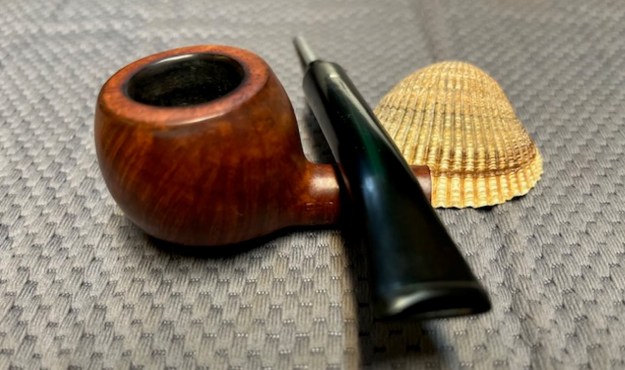
  I took photos of the stamping on the sides of the shank. The photos are blurry but you can see the shadow of the stamping. The stamping was faint but readable as noted above. I removed the stem from the shank and took a photo to show the proportions of the pipe.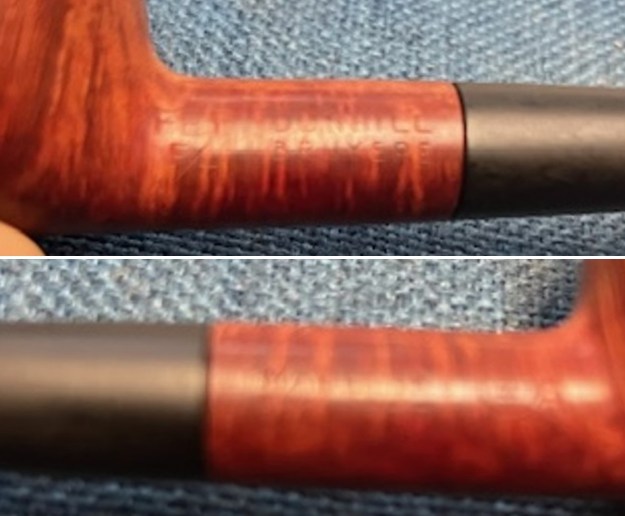
 As is my regular practice, before I started my work on the pipe, I turned to Pipedia’s section on Dunhill Bruyere Pipes to get a bit of background on the Dunhill finishes (https://pipedia.org/wiki/Dunhill#Root_Briar). I quote:
Bruyere
The original finish produced (usually made using Calabrian briar), and a big part of developing and marketing the brand. It was the only finish from 1910 until 1917. A dark reddish-brown stain. Before the 1950s, there were three possible finishes for Dunhill pipes. The Bruyere was a smooth finish with a deep red stain, obtained through two coats, a brown understain followed by a deep red.
There was a link on the above site to a section specifically written regarding the Bruyere finish (https://pipedia.org/wiki/Dunhill_Bruyere). I turned there and have included the information from that short article below.
Initially, made from over century-old briar burls, classified by a “B” (denoted highest quality pipe); “DR” (denoted straight-grained) and an “A” (denoted first quality), until early 1915. After that, they became a high-end subset to the Dunhill ‘Bruyere’. The DR and B pipes, a limited production, they should be distinguished as hand-cut in London from burls as opposed to the Bruyere line which was generally finished from French turned bowls until 1917, when the Calabrian briar started to be used, but not completely. Only in 1920 Dunhill took the final step in its pipe making operation and began sourcing and cutting all of its own bowls, proudly announcing thereafter that “no French briar was employed”.
Bruyere pipes were usually made using Calabrian briar, a very dense and hardy briar that has a modest grain but does very well with the deep red stain.
“Before the 1950s, there were three possible finishes for Dunhill pipes. The Bruyere was a smooth finish with a deep red stain, obtained through two coats, a brown understain followed by a deep red. The Shell finish was the original sandblast with a near-black stain (though the degree to which it is truly black has varied over the years). Lastly, the Root finish was smooth also but with a light brown finish. Early Dunhill used different briars with different stains, resulting in more distinct and identifiable creations… Over the years, to these traditional styles were added four new finishes: Cumberland, Dress, Chestnut and Amber Root, plus some now-defunct finishes, such as County, Russet and Red Bark.”
There was also a link to a catalogue page that gave examples and dates that the various finishes were introduced (https://pipedia.org/wiki/File:Dunnypipescatalog-1.png).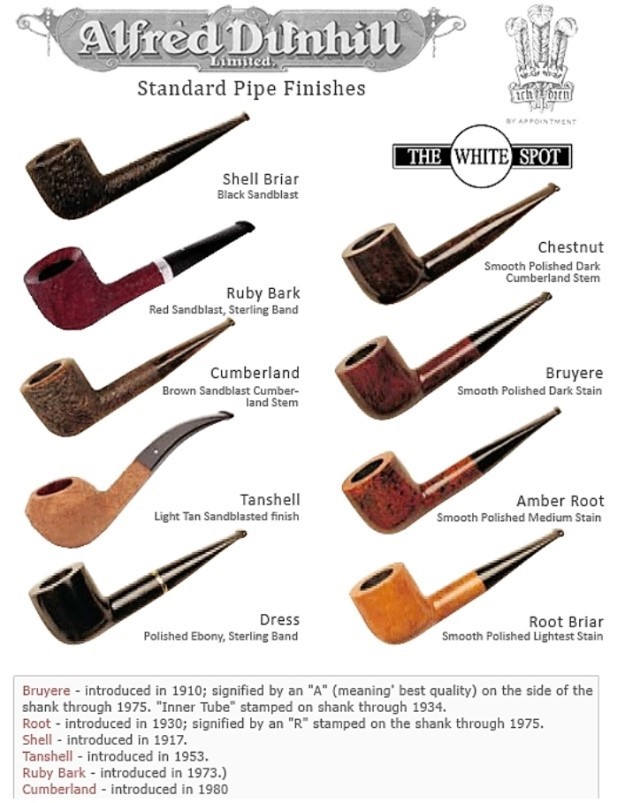 I turned to Pipephil’s dating guide to show how I arrived at the date of manufacture for this pipe (http://www.pipephil.eu/logos/en/dunhill/cledat-en1a.html). I am including the chart that is provided there for the dating a pipe. I have drawn a red box around the section. Since the pipe I am working on has a suffix 7 and is the same size as the D in England. It points to the 1960 line on the chart below. To date it just add 1960 +7 for a date of 1967. I have drawn a red box around the pertinent section in the chart.
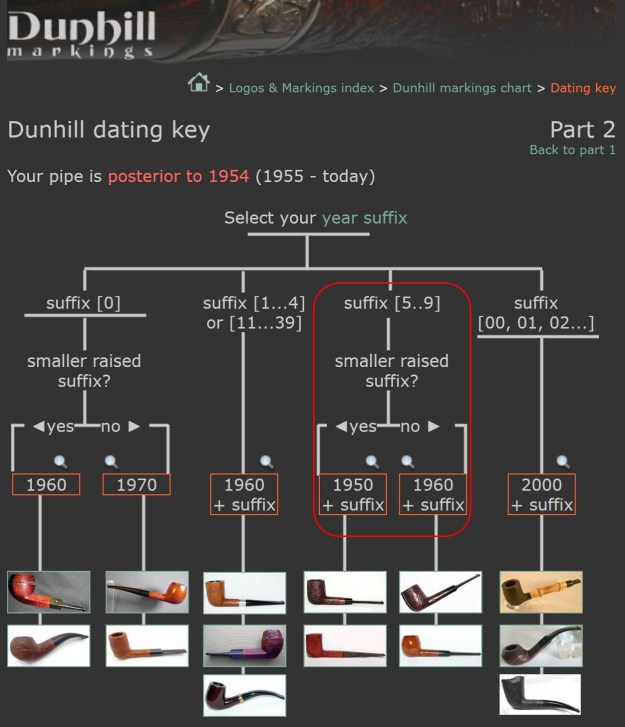 I now knew that I was working on a Bruyere that came out in 1967 as far as I could tell by the date stamp. The shape of the pipe is an FET (Prince) with a F/T or fishtail stem.
Now it was time to work on the pipe. I used a PipNet Pipe reamer first to take out the majority of the thin cake. I used a Savinelli Fitsall Pipe Knife to clean up the remaining cake in the bowl and to scrape off the lava on the rim top. I used a dowel wrapped with 220 grit sandpaper to smooth out the walls of the bowl. I checked for damage on the bowl walls and it was in good condition.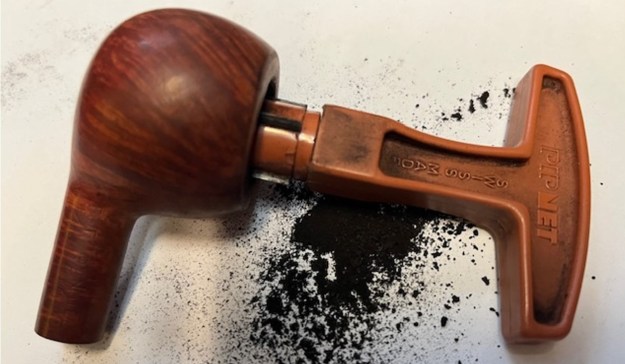
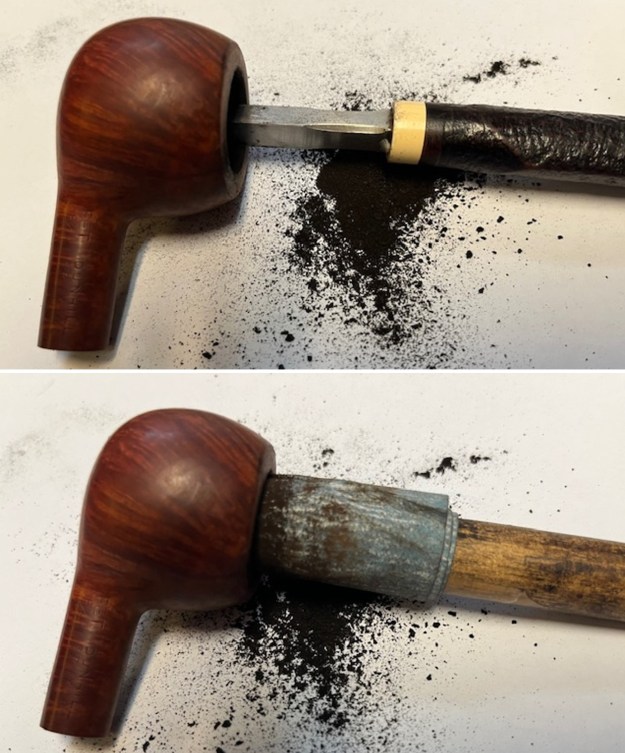 I used a folded piece of 220 grit sandpaper to clean up the damage around the bowl edge and the lava build up on the rim top. It is looking much better at this point in the process.
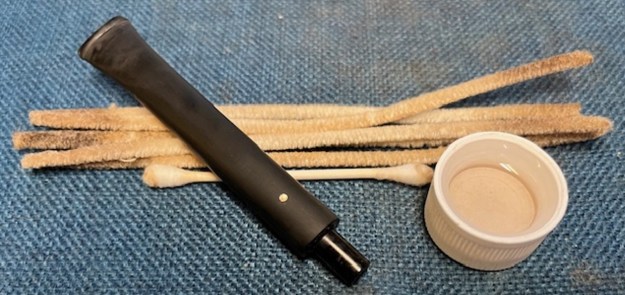
 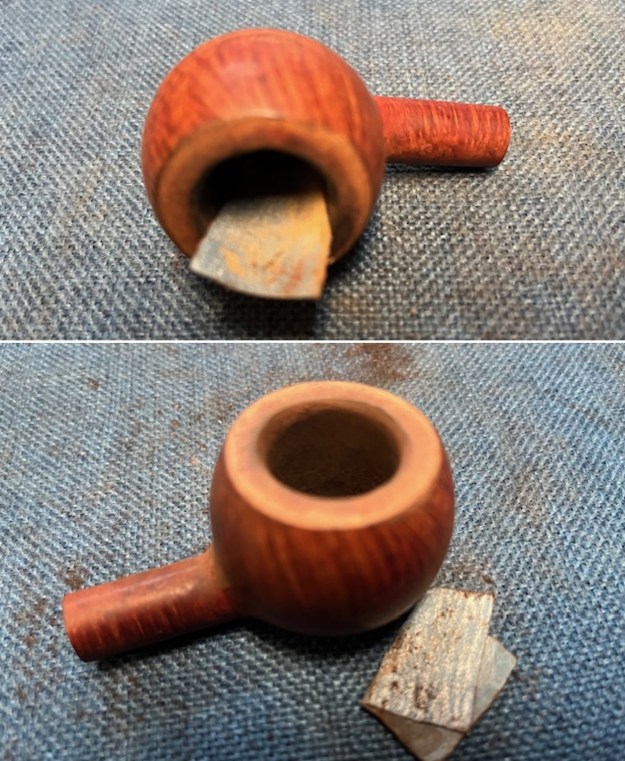 I scrubbed out the inside of the shank, mortise and the airway in both the stem and the shank. I started the process by scraping the inside of the mortis with a pen knife. There was a small ridge of build up mid mortise making the seating of the stem incorrect. Once I had scraped it clean I used pipe cleaners, cotton swabs and isopropyl alcohol on the shank and on the airway in the stem. It cleaned up very well.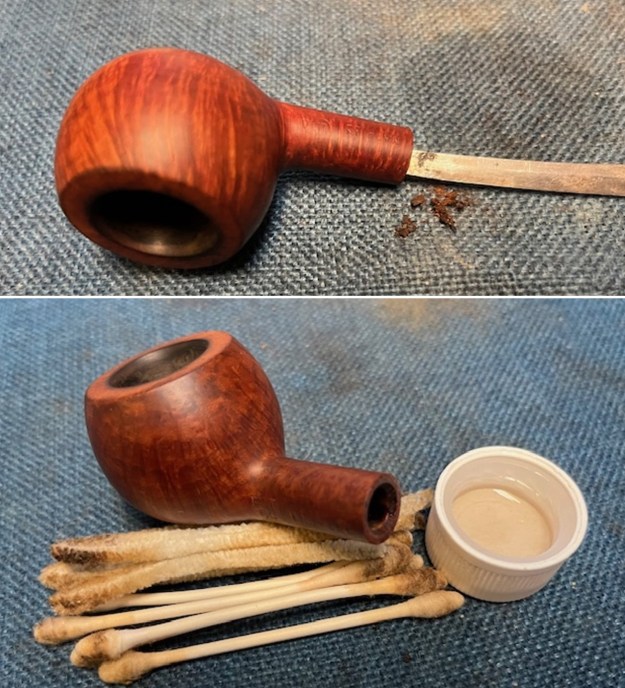
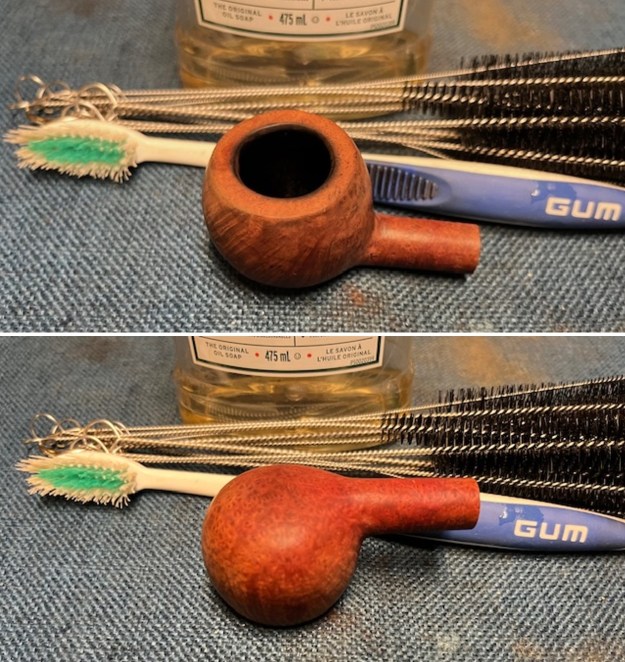
 I scrubbed the exterior of the bowl with a tooth brush and undiluted Murphy’s Oil Soap to remove the grime and debris in the finish. I scrubbed out the mortise and tenon with small tube brushes and soap to remove the oils and tars in the shank area. I rinsed it with warm water to remove the grime and oils in the finish and shank. I dried it off with a soft cotton cloth. One of the benefits of doing this is that the briar in the nicks and dents on the bowl sides swell and virtually disappear. The pipe has a fresh look that really highlights the grain on the briar.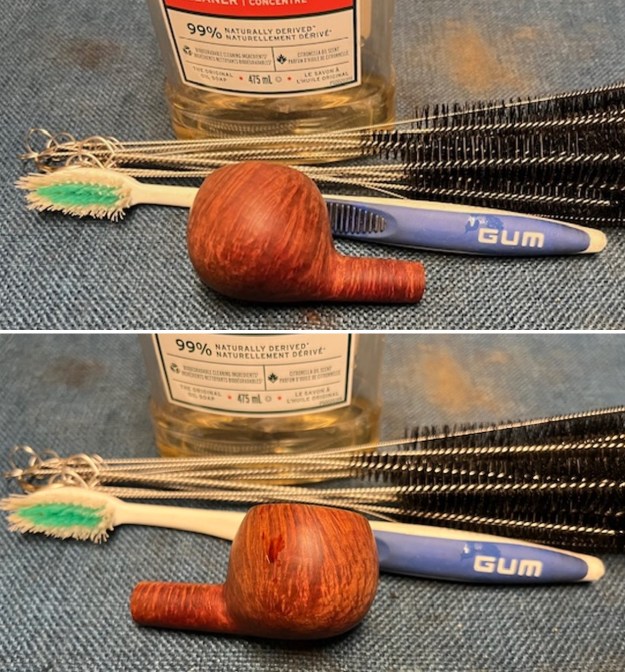
 I polished the briar with micromesh sanding pads to minimise the scratches in the briar. I dry sanded with 1500-12000 grit pads and wiped the bowl down after each pad with a damp cloth to remove the sanding debris. By the end of the nine pads the briar took on a rich shine and the rim top looked very good. Even the damage on the outer edge, while still present looked much better and the roughness was gone.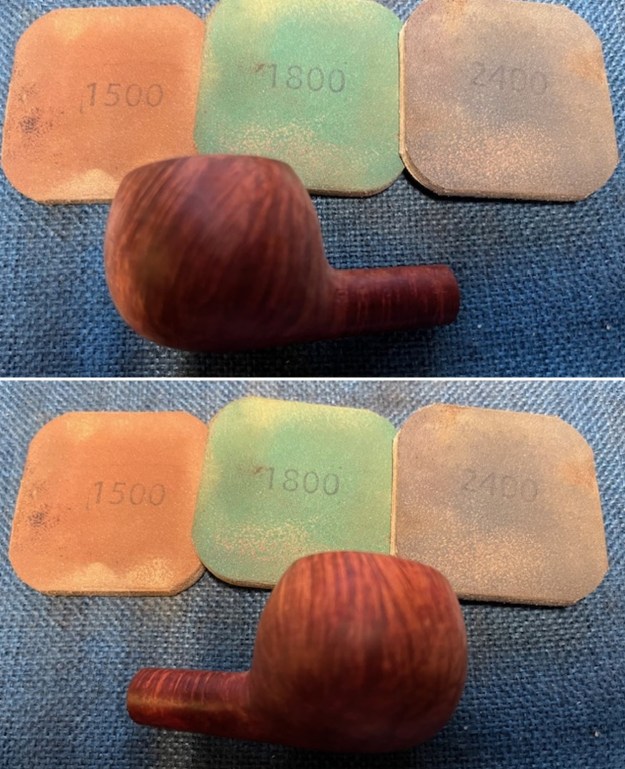
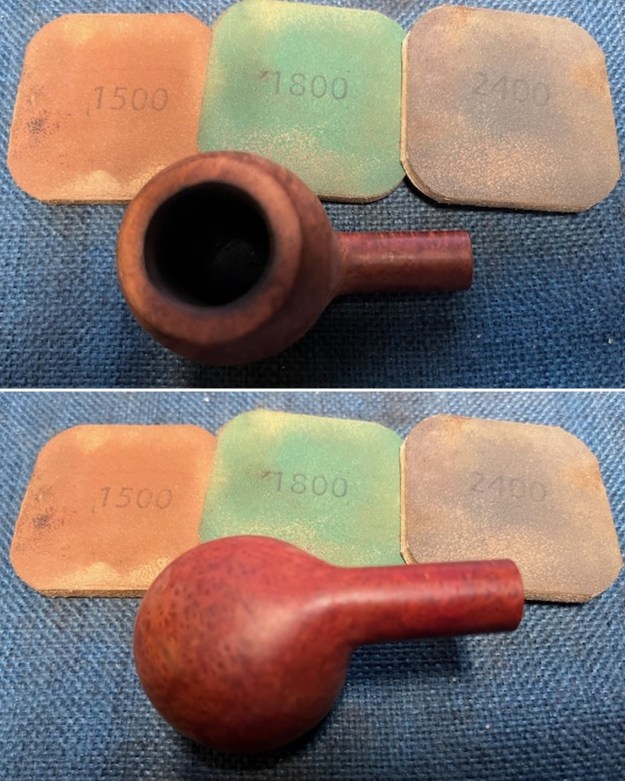
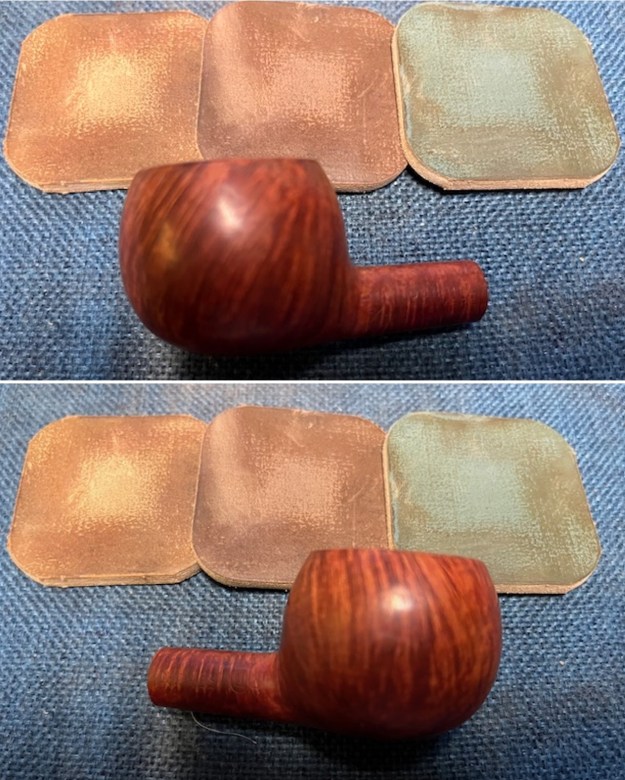
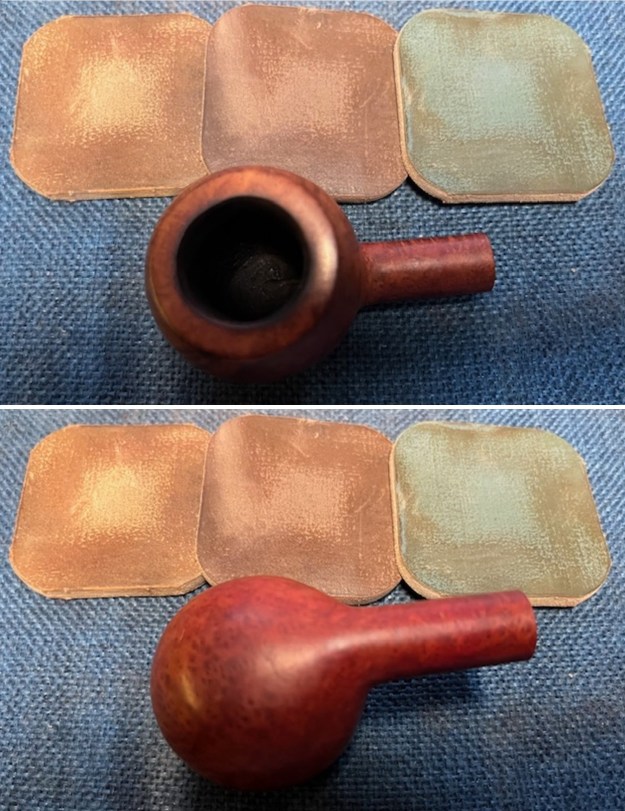
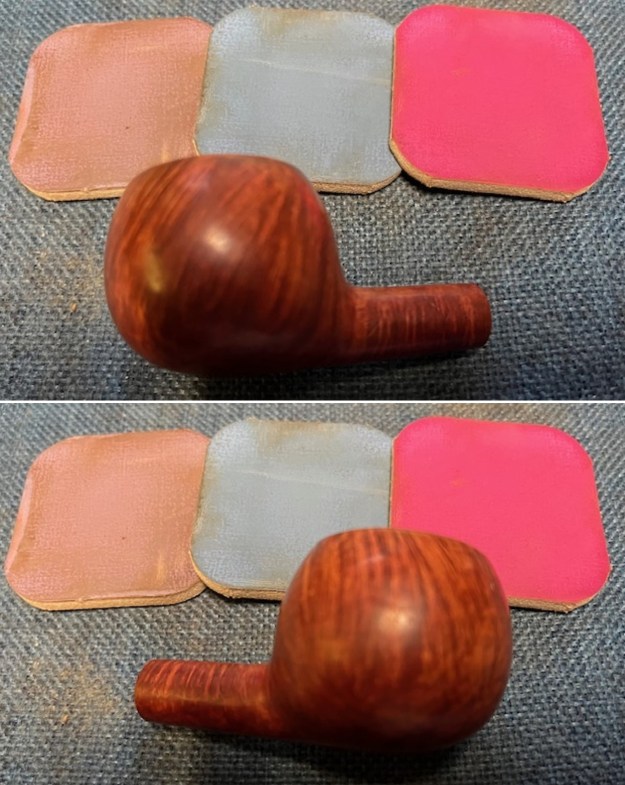
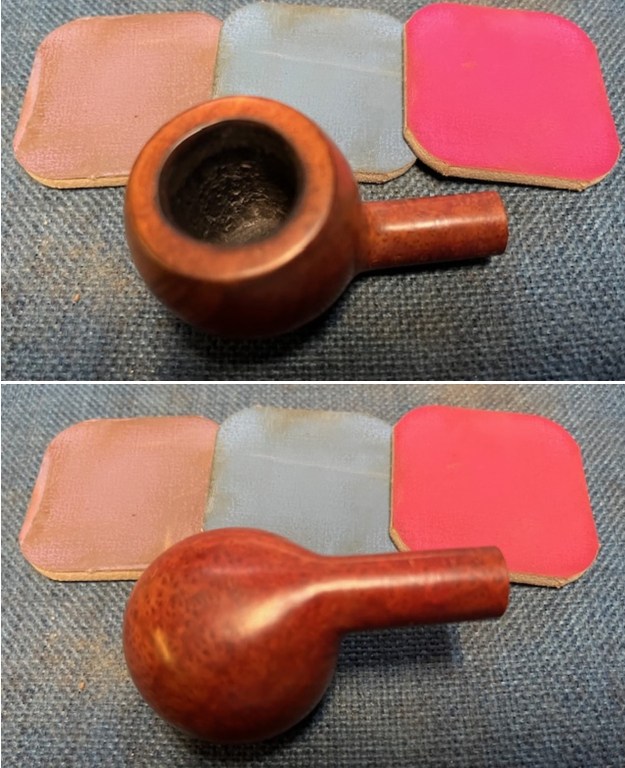 I rubbed the bowl down with Before & After Restoration Balm. It is a paste/balm that works to deep clean the finish, enliven and protect the briar. I worked it into the briar with my finger tips to make sure that it covered every square inch of the pipe. I set it aside for 10 minutes to let it do its work. I buffed it with a cotton cloth. The briar really began to have a deep shine. The photos I took of the bowl at this point mark the progress in the restoration.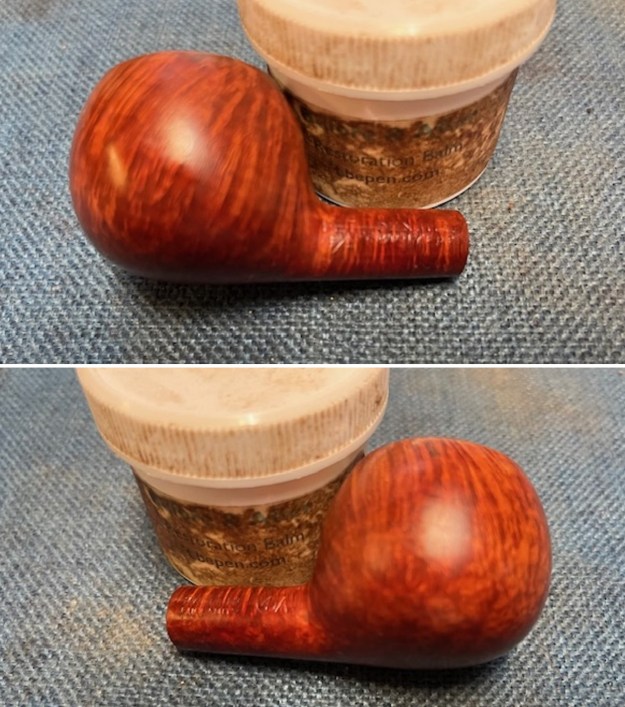
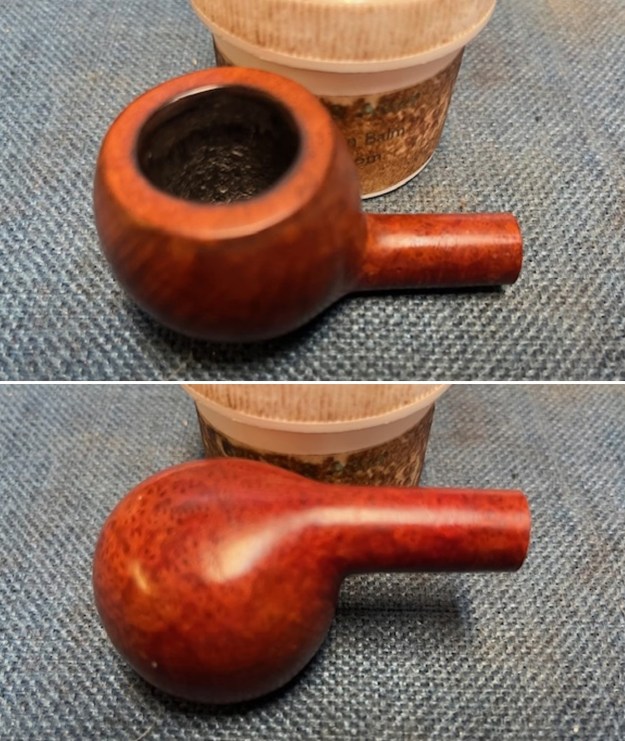
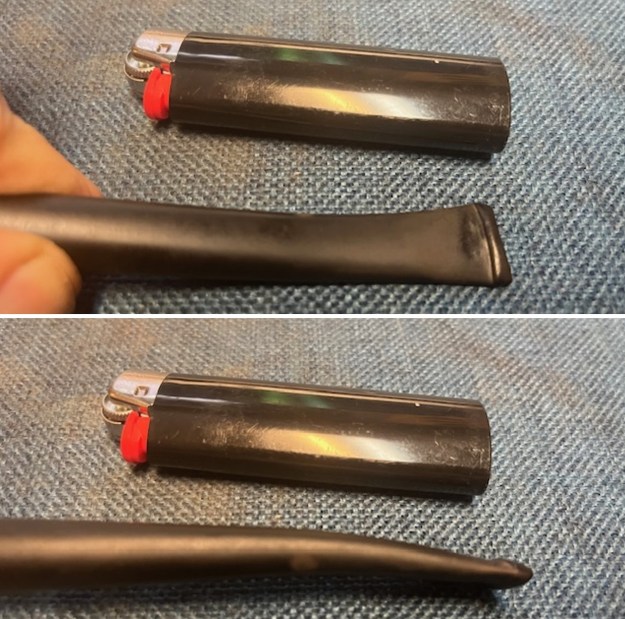
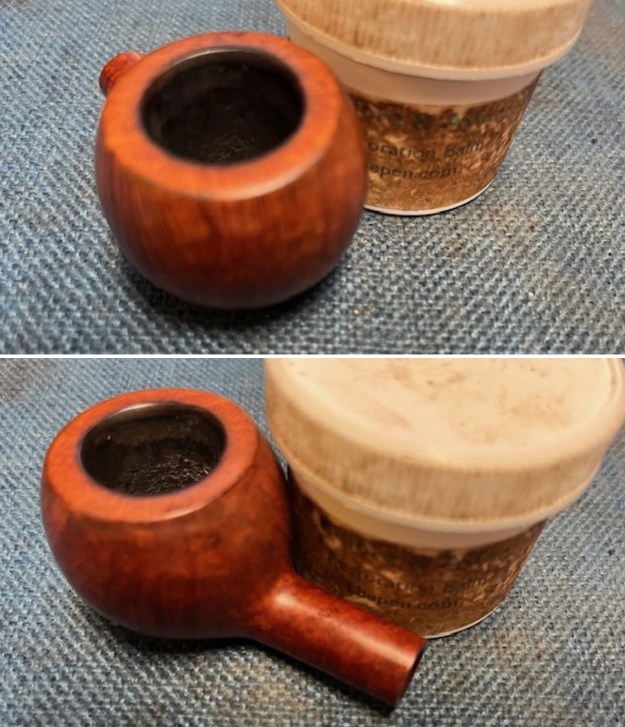 I set the bowl aside and turned my attention to the stem. First, I wanted to address the tooth marks in the surface on both sides. I “painted” the surface of the vulcanite with the flame of a Bic lighter and was able to significantly lift the tooth marks. I also heated the stem so I could put a slight bend in it to capture the Prince shape. I sanded out the remaining tooth marks that were present with a folded piece of 220 grit sandpaper. It looked very good at this point.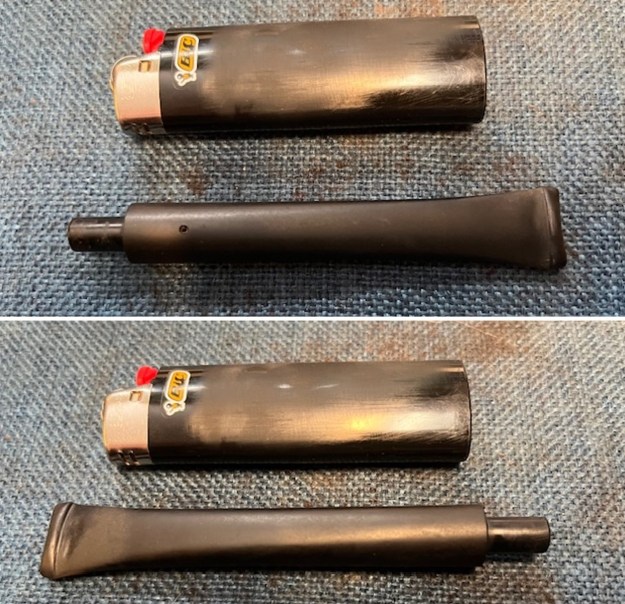
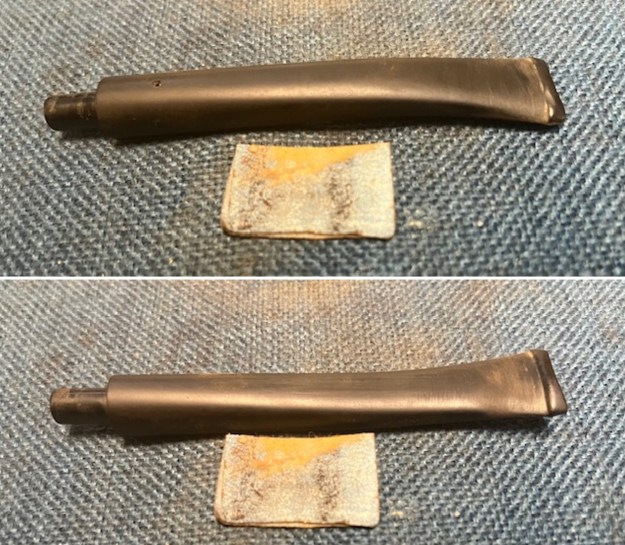 I paused in the sanding process to address the missing white dot on the stem surface. I have some white spot material that I received from Mark Hoover. It is a small envelope of white spots. I put one spot in the lid of a jar I have here and mixed it with some 100% acetone. I stirred it with a dental pick to mix the acetone with the spot material. It softens and becomes malleable. I pressed the softened material into the hole on the top of the stem with the dental pick. Once it set I sanded off the excess material on the stem surface with a folded piece of 220 grit sandpaper.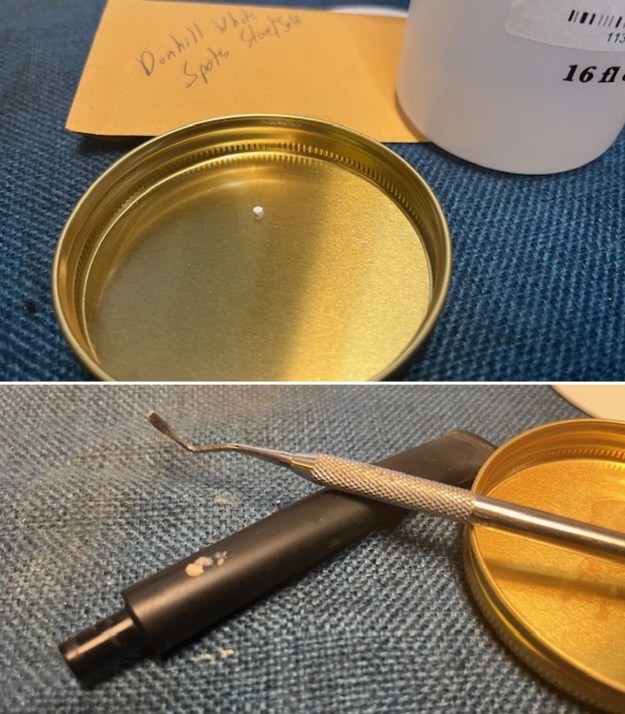
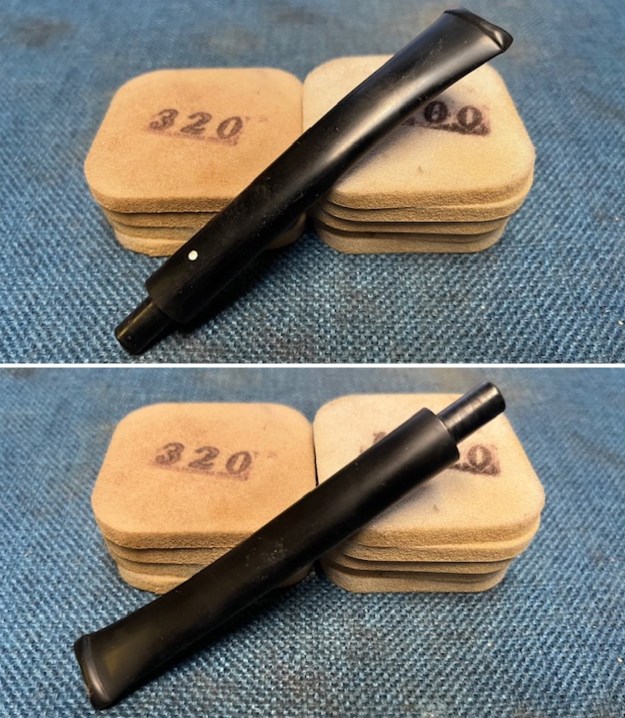
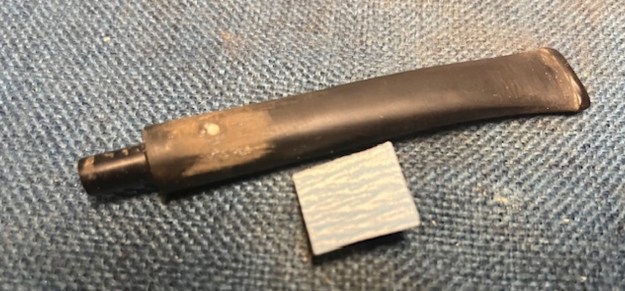 I sanded the stem with 320-3500 grit sanding pads to smooth out the newly filled white spot and to break up the remaining oxidation. I wiped it down after each sanding pad with an Obsidian Oil impregnated cloth. It began to look good.
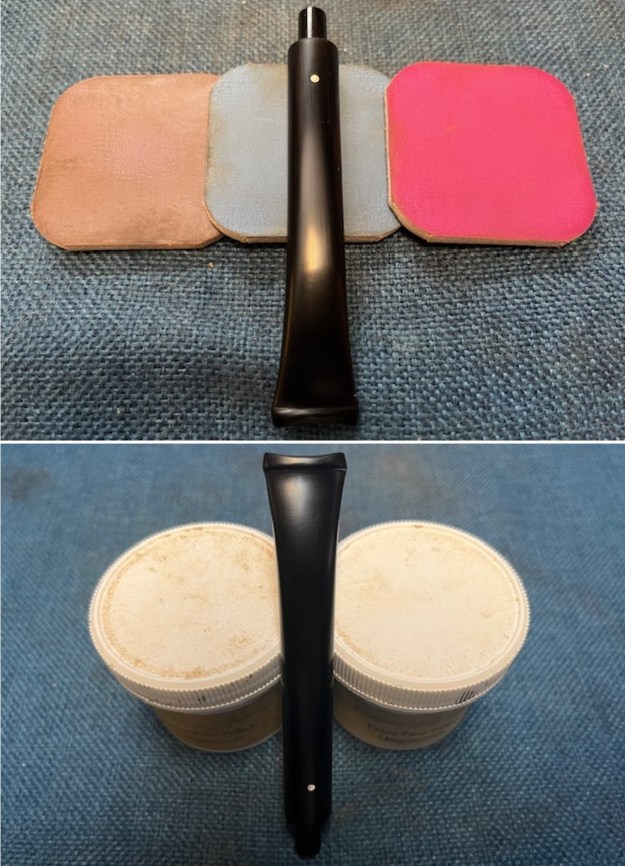
 I polished the stem with micromesh sanding pads – dry sanding with 1500-12000 grit pads. I wiped the stem down after each sanding pad with Obsidian Oil. I polished it with Before & After Pipe Stem Polish – both Fine and Extra Fine. Once I had finished the polishing I gave it final coat of Obsidian Oil and set it aside to dry.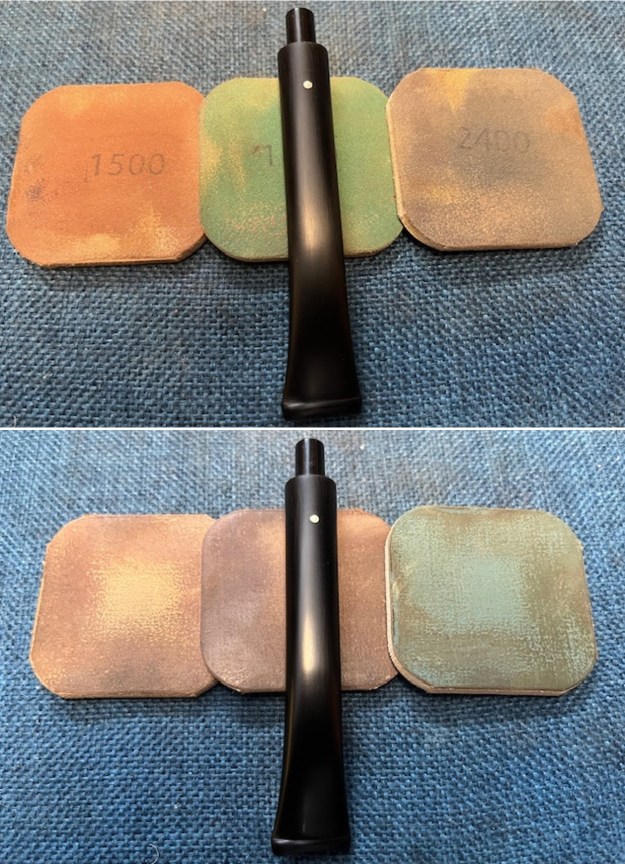
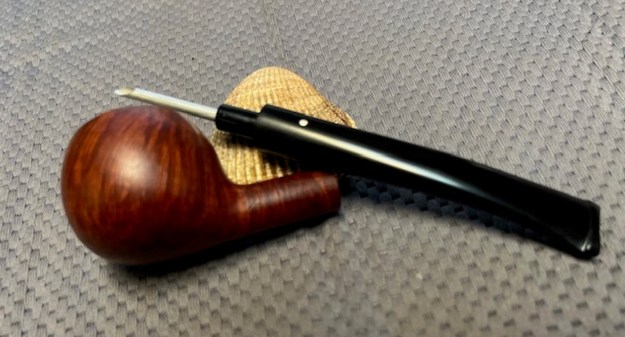
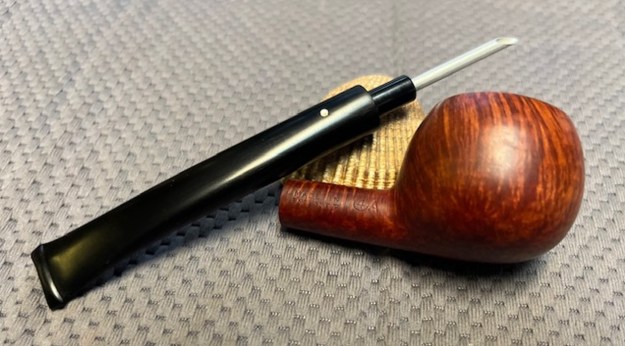
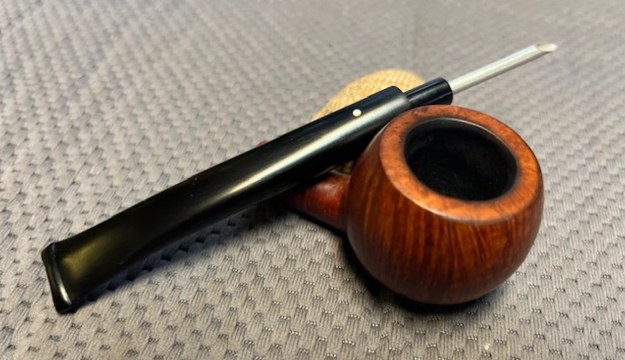
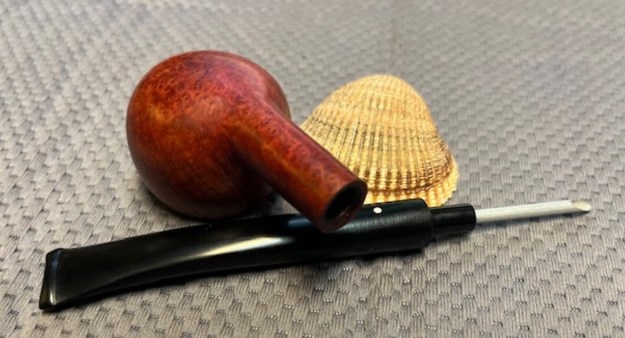
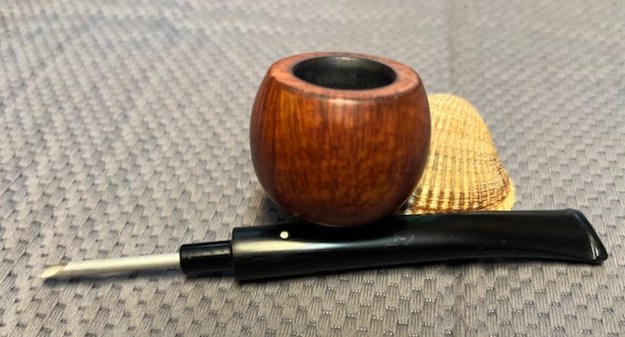
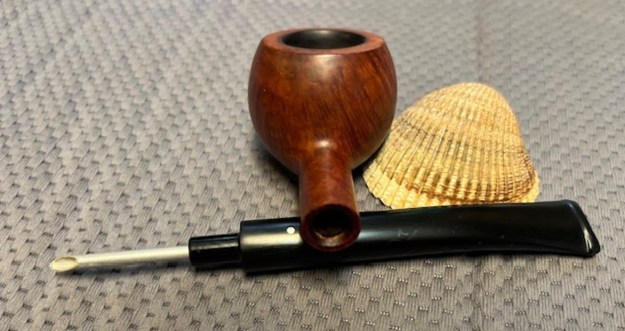
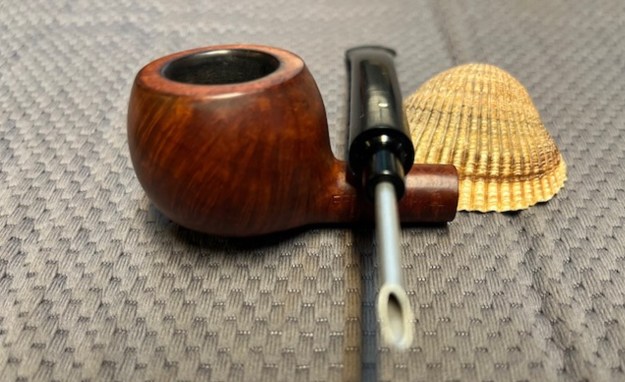
 The diameter of the tenon made it clear that the pipe had originally had an inner tube. Somewhere along the journey the tube had disappeared. I went through my can of tubes and stingers and found an inner tube that was the right length. I inserted it in the tenon and took photos of the fit.
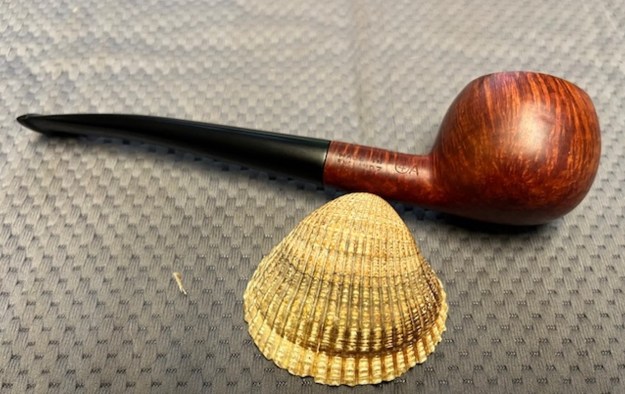
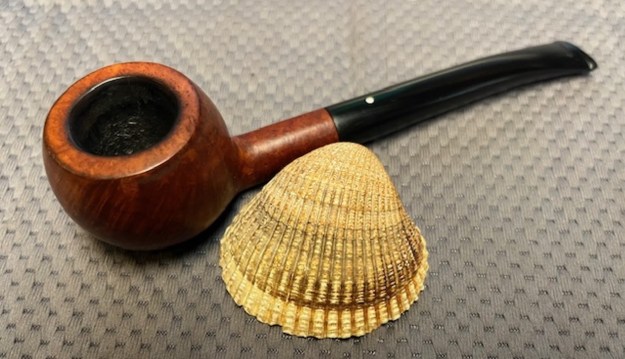
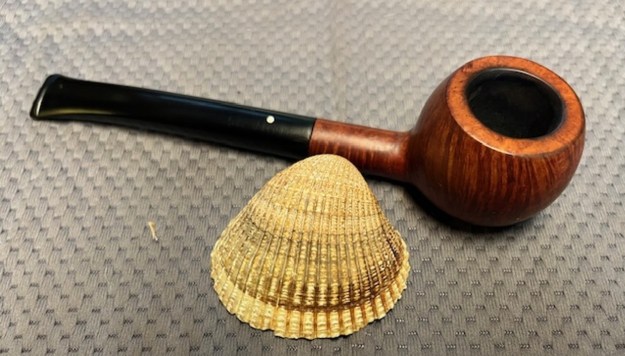
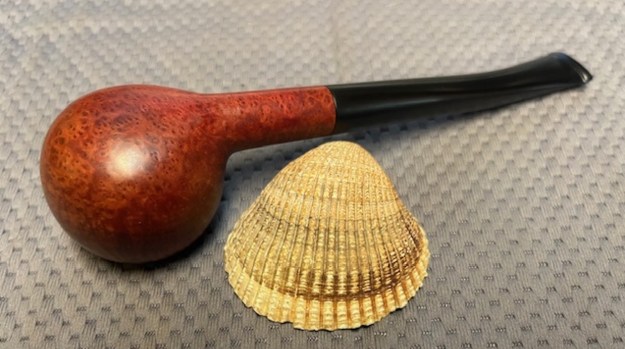
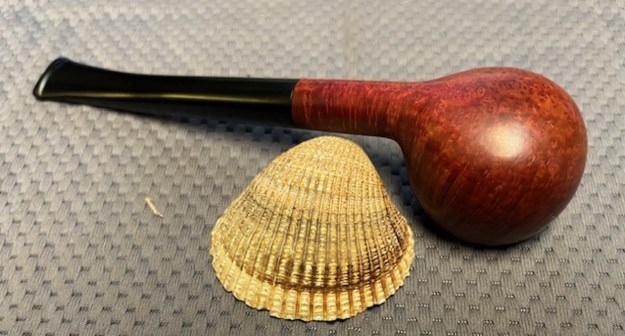
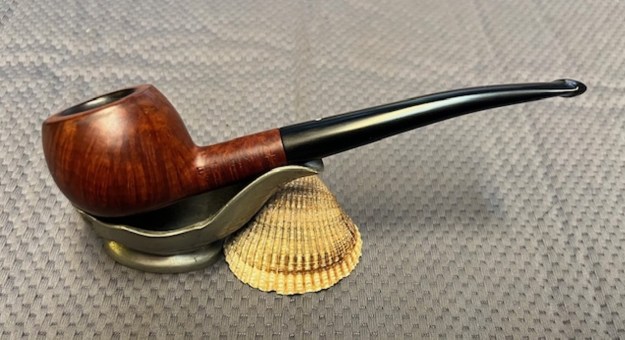
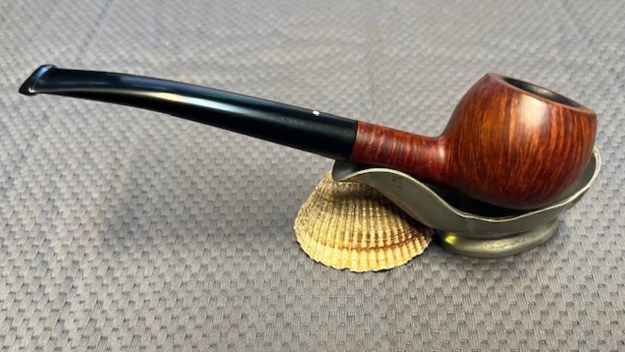
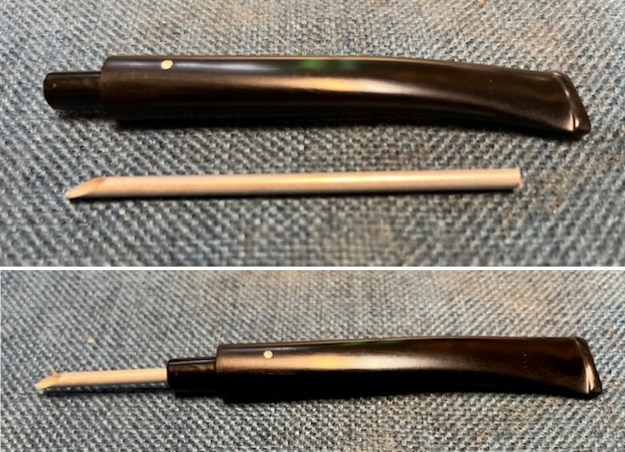 I put the 1967 Dunhill Bruyere FET F/T Prince bowl and stem back together. I polished the bowl and stem with Blue Diamond to polish out the scratches in the briar and the vulcanite. I gave the bowl and the stem multiple coats of carnauba wax. I buffed the pipe with a clean buffing pad to raise the shine. I hand buffed it with a microfiber cloth to deepen the shine. The pipe polished up pretty nicely. The reddish/brown stains worked amazingly well with the polished vulcanite taper stem. The grain around the bowl and shank and looks quite remarkable. This is truly a beautiful Dunhill Bruyere FET F/T Prince. The finished pipe is shown in the photos below. The dimensions of the pipe are Length: 6 inches, Height: 1 ¼ inches, Outside diameter of the bowl: 1 ¼ inches, Chamber diameter: 7/8 of an inch. The weight of the pipe is 1.23 ounces/36 grams. I have another pipe set aside for Paul in Illinois that I will pack together and send to him. I am sure he will soon add them into his rotation and enjoy some great smokes. Thanks for walking through the restoration with me. Cheers.
As always, I encourage your questions and comments as you read the blog. Thanks to each of you who are reading this blog. Remember we are not pipe owners; we are pipe men and women who hold our pipes in trust until they pass on into the trust of those who follow us.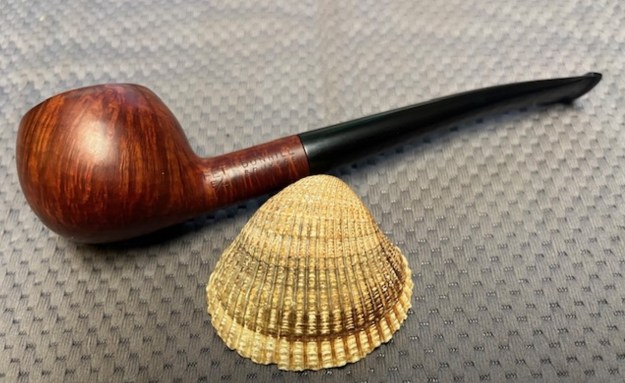
 rebornpipes
