
Blog by Steve Laug
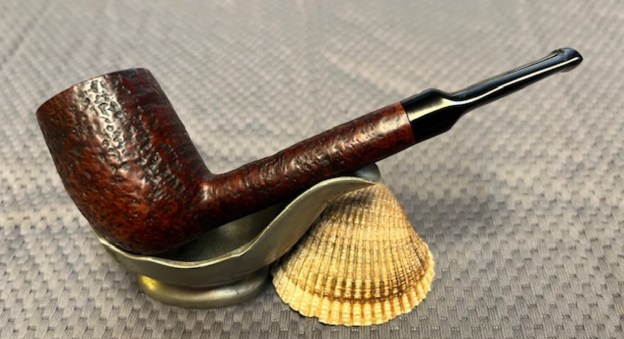
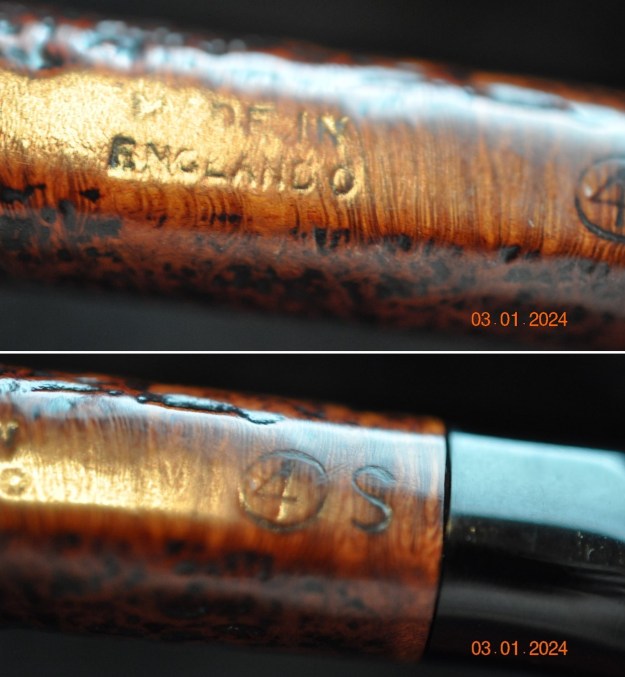
The next pipe on the table Dunhill Shell Briar with a worn or shallow blast on the bowl and a smooth rim top. We purchased it from our contact in Copenhagen, Denmark 01/22/24. The pipe is stamped on the heel of the bowl and the underside of the shank on a smooth panel. On the heel it is stamped with the shape number 40 followed by Dunhill [over] Shell Briar. Next to that it is stamped Made in [over] England with the date stamp 0 following the D in England. The number is approximately the same size as the D in England. Next to that it is stamped 4 in a circle and S which tells me it is a Group 4 sized pipe and it is in the Shell Briar finish. The pipe had been smoked and there was a moderate cake in the bowl with some overflowing as lava on the smooth rim top. There is also some darkening and possible damage on the inner edge of the bowl. The stem is lightly oxidized and had wear on the surface on both the top and underside of the stem just ahead of the button. Jeff took photos of the pipe before he started his clean up work. I have included them below. 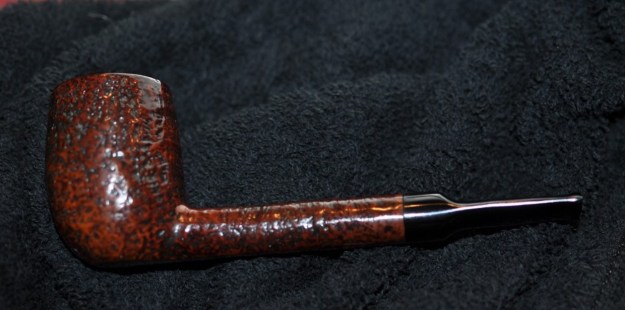
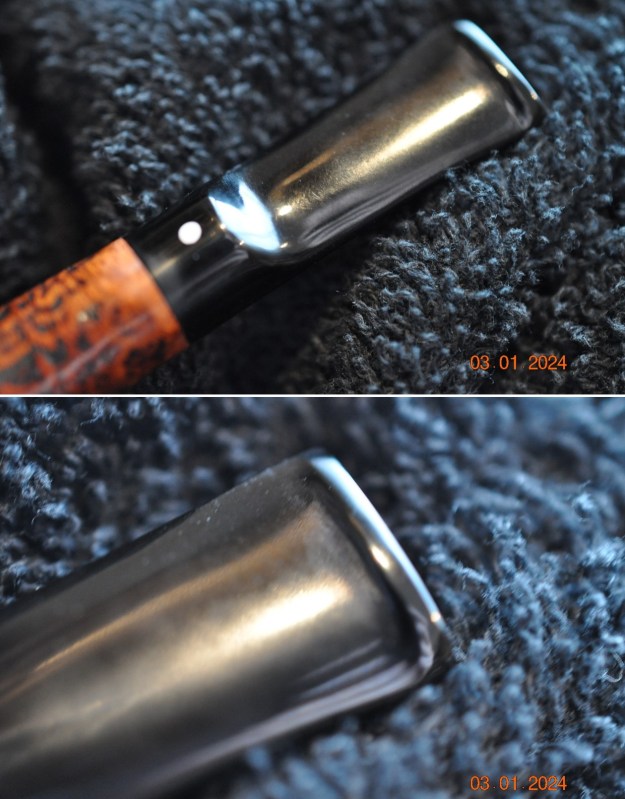
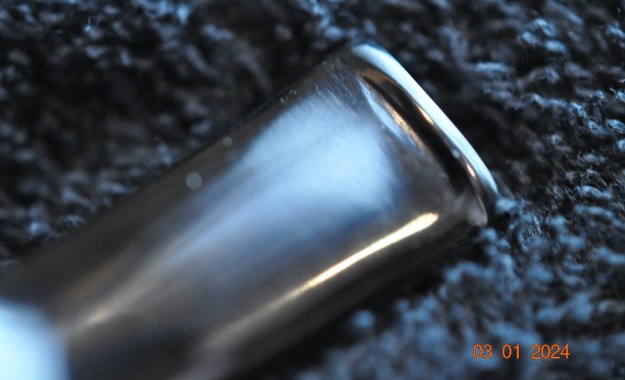
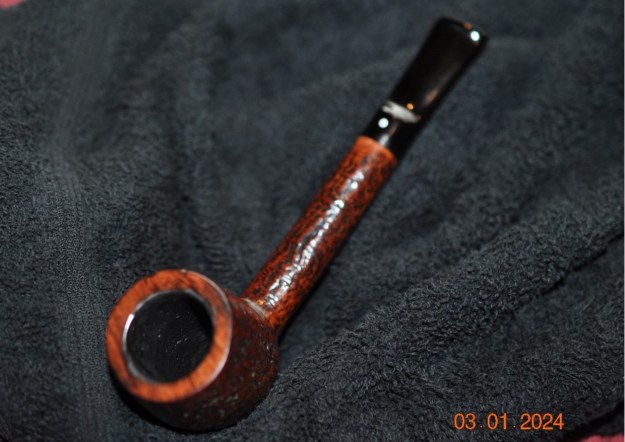 Jeff took photos of the rim top, bowl and the surfaces of the stem to give a sense of the condition of the pipe. The walls of the bowl had a moderate cake on them and some lava overflow onto the rim top – heavier toward the back of the bowl. There is also some darkening and potential burn damage that can be seen on the inner edge of the rim. The stem is lightly oxidized and has wear on both sides ahead of the button.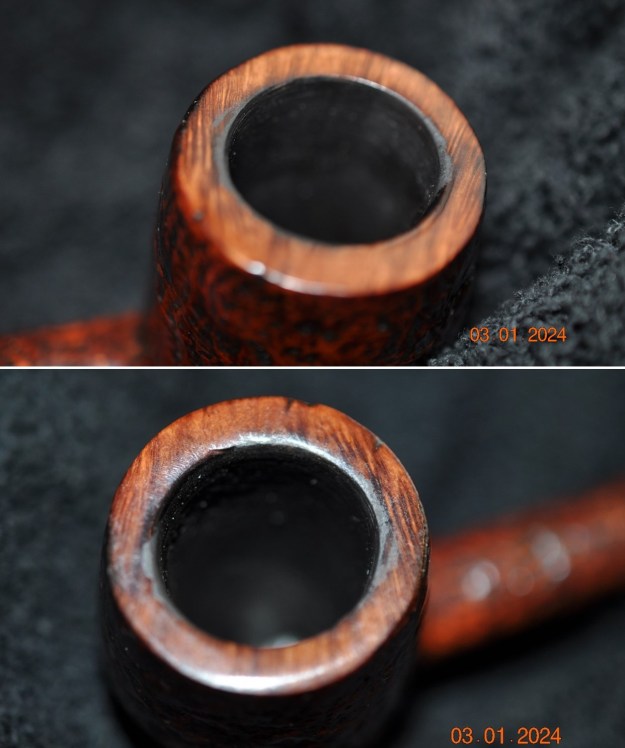
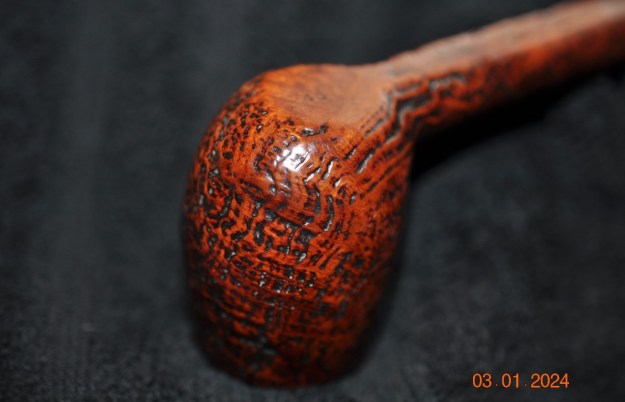
 He took photos of the sides and heel of the bowl to give a clear picture of the look of the light or shallow sandblast. It is hard to know if it is just worn from use or if it came from the factory this way.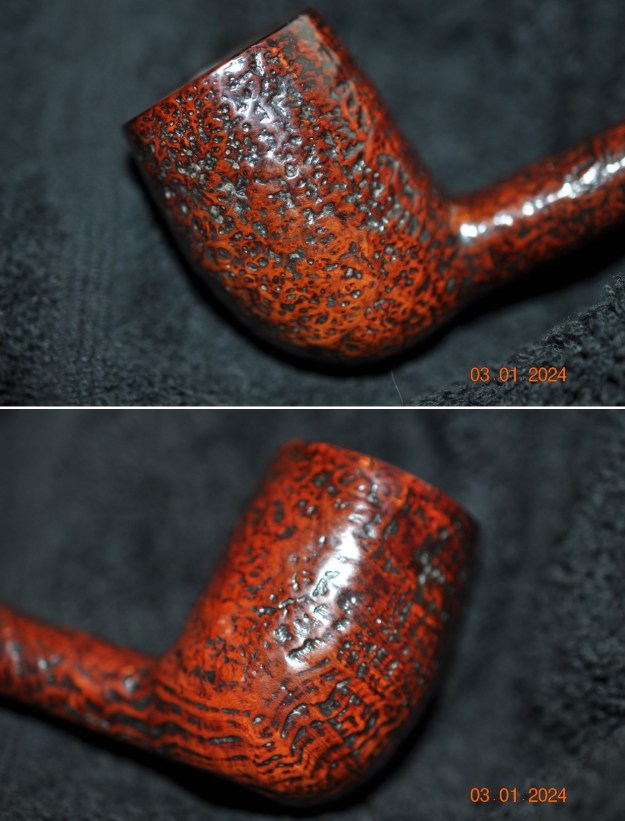
 He took photos of the stamping on the underside of the bowl and the shank. It is clear and readable and read as noted above.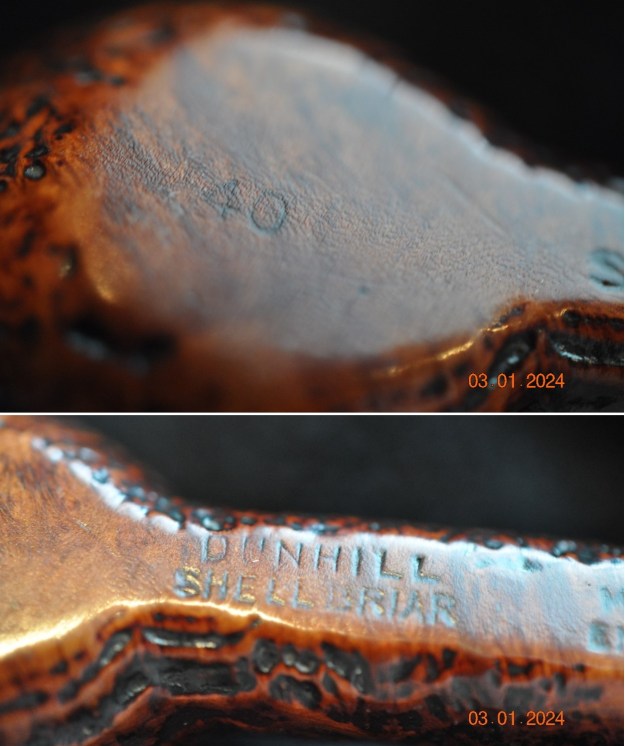
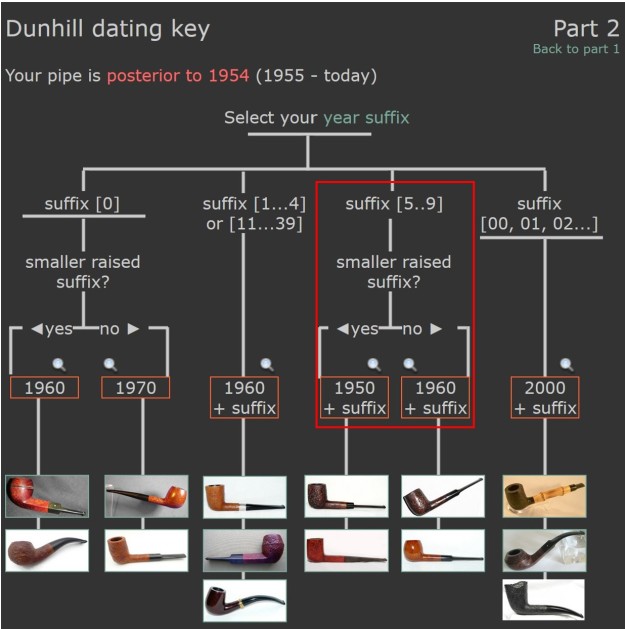
 I turned to the dating key on Pipephil’s site (http://www.pipephil.eu/logos/en/dunhill/cledat-en1a.html) to establish a date for the pipe. I drew a red box around the pertinent information below. It fits the criteria of a Sandblast with a year suffix and a Non possessive form Dunhill. The suffix is the number 0 same size as the D which puts in the section below which notes 1960 + suffix 0 to establish a date. In this case it is 1960 + 0 making the pipe a 1960.
 I turned to Pipedia to verify this date on the pipe and have included the link and the post for that below (https://pipedia.org/wiki/Pipedia_Dunhill_Dating_Guide#Post-Patents). It verifies that date is 1960. I have included further information that was on the site for this time period. I have highlighted the pertinent information in red below:
[1955 up to 1969] Only a single suffix number.
The date code is just after ENGLAND: 1950 +: 5, 6, 7, 8 and 9 for the 50s and 0 for 1960 (they are smaller and underscored) then, 1, 2, 3, 4, 5, 6, 7, 8 and 9 for the 60s (they are equal in size to the “D” in the word “ENGLAND”).
- Sometimes two suffix numbers (one after the other), but it’s an additional stamp for warranty control (see more here).
- From 1961 up to 1964 we can find numbers without underscore – the code is a raised and smaller than the preceding “D”.
- Sometimes the numbers 6, 7, 8 and 9, in the 50s, are roughly equal in size to the “D” in the word “ENGLAND”.
- DUNHILL over finish stamp (BRUYERE or ROOT BRIAR). On sandblasted DUNHILL followed by the name of the finish (DUNHILL SHELL, etc).
Now it was my turn to work on the pipe. Jeff had done an amazing cleanup of the pipe. He reamed the cake with a PipNet reamer and cleaned up that with a Savinelli Fitsall Pipe Knife. He scrubbed the internals of the bowl and stem with alcohol, cotton swabs and pipe cleaners. He scrubbed the externals with undiluted Murphy’s Oil Soap and rinsed the bowl off with running water. He soaked the stem in Briarville’s Pipe stem Deoxidizer and once it had soaked rinsed it off with warm water to remove the residual solution. He dried it off and rubbed it down to remove any oxidation that was still on the stem. The pipe looked very good when I received it.
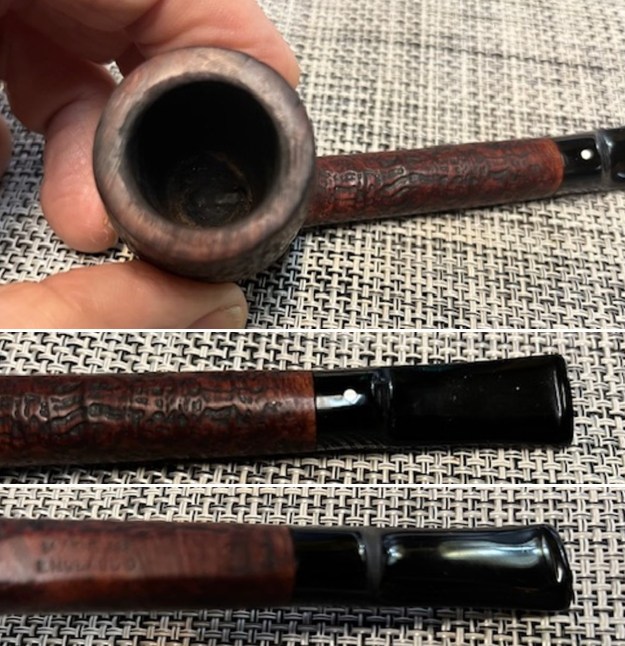
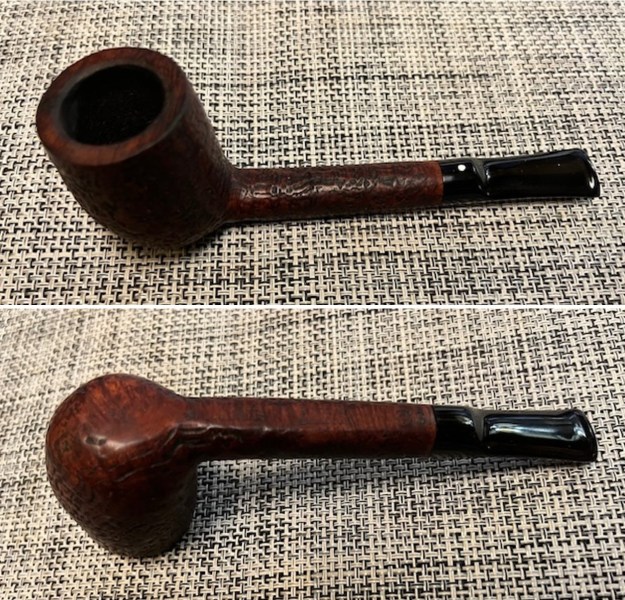 I took photos of the bowl and the rim top as well as both sides of the stem to show the condition of the pipe before I started my work. The rim top shows scratching on the smooth surface and some darkening as well. There is also damage on the inner edge of the rim where it appears to have been damaged with a knife. The stem does not show tooth marks but the sharp edge of the button on both sides is worn and will need to be redefined.
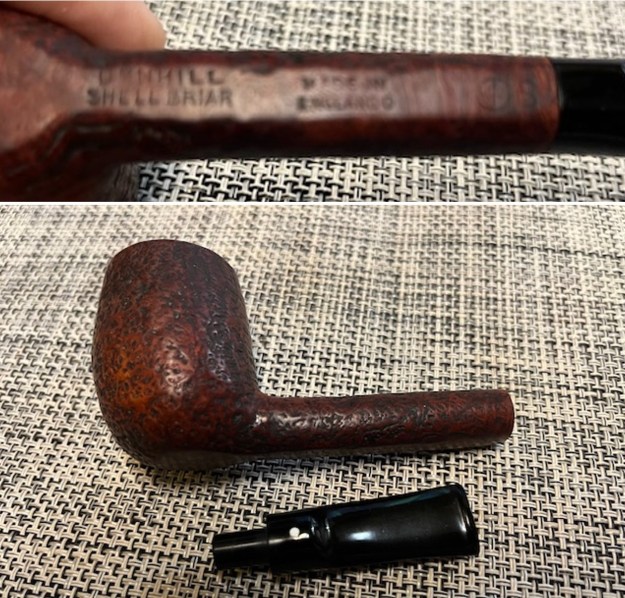
 I took a photo of the stamping on the shank. The photo of the stamping is clear, though worn in some spot but it is still readable. I also removed the stem and took a photo of the parts of the pipe.
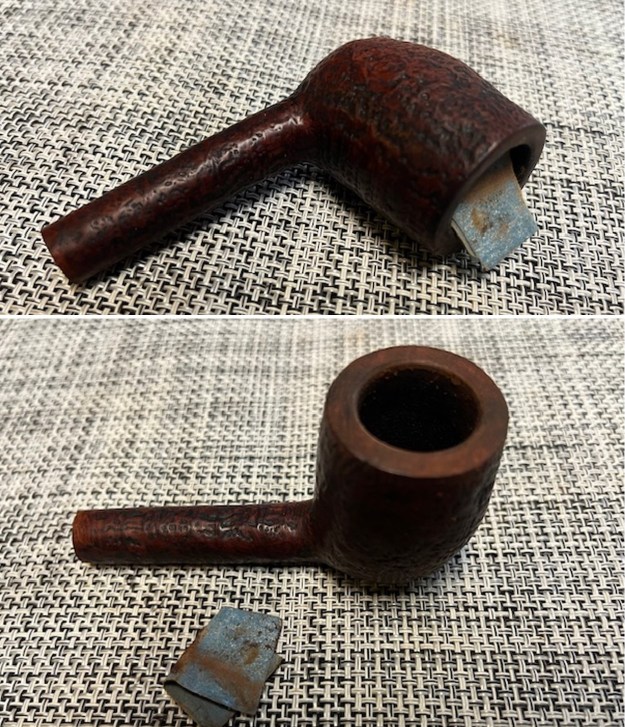
 I started my work on the pipe by addressing the damage to the rim top and the inner edge. I used a folded piece of 220 grit sandpaper to smooth out the damage on the rim top and also smooth out the inner edge and remove the cut marks. It looked significantly better at this point. There were still some spots of darkening on the rim top on the back and front but those will polish out further as the process continues.
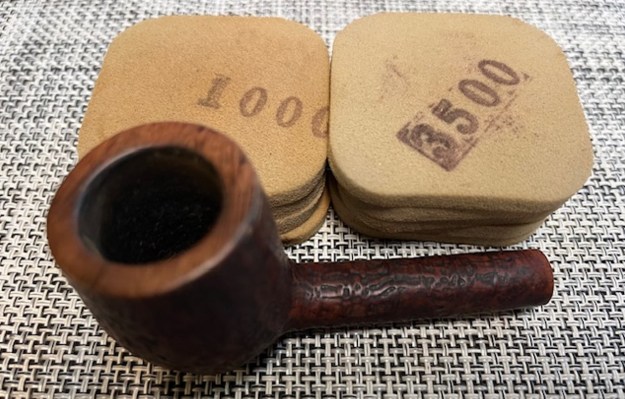
 I worked further on the rim top with the 320-3500 grit sanding pads. I used them on the smooth surface as well as the inner edge. The darkening is less at this point and the top and edges are taking on a shine.
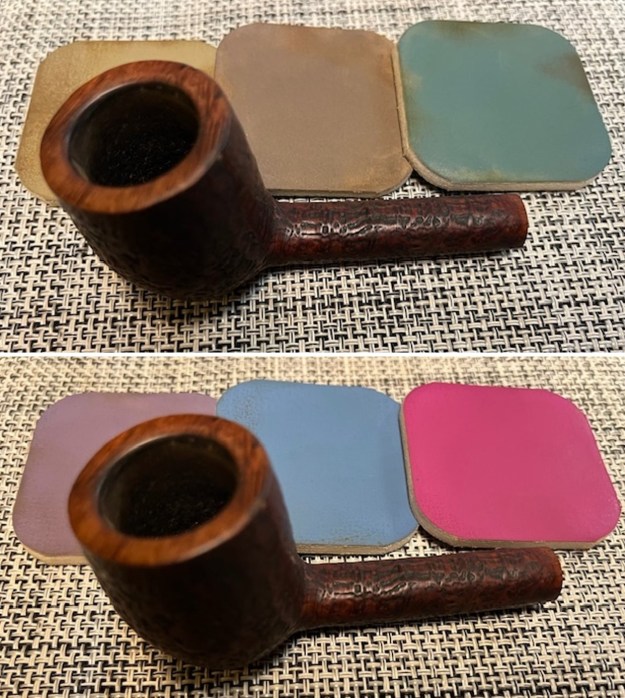
 I further polished the rim top and edges using micromesh sanding pads – I dry sand it with 1500-120000 grit pads and wiping it down with a damp cloth after each pad. The shine is deepening and though the darkening is still present in spots it is improving.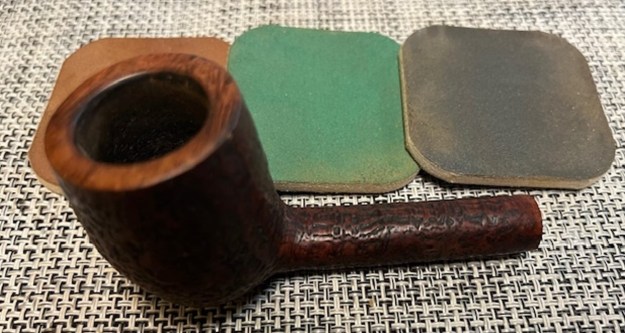
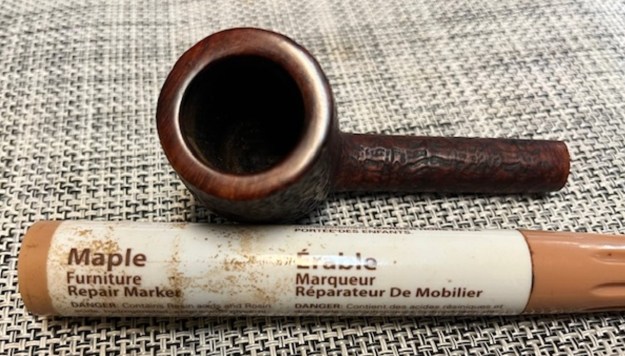
 I stained the rim top with a Maple stain pent to blend it into the bowl colour and to further mask the darkening. At this point the rim top looks quite amazing.
 Once the stain dried on the rim top I rubbed the briar down with Before & After Restoration Balm. I worked it into the briar with my fingertips and a horsehair shoe brush. The product works to clean, enliven and preserve the briar. I let it sit for 10 minutes then I buffed it with a cotton cloth to deepen the shine. The briar really comes alive with the balm.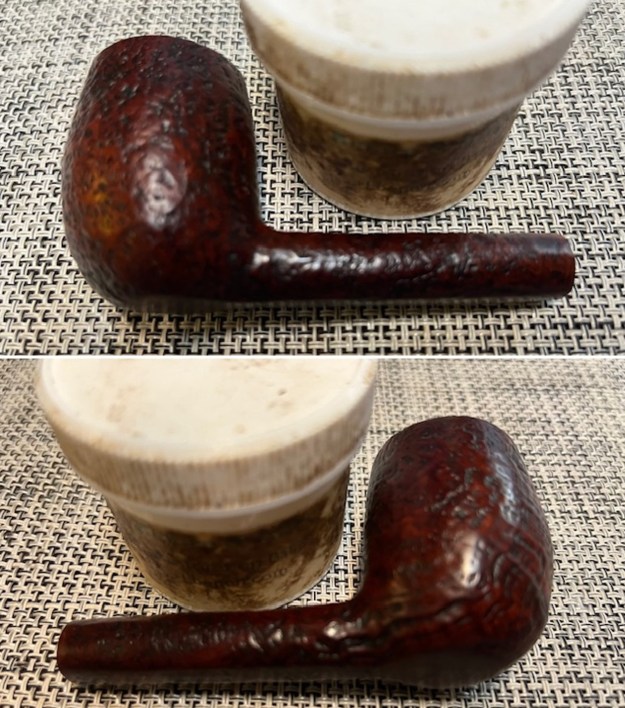
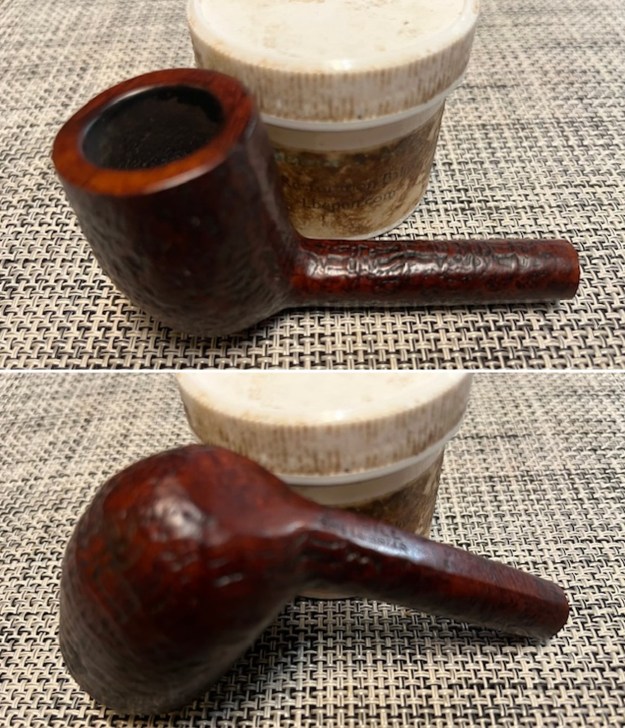
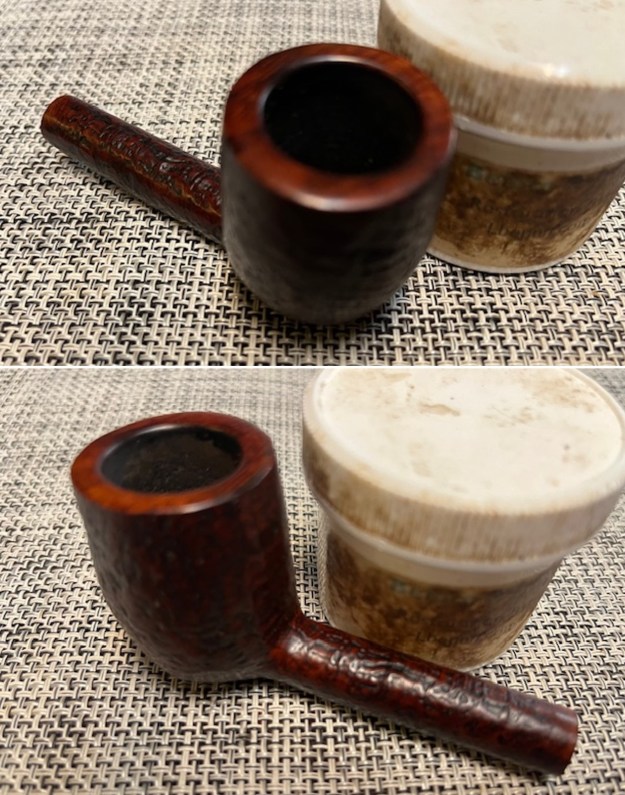 I set the bowl aside and turned my attention to the stem. I used a small file with a straight edge to redefine the sharp edge of the button. Once it was cut it looked better. I sanded the file marks with 220 grit sandpaper to smooth them out.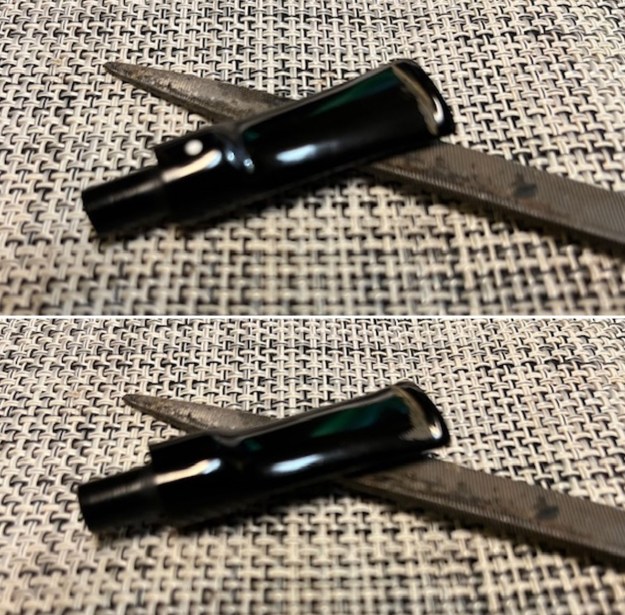
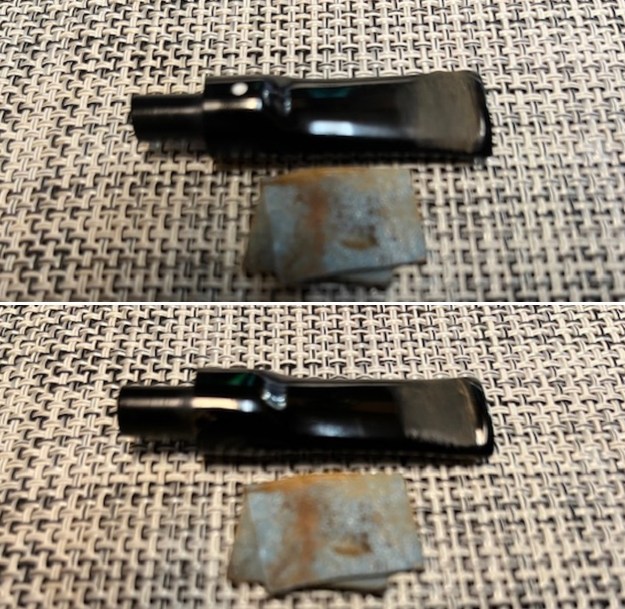 I sanded the surface of the stem and the repairs smooth with 320-3500 grit sanding pads. It worked well to smooth things out and remove remnants of oxidation. When finished the stem looked much better.
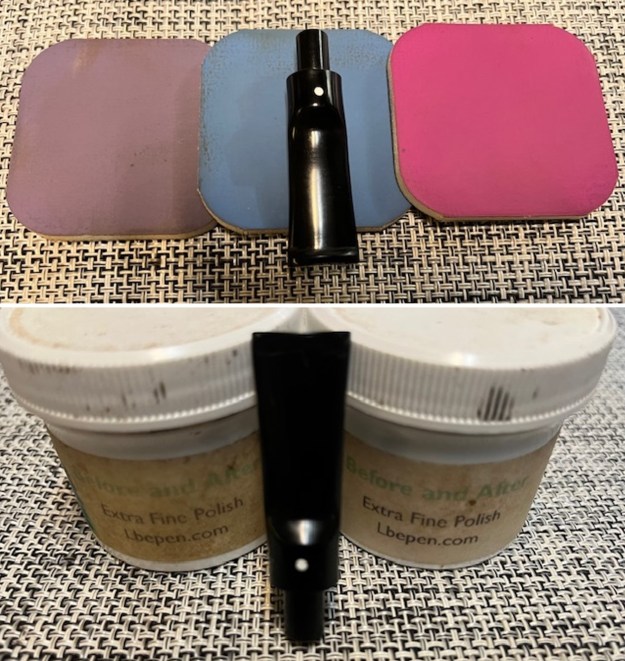
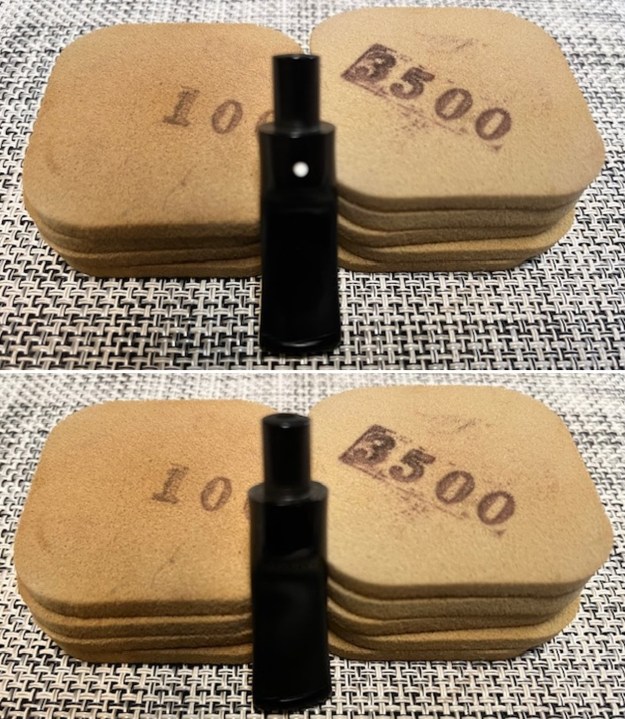 I polished the vulcanite with micromesh sanding pads – 1500-12000 grit pads. I wiped it down with Obsidian Oil after each sanding pad. I used Before & After Pipe Polish – both Fine and Extra Fine to further polish the stem.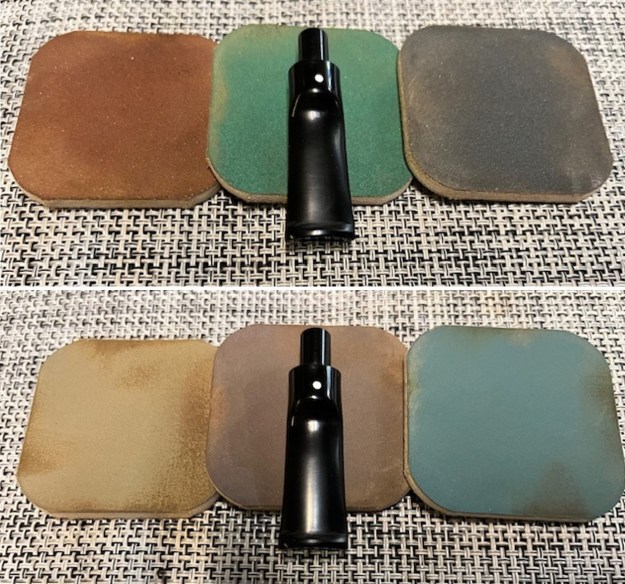
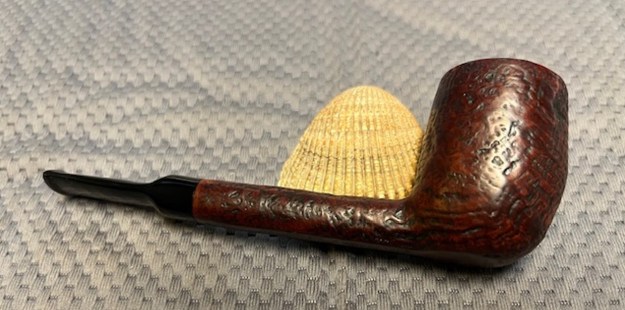
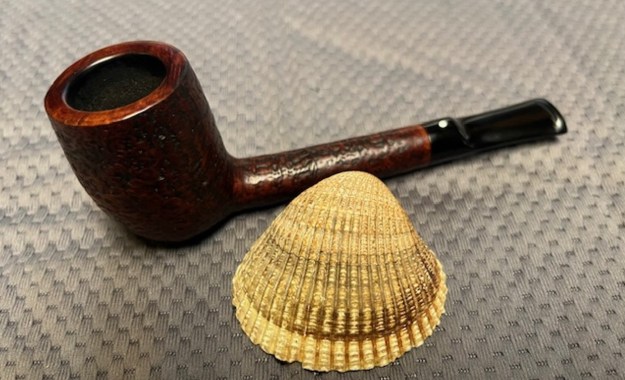
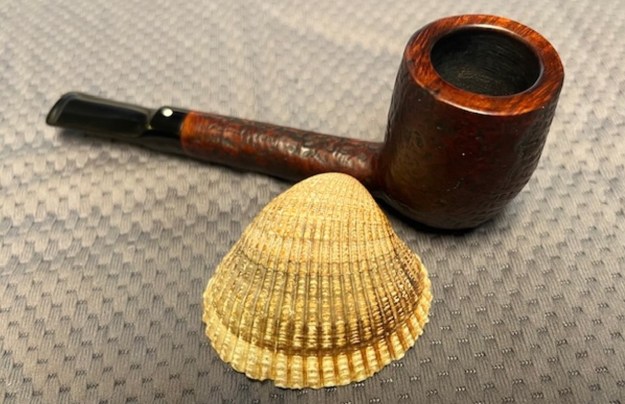
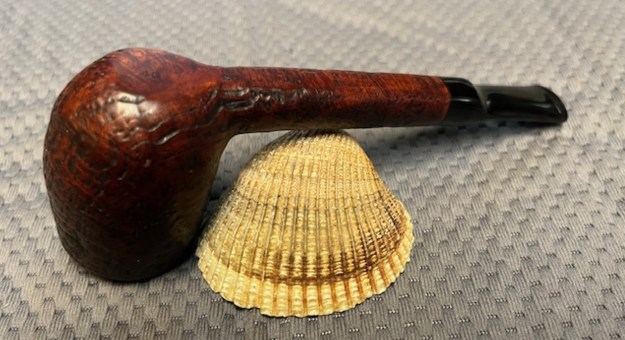
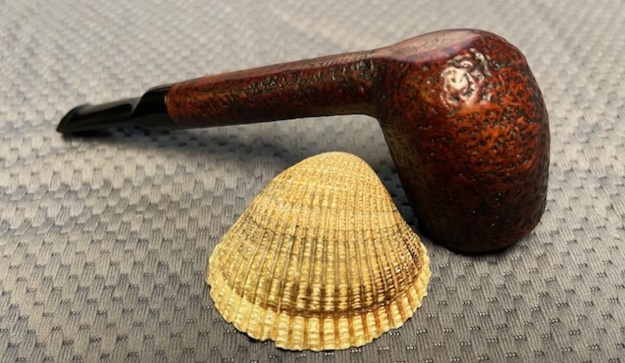
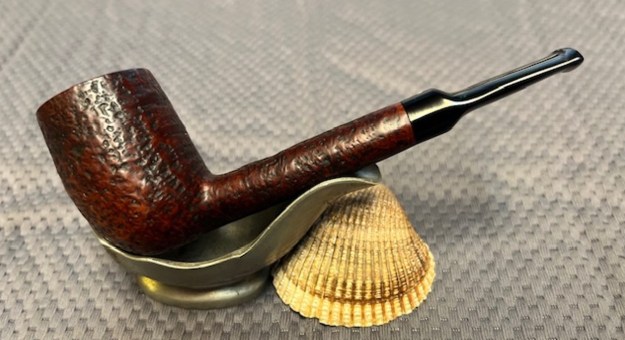
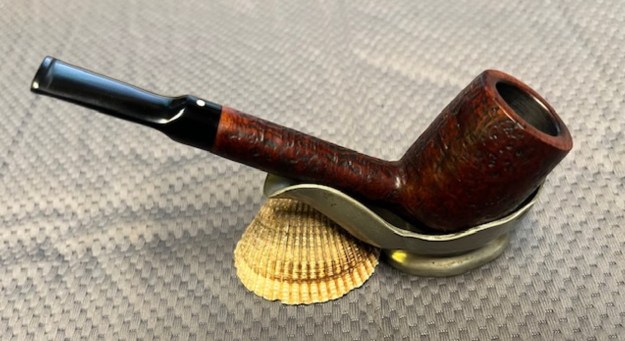
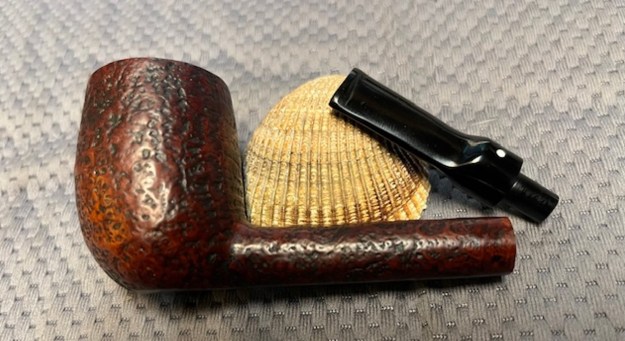
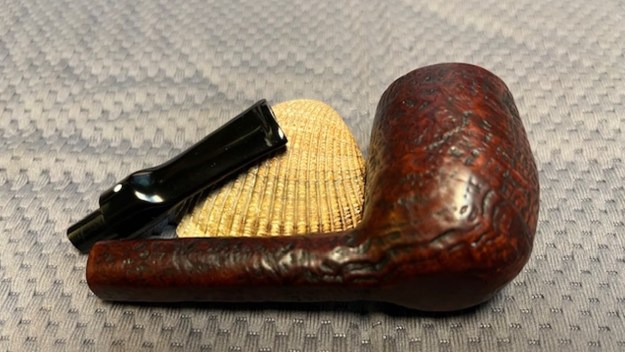
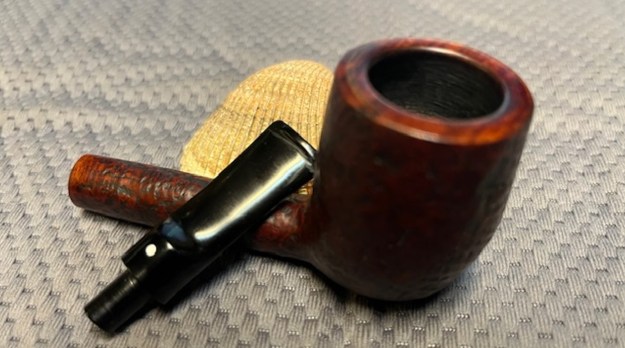
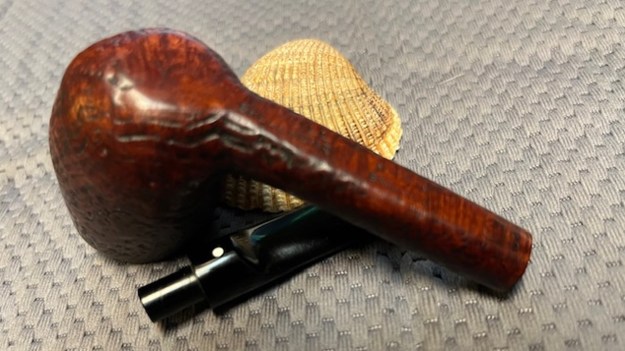
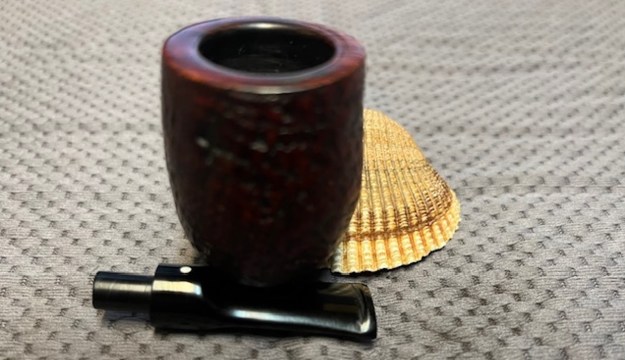
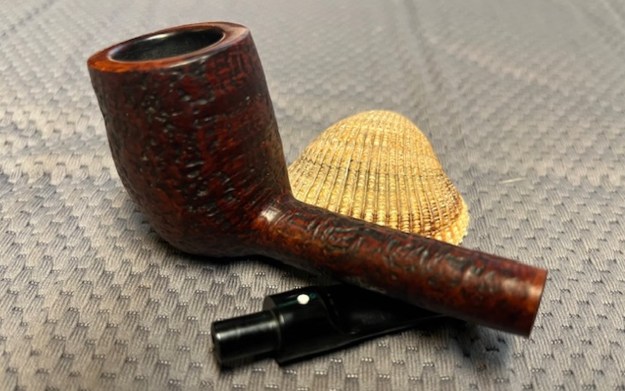
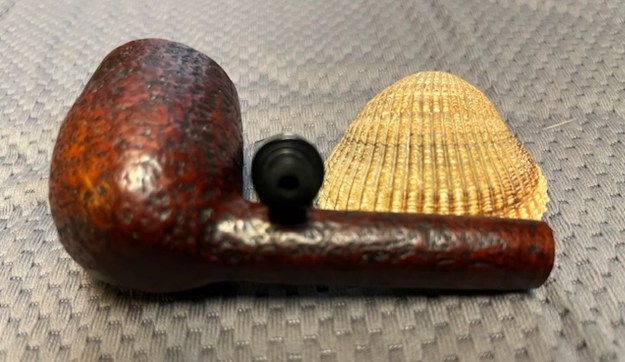
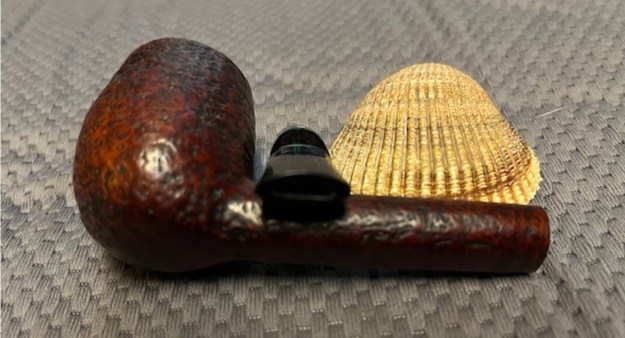
 This 1960 Dunhill Shell Briar 40 Group 4 Lovat has a beautiful, unique Dunhill Sandblast finish that is shallow and worn. The rich brown/black finish highlights some great grain around the bowl and shank. It has a sandblast that Dunhill developed and specialized in making. The polished vulcanite saddle stem adds to the mix. I put the stem back on the bowl and carefully buffed the pipe with Blue Diamond on the buffing wheel. It is critical to avoid buffing the stamping and to have a lighter touch on the sandblast briar. I gave the bowl multiple coats of Conservator’s Wax and the stem multiple coats of carnauba wax on the buffing wheel and followed that by buffing it with a clean buffing pad. I hand buffed the pipe with a microfiber cloth to deepen the shine. The finished Dunhill Shell Briar 40 Lovat is quite stunning and feels great in my hand. Give the finished pipe a look in the photos below. The dimensions of the pipe are Length: 5 inches, Height: 1 ¾ inches, Outside diameter of the bowl: 1 ¼ inches, Chamber diameter: ¾ of an inch. The weight of the pipe is 1.23 ounces/35 grams. Thanks for walking through the restoration with me as I worked over another beautiful pipe. I am going to add it to the rebornpipes store in the British Pipemakers Section. If you would like to add it to your collection let me know. Thanks for your time.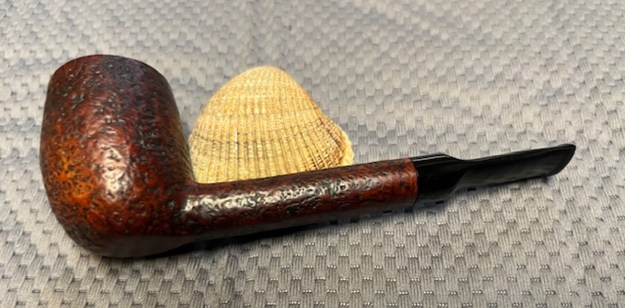
 rebornpipes