
Blog by Steve Laug
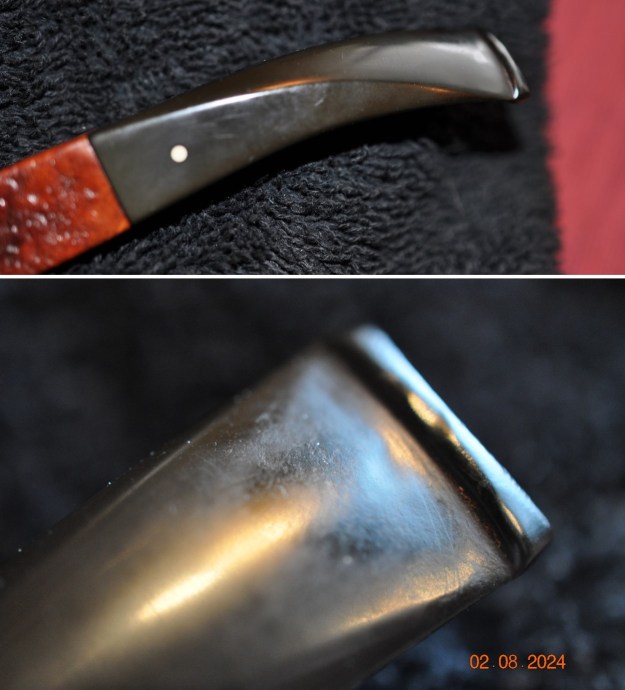
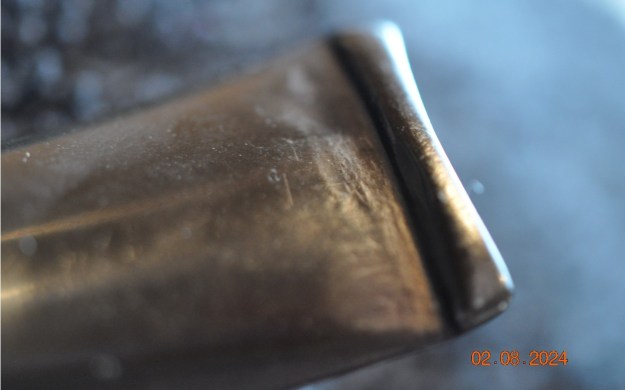
The next pipe on the table came to us from a group of pipes that Jeff and I purchased from a fellow in Copenhagen, Denmark on January 8, 2024. It is a Dunhill Tanshell Bent Bulldog that is in good condition. It is stamped on a smooth panel on the underside of the shank with the shape number P F/T followed by Dunhill [over] Tanshell. That is followed by Made in [over] England. Next to the D in England it is stamped the date number 7. Stamped after that is a 4 in a circle followed by a T. The stamping is clear and readable as noted above. The pipe has a tan or light brown stain on a sandblast finish and some amazing grain that the shape follows well. The finish was dusty around the nooks and crannies of the sandblast but otherwise fairly clean. It also had some darkening on the bowl sides where hand oils had darkened it and on the rim top. The bowl had a thick cake and there was some light lava on the sandblasted rim top or edges. The taper stem was oxidized, calcified, dirty and had tooth marks and chatter ahead of the button. Jeff took photos of the pipe to show what it looked like before he started working on it.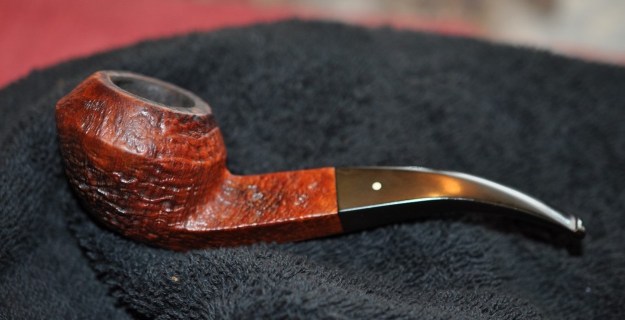
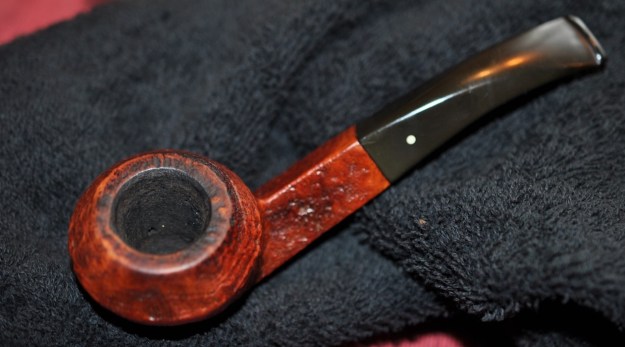 He took photos of the bowl and rim top to show their condition and of the stem to show the condition of both sides of the stem.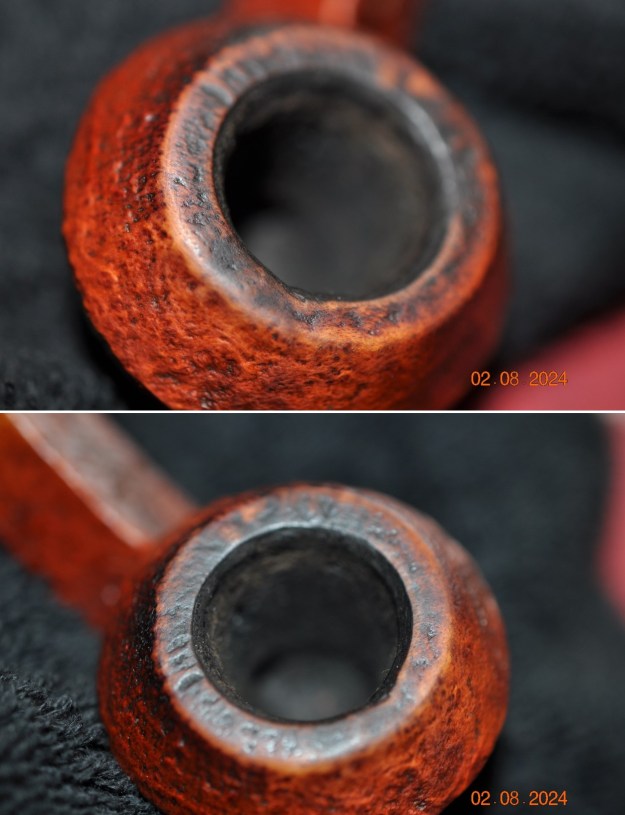
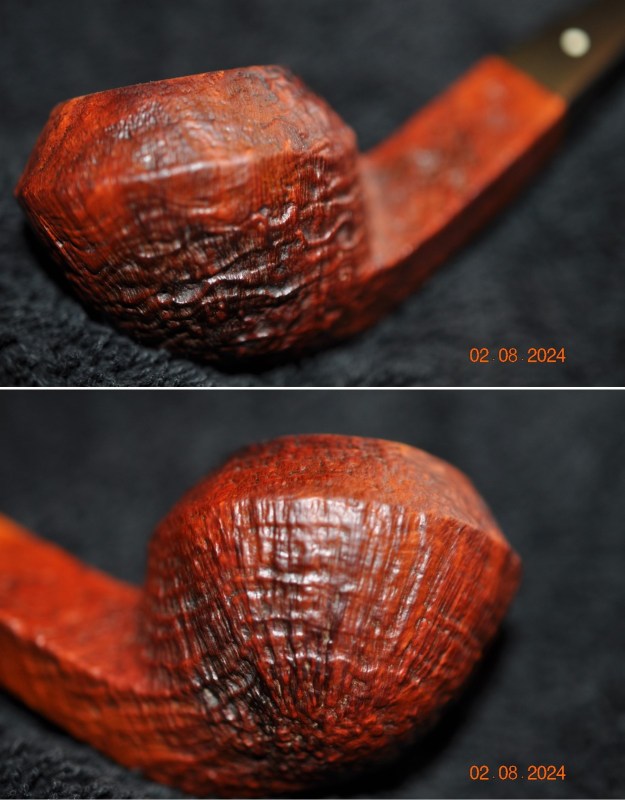
 The photos of the sides and heel of the bowl show the deep sandblast grain on the pipe. It is a beauty.
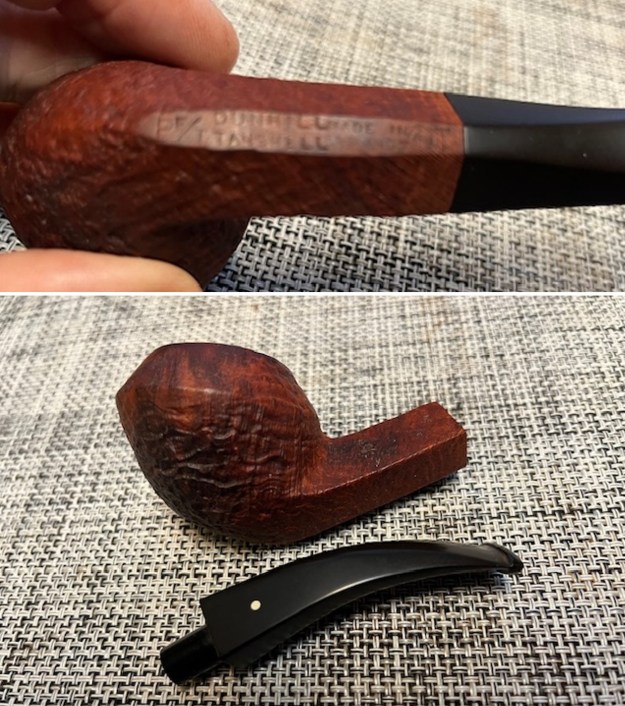
 The stamping on the underside of the shank is shown in the photo below. It looks very good and faint but readable. It reads as noted and explained above. Jeff captured the detail in the photos below.
 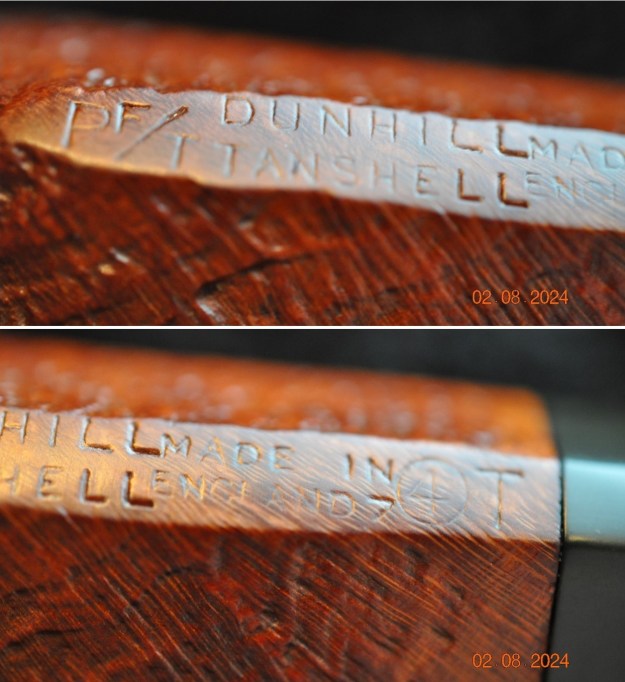 One of the first things I like to do is to unpack the stamping and understand each element in it. I turned to Pipephil helpful site (http://pipephil.eu/logos/en/dunhill/tanshell1.html). The stamping is interpreted as follows: The number P is the shape number for a Half Bent Bulldog and the F/T is for a fishtail stem. The Dunhill Tanshell is the finish. The number 7 following the D of England gives the date the pipe as 1967.
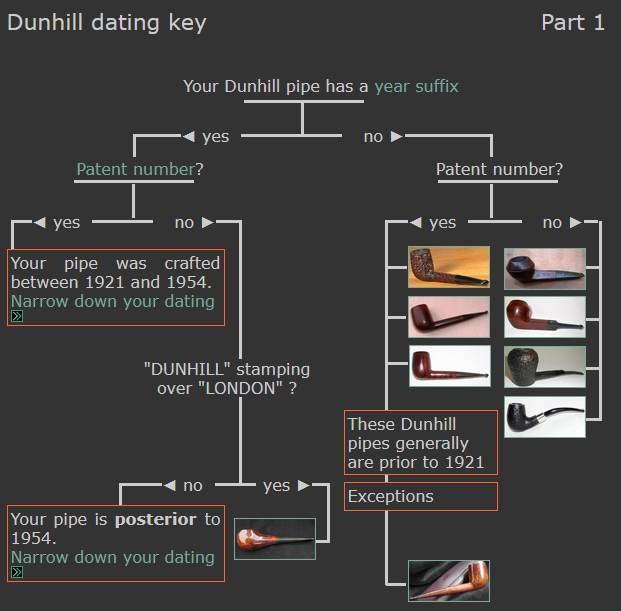
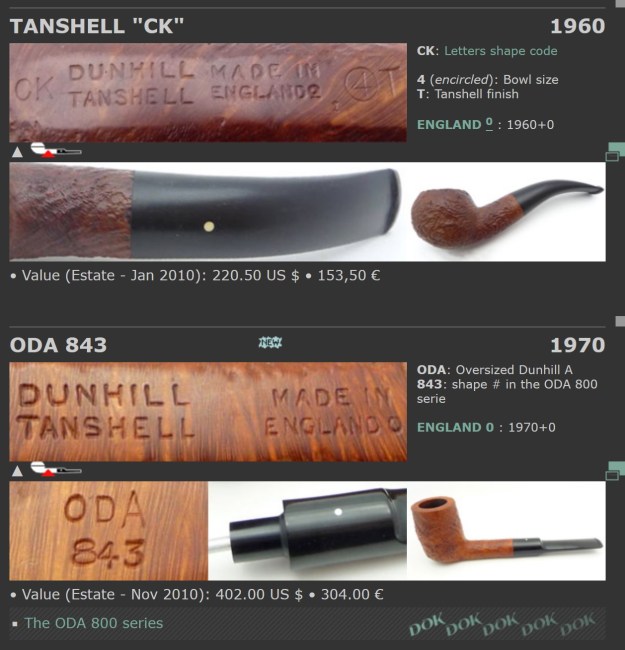 Pipephil also has some helpful dating keys on the site that are basically flow charts that you can walk through to date your pipe (http://pipephil.eu/logos/en/dunhill/cledat-en1.html). I turned to Part 1 of the Dating Key and followed the chart. This pipe has a suffix of underlined, superscript 22 following the D in England. That number took me to the section on the chart below (column one) which instructed me that the pipe could be dated as being made posterior to 1954.
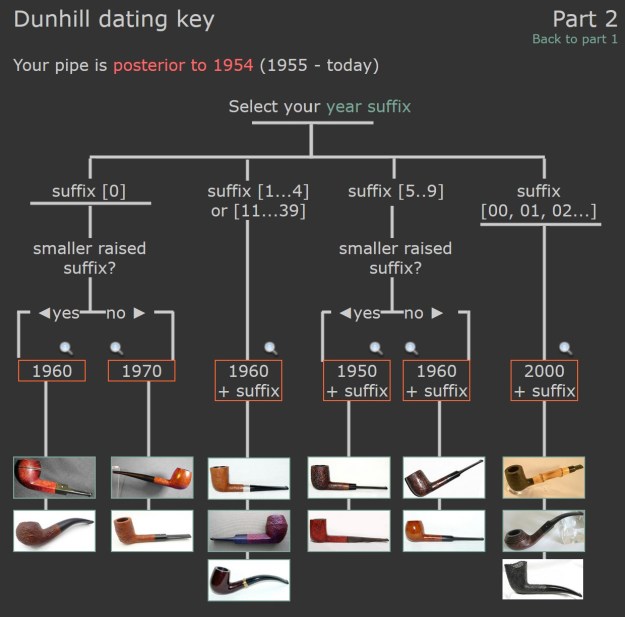
 I followed the link following the “Your pipe is posterior to 1954. Narrow down your dating”. That took me to Page 2 of the dating key (http://pipephil.eu/logos/en/dunhill/cledat-en1a.html). The third column (suffix 5…9) led me to the section that sections suffix. There was a directive for dating the pipe spelled out as follows: 1960 + suffix which gives the pipe a date of 1967.
 I then turned to Pipedia’s section on Dunhill Root Briar to get a bit of background on the Dunhill finishes (https://pipedia.org/wiki/Dunhill#Root_Briar). I quote:
The Tanshell
The first lot was distributed in 1952 (usually made using Sardinian briar). The prototype was called “Root Shell “, produced in 1951. The Tanshell is a light tan sandblast. Sardinian briar was used for this sandblast. There is a distinct contrast in the sandblasts using Sardinian as opposed to Algerian briar. The Sardinian is much denser and much harder. The resulting pattern, when blasted, is far more even and regular both in terms of the surface texture and the finish.
“The TanShell was Dunhill’s fourth finish and its first major post-war line addition. Introduced in 1951/1952 the TanShell was a naturally stained sandblasted pipe made exclusively from Sardinian briar through the 1960s. The TanShell apparently was not simply a light stained Shell but rather was also the product of “certain processes [unrevealed] not previously employed.” Initially, it appears that the pipe was to be named the Root Shell and a stamp to that effect was ordered and received by Dunhill in May 1951. Ultimately, however, the name TanShell was settled upon but the stamp for the TanShell name was not received by Dunhill until the beginning of December. Thus while the Tanshell was in production in 1951 it appears that most if not all TanShells made in that year did not enter into retail distribution until 1952 and were given a 1952 date code.” Loring, J. C., The Dunhill Briar Pipe, The Patent Years and After (self-published, Chicago, 1998). I have also included a chart from the site from Dunhill spelling out the Standard Pipe Finishes and giving short information and a timeline.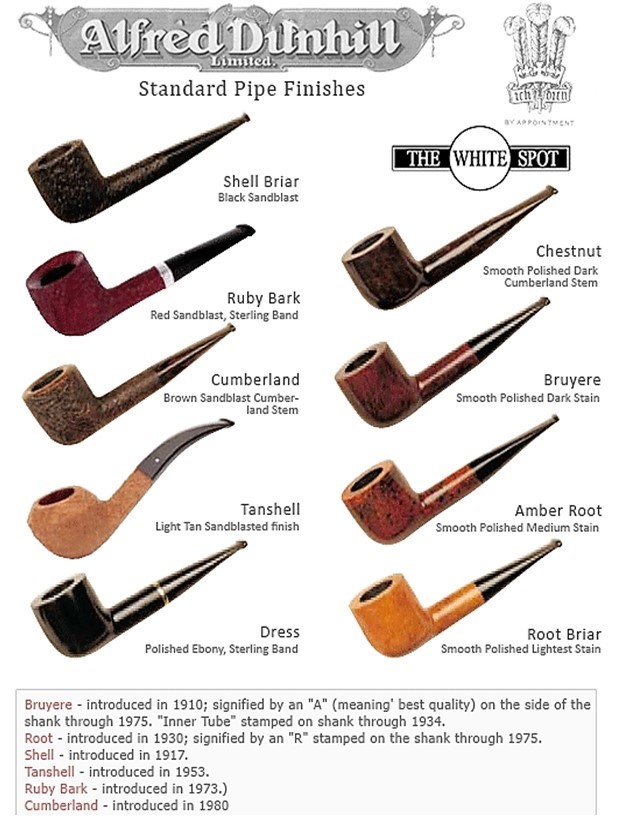 I turned to work on the pipe itself. Jeff had done an amazing cleanup of the pipe. He reamed the light cake with a PipNet reamer and cleaned up that with a Savinelli Fitsall Pipe Knife. He scrubbed the internals of the bowl and stem with alcohol, cotton swabs and pipe cleaners. He scrubbed the externals with undiluted Murphy’s Oil Soap and rinsed the bowl off with running water. He soaked the stem in Briarville’s Pipe stem Deoxidizer and once it had soaked rinsed it off with warm water to remove the residual solution. He dried it off and rubbed it down to remove any oxidation that was still on the stem. The pipe looked very good when I received it.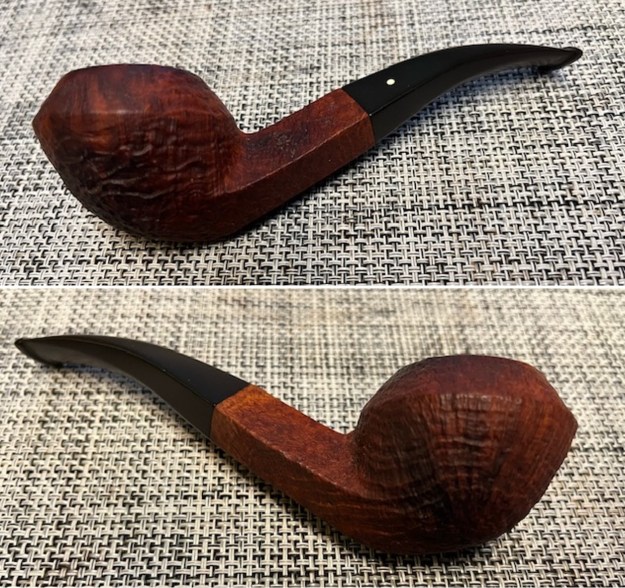
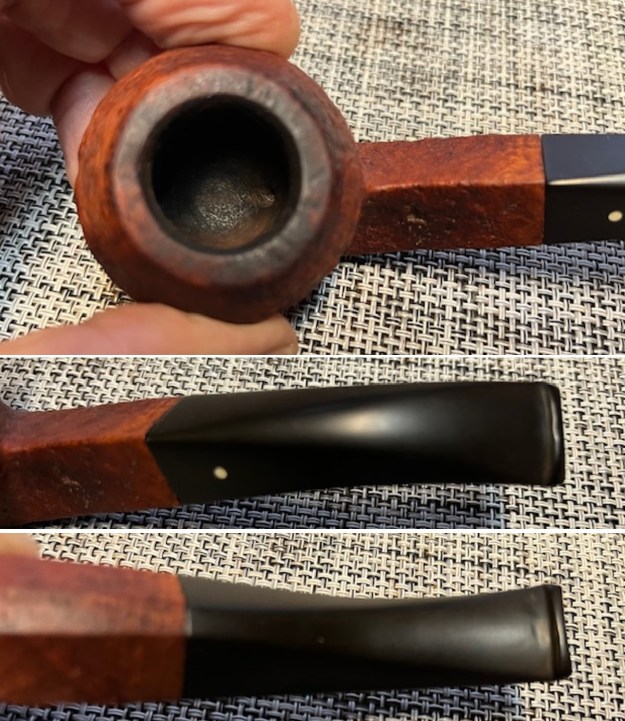
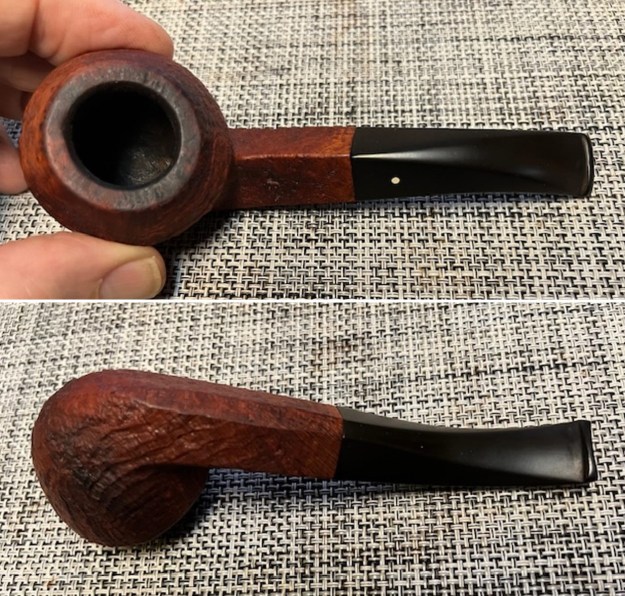 I took a photo of the rim top to show the condition. You can see the clean bowl. The bowl is in excellent condition and looks very good. There is some darkening on the rim top and some light damage to the front inner edge of the bowl. The stem came out looking quite good. There are some tooth marks and chatter on both sides ahead of the button.
 I took a photo of the underside of the shank to show the stamping. The photo clearly shows the stamping and is actually more readable in person. I removed the stem from the shank and took a photo of the pipe parts to show what I was working with. It is a nice looking pipe.
 I worked over the sandblast finish with a brass bristle brush to clean up the darkening on the rim top and in blast on the sides of the bowl.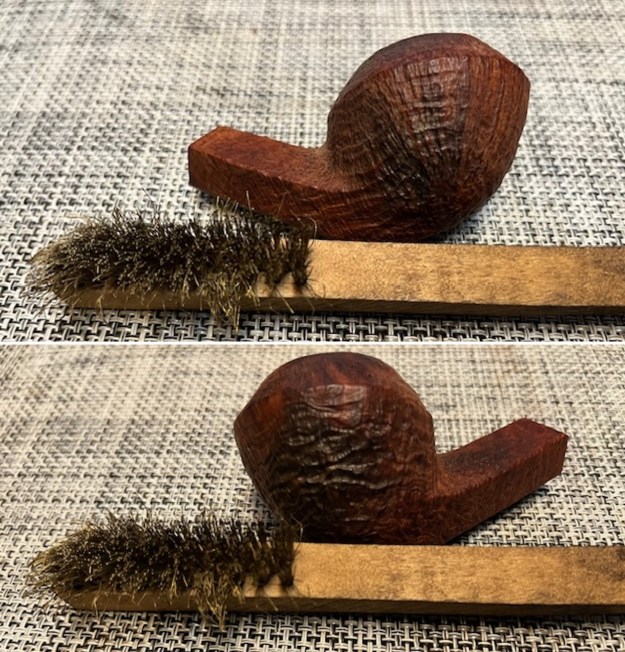
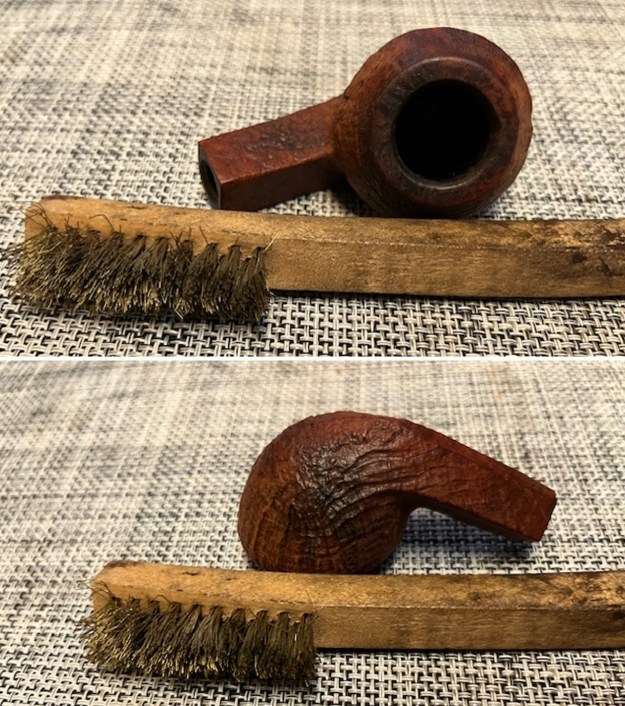 I scrubbed the rim top and the darkening on the cap and the sides of the bowl with some Before & After Briar Cleaner that Mark Hoover recently sent me. It worked well to remove the darkening on the briar. It looked much cleaner with the darkening lightened.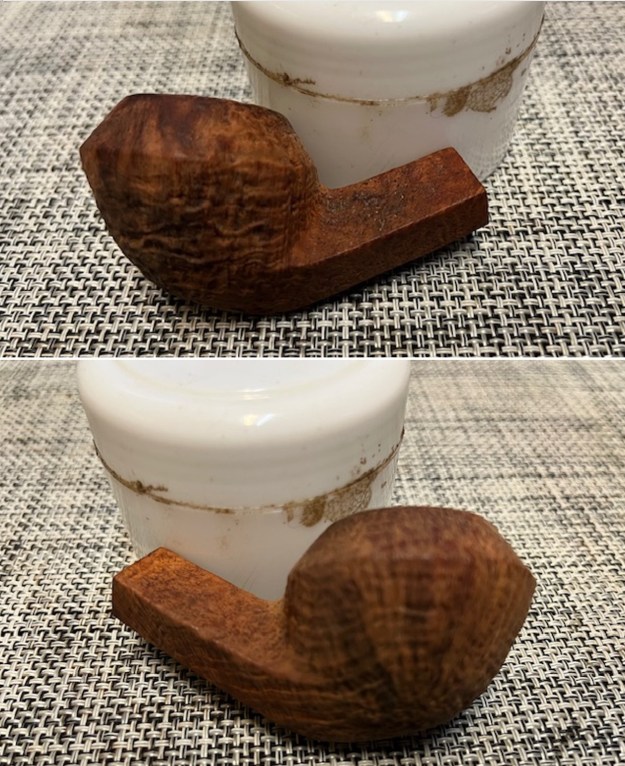
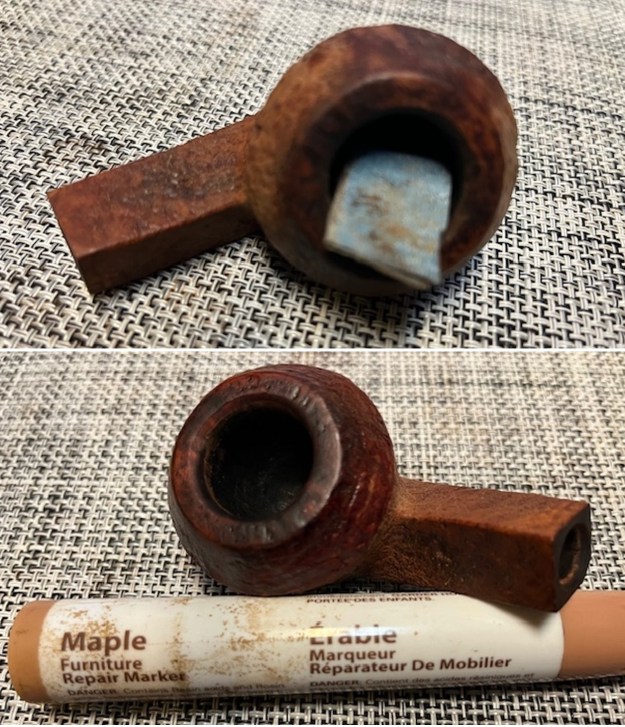
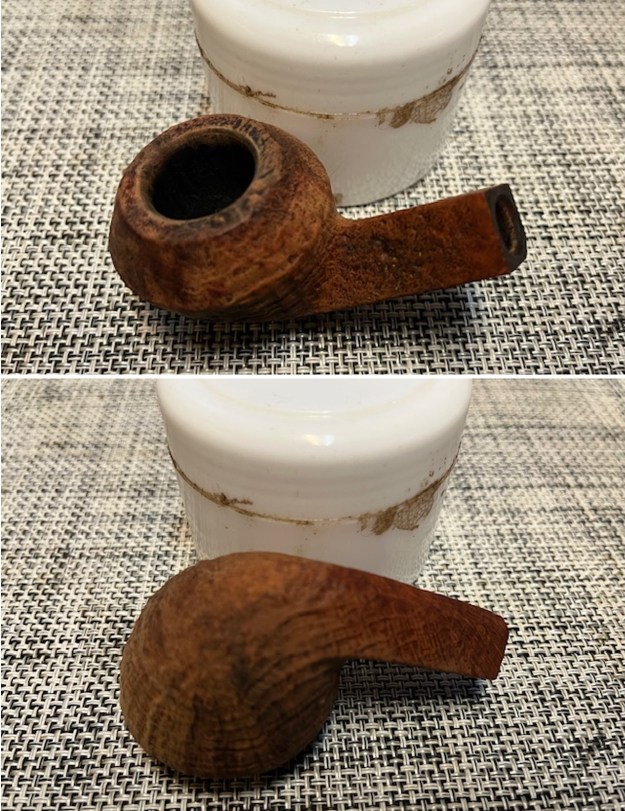 I worked on the inner edge of the bowl to bring it back to round using a folded piece of 220 grit sandpaper. I gave it a slight bevel to accommodate the damage. I stained the top, edge and cap of the bowl with a Maple stain pen to match the rest of the bowl.
 The bowl was in such good condition that I had to do some minimal work with it. I rubbed the briar down with Before & After Restoration Balm. I worked it into the briar with my fingertips and a horsehair shoe brush to work it into the nooks and crannies of the sandblast finish. The product works to clean, enliven and preserve the briar. I let it sit for 10 minutes then I buffed it with a cotton cloth to deepen the shine. The briar really comes alive with the balm.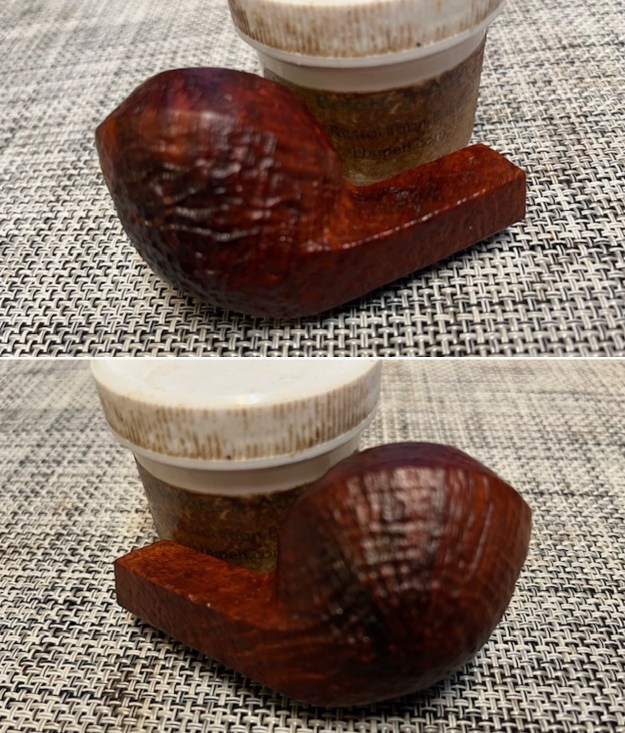
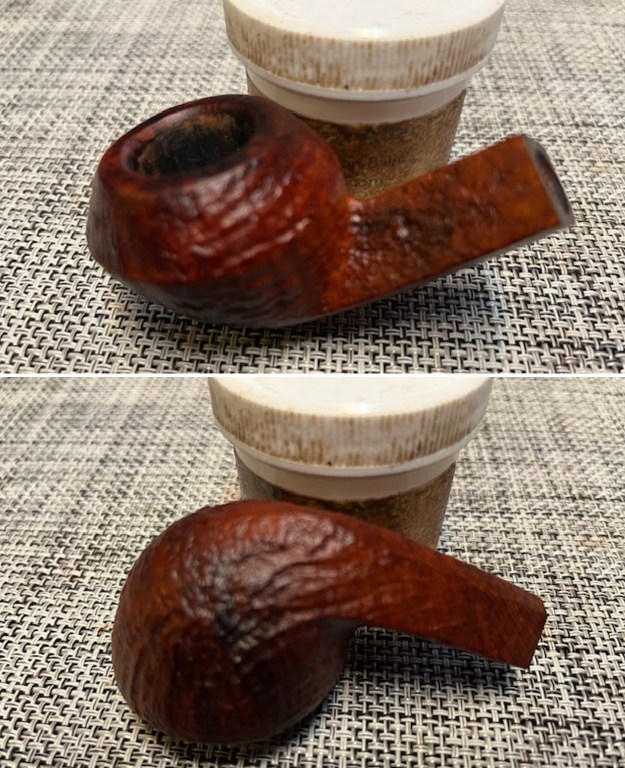
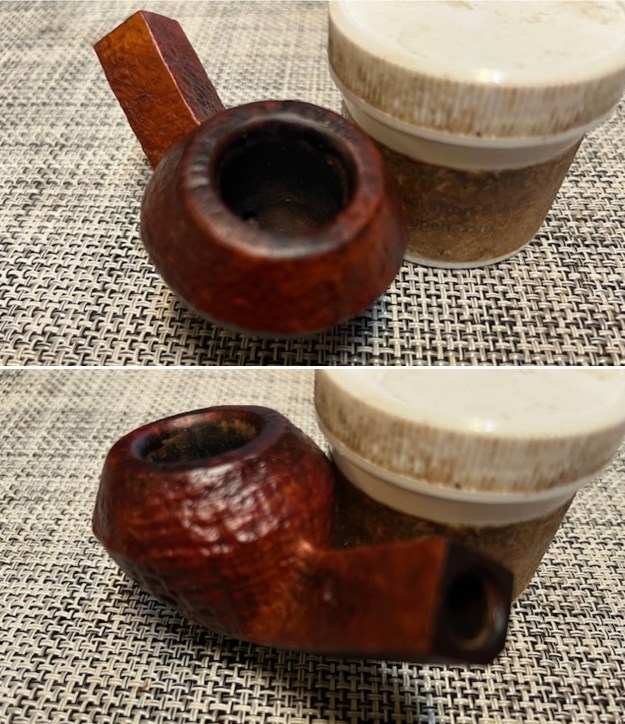 I set the bowl aside and turned my attention to the stem. The tenon was in great condition and it appeared to have been made for a Dunhill filter. I tried a 6mm filter and it was too large. I painted the surface of the stem with the flame of Bic lighter to lift the tooth marks. I was able to lift them significantly. I filled in what remained with clear CA glue.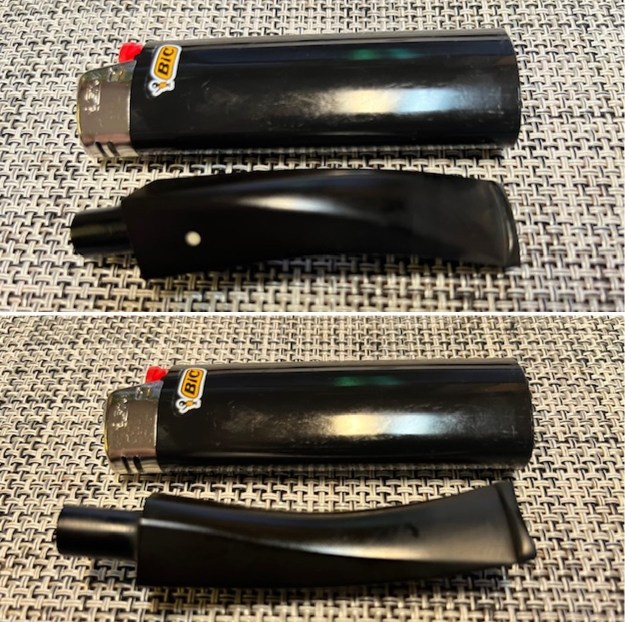
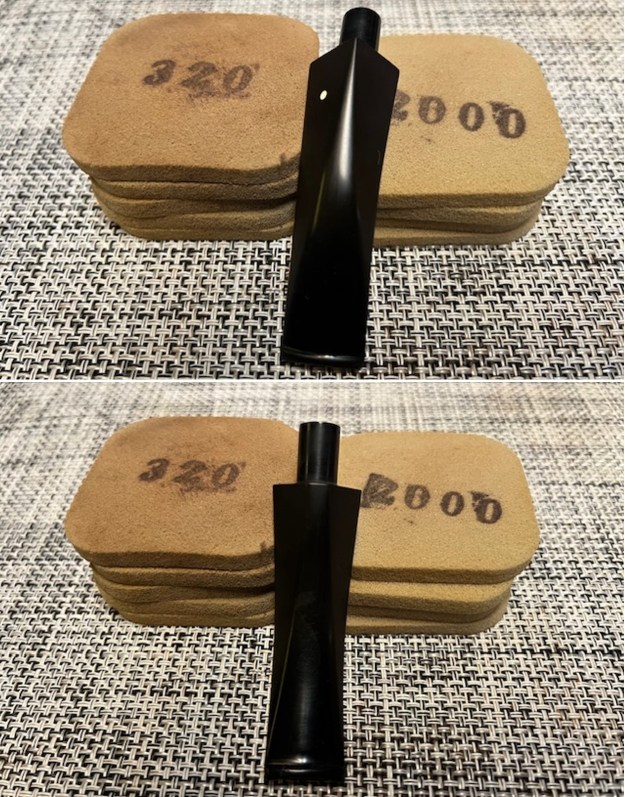
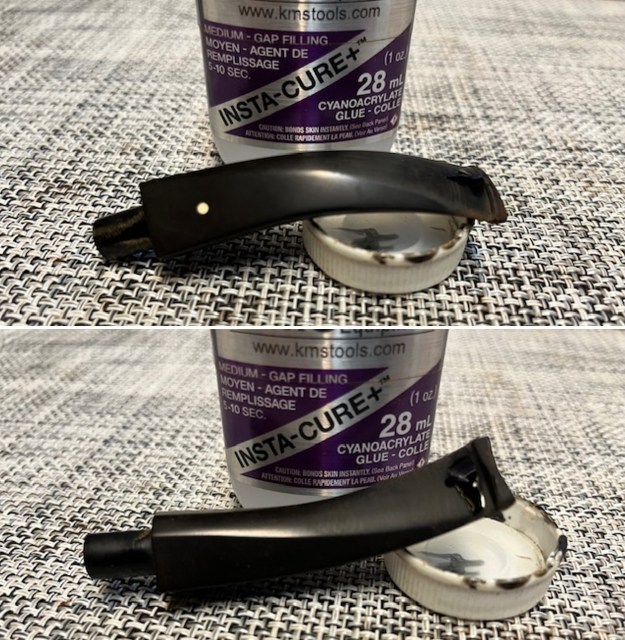 Once the repair had cured I sanded it smooth to blend it into the surface of the vulcanite with 320-3500 grit sanding pads. It worked well to smooth things out and once finished the stem looked much better.
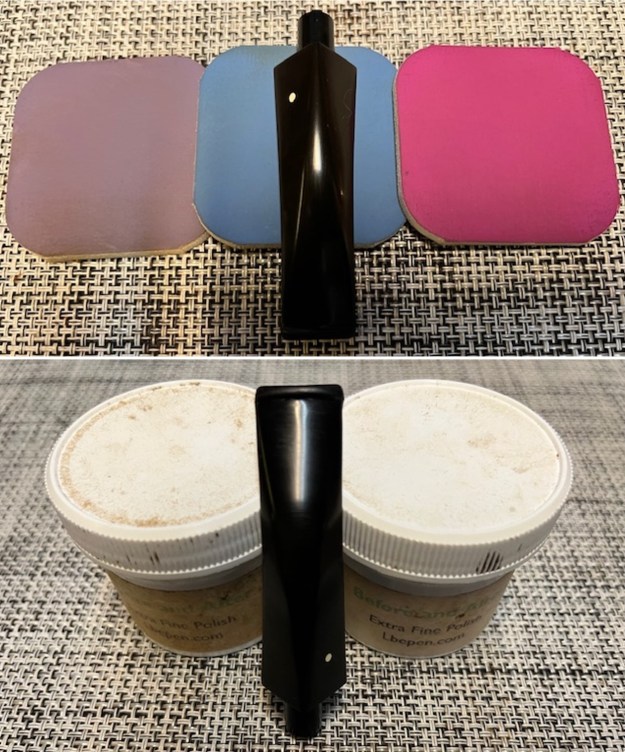
 I polished the vulcanite with micromesh sanding pads – 1500-12000 grit pads. I wiped it down with Obsidian Oil after each sanding pad. I used Before & After Pipe Polish – both Fine and Extra Fine to further polish the stem.
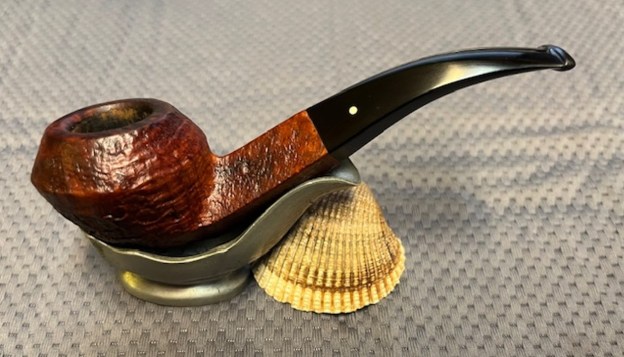
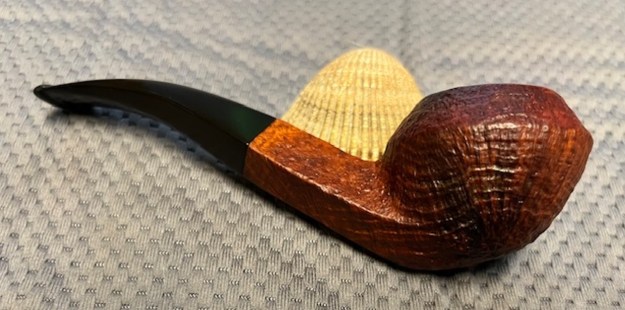
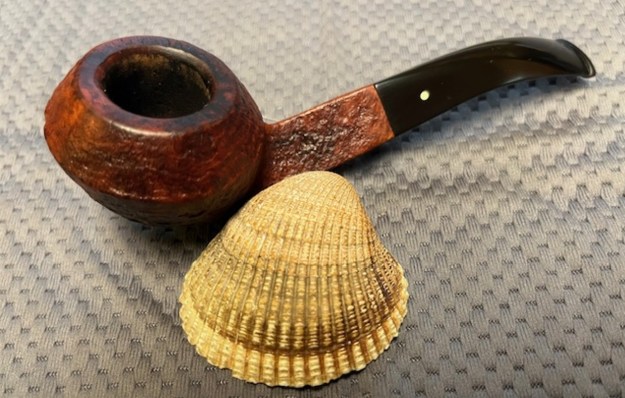
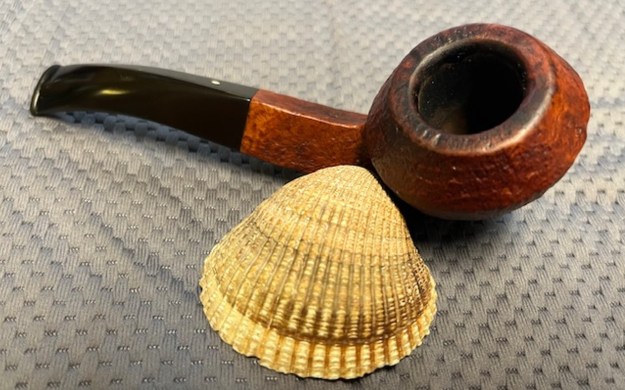
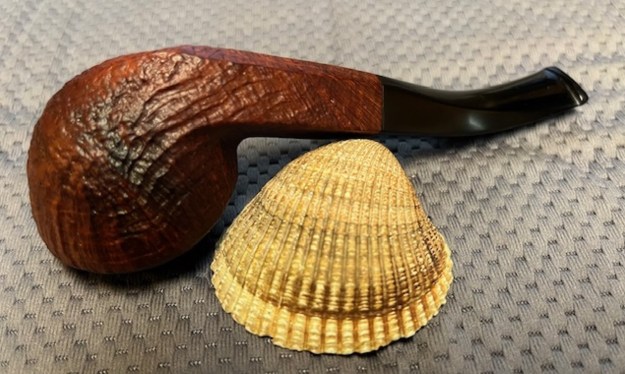
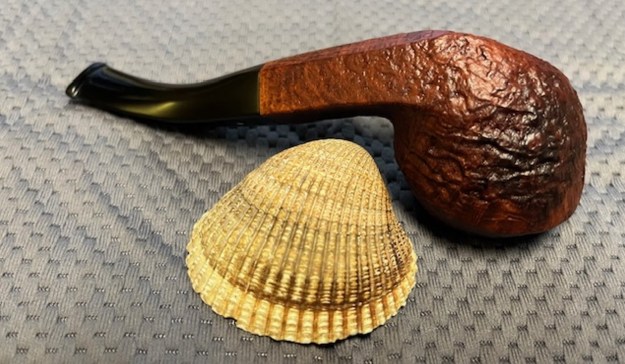
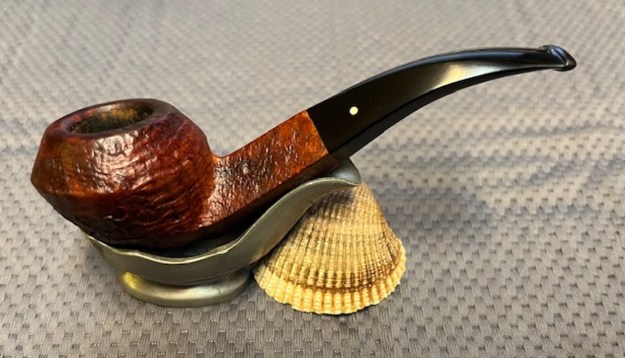
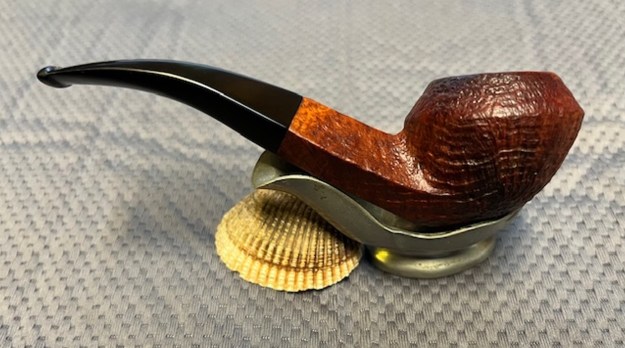
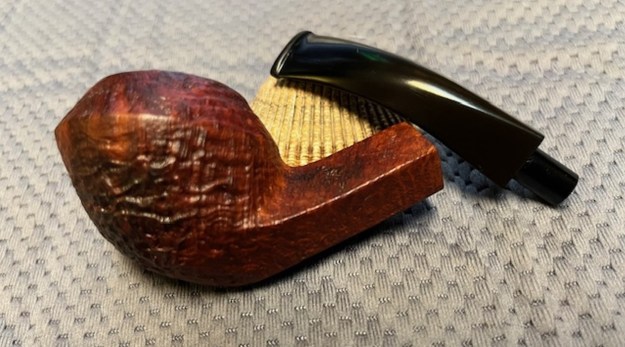
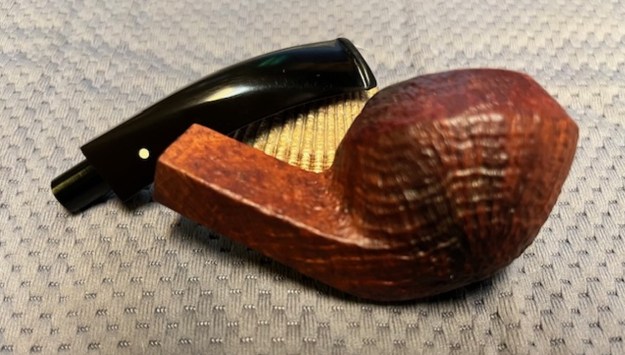
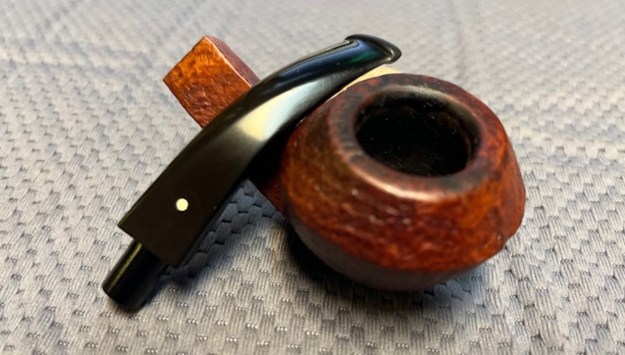
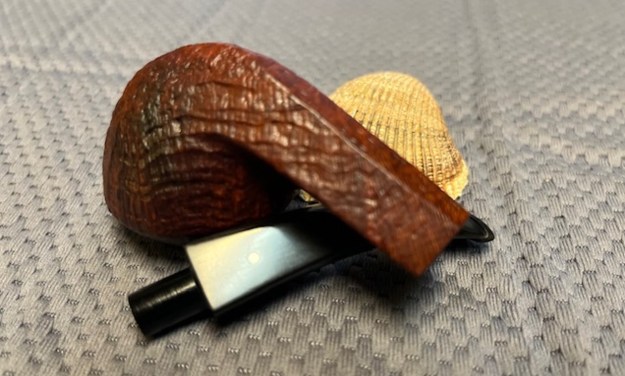
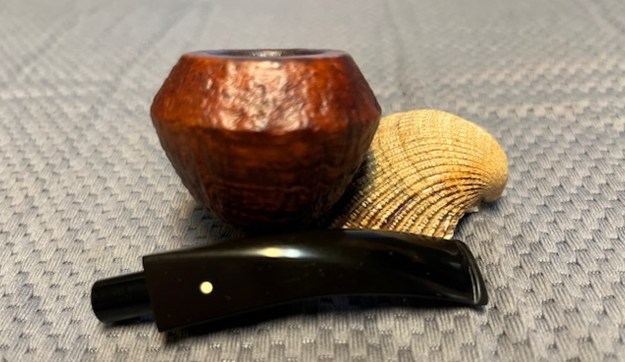
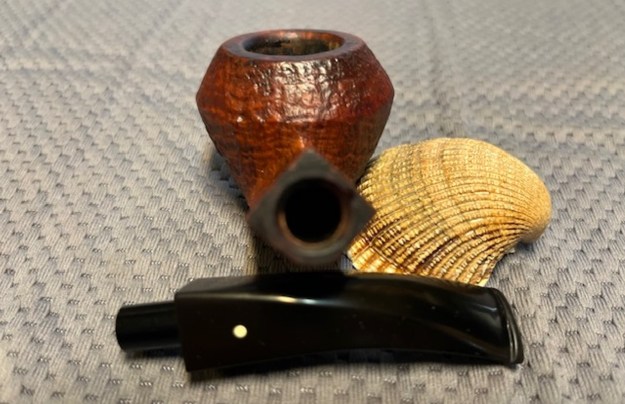
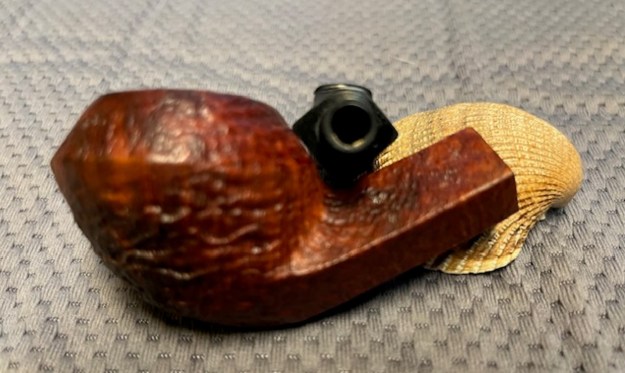
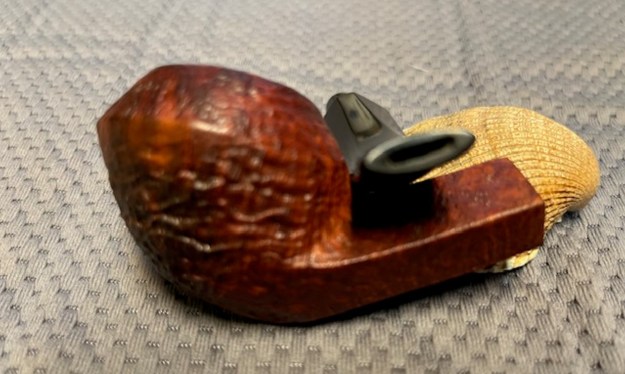
 This 1967 Dunhill Tanshell P Half Bent Bulldog with a Taper Stem has a beautiful, unique Dunhill Sandblast finish that is very deep and craggy. The rich brown/red finish highlights some great grain around the bowl and shank. It has some great rugged sandblast that Dunhill specialized in making. The polished black vulcanite taper stem adds to the mix. I put the stem back on the bowl and buffed the pipe with Blue Diamond on the buffing wheel being careful to not buff the stamping. I gave the bowl multiple coats of Conservator’s Wax and the stem multiple coats of carnauba wax on the buffing wheel and followed that by buffing it with a clean buffing pad. I hand buffed the pipe with a microfiber cloth to deepen the shine. The finished Dunhill Tanshell P Half Bent Bulldog is quite nice and feels great in the hand. Give the finished pipe a look in the photos below. The dimensions of the pipe are Length: 5 ½ inches, Height: 1 ¾ inches, Outside diameter of the bowl: 1 ½ inches, Chamber diameter: 7/8 of an inch. The weight of the pipe is 1.45 ounces/41 grams. Thanks for walking through the restoration with me as I worked over another beautiful pipe. If you are interested in adding it to your collection I will be adding it to the British Pipe Makers Section of the rebornpipes store. Thanks for your time.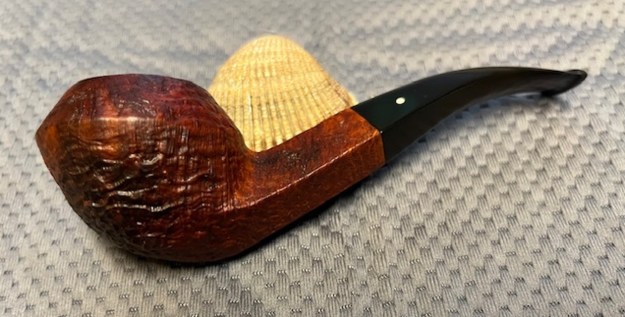
 rebornpipes