
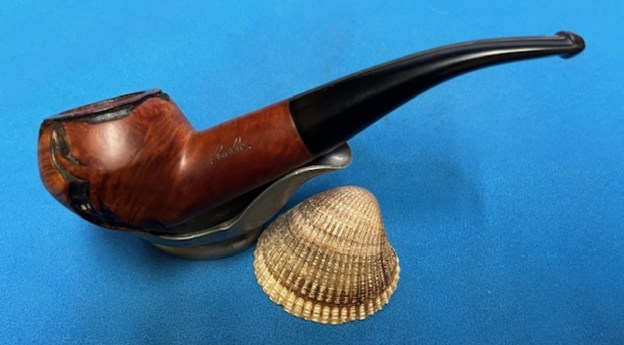
Blog by Steve Laug
A few weeks ago, I received an email from a customer, Ted about some pipe work for him. He had three pipes that he said needed different things and offered to send some photos. He also sent a second email with a description of what each pipe needed. I have included that email and the photos he sent below.
Peterson 309 needs stem restoration and bowl cleaned out. Rhodesian needs full restoration – my English teacher from high school gave it to me a little over two years ago. The Comoy’s Canadian needs a new bit I broke it… 
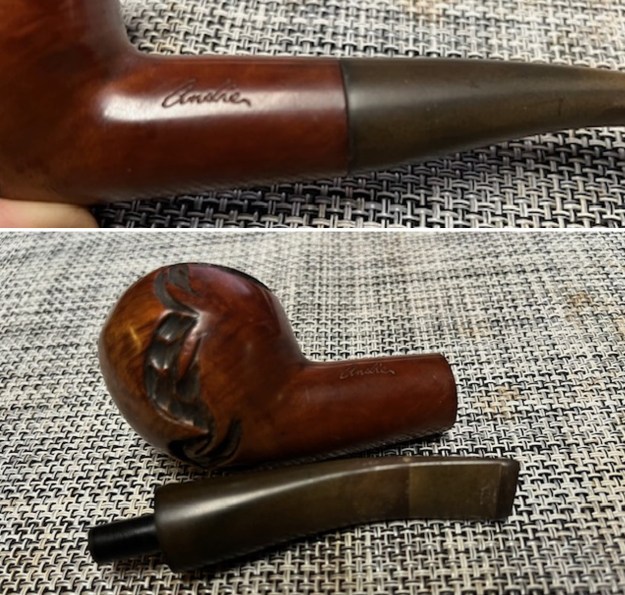
 After finishing the restem and restoration of the Comoy’s I moved on to the second pipe. The Rhodesian shaped pipe is stamped on the right side of the shank and reads Andre [signature script]. There was no other information stamped on the pipe. There was a light/moderate cake in the bowl with lava on the rim top. The finish was in decent condition but there was a varnish coat that was spotty. There was dirt and debris ground into the finish and particularly in the rusticated patterns on the bowl sides and around the outer edge of the rim. The stem was oxidized and there had obviously been a Softee Bit on the end as it left a line and some calcification next to the button. There were light tooth marks and chatter on both sides of the stem. I took photos of the pipe before I started work on it.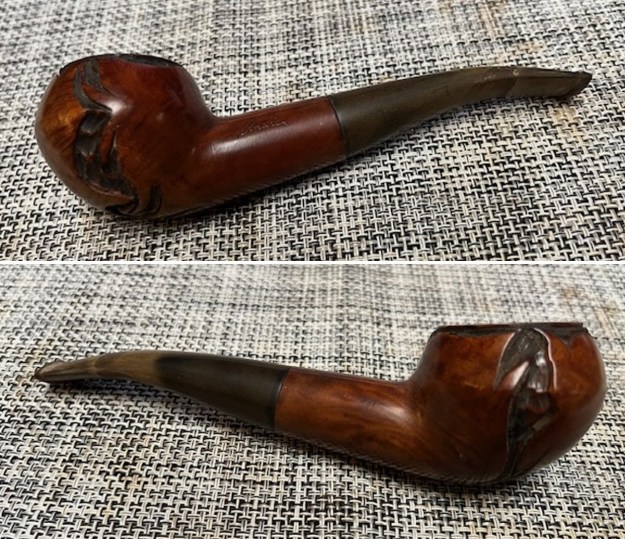
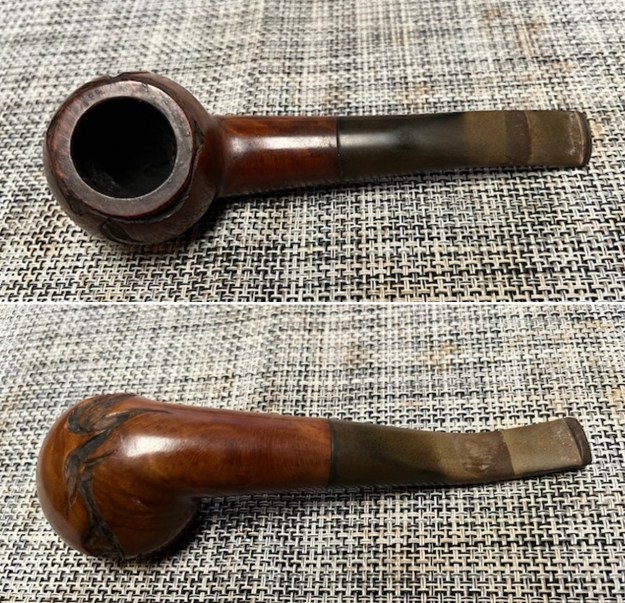 I took a close-up photo of the bowl and rim top to show the cake in the bowl. The rim top shows some lava on the smooth finish. The inner and outer edges of the bowl looked good. The stem photos show the oxidation and calcification as well as the mark from the Softee Bit that I spoke of above. Otherwise, the tooth marks and chatter are minimal.
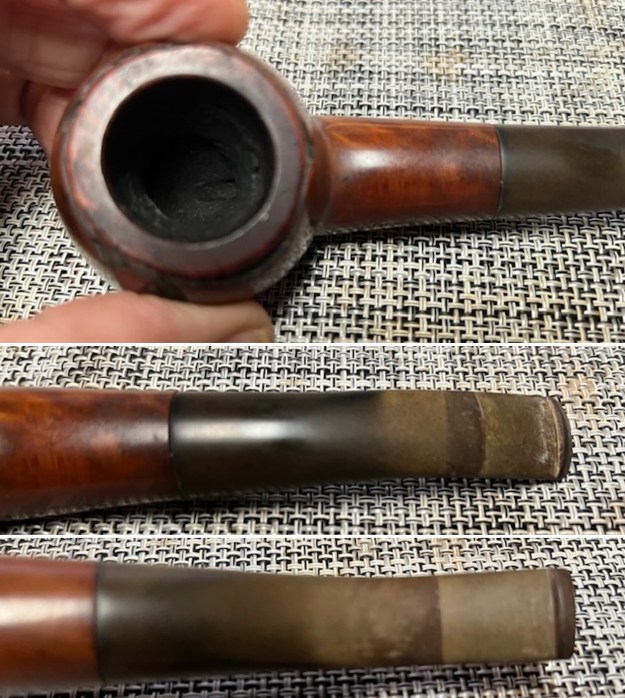 I took a photo of the stamping on the pipe. It is stamped or etched on the left side of the shank. It was clear and readable as noted above. I removed the stem from the shank and took a photo of the pipe parts to give a sense of proportion of the pipe. It is quite nice.
 I wanted to know more about Andre so I did a bit of digging on the internet. I turned first to Pipephil’s site (http://www.pipephil.eu/logos/en/logo-a6.html) and found the brand listed. The signature on the pipe is the same as the one I am working on. I have included a screen capture and a side bar note below that gives some helpful information on the pipe.
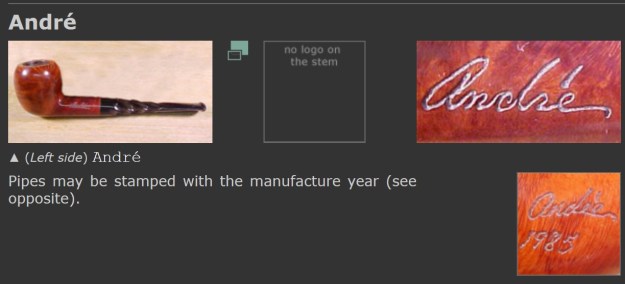 Artisan: André Mermet was a French craftsman who immigrated to the USA. He (and after him his son) produced pipes for Barclay Rex or Wilke pipeshops.
It was great to know that there was a connection to both Barclay Rex and Wilke pipeshops. Now I wanted to see if Pipedia had any more information but there was nothing listed.
I then quickly did a google search of the brand and low and behold I found that I had worked on one of his pipes back in 2018. The pipe was a very different shape than the one I have in my hands now but the rustication pattern is similar.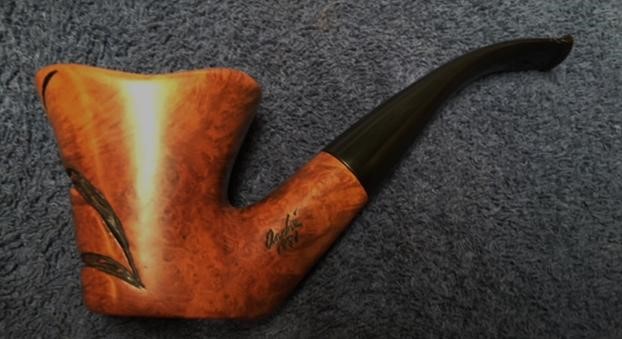 Now, armed with that helpful information about the carver André Mermet and knowing that he provided pipes to such US companies as Barclay Rex and Wilke I was ready to work on the pipe itself.
I started my work by ream the bowl with a PipNet pipe reamer using the third cutting head to take the cake back to bare briar. I cleaned up the reaming with a Savinelli Fitsall Pipe Knife. I sanded the walls with a piece of 180 grit sandpaper wrapped around a dowel to smooth them out. 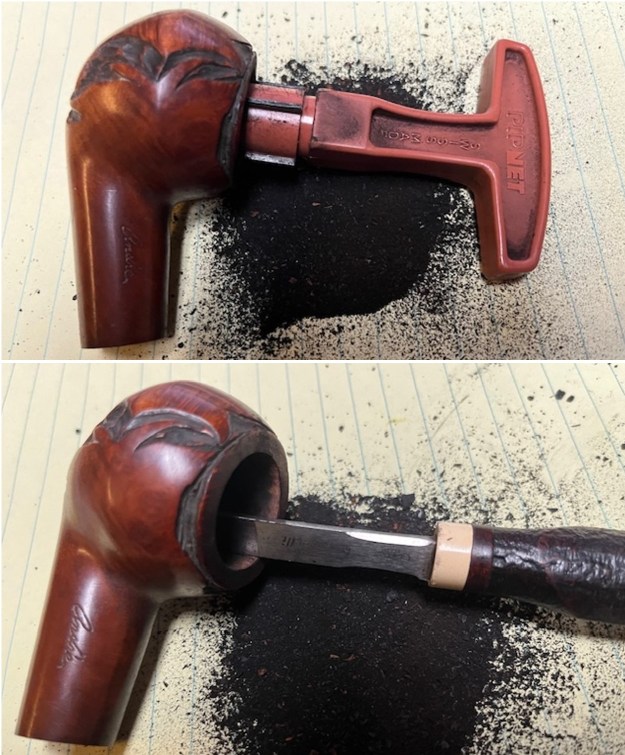
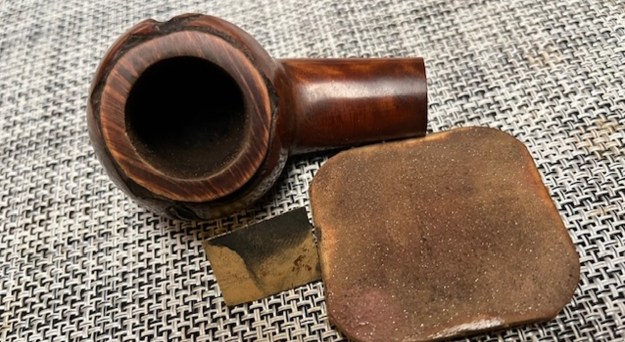
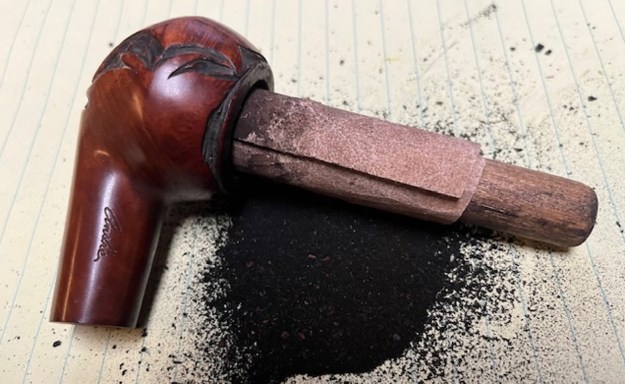 I cleaned up the rim top with a worn piece of 1500 grit micromesh and a piece of 6000 grit wet dry sandpaper. It looked much better once it was finished.
  I wiped the bowl down with acetone to remove the varnish coat on the wood. It looked much better.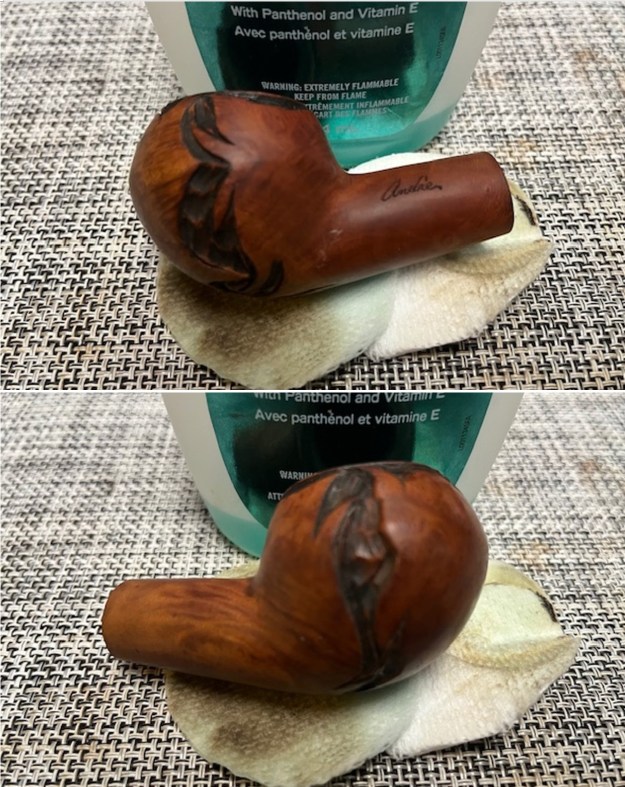
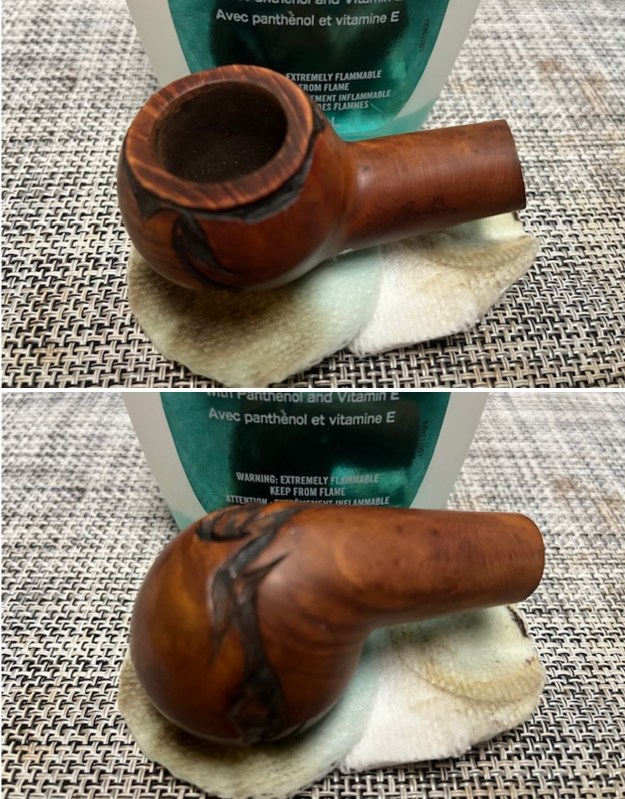 I scrubbed the exterior of the briar with a tooth brush and undiluted Murphy’s Oil Soap. I rinsed it off with warm water to remove the grime and soap. It looked much better and the dust and debris was gone. I dried it with a cotton towel.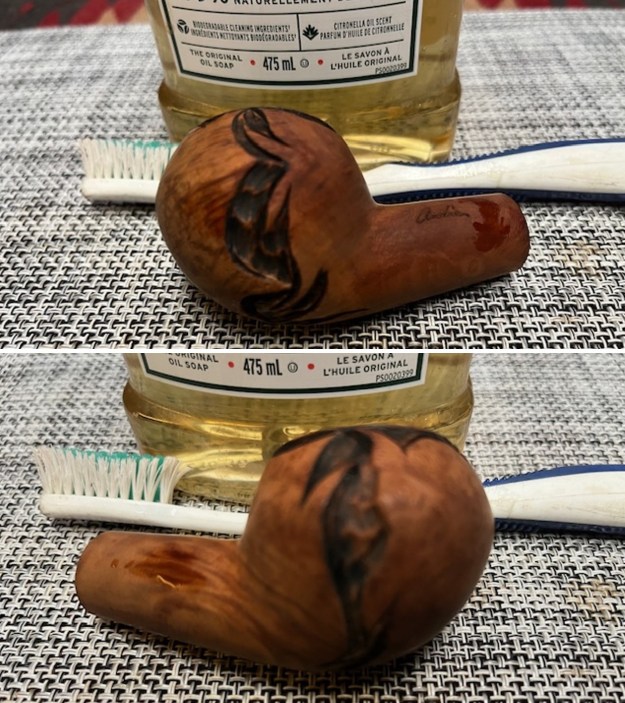
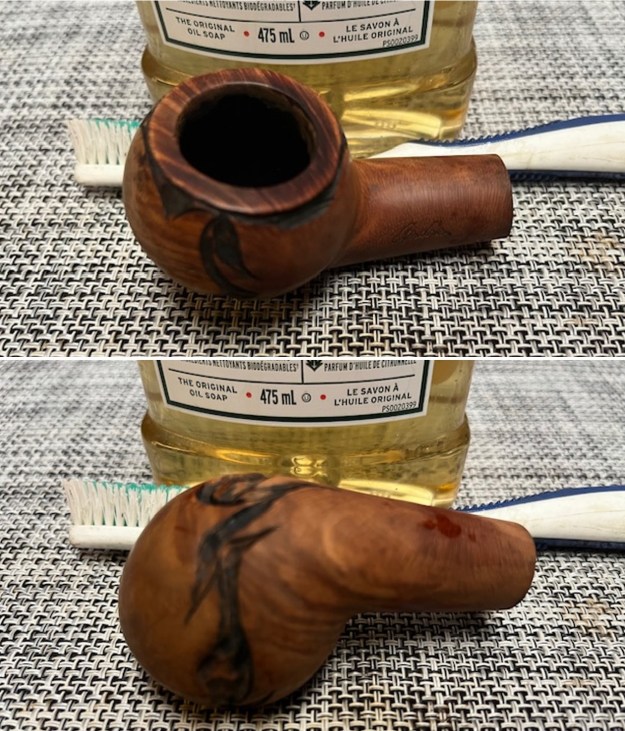 I scrubbed out the internals of the pipe with 99% isopropyl alcohol, pipe cleaners and cotton swabs. I cleaned out the airway in the stem as well. I worked on these areas repeatedly until the shank and the airway in all the parts was clean.
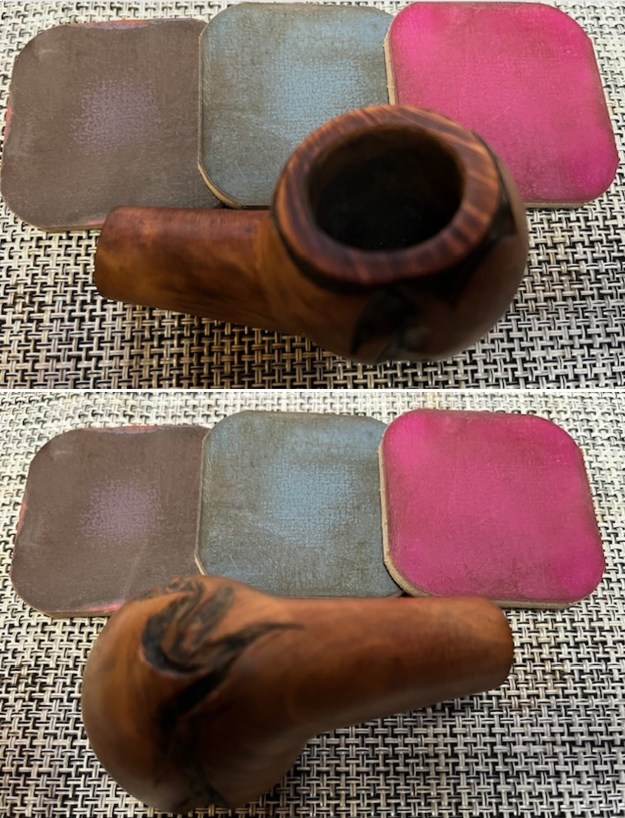
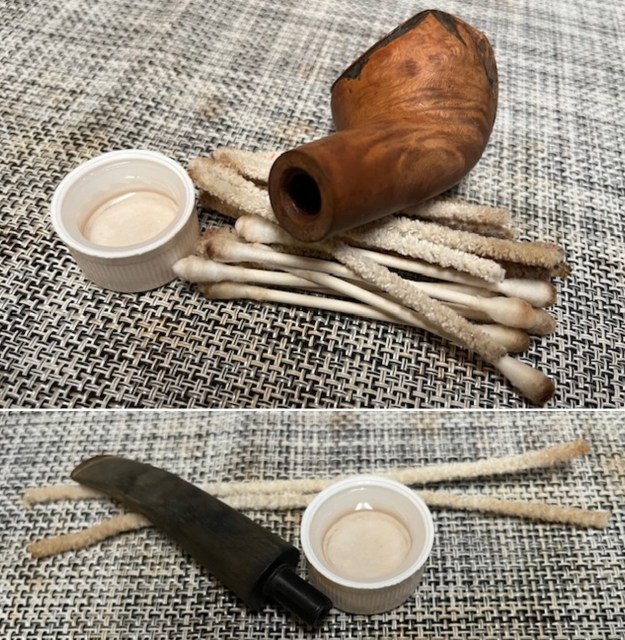 I polished the smooth briar with micromesh sanding pads – wet sanding with 1500-12000 grit sanding pads. I wiped it down with a damp cloth after each pad. The bowl began to take on a rich shine.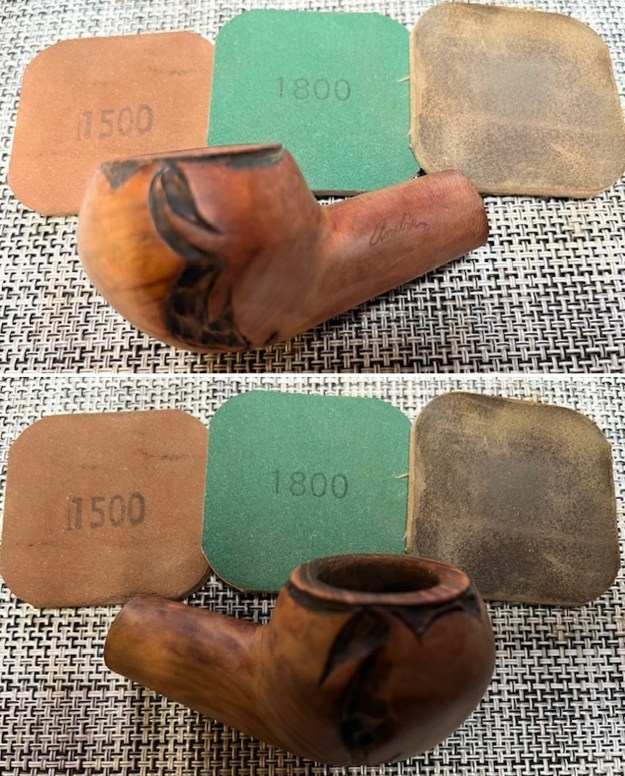
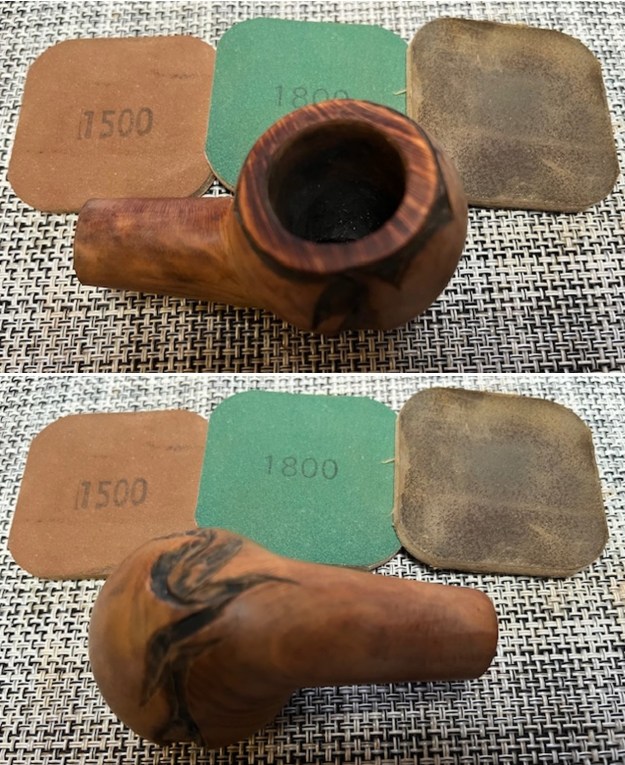
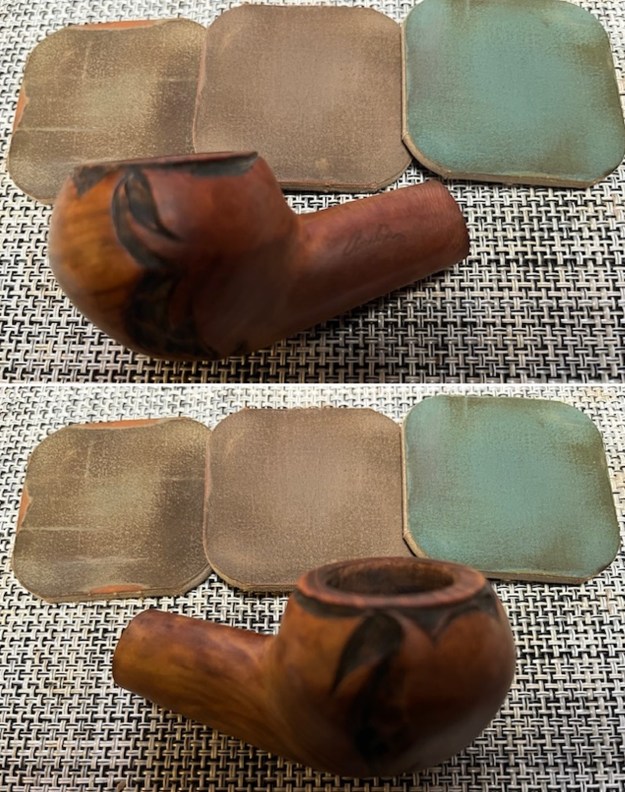
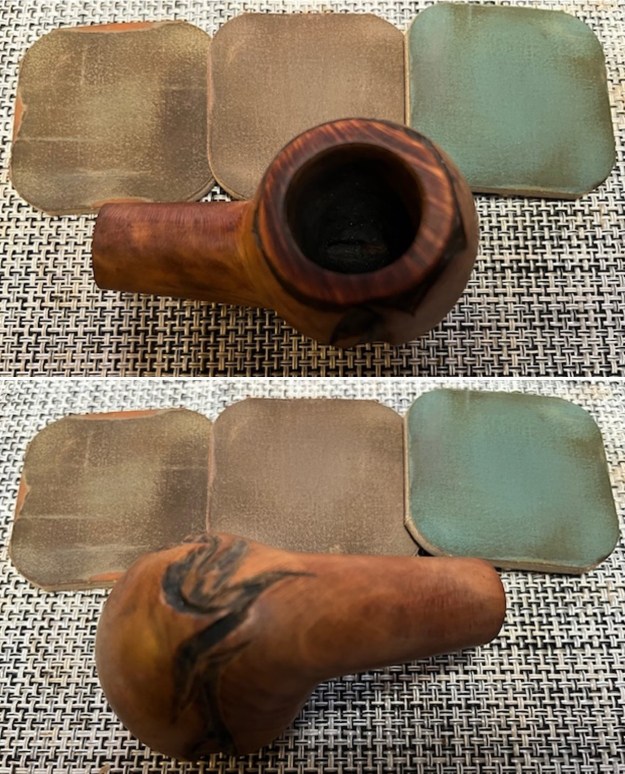
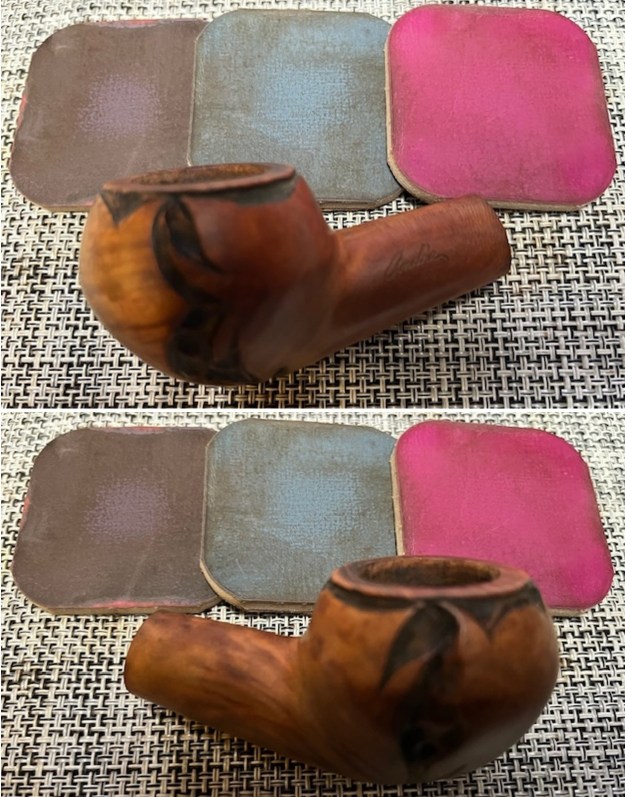
 I worked some Before & After Restoration Balm into the surface of the briar with my fingertips to clean, enliven and protect the briar. I let the balm sit for 15 minutes and then buffed with a cotton cloth to raise the shine. The photos show the bowl at this point in the restoration process.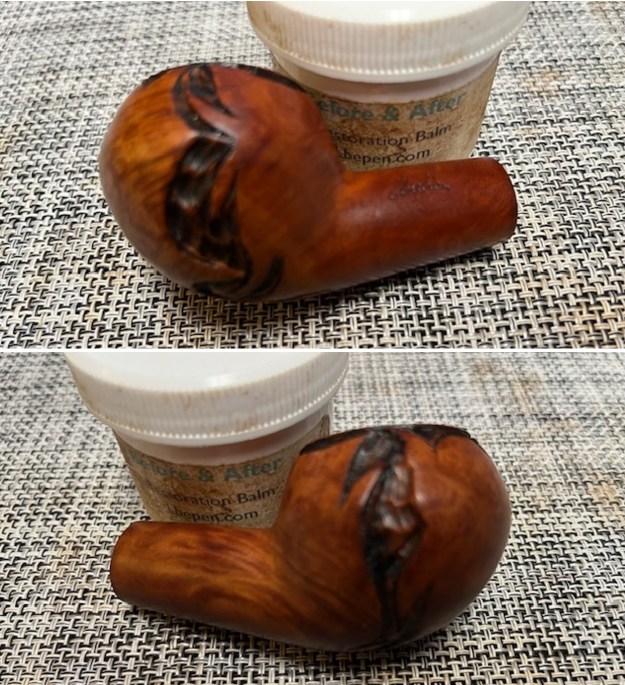

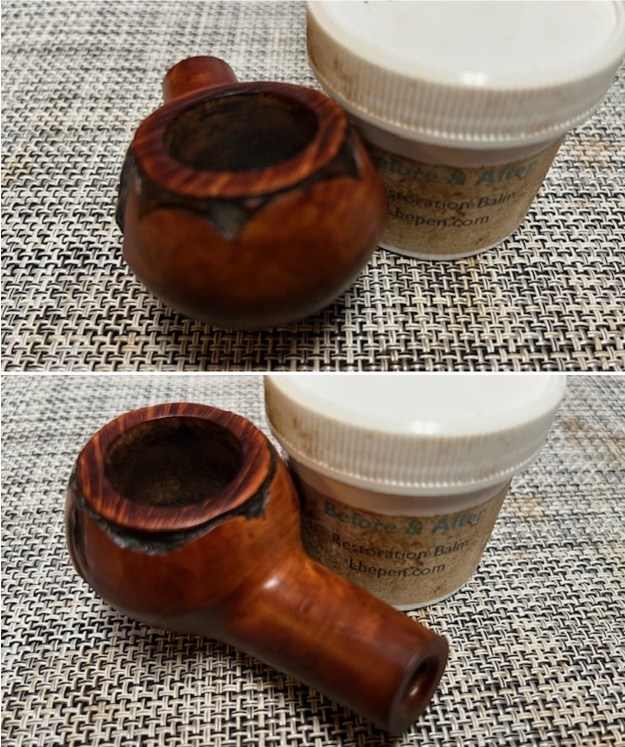 With that done, the bowl was finished other than the final buffing. I set it aside and turned my attention to the stem. I sanded out the oxidation, calcification, light tooth marks and chatter along with 220 grit sandpaper and started polishing the stem with 600 grit wet dry sandpaper.
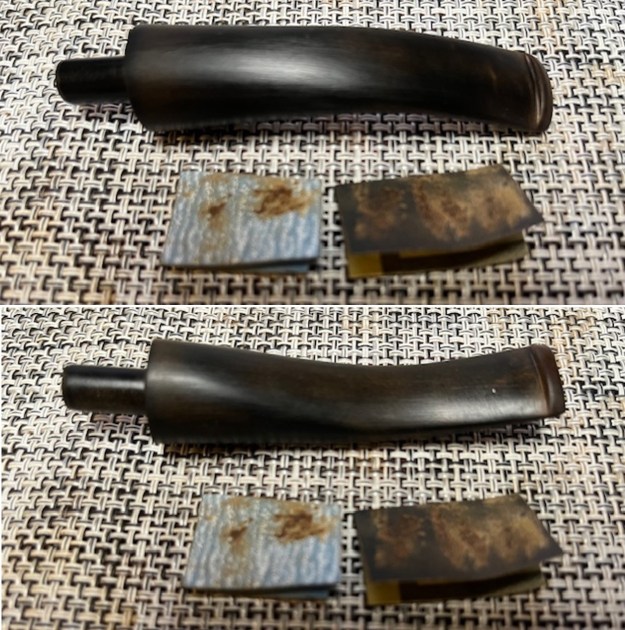 I polished the stem with micromesh sanding pads – wet sanding with 1500-12000 grit sanding pads. I wiped it down after each sanding pad with Obsidian Oil.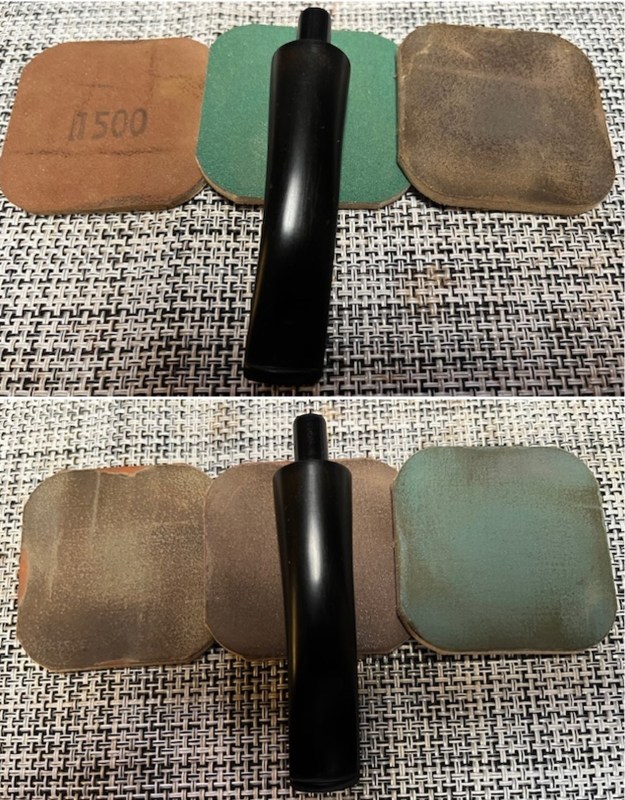
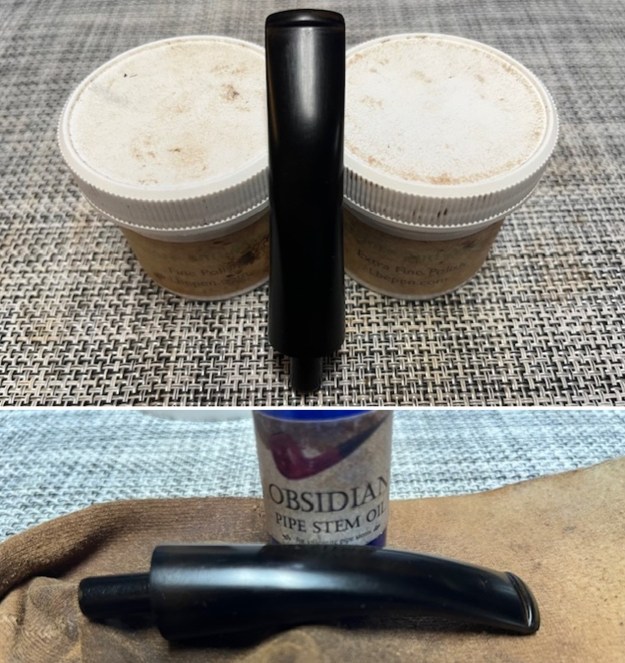
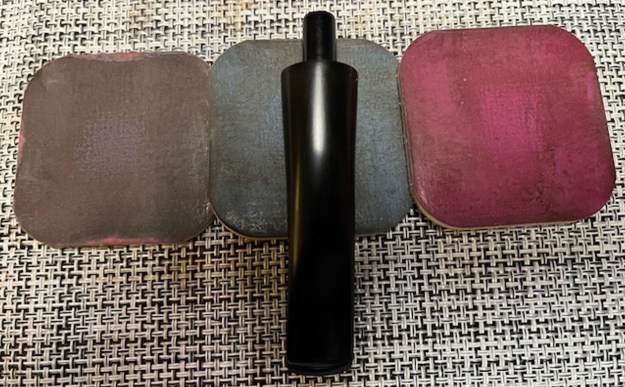 I finished polishing the stem with Before & After Pipe Stem polish (both Fine and Extra Fine) then wiped the stem down with another coat of Obsidian Oil.
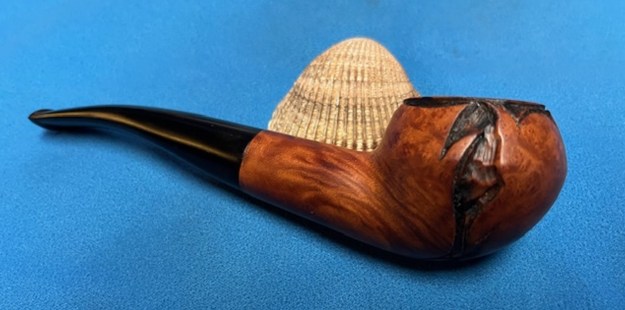
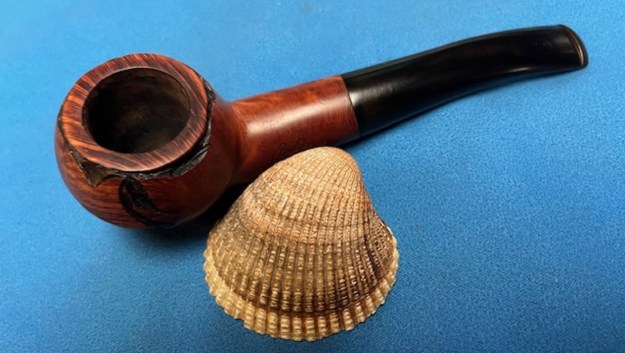
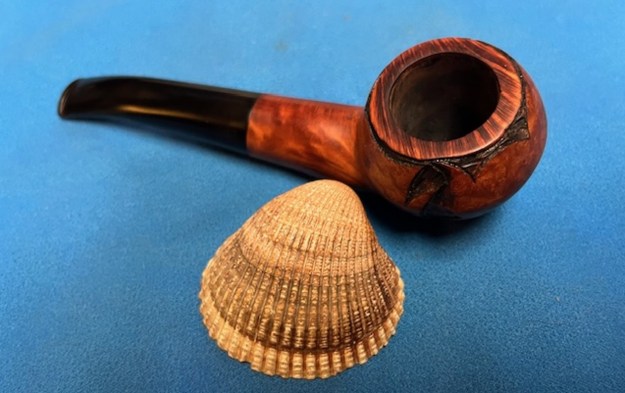
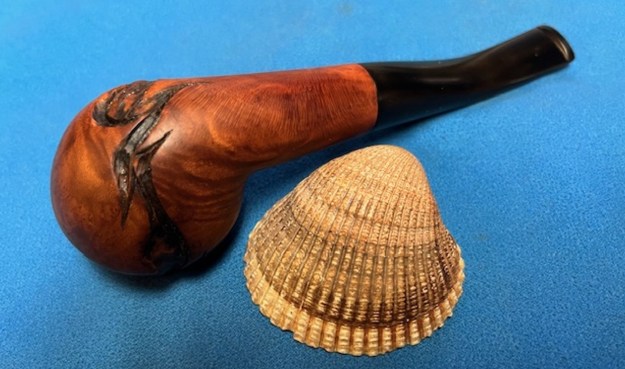
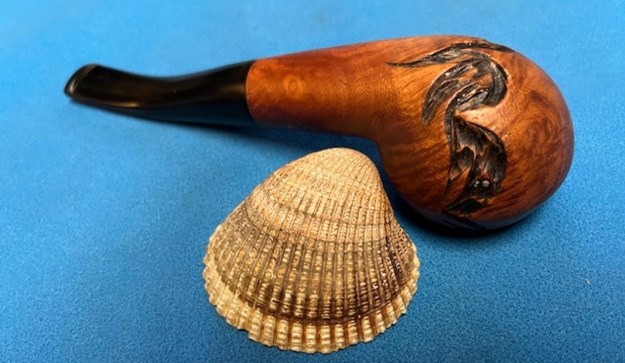
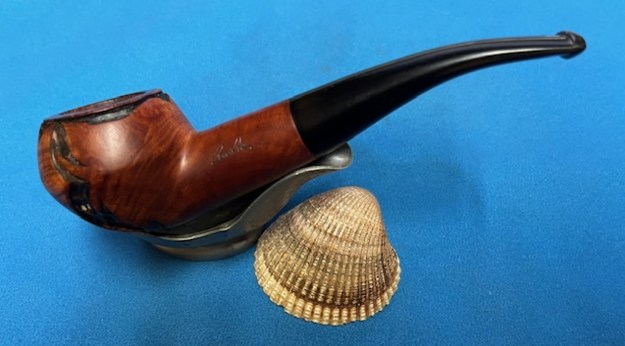
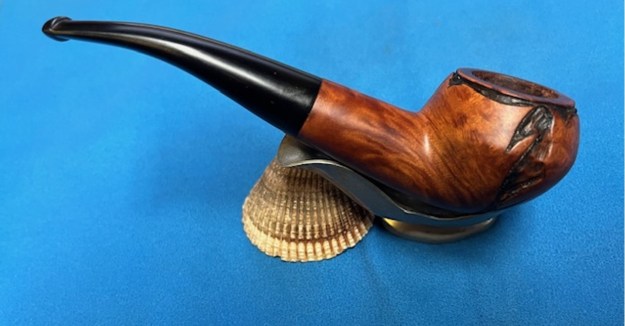
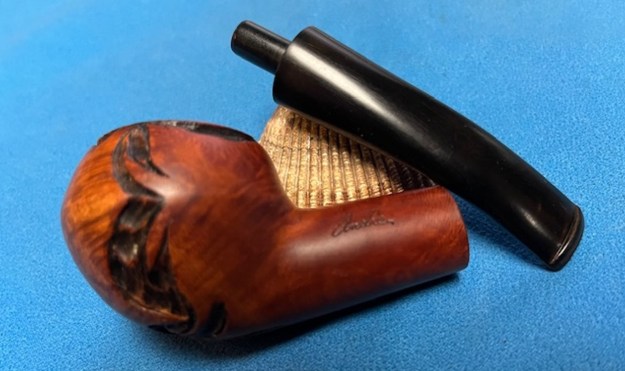
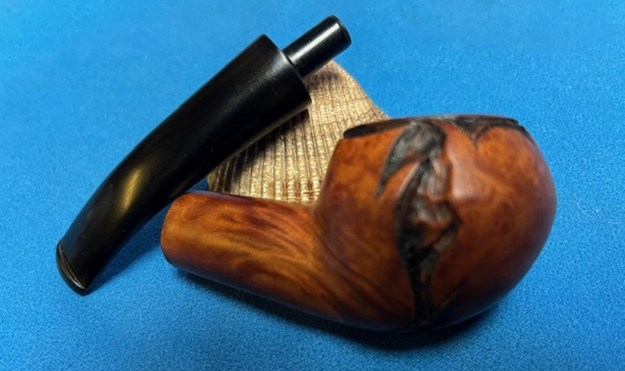
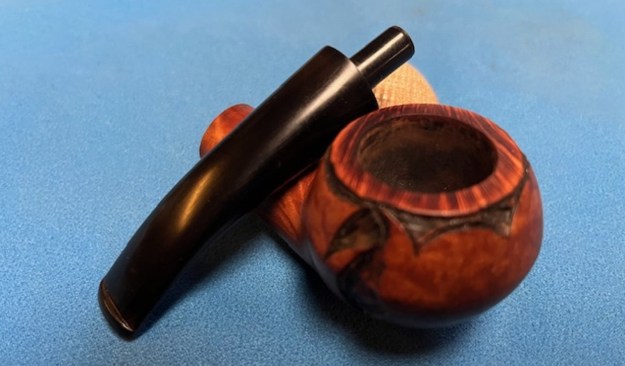
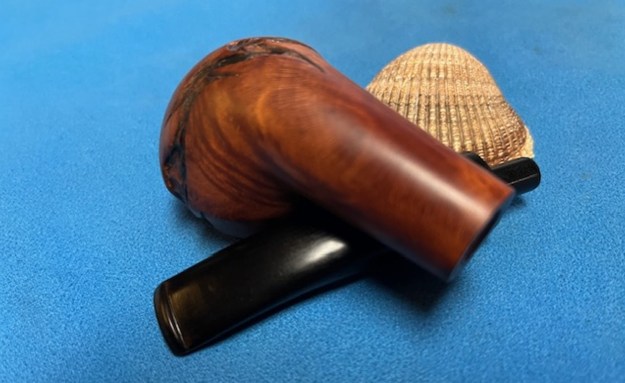
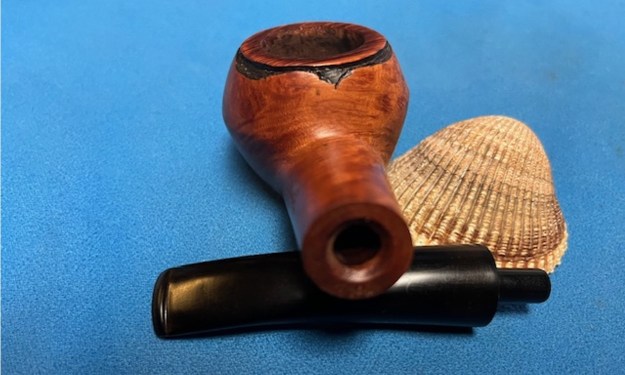
  I am excited to finish the restoration of this Andre Rhodesian. I put the pipe back together and buffed it with Blue Diamond on the buffing wheel. I gave the bowl and the stem multiple coats of carnauba wax. I buffed the pipe with a clean buffing pad to raise the shine and hand buffed it with microfiber cloth to deepen the shine. It is fun to see what the polished bowl with the nickel band looks like with the new, polished black, vulcanite stem was beautiful. This Andre Rhodesian is nice looking and the pipe feels great in my hand. It is light and well balanced. Have a look at it with the photos below. The dimensions are Length: 5 ½ inches, Height: 1 ½ inches, Outside diameter of the bowl: 1 ¼ inches, Chamber diameter: 7/8 of an inch. The weight of the pipe is 1.66 ounces/47 grams. It is a beautiful pipe and after I finish Ted’s last pipe I will be sending the three pipes back to him to enjoy. Thanks for walking through the cleanup with me as I worked over this pipe.
As always, I encourage your questions and comments as you read the blog. Thanks to each of you who are reading this blog. Remember we are not pipe owners; we are pipe men and women who hold our pipes in trust until they pass on into the trust of those who follow us. 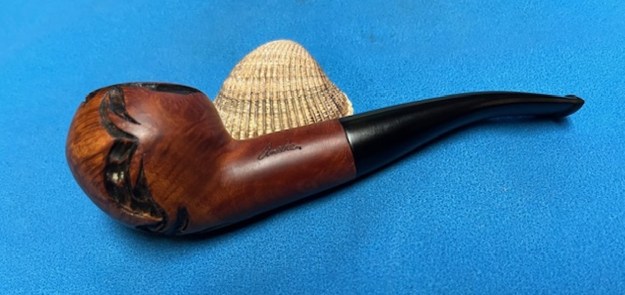



 rebornpipes