
Blog by Steve Laug
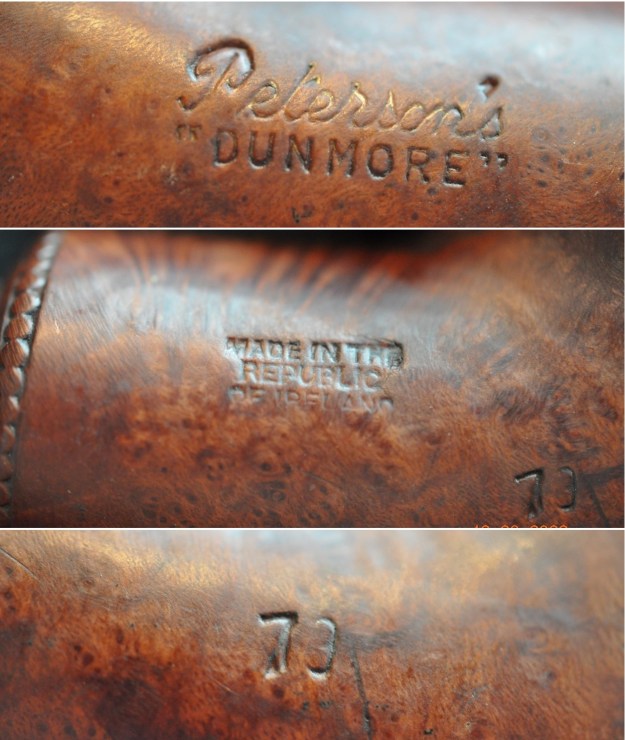
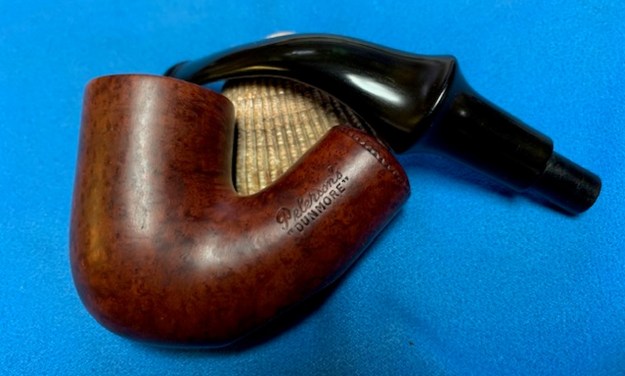
The next pipe on the table was purchased on 03/30/2022 from an estate in Plano, Texas, USA. I have always liked the look of a Dunmore pipe – shape, the carved shank end, the fit of the stem against the shank all add to the beauty. This one is smooth like many I have worked on in the line. The pipe is stamped on the left side of the shank and reads Peterson’s [over] “Dunmore”. On the right side it is stamped Made in the Republic of Ireland (3 lines) with the shape number 73 underneath. It was another pipe that was someone’s favourite. The bowl had a thick cake and lava build up in the rim top and inner edge. The finish looked good underneath all of the grime and oils that were ground into the bowl sides and heel. The beaded decoration on the shank end is in excellent condition. Like other Dunmores I have worked on, it had a flattened shank just next to the heel and the pipe functioned as a sitter. The stem fit well in the shank and seemed to be snug. The stem had light tooth marks and chatter on both sides ahead of the P-lip and on the underside edge of the button. The “P” stamp on the left side of the stem was very faint. Jeff took photos of the pipe before he started his clean up work on it. It is a pretty pipe!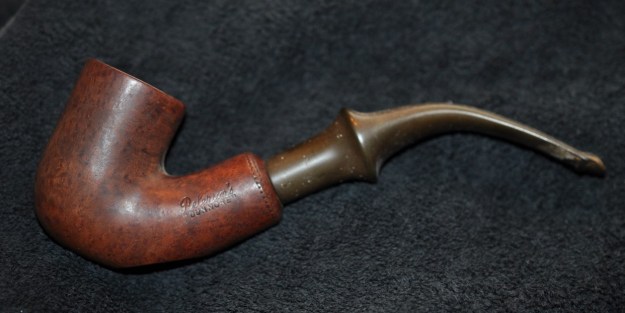
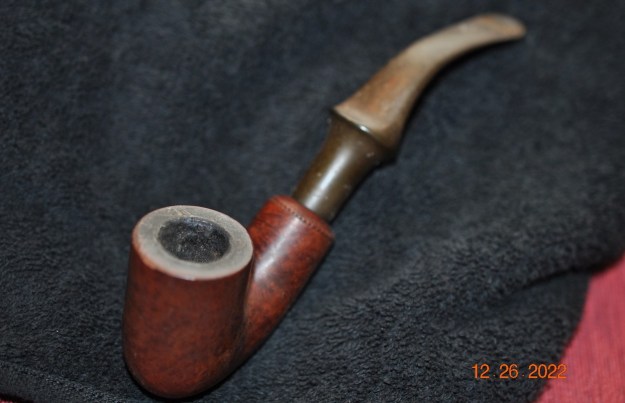 The next photos show the bowl and rim top as well as the stem condition. The bowl had a thick cake that is very visible. The rim top and edges have a heavy coat of tar. It is hard to know what the rim edge looked like underneath the lava. The rim top also had some darkening. The stem looked good with some tooth chatter and marks on both sides and the button.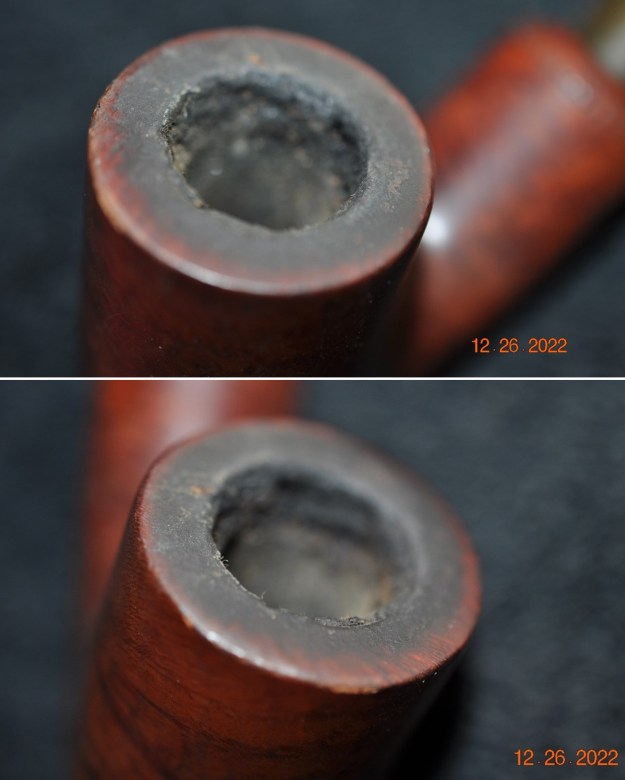
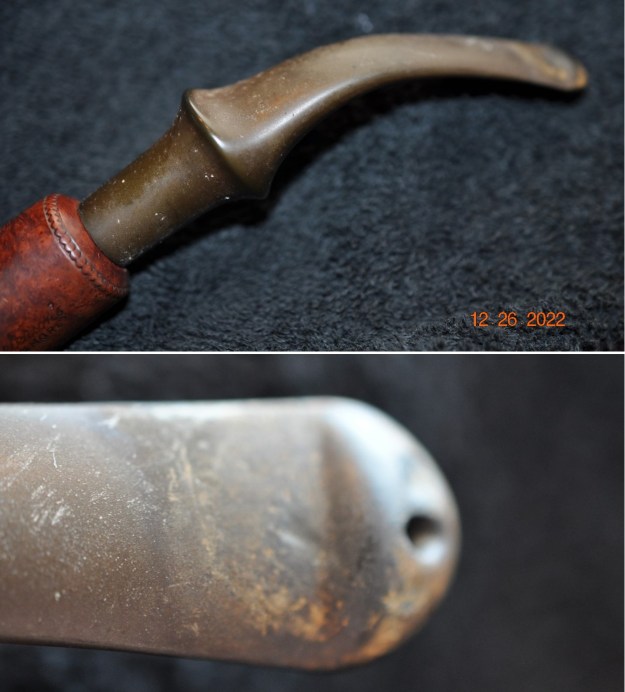
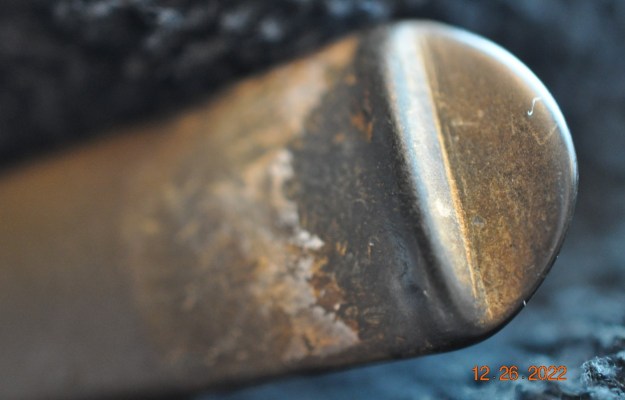 Jeff took photos of the sides and the heel of the bowl and shank to show the grain in the briar. It is quite beautiful. You can also see the grime and oil ground into the bowl sides. I can’t wait to see it once it is cleaned and polished.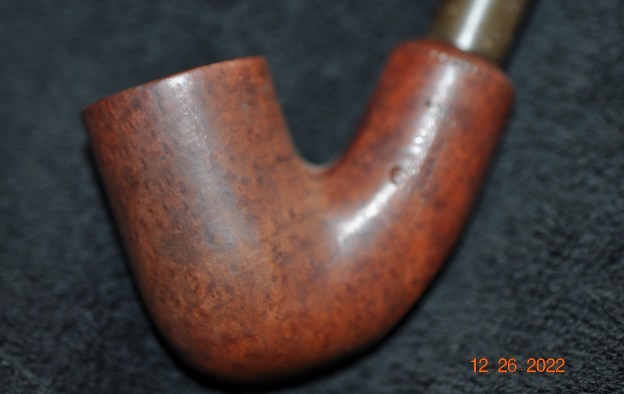
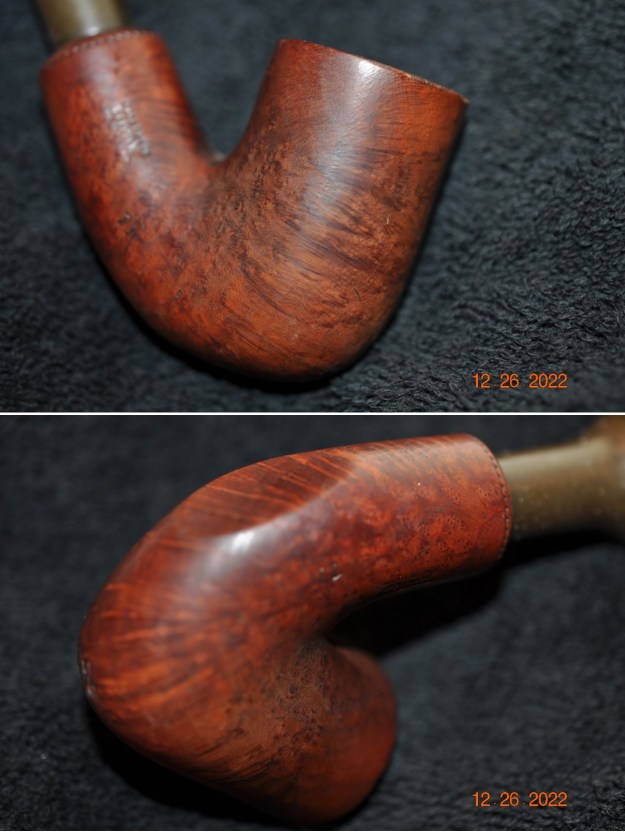 The stamping on the shank sides was clear and very readable. It read as noted above. Notice also the carved detail on the shank end in the photos as it is a feature of Dunmore pipes.
 I turned first to Pipephil’s site to remind myself of the background of the Dunmore line. Unfortunately, there was no information to be found there. I then turned to Pipedia’s article on Peterson pipes to see what I could garner from that information. It is a great read in terms of the history of the brand (https://pipedia.org/wiki/Peterson) but nothing specific to the Dunmore line of pipes.
I then turned to the book I should have consulted first, The Peterson Pipe, by Mark Irwin and Gary Malmberg. On page 298 there is an entry for Dunmore pipes. It reads as follows:
Dunmore (1971-c.1984 2006-10). Appeared first as Iwan Ries & Co. exclusive line “Dunmoor,” a Premier-grade in light-brown smooth or rustic red in all System shapes, with beading at the shank. Documented in the Associated Imports Catalog from 1973. Classic Range Dunmore shapes from ’78. A third Dunmore line (’06-10) featured standard and some B shapes, with beading around bowl instead of at shank-face, produced for European market.
On page 165 there were also photos of pages from a catalogue with the description: The unmounted Dunmore Premier debuted in both System and Classic Range shapes circa 1973 with a final appearance in the 1981 catalogue.
The information blurb on each page read: “Dunmore Briars.” Beautifully grained best quality briar in light-brown, matt or rustic finish. Often described as “Petersons Unmounted System” has all the advantages of the system range. Ten models each fitted with the Peterson Lip mouthpiece.
With that information in hand I knew what I was dealing with in terms of the stamping on the pipe. It is a Late Republic era pipe. It showed up in Peterson Catalogue in 1973. Now it was time to work on the pipe.
With that information at hand I turned to work on the pipe itself. Jeff had thoroughly cleaned up the pipe. He reamed the pipe with a PipNet Pipe Reamer and cleaned up the remnants with a Savinelli Fitsall Pipe Knife. He scrubbed the bowl with undiluted Murphy’s Oil Soap with a tooth brush. He rinsed it under running warm water to remove the soap and grime. There were portions of the bowl sides where it had lightened in the clean up process. He cleaned out the inside of the shank and the airway in the stem with alcohol, cotton swabs and pipe cleaners. He scrubbed the exterior of the stem with Soft Scrub to remove as much of the oxidation and calcification as possible. He soaked the stem in Before & After Deoxidizer and rinsed it off with warm water. I took photos of the pipe once I started to work on it.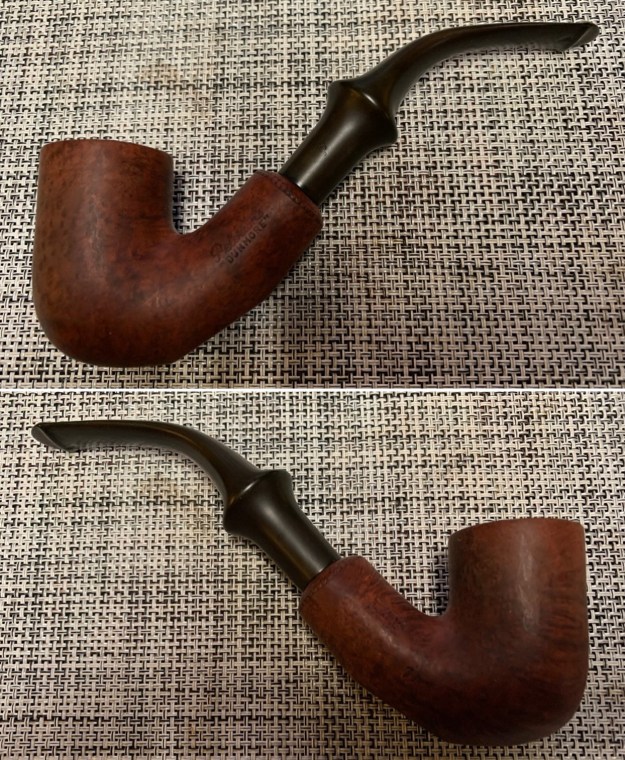
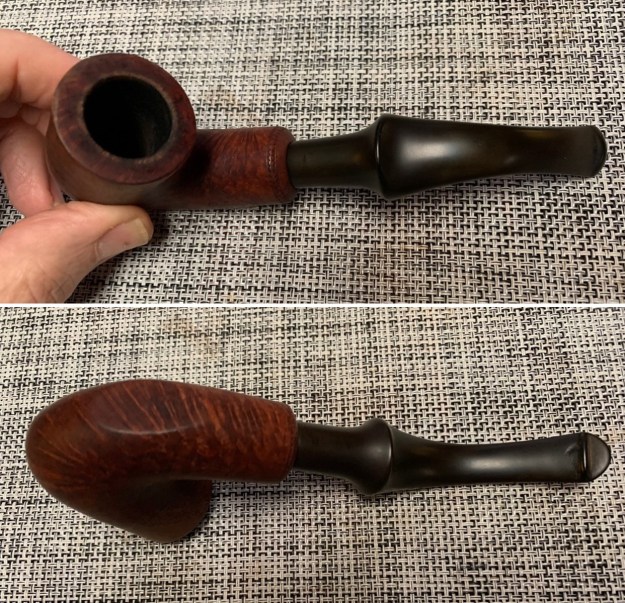 I took some close up photos of the rim top and also of the stem surface. I wanted to show what an amazing job Jeff did in the cleanup of the rim top. I also wanted to show condition of the rim top and the look that flowed around the bowl from there. The outer edge of the bowl looks very good and I think the dark stain really hid any damage. I also took close up photos of the stem to show the tooth marks and chatter on the stem surface.
 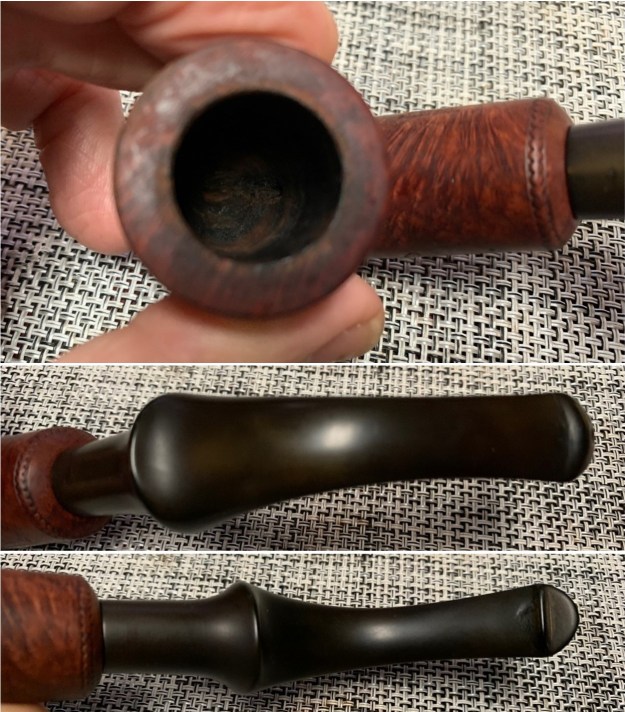 One of the things I appreciate about Jeff’s cleanup is that he works to protect and preserve the nomenclature on the shank of the pipes that he works on. The stamping on this one looked good. I took some photos to show the clarity of the stamping. You can also see the faint P on the stem side. I have noticed that many restorers are not careful to protect the stamping in their cleaning process and often the nomenclature is almost destroyed. I would like to encourage all of us to be careful in our work to preserve this as it is a critical piece of pipe restoration! I took a photo of the pipe with the stem removed to give a sense of that parts and look.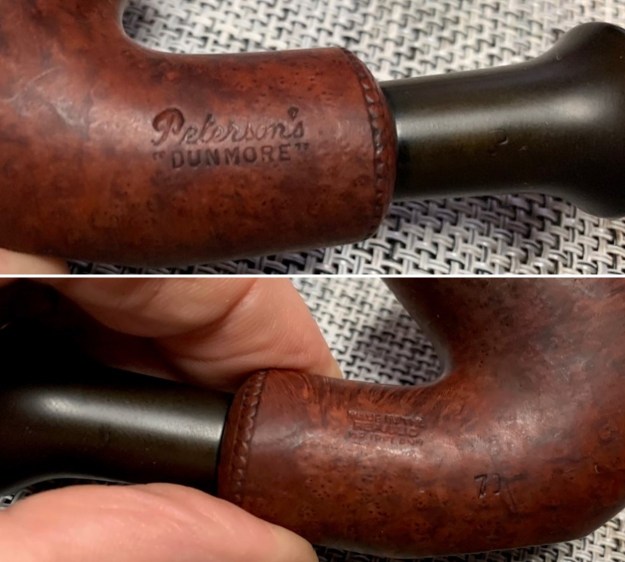
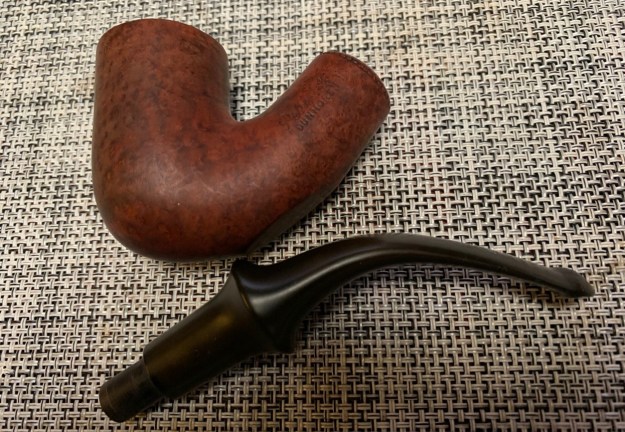 I started my work on the pipe by addressing the damage to the rim edges and top. I used a folded piece of 220 grit sandpaper to smooth out the edges and top. It looked much better once finished.
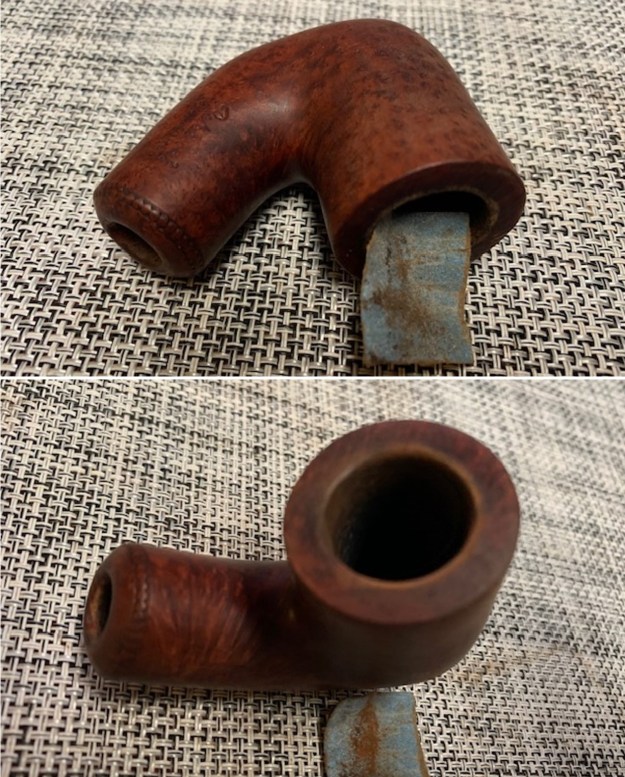 I polished the briar with micromesh sanding pads – wet sanding with 1500-12000 grit pads. I wiped the bowl and shank down after each sanding pad with a damp cloth to remove the dust and debris.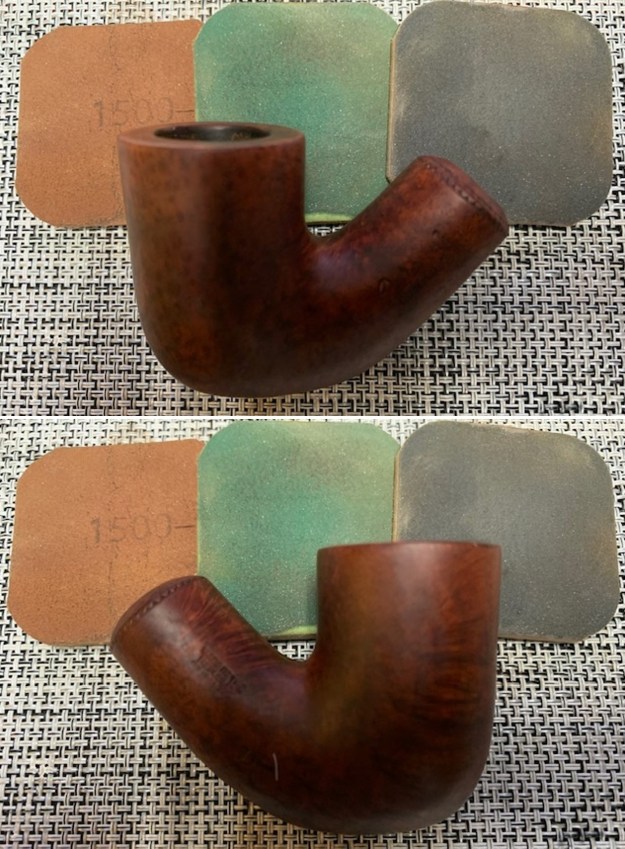
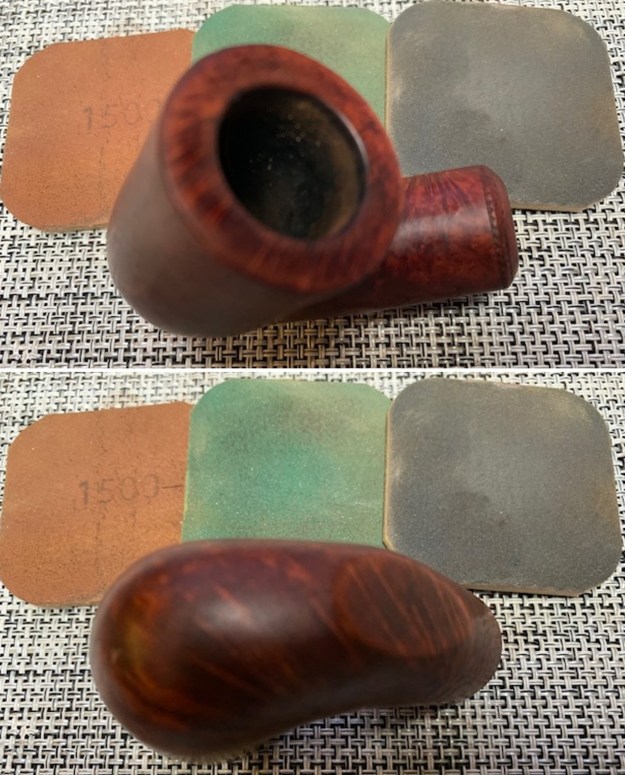
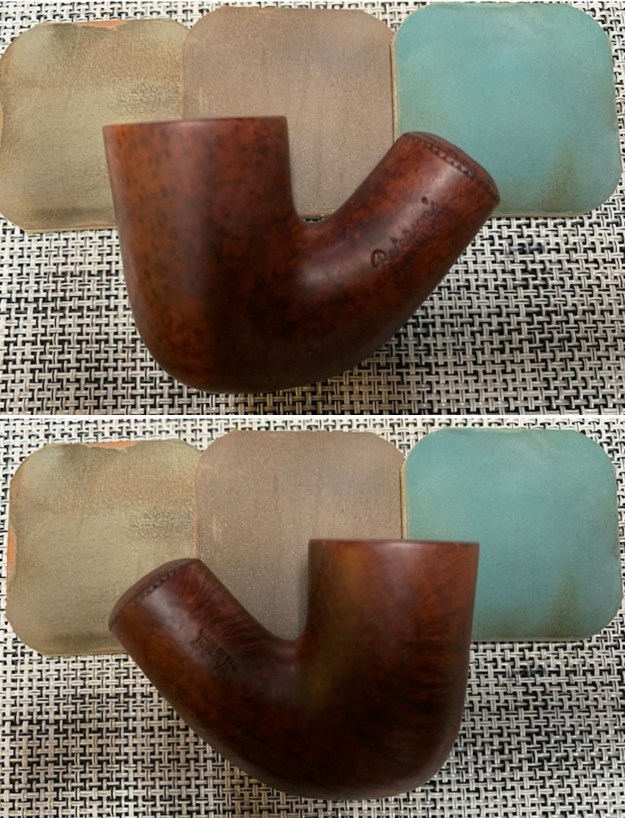
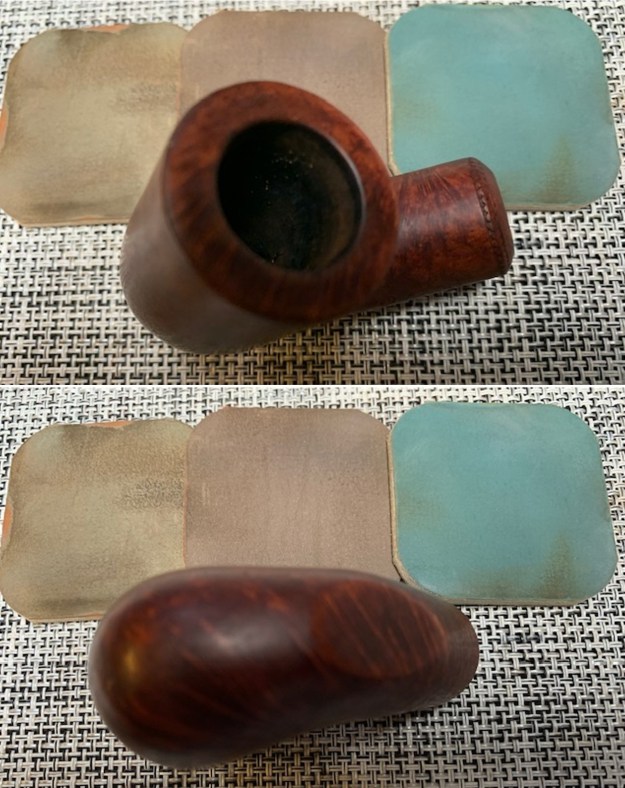

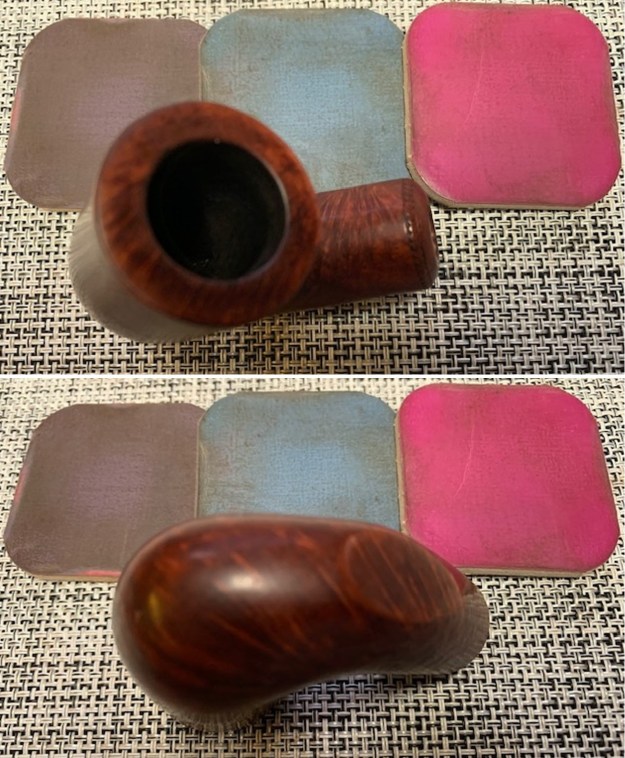 I rubbed the bowl and shank down with Before & After Restoration Balm. I worked it into the surface of the bowl sides and shank with my fingertips. The product works to clean, enliven and protect the briar. I let the balm sit for ten minutes and then buffed with a cotton cloth to raise the shine.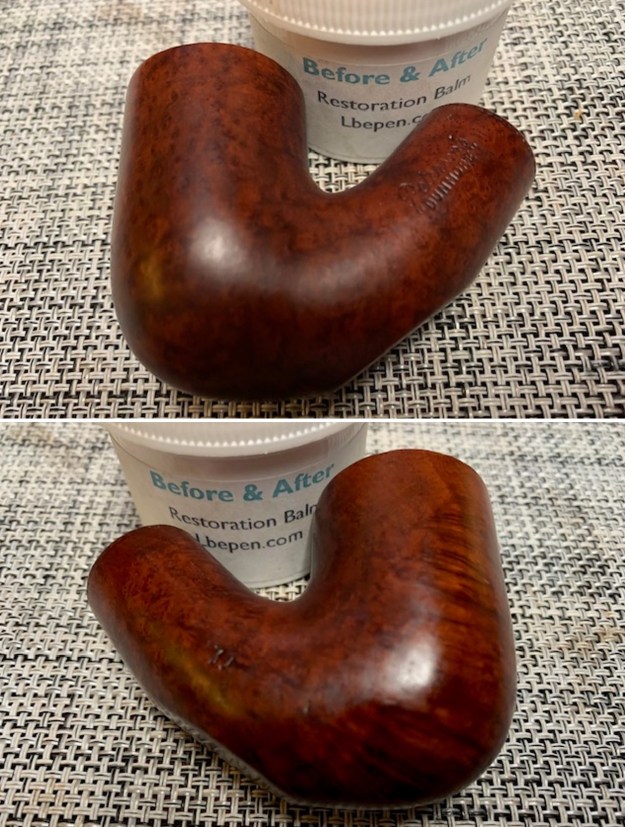
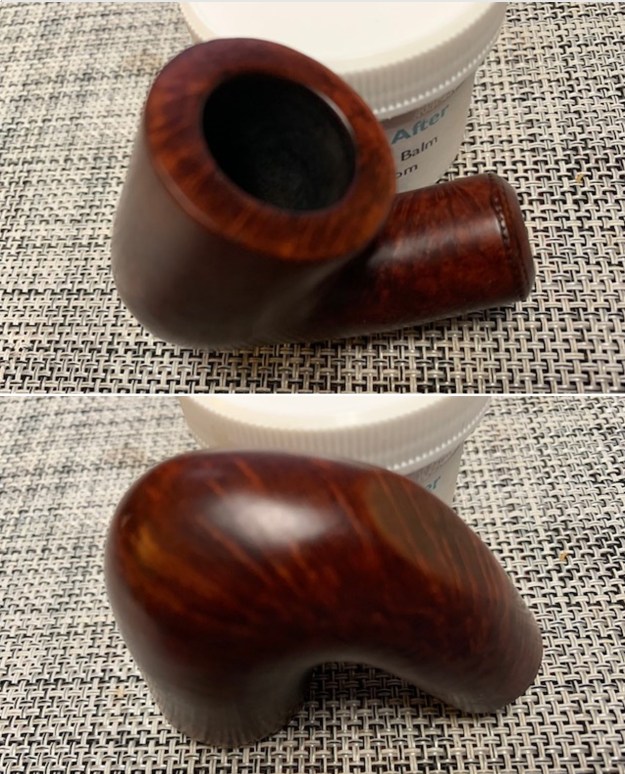
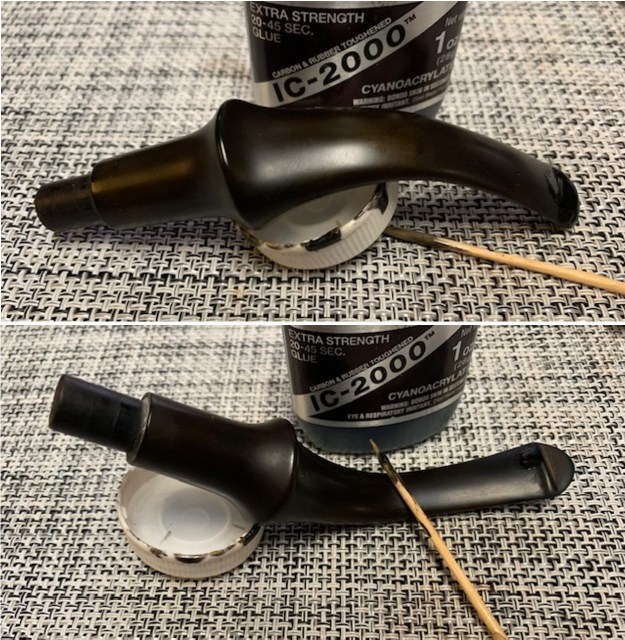
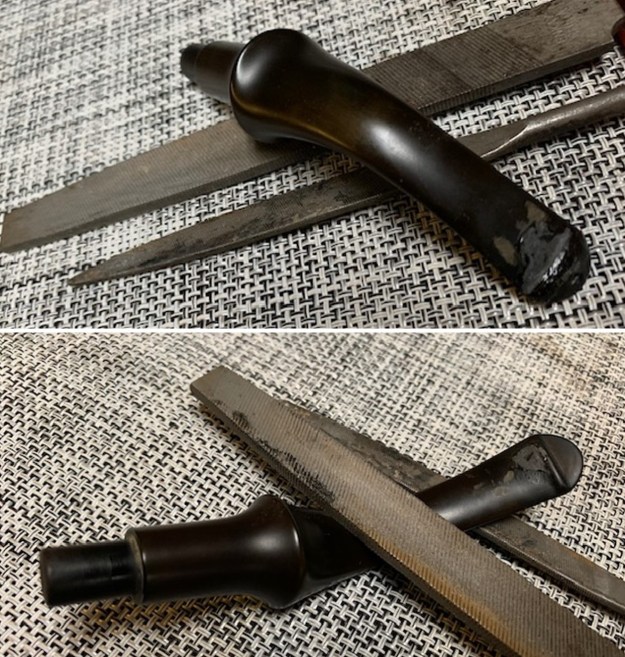
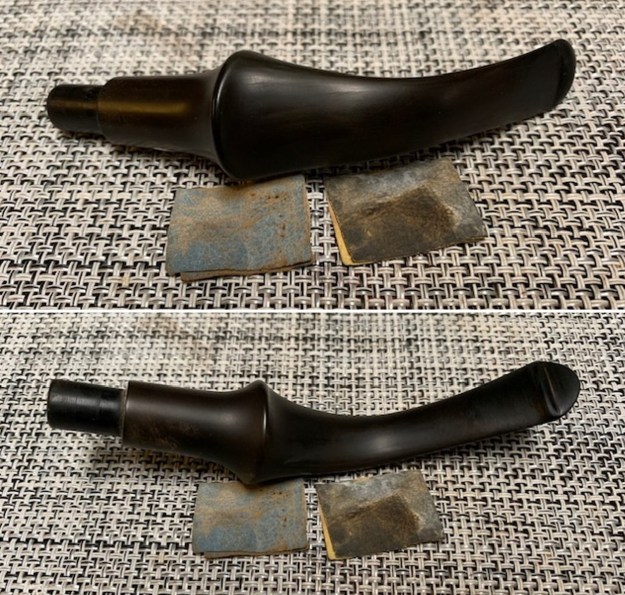
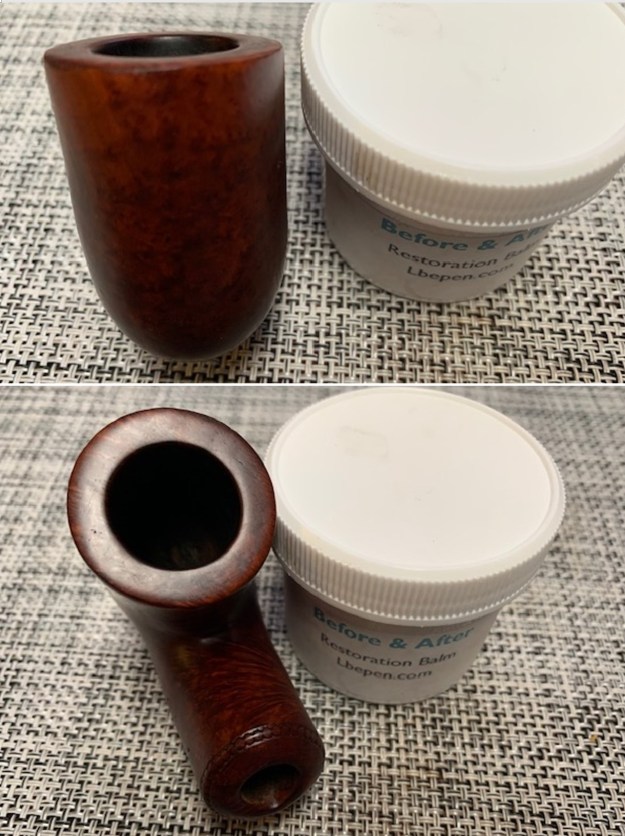 I set the bowl aside and turned my attention to the stem. I “painted” the stem surface with the flame of a Bic lighter. I was able to lift them some but some deeper cut like dents were still present. I filled those that remained in with black CA glue and set it aside to cure. Once it had cured I used files to flatten the repair and start blending it into the surface and reshaping the button edge. I sanded it with 220 grit sandpaper. I started polishing the stem with 600 grit wet dry sandpaper.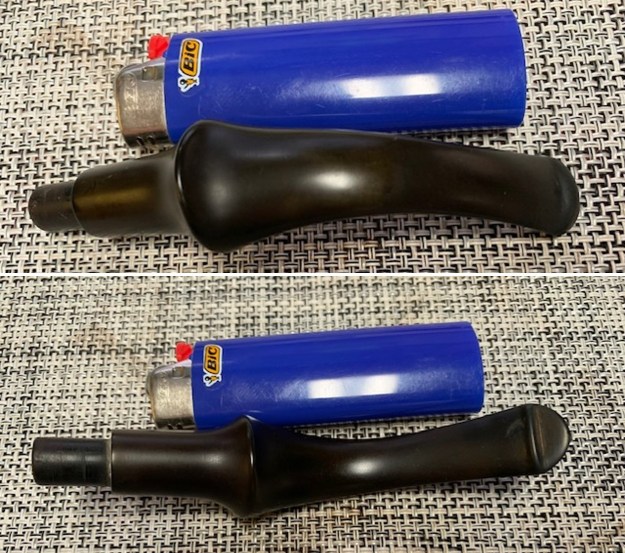
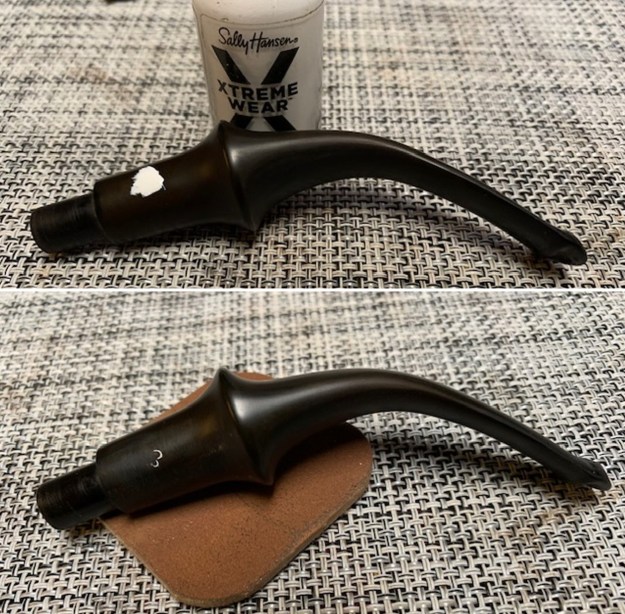
 I touched up the “P” stamp on the left side of the saddle with white acrylic nail polish. I applied it and worked it into the stamp with a tooth pick. Once it cured I scraped off the excess. It is definitely better though the stamp is faint in some spots.
 I polished the repaired vulcanite stem surface with micromesh sanding pads – wet sanding with 1500-12000 grit pads. I wiped it down with a damp cloth after each sanding pad.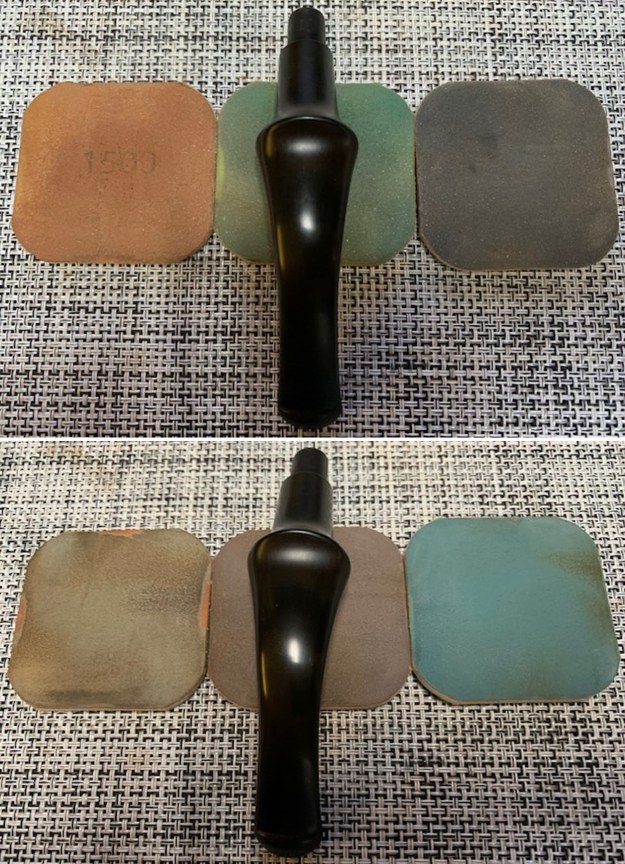
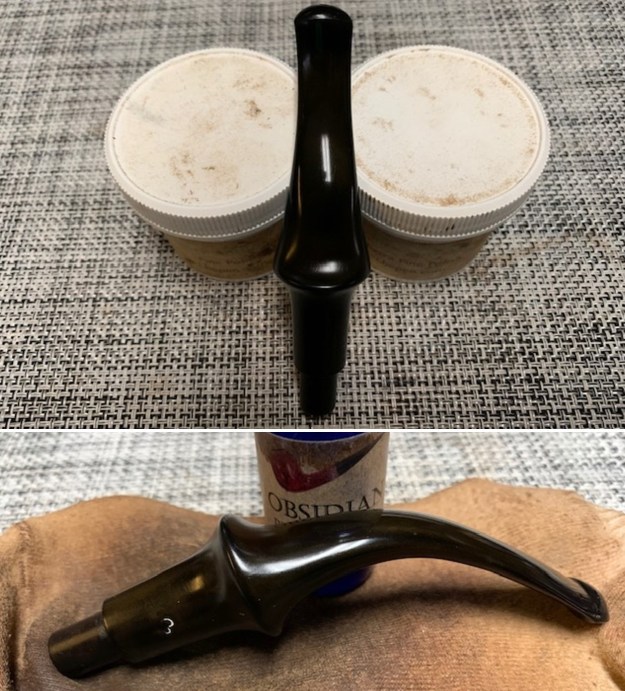
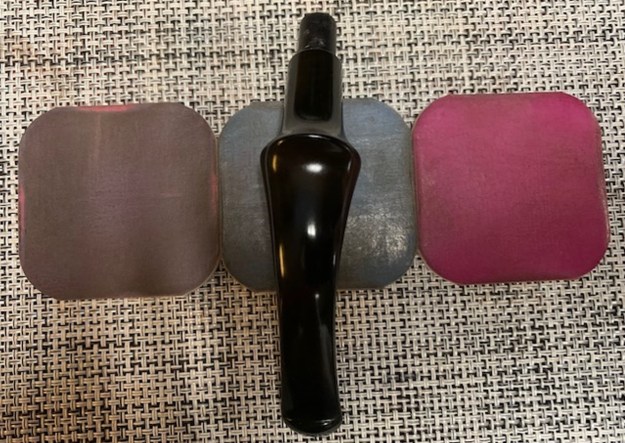 I finished my polishing with Before & After Pipe Stem Polish – both Fine and Extra-Fine polishes. I wiped it down with a final coat of Obsidian Oil and set aside.
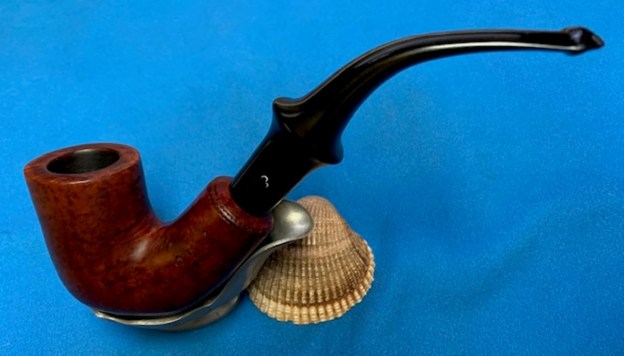
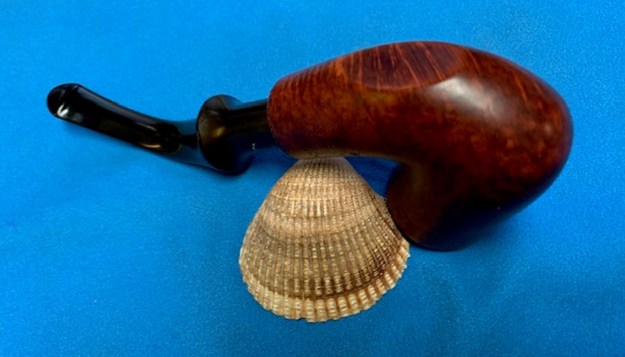
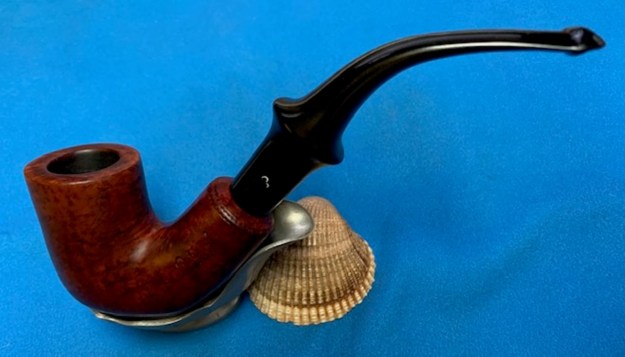
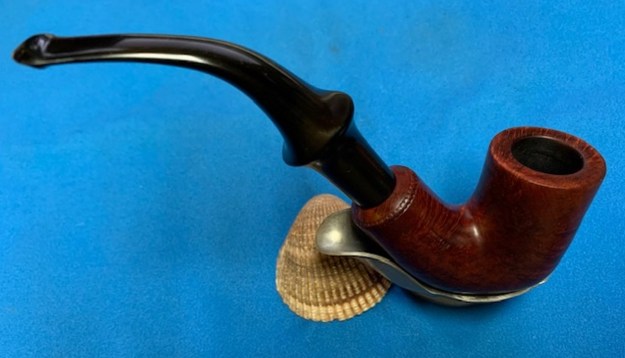
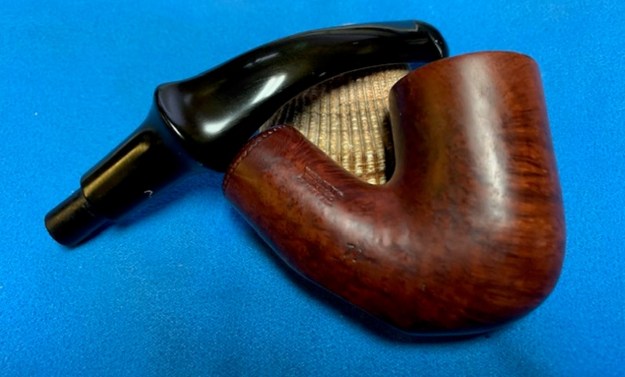
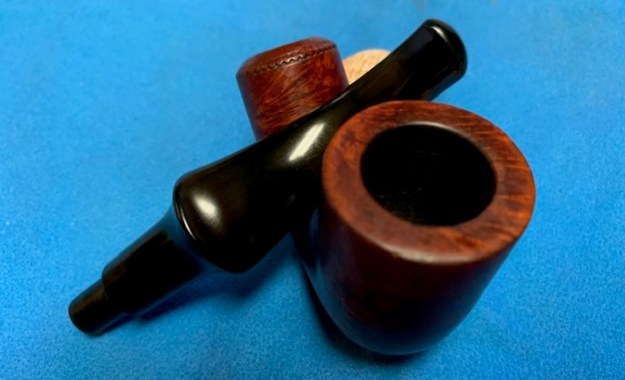
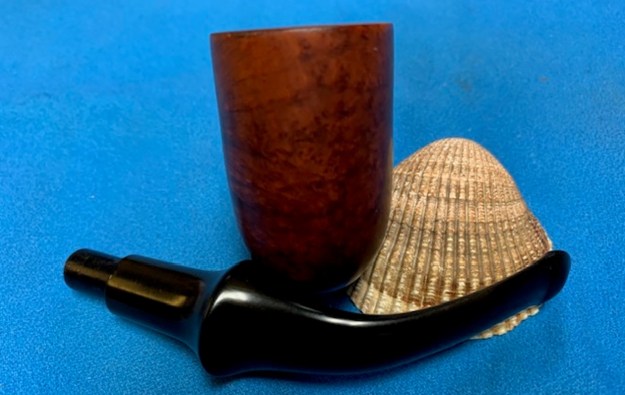
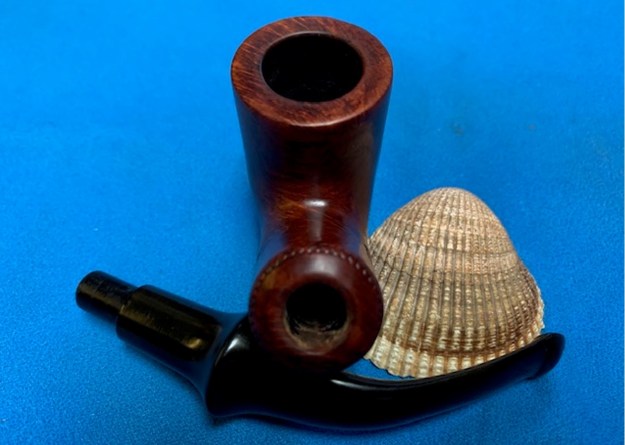
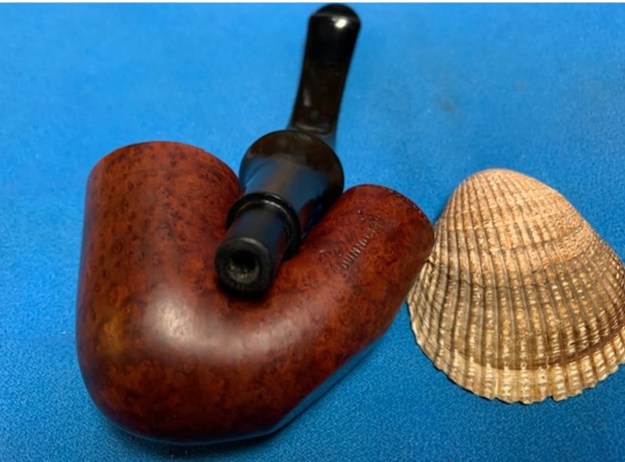
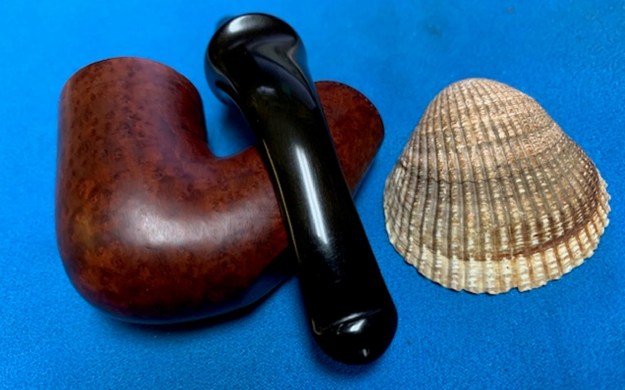
 This classic shaped Peterson’s Dunmore 73 Bent Billiard with a Peterson’s P-lip vulcanite stem looks much better now that it has been restored. The rim top and edges cleaned up very well. The rich brown stains on the bowl came alive with the polishing and waxing. I put the stem back on the bowl and buffed the pipe with Blue Diamond on the buffing wheel using a light touch on the briar. I gave the bowl and the stem multiple coats of carnauba wax on the buffing wheel and followed that by buffing the entire pipe with a clean buffing pad. I hand buffed the pipe with a microfiber cloth to deepen the shine. The finished Peterson’s Dunmore 73 is a beauty that fits nicely in the hand and looks very good. Give the finished pipe a look in the photos below. The dimensions of the pipe are Length: 6 inches, Height: 2 inches, Outside diameter of the bowl: 1 ¼ inches, Chamber diameter: ¾ of an inch. The weight of the pipe 1.87 ounces/53 grams. I will be putting it on the rebornpipes store in the Irish Pipe Makers Section soon. If you are interested in adding this pipe to your collection send me a message or an email. Thanks for reading this blog and my reflections on the pipe while I worked on it. There are many more to come!
As always, I encourage your questions and comments as you read the blog. Thanks to each of you who are reading this blog. Remember we are not pipe owners; we are pipe men and women who hold our pipes in trust until they pass on into the trust of those who follow us.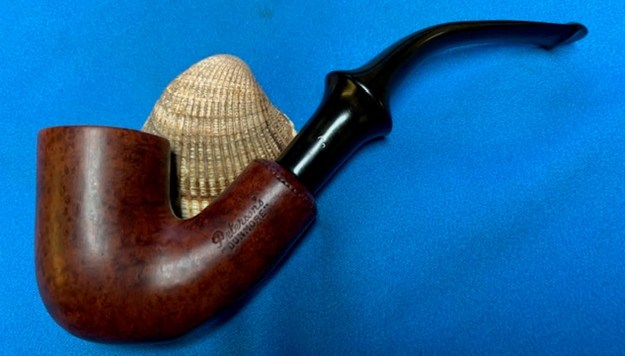

 rebornpipes