
Blog by Steve Laug
 Another one of the gift pipes that caught my eye was one stamped on the left side of the shank Mastercraft De Luxe in the shield like the one on the left. On the right side it is stamped Century Old Mediterranean Briar Israel. I have worked on quite a few Mastercraft pipes and know that the company never made pipes itself but had makers in Italy and other places make the pipes for them. I have written another blog on the lines within the Mastercraft hierarchy and know that the De Luxe was pretty high up the list of their pipes. Here is the link to the hierarchy blog https://rebornpipes.com/2014/06/23/a-mastercraft-pipe-lines-hierarchy/
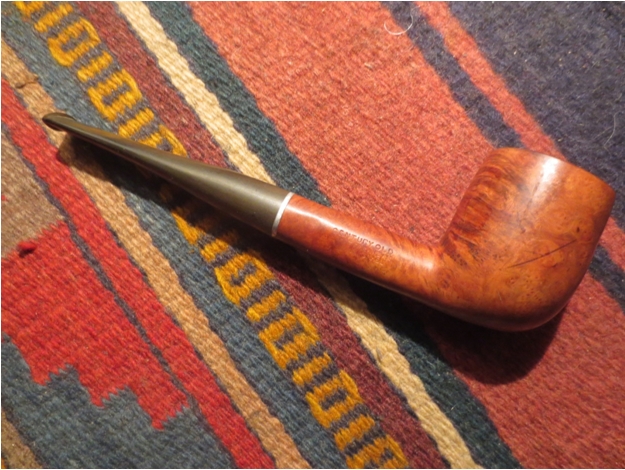
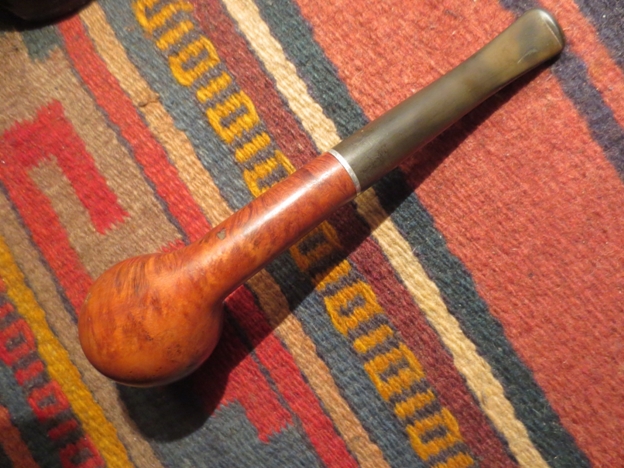
When I took the pipe to the worktable my first impressions were that it was in pretty decent shape. But as I looked more closely I could see the issues that were there. The bowl had some fills in the surface on the front, left side and the underside of the shank that had shrunk and were pitted pink putty. The right side of the bowl had a deep scratch in the briar at a diagonal to the bowl that cut through the finish. The varnish coat that was on these older MC pipes was flaking around the damaged rim and around the pitted fills. The rim had some charring and darkening that would need to be addressed. When I took out the stem a previous owner had coated the entire tenon with very soft waxy substance that had gone rancid. It was all over the mortise and inside and outside of the tenon. It was thick and not easily removed. The stem was oxidized and the stamping on the side had been put on at an angle which meant that the whitening only was on one side of the MC oval. The aluminum band on the stem that fit against the end of the shank had marks on it like it had been turned with a pair pliers. It was more of a mess than first met the eye.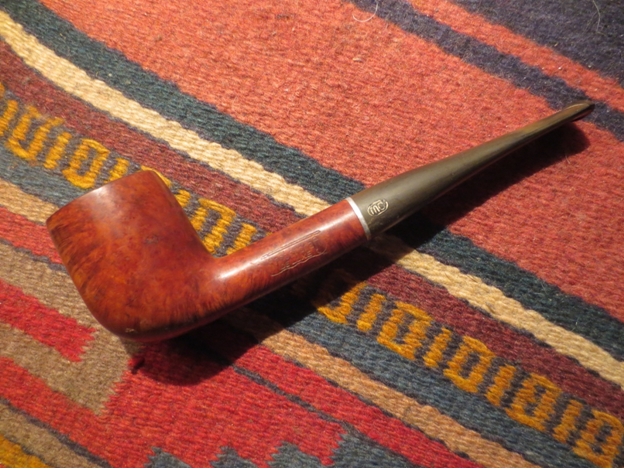
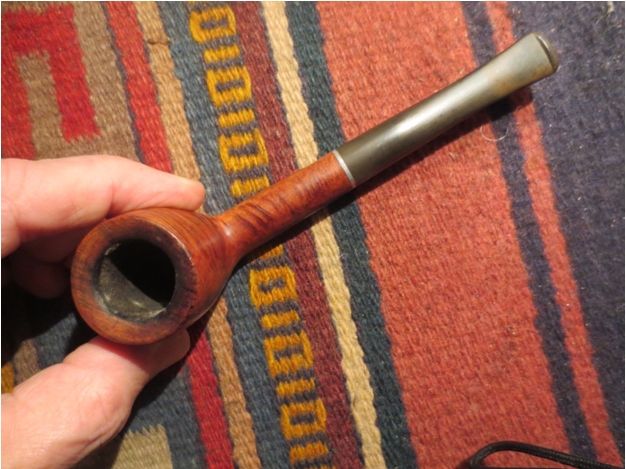
 The next photo is a close-up of the rim to show some of the damage to the outer edge and the beveled top that would need to be addressed. This would be slightly more complicated than just topping the bowl and resurfacing things. I would have to hand sand the bevel and the edges to minimize the charring and the dents on the back outer edge. I would also need to work on the inner edge of the rim to bring it back into round condition.
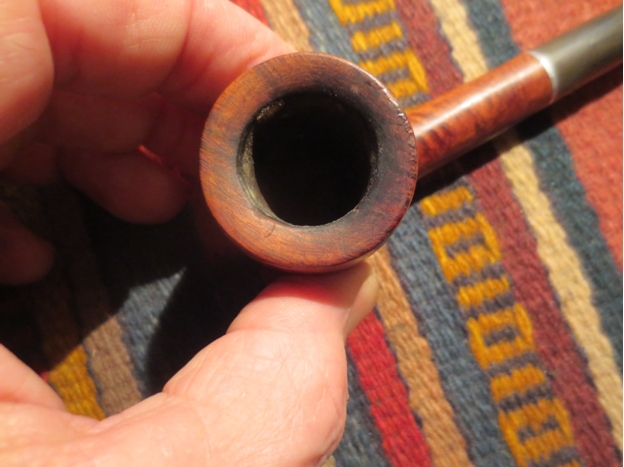 To facilitate the clean up on the rim I reamed the bowl back with the third cutting head of my PipNet reamer. The bowl is quite large with a diameter of 7/8 inches. I took the cake completely out of the bowl and took it back to bare wood in order to work on the inner edge of the rim.
 The next photo shows how the reaming with the cutting head smoothed out the surface of the inner rim considerably and made my work simpler.
 I decided to try to whiten the stamping on the stem (for a bit of a break from working on the bowl). I wanted to see if I could gain anything from the lighter stamping on the one side of the oval. I used a liquid white-out to fill the stamping and when it dried rubbed off the excess. It looked good initially but the stamping on the topside and the left leg and top of the M was too shallow to hold much of the whitener.
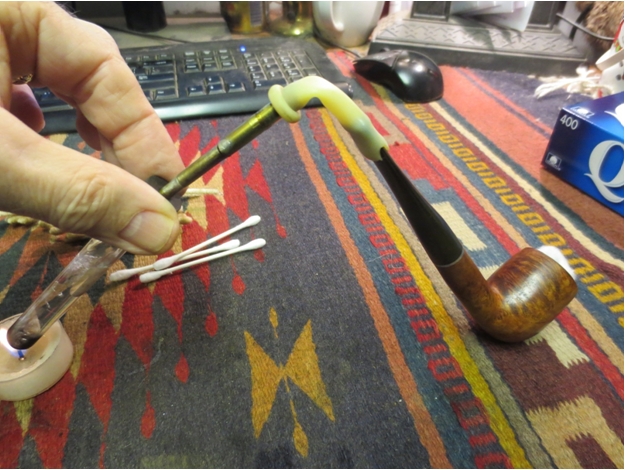
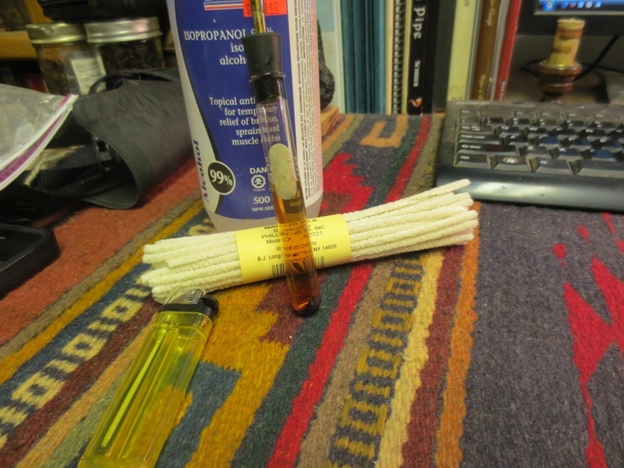
 I scrubbed out some of the mortise and airway in the stem with alcohol, cotton swabs and pipe cleaners to remove the rancid smelling waxy substance (the more I worked with the more it smelled and worked like lard). It took quite a bit of scrubbing to remove the thick coat of this substance. I then used a retort on the bowl and stem and boiled it out three times before I was greeted with clean alcohol. The first boil the alcohol came out black, the second time it came out amber and finally the third time it came out clean. I scrubbed out the airway and the shank a final time with the pipe cleaners and cotton swabs and the shank and stem were finally clean.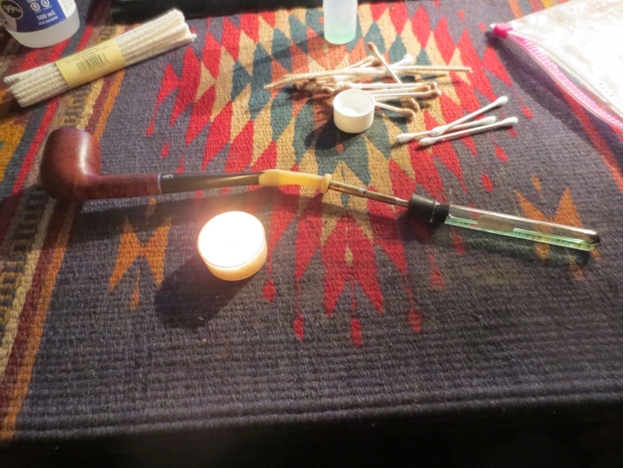
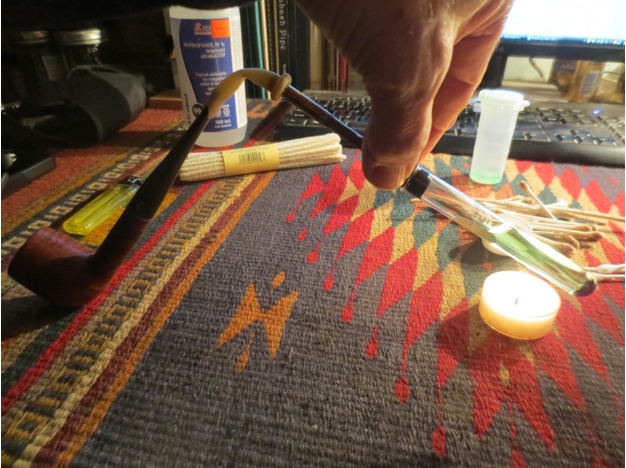
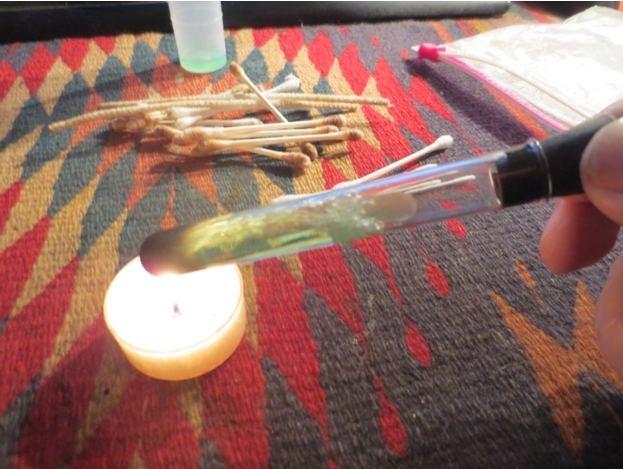
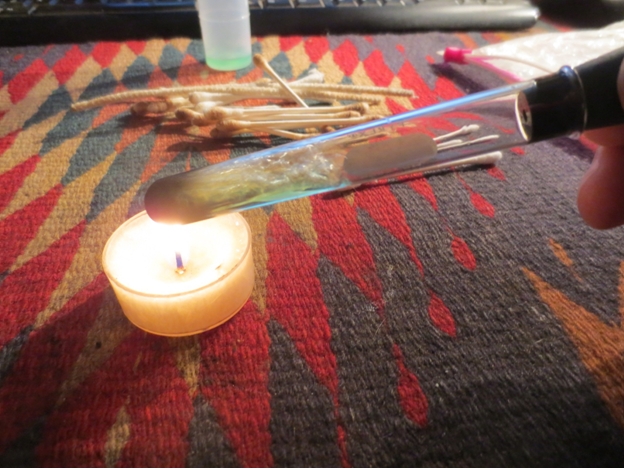
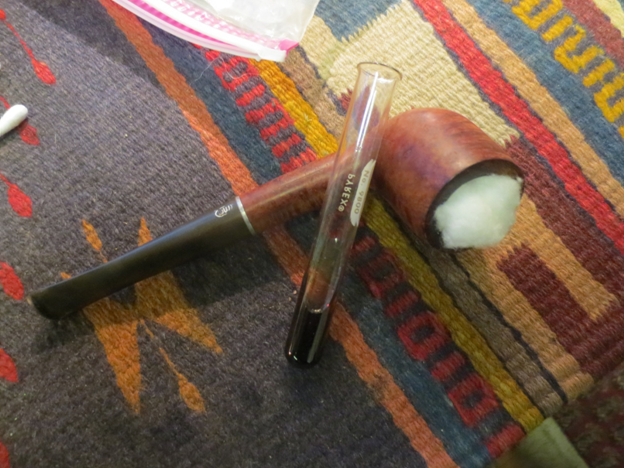
 With the interior cleaned out it was time to work on the exterior of the bowl. I scrubbed the surface of the bowl with acetone on cotton pads to remove the varnish topcoat and the grime from the finish. Then I picked out the pink putty fills and replaced them with briar dust and super glue. I put a drop of glue in the pit, tamped in dust and then a bubble of glue on top of the patch. The next two photos show the patches after they had dried and before I sanded them.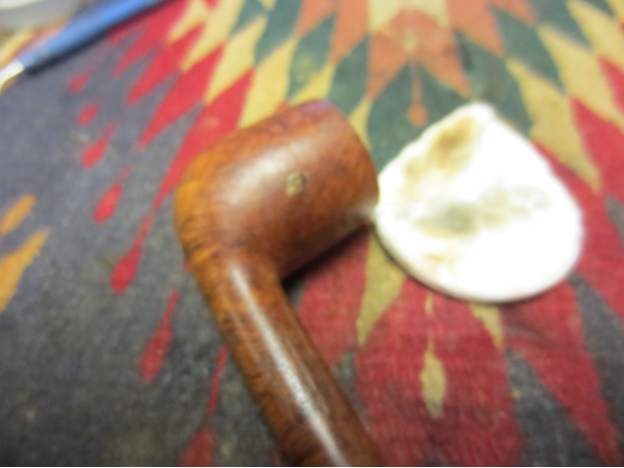
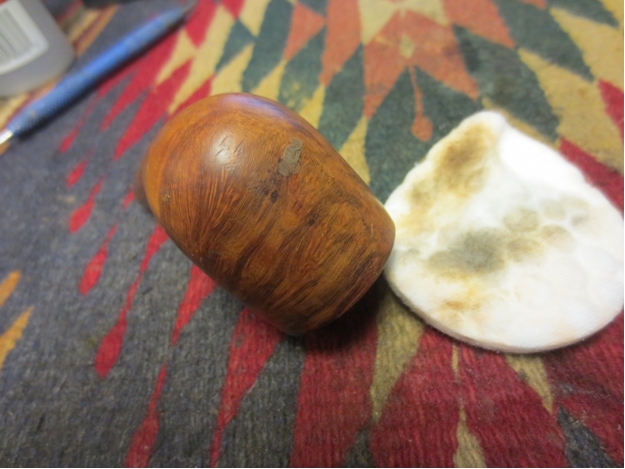 I sanded the patches with 220 grit sandpaper and followed that with a medium and fine grit sanding sponge to blend it into the surface and remove the scratches. Strangely the briar dust and super glue patch did not turn black this time as I was counting on. It was almost tan coloured. I would have to use a black permanent marker to etch in lines to match the grain around the repair and then sand them lightly to blend them in. I also sanded the horizontal scratch on the right side of the bowl until it was smooth. When I had finished sanding I scrubbed the bowl another time with acetone on the cotton pads.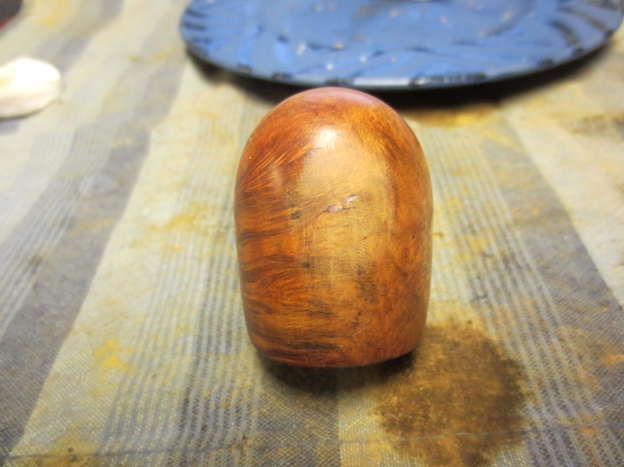
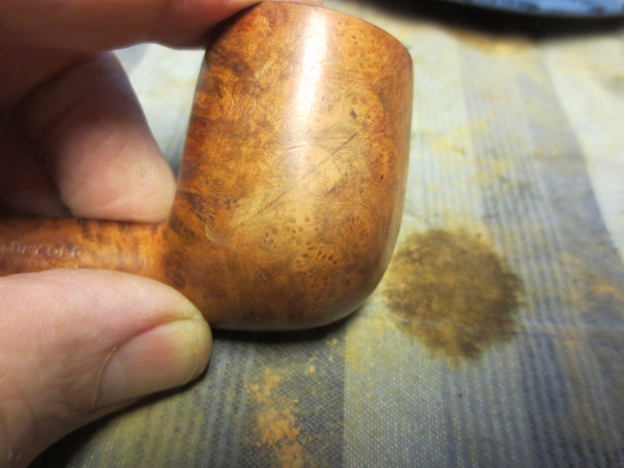
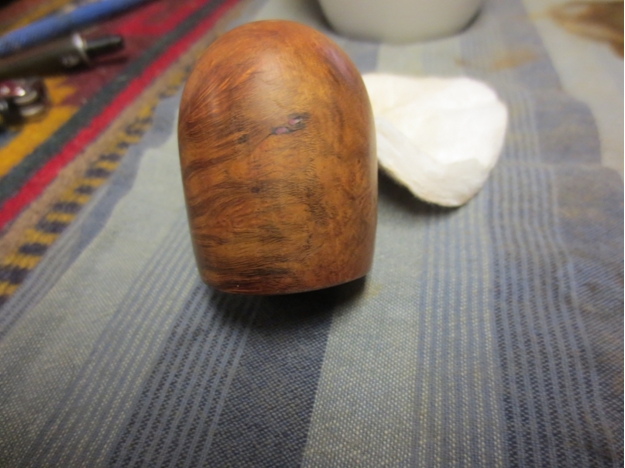
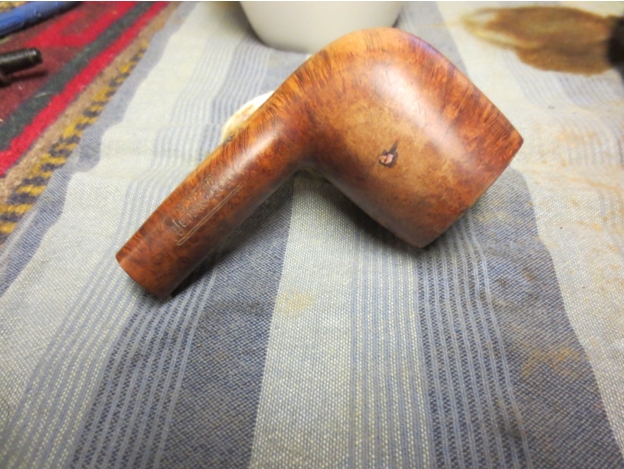 I sanded the bevel on the rim and the inner and outer edges of the rim with a folded piece of 220 grit sandpaper and then with the sanding sponges to minimize the damage and bring the bowl back into round. I wiped down the rim with the acetone to clean up the dust.
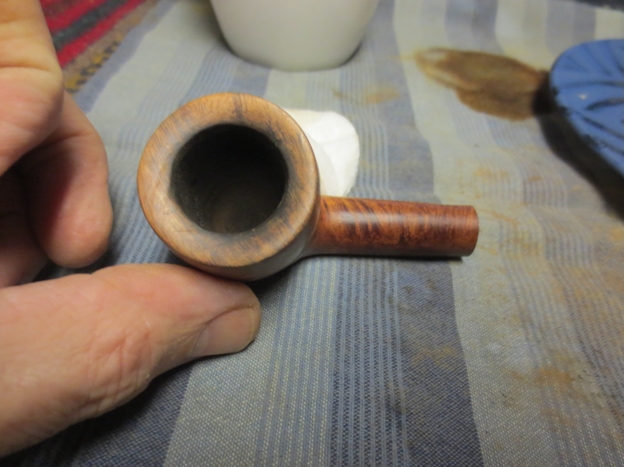 I decided to stain the pipe with a dark brown aniline stain thinned 3:1 (3 parts stain to 1 part alcohol). I wanted the stain opaque enough to cover the fills and mask them so that they did not stand out but also did not totally hide the bird’s eye and cross cut grain on the shank and bowl. This mixture of stain worked well.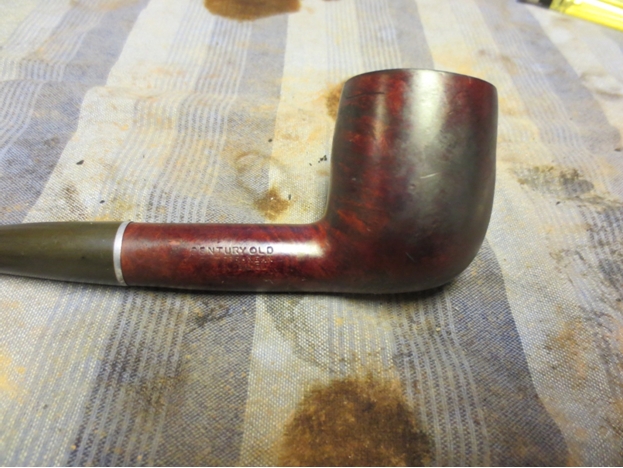
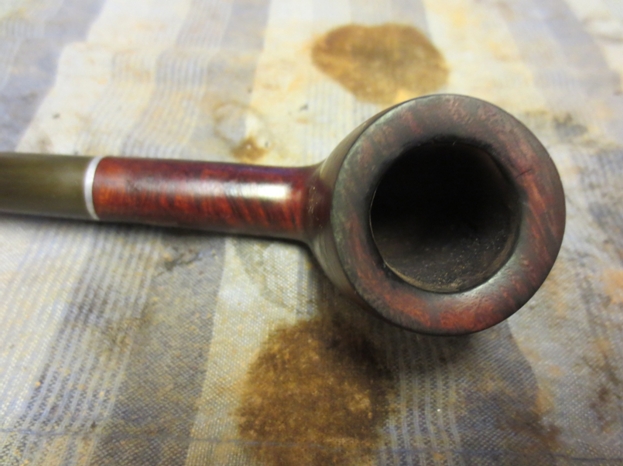
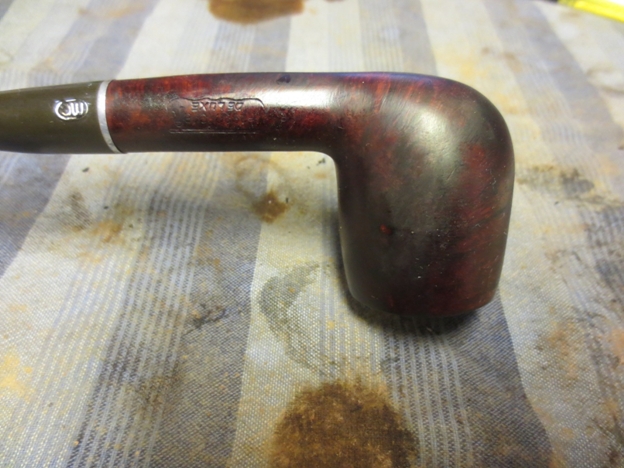
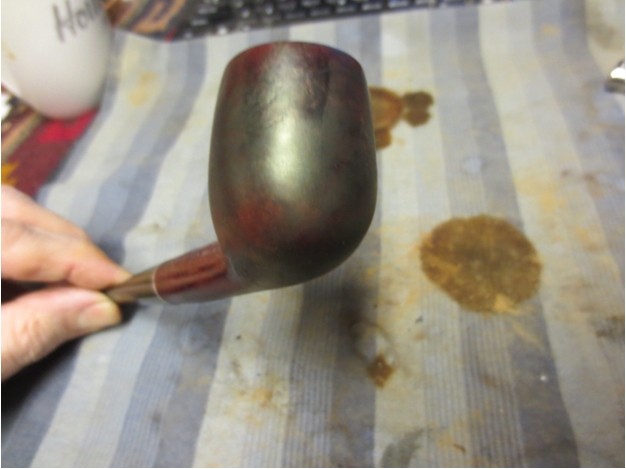
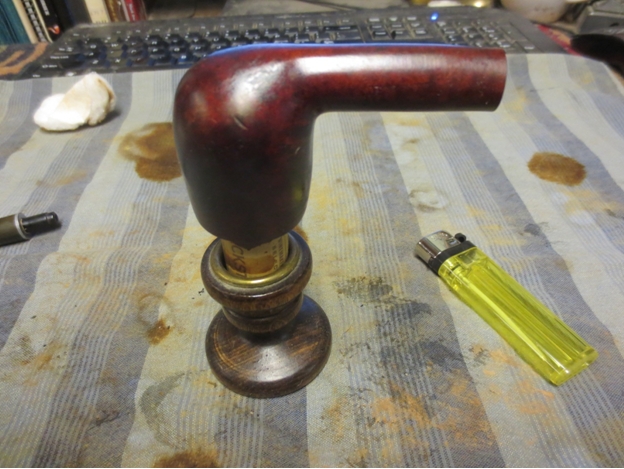
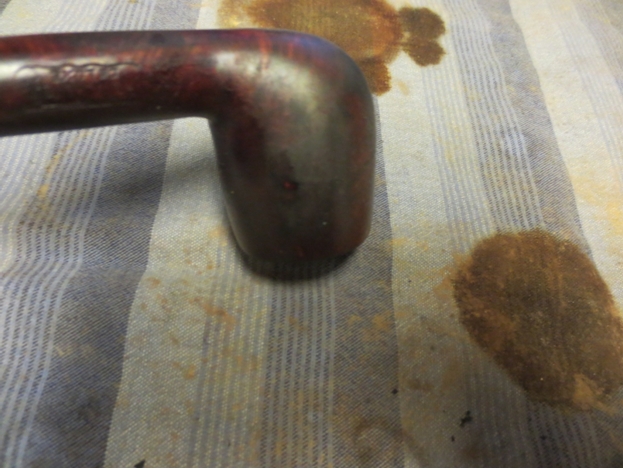 After I had flamed the stain to set it I rubbed the bowl and shank down with a coarse cotton cloth to blend the finish and hand buff it. I wanted to remove some of the opaqueness on the sides of the bowl and lighten the finish slightly. Once it was done I set the bowl on a cork to dry while I worked on the stem.
 I lightly sanded the stem with 220 grit sandpaper to remove the tooth chatter and some of the oxidation. I used the lighter to paint the flame across the surface of the stem to burn off the oxidation and also heat the tooth marks to lift them. I was able to raise all of the tooth marks using this method. The key is to keep the flame moving across the surface and to not stop in any one place too long. Once I had flamed the stem I wiped it down and sanded it with the medium and fine grit sanding sponges. I also sanded the aluminum ring to smooth out the damage on its surface and prepare it for polishing.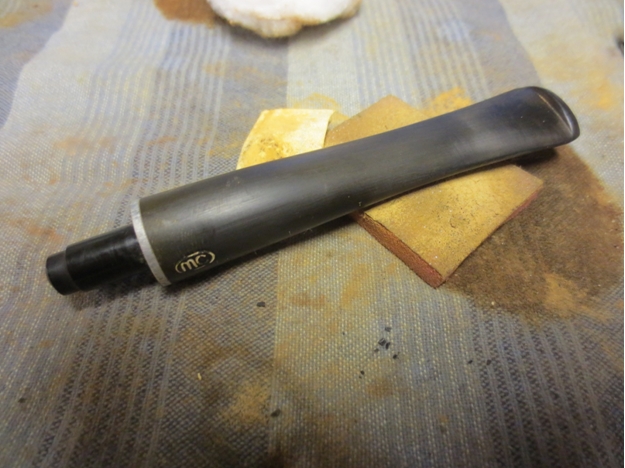
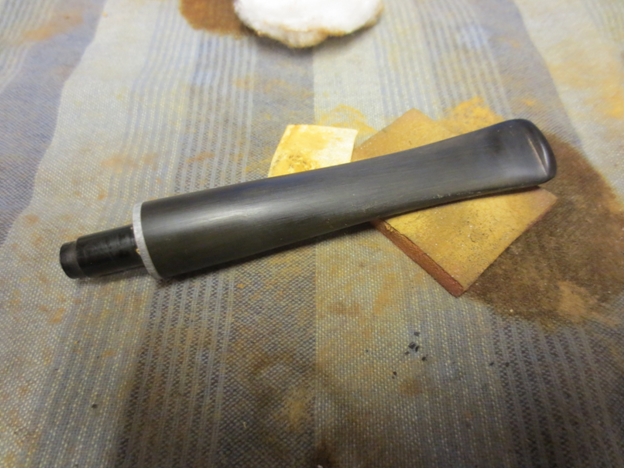 With the oxidation removed I sanded the stem with micromesh sanding pads – wet sanding with 1500-2400 grit pads and dry sanding with 3200-12,000 grit pads. In between each set of three pads I rubbed the stem down with Obsidian Oil before moving on to the next set of pads. When I finished sanding with the 12,000 grit pad I rubbed it down a final time with the oil and when it dried put the stem on the pipe and took it to the buffer.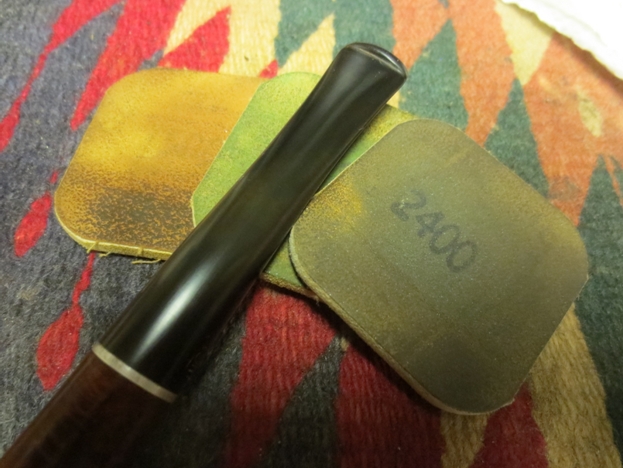
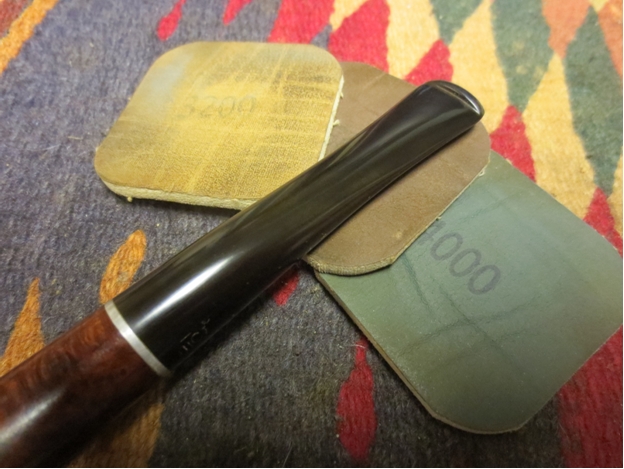
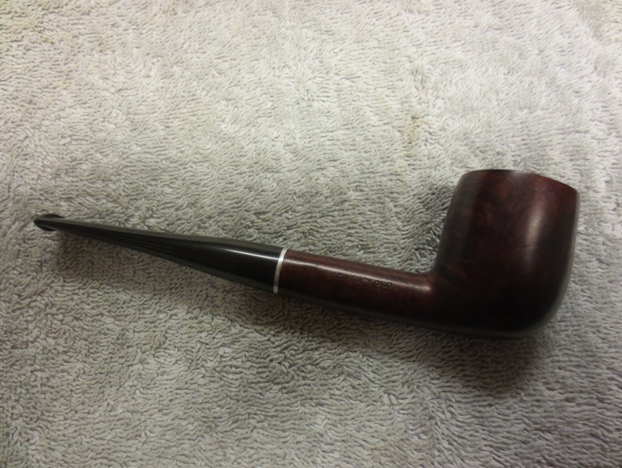
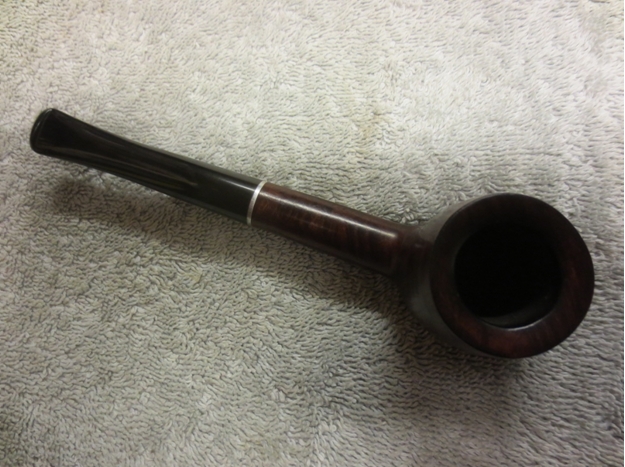
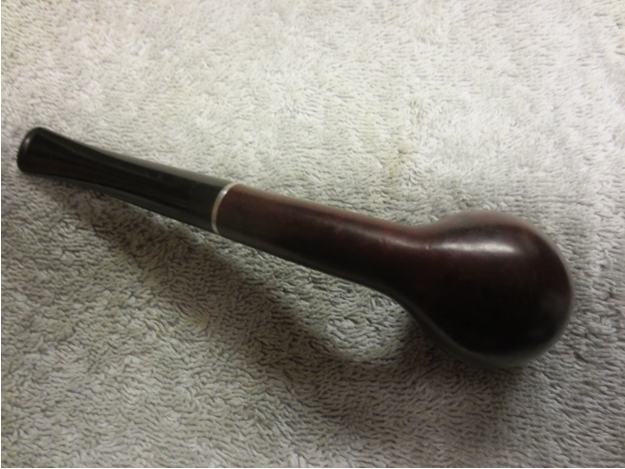
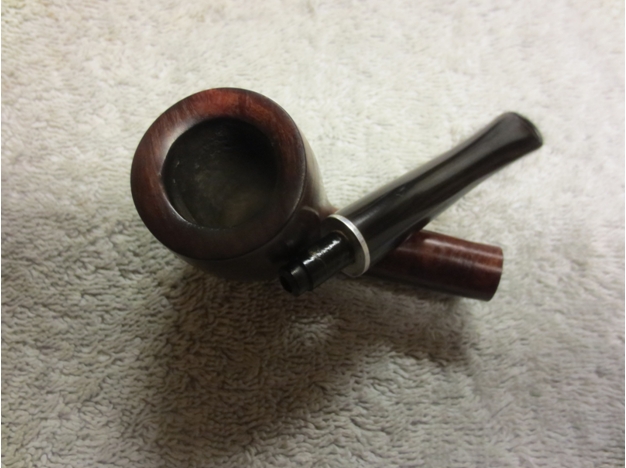
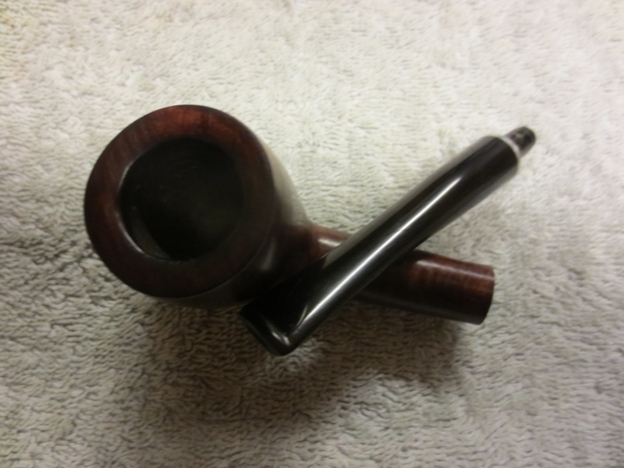
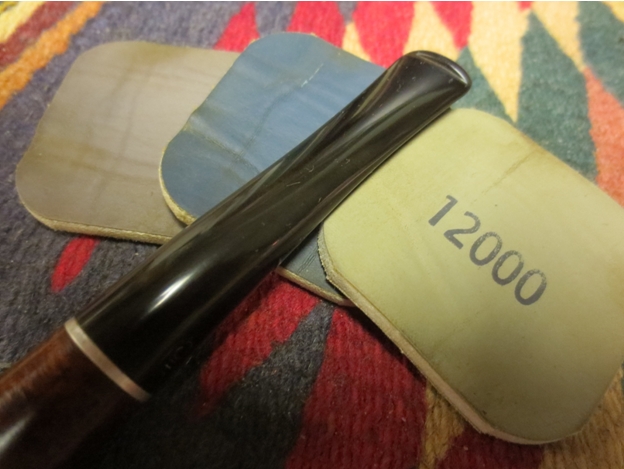 I buffed the pipe with White Diamond and gently buffed around the stamping on the shank and the stem. I gave it multiple coats of carnauba wax and buffed it with a soft flannel buff to raise the shine. The finished pipe is shown in the photos below. The last two photos below show a close-up of the rim to show how the beveling and shaping worked to restore the look of the top of the pipe. It is ready to re-enter a life of usefulness for its next companion. It should be a great smoking pipe for whoever takes on the trust next.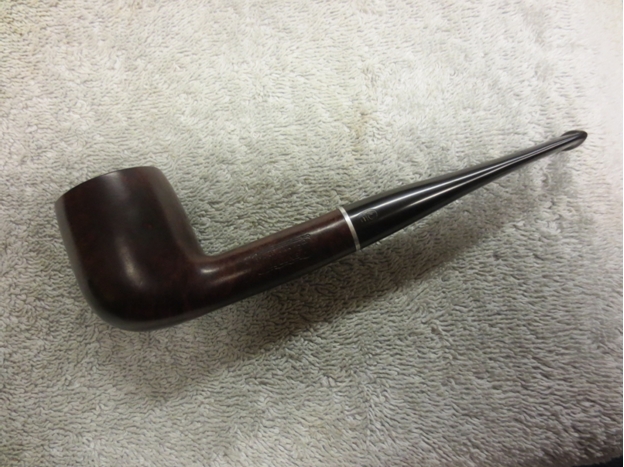
 rebornpipes