
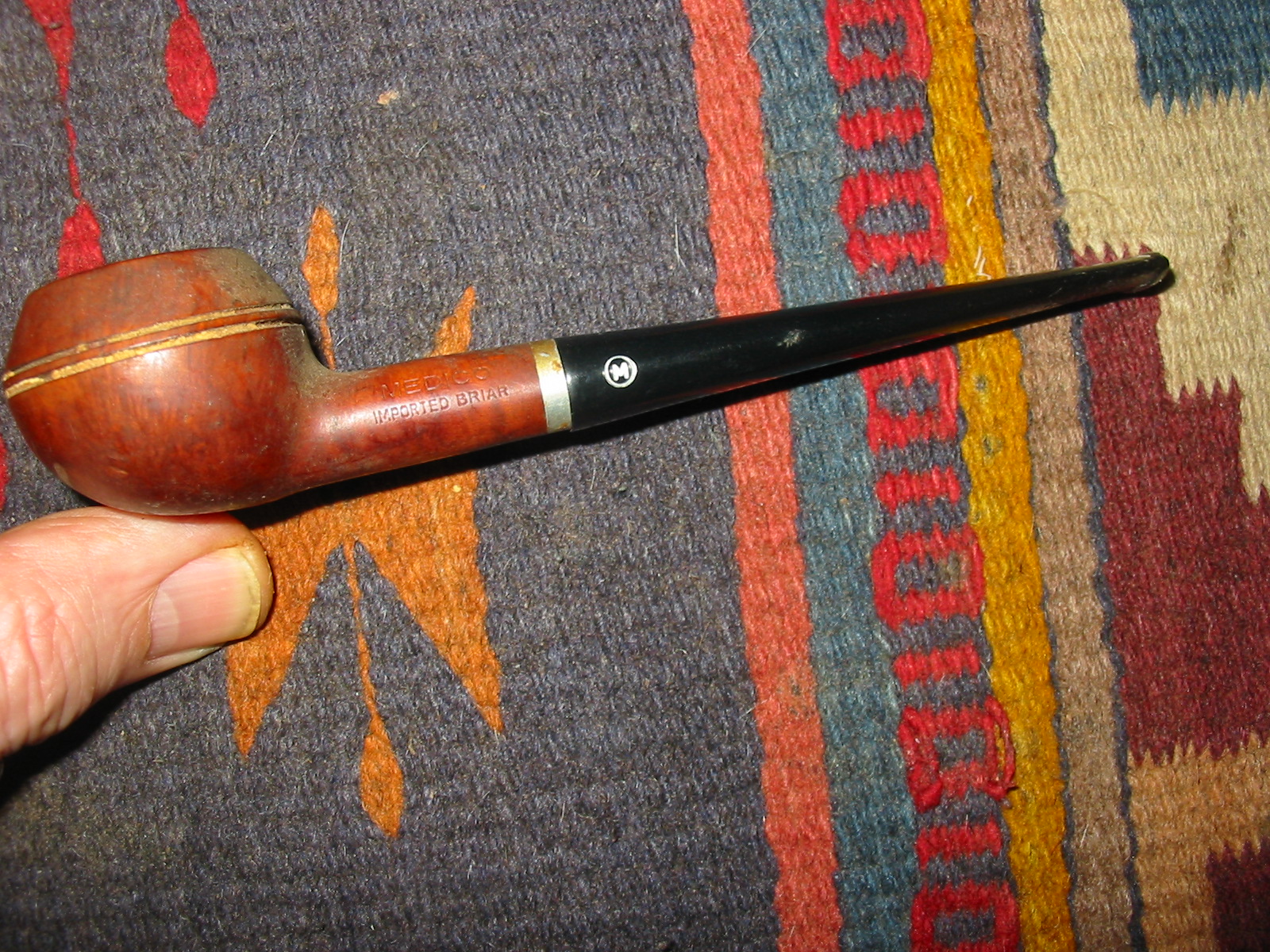
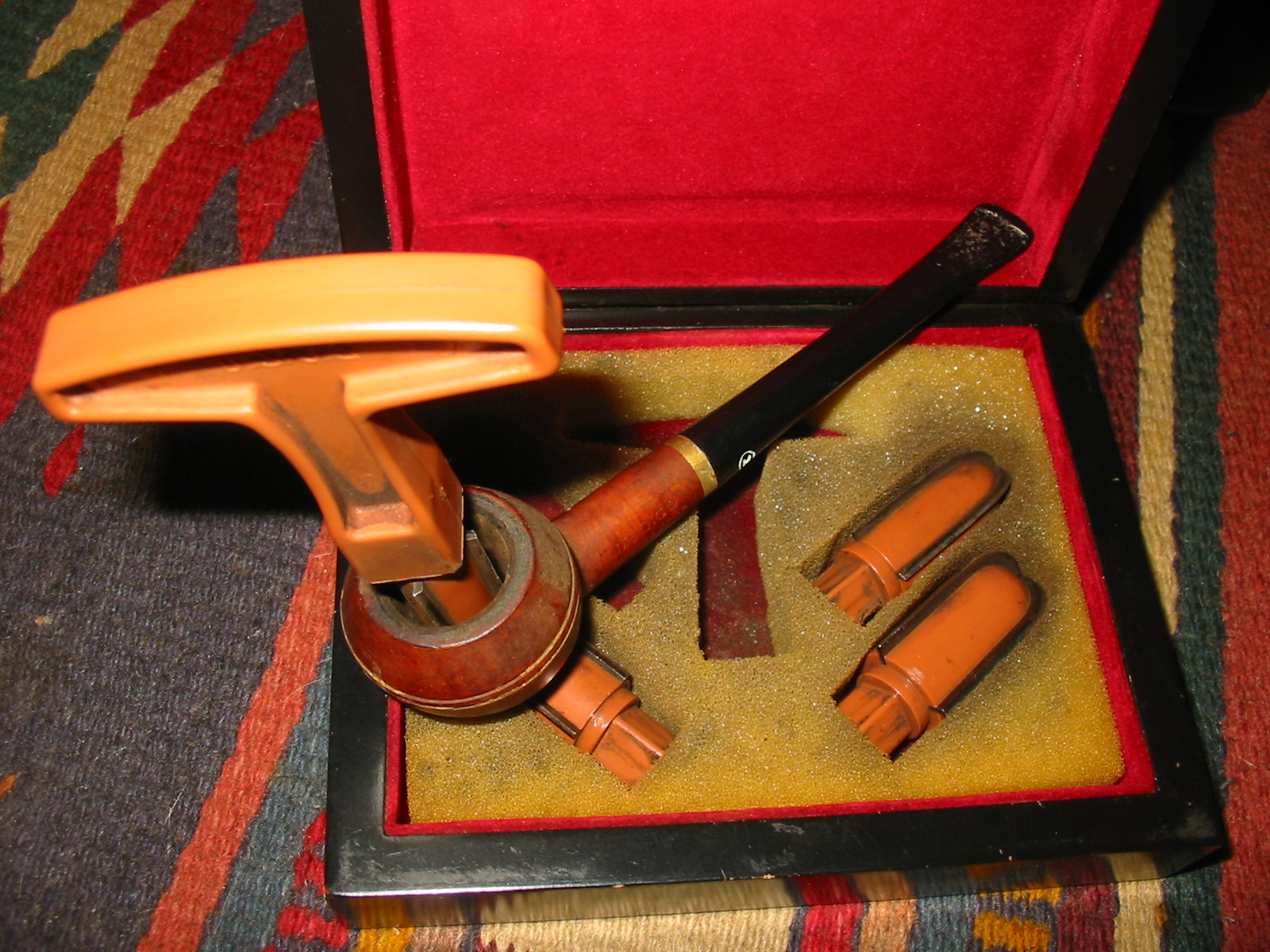
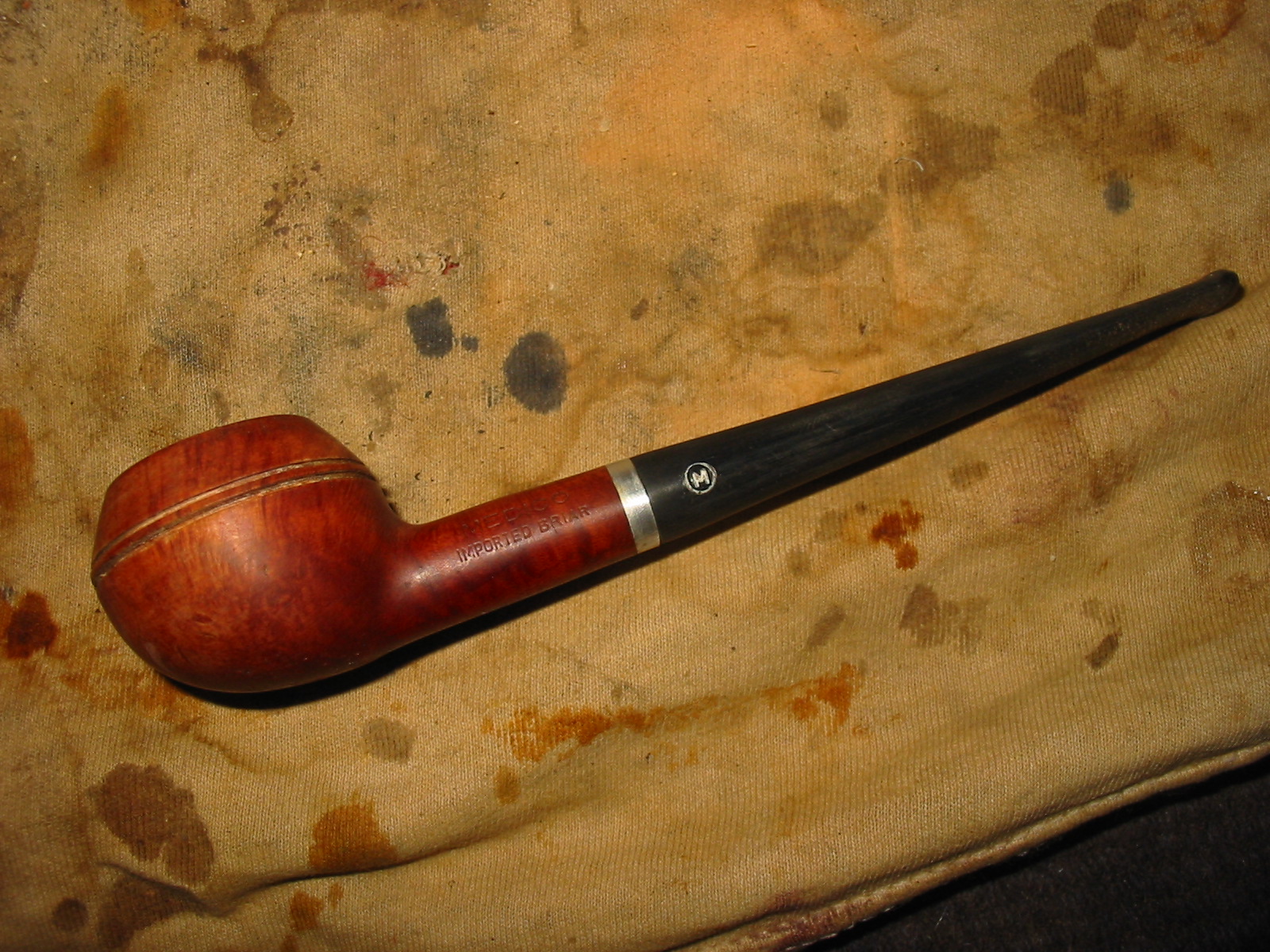
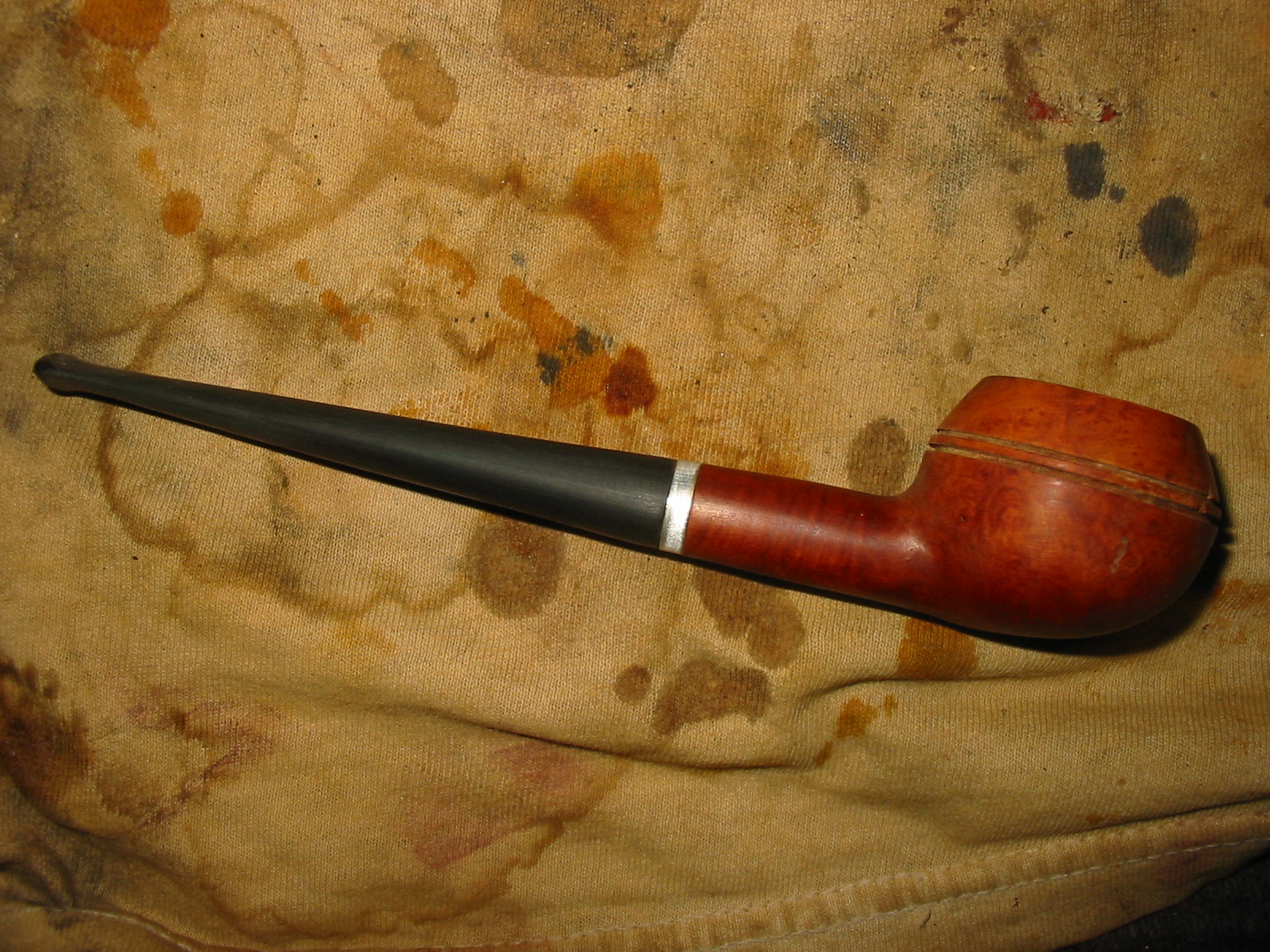
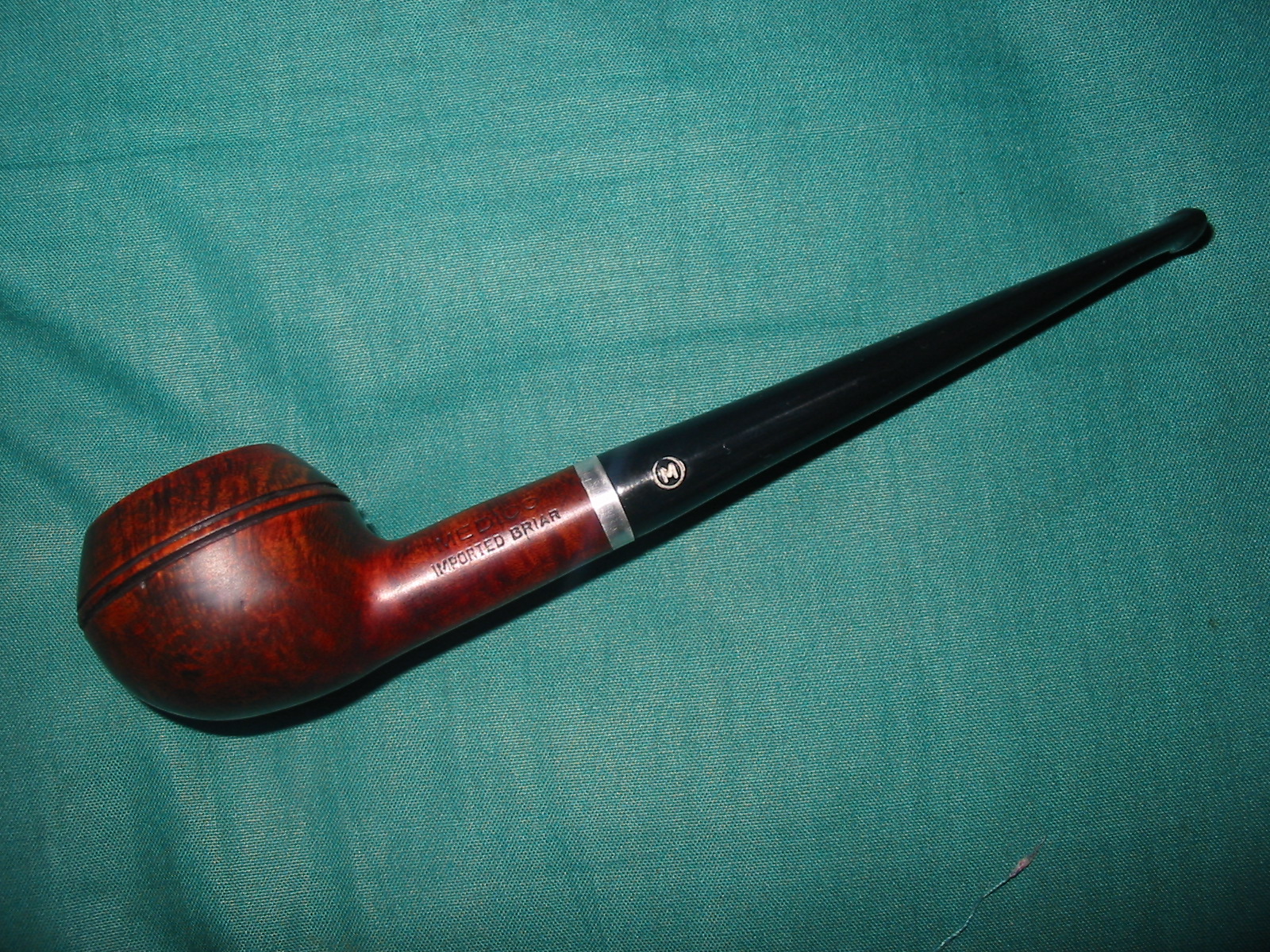
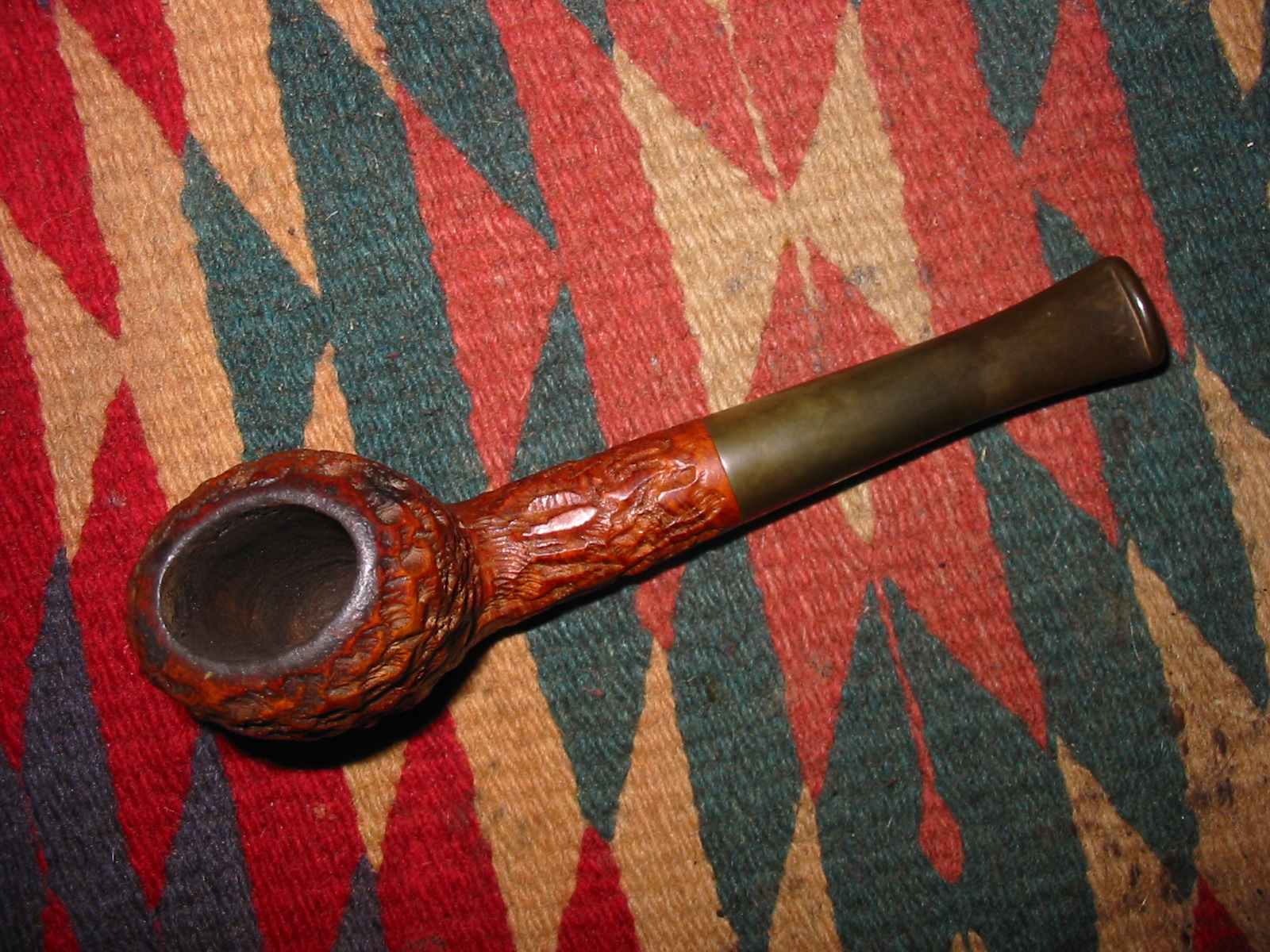
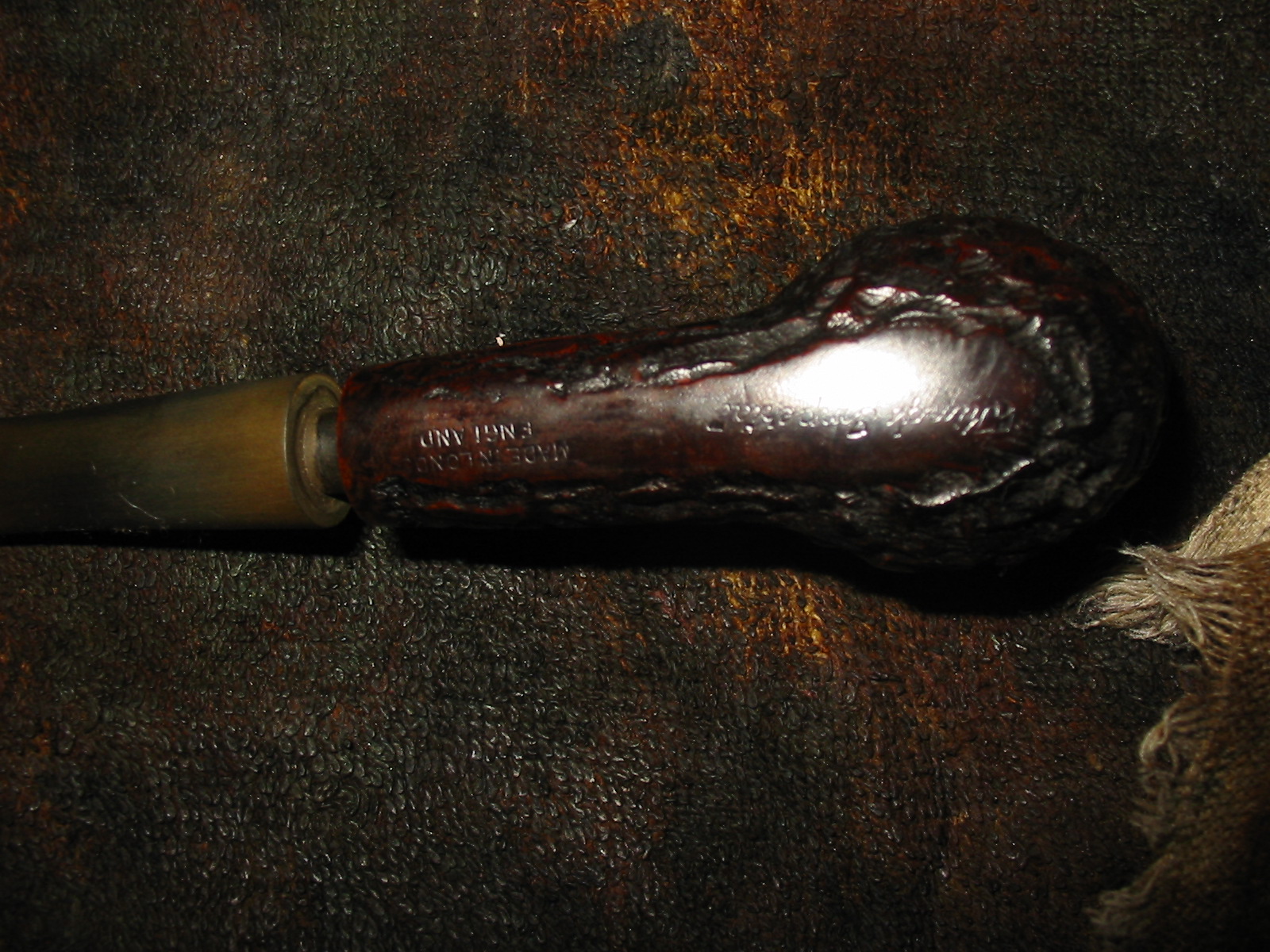
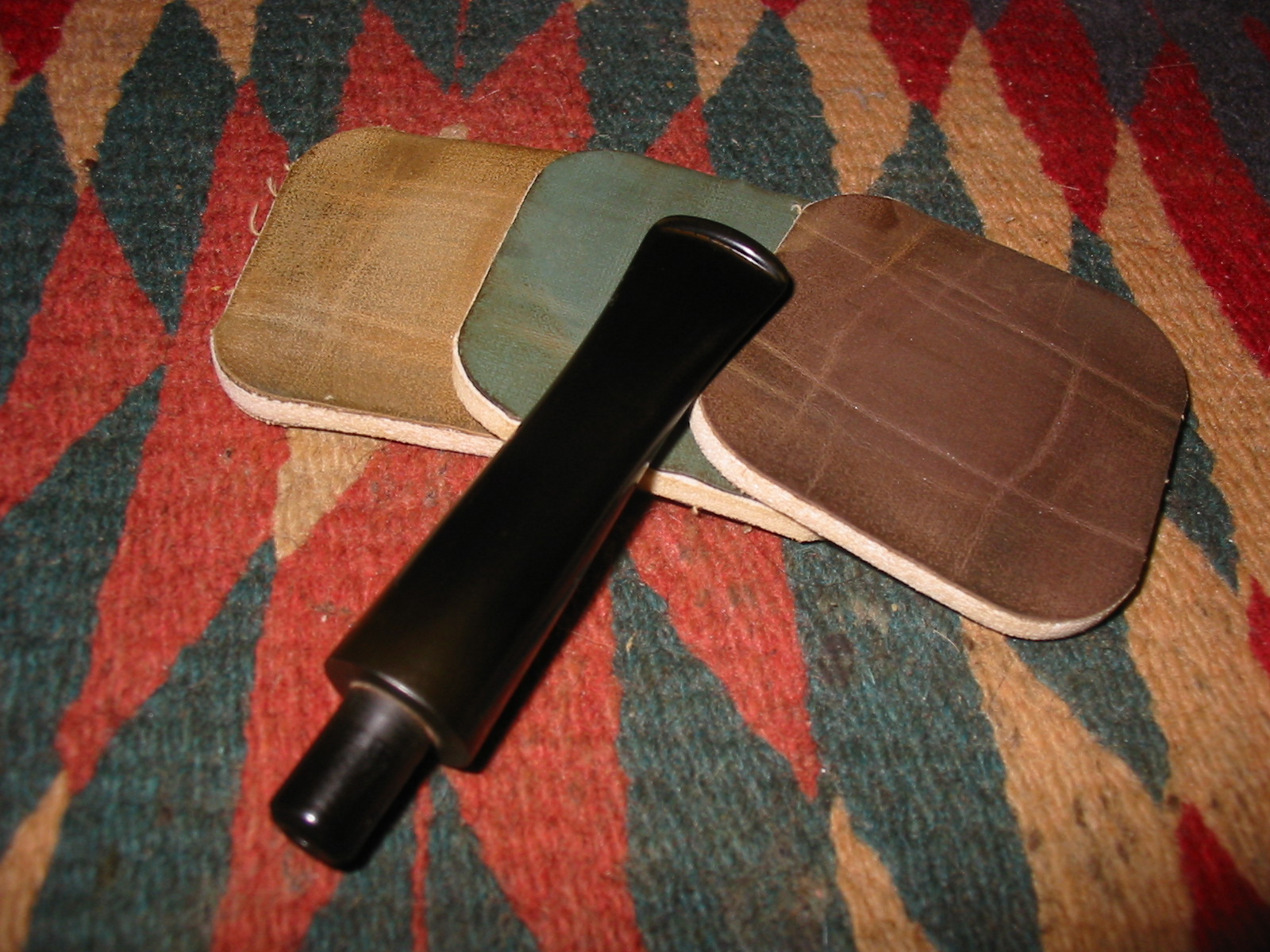
The second pipe I took out of the box of finds from the weekend antique mall score was a little Medico Prince. It is stamped Medico over Imported Briar on the left side of the shank. It had an aluminum band that was coated with a plastic coat that made it appear to be gold. This coating was peeling leaving the band looking unusable. The bowl also did not have a stem. The bowl itself had several fills on the sides and bottom, nicks around the double scored lines on the bowl and the lines themselves were filled in with hard white putty like substance. I am not sure what the purpose of the filling of the lines was but it gave the old pipe a despairing look. The rim was rough and slightly out of round. The cake was built up in the bowl and overflowing onto the rim. I looked through my stem can and found a Medico stem that had originally been on a pipe I made into a Churchwarden. It was from one of my first pipes when I came back to pipes in 1982. The stem was nylon and covered with tooth chatter and deep tooth marks. The metal tenon and the diameter of the stem were a perfect fit. I would only have to make a slight adjustment on the bottom side of the stem and the right side to make the transition smooth.
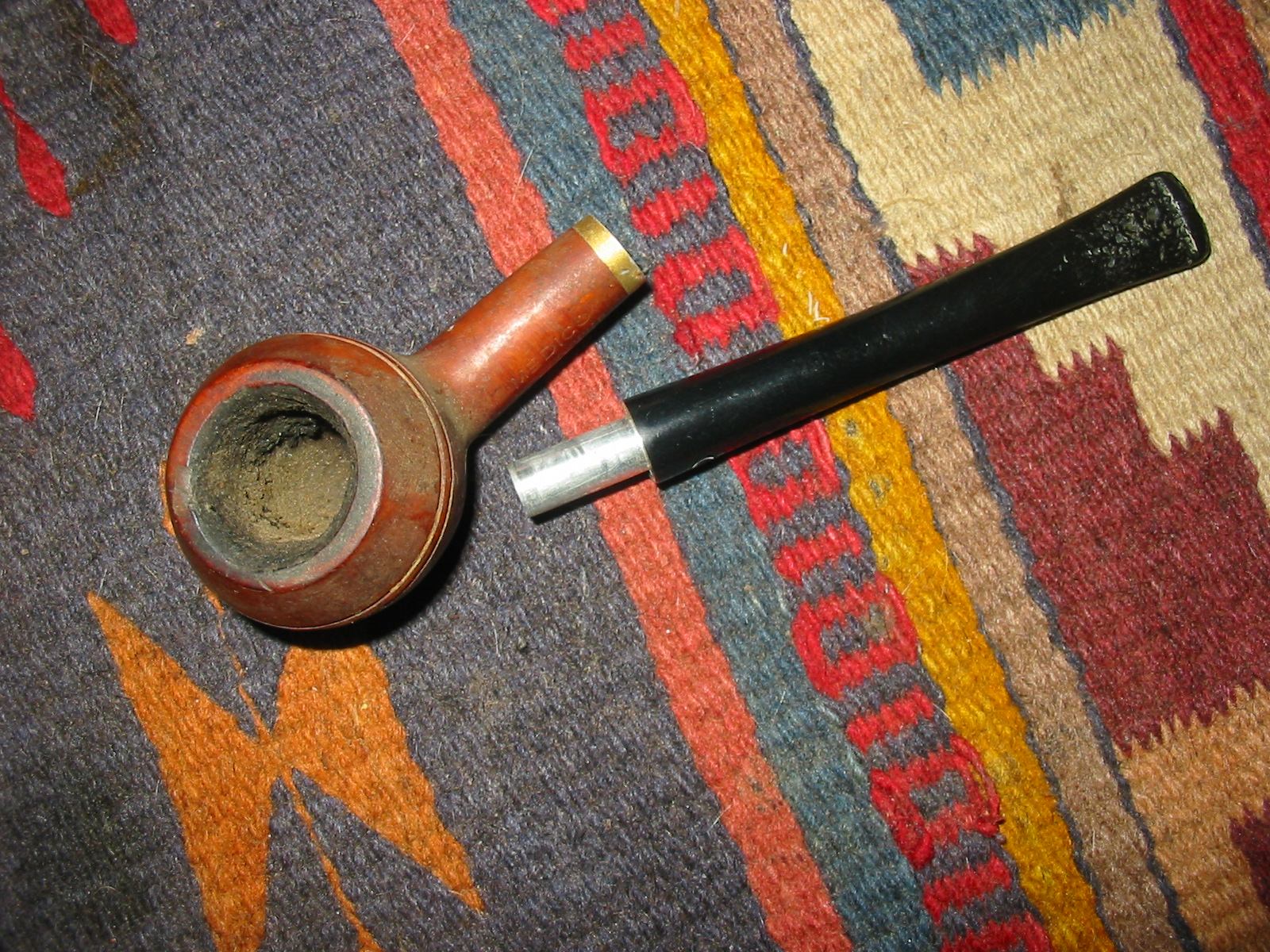
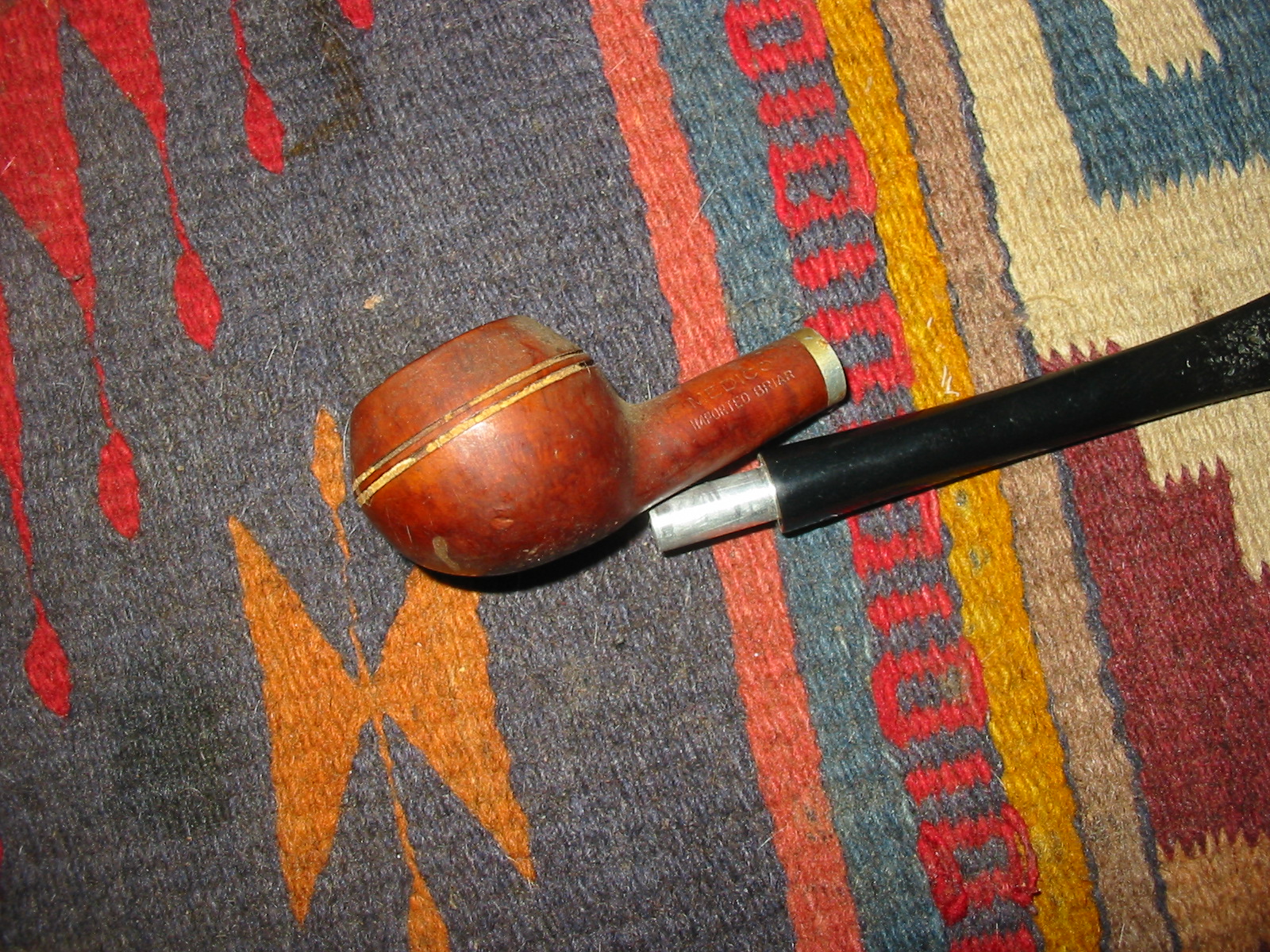
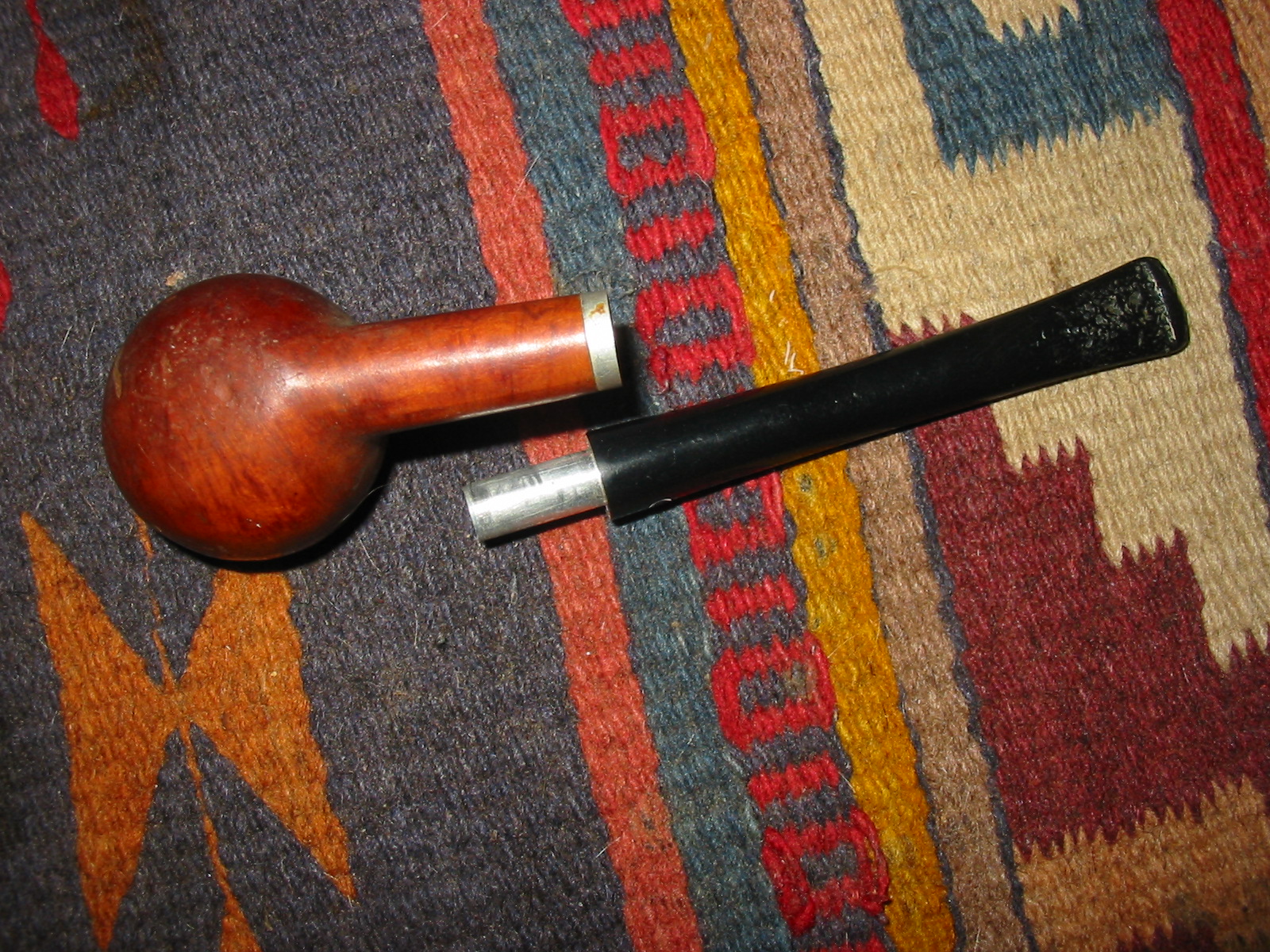
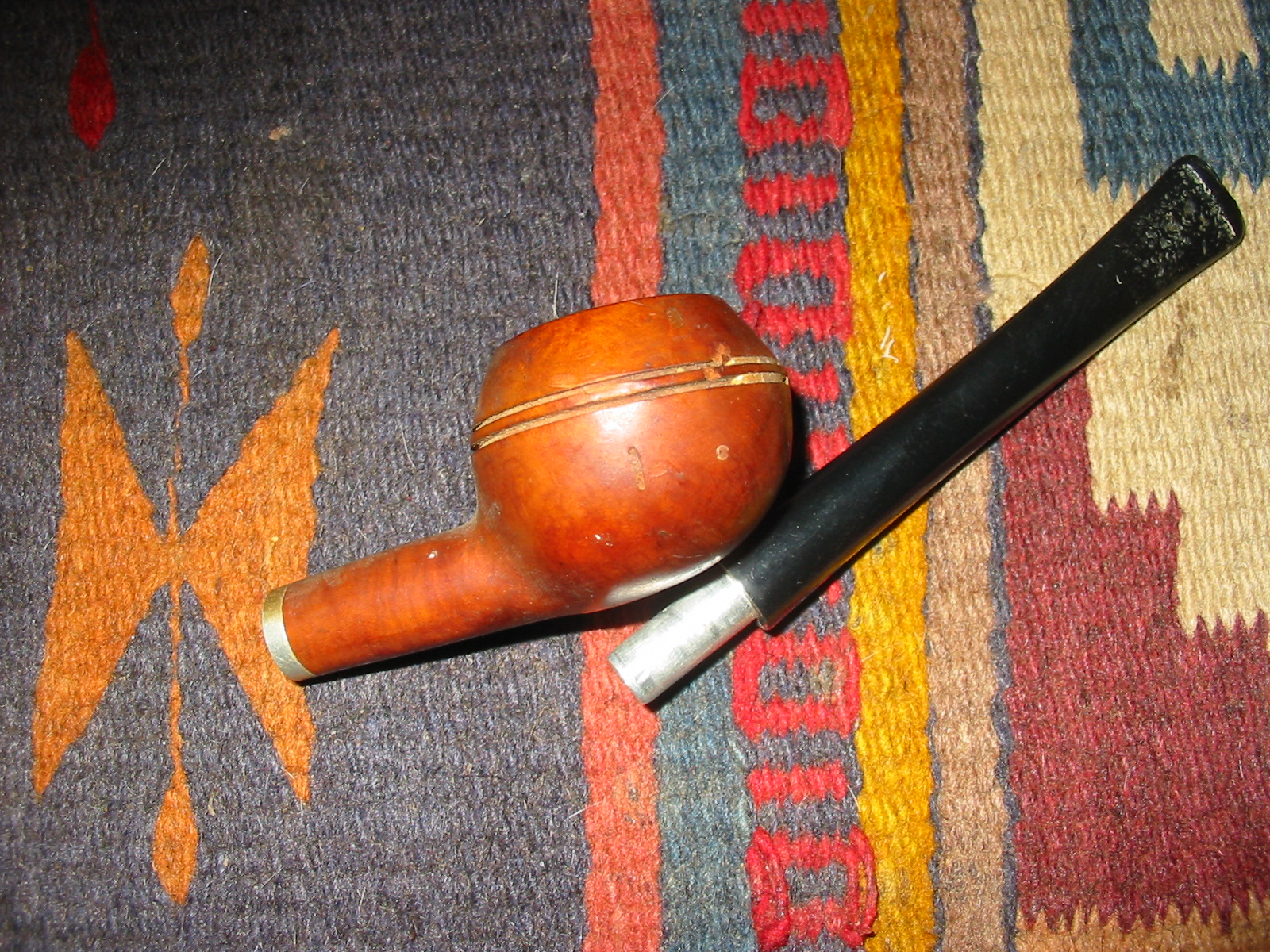
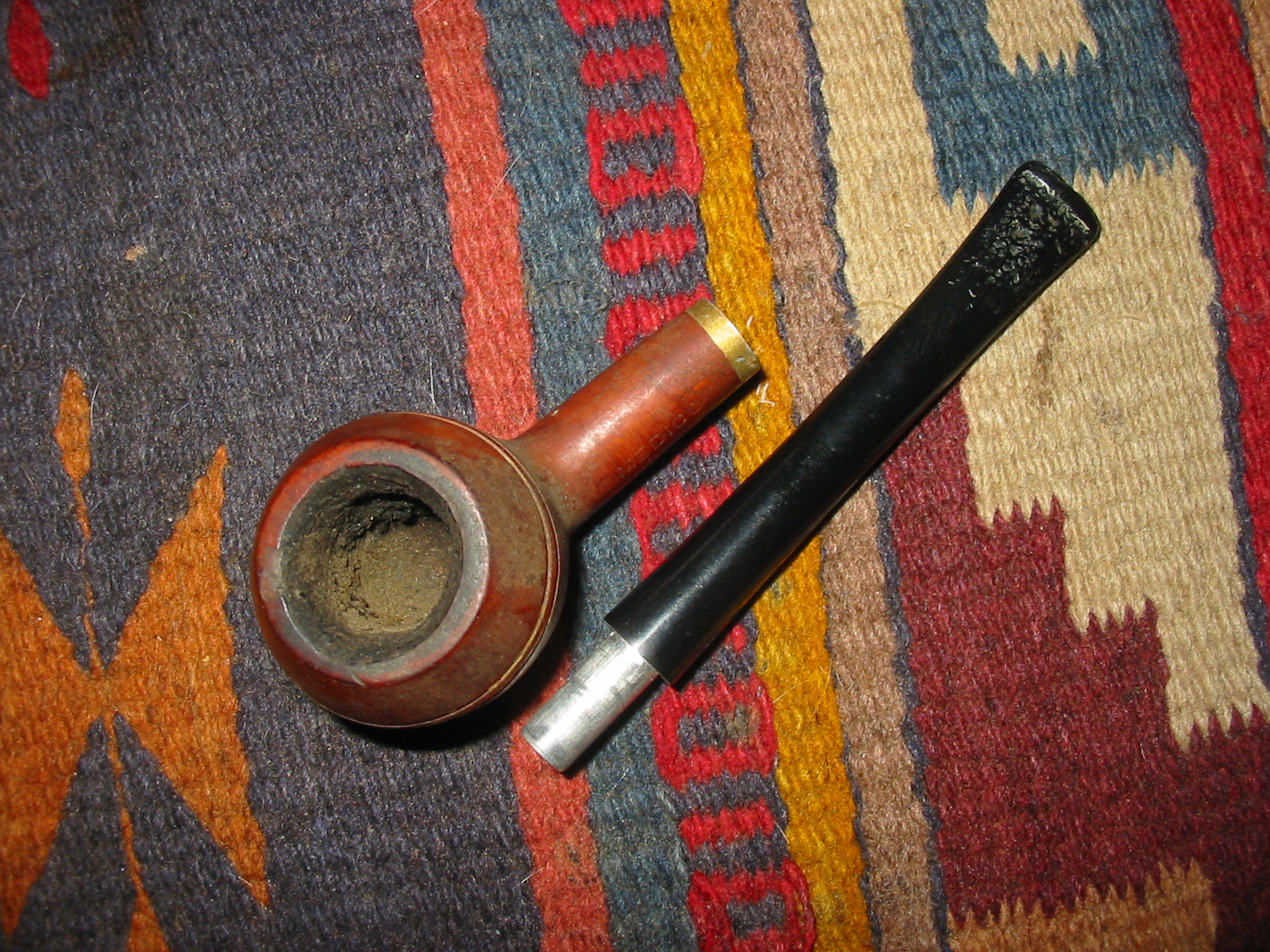
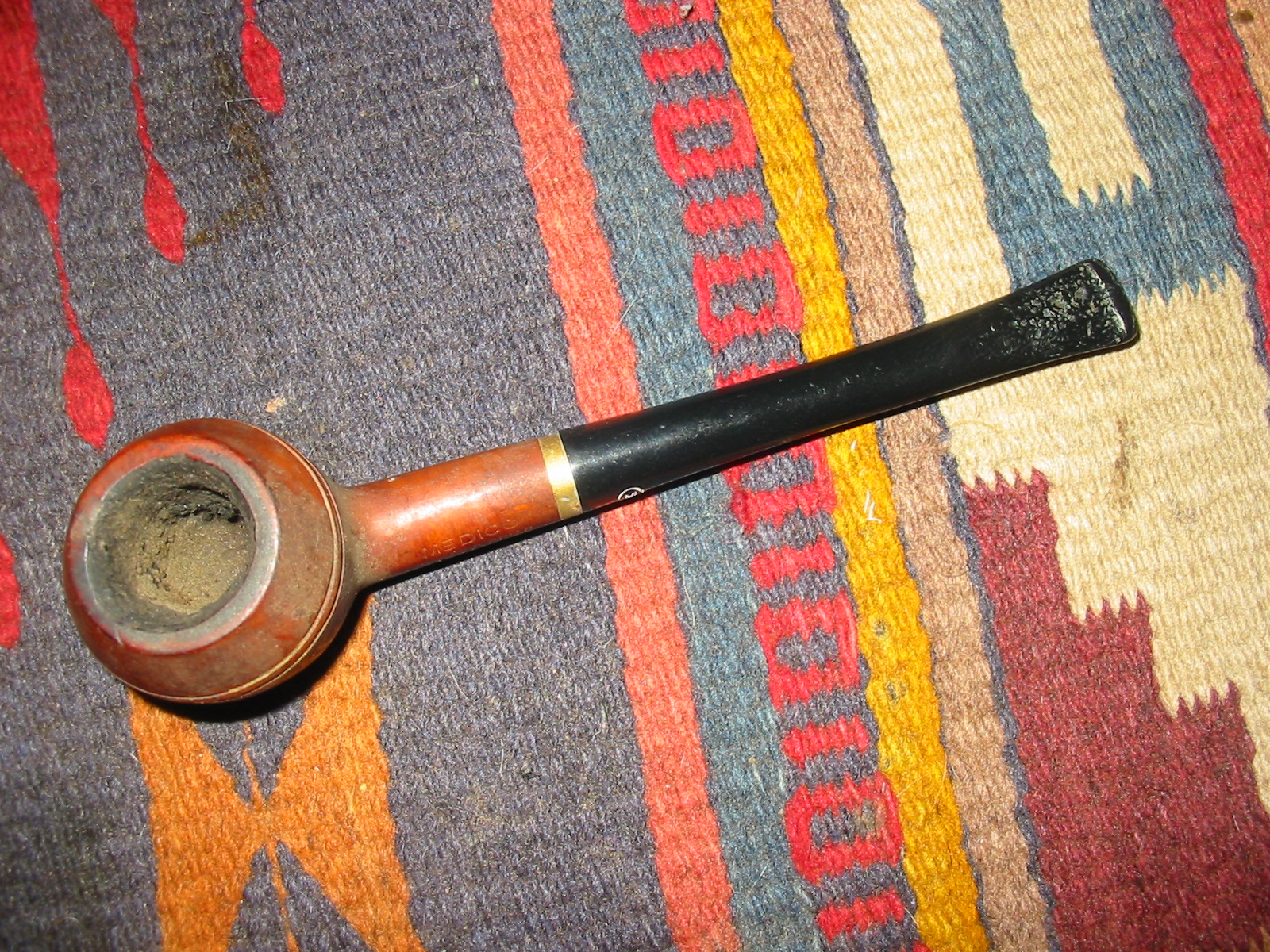
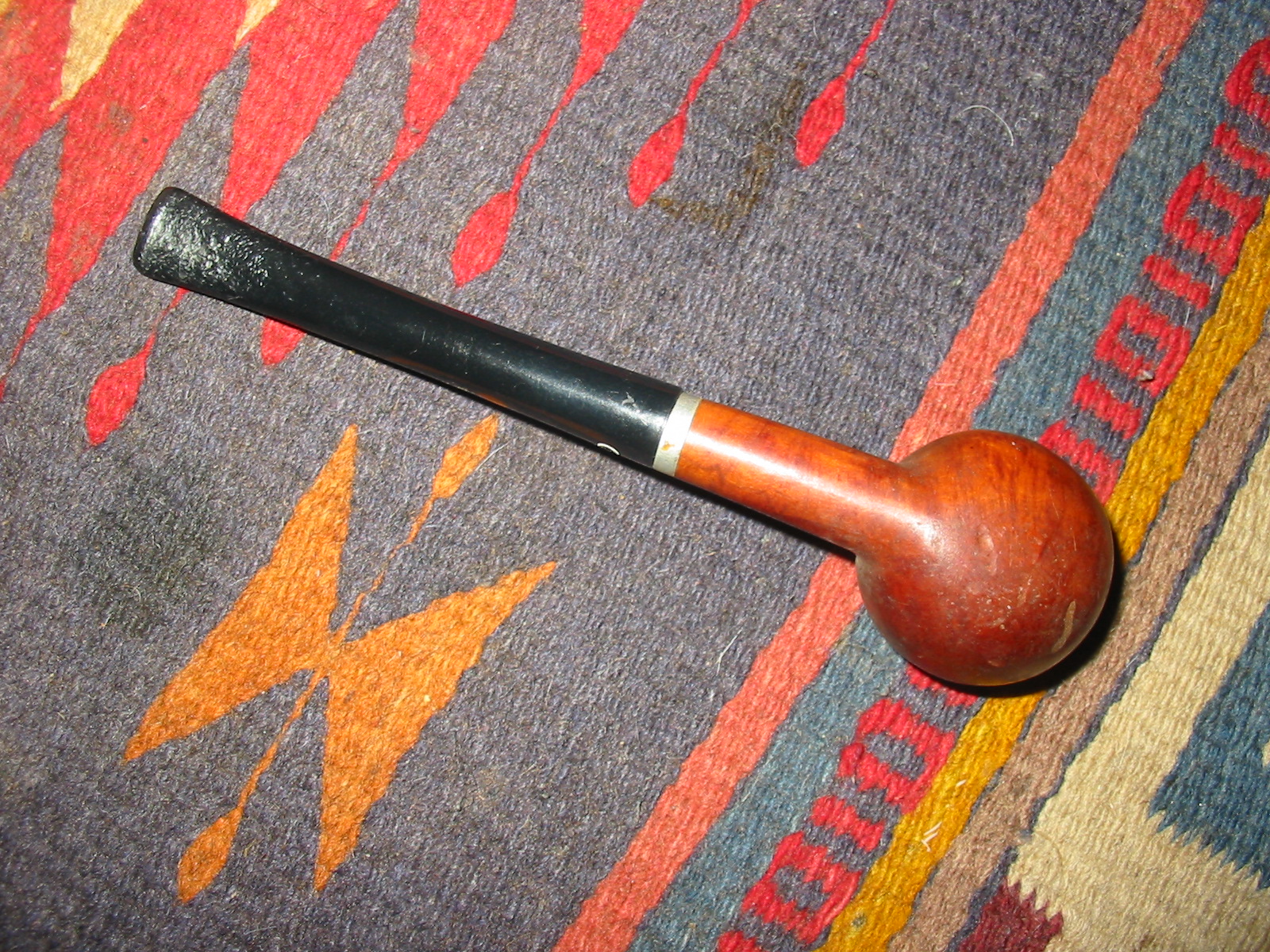
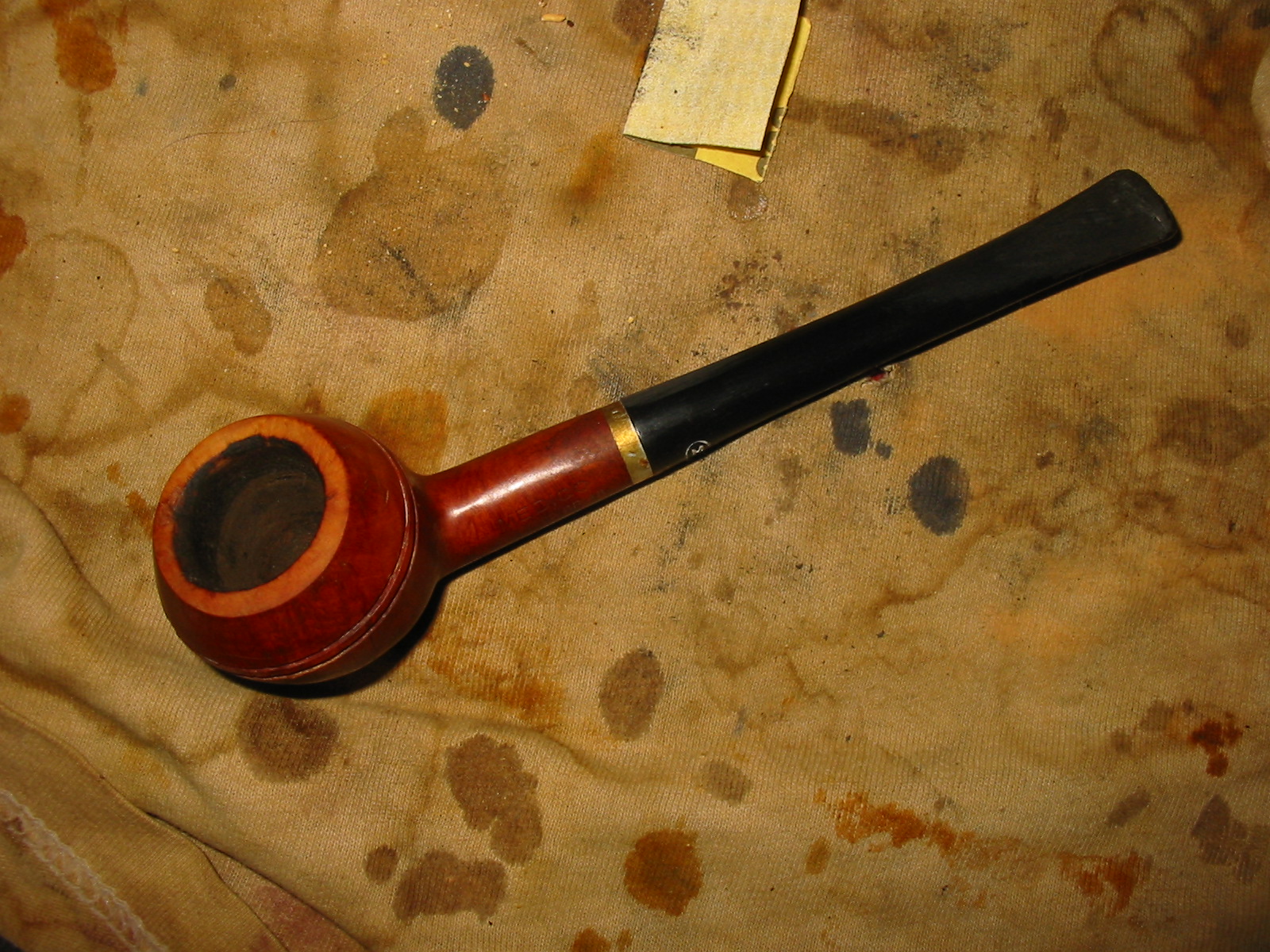
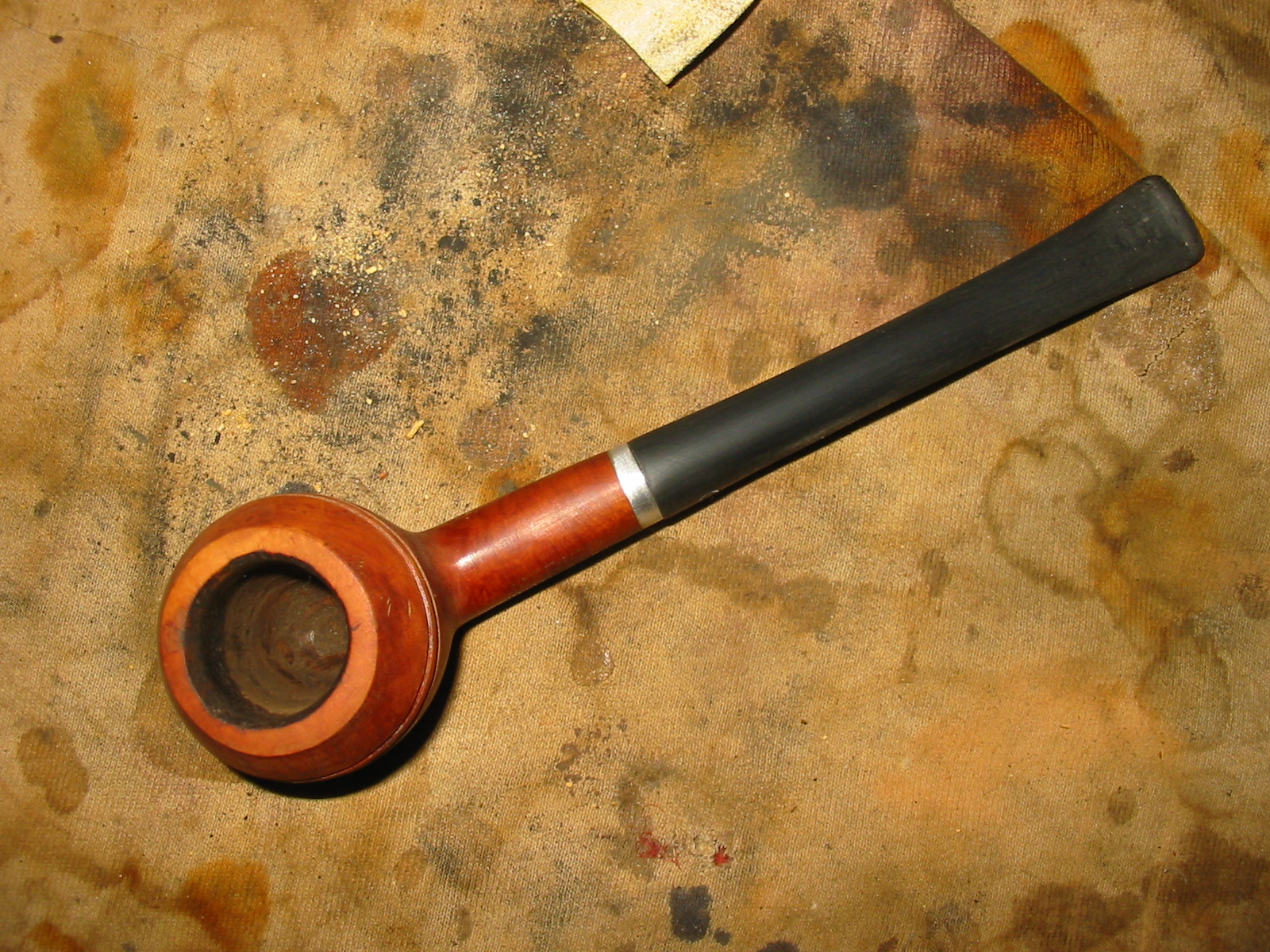
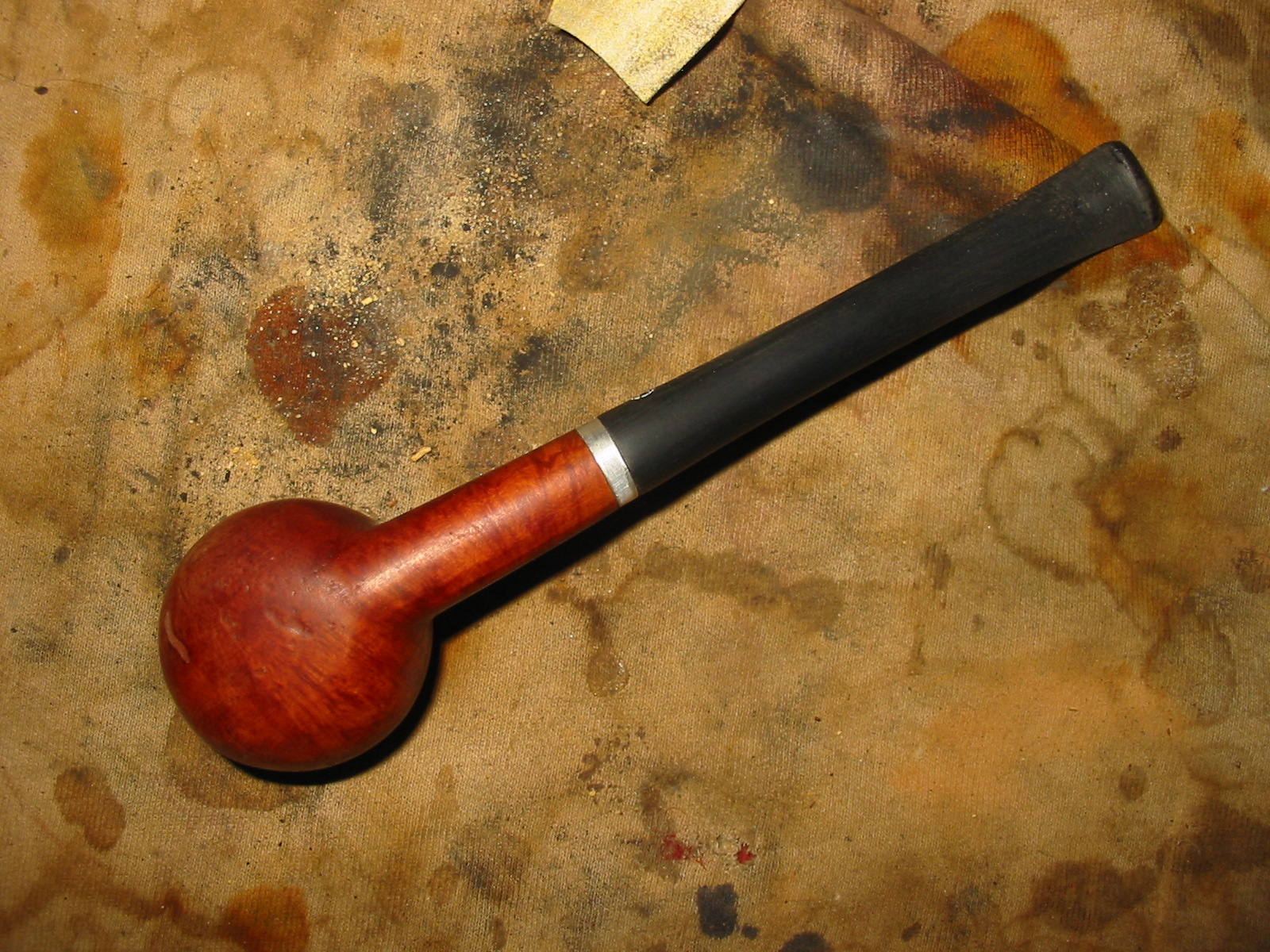
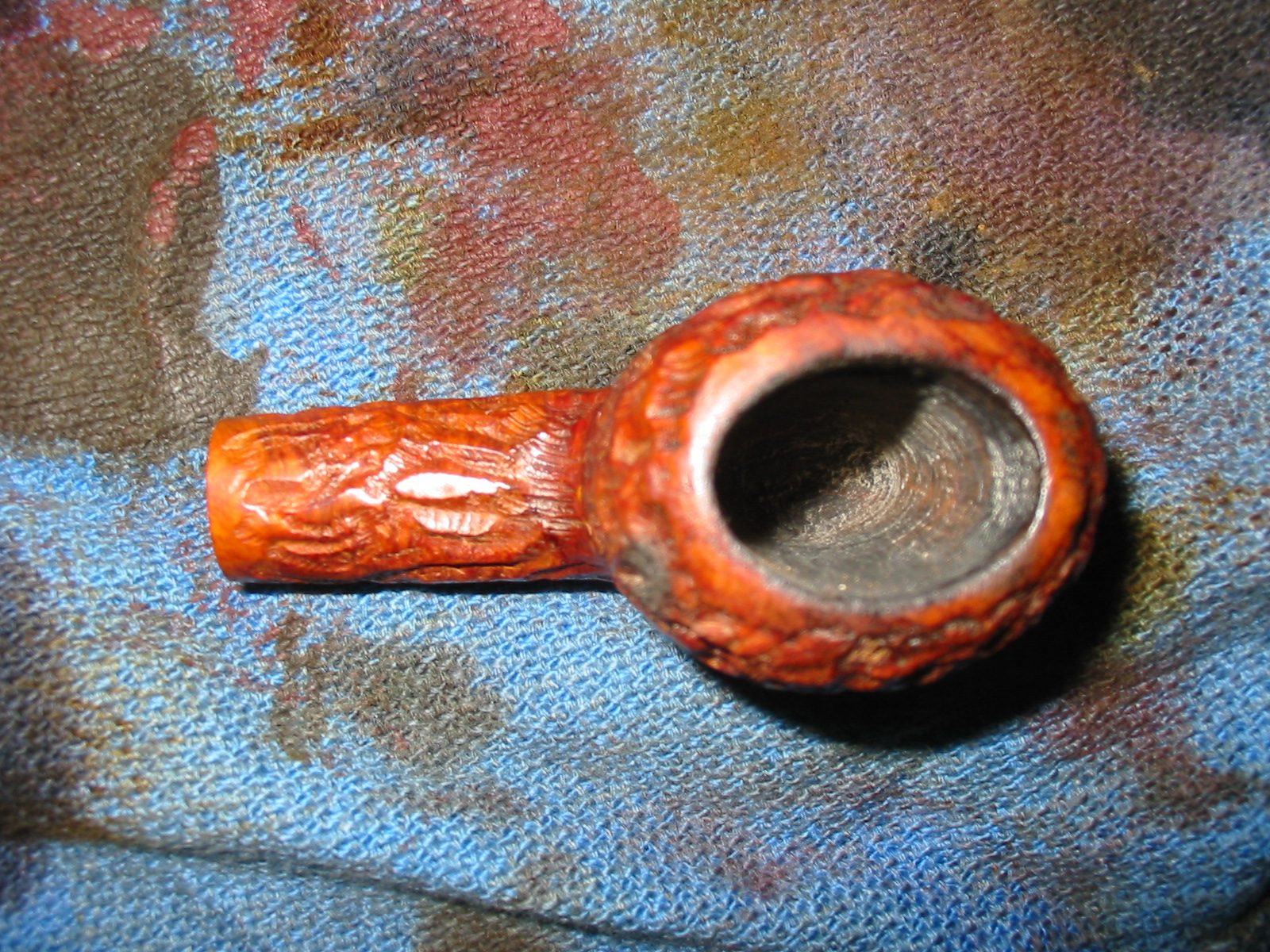
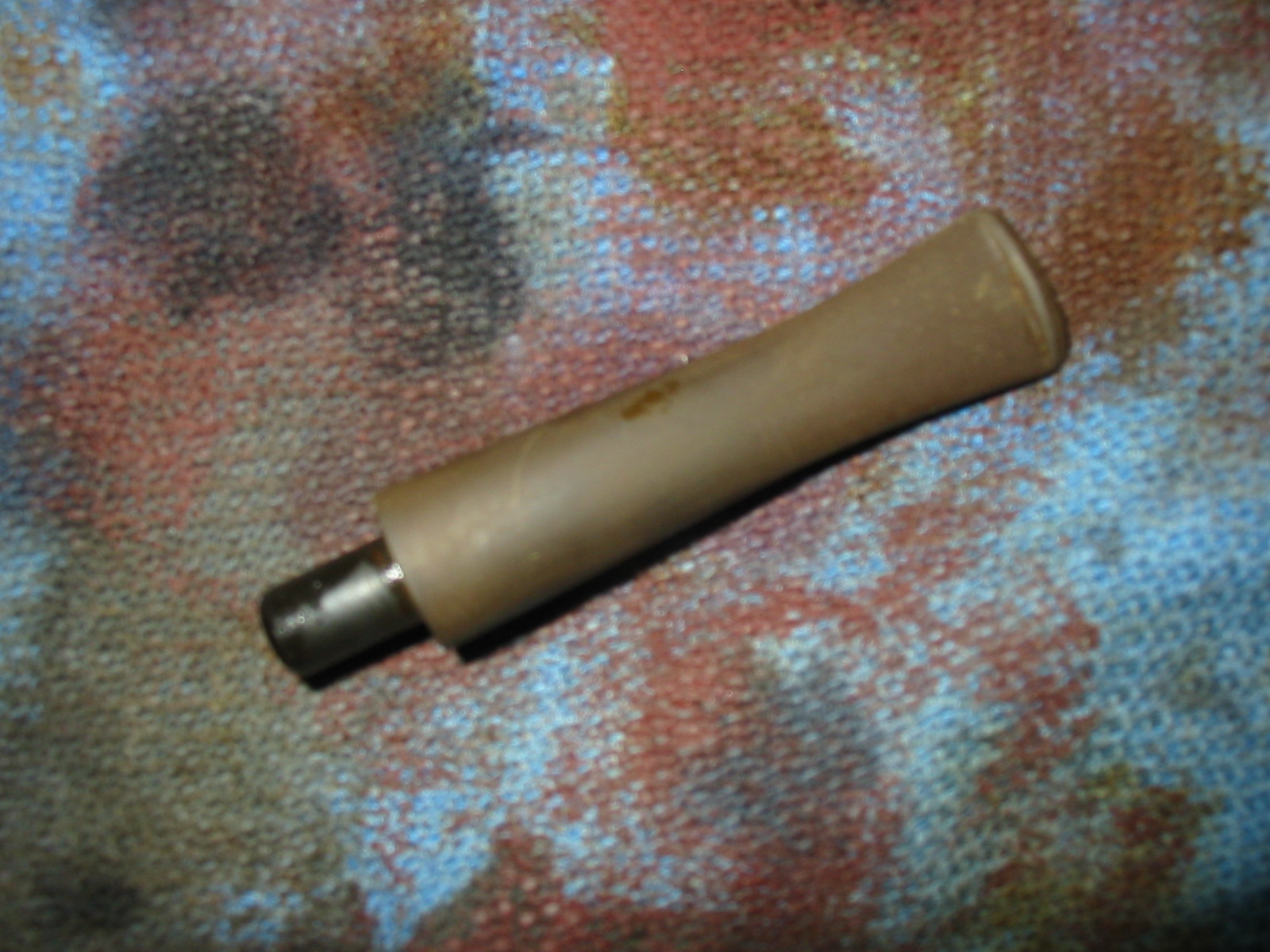
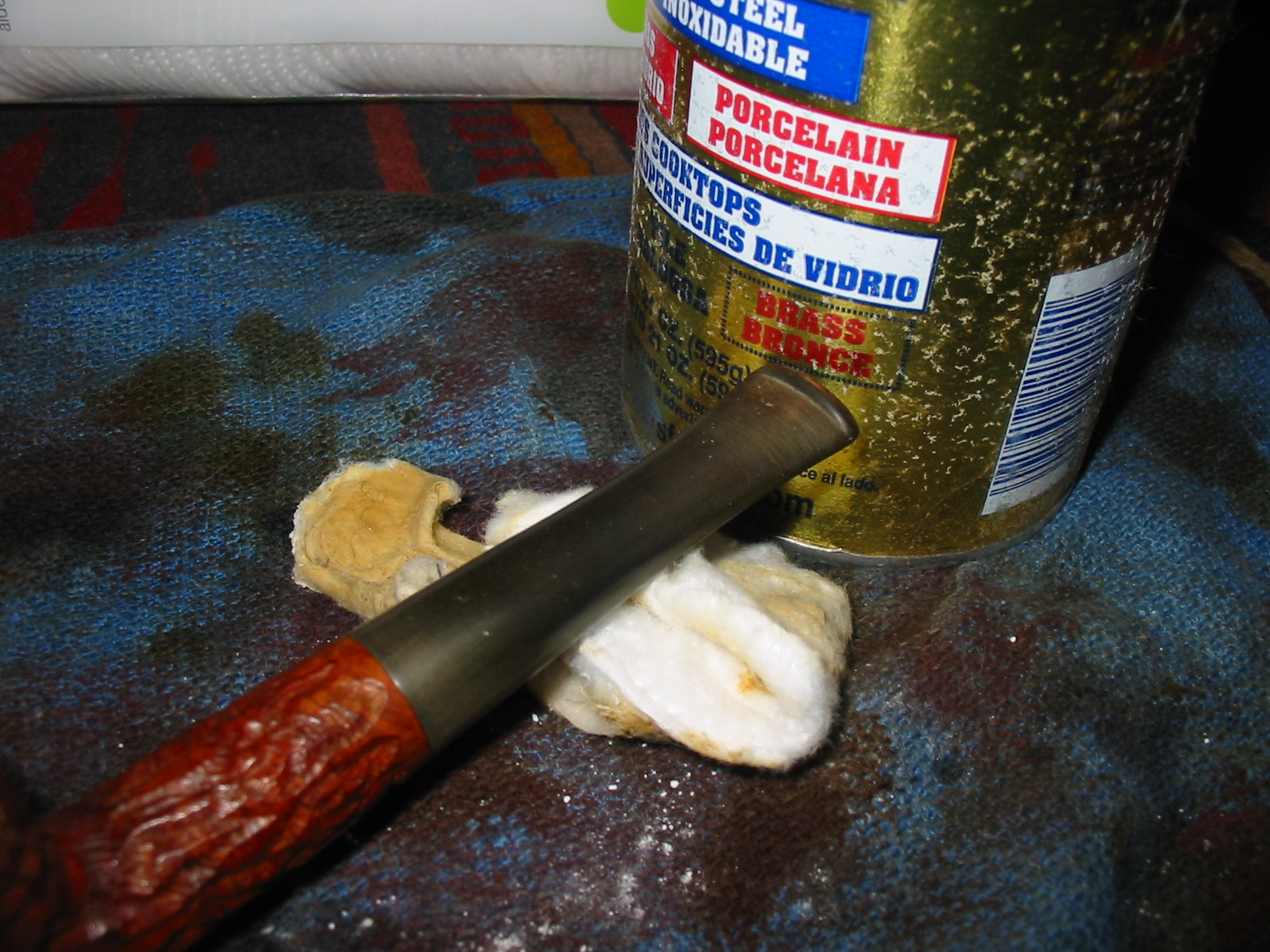
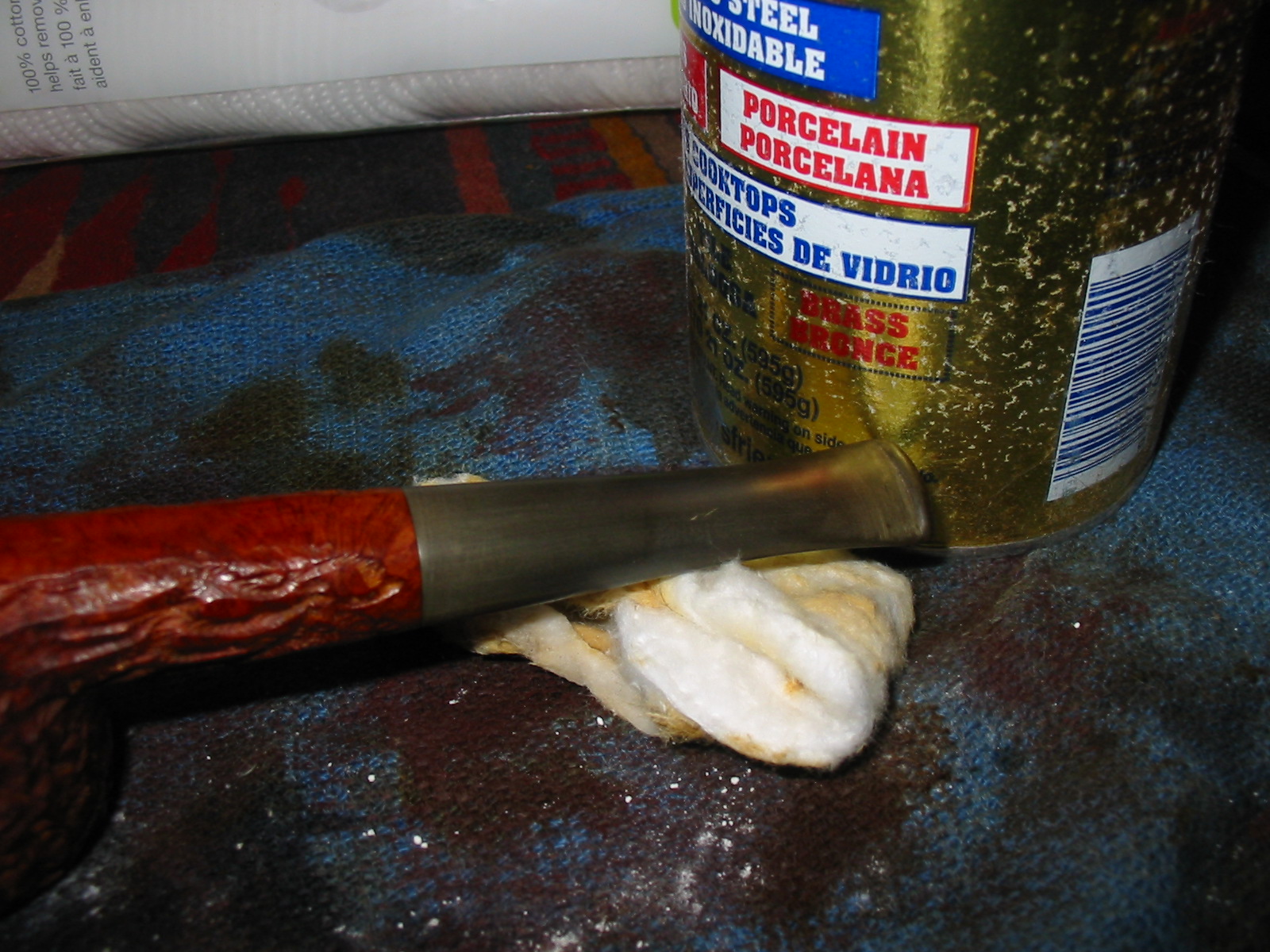
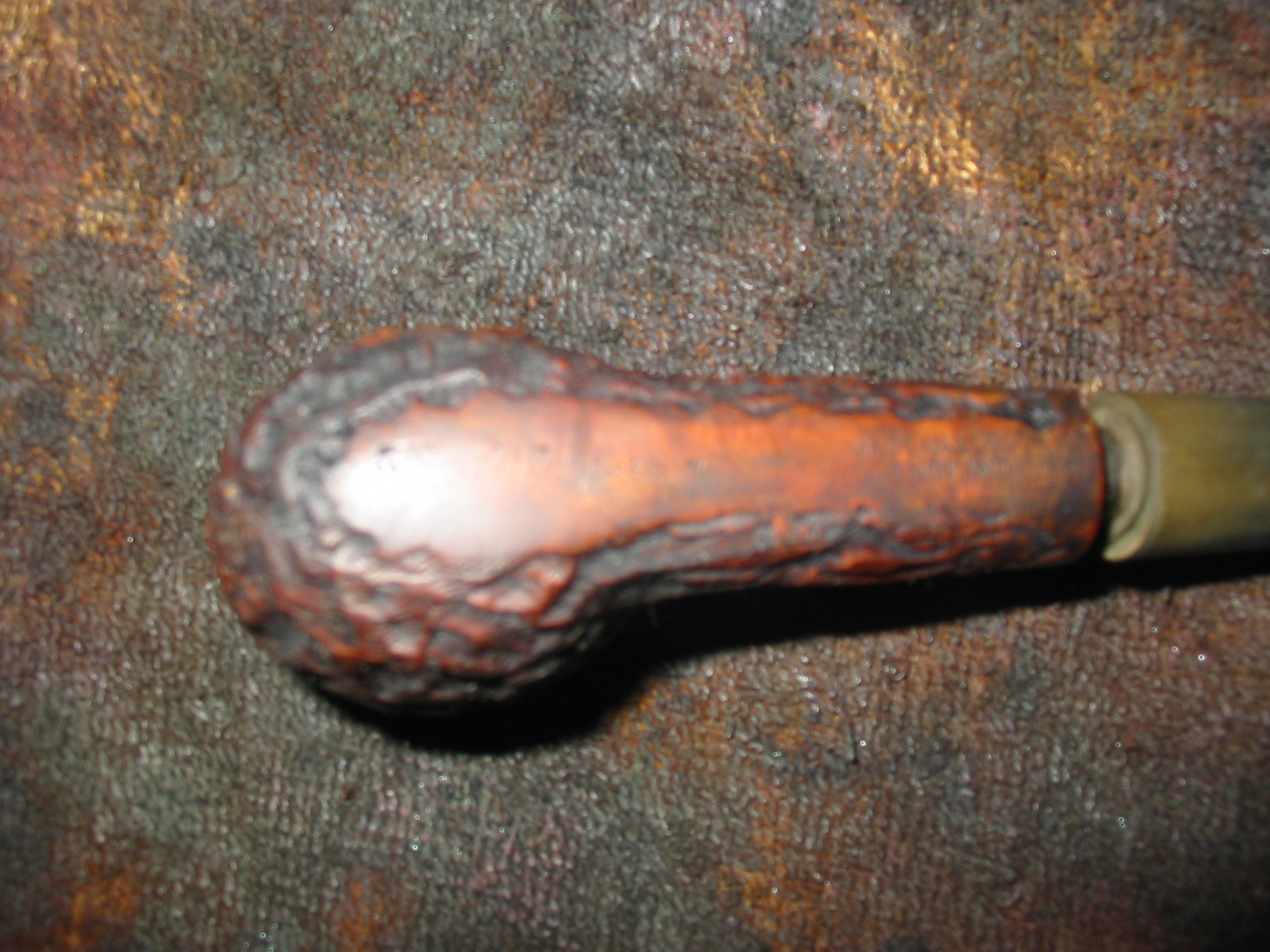
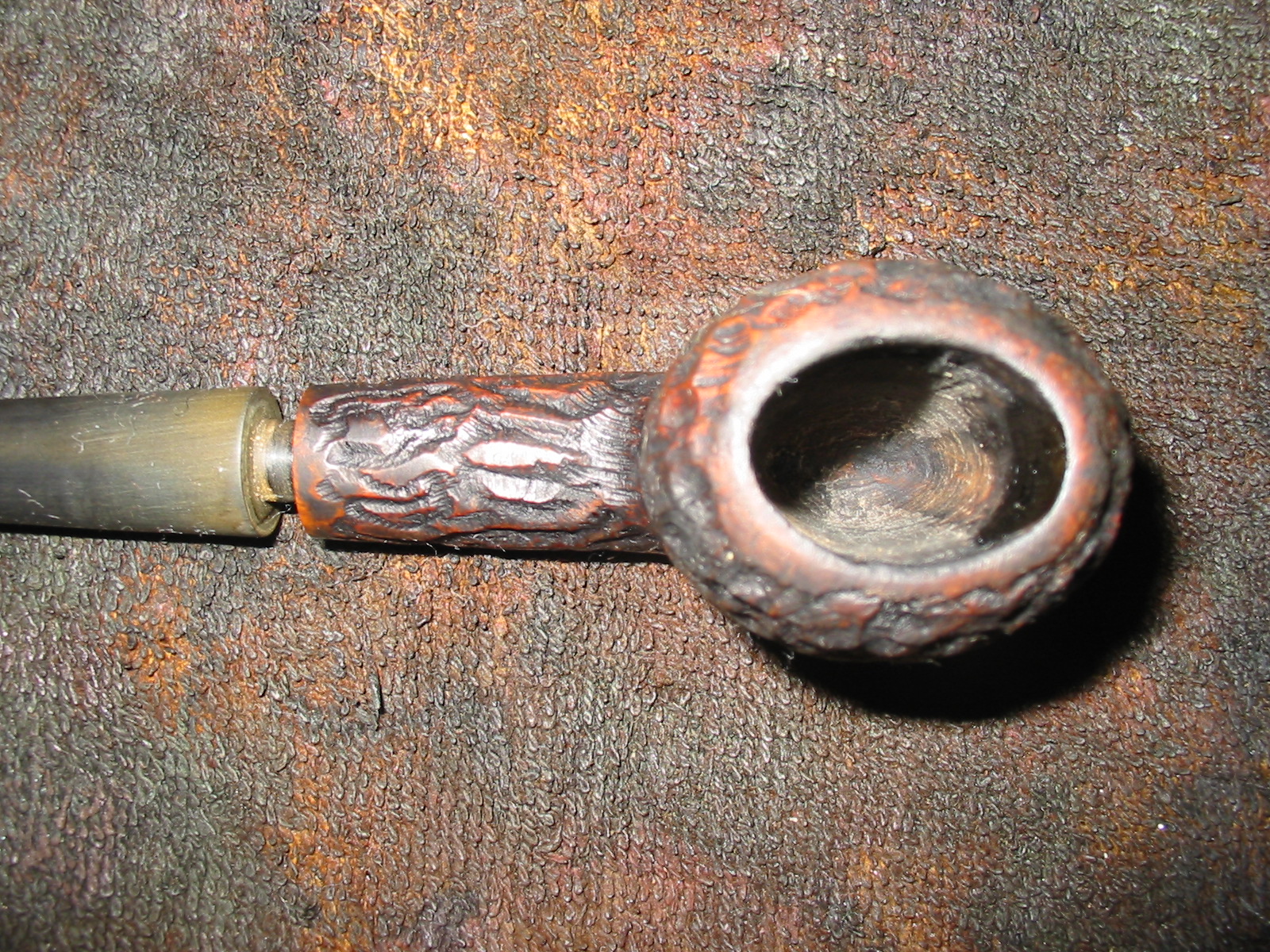
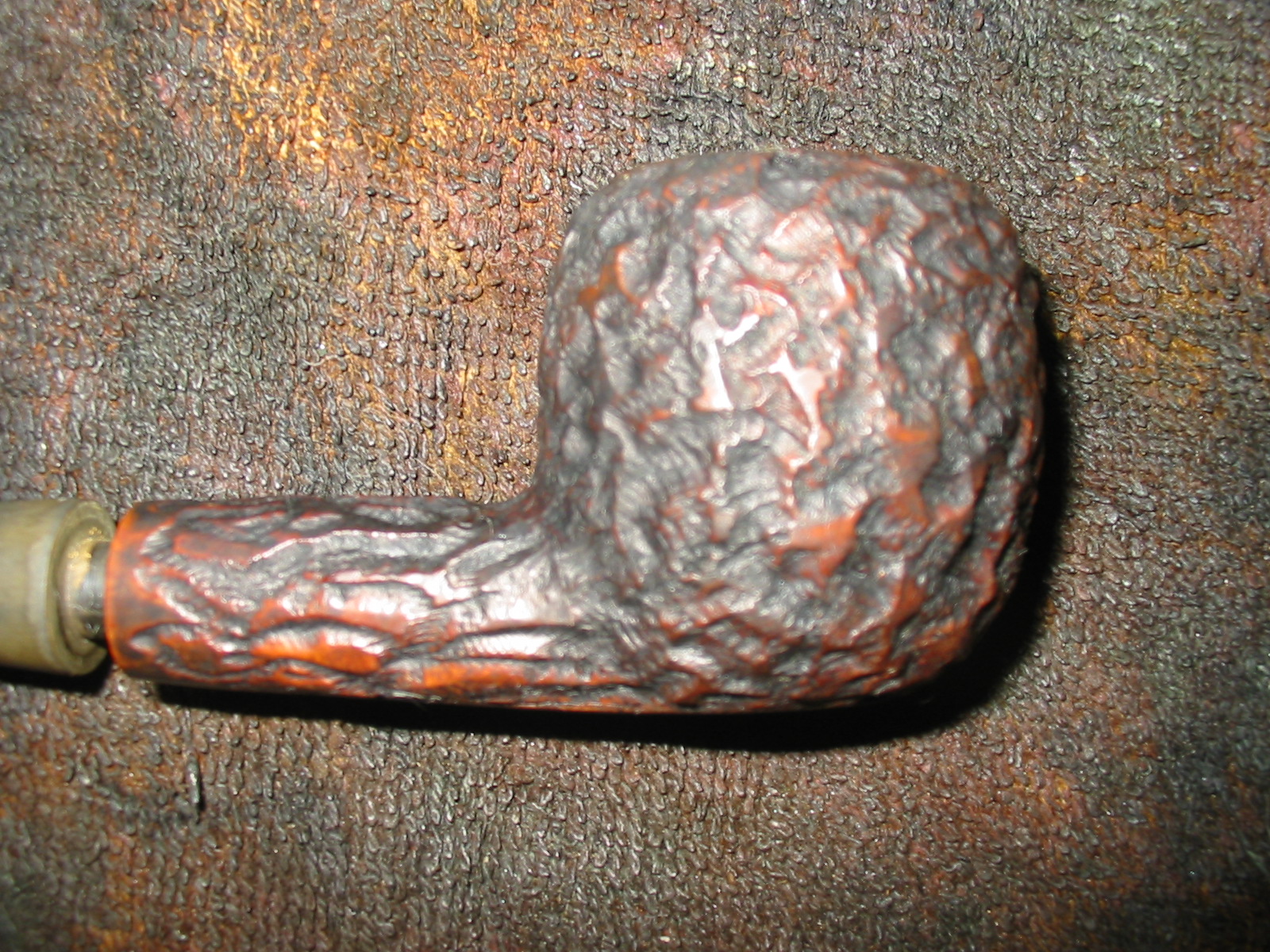
The next series of four photos show the stem in place. The tooth marks are visible on the top and bottom sides of the stem and the shank union on the bottom and right side show the need of adjustment.

I reamed the bowl with a PipNet reamer to remove the cake so that I could work on the out of round inner edge of the rim.
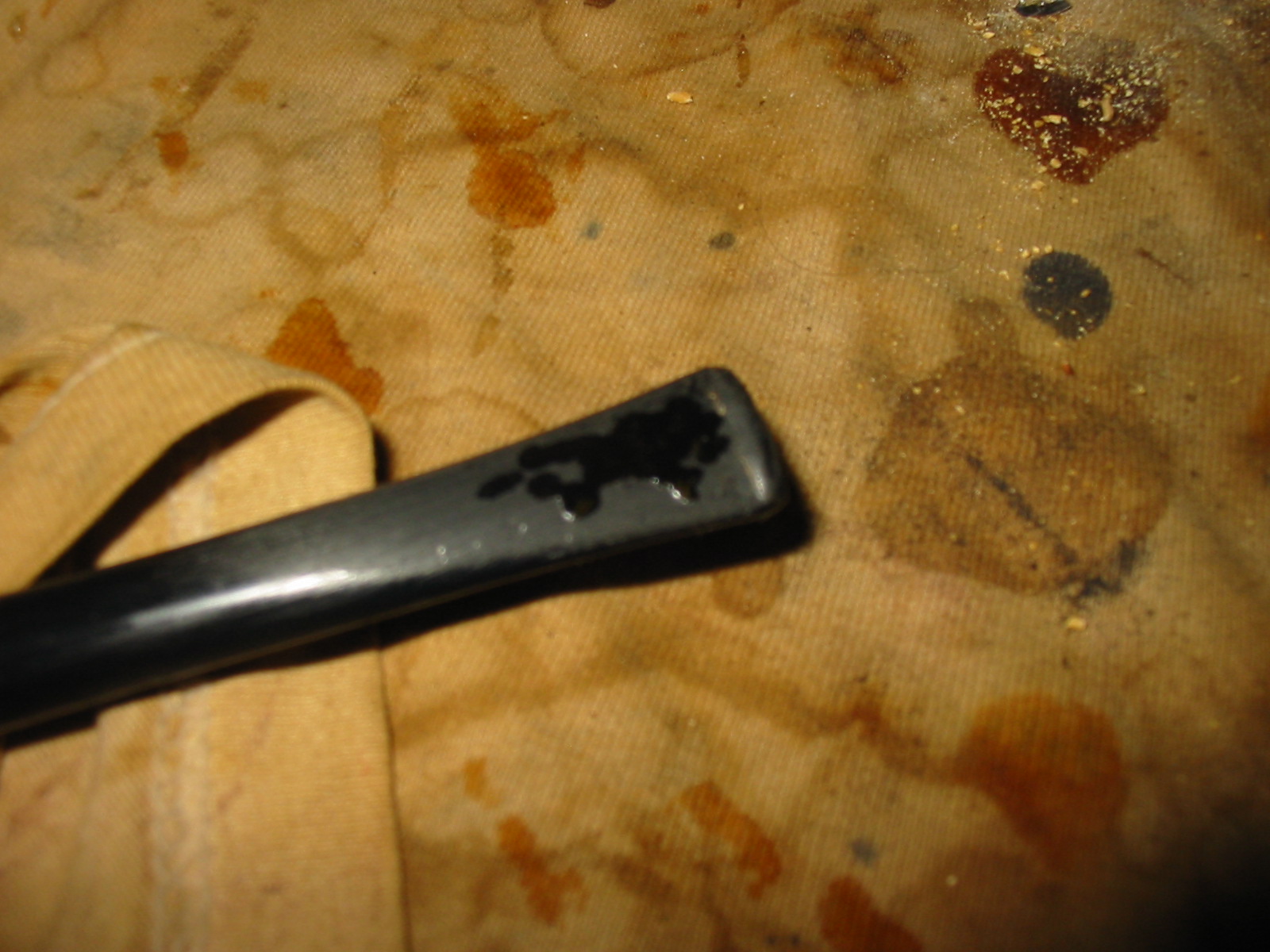
I sanded the tooth chatter on the nylon stem to remove as much of the surface chatter as possible and wiped it down with a wet cotton pad to wipe off the dust. Don’t use acetone or alcohol on nylon stems as they potentially can make a mess of the stem material. I used clear superglue to repair the deep tooth marks because heating the nylon does not raise the dents. It is yet another problem to be avoided as heating only makes the material quite soft and it easily collapses. I repaired the topside first and when it dried I repaired the underside of the stem with the super glue.
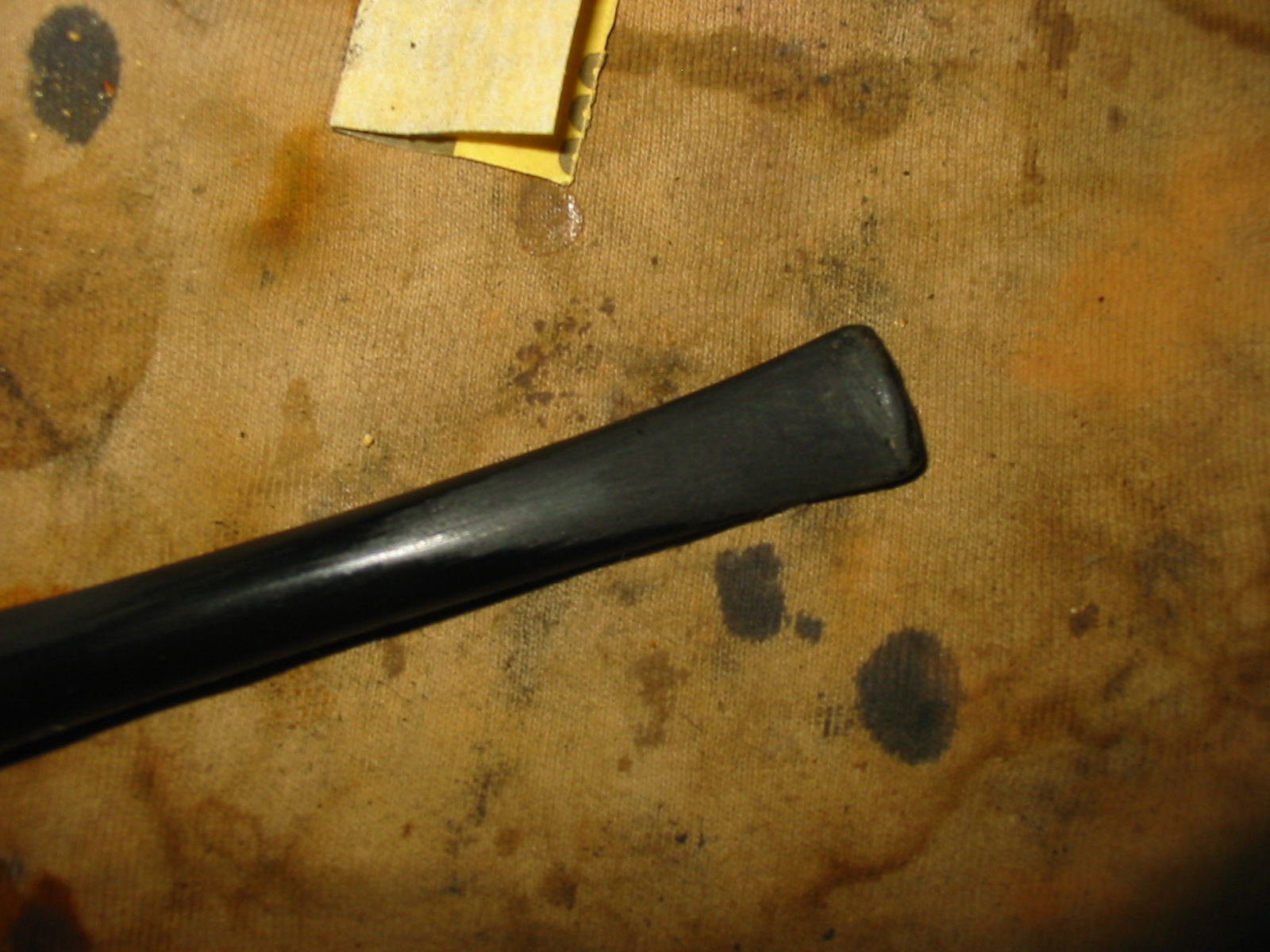
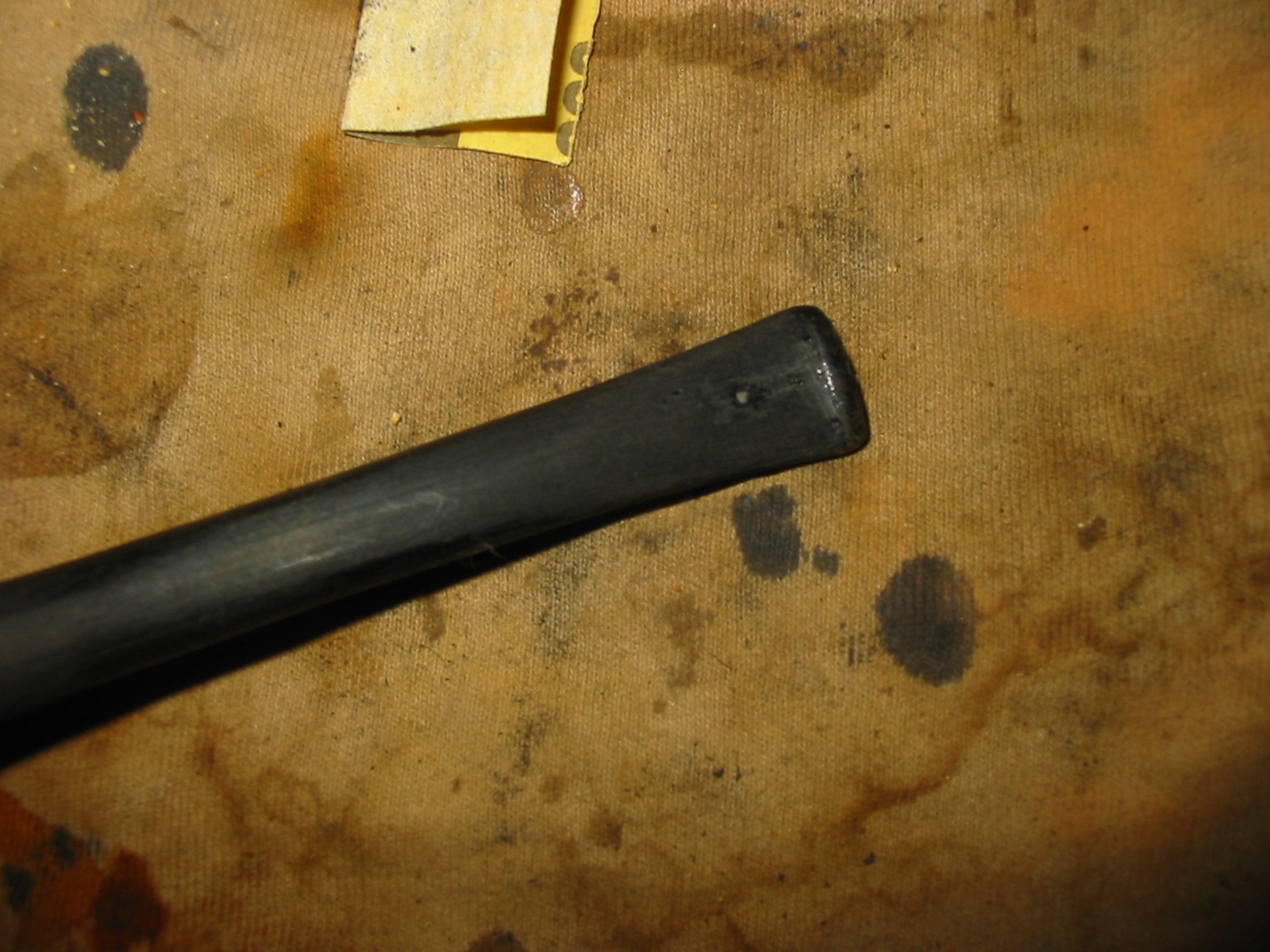
When the glue dried I sanded it with 220 grit sandpaper to smooth out the surface of the stem and blend in the repairs. I sanded until the surface was smooth and the patch was flush with the stem material. I followed that by sanding with a medium and a fine grit sanding sponge to remove the scratches left behind by the sandpaper.
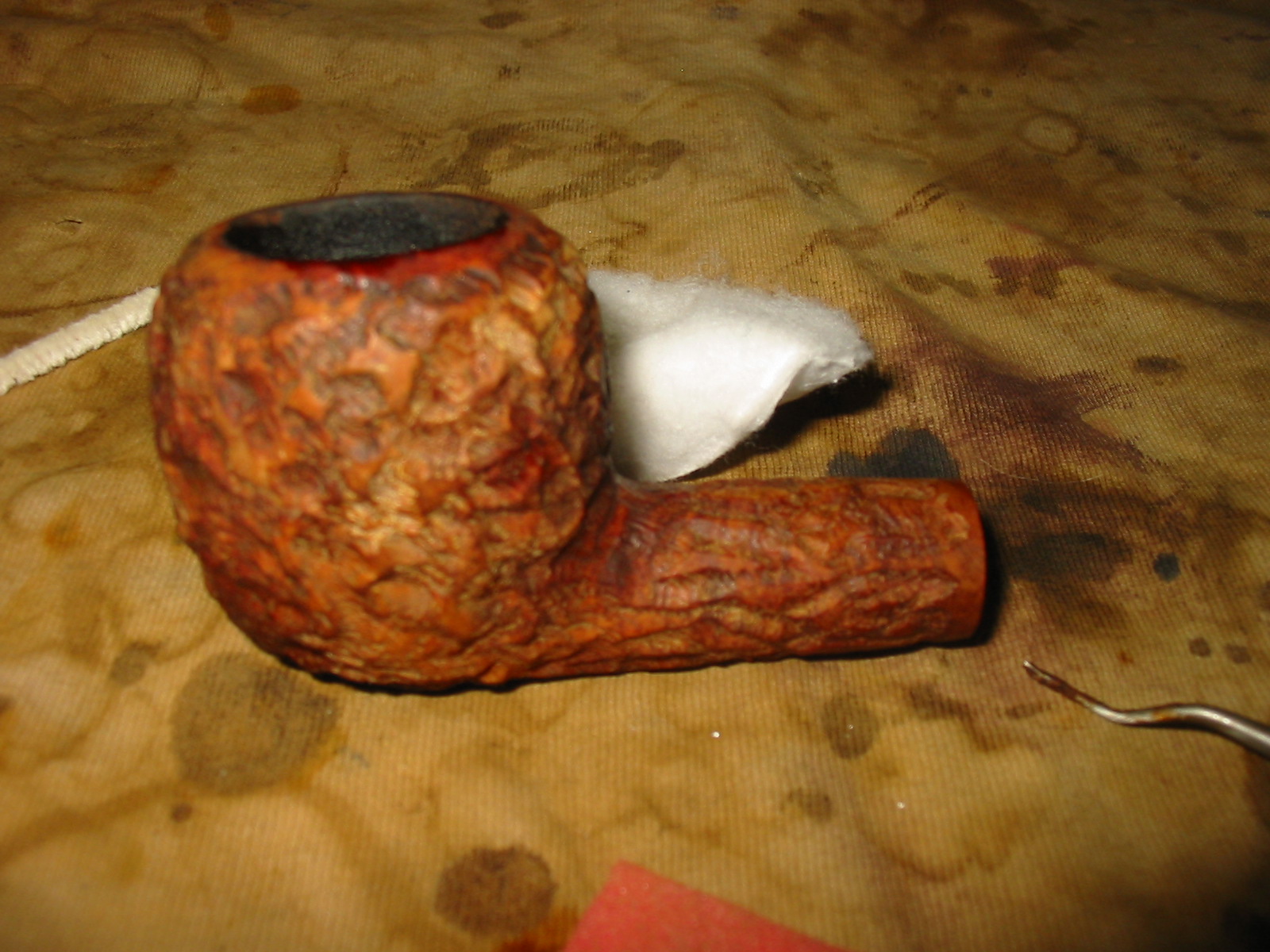
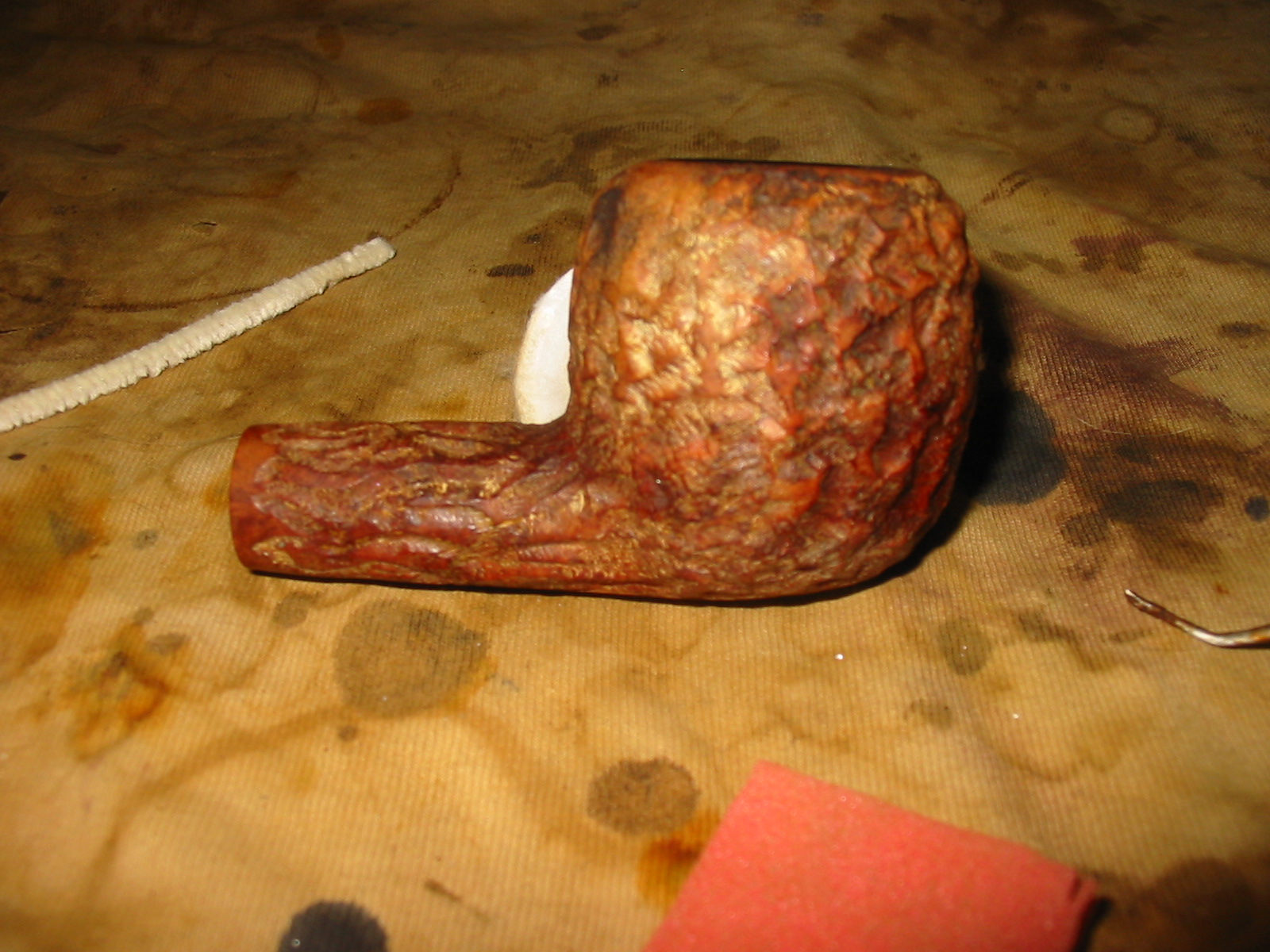
I lightly topped the rim to remove the surface damage and to remove some of the damage on the inner edge. I sanded the inner edge with a folded piece of 220 grit sandpaper to smooth out the rough edges and give it a more rounded appearance. I wiped down the bowl and rim with acetone on a cotton pad and then isopropyl on a cotton pad to remove the finish. I used a dental pick to remove the white putty like substance that filled the two parallel bands around the bowl and then wiped it down a final time with alcohol. I also removed the stem and wiped down the aluminum band to remove the plastic coating that was on it.
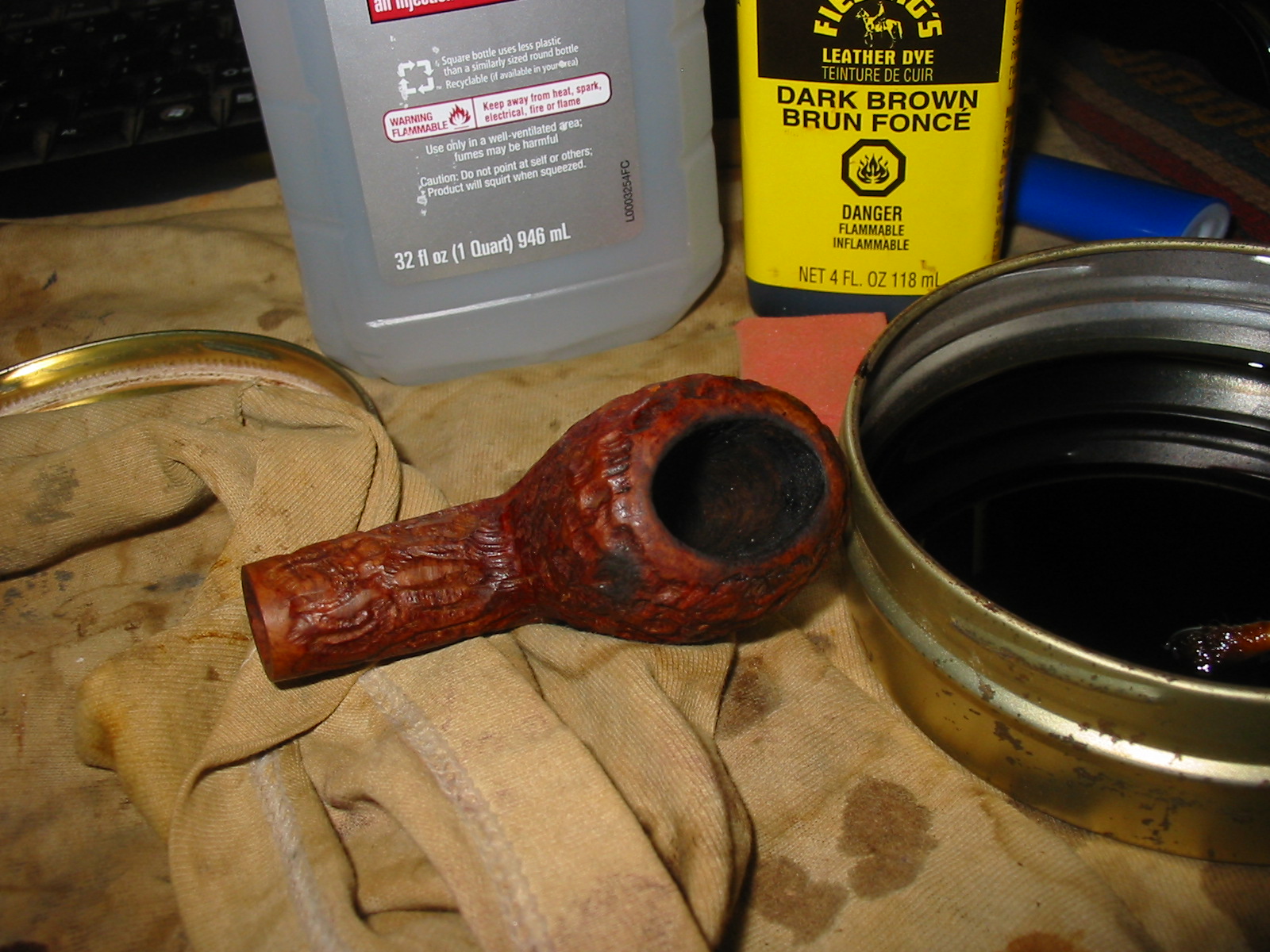
I decided to give the bowl a contrast stain. The first coat of stain was a black aniline stain. I heated the bowl and then applied the stain, flamed it, applied it and flamed it again until the stain coat was even across the bowl. My photos of the black stained bowl did not turn out do to camera failure. For some reason the flash did not work and the four photos of the black stained bowl were not visible. I applied the stain with a wool dauber and made sure that the black stain went into the parallel rings around the bowl.
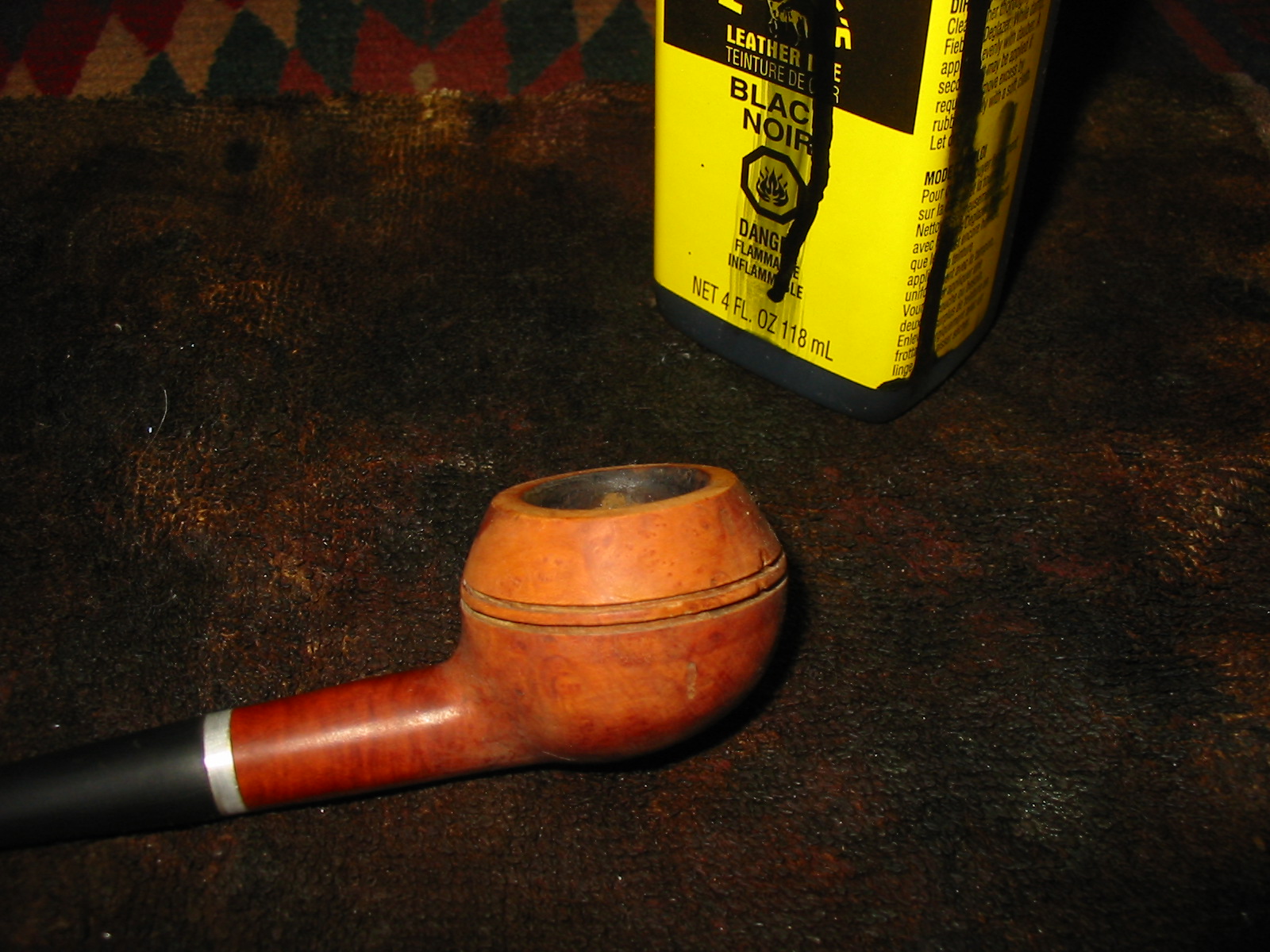
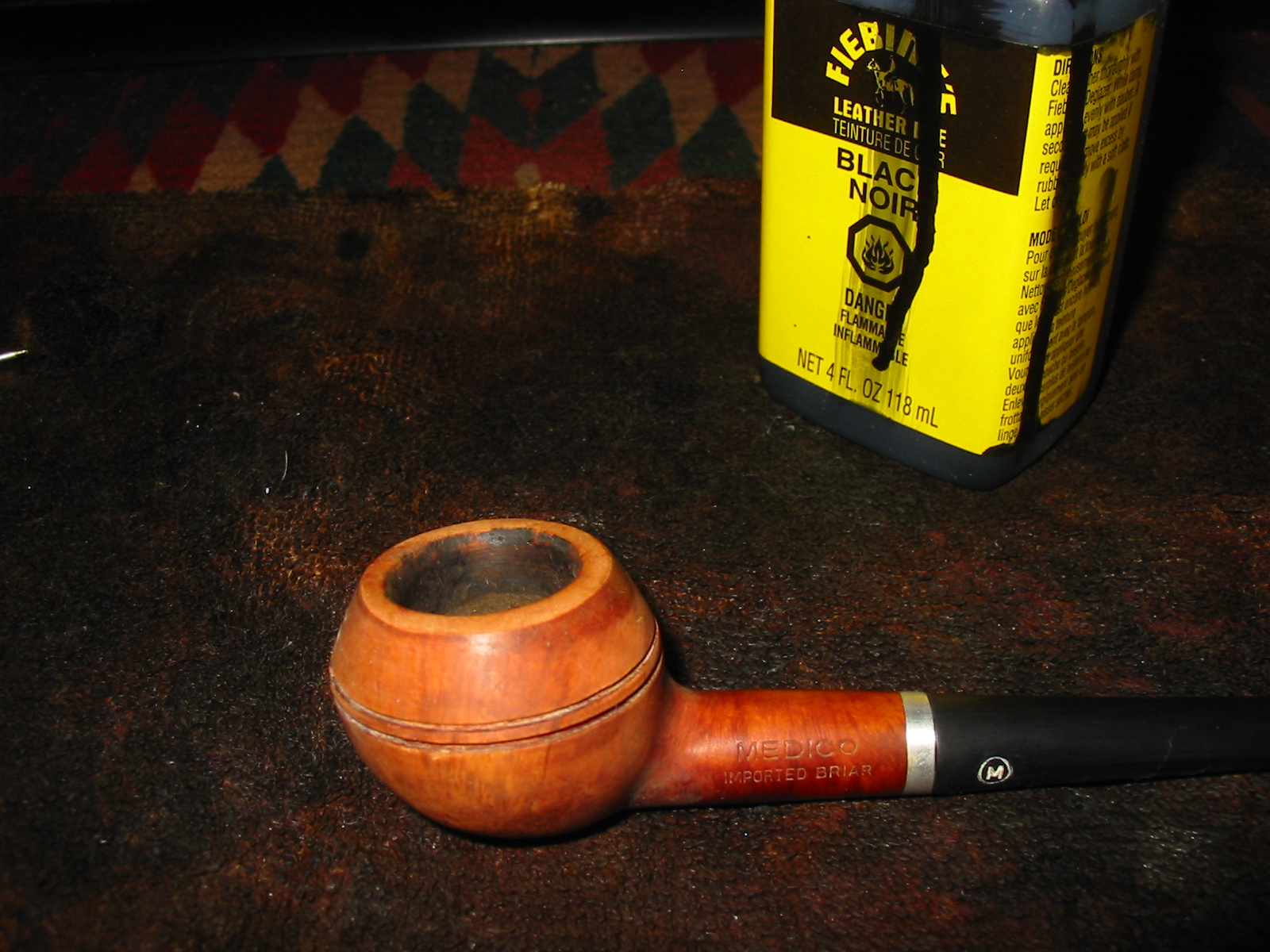
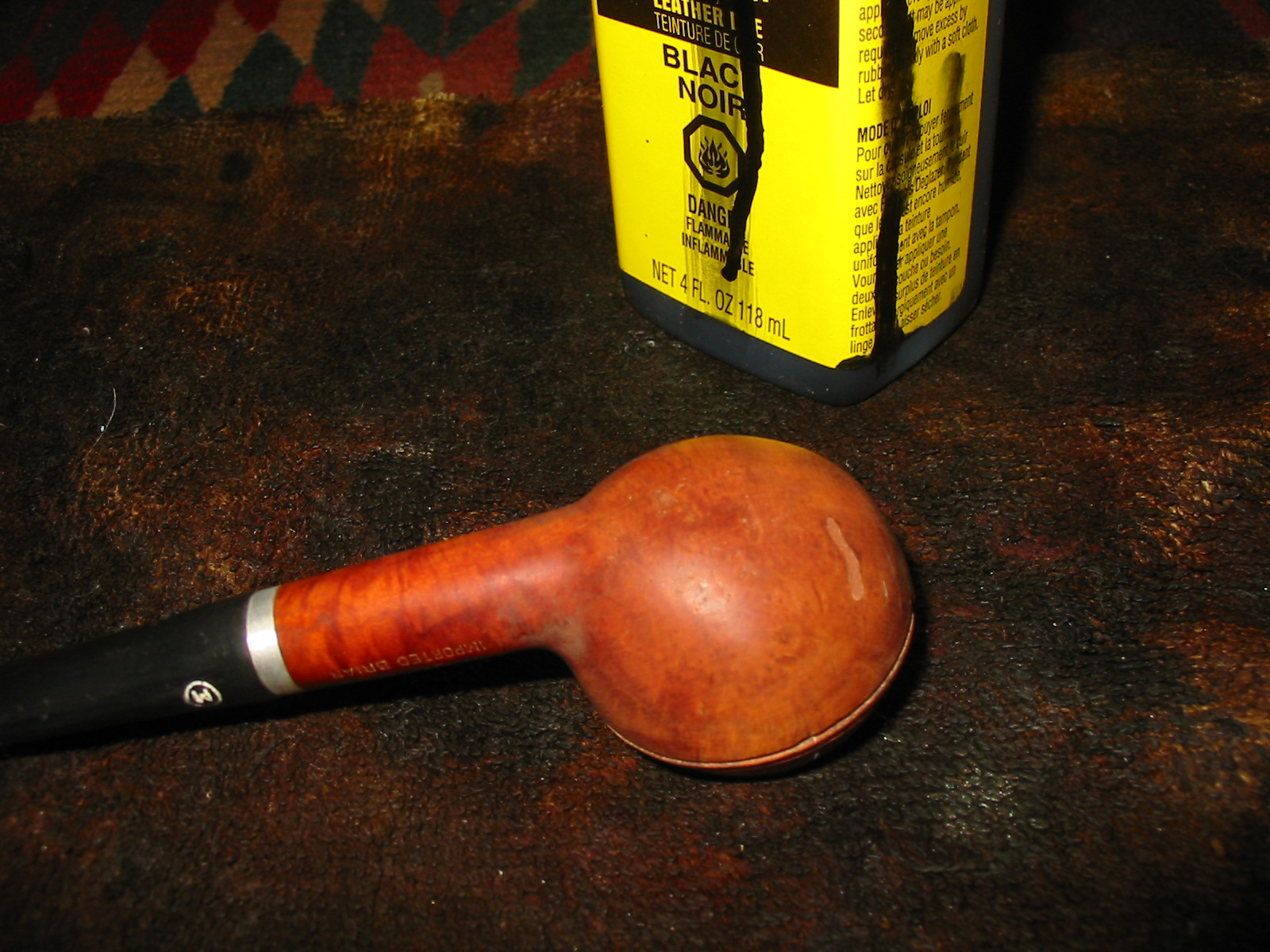
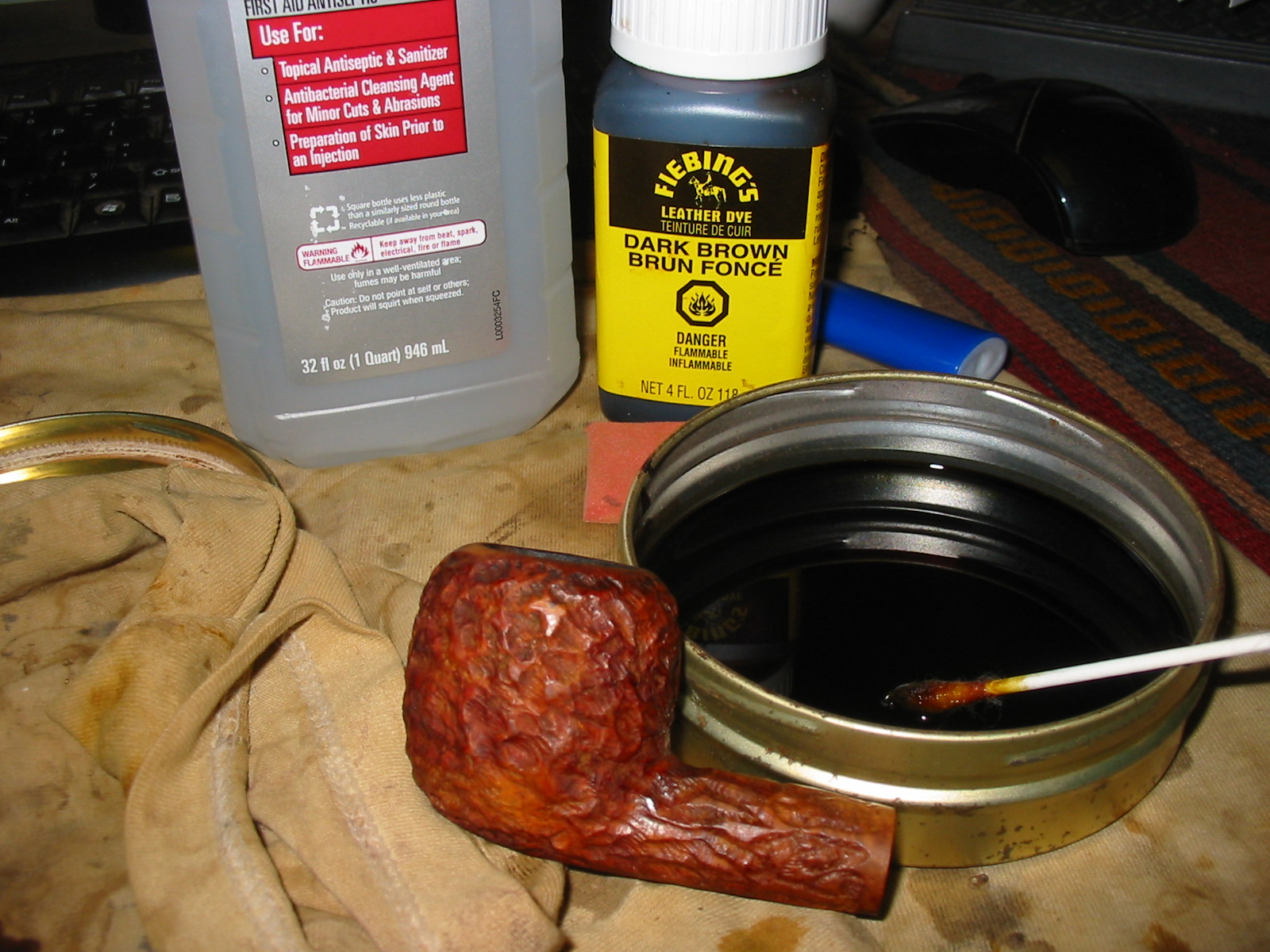
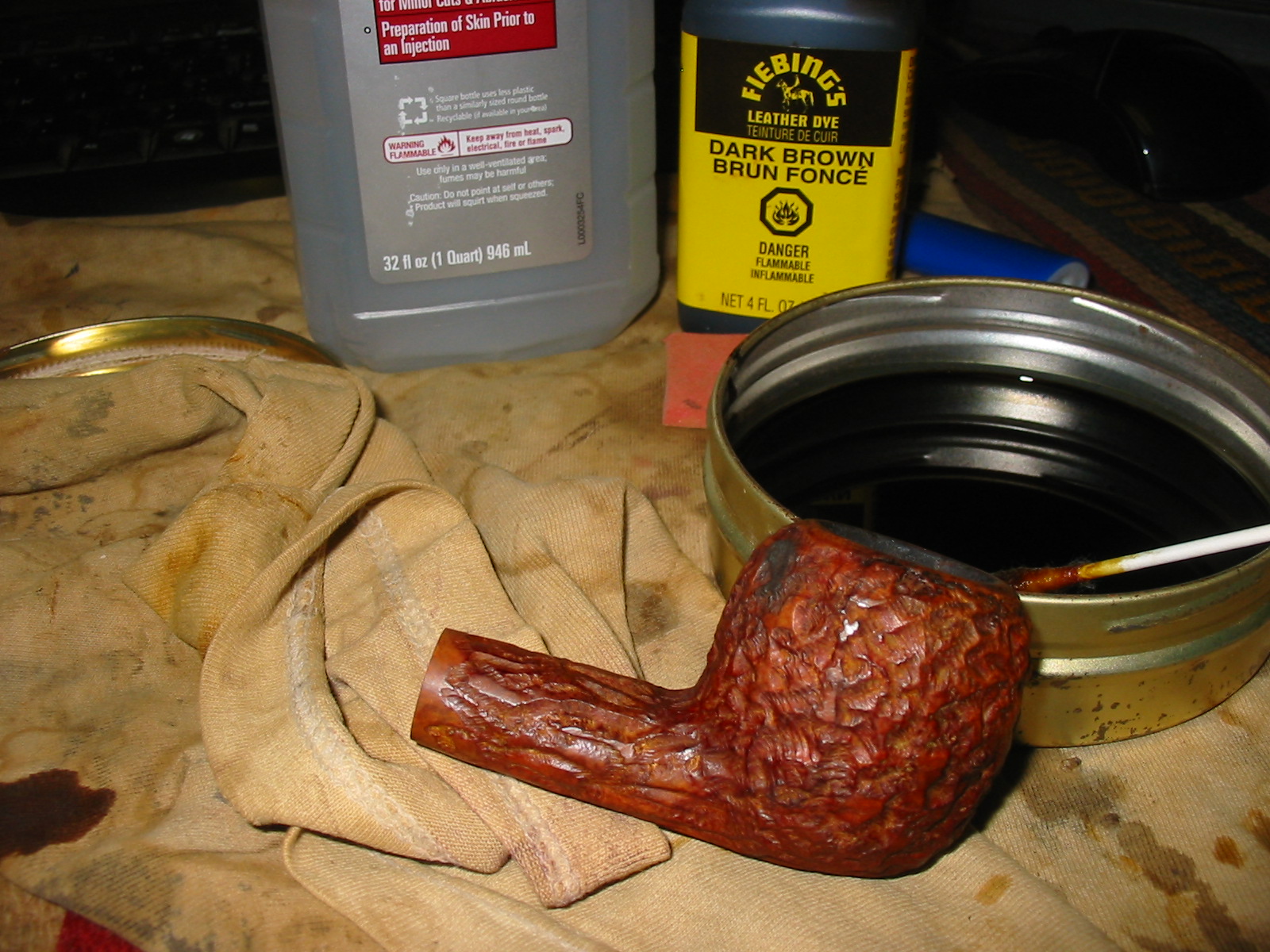
I wiped down the bowl with cotton pads and alcohol to remove the majority of the black stain and to leave it in the deep grain. I buffed the pipe with Tripoli and White Diamond and then wiped it a final time with alcohol. The finish at that point had black deep in the grain of the bowl highlighting the grain variations on the briar. It also served to provide some blending for the fills that were obvious on the bottom of the bowl. I sanded the bowl with a fine grit sanding sponge and 1500-2400 grit micromesh sanding pads to further remove the top finish. Once it was done I gave the bowl a coat of oxblood stain as a topcoat. I wanted the red stain to highlight the red of the briar and to be a contrast to the black grain on the bowl.
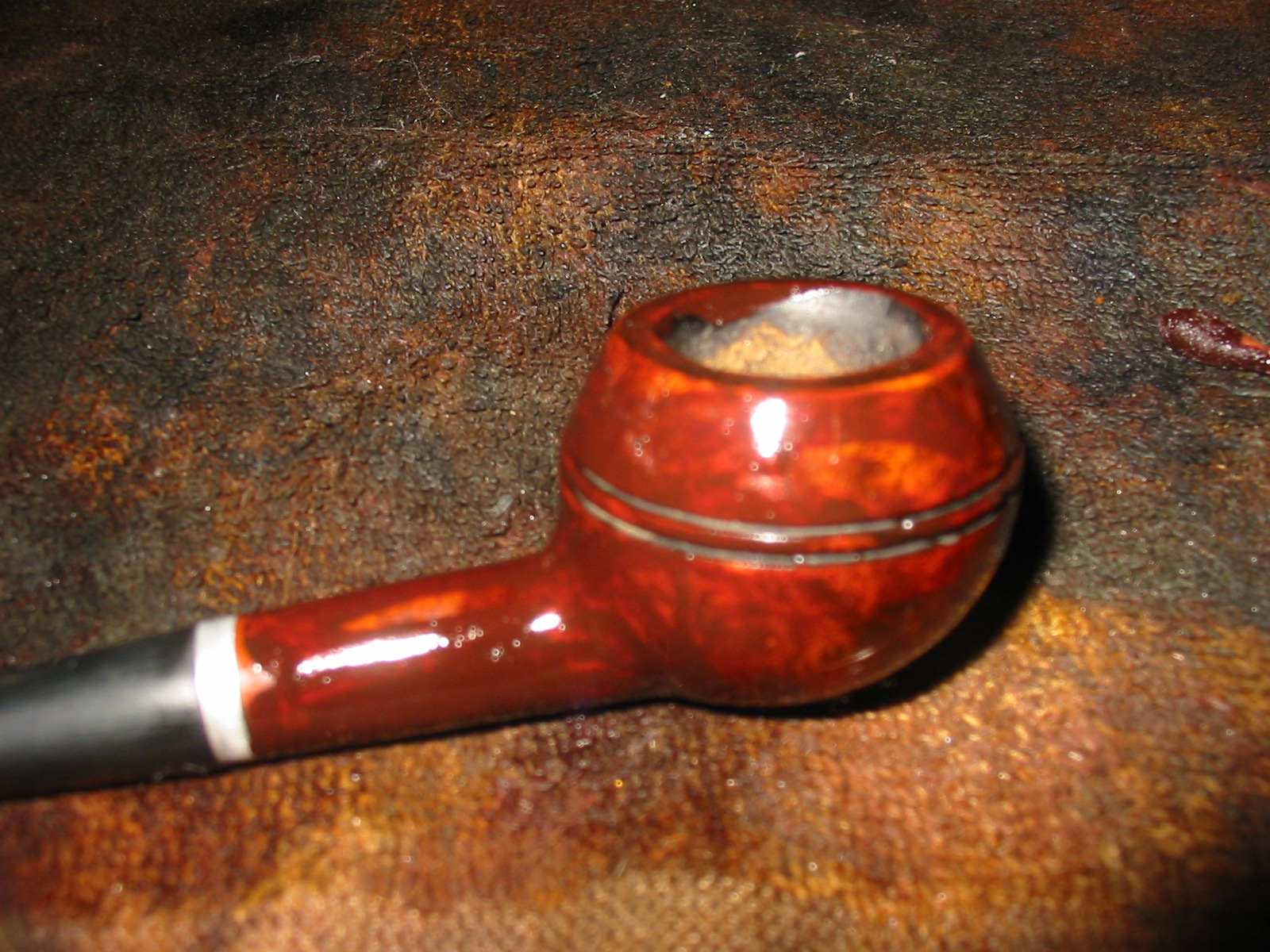
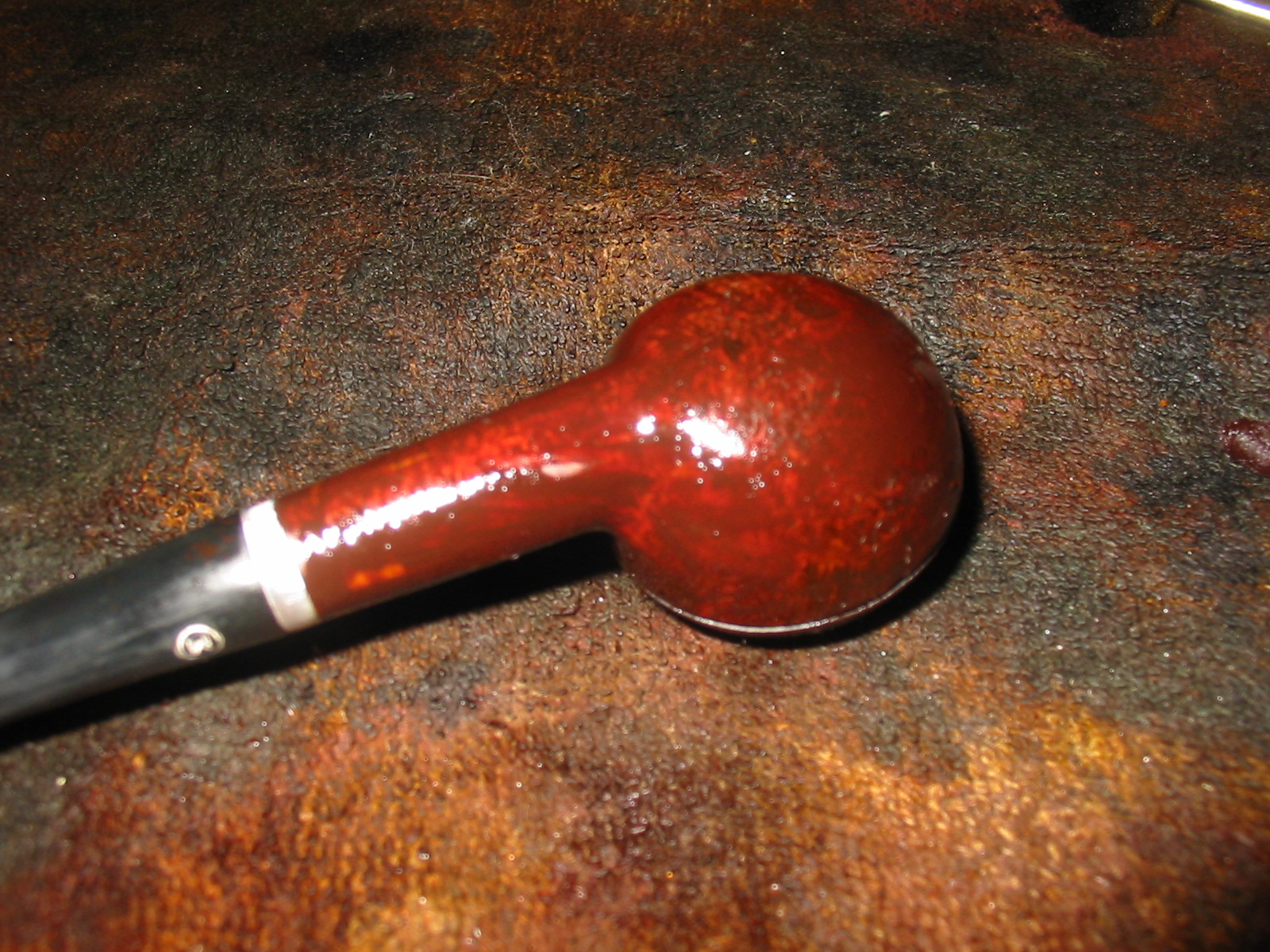
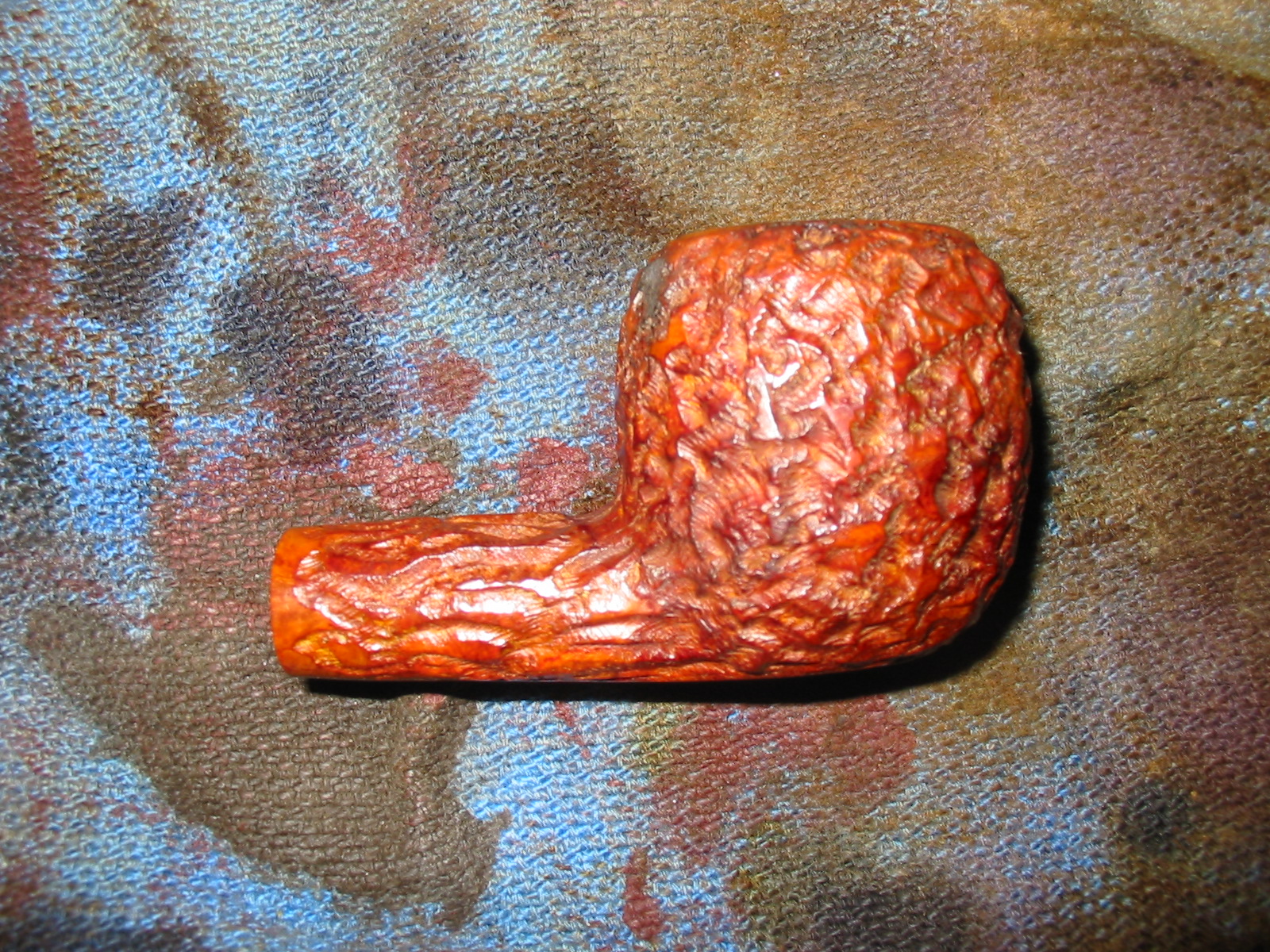
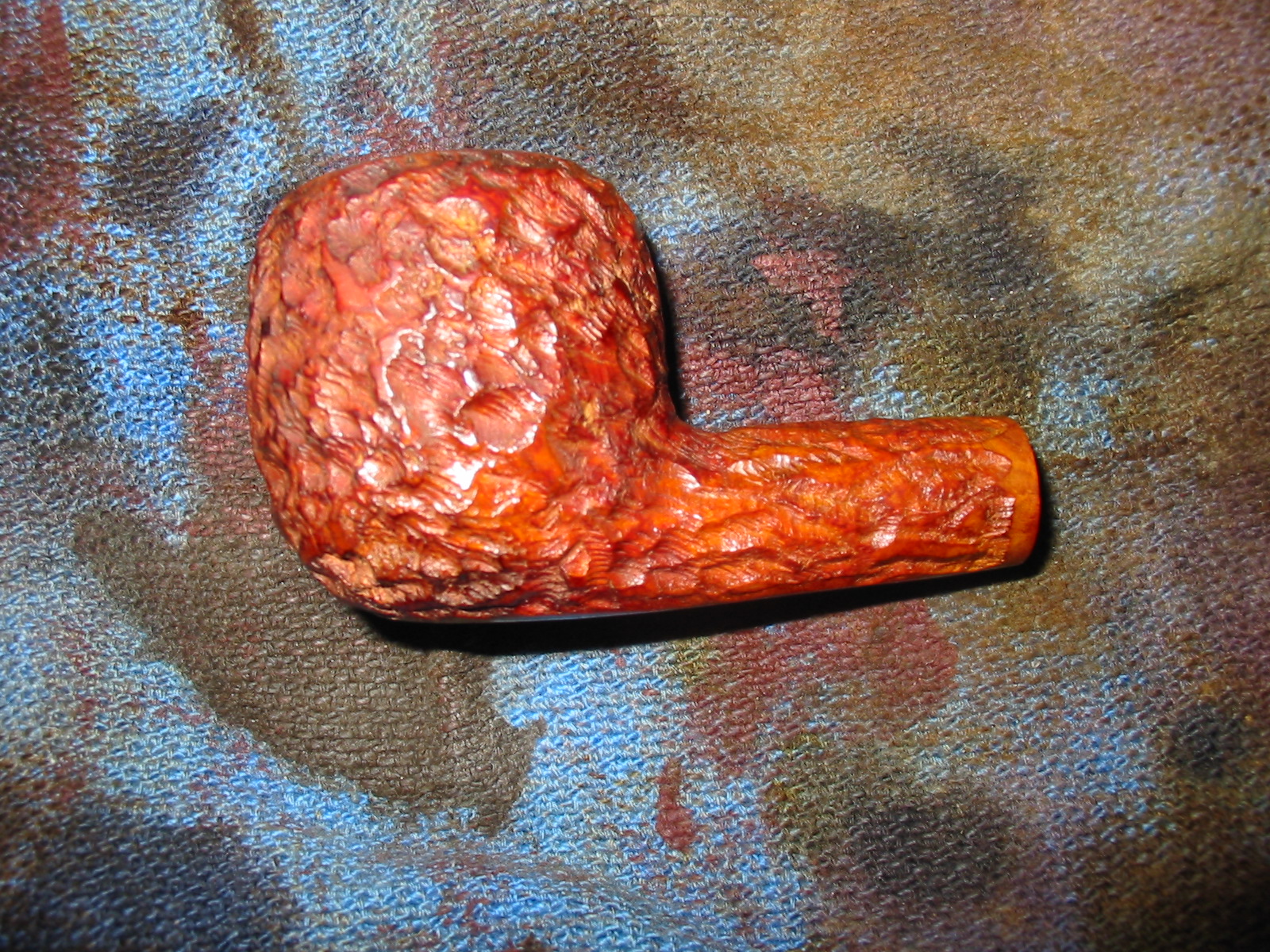
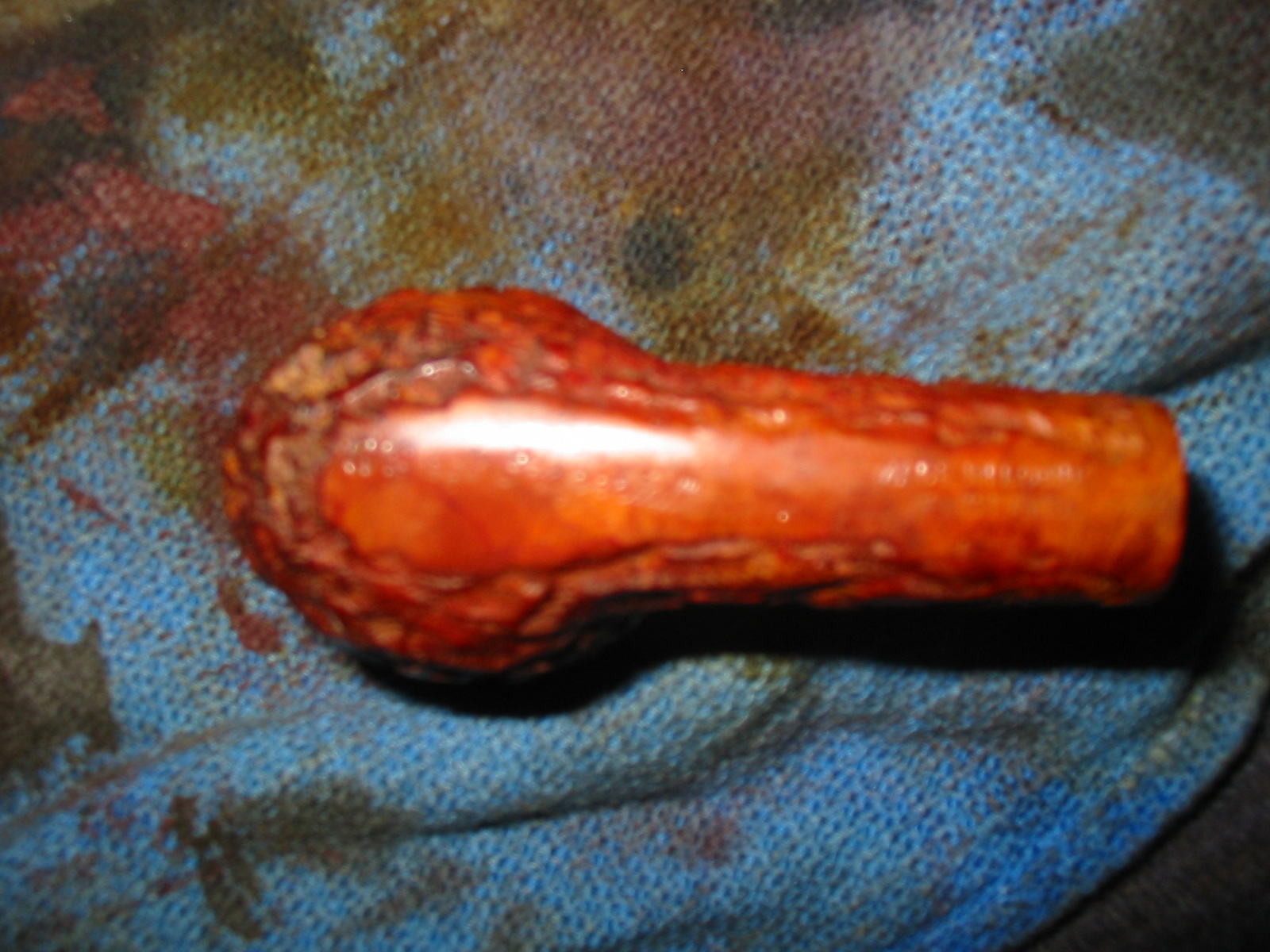
After the stain was applied I wiped it off with a rag and hand polished the bowl. The contrasting stains went a long way toward giving the pipe a great look and blending the fills into the background of the bowl.
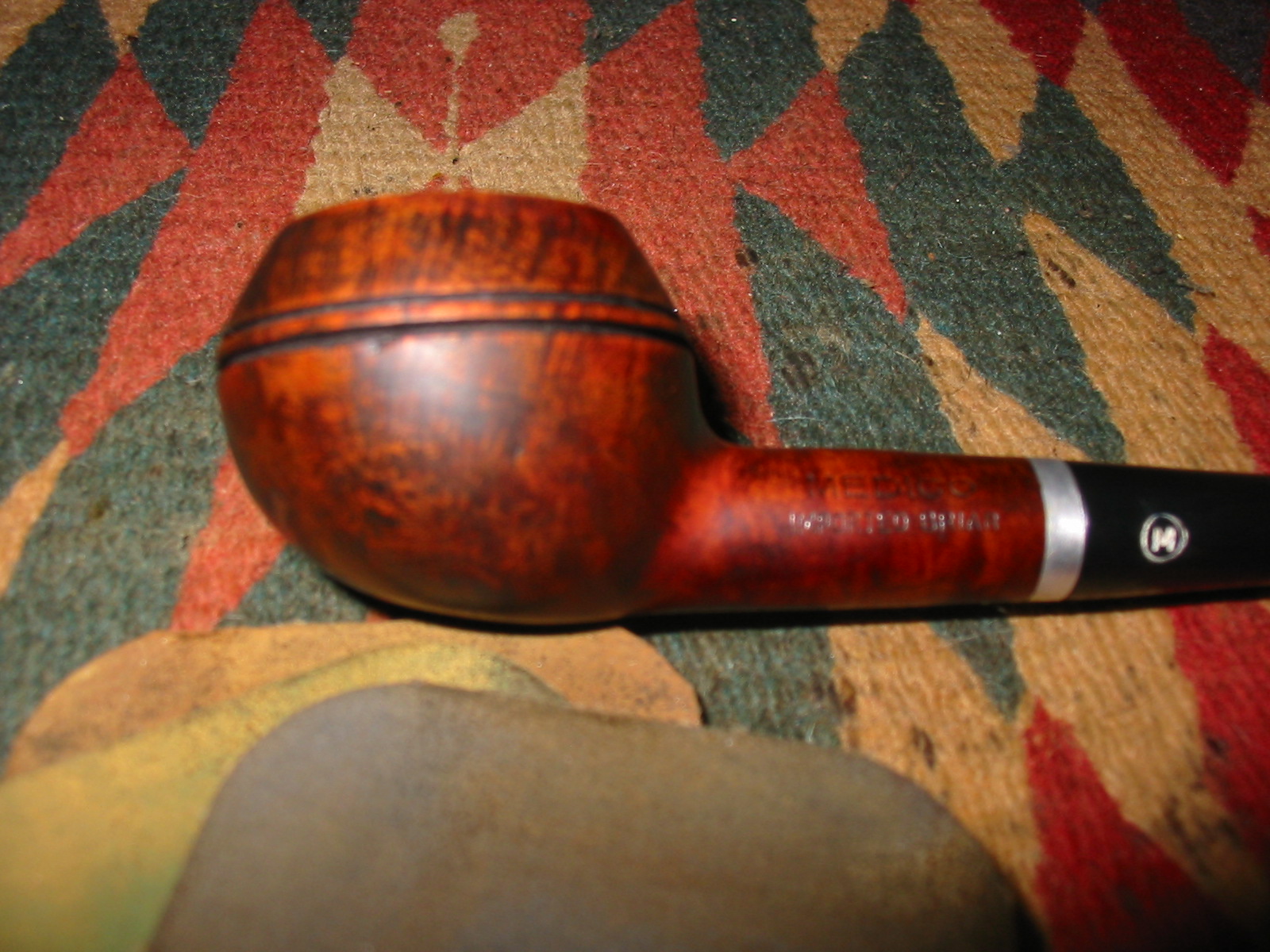
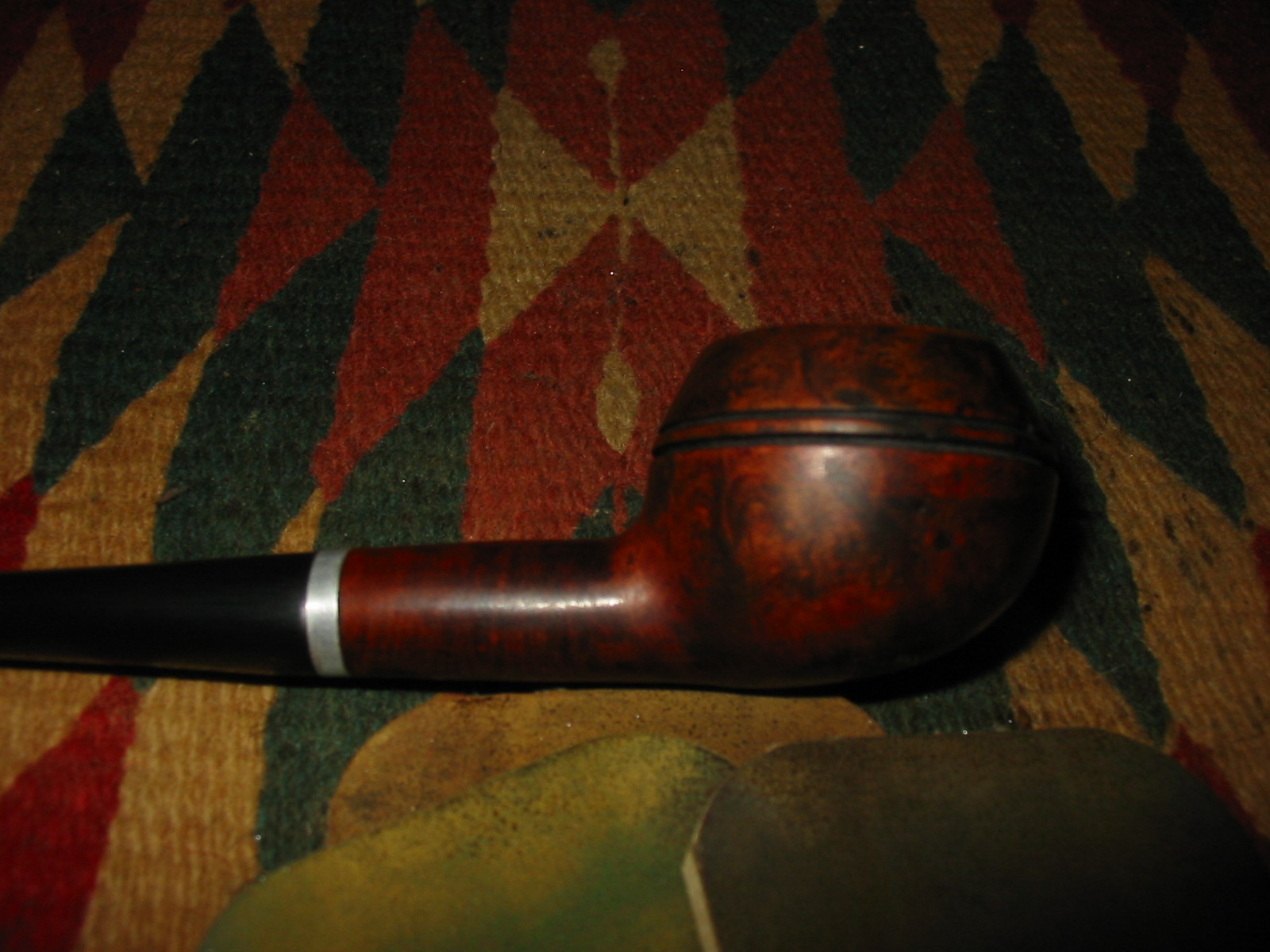
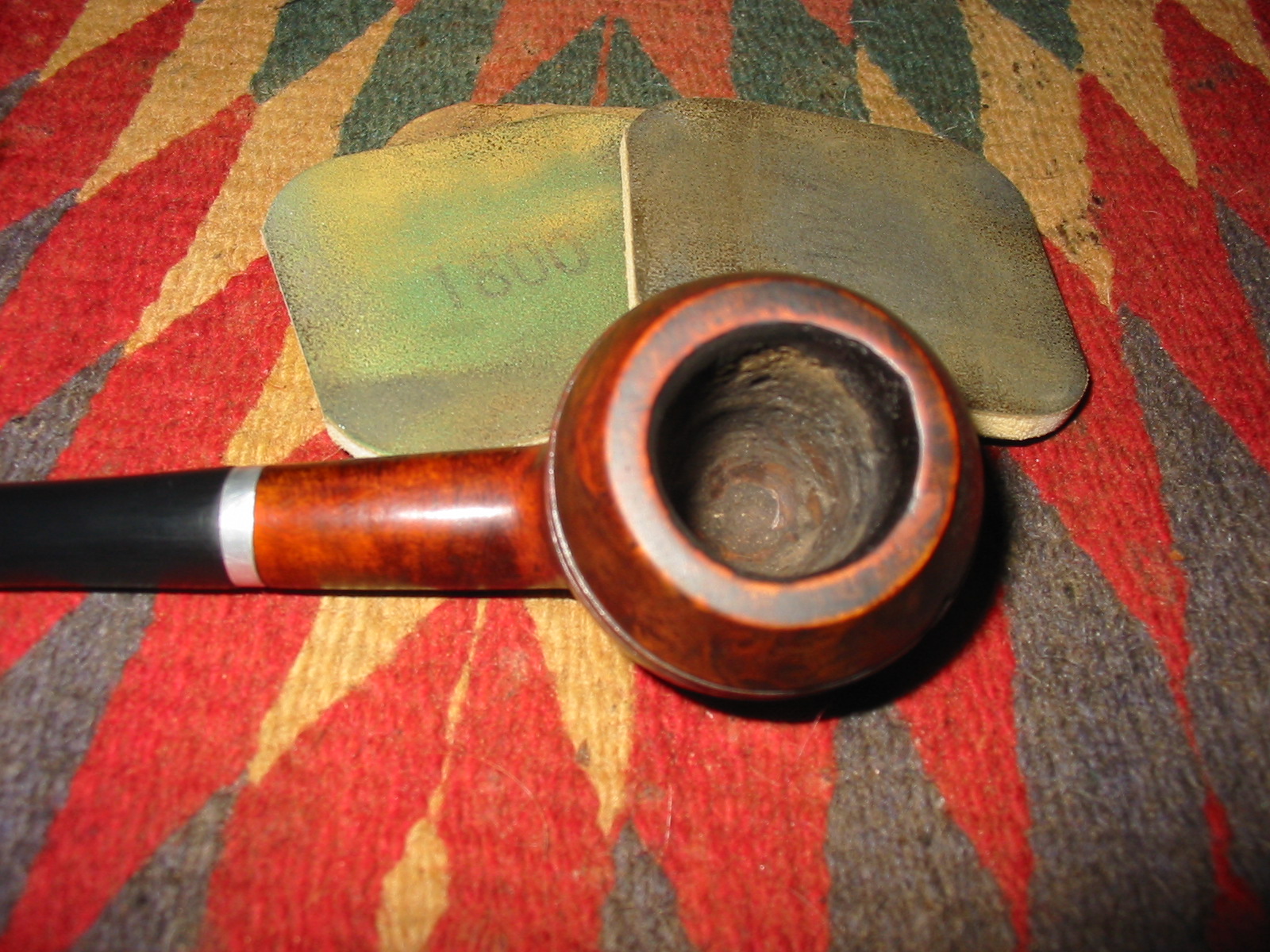
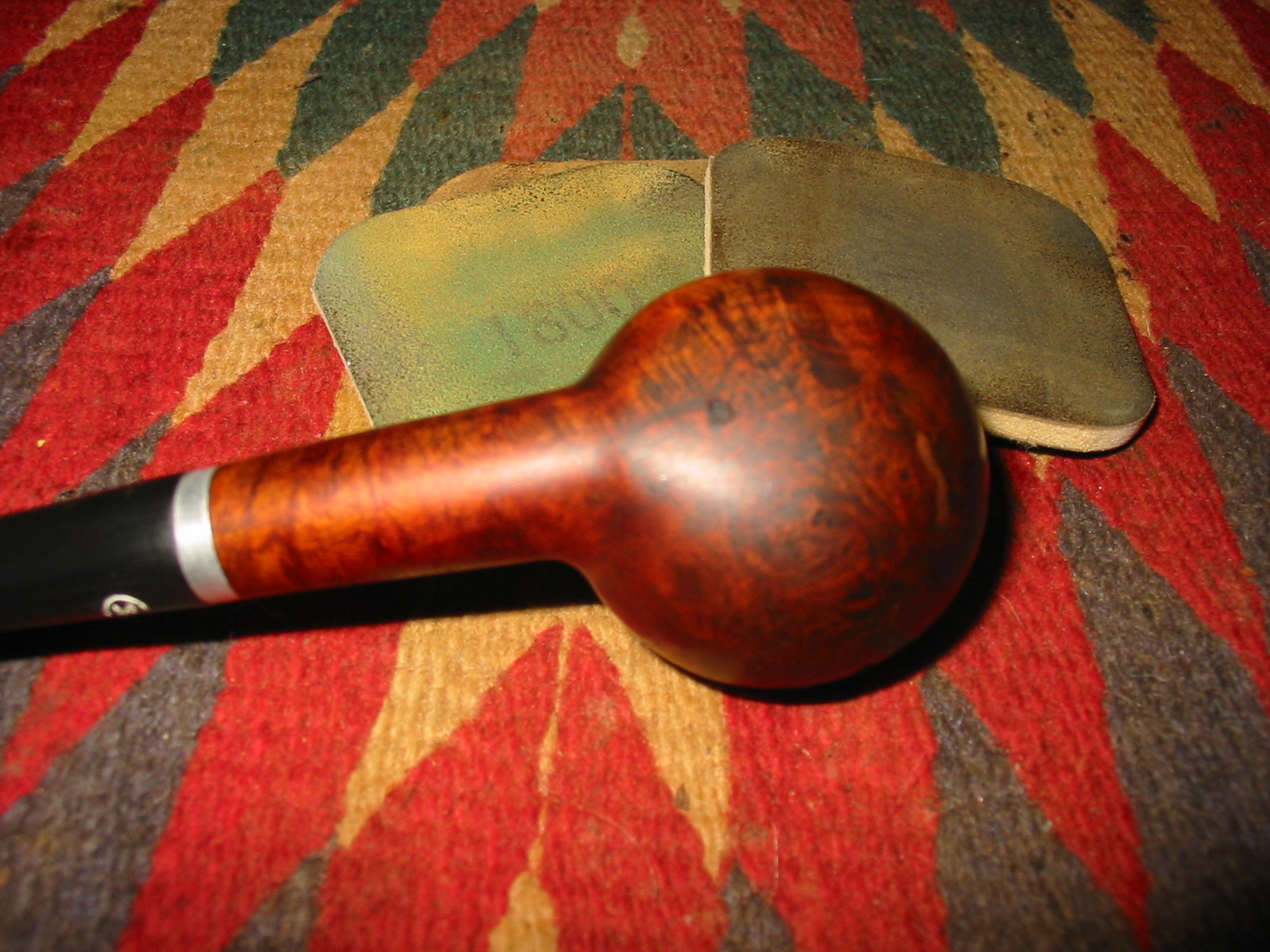
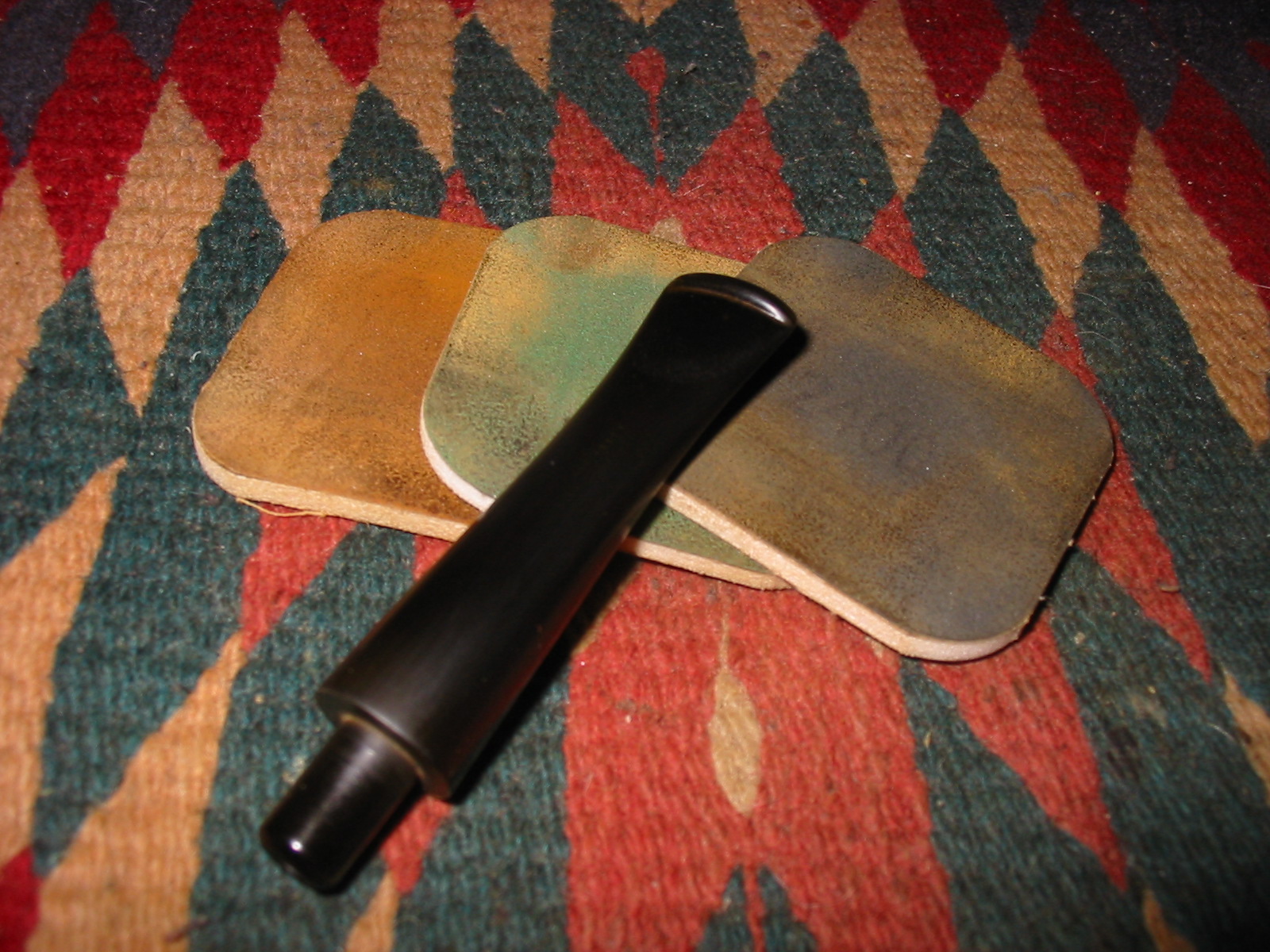
I sanded the stem with medium and fine grit sanding sponges and then followed up that with my usual stack of micromesh sanding pads – wet sanding with 1500-2400 grit pads and dry sanding with 3200-12000 grit pads. The progressive rich blackness of the nylon is revealed with each successive set of sanding pads.
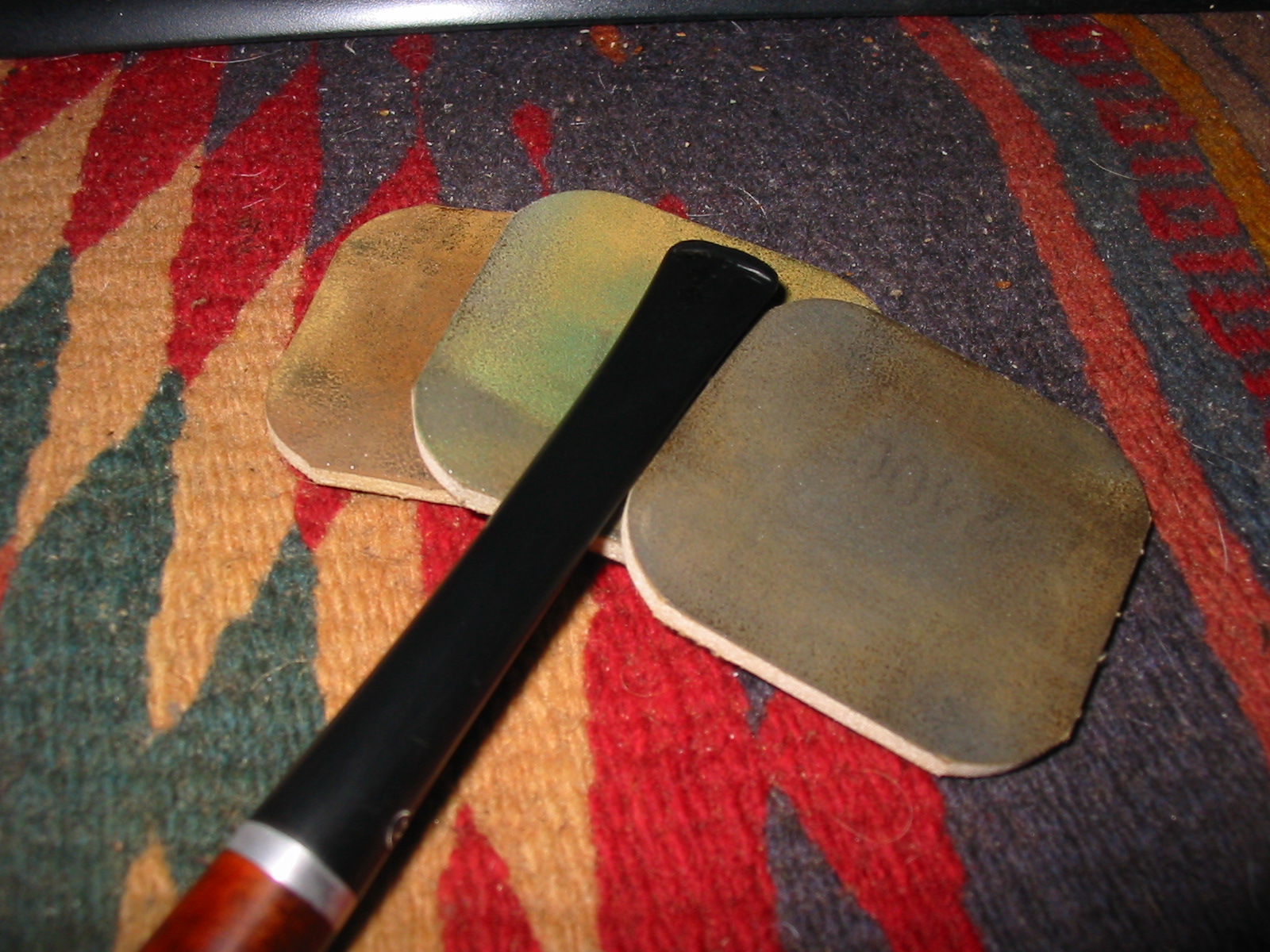
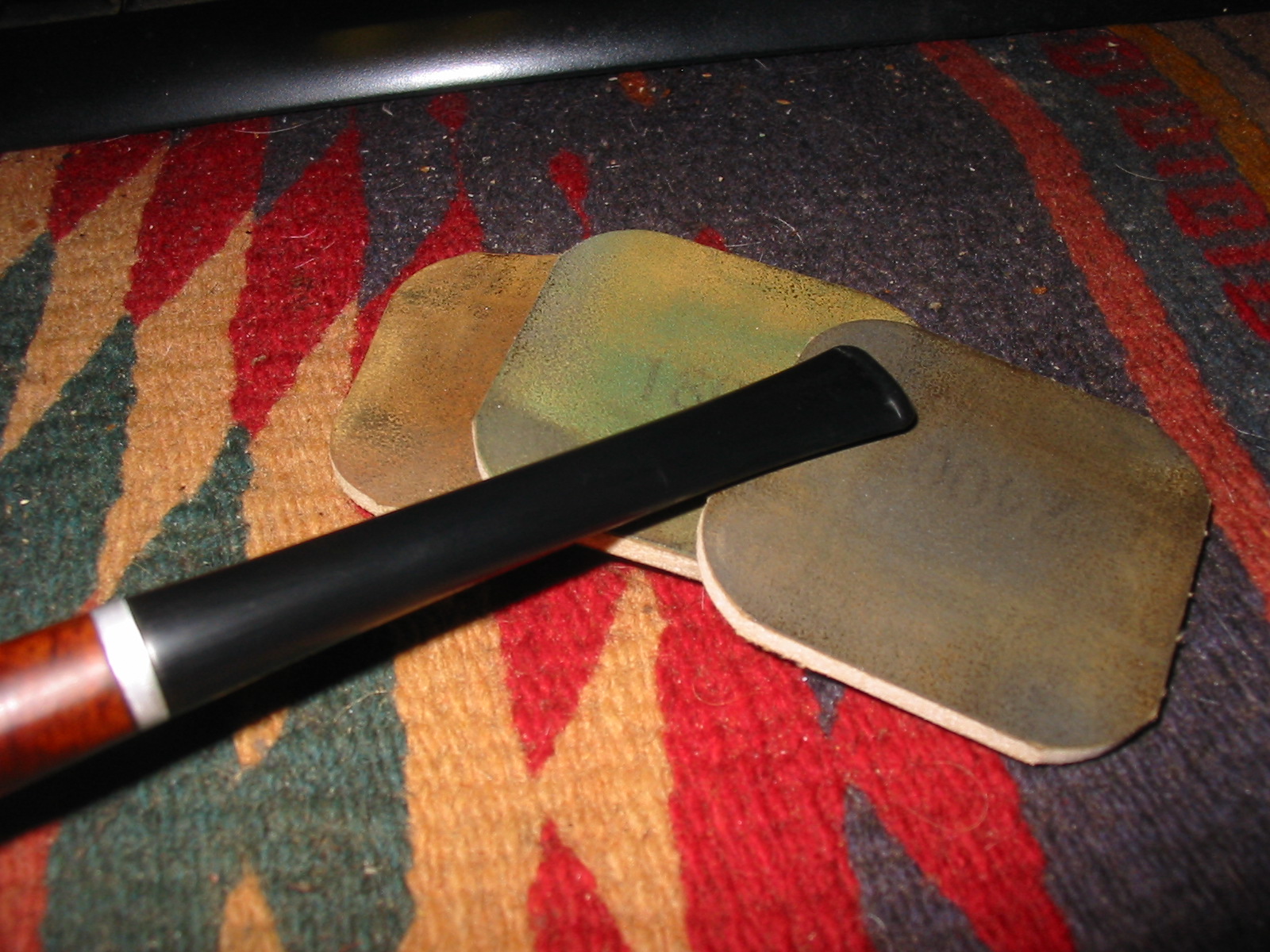


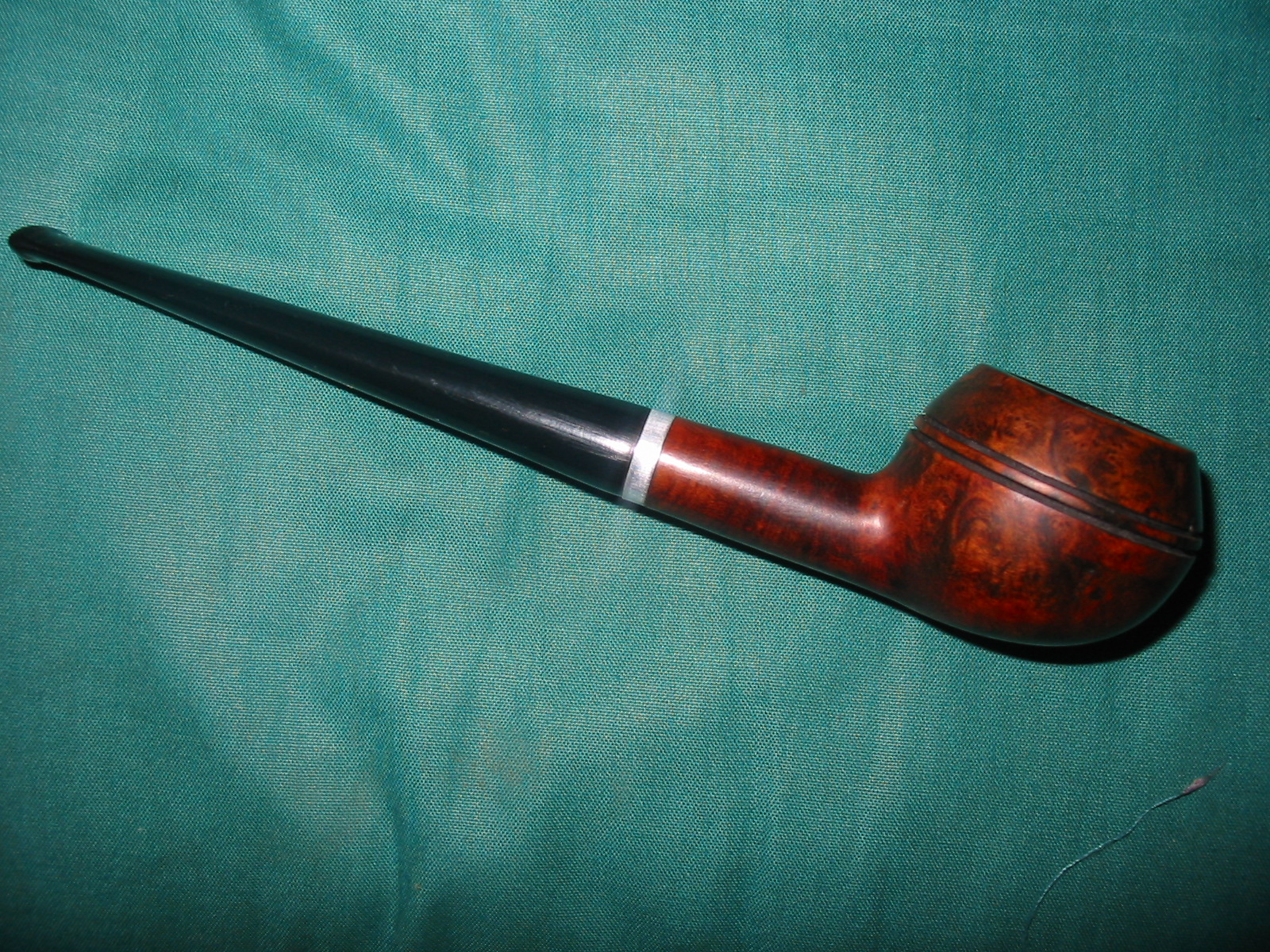
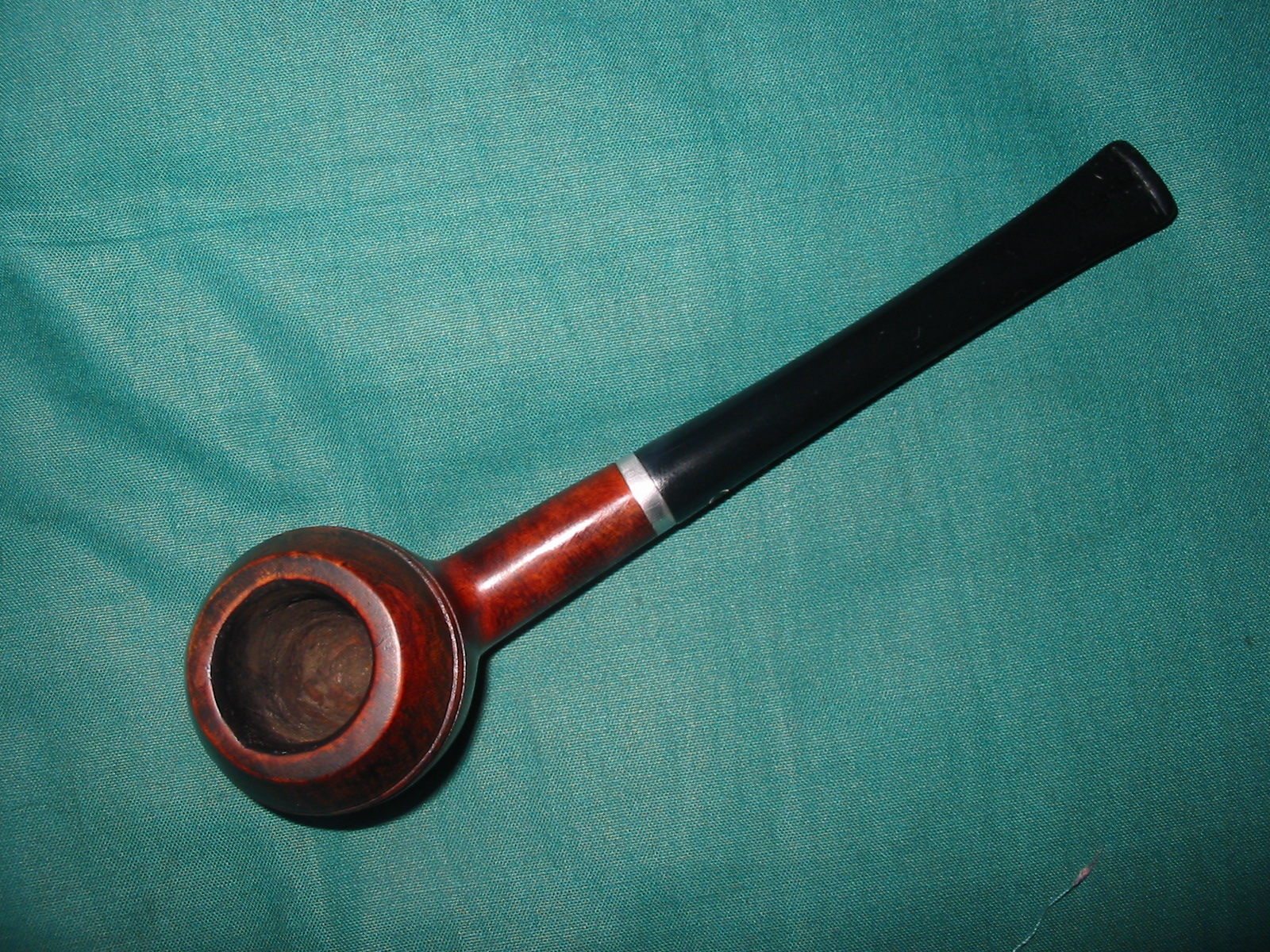
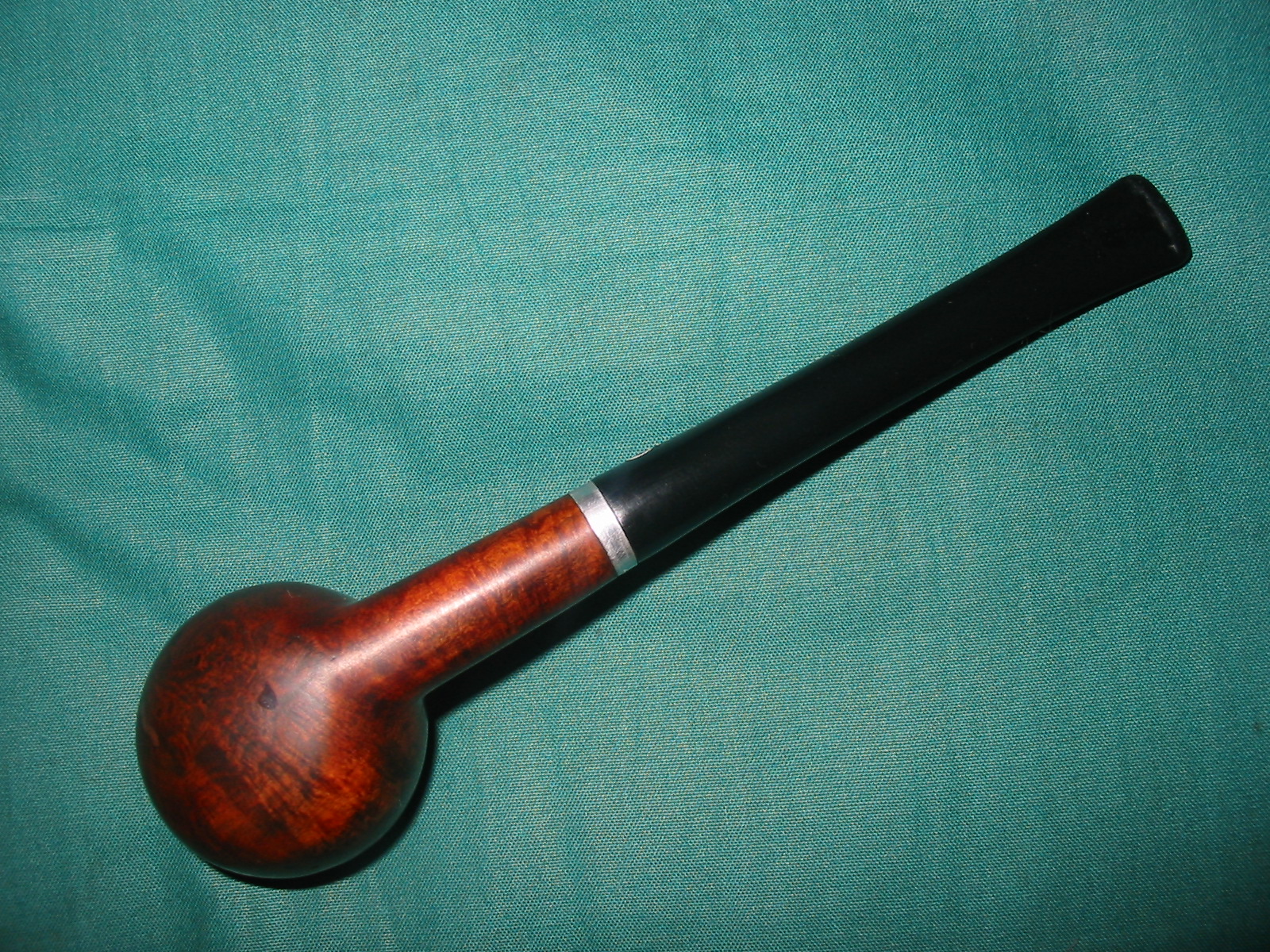
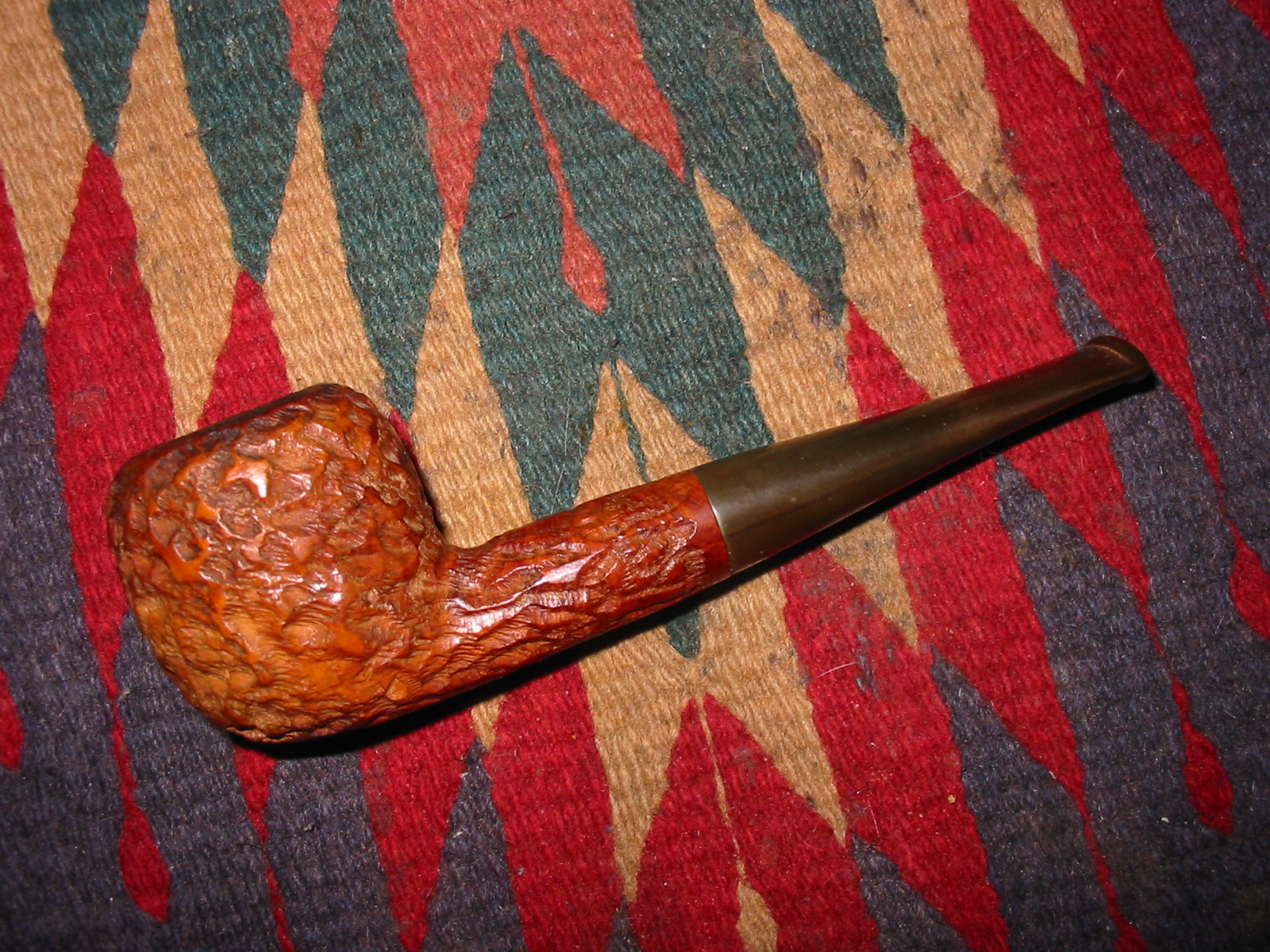
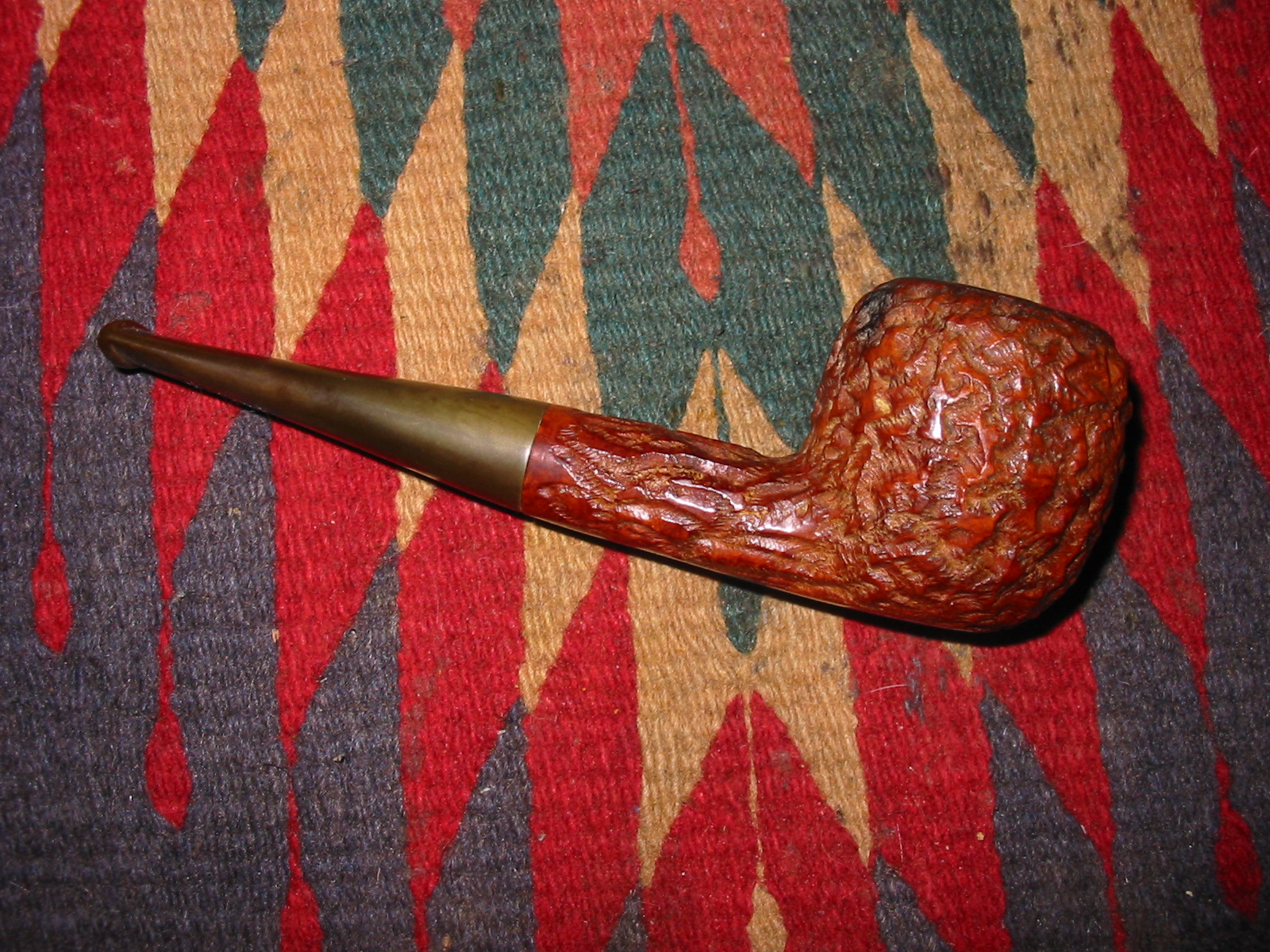
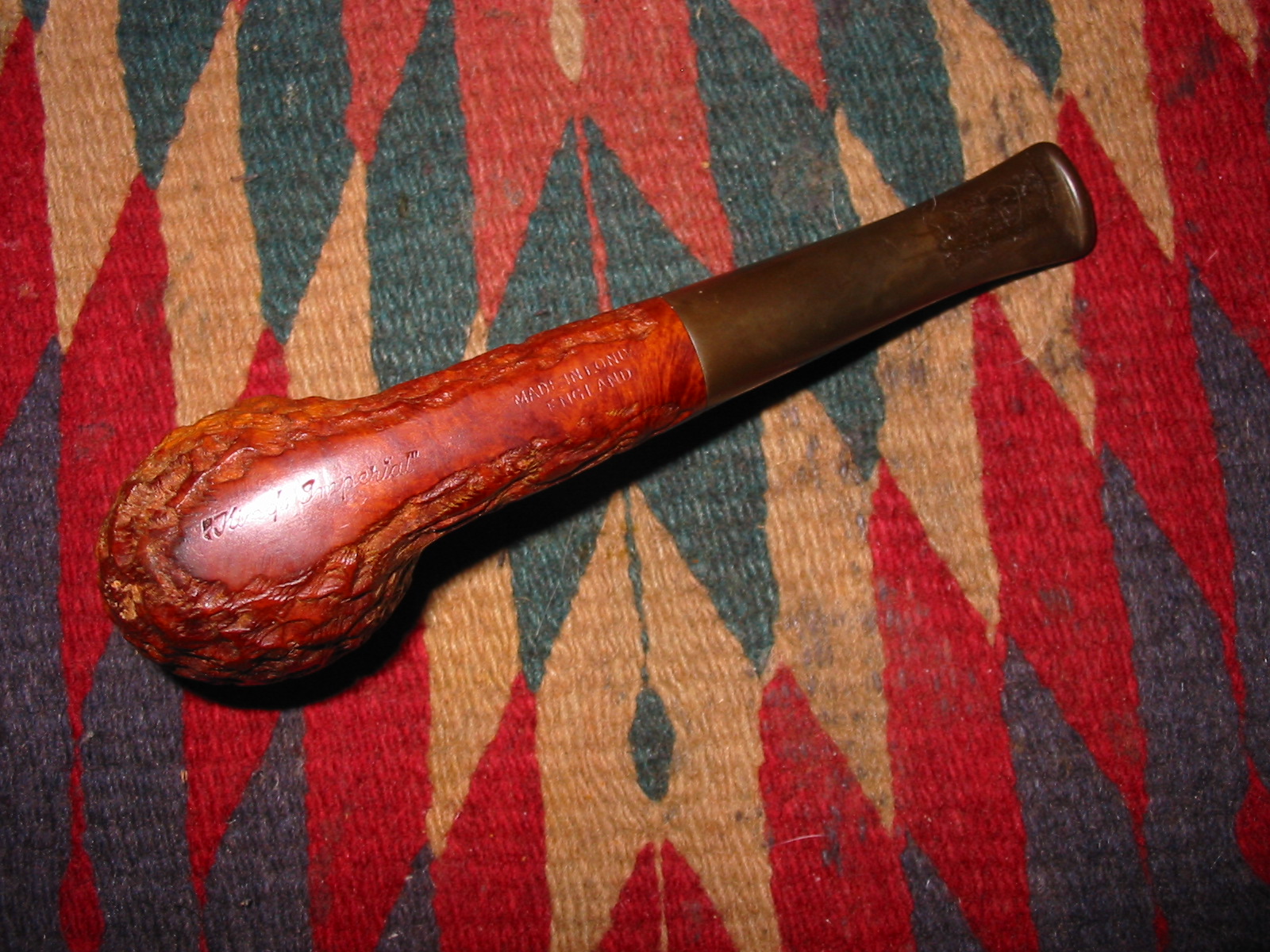
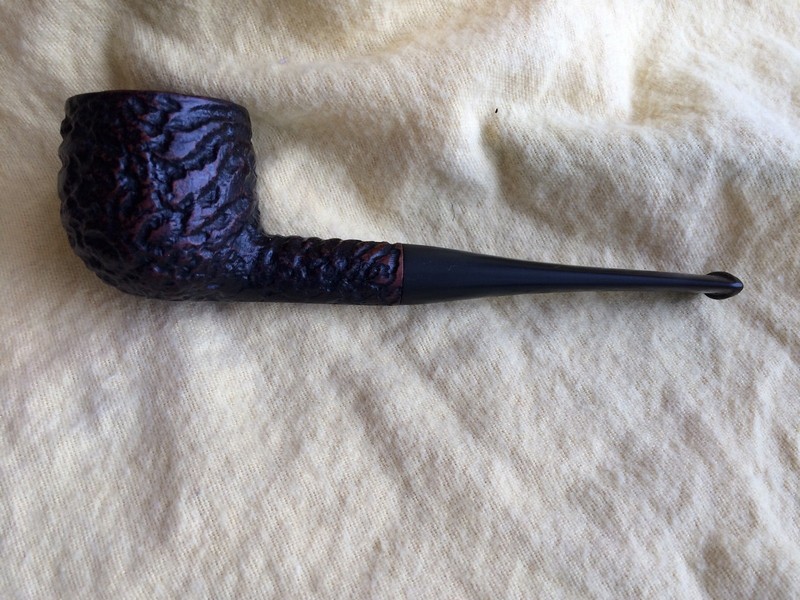
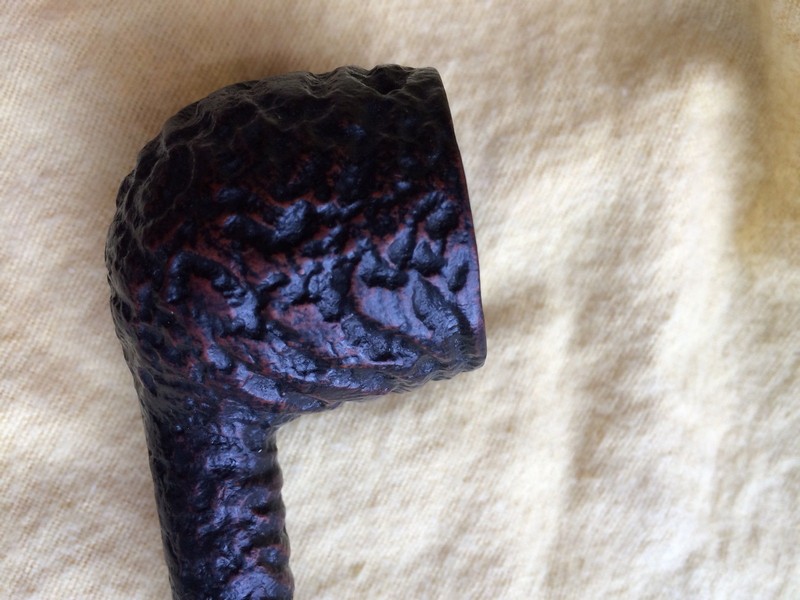
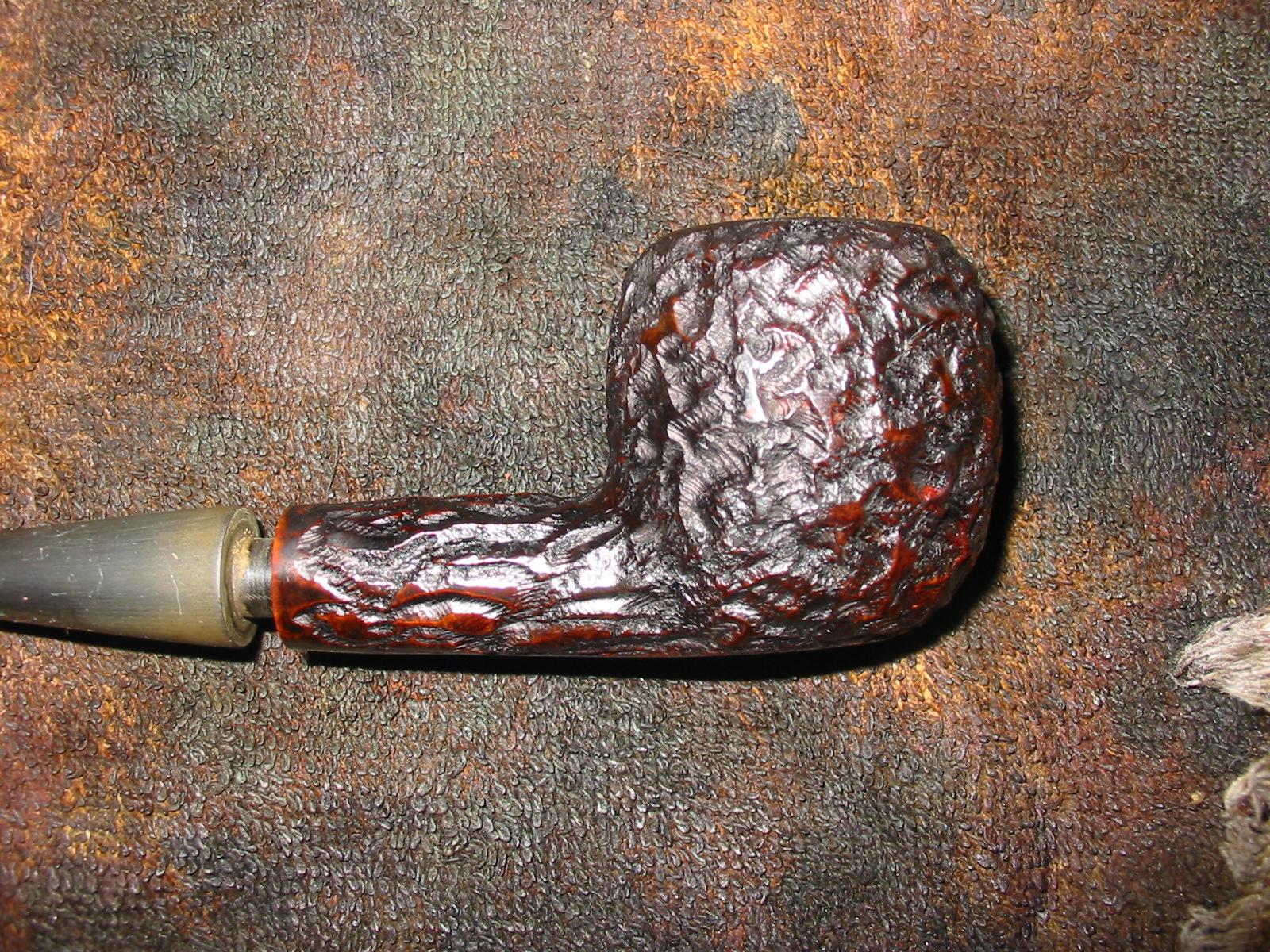
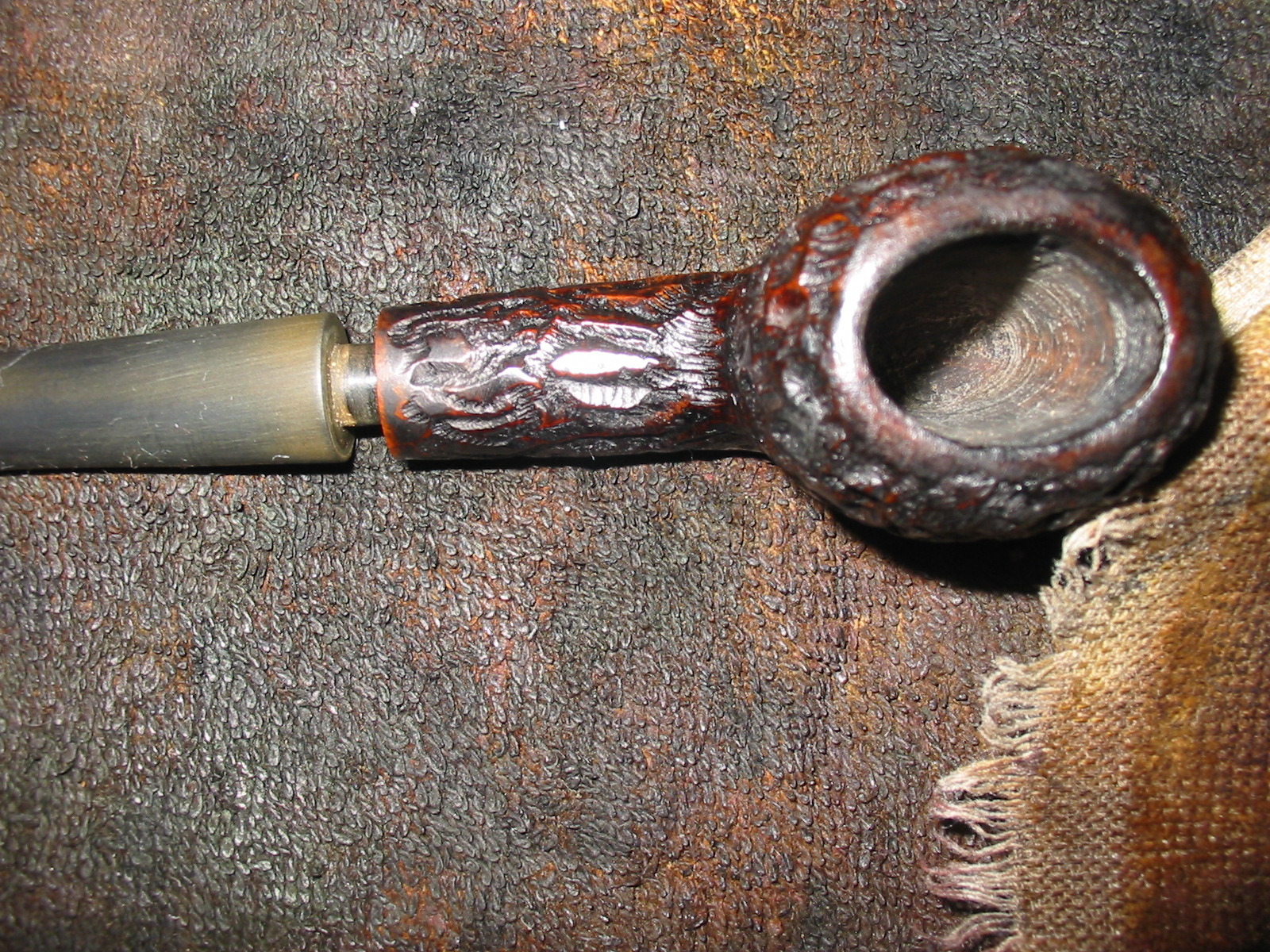
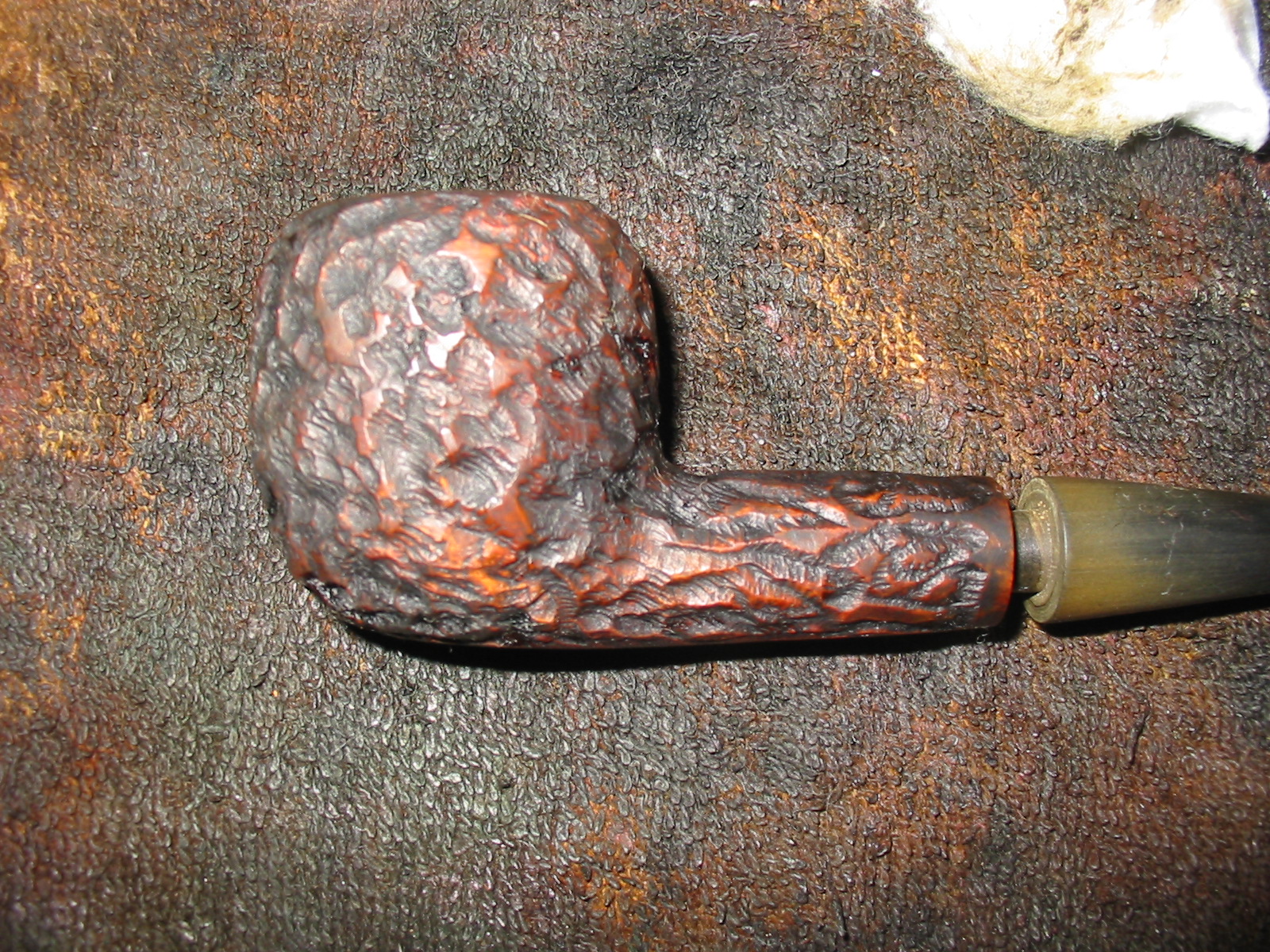
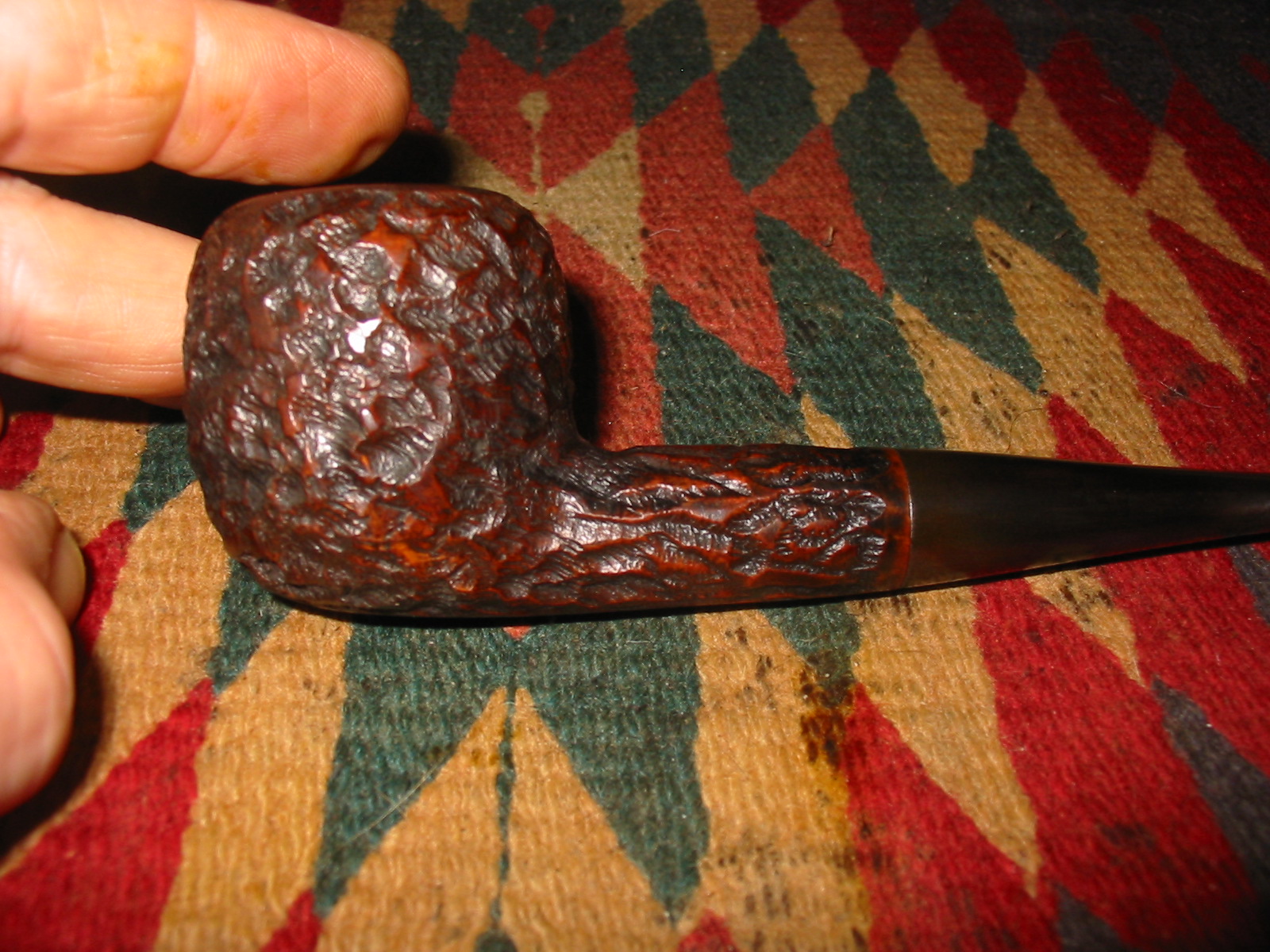
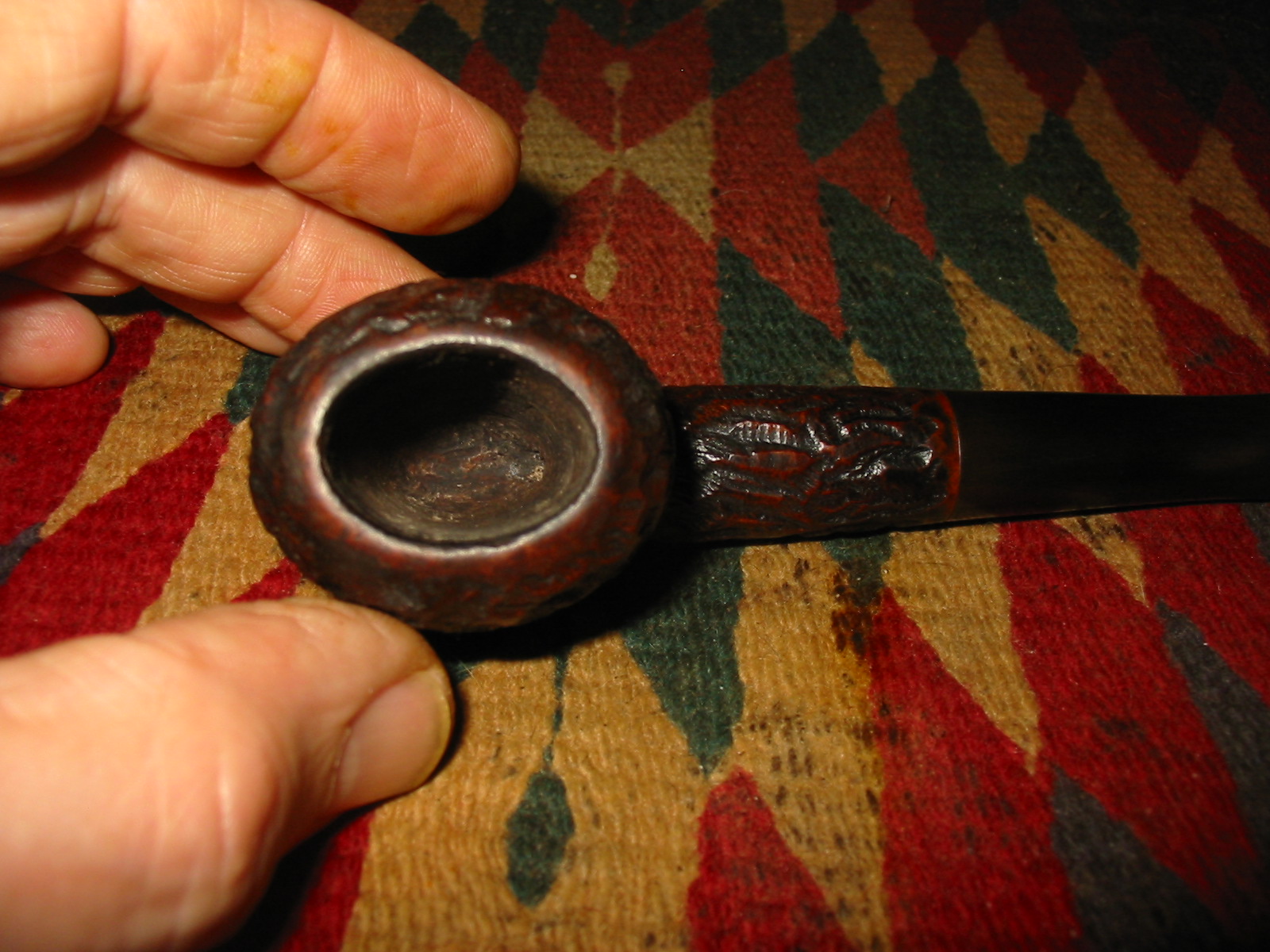
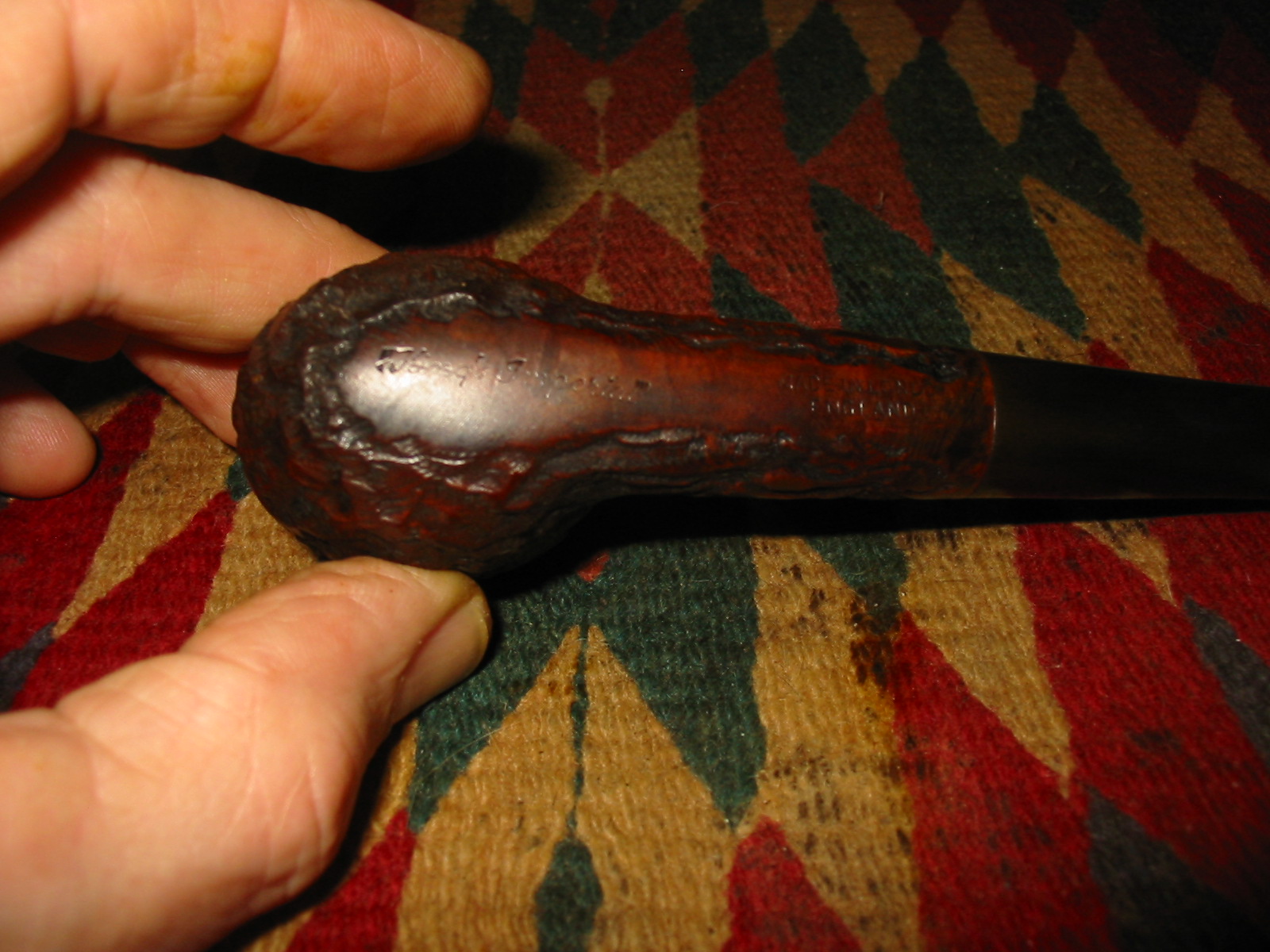
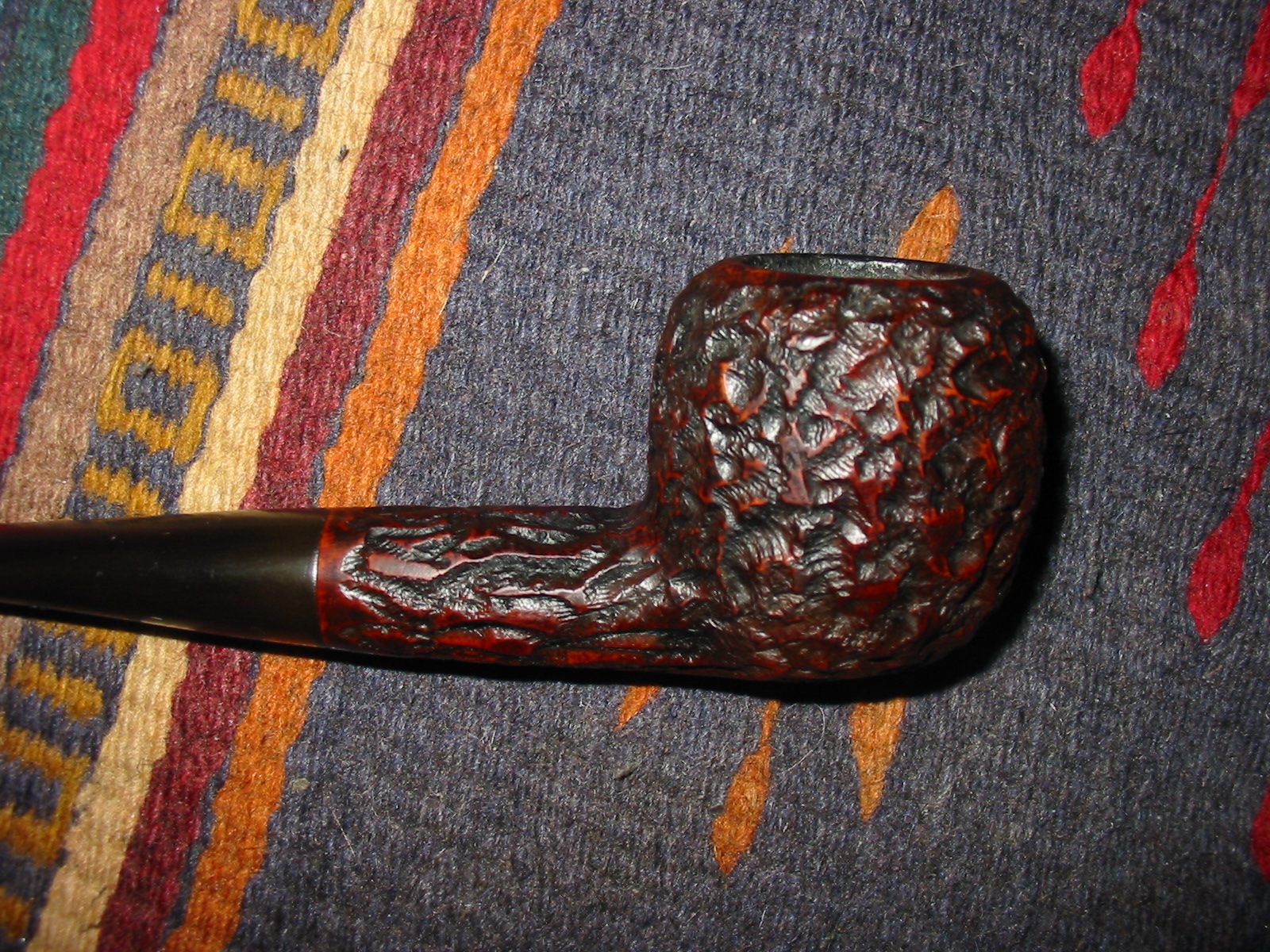
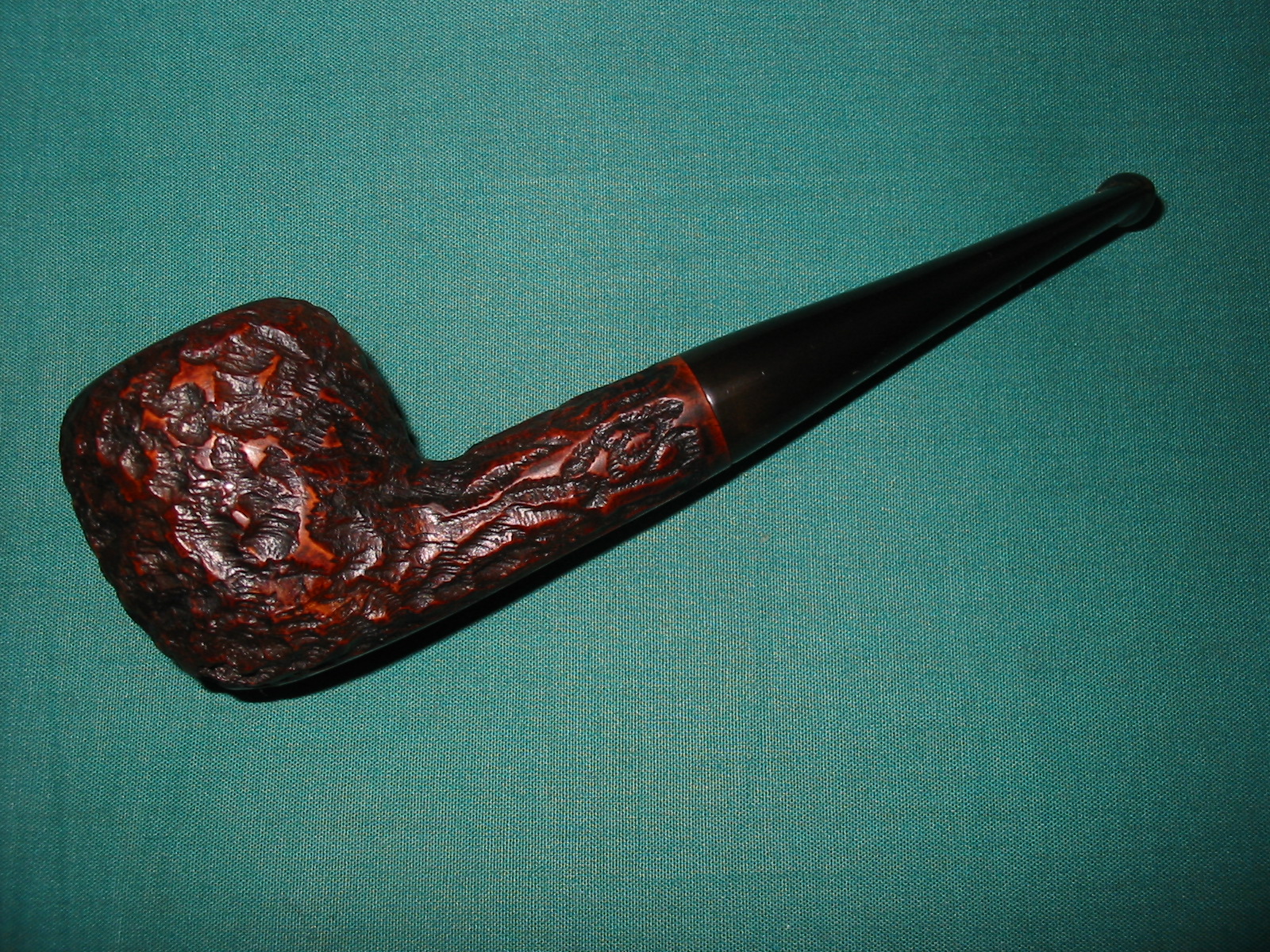
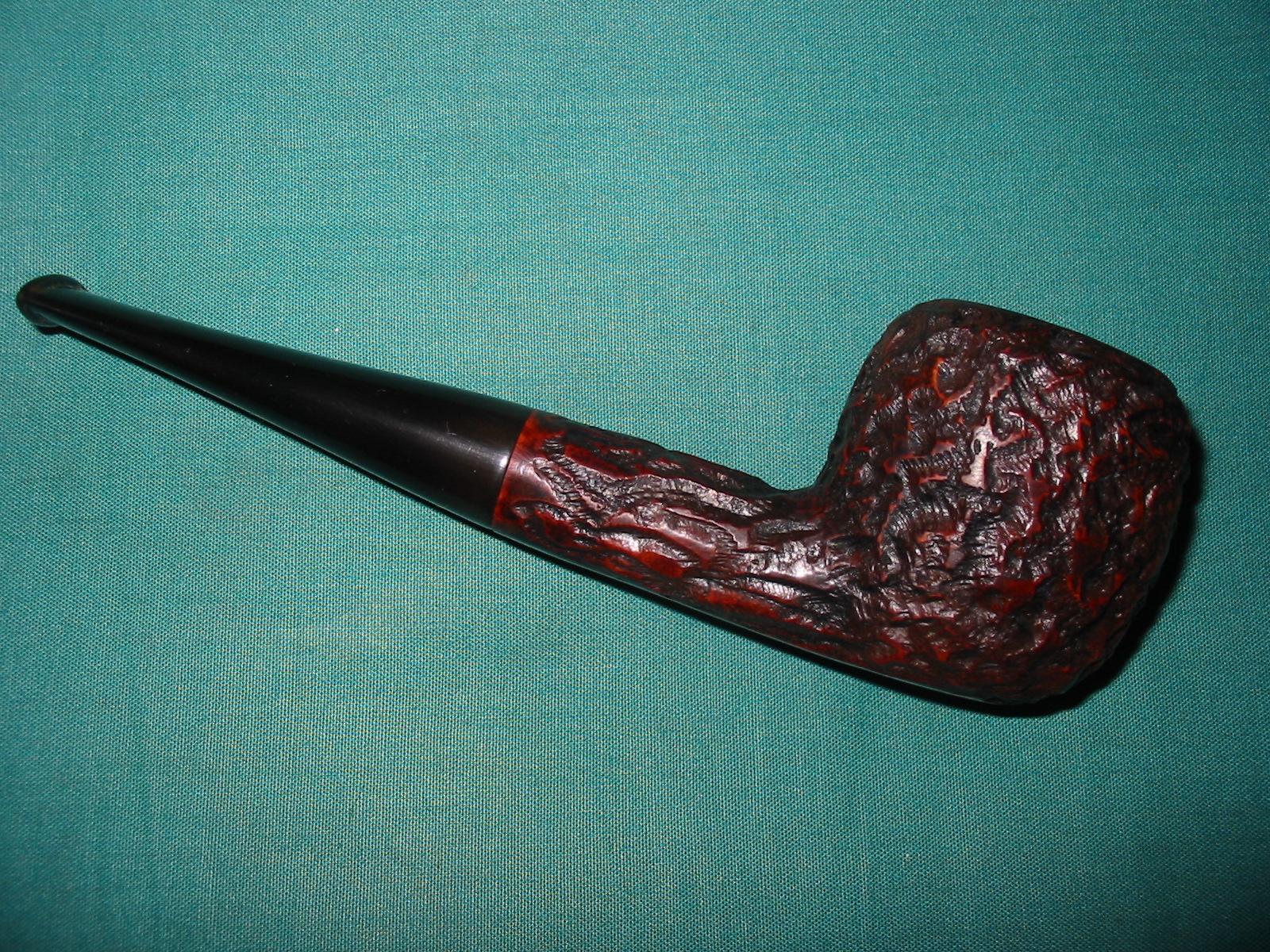
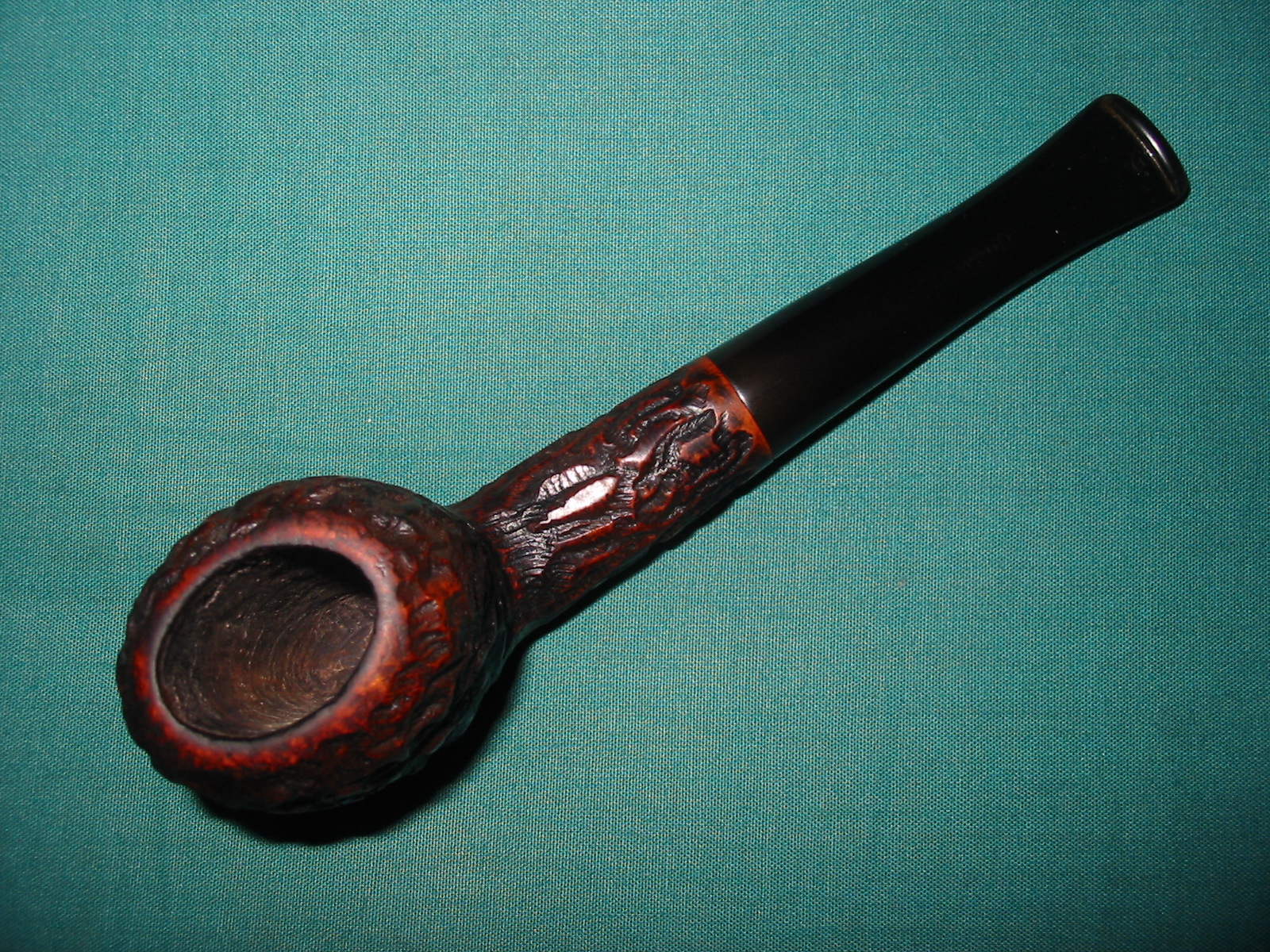
When I finished sanding I rubbed the stem down with Obsidian Oil and then gave it multiple coats of Paragon Wax and hand buffed it. I reinserted it in the shank and gave the entire pipe a light buff with White Diamond and then gave the bowl multiple coats of carnauba wax. I am very careful with nylon stems on the buffer after having several of them damaged by the heat of the wheel and having to start over. I have learned to hand buff the stems and if I am using the wheel at all with them to do it lightly and quickly. The finished pipe is pictured below. It is as good as new and ready to provide a good smoke to the next pipeman who carries on the trust.




 rebornpipes