Thanks to Robert Boughton for his newest contribution to rebornpipes. It is always a pleasure to read about Robert’s work. He not only reworks old pipes but also does research to provide the historical background of the pipes – something I always have found fascinating.
This subject, that of the little-known unfinished, or pre-formed, pipe having nagged at me for some time to approach but for thinking I lacked suitable samples of previous completed efforts of the same type, which proved erroneous, and for assorted other excuses, all of these being of the good type (as if there were such an animal), at last I find the time to take a holiday, it seems, from my mounting responsibilities, to write it all out.
Guest Blog by Robert M. Boughton
Photos © by the Author
“Who be ye smokers?”
A bewildered crew member in Melville’s Moby Dick (1851), upon
going above-deck to find Ismael and Queequig smoking a peace
pipe (quoted with a nod to our good host, Steve)
Introduction
Let there be no misconception, from the commencement of this essay, as to the precise meaning of the modifier unfinished as I apply it to pipe. To be sure, I do not refer to the stylish, branded varieties sometimes called unfinished pipes in reference to certain fine lines – Savinelli and Baronet, to name a couple – whose pipes of that description are more akin to natural versions of pipe craft, and hence the term natural often applied to them. No, the unfinished, or natural, pipe by any brand name lacks only the final glaze and buffing with waxes with which to complete the process, and also sell for much more than that which I shall discuss with as much brevity as possible. Also, the variation of unfinished pipe of which I will soon find my way to addressing should by no means whatsoever be confused with pipe kits, those more typical introductions to the art of pipe making that involves chunks of briar, in general, with pre-drilled stems that the novice pipe maker then saws, chisels, sands, micro-meshes, buffs, stains, waxes and otherwise lovingly transforms from a veritable lump of wood to a finished mode of partaking of all the world’s smoking tobaccos, the degree of excellence depending on the innate talent of the individual woodworker and maybe some amount of luck.
Therefore, having discussed what I do not mean by unfinished pipe, I will re-name the oddity a pre-formed pipe. In this context, the difference between anything finished by minimum standards and the opposite, the mere basic elements to build one’s own pipe all but from scratch, is easier to comprehend. Thus, my meaning of pre-formed pipe is simply a pre-shaped piece of briar, un-sanded, un-glazed, un-waxed or polished or even showing the grain, in many instances – but with a stem, which may or may not fit as attached. Therein resides the fun and challenge for someone a step or two shy of ready to tackle the difficult enough task presented by even a pipe kit, but prepared to refinish, with considerable detail and elbow work, a pre-formed pipe in the rough.
The owner of my local tobacconist of most frequent choice is good enough to offer a small but ever changing selection of these pre-formed pipes for $12.50 each, with a nice variety of shapes from which to choose, even if those available often defy identification on any official chart of pipe shapes. To me, at least, that is just another part of the charm of these raw pipes in transition from mere rough wood and dull stems to greater things of beauty, regardless of how much or little work is invested by the restorer on the sample. The owner, by the way, tells me her supplier (whom she somewhat enigmatically declines to identify) calls these rough-hewn pipes “stubs,” which in an online search for “smoking pipe stubs” brings up such disparate references as the habit of some pipe smokers to stick a cigar stub in the bowl and puff on it, the usually distasteful dottle of wet, unsmoked tobacco remaining at the bottoms of wet smokers’ bowls, and, yes, Melville’s likeable character in the above quoted novel – which is as massive as the Great White Whale itself – Stubbs (whose greatest sign of character is his large collection of pipes). Again, thanks are due to Steve for pointing this out in an emailed attempt by me to determine the origin of the term stubs in relation to pipes, for upon further thought I recalled the other pipe-smoking characters in Moby Dick adopting the habit of shortening the lengths of their stems, as much as possible in order to tolerate the horrendous stench of rotted fish, through the closer proximity of the pipe smoke to their noses. Perhaps by coincidence, most of the samples of the pre-formed pipes I have seen are indeed on the short side.
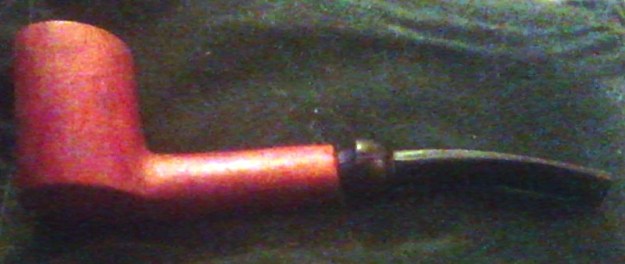
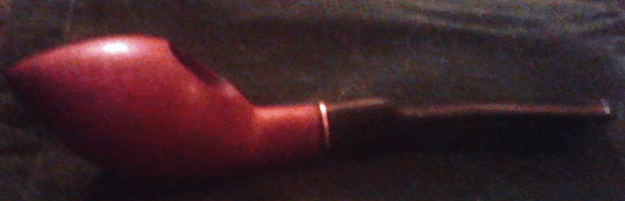
And so, before our weekly meeting Friday night, I once again plumbed the dædal depths of Chuck Richard’s knowledge of pipe lore, and in so doing learned far more than I had anticipated – indeed, everything but a tag better than unfinished or pre-formed, although those adjectives turn out, in a vaguely sad way, to be far too apt: the unfortunate truth of the matter is that the German factory of their origin had never intended to leave these pipe shapes in any condition but complete to a degree noted to that European country. The factory, it seems, simply went belly-up in the 1970s with thousands of the pre-formed specimens sitting there, where most of them were at some point picked up by a U.S. distributor who continues to market them as-is, but not to individuals. (Aha! Thus, the tobacconist owner’s reluctance to disclose the name of her supplier thickens.) Later, a few German pipe interests procured the remainder of the lot and ever since have been selling them to anyone, for the most part in the European Community, who will bite. All of these unfinished pipes, therefore, were cut from decent briar that has aged in the 40-some years since the end of their official production – and are now perfectly suited for the consummation of the process. Perhaps these pre-formed pipes can, as a result, be compared to a fine wine that is left open to breathe. Based on the four or five of these finish-yourself pipes that I have now practiced the art of restoration, this example being the only one I can now document in full (although I am attempting to leave this latest restore pristine), they smoke wonderfully no doubt with or without any further work. But that would not only take away from the ultimate enjoyment of this likely unique and limited edition of unfinished pre-forms, barring the unlikely enthusiasm of a reader to strike out upon the task of building a finish-yourself pipe business; it would also deprive me of the opportunity to get on with the remainder of my tale.
And Now, for Page Two…
As anyone who has ever restored a pipe knows, there are restores, and then there are restores. In any case involving one of these unusual pre-forms, the only real tasks are choosing one with signs of good grain and lack of flaws such as cracks or fillings. In other words, to re-state a theme common to me, somewhat after the old man in Mrs. Robinson advised a memorably disinterested Dustin Hoffman, I have one word for you: sanding!
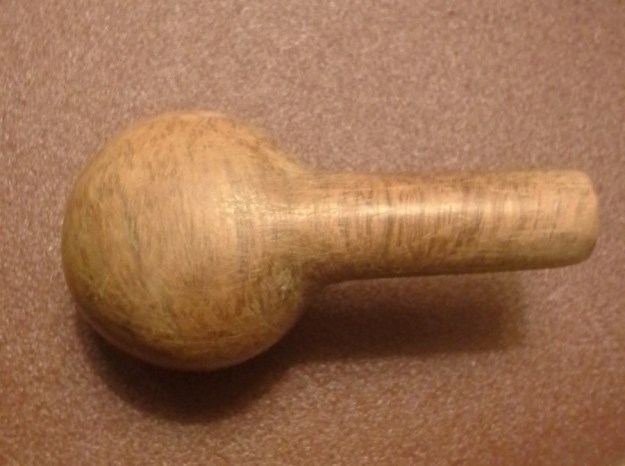
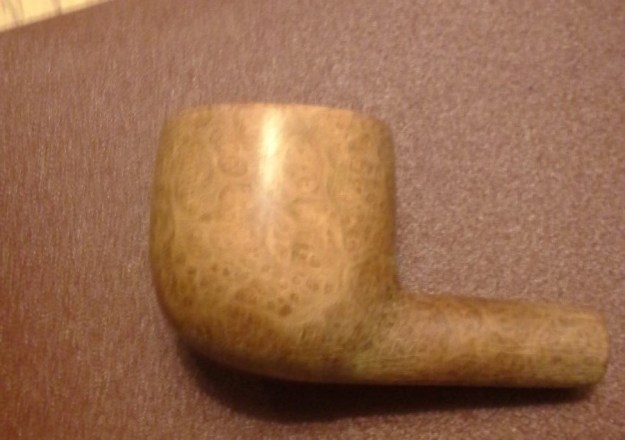
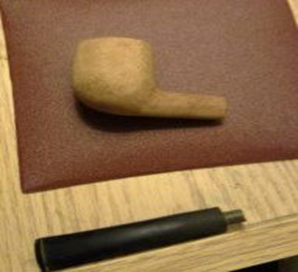
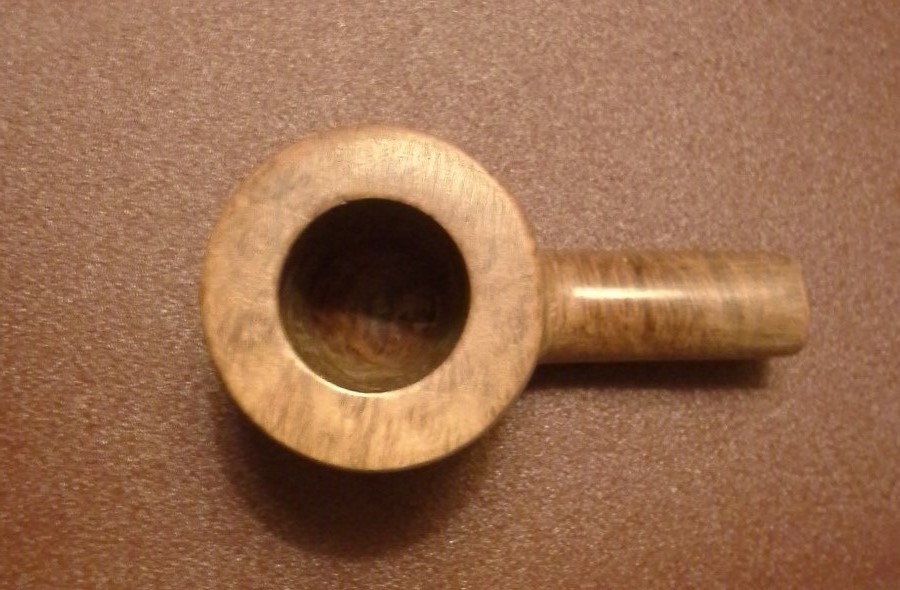
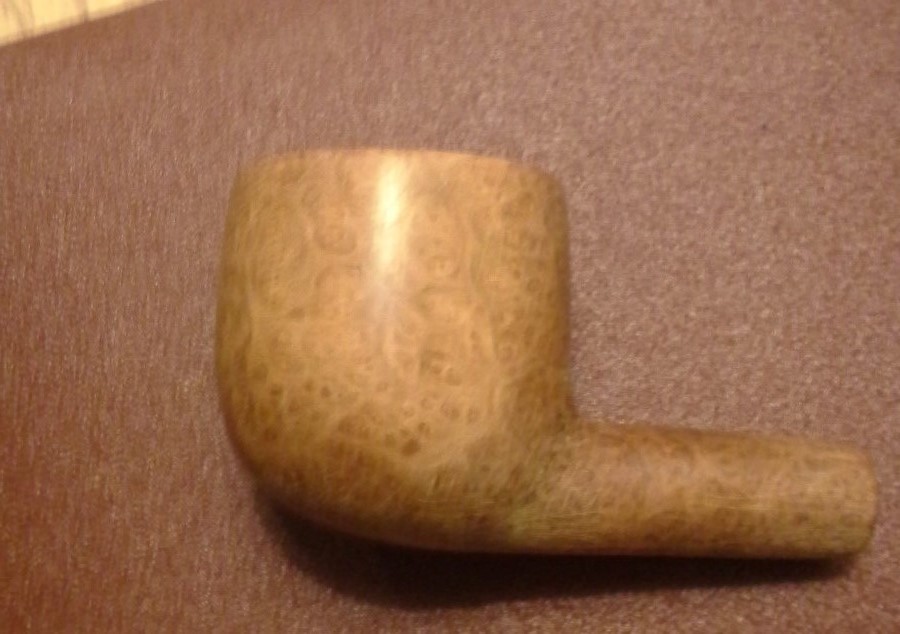
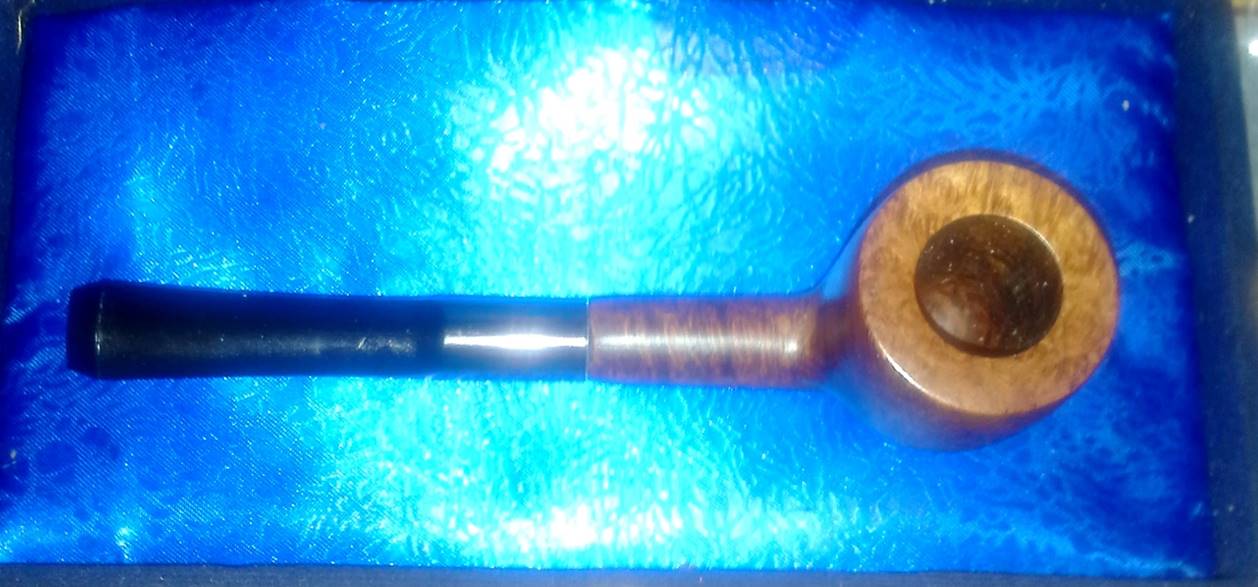
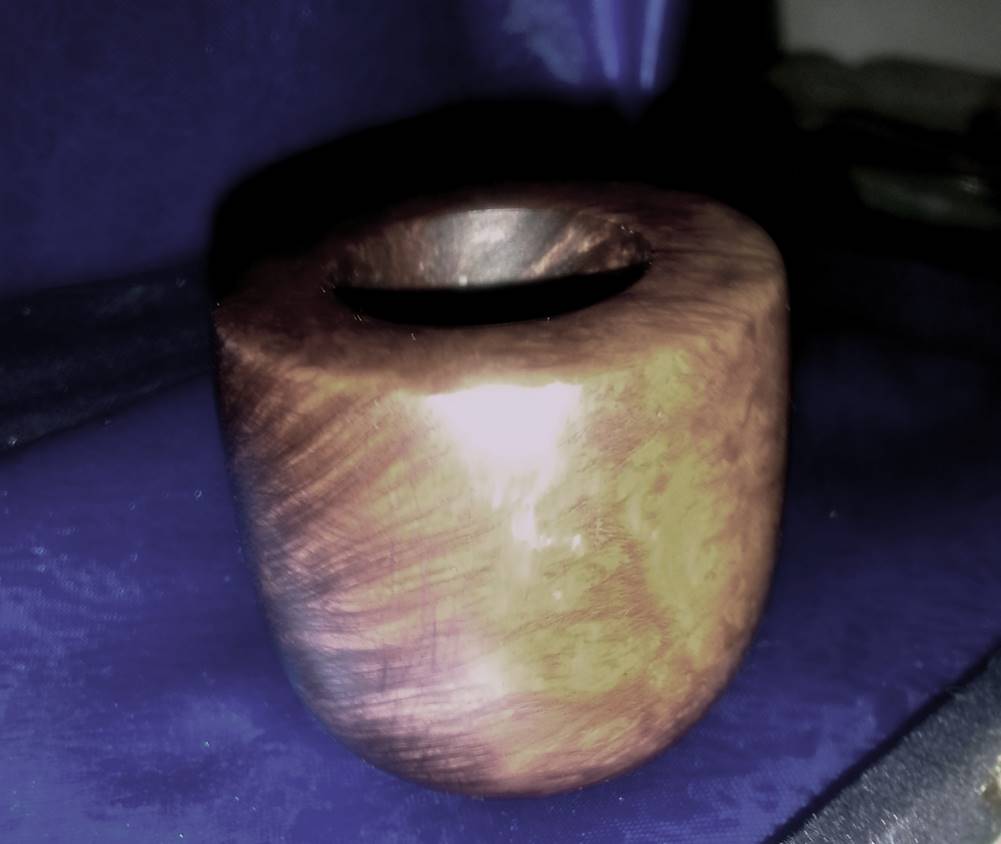
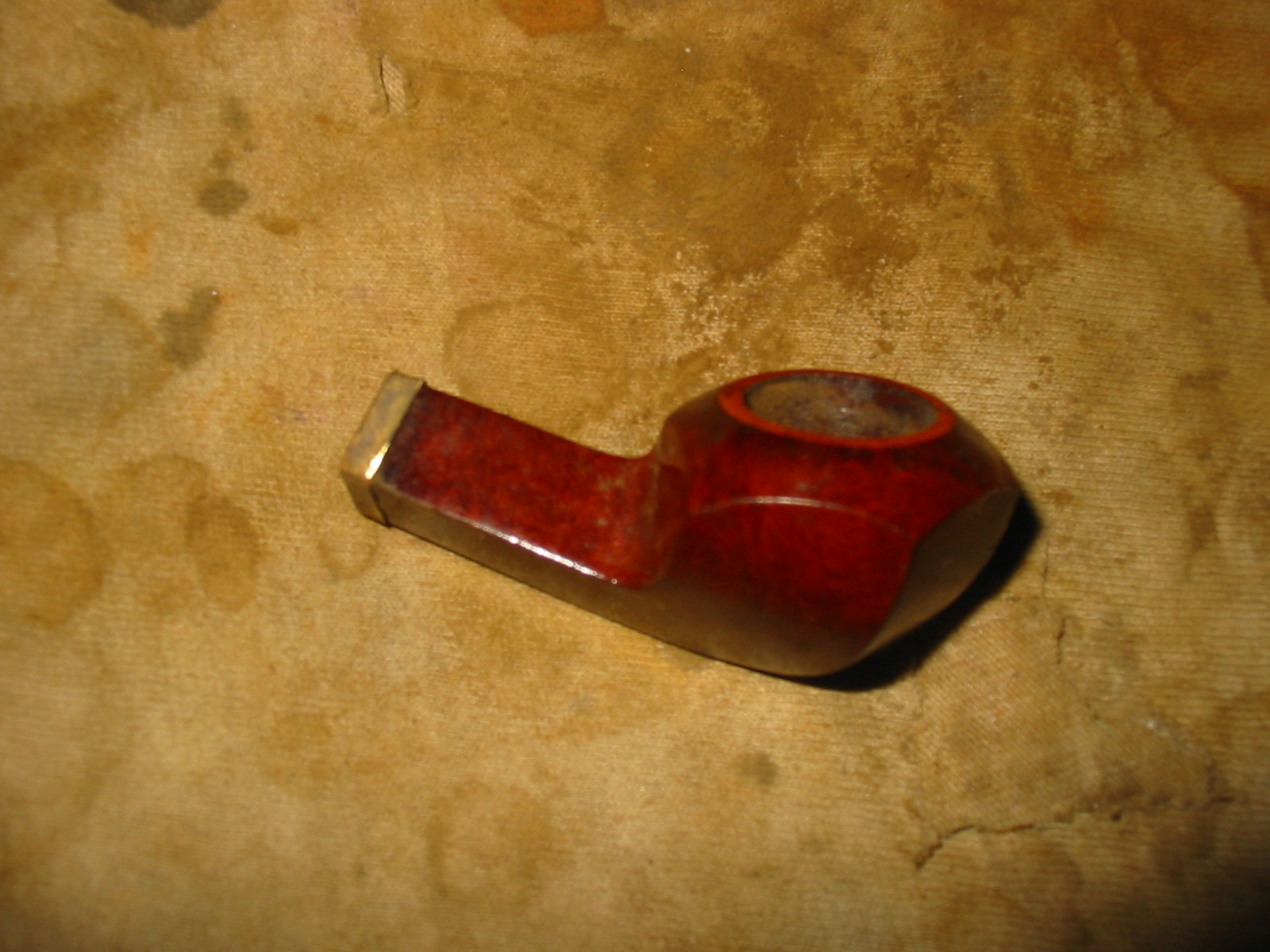
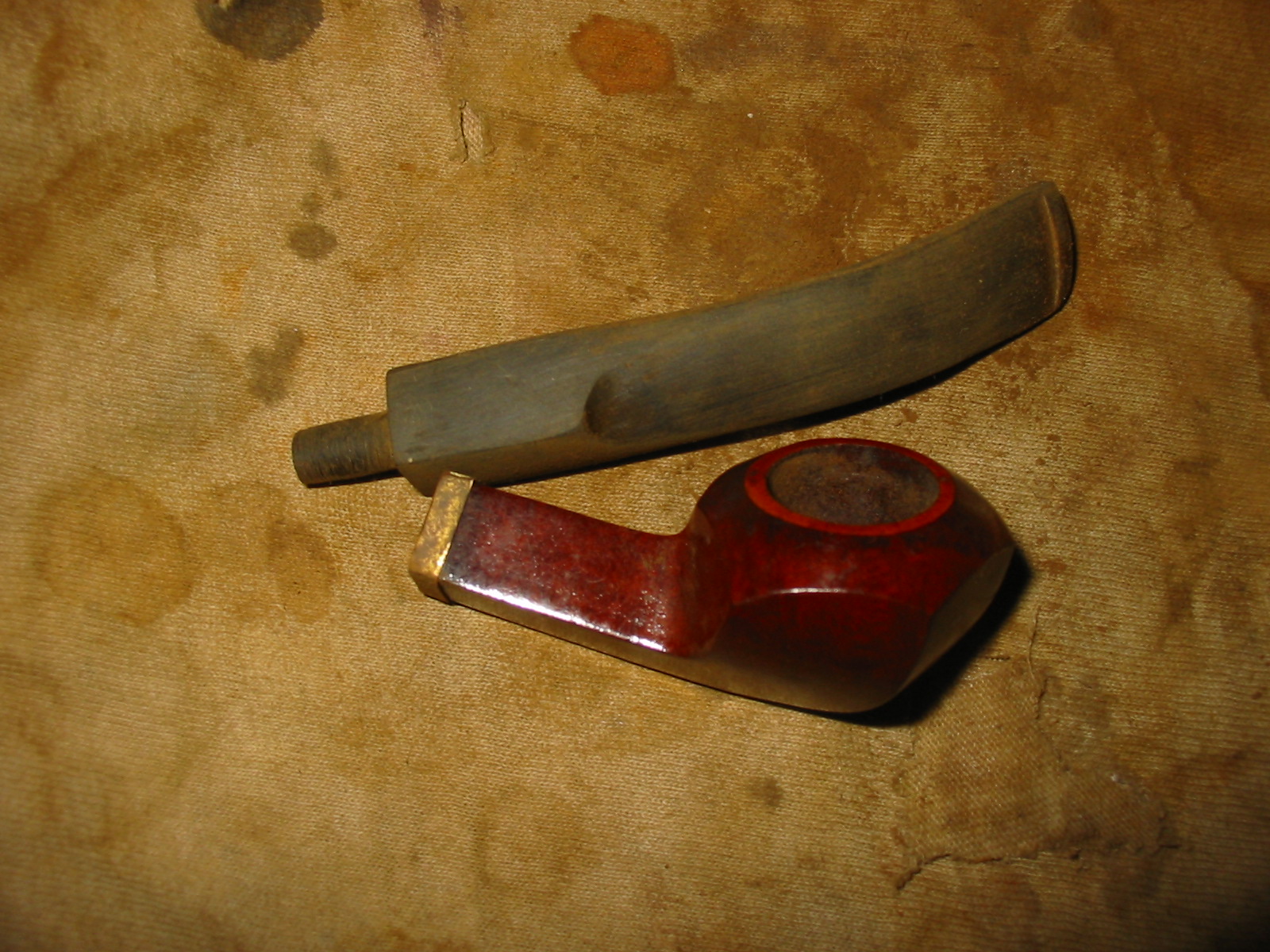
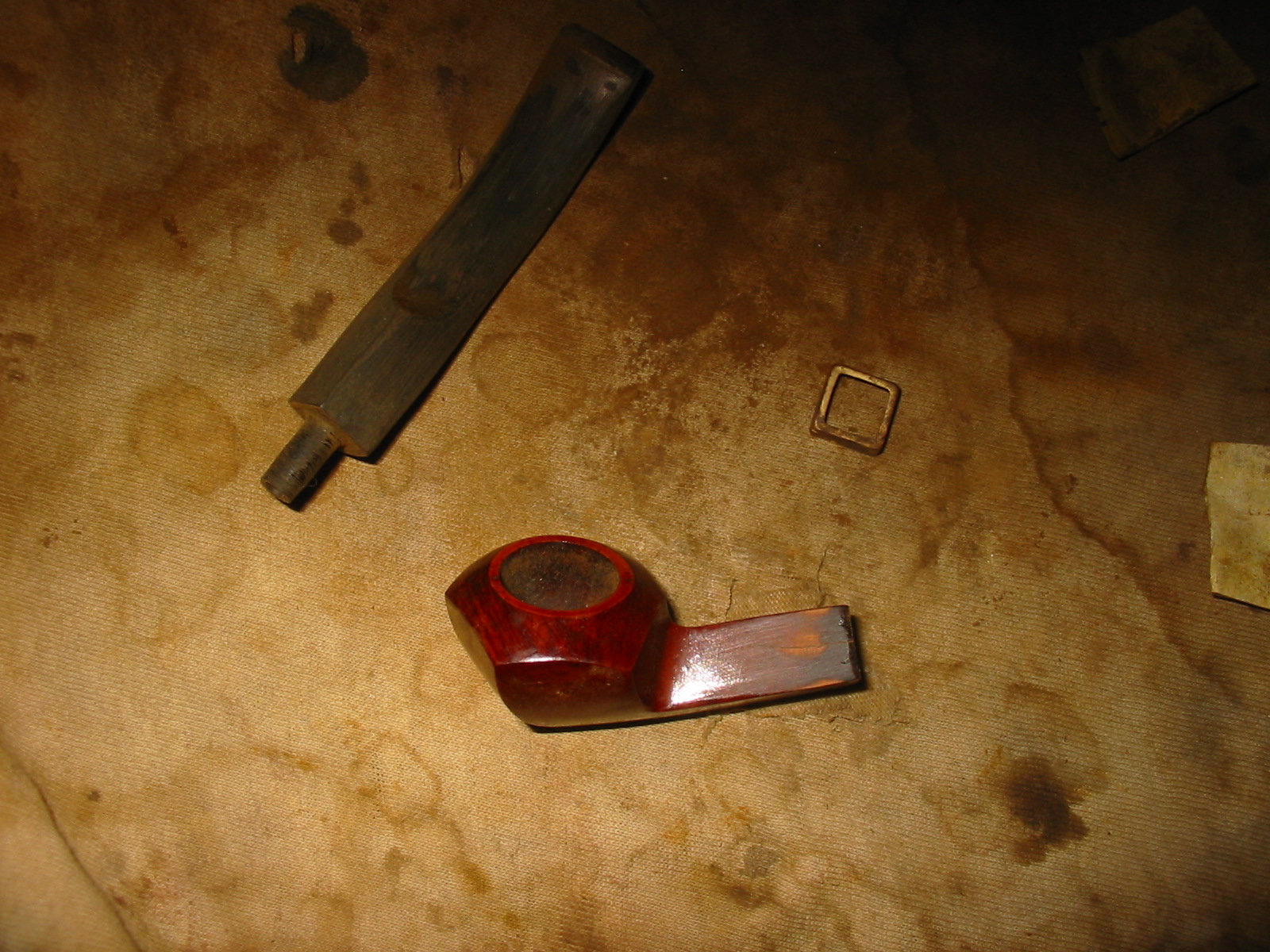
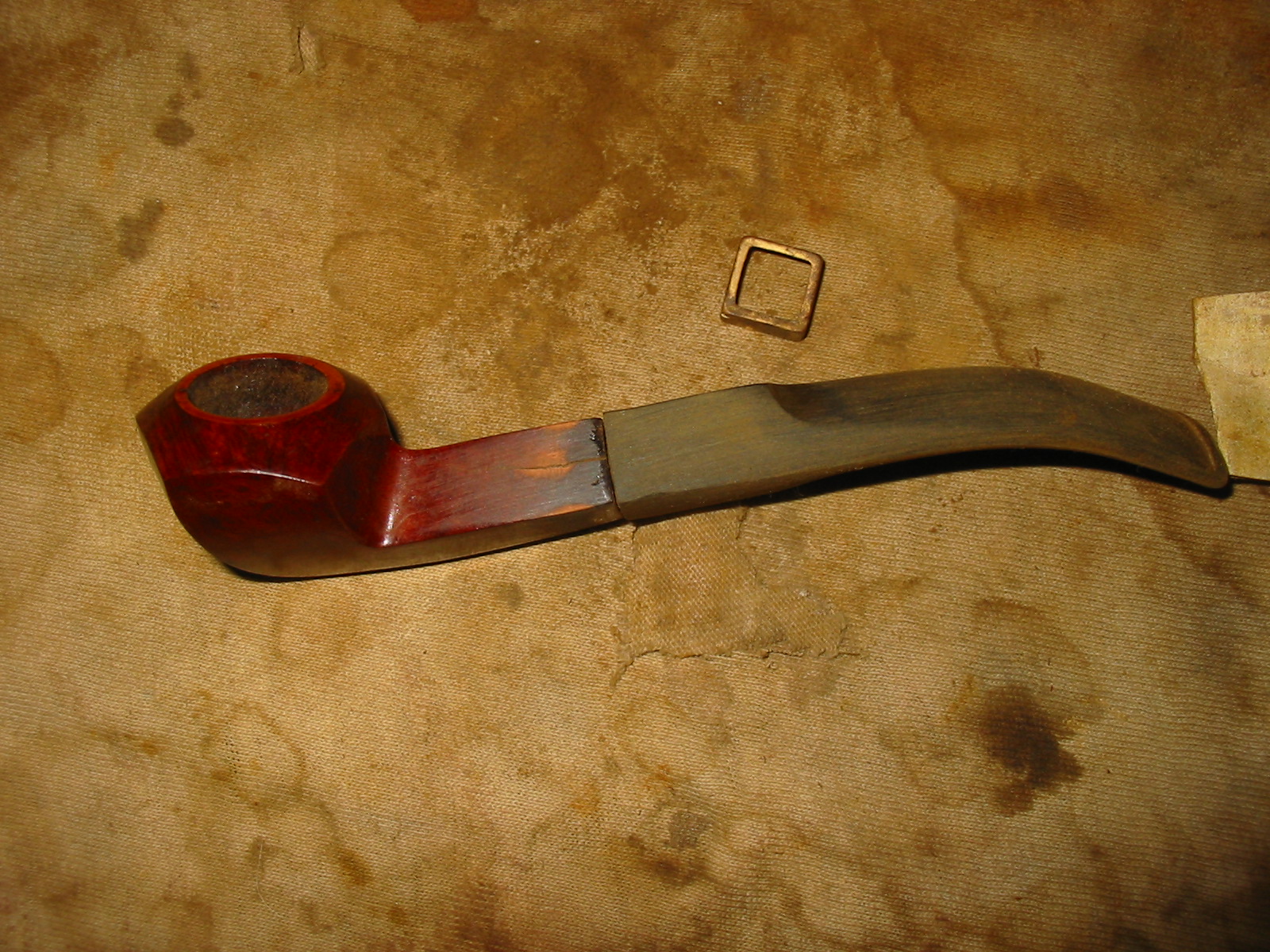
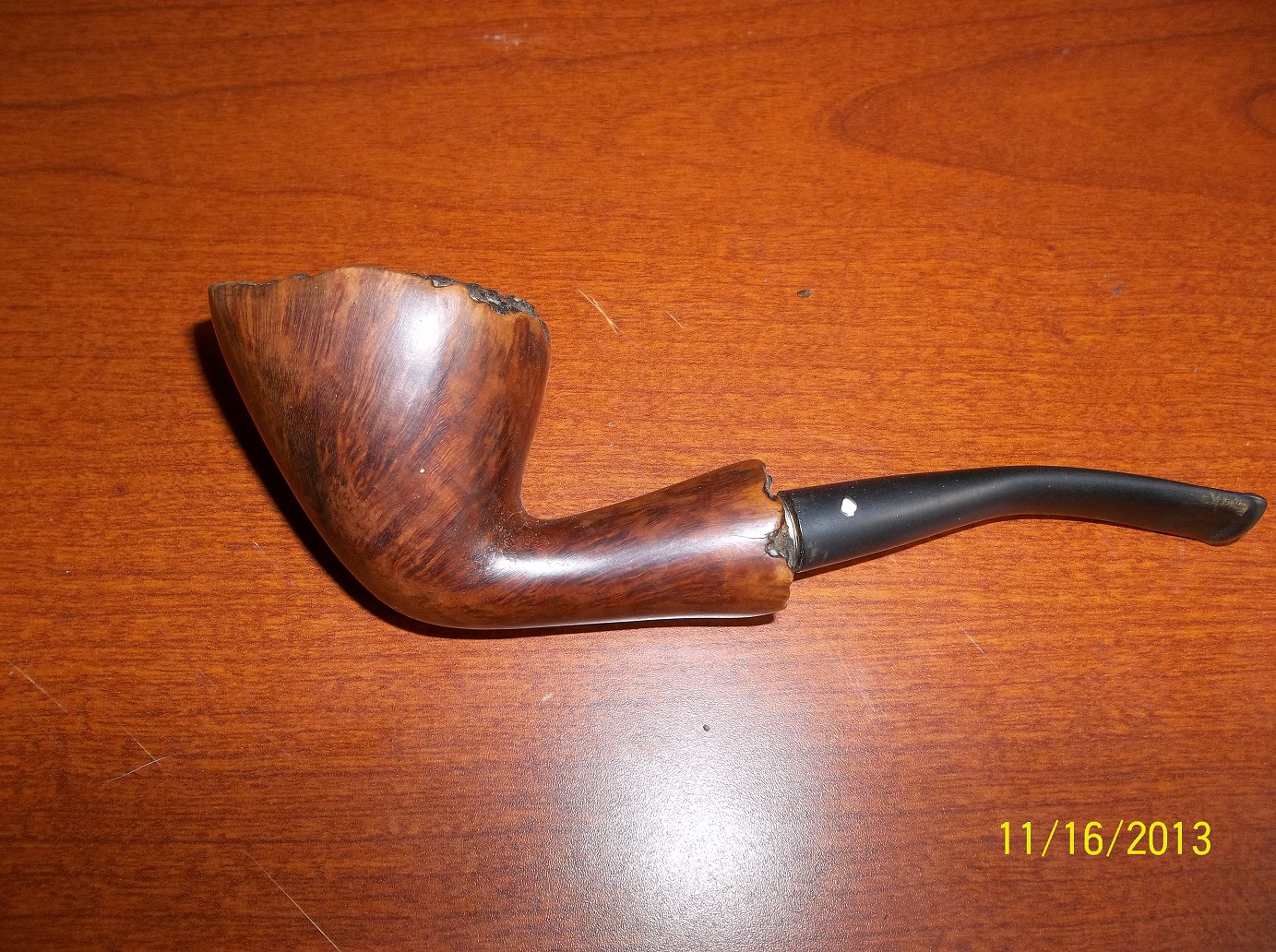
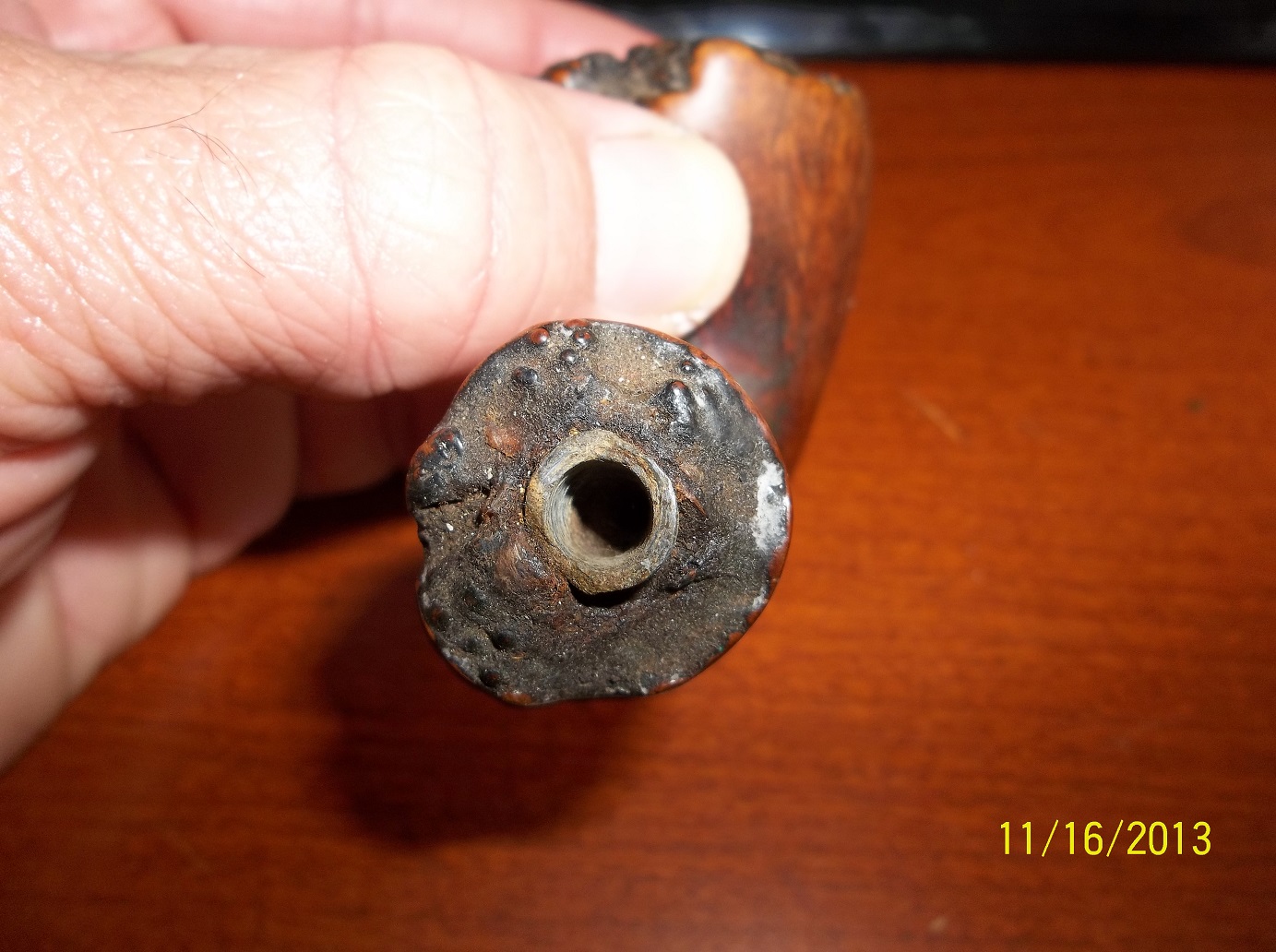
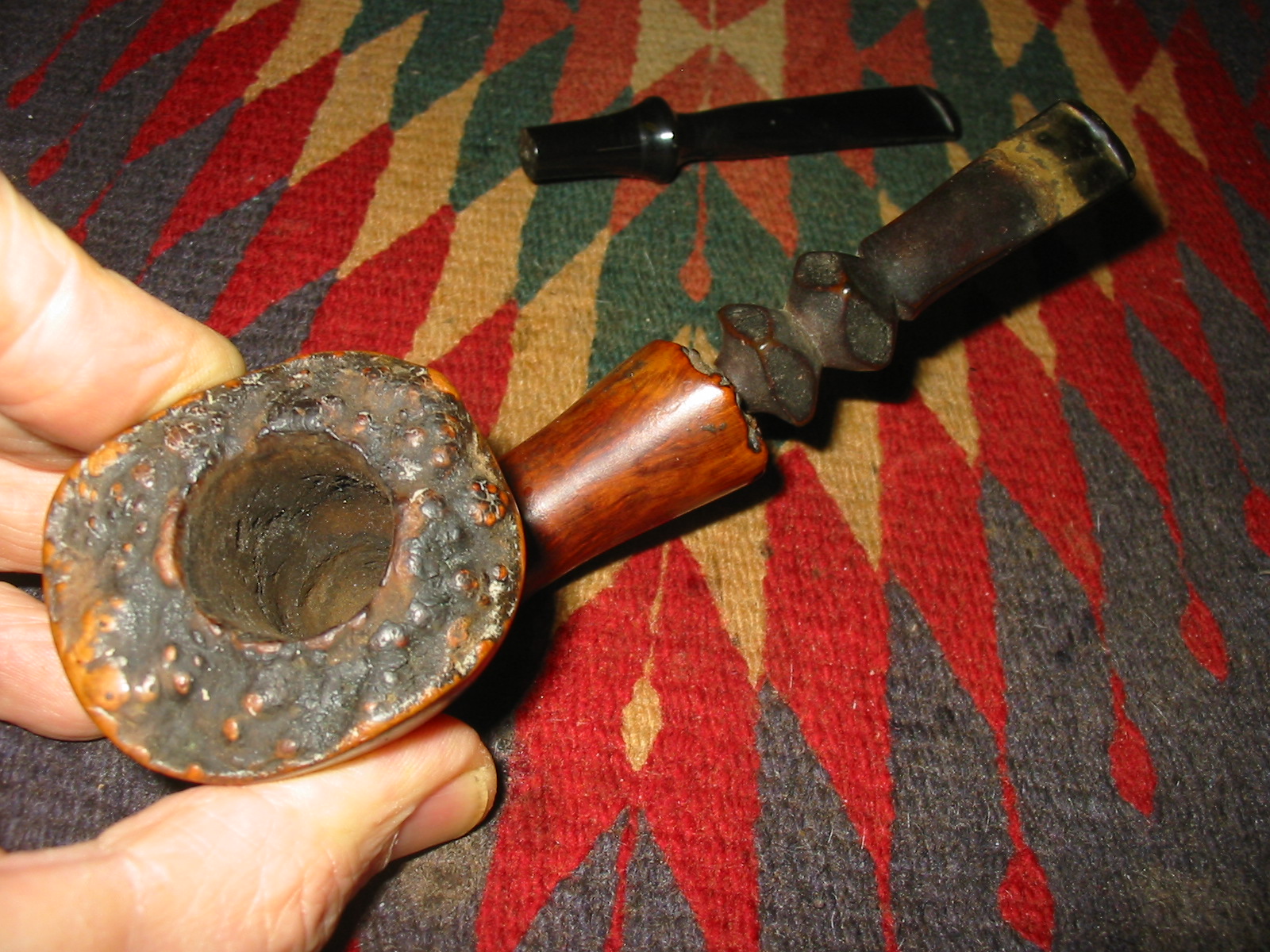
Here was my little pre-formed pot as I first saw it.

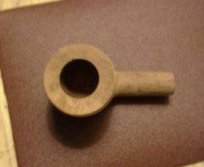
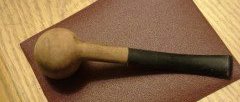
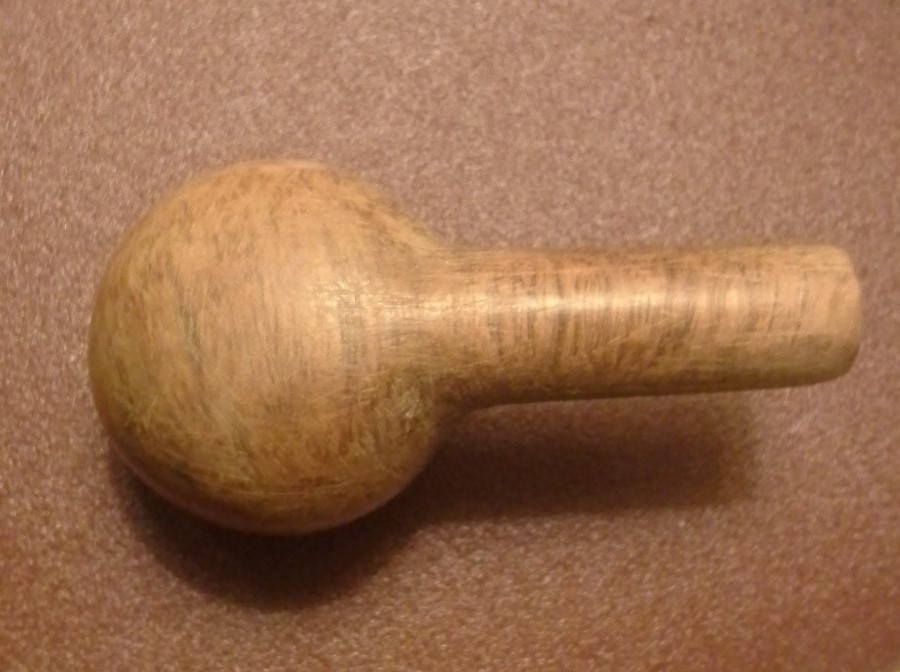
Unfortunately, I was forced to use my cell phone camera to snap these shots and the others that will follow, and so the clarity of the roughness of the plain briar, with bumps and pits and discolorations a-plenty, is somewhat wanting. But I hope you can see enough to get the general condition of my little pot. Again, I chose it over the assortment of others in more exciting shapes for the beauty of the grain I could hardly make out, and the lack of real blemishes.
Of course, after rigorous sanding – with 80-grit paper followed by 150 – I saw the beautiful grain for which I had purchased this particular pipe, in some places elegantly lined and others more spotted, but overall a clear potential for finishing. Then I used some micro-meshes, starting with 1500, then 2400 and at last 12000.
At that point, I was at a quandary. Should I use a stain, or skip it? The natural beauty of the pale briar attracted me very much. Still, I opted to use an alcohol-based shoe stain of a light brown color, which, as it was almost dry, I held a gentle match flame under the bowl and was gratified with the brief poof of blue as the alcohol in the stain ignited and dissipated.
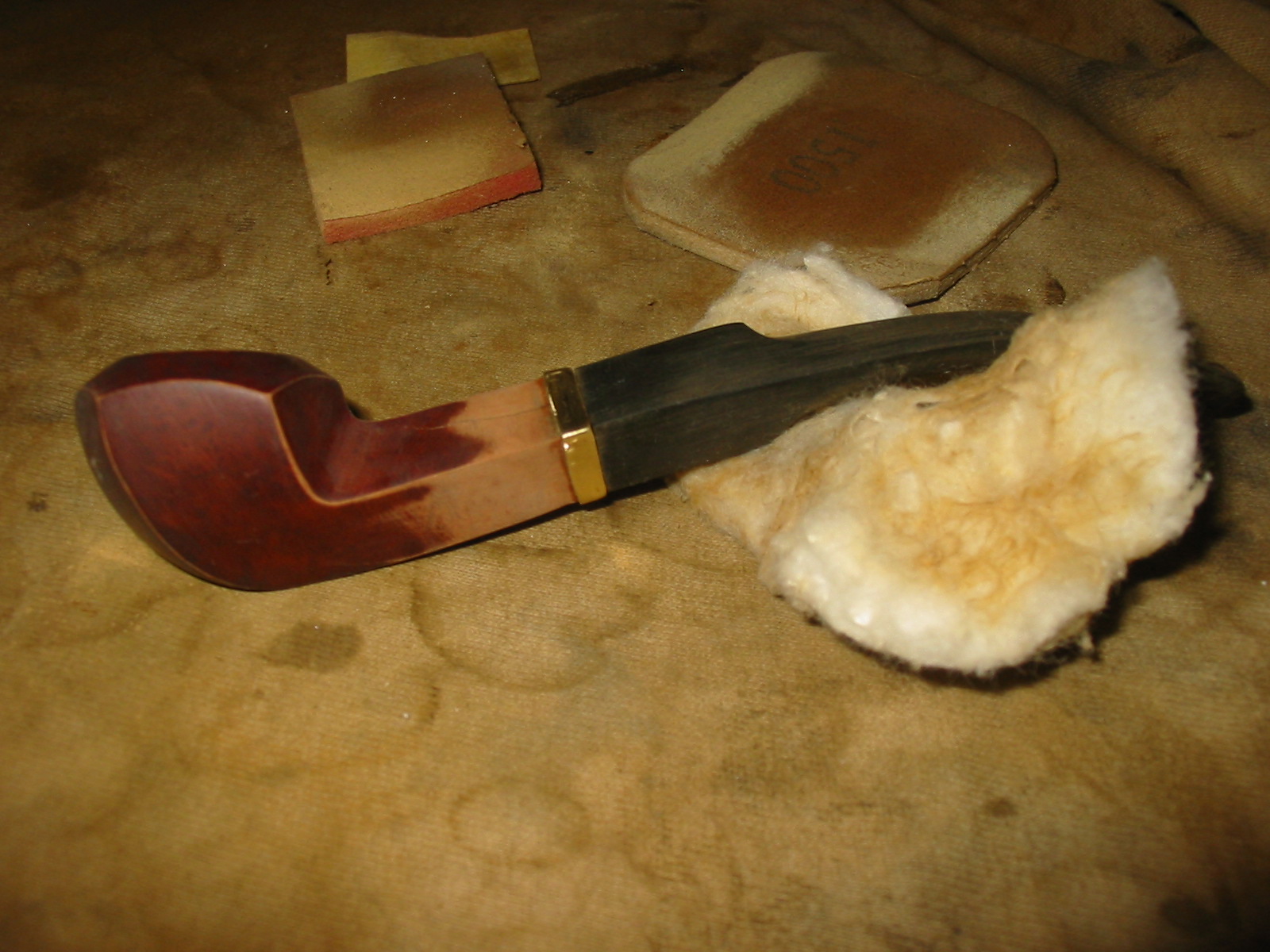
The next step was an easy buff of Tripoli White Wax. Wow! was my initial thought after my first experience applying Tripoli. The immediate soft luster the preliminary wax bestowed upon the previously smooth but somehow flat bowl and shank gave the wood real dimension.
Again, I pondered long and hard on the idea of adding a coat of Tripoli Red, and during that pause remembered more of Chuck’s words to me before our Friday meeting: “Sometimes a little Red Tripoli on the wood is just what you need, especially to give it deeper color.” Still with more than a little flip-flopping in my stomach, I went for it:

Wow! was my initial thought after my first experience applying Tripoli Wax. The immediate soft luster the preliminary wax of Tripoli White bestowed upon the previously smooth but flat bowl and shank gave the wood real dimension. But my gentle blessing of the Tripoli Red gave the old briar absolute radiance.
Suddenly, all that remained were a buff with my new stick of carnauba and – come to think of it – quite a bit of work yet to go before the stem would be in order. I don’t know about the rest of you (and I know this places me with the troops in the rear as far as experience goes), but I have developed an undeniable case of what might only be apt to call stem loathing, if I may possibly coin a phrase. I just hate the buggers, as my British friend and fellow pipe smoker Leigh might say, if he didn’t have the habit of speaking the Queen’s English, and even in the tone and style of William, or His Royal Highness the Duke of Cambridge KG KT.
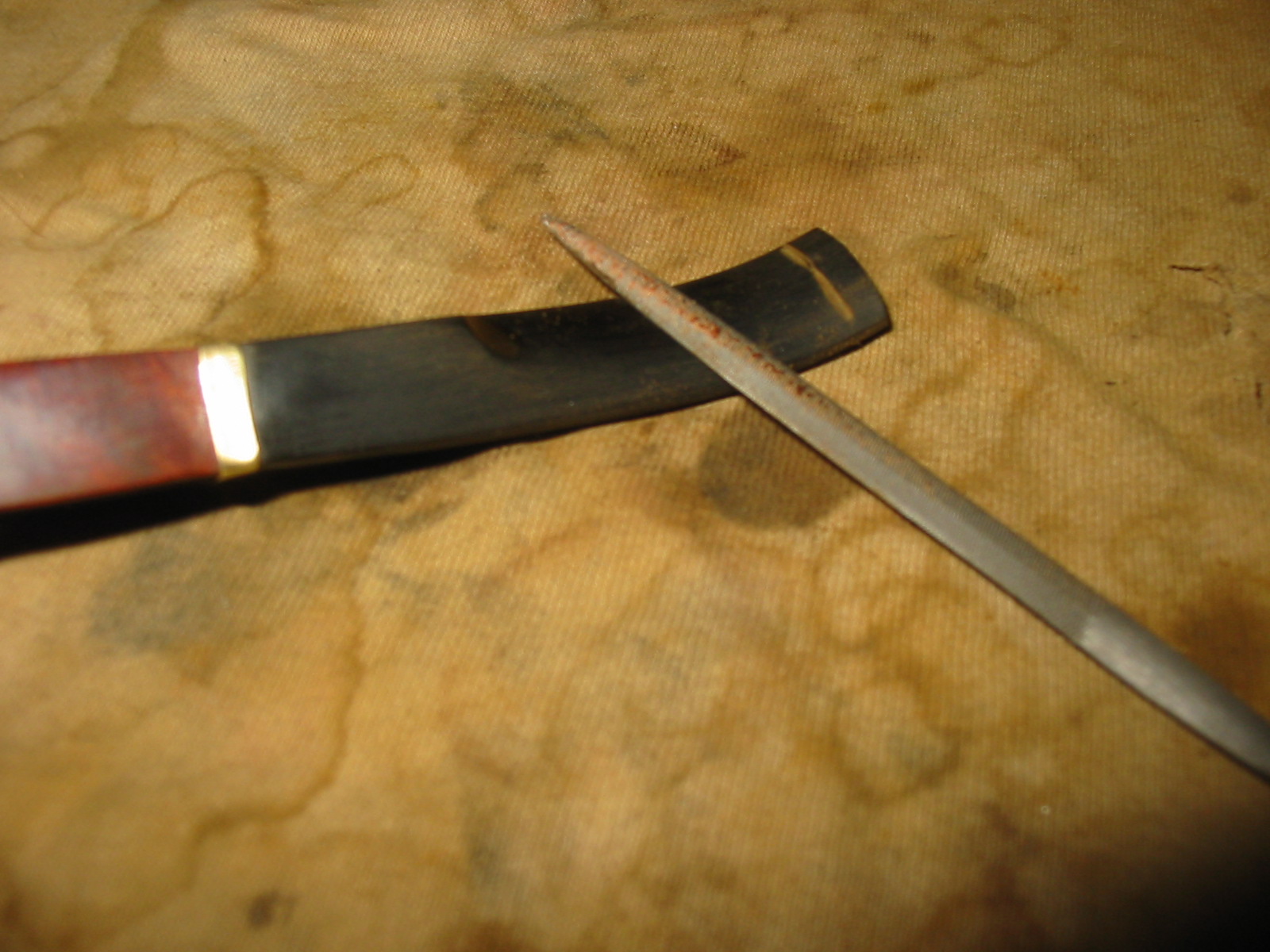
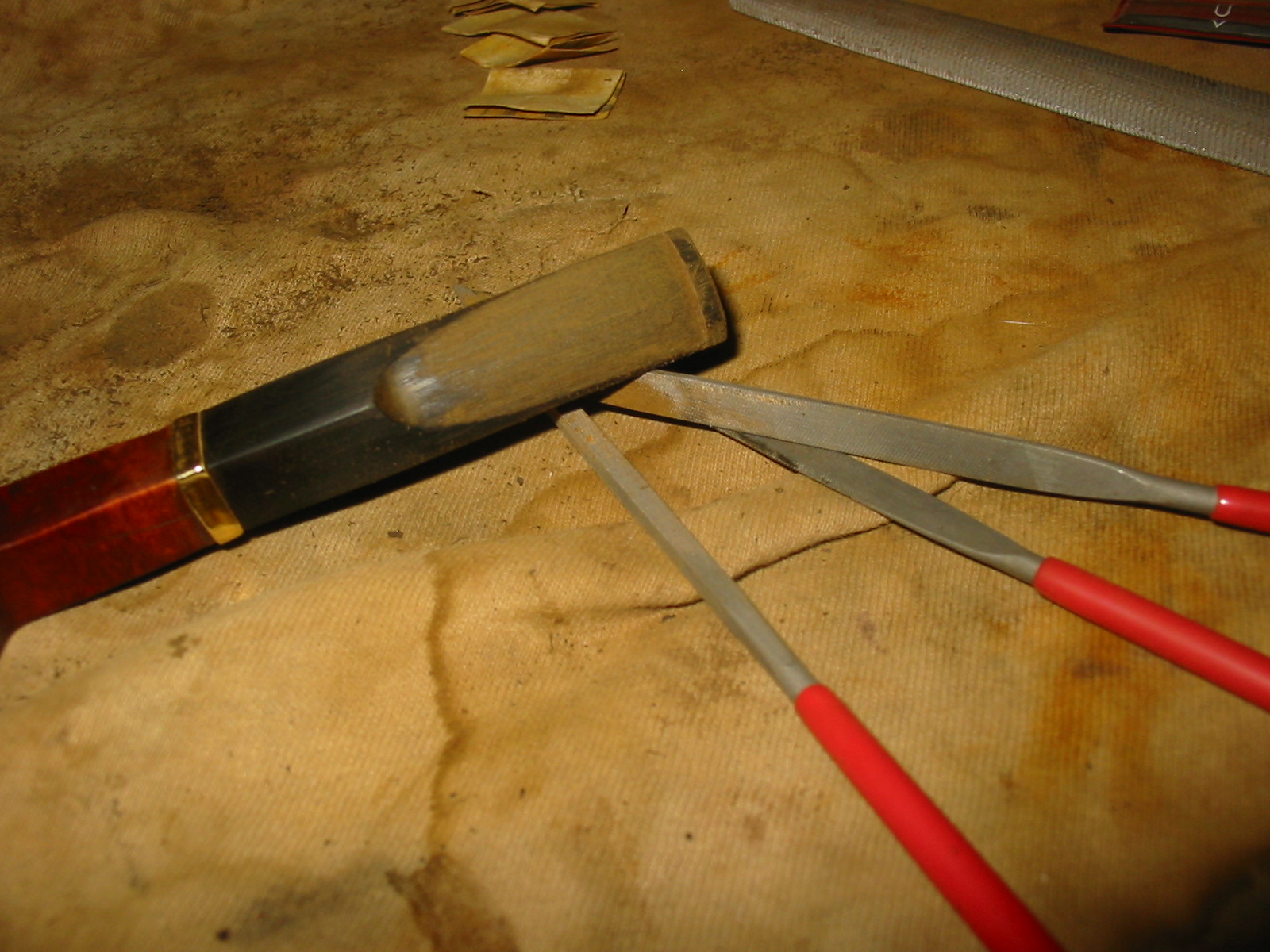
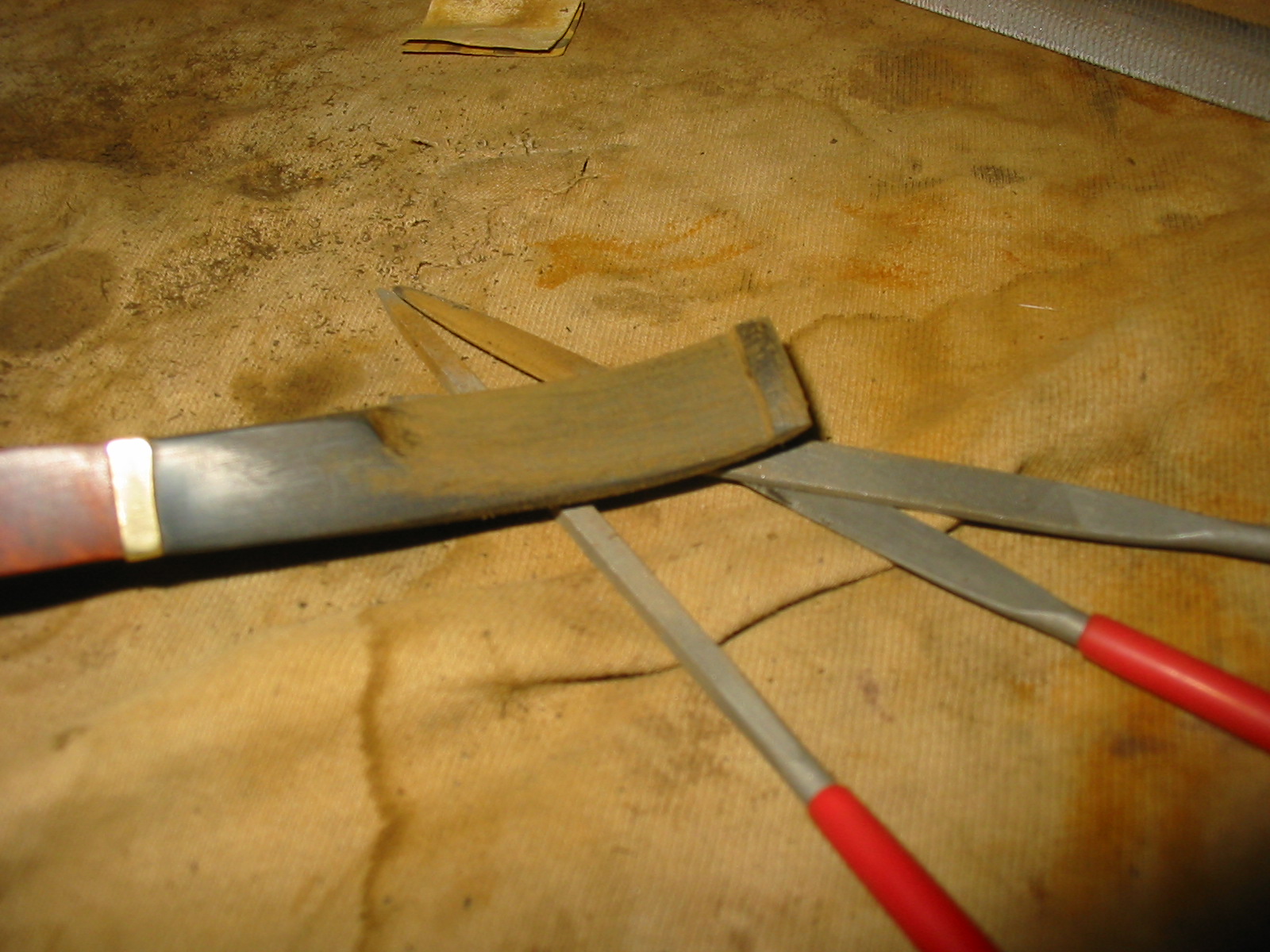
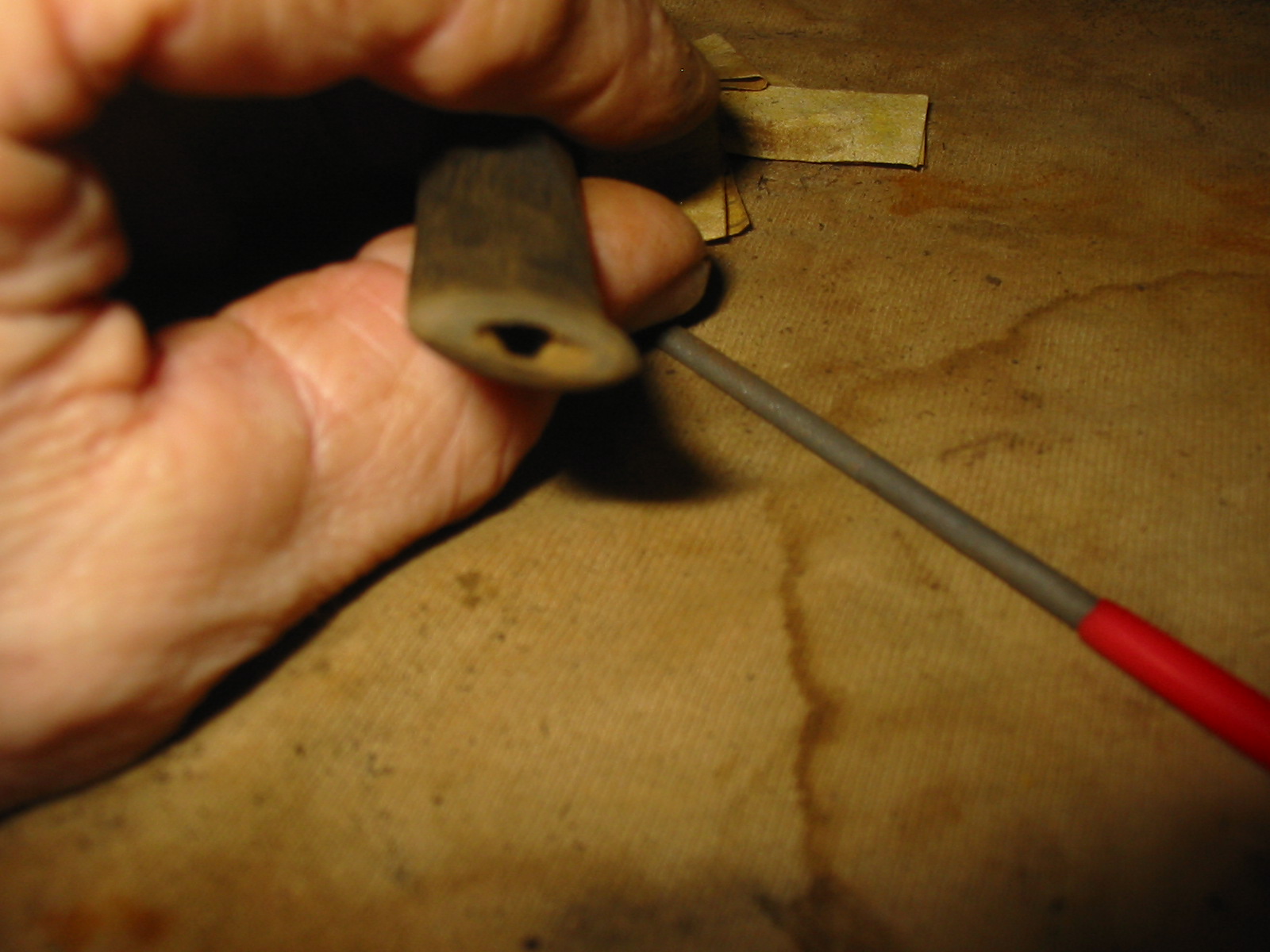
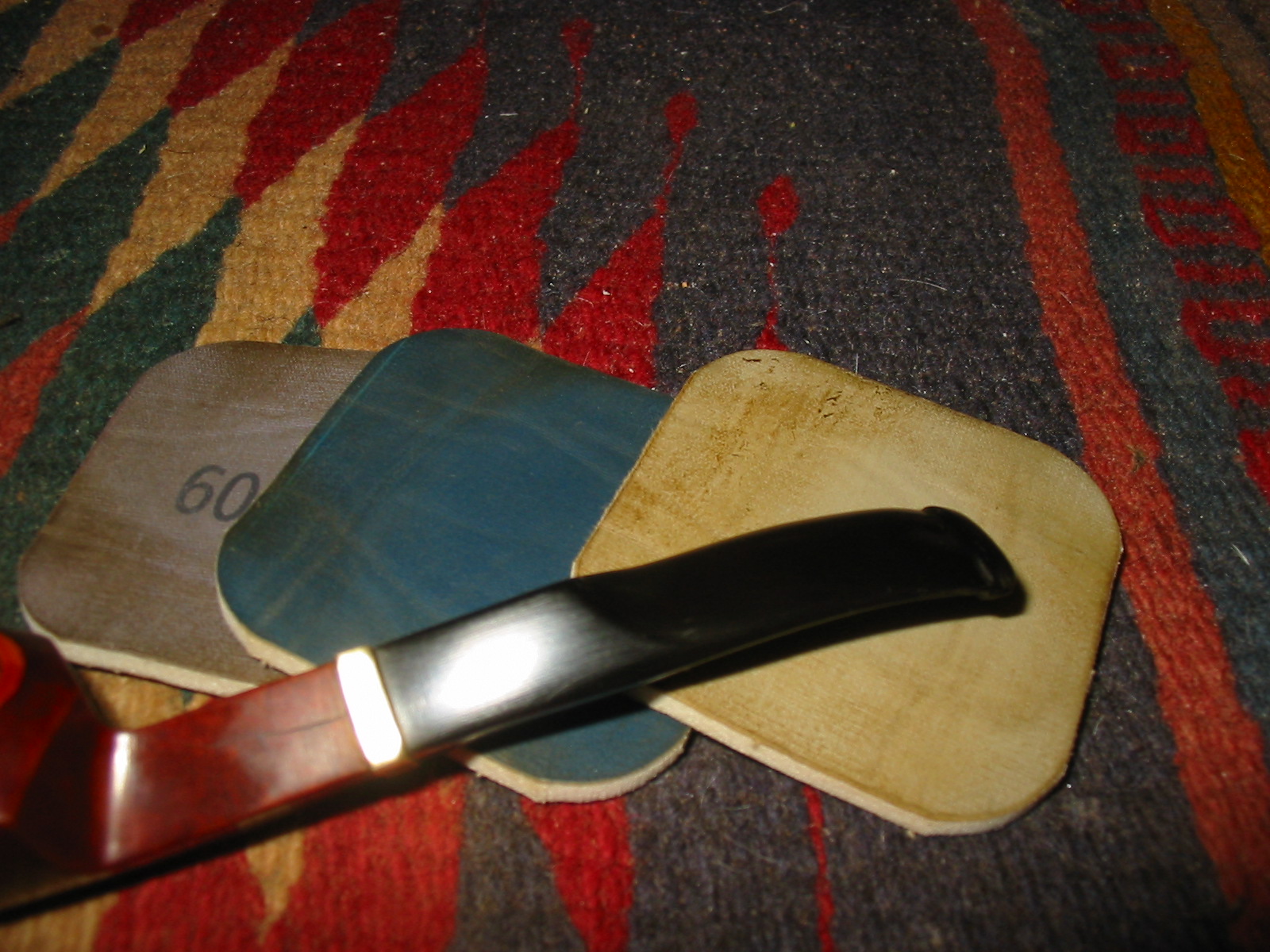
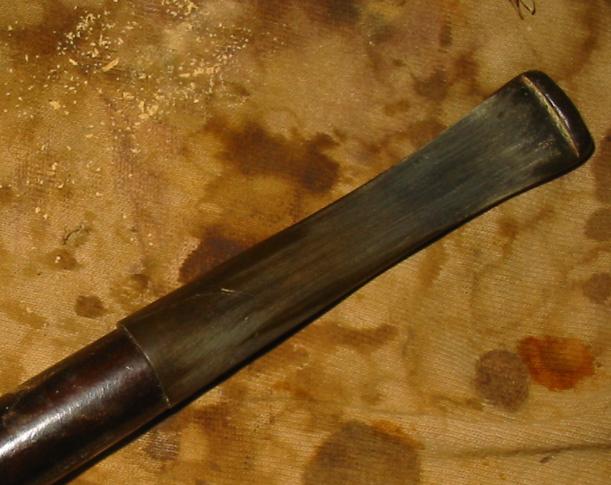
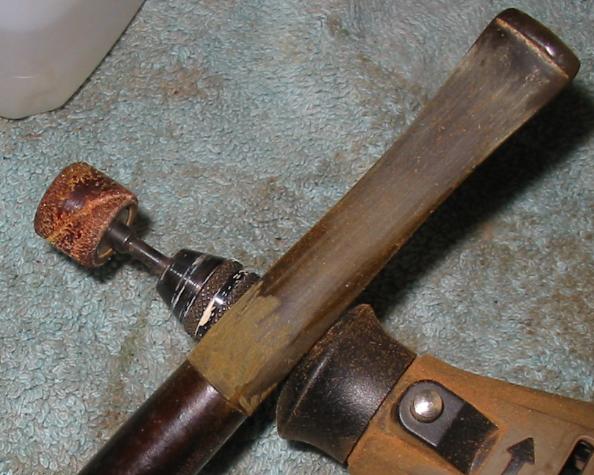
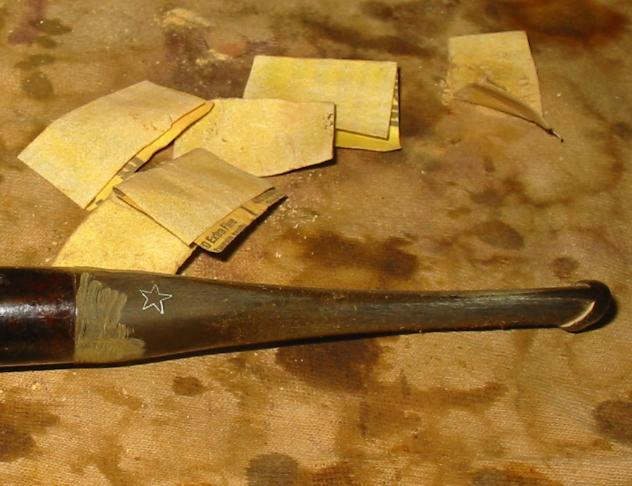
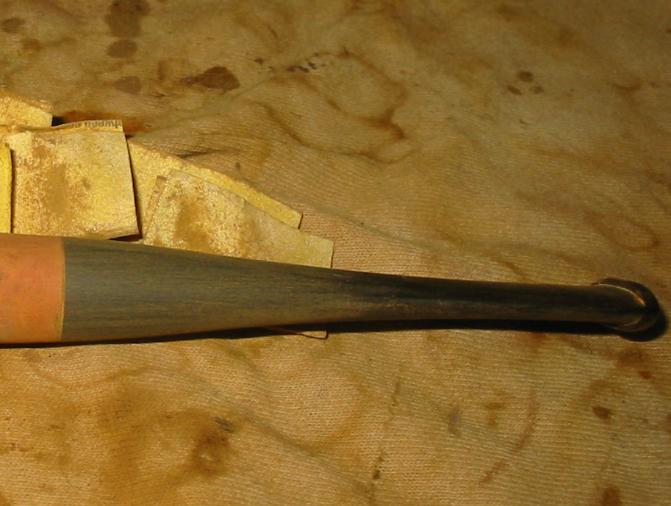
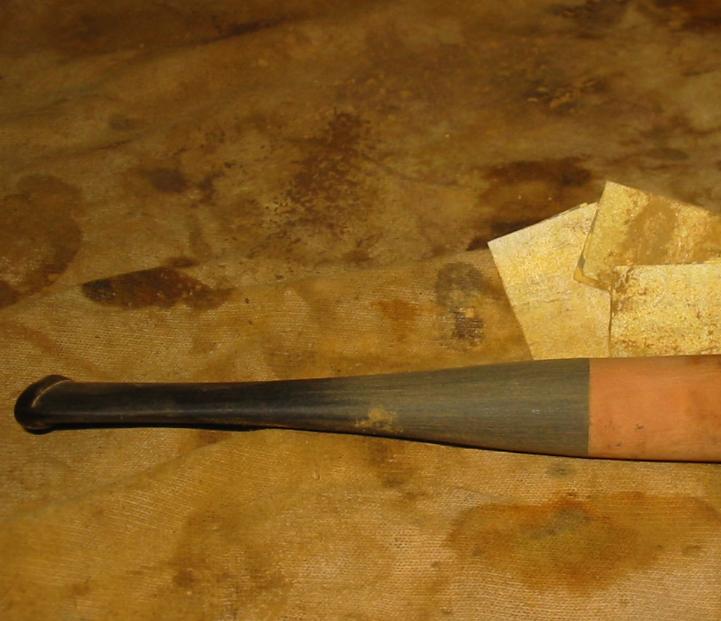
At any rate, with no way around the dirty deed, I went all-in, setting about the task of reducing a downright humongous overhang of the stem where it must, I repeat, must at all costs end up smooth and flush with the shank opening. I tried to be patient with the wretched thing, you see, I really did. Nevertheless, after a day of patiently trying the coarsest micromesh in my trusty box, getting nowhere with that approach and wearing my entire left arm, hand, four fingers and thumb into spasms of pain, there began to creep into my mind more direct and effective means of accomplishing the necessary duty. With far more grace and good sense than I in fact felt, I returned to the 80-grit sandpaper for a quick adjustment of the problem…and the approach actually worked!
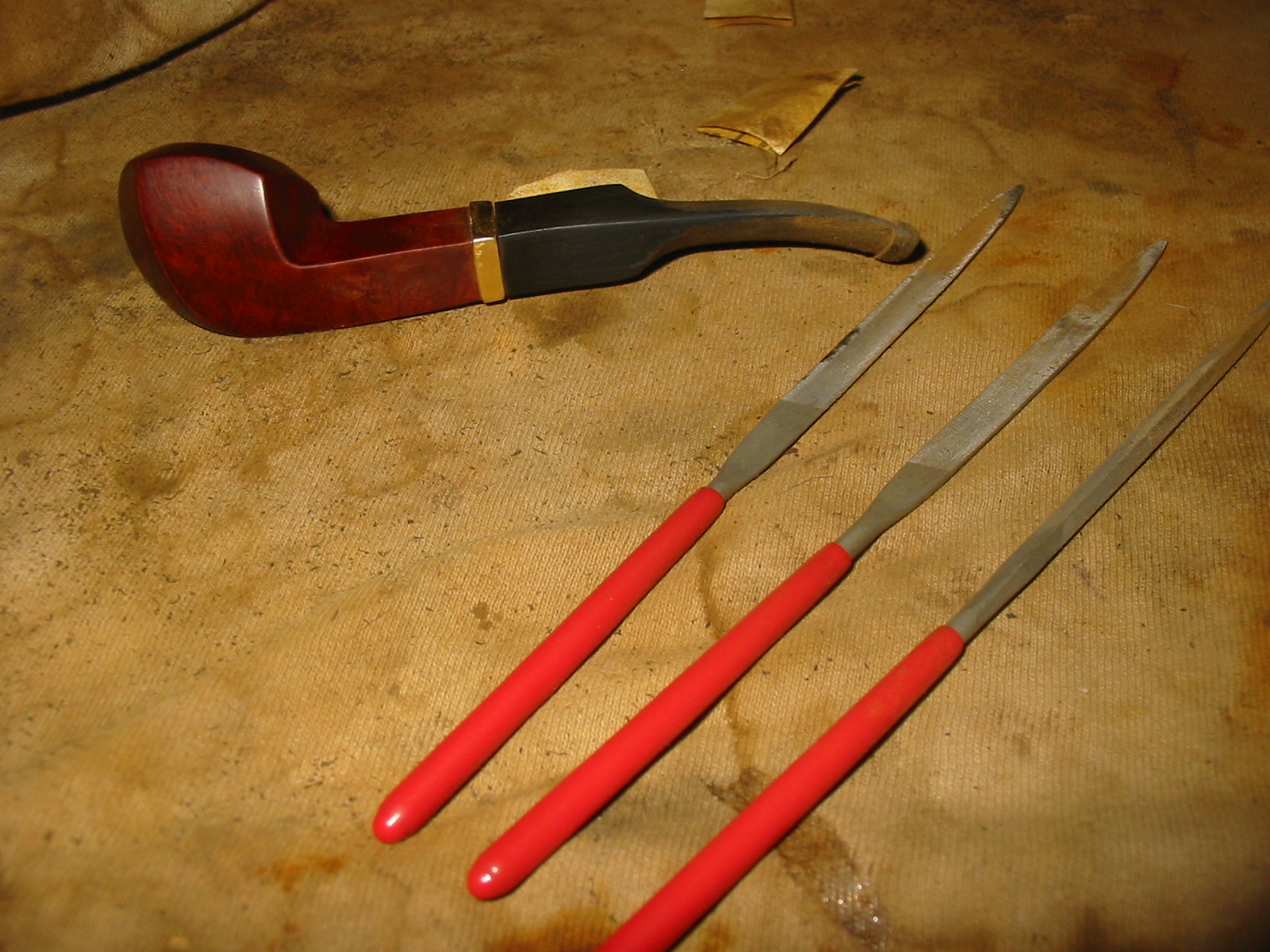
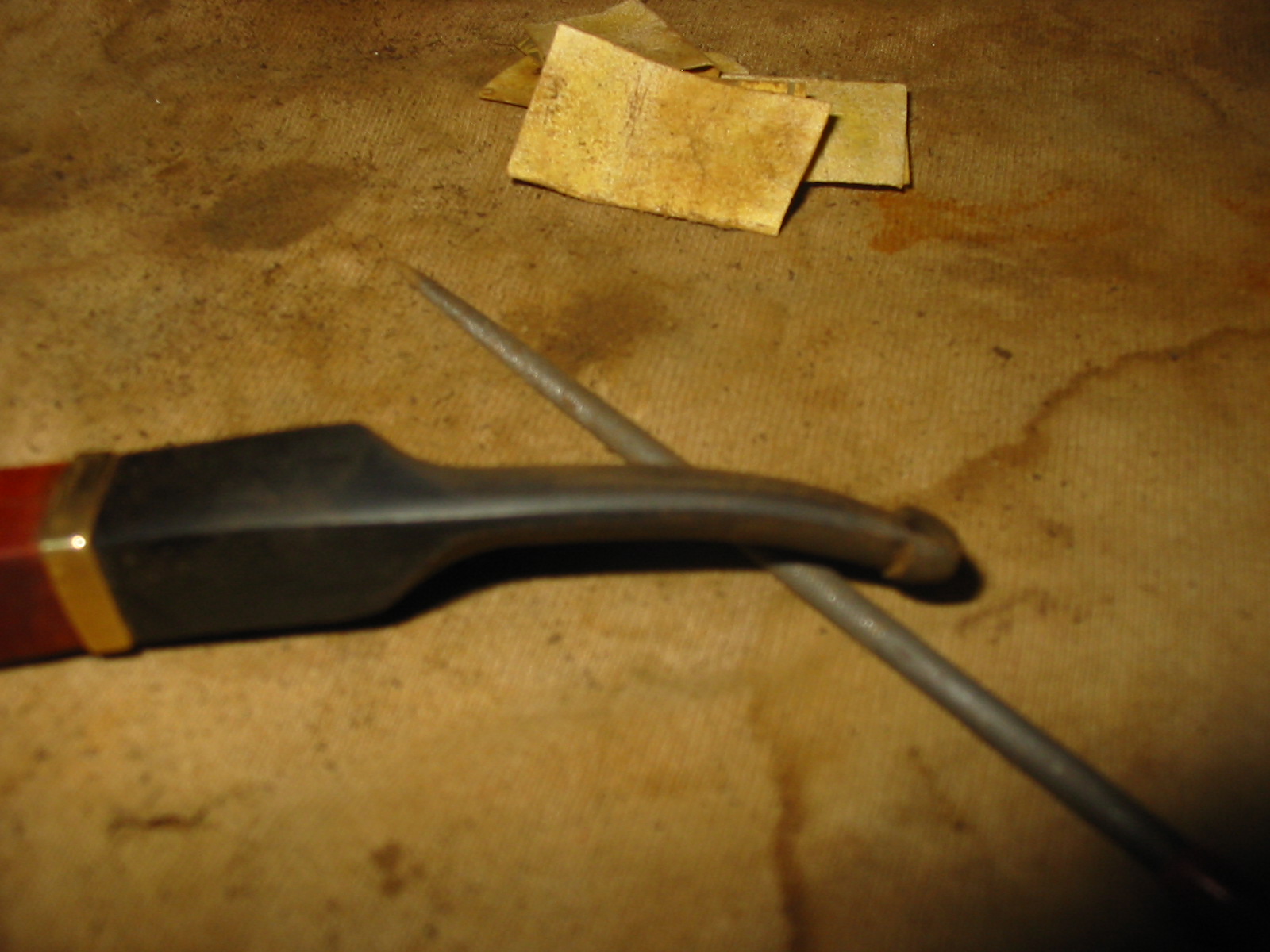
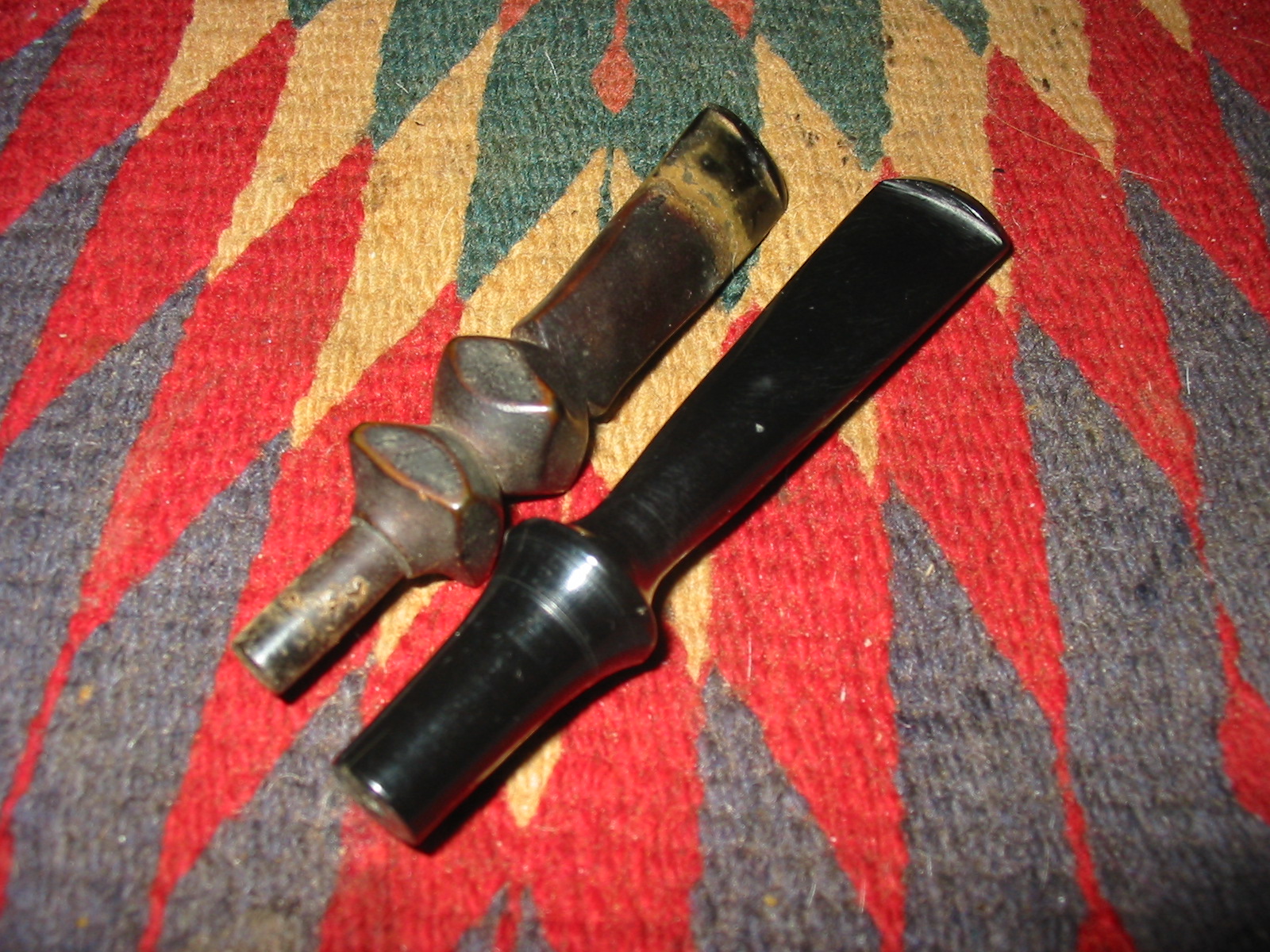
That was about the time I realized I had another, nice and shiny, short straight stem I had stashed away with my spare pipe parts, assorted bowls needing serious work and assorted detritus. At the same time, I flashed on a diminutive Chinese pipe given to me by a friend as a joke owing to my known appreciation of certain specimens of that origin. That pipe, which had been covered in gaudy varnish and appeared at first touch to be made of balsa, would be a perfect match for the longer, curved stem I had adjusted as already described. Still, I finished repairing the original stem, micro-meshing away the rough surface where I had brutishly employed the bully force of abrasions, and then applying a good buff with Tripoli Red. But there I go again, off on a tangent, and when this initially homely Chinese pipe might be the subject of a forthcoming blog.
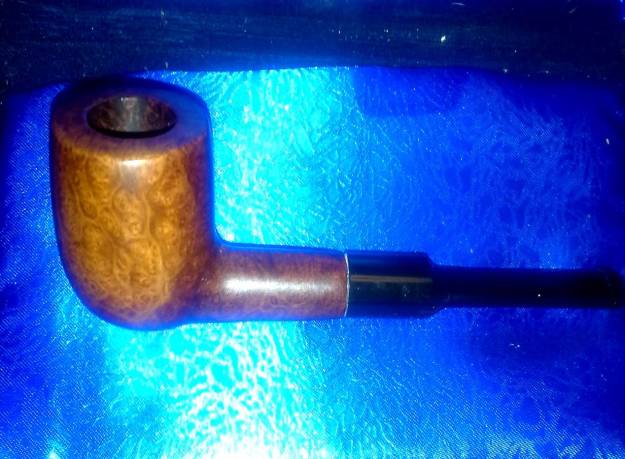
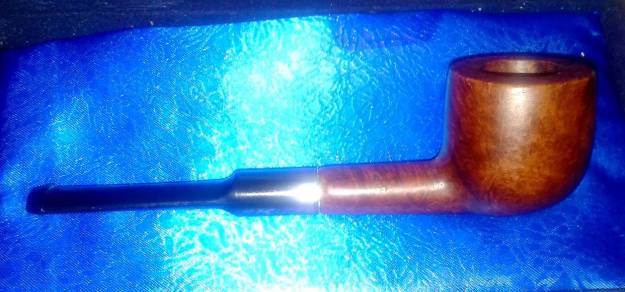
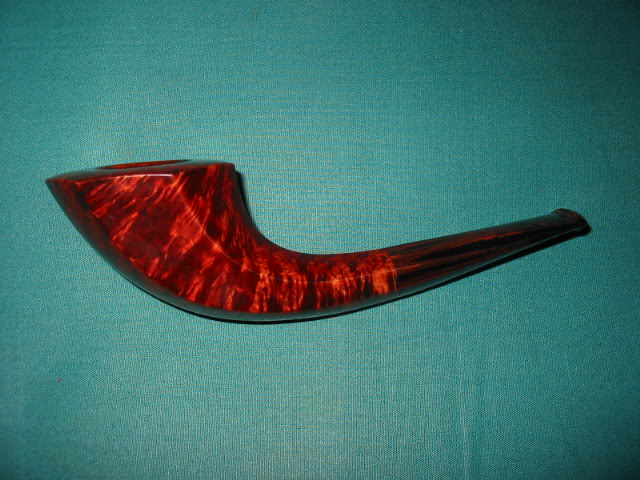
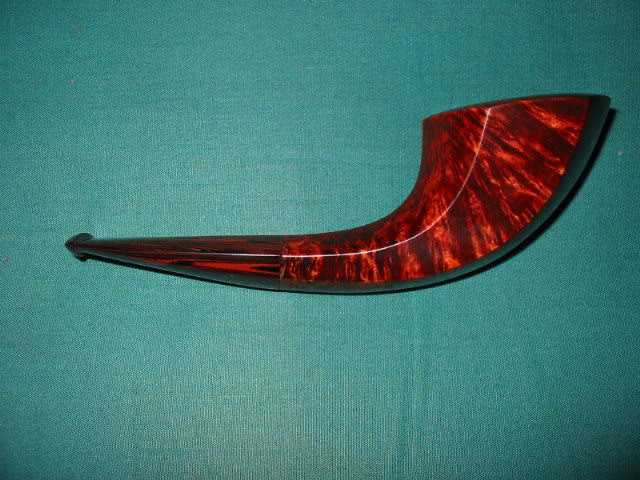
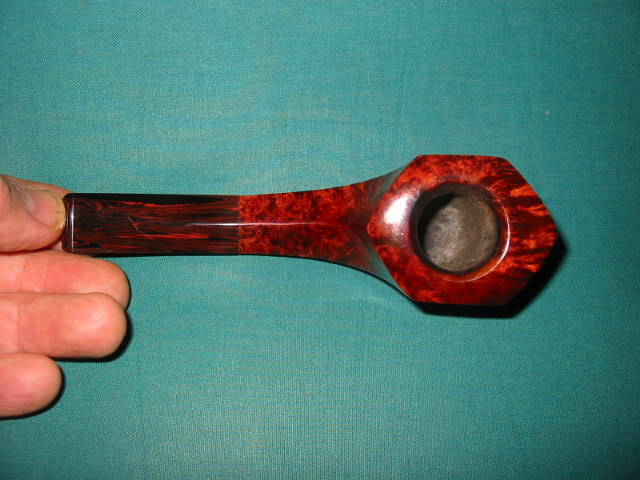
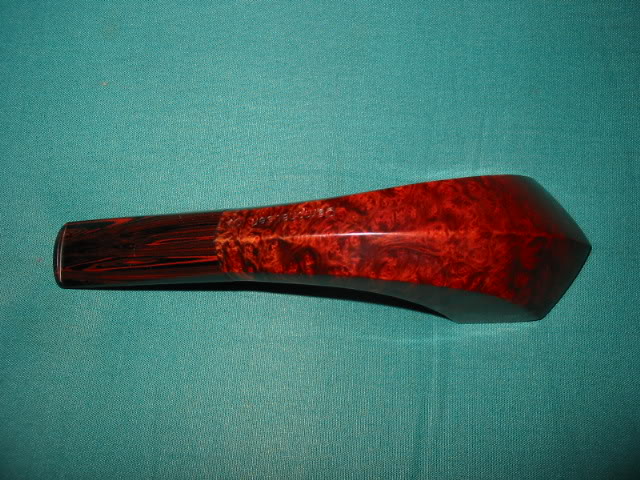
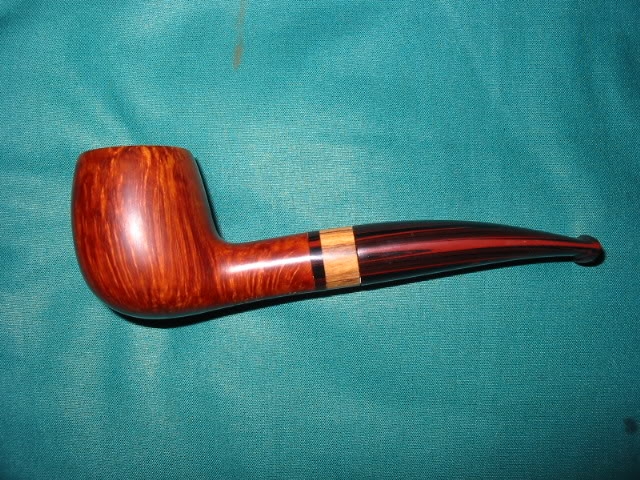
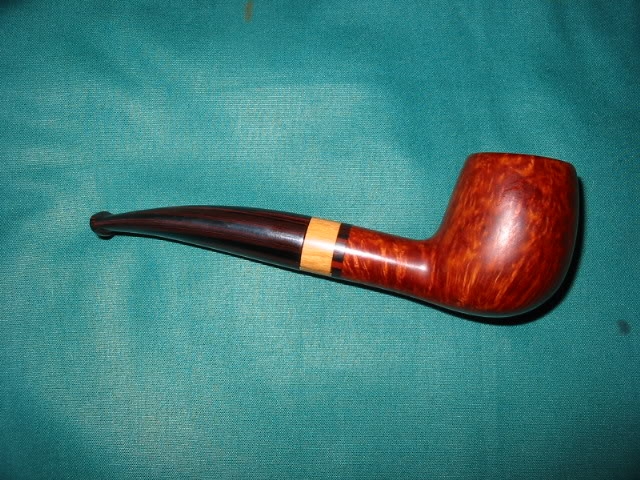
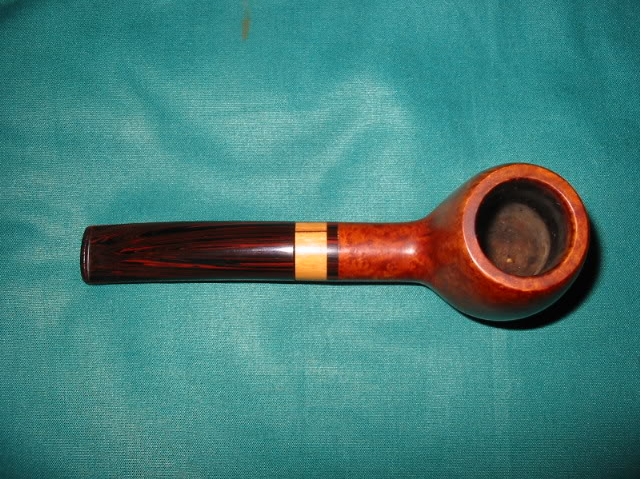
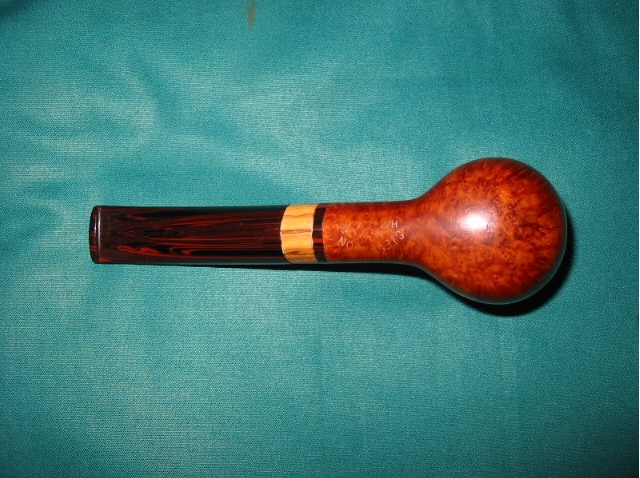
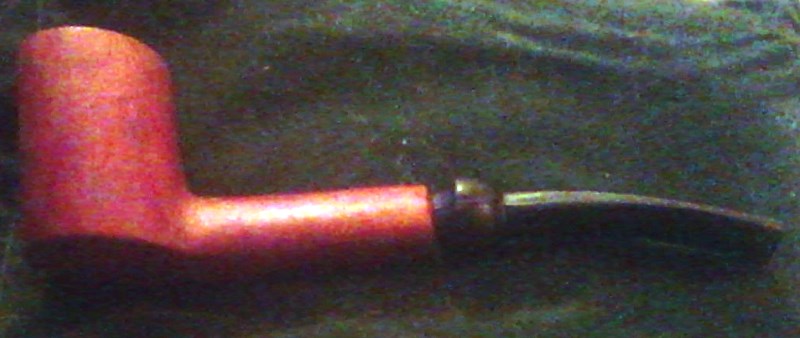
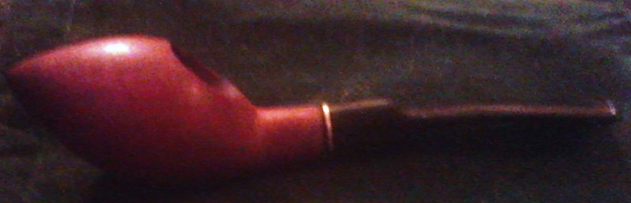
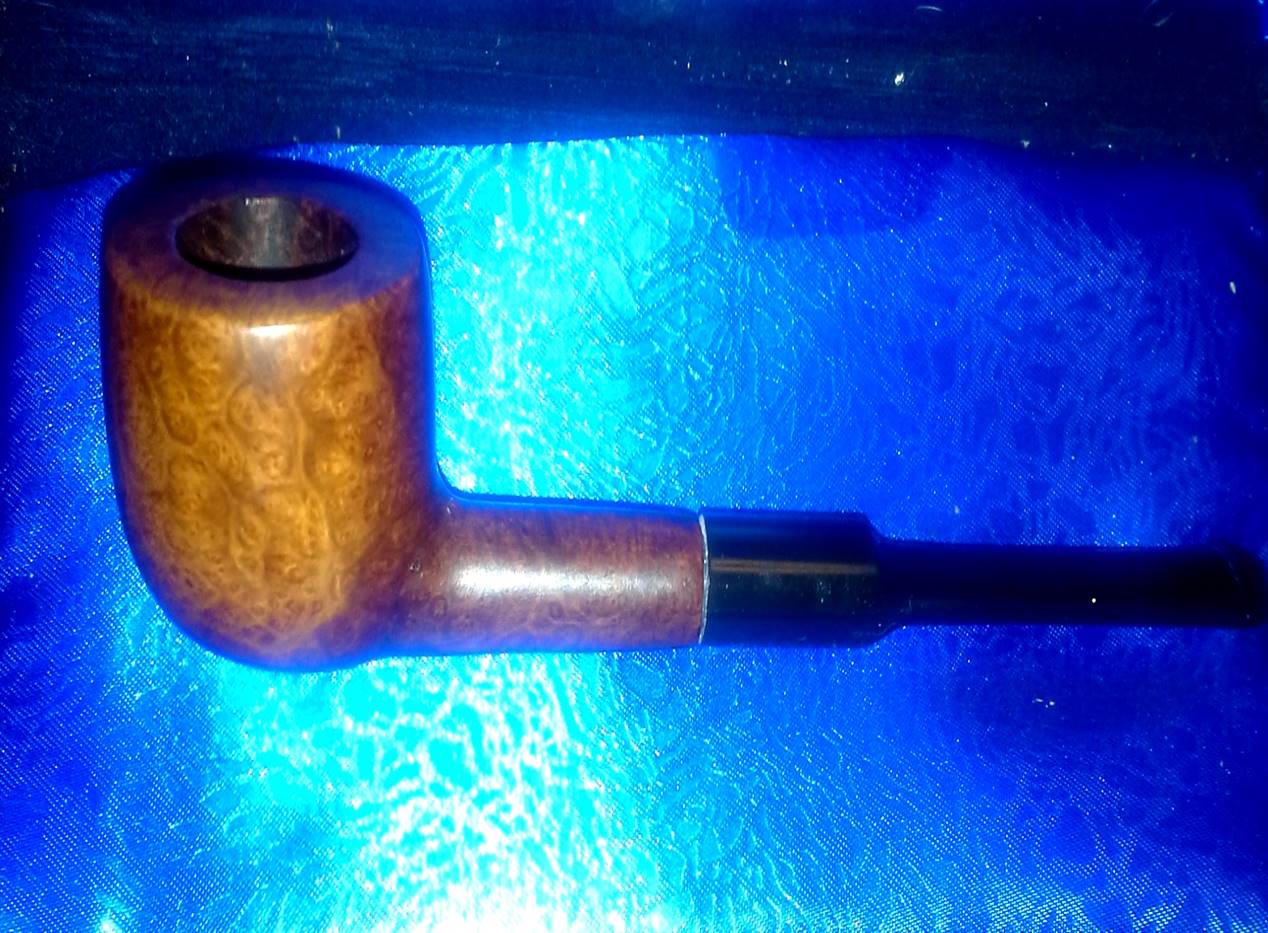
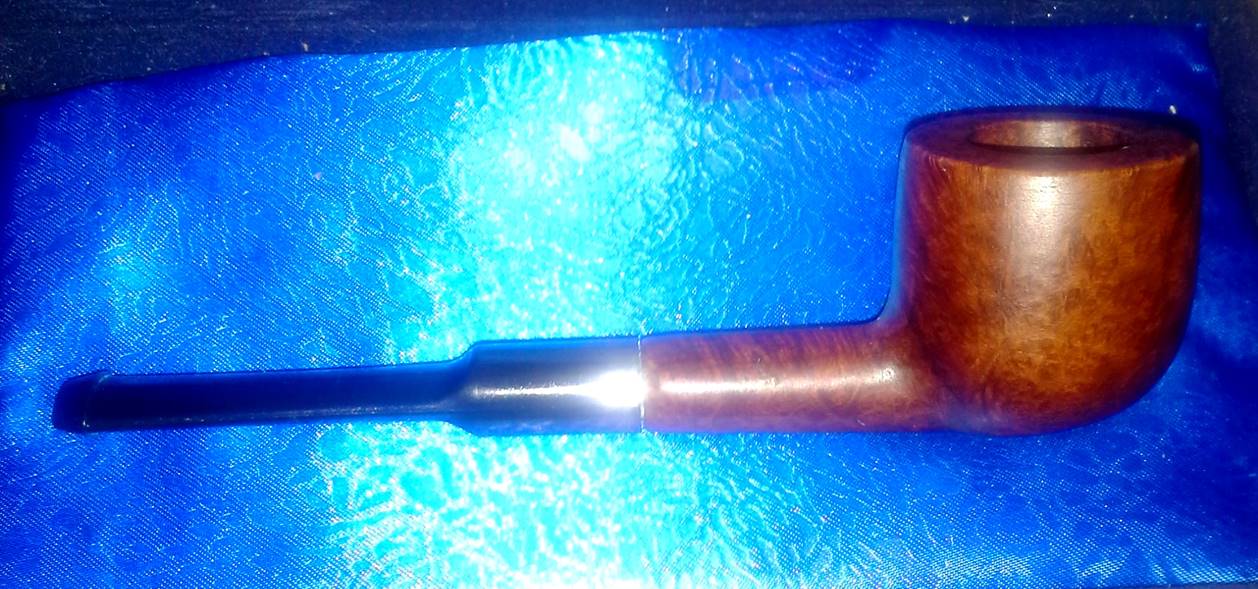
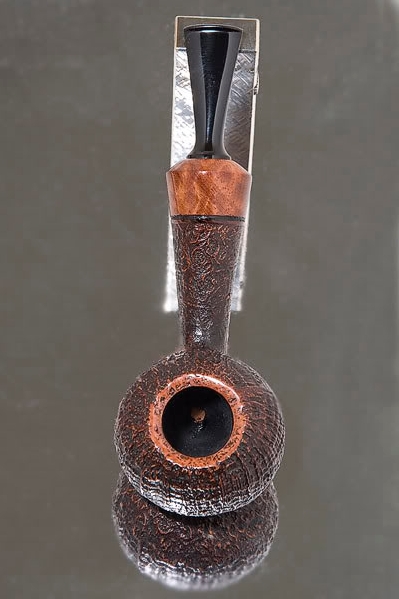
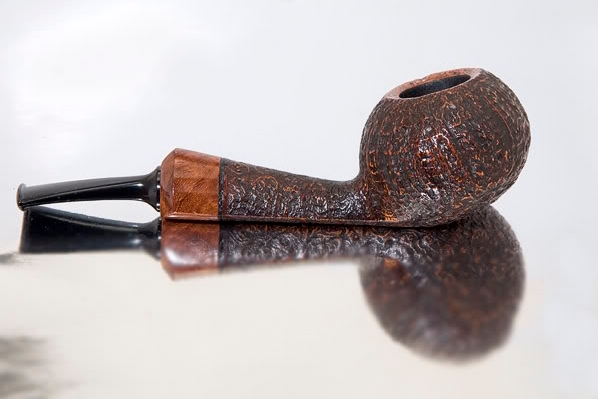
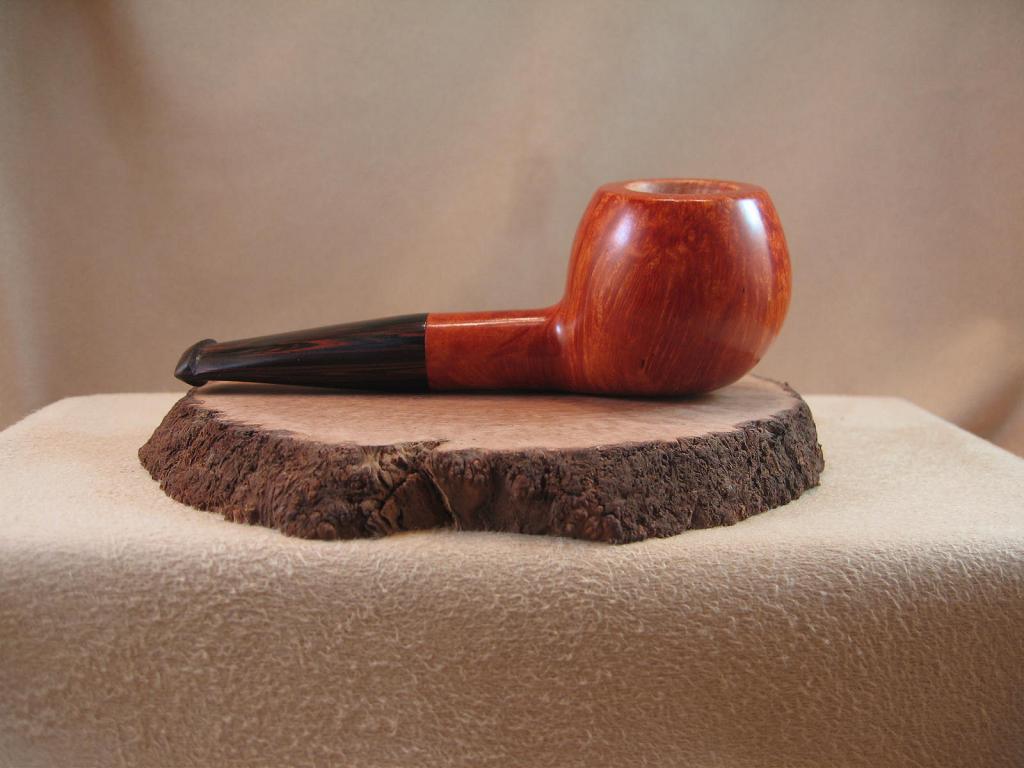
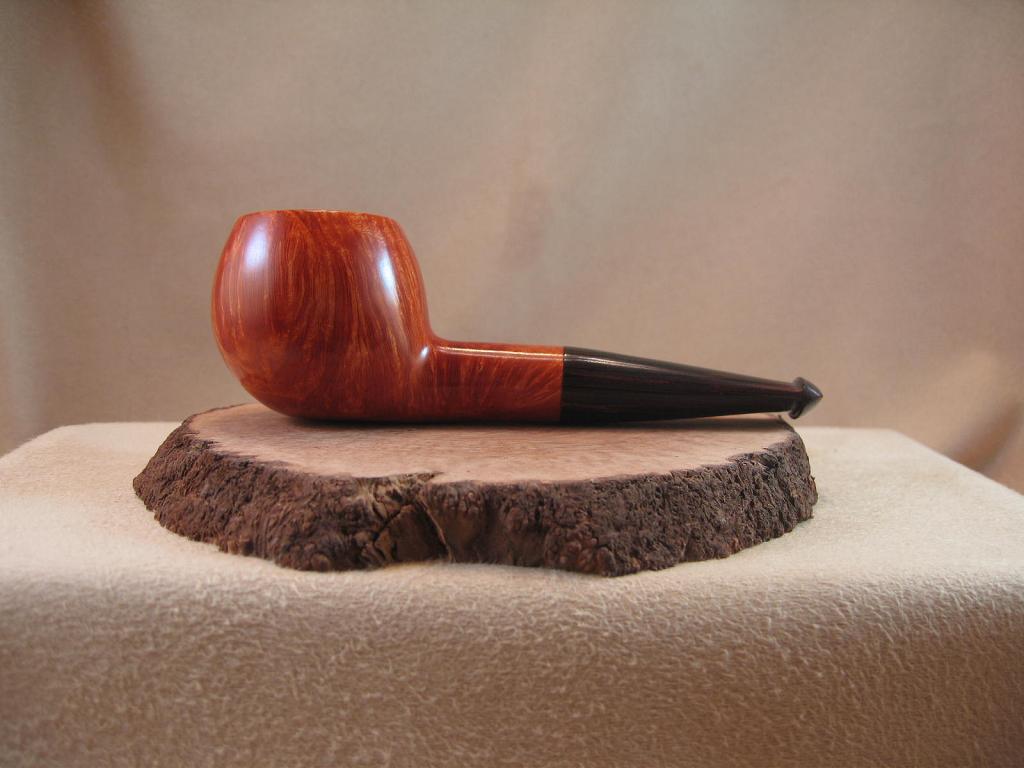
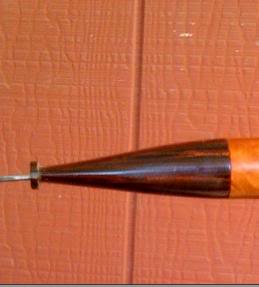
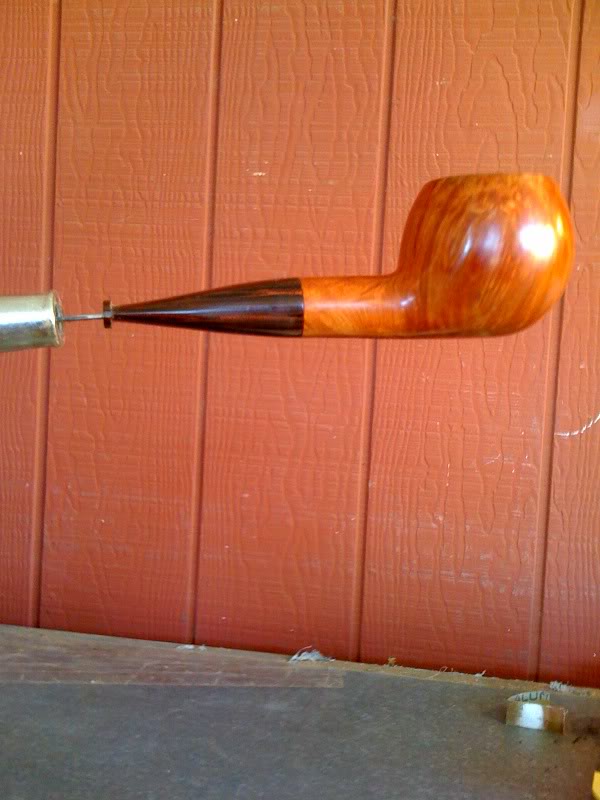
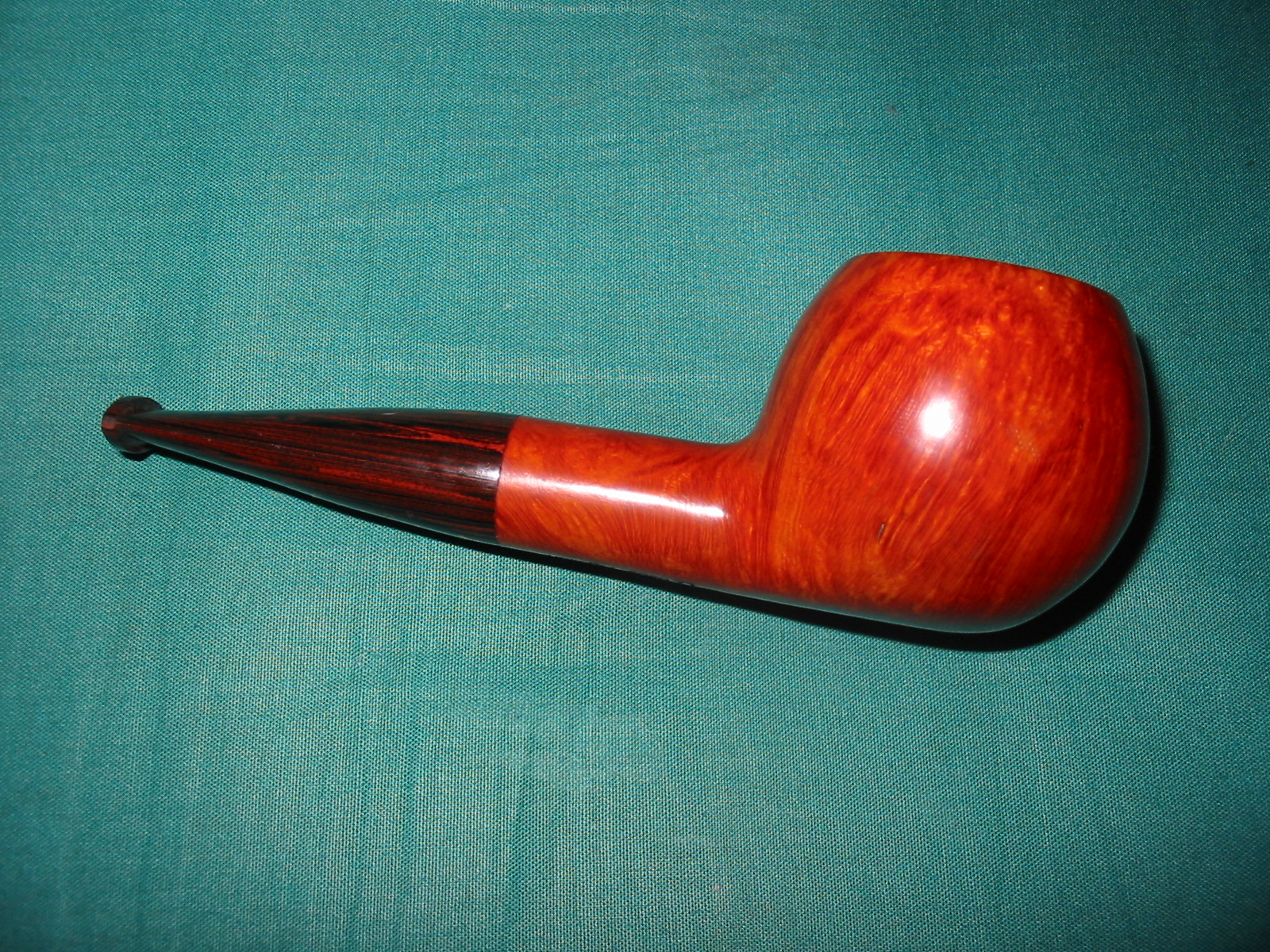
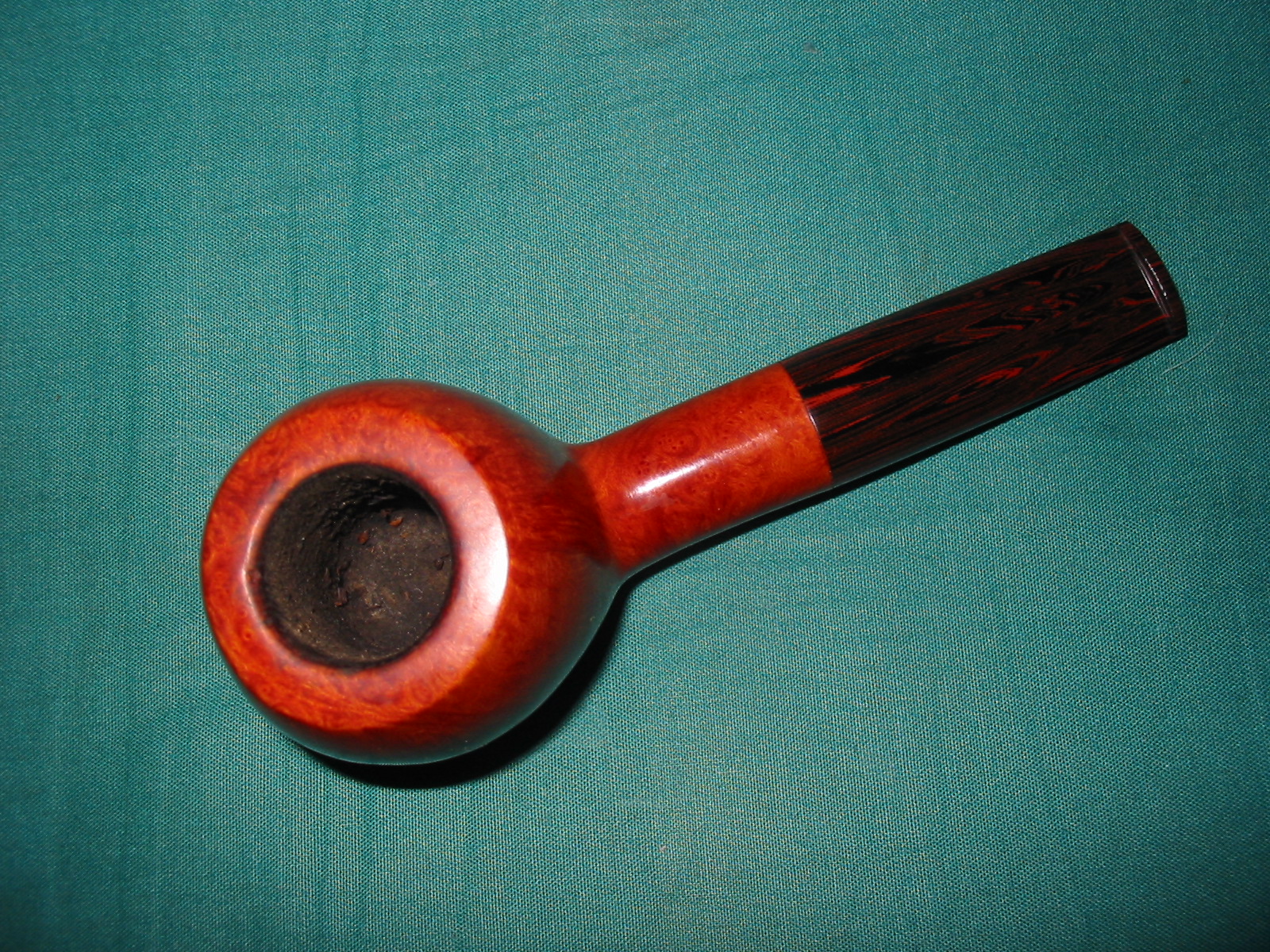
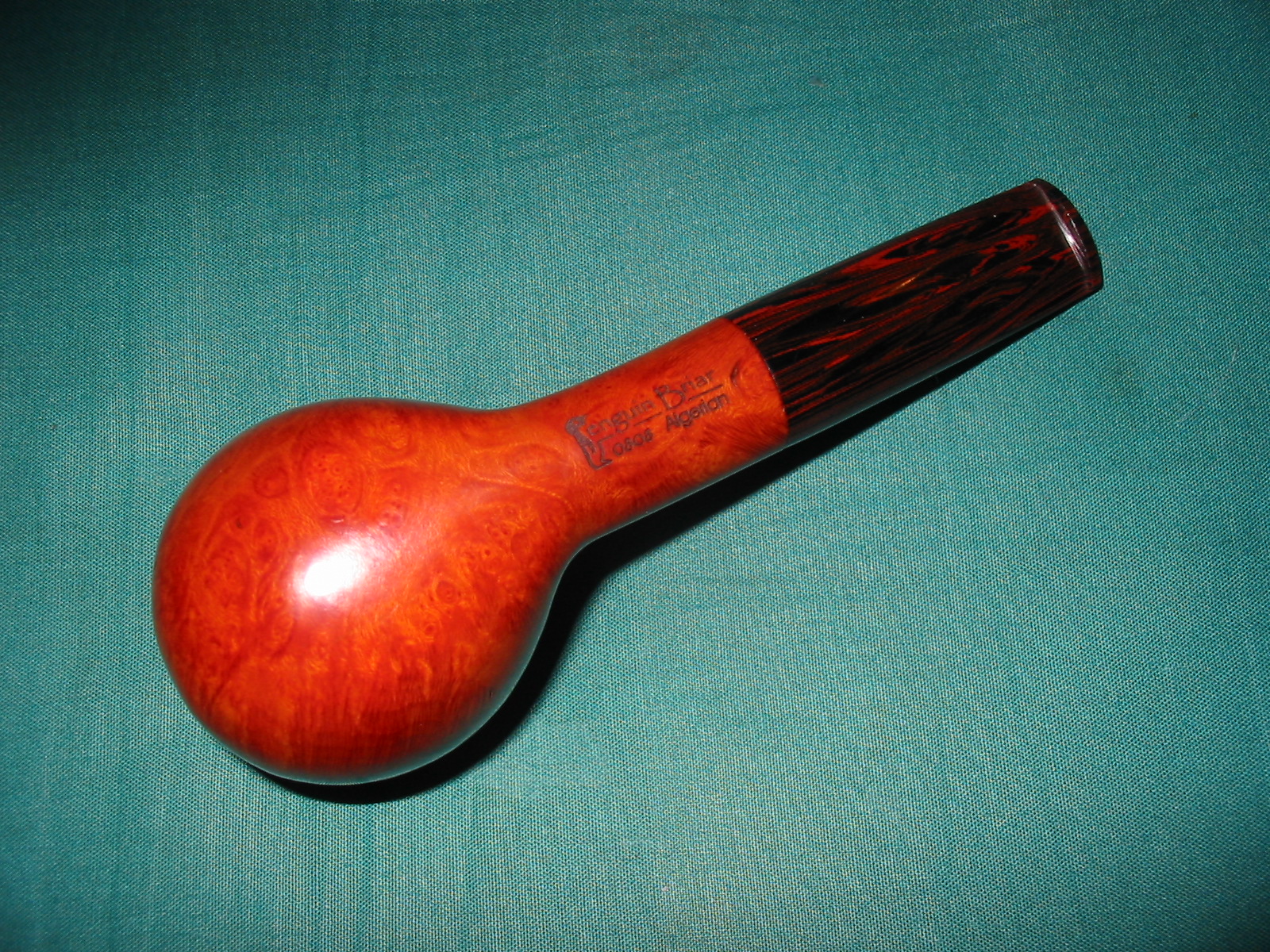
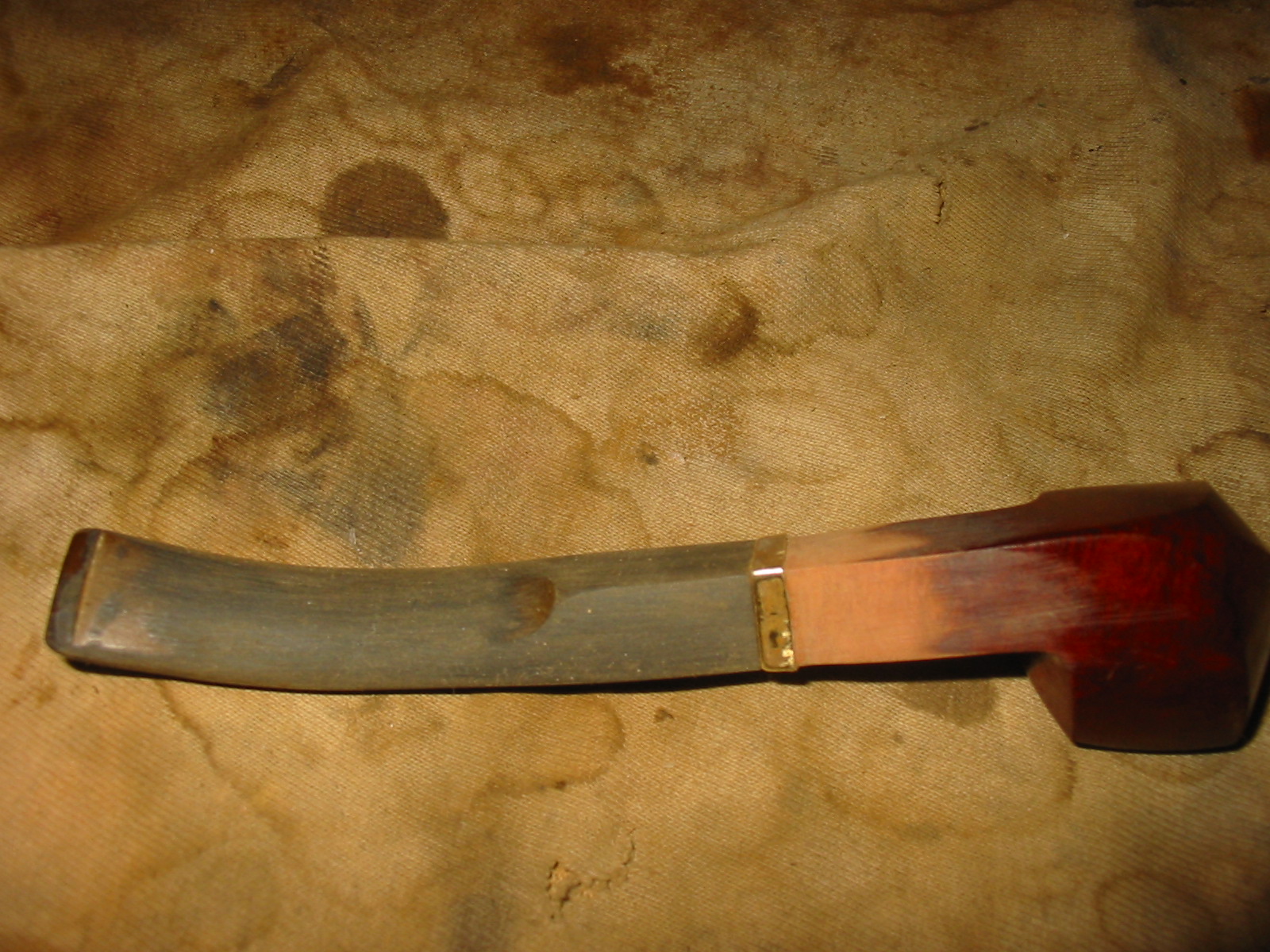
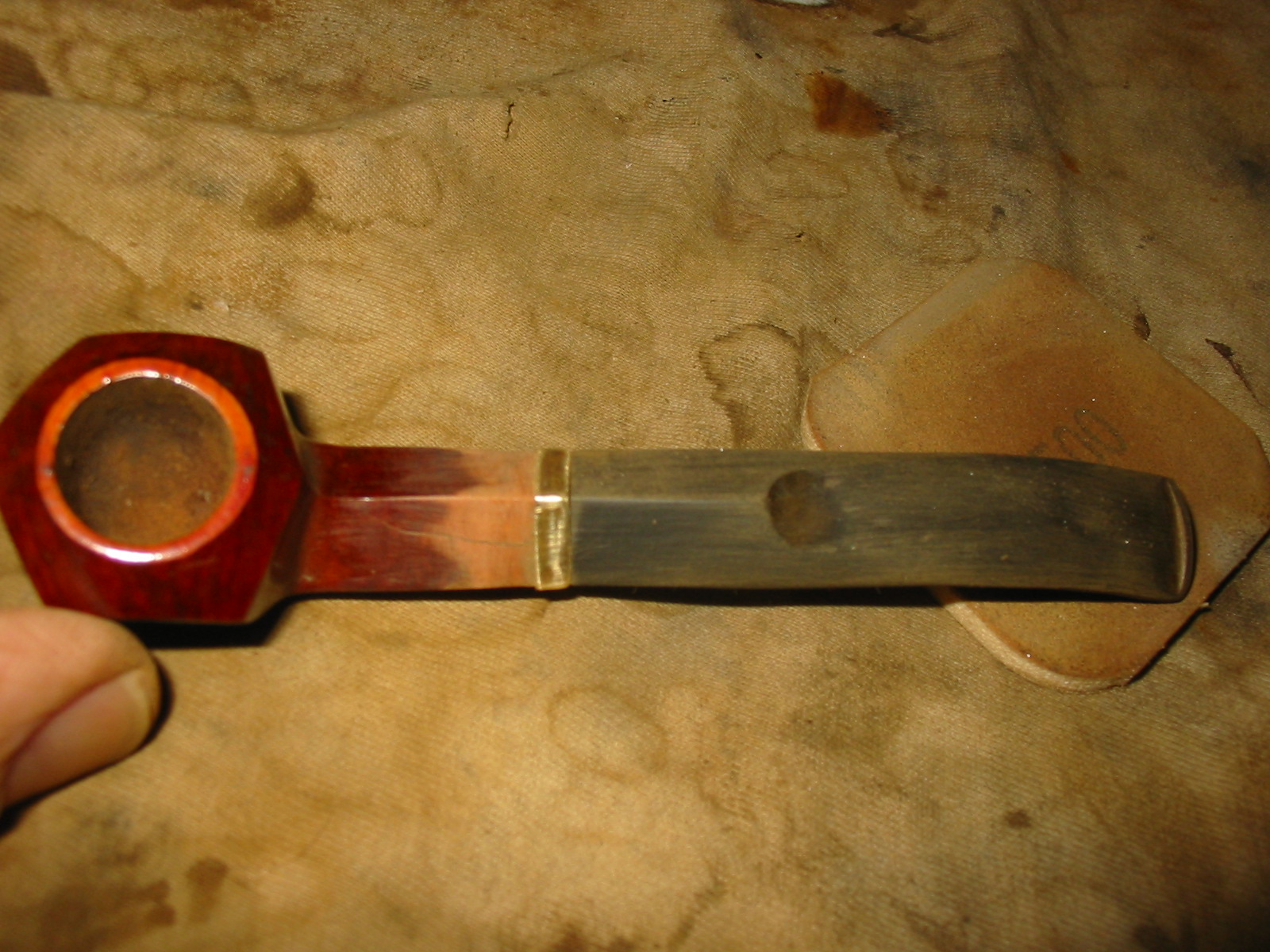
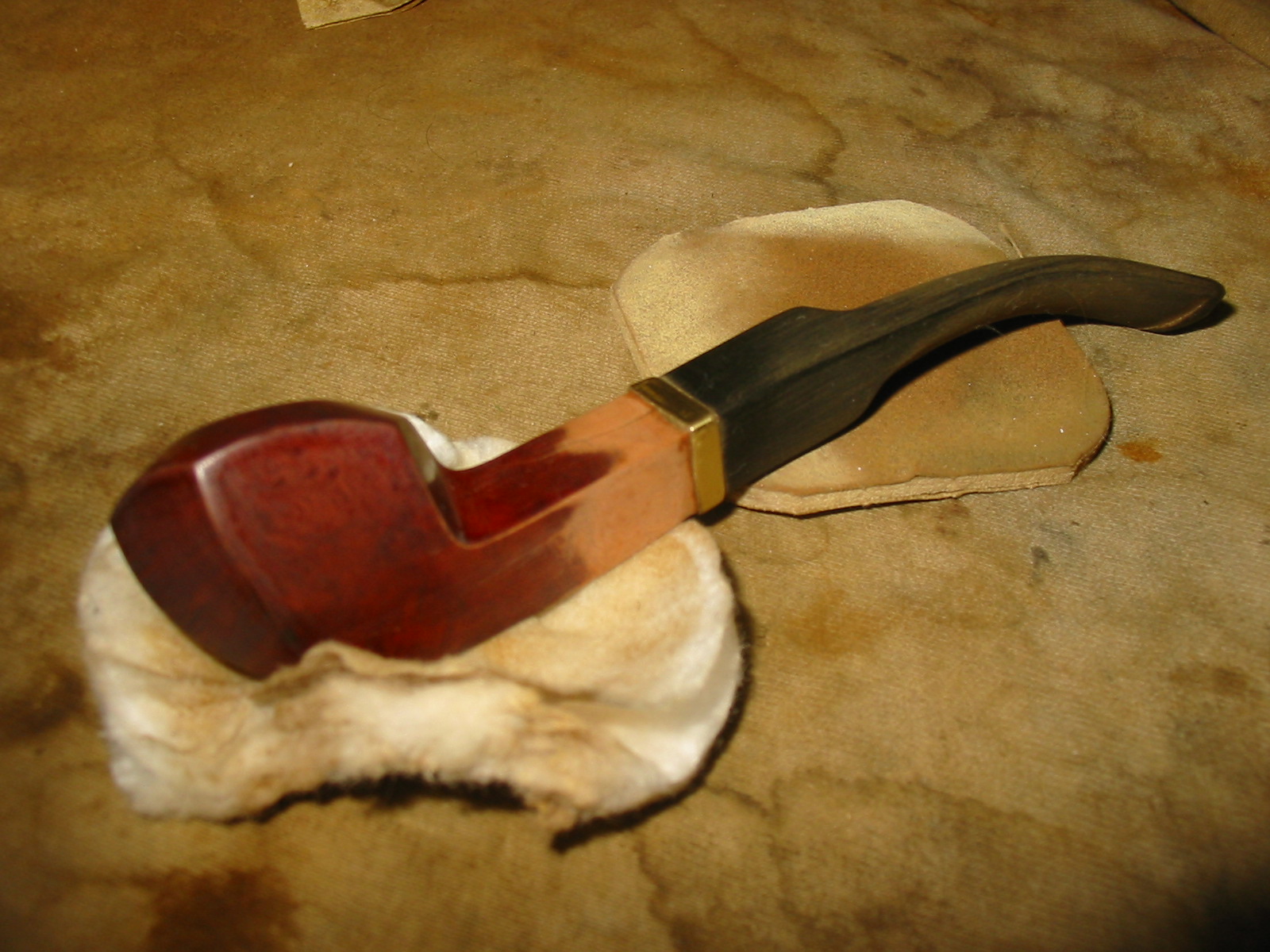
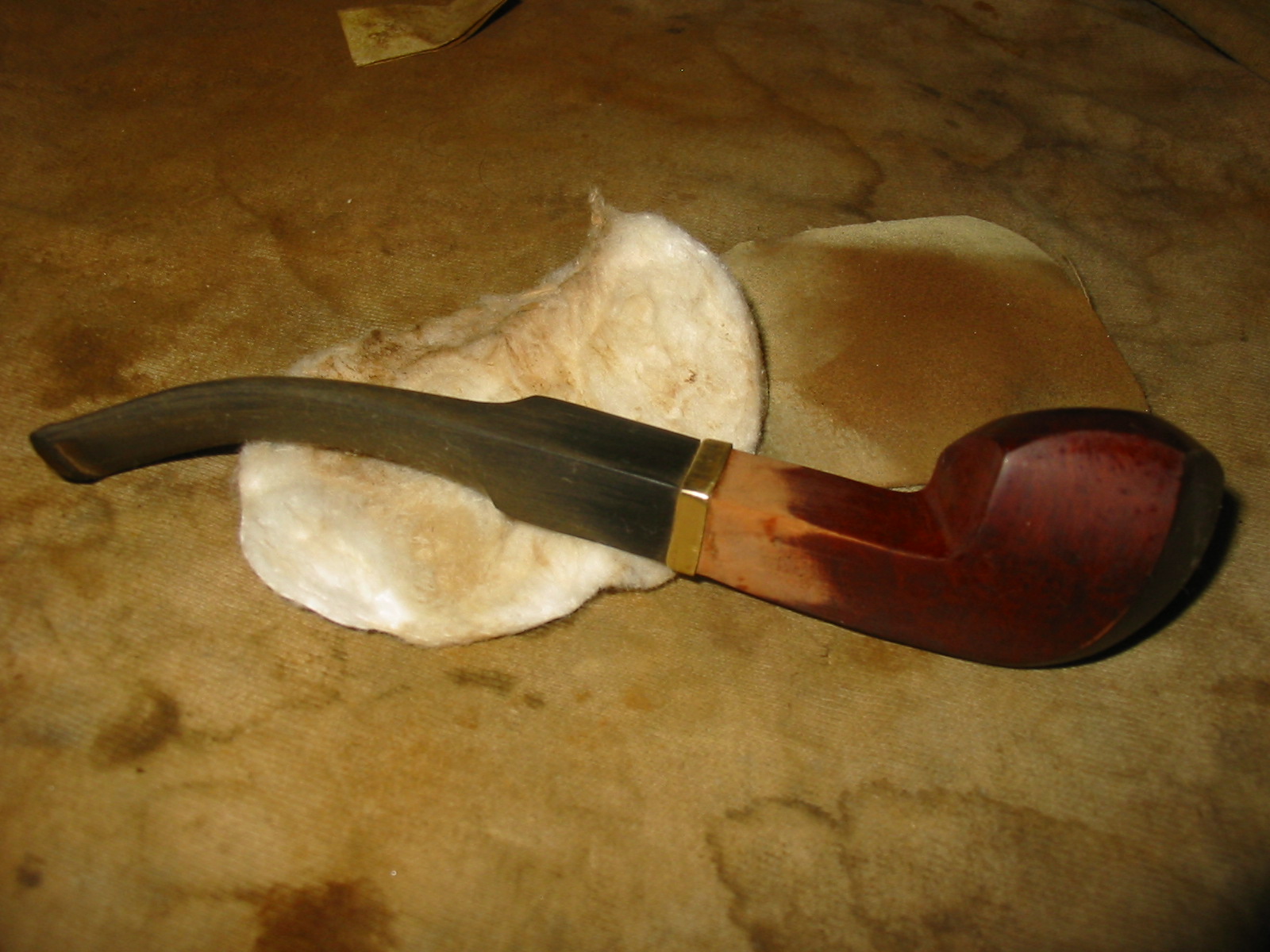
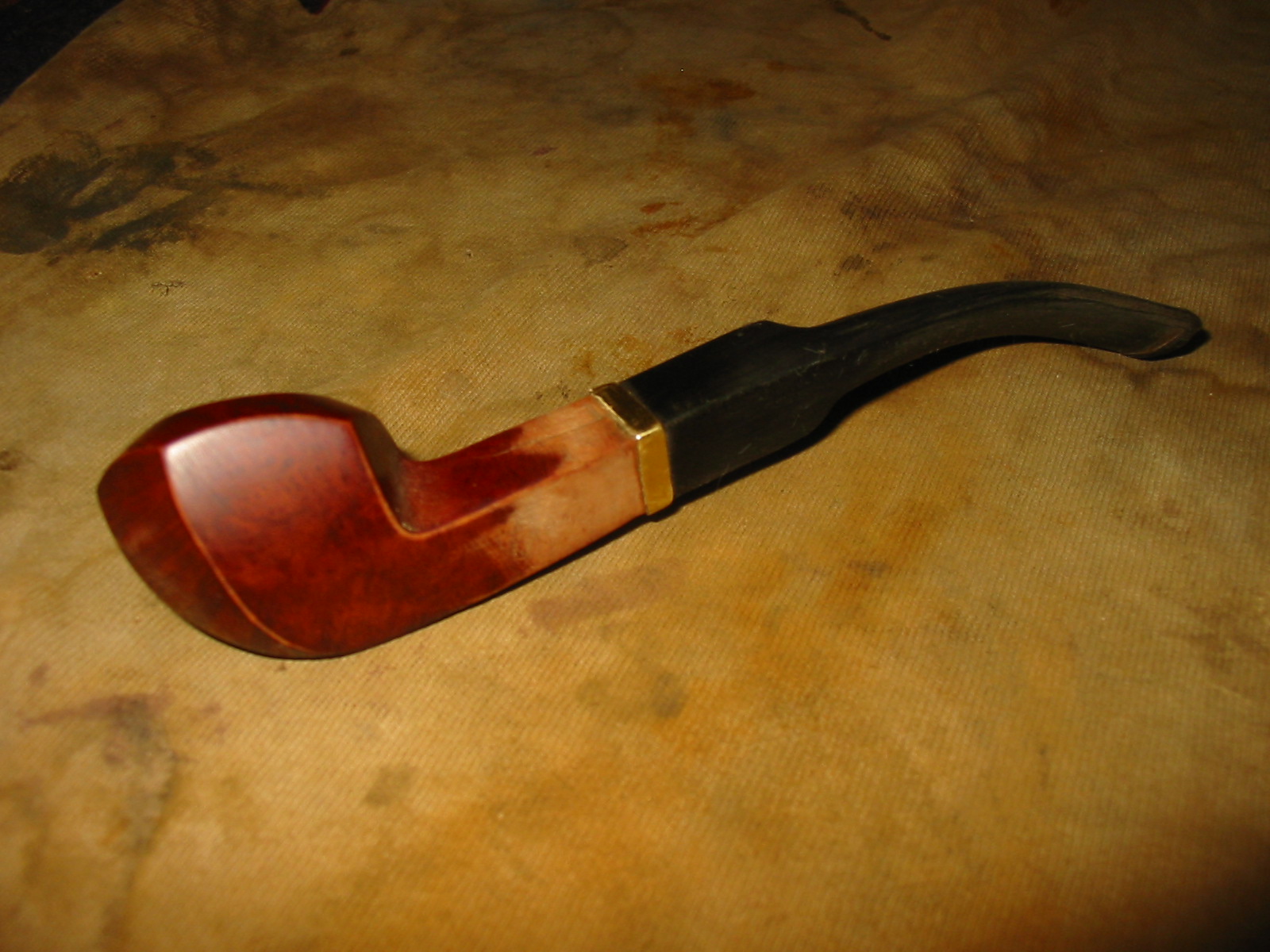
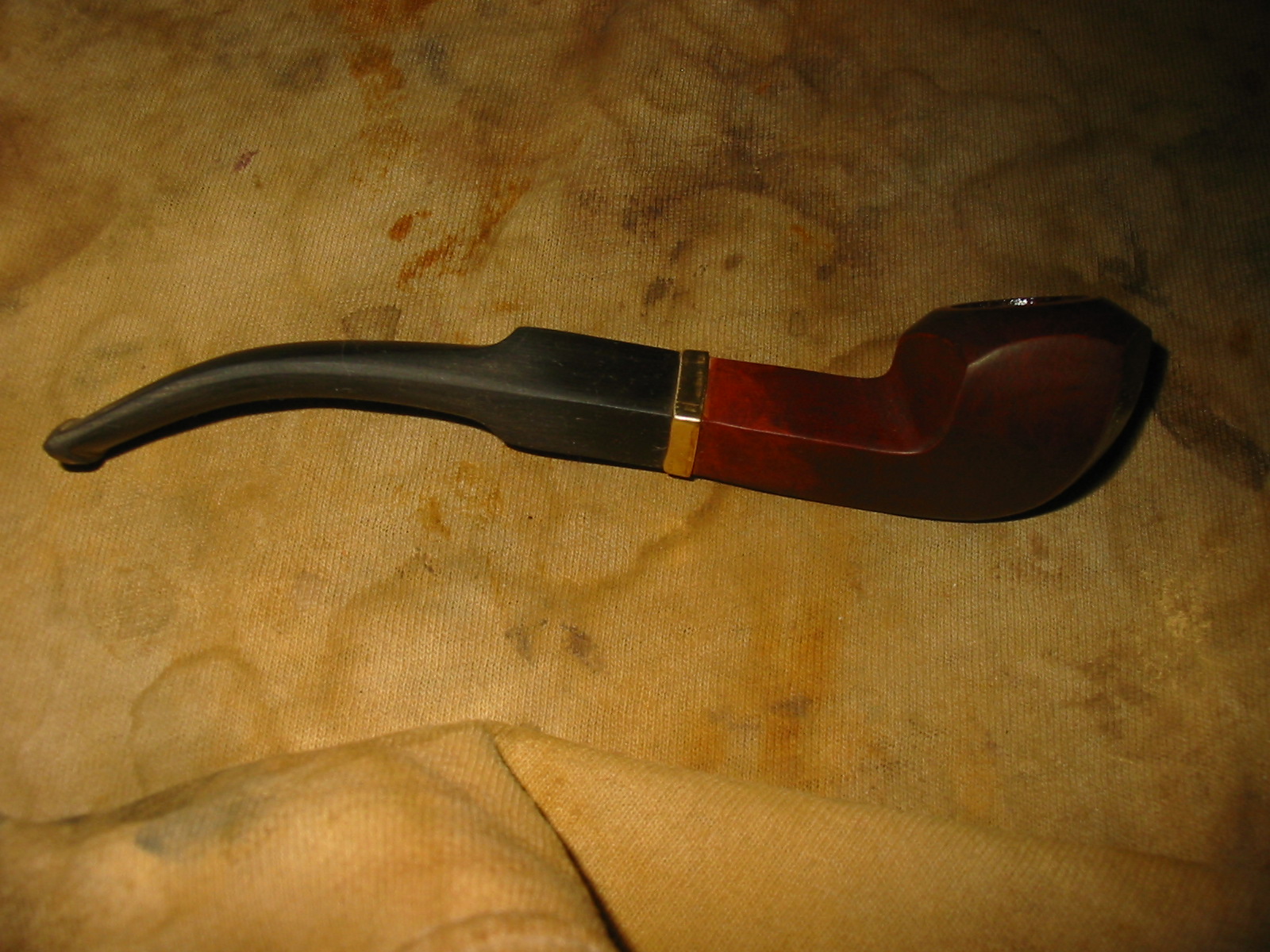
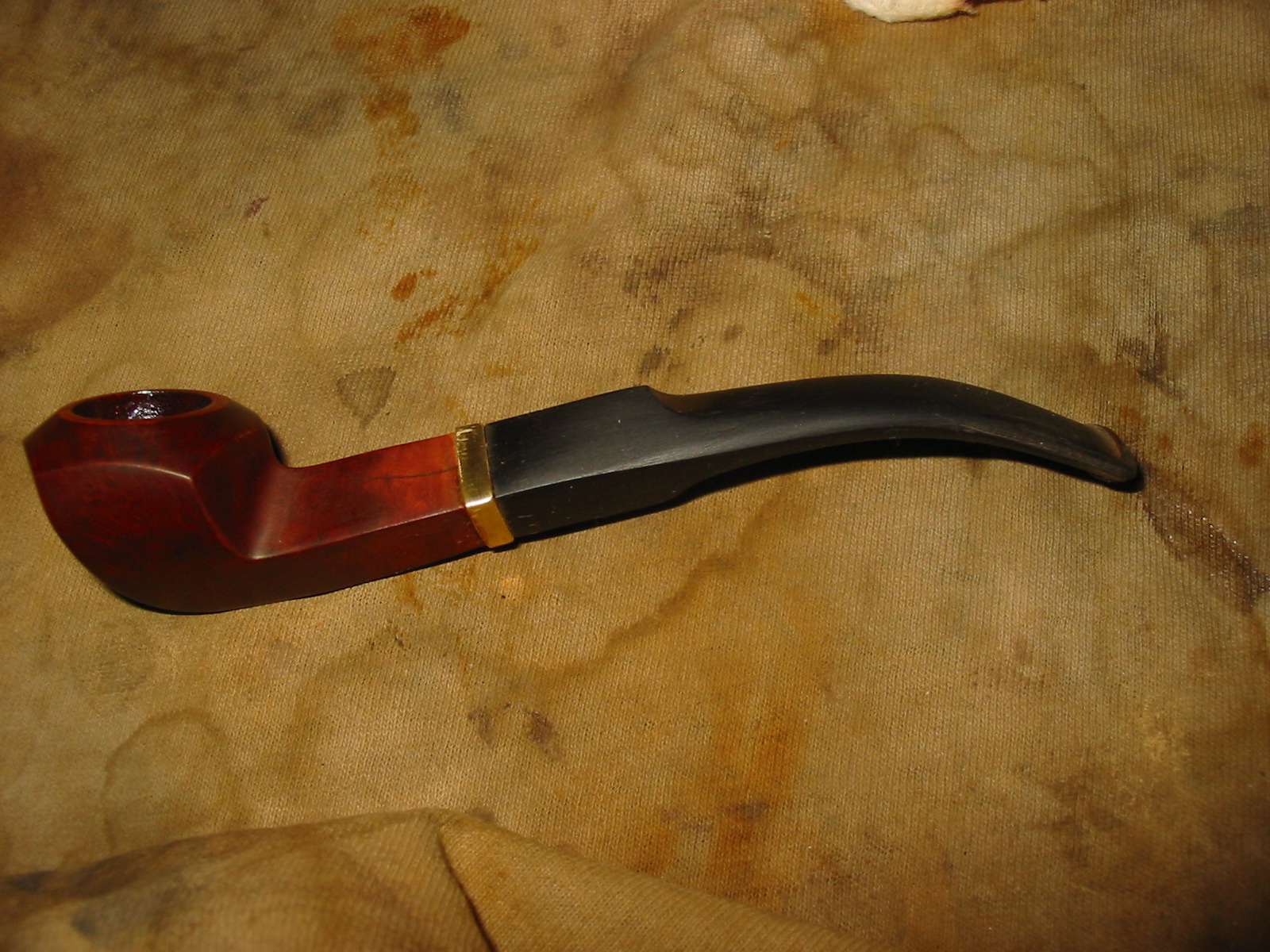
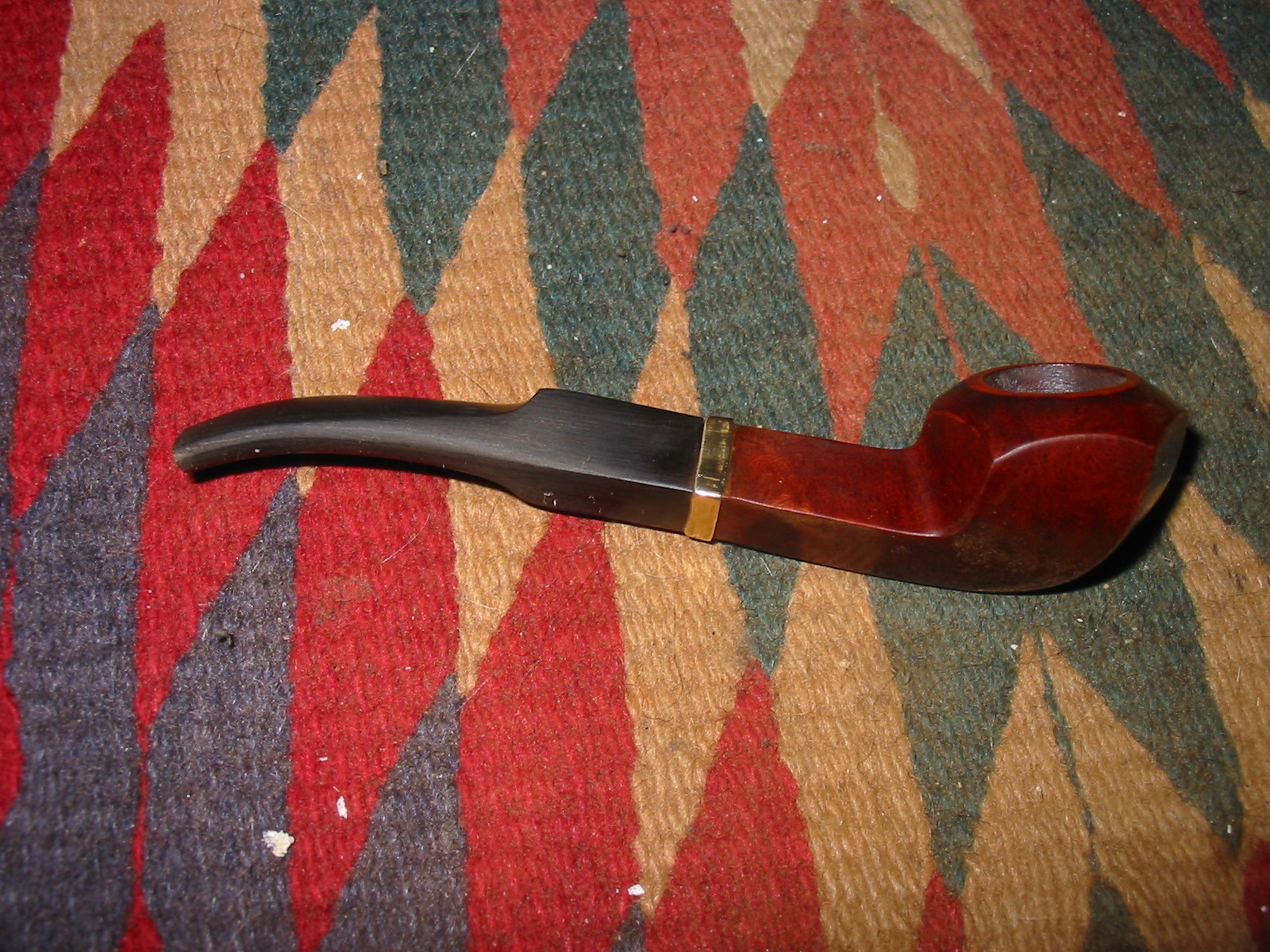
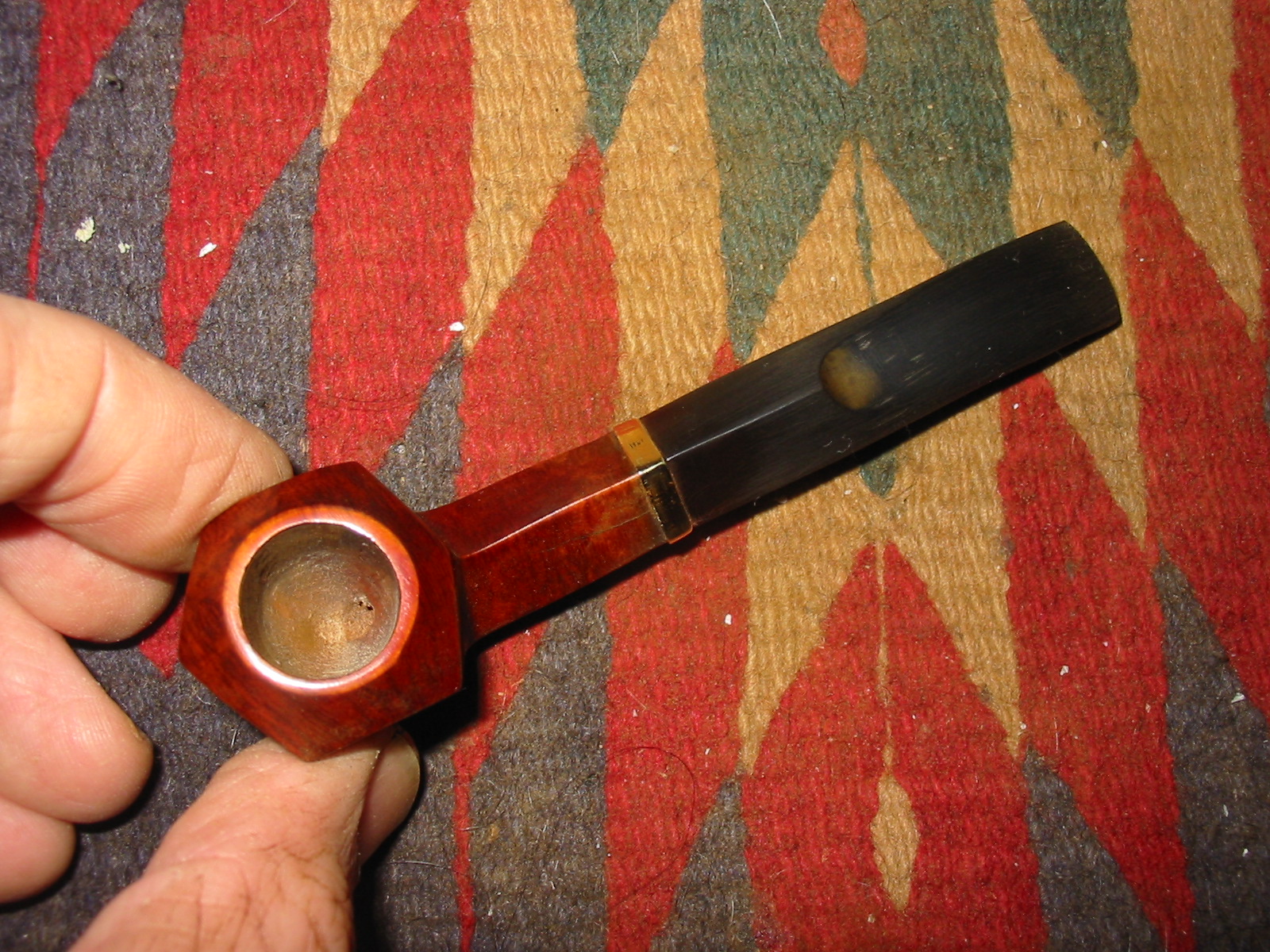
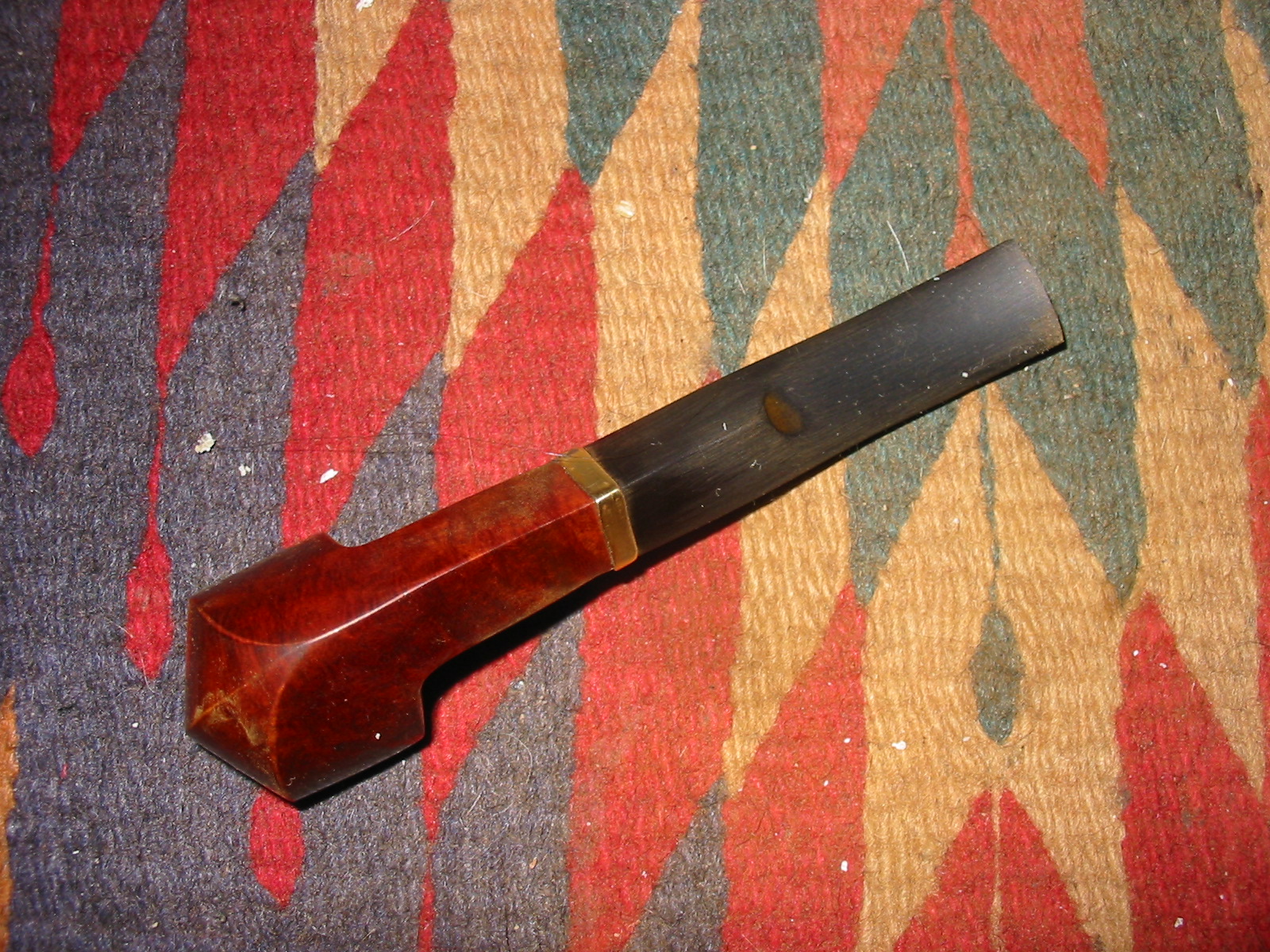
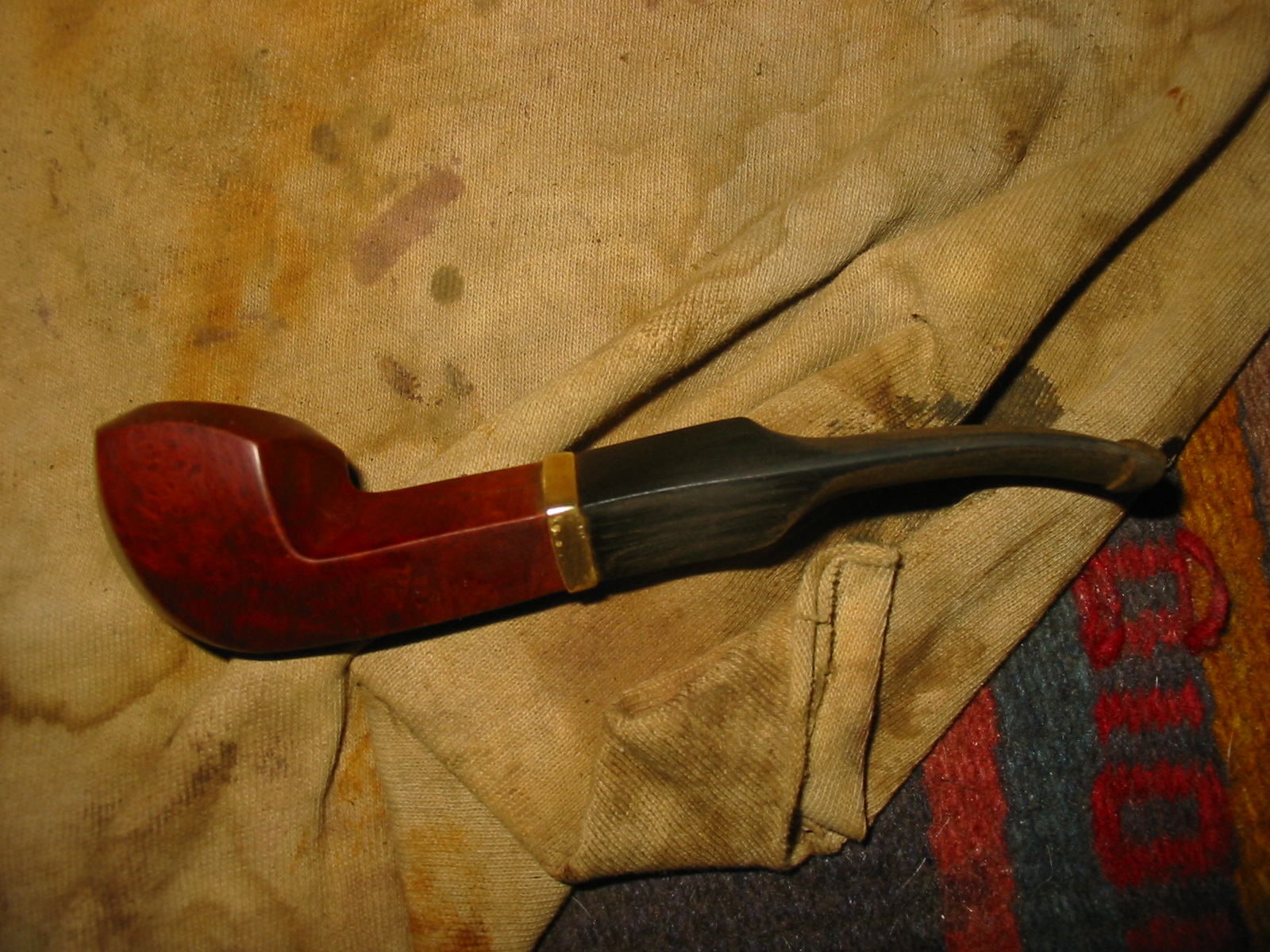
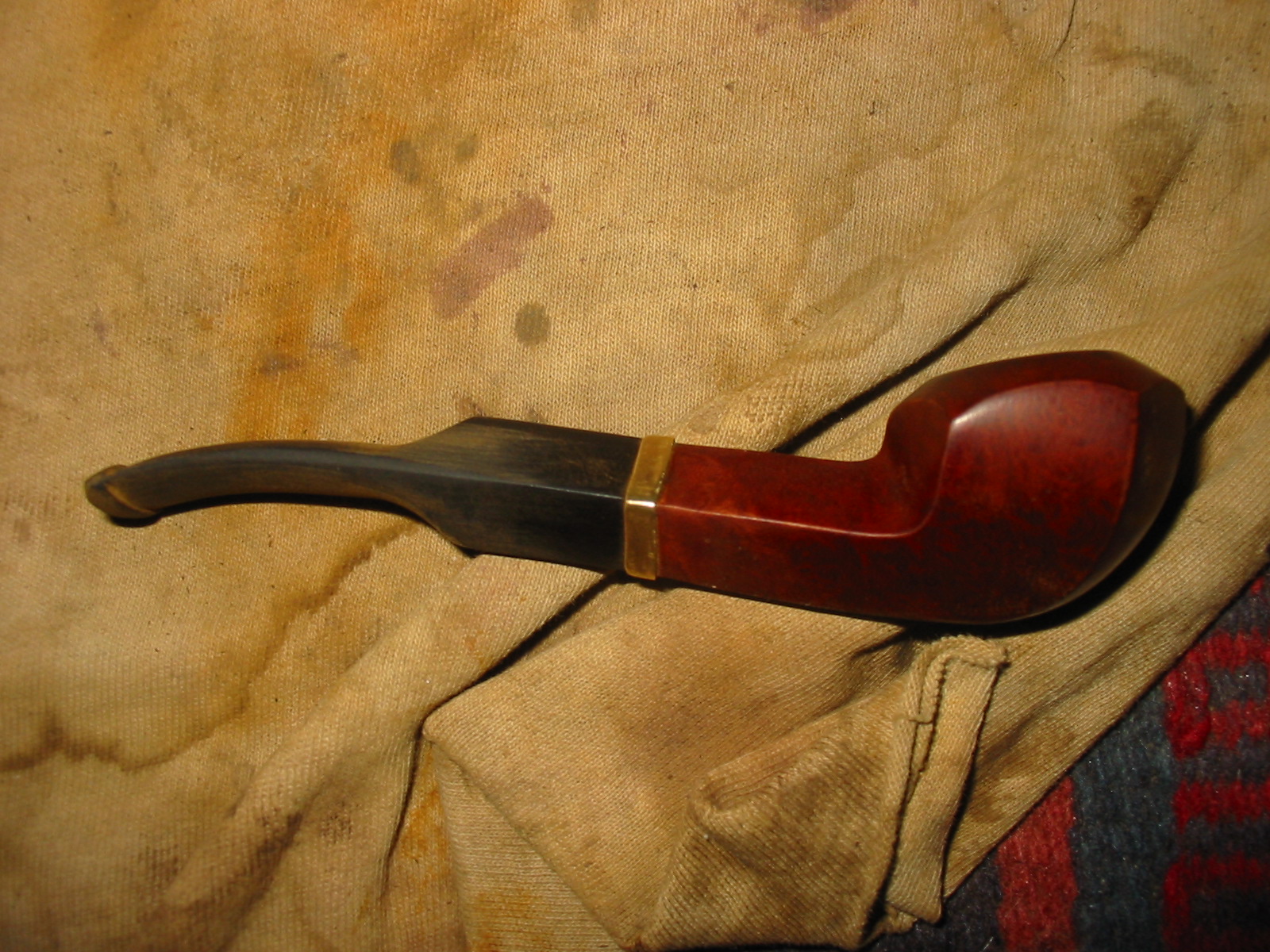
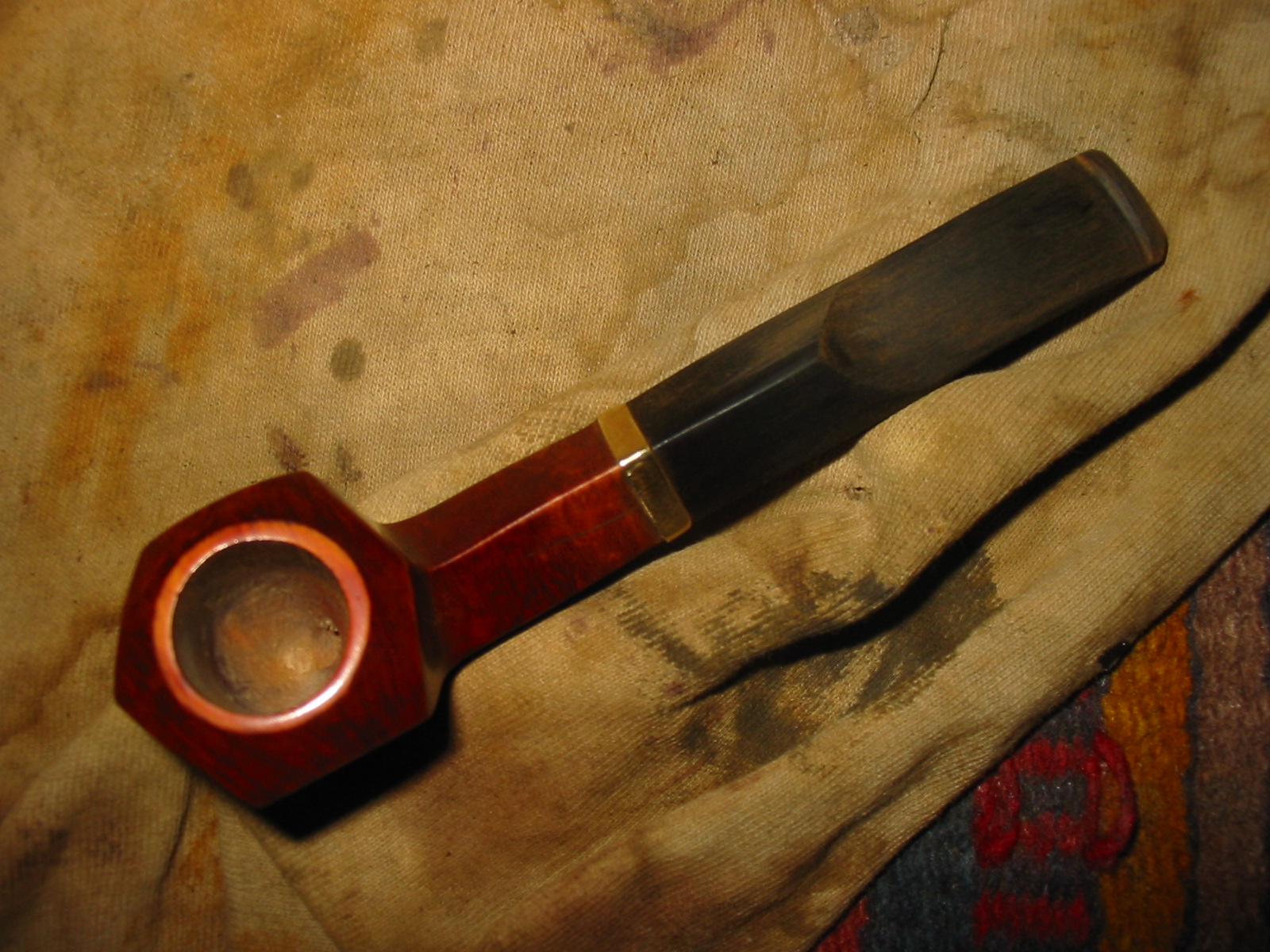
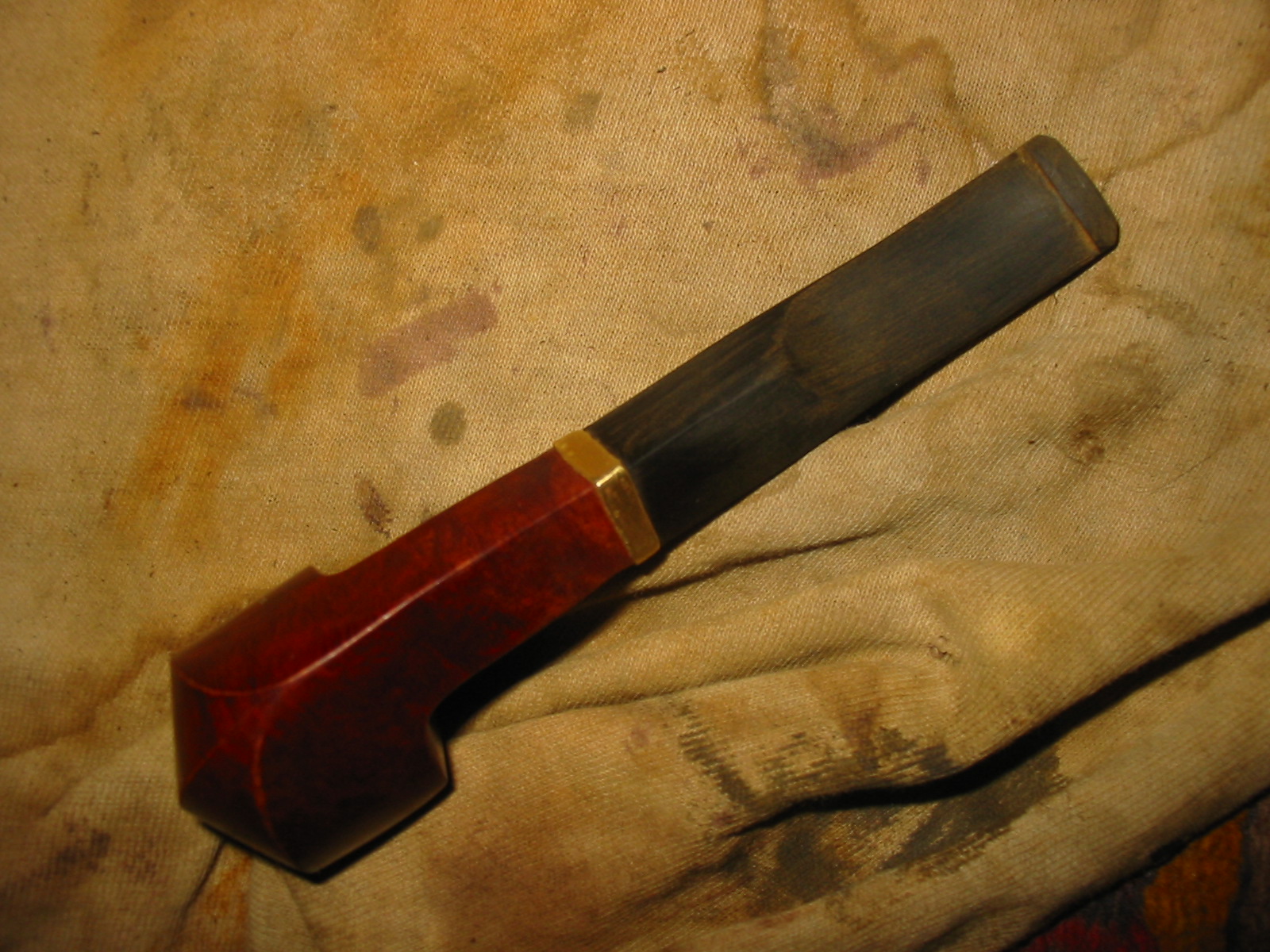
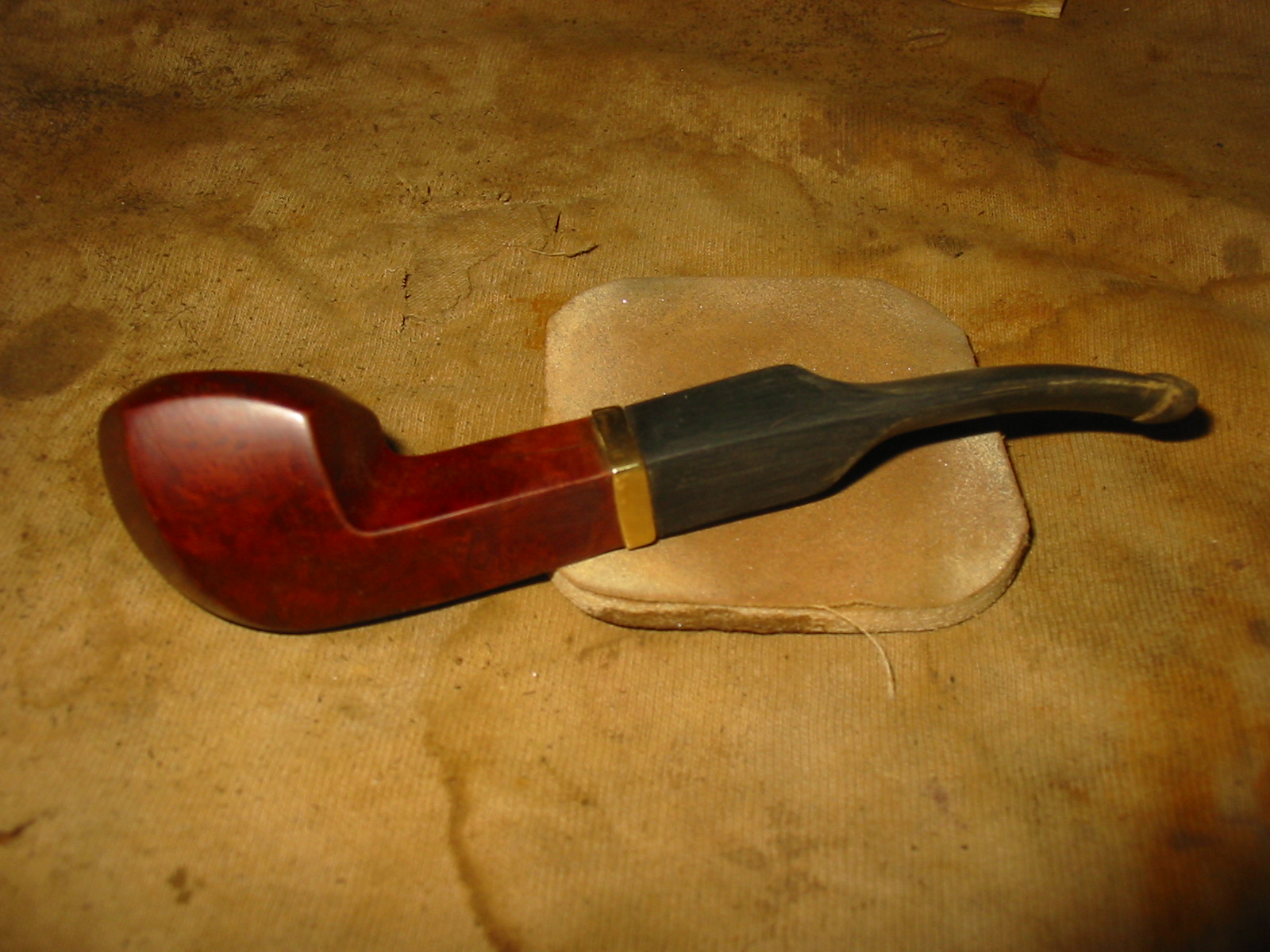
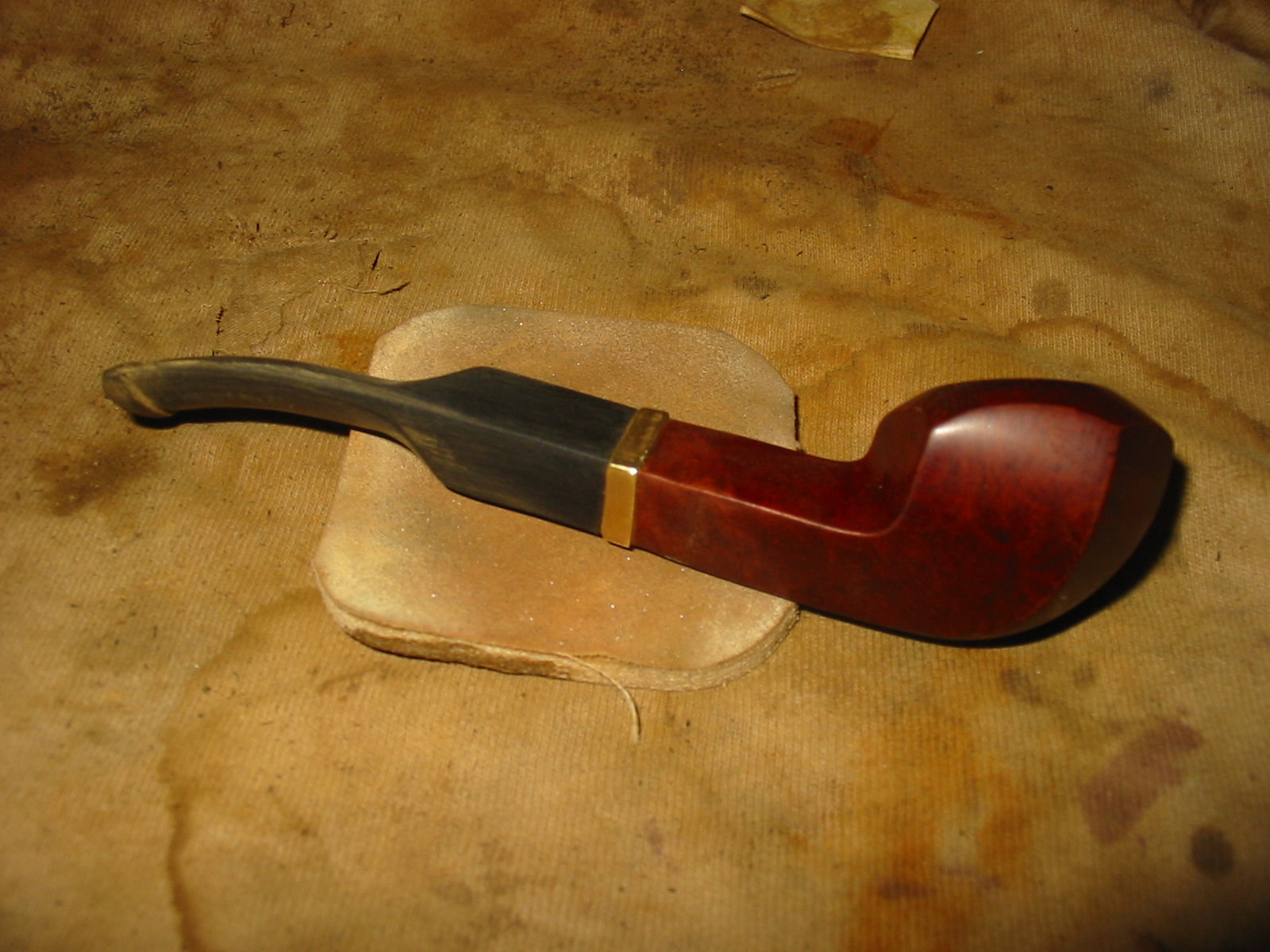
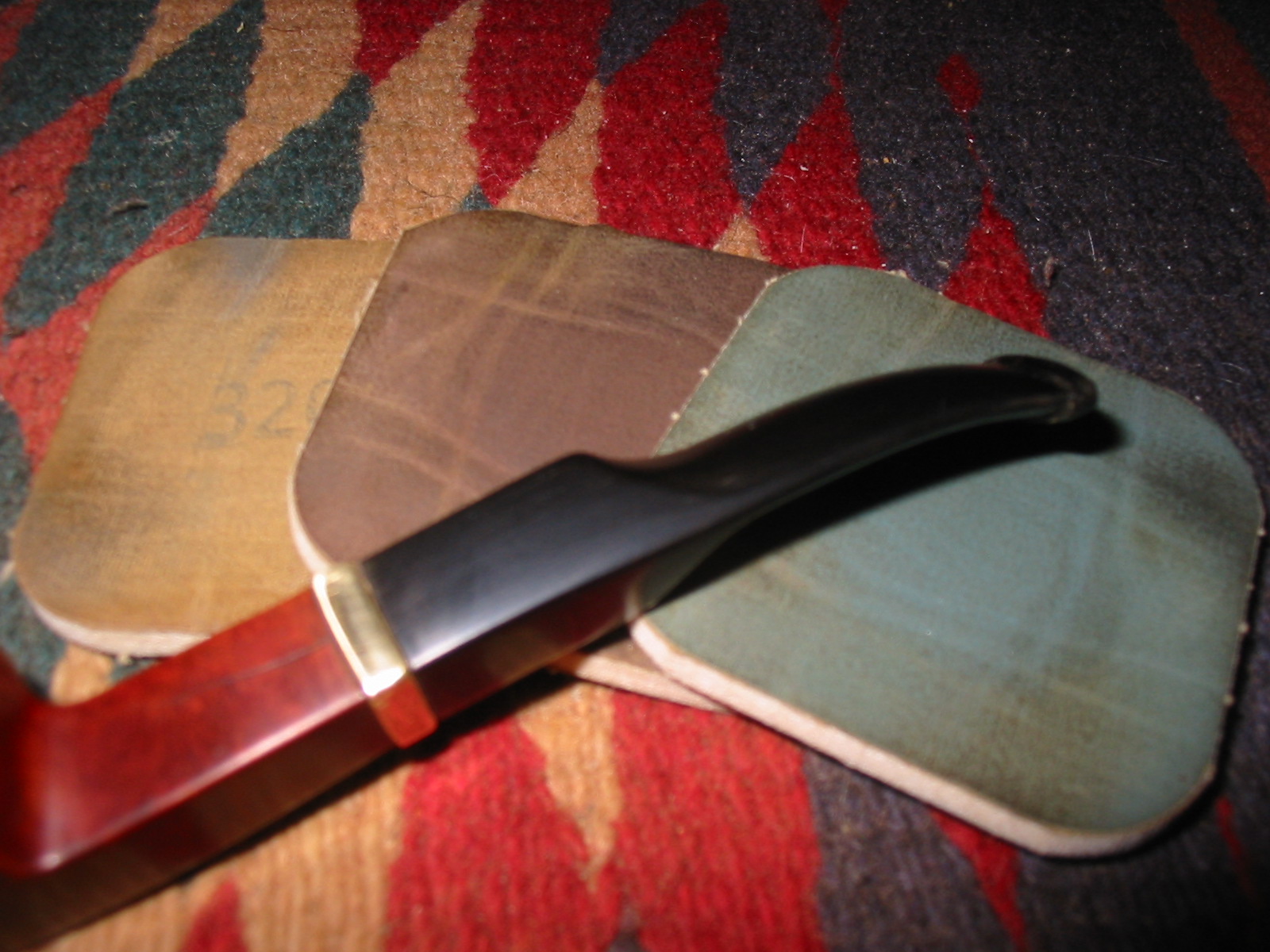
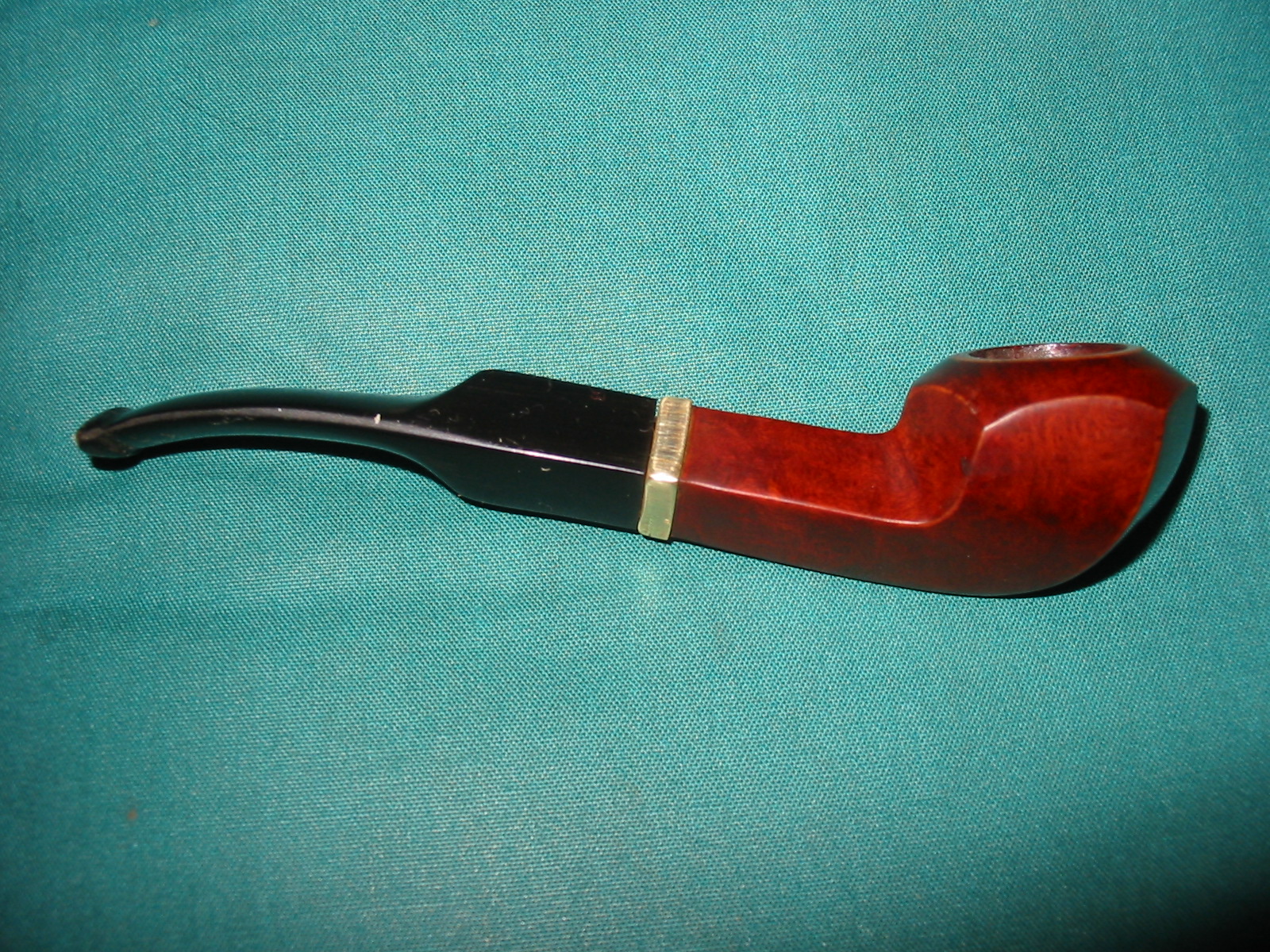
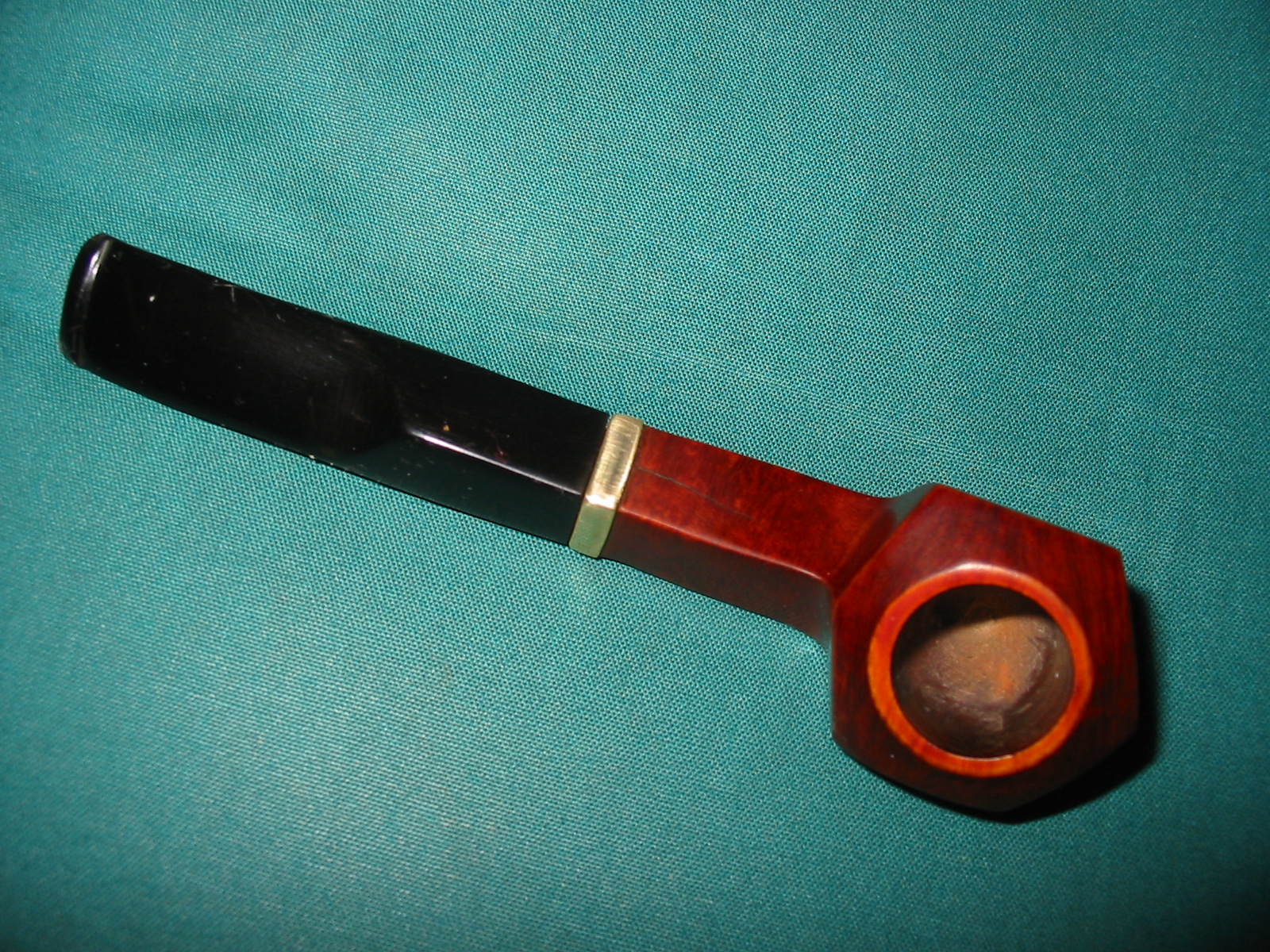
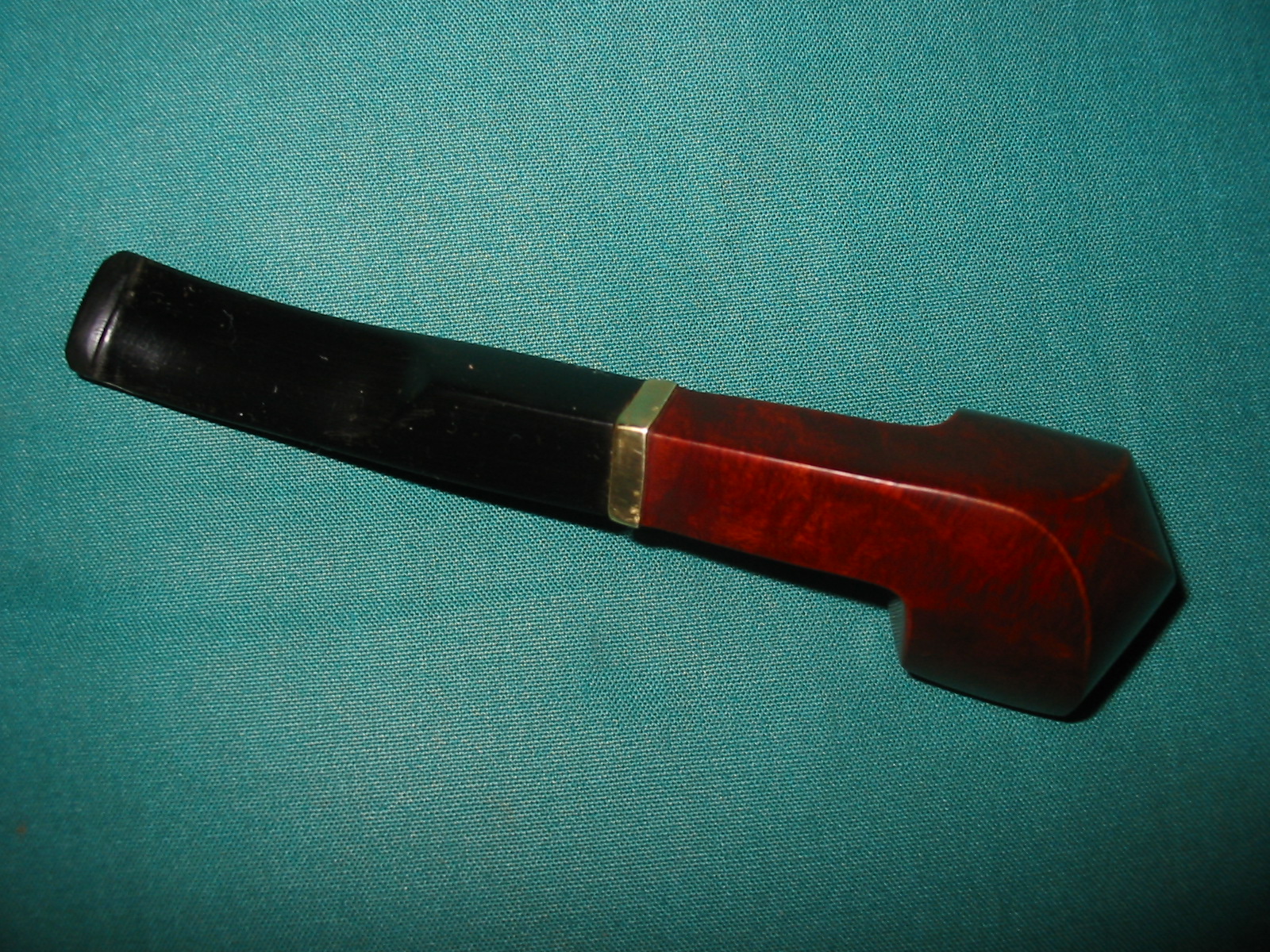
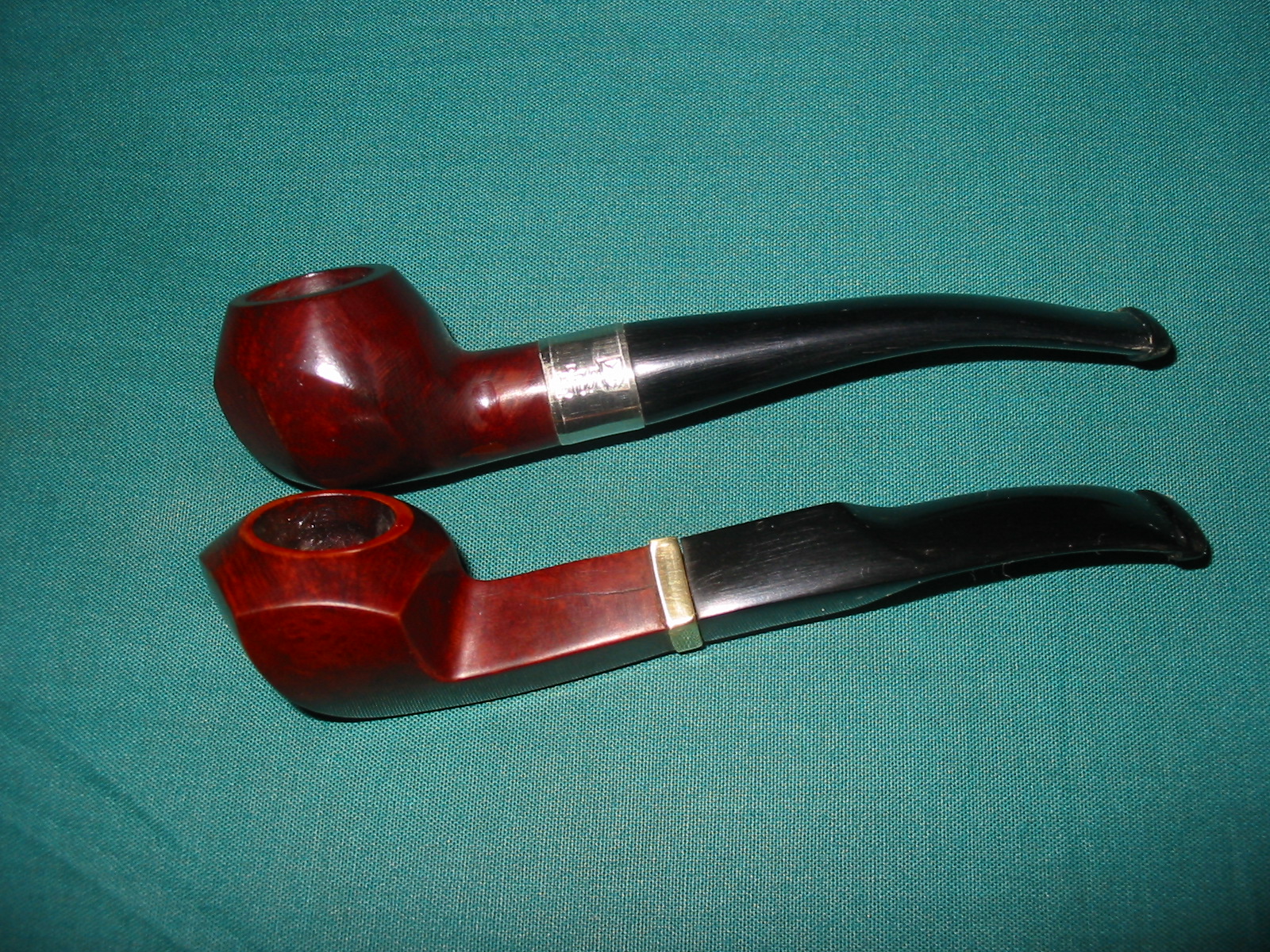
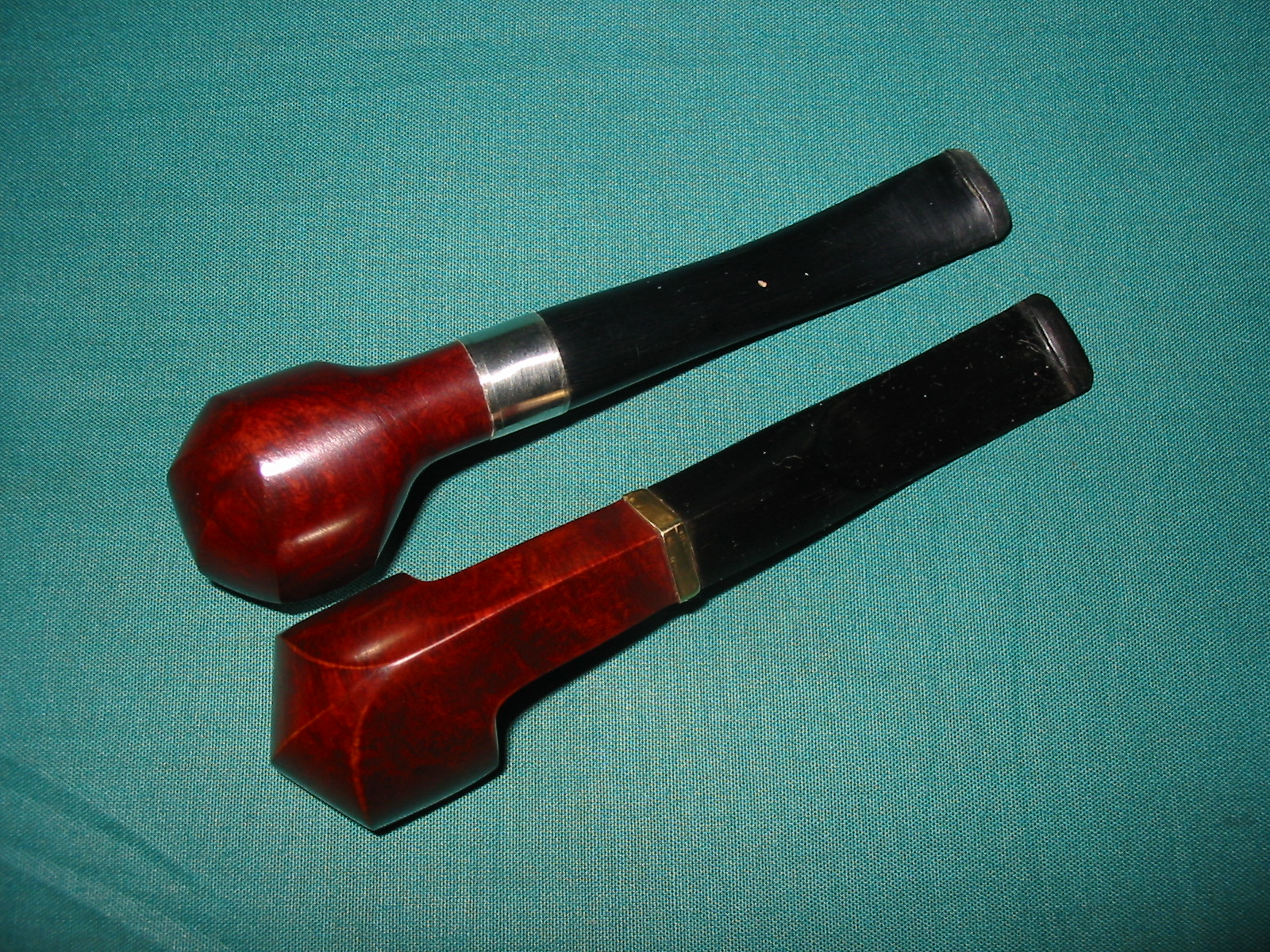
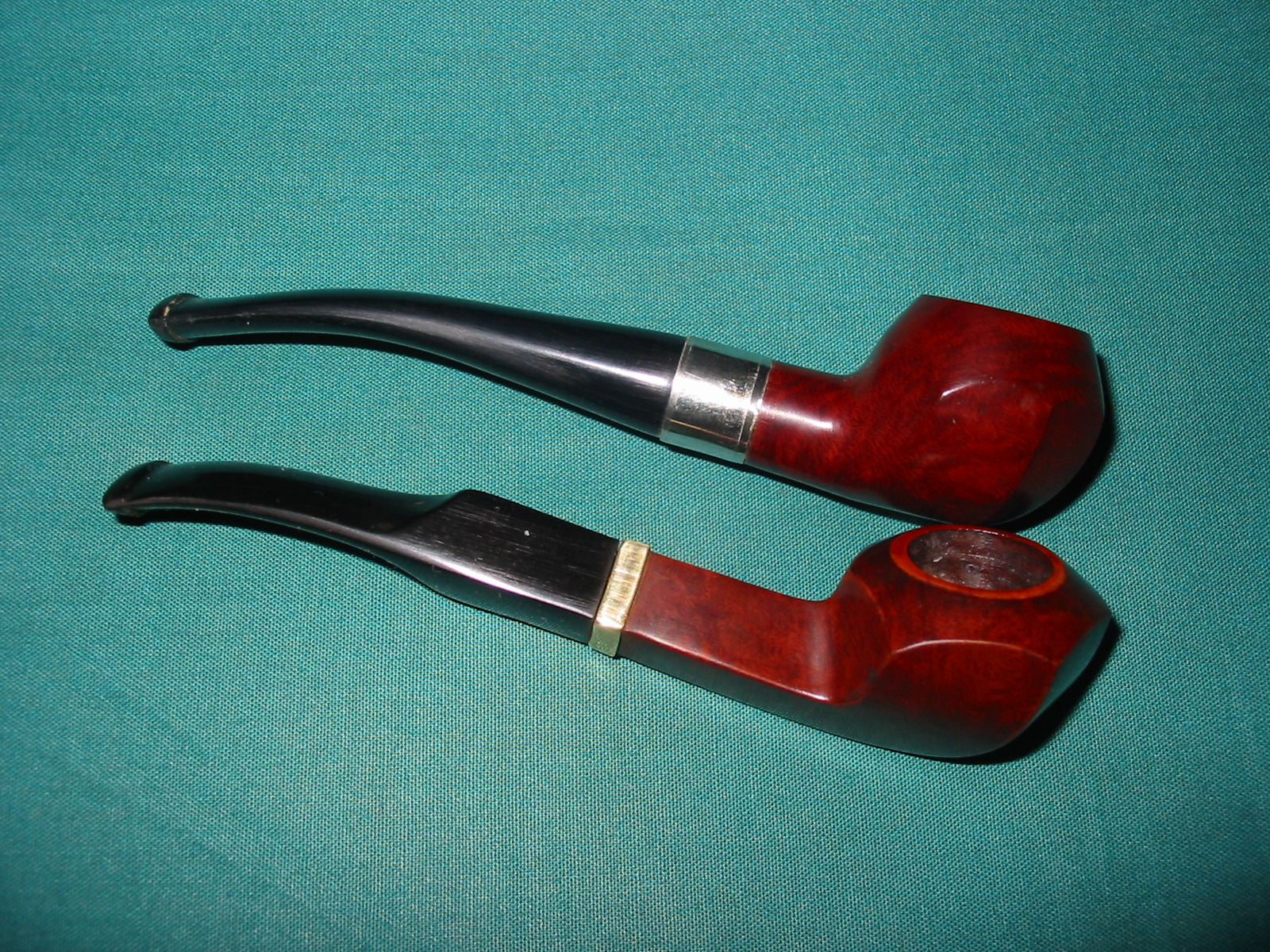
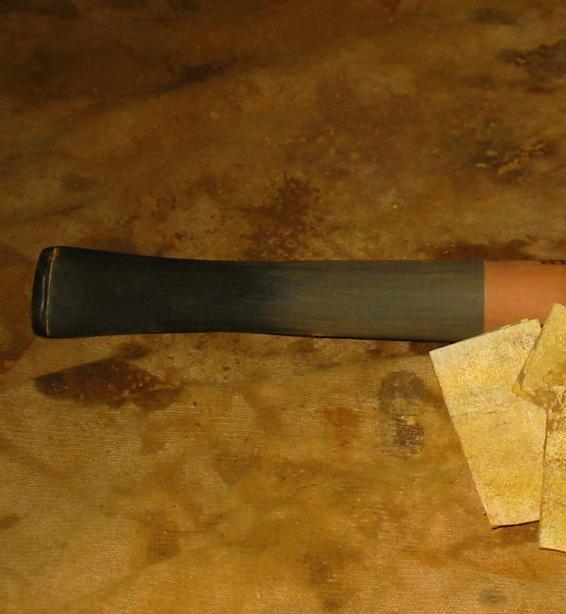
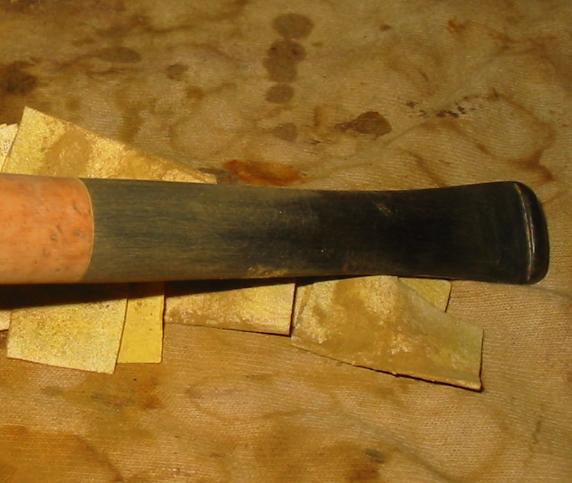
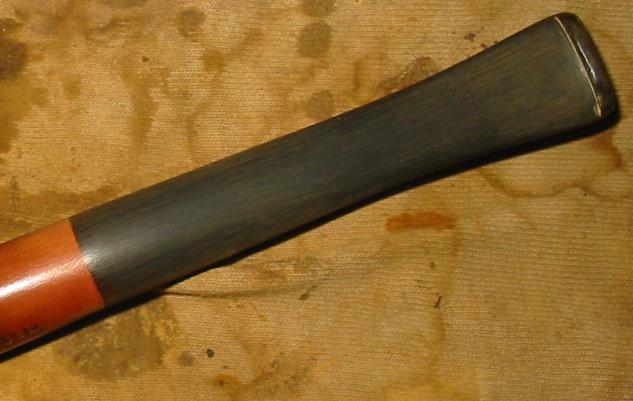
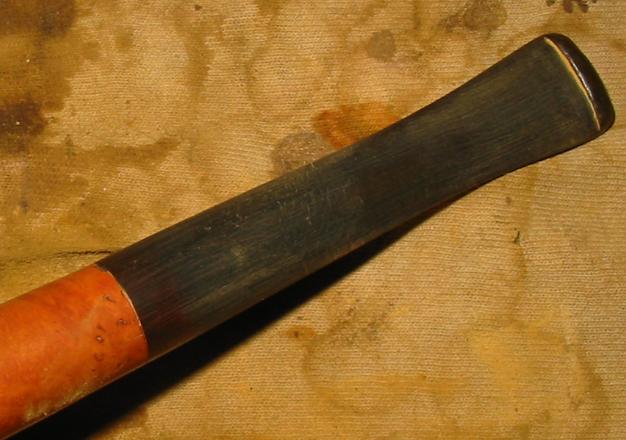
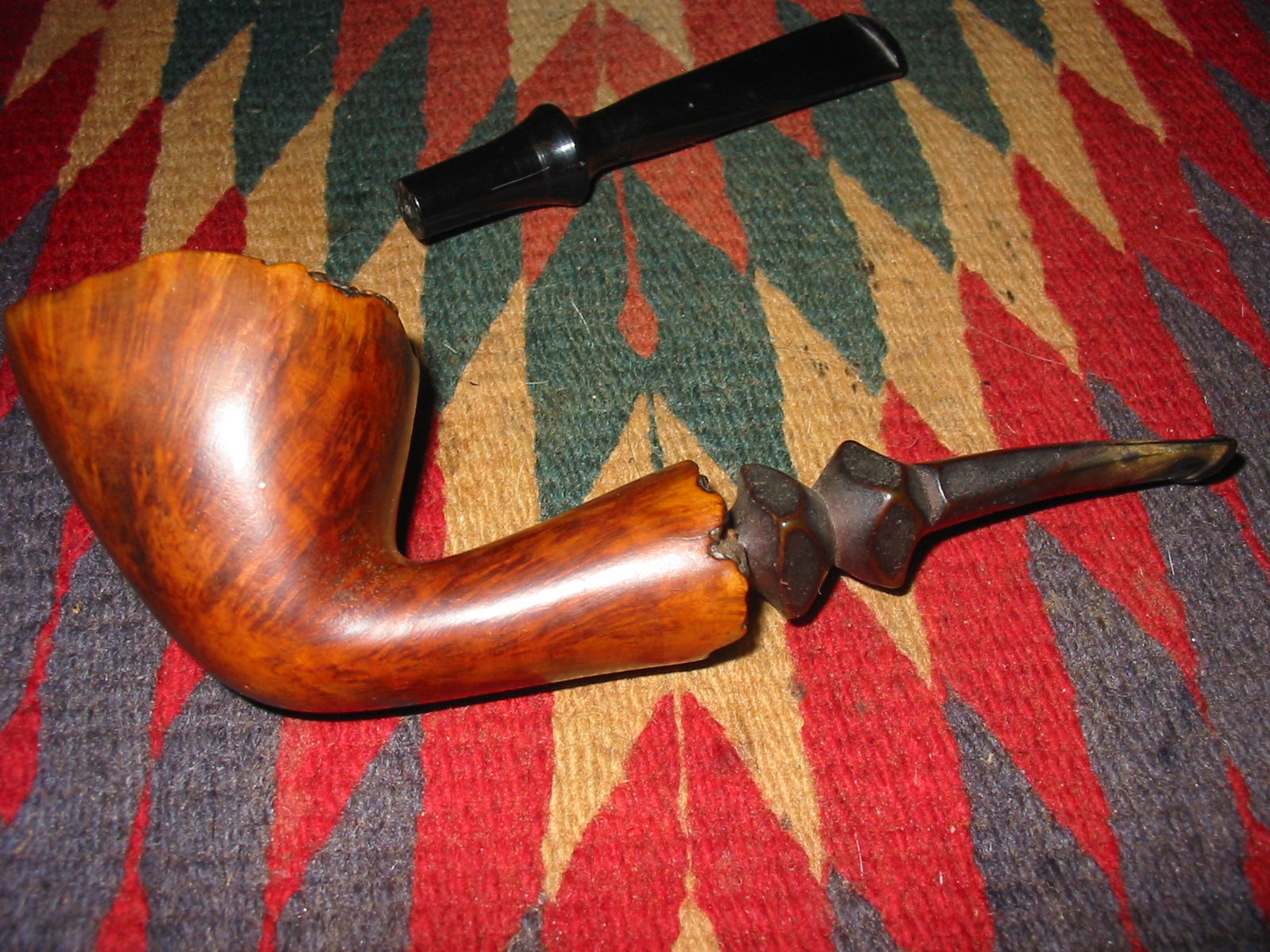
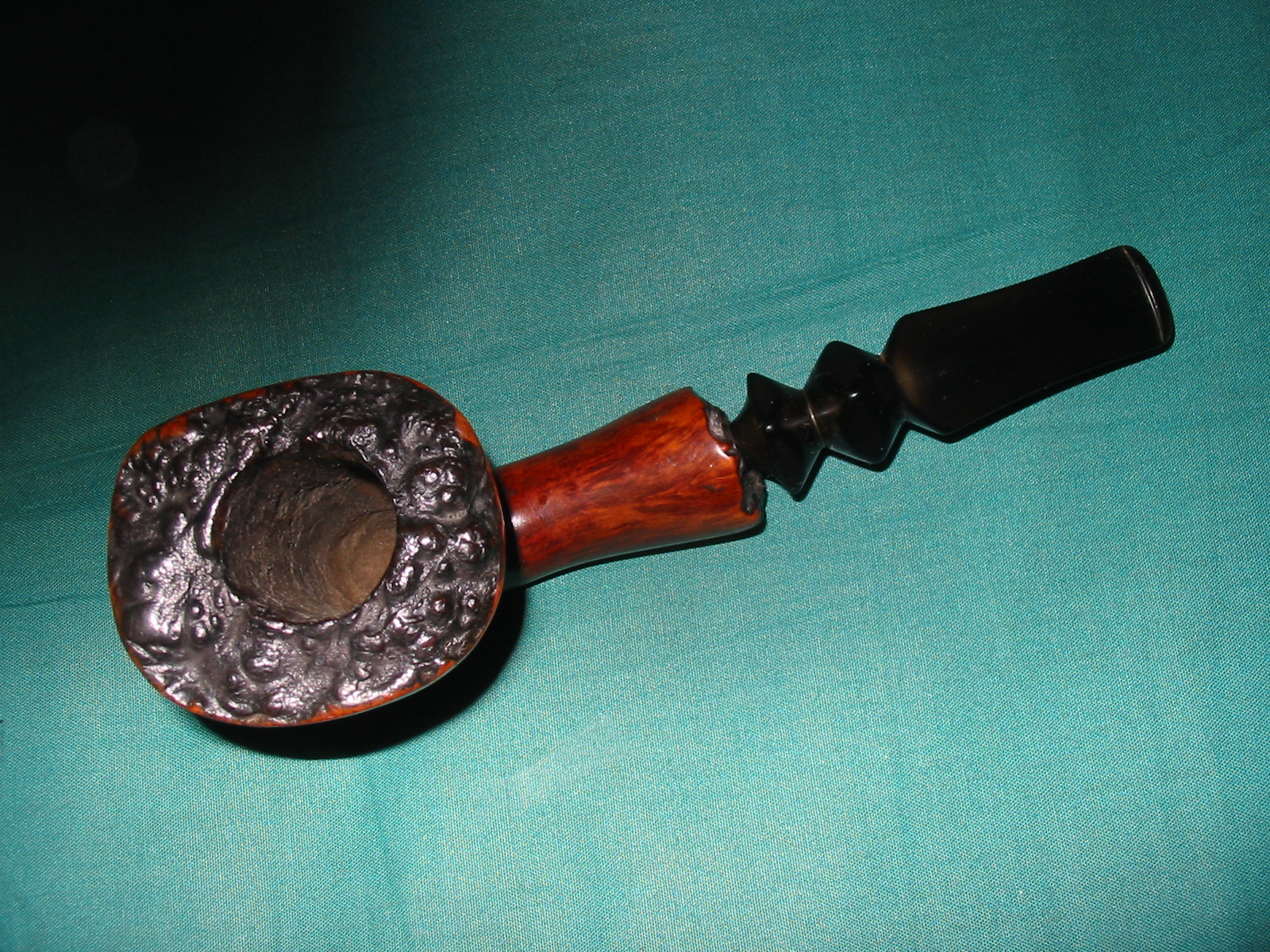
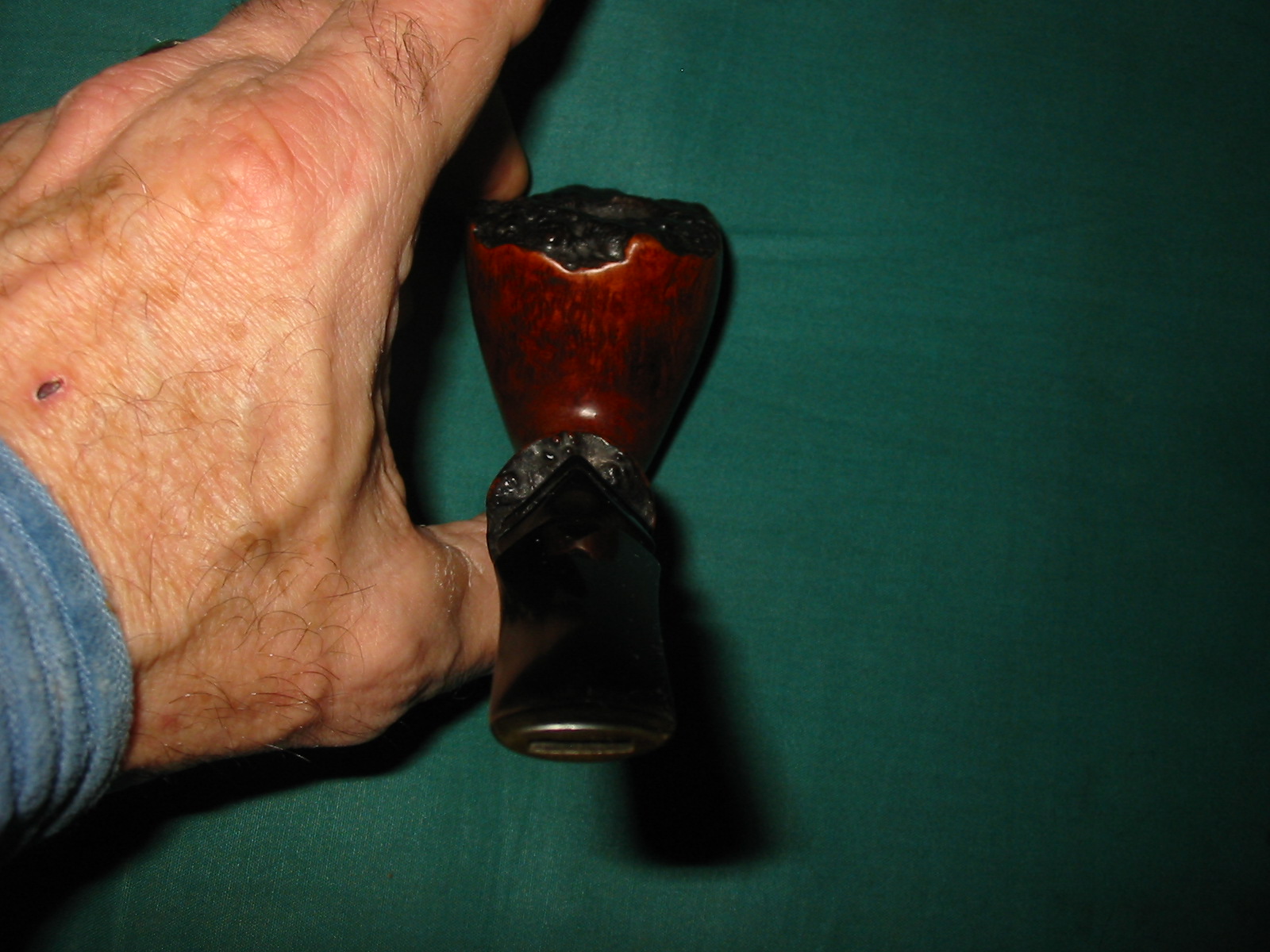
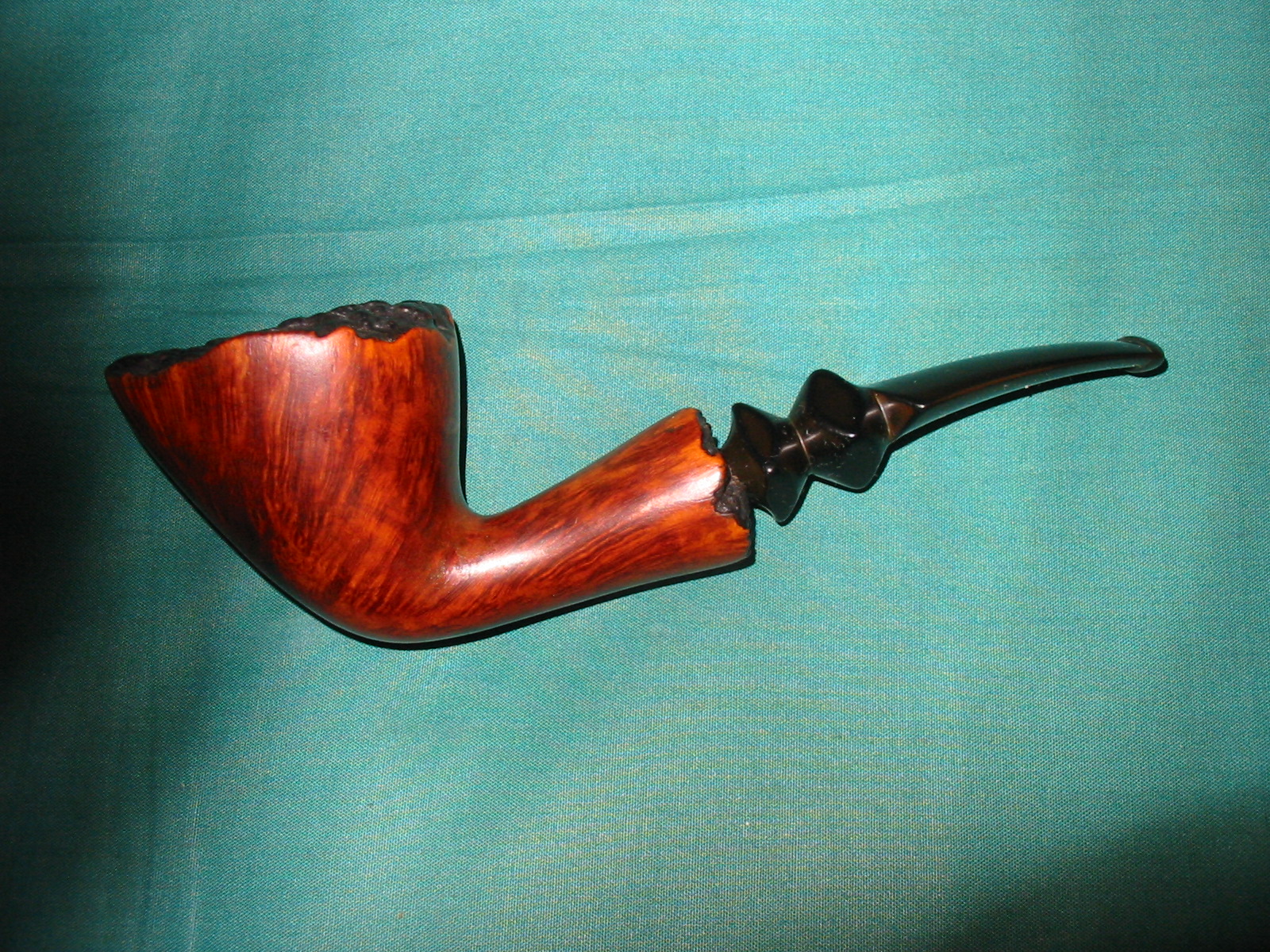
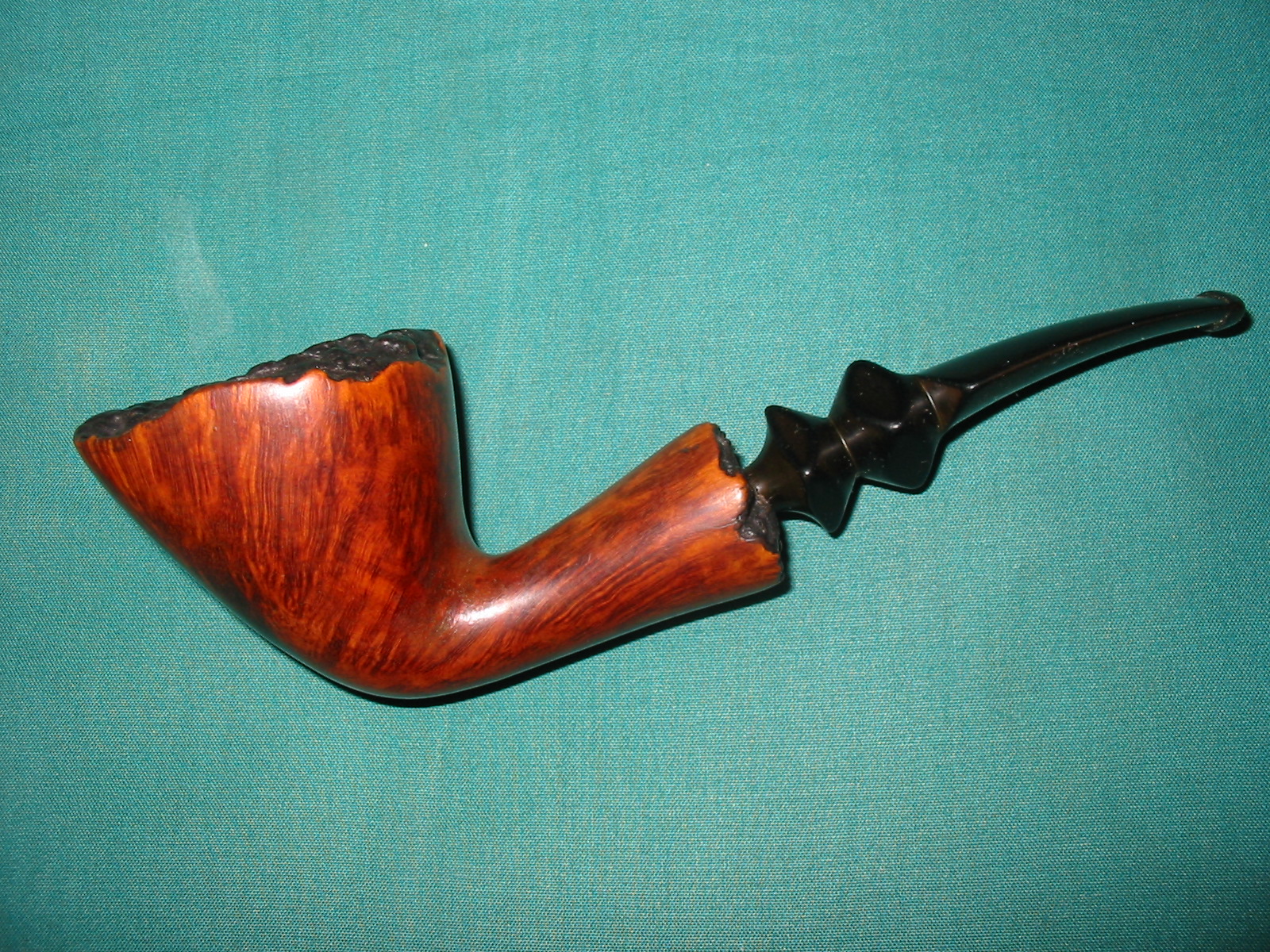
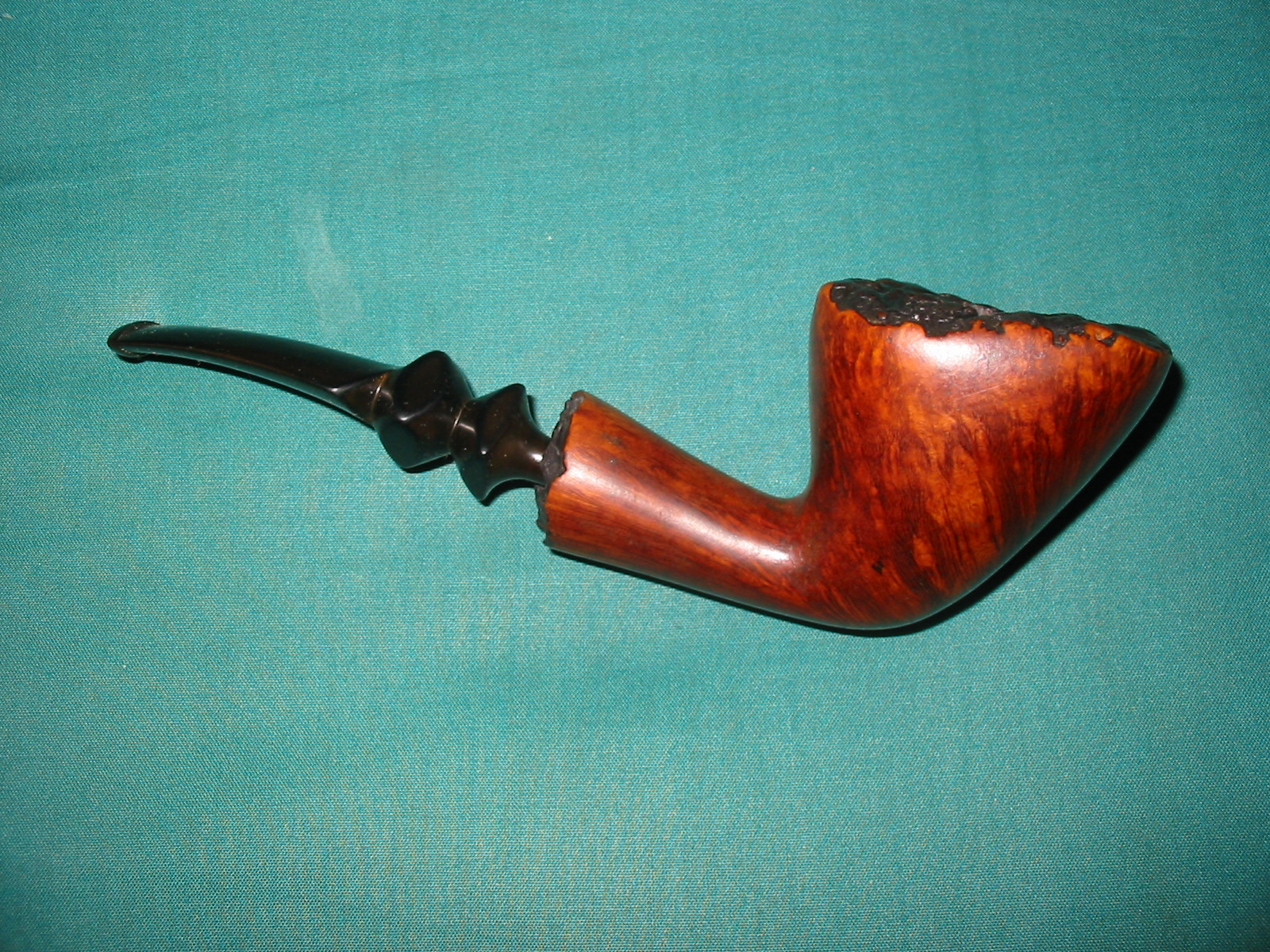
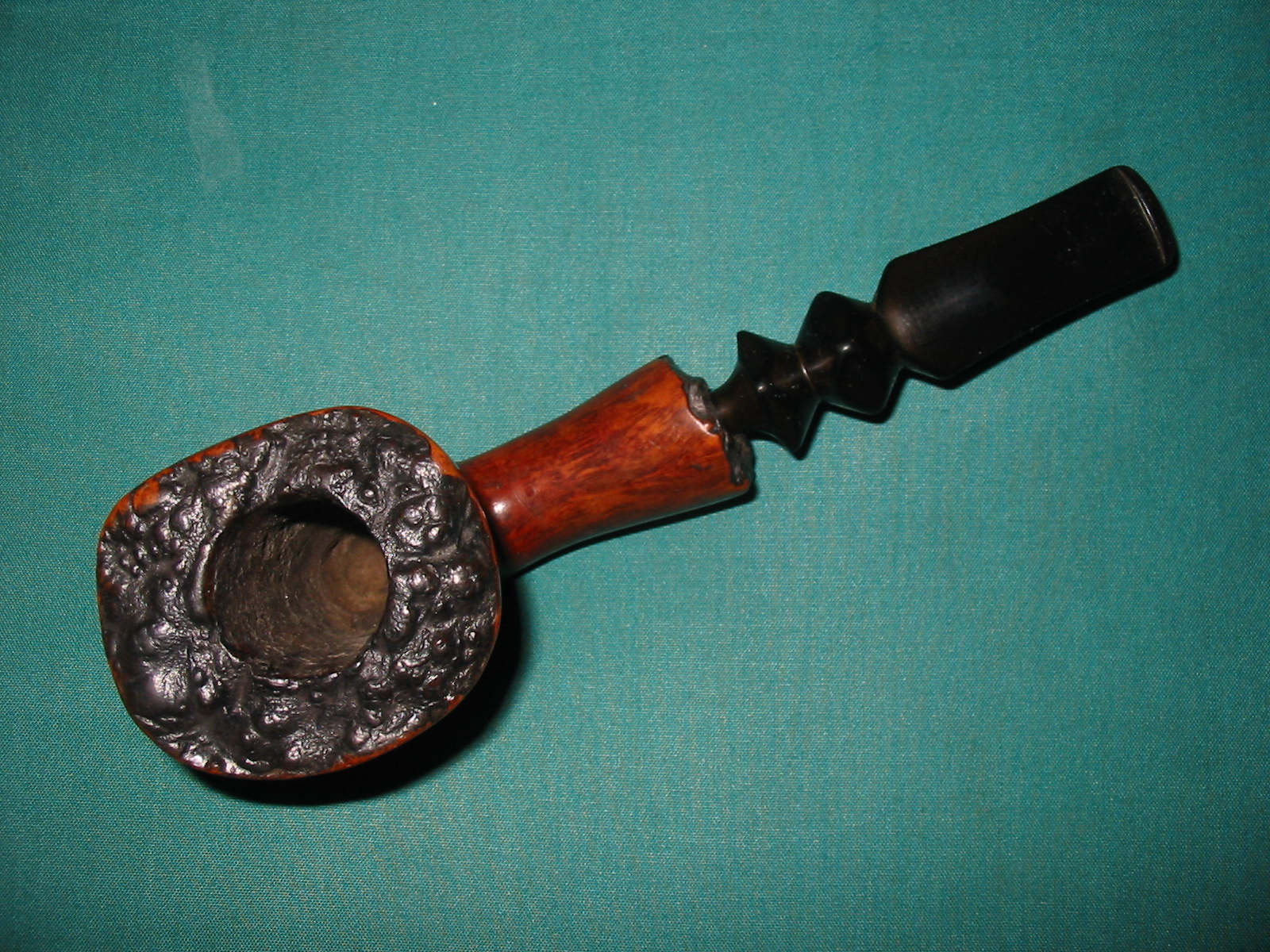
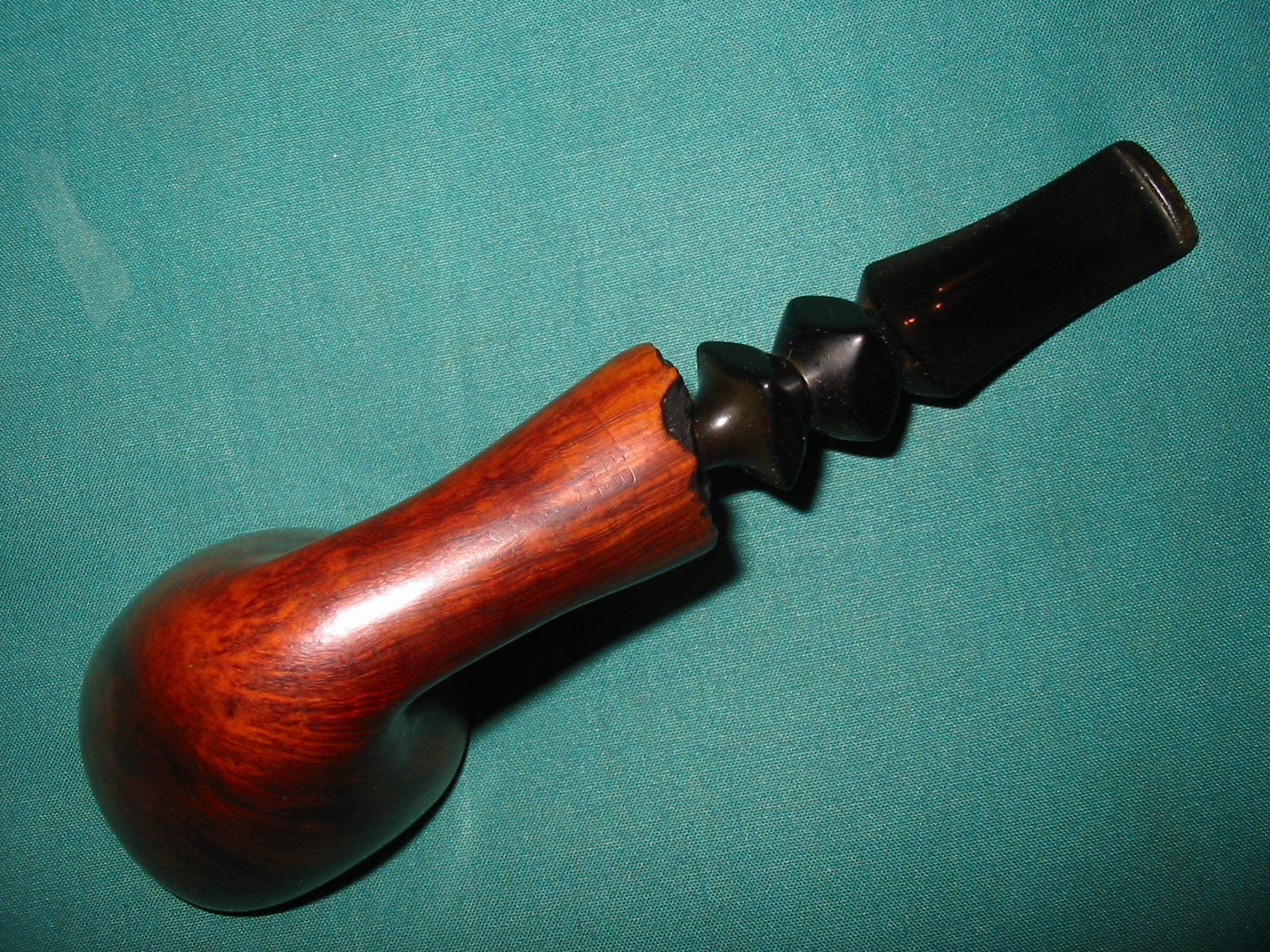
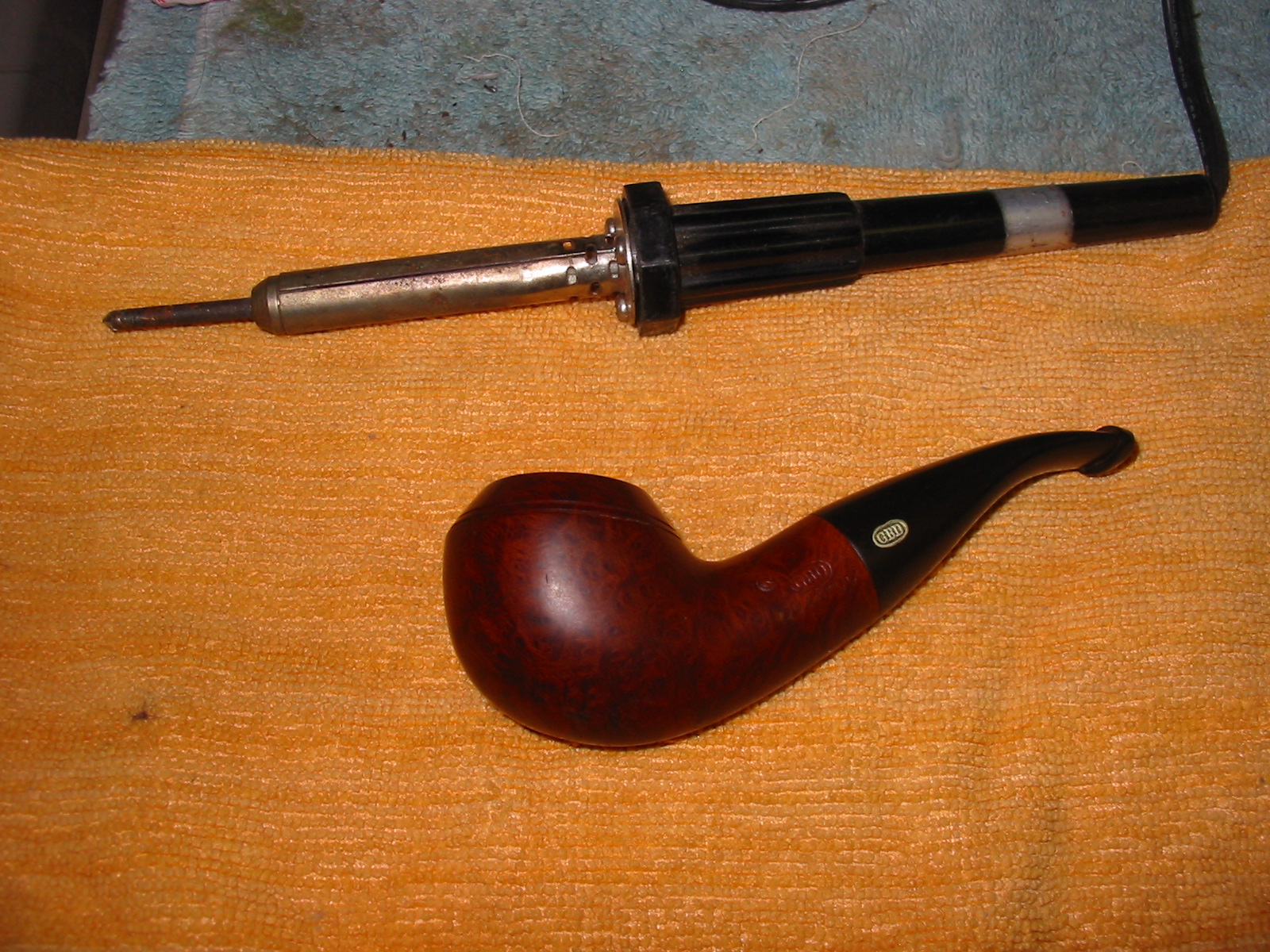
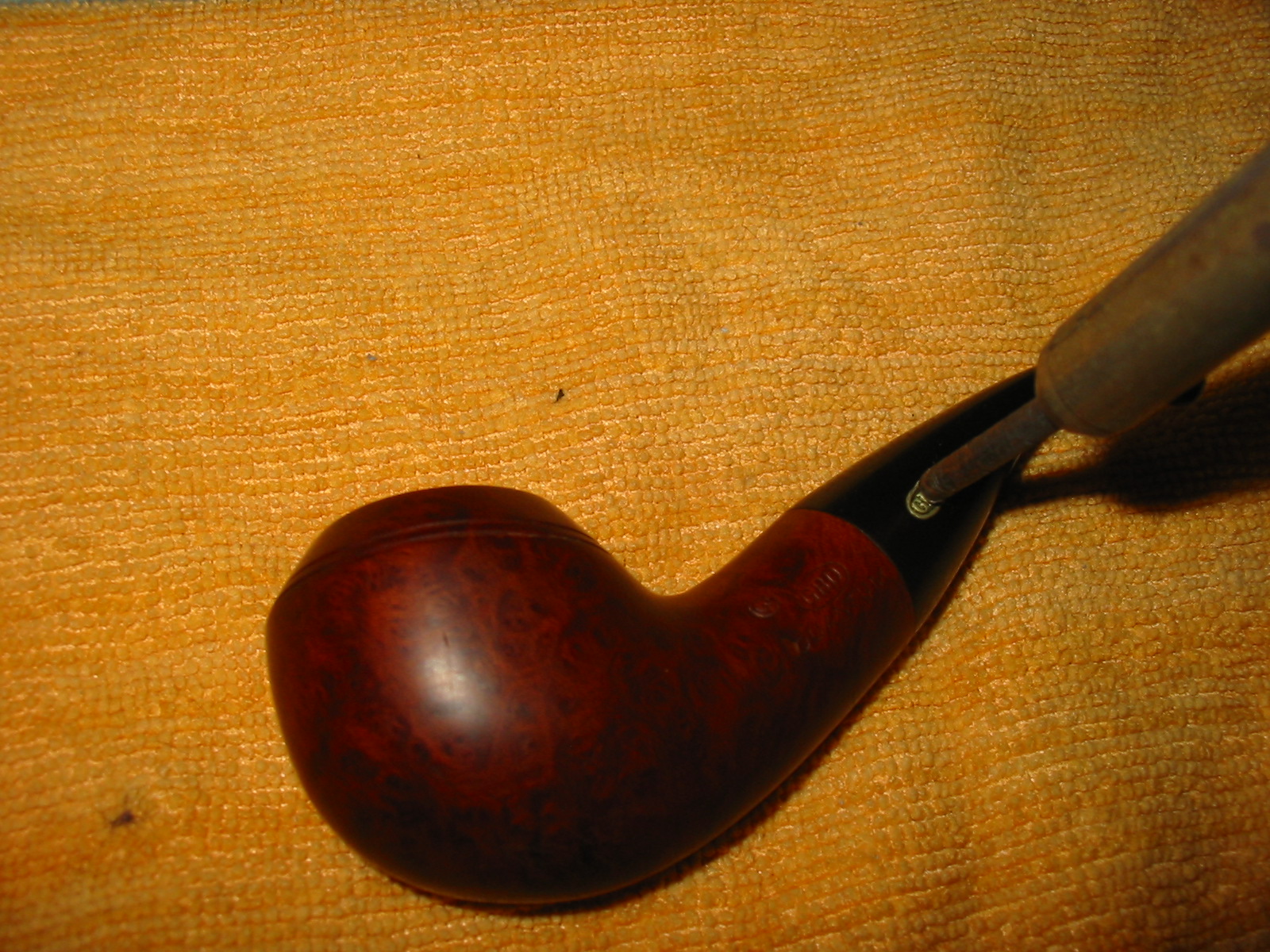
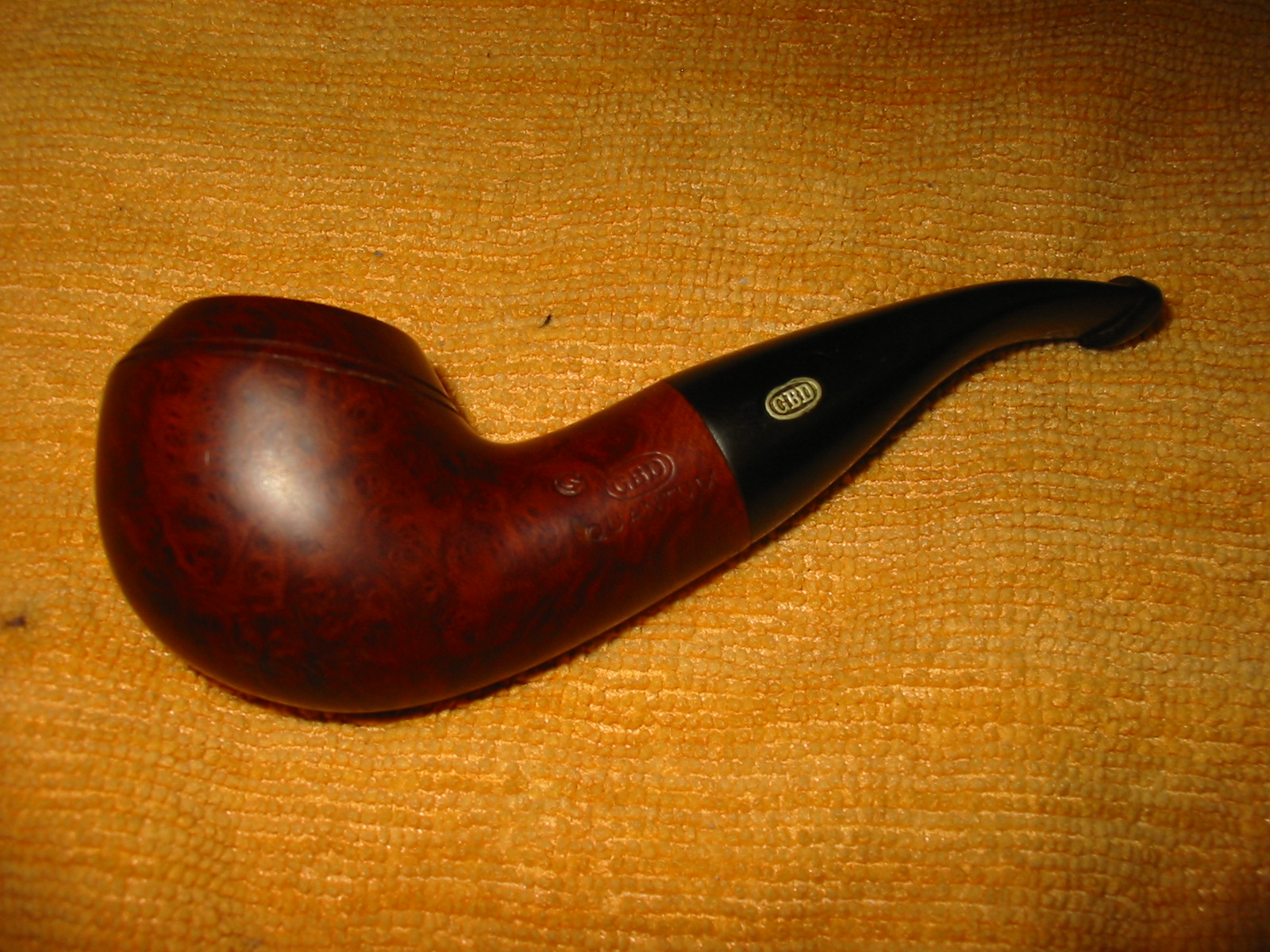
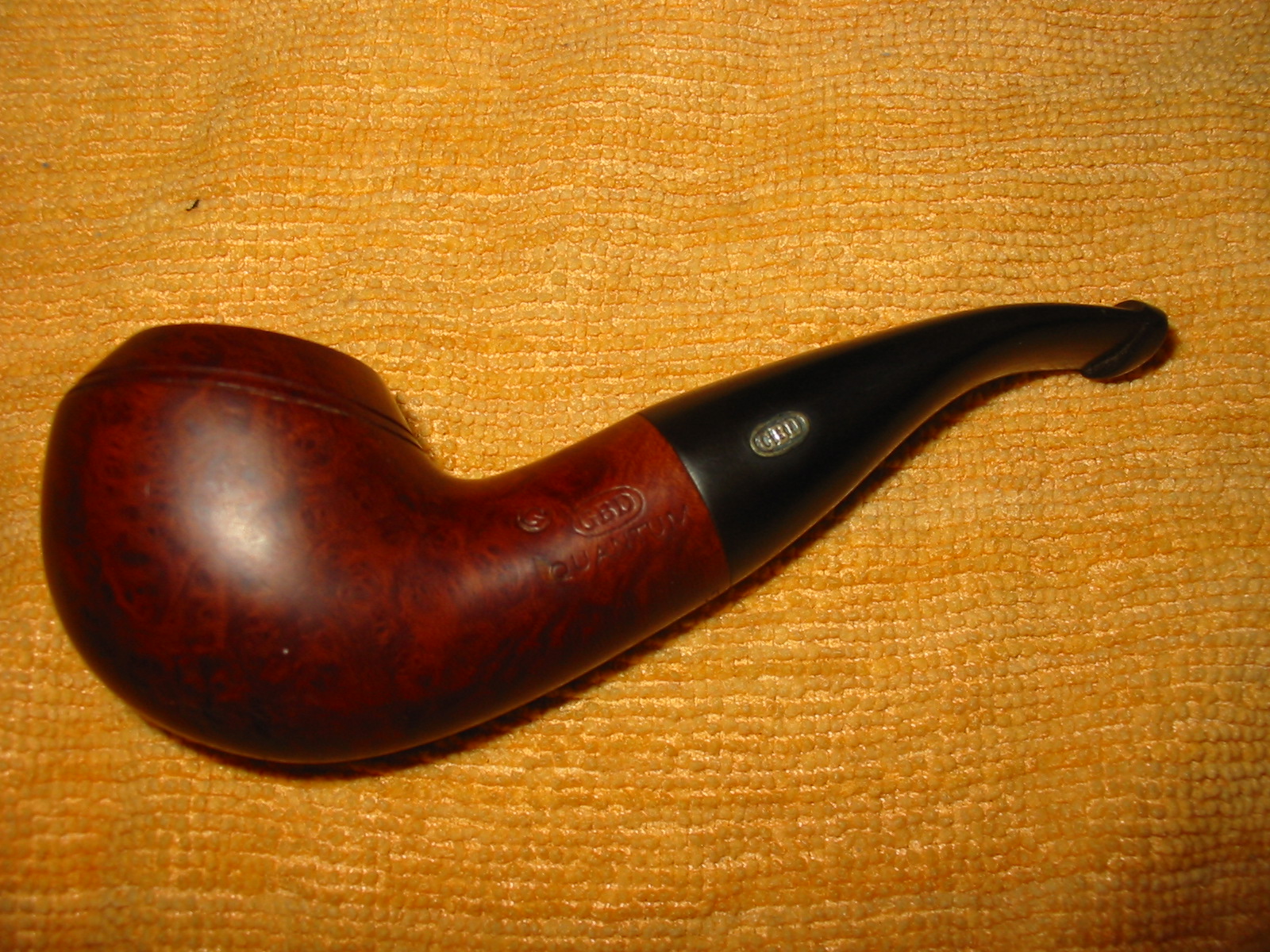
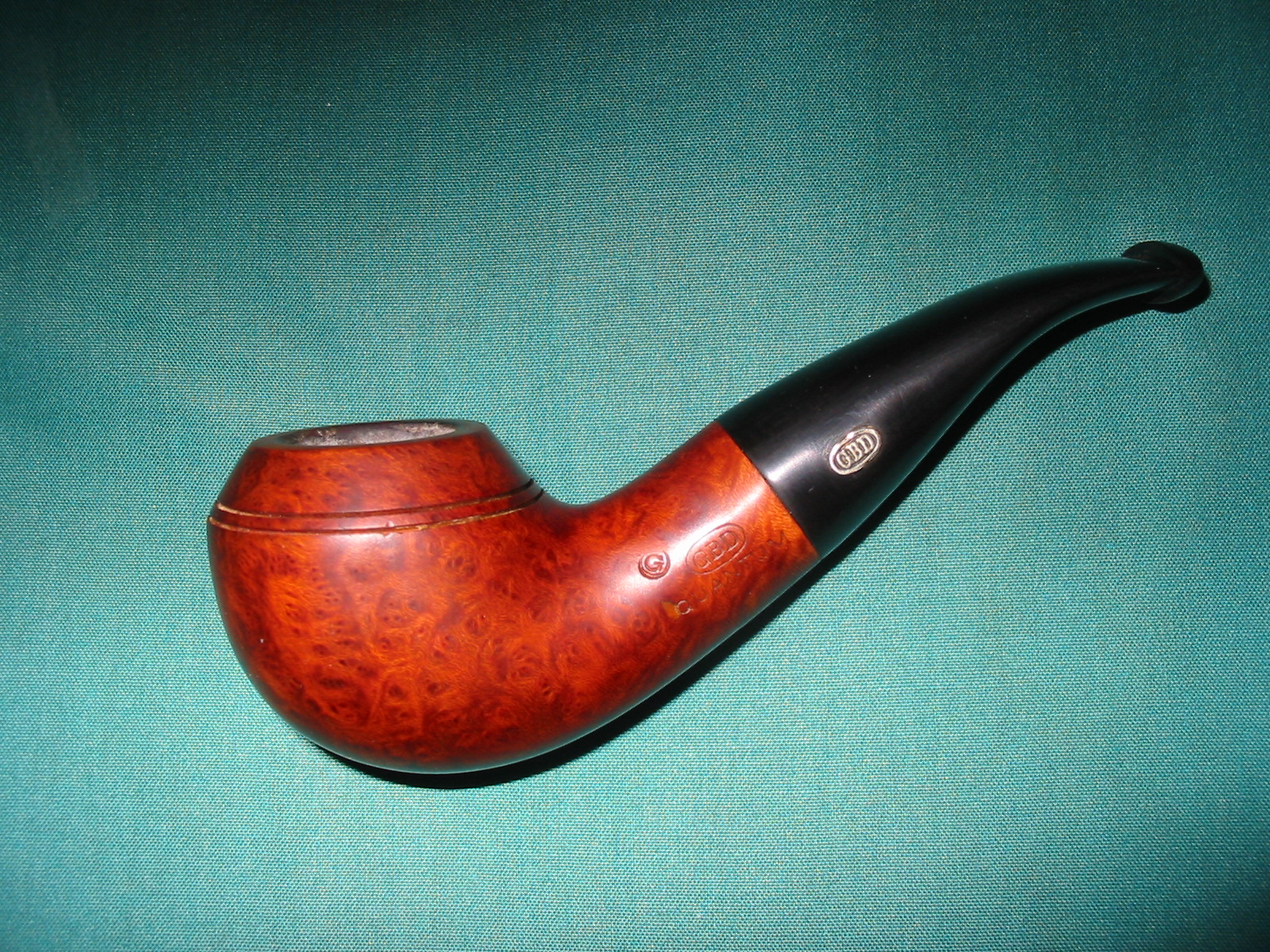
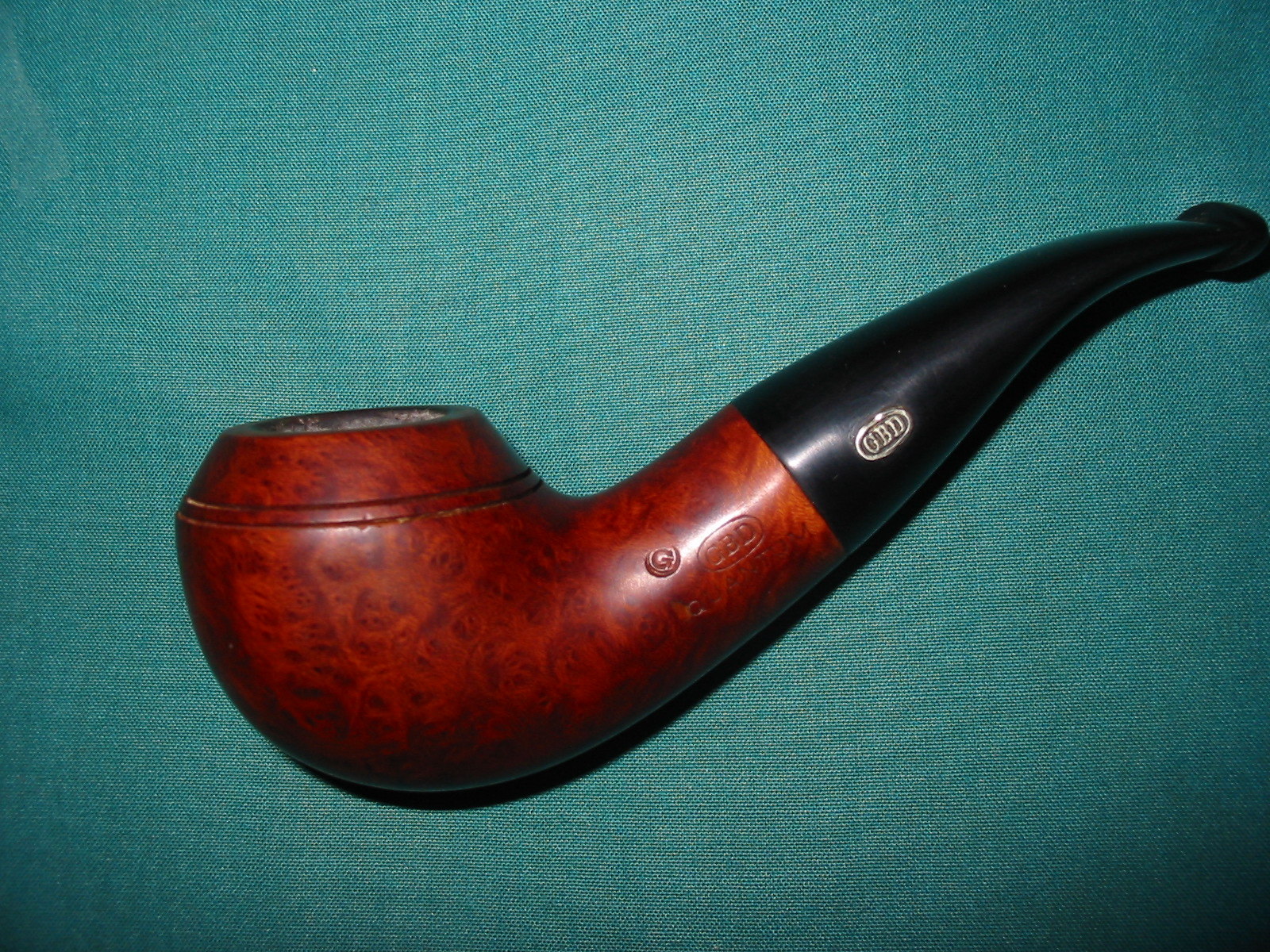
Without further delay, therefore, here are the final results:
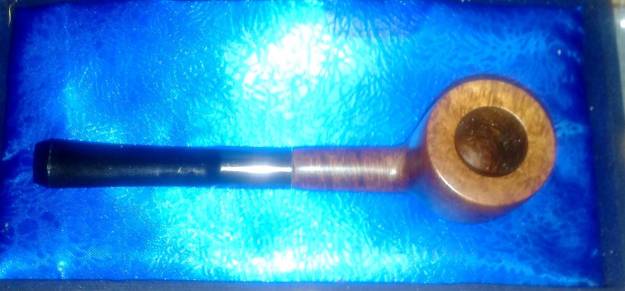
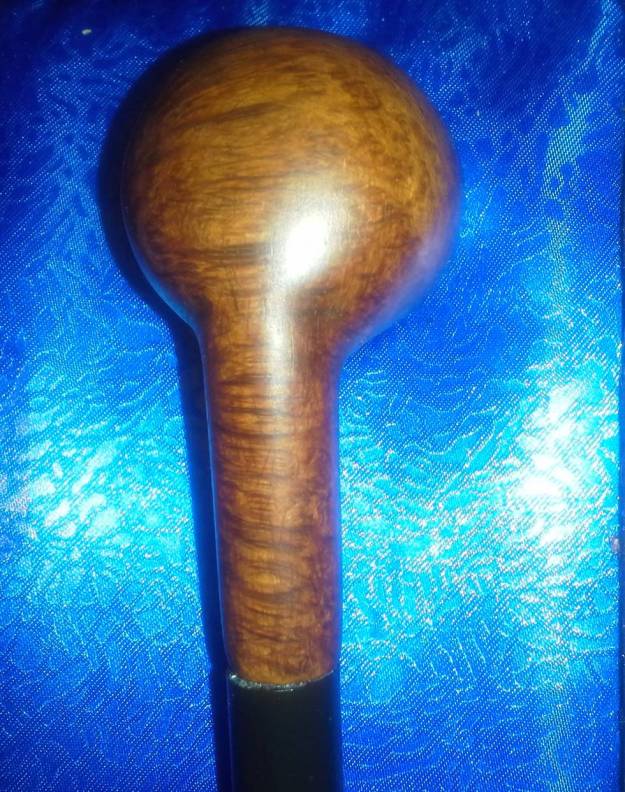
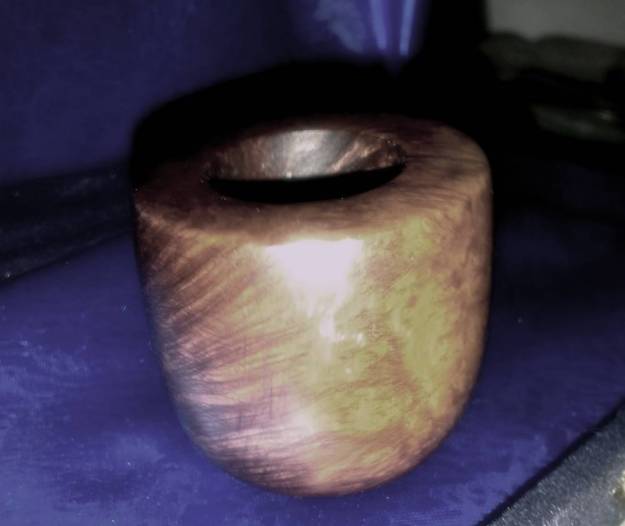
Conclusions
The more I practice restoration as a fledgling, or novice, the higher level of understanding I acquire as to the years required to achieve anything close to master level. At least I am getting quicker on the uptake of that which I now comprehend is limitless information.
What more can I add, except the usual well-deserved thanks to my mentor, Chuck, and my sometime adviser and friend in pipe appreciation, Steve… and everyone else who holds any stock in my ability to learn.

















 rebornpipes