Daily Archives: October 14, 2013

The Pipe Hunt – Rule #2: Look Inside ALL Small Boxes, Cupboards and Drawers


Blog by Steve Laug

A second rule of the pipe hunt that I have learned over the years is that not all pipes and tobacco related items are in plain view as I walk around a shop. This took time to learn and by and large I learned it by asking sellers if they had any old pipes or tobacco items for sale. I used to do this after an initial walk through but now ask as soon as I enter a shop. It saves time and generally is a way of engaging in a conversation that may lead to more pipes. When the answer was affirmative I followed them to the stall or spot in the shop and watched where they had placed the items. This quickly taught me where to look. But they would also often have pipes or items at home or in the back room and they would gladly bring them out for me. I have learned that it never hurts to ask.

As a result I quickly look through a shop (I know quickly is a relative term but to me it is quicker than it used to be and way more focused). I walk through after my initial scan and open small drawers, cupboards, cigar boxes, and look inside revolving display cabinets. This may seem intrusive but trust me, it is not (well at least in my mind it isn’t). Small typography cabinets can hold pipes and tobacciana. Revolving display cases can hold pipes, tampers, lighters and other pipe related objects. I have found wind caps, tampers, Baccy Flaps, Bakelite stems, pipe holsters and other items too numerous to list by just going through these revolving cases slowly looking for tobacciana. Coffee cans, tobacco tins and old cigar boxes can often hide old pipe paraphernalia in their interiors. Don’t hesitate to have a look. Here is a tale of an old pipe I picked up by doing what I am suggesting – a nice older bent billiard for $20. I can tell you it was well worth opening drawers and digging deeper.

My wife Irene and I love doing an antique mall crawl on our days off. We generally visit as many as we can fit in before lunch and then have a good lunch at a neighbourhood pub before finishing the day with visiting a few more shops on our way home. Over the years one of our favourite spots is found not far from Vancouver. Just across one of the many bridges and upriver it is a spot with several antique shops and several larger antique malls. On the day of this tale we had visited several of them in the morning and so far had struck out on any significant finds of pipes or tobacciana for me or anything of interest for her. We had stopped for a great lunch at the local pub and were now visiting the last of the shops. We were almost finished looking and still empty handed. I had passed by some very high priced drugstore pipes – no deprecation intended here as I have many of them in my collection but I am not willing to pay the exorbitant prices that sellers mark these – $50 or more is an unacceptable price in my opinion.

I turned down the last aisle. It was lined from floor to ceiling on the right side of the aisle with display cases. These cases had drawers underneath that were labeled with different key items that resided inside. I did a quick walk by of the display cases checking them out. In one I found a couple of older Brighams that I noted. I would need to get the sales clerk to open the displays for me so that I could look at them more closely. That could wait. I turned my attention to the drawers beneath the cases. In the middle case I opened a drawer labeled miscellaneous collectibles and dug through it. There in the middle of the drawer, nestled among lots of unrelated items such as linens and doilies I found an older looking pipe that captured my attention. I stopped for a minute before picking it up. (I have a habit of trying to guess what the pipe might be before I actually look at. Quirky I know but it is what it is.)
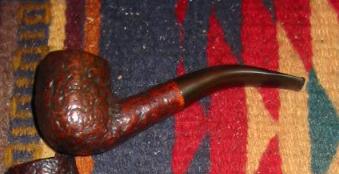
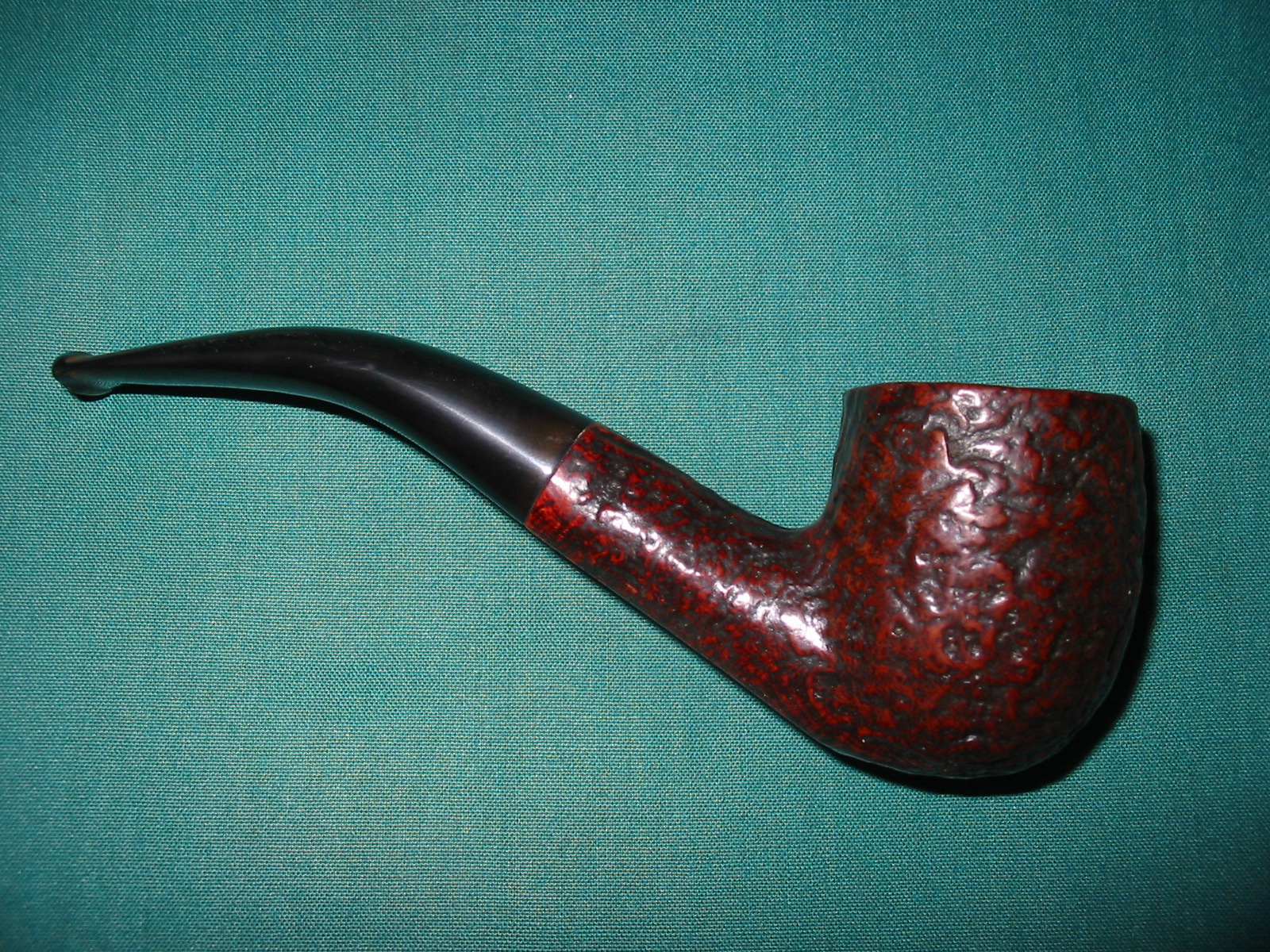
1938 Dunhill Shell

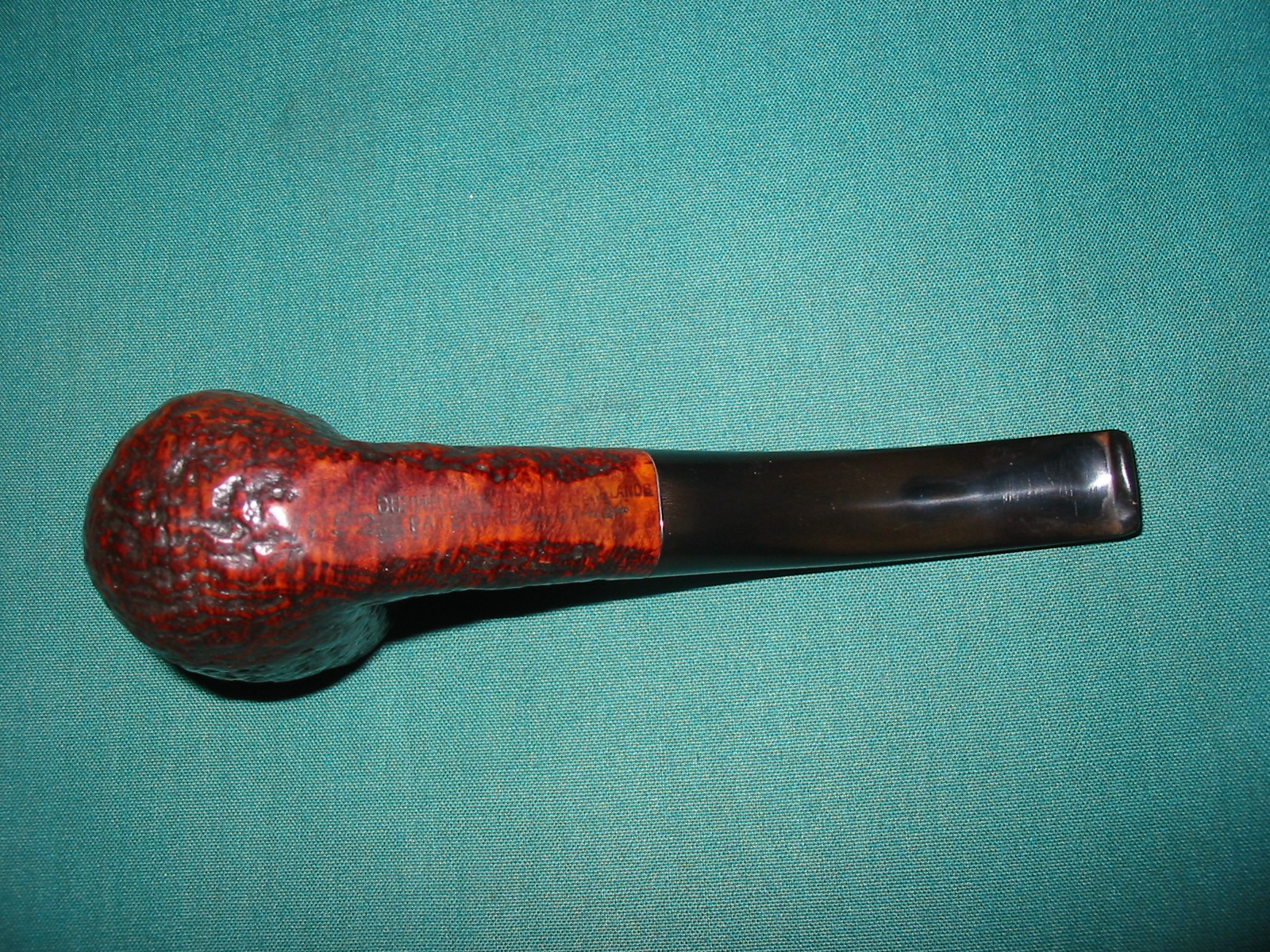
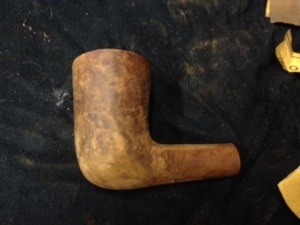
I made my guess (a Dunhill of some sort) and then I picked it up. It was a sandblast bent billiard. I turned it over in my hands and noted a slightly darkened white spot in the top of the stem and then read the stamping on the underside of the shank. It read Dunhill Shell Made in England 8 and underneath that it was stamped Patent No. The number itself was obscured in the dirt and grime that accompanied the old pipe. It was caked with a heavy carbon buildup and the stem was oxidized and had several small tooth dents on the top and bottom of the stem. Other than that it was a good clean find. To say that I was excited is to understate the case. Here in the drawer under the display cabinet I had found not just a Dunhill pipe for $20 but a Patent Era Dunhill pipe with fairly clear stamping and in a condition that would easily be refurbished. I was ecstatic. I called my wife over to show her the cause of my ecstasy and she just shook her head – another pipe. Big deal. She wandered off and I was left standing there.
I almost totally forgot the Brighams and just stood there basking in the joy of discovery! This is what I always dreamed of finding one day in my pipe hunts. And now here it was in my hands. I could hardly believe my good fortune on finding it. I shook myself and carefully cradled the old pipe while I went and found the sales clerk. She brought the keys with her and opened the case so that could add the two old Brighams to the lot. I carried the three pipes to the counter and paid for them before they disappeared in my dreams. The clerk carefully wrapped them in tissue paper and placed them in a bag for me. She handed me receipt for my purchase and I went looking for Irene. I had my haul and I was finished. I just wanted to get home and do some research on this lot.

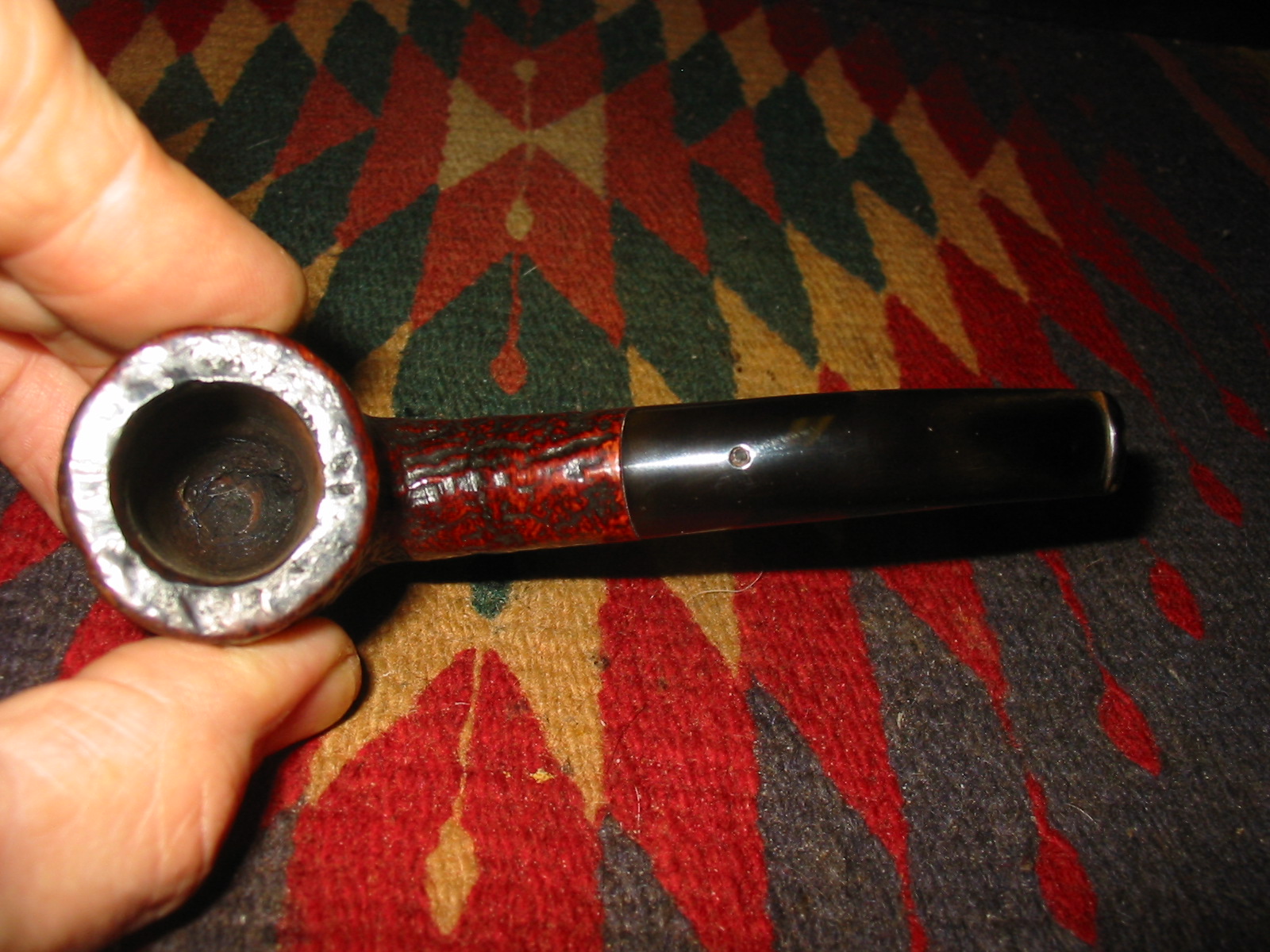
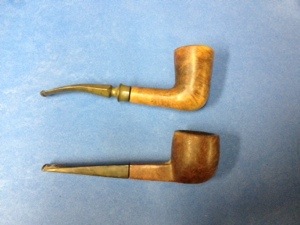
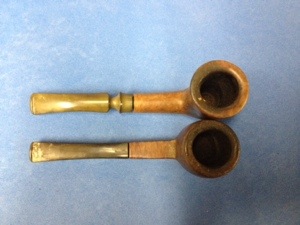
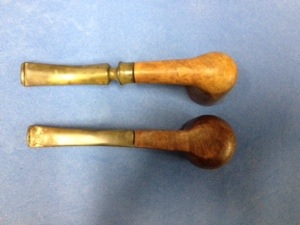
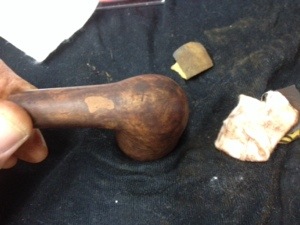
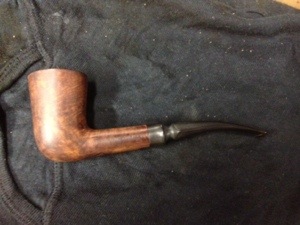
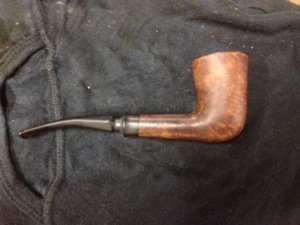
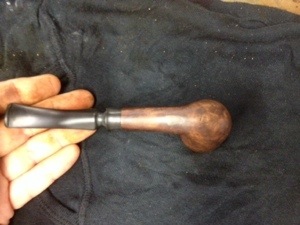
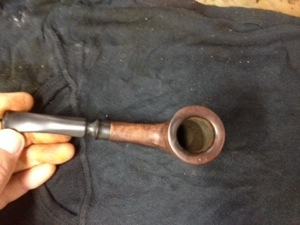
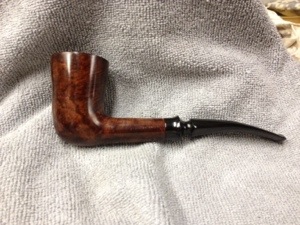
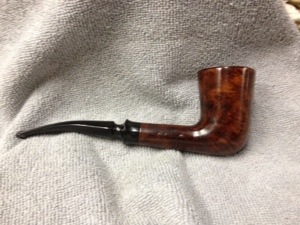
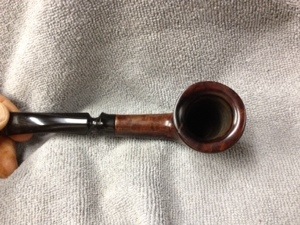
When I got home I went to my basement work table and used my jeweler’s loupe to check out the stamping more clearly. I had read the majority of the stamping correctly at the shop. I was also able to read the patent number on the bottom of the pipe. I looked up the information on John Loring’s Dunhill dating site and found that I had a 1938 Patent Era Dunhill Shell bent billiard. I could not have been more pleased. I cleaned up the old timer carefully and gave it several coats of wax. Here are a few pictures of the restored pipe.
IMG_2083

IMG_2084

IMG_2088

IMG_2086

It is this kind of find that keeps me pulling out the drawers and looking in the boxes and behind tins and displays. I am confident that there are other hidden treasures out there. So Rule #2 will always be right up there next to the first rule I posted about earlier. I will look in every nook and cranny while I am working my way through a shop looking for “treasures”. Will you join me in following this rule of the hunt?
An Edwards Dublin Reborn


Blog by Greg Wolford

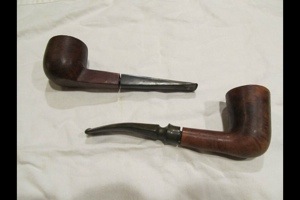
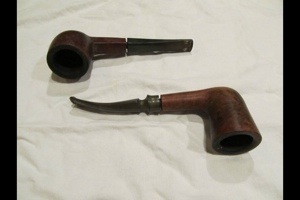
A couple of weeks back I saw two old pipes on eBay that were being sold as a lot that caught my attention: an Edwards Algerian Briar in a Dublin shape and a GBD pot with, what I was pretty sure was, a replacement stem. The combined opening bid and shipping cost was below $20 and it was late in the auction with no bidders yet. The seller had provided a poor description and only two poor photos, which must be the reason for no bids yet I thought. Since I am a fan of GBD pipes and have been wanting an Edwards (since hearing Brian Levine talk about them on the Pipes Magazine Radio Show a few moths ago and it being in a shape I really like I tossed in the opening bid. To my surprise, I won the auction for the under $20 total opening bid with shipping included. Here are the photos from the seller:

20131014-150328.jpg

20131014-150337.jpg

When they arrived they were in a bit worse condition than the pictures showed: very dirty, heavily caked, some very large fills, and lots of oxidation. But the stems (the GBD is a replacement) were free of holes and deep teeth marks, something I was glad to see. (This post will mainly be on the Edwards, though some of the GBD will be included. Eventually I’ll post that job, too, when I finish it.) Here are some photos of what they actually looked like when I got them:

20131014-150723.jpg

20131014-150734.jpg

20131014-150748.jpg

20131014-150800.jpg

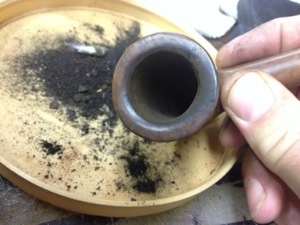
The Edwards had a lot of build up on the rim. As I cleaned it I realized that all of it wasn’t build up but a fair amount of charring and a larger fill on the back of the rim of the bowl. There was also the largest full I’ve ever seen on the bottom of the shank. I decided that I wouldn’t try to remove and refill these areas but just refinish the pipe with them as they were. Although very large, they wouldn’t effect my personal enjoyment of this pipe so I didn’t feel there was any good reason to cool with them, and I had some concern that fills that large, disturbed, might present problems down the road.

20131014-151256.jpg

20131014-151325.jpg
I reamed back the thick cake to a nicer, even level, using all four bits on my Castleford reamer.

20131014-151514.jpg
I then put the bowls into an alcohol bath and the stems into an OxyClean bath and left them overnight to soak.

The next day I starts with the stems, taking them out of the bath and washing them under warm water with dish soap. I was surprised at how easily the oxidation came off after this with a miracle eraser scrub; I’ve used miracle erasers many times, but not on all stems, and have never had such good results. I wish I knew what the variable was to give me this result this time but I don’t. Next I scrubbed the stems out with alcohol and pipe cleaners until they came out white.

20131014-152048.jpg

20131014-152100.jpg

20131014-152111.jpg

20131014-152120.jpg

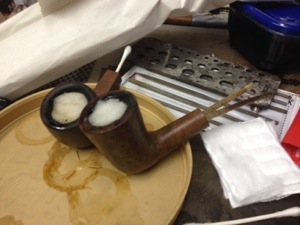
At this point took the bowls out of there bath and wiped them down. In the photos you can probably see (above) that the stem/shank union was not flush at all. I figured the problem was a buildup of tar and gunk in the shank so I set the bowls at an angle, shank tilted up, and placed cotton balls in the bowls. I filled them with alcohol with a syringe and then also filled the shanks the same way, plugging them with cotton swabs. I let them soak while I worked on the stems, changing the cotton swabs out as they drew out tars; I changed them three times I think, going to doubled over pipe cleaners the final time.

20131014-152727.jpg

I polished the stems with plastic polish, making sure they were literally squeaky-clean before using micro mesh pads 1500-4000 grits, wet, to bring up a shine. The condition was very nice, to my eye, at this point, and the bowl needed a lot more attention so I set the stems aside to get to the bowl.

The shanks were very thick with build up even after the soaking. I used the Senior Reamer drill bit on the GBD but it was too large for the Edwards; I chose I smaller bit for it, the size of which escapes me. After many bristled and smooth pipe cleaners the shanks were finally gunk free and the stems seated well once again.

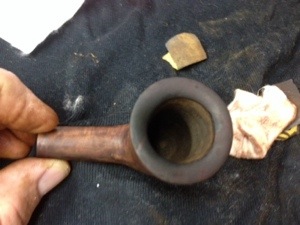
I sanded the bowl rim to reduce the damage of the charring as much as I could while trying to not alter the shape. This was a challenge and I left a little more char, which I tried to blend later with dye, than I’d normally like but I really wanted to keep as much briar as I could for the shape and for insulation since the walls aren’t very thick to start with. I also lightly sanded the rest of the stummel, while avoiding the already faint nomenclature, to remove the last of the finish and some scratches with 320/400 grit wet/dry paper.

20131014-153502.jpg

20131014-153514.jpg

20131014-153525.jpg

20131014-153539.jpg

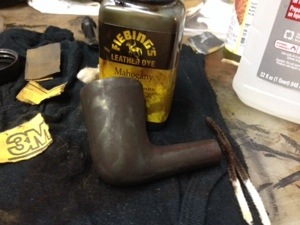
To start, I put a little stain on the rim of the bowl using some furniture touch up markers I found at our local Walmart: three markers for $4 I think. I wanted to get a base coat started before I went forward. Next I applied a coat of mahogany leather dye to the entire pipe; it is dark but not as red as some of the other color choices Fiebings makes and I thought it might help hide some of the defects and being up the contrast at the same time. I didn’t flame this in, by the way, since I didn’t want to change the entire color of the pipe. After it had set for about 10 minutes I sanded it back off with 400 grit paper to where I liked it.

20131014-160104.jpg

20131014-160115.jpg

20131014-160129.jpg

20131014-160150.jpg

20131014-160205.jpg

20131014-160219.jpg

20131014-160232.jpg

20131014-160244.jpg

20131014-160257.jpg

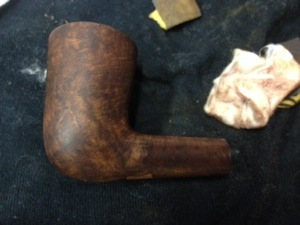
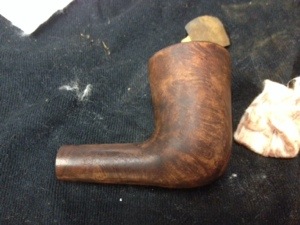
At this point I was pretty happy with the overall results: most of the defects were fixed or hidden, except for the two biggest fills, which didn’t hide as well as I’d liked but about as I expected. Off to the buffer the pipe went now: the entire pipe, stem and all, got a buffing with tripoli, white diamond, and carnauba wax, flowed with the clean, soft buff and a hand final buff. The final result is one I’m pleased with: a nice looking and good smoking old pipe.

20131014-160658.jpg

20131014-160709.jpg

20131014-160721.jpg

20131014-160732.jpg

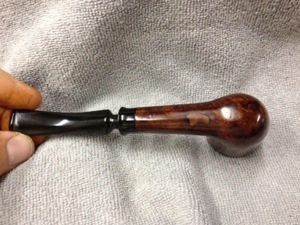
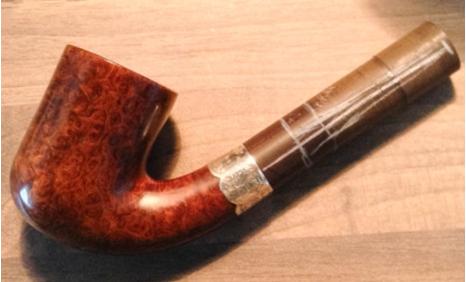
Louis Blumfeld 1901 BBB Bent Billiard – by James Gilliam of jsecpipes.com


When James posted his work on this pipe on the pipe forums I was amazed at how beautiful it looked. Wow a 1901 BBB – one of my favourite pipe makes and one of the old ones as well. Imagine the surprise when I got an email at the same time asking if I would like a write up and photos of the restemming for the blog. I did not have to think twice to answer that email. I quickly fired back an affirmative and what you have below is the story from James. Thanks again James for taking the time to document your work on this old timer. Enjoy smoking that great piece of pipe history. Below is his tale.

Every story has a beginning and this one even has a pre-story. The excerpt below was posted on several forums I’m a member of so I thought I would repeat it just for those that haven’t seen the posts.

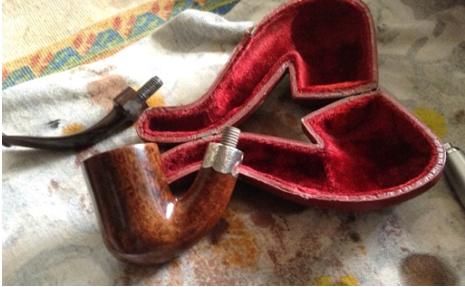
“As some of you know I attend the 100km van Ieper in Belgium nearly every year since 2002. It’s a walk around the WWI Battlefields that consumed Ieper. I’ve been bitten by the pipe making bug, and how and along the way dabbled in restorations just because, but my search for a pre-WWI era pipe is finally over. I ended up getting this piece of history from Alan at Reborn Briar. Now he did the pipe restoration.. and a brilliant job he did, the only thing the pipe was missing was a stem.. well I can do that… I decided not to bore out the mortise and left it threaded, made a threaded tenon out of horn, since I don’t have any workable bone, and decided against using Ivory…… and went with Cumberland for my stem material.. I’m happy…Happy Columbus Day everybody”

Now for the rest of the story. What sticks around in usable condition for over 100 years… not too much, but since I’m kinda into this pipe thing, tobacco related history rates up there for my interest factor. This past July I was able to attend the Newark (UK) Pipe show, set up a table and sell some pipes. You never really sale (or at least I don’t) all the pipes you want to sale, but you do get to meet a lot of really interesting people, and the next table over was Alan Chestnutt from Reborn Briar. I’m always amazed at the folks like Steve and Alan that get into the restoration business. I’ve done a few, even wrote an article about it, but creation is where my passion lies.

Anyway, talking with Alan pre-World War I pipes came up, and fast forward to September he had one that he was going to restore but without a stem. As I mentioned above, stems are no problem…. that’s the making/creating/using machinery aspect I like. When the pipe arrived I was amazed at how well it looked. I mean wow, 1901, and all that.

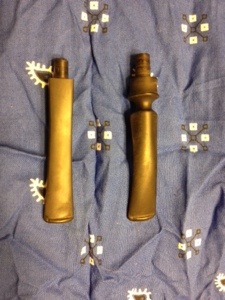
The only real thing that threw me was the threaded mortise. Looking around the shop I pickup up a few of my mistake mouthpieces and tried fitting a few. The 7mm tenon fit without a problem, as it just slid into the mortise. But later that night while sitting around thinking about the mouthpiece I figured I’d make it as close to the original as I could. The stems profile was already in the leather case. So what do we know at this point.. 1900’s meant ivory, bone, or the like type of tenon. I don’t have any bone to use and didn’t really want to use ivory……but being a pipe maker I do have horn. I usually end up keeping the horn points after using the remainder of the material for a shank extension.

So horn it was to be. I shaped the tenon, drilled and set out to thread the tenon. I’m sitting with a 8mm tenon drilled to 4mm for the airway and went about threading the horn. Unfortunately it crushed under the pressure of my die, but I guess it only made sense… so I made another, except this time I threaded it first and then drilled it… And here is where the pictures come into play.

Threaded tenon, prior to drilling
Jogli1

And it fits just like it is supposed to. Looking right above the pipe you can see my trial delrin tenon with new threads.
Jogli2

Mouthpiece rough cut and drilled. The mortise is also threaded. I cleaned up the junction end before the next steps, so the fit would be flush
Jogli3

Epoxy’d and left to rest a while.
Jogli4

And it fits. So at least the scary parts are now done.
Jogli5

Drawing on the Cumberland to get my bearings at to decide where I want the saddle to sit. The line closest to the junction was chosen.
Jogli6

Jogli7

Time to sand a bit with a machine.
Jogli8

And done
Jogli9

Now it’s file time.
Jogli10

Now it’s sandpaper time.
Jogli11

And more sandpaper… I probably left a step or two out here…just to save the pictures, but my process is machine, medium cut file, fine cut file, another fine cut file, nail files, 180, 220, 320, 400, 600, 800, 1200 sandpaper, buffing paste, more sanding, high glass paste (Sometimes more sanding to remove scratches I missed) and a final buff. Here you can see the stem is bent to its final form.
Jogli12

And now it’s all shiny.
Jogli13

And here are the final pictures. Alan did the bowl, I did the stem and I have a pipe that is twice my age… gotta love it. Hope you enjoyed my story.
Jogli14

Jogli15

Jogli16

Jogli17

Cleaning a Bristol Mat Geante – by AJ Verstraten (AKA Bananabox-Ninja)


This post has been written by a Dutch reader of the blog, AJ Verstraten who contacted me a few weeks ago. Several emails later and we had exchanged a lot of ideas and tips. I thought it would be of interest for others here to read about AJ’s ultrasonic cleaner addition to the process. It was one I had not heard of before so I asked him to write up a piece on it with pictures of a pipe that he put through his process. AJ was graciously willing to write it up and submit it for posting here. Thanks AJ for your willingness to do this. It is great to hear from others about the methods they are using and how they work. The photos are well done and the words well written. Without further ado here is AJ’s article.

Greetings, my name is AJ and I hail from the Dutch city of Dordrecht. I go by the internet name of ‘Bananabox-Ninja’ and I am more easily found under that name then under AJ.

A few weeks ago I broke my knee in a motorcycle accident and it was put in a plaster cast with the instruction to let it rest and heal up. In this time I stumbled upon Steve’s website through ‘Het Pijprokersforum’ a forum of Dutch and Belgium pipe smokers.

As I like to refurbish pipes myself and I had time to kill I went through his whole website and learned many, many new things. In the weeks that followed I tried to get a hold of the things Steve used and tried them myself, like the black superglue and the grinding pads for example. Blown away by how well some things worked out I sent an email thanking Steve for all the tips and asking if he had ever used an ultrasonic cleaner. He replied that he had not but that he was interested to know in the workings and would I like to write about it?

So this weekend I cleaned a pipe from my ‘project-box’ and snapped pictures from beginning to end including the ultrasonic cleaning method I currently use. (The numerical key below the photo identifies the tools in the photo.)

These are the tools I tend to use in the cleaning/refurbishing of a pipe, currently I have some tools on order and they have not come in yet.
001 Tools LR

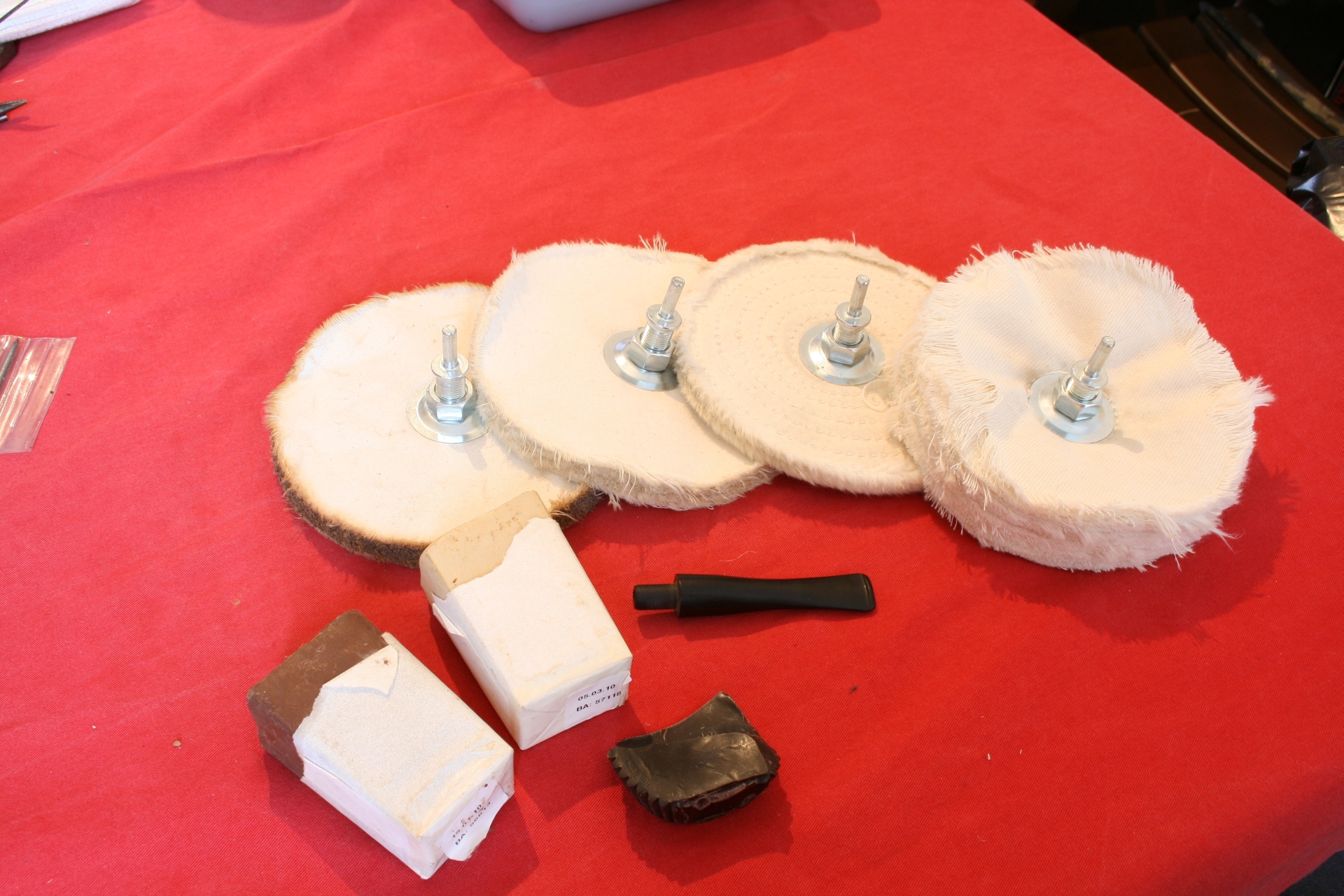
1 – Polishing wheels and waxes
2 – Sanding paper (600 & 1000), sanding pads (1500 to 12000) and modeling files.
3 – Ultrasonic cleaner
4 – Old socks (but clean)
5 – Vaseline and 96% alcohol
6 – Hard and soft bristled pipe cleaners
7 – Q-tips (cotton swabs)
8 – Pliers
9 – Assortment of drills
10 – Senior pipe reamer
11 – Games Workshop paint
12 – Electric motor (0-2000 RPM) with grinding wheel (1500)
13 – Toothpicks

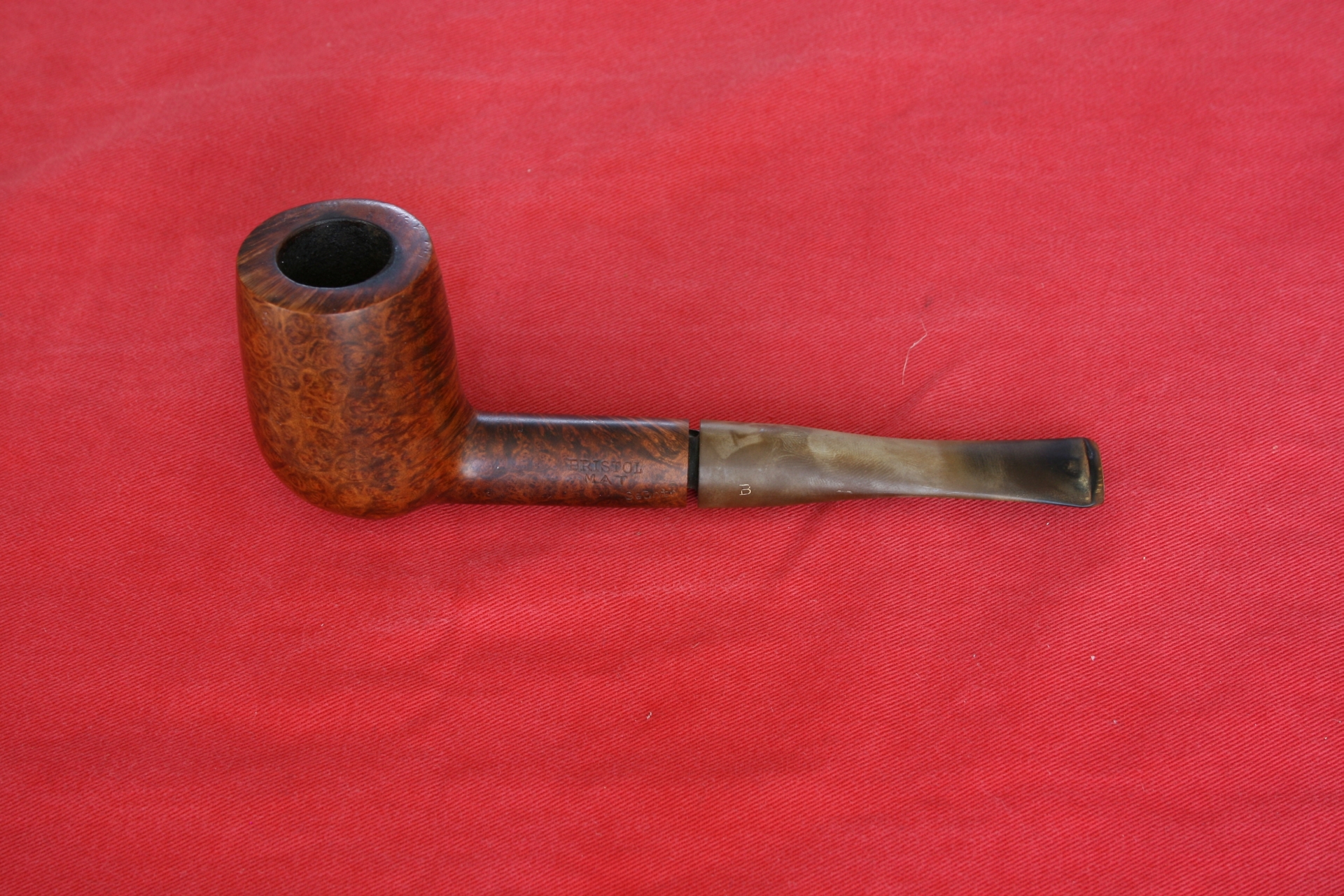
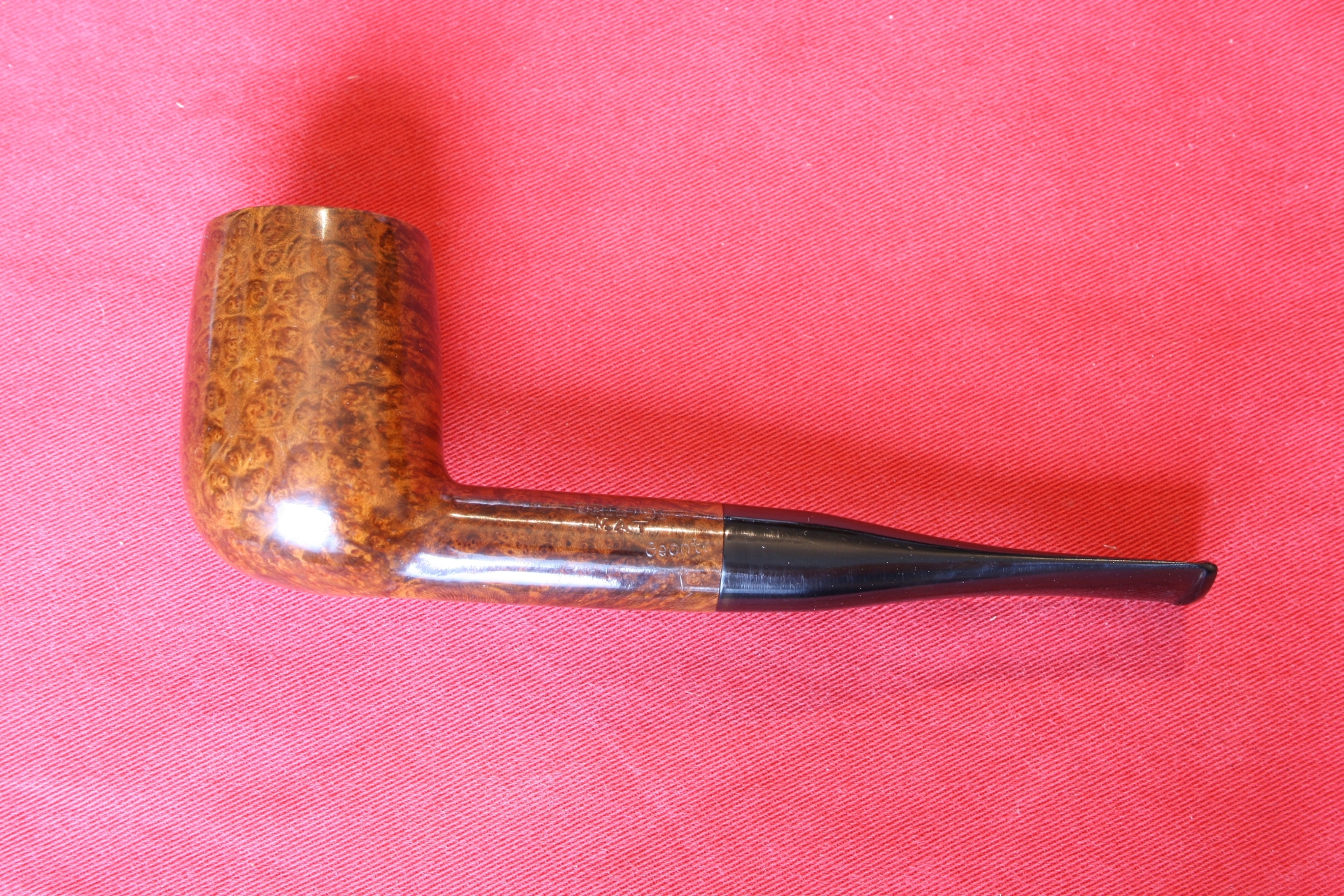
The pipe I chose to work on and record is a nice straight, big chambered Bristol Mat Geante, I presume the Geante is for its size as the chamber is rather big or as we say in Dutch a ‘Speciekuip’ (mortar trough). As far as I can tell Bristol a B-brand from France but I am unable to pinpoint exactly. I personally like the bird’s-eyes all over the left and right side of the bowl.
002 The Pipe LR

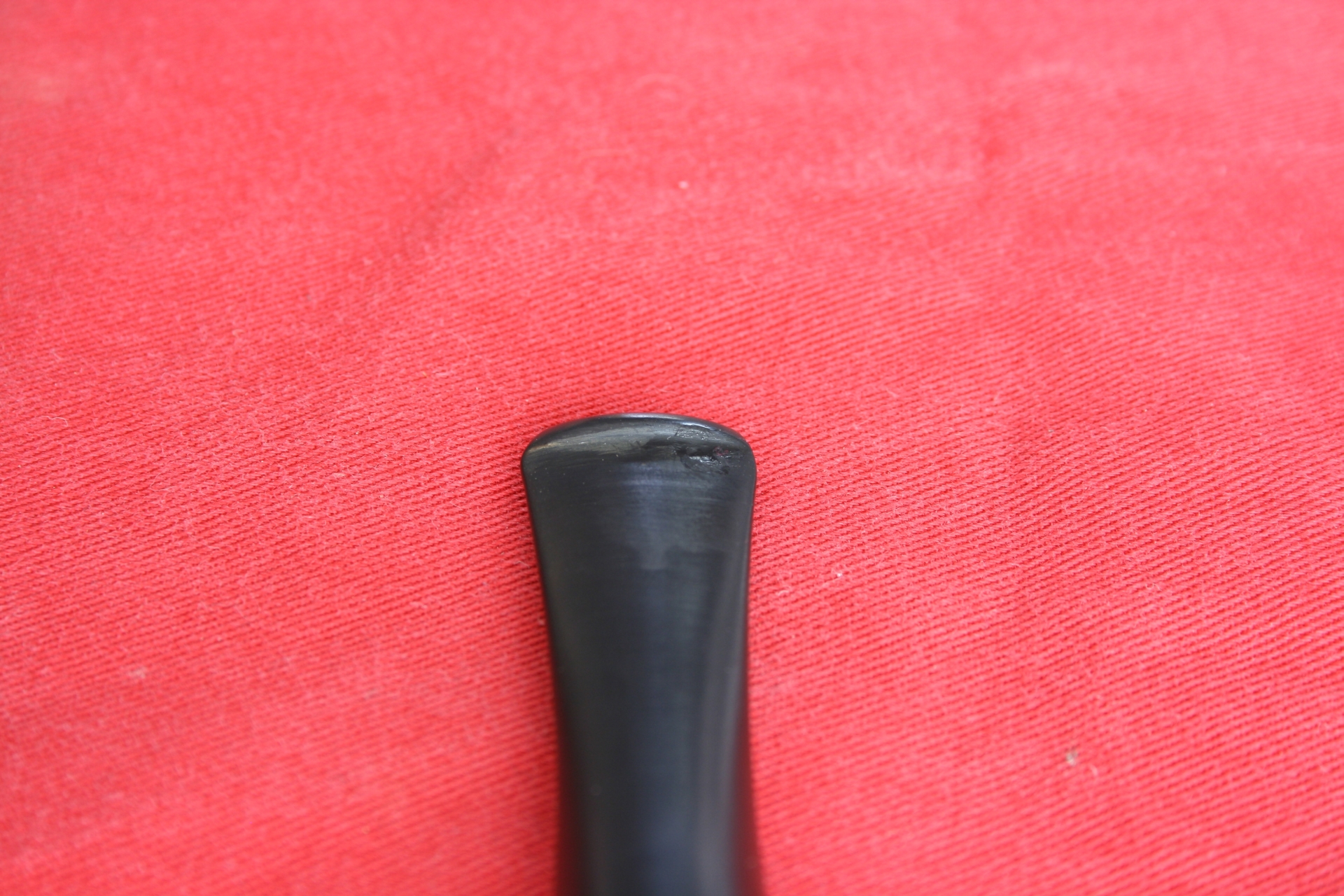
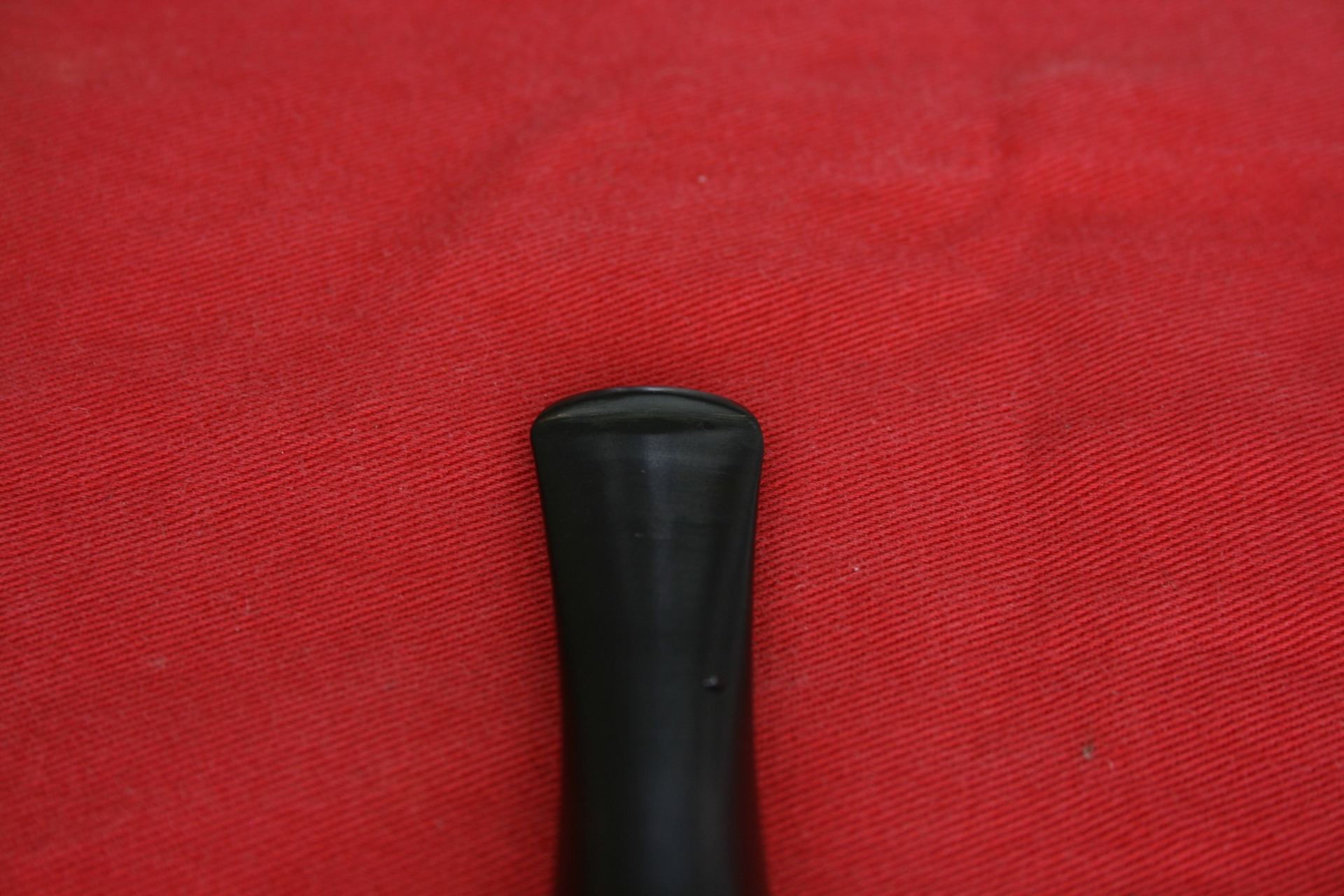
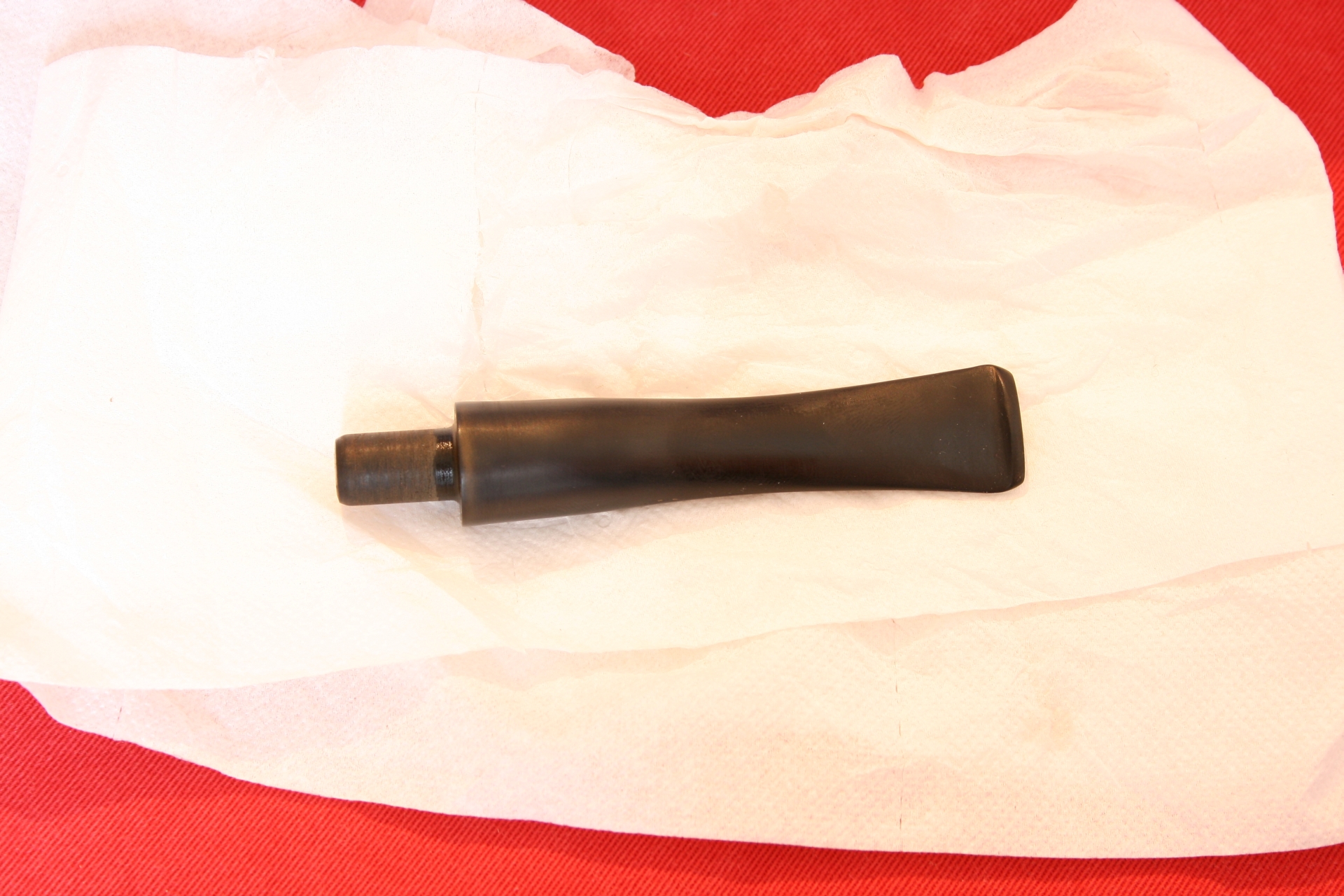
As you can see the stem has oxidation all over and the bowl itself is rather dull. Not visible on this photo are the 2 bite marks on the stem.

First I cleaned the pipe on the inside with alcohol and pipe cleaners until they came out almost white. If there is a thick layer of tar in the air canal I use the drills to scrape the inside out lightly using drills of various diameters. Tar will give way far more easily than the ebonite or acrylic it is in.

In this case it was not needed as the pipe’s previous owner was very tidy or had not smoked it much.

Then with just water and the grinding wheel I removed the heavy oxidation from the stem, careful not to create a round shoulder or to grind off too much for it to create a ridge.

003 Set up LR

004 Half way LR

005 Full LR

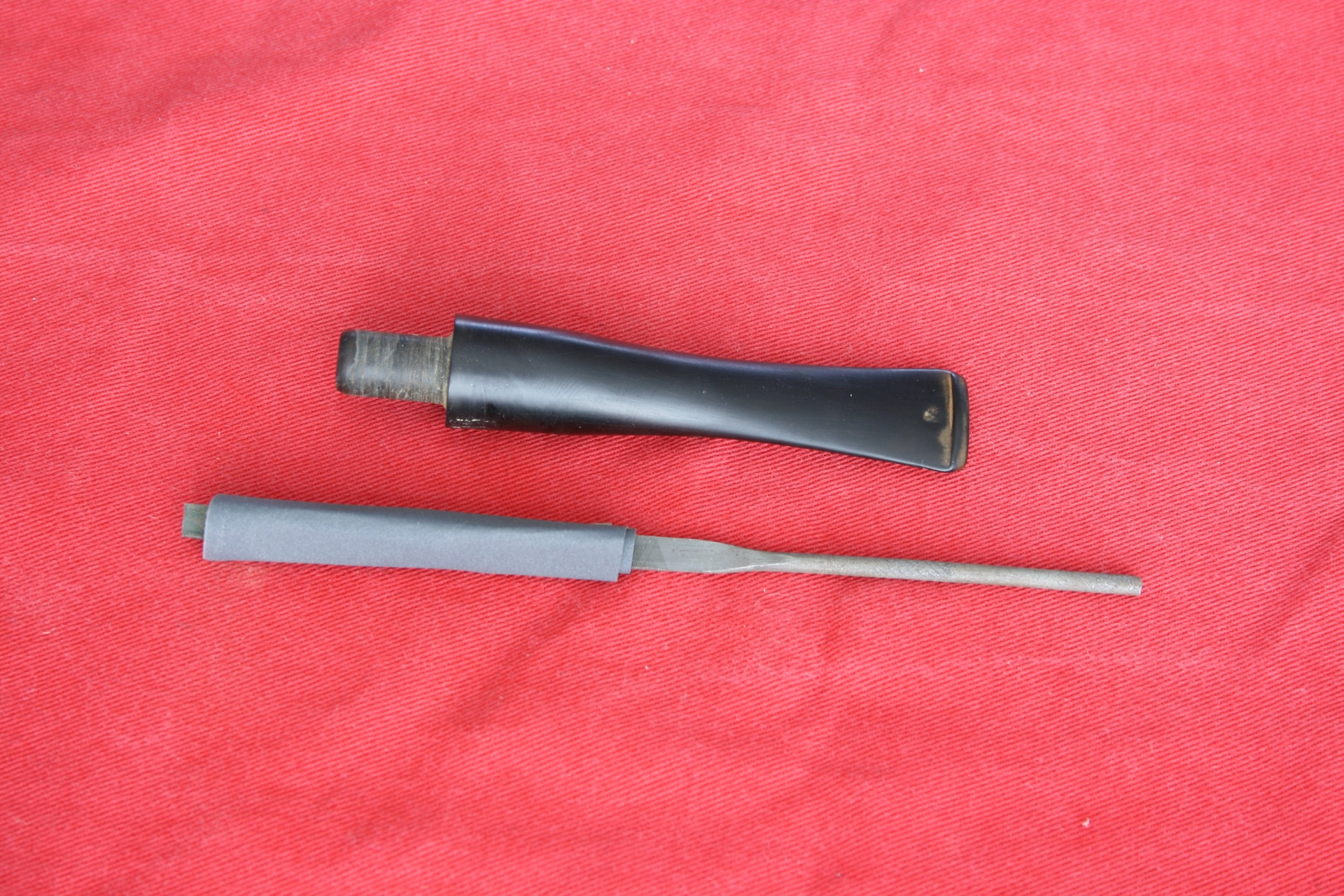
Using the sanding paper wrapped around a file I removed the hard to reach oxidation on the mouth bit.
006 Filing and sanding LR

007 Sanding wrap LR

008 Sanding result LR

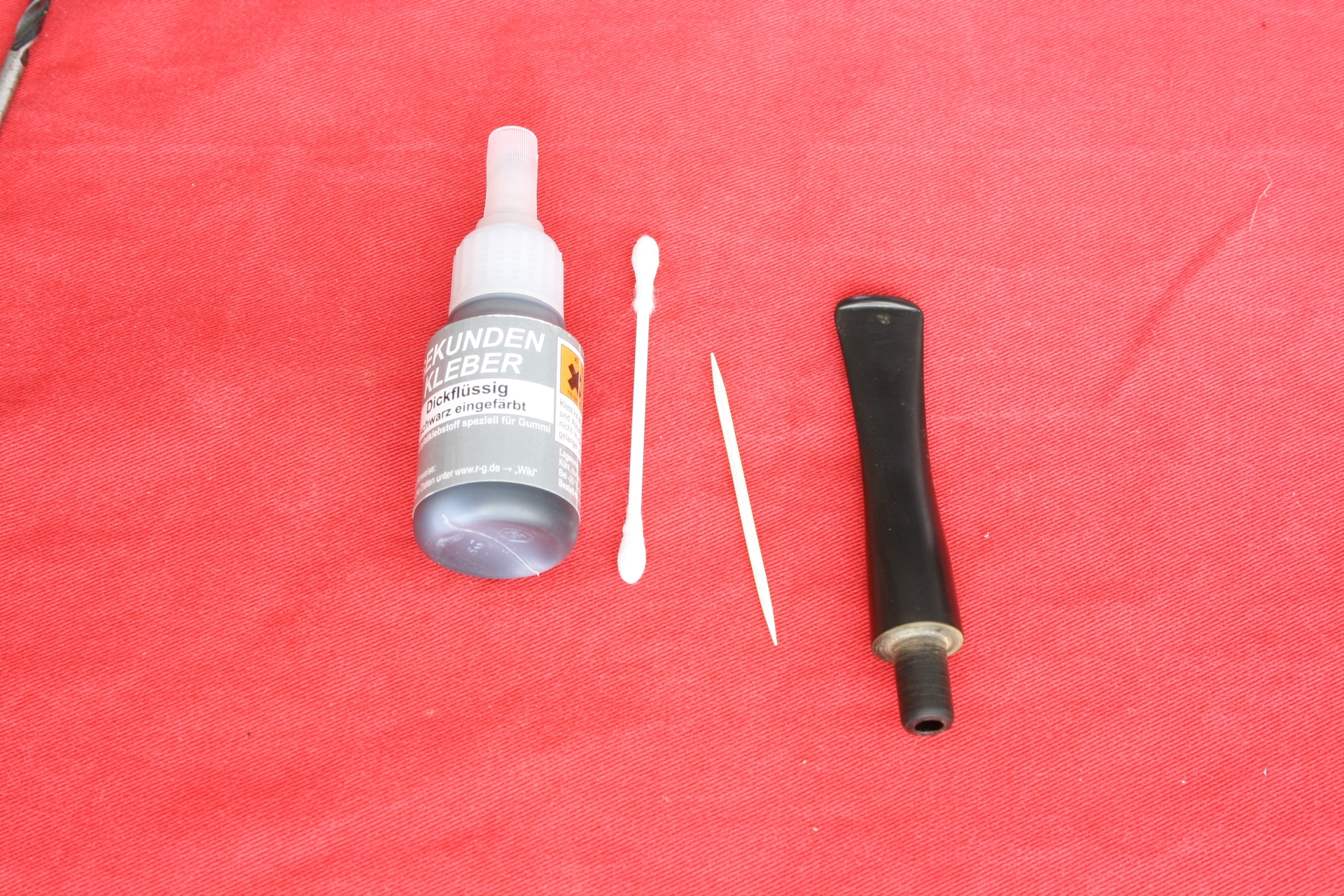
And afterwards to fill the bite marks using the superglue, q-tips and toothpick.
009 Superglue LR

010 Filled SG LR

011 Sanded SG LR

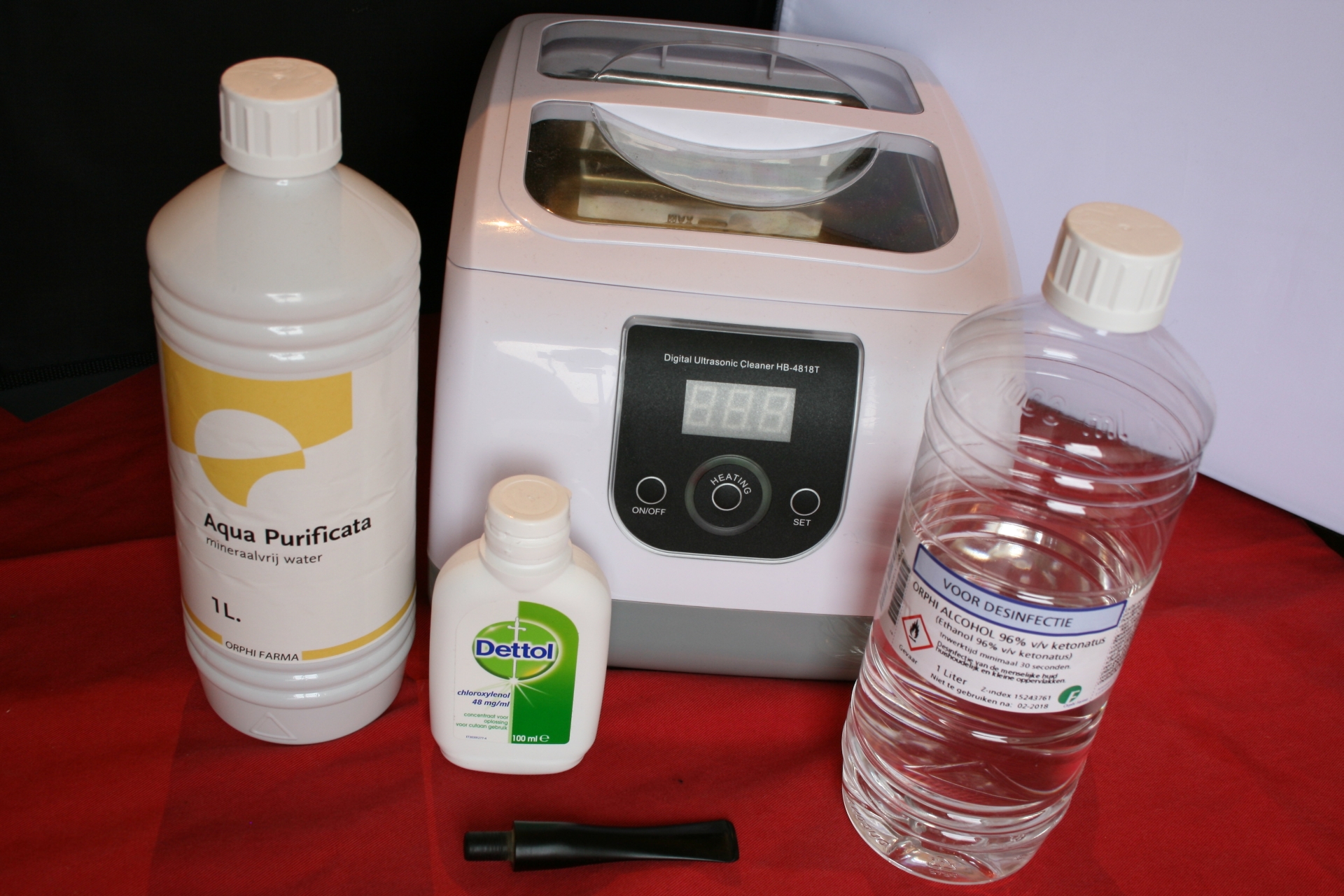
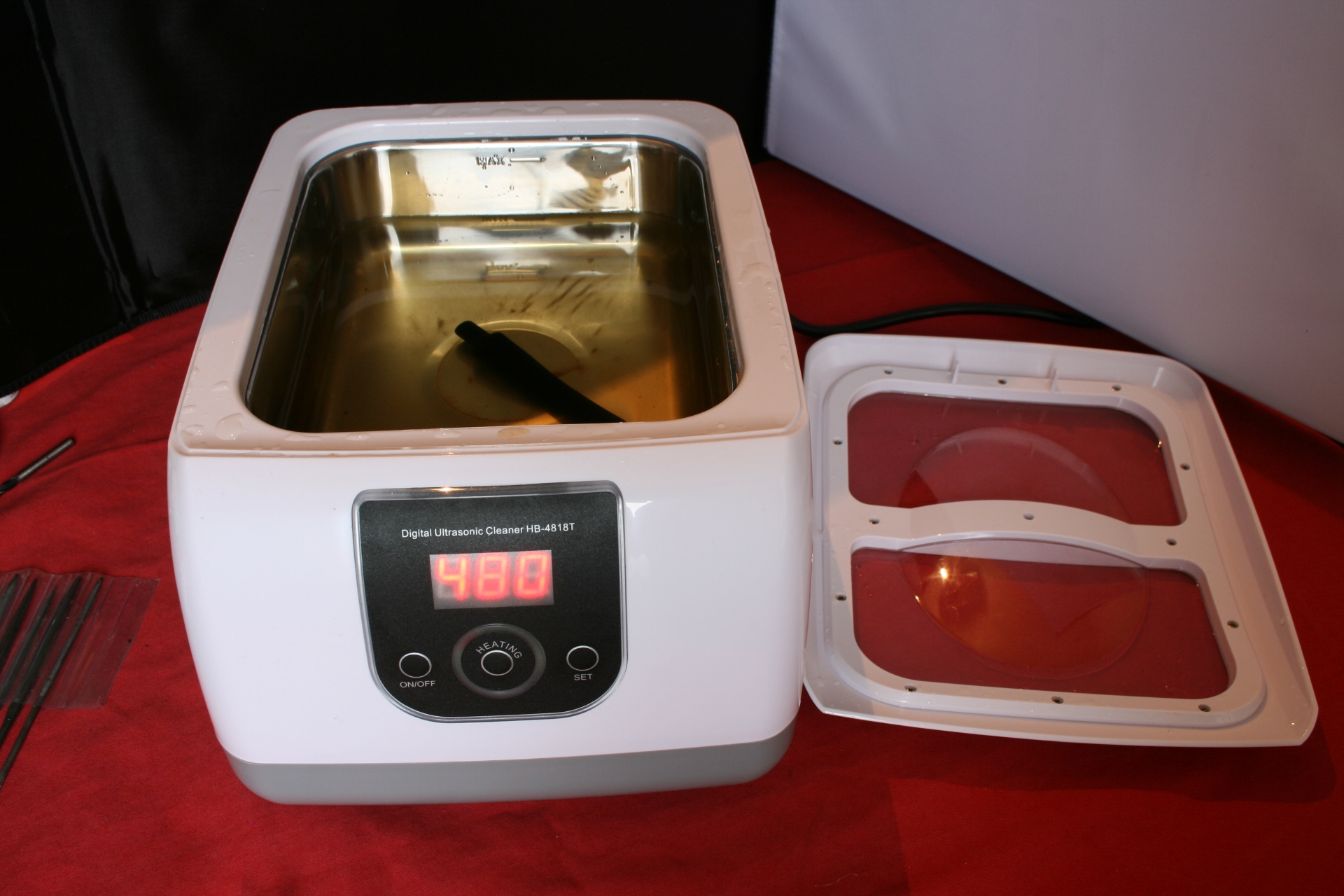
Now the stem was ready for the ultrasonic bath. This is a new method I have only recently started using and so far I am positive on the results. Using a mixture of 50-50 water and alcohol with a teaspoon of disinfection agent, place the stem in the liquid and let the bath go at it for 8 minutes.

This bath can also heat up to 40 degrees but seeing as ebonite tends to bend back to it’s original shape if heated too much I leave that feature off.

You’ll notice in the last picture that the stem looks almost the same as it went in, however when you pull a pipe cleaner through it, there will be some mild discoloration coming out of the stem.

This method of cleaning is a good way to get the last remaining specks of dirt out of those hard to reach places, I myself was skeptical at first but I was swayed when I pulled the pipe cleaner through it after the bath I found that it did do its job.

It does not however remove oxidation completely, I tried with an unprepared stem and it came out browner than going in.

So as an extra step I find it a great addition to my cleaning process.
012 Sonic cleaning fluids LR

013 Turn on LR

014 Waiting LR

015 Sonic done LR

In the mean time I cleaned some of the soot from the top of the bowl with some spit and the old sock. Especially the part of the sock that fits over your ankle is rather coarse and excellent for this process. The chamber had a nice smooth coal layer in it so I left it in there.

After the bath I gave the inside of the stem few more scrubs with the pipe cleaner and the outside another run with the grinding wheel.

Then I started polishing with the wheels and the waxes.
016 Polishing LR

First a pre-polish with brown, followed by white, a coat of carnauba wax and a final buff.

The end result as you can see below:
017 Pipe done LR

Finding an Old Parker Super Briar Bark Cherrywood


Whenever I visit Edmonton there are three places I always visit in old Strathcona – two Antique Malls and Burlington on Whyte Tobacconists. My last trip I visited all three and one of the Antique Malls yielded a couple of treasures while the other was a bust. You never know which place will yield something but generally I don’t walk away from both with nothing to show for the stop. This time I found two items in the same display case in the mall (this is truly a Mall – it is large, two stories of things to look at, many stalls and many sellers). The first was a beautiful older Parker Super Briar Bark Cherrywood and the other was the old cutter top tin of Condor Slices I have already written about earlier. Let me tell you the story of that find.
IMG_1865

The shop is full of antique hunter’s eye candy and what astonishes me is that things I played with as a child and used in my dad’s garage have now become antiques. (Hmmm, I wonder what that makes me. Ah well that is another story, back to the walk about.) As I walked through the shop there were many displays that had pipes – older Brighams, Dr. Grabows, Yello Boles, Whitehalls, Medico’s and new Meerschaum pipes. The place had a lot of old pipes and each of them warranted a good look. To complicate things and I suppose to give a modicum of security in a world of shop lifters, I had to hunt down a store clerk to get a key to open the locked displays before I could look at any of the pipes. Because of that I was very selective about the ones I looked at more closely. The mall was full of people that day and they were milling about looking at everything – everything but pipes in this case. I made my way through the shop and noted case numbers that I would need to have opened for a more thorough look. My method in this kind of shop is to get two or three case numbers in my head before I get help from a clerk. Why two or three? Well, simply put – that is the most numbers I can remember in my head these days! With that limitation the hunt in a mall that size can take me awhile. Ask my wife and children how long it can take and they will tell you, I have no sense of time when I am on the prowl for old pipes.

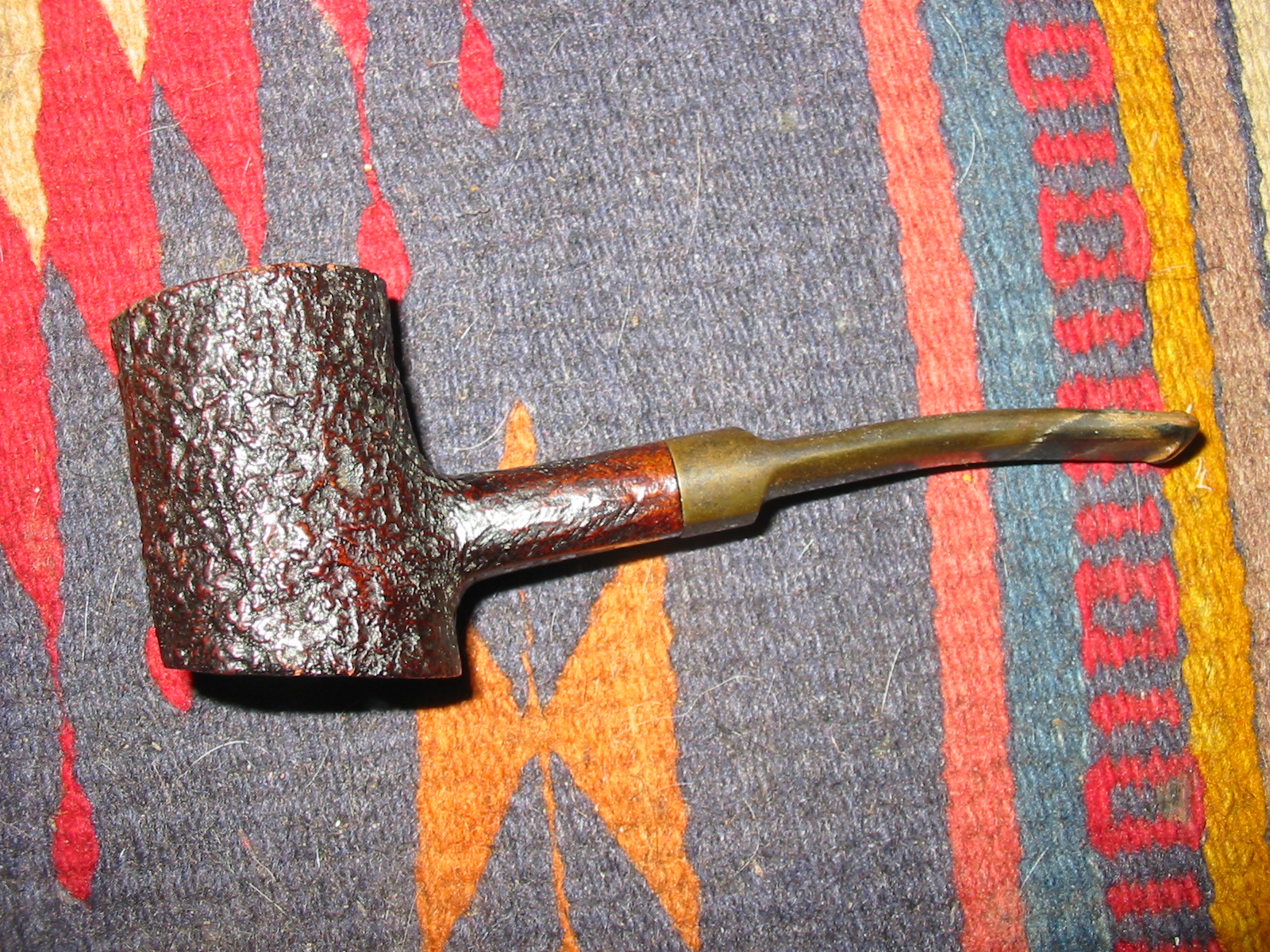
I checked out some Mario Grande pipes – new ones – that were in one display and several other brands that looked promising but none of them grabbed my attention. I am getting more particular than I was when I first started picking up old pipes in shops like these. I think it was on the second or third set of case numbers that I took back to the main desk to get a clerk with keys to open that I found the little Parker. I know that it was in the back portion of the mall, in the far right corner of the shop. It was a small display case, upright glass with internal lighting. When I saw the case it caught my eye. There were quite a few pipes on the shelves of the case, arranged to attract attention. On the second shelf was a little sandblast cherrywood shaped pipe sitting in a pipe rest that caught my eye. The stem was slightly bent and the blast was craggy and deep – kind of like the blast you find on early Dunhill Shells. The size was diminutive but looked like it would sit well in the hand. Even though it was only one case number in my head this time, because of the beauty of this pipe, it was time to go and get the clerk and the keys.
IMG_1863

I went back to the front of the shop and got the clerk and we headed back to the case. I am always in a bit of a rush in this phase of the hunt in an Antique Mall because I am paranoid that someone else has spotted the object of my desire and will beat me to the punch. So I made my way back to the case in a hurry by the most direct route. There was no fooling around along the way. I saw other pipes in other cases as I hurried to the back corner but I merely glanced at them and noted their location for later looking. I was a man on a mission and nothing would deter me from reaching my goal.

We made it back to the case and no one was bent over an open door fondling the little pipe when we arrived. Whew, I beat all contenders (I know, probably no one else in the mall cared about the little pipe, but let me have my delusion). The clerk fiddled with the keys until he had the correct one in the lock and the door opened. He stepped back and let me pick up the pipe that had caught my eye – the little cherrywood sandblast. I turned it over in my hands checking it out for cracks and damage. The thin shank looked fine, the stem had some small tooth marks and was oxidized but in good shape. The finish and blast were very nice. It was in excellent shape and there was even a wad of tobacco still in the bowl – almost as if the old pipe man had laid it down while he went out to check the mail or eat dinner… It would clean up very nicely. I checked out the stamping on the underside of the shank. It read Parker over Super in a diamond over Briar Bark. I had a nice older Briar Bark in my hands – the equivalent of a Dunhill Shell in my book. It was also stamped Made in London England and had the shape number of 283. It sported a 4 in a circle stamp was well, which was the group number (Dunhill based sizing system). This surprised me a bit as it is pretty tiny for a group 4 pipe but that was its stamping. Up close the stem also bore a faded and worn stamping of the P in the Diamond of the Parker line. At the low price of $15 it was a keeper and it was definitely going home with me.
IMG_1864

The clerk took it in hand, as they have a policy to carry items to the front and hold them for you until you are done shopping. He was just locking the case when I looked at the shelf a last time before he closed the door and there in the back of the display case was an old tin with the label Gallaher’s Condor Sliced. I stopped him and reached into the case and picked up the old tin. It was full! I turned it over in my hands and noted that it was a cutter top tin – probably WWII vintage. It was two ounces of old tobacco, unopened and pristine. The tin itself was in great shape. I added this to my lot. Not a bad find for an afternoon – an older Parker sandblast cherrywood and an old tin of Condor Sliced. Since I am one of the few who actually like Condor Slices this was a great find for me.
IMG_1862

I followed the clerk back to the front of the shop to pay for my purchases with the satisfaction of a well spent afternoon. I had a tin of old tobacco – cost $10 and a Parker – cost $15 – all totaled a $25 hunting spree. Not bad at all and to top it off when I got to the till a young clerk commented on the pipe. He too was a pipe smoker and collector. (In this case I believed him rather than cynically assume more sales hype. To date I have not received many comments from sales clerks on old and dirty pipes I buy so odds are he was telling the truth.) He commented on how he did not know how he had missed seeing those two. Before I settled the bill he offered to give me a walk-through of other potential pipes that he had scoped out. He spoke of some of the great finds he had scooped while working at the mall. He told me he had Burlington on Whyte do his restorations on the pipes he found and asked who did mine. I told him that part of the fun of the hobby for me was restoring my own. He laughed and said one day he would venture into that part of things. During our walkabout nothing else caught my eye so we went back to the till and I paid up. I walked out of the mall satisfied with the hunt and with two pieces of tobacco history. I couldn’t have asked for more. Now off to find a pub and celebrate the finds and examine them more closely.

By Steve Laug 14 October 2013