
Blog by Steve Laug
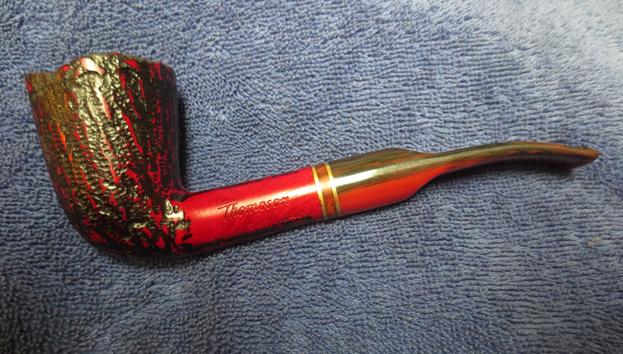
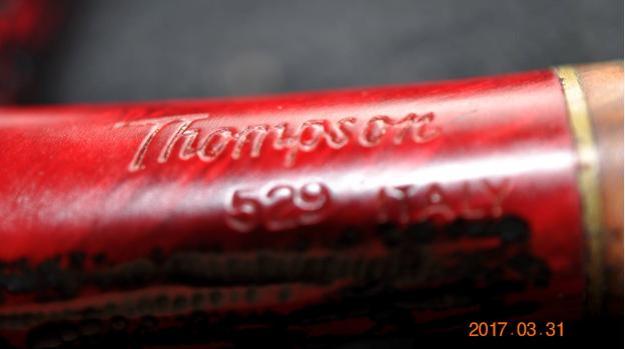
The next pipe on the worktable is a freehand with a plateau rim. It has a contrast black and red stain – red on the high spots of the rustication and black in the nooks and crannies. The rim shows the same pattern or reds and black. The shank has a band on it that is briar with brass on either side of it. The pipe was very dirty on the rim and the inside when my brother picked it up at an estate sale in Idaho. The rim had an overflow of the thick cake that filled the bowl. It had a Cumberland style acrylic saddle stem. The stem was in pretty rough shape with deep tooth marks on both the top and underside near the button and tooth marks on the button itself. There was also a bite through on the top side of the stem – mid stem just ahead of the button. It was not a large hole but it was a hole nonetheless. My brother took the following photos before he cleaned up the pipe for me.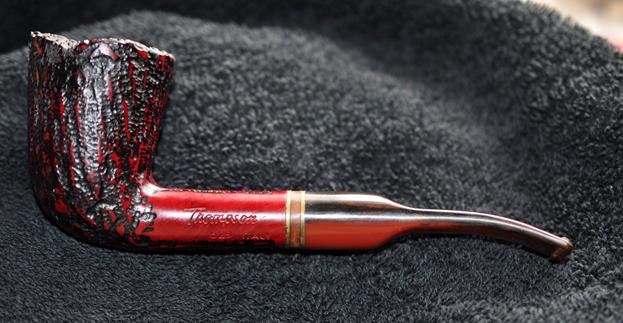 From a previous blog I wrote and one that Robert Boughton wrote I remembered that Thompson pipes were made for Thompson Cigar Company. This particular pipe was stamped on the left side of the shank with the words Thompson in script over the shape number 529 and Italy. I know that Thompson Cigar Company had pipes made in Italy, the Netherlands (Big Ben), and Turkey (the Meerschaum). Many of their Italian pipes were made by Savinelli. In checking the shape numbers of Savinelli pipes I did not find a listing for a 529 but there were others around that shape number.
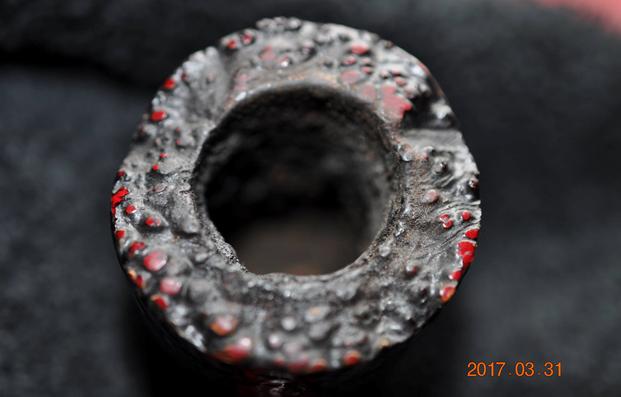
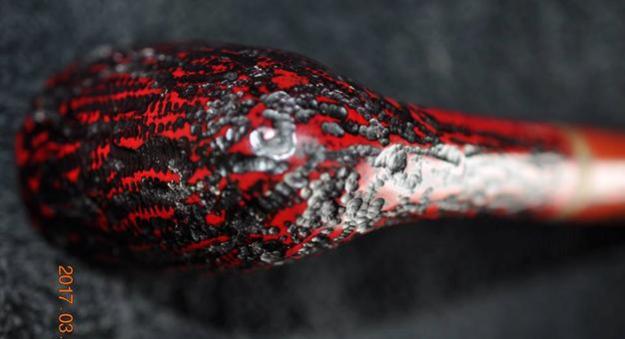
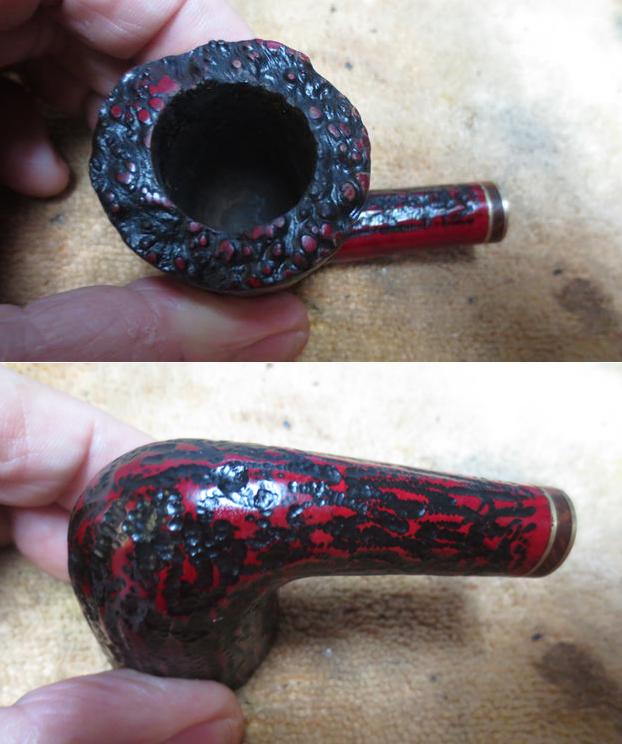
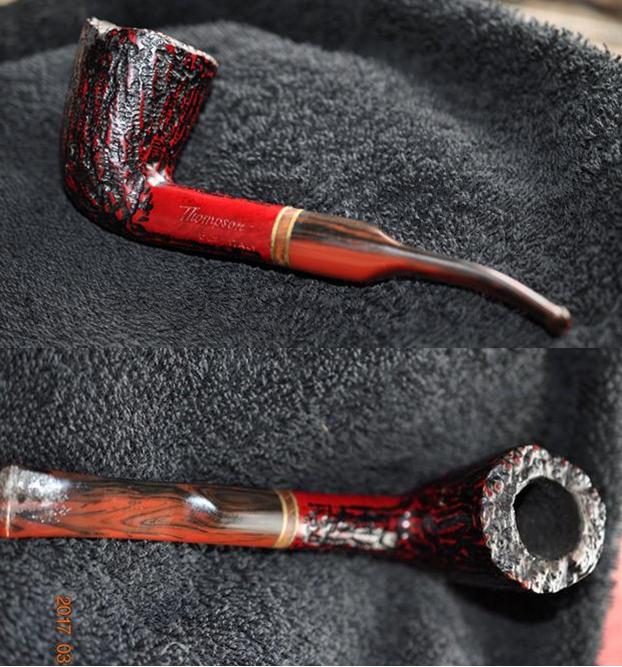 The photo Jeff took of the rim top and bowl shows the thick cake in the bowl and the lava overflow on the rim top. The insides of the pipe looked as if they had never been cleaned before. The beauty of the mess was that it probably protected the plateau top from damage.
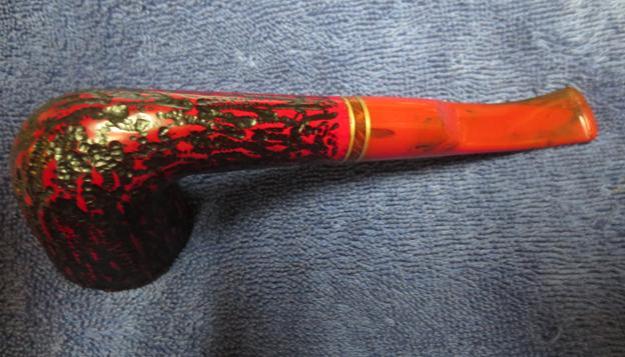
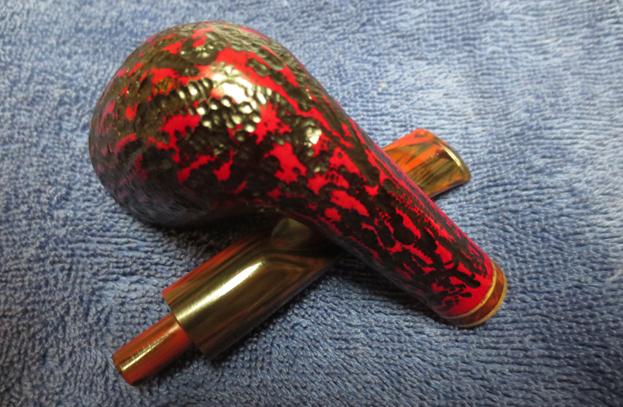
 The underside of the bowl shows the rustication pattern on the briar and the cleanness of the exterior of the pipe.
 The next photo, though a little out of focus shows the stamping on the shank. It is very readable and clear.
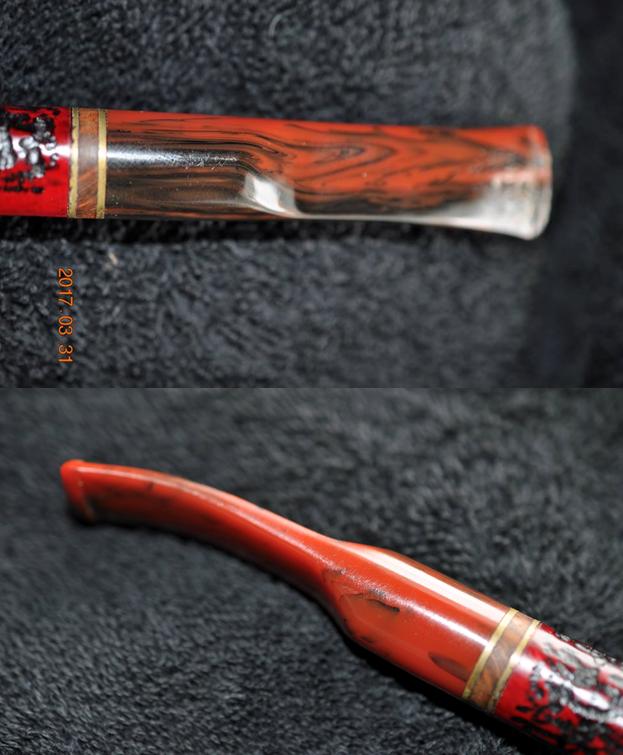
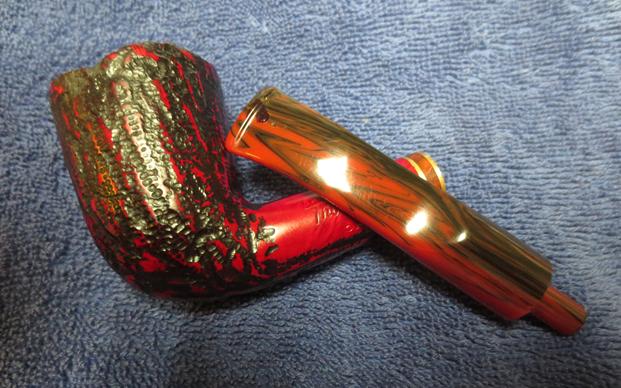
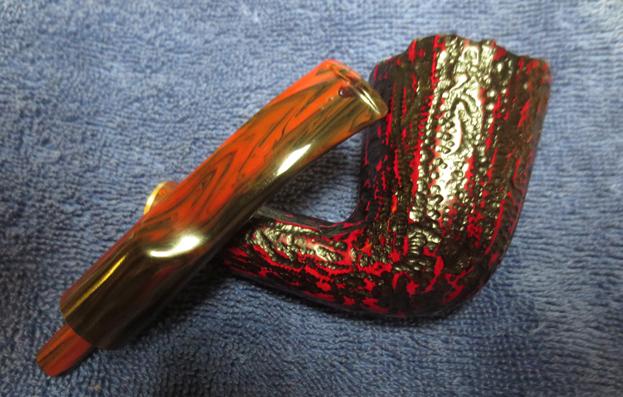
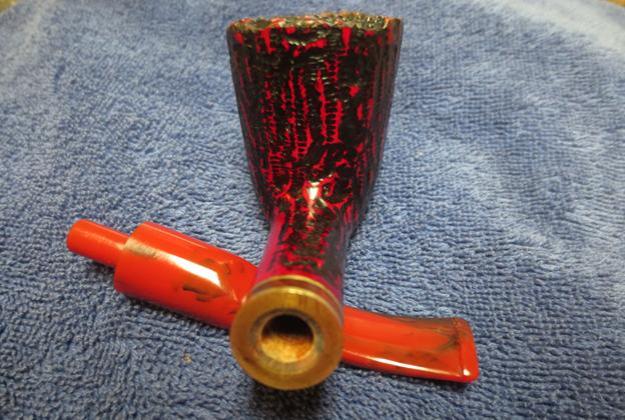
 The Cumberland acrylic stem looks very good with the red and black of the stain on the rusticated bowl. The shank band or twin brass bands separated by a briar insert makes a stunning separator for the shank and the stem.
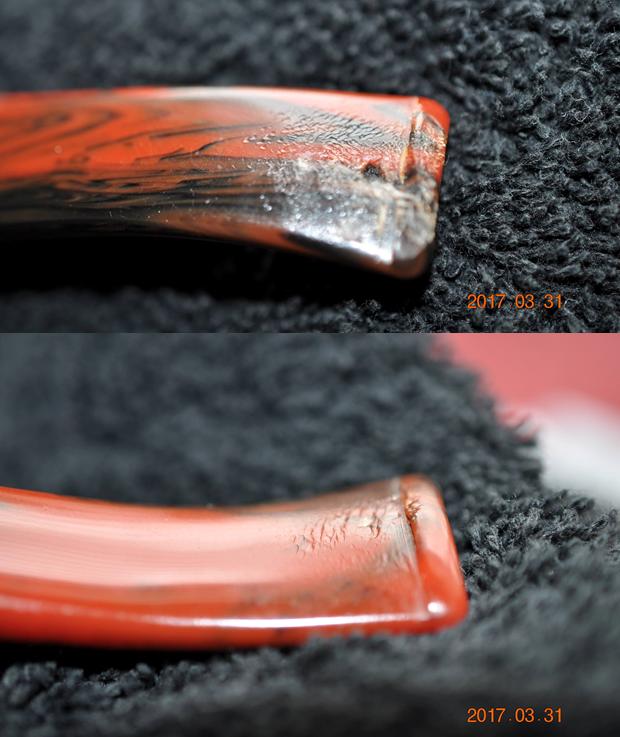
 The stem was in rough condition as mentioned above. The top of the stem had a lot of tooth chatter and the button was chewed down. There was a small hole in the middle of the stem just below the button. The underside of the stem also showed a lot of tooth chatter and bite marks.
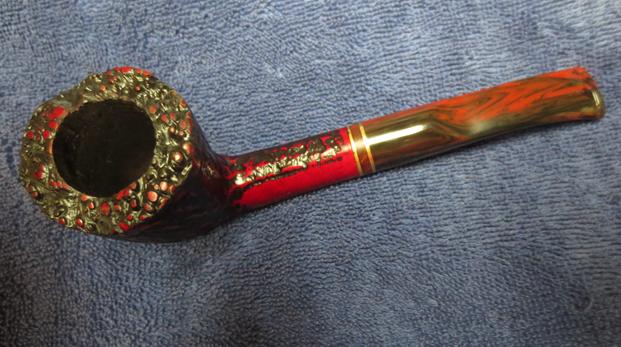
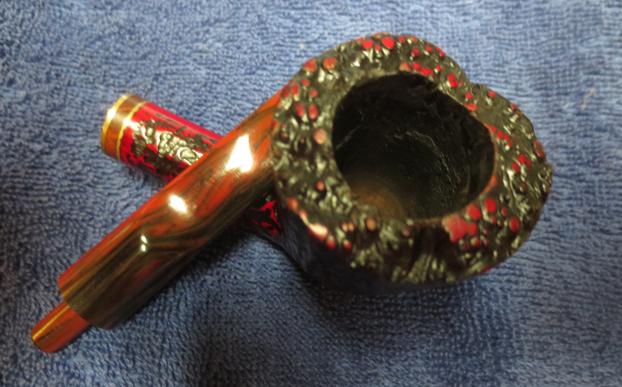
 The rim top looked really good once he had removed all the built up tar and lava. The high spots and the valleys in contrasts of red and black.
 The stem was clean but the topside showed a lot of damage. There were tooth marks and the hole to deal with and the large dent in the top of the button edge on the stem top. The underside had some deep tooth marks and some chatter.
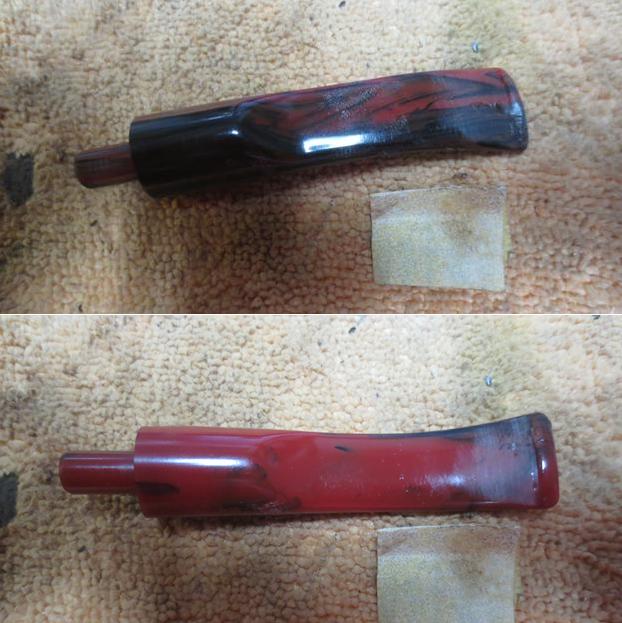
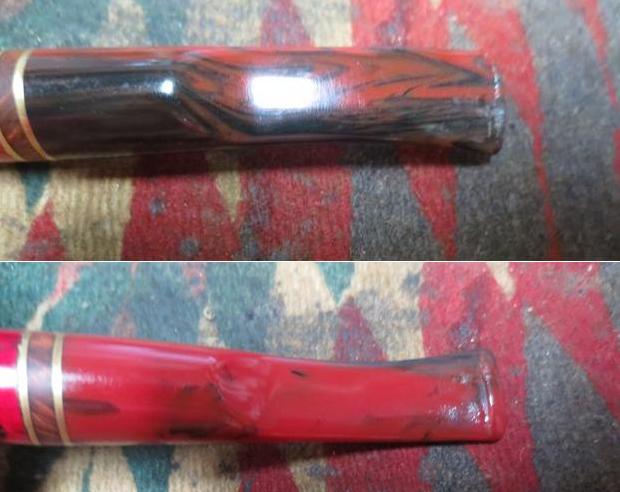 I sanded the damaged areas on the top and underside of the stem to prepare for the repairs to the tooth marks and dents. I was able to remove much of the chatter and only left behind the deep marks in the surface of the stem.
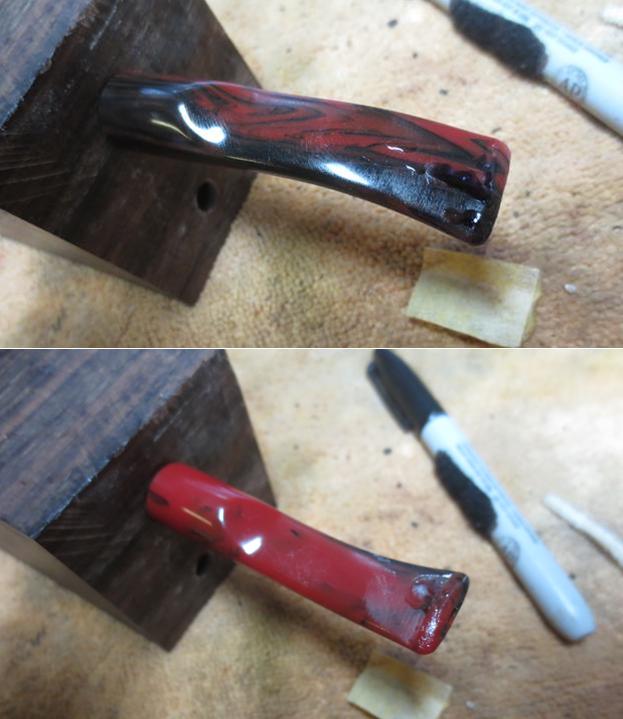
 I coated a pipe cleaner with Vaseline and inserted it in the stem below the hole in the stem surface. The greased pipe cleaner would prevent the super glue repair from sticking to the pipe cleaner or clogging the airway. I filled in the hole and the deep tooth marks on both sides of the stem with clear super glue. I used my drilled block to hold the stem so both sides of the stem would dry without interference from my work surface.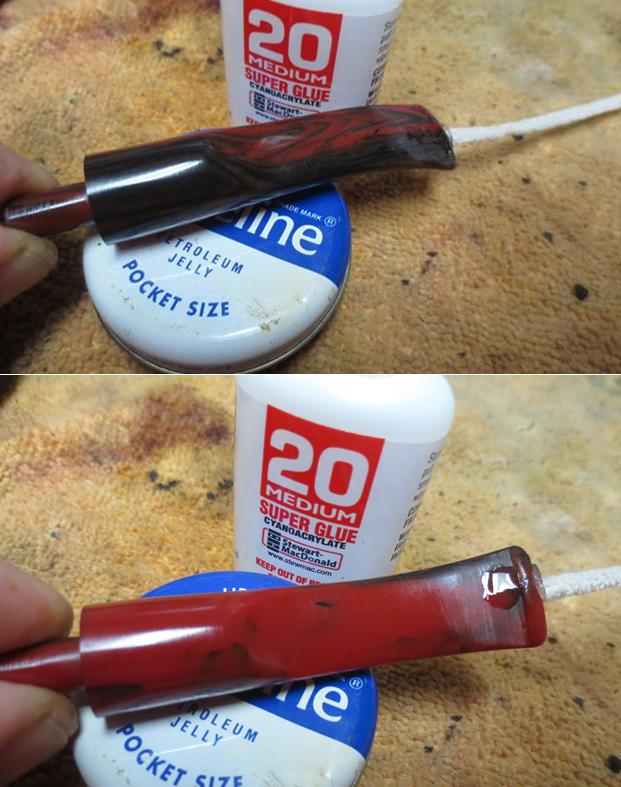
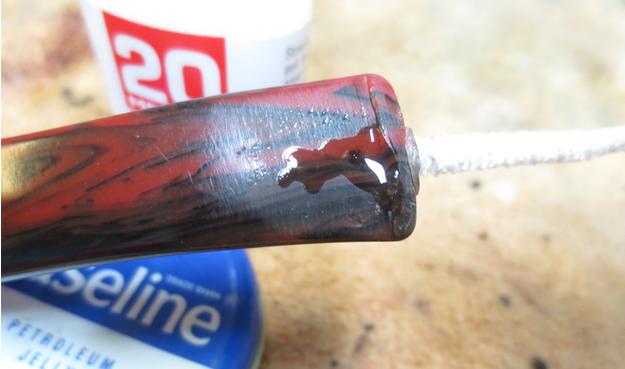
 While the repair cured I buffed the bowl with a soft cotton buffing pad to bring up a shine.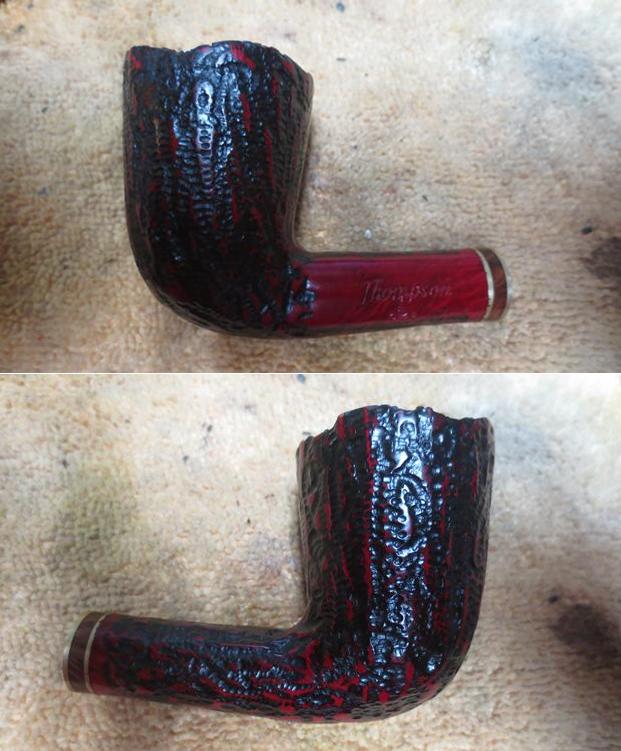
 Once the repair had cured I used a needle file on both sides of the stem to bring the repair even with the surface of the stem. I sanded the repaired areas with 220 grit sandpaper to smooth them out and blend them into the surface of the stem. The photos below tell the story.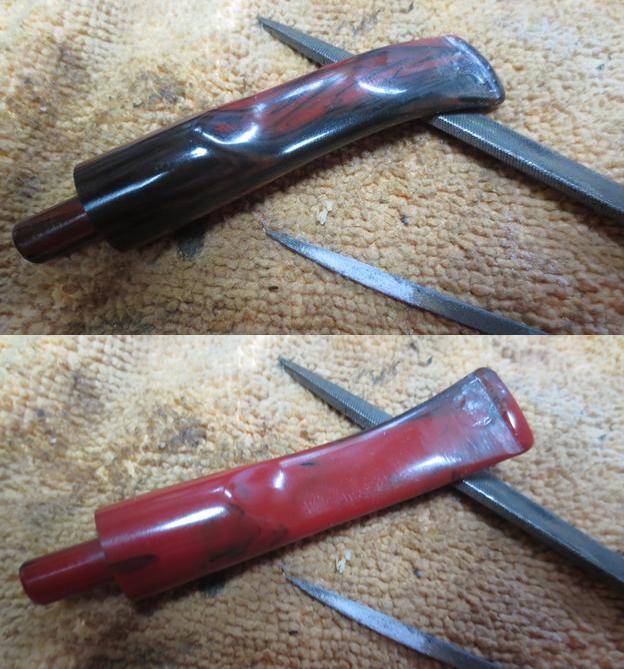

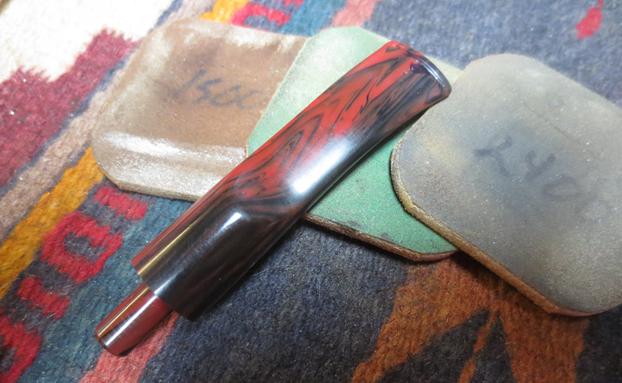
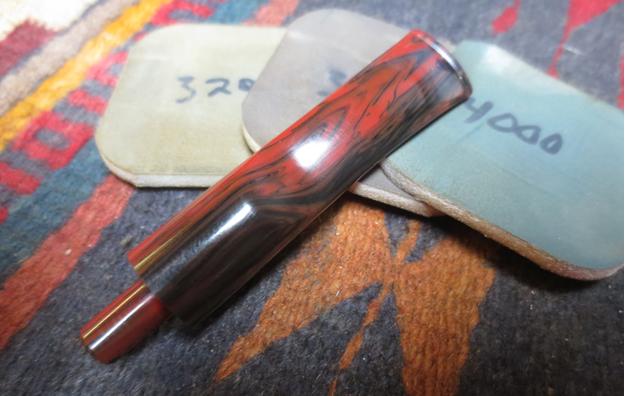
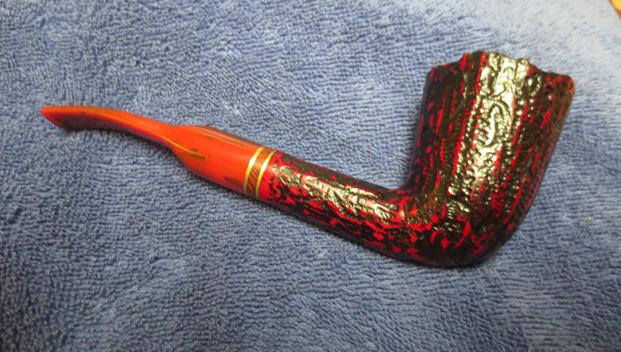
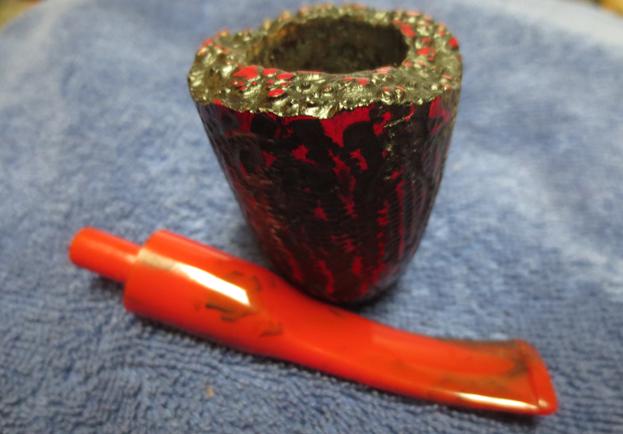
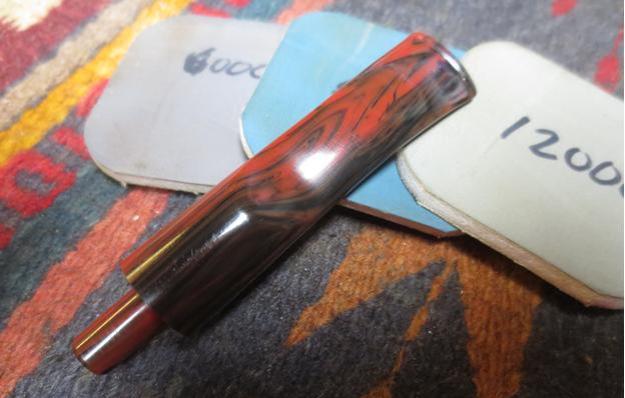 I put the stem back on the bowl and buffed it with Blue Diamond polish on the buffing wheel. I buffed lightly to keep the polish from getting in the grooves of the rustication. I buffed the stem to polish out the remaining scratches. I gave the stem multiple coats of carnauba wax and buffed it with a clean buffing pad to raise the shine. I gave the rusticated bowl several coats of Conservator’s Wax and buffed it with a shoe brush. I buffed the entire pipe with a microfiber cloth to deepen the shine. The dimensions of the pipe are Length: 6 inches, Height: 2 inches, Diameter of the bowl: 1 ½ inches, Diameter of the chamber: ¾ inches. The finished pipe is shown in the photos below. I will be putting it on the rebornpipes store soon. If you are interested in adding this one to your collection email me at slaug@uniserve.com or send me a message on Facebook. Thanks for looking.


 rebornpipes