Tag Archives: Reshaping the stem slope

Banding and Stemming a Figural Pipe – A Carved Bull’s Head


I have never been a big fan of carved animal pipes- whether birds, bulls, horses, etc. There is just something about them that always makes me shy away. Needless to say when I picked up this one in an EBay lot I put it in the bottom of the box of pipes to be refurbished and kept burying it lower in the box. A few weeks ago when I had very few left I decided to give it a go. There were a few challenges about it that made it look interesting. It was without a stem and the shank was damaged – several cracks in it. The angles of the shank made banding it a challenge and the thickness of the neck of the bull at the base of the shank made it formidable. Those attracted me to giving it a try. I also figured I could do some carving on the shank to make it possible to band it and then sand rework an old stem to fit the newly carved shank. The bowl has some kind of impermeable coating on it. Acetone will not cut it; Everclear will not cut it and even a soak in the alcohol bath will not cut it. It is like a coat of Urethane. All my attacks on it resulted in not even damaging the surface. Ah well it will stay as it is then.

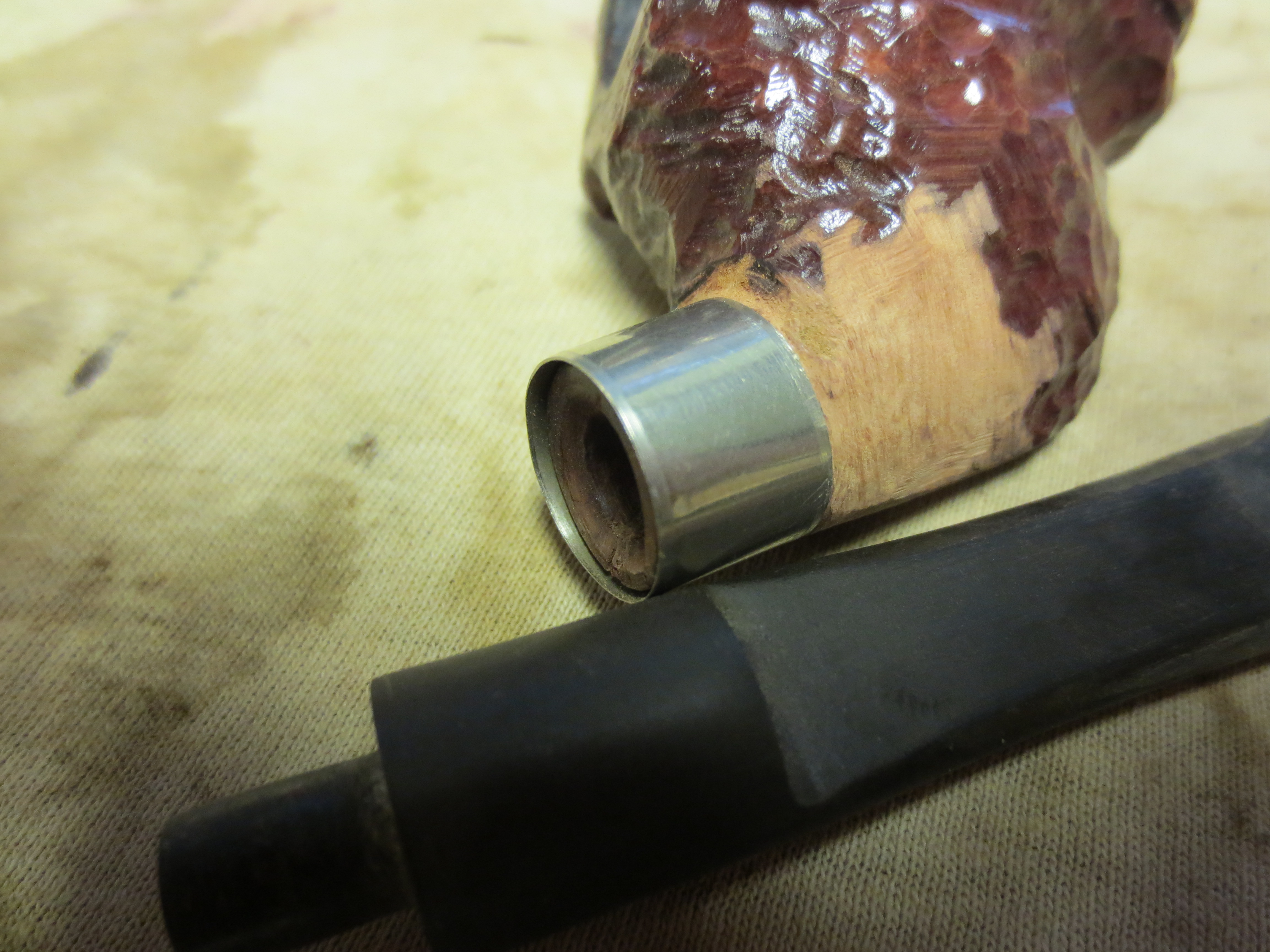
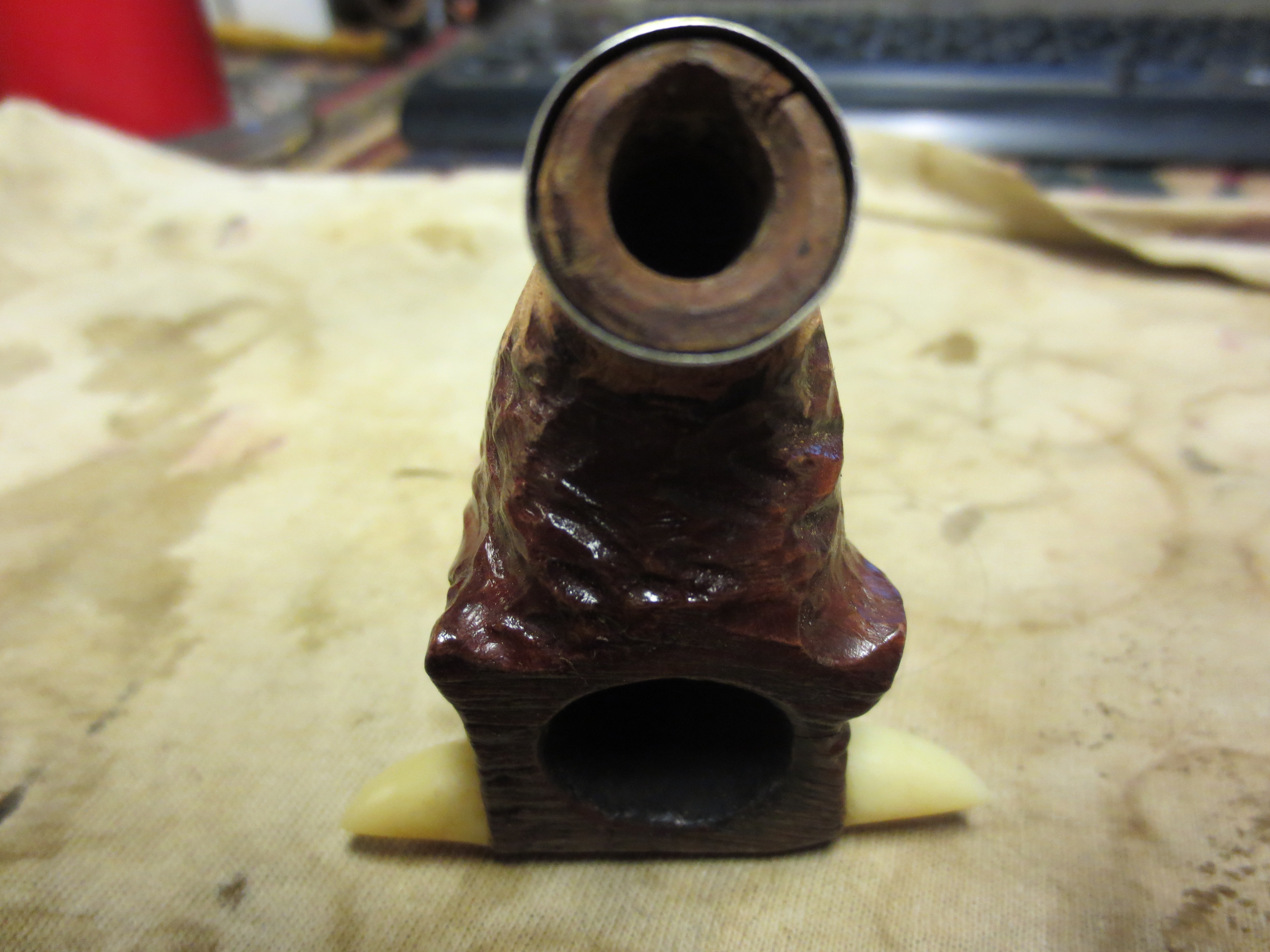
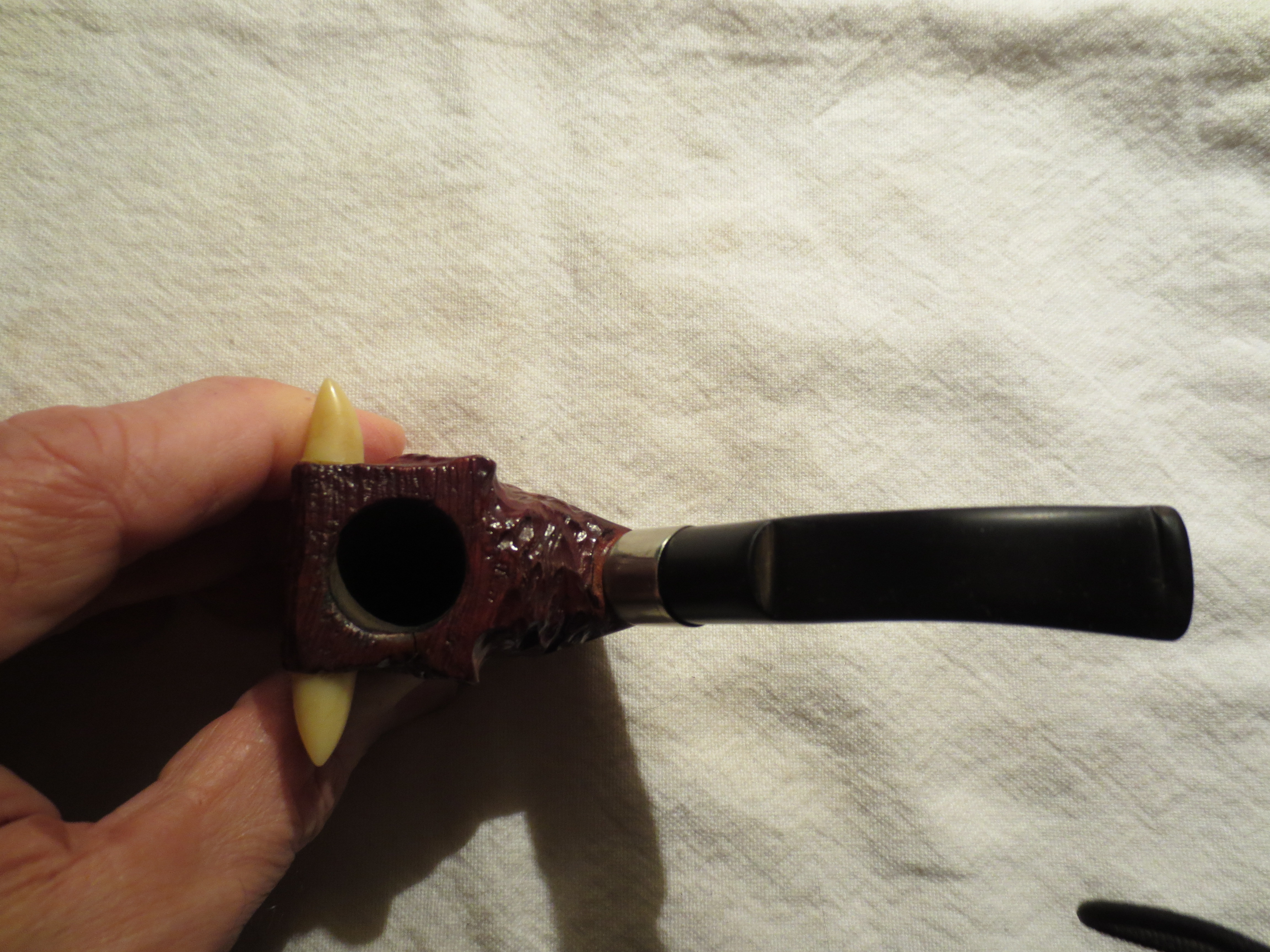
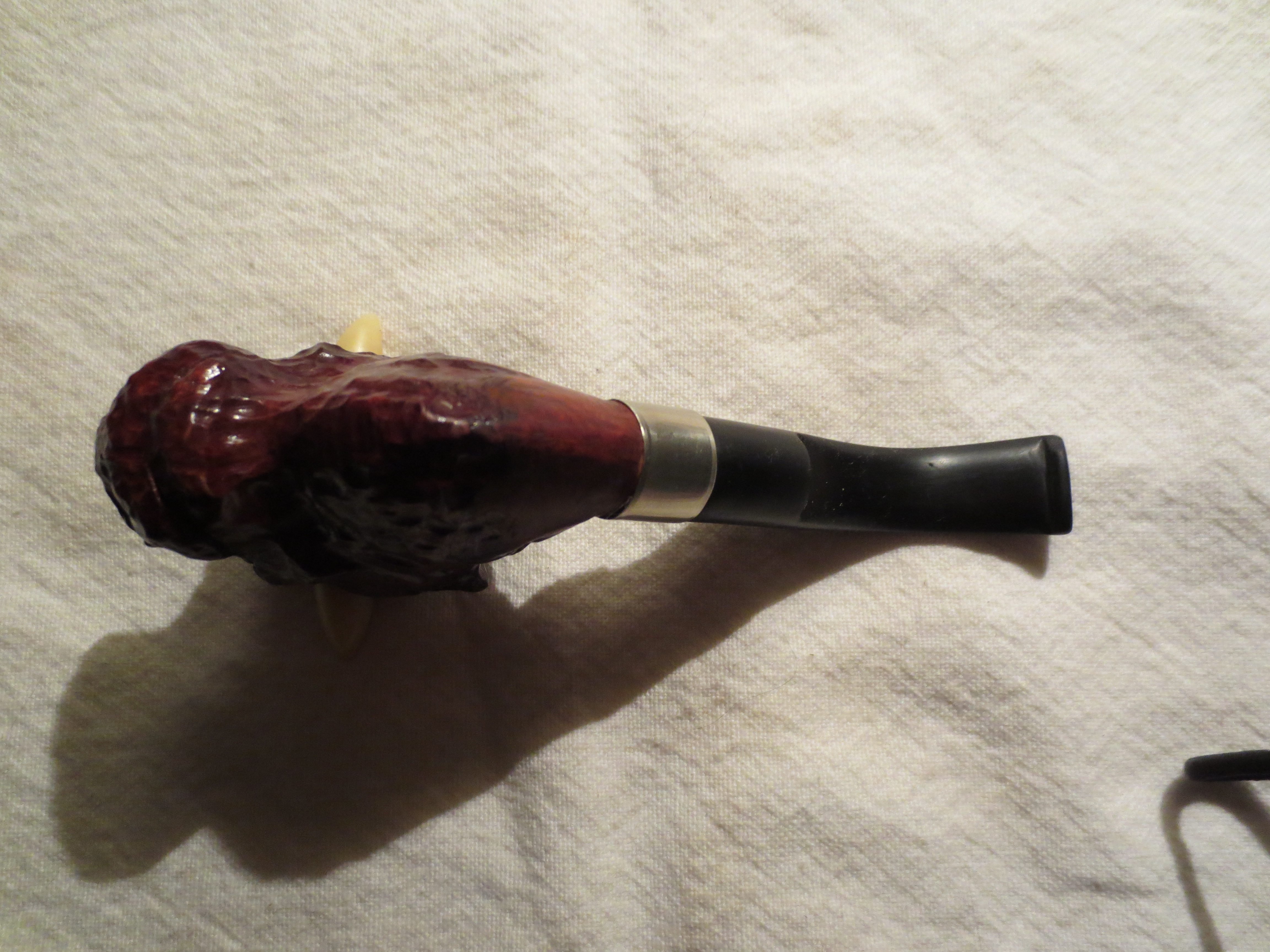
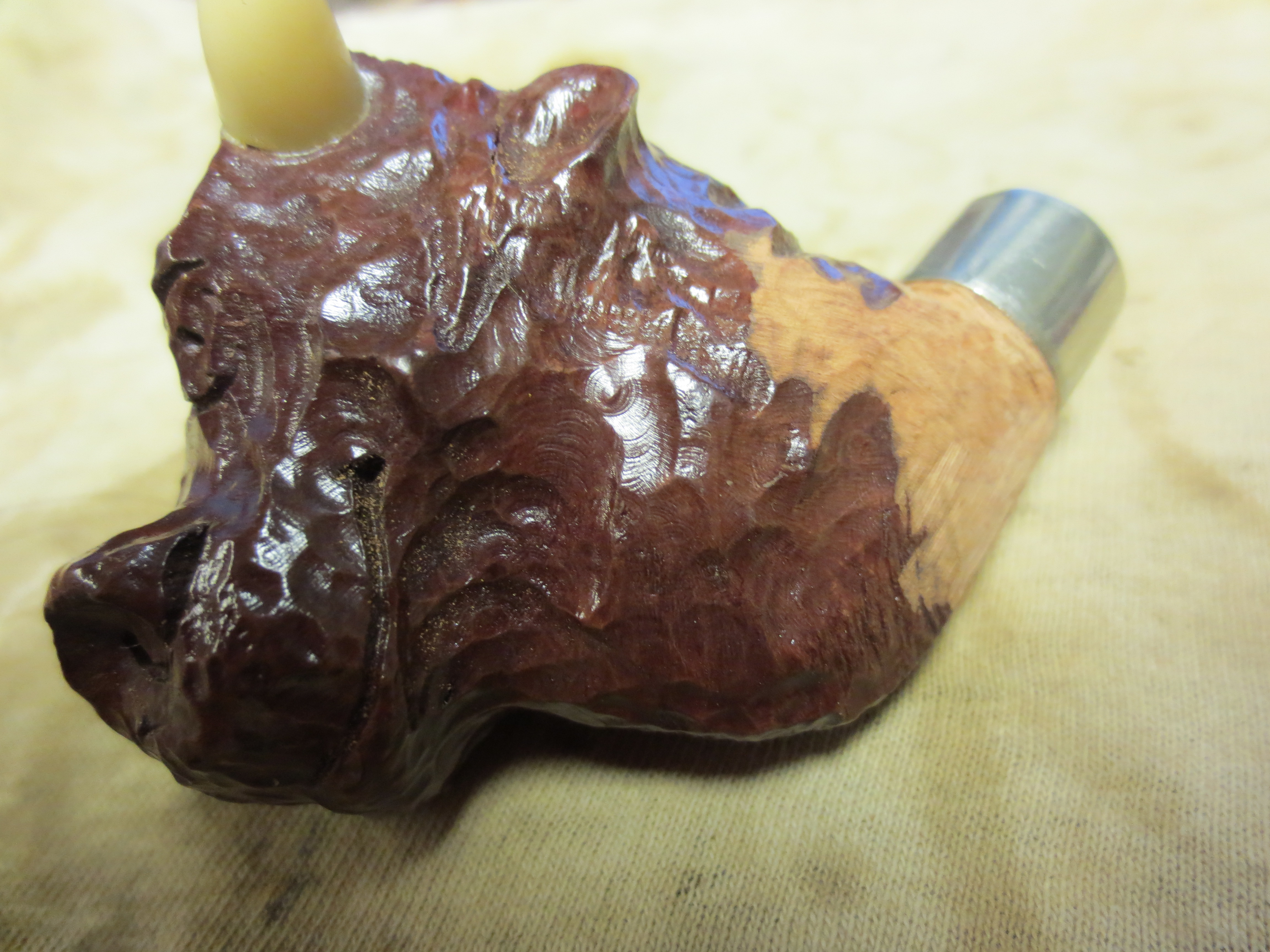
I used my Dremel to sand back the shank area so that a band would fit it. I sanded back the neck of the bull to allow for a visible shank. I also had to sand the area at the back of the head to fit the band on the shank. I sanded it with some medium grit emery paper to remove the deep scratches from the Dremel and then worked it over with 240 and 320 grit sandpaper to smooth it out. I finished by wet sanding the shank with micromesh sanding pads from 1500-3200 grit. Once I had it cut back and ready, I heated a band with my heat gun and pressure fit it onto the newly formed shank. The next three photos show the newly banded shank. I left a little excess length on the band so that it would form a seat for the stem (visible in Photo 2). The shank end was so badly damaged that I could not get a smooth end on it. In Photo 3 you can also see the cracks in the shank that I repaired with superglue and pressure.
IMG_0436

IMG_0437

IMG_0438
I had an old stem in my can of stems that was the right shape. It was also in rough shape. It was one of those I had held on to that should have probably been pitched. However, it was right for this shank and would be reparable with a bit of work. This pipe sat on my work table throughout the repairs I was doing on all the other pipes I have worked on in the past month. It was just sitting there and every so often I would pick it up and work on it. The next series of nine photos shows the stem that I was working on for the pipe.
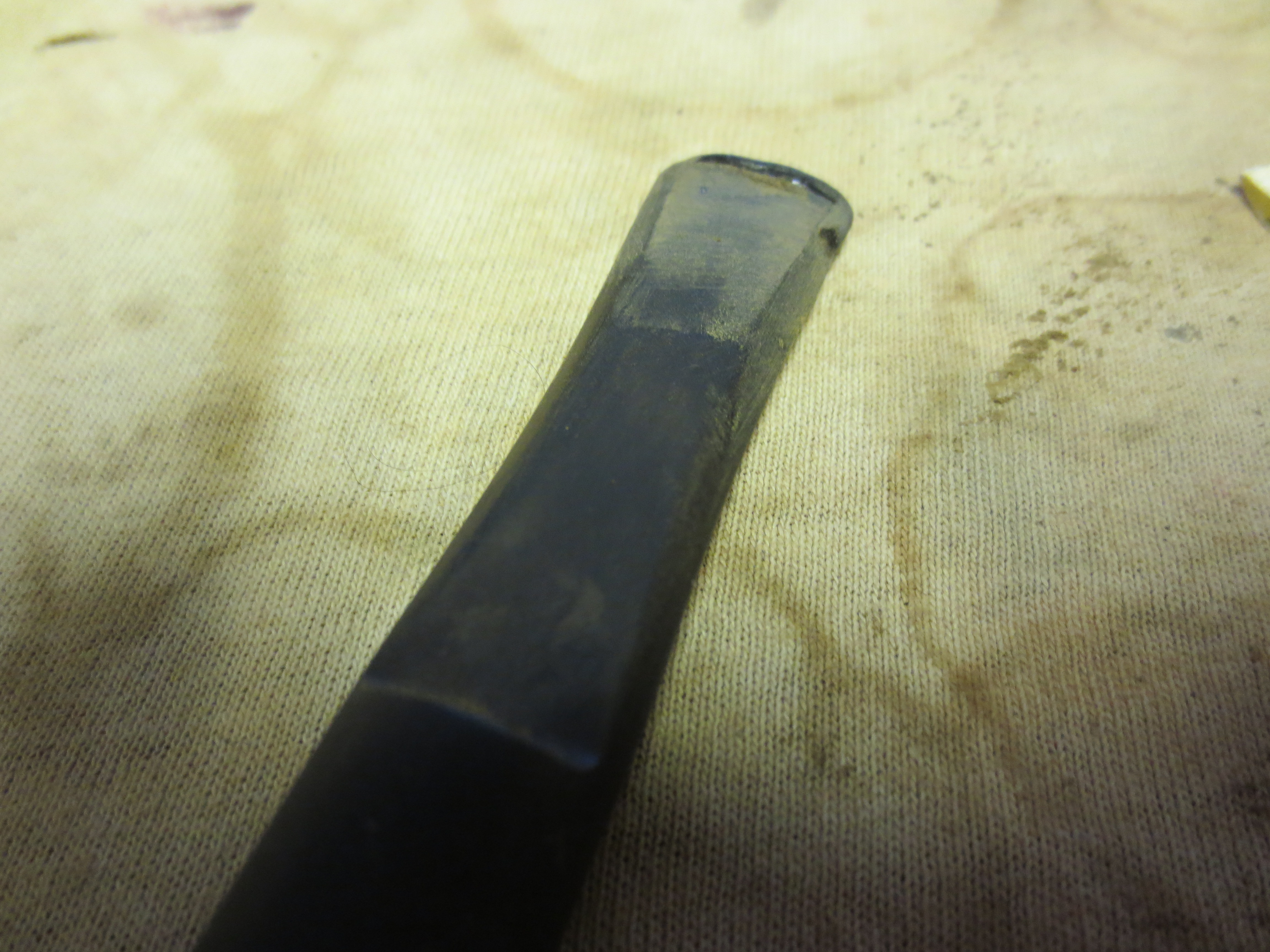
Figure 1 Top view of the stem before I worked on it. There were bite marks, tooth marks and pieces missing.
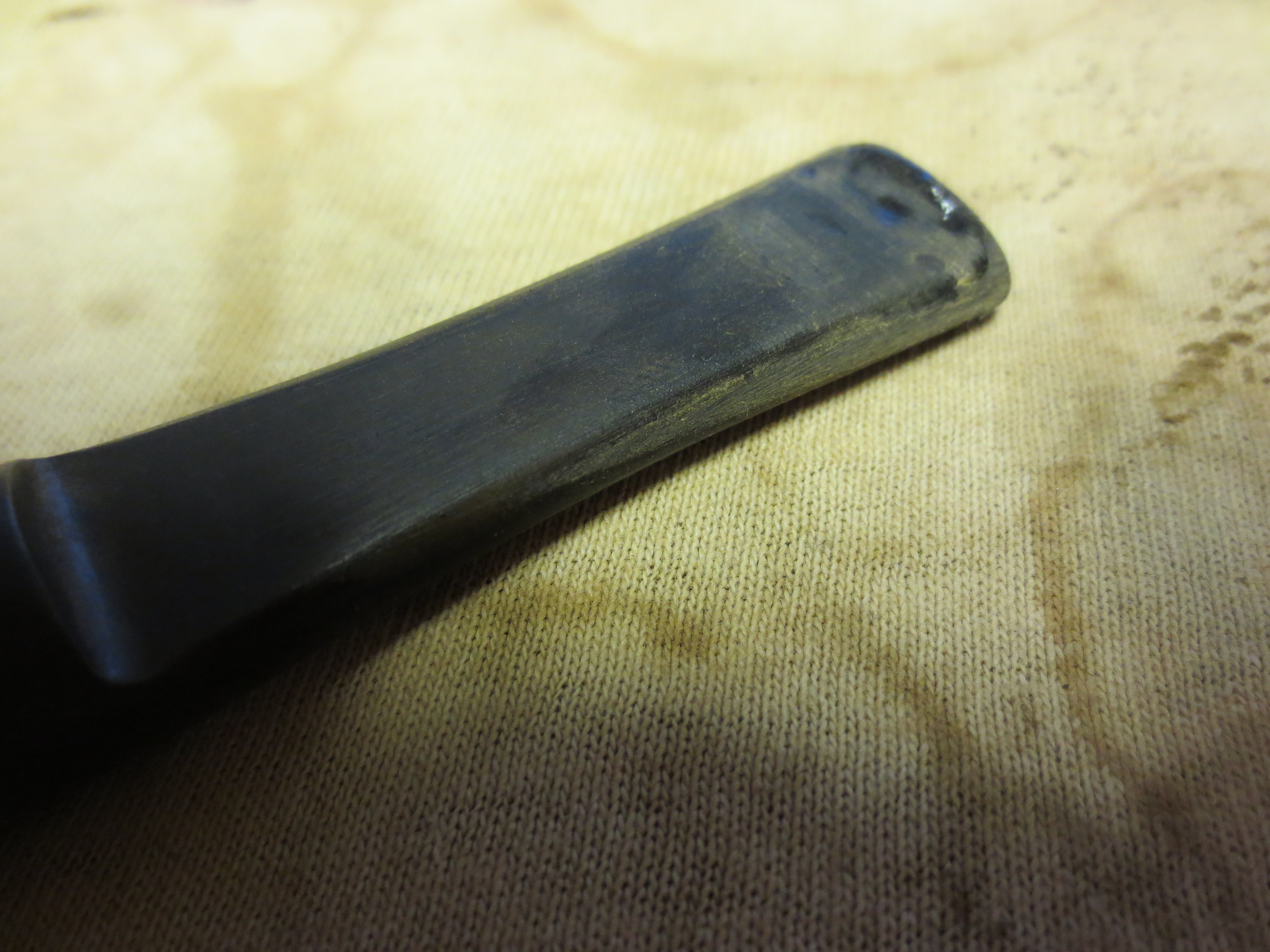
Figure 1 Top view of the stem before I worked on it. There were bite marks, tooth marks and pieces missing.

Figure 2 I sanded down the stem and filled the deep pits with black superglue. The top side of the stem shows the shiny black glue patches.
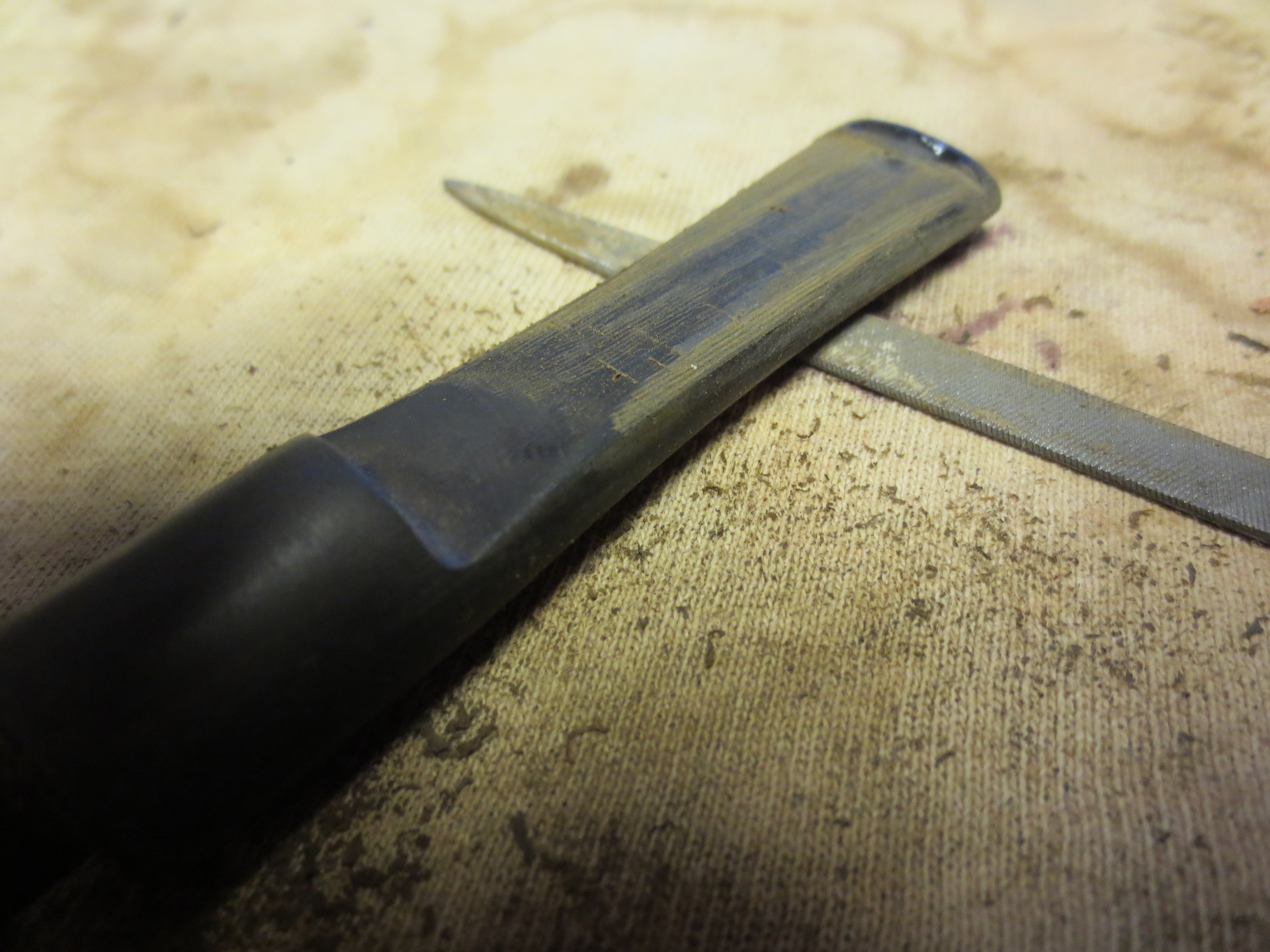
Figure 2 I sanded down the stem and filled the deep pits with black superglue. The top side of the stem shows the shiny black glue patches.

Figure 3 The underside of the stem. I used a file to sand down the edges and the flat blade of the stem.
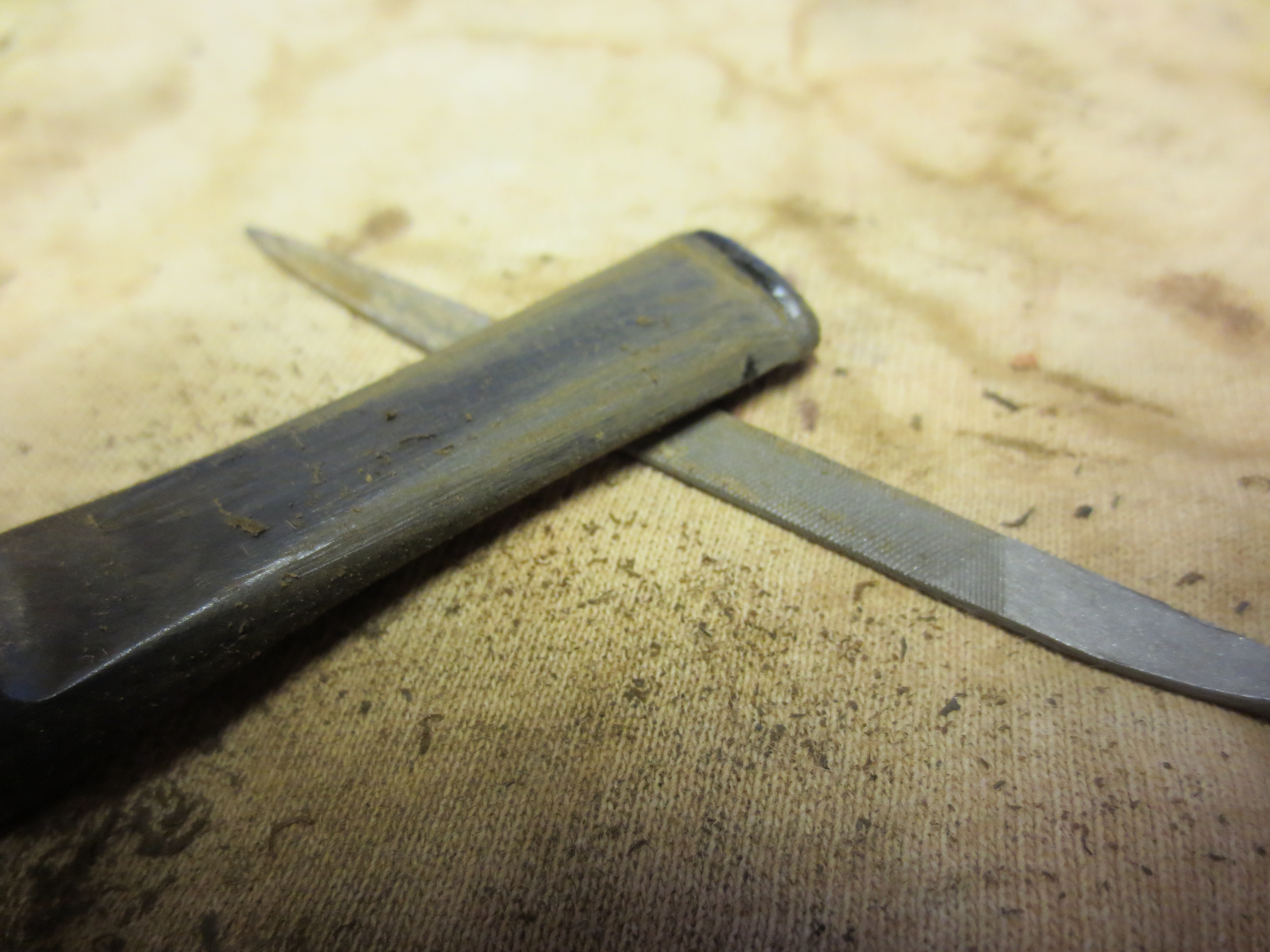
Figure 3 The underside of the stem. I used a file to sand down the edges and the flat blade of the stem.

Figure 4 The stem is beginning to take shape after much filing and sanding on the sides and around the button. This is a photo of the topside of the stem.
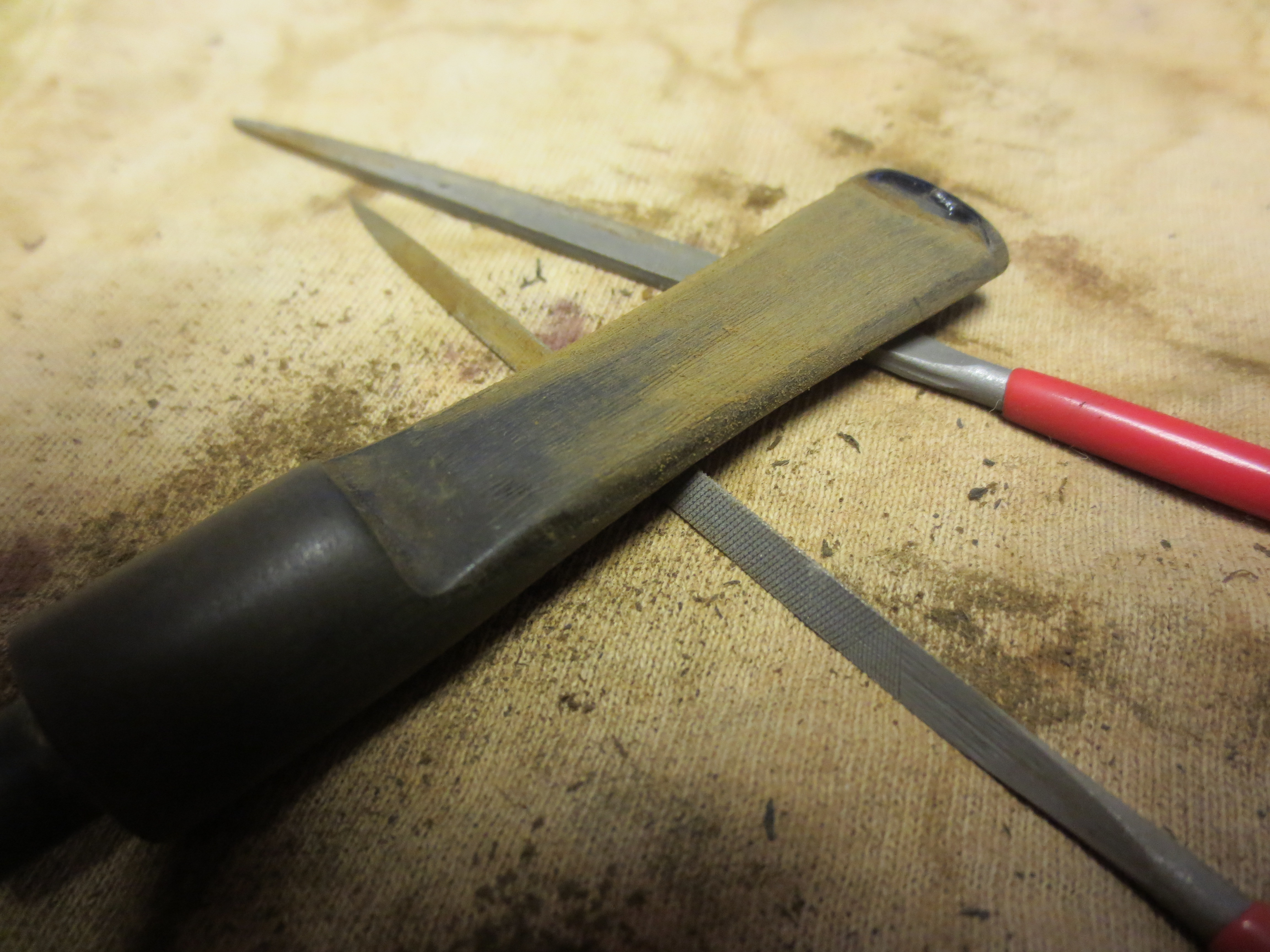
Figure 4 The stem is beginning to take shape after much filing and sanding on the sides and around the button. This is a photo of the topside of the stem.

Figure 5 The underside of the stem with the filing and shaping bringing it into shape.
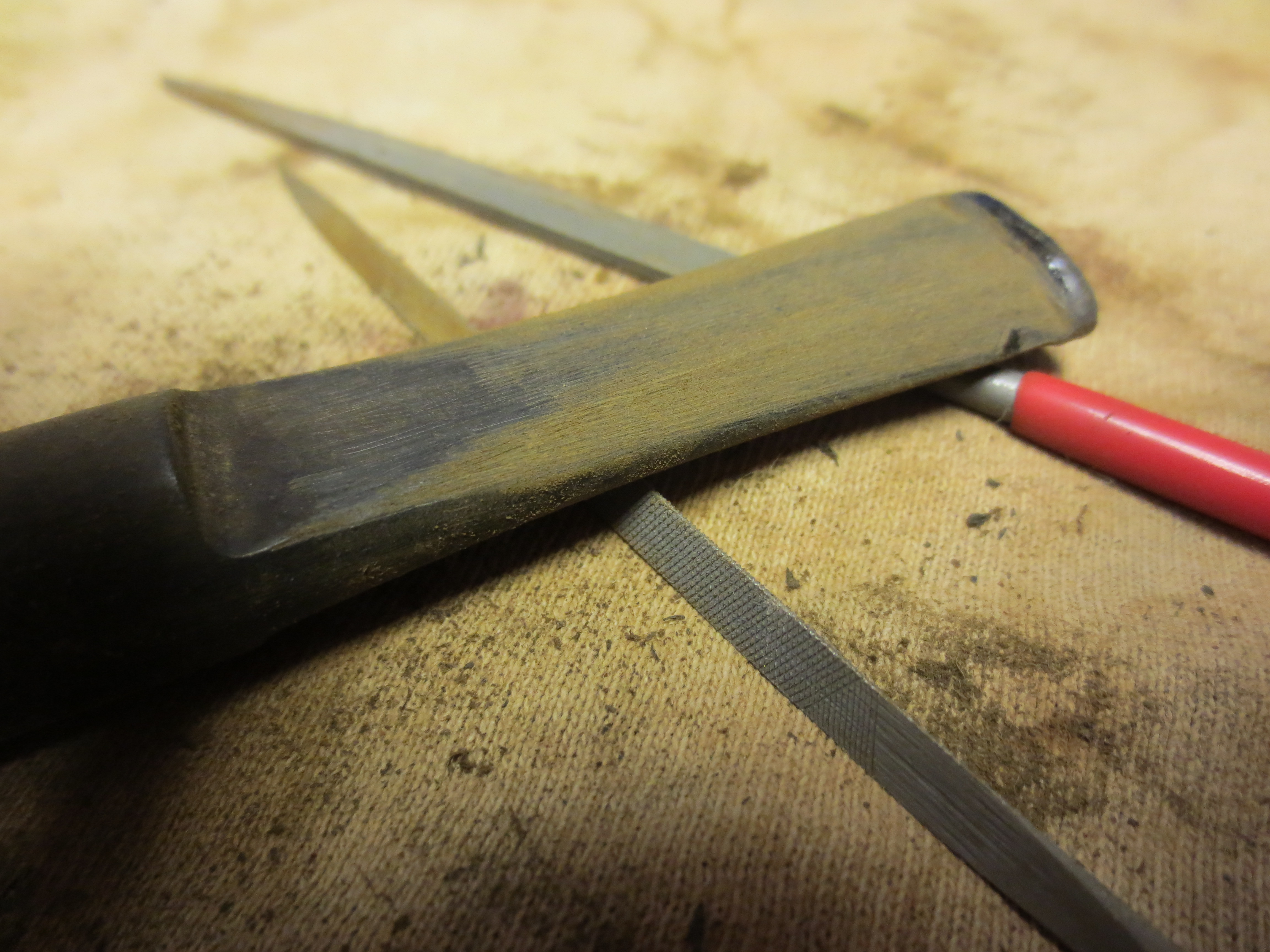
Figure 5 The underside of the stem with the filing and shaping bringing it into shape.

Figure 6 The top side - note the left side dent on the edge of the stem. This would require more sanding, shaping and filling with black superglue.
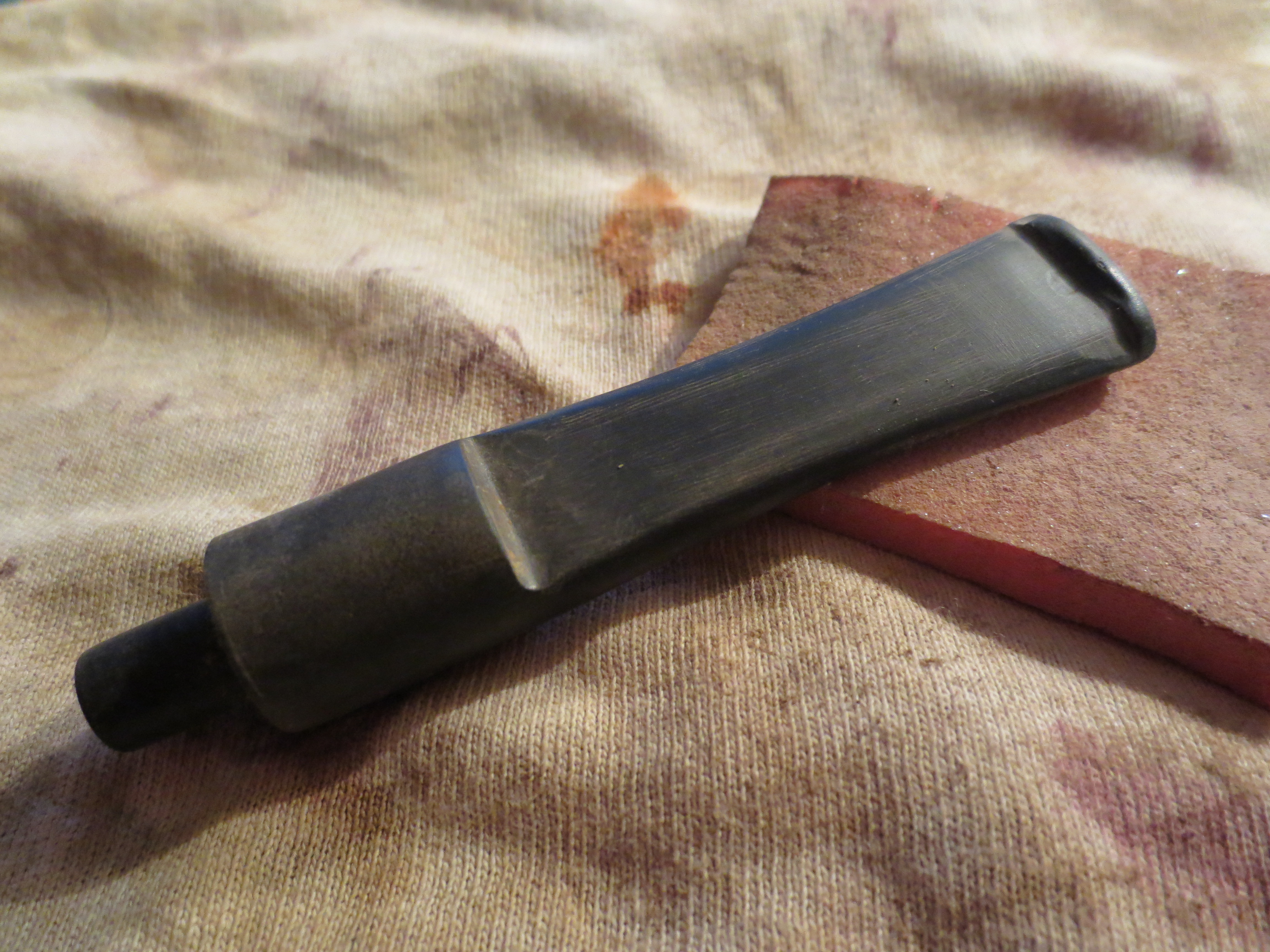
Figure 6 The top side – note the left side dent on the edge of the stem. This would require more sanding, shaping and filling with black superglue.

Figure 7 Topside of the stem. I sanded it with 320 grit sandpaper and then medium grit sanding sponge. It is beginning to take shape.
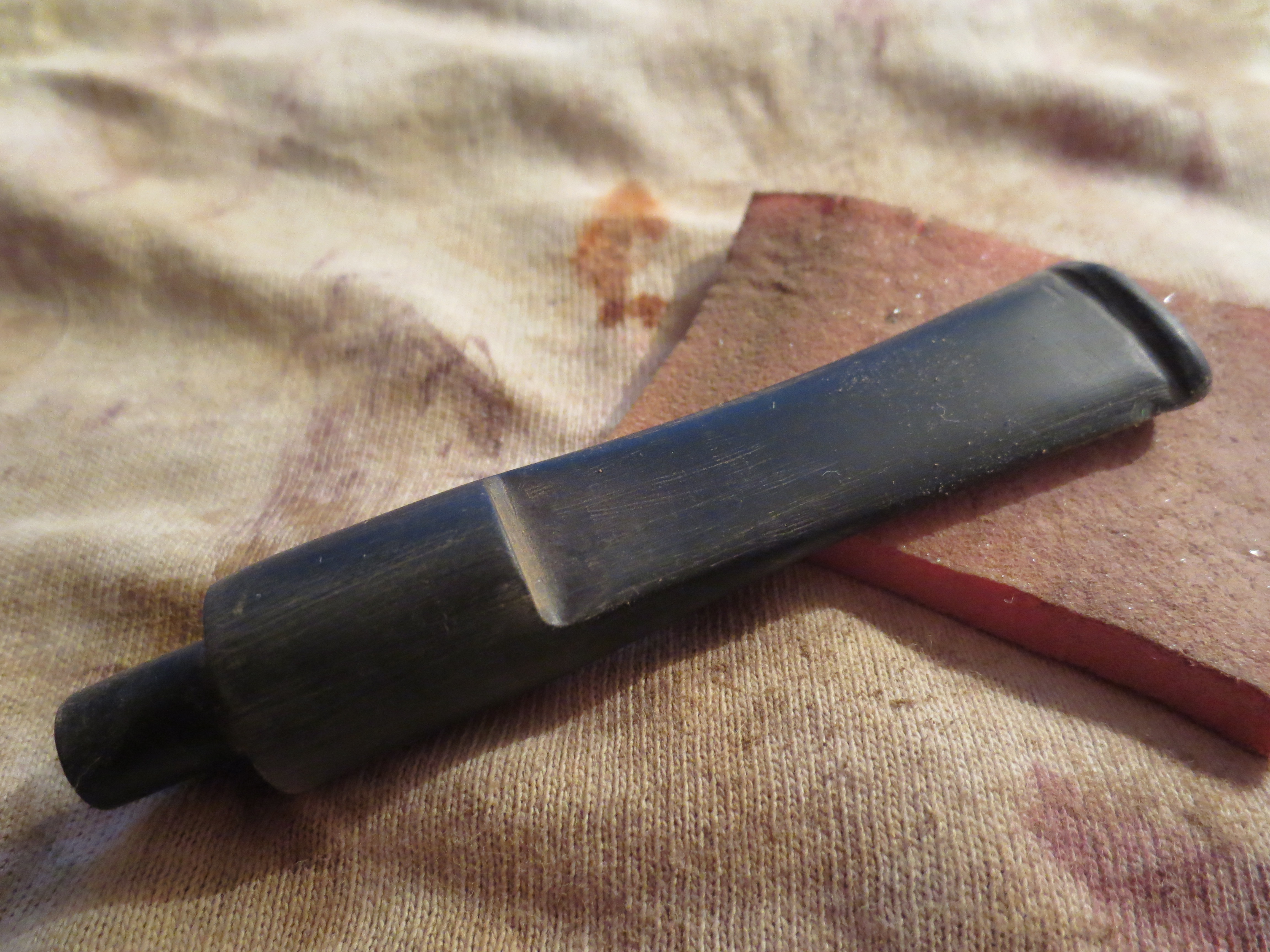
Figure 7 Topside of the stem. I sanded it with 320 grit sandpaper and then medium grit sanding sponge. It is beginning to take shape.

Figure 8 Underside of the stem- again sanded and shaped. The dents and edges are starting to be cleaned up.
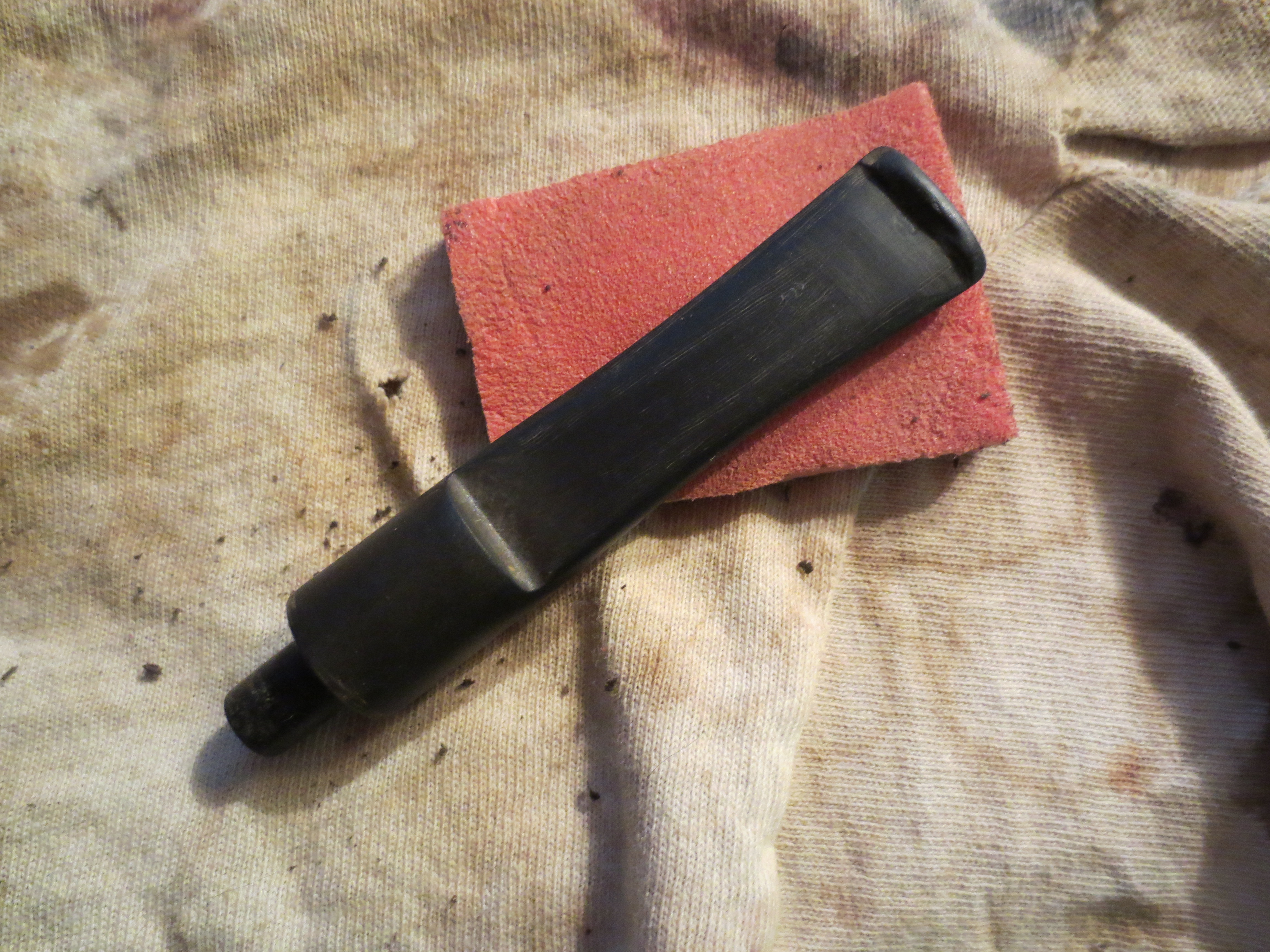
Figure 8 Underside of the stem- again sanded and shaped. The dents and edges are starting to be cleaned up.

Figure 9 Underside finished with the majority of the shaping. Now a lot of fine tuning needed to be done.
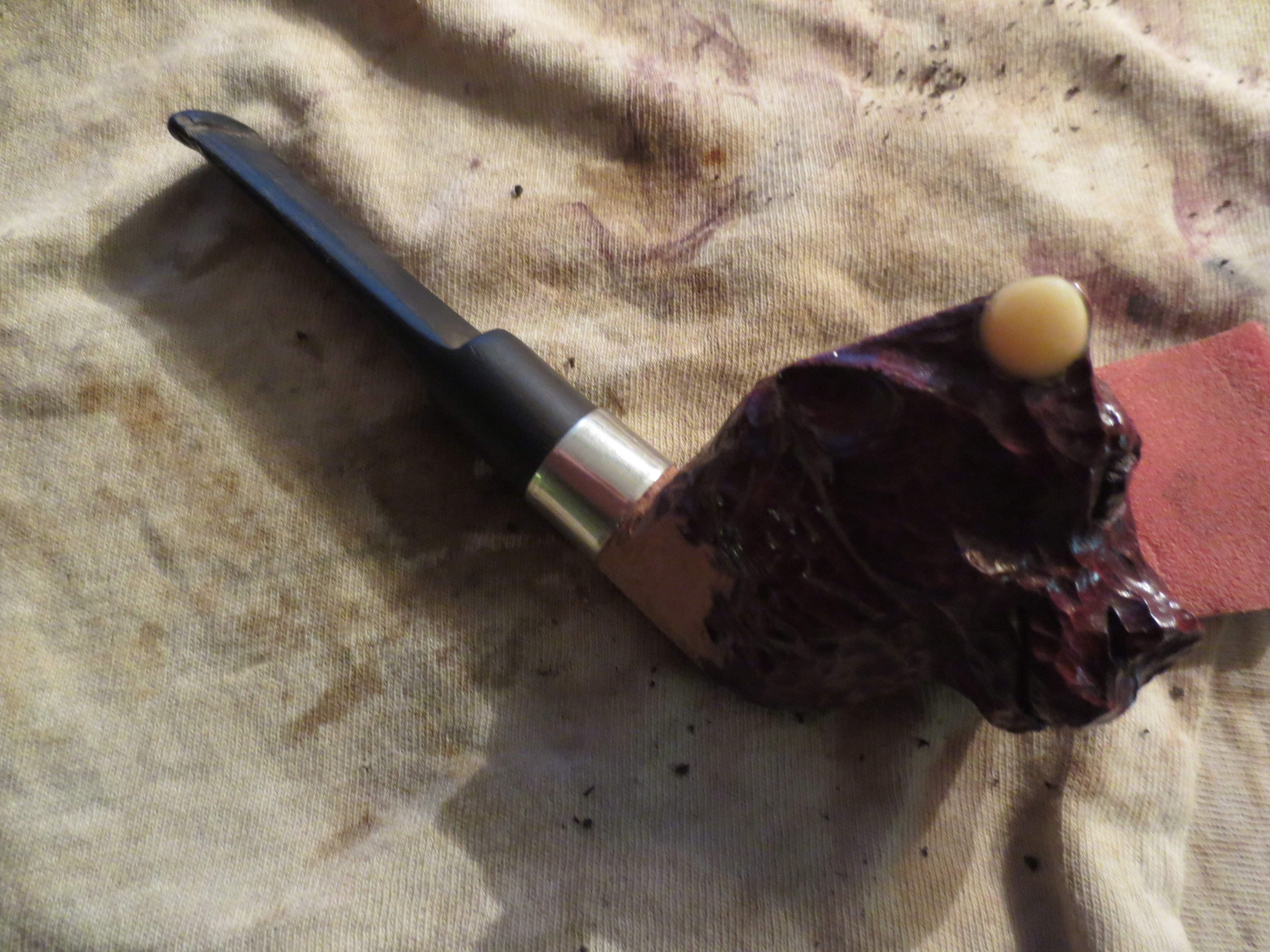
Figure 9 Underside finished with the majority of the shaping. Now a lot of fine tuning needed to be done.

Figure 11 The finished stem fit into the repaired shank. Right side view.

Figure 11 The finished stem fit into the repaired shank. Right side view.

Figure 10 The finished stem shaped and inserted in the repaired shank. Left side view.

Figure 10 The finished stem shaped and inserted in the repaired shank. Left side view.

Once I had the stem cleaned up and repaired it was ready to be heated and bent to fit the flow of the pipe. I set up my heat gun and turned it on low heat. I held the stem over the heat at a distance of 2-3 inches and kept it moving back and forth to prevent the vulcanite from burning. When the vulcanite was pliable I used a wooden rolling pin and bent the stem over the curve of the rolling pin. I find that using this keeps the stem from bending at an angle.
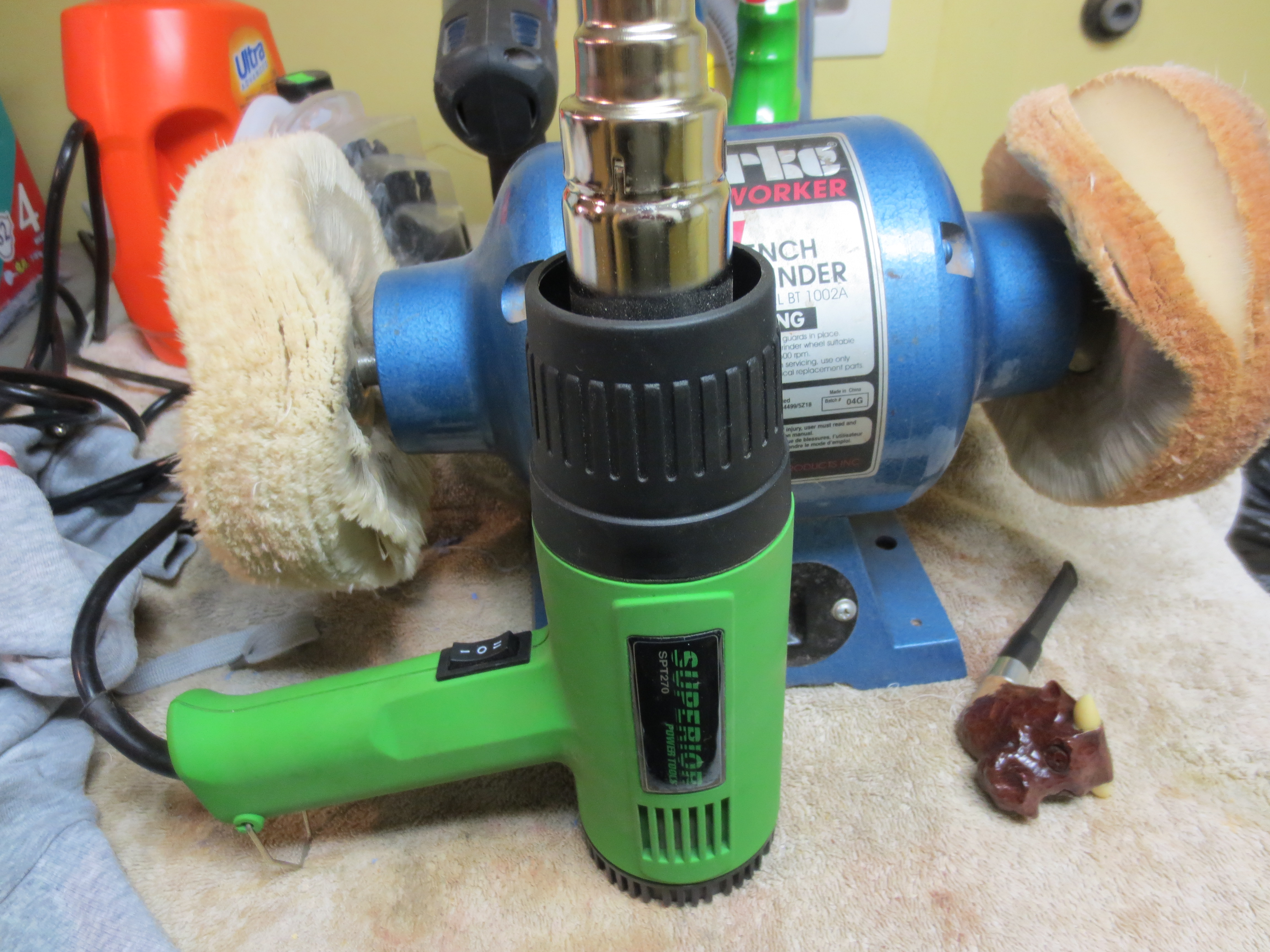
Figure 12 Heat gun set up and ready to use to bend the stem.
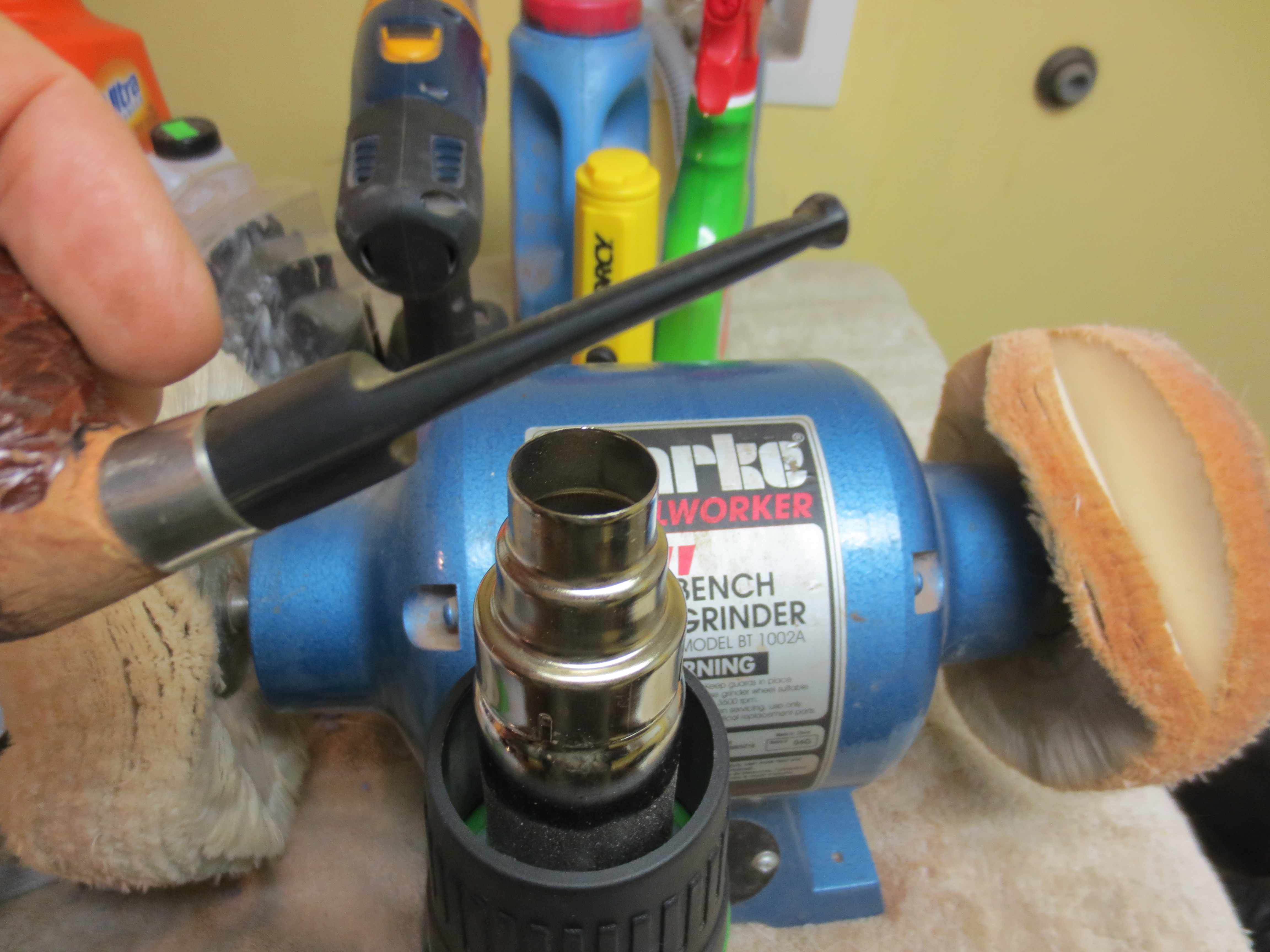
Figure 12 Heat gun set up and ready to use to bend the stem.

Figure 13 Heating up the vulcanite stem.
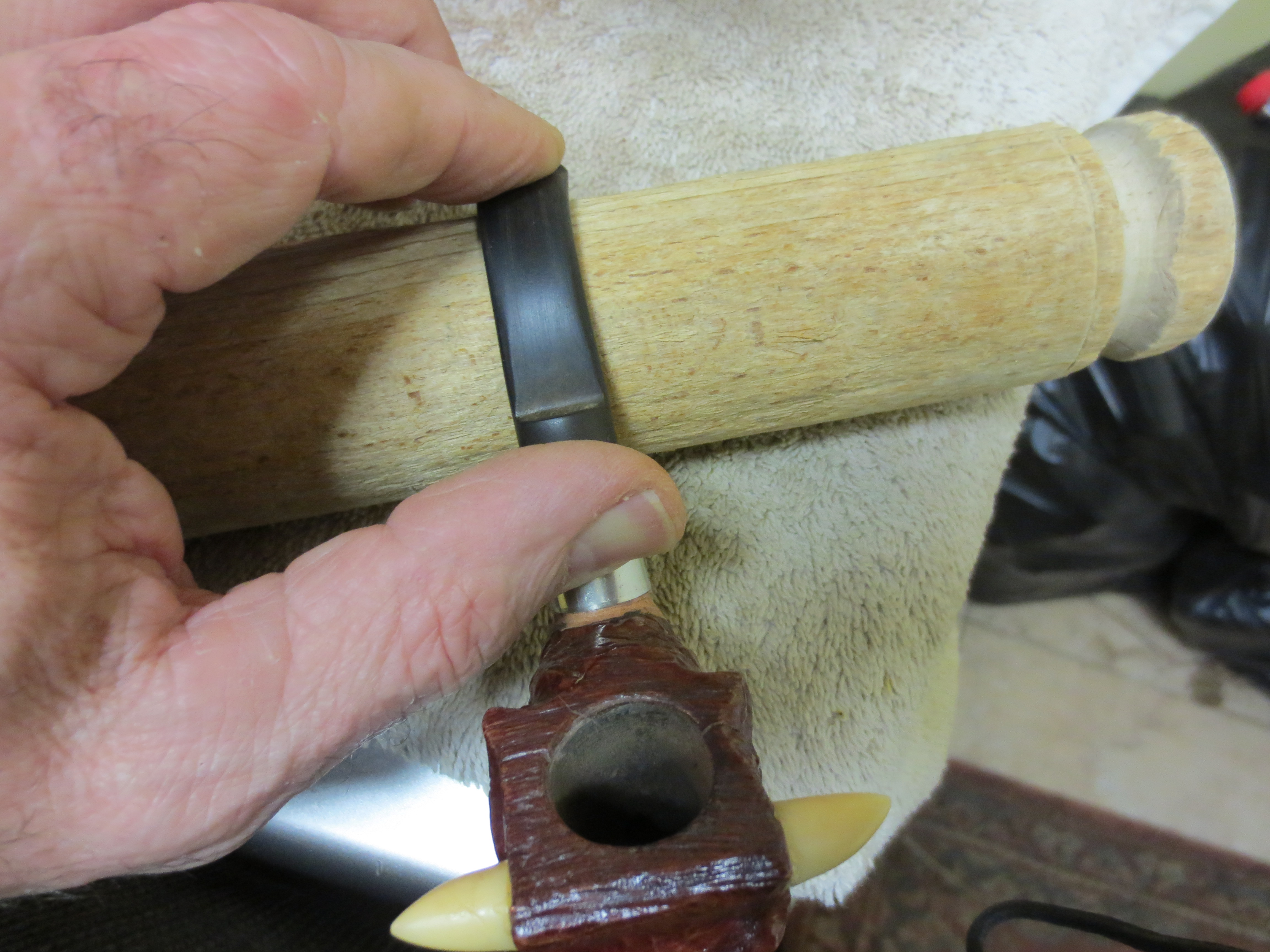
Figure 13 Heating up the vulcanite stem.

Figure 14 Bending the stem over a wooden rolling pin that I scavenged from my wife's thrift shop box.

Figure 14 Bending the stem over a wooden rolling pin that I scavenged from my wife’s thrift shop box.
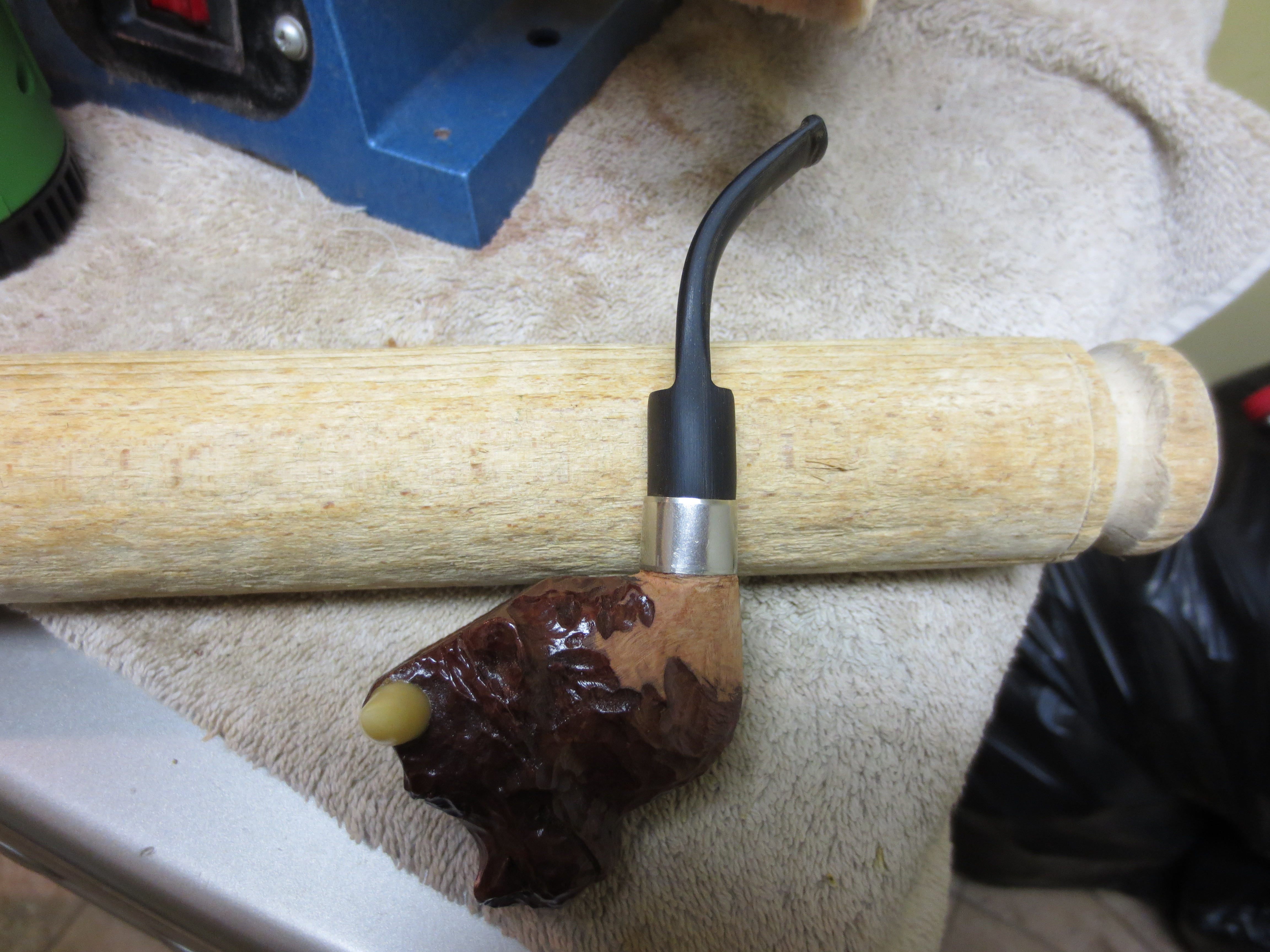
Figure 15 The finished bend in the pipe. It is now ready to polish the stem and the shank.

Figure 15 The finished bend in the pipe. It is now ready to polish the stem and the shank.

I took it back to the work table and began to sand the stem and the shank with a fine grit sanding sponge. I continued to sand it and then worked on the shank with micromesh sanding pads from 3600-12,000 grit to prepare it for restaining.
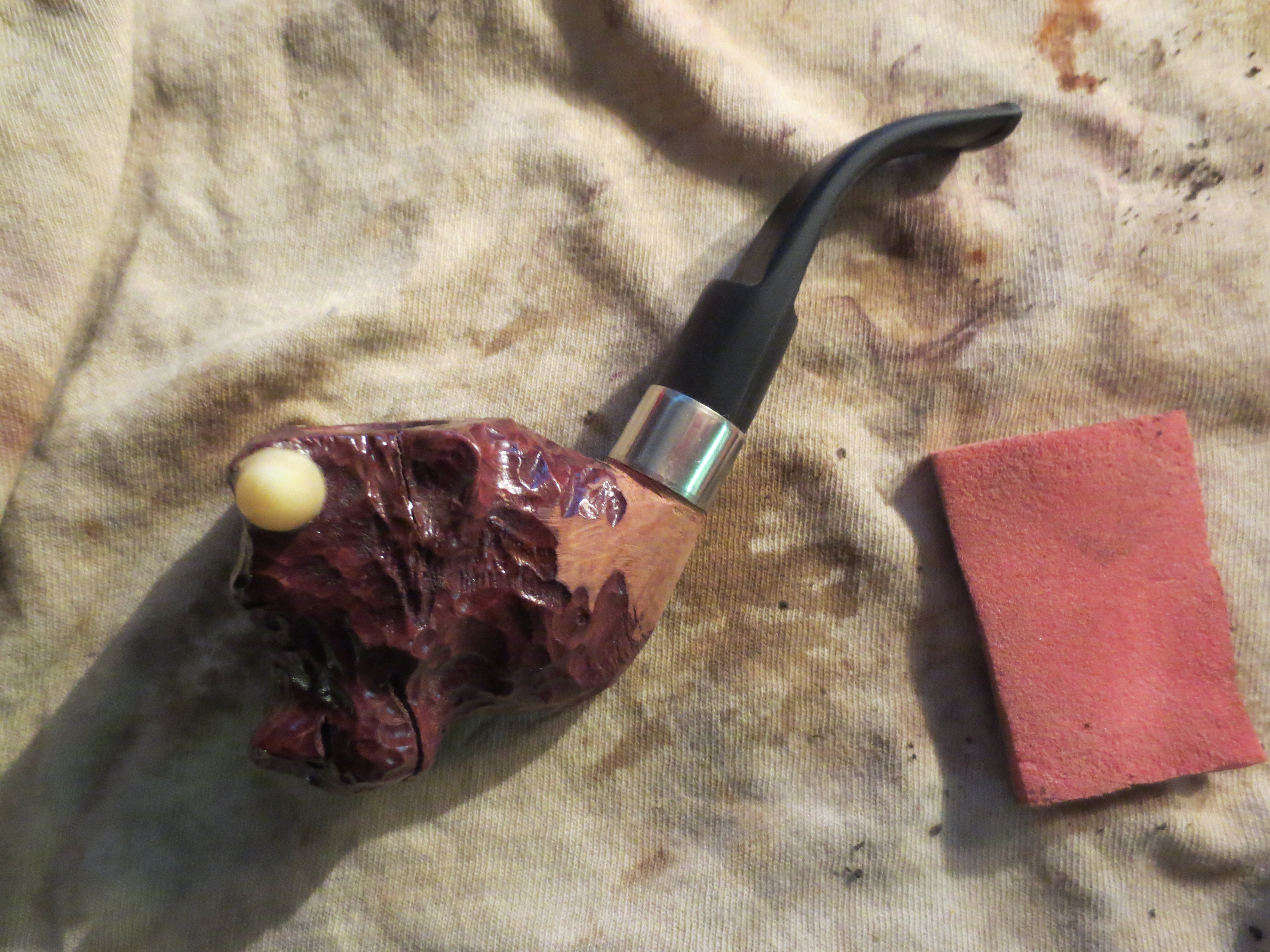
Figure 16 Shank preparation for staining.
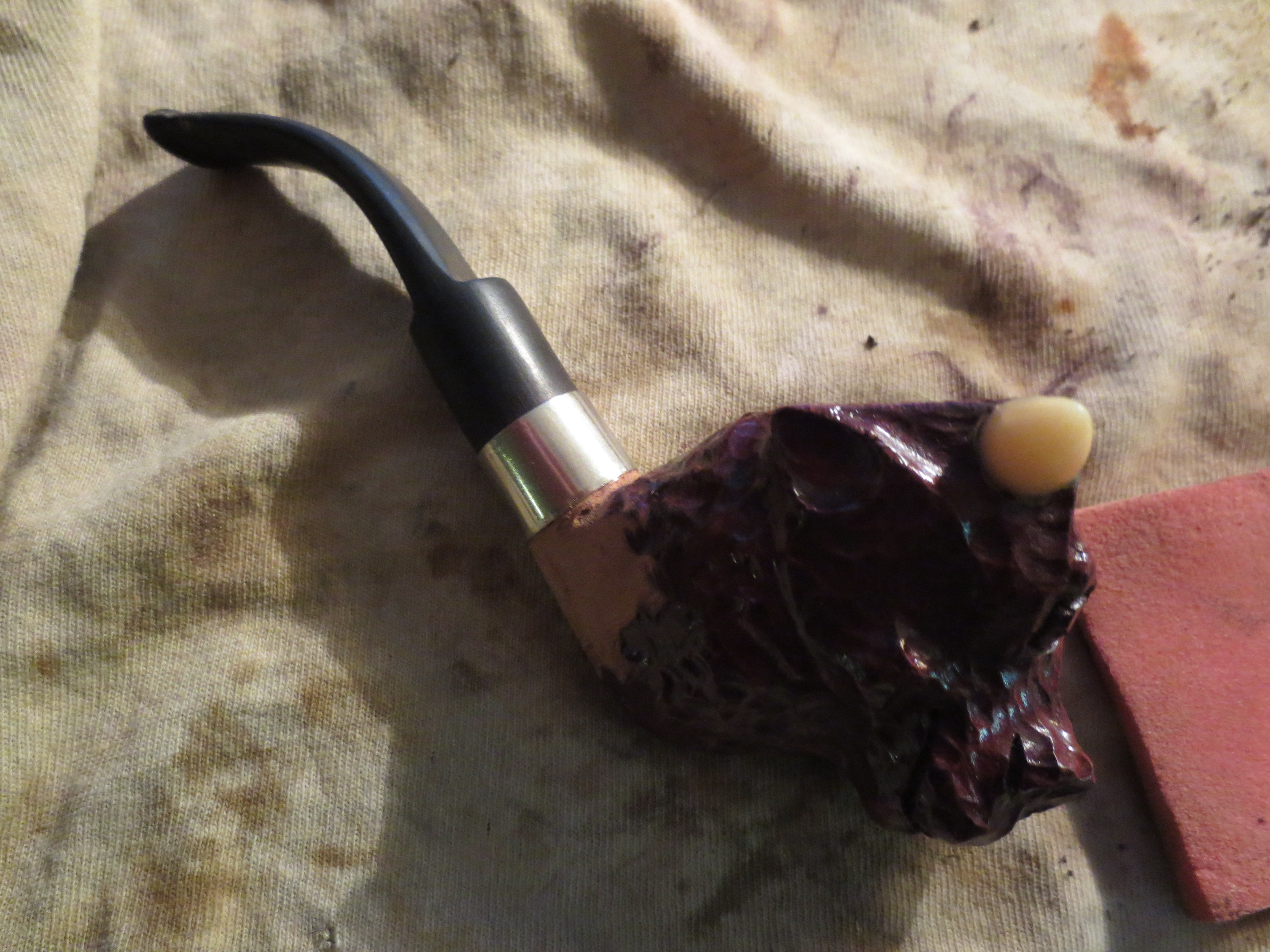
Figure 16 Shank preparation for staining.

Figure 17 Shank preparation for staining.

Figure 17 Shank preparation for staining.

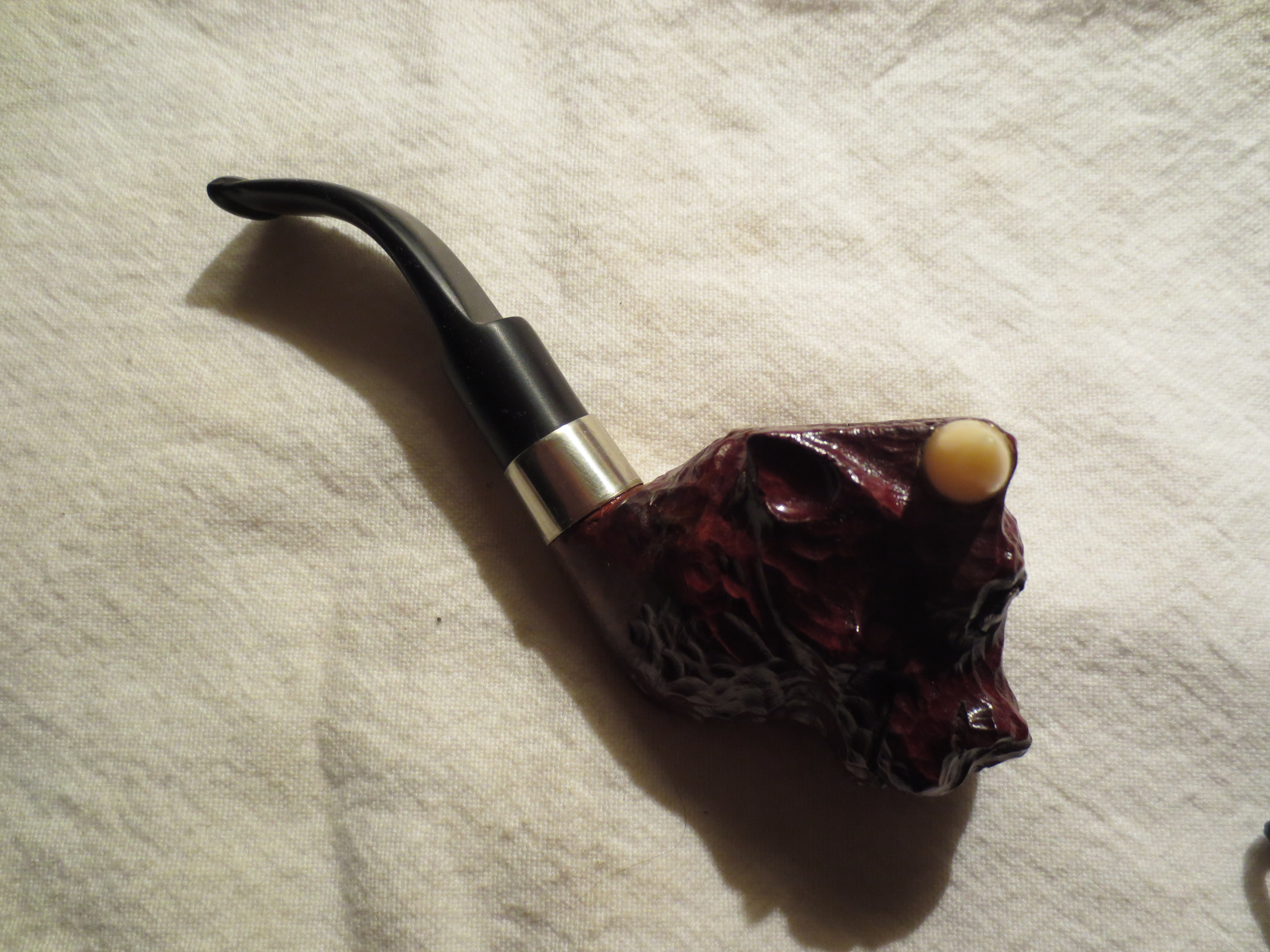
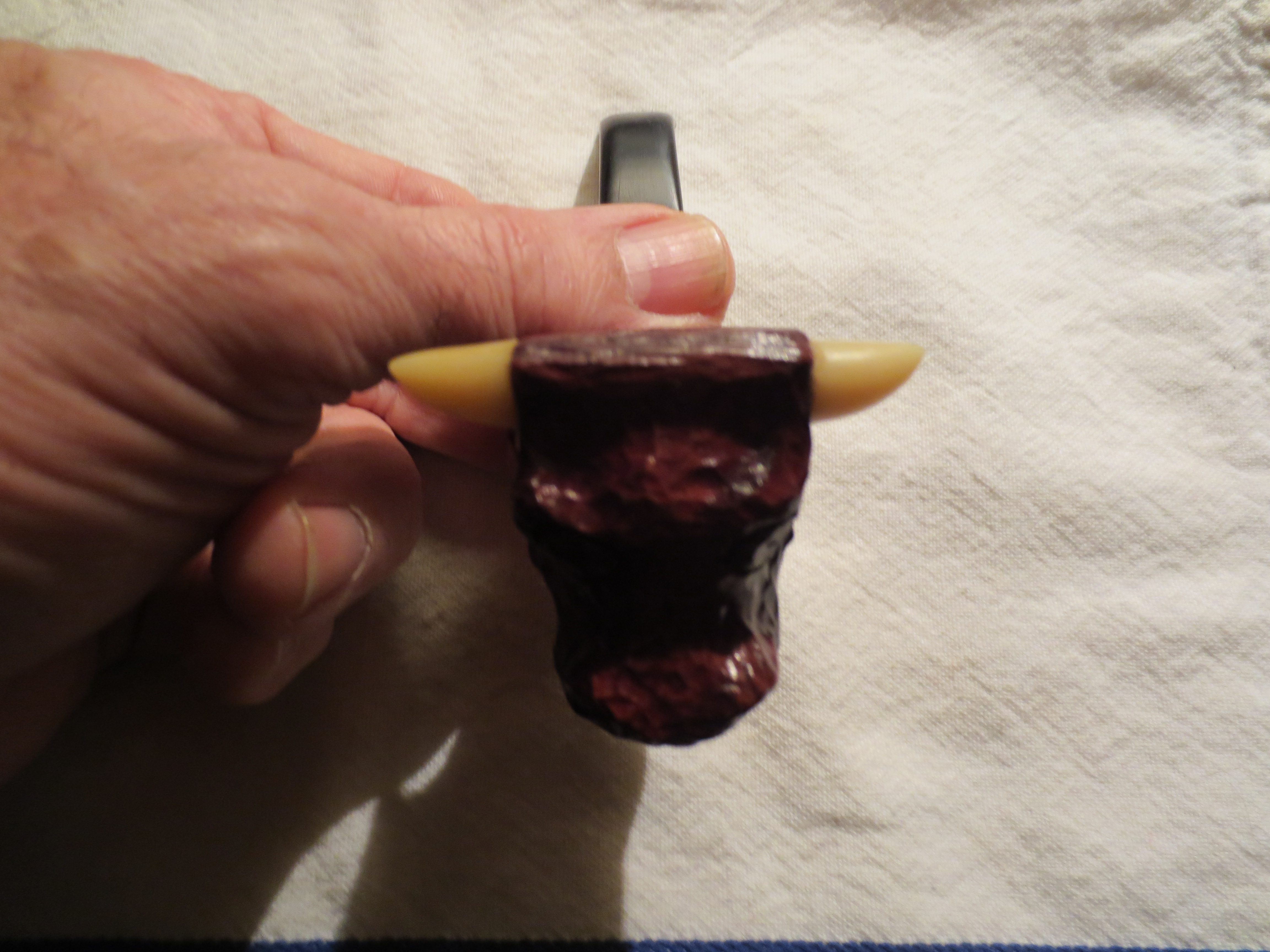
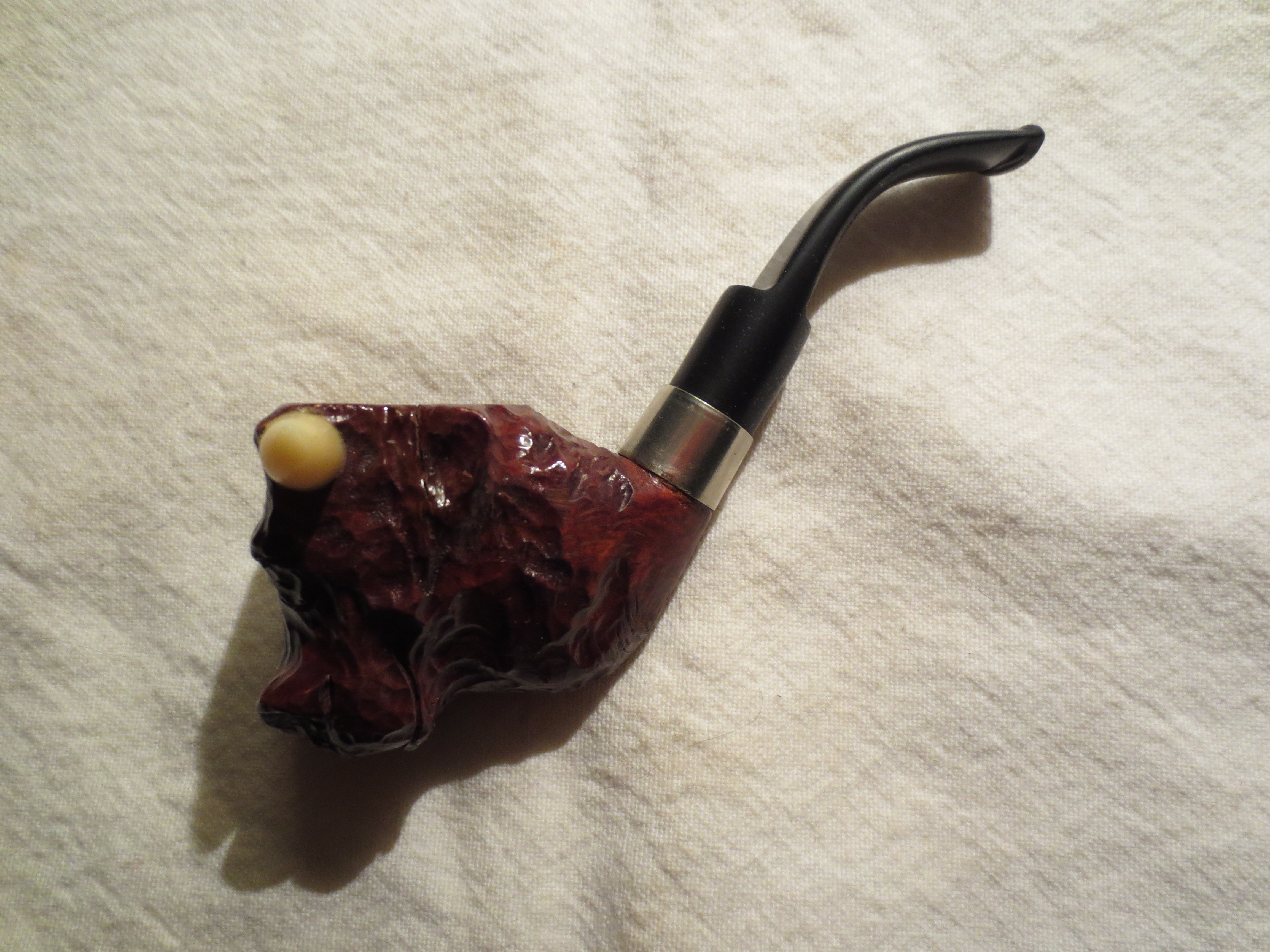
Once the shank was prepared I stained it with a dark brown aniline stain. I flamed it and repeated the staining and flaming until the brown matched that of the rest of the bowl. I then gave it a coat of Danish Oil medium walnut to seal the shank and give it a shine that would match the head of the bull. I also finished sanding the stem with the remaining grits of micromesh (3600-12,000 grit). When I finished I buffed the stem and shank with White Diamond and gave it all several coats of carnauba wax. The next series of five photos show the finished pipe.
IMG_0951

IMG_0952

IMG_0953

IMG_0954

IMG_0955

Reshaping a button and stem on a Bewlay Bulldog


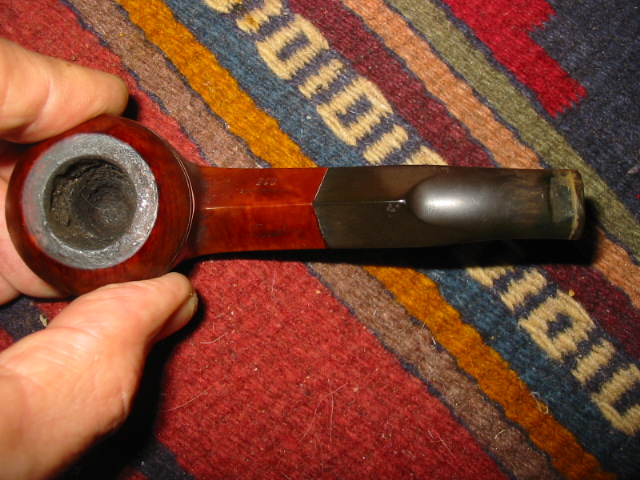
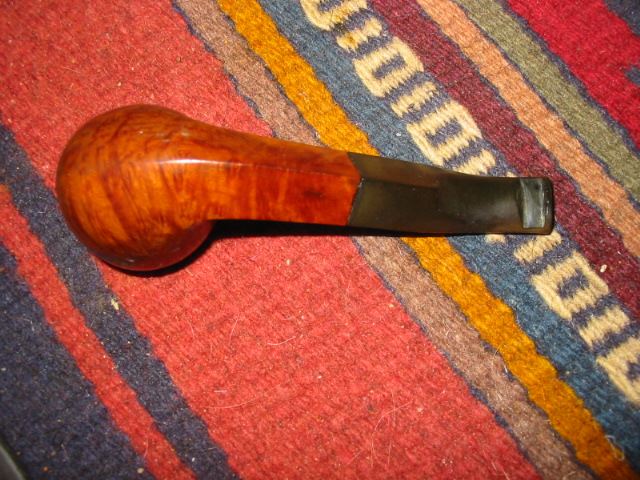
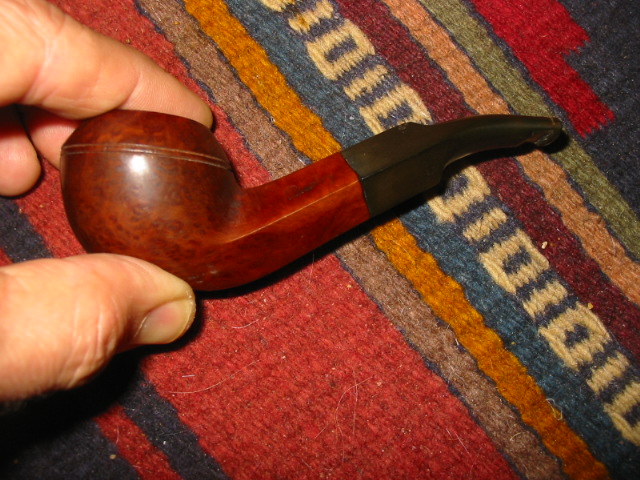
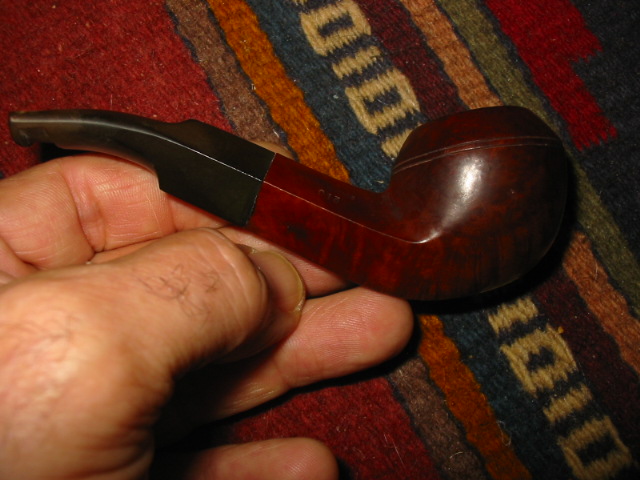
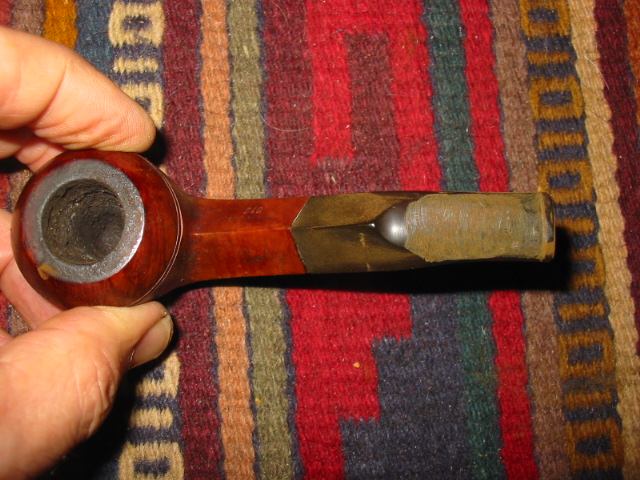
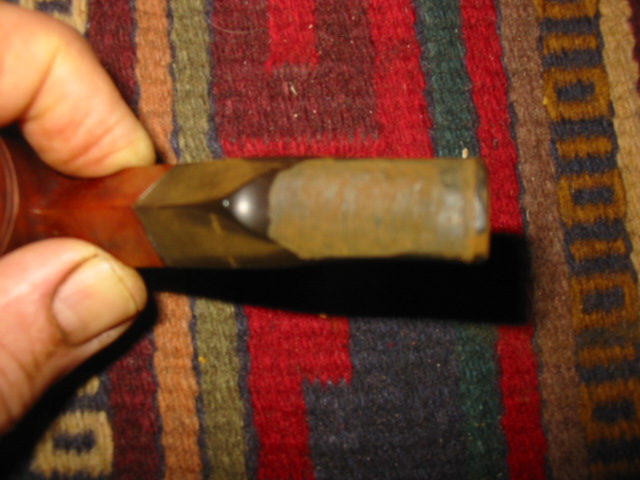
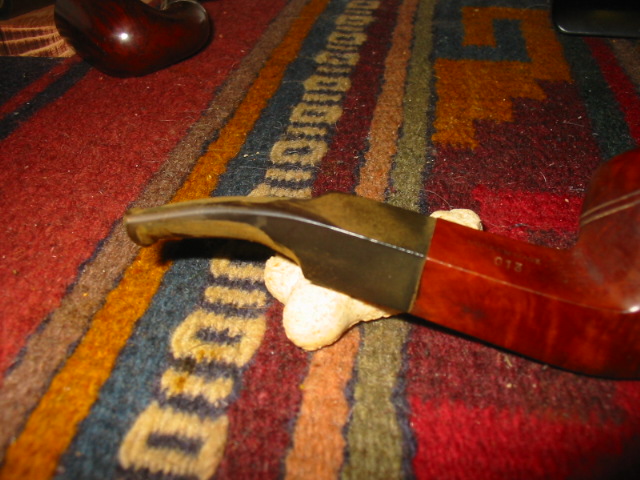
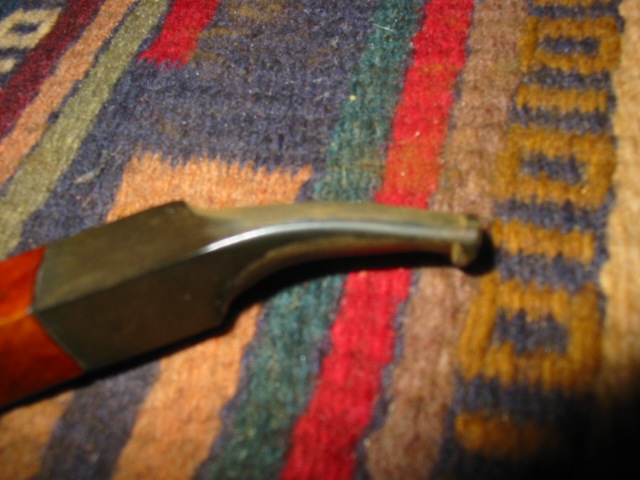
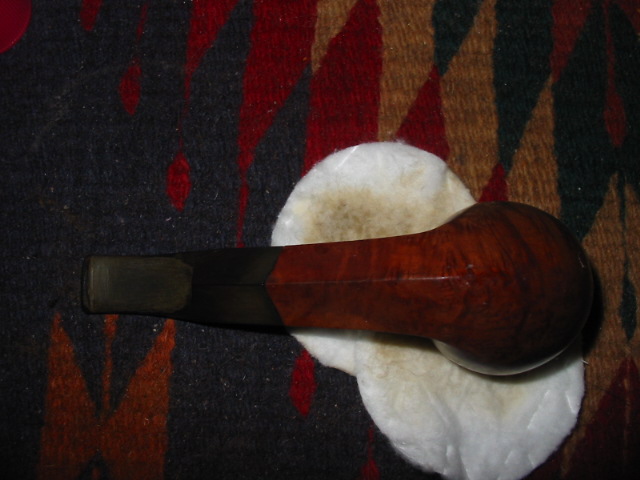
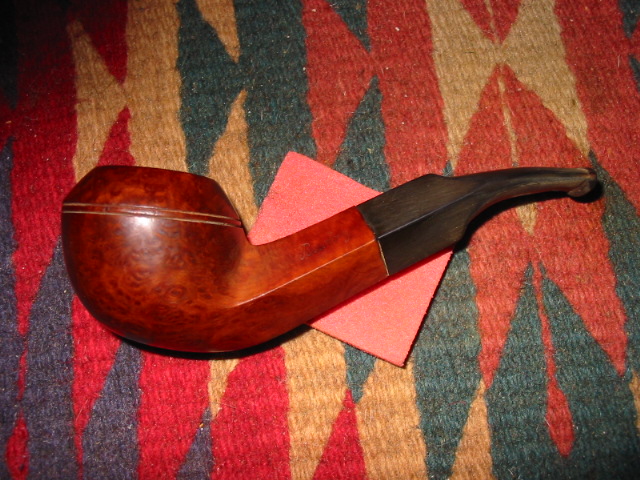
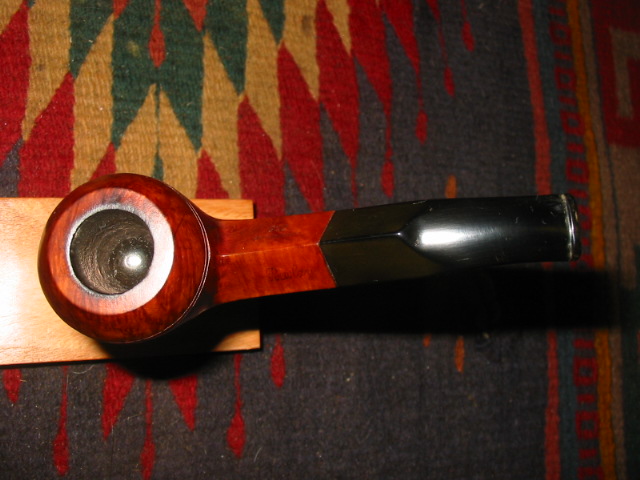
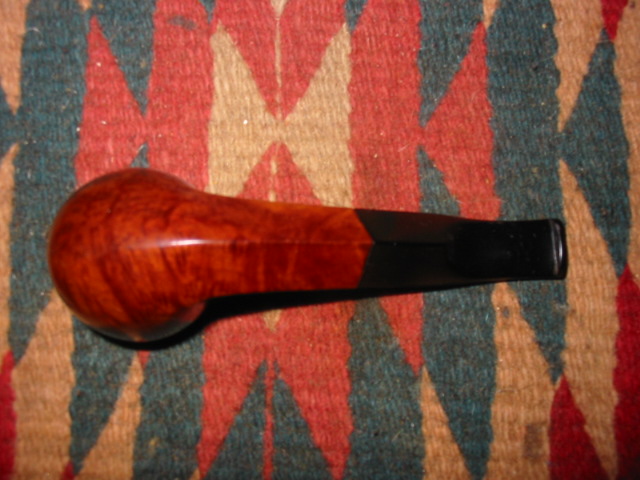
I picked up this nice older Bewlay Bulldog in a group of pipes I got off of Ebay. It was part of a lot that included two other Bewlay’s and two Barlings as well as quite a few other older pipes. This one is a nice little Bulldog – 4 ¾ inches long. When it arrived the stem was really a bit of a mess. The previous owner seemed to have cut off a portion of the stem and cut a groove on the top of the stem and the bottom as well to form some sort of new button. You can see from the first two photos below what the stem looked like. There were channels on the top and bottom of the stem that were about a ¼ inch wide and went the width of the stem. The stem was a bit oxidized and the bowl was dirty and tars and carbon were built up on the rim.

ImageImage

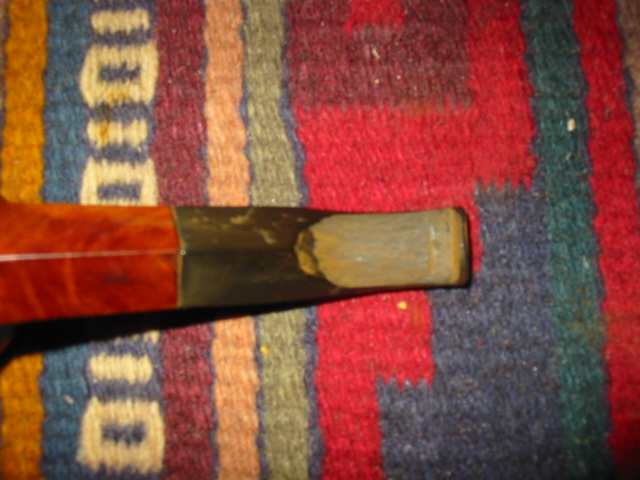
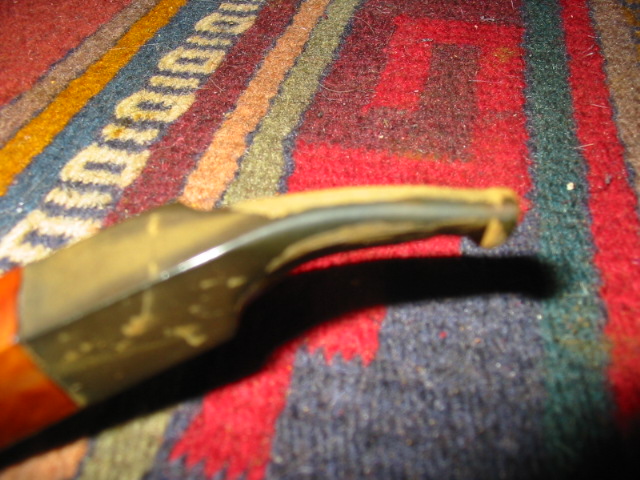
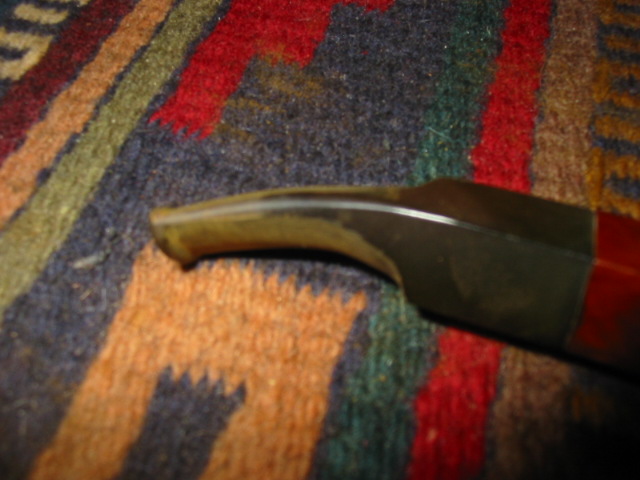
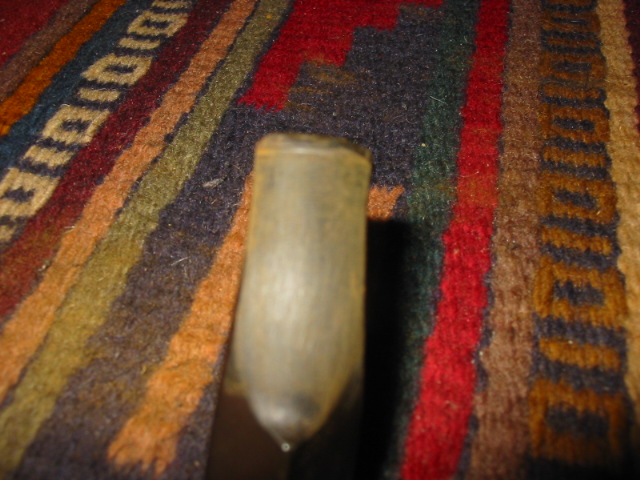
The next two photos show the stem in profile and you can see the channels if you look closely at the button area of the stem. The button had no real profile or shape to it. The briar was very nice on this one so I really wanted to rework the stem and keep the original stem intact.

ImageImage

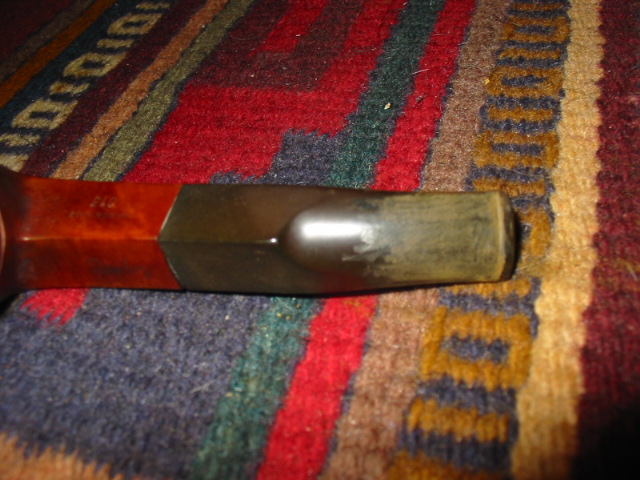
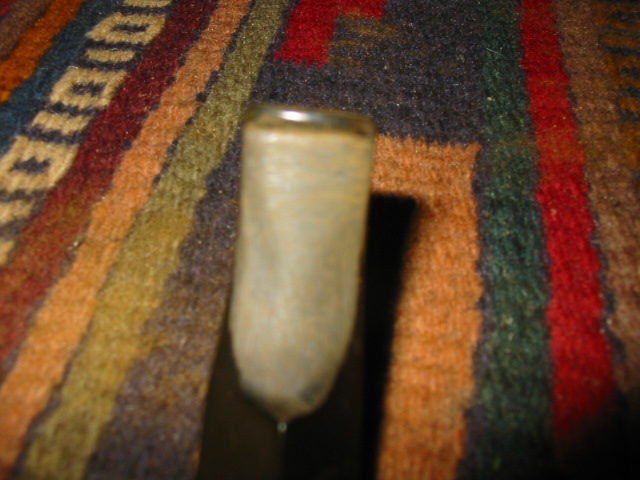
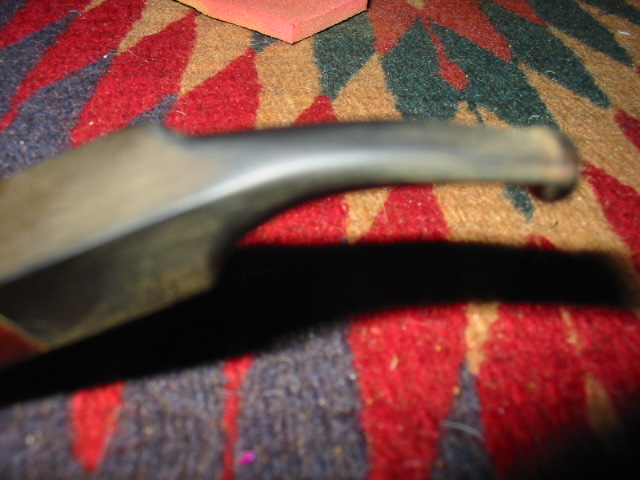
I used needle files to begin to reshape the stem and the button. There was a lot of material to remove to even out the slope of the stem to the button. I also needed to reshape the button to make it truly a button. The slot needed to be cut in the button as well as there was only the end of the airway and it was very close to the top of the button. The next series of four photos show the work of the needle file in reshaping the stem. The groove on the top of the stem is shown in the first photo and you can see that it was not too deep. The angle of the blade to the saddle however was very steep and the stem was thick. While the groove is gone there still was a lot of work to do in reshaping the angles of the stem. In the second photo you can see the work done on the underside of the stem. This groove was very deep and there was a lot of work to do to smooth the surface to remove the groove and reshape the angles on the blade of the stem. All the work done at this point was done with flat blade needle files to smooth the grooves, flatten the stem and shape the button. The third and fourth photos in the series show the stem in profile so that you can see the button begin to take shape and the grooves begin to be blended into the surface of the stem blade.

ImageImageImageImage

I decided at this point to use my Dremel with the sanding drum to thin the stem down and to work out the groove on the underside of the stem. The next series of five photos show the stem after the sanding with the Dremel. I was careful to not cut too deeply in the top of the stem as the airway seemed very close to the surface of the stem. I thinned the upper portion of the stem just before the saddle. I wanted the slope from the saddle to the button to be gentler and to make the bit thinner. The first two photos show the stem after sanding the top of the stem with the Dremel. The third photo shows the underside of the stem where I sanded to thin the stem and to remove the groove. At this point the groove is just a simple line that is cut in the stem. The groove is gone. The rest I decided to remove with sandpaper and hand sanding. The last two photos in the series show the stem in profile to give an idea of the slope from the saddle to the button and how the shape is beginning to develop. There was still much sanding to do.

ImageImageImageImageImage

From this point on I used sandpaper to shape the stem. The next series of four photos were taken after I sanded the stem with 240 grit sandpaper to remove the marks and scratches from the Dremel sanding drum. The shape is beginning to get close to what I am aiming for in terms of thickness and slope of the stem from saddle to the newly formed button. You will note that the top edge of the button is still pretty shallow – that is because the airway is pretty close to the surface at this point and I do not want to sand through it. The groove on the top and the line that was left in the above photos of the bottom of the stem are gone.

ImageImageImageImage

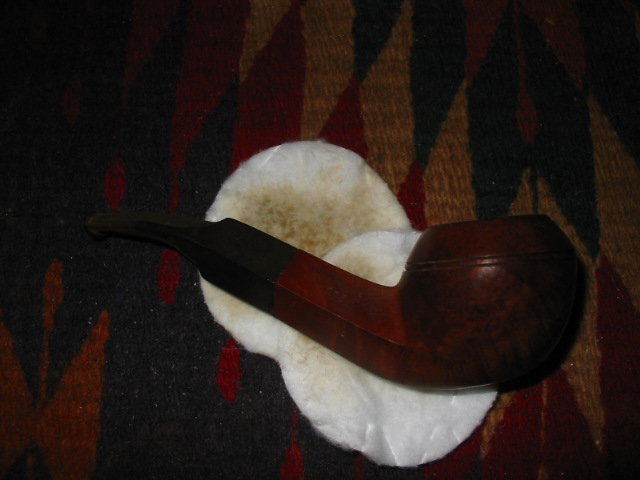
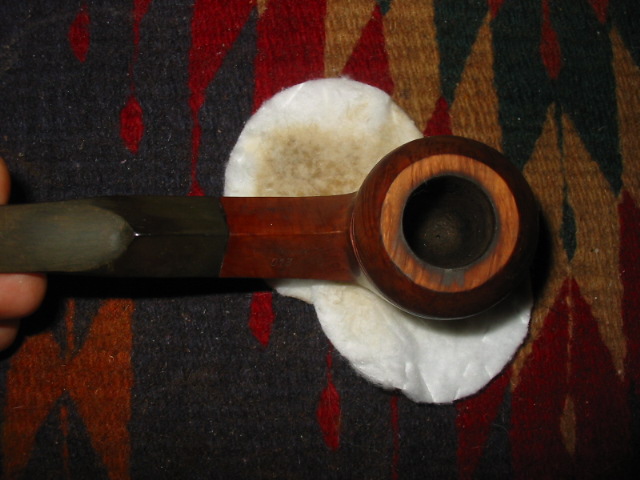
I then switched to a finer grit sanding pad. The pad is pictured in the photos below. It is pink foam with fine grit sandpaper attached. It allows me to follow the bends of the stem and to get in close to the button and smooth the scratches out even more. I also used it to sand the saddle to remove the oxidation on the flat parts. The next series of two photos show the new look to the stem and button. They are close ups of the stem in profile. I wanted you to see the slope of the stem and the shape of the button. The sanding foam worked great to be able to smooth out the lines and the edges of the stem so that the edge of the diamond saddle follow to the end of the button in a nice smooth slope. The last four photos show the stem once it has been wiped down with some Isopropyl alcohol after finishing with the sanding foam. There is still a bit of oxidation on the stem but the angles and flow of the stem look natural and the button is clearly visible.

ImageImage

I restained the bowl at this point just for a change of pace. The next series of photos show the bowl of the pipe after I had wiped it down with acetone. From that point I went on to restain it with some oxblood aniline stain.
ImageImageImageImage

This series of photos show the restained bowl and the remaining oxidation that needed to be dealt with on the stem.

ImageImageImageImage

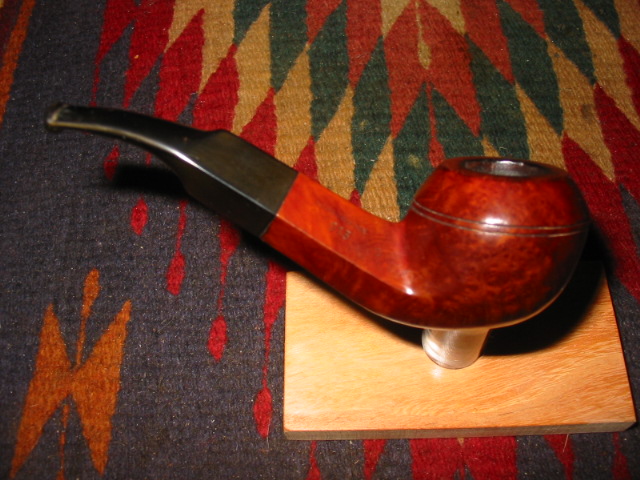
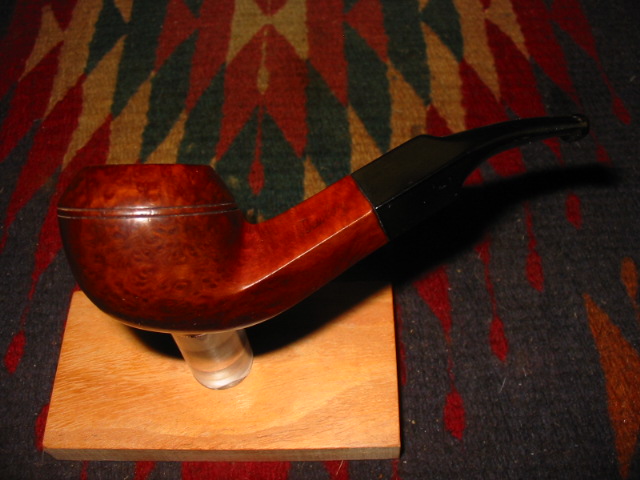
In the next photos the pipe is finished. Before it got to this point I sanded the bowl and the stem with micromesh sanding pads from 1500-6000 grit to polish the bowl and rim and to finish polishing the stem. The 1500 grit micromesh worked well to remove the remaining oxidation on the saddle and the remaining scratches on the stem. From there each course of sanding with the different grits of micromesh added more and more shine to the stem. The biggest change in the polishing comes with the shift to 4000 and 6000 grit. I then took the pipe to the buffer and used White Diamond to finish the polishing of the entire pipe and then gave it several coats of carnauba wax to make it shine.

ImageImageImageImage