
by Steve Laug
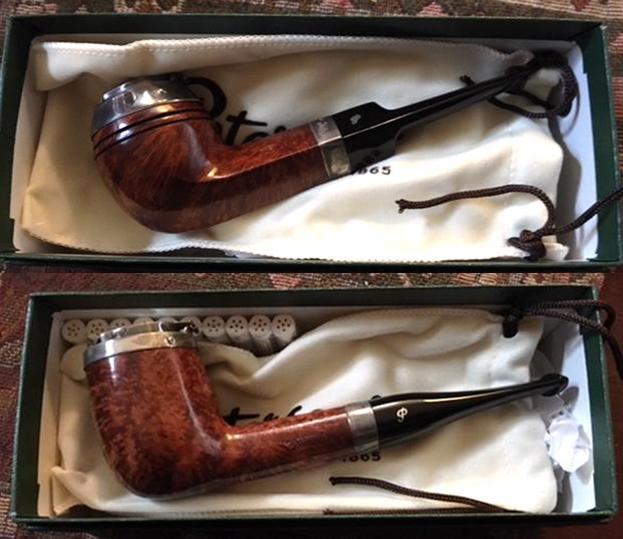
I received a call from a fellow yesterday who was sent to me by our local pipe shop. He had been given a pipe by his girlfriend for Christmas. She had purchased it somewhere other than the shop he went to and they assured her that it was brand new and unsmoked. It was a rusticated Peterson’s Sherlock Holmes Pipe with a silver band. When he opened the pipe sock he took out this gift in expectation. When it came out the pipe was dirty, the silver was tarnish and the stem was yellowed with oxidation. He had put it in his mouth and the oxidation gave a foul taste that almost put him off the pipe. He had taken it to my local shop to have them look at it. The clerk there looked it over and declared that it was a beauty and was definitely used. He cleaned off the silver with some silver cleaner and it shone. He recommended that he bring it to me for a restoration. He called and we chatted for a bit. It turned out he had this pipe and one of his Dad’s pipes that he wanted me to work on as well. He came over late afternoon with the pipes and I looked them over.
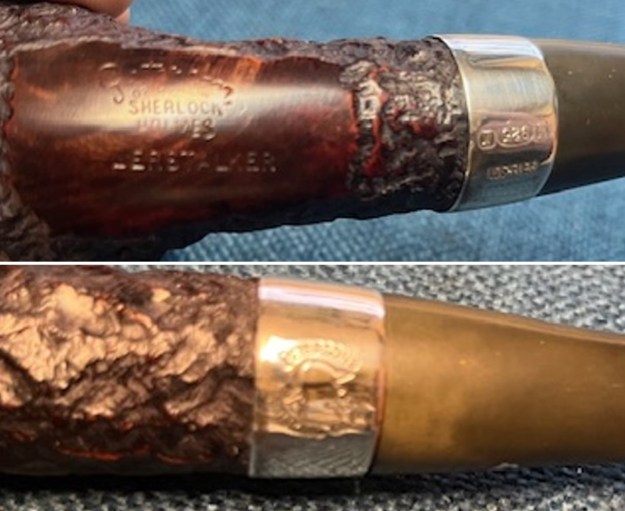
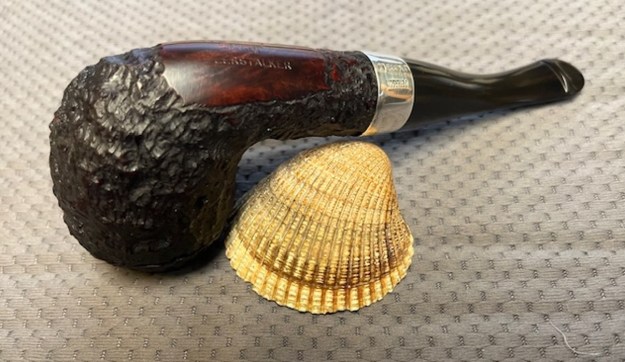
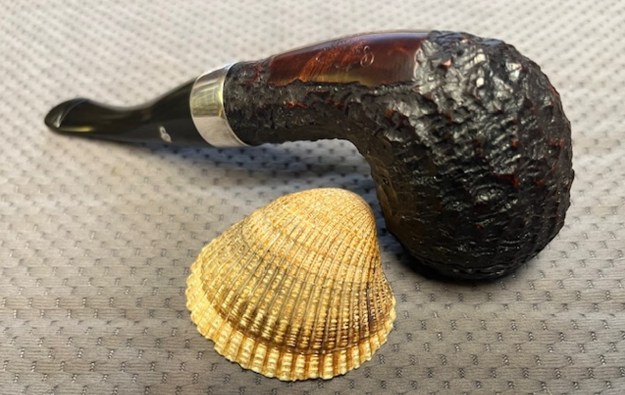
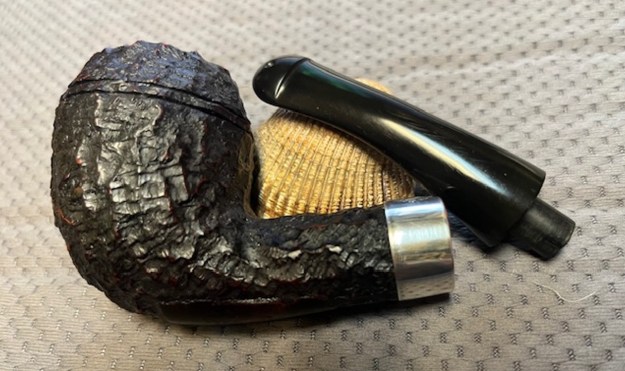
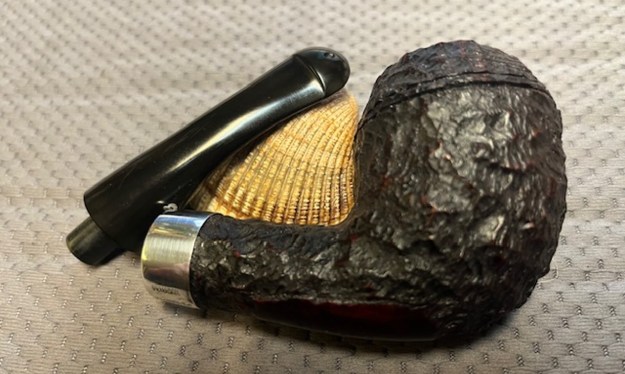
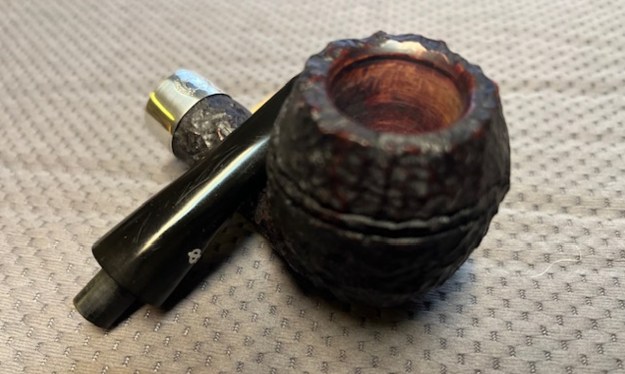
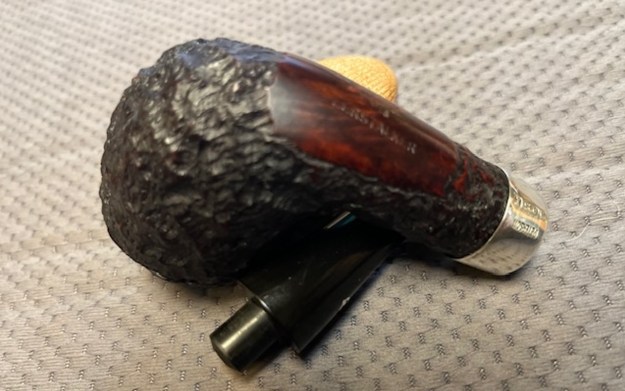
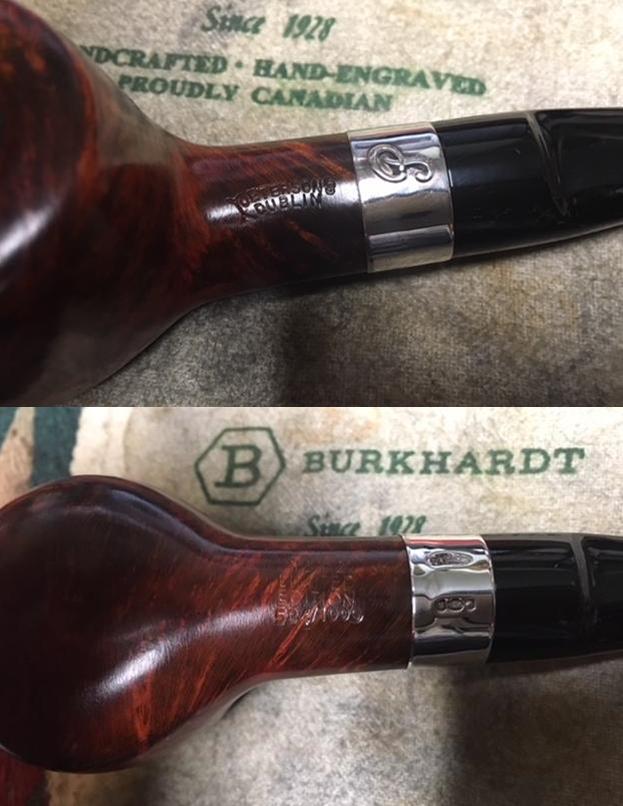
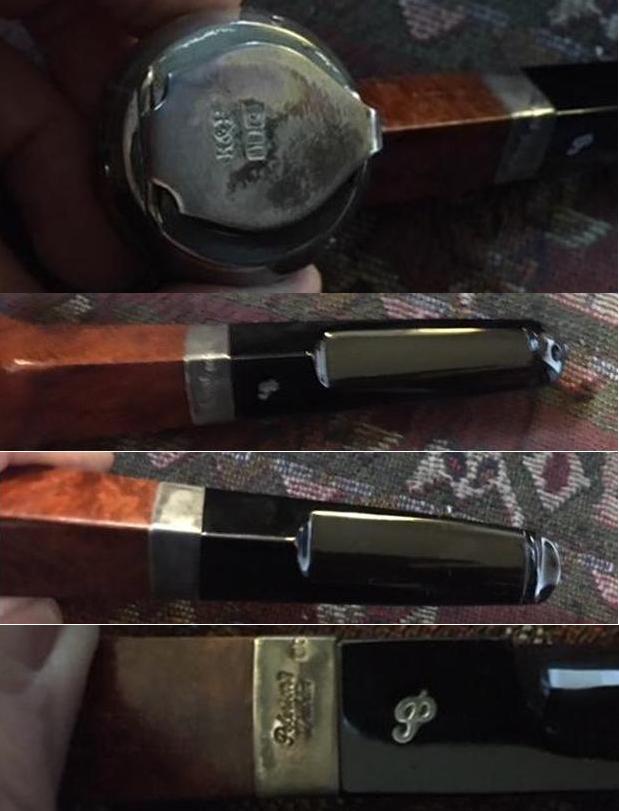
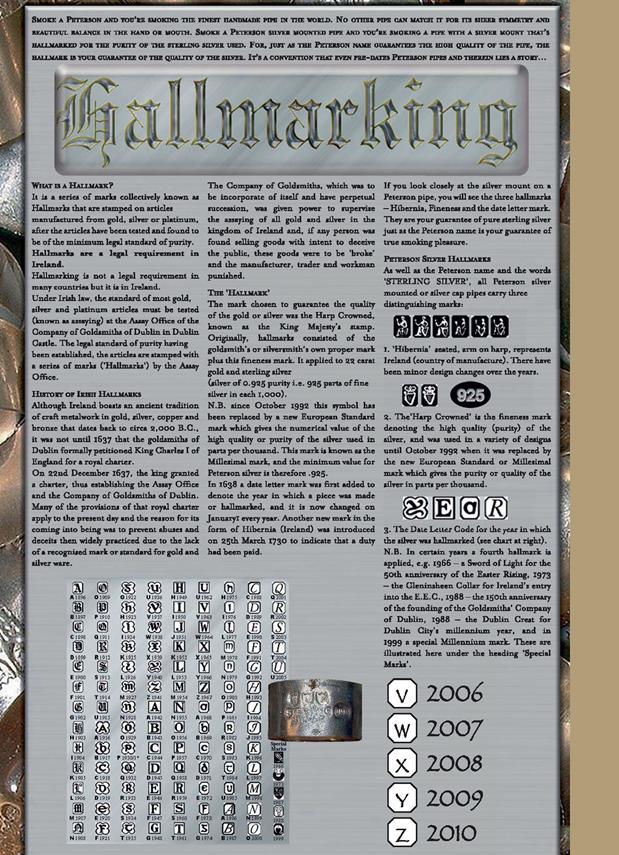
The Peterson’s was indeed quite a beauty under the grime. It was stamped on the heel of the bowl and read Peterson’s [over] of Dublin [over] Sherlock [over] Holmes [over] Deerstalker. The silver band was stamped on the topside with the profile of Sherlock Holmes with Peterson’s arched over the top and Sterling Silver arched underneath. On the underside it is stamped Peterson [over] three silver hallmarks. The first is Hibernia seated with an arm on a harp signifying the country of manufacture – Ireland. The second stamp is .925 designating the sterling quality from 2003 on. The third is the date letter mark – in this case an italic uppercase I which designates it as being made in 2019. The finish was dirty with dust and grime, perhaps from sitting and perhaps from use. The bowl reeked of English tobacco and was rough to the touch when I ran a finger down the walls. The silver looked good. The stem was badly oxidized but the silver P on the left side of the taper still shone. As I examined it I was pretty sure that there was a light cake in the bowl over the top of a bowl coating. When I took the stem off the inside of the mortise was stained with a purple stain showing that the pipe had been dip stained. Not unusual, but certainly a pain as it also adds a sour taste to the smoke. He left the pipe for me to work on and I started it last evening. I took these photos before I started my work.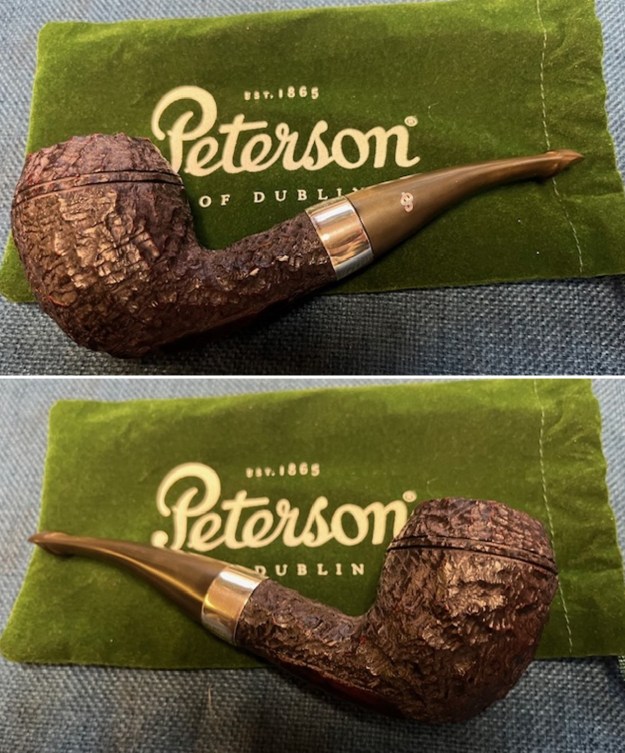
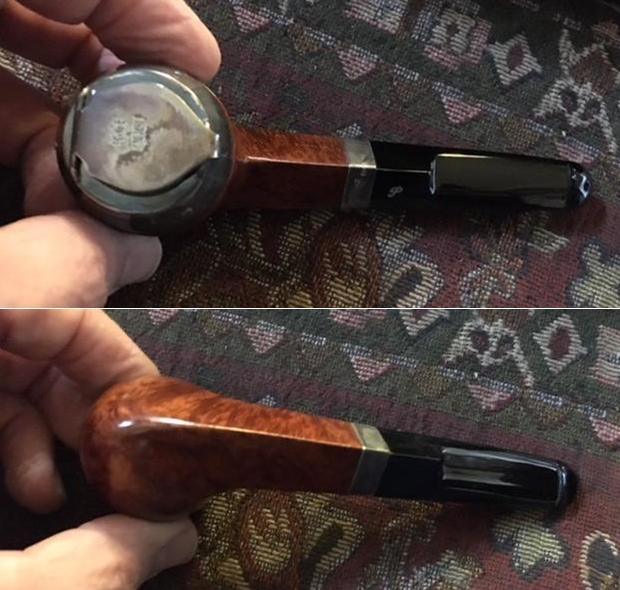
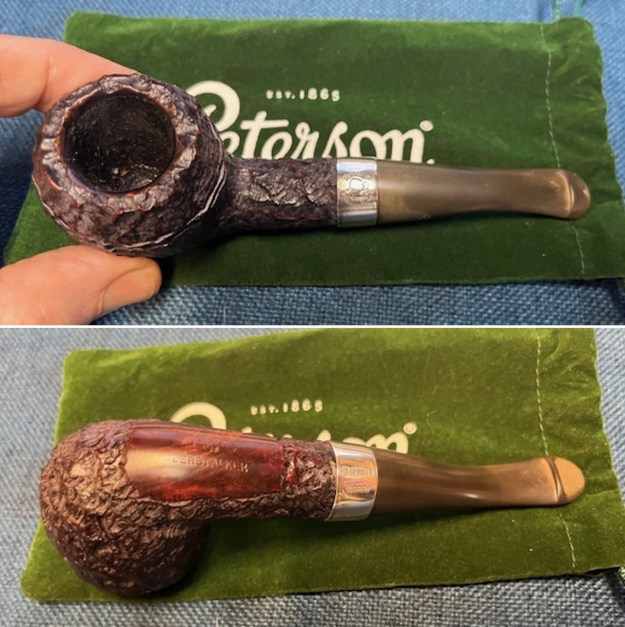 I took photos of the bowl and rim top to give you an idea of what I see. You can see inside of the bowl in the photos and the thin cake and perhaps some residue of a bowl lining in the heel of the bowl. The photos of the stem show that it is oxidized and has light tooth marks and chatter on both sides ahead of the button.
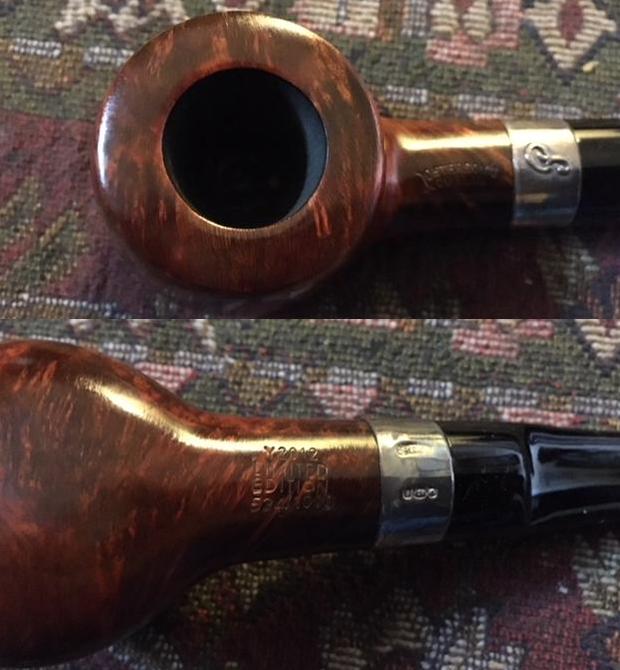
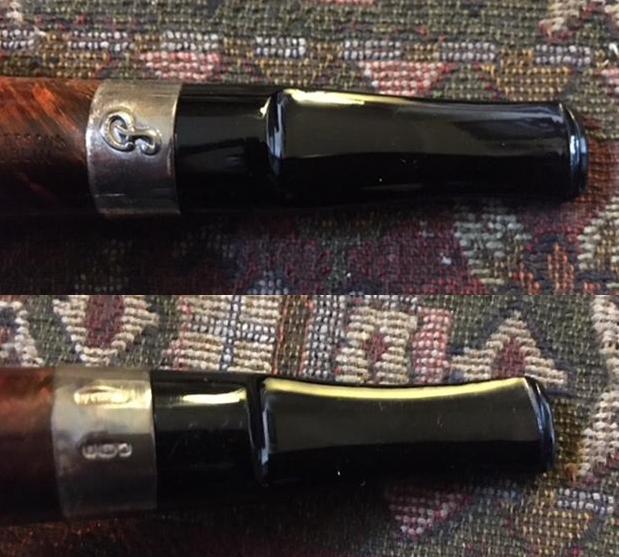
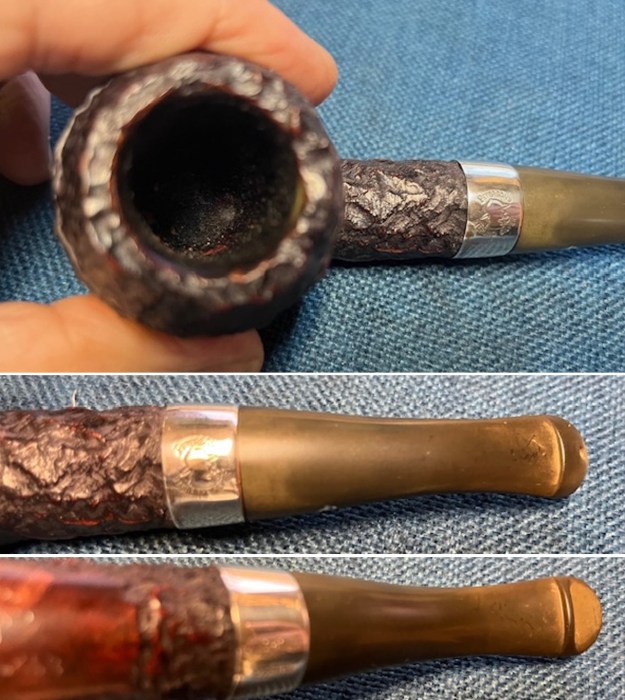 I took a photo of the stamping on the underside of the shank. It is clear and readable as spelled out above. I captured the stamping on the underside of the silver band in the photo as well. I took a photo of stamp on the topside of the silver band as well. It is clear and readable as noted above.
 I wanted to know more about the Peterson’s Sherlock Holmes Line so I turned to the Pipedia article on the line and read it carefully to see where this pipe fit in the line of pipes making up the line. (https://pipedia.org/wiki/Peterson#1950_-_1989_The_Republic_Era). I quote what I found out below.
1987 saw the introduction and Issue of the first Sherlock Holmes ‘Original’ Series of pipes. The Sherlock Holmes series is probably the most successful series of pipes ever introduced by Peterson in terms of numbers. It was first issued to honour Sir Arthur Conan Doyle’s famous fictitious detective character, Sherlock Holmes. Holmes is perhaps the most famous pipe smoking character in fiction…
The Sherlock Holmes Series: Probably the most popular and successful series of pipes ever produced by Peterson. Including the Meerschaum version of the seven day sets. Both briar and Meers can be purchased either as individual pipes or complete seven day sets and stands. Expect to pay around $250 for briars and $300 for individual Meerschaums. The Adventures of Sherlock Holmes runs around $1000 for a 4 pipe boxed set. Complete 7 day sets and stands can be up to $1500 – $2000.
At this point I knew that the original line was introduced in 1987. I did not know the sequence of pipes after the Original first pipe. More work was necessary. So, I followed the links included to another article call the Pete Sherlockiana Group. There was photo there of the full collection of various Sherlock Holmes lines that were issue. I have included the link and the information include with the group photo that shown of the collection below.
Here is the link (https://pipedia.org/wiki/File:Pete_SherlockianaGroup.JPG). The description under the photo read as found below:
Sherlockiana Group, which includes: The ‘Original’ 7 day set w/stand, The ‘Return’ 7day set w/stand, The Meerschaum 7 day set w/stand, The ‘Adventures of’ 4 pipe collection, and Various ‘Silver Specials’. 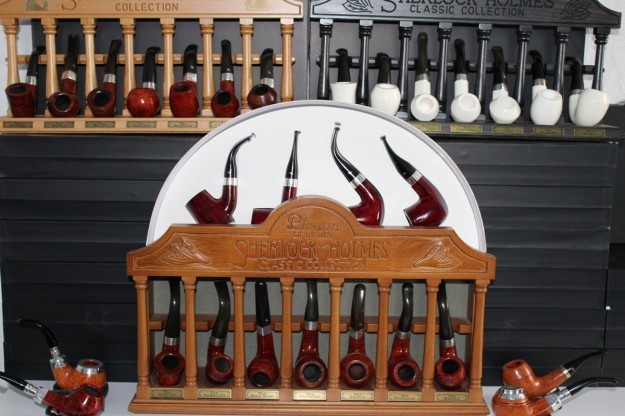 I still wanted to know where it fit in the order of release so I did a bit more digging into the pipe. I wanted to know the name of the pipe and what line of the Sherlock Holmes series it was in when it was released. I Googled and came across a link to an advertising brochure on Smokingpipes.com. (https://www.smokingpipes.com/smokingpipesblog/single.cfm/post/closer-look-petersons-sherlock-holmes-pipes-infographic). I have included it below.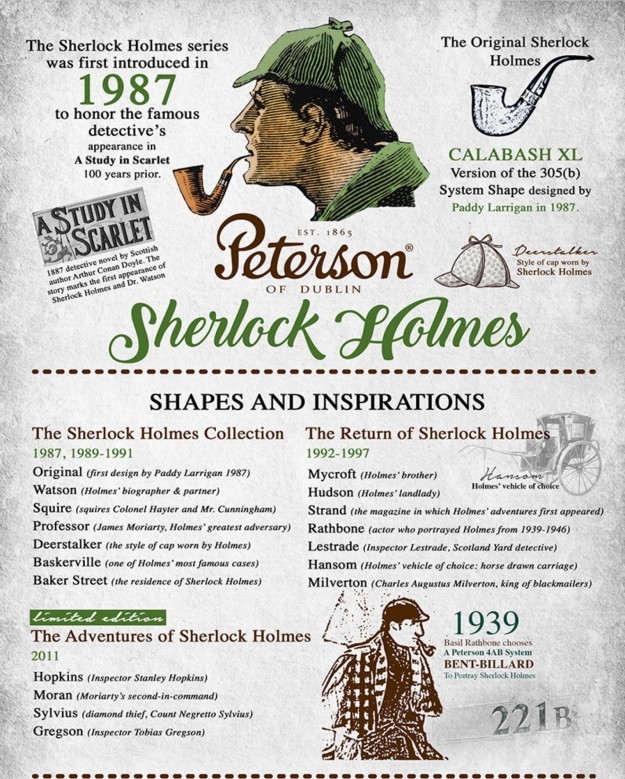
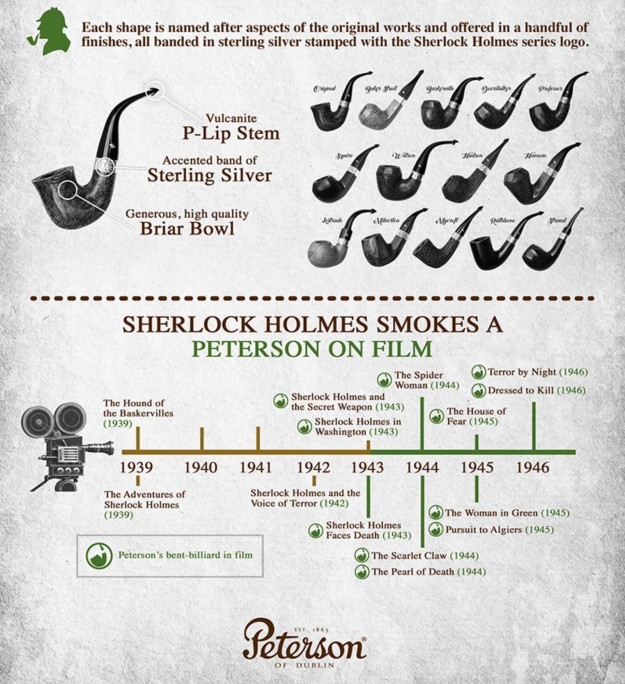 From that I knew that I was dealing with a Pipe Design from the Original release of the line from 1987, 1989-1991. Interestingly that dating does not match the date stamp of 2019. Could it be a reissue? It was called a Deerstalker after cap that Sherlock Holmes wore. It was basically a tall, ¼ bent Rhodesian.
I also found a link to a chart on Tobaccopipes.com that was an exploration of the Sherlock Series. Here is the link (https://www.tobaccopipes.com/blog/exploring-the-peterson-sherlock-holmes-series/). Each name on the original list on the site can be clicked on for a description of the pipe that is named. I clicked on the Baker Street name in the chart above and it took me to the following link and information (https://www.tobaccopipes.com/blog/exploring-the-peterson-sherlock-holmes-series/#deerstalker). It states that the pipe was in the Original Collection and came out between 1989-1991. But there is still no explanation for the later date on the one in my hands.
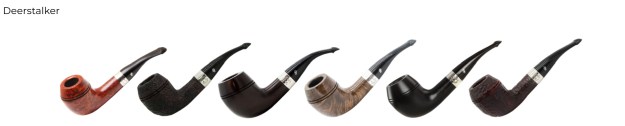 The text below the photos reads as follows:
Of course, one of these shapes had to be named for Sherlock’s iconic cap. The double billed, ear flapped headwear originally associated with hunting garb (hence the name) has become so tied to Sherlock, its image is essentially a visual metonym for detective.
I can see why this shape is apt for the Deerstalker name. The round bowl pulling in above the bead lines gives that cap atop the head image, and the stem with its languid dip of a slight bend calls to mind the subtle downward slant of the deerstalker bill.
Personally, I place Deerstalker among my favorites in this line. Again, we see the English classic Rhodesian given a twist, not too eccentric but certainly creating an identity of its own. It brings a strong forward weight, the bowl catching the eye and the shank and stem not quite as bold as we get from some of the other Sherlock shapes. Additionally, where much of the Sherlock line has a stoic briskness about the aesthetic, the light wave of the Deerstalker, following from heel to bit, adds a lithe, playful touch to the range.
With that information in hand I knew what I was dealing with in terms of the stamping and the age of this pipe. I knew from the information that the pipe was made during the Republic Era between 1950 and 1989. The Deerstalker pipe originally came out as part of the Original Sherlock Holmes Series and was specifically made between 1989 and 1991. The anomaly for me is that this one is dated 2019! Now, it was time to work on the pipe.
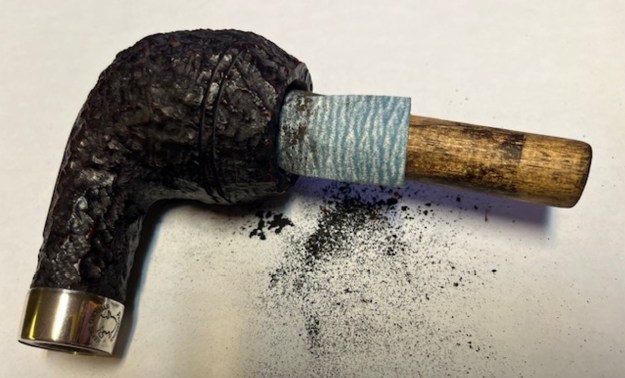
I reamed the bowl with a PipNet pipe reamer using the second and third cutting heads to remove the cake and what turned out to also include a rubbery bowl coating that stank. I used a Savinelli Fitsall Pipe Knife to remove the remnants of cake and bowl coating, only to find that the inside of the bowl was stained with a purple stain. I sanded the walls smooth with some 220 grit sandpaper wrapped around a piece of dowel. The walls were clean but there were still patches of purple stain on them so I would need to do a bit more to remove that along with the purple stain in the airway and the mortise area.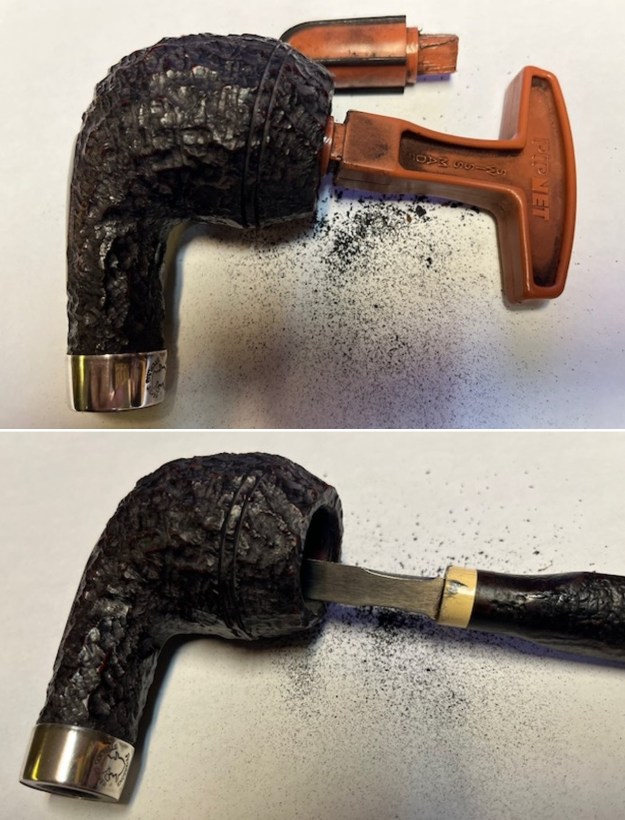
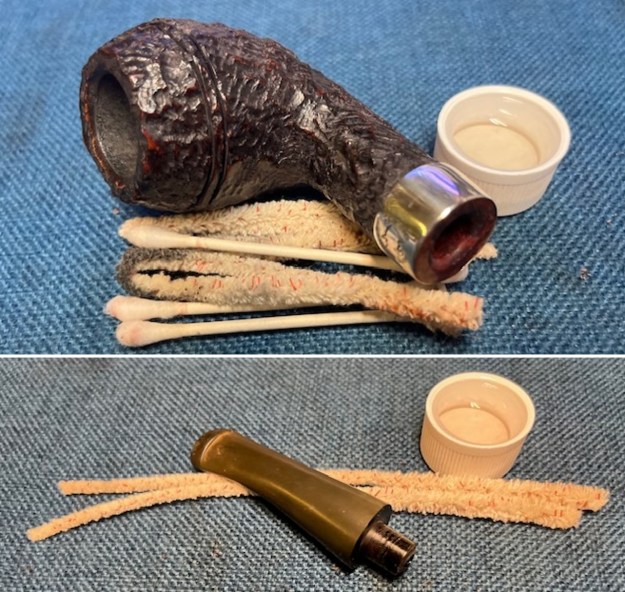
 I cleaned out the stinky tobacco oils and tars in the shank and the airway in the stem. I used 99% isopropyl alcohol, cotton swabs and pipe cleaners and was able to remove the oils, tars, and purple stain and some of the stench.
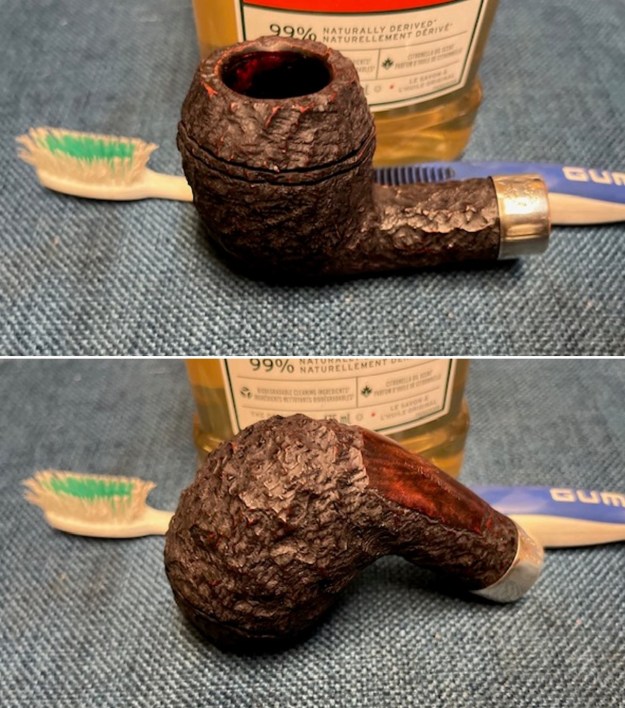
  I scrubbed the externals of the pipe with undiluted Murphy’s Oil Soap and a tooth brush. I was able to remove the debris from the finish of the bowl. I also scrubbed the inside of the bowl out with the soap. I rinsed the pipe with warm water to rinse off the debris and soap. It looked and smelled much cleaner once dried off.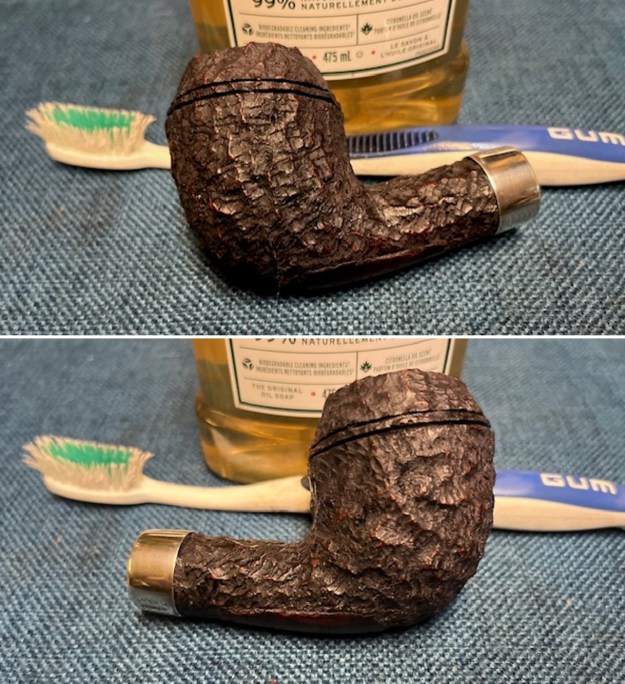
 I needed to “deghost” the bowl and try to exorcize the smell. I stuffed bowl with cotton bolls and used an ear syringe to fill it with alcohol. I set it aside to let the alcohol do its work and wick the oils into the cotton. I let it sit over night. The next morning when I came back to it the cotton and alcohol had wicked out the oils and tars. The cotton was purple and brown and the bowl smelled much better.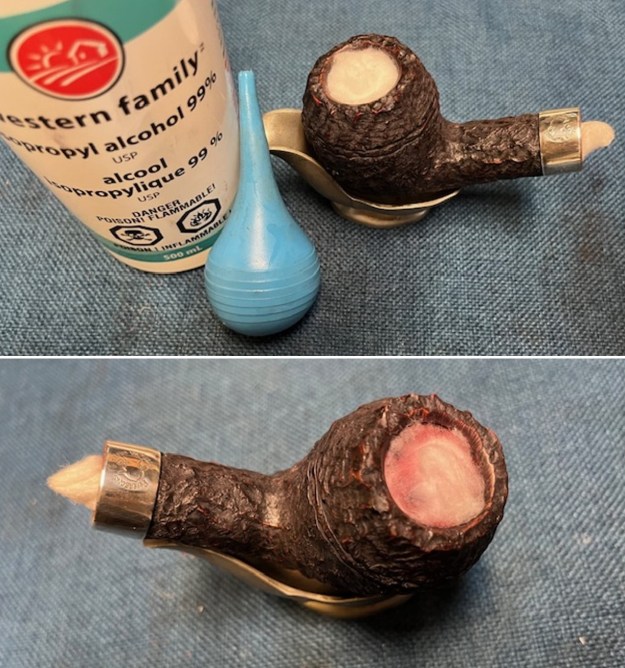
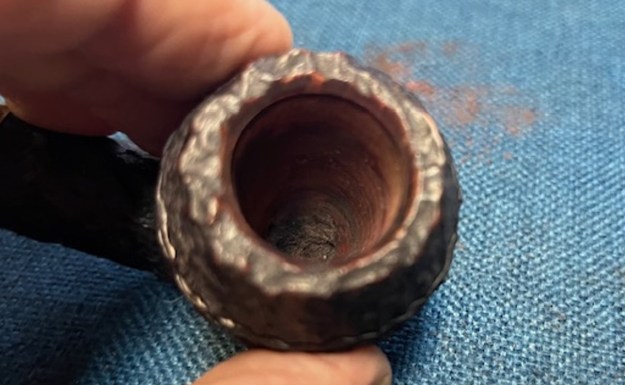
 Once the bowl dried out, I sanded it once more with 220 grit sandpaper wrapped around a dowel. The bowl was clean but before I sanded it the walls were covered in purple stain. The sanding of the bowl removed the stain. I wiped the bowl down with a cotton pad and isopropyl alcohol.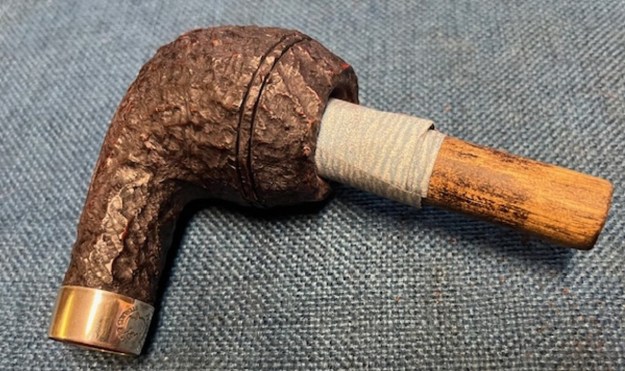
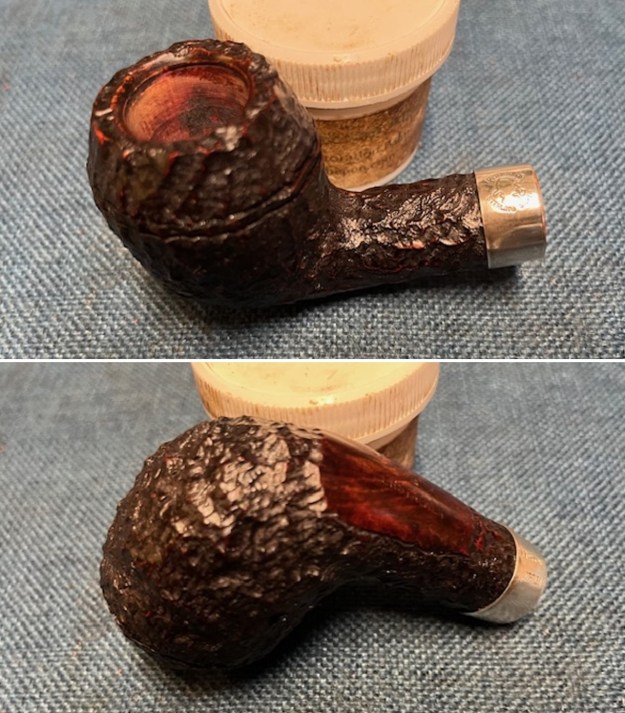
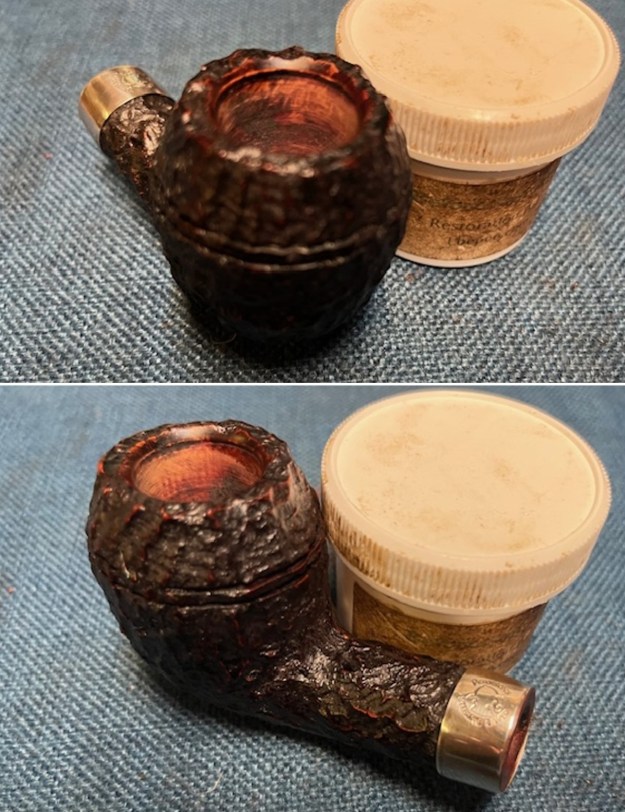
 I rubbed the exterior of the bowl and shank down with Before & After Restoration Balm. I worked it into the surface of the briar with my fingertips and a horse hair shoe brush to clean, enliven and protect the briar. I let the balm sit for a little while and then buffed with a cotton cloth to raise the shine. The Balm did its magic and the rustication looked clean and showed real depth in the depths.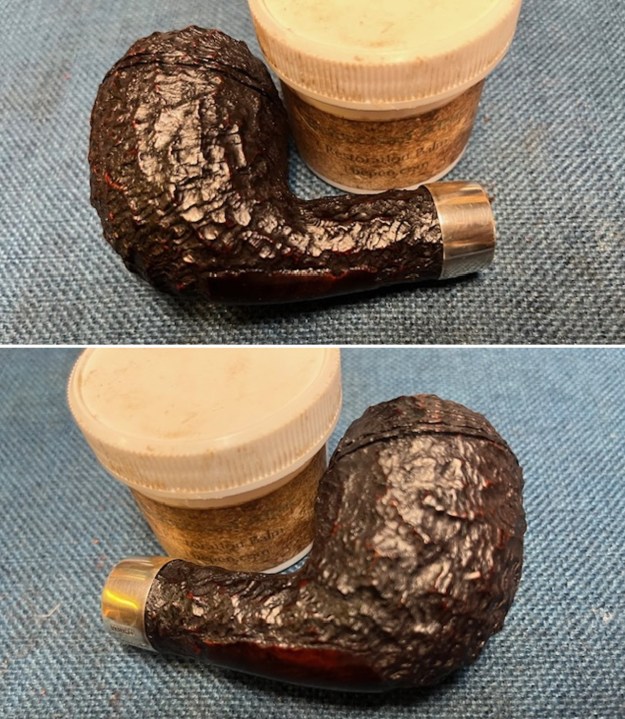
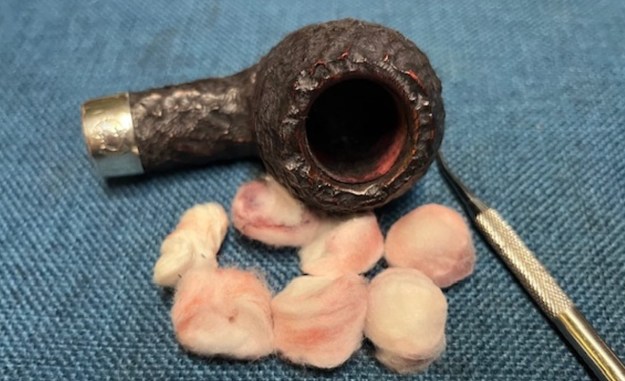
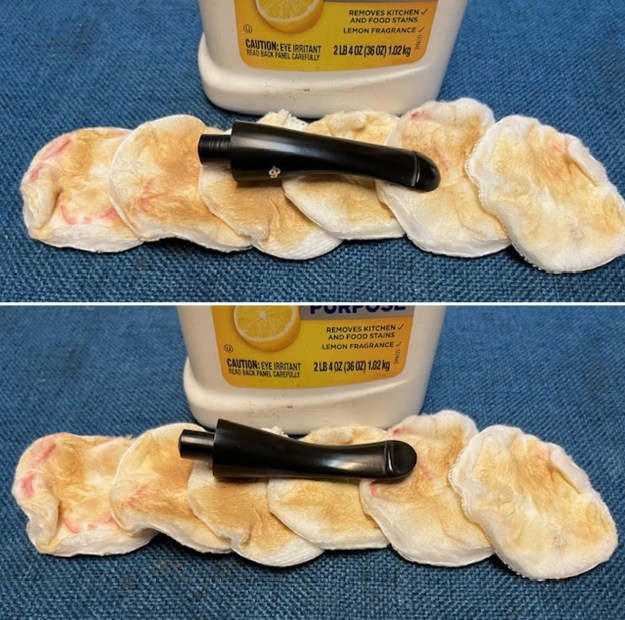
 I set the bowl aside and turned my attention to the stem. I scrubbed it down with Soft Scrub cleanser. I worked over it with cotton pads and the product and was able to remove the oxidation in totality. There was also some purple stain that came off the tenon that is visible on the cotton pads on the photo below. The stem looked very good at this point and only needed to be polished. I cleaned out the inside of the stem once again with alcohol. It looked very good.
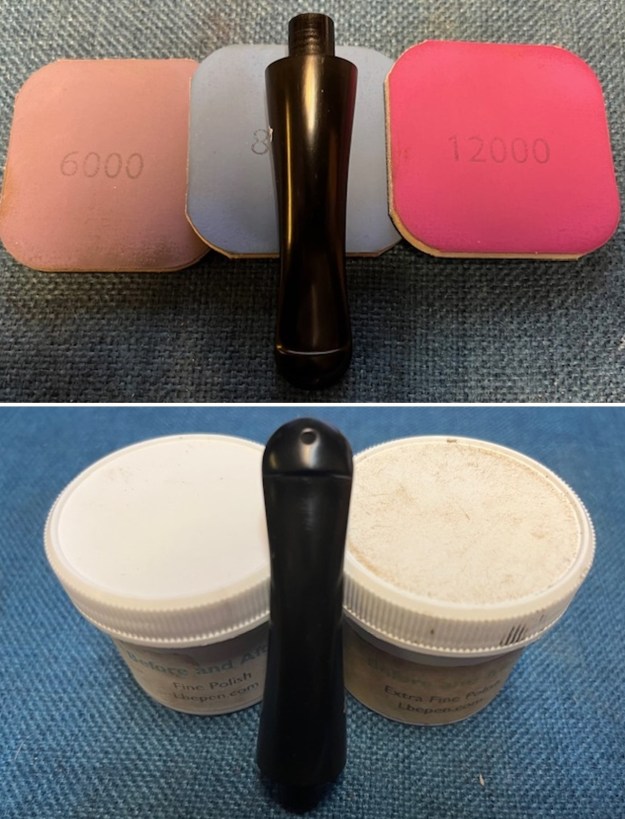
 I polished the stem with micromesh sanding pads – 1500-12000 grit pads. I wiped it down with a damp cloth after each sanding pad. I used Before & After Pipe Polish – both Fine and Extra Fine to further polish the stem. I wiped it down once again with the Obsidian Oil cloth.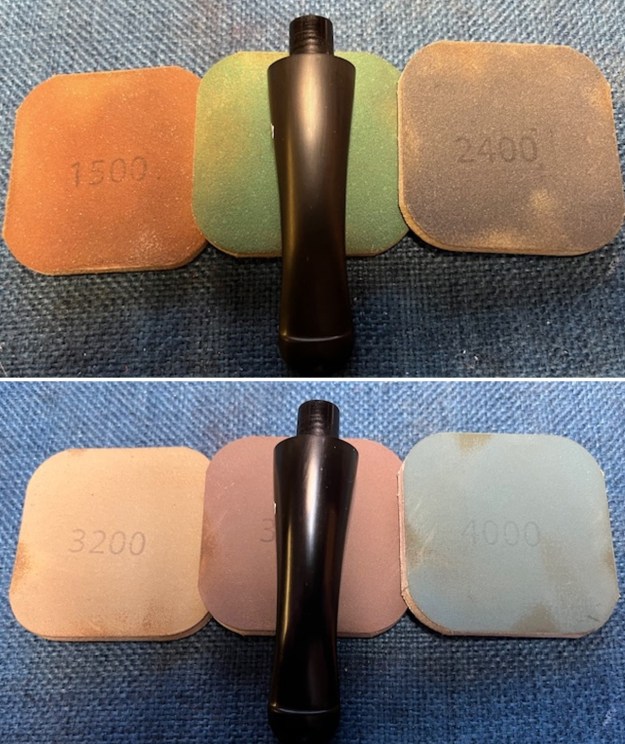
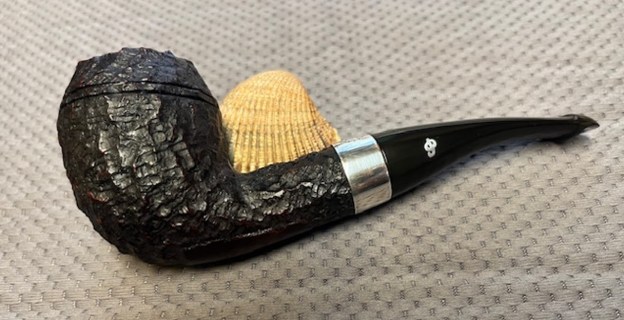
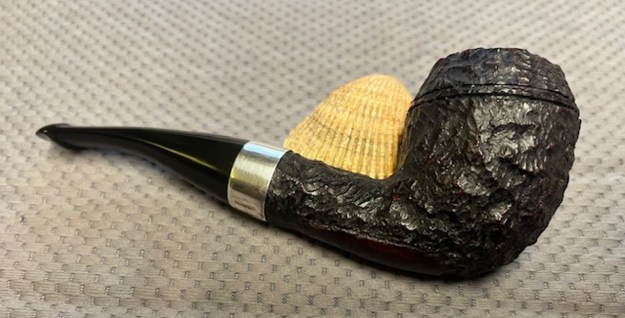
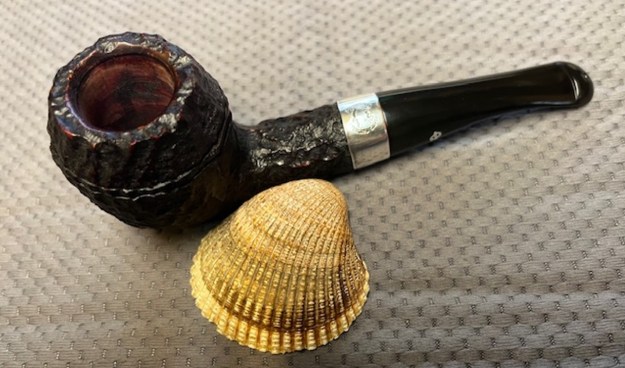
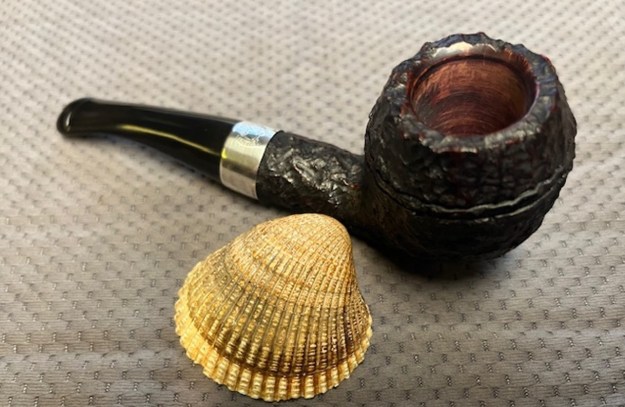
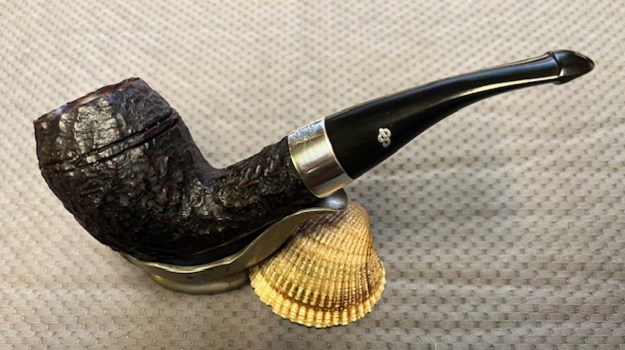
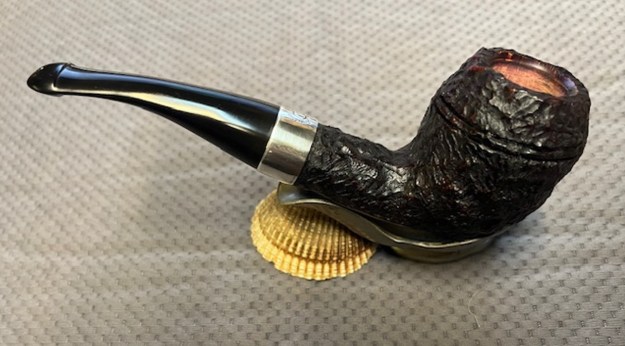
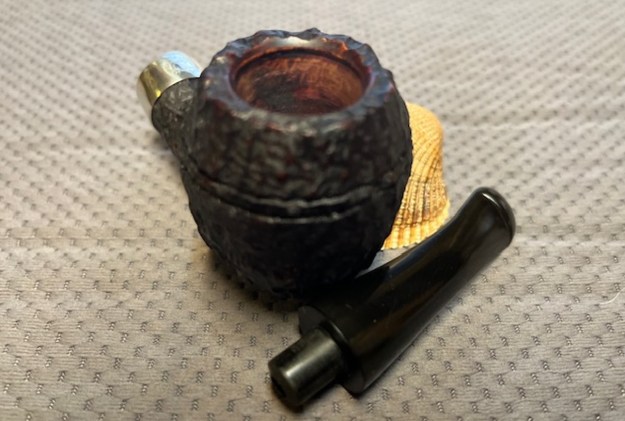
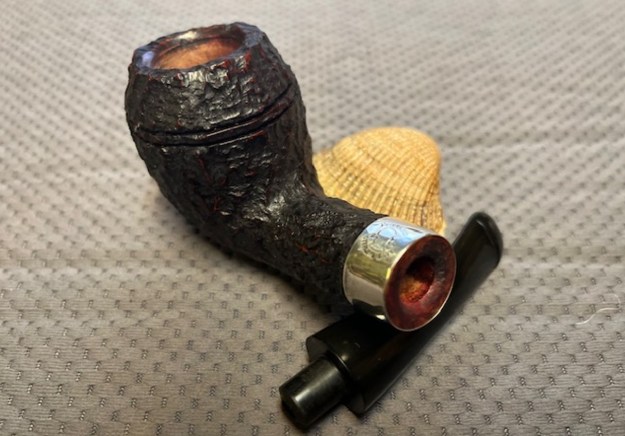
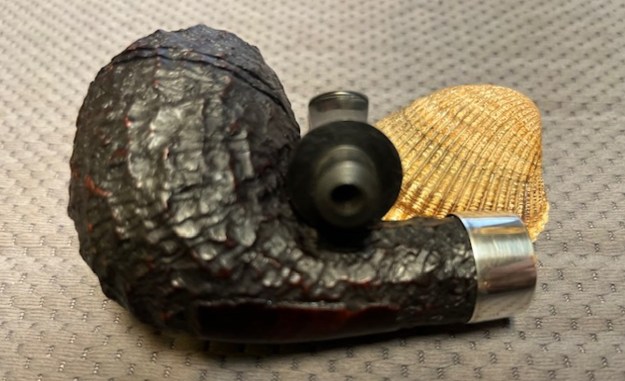
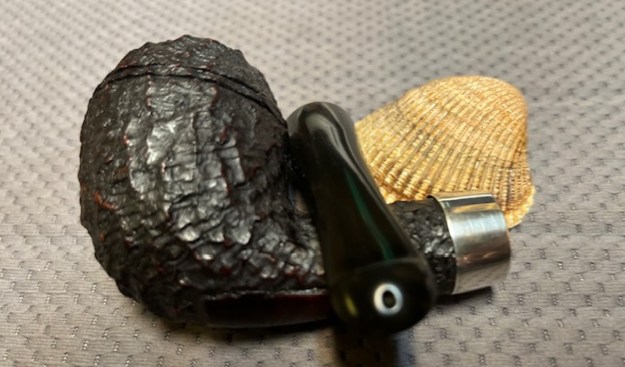
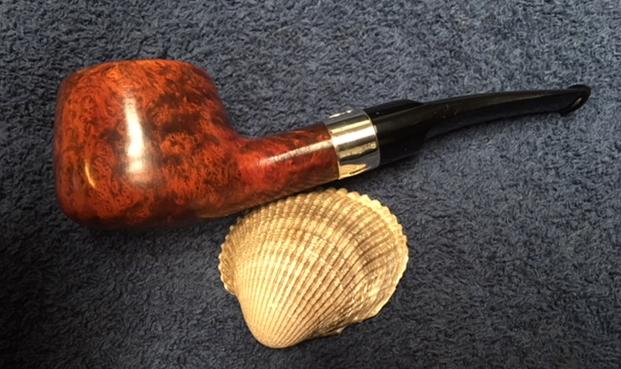
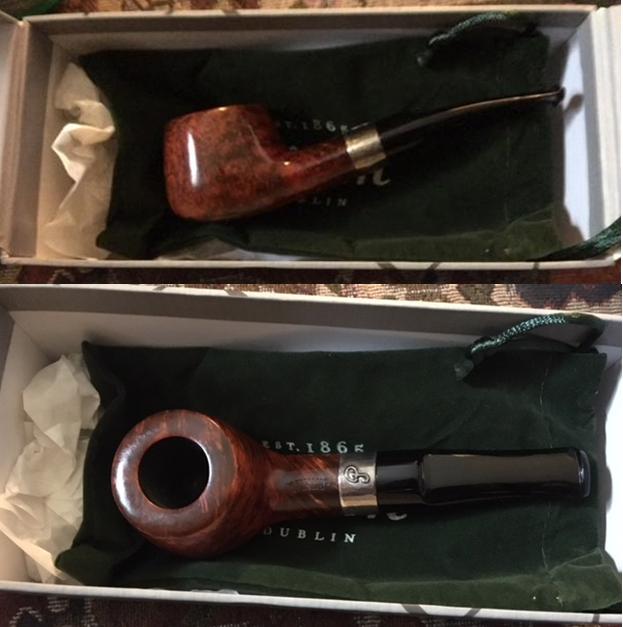
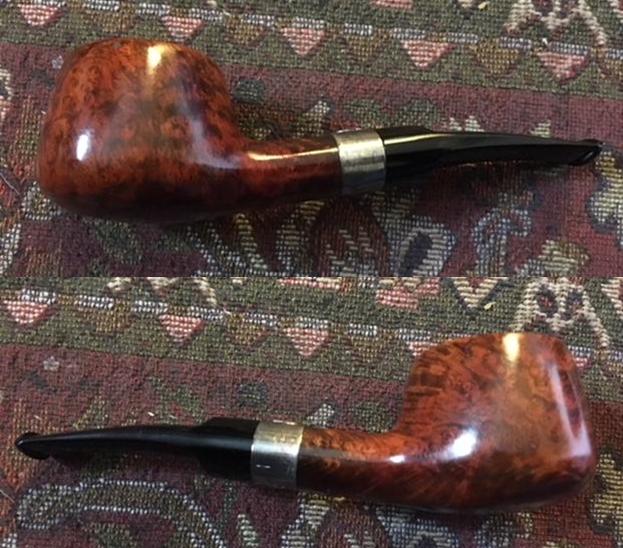
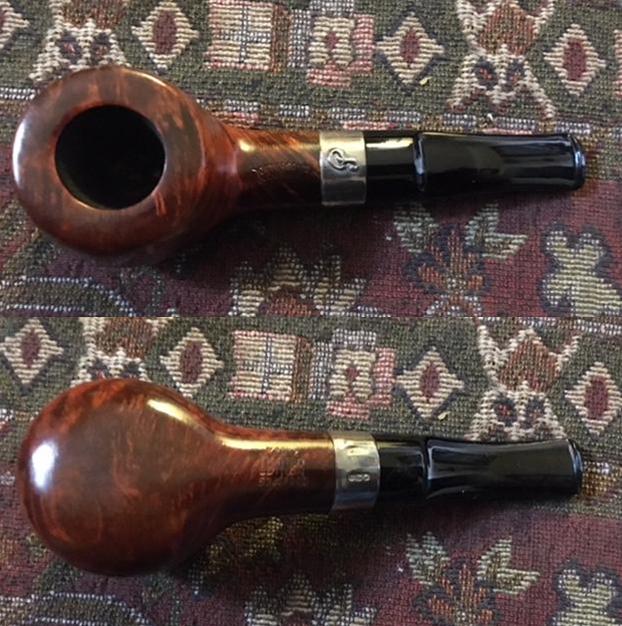
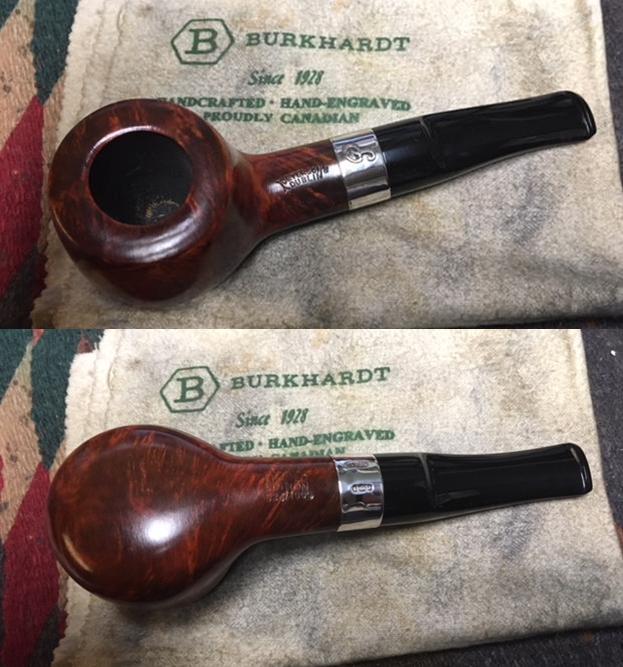
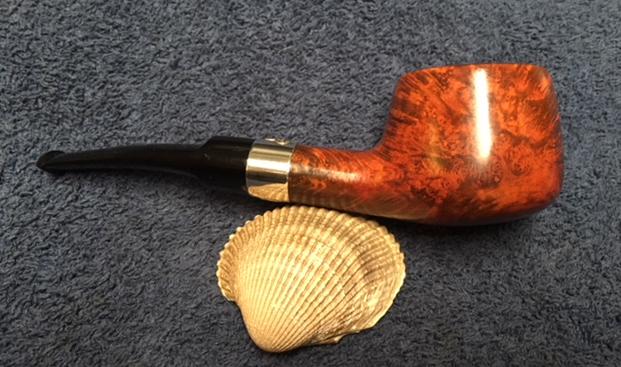
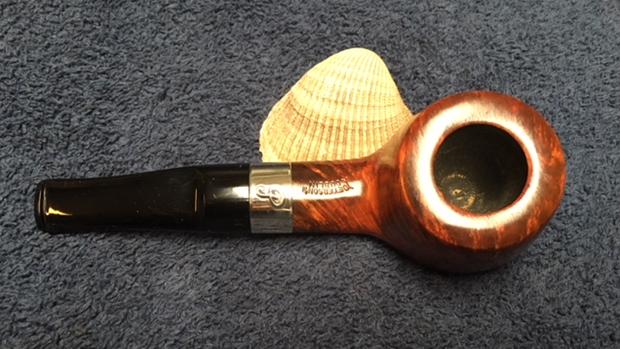
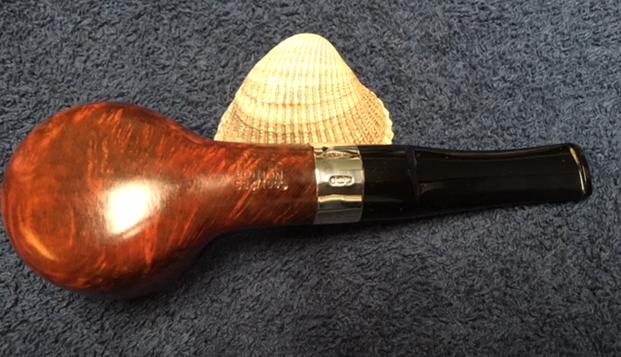
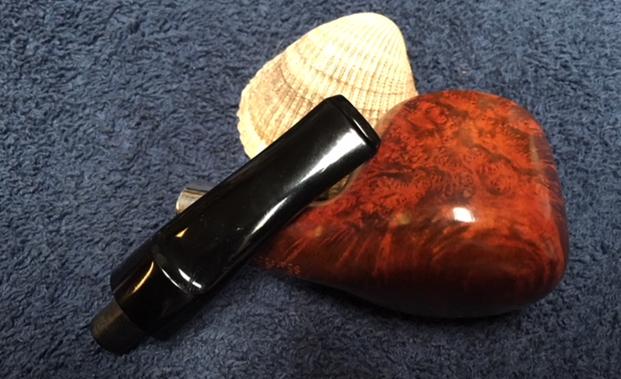
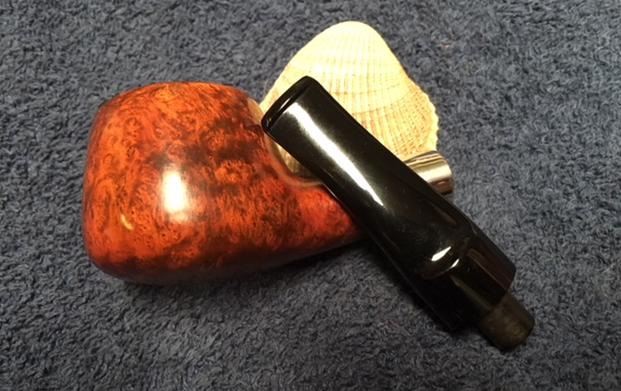
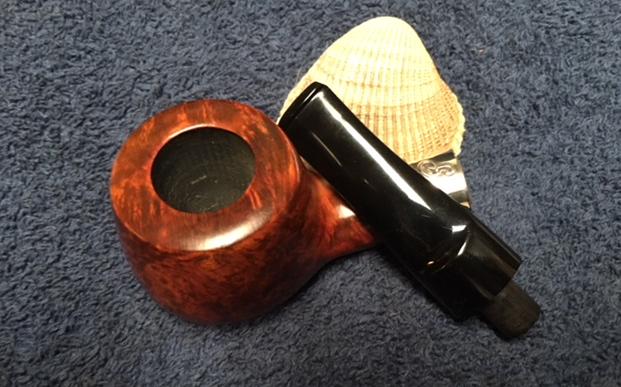
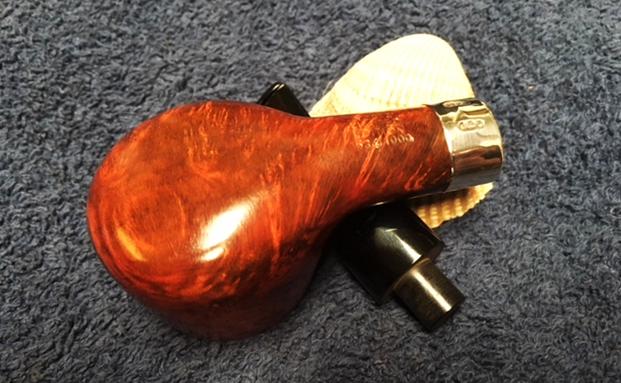
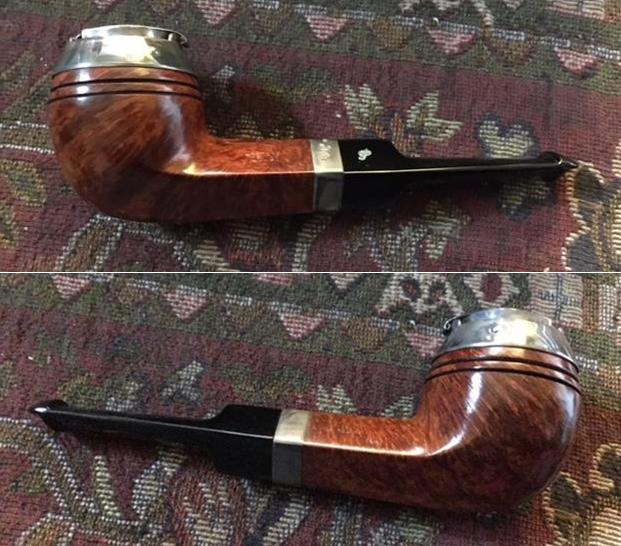
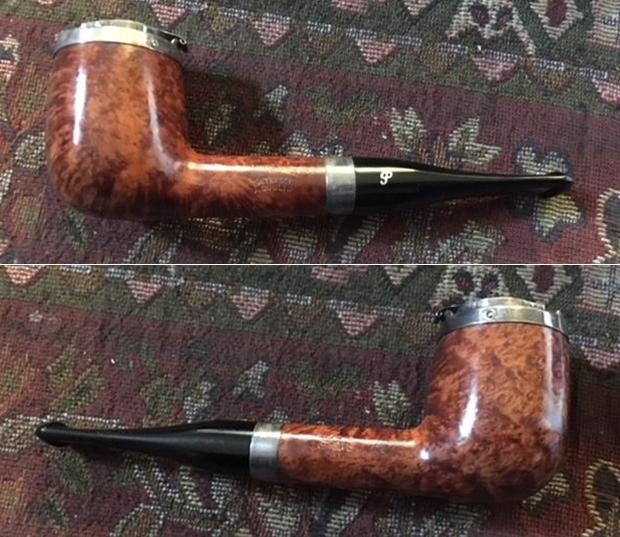
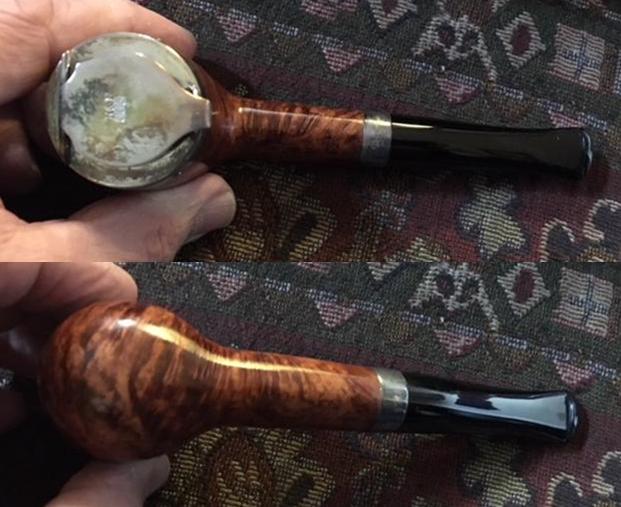
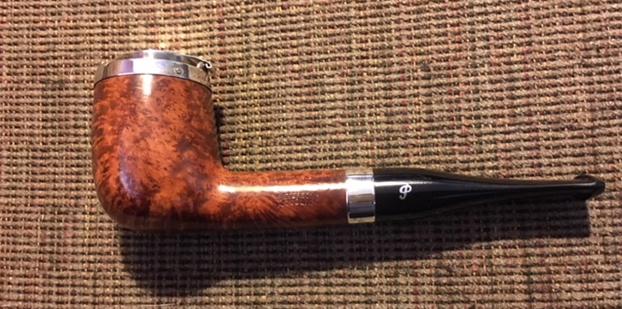
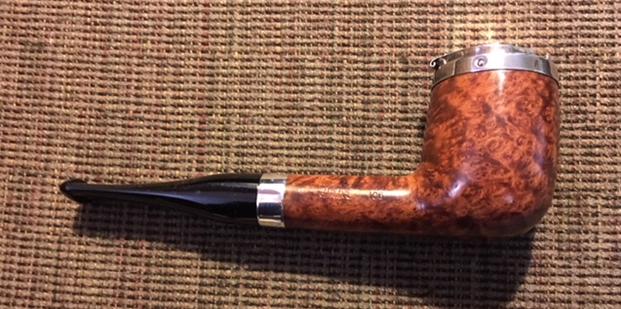
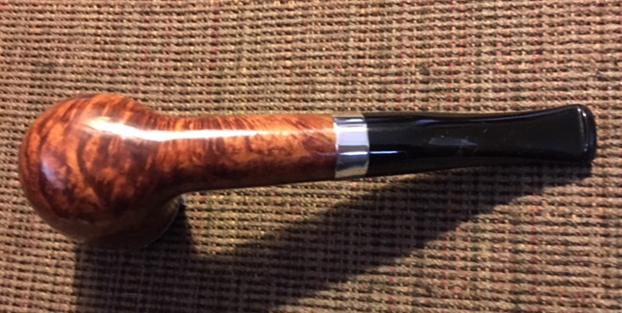
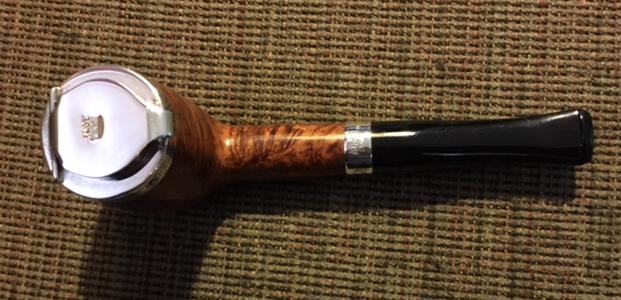
 I am excited to be on the homestretch and look forward to seeing the Republic Era Sherlock Holmes Deerstalker Rhodesian put back together, polished and waxed. I put the bowl and stem back together and lightly polished the bowl and stem with Blue Diamond to polish them. I gave the bowl multiple coats of Conservator’s Wax and the stem multiple coats of carnauba wax. I buffed the pipe on the wheel with a clean buffing pad to raise the shine. I hand buffed it with a microfiber cloth to deepen the shine. The depths of the rustication really pop with the wax and polish. The shiny black vulcanite stem is a beautiful contrast to the red and browns of the bowl, thick shank and Sterling Silver Band. This Peterson’s Sherlock Holmes Deerstalker Rhodesian was a fun pipe to work on. The pipe is tactile in the hand and should feel great as it is warmed up when smoking. The finished pipe is shown in the photos below. The dimensions of the pipe are Length: 6 inches, Height: 2 ¼ inches, Outside diameter of the bowl: 1 ¼ inches, Chamber diameter: ¾ of an inch. The weight of the pipe is 2.50 ounces/ 70 grams. I am sure that the fellow who dropped this off will now enjoy smoking this beauty. It is a lovely gift to be given on Christmas and now looks the part.
As always, I encourage your questions and comments as you read the blog. Thanks to each of you who are reading this blog. Remember we are not pipe owners; we are pipe men and women who hold our pipes in trust until they pass on into the trust of those who follow us.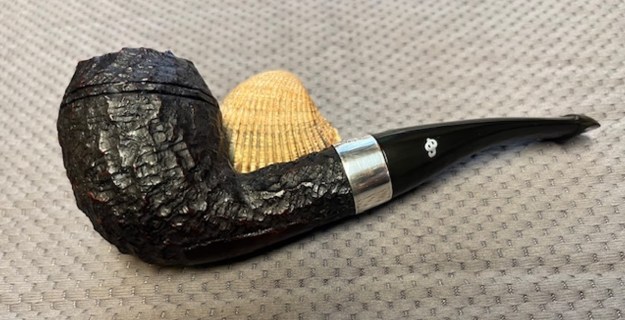
 rebornpipes
