
by Steve Laug
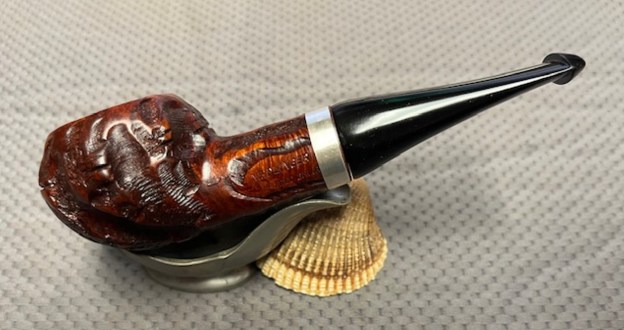
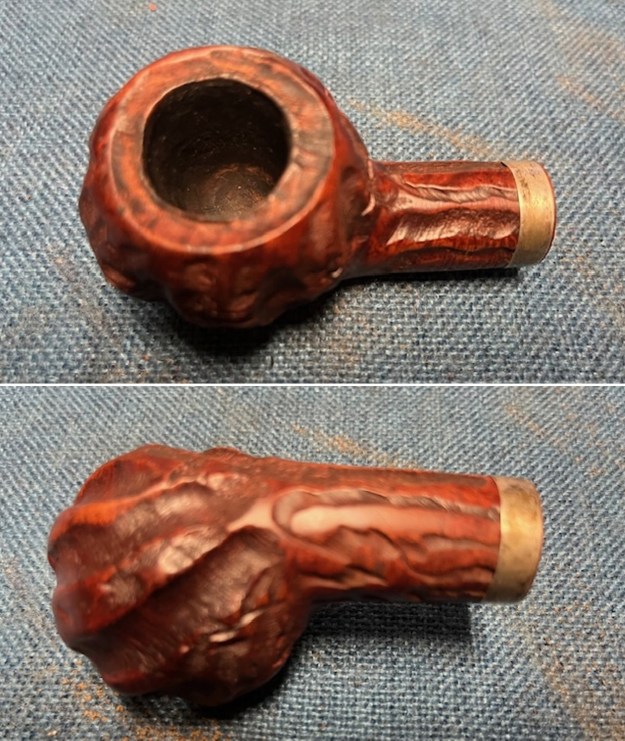
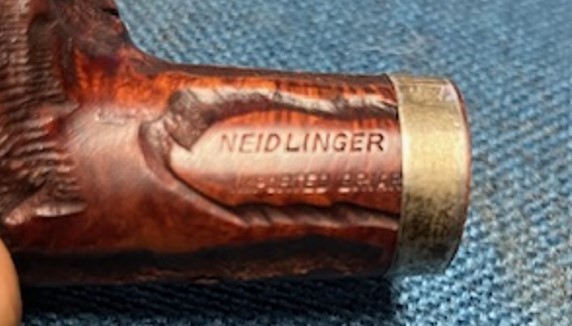
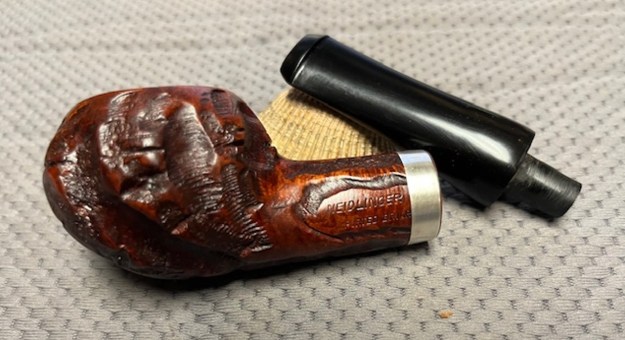
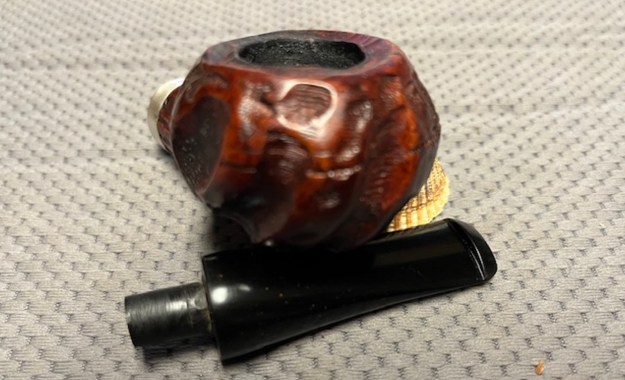
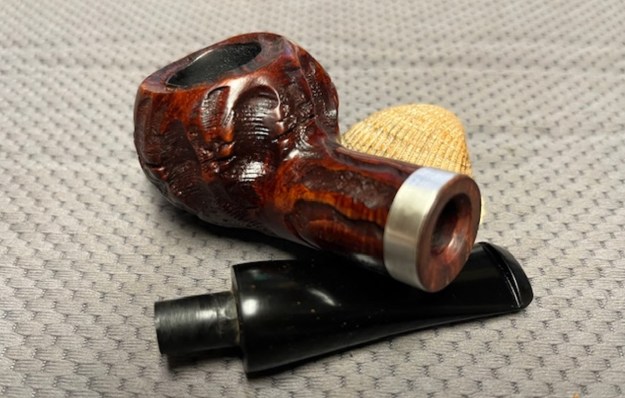
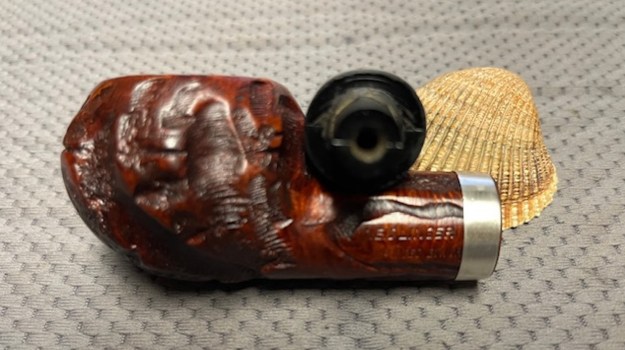
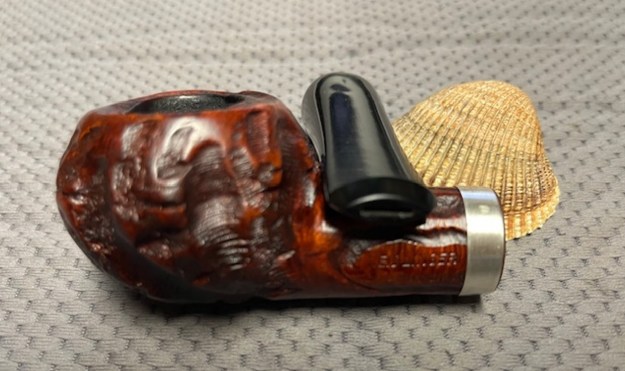
Once in a while I break the rhythm of restoration of pipes that Jeff has sent to me work on a bowl that I have in a very big box of bowl without stems. There are probably about 100 bowls that I have been chipping away at for a long time now. Yesterday I had to urge to restem a few of the bowls. The first of them was this interesting rusticated Rhodesian bowl that looked a lot like some of the rustication on Custombilt pipes though with a bit of variation that separates it from them. It bears an oxidized Sterling Silver band on the shank that will need some attention. The stamping on the left side of the shank reads NEIDLINGER [over] Imported Briar. Somewhere a long the way Jeff had reamed and cleaned the bowl and it was waiting a new stem. I examined the silver and it was stamped across the top of the band and read STERLING.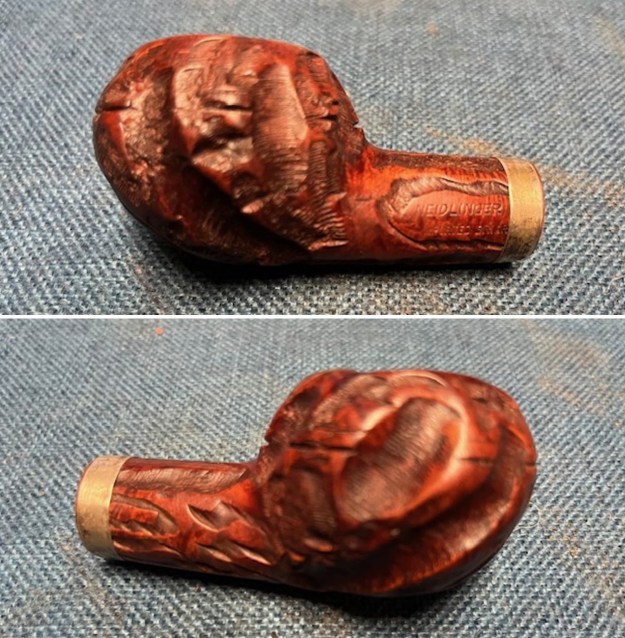
 I took a photo of the stamping on the shank side. It was clear and readable as noted above.
 I went through my can of stems and found one that that was close to the diameter I needed and the tenon would need a slight adjustment for it to fit in the shank.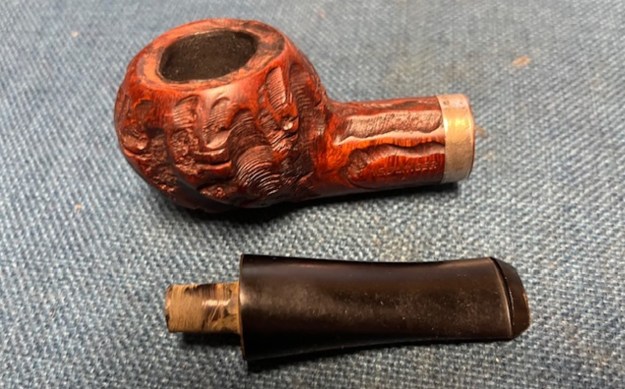
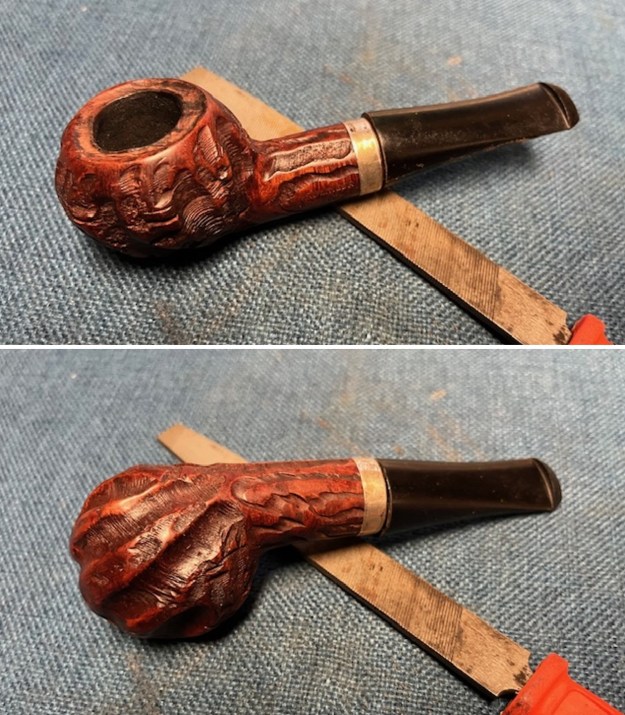
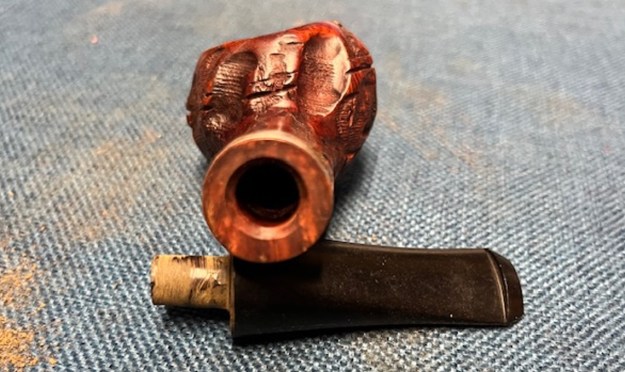 I used a file to reduce the diameter of the tenon. I cleaned up the tenon diameter with my Dremel and a sanding drum. It did not take much for the stem to fit well in the shank. I put it in place and took photos. You can see in the photos that the stem diameter will need to be adjusted as the shank is not round and the stem is.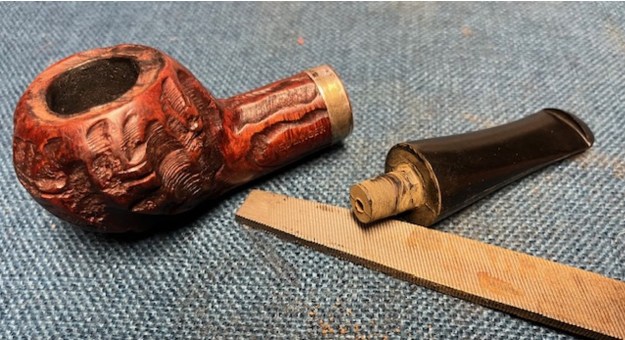
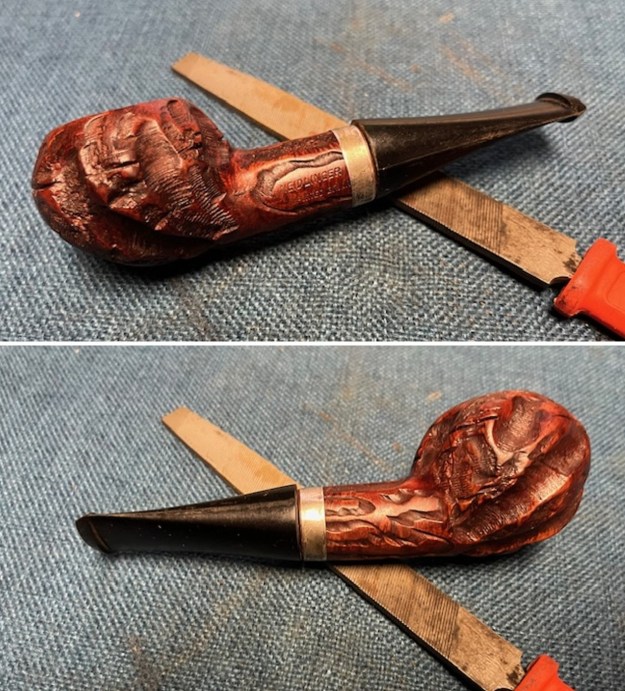
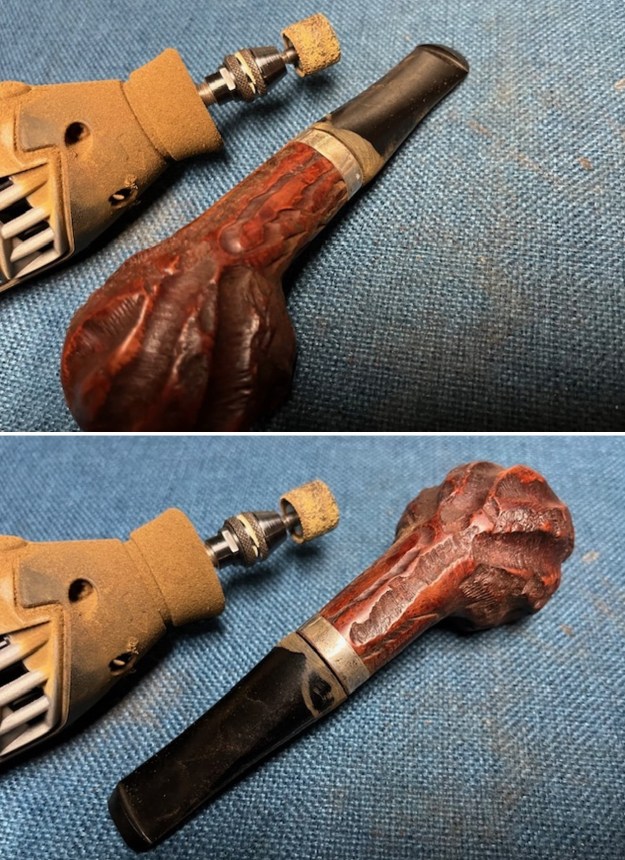
 I worked on the adjustment of the outside diameter of the stem with my Dremel and a sanding drum. I took off the majority of the excess vulcanite that way. The rest would need to be done with files and sanding pads.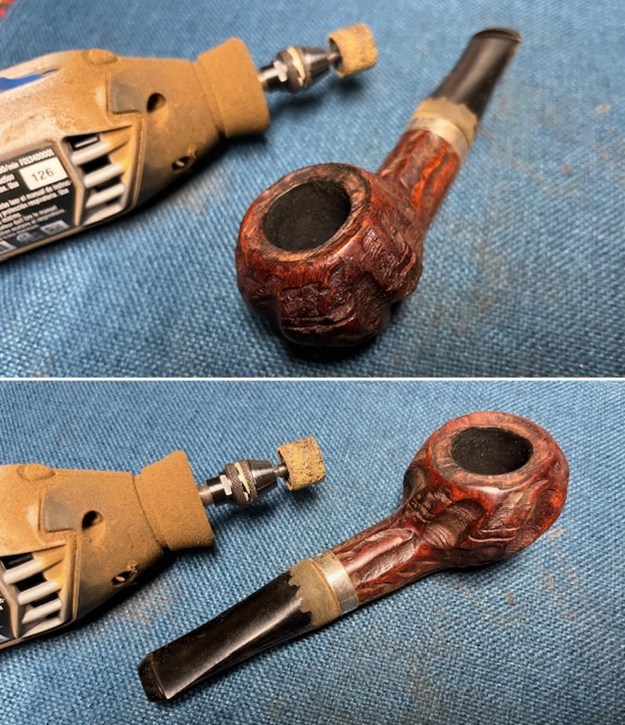
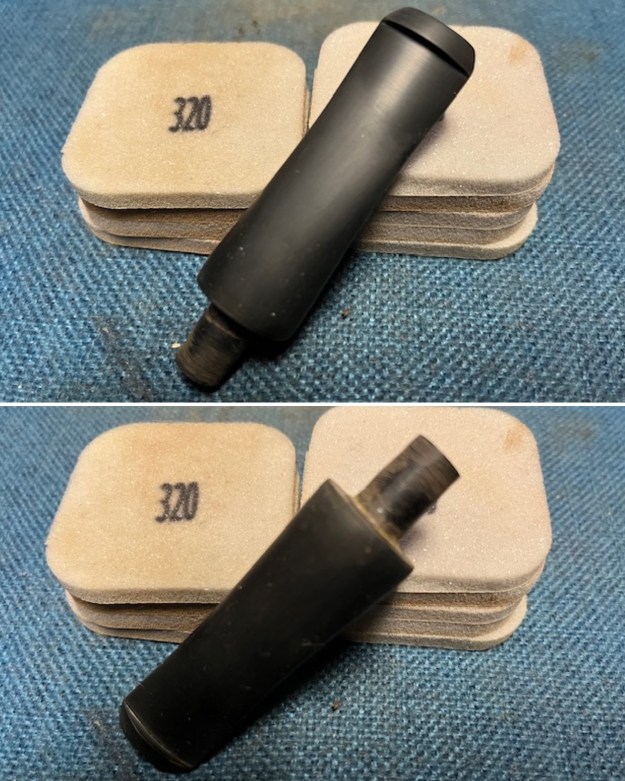
 I sanded the stem with 220 grit sandpaper to smooth out the marks from the Dremel. I followed that by sanding it with 320-3500 grit sanding pads to further blend down the sanding areas. I wiped the stem down between pads with an Obsidian Oil cloth to remove the sanding debris from the stem.
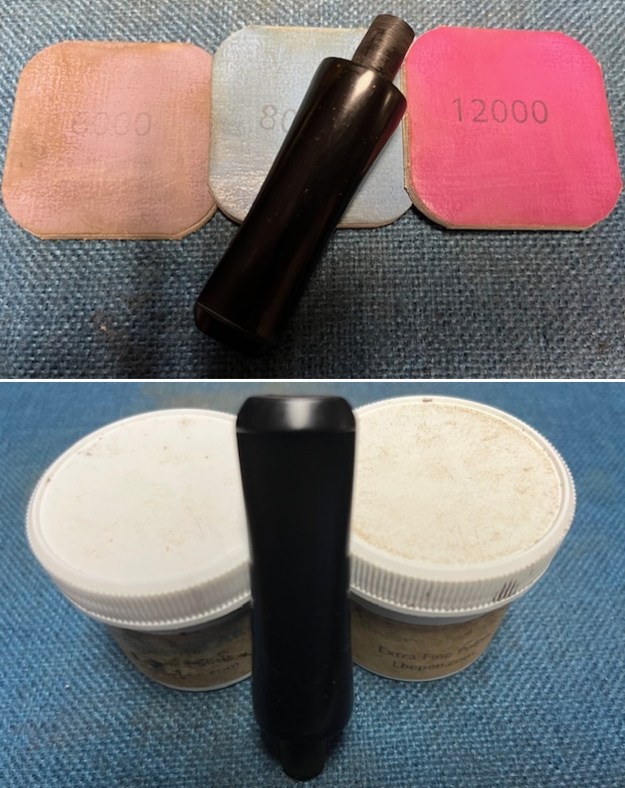
 I polished the stem with micromesh sanding pads – dry sanding with 1500-12000 grit sanding pads. I wiped it down after each sanding pad with Obsidian Oil. I polished it with Before & After Pipe Stem Polish – both Fine and Extra Fine.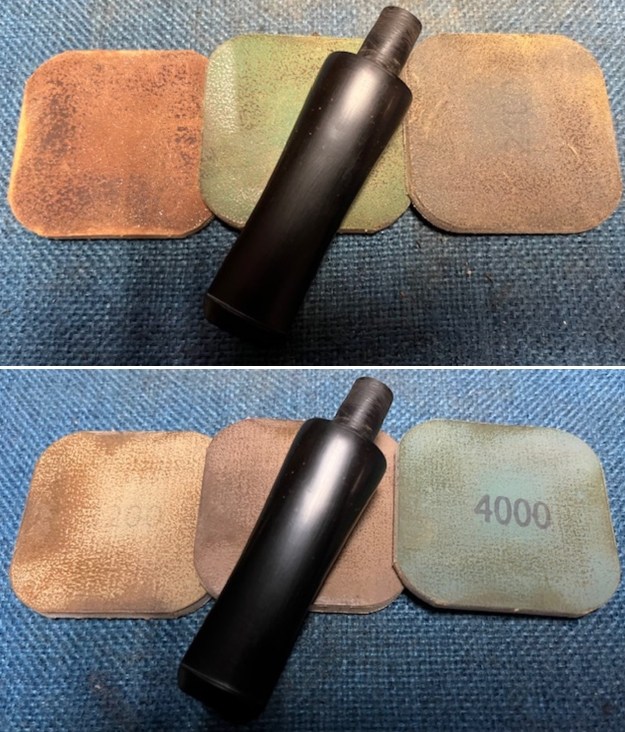
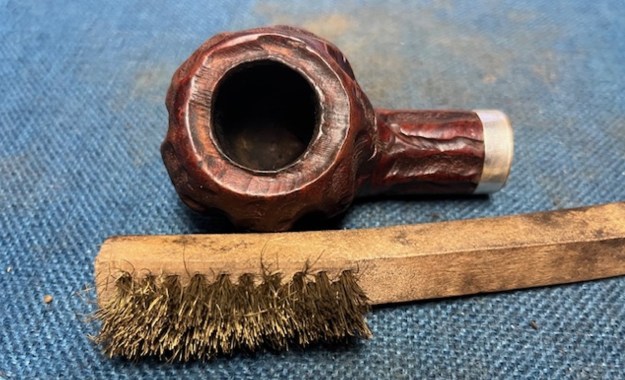
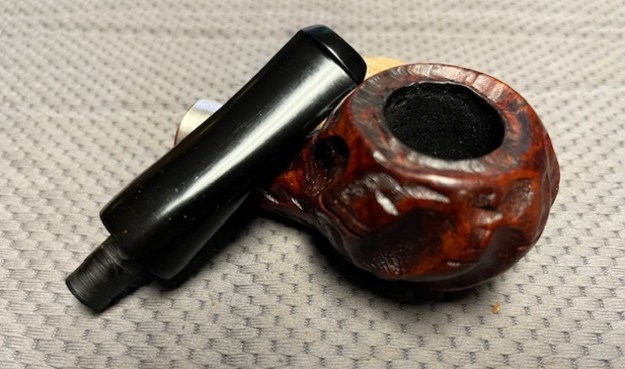
 I set the stem down and turned my attention to the clean bowl. I used a brass bristle wire brush to work over the rim top and remove the debris in the carving. It looked cleaner.
 I polished the silver band with 1500-3000 grit micromesh sanding pads and then finished with a jeweller’s cloth to raise the shine and protect it from further oxidation.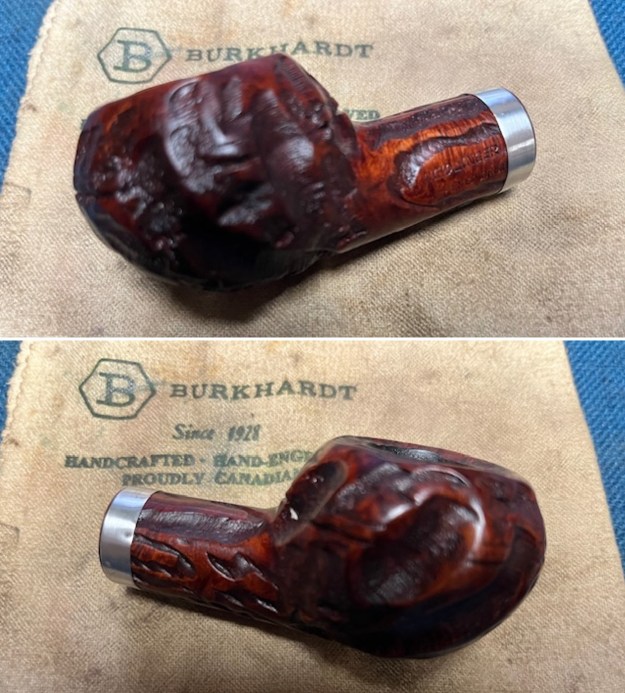
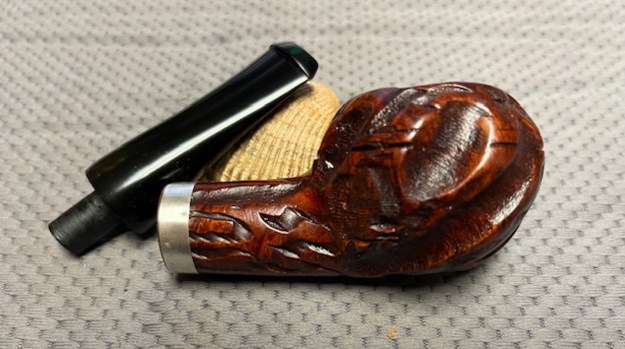
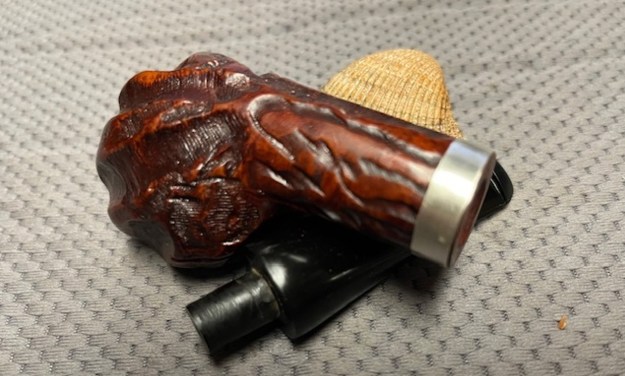
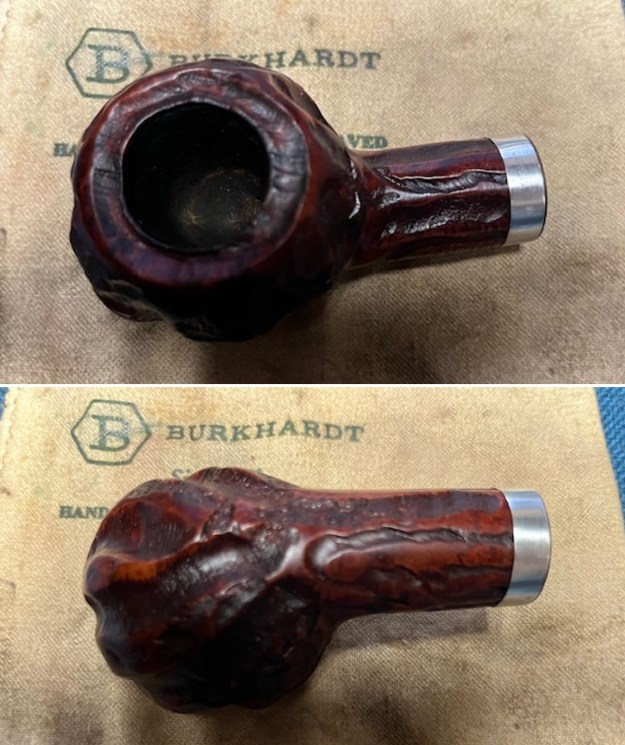 I worked some Before & After Restoration Balm into the surface of the briar with my finger tips and a shoe brush to get into the carving on the bowl and shank. The product works to clean, enliven and protect the briar. I let the balm sit for 15 minutes and then buffed with a cotton cloth to raise the shine. The photos show the bowl at this point in the restoration process.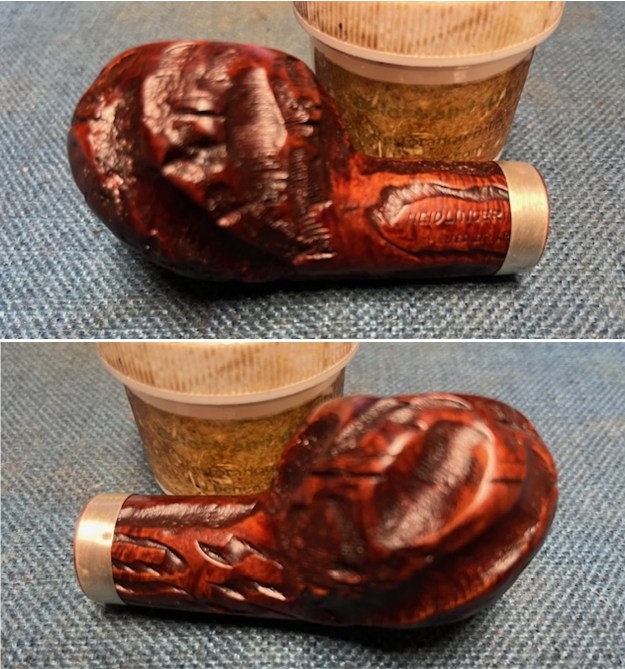
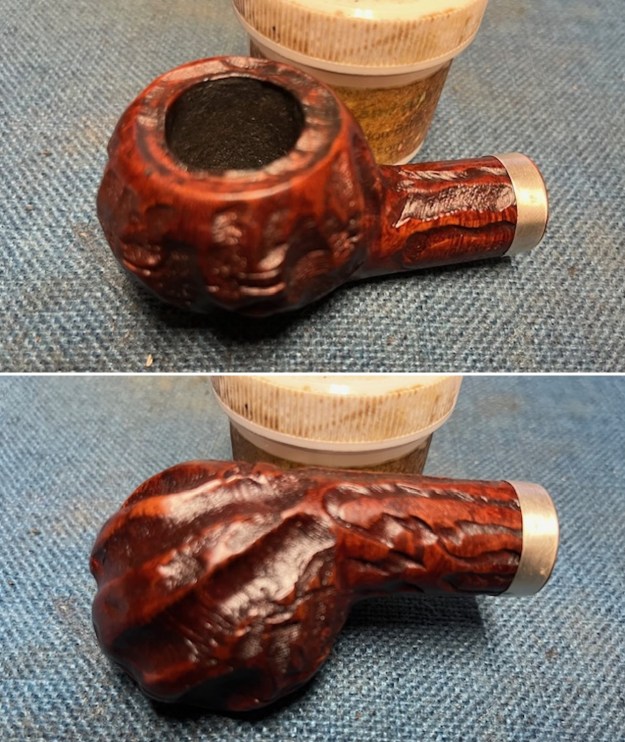
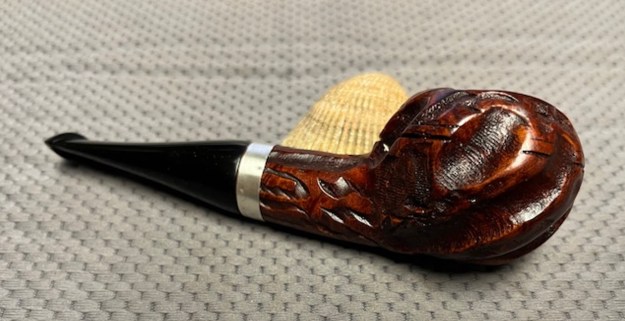
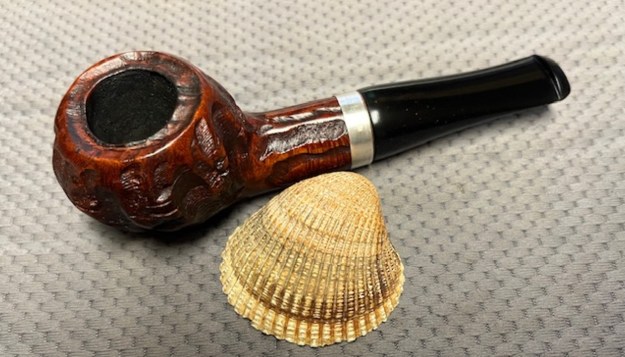
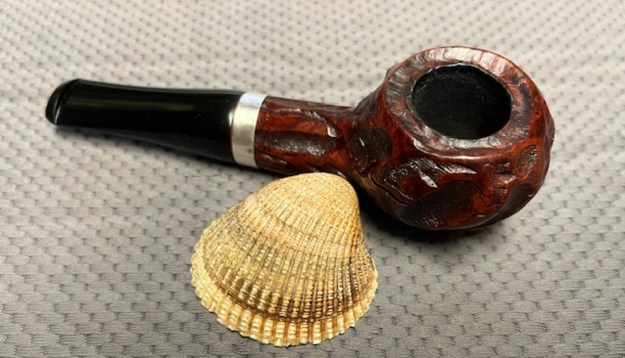
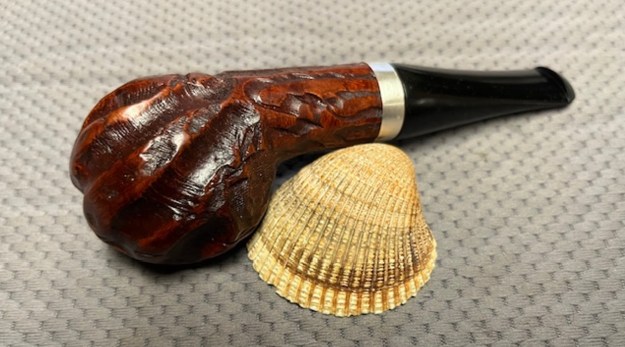
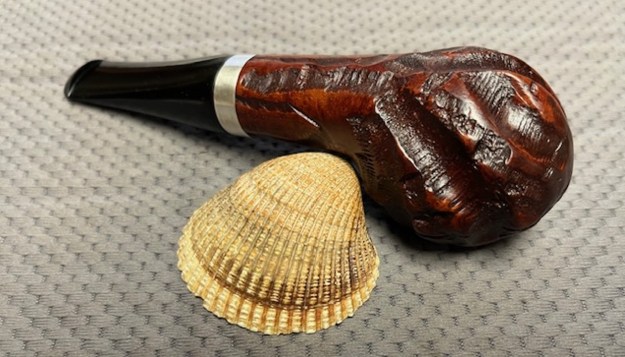
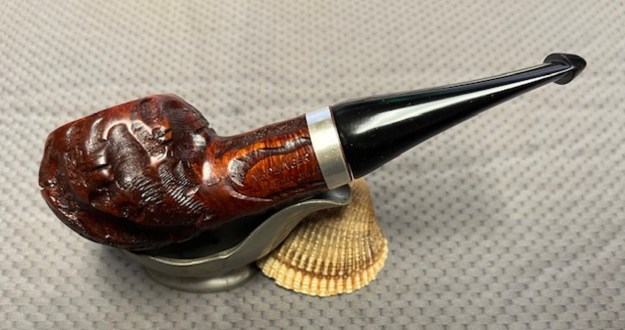
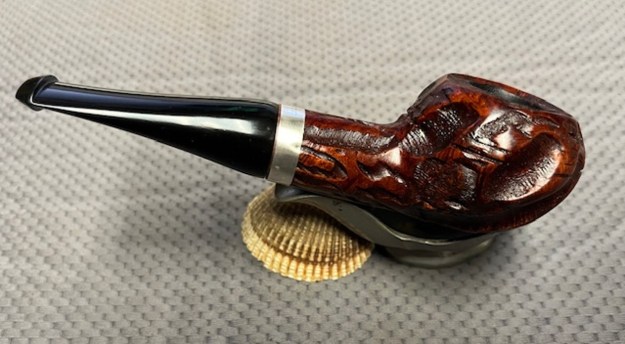
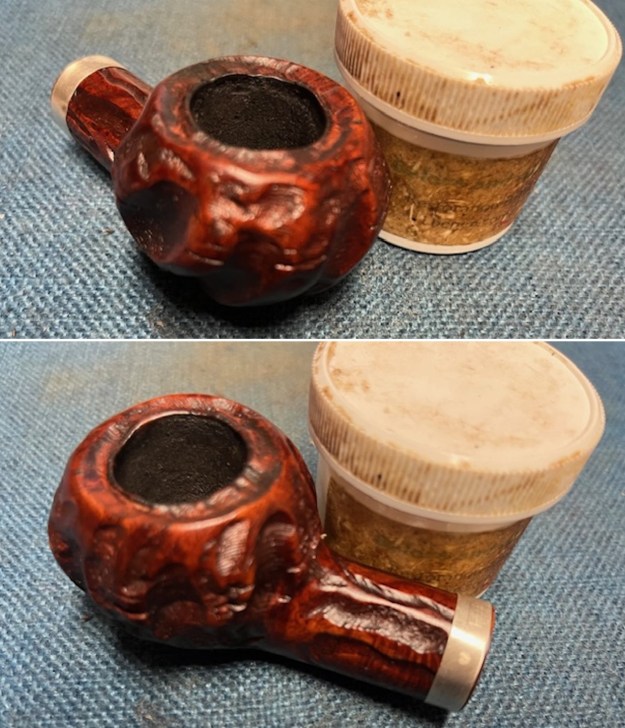 This Rusticated Neidlinger Imported Briar Rhodesian is a great looking pipe now that it has been restored and restemmed. The rich finish gives the shape an elegant look. The flow of the bowl and stem are well done make for a great hand feel. I put the stem back on the bowl and carefully buffed the pipe with Blue Diamond on the buffing wheel using a light touch on the briar. I gave the bowl and the stem multiple coats of carnauba wax on the buffing wheel. I buffed the entire pipe with a clean buffing pad. I hand buffed the pipe with a microfiber cloth to deepen the shine. The finished Neidlinger Rhodesian fits nicely in the hand and feels great. Give the finished pipe a look in the photos below. The dimensions of the pipe are Length: 6 inches, Height: 1 ¾ inches, Outside diameter of the bowl: 1 ½ inches, Chamber diameter: 7/8 of an inch. The weight of the pipe is 64 grams/2.26 ounces. It is a great looking and light weight pipe. I will be putting it on the rebornpipes store shortly. If you are interested in adding this pipe to your collection send me a message or an email. Thanks for reading this blog and my reflections on the pipe while I worked on it.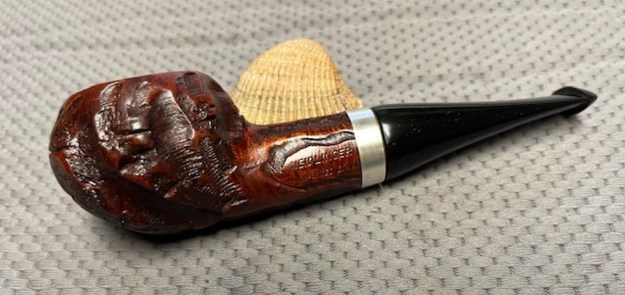
 rebornpipes