
Blog by Steve Laug
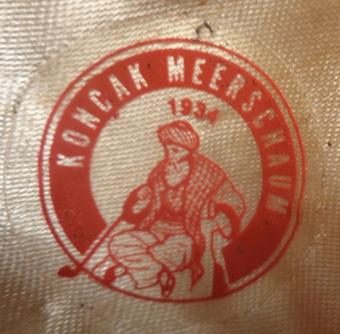 The next pipe I chose to work on today is a nicely carved meerschaum by Koncak. I have never really collected meerschaum pipes so I do not have much knowledge of the various makers or carvers. I did some looking in some of the references I have here in the shop and found that Koncak is a Turkish meerschaum pipe brand. The meerschaum factory was founded by Ekrem Koncak in 1934 in Eskiehir, Turkey. It is one of that country’s oldest producing meerschaum pipe factories. They carve some highly unusual shapes. In 1974, Ekrem was succeeded by his son, Sadat, and in 1980 his daughter, Nurham took over the running of the company. In the meantime, Sedat Koncak bought the Austrian brand Bauer, and the two companies have maintained close commercial ties (from Pipes, Artisans and Trademarks, by José Manuel Lopes).
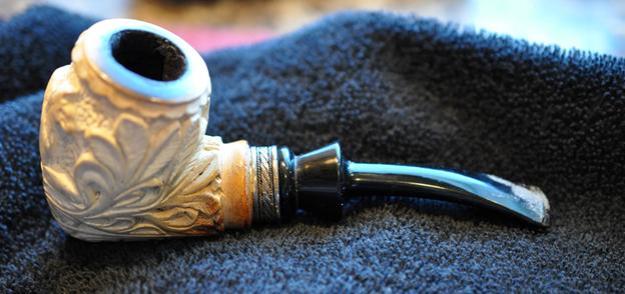
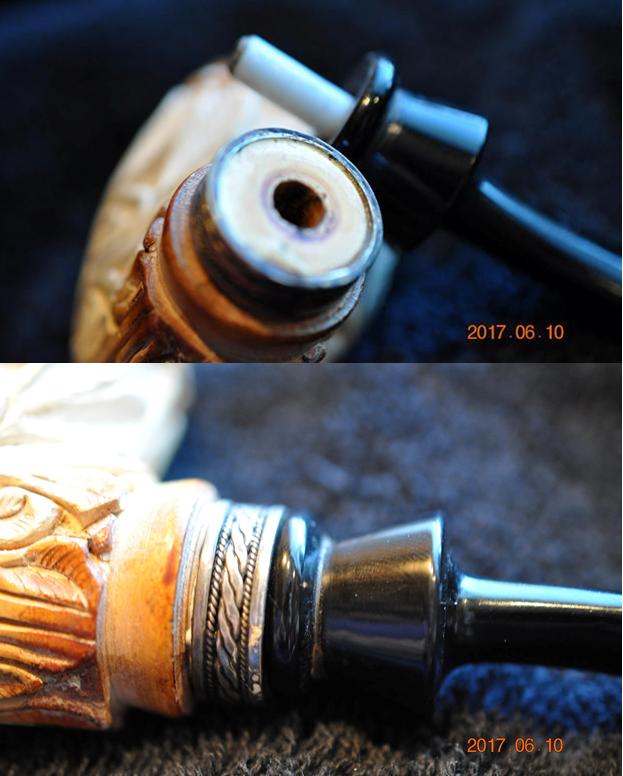
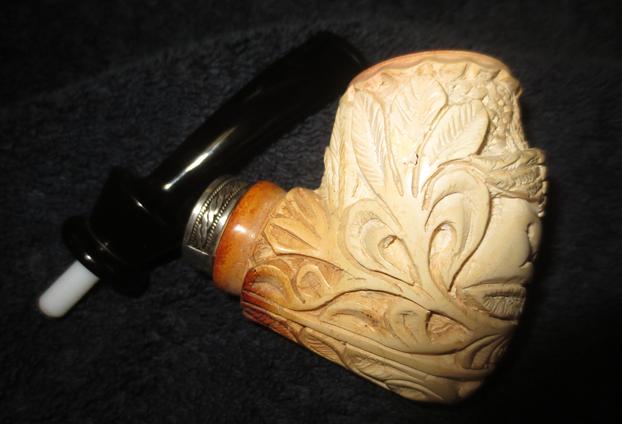
Jeff bought the pipe on EBay because the carving and shape stood out to him as beautiful. It is a large bowled unique. The sides and back of the bowl are carved with fronds of leaves possibly tobacco leaves. The front of the bowl is carved with reclining Pegasus – winged horse with some pock-marked stone around him. The end of the shank is smooth culminating in a silver band with a rope twist and a single line and a beaded line on each side of the rope. The shank is lined with Delrin and the push tenon is either Delrin or nylon. The stem is Lucite/acrylic and had a saddle and a wide blade that has tooth marks and file marks on both the top and bottom sides in front of the button.
The first photos below on the green background were taken by the seller. I include them here so that you can appreciate what caught my brother’s eye when he saw this beauty.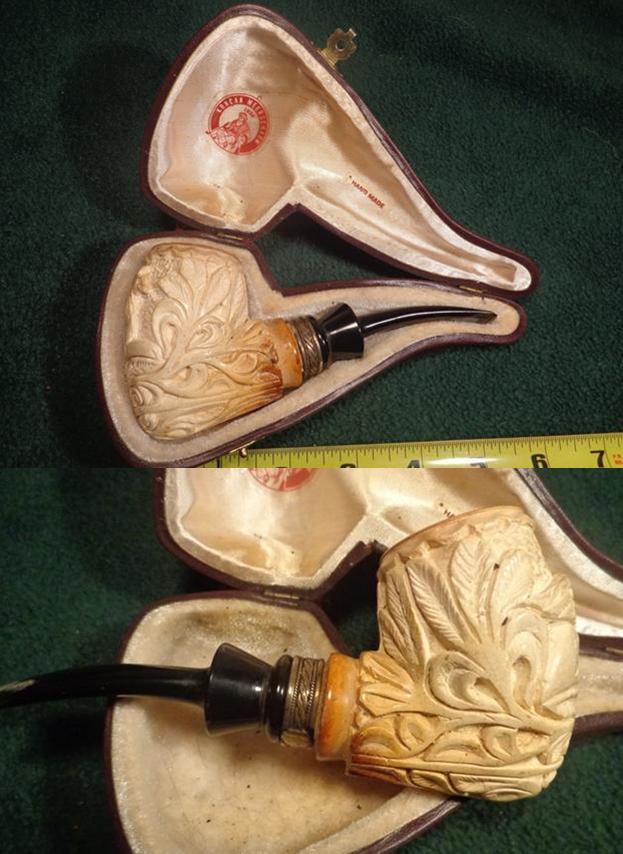
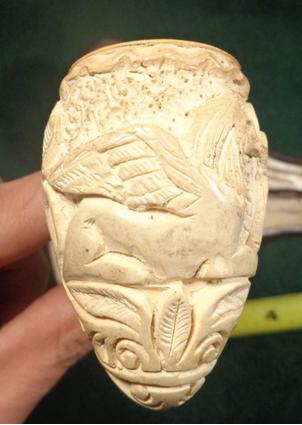
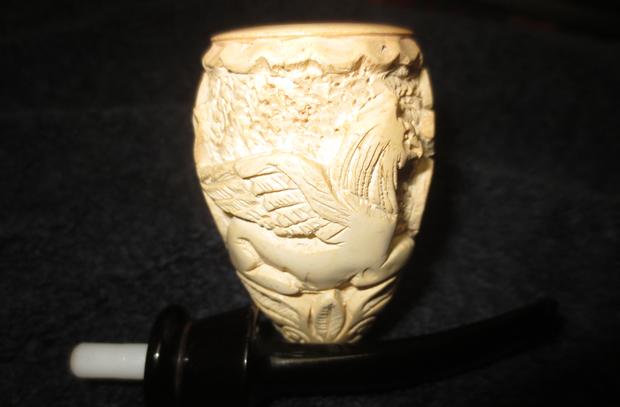
The photos on EBay show the dirty condition of the pipe but also show that it is in excellent shape under the grime and the dirt. My brother was wise in bidding and winning this beautiful example of Koncak workmanship. The photo of the bowl front shows the winged horse, Pegasus in a reclining position. The carving is quite well done. The details of the feathers on the wings, the mane on the horse’s head and the surrounding foliage around Pegasus are well done.
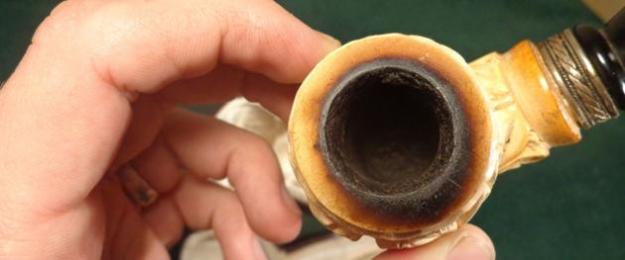
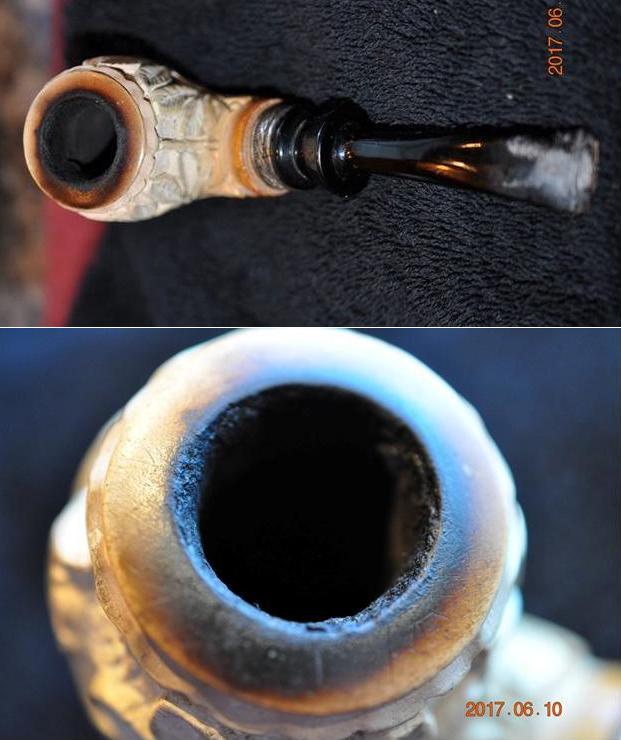
The bowl was shown with a thick cake that was spread throughout the bowl and there was an overflow of lava on the top. The shank and the underside of the bowl was already beginning to show a golden colouration and once the bowl was scrubbed clean I was pretty certain that the rim top and edge would also show the same kind of developing colour. My brother did very well in his purchase of this one. Now I just need to decide whether I keep it or let it go on the rebornpipes store. I guess that by the time I finish the pipe and do this write up for the blog the decision will have been made. I will let you know once the post has been completed. Thanks.
 The EBay sellers photos also showed the condition of the stem (at least from the top view).
 When the pipe arrived in Idaho, Jeff took some more photos of it so that I could see the condition of the pipe. While it looked much like the seller’s photos it was both in better condition and worse condition at the same time.
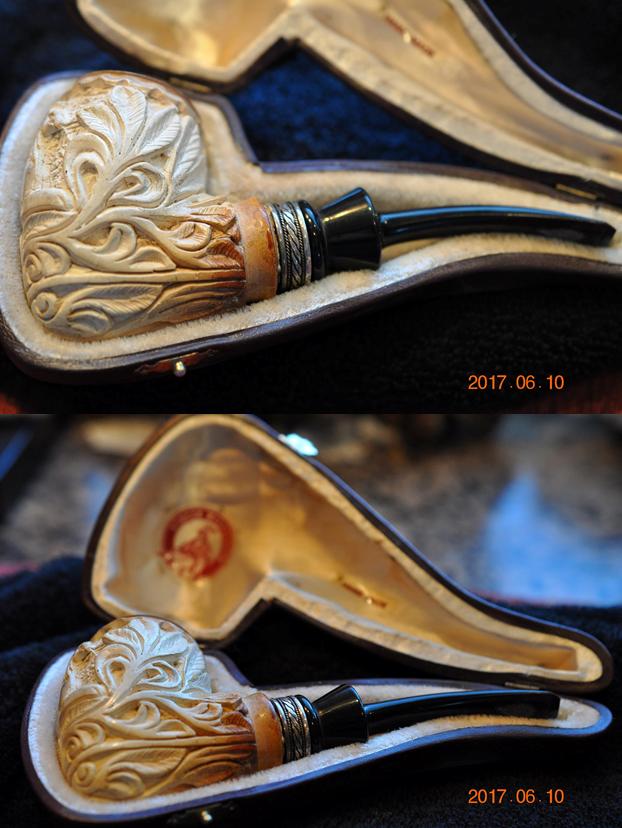
 The case it came in was well fitted to the pipe. It was in good condition though there were places that the leather cover would need to be reglued. (When it arrived in Vancouver this was the first thing I took care of and set the case aside to let the glue cure.) There was a sewn in Koncak logo on the inside top of the case. The dirtiness of the pipe was as shown in the seller’s photos and surprisingly there were no areas that were damaged or broken. I was grateful that the pipe was in dirty but undamaged state.
 The next two photos show the condition of the cake in the bowl and the lava overflow on the rim top. The cake was thicker than it had appeared in the seller’s photos and the lava overflow was heavier and thicker.
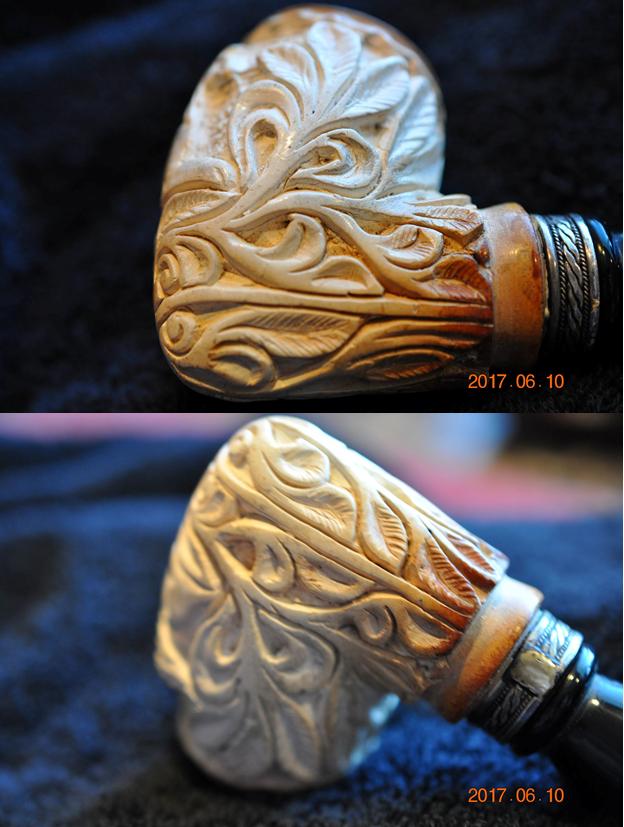
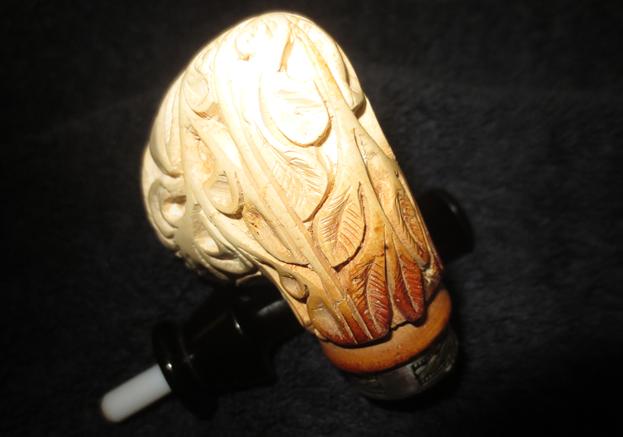
 The next series of photos show the ornate leaf carvings around the bowl and shank leaving the centre of the front piece open for the carving of Pegasus, the winged horse.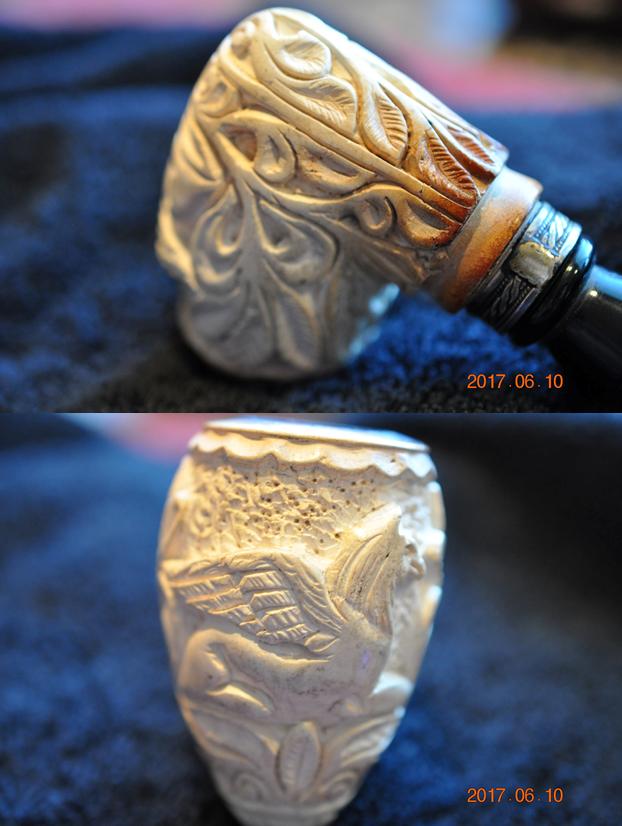
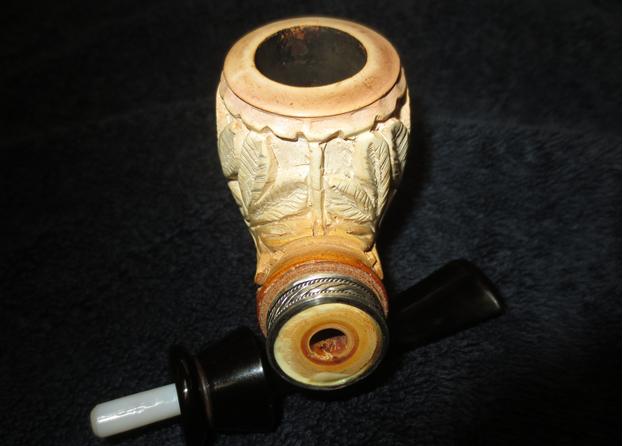
 The next two photos show the stem and band work on the pipe. The silver band is quite beautiful and really stands out against the colouring meerschaum shank.
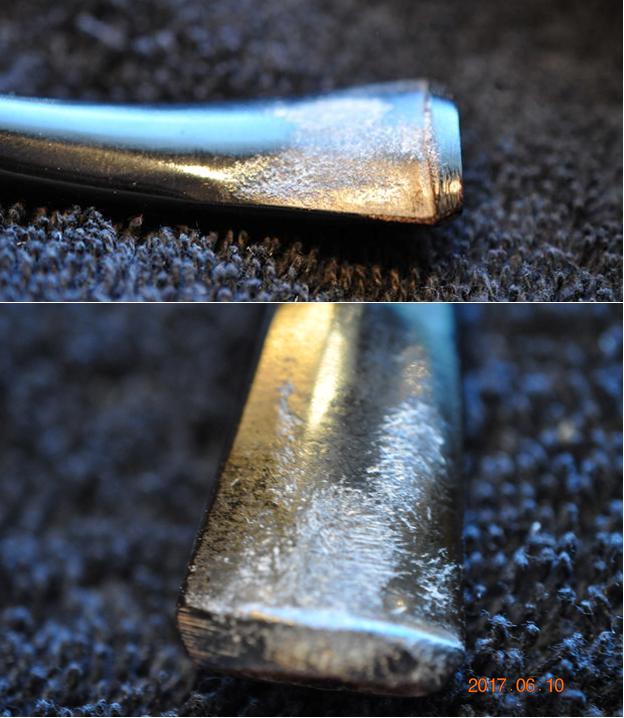
  The next photos that my brother took show the condition of the stem far better than the seller’s photos had. It had a lot of tooth chatter and dents on both the top and underside near the button extending about one inch up the stem.
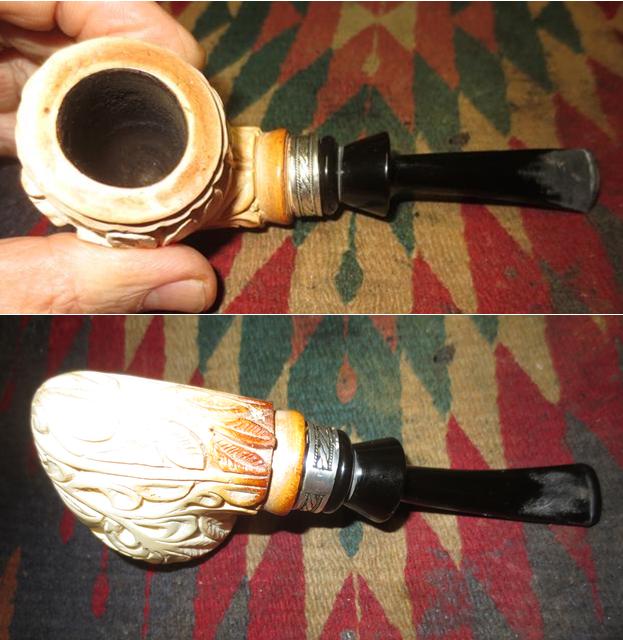
  Jeff reamed the bowl carefully with a PipNet reamer and a Savinelli Fitsall Pipe Knife scrapping the cake back to the meerschaum wall of the bowl. He scrubbed the exterior of the pipe and rim with Murphy’s Oil Soap and was able to remove the entire lava overflow on the rim and the dust and grime from the nooks and crannies of the carving. He cleaned the internals with pipe cleaners, cotton swabs and alcohol until the surface was clean and refreshed. I took photos of the pipe when it arrived in Vancouver to show his craftsmanship in the cleanup phase of refurbishing. He does very good work and it makes my job much easier on this end.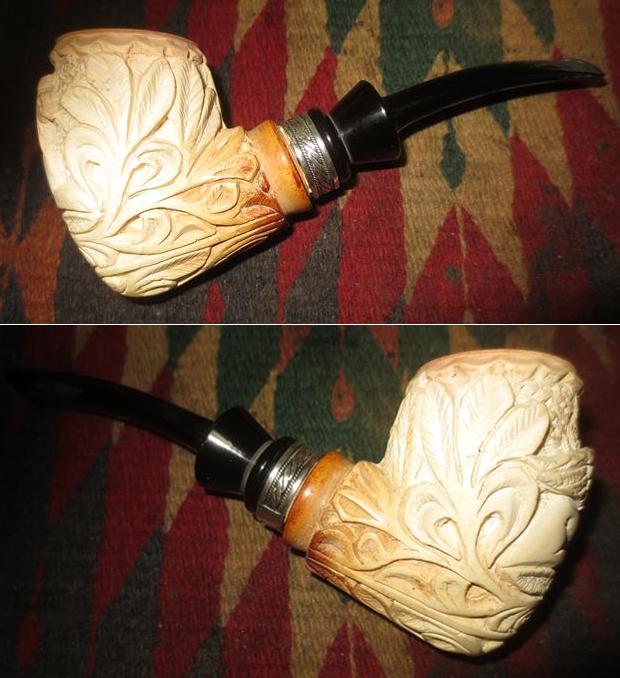
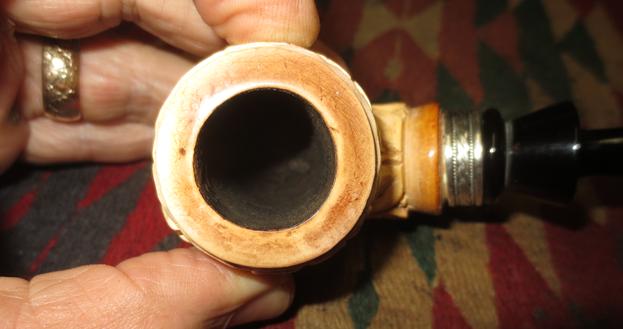
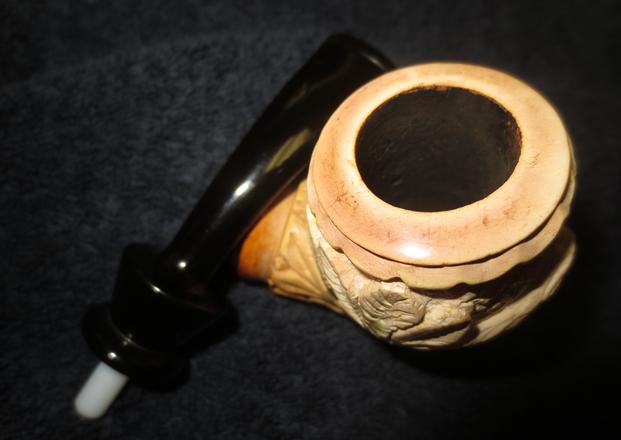
 His work on the rim top is an example of how clean he gets the pipes. He was able to remove all of the lava overflow and leave behind a bit of patina.
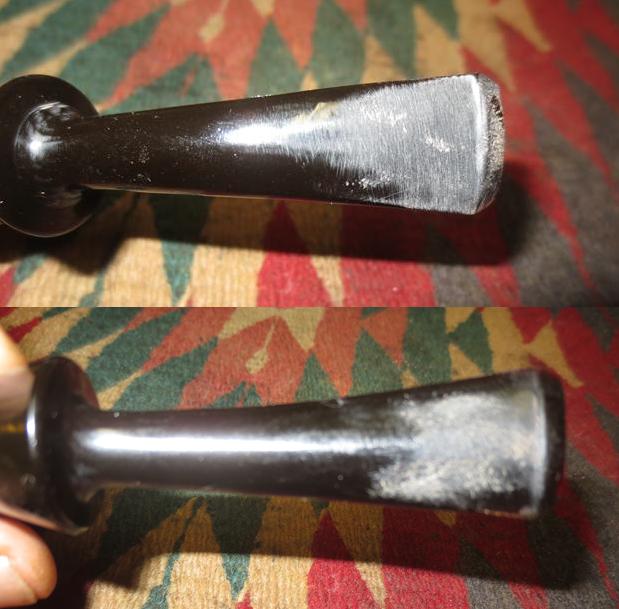
 He had cleaned up the tooth chatter with the soap and scrubbing and what tooth chatter was left behind was minimal. There were also some tooth marks that would need to be addressed.
 I sanded out the tooth chatter and the tooth marks with 220 grit sandpaper to clean them up as much as possible. I wiped down the surface of the stem with a damp cotton pad to remove the sanding dust. I filled in the deeper tooth marks with clear super glue and set the stem aside to wait for the repair to cure.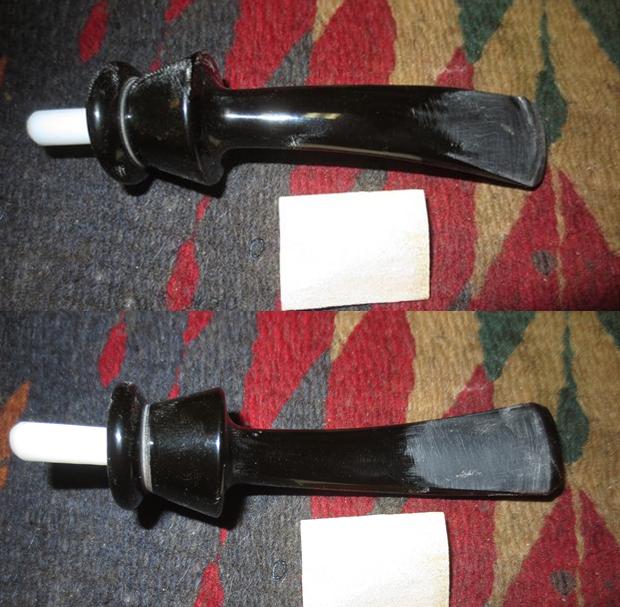
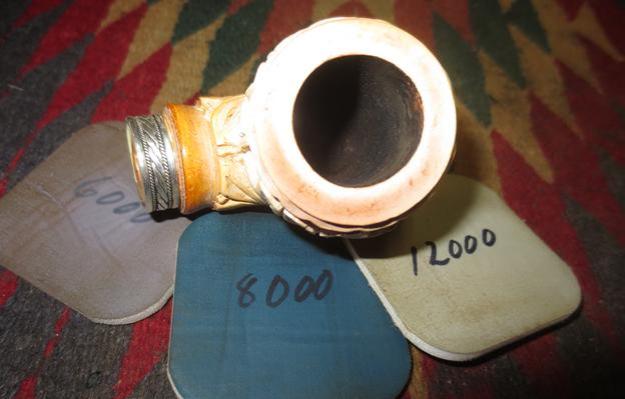
 While the repairs cured I worked on polishing the bowl. I used micromesh sanding pads to polish the smooth portions of the pipe. I wet sanded them with 1500-2400 grit pads and wiped the bowl down with a damp cotton pad between each grit of micromesh. I dry sanded it with 3200-12000 grit pads and repeated the wipe down after each pad.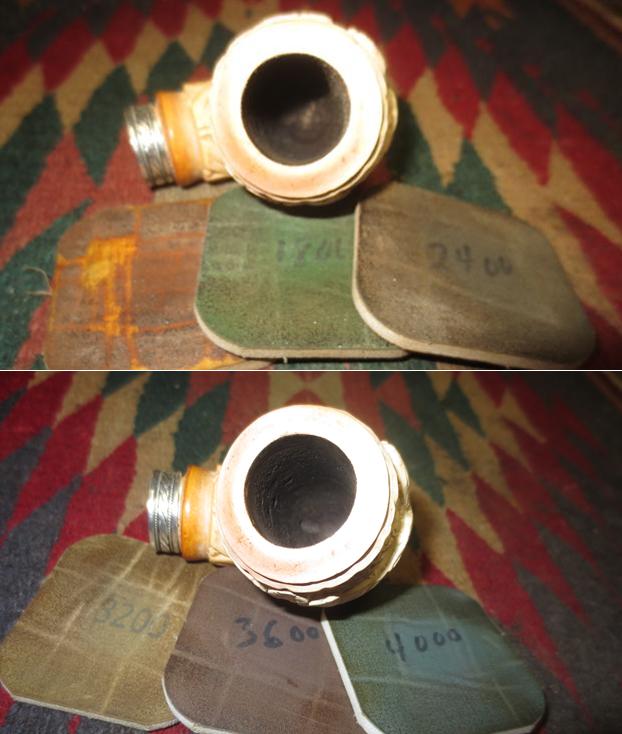
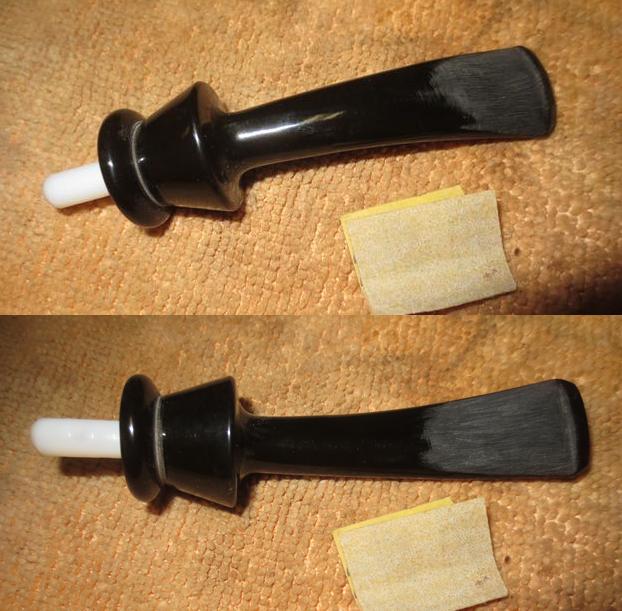
 By this time the glue had cured so I sanded the repairs on the stem smooth with 220 grit sandpaper blending them into the surface of the stem on both the top and bottom sides. At this point the stem is looking really good. Still work to do in reshaping the button but the repairs are getting there.
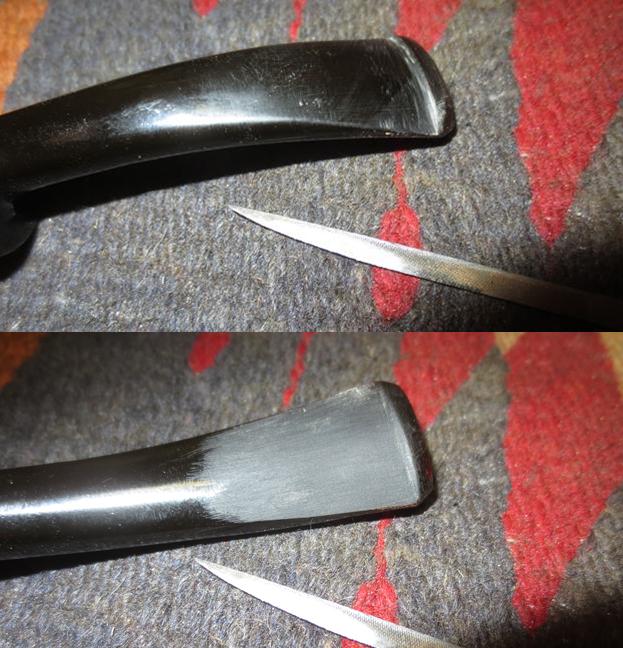
 I recut the sharp edge of the button with a needle file and smoothed out the edge with the thin edge of the file. The button was looking right. Now I needed to polish the stem.
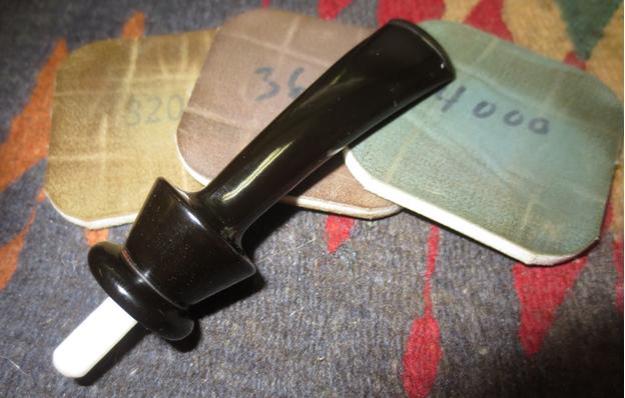
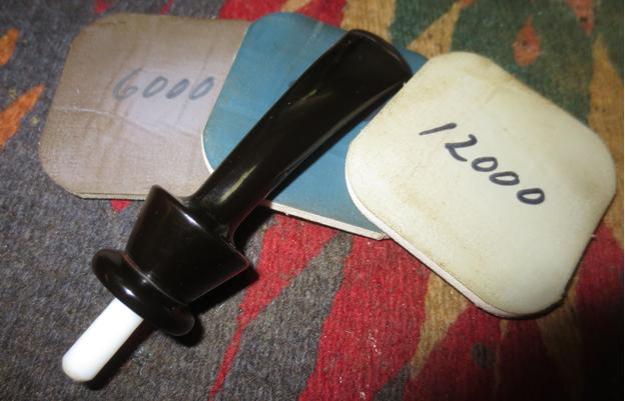
 I polished the stem with micromesh sanding pads – wet sanding it with 1500-2400 grit pads. I wiped the stem down with a damp cotton pad to remove the dust. I buffed the stem with red Tripoli on the buffing wheel before continuing to polish it with micromesh sanding pads – dry sanding with 3200-12000 grit pads. When I had finished the polishing I wiped it down with a damp pad and gave it several coats of Conservator’s Wax. I buffed the stem with a microfiber cloth to deepen the shine.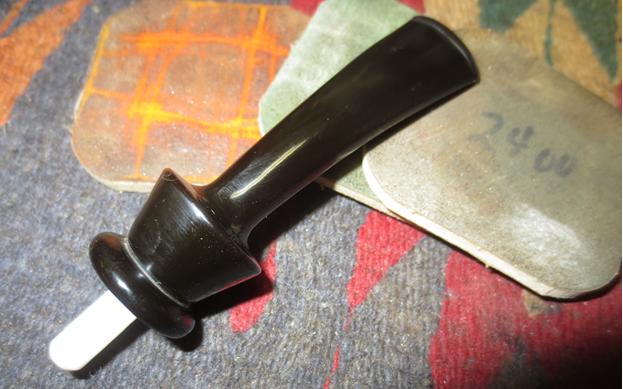
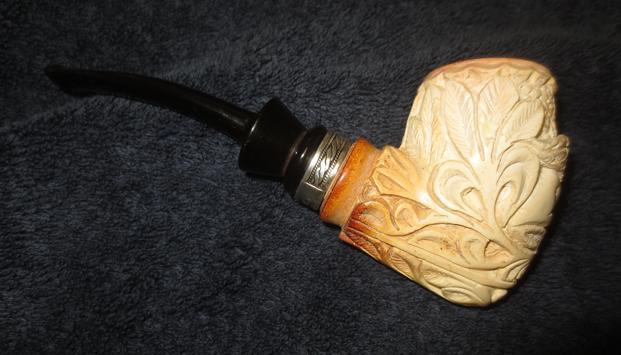
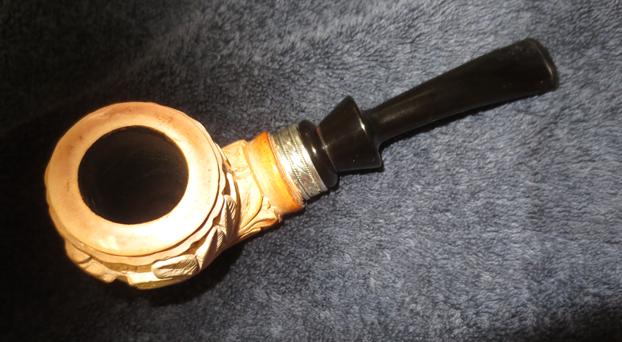
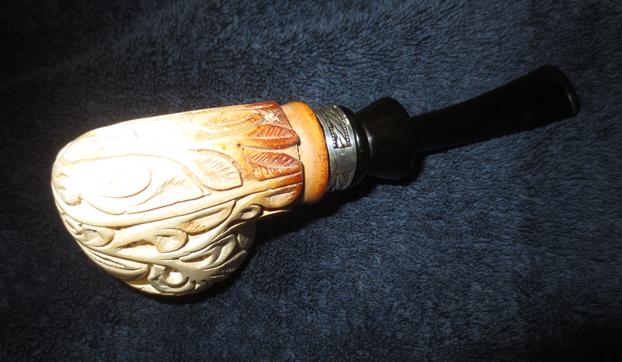
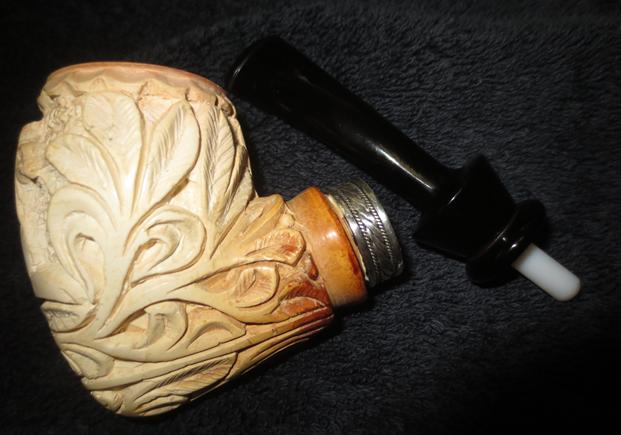
 I gave the bowl a coat of softened white beeswax called Clapham’s Beeswax Polish and hand buffed it with a shoe brush. I hand buffed it with a microfiber cloth to deepen the shine. It is a large pipe whose dimensions are length: 6 inches, height: 2 ½ inches, outer diameter of the bowl: 1 ½ inches, chamber diameter: 7/8 inches. The finished pipe is shown in the photos below. Well the decision has been made as I hoped it would by this time in the write up of the restoration. While working on the pipe and cleaning it up I realized that it is too big for my liking and thus I will part with it on the rebornpipes store. I will list it shortly and if it is a pipe that you want to add to your collection you can email me at slaug@uniserve.com or send me a private message on Facebook. It truly is a stunning pipe. Thanks for walking with me through the cleanup.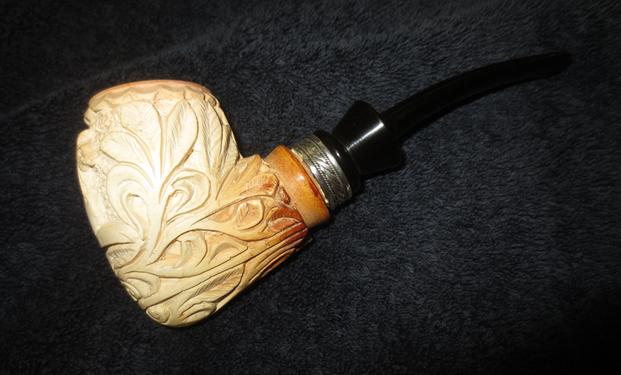


 rebornpipes