
Blog by Steve Laug
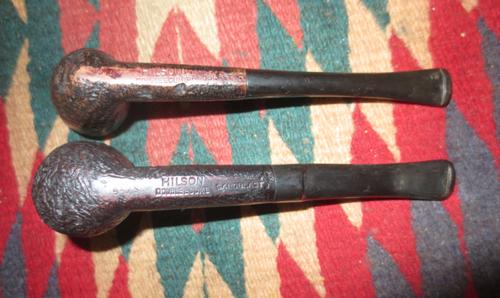
As I wrote earlier in another blog, I found these two pipes on an evening walk to dinner in the Latin Quarter of Paris (https://rebornpipes.com/2016/06/10/some-good-pipe-finds-on-a-recent-work-trip-to-europe/). The pair of Hilson pipes was stamped in block letters Hilson over Double Ecume with the word Sandblast following. The delicate canted Dublin was stamped with the shape number 5 just before the stem shank union, while the stack with the saddle stem was stamped with the shape number 95/S on the bottom of the bowl. The finish on both pipes was dirty and worn but not ruined. The bowls were meerlined and the top of the Dublin had a heavy build up of tars and cake that overflowed the bowl. The stack/billiard was less dirty but the cake overflowed onto the rim as well. The meer lining was darkened. The bowl in the Dublin had a thick cake that extended to the bottom of the bowl and reduced the size of the already petite bowl. The bowl on the stack was less thick but it nonetheless reduced the diameter of the bowl as well. The stems on both pipes had some tooth chatter and light oxidation but would easily clean up. Both stems bore a stylized capital H on the left side. As I looked at them I was glad I had picked them up for small sum of 10 Euros or slightly over 14 dollars Canadian. 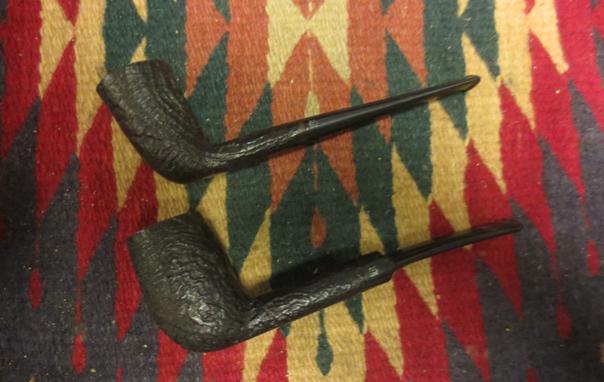
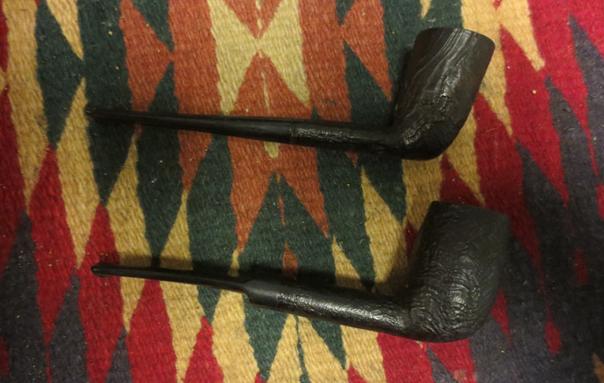


I remember when I purchased them I took them back to the hotel in Paris and used a wooden coffee stirrer to scrape away some of the cake and debris in the bowls to check the meerlinings. I was hoping that they were intact all the way to the bottom of the bowl. I breathed a sigh of relief when I found that they were uncracked as far as I could see.
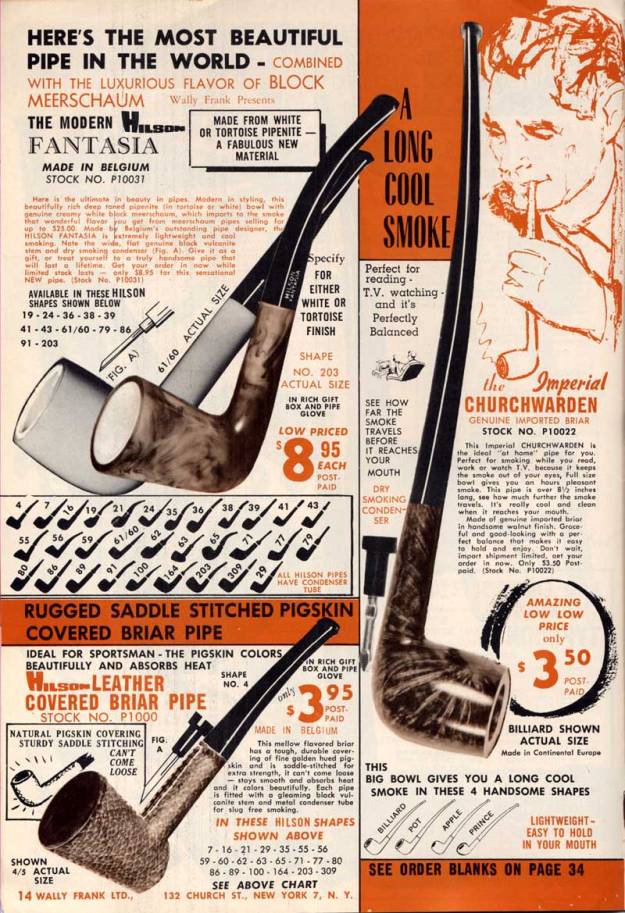
I was curious as to the stamping on the pipes. I have cleaned and restored quite a few Hilson pipes over the years – many of them meerschaum lined – and I do not recall seeing the Double Ecume stamping before. First I wanted to know what the name Ecume meant so I looked it up in a French/English dictionary and found that it meant Foam. Thus the pipe name was Hilson Double Foam. I liked the French far better! It sounded more elegant. I used Google and found out that the pipes were made when Hilson was still a Belgian Company. This dates them as pre 1980 as the company was then purchased by Gubbels in Holland. I checked on Pipedia and found an advertisement for Hilson Elan pipes. The sandblast looks like the one on my Ecume pipes. The interesting thing that came from this Wally Frank Catalogue advertisement was the description of the tube in the shank. It is described as Hilson’s special tubular dry smoking condenser. You can see a line drawing of that in the photo below marked as FIG. A (circled in red in the photo below).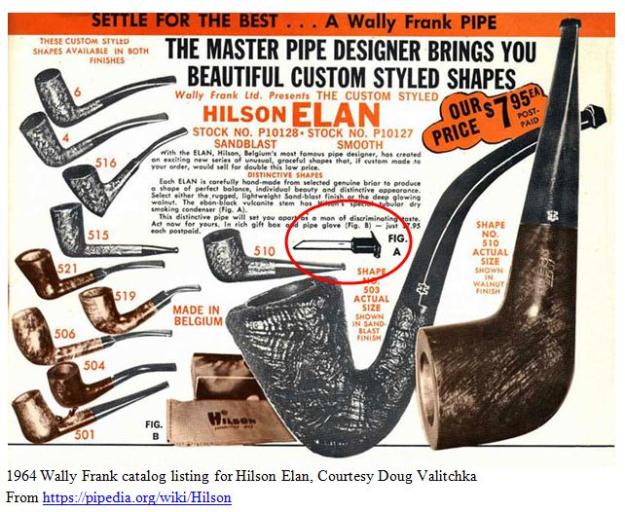 From that link I checked out Chris Keene’s Pipe pages site for more information and found the following catalogue page. http://pipepages.com/2wf14.htm. Even thought the advertising page is for Hilson Fantasia Pipes it confirmed several facts for me that I had not previously known. First was that the meerschaum lined bowl was cut from block meerschaum and not a pressed meerschaum. That is probably why it had survived intact through the years. Second, that all Hilson Belgian pipes had the condenser tube in the shank. I also found a page from an Iwan Ries Catalogue from 1962 that showed meerschaum lined briar pipes. Sadly I could not view the page as the link was not functional.
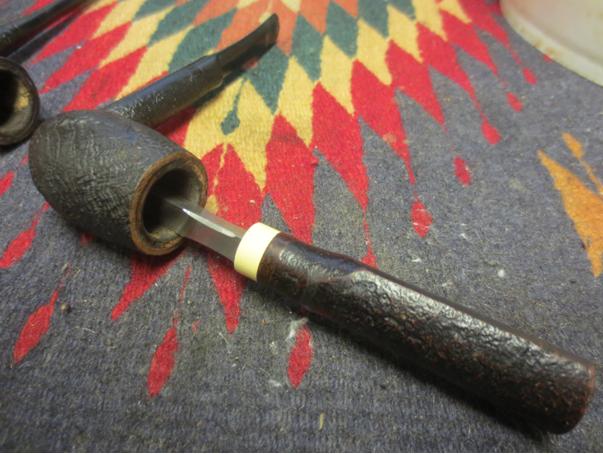
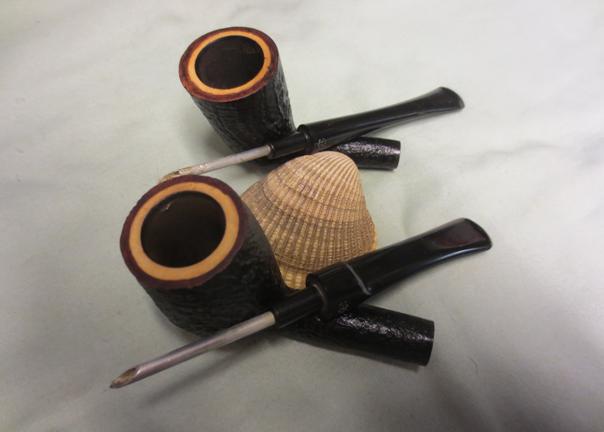
 I carefully reamed out the cake in both pipes with the Savinelli Pipe Knife to take it back to the meerschaum lining. I did not want to gouge or chip the meerlining so I proceeded with caution. I sanded the interior of the bowl with a piece of 229 grit sandpaper around the cutting head of the PipeNet pipe reaming tool to take out all of the cake in the bowls.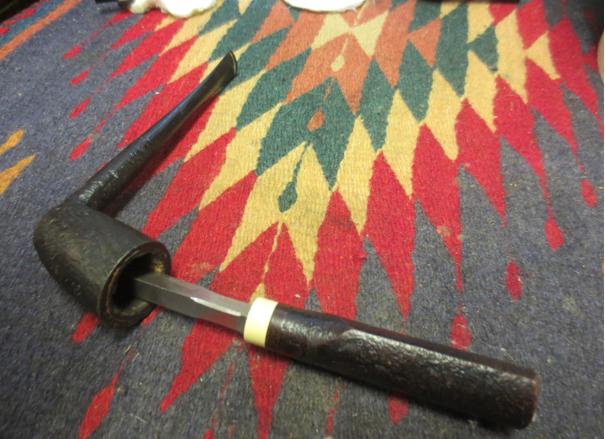
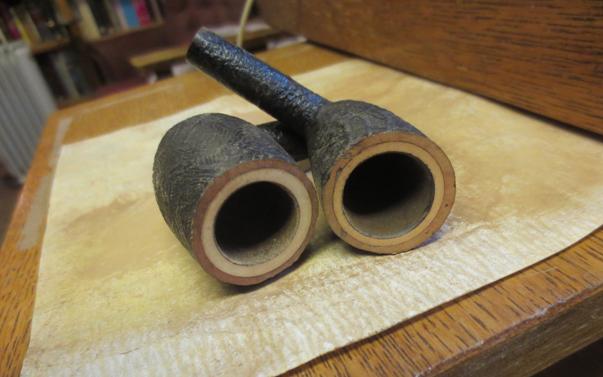
 Once I cleaned the bowls I decided to top the two pipes to remove the build up on the rim surfaces. Since both pipes appeared to have smooth rims topping them would not damage the original look of the pipe and would allow me to smooth out the top of the meerschaum bowl insert. I topped both bowls on 220 grit sandpaper on the topping board.
 When I finished topping them the meerschaum was clean the surface of the rim was smooth.
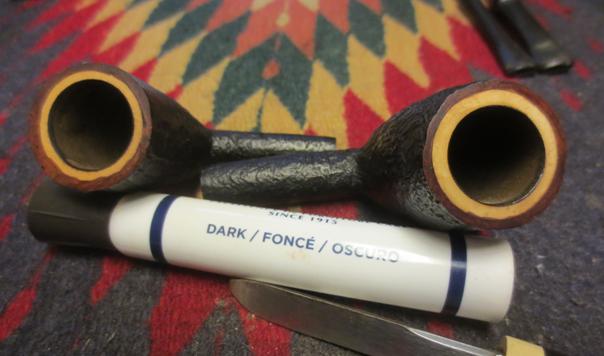
 I sanded the rims with 1500-2400 grit micromesh sanding pads to remove the scratches left behind by topping the bowls. The polished rims looked really smooth and ready to be stained. I stained the rim of the briar outer bowl with a dark brown stain pen and a Sharpie black permanent marking pen to get the dark brown colour of the bowl.
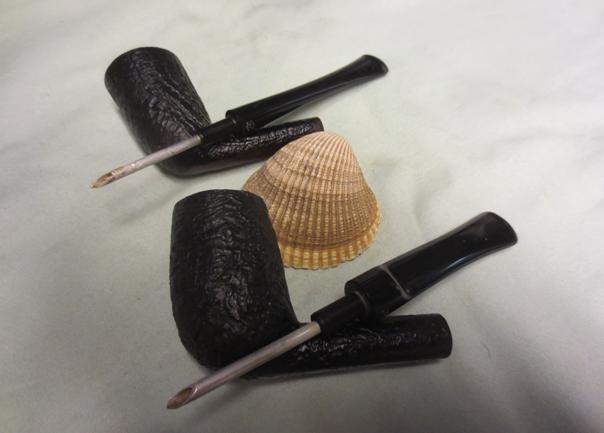
 I scrubbed out the inside of the stem and the shank of the pipes with alcohol, pipe cleaners and cotton swabs. There was a lot of grime in both pipes. The condenser tubes on both were coated with tars and oils that I removed with 0000 steel wool. I had to reshape the open end of the tube in the Dublin stem as someone had tried to remove it with pliers. It was crushed and there were some marks from the jaws of the pliers. I reshaped it with an ice pick inserted and heated the tube with a lighter. I was able to bring it back to round. I was also able with the heating to remove both tube inserts and clean the stems before putting them back in place. I scrubbed the briar with a tooth brush and Murphy’s Oil Soap and rinsed them with tap water. I dried them off and both bowls were clean.
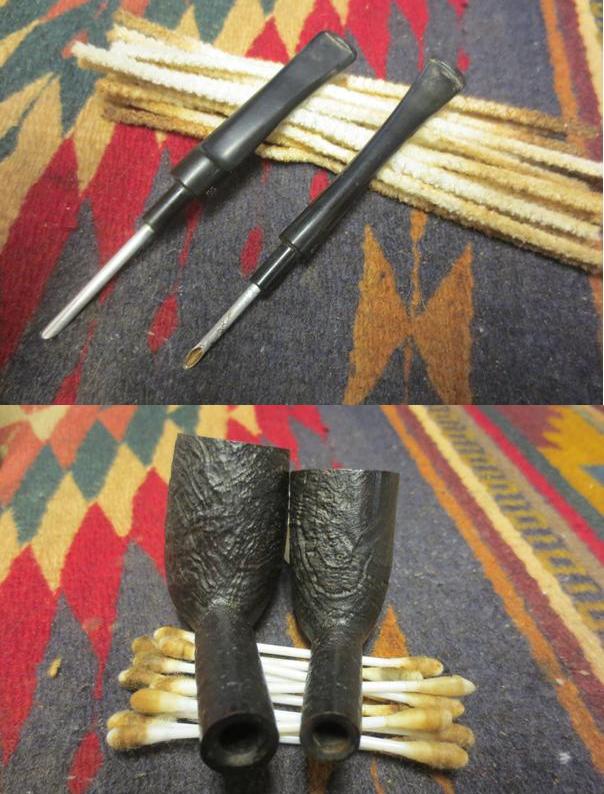 I sanded the tooth marks and chatter on the stems with 220 and 380 grit sandpaper and a medium grit sanding stick. I was able to remove all of the marks.
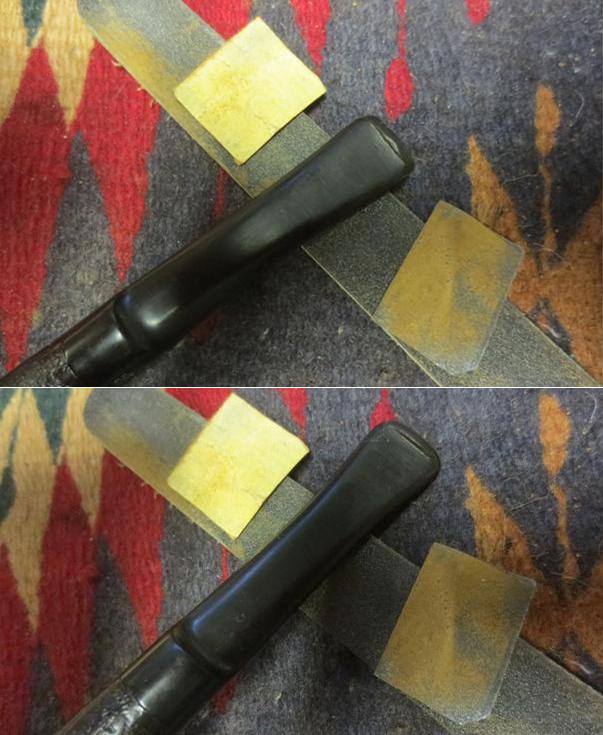 I wet sanded the stems with 1500-2400 grit micromesh sanding pads and rubbed them down with Obsidian Oil. I dry sanded the stems with 3200-4000 grit pads and gave them another coat of oil. I finished sanding them with 6000-12000 grit pads and gave them a final coat of Obsidian Oil and let them dry.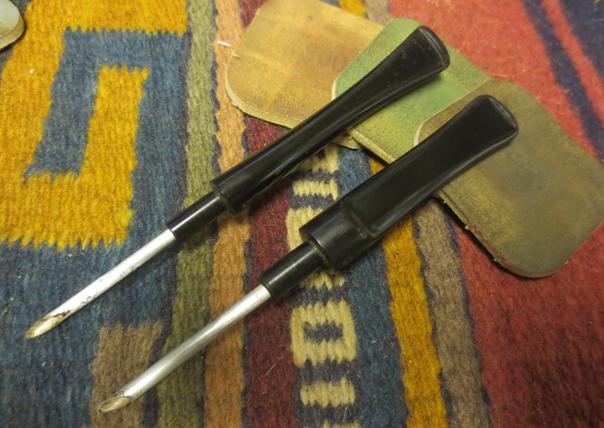
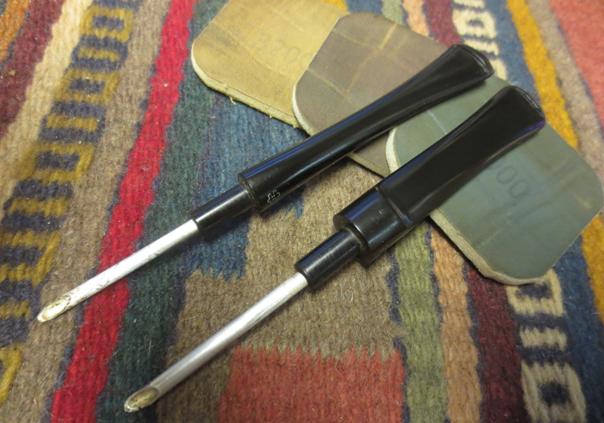
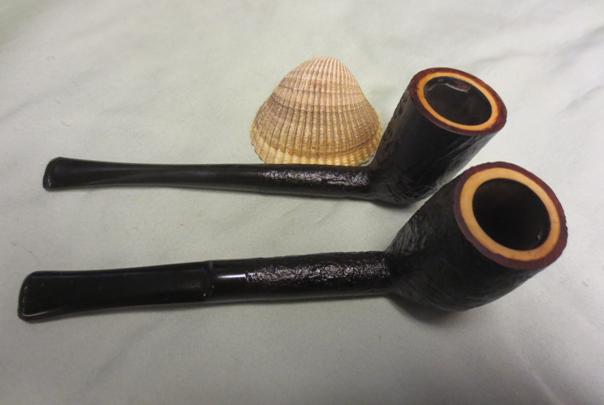
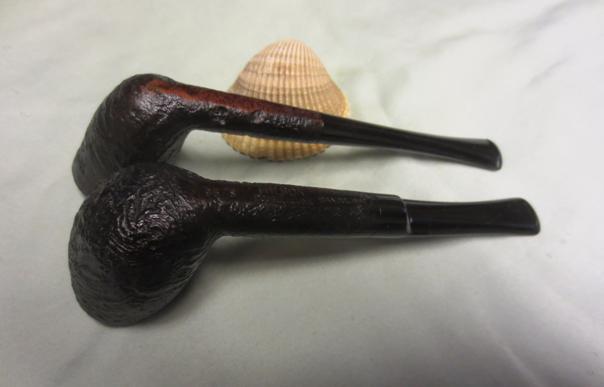
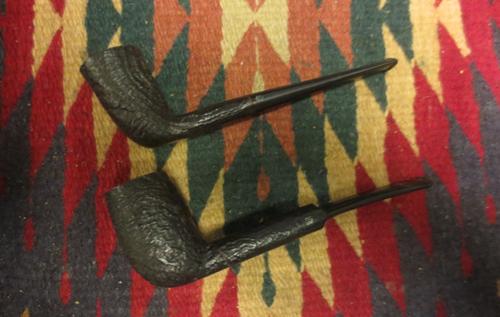
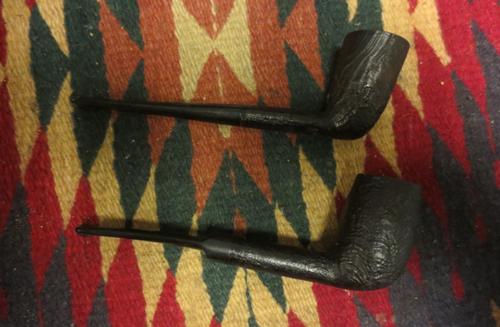
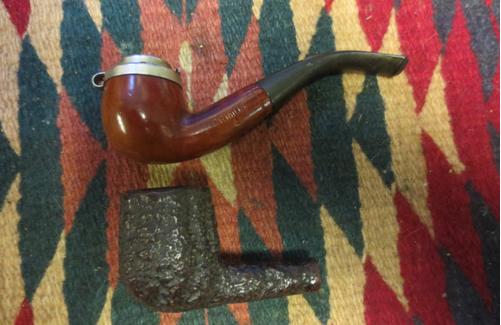
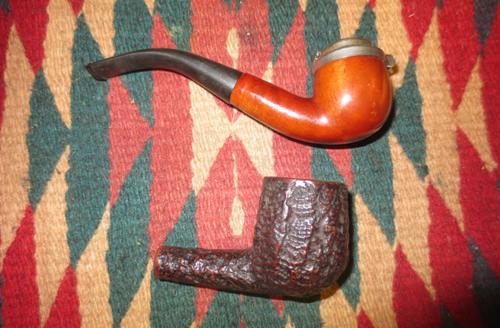
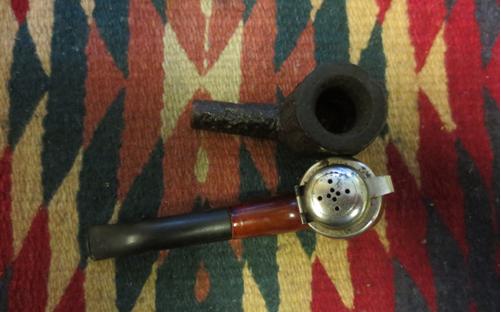
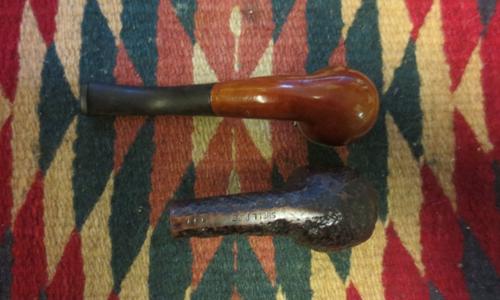
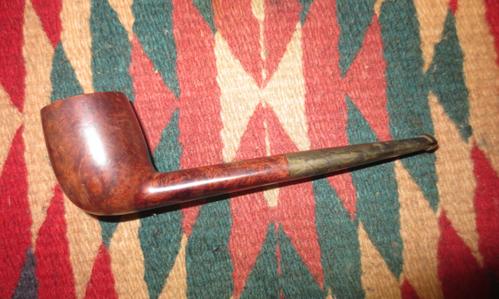
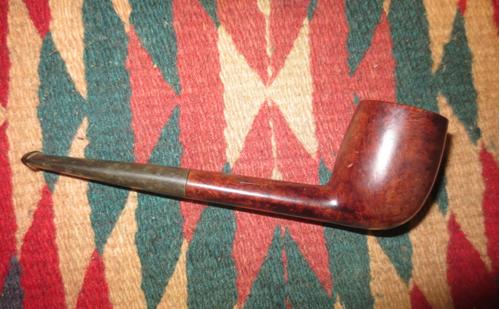
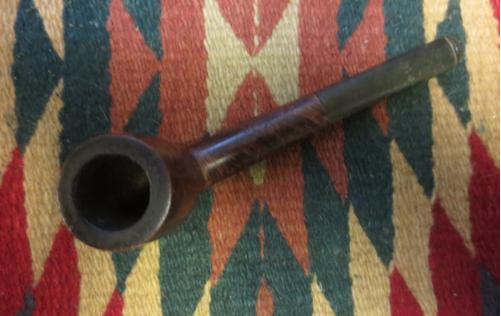
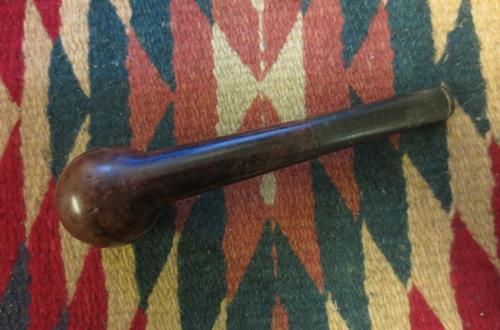
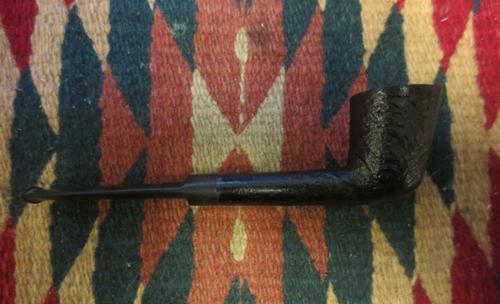
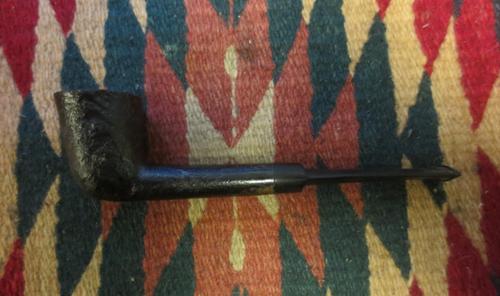
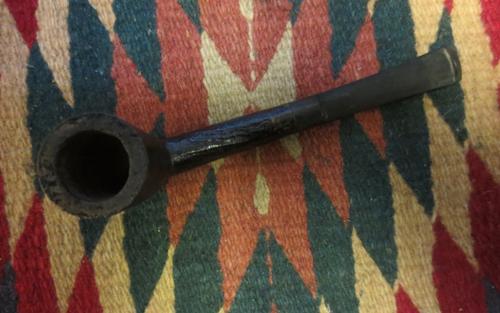
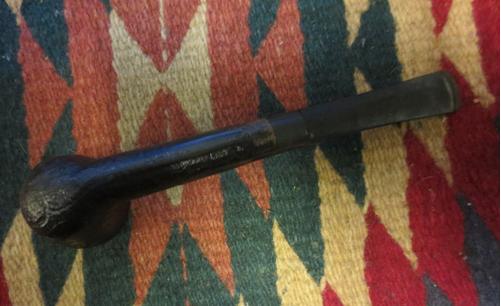
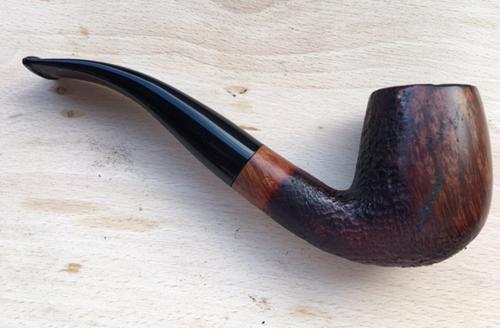
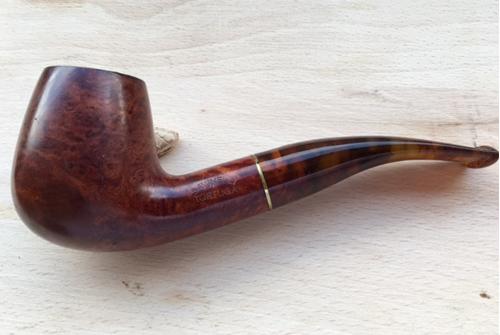
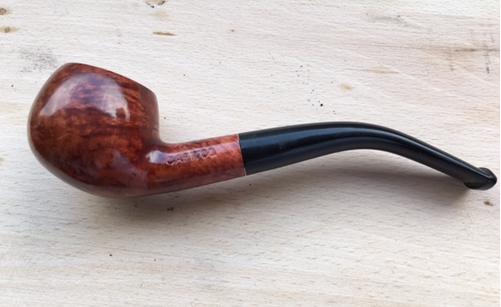
 I buffed the stems with Blue Diamond on the wheel and gave them both multiple coats of carnauba wax. I hand waxed the bowls with Conservator’s Wax and a shoe brush. I hand buffed both the bowls and stems with a microfibre cloth to add depth to the shine. The finished pair of Hilsons is shown in the photos below. They are a beautiful set of pipes and serve as a reminder of my recent Paris trip. Thanks for looking.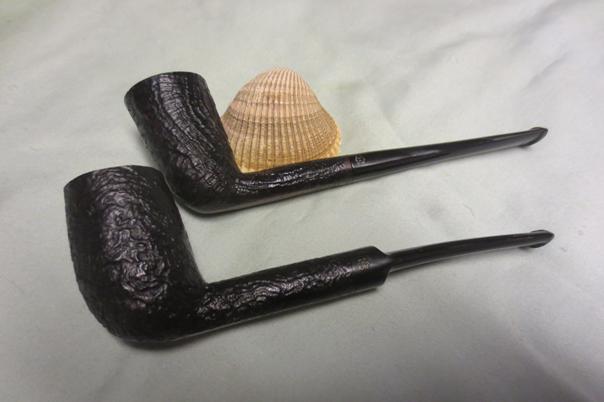




 rebornpipes