
Blog by Steve Laug
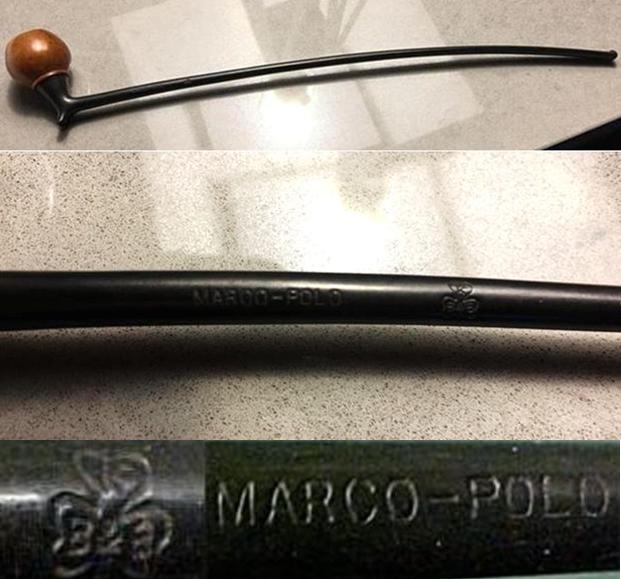
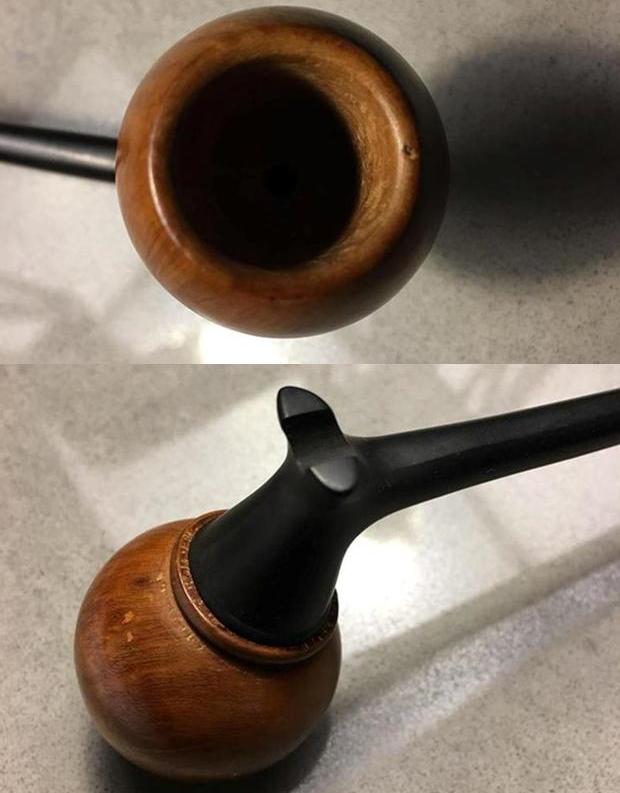
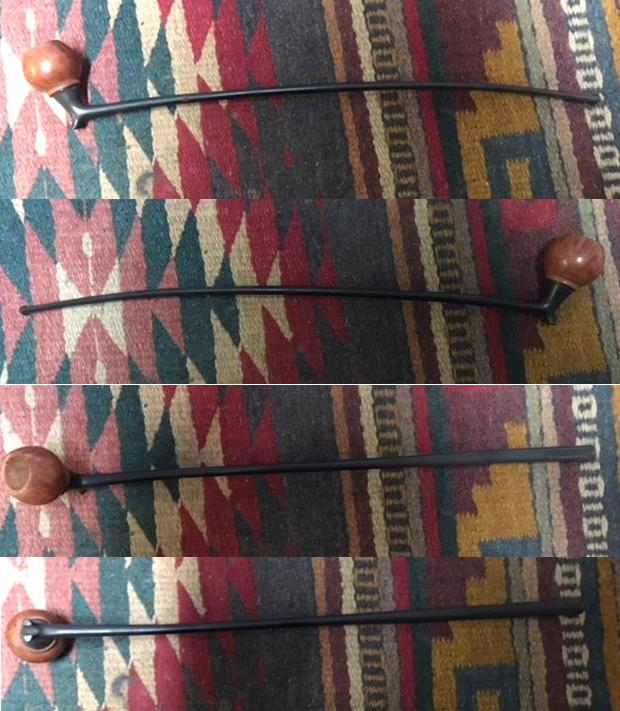
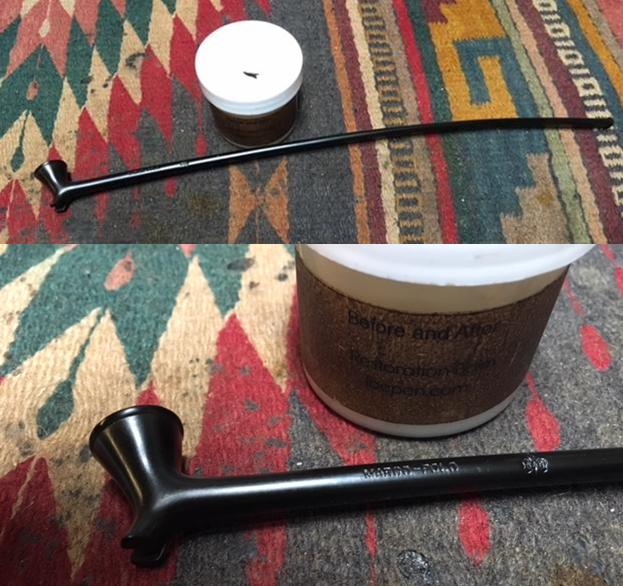
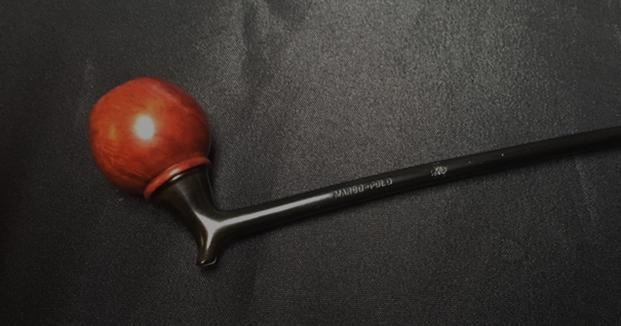
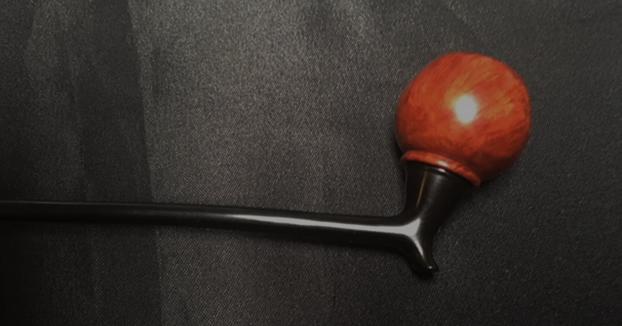
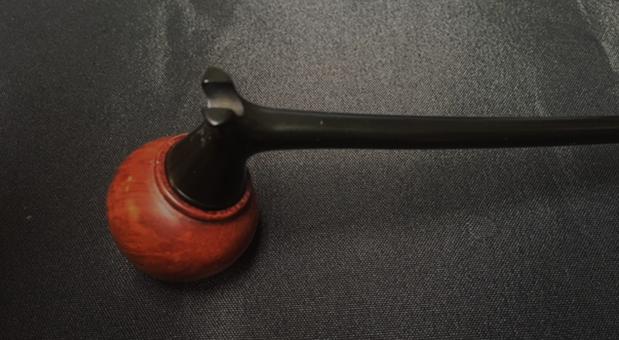
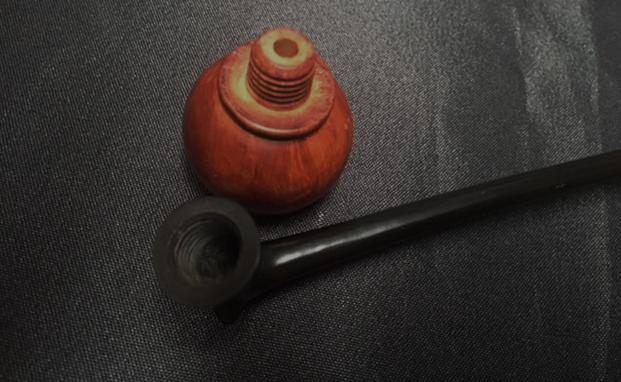
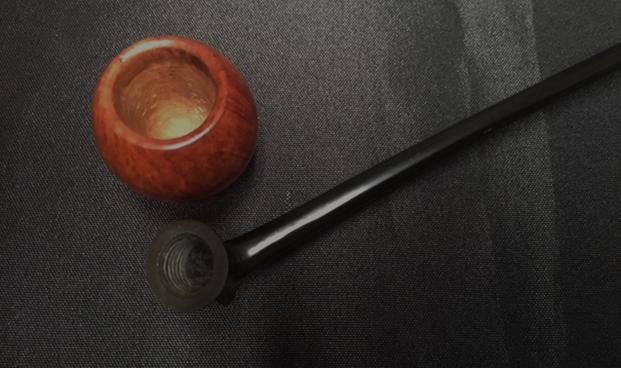
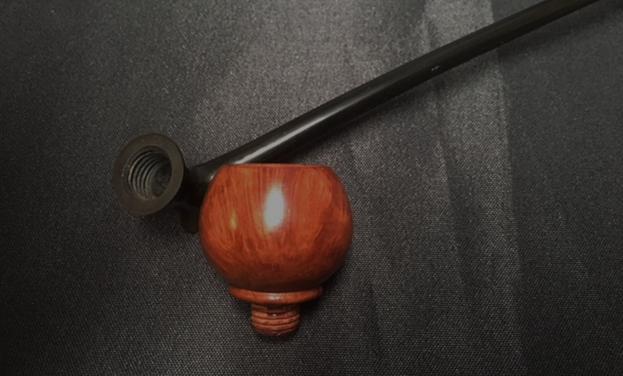
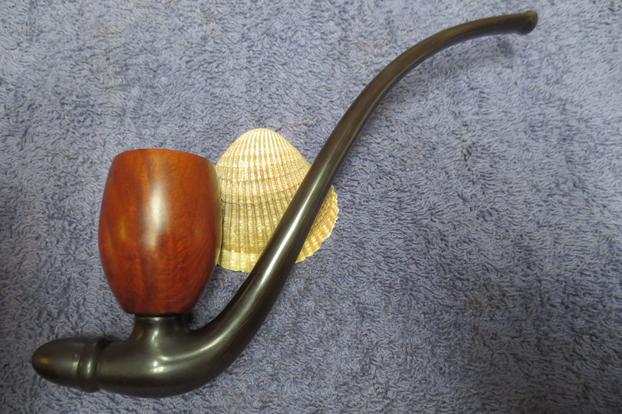
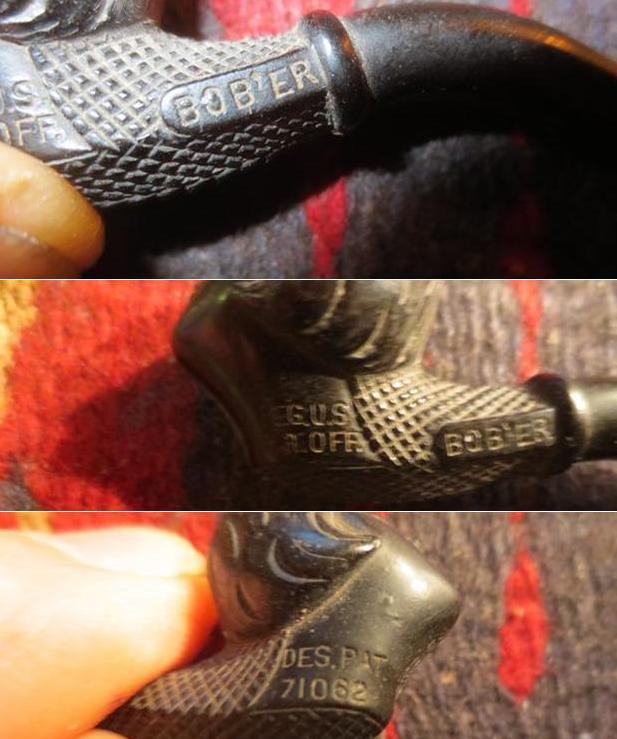
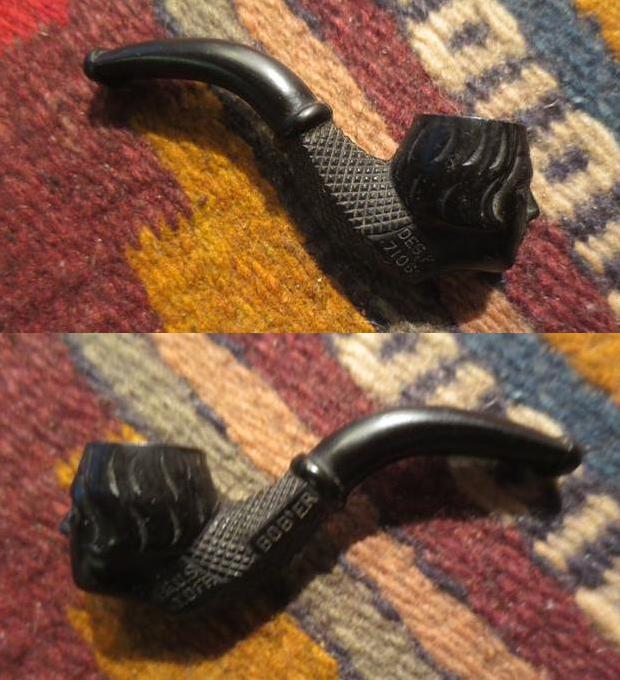
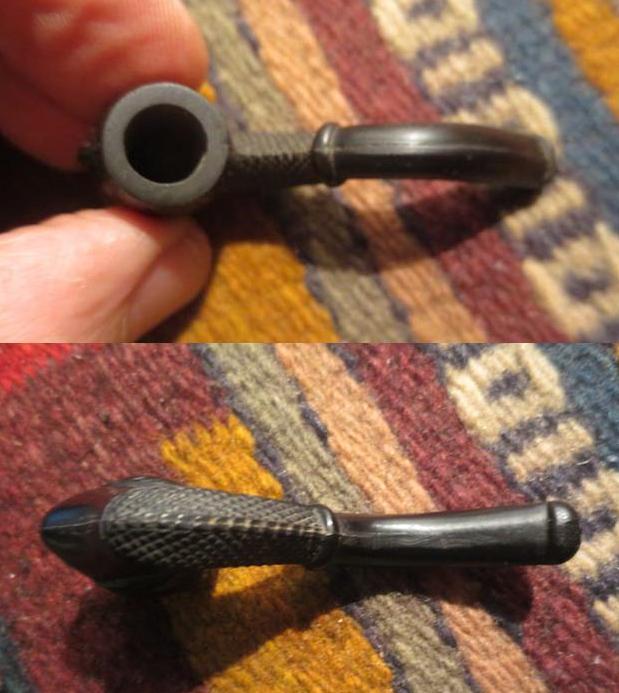
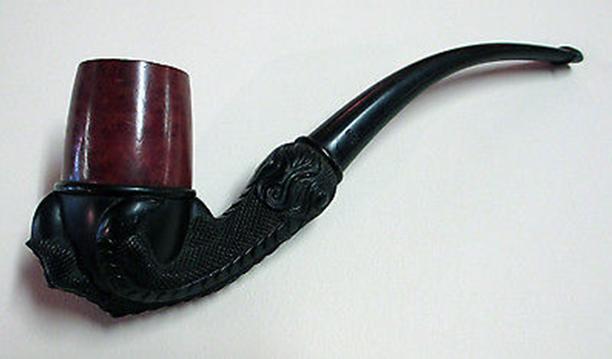
I have worked on quite a few Gutta Percha pipes over the years but for years had no idea what the material was. I had mistakenly called it Bakelite and other things until this past year when I was sent a suggestion. The pipe on the work table today came to me from my brother Jeff. Yet again he found an interesting pipe. It is made of that material and it is by far the longest pipe I have worked on. It is 13 inches long and 2 inches tall. The outer diameter of the bowl is 1 inch and the chamber diameter is 5/8 of an inch. The base and stem are Gutta Percha and the bowl is briar with a threaded nipple that screws into the base. The base is stamped on the left side of the shank near the bowl and reads MARCO-POLO followed by the KB&B cloverleaf logo. The pipe is NOS (New Old Stock) and thus is unsmoked. The bowl is pristine and the base and stem are very clean other than showing dullness from sitting around in the light since it was made. Jeff took the next photos to show what the pipe looked like when he received it.  Jeff took a close up photo of the top of the bowl and the underside of the base. The bowl had a rounded edge with a small flaw toward the front. It was clean of any debris other than the dust and dullness of time. The base is a funnel or cone shaped cup that takes the threaded nipple on the briar bowl. It has two feet on the bottom that allow it to stand on a table or desk top.
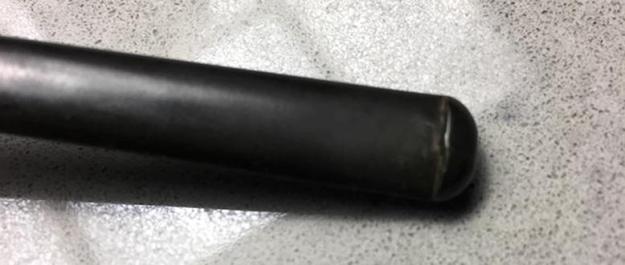
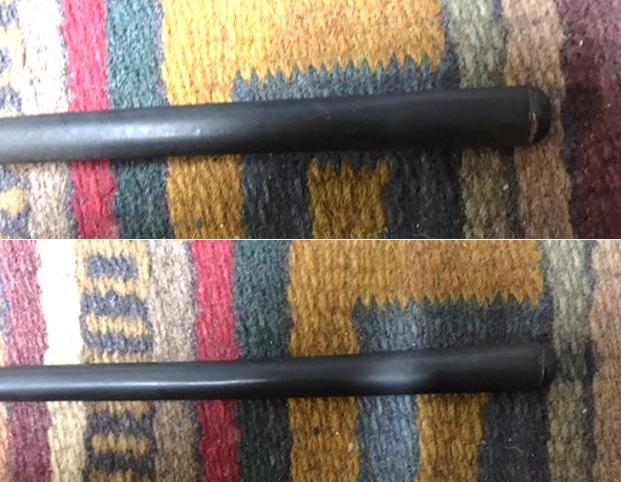
 The mouthpiece end of the base was very clean with no tooth marks or chatter. There was some dust in the sharp edge of the button and the edge was lightly damaged over time.
 I went back to the blog I did on Gutta Percha and have included the link and some of the material I gathered at that point. I thought it would helpful for you if the material is a new thing to you. (https://rebornpipes.com/2017/12/08/59256/). I quote from there in what follows:
That led me to do some research on the web to see what I could find out about the material. (Honestly, I don’t know what I would do without Google. I don’t know how I survived college and graduate school without it.) The first link I found and turned to was on Wikipedia (https://en.wikipedia.org/wiki/Gutta-percha). I quote large portions of that article below to set the base for understanding the material’s composition and origin.
Scientifically classified in 1843, it was found to be a useful natural thermoplastic. In 1851, 30,000 long cwt (1,500,000 kg) of gutta-percha was imported into Britain.
During the second half of the 19th century, gutta-percha was used for myriad domestic and industrial purposes, and it became a household word (emphasis mine). In particular, it was needed as insulation for underwater telegraph cables, which, according to author John Tully, led to unsustainable harvesting and a collapse of the supply.
According to Harvey Wickes Felter and John Uri Lloyd’s Endodontology: “Even long before Gutta-percha was introduced into the western world, it was used in a less processed form by the natives of the Malaysian archipelago for making knife handles, walking sticks and other purposes. The first European to discover this material was John Tradescant, who collected it in the Far East in 1656. He named this material “Mazer wood”. Dr. William Montgomerie, a medical officer in Indian service, introduced gutta-percha into practical use in the West. He was the first to appreciate the potential of this material in medicine, and he was awarded the gold medal by the Royal Society of Arts, London in 1843.”
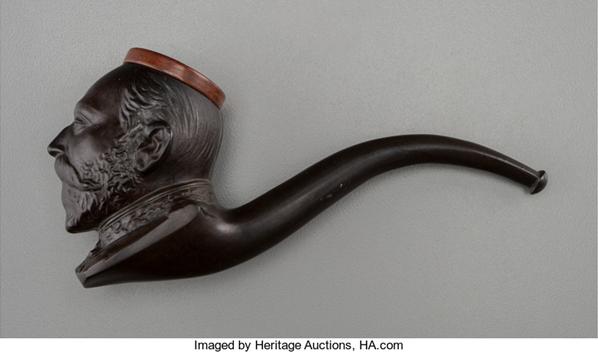
…In the mid-19th century, gutta-percha was also used to make furniture, notably by the Gutta-Percha Company (established in 1847). Several of these ornate, revival-style pieces were shown at the 1851 Great Exhibition in Hyde Park, London. When hot it could be moulded into furniture, decorations or utensils (emphasis mine).
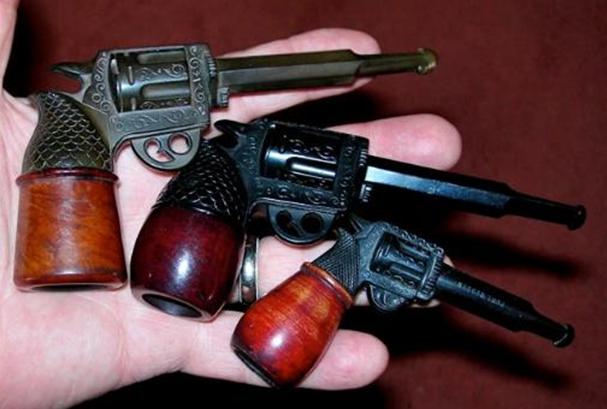
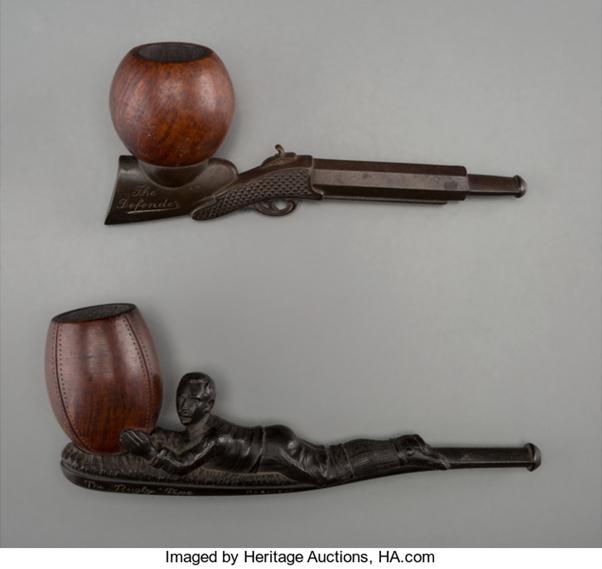
It was also used to make “mourning” jewelry, because it was dark in color and could be easily molded into beads or other shapes (emphasis mine). Pistol hand grips and rifle shoulder pads were also made from gutta-percha, since it was hard and durable, though it fell into disuse when plastics such as Bakelite became available (emphasis mine). Gutta-percha found use in canes and walking sticks, as well.
The material was adopted for other applications. The “guttie” golf ball (which had a solid gutta-percha core) revolutionized the game. Gutta-percha remained an industrial staple well into the 20th Century, when it was gradually replaced with superior (generally synthetic) materials, though a similar and cheaper natural material called balatá is often used in gutta-percha’s place. The two materials are almost identical, and balatá is often called gutta-balatá.
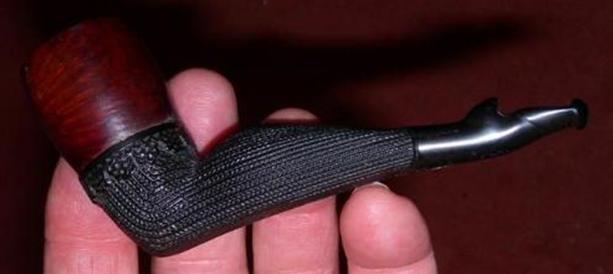
I thought it would be good to refresh my thinking on the stamping of KB&B pipes and how it can help get a relative date on a particular pipe. I did a blog on that and quote part of that now. https://rebornpipes.com/tag/dating-kbb-and-kbb-pipes/. The KBB and KB&B stamping on these old timers is stamped in a cloverleaf on the side or top of the shank of the briar pipes. In more recent years the KBB and KB&B stamping is no longer present. Kaufmann Brothers and Bondy was the oldest pipe company in the USA, established in 1851. The Club Logo predated Kaywoodie with the “KB&B” lettering stamped within the Club, and a multitude of KB&B lines were in production long before “Kaywoodie” first appeared in 1919. I have several of these old timers including a Borlum that was made before Kaywoodie became the flagship name for pipes from Kaufman Brothers & Bondy (KB&B)… That information helps date pre-1919 KB&B pipes. There is still a long history following that for which I wanted further information.
I found the Marco-Polo pipe listed on the pipephil site (http://www.pipephil.eu/logos/en/logo-kbb.html). The site says that the KB&B Clover Logo was discontinued in the 1930s. When Kaywoodie took over the line in 1919 the Kaywoodie name was often added to the stamping. So I can safely assume that pipe was made before the Kaywoodie name was added. That would make it pre-1919 or at least in the first few years following the acquisition by Kaywoodie.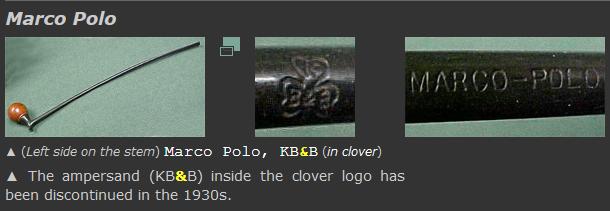 I took photos of the pipe after my brother had done his simple and thorough clean up on the pipe. It looked really good when it arrived. The Gutta Percha was dull and needed to be polished and the briar bowl was dull as well. Nothing that a little polishing would not change.
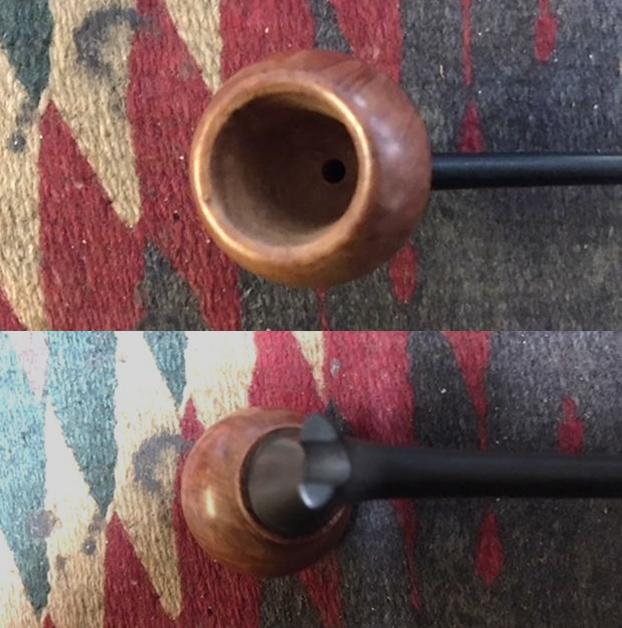
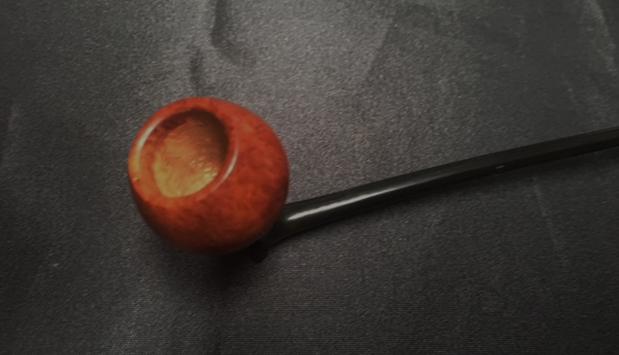
 I took some close up photos of the bowl to show the grain on the sides and interior of the bowl. The final photo shows the underside with the pair of feet that allows the pipe to stand on a table top.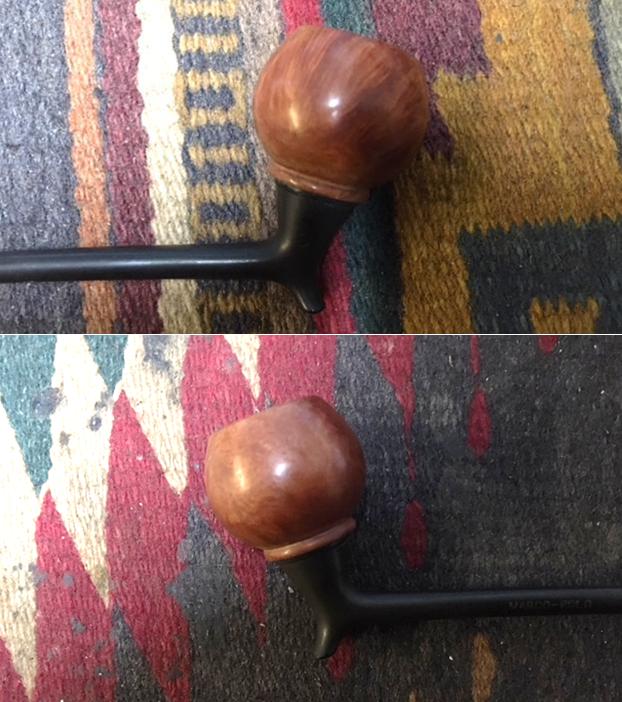
 The stem end of the base was also dull but did not have tooth chatter or marks which matched the unsmoked bowl and confirmed the NOS designation that I gave the pipe above.
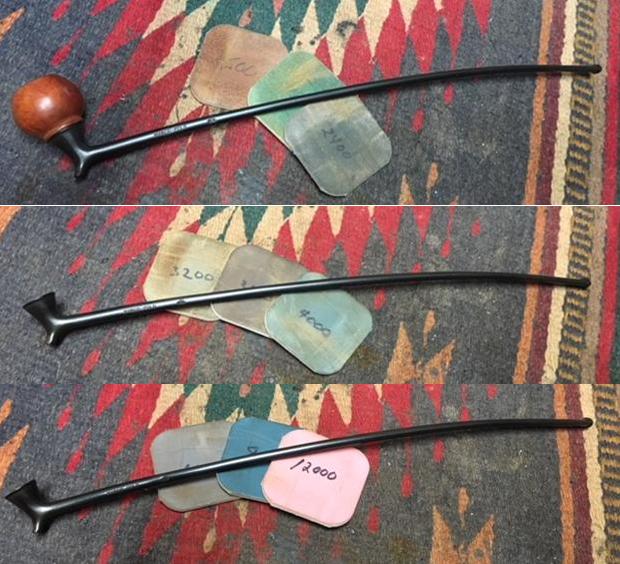
 I started the polishing of the Gutta Percha base and stem with micromesh sanding pads – wet sanding with 1500-2400 and dry sanding with 3200-12000 grit pads. I wiped the stem down after each pad with Obsidian Oil and after the last pad set the base aside to dry.
 I rubbed some Before & After Restoration Balm into the stem and base and let it sit for a little while. Then I buffed it off with a soft cloth. The Gutta Percha really started to take on a shine at this point in the process.
 I rubbed the bowl down with Before & After Restoration Balm to clean, enliven and protect the briar bowl. I rubbed into the threads on the nipple with a cotton swab and let it site for a few moments. I buffed the balm off with a soft cotton cloth the photos below show the bowl at this point in the process.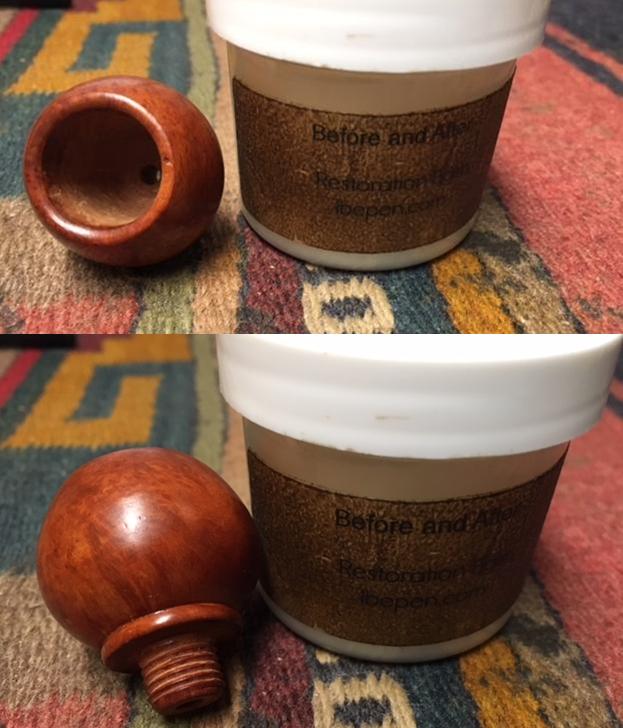
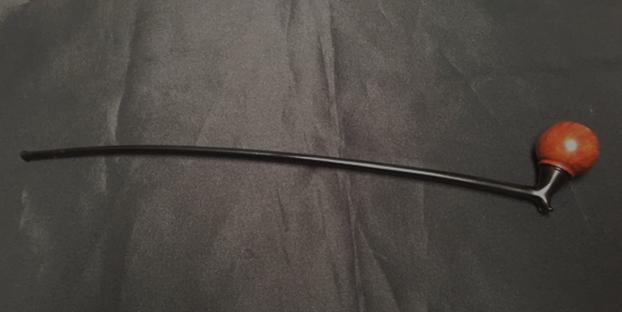
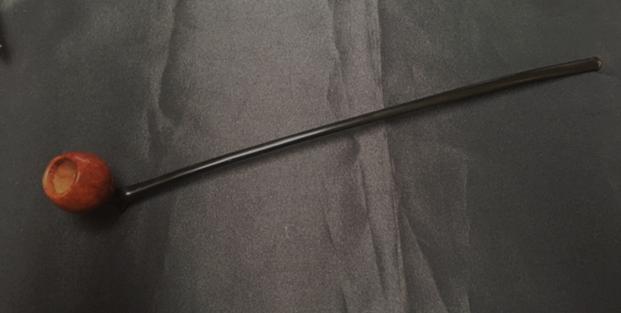
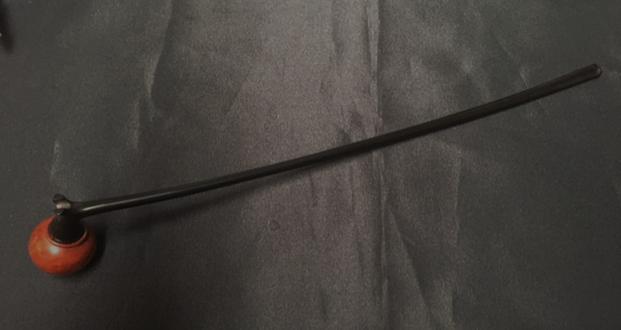
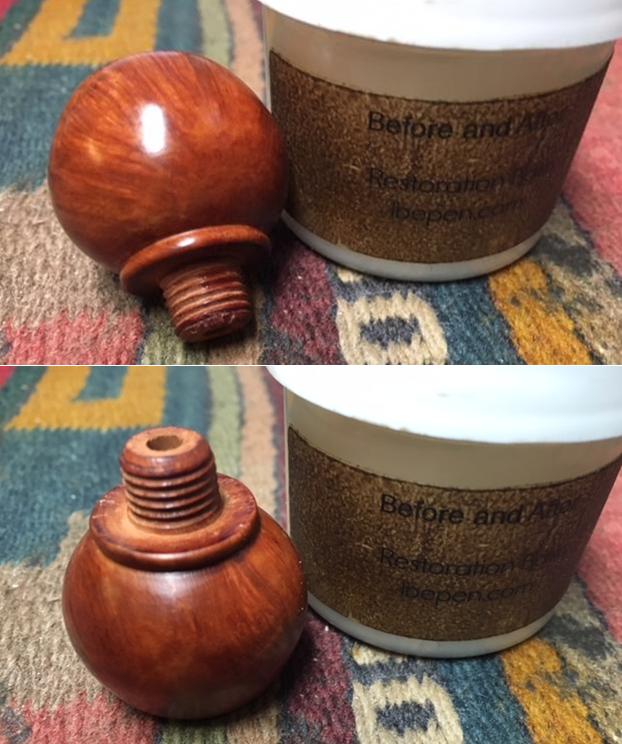 I buffed the bowl and stem separately using Blue Diamond on the buffing wheel. I gave both multiple coats of carnauba wax and buffed each with a clean buffing pad to raise the shine. I put the pipe back together and hand buffed it with a microfiber cloth to deepen the shine. The following photos show the completed pipe. It is really a beauty – quite delicate looking but comfortable in the hand and mouth. It was an interesting piece to work on and probably one I won’t see very often. Thanks for walking through the restoration with me.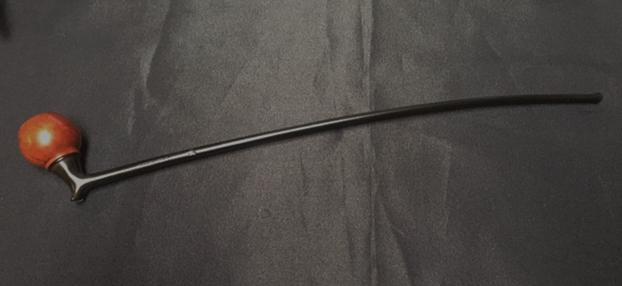
 rebornpipes