
by Steve Laug
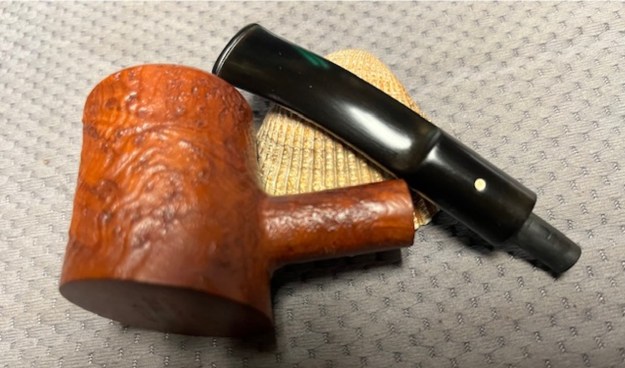
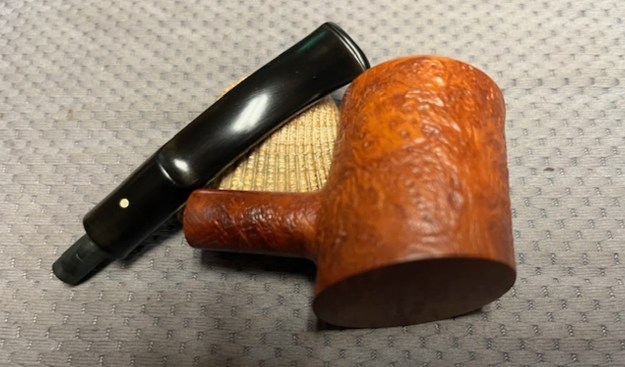
The next pipe on the table is another one that came to us from the seller in Caldwell, Idaho, USA on 07/12/2025. It is a Dunhill Tanshell Cherrywood with a vulcanite saddle stem. It is in good condition as can be seen in the photos below. It is stamped on a smooth heel of the bowl and reads 6475 F/T [over] Dunhill Tanshell [over] Made in England11 [over] circle 4T. The stamping is clear and readable. The pipe has rich Tan and Brown stains on a Shell sandblast finish and some amazing grain that the shape follows well. The finish was dusty and lightly dirty with grime in the nooks and crannies of the sandblast. The bowl had a moderate cake and there was tobacco debris in the bowl. The rim top had a thick lava coat on the smooth crowned rim top and edges. The original white spot saddle stem is dirty and oxidized. It had a white Delrin replacement tenon that seemed to be loose. I took photos of the pipe to show what it looked like before I started working on it. 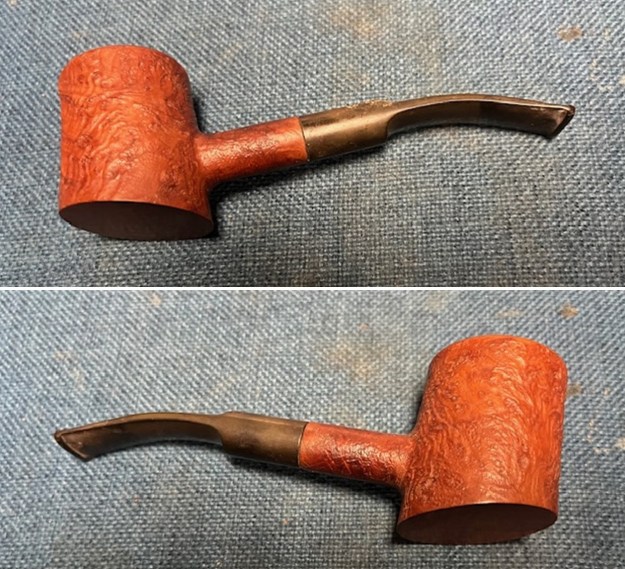
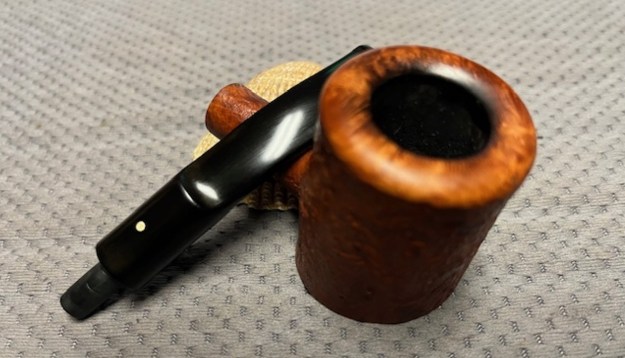
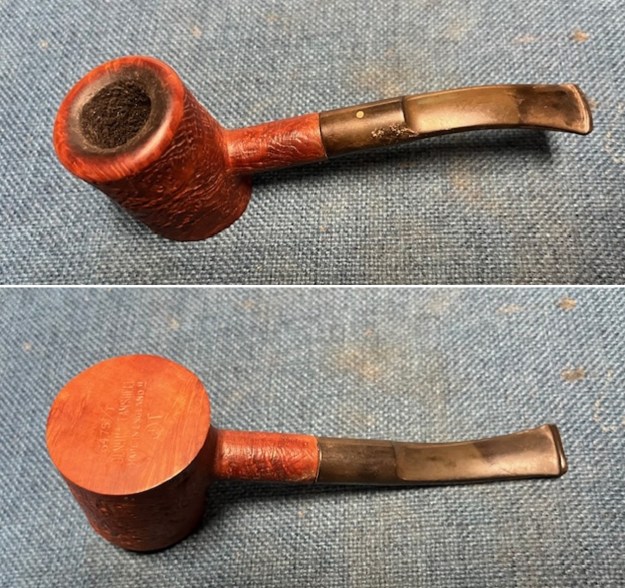 I took photos of the bowl and rim top to show the thickness of the cake and the lava coat on the rim top. There was some tobacco debris in the bottom of the bowl. The stem photos show the condition of the saddle stem ahead of the button.
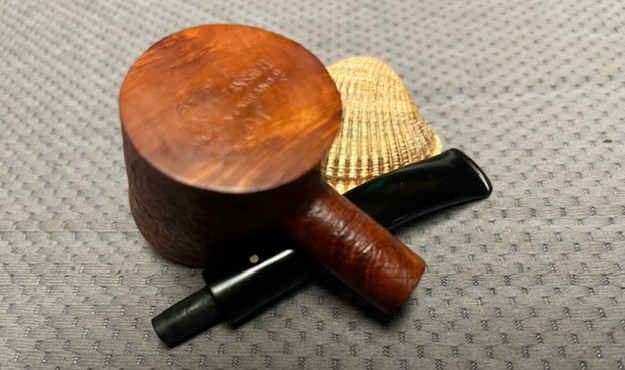
 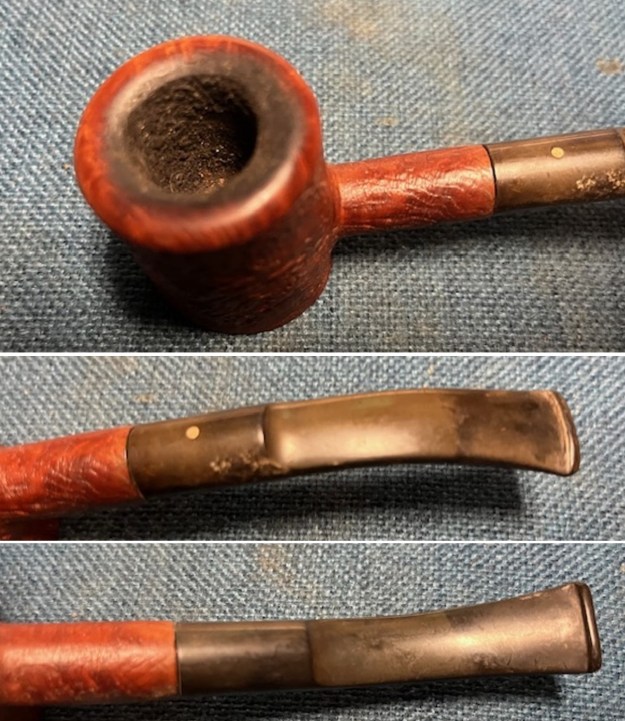 The stamping on the heel of the bowl is clear and readable as noted above. I took a photo of the pipe with the stem removed to give a sense of the proportions of the pipe. It is a real beauty.
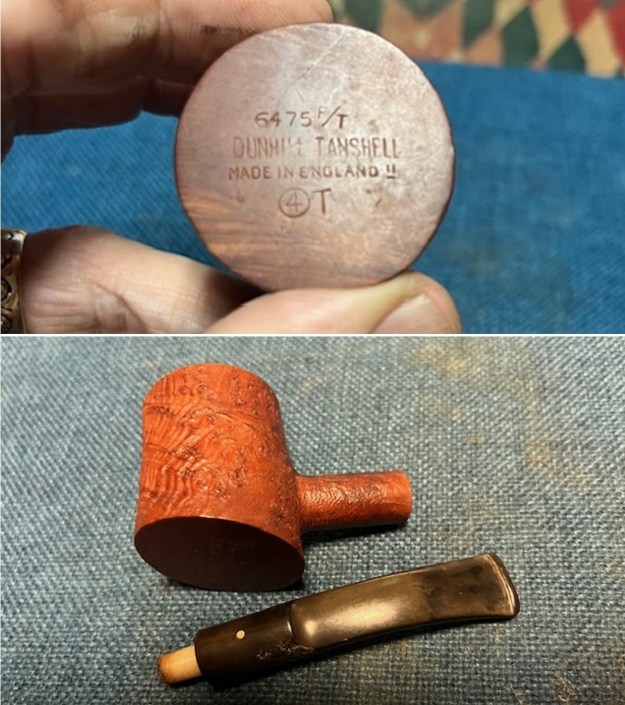 One of the first things I like to do is to unpack the stamping and understand each element in it. I turned to Pipephill helpful site (http://pipephil.eu/logos/en/dunhill/shell-briar1.html). The stamping is interpreted as follows: The F/T is the stamp for a fishtail type stem. The Dunhill Tanshell is the finish. Following the Made In England11 gives the year that the pipe was made. The four digit shape number is a bit of a mystery.
I turned to Pipedia’s shape charts on Dunhills (https://pipedia.org/wiki/Dunhill_Shape_Chart). I quote what was written there and have included the shape charts from the site.
The standard catalog currently encompasses thirty-five distinct shapes, each designated by a two-digit numerical code. From time to time, however, the inherent characteristics of a particular piece of briar lend themselves to the creation of a form that exists outside this established repertoire. These unique, non-standard shapes are collectively referred to by the term “Quaint”. The modern four-digit identification system has been successfully in place for more than three decades, serving Dunhill, its commercial partners, and its clientele with proven efficacy.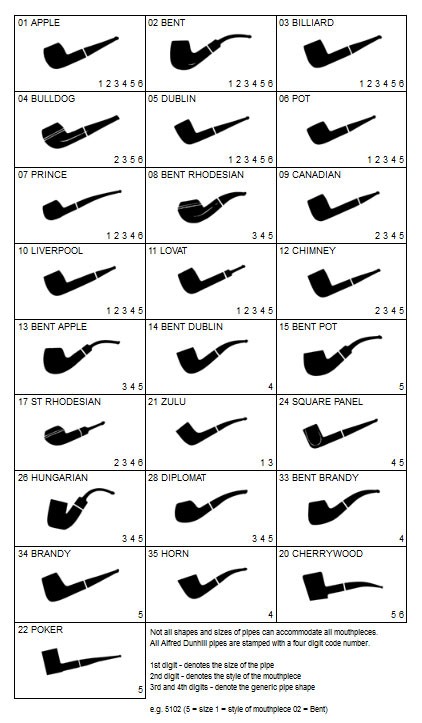 From the above information I could see that I was working on a Cherrywood shaped pipe but the shape number above did not match that. The chart shows that the Cherrywood was a 20 but there is no 20 number on the pipe I am working on. From there I turned to the next chart on the site which gave a digit by digit breakdown of the shape number. I include the chart below and then underneath I give the break down on the number.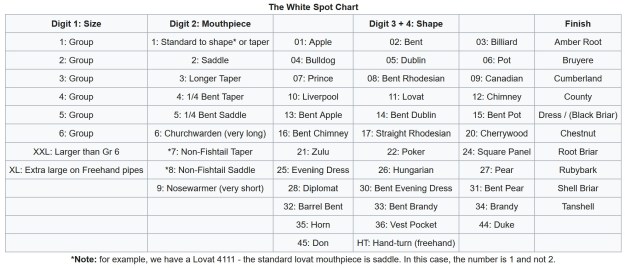
- The shape number of the pipe is 6475F/T using the chart above here is what the numbers tell us.
- The first digit 6 is the group size of the pipe making it a large Group6.
- The second digit 4 is the mouth piece which in this case is a ¼ bent taper but the pipe I am working on is a ¼ bent saddle stem which should be a number 5.
- The third + fourth digit 75 which does not match anything on the chart above. Even the shape number on the first chart above identifies a Cherrywood as a 20.
From there I turned to another link on Pipedia which gave shape numbers and names on the pipes (https://pipedia.org/wiki/Dunhill_Shapes_List). The site listed that the shape I have in hand is one know as a Group 6 size 475 which is known as a Friendly.
6475 Friendly (=475?) 4 5½” 1950, 1969
From there I wanted to pin down the date stamp 11. I have included the chart below for you to follow (http://www.pipephil.eu/logos/en/dunhill/cledat-en1a.html). The second column is where the 2-year suffix fits. To arrive at the date the suffix 11 is added to 1960 making the pipe a 1971 Tanshell Cherrywood with a saddle stem – a Dunhill Friendly.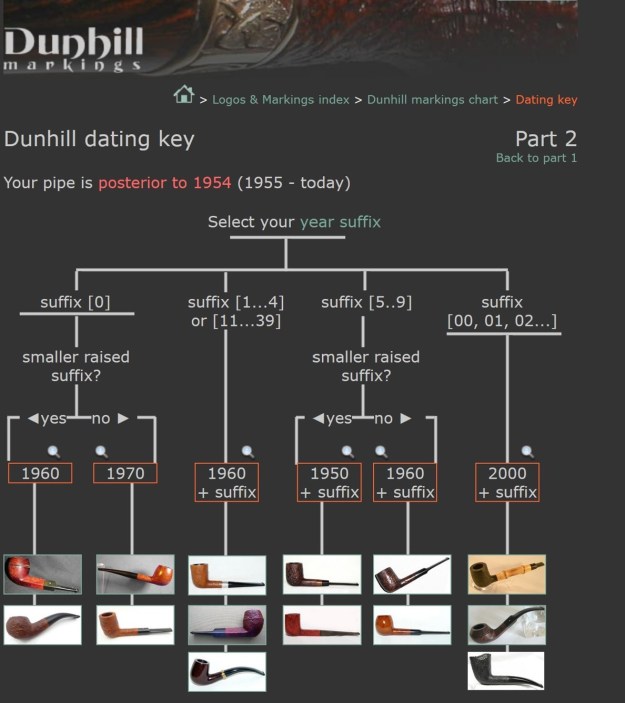 I also am including a link to a similar pipe in the shape number 475 on the blog that is very similar to the one I am working on.
https://rebornpipes.com/2018/11/09/restoring-an-amazing-1963-dunhill-tanshell-cherrywood-475/
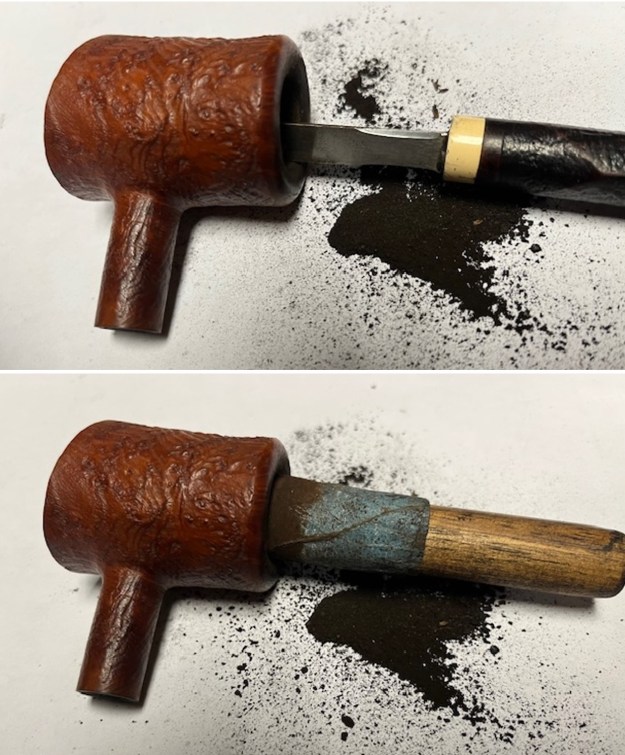
I turned to work on the pipe itself. I reamed the bowl with a PipNet pipe reamer using the cutting heads 2 and 3. I finished the reaming with a Savinelli Fitsall Pipe Knife. I sanded the walls of the bowl with 220 grit sandpaper wrapped around a piece of dowel.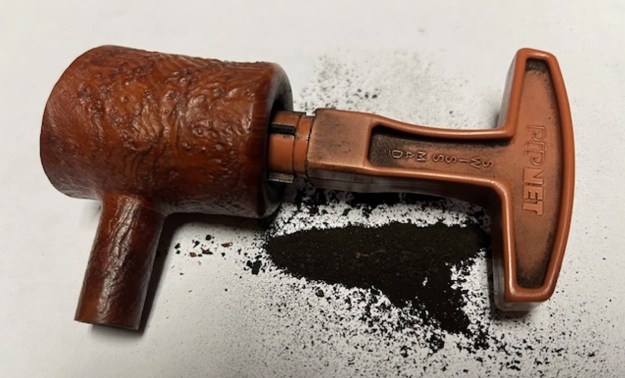
 I scrubbed the bowl and shank with a tooth brush and some undiluted Murphy’s Oil Soap. I rinsed it off with warm water to remove the dust and soap from the finish. I dried it off with a soft cloth and it looked much better.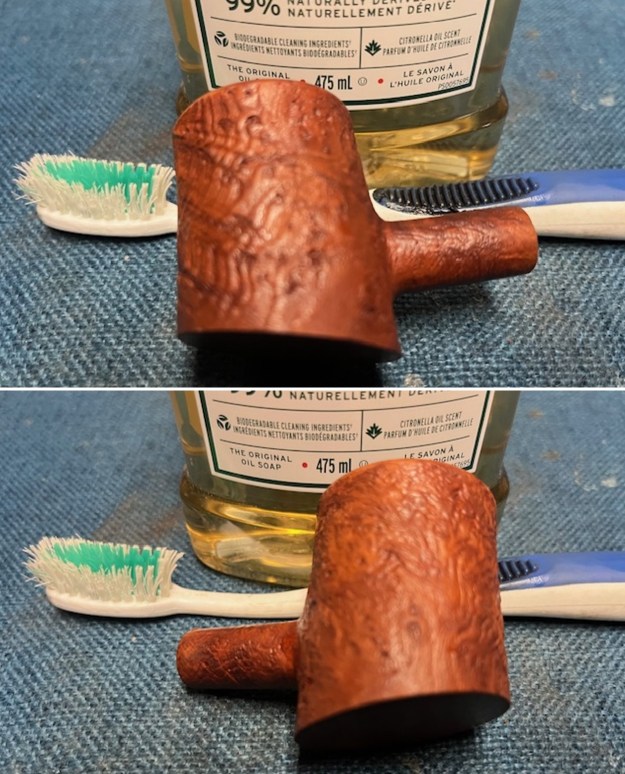
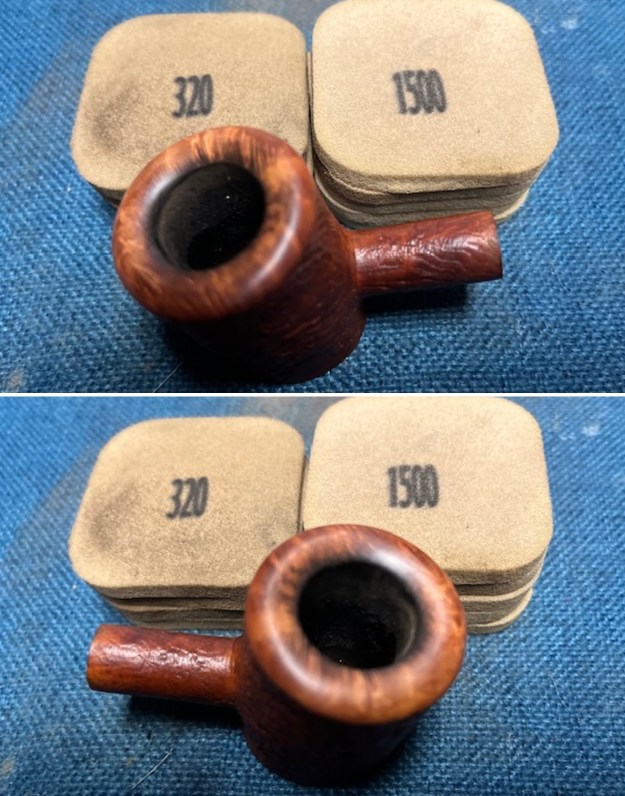
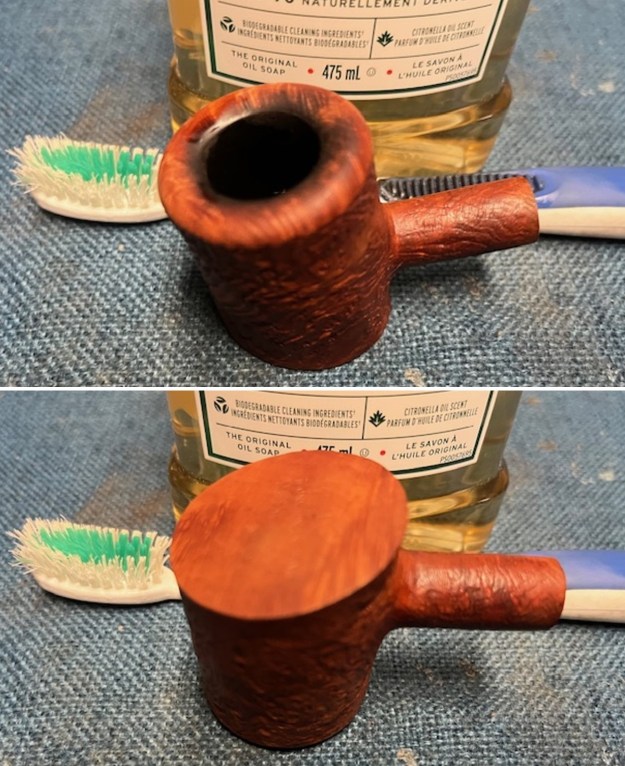 I worked over the rim top with 320-3500 grit 2×2 inch sanding pads. I wiped the rim top down with a damp cloth after each sanding pad. The crowned smooth rim top looks good.
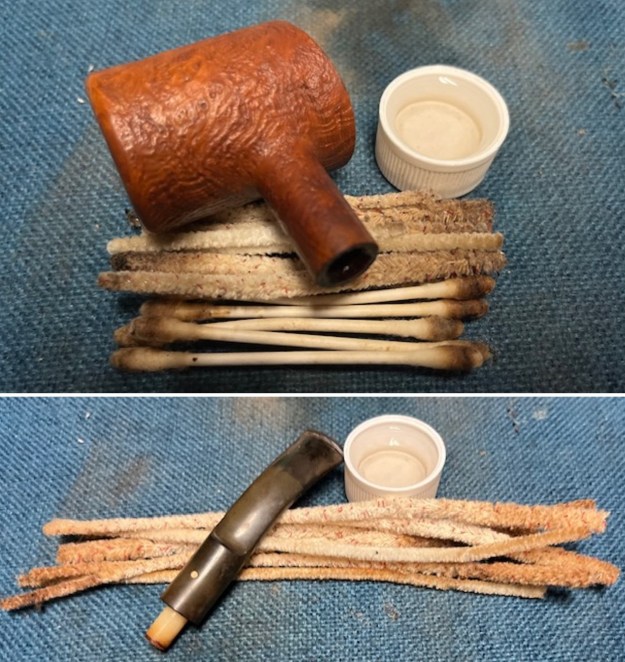
 I cleaned out the inside of the shank and the airway in the stem with alcohol, cotton swabs and both bristle and regular pipe cleaners.
 I rubbed the briar down with Before & After Restoration Balm. I worked it into the briar with my fingertips and a horsehair shoe brush to work it into the nooks and crannies of the sandblast finish. The product works to clean, enliven and preserve the briar. I let it sit for 10 minutes then I buffed it with a cotton cloth to deepen the shine. The briar really comes alive with the balm.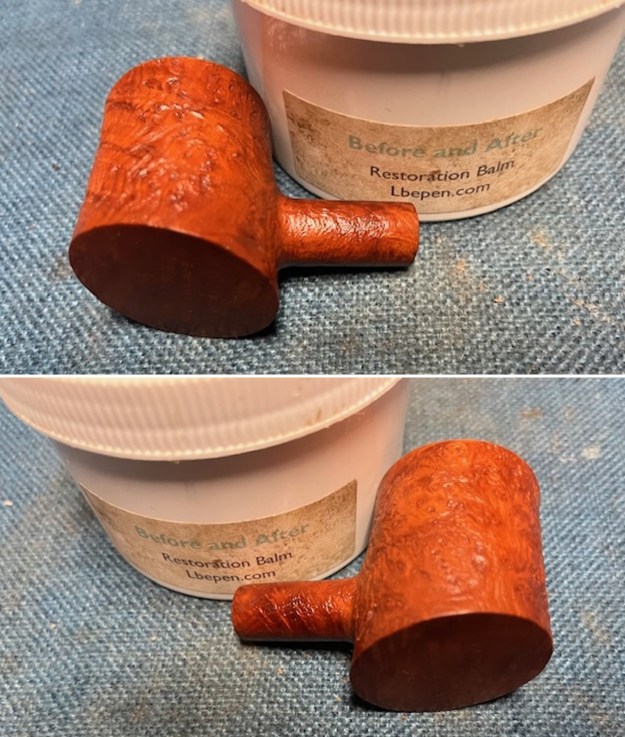
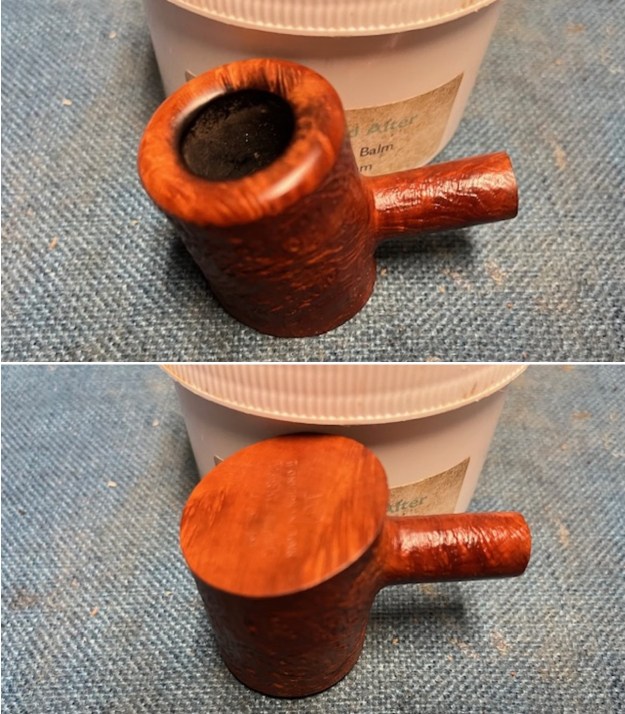
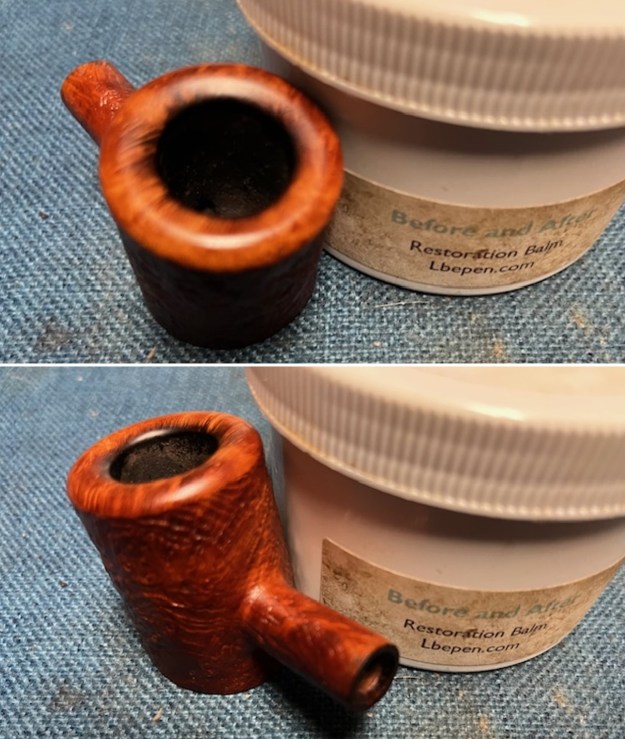 I set the bowl aside and worked on the stem. I sanded the oxidation and the tooth marks and chatter with 220 grit sandpaper. I was able to remove all of the tooth damage on the stem and the majority of the oxidation.
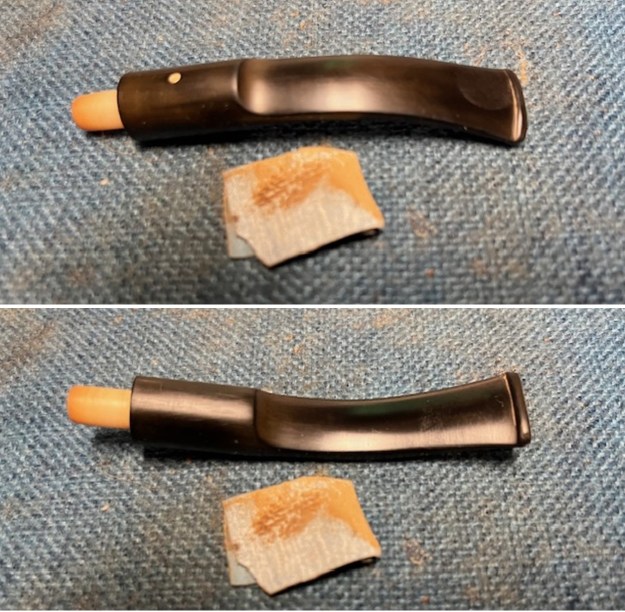 While I was working on the stem the white acrylic replacement tenon came out in my hand. It had not been glued in place in the stem so it easily slipped out. This was actually great because I wanted to replace it with a black tenon. I went through my Delrin tenons and found one that was perfect and looked more like the original. I fit it in the shank and to make sure it all fit together correctly.
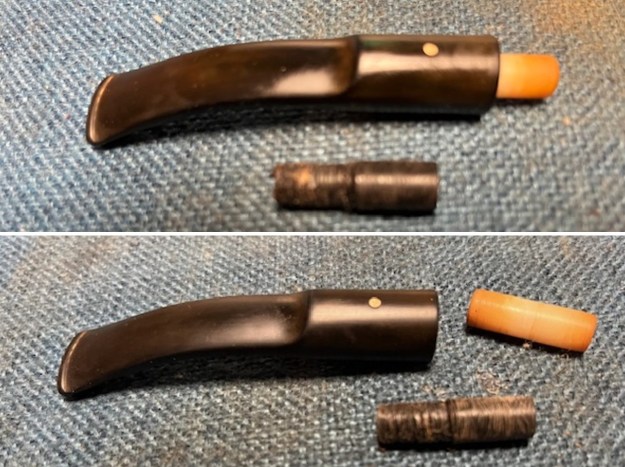 I glued the new tenon in place in the stem with Black CA Glue. Once the glue set on the tenon I worked over the tenon surface with a flat file and 220 grit sandpaper to get a snug fit in the shank. I wiped down the stem and tenon with some Obsidian Oil and it began to look very good.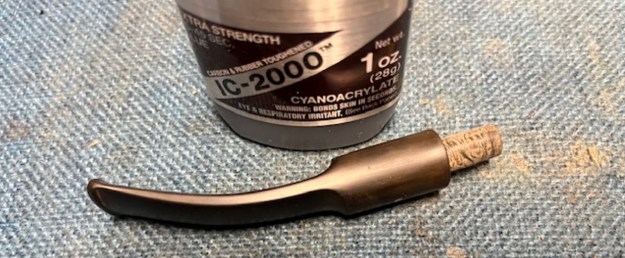
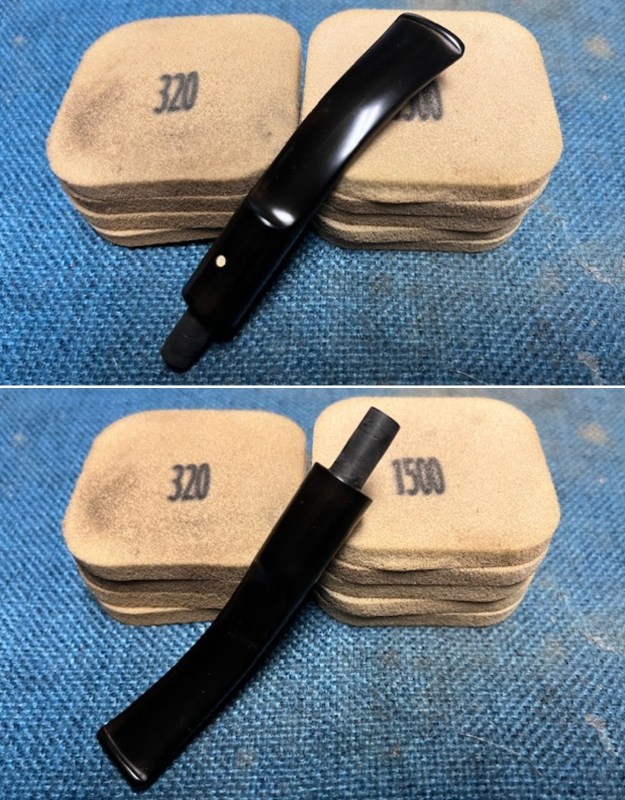
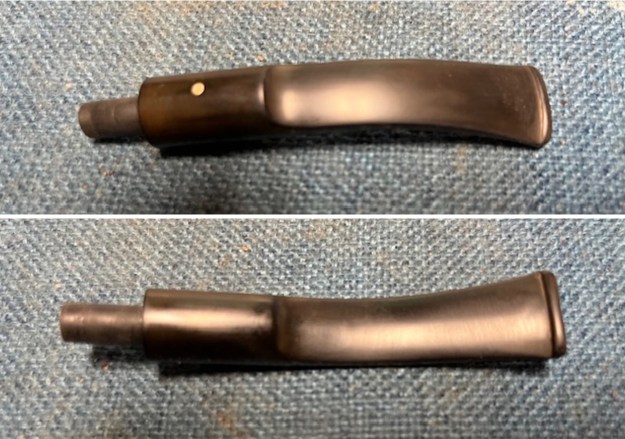 I sanded the stem and tenon surface with 320-3500 grit 2×2 inch pads. I wiped the stem down with an Obsidian Oil cloth after each sanding pad.
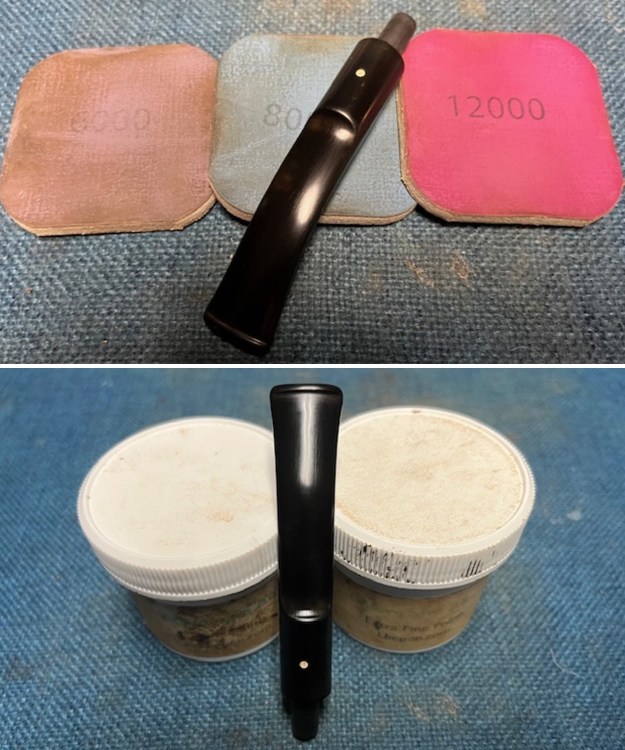
 I polished the vulcanite with micromesh sanding pads – 1500-12000 grit pads. I wiped it down with Obsidian Oil after each sanding pad. I used Before & After Pipe Polish – both Fine and Extra Fine to further polish the stem.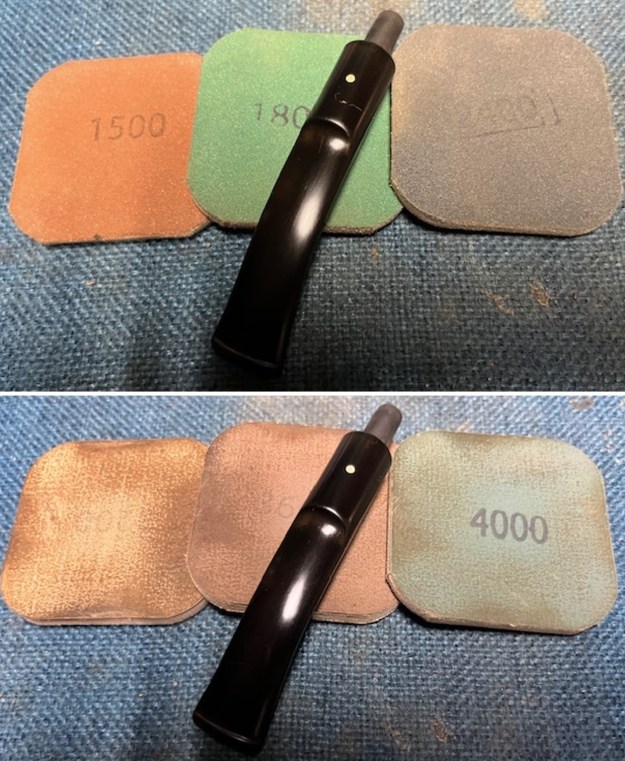
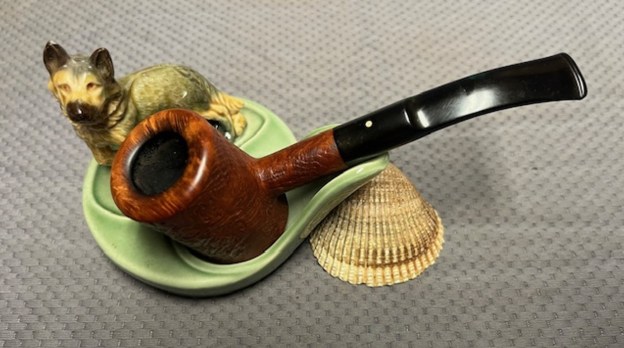
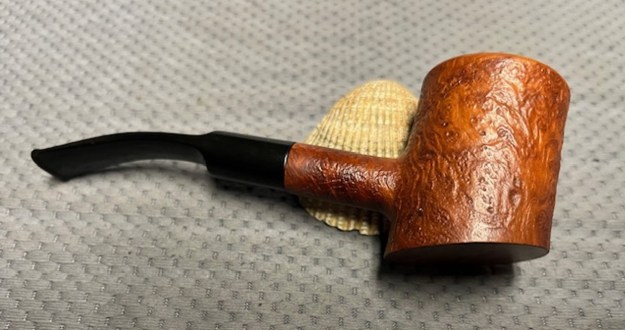
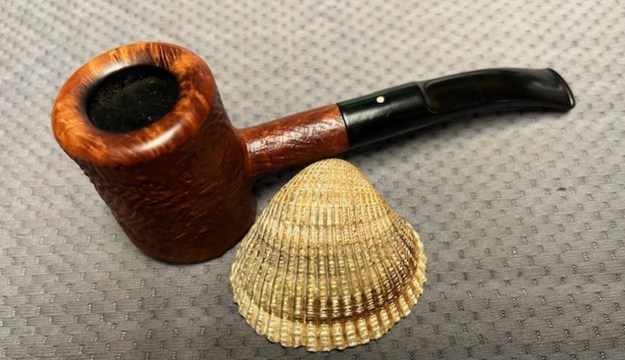
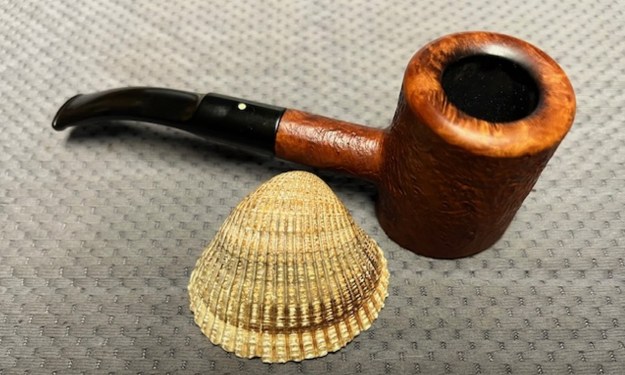
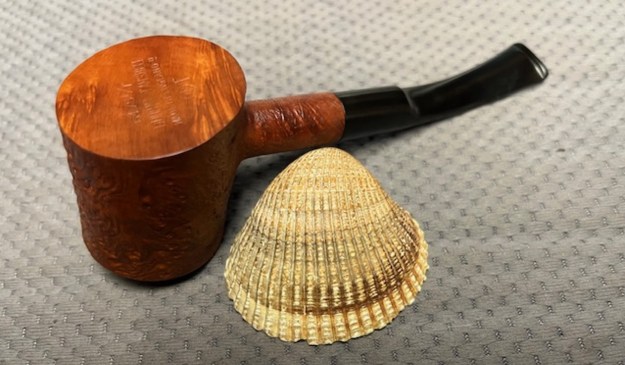
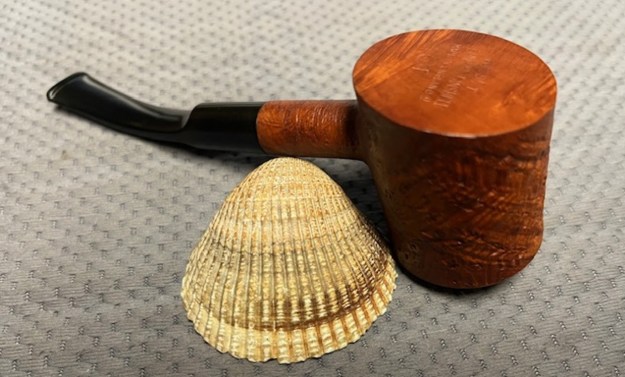
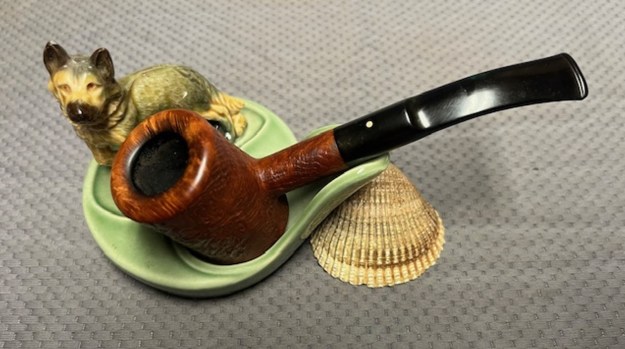
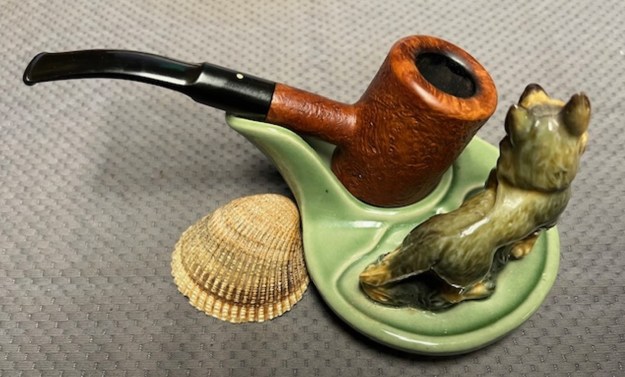
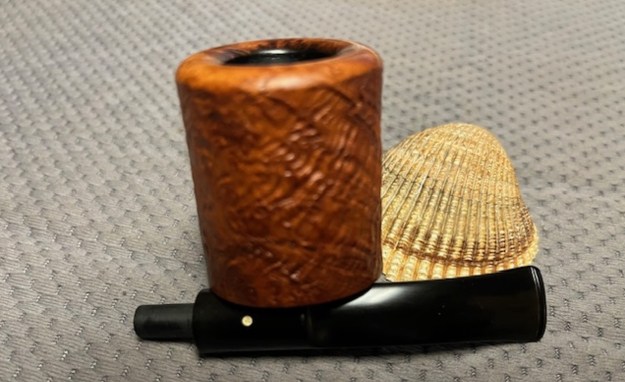
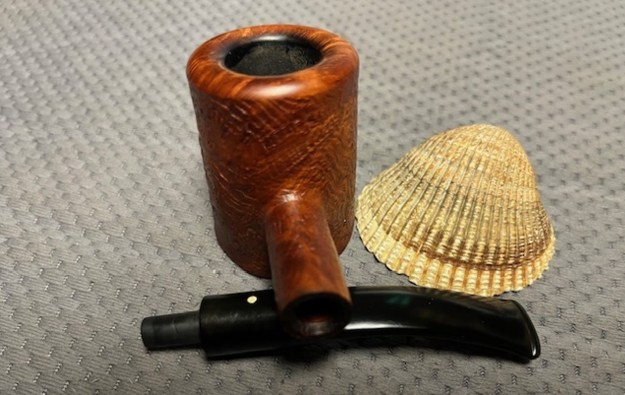
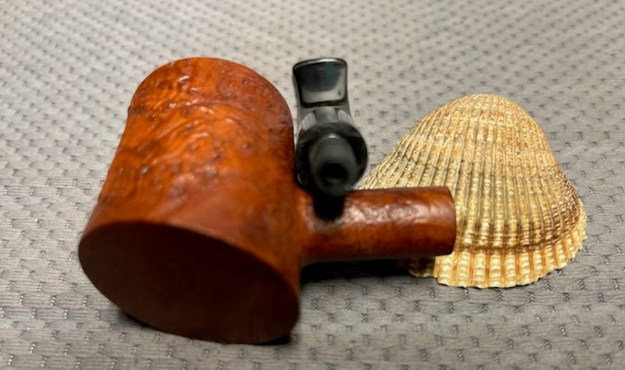
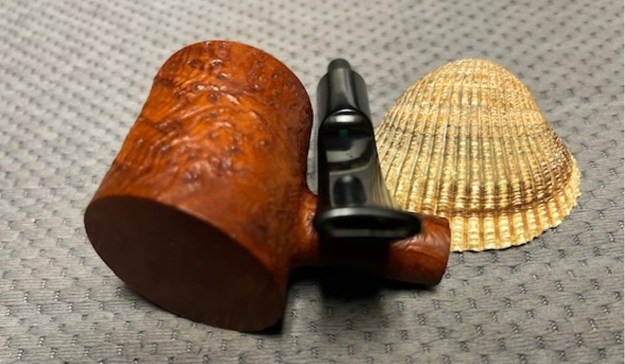
 I the polished stem and the smooth portions of the Cherrywood bowl with Blue Diamond to polish out the remaining small scratches and raise the shine. I gave the stem several coats of carnauba wax and the bowl several coats of Conservator’s Wax then buffed the pipe with a clean buffing pad to raise the shine. I hand buffed it with a microfiber cloth to deepen the shine. The pipe polished up pretty nicely. This turned out to be a beautiful Dunhill Tanshell 6475F/T Cherrywood Friendly. The finished pipe is shown in the photos below. The dimensions are Length: 5 ½ inches, Height: 1 ¾ inches, Outside diameter of the bowl: 1 ½ inches, Chamber diameter: ¾ of an inch. The weight of the pipe is 1.48 ounces/42 grams. Thanks for walking through the restoration with me as I worked this beautiful little Dunhill sandblast. I will be putting it on the rebornpipes store in the British Pipe Maker Section soon. If you are interested in adding it to your collection let me know. Thanks for looking.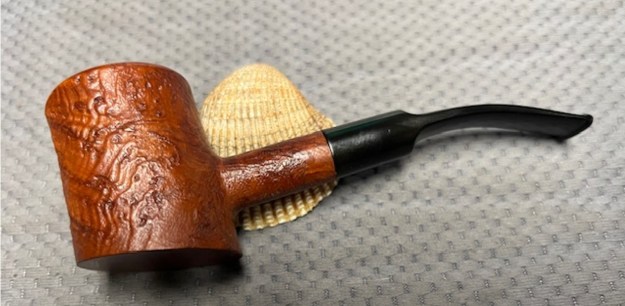
 rebornpipes