
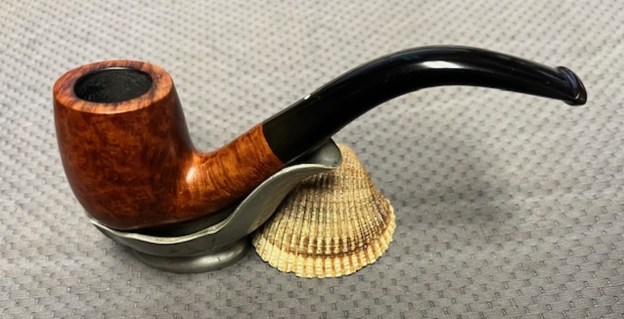
by Steve Laug
The next pipe on the table is another one that came to us from the seller in Caldwell, Idaho, USA on 07/12/2025. It is a Dunhill Root Briar Bent Billiard with a vulcanite taper stem. It is in dirty but in good condition as can be seen in the photos below. It is stamped on the left side of the shank and reads 412 [followed by] Dunhill [over] Root Briar. On the right side it is stamped Made in England16. The stamping is clear and readable. The pipe has rich Root Briar Finish with a blend of brown stains on a richly grained smooth finish that the shape follows well. The finish was dusty and lightly dirty with grime ground into the finish. The bowl had a moderate cake and there was tobacco debris in the bowl. The rim top had a thick lava coat on the rim top and edges. The original white spot saddle stem is dirty and oxidized with light tooth marks and chatter on both sides. I took photos of the pipe to show what it looked like before I started working on it. 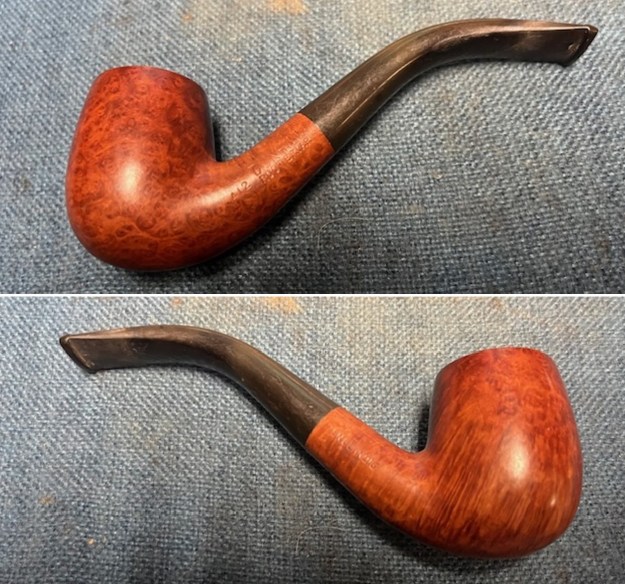
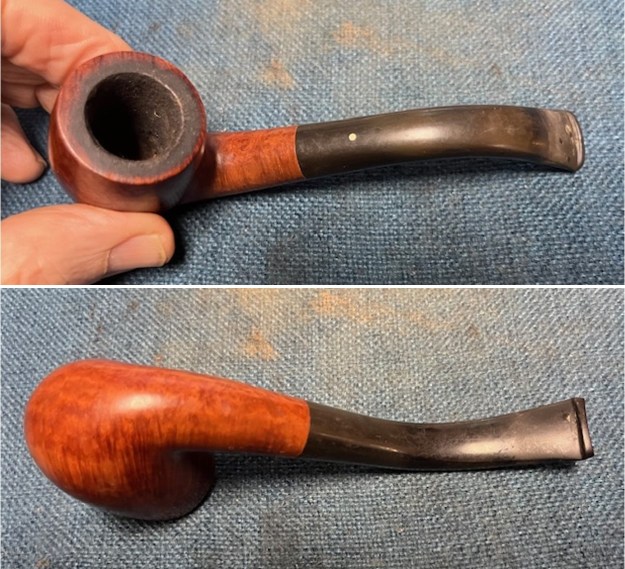 I took photos of the bowl and rim top to show the thickness of the cake and the lava coat on the rim top. There was some tobacco debris in the bottom of the bowl. The stem photos show the condition of the saddle stem ahead of the button.
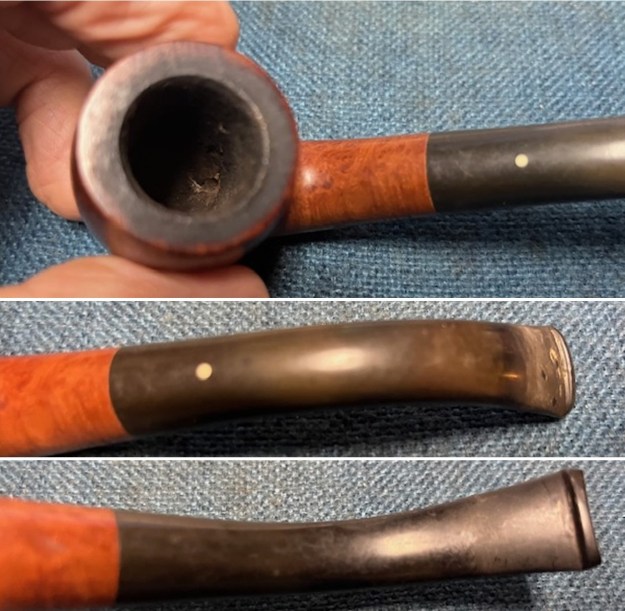 The stamping on the sides of the shank are clear and readable as noted above. I took a photo of the pipe with the stem removed to give a sense of the proportions of the pipe. It is a real beauty.
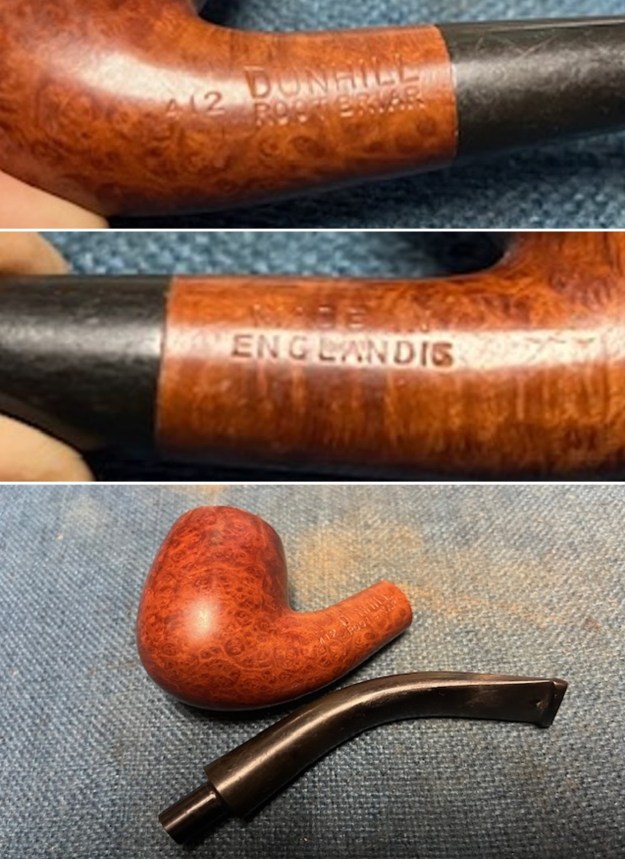 One of the first things I like to do is to unpack the stamping and understand each element in it. I turned to Pipephil’s helpful site (http://pipephil.eu/logos/en/dunhill/shell-briar1.html). The stamping is interpreted as follows: The 412 is the shape of the pipe which is a Bent Billiard. The Dunhill Root Briar is the finish. Following the Made In England16, the 16 gives the year that the pipe was made.
From there I wanted to pin down the date stamp 16. I have included Page 2 of the Dunhill Dating Key (http://www.pipephil.eu/logos/en/dunhill/cledat-en1a.html). Following that it takes me to the box with 1960+suffix. That tells me that the pipe is a 1976 pipe.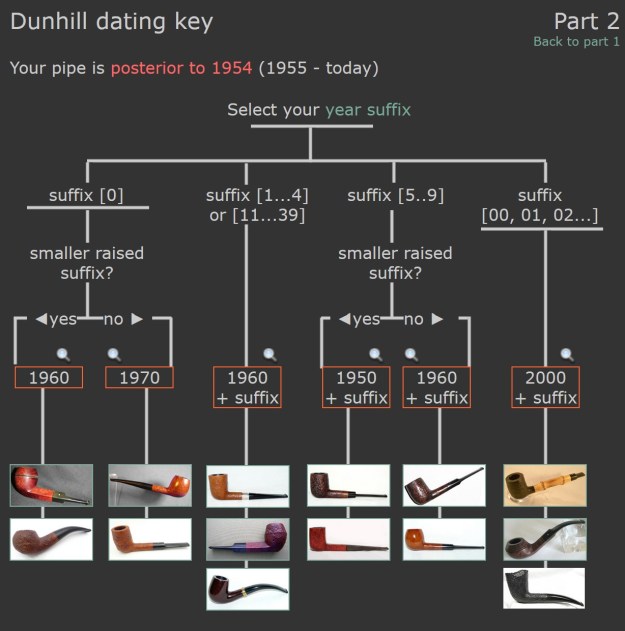 I wanted to know more about the Root Briar finish and when it was introduced by Dunhill. I turned to a listing on Pipedia that gave me the information I was looking for (https://pipedia.org/wiki/Dunhill).
Root Briar
Dunhill introduced its third major pipe finish, the Root Briar, in 1931. The new line was developed specifically to showcase briar with a particularly beautiful and pronounced grain. To this end, it was made exclusively from Corsican mountain briar, a wood characteristically prized for its fine grain, a practice that continued into the 1960s.
The pipe was finished with a light, natural stain to allow the beauty of the wood to show through. A particularly distinctive feature of the early Root Briar was its unique mouthpiece — a marble-grained, brown vulcanite bit — that became known to collectors as the ‘bowling ball’ bit. This style, however, was discontinued with the onset of the Second World War.
Because the Root Briar finish requires a perfectly clean bowl with exceptional graining, it has always been one of Dunhill’s rarer and more expensive lines, typically available only at the company’s own stores or through its principal dealers. Its nomenclature was identical to that of the Bruyère, except for the use of an ‘R’ stamp instead of an ‘A’. Straight-grained versions were graded on various scales over the years, evolving into the modern ‘DR’ one-to-six-star system.[122][123]
Now I knew that I was working on a Dunhill Root Briar 412 Bent Billiard with a Taper Stem that was made in 1976.
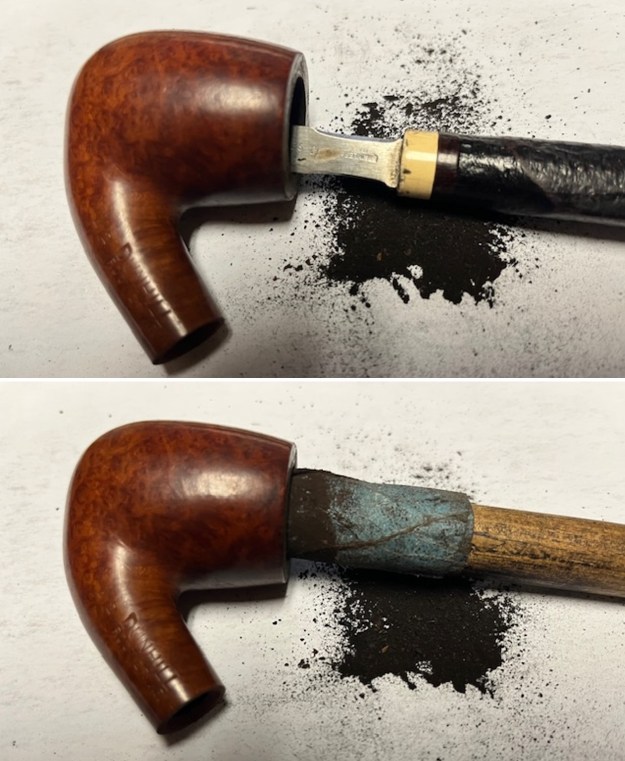
I turned to work on the pipe itself. I reamed the bowl with a PipNet pipe reamer using the cutting heads 2 and 3. I finished the reaming with a Savinelli Fitsall Pipe Knife. I sanded the walls of the bowl with 220 grit sandpaper wrapped around a piece of dowel. 
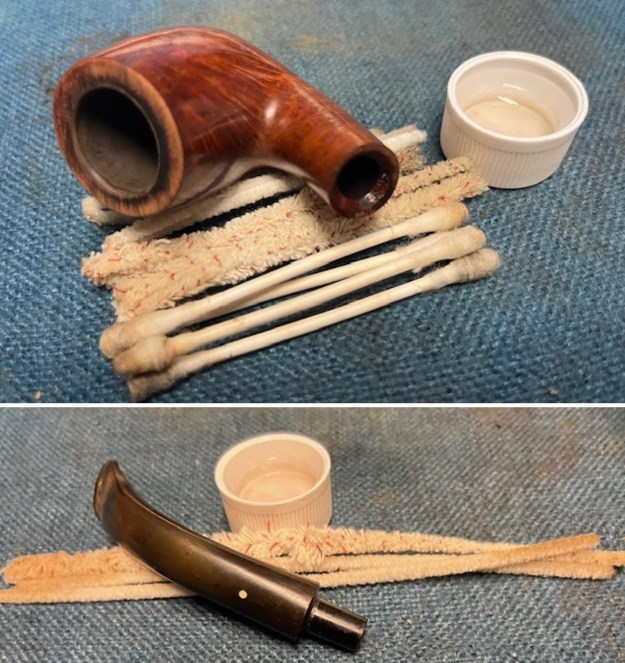
 I cleaned out the inside of the shank and the airway in the stem with alcohol, cotton swabs and both bristle and regular pipe cleaners.
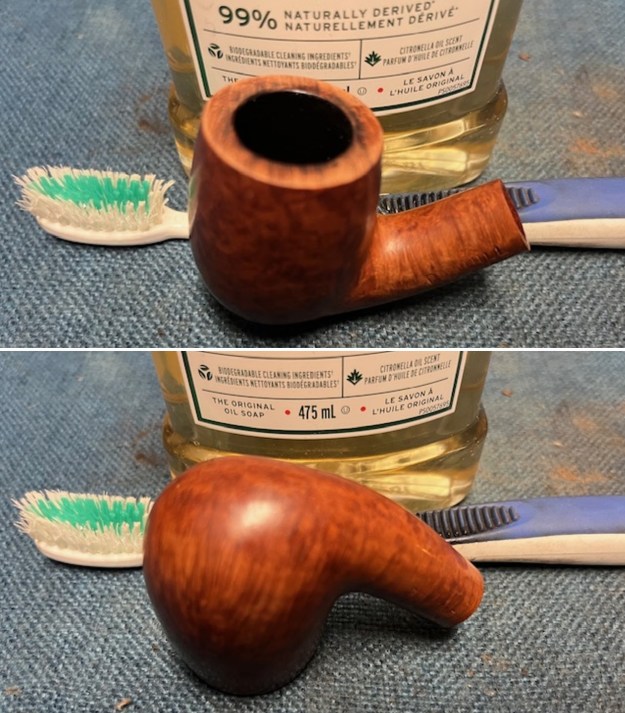
 I scrubbed the bowl and shank with a tooth brush and some undiluted Murphy’s Oil Soap. I rinsed it off with warm water to remove the dust and soap from the finish. I dried it off with a soft cloth and it looked much better.
 I sanded the exterior of the bowl with 320-3500 grit 2×2 inch sanding pads to remove the scratching in the finish. I wiped the bowl down with a damp cloth after each sanding pad. It really began to look much better.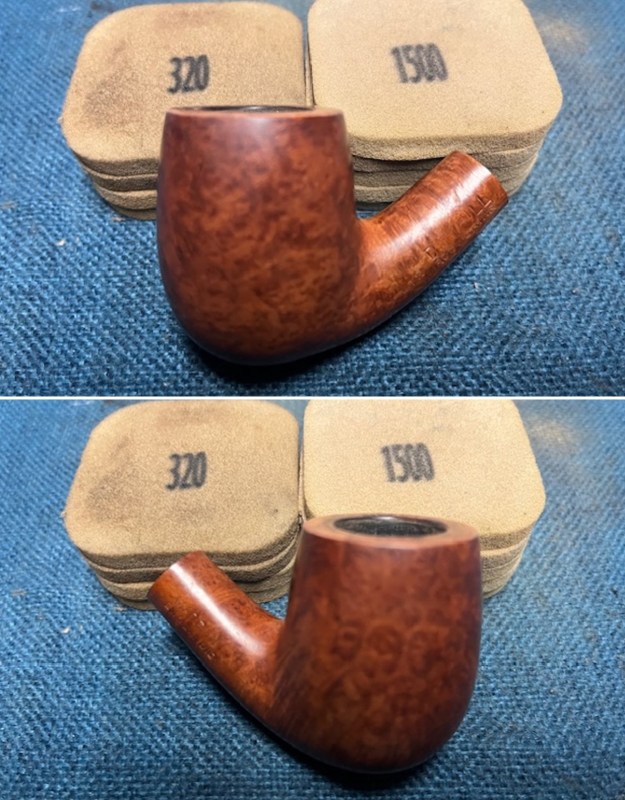
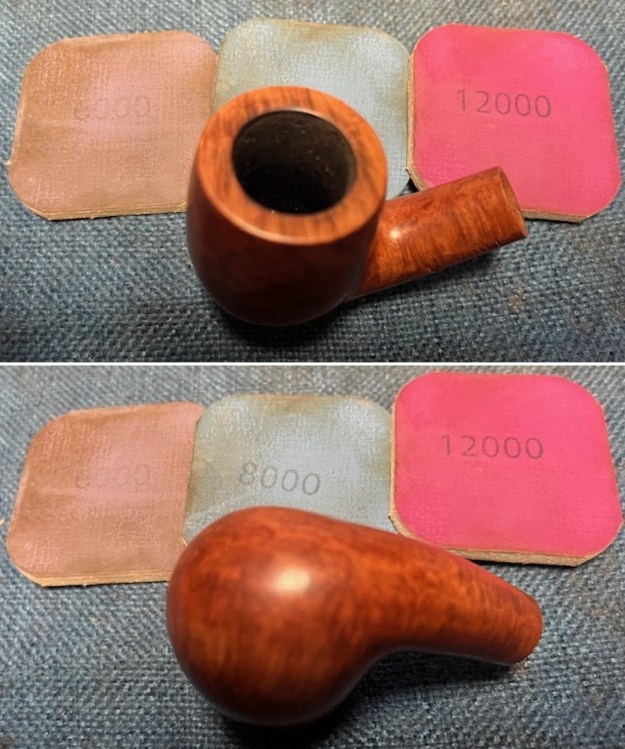
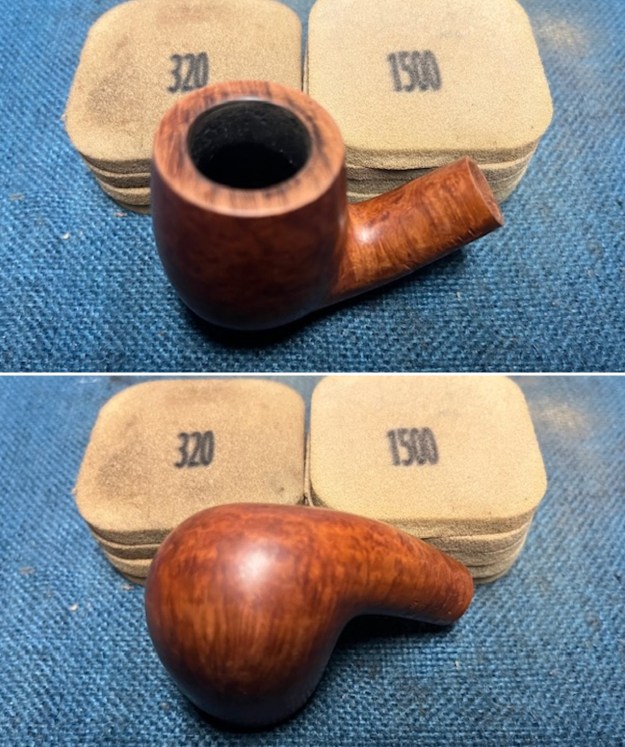 I polished the briar with 1500-12000 grit micromesh sanding pads to develop the shine. It began to look very good. It had a rich shine in the finish.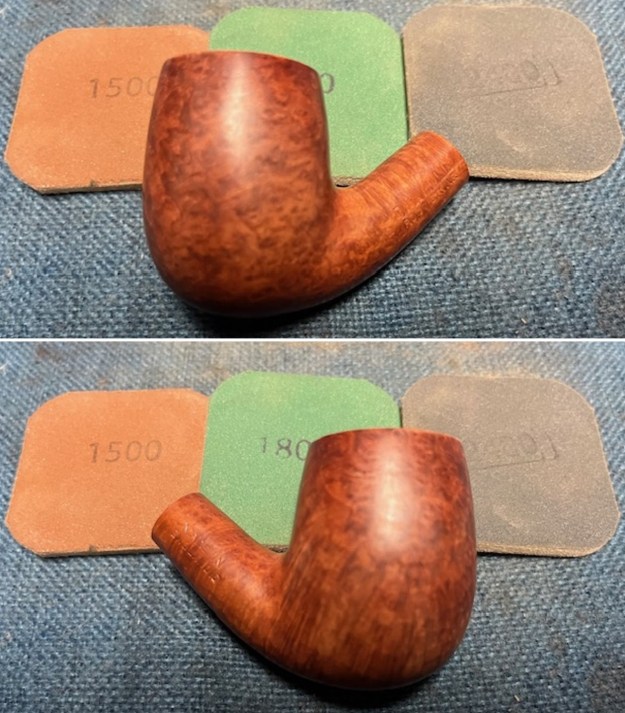
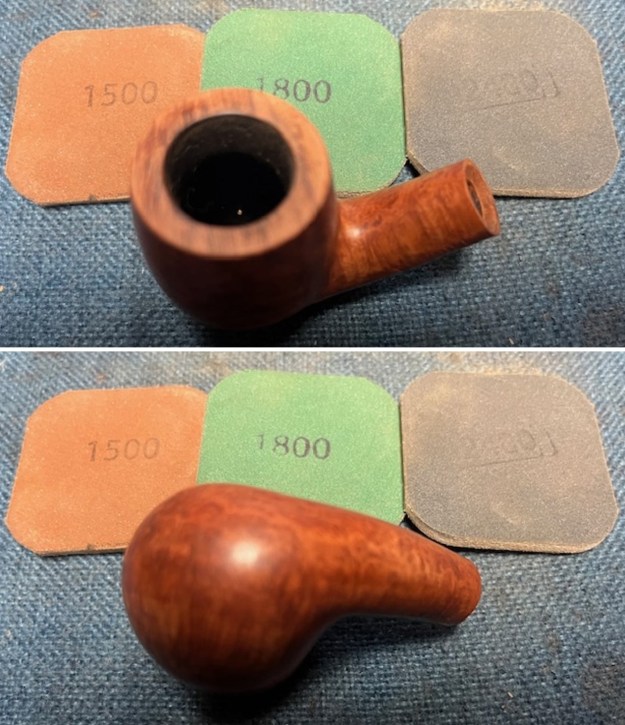
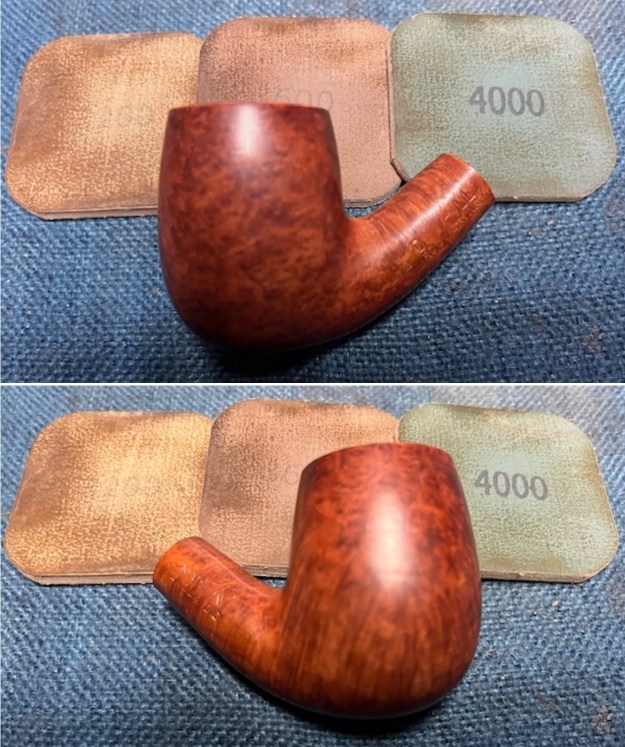
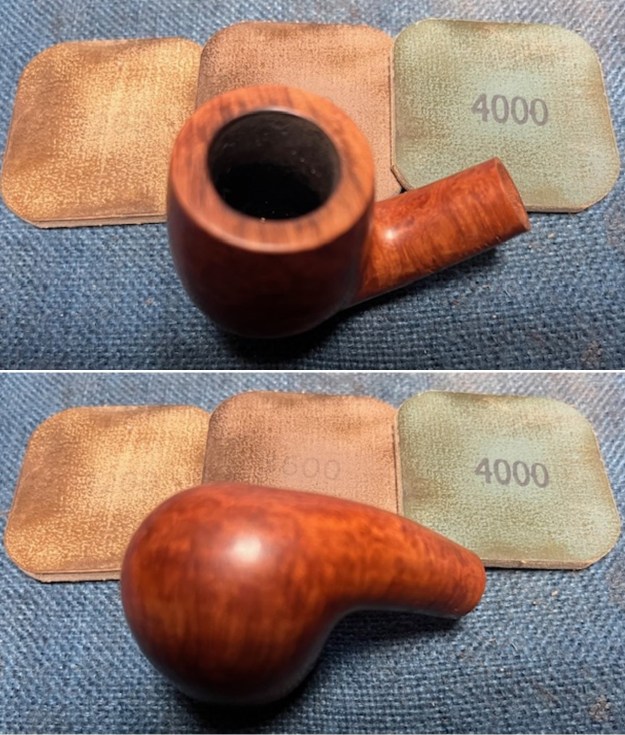
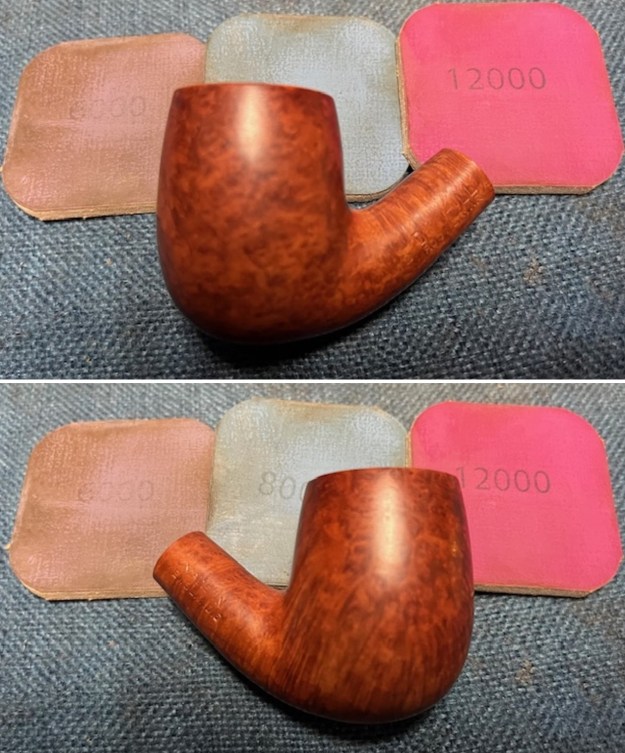
 I rubbed the briar down with Before & After Restoration Balm. I worked it into the briar with my fingertips to work it into the finish. The product works to clean, enliven and preserve the briar. I let it sit for 10 minutes then I buffed it with a cotton cloth to deepen the shine. The briar really comes alive with the balm.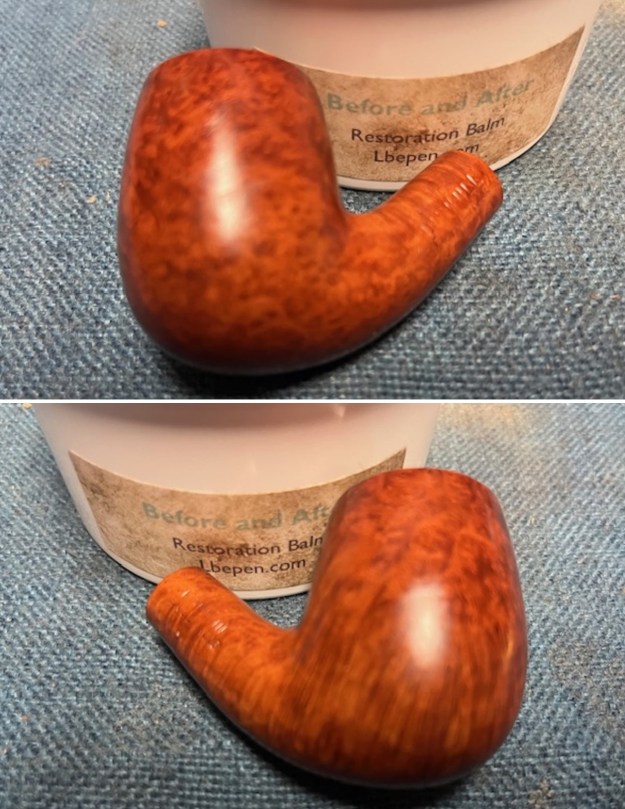
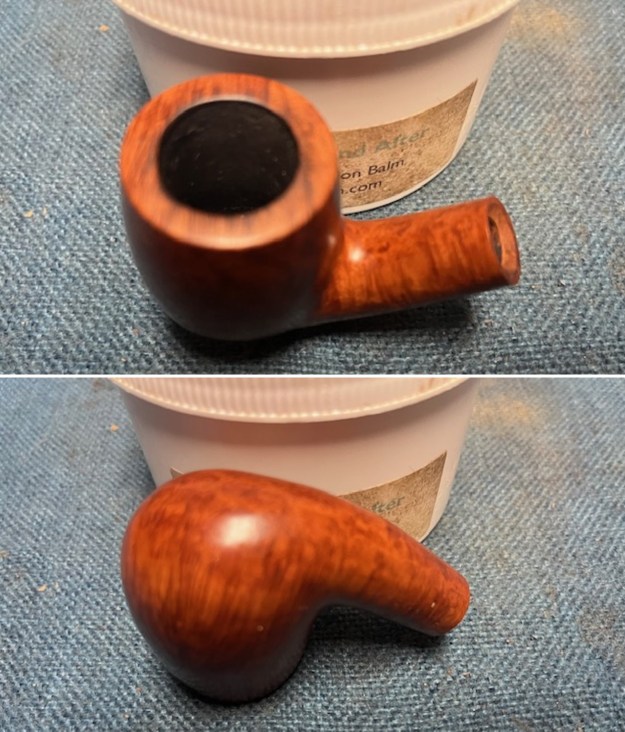
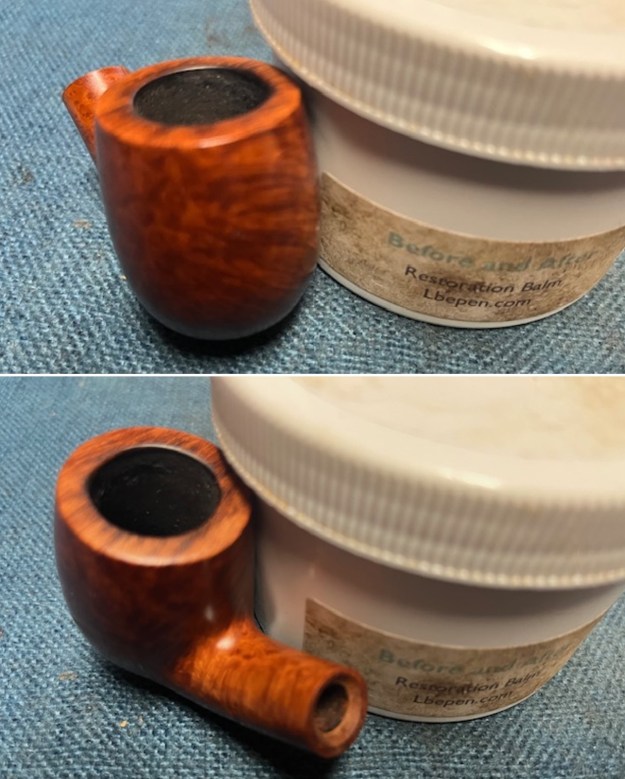 I set the bowl aside and worked on the stem. I sanded it with a folded piece of 220 grit sandpaper to blend in the tooth marks and chatter as well as remove the oxidation and spots on the surface of the stem.
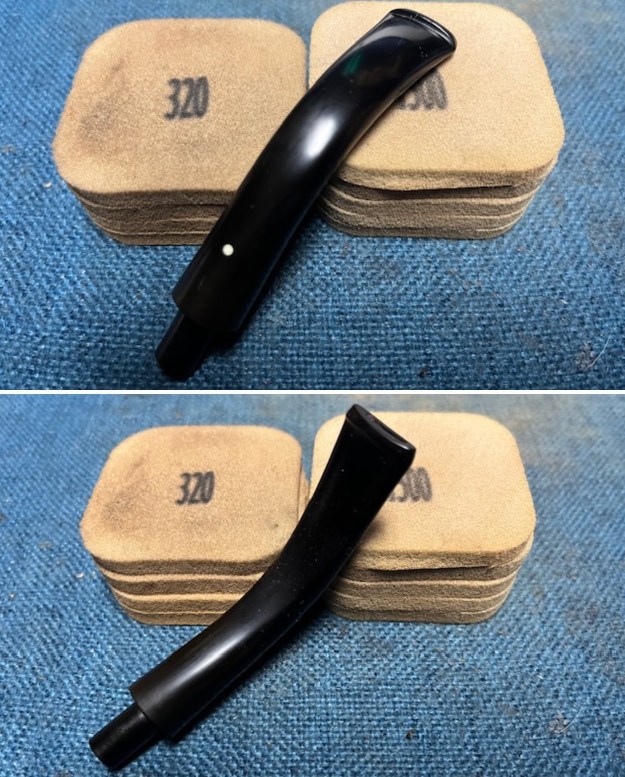
  I sanded the stem with 320-3500 grit 2×2 inch pads. I wiped the stem down with an Obsidian Oil cloth after each sanding pad.
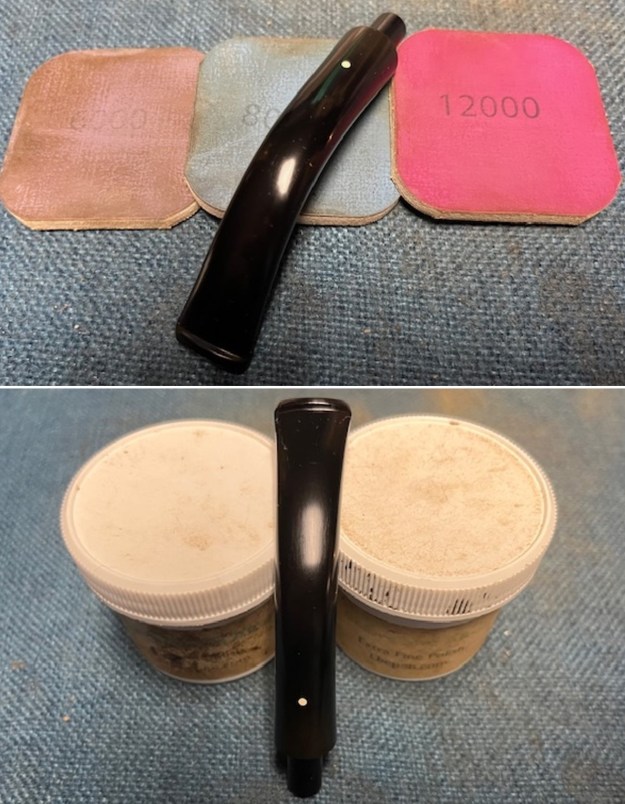
 I polished the vulcanite with micromesh sanding pads – 1500-12000 grit pads. I wiped it down with Obsidian Oil after each sanding pad. I used Before & After Pipe Polish – both Fine and Extra Fine to further polish the stem.
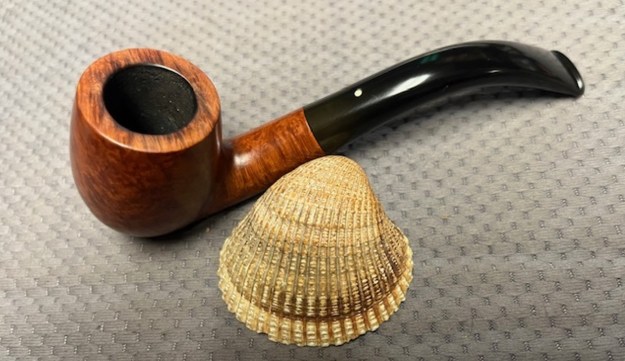
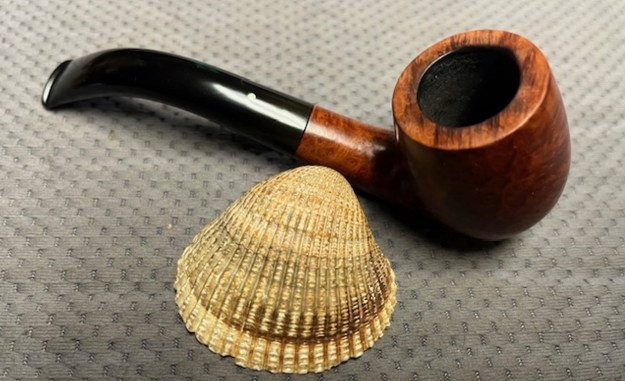
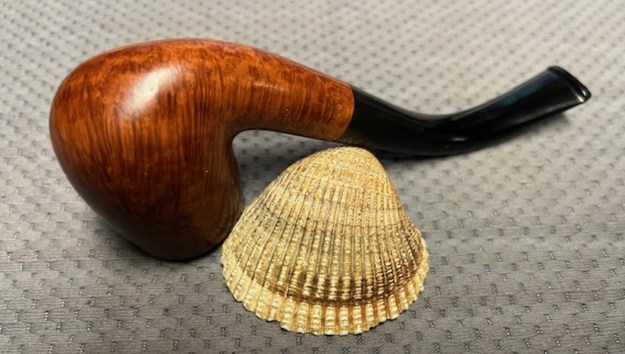
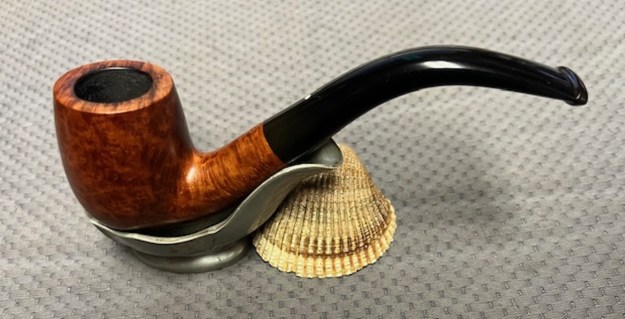
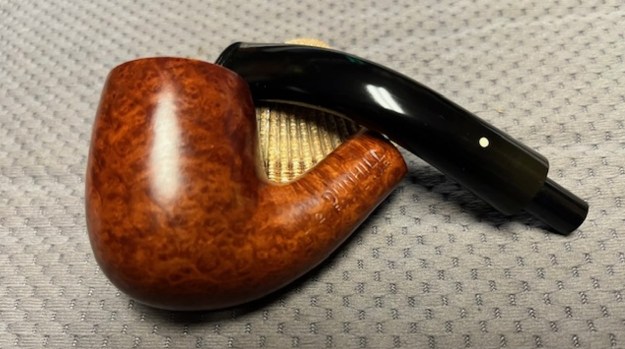
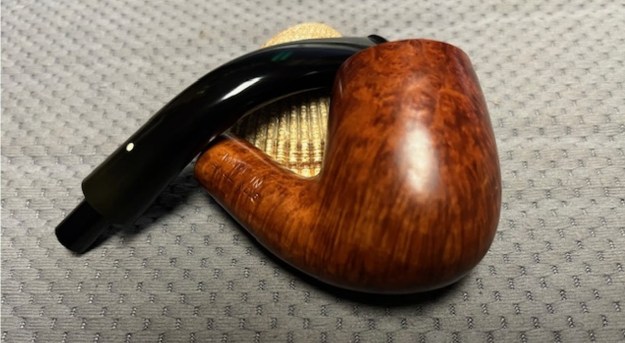
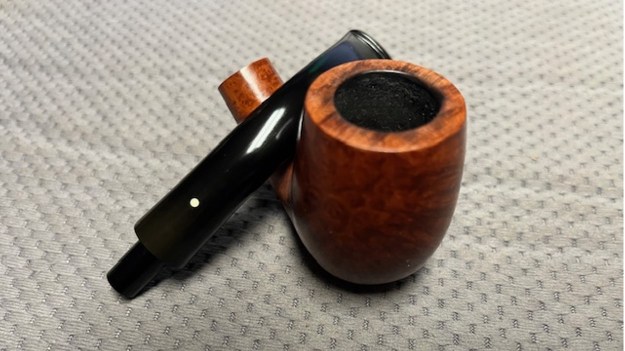
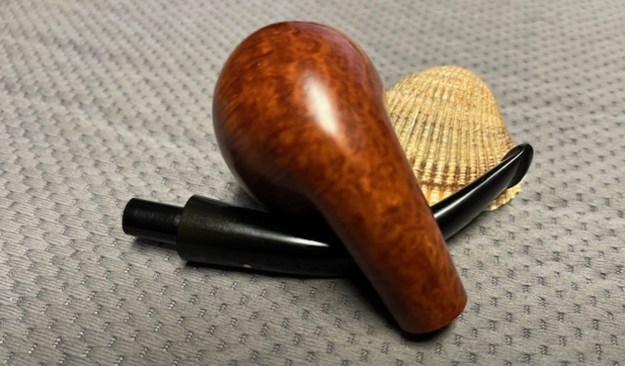
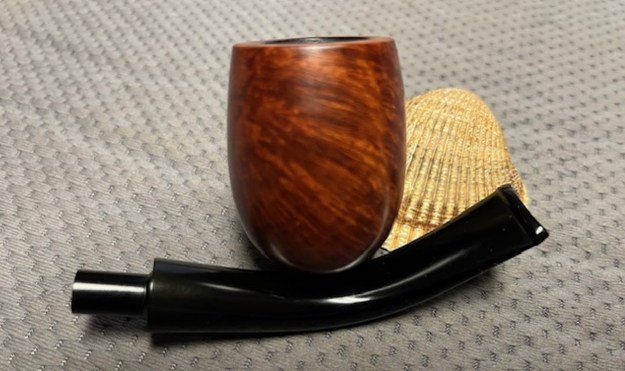
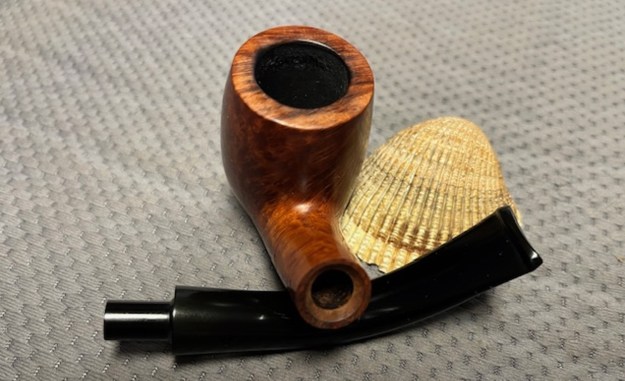
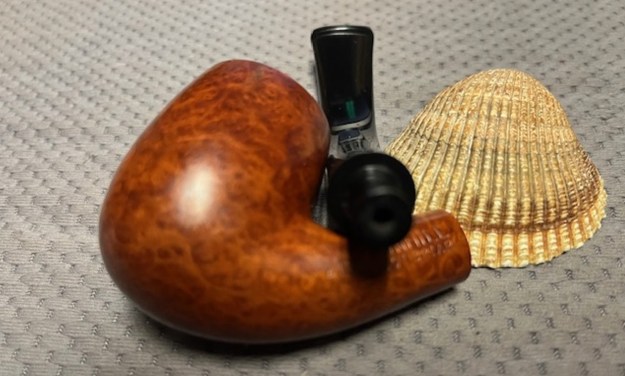
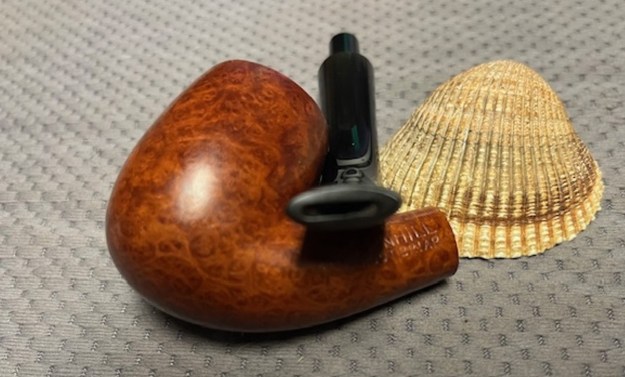
 I polished the vulcanite taper stem and the 1976 Dunhill Root Briar 412 bowl with Blue Diamond to polish out the remaining small scratches and raise the shine. I gave the stem several coats of carnauba wax and the bowl several coats of Conservator’s Wax then buffed the pipe with a clean buffing pad to raise the shine. I hand buffed it with a microfiber cloth to deepen the shine. The pipe polished up pretty nicely. This turned out to be a beautiful Dunhill Root Briar 412 Bent Taper Stem Billiard. The finished pipe is shown in the photos below. The dimensions are Length: 5 ½ inches, Height: 1 ¾ inches, Outside diameter of the bowl: 1 ¼ inches, Chamber diameter: ¾ of an inch. The weight of the pipe is 1.45 ounces/42 grams. Thanks for walking through the restoration with me as I worked this beautiful little Dunhill Root Briar. I will be adding it to the rebornpipes store in the British Pipe Makers Section if you would like to add it to your collection. Thanks for looking.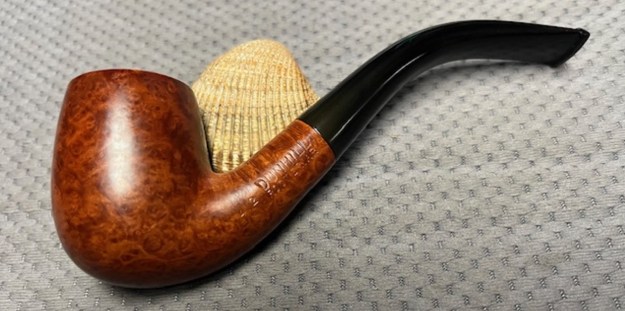



 rebornpipes