

by Steve Laug
I regularly am in correspondence with quite a few people through the reach of rebornpipes. This week alone I have received emails from Hungary, Slovakia, England, Australia to name a few. On top of those are the emails from the US and Canada. I received one from a Paul in Halifax, Nova Scotia, Canada about a pipe he recently picked up and he wrote to me after finding a similar one on rebornpipes. Here is his initial email:
I have purchased an old pipe. The case said BBB in it so I googled it. It is a Calabash like on your website, but the steel rim has an actual flap over the bowl that you can open or close with vent holes in it. It has three markings stamped on it, anchor-lion-n (not the “f”like yours). Can I send you a picture? – Paul
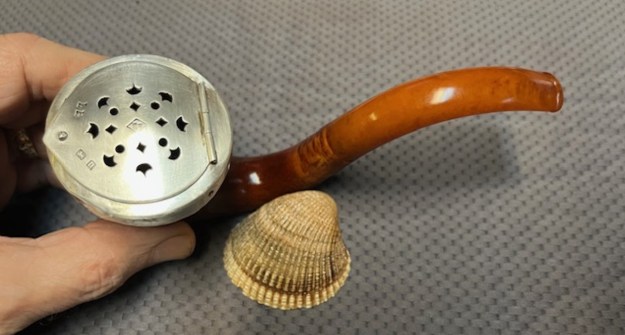
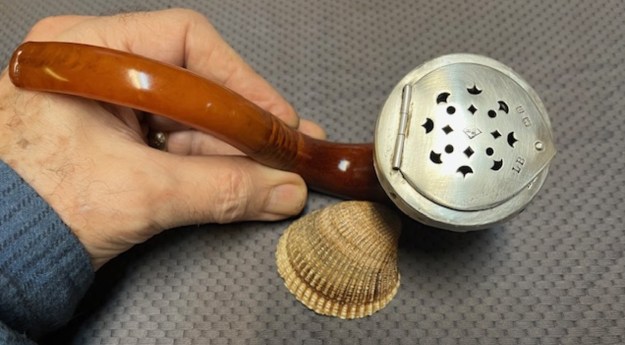
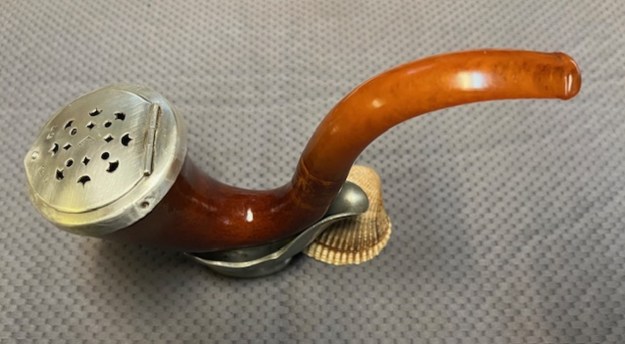
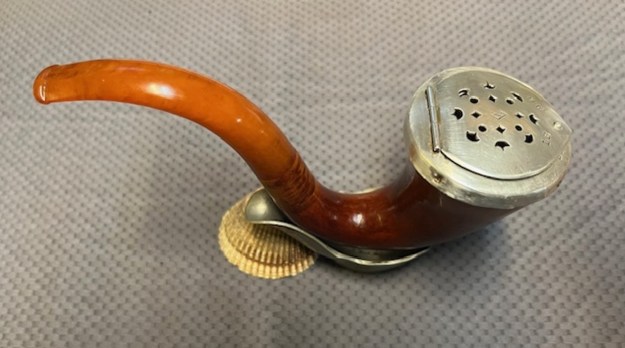
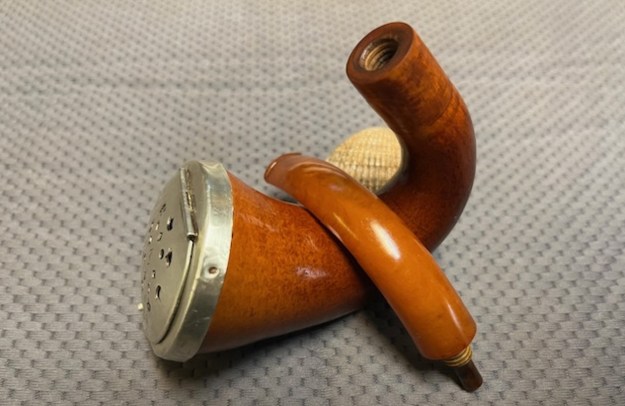
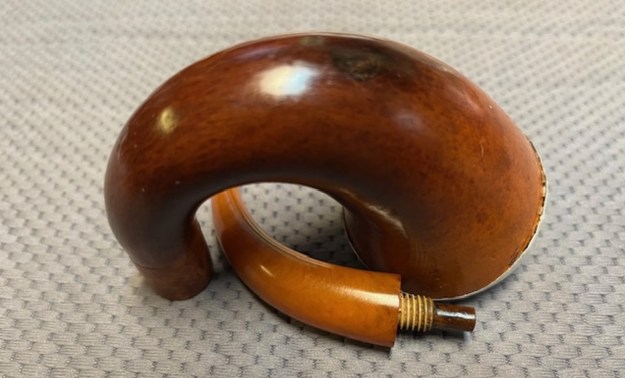
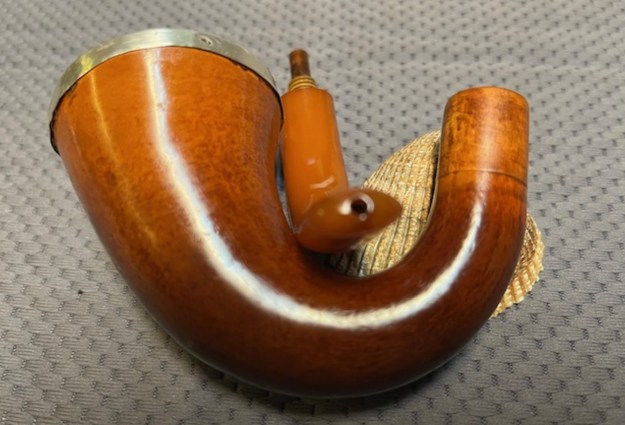
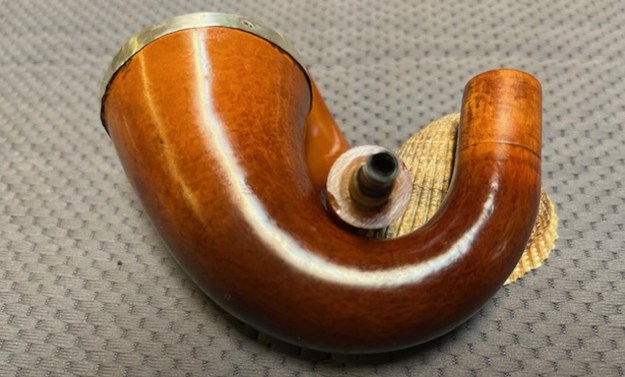
I wrote him back and asked him to send me the pictures. I was very curious to see the age of the pipe and perhaps help him that way. He sent me the following photos. The first two show the bowl as a whole. It was an interesting looking pipe.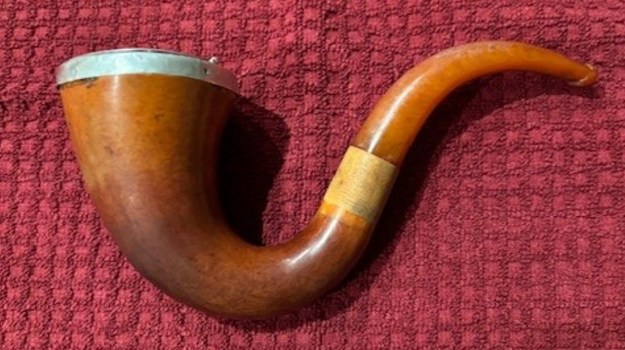
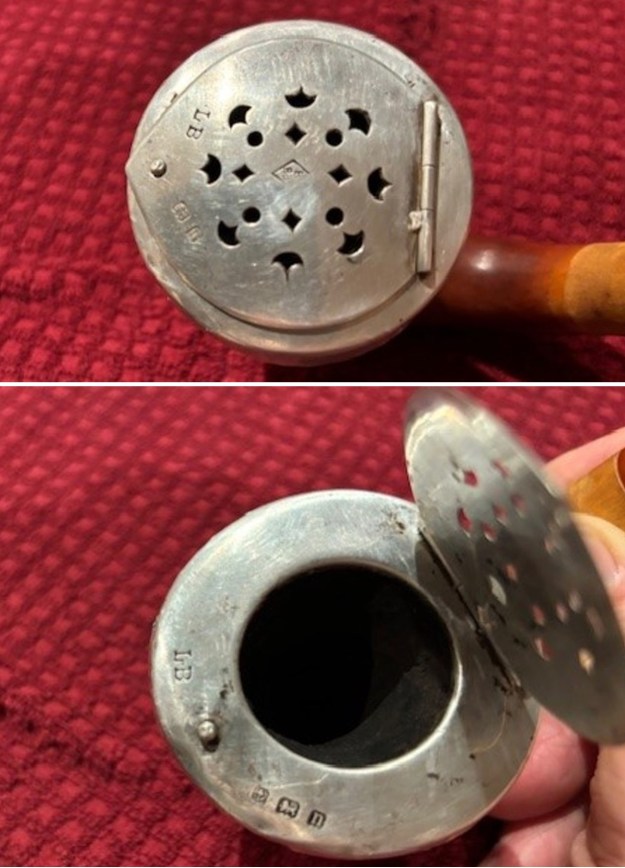
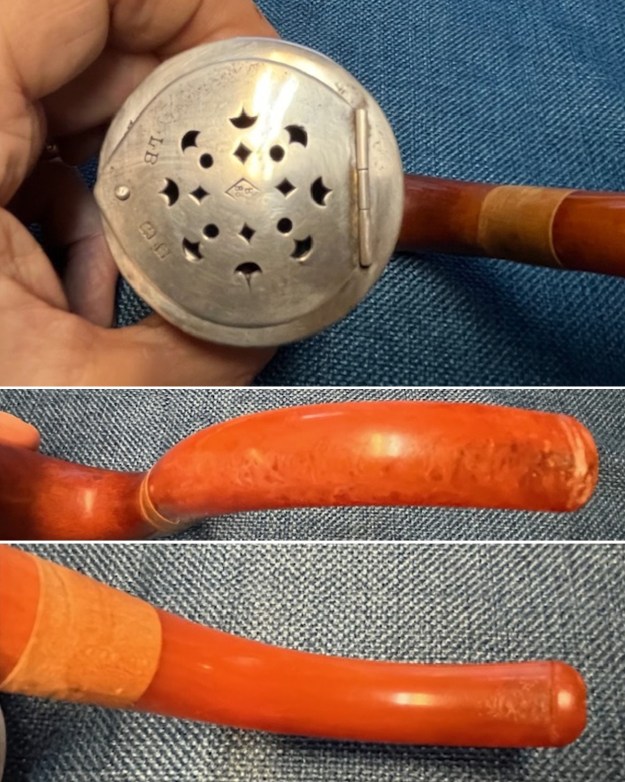
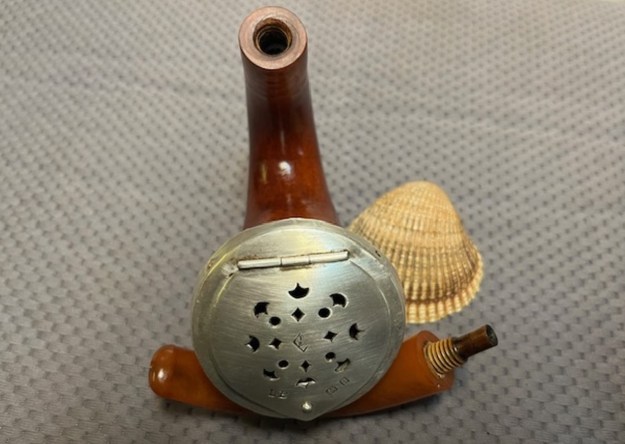
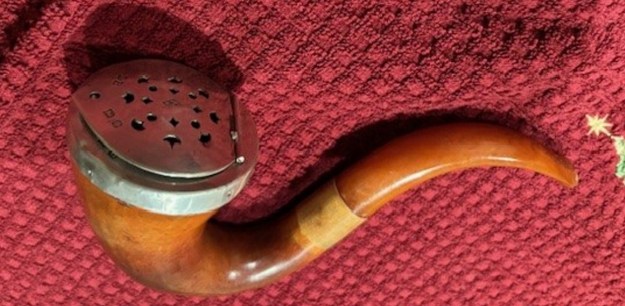 Paul also sent me photos of the rim cap and bowl cap so I could see how they function and could read the stamping on the silver of both. The stamping was as he noted in his first email.
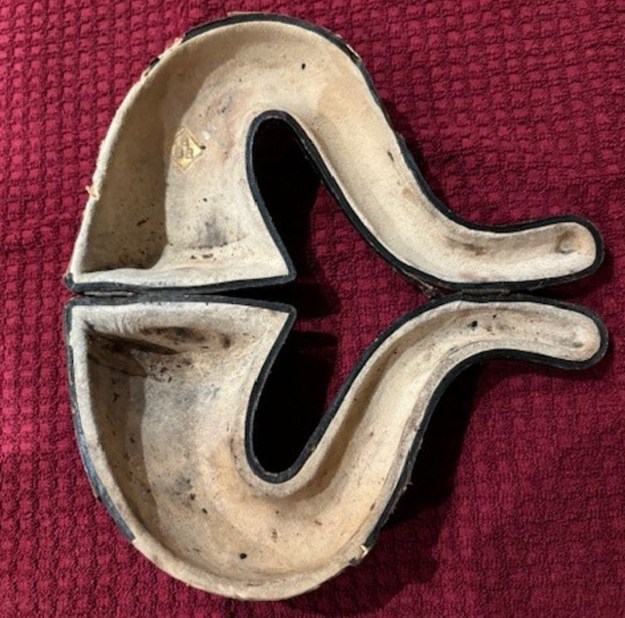
 He also included photos of the case exterior and the inside. The inside of the case is stamped with a BBB Diamond logo in the lid of the case.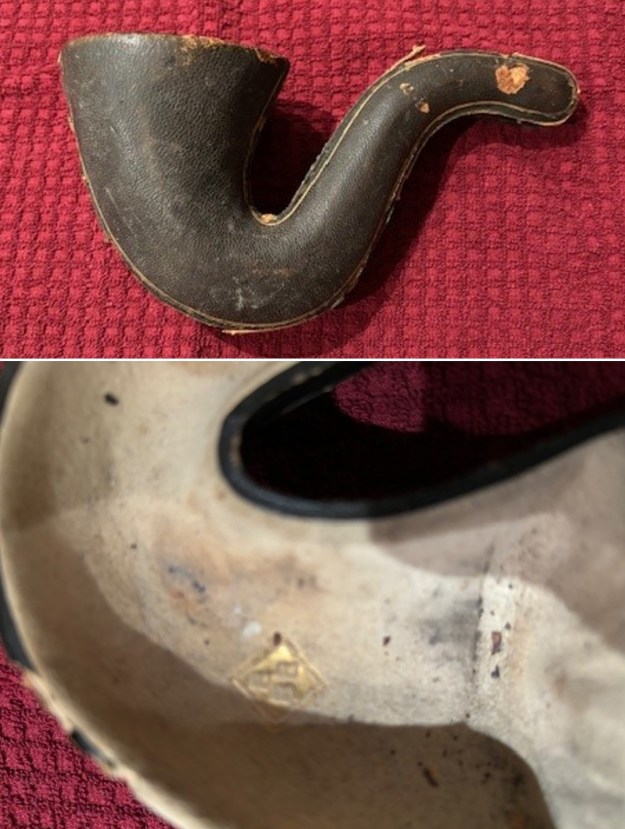
 I wrote Paul back about the pipe to help unpack the stamping on the top of the rim and cover. The stamps can be interpreted as follows:
The LB on the cover of the rim/windcap is for Louis Blumfield.
The other stamps are as follows:
Anchor is for Birmingham the city where the silver was made and fitted to the bowl.
Rampant lion is for the quality of the silver used in the rim cap and cover. It means that it is .925 sterling silver
The letter n is the date stamp. I included a copy of the Hallmark chart for British hallmarks. I can match your pipe’s stamp to 1912. I have marked it on the chart below in red.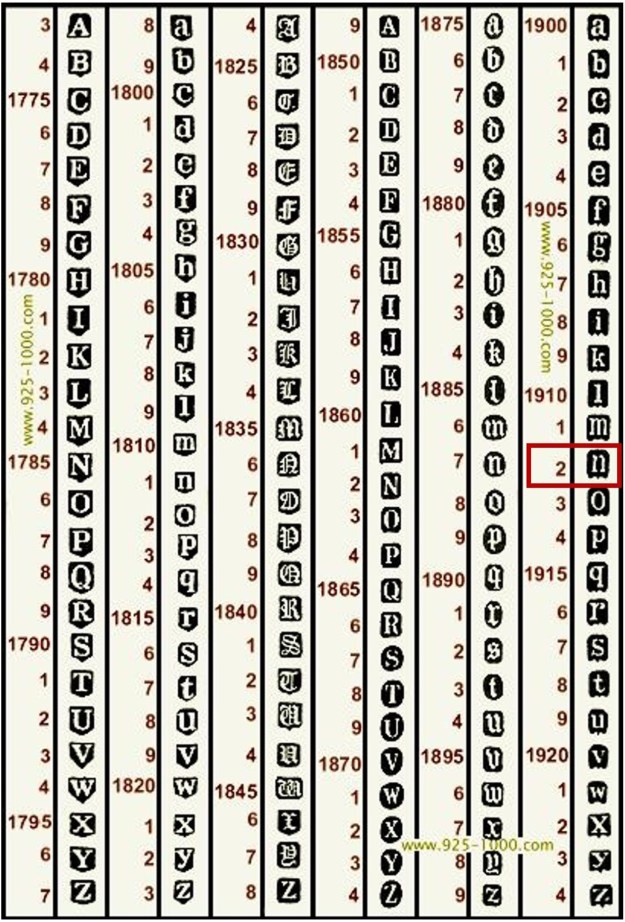 Paul responded with his thanks and a further email:
Hi Steve is it possible to give it a tune-up? professionally? And also, do you think I should just display it? Or is it ok to use? What would you do? – Paul
I wrote back and sent him my address and he mailed the pipe to me to work on. When I got it I opened the box and took some photos of the case and the pipe. The case is worn black leather with nicks and scuffs on it. The case is obviously hand fitted to the pipe. 
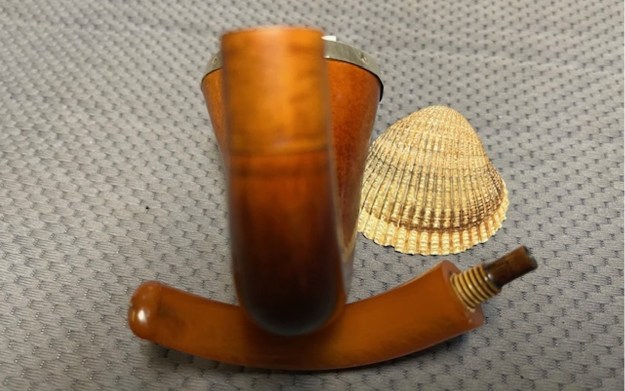
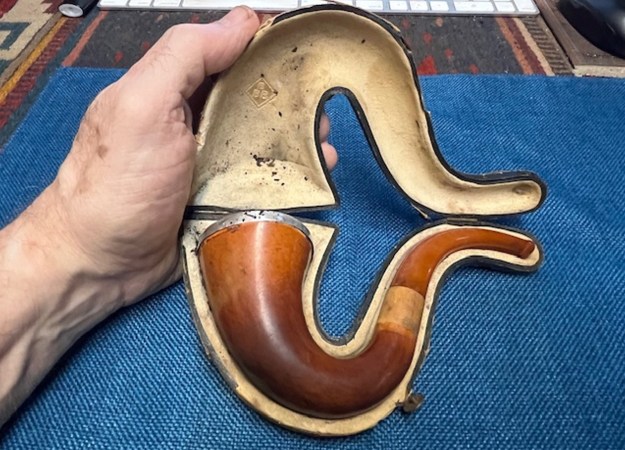 I took the pipe out of the case and took a look at what I had to work with. The gourd was dirty and had a burn mark on the underside at the bend. The shank end is Maple I believe and has some glue dried on from a silver shank band that was missing. The rim top had a silver rim cap and wind cap. It was loose on the top of the gourd. I removed it underneath the bowl lining appeared to be clay. It had some repaired cracks. It was sitting in a wood base that was inserted in the gourd. The base has pins snapped off in it that originally held the rim cap in place. The bowl itself had a large opening in the bottom but there was a lot of debris and clogging in the bowl. There was a rattle in the gourd itself. The stem was amber and was in very good condition. There were light tooth marks and chatter on the top and underside ahead of the button. The airway in the stem was very dirty and the shank was also very dirty.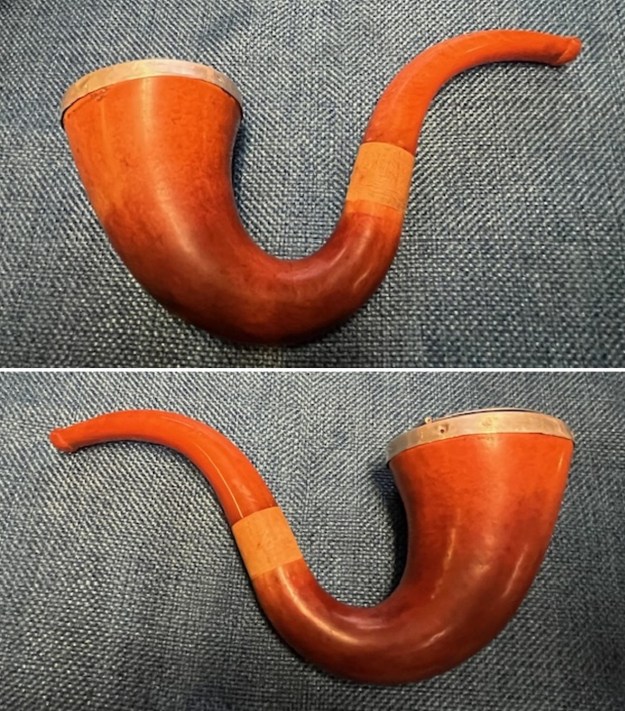
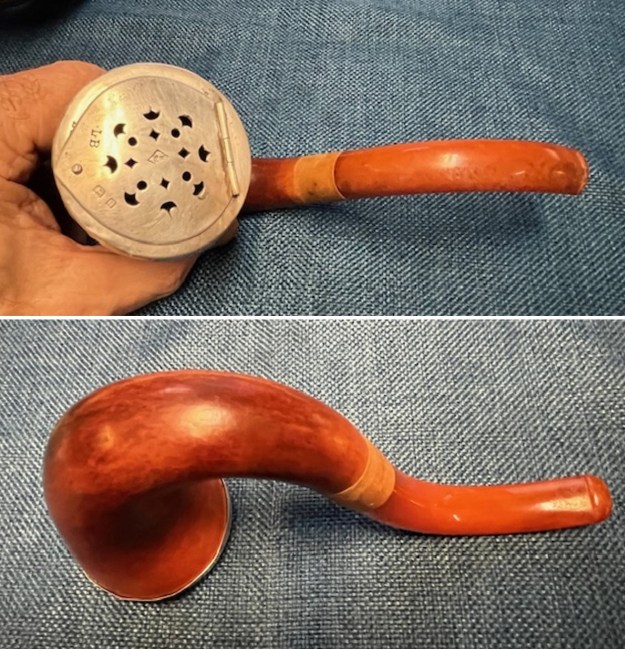 I took photos of the wind cap and rim cap to show the scratching and wear on the silver. It was worn and tired with a little bit of tarnish as well. I will need to polish both with some silver polish to remove the tarnish and the scratching. The amber stem looks good with some light chatter on the top and the underside ahead of the button.
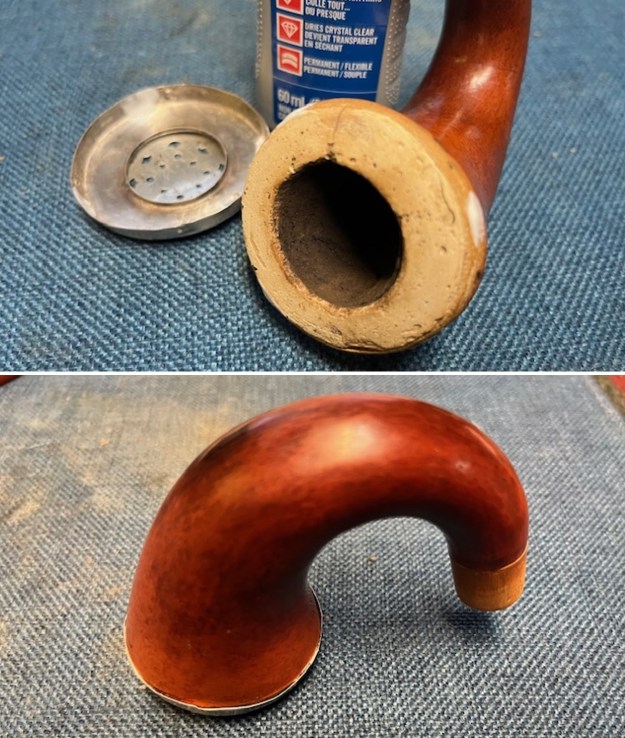
 I removed the silver rim cap and windcap. I took a photo of the clay bowl insert. It is pitted and dirty but you can see what I have to work with. It is hard to see but the original pins that held the cap in place are all snapped off in the clay. I took a photo of the bowl with the cap and stem off.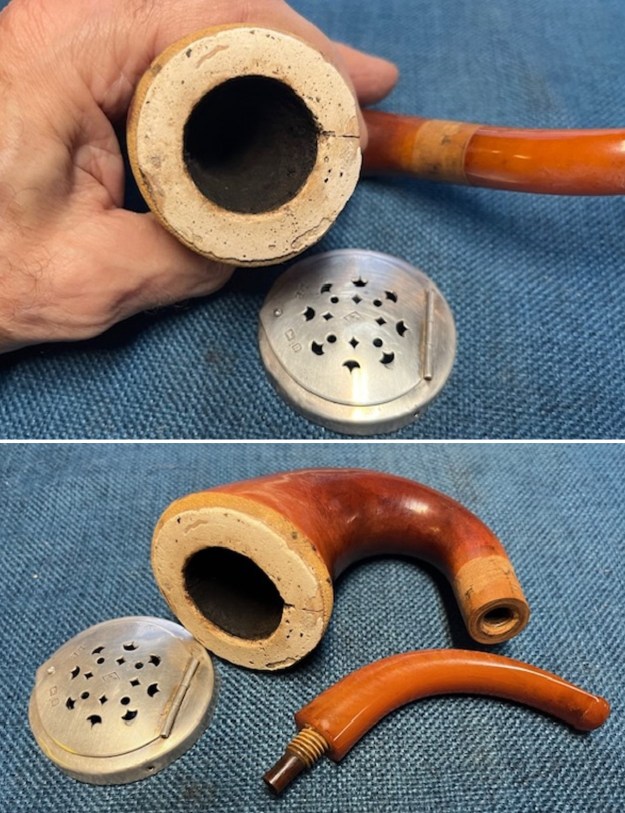
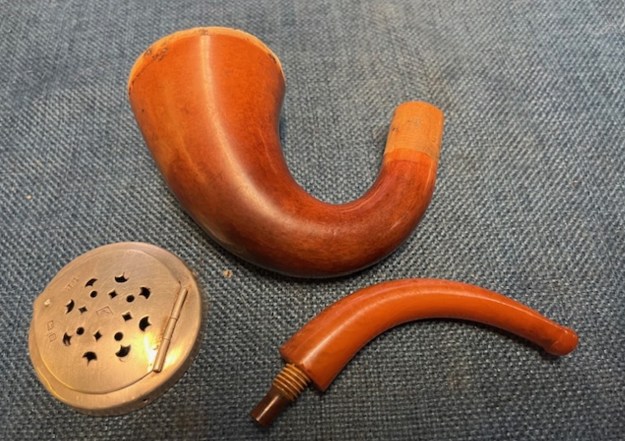 I carefully scraped out the clay bowl with a Savinelli Fitsall Pipe Knife to remove the cake build up in the bowl and also tobacco debris on the walls of the bowl. I sanded the walls smooth with a folded piece of 220 grit sandpaper.
 I cleaned the internals of the gourd shank and below the clay bowl with pipe cleaners and alcohol. I cleaned the amber stem at the same time with pipe cleaners and alcohol. Once it was clean the pipe smelled significantly better.
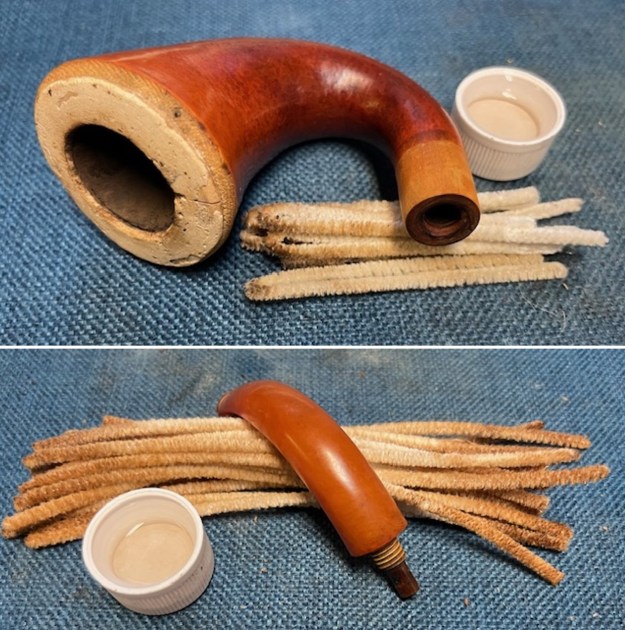 The burn on the underside of the gourd had a burn mark and a gouge. I filled it in with clear CA glue. One it dried I sanded it smooth and polished it with 320-3500 grit sanding pads. Once finished it looked much better.
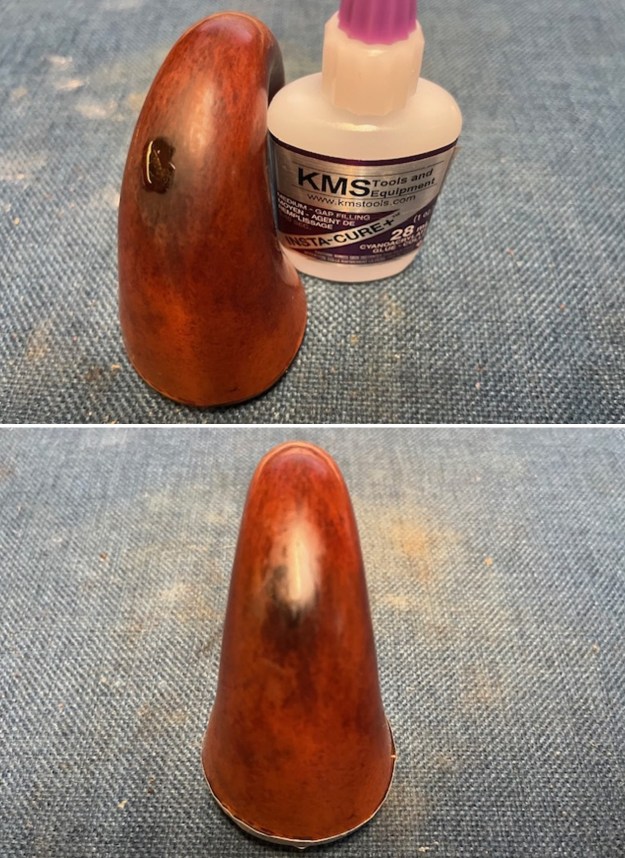 I used four spots of all-purpose white glue on the inside of the silver rim cap. I pressed in place and set it upside to dry.
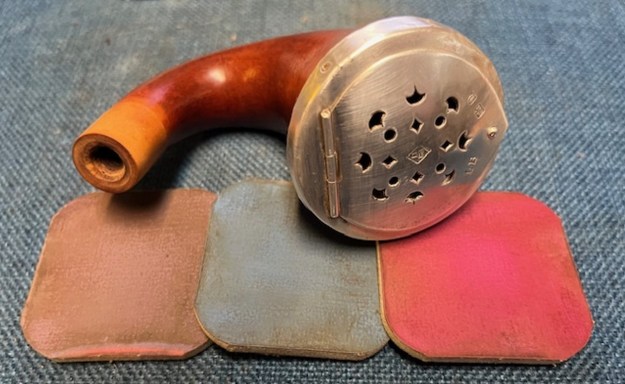
  I polished the scratches in the silver with micromesh sanding pads. I worked over the wind cap and all of the edges on the rim cap. I lightly polished them with the pads and wiped them down after each pad with a jeweller’s cloth. The cap and rim began to take on a very rich shine. The scratches were not all removed but they definitely looked much better when I finished with the last of the sanding pads.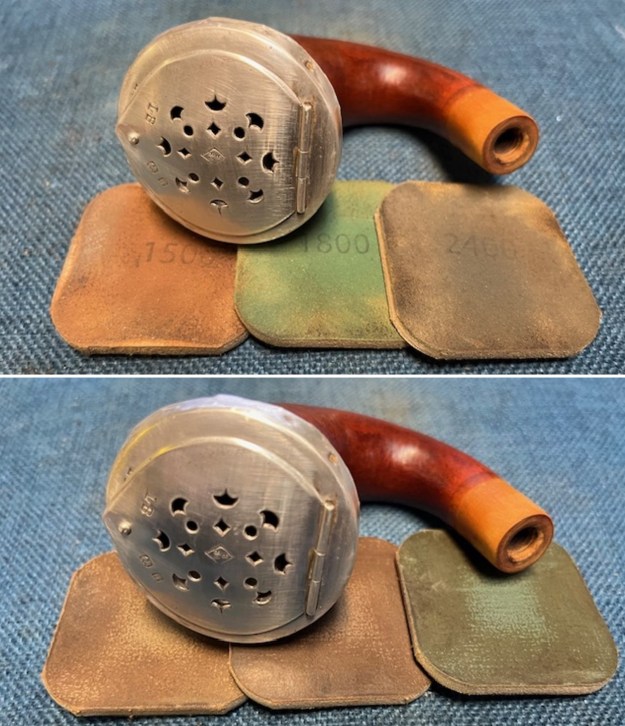
 I rubbed the gourd and the maple shank extension down with Before & After Restoration Balm. I worked it into the surface with my finger tips. The product works to clean, enliven and preserve the wood and gourd surfaces. It gives a rich a glow. I let it sit on the surface for 10 minutes and then buffed it off with a soft cloth. The gourd began to take on a rich shine.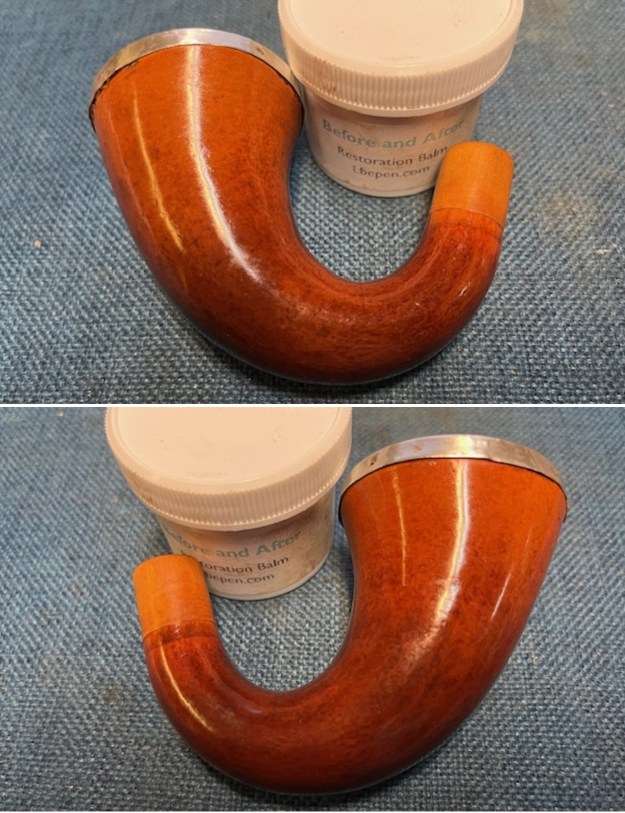

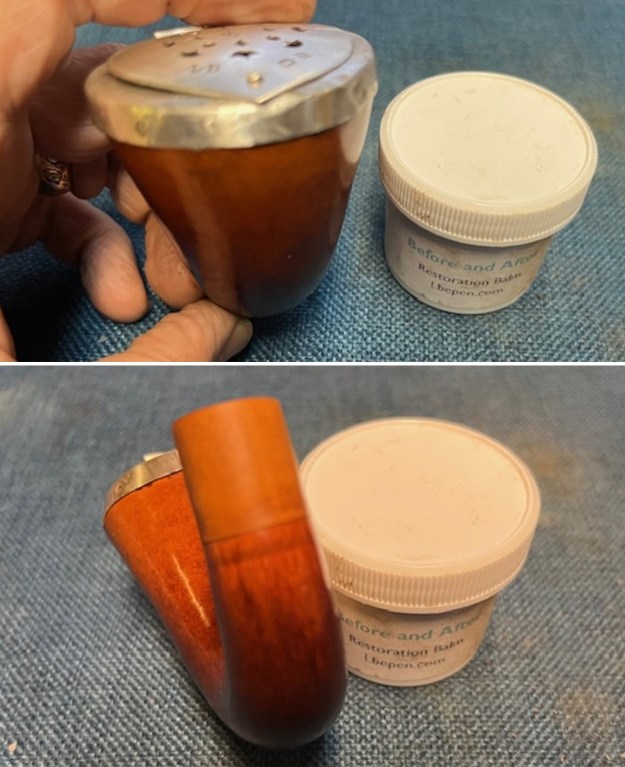 Since I did not have a silver band that would fit the shank extension I decided to stain it. I gave it a coat of Maple stain and Cherry stain using stain pens. It brought out some nice grain patterns in the wood. I gave it another coat of Before & After Restoration Balm and buffed it off with a cloth. It really was looking great in contrast to the colour of the gourd.
 I set the bowl aside and turned my attention to the amber stem. I used 320-3500 grit sanding pads to dry sand the tooth chatter on both sides near the button. It took a bit of sanding but I was able to remove them all and start the polishing with the pads. I wiped the stem down after each sanding pad with an Obsidian Oil impregnated cloth. It really looked very good.
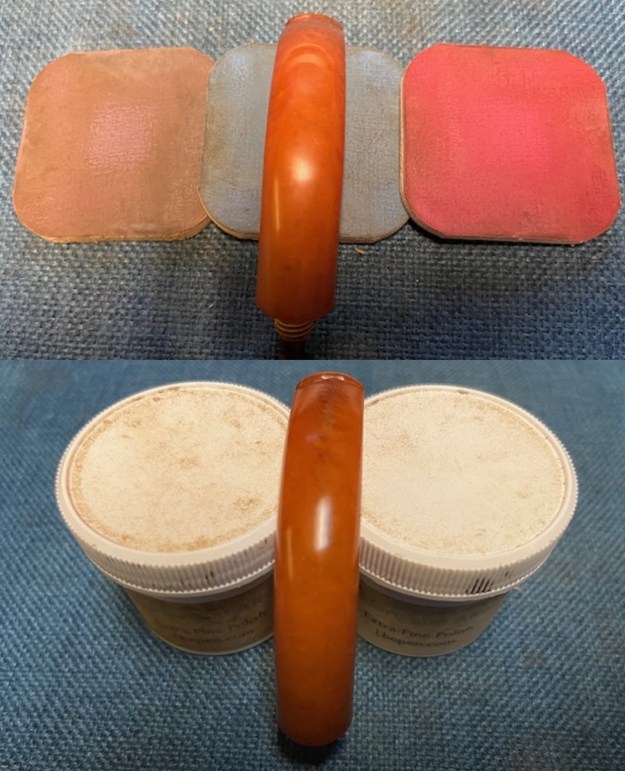
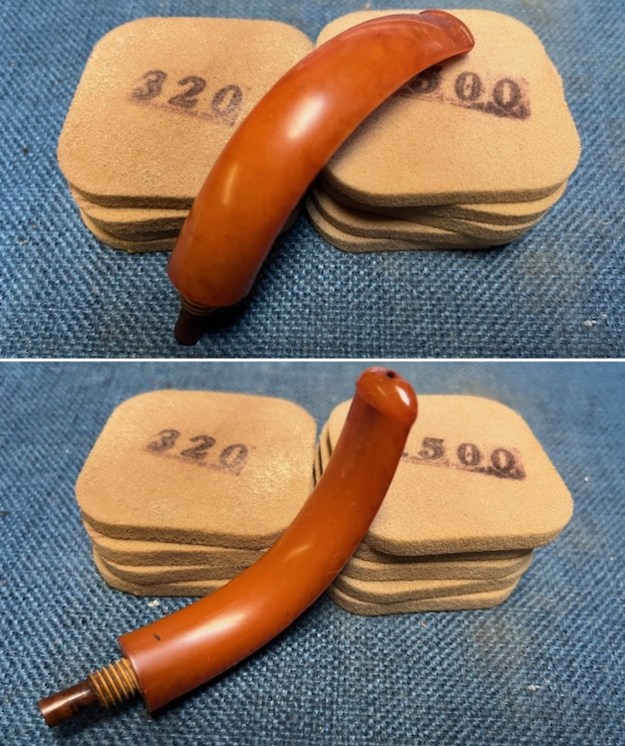 I polished the stem with micromesh sanding pads – dry sanding with 1500-12000 grit pads. I wiped the stem down after each sanding pad with Obsidian Oil. I did a final hand polish of the stem with Before & After Pipe Stem Polish – both Fine and Extra Fine. I gave it a coat of Obsidian Pipe Stem Oil. It works to protect the stem from oxidizing. I set it aside to dry. The amber took on a rich glow by the end of the polishing.
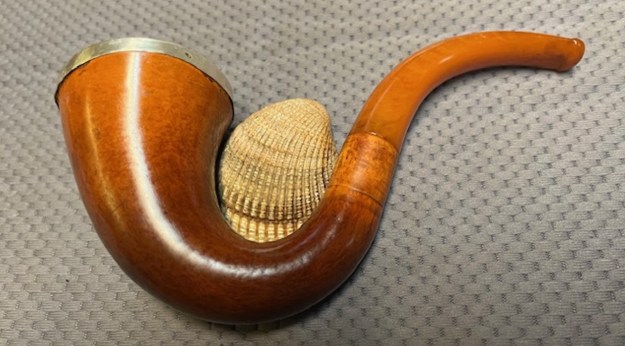
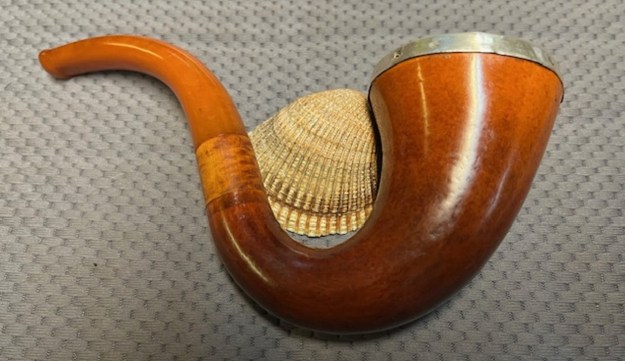
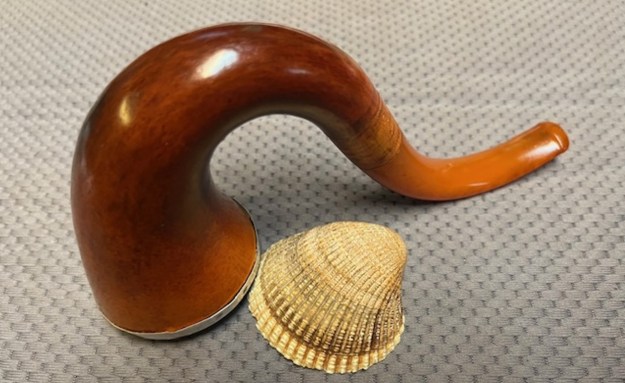
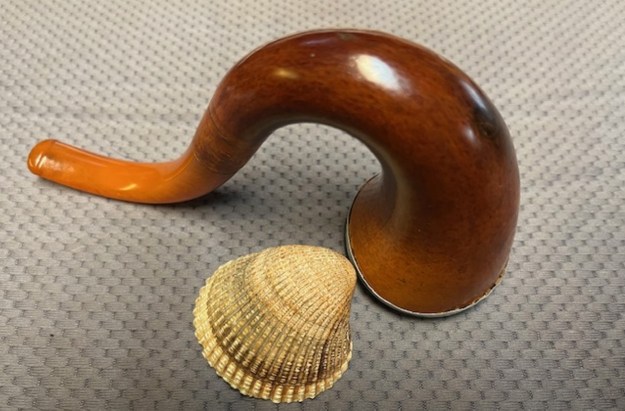
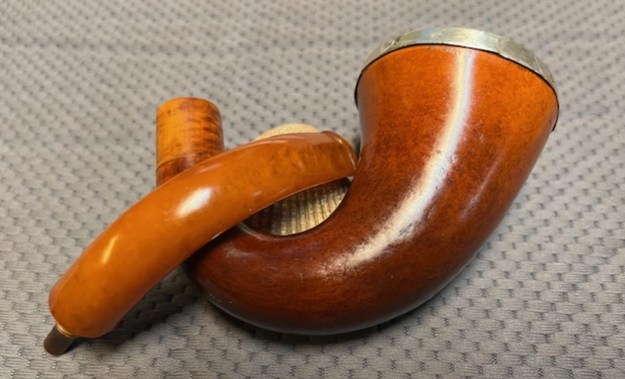
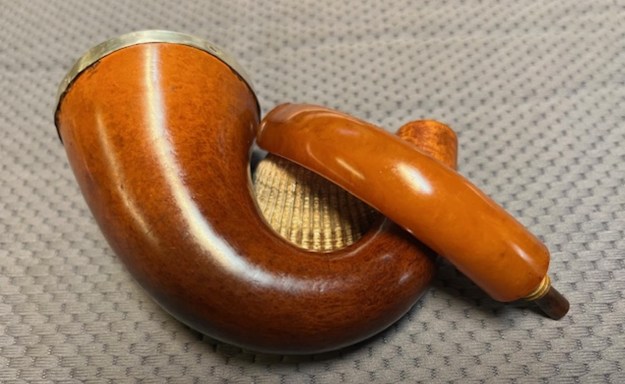
 I put the stem back on the BBB Clay Gourd Calabash and took it to the buffer. I carefully buffed the gourd, the extension and the amber stem with Blue Diamond to polish the gourd and the amber. Blue Diamond does a great job raising more of the shine and smoothing out imperfections. I gave the bowl and the stem several coats of carnauba wax and buffed the pipe with a clean buffing pad to raise the shine. I hand buffed it with a microfiber cloth to deepen the shine. I am amazed at how well it turned out. The finished pipe is shown in the photos below. This is beautiful smooth finished 1912 BBB Gourd Calabash and the amber taper stem combine to give the pipe a great look. The finished pipe is shown in the photos below. The approximate dimensions of the pipe are Length: 7 inches, Height: 4 inches, Outside diameter of the bowl: 2 ¼ inches, Chamber diameter: ¾ of an inch. This beauty will be heading back to Paul in Halifax, Nova Scotia soon. I hope he will enjoy the pipe and enjoy smoking it. Thanks for walking through the restoration with me on this beauty!
As always, I encourage your questions and comments as you read the blog. Thanks to each of you who are reading this blog. Remember we are not pipe owners; we are pipe men and women who hold our pipes in trust until they pass on into the trust of those who follow us.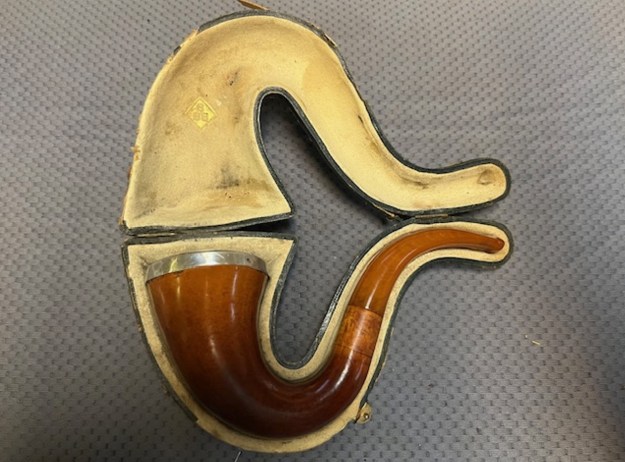
 rebornpipes