
Blog by Steve Laug
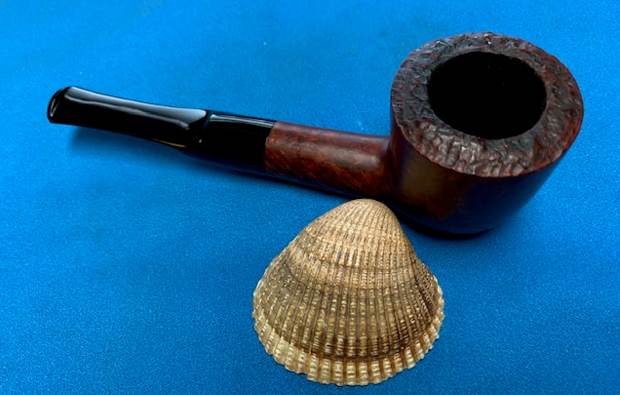
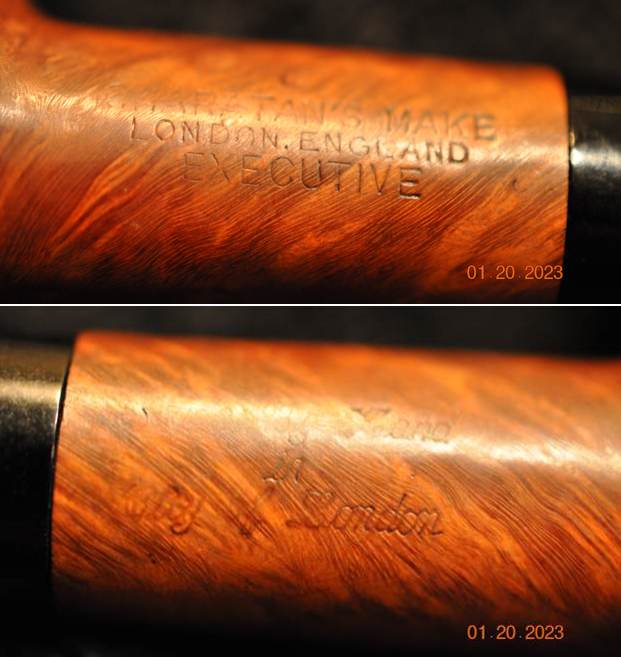
The next pipe I have chosen to work on is a nice looking straight grain Dublin with a plateau rim top and a replacement acrylic stem. We picked it up on 03/30/2022 from an estate in Plano, Texas, USA. The stamping on the left side of the shank read Charatan’s Make [over] London, England [over] Executive. On the right side it is stamped Made by Hand [over] in [over] City of London. The acrylic, black saddle stem is a replacement. The pipe is a nice looking pipe with a medium brown finish that highlights the straight grain on the bowl sides and shank. The rim top has a plateau style rustication. The acrylic stem works very well with the bowl. It is light weight and comfortable pipe to hold. Jeff sent me the following photos of the pipe to show the condition it was in before he worked on it.
This is what I saw when I looked over the pipe.
- The finish shows darkening of hand oils and some thick grime ground into the finish around the bowl sides. The medium brown stain is dull and the grain is obscured around the bowl sides and shank
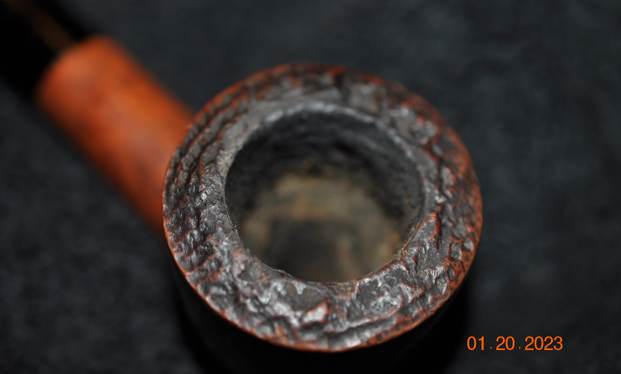
- The plateau style rusticated rim top was very dirty with darkening and lava ground into the rustication to point that it was almost smooth. The inner edge of the bowl was unclear but seemed to show some damage under the lava coat.
- There was a moderate cake in the bowl. The bowl itself was very dark and dirty. Once the bowl was cleaned up we could confirm the condition of the bowl walls.
- The acrylic taper stem was filthy and had tooth marks and chatter on both sides. There were some deeper tooth marks on the underside ahead of the button.
- There is no marking or logo on the stem but it is a well fit replacement stem.
To summarize what I saw – this Charatan’s Make London, England Made by Hand Executive is a well made pipe. The bowl and stem are very dirty which says to me that the pipe was someone’s favourite pipe. The look and feel of the pipe in the hand is great. It should clean up very well. Here are photos of the pipe taken before Jeff started the clean up. 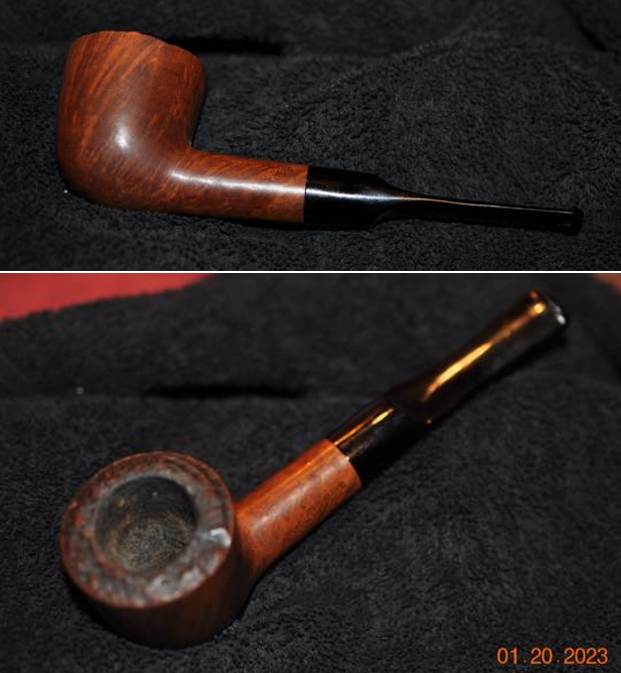 Jeff took close up photos so that I could have a clearer picture of the condition of the bowl, rim edges and top. The rim top photos confirm my assessment above. The cake in the bowl is thick – covering the walls of the bowl. The rim top has thick lava coat and has some darkening on the inner edge and is heavier toward the back of the bowl. The inner edge looks like it might be damaged. This is what I look for when assessing a pipe. I look forward to viewing it in person after the clean up work.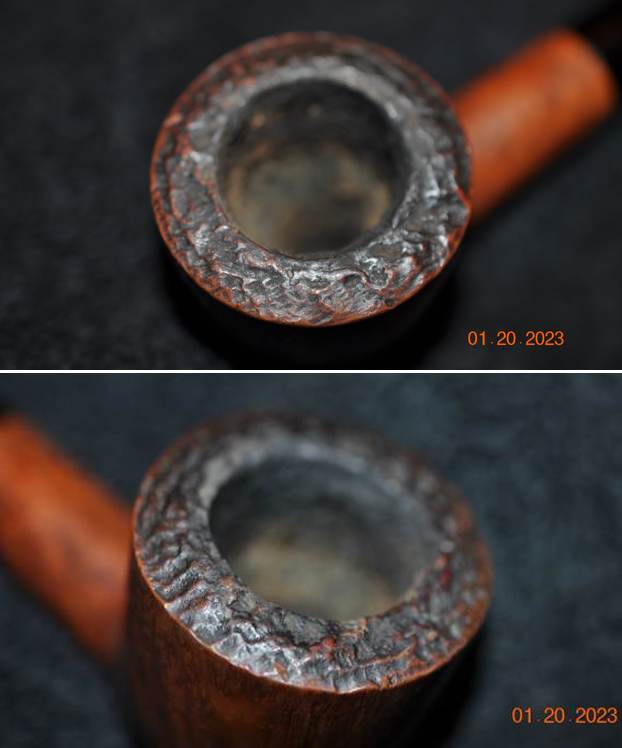
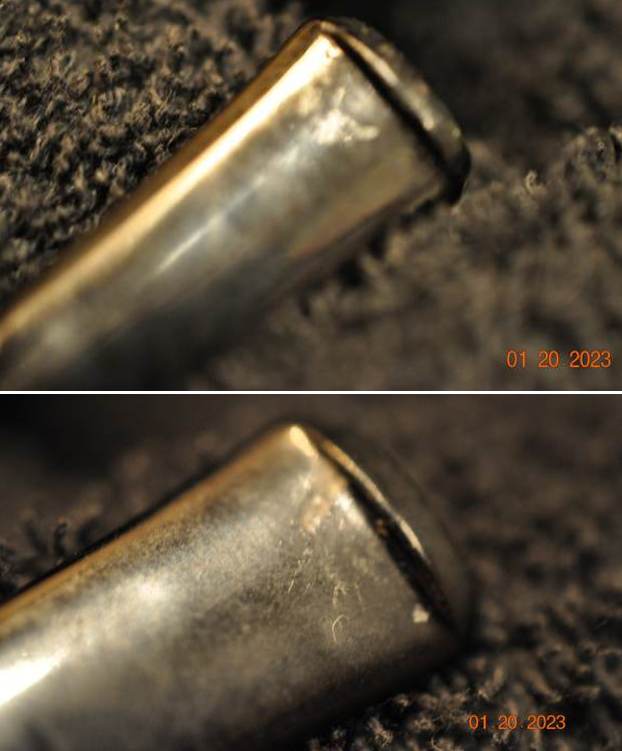
 The acrylic stem is dirty and has grime all over the surface. There are tooth marks and chatter on both sides ahead of the button.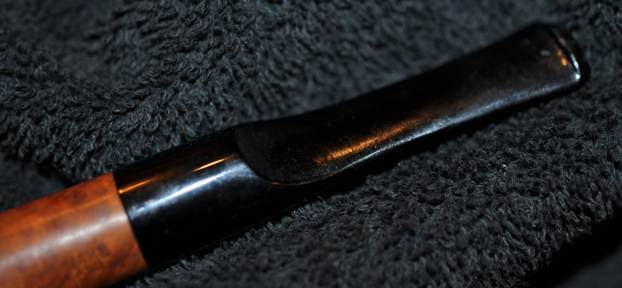
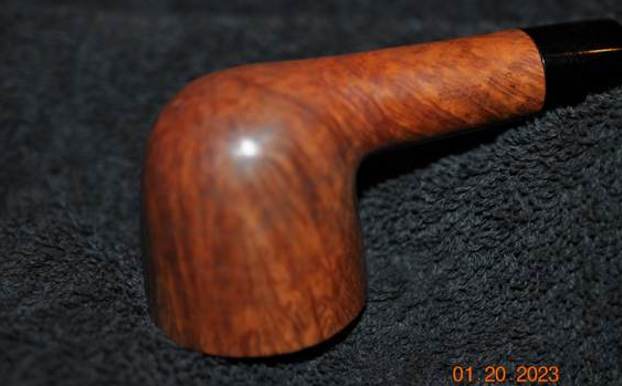
 Instead of telling you what I see in the next photos of the sides of the bowl and the heel I want to hear from you. Tell me what you see? What does the finish look like to you? Are there any visible problems or issues that stand out to you? Are the cracks or scratches in rusticated finish of the bowl? Are there visible flaws or fissures in the briar? What does the finish look like? Is there a pattern to it? Any visible issues on the heel of the bowl? These questions should help you to see what I am looking for when I see these photos.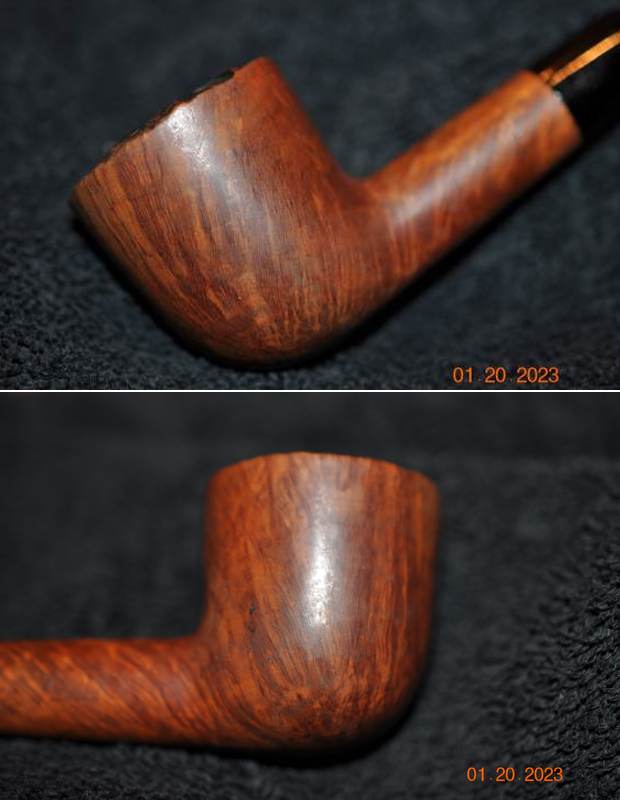
 He took photos of the stamping on the sides of the shank. It is stamped as noted above on the right and the left sides. The acrylic stem shows no logo or CP stamping on the saddle portion of the saddle. What stands out for you in the photos of the stamping? What do you look for in the stamping? It is dirty but what do you see underneath the grime on the surface of the briar?
 I turned to Pipephil’s site (http://pipephil.eu/logos/en/logo-charatan.html) to look up information on the Executive line. There was a great photo of the line and a blow up picture of the side and rim top. It also describes the rim top of the pipe I am working on. I have included the photos below as well as the noted below the first screen capture.
After 1965, some Executive had a carved top to resemble plateau briar (see detailed view below).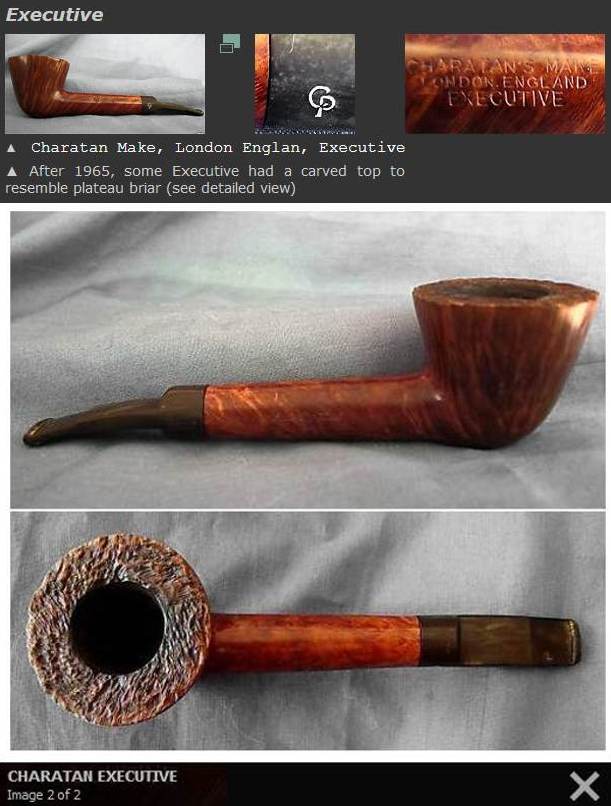 The carved plateau top tells me that the pipe was made after 1965. The rim top is definitely hand carved and is clearly an indication of the date of its carving.
I am sure many of you will shake your head and ask maybe even out loud, “Why is he including this again?” However, please remember that the point of these blogs is not to wow your with the work or make you shake your heads but I want you to know the details of the work we do so you can do your own. Back in 2020 Jeff wrote a blog about his cleaning process. I am including a link to that now so you can see what I mean about his process. Do not skip it! Give it a read (https://rebornpipes.com/2020/01/20/got-a-filthy-estate-pipe-that-you-need-to-clean/). Here is the introduction to that blog and it is very true even to this day.
Several have asked about Jeff’s cleaning regimen as I generally summarize it in the blogs that I post rather than give a detailed procedure. I have had the question asked enough that I asked Jeff to put together this blog so that you can get a clear picture of the process he uses. Like everything else in our hobby, people have different methods they swear by. Some may question the method and that is fine. But it works very well for us and has for many years. Some of his steps may surprise you but I know that when I get the pipes from him for my part of the restoration they are impeccably clean and sanitized. I have come to appreciate the thoroughness of the process he has developed because I really like working on clean pipe!
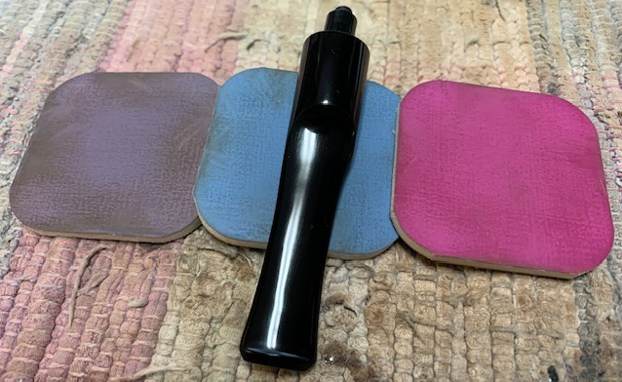
For the benefit of some of you who may be unfamiliar with some of the products he uses I have included photos of three of the items that Jeff mentions in his list. This will make it easier for recognition. These three are definitely North American Products so you will need to find suitable replacements or order these directly on Amazon. The makeup pads are fairly universal as we were able to pick some up in India when we were with Paresh and his family.
In the blog itself he breaks his process down into two parts – cleaning the stem and cleaning the bowl. Each one has a large number of steps that he methodically does every time. I know because I have watched him do the work and I have seen the pipes after his work on them. He followed this process step by step and when the pipe got to me it was spotlessly clean and ready for my work. The inside of the stem, shank and bowl were clean and to me that is an amazing gift as it means that my work on this end is with a clean pipe! I cannot tell you how much difference that makes for my work.
- The finish is clean and the oils and grime in the finish shows the beautiful straight grain around the sides. The medium brown stain highlights the grain.
- The plateau style rusticated rim top was clean but still had some darkening in the rustication. The inner edge of the bowl is clean and appears to be in excellent condition.
- There cake in the bowl has been removed and the bowl is very clean. The walls of the bowl are smooth and appear to be undamaged and show no checking or burn damage.
- The acrylic taper stem looks better though the tooth marks and chatter on both sides are still visible. There were some deeper tooth marks on the underside ahead of the button.
- There is no marking or logo on the stem but it is a well fit replacement stem.
Hopefully the steps above show you both what I look for when I go over the pipe when I bring it to the work table and also what I see when I look at the pipe in my hands. They also clearly spell out a restoration plan in short form. My work is clear and addressing it will be the next steps. I took photos of the whole pipe to give you a picture of what I see when I have it on the table. This is important to me in that it also shows that there was no damage done during the clean up work or the transit of the pipe from Idaho to here in Vancouver. 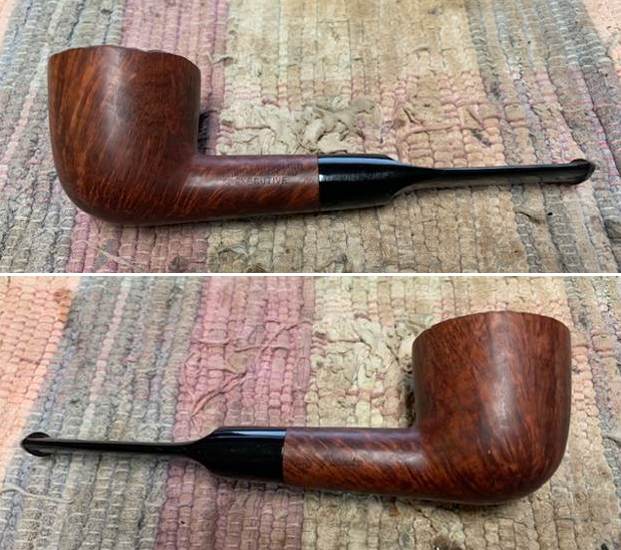
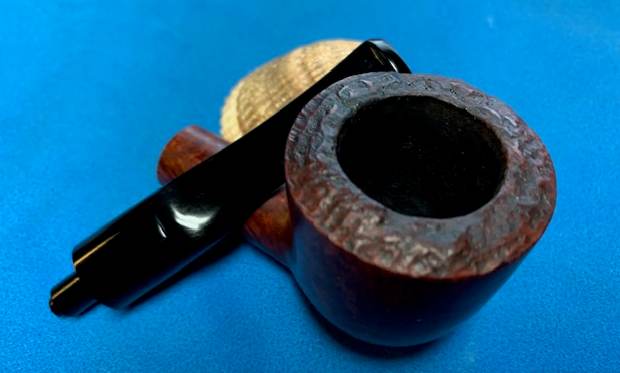
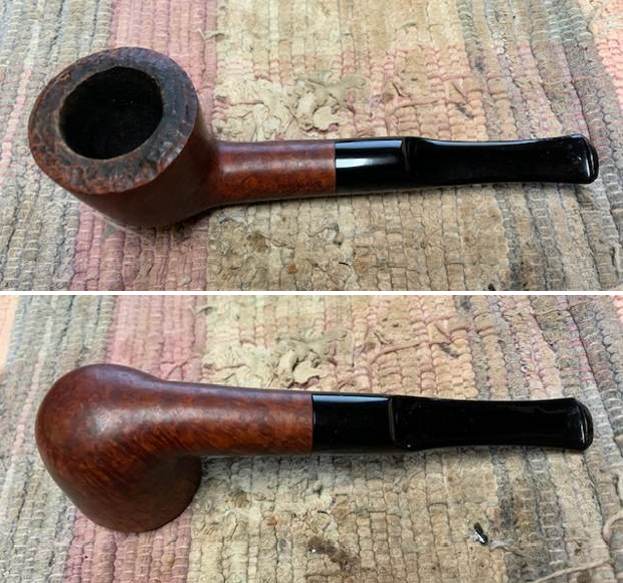 I carefully went over the bowl and rim top to get a sense of what is happening there. In this case once the rim top and edges were cleaned the rim top looked better. The inner edge was in good condition and looked good with the rusticated plateau style rim top. I also went over the stem carefully. The fit of the replacement to the shank is snug and the transitions are smooth. There were some tooth marks and chatter on the surface of the stem and the button on the underside. The acrylic stem surface was clean and looked better. I took photos of the rim top and stem sides to show as best as I can what I see when I look at them.
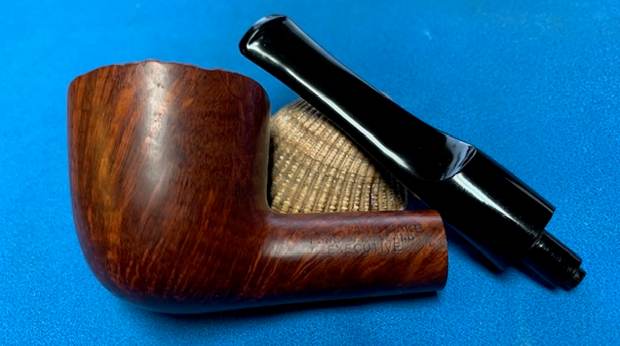
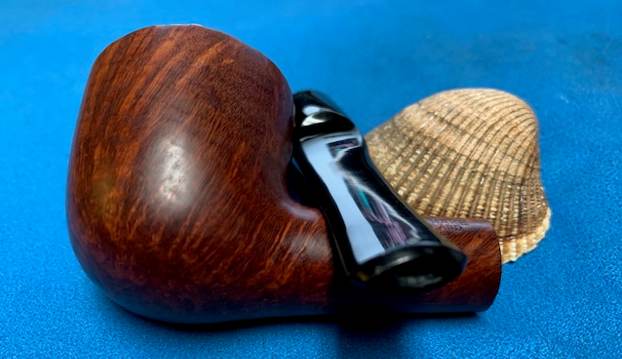
 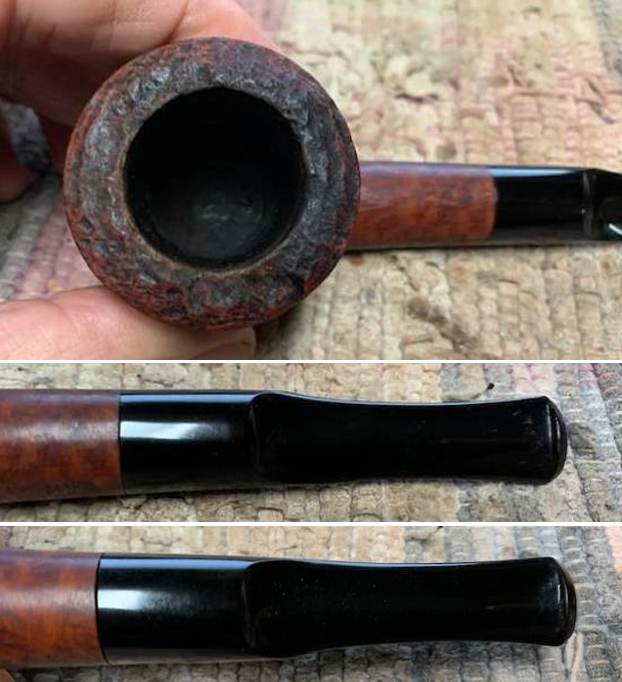 I always check to make sure that the clean up work did not damage the stamping on the shank sides in any way. It is in excellent condition and is very clear and readable. I love just looking at the lay of the pipe and the proportion of the hand made pipes. I took the pipe apart to get a sense of what was in the mind of the pipe maker when he crafted the pipe. The photo shows its beauty in flow and shape.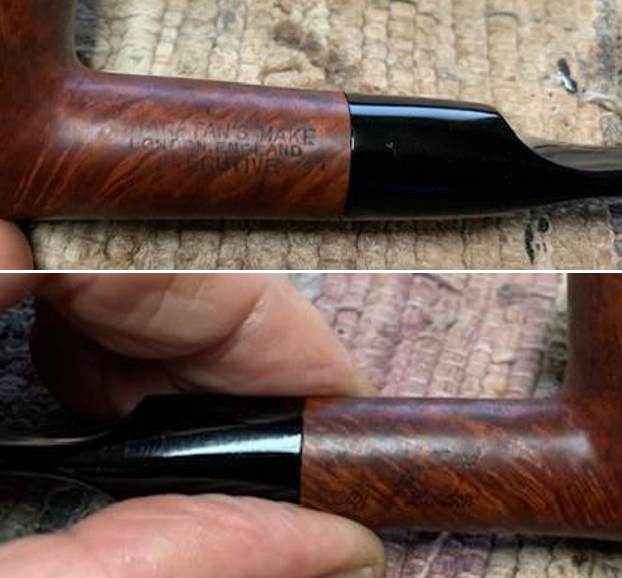
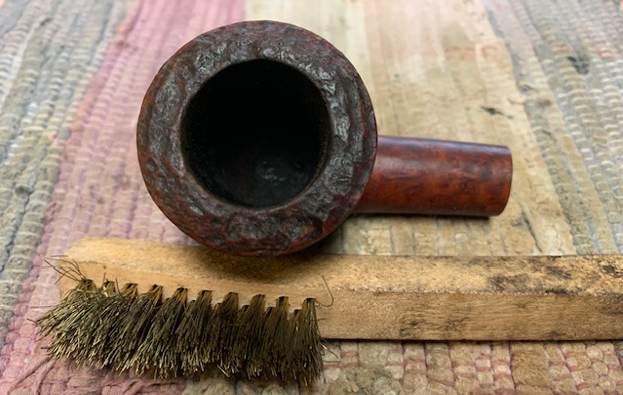
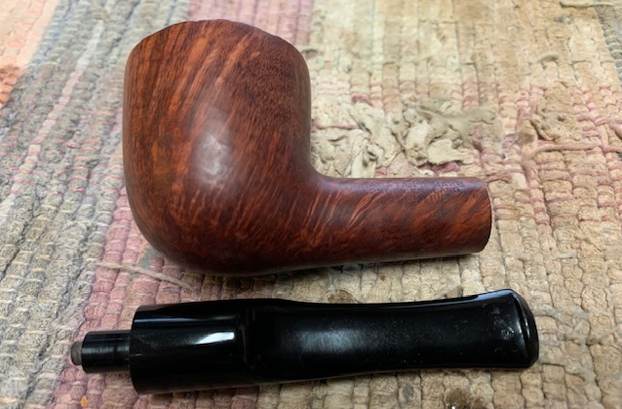 I started my work on the pipe by dealing with the darkening on the top of the bowl. I used a brass bristle wire brush to work over the rim top rustication. It looked much better when I had finished.
  I polished the briar with micromesh sanding pads. I choose to dry sand the briar rather than wet sand it. Again it is a matter of personal preference. I prefer to use the pads dry and find they work very well on the briar. I sand with each pad (9 in total) and group them by threes for ease of reference. I wipe the bowl down after each pad with a damp cloth to remove the sanding debris and check the briar. I love seeing the developing shine on the briar as I move through the pads which is why I include so many photos of this step.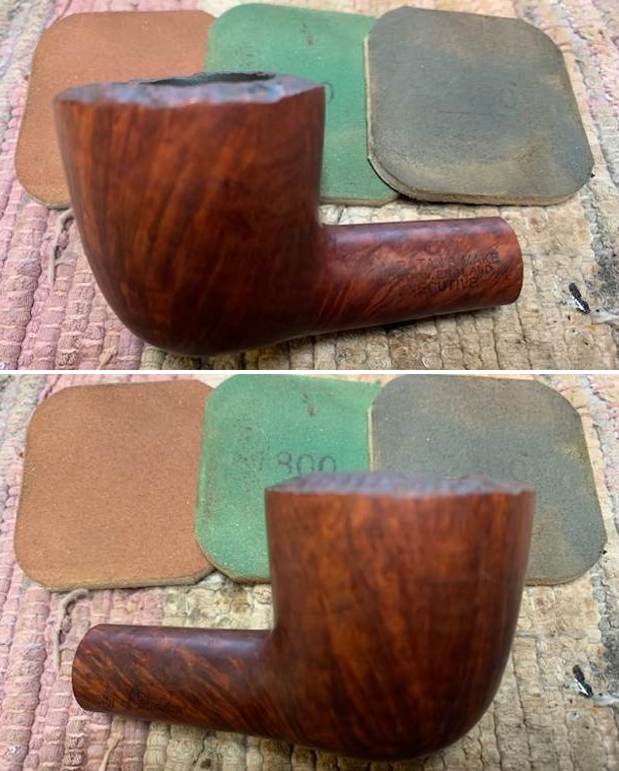
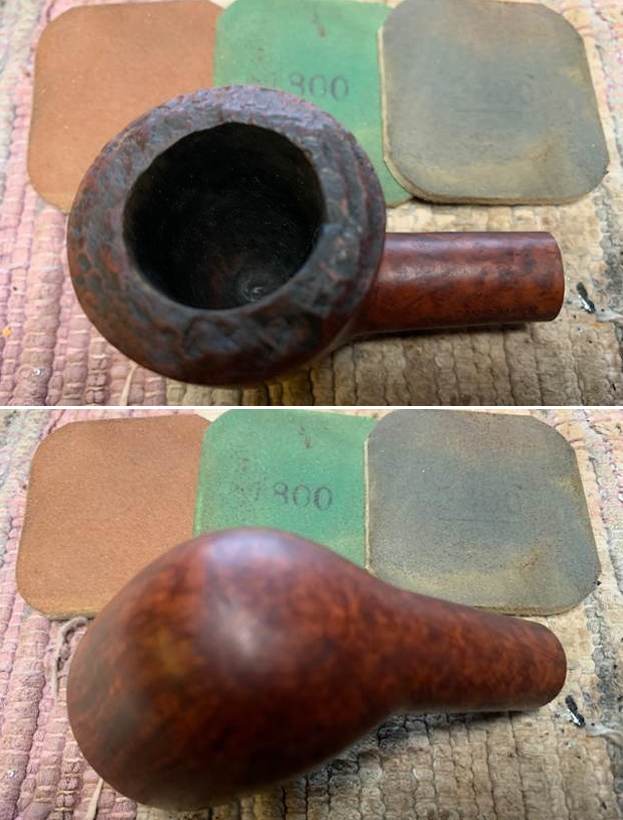

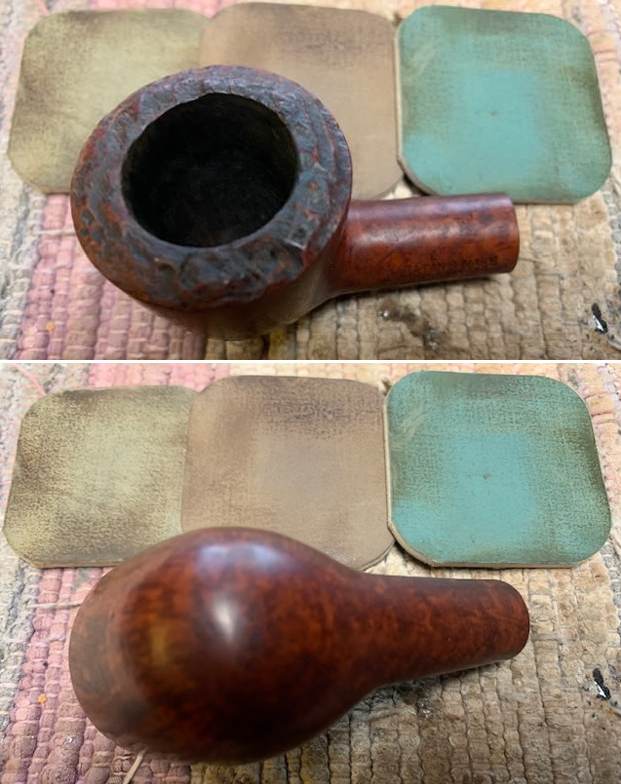
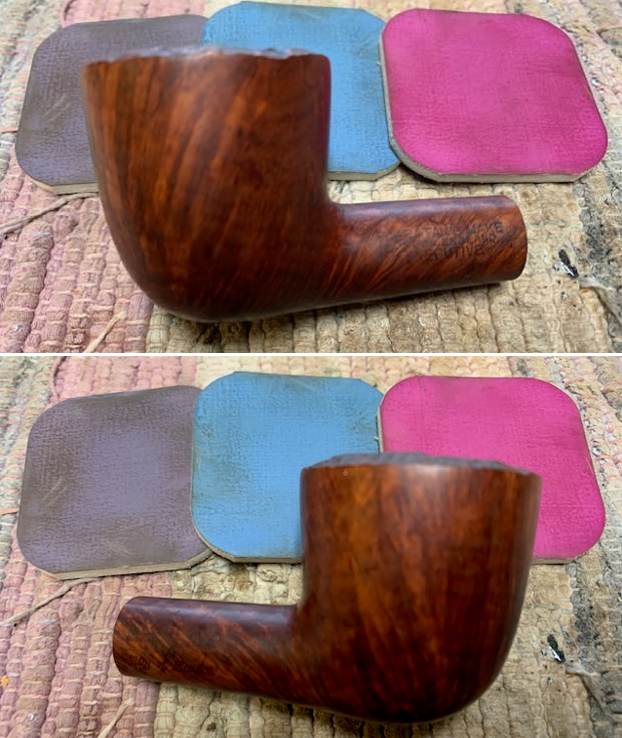
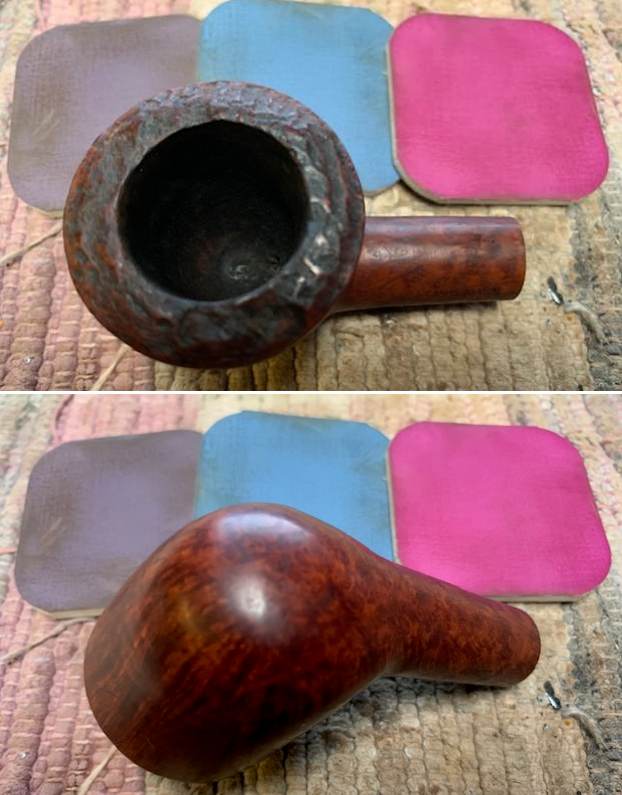 I rubbed down the bowl and shank with Before & After Restoration Balm. It is a paste/balm that is rubbed into the surface of the briar. The product works to deep clean the finish, enliven and protect the briar. I worked it into the briar with my finger tips. I let it sit for 10 minutes then wiped it off with a soft cloth then buffed it with a cotton cloth. The briar really began to have a deep shine in the briar and the rustication showed depth. The photos I took of the bowl at this point mark the progress in the restoration. It is a gorgeous pipe.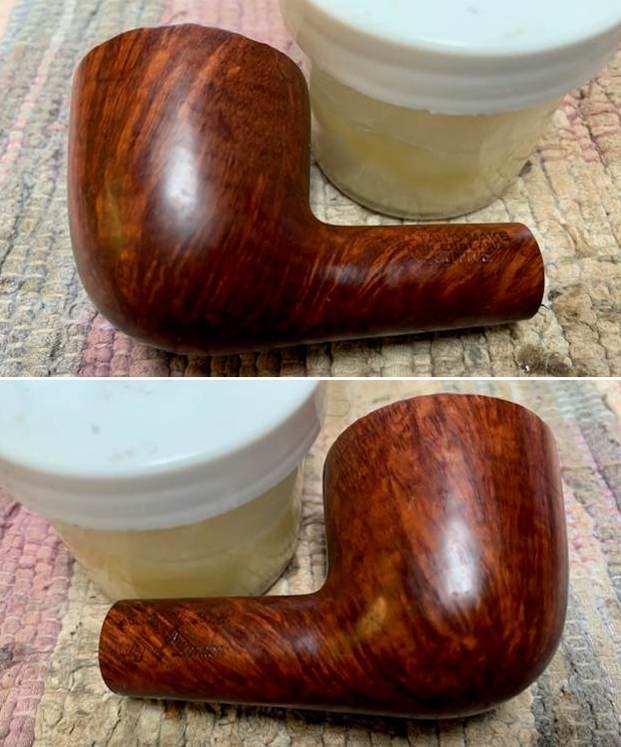
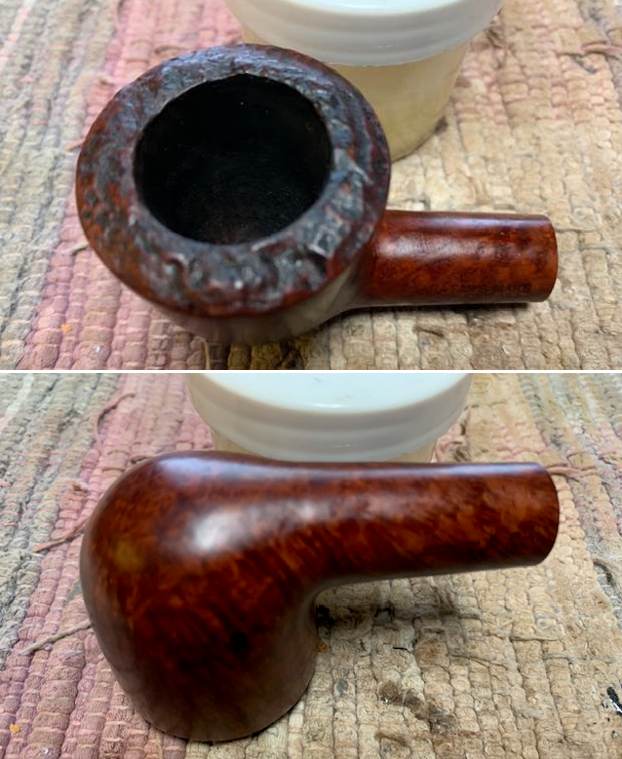
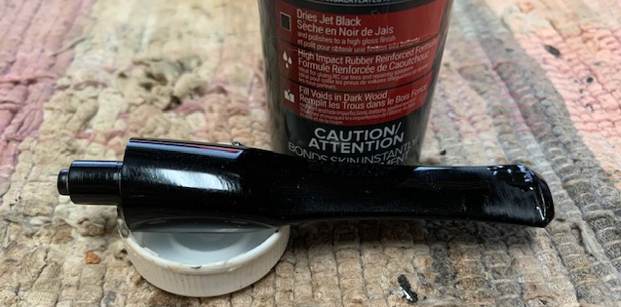
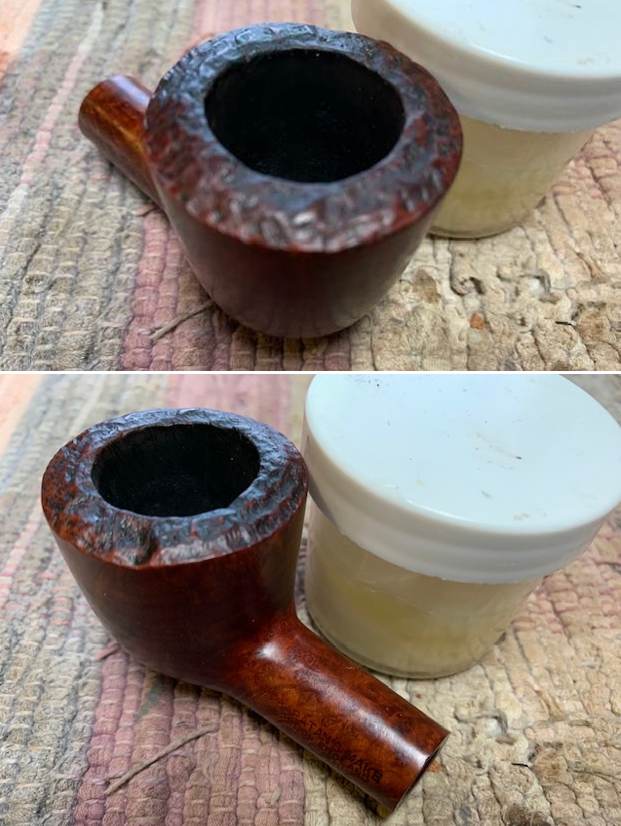 I set the bowl aside and turn to work on the stem. I used a pottery saw and files to reshape the airway in the end of the button. It was a small round hole that is often found on replacement stems and I shaped it into a slot. I filled in deep marks on the underside of the stem with black CA glue. I set the stem aside for the repairs to cure. Once hardened I used a small file to flatten out the repairs. I sanded them smooth with 220 grit sandpaper and started polishing it with 600 grit wet dry sandpaper.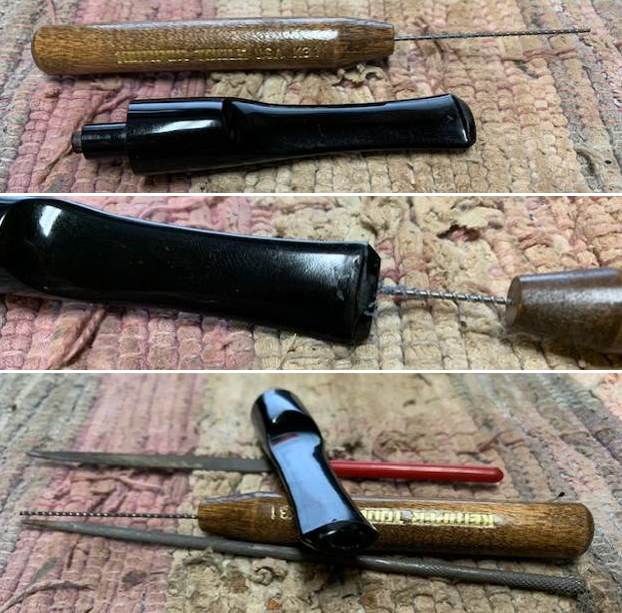
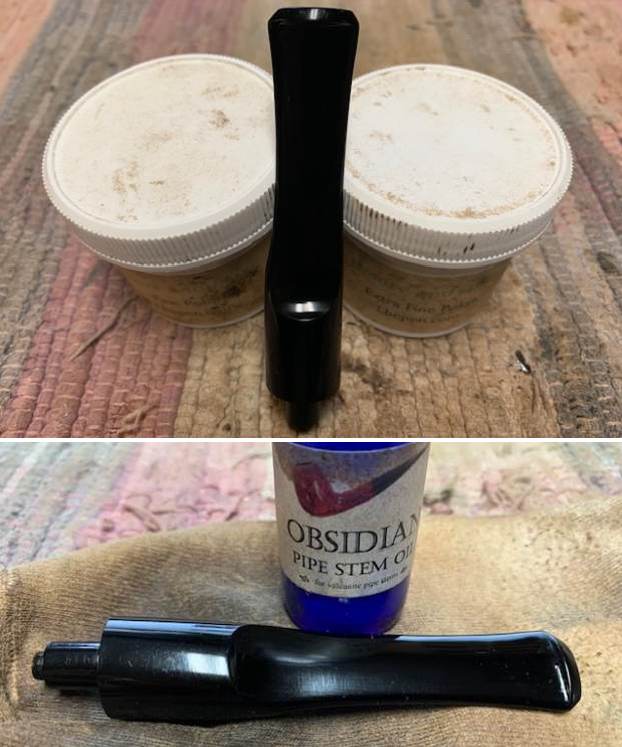
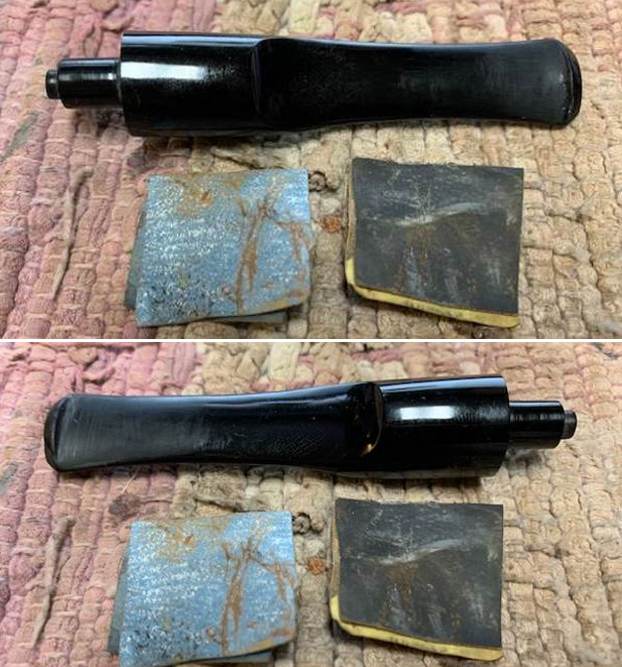 I polished the stem with micromesh sanding pads – 1500-12000 grit sanding pads and water to wet sand the stem. I wiped it down after each sanding pad with Obsidian Oil on a cotton rag after each sanding pads. I know that many say Obsidian Oil does nothing for acrylic stems, but I find it does two things – first it gives some protection to the stem from buildup and second it give the sanding pads bite in the polishing process.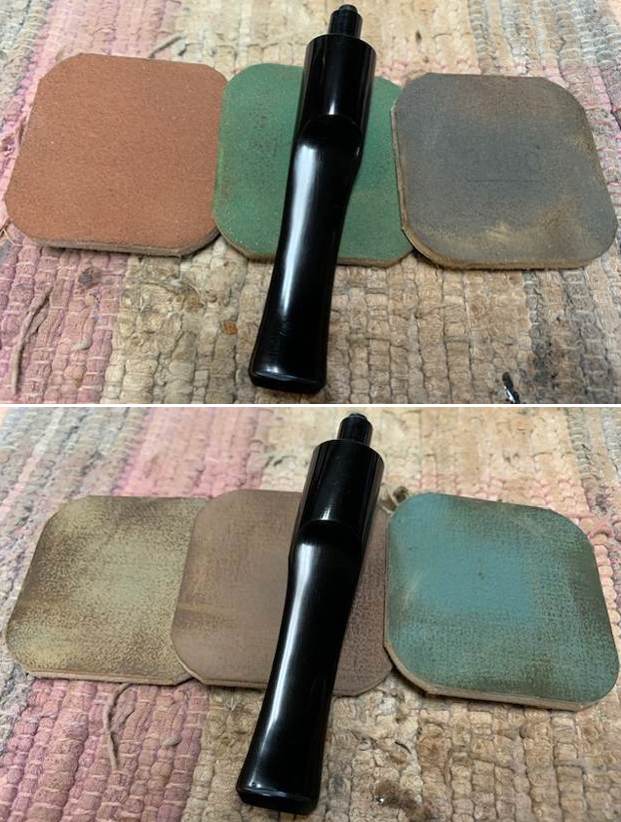
 After finishing with the micromesh pads I rub the stem down with Before & After Fine and Extra Fine stem polish as it seems to really remove the fine scratches in the acrylic. I rub the Fine Polish on the stem and wipe it off with a paper towel and then repeat the process with the Extra Fine polish. I finish the polishing of the stem down with a final coat of Obsidian Oil and set the stem aside to let the oil absorb. This process gives the stem a shine and also a bit of protection.
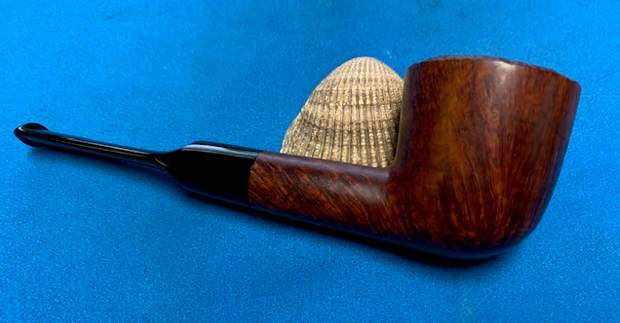
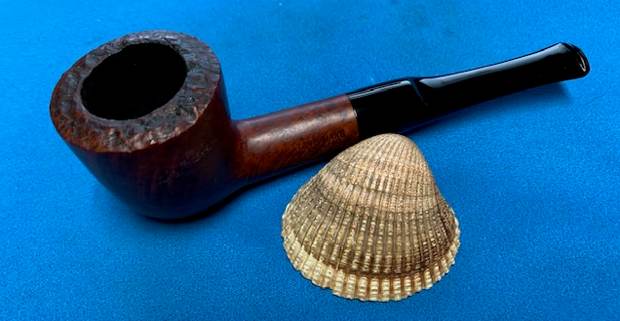
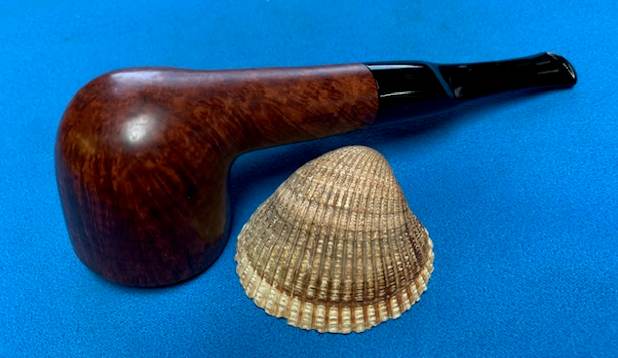
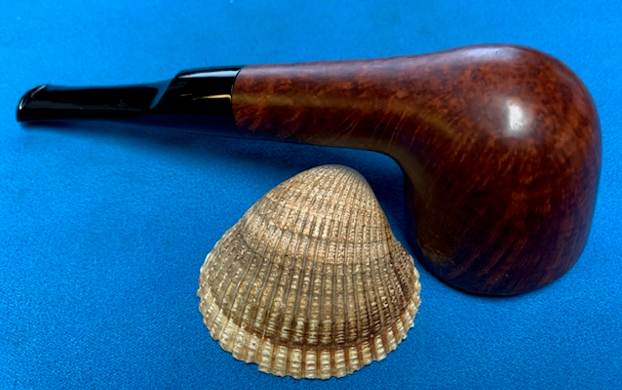
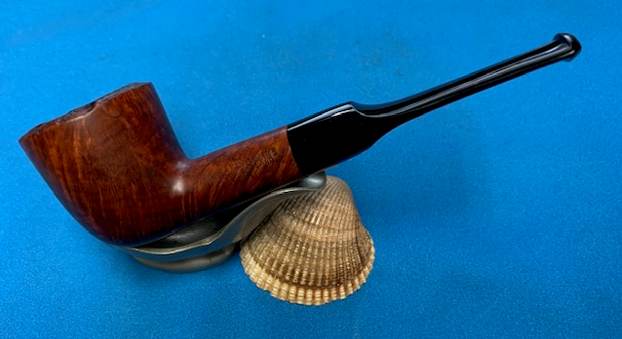
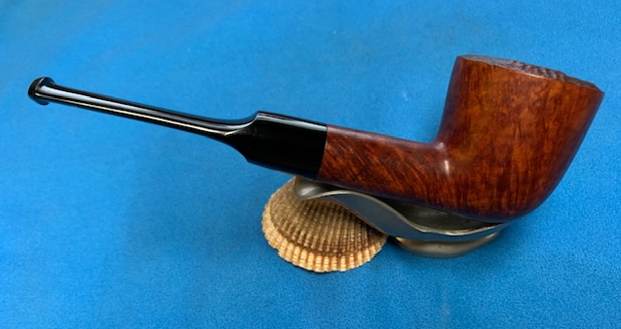
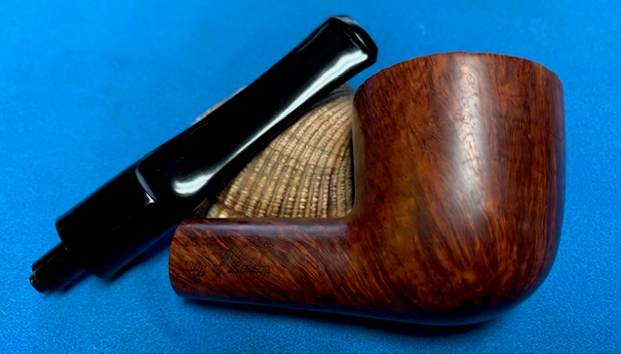
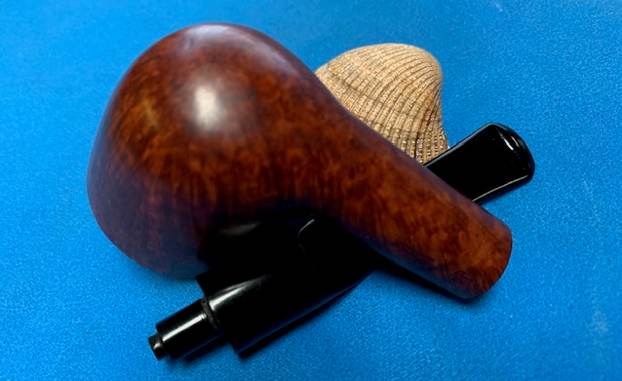
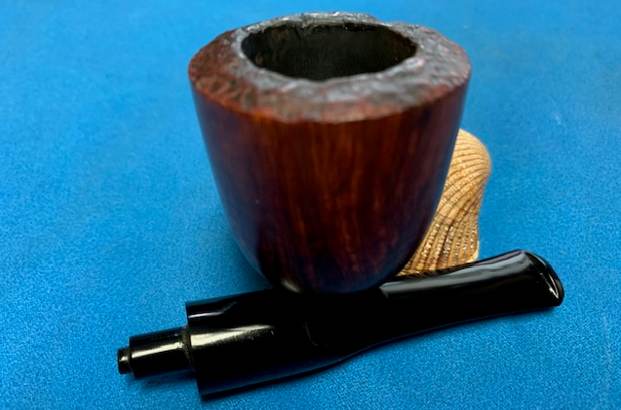
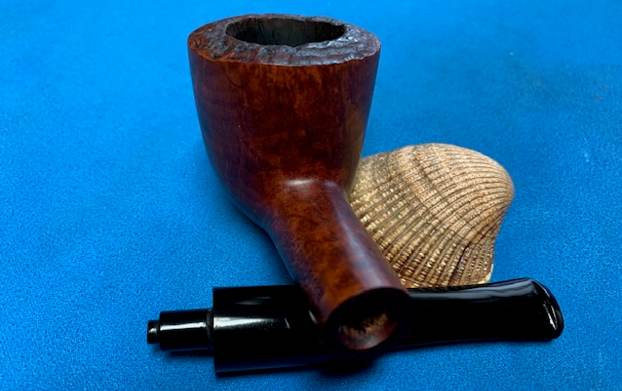
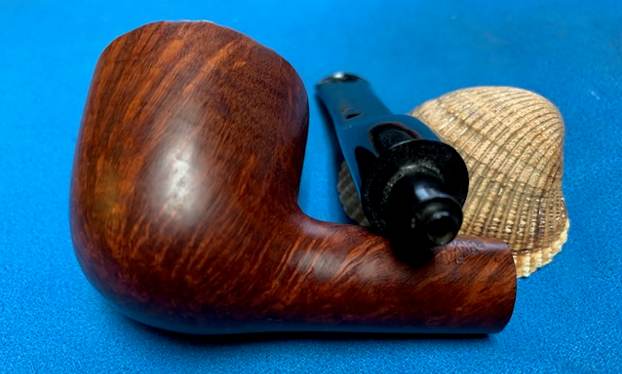
  The final steps in my process involve using the buffer. I buffed the bowl and stem with Blue Diamond to polish out the light scratches in the briar and the acrylic. I gave the bowl and the stem multiple coats of carnauba wax. I have found that I can get a deeper shine if I follow up the wax buff with a buff with a clean buffing pad. It works to raise the shine and then I hand buff with a microfiber cloth to deepen the shine. It is always fun for me to see what the polished bowl looks like with the polished stem. It really is a nice pipe. The smooth finish around the bowl sides and shank looks great with rusticated plateau style crowned rim. The acrylic stem works well with the pipe. The Charatan’s Make Executive Made by Hand in City of London Dublin feels great in my hand. It is a well balanced pipe. Have a look at it with the photos below. The dimensions are Length: 6 inches, Height: 1 ¾ inches, Outside diameter of the bowl: 1 ½ inches, Chamber diameter: 1 inch. The weight of the pipe is 1.69 ounces/48 grams. It is a beautiful pipe that I will soon be adding to the rebornpipes store in the British Pipemakers Section. If you would like to add it to your collection let me know. It should be a great smoking pipe.
Hopefully the style of writing of this blog is helpful to you in some way. In it I wanted to show both what I am looking for and how I move forward in addressing what I see when work on a pipe. Let me know if it is helpful to you. It is probably the most straightforward detailed description of my work process that I have done. As always I encourage your questions and comments as you read the blog. Thanks to each of you who are reading this blog. Remember we are not pipe owners; we are pipe men and women who hold our pipes in trust until they pass on into the trust of those who follow us.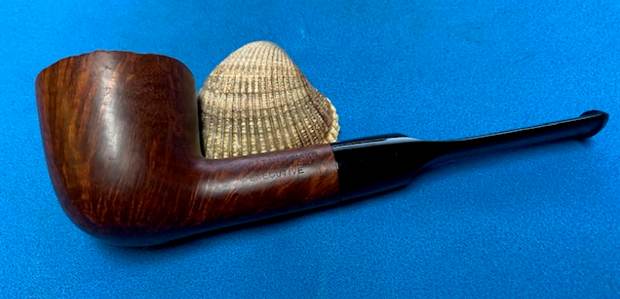
 rebornpipes