
by Steve Laug
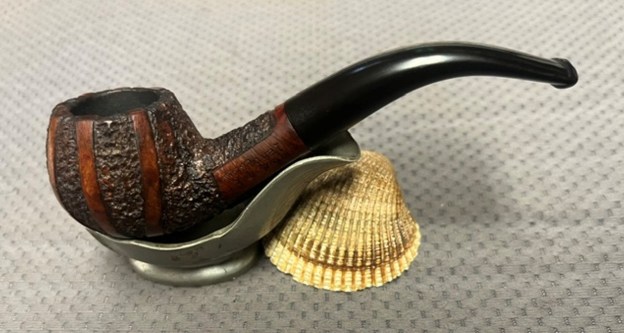
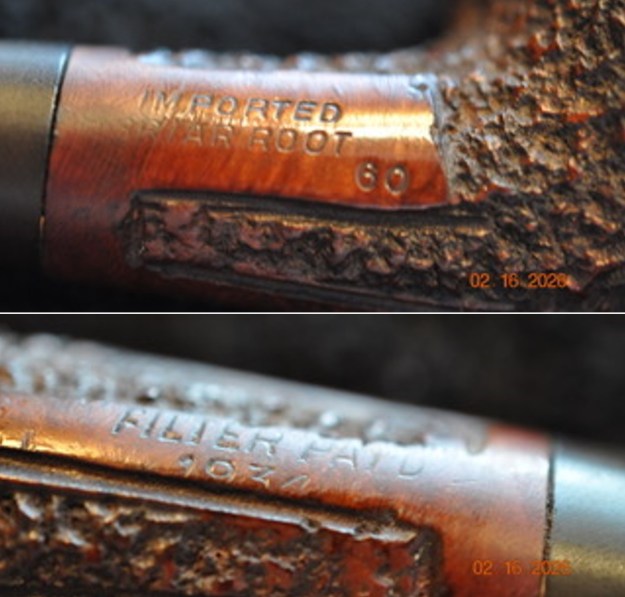
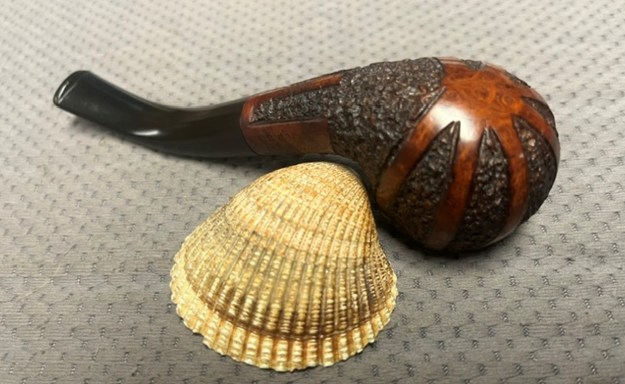
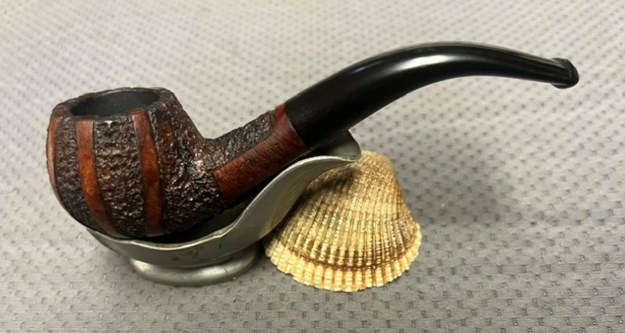
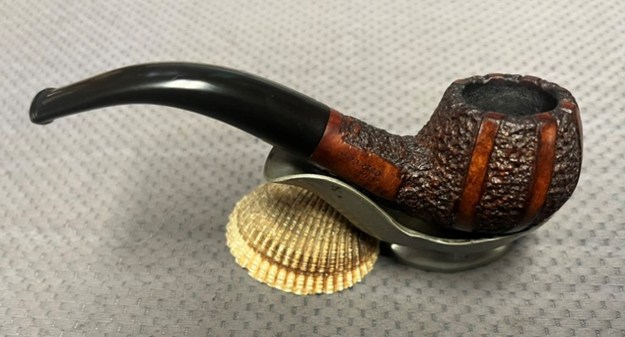
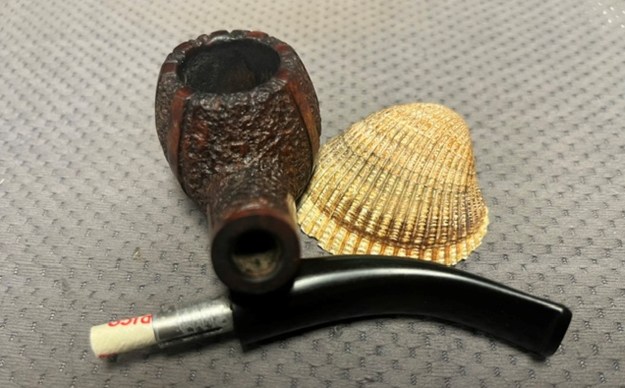
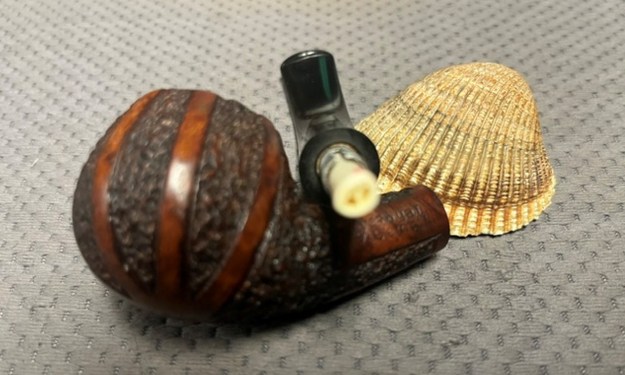
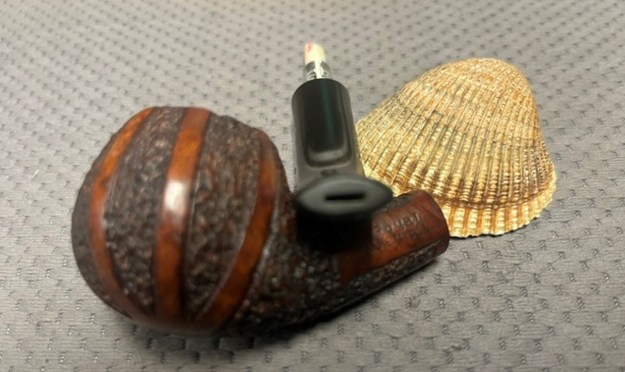
The next pipe on the table is a great looking mixed finish Bent Apple with a vulcanite bit. It was one purchased on 01/20/2026 from a Facebook seller in Quaker Town, Pennsylvania, USA. The bowl and the shank are rusticated with smooth bands vertical around the bowl sides and smooth panels on the shank sides and round the shank end. The smooth bands extend up the sides and onto the rim top of the bowl. It is a great looking pipe. It is stamped on the sides of the shank. On the left side it reads WDC in an inverted triangle [followed by] Royal [over] Demuth. On the right side it reads Imported [over] Briar Root and under it and toward the bowl is the shape number 60. On the underside it is stamped Filter Pat’d. [over] 1934. The finish was dirty and had a lot of grime and grit ground into the rustication and the smooth portions. The rim top and inner edge of the bowl is dirty with a light lava flow on the edge and the top that was heavier toward the back of the bowl. There is a thick cake in the bowl. The stem is oxidized and has tooth marks and chatter on the surface. Jeff took photos of the pipe before he started his clean up work. It showed a lot of promise.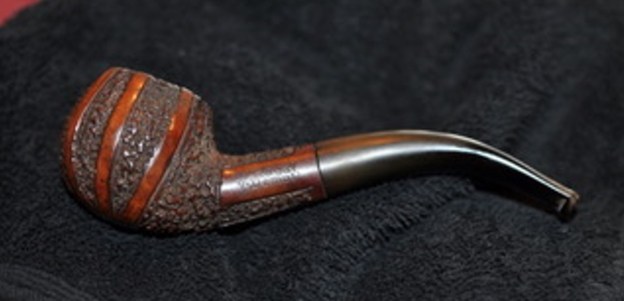
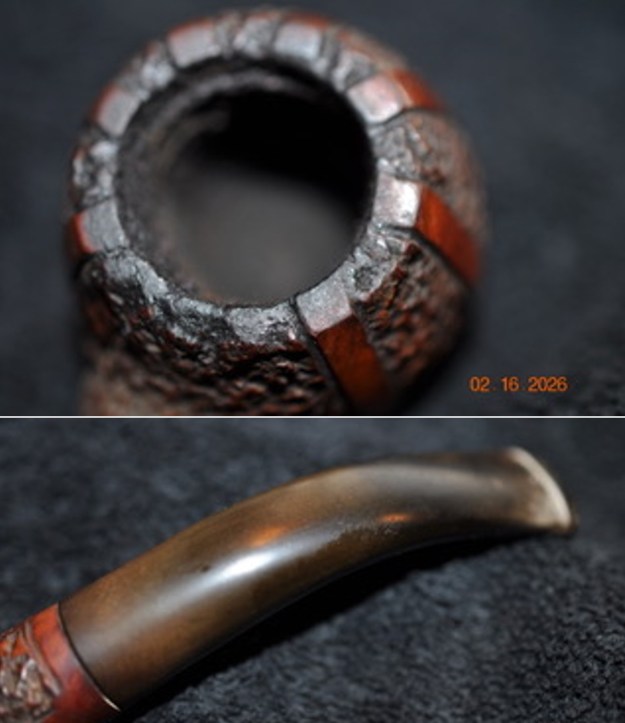
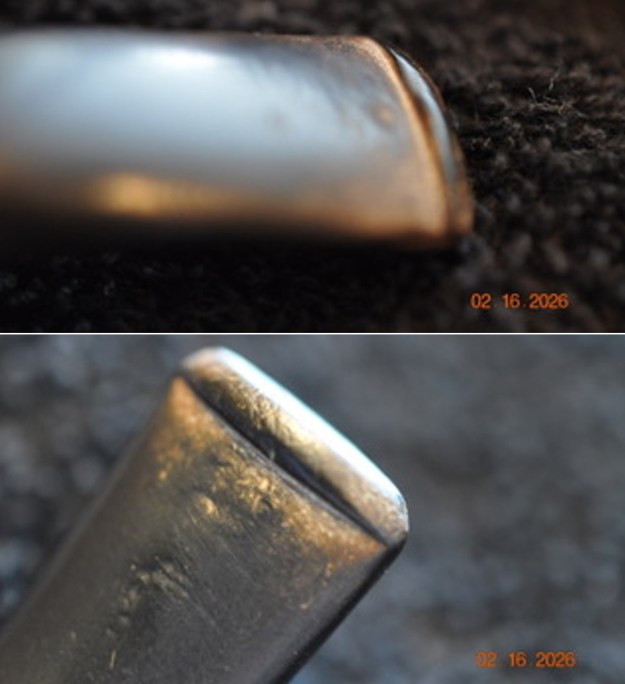
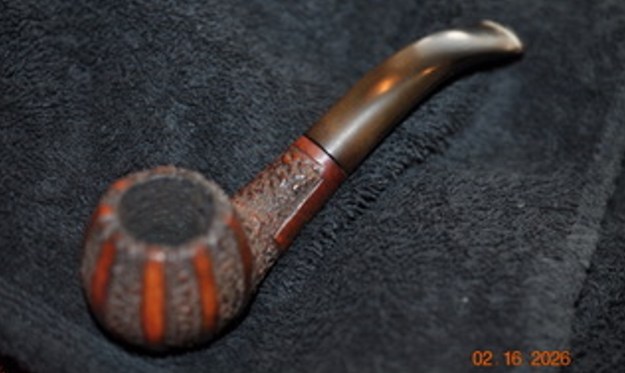 Jeff took photos of the bowl and rim top to show the cake in the bowl and the lava on the inner edge of the top. The lava is quite thick on the inner edge. He also took photos of the stem to show the oxidation and the tooth marks and chatter on the stem.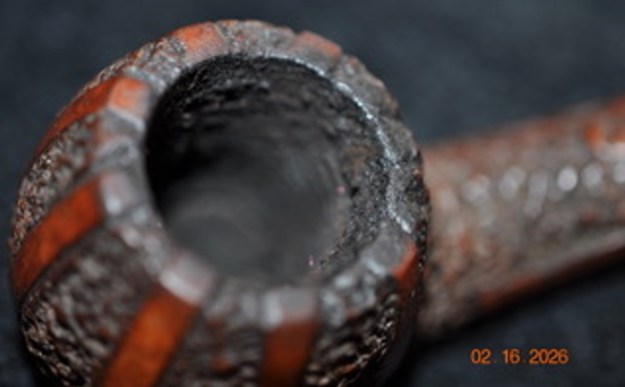
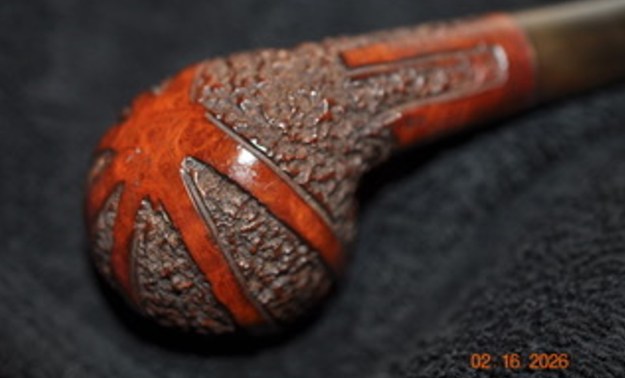
 He took photos of the bowl and heel to show the condition of the finish. The combination of rustication – tight pattern – and smooth portions look very good and are a great contrast to the polished vulcanite stem.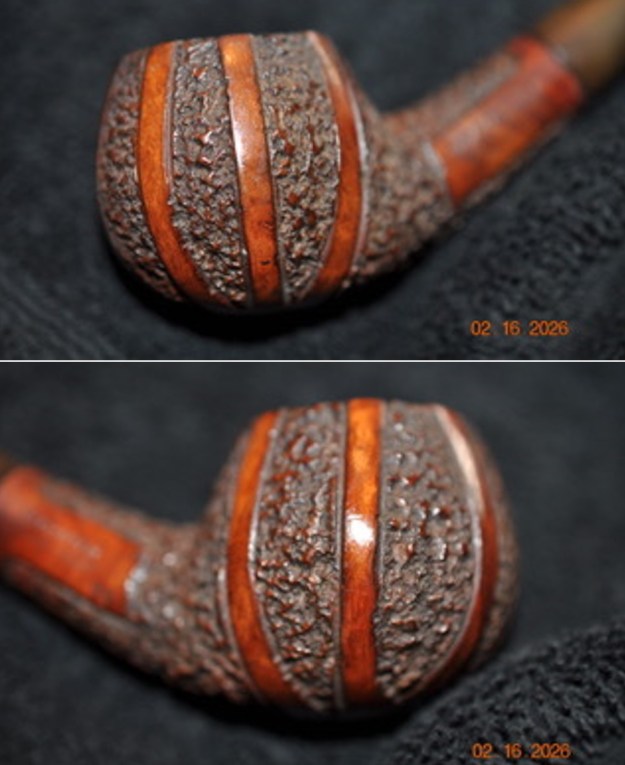
 Jeff took photos of the stamping on the shank sides and the logo on the stem. They read as noted above and were in excellent condition.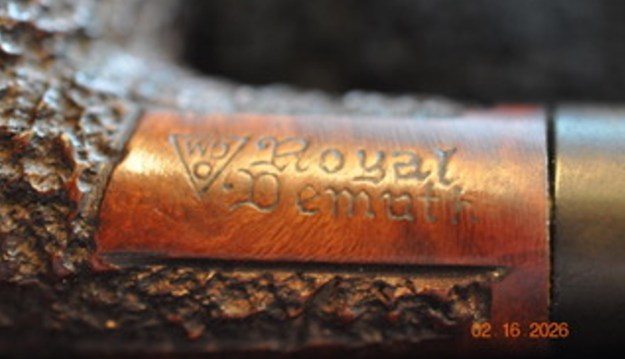
 Before I work on a pipe I always want to know about the background to it. I looked on Pipephil’s site and though there were many WDC pipes there was nothing stamped Royal Demuth and nothing with any of the other stamping on the shank sides of this pipe. I turned then to Pipedia (https://pipedia.org/wiki/William_Demuth_Company). As always there is a great history of this American brand. If you are interested be sure to turn there and take time to read about it.
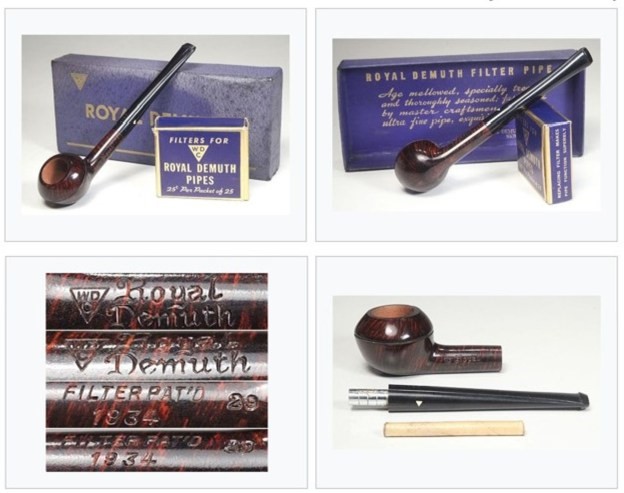 Royal Demuth example with box and filters, courtesy of Doug Valitchka
There was an interesting example of the Royal Demuth provided by Doug Valitchka that has identical stamping to the one that I am working on. It is a different shape but it identical in terms of the stamping. It also looks like it takes a filter that is similar to the Medico filter but I will doulbe check that once it is thoroughly cleaned.There was also an advertisement for the WDC Changeable Filter Pipes that included the Royal Demuth. I have included that below.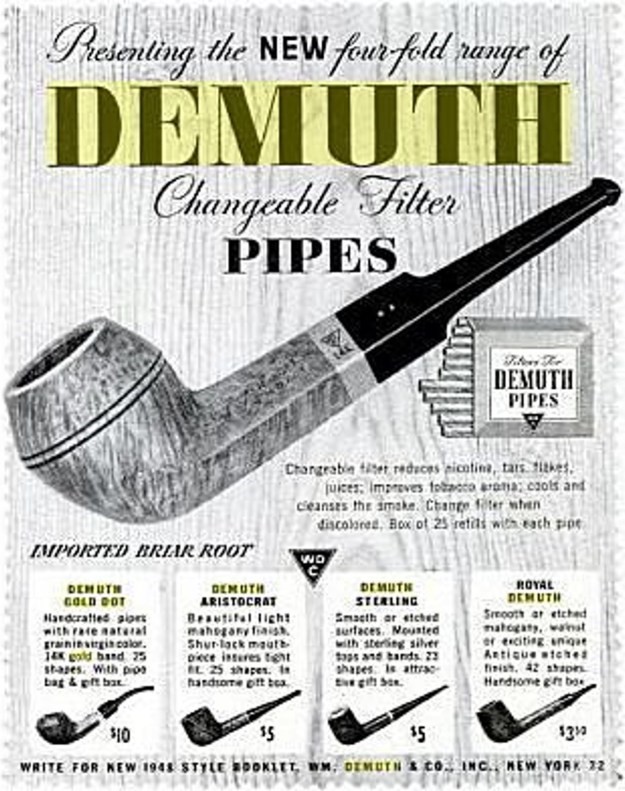 There is also a great article by Ben Rappaport on the Demuth – Dunhill Connection that is an enjoyable read (https://pipedia.org/wiki/A_Demuth%E2%80%94Dunhill_Connection%3F).
I now knew that the pipe was part of a line of Filter Pipes that WDC put out and that the filter system was patented in 1934. The stamping that the Filter was Pat’d 1934 tells that it came out after the patent was granted. However, I could not fine tune the date more than that. I also knew that the pipe I was working on was an older one because of the style of the stem – straight taper and smaller profile at the button ends.
Jeff carefully reamed this older striped WDC Royal Demuth Apple with a PipNet pipe reamer and then cleaned up the inside of the bowl with a Savinelli Fitsall Pipe Knife. He scrubbed the briar with undiluted Murphy’s Oil Soap and a tooth brush to remove the grime on the rim top and bowl sides. He scrubbed the internals of the shank and stem with pipe cleaners, cotton swabs, shank brushes and alcohol until the airways were clean and the pipe smelled fresh. He scrubbed the stem with Soft Scrub to remove the oxidation and then let it soak in Briarville’s Pipe Stem Deoxidizer. He rinsed it with warm water when he took out of the soak. The pipe looked much better once the bowl and stem were clean. Before I started my part of the work I took photos of the pipe. It is a pretty pipe.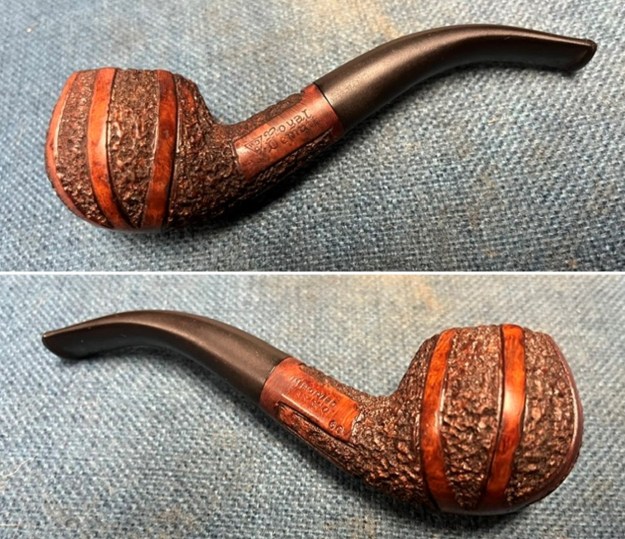
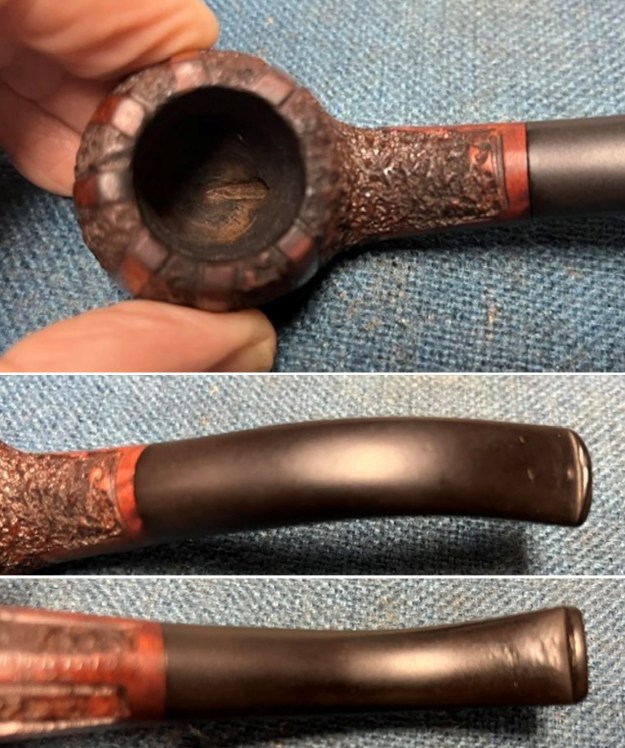
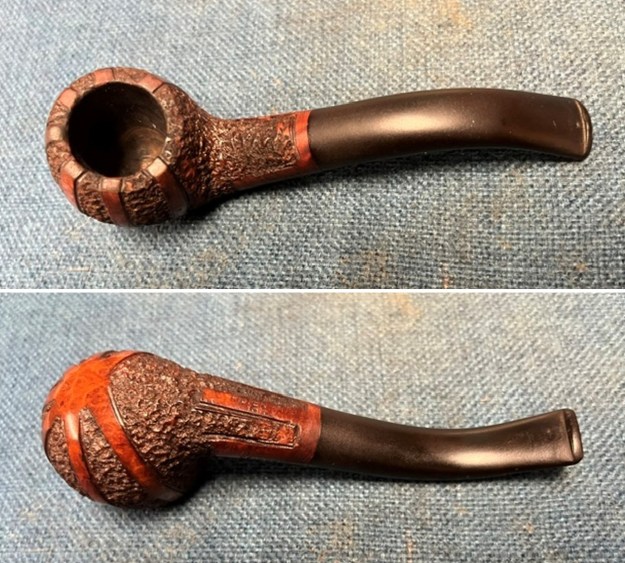 I took close up photos of the bowl and the rim top to show the condition. It looked better and the inner edge and top were in very good condition. I also took photos of both sides of the stem to give a sense of the condition of both sides at the button. There were deep tooth marks on both sides ahead of the button.
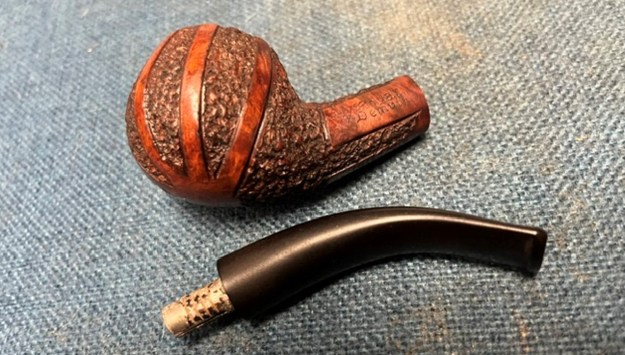
 I took a photo of the stamping on the left side of the shank and stem. It reads as noted above and is very clear and readable. The stamping on the shank is faint but readable. I took the stem off the shank and took photos of the pipe to give a sense of its beauty and proportions.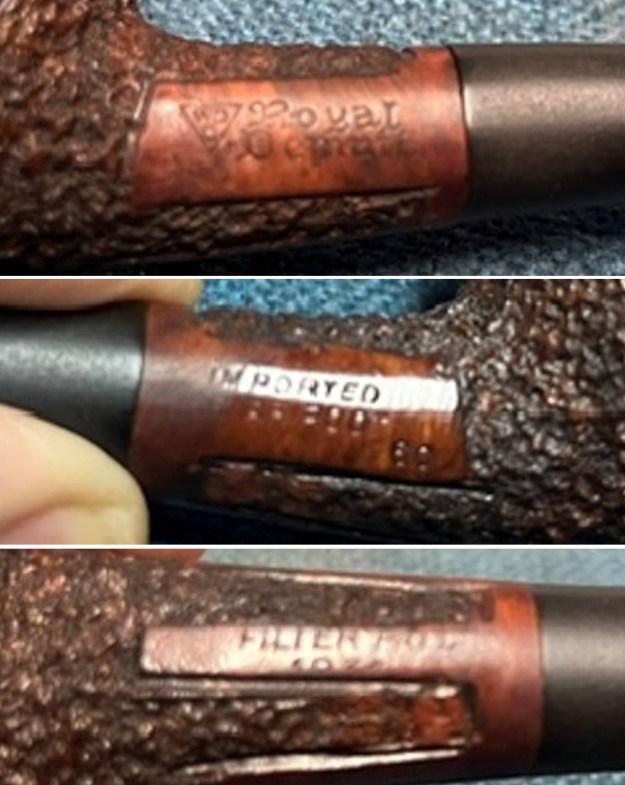
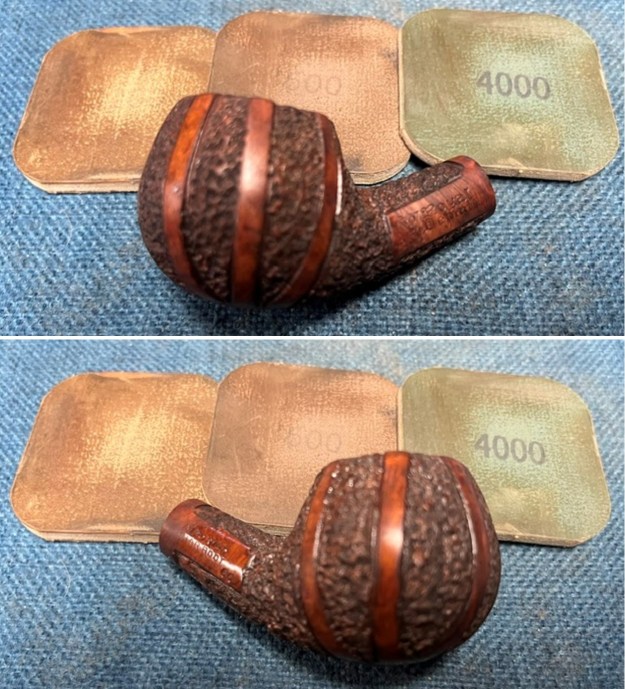
 I polished the smooth patches on the bowl and rim top with micromesh sanding pads – dry sanding with 1500-12000 grit pads and wiped down the bowl down with a damp cloth after each sanding pad.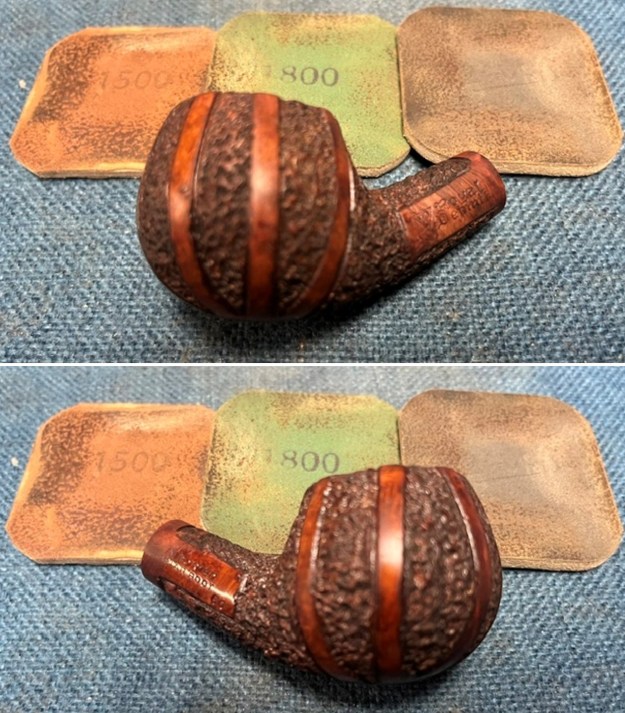
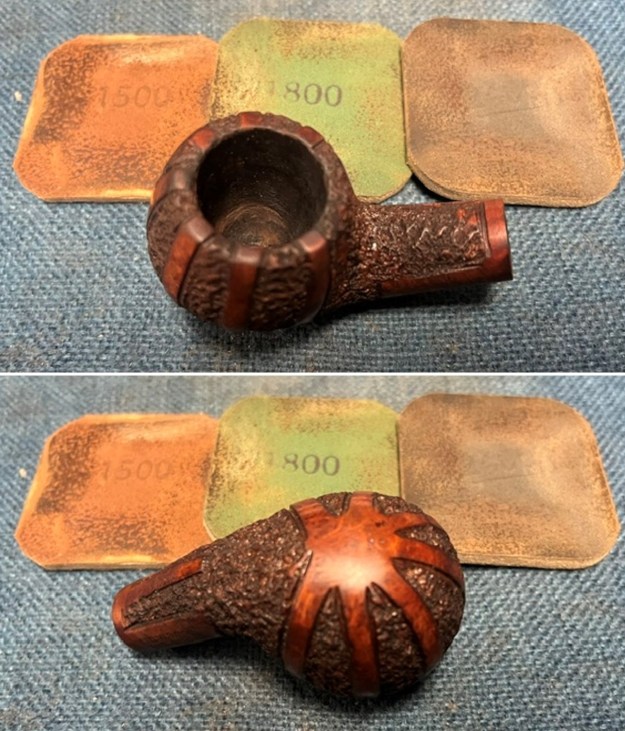
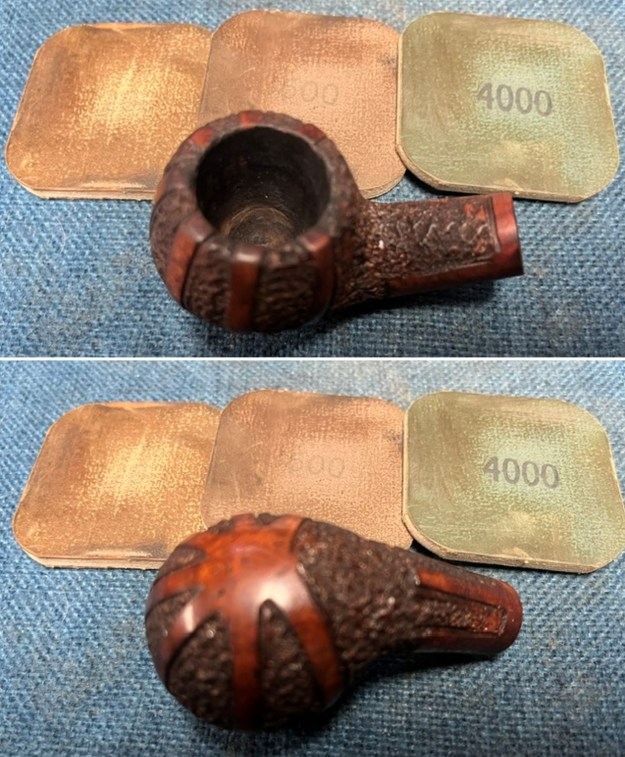
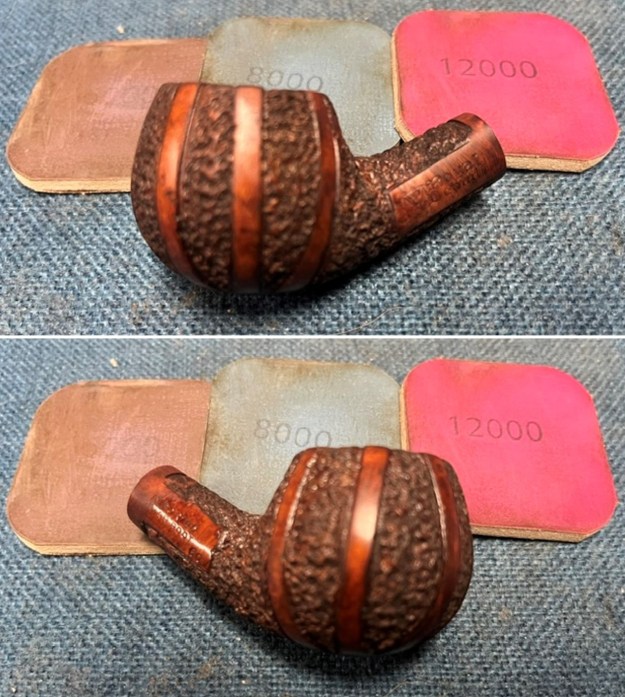
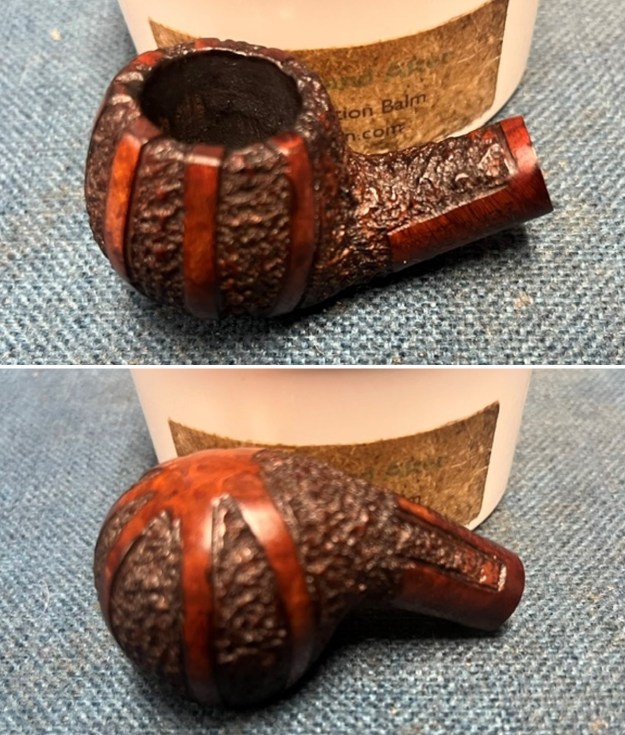
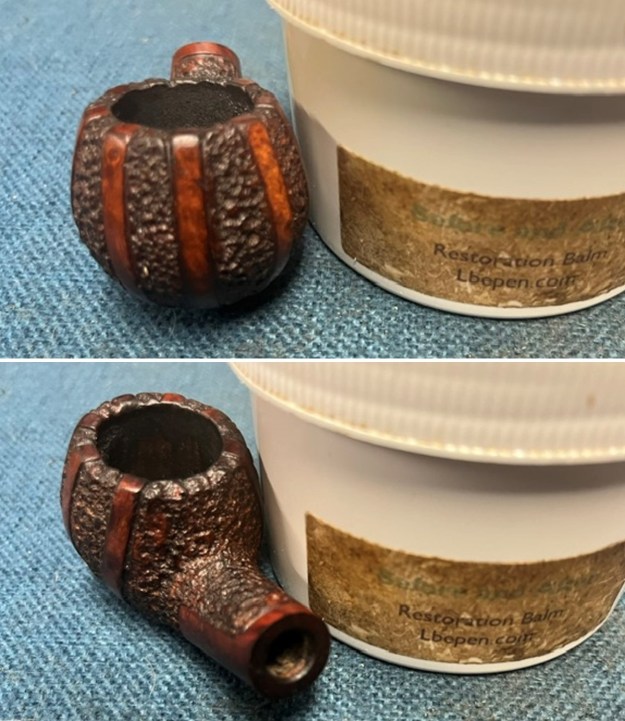
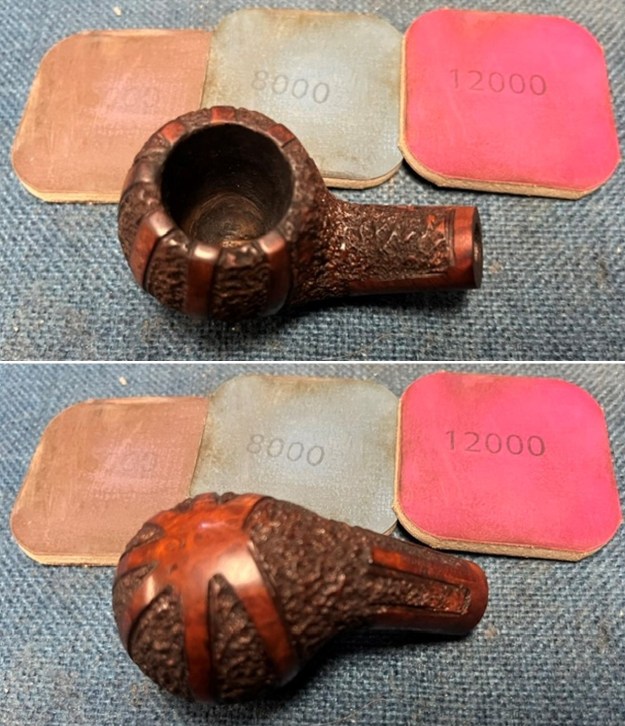 I rubbed the bowl and shank down with Before & After Restoration Balm. I worked it into the surface of the bowl sides and shank with my fingertips and a shoe brush to work it into the rustication. The product works to clean, enliven and protect the briar. I let the balm sit for a little while and then buffed with a cotton cloth to raise the shine. The Balm did its magic and the grain stood out.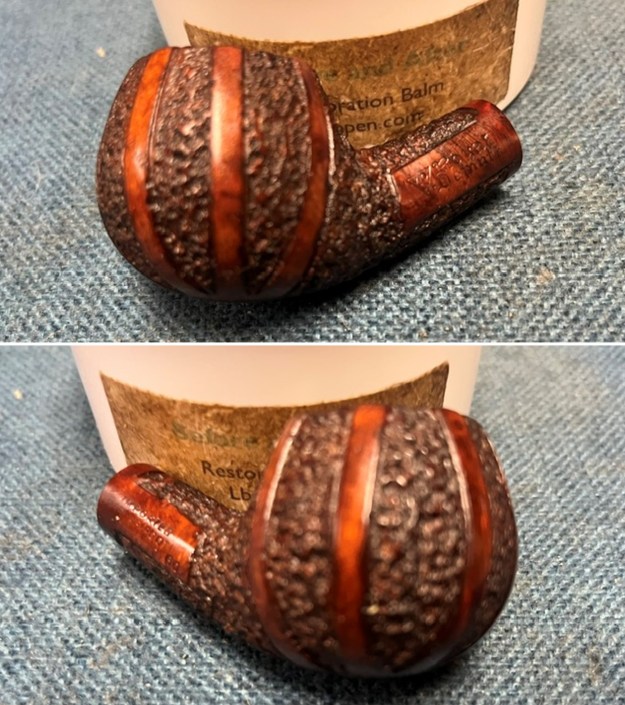
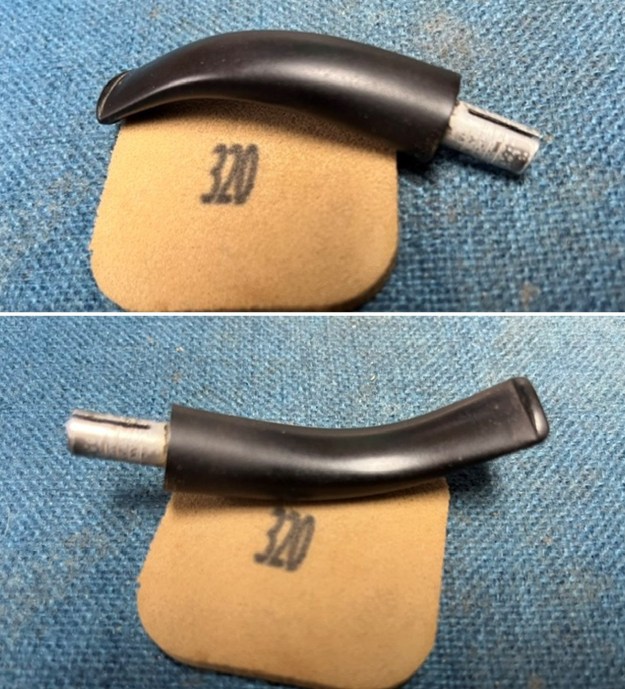
 I cleaned up the aluminum tenon with 320 grit sanding pads to remove the oxidation and darkening on the surface. It was badly scratched so I would continue sanding it when I worked on the stem surface.
 I “painted” the surface of the stem with the flame of a Bic lighter to lift the tooth marks. I filled in those that remained with Extra Strength CA glue – strengthened with rubber. Once it cured I used a small flat file to flatten the repairs and recut the button. I blended the repairs further with a folded piece of 220 grit sandpaper.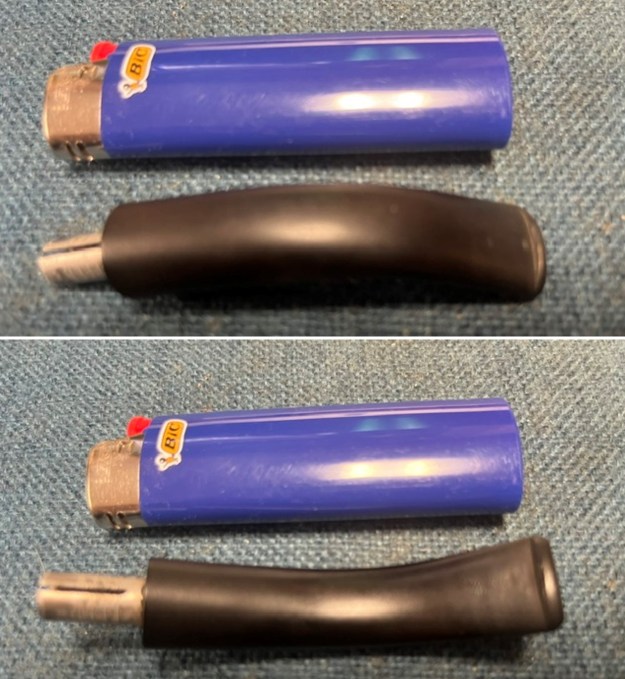
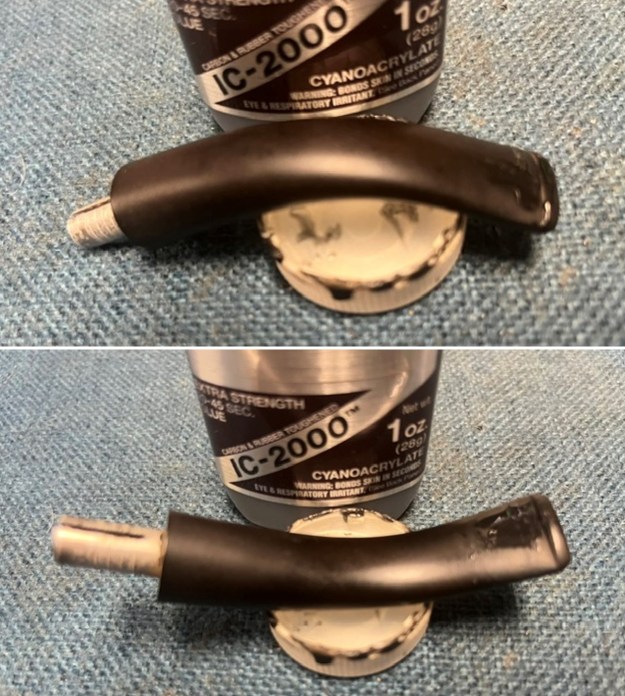
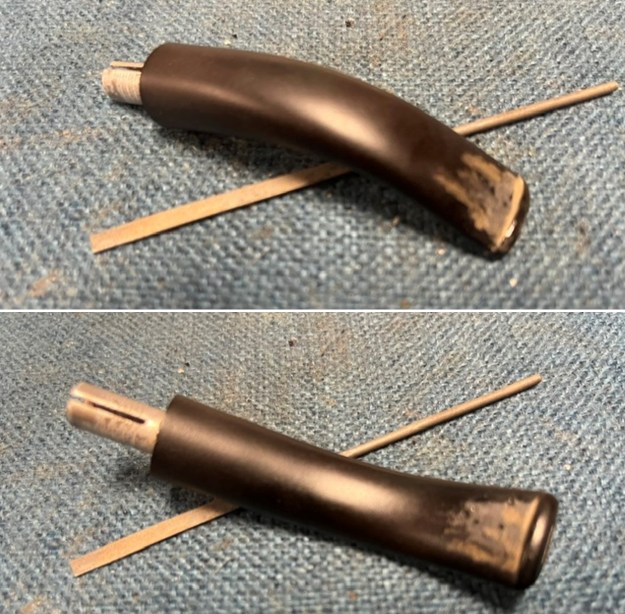
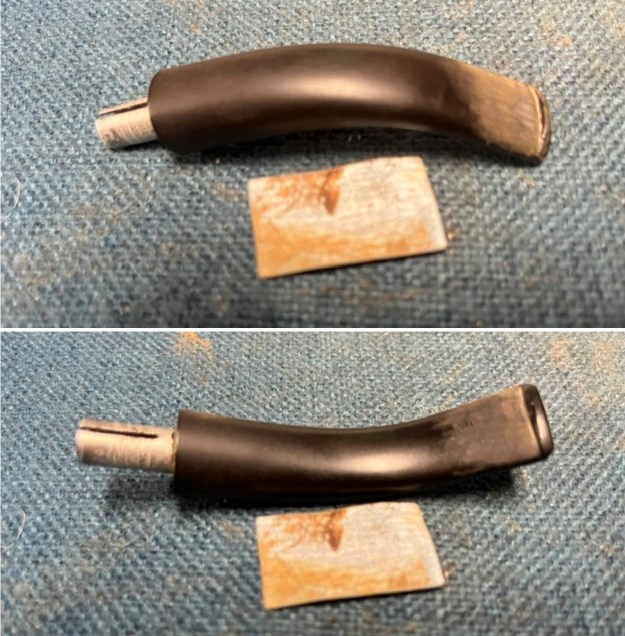 I sanded the stem with 320-3500 grit 2×2 inch sanding pads. I wiped the stem down with a damp cloth after each pad. By the last sanding pad it began to take on a deep shine.
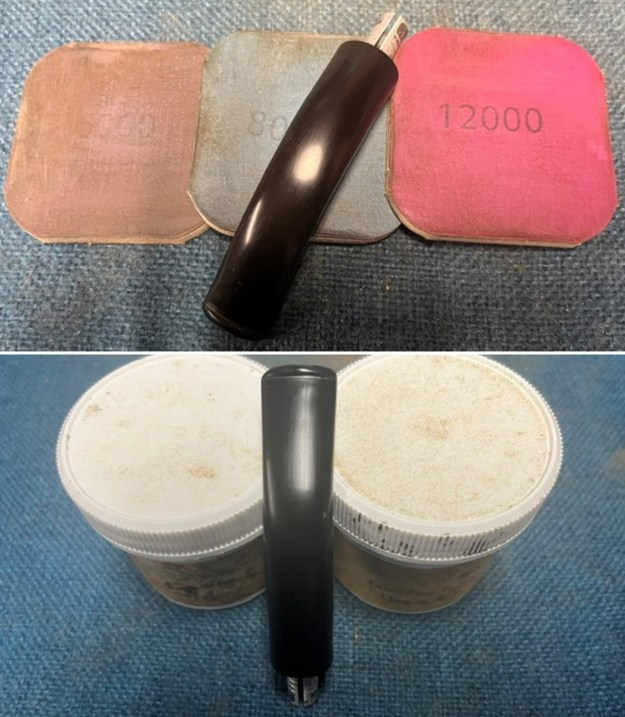
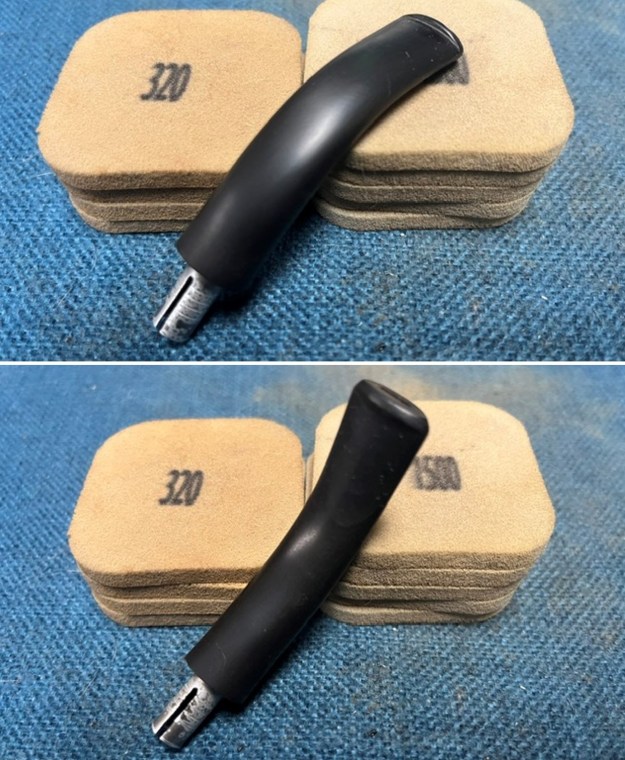 I polished the stem with micromesh sanding pads – dry sanding with 1500-12000 grit sanding pads. I wiped it down after each sanding pad with Obsidian Oil. I polished it with Before & After Pipe Stem Polish – both Fine and Extra Fine.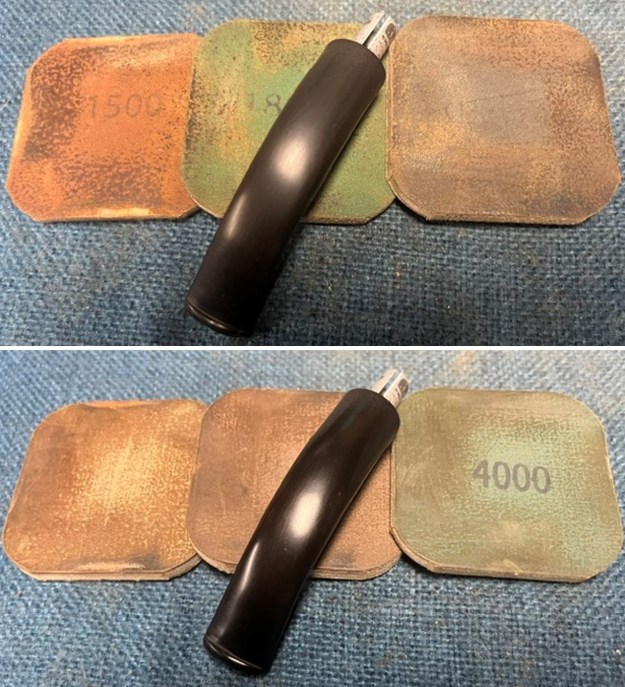
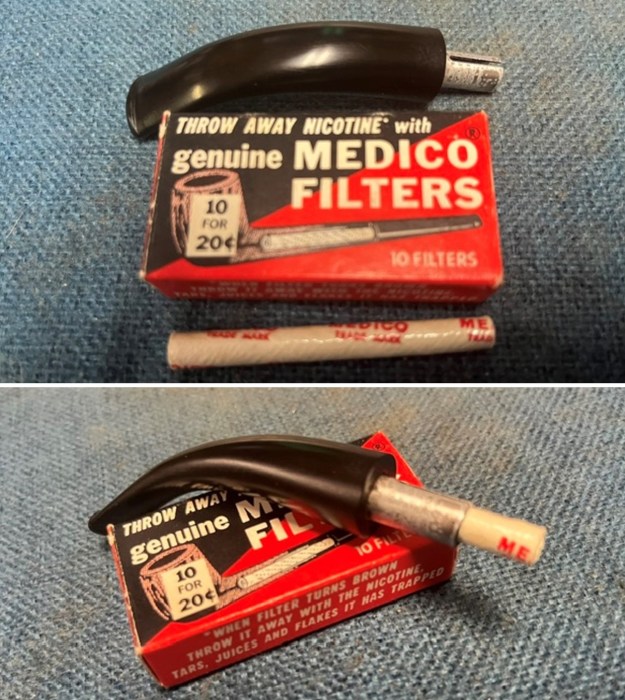
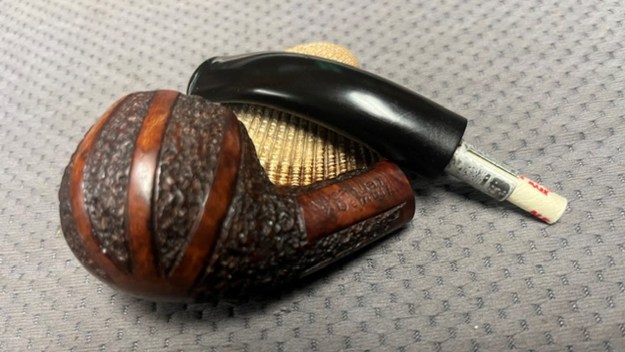
 With the pipe cleaned up and ready to go I fitted the filter stem with a Medico Paper Filter and it fit precisely like the original WDC paper filters.
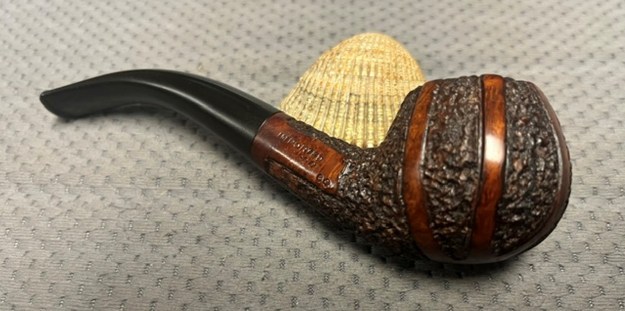
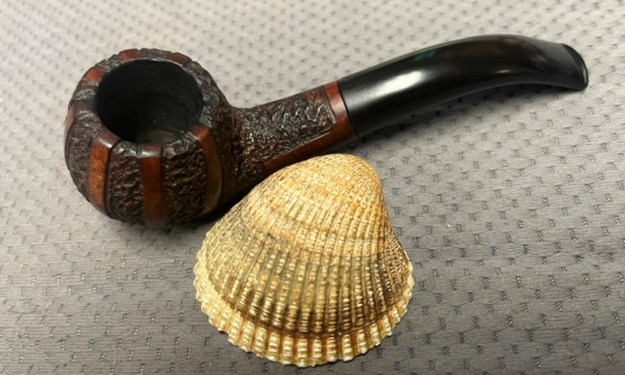
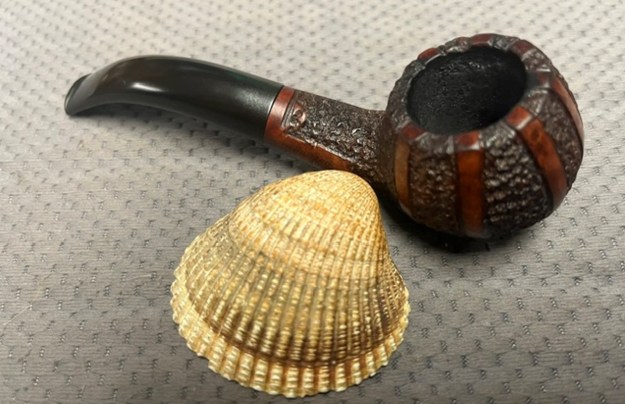
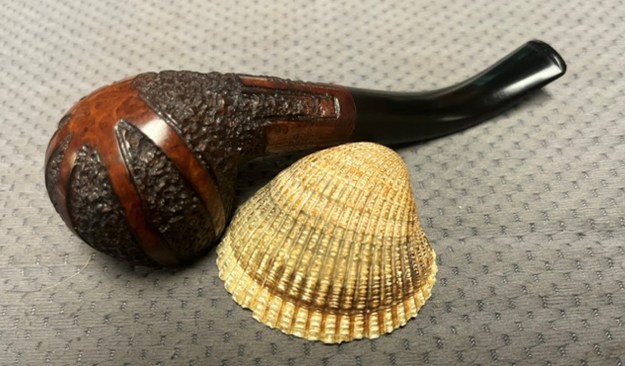
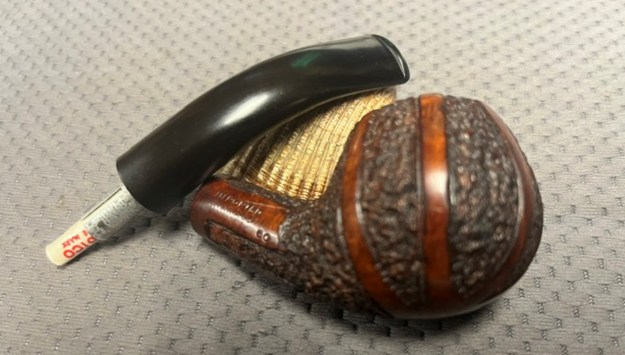
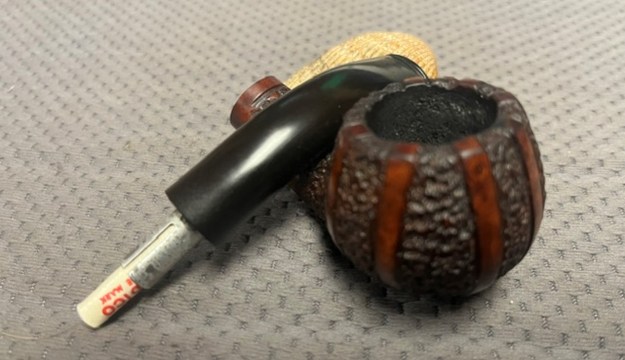
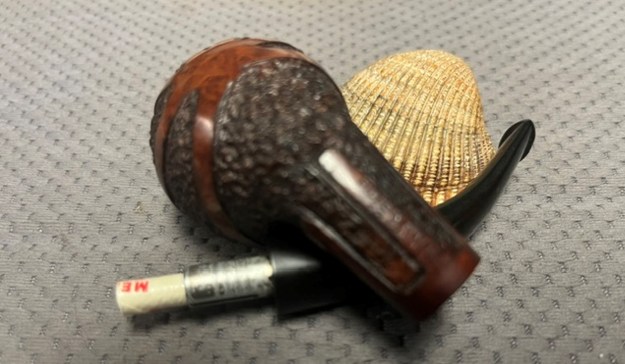
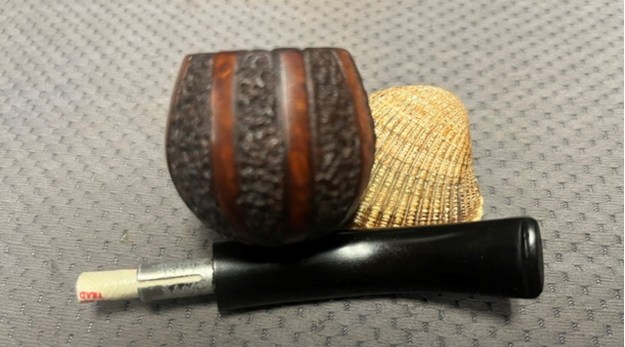
 I am excited to put the final touches on this interesting piece of American Pipe History found in Bellingham, Washington. It is a beautiful WDC Royal Demuth Imported Root Briar Filter Pat’d 1934 Shape 60 Bent Apple shaped pipe. I put the pipe back together and buffed it with Blue Diamond on the buffing wheel. I gave the bowl and the stem multiple coats of carnauba wax. I hand buffed the pipe with a clean buffing pad to raise the shine. It is fun to see what the polished bowl looks like with beautiful grain on the bowl sides, top and bottom. The polished black vulcanite stem combined with the bowl to make a stunning pipe. This older WDC Royal Demuth Imported Root Briar 60 Filter Pipe is great looking and the pipe feels great in my hand. It is light and well balanced. Have a look at it with the photos below. The dimensions are Length: 5 inches, Height: 1 ½ inches, Outside diameter of the bowl: 1 ¼ inches, Chamber diameter: ¾ of an inch. The weight of the pipe is 34 grams/1.20 ounces. I will be adding it to the American Pipemakers Section of the rebornpipes store shortly. If you want to add it to your collection let me know. Thanks for walking through the restoration with me as I worked over this pipe. Thanks to each of you who are reading this blog.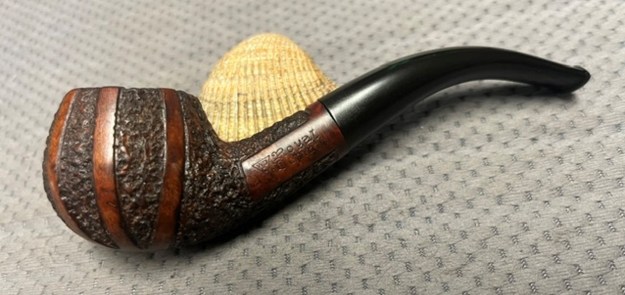
 rebornpipes
That is a great looking Rhodesian. Imagine what was necessary to carve that one!
LikeLike