
by Steve Laug
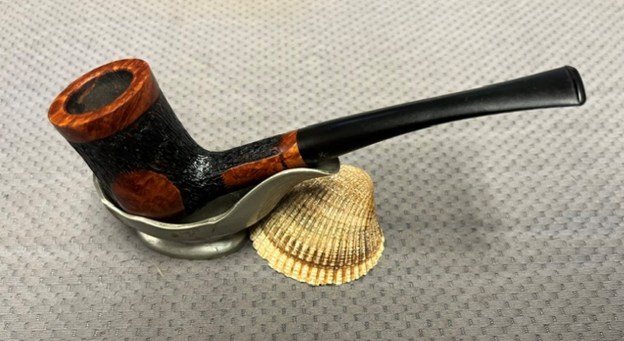
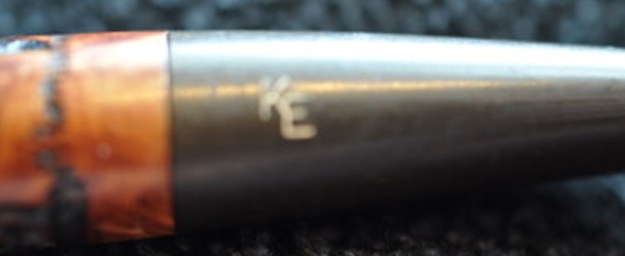
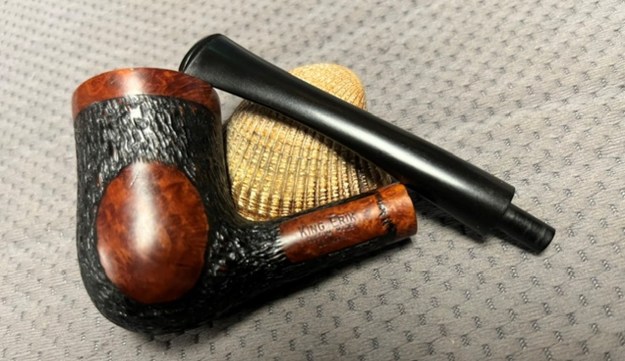
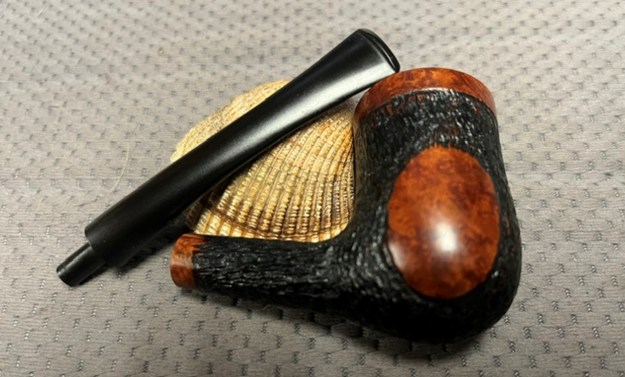
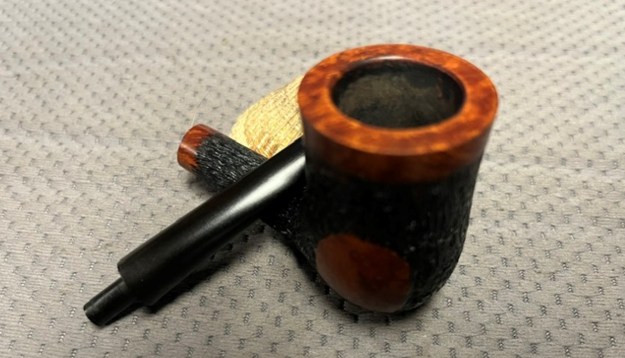
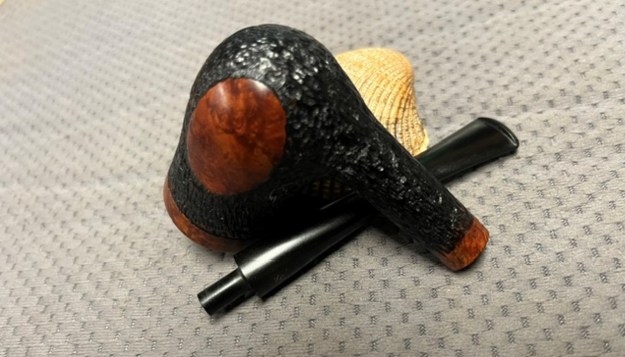
The next pipe on the table is a great looking rusticated Stack with a smooth rim top and band on the top and shank end as well as a smooth patch on each side of the bowl. It was one purchased on 01/20/2026 from a Facebook seller in Quaker Town, Pennsylvania, USA. The bowl and the shank are tightly rusticated. It is a great looking pipe. It is stamped on a smooth panel on the left side of the shank and reads King Erik [over] Custom Made [over] Denmark. On the smooth shank band it was stamped on the underside with the shape number 713. The finish was dirty and had a lot of grime and grit ground into the rustication and the smooth portions. The rim top and inner edge of the bowl is dirty with a light lava flow on the edge and the top that was heavier toward the back of the bowl. There is a thick cake in the bowl. The stem is dirty and has light tooth marks and chatter on the surface. It had the KE logo stamped on the left side of the taper stem. Jeff took photos of the pipe before he started his clean up work. It showed a lot of promise.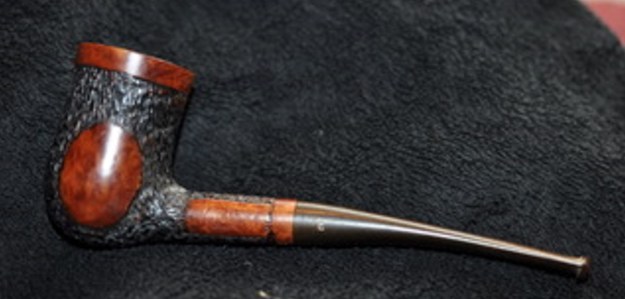
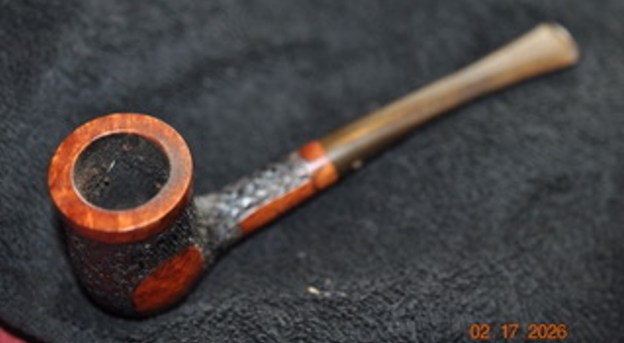 Jeff took photos of the bowl and rim top to show the cake in the bowl and the lava on the inner edge of the top. The lava is quite thick on the inner edge. He also took photos of the stem to show the oxidation and the light tooth marks and chatter on the stem.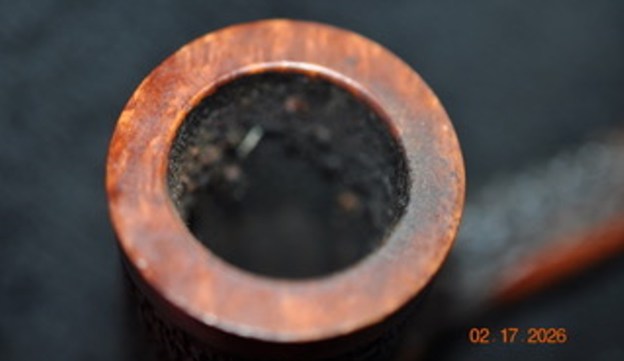
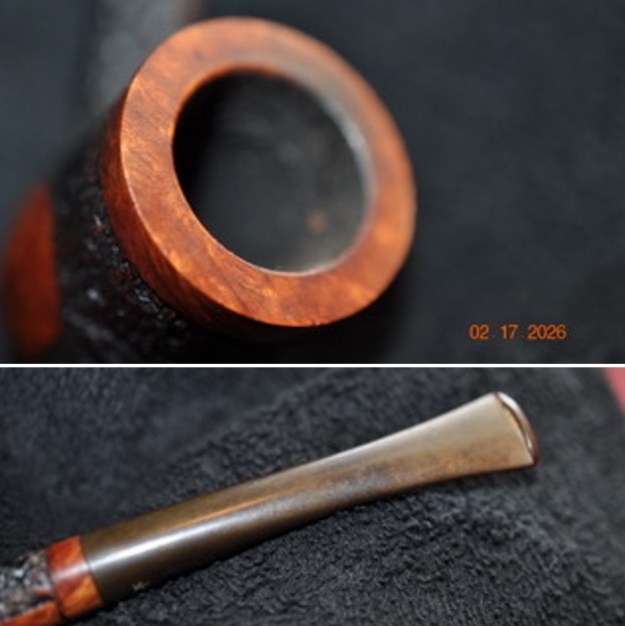
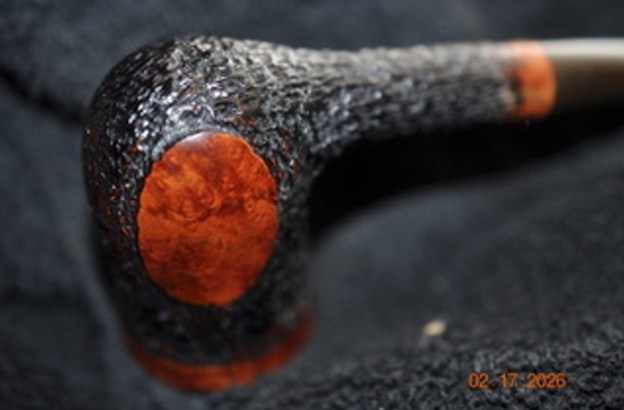
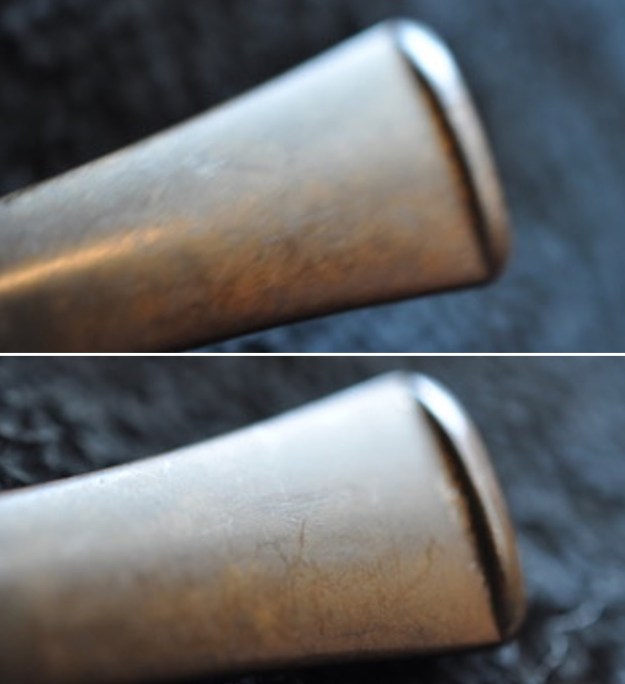 He took photos of the bowl and heel to show the condition of the finish. The combination of rustication – tight pattern – and smooth portions look very good and are a great contrast to the vulcanite stem.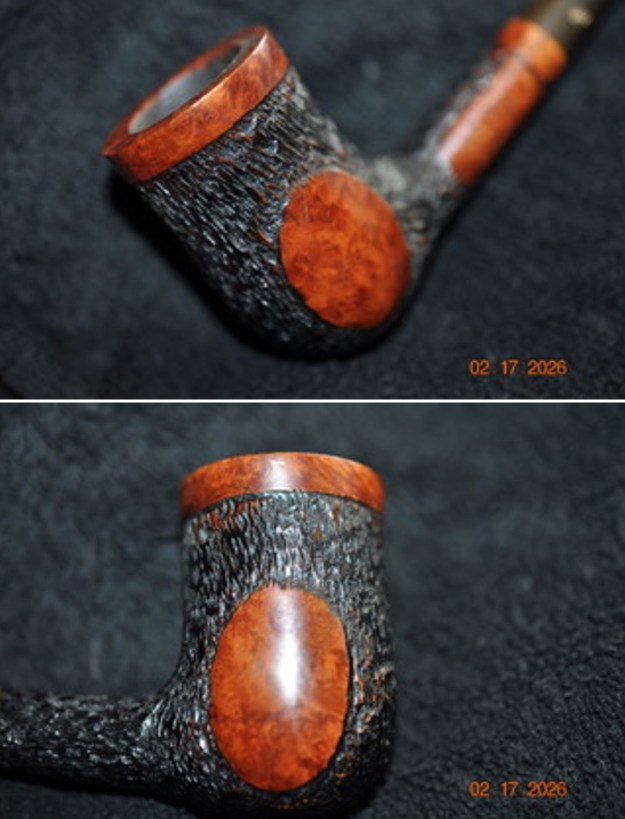
 Jeff took photos of the stamping on the shank sides and the logo on the stem. They read as noted above and were in excellent condition.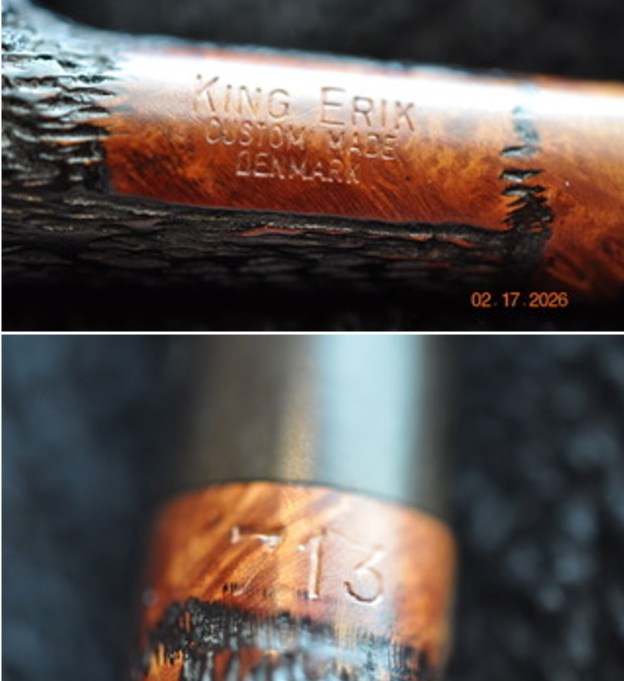
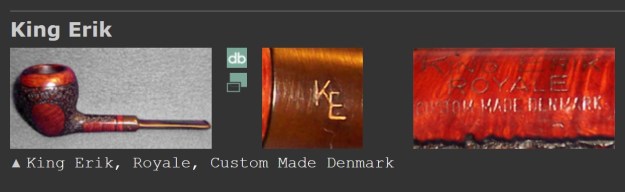
 Before I started working on the pipe I wanted to know more about the background of the brand. I turned first to Pipephil (http://www.pipephil.eu/logos/en/logo-k2.html) to gain some background on the brand. There was not much information other than the screen capture I have included below.
 From there I turned to Pipedia (https://pipedia.org/wiki/King_Erik). There was a short paragraph on the brand that I have included in full below.
King Erik pipes were advertised as “Hand Made by Danish Craftsmen” and as made in Denmark. Primarily offered in a two tone combination smooth and sandblasted finish, the pipes were marked with a KE on the stem. While the maker is unknown, it seems likely that these pipes were sold to the American market as intended competition for the popular pipes made by Erik Nørding, Karl Erik Ottendahl and others, especially given that the pipes are Danish, and the “King Erik” for which the pipes are named would seem to be Swedish, namely Erik Jedvardsson, King Eric IX of Sweden.
Jeff carefully cleaned up this King Erik Danish Stack with a vulcanite taper stem with Murphy’s Oil Soap and a tooth brush to remove the grime on the rim top and bowl sides. He reamed the bowl with a PipNet pipe reamer and then cleaned up the inside of the bowl with a Savinelli Fitsall Pipe Knife. He scrubbed the internals of the shank and stem with pipe cleaners, cotton swabs and alcohol until the airways were clean and the pipe smelled fresh. The pipe looked much better once the bowl and stem were clean. He scrubbed the stem with Soft Scrub to remove the oxidation and then let it soak in Before & After Pipe Stem Deoxidizer. He rinsed it with warm water when he took out of the soak. Before I started my part of the work I took photos of the pipe. It is a pretty pipe. 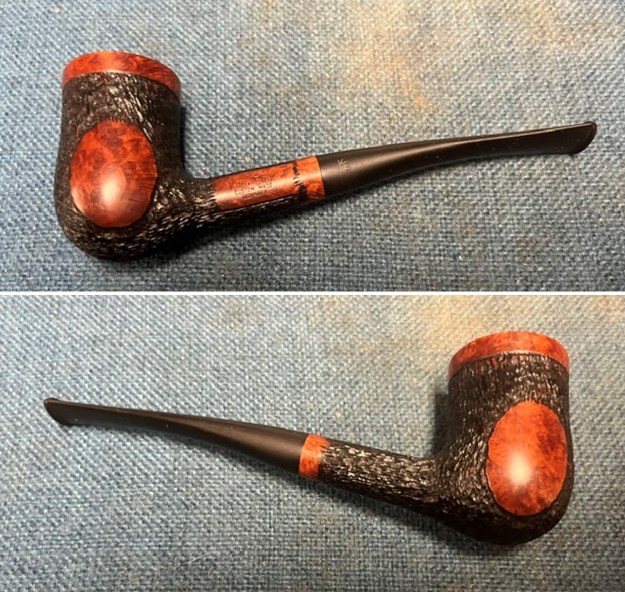
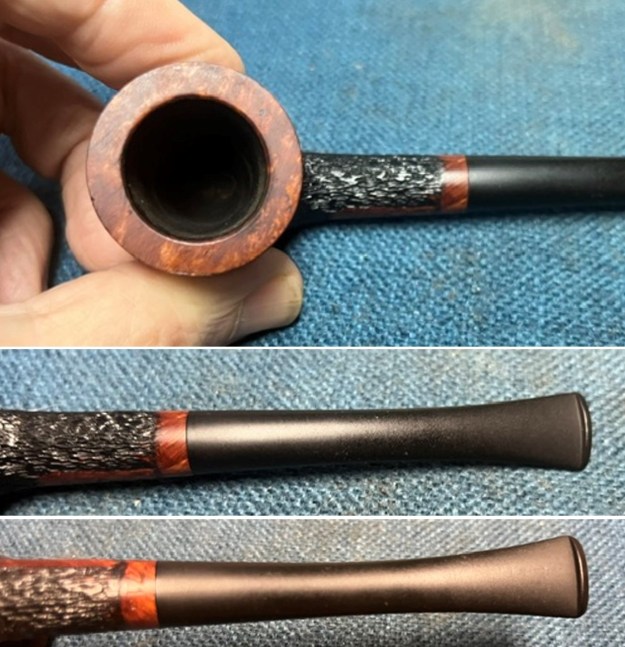
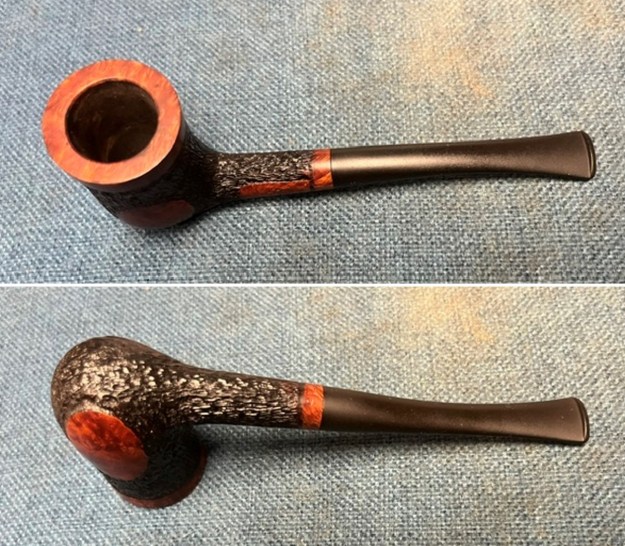 I took close up photos of the bowl and the rim top to show the condition. It looked better and the inner edge and top were in very good condition. I also took photos of both sides of the stem to give a sense of the condition of both sides at the button.
 I took a photo of the stamping on the left side of the shank and stem. It reads as noted above and is very clear and readable. The stamping on the shank is faint but readable. I took the stem off the shank and took photos of the pipe to give a sense of its beauty and proportions.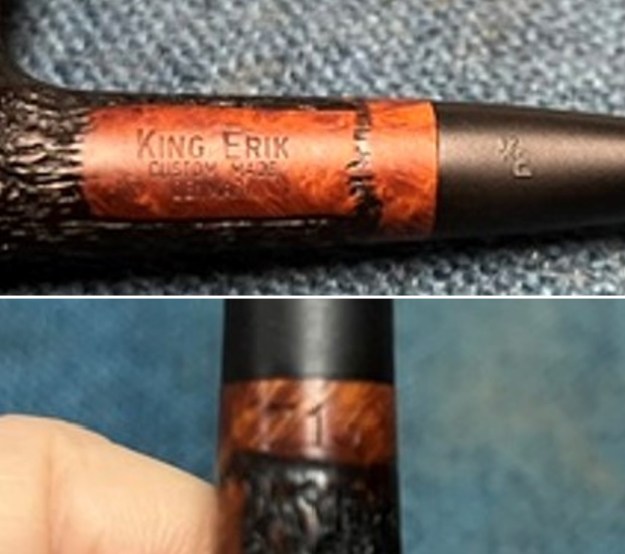
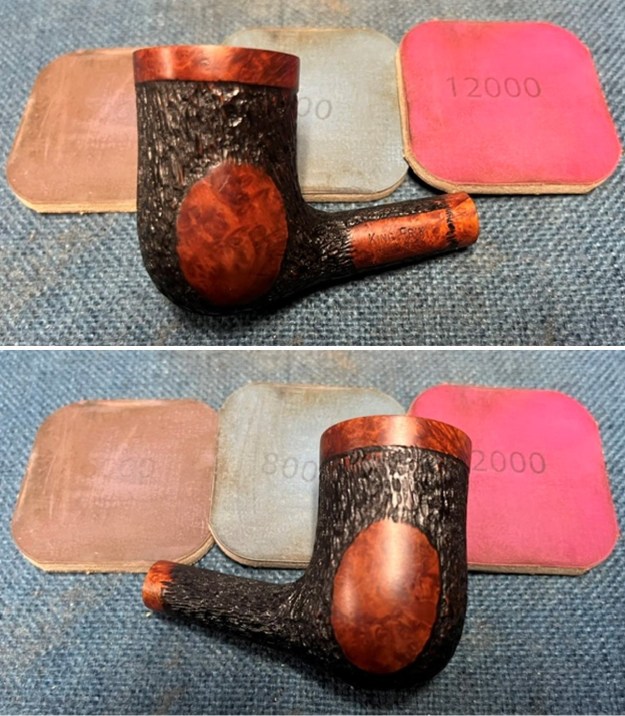
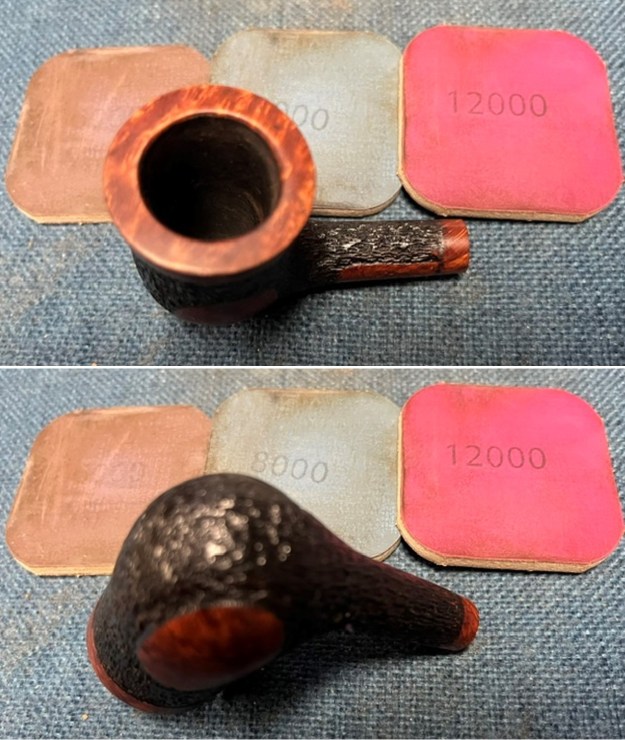
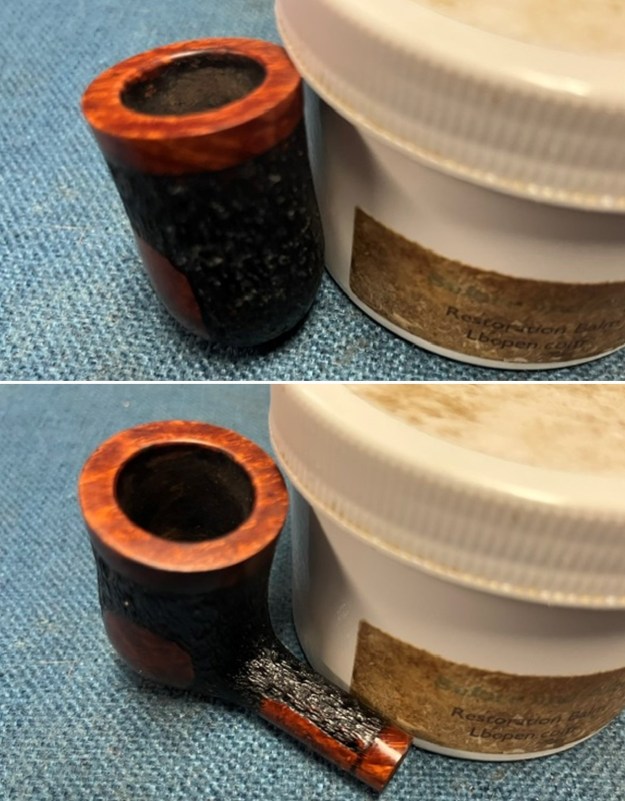
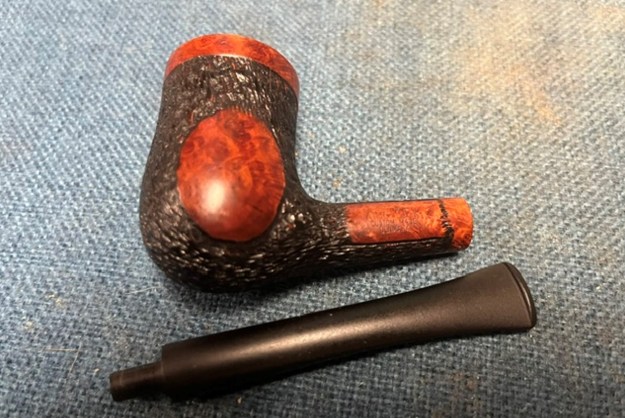 I polished the smooth patches on the bowl and smooth rim top and edge with micromesh sanding pads – dry sanding with 1500-12000 grit pads and wiped down the bowl after each sanding pad.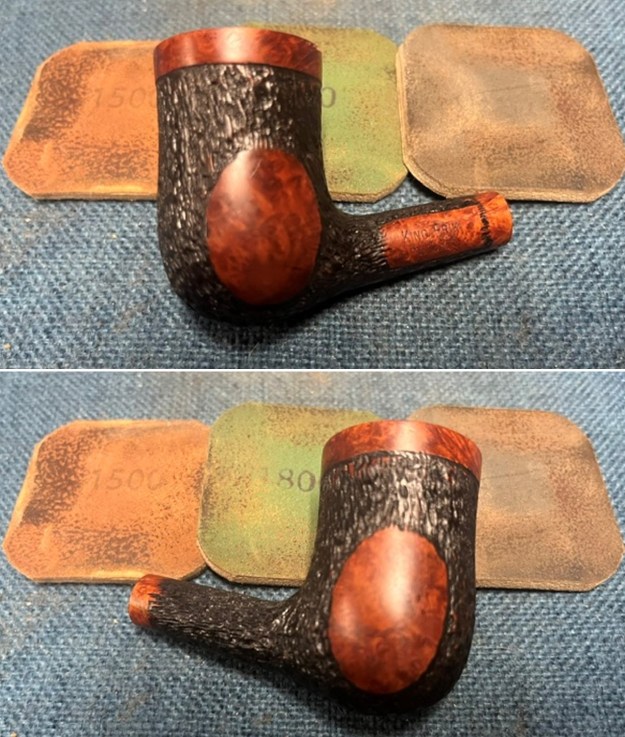
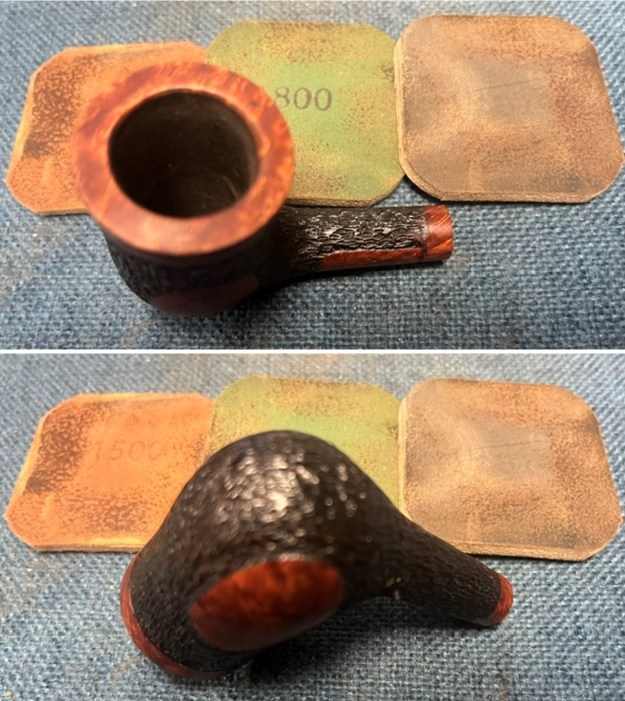
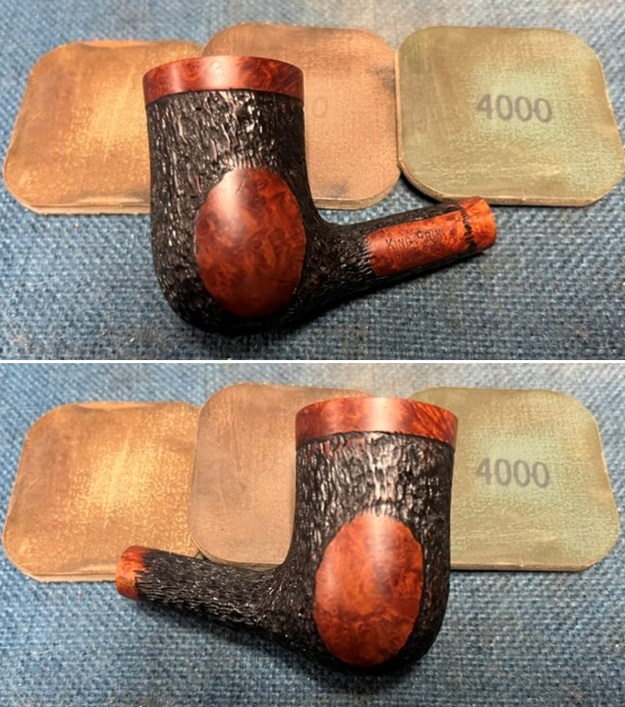
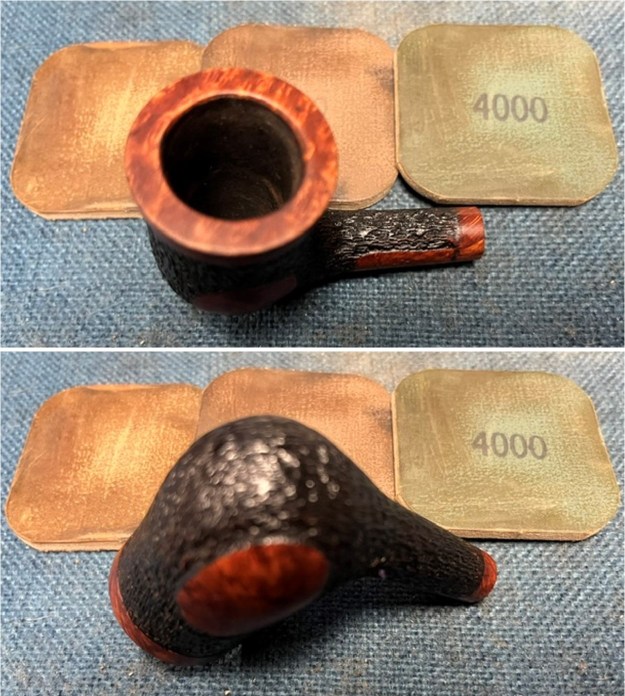
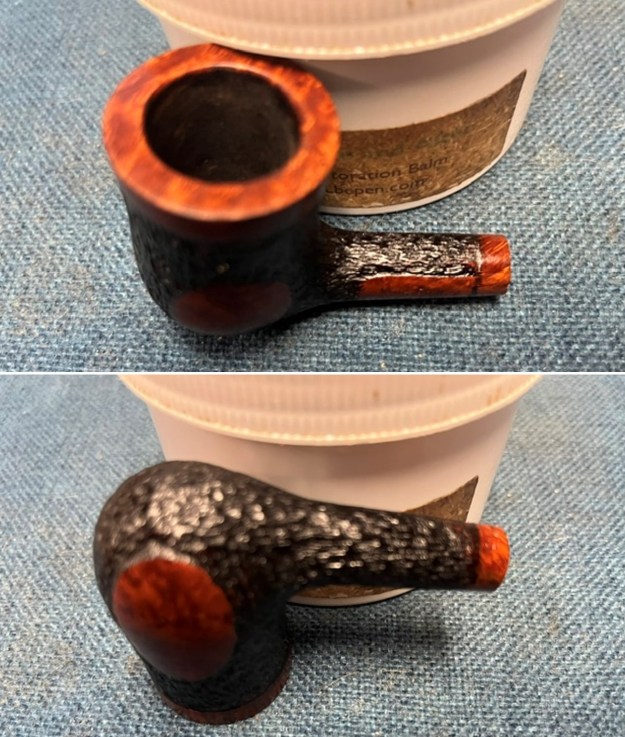
 I rubbed the bowl and shank down with Before & After Restoration Balm. I worked it into the surface of the bowl sides and shank with my fingertips to clean, enliven and protect the briar. I let the balm sit for a little while and then buffed with a cotton cloth to raise the shine. The Balm did its magic and the grain stood out.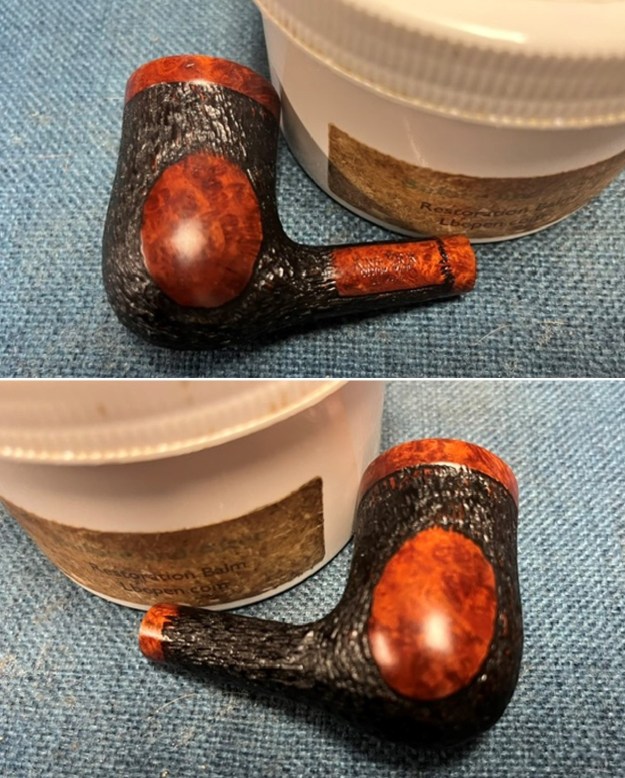
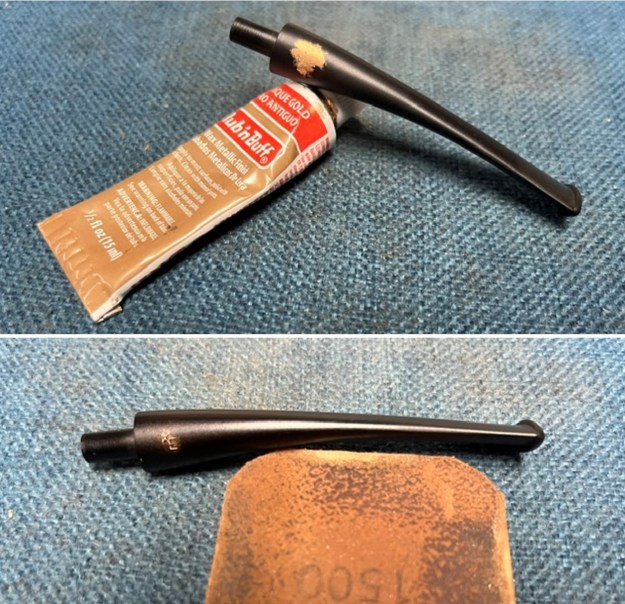
 I set the bowl aside and turned my attention to the stem. Because it was quite clean I decided to touch up the KE stamp on the left side of the taper. I filled in the stamp with Antique Gold Rub’n Buff. I buffed off the excess material and the markings looked very good.
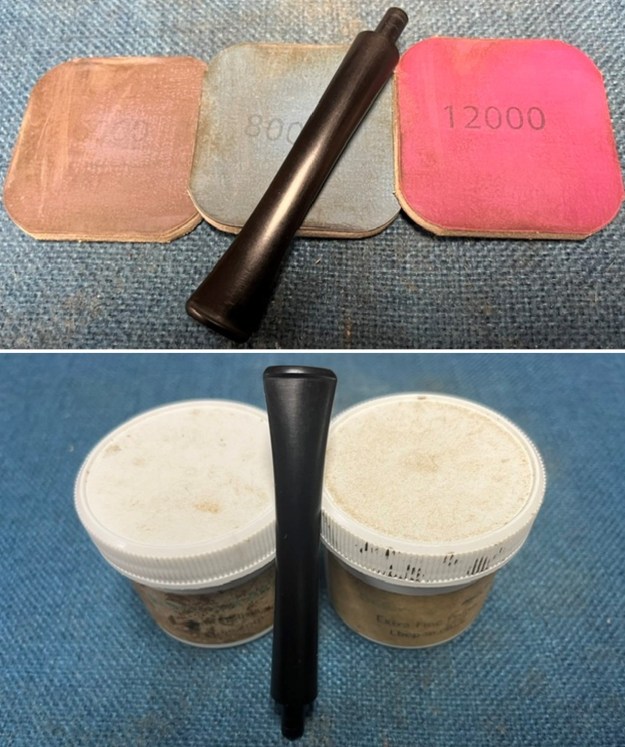
 The stem was in good condition and the light marks and chatter should polish out easily. I polished the stem with micromesh sanding pads – 1500-12000 grit pads. I wiped it down with Obsidian Oil after each sanding pad. I used Before & After Pipe Polish – both Fine and Extra Fine to further polish the stem. I gave it a final coat of Obsidian Oil and set it aside to dry.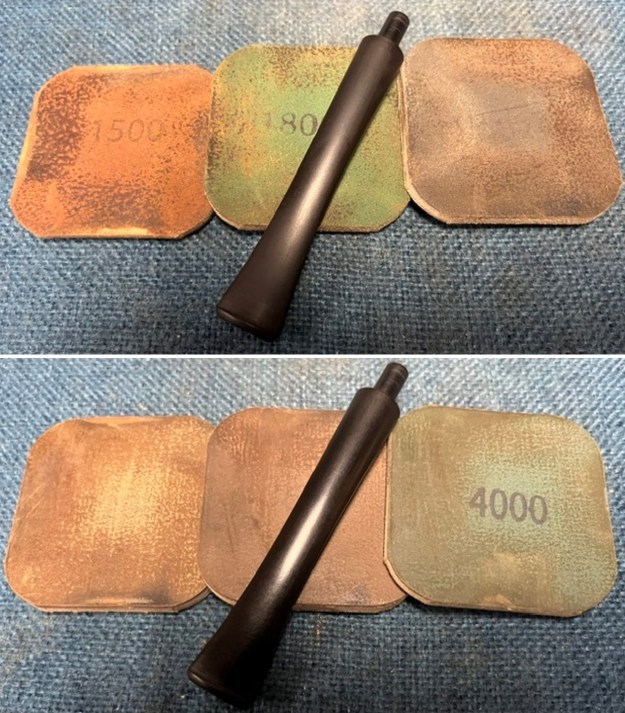
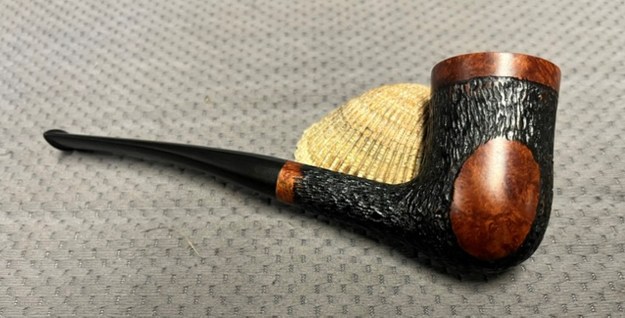
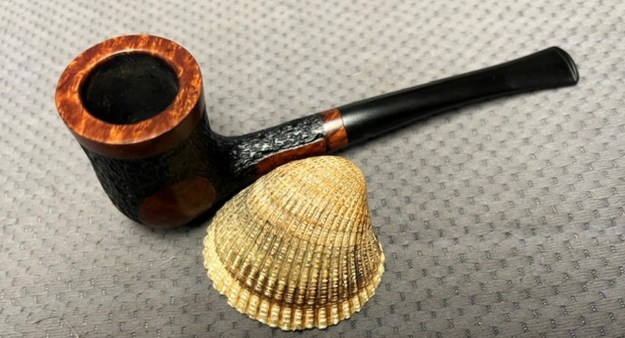
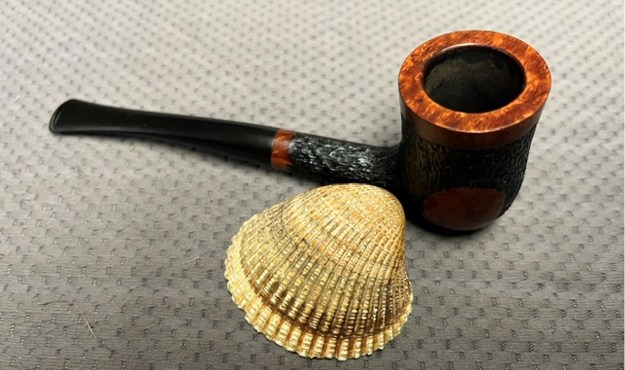
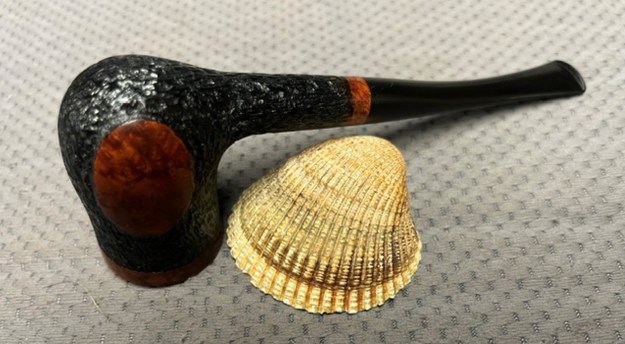
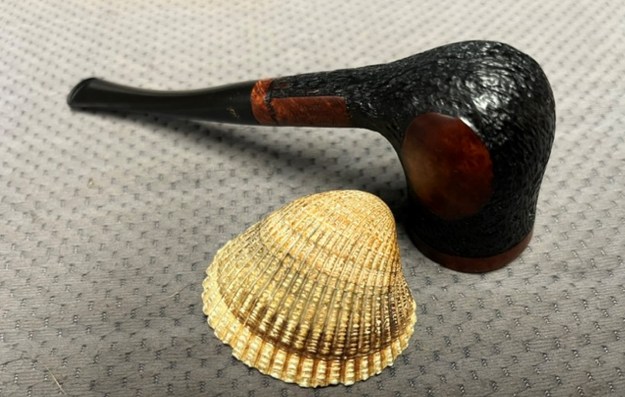
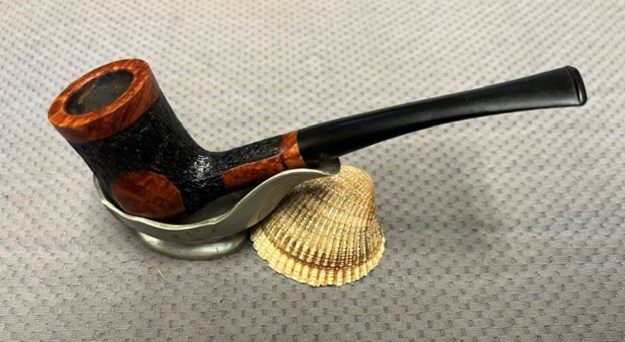
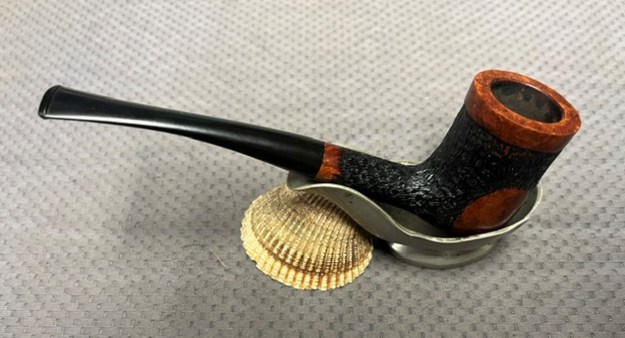
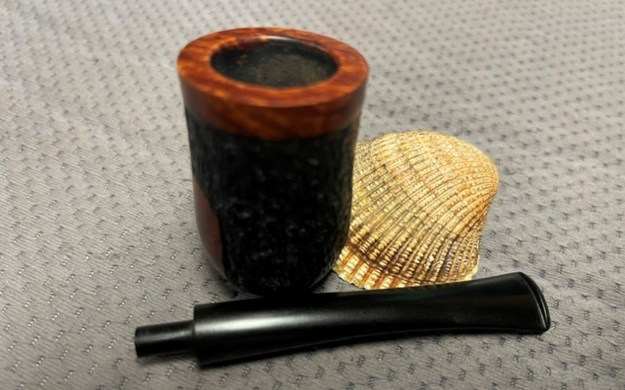
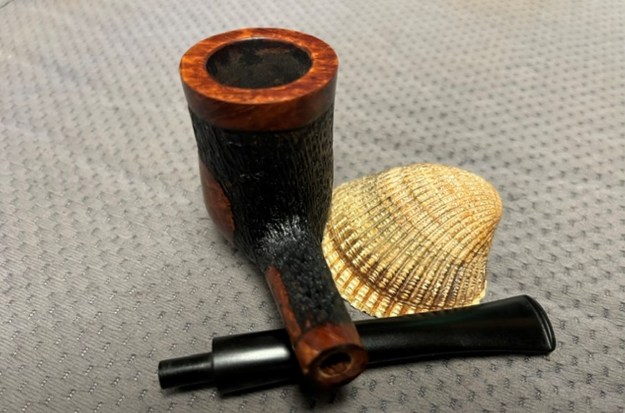
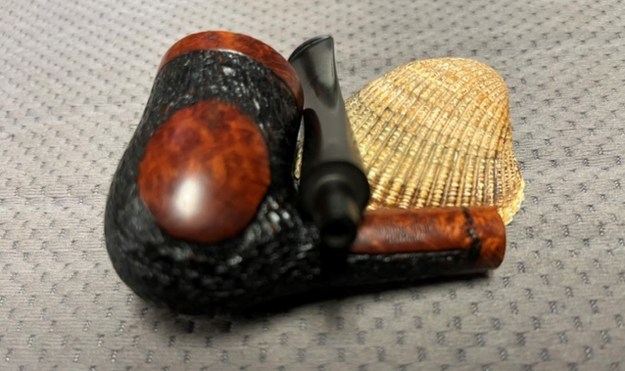
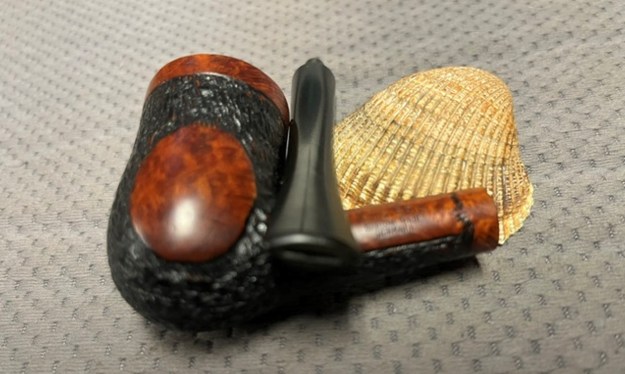
 I put the parts of the King Erik 713 Custom Made Danish Stack back together and I lightly buffed the bowl and stem with Blue Diamond on the buffing wheel and gave several coats of Carnauba Wax to seal and protect it. I polished it with a clean buffing pad to raise the shine and then with a microfiber cloth to deepen the shine. The briar really looked good with the wax highlighting the grain around the panels on the bowl. The thin shank and taper stem gave additional beauty to the pipe. It was an interesting looking pipe. The dimensions of the pipe are Length: 5 ½ inches, Height: 2 inches, Outer Diameter of the bowl: 1 ¼ inches, Diameter of the chamber: ¾ of an inch. The weight of the pipe is 36 grams/1.27 ounces. The photos below show the finished pipe. If you would like to add it to your collection I will be adding it to the Danish Pipe Makers section of the rebornpipes store. Send me a message or an email. Thanks for reading the blog. It was an interesting restoration.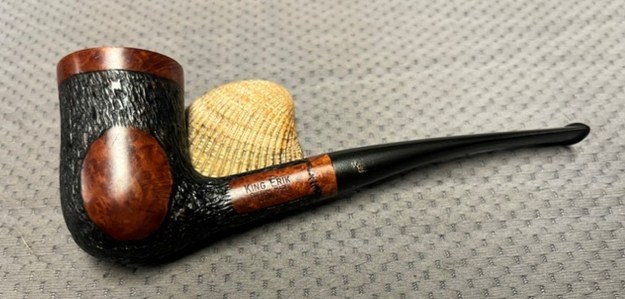
 rebornpipes