
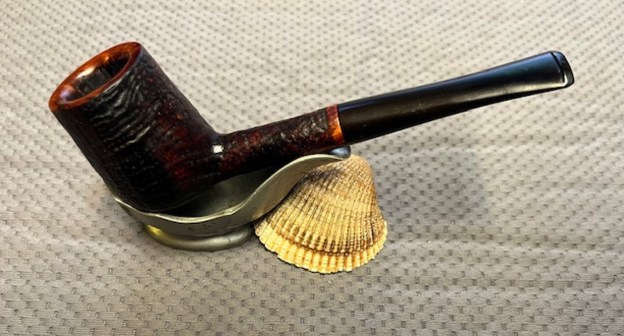
by Steve Laug
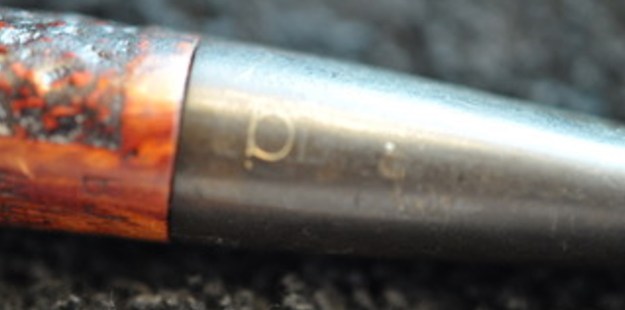
This well-proportioned, well used and worn sandblast briar pipe was purchased on 05/21/2021 from an antique shop in Astoria, Oregon, USA. It was obviously the previous pipeman’s favourite. It is stamped on the underside of the shank and clearly reads Bjarne [over] Hand Made [over] In Denmark. The bowl had a thick cake on the walls and a heavy overflow of lava onto the rim top and edges. The top of the bowl seems to be smooth matching the shank end and smooth band for the stamping. It is hard to know for sure because of the thick lava but it seems highly likely. The rim edge appears to be possibly worn and slightly out of round. The sandblast finish is dirty with debris and oils. The vulcanite taper stem has a faint Bj stamped on the left side of the taper. It looks like it had a Softee Bit on the stem and it was oxidized, calcified and has light tooth marks and chatter on both sides ahead of the button. It was a beautiful sandblast pipe even through the grime in the finish. Jeff took photos of the pipe before he started cleaning it up. Have a look.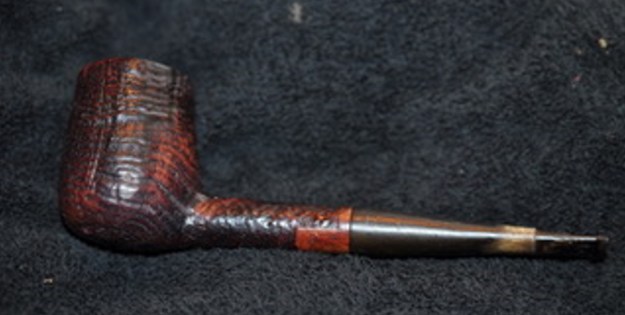
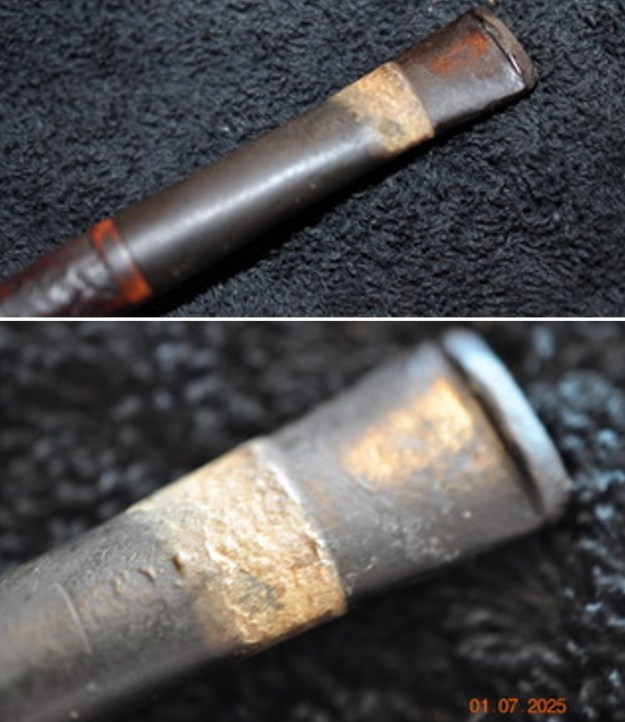
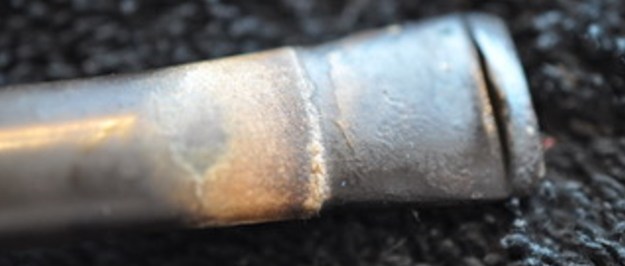
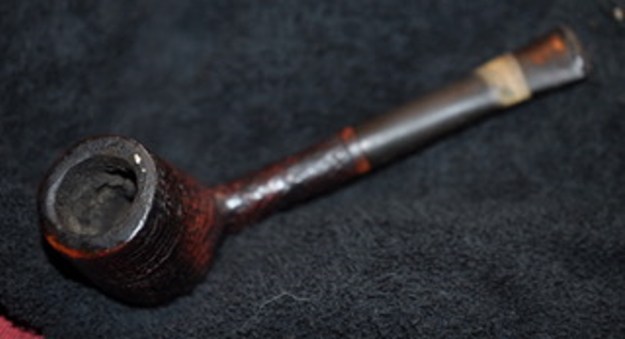 Jeff took close up photos of the bowl and rim top to show the condition of the bowl and the rim top. You can also see the lava on the rim top, inner edge and the cake in the bowl. It appears that there is some burn damage and the bowl is out of round. He also took close up photos of the stem to show its condition as mentioned above. He also took photos of the tooth marks and chatter on both sides of the stem.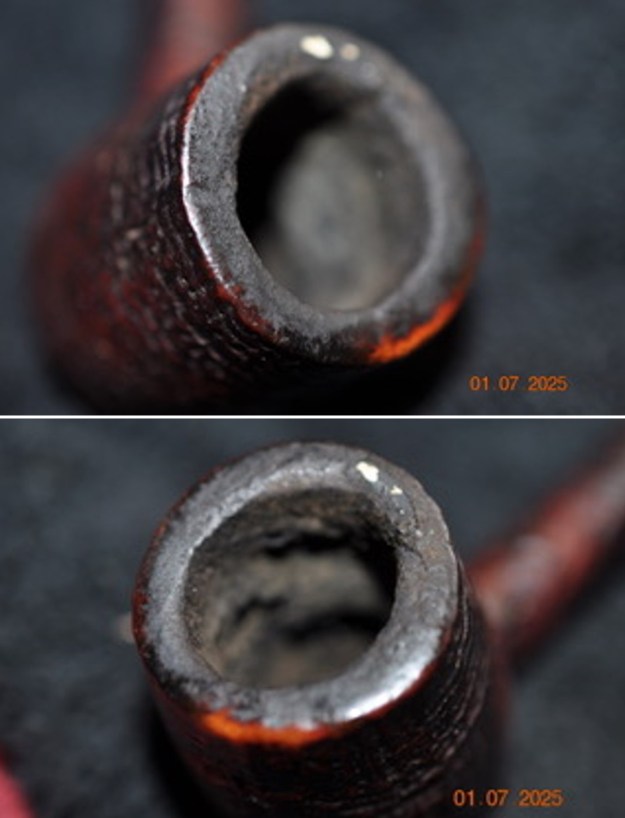
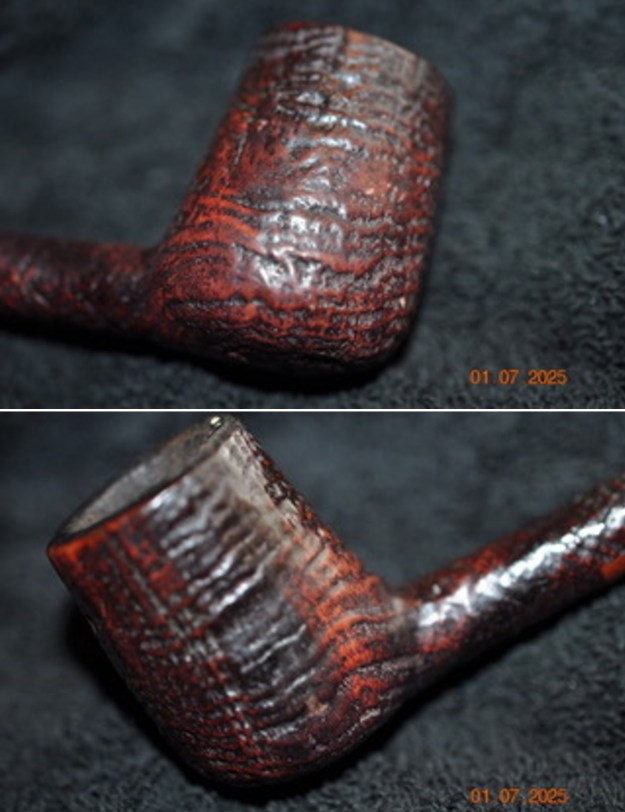
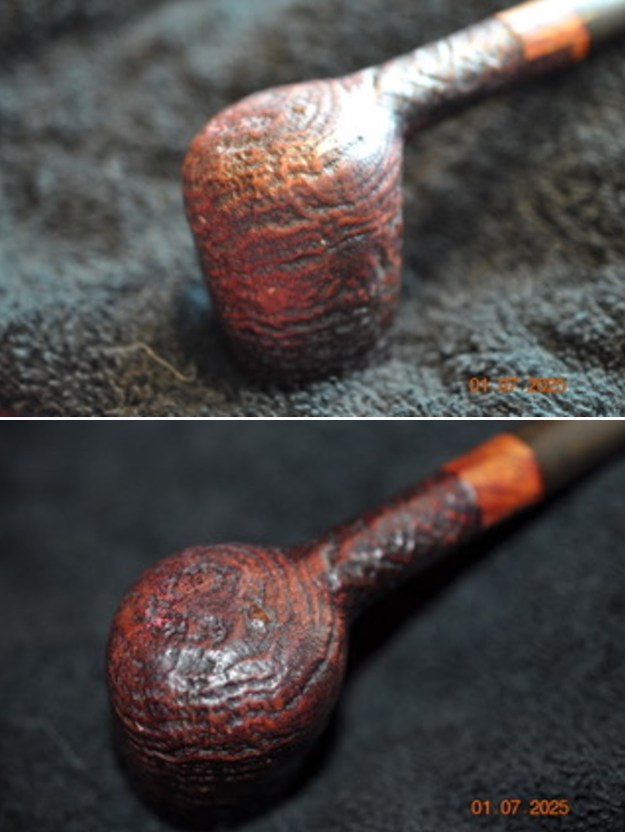
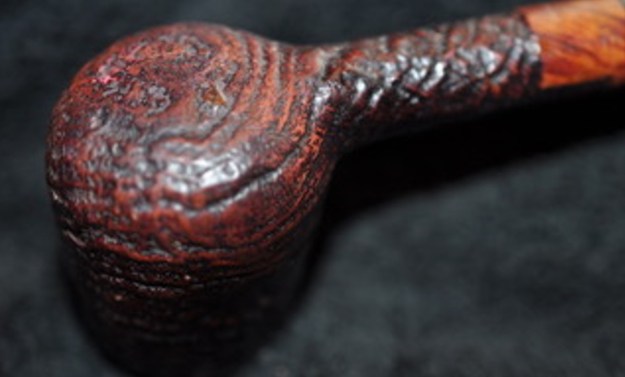
 He took photos of the bowl sides and heel to show the sandblast grain around the bowl. The blast has some deep grooves around the bowl and shank.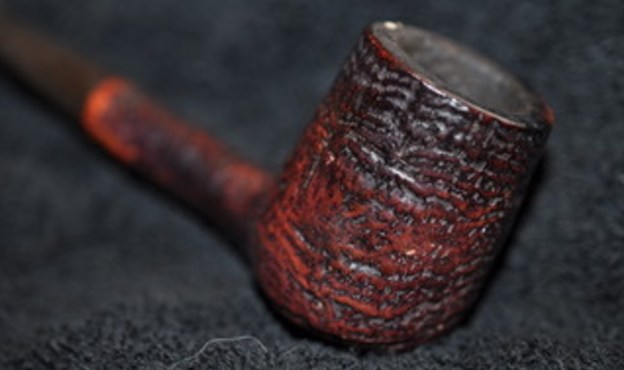
 He took photos of the stamping. It is faint but still readable as noted above. The stamp on the looks better than it is. The stamping is almost smooth so I doubt it will survive the clean up.
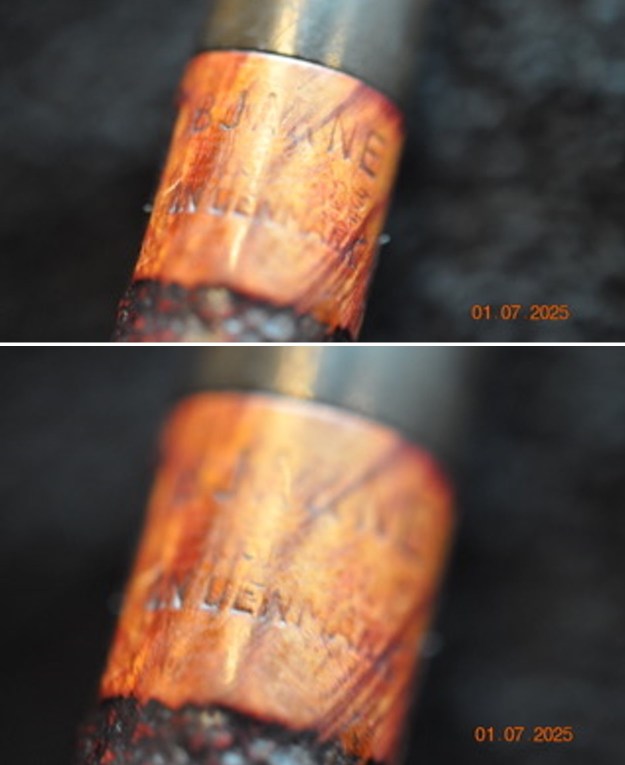
 I have had many Bjarne pipes cross my work table over the years but all had been stamped only Bjarne or Bjarne Handmade. None of them had his full name stamped on it and none had a letter stamp which I assumed indicated the grade of the pipe. I did some research on Pipedia.com and found some helpful information on both the stamping of my pipe and the history of Bjarne Nielsen himself. I am including the link to the full article on Pipedia and also some pertinent sections of the article that I have edited for quick reference. https://pipedia.org/wiki/Bjarne
From the early 1990s Bjarne had seven pipemakers employed and the pipes were sold in no fewer than 32 countries. For more than six months each year, Bjarne traveled around the world to promote his pipes by meeting with dealers and customers. But sadly, it all ended in February 2008 when Bjarne, then 66 years old suffered a fatal heart attack. An unexpected blow first of all to his family, but also to the pipemakers who had been working for him, and to all lovers of his pipes from around the world. And as no one was willing to take over, the Bjarne pipe died together with its creator.
Among the pipemakers that worked for Bjarne were Johs (for the lower priced high volume pieces), and makers like Ph. Vigen, Ole Bandholm and Tonni Nielsen for high grade pieces. The cheaper line was stamped “Bjarne” while the highest grades were stamped “Bjarne Nielsen” (never with the pipemakers’ name) and graded, from highest to lowest, by the letters: AX, A, B, C, D, E, F, G, H, I, and J.
Now I knew that the pipe I had was made before 2008 and was one of his cheaper line stamped Bjarne.
Armed with the information above, I turned my attention to the pipe itself. Jeff had cleaned the pipe with his usual penchant for thoroughness that I really appreciate. He reamed it with a PipNet pipe reamer and cleaned up the reaming with a Savinelli Fitsall Pipe Knife. He scrubbed out the internals with alcohol, pipe cleaners, shank brushes and cotton swabs until the pipe was clean. He scrubbed the exterior of the bowl with Murphy’s Oil Soap and a tooth brush to remove the grime and grit on the briar and the lava on the rim top. The finish looks very good with good looking grain around the bowl and shank. Jeff soaked the stem in Before & After Deoxidizer to remove the oxidation on the rubber. When the pipe arrived here in Vancouver for the second stop of its restoration tour it looked very good. I took photos before I started my part of the work. 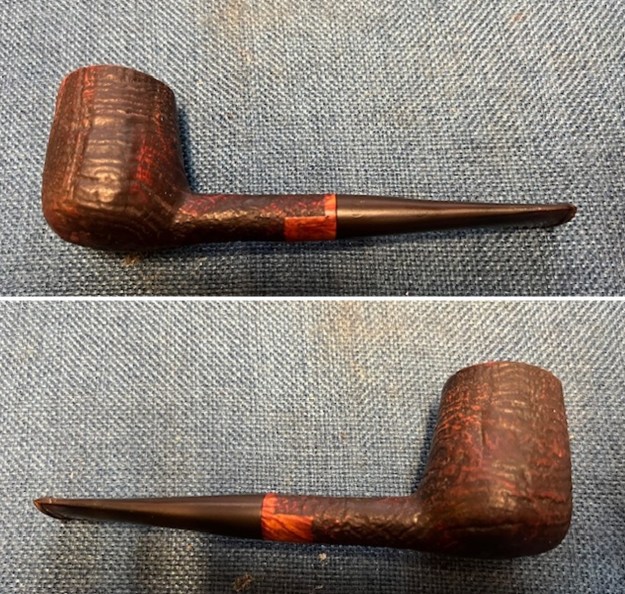
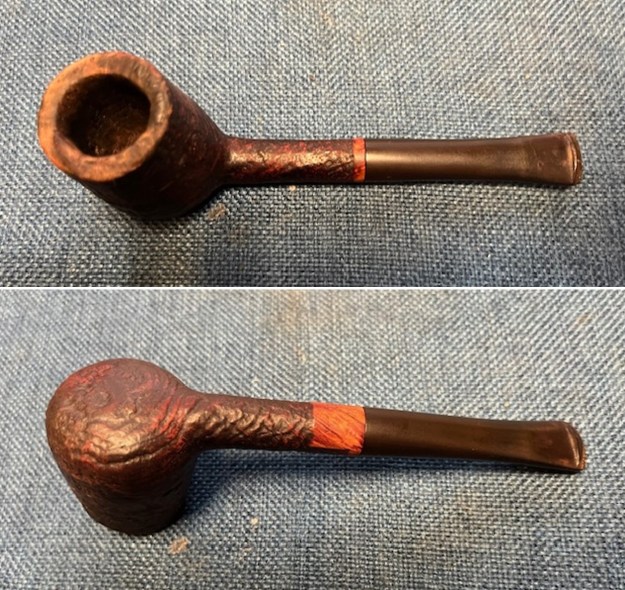 I took close up photos of the bowl, rim top and stem to show how clean the pipe was. The bowl was clean and the rim top and the inner edge were worn and slightly out of round. It does indeed appear to be a smooth rim top. The stem was clean and showed light tooth marks and chatter.
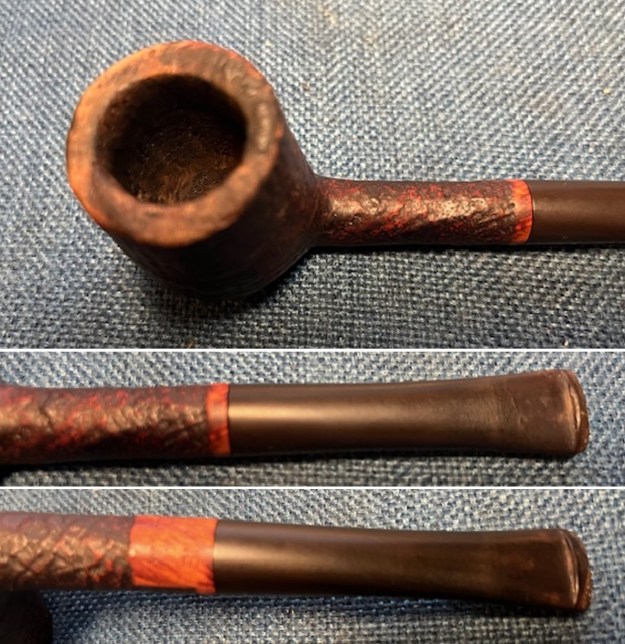 I took a phots of the stamping on the underside of the shank. It is faint but readable and read as noted above. I also removed the stem from the shank and took photos of the pipe to show the look of the parts.
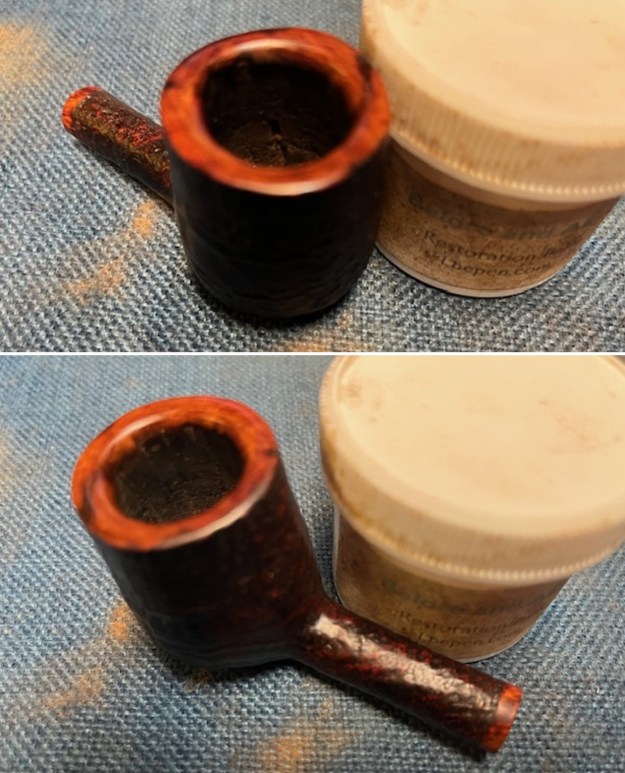
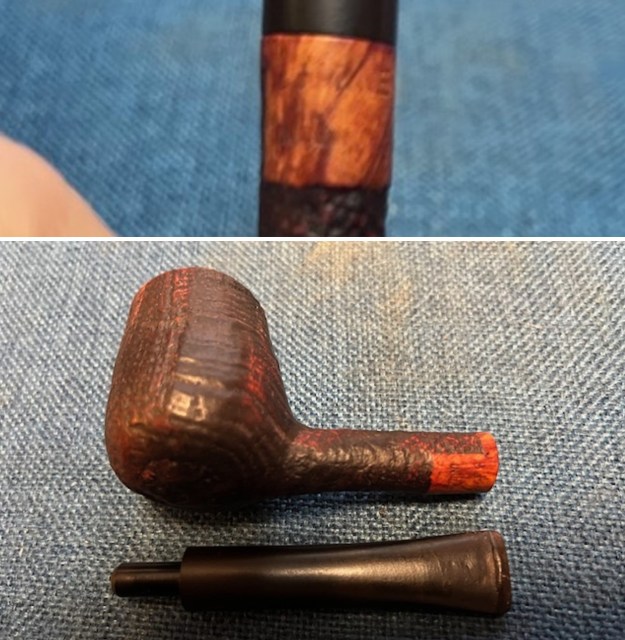 The rim top and inner edge of the bowl was in rough condition. There were spots that seemed like the rim top was smooth matching the shank end and other spots looked rough and made me wonder if it had not been sandblast. Because of the condition I went with the smooth top as I have worked on several like that. I used a wooded sphere and half sphere to work over the inner edge of the bowl and give it a slight bevel to try and bring the bowl back to round. By the end the inner edge looked much better and also reveal that outside of the bowl was also not made round. Ah well, I work with what I have and it is definite improvement.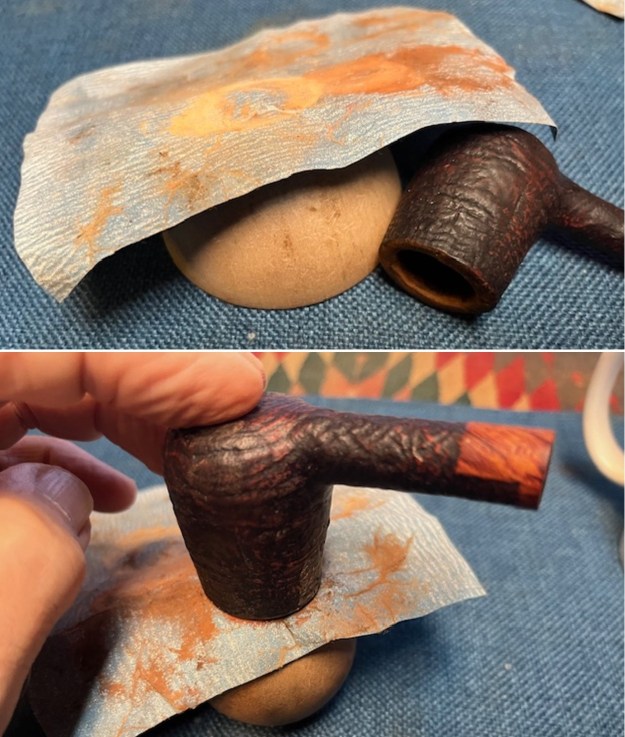
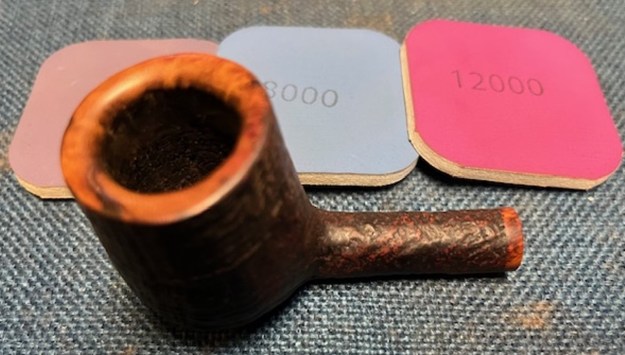
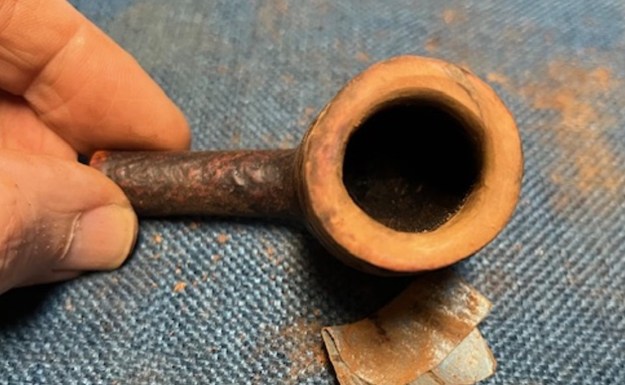 I sanded the rim top with 320-3500 grit sanding pads. I wiped the top down with a damp cloth after each sanding pad and by the end the rim top had a shine and definitely looked better.
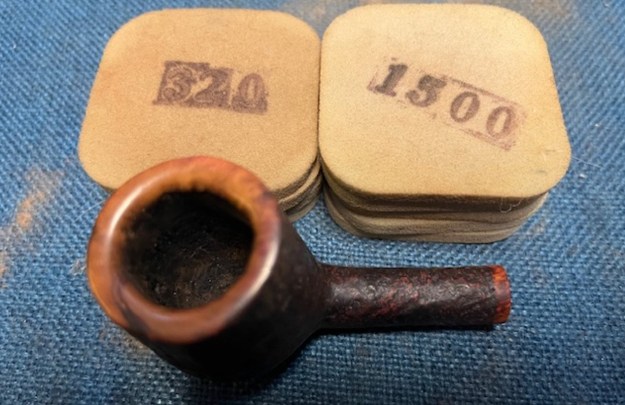 I polished the rim top with micromesh sanding pads – dry sanding with 1500-12000 grit sanding pads. I wiped it down after each pad with the cloth. The bowl continued to develop a deeper shine.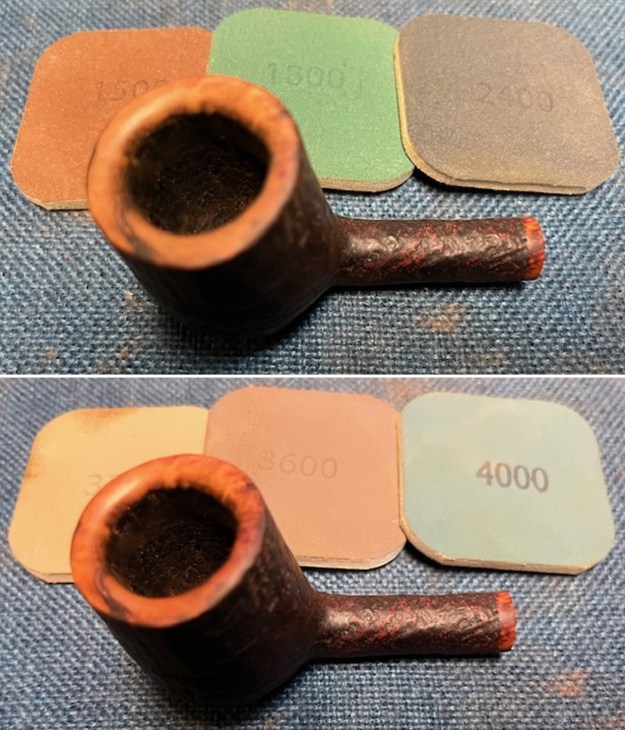
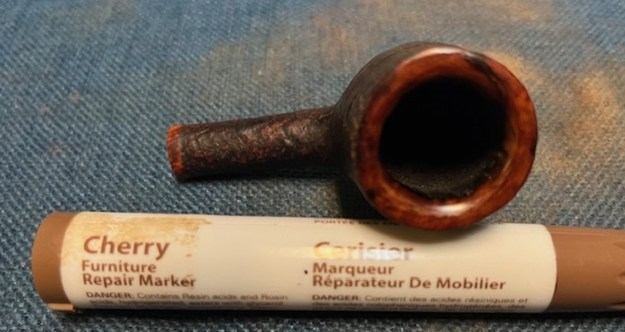
 I restained the rim top with a Cherry stain pen to match the shank end and panel on the underside of the shank. It matched very well.
 I worked some Before & After Restoration Balm into the briar with my finger tips and a shoe brush to get into the nooks and crannies. I let it sit on the bowl for 10 minutes and then buffed it off with a paper towel and soft cloth. The product is a great addition to the restoration work. It enlivens, enriches and protects the briar while giving it a deep glow. It is a product I use on every pipe I restore.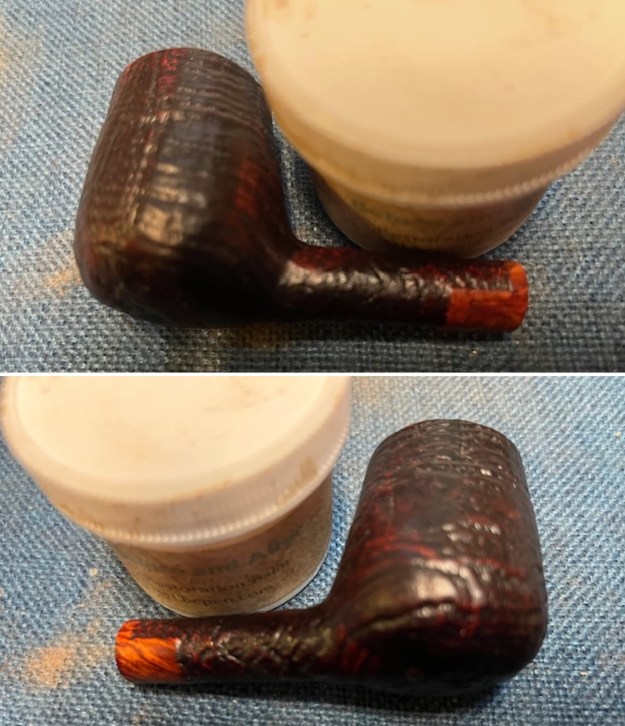
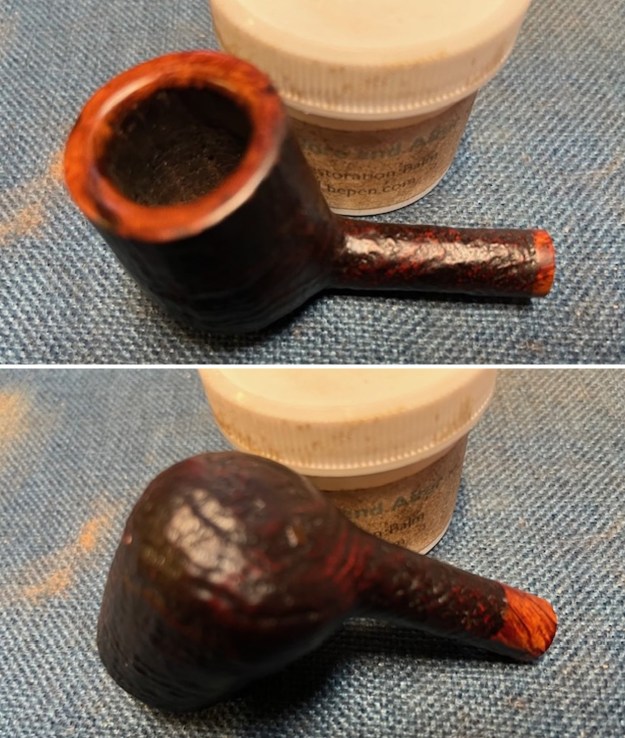
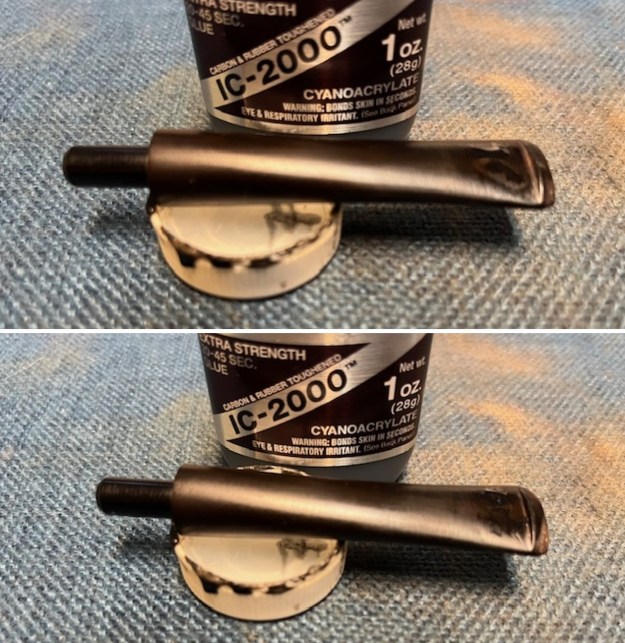
 I set the bowl aside and turned my attention to the stem. I “painted” the surface of the stem with the flame of a lighter to lift the tooth marks and had mixed success. Many lifted and the remaining ones I filled with some rubberized black CA glue. Once the repairs cured I used a flat file to blend them into the surface and followed that with some 220 grit sandpaper. It looked better. Polishing would finish the work.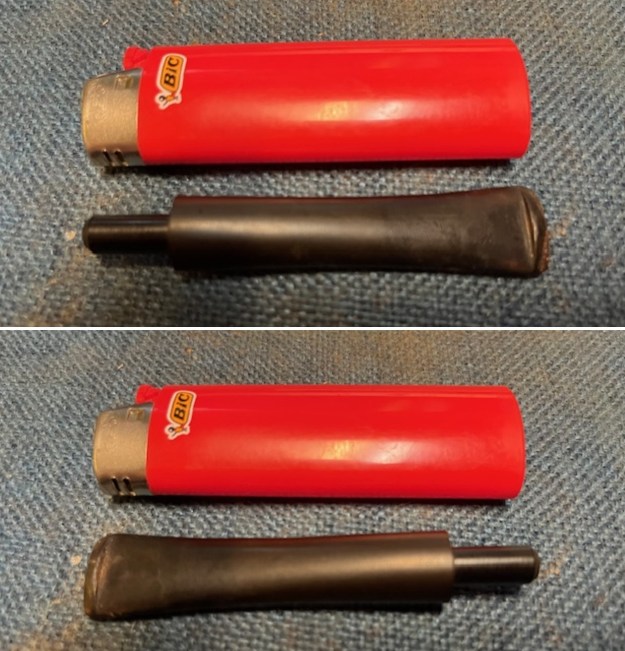
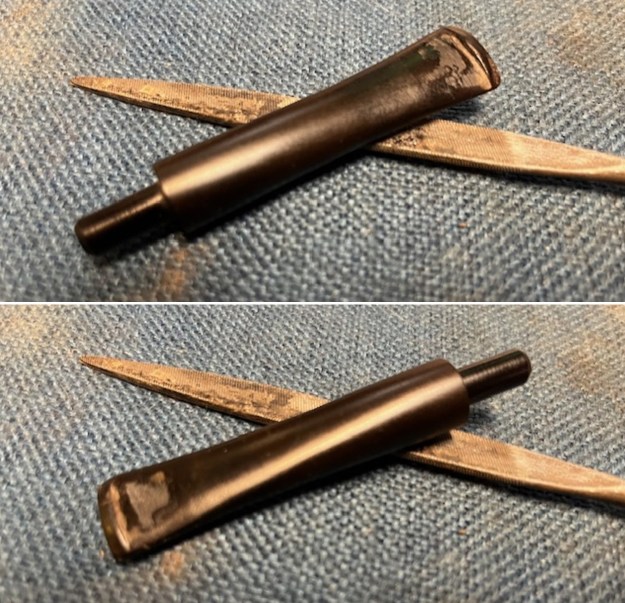
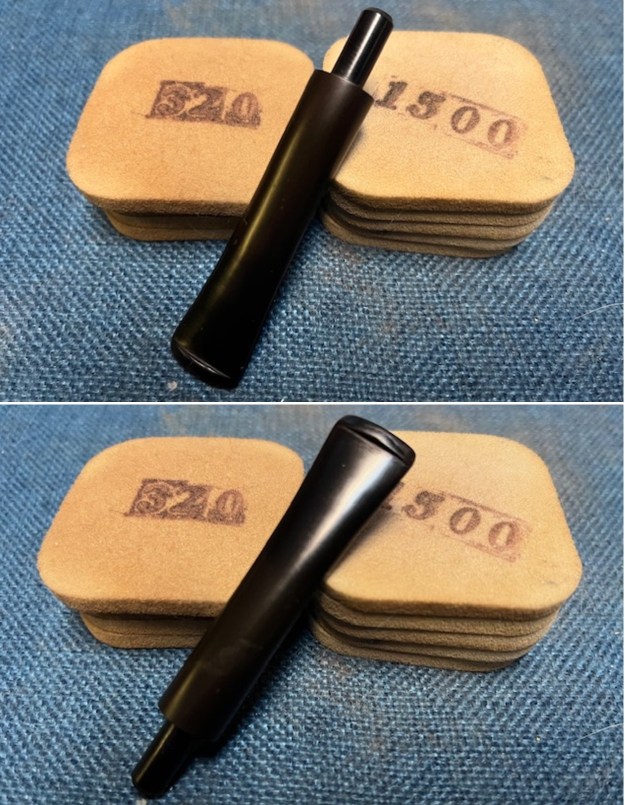
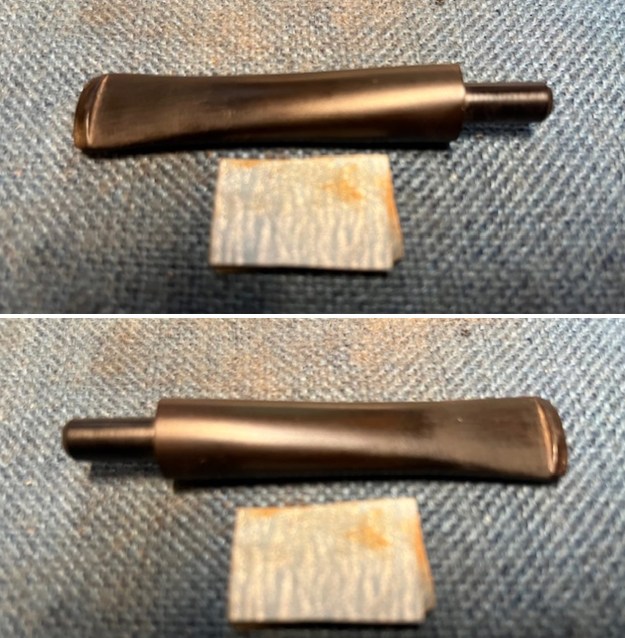 I continued the sanding process with 320-3500 grit sanding pads. After each pad I wiped the stem down with some Obsidian Oil to clearly show me the scratches and areas that still needed work. It was really looking good.
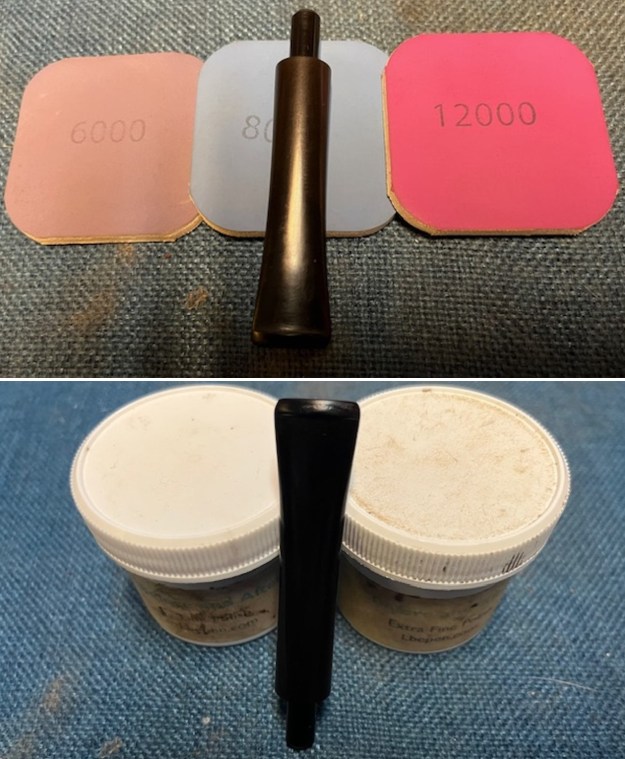
 I polished the stem with micromesh sanding pads – dry sanding with 1500-12000 grit pads. Once again, I wiped it down between each pad with Obsidian Oil. I further polished it with Before and After Stem Polish – both Fine and Extra Fine. It looked very good.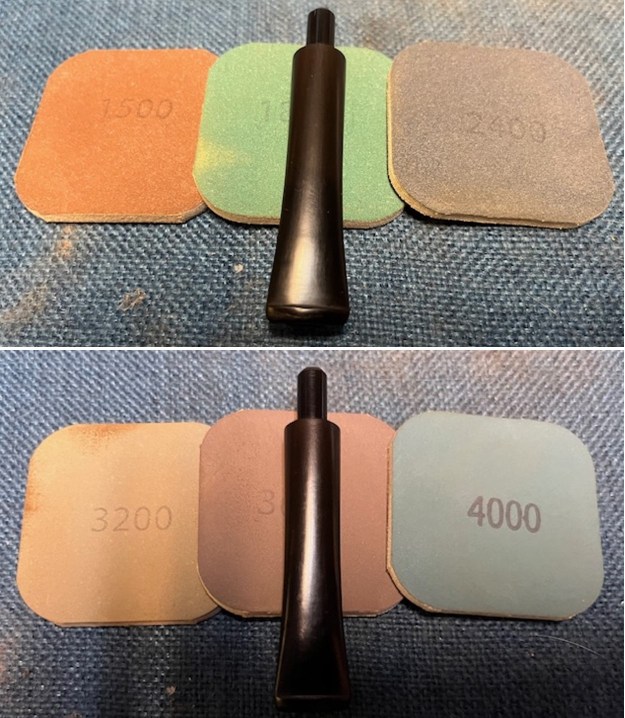
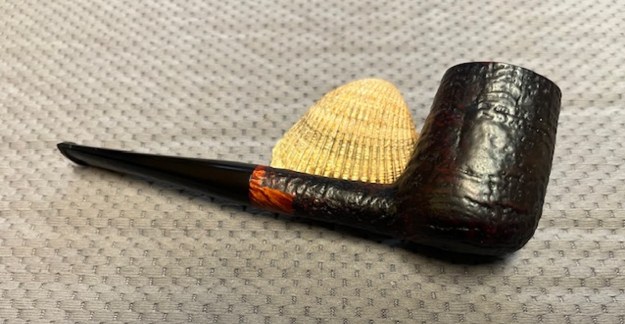
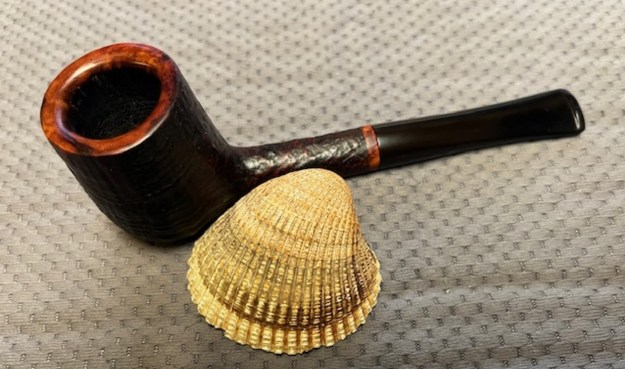
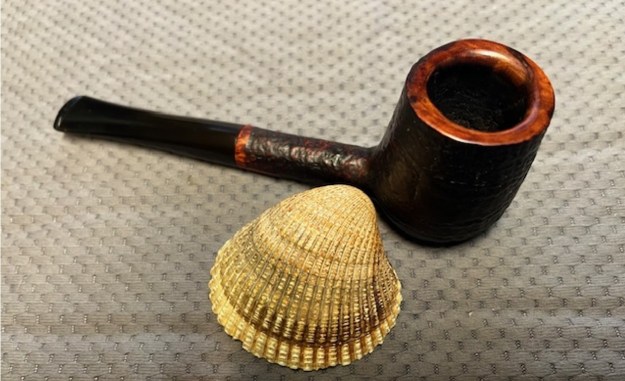
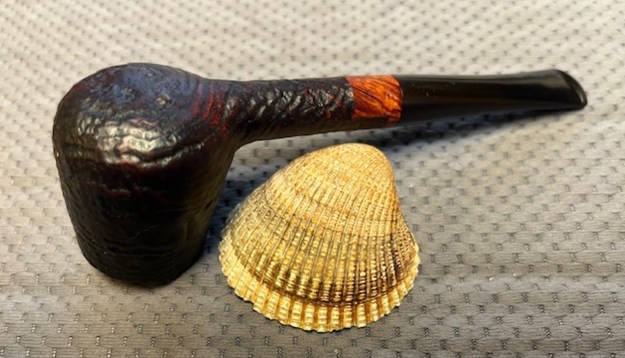
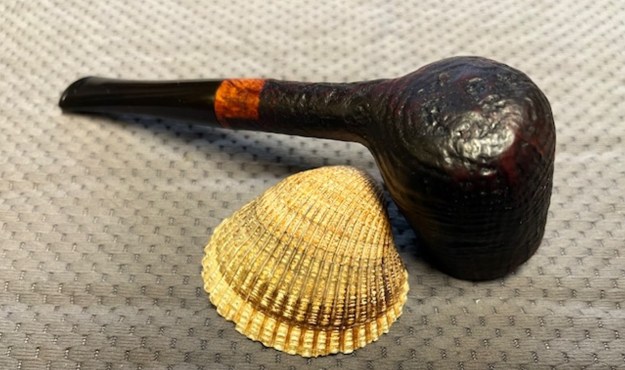
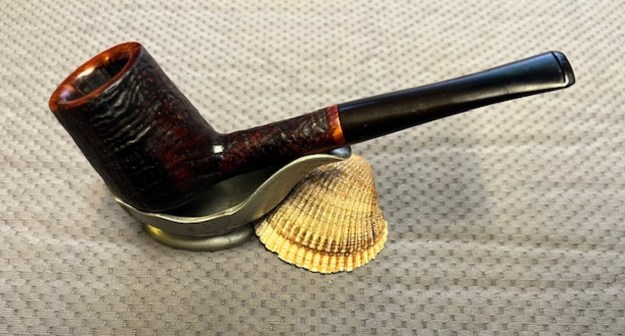
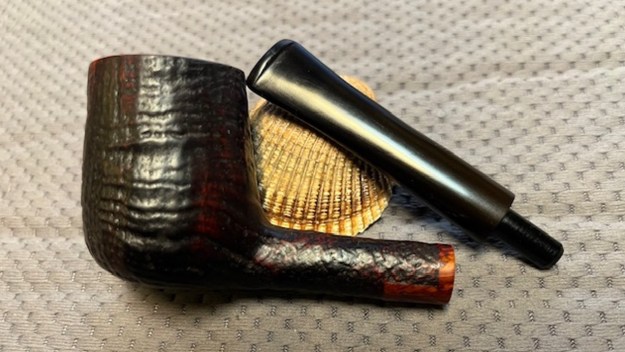
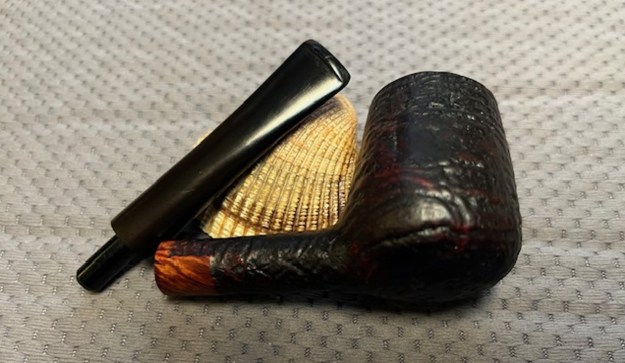
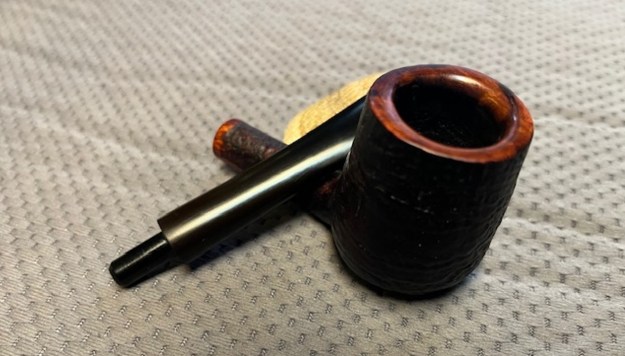
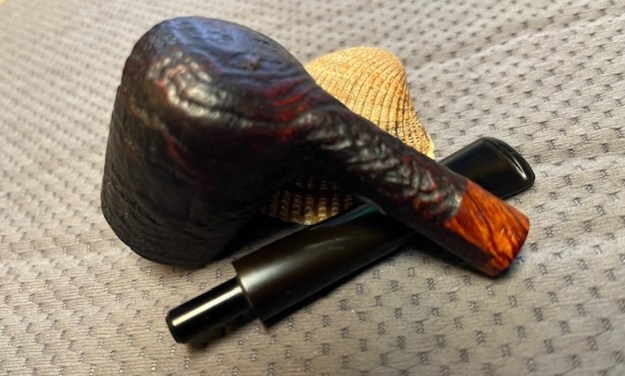
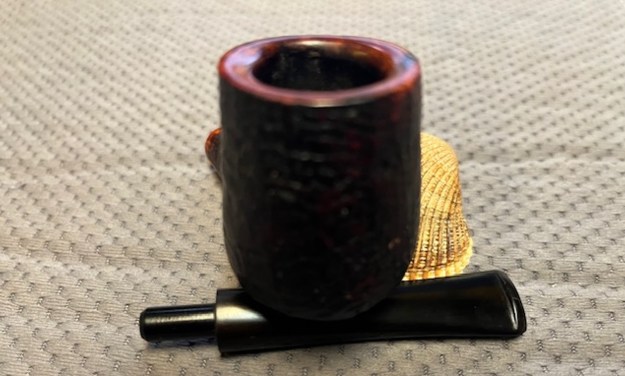
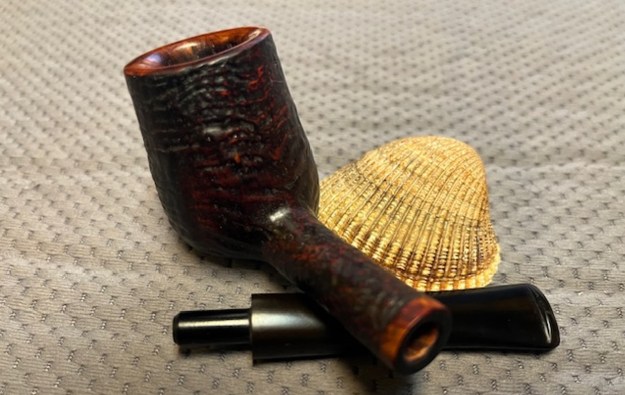
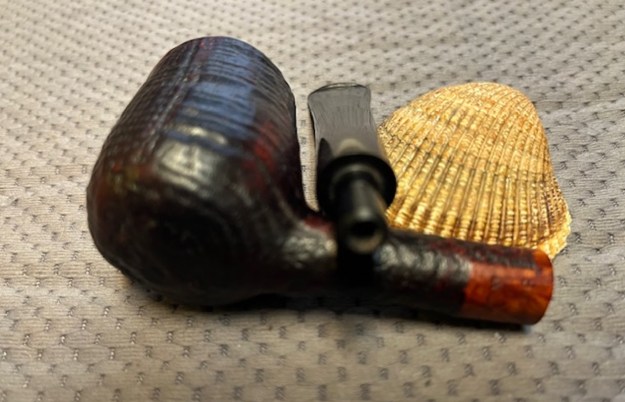
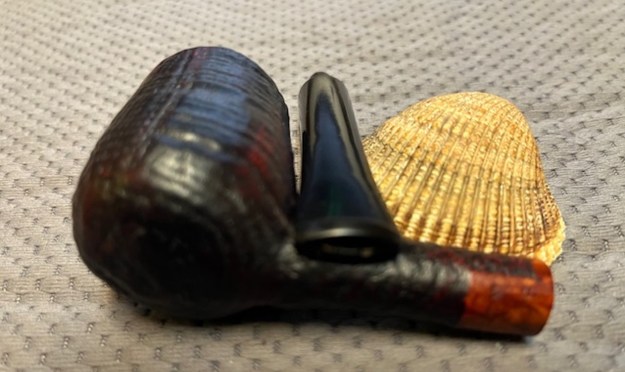
 I am really happy with the way that this Bjarne Hand Made Sandblast Brandy turned out. It really is a beautiful looking pipe with a unique shape and combining a sandblast bowl with a smooth rim and shank end. The vulcanite taper stem is really nice. The briar really came alive with the buffing. The rich brown and black stains of the finish gave the pipe a sense of depth with the polishing and waxing. I carefully buffed the pipe with Blue Diamond on the buffing wheel using a light touch on the briar. I gave the bowl and the stem multiple coats of carnauba wax on the buffing wheel. I buffed the pipe with a clean buffing pad to raise the shine. I hand buffed the pipe with a microfiber cloth to deepen the shine. The finished Bjarne Brandy Sandblast really is a beauty and feels great in the hand and looks very good. Give the finished pipe a look in the photos below. The dimensions of the pipe are Length: 5 ½ inches, Height: 1 ¾ inches, Outside diameter of the bowl: 1 ¼ inches, Chamber diameter: ¾ of an inch. The weight of the pipe is 36 grams/1.27 ounces. The pipe will be going on the rebornpipes store in the Danish Pipe Makers Section if you would like to add it to your collection. Thanks for reading this blog and my reflections on the pipe while I worked on it. It was a fun one to work on!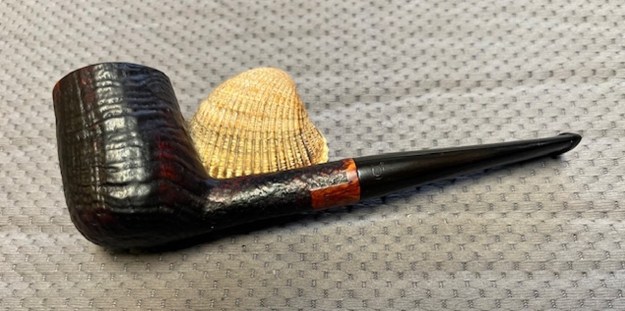

 rebornpipes