Monthly Archives: April 2025

Restoring a Byron Harwood All Briar Sandblast Capped Apple


by Steve Laug

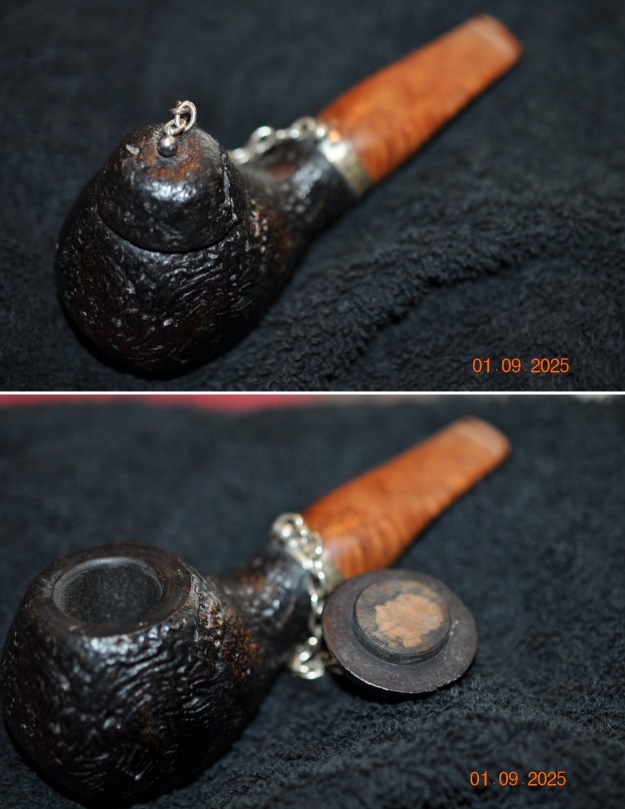
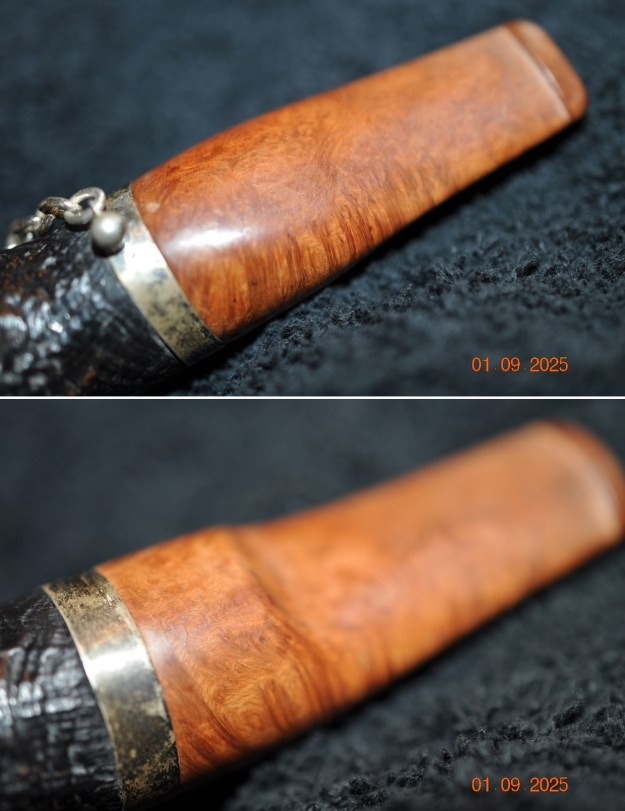
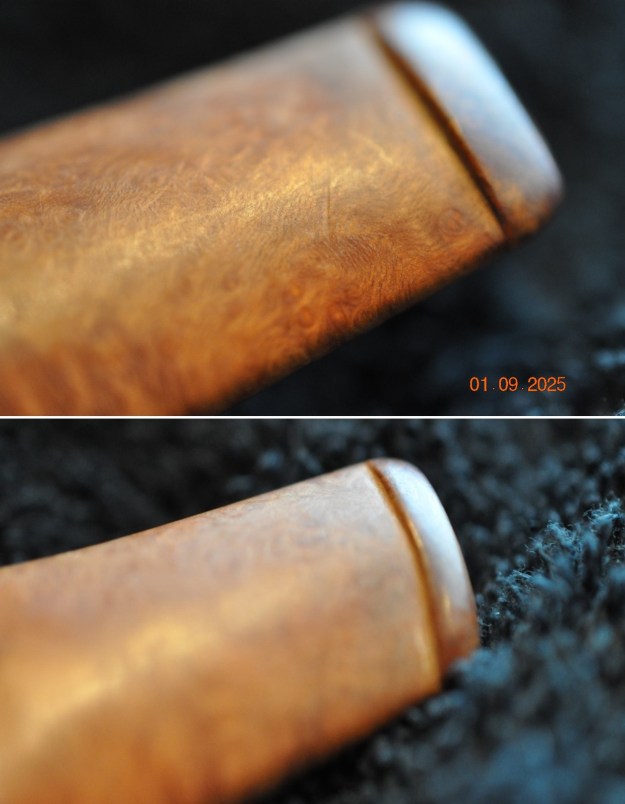
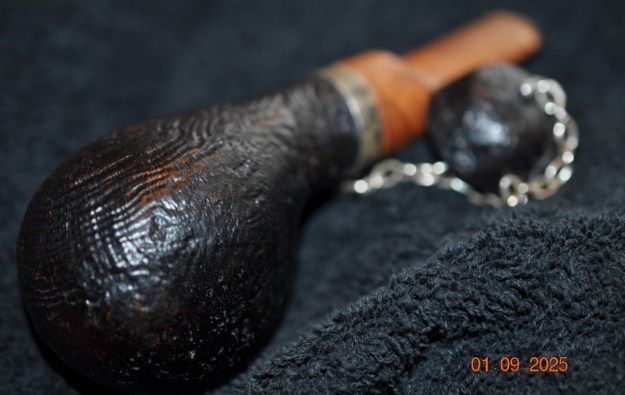
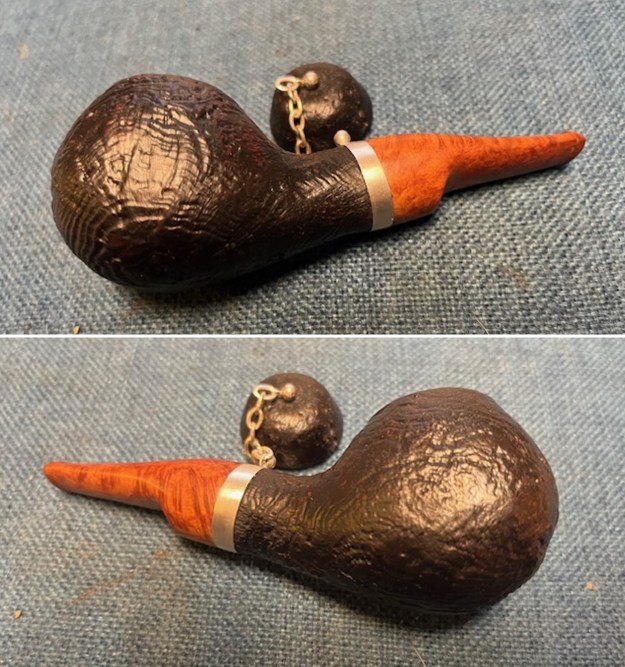
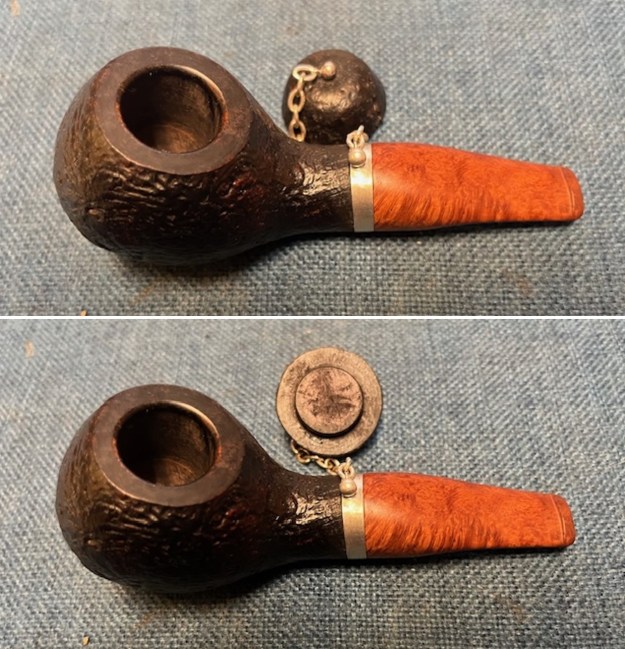
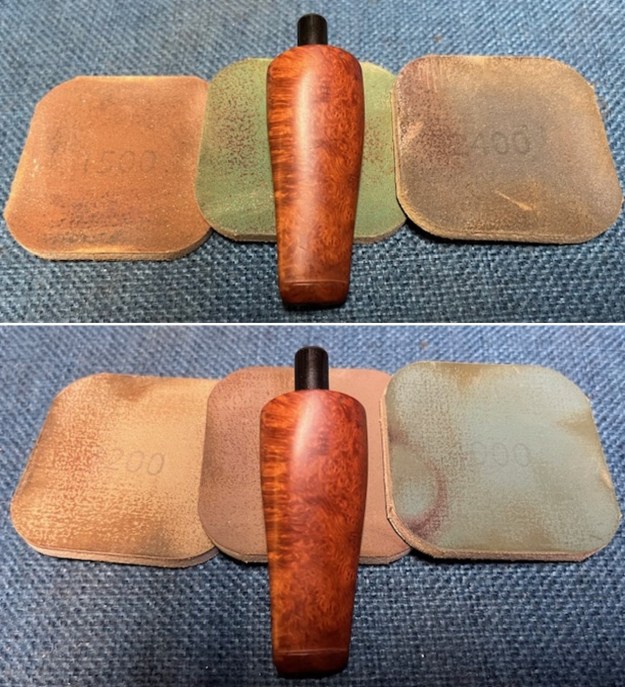
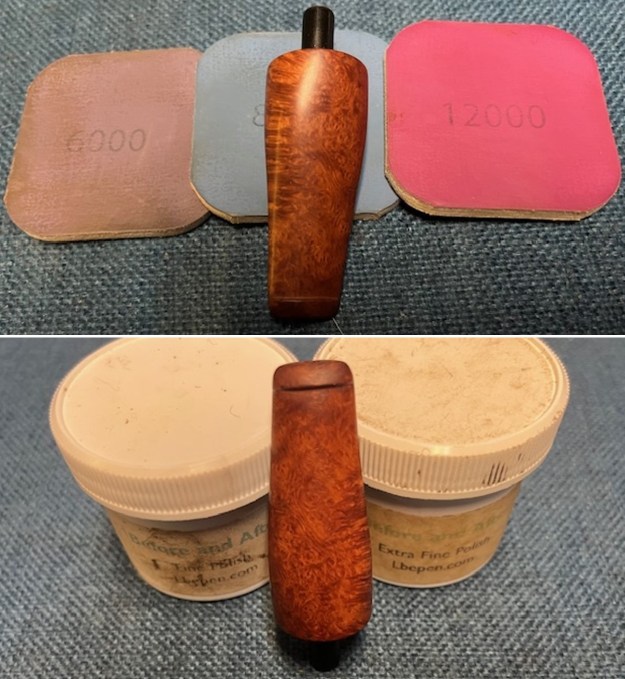
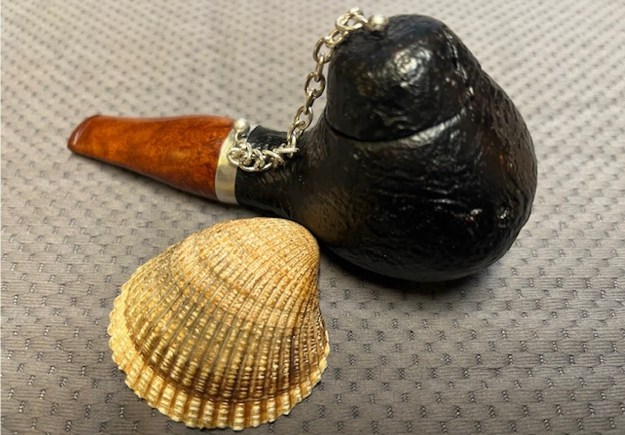
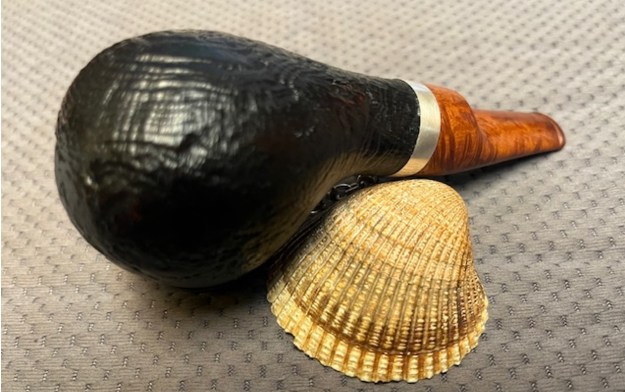
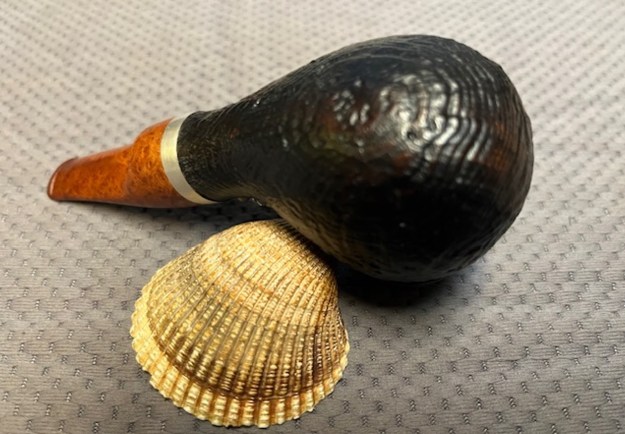
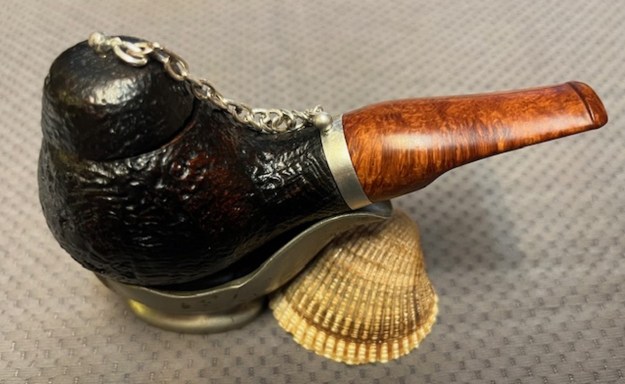
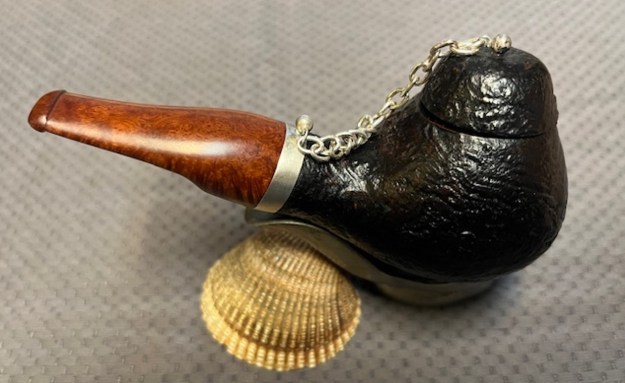
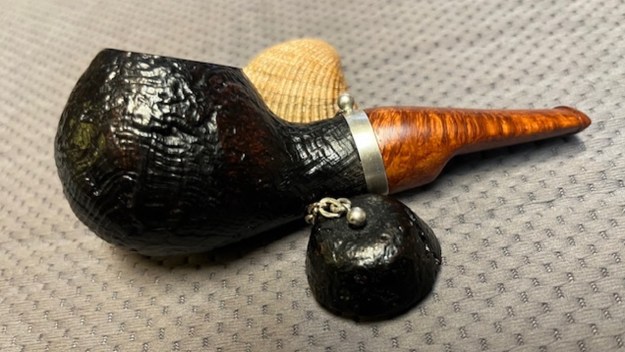
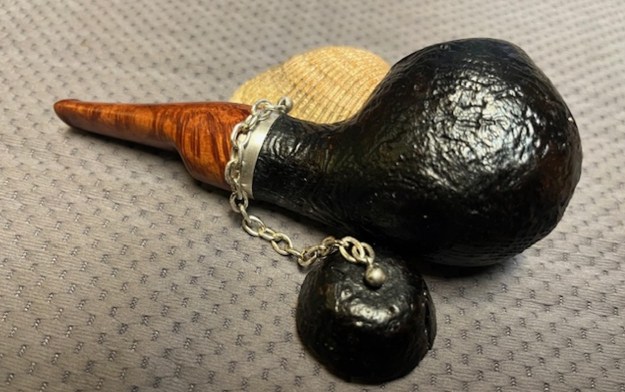
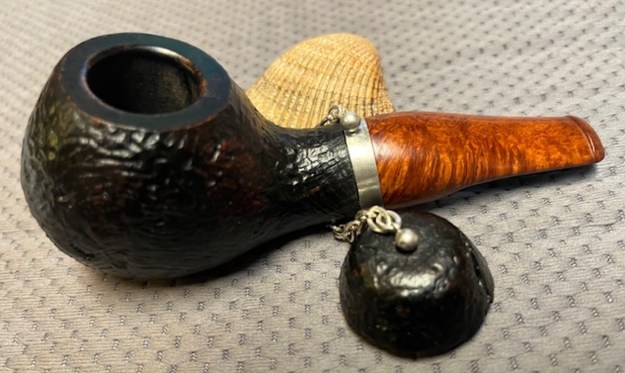
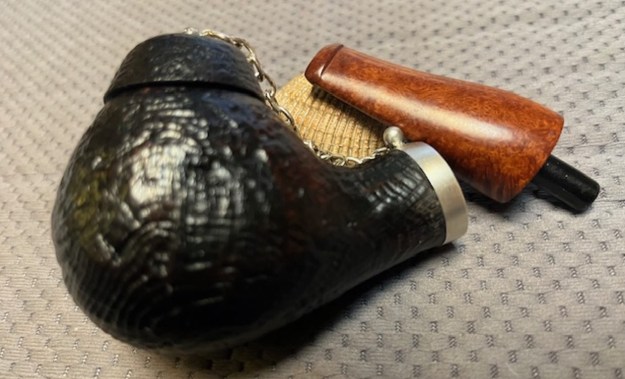
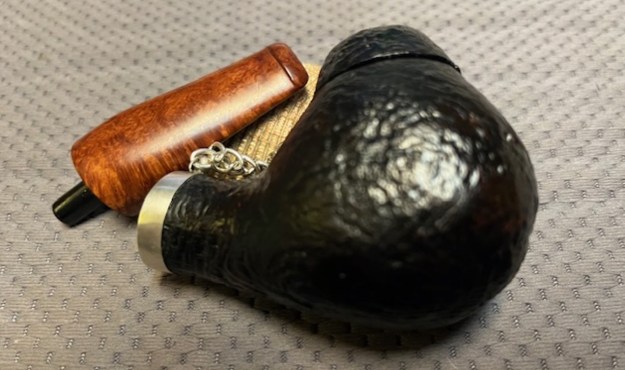
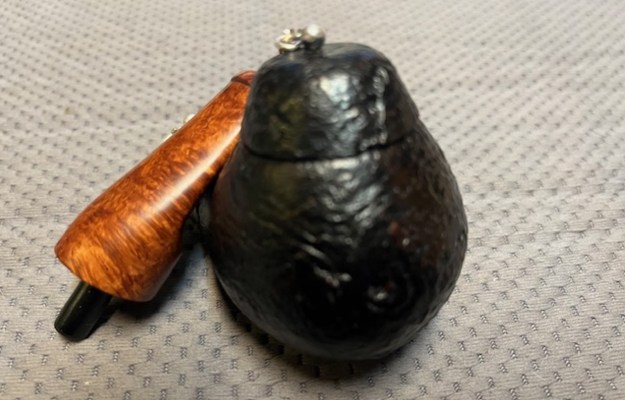
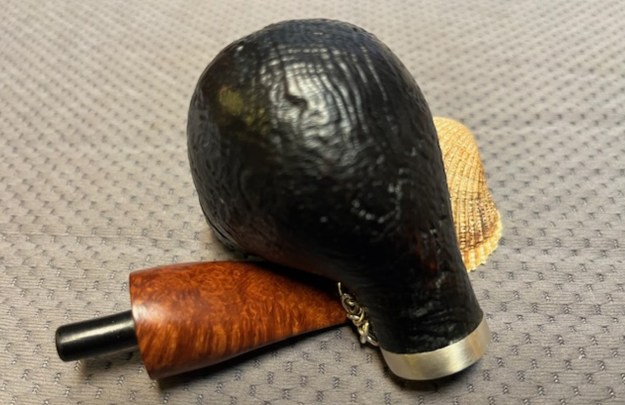
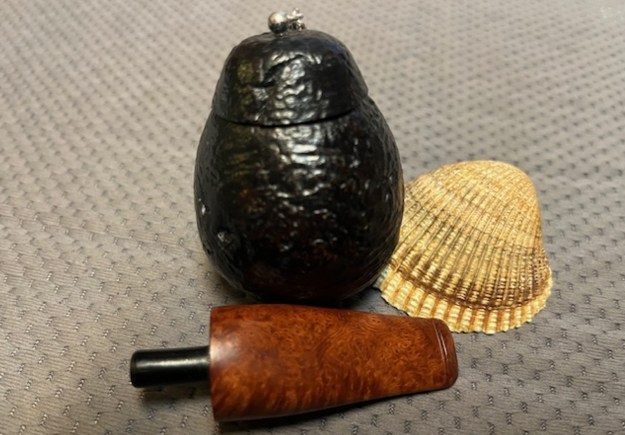
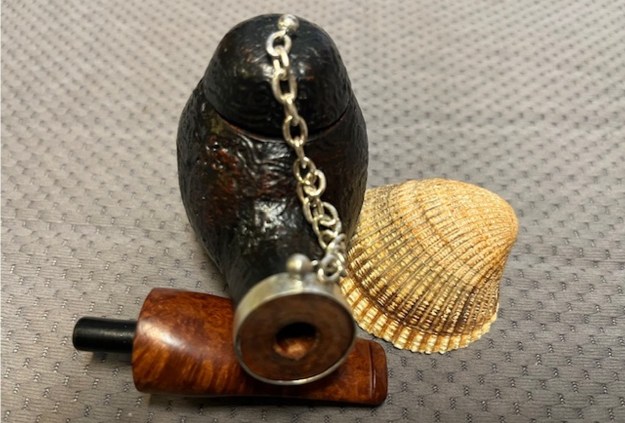
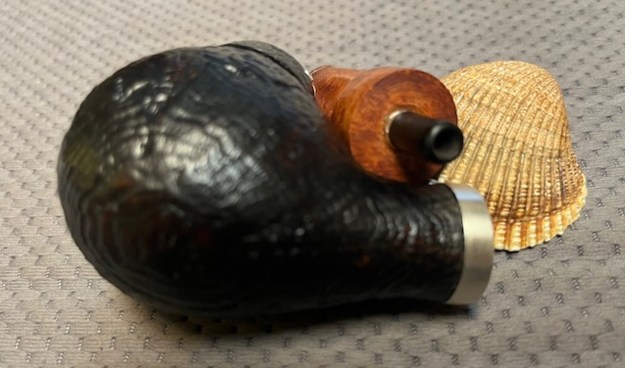
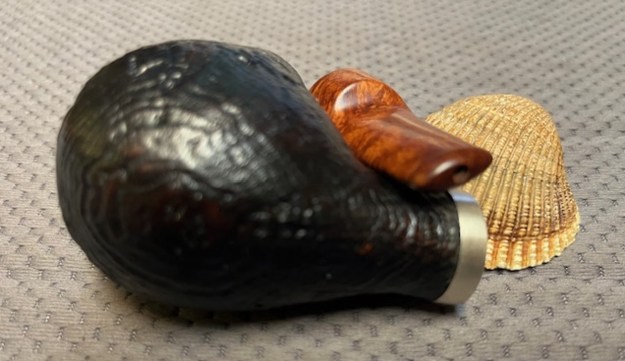
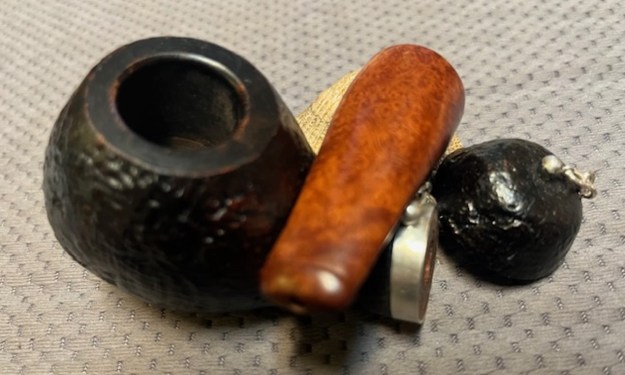
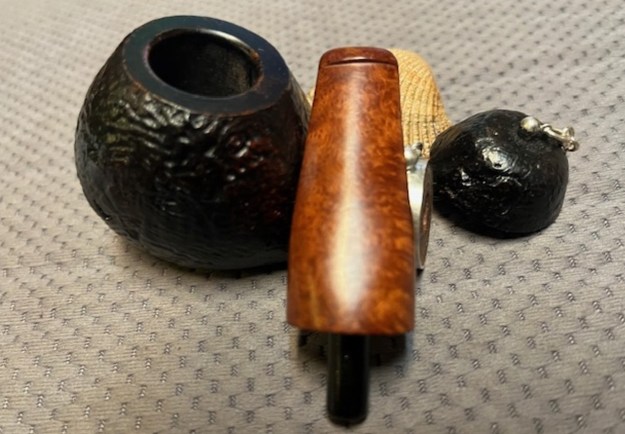
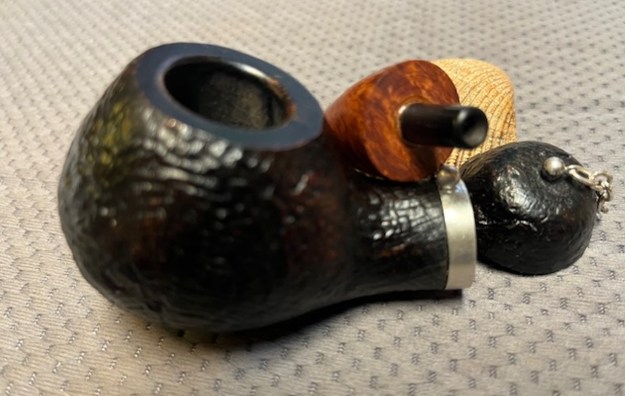
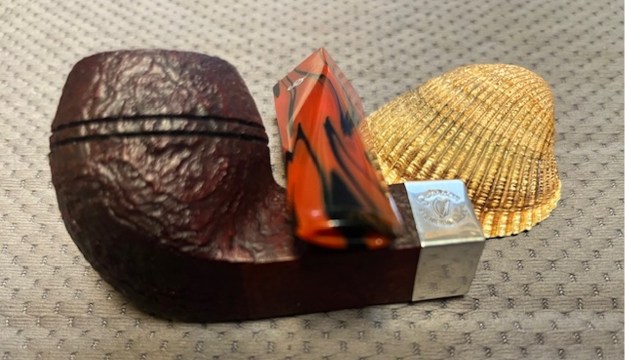
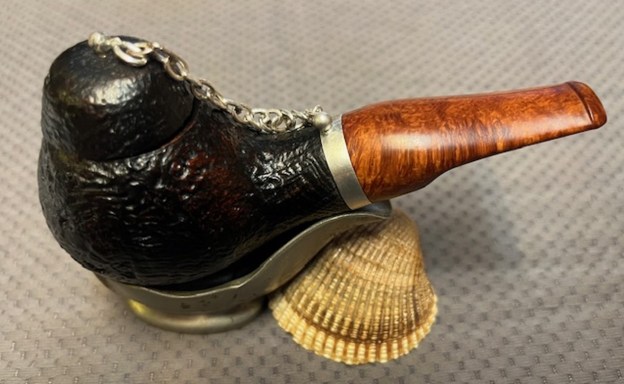
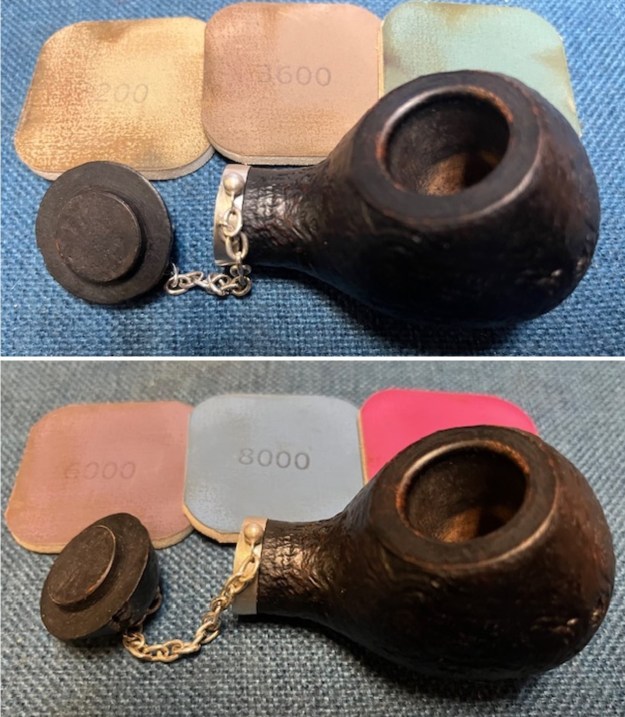
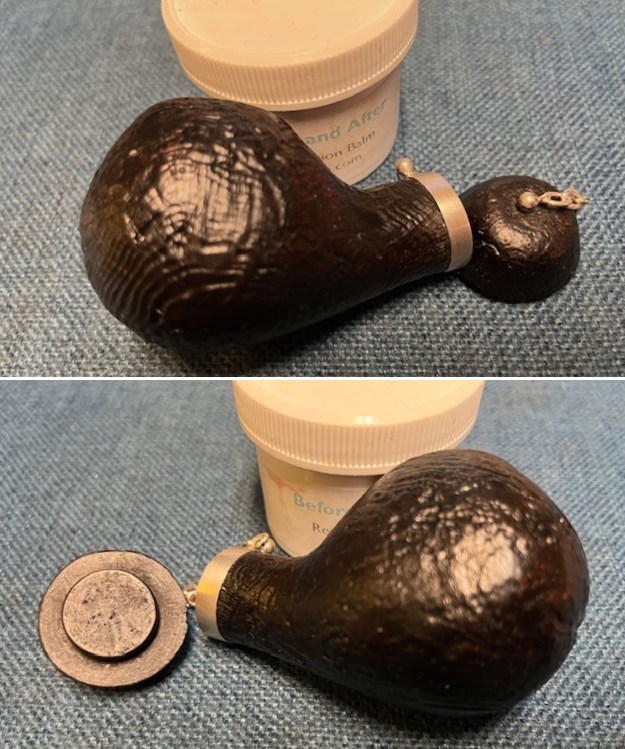
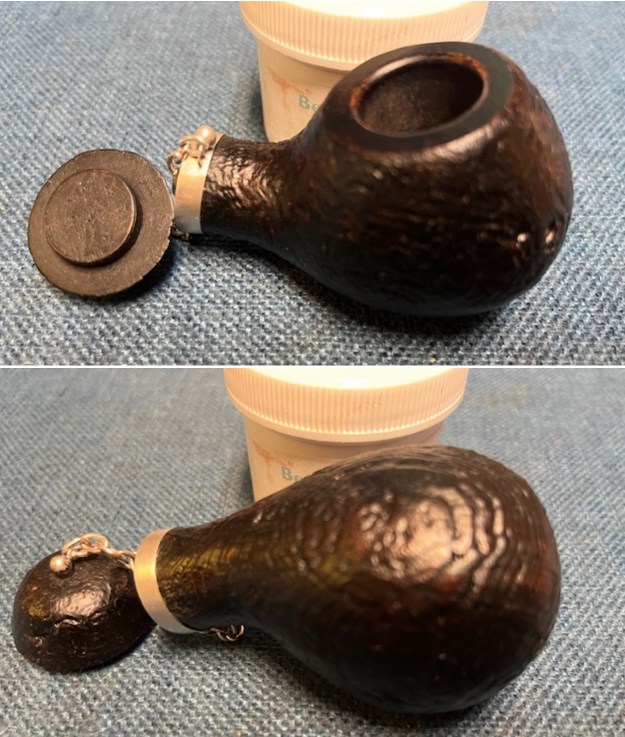
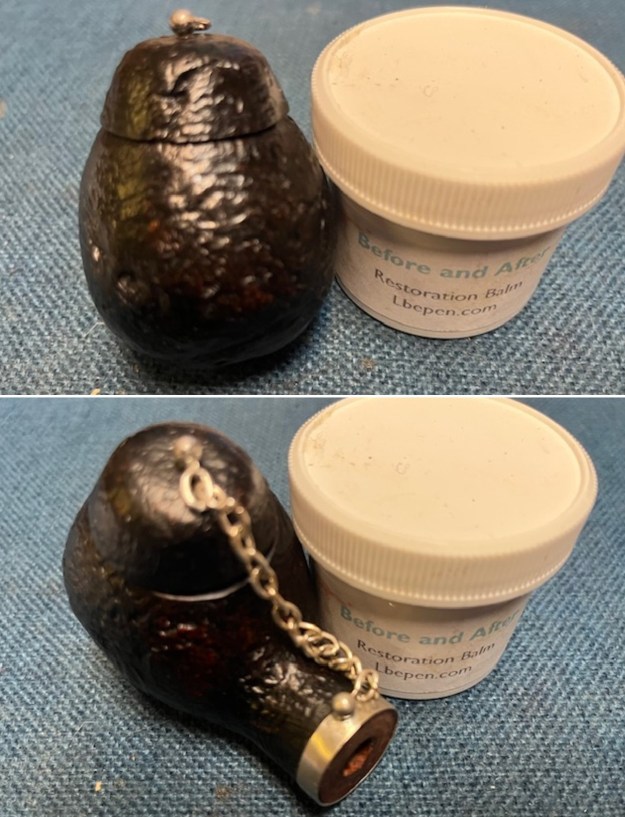
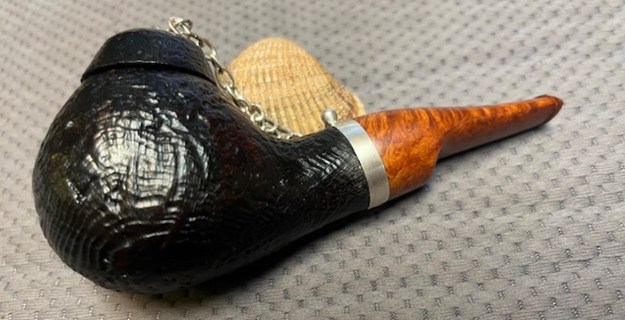
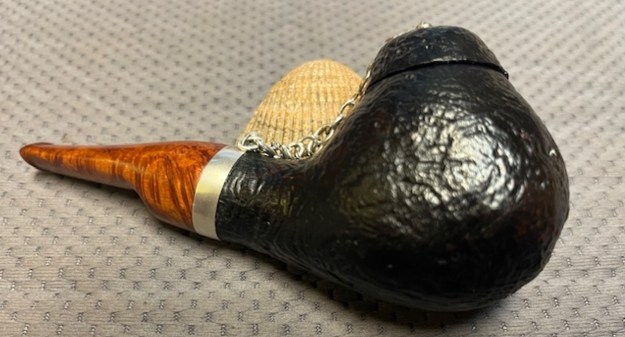
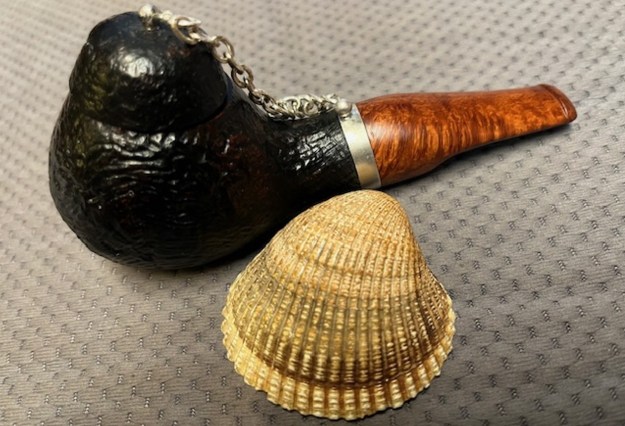
The next pipe I chose to work on was one that we purchased on 12/28/2024 from as part of an estate that belonged to a pipeman and carver, Byron Harwood from Missoula, Montana, USA. This unique, capped all briar pipe was one of Byron’s own handmade pipes. As with the previous pipe of Byron’s this one does not bear any stamping. It is a lovely piece of briar that was shaped with an apple bowl and sandblasted to highlight the grain. The airway in the mortise and shank are well executed and the draught is very good. The bowl had a moderated cake and there was some darkening and lava around the inner edge of the bowl and top. The cap on the bowl was pressure fit and attach to a shank band. It sealed the bowl so it would be a good pipe to load and carry in a pocket or bag for later use. It is not a wind cap. The chain and band are tarnished and are made of Sterling Silver. Smoking the pipe had removed the stain and finish on the inside of the cap. The stem is briar in a half saddle shape. It is smooth and nicely grained. It has been stained with a tan stain and has a great fit to the shank. The tenon is a black Delrin that is set in the stem. The button is well finished and the exit of the airway is orific or round rather than slotted. The pipe fit well in the hand and was short and stubby like a nose warmer. There was a charm to it! Here is what it looked like when Jeff received it. He took some photos of the rim top and bowl from various angles to give me a clear picture of the condition of the rim top and bowl. You can see the light cake in the bowl and the darkening and light lava coat on the inner edge and rim top. He also took photos of the all briar stem. It is dirty and has light tooth chatter on both sides ahead of the button. Jeff took some photos of the sides of the bowl to show the condition of the finish on the pipe. The photos showed rich sandblast, highlighting grain around the bowl sides. Under the dust it was a nice looking bowl and cap. It is a nose warmer sized pipe sandblasted briar cap. It is on pipes like this that I really appreciate Jeff’s thorough cleaning process. It gives me real freedom in dealing with pipes when they arrive here. He reamed it with a PipNet pipe reamer and got rid of the cake. He cleaned up the reaming with a Savinelli Fitsall Pipe Knife so that we could see the walls of the bowl and assess for damage. He cleaned the internals of the shank and stem with alcohol, pipe cleaners and alcohol. He scrubbed the exterior with undiluted Murphy’s Oil Soap and a tooth brush. He rinsed the pipe under warm water. He dried it off with a cloth and then let it air dry. The stem was scrubbed with Murphy’s Oil Soap and a tooth brush at the same time as the bowl. Once it was rinsed off, it came out looking very good. The finish on the bowl and the rim top and cap cleaned up nicely. I took pictures of the pipe to show how it looked when I unpacked it. The pictures show it with the cap in place on the top of the bowl and with it removed. I took a photo of the pipe with the briar stem removed to show the Delrin tenon and the look of the parts of the pipe to give a sense of size and perspective.I polished the bowl rim top and the inside of the bowl cap with micromesh sanding pads – dry sanding with 1500-12000 grit pads and wiping it down after each sanding pad with a damp cloth. I worked some Before & After Restoration Balm into the surface of the briar with my finger tips. I let it sit on the bowl for 10 minutes and then buffed it off with a paper towel and soft cloth. The product is a great addition to the restoration work. It enlivens, enriches and protects the wood while giving it a deep glow. It is a product I use on every pipe I restore. I set the bowl aside and turned to the all briar stem. I polished it with micromesh sanding pads – dry sanding with 1500-12000 grit sanding pads. I wiped it down after each sanding pad with Obsidian Oil. I polished it with Before & After Pipe Stem Polish – both Fine and Extra Fine. I buffed the stem with a soft cloth to raise the shine. I gave it a final wipe down with Obsidian Oil to protect it. I don’t know what it is about finishing a restoration but I have to tell you that it is my favourite part of the process. It is the moment when everything that I have worked on comes together. I can compare it to where I started and there is always satisfaction that it looks better than when we picked it up. As always, I put this Byron Harwood All Briar Nose Warmer back together and buffed it with Blue Diamond on the buffing wheel. I gave the bowl and the stem multiple coats of carnauba wax. I buffed the pipe with a clean buffing pad and hand buffed it to raise the shine. It is fun to see what the polished bowl looks like along with the polished All Briar stem. This Byron Harwood All Briar Capped Nose Warmer is a great looking pipe and I am sure that it will be comfortable in hand when smoking as it is light and well balanced for a pipe of this size. Have a look at it with the photos below. The dimensions are Length: 5 inches, Height: 1 ¾ inches without the cap and 2 ¼ inches with the cap, Outside diameter of the bowl: 1 ¼ inches, Chamber diameter: ¾ of an inch. The weight of the pipe is 2.79 ounces/78 grams. It is another beautiful pipe and one that will be on the rebornpipes store soon. You can find it in the section of Pipes by American Pipe Makers. If you are interested in adding it to your collection let me know. Thanks for walking through the restoration with me as I worked over this pipe. Thanks to each of you who are reading this blog.
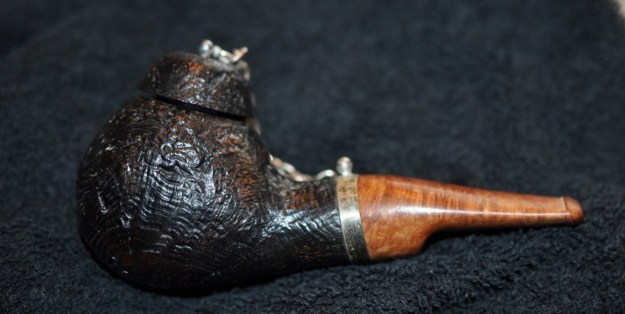
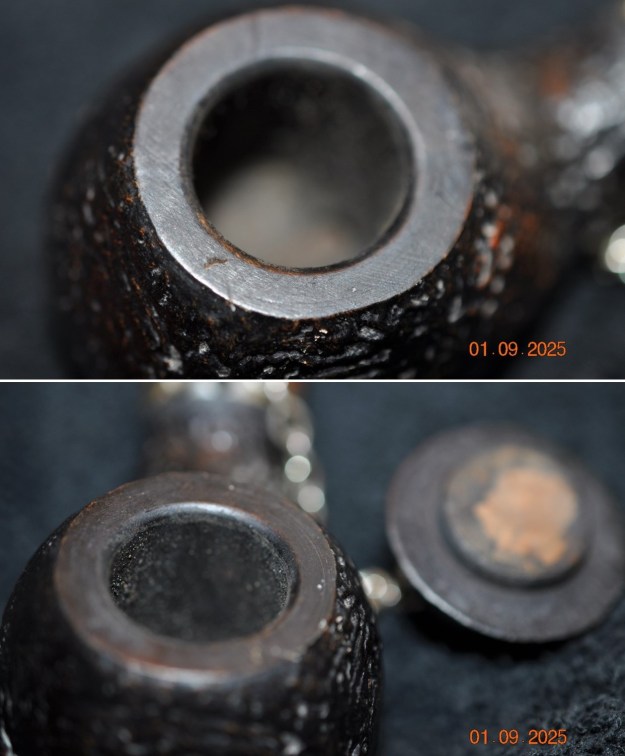
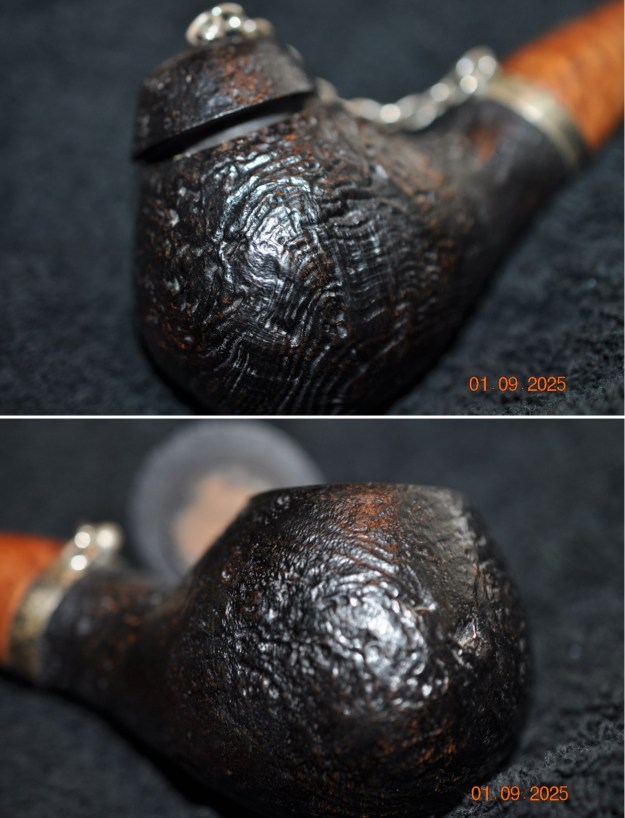
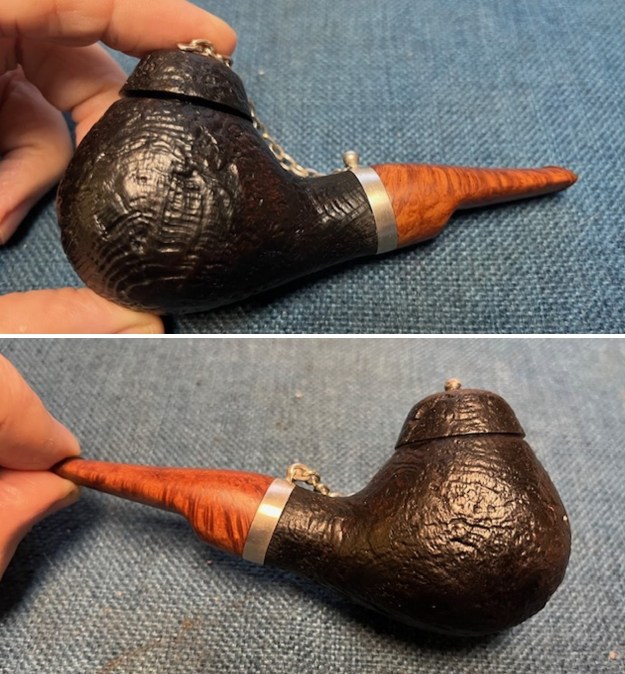
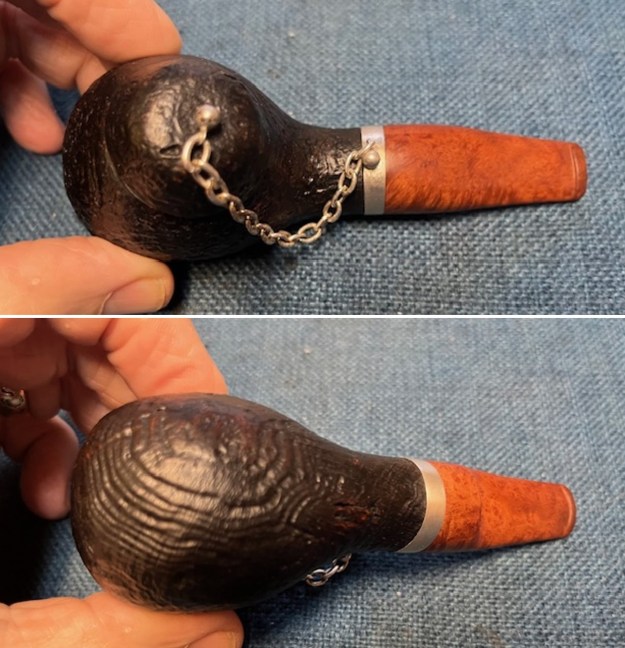
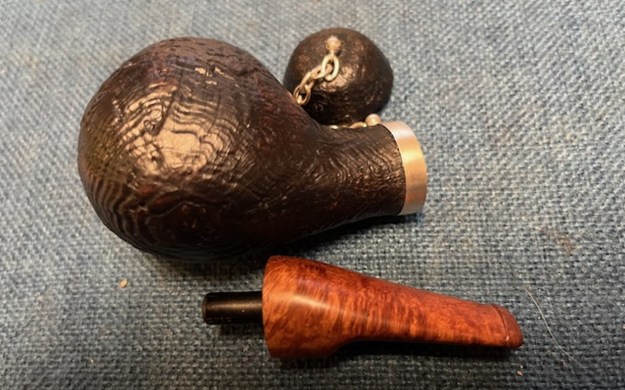
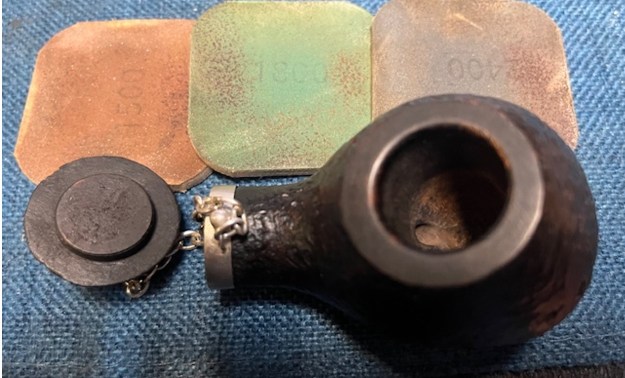
As always, I encourage your questions and comments as you read the blog. Thanks to each of you who are reading this blog. Remember we are not pipe owners; we are pipe men and women who hold our pipes in trust until they pass on into the trust of those who follow us.

Restoring a Made in Ireland Peterson’s of Dublin Irish Harp 150 Straight Bulldog


by Steve Laug

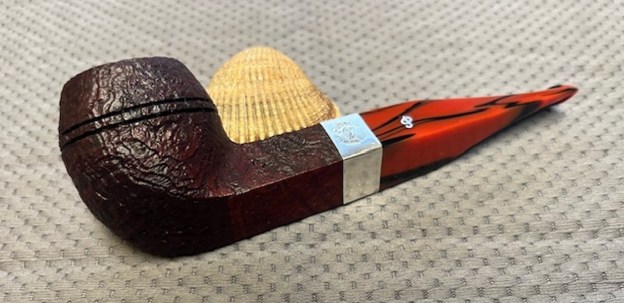
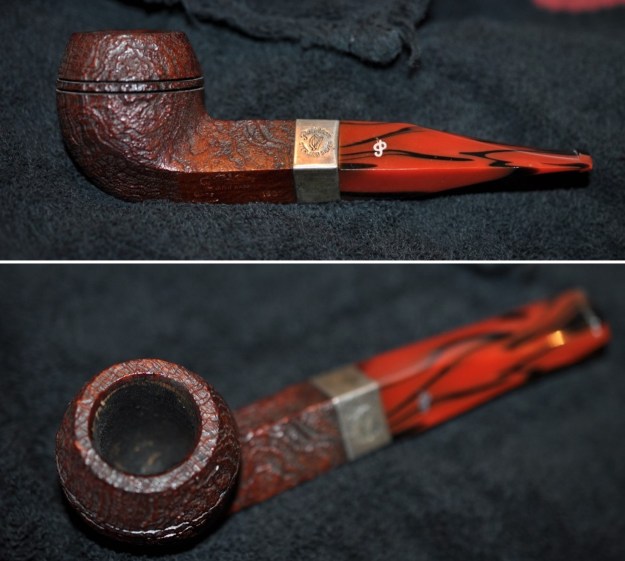
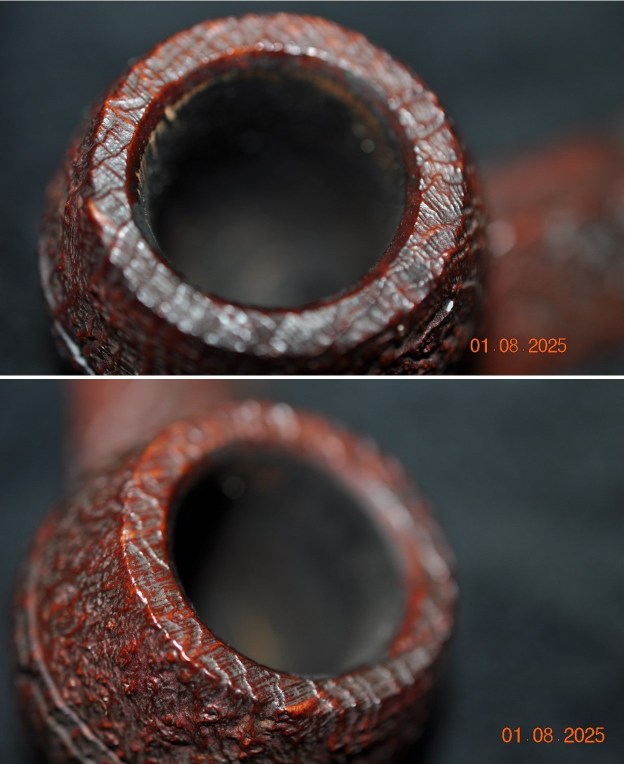
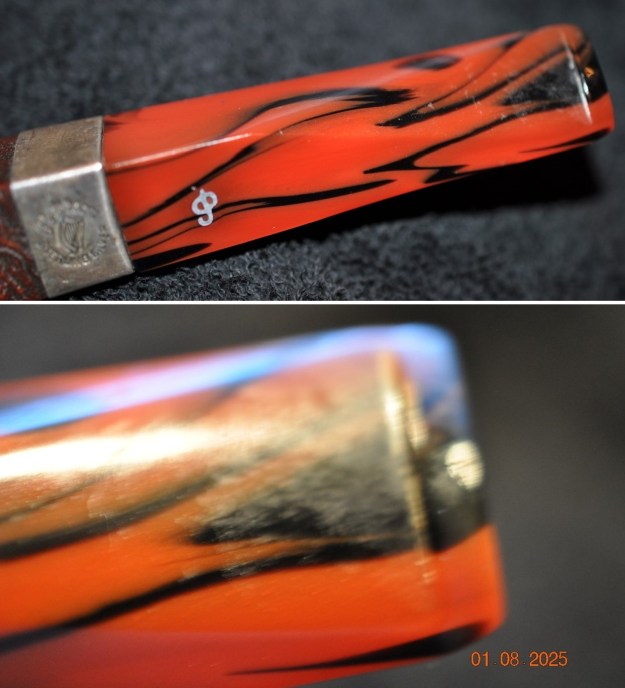
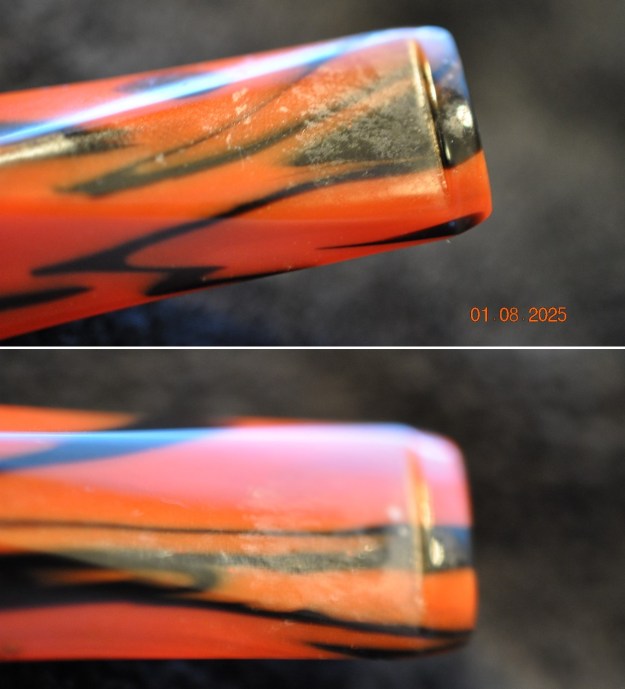
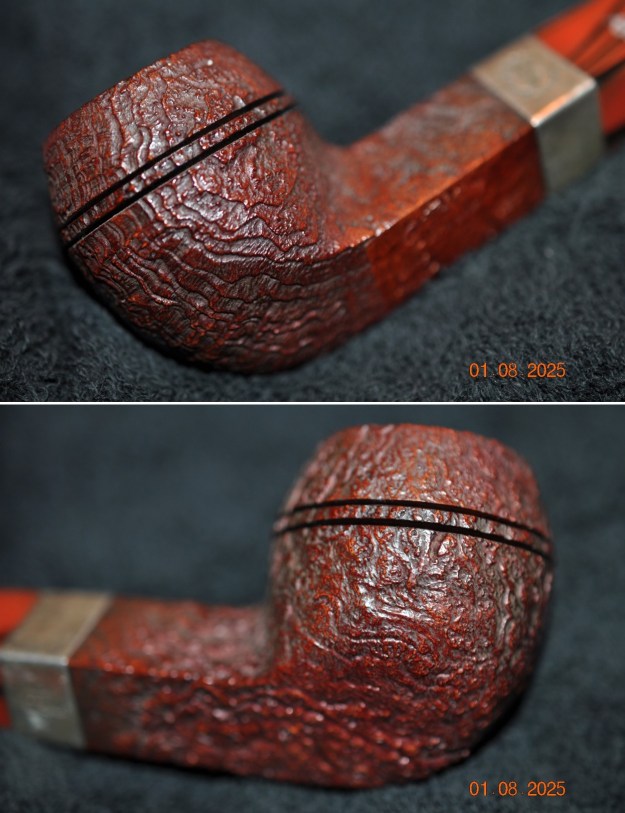
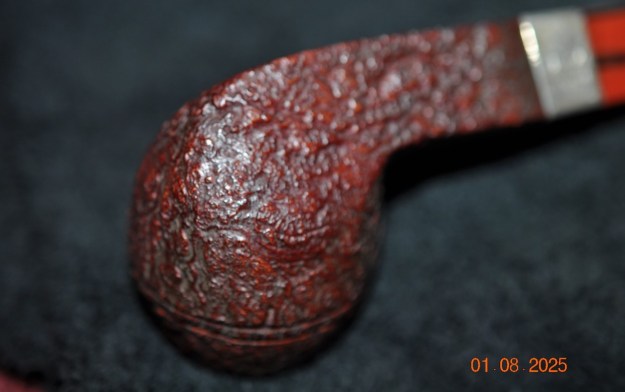
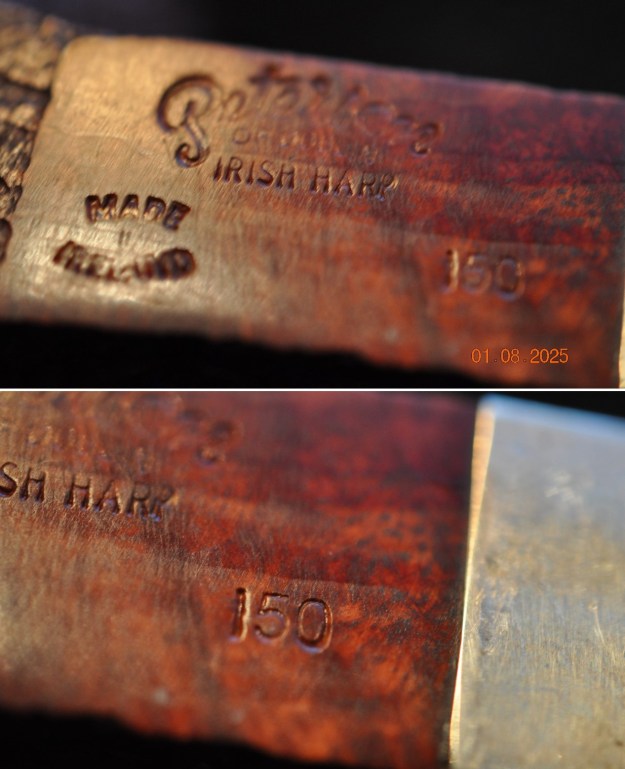
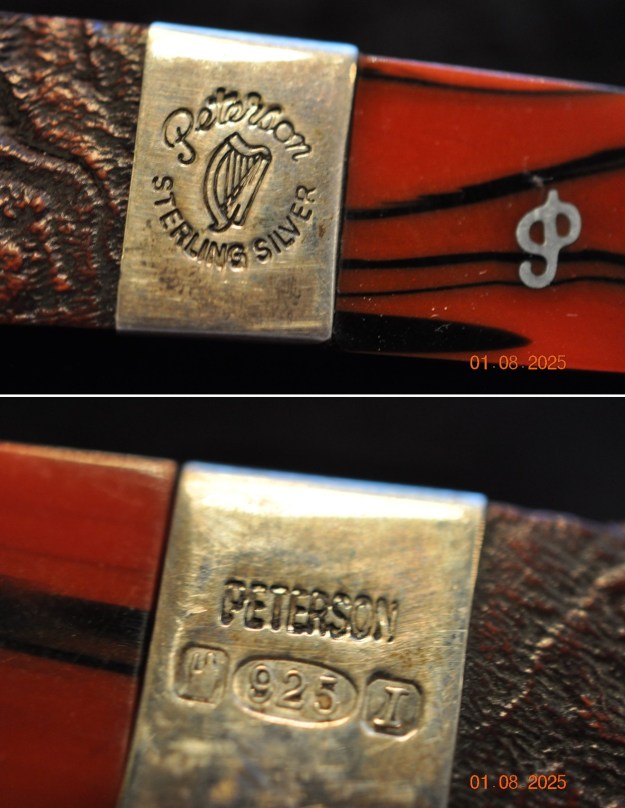
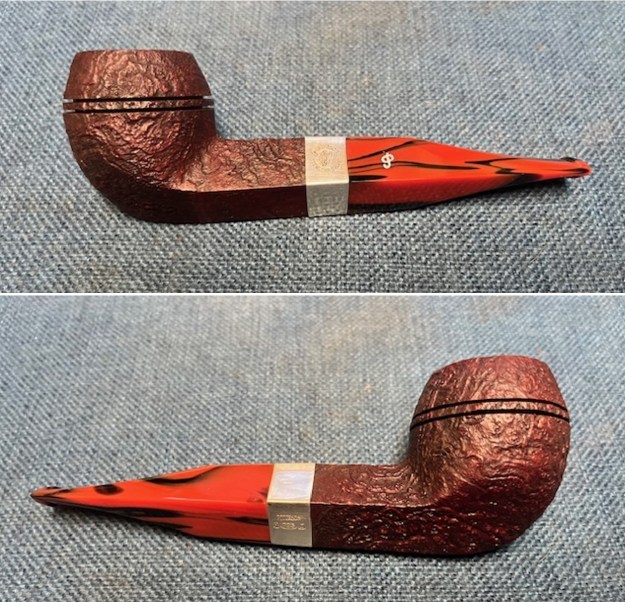
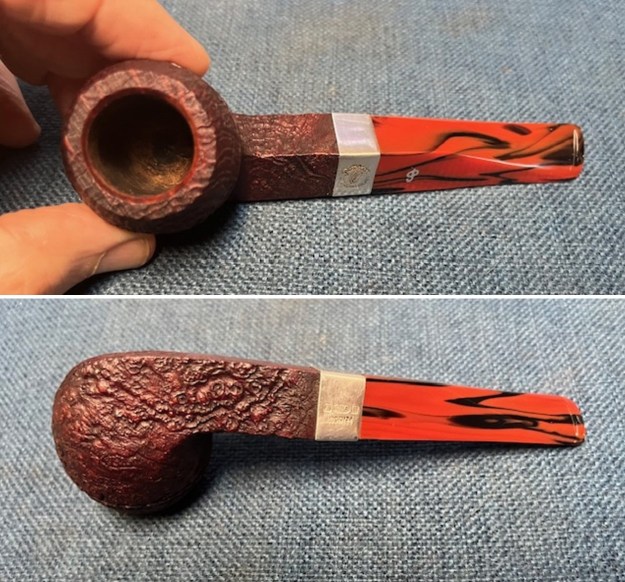
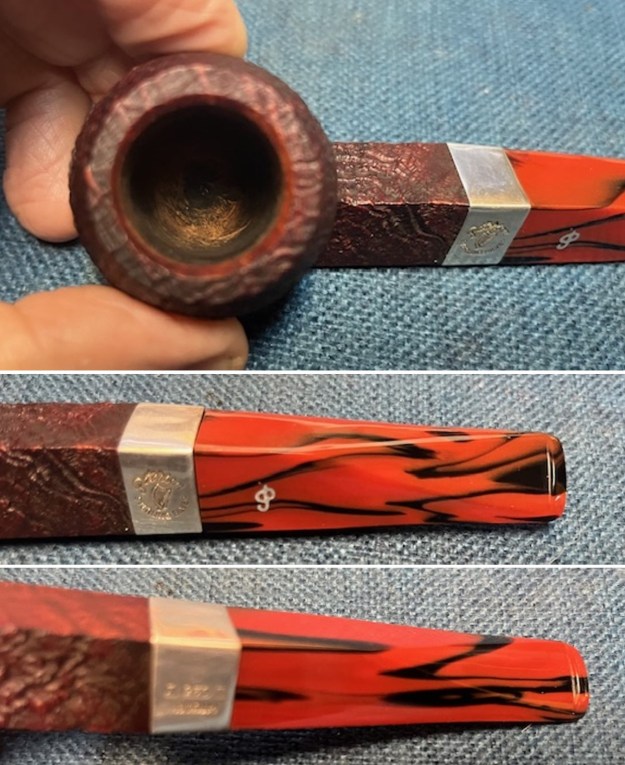
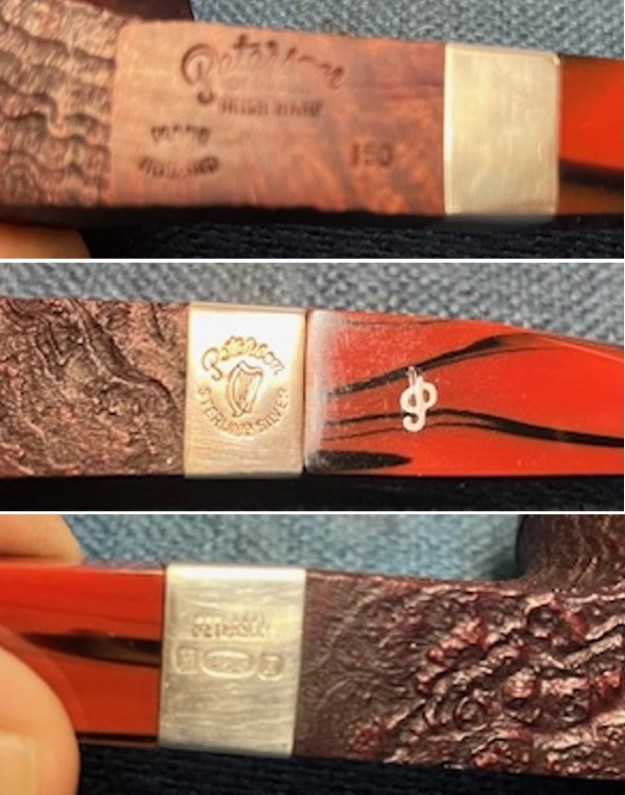
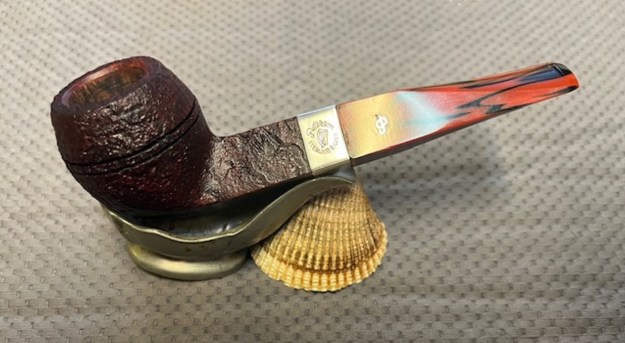
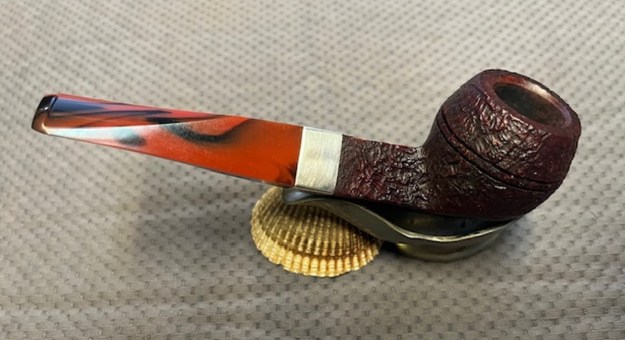
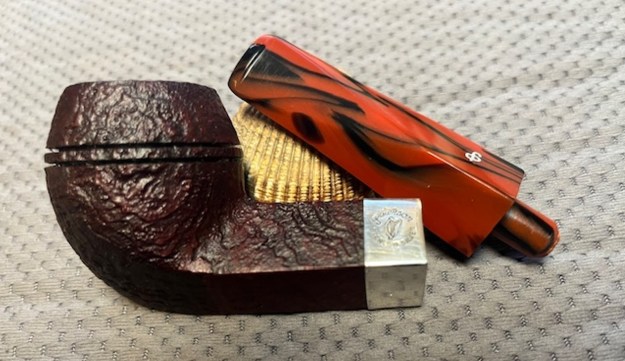
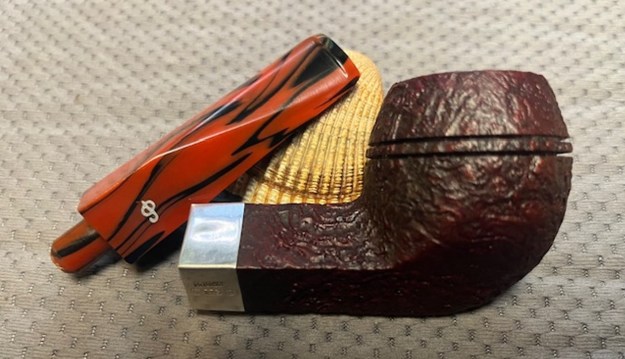
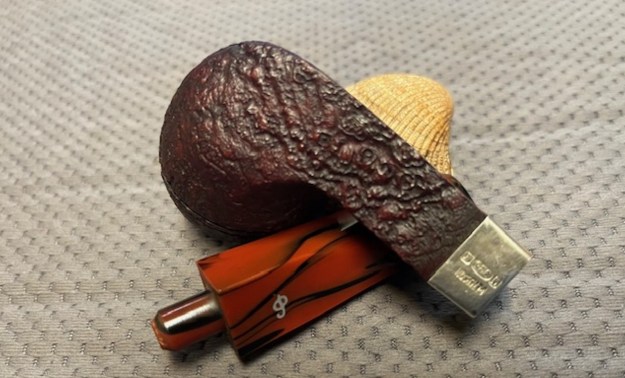
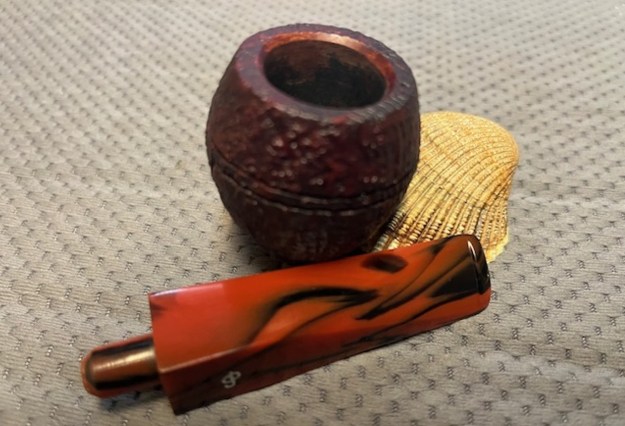
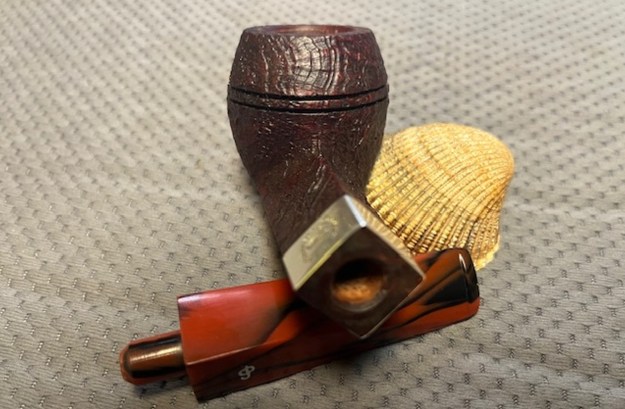
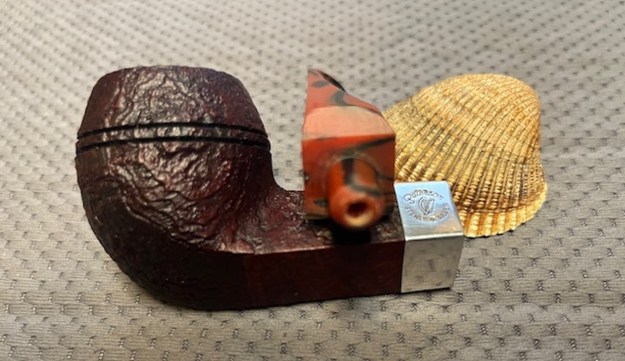
The next pipe on the work table is another Peterson’s pipe with a red and black swirled acrylic stem. We picked the pipe up from a seller in Ogden, Utah, USA on 12/12/2024. It is stamped on a smooth panel on the left underside of the diamond shank and reads Peterson’s [arched over] of Dublin [over] Irish Harp. To the left of that it is stamped Made in Ireland and to the right the shape number 150. The Sterling Silver band is stamped on the left topside of the diamond shank and reads Peterson [arched over] a Harp with Sterling Silver arched underneath. On the right underside it bears the Peterson silver Hallmarks. It reads Peterson [over] the first hallmark, Hibernia seated arm on a harp for the country of manufacture. That is followed by .925 which help to date the pipe as after 2003 and designates the sterling quality. The final Hallmark is the date stamp and in this case is an italic upper-case I which dates it as made in 2019. The finish is a rich reddish-brown sandblast that is a stark contrast to the silver band the red and black streaked fishtail stem. The bowl had been recently reamed and there was tobacco debris in the bottom of the bowl. It was also lightly smoked. The fish tail stem was red acrylic with black swirls and was a tapered. The stem was lightly soiled and had light chatter on both sides There was an inlaid silver Peterson’s “P” logo on the left topside of the diamond taper. Jeff took some photos of the pipe to show the general condition of the pipe before he started his clean up.He took some photos of the rim top and bowl from various angles to give me a clear picture of the condition of the rim top and bowl. You can see the tobacco debris in the bowl and the light cake. The next photos show the top and underside of the stem. It is looks very good. Jeff took photos of the sides and heel of the bowl to show the condition of the finish on the pipe. The photos showed a great sandblast. It is a pretty piece of briar. He took some photos of the stamping on the underside of the shank and the silver band and its hallmarks. The stamping was clear and readable as noted above. He also took a photo of the “P” logo on the left side of the taper stem. Before doing my part of the work on the pipe I turned to see what I could find out about the line. I turned first to the Peterson’s website to see what they had listed. I quote below from that site (https://www.peterson.ie/pipes/premium/irish-harp/moreinfo.cfm?pd_product_Id=950).

One of the warmest finishes in our portfolio, the Irish Harp debuted in 2002 and combines an array of our Classic range shapes with deep, ruby-tinged walnut stains, cumberland-patterned acrylic fishtail stems, and bright bands of sterling silver, applied by the hands of our most experienced silversmiths.

I then turned to La Pipe Rit – St. Claude for their description of this particular Peterson’s line of pipes (https://www.smokingpipes.com/pipes/new/peterson/moreinfo.cfm?product_id=608936). I quote from the description by Truett Smith l below.

Peterson’s “150” straight Bulldog is a pert, upright rendition that fits in perfectly with the Irish firm’s characteristically muscular shaping style. It’s quite the forthright take on the classic English shape, but in keeping with the marque’s tradition, it features an incredibly robust, crisp diamond shank… Marked by a concise sandblast, dark walnut stain, and acrylic stem to match, the Irish Harp line from Peterson poses an elegant aesthetic, the bowl and mouthpiece separated by a generous band of sterling silver. Peterson’s craftsmen spend years training under the factory’s senior smiths, and the Irish marque is esteemed for its use of sterling silver. In the Irish Harp series, Peterson pays tribute to one of Ireland’s most iconic symbols: the Celtic harp or cláirseach in Irish. The traditional instrument is here emblazoned on the silver accent, celebrating Peterson’s Irish origins while simultaneously showcasing their superlative silverwork.

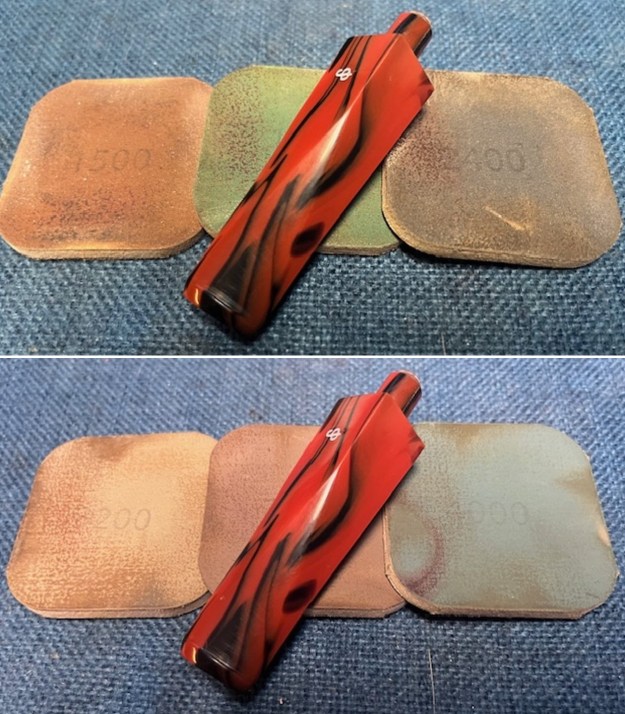
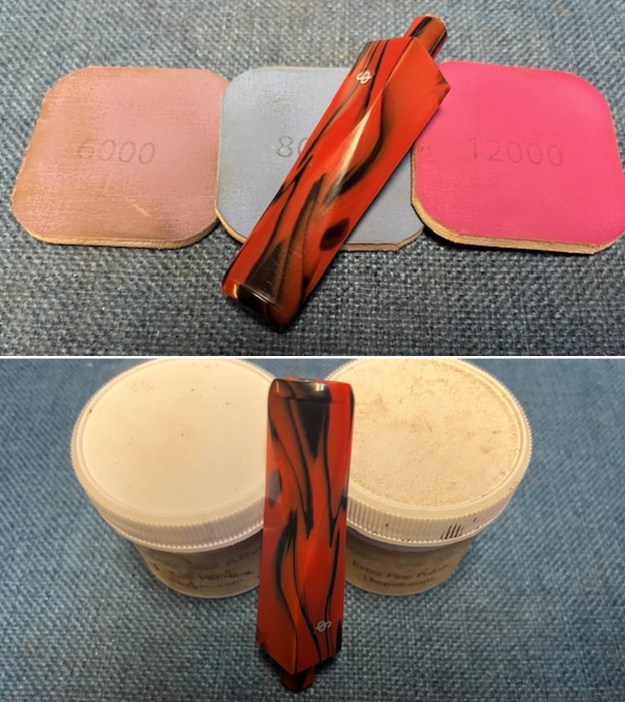
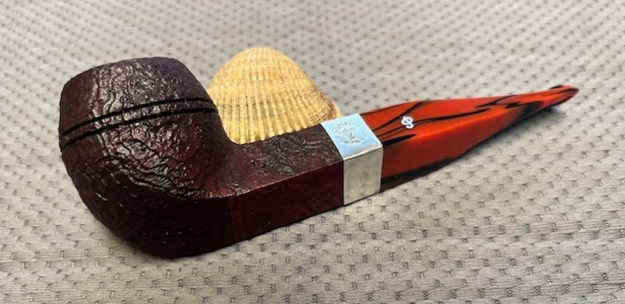
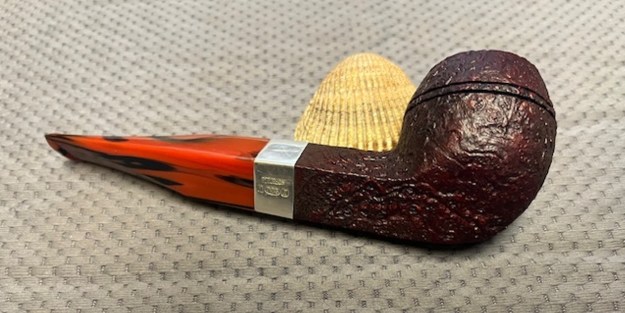
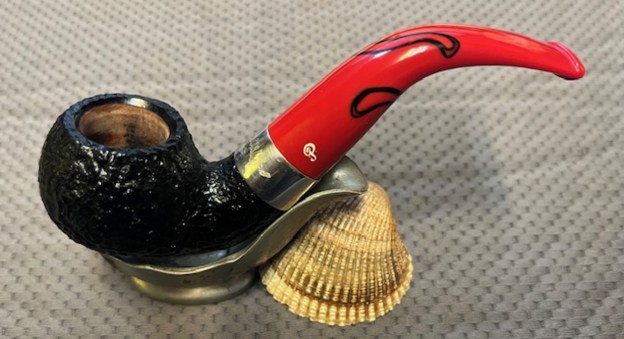
Jeff did his usual thorough job cleaning the pipe which I really appreciate because of the freedom it gives me in dealing with pipes. He reamed it with a PipNet pipe reamer and got rid of the cake. He cleaned up the reaming with a Savinelli Fitsall Pipe Knife so that we could see the walls of the bowl and assess for damage. He cleaned the internals of the shank and stem with alcohol, pipe cleaners and alcohol. He scrubbed the exterior with undiluted Murphy’s Oil Soap and a tooth brush. He rinsed the pipe under warm water. He dried it off with a cloth and then let it air dry. The stem was scrubbed with Soft Scrub and had a soak in Before & After Deoxidizer to remove the oxidation. One it was rinsed off, it came out looking very good. The finish on the bowl and the rim top cleaned up nicely. I took pictures of the pipe to show how it looked when I unpacked it. I took a close up photo of the bowl and rim top to show how clean the pipe was. The bowl was very clean and showed that the pipe was very lightly smoked. The stem looked good with no tooth marks or chatter. Overall the pipe is a beautiful looking piece.I took a photo of the stamping on the underside of the shank. It read as noted above. It is very clear and readable. I also took a photo of the stamping on the shiny nickel band. It was readable and clear. I also removed the stem from the shank and took photos of the pipe to show the look of the parts. The bowl was in excellent condition. I did not need to sand or do anything in preparation on the pipe. I set the stem aside and worked some Before & After Restoration Balm into the briar with my finger tips and a horsehair shoe brush. I let it sit on the bowl for 10 minutes and then buffed it off with a paper towel and soft cloth. The product is a great addition to the restoration work. It enlivens, enriches and protects the briar while giving it a deep glow. It is a product I use on every pipe I restore. I polished the silver with a jeweller’s cloth to protect and polish the silver and keep the tarnish at bay. It looks very good at this point. I set the bowl aside and turned to the stem. There were no deep tooth marks and very little chatter on the stem surface so I polished it with micromesh sanding pads – dry sanding with 1500-12000 grit pads and wiping the surface down after each sanding pad. It is really shining. I am excited to finish this one and look forward to seeing the 2019 Made in Ireland Peterson’s of Dublin Irish Harp 150 Bulldog put back together, polished and waxed. I put the bowl and stem back together and lightly polished the bowl and stem with Blue Diamond to polish them. I gave the bowl multiple coats of Conservator’s Wax and the stem multiple coats of carnauba wax. I buffed the pipe on the wheel with a clean buffing pad to raise the shine. I hand buffed it with a microfiber cloth to deepen the shine. The depths of the sandblast really pop with the wax and polish. The shiny red and black swirled acrylic stem is a beautiful contrast to the rich brown/red stain on the bowl, thick shank and Sterling Silver Band. This Peterson’s Dublin 03 Dracula Apple was a fun pipe to work on. The pipe is tactile in the hand and should feel great as it is warmed up when smoking. The finished pipe is shown in the photos below. The dimensions of the pipe are Length: 5 ½ inches, Height: 2 inches, Outside diameter of the bowl: 1 ¼ inches, Chamber diameter: ¾ of an inch. The weight of the pipe is 1.69 ounces/48 grams. I will be putting this one on the store in the Irish Pipemakers Section soon. Let me know if you wish to add it to your collection.
As always, I encourage your questions and comments as you read the blog. Thanks to each of you who are reading this blog. Remember we are not pipe owners; we are pipe men and women who hold our pipes in trust until they pass on into the trust of those who follow us.
A Refresh of a Peterson’s Dublin 03 Dracula Bent Apple


by Steve Laug

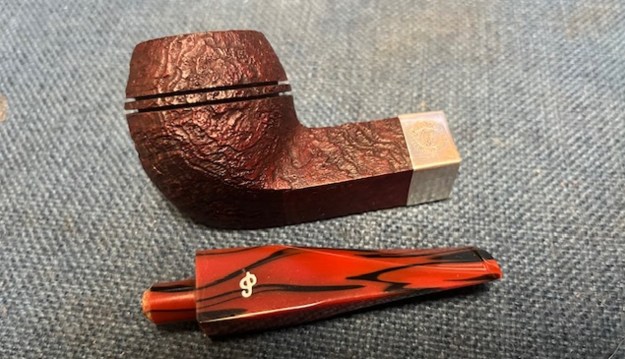
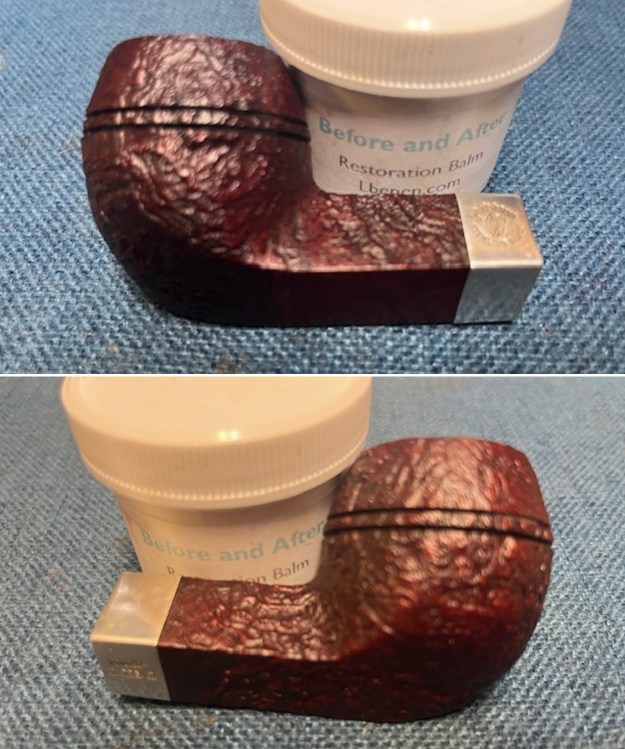
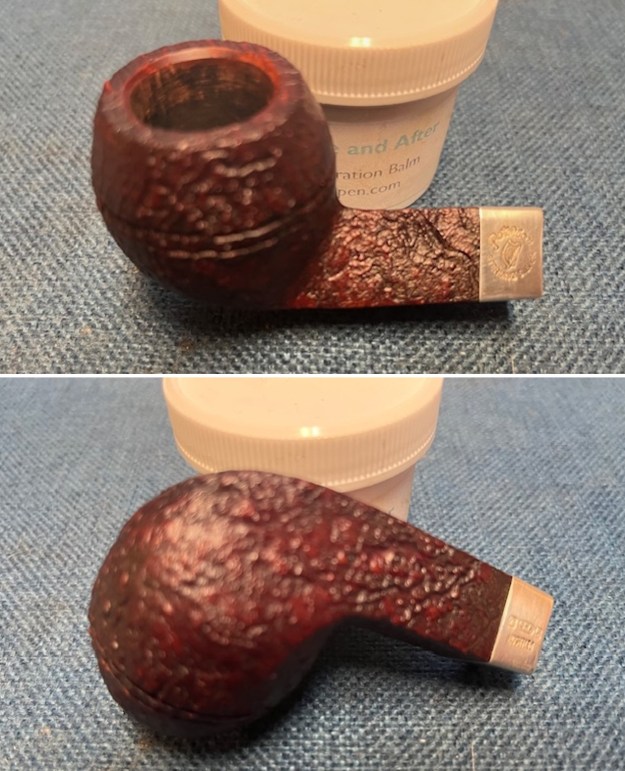
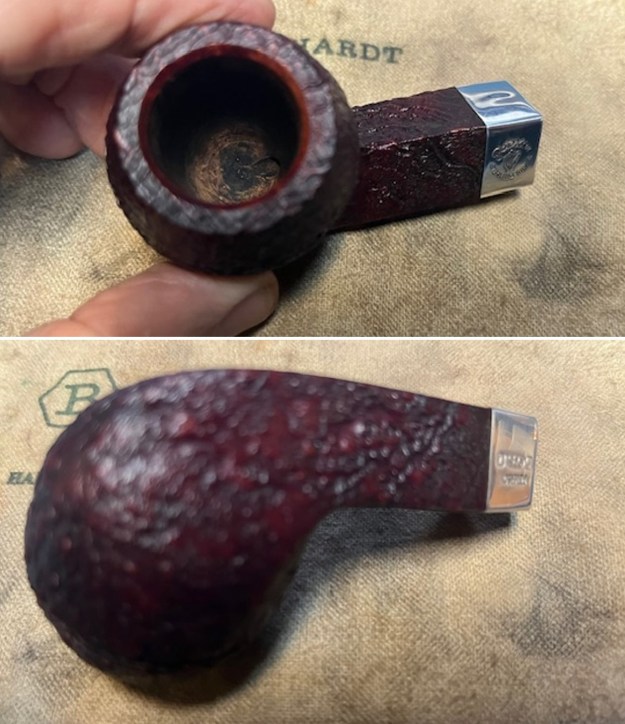
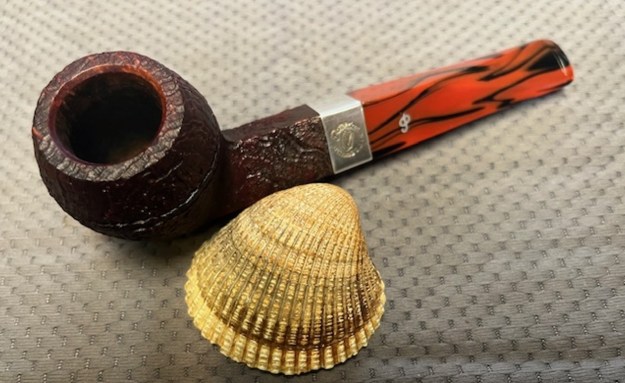
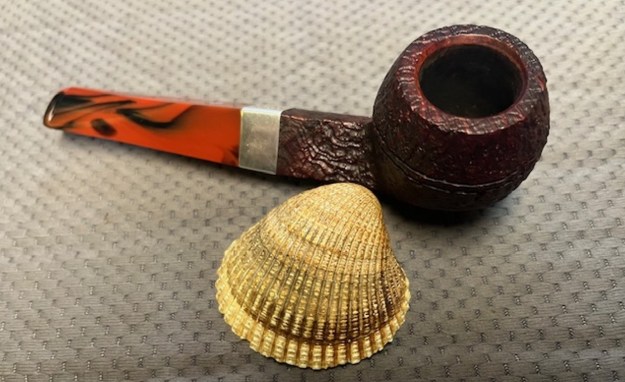
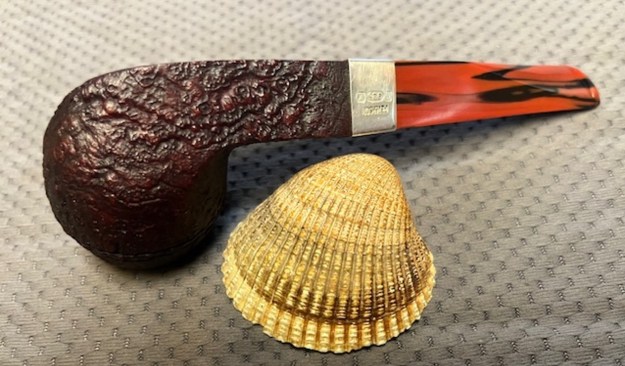
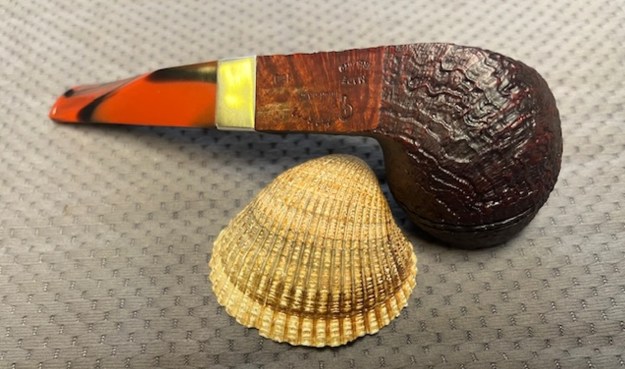
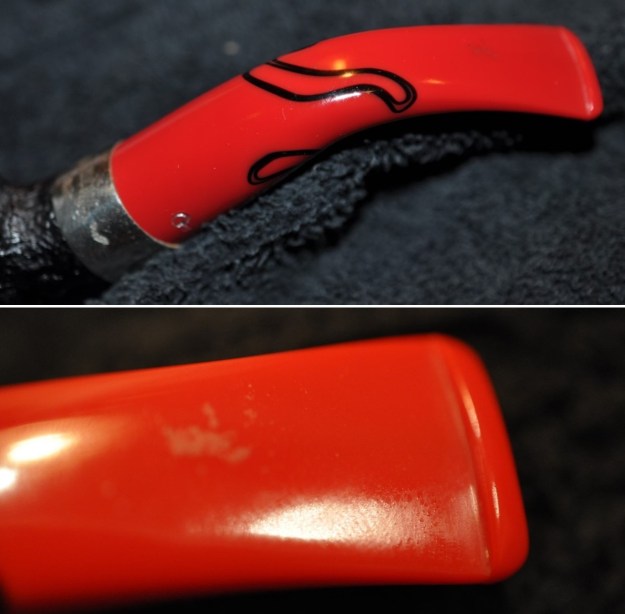
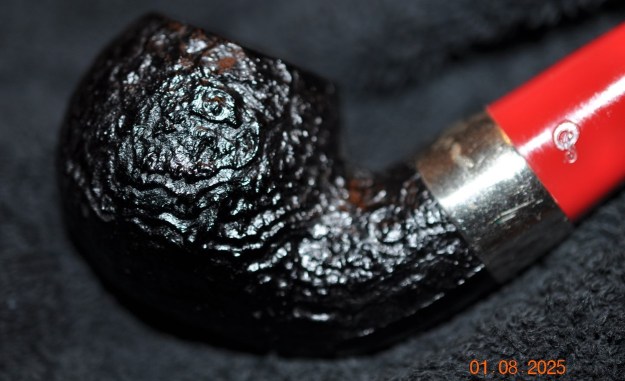
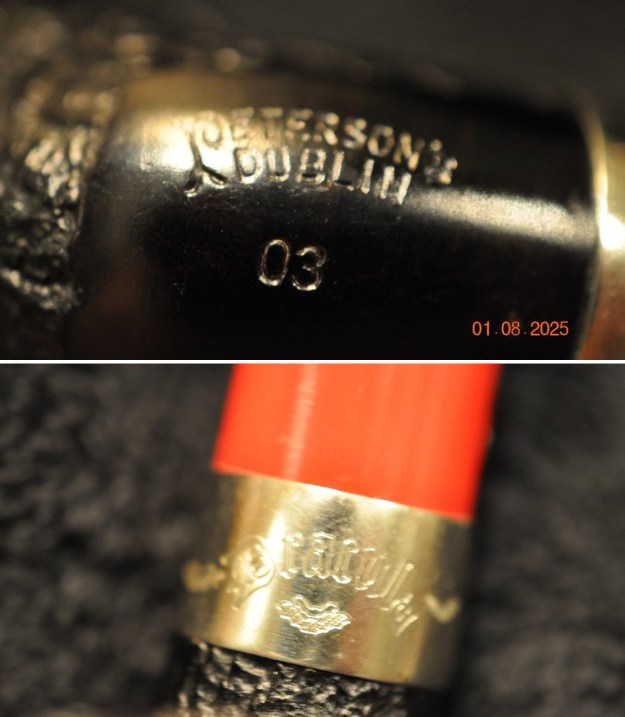
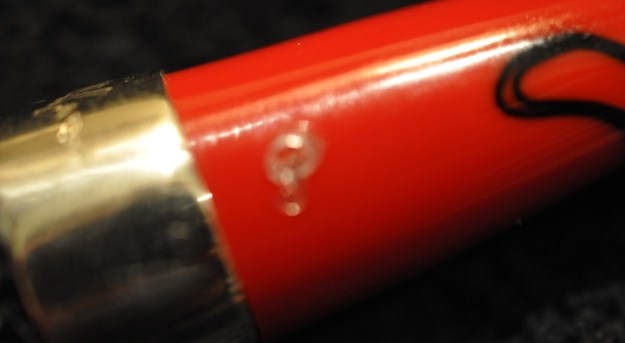
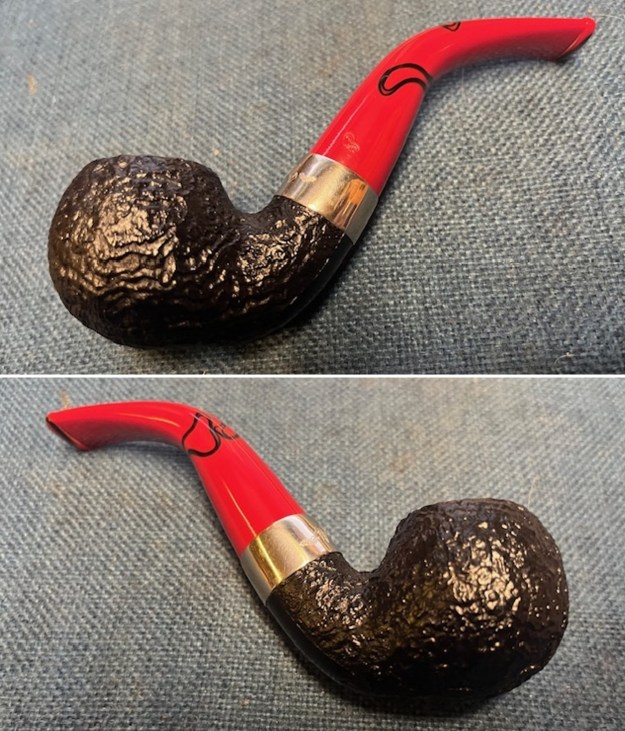
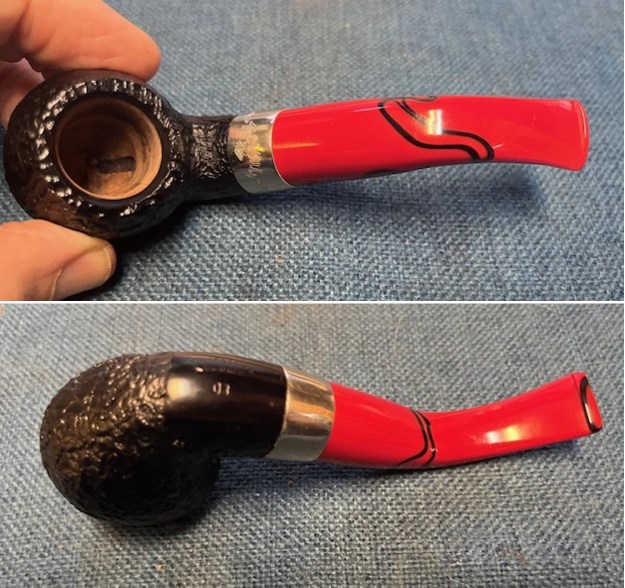
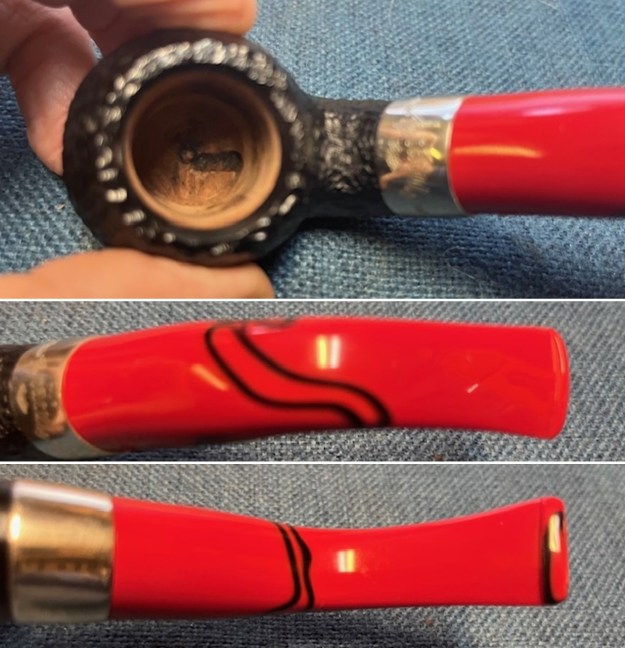
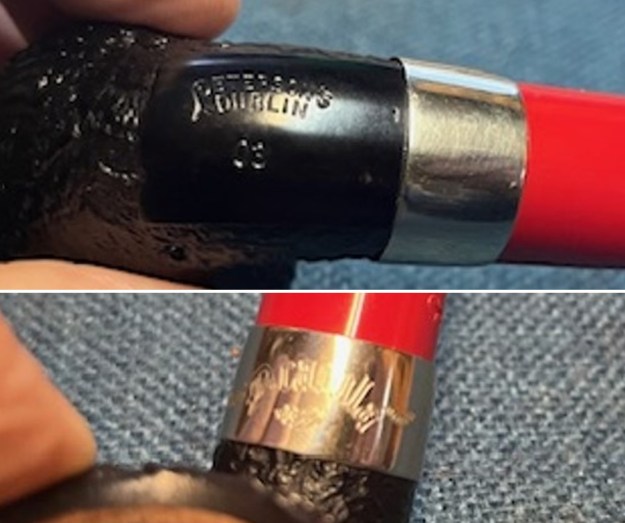
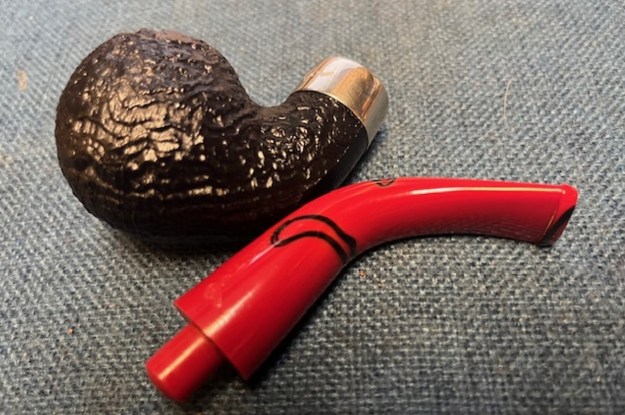
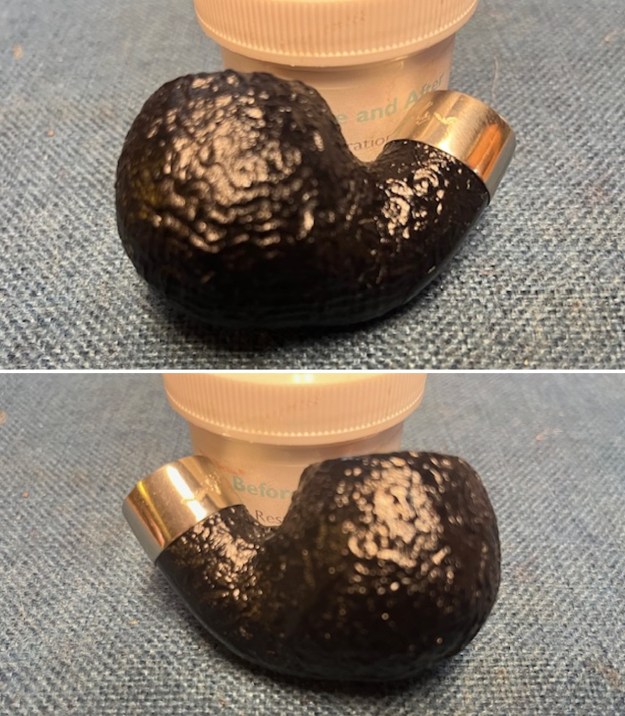
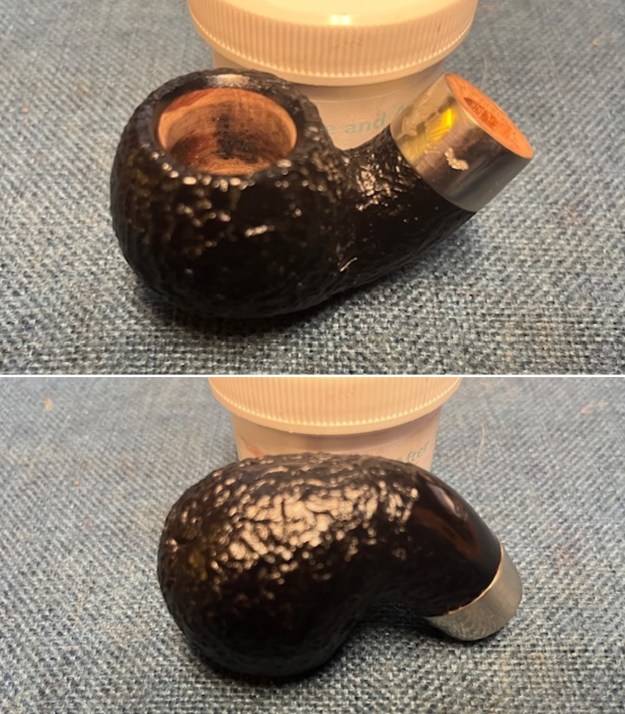
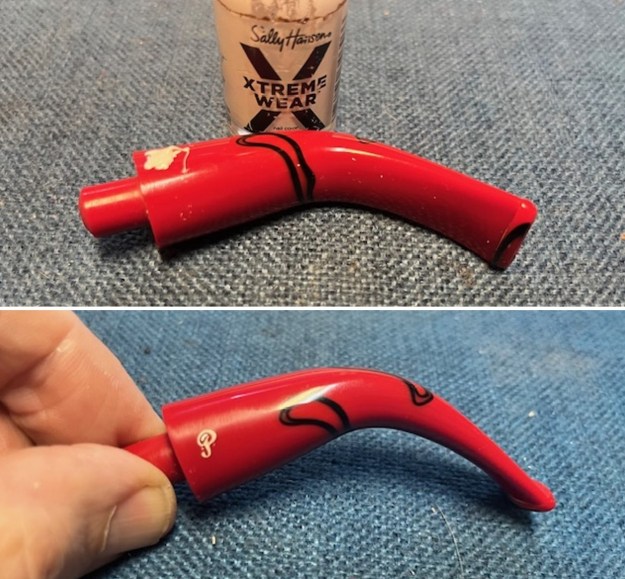
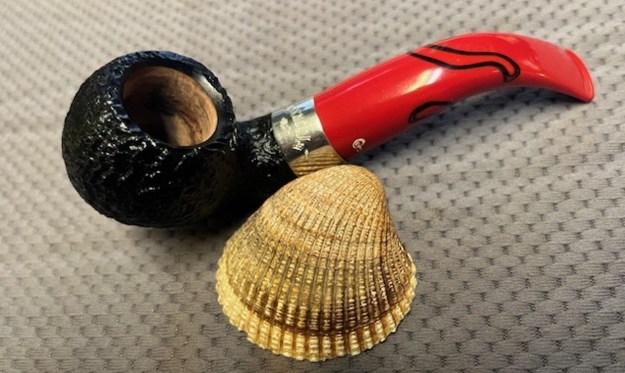
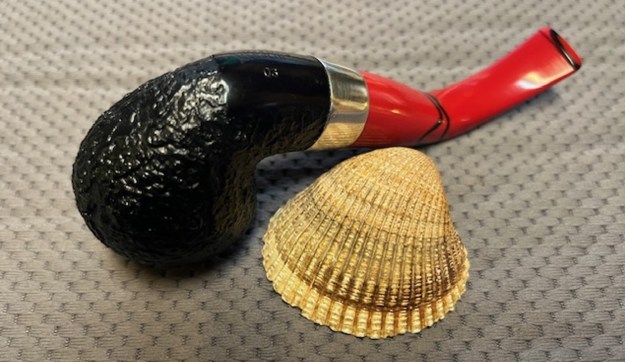
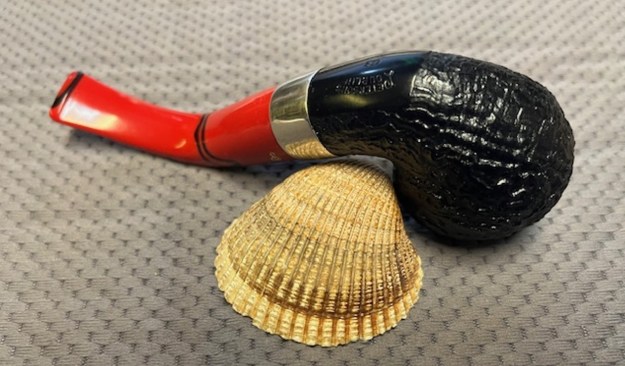
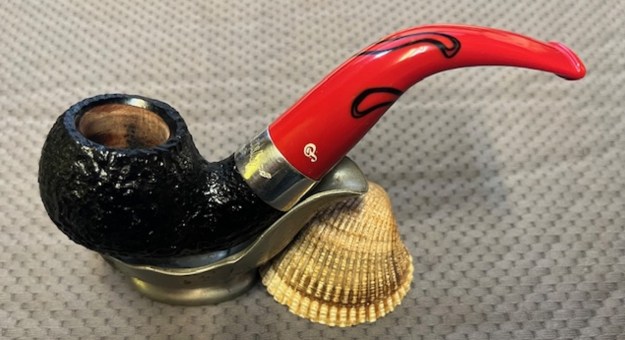
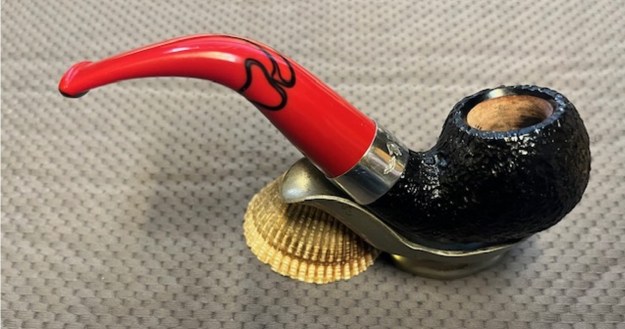
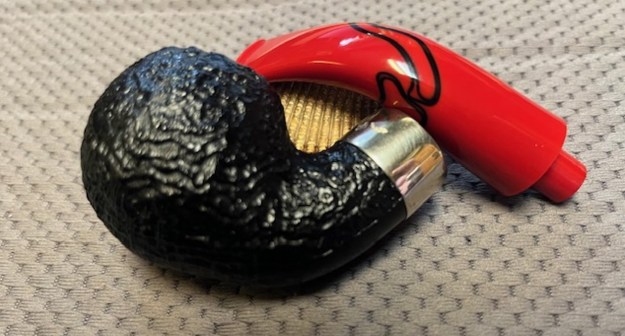
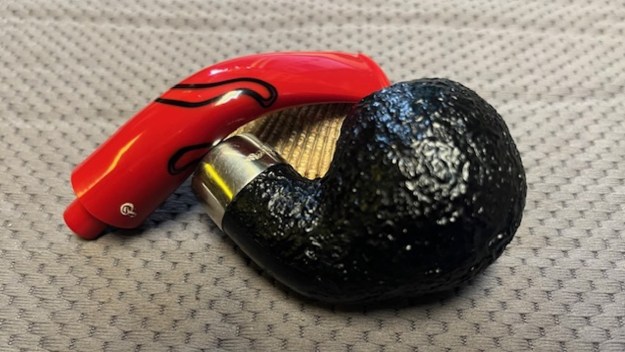
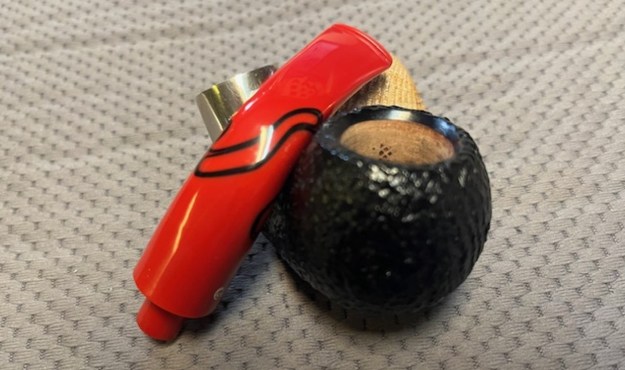
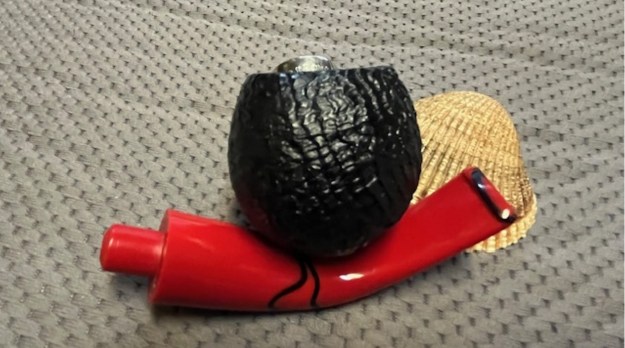
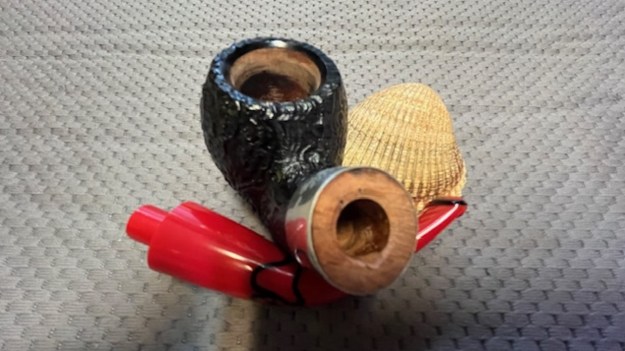
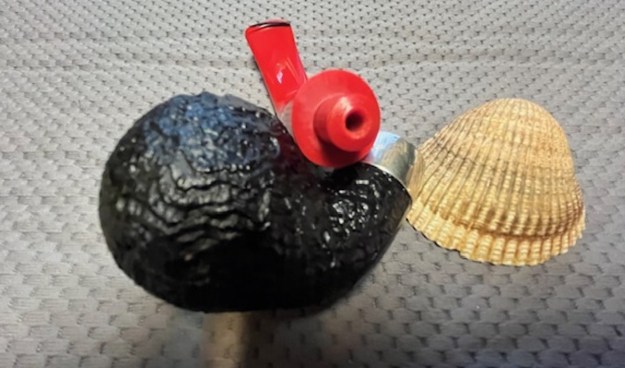
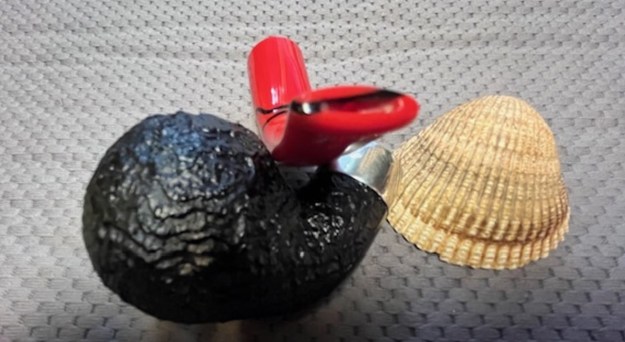
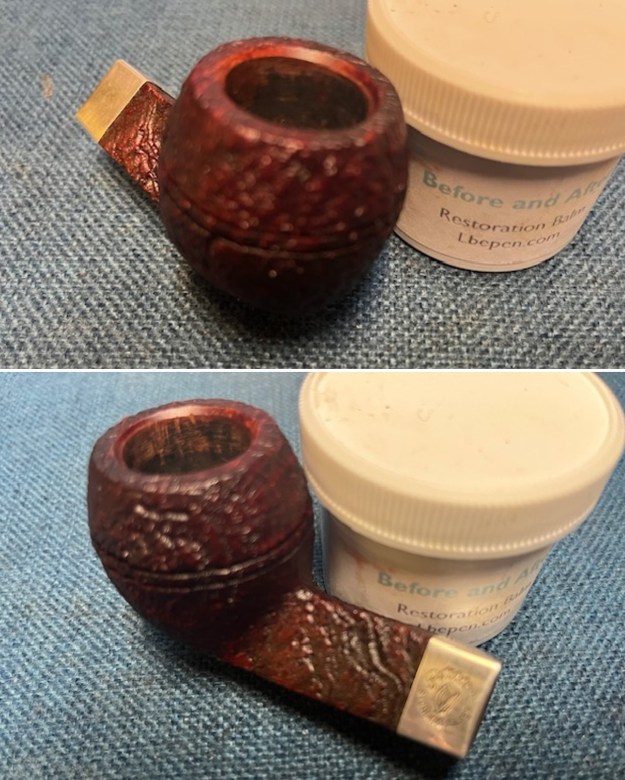
The next pipe on the work table is a Peterson’s pipe with a red and black swirled acrylic stem. We picked the pipe up from a seller in Ogden, Utah, USA on 12/12/2024. It is stamped on the underside of the shank and reads Peterson’s [arched over] Dublin [over] 03. The bright nickel band is stamped Dracula in a banner on top with a Bat before and after the name as well as underneath it. The finish is a dark coloured, almost black sandblast that is a stark contrast to the silver band the red and black streaked fishtail stem. The bowl was lightly caked and there was a tobacco debris in the bottom of the bowl. The fish tail stem was red acrylic with black swirls and was a tapered. The stem was very clean with no tooth damage. There was a white or silver Peterson’s “P” logo on the left side of the taper. Jeff took some photos of the pipe to show the general condition of the pipe before he started his clean up.He took some photos of the rim top and bowl from various angles to give me a clear picture of the condition of the rim top and bowl. You can see the tobacco debris in the bowl and the light cake. The next photos show the top and underside of the stem. It is looks very good. Jeff took a photo of the side of the bowl to show the condition of the finish on the pipe. The photos showed a great sandblast. It is a pretty piece of briar.He took some photos of the stamping on the underside of the shank and the nickel band. The stamping was clear and readable as noted above. He also took a photo of the “P” logo on the left side of the taper stem. Before doing my part of the work on the pipe I turned to see what I could find out about the line. I turned first to the Peterson’s website to see what they had listed. I quote below from that site (https://www.peterson.ie/pipes/classic/dracula-sandblasted/moreinfo.cfm?pd_product_Id=303).

The Dracula line started as a special commemorative line of pipes, first released in 2012, celebrating the death centennial of fellow Irishman and esteemed author Abraham “Bram” Stoker. Characterised by jet-black sandblasted finishes, bright nickel bands, and black-and-red-swirled acrylic fishtail stems, the Dracula Sandblasted appeals not only to fans of gothic horror, but of quality classic pipes in bold presentations.
I then turned to La Pipe Rit – St. Claude for their description of this particular Peterson’s line of pipes (https://www.pipe.fr/en/peterson-dracula-pipes-417). I quote in full below.
Peterson must be the most famous pipe brand in the world. Since the late 19th century, the company began to hire and train Irish men and women (whereas some other manufacturers used to hire French craftspeople from Saint-Claude). Nowadays, Peterson pipes are made with a real know-how thanks to a team of passionate craftspeople that share their expertise. The company “Kapp & Peterson” creates traditional pipes of great quality. On this webpage, we present you the incredible “Dracula” collection. First released in 2012, this series was designed to pay tribute to the Irish writer Abraham “Bram” Stoker to mark the centenary of his death. With the red and black stem, this must be one of the favorite pipes of horror stories readers, and more generally Peterson pipe enthusiasts. To stick to the spirit of the novel, the pipe is designed with a black finish (lacquered or sandblasted), a “bloody” acrylic stem, and is decorated with a nickel band (on which is stamped “Dracula”)

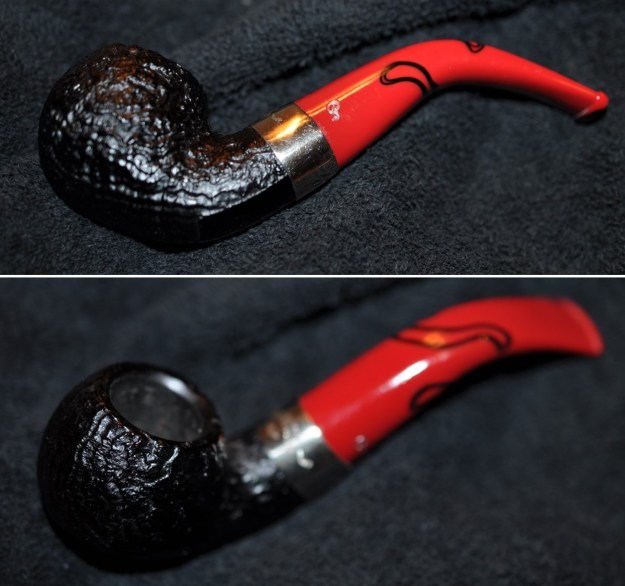
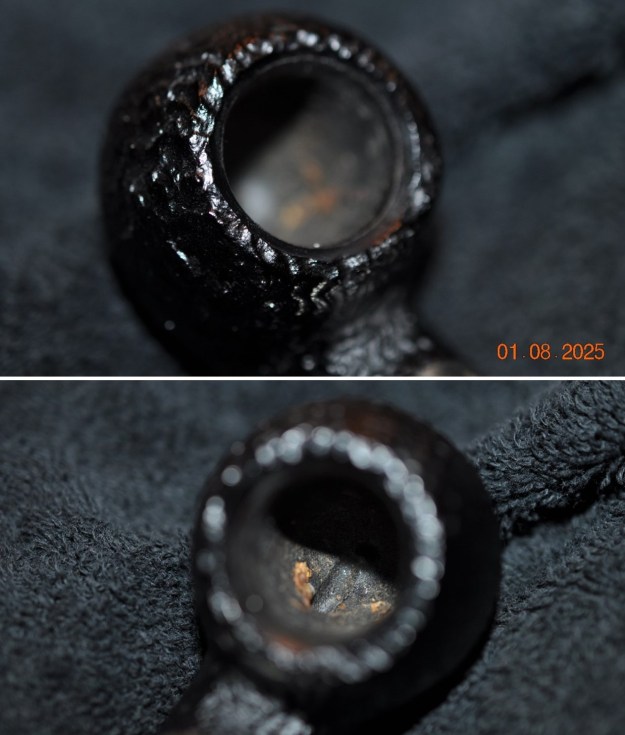
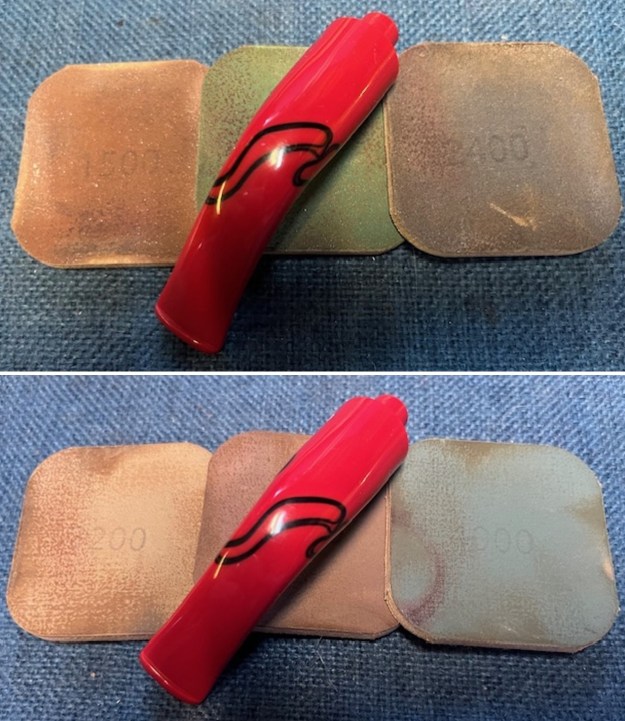
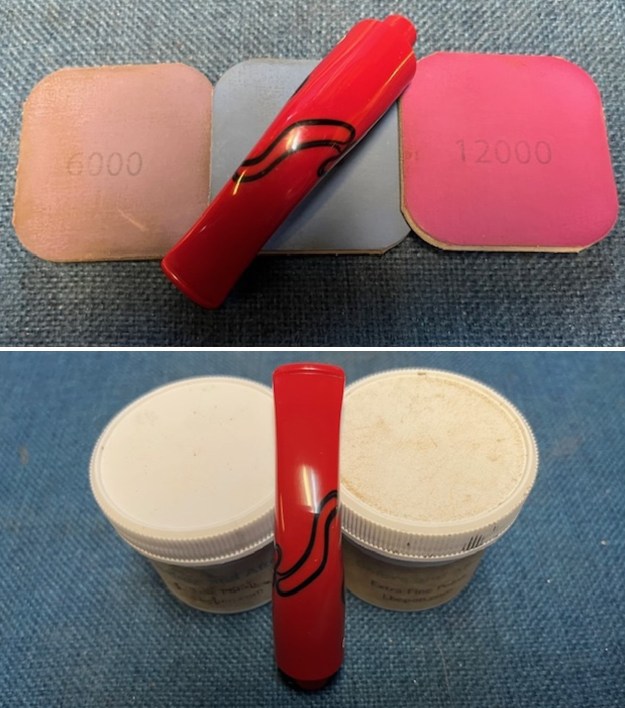
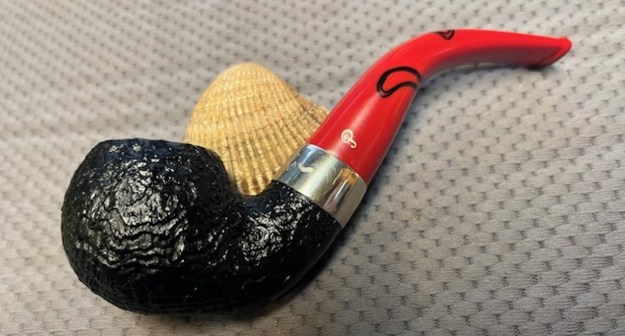
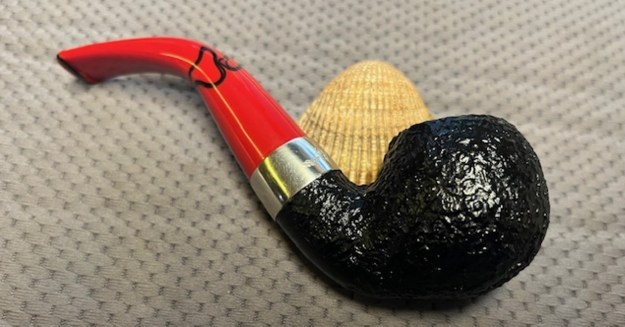
Jeff did his usual thorough job cleaning the pipe which I really appreciate because of the freedom it gives me in dealing with pipes. He reamed it with a PipNet pipe reamer and got rid of the cake. He cleaned up the reaming with a Savinelli Fitsall Pipe Knife so that we could see the walls of the bowl and assess for damage. He cleaned the internals of the shank and stem with alcohol, pipe cleaners and alcohol. He scrubbed the exterior with undiluted Murphy’s Oil Soap and a tooth brush. He rinsed the pipe under warm water. He dried it off with a cloth and then let it air dry. The stem was scrubbed with Soft Scrub and had a soak in Before & After Deoxidizer to remove the oxidation. One it was rinsed off, it came out looking very good. The finish on the bowl and the rim top cleaned up nicely. I took pictures of the pipe to show how it looked when I unpacked it. I took a close up photo of the bowl and rim top to show how clean the pipe was. The bowl was very clean and showed that the pipe was very lightly smoked. The stem looked good with no tooth marks or chatter. Overall the pipe is a beautiful looking piece.I took a photo of the stamping on the underside of the shank. It read as noted above. It is very clear and readable. I also took a photo of the stamping on the shiny nickel band. It was readable and clear. I also removed the stem from the shank and took photos of the pipe to show the look of the parts. The bowl was in excellent condition. I did not need to sand or do anything in preparation on the pipe. I set the stem aside and worked some Before & After Restoration Balm into the briar with my finger tips and a horsehair shoe brush. I let it sit on the bowl for 10 minutes and then buffed it off with a paper towel and soft cloth. The product is a great addition to the restoration work. It enlivens, enriches and protects the briar while giving it a deep glow. It is a product I use on every pipe I restore. I set the bowl aside and turned my attention to the stem. I touched up the “P” logo with some white acrylic nail polish. I applied it with the brush and once it cured sanded off the excess with a 1500 grit micromesh sanding pad.There were no deep tooth marks and very little chatter on the stem surface so I polished it with micromesh sanding pads – dry sanding with 1500-12000 grit pads and wiping the surface down after each sanding pad. It is really shining. I am excited to be on the homestretch and look forward to seeing the Peterson’s Dublin 03 Dracula Bent Apple put back together, polished and waxed. I put the bowl and stem back together and lightly polished the bowl and stem with Blue Diamond to polish them. I gave the bowl multiple coats of Conservator’s Wax and the stem multiple coats of carnauba wax. I buffed the pipe on the wheel with a clean buffing pad to raise the shine. I hand buffed it with a microfiber cloth to deepen the shine. The depths of the sandblast really pop with the wax and polish. The shiny red and black swirled acrylic stem is a beautiful contrast to the black stain on the bowl, thick shank and Polished Nickel Band. This Peterson’s Dublin 03 Dracula Apple was a fun pipe to work on. The pipe is tactile in the hand and should feel great as it is warmed up when smoking. The finished pipe is shown in the photos below. The dimensions of the pipe are Length: 5 inches, Height: 1 ½ inches, Outside diameter of the bowl: 1 ¼ inches, Chamber diameter: ¾ of an inch. The weight of the pipe is 1.80 ounces/ 50 grams. I will be putting this one on the store in the Irish Pipemakers Section soon. I remember reading Dracula in High School so I had to pause and think about letting this one go, before putting on the store. Let me know if you wish to add it to your collection.

As always, I encourage your questions and comments as you read the blog. Thanks to each of you who are reading this blog. Remember we are not pipe owners; we are pipe men and women who hold our pipes in trust until they pass on into the trust of those who follow us.