
by Steve Laug
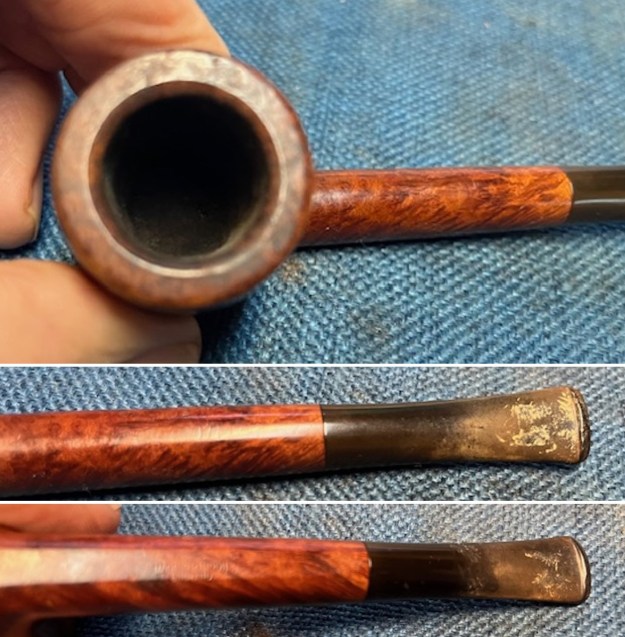
About a year ago I visited an older pipe repair man (when I say older I mean older than me). He gave me a lot of pipe parts – stems, bases, bowl, tenons and bands. On Monday, August 25 after a visit with my brother Kenneth and I went to visit my contact again. This time he had more stuff that he wanted to get rid of from his parts. Once again, we received more stems and tenons. But he also put in a box of pipes that were in various states of repair or disrepair. One of those pipes was one that I have chosen to work on next. It is a pipe that brings back memories for me. The pipe is a Liverpool that has some amazing grain around the bowl and shank. It is stamped on the left side of the shank Selected [arched over] Straight [over] Grain. On the right side it is stamped Leonard [arched over] Portland. On the underside of the shank it is stamped Made in London [over] England. The arched stamp and the shape really remind me of a Barling and the Selected Straight Grain reminds me of a Comoy’s but I am not certain of the English Pipemaker. I was very familiar with Leonard Tobacco Shop in Portland Oregon because I had visited the shop when I was in university there. It was a great shop to visit. The bowl had a moderate cake with a light lava coat on the rim top and edges. There were also some nicks on the rim top but none were deep. The finish was dirty with grime and oils ground into the surface of the smooth briar. The taper stem was oxidized, calcified and had light tooth chatter and marks on the top and underside ahead of the button. It would clean up quite well I think. I took photos of the pipe before I started working on it. 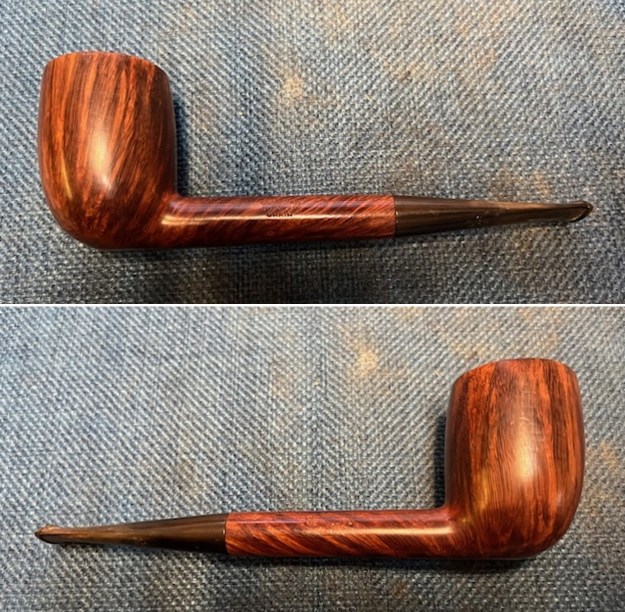
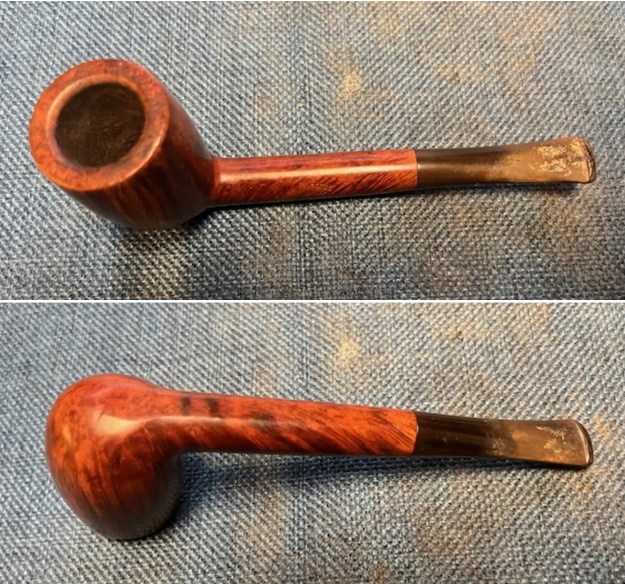 I took photos of the bowl and rim top to show their condition and of the stem to show the condition of both sides of the stem.
 The stamping on the sides of the shank are shown in the photos below. It looks very good and faint but readable. It reads as noted and explained above. I captured the detail in the photos below. I removed the stem and took a photo to give a sense of what the pipe looked like.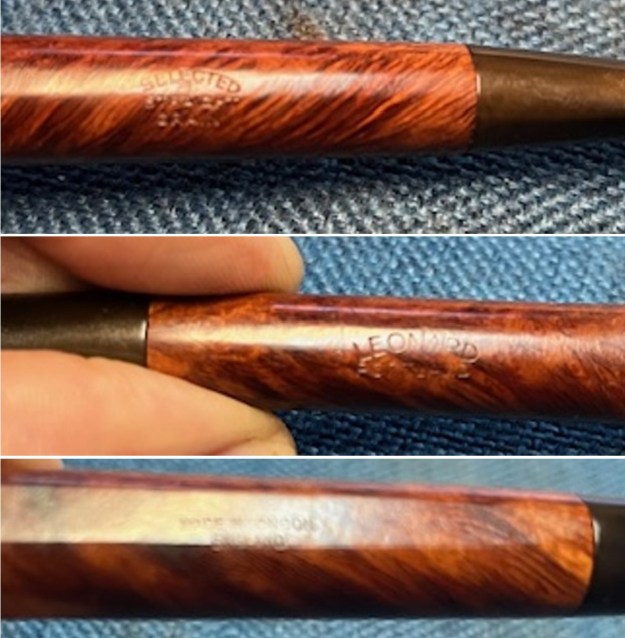
 I have worked on a few Leonard Pipes over the years. I turned to one I had written back in 2013 on a Leonard’s Pipe Shop Sea Rock Style rusticated pipe. In that blog I had explored the background of the brand (https://rebornpipes.com/2013/06/06/leonards-pipe-shop-portland-oregon/). I am including that information below as well as some additional information that was very helpful in the comments. I quote:
The pipe I purchased is a shop pipe that came from one of America’s great old pipe shops – LEONARD’S PIPE SHOP which was located in Portland, Oregon, USA. The shop and the brand never was as famous as Peretti’s, Ehrlich’s, The House of Robertson, Bertram’s, Garfinkel’s, Drucquers or some of the other great names from the past, possibly because of its’ location. But in terms of stature among the world’s greatest pipe makers, Leonard’s had no equal. While some pipe shops catered to the rich and famous, served politicians or visiting emissaries, or made pipes for actors, entertainers or stars in one field or another, Leonard’s catered to the other end of the pipe chain – the all-important source of supply! The shop was founded by Arthur Leonard in 1936 who worked hard to establish close relationships with the world’s biggest and best pipe maker’s — Charatan, Barling, Sasieni, Kaywoodie and others…
…On display the Leonard’s had the longest and largest Kaywoodies ever made, unsmoked Dunhill Magnums and a host of pre-1900 Barlings! Arthur Leonard had established a powerful relationship with the great pipe makers of the last century and his shop retained the bounty of those relationships…
…Like the other great American pipe shops, Leonard’s is gone. They closed their doors in 1989. Their inventory was slowly liquidated by the last family owners of the shop. It is sad that yet another piece of American pipe history is gone. It would be grand to have seen that back room filled with a huge inventory of beautiful old briars of renown. Ah well, we have to use our imaginations to enter that room now. As I go there in my mind, I load a bowl of good tobacco from Drucquer’s (another American Pipe Shop that is gone) in my Leonard’s Sea Rock and lift it in both of their memories.
A reader named Pete wrote on November 11, 2015 the following information in correction to the information that I wrote regarding the connection of Barling to Leonard’s. I am including his full comment as it is very helpful.
With respect, I must take issue with the paragraph about the purchase of all Barling pipe stock by Leonard’s when the Barling family ‘sold out’ and any impact on the Transition period. Similarly, about Sasieni as well.
Lou and Betty Leonard were customers of mine in the 1980s. When Lou learned that I collected Barlings he told me, “I bought all the Barlings that I could get my hands on” when he learned that Barling had been sold and that he’d bought close to 100 pipes.
Imperial Tobacco Group, through their subsidiary, Finlay, already owned a sizeable part of Barling when they took control in 1960 but Monte Barling and Williamson-Barling remained, at least, in some capacity for a couple more years. Finlay was Barling’s largest customer. Barling made thousands of pipes a week and they would have had a standing inventory of finished and in-process pipes of at least 5,000 if not (much) more. I know of no account of anyone buying up stock.
Most of the employees remained with Barling, at least initially, so that the quality of pipes made after Finlay took control remained close to, if not the same.
Lou was a wonderful man and I suspect that he heard of the sale and bought Barlings in case there was a change in quality. That change did occur but it wasn’t an immediate event. The Barlings that Lou bought had no effect on quality in the Transition Period. The drop in quality of Barling pipes gradually accelerated from 1960 until they stopped making their own pipes at all, instead purchasing pipes from Cadogan and Charatan to label as Barling.
Kennedy Barnes (Upshall) and I talked with Sasieni solicitors about buying all or part of the company in 1986 (we didn’t buy). Unlike Barling, Sasieni was going out of business and they did indeed sell off their pipes and I’d imagine that Lou bought many (he was a long-time customer) but they had thousands of pipes to sell.
You have a fine site but I think it would behoove you to edit this paragraph to reflect the truth, least the inaccuracies become embedded in Internet Folklore.
I wrote Pete to thank him and I quote as follows:
Pete thank you for your information. It is invaluable to the piece on Leonard’s. Thank you for taking the time to put this together and add it to the piece. I will add a reference to your added information as an addendum to the article. It will also remain with the article. Again, thank you.
Pete November 17, 2015 Thanks for your gracious reply. I found that there were two types of tobacconists, those that bought what was popular and those that knew quality like Lou Leonard. I never made it to his store (I was on the East Coast) but from my talks with him, his integrity and reputation in the industry it was clear that they were a premier shop.
Pete’s information was extremely helpful to me. I knew with some degree of certainty that this pipe was made for Leonard’s by Barling and was made before Leonard’s closed their doors in 1989. The grain the shape and the stamping all point to that maker. Now it was time to work on the pipe.
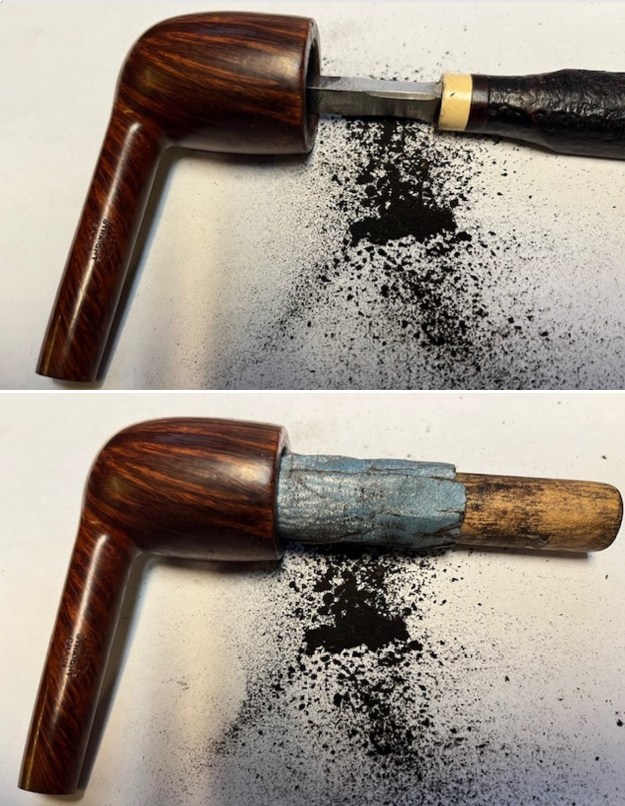
I reamed the bowl with a PipNet pipe reamer using the second cutting head and took the cake back to bare briar. I cleaned up the reaming with a Savinelli Fitsall Pipe Knife. I sanded the walls of the bowl smooth with 220 grit sandpaper wrapped around a piece of dowel. The walls looked very good with no burn marks or checking.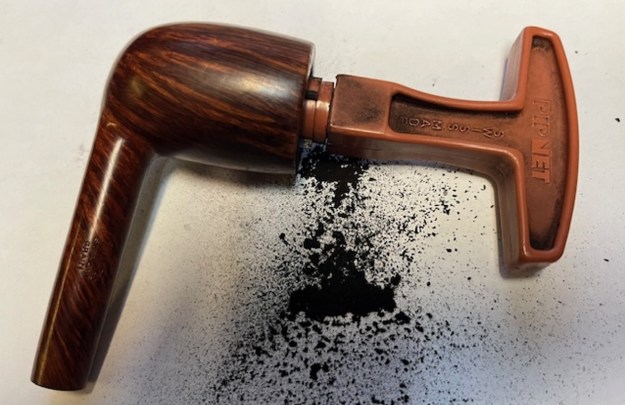
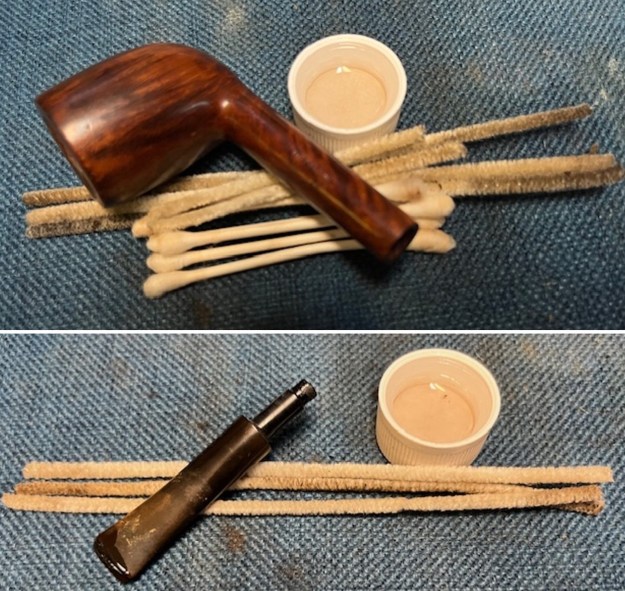
 I cleaned the interior of the shank, mortise and airway in the shank and stem with alcohol, cotton swabs and pipe cleaners. I worked it over and surprisingly it was quite clean. The pipe smelled much better.
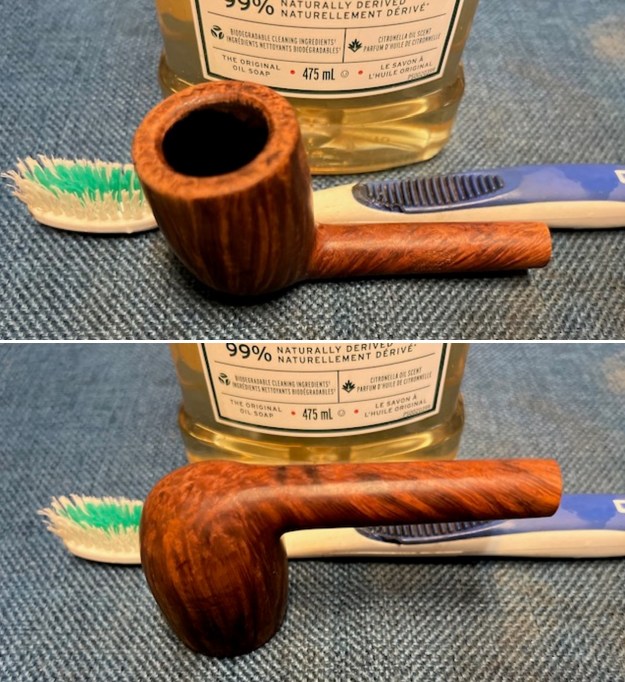
 I scrubbed the exterior of the bowl with a tooth brush and undiluted Murphy’s Oil Soap. I worked over the finish and rinsed it with warm water and repeated the process until the surface was very clean. The grain really stood out clearly. It is a beautiful pipe.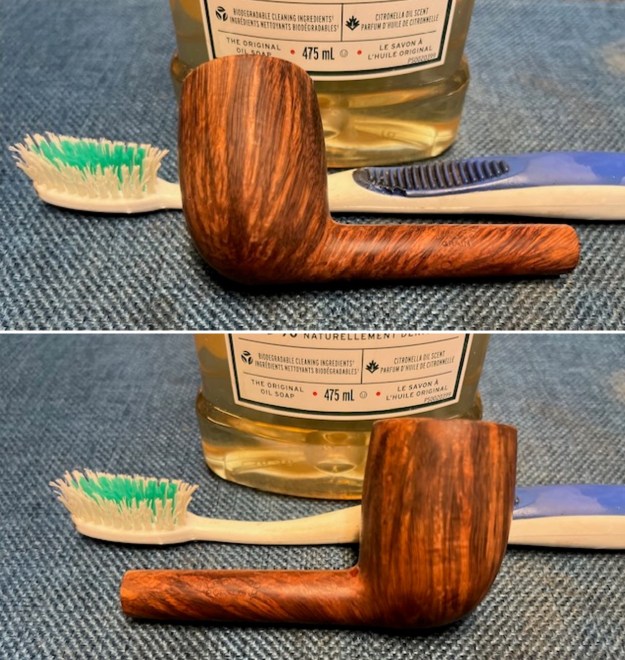
 I polished the briar with micromesh sanding pads – dry sanding with 1500-12000 grit pads. I wiped the bowl down with a damp cloth after each sanding pad to remove the sanding debris. By the final three pads the bowl really shone.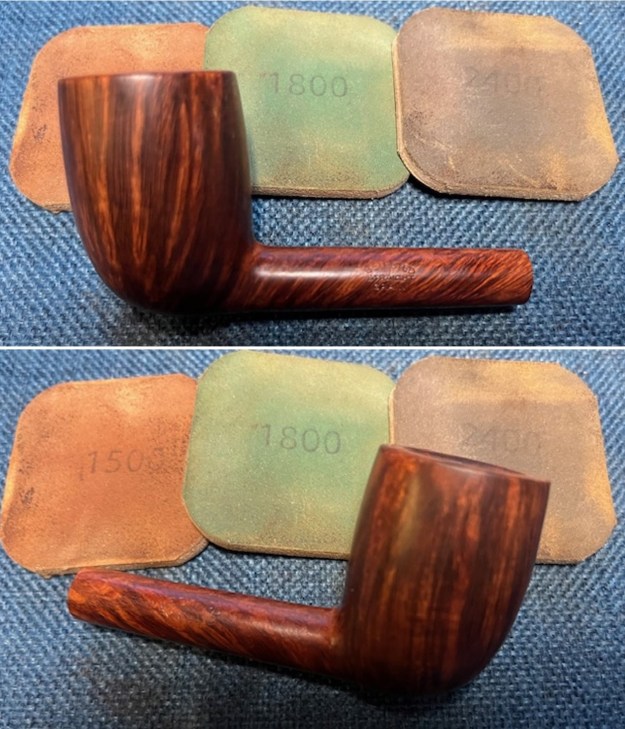
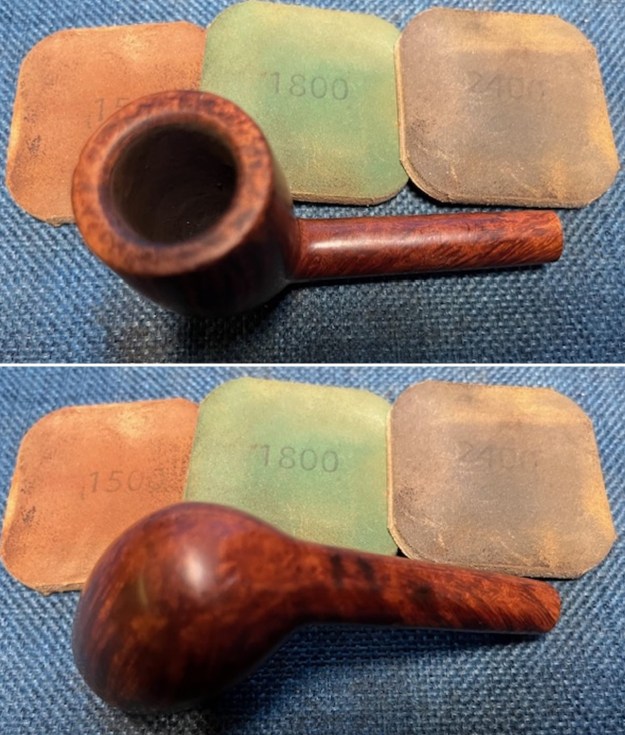
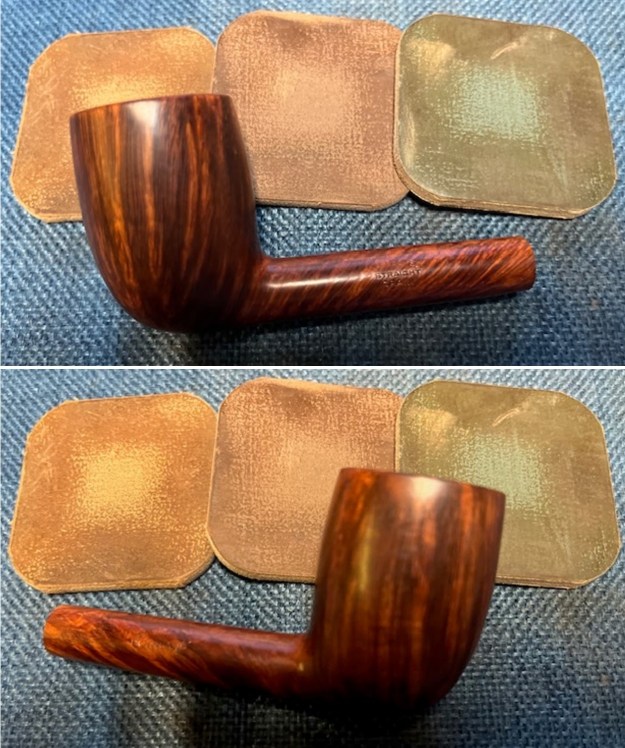
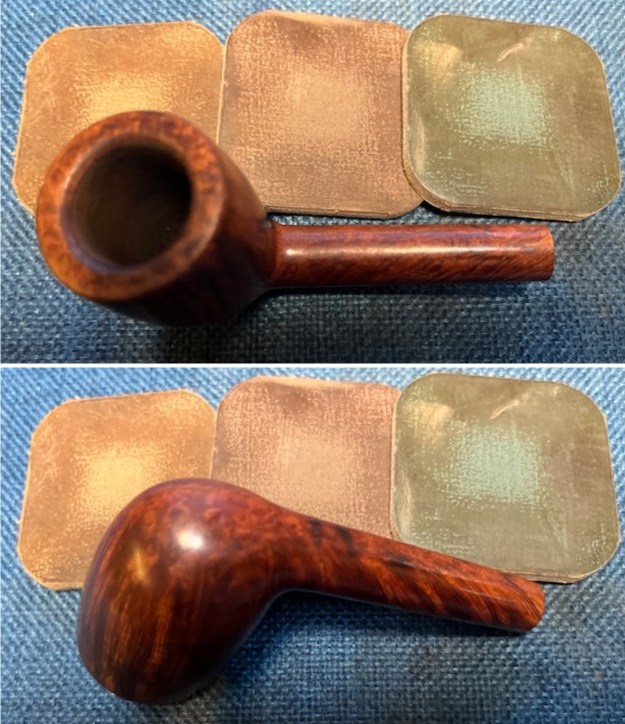
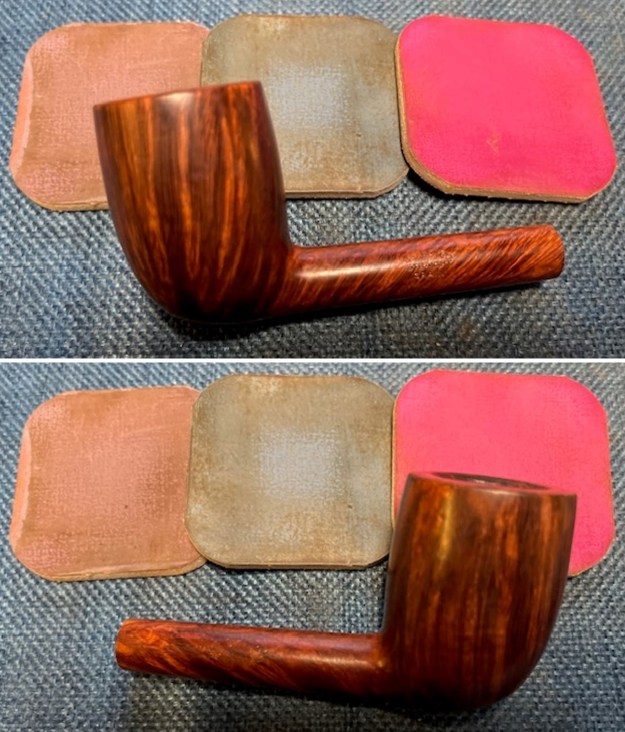
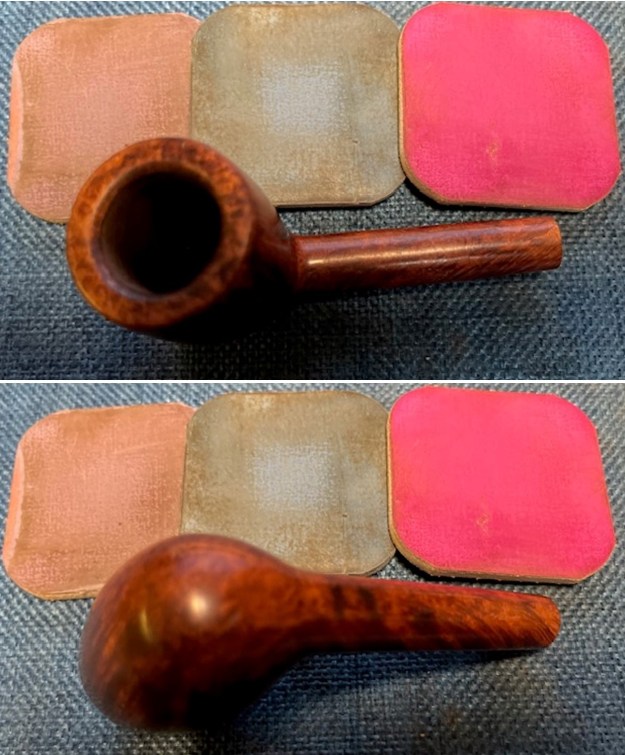 At this point I rubbed the briar down with Before & After Restoration Balm. I worked it into the briar with my fingertips to work it into the nooks and crannies of the finish. The product works to clean, enliven and preserve the briar. I let it sit for 10 minutes then I buffed it with a cotton cloth to deepen the shine. The briar really comes alive with the balm.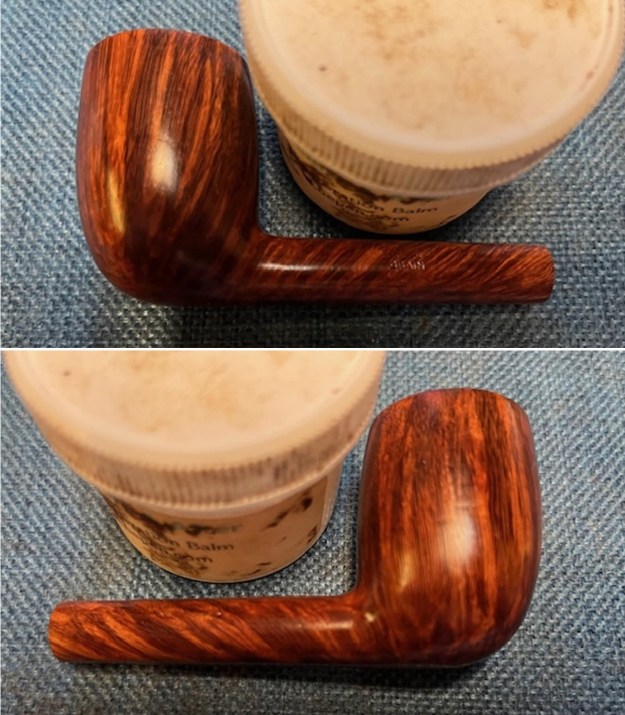

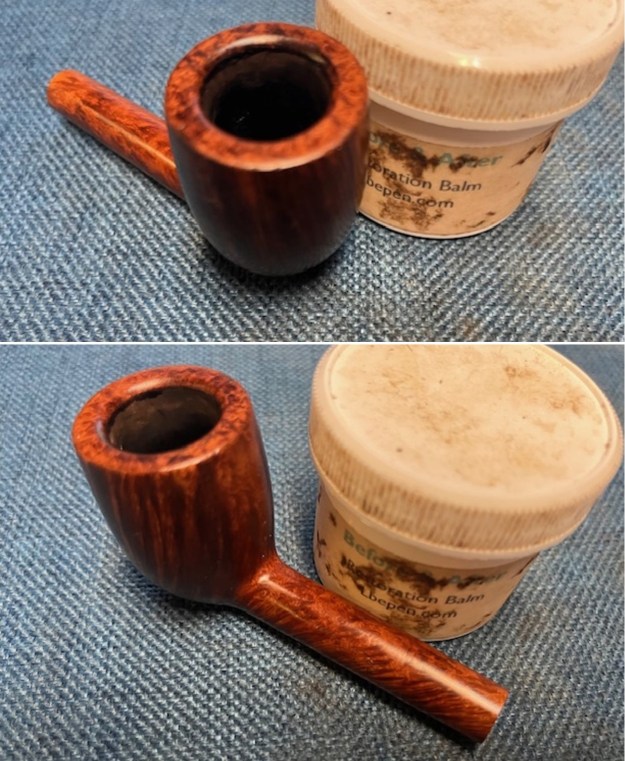 I set the bowl aside and turned my attention to the stem. I sanded out the tooth chatter and light marks on the surface of the stem ahead of the button on both sides. I also sanded the rest of the stem to remove the oxidation.
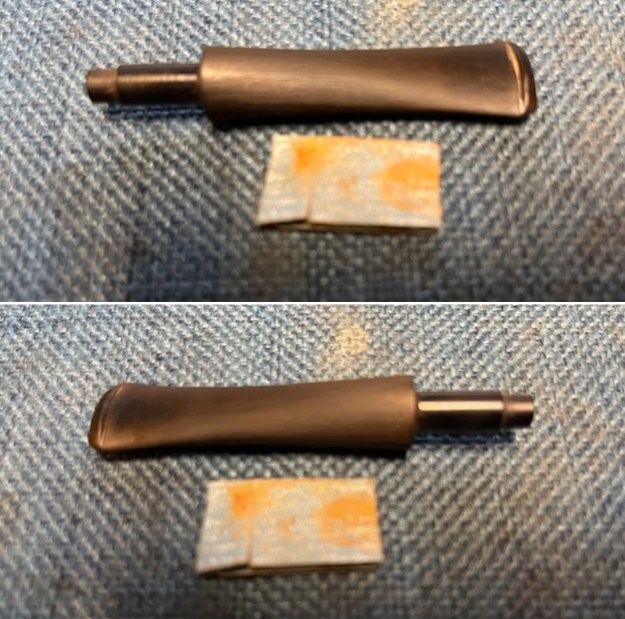 I started the polishing process with 320-3500 grit sanding pads. I wiped it down after each sanding pad with a cloth impregnated with Obsidian Oil. I let it soak in.
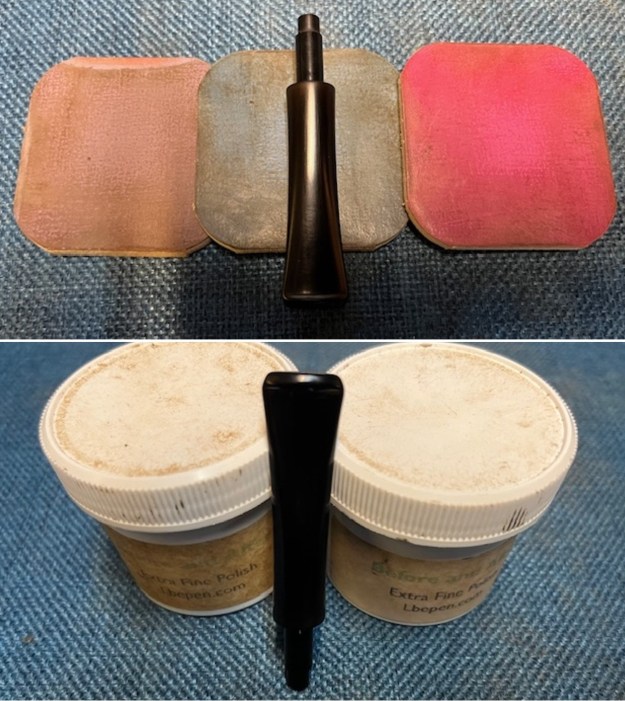
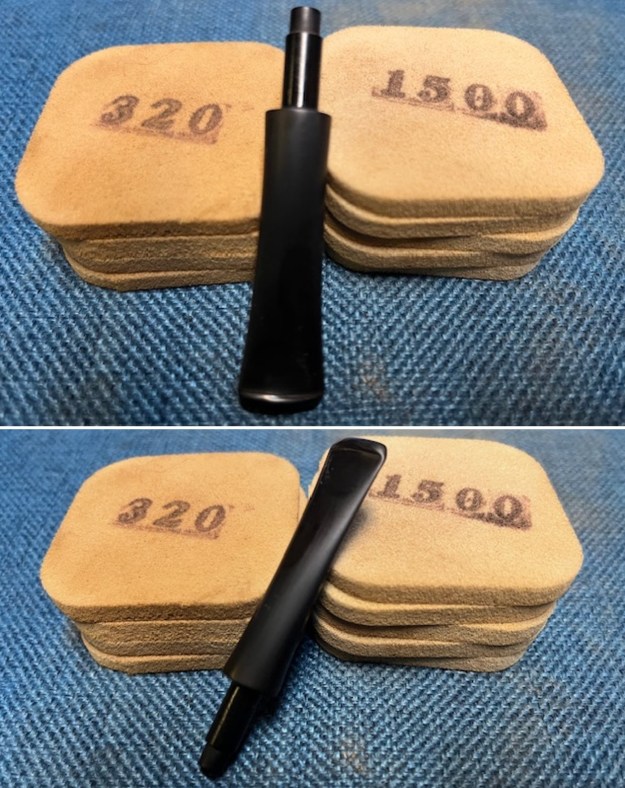 I polished the stem with micromesh sanding pads – dry sanding with 1500-12000 grit pads. I wiped it down between each pad with Obsidian Oil. I further polished it with Before and After Stem Polish – both Fine and Extra Fine. It looked very good.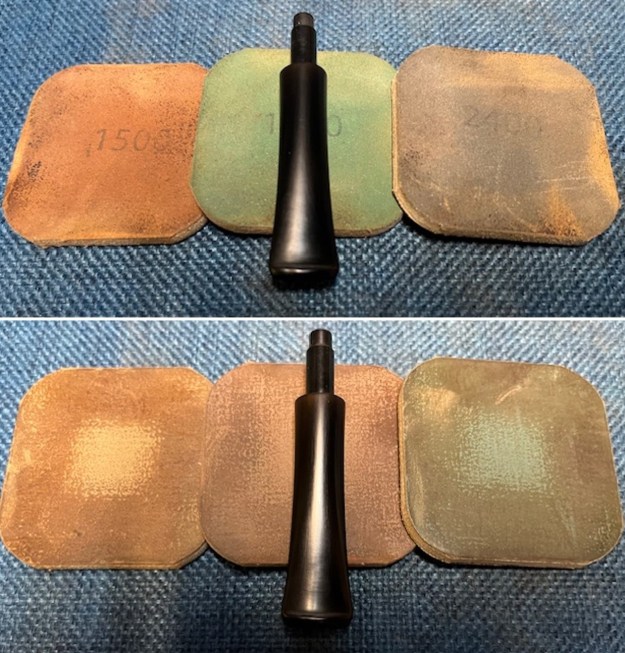
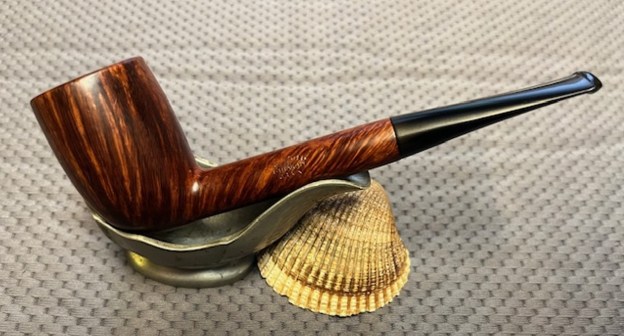
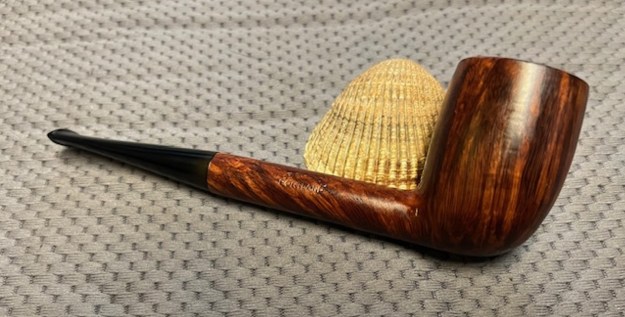
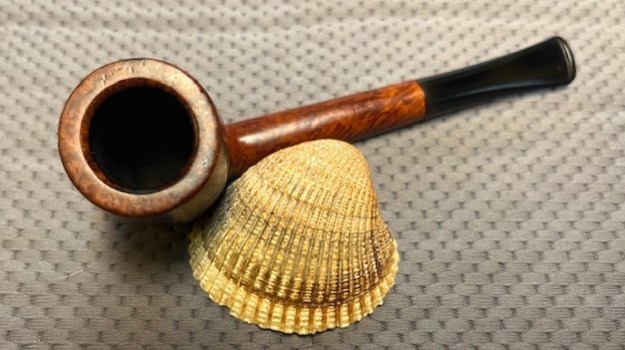
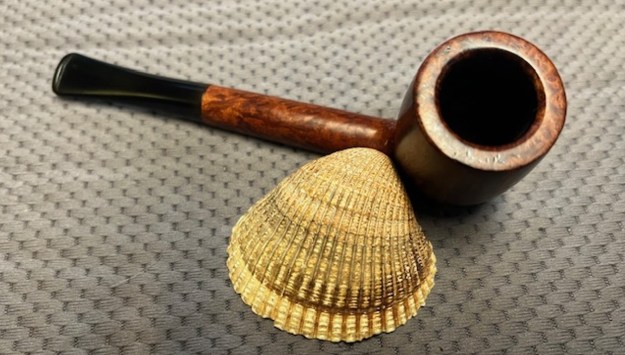
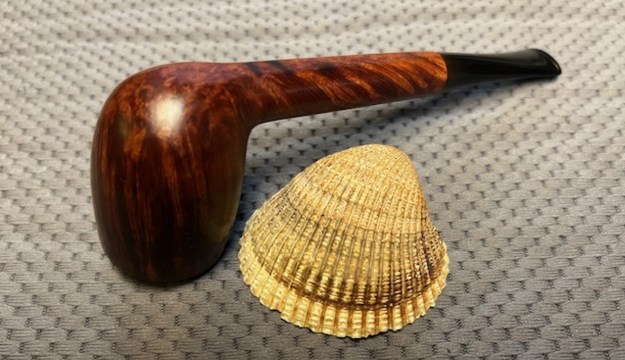
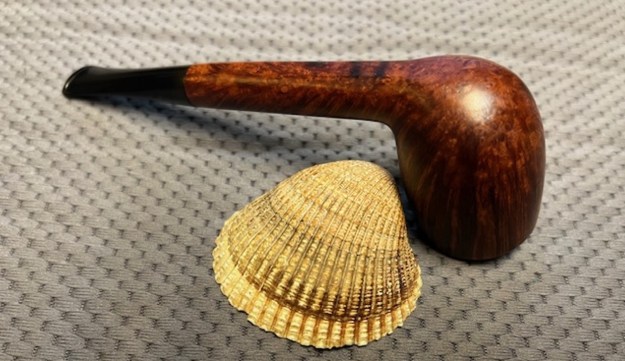
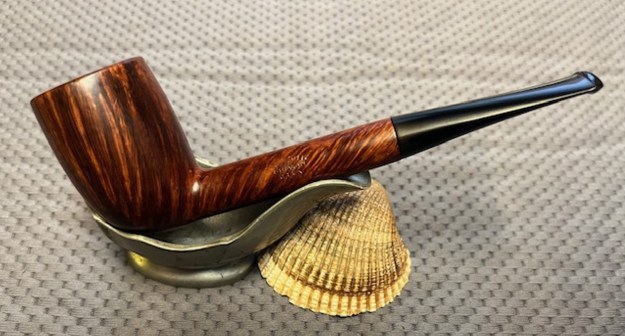
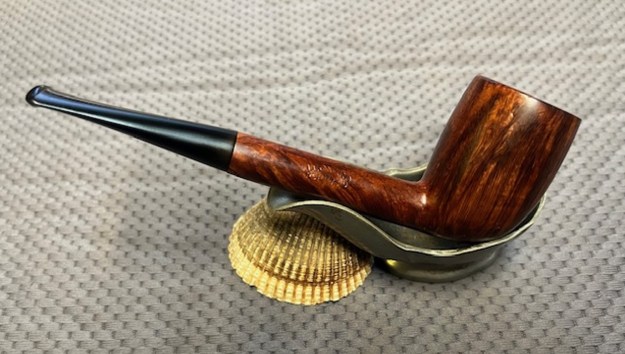
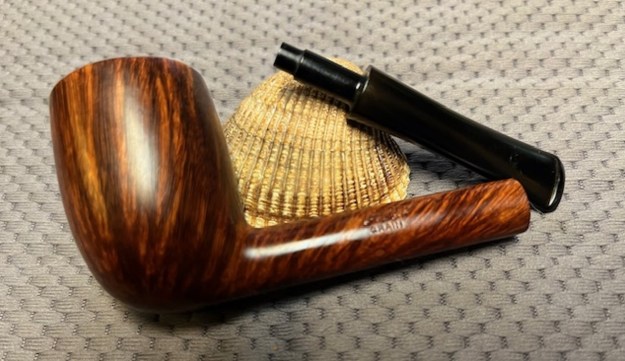
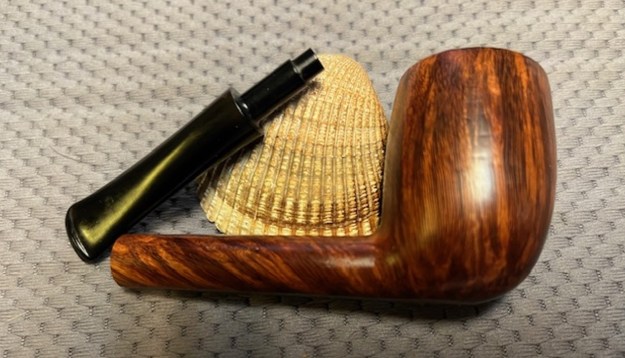
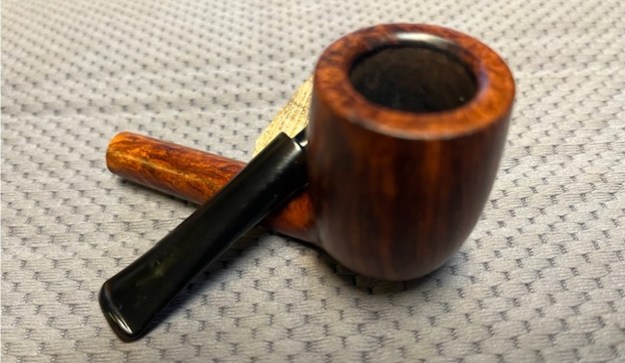
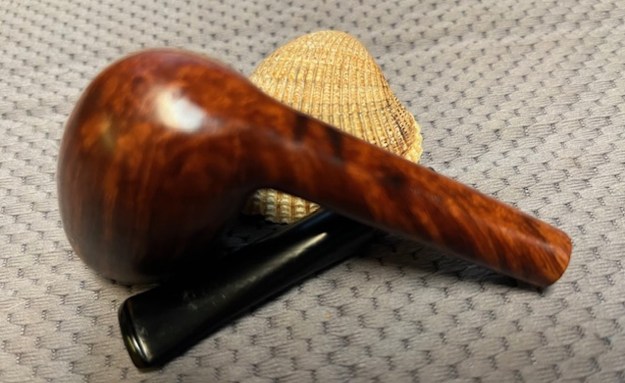
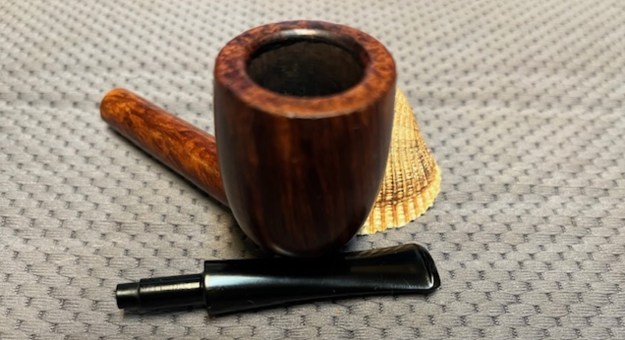
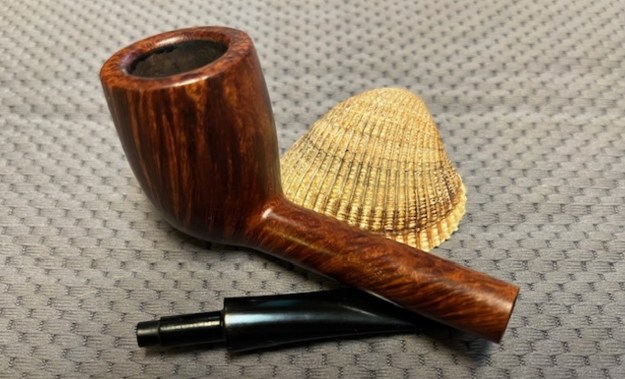
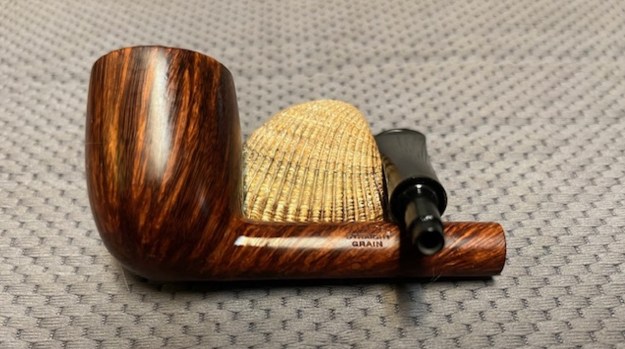
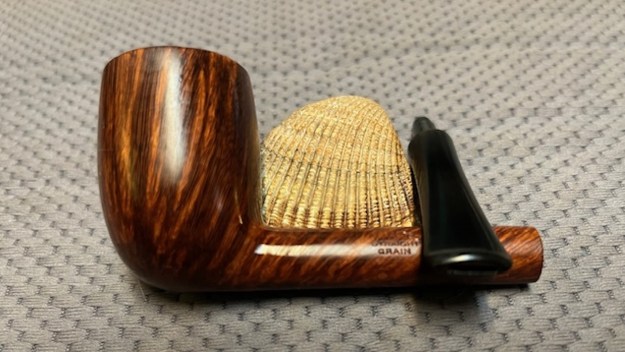
 This Leonard Portland Selected Straight Grain Liverpool with a Taper Stem has beautiful straight grain that stood out on the polished bowl. Is it made by Barling or Comoy’s? I am not sure as much about it point either direction. The reddish brown finish highlights some great grain around the bowl and shank. The shape of the pipe really follows the grain and it is beautiful to look at. The polished black vulcanite taper stem adds to the mix. I put the stem back on the bowl and buffed the pipe with Blue Diamond on the buffing wheel being careful to not buff the stamping. I gave the bowl and the stem multiple coats of carnauba wax on the buffing wheel and followed that by buffing it with a clean buffing pad. I hand buffed the pipe with a microfiber cloth to deepen the shine. The finished Leonard Portland Selected Straight Grain is quite nice and feels great in the hand. Give the finished pipe a look in the photos below. The dimensions of the pipe are Length: 5 ½ inches, Height: 1 ¾ inches, Outside diameter of the bowl: 1 ¼ inch, Chamber diameter: ¾ of an inch. The weight of the pipe is 1.02 ounces/29 grams. Thanks for walking through the restoration with me as I worked over another beautiful pipe. It is a classic that holds many memories for me so I intend to enjoy it. Thanks for your time.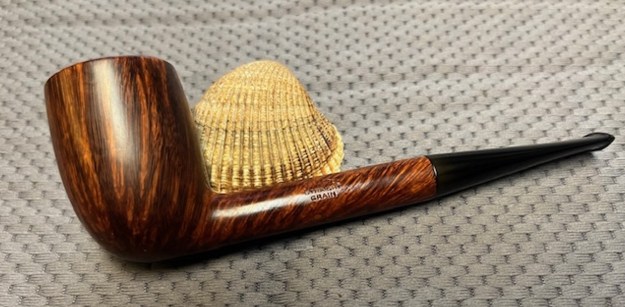
 rebornpipes