
By Steve Laug
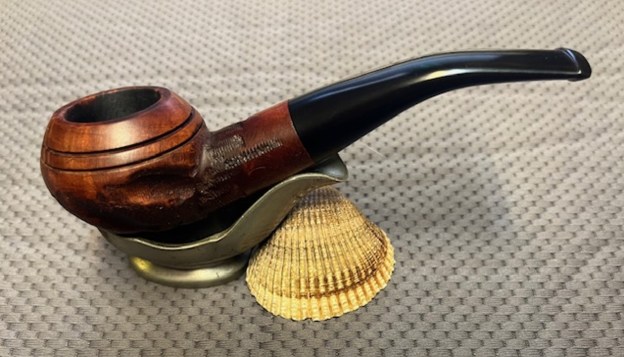
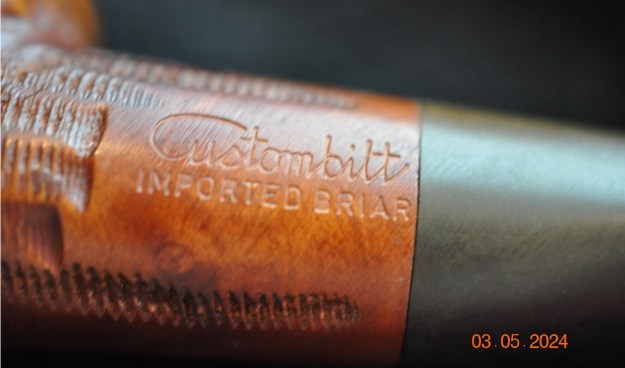
The next pipe on the table was one we purchased on 01/22/24 off eBay from a seller in Jordan, Minnesota, USA. It is a uniquely rusticated Custombilt Rhodesian that really looks good. I have worked on a lot of Custombillt rusticated pipes and enjoy working on them. The stem is a vulcanite taper stem with no markings on the sides. The pipe is stamped on a smooth panel on the left side of the shank. The left side reads Custombilt [over] Imported Briar. The stamping is clear and readable. The finish is quite dirty with grime and dust in the deep rustication where the hand held the bowl on both sides. The rim top is also dirty with darkening and also lava on the smooth surface on the edges as well. There is a thick cake in the bowl with some tobacco debris stuck on the walls and in the heel. The stem is oxidized, calcified and has tooth marks and chatter on both sides ahead of the button that are a bit deep and will need to be addressed. Jeff took some photos of the pipe before he started his clean up work. It is unique and certainly one that we are looking forward to seeing once it is cleaned up.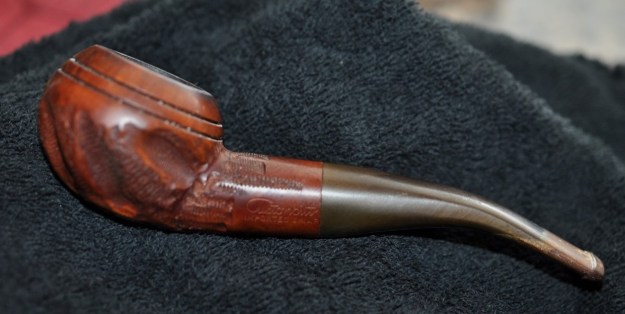
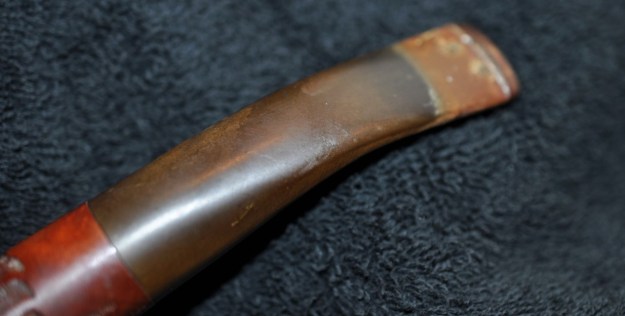
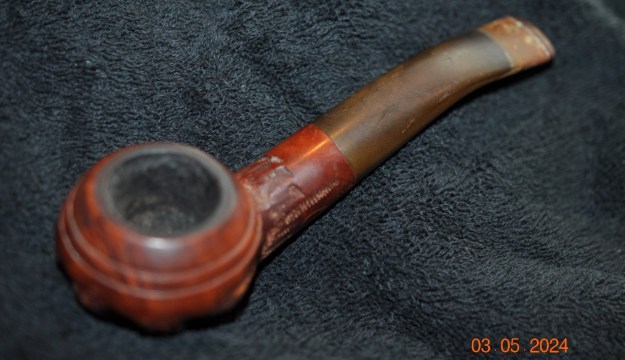 Jeff took closeup photos of the bowl and rim top to clearly show the condition of both. The condition matches what I described above. He also took photos of the stem to show the oxidation, calcification and tooth marks and chatter on both sides ahead of the button. It also appears that the stem had a Softee Bit at some time in the past.

 Jeff took photos of the sides and heel of the bowl to give a picture of what the briar looked like. The rustication pattern around the bowl is instantly recognizable as done by Custombilt.
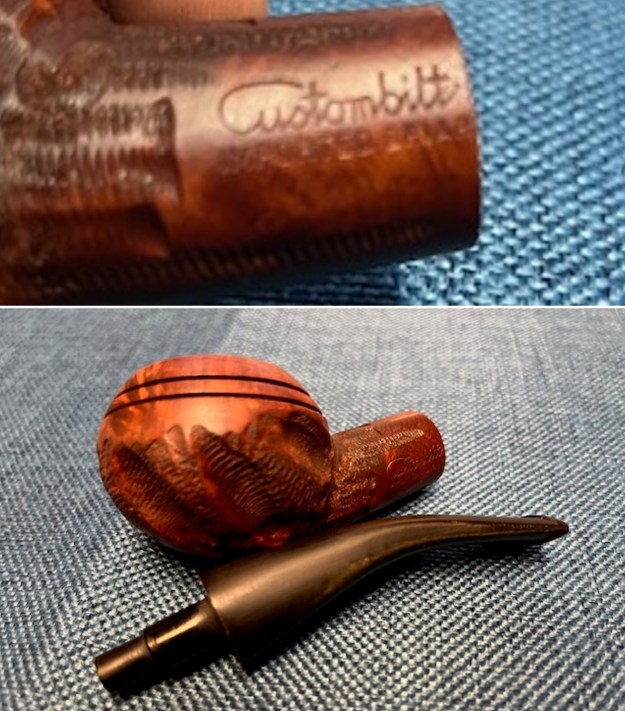
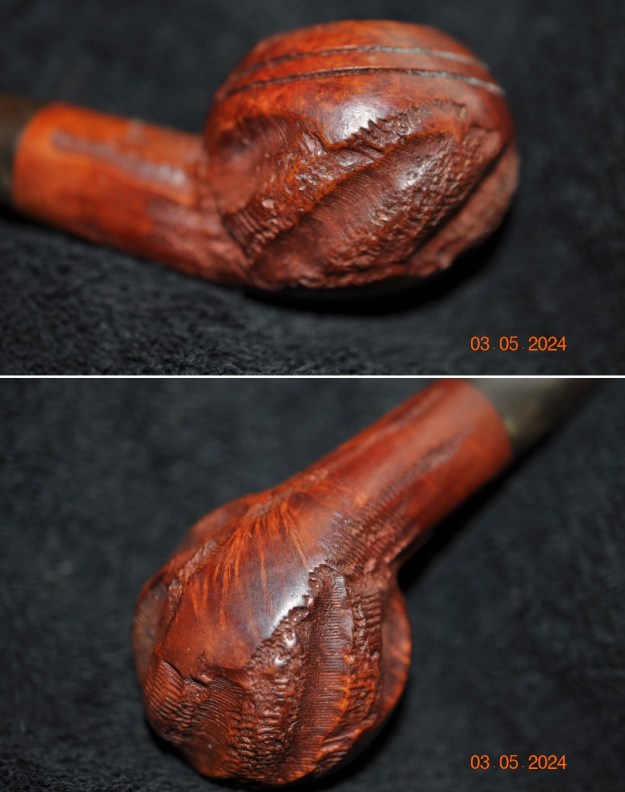 The stamping on the left side of the shank is clear and readable and read as noted above.
 I turned to Pipephil (http://www.pipephil.eu/logos/en/logo-c8.html) to get a quick view of the brand once again. I knew that I was working with one of the older pipes and probably made by Tracy Mincer himself. He stopped making the Custom-Bilt pipes in the early 1950s. The screen capture I included below shows a brief history of the brand.
 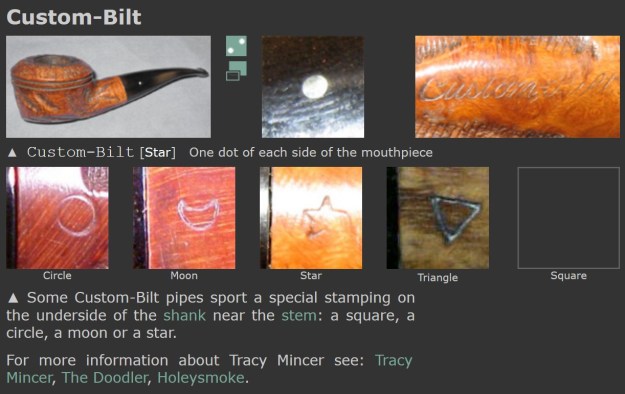 I quote from the side bar in the above screen capture and have highlighted in red the pertinent part of the article.
Chunky bowls with rough carving or gouges.
Tracy Mincer stopped making Custom-Bilt pipes in the early 1950s. The trademark was successively bought by Leonard Rodgers (1953), Consolidated Cigars (1968) and Wally Frank Co. (early 1970s). The later began to produce again his version of the pipe in 1974 or 1975 at Weber pipe factory (NJ). In 1987, the pipes were made out of the Butz-Choquin factory (France) and then Mexico until the late 1990s. Currently (2010), the Custombilt name is owned by Tobacalera of Spain which is part of Altadis.
It is generally admitted (but not proved) pipes stamped “Custom – Bilt” (with the hyphen) are from the Mincer era. The name might have changed from Custom-Bilt to Custombilt (without the hyphen) in 1946.
I turned to Pipedia and found the following advertisement for the Custombilt line that I am working on (https://pipedia.org/wiki/File:Custombilt_Shapes.jpg). The logo on the advertisement is the same and the shape I have circled in red in the advert below is the same shape number as the one that I am working on. The majority of the information on the rest of the site was two book reviews of the Custom-Bilt Story by Bill Unger. 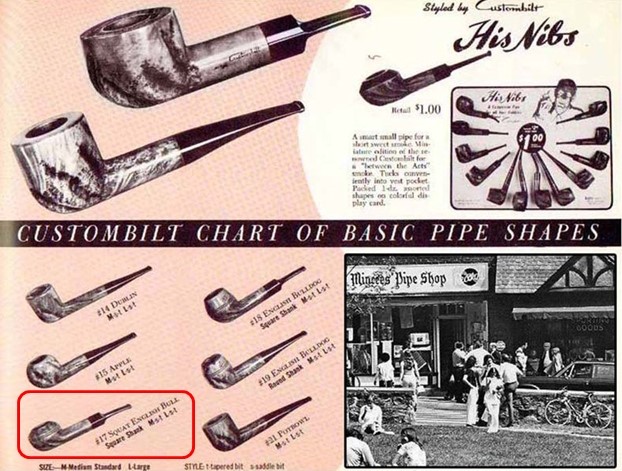 I did a screen capture of the stamping that matched the stamping on the pipe that I am working on. The stamping on the one I have might be example of Stamp #2 of the Wally Frank Era pipes (shown in the screen capture below). This stamp has the top arch of “C” extend to the top of “t”. The bottom arch of the “C” also curves into the leg of the “u” as in a cursive signature. I have also included the information on Stamp 3 as it mentions two stamps from this Wally Frank Era.
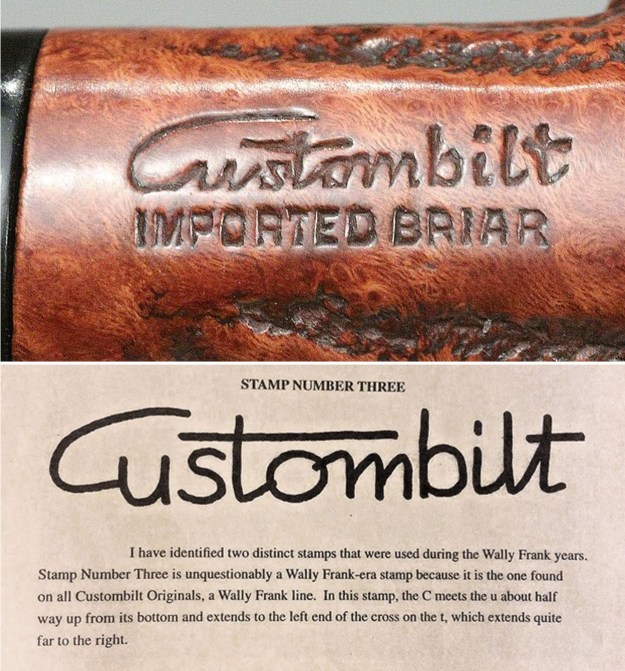 In the early 1970s, Wally Frank Co. bought the Custombilt trademark and began to produce their version of the pipe in 1974 or 1975. Hollco Rohr owned the Weber pipe factory, located in New Jersey, and produced the Custombilt pipes there.
Armed with that information I turned to work on the pipe itself. Jeff had cleaned up the pipe with his usual penchant for thoroughness. He reamed the pipe with a PipNet pipe reamer and removed the rest of it with a Savinelli Fitsall Pipe Knife. He scrubbed the bowl with undiluted Murphy’s Oil Soap with a tooth brush. He rinsed it under running warm water to remove the soap and grime. He cleaned out the inside of the shank and the airway in the stem with alcohol, cotton swabs and pipe cleaners. He soaked the stem in Before & After Deoxidizer and rinsed it off with warm water. I took photos of the pipe before I started my part of the restoration work.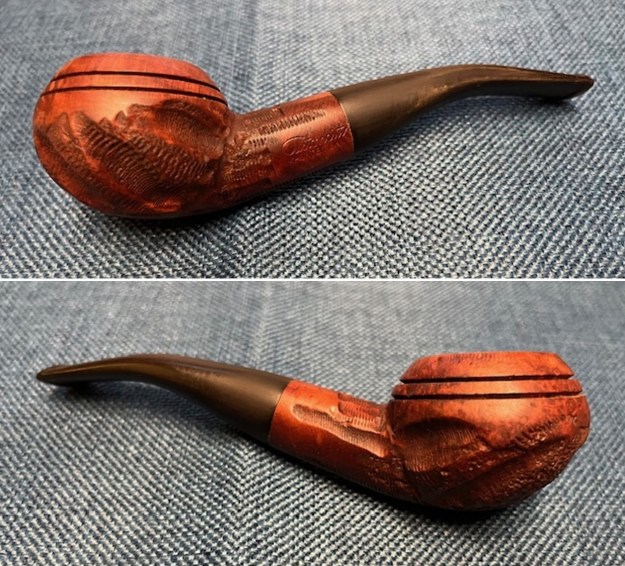
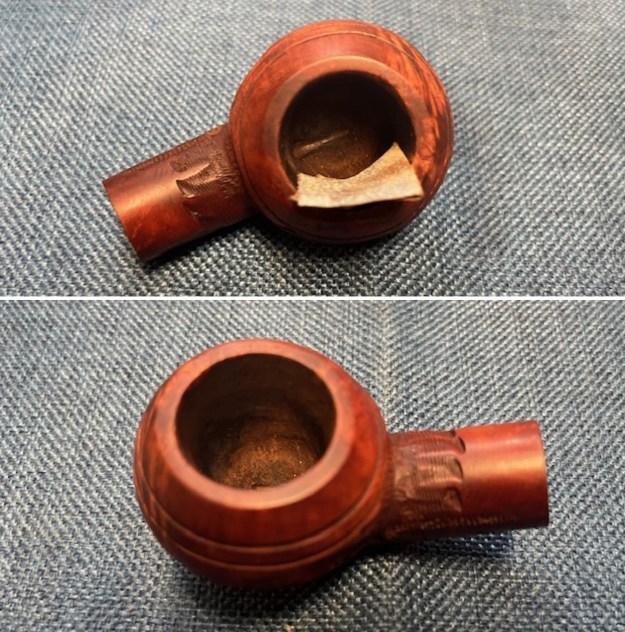
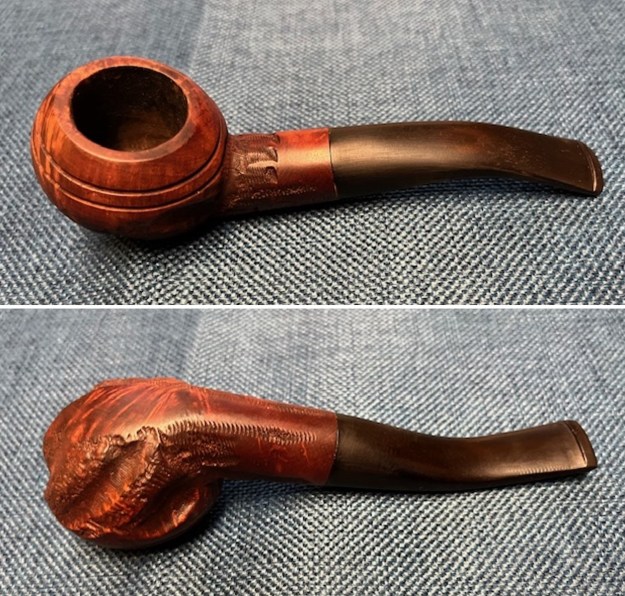 The rim top cleaned up really well. The rim top and outer edge of the bowl look very good. The inner edge has some damage on the front of the bowl. The stem surface was rough but the oxidation and calcification was gone. Overall it looked very good with a few small tooth marks and chatter on both sides near the button.
 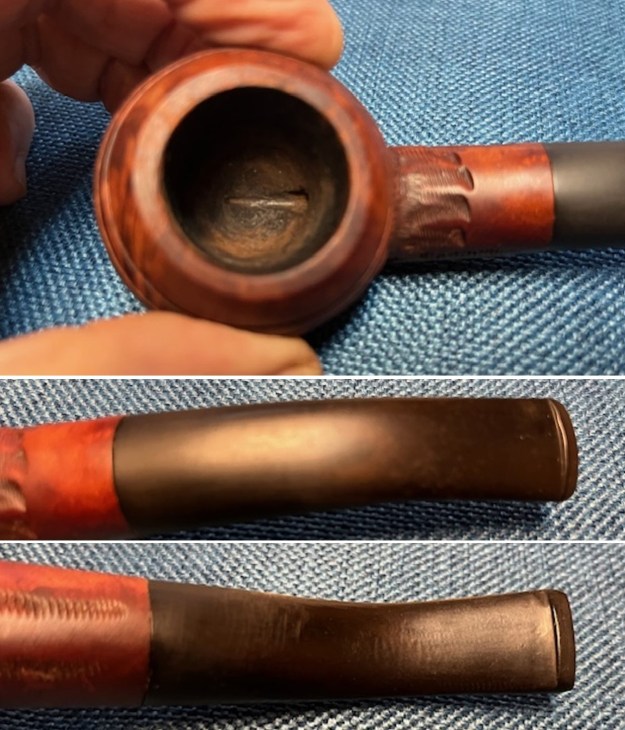 The stamping on top left of the shank is clear and readable. It is stamped as noted above. I removed the stem and took a photo of the pipe to give a sense of the whole. The wide saddle stem is nice and the photo shows the step down tenon.
 I cleaned up the inner edge of the bowl with a folded piece of 220 grit sandpaper to smooth out the damage. Once I had smoothed out the edge the bowl was ready.
  I polished the smooth briar around outside of the bowl and the rim top with micromesh sanding pads. I sanded it with 1500-12000 grit pads and wiped the bowl down with a damp cloth to remove the sanding dust.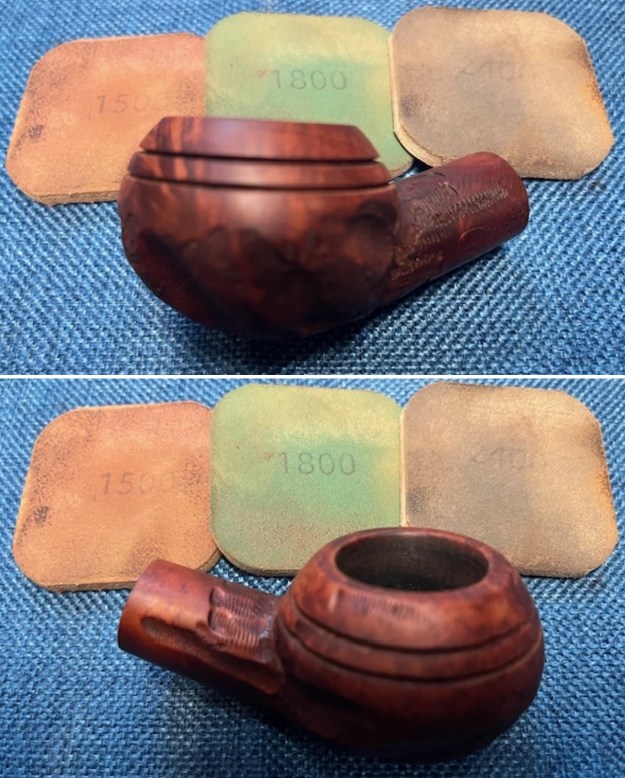
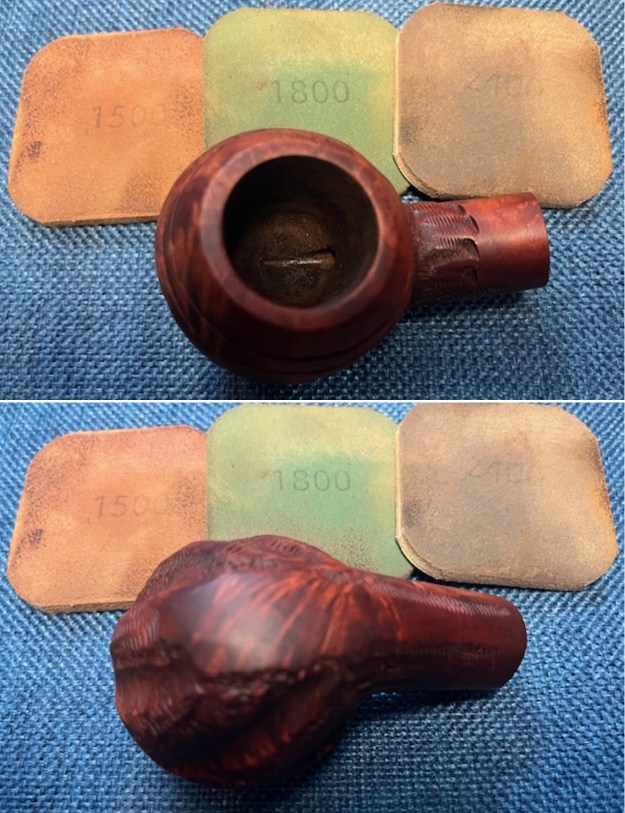
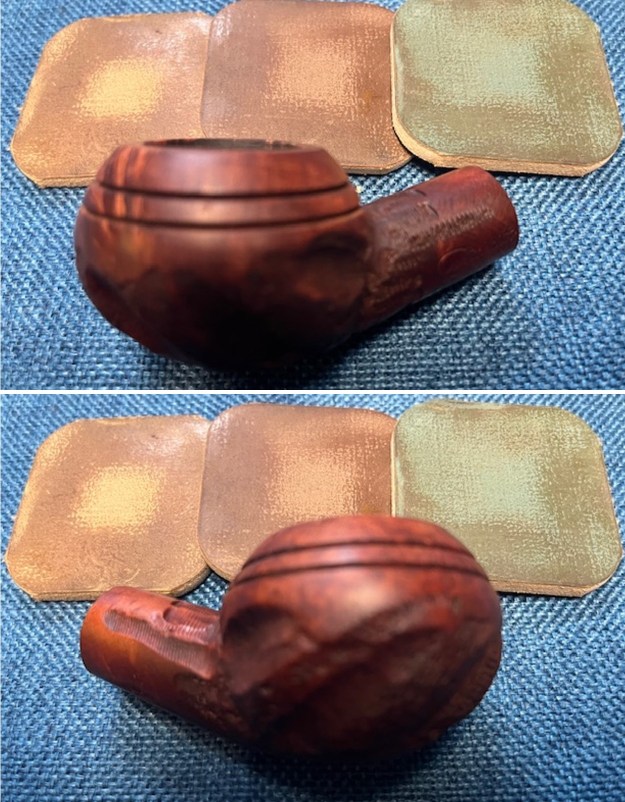
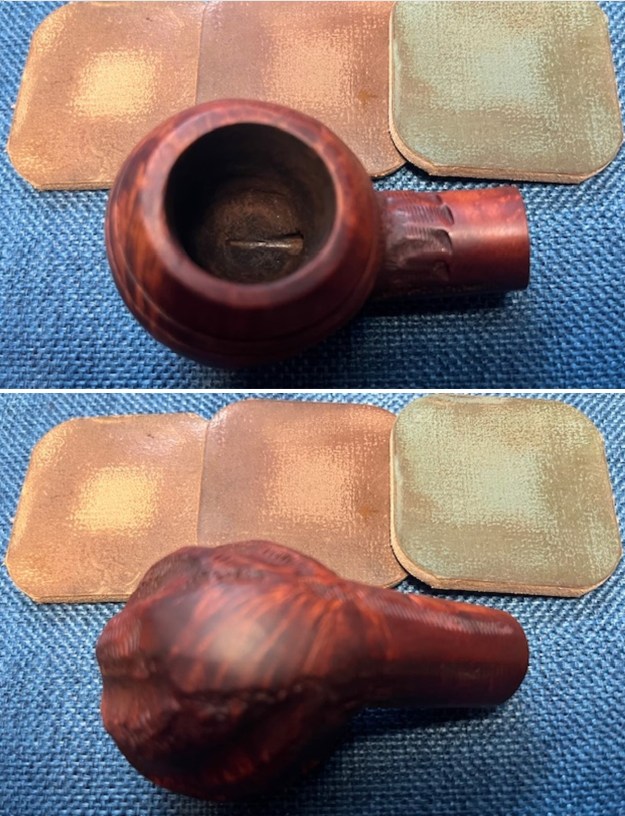
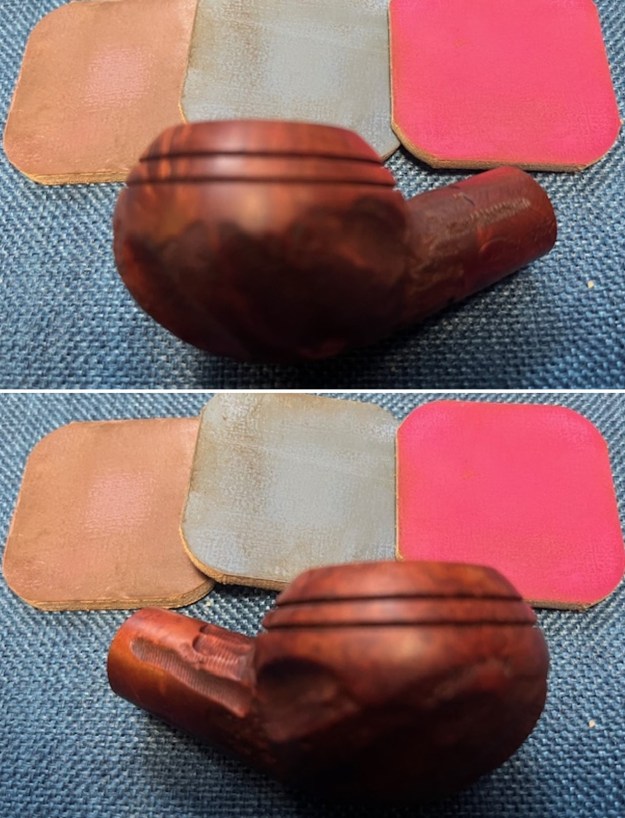
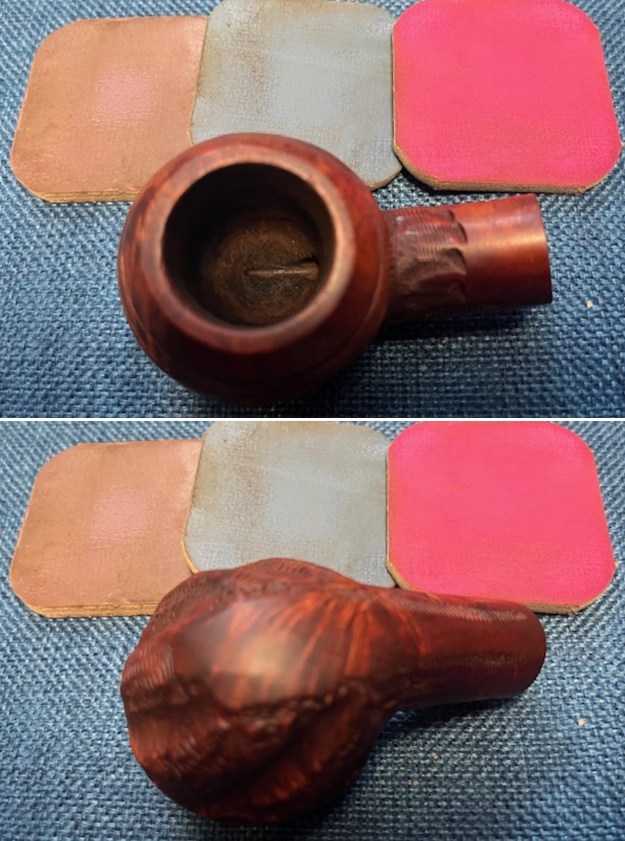 I rubbed the bowl and shank down with Before & After Restoration Balm. I worked it into the surface of the bowl sides and shank with my fingertips and a horsehair shoe brush to get it into the rings and rustication. It works to clean, enliven and protect the briar. I let the balm sit for 15 minutes and buffed with a cotton cloth to raise the shine. The grain and the rustication came alive.
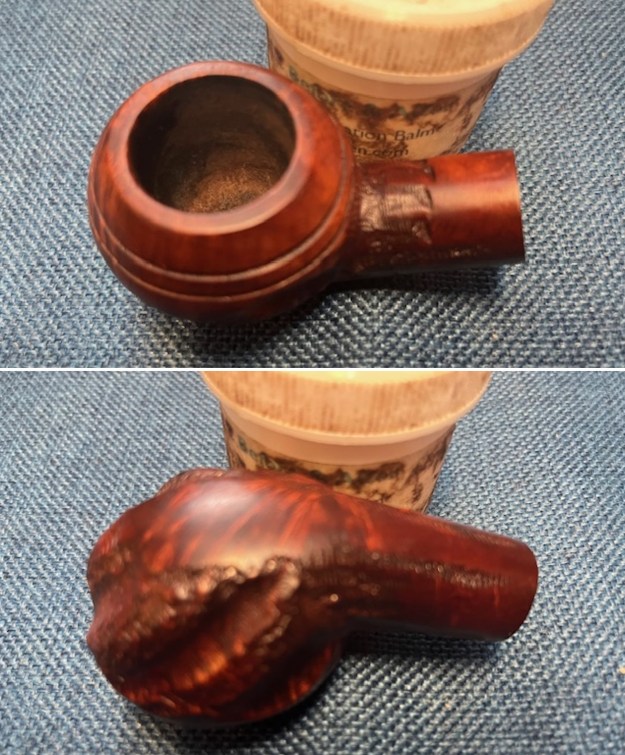
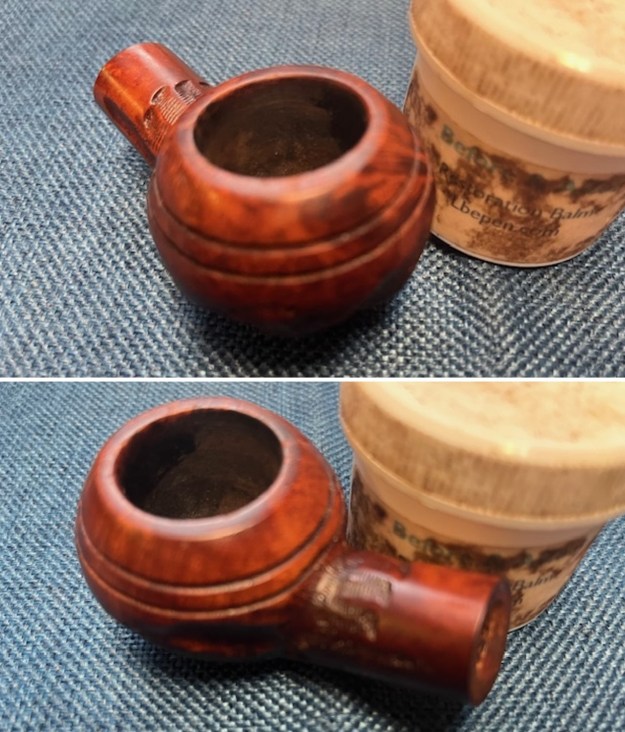 I set the bowl aside and turned my attention to the stem. I polished the roughness, scratch marks and smoothed the stem with 320-3500 grit sanding pads. I wiped the stem down after each sanding pad with an Obsidian Oil impregnated cloth. It removes the dust and also gives the sanding pads some bite. By the final pad it was looking quite good.
 I polished the vulcanite stem with micromesh sanding pads – 1500-12000 grit pads. I wiped it down with Obsidian Oil after each sanding pad. I used Before & After Pipe Polish – both Fine and Extra Fine to further polish the stem. I rubbed it down with a final coat of Obsidian Oil and let it dry.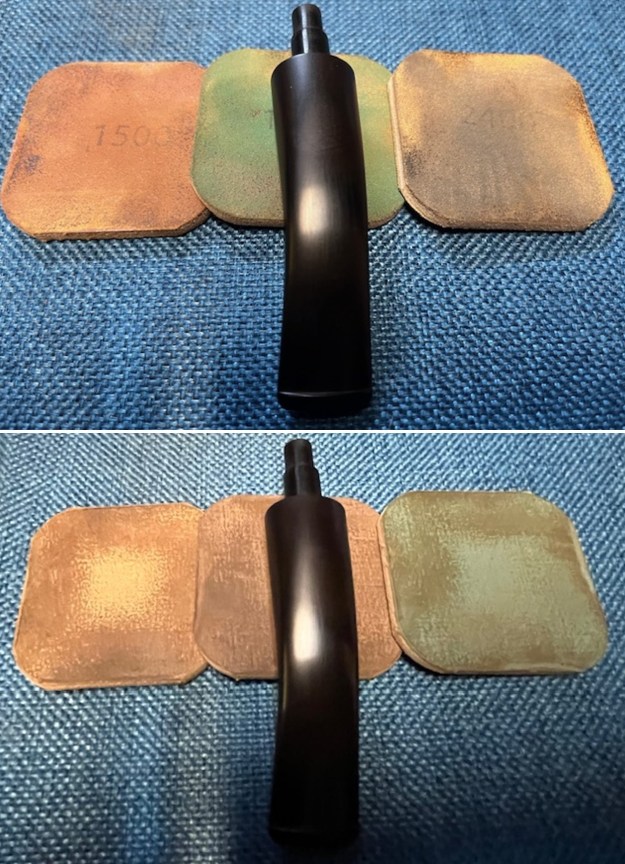
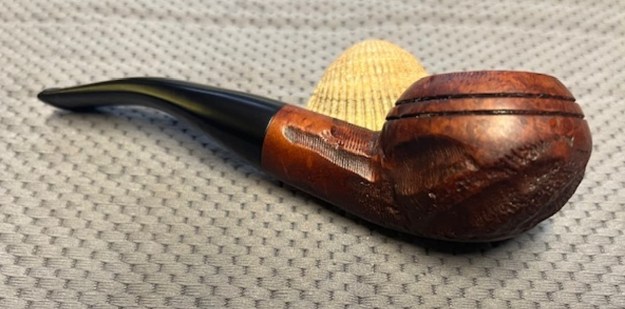
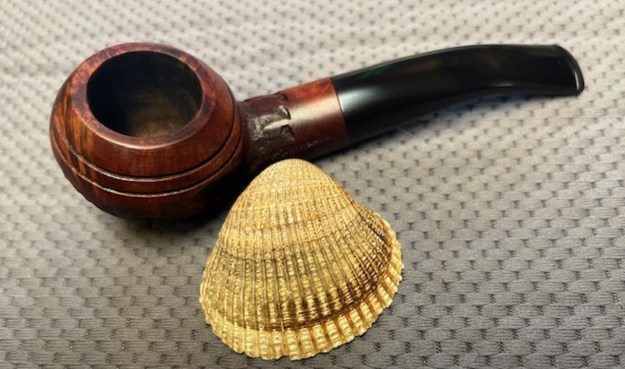
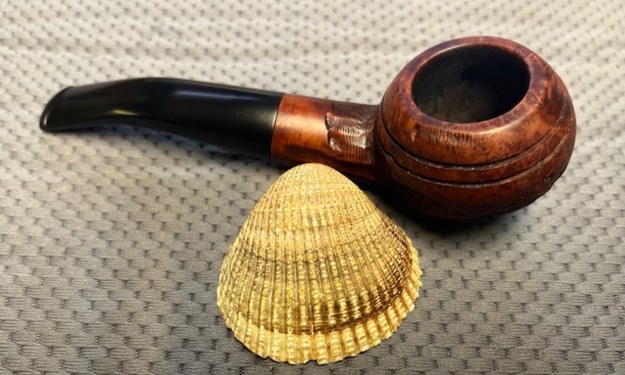
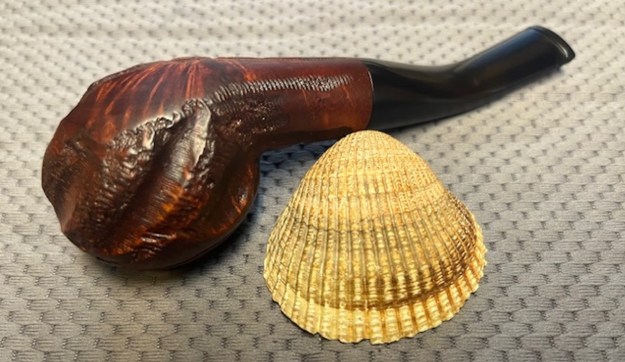
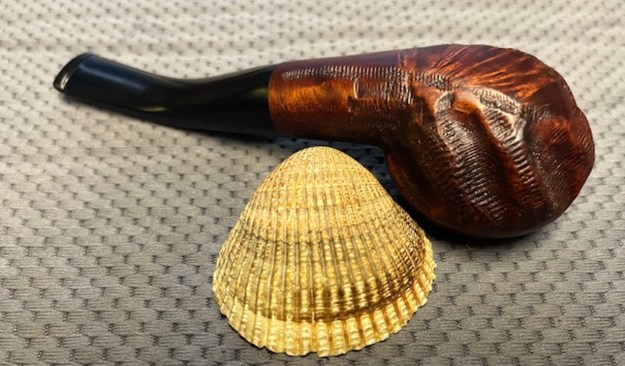
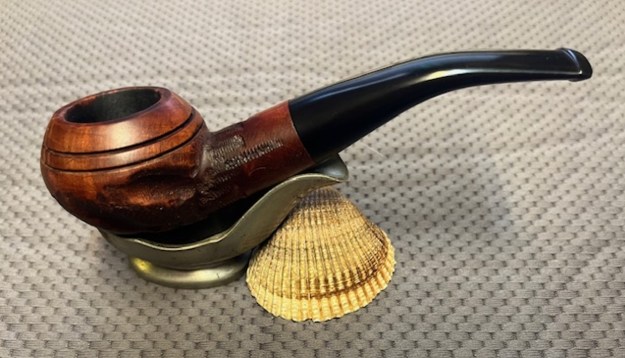
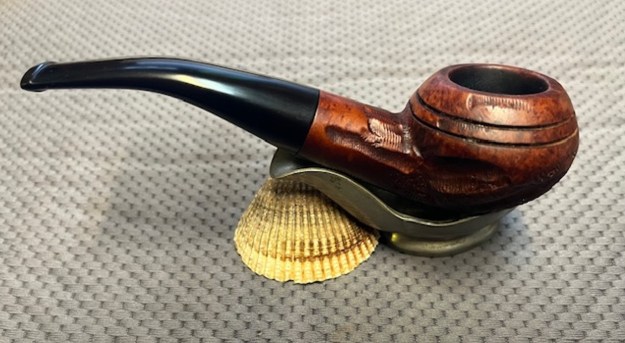
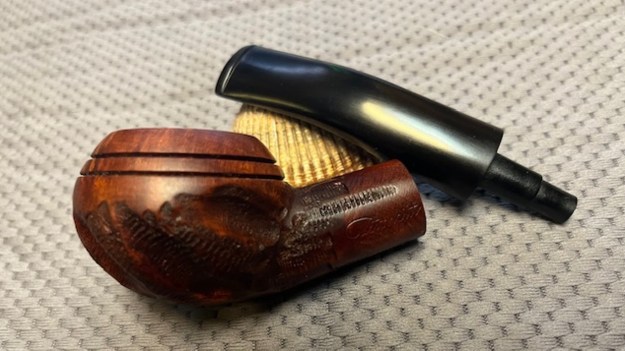
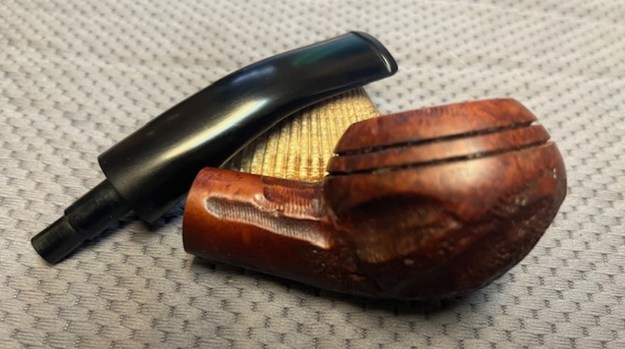
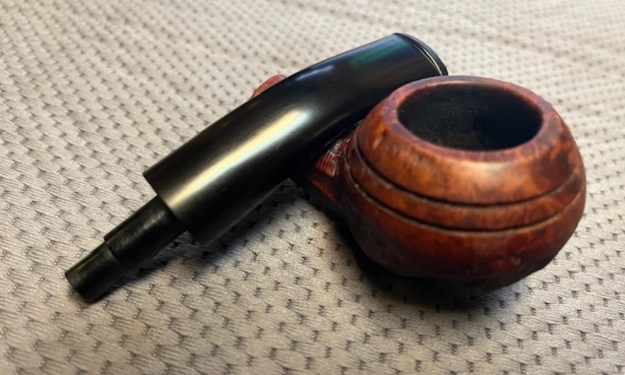
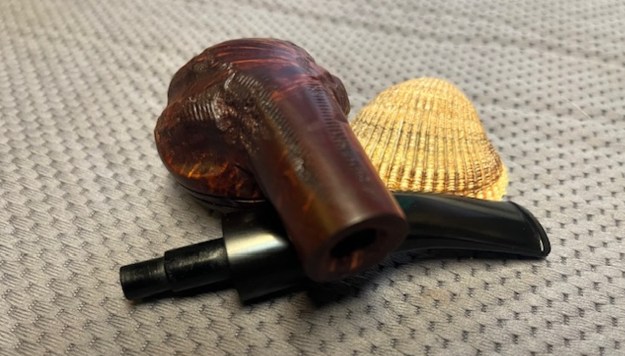
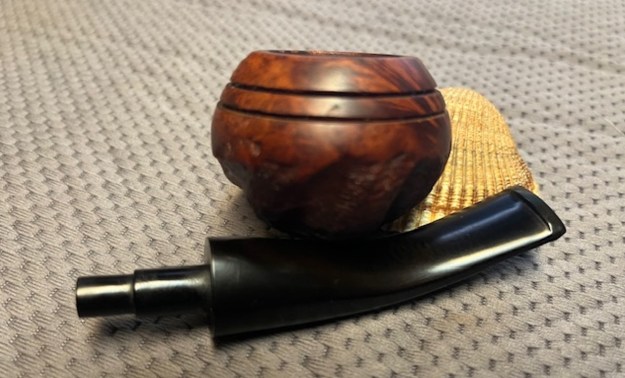
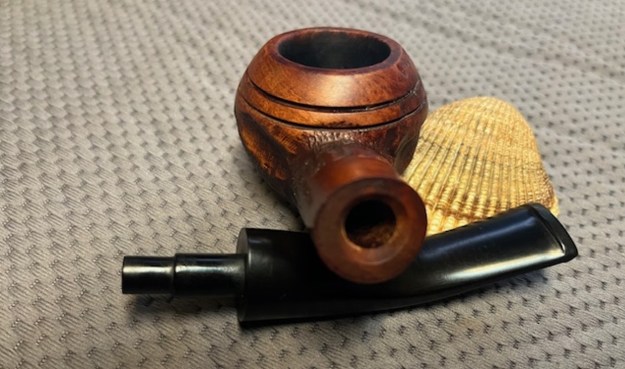
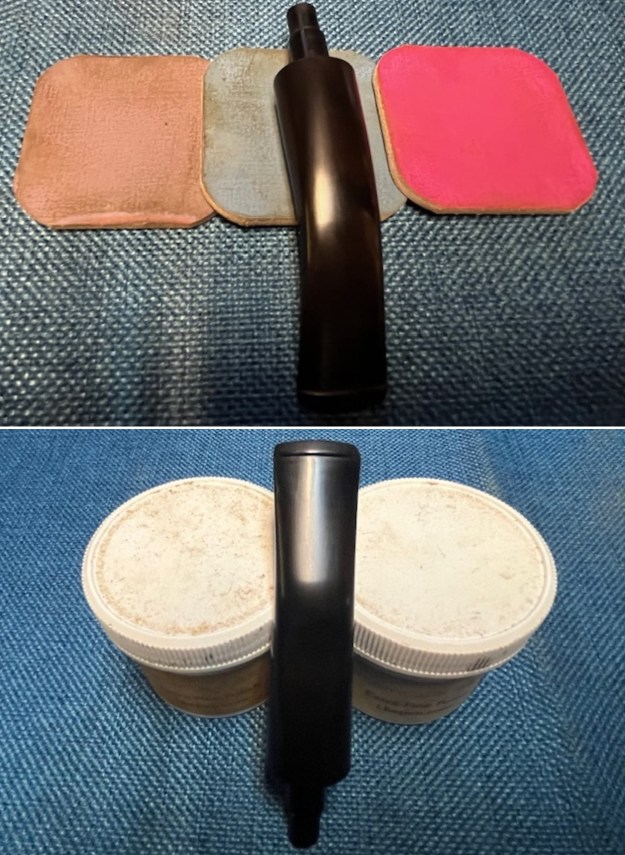 This Custombilt Imported Briar Bent Rhodesian is a great looking pipe now that it has been restored. The style of rustication that is used around the bowl is quite beautiful and works well with both the shape and the polished vulcanite taper stem. I put the stem back on the bowl and carefully buffed the pipe with Blue Diamond on the buffing wheel using a light touch on the briar. I gave the bowl multiple coats of Conservator’s Wax and the stem multiple coats of carnauba wax on the wheel and followed by buffing the pipe with a clean buffing pad. I hand buffed the pipe with a microfiber cloth to deepen the shine. The finished Custombilt Rhodesian fits nicely in the hand and feels great. Give the finished pipe a look in the photos below. The dimensions of the pipe are Length: 5 ¾ inches, Height: 1 ½ inches, Outside diameter of the bowl: 1 ¾ inches, Chamber diameter: 7/8 of an inch. The weight of the pipe is 47 grams/1.66 ounces. I will be putting it on the rebornpipes store in the American Pipemakers Section shortly. If you are interested in adding this pipe to your collection send me a message or an email. Thanks for reading this blog and my reflections on the pipe while I worked on it. I appreciate your support and time!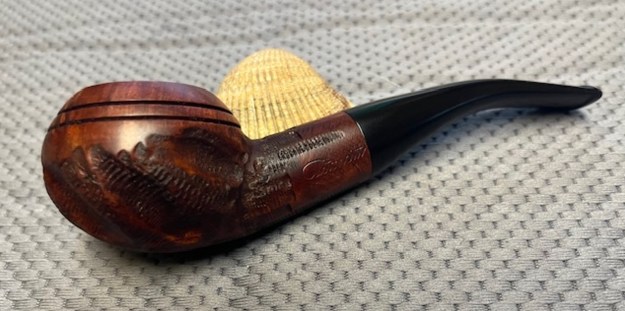


 rebornpipes
