
Guest Blog by Robert M. Boughton
Member, International Society of Codgers
Member, North American Society of Pipe Collectors
http://www.naspc.org
http://www.roadrunnerpipesnm.biz
http://about.me/boughtonrobert
Photos © the Author
INTRODUCTION
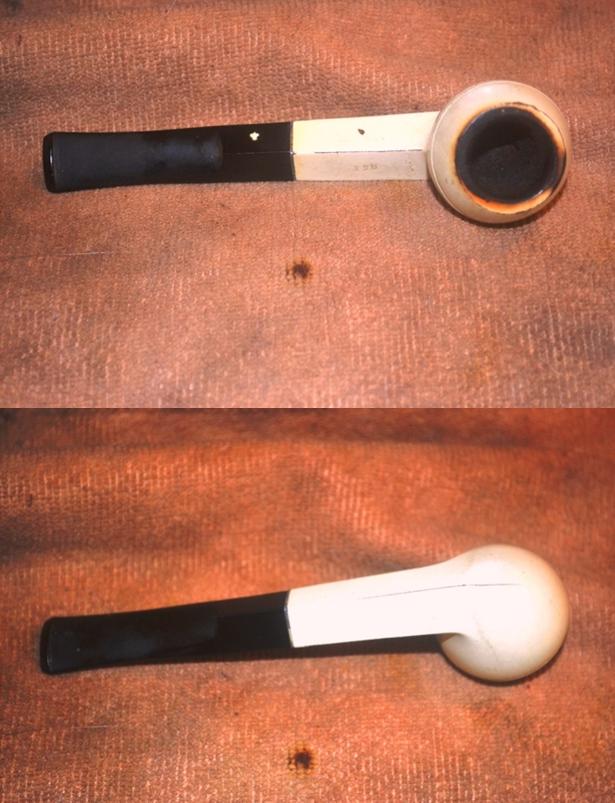
The Kaywoodie White Briar line lasted from 1951-1989. Some elusive quality, including perhaps its rough condition and the fact that I can’t find the same shape shown anywhere online, makes me suspect my bulldog is c. 1960-1970. It’s alright, I’m aware of the virtual non sequitur I just committed, and stand by it as a sort of literary tool if nothing else. Call it a hunch. Maybe I’m just a romantic. No doubt about the last part, at least.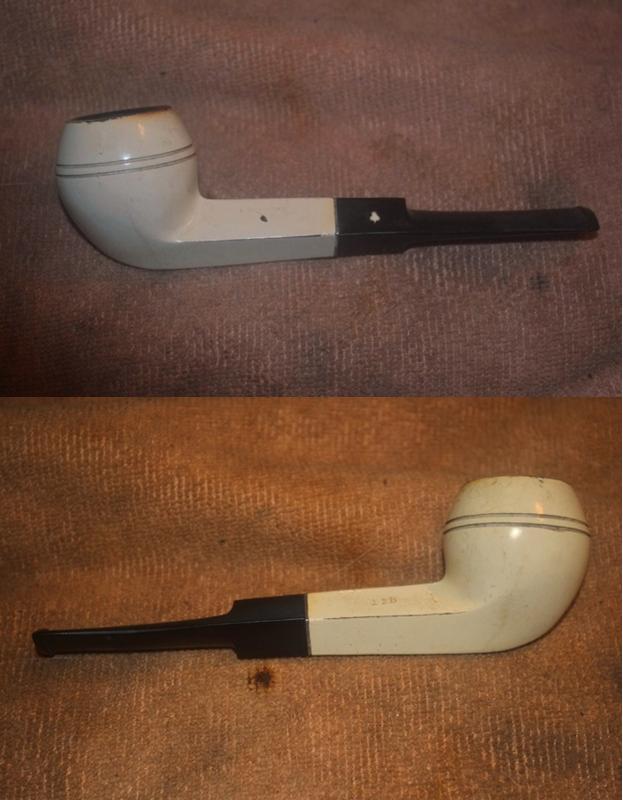
 RESTORATION
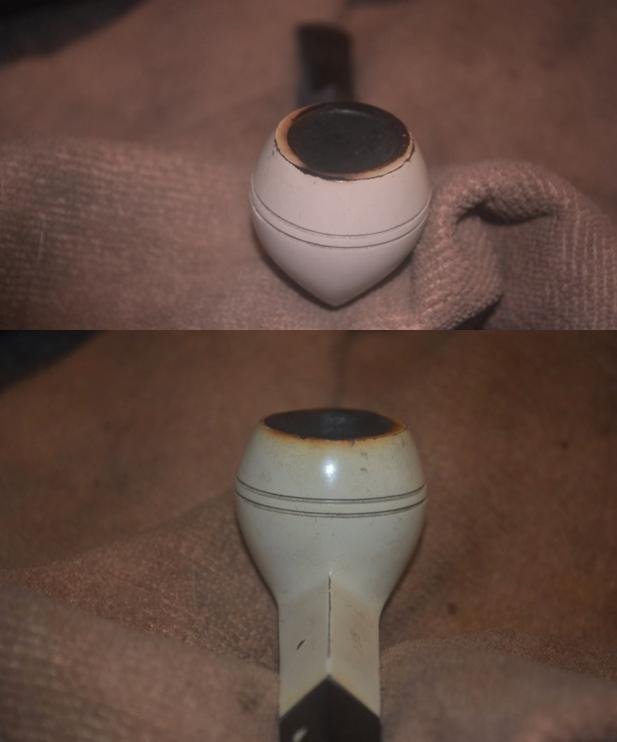
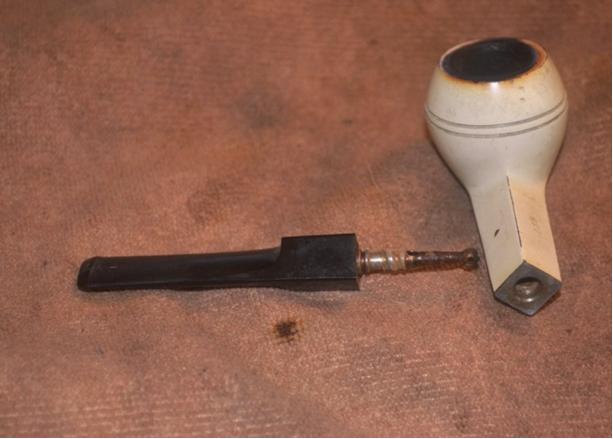
The bit was mostly just dirty.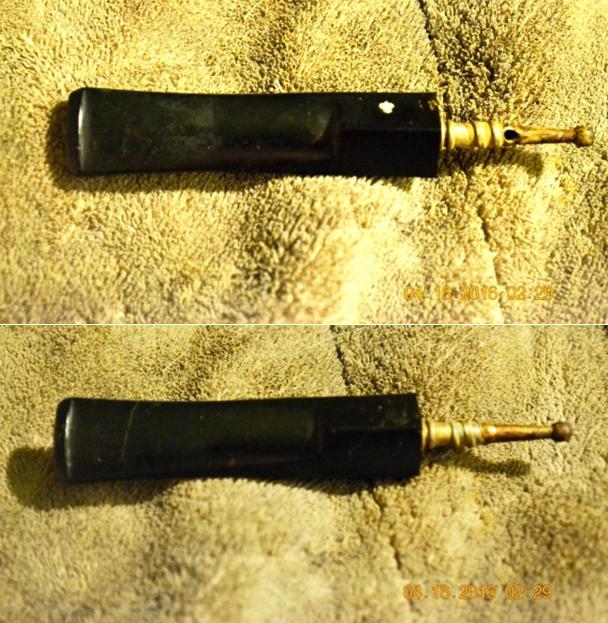 I put it in an OxiClean bath and began the process of cleaning the rest of the pipe by using my Senior Reamer to remove the fair amount of char from the chamber. I followed the reamer with 150-, 200- and 320-grit papers, and removed the excess soot with soft cotton cloth squares soaked in purified water. Then I applied a little purified water to the outside of the stummel with more soft cotton cloth squares, getting rid of considerable grime.
My main concern was the rim, which appeared to be scorched to the point of no return. I used still more soft cotton cloth squares with purified water to work away at the char before switching to 1800, 2400 and 3200 micro-mesh – and just as I thought it was coming clean realized to my horror that the blackened parts of the rim, which had turned a creamy brown color, were down to the briar! In hindsight, I don’t know if I should have left the tiny amount of the original finish that was left on the rim as it was, but I saw no reason. With sadness and reluctance, I removed it for uniformity.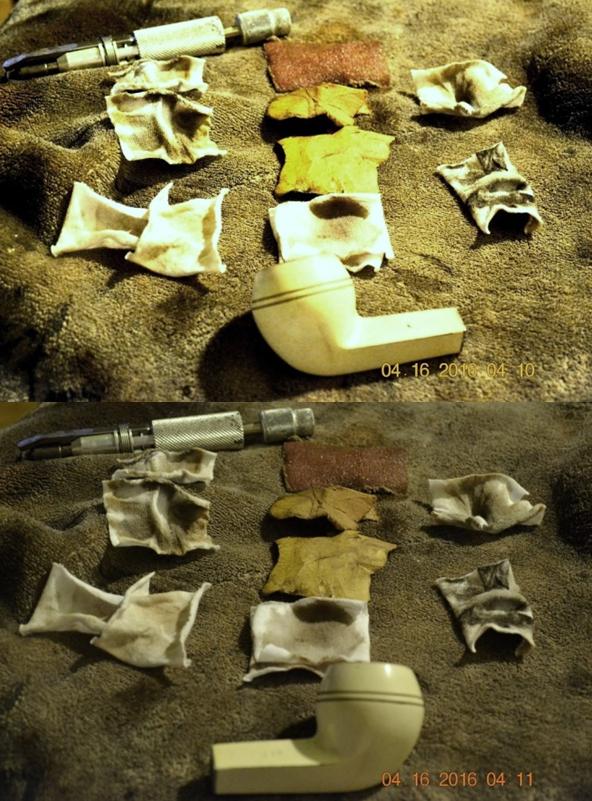
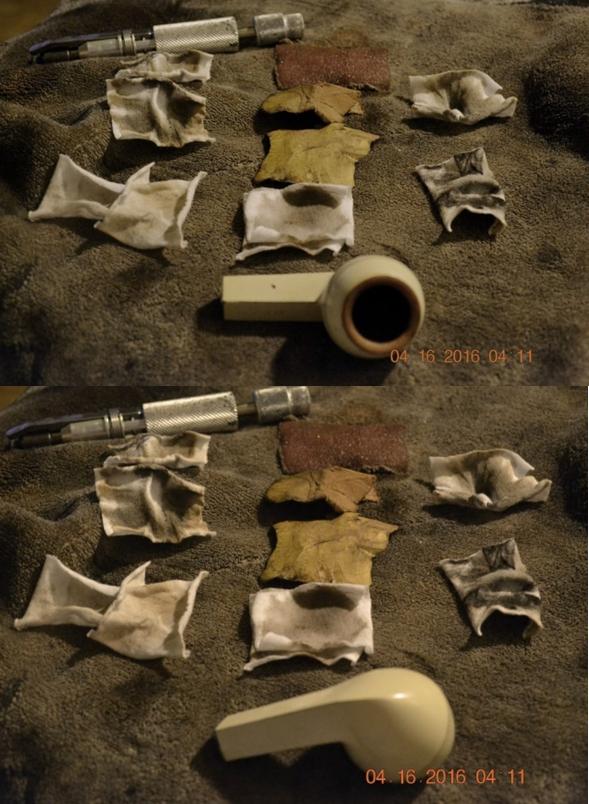
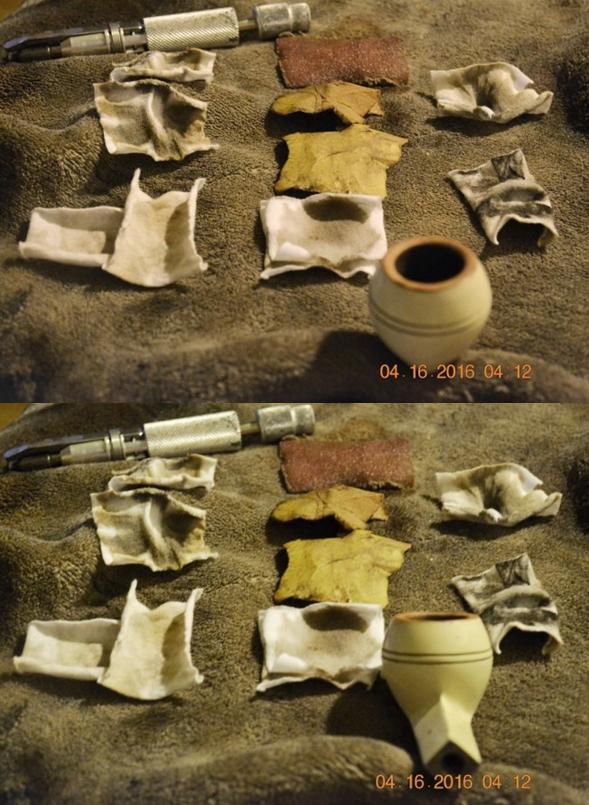 I replaced the bit, which I had removed from the OxiClean bath and used wet micro-mesh from 1500-12000 to return to a nice black smoothness, and retorted the pipe.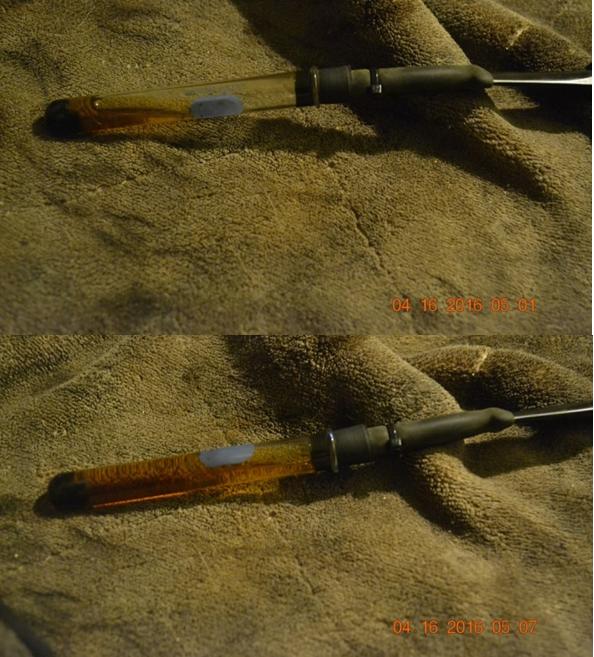
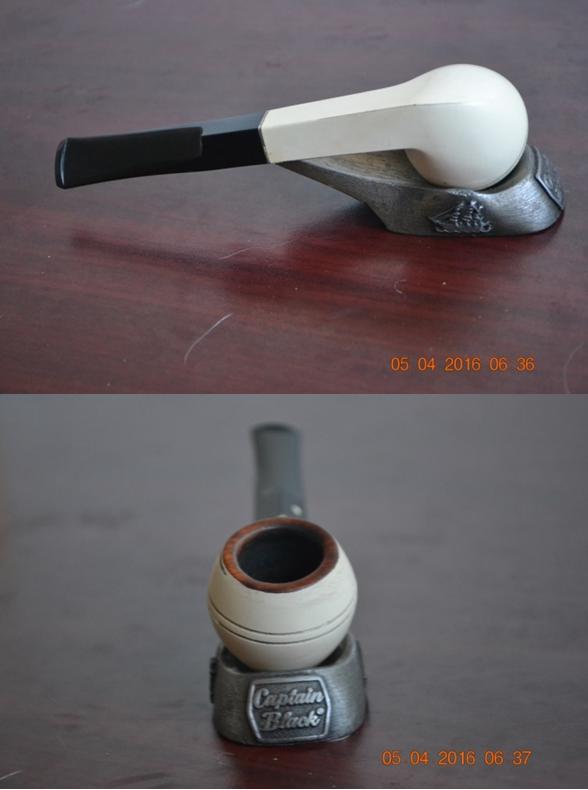
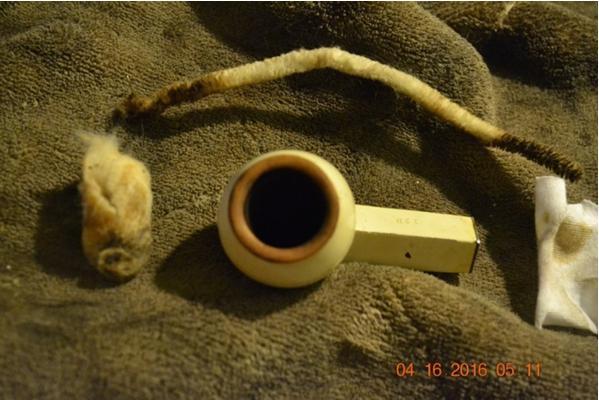 All that was left to do was an unexpected stain of the rim using Feibing’s Brown and flaming it, then buffing with white Tripoli, White Diamond and Carnauba. I buffed the bit as usual, with red and white Tripoli, White Diamond and Carnauba.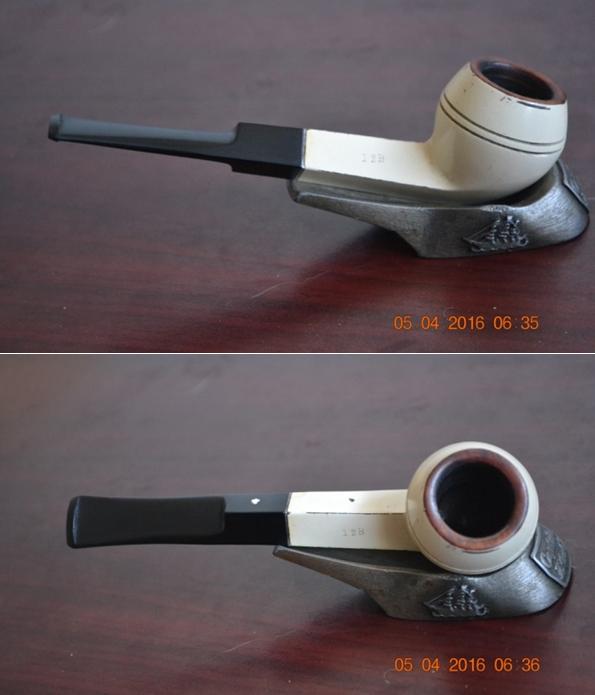
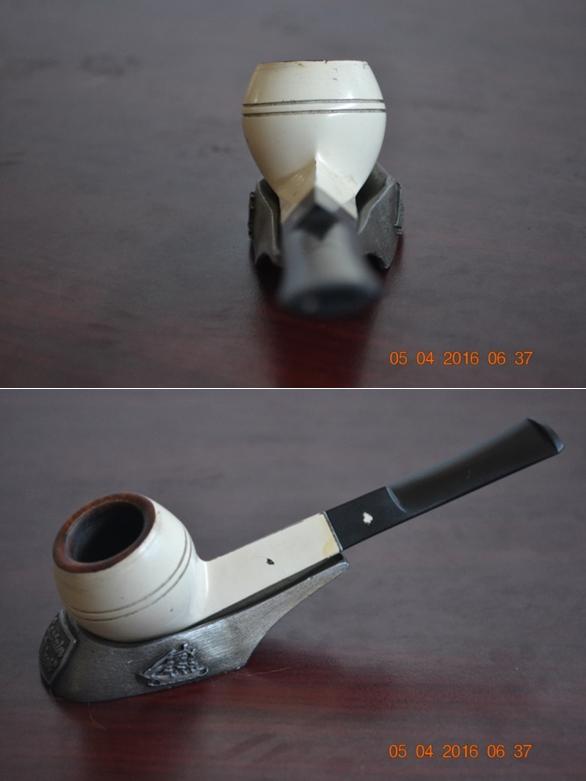 CONCLUSION
I’m always willing to face the music as far as responsibility for mistakes goes, but I honestly don’t know if the “mishap” I had with the rim is common with white briar restores. I didn’t use sandpaper – not until after it was already too late. But it was my restore, and so I will own it. As well as the pipe, most likely, unless anyone out there wants a good deal on a unique Kaywoodie White Briar Bulldog 12B with a brown briar rim!
 rebornpipes
I have a question for anyone that has stripped a colored pipe. Is the nomenclature stamped into the coating or into the briar? The pipes I have I’m not sure of. The one that’s cracked up I haven’t tried removing the paint yet to see. I have about 30-40 pipes that need cleaning and sanitizing before I move on to repairs.
LikeLike
I have worked on quite few stripped and otherwise ant stamping in the briar and the paint on top
LikeLike
Lets try this again. Apparently WordPress is confused today. So please respond to Ilovfilms@gmail.com. not the e-mail below. My previous post disappeared. It was rather long. I wanted to know if you or if you know of anyone that had ever repainted a colored or white pipe? If so what did they use and what was their process. I’ve checked around the forums and some had repainted them but they never mentioned if it was successful or not. They showed the pipes when they were finished but no mention of how it held up over time and smoking. So I did some research on paints. I found out that pipe manufacturers used special epoxy paint. But no mention of what. Its probably proprietary. In fact occasionally pipe manufacturers still color their pipes. Online there are some heat resistant paints for wood but most are expensive. But I found that Rustoleum high temp paint could be used on wood if a base of acrylic latex was used first. I’ve also read about people that removed the paint and being lucky enough to find a beautiful grain hidden beneath. But more often they find it full of discoloration and fills. So they sandblast or rusticate the pipe. In my opinion this defeats the purpose of buying a colored pipe. I’ve been lucky. Most of mine are in great shape. I have a white briar Kaywoodie that was never used. I’m very careful with it when I smoke it. I never fill it to the rim, I usually keep tobacco about 1/4″ from the rim. But others I’ve bought in lots have seen better days. I’m wondering if I can sand out the chips and cracks and possibly fill the deeper ones, apply the base then spray the rustoleum? Or do I need to take it to the wood. If I find a hidden gem, I have no issues simply refinishing it. But most likely I’m going to find grain only the tree would love covered in fills and/or discolorations. In this case I would want to return it to its original color. Thankfully I have no green pipes. Not a fan of green. From my inspection, it appears the stamping is most likely not through to the wood. I could be wrong. So I may have to maintain it while sanding. Also part of the reason I don’t want to sand down to the wood because the nomenclature could possibly be removed. In one pipe the cracks unfortunately run through the nomenclature. Hopefully its only the top coat thats cracked and the nomenclature still exists beneath. Its a Grabow. Couldn’t tell you the model. Its a white bent billiard, I think ( Still learning shapes). My other concern is the acrylic latex. They are usually quite thick. I’m not sure if I can thin it out. I’m also curious if I could just use an acrylic base or something like acrylic gesso? These wouldn’t be so thick they would fill the nomenclature. Any help or advice would be greatly appreciated. If you can’t tell I’ve never been one to take the easy way. My single worry is that I may have to be the first to venture down this road on my own. In which case I may have to repaint the same pipe multiple times. Which would really suck!! So if the knowledge is out there I would really appreciate it if you could share it. Thanks
LikeLike
The posts were archived and my pms went unanswered. So I hit a dead end with the forums.
LikeLike
Ernie I have never found a paint that worked and have tried few. No luck. I hope someone has it figured out and let’s us know.
LikeLike
Well I guess I’ll start with the acrylic latex, possibly thinned slightly, with Rustoleum high temp top coat. I’ll keep you posted. As stated most heat/fire resistant paints are just too expensive for our hobby. I may try just using an acrylic paint. Maybe I’ll get lucky and find a good epoxy paint that’ll work. I wish Urethane paints were still available. Do you have any idea what they use on current white and colored pipes? I’ve seen a few white and colored pipes that let the grain show through. More like a wash than a paint or epoxy. I wouldn’t mind using a color that allows the grain to shine too. I just thought about this, does fiebing, or ? have a white dye? Do you think a white leather dye would work? Thanks
LikeLike
Ernie Amazon.com lists Fiebings in white
LikeLike
Yes but its acrylic based not alcohol. The alcohol based white was discontinued.
LikeLike
Check with Tandy Leather they often have a back stock of older colours!
LikeLike
I’m currently working with someone online at a wood coatings site. He’s speaking with his vendors to see if we can finally figure this out. I recently realised that I don’t see colored pipes come up on eBay often. White pipes you can find all day. Except for the Kaywoodie coral. I’m watching for one to add to my collection. Some of the ones I’ve seen I think are a little too expensive for their condition. I occasionally see colored pipes. If the paint is in excellent condition they get a premium. If the coating is shot they probably wind up getting stripped and refinished with fiebing, depending on the grain. If the grain is full of fills or discoloration they end up rusticated or sand blasted. I’m hoping we can find something that is affordable to keep colored pipes colored and white pipes white. Only time will tell.
LikeLike
Thanks Ernie keep us posted
LikeLike
I wanted to add that I’ve seen new pipes that appear to be colored as well. But none in white yet. I wonder what they use to color their pipes? Thanks
LikeLike
This may make more sense once the prior comment is added.
LikeLike
Ernie there is no previous post that I can find. Did you send one?
Steve
LikeLike
Yes for some reason WordPress isn’t currently working for me. I accidentally signed up thinking I was signing up here. I tried to have the account deleted but that would be too simple and make too much sense for WordPress which apparently can’t delete the account either.
LikeLike
I have some questions about restoring pipes , actually about the polishes and cleaners that are used and the differences. Red and white tripoli and white and blue diamond are an example. Why use each? Why use all of them? and what is the difference? Next is carnuba wax and conservators wax. Again what is the differences and why use both or just one at times and not the other? And finally questions about alcohol. Denatured, or 61% isopropyl, or everclear? Which is save and what are the pros and cons to each? Very last question, can you share the finer details of the retort? What items are needed where do I find those items and a little more direction in using a retort and why do you use a retort some times and not others? I want to restore pipes and I want to do a good job. I have worked with my hands all my life, along with problem solving and woodworking. I have read a lot, but have questions about those things I have listed and permission to contact with other questions as they arise. thank you for your time.
Tim
LikeLike
Tim thanks for the questions. I will try and answer them. The various colours of Tripoli and the diamonds have to do with polishing grits. Red Tripoli is gritty. Think low numbers in sand papers. As you work up to white the grit is finer. Same with white and blue diamond. Blue is finer grit.
In terms of waxes. Carnauba is great on smooth pipes. On rusticated and sand blast pipes it fills in the crevices and makes a mess. That is why i se either Halcyon II or Conservators wax. Both are soft and can be rubbed on by hand and buffed with a brush. They don’t fill in the grooves.
We don’t have everclear here so I use 99% isopropyl alcohol. It evaporates quickly and leaves no residue. I use higher percentage as it less water. I have used it for years.
As for the retorting have a blog on its details. Just do a search on the blog and you should find it.
Ask as many questions as you want. That is why the community is here. Enjoy the adventure of pipe restoring.
Cheers
Steve
LikeLike
Thanks, Steve. I just wrote a very long response to Tim’s good questions that was lost when I hit Submit! So Tim, if you get this, write to me at rakntur@yahoo.com, and I’ll reply with everything I wrote. For now, see the following sites about retorting:
http://www.ebay.com/itm/PIPE-RETORT-for-cleaning-estate-pipes-FREE-SHIPPING-/131766816482?hash=item1eadea0ee2:g:uJgAAMXQs6FRNY5M
LikeLike
I’ve had pretty good luck with beeswax. I use 3 beautiful bees found at etsy. Its cheaper than halycon II or conservators wax. Not pushing the brand, just suggesting beeswax.
LikeLike
Tim, I love your thirst for knowledge about pipe restoration! Keep asking questions, and never stop! To answer your questions myself, even after reading Steve’s fine reply:
1. I have always used red AND white Tripoli on bits (stems) because that’s how I was taught. The red gives an immediate rich undercoat shine that is heightened by the white. Later, my mentor and friend, Chuck Richards, taught me to follow each coat of wax — on the bit and the wood — with a run on a clean buffer to work the coats into the material waxed and prevent smudging. Well, it actually worked! Then just recently I read someone’s blog on a rare Kaywoodie shape that was very old, and I liked the idea of his adding White Diamond and carnauba to the bit buffing process. That, also, has resulted in far shinier results than I ever achieved before, in particular when combined with wet-micro meshing the bit first. The purified water on the micro mesh improves the ease and effectiveness of the micro mesh.
2. As far as alcohol goes, Everclear is just the strongest ethyl (drinking) alcohol available most places in the U.S., at 190-proof, and the stronger the better. I’ve found a clear, flavorless Polish vodka called Spyritus that is 192-proof, but it’s more expensive, and I’d have to mail order it. However, isopropyl alcohol is FINE, but it’s just always better to use drinkable alcohol if possible, so long as it is colorless and unflavored and has a pretty high proof. The higher the proof, the faster it evaporates from the pores insides the chamber and shank and the less aftertaste. Of course, you don’t want to use any regular alcohol on meerschaum, clay or certain soft woods or acrylic bits because it can and often will damage them.
3. RETORTING! Ah, I learned this the hard way, thinking that running alcohol-soaked cleaners through the bits and shank and chamber was enough. With briar pipes, it’s not. I’ve already used quite a bit of space so far, so I’ll refer you to a blog I did specifically on retorting briar pipes., and another link to where you can buy the kit cheaply. The key to a good retort kit, as shown below, are a Pyrex (not glass) test tube and quality rubber tubes connecting the Pyrex to the bit’s lip.
http://www.ebay.com/itm/PIPE-RETORT-for-cleaning-estate-pipes-FREE-SHIPPING-/131766816482?hash=item1eadea0ee2:g:uJgAAMXQs6FRNY5M
Finally, I have a very good pipe and tobacco care list I wrote that was posted on http://www.smokersforums.co.uk/ as a sticky before their latest re-structuring which eliminated many of the old posts, but I’m going to re-post it, or I could email you a copy if you’d like to write to me at rakntur@yahoo.com. Many experienced and new smokers contributed to it, and I just updated it again with pictures. It’s pretty comprehensive by now!
Robert
LikeLike
Robert, Good to see you posting again. I think your referb came out fine. I am not a big fan of the painted pipes and there is little that can be done to “touch them up.” I think the only restoration option is to to strip and repaint to get a consistent, uniform finish. I have seen some newer painted pipes that leave the rim natural. I agree with Mike, I like the contrast that this gives. It’s a nice compromise!
LikeLike
Hey, thanks for the welcome back! As I told Steve, it’s good to be back in the saddle again. And you know what? If I hadn’t just sold the KW White Briar as I finished it, I’d strip off all of the original coating and do as you suggested! But I guess itt worked out well, as the white left on most of it was the selling point for the young lady who bought it, despite my full explanation of its flaws.
LikeLike
I’d be tempted to strip the rest of the white to see what it looks like!
LikeLike
Ditto my reply to Aaron! Thanks much!
LikeLike
There are a few high dollar pipes that emulate meerschaum via white briar, and a couple even have the briar rim showing. I really like the idea as it gives some much needed contrast in some pipes.
LikeLike
Thanks to you also. For me, I saw no other choice!
LikeLike