Monthly Archives: September 2012

A Mystery Dragon Pipe and Its Journey


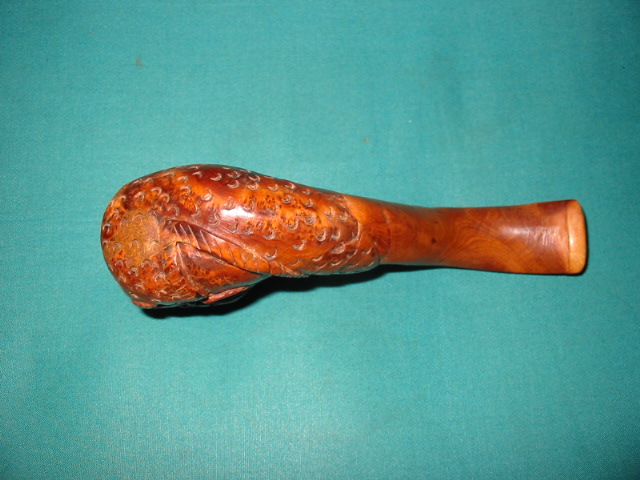
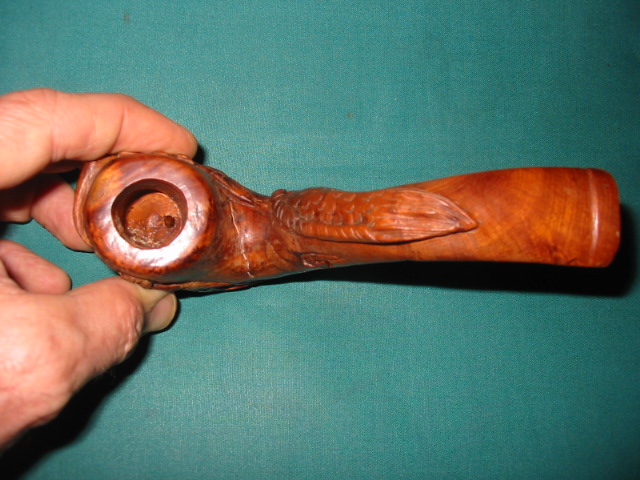
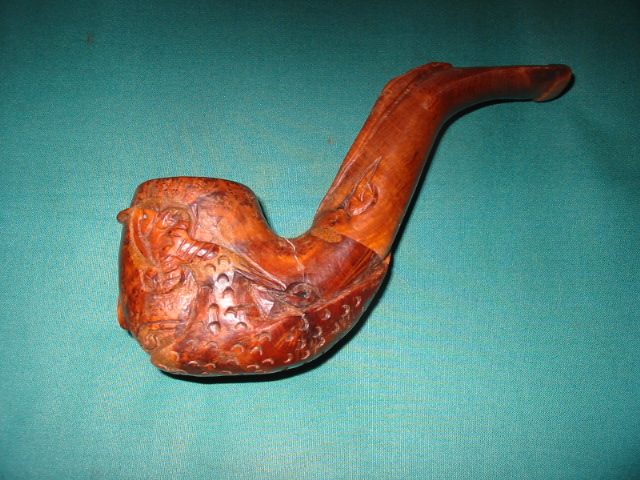
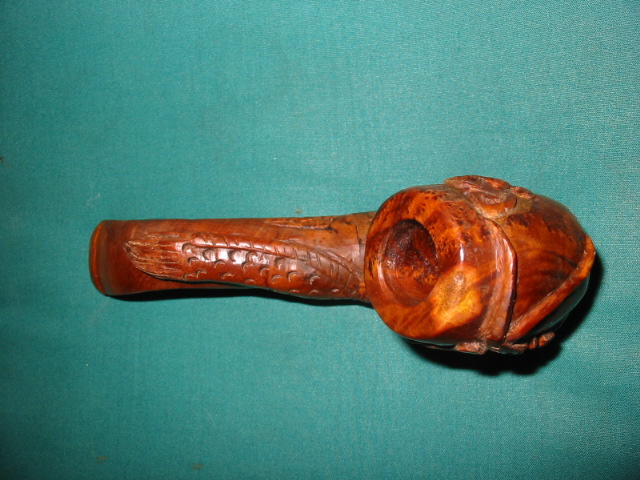
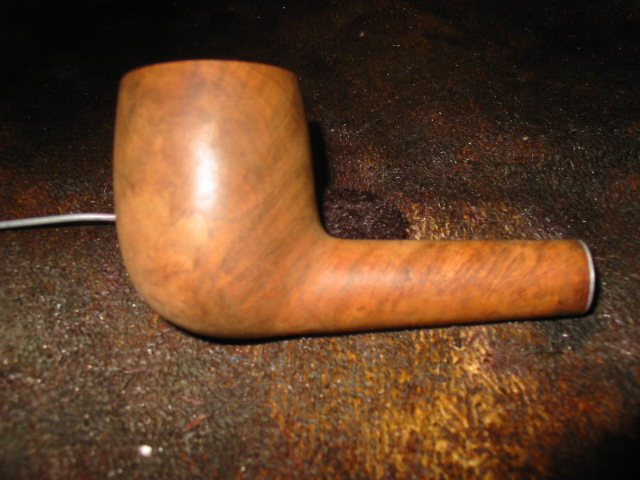
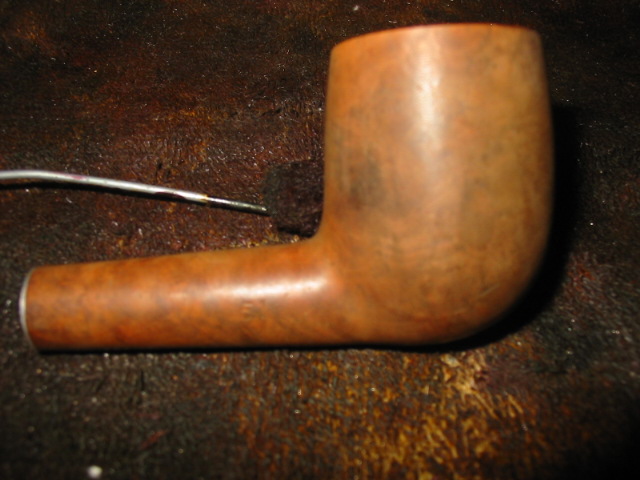
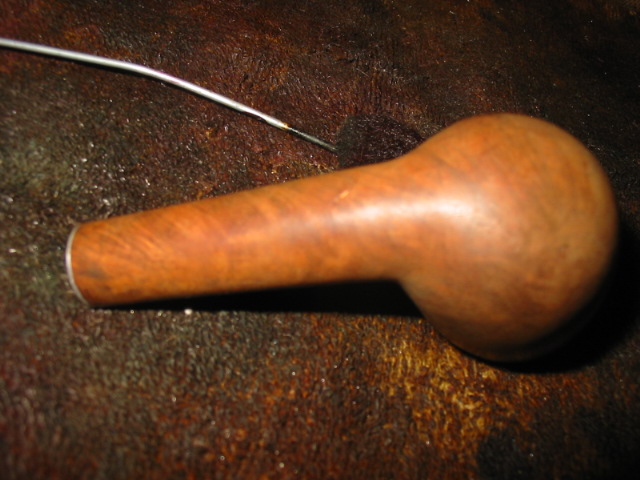
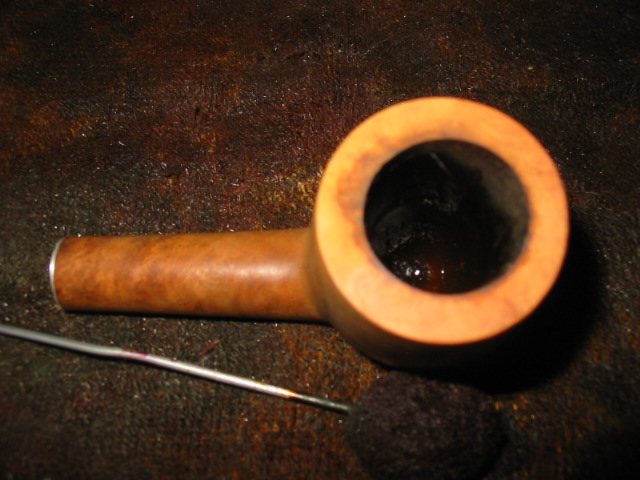
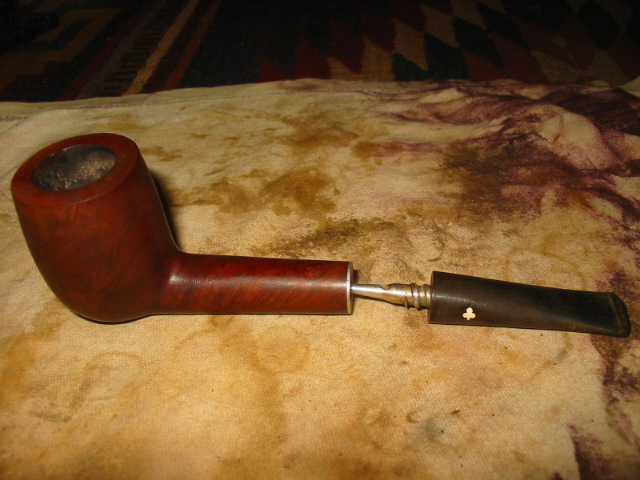
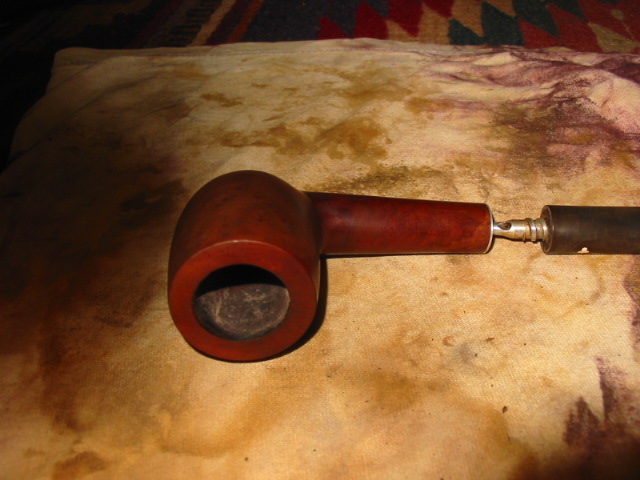
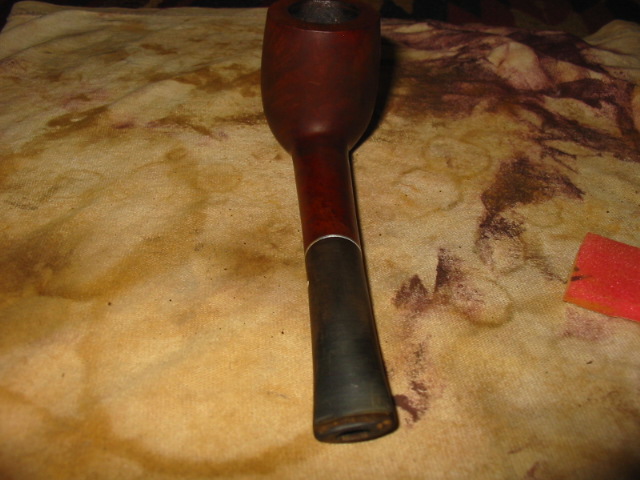
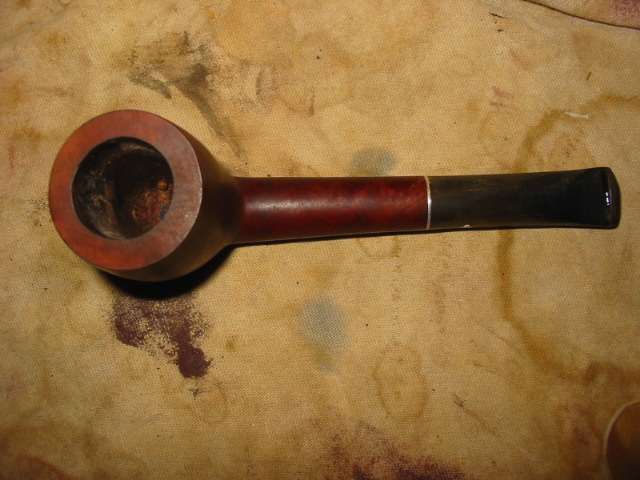
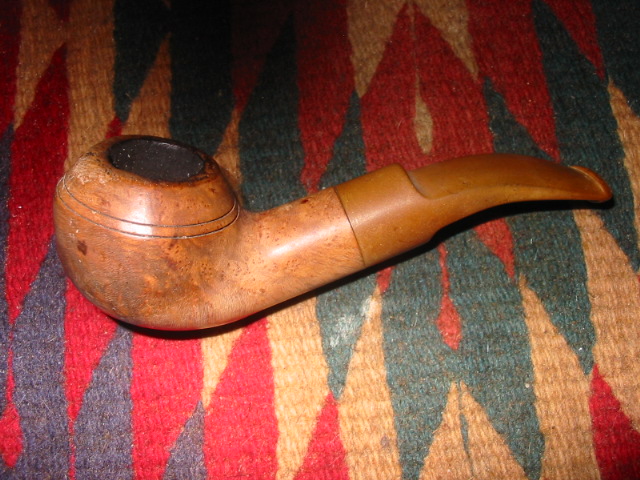
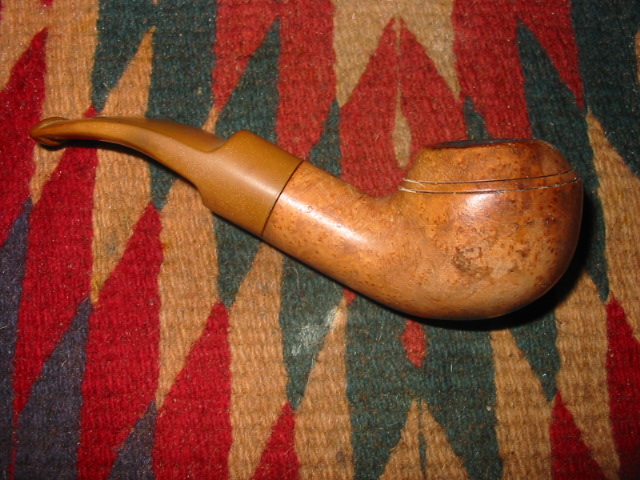
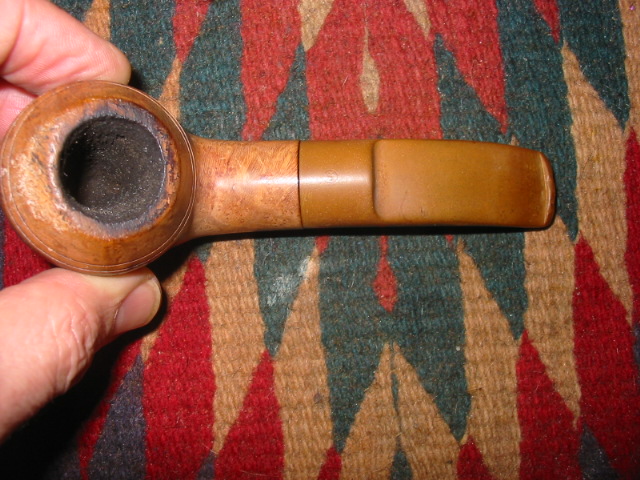
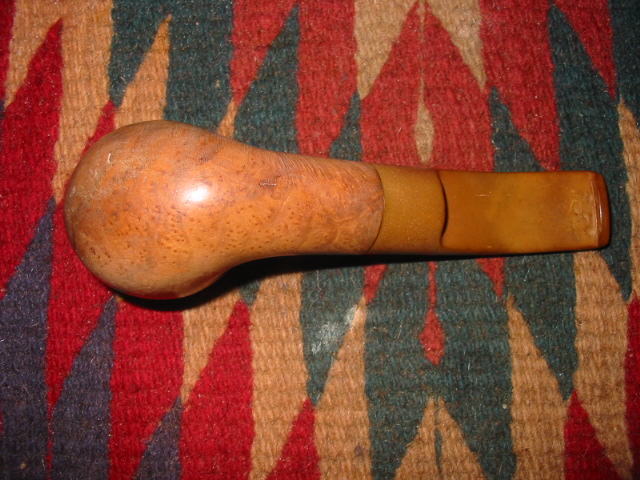
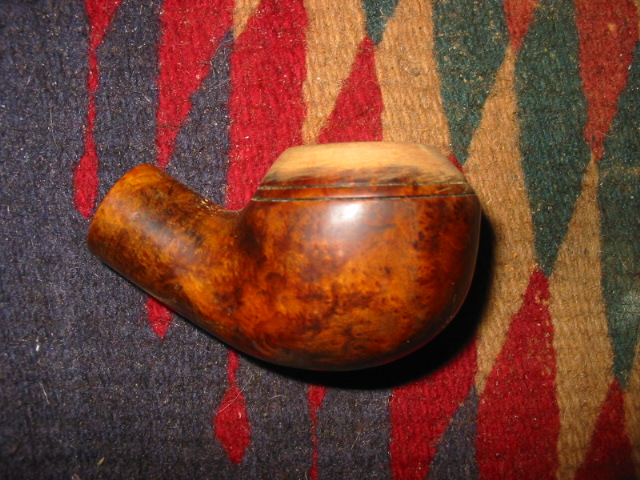
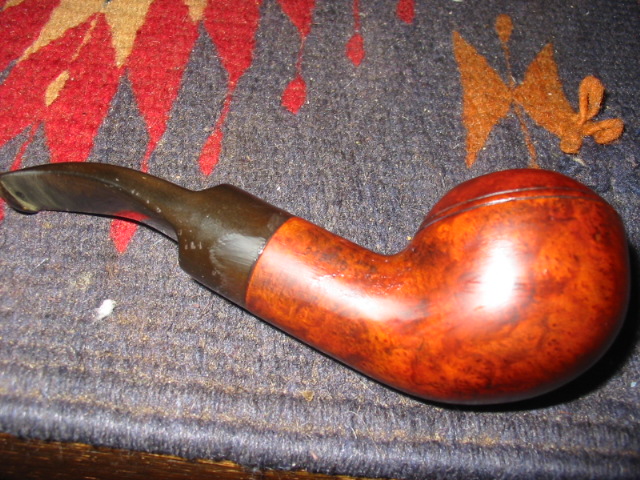
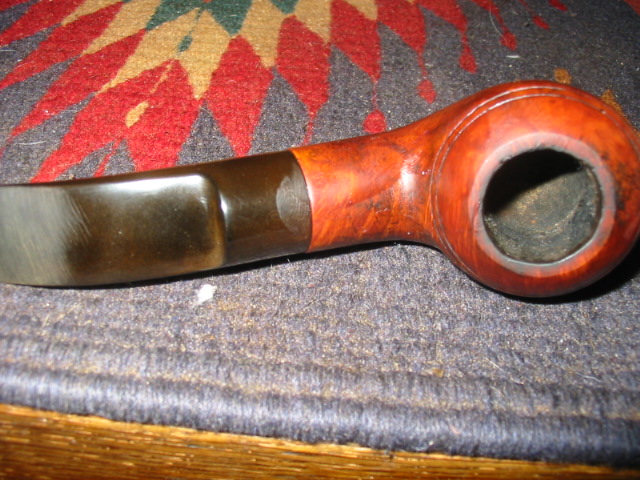
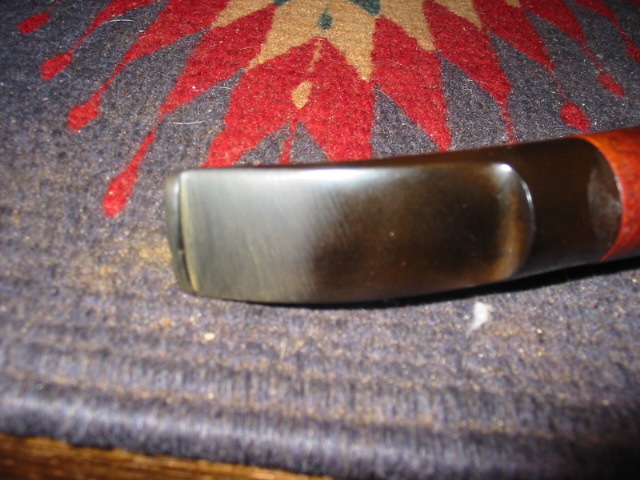
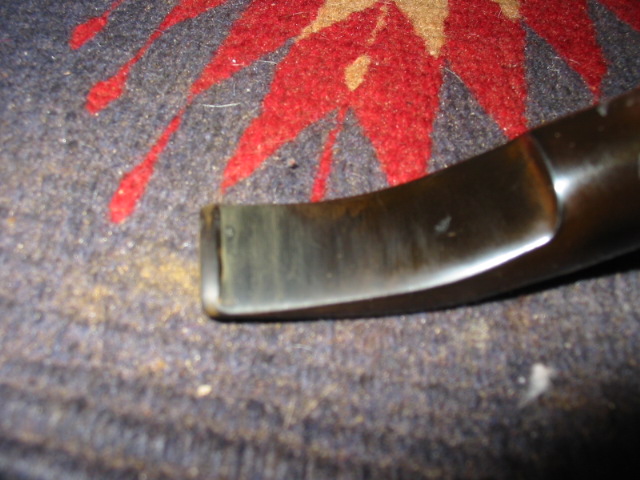
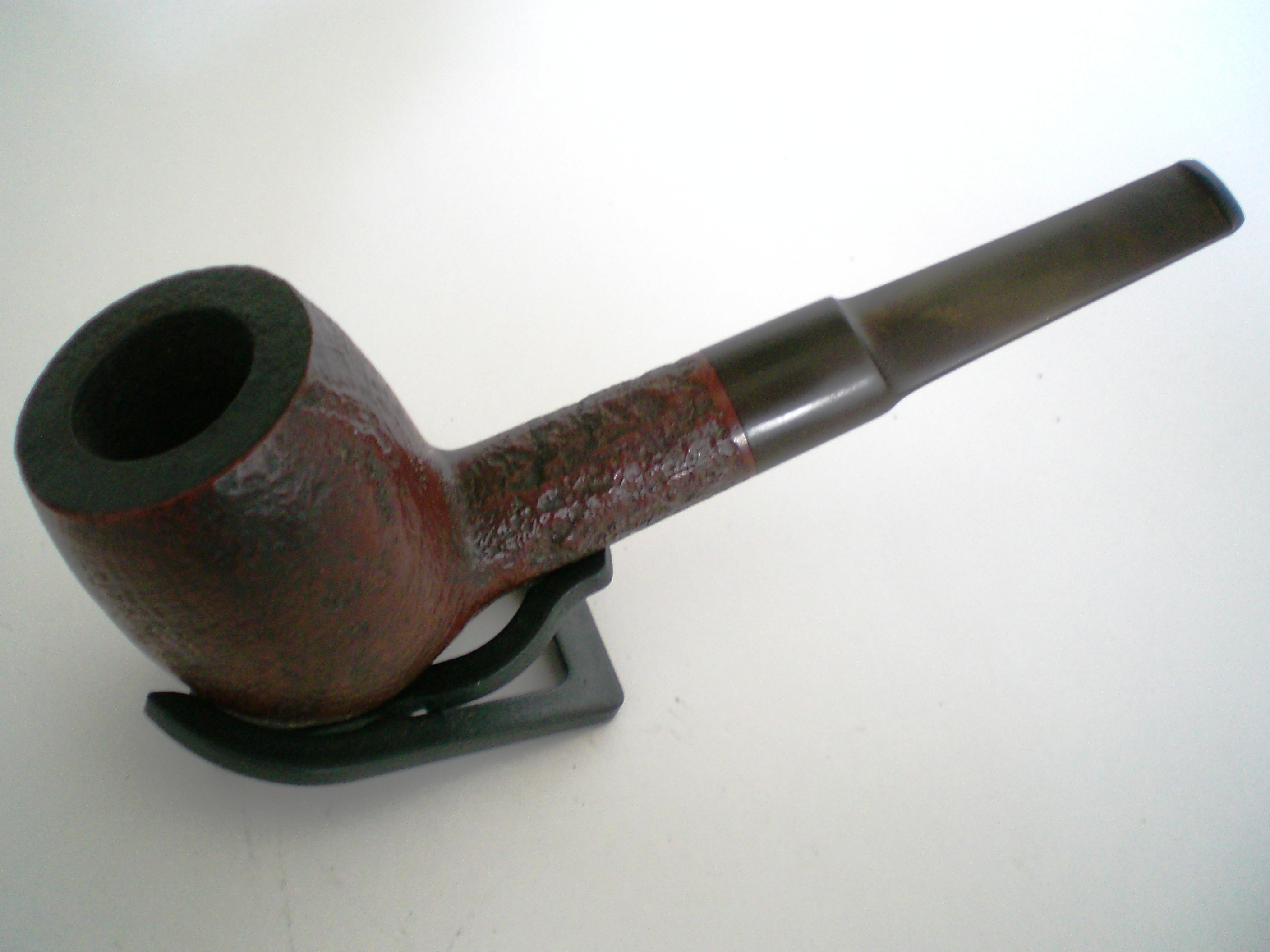
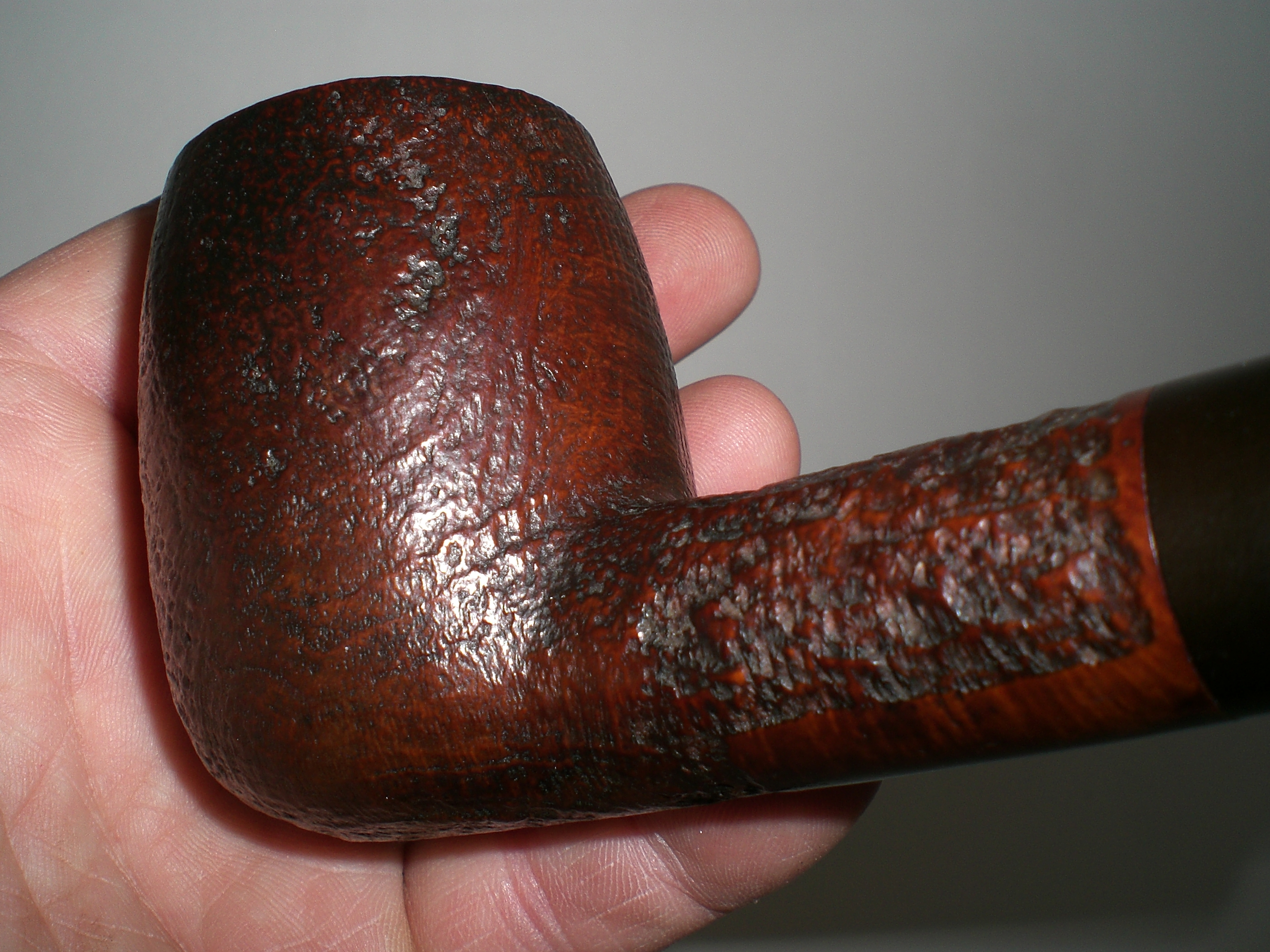
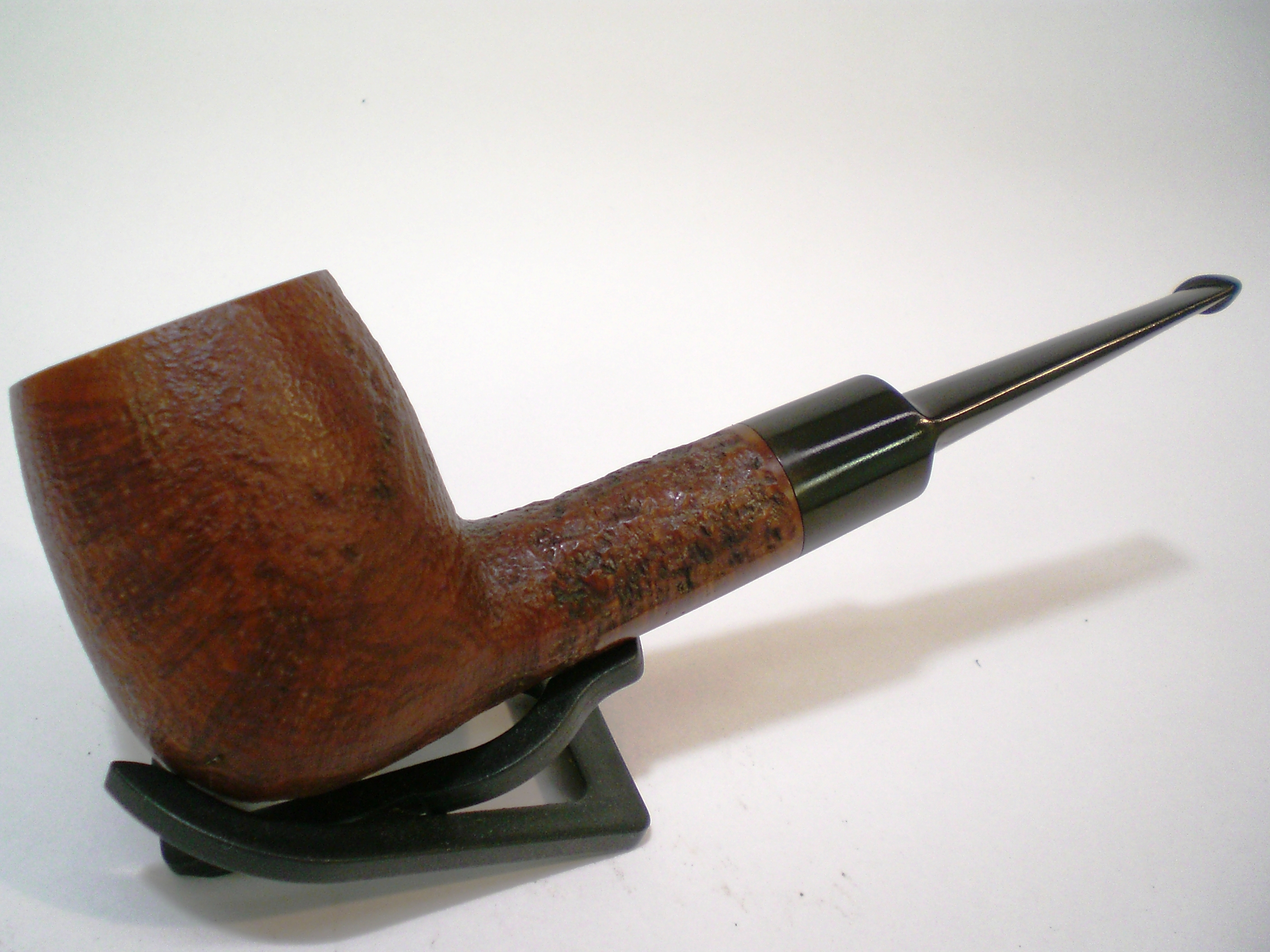
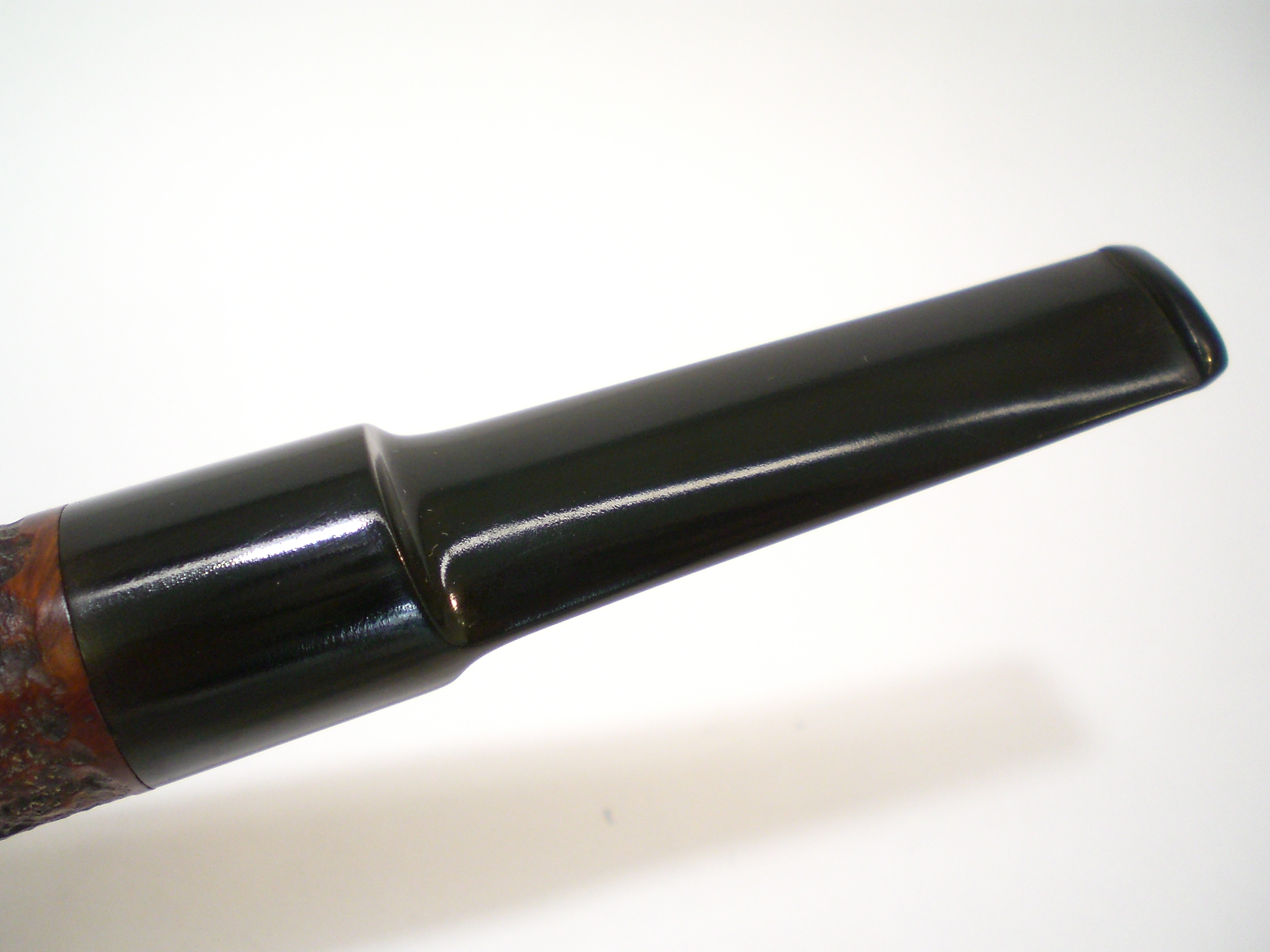
I had this old Dragon pipe sitting around in my box of pipes to be refurbished for a long time. I had no idea where it had come from but it seemed like a folk art pipe to me. It was solid wood and for a long time I thought it might be Manzanita wood or the like. I cleaned up the outside but never smoked it. The drilling on the bowl was not completed and the airway was blocked as well. So it sat forever. The shank had a crack in it that seemed to have developed as the pipe was made and I figure that the original maker just stopped working on it at that point. The tenon was metal and screwed into the mortise and the stem. The stem was also wood and was very comfortable in the mouth – thin, large, flat blade with an open flared slot in the button.

I cleaned out the dust and grit that had built up in the dragon’s scales and wings and also filled the crack in the shank with briar dust and super glue. Once it had dried I sanded the joint down to remove the excess glue and dust and then waxed the pipe with carnauba to give it back its shine.

ImageImageImageImageImage

I was chatting with T-bear (Ted Haviland) one day and decided to send it his way. Like me he is a collector and lover of the unusual. Unlike me he is a pipe maker with a lot of talent and the tools to give this pipe a work over. I sent it to him and he drilled out the shank to open it up. When he did he found that the shank had been plugged with rubber and once it was out he could blow through the airway. He used his lathe and drilled the bowl out the rest of the way to meet the airway in the bottom. Once he had done that he set it aside as a keepsake I guess. I called him and encourage him to give it a smoke. He did and wrote back to me to tell me what a great smoker it is. But he wanted to know what kind of wood it was. I had no idea and told him so but it continued to bug me. Image

One evening I was chatting with Chuck Richards about the pipe and mentioned that I thought it was Manzanita wood and he wondered if it might be Rhamnus Wood from China. I sent him pictures of it and he quickly fired back this reply:

Steve, there is no doubt that your pipe is an example of the Northern Chinese Tribal Rhamnus Wood Pipe.  If I get a chance to get some photos of mine, you will see immediately…..the shape of the bit, the scallops overlapping the junction of the bit and shank, the flow of the dragon’s mane and the shape of his nose.  Now for the fun news.  There are currently none available on the Chinese Ebay, and while the smaller plain pipes sell inexpensively, the Dragon pipes are a hefty $350.00 now. Do and advanced search for Rhamnus completed listings, and you will get a good look at the range of color in this wood.

With that news digested I sent Ted an email to finally answer his question. He was as excited as I was and sent me an immediate reply.

Steve
How interesting! Like you, I would never have guessed that this rascal had such a fascinating provenance. A Chinese Tribal pipe…wow!

The piece’s value to me is not a monetary one, but lies in the thoughtfulness of a friend who cared enough to notice my penchant for the unusual, and the generosity to gift this lovely pipe to such a grumpy old curmudgeon. It is even more special for all of that, and will remain always in my collection….when it’s not in my rotation!

Thank you for a fine smoking pipe, a great collector’s piece, and a wonderful tale to tell my friends!

T-
PS…this will be great fun to smoke at next year’s Pipe Show!

Well, it just goes to show you, you never know what you might find in a box of estate pipes. I really wish that pipe could talk so it could tell of its travels from tree to carver to whoever sold it, to the east coast of the US and then to Canada where it sat in my collection for awhile and now it is in Missouri. What tales that pipe could tell. Smoke it in health Ted. It is a beauty and to me one of a kind.

Reborn Kaywoodie Super Grain Long Shank Billiard


I have grown in my love of the older Kaywoodies. The ones I have worked on are made of some great briar and have classic English shapes. The stems are comfortable and well engineered. The finishes are usually above average and they smoke great – even with the four-hole stingers! I picked this one up on a recent trip to the US. My wife and I were on our 37th Anniversary trip and we always visit antique shops and malls as well travel. This one was one of about 8 that I picked up on that trip. The briar under the grime was quite nice and the pipe showed some promise.

The bowl was in good condition and still round. No one had gone made with a knife or a reamer and ruined the bowl shape. The finish was shot and there were dark places on the wood from ground in dirt and grime. The stem was oxidized and there was some rippling along the stem for the first inch back from the button. I am still wondering if the stem had been trimmed and a new button cut on it. There are some conflicting signs regarding that. The slot is the typical KW slot in the button and the stem is meaty around the button. The taper looks right so I am not sure. The bowl had some caking but oilier tar rather than carbon cake – it reeked of cherry tobacco! The rim was damaged on the front from tapping out the dottle. This one would need some TLC and work to bring it back. ImageImageImageImage

I reamed the bowl and cleaned out the tars and oils that were in it. I also put it in the alcohol bath to soak for a half an hour while I worked on the stem. When I took it out of the bath I dried it off and then wiped down the bowl with acetone to remove the remaining stain and finish that the bath did not remove. I really like the way the acetone removes the finish and leaves the pipe clean and ready to stain. You can see in the four pictures below the shiny spots and dark spots on the briar where I needed to concentrate the work to remove the finish and grime with the acetone. ImageImageImageImage

The damage to the front of the bowl and rim required that the bowl be topped. I removed about 7mm from the height of the bowl to remedy the damage to the front. If I had not done that the bowl looked out of round. The damage made the front rim seem thin. It was not as the curve of the damage accounted for the apparent thinness. I topped it as pictured below using medium grit emery cloth to remove the damage and then following that up with 240 grit sandpaper and finally sanding with a fine grit sanding pad to remove the scratches left behind. ImageImage

When I finished the work on the rim I wiped the bowl down one last time with the acetone to clean off the dust and grime of the sanding and prepped the bowl for staining. In the photos below you can see the state of the bowl as it stood ready for staining. The grain is very nice. The grime was removed and the dark spots lightened. The rim was back to a clean and sharp state and ready to stain. The darkened spots on the right side of the bowl influenced the choice of stain used on the bowl.

ImageImageImage

I chose to use a medium brown aniline stain to give some coverage to the dark spots but still allow the grain to come through. I applied the stain with the dauber and then flamed it to set the stain in the briar. Then I repeated the staining and flaming a second time. Once it was done I wanted to remove a bit of the opacity of the stain so I used some acetone on a cotton pad and wiped the pipe down until it had the saturation that I was looking for. In the next series of four photos below you can see the colour and the saturation levels. At this point I had not buffed the pipe or polished it on the buffer. In the third photo you will note that the stem was under turned and would not line up straight with the shank. ImageImageImageImage

To correct the under turned stem I heated the stinger apparatus with my heat gun – avoiding heating the vulcanite. I wanted to soften the glue in the stem holding the stinger in place so that I could readjust the turn on the stem. Once the glue is heated and softened I screw the stem back in place and twist the stem in the shank until it aligns. I have to repeat it often to check on the softening of the glue. Once it is aligned I cool the stem and shank with running water and then dry quickly so as not to cause oxidation or damage to the finish. ImageImageImage

I continued to sand the stem to remove the oxidation and waves in the surface near the button using various grits of sandpaper. I started the process with medium grit emery cloth to level out the waves and remove tooth marks. Then I used 240 grit sandpaper to smooth out the scratches left by the emery cloth and level the stem. I followed that up with 400 and 600 grit wet dry sandpaper to smooth it more and remove more of the scratches. I finished the stem with micromesh sanding pads – 1500-12,000 grit to bring the stem to a shine. I coated it with Obsidian Oil and let it sit, repeated the application and wiped it down. I then gave the whole pipe a buff with White Diamond and then several coats of carnauba wax for protection and shine. ImageImageImageImage

Piet Binsbergen “Hot Rods” – Piet Binsbergen


Well I am known as the visual artist, the mad man, the cowboy with a drill bit! This story is about my custom pipes offering you some history and the reasons why I do what I do.

I enjoy pushing boundaries at times and do so due to my training in the arts up to masters’ level. I do pipe repair and still hold firm that pipes need to brought back to life as close to their original state as possible. I would never dream of doing a custom job on a Dunnie shell for instance, or a pipe that remains in a repairable state.

My “Hot Rods” are custom renditions which I keep in my own collection. These are pipes lying in ICU close to flat line. They are in a poor state, often with busted shanks or missing or broken stems. You name it, these pipes have a terminal diagnosis.  From here on I have fun. I tend to push myself a little further each time with the challenge being to save the pipe at all costs. Some I have won and others lost but no matter how bad they are, I give them my best shot.

Now a bit of Pipe lore history from the dark continent, South Africa. Smokers here are few and far between. As RSA is no bigger than the state of Texas our smokers per capita will never service the demand for good pipes and tobacco. We have but a few collectors. The majority are smokers who pride themselves in workhorses such as the famous Keyser pipe smoking OTC heavily doused aro’s in them. Now, we were a British colony until the mid-1960’s so it is not uncommon to find older GBD’s, Pete’s and even antique Dunnies floating around here. As a matter of fact most British pipe makes are here in their dozens with the American and European pipe manufacturers taking a back seat.

During the apartheid years most countries in the world imposed sanction on South Africa reducing the inflow of pipes to a trickle. Being a commonwealth country we were still able to obtain Brit pipes. America and the most of Europe would have nothing to do with us. Most imported tobacco ground to a halt with South African tobacco farmers inventing the most hideous blends the world has ever seen. During the late 80’s and 90’s the South African rand lost plenty of value and after the new ANC Government took charge in 1994 we have been experiencing a slippery slope with the current exchange rate. An example of this is the pound stirling sitting at 12 to 1  and the US dollar close to 9 to 1.

The abolishment of Apartheid and the emergence of the New Democratic South Africa meant that the world re opened trade relations with South Africa. This meant that the tobacco shops locally were now again stocking Italians, Danish and American pipes. Great you may say. Think again! With the current exchange rate, expect to pay an average of $250-00 for a mid-range Savinelli which has established itself well here during the post-apartheid years. So what do we do? The solution is simple. Hunt ebay, import good tobacco and say your prayers that your orders and purchases arrive in one piece and that Mr Import Duty Officer does not sniff you out.

My journey into pipe restoration was born from a need to survive. I needed to learn the trade with speed if I was going to dabble in this pass time. It took years of experimentation and thank the Pope for the internet indeed. I found pipes in barns, begged friends and ex pipe smokers and family members for their boxed pipes to experiment on. I made headway and met some great people along the way. Mike Mitchely “Muddler”, David Peterson from the Virtual Smoking Lounge, Steve Laug, Jan Pietenpauw, Alan Philips from Sturks tobacconist in Cape town, Charl Goussard, Dean Swanepoel and the list goes on. I made friends not only locally but worldwide. We traded, gifted and swopped pipes and tobacco. My friends sent me pipes as gifts with the result being that I have to date Lee von Erck, Rad Davis, Mark Tinsky, Chris Askwith pipes in my collection to name just a few. For this I am eternally grateful.

As soon as my skills were honed I put up a website (www.binsbergenpipes.co.za) in the hope that I may meet fellow smokers and collectors around the world. I was surprised! I met people who wanted pipes cleaned, repaired, restored etc. My client base now reaches the far corner of the globe. What seems to be happening is that most of my friends locally and abroad, shop on ebay and send the pips to me for restoration.  The result is that I am paid for my services with pipes, tobacco, etc. as I simply cannot accept money from friends.  The regular Jo Soap down the road however, is billed for my services which to date keeps this pass time self-sufficient. I am not making any profit and I am happy with this arrangement as this life style now pays for itself.

A big pipe enthusiasm injection for South Africa came with the inception of the Brotherhood of International Pipe Smokers forum in December 2010. In conversation with a fellow pipe smoker from Cape Town, Dean  Swanepoel who is a web designer, we bounced around the idea of the first South African based Pipe Forum. The first question was who would join this forum? After all we are up against the big guns, Pipe Chat, Tamp and Puff, Brothers of Briar, Smokers Forum and many more. We took the leap of faith and soon friends made on other forums came to the BIPS campfire. It was decided to keep BIPS a closed forum holding membership low in order to keep a sound brotherhood medium. Members are recruited on an “invite in” basis only, not that we are snobs but in order to keep a tight nit community of brothers who care for one another. It has become a cyber-home for all the members, a place to kick up feet and enjoy the pleasures of wood and leaf.

In returning to my “hot Rod” pipes, it was important to offer the background history in order for the reader to understand the viewpoint of a South African repairman. Now, where do I find the pipes? Well, I scout antique markets over weekends and public holidays. South African’s seem to be patriotic buggers at heart and such markets are well attended with buyers seeking out Afrikana memorabilia of years past. This is where I find the gems at give-away prices. Make no mistake, they are near dead and price says it all. I pay on average for the pipes you will see here a mere average of R 30-00 ($ 5.00 to $8.00). It was here I noticed the inflow of many Brit pipes, especially GBD’s. These are entry level pipes from the 50’s and 60’s, nothing special at all.  GBD Populars and New Standards seem to be in overflow. Also Sasieni seconds destined for international markets stick their heads out once in a while. I have found some big scores too, a 1959 Dunnie Shell in mint condition in its box with booklet and sock, some Peterson’s,  BBB’s and Comoy’s either carrying the original names or their second lines. Either way, this makes little difference as we are after old wood which become reborn.

What you are about to see are the finished pipes. Some have made their way into my smoking rotation; others are yet to get there. Either way, welcome a part of my crazy world. In conclusion, most of the pipes were found at markets, others come from friends as far north as Michigan and down south in Mexico City. Unfortunately I do not have before pictures but you may get the idea.

Most of the pipes come to me looking like this, and trust me, this is a good one with a solid heart beat!Image
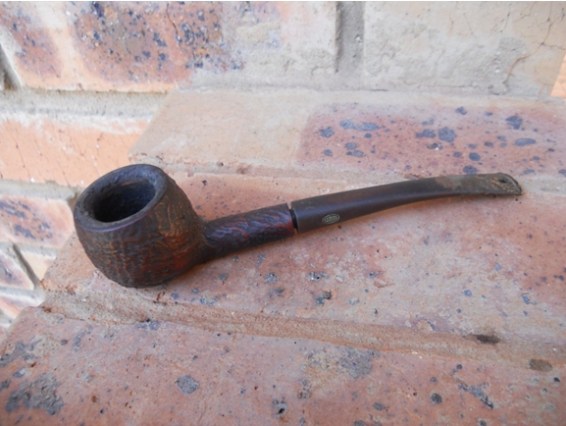
The Green Mamba

Pipe: GBD Canadian (Cadogan era, 1980’s) Shape 262

Location: Mexico City

Price: Gift from Eric Hyland (Mr. E)

Diagnosis: Broken Clear Lucite Stem

Sandblasted the stummel. Stained the pipe green. Fabricated a green Lucite stem. Image
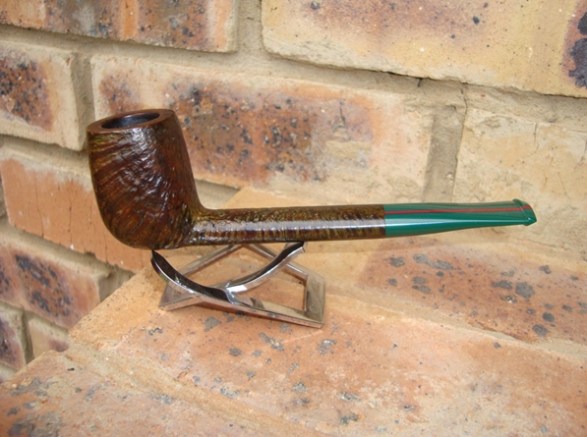
The Fire Starter (Blitzkrieg)

Pipe: GBD Popular, Shape 3781

Location: Cape Town, South Africa

Price: Gift from Alan Philips (Sturks Tobacconist)

Dignosis: Ugly chubby Lovat, a perfect candidate

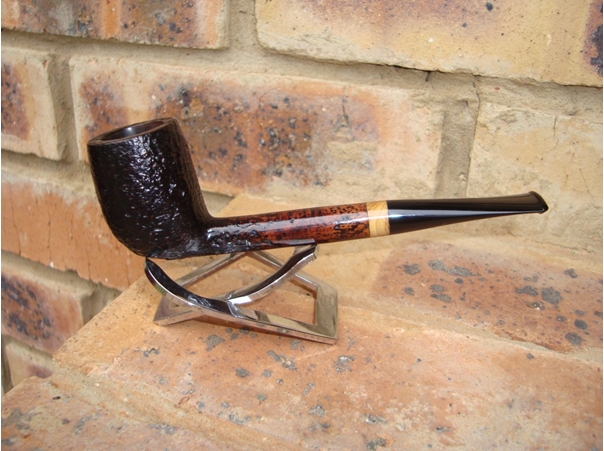
Sandblasted the stummel as it was full of putty fills. Replaced the stem adding an olive wood shank ring. Sanded the shank and shaded the stem to go from yellow through red to black using leather dye hence the name fire starter. The process is time consuming as the stains go on and sanded with 1200 grit paper, restained and so on in order to obtain the shading in colour. Image
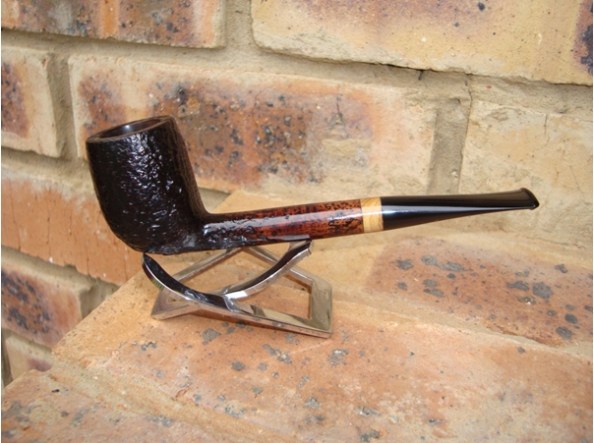
The Hippo

Pipe: Carey Magic inch Pipe

Location: Michigan, USA

Price: Gift from Chuck Rewalt (Velveteagle)

Diagnosis: Smooth bowl full of fills and dents. Chewed mouth piece. Heavily smoked and caked.

Sandblasted the stummel. Stained it black. As this is a “magic inch” pipe the stem needed to be salvaged. I sanded the teeth marks out and reshaped the bit. This was difficult as the stems are plastic castings. I added a hippo bone shank ring stained green that I got from the pipe maker Jan Pietenpauw. Image

The Black Beauty

Pipe: GBD Popular, shape unknown

Location: Johannesburg, South Africa (antique market)

Price: R 20-00 (ZAR)

Diagnosis: Snapped stem, heavily smoked, Burn mark on bowl from leaving the pipe in an ashtray next to a burning ember or cigarette. This was a major eyesore.

Replaced the stem. Did not opt for any shank adornments here. Sanded the bowl and stained it black to hide the burn mark in the wood. Image
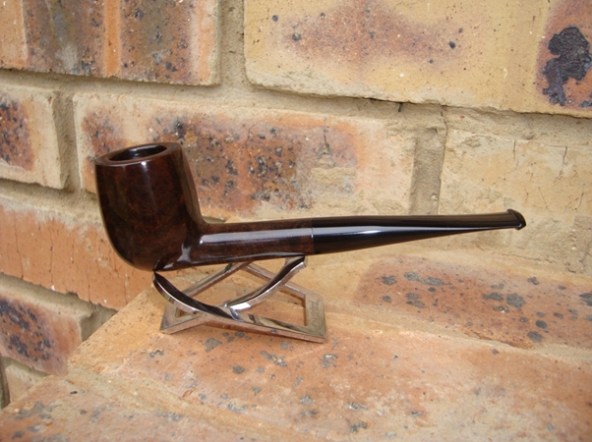
The Red Head

Pipe: GBD Popular, shape 3781

Location: Pretoria, South Africa (antique market)

Price: R20-00 (ZAR)

Diagnosis: Broken stem. Heavily smoked, dings on rim from knocking pipe on hard surface.

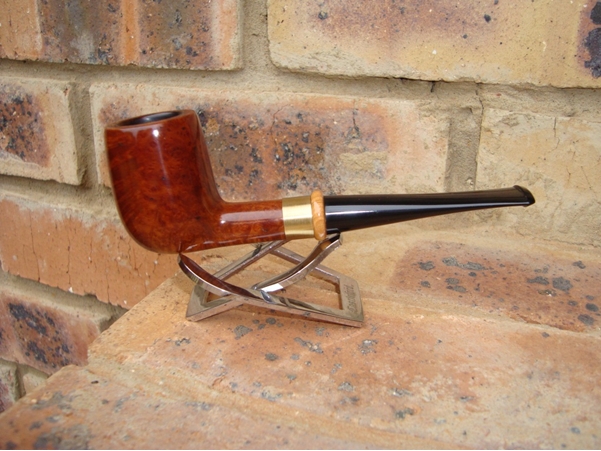
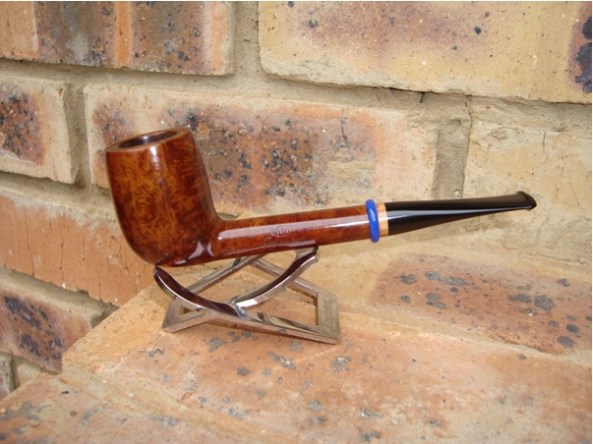
Under all the dirt, grime and dents the wood on this one was good. I lost 0.5 mm on the rim to remove dents. Sanded the bowl and restained it. Replaced the stem adding an olive wood flush shank ring and contrasting it with a blue raised Lucite ring. Image
The Reject

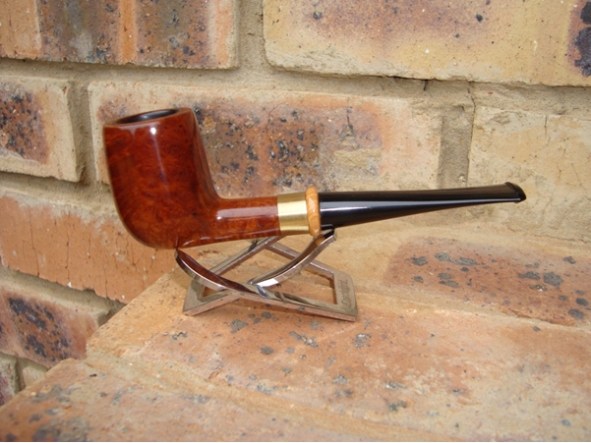
Pipe: GBD, Cadogen era Billiard, shape unknown, stamped RJ (I take it that GBD stamped the pipe reject as it carries no marking on the stummel but has GBD printed on the stem)

Location: Pretoria, South Africa (antique market)

Price: R 50.00 (ZAR)

Diagnosis: Cracked shank. Stem was intact but it was a yellow Lucite saddle with restricted draw.

Heavily smoked. Dings on bowl.

A tough call. Repaired cracked shank by spinning brass sleeve to fit flush on the shank. Added olive raised shank ring. Sanded and restained the bowl. Image
The Half & Half Virgin

Pipe: GBD Virgin, Shape Unknown

Location: Ghana, Africa.

Price: Gift, Duncan Nebbe (Rhodesian). Scored in a lot of GBD pipes on Ebay. Most were cleaned, this one flat lined.

Diagnosis: The lot of pipes were in a barn or some place exposed to the elements for many years (we suspect). Fine cracks appeared on the outside of the bowl. Stem broken. In a shocking state. It lay around the in the trash box for some weeks before it called to me.

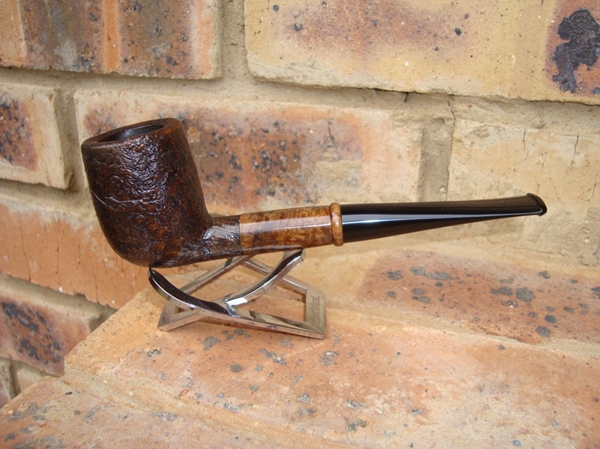
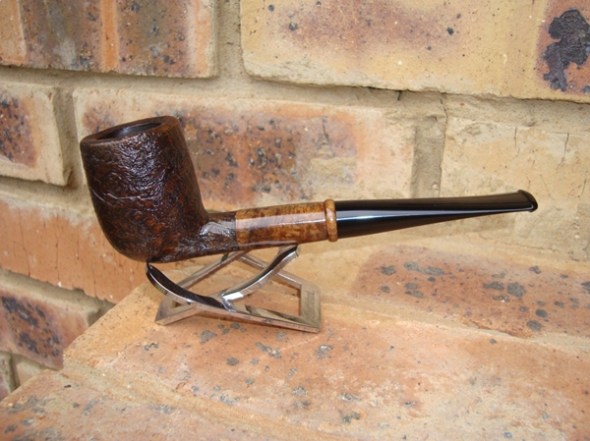
We all know GBD Virgin are not blasted pipes due to the quality of the wood. This one needed to be blasted to remove the surface cracks in the wood. I masked the shank in order to retain some faint nomenclature and the word ‘Virgin’.  Bowl restained and a new stem fitted. Tambotie shank ring added. Image
The MOERSE Billiard

Pipe: Byford/Orlik, shape unknown

Location: Pretoria, South Africa (Hospice charity shop)

Price: R15.00 (ZAR)

Diagnosis: Heavily smoked. Dings on rim from knocking pipe on hard surface. Dings and fills on the bowl. Stem clogged and chewed.

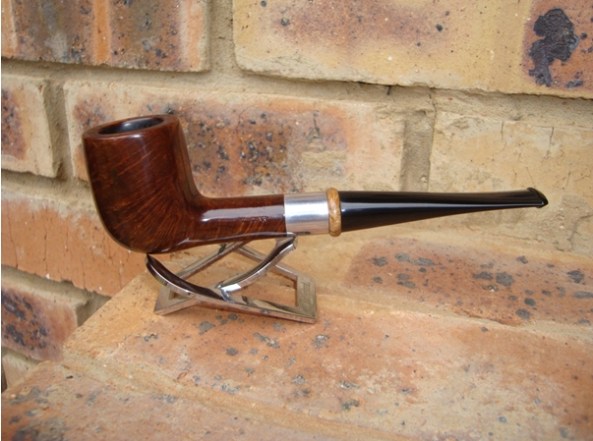
The Byford was a system pipe in its heyday.  The stem consisted of 3 tubes running back and forth in the stem in order to cool and purify the smoke. If it is not cleaned regularly the system gets clogged and there is nothing one can do to save it. I replaced the stem. The alu butt on the shank comes standard with the pipe. It was cleaned and polished. Buckeye Burl shank ring added. Bowl sanded and stained. Image
LOJ se Vlieg Masjien (Lord Oom Jan’s Flying Machine)

Pipe: Keyser Hygienic patent, shape Unknown.

Location: Pretoria, South Africa (Antique market)

Price: R10-00 (ZAR)

Diagnosis: Cracked shank. Broken Stem. Heavily smoked.

For those of you who are familiar with the Keyser pipe, this looks nothing like it. I may get shot for tampering with tradition South African pipe lore but this is how it came out. Named after the South African carver Jan Pietenpauw (LOJ) as parts for the pipe were salvaged from his reject box in order to fix the pipe. Brass shank ring added to repair the crack in the shank. Buckeye burl extension added to seat the shank extension. Stem was replaced by spinning down a pre mould to create a military mount fit. Image
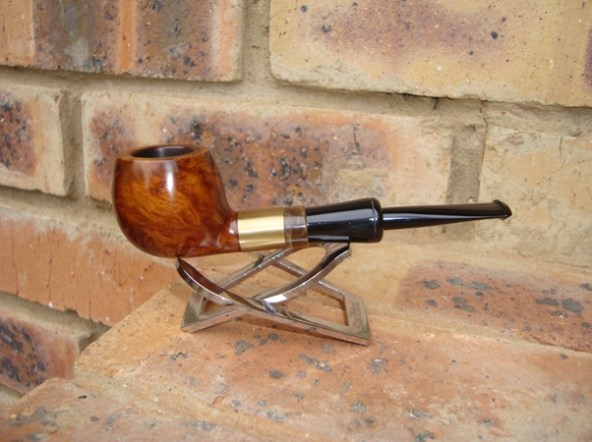
A Beatup GBD 9438 Given a New Look


I bid on this one knowing full well that it was going to take a lot of work to get it back to some semblance of beauty and functionality. When I found it on EBay I thought it might be worth the effort but let it sit for awhile and then before the bidding ended I put in my bid. I honestly think I was the only bidder so I got it for a pittance.

When it arrived it was more rough than the EBay pictures intimated. The front edge of the bowl and rim looked like it had been used as a hammer. Not only were there dents and holes on the front of the bowl but the rim was chewed up like it had been hammered out on a piece of concrete. The finish was absolutely gone. The surface of the bowl was permeated with oils and grease from dirty hands and from looked like having been laid on its side in a full ashtray! At least the bowl was still semi-round and there were no burn marks. The other remarkable thing to me was that the stem was virtually unchewed. That surprised me actually given the overall state of the pipe. It was very oxidized and a deep brown colour. ImageImageImageImage

I reamed and cleaned the bowl and shank to remove the grime and tars. It took a lot of pipe cleaners and isopropyl alcohol to clean things up. I dropped the bowl in the alcohol bath and the stem in a bath of Oxyclean for a while and went about other work that I had going. I believe it soaked overnight before I got back to it. When I did I removed it from the bath, dried it off and went to work on the damaged rim and bowl. I used some medium grit emery cloth to reshape the rim. The tricky part here was to keep the angles even on all sides of the bowl. The front edge was heavily damaged and the rim itself was also badly chewed up. After the emery cloth I used 240 grit sandpaper to smooth the scratches out and then 400 and 600 grit wet dry sandpaper to finish the shaping. The series of three photos below show the progression of the shaping. ImageImageImage

Once the top was smooth and the shape retained I wiped the bowl down with an alcohol soaked cloth to remove any dust from the sanding. I also used a dental pick to clean out the rings around the bowl to prepare them for staining. I find that those collect a lot of grit and grime and can almost be smooth due to the buildup. I then stained the bowl with a medium brown aniline stain and flamed it to set the stain. I took it to the buffer and gave it a light buff with Tripoli to remove the excess stain and also give it a slight polish. Then took it back to the work table to work on the stem and to sand the bowl with micromesh to smooth the surface and bring the grain to the front. The pictures below show the stem after the soak in Oxyclean and then light sanding with 400 grit wet dry sand paper to remove the oxidation that was softened. The stem still needed more work to get out some of the stubborn places but it was getting close. ImageImageImage

I used micromesh pads 1500-6000 grit on the bowl and the stem to finish the smoothing and restoration. Once it was done and shining I gave the whole pipe a buff with White Diamond to polish it and then gave it multiple coats of carnauba wax and buffed it with a clean soft flannel buff to polish. ImageImageImageImage

Stemming an Alan Stevenson Long Shanked Apple


I was gifted this stummel by a friend who passed on one of Alan`s rejects or cast off pipes that just did not make the grade for him. This one came to me unfinished and without a stem. I worked on it quite a while trying to fit a stem. That seems like it should have been an easy task but it was not. There was a twist in the drilling of the airway that made all stems fit at an angle rather than facing straight on the shank.

I stained the pipe with a black under stain and then buffed it off to highlight the grain and then gave it a top stain of medium brown. I opened the airway a bit large to straighten it as much as possible. I faced the shank with sandpaper to even things out as much as possible. The problem with the twist in the airway did not allow a stem to face correctly so I banded the shank with a pressure fit nickel band. I fit a stem from my stem can so that the tenon fit well and then did minor adjustments to the outer diameter of the saddle to make a proper fit into the band. With the band I left it extended beyond the edge of the shank by a 1/8th of an inch. The stem fit well into that area for a good tight fit. I polished the stem and the bowl with White Diamond and then gave it several coats of carnauba wax to finish. ImageImageImageImage
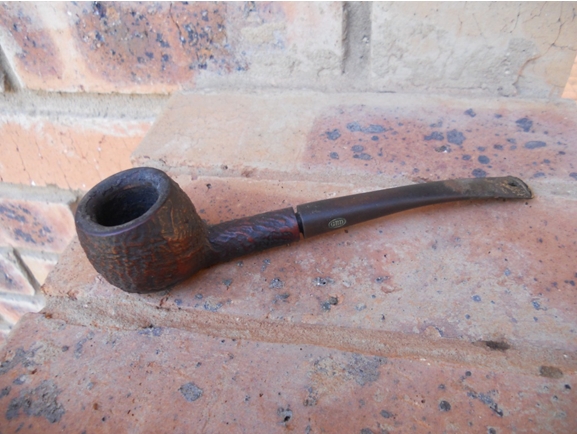
Waiting for Paradise – Fred Bass


The overwhelming majority of meerschaum pipes perform well, regardless of whatever blend you choose to smoke in them. Indeed, this has been one of the big attractions of these white pipes for me. I can avoid having to dedicate pipes to blends, except for some blends like St Bruno Flake, which will ghost any pipe.  Keeping the pipe clean is all that needs to be done to enjoy the clarity of smoking experience they provide and be able to smoke nearly any blend, without a concern for ghosting. This is the general experience for the greater number of meerschaums that you will encounter over a lifetime. This essay is about the rare, finicky pipe that calls to you, like the sirens did to Odysseus. These are the ones that smoke all but the one paradise blend with underwhelming results. Whether it is the result of an association the block used to carve the pipe formed with the clay it was mined from, or the curse of some pipe muse, this will be the most demanding pipe you will encounter. The odds are that you may never encounter one of these pipes, but if you do, then this article will serve you with good counsel. It is a quest that demands patience and firm resolve, beyond that of most Pipemen. The rewards of the successful quest are a smoke of such character and pleasures that words to describe it simply do not exist. 

ImageThe first time I saw this pipe in auction, there was no amount of will power that I could summon to resist the desire to acquire it. The Koncak Meerschaum trademark logo has been an indication of quality in materials and craftsmanship that is found only and infrequently in the vintage and estate pipe market these days. The Koncak dynasty of carvers, which also employed some of the better carvers of the day in their workshop, made and sold pipes to target populations from the frugal to the extravagant. It is wise to elicit any information that the seller can provide, but typically little is known by sellers today about the pipe and its provenance. This Smooth Pot with 925 Silver Faux Spigot is one of the better pipes that I’ve seen that the Koncaks produced. Ephraim and Sedat Koncak infrequently signed their work, while Battal and others who carved for the Koncaks frequently did sign their work. This pipe isn’t signed. Fortunately, I was able to win this pipe, as the sole bidder, which surprised me, as I thought it would attract a lot of attention. Later, others who complimented me on this acquisition admitted that they saw the auction but did not bid because they thought the bidding would go too high for them. Sometimes you just get lucky.   

In a few days, when the postman delivered it, I began to clean it up. It had not been smoked a great deal, which surprised me, considering that it is a quality pipe and meant to provide decades of service. I wasn’t going to complain. The pipe has been carved from heavy, dense block, which is typically what intricately carved pipes are made from. Likely, this choice was made by the carver to give firm foundation to the silver collar on the shank and provide durability for the wet smoker. The patina that age brings meerschaum is something that I find attractive in a pipe, so just a light wipe down with Everclear easily removed the surface grime. Polishing up the bit and the silver collars on the bit and shank was easy work as well.  There was a moderate bit of cake in the chamber and it looked like the pipe had never been smoked to the bottom of the chamber. Again, I wasn’t going to complain. There was no indication that any cheap aromatic had been smoked in it, which gave me reason to be grateful. After replacing the delrin push/pull connector, and giving it a good scrubbing with Everclear, I let the pipe rest overnight to dry from the cleaning. The next day, after smoking the first pipe of the day, to get started, I loaded this pipe with 1776 Tavern blend. My habit is to smoke estate pipes with heavy English blends, until they start smoking with clarity, mostly because they will mask most ghosts and residuals of past fires, while I flush the pipe.  Curiously, this pipe lent a musky aftertaste to the smoke, which I reasoned was because the pipe had never been smoked to the bottom of the bowl. By the tenth or twelfth bowl, I found that this musky taste was still in the smoke, when I would have expected it to be smoking with clarity. My theory about this taste being easily purged from this pipe had been overly optimistic. What did I know anyway? I smoked another half dozen bowls, using Hal O’ the Wynd this time, reasoning that the hotter burning blend would exorcise this musky character in the smoke.  Then I tried a succession of blends from Burley, Orientals, Balkans and Scottish mixtures, with no success of purging the pipe of this ghost. By this time, I began to understand why the pipe had not been smoked to the bottom of the bowl before. It had to be the musky flavor. The experience had become frustrating and my determination began to falter.

The pipe sat in its case for a couple of weeks before I became interested enough to resume my purge of the pipe. Frankly, I was a bit put off with my lack of success in exorcising the musky quality of the smoke delivered by the pipe. At least there was no remnant of any past fires with a nasty aromatic, like some of the pipes I had cleaned up in the past. I began to consider that maybe the block itself was the culprit. Had the sepiolite leached minerals from the surrounding clay that it had been dug out of? Had the pipe been mistreated or neglected in some way by a previous owner? Could the pipe be capable of providing the smoking pleasures I wanted from it? I found fresh conviction from these questions and became recommitted to my mission of getting this beauty to smoke well, even if it had never done so, which I suspected might be the case. I became convinced that the previous owner must have been lacking in strength of conviction. I was determined to succeed where he had failed. My politically incorrect assumption that the former owner was a man is a logical assumption from knowing that the majority of pipe smokers are men and the fact that I’m an old guy. The adage is that if you want to make a pipe smoke well, then smoke the blazes out of it. I would burn the defiance out of this rogue pipe and bring it into submission. After a week of smoking this pipe almost exclusively, while allowing myself the exemption of smoking another pipe as the first smoke of the day, I no longer suspected that it had been found at the crossroads after midnight, left behind by Robert Johnson while running from the hounds of hell. It was smoking wet by this time, which I reasoned was because of the high density of the block that it was carved from. At this point, I set the pipe down, with the intention of letting it dry out for a week or two, which is what I did after a good scrub, just as I had been doing during the time of purging I put it through.  Again, it sat in the handmade case that had been provided for it after the carver was finished. I had been successful in my work to get it to provide a smoke that no longer had the musky character to it. Whether the musky taste had happened because the pipe had never been smoked to the bottom of the chamber or it had been in the block before it was carved was no longer important. The pipe was smoking with clarity now.   

Another week went by before I loaded the pipe with Our Best Blend, from Smoker’s Haven, which is a full and rich blend of good character, similar to an early incarnation of Balkan Sobranie. This blend has always been a stellar performer for me, but this time, even though the pipe smoked with clarity, it was a lackluster performance, at best. Past experience had taught me that the majority of meerschaum pipes smoke well with just about anything you choose to burn, but a few pipes had been temperamental, performing well with certain blend types, like English, Balkan, Burley or Virginia blends. This pipe had served notice that I would need to continue my quest to find out what it was destined to incinerate.

ImageThe search was started for blends that would perform best in this pipe. I keep a fairly large open rotation of blends, so I put the pipe into my lineup of frequently smoked meerschaum pipes, hoping to solve the mystery through the process of elimination. The low key aspect of this quest became somewhat mythical in character, as I was only smoking the pipe about once every seven to ten days, while I worked through my open tobacco blend rotation, that is somewhere between twenty to thirty different mixtures. After a couple of months, I was no closer to solving this mystery than when I started. Then I opened a tin of Reiner Long Golden Flake, a favorite of mine that I usually kept an open tin of in the rotation, but had simply overlooked, while trying out some new-to-me blends. Throwing caution to the wind, I loaded a bowl in the Koncak meerschaum and fired it up. It was a stellar experience of mystical proportions. Everything came together as only a peak experience can and I hoped that this wasn’t a fluke. I loaded a second bowl and picked up where I had left off with the first bowl. This was it – the big payoff for my work!  I can only speculate as to why a small number of meerschaum pipes are this particular in their smoking demands. I suspect that there are a good many of them sitting in a drawer for the lack of a determined pipe smoker who will discover what will be the pipe’s choice for paradise for the lucky man who finds the right blend to smoke. The important thing is to make the commitment to discover what the pipe performs best with by smoking it, and not be one of the guys who put it in a drawer. Just be prepared to wait for paradise. 


Irwin 943810 by GBD – A Makeover.


I have had this older Irwin 943810 made by GBD for some time now. It is described on the GBD Models website http://www.perardua.net/pipes/GBDlines.html as follows: “The warm dual-tone brown finish deepens with repeated smoking. Finest rum is used in the special process of maturing these fine pipes. Its smooth flavour compliments the natural taste fine tobacco. Catalogue (1976)” With that description my old pipe looked pretty faded and worn.  The warm dual-tone brown finish was pretty much washed out and no longer “warm”. The dark undercoat on the pipe was clearly visible, highlighting the grain but it seemed that previous owners had buffed the pipe hard and the top stain of brown was gone. The bowl was dirty. The stamping is really light and I can just make out the Irwin stamp and the numbers on the side. The stem had some tooth damage in terms of scratching and tooth chatter but at least there were no deep dents. The edge of the button on the top had some minor denting to it. Tonight I decided it was time to give it a makeover.

As an aside, I have never seen the 6 digit stamping on the GBD lines so this one was interesting to me. I have sent out several emails to search out the stamping details but so far no luck. Anyone have any clue as to the meaning of the stamping? Thanks.

I started the makeover by wiping down the bowl with acetone and cleaning off the remnants of the stain and the finish that was pretty well gone. I also wanted to see if wetting the stamping would make it a bit more visible to my eye. It did and afterwards I was able to read the stamping. You can see the scratches and marks on the stem in the last two photos below. Right next to the button and on top of it there are some white spots that show the marks and scratches.

I decided to work on the stem with a medium grit sanding pad to remove the tooth marks and scratches. It also brought up the oxidation that was present but not visible in the photos above. Once I had the rough sanding done I stained the pipe with some oxblood stain. I daubed it on with the cotton/wool dauber that comes with the stain and then flamed it to dry it. In the photos below you can see the stain just after I applied it. I put it on good and heavy as I was wanting a rich coat to this old timer.

I hand buffed the bowl with a soft cotton cloth to remove the excess stain and to give it a quick polish. I decided not to use my buffer as I did not want to further damage the stamping that is already faint on this one. My goal was to enhance the pipe and try to raise the stamping a bit to make it more legible. I was able to do it enough to read it but it is still very faint. The hand buffing takes more work but I find that it does not harm the stamping at all.

The next series of four photos show both the new stain and the work that I was doing on the stem. You can see in the first and the third photos how the whole stem looked at this point in the process. The major scratches have been removed but there are still small scratches and oxidation that needed to be dealt with. In the second and the fourth photos you can see close up shots of the stem and button area. I continued to sand the stem at this point moving on to a fine grit sanding block to remove more of the scratches and the marks in the stem and the button.

I sanded the stem with micromesh pads from 1500 to 12,000 grit and the stem began to take on a shine. I gave it a coating of Obsidian Oil, rubbed it in and let it dry. I finished by giving the pipe several coats of carnauba wax.


Some Refurbs South African Style – Piet Binsbergen


One of my ideas when starting rebornpipes was to have a place where folks who did refurbishing could post and interact. Today another piece of that idea is coming to fruition. I am posting a series of refurbs from a friend in South Africa – Piet Binsbergen. Last evening (my time) we connected on Skype after a long interaction via email over the past year. Here are a few of his pipes that have been restored. Following is Piet’s post and the pictures.

Hey Steve,
Good to chat with you friend. Here are some of my latest clean ups. Here is a GBD Prehistoric Prince, 1960’s, I am not a cool as you so the stem needed replacing. I am working on the Steve Laug filling trick, I may just graduate soon. I opened the air way to 4mm right through.

Here is a Peterson that I needed to sand the bowl and restain. Round 1 black to penetrate the soft wood, sand and then round two I used brown stain. I have also been pre-carbonising the bowls of late.

Next is a pipe belonging to Mark Vosseler in NY. It was his dad’s. Wanted a new stem as this one draws bad! Fitted a pre-moulded sem and added elephant ivory ring, opened airway 4mm. Sanded and re stained bowl to get rid of fills.

The last one in this lot is this GBD Concord. It was cleaned and refurbished. Restained the bowl and worked on the oxidized stem.

Restoration of an old BBB Own Make 622


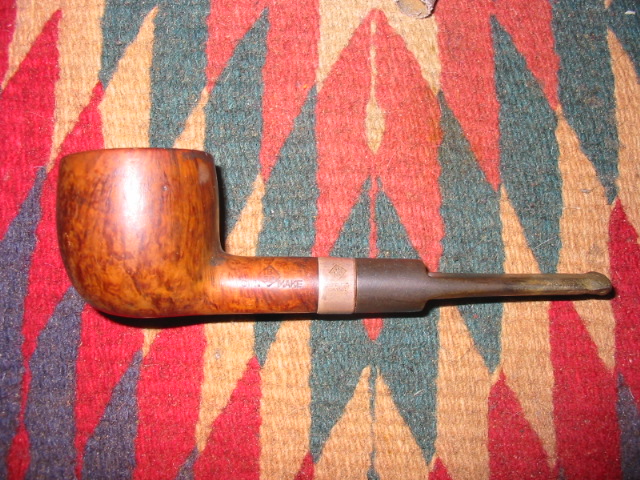
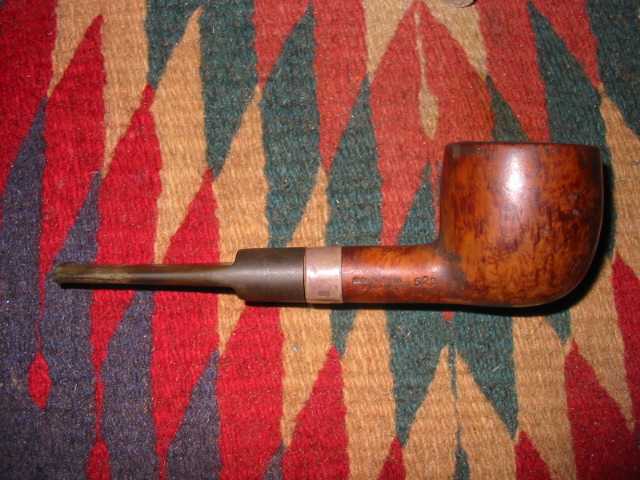
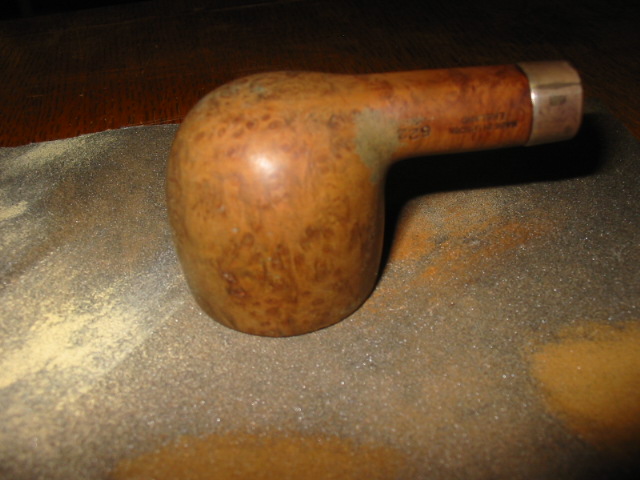
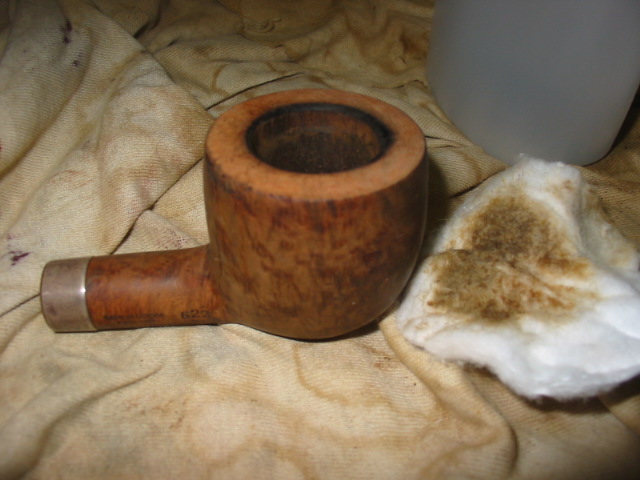
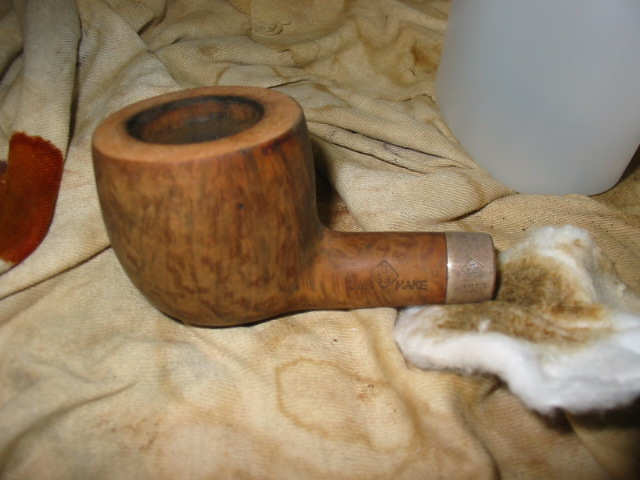
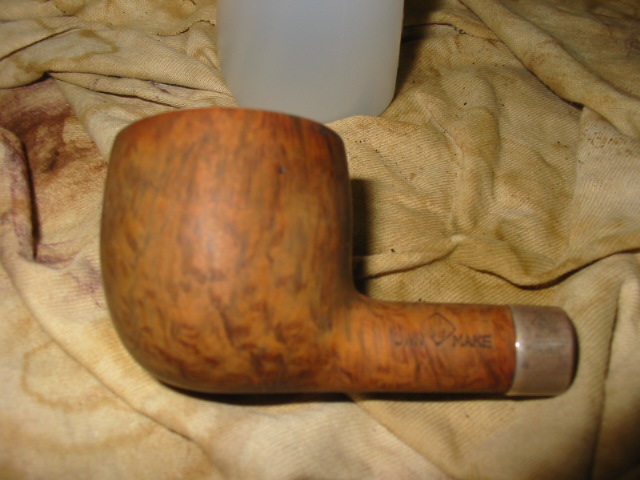
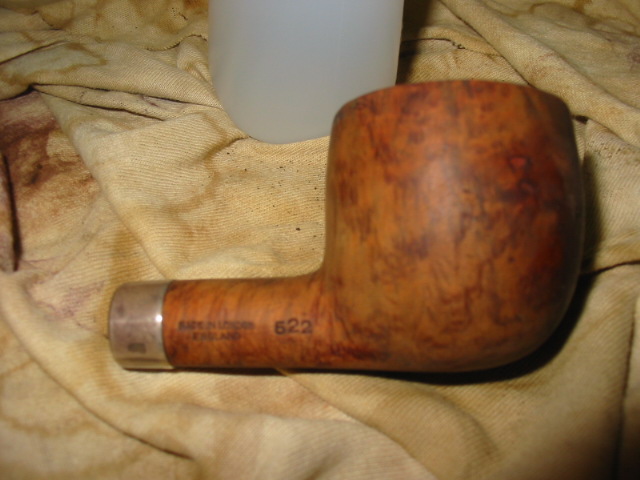
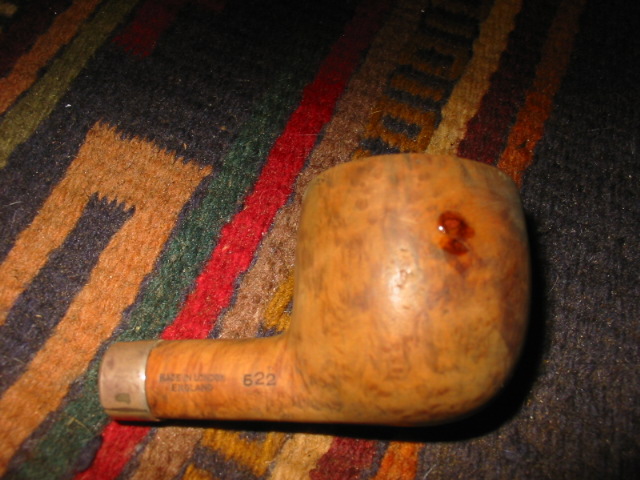
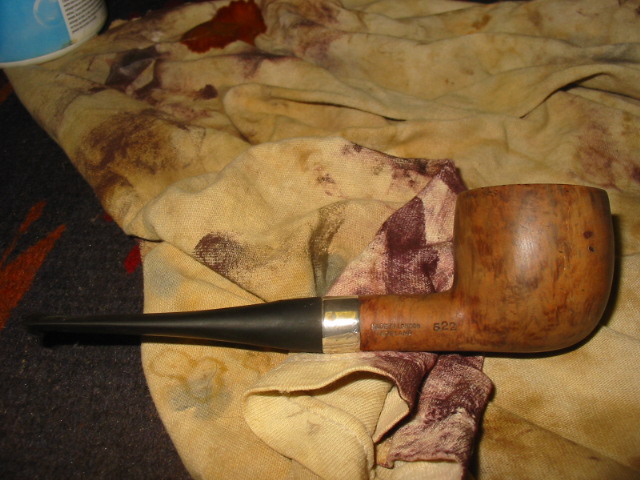
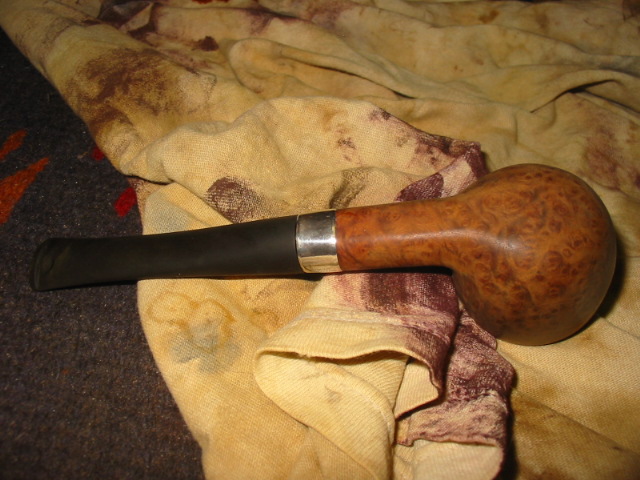
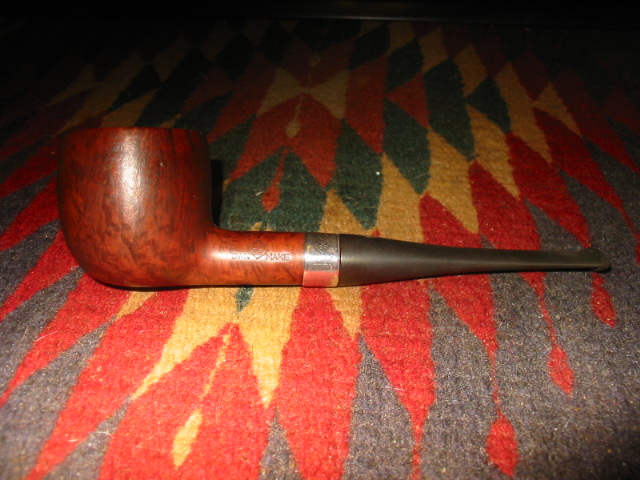
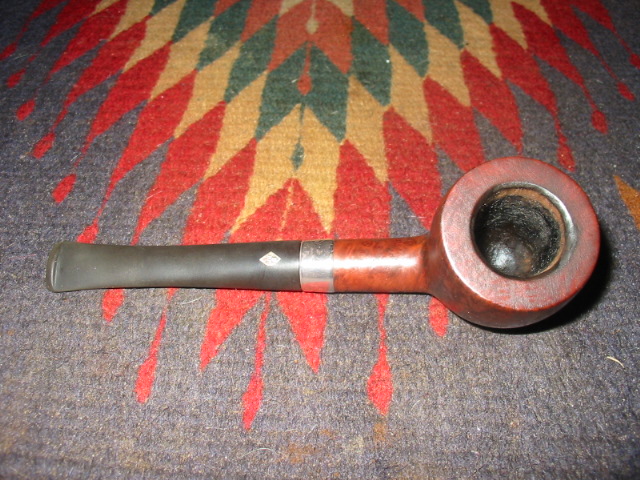
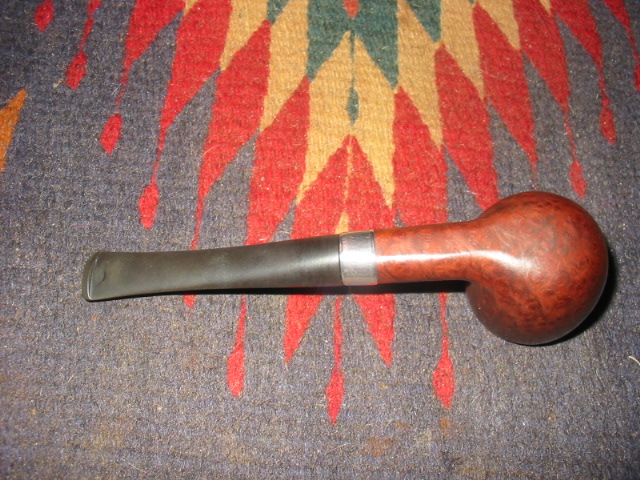
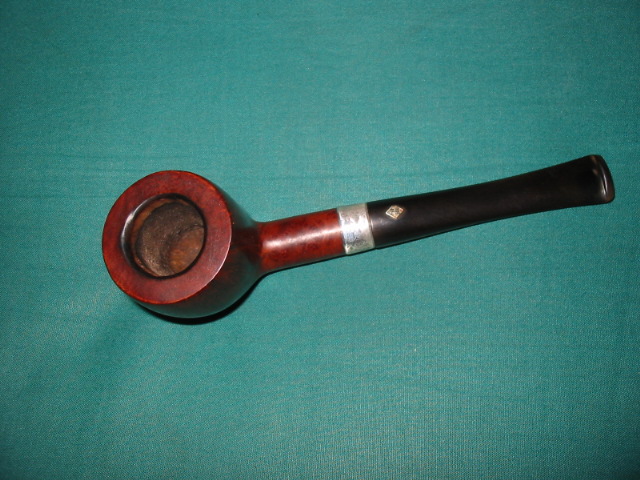
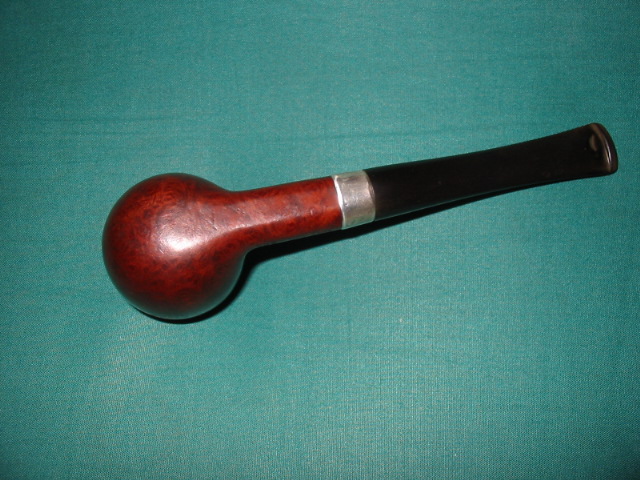
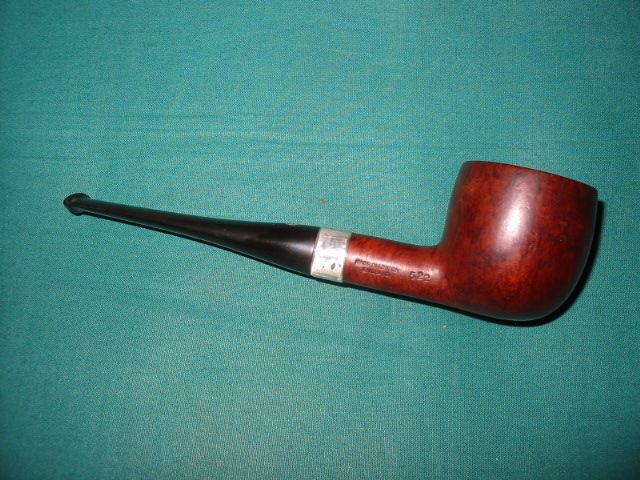
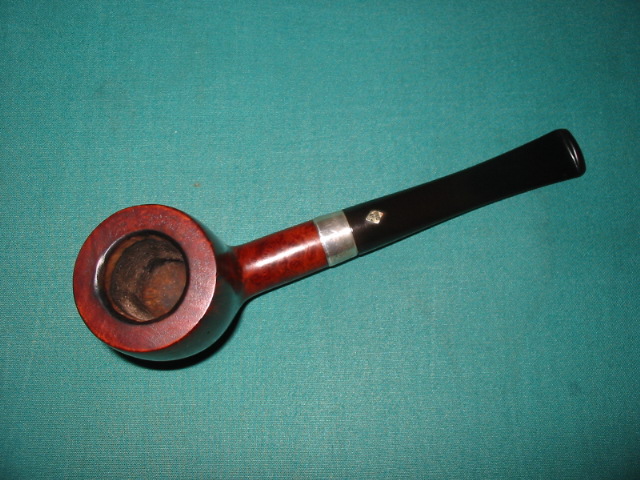
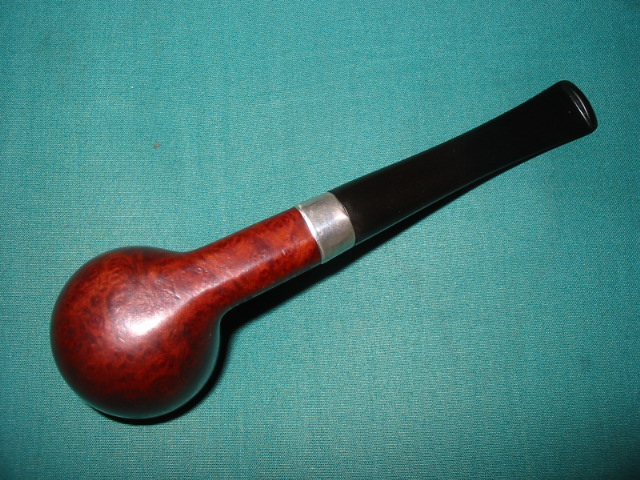
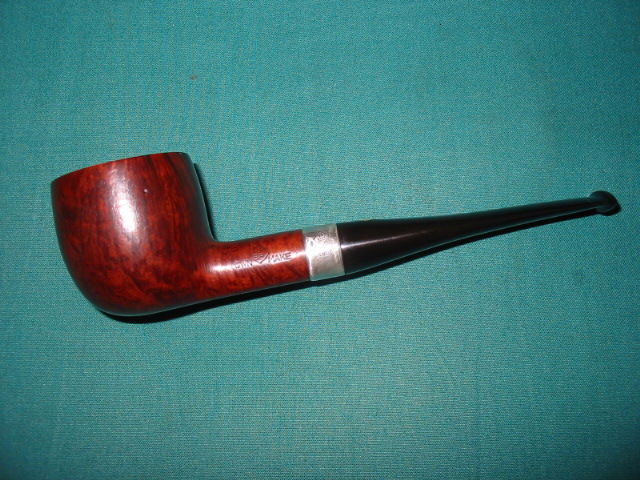
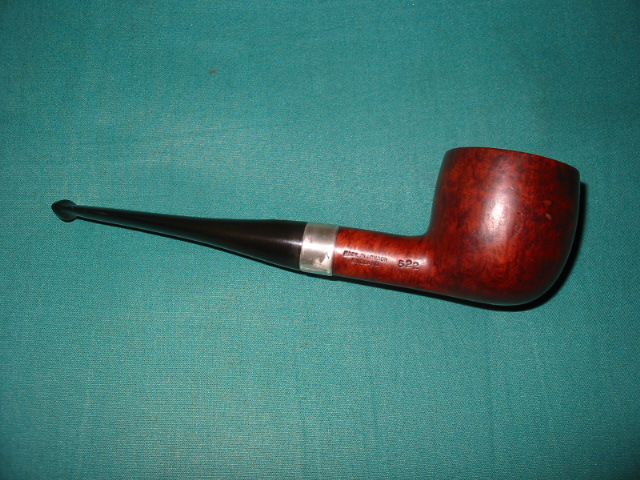
When I saw this one on EBay it grabbed my attention. I have always loved BBB pipes and found that they are great smokers and often fly under the radar. This one is stamped BBB Own Make on the left side of the shank and Made in London England 622 on the right side of the shank. The stem was an obvious replacement stem from the pictures. The band is a factory original stamped BBB and Sterling Silver. The grain showed promise and the bowl looked to be in good shape under the grime. I would know more once it arrived.


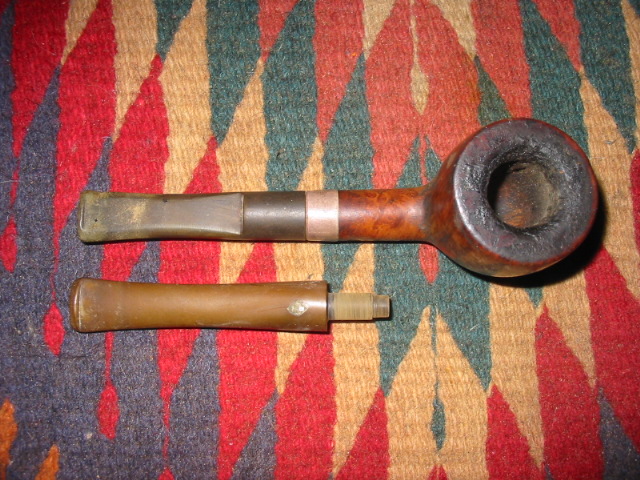
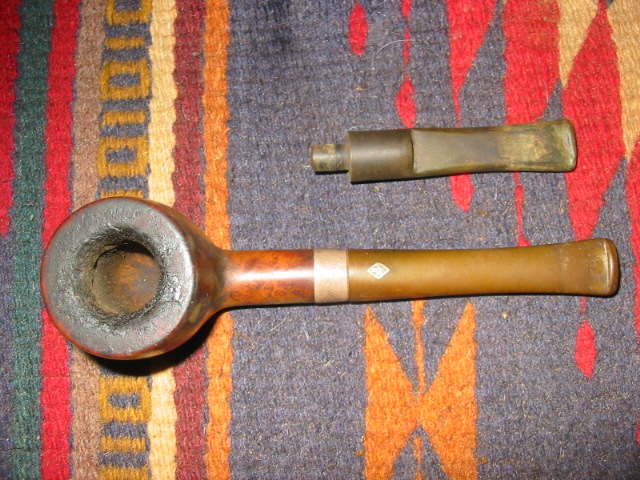
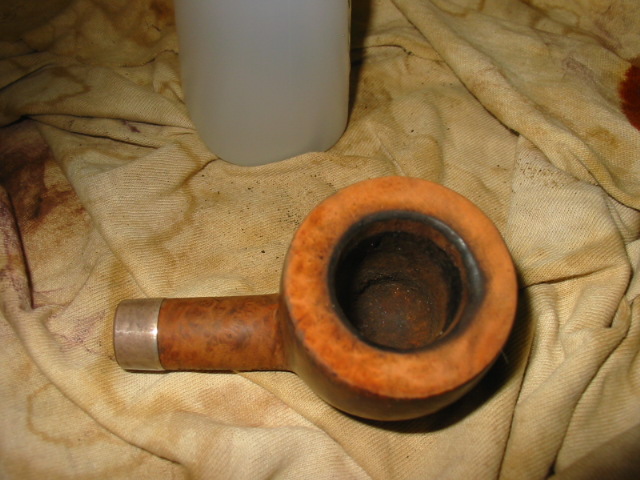
Once it arrived I took time to look it over. The bowl indeed had some great looking grain under the grime. The rim was covered with a thick coat of tar and carbon. The bowl looked to be unmarked by reaming and was still round. The cake on the inside was crumbly and sticky. The entire shank was caked with the sticky grime as was the stem. Definitely a goopy aromatic had been smoked in this old timer. The sterling silver BBB band had dents in it but was unbroken and uncracked. It was definitely an original band as when the stem was removed the shank was not cracked or damaged. The stem was indeed a replacement. It was a standard blank that still had some of the edge marks from the casting on it. It also short in terms of the length of the original pipe as I have found it on pictures on the web and in the catalogues. I was unable to find the 622 with a saddle stem like this one. It did not have the BBB diamond logo or a stamping of BBB on the stem either.

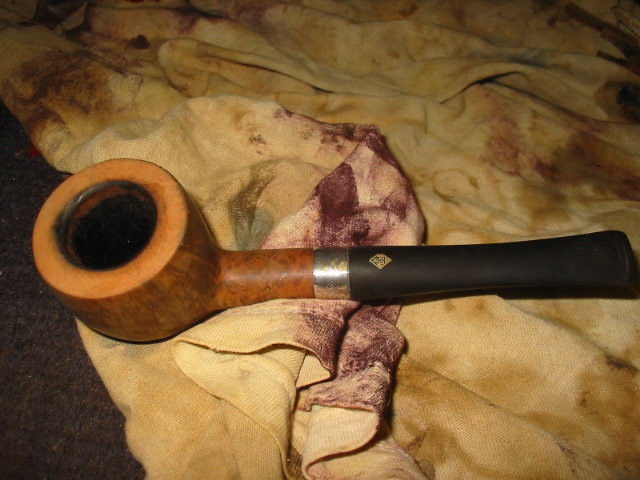
One of the reasons I bid on the pipe was that I had a BBB taper stem in my can of stems that looked like it would be a perfect fit for the pipe. Once I had it out of the box and on my work table I took out the old stem and sanded the tenon a little to make it fit correctly and slid it into place. The diameter of the stem was a perfect match to the shank and the tapered stem fit well with the pot shape. The two looked like they belonged together. Once the fit was smooth and well seated I put the replacement saddle stem into my can of stems to be used one day on a pipe that needed to be restemmed.

I put the bowl into the alcohol bath for about a half hour while I worked on removing the oxidation from the stem. I placed the stem in a bath of Oxyclean and hot water to soak when I took the bowl out of the alcohol bath. The Oxyclean softens the oxidation and makes it easier to work with than the hard unsoftened oxidation. The bowl was a real mess and I wanted to get the grime and remnants of the old finish removed so I could start fresh with the bowl and restain it. When I took the bowl out of the bath it looked like is shown in next three pictures. The finish was gone but for a few grey spots at the bowl shank junction and around the rim. The top of the bowl was seriously covered with goopy tars and black sludge that would take some work to remove. You notice in the first picture that on the right side of the bowl near the front were two fills that needed to be addressed as the putty had shrunken and they were divots.

I reamed the bowl to remove the internal grime and get back to the wood. I find that a soak in the alcohol bath softens the cake making removal much easier. It does not chip or break around the rim. I also cleaned the shank with pipe cleaners, a shank brush and alcohol to clear out the tars. I also used a drill bit that I had turned into the shank to clean out the hardened tars. Once I had it clean I used some emery cloth and turned the bowl top into the cloth to remove the chunks of tar and carbon build up. The next series of three pictures show the pipe during and after using the emery cloth. The last picture shows clearly the extent of the grime and tar build up even after sanding the top of the bowl.

Once the bowl was at the point in the photo above I then reamed the bowl a second time to clean up the remaining build up and then wiped the bowl down with acetone on cotton pads. The next series of five pictures show the pipe after the repeated wipe down with acetone. The briar is clean and ready for some work on the fills and some work to remove some of the damage to the inner side of the rim – you will notice in the last photo in the series.

I picked out the putty fills and wiped the bowl down one last time with acetone before dripping super glue and briar dust into the sandpits. The briar dust and superglue makes a far nicer looking fill in my opinion than the pink putty ever will. Once the glue had dried I sanded it with 240 grit sandpaper to see if there were any dents or dimples in the patch and refilled until the surface was smooth. I sanded repeatedly with the 240 grit until the patch blended into the surface and the glue was off of the surround clean briar.

I then used a piece of sandpaper to bevel the inner edge of the rim into the bowl to lessen the effect of the burned area. I aim for an even bevel all the way around the bowl rim and thus the effect of the burn will disappear with the stain coat. I took the stem out of the Oxyclean bath and wiped it down with a cotton cloth to remove the softened oxidation. I then reinserted it into the pipe to check for a good fit. You can see in the first picture below the beveled rim and the fit of the stem. The stem is almost back to a clean black finish. The oxidation is virtually gone and only needs to be polished and sanded with micromesh pads to bring back the shine. This particular stem also had two deep tooth marks on the top and bottom of the stem near the button. I decided to deal with them after I had finished cleaning and polishing the stem and staining and polishing the bowl.
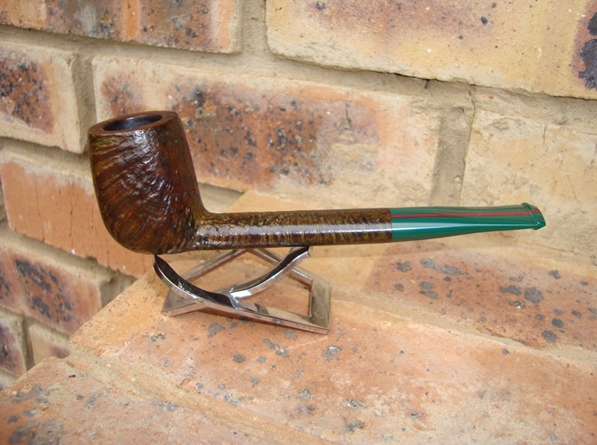
I gave the pipe a first coat of oxblood stain, flamed it and buffed it off with Tripoli. You can see that it gave a fairly good coverage but was a bit too opaque to my liking. I wanted the grain to be more visible so I washed the pipe down with acetone to remove some of the depth of colour and highlight the grain. In the photos below you can see the pipe after I wiped it down with the acetone and buffed it with White Diamond. It still was not the finish I was looking for so I sanded the bowl with 1500 and 1800 grit micromesh to smooth the surface and then heated the bowl with my heat gun to open the grain of the wood before giving it a second coat of oxblood stain.

The next series of four pictures show the finish that I was looking for. The grain shows through clearly and the bevel and stain on the rim minimize the effect of the burn marks. The stem is also cleaned and polished but the bite marks still remain in the pictures below. After staining and flaming the pipe I buffed it with White Diamond and then waxed it with several coats of carnauba before buffing with a soft clean flannel buff.

At that point last evening I set the pipe aside to be finished today. When I came home from work this evening I used the heat gun to raise the dents in the stem on the top and underside. The first two photos show the effect of the heat gun in raising the dents. Once I have the dents raised as far as I can lift them I used 240 grit sandpaper to level the surface of the stem and I have found that the combination of the heat and the sanding takes care of most dents in the surface of the stem as long as they are just dents and not cut marks. I finished sanding those areas of the stem with micromesh pads from 1500-12,000 grit until the stem had its own inner shine. When I was finished I coated the stem with Obsidian Oil and once dry, buffed it with carnauba wax and a soft flannel buff. To finish off the pipe I gave it several more coats of wax and buffed it by hand with a soft cotton cloth.

“Made In England” Billiard


This is the third of the four pipes I recently refurbished for a friend in Ohio.  This is another very large pipe and a  bit of a mystery.  The pipe is just under 7″ long and weighs approximately 95 grams.  Another hefty hunk of briar from this four pipe estate.  It is stamped simply, “Made In London England”.  The rest of the polished nomenclature area is left blank.  It sure does have a Charatan feel and I wonder if it was a reject or a second?  The detail of the stem tip is almost identical to the Charatan.  Someone on the SmokersForums.uk once told me to “read the pipe, not the stamping”, but this is just a hunch.

The bowl top was pretty beat up and had a heavy tar buildup.


The tenon has the same features as the Charatan Select pipe from the four pipe estate.

When I removed the heavy layer of tar, it lightened the stain a bit.   So it became necessary to restain the bowl.  I soaked it for several hours in an alcohol bath and using a brass bristle brush to get stain out of the blast.  With  the stain removed, the bowl top was so rough, I decided to sand it smooth.  I’m glad that I did and think it looks smashing with a smooth, polished top.  I used a series of 800-1500-2000 than the last two Micromesh grades for sanding with the paper on a flat workbench surface.
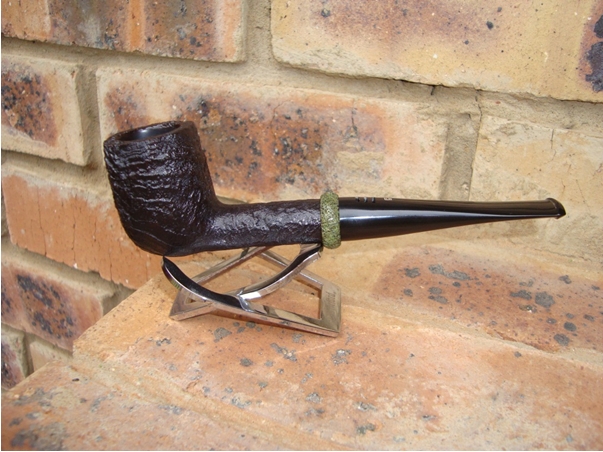
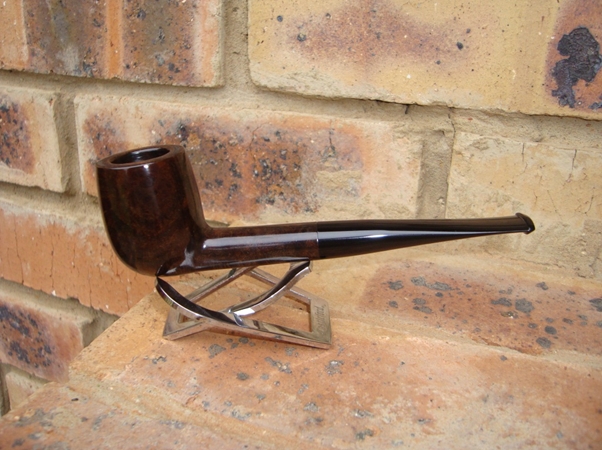
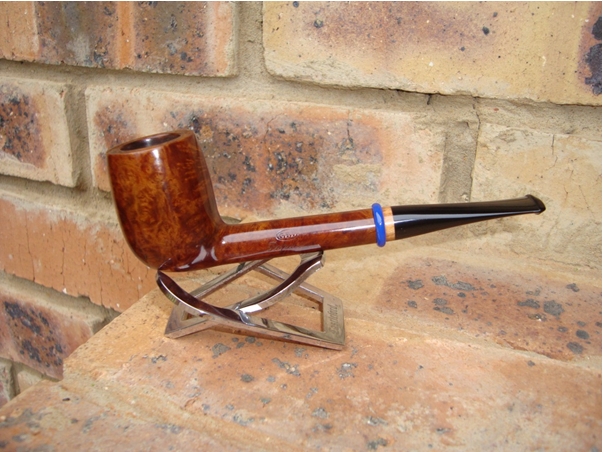
I used a very light mixture Fieberlings “Medium Brown” stain, thinned with alcohol.  I put on two coats of stain, with each one set with a flame (I’ve perfected this process, so it no longer frightens me).  I use a 6″ socket extension to hold the bowl during application of the stain and the flame setting.  This shows the bowl stripped of finish and ready for the first coat of stain.

The bowl then was buffed lightly with white diamond and finally several applications of carnuba wax.

The stem was soaked in oxyclean during the briar work and was polished with 1500>2000 grit wet paper, than the last three grades of micromesh (up to 12,000).  I then buffed the stem with White Diamond and a final buff with automotive plastic polish.

Thanks for reading, smoke safe!

Al Jones