
by Steve Laug
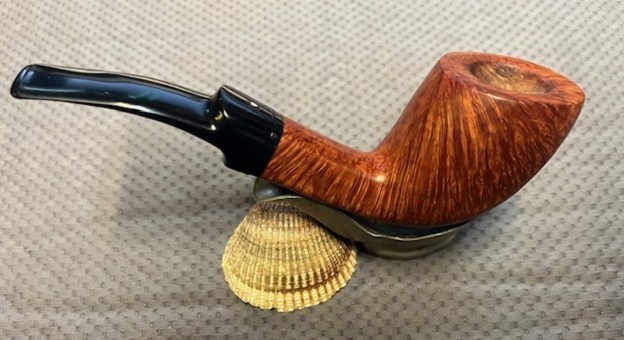
The next pipe I have chosen is a beautifully grained and smooth finished Scoop with an acrylic shank band and a thin space of some softer material. Perhaps it is cork but we would know once we cleaned it. The stem is an acrylic saddle. It came to us on August 22, 2024 from a friend in Barrington, Rhode Island, USA. The contrast of the brown stains makes the grain stand out. It was stamped underside of the shank and read Tom Spanu [over] 1999 F2. The pipe was very used but had been reamed recently. The bowl was clean and the smooth rim top was dirty but free of lava. The black acrylic saddle stem was in good condition other than being dirty and having light chatter on both sides of the stem ahead of the button. The Spanu logo was in good shape. It was a silver dot on the top of the saddle stem and it looked like it was in a circle of briar. Jeff took photos of the pipe before his cleanup work. They tell the story and give a glimpse of the pipe.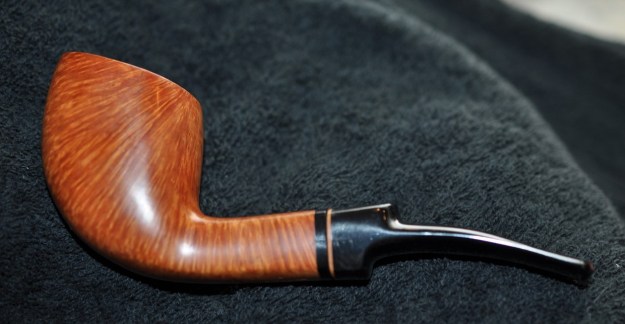
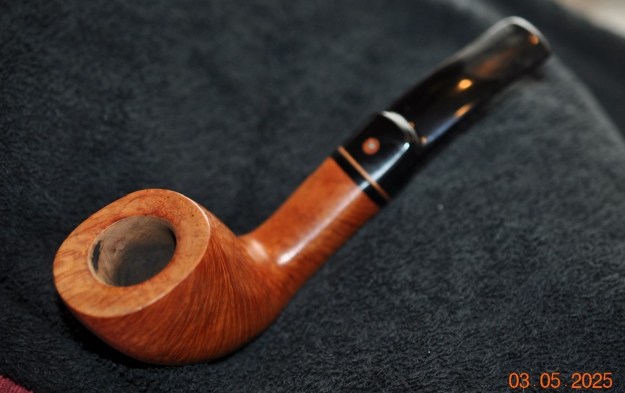 Jeff took photos of the rim top and stem to show the general condition of the pipe. The bowl is heavily caked with a thick overflow of lava on the top and edges fills in the plateau finish. The stem has deep tooth marks and chatter on the top and underside near the button.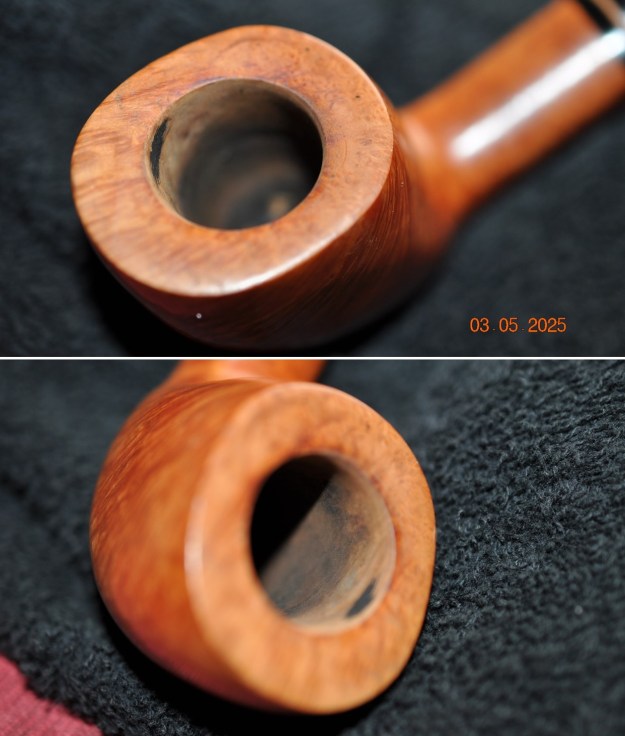
 Jeff took photos of the bowl sides and heel to show the grain and around this bowl. Underneath all the grime it is a nice looking pipe.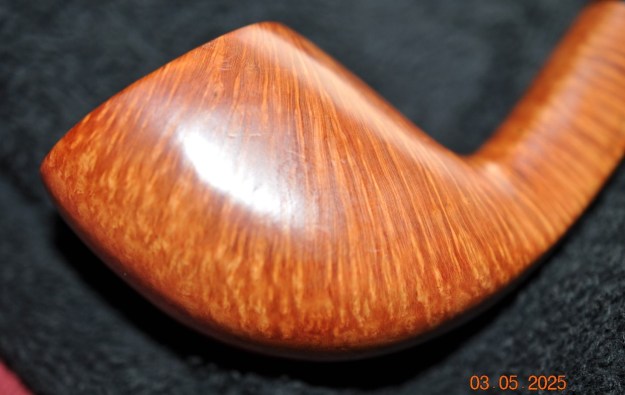
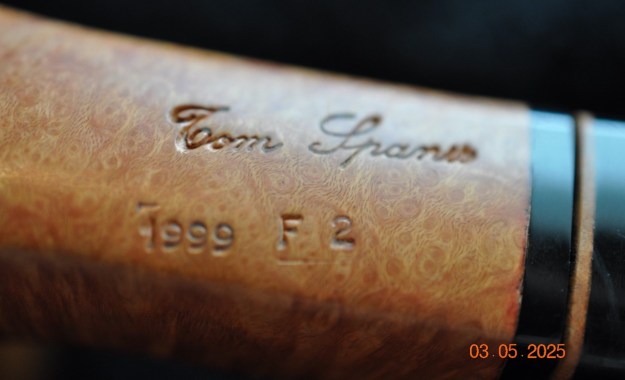
 He took a photo of the underside of the shank to show the stamping. The stamping is readable in the photos below and is as noted above. You can see that there is some shrinkage on the spacer on the stem end and the acrylic one on the shank end. This is puzzling at the moment to me.
  To remind myself about the brand I turned to Pipephil’ sites to read what he had written there in the side bar (http://pipephil.eu/logos/en/logo-t7.html#tomspanu). I quote below and also include a screen capture of the pertinent section.
Artisan: Tommaso Spanu (born 1944 in Chiaramonti Sardinia) is an independant pipe maker since 1979. He was established in Laerru (Sardinia) from 1979 to 1999 where he used to harvest, cut and condition his own ebauchons. During this period he often worked for Paronelli. The workshop moved to Sassari (Sardinia) in 1999. He crafts Briar but also Lemonwood, Olivewood, Boxwood, Juniper, Oak and even Cork Oak.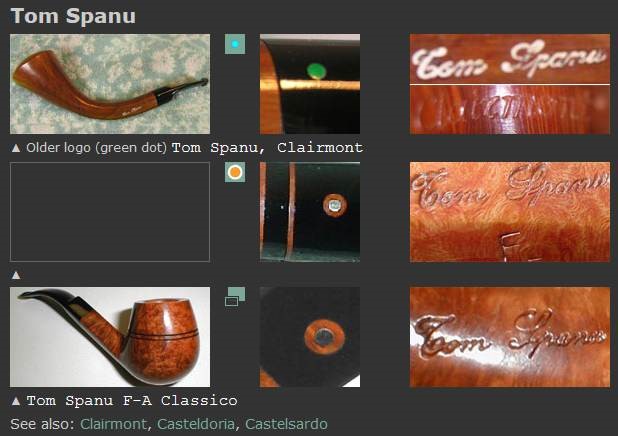 I turned to Pipedia for more information (https://pipedia.org/wiki/Spanu). I quote below:
Novarte S.N.C. di Spanu Tommaso
Update: We are sad to report that it has come to our attention that Tommaso Spanu passed from this World in the Fall of 2015 to join the many great Italian pipe makers that came before him. Our hope is that Tommoso’s sons and brother will continue the Spanu pipe making tradition. We can also enjoy the legacy he leaves in the many pipes he has made over the years.
In 1963 Tommaso Spanu left his home in Sardinia and wandered to Northern Italy to become a pipemaker. His uncle had managed an apprenticeship for him in Gavirate, in the province of Varese, with it’s many pipe manufactures. His exceptional talent soon attracted the attention of Alberto Paronelli (→ Paronelli), the grand seigneur of Italian pipe business. Paronelli, a famed pipe designer himself, arranged that the best pipe craftsmen schooled his young fosterling and personally taught him in pipe design and styles. Soon Spanu reached a remarkable level of skills and began to work on the Clairmont pipes, a high-grade brand produced for and distributed by Paronelli. A little later the bulk of the Clairmonts was made by Spanu who was even allowed to stamp them with his own name additionally.
All in all Tom Spanu spent 16 years in the North where he worked with many other famous pipemakers like Guiseppe Ascorti and Luige Radice e.g. In 1979 he finally felt it was time now to continue on his own. So he returned to Sardinia where he established his own workshop with some help from his brothers. A firm was founded to market the pipes, the Novarte S.N.C. di Spanu Tommaso. Furthermore he purchased a licence from the local government and following Spanu is the only pipemaker worldwide who grows, harvests, mills and conditions his own briar!
Today his brother and two sons carry on the family tradition, making more than a thousand pipes a year. Mostly more classic models for Italy, but also a good amount of more stylish designs for the foreign markets. Now, if it comes to talking about “entirely handmade pipes” … Just as when Tommaso started carving pipes, only hand tools are used. Not a lathe or drill is to be found in his workshop!
Around 1997 Spanu was approached by Mercedes-Benz and asked to design briar-burl dashboards for their most luxurious sedans. And he replied “Maybe tomorrow!” We can assume that the envoys looked quite dumbfounded to be turned down that way, and so Spanu explained that while the project would be fun, his first love was pipes, and only once he was not making as many pipes he would consider it. Mercedes-Benz is said to have taken the rebuff in good nature, and even this automobile manufacturing giant is still waiting on Mr. Spanu to finish some pipes.
Beside the all-briar pipes Spanu loves to work with a wide variety of others woods ranging from the traditional olivewood to beech, oak, boxwood and juniper. He often produces hybrids composing different woods.
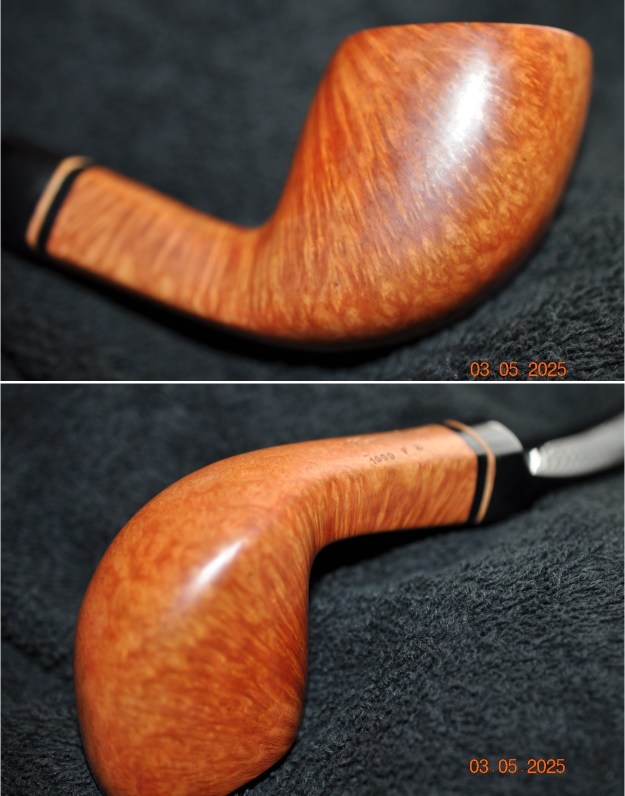
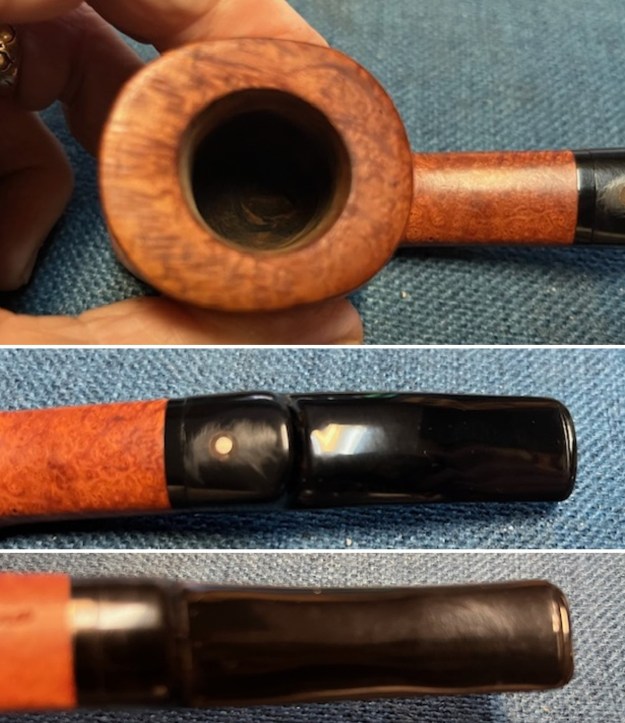
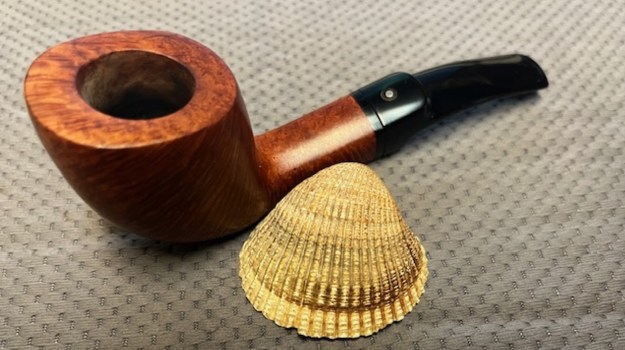
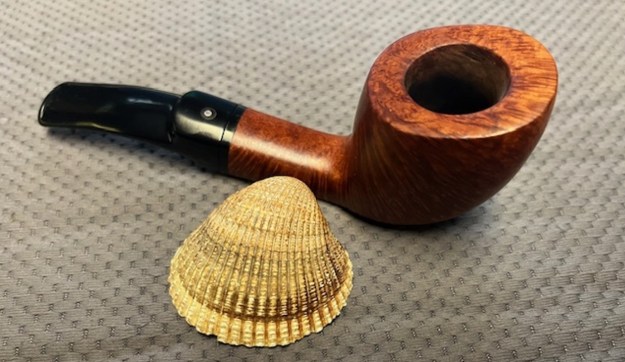
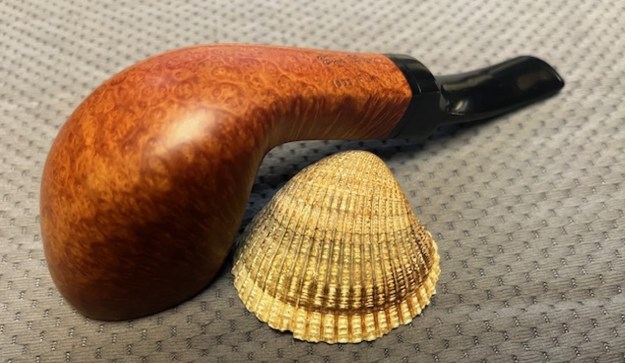
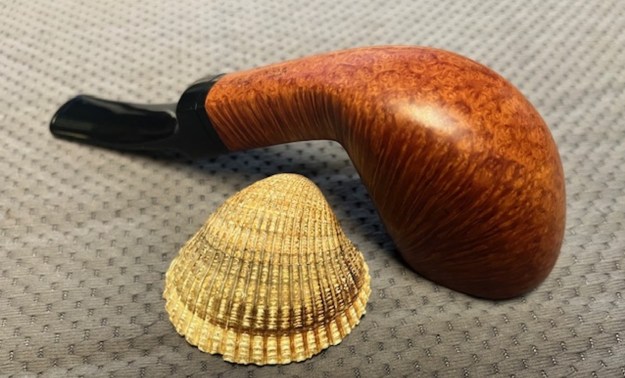
Jeff had done a great job cleaning up the pipe as usual. He reamed the pipe with a PipNet reamer and cut back the cake back to the bare briar. He cleaned up the walls with a Savinelli Fitsall Pipe Knife. He scrubbed the interior of the bowl and shank with pipe cleaners, cotton swabs and alcohol to remove the tars and oils. He scrubbed the exterior of the pipe with Murphy’s Oil Soap and a tooth brush to remove the grime from the finish. In the process of cleaning, the thin spacer on the stem shrivelled and fell to pieces. Fortunately it did not change the fit of the stem in the shank. It looked good without that spacer. He scrubbed the inside of the stem with alcohol and pipe cleaners. He scrubbed the exterior with Soft. He rinsed it off with warm water to remove the Deoxidizer. It looked very good when I brought it to the worktable other than the briar ring around the metal dot had darkened in the process. I took photos of the pipe when I brought it to the work table. You can see that the spacer is gone but forget that! The briar is really very stunning! 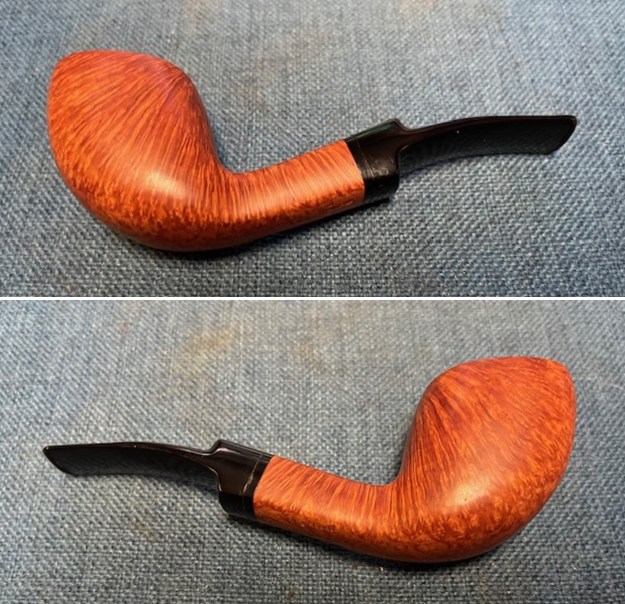
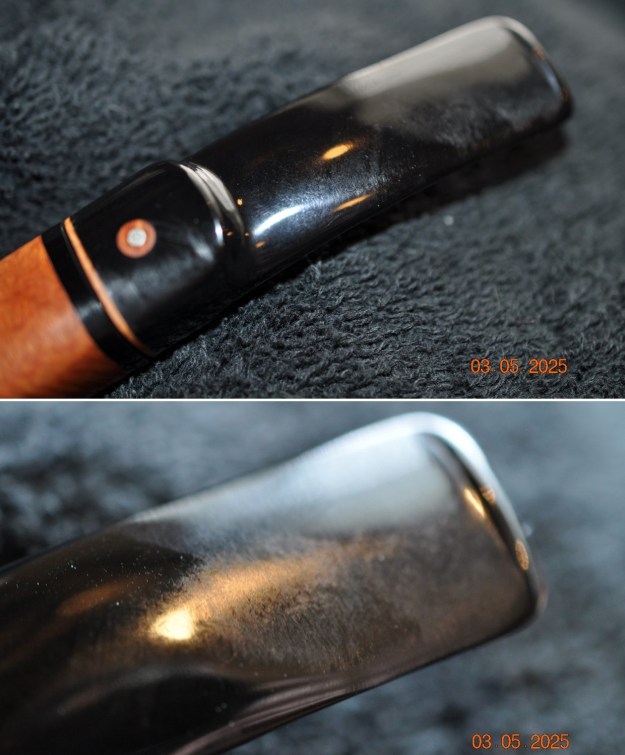
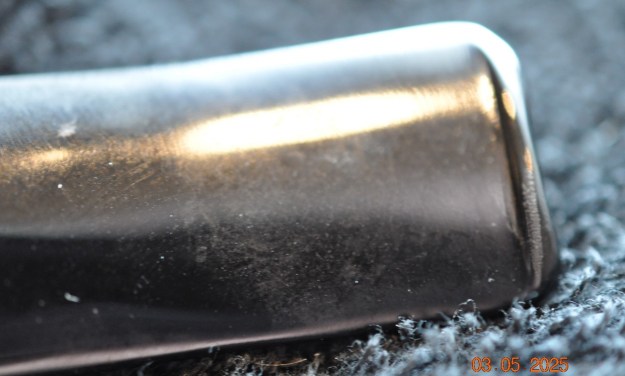
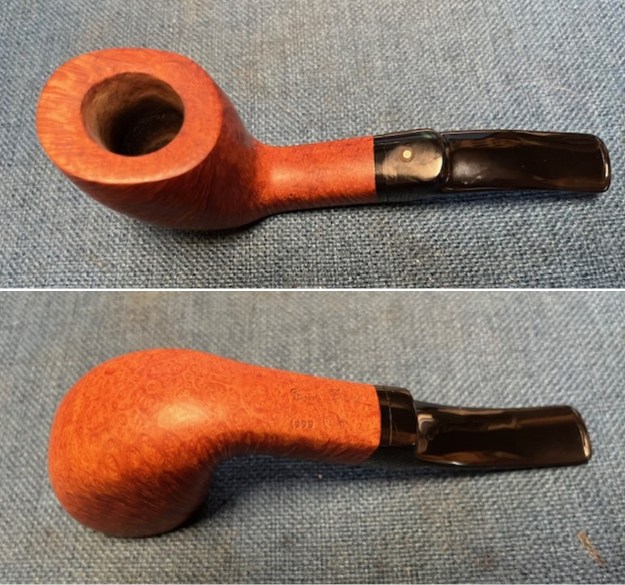 I took close up photos of the rim top and the stem surface. I wanted to show how well it had cleaned up. The rim top and edges looked very good. I took photos of the stem to show the condition it was in. There were light tooth marks against the button edge and some darkening on the briar insert of the logo.
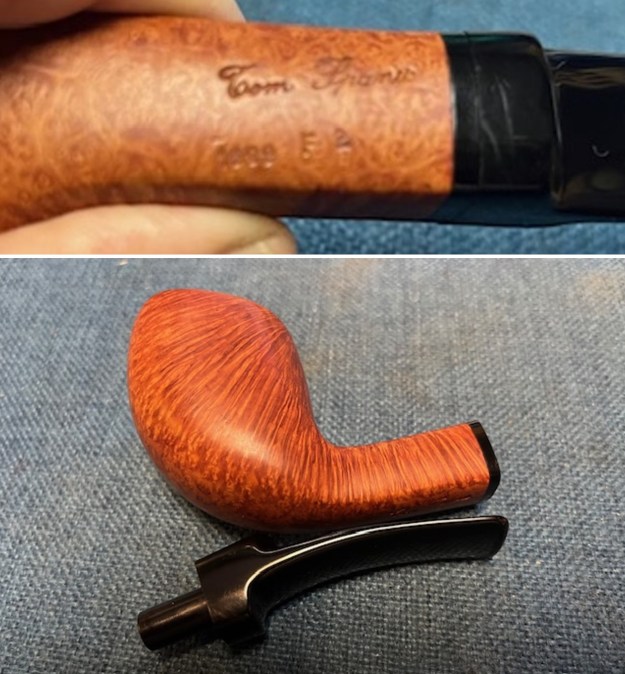
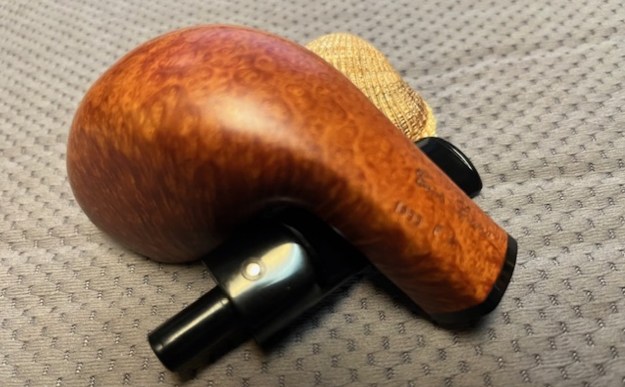
 I took a photo of the stamping on the underside of the shank. You can see that it is stamped as noted above. It is clear and readable. I took the pipe apart and took a photo of the pipe. It is a good looking pipe with incredible grain.
 I polished the briar with micromesh sanding pads – dry sanding with 1500-12000 grit pads. I wiped the bowl down after each pad with a damp cloth to remove the sanding dust. By the end of the process they looked very good.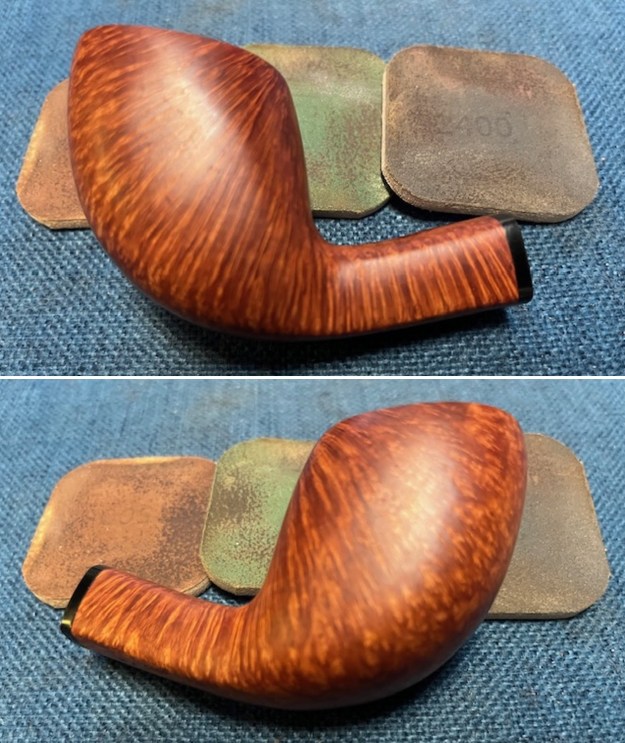
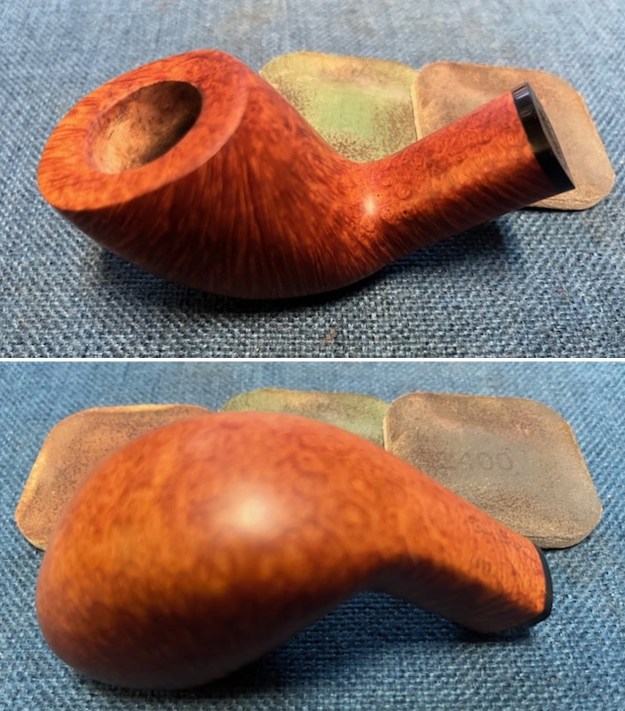
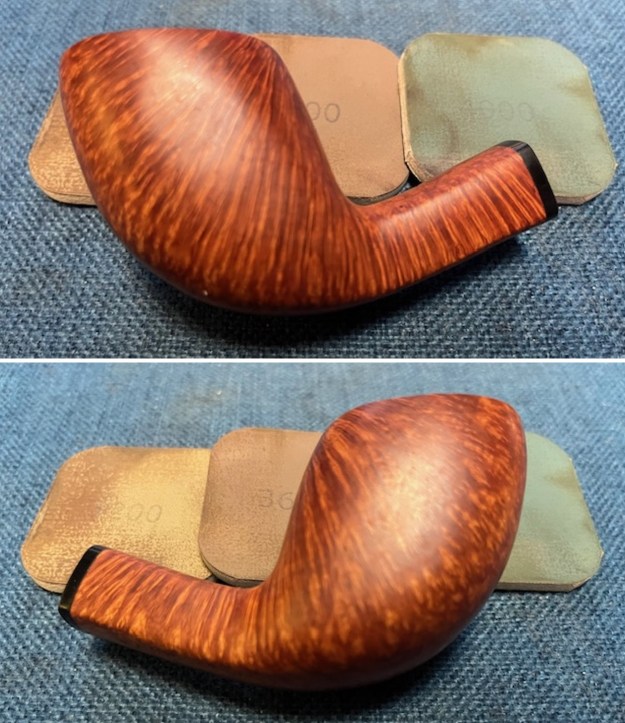
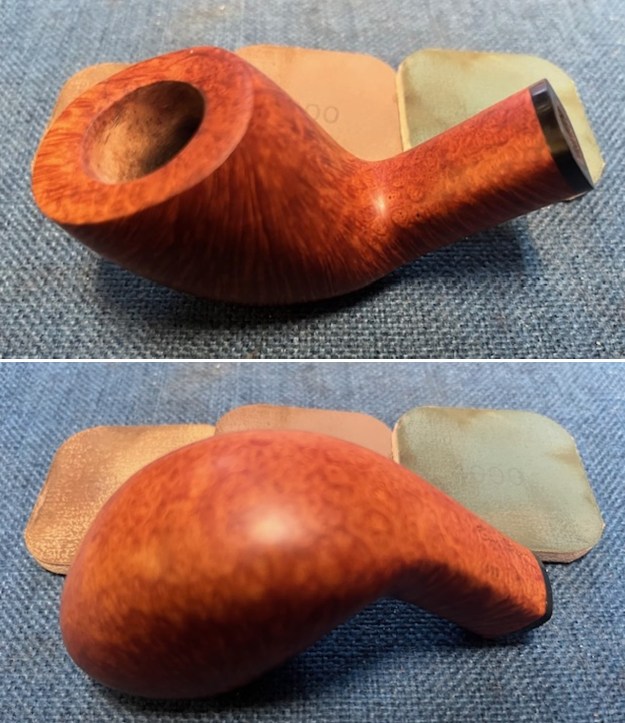
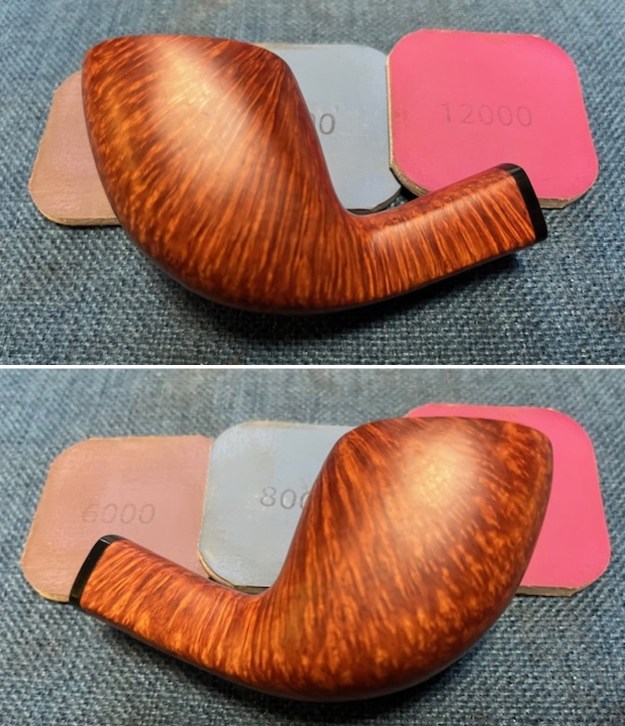
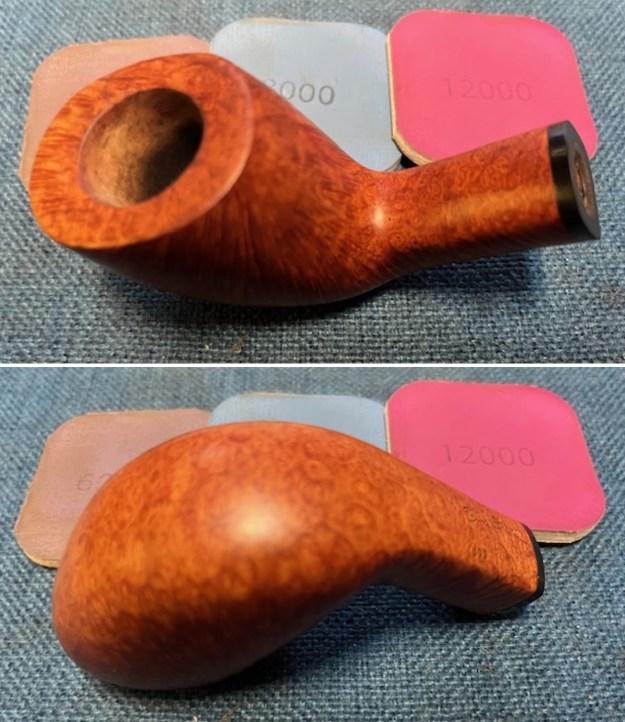 I worked some Before & After Restoration Balm into the surface of the briar with my fingertips to clean, enliven and protect the briar. I let the balm sit for 15 minutes and then buffed with a cotton cloth to raise the shine. The photos show the bowl at this point in the restoration process.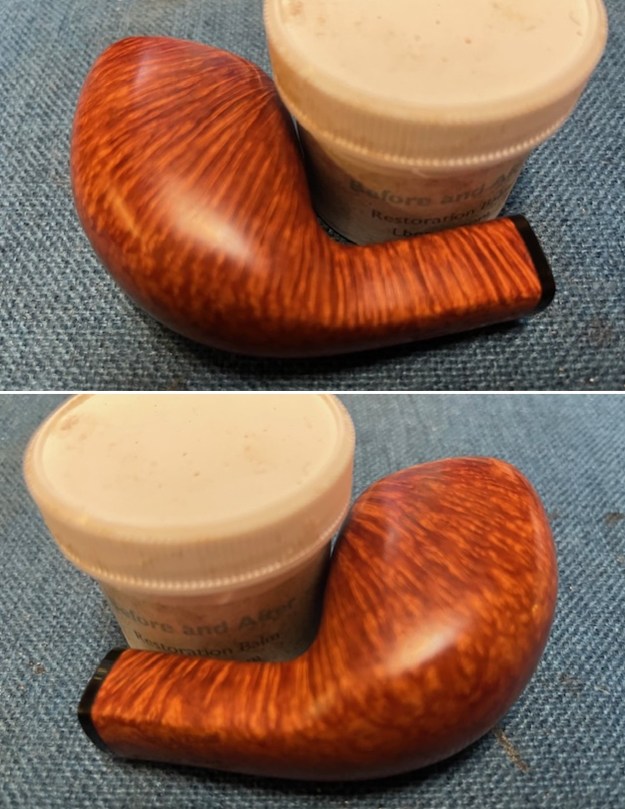

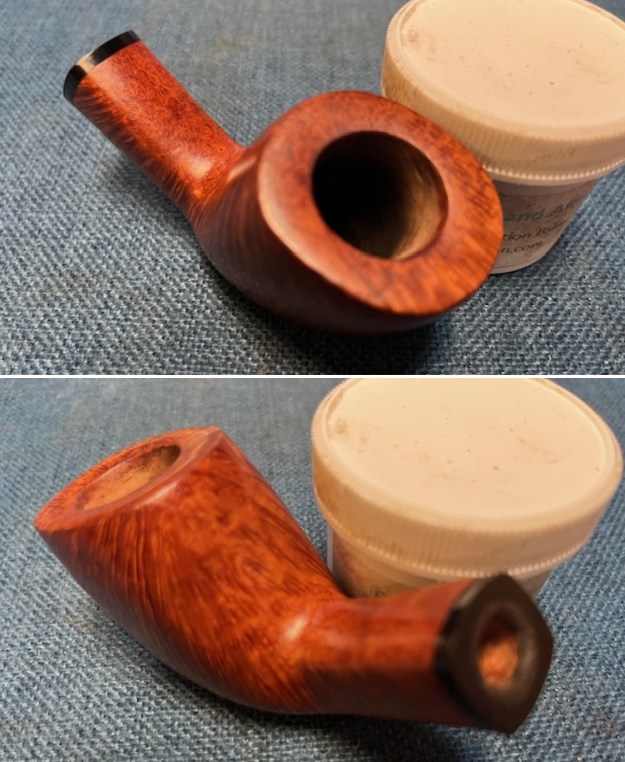 I used some bleach and a qtip to try and lighten the ring around the silver dot on the stem top. It did some good but did not remove all of the darkening.
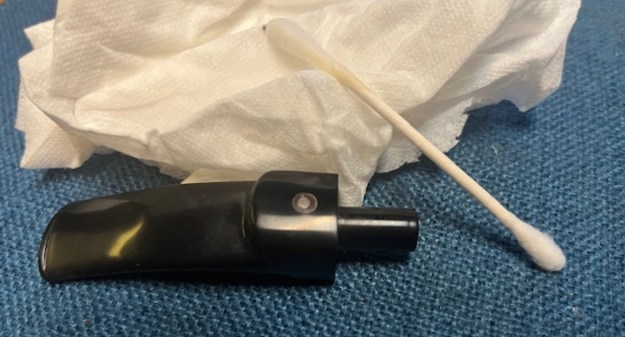 I sanded the stem with 320-3500 grit sanding pads to remove the tooth marks and chatter against the button edge and sand the logo. It worked well on the tooth marks but did little on the logo on the stem top.
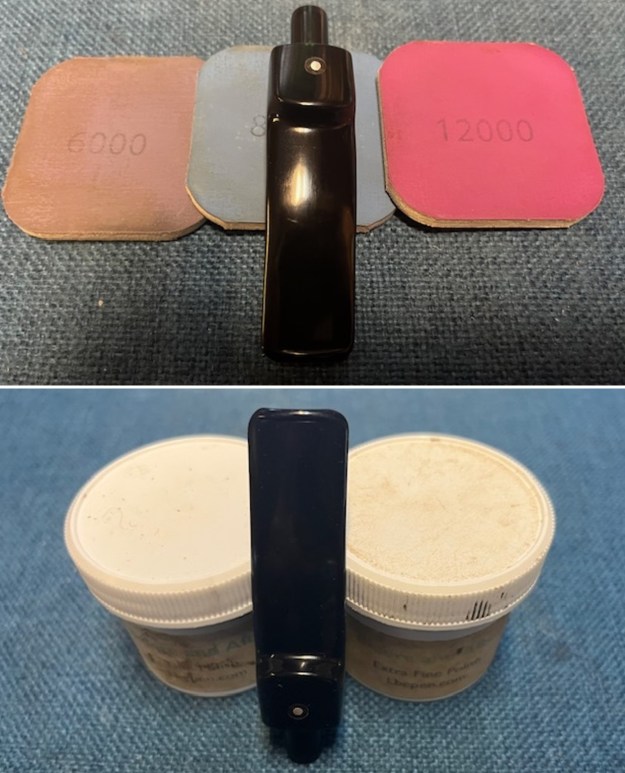
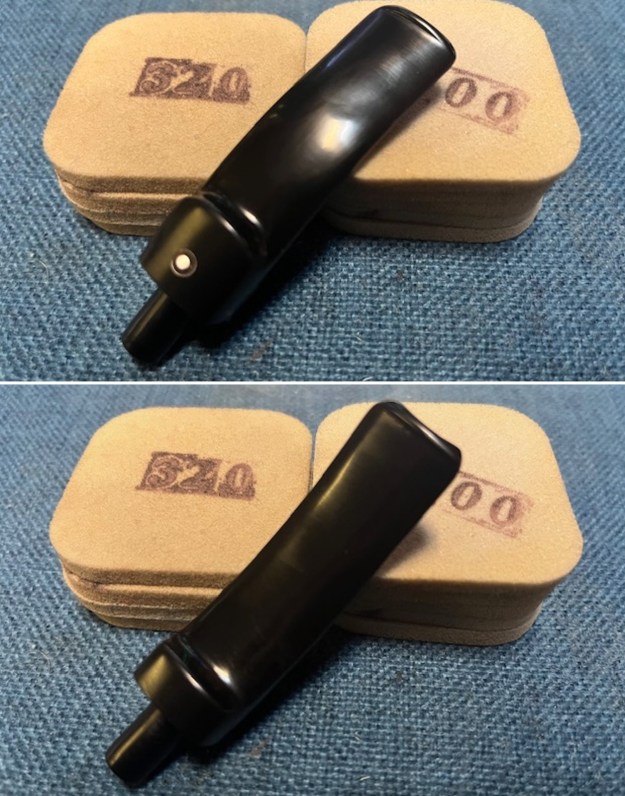 I polished the stem with micromesh sanding pads – dry sanding with 1500-12000 grit sanding pads. I wiped it down after each sanding pad with Obsidian Oil. I polished it with Before & After Pipe Stem Polish – both Fine and Extra Fine.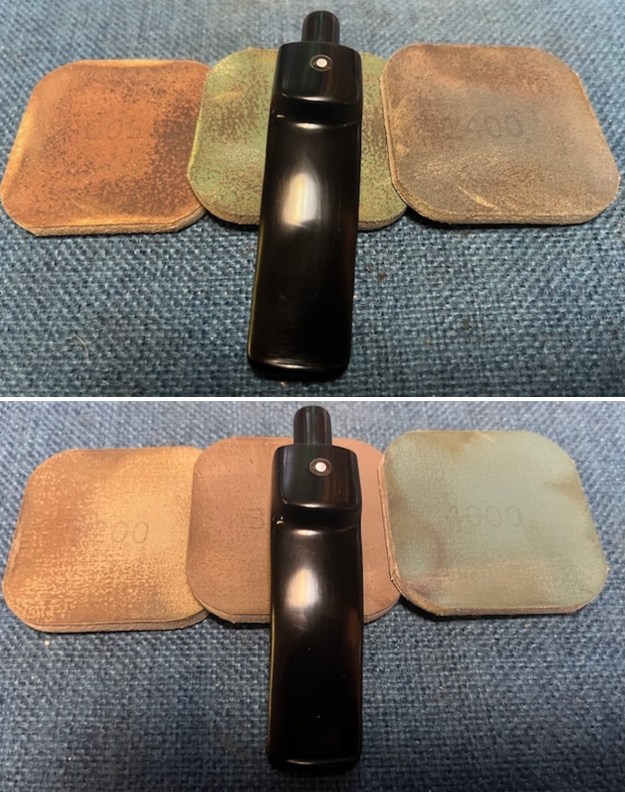
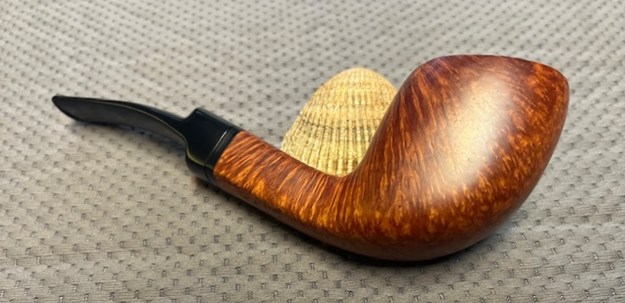
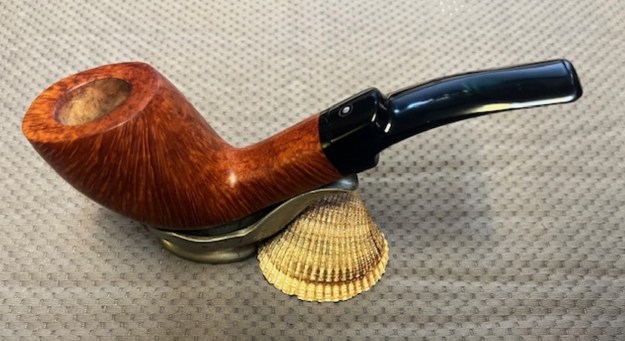
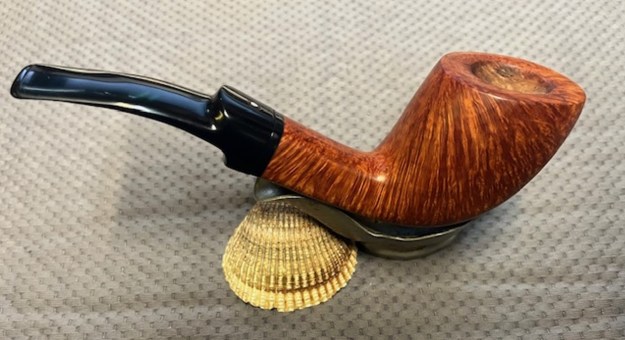
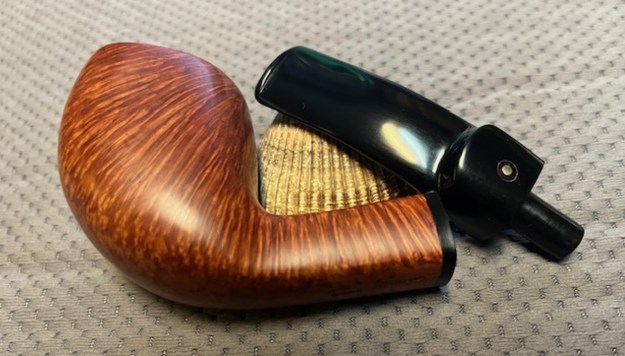
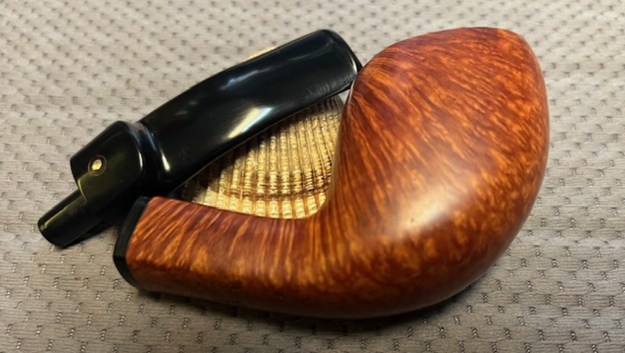
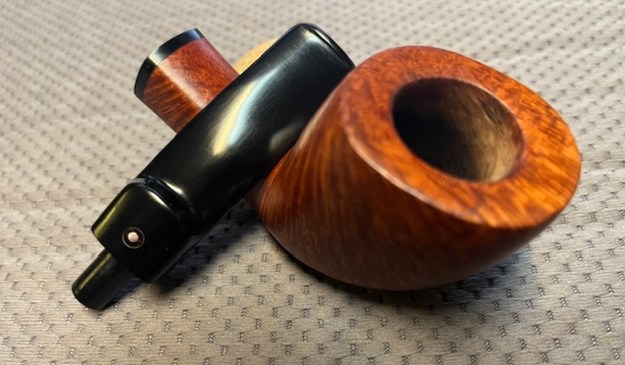
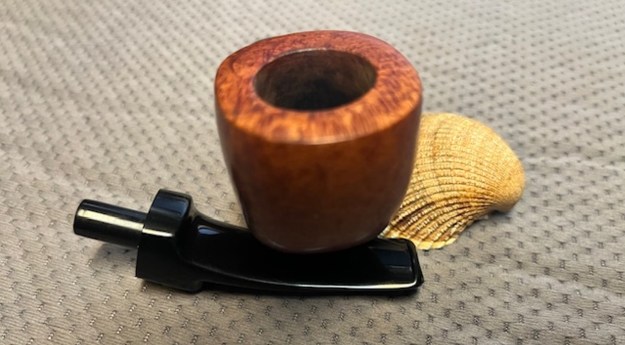
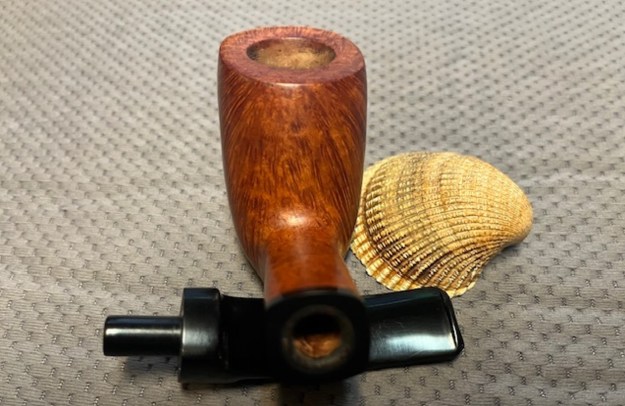
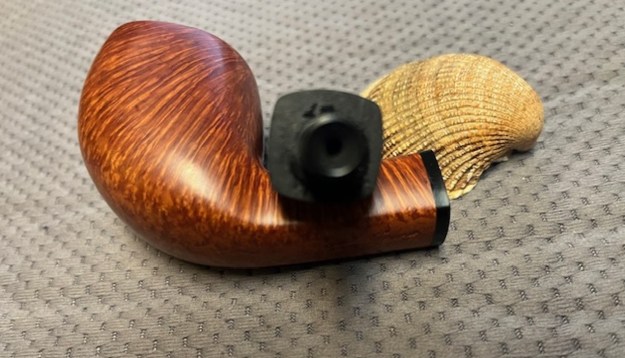
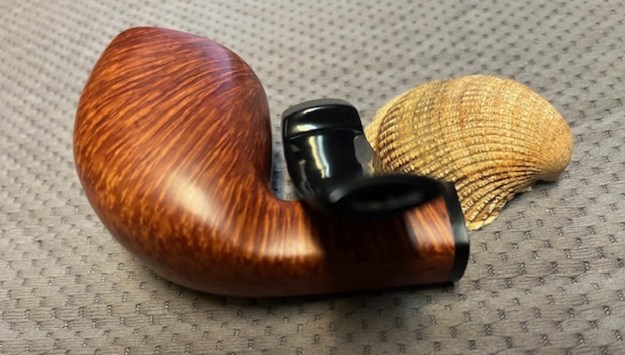
 I am excited to finish this Tom Spanu Scoop 1922 F2 with an acrylic stem. I put the pipe back together and buffed it with Blue Diamond on the buffing wheel. It looked excellent without the damaged spacer on the stem. The fit was excellent. I gave the bowl multiple coats of and the stem multiple coats of carnauba wax. I buffed the pipe with a clean buffing pad to raise the shine and hand buffed it with a microfibre cloth to deepen the shine. It is fun to see what the polished bowl looks like with the grain just popping on all sides. Added to that the acrylic shank spacer and the black acrylic saddle stem was beautiful. This Spanu 1999 F2 Scoop is nice looking and the pipe feels great in my hand. It is light and well balanced. Have a look at it with the photos below. The dimensions are Length: 6 inches, Height: 2 inches, Outside diameter of the bowl: 1 3/8 inches wide x 1 ¾ inches long, Chamber diameter: ¾ of an inch. The weight of the pipe is 61 grams/2.15 ounces. It is a beautiful pipe and one that will be on the Italian Pipe Makers Section of the rebornpipes store soon. If you are interested in adding it to your collection let me know. Thanks for walking through the restoration with me as I worked over this pipe. Thanks to each of you who are reading this blog.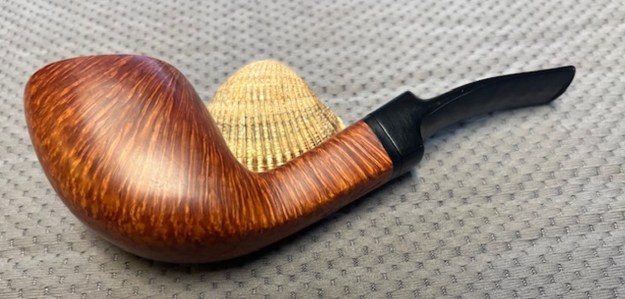
 rebornpipes