Tag Archives: threaded tenons

Spiffing up a KBB Blue Line Bakelite Poker 1908-1914


Blog by Troy Wilburn

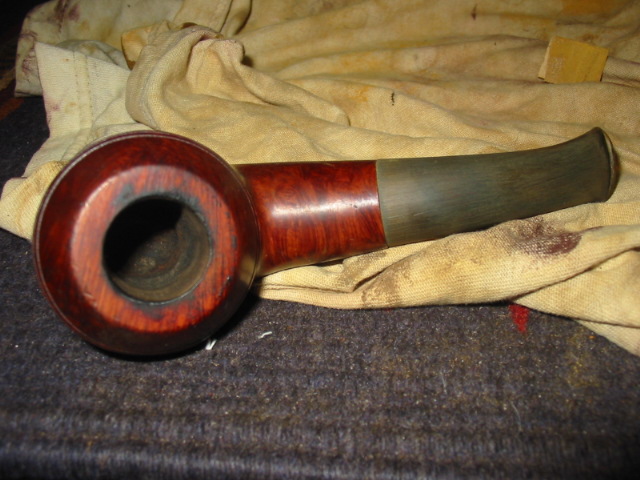
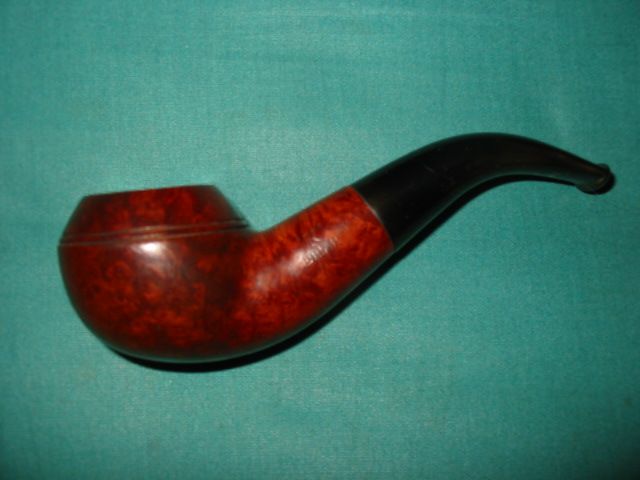
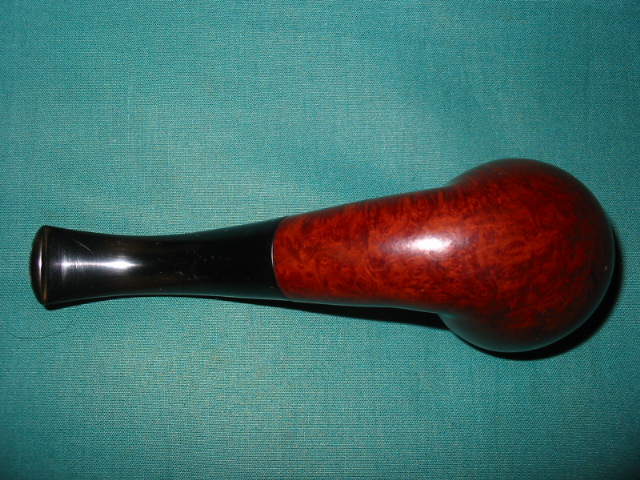
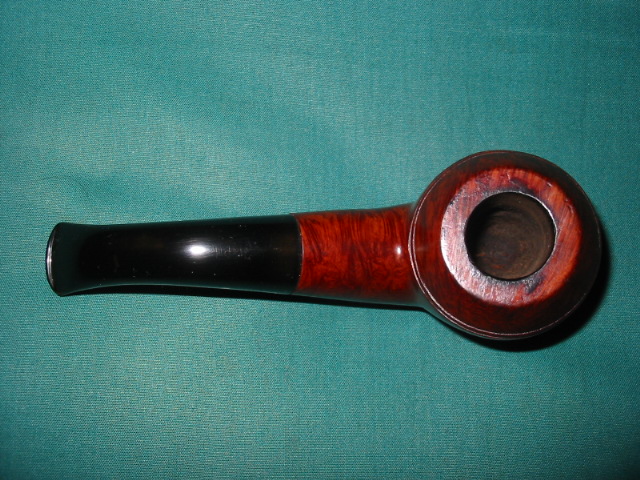
Here is my old KBB I got from EBay after some light cleaning and buffing. I had found out these were quite rare and was lucky to win the bid on it.

I was thinking after some initial research that these pipes were from around 1910 – early 1920s. Seems it’s a little older than I thought. I got this info from a Kaywoodie and early KBB collector who has had several Blue Lines.

“Your pipe is made by Kaufman Brothers and Bondy, or KB&B, which later (1915) created the Kaywoodie line we all know. But this pipe is Pre-Kaywoodie, as they were making pipes under the KB&B branding from about 1900 to 1914. Bakelite was invented in 1907, so this pipe was likely made from 1908 to 1914, as the Bakelite was quite the technological wonder of the time, and was used in many products (still in use today). These “Blue Line Bakelite” pipes are rare pieces, seldom seen.”

All Blue Lines came with a case but sadly the one for this one is missing. Most pics I’ve seen so far of the Blue Lines, the metal banding has stampings of Sterling Silver and KBB. Mine has none and I don’t believe it’s silver (I think nickel as I could not get all the discoloration from it). Mine may be a lower priced model.

The pipe as it arrived.Blue1 The pipe was in remarkable shape for its age. It was not caked up and the pipe was nice and clean, ready to smoke. All I did was go over it very lightly with some 2500 grit and 000 steel wool over the banding lightly. Then I applied some light buffing and a new coat of wax. The pipe was too original to mess with much .The stem has a gorgeous red color that was bought out with a little brown and then white Tripoli before waxing.Blue2

Blue3

Blue4

Blue5

Blue6

Blue7 The stampings are very nice for a 100 year old pipe. As you can see it looks like it was repaired once. The repair looks quite old in person and don’t think it was done anytime recently.Blue8

Blue9 It’s a smaller poker. It is in between the size of a Medico Poker and a Dr.Grabow 85 Poker. It’s around 4 11/16 inch long with a 1 1/2 tall bowl. I will probably dedicate it to my new favorite flake tobacco.Blue10

A New Tenon on an Old Stem and a Petersons K Briar 999 is Back in Action


Blog by Steve Laug

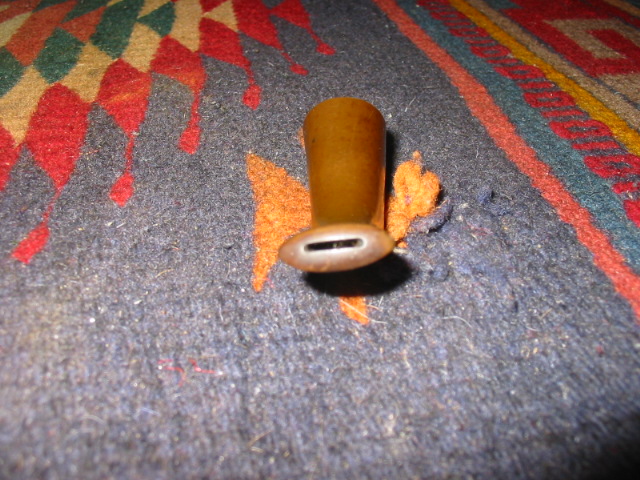
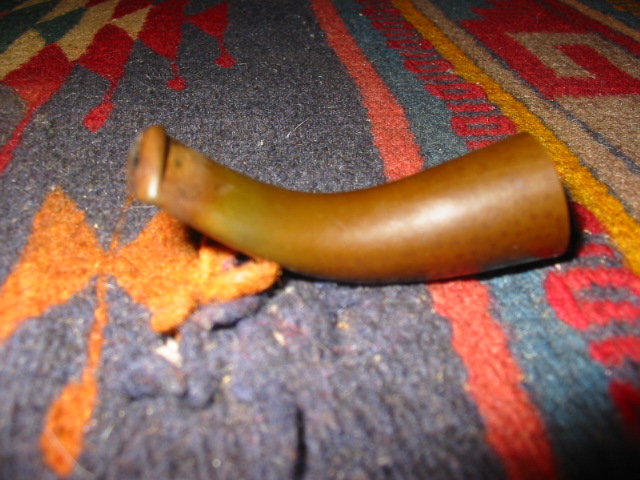
I picked up this older Peterson 999 K Briar from EBay. It came in a lot with some Barlings, Bewlays and three Imperial Tobacco pipes that I have repaired. This is an interesting pipe in that it is stamped K over Briar on the left side of the shank and on the right side it is stamped 999 “Peterson’s Product” made in England. I had not seen a K Briar pipe from Peterson before. This one is a beauty. It has the appearance of a GBD Rhodesian or a BBB Rhodesian. It has no fills and some very minor sand pits. The stain and finish were in great shape. The stem had just two small bite marks that needed to be taken care of. It has a unique stem that can be seen in the photos below. It is very different from the standard Peterson stem as it is rounded and crowned with a slot in the end of the button.

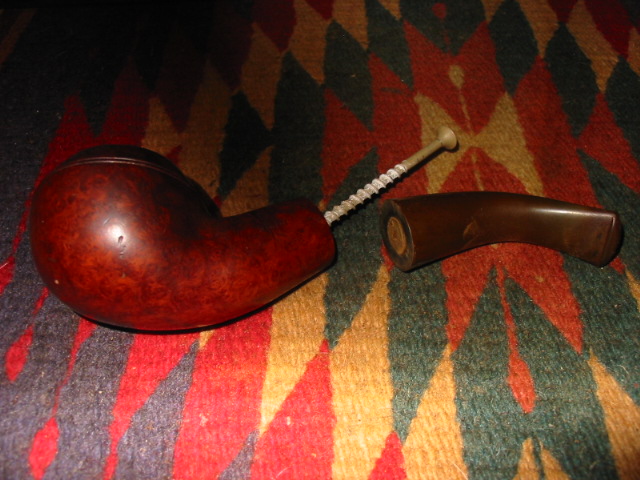
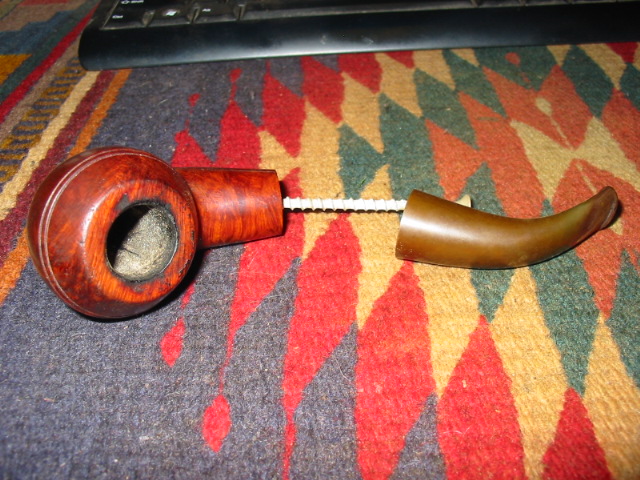
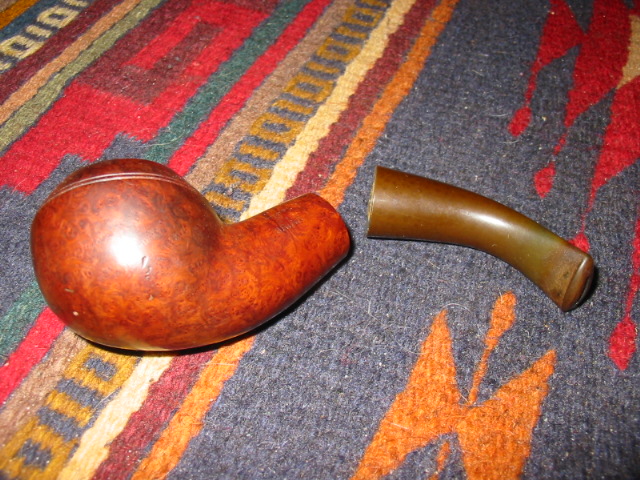
When the pipe arrived the tenon was broken off at the shank. It was a clean break as can be seen in the photo below. The tenon itself was stuck in the shank. I tried to remove it by my usual method – turning a screw into the airway on the tenon and then pulling. I tried and pulled both by hand and with a pair of vice grips. I clamp down on the screw and try to twist the bowl of the pipe. This tenon was really stuck. I dribbled alcohol down the shank and filled the bowl with cotton bolls and poured in alcohol and so that the inside of the shank could soak. I left it sitting that way over night and in the morning the tenon still would not come out. I figured I would try putting it in the freezer so that the two materials of the shank and tenon would contract and expand at different rates and loosen that way. When I took it out of the freezer I tried to remove it from the shank. It did not move. Nothing I tried seemed to work. I took a drill bit a little bigger than the airway in the tenon and drilled out the tenon very carefully. Once the drill bit was set I backed the drill out and the tenon was free. ImageImageImageImageImage

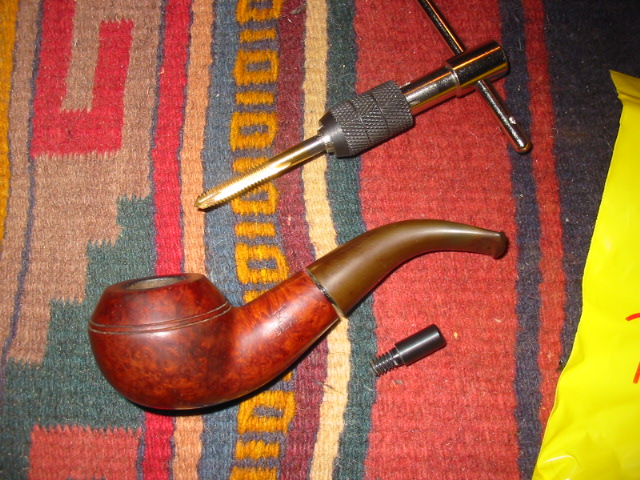
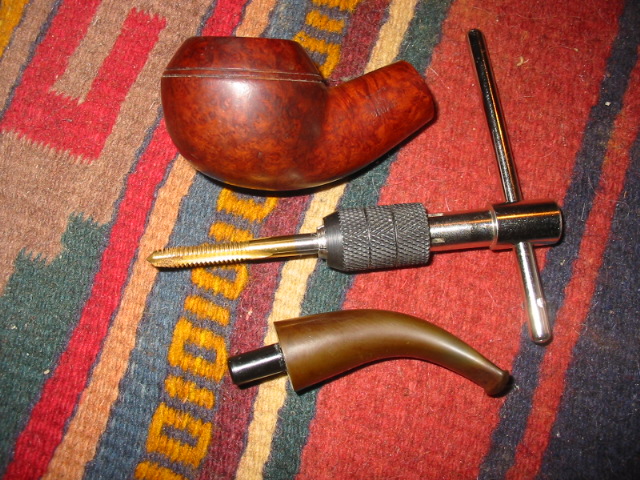
Once the tenon was out I held the stem vertically on a flat board and sandpaper to make certain that the flat surface of the stem was smooth and that there were no sharp pieces of the old tenon in the way. I drilled the airway in the stem to receive a quarter inch tap. I worked up to the quarter inch drill bit slowly moving from one that was slightly bigger than the airway. I wanted to make sure that the new opening for the Delrin tenon was centred and not off. Once I had it drilled with the ¼ inch drill bit I used a quarter inch tap to thread the hole in the stem. I had ordered threaded tenons from Pipe Makers Emporium and when they arrived I checked the depth on the tapped hole in the stem to make sure that it was the same depth as the length of the new tenon. Once it was correct I turned the new tenon into the threaded hole until it was just about tight and then dripped some super glue into the hole and finished threading the tenon in. I set it aside to dry before trying the tenon for a fit on the pipe. These threaded tenons are great to work with. It is the first time I have used them and it worked like a charm. ImageImage

Once the tenon was set, it was time to work on the stem and remove the oxidation. I used fine grit emery cloth to loosen the oxidation on the stem. From there I proceeded to use 240 grit sandpaper and then used 400 and 600 wet dry sandpaper. I wet the stem and sanded it with the wet dry sandpaper until all of the scratches were gone. The next series of three photos show the fit of the stem with the new tenon. Most of the oxidation is gone at this point. ImageImageImage

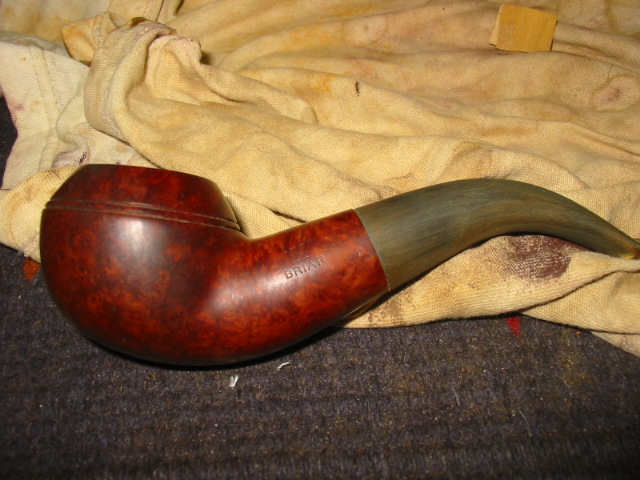
I took the pipe to the buffer and buffed the stem with Tripoli to see where I was at with the sanding. The oxidation was gone so I took it back to the worktable and sanded it with the micromesh pads from 1500-12000 grit. The final shine came alive with the 8000 and the 12000 grit micromesh. From that point I took it to the buffer and lightly buffed it with White Diamond. Then I waxed the pipe and stem with carnauba and buffed with a flannel buff. ImageImageImageImage