Tag Archives: Stories and Essays

I Guess I Collect Pipe Reamers


Blog by Steve Laug

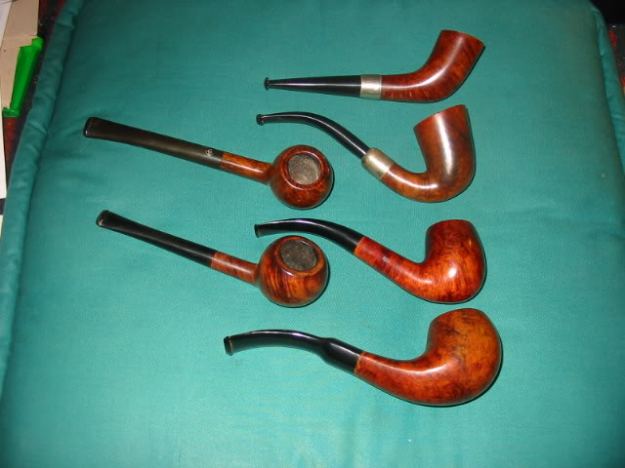
One of the side hobbies that came with collecting pipes was the collection of pipe reamers. I love the creativity and inventiveness that went into each one in my collection. I use many different reamers in the process of refurbishing pipes. It seems like I always need one that is shaped a bit differently than the one I am using so I reach into my box of reamers and almost certainly I will have one that fits the bowl size and shape.

Image

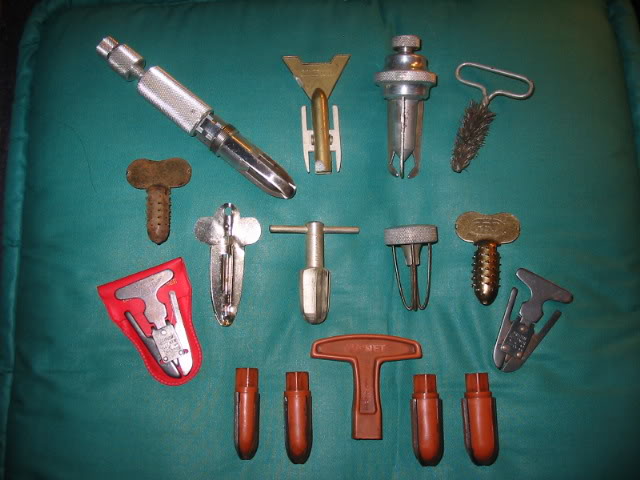
In the top row from left to right – a KleenReem reamer, an Atlas Rocket, A Rogers Rocket, and bristle brush on a handle. The KleenReem is one of the reamers that I use almost all of the time. It is adjustable and has a built in drill bit that work well in cleaning out the shank. The Atlas Rocket is spring loaded and work in both conical bowls and U shaped bowls. I use it on lightly caked pipes that I am cleaning. The Rogers Rocket is a bit of overkill but works well on U shaped bowls as the blades are adjustable. The steel bristle brush is very good for just knocking off lightly coated bowls and as a finish to bowls that I have reamed.

The second row from left to right – A Hedgehog Reamer, a no name folding reamer, a Dunhill T handle reamer, a spring steel blade adjustable reamer, a GBD reamer. The Hedgehog and the GBD reamer are similar – they are a steel bullet shaped end with a key top that has sharp metal spikes all around it. These two I rarely use as they just seem too brutal. The no name reamer is really nice for narrow conical bowls and reaches to the bottom of the bowl. The spring steel bald reamer is great as an initial field ream of the pipe. The Dunhill T handle reamer I have used to finish a reaming of many pipes. It seems to be sharp and is capable of smoothing out the cake and bowl walls to a nice finish. The spring steel blades adjust to fit any bowl size or shape.

The bottom row from left to right – In the red package is a British Buttner reamer and on the far right bottom is a second one. These two I generally have with me when I am travelling and on the prowl for estate pipes. They work great on pretty much any pipe bowl to give me a good cleaning before I bring them home to the shop. Care must be exercised as they can easily make a bowl lose its round shape if you do not hold it vertically when you turn it. In the centre at the bottom is my favourite reamer – a PipNet reaming set. It includes a T handle and four heads of different sizes that each has four blades embedded in the plastic. These can quickly be changed from size to size and any bowl is easily reamed. They do work best on U shaped bowls.

I think since I took this picture I have picked up several more reamers for the collection but these give the basic idea of what I use in the process of a refurbishment. Keep an eye open for reamers while you are out and about in the shops looking for estate pipes or on EBay looking for pipe lots. You never know what kind of great tool you are going to find. If you have some that are not in the picture above and want to part with them drop me a line or comment on this post. We can work something out!

Reflections of an amateur refurbisher


This week after seeing George Dibos’(of Precision Pipe Repair) three part post on cutting a stem from rod stock that he shared on Smokers Forums I have to say that I am left to confess that I am truly an amateur refurbisher. I am not downplaying the work I do or the pleasure I get out of my craft but only wish to acknowledge that there are true masters of the craft. George is truly a master at what he does. His careful attention to minute details of repairing pipes makes his refurbishments some of the best in the business. He is able to replicate stems that are incredibly matched to the originals. I am in no way negating the value of doing the work ourselves but it is acknowledging those who are leading the craft and creating beautiful work. I stand in awe of him and others like him who make this work look so easy. I must say that in comparison to them I feel a lot like a bush mechanic in the company of truly gifted mechanics.

I have no trouble acknowledging the fundamental difference between the work I do and what these gifted individuals in the pipe restoration/repair community do. It is truly no different than recognizing the difference between artisans who carve pipes as a livelihood and those who do it as a spare time hobby. Both are artists in their own right. To a varying degree there is a difference in the skill level, if not by natural gifting, certainly by sheer volume of practice. The same is true with pipe refurbishment. Those who have well developed shops, days focused on the process of pipe refurbishment, and skill and gifts in using the tools that they have will certainly have more carefully honed skills than the armchair or weekend hobbyist. This in no way makes light of either one. Both are integral parts of the hobby we enjoy.

I don’t have the tools, the space nor the skill set to do the kind of work that George and others like him do. I will probably never be the kind of individual who does what they do because, bottom line, to me it is a hobby and something I do for relaxation and not a vocation. I use what I have to do what I can and invent what I need as I go along. Part of the joy of the hobby for me is not just doing the work in the best way I can, but always learning new and better ways of doing things. I am a committed lifelong learner who has a hungry mind that is never satisfied with what I know and is always looking for new ways and new information. I love the creative process of refurbishment in that I can continually be challenged to work “magic” on new pieces that come across my desk. But another important part of the joy for me is the task that I have taken on willingly and freely to pass on what I learn to others in our hobby. It is a joy to see others take what I have learned and surpass me in their skill and expertise. To learn tricks from those who have learned from me is part of why I started the reborn pipes blog. I don’t just want to share what I have learned, I also want others to pass on what they have learned and their own refinements on the processes they experiment with. That is why I invite others like Al, Chuck, Fred, Rob, Ed, Bryan and more who share the love of reclaiming old briar and giving it new life.

For me the blog is a way we all can continue to learn from one another, share common ideas and issues and seek to understand how to address them as we work on the pipes on our desks. We can write about what we do and have others try it, refine it and pass on their knowledge. Thus, we create a living “school” in which to continue to develop our craft. It is a place for those of us who are amateur refurbishers, who love to tinker, love the process and the pipe, to continue to learn from each other. Lately I have been using Skype, an online web communication tool, to meet with individuals and work on pipes together. It is quite amazing to talk and work real time with another person on a pipe that they have on their work bench. It works with video and audio so that you can literally look at the pipes you are talking about. Worst case scenario Skype has an instant messaging component that you can type communications between several who are working on pipes. In my work I have used it with groups to have virtual meetings and can see that working really well to have a shop time gathering. I have written an article on one such experience and Part 1 of it was printed in the August issue of Pipe Smoker Unleashed Magazine – http://www.pipesmokerunleashed.com/magazine/august2012.html and is on the blog as a post. The second half of the article will be in the September issue and will soon follow on the blog. Skype provides a real time tool that we can also use to consult with each other on pipe repairs before and as we do them. This is a venue for us to use that is rich with possibilities. I am aware that others use “You Tube” and make videos of their work, but I am reticent to venture into that arena. I don’t know why, as I am sure it is helpful, but it just is not something I am interested in doing. Others may want to do videos and I can easily add them to the blog or they can start their own blogs.

As I close these reflections I have to say that when I look ahead at the future of pipe restoration and refurbishment I am excited to think of all the possibilities and all that there is yet to learn from one another. I also remain in awe of the calibre of work and craftsmanship of those like George. I delight to see the product of their skills and observe so that I can learn as much as I can in the process from them. I will always have to personalize their methods to work on my smaller scale of refurbishing but that too is part of the process I enjoy. I tip my hat to the masters and know that I will probably not live long enough to even come close to that kind of workmanship. However, I take my place proudly in the company of those who tinker at refurbishing and share their love of all things pipes with one another. My plan for the near future is quite simple, I will continue in my tinkering until I am no longer able. Why? Because it gives me pleasure!

Image

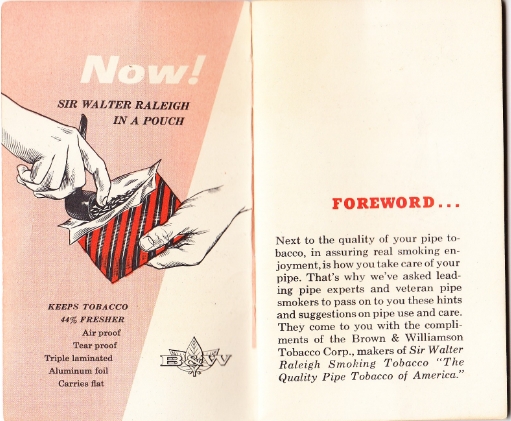
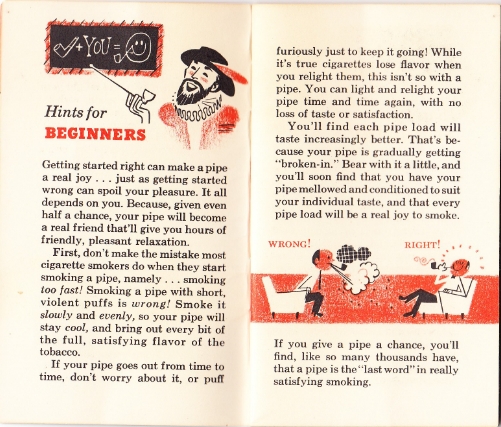
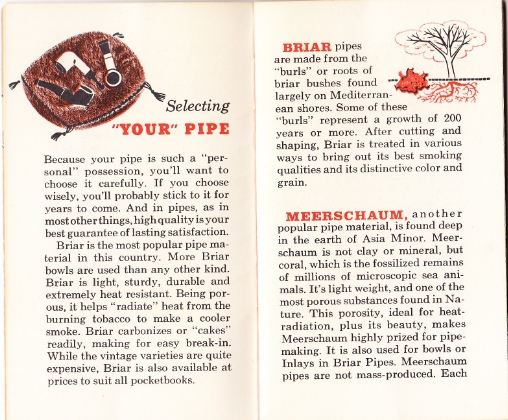
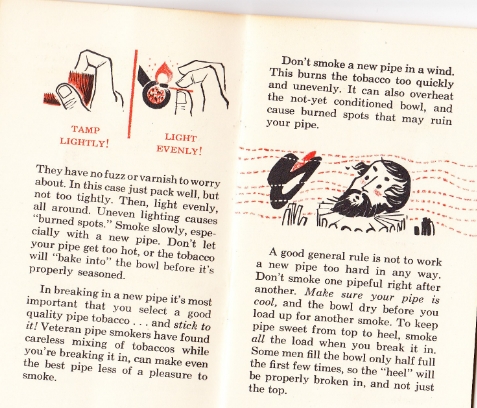
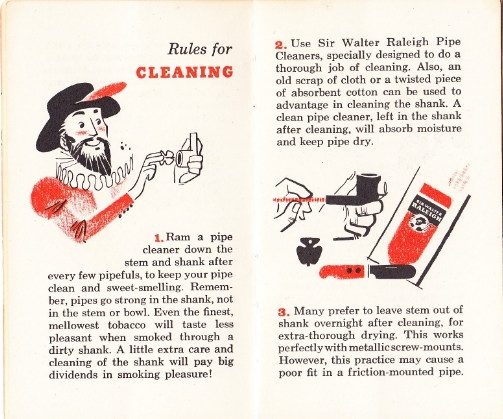
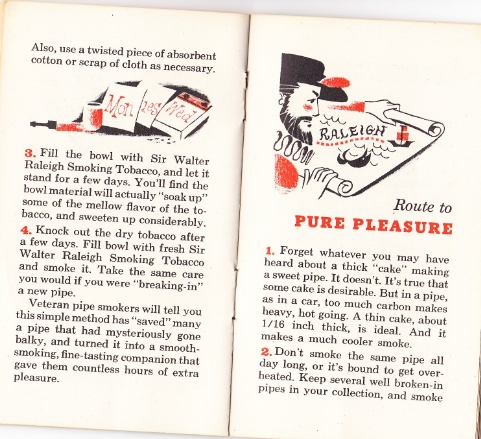
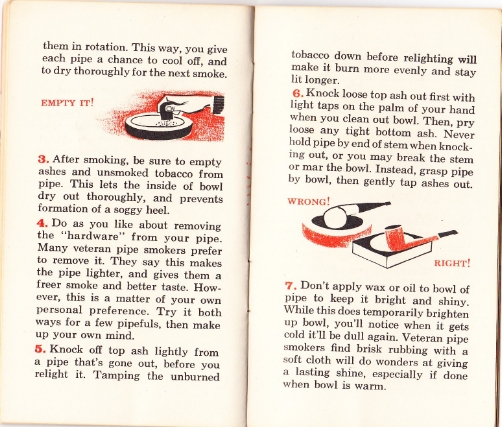
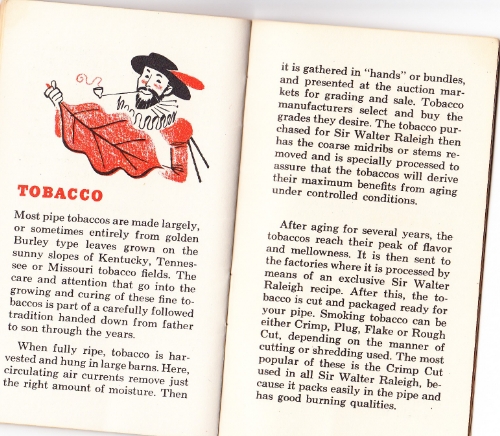
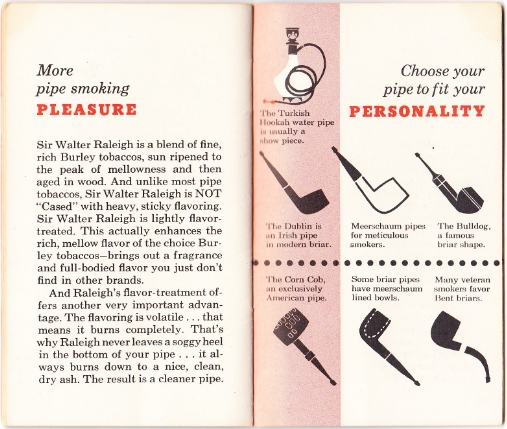
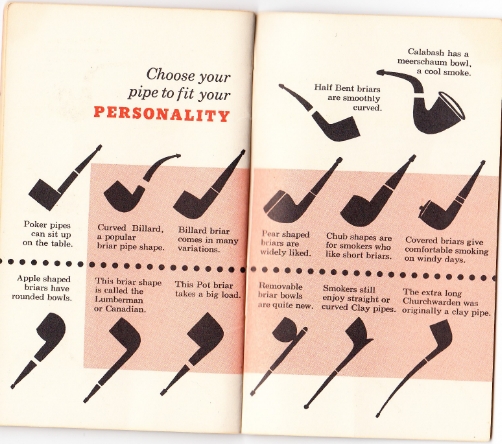
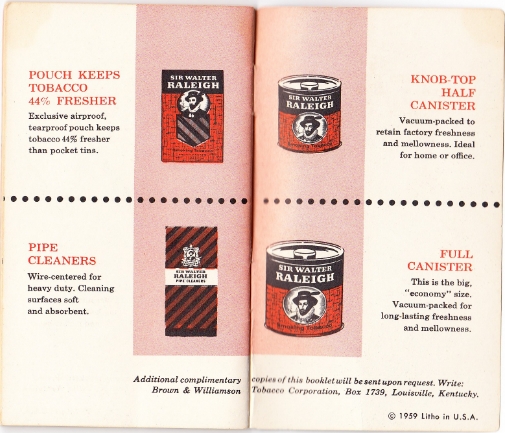
Sir Walter Raleigh Pipe Care Booklet 1959


Blog by Steve Laug

I was given a copy of this little booklet that used to be given out by Sir Walter Raleigh with their tobacco or with coupon pipes I believe. It is a great little piece of history so I scanned it and have posted it here for you to read and enjoy. All the pages are scanned so they are pictures instead of text.

ImageImageImageImageImageImageImageImageImageImageImageImageImageImage

History of BBB Pipes


Blog post by Fiona Adler, translation Steve Laug

I have been doing some research into BBB pipes for sometime now because of my own interest in the brand and I found an online article in French. (The original article was produced with the assistance of Fiona Adler. I want to thank Guillaume Laffly for giving me this new information on the origin of the material in French.) I have adapted the article below from a google translation that I did of the article on http://www.fumeursdepipe.net/artbbb.htm (I alone am responsible for the English translation and any errors probably are the result of my poor translation!)

Origin and history of Adolph Frankau and Co. Ltd.

Adolph Frankau arrived in London in 1847 and quickly grasped the opportunities which the enlarging tobacco market introduced. He started “Adolph Frankau and Co.” and began importing meerschaum pipes and tobacco supplies. The Company took a young 14 year-old boy, Louis Blumfeld under its wing. The Company quickly thrived and did so until the untimely death of Adolph Frankau in 1856. His widow decided to sell the company.

Thomas Carlyle (1795-1881), author of “Hero and worship of the heroes” came on the scene at this point. He recommended that the widow Frankau not sell, but rather that she should entrust the future of the company into the hands of young Louis Blumfeld, then 18 years old. Carlyle had to have had a very high opinion of the young Louis to make this recommendation, and his trust proved to be justified as Blumfield took care of the company with enthusiasm and bottomless energy. Louis quickly realized, as others had before him, the potential of the newly acknowledged pipes made of briar.

Louis Blumfeld developed important international trade relations from the beginning, and had particular success in Canada, Australia, New Zealand, India, Europe, as well as Switzerland and Denmark. The USA had never been an extraordinary market for the company, but nonetheless a subsidiary was opened in New York. His commercial strategy focused on the countries of British Empire. Just prior to 1914, Frankau & Co. was the sole agent for Ropp Cherry Wood pipes in the United Kingdom and its colonies.

While BBB is the most widely known of Frankau & Co. pipes the company also produced several other brands of pipes: Capt. Kidd, Fairway (” F ” in white; FAIRWAY / LONDON MADE / ENGLAND), Frankau’ s (London Made in England), Glokar, Major Daff, and Snap-Fit. It also seems that Ultonia and Nec Plus Ultra must be considered to be brands in full measure, in spite of the fact that they were introduced as being product lines under the label BBB. It would explain their absence in many of the BBB catalogues.

The necessity of making briar pipes in London became more urgent, that’s why, at the turn of the century, Frankau & Co. opened a warehouse and offices at 121 Queen Victoria Street, an export service at Upper Thames Street and a plant in 1898 at Homerton, High Street 112 (then 154). The Homerton plant lasted into nineteen-eighties when Cadogan regrouped its manufacturing activities to Southend-on Sea.

In those days, Frankau & Co. also produced calabash pipes. They used calabashes that came originally from Southern Africa. Supply of the calabashes became more difficult to maintain due to the growing demand for them. BBB set up a special department to make calabash pipes. They used meerschaum to make the bowl while some of their rivals used asbestos or plaster of Paris. The manufacture of calabash pipes survived until the war in1914/1918. The war destroyed the supply of calabashes from South Africa.

The 1920s were not an easy decade for pipe producers. Frankau & Co was purchased by “Oppenheimer and Co. Ltd1”. Also during this decade Comoy’ s of London, Dr. Plumb and Loewe & Co. came under the control of Oppenheimer. The purchase of all of these various brands pushed the company to create “Cadogan Investments Ltd.2” at Cadogan Square, London, in the 1930s, to manufacture and sell its pipes. The plant at Homerton passed under the control of “Marechal Ruchon & Co.” (In 1970s, the plant took the name of “Fairfax Traders”), and continued producing BBB pipes in a traditional way. They finished pipes with a silver ring and stampings. However, BBB continued, as an independent company within the Cadogan Group. BBB concentrated on making a certain number of system pipes and on new finishing processes.

Richard Esserman thinks that Dunhill subcontracted the manufacture of stummels to BBB for the Bent Magnums until 1923. In fact, when the companies within the Cadogan group argued with one another, a new plant was established in Stratford, Carpenters Road. They also bought machines from Zuckerman as they were more efficient. The finishing workshops were closed, and pipes were finished in Aldershot and sometimes also in Shoeburyness.

In this era, it was a current practice in trade to give surplus stummels to other companies at agreed upon prices. Cadogan sold Rank I stummels to Dunhill, and bought Rank II, III and IV stummels from Dunhill. But they did not finish pipes for other companies: to sell Rank I stummels to Dunhill was more beneficial than making them into pipes!

Image

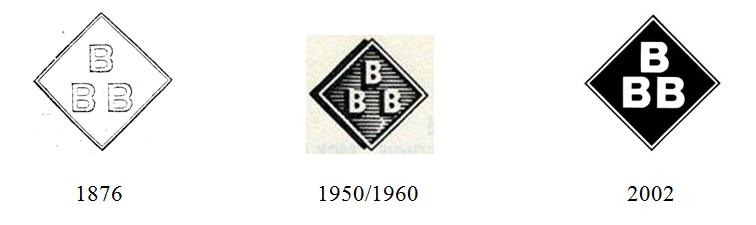
The BBB Logo

The initials BBB in a rhombus were quickly used as a symbol for the company, and that trademark was the first to be recorded when “Trade and Marks Act” took effect in 1876. Rather strangely, BBB registered under two numbers, numbers 39 and 40. In number 39, the acronym BBB in the rhombus (dates from deposit: January 1st, 1876; published on May 3rd, 1876 in page 21 of the Trade Mark Journal) for the class 341 (Tobacco, raw or fabricated and cigarettes), in number 40, a simple B for which no picture is available (the same references of store and publication) for the class 50 (fabricated Property from ivory, in bone, wooden, substantially plant or animal, pipes with tobacco, cigars and cigarettes (cigar and cigarette tubes). Note that Oppenheimer registered BBB again (number 39) for a new logo under the number 2288663 (December 20th, 2001; published on February 13th, 2002 in page 2634 of the Trade Mark Journal) for classes 14 (cases with cigar and cigarettes, soft packages of cigars and cigarettes, doors-cigars and cigarettes, all in precious metals) and 34 (Tobacco and products of tobacco, articles for smokers, pipes, tobacco pouches, door – pipes, lighters, equipment of cleaning for pipes, doors-cigars and cigarettes, cases with cigars and cigarettes, humidors). At the European level, Oppenheimer registered BBB under the number 002100907 (February 22nd, 2001, date of recording: October 7th, 2002), for classes 14 and 34 and under the number 0863111 for the class 34 (October 20th, 2005).

BBB Production

Some think that the first BBB pipes were imported, and that initials were intended to stand for Blumfeld’s Best Briars. Later these initials came to be understood as standing for Britain’s Best Briars.

At first, BBB produced two qualities of pipes. The one, BBB Own Make, became BBB Best Make, other pipes simply being stamped BBB. There are reasons to think that the Own Make was produced in fact in London (Reject pipes were stamped R). While simple BBBs were imported until the beginning of the 20th century. It is probable that the regular line of BBB pipes were imported from Saint-Claude, France.

The BBB collection followed along similar lines as other pipe producing companies during the second half of the 19th century. Shapes were similar to the popular models in vogue during that time with a predominance of bent pipes. Some of them had a silver ring. At the same time, BBB continued to deliver meerschaum pipes.

BBB was probably the first to offer pipes made to accommodate a paper filter. The Mackenzie, which was available in two qualities (Mackenzie, second brand of BBB, could have been produced in Republic of Ireland. Pipe stems were made of vulcanite). This technique dates from around 1900 as is stated in a letter dated from August 27th, 1891 from Mr. Morrel Mackenzie (1837-1892) in which he suggest that they make models with a longer stem. The Mackenzie brand survived into the 1960s.

It is thought that BBB was one of the first to call the pipes they had conceived with a long shank for a cooler smoke a “Lovat”. However, “Friedlands” could have adopted this name at the same time. Lovats appeared long before 1914 and were offered for sale by BBB in four different sizes, of which a series were stamped Highland. Colonel Henry Francis Fraser (1872-1949), Lord of Lovat, must have enjoyed the advertising of this shape made in his honour. It is still a popular shape at present. While BBB briar pipe shapes were similar to those of other brands, their models developed a very sought-after distinct character by the collectors. BBB earned the gold medal at the French-British Exposition in London in 1908 (Frank Bowcher, on 1864-1938) and at the World Fair and International in Brussels in 1910, the Medal of Godefroid Devreese (1861-1941). You can find pictures of these medals, notably on the advertising brochures of the 1950s and 1960s.

In this era the common practice was to set a pipe’s value by the material the stem was made of: ebonite, horn, amber, ambrolith etc. Also, price varied according to the size of the pipe. For instance, in 1914, the wholesale price of a simple billiard varied between 15 shillings and 22 shillings and 6 pence because of the size of the pipe and flock (no screw or tenon). Though this generally was true it seems that there were exceptions; for instance a Liverpool of five inches long with a stem in genuine amber had a wholesale cost of 12 shillings in larger quantities; the same pipe with a stem of ambrolith cost 19 shillings. BBB made different special series of pipes such as Chubby, Golfer, Dreadnought (probably named after different warships), Bellerophon (sic) and Cutty (small models). BBB offered some 20 lines of pipes that had different clever combinations of stems, finishing and decoration. Some of them had a silver ring. Around 1910, BBB Own Make pipes sold for 2£ 10 shillings while pipes only stamped BBB were sold for 5-6 shillings.

In the 1930s, the top pipe of the line was “BBB Best Make” with variants such as “Great Dam” and “Ultonia Thule”. The BBB Carlton, sold retail in 1938, was endowed with a complicated stinger system; the same system was also used on the BBB London Dry. The Blue Peter was not stamped BBB but BBB Ultonia, and BBB Two Star (**) was the stamping on lesser quality pipes. The calabash pipe was removed from the catalogues at this time, but some pipes with cases and some meerschaum pipes were still produced. Shapes of BBB pipe were typical of other companies pipes made in this era: half were billiards, some princes and bullcaps, bulldogs and some bents. It is also in this period that the inlaid metal BBB was put on more upscale pipes, while series of lesser quality had only the stamped BBB on the stem.

During the middle of 1950s and 1960s, BBB lines were comparatively stable. The top pipes of the line were stamped Own Make “Rare Grain”, followed by Own Make “Virgin”, Own Make “Walnut” and finally Own Make “Thorneycroft”.

Today, Cadogan uses Spanish briar for most of its pipes, and reserves the Moroccan briar for the production of high quality pipes. Before being sent to them for manufacture into pipes, the briar has been dried and cured for a time period of between 6 and 12 months.

To avoid any confusion about the ranking systems of their pipes in the Cadogan Group brands the company adopted a system of eight common ranks for all of its brands. Rank A is briar with nice grain, without any visible imperfections. Rank B has nice grain, but with some small black points and maximum of three sand pits which will be filled. Rank “Best Make” also has nice grain, with maximum of five small sand pits. The stummels with grain of variable quality and maximum six sand pits are ranked MB. The second rank pipes are of briar of mediocre grain but without defects or of nice grain but with up to eight fills or two big sand pits. The third, fourth and fifth ranks are given to pipes whose quality decreases proportionately.

1Adolph Oppenheimer started an import/export company in 1860, and his brother, Charles, joined the company later that year. Adolph retired in 1870 and moved to Germany, where he became British Consul then Consul general, letting Charles take the control of business. Louis Adler, who was the brother-in-law of Oppenheimer, became a colleague when Adolph left the company. Both brothers did not have heirs, so the ownership of the company passed to the family Adler. By 1870, the company imported GBD pipes into Great Britain from Paris. The association of Oppenheimer with GBD was such a success that in 1897, Oppenheimer became the sole agent of the French company. Five years later, the French owners of GBD, Marechal Ruchon and Co., merged with A. Oppenheimer.

2Cadogan’s slogan, “Pipemakers Since 1825” refers back to the first clay pipe which Francois Comoy fabricated in 1825. Cadogan’s pipes were fabricated in numerous places disseminated around London and to Saint-Claude, but with the purchase of Orlik Pipe Co. In 1980, Cadogan regrouped the entirety of its manufacture in the new plant of Southend-on-Sea, plant especially constructed for pipe making industry. Cadogan continues to fabricate GBD, Comoy’s of London, BBB, Dr. Plumb, Loewe and Orlik pipes (since 1980). They also make Kaywoodie pipes for the British market and have recently agreed to make Sasieni pipes for James B. Russell.
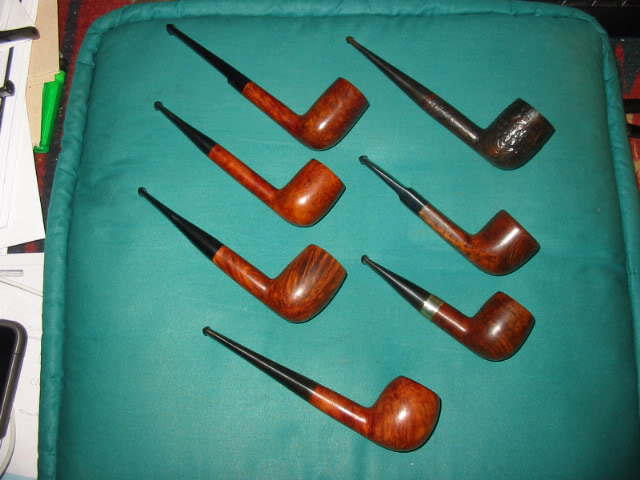
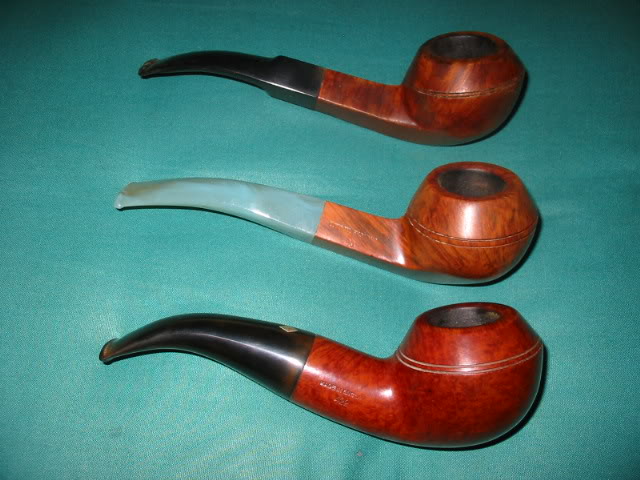
I have attached a few pictures of some of my BBB’s. I love these old pipes and have quite a few.

Another Gift from my Binner Friend


I was going through older files tonight cleaning out some old materials and came across this note regarding another gift of tobacco from my friend Don, the homeless binner that I wrote of earlier in A Surprise Gift Awaited Me at the Door (https://rebornpipes.wordpress.com/2012/05/30/a-surprise-gift-awaited-me-at-the-door/).  In Vancouver, where I live, there is a subculture of folks that makes a living out of the refuse of others who discard things, instead of repairing them. You can see them working their routes across the city diving into dumpsters/waste cans or picking through them with sticks to reclaim “valuable” throwaways. They are called dumpster divers or binners and work daily from sunrise till after dark. Over the years I have known Don, he has come by to visit often after a successful day, having found recyclables of glass, metal, wire, etc. He has shown me art work, stereo systems and televisions that still work with a bit of fiddling, which he repairs and sells in shops around the city. In the last piece I wrote about Don I told the story of a box of tobacco he brought me from his finds. He swore he got these from a pipe smoking friend but I don’t know whether to believe him or not. Actually it does not matter. The last time he left me a gift of many of GL Pease’s tobacco and others that I had not smoked before. This note describes the next gift tobacco he brought me.

Here is the piece I wrote on May 16, 2008… Man I miss Don and his mystery gifts.

I had not seen my homeless friend Don for about a month and today he came by for a visit. He walked up pushing a shopping card piled high with treasure he had found on his binning route. I could see clothes, shoes, electrical items, flashlights, coats, and other cast off items that looked to be almost new. Around and on top of these were his bags of recyclables. Tied to the push bar of the cart was his little terrier Spaz. Spaz was his partner and everyday companion. I don’t think in the years that I have known Don I ever saw him without Spaz. When Don came to eat Spaz came with him. When he came to Christmas and other holidays Spaz came with him. When I was pastoring a church here in Vancouver, he and Spaz came to church. Spaz would guard the shopping cart of treasures while Don relaxed and visited. He would always ask for some water for Spaz and would give him some treats from his pocket before taking care of himself.

Today he came by to tell me that he is heading home to Ontario and spending the summer with his Dad. He was going to hitchhike across Canada to get there. He brought me another surprise gift of tobacco to use as fuel for negotiating a ride to the edge of town on Monday morning. He had a bit of twinkle in his eye as he spoke of the swap. You have to imagine what Don looked like. He was a midsized skinny man in his late 40’s. He had lived on the street and in the bush for the past ten years so he had a weathered face and features. He had crow’s feet at the corners of his eyes that crinkled when he grinned. He had a toothless smile as most of his teeth had been pulled and he hated wearing his dentures. He had his day pack on the ground as he talked to me. He took out his trade to hand to me and watched as I took it from him. I figure he wanted to see if my reaction would be the same as it was the last time he handed me a gift.

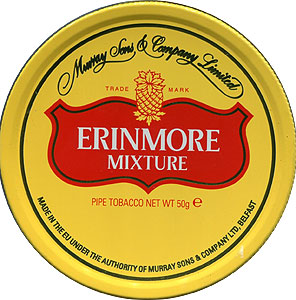
Imagine the surprise when I opened the bag he handed me and looked inside of it. I must have registered that surprise all over my face from big eyes to an opened mouth ooooohhh. I reached into the bag and pulled out six 50 gram tins of Erinmore Mixture – the old Murray and Sons tins from Ireland – five of them in a sealed carton and one extra tin for good measure. All of them but one was unopened. That one in the sealed carton had popped open and was spilled inside the box. The smell of the tobacco was amazing. I probably started salivating like Pavlov’s dogs about that time. Don started laughing as he watched me. He winked and said, “I guess that means you can take Spaz and me on Monday?”

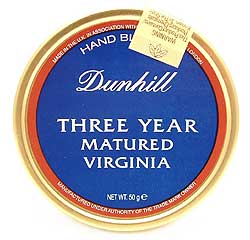
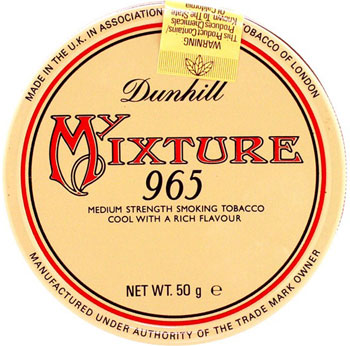
I just shook my head, too amazed to speak. Don told me to dig deeper in the bag as there was some more there that he was sure I would like. I moved the Erinmore carton and under that to sealed plastic bags of tobacco – a pound and 1/2 of Dunhill 965 and a pound and ½ of Dunhill 3 Year Matured Virginia. These were double sealed in two freezer bags and labelled with the name and the year. These tobaccos were dated 1995. Needless to say I would have given Don and Spaz a ride to the edge of town anyway but this more than sealed the deal. I have no idea where Don came by this tobacco any more than I knew where he had found the last lot he brought me. He never would tell me, just laugh and say, “I have my sources!”

ImageImageImage

What a gift. I just shake my head at my friend’s thoughtfulness. I will miss his visits this Summer.”

The note ended there and today as I read it over again, I still shake my head at my friend’s thoughtfulness. I miss his visits.  It has been four years since I have seen Don and Spaz. I have looked for them in their favourite spots without result.  I don’t know what happened to him.  I know that about two years ago he called to tell me he had found an apartment and give me the address and phone number. I called and went there but he was not to be found. I don’t know if he is still around or even still alive. But I know that he has made an indelible mark on my life and memory.

Those who have so little seem so much more giving and generous than those of us who have much. I lift a pipe of MM965 to you my friend where ever you may be. I will always remember your kindness to me and my family. Thank you!

Refurbed Breezewood Acorn


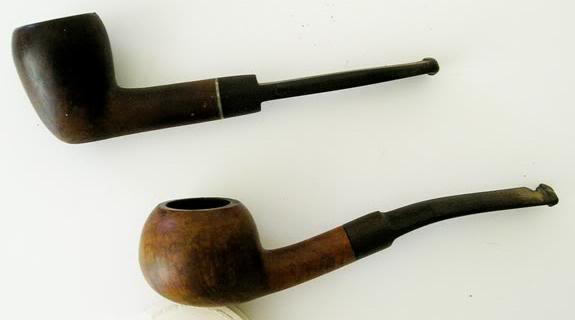
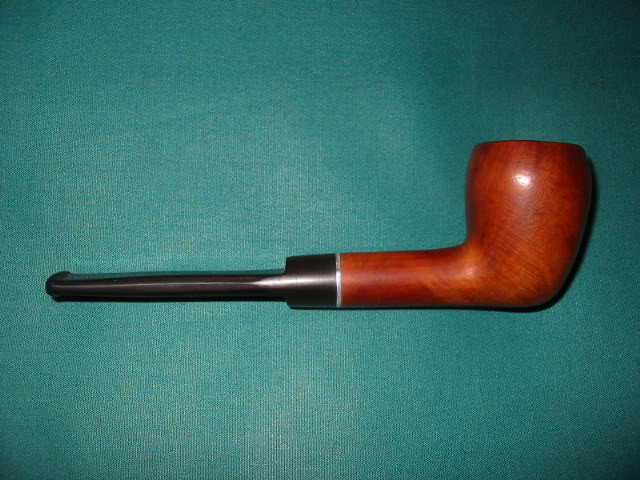
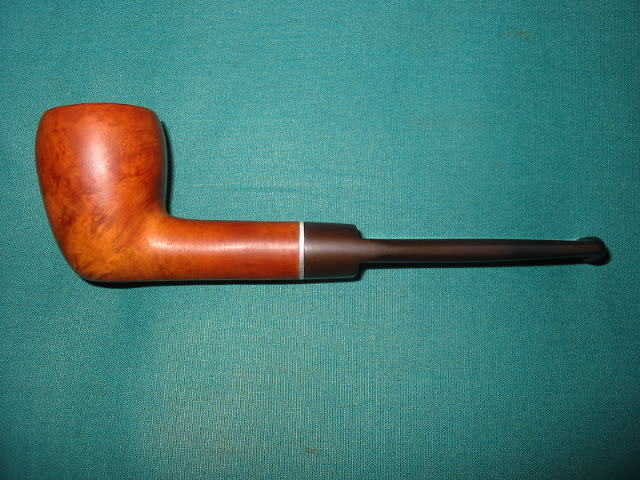
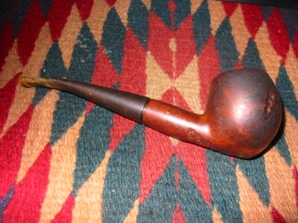
I picked this old timer up in the ebay purchase that included the Bertrams author. It was almost black it was so dirty. It is incredibly light weight. Once I got the grime off I could see a wee bit of the stamping left and it read Breezewood. I reamed and cleaned the inside. The stem is a screw mount like the old Kaywoodies. It has been clipped of stinger contraption but it is a good open draw. I cleaned the stem and used the micromesh sanding disks on it. The bowl was soaked in an alcohol bath to remove the finish and grime and then sanded with 220, 400, 600 sand paper and then micromesh 1800, 2400, and 4000 grit pads. Here are the before and after shots. Below the pictures I have posted a write up of the history of Breezewood pipes by the late Mike Leverette (a friend and historian of things pipe).
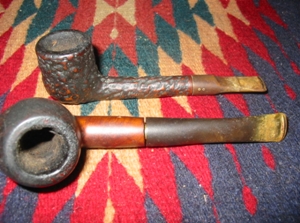
The pipe is pictured in the top photo below of the two pipes.

Image

Here is a series of photos of the refurbished pipe.

Image

ImageImageImage

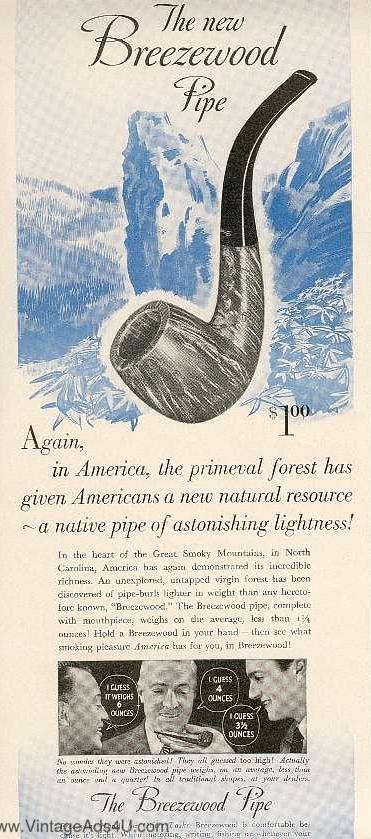
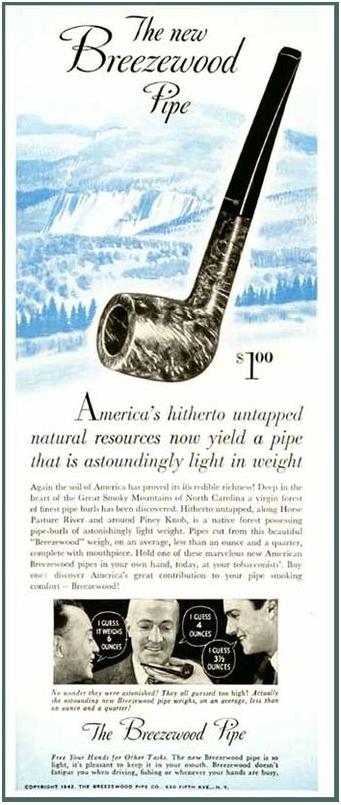
Here are some informational ads on Breezewood pipes

ImageImage

I wanted to include this brief article by Mike Leverette as it gives background history that is not commonly known or available regarding these early alternatives to briar that came out during the war years.

“There were at least three pipe brands made from the Mountain Laurel; Trapwell, Breezewood and Custombilt. Trapwell pipes were made by D & P Pipe Works beginning on or before 1943. D & P Pipe Works, owned by D. P. Levitas (Ross 2005), began making pipes in 1938 (Wilczak and Colwell 1997) probably in New York City but relocated to Sparta, Alleghany County, North Carolina in 1943 (Sparta/Alleghany CoC 2006), in order to be closer to the huge population of Mountain Laurel in the area. Later, this company changed their name to Sparta Pipe Works and still later to Sparta Industries. I have one Trapwell World’s Best Briar pipe in my collection, a small billiard, and here again; it is a great little smoker. World’s Best Briar was their marketing ploy for Mountain Laurel. Trapwell’s ‘trap’ is a highly complicated condensing system when compared to most regular metal condensers. After the war, Trapwell pipes were made from regular briar wood, or “imported briar” until their demise.

According to a 1942 Life magazine advertisement, Breezewood pipes were made by The Breezewood Pipe Company, located at 630 Fifth Avenue, New York City, though Wilczak and Colwell state the Breezewood pipes were made by Kaufmann Brothers & Bondy (KB&B) beginning in 1941 (Wilczak and Colwell 1997). The Breezewood Pipe Company may have been a subsidiary of KB&B. To quote the 1942 Life magazine advertisement; “There, deep in the Great Smoky Mountains, they found it – found an uncharted virgin forest of burls, great old burls that had been growing there uncounted years. And from these old burls, pipes of astonishing lightness of weight are made – their name: Breezewood.”

At the present time, this is all I have been able to find on the history of Breezewood pipes. Here again, the one Breezewood pipe, a small billiard, I have in my collection is a great little smoker. I am not overly fond of metal condensers and this Breezewood pipe has a simple tube condenser similar to Dunhill’s “inner tube”.


My Wife Says that I am a Scavenger…


Looking at the picture below, you might agree with her and think that I have lost whatever was left of what few brain cells that remain in my 57 year old head. My wife and daughters are likely convinced that this is closer to the truth than I care to admit.  I will even agree that while both you and they may be correct, you need to understand that I intentionally bid on and won this lot from EBay recently. While nobody else wanted the lot I did!

Image

I just received them in the mail today. They came well packaged and labelled. In fact they were better packed than virtually every other pipe I have ever received from EBay shippers. The box was a solid 2”x4”x8” and stuffed with paper packing materials. The stems and pipes were then bagged and wrapped in bubble wrap and stuffed in among the packing papers. It was as if the seller was trying to protect a rare treasure. I opened the box and cut the tape on the packaging to expose the pipes inside. Five of the six pipes had cracked bowls and the sixth had a cracked shank and stuck stem. The bag included 9 extra stems that were actually quite old and three of those were military bits for spigot style pipes. The five cracked pipes were admittedly firewood and beyond repair.  The sixth one, with the split shank, which was the cleanest of all, could be repaired with glue and a band. I set it aside for a rustication project. In examining the split bowls I noted that they all had the same problem – a huge amount of cake. I am talking about cake so thick that you can barely stand a pipe nail spoon end down in some of the bowls. The cake had erupted from the tops of the bowls and had exerted so much pressure that the bowls were split in multiple places, as you can see in the picture below. It is a shame really as two of them, the ones with the stems on in the picture below, are opera pipes with oval bowls.

Image

Now you might wonder why I would purchase this lot. It was not a surprise or a disappointment to me, after opening the box, because I had asked enough questions of the seller to know exactly what I was getting. I had been the sole bidder, no other competitors for the lot to drive the bid higher.  In the past, when no one else bid, it used to bother me because I asked myself what I was missing. You see I was not bidding on the pipes.  I could care less about these pieces of firewood that were beyond redemption. What I wanted in the lot were the older stems and I bid accordingly, and I ended up with 15 stems, once I took the pipes apart, added the stems from the lot and found an extra one in the box.  I could not have been happier because I prefer to use stems from a similar era to re-stem the older pipe bowls that I have. These stems provide me with a solid batch of stems and in the next few months they will have new bowls attached to them. The beauty of this lot is that none of the stems were chewed or gnawed, and only one has a very repairable tooth mark. In this sense the old stems were my real and intended acquisitions.

I am a scavenger of pipe parts. It only is a matter of perspective that enables one to see beyond burned out unsalvageable shells of pipes and identify the many salvageable parts they contain. There are always parts on the worst of them that I reuse – stems, bands, logos, etc. that can be scavenged and re-used.  I have a box of these parts that has come in handy more times than I can remember. But another good part of the lot is that once I clean up the older briar some of the shanks could provide the base for tampers and such. The rest may well go in the fire pit this summer but you never know. Part of my hunting through thrift shops, rummage sales, garage sales, and Craig’s List for pipes always includes the element of hunting for pipe parts. I have scavenged old broken KWs and Yello Boles and kept the stems to use on sister pipes. I have cleaned up chewed KW and GBD stems so that I could remove the logos and medallions and re-inserted them on new stems or stems missing the logos. Even these little parts are always removable and reusable. It only takes eyes to see the possibilities in old castoffs.

Only one final word… if you begin to pick up my scavenging ways make sure to leave some parts around for me. Also if you need someone to blame for your newly adopted bad habit I am more than willing to take the blame… for a small price – say a few stems and parts. That is it for now I am off to take apart those old pipes and strip them down.


Father Tom – Spring Had Arrived


Springtime had officially arrived in Vancouver. The tulips were ready to burst, while the snow drops were up and the cherry trees were budding and beginning to bloom. Even the rhododendrons were full of buds, waiting for a bit more warmth before opening. It was time, thought Father Tom, to clean off the winter mess from the front porch and get it ready for the spring season and the pleasures of summer smoking outside, for a change.  For him this meant firing up a “work pipe” – one that did not require concern if it fell out of his mouth or was knocked out by an exuberant swing of the broom.  He opened the door to his shop, picked a pipe off the rack of work pipes he kept there.  He filled it with tobacco from the pouch in his shirt pocket, lit it with his Bic, tamped it down with his Czech pipe tool, and relit the pipe. Once done with this ritual, he got his broom and bucket and rags to clean off the porch.

He closed the door to the shop and walked back toward the front of the house and the porch while puffing away.  Moving the chairs, table and planters down to the lawn, he prepared the porch for a good sweeping, still puffing on his pipe.  He knocked down the cob webs and leaves that hung on the hooks for the planters. He swept the floor and the walls to get them ready to be scrubbed. He filled his bucket with hot soapy water and scrubbed down the walls of the porch which turned the water in the bucket a muddy black. He then washed them down with clean hot water, removing the soap scum. Again, he filled the bucket with more soapy water and scrubbed the deck of the porch. He washed down the porch railings and the steps down to the ground, pouring the soiled water on the flower beds below the porch, before refilling the bucket each time.  Once done, he contemplatively puffed on his pipe and discovered that he had to relight it, as the task of scrubbing had caused him to forget to puff. He had found that puffing on a pipe made most things go much more smoothly.

While the deck was drying he went to work on the hanging baskets in the yard. He readied them for the new flowers he had picked up earlier that morning. He emptied the soil from the baskets into his wheel barrow. Then he sat on his chair and mixed in the new soil with the old. Once he had a good blend mixed he filled the baskets with the soil and transplanted the flowers to his hanging baskets. He sat back and took a pull on his pipe and looked them over. They looked promising and would certainly fill out as the summer came on. He looked around at his little patch of Eden – his flower garden. Things were really growing quickly, soon he would need to add more soil and clean out some of the weeds and volunteers. He had planted largely perennials so that came up each year and only needed to be filled in and thinned out a bit. He enjoyed the serenity that came to him in his garden.

By the time the baskets were finished the porch was dry. He brought the baskets up to the porch and hung them on their hooks. He carried up his planter boxes and put them on the railings. Things were looking a lot brighter and more alive. It was time to set up his porch. He went to the basement and got out the straw mat that acted like a rug on the floor of the porch. He carried out the wicker set – a love seat, two high back arm chairs and a table to hold his pipes, tobacco, books and drinks. Once he had it set up he turned on a little music and sat back on love seat with his feet on the table to enjoy his favourite time of the year. He tapped out the remaining dottle in his pipe and reloaded it with some good Virginia – McClelland’s 5100 that had 10 years of age.   He savoured the scent of the tobacco as he loaded his pipe. He had done this for so long that he scarcely needed to look as he filled the bowl. He just sat and enjoyed the warm air, the smell of fresh soil and the flowers that that had begun to give off their fragrance. He put the jar of tobacco on the table in front of him and picked up his Bic lighter and tamper. He puffed on the pipe as he drew the flame into the bowl. The first light and the puff of blue smoke that rolled from the bowl told him it was a good light. He tamped it and relit it another time. Once he saw that it was burning well, then he leaned back to relax.

One of his favourite things to do as he quietly smoked his pipe was to quietly observe what was happening in his neighbourhood. He was sitting up above the street enough that he could watch unobtrusively as life went on around him. In his peripheral vision picked up a squirrel on the fence post busily washing it face and chattering away. In the birdbath on his left two sparrows took turns splashing in the fresh water he had put out. A female robin was in the cherry tree over the bath just waiting until, in her impatience, she chased the sparrows out the bath. In the oak tree overshadowing the porch a pair of crows were cawing and making a ruckus. It was a perfect morning. He was glad that he had started early and now could enjoy the time on the porch. On the sidewalk just outside his gate two little guys went rolling by on their bicycles with training wheels, laughing and racing each other. Behind them came a third boy, who by the looks of him was their brother, careening toward them on his scooter. He knocked the younger of the two boys off his bike. There was an expected uproar with loud crying and yelling. Within seconds their mom appeared from just beyond the hedge on the neighbour’s property. She came and picked up the fallen lad and brushed off the dirt, looked at the battle scars and wiped them off with her hankie. After a quick scolding of the older brother for his carelessness the foursome were off down the street as if nothing had happened.

Silence encircled the porch world once again. Out on the street, across the parking lot, the metro buses came and went, as trucks and cars hurried back and forth. The pleasant smell of jasmine incense wafted in on the breeze from the altars in front of shops owned by Vietnamese Buddhist shopkeepers. Two houses down a group of elderly Chinese women chattered back and forth. His world was truly a global village. He had read that in his neighbourhood alone there lived immigrants from 60 different countries. It was a good place to live and see the world without leaving his porch.

Laying his pipe down, he went inside to get a cup of tea to enjoy with his pipe. He fired up the tea kettle and filled a tea bag with some bulk Earl Grey tea. He put a wee bit of milk in his mug, put the tea bag in and poured the hot water over it to steep. When it was the way he liked it he returned to his seat on the porch. He picked up one of his books off the table and contentedly puffed his pipe while reading, with a pause to sip the Earl Grey.  He could not imagine a better way to enjoy his day off than this sublime repose.

When you want to find Father Tom early or late on a Spring or Summer day, check his porch first. Follow the smells of the tobacco smoke and listen to the music filtering over the garden and you will find him on his porch of tranquility.

You Just Found a Pair of Dad’s Old Pipes?


Blog by Steve Laug

They are both in very rough shape and need help but you want to keep them anyway. There is dried out old tobacco in both and the finish is about shot. The rims and sides of the bowls are both covered with dark grime and the mouth piece, or stem, is covered with bite marks and hard white lime like crust. The rest of the family tells you they are not worth saving and should just be thrown out but something inside you rebels against that. You still have memories of your father smoking those pipes and the associated feelings and smells still linger for you. It is hard to let go of these pieces of history. Something inside you wants to restore them but you just don’t know where to start. If this sounds like your situation, then you have come to the right place.

Image

You have already begun the first step in the process of refurbishing and that is to respect what you hold in your hands. These pipes are a piece of family history that can be passed down through future generations and when cleaned up and maintained, will last longer than any one of you. If they could speak to future generations can you imagine the stories they would tell? But if you listen to the wood, the old tobacco in the bowl, the dents and dings and the smells that still linger in it you will hear it speak. It will tell you what your Dad smoked. It will tell you how much he loved that old pipe and it still held the half smoked bowl of the last tobacco he smoked in it. It will tell you in the decimated finish where his fingers curved around the bowl. As you remember, you will know the stories that give meaning to dents – one from the fishing trip you took, one from the dash on the car when he laid it down and it hit the gear shift before bouncing off to the floor. All those bits and pieces add to the myth that surrounds story of a family. Be sure to take some photos of the old timers before you go to work on it. You will be amazed at the transformation that still respects the history of your Dad’s pipes.

The first step in the process is to do what I call field dressing of the pipe. It starts by laying out some newspaper on a table top where you can work on the pipe. Sit down with the pipe and begin to clean it. Use a small screw driver, ice pick or a dental pick, if you have one, to clean out the remnants of tobacco in the bowl. Put it to the side on the paper. You can purchase a pipe reamer on eBay for reaming the bowl or you can carefully use a knife with a rounded end to scrape out the old carbon. If you use a knife be sure to proceed slowly and carefully to ensure that bowl stays round. Scrape slowly, bit by bit, until you have a thin even cake all around the bowl. Once that is done you can wrap a piece of dowel with some sandpaper and use it to sand the bowl back to smooth. Use a paper towel or a soft cloth and some Isopropyl alcohol to wipe down the surface of the bowl and remove the dirt and oils of the past. This should also help to soften the remaining finish on the bowl. This cleaning will go deeper as we progress through the process but start with a cleaning of the outer surfaces of the bowl and the stem of each pipe. I have learned that it is always more pleasant to work with a clean pipe than one that is oily and tarred.

The stem needs to be separated from the shank. This may sound like an easy thing to do, but sometimes with the amount of tars and use the pipe has seen, the stem will be stuck in the shank. Put the pipe in the freezer. You don’t need to bag it or tag it, just sneak it in when the family is not paying attention and leave it there for an hour or so, long enough to sip a coffee and relax a bit. The different materials in the stem and bowl of the pipe make them contract at different rates and I have found that when I remove it from the freezer the stem is easily removed. If it is still stuck then put it back for another cup of coffee.

ImageImageImage

Once the stem is removed I fill a jar with Isopropyl alcohol and place the pipe bowls in it and let them soak for awhile. The length of time depends on the depth of the grime. I put the lid on the jar and give it a bit of a shake to churn the alcohol through the pipe. I leave it and turn my attention to the stem.

The stem will take a bit of work and will take the better part of a couple of hours to get back into shape. I clean the inside of the stem with pipe cleaners and cotton swabs until they come out clean. I dip them in the Isopropyl and run them through to remove all the grimes from inside the stem. Once I have it clean then fill a bowl with some water and put it in the microwave and set it to boil. I dip the end of the stem with the bite marks in the boiling water repeatedly to lift the bite marks a bit. Vulcanite, which is the material the stem is made of is said to have memory and will return to its original state. This method does wonders in lifting the bite marks. When they have raised as much as they are going to dump the water and take the stem back to your table. Using 240 grit sandpaper, remove the brown oxidation and calcified white stuff that are on the stem. Be careful as you sand to not round the sharp edges on the stem at the mouth end (button) or the pipe end (tenon). You want to leave a good tight fit with sharp clean edges when you are finished. You will find that the sandpaper scratches the surface but do not worry about it as the goal at the moment is to return it to a dull black. Once it is clean of the browns use 400 grit and then 600 grit wet dry sandpaper to smooth out the scratches and remove any remaining oxidation.

The stem should be a dull or flat black once you have finished with this step in the process. Now you have a choice to make. There are several steps that can be taken next depending on what choices you make. You can either use repeatedly higher and finer grades of wet dry sandpaper or you can use micromesh sanding pads – I use 1500, 1800, 2400, 3200, 4000 and 6000 grit pads to finish the stem to a gloss. These pads are readily available at woodworking shops or online – just Google Micro-mesh pads. If you use the sandpaper it works well but is a bit more labour intensive. After you have the stem restored to a gloss you can use a bit of olive oil to polish it – wiping it on and then off or you can use some softened beeswax or carnauba wax. I have even used Kiwi Neutral shoe polish which is a carnauba based wax.

I then set the stem aside and retrieve the bowls from the alcohol bath. Before I take them out I use the alcohol in the bath to scrub the bowls using an old tooth brush as it just gets into the cracks and crevices and gets the dirt out of the surface. Once that is done I dry off the pipe with a soft cloth and get to work on the finish. For the rough surfaced ones like the smaller pipe in the picture I will often use the tooth brush repeatedly to remove all the grime on the pipe. With the smooth pipes like the second pipe in the picture I wipe it down with alcohol dampened cloths until it is clean. I then sand the smooth one with either the 400 and 600 grit sand paper or the Micro-mesh pads to smooth out the finish. If the top is rough you will need to decide what to do with it. I have posted on the blog how I repair those issues so have a look on there for the article on topping a pipe bowl.

When both bowls are clean and free of dirt and tars I wash them down with a fresh alcohol cloth and then they are ready to stain. I use Feibings Shoe Dye for the stain and have found that the Medium Brown dye works well and matches most of the stains on these old pipes. Both pipes in the pictures were stained with the same Dye. I use the dauber that comes with the Dye (the dye is available at most shoe repair shops for about $4-$5). I coat the bowl while holding the stem. As the stain will turn your hands brown, wear rubber gloves for the staining. Once it is stained light the stain on fire with a match to set it. You will think I am nuts in suggesting this and think you will catch things on fire but like the alcohol in Baked Alaska it only burns blue for a short while and really sets the stain into the grain of the wood.

Set the pipe aside over night to let it thoroughly dry. The next day use the 600 or higher grit wet dry sandpaper to remove the excess stain on the exterior of the smooth bowl. Wipe it down regularly with a damp cloth to see what it is looking like. With the rough surfaced pipe I use a piece of flannel fabric and buff the surface until it glows. Once both pipes are finished and look acceptable to you give them a good coat of wax or polish. Some folks use Pledge on the bowls and have done so for years without ill effect. This gives them a rich glow. The only thing left to do is join the family heritage by smoking a bowl of your own tobacco in the pipe. When you are done with that smoke, wipe the pipe down with a soft cloth and clean it inside with a pipe cleaner. With a little care the finish that you have done will last until you own grandchildren need to refinish it once again. But take delight in smoking a piece of the family history and adding another generation’s story to the life of this old pipe. Enjoy.

If you have any questions on the process feel free to post a response or question here.

Here are the same pipes after finishing the process I laid out above.

ImageImageImageImageImageImage

A day in Atlanta


Tuesday, Feb. 27th was a great day for me. I had flown into Atlanta the night before for work and had all day Tuesday to use as I chose. So I planned ahead and emailed my friend John and set up a visit with him. He was able to schedule a day off as well. We made a real day of it! We started the day a bit later than planned as John overslept a bit. He must have been tired but it was his day off!

John picked me up at the Crowne Plaza near the airport at about 11:00 and went straight to the home of Joyce White, of the Tobacco Supermarket. John had spoken of the fact that Joyce stocks more pipe tobacco blends than one can shake a stick (or even a FEW sticks!) at. He was right. I was like a little kid in a candy store. It was overwhelming to look not just at the sheer volume of tobacco but the number of blends that she stocks. There were tobaccos there that I had only heard about and never seen. Not only did she have stocks of tins but another room full of bulk blends from G&H, McClellands, MacBarens, and others. She also carries a full inventory of snuff and both new and estate pipes. I was in overwhelmed heaven. After the first hour I came upstairs and visited with Joyce and John and her new Basset hound puppy. Then I headed to the basement again to pick my choices. I finally settled on about a half a dozen blends, a new tamper, and a lighter.

From Joyce’s we stopped by at John’s house to drop off a few things and smoke a bowl before we went for lunch at a barbeque restaurant just around the corner from John’s house. He had introduced me to the Old South Barbecue the last time I was in Atlanta with him and I really wanted to get back there again. It was just as good as I remembered and we finished off our plates of pulled pork and chopped beef. The green beans and onion rings filled in the gaps and the sweet tea washed it down. I can only agree with John in saying that if you ever happen to visit the Atlanta area you have give the Old South Barbeque a visit.

We headed back to John’s house after a filling lunch for an after lunch smoke. We adjourned to his back patio and a couple of chairs to smoke a cigar. John fired up one of four lovely Cuban Monte Cristos I brought him (two are saved for a special cigar smoke with his dad at a later date) and I fired up a Gurkha John took out of his humidor. They were fine cigars and were a great end to the meal we had just eaten. We talked through a wide range of topics from tobaccos, cigars, books and music. We covered even a bit of politics that was enjoyable as well. It is not often you get to talk with someone who has read the things you read and listened to the things you listen to both music and lectures, and likes the same tobaccos and cigars. We enjoyed the sunshine and watching his four dogs tear around the back yard.

After the cigars we went back in the house. We stopped in the basement shop where John has been turning out some very unique and highly smokeable pipes. We looked over the briar stash he has going and his drill press and saws. It is a great work space and I can see that some great pipes will be coming out of that place. (In fact John writes that he has just finished another pipe – a rusticated and blasted pipe. I am looking forward to seeing pictures). During the drives about town John introduced me to the music of one of his favorite artists, Lucinda Williams. I was immediately taken by the profound poetry and music she creates. We must have listened to several cds as we drove around. So when we got upstairs he popped a DVD of her Austin City Limits performance of a few years ago into the player. As we listened and watched an outstanding performance of hers we smoked our pipes in pleasure.

When the performance was over we made a quick trip to the grocery store to get something to cook for dinner. By the time we were back both of John’s stepsons and his wife had arrived home. We put on some classic rock and roll and John fixed some dinner – sausages, rice and green beans (seems green beans are a real Southern dish). I was still pretty stuffed from the lunch but managed to eat a bit of John’s fare. At some point in the afternoon or early evening John reached in his pipe rack and handed me a very nice Winslow Crown Viking pipe that he wanted me to have. When dinner was over I packed the Winslow and fired up a bowl and made our way to the car. Sadly, it was time to have John drive me back to the Crowne Plaza (it is near the airport, so about an hour from his house).

ImageImageImageImage

I will fondly remember this visit with my friend John and look forward to many more in the years to come. He does not need to worry about me coming to often as I only seem to get to Atlanta about once or twice a year. I thoroughly enjoyed the day with John and tip my hat to his hospitality and southern charm! Here’s to you my friend!