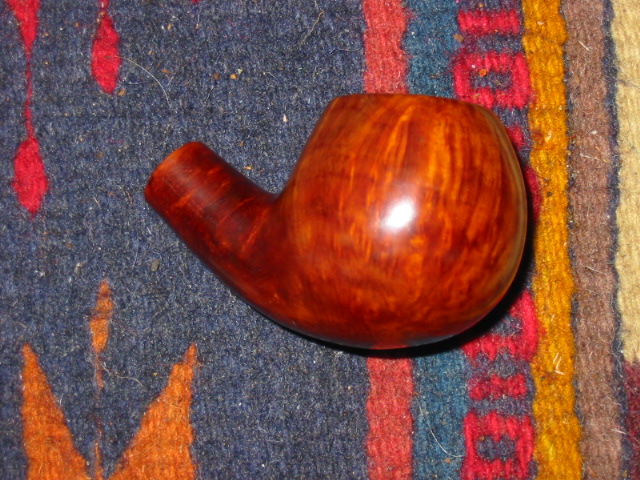
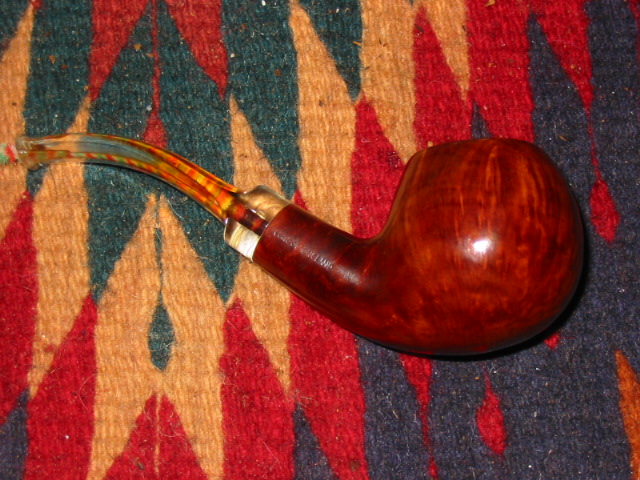
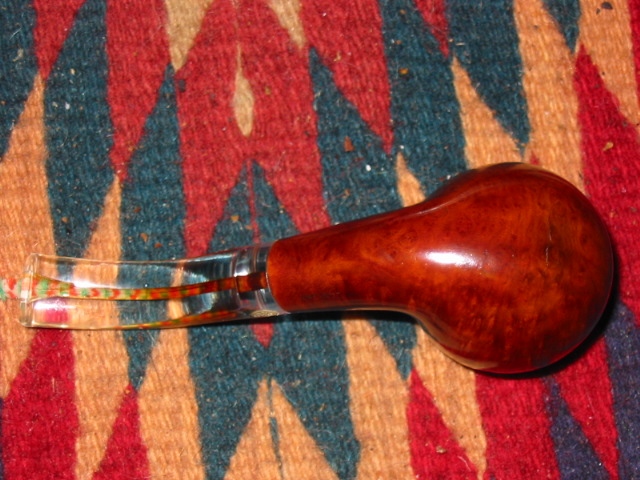
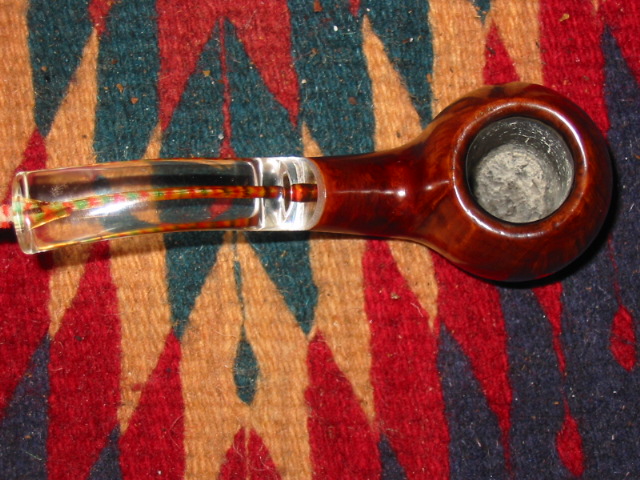
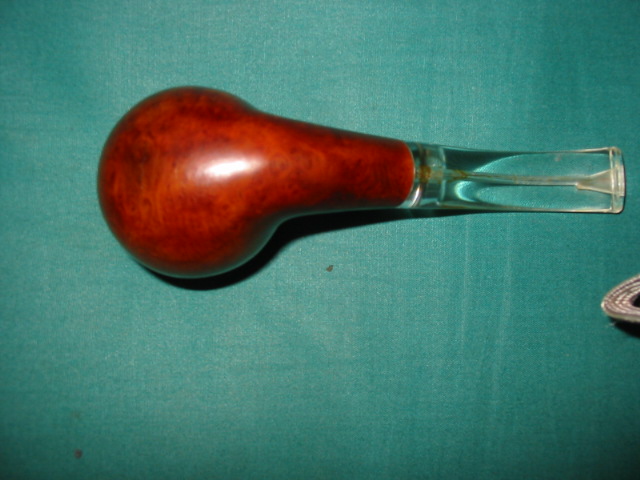
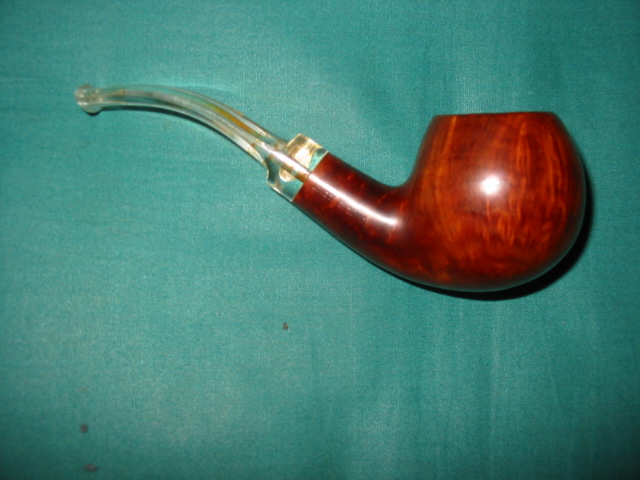
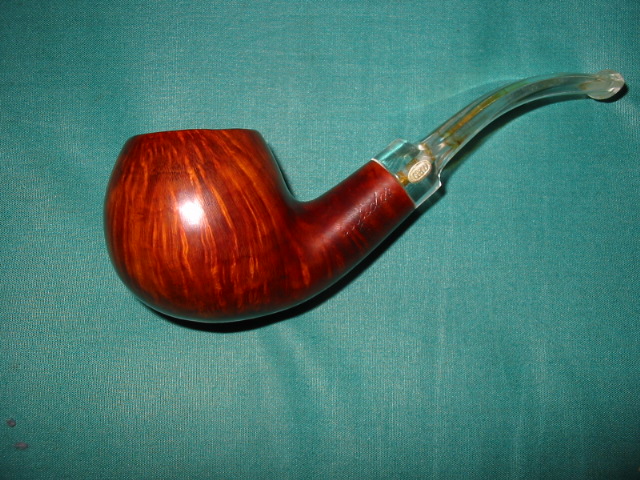
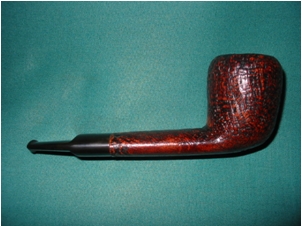
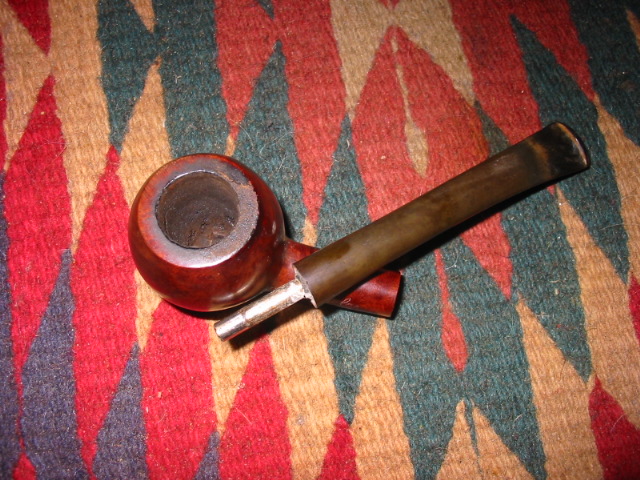
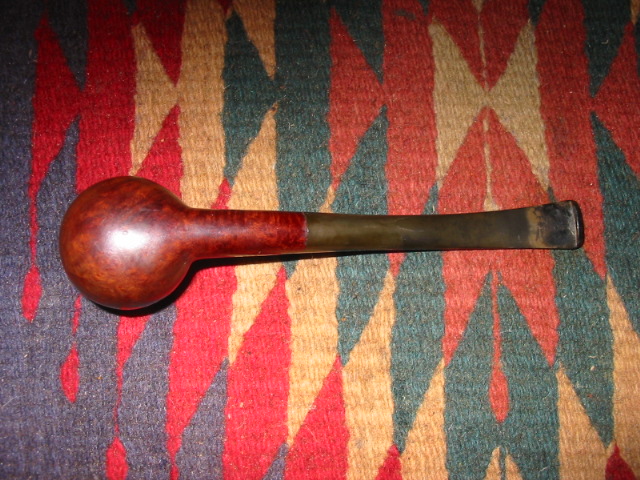
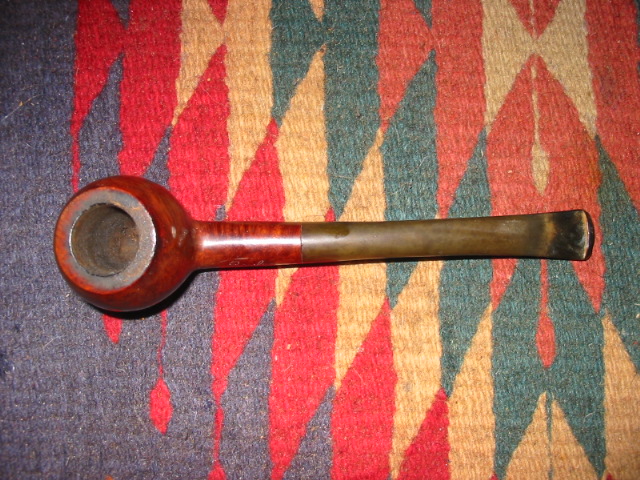
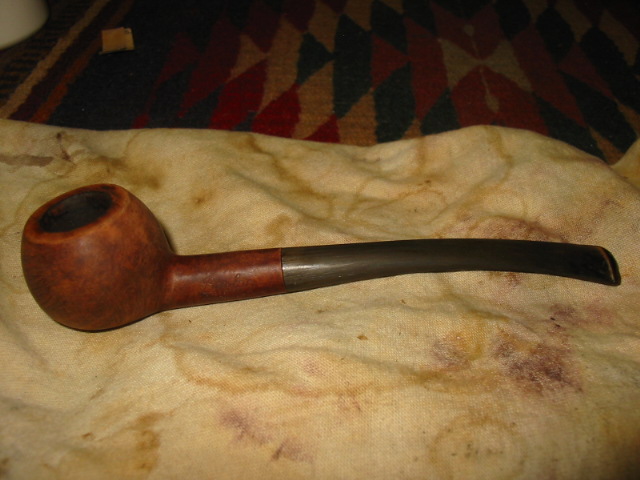
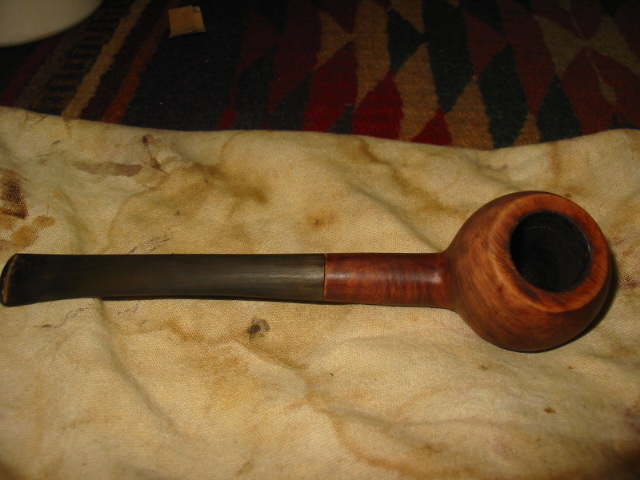
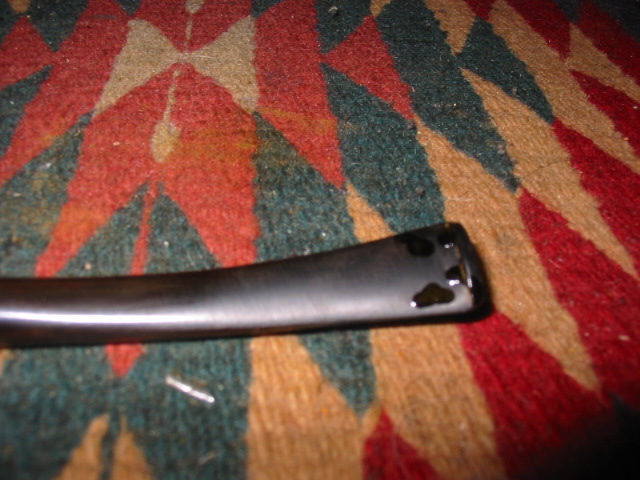
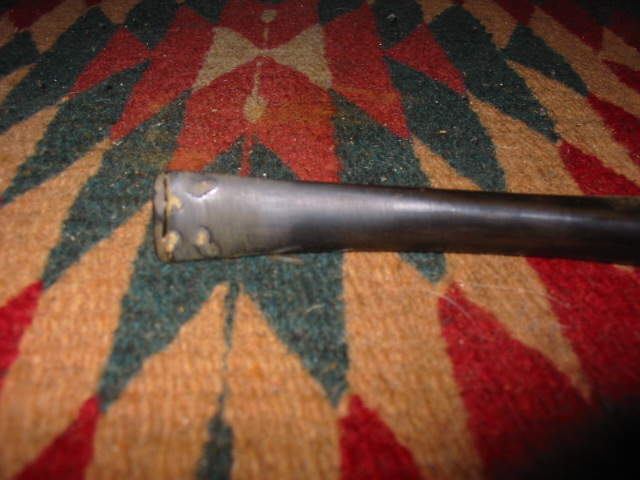
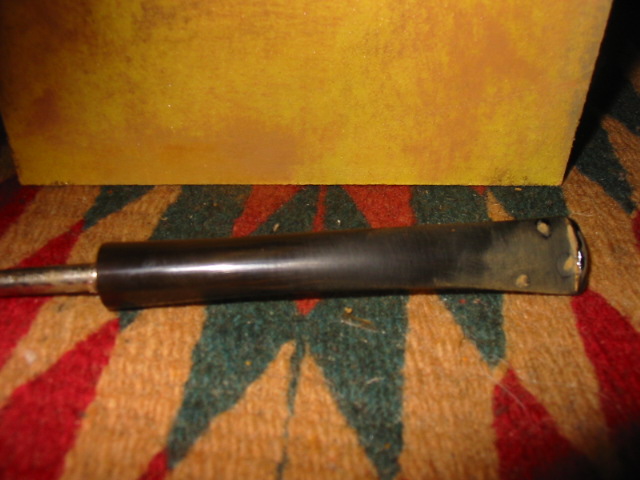
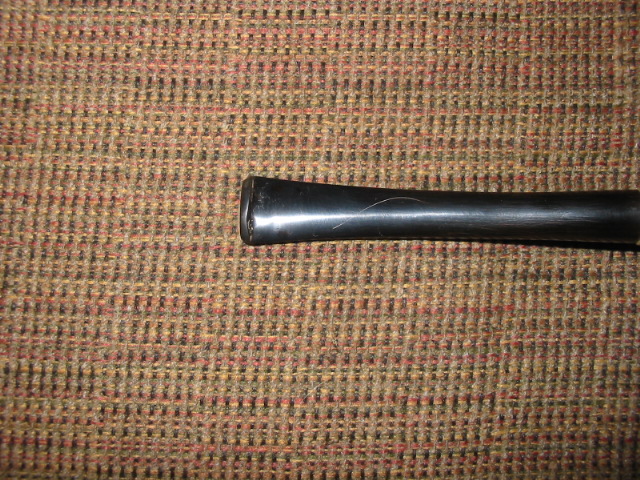
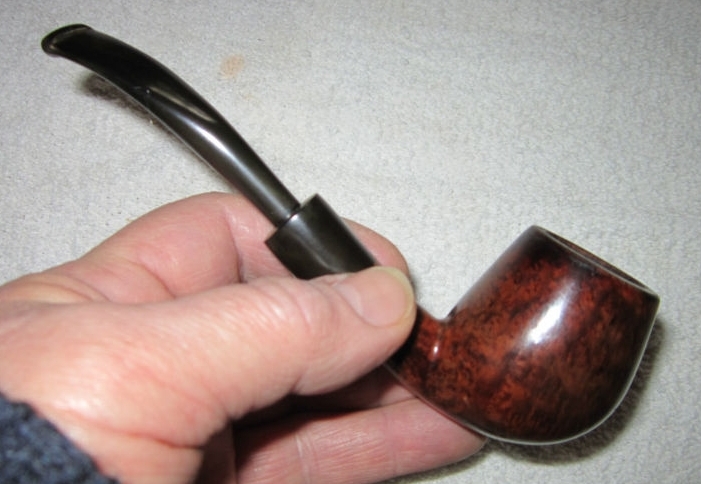
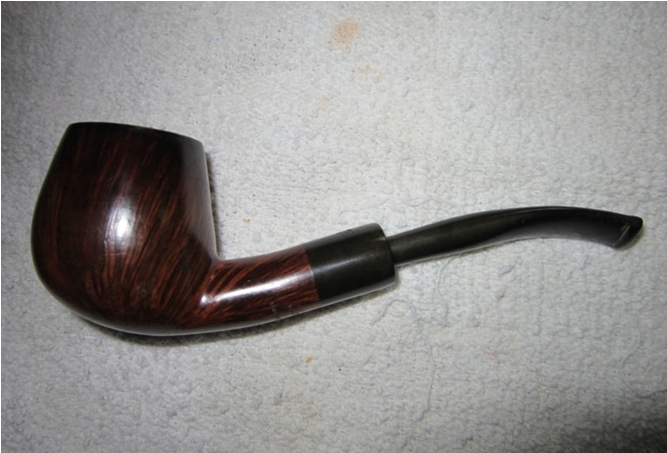
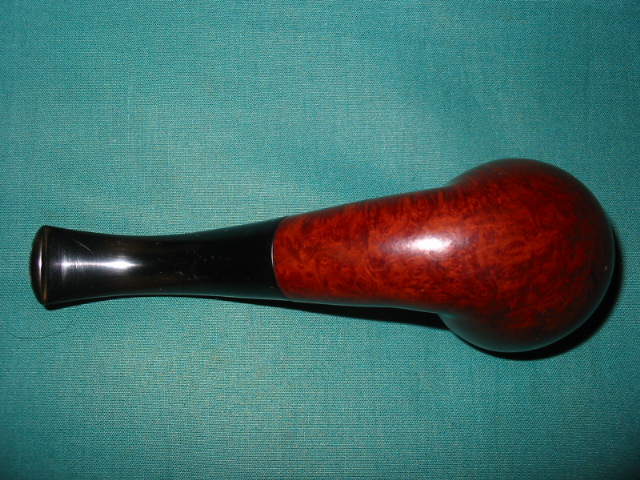
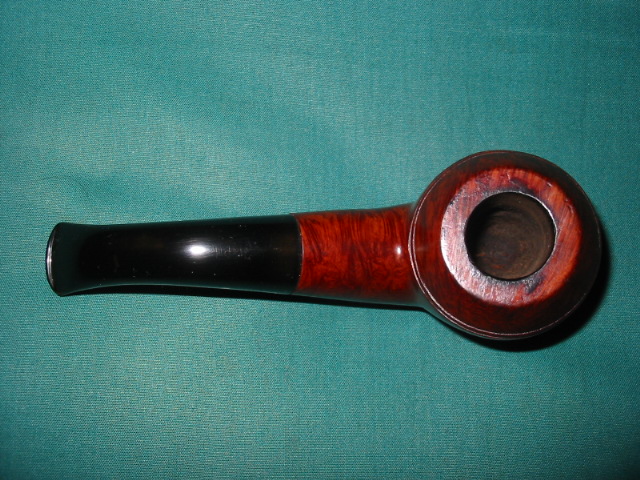
Tag Archives: refurbishing

Repairing an Over-Reamed Bowl in a GBD Collector Century


Blog by Steve Laug

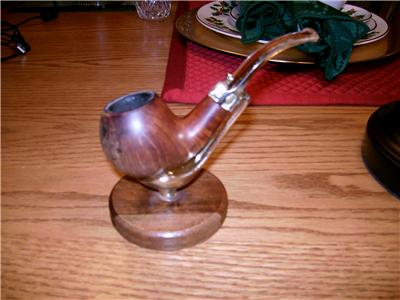
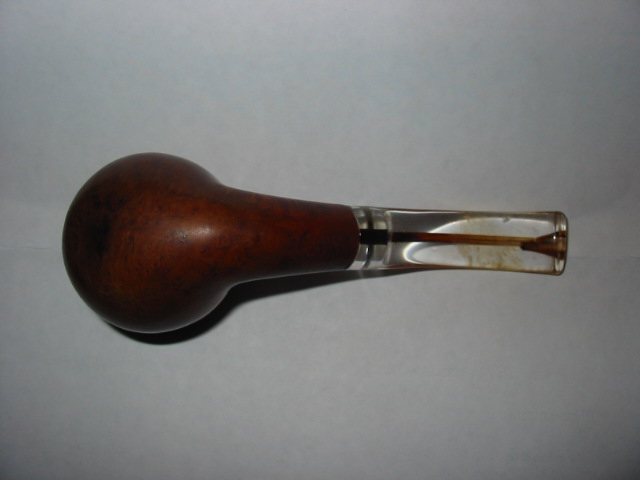
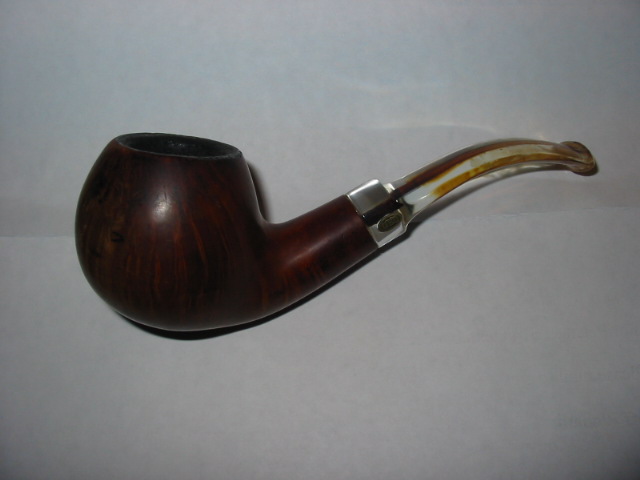
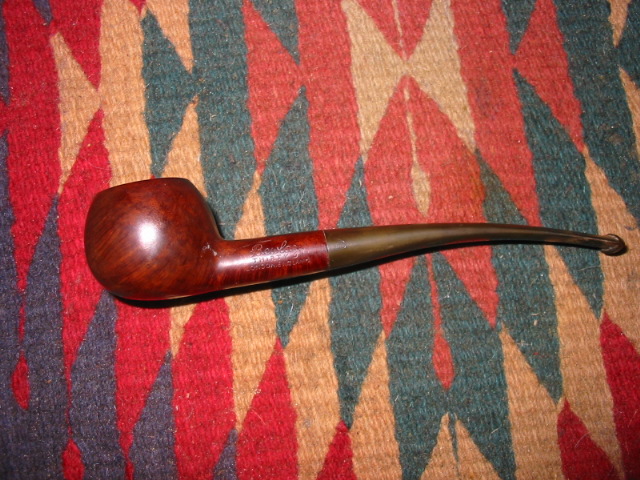
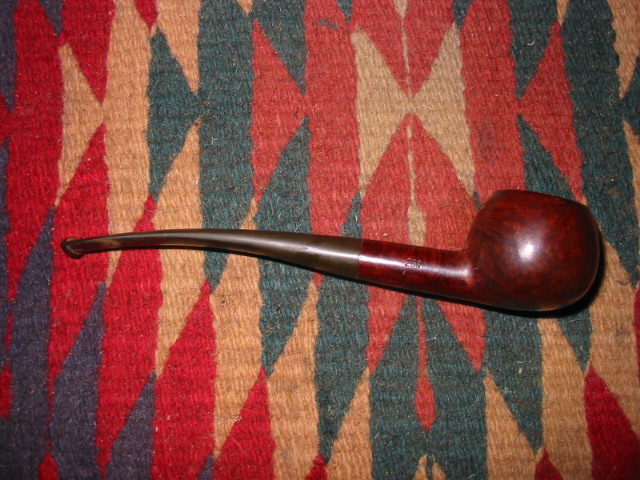
I picked up this older GBD bent apple with a Perspex stem on EBay for a reasonable price, at least in my opinion it was reasonable. On the left side it is stamped: Collector in script over GBD in an oval over Century. On the right side it is stamped: London England over the shape number 9633. The Collector line is the middle line between the Conquest and the Colossal. These three lines were termed GBD plus sized pipes. The dimensions on this one are length: 5 ½ inches, height: 1 ¾ inches, outer diameter: 1 ¼ inches, chamber diameter: 1 inch. The bowl exterior is chunky and wide and the bowl is larger than normal sized GBD`s.

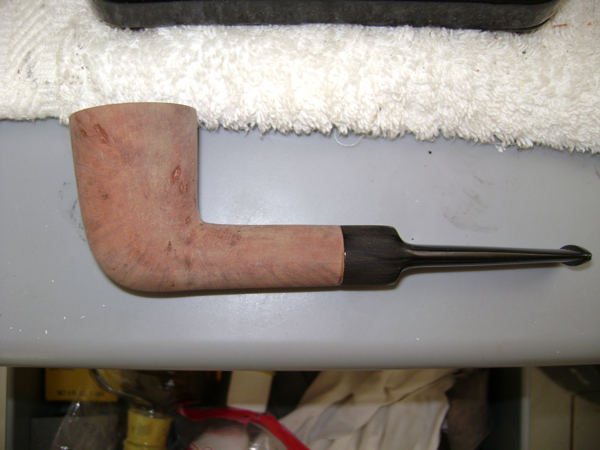
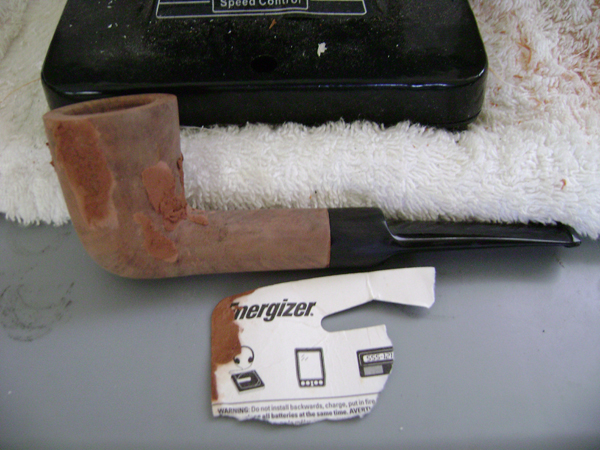
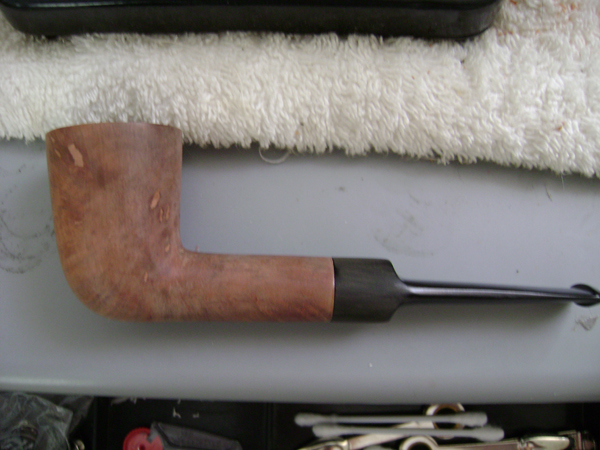
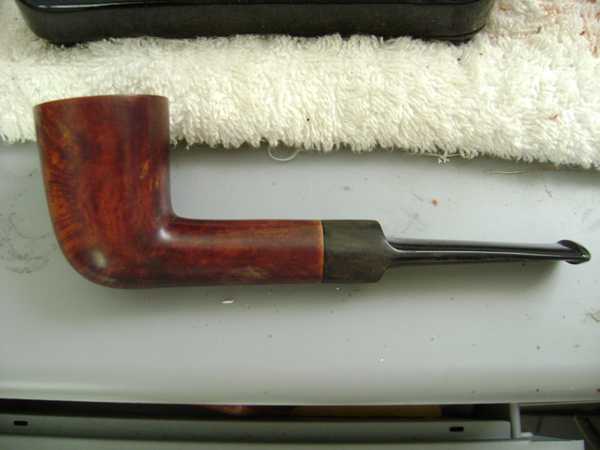
The two pictures below are the ones that were used on the listing on EBay. The stem is dirty but whole and intact. The bowl rim is badly caked and the bowl itself looks to be caked and maybe a bit over reamed but it is hard to tell. The finish on the pipe was pretty much gone as can be seen in the two photos. There were some dark marks on the bowl front and the sides were faded in colour. Nonetheless it looked like it was worth a bid in my opinion. I asked a few questions of the seller and was answered cordially but with little helpful information regarding the state of the bowl. So I would just have to see it when it arrived. ImageImage
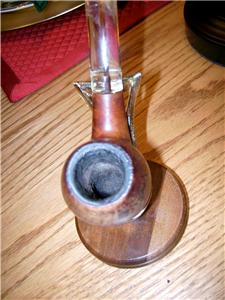
When it came, it was both in better shape and worse shape than the photos in the listing showed. The finish was dirty and really not in too bad a shape other than worn spots. The rim was caked and dirty but was not dented and damaged. The bowl had indeed been over-reamed. In fact it looked to have the beginnings of a burnout – or at least a hot spot on the bottom of the bowl. The stem was dirty but had no bite marks and minimal tooth chatter. Looking at the bottom of the bowl I notice what appeared to be a dark spot and maybe even the beginnings of a hole. This was not a good sign. I had repaired that old Dunhill with a briar plug not long before this so I knew it could be repaired but I wanted to be sure of what I was dealing with. I took the bowl and stem apart and carefully reamed the sides of the bowl to clean out the remaining grit. The top was cleaned with Murphy’s Oil Soap undiluted and scrubbed with a tooth brush. I did not worry about the finish as I was going to restain and refinish it when I was done. I set the stem aside for a bit while I worked on the bowl. Once it was clean I put it in an alcohol bath to soak and remove the remaining finish and grime. ImageImageImage
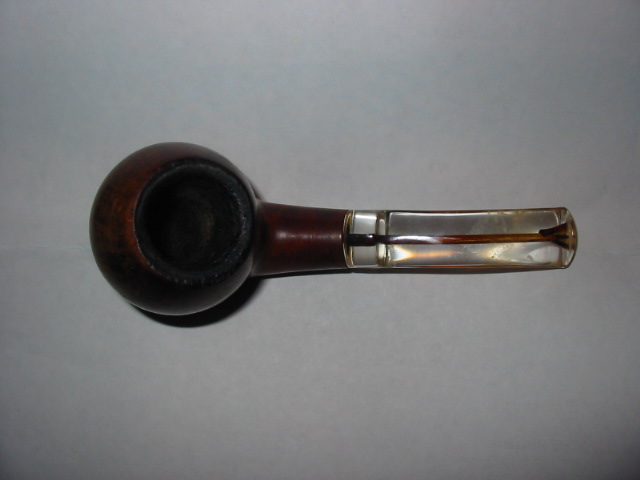
I removed the bowl from the alcohol bath and wiped it down to dry it off. I turned it over and the three pictures below show what I saw. From the outside the bowl looked like it was beginning to burnout. There was a darkening on the surface and what appeared to be a small crack in the briar. From the inside the over-reaming can be seen clearly. The bottom of the bowl was below the airway and the remaining briar was very thin.
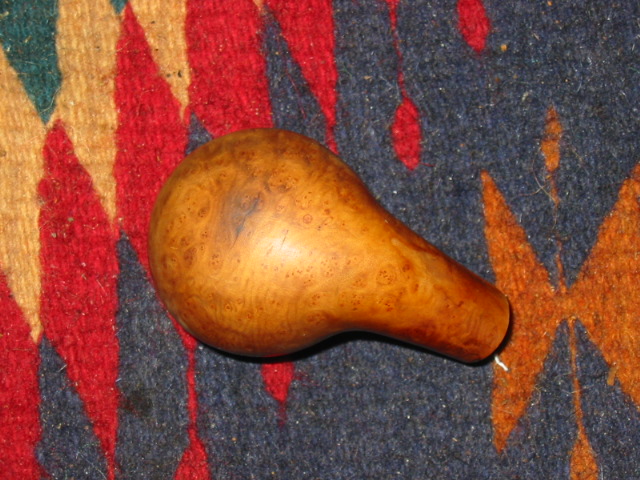
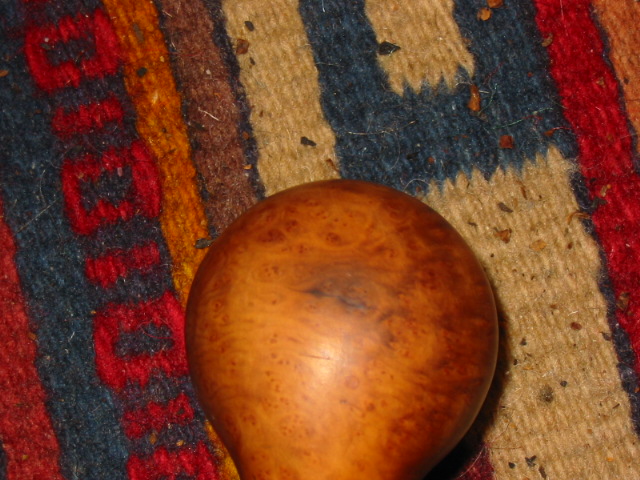
ImageImageImage

I sanded the bottom of the bowl to see how deep the discolouration went into the briar and was pleasantly surprised. The photo below shows what the spot looked like after sanding. I then used a dental pick to pick at the crack in the surface and see how thin it was and how deep the crack went. The briar was still hard and did not break away with the dental pick. That was another good sign. I cleaned the surface with isopropyl alcohol and dried it off. I used some small drops of super glue to fill the crack and then sanded the surface again to smooth the patch of the glue. I did not plan on selling this pipe as it is a shape I enjoy so all of my work was for my own use at this point.  Image
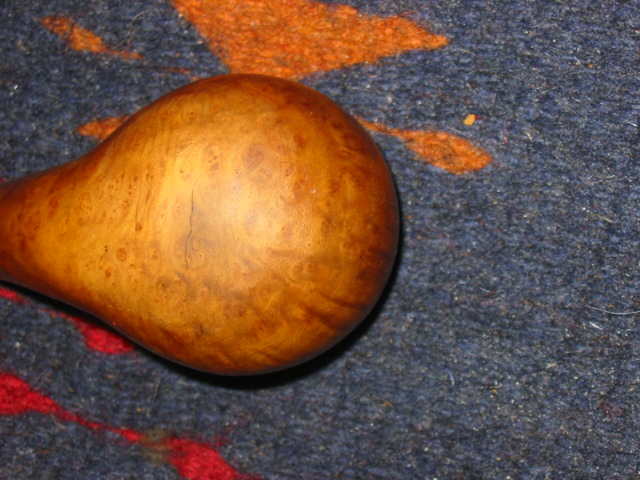
The picture below shows the bowl after some more sanding and a light coat of medium brown stain. I restained the entire bowl and buffed it to see if the repair would be less obvious. You can see from the photo below that it is a bit darker and would require a few more coats of the brown stain to make it recede into the background.
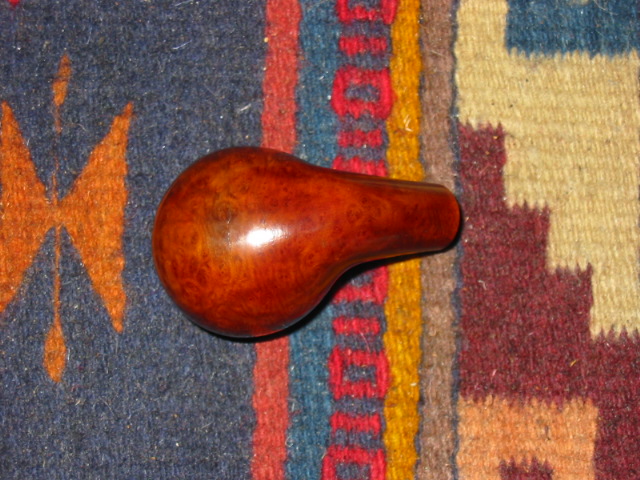
ImageImageImage

I fired up a good cigar and made some pipe mud of the ash and water and began to rebuild the bottom of the bowl. I layered on several coats of the mud allowing it to dry to the touch between coats. My goal was to build up the bottom of the bowl to the bottom of the air way. The pipe mud is fairly thick but it actually worked quite well. In the photo below you can see the bottom of the bowl. I also used it to fill in some of the cracks in the cake on the sides of the bowl. I wanted to protect this pipe from further damage to the bowl.
Image

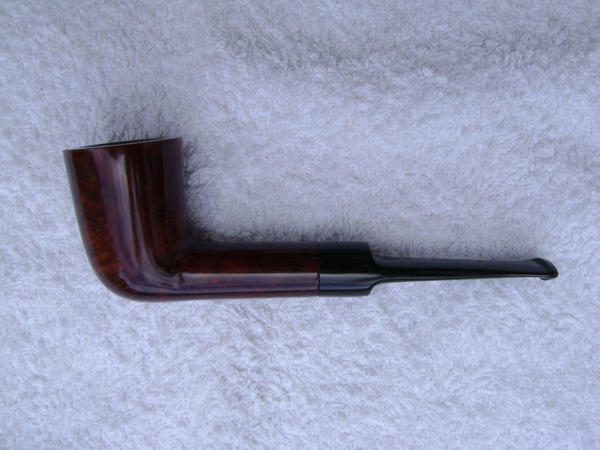
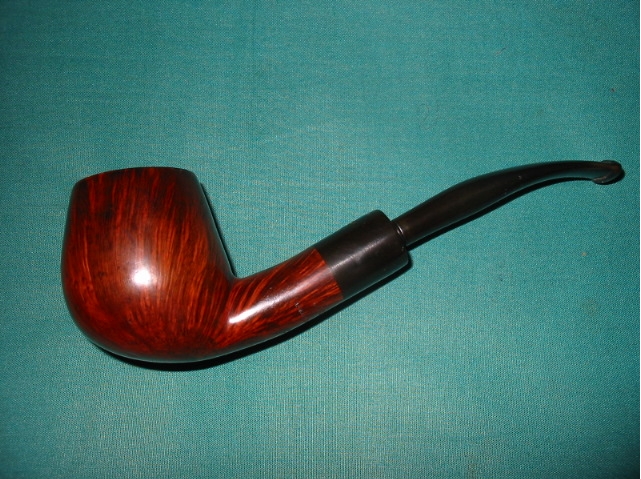
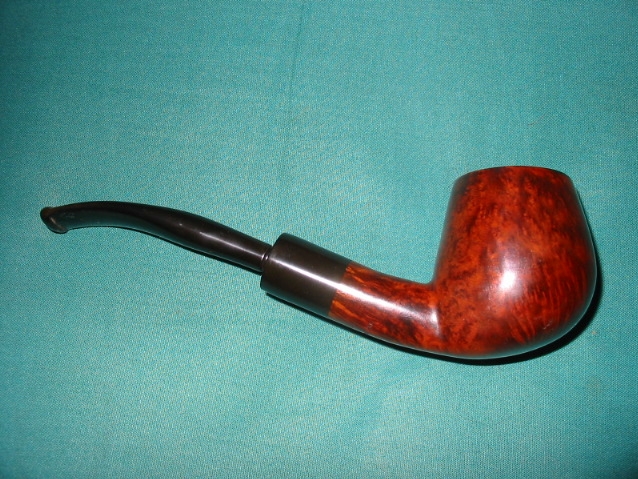
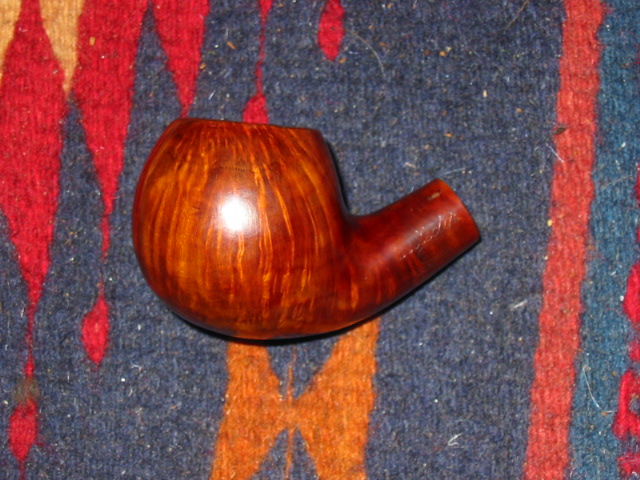
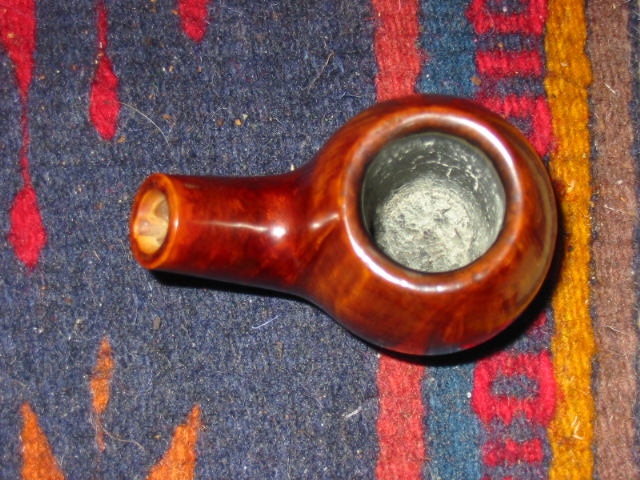
Once that was finished and dry I restained the pipe with two more coats of the medium brown aniline stain. I flamed the stain between coats to set it. Once it was dry I buffed the bowl with Tripoli to make the grain show and lighten the stain. The next series of four photos show the finished look of the bowl. The photo showing the bottom of the bowl shows that I was able to blend in the darkened area with each successive coat of stain. It is still present but it does not pop out at you when you look at it. In the photos you will also notice a pipe cleaner inserted in the stem. I used lemon juice to soak the stain in the Perspex as well as some hand cleaner with grit in it. The stain is stubborn to remove so I left the pipe cleaner soaked in the products in the stem overnight several times in an effort to remove the stain. You can see from the photos that it is lighter than when it arrived but it is still present. (NOTE: do not use alcohol in cleaning Perspex stems as it causes the stems to craze – multitudes of tiny cracks appear throughout the material.) ImageImageImageImage
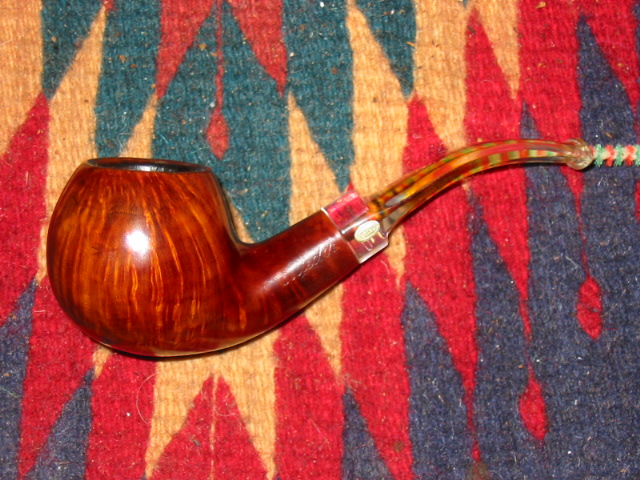
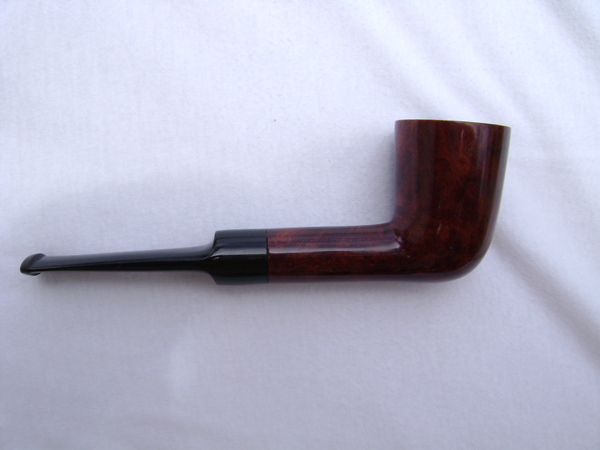
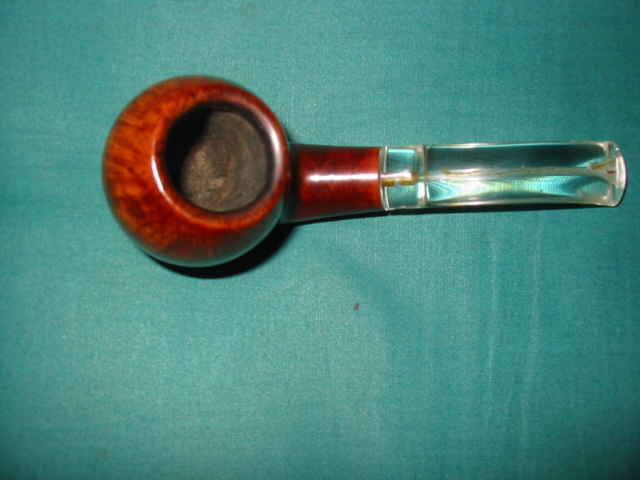
The last series of photos shows the pipe as it is today. The refurbishment on it was about 2 or more years ago. I have smoked it in my rotation and it smokes very cool. The pipe mud has held up well and is incredibly hard now. The finish has darkened a bit and taken on a patina that I like. The save on this pipe worked incredibly well. One day if the need arises I can put a briar plug in the bottom of the bowl but so far it has not been necessary. ImageImageImageImage
Nu Old Lovat reworked


Blog by Steve Laug

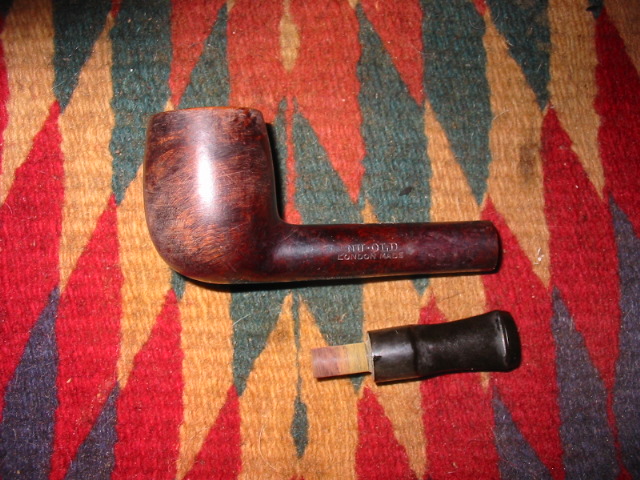
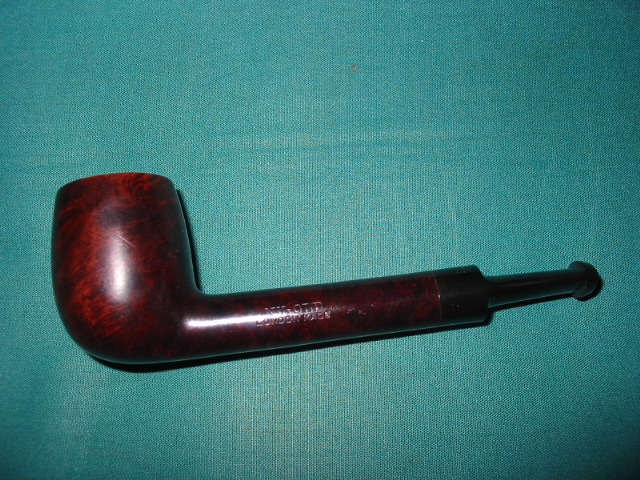
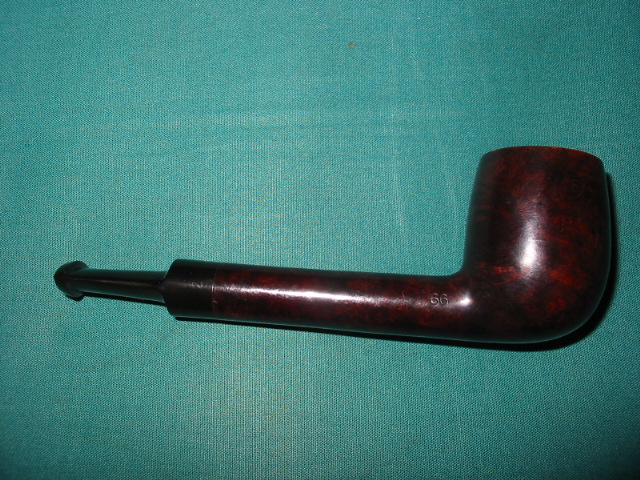
This small lovat needed restemming and also a restain on the bowl. It was pretty clean when I took it out of the box of bowls that I have here for restemming. The finish was shot and most of the stain was worn off. The bowl was clean, just dusty. The rim was nicked and dented and would need to be topped. Here is a picture of it when I took it out of the box. I matched a stem from my can of stems to it. It is a nice little Lovat and is stamped Nu-Old over London Made on the left side of the shank. On the right side it is stamped with its shape number – 66. The Nu Old pipes were made by Civic Pipes in London. Image

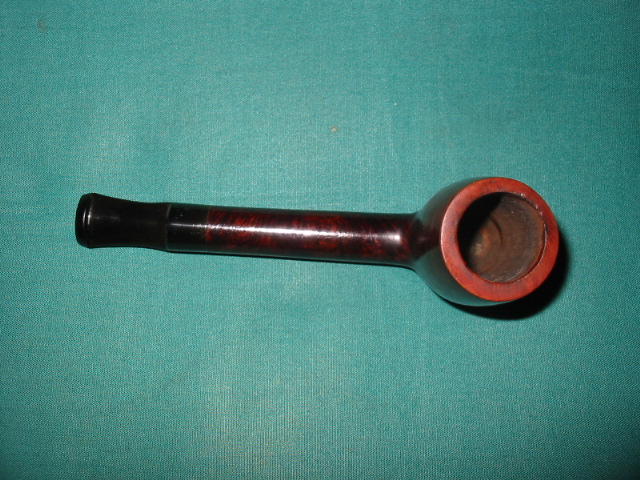
I fit the tenon to the bowl and then shaped the saddle to match the shank diameter. The stem needed a bit of work to smooth out the casting marks and the roughness of the surface. I sanded it with medium grit emery cloth to remove the marks and general roughness of the stem. Then I followed up with 240 grit sandpaper and 400 and 600 grit wet dry and water to remove all the scratches and marks. I polished it and did a final sanding with micromesh sanding pads 1500-6000 grit. I then turned my attention to the bowl. I used acetone on a cotton swab to remove the remaining finish on the pipe. This took repeated washing with the acetone to get the bowl to be clear of the original remaining finish. When I was finished with that the bowl was uniformly a light reddish hue. I topped the bowl with my sanding board and then polished the bowl with micromesh pads. Once it was finished I wiped it down with isopropyl alcohol before giving it a new stain with oxblood. I gave this one several coats of stain to give a good coverage, flaming the stain between each coat. Once it was finished I buffed it lightly with Tripoli to open up the finish and show the grain. I then polished it with White Diamond and gave the whole pipe several coats of carnauba wax which I buffed with a soft flannel buff. ImageImageImage

The Resurrection of a Thomas Spanu Olive Pipe


Blog by Steve Laug

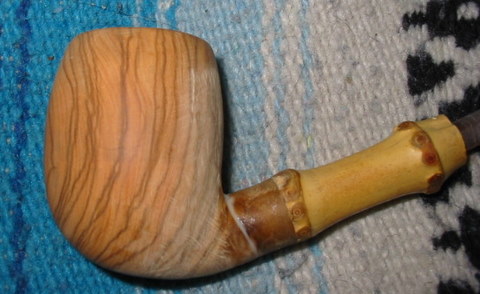
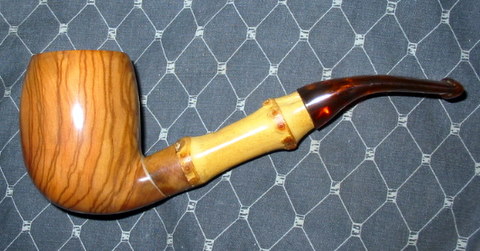
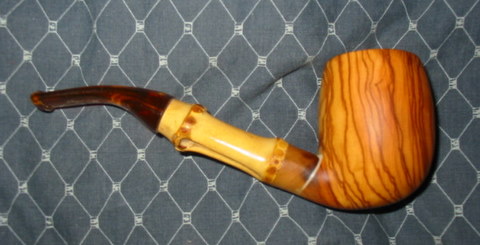
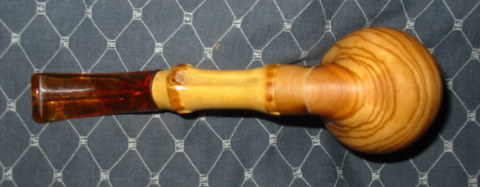
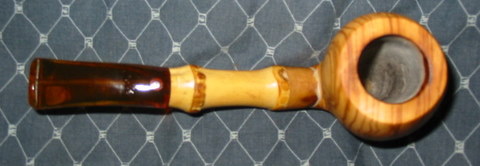
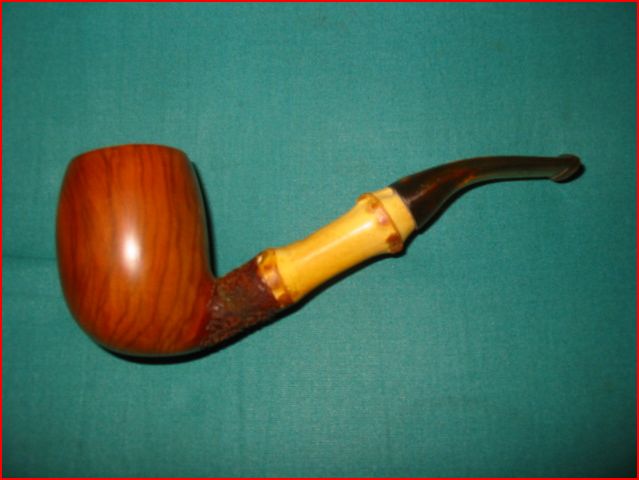
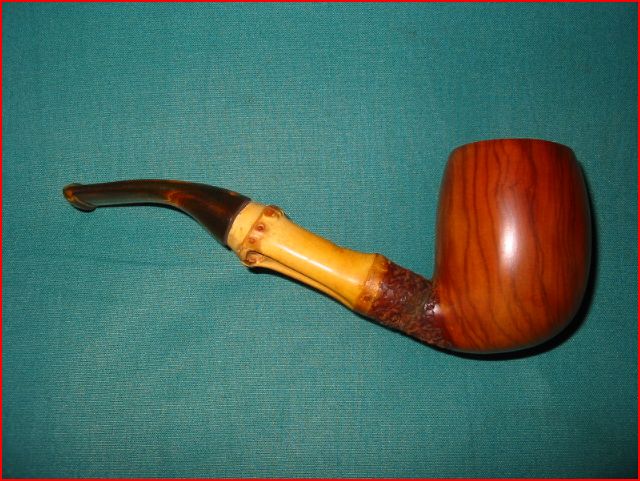
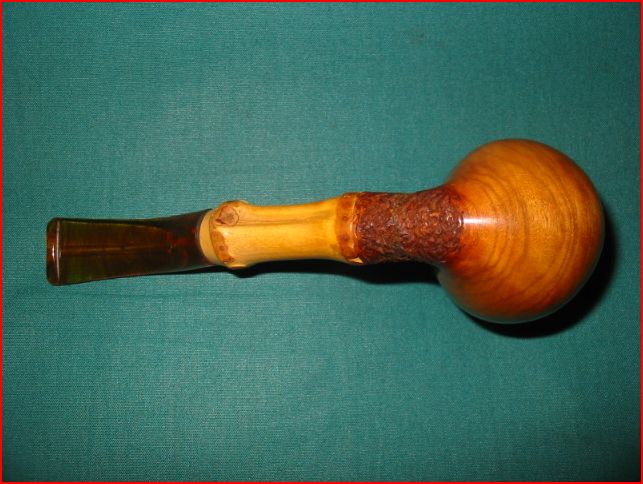
I was gifted this old Thomas Spanu Bamboo shanked bent billiard made out of Olive wood. It was originally a beautiful pipe. The grain on the olive was very nice and the bamboo shank had a nice patina to it. The problem was that it was snapped at the shank bowl junction and the bamboo at the mouthpiece had a crack that was separating. I knew it was this way when my friend sent it to me. But I was not prepared for the mess that it truly was. What was a shame about it was that the pipe was barely smoked. The bottom of the bowl was still raw wood. I knew I had to give this a try.
I utilized the same procedure that Gan spelled out in his post here on the blog regarding the work on the Peterson. https://rebornpipes.wordpress.com/wp-admin/post.php?post=3034&action=edit I used the same epoxy he recommended – a fast set epoxy – JB Kwik. It is extremely strong (though not as strong as regular Weld Bond), heat resistant to 500+ degrees F, impervious to moisture, and has a clamping time of only 3 minutes. I learned of this method from Gan early on when we were sharing tricks of refurbishing with each other. I mixed the two parts of the JB Kwik (epoxy/catalyst) and had plenty of working time to align the two pieces of the pipe stummel. I held them together tightly for three minutes and then released. The bond was good and though it shows because of the angles of the grain it is strong.

I then sanded bowl and the shank with 240 grit sandpaper to reduce the width of the glue. There was no way to hide the mark but I wanted to minimize it. I sanded until the line was thin and not overlapping on the surface of the olive wood. The picture below shows the bowl at that point in the process. I also used a small hacksaw to trim back the broken and cracked bamboo on the shank. I wanted to remove the entire cracked portion and then strengthen the remaining bamboo. To strengthen it I dripped superglue on the open end and then faced the new end on my sanding board to get a smooth flat surface for the stem.

Image

After the preparation and repair was done I sanded the bowl with micromesh pads to remove all scratches and then buffed the shank and bowl with White Diamond to give it a final polish. I did some work on the stem (Lucite) to make the fit and transition more even. I sanded it and then polished it with micromesh and Tripoli and White Diamond to smooth it out.  I then gave the entire pipe several coats of carnauba wax which I buffed with a soft flannel buffing pad. It is not beautiful and the repair shows, but the pipe smokes very well

Image! Image ImageImage

September 2, 2012 – This evening I decided to try rusticating the shank as Gan recommended in one of the comments. I used the modified Philips screwdriver that I used for rustication. Once I had it rusticated I restained it with medium brown aniline stain. I stained the shank and then the bowl as well. I wiped down the bowl with a bit of acetone to lighten the bowl colouration. Here is the finished product. It worked well Gan. Thanks for the recommendation Gan. 
Addendum:
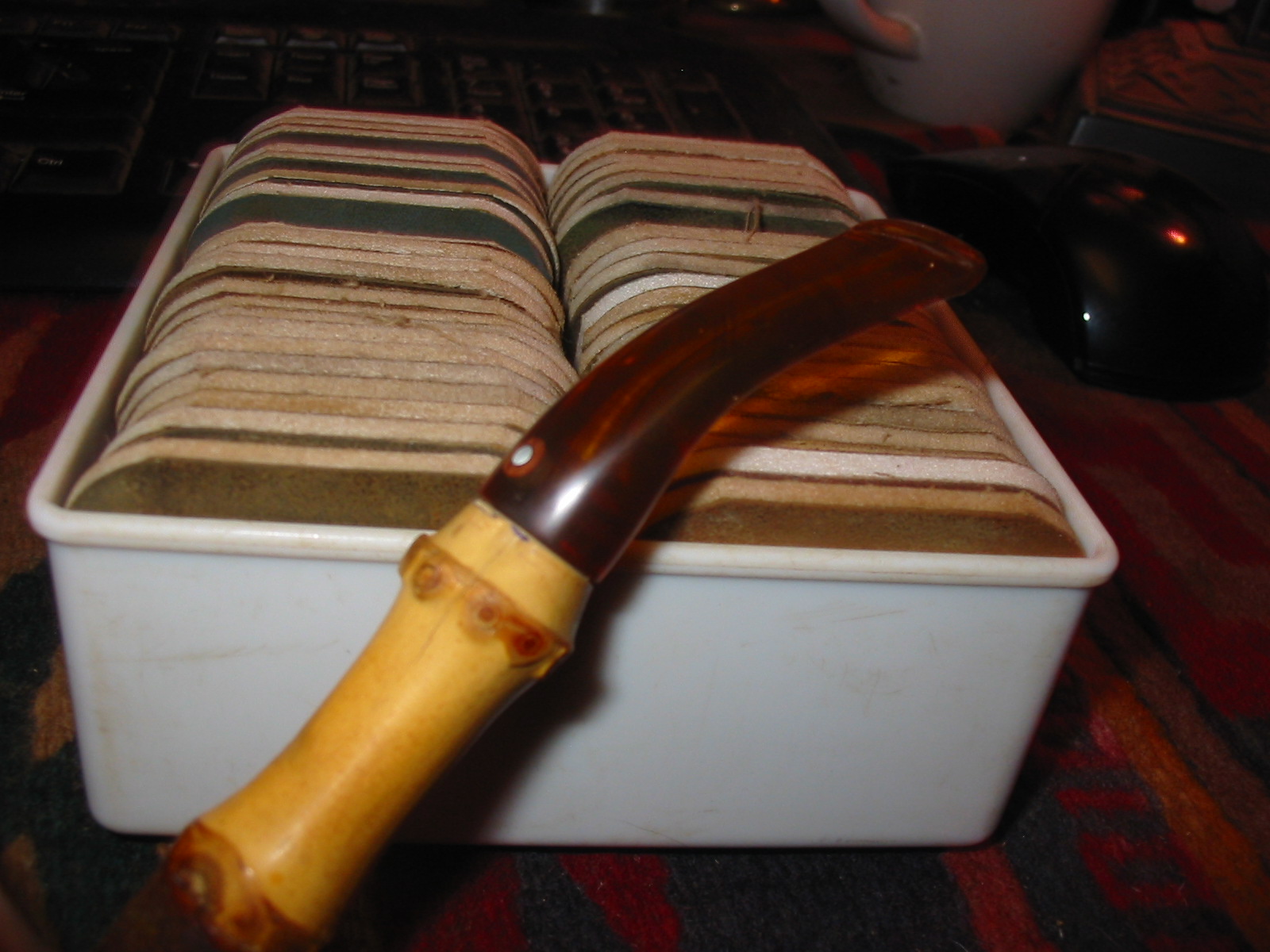
I reworked the stem on the pipe this afternoon to try and get a closer match to the bamboo shank. It is better but still far from perfect. IMG_8063 IMG_8064 IMG_8065

Two men and Pipe Restoration via Skype – Part 2


Blog by Steve Laug

A month ago I posted the first part of this blog entry and you read through the interaction of Carl and me as we worked on a nice little billiard and brought it back to life. We did this through interacting on Skype and posting on Pipe Smokers Unleashed Forums as we did the work. It was a great experience and one that is worth repeating should anyone want to give this a try.
This is part 2 of that restoration via Skype. It will also be published in Pipe Smokers Unleashed Magazine in the September issue.
Carl and I ended our evening of work on the billiard with these last few comments.

SL – Nicely done. It looks like a “new” pipe. Fire up a good bowl of something and enjoy it. Tomorrow is sanding and staining day for the Dublin. Let’s see if we can get her looking as nice.

CH – Yeh, I’ll let the tea steep overnight so it is really dark.

SL – Do you have superglue there? We will need it on the fills tomorrow. If not we will be creative.

CH – This is the DR mate LOL.  Superglue is too technical for these people. I have the wood filler though and the tea LOL.

SL – We will make it work. I will check with you tomorrow when I have a bit of time to walk you through the other one. You can sand it some more if you like. Keep the stem on so you do not change the shape of the shank on it. Enjoy it. Once you have it ready we will look and see what we are dealing with. Enjoy the “new” pipe.

The next morning we reconnected on Skype to work on the Dublin. Carl had posted the following on the forum describing his work in prepping the pipe for the next lesson on staining.

CH – Ok guys, Dublin on the table today to carry on. This pipe requires a bit more in terms of restoration as I really wanted to try a re-stain and do more work on it. Here is a picture of what it looks like right now.

Image

First thing I did this morning was fire up the billiard with a bowl of CH and thought about what I wanted to do. I was intending to try and get a more contemporary look to the pipe with a pale stain but a couple of things are working against that at the moment. The first is the number of fills on the pipe and I only have access to my mahogany wood filler. The second is that when you wipe the bowl down with Isopropyl the briar color is quite dark and will actually make a good match to the filler I have.

Ok work done so far this morning while sipping away at the billiard.
– Sanding of bowl with 220 to remove all traces of previous finish.
– Next I wanted to remove as much of the chipping on the rim as possible so I took a piece of 220 and laid it on a glass desk that I have and sanded the rim in circular motions, alternating between clockwise and anticlockwise to keep the profile of the bowl intact. I did this for about 20 minutes or so and removed all chips apart from one that has about 1mm left on it and is hardly noticeable. The rim has a nice crisp sharp edge and when we stain I will look again to see if I need to push to remove that last tiny bit.
– I then looked at the fills on the pipe and as I am going to refill these I used a small flathead screwdriver take out the old filler.
– All sanding was done with the stem in place to ensure that the profile of shank to stem is not lost.

That is the stage where we are at the moment and the image above shows the current status of the Dublin. It looks very good. I will wash the bowl down with Isopropyl alcohol to remove any of the sanding grit and filler grit that may be left. Once that is done I will work on those fills. Then re-sand the bowl to blend in the fills. Glad to see that they match the colour of the wet briar. Hopefully they can disappear a bit into the briar.

As I didn’t have an old toothbrush (going to have to start saving them) I used an old 9mm pistol brush to clean the bowl with Isopropyl. When I was sure that all traces of the old filler were out and that the bowl was clean I then filled the holes with mahogany wood filler. I used a piece of cardboard from an old battery packaging that was fairly strong but flexible. This allowed me to push the putty right into the holes. I then tamped the putty with the flat edge of a screwdriver to ensure that it was really packed in.
Image

As you can see I really overdid the filler. This will ensure that all gaps are filled and I can sand down to the bowl profile evenly.

SL – Looking really good. Once it is dry sand it down to the bowl surface. I think the putty will dry lighter than the briar but it is better than the pink filler that was there.

CH – Once I have sanded it down we will want to do some work to highlight the beautiful grain that is on that one. I would like to see if we can make it pop a bit. It will also help to hide the fills and make them a bit less obvious.

SL – That is what we are going to want to highlight with our staining. Hopefully we can make it pop. I usually use black stain to do that. But we will make do.

After sanding the filler Carl took these photos to show me the pipe. The fills are very visible as the putty dried much lighter in colour than it was when wet. We will have to do a bit of work to hide the fills under the stain. This will not be a light tan coloured pipe at this rate.

Image

SL – Use the tea to paint the grain lines. Then follow it up with the medium brown stain applied with a brush on the grain lines, flame it and then buff it. When you are done send me a photo to see where we stand.

CH – Here is the pipe with the tea and then medium brown stain on one side to test how the filler shows.

Image

SL – It is looking really good. Put some stain on the shank near the stem. We will then use a black permanent marking pen to follow the grain lines through the fills. This will help hide them under the stain. Continue to re-stain the pipe until it is all brown and evenly stained. Then buff with Tripoli then White Diamond and finally carnauba wax.

Carl went on to use the marker on the fills and then re-stained the pipe several times. He flamed it after each stain and then buffed the pipe.

CH – I have done it and here is the final result is not too bad for a beginner I think……
ImageImageImageImage

SL – Fills covered pretty well Carl. If I did not know they were there I would not see them. They are hidden quite well. Nicely done for sure. You have two “new” ones you can be proud of. Well done. Got the bug now?

CH – Best fun I’ve had with my clothes on LOL. Now where is that damned lathe and band saw.
If it is as much fun to carve as it is to refurbish then I’m hooked and can’t wait to get back to the UK and make a little workshop.

SL – As the voice guide in the process I have got to say I had a great time as well. The final product tells the story. Working through the process via Skype and reporting it here was very cool. Enjoy your new pipes!

Refurbished Stanwell 89


Blog by Steve Laug

The day I decided to work on this one turned out to be my day for Danish pipes. The first one I chose to refurbish was this nice little Stanwell sandblast shape 89 – one of my favourite shapes with a flat oval shank and stem. It was very dirty and the finish was in rough shape. The bowl was heavily caked and the tars had run over the rim and down the edges. The sand blast was nicely done but almost smooth from the grime that filled the grooves. The stem was stamped hand cut and was oxidized. It also looked like it had worn a softie bit at one time as there was a hard line of calcified grit across the stem in front of the button. The pipe is stamped Stanwell Hand Made. It is a comfortable pipe to hold in the hand.

ImageImage

I reamed the bowl and scrubbed the inside of the bowl and shank with isopropyl alcohol and pipe cleaners, cotton swabs and a shank brush to clean out the grime. It took many pipe cleaners and cotton swabs before they came out clean and white. To clean the outside of the bowl I washed it with Murphy’s Oil Soap and wiped clean. I scoured the crevices of the blast with a brass bristle tire brush to get grime out of the grooves. I honestly did not care if it took of some of the stain and colour as I planned on restaining it anyway. Once it was clean I dropped it in my alcohol bath to let it soak and finish removing the finish.

I worked on the stem while the bowl soaked. I buffed it with Tripoli to knock off the oxidation as it was not a deep brown. This was an easy stem to clean as the oxidation was on the surface. I used 1500-6000 grit micromesh pads after the buffing. I buffed it carefully as I wanted to preserve the logo and the sharp edges of the stem where it met the shank. Once the bowl was finished I would put it on the pipe to give it a final buff with White Diamond.

I took the bowl out of the alcohol bath and dried it off. I then cleaned off any remaining grime and finish with a cotton pad and clean alcohol. Once dry I stained it with a medium brown aniline stain and flamed it to set the stain. I then put the stem on the pipe and took it to the buffer. I buffed it lightly with Tripoli to take remove some of the stain from the high spots on the blast and then buffed the whole pipe with White Diamond. I used a light touch on the bowl as I did not want to blur the edges of the blast. Once finished I coated it with multiple coats of Halcyon wax.

ImageImageImage

A Bewlay Thirty Prince Reborn


Blog by Steve Laug

This pipe grabbed my eye because of the classic prince shape. The bowl was dirty and caked. The rim is tarred and caked as well. The finish was scuffed and dirty, but there looked to be some nice grain underneath. The stem had tooth dents that were quite deep and the oxidation was odd in that it was streaked more than solid. The tenon was stainless steel and quite long. It can be seen in the first picture below. The alignment of the stem to the shank was slightly off as the tenon was inserted into the stem a bit high. In pictures 4 and 5 you can see that the stem is lower than the edge of the shank. ImageImageImageImageImage I reamed the bowl and cleaned the shank. The shank was plugged so I used a straightened piece of wire to push through the clog into the bowl. I repeated the push with the wire until I had cleaned out the shank. I finished cleaning it with many pipe cleaners, cotton swabs and a shank brush and isopropyl alcohol. Once I had finished the bowl I sanded the top with micromesh fibre pads from 1500-2400 grit. I wiped it down with cotton pads soaked with acetone to clean off the finish. Then I put the bowl in the alcohol bath and let it soak while I worked on the stem.

The next series of pictures show the bowl after I took it out of the bath. I reinserted the stem so that I could work on the bowl a bit more. You can see from the pictures in this series of photos that I had buffed the stem with Tripoli and also done the initial sanding of the stem and removed most of the surface oxidation. ImageImageImageImage

At this point in the process I pressure fit a band on the stem to help with the alignment of the stem. There was enough give in the stainless steel tenon to hold it in place with the nickel band. The band also gives the little prince a classy look (at least in my opinion!). I then did a lot more work on the stem. I used a heat gun to raise the bite marks as much as possible. They came up significantly but not completely. I sanded the stem near the button with 240 grit sandpaper to smooth out the surface. The five pictures below show the sanding process. I used a medium grit sanding pad after the 240 and then also used a fine grit sanding pad. I was trying to minimize the dents and isolate the deeper dents. The fourth and fifth picture below shows the stem after sanding. I wiped both the top and the bottom of the stem down with alcohol to clean the surface and prepare it for the super glue patches. ImageImageImageImageImage

The next two photos show the super glue patches. I used clear super glue on these patches as the dents were black and I was hoping that the clear would allow the black from the vulcanite to show through the glue and make the patches blend in clearly and match. You will notice that I used drops of super glue and applied it by dropping the glue on the stem. Once one side was dry I dropped the glue on the other side. ImageImage

Once the super glue was dry I sanded it with 240 grit sandpaper and the fine grit sanding block.  The next two photos show the first stages of the sanding. The spots are still large and very visible in these photos. I continued to sand them until they were well blended. Once it was finished I used micromesh pads to sand it until it was smooth. ImageImage

The next two photos show the stem in its finished condition. I sanded it with micromesh pads – 1500, 1800, 2400, 3200, 3600, 4000, 6000, 8000, 12,000 grits to bring the stem to this final state. The patches are well blended into the finish of the stem and are virtually invisible to those who don’t know where to look. ImageImage

The next series of four photos show the pipe after buffing with several coats of carnauba wax and then a soft flannel buff. The finish came out very smooth and the patches are not visible. The stem looks new. In the light of the flash a hair on the underside of the stem is visible. The pipe is now ready to fire up with its inaugural bowl. ImageImageImage

Refurbished a Karl Erik Apple


I picked this beautiful older Karl Erik apple up on EBay. When it arrived I loved the looks of it and decided to work on it immediately upon opening the package. It had many dents in the sides of the bowl and front and back. The bowl had some darkening along the back side of the bowl near the rim. It was not charred or burned just darkly stained. The rim was clean of tars and oils and the bowl had been reamed already. It was a very clean pipe other than the darkening and the dents on the rim and bowl sides. The stem was oxidized minimally and had a few bite marks on it that were not too deep. There was not a lot of work to do on this one so I went to work. ImageImage

I took it into the kitchen and turned on one of the gas burners on the stove. I wet a dish cloth so and laid it on the counter next to the stove. I heated my old butter knife over the flame. I placed the folded wet dish cloth on the dents that are visible on the sides of the bowl to steam them out. The hiss of the hot knife on the damp cloth generated the steam that lifted the dents. I worked on the dents on both sides of the bowl and on the rim. When I was finished the dents were gone. I washed the exterior of the bowl down with some isopropyl alcohol to clean off the darkening along the top edges of the bowl on the back side and on both sides. It came off quite easily. Once that was done I sanded the bowl with micromesh pads to smooth out the finish and prepare it for restaining. I stained it with a medium brown stain. I buffed it with White Diamond and then gave it several coats of carnauba wax.

I used my heat gun to lift the tooth marks on the stem near the button and then sanded it with 240 grit sandpaper and also the usual 400 and 600 grit wet dry sandpaper and water. Once they were smoothed out I sanded it with micromesh 1500-6000 grit and then put it back on the bowl. I  buffed and polished the whole pipe and waxed it again. It is a beautiful little pipe that I will enjoy smoking.
ImageImageImage

Reclaimed a Horn Stem Oldenkott Panel


Blog by Steve Laug

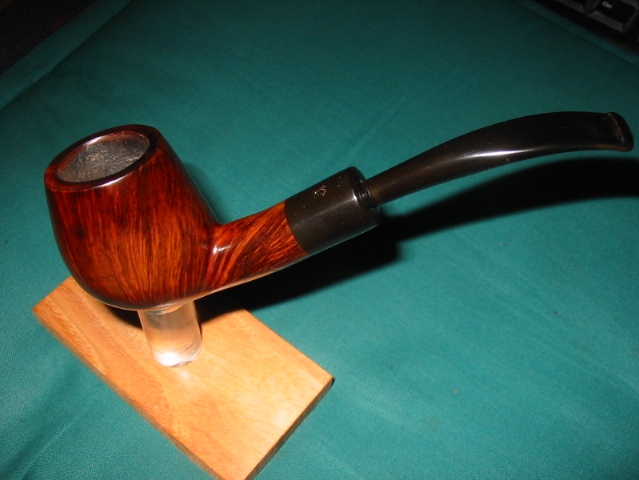
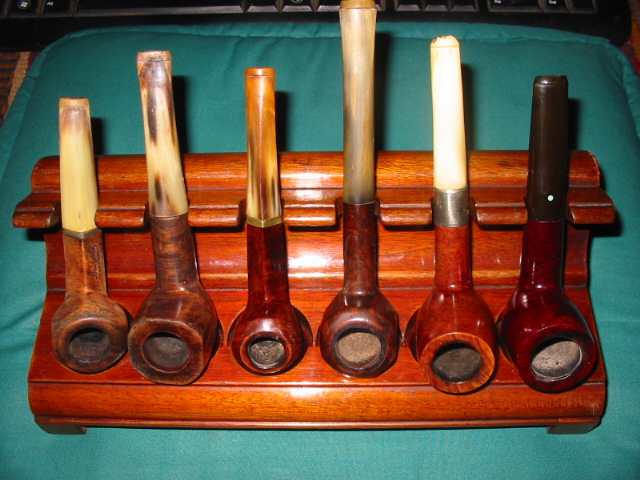
I find that I enjoy smoking pipe with horn stems. The feel in the mouth is unique in range of pipe stem material. It is not hard like Lucite nor is it like Vulcanite. There is a very different feel in the mouth than anything else. I really don’t know how to describe it – it is smooth like well-polished Vulcanite or Lucite. It is soft like Vulcanite but somehow a different kind of softness. It has a luminescence that is beautiful when polished to a reflective sheen. It that almost indescribable feel that keeps me on the lookout for more horn stemmed pipes. I think that I have probably a half dozen in my rack at the moment. All but one of them is small bowled and lightweight. All of them are great Virginia Flake pipes and seem to be made for that style of tobacco.

Here  is a few of my horn stem pipes. Image

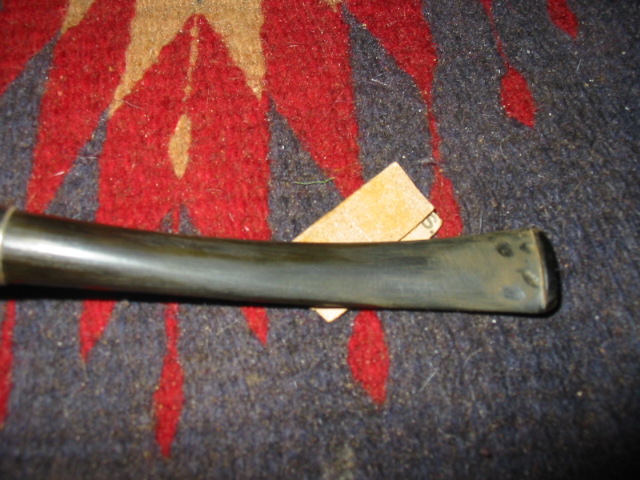
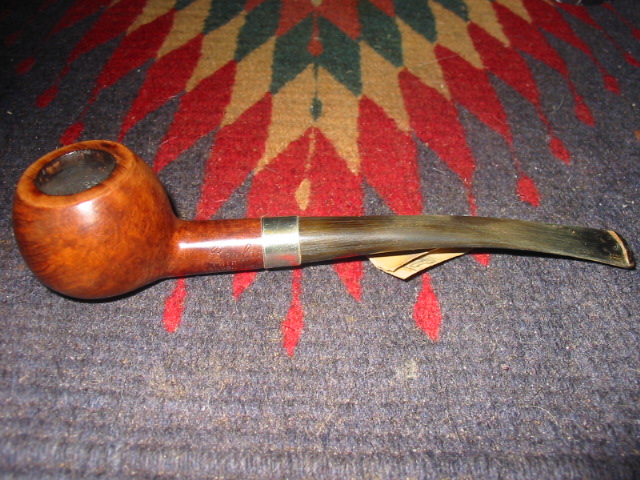
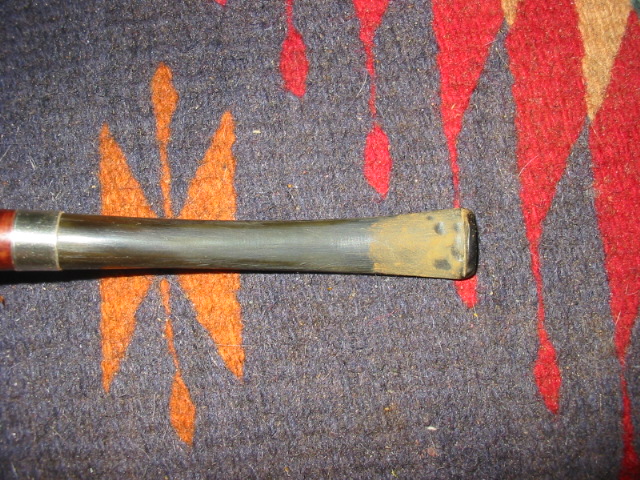
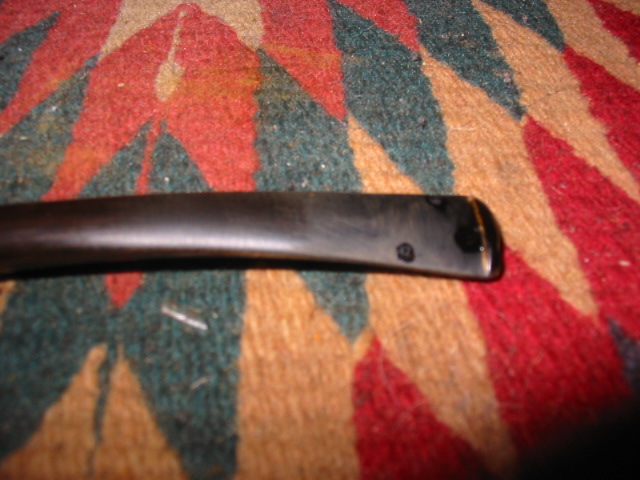
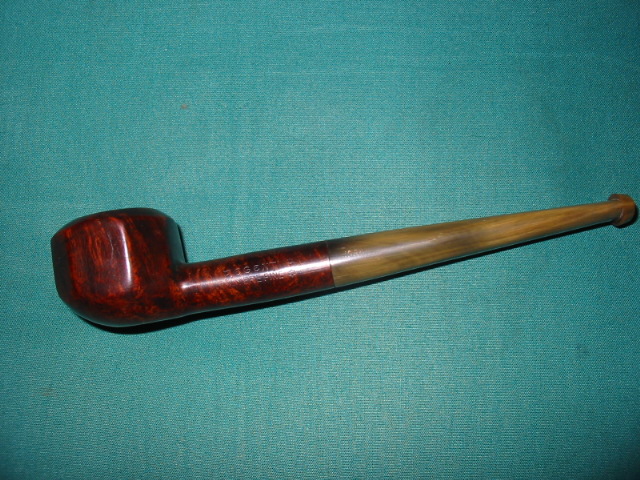
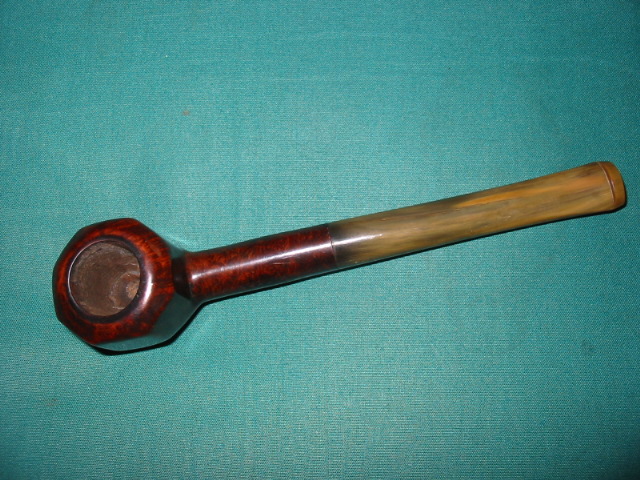
The pipe below is one I added recently. It is the fourth pipe from the left in the picture above. It is an Oldenkott pipe. When I got it the finish was rough as it seemed to have had a varnish or some kind of topcoat on the bowl that was flaking off and broken. The bowl was unevenly caked but the pipe showed promise. I reamed and cleaned it then put it in the alcohol bath while I worked on the stem. The stem had a few minor bit marks that I repaired by sanding them smooth. The tooth chatter disappeared in the same manner. I have found that with horn I have to be a bit careful with the sanding so that the horn itself does not sliver or splinter so I used micromesh pads exclusively on this one. I started with 1500 grit and sanded up to 6000 grit. Then I took the stem to the buffer and carefully buffed it with White Diamond.

After removing the bowl from the alcohol bath the finish coat of varnish was gone and the colour looked very nice so I sanded it with micromesh pads and then buffed the bowl with White Diamond. I reinserted the stem and gave the pipe several coats of carnauba to bring back the sheen to both the horn and the bowl. The final picture shows the unique tenon and filter apparatus on this pipe. It is aluminum and seems to work as a condensation chamber more than a filter. The shank and stem were clean on the inside and took very little work to clean out the tars that were present. ImageImageImageImageImage

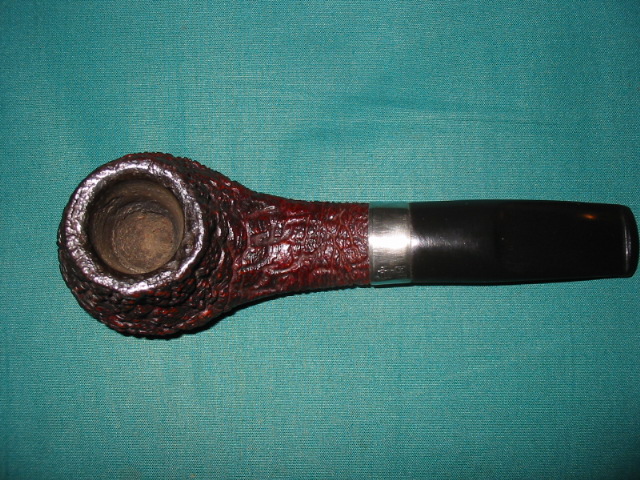
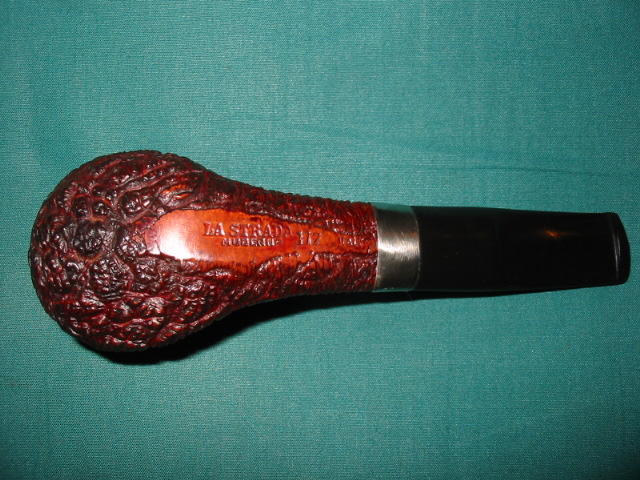
A New Stem for a La Strada Moderna Volcano


Blog by Steve Laug

I restemmed a couple of pipes for a fellow Canadian who needed one done for himself and one for his father in law. In thanks he gave me a couple of pipes. This La Strada Moderna Volcano was one of them. It was in need of a stem as well and also needed a good cleaning and restaining. The mortise in the tenon was actually very thin at the top of the shank and had some very small cracks that seemed to have come from just removing and reinserting the stem. I repaired the cracks by opening them a bit with pressure on a dental pick and dripped some superglue into the cracks and held them closed until the glue set. I then banded the shank with an oval nickel band that I pressure fit.

I had an oval stem blank in my can of stems that would fit with a bit of work. I fit the tenon with my tenon cutter and sandpaper. Then I used the Dremel to shape the stem to a fit. Using the larger sanding drum on the Dremel I can get very close to a good fit and with a light touch can leave the surface with minimum scratching. I then finish the fit with sandpaper. In this case I used some medium grit emery cloth to bring it very close and then 240 grit sandpaper to finish the fit. Once that was done I used 400 and 600 wet dry sand paper to finish removing the scratches and then took it to the buffer and buffed it with Tripoli so that I could see the scratches I needed to work on some more with sandpaper before turning to the micromesh sanding pads. I used 1500-6000 grit pads to finish sanding the stem. I then finished with White Diamond on the buffer and gave the stem several coats of carnauba wax. I restained the bowl with oxblood aniline stain and then buffed the bowl lightly with White Diamond and coated it with Halcyon II wax to give it a sheen.

ImageImageImageImage

A New Tenon on an Old Stem and a Petersons K Briar 999 is Back in Action


Blog by Steve Laug

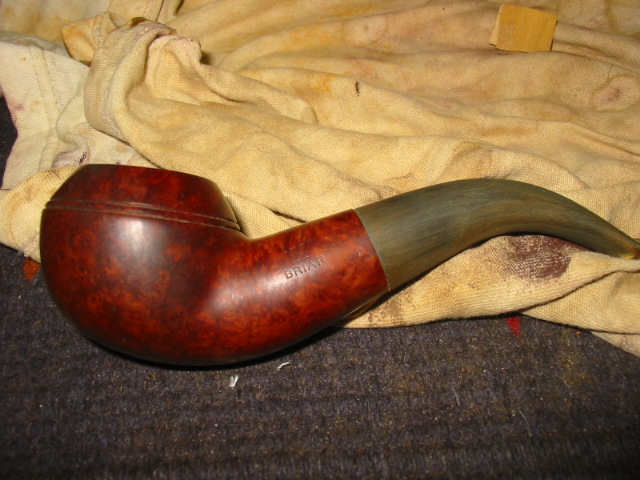
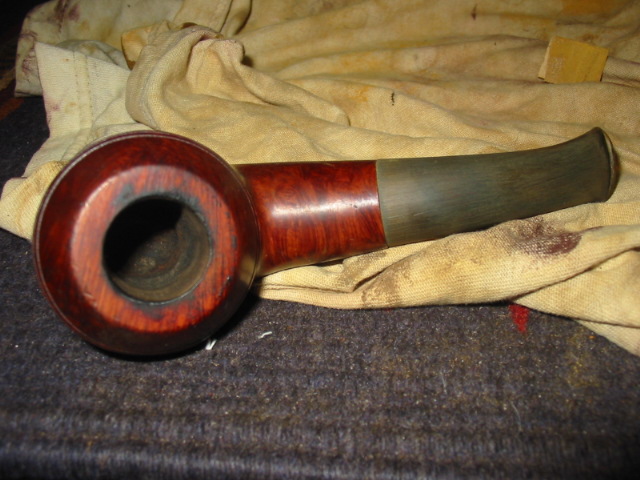
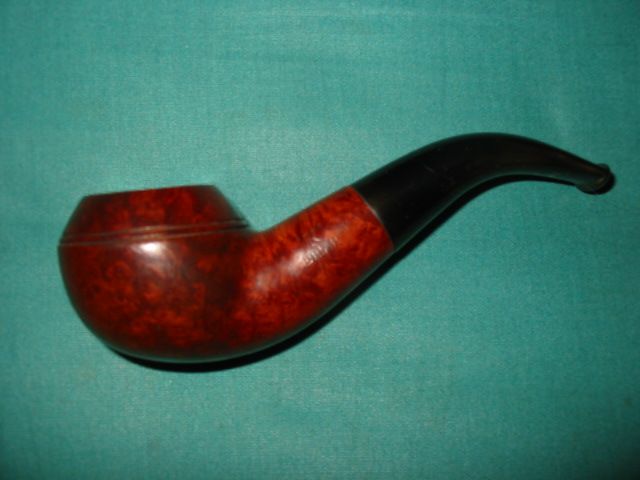
I picked up this older Peterson 999 K Briar from EBay. It came in a lot with some Barlings, Bewlays and three Imperial Tobacco pipes that I have repaired. This is an interesting pipe in that it is stamped K over Briar on the left side of the shank and on the right side it is stamped 999 “Peterson’s Product” made in England. I had not seen a K Briar pipe from Peterson before. This one is a beauty. It has the appearance of a GBD Rhodesian or a BBB Rhodesian. It has no fills and some very minor sand pits. The stain and finish were in great shape. The stem had just two small bite marks that needed to be taken care of. It has a unique stem that can be seen in the photos below. It is very different from the standard Peterson stem as it is rounded and crowned with a slot in the end of the button.

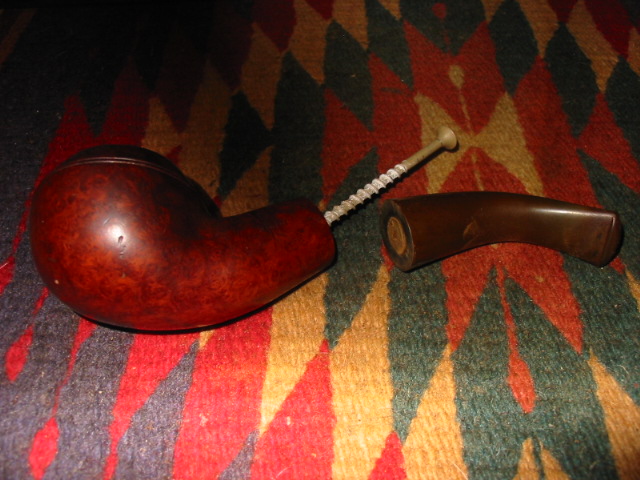
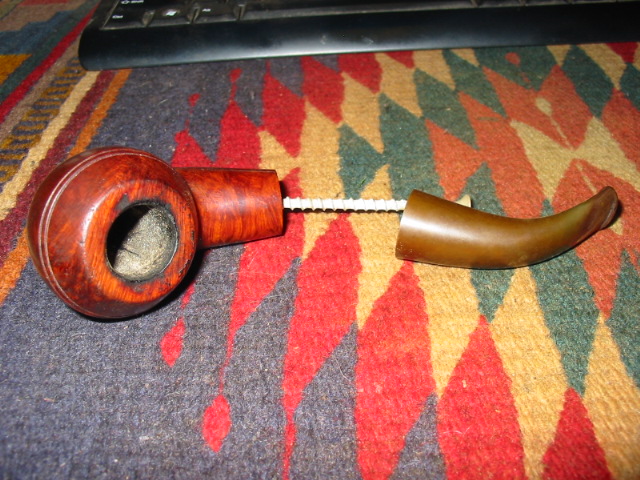
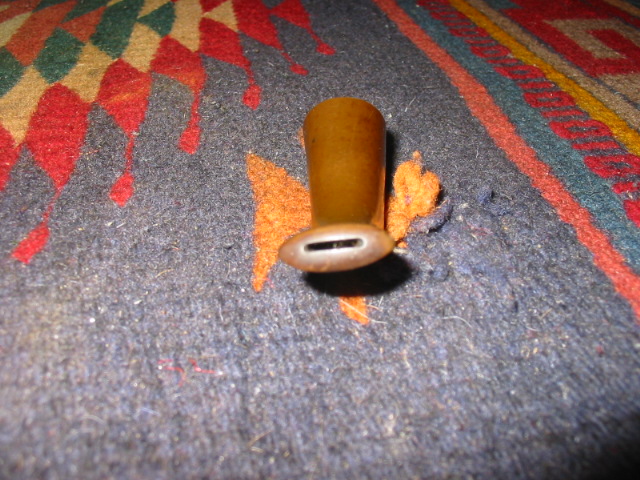
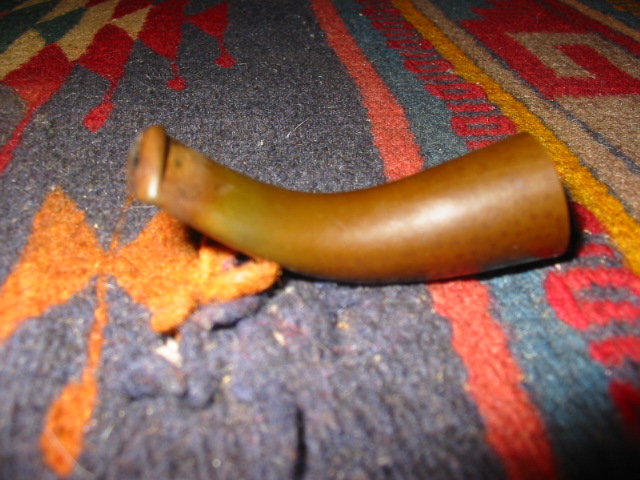
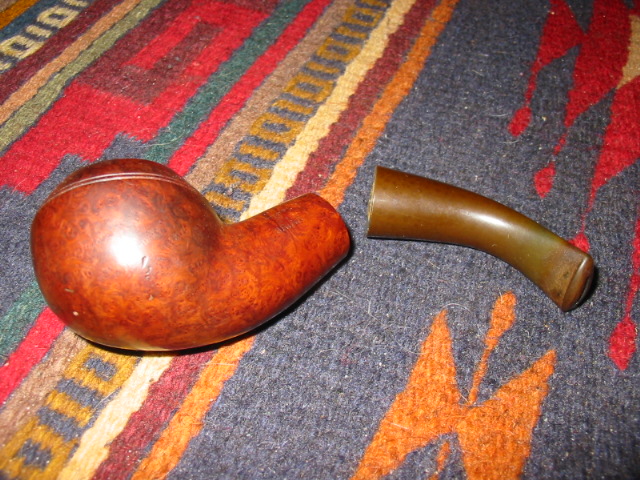
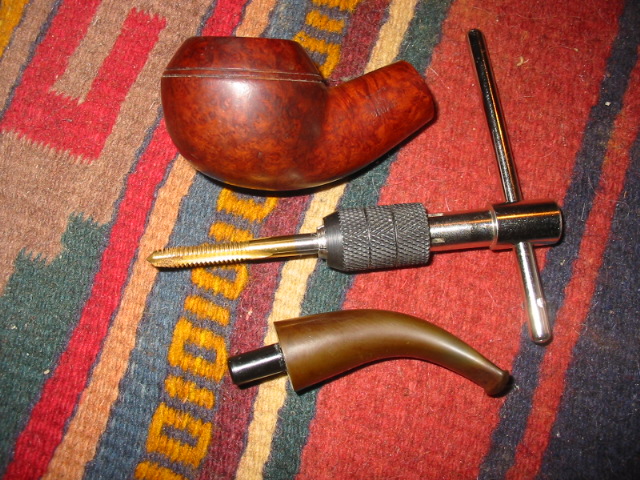
When the pipe arrived the tenon was broken off at the shank. It was a clean break as can be seen in the photo below. The tenon itself was stuck in the shank. I tried to remove it by my usual method – turning a screw into the airway on the tenon and then pulling. I tried and pulled both by hand and with a pair of vice grips. I clamp down on the screw and try to twist the bowl of the pipe. This tenon was really stuck. I dribbled alcohol down the shank and filled the bowl with cotton bolls and poured in alcohol and so that the inside of the shank could soak. I left it sitting that way over night and in the morning the tenon still would not come out. I figured I would try putting it in the freezer so that the two materials of the shank and tenon would contract and expand at different rates and loosen that way. When I took it out of the freezer I tried to remove it from the shank. It did not move. Nothing I tried seemed to work. I took a drill bit a little bigger than the airway in the tenon and drilled out the tenon very carefully. Once the drill bit was set I backed the drill out and the tenon was free. ImageImageImageImageImage

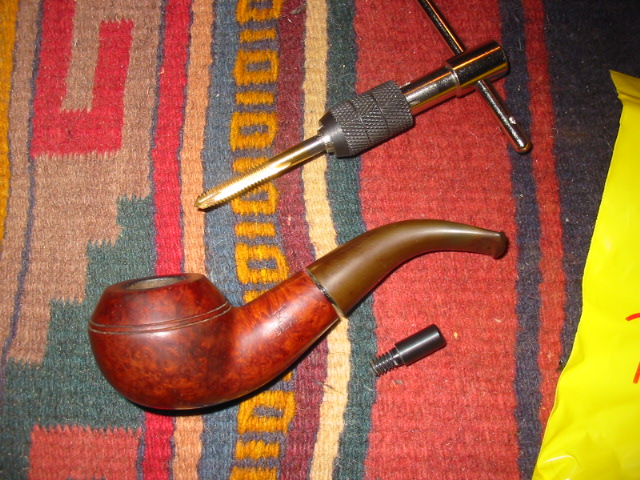
Once the tenon was out I held the stem vertically on a flat board and sandpaper to make certain that the flat surface of the stem was smooth and that there were no sharp pieces of the old tenon in the way. I drilled the airway in the stem to receive a quarter inch tap. I worked up to the quarter inch drill bit slowly moving from one that was slightly bigger than the airway. I wanted to make sure that the new opening for the Delrin tenon was centred and not off. Once I had it drilled with the ¼ inch drill bit I used a quarter inch tap to thread the hole in the stem. I had ordered threaded tenons from Pipe Makers Emporium and when they arrived I checked the depth on the tapped hole in the stem to make sure that it was the same depth as the length of the new tenon. Once it was correct I turned the new tenon into the threaded hole until it was just about tight and then dripped some super glue into the hole and finished threading the tenon in. I set it aside to dry before trying the tenon for a fit on the pipe. These threaded tenons are great to work with. It is the first time I have used them and it worked like a charm. ImageImage

Once the tenon was set, it was time to work on the stem and remove the oxidation. I used fine grit emery cloth to loosen the oxidation on the stem. From there I proceeded to use 240 grit sandpaper and then used 400 and 600 wet dry sandpaper. I wet the stem and sanded it with the wet dry sandpaper until all of the scratches were gone. The next series of three photos show the fit of the stem with the new tenon. Most of the oxidation is gone at this point. ImageImageImage

I took the pipe to the buffer and buffed the stem with Tripoli to see where I was at with the sanding. The oxidation was gone so I took it back to the worktable and sanded it with the micromesh pads from 1500-12000 grit. The final shine came alive with the 8000 and the 12000 grit micromesh. From that point I took it to the buffer and lightly buffed it with White Diamond. Then I waxed the pipe and stem with carnauba and buffed with a flannel buff. ImageImageImageImage