Tag Archives: refurbishing

Polishing Stems (PART 1) Piet Binsbergen


I have had some questions about polishing stems.

I must warn that I will not be held responsible for any damage you may cause to pipes following this method. The process is relatively fail safe but certain circumstances that may be beyond my control, I simply cannot be held accountable for. I do suggest that you do a couple of trial runs using old or broken stems before you attempt this process with your beloved birth year Dunhill.

I will share with you my process. Please bear in mind that there are many ways to skin this cat, this is my way of doing things but this does not mean that I reject any other processes that other pipe repairman use.

I use two approaches. Firstly it is important when doing up a pipe to try and save the stems at all costs. So process 1 involves cleaning and polishing stems that have tarnished.

Secondly, especially when it comes to hotrods, I use pre-moulded stems. I am able to hand cut stems from rod stock but I find the process way to involved and time consuming for what I am doing. Call me a cheat but I find this works really well for me. My preferred medium is vulcanite and ebonite but I do not turn down Lucite stems if they come my way. Lucite is problematic in the sense that it has little give and little room for error. On the up side of it Lucite does not tarnish.

Part 1

Saving Original stems

As most of you know vulcanite is compressed rubber, the same stuff your car tyres are made of to a point. This rubber is just compressed way more. I have found different qualities of the stuff over the years and have notice some being more superior to others.

I do not have much to add here due to the fact that Steve Laug is doing some ground breaking work with regards to original stem repair. He manages to remove teeth marks and patch holes in bits. I have studied his technique but will need to pick his brain a little more before I perfect this process. For me, as soon as a stem has a hole in the bit, I replace it with a pre-moulded stem. (This process of his is archived on this blog.) I love tapered stems. There seems to be more ‘meat’ to work with and more ‘meat’ means there is room to open up the draft holes, file out teeth marks and restore the stem as good as new. Saddle stems prove to be a bit of a challenge due to the fact that there is not much room to move.

Most stems look like this, and believe me these are good ones!
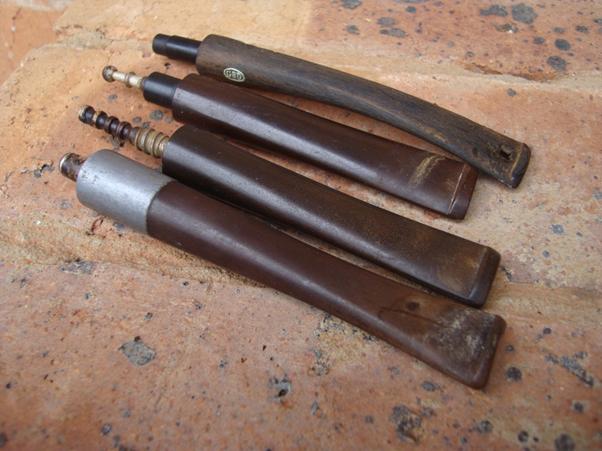
Stems1

What I usually do is drop them into a bleach bath. Household bleach does the trick for me. Here in RSA I use a product called ‘Domestos ‘.
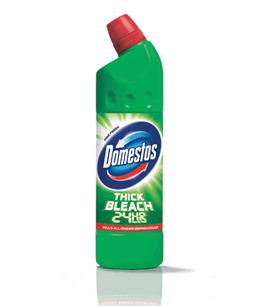
Stems2

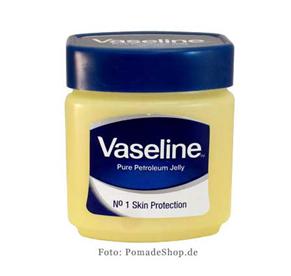
WARNING: Be sure to coat the tenon and nomenclature (If any, like say the GBD rondelle) with Vaseline (Petroleum Jelly).
Stems3

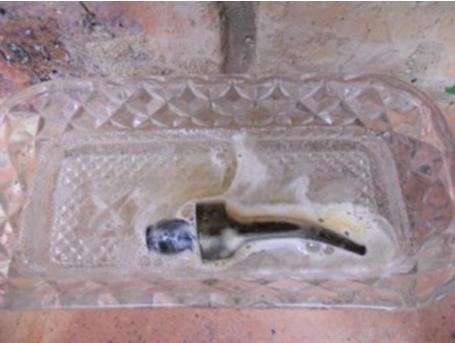
This protects the stem material from coming into contact with the bleach. If you do not do this you will end up needing to resize the tenon as the bleach may eat away at it. As soon as the needed parts are coated, I drop the stem into the bleach. It will bubble a little and you will immediately notice the liquid turning brown. Depending on the extent of tarnish and the quality of the vulcanite will depend how long I leave the stem in the bleach.  A good average for me is 20 min.

Below is a picture of the stem in the bleach for a minute or so. It looks scary I know, but it works.
Stems4

Remove the stem from the bleach and rinse in warm water. Wipe off the Vaseline from the tenon. This process has an added bonus as it tends to eat the muck out of the draft hole in the process.

PROBLEM: But fear not. If you draw on the stem you will taste 2 things. Firstly, you are going to get a strong taste of bleach, secondly, you may taste the left overs from the ghosting of the previous owners blend. If it were aro’s you will really taste it. This is easy to get rid of.

The next step involves scrubbing out the daft hole. I use bristle brushes and bristle pipe cleaners. If I choose to open the stem to my preferred 4mm, I do it at this stage.

Interesting Observation: I have had clients complain that a pipe ghosts flavours of tobacco even when the bowl has been well refinished. Did you know that vulcanite is porous and will hold the ghost in the same way the bowl does. If you do not believe me remove a stem from an old pipe and draw on it, you will taste the ghost! The bleach bath cures this problem to a point. Further manual scrubbing aids the removal of the ghost.

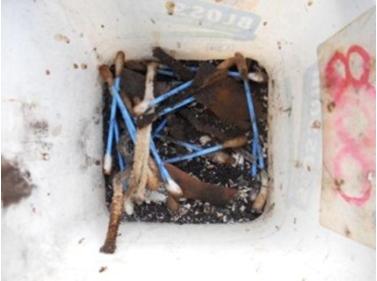
The picture below shows how much dirt and grime is loosened and scrubbed out of the draft hole during this process.
Stems5

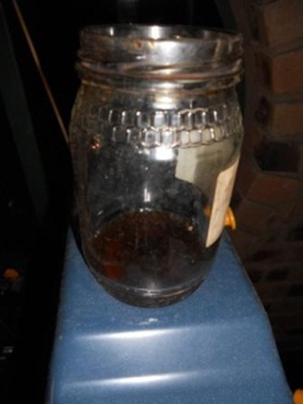
In order to remove all ghosting of tobacco, bleach and in order to sanitize the stem, I soak the stem in alcohol for an hour. I use Isopropyl alcohol (96%). Now this stuff is poisonous in a big way if ingested but research has proven that as soon as it has evaporated it is harmless. This is the same stuff used by hospitals to clean and sanitize operating theatres and equipment so go figure. After an hour remove the stem from the alcohol bath and rinse with clean water.

Here is a picture of the colour of the alcohol once the stem has come out a soaking for an hour.
Stems6

Notice the stem may turn white, light green or matte black depending on the type of vulcanite used by the manufacturer. I have noticed that most Peterson stems for example turn white. If you draw on the stem at this stage will taste nothing. I will be as good as new.

Sanding and polishing: You may notice the following, the stem may be smooth with colouration or it may look matt black and be rough textured. Start sanding. I use 400 and work my way up to 800 grit sand paper. This is a time consuming process, do not take any short cuts here. The last thing you want is a stem with a high polish that is full of surface scratches.

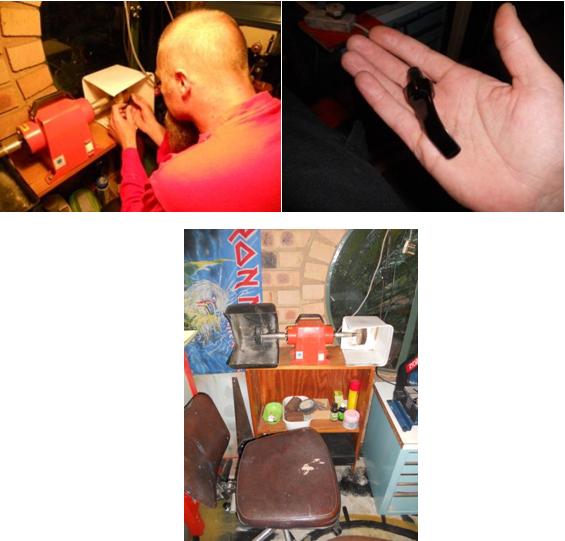
By the time I reach 800 grit I move to the buffer. I use Tripoli (Brown wax) which is equivalent to 800 grit sand paper and move onto White Diamond which is the same as 1200 grit. If you do not own a buffer, you can still get the same finish but the process will just take longer as you will hand sand up to 1200 grit and beyond.

The pictures below show the buffing process. Note that the picture of the stem on the right is not the finished product but shows what the stem looks like after buffing.
Stems7

By this stage the stem should shine and you should be able to see your reflection in the material. If not revert back to sanding, you have taken short cuts!

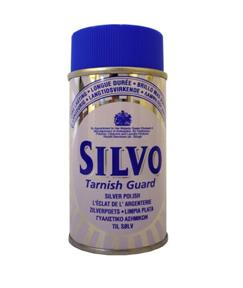
Depending on the type of material, as vulcanite differs in hardness, I continue hand sanding with 1500, 1800, and finally 2000 grit. Here you may notice the stem may start to dull a bit. The final polishing stages involves Brillo, or what we call Silvo here in RSA.  Silvo is a jewellery polish. Polishing is now done by hand using a soft duster cloth.
Stems8

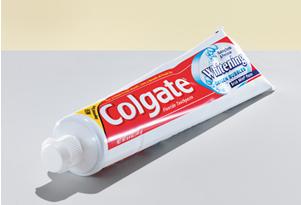
Finally, and you may laugh, but, I use tooth paste as the final step. This is a trick I learnt from a flute maker who high polish silver. Think about it, it really is quite logical. Toothpaste is a fine, very fine, rubbing compound. This process is also done by hand using a soft duster cloth.
Stems9

A final word of advice: Vulcanite is light and air sensitive. The more light the faster the tarnishing process will start. To avoid further tarnishing I run the stem including the bowl over a slow spinning buffer using carnauba wax. This forms a protective layer on the vulcanite keeping the oxidation process at bay. When done smoking your pipe, wipe the bit clean with a soft cloth. Saliva (Ph levels) mixed with the smoke is what makes pipes so yukky around the bit area. My stems are always clean and oxidation free. Besides standard cleaning after smoking I run the stem over the buffer to seal them up again from time to time.

Here are a couple of pictures to wet your stem polishing appetite. These are a herd of refurbished GBD that belong to “Muddler”. Stems can look better than new if you take the time and put in the effort.
Stems10

A Peterson Kildare.

Before and after
Stems11

Stems12

Good Luck and enjoy!
Hot Rods – next round please, Basket briar massacre. (October 2012) Part 2 – Piet Binsbergen


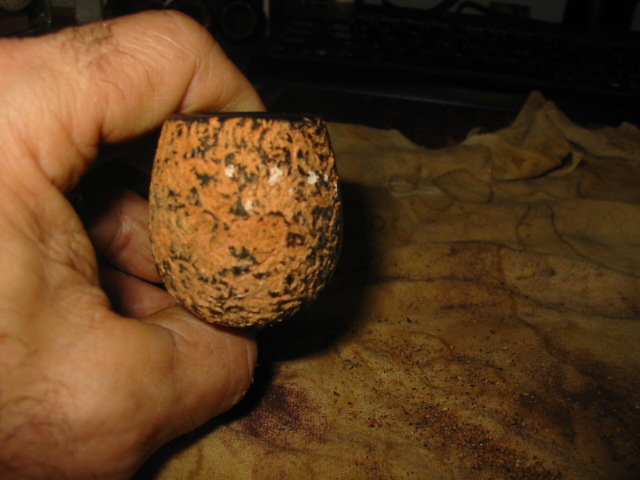
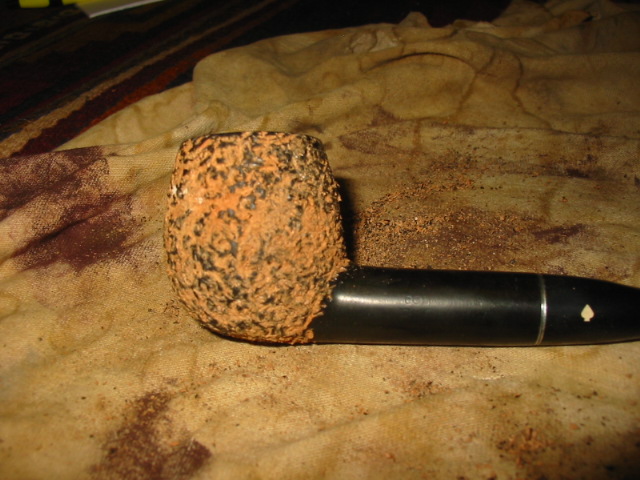
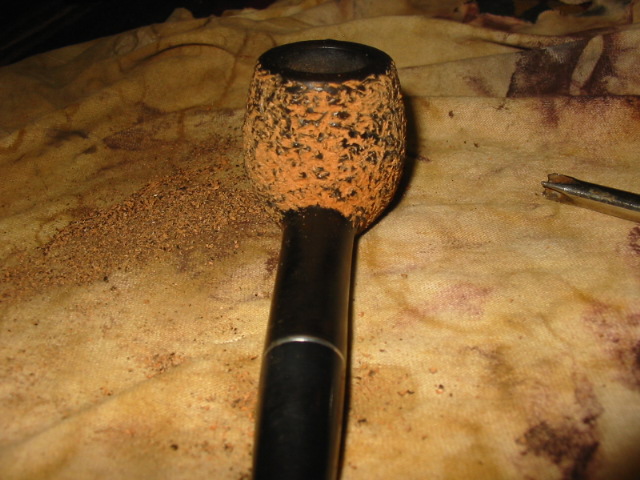
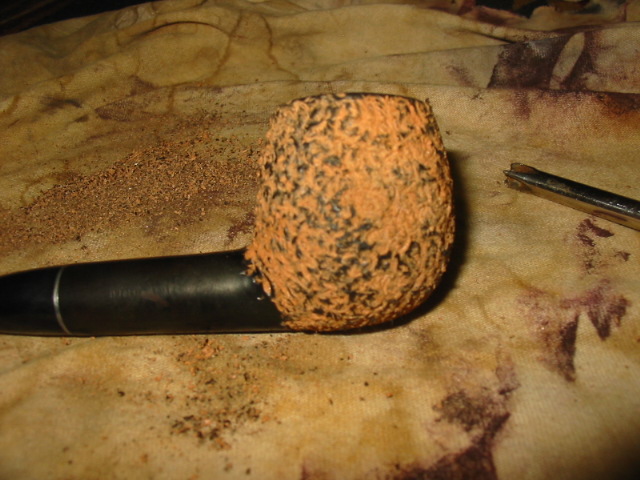
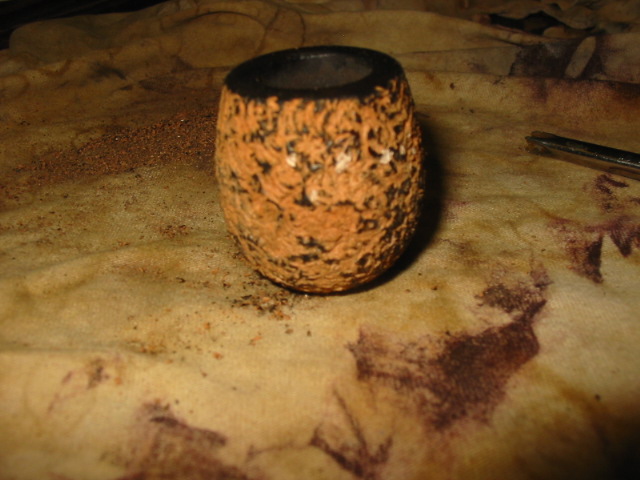
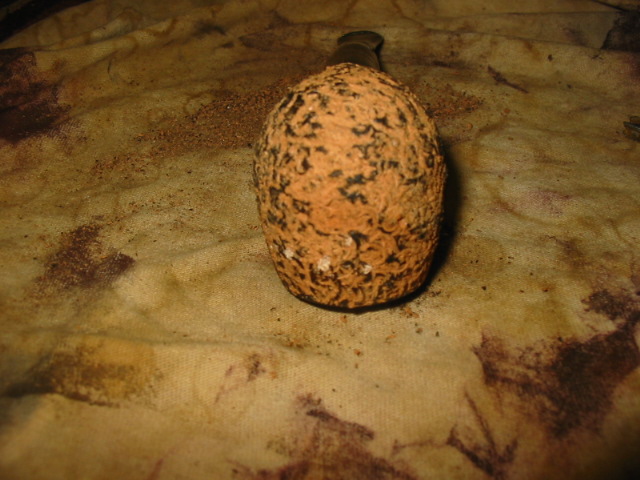
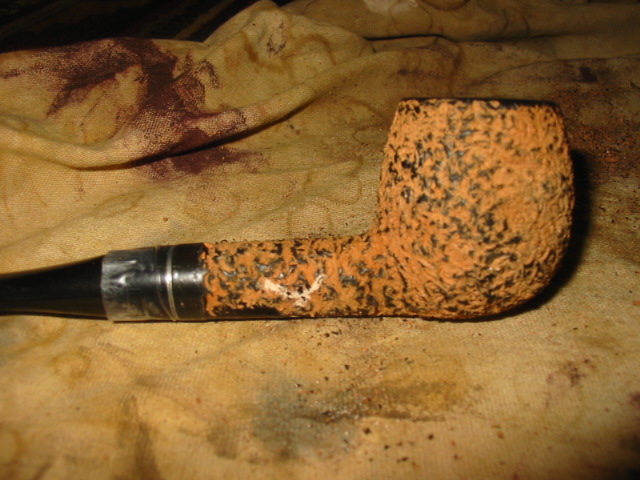
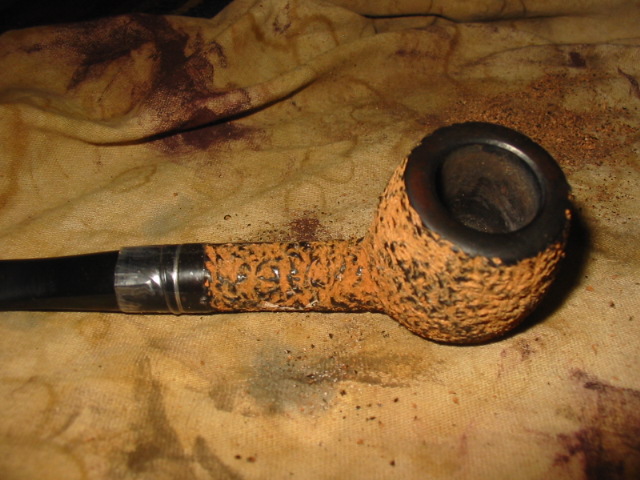
Ok, so here is the silly bit.

These 2 pipes I did not photograph before I started. Once again apologies!
Die Braaivleis pyp (Afrikaans for the BBQ pipe)

This is my opinion. I guess that basket briars are not that bad. What makes them unattractive is that they are drilled skew and full of putty. Now skew drilling sucks and these pipes are laid to rest. When I do find pipes that look like the drilling is solid enough I often find the bowls to be full of putty fills hence they become basket briars. So why do they do it then? Well, time is money and to fill a pipe and sand it, covering it with a dark stain seems to be fast and cost effective.

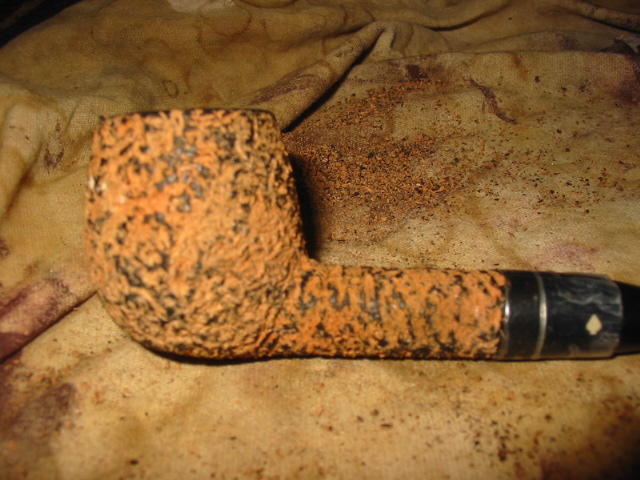
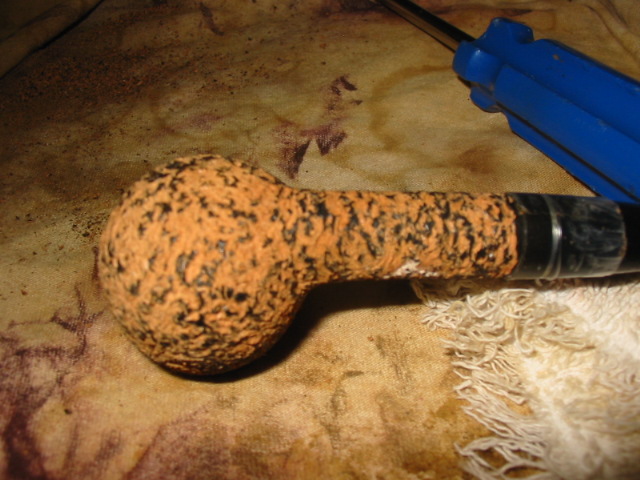
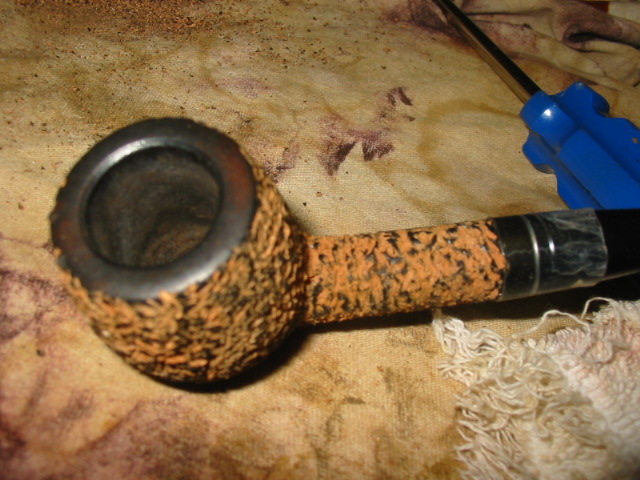
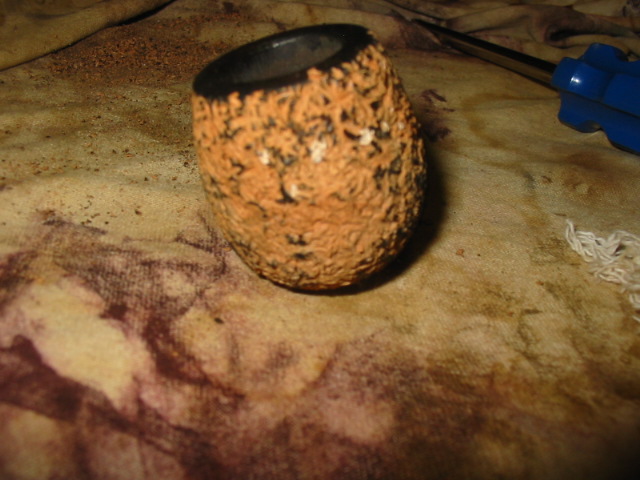
I have found that if one spends time and uses the right tools, with some practise you can rusticate the bowl and the fills become part of the character of the pipe. So why do the pipe manufacturers not do it then? The answer again is a simple one! Time versus money. A solid rustication job may take me some hours. Now hours I have, low end pipe manufacturers do not!

In time I will put together a photo essay of my rustication process.

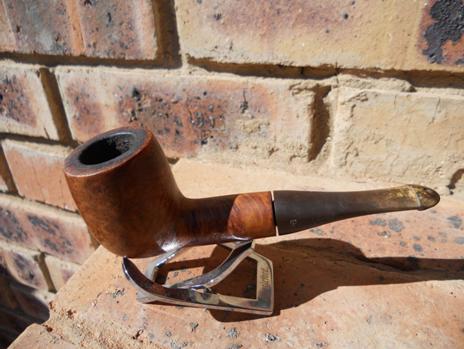
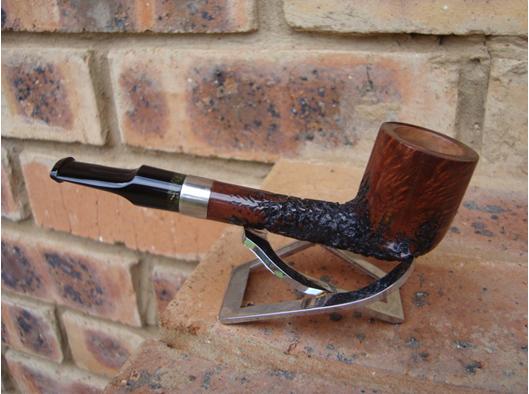
With this pipe, the bowl was semi rusticated. I added a silver shank ring and fitted a green Lucite shank ring for contrast. The stem was replaced.
Piet1
The Bushveld Poker

Before you all have a stroke, this is NOT a CASTELLO but a Purex basket briar.

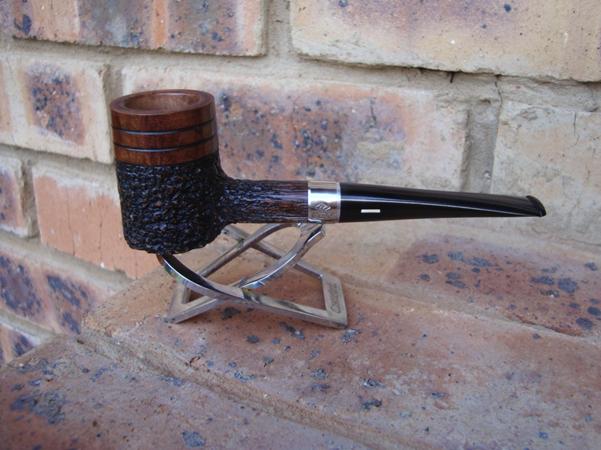
This was fun as I could get the stummel into the lathe chuck and work it back into true. The drilling was good but the tobacco chamber was off set to the outside of the bowl (Welcome to the wonderful world of basket briars). I was able to turn the bowl down just a bit to bring it back into true. I also added some rings. As the bowl was full of fills lower down on the stummel I used the same rustication process as above. I added a silver shank ring for contrast. The stem is a screw in type fit with one of those nasty stingers fixed to the tenon of the stem. Here I removed the stinger and saved the stem. This is one of the few pipes that had a stem which was saveable so I went through the motions of bleaching soaking and polishing. All the pipes have draft holes open to 4mm.
Piet2

Restemmed Petersons 69 – Second Try was a Charm


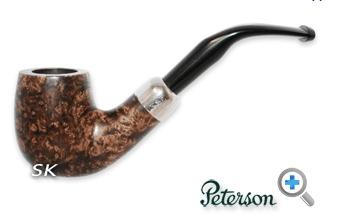
I had this old Peterson 69 bowl in my refurb bin for quite awhile. It is stamped also on the other side K&P Dublin, Made in the Republic of Ireland. I cleaned and reamed the bowl and cleaned out the mortise area with cotton swabs. I wiped the bowl down with acetone to remove the surface grime. I topped the bowl as it had major dents and roughening on the top from abuse. It needed a stem so I researched the kind of stem it needed and called a Peterson repair person in the states to have one sent to me.

Here is where the story gets a bit dicey. All I really wanted was to have the stem sent and I would fit it to the pipe but I let myself be talked into sending it south. It came back with the wrong stem on it and also had some serious cut marks on the tenon end. It also was a stem for a p-lip system pipe and the 69 is not a system pipe as far as I can tell. I was a bit frustrated to say the least so I set it aside for a week or two before calling the repairman and letting him know what I was feeling. I have to say that it is frustrating to expect one thing and get another. It is also frustrating to know that I could have done the work myself in less time if only I had a stem blank that I could have used.

I sent it back to him for a redo and included this internet photo of the pipe with the stem.
peter1

When it finally came back it was better – see the photos below. It was much better so I decided I was done with sending it back. Two times is enough. Once it was back I finished working on the rim and the rest of the bowl. I stained it with a medium brown aniline stain. It took the stain well and came out a reddish brown colour. I buffed it with Tripoli and White Diamond to polish the stem so the grain would show through. I finished it with several coats of carnauba wax and buffed with a soft flannel buff. The silver ferrule was polished with silver polish. It is a good smoker and is comfortable in the mouth.
Peter2

peter3

peter4

peter5

Refurbishing a GBD Penthouse with a Chairleg Stem


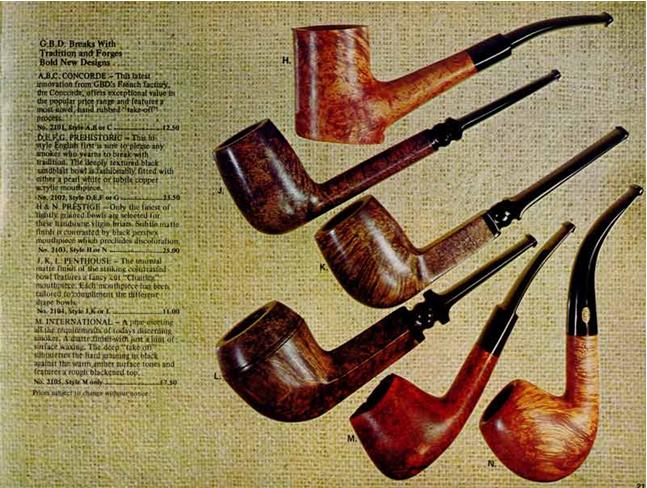
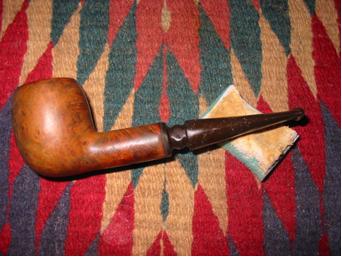
While scanning EBay for interesting old pipes to work on I came across a pipe for sale with the stamping Penthouse. There was little other information on the advert regarding the pipe but it looked interesting to me. The chairleg type stem made me think of the series of pipes that Al (upshalfan) has restored so I put a bid in for the pipe. I contacted Al and he sent me the following picture from a Tinderbox catalogue showing that indeed the pipe was a GBD line. (NOTE: The GBD catalog page came courtesy of Jerry Hannah. Jerry created the GBD Shapes/Model page that I frequently use for reference. I’m not sure if he reads this blog, but if so, thanks!) The headline on the page says that GBD breaks with tradition and forges bold new designs. Pipes marked J, K, and L in the picture below are all Penthouse pipes. I have no idea where they took the name but let imaginations rest, the pipes are stunning and the stems are uniquely beautiful.
Pent1

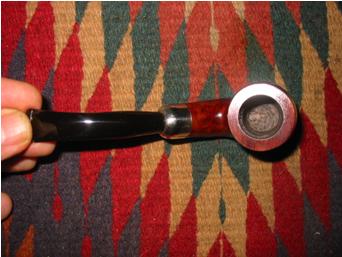
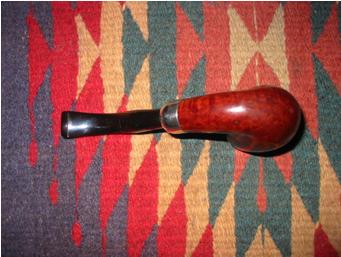
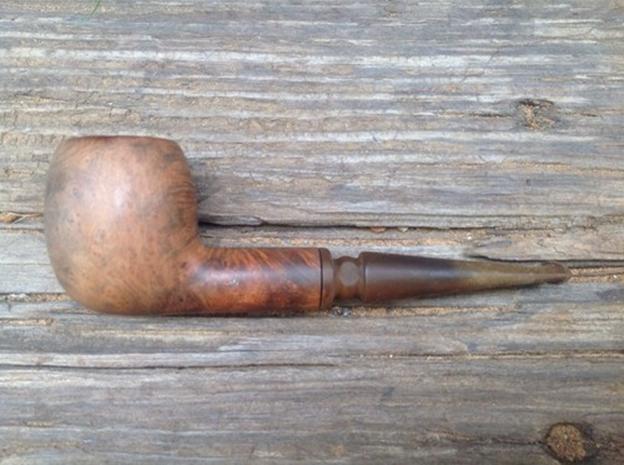
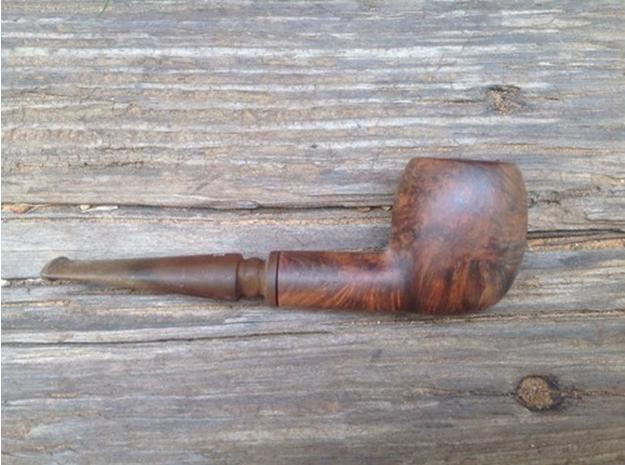
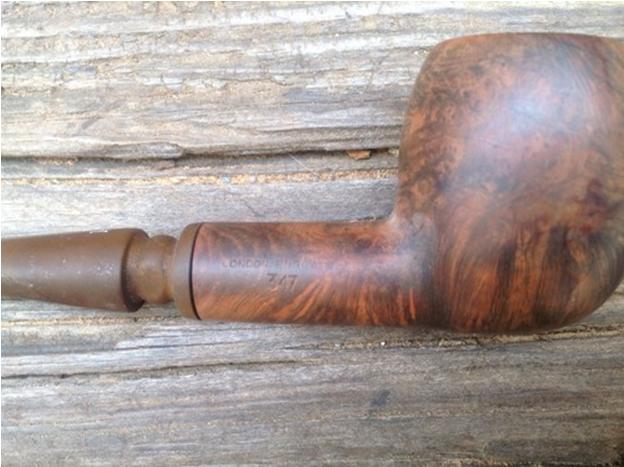
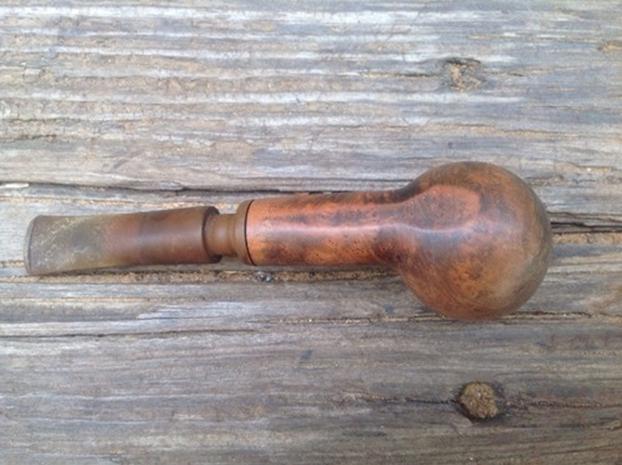
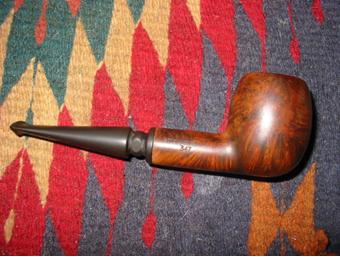
The Penthouse pipe that I bid on and subsequently won is an apple shape. The first six photos below are the seller’s pictures. It was these pictures that tempted me to place my initial bid on this pipe. As it turned out I was the sole bidder. The stem was badly oxidized and had some tooth chatter at the button. The stamping showed up but was not as deep as it appears in the photos. The rim appears to be darkened but not charred in the photos and the finish appeared to be dirty but not dented or scratched deeply. It was stamped on the left side- Penthouse in script over Made in England in block letters. On the right side it was stamped London England over 347. Now the wait began.
pent2

pent3

pent4

pent5

pent6

Pent7

When the pipe arrived it was much as the pictures had shown. I am never sure what to expect when I bid on these old pipes as I have been utterly surprised both ways – they have shown up in much worse shape than the photos showed or in much better shape. The next four photos show it as it appeared when I removed it from the box.
pent8

Pent9

Pent10

Pent11

The finish was actually quite dirty. Many of the dark areas of the finish were actually grime and grit and not the understain on the pipe. I wiped the pipe down with acetone to remove the grime. I also used a battery terminal brush to clean out the remaining cake remnants in the bowl. Then I dropped the bowl in the alcohol bath and the stem in a bath of Oxyclean. The bowl sat for about an hour in the alcohol bath and the stem sat in the bath overnight. When I removed them I cleaned out the shank and the inside of the stem until the pipe cleaners and cotton swabs came out clean. I wiped the entirety with a soft cotton pad and acetone to remove any remaining grime and the next series of four photos show the state of the pipe at this point in the process. The alcohol bath and acetone had successfully removed the remaining finish and the grime on the surface of the pipe. The Oxyclean had done a great job on the oxidation. You will notice the shiny areas on the top of the stem – I had run my fingernail across the surface to show how the oxidation had softened. It was ready for the next step in the process of cleaning the stem.
Pent12

Pent13

Pent14

Pent15

The next two photos show the stem after I had scrubbed it with a Magic Eraser. The stem was wet and shiny and you can see the oxidation on the Magic Eraser under the stem. I continued to scrub the stem with the Magic Eraser until it came out clean.
Pent16

Pent17

The oxidation was greatly decreased at this point but there was more work to be done on the stem. The hard points on the stem were obviously around the chairleg section. The grooves were difficult to get to with the Magic Eraser. I decided to use some Meguiar’s Scractch X 2.0 which is a scratch and blemish remover for auto paint finishes. I used soft cotton pads (makeup removal pads) with a spot of the Scratch X 2.0 on them to scrub the grooves and the area around the button as well. The next series of three photos show the stem after the scrubbing with X 2.0. The oxidation is further removed but still evident.
Pent18

Pent19

Pent20

At this point I continued to scrub with the X 2.0 until the stem was once again black. I buffed the stems with White Diamond on my buffer once that was finished. The next two photos (please forgive the blurry focus) show the stem after the application of Obsidian Oil to the clean stem. I left the Obsidian Oil on the stem until it was absorbed and then coated the stem with an initial coating of carnauba wax to protect it while I went to work on the bowl.
Pent21

Pent22

I coated the bowl with an oxblood aniline stain. The next two photos show the coated bowl before I flamed the stain to set it in the grain. The stem appears to be brown again but I had coated it with wax and left it to dry while I worked on the bowl.
Pent23

Pent24

I buffed off the stain with a soft flannel cloth that is pictured below. I wanted to highlight the variety of grain in the pipe so that is why I chose the stain I did. It also shows that the black understain that appeared in the original photos still remained and makes the grain very visible in the pictures below.
Pent25

Pent26

Pent27

Once the stain was dry I put the pipe back together and took it to my buffer. I buffed the stem and bowl with White Diamond until is shone. Then I moved on to a soft flannel buff with carnauba wax and a final polishing buff with a clean soft flannel buff. The finished pipe is pictured below. All that remains is to fire it up and enjoy a bowl in the “new” Penthouse pipe. The stamping on the stem is still present and not harmed by the work but it is light and will not hold any whitening product.
Pent28

Pent29

Pent30

Pent31

What is a Pipe Retort and How it is used


Blog by Steve Laug

I have had a retort kit for many years now. I picked it up on eBay from a fellow who makes them and all profits from his sales go to the Sanctuary for Unwanted and Neglected Animal rescue S.U.N.A. All proceeds help pay veterinarian bills. The retort is owned and manufactured by them for a fund raising tool. I have used it in spurts over the years. When I first got it I used it all the time. I like the way it worked and cleaned up the dirtiest pipe and boiled out the tars and oils in the bottom of the bowl. In recent years I have just forgotten to take it out in the process of cleaning and refurbishing. It is nothing about the kit that makes me forget it is simply that I have used a variety of other methods to clean out the oils and tars. These include an alcohol bath and the bowl stuffed with either rock salt or cotton bolls and filled with alcohol. Both methods have worked well for me so I just seem to move on without doing the retort.

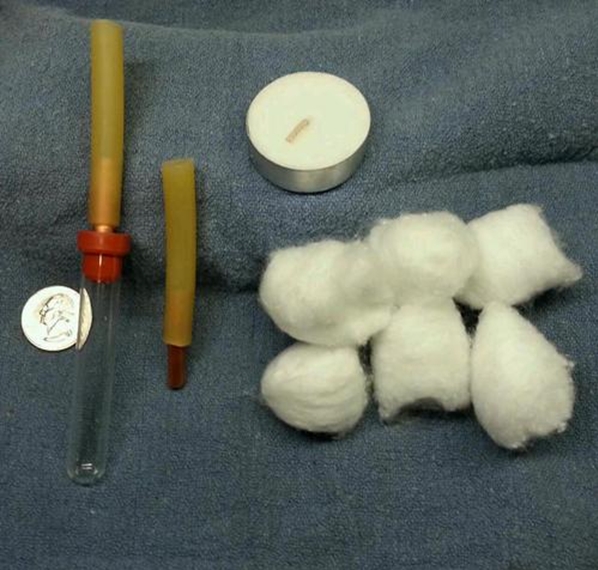
Retort kits are readily available on eBay and include all the things needed for a working retort. The picture below, taken from an eBay sale shows a version of the retort. The one from S.U.N.A. that I have is much more refined and elegant. But the constituent parts of the retort are virtually the same nonetheless. The retort includes a Pyrex test tube to hold the alcohol that is heated with either a candle or an alcohol lamp until it boils up through the surgical tubing through the stem and into the bowl of the pipe. Cotton bolls are used to plug the opening in the bowl and keep the hot alcohol in the pipe bowl.

Image

I found this drawing of a retort on the Seattle Pipe Club website and include it here to show the constituent parts of the retort. Where it uses an eye dropper, the S.U.N.A. version uses a nicely formed piece of brass tubing inserted into the stopper on the test tube.

Image

The designer of the S.U.N.A. retort says that the Pipe Cleaning Retort is the result of many years of experimentation by a 40 yr. pipe smoker and collector. He describes the purpose of the system as “the removal of gunk from the pores of the briar, specifically the heel, to sweeten and sterilize. Swabbing with pipe cleaners will not do the job, especially the musty estate pipe and also is great for changing blends without crossover taste. There is also the danger of harmful molds present in old pipes that will be removed by the hot alcohol method.”

How to use the retort

I begin the process by filling the retort test tube with isopropyl alcohol about ½ to 2/3 full. Others have used ever-clear but I have found that the 99% isopropyl alcohol works well for me. It is not only reasonably priced but less volatile than other products. It is also readily available at drug stores. The less water in the alcohol results in a lower boiling point. Put the stopper with the tube (whether copper tubing or eye dropper) into the mouth of the test tube. Attach the surgical tubing over the pipe’s stem. I usually stretch it up to about ½ inch on the stem. The connection of the tubing on the stem should be tight as you do not want the alcohol to seep around the joint when it is hot. (A 1/4″ slit or a v cut in the surgical tubing will make it easier to fit onto pipe bits.) Use cotton bolls to stuff in the opening of the bowl to prevent the hot alcohol from damaging the bowl’s finish.

Hold the retort over the heat source, candle or alcohol lamp and slowly move it back and forth over the flame. Hold the pipe by the bowl so that it is level and be careful of the tube as it gets hot. I generally hold onto the stem and the rubber stopper as I move the pipe back and forth. As the alcohol boils up into the pipe, periodically remove the retort from the flame. The instructions require that the unit be supported to allow back and forth flow for best cleaning, not just dangling over high heat source that causes over boil and uncontrolled gushing. As the retort cools, the alcohol will be sucked out of the pipe and into the retort. By repeated heating and cooling the retort, you can flush the pipe with boiling alcohol several times. Once the alcohol turns black with tar, replace it with some fresh alcohol. After about a dozen flushes, remove the retort and clean the pipe with bristle cleaners or a nylon brush. Let the pipe dry out at least six hours before smoking.

NOTE: Some may have a concern about fire or even explosion from heating the alcohol over an open flame. The maker of the retort system says that “our testing to deliberately cause separation due to restricted airway resulted in the connector pulling out of the glass tube due to the increased pressure, a press fit instead of fixed will prevent any explosion. Any remote possibility of a resultant fire using isopropyl alcohol in the amount required to operate the retort can easily be snuffed out by a small towel. The volatility of the alcohol is very low and it requires a low amount of heat to reach the point needed to make the retort function properly”. It is recommended that you use eye protection while working with the retort.

Image

The retort kit that I purchased included a generous supply of name brand tapered fluffy pipe cleaners, a natural rubber surgical tubing or connector bulb to attach various size stems, a thick walled Pyrex test tube (high speed centrifuge quality) and cotton balls for putting into the bowl. It also came with complete instructions. My kit did not come with a heat source though it appears that they now include a small votive candle.

Refurbished Sir Wilkens Danish Made


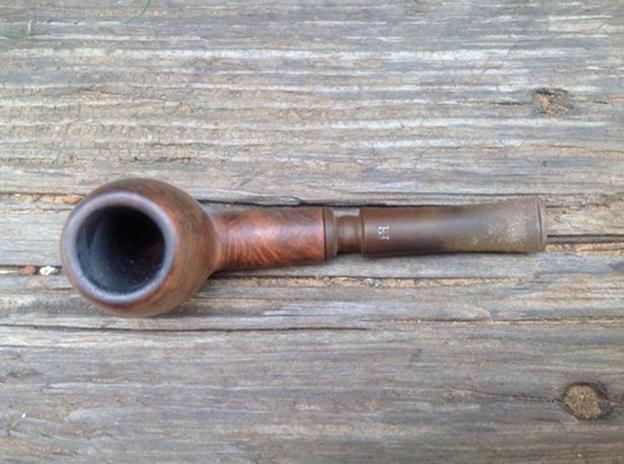
I had this old Danish shaped pipe in my box for refurbishing for some time. I had never heard of the brand but I liked the shape of this particular pipe. It is delicate looking and yet feels comfortable in the hand and mouth. The grain is not remarkable but it is good. It is stamped made in Denmark and I would call it an acorn shape. I always like to do a bit of detective work on the brands I come across and have done a fair bit of research on the web to find out any information. Nothing was found on the web. The stem is a modified saddle bit, pinched at the sides from the top and bottom views but generally tapered to the saddle. It is a slightly bent stem. The bowl was dirty and caked with what smelled like an aromatic tobacco – very vanilla smelling. The stem had a coating of some kind of sticky substance – like scotch tape that had been applied with a price tag. The finish was dirty and the grain appeared smudged beneath the finish. The rim was tarred but not scorched. This was going to be an easy clean up.

Image Image

I reamed and cleaned the bowl to remove the thick cake. I also filled the bowl with cotton bolls and isopropyl alcohol and let it sit over night to leach out the tars and oils. In the morning I wiped down the outside with alcohol to remove a bit of the darkened finish and grime. I then buffed it and polished it with White Diamond to bring back the shine. I cleaned the stem with isopropyl alcohol to remove the sticky residue on it and then cleaned the inside of the stem with pipe cleaners and alcohol. I buffed away the slight oxidation. I then took the pipe to my buffer and gave it a final buff with White Diamond and then multiple coats of carnauba wax.

Image ImageImage

Any help on identifying the maker of this pipe would be appreciated. You can post responses here. Thanks ahead of time for your help.

All the King’s horses, and all the King’s Men… A Petersen adventure — Gan Barber


When I bid on this pipe, I hoped that the damage was just a matter of some superficial checking. Whether it was from a defect in the briar or poor smoking technique, I assumed that with a little work, this Petersen Sherlock Holmes could be restored to its former glory once again.

As it appeared on EBay


I’ve repaired a variety of bowls damaged by overheating or hidden fissures that cracked when smoked, but this particular pipe proved much more challenging. The front lip was compressed from hammering out spent dottle, so it was obvious that this pipe had seen its fair share of abuse. I placed the bowl in an alcohol bath for several hours to clean out the fissures and soften the heavy cake. I thought that once I reamed it out and wire brushed the cracks, I would have a better idea of the repairs needed.

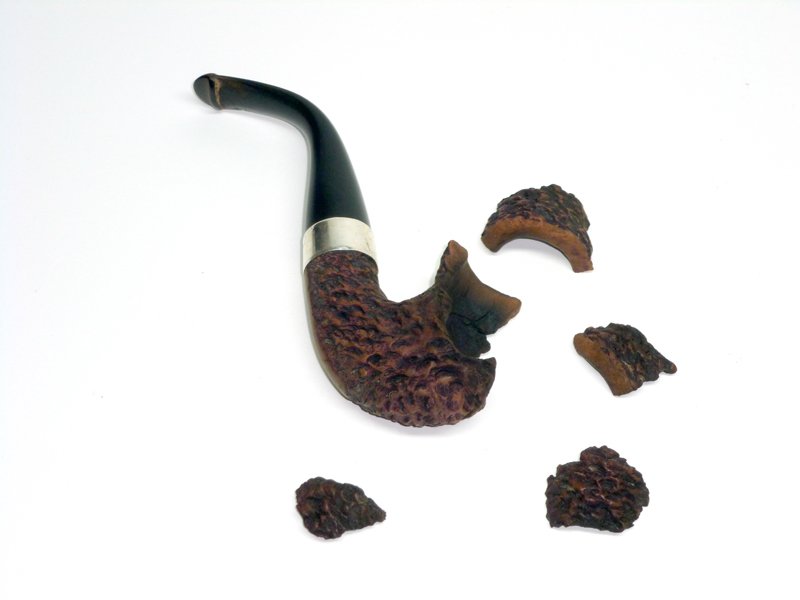
Unfortunately, the only thing holding this pipe together wasthe cake, and as soon as I started to ream it……….

A combination of the bowl walls being left thin due to the heavy rustication, and the previous owner’s penchant for smoking tobacco as if it were lava (must have loved the taste of burning wood), had caused the briar to burn through in several places.

The charring was significant, but the pieces were sound, and the fractures well defined, so I decided to see what could be done with such a hopeless mess……..

Back into the alcohol bath went all the pieces to further clean the broken edges and soften what remained of the cake. I left them to soak overnight and then gave them each a thorough scrubbing, scraping and wire brushing to prepare them for re-assembly. In the meantime, I cleaned up the stem with an Oxy-Clean soak and some scrubbing with #0000 Steel wool.

Using JB Kwik as a bonding agent, I began by fitting the two lower pieces back onto the stummel. I worked in pairs to assure proper alignment. Once the epoxy has set, there is no way to make adjustments to the fit, so by working in layers I had a better chance to get it right.

Before the epoxy hardened, I did some work with a toothpick on the exterior of the bowl to remove and blend the squeeze out. Once the epoxy had completely cured, I used a dremel with a small sanding drum to grind down the excess and smooth the joints on the inside of the bowl. Using the same process, I re-fitted the top two pieces.

After the initial bonding and detail work on the epoxy, the pipe still had a long way to go.

There was a sizeable hole on the left side where the briar was very thin and had been destroyed by fire. After some more work with the dremel to clean up the inside the bowl, I used the JB Kwik to build up the weakened areas, letting it flow through and fill the hole. I then added more JB Kwik to the areas on the outside of the bowl that revealed any cracks, low areas, or fissures.

Once the epoxy had fully cured, I used the Dremel to smooth the inside of the bowl, and then applied two coats of pipe mud. Made from cigar ash, this mud filled all the imperfections and created a strong protective covering over the epoxy patches. Though JB Kwik is highly resistant to heat, and rated as non-toxic, it seemed prudent to keep it well covered until a good cake can be re-established in the bowl.

I used a small rusticating tool, made from a Phillips head screwdriver, to blend in the patches on the bowl exterior, then finished preparing the briar for staining with a vigorous scrub using a brass wire brush.

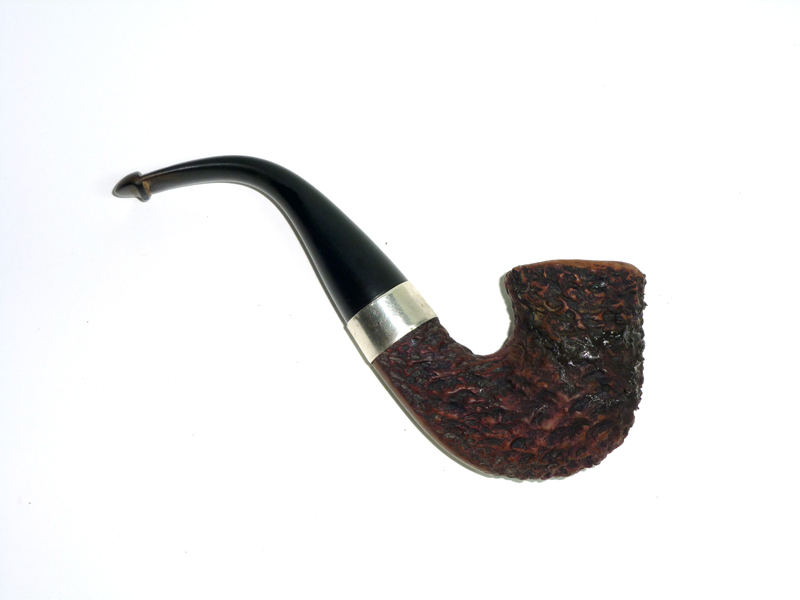
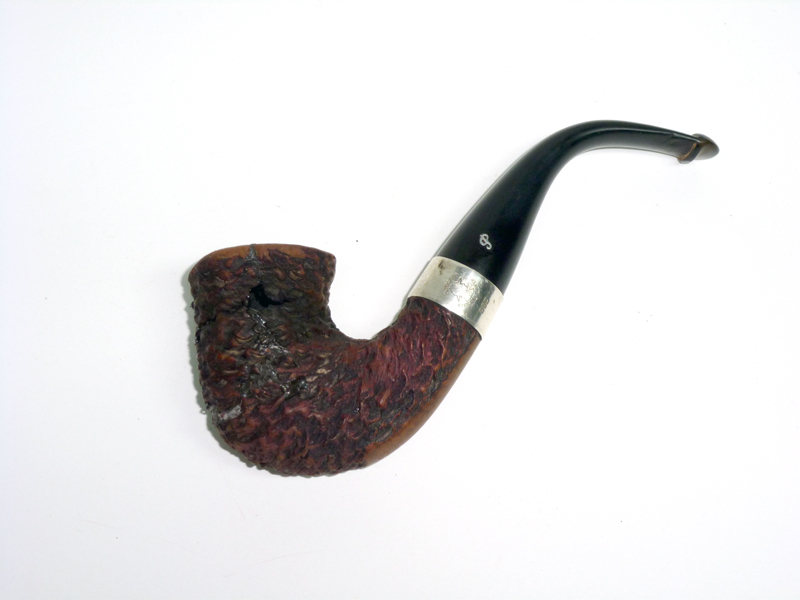
To blend in the patches and color the bowl, I chose Feibings Cordovan dye and applied it liberally with the applicator. I used a torch lighter to burn off the alcohol really set the stain. I then gave it a buff with red Tripoli, to see how well it all blended and to clean up the stem.  Granted, the Cordovan dye is much darker and deeper than the original coloring, but it was my only option in order to hide all the body work required to make this Petersen look like a pipe again.

I haven’t finished working on the stem or waxed the bowl yet. I think I’ll wait until the pipe mud has hardened and see how it smokes before investing any more time into this project. The bowl feels substanial and solid, so I’m not worried about structural failings. Being that it’s no longer a 100% briar pipe, I’m curious to see how well it performs……..

Thanks for looking.

-Gan

Photo Essay on Opening a pipe for an easier draw – Al Shinogle


Blog by Al Shinogle

I came across this great photo essay on the web on how to open a pipe for an easier draw. It was written by Al Shinogle from the Denver, Col. area so I called him and asked his permission to post the article on the blog. I want to thank him for the informative essay on this topic and for his willingness to have it available on this blog.

A how-to photo essay on a controversial subject

If you want a topic that will cause a lot of controversial discussion, one couldn’t find a better one than opening a pipe’s airways. Battle lines will be drawn quickly. Smokers
who fall into the “ONLY A MORON WOULD CHANGE THE WAY THE PIPEMAKER MADE IT” vs. the “OPEN IS THE ONLY WAY AND YOU’RE AN IDIOT IF YOU DON’T GET IT” groups. Even within the pipemakers themselves there is a lot of debate on this subject.

Are there lots of pipes that smoke very well with small diameter airways? Yup, no doubt
about that.

Will every pipe that is opened turn into a great smoker? Nope, can’t say they will. As we know, there are so many variables in smoking. Bowl size, age/cure of the bowl, the kind, cut and humidity of the tobacco just to name a few. We have all gotten rid of a “poor” smoking pipe only to have the new owner say that it was the best pipe they ever had.

So what does this “opening the airway” do? First off, think of the airway as a soda straw.
You suck (create a vacuum) on one end and fluids will flow up the straw. By increasing
the diameter of the straw, the same amount of “suck” (vacuum) will increase the amount
of fluid. You have probably noticed the difference between using a stirring straw and a
drinking straw. That is what we are looking at, opening the airway to get more smoke
with the same or less effort i.e. an easier draw.

Ok, so we get more smoke per draw, is there anything else it does? Many of the Open
Pipe Followers, believe that the pipe smokes cooler. I believe they are correct, since a
larger amount of air is drawn into the bowl for a shorter amount of time, the burning
doesn’t have to increase much to get the proper smoke. I realize that this is a subjective
thing.

Also many believe that the pipe will stay lit longer. Again a very subjective thing that one
cannot accurately measure. But I have noticed the same thing.

A drier smoke, again many (me included) have noticed that tobaccos tend to smoke dryer
in an open pipe. Perhaps the moisture doesn’t collect as easily.

Now on the negative side. And yes there are always side effects. Opening the airway can
increase the bits of tobacco that get lodged in the airway. So one may have to use a pipe
cleaner more often to dislodge an errant bit of tobacco, especially if one uses a finer cut
tobacco. Different packing techniques can vastly reduce this small problem. Putting a bit
of thicker cut tobacco on the bottom of the bowl will totally eliminate this issue.

So what is this Opening the Airways thing?

First off, this author falls in the middle of the pack on this subject. I have some tighter
draw pipes that smoke outstandingly. I have left them alone. But I have also had some
pipes that have been drastically improved by opening the airways. When one decides to delve into this process…be aware…one can take wood out, but one cannot put it back. So easy is the word.

Starting off….”Most” pipemakers tend to drill the shank airways (the shank is the part of
the pipe between the bowl and the bit, some may call it the stem. A rose is a rose).
Somewhere between 3.5mm to 4mm (for us Yanks  .138 to .157 in.). Then the bit is drilled starting around 3mm (.118) then down to 2mm (.078).

Some makers go larger than this from the start. Alberto Bonfiglioli ‘s pipes are certainly
on the larger size. My favorite pipemaker, Polo Becker tends to be drill his slightly larger.
Those that believe an open pipe is the key, believe in opening the shank from 4.3 mm to
4.7mm (.171 to .187). While this humble pipe smoker has opened up a few pipes that
large, I find that I tend to stop around the .170-ish and find that perfectly adequate. To
each his own, your results and mileage may vary.

OK, since if you have read this far, and not pitched your pipe at the computer screen. I
assume you at least want to give this concept a shot. What are the tools one needs to do
this? Minimal, you probably have most of everything now. But I will assume that you are
starting from scratch.

Drill bits. I have a small set of new sharp bits dedicated for this. Why risk an expensive
pipe by using some cheap-ass bits that you have dulled by drilling metal. Invest a few
bucks in some new sharp bits reserved just for this. I use a series of “Numbered” bits. The sizes are from a #29 (.136) to a #13 (.187). See the chart below.


One does not have to have every size, when increasing the diameter one starts small and works their way up in increments. The ones in yellow are the ones I use the most often. I start with the smallest bit that will go thru the existing hole and then work up from there skipping a size or two at a time.

I ONLY use a T-handle for this…DO NOT DO THIS WITH A POWERED DEVICE.
Fastest way I know to add an unwanted extra airway or create a hole that is out of round
(I know, you could start a whole discussion on why oval holes smoke better than round
holes). With a T-handle, this entire process can be done in 15 to 20 minutes. One will need a T-handle (if you have a shop vise you can clamp the bit in the vise and hand rotate the bowl, either way works well).

To enlarge the bit opening, I use a 2/0 (00) tapered reamer. Those can be ordered from
various places online. My favorite is:
http://www1.mscdirect.com/CGI/NNSRIT?PMPXNO=1702357&PMT4NO=62256300

That pretty much is the tools required, Now for the process.

First off, remove the bit and give your pipe a good cleaning, set the bit aside for the
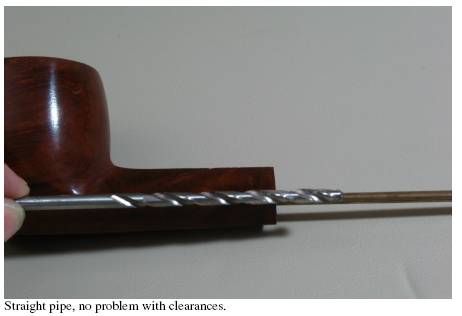
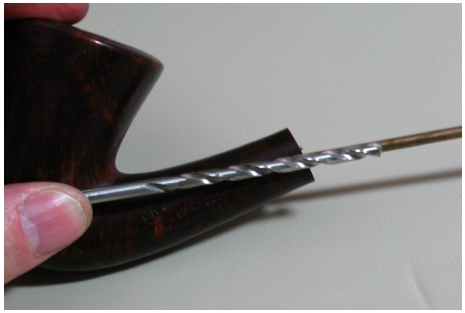
moment. With the bowl in hand, we need to determine how much can we open the airway and be safe. Straight pipes are easy; hopefully the hole is near the center of the shank. But bent pipes are a different animal; it is possible (probable) that the airway does NOT follow the center of the wood. But how do you know?? What I do is insert a 1/8 in. brass rod into the shank all the way to the bowl. Then set a #13 (.187) drill bit on the side of the bowl parallel to the brass rod to see if there is any area that could cause a problem. See pic. 1 and 2 below.


Note in the bent pipe, that the airway gets very close to the surface of the wood at the top
of the shank, in this case I would not go all the way to a #13. But would back off to a
maximum of about a #17 (.173). Could one go larger…sure, but I tend to be more
conservative…. Remember, one can’t put back what one takes out.

Select the smallest bit that will easy push thru the existing airway. If it is a used pipe, you
will be “cutting some crud” that has accumulated in the airway. (Remember I said start
by giving the pipe a good cleaning)…if you missed that step, you will have more crud at
this point.

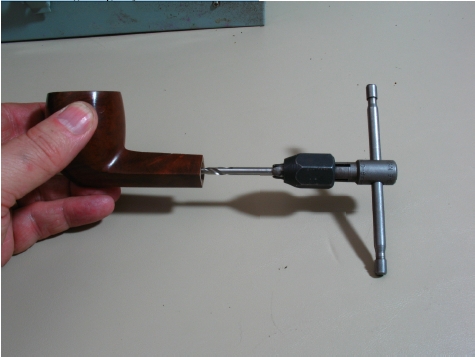
Now go one size larger than the bit used in the previous step, put it in the T-Handle (or
mount in vise), and gently twist it into the shank. 


“Drill” the shank until you can see the point of the bit in the bowl.


Now you see my warning to NOT USE A POWERED DEVICE. One could easily run
thru the bowl and either gouge the inside of the bowl…or run all the way thru (a real
bummer for resale).

Now, continue up thru the drill bits, a step or two at a time. I tend to skip every other one
until I have reached the largest size that I want to drill. Cleaning out the residue with a
pipe cleaner at every step.

Once I have drilled the largest hole I want and cleaned out the residue. I will wet a big
fluffy pipe cleaner with my favorite alcohol (or pipe sweet) and swab out the newly
drilled hole getting the hole very wet. Then set it aside for a few minutes. Great time to
relax and light a pipe.

Once you have your pipe lit and have enjoyed a few puffs. Now take a dry cleaner and
run thru the shank to soak up any of the alcohol or Sweets still in there. Use the wet
cleaner to clean off any residue from the last drill bit you used, and gently run it back thru
the drilled hole again. Then follow that with a wet cleaner. This will take care of any
remaining residue.

Set the bowl aside, as we are done with it.

Now for improving the bit.

Take the tapered reamer and mount it either in the T-handle or the vise. The 2/0 reamer
measures .110 on the small end to .140 on the large. The reamers can be either a straight
flute like the picture or a spiral flute (sort of looks like a drill bit. I find no advantage or
disadvantage to either…either will work fine).


Now we need to determine how far can we ream out the hole (FROM THE MORTISE
END). I lay the reamer against the bit and measure how far I can safely insert the reamer.
Straight bits are not a problem. 


But bent bits are a different story…. Holes out the side of a bit tend to be frowned upon.
So take the time to measure correctly, you will only get one chance at this…..


Note, I do know of guys who will heat bend a bent bit straight before reaming, then
rebend it back. I have done it….and found it not needed…but it can be done, feel free to
try it.

Back to point, I mark the reamer as to how far I can ream. And gently twist the reamer
into the bit. Removing it often to clean the flutes of residue. This is important, once the
flutes fill, they will no longer cut cleanly. 


Once you have reamed to the desired depth, clean the bit well (residue could be built up
inside the airway).

Once it is well cleaned. Remount the bit to the bowl and be ready for a vastly improved
smoke.

I suggest if you have some flake or “coin” tobacco, place some UNRUBBED, into the
bottom of the bowl and then fill the bowl with your favorite tobacco (using the “Frank”
packing method or Fred Hannah’s “WAD” method is great), light up and sit back and
enjoy.

You will note that your puffs will be shorter, as the volume of smoke has increased.
Smoke well…. and often.

Another on the unique and unusual side – a piece of history


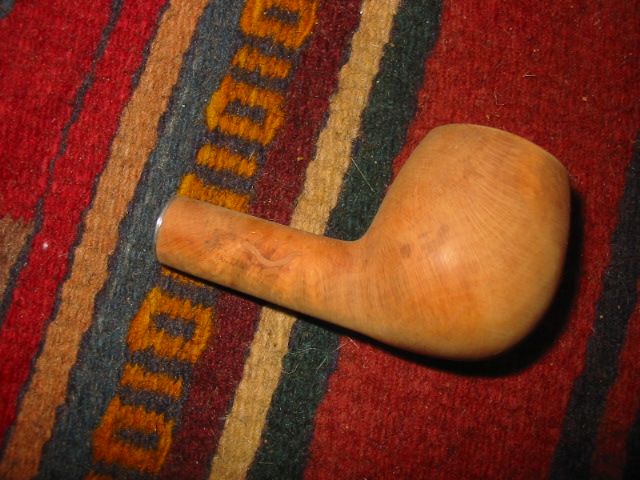
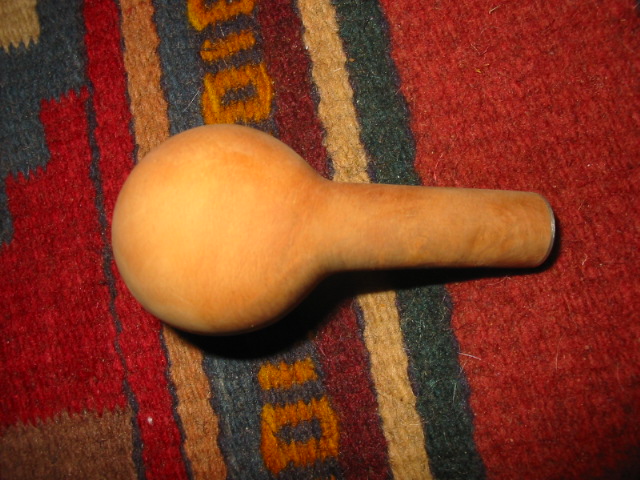
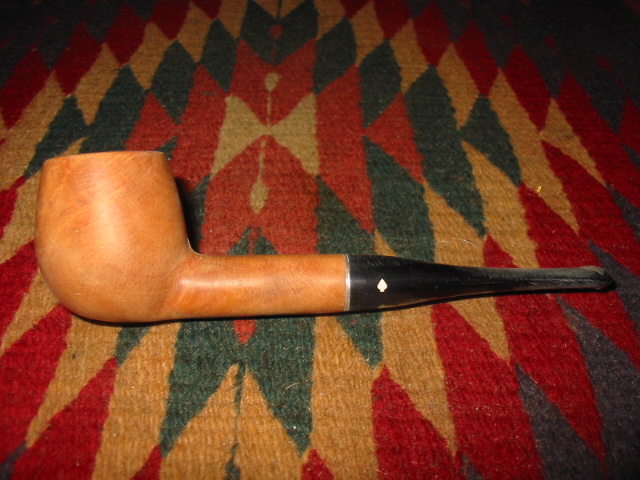
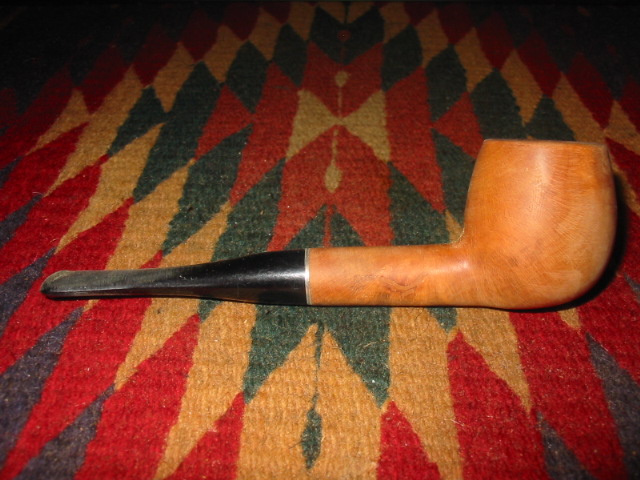
I like the unusual and unique in briar pipes. In fact if it is a bit of an oddball or one that I have not seen before over the past 30 some years I want it. I will often be the only person bidding on these pieces on EBay but I usually get them for a pretty good price. This one has to be one of my favourites – an Italian Folding Pocket Pipe. I have no idea of the age of it but from many signs of stem and button shape I am guessing it is older. I am fairly certain it is a Savinelli but I have really no idea if that is so. It is stamped Made in Italy. The stem is in great shape. The bend is 90 degrees and there are no wrinkles or collapsing of the airway at all. There are no problems. The button is in great shape and is a hole or orific button. There are no bite marks or chewing on the stem.The bowl was clean though used. It had been smoked more than other folding pipes that I have picked up. I have since smoked it and see why. It is a great smoking pipe.

The finish was dirty and once I cleaned it off I needed to restain it. I did so with a medium brown aniline dye. The sandblast or possibly a rusticated finish that looks like a blast is very clean and unworn. The rim on the bowl was intact and without damage. I buffed the pipe and stem with Tripoli and White Diamond and then gave the entirety multiple coats of carnauba wax. The walls are thin but the finish seems to dispense the heat very well when smoking. It is one that I pick up often to carry with me on a walk or hike.

Here are some pictures of the finished pipe.

Dr. Grabow Colour – Damaged and Reborn


Blog by Steve Laug

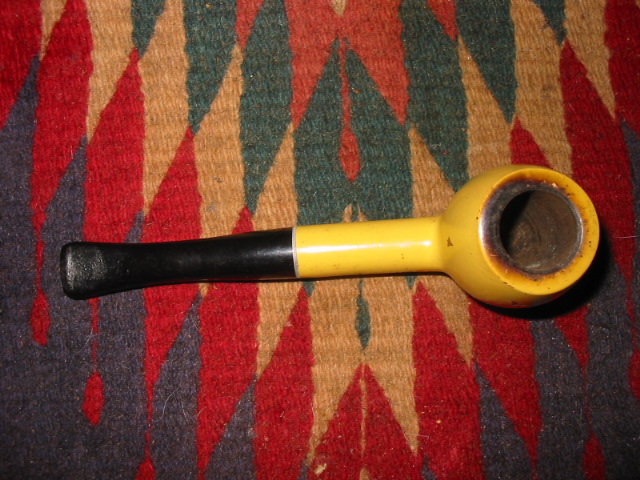
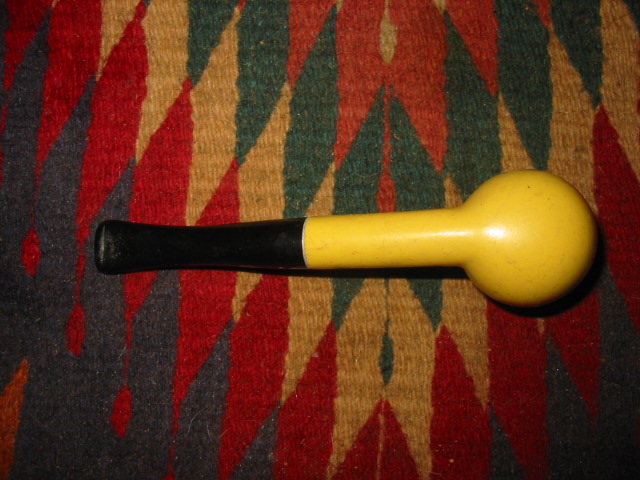
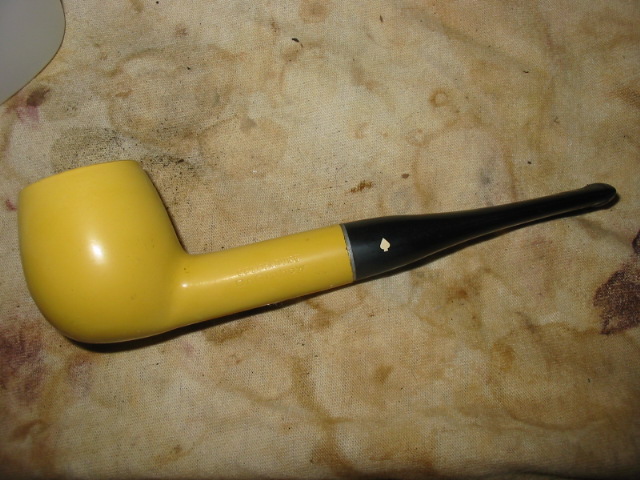
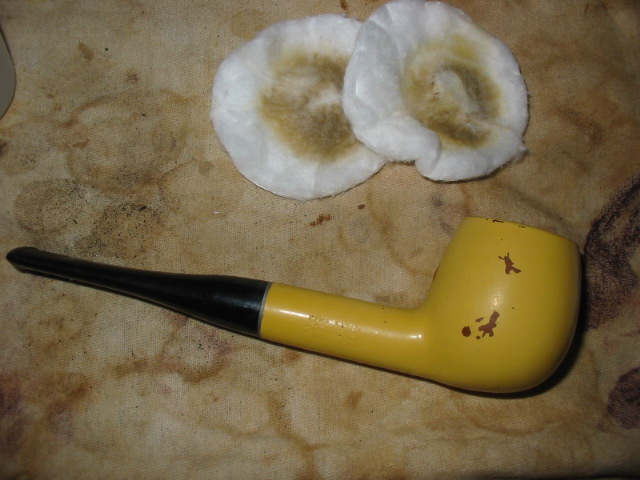
I have had this old Dr. Grabow Coloured pipe for a long time. It had damage to the colour coat and to the rim. I kept putting off doing anything with it as I could see no way of repairing the colour coat. It had the nylon stem as well with the Medico filter system. It was a screw mount tenon. The stem was covered with tooth marks and I just did not want to do anything with it… until yesterday.

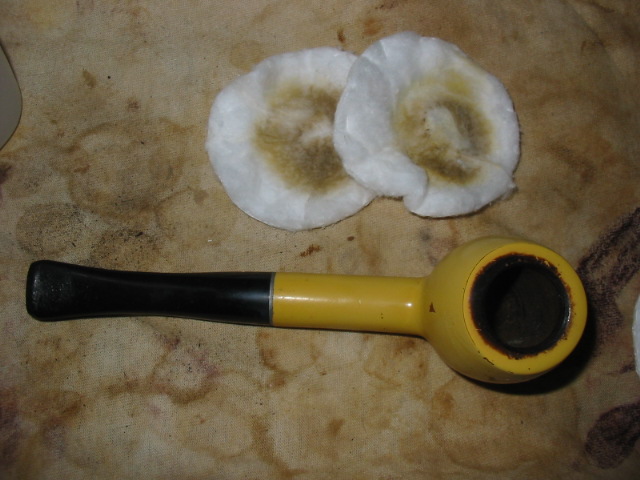
Yesterday morning I took the pipe out of the box of pipes for repair and wiped it down with some acetone to see if I could clean up the bowl. At this point it was my plan to find some of the same coloured paint and respray the paint on the bowl to fix the spots where it was scratched off. I put the pipe bowl in my pocket and took a trip to Walmart to see if I could match the yellow colour of the paint. I went through about 6 or 7 different yellow colours and none matched. I stuck it back in my pocket and headed home. By this point I had decided to strip the bowl back to the wood and see what was under the paint. I had always heard that the bowls used in these pipes were pretty devoid of grain and had many fills so I figured what did I have to lose on stripping the paint.

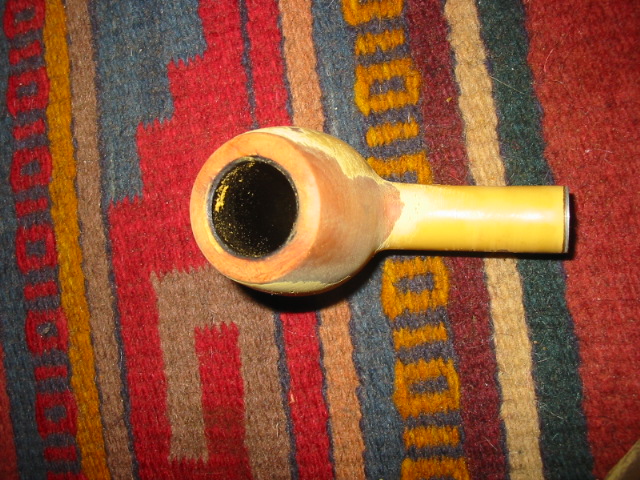
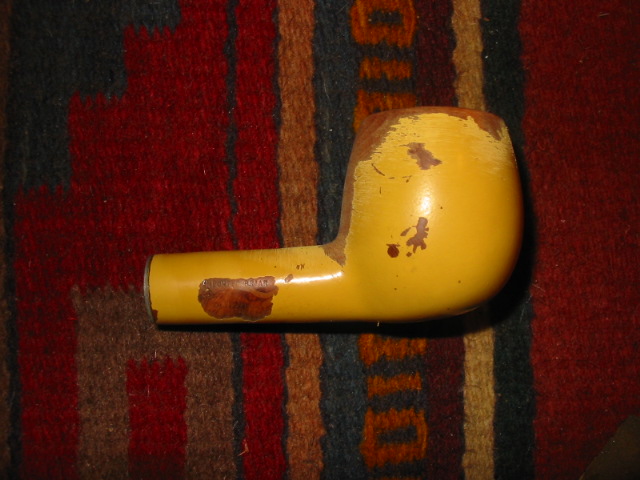
I dropped the bowl in the alcohol bath for several hours while I was working on other things around the house. My hope was to loosen the paint coat not dissolve it into the water. Isopropyl should not dissolve the paint but it would certainly soften the paint and penetrate under the paint coat through the scratch marks in the surface. After I removed the bowl from the bath I used a sanding pad with medium grit and rubbed it across the painted surface and the paint began to peel back very easily. The next series of three photos show the effect of the paint coming off with a very light sanding.

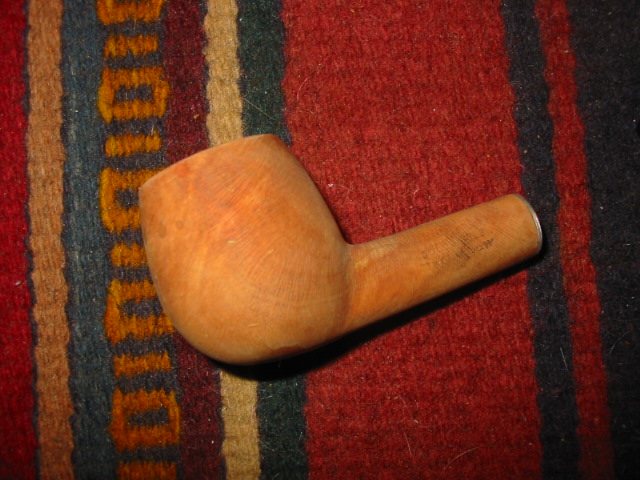
I continued to sand the paint coat until it was gone. The next series of four photos show the bowl after the sanding. The paint coat is gone; all that remains is the light coating of yellow haze that will come off with a quick acetone wash. Once the paint was gone I was left with a pretty bland block of briar. There were fills around the front of the bowl and the sides. The shank, right side had a large fill that extended most of the length of the shank. The rim was in great shape with no dents of burns. The inner bevel on the rim was in great shape. I reamed the bowl to clean up the inside and the softened cake. It came out smooth and fresh. I cleaned the shank to remove and of the remaining tars and oils.

Once I had the internals cleaned up I washed the bowl down with a cotton pad and acetone. This removed the remnants of the yellow paint. It is amazing to me to see the amount of yellow colouration that came off with the acetone. The wood had quite a bit of yellow pigment on the surface of the bowl. I washed it down until the pads remained white. I sanded the tooth chatter and marks on the nylon stem (did I ever tell you how much I hate these nylon stems?? No? Well they are truly a pain). I was able to get the majority of the tooth marks out with emery cloth and then 240 grit sandpaper. I attached the stem to the bowl to have a look at what I had to work with  and where I should go with the finish work.

The fills seemed pretty disguised in the light colour of the briar so I decided to do a bit of an experiment. With a pipe of this calibre what do you have to lose? I stained it with a black aniline stain, flamed it and stained it a second time. My hope was that the fills would be hidden well by the stain coat. At first glance they seemed to remain hidden under the stain. I took the pipe to the buffer once it was dry and buffed the bowl with Tripoli to give it a shine and polish. As I did that the fills really stood out. The matte finish of the black hid them but the shine made them stand out. In the second photo below you can see the round fills on the front of the bowl. The one on the shank also stood out a bit.

The next series of photos show the pipe after a buff with Tripoli and White Diamond. The fills on the front now appeared to be a pinkish/red colour under the black coat. The one on the shank also looked pinkish/red. In the second photo below you can see where I restained the fill area on the shank. It was a large fill shaped almost like a moustache. Once it was dry I buffed it again with a light touch. The fills were just too obvious and ugly in my opinion. I even tried giving the pipe a top coat of dark brown stain to see if that would hide them. It did not. So I set the pipe down and went to supper. While I was eating I thought about the possibility of rusticating the bowl and giving the pipe a whole new look.

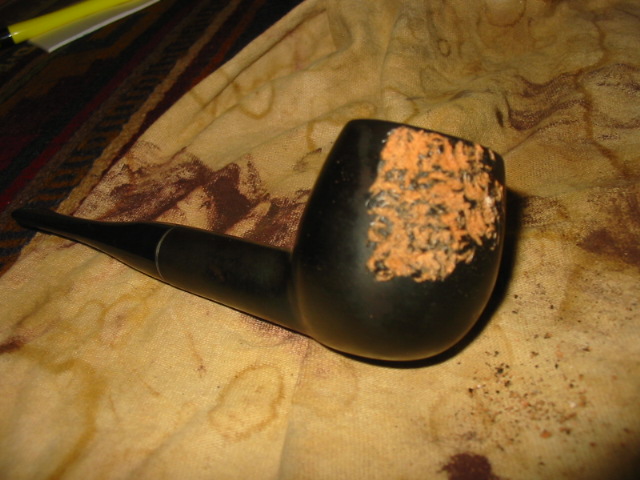
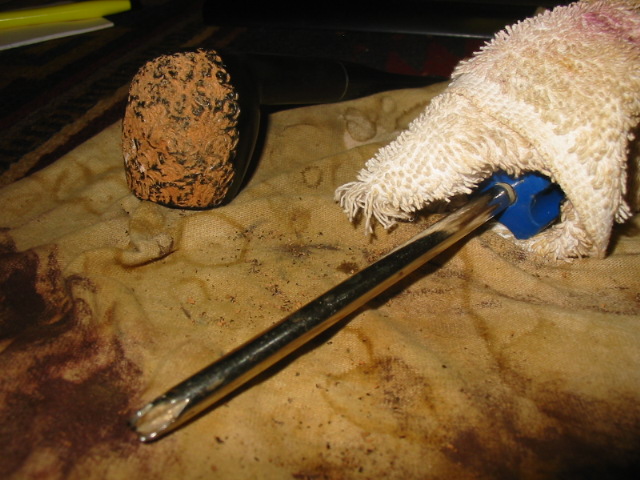
I took out my modified Philips screwdriver that I use for rustication and went to work on it. The screwdriver has the x pattern and a point. I used my Dremel to cut out the point and create four points with the remaining tip. It has a handle which I pad with a thick cotton cloth so that I can push it into the wood and minimize the discomfort on my palm from pressing. 

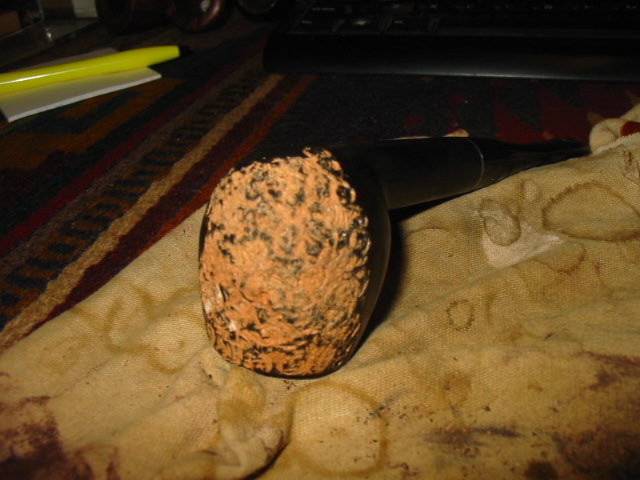
In the picture above you can see the work of rustication. The picture below shows the red coloured fills on the front of the bowl that made the decision to rusticate pretty easy for me.

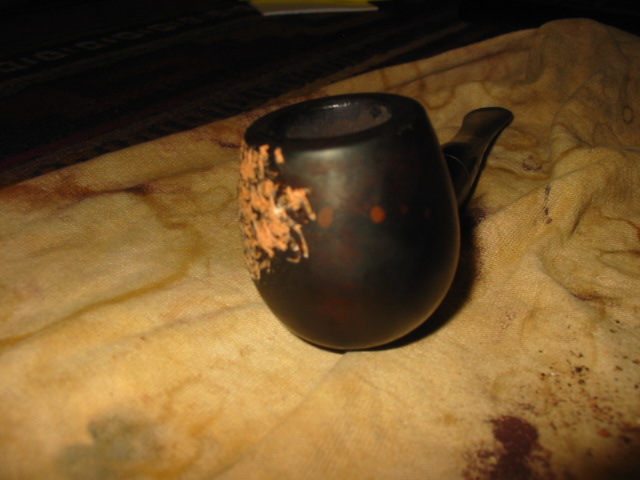
I worked my way around the bowl as is seen in the next series of photos. I worked the front and then the bottom of the bowl and worked my way up each side of the bowl. In this case I decided that I wanted to see what the pipe would look like with a rusticated bowl and a smooth shank so I left the shank untouched with the rustication until I had finished the bowl.

The next three photos show the rusticated bowl and smooth shank look of the pipe. It just did not work for me. I did not like the look. As an aside – one of the great things with the rustication tool I use is the ability to use it in tight spaces and leave the surrounding surface untouched. By the way you will also note the photos that I left the rim smooth as well. 

The next two photos show the putty fills that were used. They seemed to have been white putty that was chalky when I scratched into it during the rustication process. You can see the location and the size of the fills in these photos. I am glad that I decided to rusticate this bowl.

I wrapped the shank and stem junction with a cellophane tape in multiple layers and extended onto the shank a quarter inch. I wanted to make a smooth band that would not be rusticated and match the smooth rim that I was leaving. The tape gave me an edge so that I would feel that as I twisted the tool in rusticating the shank. I also would give an edge to put the teeth of the tool against when I twisted it into the wood of the shank. The next series of photos show the rusticated shank. On the first one you can see the size of the fill on the right side of the shank. It also was the same white putty. As I hit it with the rusticator it left a white chalky residue. You can also see the intent of the band on the shank and the rim of the bowl being left smooth and what that would look like in contrast with the rough finish.

When I had finished the rustication I removed the tape guard and then sanded the band to get it smooth and to bring out the grain with dark undercoat.

Once that was complete I stained the pipe with a black aniline stain. I applied it heavily and then flamed it. The flaming sets the stain deep in the grooves and recesses of the rustication. I gave the rim and the band a coat of black as well. Once it was on I rubbed it off with a soft cloth to get the effect that is visible in the pictures below.

Once the stain was dry I worked on the smooth areas of the bowl – the rim and the band – with micromesh pads from 1500-6000 to polish them and smooth them out. I also worked on the nylon stem. It was a pain. The material scratches no matter what you do to it. And as I learned a long time ago it does not work to buff it as it has a very low melting point. So I sanded it with increasing grits of wet dry sandpaper – 400 to 600 grit and water and then sanded it with wet micromesh pads from 1500-12,000 to remove the scratching. I polished it on the buffer with blue polishing compound and a verrrrry light touch to give it a shine. I had waxed the smooth surfaces and the stem with carnauba and then wiped the pipe down with a cloth impregnated with Briar Wipe. Here is the finished pipe. I think the experiment worked!