
Blog by Steve Laug
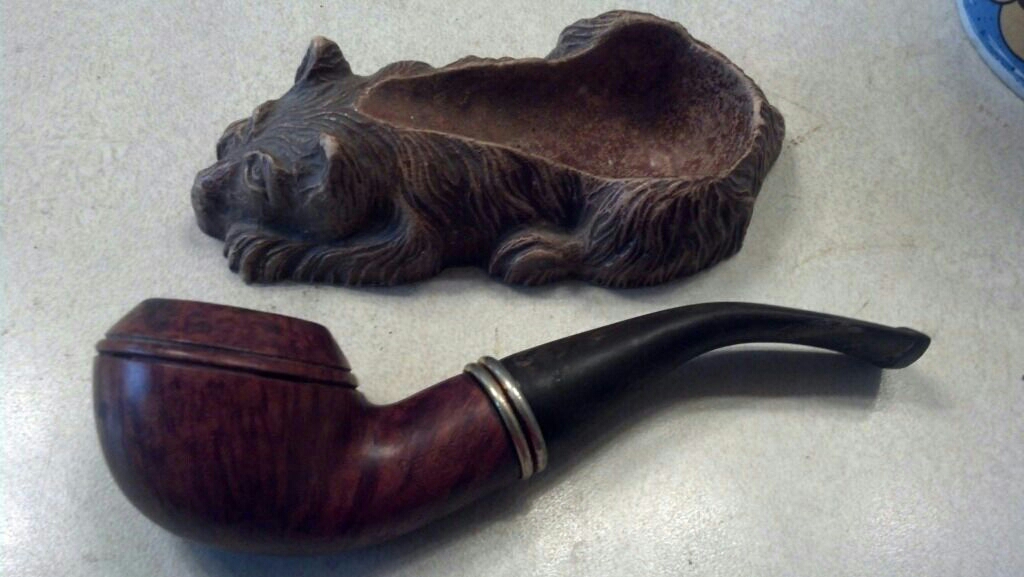
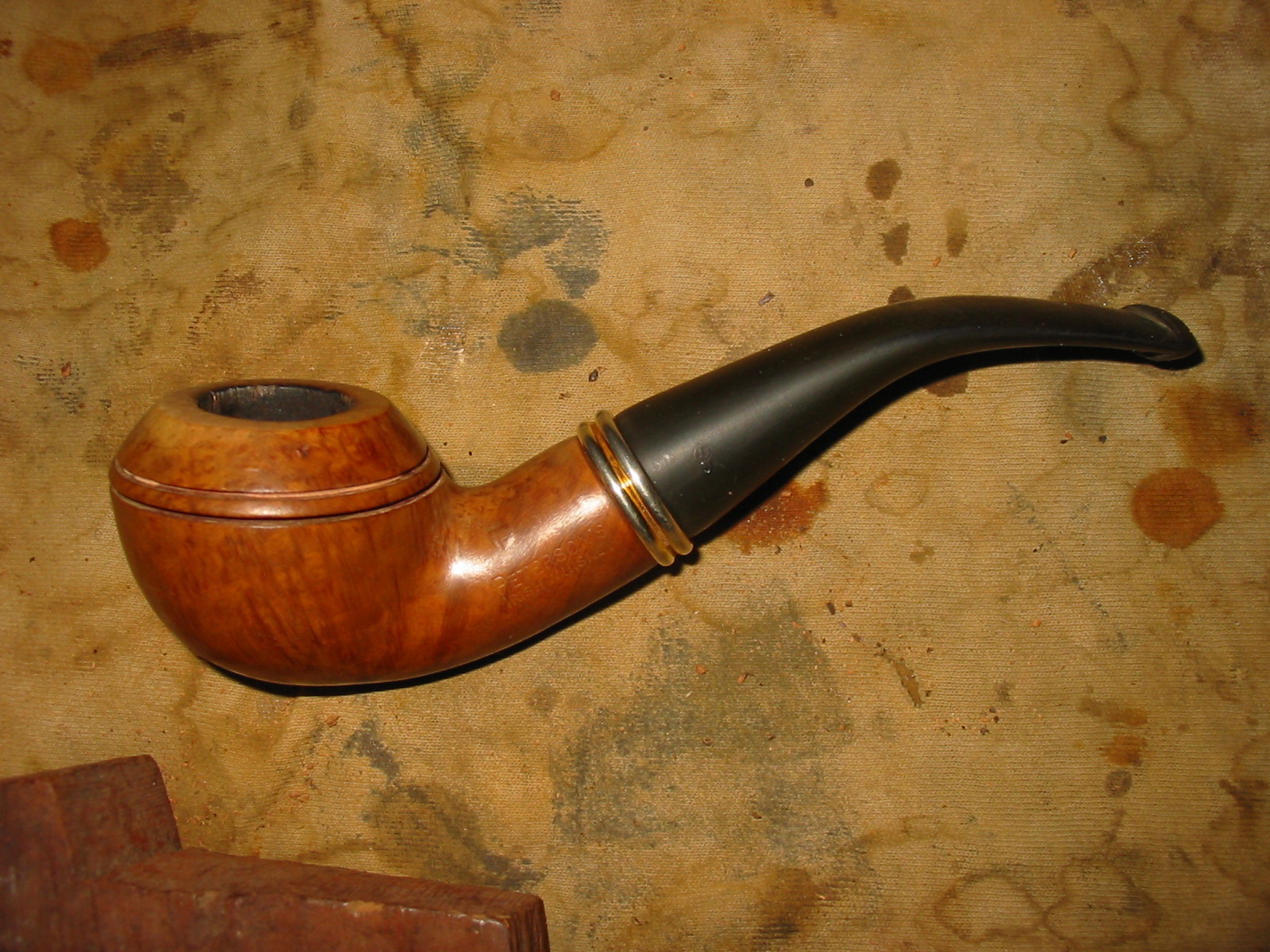
Lately several of the pipes that I have refurbished were part of a trade with Mark Domingues for work on this pipe. It is a beautifully grained Peterson’s Rhodesian 999 – one of my favourite shapes. The grain on this thing is beautiful. The photo below shows what drew Mark to bid on this pipe in the first place. What the photo does not show however, is the incredibly horrible shape that this pipe was in when it came to Mark.
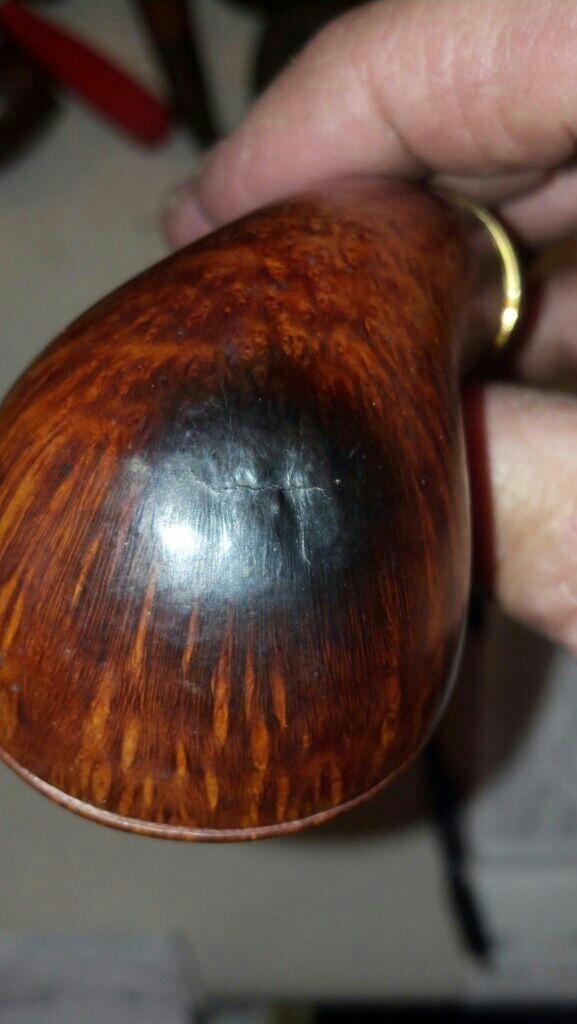
The problem with the pipe became obvious when Mark took it out of the shipping package to enjoy the “new” Peterson that he had purchased. The pipe had a serious burn through on the front right side of the bowl toward the bottom. That damage was quite extensive and either the pipe could be thrown away or the burn through drilled out and the damaged briar replaced with a briar plug.
Mark decided to drill out the damaged portion of the bowl. We talked back and forth via email about the steps to take to fix it. He toyed with it and then one day asked if I wanted to do the work on it. He would send the pipe, a chunk of briar some pipes that he thought I might enjoy working on in exchange for the repair. After emailing back and forth we agreed to the terms and he sent the bowl on to me to do the repair in exchange for a few pipes for my refurbishing box. Here is what the pipe looked like when it arrived in Vancouver. Mark had cleaned up the exterior of the pipe and also the interior and drilled out the burnout. The brass/gold band on the shank was loose and the stem was in decent shape with two minor tooth marks.
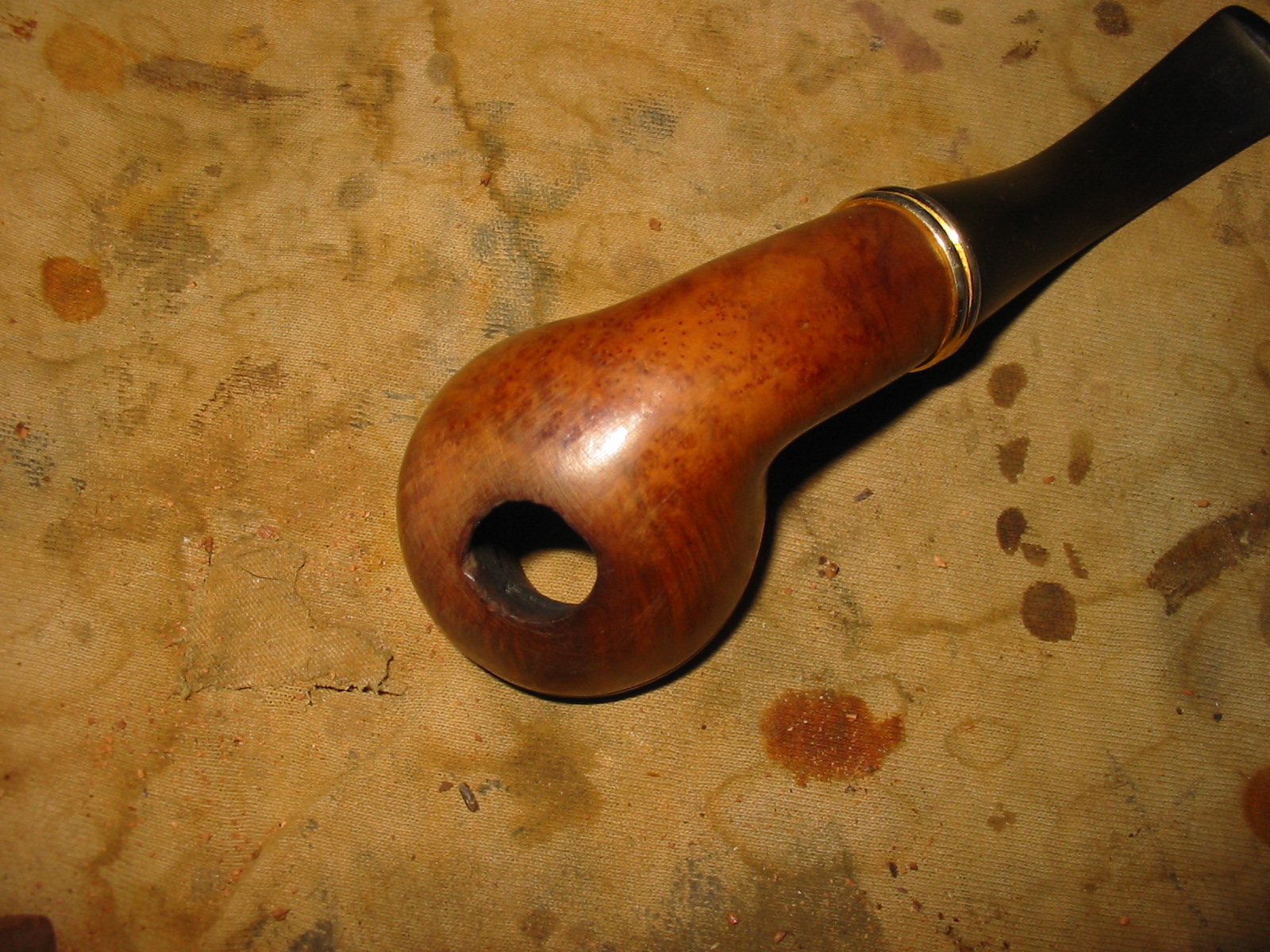
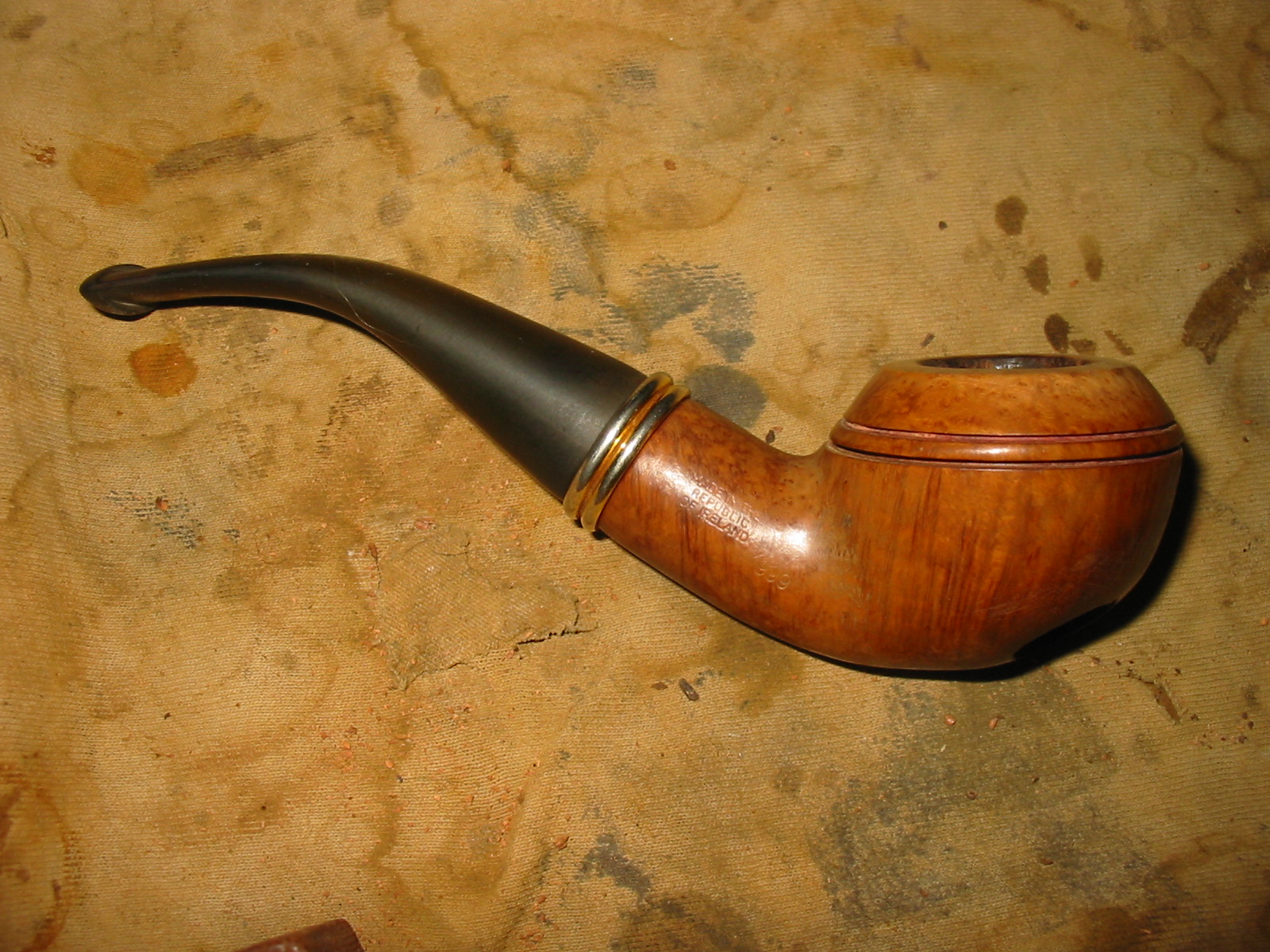
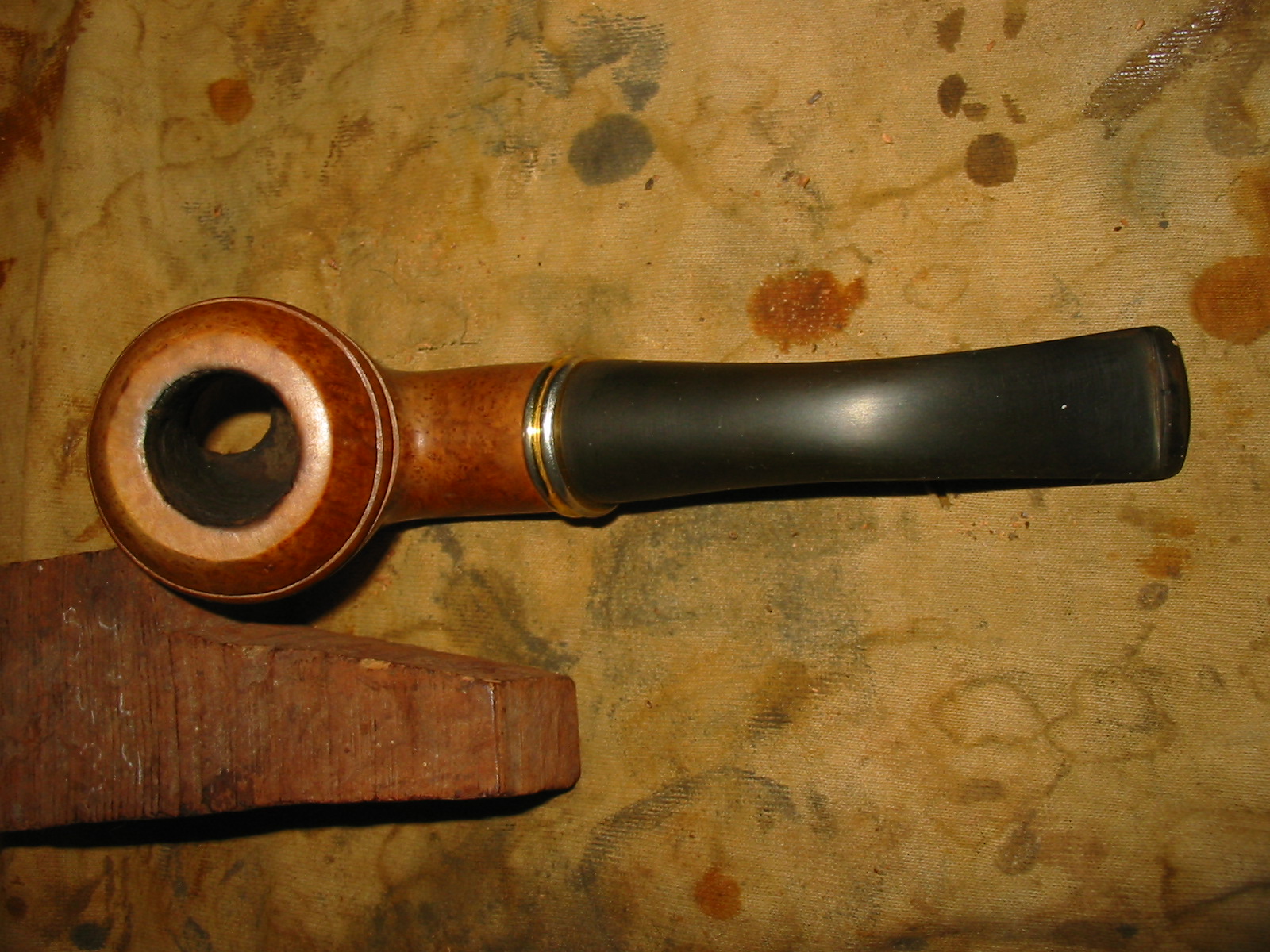
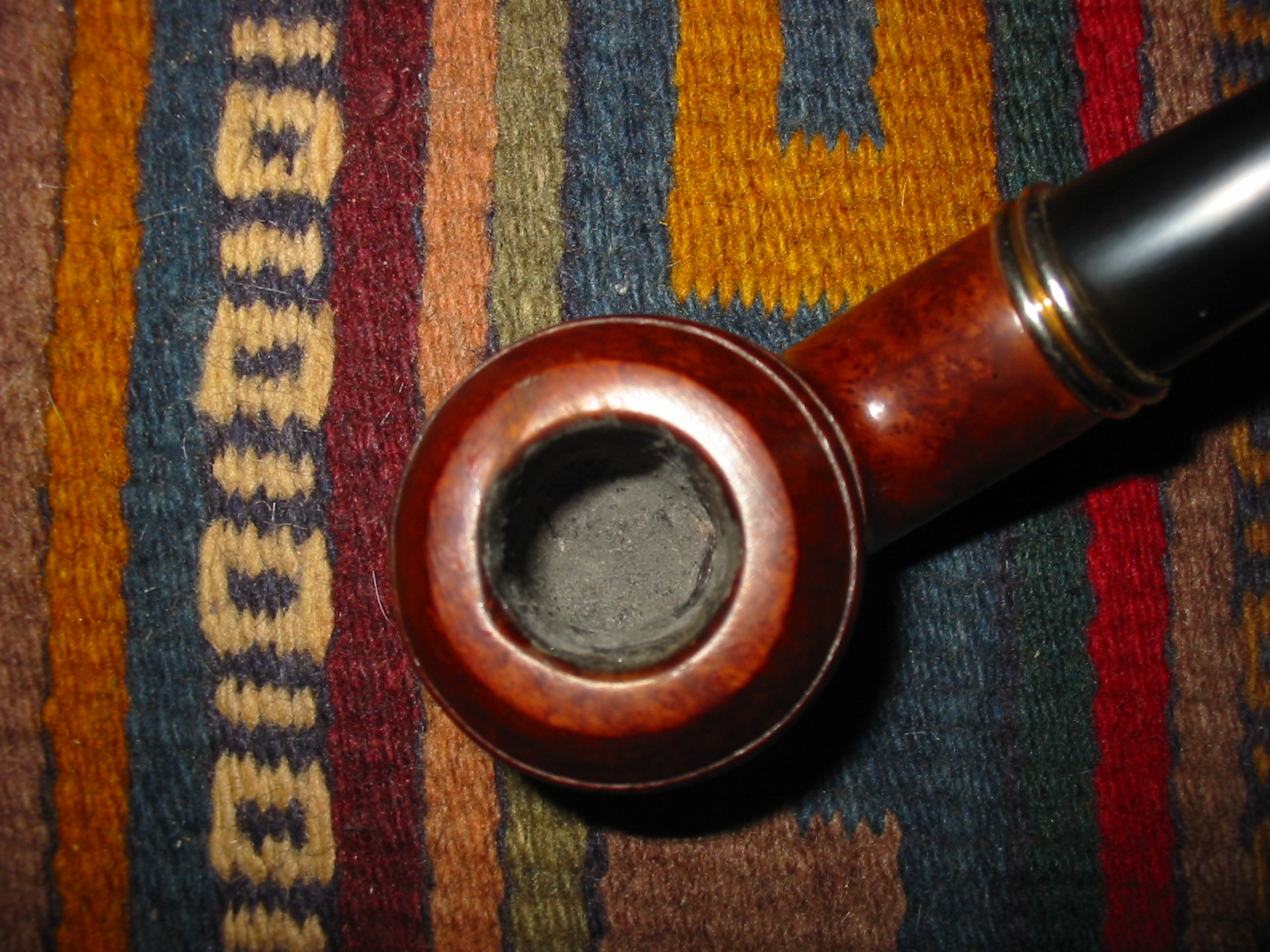
The top view of the pipe, shown in the photo below, also highlights several others issues with the pipe. First, the bowl itself was not drilled straight into the briar but at a slight angle from left to right. Second, the stem was totally out of round and the right side of the stem fit against the band far differently than the left side. Looking at the stem from the tenon end it was clear that the stem was not round but rather oblong. The small block of briar in the photo was sent along by mark for me to use in cutting a plug for the bowl.
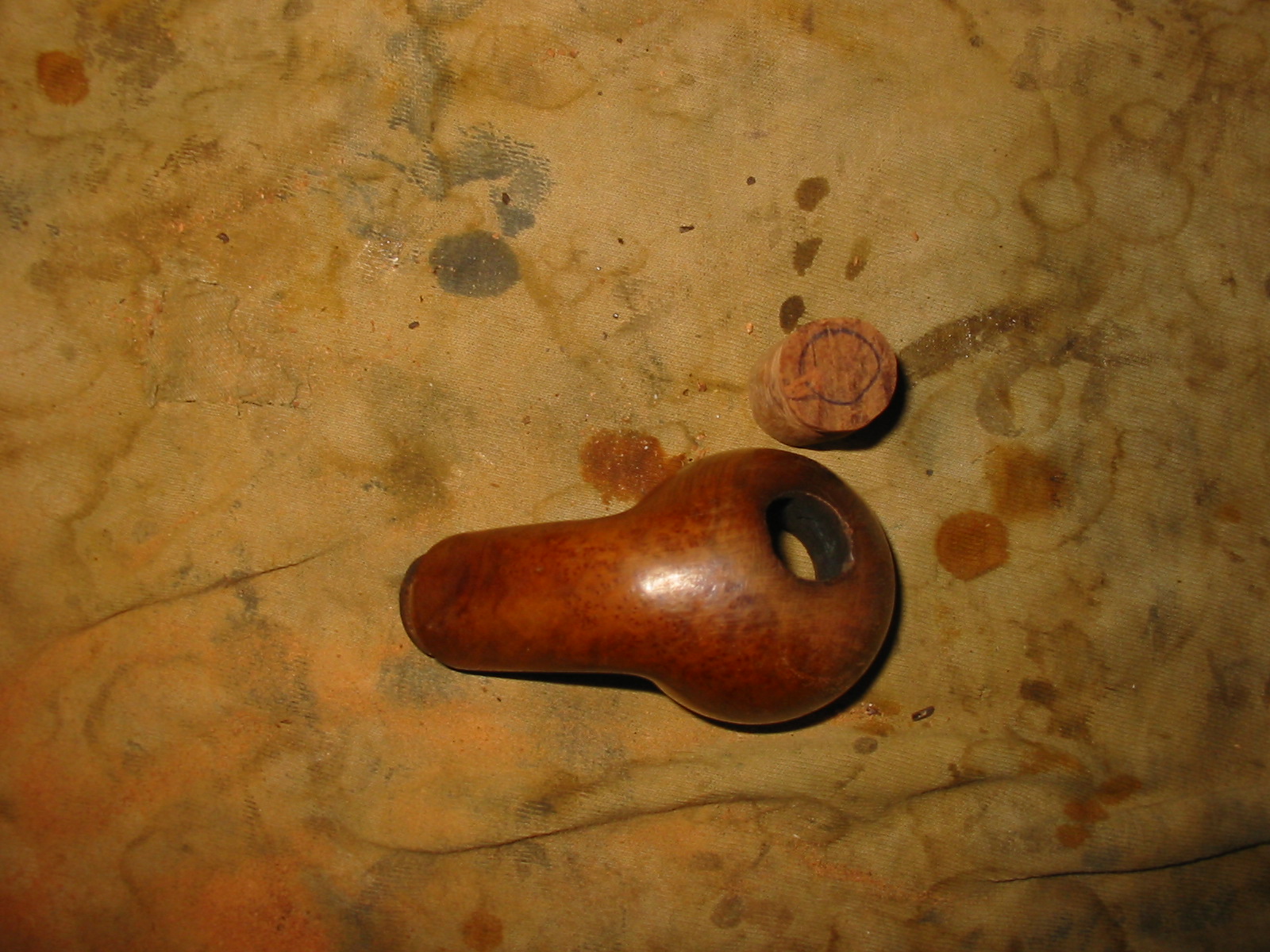
I used a small hacksaw to cut off a small chunk of briar. I then shaped the briar chunk into a cylinder. I always cut the plug long to give me something to hold onto when I am shaping it. I am sure others do it differently but I shape the plug with a Dremel by hand and I hold the piece of briar with my fingers while I shape it. The next series of eight photos show the progressive shaping of the cylinder to fit the drilled out hole in the bowl of the pipe.

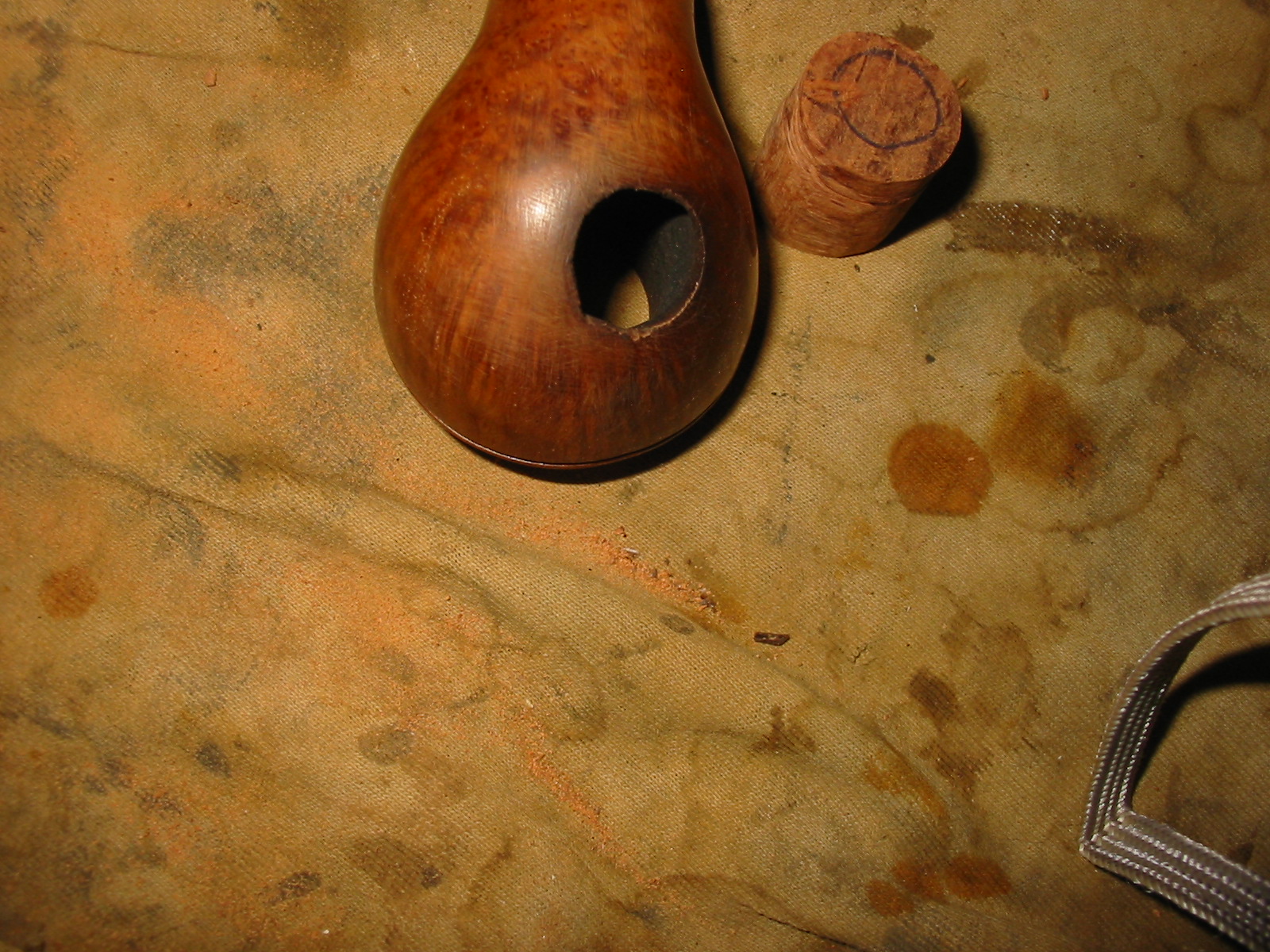
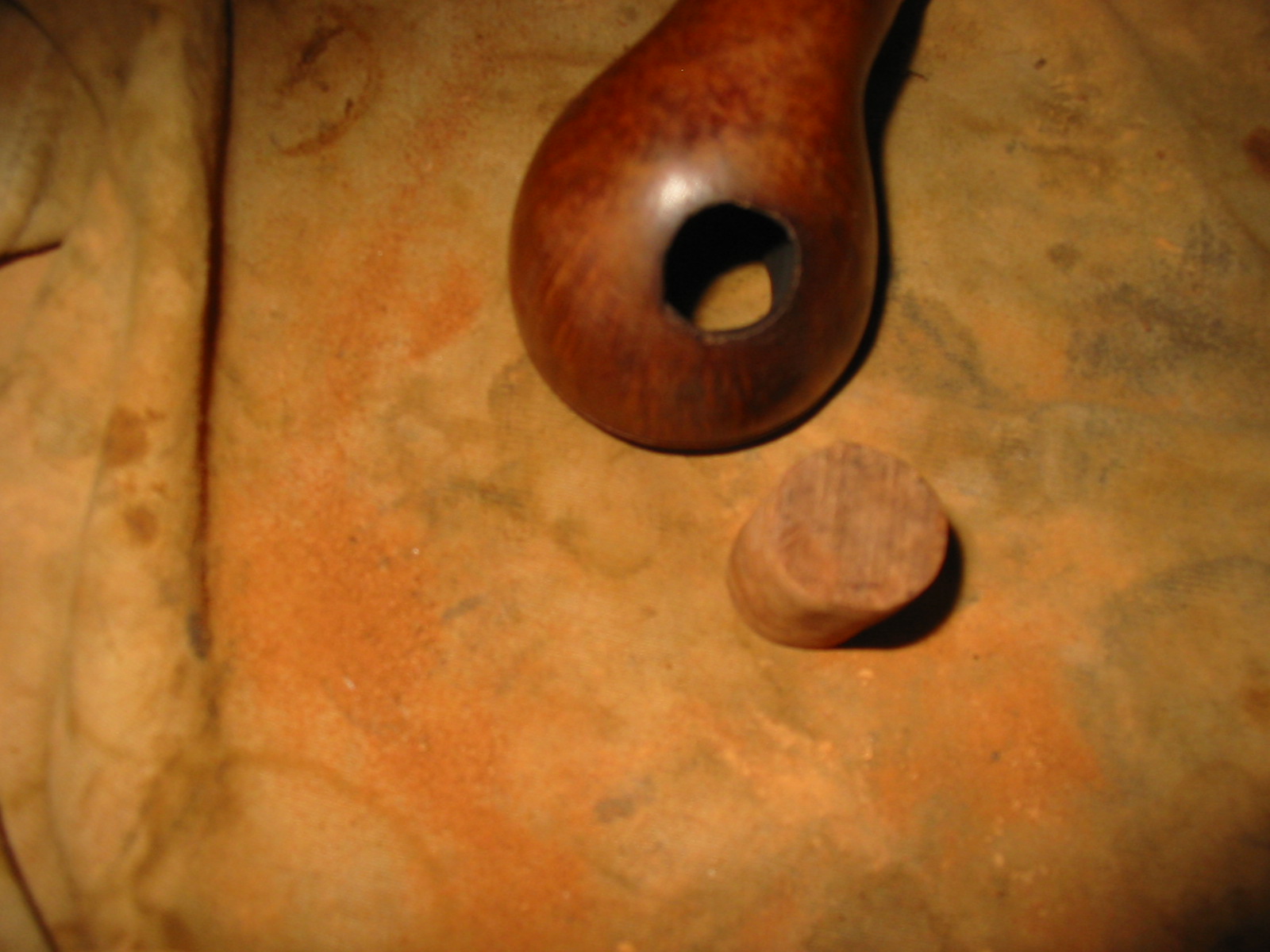
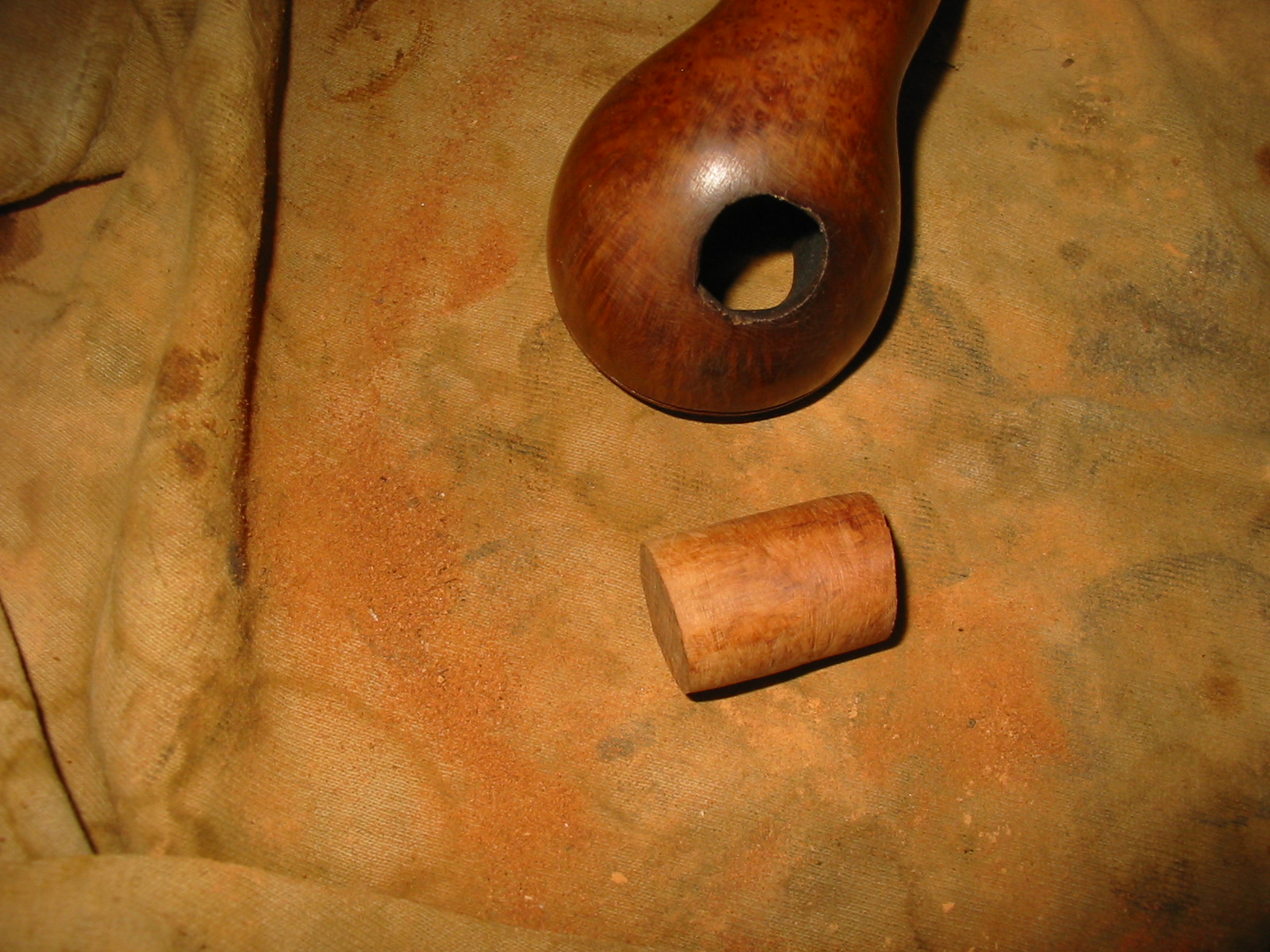
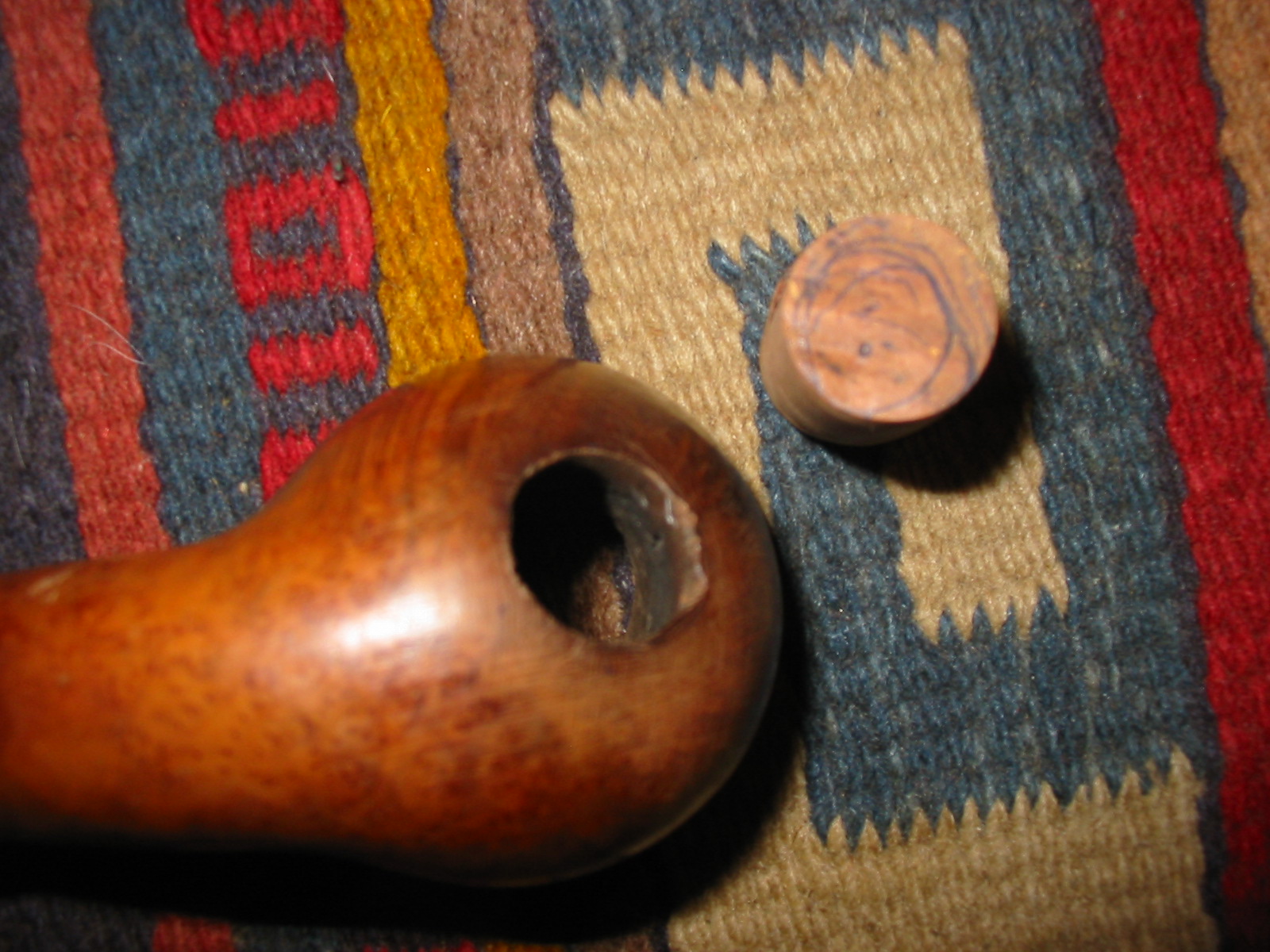
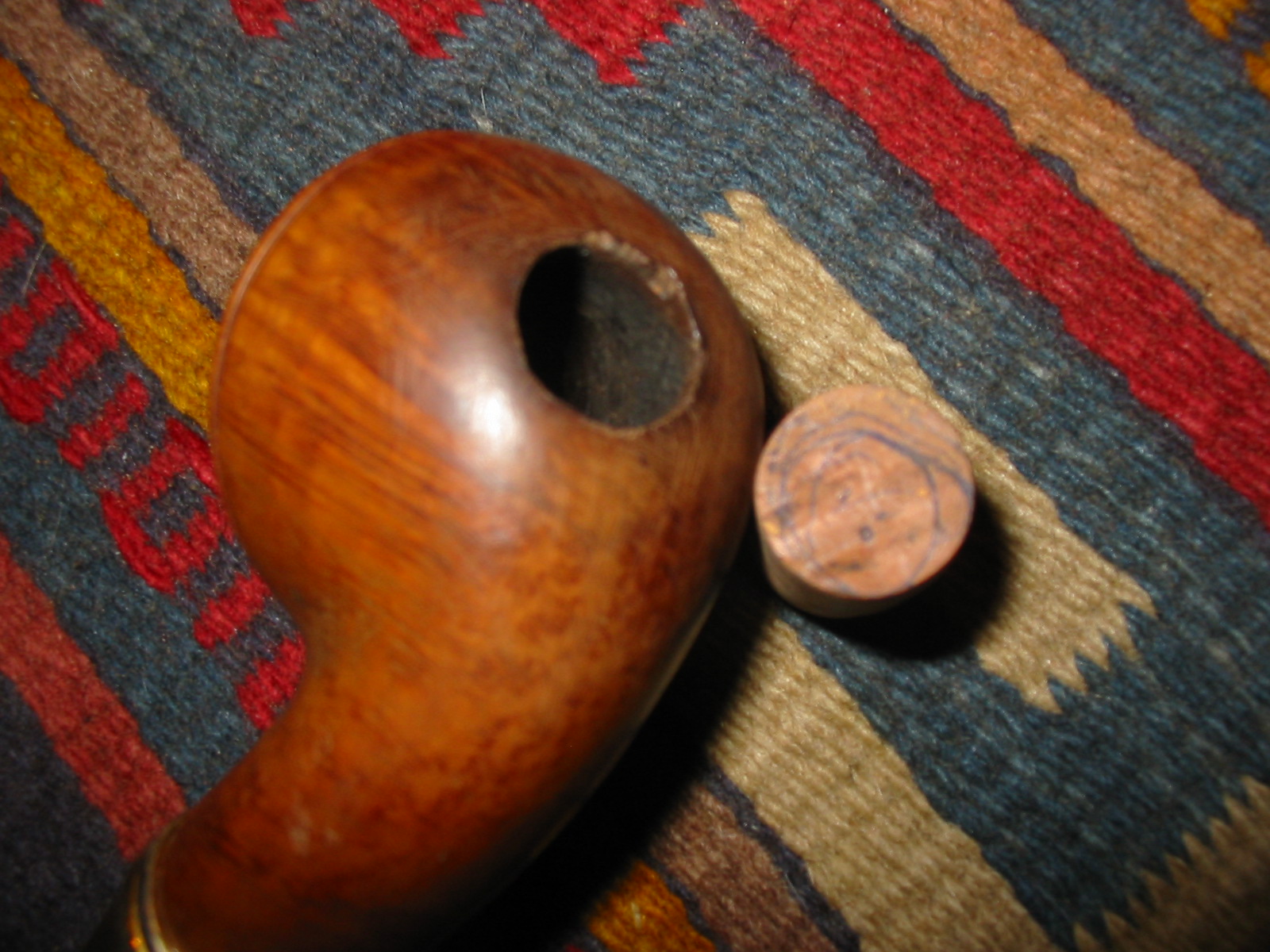
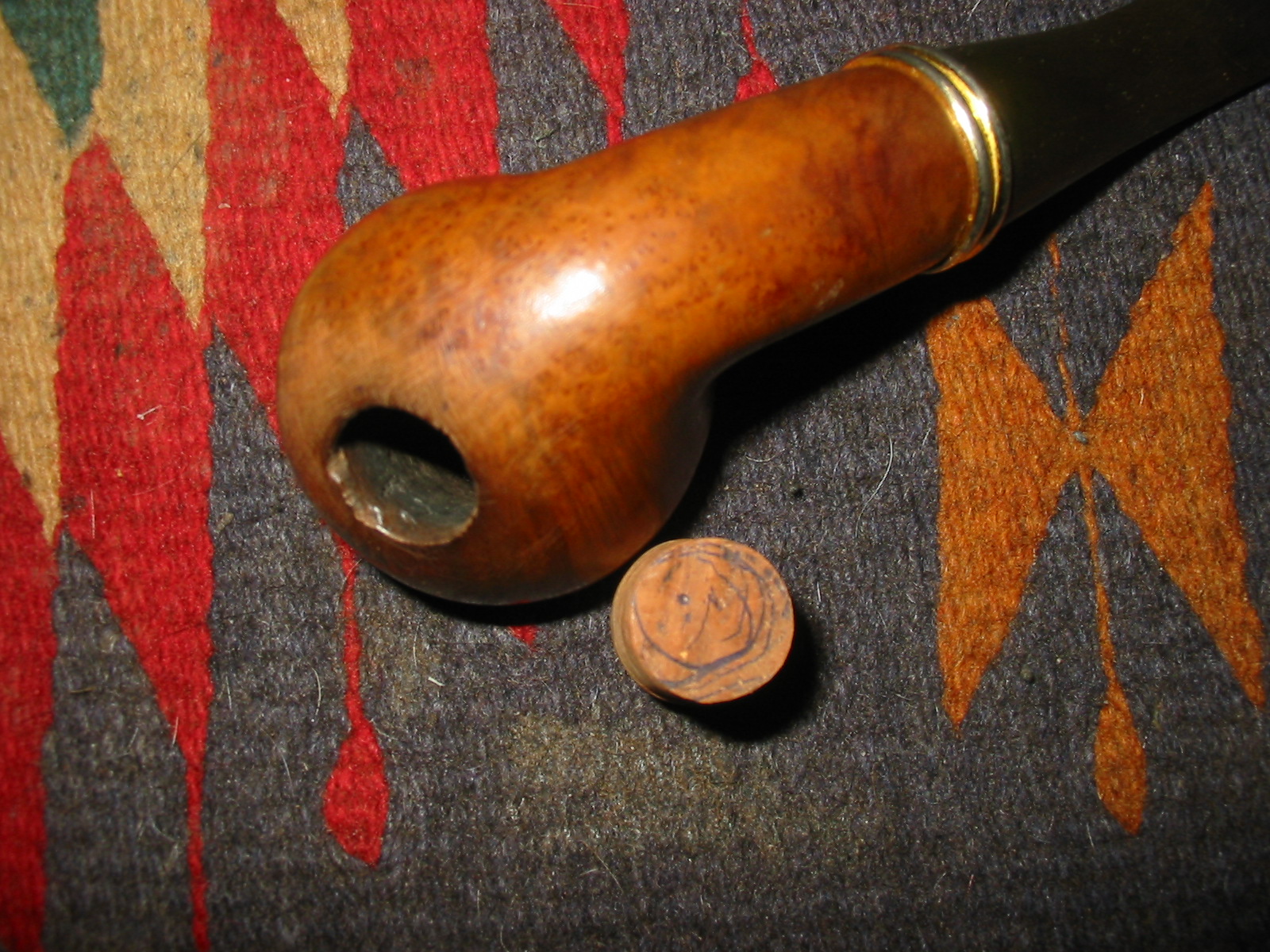
The next four photos show the final shape of the cylinder. I left a slight handle on the top of the plug to hold onto while I turned the cylinder with the Dremel. I tapered the plug slightly so that it would fit into the hole but not extend to far into the bowl itself. Once I had the shape correct and the piece extending into the bowl smoothed to fit the shape of the bowl I glued it in place with superglue.
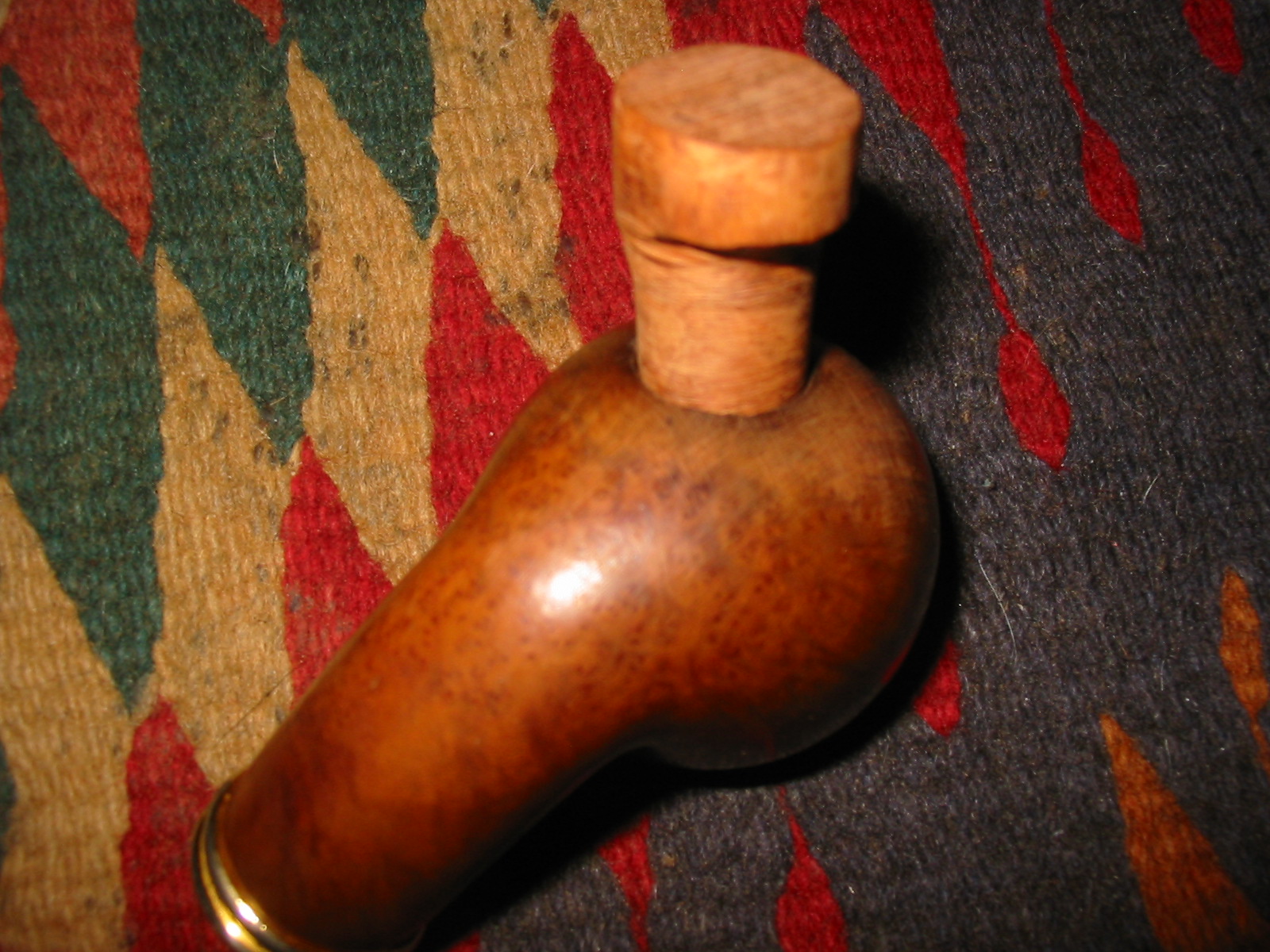

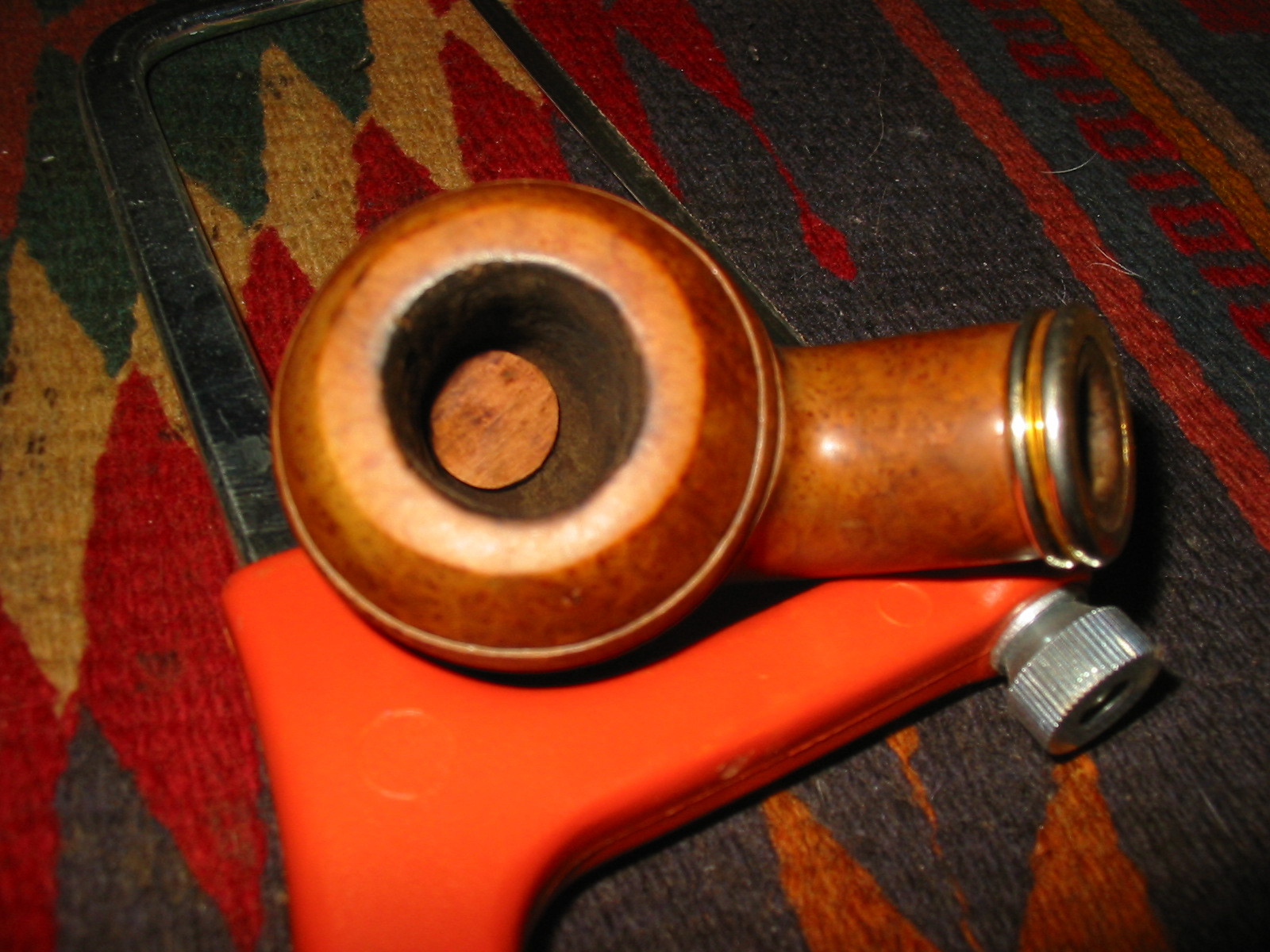
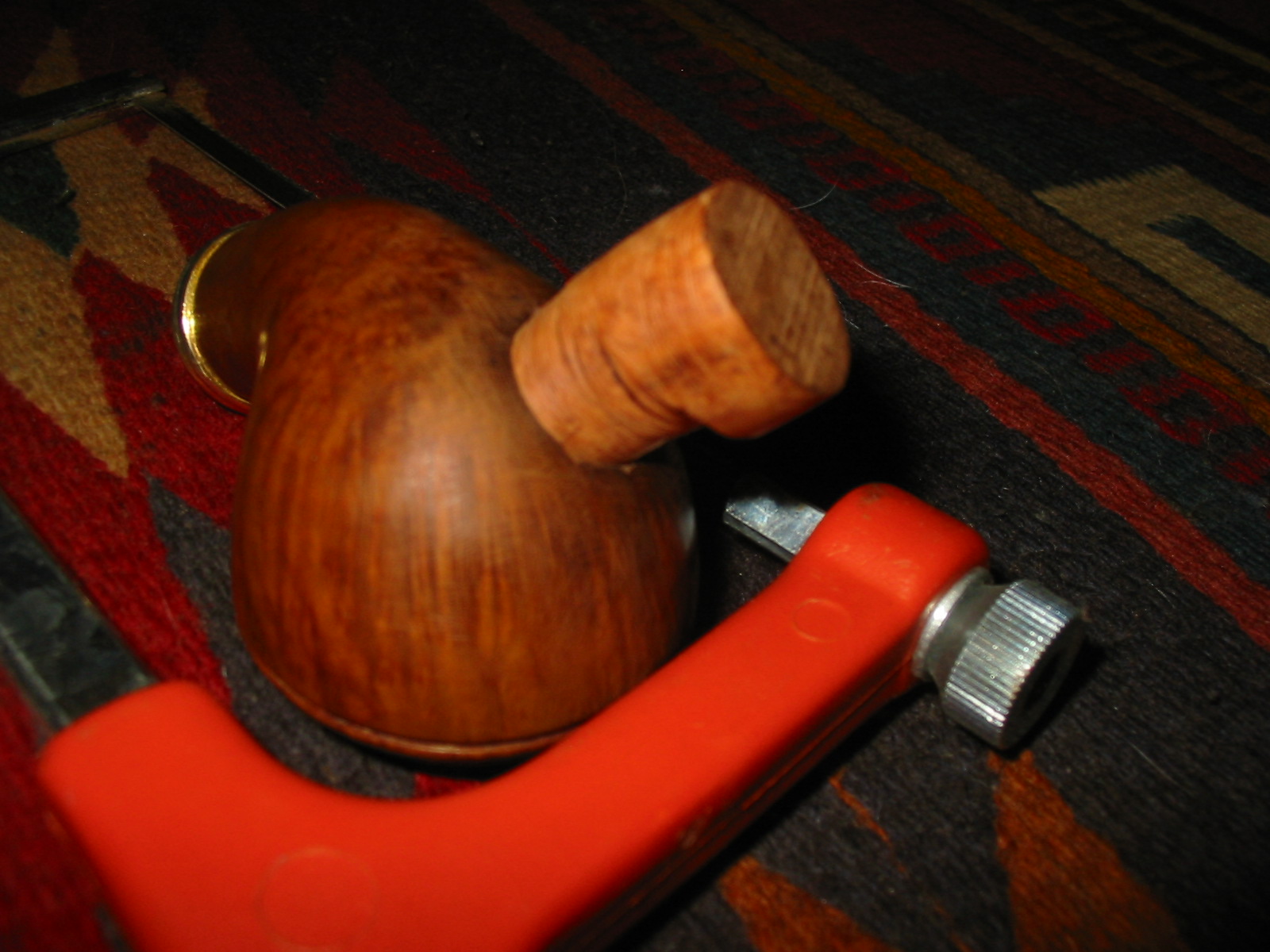
I used the hacksaw to trim off the excess briar in the plug as close as possible to the surface of the bowl.
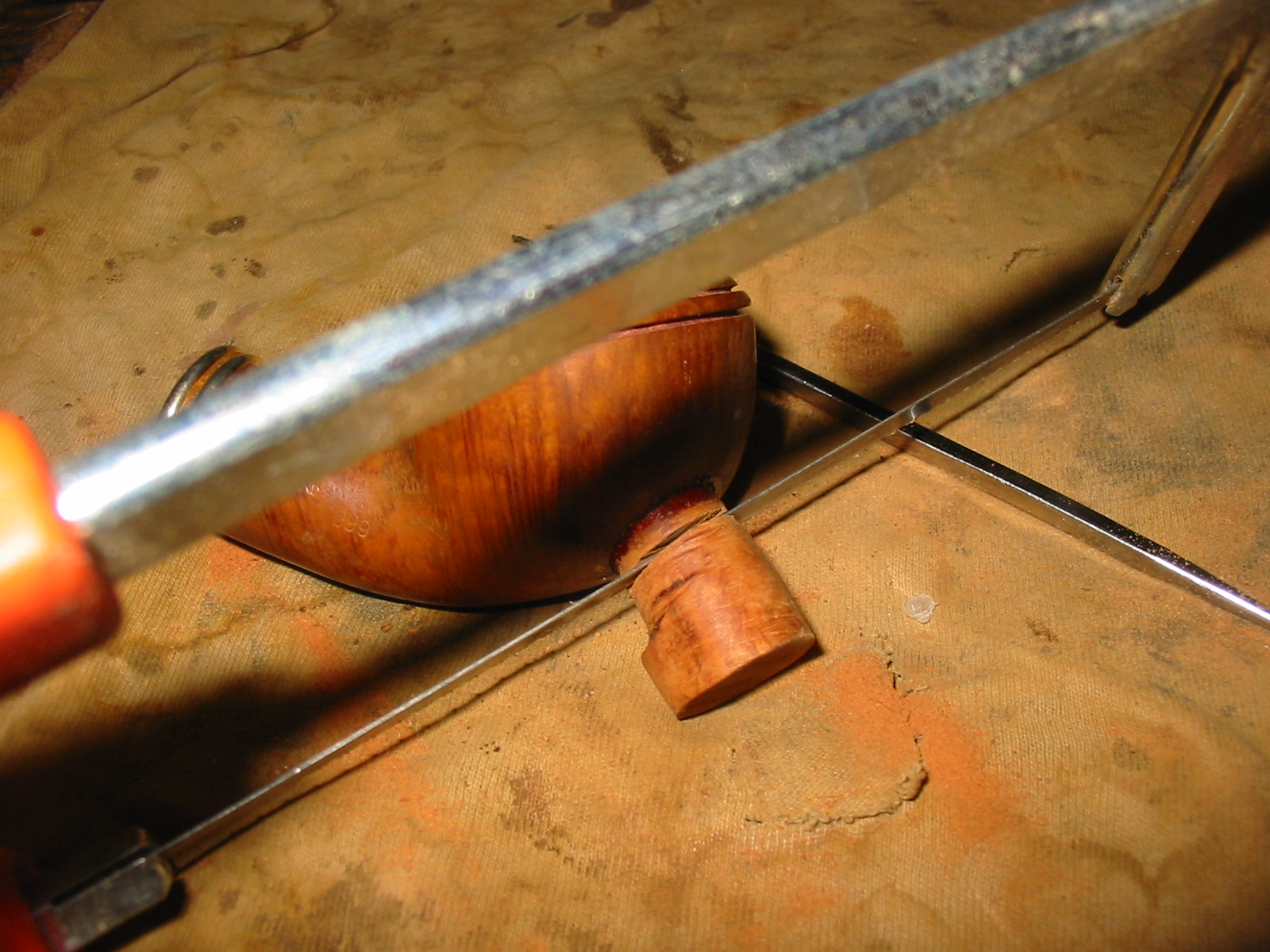
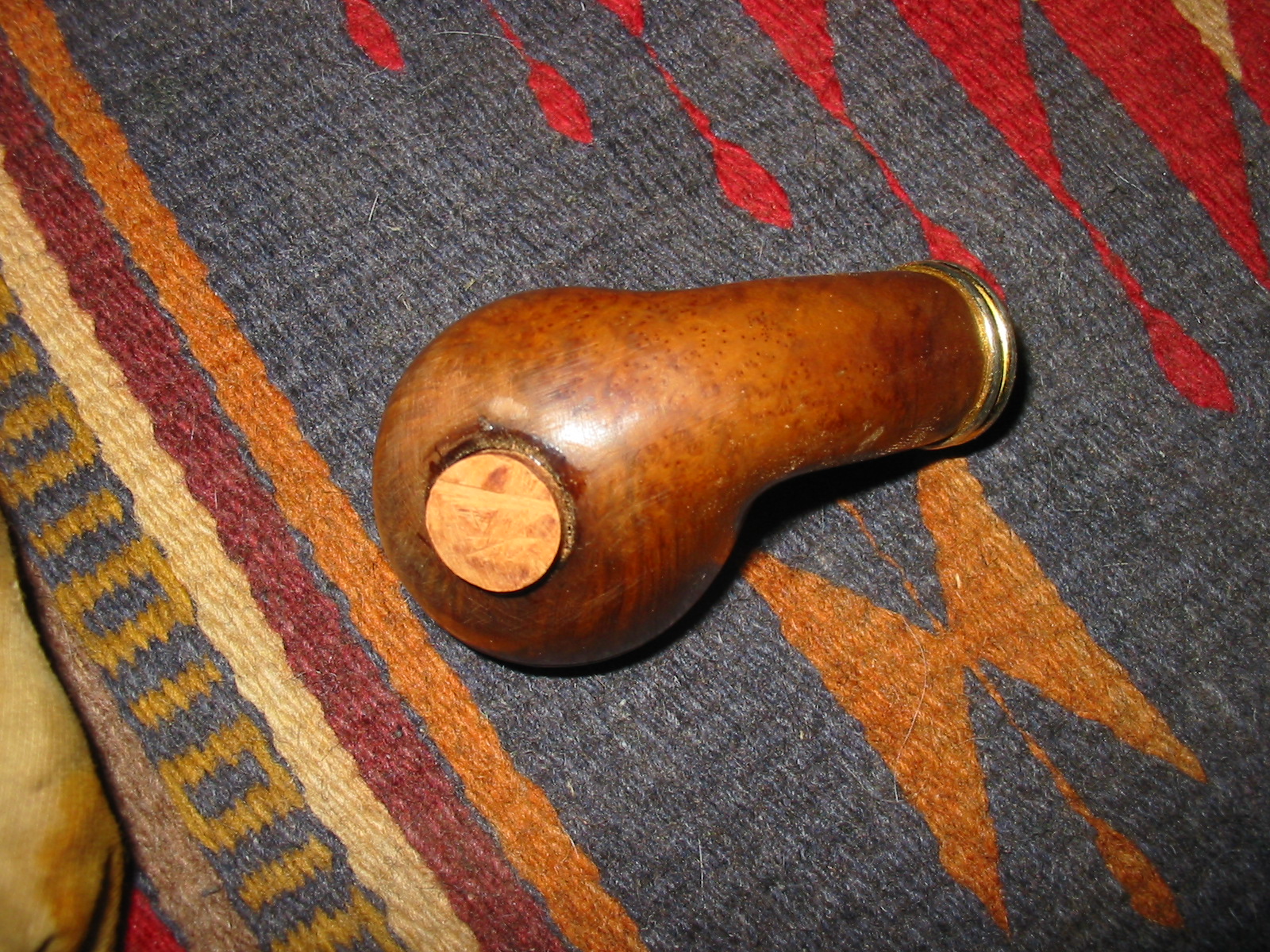
Once I had it trimmed back to that place I used the Dremel and sanding drum to sand it down to the surface and then hand sanded with 220 grit sandpaper to make the surface of the plug and the bowl match. I used superglue around the circumference of the plug to hold it tightly in place.
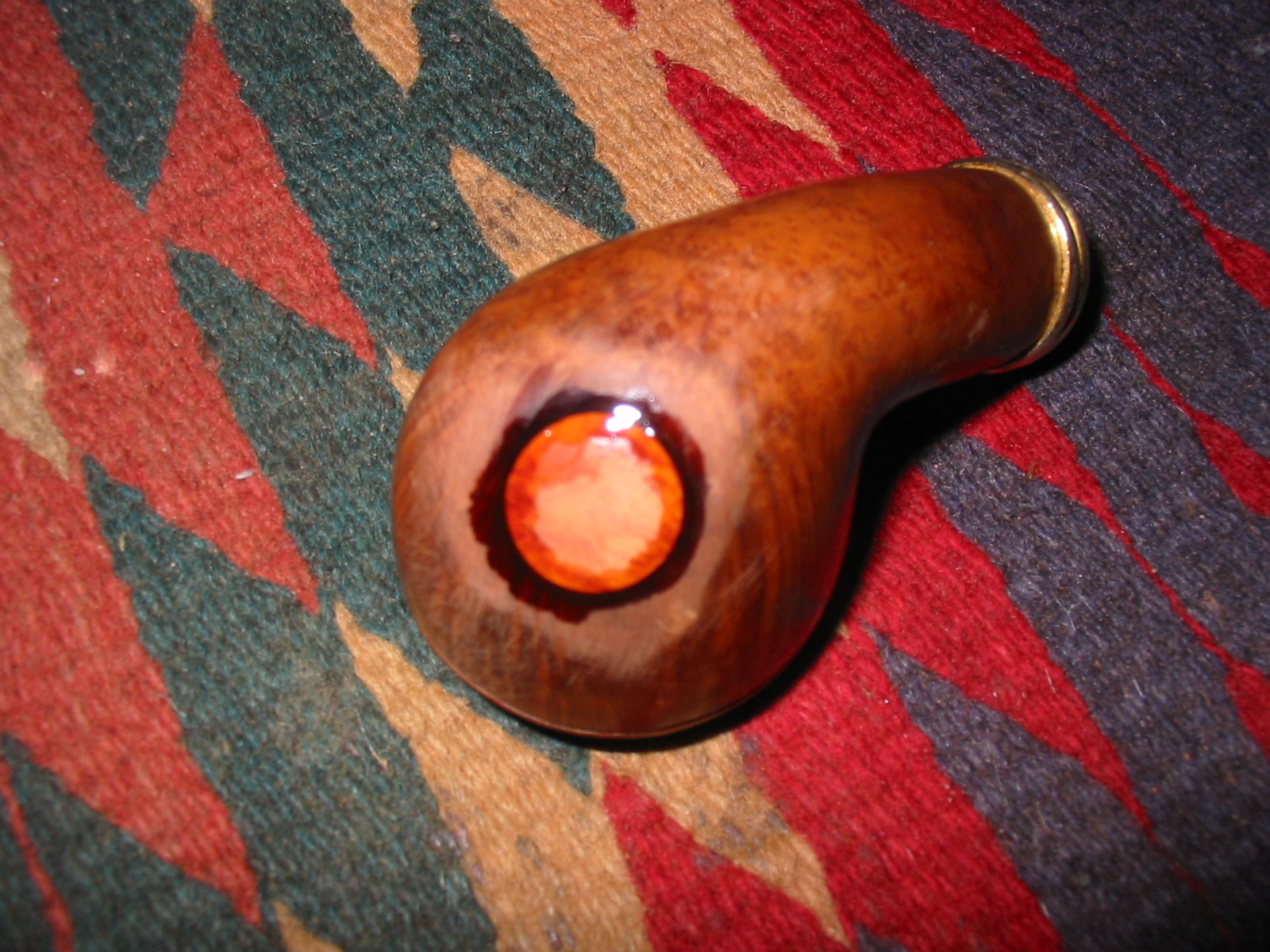
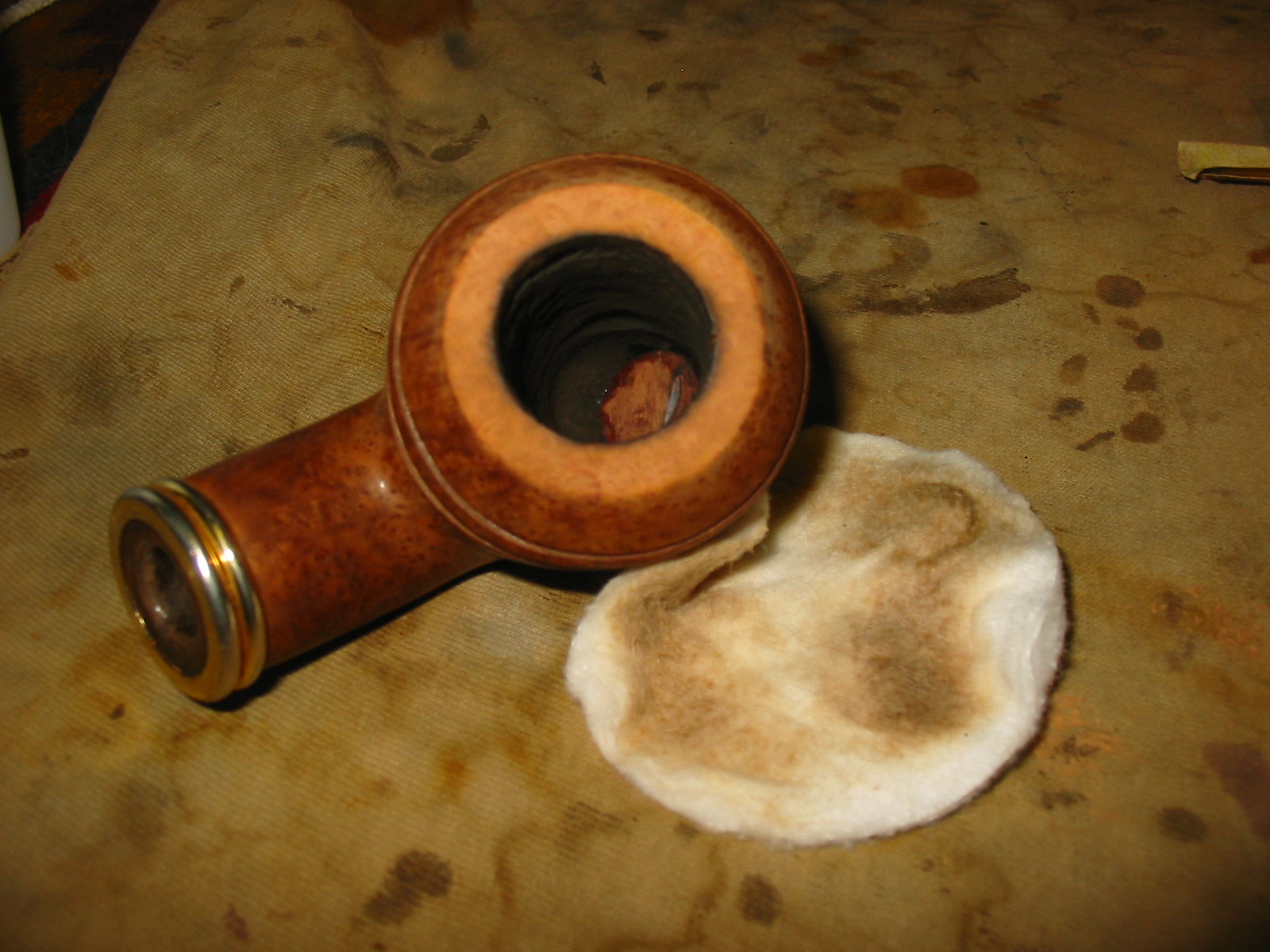
I washed down the surface of the bowl with acetone on cotton pads to remove the grit and the remaining finish on the bowl. I also sanded the plug and the rim with 220 grit sandpaper and then medium and fine grit sanding sponges to smooth out the scratches. I sanded the inner rim with a folded piece of sandpaper to remove the damage to that portion of the bowl. In the photos below the fit and finish of the plug is clearly visible. The grain on the plug and that on the bowl did not match but the fit was nearly perfect.


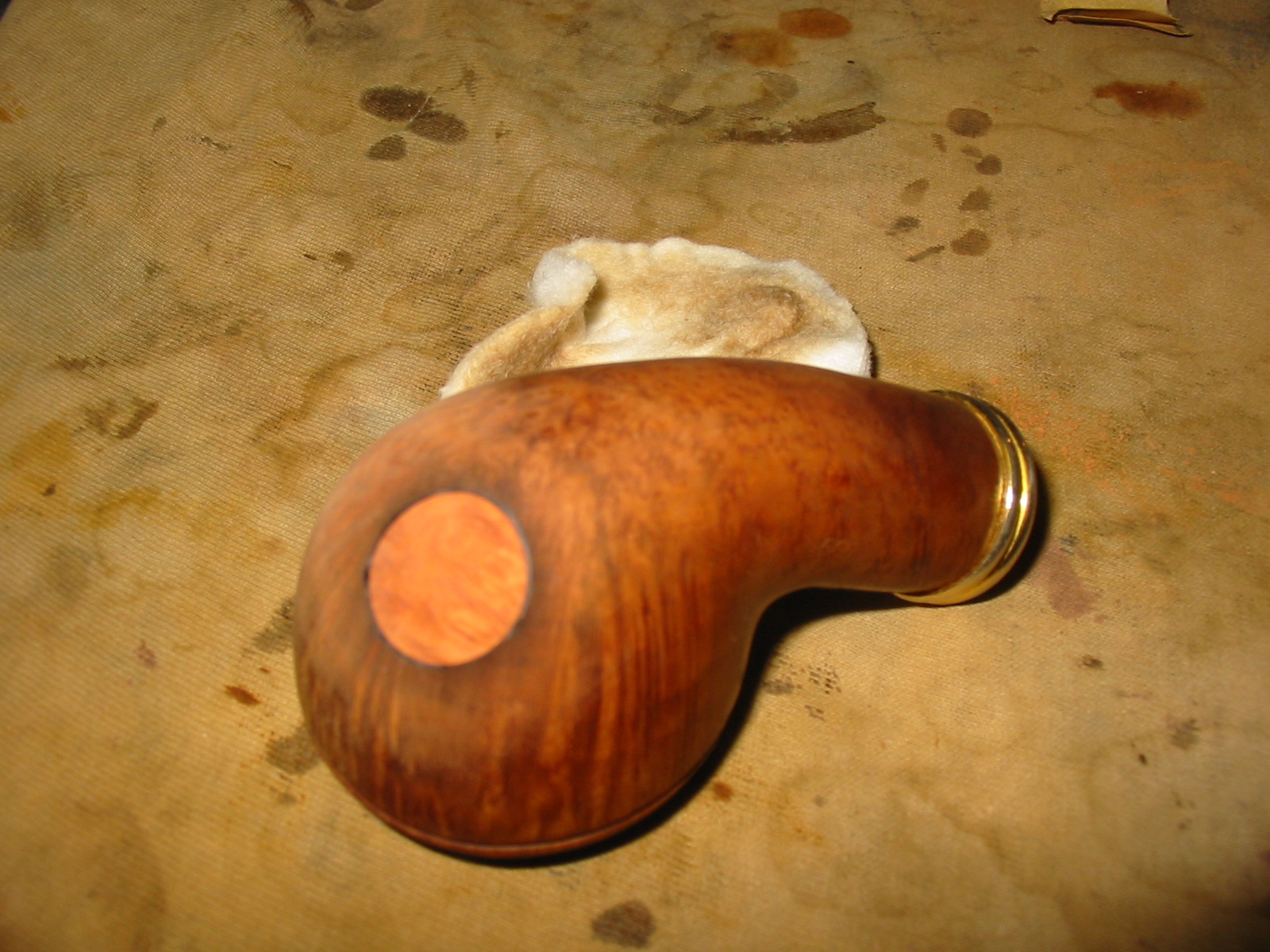
Mark and I had talked about rusticating the whole bowl but I could not bring myself to do that to such a beautiful piece of briar. I marked the area that I planned on rusticating with a black permanent marker to give myself an outlined area that I would rusticate. I find that setting up parameters and boundaries for the rustication helps me to keep it in a defined space more easily.
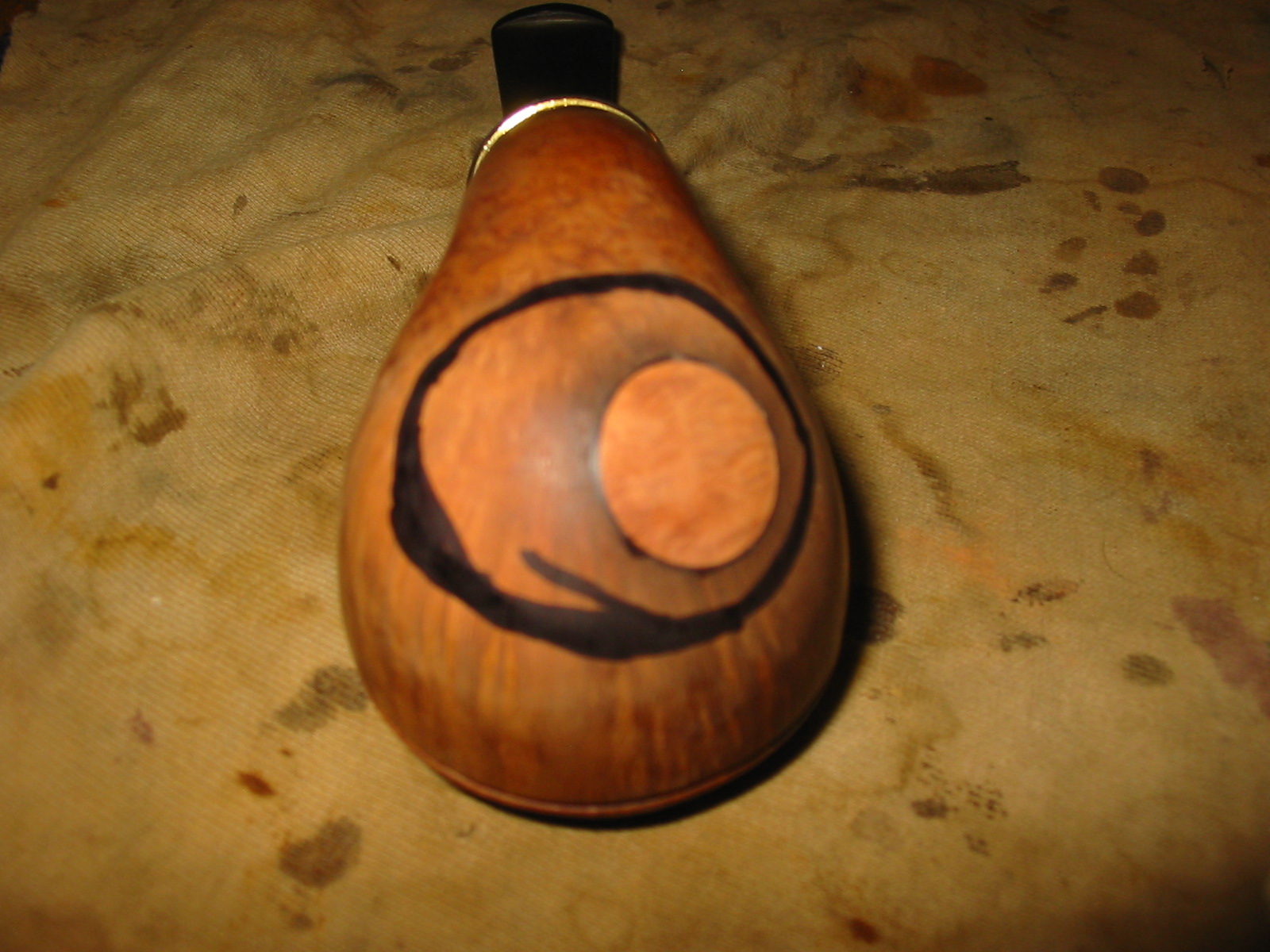
I used the modified Philips screwdriver with the four points to rusticate this part of the bowl. The next two photos show the rusticated portion of the bowl. The area of the older briar showed dark spots in the rustication and the new fresh plug showed almost white after rustication.
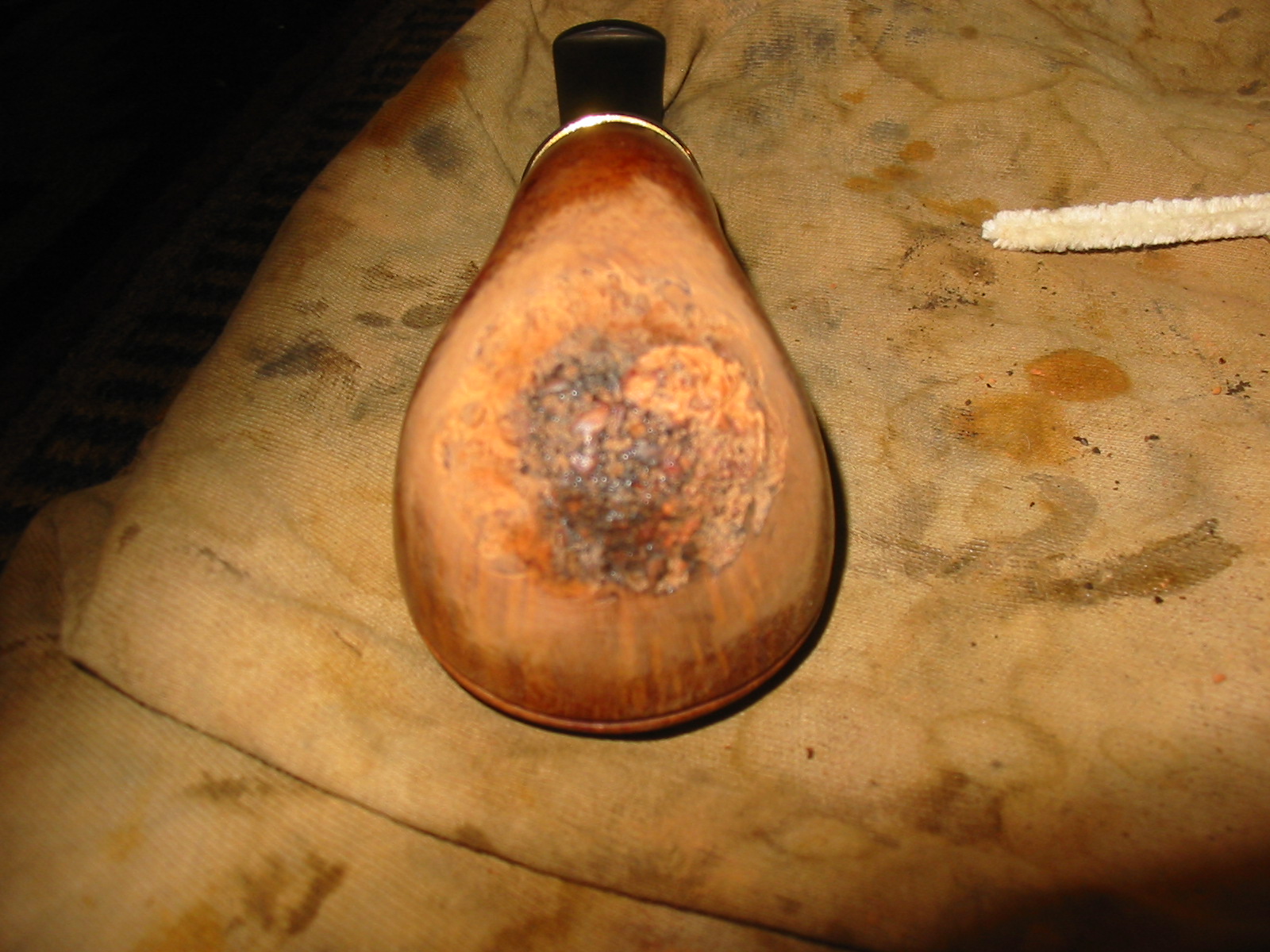
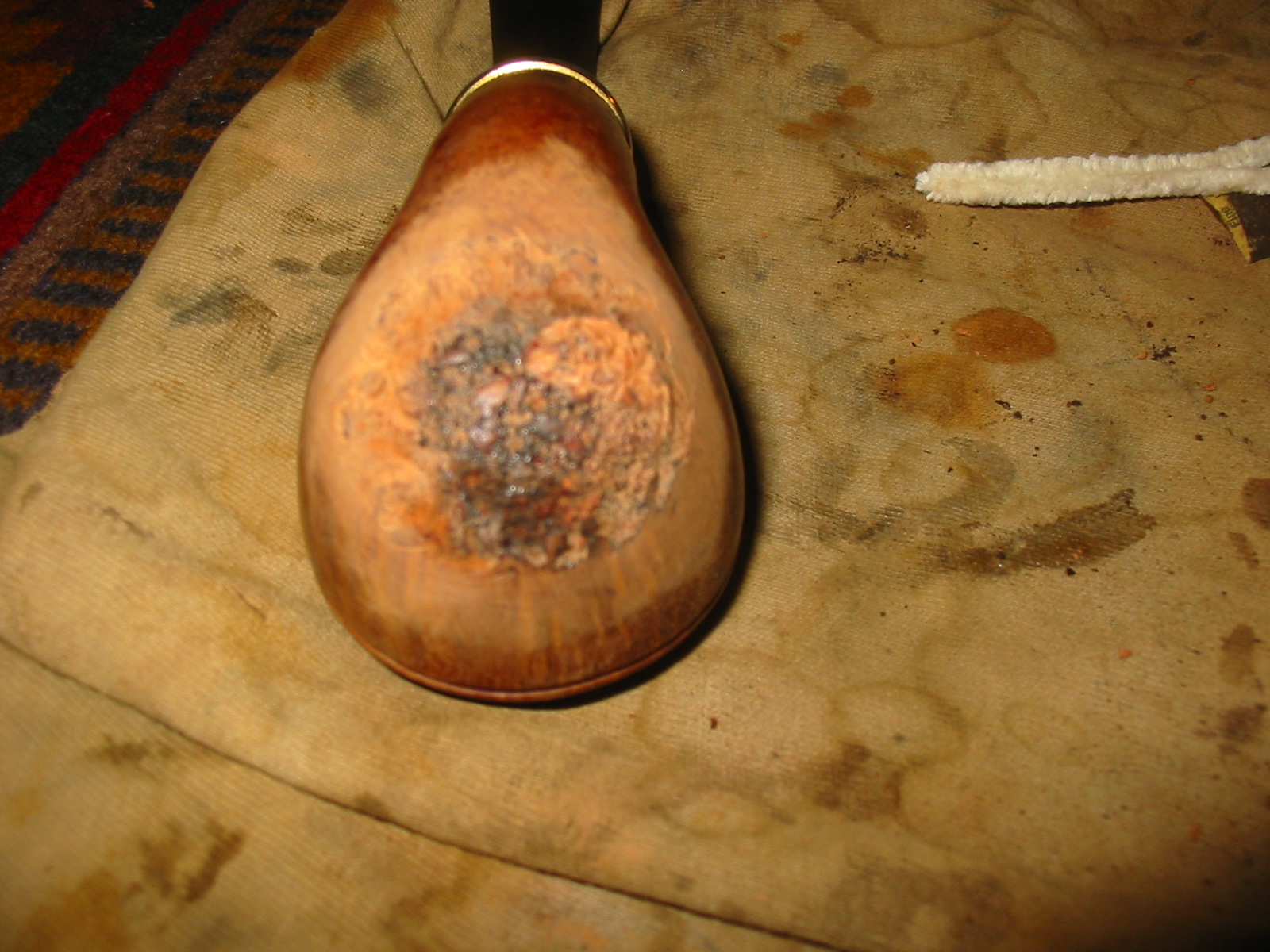
I decided to try and use a dark brown aniline stain thinned 2:1 with isopropyl alcohol on the whole pipe to see what would happen with the rustication. I wanted to see if the dark areas on the rustication would blend into the briar of the lighter parts. I did not really expect it to work but thought I would give it a try.
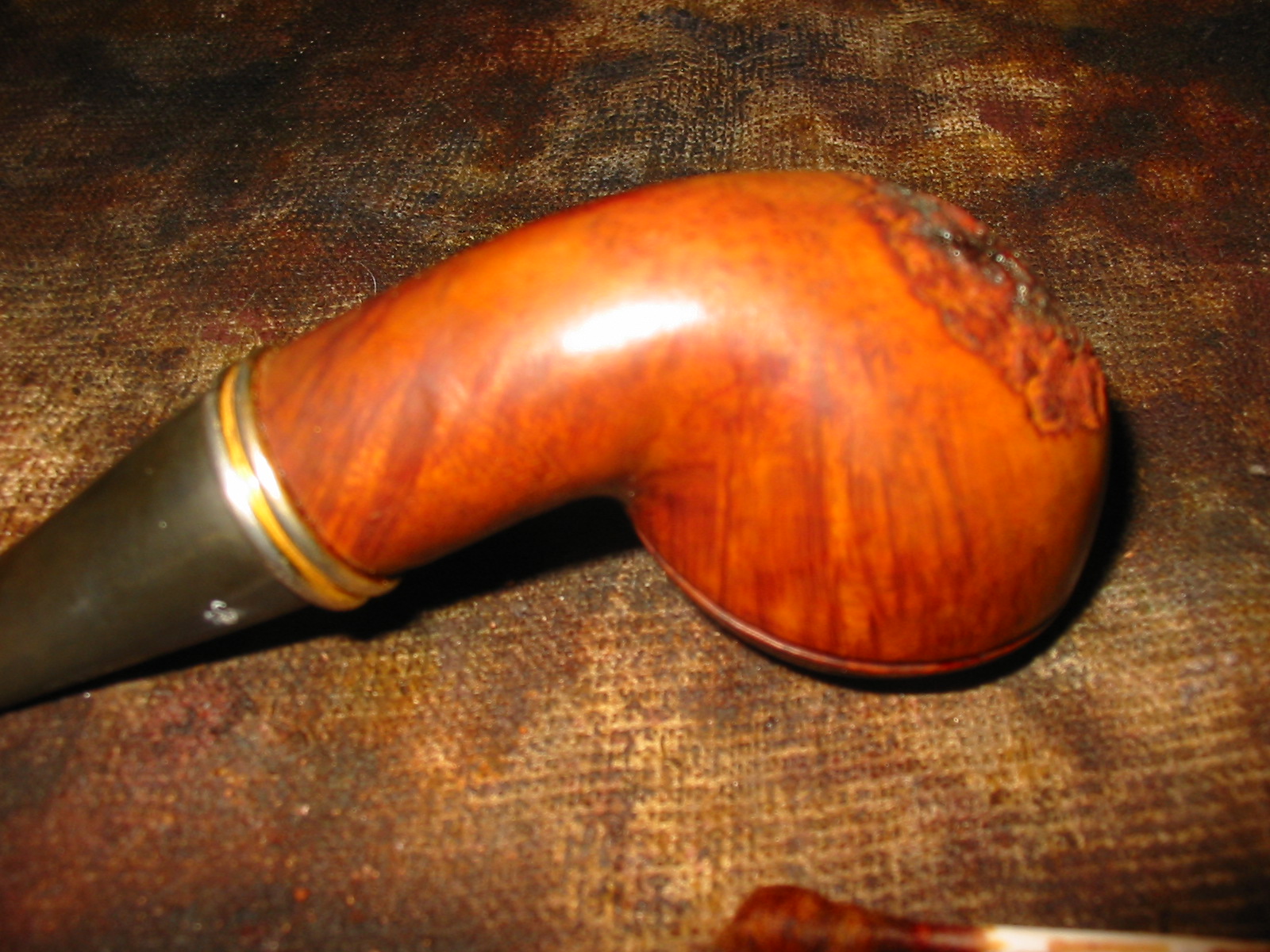
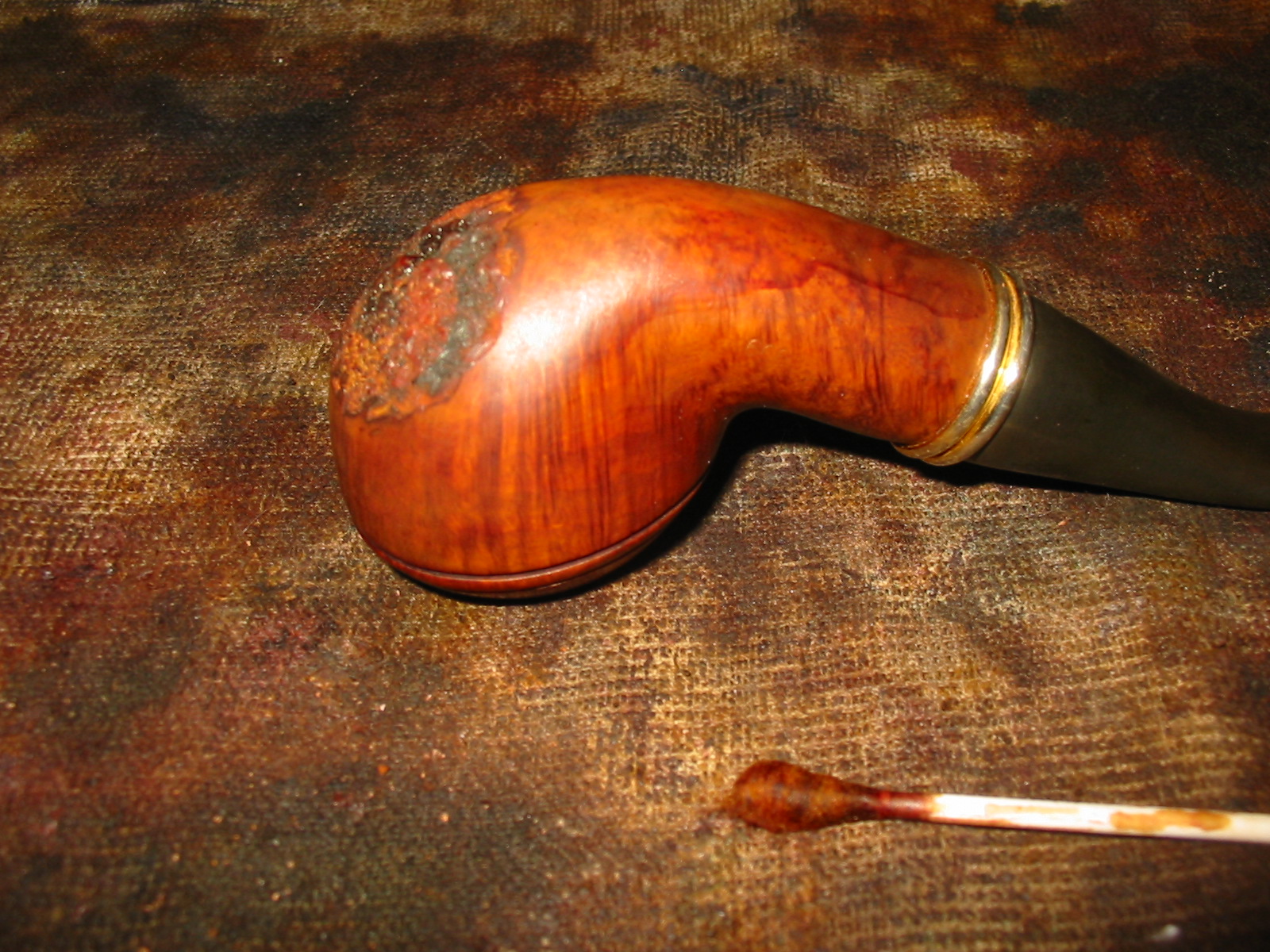
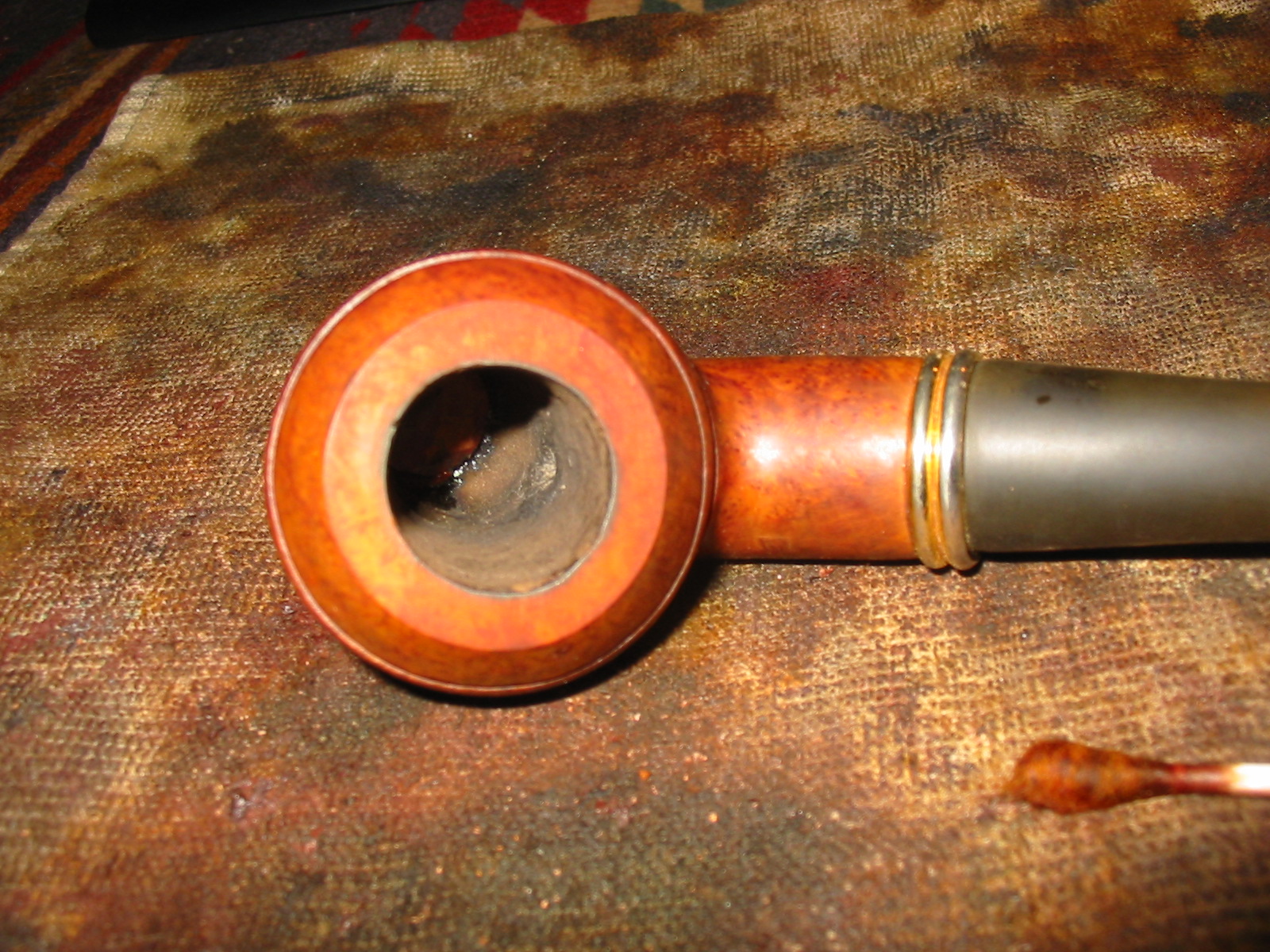
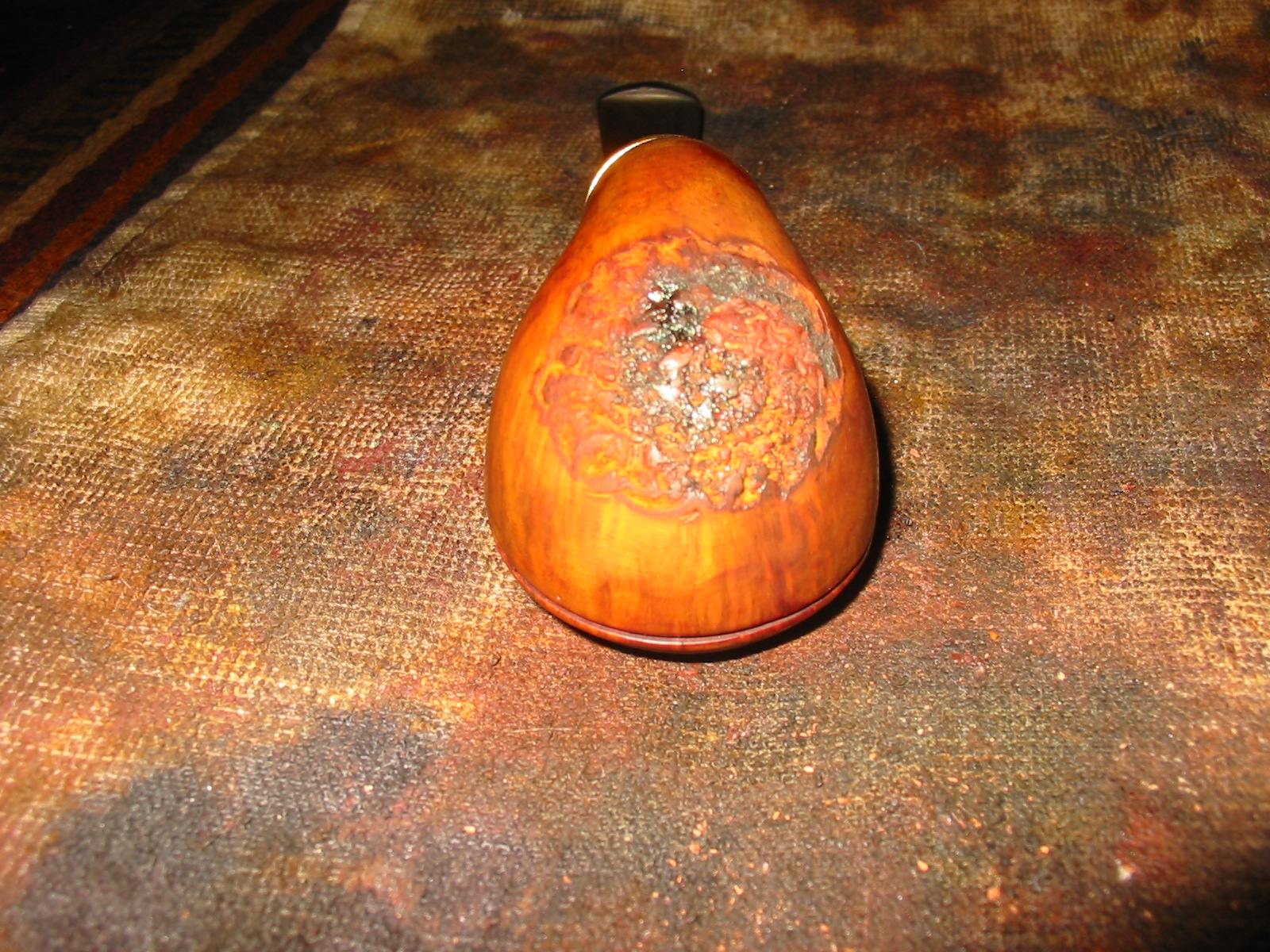
The dark portions of the old briar still showed dark after staining. I decided to use a black aniline stain on the rusticated portion of the bowl and leave the smooth part of the bowl the brown colour. I applied the stain with a cotton swab and flamed it, reapplied it and reflamed it until the coverage was even.
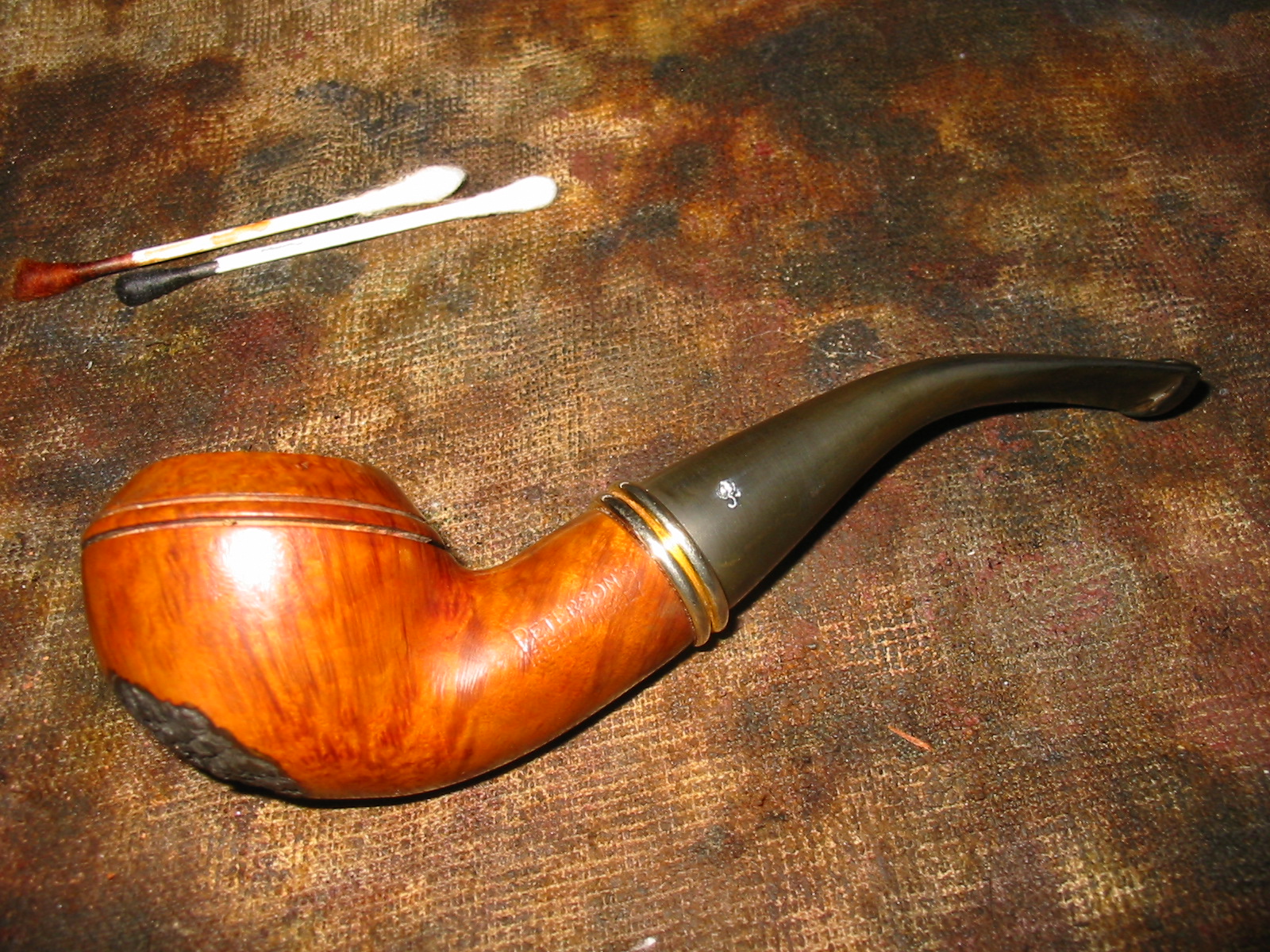
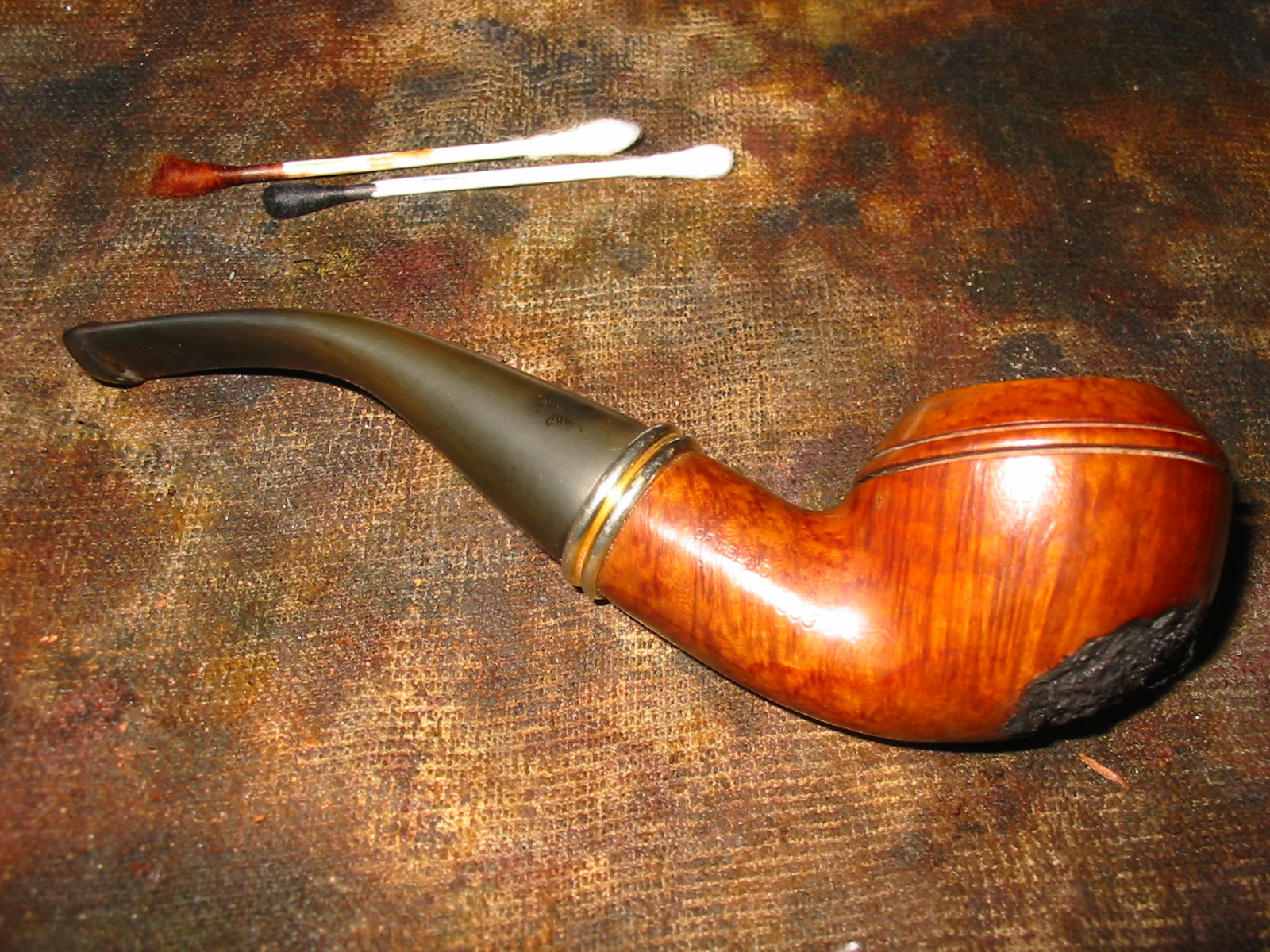

The inside of the bowl then needed to be addressed. The drilling of the bowl was not only angled from left to right but the airway entered the bowl over 3/8 inches above the bottom of the bowl. Whether this was caused by drilling or over reaming is not clear to me. My problem was that the angle of the patch on the side did allow me to shape the patch to provide a new bottom for the bowl. I could have cut another piece of briar and inserted it into the bottom of the bowl but the strange angles of the bowl made that a task that I did not want to tackle. I opted to build up the bottom of the bowl with Plaster of Paris instead of pipe mud because of the depth of the buildup. My fear was that the pipe mud would have to be almost ½ inch thick and I was not sure if it would hold. I have used Plaster of Paris to repair meerlined pipes and it is durable and gives a solid base. I intend to use pipe mud on top of the repair and also reshape the bowl sides.
I glued the band on the shank with wood glue before I restained it with another coat of the medium brown aniline stain. I flamed it and then buffed it with White Diamond. I gave the smooth portions of the bowl several coats of carnauba wax and hand buffed the rusticated portion with Halcyon II wax.



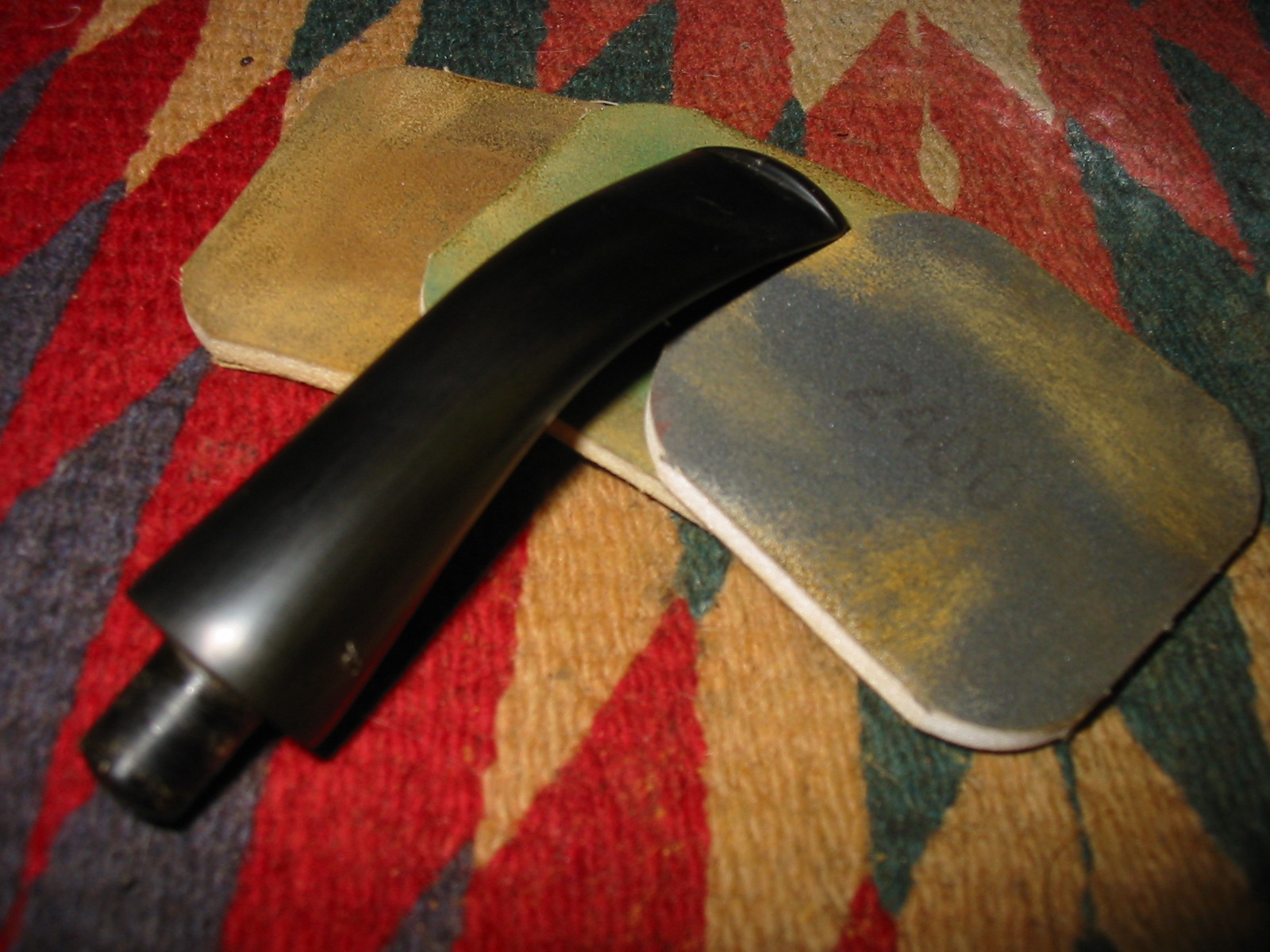
I sanded the tooth marks and chatter out of the stem with 220 grit sandpaper and a medium grit sanding sponge. I reshaped the stem to fit more proportionally against the band. I made it round instead of oblong so that the fit against the band was even all the way around giving it a more finished look. I then sanded it with my usual array of micromesh sanding pads – wet sanding with 1500-2400 grit pads and dry sanding with 3200-12,000 grit pads. I rubbed the stem down with Obsidian Oil and when it was dry buffed it with White Diamond. I gave the stem multiple coats of carnauba wax to finish and protect it.
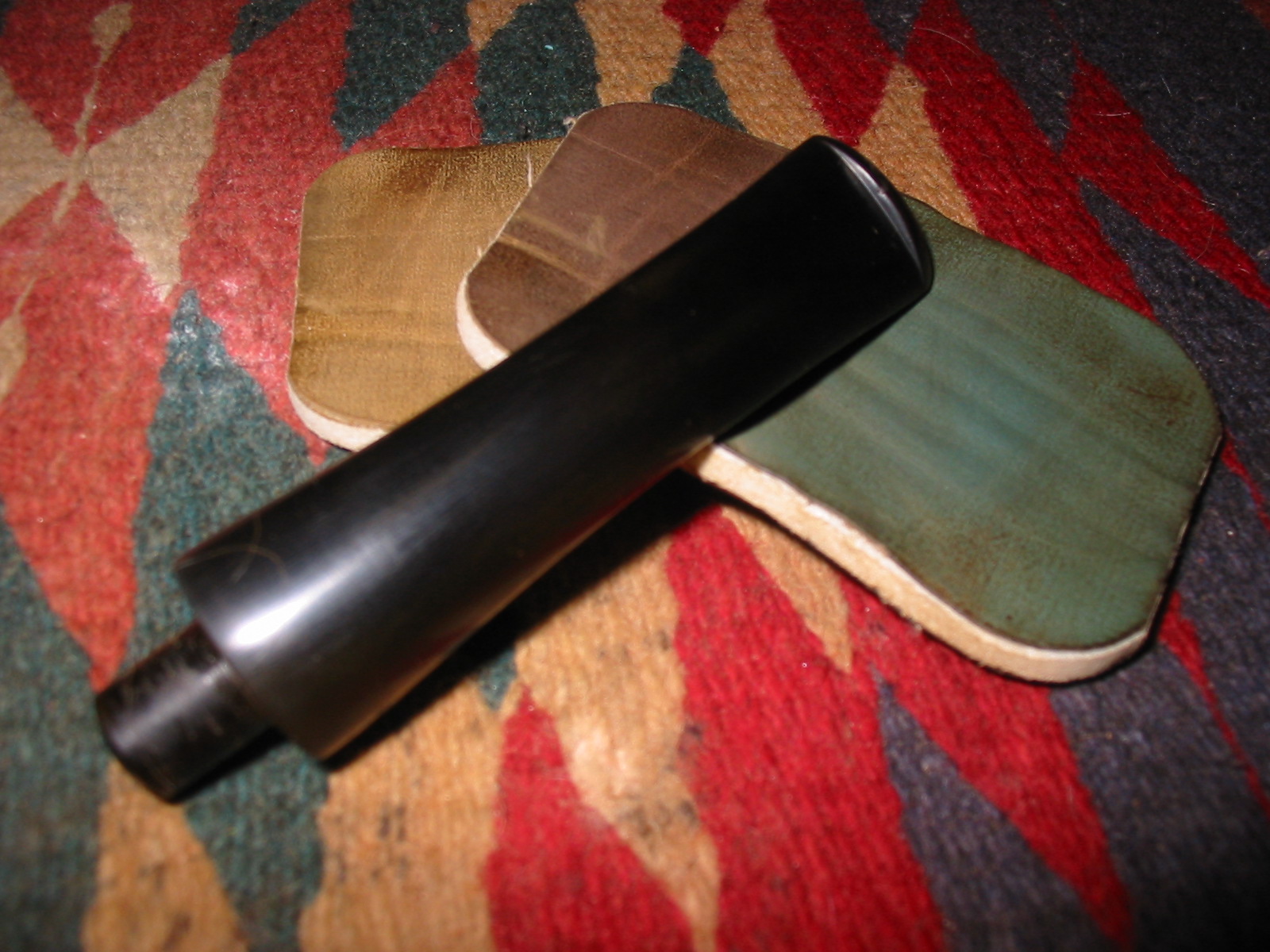
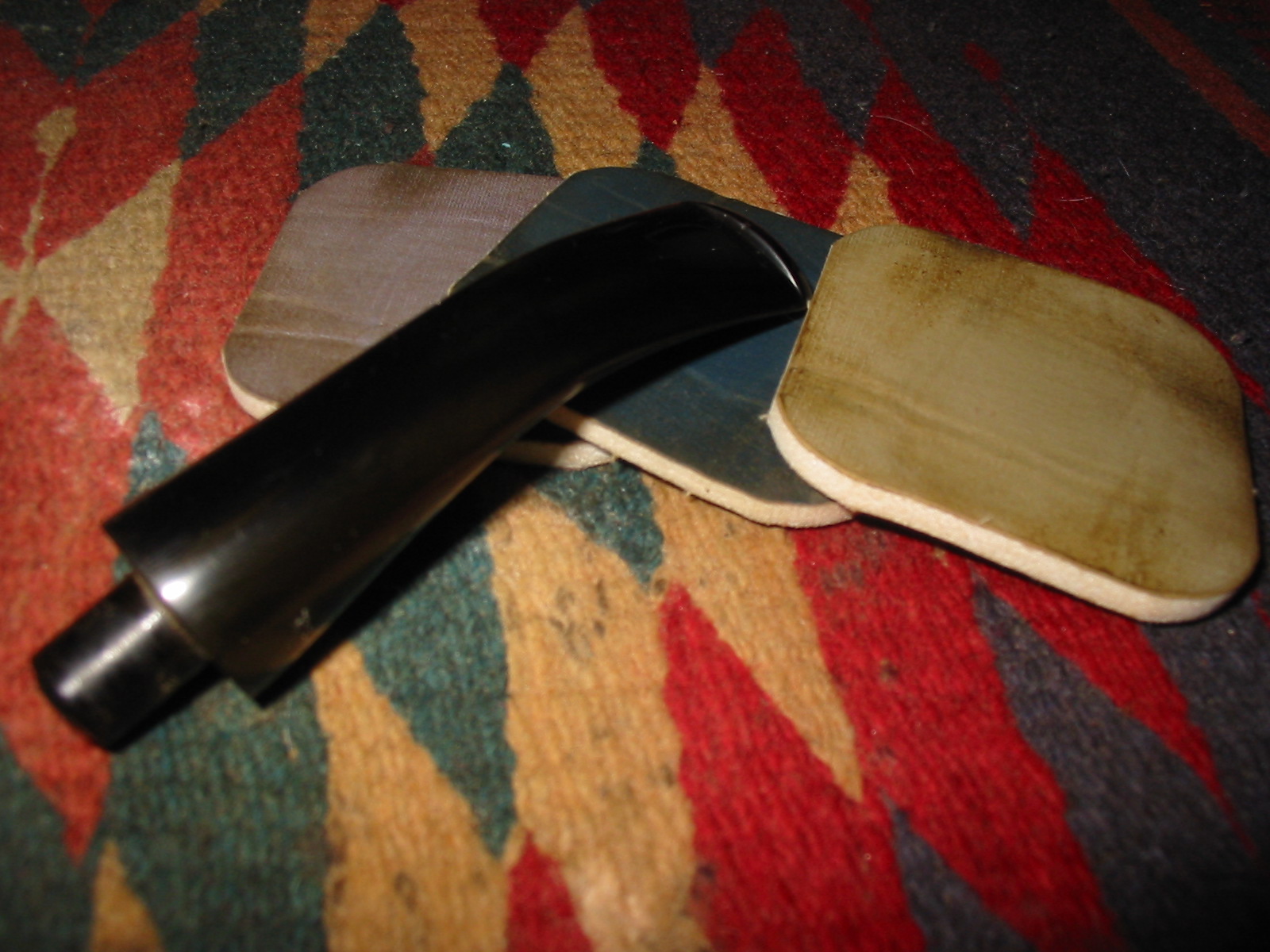
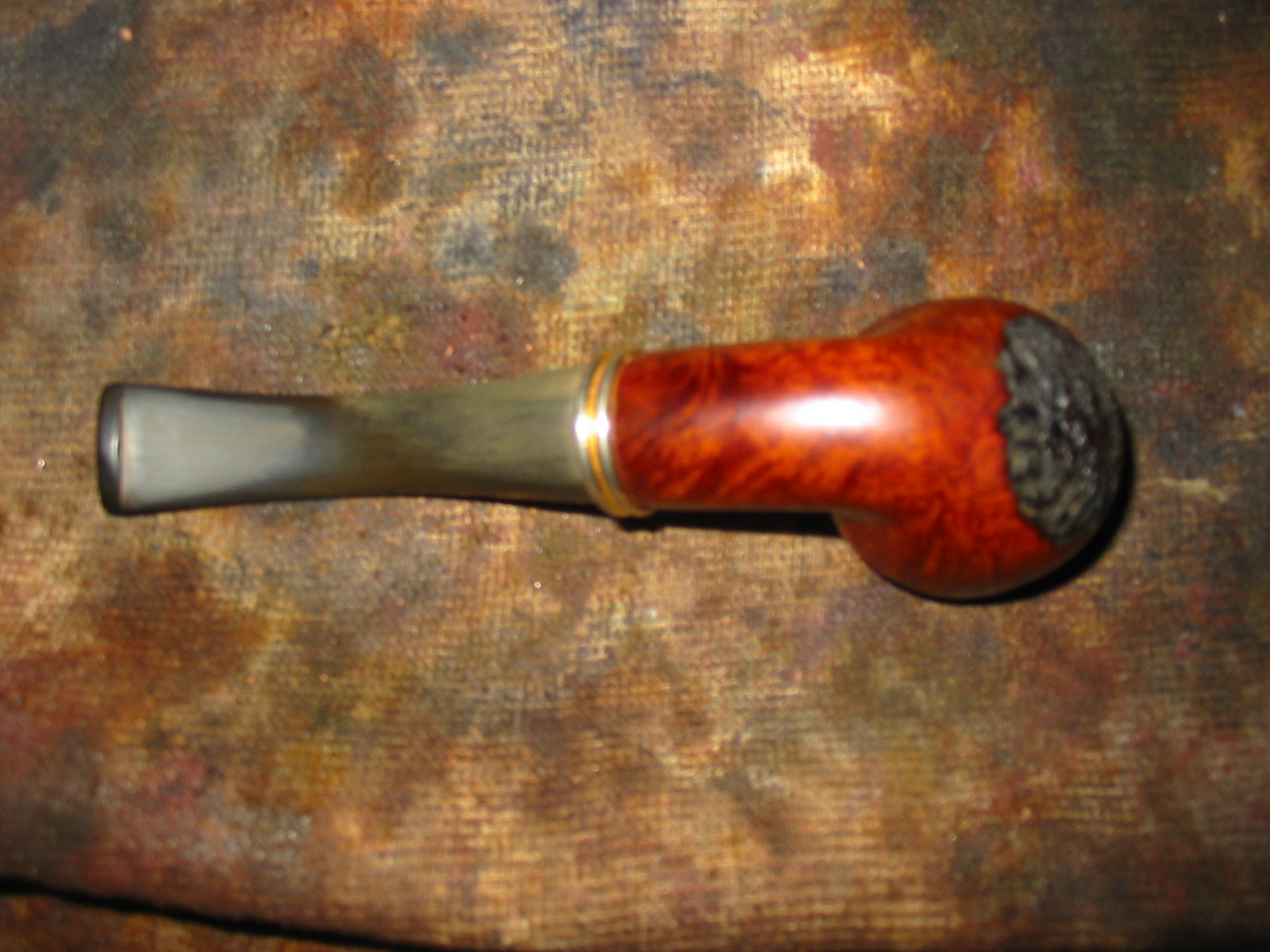
The next series of five photos show the finished exterior and stem of the pipe. The stain and the patch rustication are completed. The interior of the bowl still only bears the plaster repair. Once it cures for several days I will give it a coating of pipe mud to finish the job.
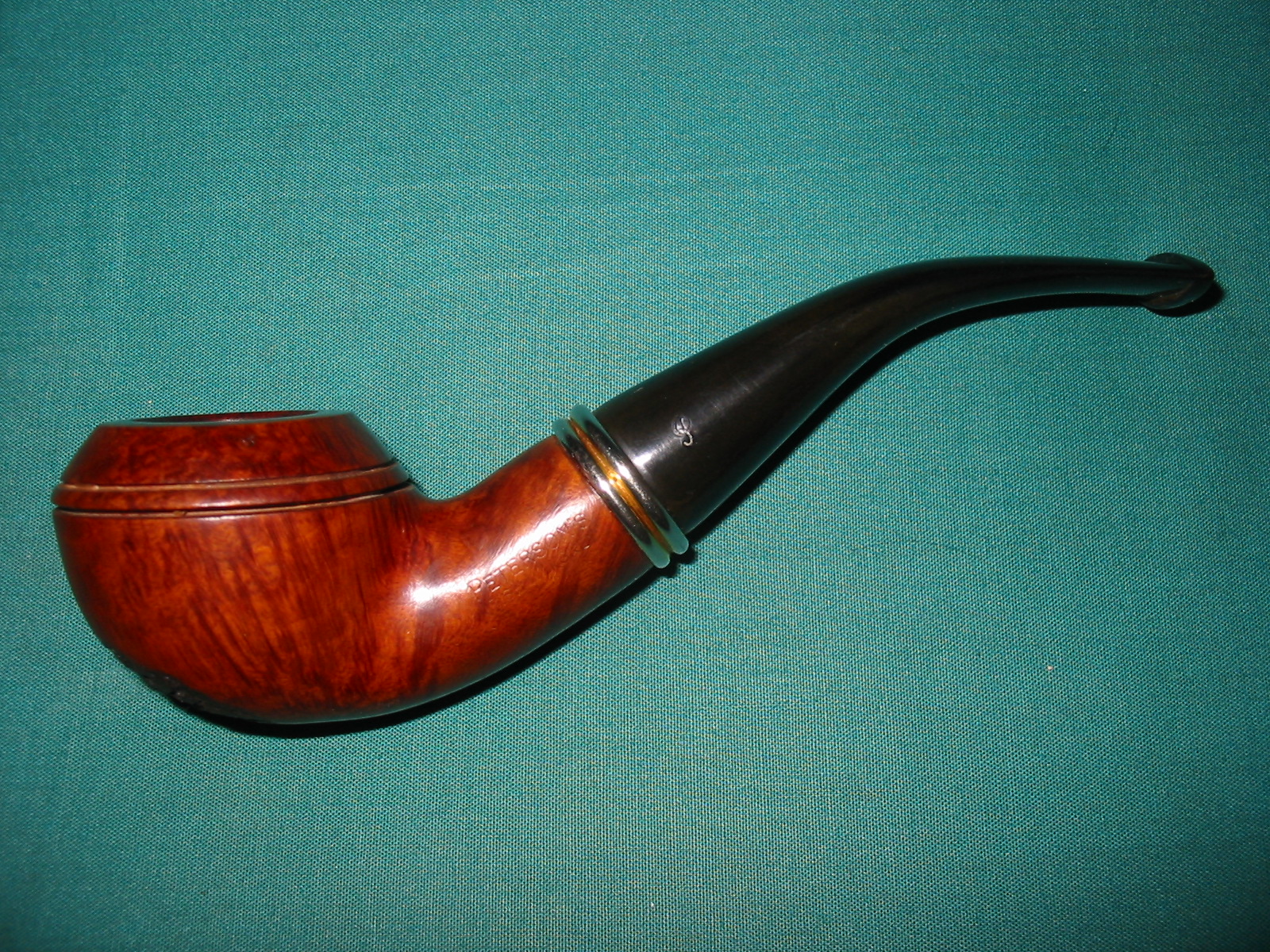
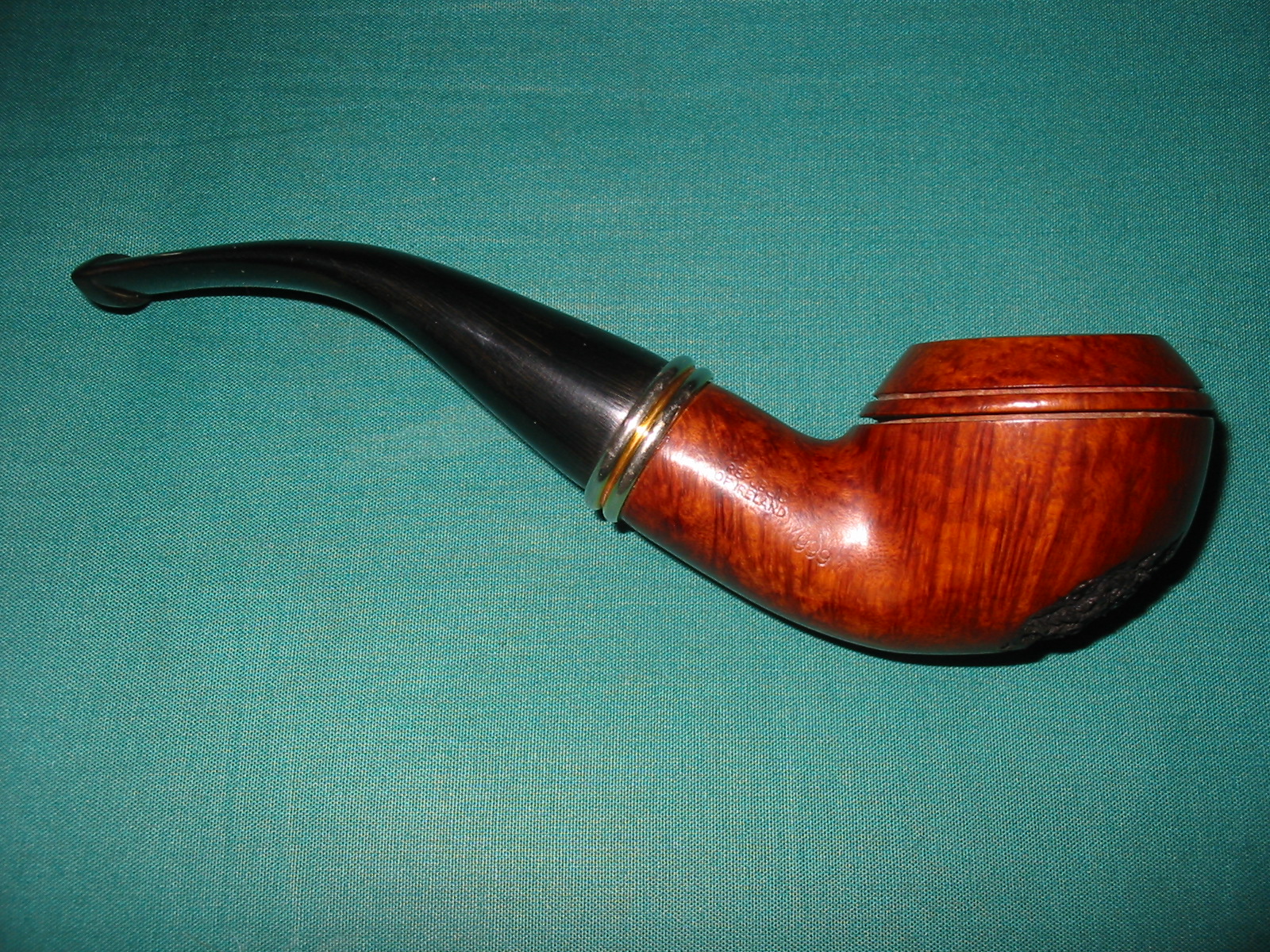
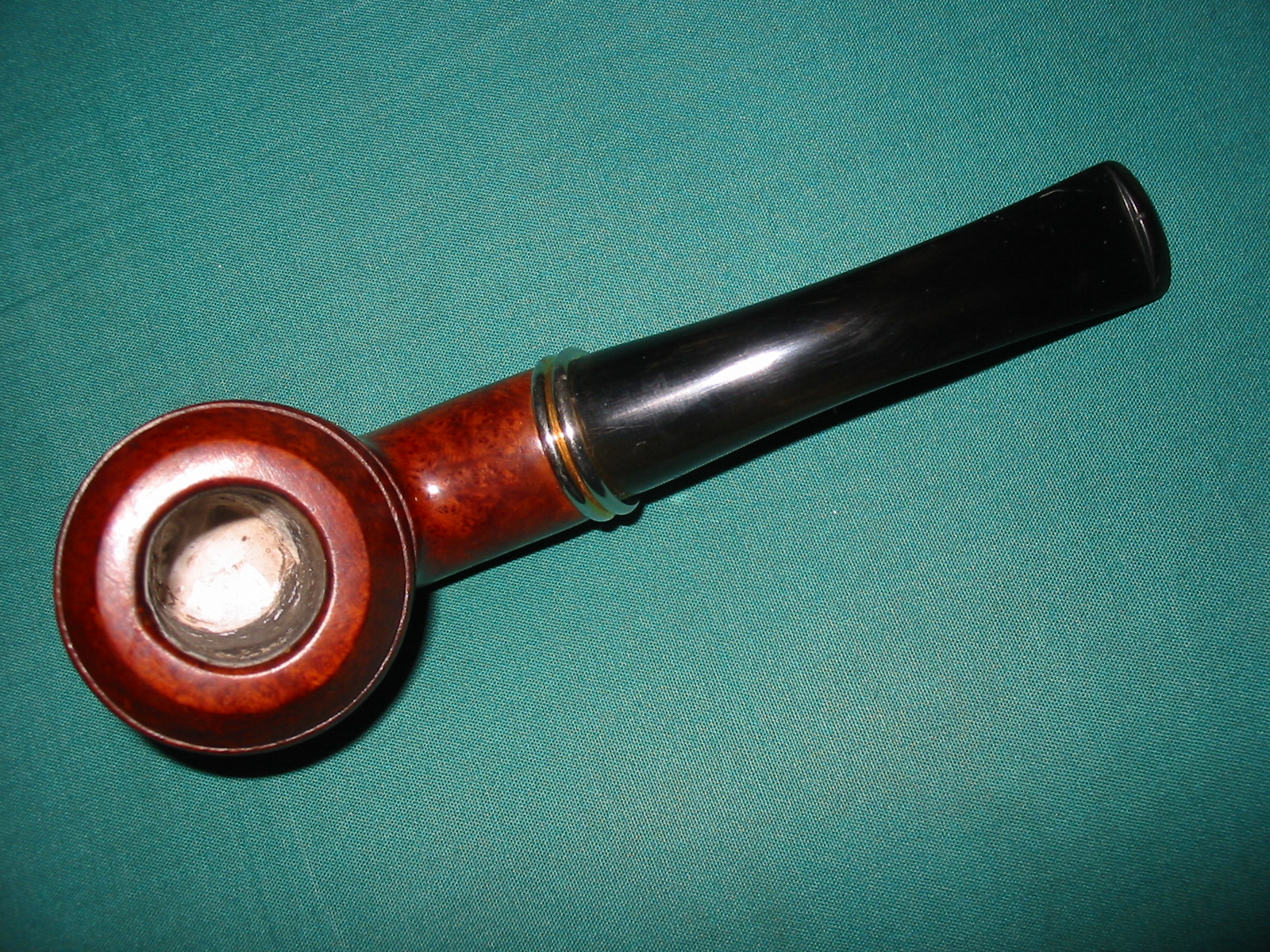
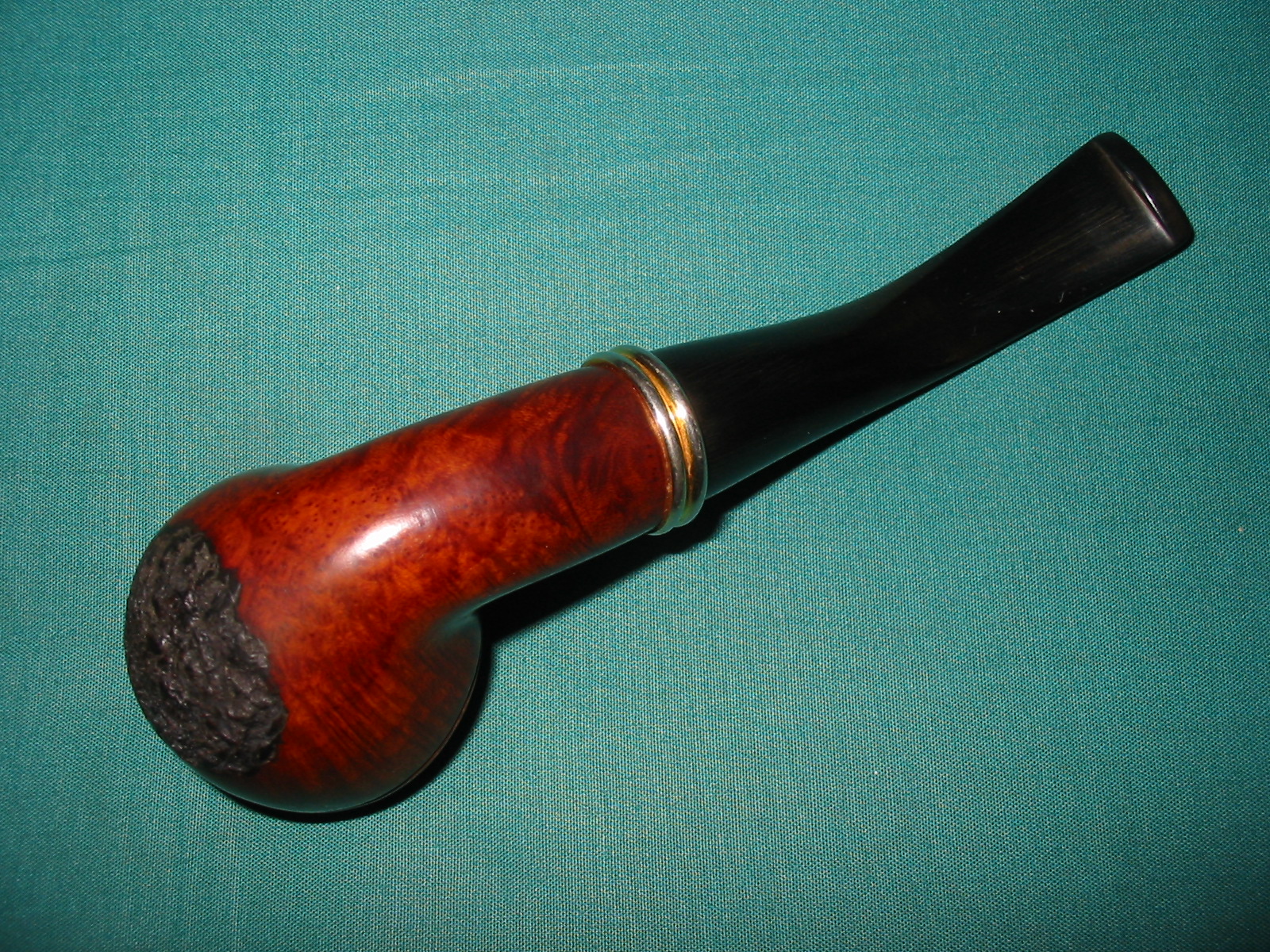
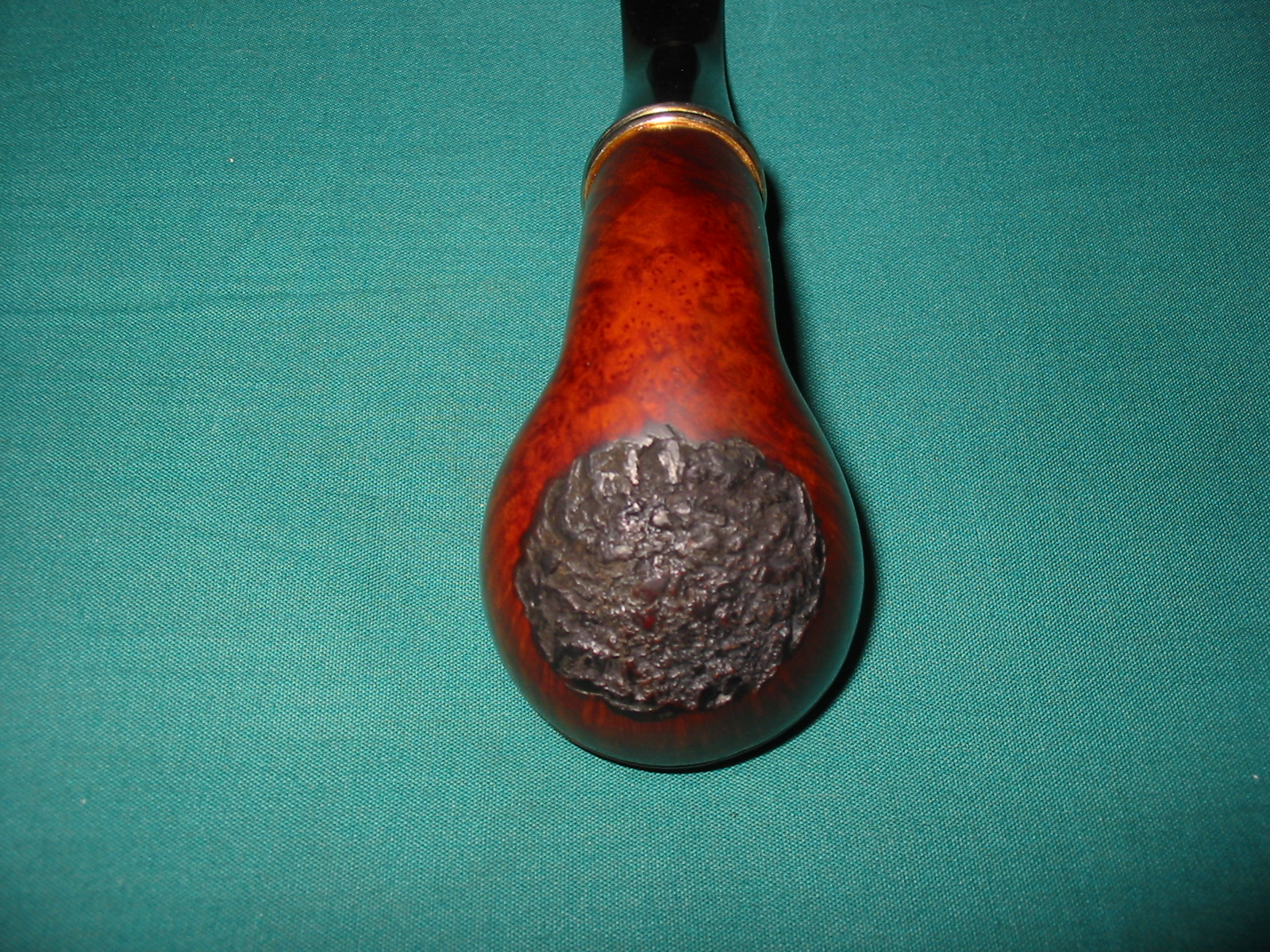
The pipe is finished other than the pipe mud and soon it will go back to Mark for its inaugural smoke. I am looking forward to hearing his response once the pipe is in his hands and he has smoked it.
UPDATE: I applied the pipe mud to the bowl last evening. It was a great day to fire up a Cohiba Habana and save the ash to mix. I use a shot glass to collect the ash and add the water with an ear syringe. Once the mix is the right consistency I apply it with a folded pipe cleaner. I apply it and let it set and then follow up with a second or third coat as necessary.
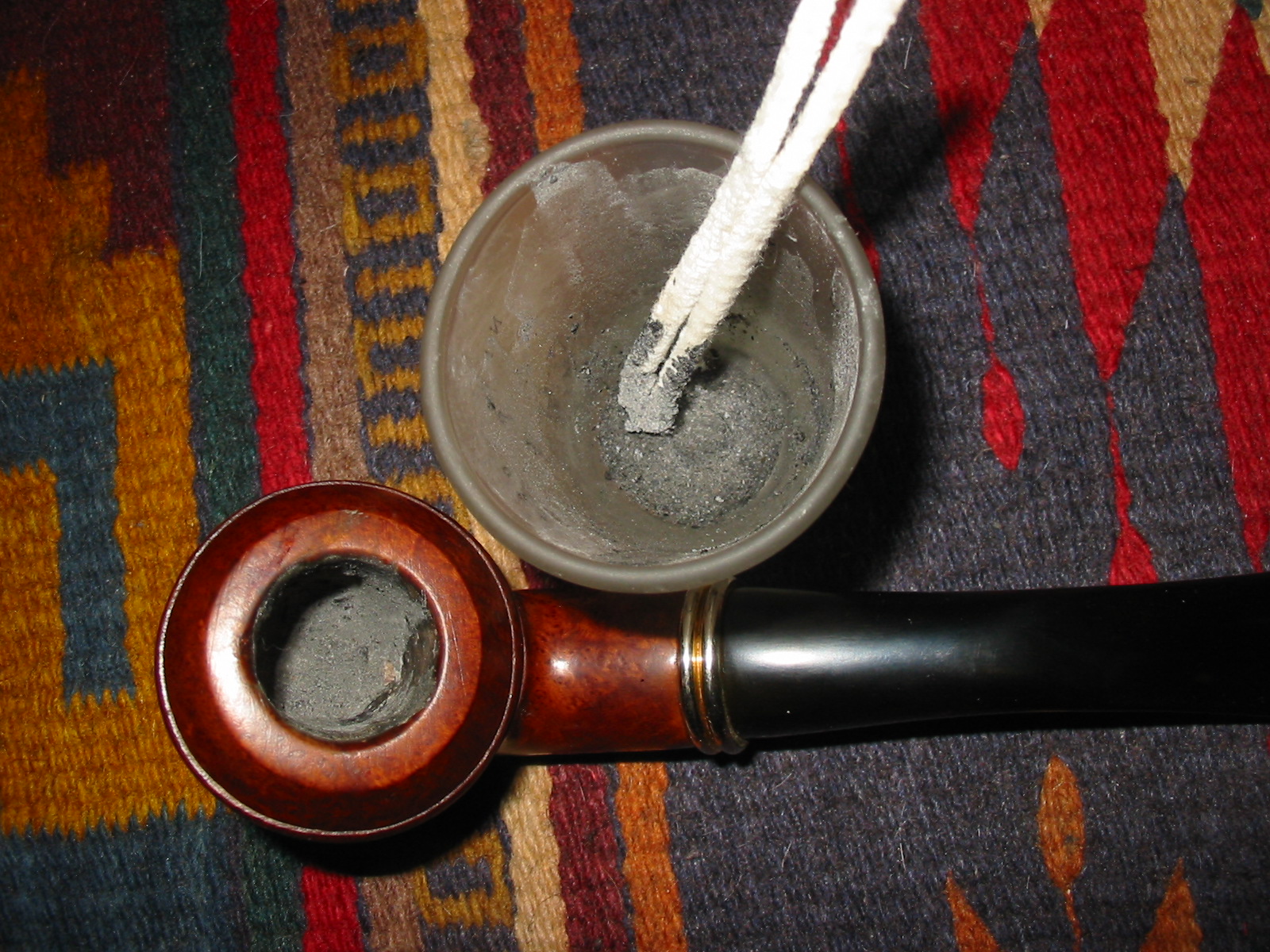
For this particular pipe mud application I built up the right side of the bowl toward the bottom to compensate for the angular drilling of the bowl. I was able to smooth out the wall and that side is as straight as possible.

 rebornpipes