Tag Archives: pipe refurbishing

My choices in Pipe Reamers – a review


Blog by Steve Laug

In the process of refurbishing estate pipes, a thing that I enjoy doing, I use two pipe reamers almost every time I begin the work. Both of them have different strengths or advantages that I have come to count on in the process of using them. They work on the thickest and hardest cake that I have found in these old work horse pipes. I have written of the advantages and weaknesses of both in the review that follows.  

The first of these is readily available on EBay as Kleen Reem pipe reamers. There is also a similar reamer available going under the label of the Senior Reamer which can be purchased at most of the online pipe vendors. The reamer I have is pictured below. It is an adjustable three blade hardened steel reamer. The top is the adjustment knob and as it is turned it opens the blades wider or narrower. The utility of this reamer is that it is able to be adjusted to multiple bowl sizes. The blades remain vertical so that the bowl does not taper. It works very well for cylindrical shaped bowls. The hardened steel does a great job cutting back the carbon of the cake and can be adjusted to allow for different cake depths. The one draw back of this reamer is that it does not do a great job on the heel of the bowl in rounded or U shaped bowls. It is perfect for the conical bowl or V shaped bowl that tapers to a point. In the U shaped bowls I have to finish the reaming by using the second tool below or a piece of sand paper wrapped on a dowel.

Image

The case that the reamer came in is functional and strong. In the bottom edge of the case there is a banded group of cut pipe cleaners.

A brilliant part of this tool is found under the adjustment knob on the top. The knob can be turned to unscrew it from the main unit. Once it is removed it reveals a drill bit attached to the knob that is designed to clean out the airway in the shank. It can be twisted into the shank to reopened clogged and restricted airways without damaging the pipe. I use the drill bit by itself the first few times through the shank to remove the grime and tars. I then follow up with the pipe cleaners inserted and wrapped up the bit then dipped in alcohol to remove the loosened grime from the shank of the pipe. I have replaced the original ones that came with the kit many times with cut pieces of regular or fluffy pipe cleaners. The diagram below shows the bit inserted in the shank. It also shows the winding of the pipe cleaners on the drill bit that I referred to above.

Image 

The picture below shows the reamer as diagrammed with the instruction manual that came with the Kleen Reem kit. The numerals on the diagram are explained in the instructions on the right side of the picture. I use the reamer as a regular part of the cleaning routine I have established for working on estate pipes.

Image 

I would recommend either the Senior Reamer or the Kleen Reem Reamer for all those who clean and work on their own pipe and those who do refurbishing of estate pipes. When you purchase it know that you will need another tool or have to use sandpaper and dowel to maintain the heel of the bowl.

The second reamer that is in my refurbishing tool kit is called a Pipnet Reamer. I found this reamer when the one above left me with work to do at the bottom of the bowl. I was searching for a tool that did a better job in that part of the bowl. This reamer has also been packaged and sold in North America under the Castleford name. From my experience while these two versions of the reamer look the same, the Castleford set is not as well made as the Pipnet set. I will comment on that later in this article. Both sets come in a cardboard storage case and include a foam insert with cut spaces for the “T” handle and four heads of different diameters. To use the reamer the heads (tenons) are inserted into a square slot (mortise) on the bottom of the handle and then can be turned into the bowls for a thorough reaming. The picture below shows the Pipnet set that I have. I have reboxed it in an old wooden box that my kids had around. I found that it is a perfect fit and keeps the parts together.

 Image

The greatest asset of this tool in my opinion is that the interchangeable heads make it possible to work with a variety of bowl sizes and with various cake thicknesses. On older heavily caked bowls the reaming can be done in stages until it is the cake thickness matches the desired depth chosen by the refurbisher. This also makes it very easy to ream the cake all the way back to the wood or to leave any amount of cake you chooses. The size and shape of the combined handle and heads make it easy to keep the tool vertical in the bowl and avoid over reaming or ruining the roundness of the bowl by reaming at an angle.

Often when I am refurbishing older pipes I use both reamers mentioned in this article to complete the reaming to my satisfaction. I start reaming with the Pipnet and end with the KleenReem or the reverse depending on the bowl shape. I find that the design of the tool allows me to have a good grip on the handle as I turn the blades to cut the cake. I begin with the smallest head and work my way up to the size that brings the bowl to a place where I then use the KleenReem to finish the work.

Each cutting head of the Pipnet tool has four blades inserted into a hard plastic head. They are basically hardened steel “U” shapes that meet at the bottom of the head and go up the length of the head. The cutting head, though obviously designed for “U” shaped bowls, also can be used in conical bowls. Again the reaming process should begin with the smallest head that fits into the bottom of the bowl and then working up the varying sizes of heads until the bowl is completely reamed. The design and shape of the heads is visible in the picture of the Castleford Set below.

Image 

In terms of durability I have used the Pipnet set for five years without any damage to the handle or heads. I was concerned when the tool arrived that the stress on the handle head connection (tenon/mortise) when turning it into the bowl would be problematic. When twisted or turned I can feel the give or strain in the plastic junction. In the 5 years I have used the Pipnet set I have not had any problems with this concern. Last year I was given a Castleford set to use as a backup. It looked like it was the same tool at a glance. I broke the handle mortise connection after the first couple of uses. In comparing the two sets I can see that the Pipnet set is made of a heavier/thicker plastic in the handle connection than the Castleford. That is probably the reason that it has outlasted the Castleford.

I purchased my Pipnet on EBay and continue to see sets show up there regularly. It is also available through various pipe and tobacco shops on the web. One or both of these reamers will serve the refurbisher well in the quest for a clean, restored pipe. Take into consideration the strengths and limitations of both and make your choices from an informed position. Enjoy your restoration work.

List of supplies for refurbishing


Blog by Steve Laug

I have had quite a number of emails over the past years asking for a list of tools and supplies that I use for pipe refurbishing. I have made a list and broken it down into 4 parts – two dealing with the bowl and two dealing with the stem. The first in each category is what I call field dressing the pipe. It involves the initial breaking down of the pipe and stripping and cleaning it. The second in each category is the finishing.
Refurbishing stems:

1. For the stems – field dressing

– Oxyclean for soaking oxidized stems. I use it to soften the oxidation rather than remove it. It works great. It does not remove oxidation as some have suggested but it does soften it so it is more easily removed.

– a pint jar or container with a lid that can be used for soaking stems (I use an empty Oxyclean container for the alcohol bath and another for the Oxyclean wash.)

– Sanding pads – coarse, medium and fine pads – these are 2″x3″ and about an inch thick. I find that they are firm but flexible. The edges work great against the button.

– 400 and 600 grit wet dry sand paper

– Pipe cleaners – both bristle and fluffy

– Dental pick for getting the corners of the button, the slot and the tenon

– Pliers for removing stinger apparatus

– Small microwave bowl or heat gun to lift bite marks and dents from the stem

– Retort system – available on eBay or from Shield on Smokers Forums http://www.smokersforums.co.uk/

2. For the stems – Finishing

– Sanding pads (see above), 240 grit sand paper and 400, 600 wet dry sand paper and Micromesh pads in 1500, 1800, 2400, 3200, 4000, 6000 grits.

– Buffer with pads – Tripoli, then White Diamond and then Carnauba. These are used after the sanding process. I don’t use a Dremel for this as it can cause ripples in the Vulcanite stem.

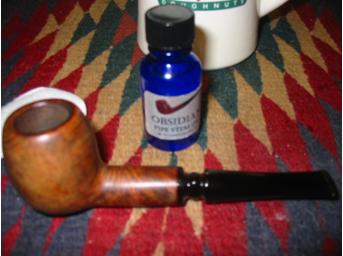
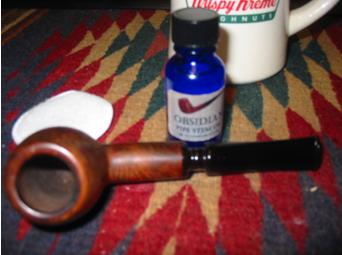
– I just started using Obsidian Pipestem Oil on the stems and it is fantastic. I rub it into the stem, let it sit for 30 minutes, polish and repeat.

– I then wax the stem with either Carnuaba Wax, Renaissance Wax or Paragon Wax. The first I apply with a buffing wheel the latter two can be applied by hand. When the latter are used apply them, let them dry and then buff with a soft cotton cloth.

– Soft cloths for hand buffing

– Bright light to identify scratches in the bowls and in the stems

 Refurbishing Bowls:

1. For the bowl – Field dressing

– Jewelers Loop to examine the hallmarks and stamping on the pipe before sanding

– Reamer (I use a Pipnet Reamer that is available from Synjeco. It is also made by Castleford. It is a ‘T’ handle with four different blade heads that fit in the bowl. Very easy to use and maintain roundness of the chamber. I also use a KleenReem or Senior Reamer as well. I have a review and comparison of the two on the blog.)

– Soft bristle tooth brush for scrubbing with the oil soap

– Brass bristle tire brush for use in scrubbing on plateau and in rustication

– 2×3 inch sanding pads of different grits (Coarse, Medium and Fine). I found these at a paint shop/hardware store as they are used in drywall patching and painting. Home Depot carries them as well. These are used to remove the tars and lava on the top of the bowls.

– Murphy’s Oil Soap

– Several soft rags for wiping and application of soap

– 100s of pipe cleaners – fluffy, bristle and thin

– Q-tips cotton swabs – I use these to clean out the mortise area of the shank as well as the sump in system pipes.

– Cotton boles that are used with the retort and also in using them for stuffing the bowl and adding isopropyl alcohol to draw out the tars a oils of old tobacco from the bowl.

– Silver polish for bands – both a liquid/paste application and a polishing cloth that is available through jewelry shops.

– A pint jar/container with a lid for the alcohol bath

– 99% isopropyl alcohol

2. For the bowl – Finishing

– 400 and 600 grit sand paper

– Micromesh pads in 1500,1800, 2400, 3200, 4000 and 6000 grit available online at Lee Valley Tools and other wood working suppliers.

– A knife that can be heated and a cloth that can be wet to use to steam dents from the bowls. You can use a knife – I heat the blade on my gas stove and then use a wet cloth on the dent and apply the hot knife to the dent and the steam lifts the dent. You can also use an iron to do the same with a damp cloth.

– Stains – I use Feibings Shoe dye – aniline based stains that are far cheaper than labeled wood stains. I use Medium and Dark Brown, Oxblood or Cordovan, and Black almost all the time but it is available in other colours as well. Those three match most of the older English and American pipes that I rework.

– Matches or lighter for flaming the stain once it applied

– Rubber gloves for applying stain unless you don’t mind wearing it for a while
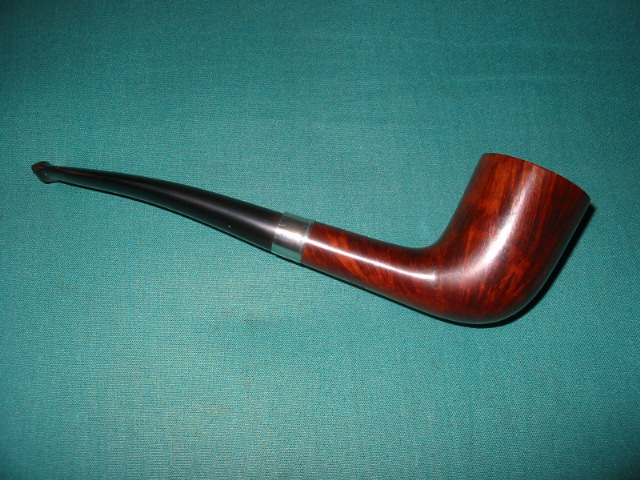
– Q-tip cotton swabs or pipe cleaners bent in half for applying the stains

– Soft rags for wiping off stains and applying them

– You can get a polishing kit from Lee Valley that includes three buffer pads, and arbor and attachments for a bench grinder. That is what I have. It also comes with a bar of Tripoli, White Diamond and Carnauba wax in the kit. It will last a long time. I think it is about $70 or less for the kit.
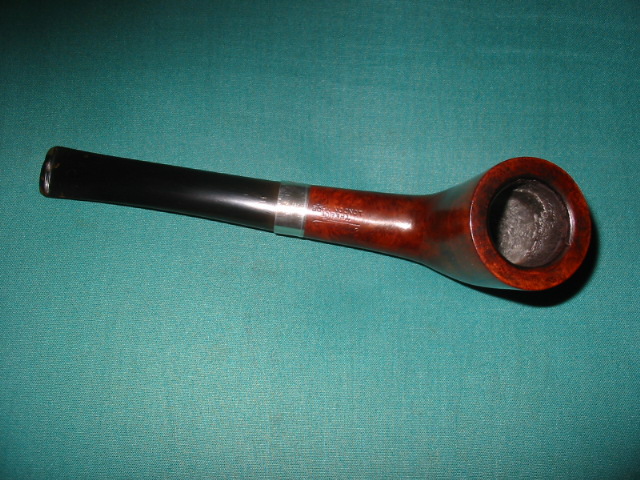
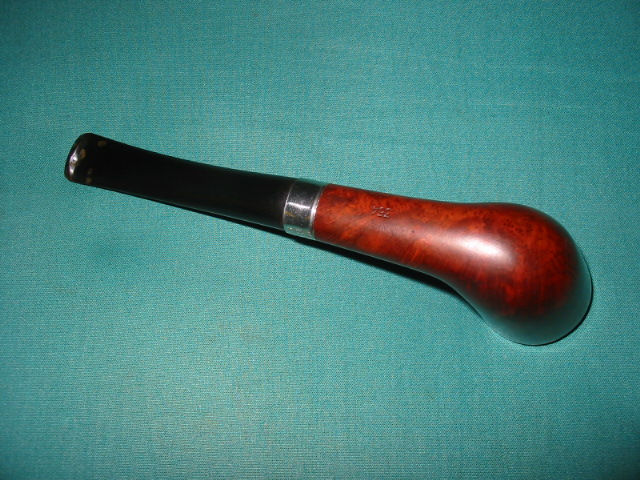
– I also have a jar of Halcyon wax for use on blasts and rusticated. It is applied by hand and buffed off with a soft cloth. They also have Paragon wax for smooths. It is available on eBay for sale or you can Google it to get it – it comes from Fine Pipes.com

You can add other tools to the kit as you want to. I also have a specially cut screw driver for rusticating bowls, a tenon expander, a wood screw that I use to remove broken tenons, a battery terminal brush that fits the bowls, a plumbers 3/4″ wire brush for bowl reaming etc. Necessity is the mother of invention in the process of refurbishing. I am always looking for new tools and ideas.

Hot off the refurb desk


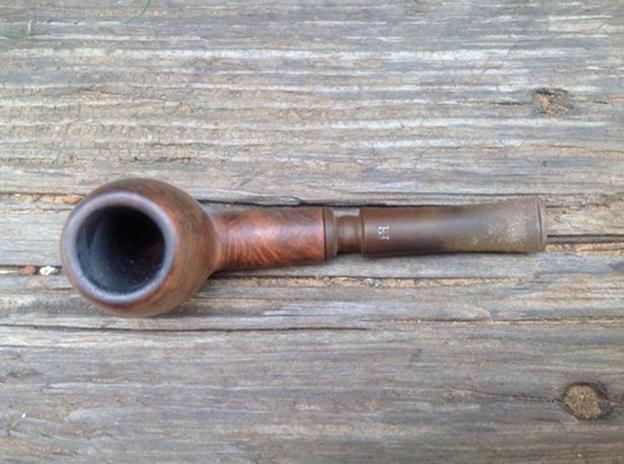
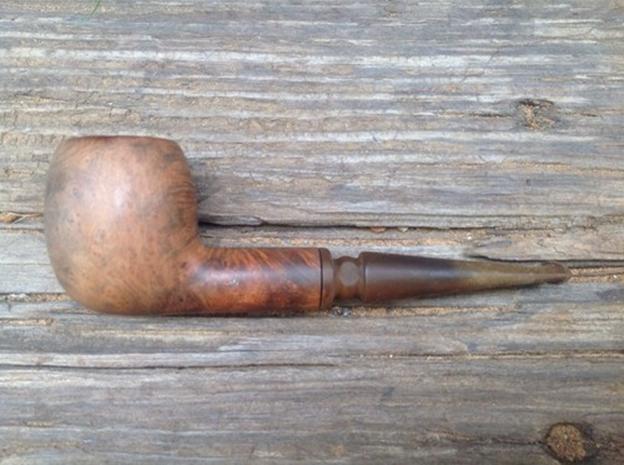
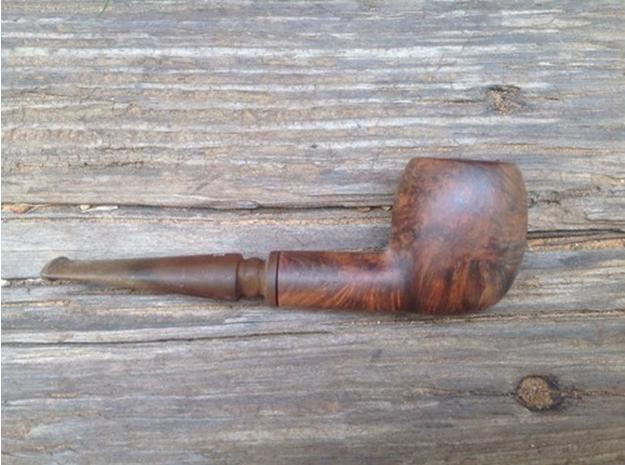
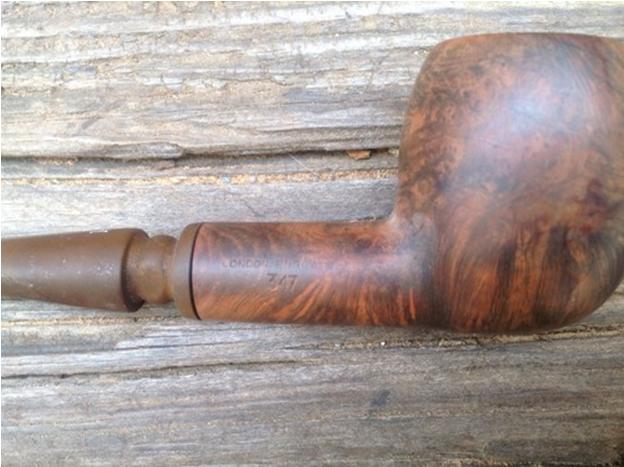
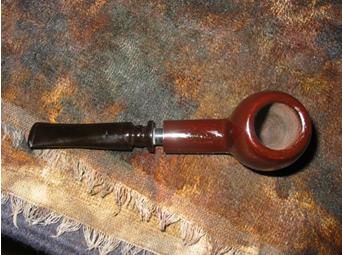
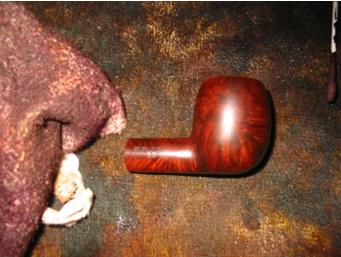
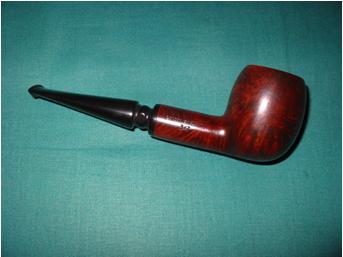
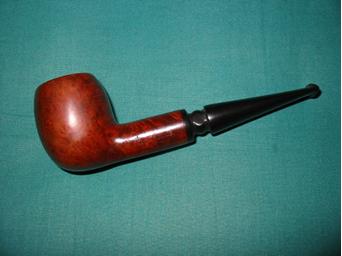
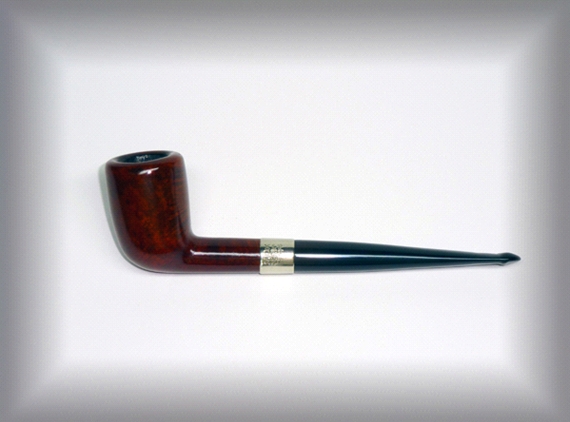
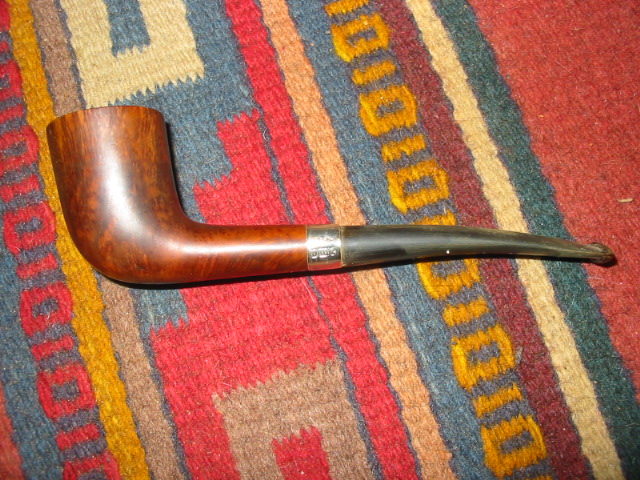
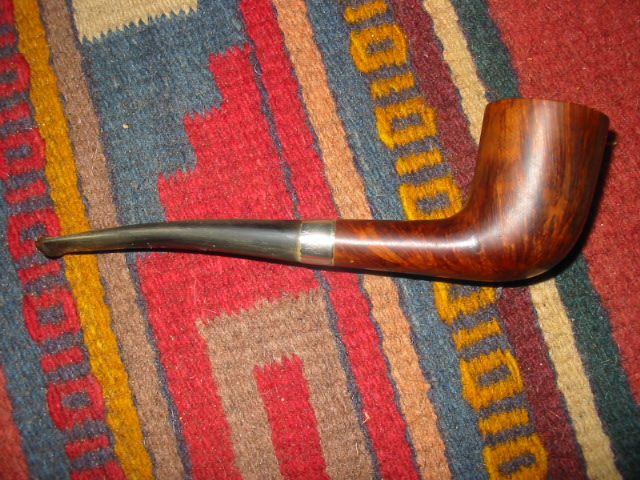
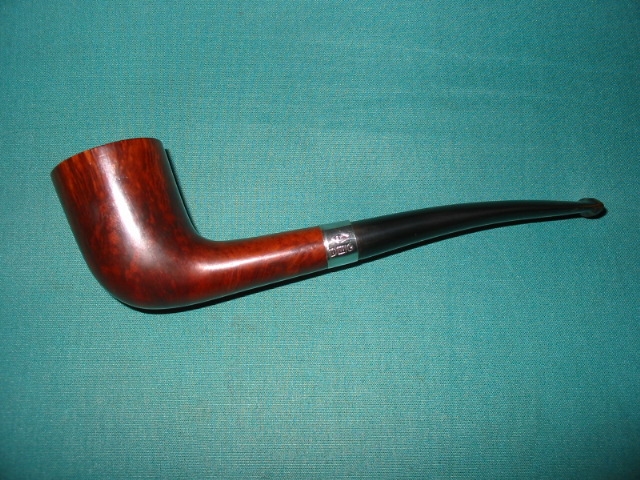
This is one that I just finished refurbishing. It came in a box of pipe bowls that I was given that needed re-stemming. I cleaned and reamed it and removed the tars on the rim. The shank had a small crack in it that needed to be fixed so before I re-stemmed it I cleaned the outside of the shank with a cotton swab of acetone to remove any finish that was on the area that the band would cover. I measured the outer diameter of the shank, picked out a nickel band. Just before placing the band I put some super glue in the crack and let it dry. Once done I dabbed a bit of all purpose glue where the band would go and then heated band so that I could pressure fit it in place. I re-stained the bowl with a dark brown aniline stain to give it a more even finish. I buffed it with Tripoli and White Diamond before giving it a coat of wax. Then I laid it aside.

I found an interesting stem blank that would give the pipe a pleasing look to my eye. I turned the tenon with a PIMO tenon turning tool until it was a close fit and then did the rest of the work on the tenon with sand paper by hand. Once I had the tenon fitting snugly I took my Dremel to the outer diameter of the stem to bring it as close as possible to the diameter of the shank of the pipe. I finished the exact fit by hand with varying grades of sand paper. Upon completion of the fit I used 240, 400 and 600 grit sand paper to remove the scratches and then 1500,1800, 2400, 3200,4000 and 6000 micro-mesh sanding pads to finish the polish on the stem. I put the stem on the pipe and then took it to the buffer and did a final buff with White Diamond buffing compound on a mixed felt/flannel wheel. Remember never buff a stem without it being in place on the bowl or you will round the edges at the stem/shank connection.

Once I had the stem as smooth as I wanted I gave it a coating of Obsidian Pipe Stem Oil and let it dry for half an hour and then buffed the entire pipe with a carnuaba wax buff.

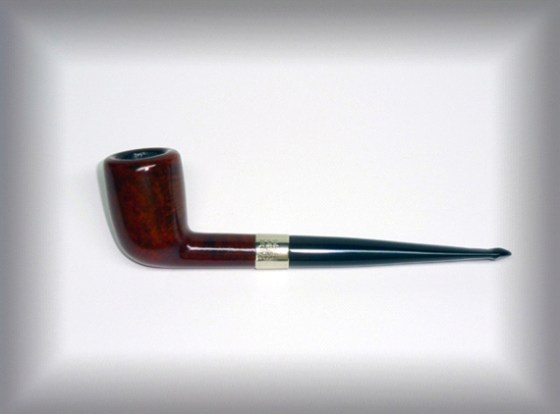
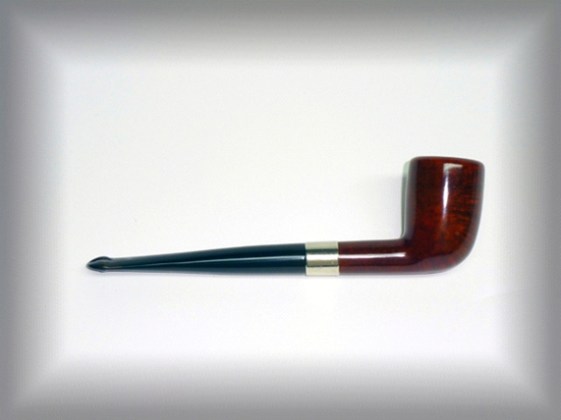
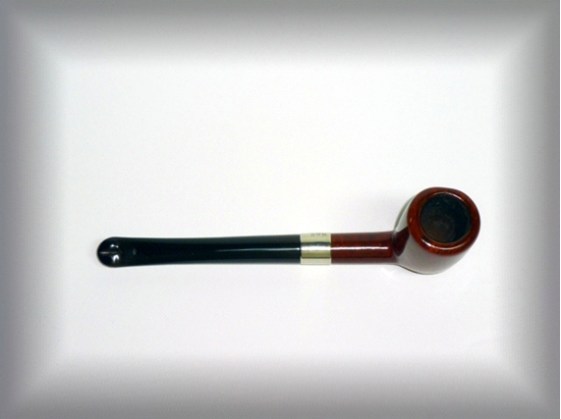
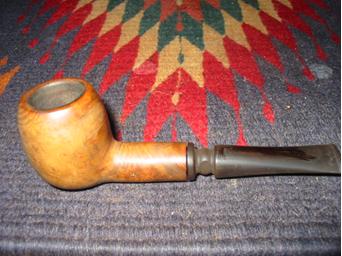
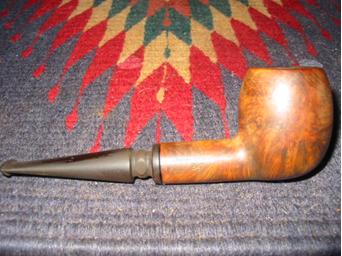
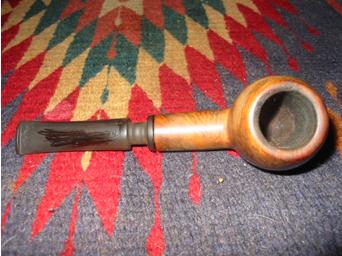
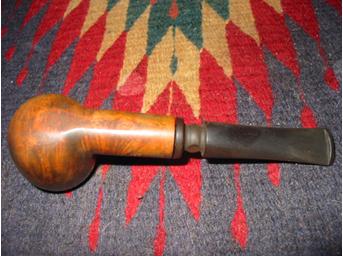
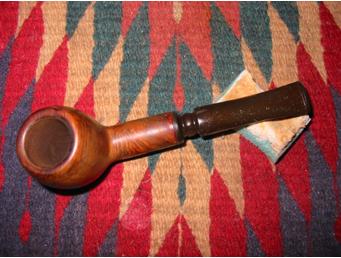
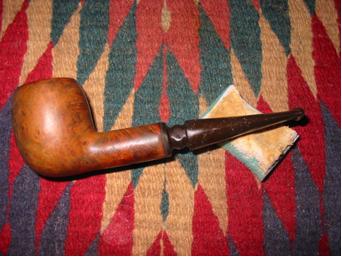
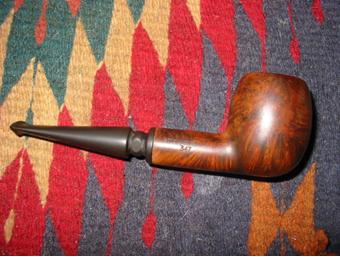
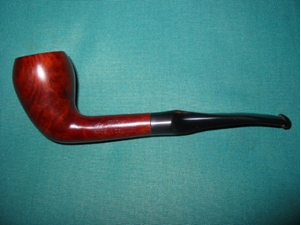
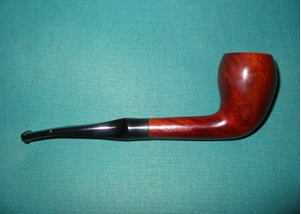
Here is the finished product:

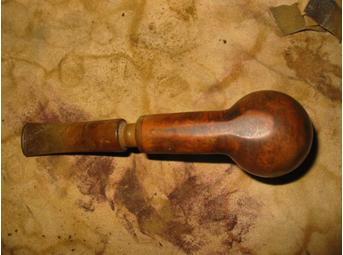
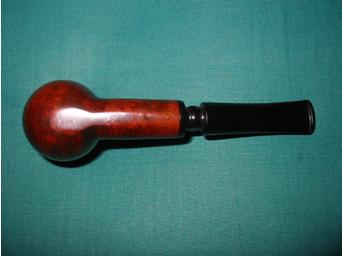
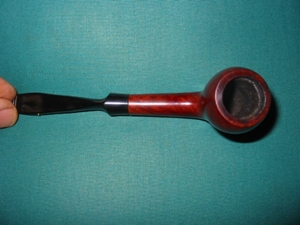
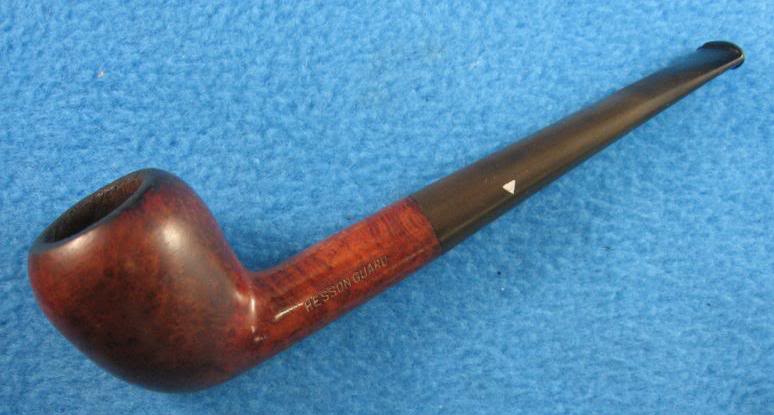
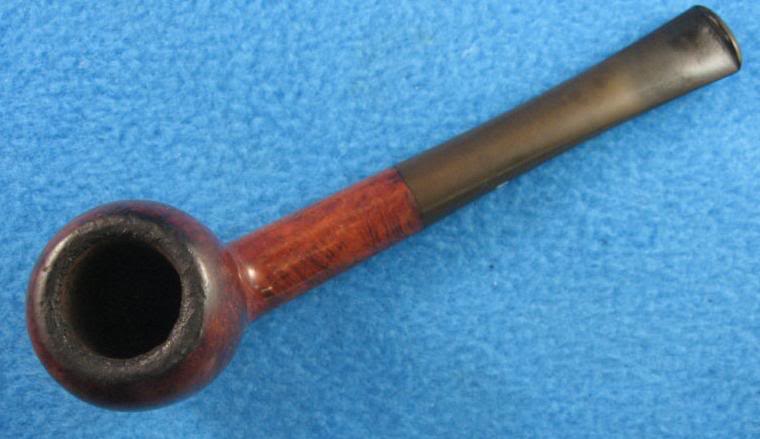
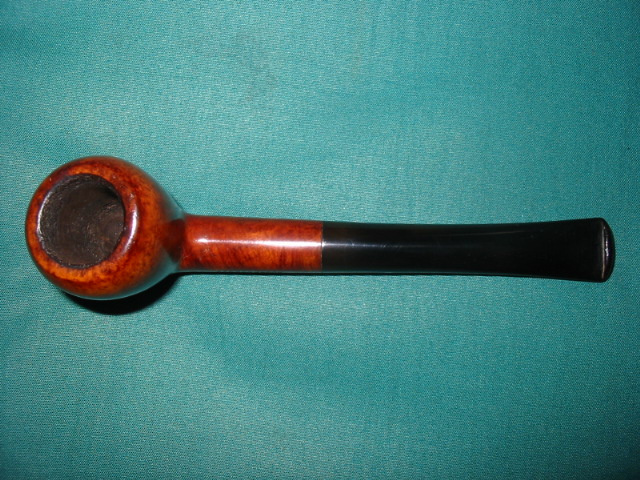
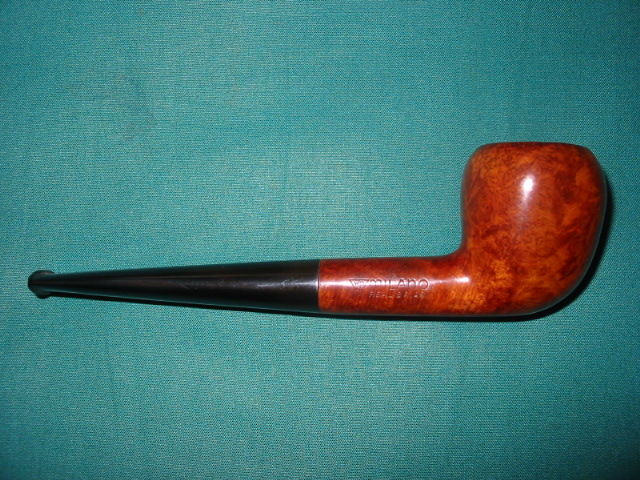
ImageImageImageImage

Correcting an overturn on screw mount stem


Blog by Steve Laug

In years past I remember posting on a variety of pipe forums I have been a part of regarding correcting an overturned stem with a screw mount. I have had old Kaywoodies and others that have this kind of stem and inevitably they were overturned so that the stem did not line up. It was semi tolerable on round stems but even then it was bothersome for me. The worst was on a bulldog with a diamond shank and stem. To not have the diamonds line up just bugged me. I knew there had to be a fix for this but I had no idea what it could be. I used various paper washers to help with the process. I used cardboard and even thin leather. All of these were less than satisfactory. Besides I am a bit anal about that kind of thing and I want it as it should be not half way there.

I don’t remember who posted the help for me or if I picked it up in talking with folks but I have been using this method for a long time now. I have seen others ask on various forums for a method for correcting the problem and have often typed out a response for them. Today I had a few moments to spare so I thought I would write up the procedure and share it with you.

My procedure is actually quite simple. I have a small microwavable bowl that I fill with enough water to cover the metal tenon and about a quarter inch of the stem when it is placed in the bowl. My bowl has a 2 ½ inch diameter so I can lay the stem in it at an angle with the button over the edge. Care should be taken as the water can and will bring out oxidation on the stem and it can be a pain to remove. I try to not allow the water to climb too high on the stem to minimize the work. I also place the stem in with the bend down on a bent stem. Vulcanite has memory and will straighten with heat so I have found that placing the stem with the outer bend in the bowl aids in keeping the bend.

Once the stem is placed in the water I place the bowl in the microwave and set it on high heat for 2 minutes. This generally gets the water boiling or just under boiling. If you worry about the metal causing trouble with your microwave you can heat the water without the stem and stick the stinger/screw mount end in the boiling water once it is removed. Once it is hot I let it stand in the water for another 2 minutes and then reinsert in the shank of the pipe. The glue should be softened enough to turn the stem until it is in the correct position. Once I get it straight I set it aside and let it cool and the fix is finished.

I have used one other method with good success as well and that is a heat gun as the source of the heat. For me it is a bit more labour intensive as you have to keep the stem moving so as not to burn the vulcanite. It does work well though and you do not have to fight the oxidation. Once it is heated use the same procedure as above to straighten the stem and fit. Let cool and you have it finished.

If the stem does not turn easily you have not heated it enough. Give it some more heat with the gun or the water until it is easily turned on the shank. I have used this method on all pipes with the screw mount tenon/stem and had good success.

Because it worked so well with the metal screw mounts I decided to give it a try with a bone screw tenon on a couple of older meerschaum pipes and an old deco Bakelite pipe. The pipes I chose to try the method on were pipes of little value so that if it did not work it would not be a loss. I put a cup of water in the microwave and stood the stem in it tenon down and set the timer for two minutes (time to boil a cuppa in my microwave). I took it out at a minute and gave it a try and it was better. I put it back in the water and let the two minutes finish. I don’t know if the tenon loosened or if it swelled but it is certainly fixed.

On these old timers my two concerns with the microwave were integral damage to the bone tenon from the heat moving from the inside out and secondly to the Bakelite stem. I did not want it to become brittle from the same process. I tried to minimize that by putting it in the water. I have learned on the metal ones to insert the stem and tenon while the water heated in the microwave for maximum effectiveness. I decided to do that as well. I have been smoking these pipes now for several months and taking them apart to clean them without any problems. It seems that they have not been compromised.

I have yet to try it on amber as I have not had an amber stem to sacrifice. I now know that it works on Lucite, vulcanite, Bakelite and on older bone tenons. I continue to experiment with these older pipes to learn what I can in terms of restoration. If you have suggestions or ways in which you have worked with this issue let me know.

You don’t have a buffer? Here is one refurbed without the use of a buffer.


I have one I am working on now that is interesting. It is a nice looking shape – Whitehall Washington Park Author. It had an overturned stem that did not line up and was oxidized and spotty on the stem

 ImageImageImage

I heated the stem in boiling water to loosen the glue this morning and turned it until it lined up then cooled it with water. The boiling water raised the oxidation and also softened it. The stem had a lot of marks like someone had used a pair of pliers to try to get it to line up. Pliers marks were all around the stem mid stem. The oxidation had some spots that were dark… so I sanded it and sanded it with 180 and 220 grit sand paper. I wanted to get the tooth marks and pliers marks out as well as the oxidation. The bowl is changing colours from the oils in my hands.

ImageImage
Still in the process of sanding the stem. Next I have to see what I can do to hide the bubblegum pink fills – argghh. We shall see. Will keep you posted.

I am planning on doing the stem with sandpaper and Micromesh pads only. I want to show how it can be done without a buffer. At least that is the plan for now.

This is with 600 grit wet dry sand paper.

ImageImage
The next are with 1500 and 1800 Micromesh pads. Going to work my way up to 6000 before waxing.

 ImageImage

Here is the stem after 2400 and 3200 Micromesh sanding

ImageImage

Here it is after 4000 and 6000 Micromesh sanding

ImageImage 

Here it is with the final sanding with the 6000 and then a coat of Obsidian Oil.

ImageImage 

Ok. Stem is finished. I just picked out the pink fills with a dental pick. Three of the four I have filled with briar dust and superglue.

The first picture is of the fills before picking.

Image

The next two show it picked and filled

ImageImage 

These two show the fills on the front of the bowl and the large one on the left side of the bowl. I picked out the fill in both of these larger ones and filled with the briar dust and super glue. I still need to do a bit of fine sanding as the stain will not go into the glue areas.

 ImageImage

Here is a shot of it ready for staining

Image
And here is the finished stained bowl. The fills at the shank have vitrually disappeared. The larger ones are still visible but are dark and blend in better.

ImageImageImage

And now the finished pipe:

ImageImageImageImageImage


Patching a bite through


I thought I would write an article on this topic as I just finished repairing a bite through on an old London Made pipe with a vulcanite stem. It is fresh in my mind so it will be easy to write it down, plus I enjoy passing on my refurbishing processes to others to experiment with.

To begin the patching process you need to make sure the stem is clean of all oils, waxes and oxidation. You want the patch to bond well with the original stem. I have also found that any oxidation will show through the patch and leave a blemish on the stem that is cannot be removed as it is under the patch. With that in mind I removed the oxidation from the stem with repeated soaks in a tub of Oxyclean. I mix it 1 scoop to a quart of hot water. I put the lid on it and shake vigorously to mix the powder. Once it is well mixed the stem goes into the water for its first soak. I wash it off and sand or buff between soaks to remove any oxidation that is soften enough to remove it. Then it goes back into the jar for another soak. I repeat the process until the stem comes out clean.

I take it from the final wash and I sand the stem with multiple grits of sand paper to get the stem back to a matte black finish. I don’t want a sheen on the stem yet as I want a bit of roughness in order that the patch will adhere well. Once completed, I use a dental pick to clean up the area around the bite through and remove any remaining rubbish in the hole. I then used a small needle file to roughen the broken surface of the spot to prepare it for the patch.

I soak a pipe cleaner in olive oil (not dripping oily but enough to make it slick as you do not want it gurgling out the hole and messing up the part you have just cleaned. Believe me Super Glue will not stick to oily slick surfaces and it will never dry when mixed with oil.) The pipe cleaner is inserted into the button on the stem just past the bite through. This provides a block on the underside of the hole and also a non stick surface so that the glue used in the repair does not fill the airway and cause the pipe cleaner to bond to the inside of the stem.

I used clear Krazy Glue/Super Glue (you can get black Super Glue from wood working supply sites online) and did an initial fill on the hole. The idea is to get a good bond on the hole itself and not try to over fill. Once it was dry (very quickly) I sanded the surface to roughen the initial patch and then filled the hole and surrounding dent to a bit overfilled (a bubble if you can picture that). I set it aside over night and then the next morning sanded it smooth to match the surrounding surface. If the hole is large the idea is to build out toward the middle with repeated applications of the glue.

I have experimented with different drying times that are optimal for the sanding process and found that the one I stated above works the best for me. The first application is a quick dry and is sanded while the glue is not cured. The second application is hard when I sand it. I use multiple grits (400, 600) of wet dry sand paper and then microfiber sanding disks (1800, 2400, 4000) to blend the patch to the surrounding stem area and then gave the entirety a buff with red Tripoli and then white diamond. I finished the polishing with 4000 grit microfiber disk and it is virtually invisible and has formed a hard bond with the stem.

I am just an amateur refurbisher sharing how I do a patch. I am sure others here, particularly the pipe repair folks, have other methods and better ones. But this one works for me. I will try to do a photo essay on the next pipe stem I patch to show pictorially what I do.

Oh… for information sake – I have pipes that I have repaired in this manner that I have been smoking for 10 years that show no breakdown in the patch.

Seeing through the grime – a story told by an old pipe


I had this story I had written sitting on the hard drive. I reworked it quite a bit the last two evenings and thought I would post it. In it I try to capture the old stories that I find in the estate pipes I seek to bring back to life. Thanks for reading it.

Awhile ago I was working on cleaning up an old estate pipe. I had purchased this old timer on eBay and when I came home from work one afternoon I found it had arrived in the mail. When I opened the box I could not believe my eyes. The pictures the seller posted on eBay did not begin to capture the sorry state of this poor pipe. It was a disaster – the bowl was caked to the point of not holding any more tobacco. I could barely fit a pencil in what remained of the tobacco chamber. The cake that filled the bowl was not the typical hard carbon but was crumbling and very soft. The stem would not fit all the way into the shank as both it and the inside of the shank were covered with tar and a white lime crust. The airflow on this poor old timer certainly must have been miniscule, but there was no way I was going to put this thing in my mouth to even blow on it. I found that once I removed the stem that it had the weirdest stinger apparatus I have ever seen that would have constricted the airflow even more. It was short, thick metal and absolutely crammed full of tars and unidentifiable tan chunks. I know, the word “chunks” does not help understand what I am talking about but I don’t know how else to describe the brown stuff that was thick and packed all over this stinger. The metal of the stinger was rough and appeared to be pitted or at least it had craters and crevices all over the sides and top of it. It was in truly sad shape. It certainly must have been a beautiful pipe when all this started. It was that hope of hidden beauty beneath the grime that drew me to this pipe and caused me to want to take a risk on cleaning and restoring it. On top of that was also the challenge of restoring what looked to be a hopeless cause.

I carefully wiped the outside of the bowl with a damp rag to get some of the surface grime off. I wanted to see what the grain looked like underneath the grit. I carefully separated the stem from the shank and removed the stinger for a soak. I then used several reamers that I have to ream both the bowl and shank of the pipe. All of this was preliminary to the actual cleaning work. I wanted to be able to more knowledgeably assess the condition of the pipe under the years of grime. What a lot of carbon dust lay on the paper that I put on my work table. The grain did not look too bad. There was some interesting curly birdseye on one side and flame grain on the back and front of the bowl. A twisting grain flowed across both the bottom of the pipe and the shank. I turned the pipe over in my hands to inspect it for cracks. I have found that there are often cracks in pipes that have been smoked this hard. Surprisingly, there were none in this bowl at all. But this pipe had been smoked right through the bottom of the bowl – yes burned out. That would not surprise you if you had seen the condition of the pipe. But what made it surprising to me was that the bottom of the bowl had been plugged and repaired with a well worked briar plug. It had darkened but I could still see that it fit very snugly and carefully and showed some thoughtful work at the hands of a good repairman. All this caused me to reassess what I had originally concluded about the pipe and the piper who used to smoke it.

A pipe, that at first glance, appeared to have been “abused” this much, must have been ignored and not cared for by its owner. But I am not convinced of that verdict – in fact I was beginning to conclude just the opposite – it must have been a well loved and favourite pipe. The fact that it had obviously been smoked to the same point before in its life and then repaired with a well done plug and then smoked to the same point of cake again says a lot about what kind of pipe it must be and what kind of smoke it must have delivered to it owner. On the one hand, the original owner did not take care of his pipe in terms of daily maintenance and cleaning. I don’t think it had ever seen a pipe cleaner in all of its years. But on the other hand, he cared enough to take the time to have a well done plug put in the bottom of the bowl to fix the burn out and then smoked it again to this point a second or maybe a third or fourth time. That is the contradiction that exists when I look at a pipe like this. There is more to the story than initially meets the eye.

Only when it is stripped down and cleaned do I get a bit more of the story underneath all the surface grime. I think that the old fellow who must have owned this pipe would have been interesting to spend time with having a talk. I am certainly making an educated guess but I believe that this was a pipe that belonged to an old timer. By the looks of it, I would say it would have been disposed of with his other non-sellable or unwanted estate items. The fact is that if that was not true it would still be in his mouth. I would guess that he was a one pipe guy who refused to give up on an old friend and kept repairing and smoking his old buddy. Each problem that came up was a puzzle to be addressed and repaired before the pipe was returned to its smoking regimen. There is a silver band on the pipe that probably is original and matches the shape of other pipes like this one that I found on the web, but it is also engraved with what appeared to be initials – a monogram that possibly identified it as his. The band had turned around on the shank several times and had been obviously re-glued several times to keep it with the pipe. It was a not only a mark of ownership but of pride. It made me wonder if he had it engraved himself of if one of his children might have had it done as part of a very personal gift for “dad”. In the bottom of the bowl there remained a bit of old and very dry tobacco. The bowl had been smoked to that point and left. There is no way of knowing what the tobacco was as it was pretty well destroyed. But it was there and was crumbling with the cake in the bowl. It gave me pause to wonder what happened to the guy that made him stop at that point of the bowl and lay his pipe down.

As I moved to do the first stage of cleaning the stem I was amazed to see is that the stem was actually pristine under the grime. There were no tooth marks or bites on it. There was no sign of the kind of abuse that I have come to expect in this kind of pipe. Sure, the button was clogged and airway was almost solid with tars but there are no bite marks at all on the stem. There are no scratches and no problems that a good buffing and cleaning would not take away. That too tells me something of the old pipesmoker. He was not a clencher. He did not chomp on his bit. It was the original bit and it was in good shape under the grime. He was a man who held his pipe in his hand while he enjoyed the process of sipping the smoke. He was obviously one who was not to be hurried in his process and did not want to be bothered by anything that stopped the enjoyment of his pipe. I appreciate the care that he took to not bite the stem after having repaired many stems that have been marked by the fangs of the owner.

The cleanup was finished and the bowl was refinished and re-stained with a cherry stain to match the original colour of the pipe when it was made. The silver was polished and the stem was polished to a pristine black. The bowl was coated with a charcoal based coating to give it a bit of protection as I work to rebuild a hard cake in the bowl. I loaded a bowl of my favourite Virginia/Perique blend for the inaugural smoke. I chose a quiet spot to relax while I put the fire to the tobacco and sipped the smoke. The flame jumped to the tobacco and the smoke began to curl around the lip of the bowl and out the edges of my mouth as I puffed. Ahhh, now I had joined the ongoing story of this pipe to my own history. It smoked very well and delivered a cool flavourful smoke to the bottom of the bowl… I think next bowl I will remove that odd old stinger and see what I get from it. What a great pipe. I think I had begun to understand the charms of this old pipe. I tip my “new” pipe in quiet thanks to the old piper who had pointed the way to this well loved pipe.

Good hunting – estate pipes


I wrote this about one of my walk about hunts for estate pipes. Thought I would share it here.

It was a beautiful sunny autumn day in Southern Alberta. It was fall, crisp and clear. The fall colours were in full glory. Leaves crunched under foot and swirled on the breeze as I walked down the sidewalks. In the city of Lethbridge, Alberta (city is a bit of overstatement) I sat at the local Tim Horton’s shop (a donut and coffee shop for those who are not Canadians). I sat looking out the window enjoying the morning. A couple of antique shops had caught my eye earlier that morning when I had taken a meandering stroll with a pipe. It was still early and they would not open for awhile yet, so I leisurely sipped my coffee and dreamed of what I might find behind the windows and locked doors of those shops. I had scoped them out with my nose pressed against the glass. I had seen in one of them a pipe rack or two on a shelf near the door. The other was a bit more mysterious and less organized. They both looked hopeful to me. I wondered what treasures I would find once they opened. Would there be some Dunhill’s, some Larson’s, old Comoy’s or GBDs? Always the hunt and the wait are things that leave me budding with optimistic (and I suppose naive) hope that a real treasure would await me. Would I find a new lighter or some tampers to add to the collection at home? It is always fun to travel through the shops in my mind before actually going through the door.

Ahhh. Coffee is finished and the first shop is opening its doors. I am off for the hunt! I go through the door and wind through the shop. I walk down the aisles to eliminate any hidden finds before I check the ones by the door. There is nothing here so far. I know there is a rack or two by the door but I want to finish the back first and then work through that rack. I find some cracked and sad old Grabows, a beat up old Yellow Bowl, some pipe reamers, a few dilapidated pipe cleaners and some old racks that do not grab my attention. I move through the rest of the shop and come on the racks by the door. I work through the pipes in the rack and check out the finds there. There is nothing that grabs me or begs to be taken home jumping from the racks. There are some older Grabows, pretty sad shape. There is an older GBD that is really caked and damaged with a crack bowl and shank. I look at the prices and am amazed at the nerve of a seller to ask the kind of money they want for these poor old fellows. I ask the clerk for the best price and find they are willing to knock off $5. The remaining $25 per pipe mark is still far too pricey for what the pipes are, so I walk away. I leave the shop and head next door to the second shop. It is still closed so I wander down the street wondering if the day is going to be a bust in terms of pipe finds. I visit a couple of used furniture shops and thrift shops and find nothing.

Finally I make my way back to the other antique shop. The door is open and the owner is outside having a smoke. Hmmm, that could be promising maybe there will be something here. At least they are not antis! I wander in and immediately come upon a rack with three pipes. Nothing stunning but very interesting just the same. One is an older SC Pipe, made in Canada by the Paradis Bros. in Montreal. The second one is no name Italian in pretty rough shape and the third is an old Brigham two dot. As I am checking out the stems, shanks, bowls etc. for viability the owner comes up and we strike up a conversation. He asks me what I am doing with old pipes. I tell him of my hobby of cleaning, restoring and smoking the old timers. He is pretty interested. He calls his wife over and asks her whether she remembers where he had put some other pipes from the shop. He asked her if they were here or at their home. She sends him to the back room and I go back to work through the threesome in this rack.

I hear the owner in the back room and shortly he comes out carrying a large bucket of pipes. I feel a wave of excitement move over me as I look at his bucket. I leave the pipe rack and make my way to a table where he puts the bucket and pours out his loot. Wow. There are a lot of pipes there – probably about 50 of them – really an amazing lot. Mostly junk by the looks of the pile but worth the time. This is the joy of the hunt that I so love. To me there is nothing like just digging through old briar, looking at the stampings and shapes, getting a feel for the haul and separating them into piles that demand further attention and those that are disposable. I love the task of digging through the pile of old clutter, dirty pipes, various pieces and stems and bowls and seeing what I can salvage. Sure enough I find quite a few. I am working through the first sort and feeling the excitement rise in me. I put the ones for a third look in a pile and return the rejects to the bucket. These rejects just do not catch my eye or interest. They might have some cracks in the shanks or bowls and just are not worth this cut. The remaining lot is five pipes – a Comoy’s Guildhall pipe, SC Bent egg, a GBD Billiard, a Old Pal pot, a Golden Arrow London Pipe Lumberman made by Comoys. They were filthy and grimy. Grain was relatively invisible. An utter mess, which made me realize that I was probably in for a good deal.

I worked through the five that I had set aside a second time in the light. I wet my finger and highlighted the grain to see what was under the grime. I checked the shanks and rims for char and burn. I looked for gnawing at the mouthpiece and cracks in them as well. I wondered about the prices and what I could get the lot for. I called the owner over. He smiled as he saw my work. His first words were to offer the whole lot. A bucket of pipes for $50 cash would make the bucket mine. I have to tell you, at first the joy of the hunt caught me, I wanted it all – a price of $50, Canadian no less, for the lot had my wallet virtually leaping out of my pocket. I thought about it. Oh the stories that these pipes could tell and that I could make them tell. The mysteries that lay beneath the grime. I wanted them all for sure. Then my more rational and logical side kicked in as I realized I would never get the lot on the airplane and carried home. I envisioned explaining to airport security why I was carrying a bucket of pipes on their plane. It was tough to work through this process. I argued with myself and finally asked the fellow about the price for the five of them. He scratched his scrubby beard (I can say that because I have a long one). He looked at me and asked if I was sure I did not want the lot. I hemmed and hahed then said no and he said the price was $5 each… I quickly settled up before the price changed. I made my way outdoors with my treasures and headed to the airport.

Since then I have had all kinds of thoughts about the ones I left in the bucket. I think of creative ways I could have gotten them home. I thought of shipping them to myself, of bussing them to my home by Greyhound. I even thought of calling my friend in Lethbridge and having him pick them up and ship them to me. But the fact is that the bucket of pipes is still sitting in that little shop in Lethbridge, Alberta. Maybe they will be there the next time I visit. Or maybe one of you will stumble upon the shop there and have the same joy of discovery as you gingerly and excitedly paw through the lot. If you get there and pick up the lot be sure to let us know…. some of us are interested!

A Pipe Refurbishing Journal


I have worked out a process of refurbishing old pipes as a hobbyist that has worked for me with ongoing improvements and learning being added almost every pipe I work on. That is not to say that I am even a wannabe professional because I am not. For me it is a way of doing something that I find relaxing and rewarding as well as something that I can actually finish. With my work I am involved in ongoing dealings with people and issues that seem never to really come to closure so to take a pipe and bring it back to life and enjoy a good smoke in it is something I take great pleasure in. I thought I would write a bit about my process using and old pipe that came in the mail that I picked up off of ebay as an example.

… I got home from Budapest, Hungary last week to find a package of pipes had arrived that I bought on EBay before I left. I opened the box to find a real mess waiting for me. The photos on eBay were not good and I was in no way prepared for what awaited when I opened the box. There were four pipes there – two Dr. Plumbs, a Stanwell with a broken tenon and a White Cliff meer-lined pear. The two Dr. Plumbs were what interested me in the lot and why I had initially bid. Dr. Plumb was an older second’s line of GBD and these two interested me. The first was a 9438 – GBD Rhodesian shape that I find is an all time favourite of mine. The second was a silver spigot Oom Paul – a shape that I have wanted to try for a long time.  I figured the Oom Paul would be one I kept – not sure of the others in the lot. The White Cliff and Stanwell went back in the box and I turned my attention first to the Oom Paul.

I took it out of the crumpled newspaper that wrapped it, being careful not to spill the ash and crumbling cake all over the place. It really was an ugly mess. I wanted to assess what needed to be done with it and whether it would be worth the effort. Sometimes even if it is really not worth it I will still clean it to practice methods and the use of new tools. This one was in desperate shape. The bowl was filled with crumbling cake and torn remnants of tobacco. The top was covered with a sticky and thick tar or lava that was about the thickness of a dime. The outside of the bowl had dark grime deeply embedded in the finish. It was muddy and dark enough that I could not see the grain at all. Now before you think it was an old patina finish – I assure that it was not. There was no way of even seeing the finish. It looked just like one of my dogs when he has been playing in the mud on a rainy day. I know somewhere underneath he has a black coat but it is not visible at all under the dirt and grime. This pipe was just unbelievably dirty.


Working my way back along the shank of the pipe I came to the silver shank cap which was loose and very tarnished. It appeared to be sterling or at least silver plated under the tarnish. It had pulled away from the shank and was turned to one side. It appeared to have something engraved in it at about 1 o’clock but it was not clear under the tarnish and grime. The stem, a faux spigot, no long fit in the shank as it sat among the grime and crumbling build up of tars and a yellowish residue that erupted around the edges of the union of shank and stem. It was solidly embedded in this mess and was immoveable. The stem was an oxidized brown colour at the saddle and the curve. It had a silver cap at the end of the stem before it disappeared into the grime. That union of vulcanite and metal was a mottled edge of tarnish and grime. The button end of the stem was grimy and oxidized but it did not appear to have tooth marks or pits in it. It was merely encircled by that hard, white coloured material that can collect under a rubber bit protector. I moved to the lip of the pipe and looked at the slot. Unbelievable!! The airway was gone. The slot was filled and all that was left was a tiny hole the size of a pencil lead. The tar was erupting out of the slot and was a hard black semi circle that enclosed the button end.

I turned the pipe over in my hands to look at the underside of the bowl. I always like to check and see if I am going to be surprised by a burnout or a blackening spot that could signal an impending burnout. I scraped some of the grime off the bottom of the bowl and found a spot that appeared to be the size of a pencil eraser on the bottom. It was black but did not appear to be burned or soft in anyway. I used saliva to clean away the grime a bit for a better look at this spot. It cleaned up slowly and with a soft cloth and a bit of spit it showed that what I was dealing with was a repair in the bowl bottom – a plug of briar that had been inserted. It was a bit darker than the briar around it but it was a good solid repair and did not appear to be loose or damaged. That was a good sign.

I laid the old pipe down and gave it a good hard look. Would this be worth the effort or would I end up pitching it at some point in the cleaning process? That is always a question I ask before I get everything out to do the cleaning. I picked up and turned it over in my hands again. I checked it over one more time and figured I would start and see what happened in the process. I set up my desk top work bench with newspaper as a base and then laid out the tools of the craft! I put out a variety of reamers and brushes of different sizes. I put out the dental picks that I knew would be needed in the stem and the shank. I put out the pipe cleaners – bristle, thin and fuzzy, the alcohol and the alcohol bath that I keep handy for bowls that need a soak. I drizzled some clean alcohol around the shank stem union and with a bit of wiggling and more dripping the stem came free. I use an ear syringe for that part of the work as it allows me to control the placement of the alcohol.

I set the stem aside and turned my attention to the bowl. I wiped down the outside with a soft cloth and Murphy’s Oil Soap (undiluted) to get the grime off and get some idea of what was underneath the mess. It took several applications and wipes with the cloth to get through the grime. I also wiped it down with an alcohol wipe to get the last of it off. As I was planning on refinishing the pipe anyway I was not concerned with the finish. Underneath the grime the briar was actually quite nice – birdseye on one side and a variety of grains the rest of the way around the bowl. The shank was flame grain. It looked promising. I took a sanding block that is fine grit and sanded the top of the bowl to get the grime off. It was rock hard and since I was refinishing the pipe anyway it was the preferred method of removing the grime. Once that was done I reamed the inside of the bowl and the inside of the shank. I used my Senior Reamer to start with and then the T reamer with the four different cutting heads. The bowl was lined with a crumbling cake that needed to be taken back to the bare wood as it kept letting go and falling apart. Once it had been cleaned out I was able to inspect the bowl for cracks and burned out areas. Fortunately it was clean and uncracked.  The bottom of the bowl was below the airway so once it was cleaned I would need to use some pipe mud to build it up to the proper height.

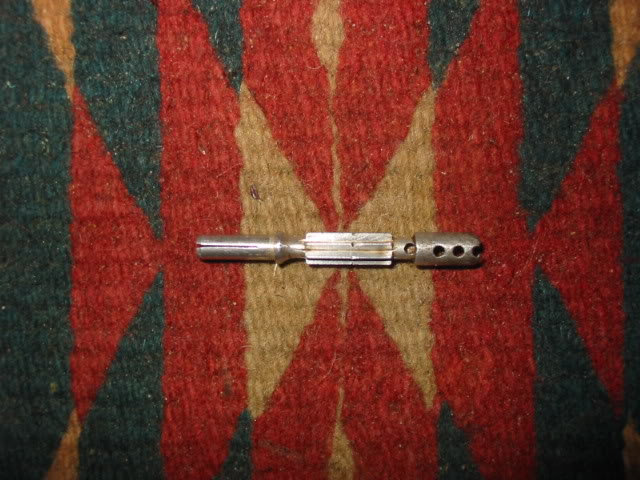
The shank was really a mess. I could not fit a standard pipe cleaner through it and had to use a dental pick to open it up. Because it is a full bent a drill bit was unworkable past about the middle of the shank. I have a dental pick that have I straightened out a bit and it worked like a champ. The pipe had a sump in it like the Peterson system pipes and it was absolutely jammed packed with tars. The stem would not even fit in the shank it was so full of junk. I used a small brass battery terminal brush to work over the inside of the shank and the sump area once I had opened it up. I blew air through to make sure it was open. I used pipe cleaners and q-tips to clean it up. I kept at it until the airway and shank were clean. Once I finished with the interior of the pipe I put the bowl in an alcohol bath over night. I have found that this takes off all the grime that is rubbed into the finish and any remaining interior grime.

While it soaked I turned my attention to the stem. I opened the airway in the stem with my dental pick from the button end. I was able to remove the stinger apparatus in the tenon and then began to work on the interior of the stem. The stem itself was a mess on the inside – a pipe cleaner would not fit through so again the dental pick did the trick. I opened it up a bit then used over a 100 pipe cleaners and a bunch of q-tips to clean out the gunk. I also used a bristle shank brush to loosen things up. Once I cleaned it with lots of alcohol and many cleaners the inside was clean. The outside needed lots of attention. The Dr. Plumb painted logo (not stamped at all just a surface paint) was sacrificed to cleanliness.  I sanded the stem with 1200 and 1500 grit sandpaper to get the brown out that even the buffer did not remove. After that was done I polished it on the buffer with red Tripoli and White Diamond. The stem was actually in very good shape once the grime and oxidation was removed. I cleaned the silver portion of the stem and the faux military mount with silver cleaner and then polished that and buffed it with a soft cloth. I also used steel wool on the stinger apparatus until the roughness and grime was gone from it and it shone. I inserted it back in the pipe for the first smoke to see if it would remain. The stem was in great shape and ready to be inserted in the shank of the pipe once it was done. It still needed to be buffed with Tripoli and White Diamond before a good coating of Carnuba was applied to keep the oxidation at bay.


I removed the bowl from the alcohol bath and found that bath had done its magic. All the grime was off and the finish as well. What remained was a soft reddish briar that was clean and smooth to the touch. After bowl dried I sanded it with 1500 and 1800 grit sandpaper, being careful of the stamping that showed up on the bottom of the shank once the grime was gone. I finished the sanding with micro mesh pads in 1800, 2400 and 4000 grit. The top had some minor burned areas and the bowl was out of round so I bevelled the bowl top into the bowl to take care of the unevenness. When I finished sanding it I washed the outside down with a damp alcohol soaked rag to remove any dust and show any scratches that needed a bit more attention. Once those were taken care of I filled the bowl with cotton boles and using the ear syringe filled the bowl and shank with clean alcohol to remove any ghosts and residual tars in the bowl. I let it sit over night while the leaching process did its work.


While bowl was undergoing that treatment I took silver polish and a soft cloth and worked on the stem metal work. For the stinger apparatus I used some 0000 steel wool to clean off the staining. I buffed the stem with Tripoli and white Diamond and laid it next to the bowl.

The next day I removed the cotton boles and let the bowl dry out. I opened a can of cherry stain that I use on these old timers that matches the original colour really well. I shook the alcohol based stain until it was well mixed and then using a soft rag and a folded pipe cleaner I applied it to the whole bowl. Once it was well coated in the stain I lit it on fire with a lighter to set the stain. Once that was done I set it aside to dry well.

In the afternoon when the stain was dry I took it to the buffer and lightly buffed the stummel until it was smooth and shining. The finish looked really good. I gave it a good coat of wax and then polished the silver on the shank cap. I was able to turn the cap a slight bit and the initials that were engraved in it became visible – WGW. I took it back to the desk and inserted the mouth piece. It fit snugly into the shank and the look was as it should have been.


(In the last picture on the bottom right the plug in the bottom of the bowl is visible. I re-stained that area of the bowl and the plug is a little less visible.)

I then turned my attention to the inside of the bowl. I needed to raise the bottom of the bowl to meet the bottom of the draught hole and protect the plugged bottom of the bowl. I mixed a batch of pipe mud – cigar ash and water mixed to a pasty thick consistency and painted it with a folded pipe cleaner and packed it in place with a pipe tamper to raise the bottom of the bowl to the bottom of the airway. I let it dry for a day until it was hard and then prepared a bowl coating with activated charcoal and my secret ingredient and painted the inside of the bowl with it. I wanted this old timer to have a chance and with the cake gone I did not want to take a chance on burnout with it. I wanted it to have a fighting chance for a long life ahead. I set it aside to dry for two days and waited for the initial smoke once it was dry.

Two days went by and the bowl coating was dry and the mud was hard in the bottom of the bowl. I had packed the pipe in my brief case and took it to work with me for the ride home that evening. After work I packed the Dr. Plumb Oom Paul with Doc Piedmont and lit it with the Zippo. Wow what a clean, dry smoke. It was smooth and full of flavour. It is a great smoker and did not heat up at all during the smoke. I carefully knocked out the ash and inspected my bowl coating and the bottom of the bowl. It looked undisturbed and solid.

When I got home I removed the stinger that was in it to give it a go without the stinger to see what that does for it…my gut feel is that this pipe will be one of my go to pipes in the future.

Why I Buy Old Estate Pipes


Blog by Steve Laug

For some the idea of putting someone else’s pipe in their mouth is repugnant and therefore something they would never do. For others the building of their own story around a specific pipe is what keeps them from buying previously owned pipes. For me both of those thoughts do not negate the pleasure I get from estate pipes.

I too enjoy buying a new pipe and then choosing the tobacco to christen it with as I work on my own story with this pipe. Though some do not like the process of breaking in a pipe, I find that I like the virgin first smoke in a new piece of briar. I love building the stories of when and how and with whom I smoked the pipe. I love thinking through why I purchased this one pipe and what it was that drew me to it. I enjoy the process of working with the carver or artisan as the pipe is born. The events and the place add dimensions to the smoke for me. It is not just a disconnected piece of wood for me. It comes dressed in a story.

The same can be said of an estate pipe. The reason I buy estates is not just for the good deal on old briar but because of the stories that are associated with them. As I smoke this pipe after it is cleaned the place and the time I found the old pipe is a part of the thinking in my mind. I remember what it was that drew me to it and where I was when I bought it. I remember who was with me and what we were doing. I always try to research as much information and the story attached to the pipe as I can. That information may be merely some data on a previous owner, or maybe just a time period. But sometimes I get the full blown story from the seller. I find out who used to own it and what they were like. I find out their tobacco likes and dislikes, not only form the story but from the ghosts in the old pipe. I can tell a lot about the pipe by the state it is in when I bought it. If it tarred and thickly caked and the stem is discoloured and has few bite marks I can see that the previous owner loved this pipe and obviously it smoked well enough to make them keep coming back to it. Often there is a bit of tobacco still in the bowl as if the person laid it down for a moment and never got back to it – kind of like I do sometimes when I get called away after just loading a pipe. There is much more that can be learned just by looking at the pipe as you handle it and clean it.

When I have exhausted the information that is available to me through the seller and through my observations I am still not finished with the story of the estate pipe in my hands. Then I use my imagination to help me put the pipe in its time and in the hands of the person who bought it. I picture their smoke as they pack the pipe with the chosen tobacco. I picture the setting of the smoke and even try to imagine what they were thinking when they chose the pipe for the first time in the shop. I know this is esoteric stuff but it is the stuff of a good story for me. It adds colour to the object in my hand. After all, this pipe comes to me with a history and to some degree I want to honour that history and enjoy it in the process.

To this data, real and imagined, this story I add my own new stories. I join a line of folks who have held this pipe and cherished it over the years. I know full well and appreciate that someone will follow me in that line and add their own stories to the ongoing life of this briar. As it has outlived its first owner I know it will outlive me. I wish at times that the old pipe could talk and tell me the stories it knows and holds. I wish it could speak of the quiet conversations with its previous owner. I wish that I could travel back and have a smoke with the previous owner and listen to their full stories. I wish also that I could jump ahead and give that info to the person who gets the pipe from me. All of that contributes to the joy of the old pipe for me. The hunt for the perfect estate pipe is good. The restoration and resurrection of old briar is good. The rekindling of fire to the tobacco in the old bowl is good. The patina and feel of old wood is good. But it is the story of the pipe, the mystery and the history that grabs me and keeps me on the hunt.

As I close these thoughts I want to use one of my finds, one of the old ones I got on the hunt. It is an Altesse Genuine Briar (with a real amber stem). I know the pipe comes from the era of the 30’s. It rests in a snake skin case that is in pretty good shape. The pipe bowl is out of round yet the overall care taken of this pipe speaks a wealth to me. Its previous owner loved this pipe. It is well smoked and well cared for. When I bought it from the antique dealer it still had a bowl load of tobacco in it. It was unsmoked tobacco so I imagine the owner loaded the bowl and somehow never got back to it. His heirs sold the pipe to a traveling antique dealer who sold it to the one I bought it from. Nowhere in the process did the bowl get dumped. It was hardened and dried out tobacco to be sure… but what must have happened to that old fellow who cherished this pipe that he did not light that bowl?? The thought of it makes me wonder. So when I cleaned it up and reloaded the bowl I raised it in his honour and said cheers old fellow. Here’s to the bowl you did not get to finish!! Enjoy the smell of your pipe as the smoke wafts your direction.

…. I know this sounds cheesy but hey… cheesy is my prerogative! Just an example of what draws me to preowned briar! Here’s to your pipes! Cheers