
Blog by Steve Laug
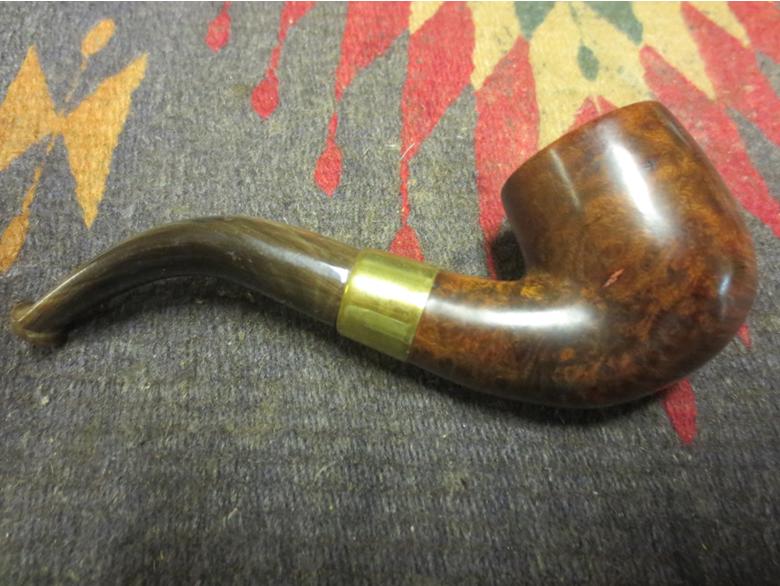
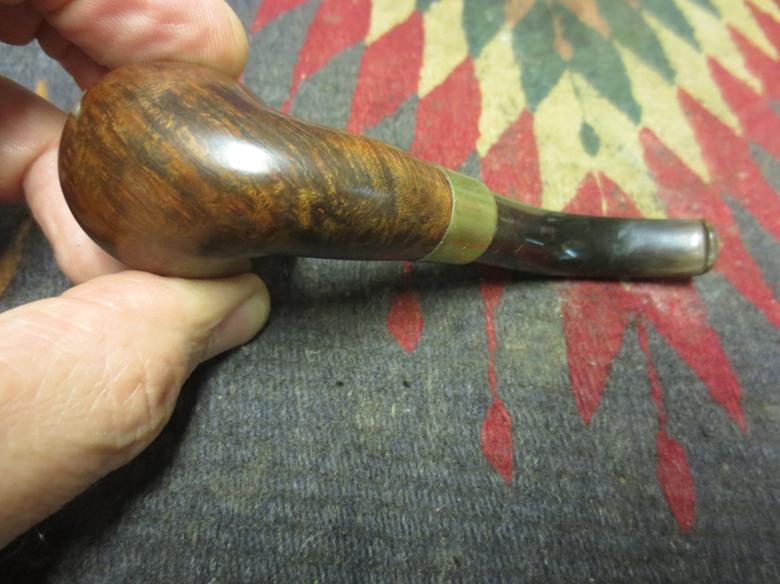
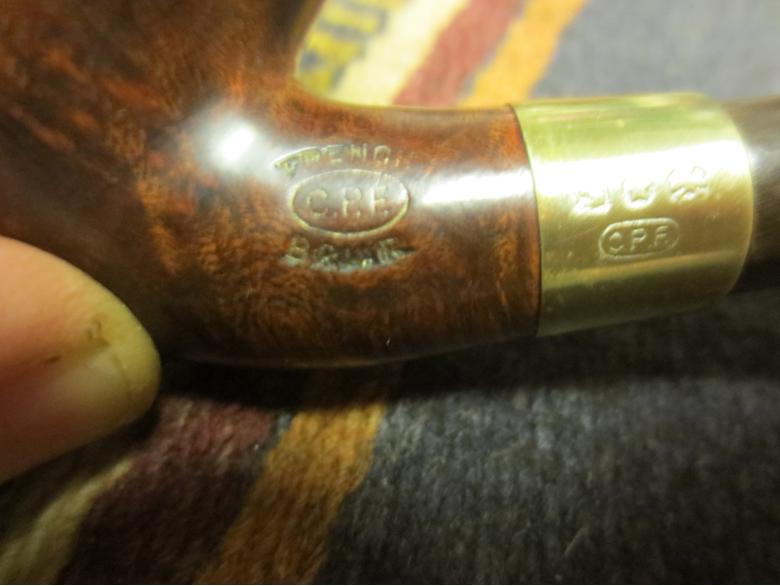
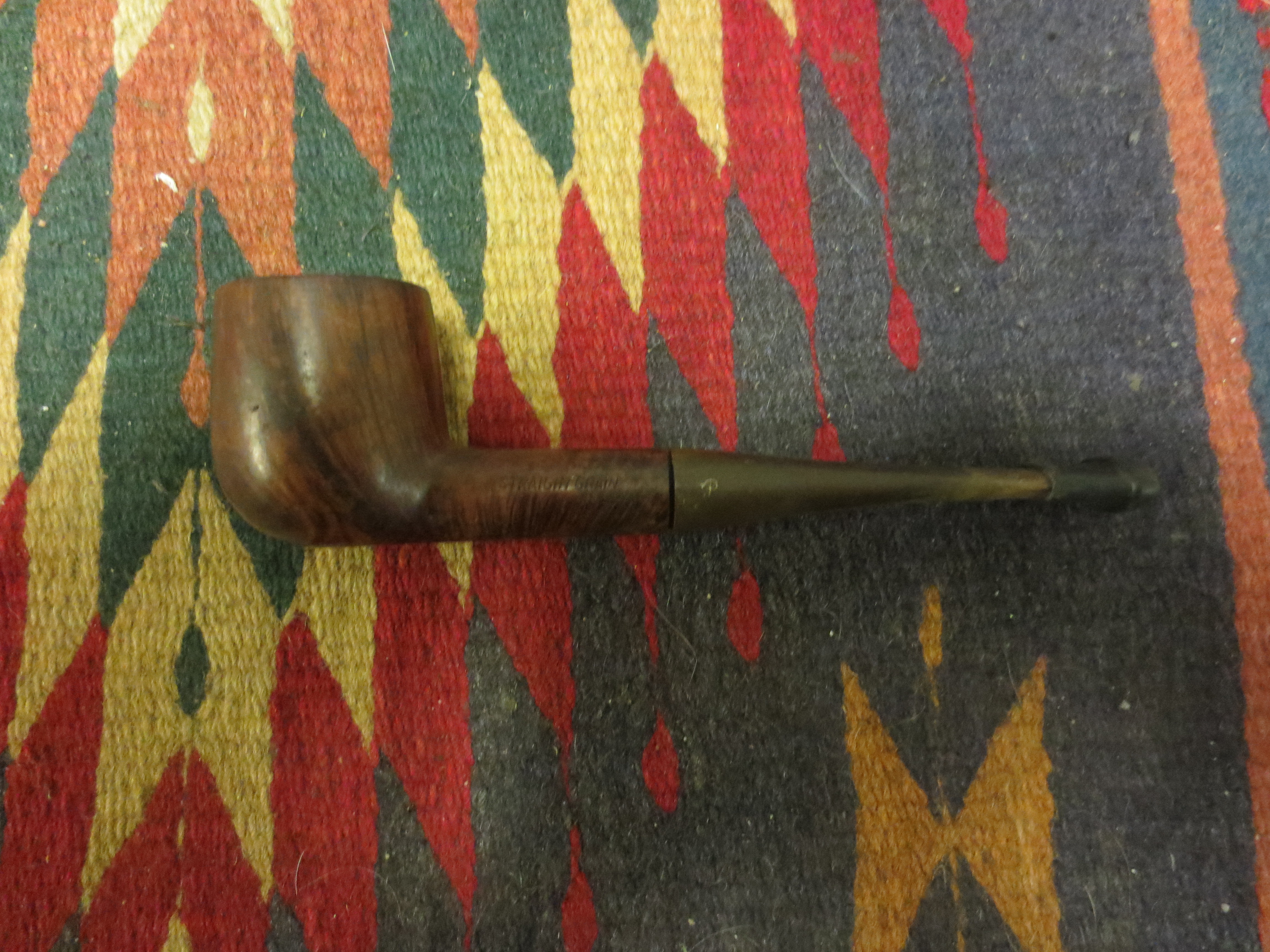
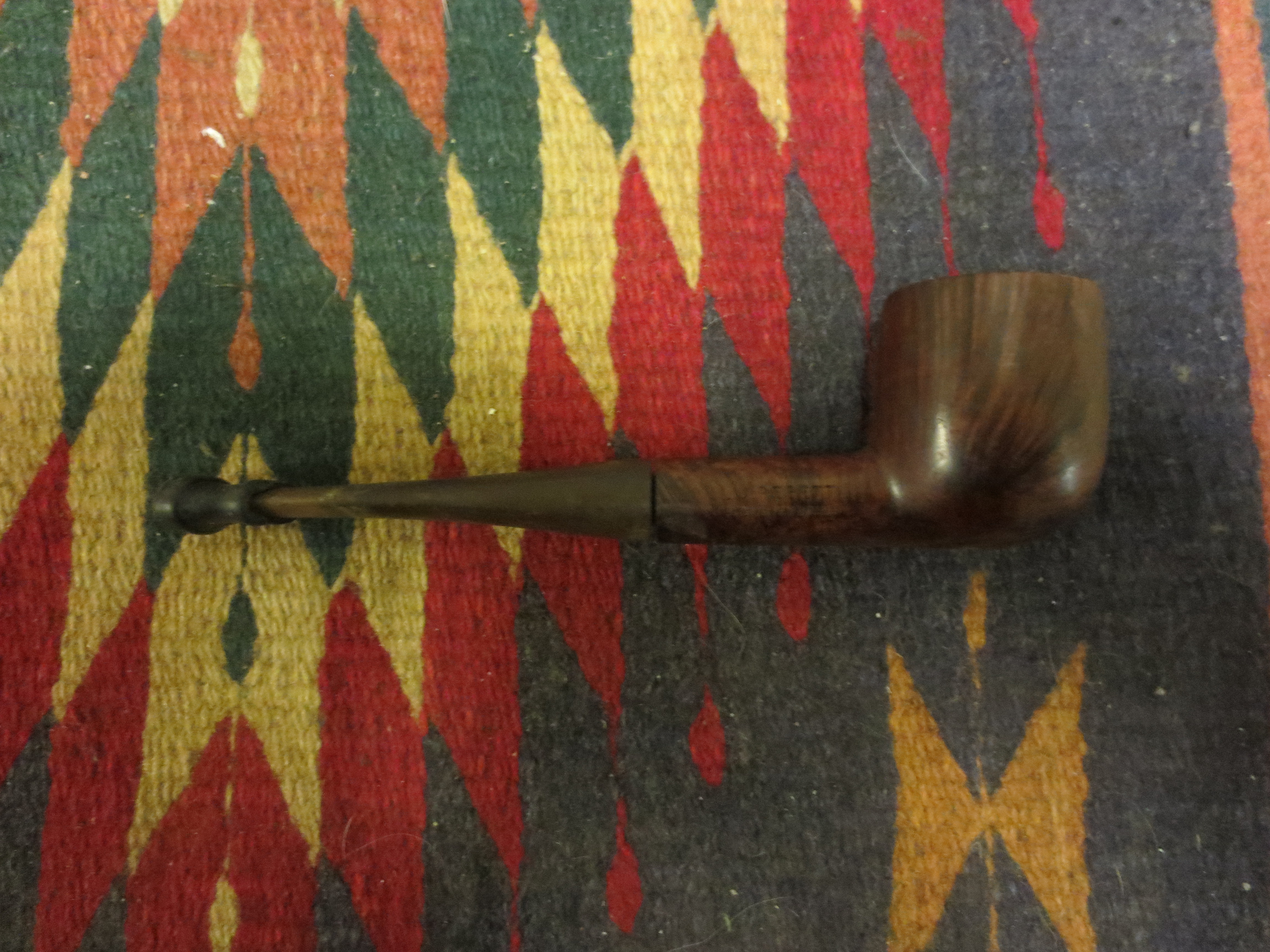
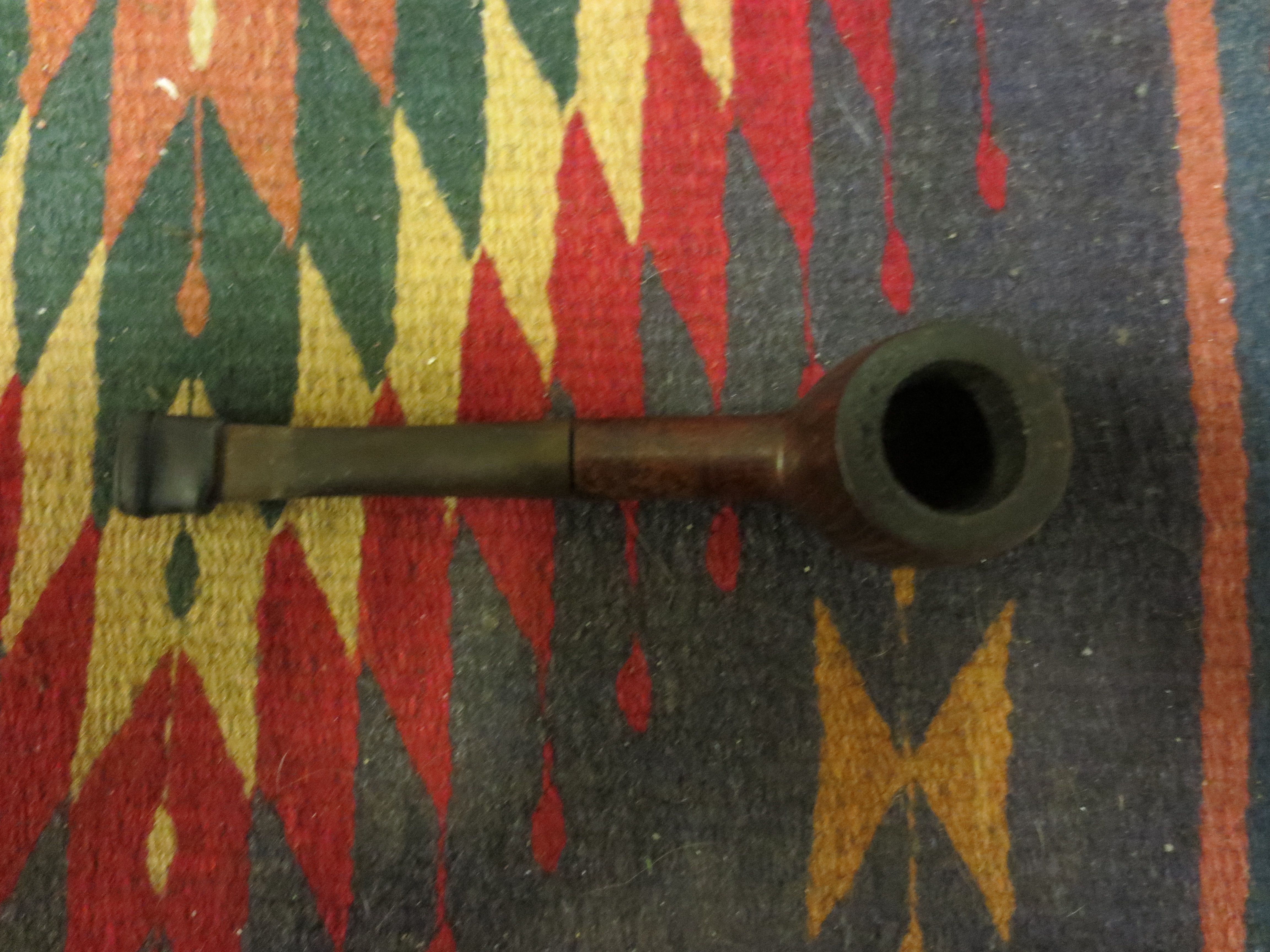
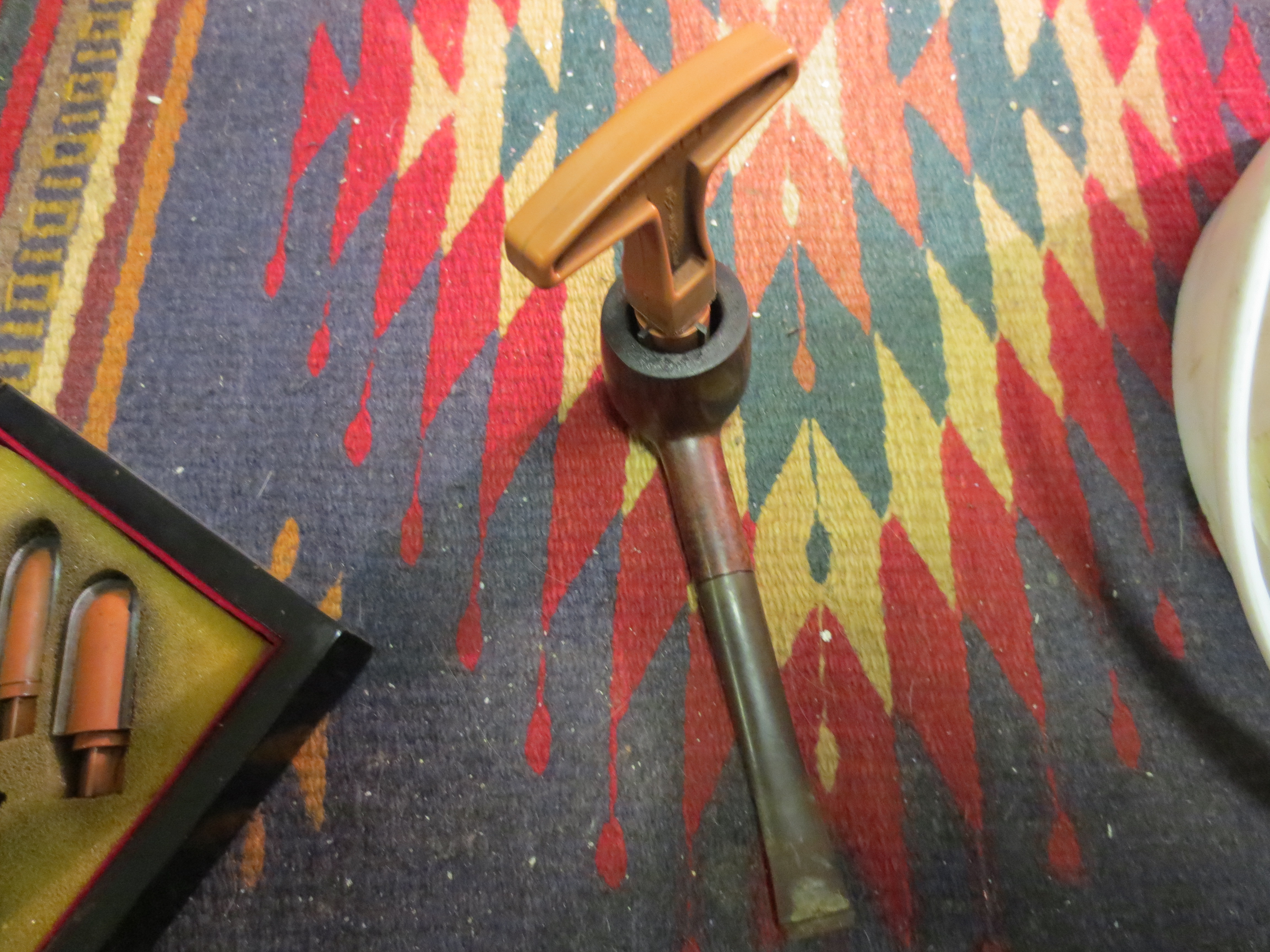
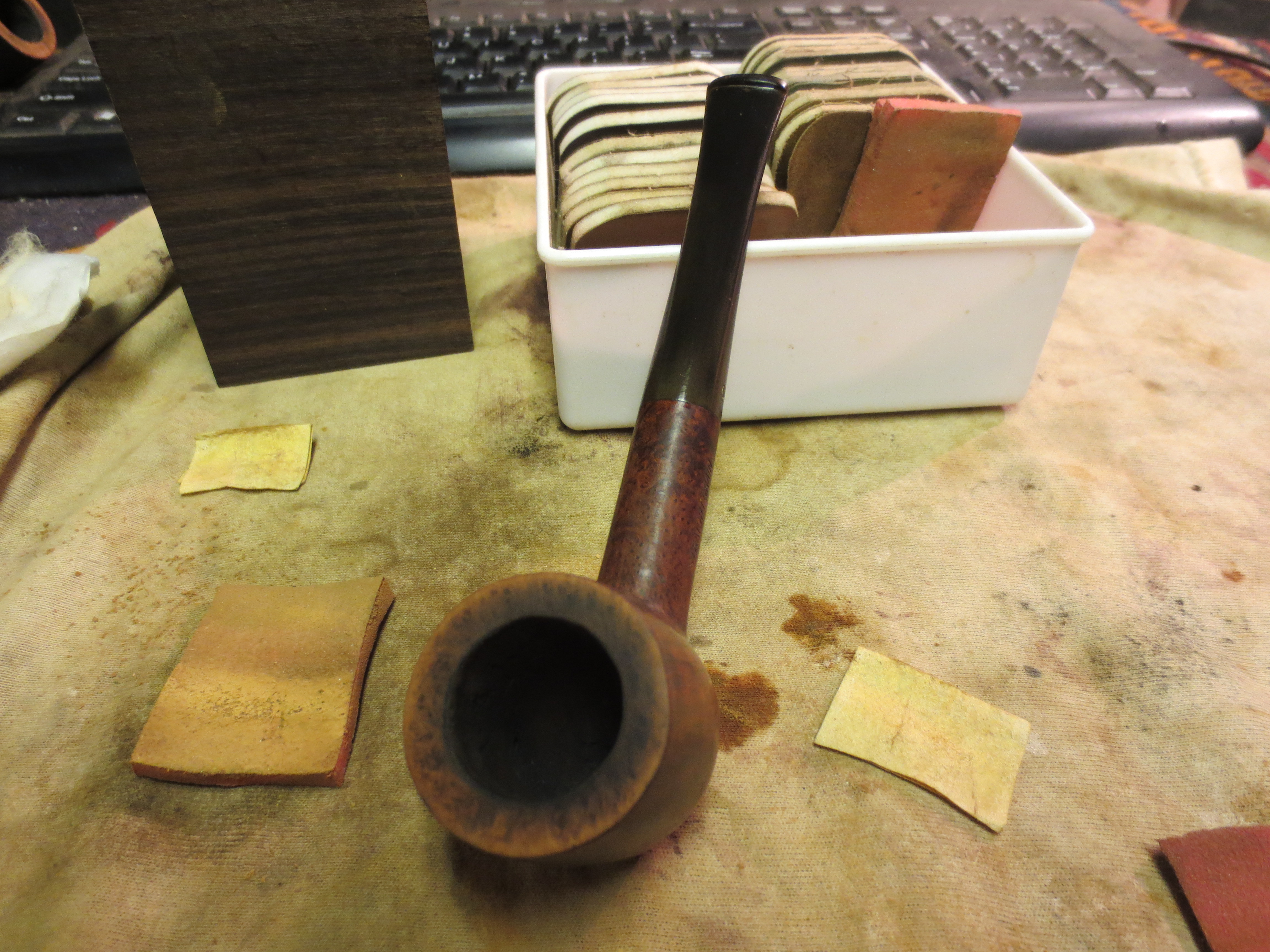
My friend John gave me an old pipe that needed to be restored and it fits well into my collection of older CPF pipes. This one was a CPF bent billiard with the CPF logo in an oval and the word French arched above it and the word Briar arched below it. On the gold band around the shank were false hallmarks and the CPF logo in an oval. It was an old timer with the orific style button on a horn stem. The tenon on the end of the stem was bone and in excellent shape. The threads on the tenon were perfect and the tenon looked almost new. However, the threads in the shank were worn and would not hold the stem in place. It could be spun around and with a slight wiggle it came out of the shank. The threads on the tenon no longer aligned with the threads in the shank. The horn stem itself had some tooth chatter on both sides of the stem near the button and was dirty and tired looking. The finish on the bowl was in great shape. The bowl itself had been reamed but there was a light coat of ash in the bowl. The rim looked like it had been topped somewhere in its life but whoever did the work did it well.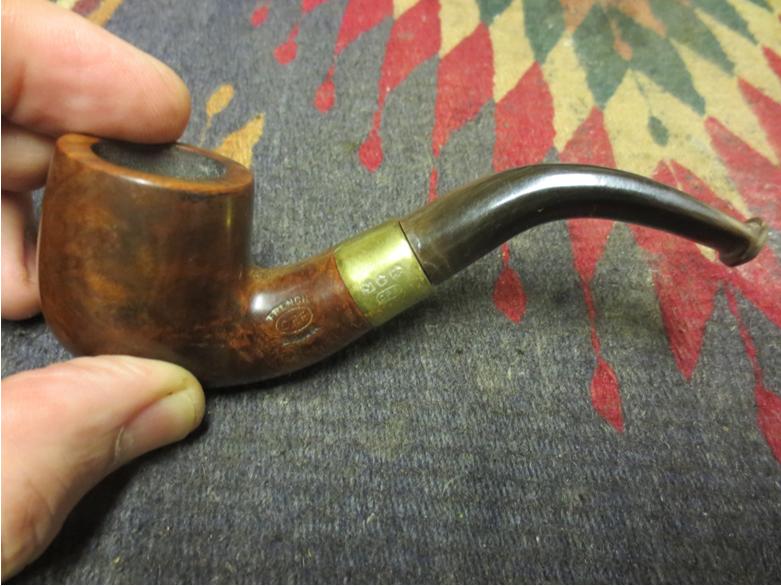
 I have written a blog about the history of the brand previously. You can read it for details at this link: https://rebornpipes.com/2013/04/14/some-reflection-on-the-historical-background-on-cpf-pipes/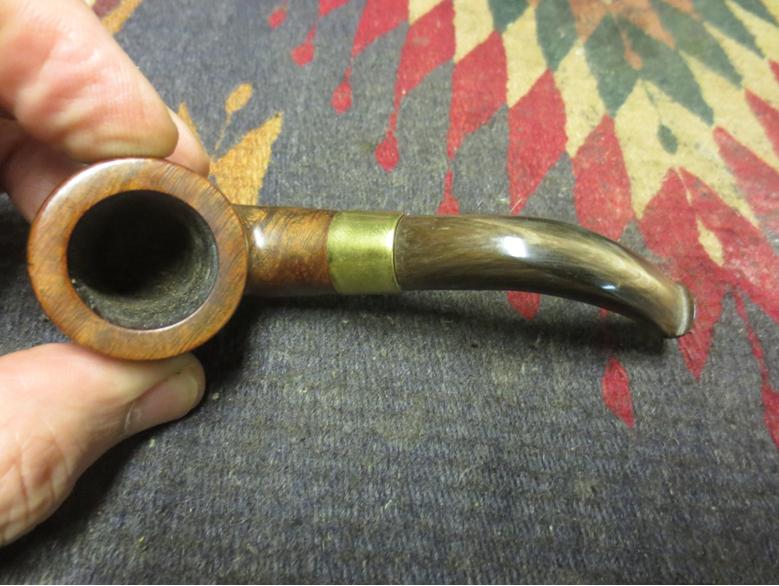
 For the sake of summary I include a portion of that blog here.
CPF stands for Colossus Pipe Factory. There is not much known about the Colossus Pipe Factory. I learned that by the mid 1890’s CPF was owned by Kaufman Brothers & Bondy (KB&B). They operated the factory at 129 Grand Street, in New York City, New York. I had a faint memory of some connection between CPF and Kaufmann Brothers & Bondy. But was unsure where I had heard or read that. In the process of reading information I came across this post by Bill Feuerbach on the Kaywoodie Forum it read as follows: “About 10 years ago I picked up two original invoices from KB&B. One is dated February 5, 1884 and the other December 9, 1898. Both have the address as 129-131 Grand Street, which is in Soho, adjacent to the Bowery in New York City. The 1898 invoice has in the upper left hand corner the initials CPF and Trademark. So by 1898 KB&B was making it known to the trade that they owned the CPF trademark. The 1884 invoice does not have CPF on it. Therefore I think we can assume KB&B acquired or started the CPF line sometime between 1884 and 1898.”
Thus we know that the brand was purchased by KB & B sometime between 1884 and 1898 and that it continued until 1915. That time frame gives help in dating some of the older CPF pipes you or I might find. It can be said that prior to the dual stamping it is fairly certain that the pipe is pre-1884 to 1898. After the dual stamping it can be placed post 1898 until the closure of the brand line in 1915. CPF made beautiful pipes. I believe Sam Goldberger was correct in his assertion of the potential carvers that made the pipes being of European training and the classic shapes and well aged briar. That coincides with all the CPF pipes that I have come across.
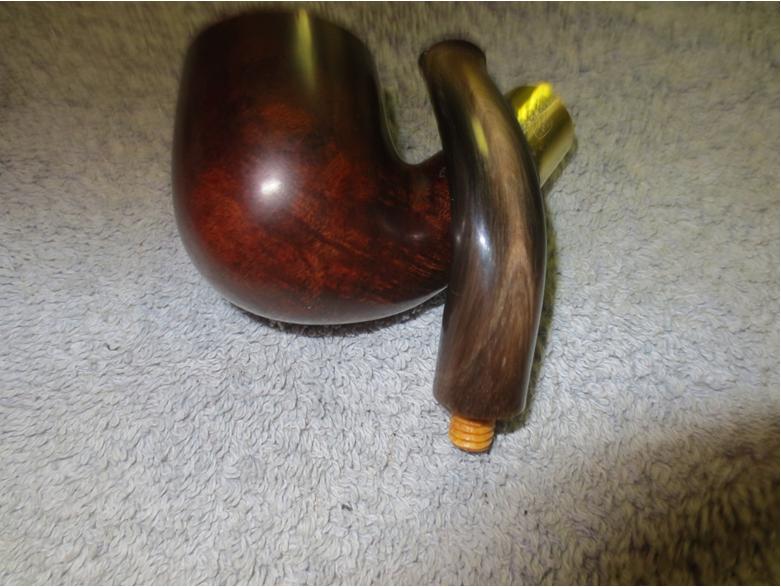
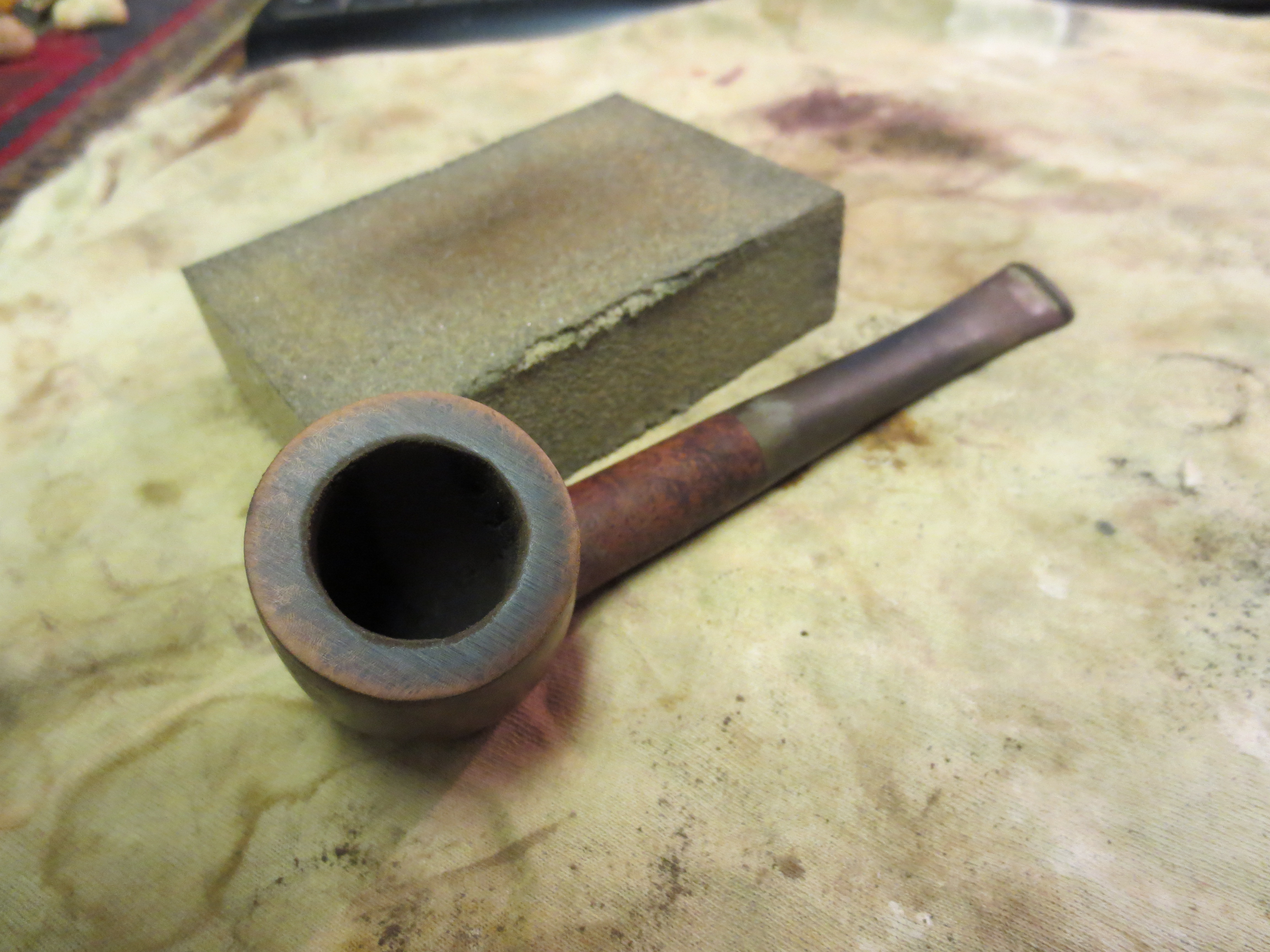
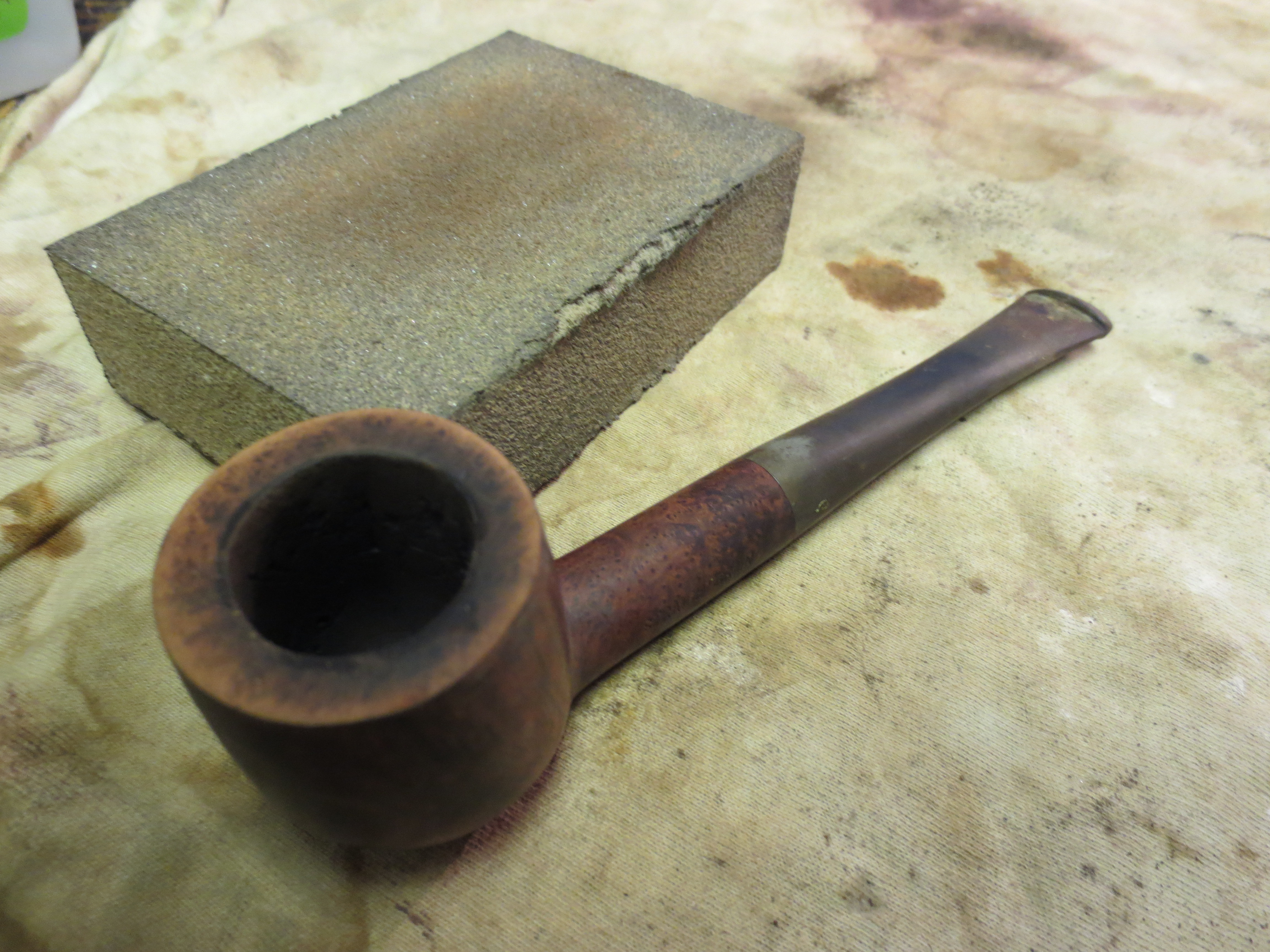
The pipe I got from John is one of the earlier pre-1884 as it only bears the CPF stamp in faded gold leaf on the shank. I took the stem off the shank to look over the connector in the shank. The threads were worn and there was a chunk of briar missing from the bottom side of the shank exterior inside the band. There also appeared to be a crack at the top of the shank but it turned out to not be a crack but rather an area where the end of the shank is stepped down. I filled in the hollow area with wood glue and used the dental pick to push it down in the divot area.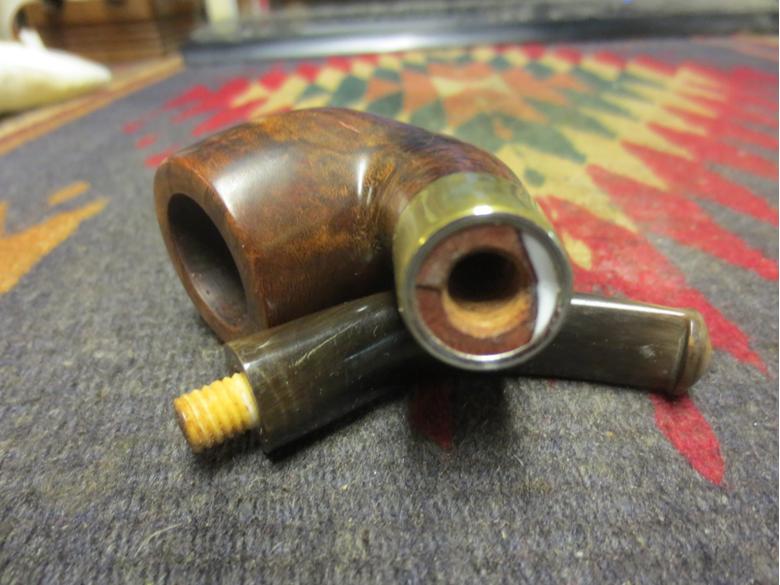
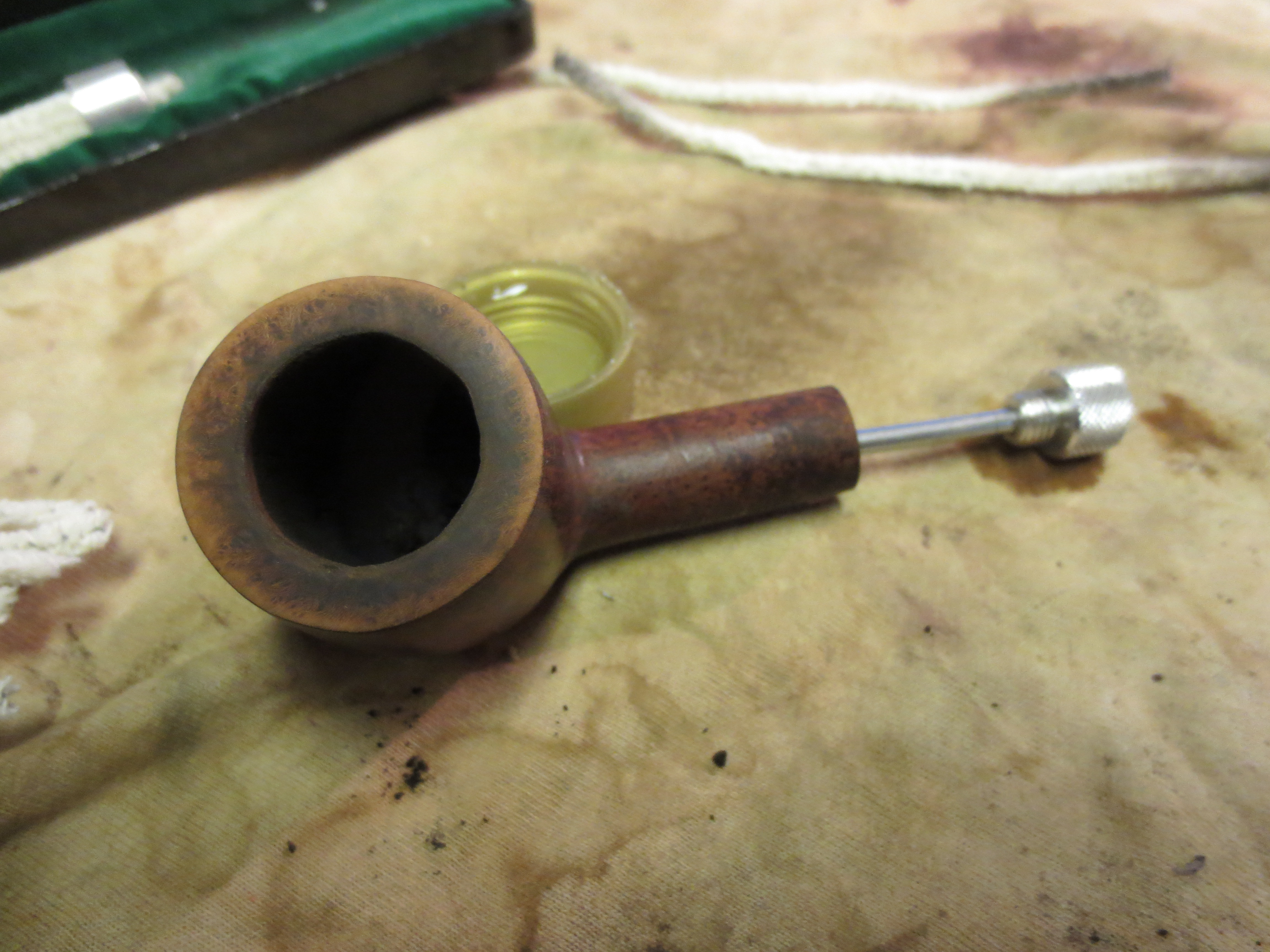
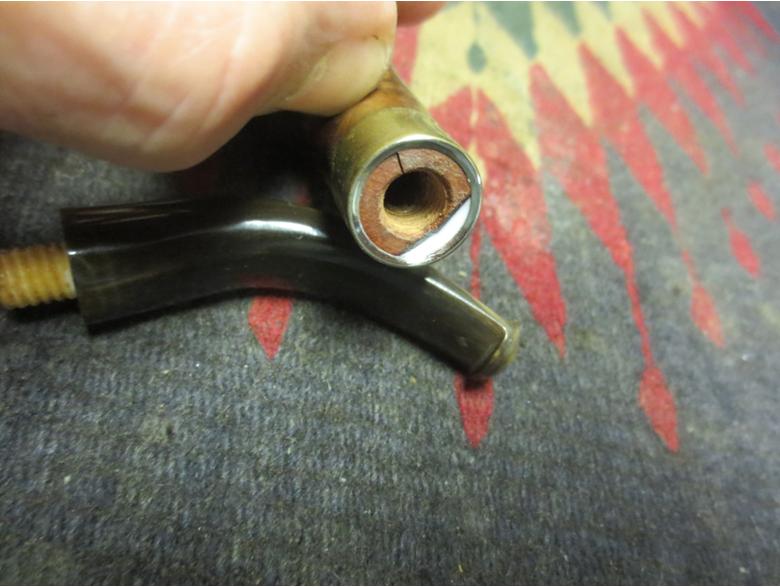 I tried several methods for dealing with the damaged threads in the shank. The first of these was to build up the tenon with wood glue and then also with super glue. Both methods failed. As soon as I twisted the tenon into the shank the threads were stripped of all of the glue buildup. Those two methods utterly failed.
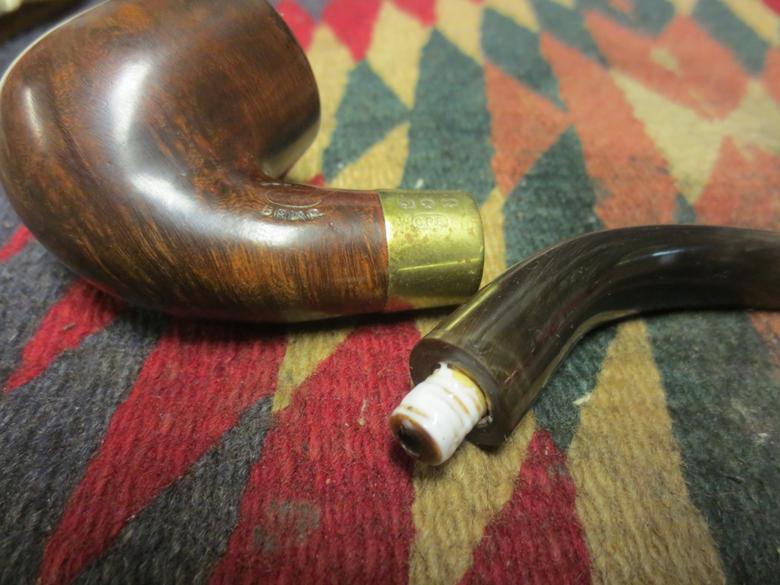 I cleaned off the tenon with alcohol on cotton pads and started over. I examined the threads in the shank and it suddenly dawned on me that I could build them up. I carefully used super glue on the threads keeping it totally out of the airway in shank. I filled in the threaded area with the glue and once it dried I was able to recut the threads with the bone tenon itself. The repair worked and the stem fit snugly in the shank.
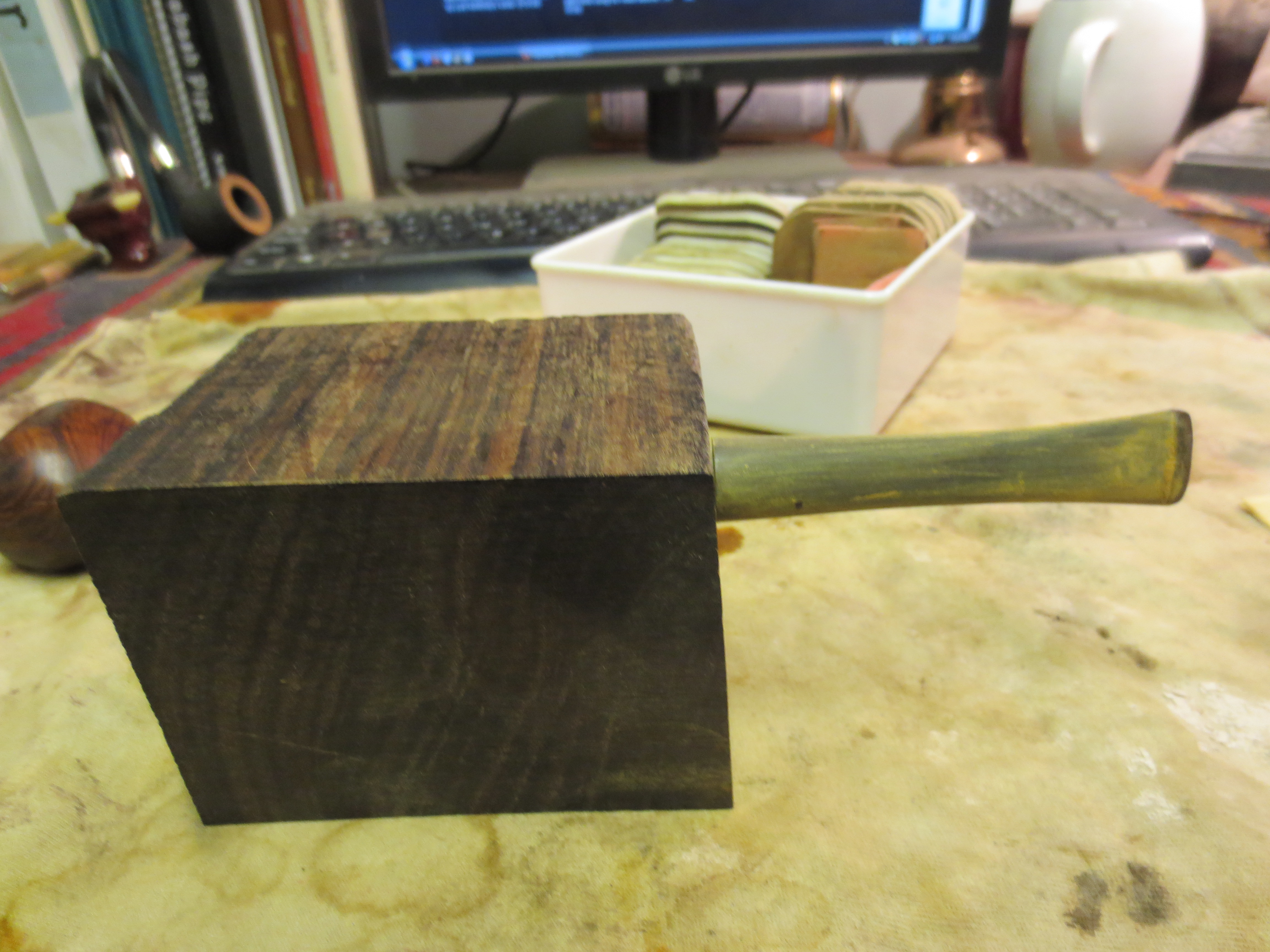
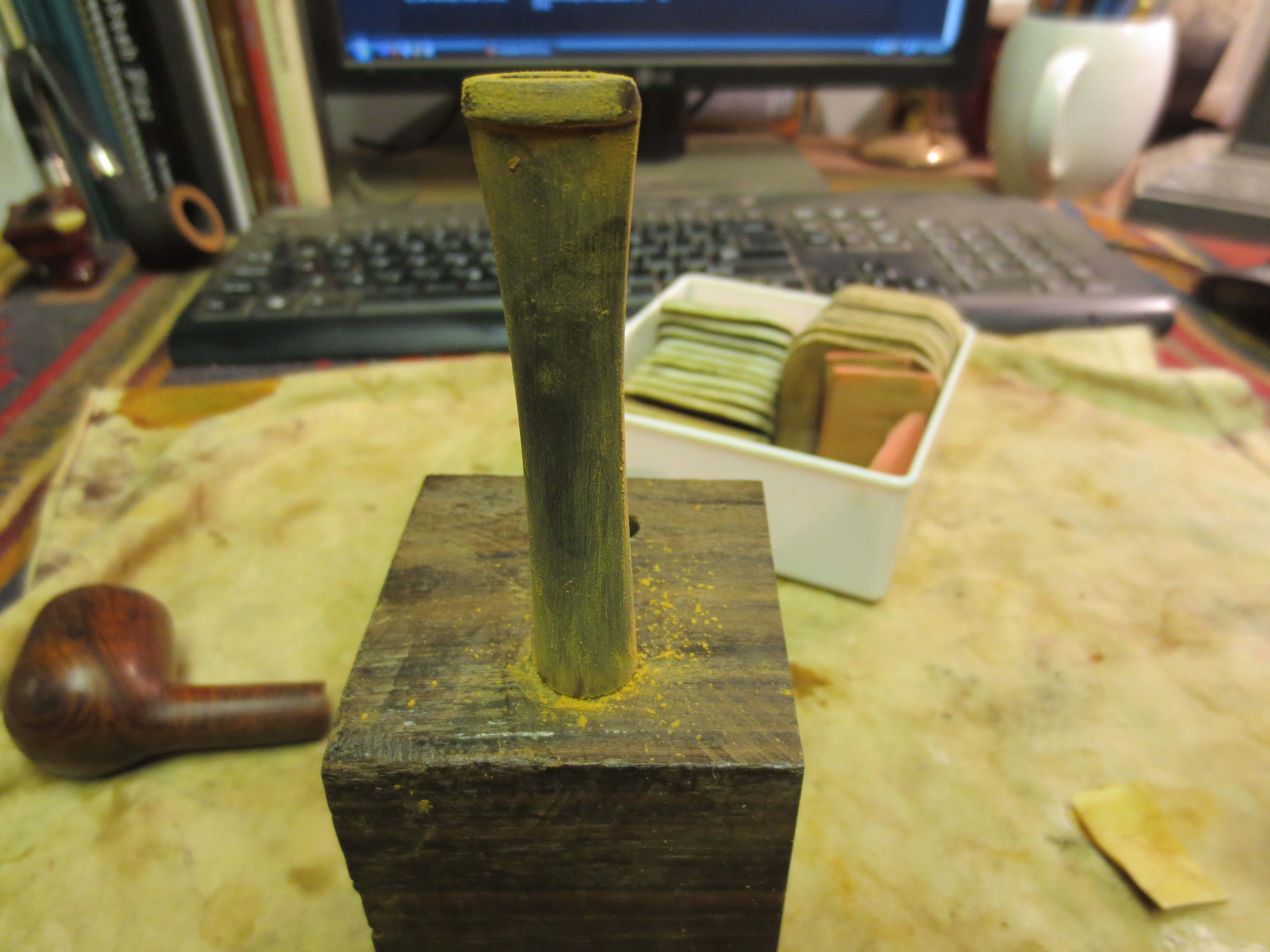
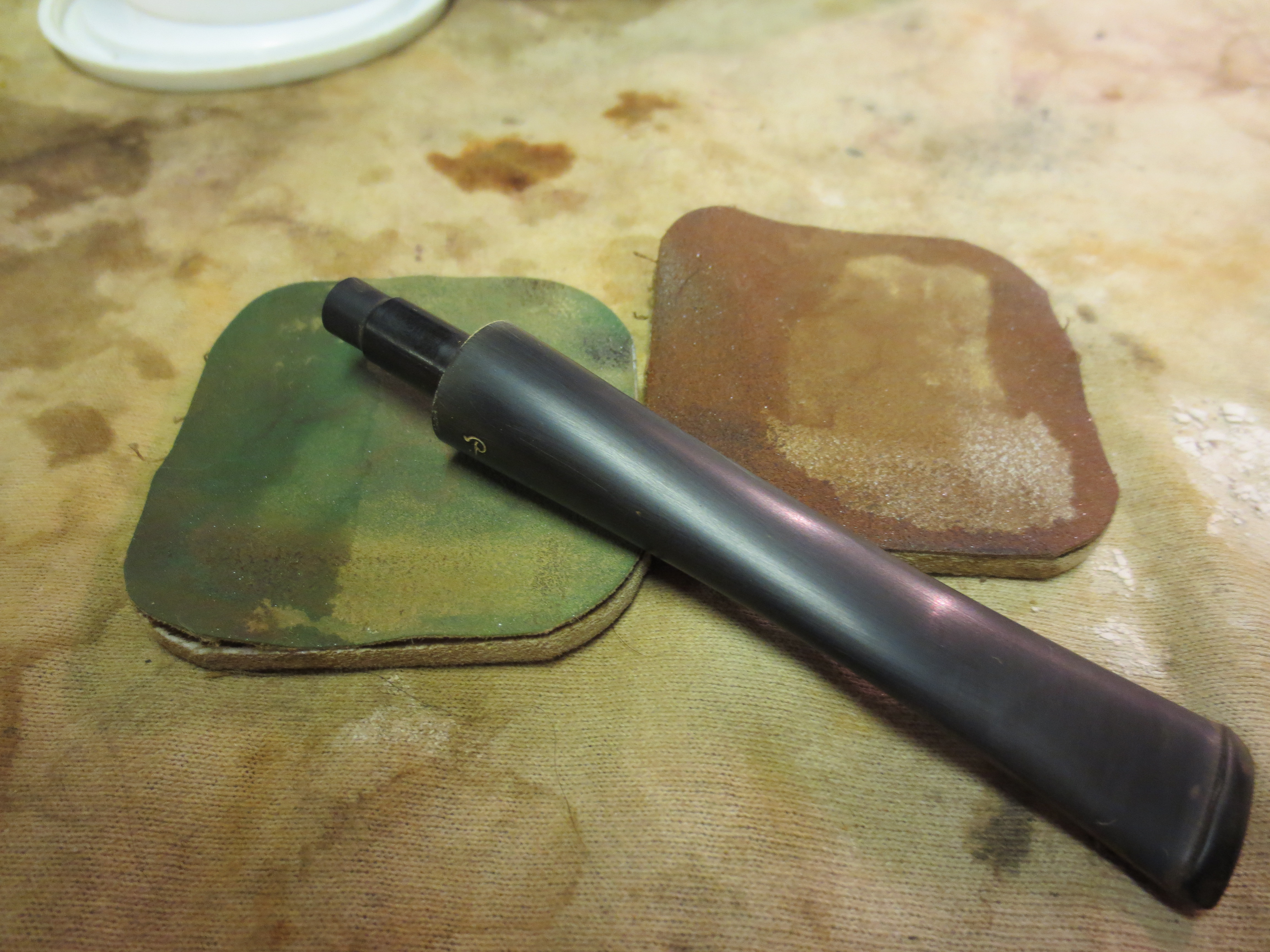
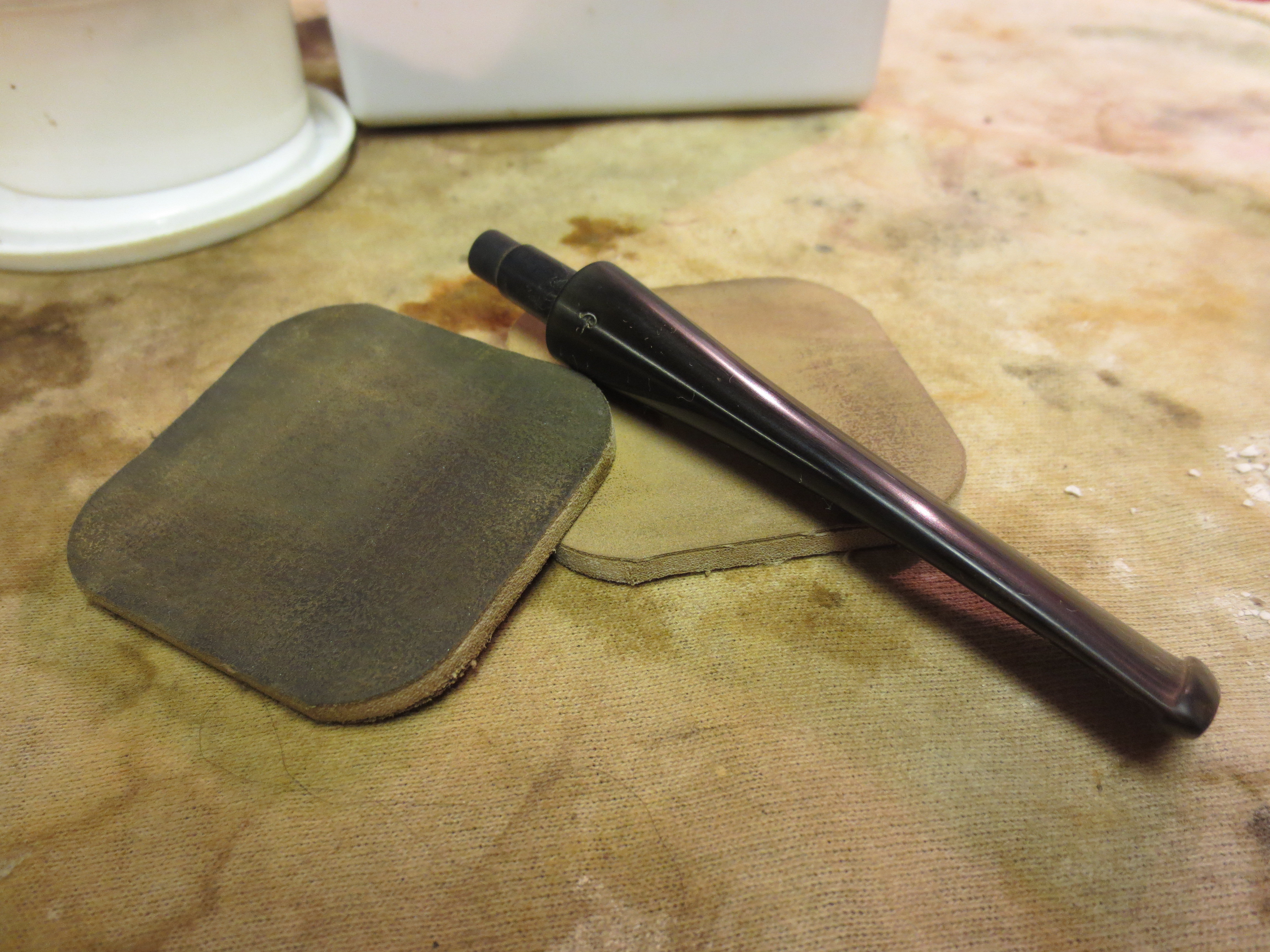
I have learned over the years that using micromesh sanding pads on horn stems really raises a shine and brings out the grain in the horn. I started by wet sanding this one with 1500-2400 grit micromesh to take care of the tooth chatter and to reshape the oval button. It took some sanding but I finally got is shaped correctly. These first three grits of micromesh do the hard work in polishing the horn. When I finished I rubbed it down with Obsidian Oil. You can really begin to see the bands in the horn and the grain. This was one beautiful piece of horn.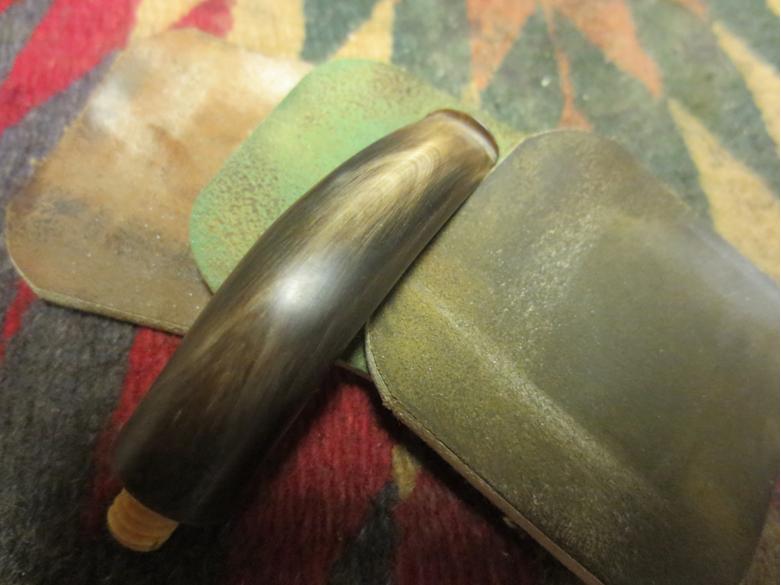 I dry sanded the stem with 3200-4000 grit pads and the grain began to really show and glow. I love the translucence of horn once it begins to really shine. This stem was truly a beauty to behold. I rubbed it down again with Obisidan Oil before moving on to the next grits of micromesh.
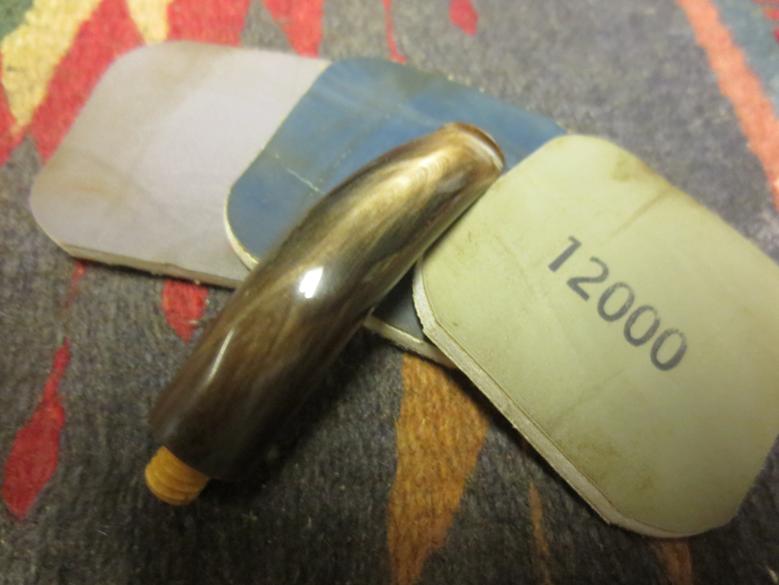
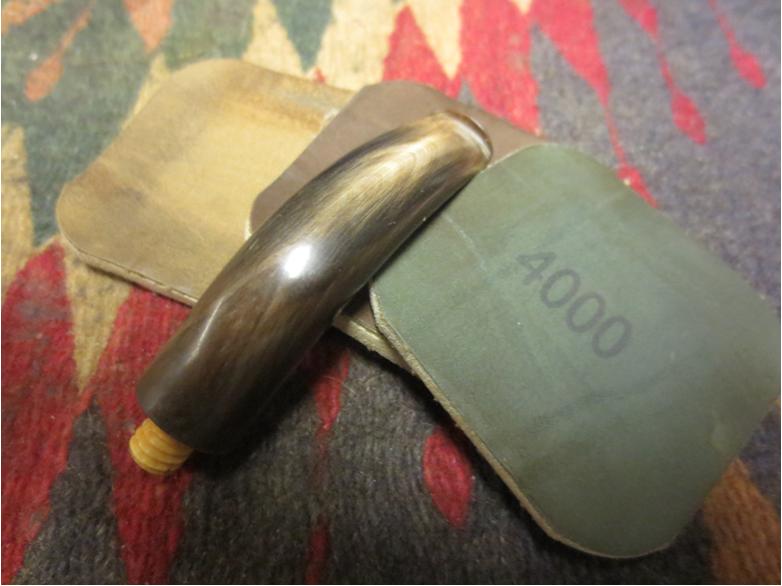 I finished with the 6000-12,000 grit pads – dry sanding through each grit. I then buffed the stem lightly with the Blue Diamond Plastic Polish to give the final shine.
 I rubbed down the bowl with a light coat of olive oil and then cleaned up the band on the stem with silver polish and micromesh sanding pads. I finished the band by buffing it with a jeweler’s silver polishing cloth. The next photo shows the stamping with the gold leaf on the shank and also gives a clear photo of the stamping and faux hallmarks on the band.
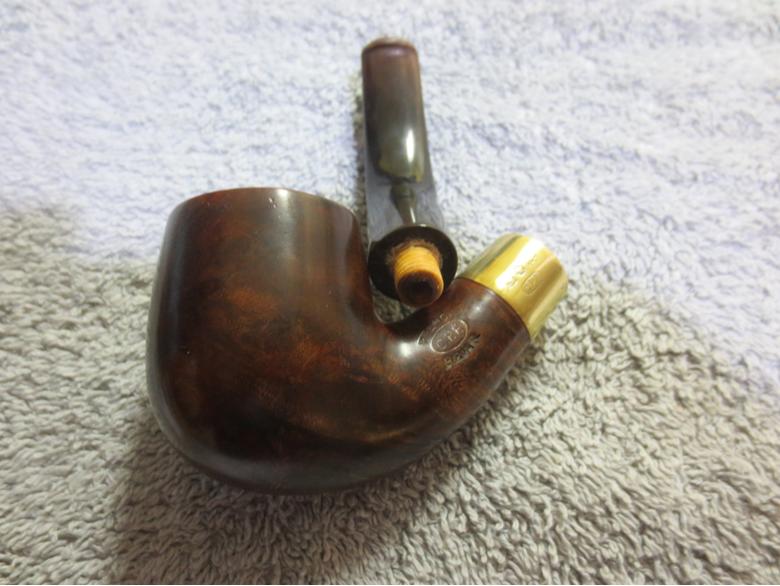
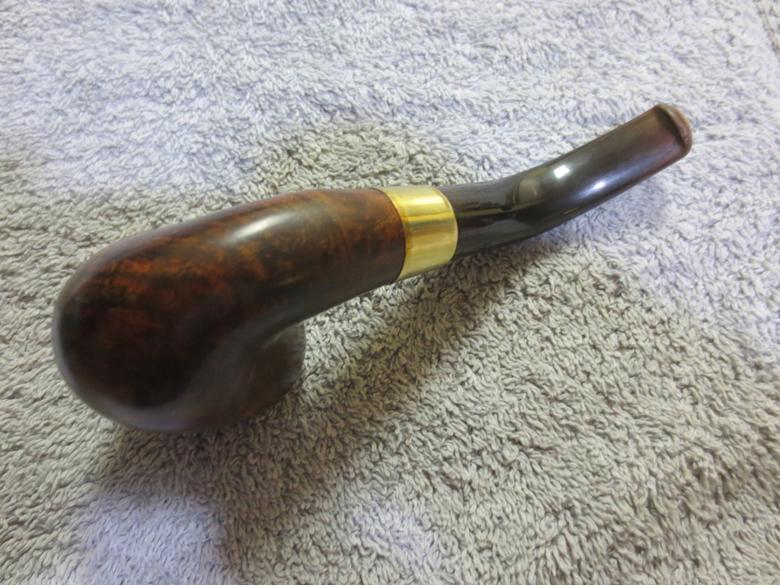
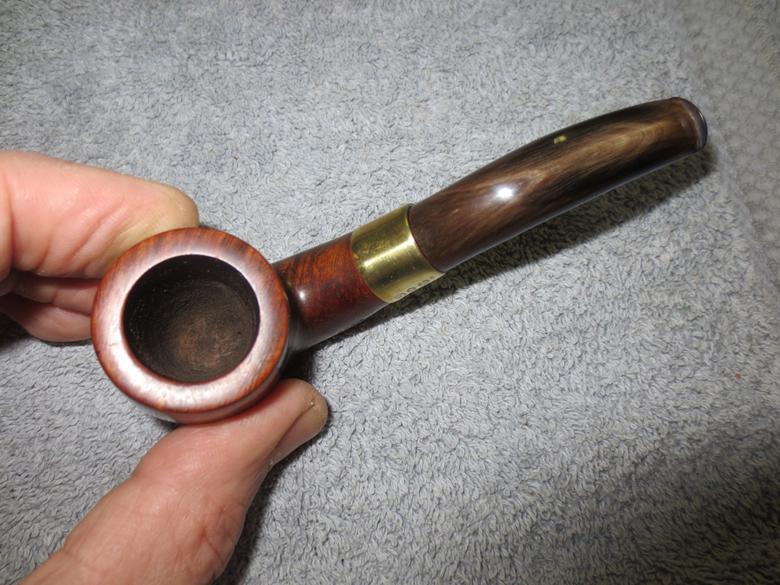
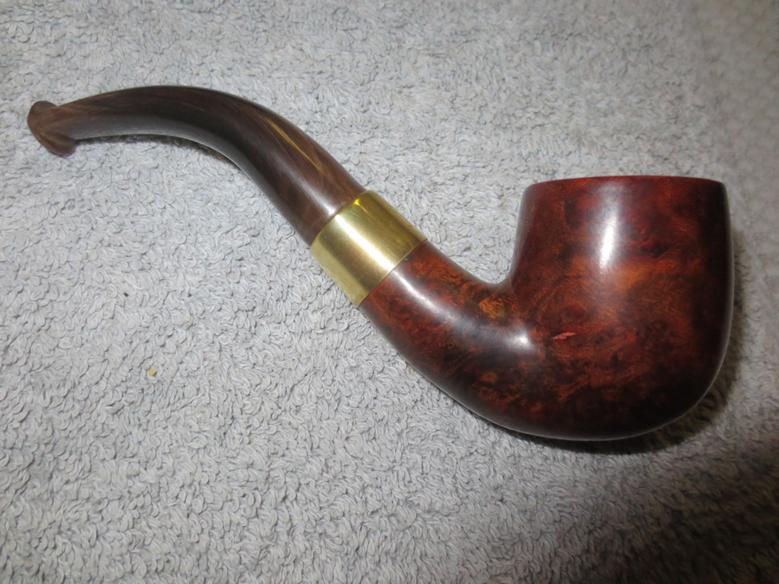
 I buffed the pipe with multiple coats of carnauba wax and then gave it a final buff with a clean, soft flannel buffing pad to raise the shine. The finished pipe is shown below. Note the glow of the horn stem and the contrast of the brass/gold band. This old timer is ready for many more years of service. If you have not smoked a horn stem pipe you have to give one a try. They are a totally different experience from vulcanite or Lucite. They are comfortable and light in the mouth. I am looking forward to breaking this one in again and enjoying smoking it.
 Thanks for looking
 rebornpipes