
Blog by Steve Laug
When I returned home from a recent funeral I officiated for a good friend there was a package from Bill awaiting me in the mail box. It was oddly shaped so I was very curious what would be inside when I opened it. I carefully cut the tape on the end of the box that was shaped like a Toblerone bar and slid out the contents. The inside package was wrapped in a short letter that had a beautiful drawing attached to it (I have photographed the drawing and posted it here on the blog). Underneath that was another layer of bubble wrap that contained a stem for a bent bulldog and under that was a beautiful Lorenzo pipe – an Oom Paul with a Savinelli Capri-like finish that Bill had sent as a gift. I am floored by Bill’s thoughtfulness and generosity. Thank you, Bill.
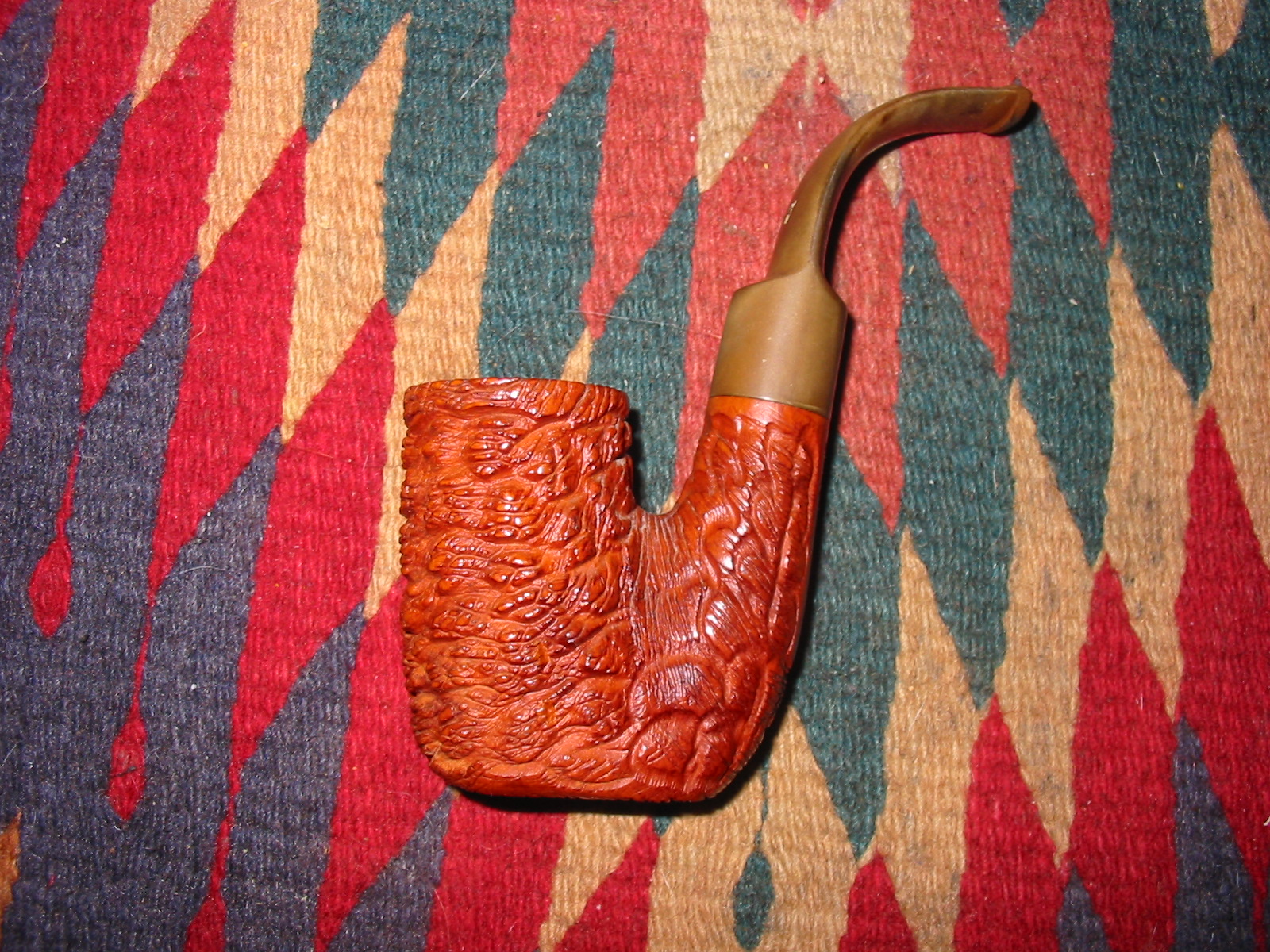
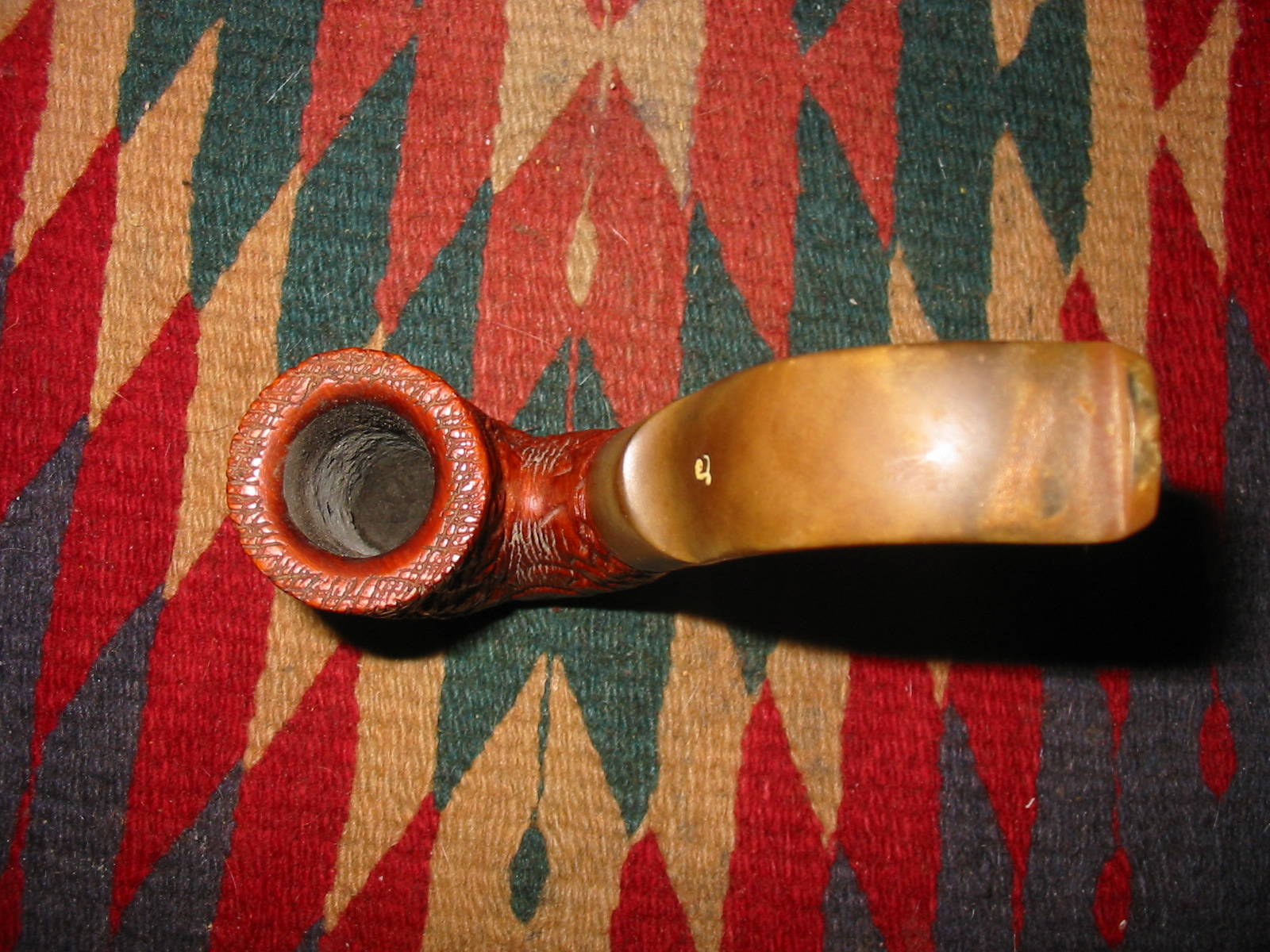
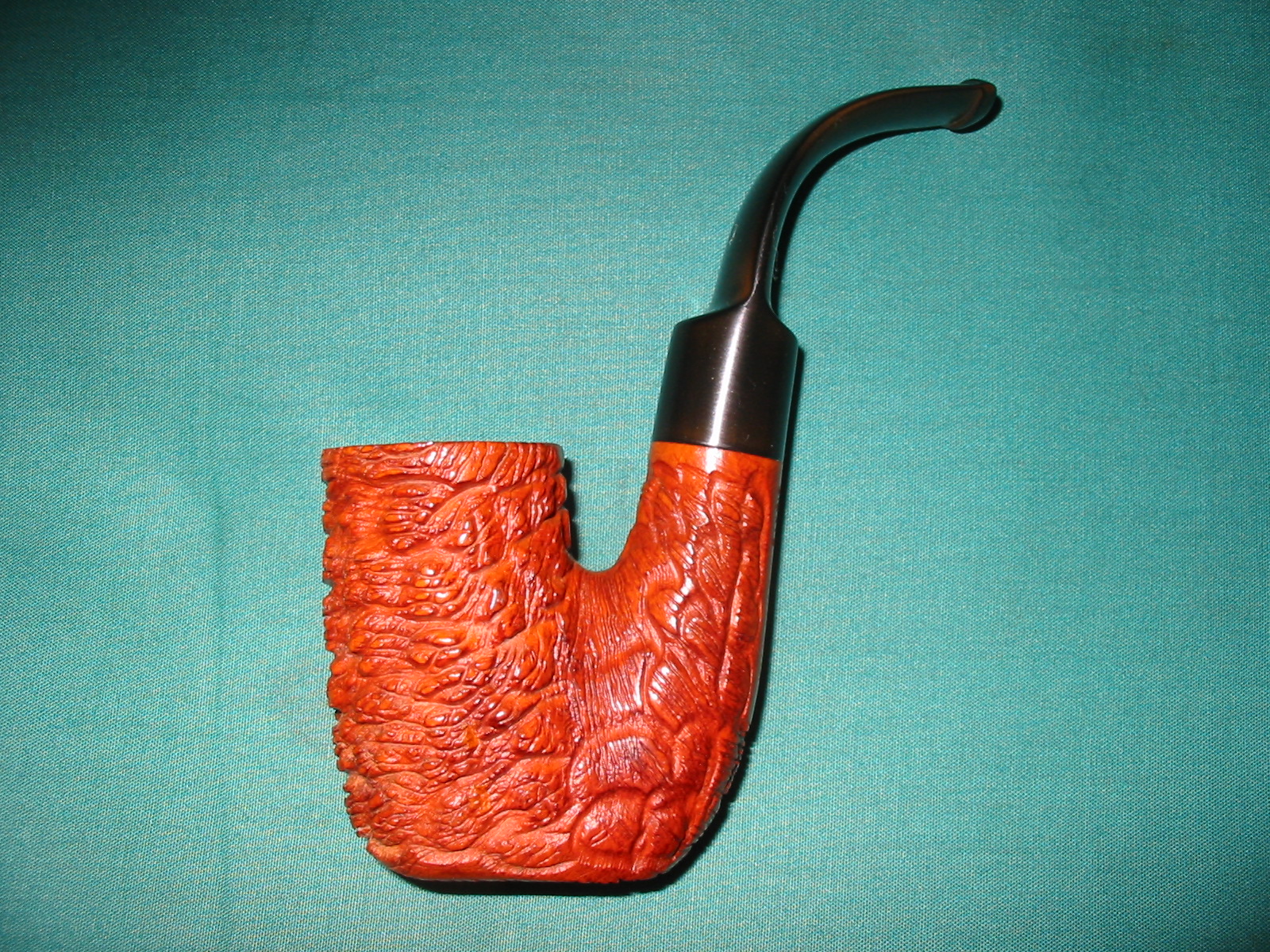
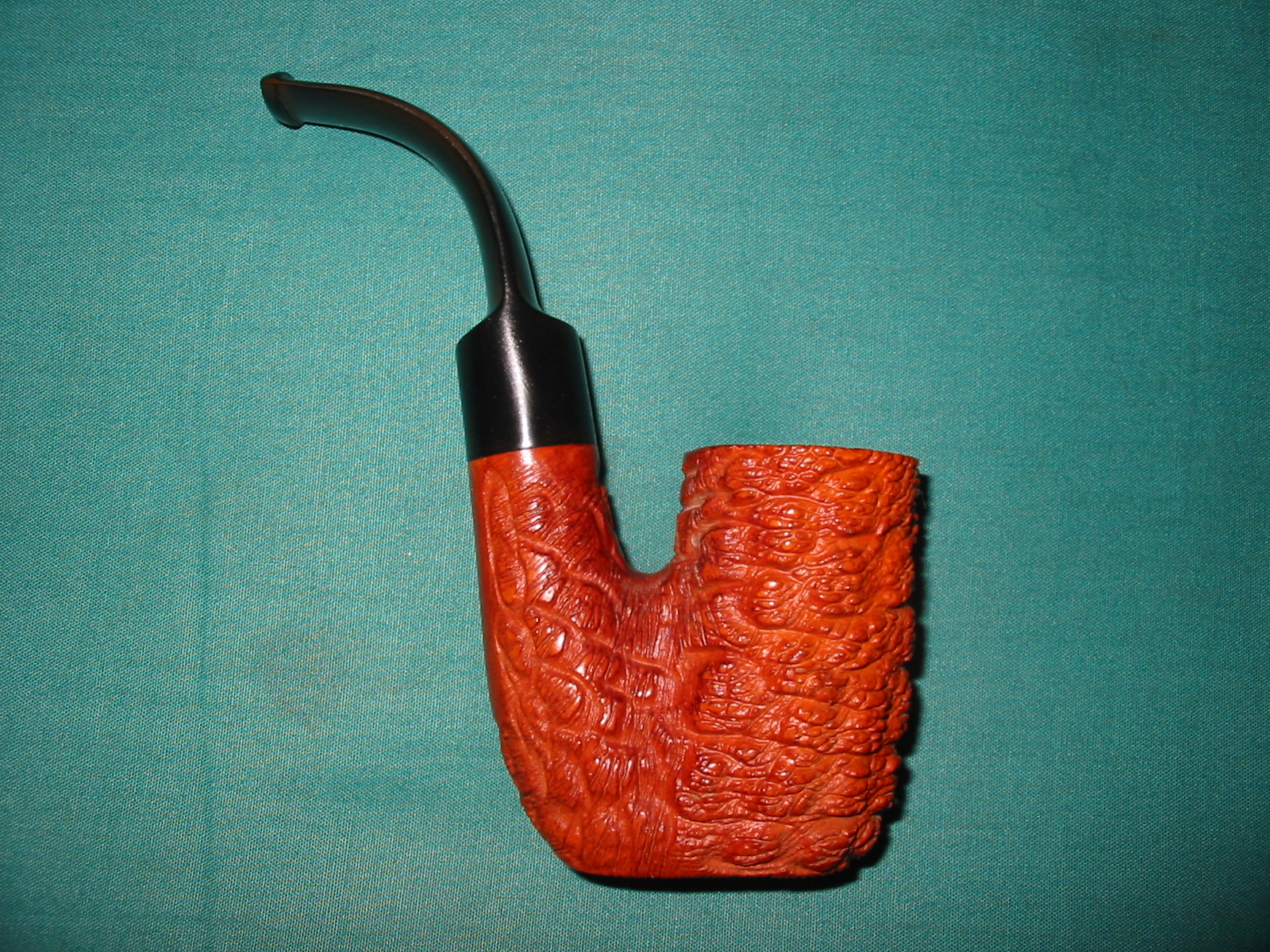
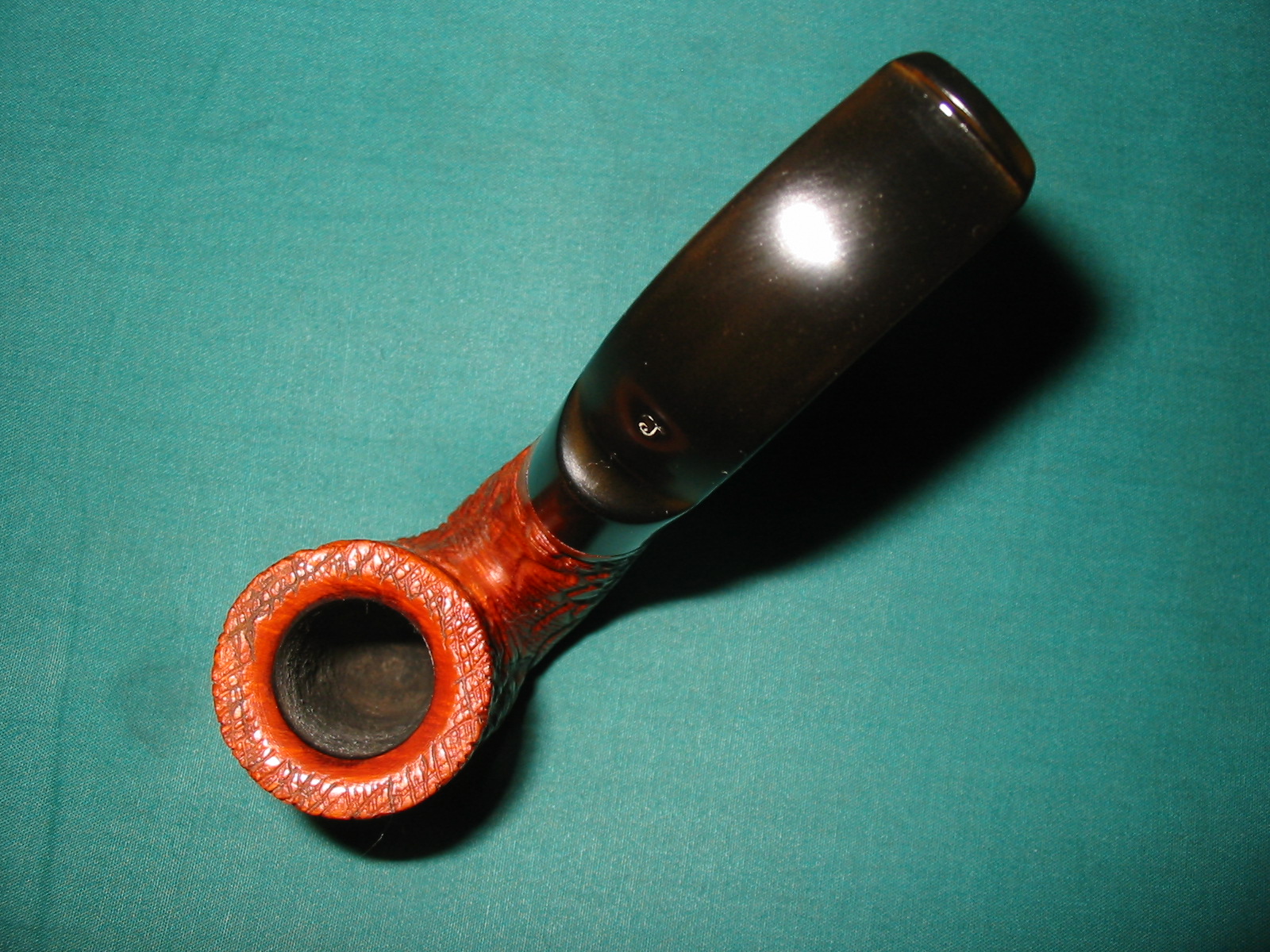
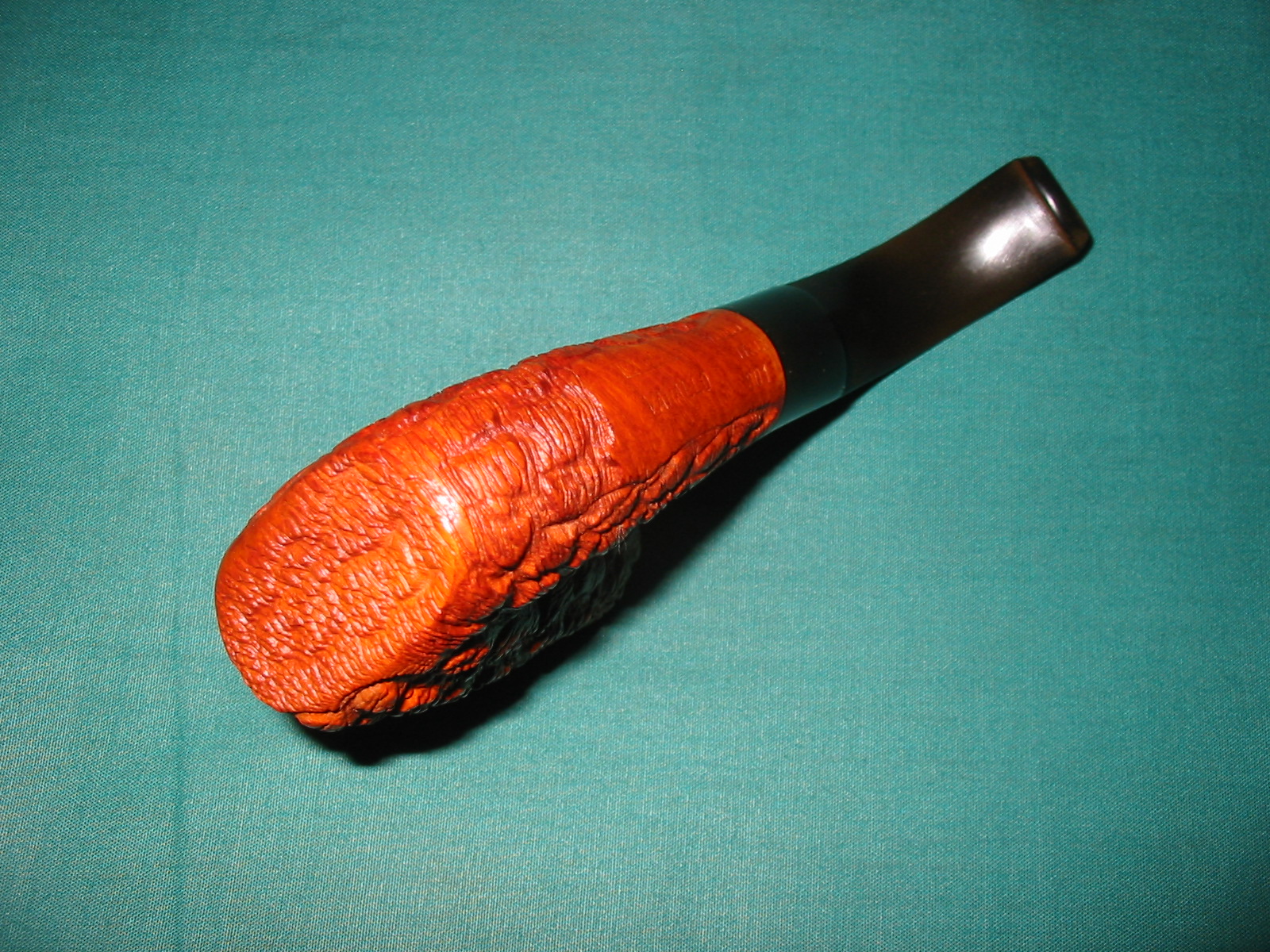
The pipe is a classic example of an Oom Paul sitter. The finish is in excellent shape and the rim is perfect. The inner bevel of the rim is smooth and unblemished and the bowl is still perfectly round. The bottom of the bowl is flattened enabling the pipe to stand on its own – which it is doing now next to my keyboard as I write this post. The bowl is clean and smells of rich tobacco recently burned in its depths – a great smell in my opinion. The shank and well (sump) is also clean due to Bill’s creativity explained later in the letter from him I have included in this post. The stem has minor tooth chatter but no bite marks and is oxidized but will clean up nicely. The Upside down cursive L on the top of the blade of the stem is stamped and still bearing the white colour it had originally when it was purchased. This one will be a simple restore and I will soon be enjoying a bowl of tobacco in it.

Here is Bill’s letter to me that accompanied the pipe. It gives the story of the pipe and an interesting discovery Bill shares with regard to a trick for easing the gurgle that often is found in the Oom Paul pipes.
The Story of the Lorenzo Oom Paul – by Bill Cumming
I started smoking a pipe in Germany while in the US Army, as did some buddies. We all started with Dr. Grabow’s or basket pipes. The first quality pipe (no reflection upon Grabows!) was one my friend bought, a Savinelli Capri – he loved it, a real prize! Shortly after I found a Lorenzo Oom Paul, dark brown, more rusticated than sandblast… identical to the one I’m sending you, except yours is more red (very close to the stain on Capris, though they also come black).
I treasured this pipe! Bought in 1969, I still have it, it smoked as well as my friend’s Savinelli Capri and I’ve always felt same quality as a Capri … NOTE: I have 3 Capris.
I became an Oom Paul aficionado! I loved how they sit, how they look, how they “hang”, how they have a heritage, their noticed by others; they’re not all that common… I collected Oom Pauls: Savinelli Capri, Savinelli Estrella, Edwards, Caminetto, Savinelli Non-Pareil, even some nameless basket Oom Pauls. I also found two matching Oom Pauls to mine from Germany – a smooth and the red one I’m sending you. I still have my first (1969) and the smooth one. I “horse traded” some of the other Oom Pauls, but also still have some I won’t part with.
NOTE: Steve, I took them under my wing, with a real attachment from my first one. Sure, I knew the “rap” against them – gurglers and unable to pass a cleaner directly from stem into the bowl (inherent engineering) with one notable exception. The Savinelli Non-Pariel Oom Paul will send a cleaner straight through!
But, let me share with you a bit of a revelation. I always accepted the engineering of Oom Pauls and if they gurgled, I carefully removed the stem from a hot pipe to run a cleaner through the draft hole. I know that’s a “no-no”, but I’ve never cracked a shank.
• I started to realize most of the gurgling is in the stem, not the draft hole.
• I, later, became a big fan of Peterson Systems!
• It dawned on me, one day, this is fact… Oom Pauls are not (never were billed as) system pipes. Yet, their engineering is similar! A bit of a well, a cleaner goes into the well, not the draft hole; Peterson Systems have a military bit so it’s easy to remove the stem to run a cleaner into the bowl.
• So why couldn’t I incorporate the same little “trick” I use with Peterson Systems?
• Many folks seem to regard Sytems as too high maintenance! During the smoke, if you set the pipe down and it falls over (like spilling a cup of coffee), you’ve now sloshed the accumulated foul smelling liquid into the draft hole or up the stem!
• I took somebody else’s wonderful suggestion for Pete Systems… while preparing the pipe for a smoke, I roll up a small piece of tissue paper, or Kleenex, into a “pea” and push it down into the well with a pipe tool, making sure this “paper pea” is beneath the draft hole. BINGO! The “pea” absorbs all the moisture and juice, and is easily plucked out and discarded after the smoke. I’ve read some stories about horrible system estate pipes where the well was never dumped, never cleaned… ugh, like, how bad do you suppose it smelled? This “paper pea” is (for me) a mandatory integral part of enjoying System pipes.
• So, I thought, why not do the same thing with my Oom Pauls? BINGO again! I make a smaller “pea” (and nobody ever claimed an Oom Paul was a System Pipe) but his has given another dimension to smoking and enjoying my Oom Pauls! The engineering is no longer a problem. Gurgle? The moisture is in the stem (mostly) – run a cleaner through the stem (down) and you can easily fell the “softness” when it hits the “pea”!
•I never remove a stem anymore from a hot Oom Paul pipe.
Well, Steve, I don’t know your history with Oom Pauls, or other shapes. I’ve noticed a lot of your pipe work is on straight pipes. You mentioned you found most Lorenzo pipe to be too large. I don’t think the three Lorenzo Oom Pauls (the red one for you) are all that large. They are smaller than all my other Oom Pauls (Caminetto, Savinelli, Edwards).
It’s a narrow, but deep, bowl so fits well with certain tobacco. The rustication is identical to my original 1969 dark brown pipe. That one, the smooth one and the red one (yours) all smoke fine.
I like the little upside down L on the stem.
I’m downsizing some of my pipes, doing a bit of “horse trading” again, but I felt passing this Lorenzo Oom Paul to you would be a fitting “return gesture” for the unexpected gift from you.
I hope you’ll enjoy it (I’m sure you’ll clean it up a bit) especially maybe some cold fall or winter evening. Maybe my story has provided you another perspective on Oom Pauls! I guess we all remember our first love! 🙂 – Bill Cumming
Once again, thank you, Bill. What follows are the details of the clean up and refurbishing of your gift to me.
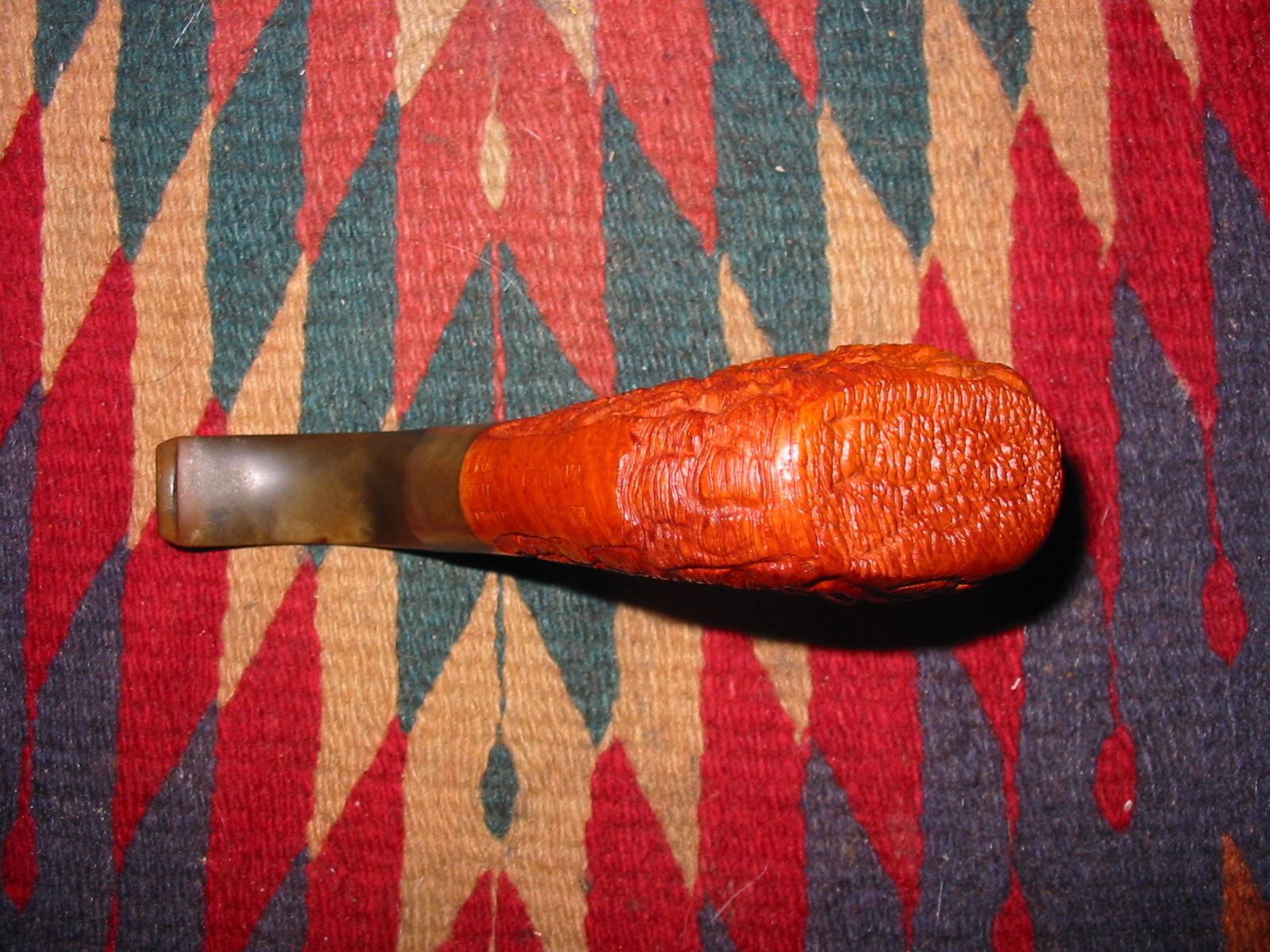
The next two photos show the pipe on the work table. The photos do not show the dust in the deep grooves of the bowl. They do show the overall good condition of the pipe.
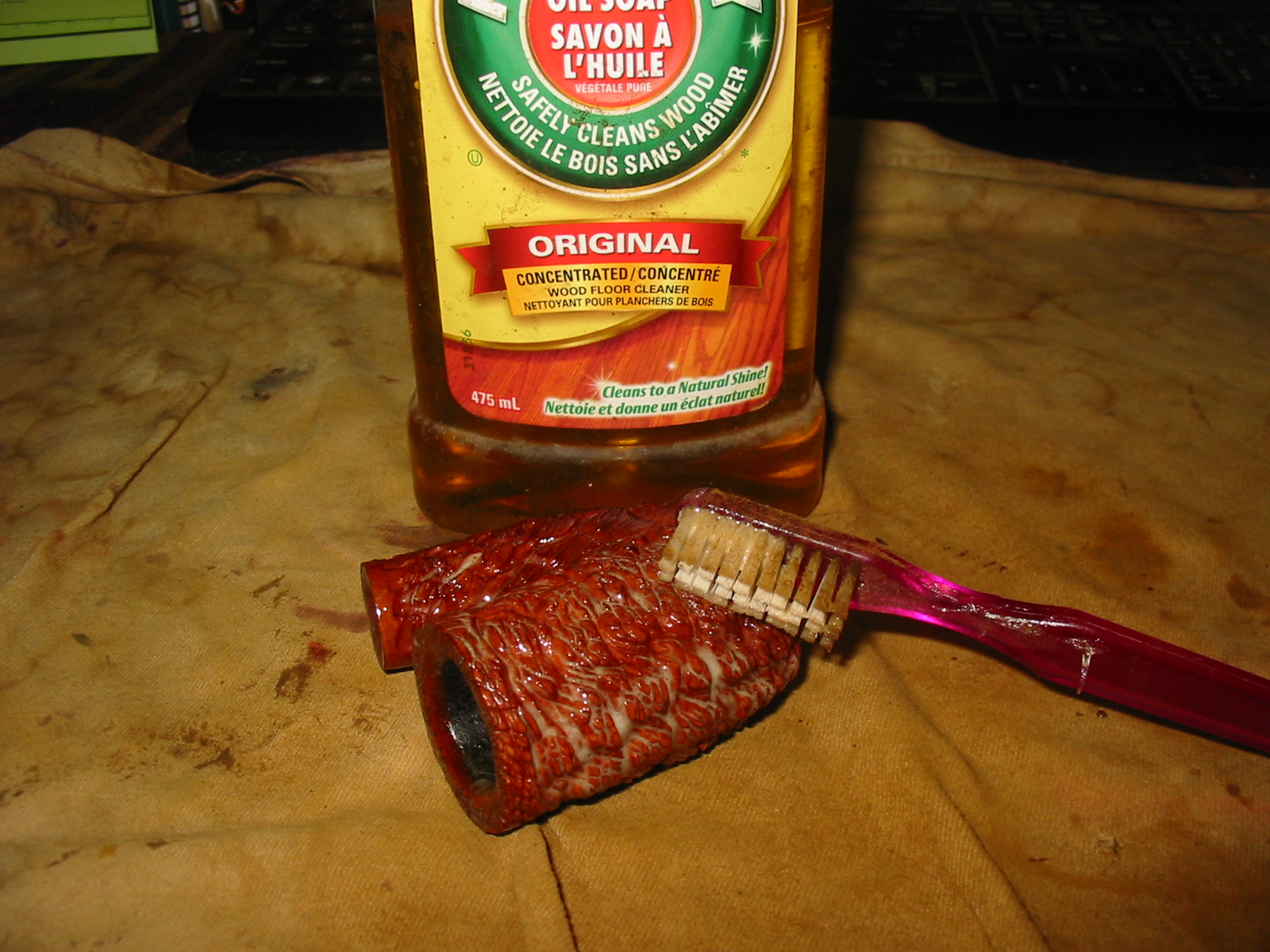
I scrubbed the exterior of the bowl with Murphy’s Oil Soap and a fine bristle tooth brush. I use the Murphy’s undiluted as I have found that it does not remove the finish as easily. Once I had scrubbed all the nooks and crannies of the rustication I rinsed it under warm water until the soap was gone and then patted the bowl dry. I kept the water out of the bowl and the shank while I did the scrubbing and rinsing to keep the interior dry. The first photo below shows the soap on the briar. The second, third and fourth photos show the bowl after I had rinsed it with the warm water and dried it off.
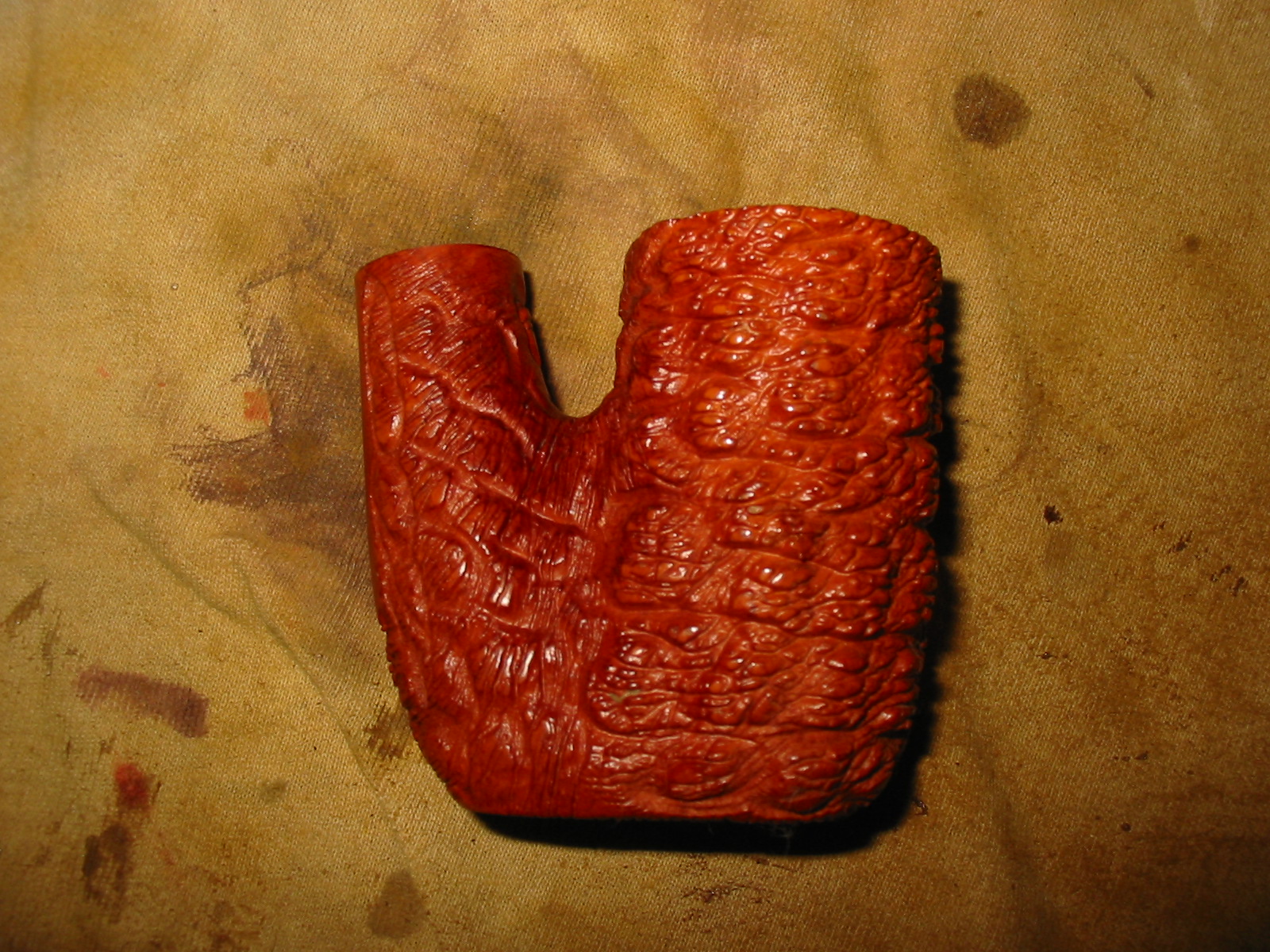
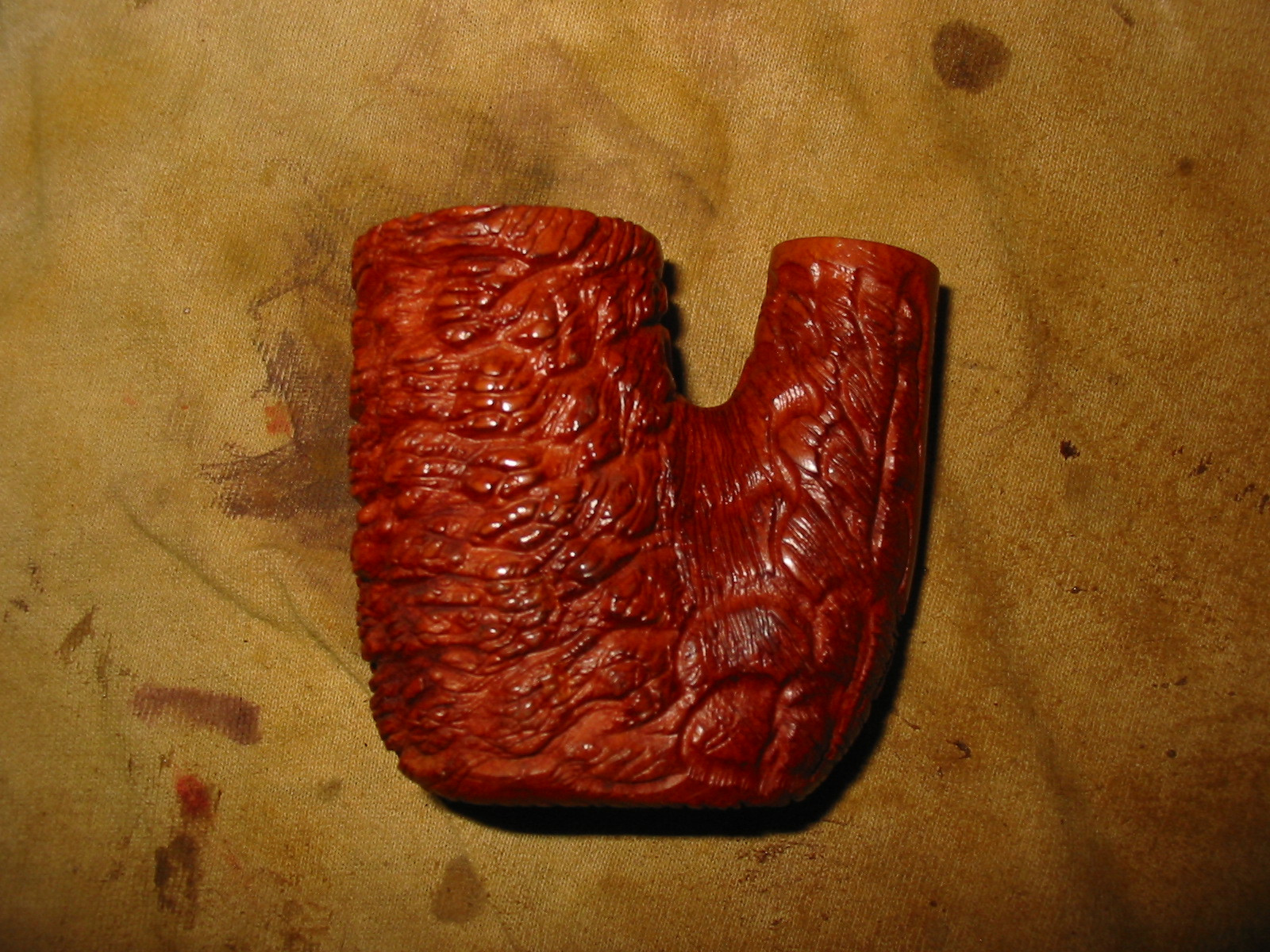
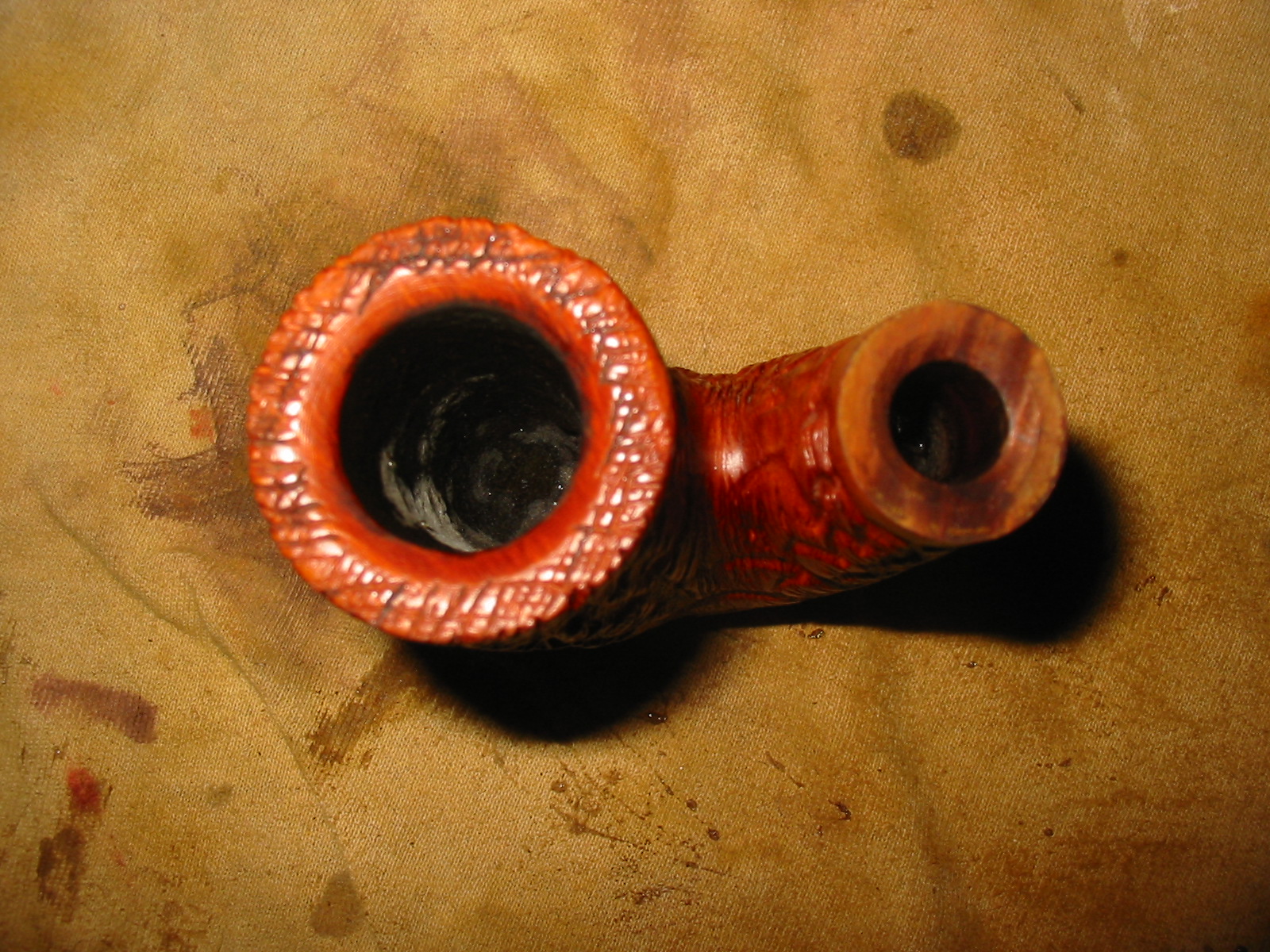
I cleaned out the shank and the bowl with Everclear and pipe cleaners and cotton swabs until they came out clean and then coated the exterior of the bowl and shank with Halcyon II wax and hand buffed it with a shoe brush. The photo below shows the pipe after the waxing and buffing.

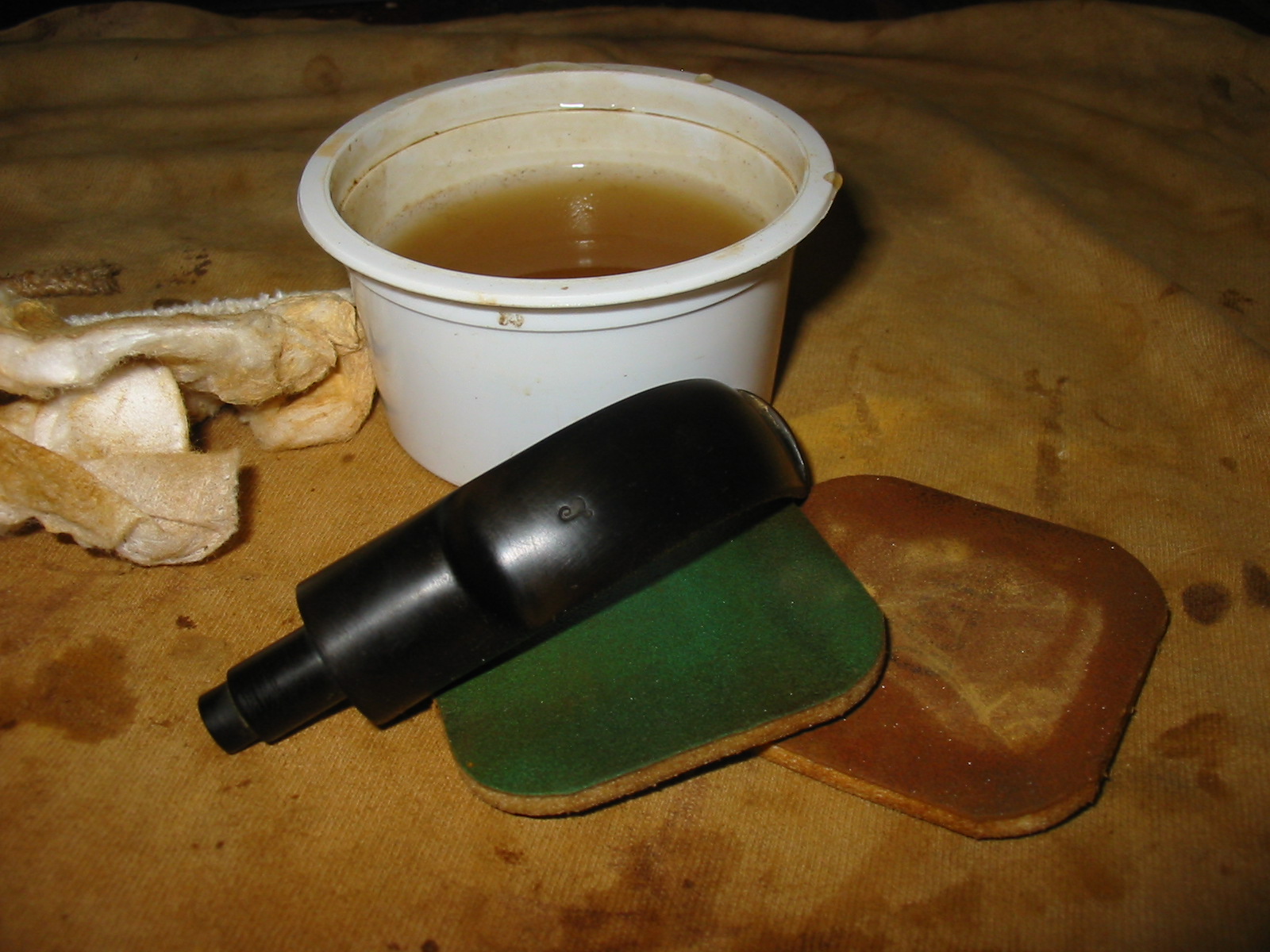
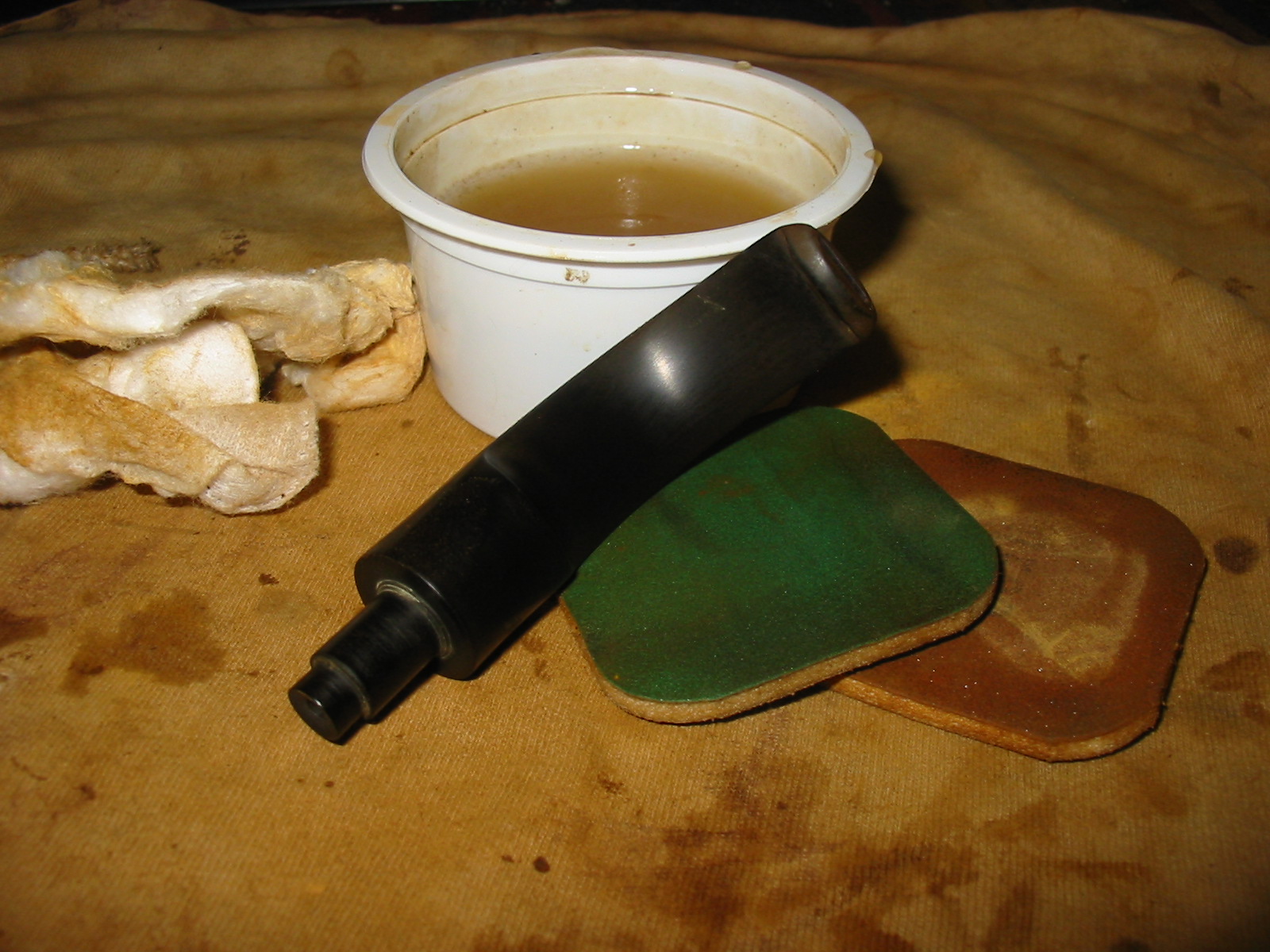
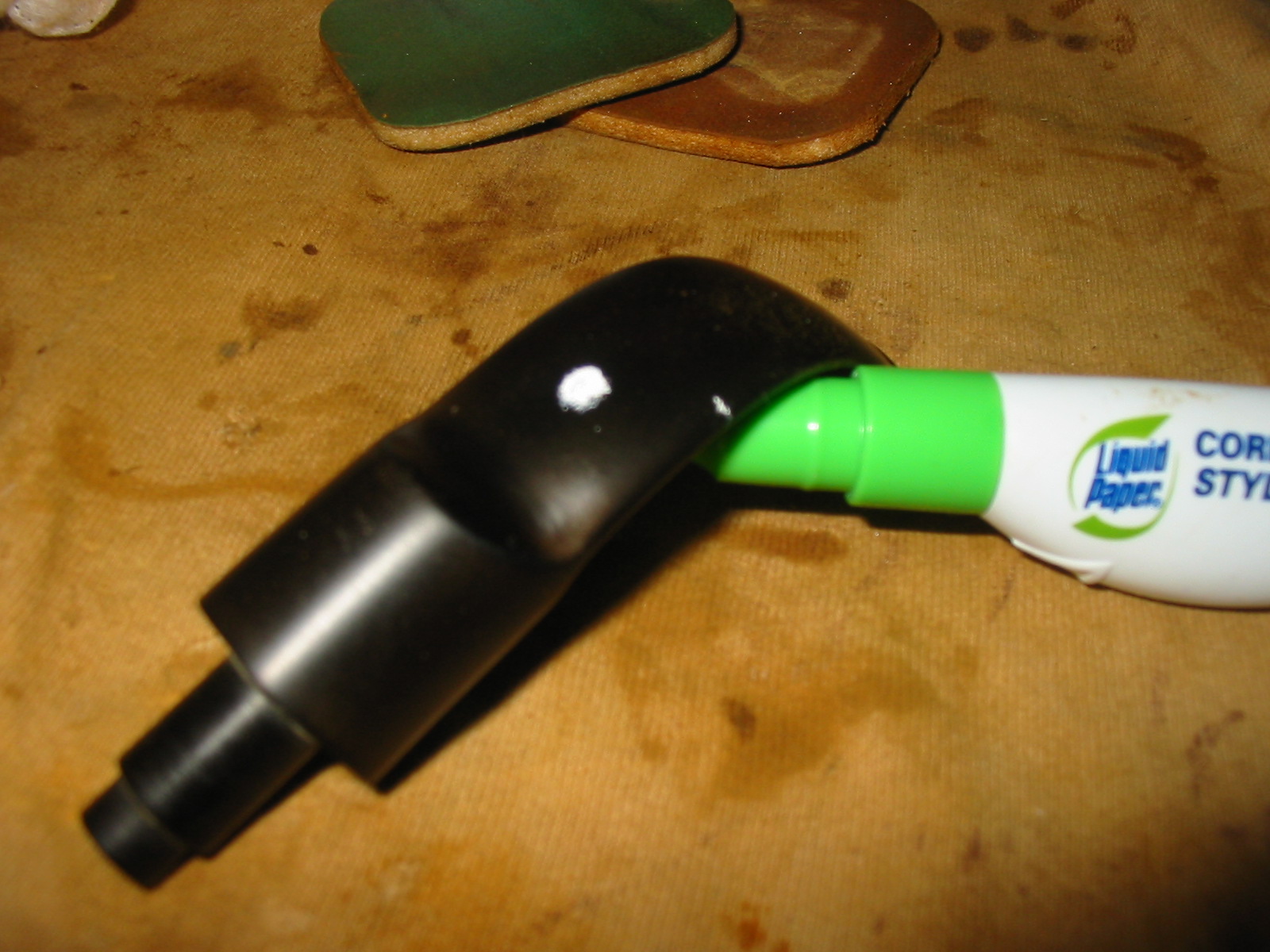
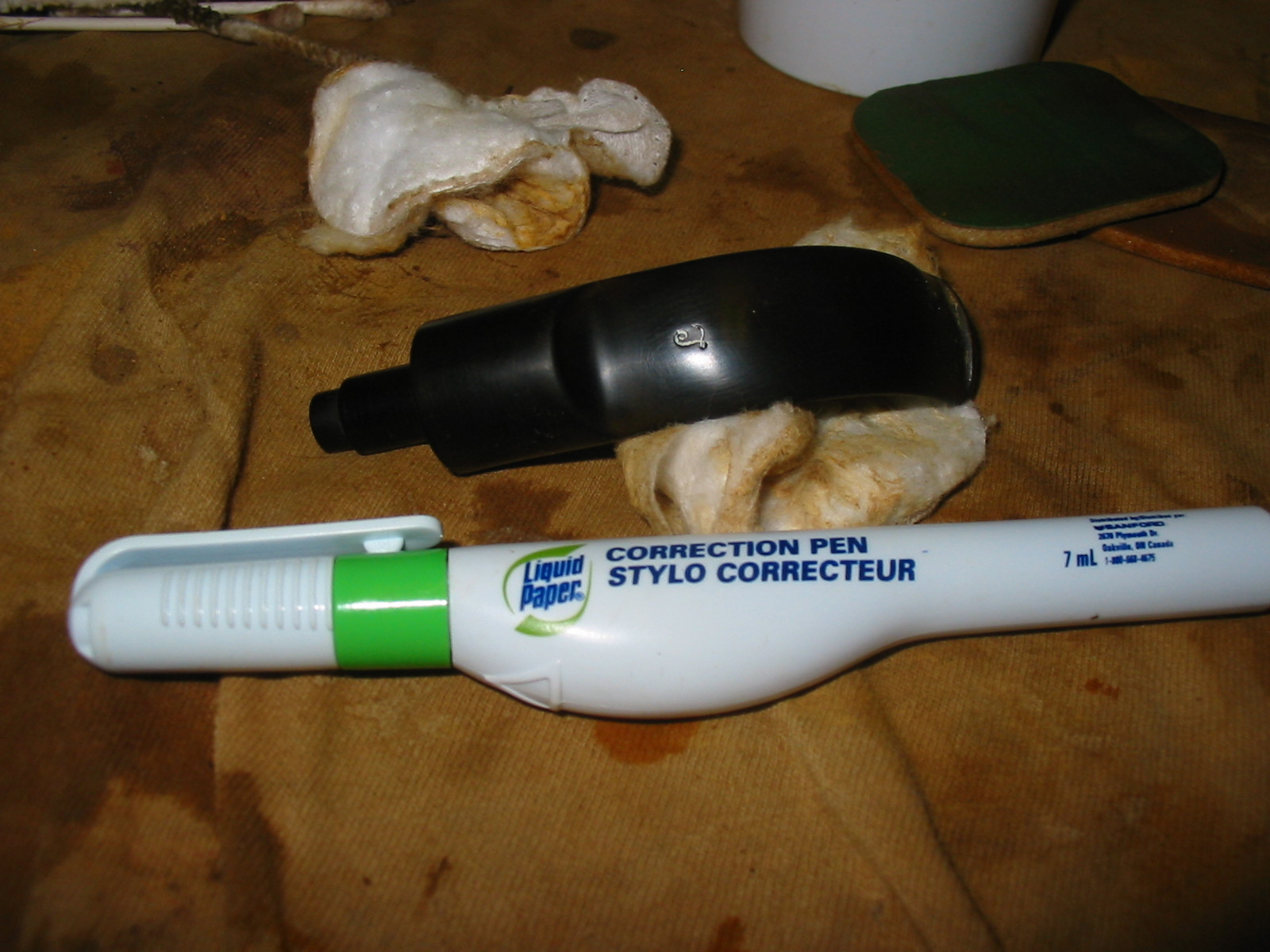
I scrubbed the stem with a cotton pad and Meguiar’s Scratch X 2.0 polish. It is used for polishing plastic and removes oxidation and scratches to the finish of plastics. I have often used it as the first step in removing oxidation. I find that it quickly removes the surface oxidation and softens the deeper oxidation as well. I followed up the cleaning with the use of micromesh sanding pads from 1500-12,000 grit to remove the softened oxidation. I stopped after wet sanding with the 1500 and 1800 grit pads and used a liquid paper used in correcting typos in typed writing to re-whiten the stamping on the stem. I then continued to sand the stem with the remaining grits of micromesh pads until the oxidation was gone.
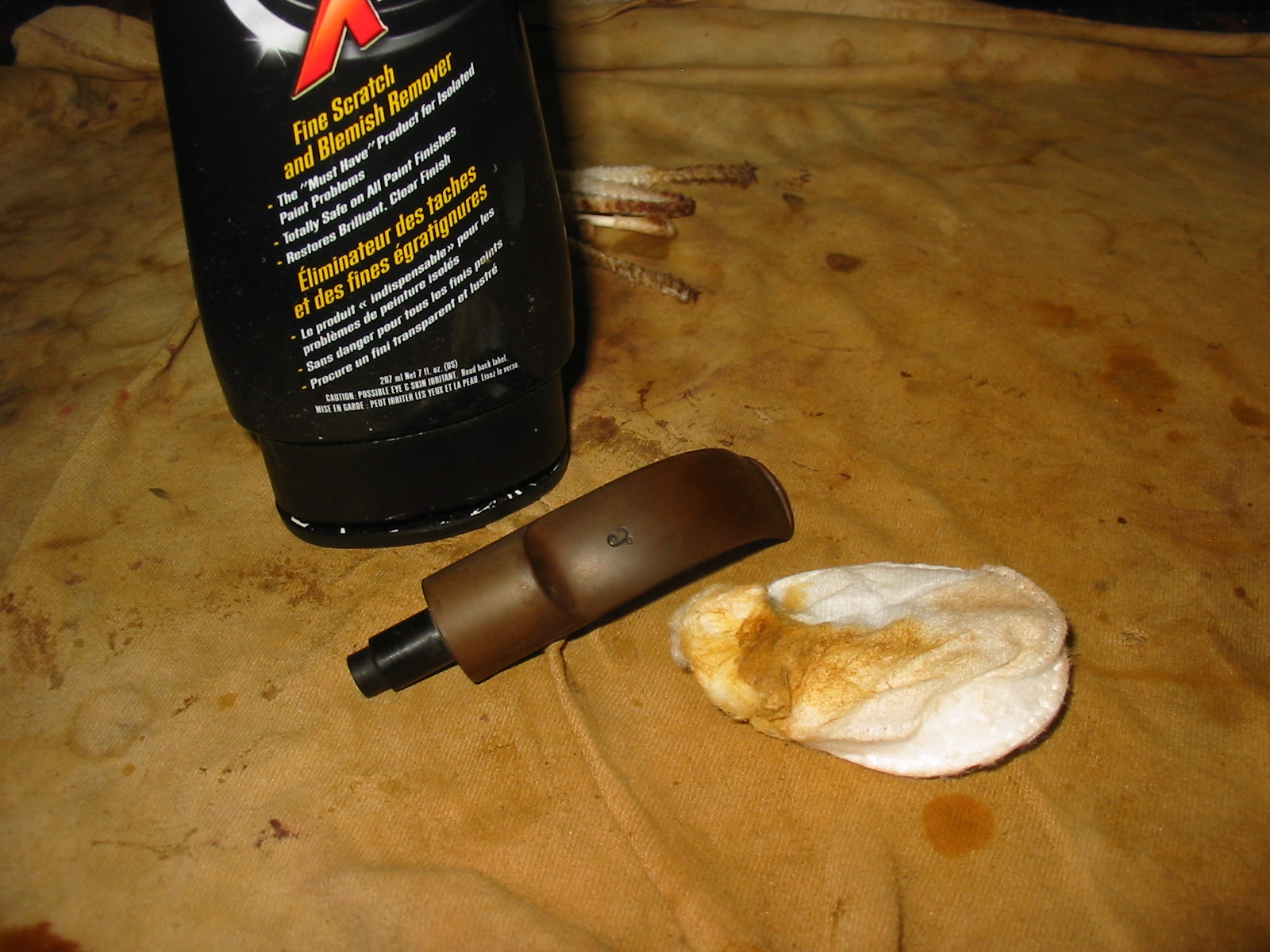
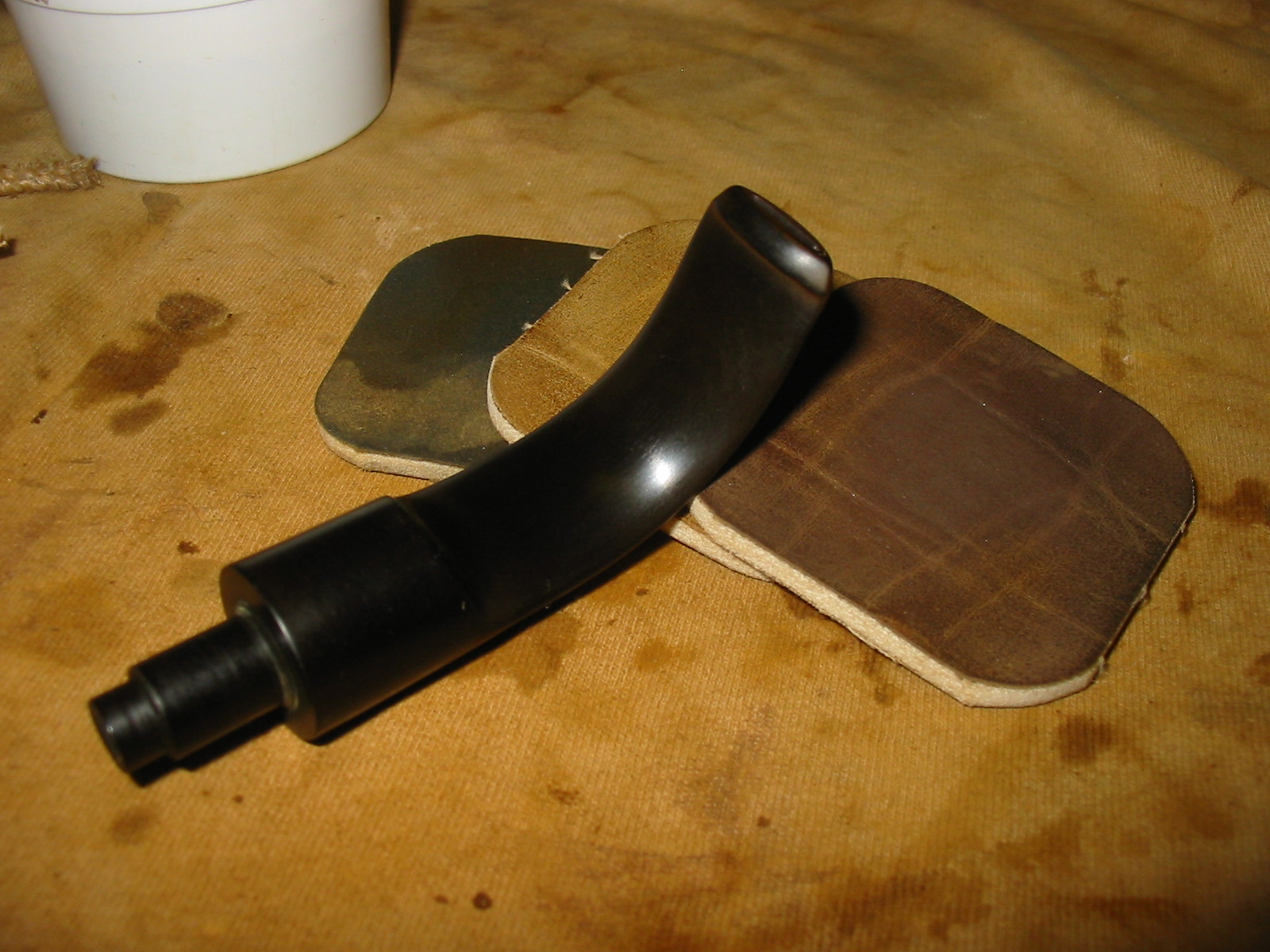
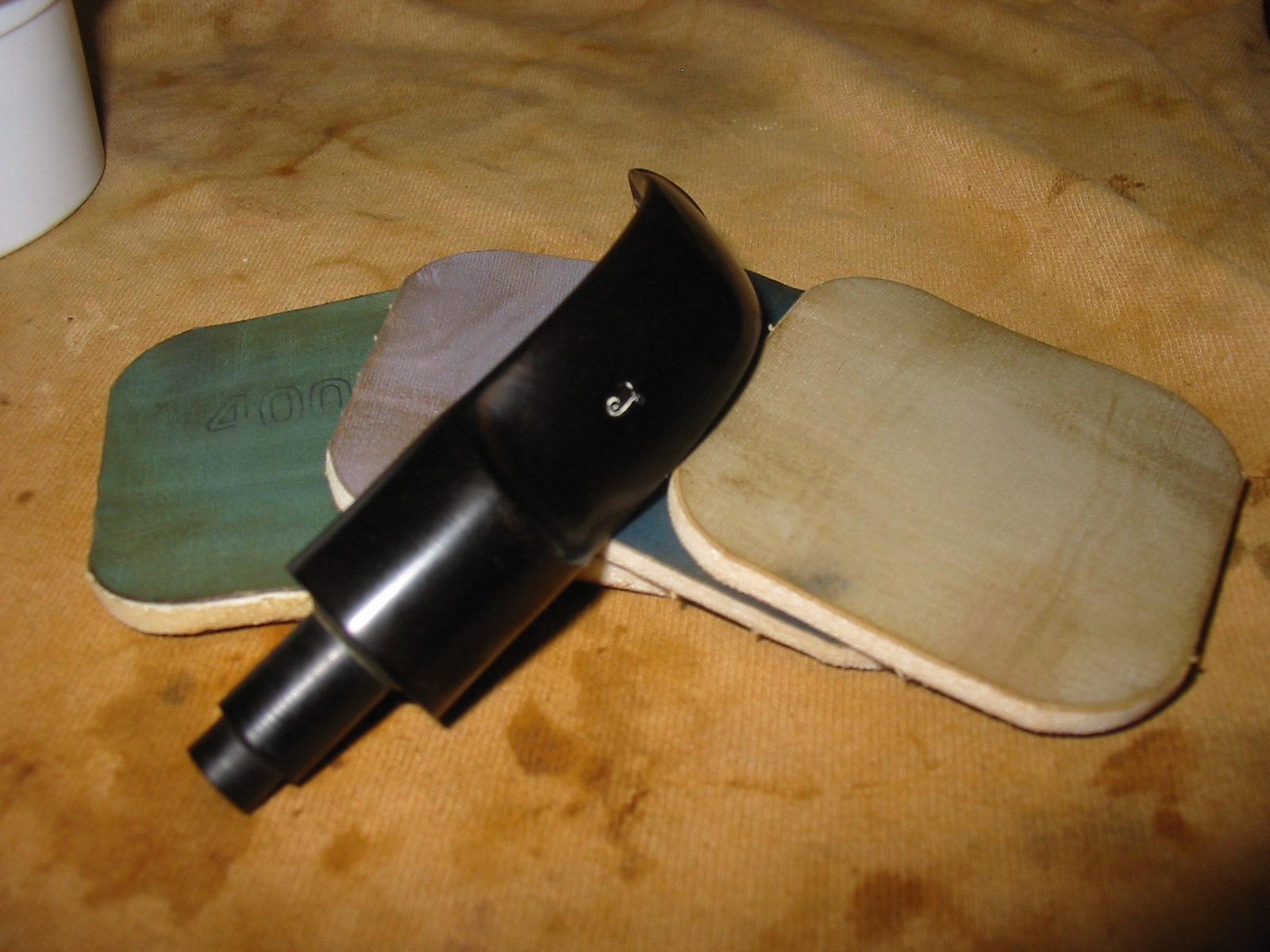
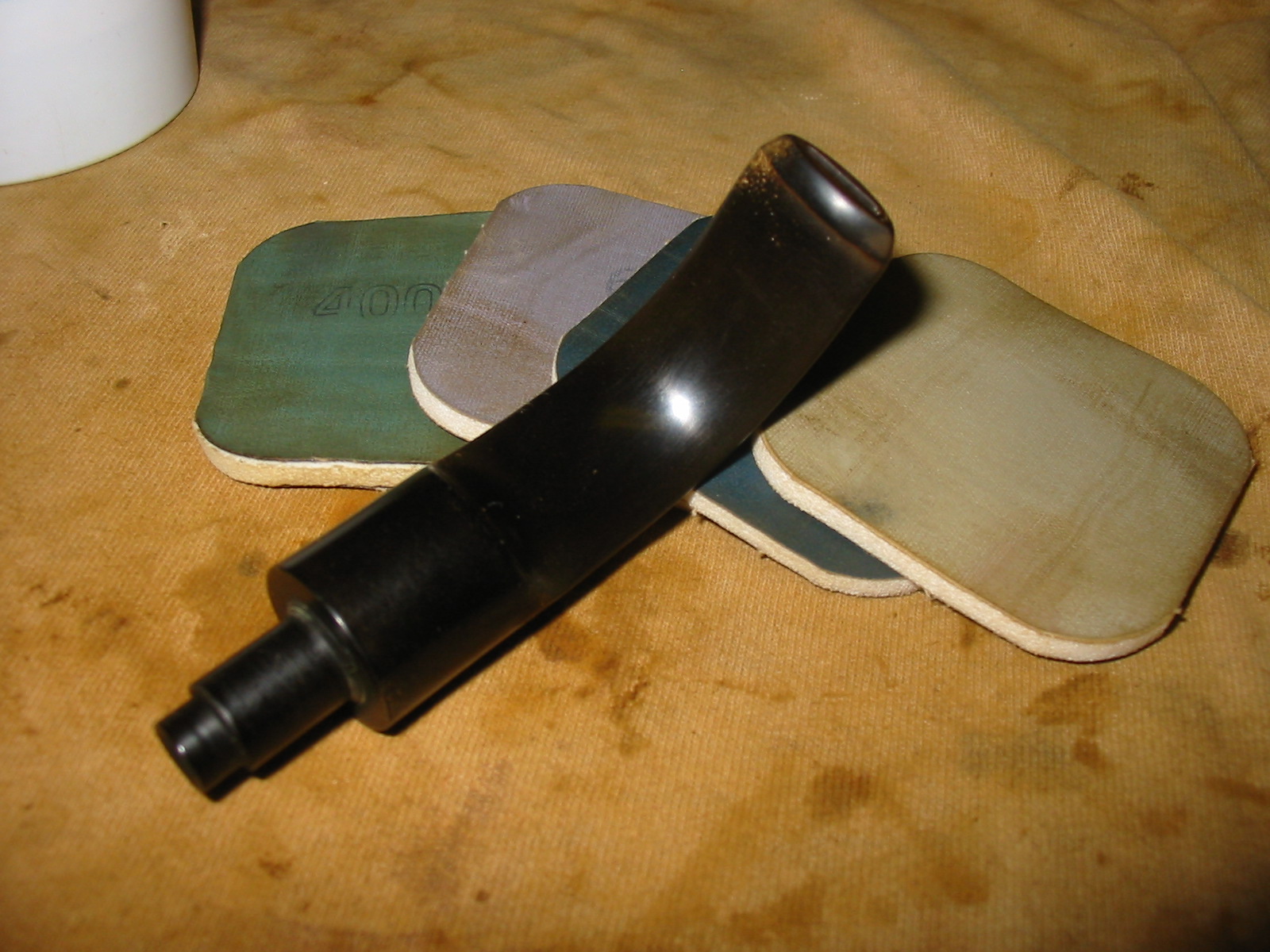
I then polished the stem with White Diamond on the buffing wheel and gave the bowl a good light buff as well. I took it back to the work bench and wiped the stem down with Obsidian Oil and let it dry then coated the stem with carnauba wax and hand buffed it until it shined. The four photos below show the finished pipe. It is cleaned, refurbished and ready to smoke.
 rebornpipes