
Blog by Andrew Selking
Ever since I stumbled across my first Heritage pipe, I have been on a quest to find more. Heritage pipes represent the pinnacle of American craftsmanship from the Kaufman Brothers and Bondy (KB&B) family of pipes. I will not go into great detail about the Heritage line, but here is a link for further information. https://rebornpipes.com/2014/12/23/the-wonderful-world-of-heritage-briars/
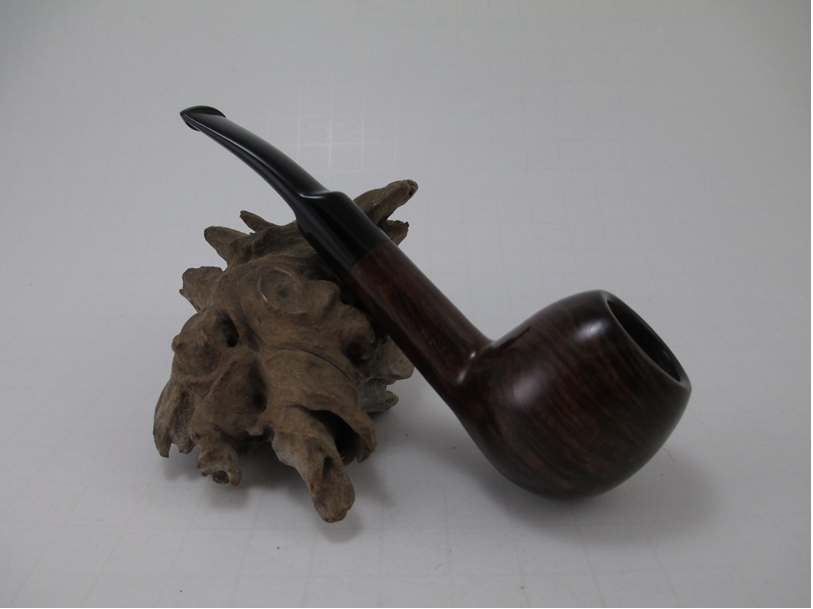
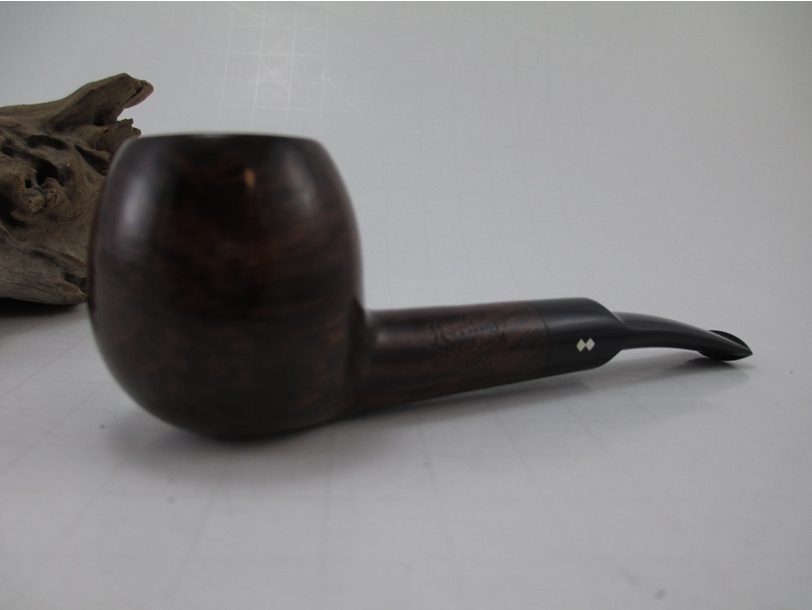
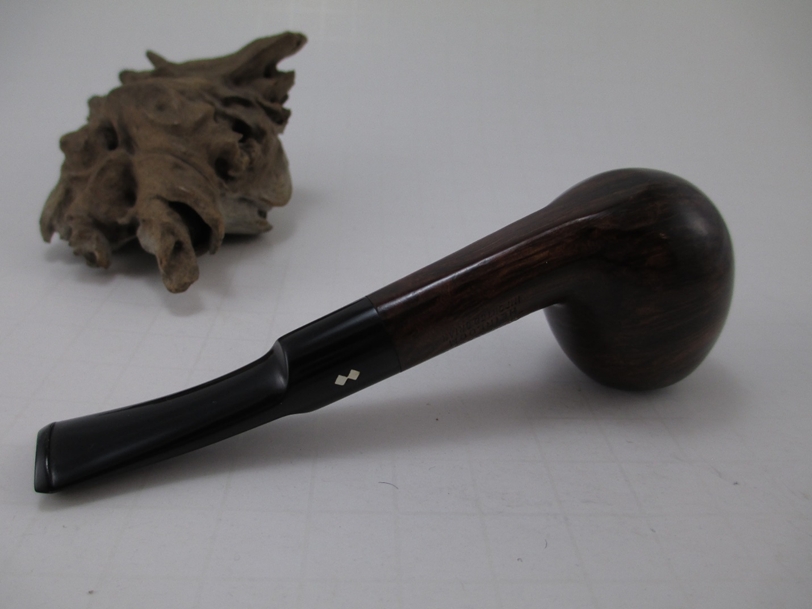
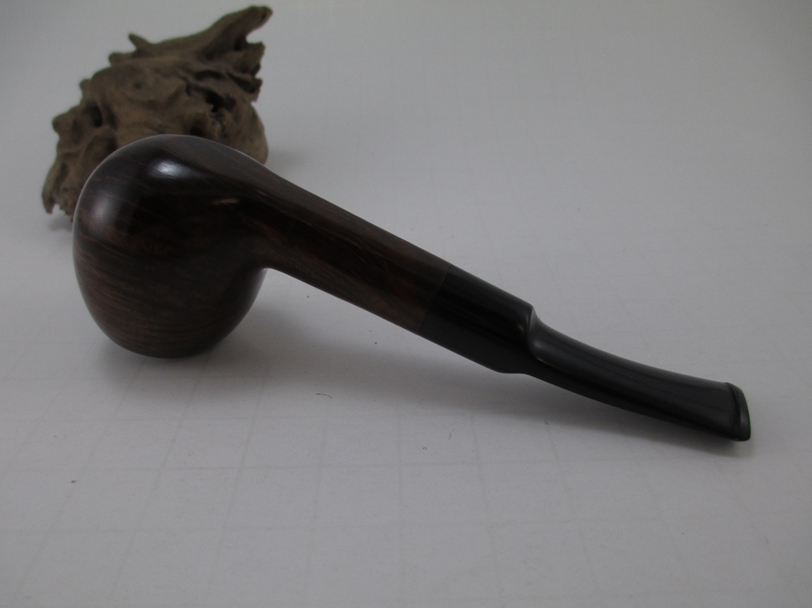
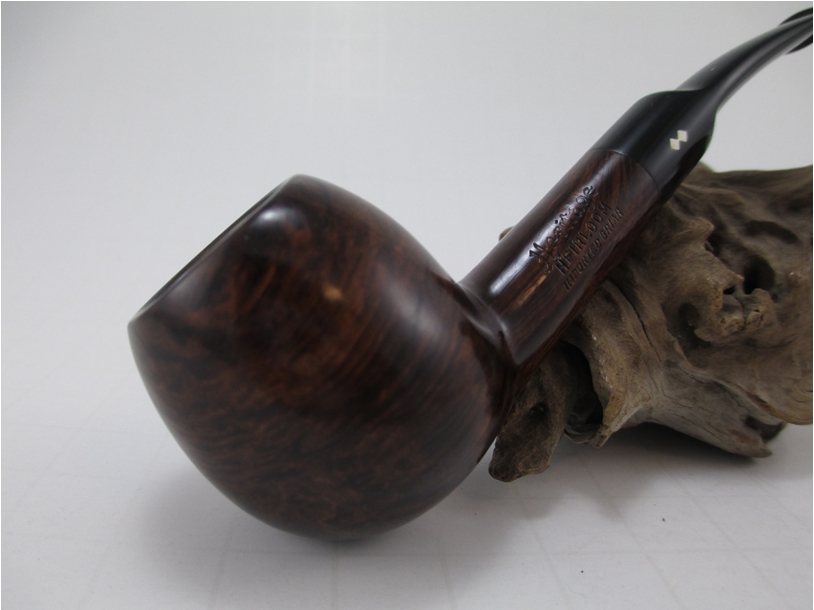
Although Heritage pipes used Kaywoodie shape numbers, this particular pipe’s shape is not in any of the Kaywoodie catalogues that I have (1936, 1947, 1955, and 1972). It has an apple shape bowl, a long shank, and a ¼ bent saddle bit. It’s a small pipe, weighing in at exactly one ounce and measuring 4.9 inches long, and as befitting its namesake I can envision the owner fly fishing while smoking it. What really amazed me about this pipe though is the cross grain. It starts at the front of the bowl and runs vertically throughout the entire pipe into the shank. I have never seen anything quite like it.
The pipe arrived in good shape, a slight tar build up on the rim, some minor oxidation on the stem, and a single tooth mark under the button. Here is what it looked like.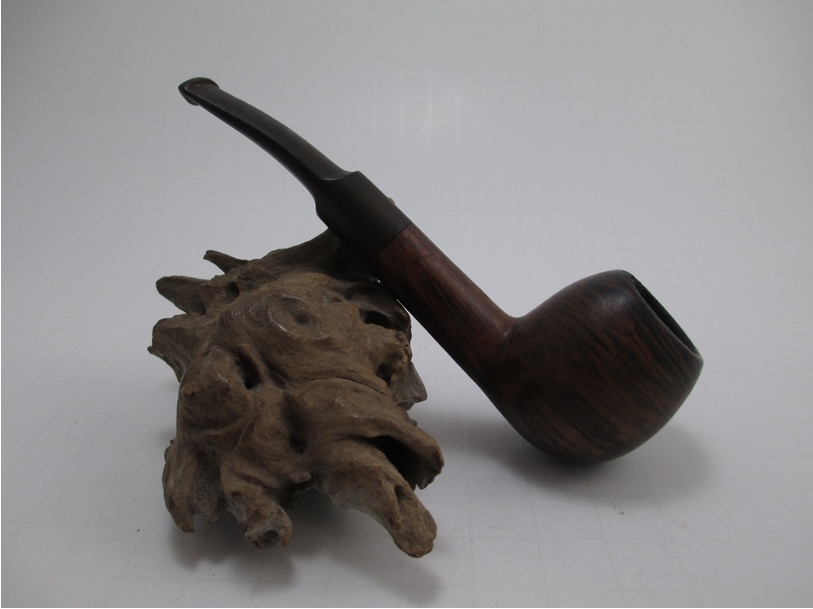
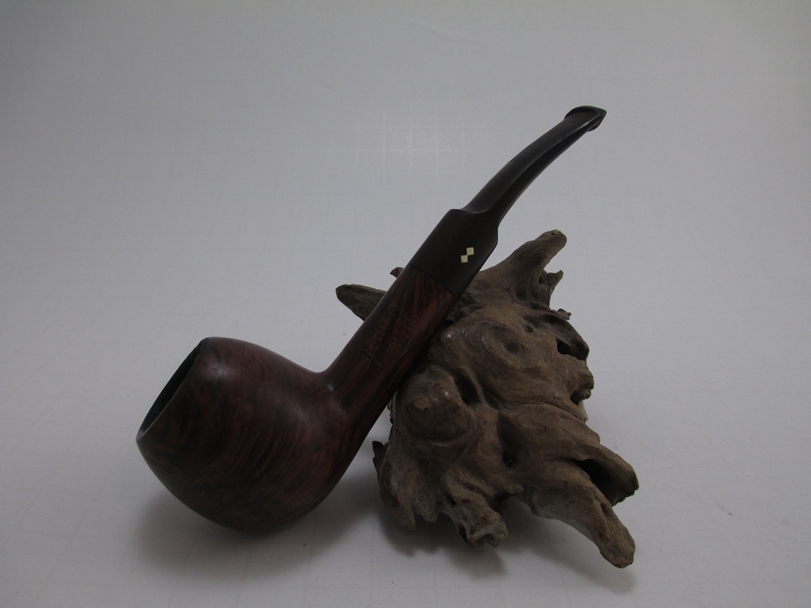
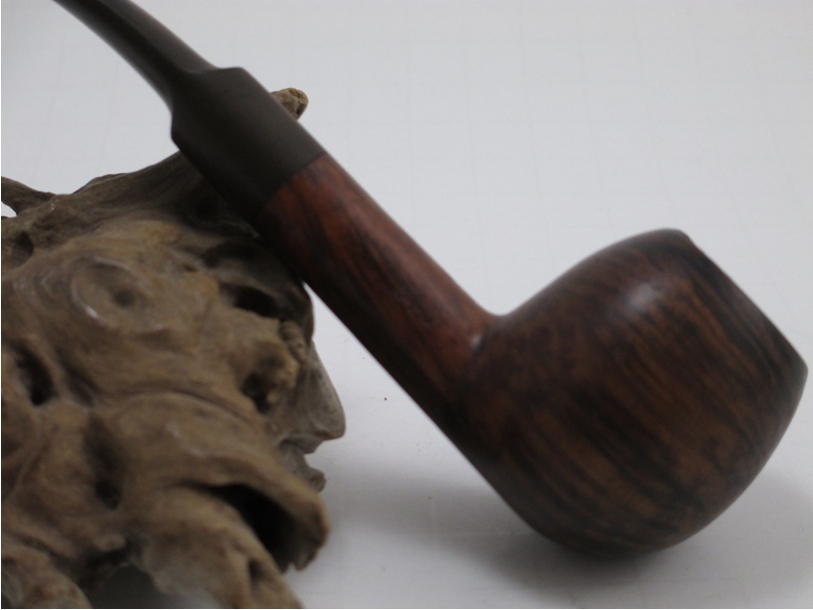
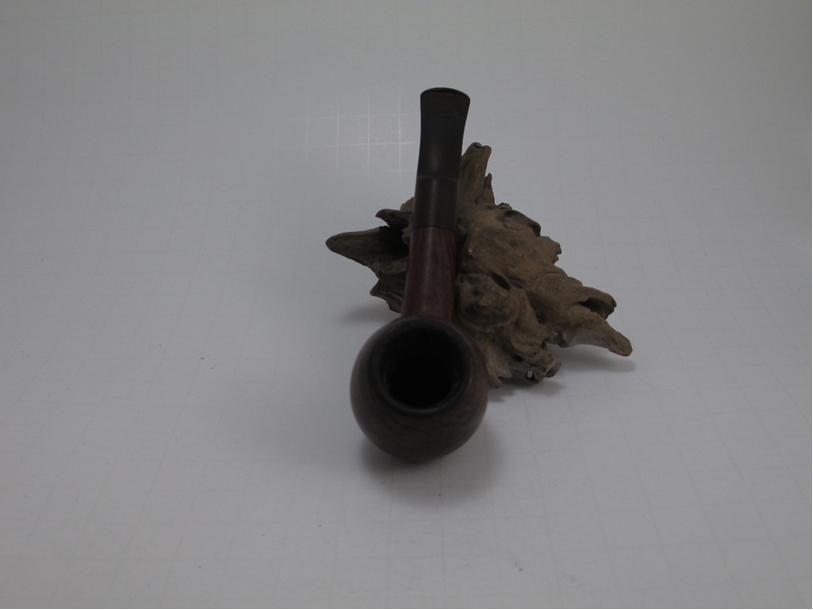 I started by giving the bowl an alcohol bath. The purpose of the bath is not to sanitize the pipe, the alcohol just loosens up all of the crud (tar, cake, un-burned tobacco etc.).
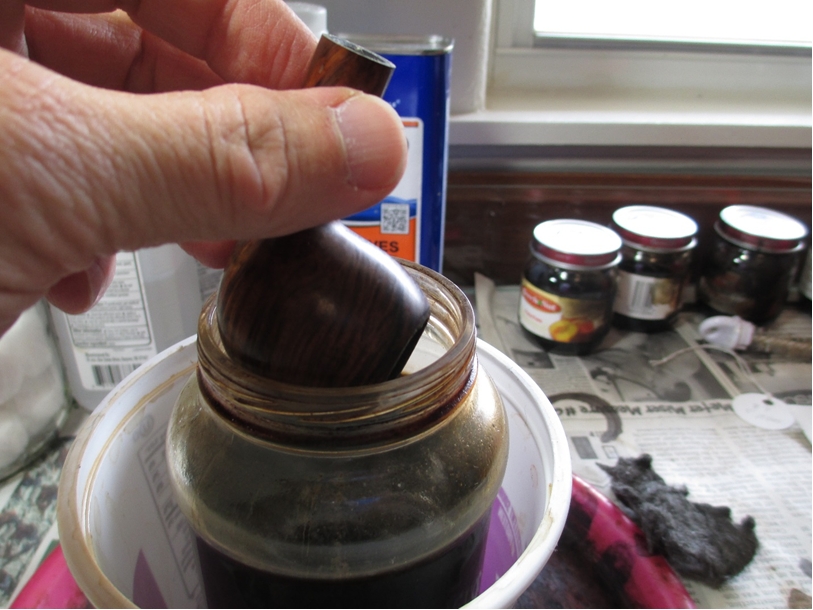 While the bowl marinated, I soaked the stem in Oxyclean.
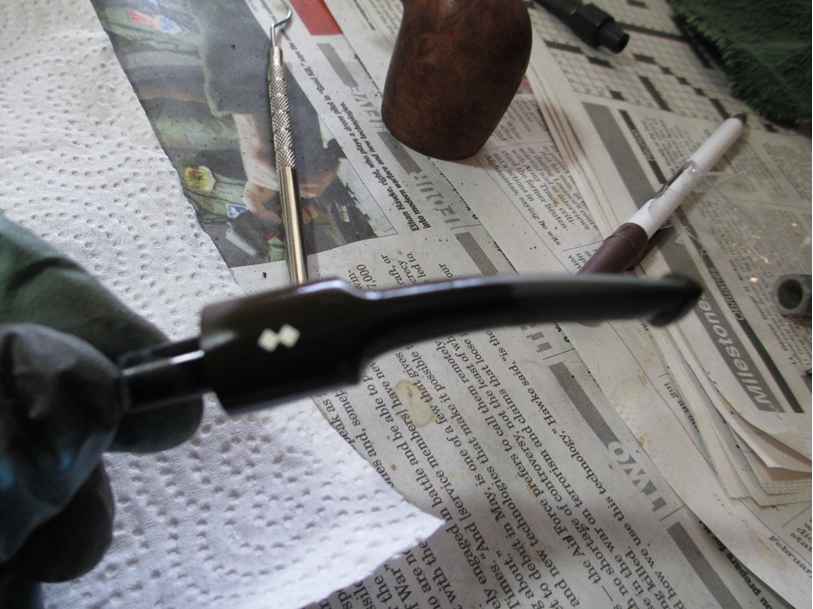
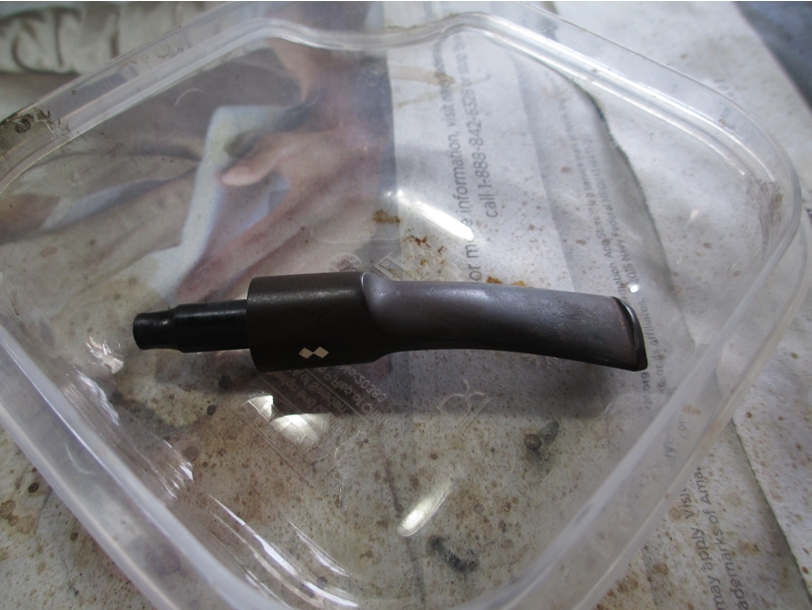 The Oxyclean brings out the oxidation and helps loosen the gunk inside the stem. I usually run a fuzzy stick through the stem while I still have the cleaning solution. That’s always a good indicator how much work I will have during the next step. Fortunately, this stem didn’t look too bad. Notice the brown oxidation. Once I finished the inside of the stem, I took an old tooth brush and some tooth paste and removed the worst of the oxidation. This also had the benefit of making the white inlay nice and bright.
 Next up was removing the cake from the bowl. After a 24 hour soak, it is very easy to remove even the most stubborn cake.
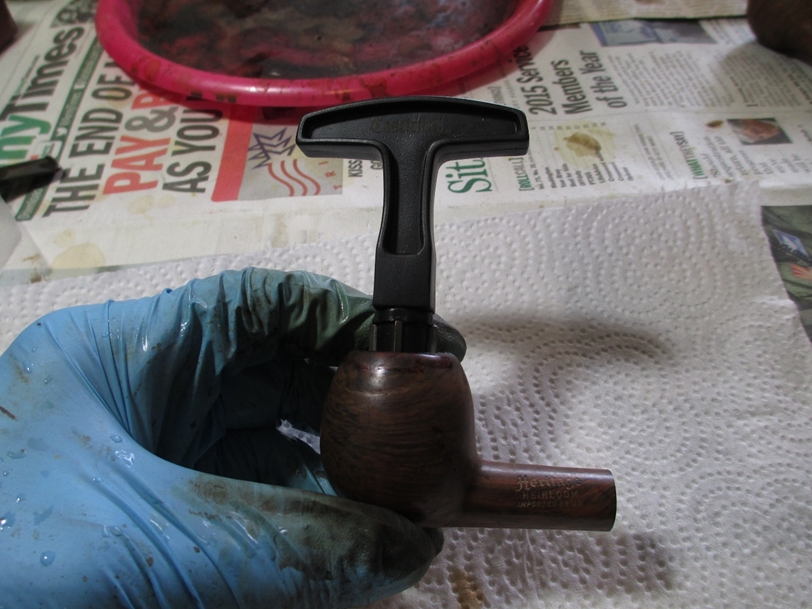 After removing the cake it was time to tackle the shank using the retort.
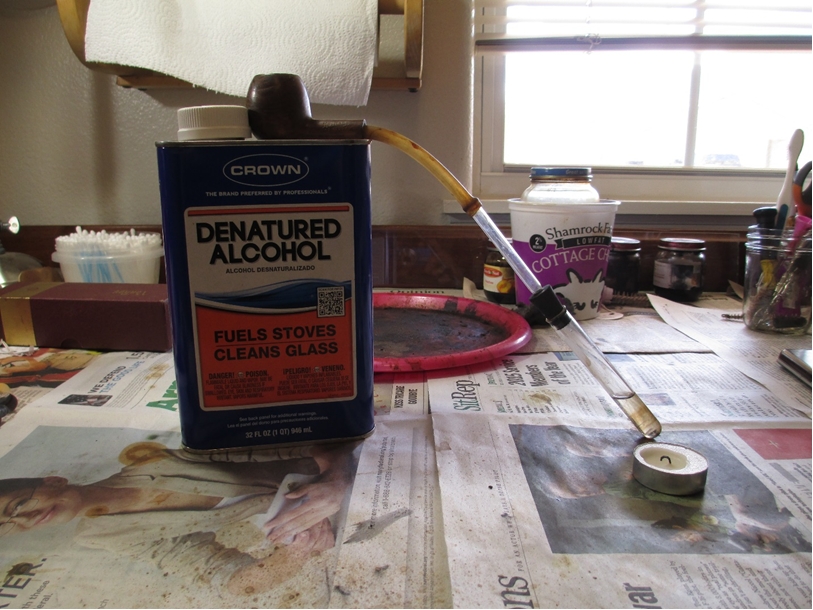 She was a dirty girl.
 I ended up retorting the shank five times! Not sure what kind of tobacco the previous owner smoked or if he ever used pipe cleaners.
Next up, the shank. As I’ve mentioned before, if you retort the shank separately make sure you plug the end to prevent boiling alcohol and tobacco juice from spewing everywhere. Fortunately most of the nastiness was in the shank and the stem only required one fuzzy stick.
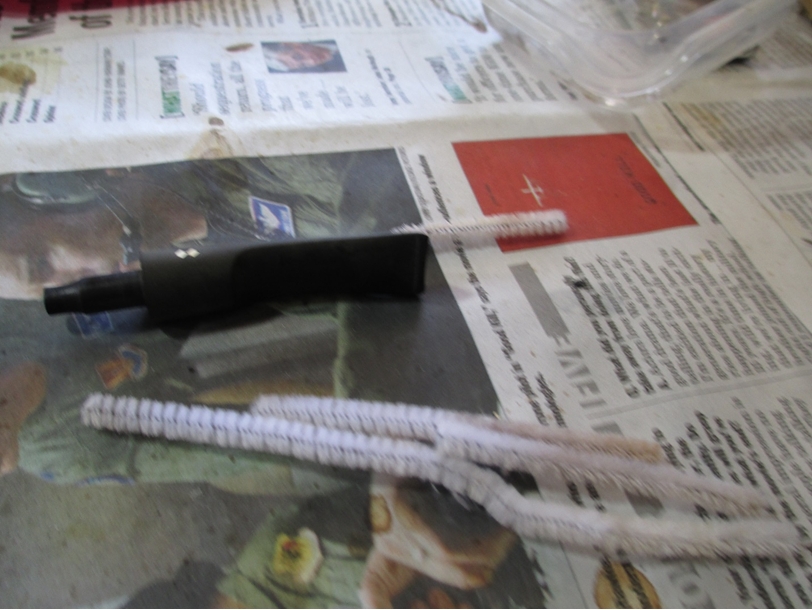 The final cleaning step was removing the tar and cake from the rim. I used 0000 steel wool and acetone. The steel wool does a nice job removing the tar without damaging the finish.
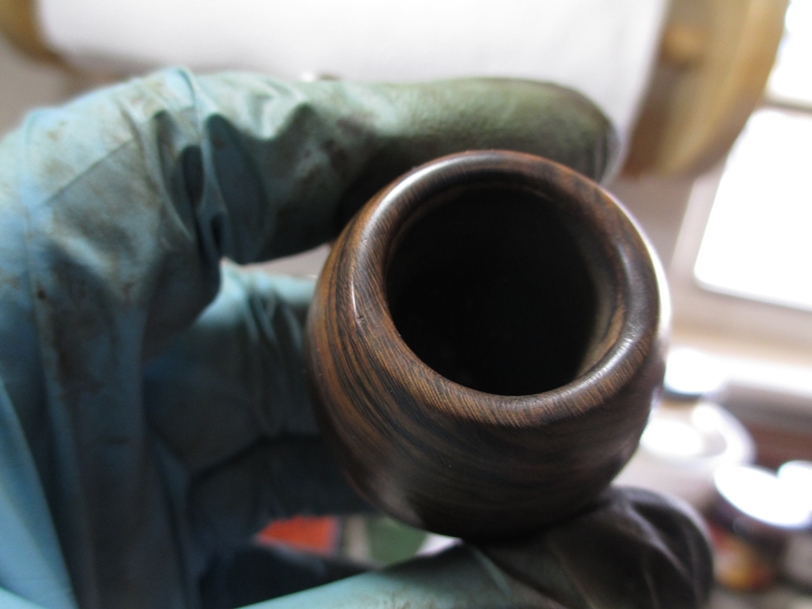 There were a couple of dents in the side of the bowl, so I used steam to raise the dents. I then used a progression of micro mesh pads, 1500-12,000 grit in preparation for staining. Here is the bowl ready for stain.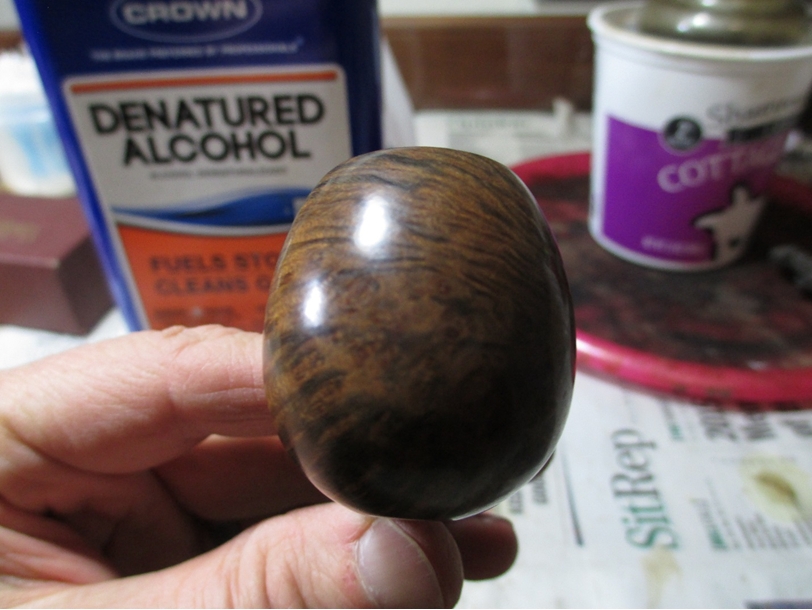
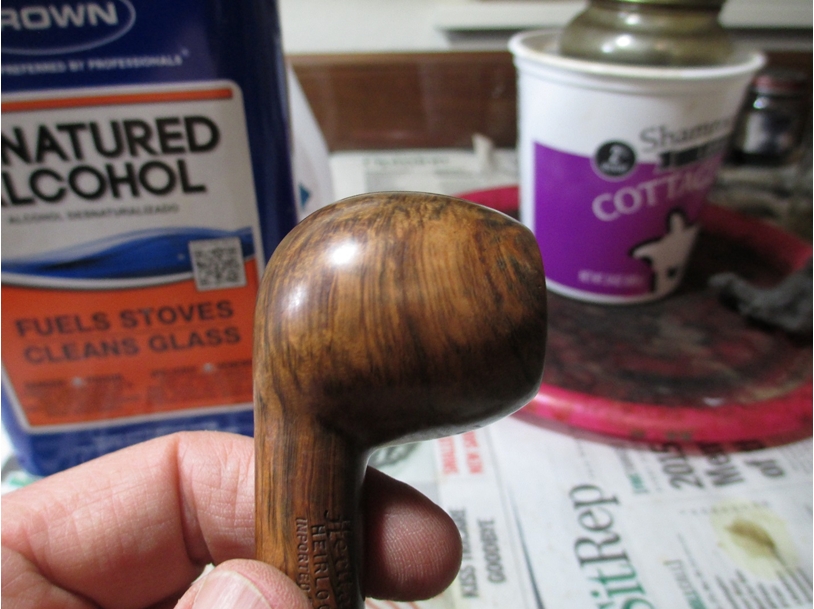
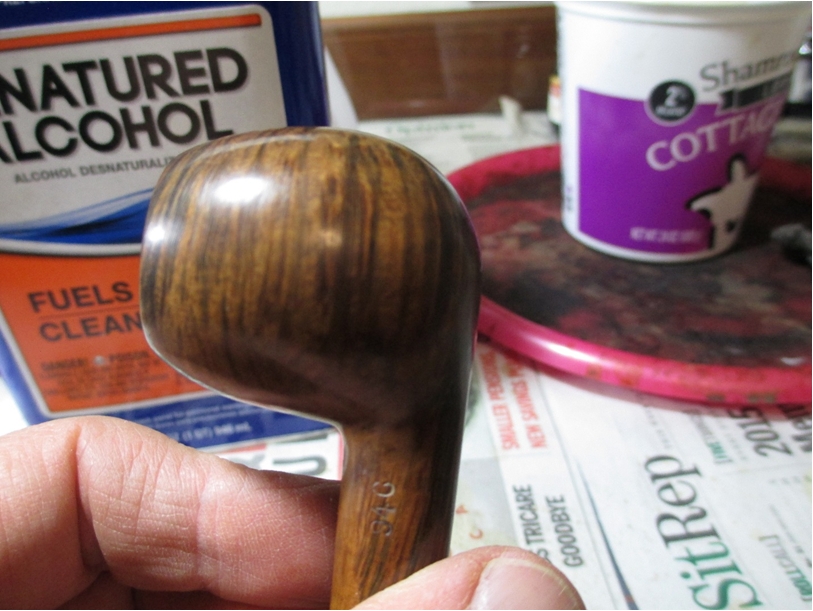 You can see the grain is everywhere.
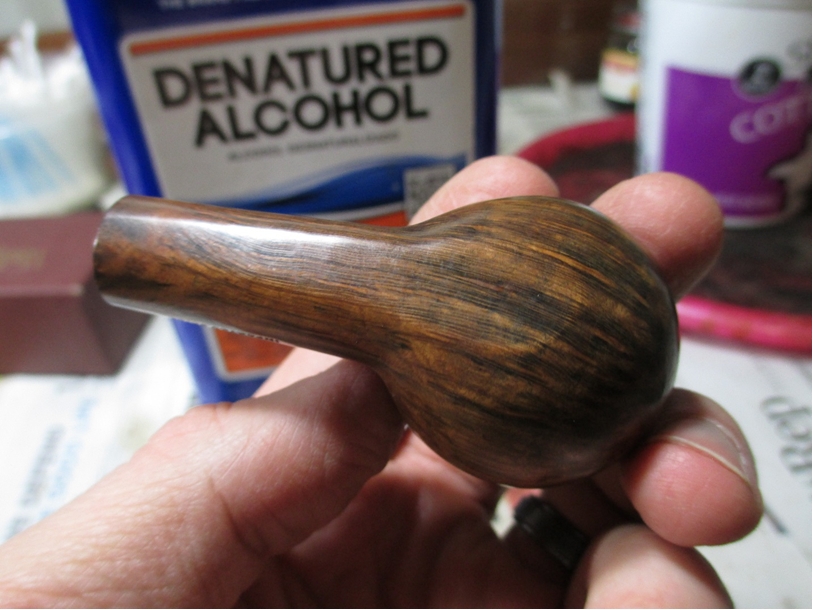 I used Pimo Pipe Supply medium walnut stain, diluted by 50%, to even out the color. Followed by a furniture pen to add a little bit of red tint. Here is the final result.
 I used 400 grit wet/dry sandpaper with water to remove the tooth mark and oxidation. I’ve started using a rubber washer, placed over the tenon, to make sure that I don’t round the edges of the stem while sanding. After the 400 grit, I used 1500, 1800, and 2400 grit micro mesh with water.
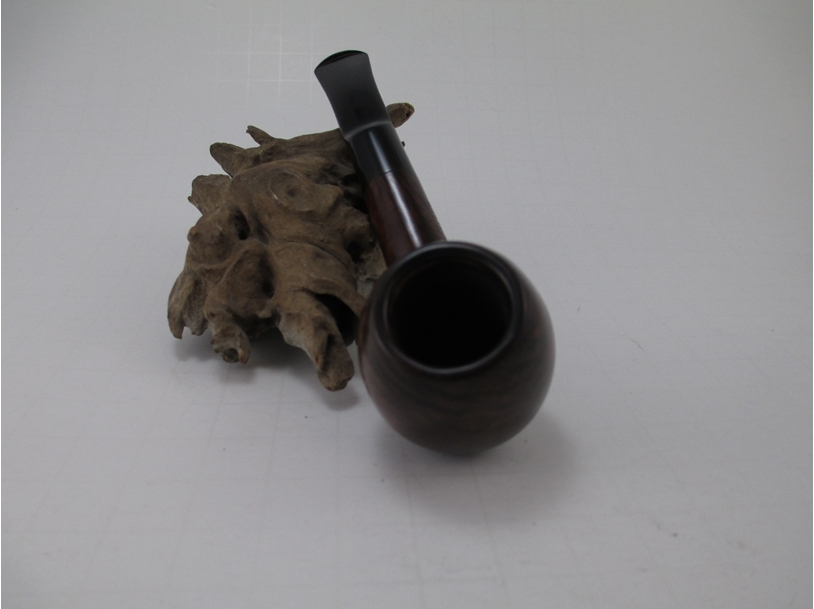
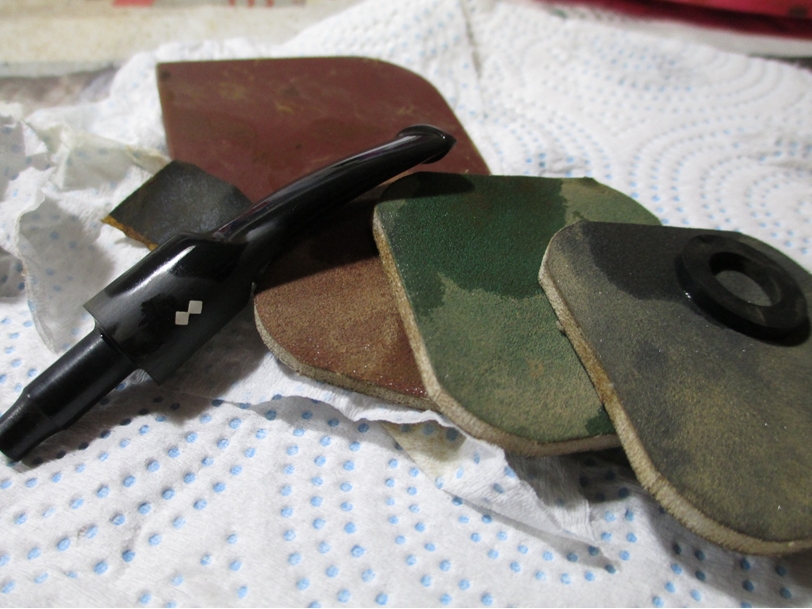 Once the stem dried I finished polishing it with a progression of micro mesh pads, 3200-12,000 grit, followed by white diamond and carnauba wax with my rotary tool. I buffed the bowl on the buffing wheel with White Diamond and carnauba wax. Here is the finished pipe.


 rebornpipes